A Story of Expertise
Summary
The Rise and Fall of a Little-Known Skill
The Tapisserie dial of the Royal Oak simply would not exist without a special machine, called the "engraving machine", or more specifically the "guilloché copying machine", whose eventful destiny is related here for the first time.
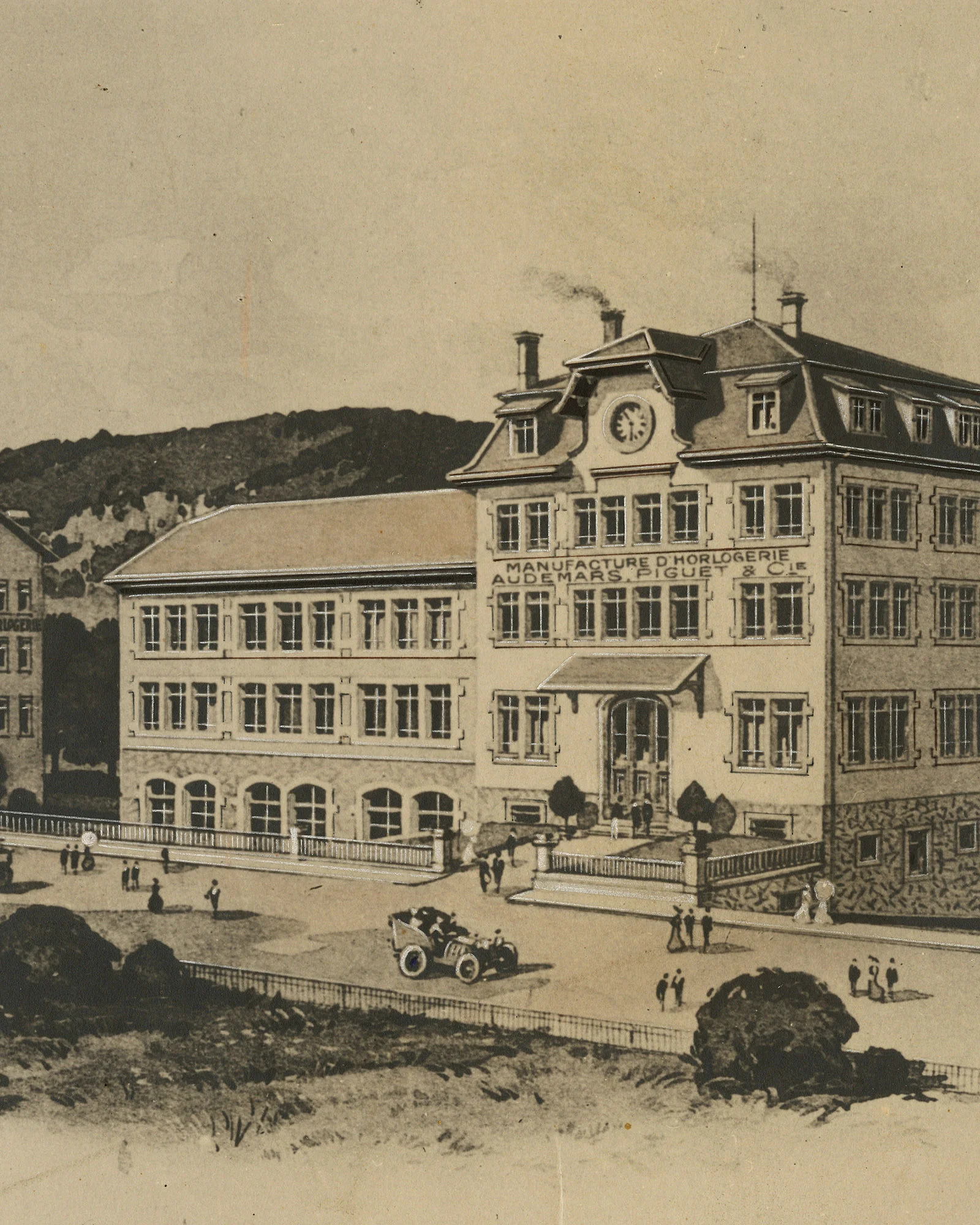
The story begins in the small watchmaking town of La Chaux-de-Fonds, situated at an altitude of 1,000 metres, some 100 kilometres from the Vallée de Joux and Le Brassus, where the original modest Audemars Piguet workshop was founded in 1875. At that time, La Chaux-de-Fonds had already opted for industrialisation and the town was nicknamed "the watchmaking metropolis." The division of labour was so advanced that in his book Capital, the German thinker Karl Marx coined the term “factory town” to describe its archetypal urbanisation. All types of workshops were to be found there, from the most mechanised to artisans having graduated from the city’s art school.
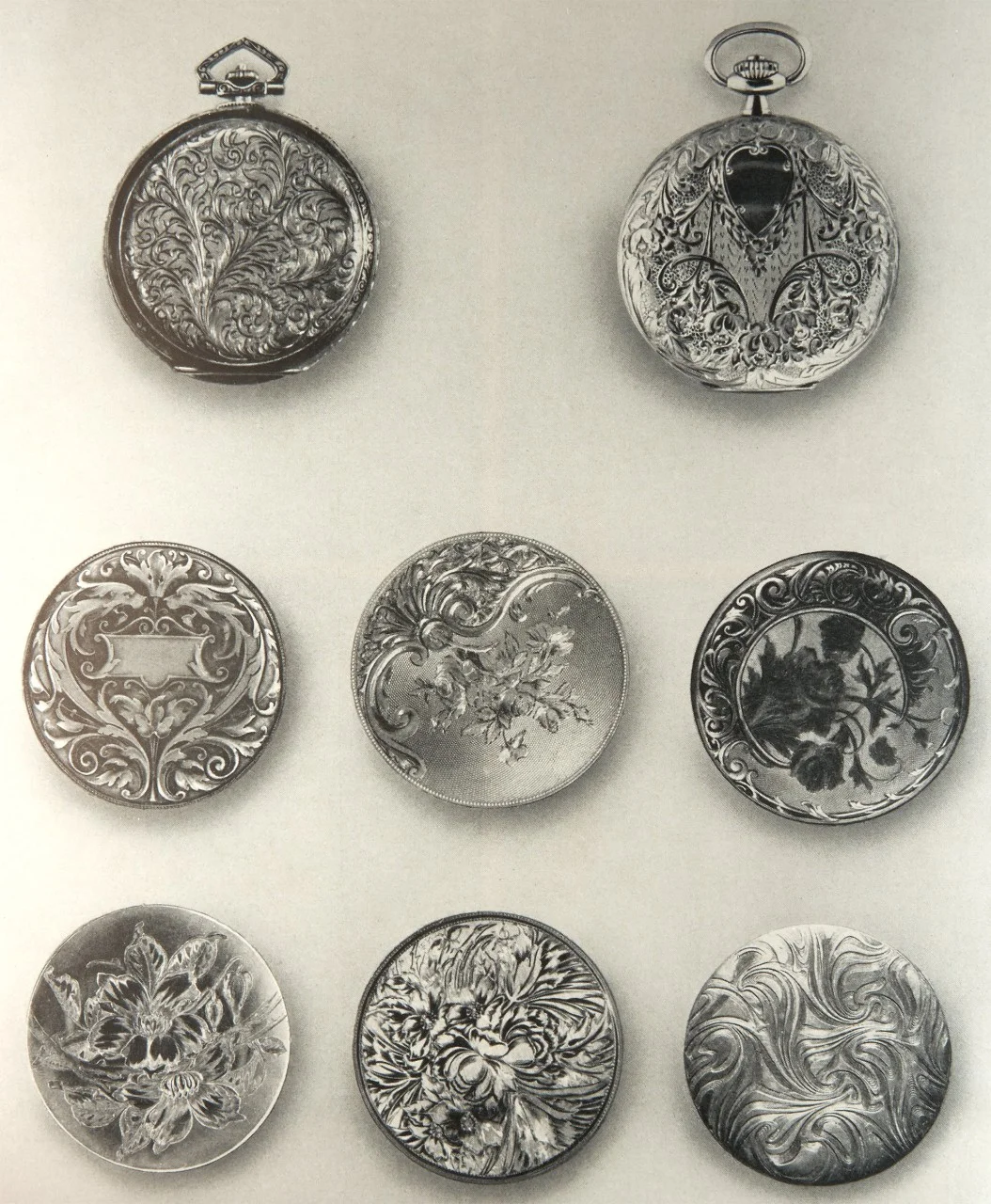
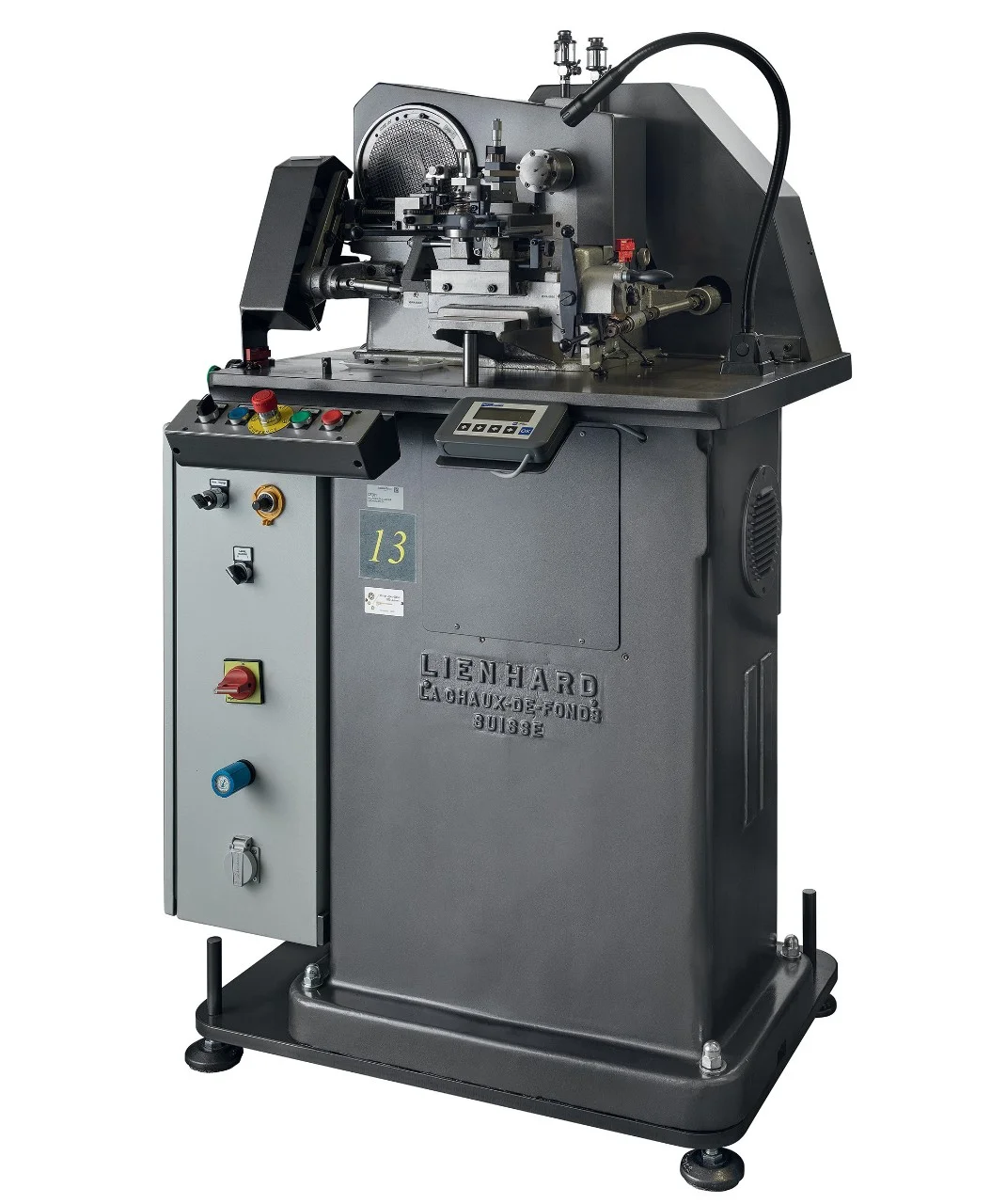
At the end of the 1890s, pocket watches adorned with Art Nouveau plant-life motifs were in vogue. They were engraved, guilloché-worked and often enamelled. Miniaturists and engravers struggled to meet the growing demand. It was in this context that Robert-Alfred Lienhard invented the first engraving machine in 1895, the forerunner of the one that would be used for the Royal Oak dials. This highly sophisticated instrument was designed to reproduce all types of decorations on the curved surfaces of pocket watches. Engravers were displeased with the direct competition this machine brought about as it reproduced their skilled moves. This age-old battle between hand and machine forced artisans to constantly reinvent themselves in order to avoid occupying ever-smaller niches. It was however not the engraving machine that inflicted the greatest damage on the engravers of La Chaux-de-Fonds, whose ranks were decimated during the 1920s and 1930s by the arrival of the wristwatch. Unlike pocket watches, whose cases and casebacks provided plenty of scope for ornamentation, the wristwatch had almost no surface available for engraving or enamelled miniature painting. In the absence of objects to engrave, work naturally became scarce for both engravers and machines.
The Lienhard company therefore had to reinvent itself, extend its range of tools and seek new markets. With this in mind, it created a simplified engraving machine incising only entirely flat surfaces. It was used to decorate watch dials, but above all novelty jewellery, lighters, cigarette cases, mirrors, etc. This multi-functionality earned it great success in areas outside the watch industry, with many of these machines being exported to the United States and Canada. A few remained in Switzerland and were notably delivered to the Geneva company, La Nationale.
From La Nationale to Stern Frères
In 2019, after many years of research, the great German collector and entrepreneur Helmut Crott, founder of the namesake auction house, published a monograph entitled Le cadran: visage de la montre bracelet au 20e siècle on the most prestigious Geneva-based dial-making firm, Stern Frères.
To produce this reference work, he drew upon the recollections of former artisans, notably writing: "Who still remembers, around the 1970s, the LN, aka La Nationale, the Geneva factory next to Stern Frères specialised in the manufacture of metal components such as watch crowns and even lighters? Faced with the sudden death of one of its employees, an excellent guilloché craftsman, the LN wondered whether it would be able to maintain this rare and special form of expertise. It had the idea of turning to the dial maker Stern who agreed to take on a subcontracted order for about 50 dials. The customer was Movado and the dials were those made at the time by the copying machine.” The reader will have noted that the author prefers the term 'copying machine' rather than 'engraving machine'. He continues: "Stern was gifted the seven guilloché copying machines owned by La Nationale and, in the process, inherited the 300 pattern designs that go with them.”
In 1970, the design department at Stern was headed by Roland Tille. He realised that the machine had extraordinary potential despite its complexity. It was he who named the technique Tapisserie, later admitting: "I would never have imagined that the moniker I had chosen would establish itself!" Helmut Crott continues: "That same year, Gérald Genta asked Roland Tille for advice on developing a Royal Oak dial. Tille proudly presented the designer with his new engraving machines and the possibilities they afforded. Together, they agreed to produce a few proposals for a Tapisserie decoration. Out of the 13 samples submitted, Audemars Piguet chose the version that to this day is still embedded in its brand DNA.” The author also highlights the "incredible combination of circumstances" that made it possible to revive a craft that was to become "one of the most highly prized techniques in the modern history of dial making.” He notes in passing that the dial of Patek Philippe’s Nautilus was developed on the same machines, following in the footsteps of the Royal Oak.
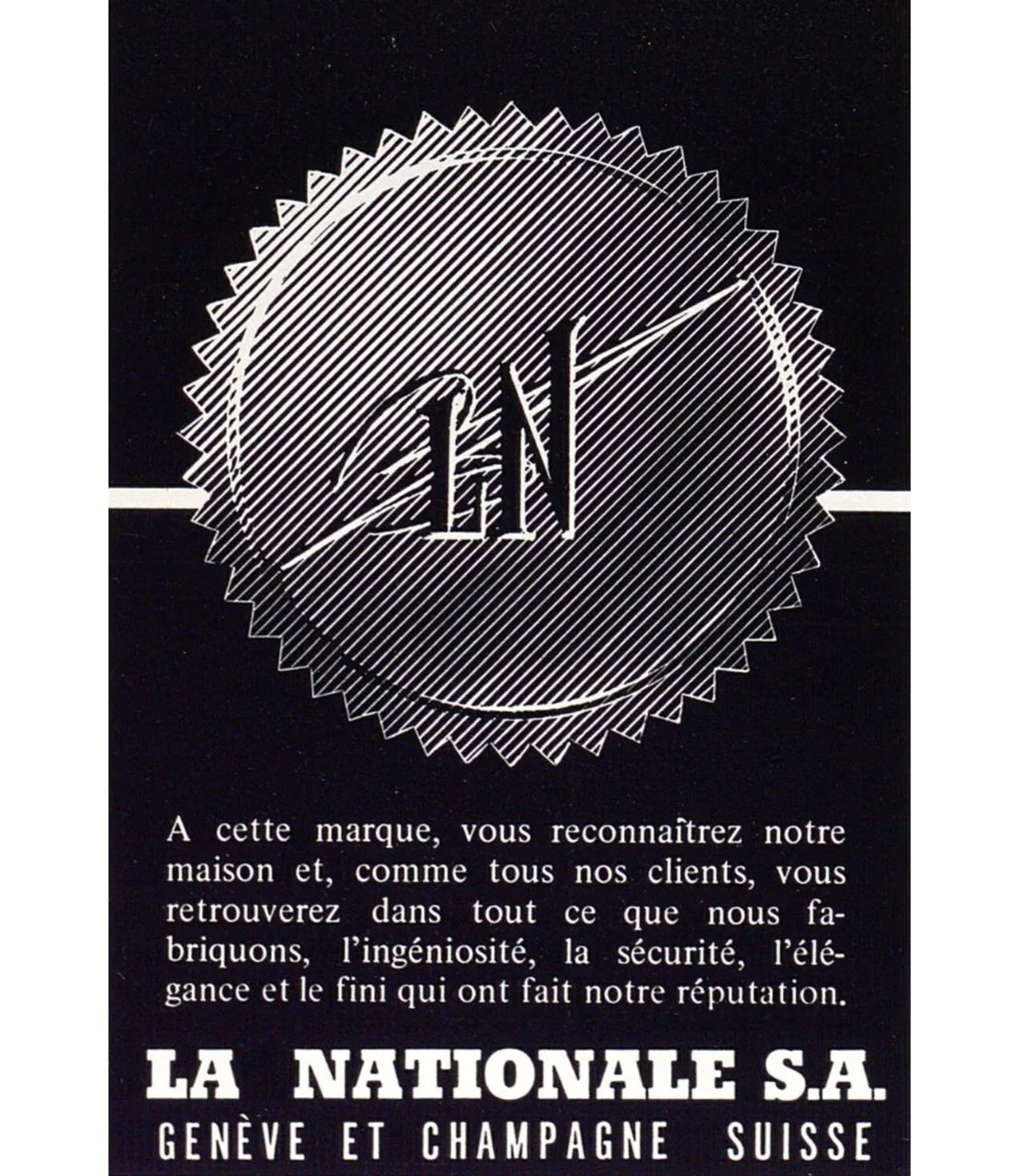
1970. La Nationale Advertisement. The guilloché copying machines which enabled to introduce the Tapisserie motif at Stern Frères came from the La Nationale Manufacture. Europastar 1970, no 677, 1/12, p. 11. © Europa Star
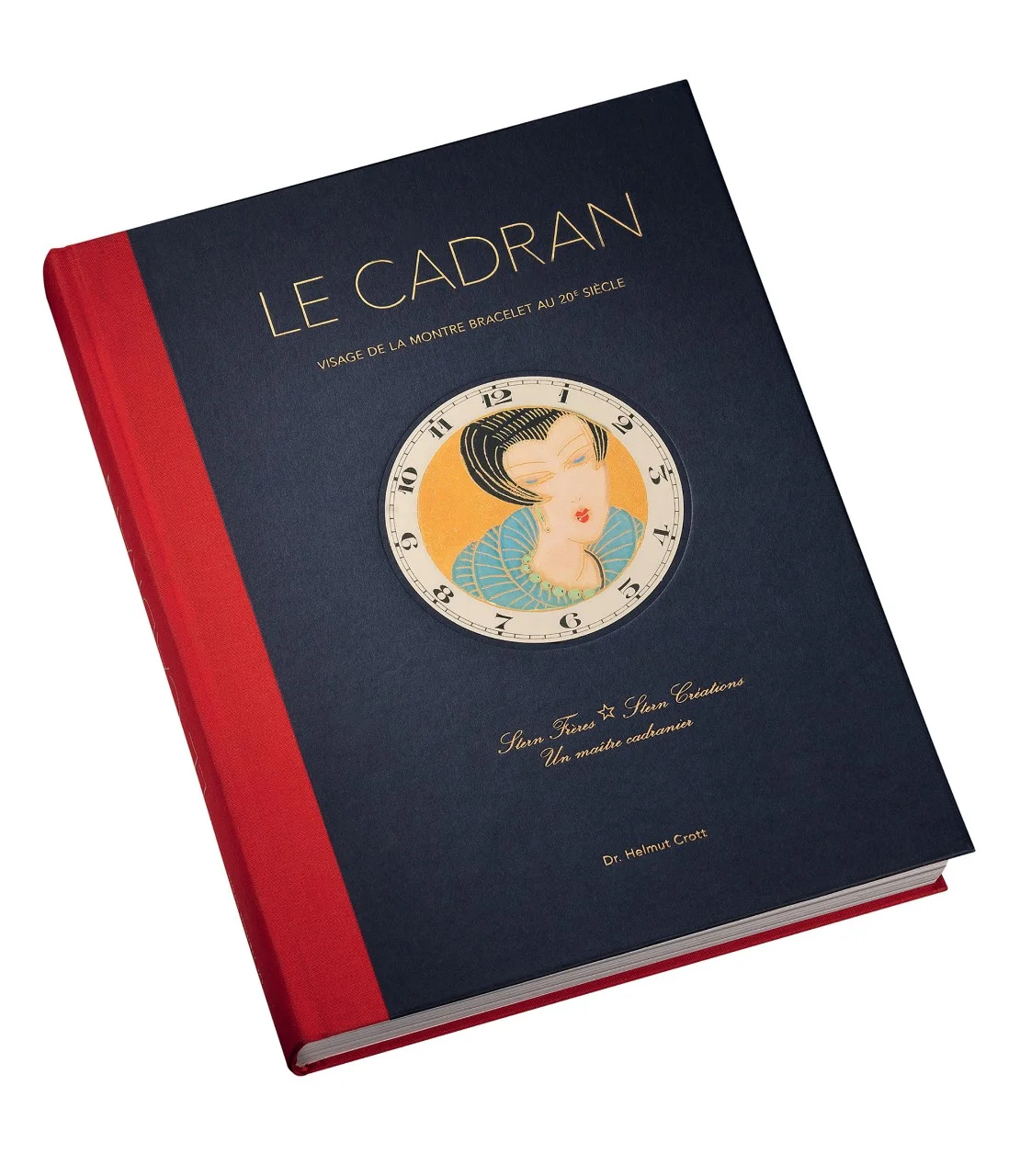
2020. Le Cadran. Visage de la montre-bracelet au 20e siècle. This monograph dedicated to the Geneva dial-maker Stern Frères is also a reference book for dial manufacturing techniques. Picutre by Audemars Piguet.
Three Skills Converge
The Tapisserie technique lies at the crossroads of three traditional skills: engraving, guilloché work and pantography. The oldest is engraving, an art born thousands of years ago and used by every civilisation, alongside sculpture and painting. An artisan patiently carves or sculpts the material using tools such as scorpers, burins, chisels and burnishers to depict myths, hunting scenes, characters, flowers, coats of arms and arabesques. Literally anything can be represented by the engraver. In watchmaking, this art appeared as early as the 16th century and was used to decorate table watches, pendants and more. It continues to this day, notably at Audemars Piguet on openworked movements, personalised oscillating weights and dials.
The second Tapisserie-related skill is the centuries-old guilloché technique. Suffice it to mention the copying lathe of Tsar Peter I in 1718, as well as the guilloché lathe (also known as a rose engine) made by François Houard for Max Emmanuel of Bavaria in 1712. With these machines, artisans engraved regular straight, curved or wavy lines that were juxtaposed, intertwined or criss-crossed to cover a metal surface with abstract geometrical patterns creating fascinating light effects. From the 18th century onwards, first in France and then Switzerland, the guilloché technique began to be mechanised and notably applied to pocket watch cases. The motifs were "programmed" into cams that rotated in such a way as to create small shifts of position, combining to result in a guilloché pattern. Abraham-Louis Breguet helped popularise this art in the watchmaking field, adorning his creations with hobnail Clous de Paris, barleycorn or basketweave motifs.
The third technique is pantography. The Illustrated Professional Dictionary of Horology describes the pantograph as "an instrument for copying drawings mechanically, sometimes also enlarging or reducing them" by means of articulated arms and using a pattern (also called a matrix or model). The Musée International d'Horlogerie in La Chaux-de-Fonds has some superb examples of dials with pantograph script so small as to be barely visible to the naked eye. The pantograph was also used by Vacheron Constantin from the 1840s onwards to produce tiny components so precise that they no longer needed manual touching up and were thus designed to be interchangeable.
The Tapisserie pattern therefore combines these three techniques. Like engraving, it hollows out the material with a burin. Like guilloché work, it uses a mechanised lathe. And like pantography, it reproduces the design of a pattern (matrix or model) by modifying its size.
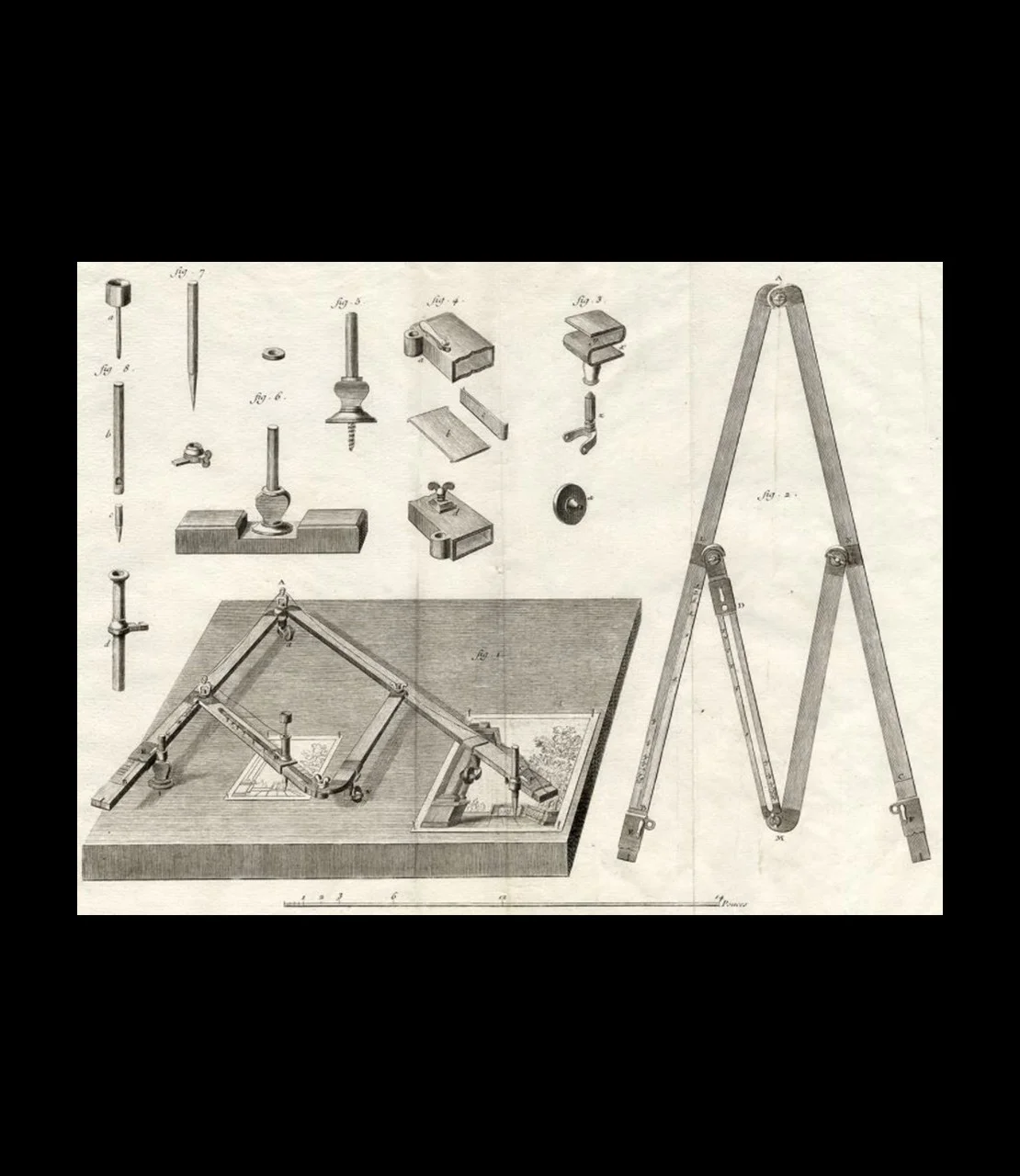
1763. Pantograph. The pantograph enables to reproduce a motif in a bigger or smaller version. Plate III of the Diderot and d'Alembert Encyclopaedia's illustrated supplement, intaglio engraving by Robert Bénard (1763). Bibliothèque nationale de France.
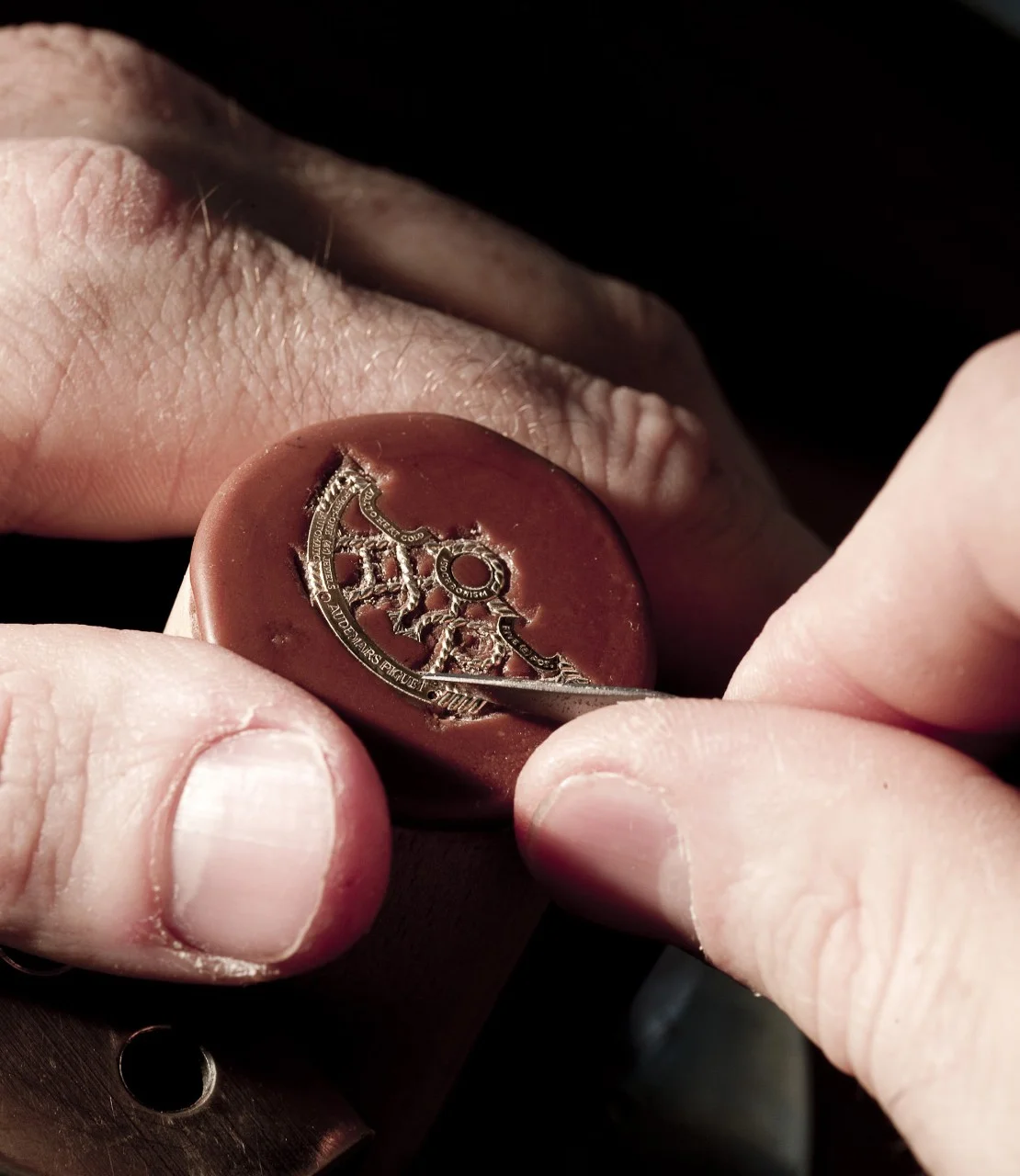
2011. Engraving of an oscillating weight for Calibre 2121. The engraver recesses the gold with a chisel, perpetuating centuries-old savoir-faire. Picture taken in the Audemars Piguet workshop in 2011. Audemars Piguet Archives.
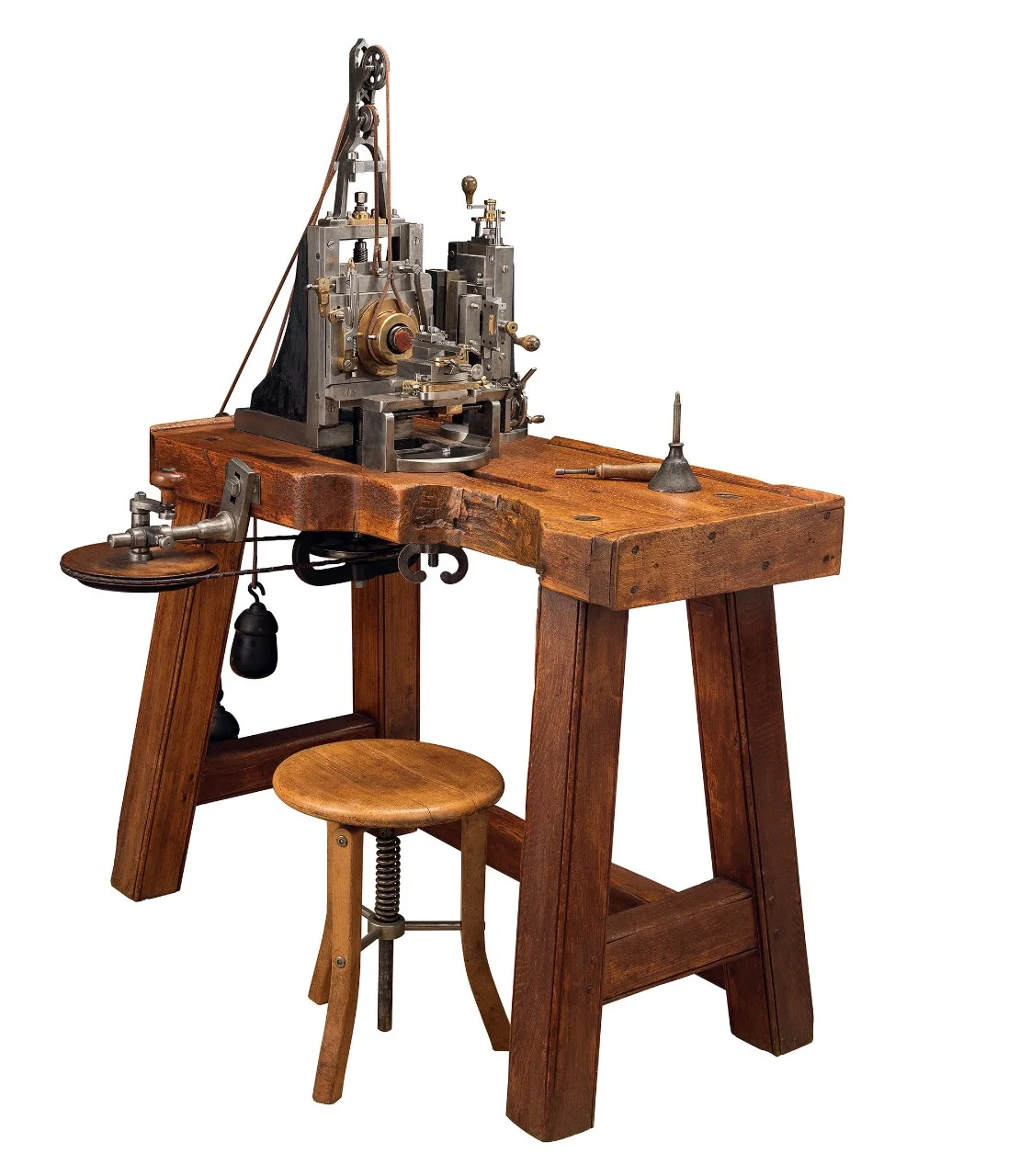
Circa 1850. Straight line-guilloché machine. Signed A. Duguet (Lyon), this machine enabled to create guilloché motifs, such as the Clous de Paris, the Grains d'Orge (barley grain) or the Nid d'Abeille (honeycomb), etc. Audemars Piguet Heritage, inv. 1553.
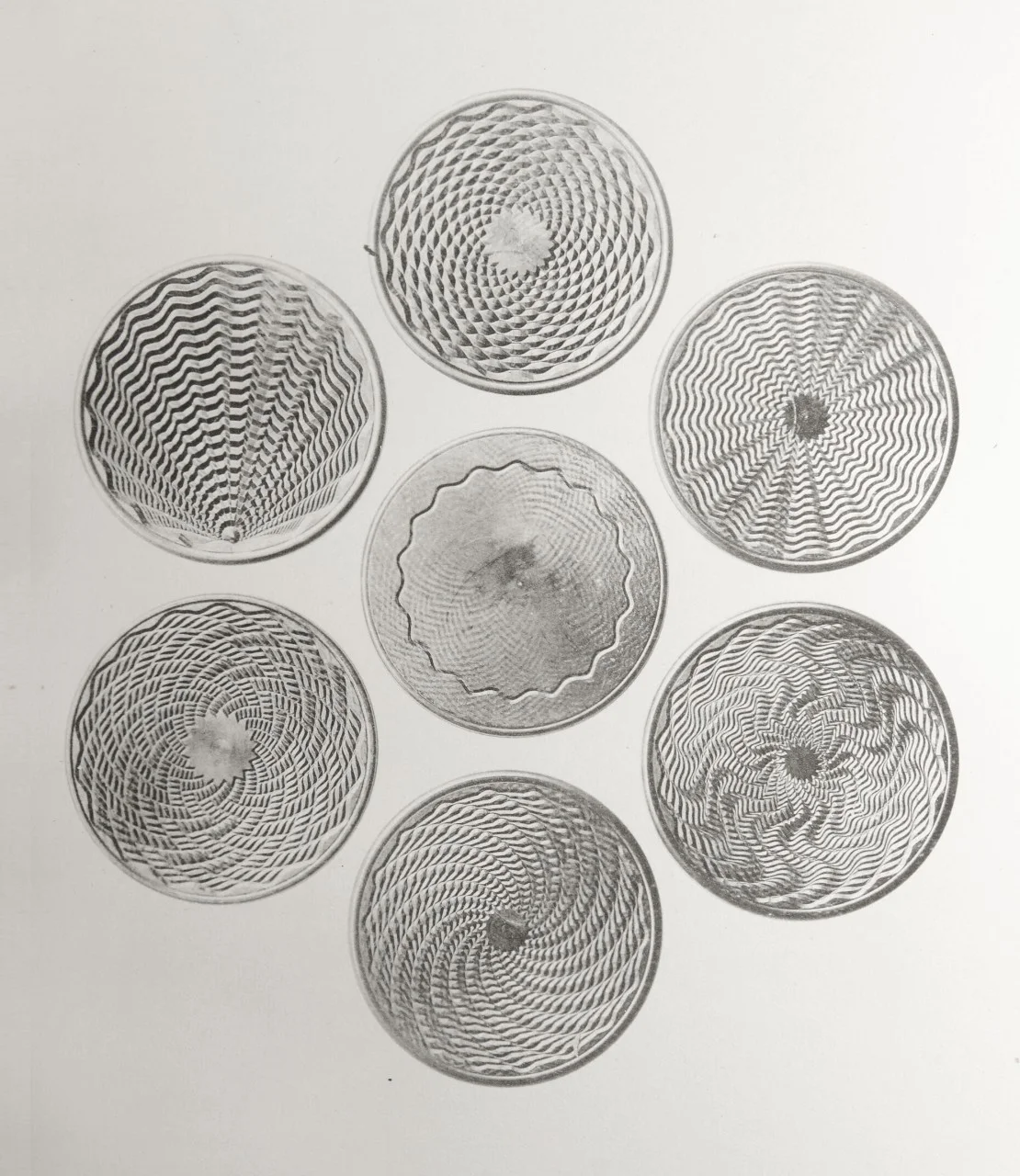
1928. Examples of guilloché work. To illustrate his famous book titled Watches. Their history, decoration and mechanism, G. H. Baillie created these seven examples, featuring differences due to the shape of the cams fitted to the guilloché lathe. Op cit, 1929, plate no LIV (p. 224).
Technical Tapisserie Principles
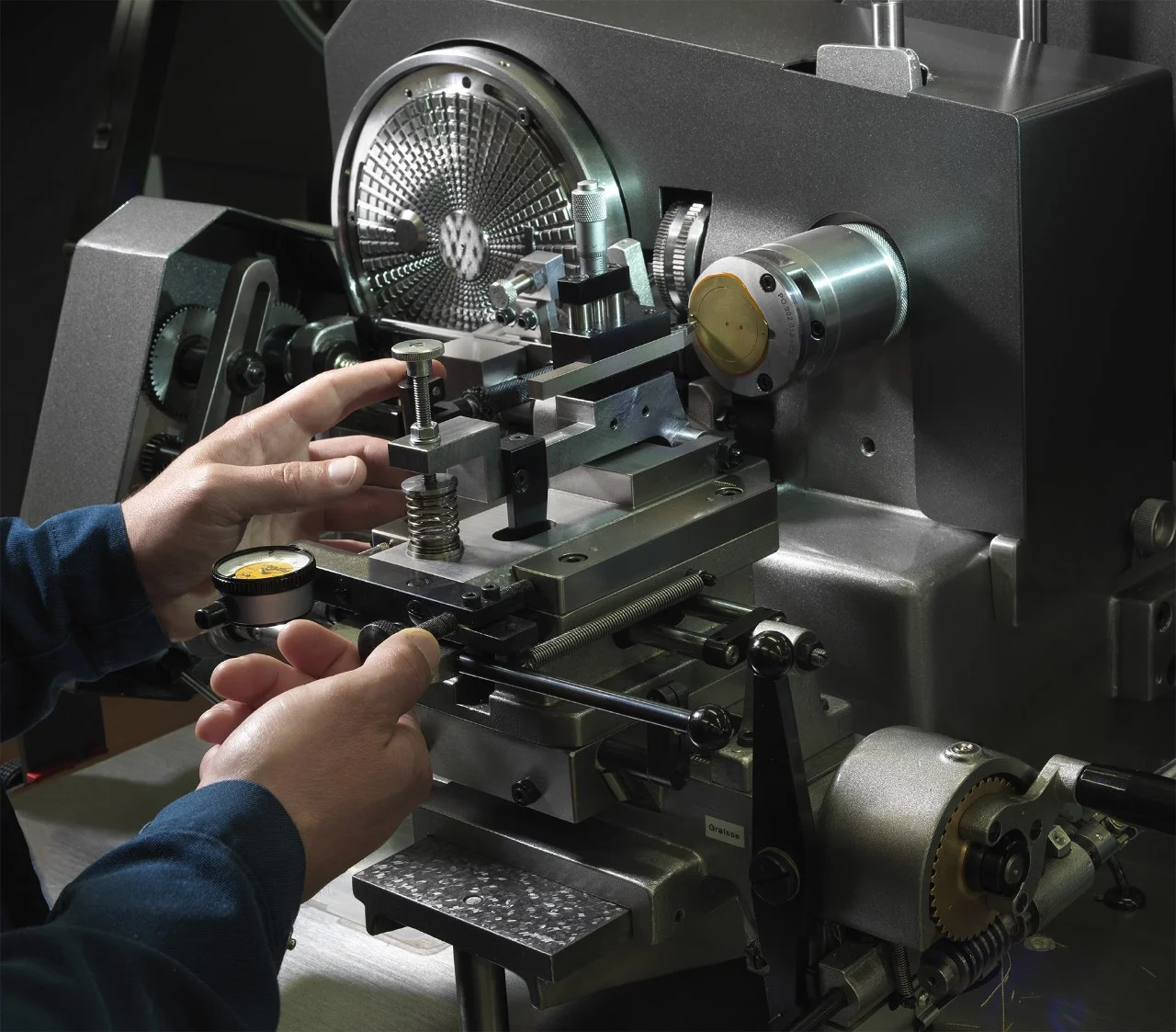
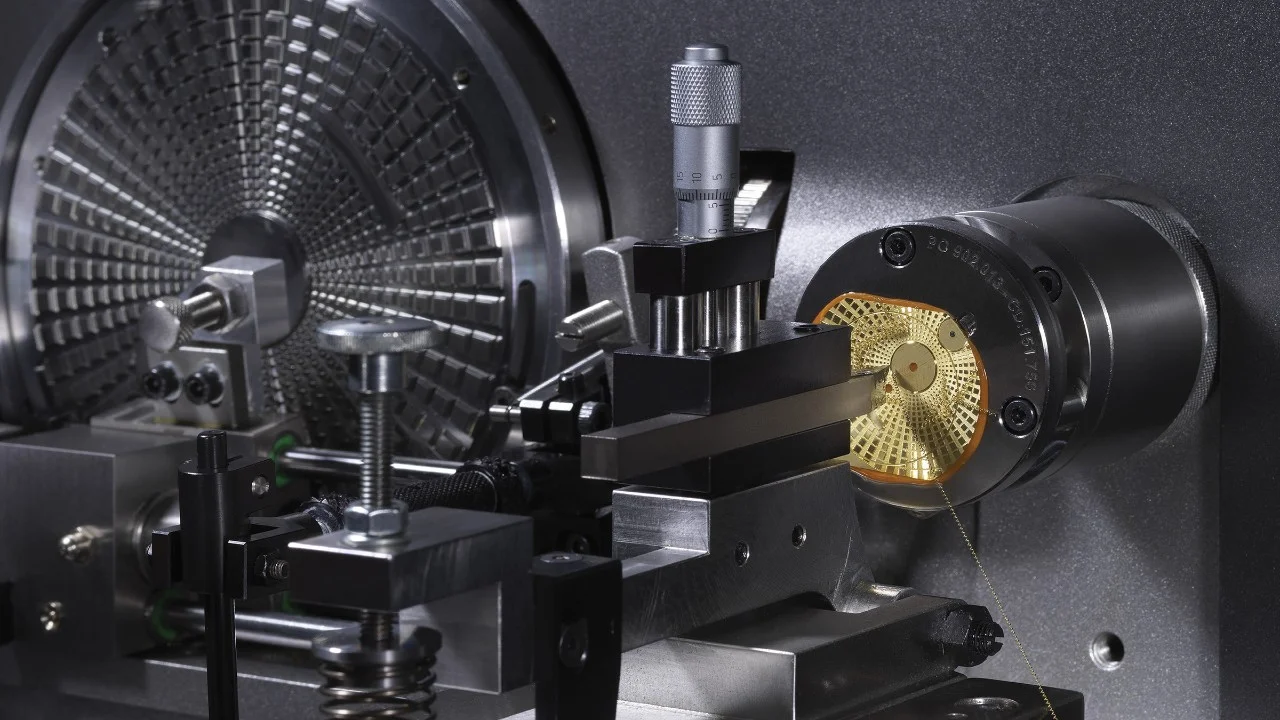
Technically, the principle of an engraving machine is simple. Two round metal plates rotate at the same speed. On the first (the pattern, or model), the motifs to be reproduced (Tapisserie) are greatly enlarged. As the plate rotates, a finger (feeler) travels along the relief of the Tapisserie, somewhat like climbing a mountain before descending into the valleys. Thanks to the pantograph system, on the second plate (the dial), a burin hollows out the material to various depths, mechanically reproducing the movements of the feeler, but at a smaller scale. The burin is connected to and governed by the feeler. In other words, when the feeler goes down into a valley, the burin digs deep and when the former travels upwards, the latter digs less and less deeply.
The work begins at the periphery of the dial. With each new turn, the burin moves a little closer to the centre until it covers the entire surface. In a Royal Oak dial, it takes 11 turns to cover one millimetre. Helmut Crott explains: "The surface of the dial features slight snail-shaped grooves visible to the naked eye. These lines, created by the burin contribute to the overall aesthetic appeal of the watch. On closer inspection, the base of the raised pattern resembles a granular structure deliberately obtained with the help of a fluted wheel linked to a second feeler that vibrates when the main feeler drops to the bottom of the raised pattern.” These small dots are in fact tiny diamond shapes whose four inner faces reflect the light. As the number of dots is the same for each revolution, they are much tighter in the centre of the dial than at the periphery, creating shimmering moiré effects and drawing intersecting curved lines.
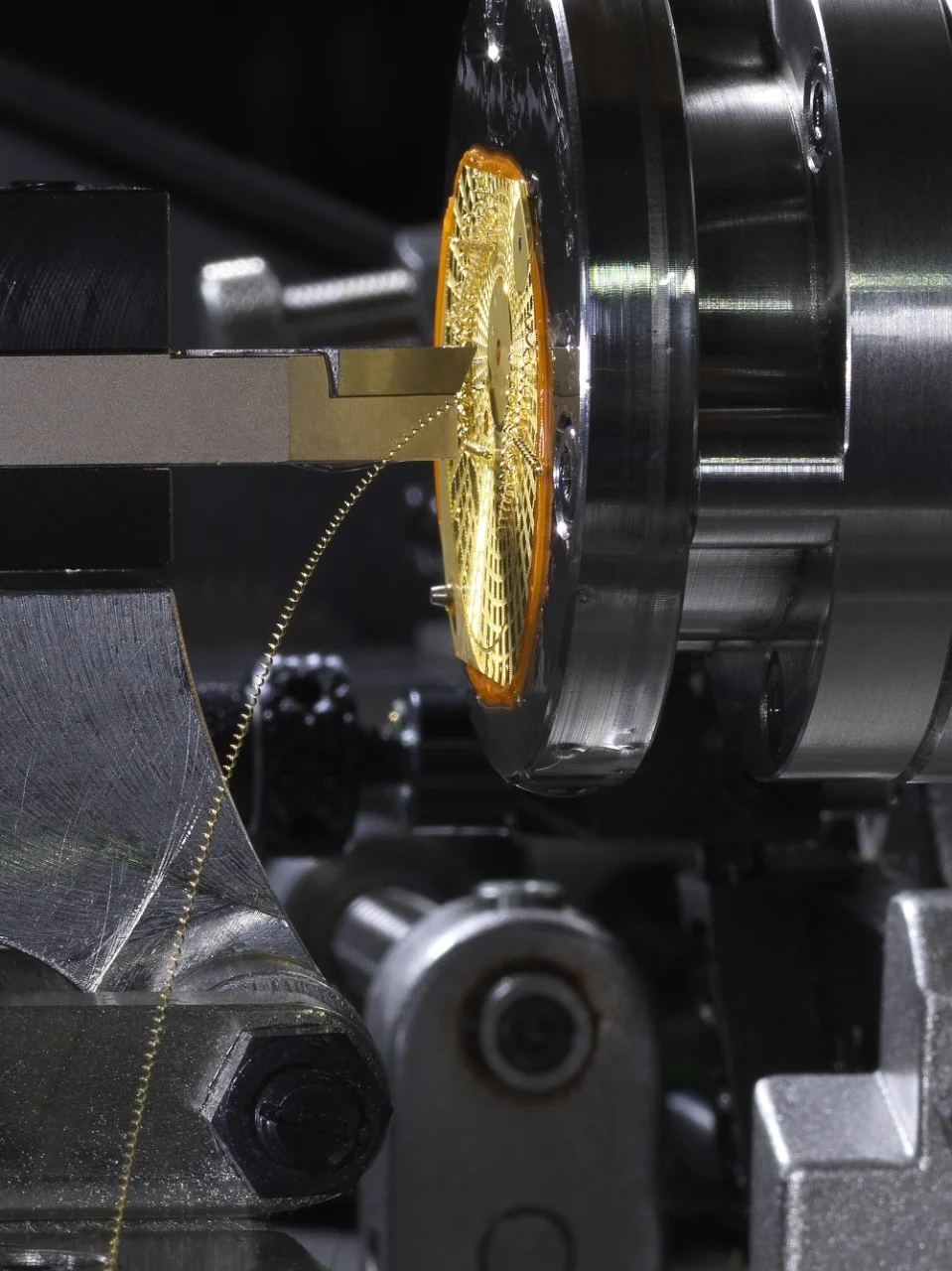
Tapisserie is a difficult art. Marc Ferland, head of the guilloché workshop at Audemars Piguet between 2011 and 2021, can talk about it for hours. He knows that setting and adjusting the machines involves numerous parameters and that mastering the tricks of the trade calls for knowledge, instinct, a keen sense of observation and excellent hearing. This is because "the machine sings" and the seasoned artisan can tell by its soft, regular vibration whether the dial will be worthy of his expectations or not. The height of mastery is reached when the guilloché work on an entire dial produces a single strand of metal shaving. “It’s a bit like peeling an apple and keeping the skin in one piece.” Every detail is crucial, right down to the rigidity of the base, which for a long time was made of wood so as to absorb micro-shocks. The base of the machine is now placed on ‘anti-vibration feet’.
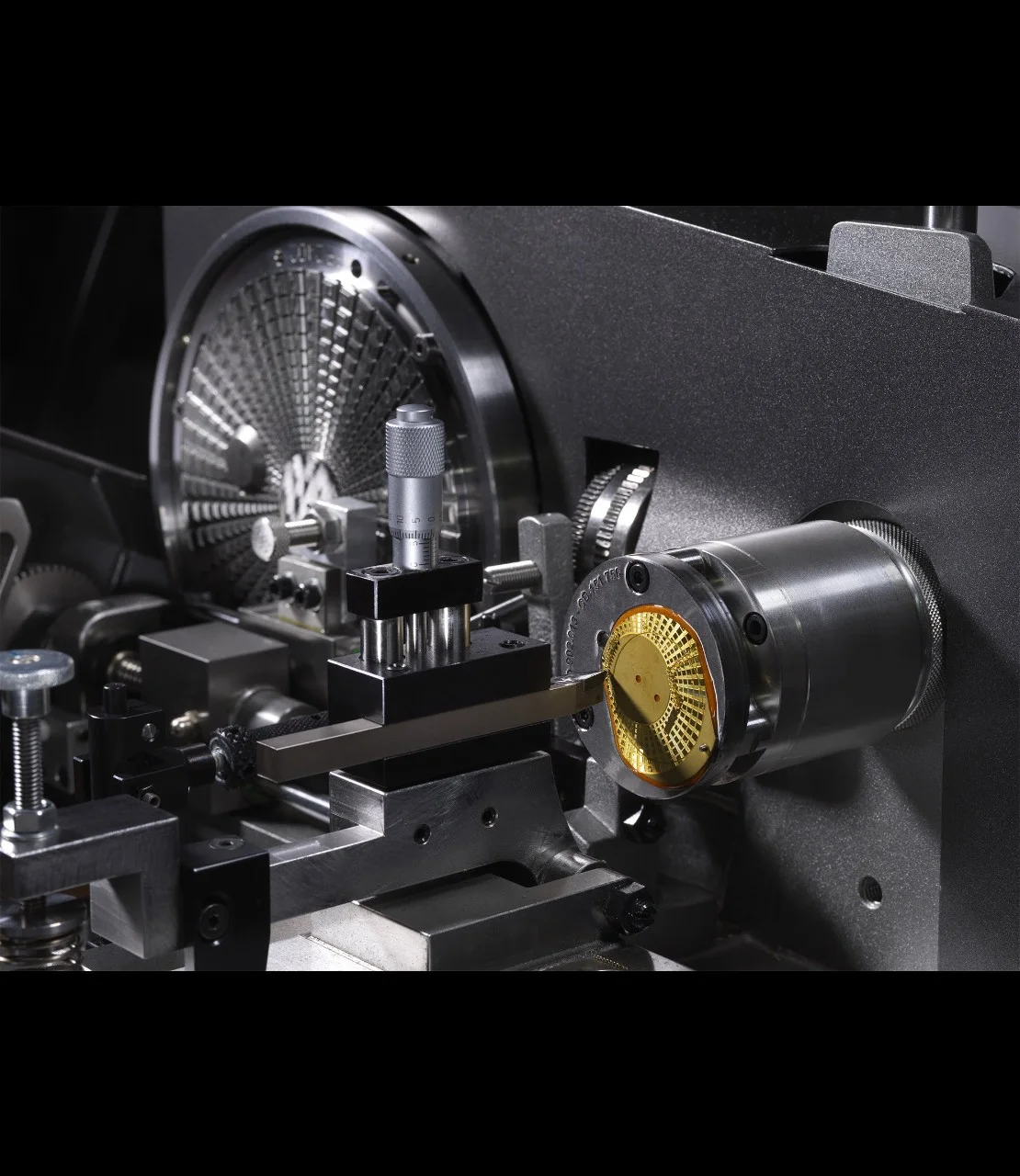
2018. Close-up on the guilloché copying machine. On the left, a feeler-spindle follows the relief of the matrix which spins on itself. On the right, a graver reproduces the same motions to engrave the Tapisserie motif on the Royal Oak dial. Image taken in the Audemars Piguet workshops in 2018.
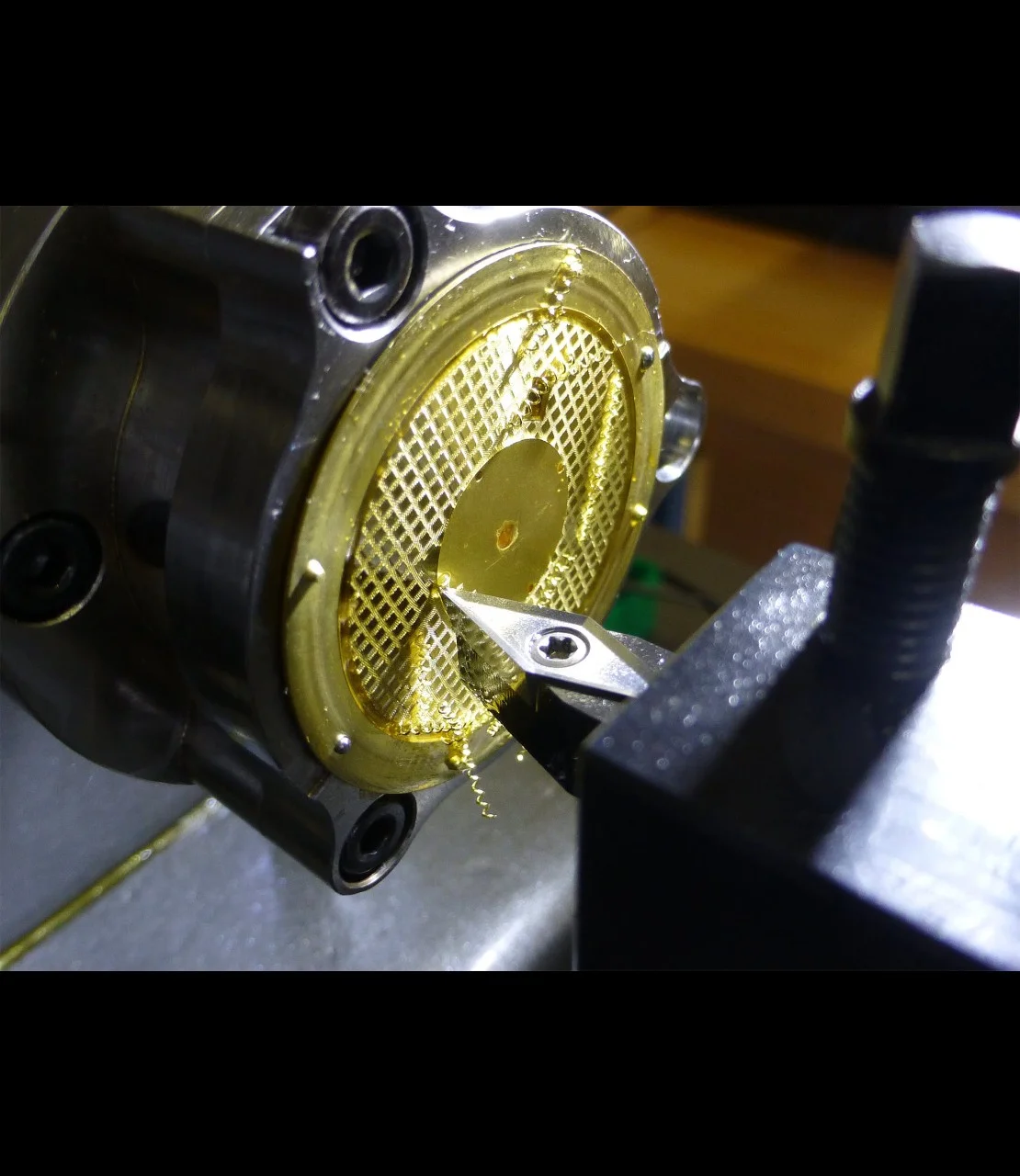
Circa 2010. Close-up on a guilloché copying machine. The brass dial spins on its own while a point engraves the Tapisserie motif. At each turn, the point recesses 339.5 diamond shapes and moves closer to the centre of the dial by an eleventh of a millimetre. Picture by Audemars Piguet.
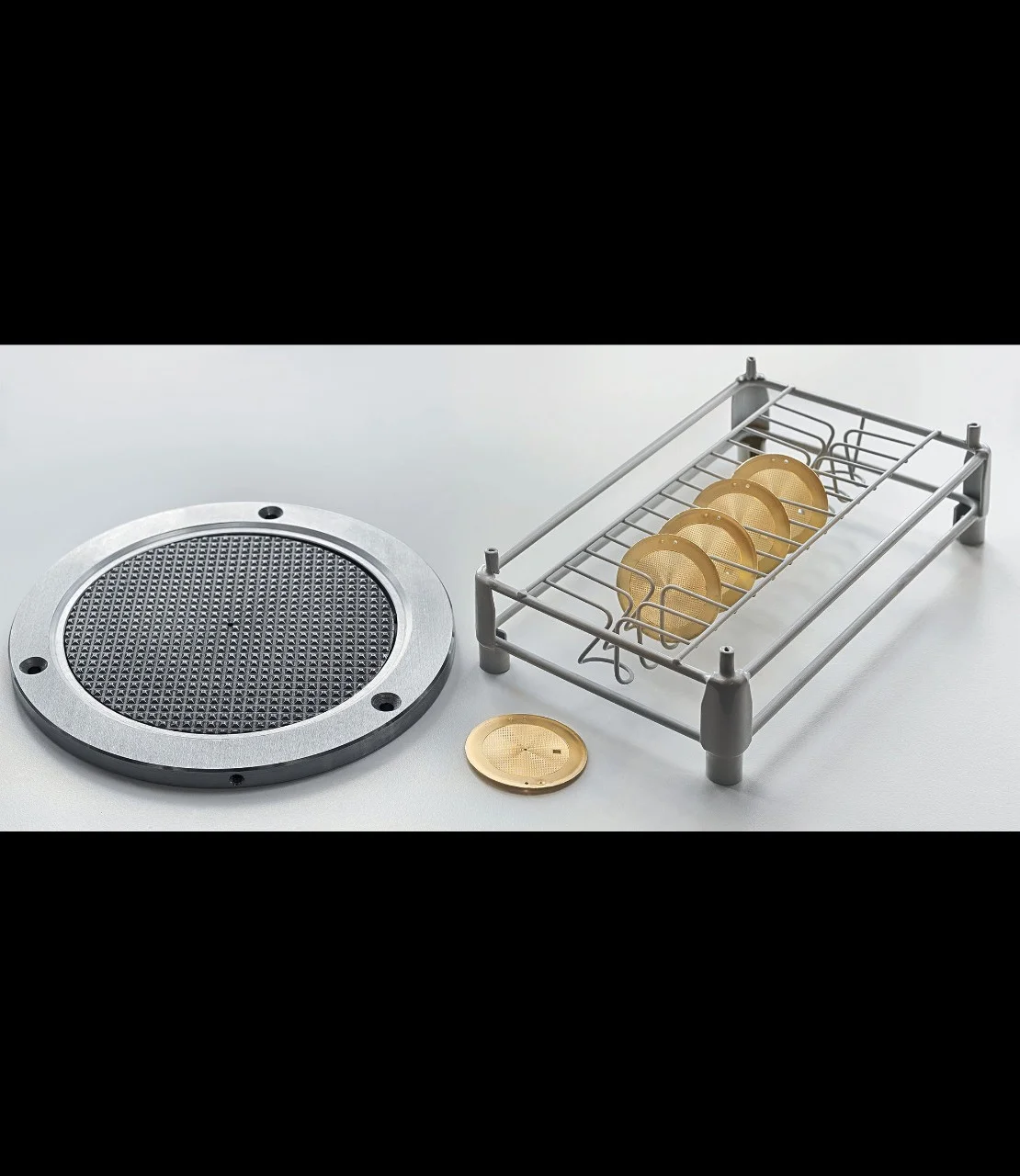
2021. Manufacturing of 5402 "Classic Parts" dials. Preserved since the 1970s, this old T21 matrix (on the left) was used in 2021 to reconstitute and produce 5402 dials with ancient techniques. Upholding traditional guilloché techniques, these replicas or classic parts have been made for 5402 Royal Oak models, whose dials are no longer original or in such a poor condition that they cannot be restored.
Petite Tapisserie Forges a Grand Destiny
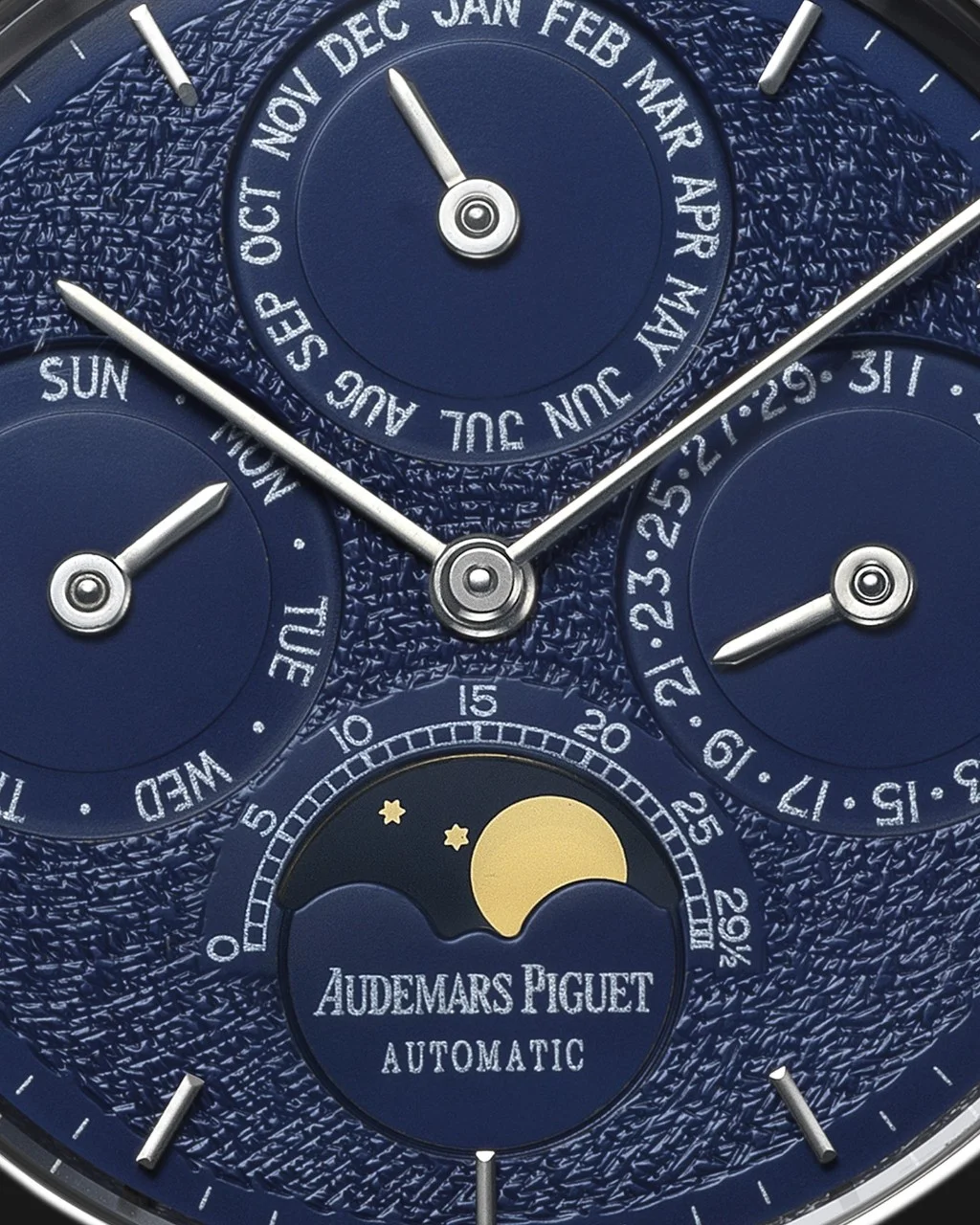
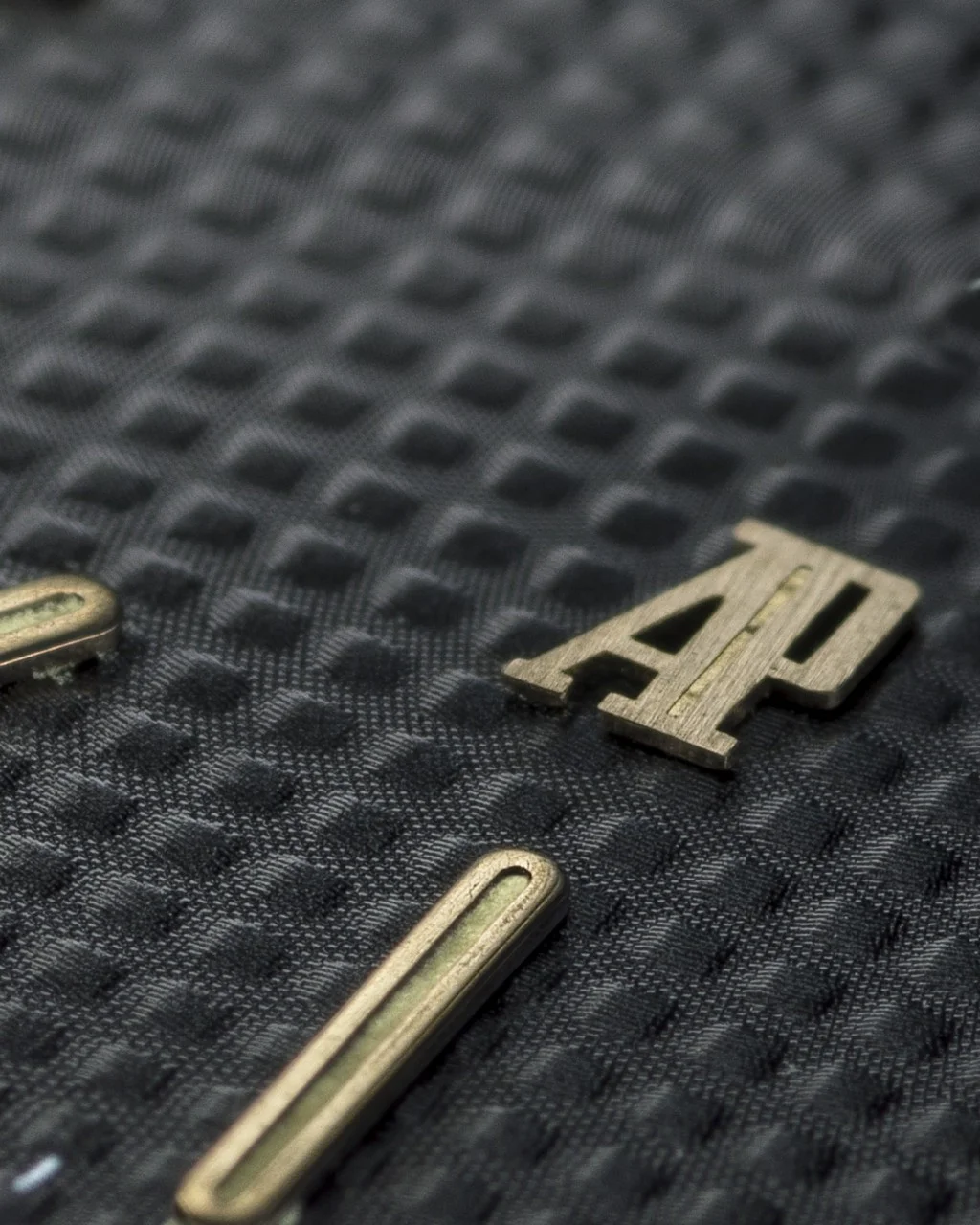
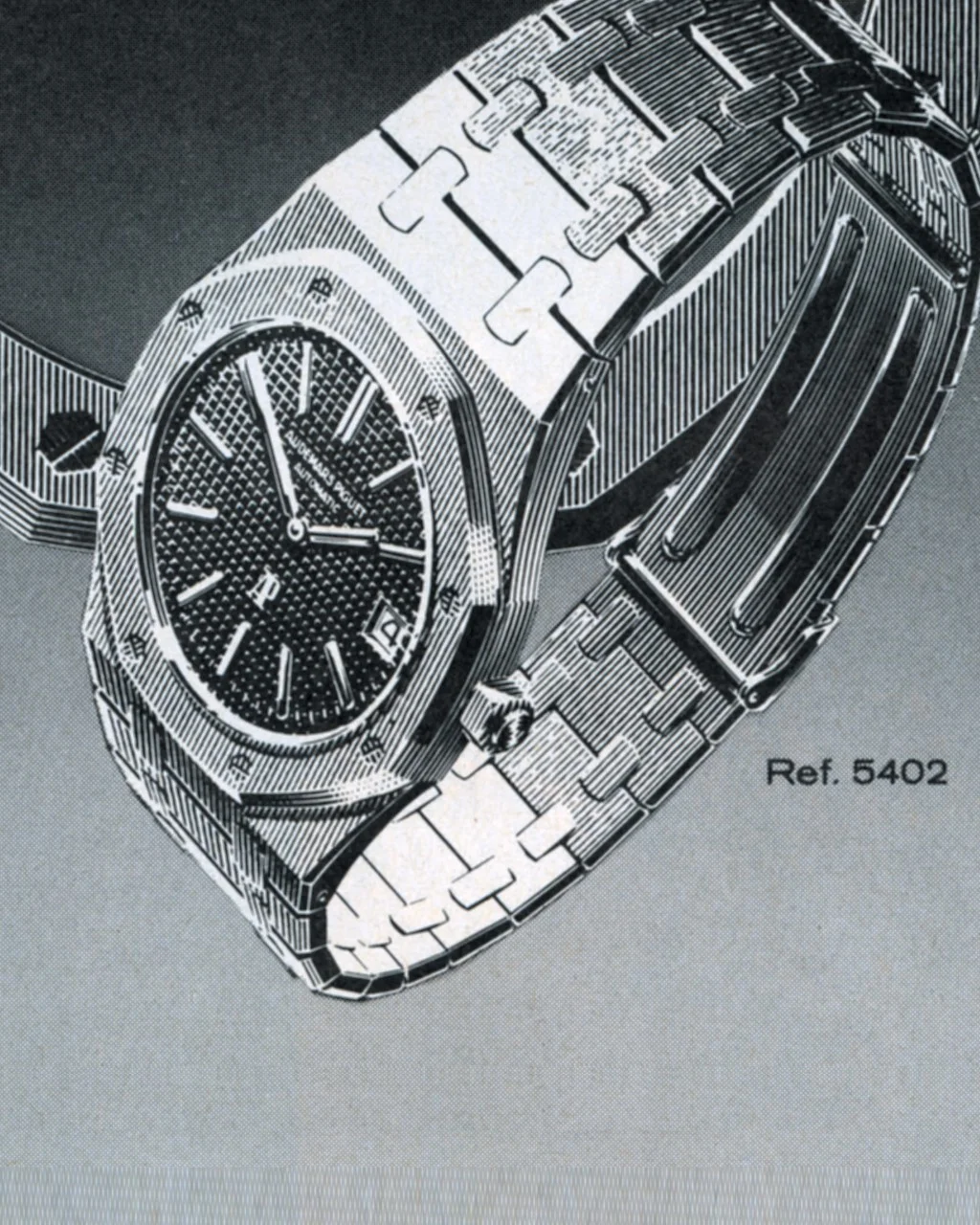
The article dedicated to the 5402 dial variants goes into detail about the characteristics of the T21 Tapisserie, developed for the first Royal Oak dials and currently known as the Petite Tapisserie. The reader will find information on the truncated pyramids, their variations, the more than 50,000 tiny diamond shapes, the Bleu Nuit, Nuage 50 (Night Blue, Cloud 50) colour, the AP monogram at 6 o'clock and the AUDEMARS PIGUET signature at 12 o'clock, the white gold tritium hands and hour-markers, and more.
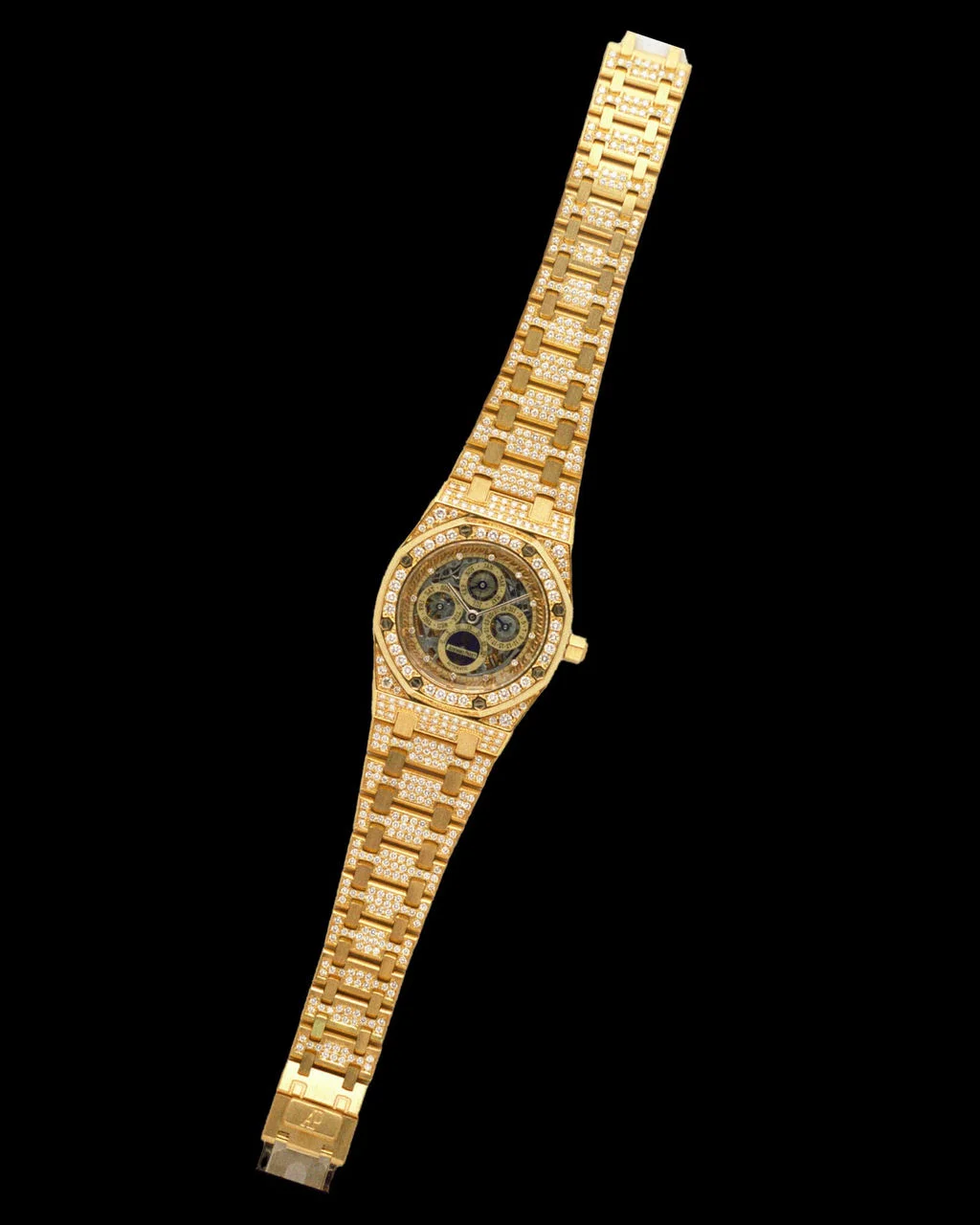
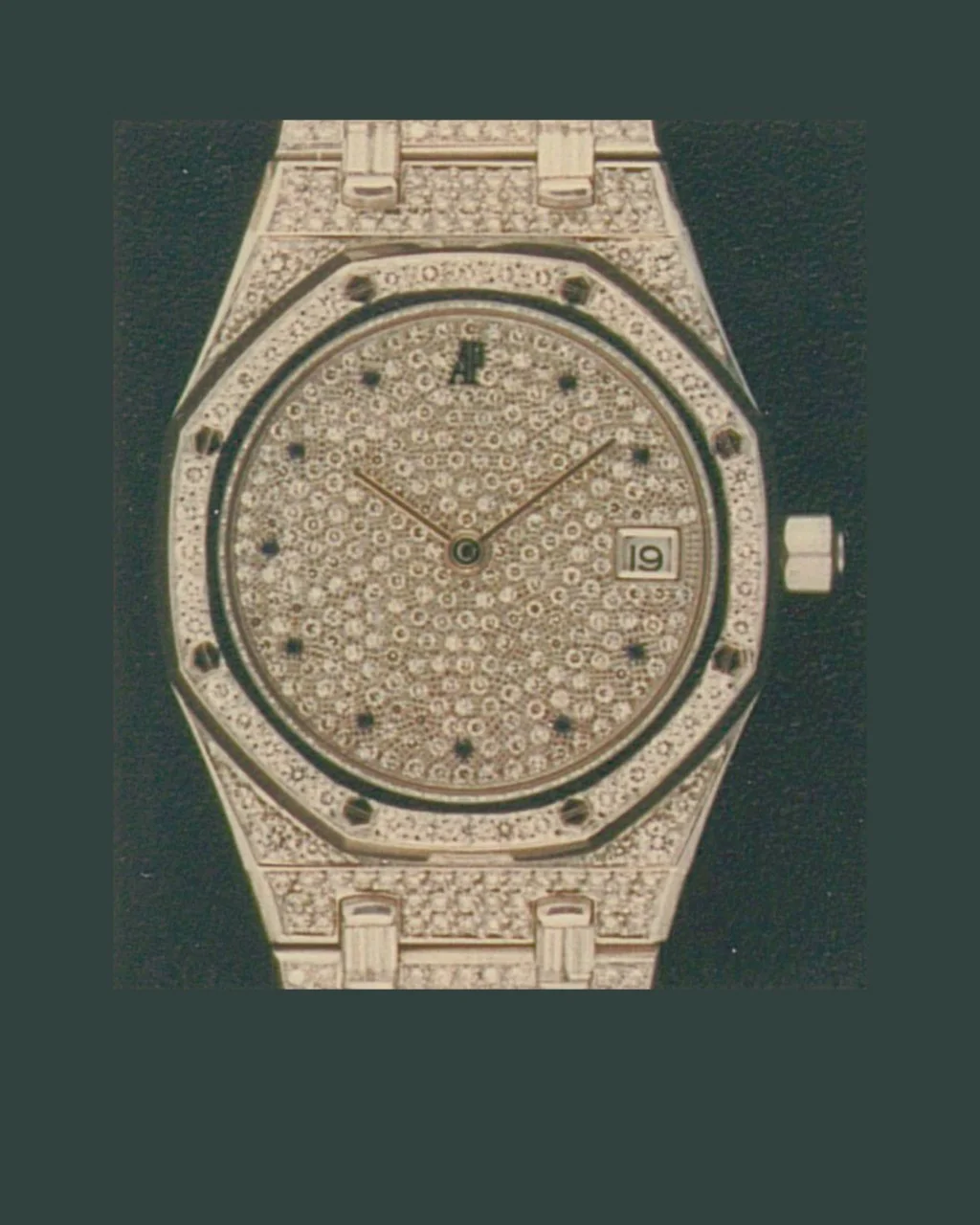
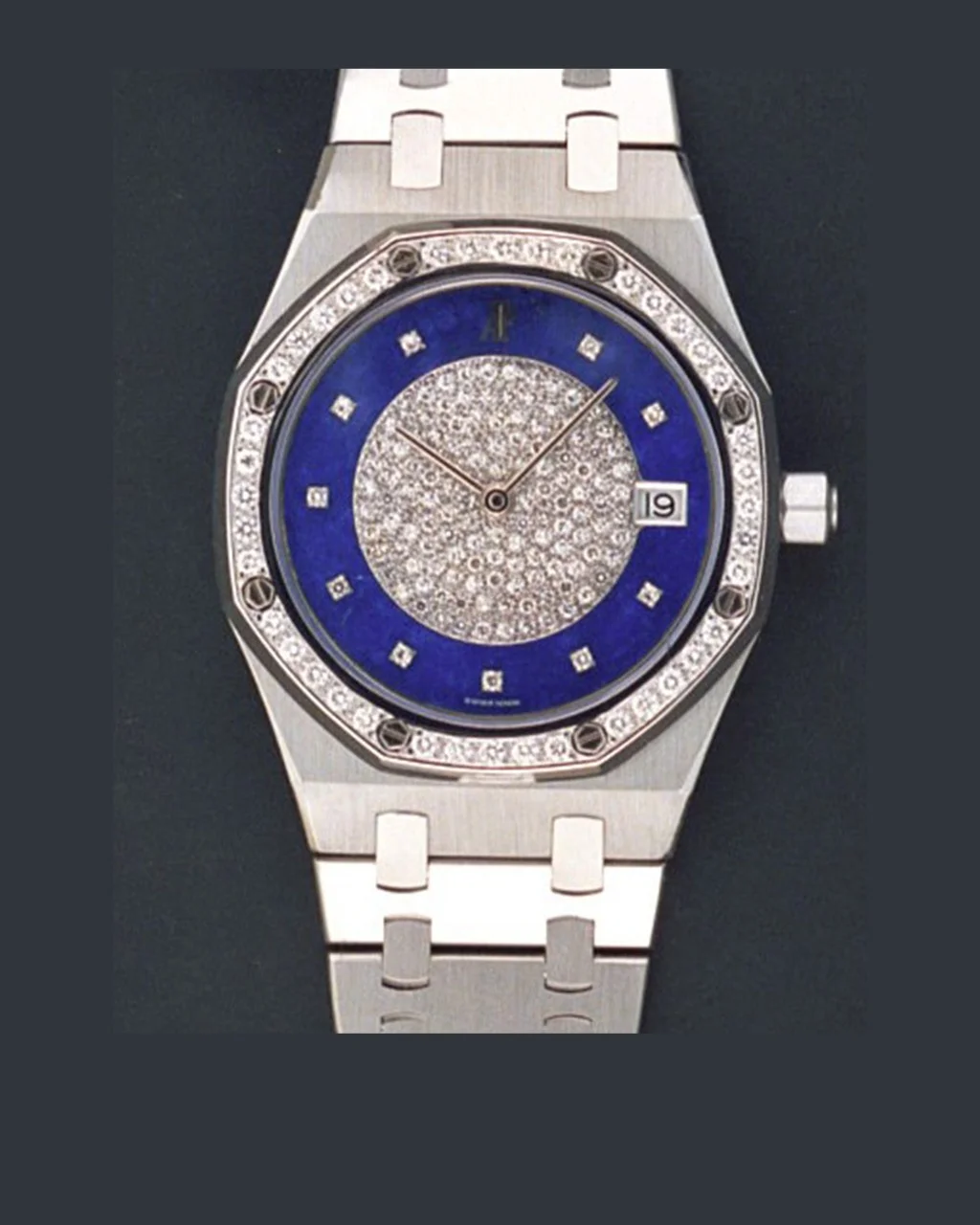
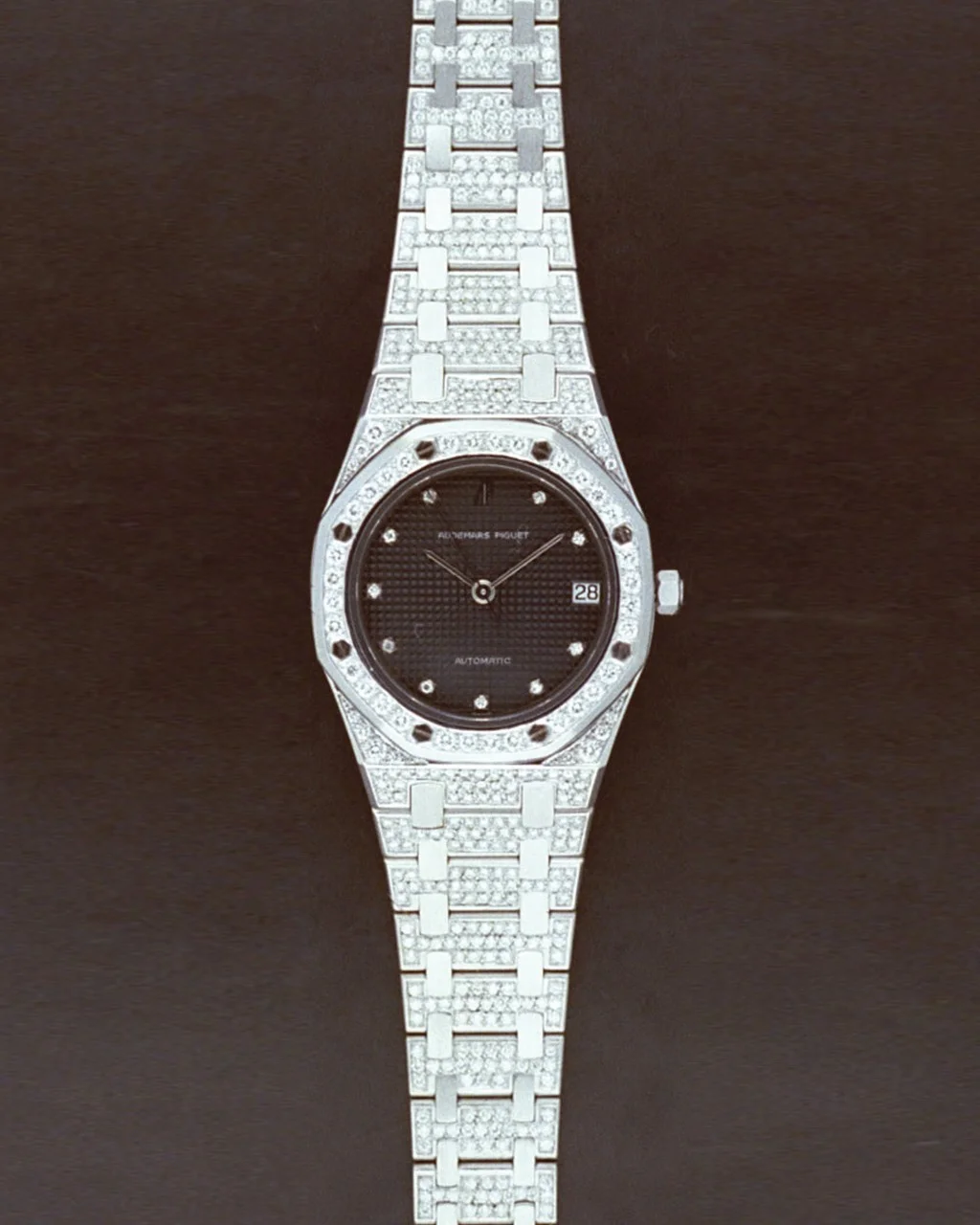
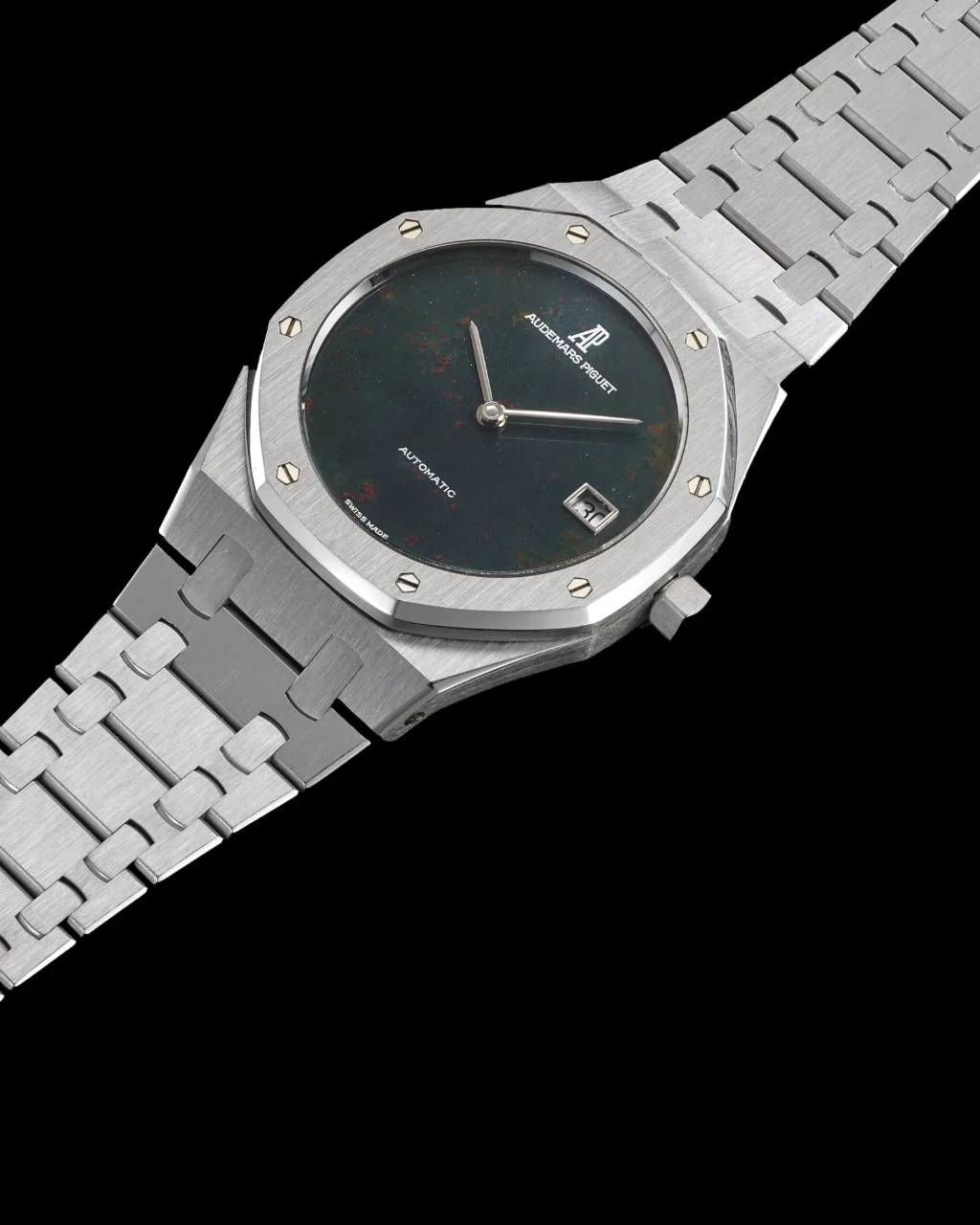
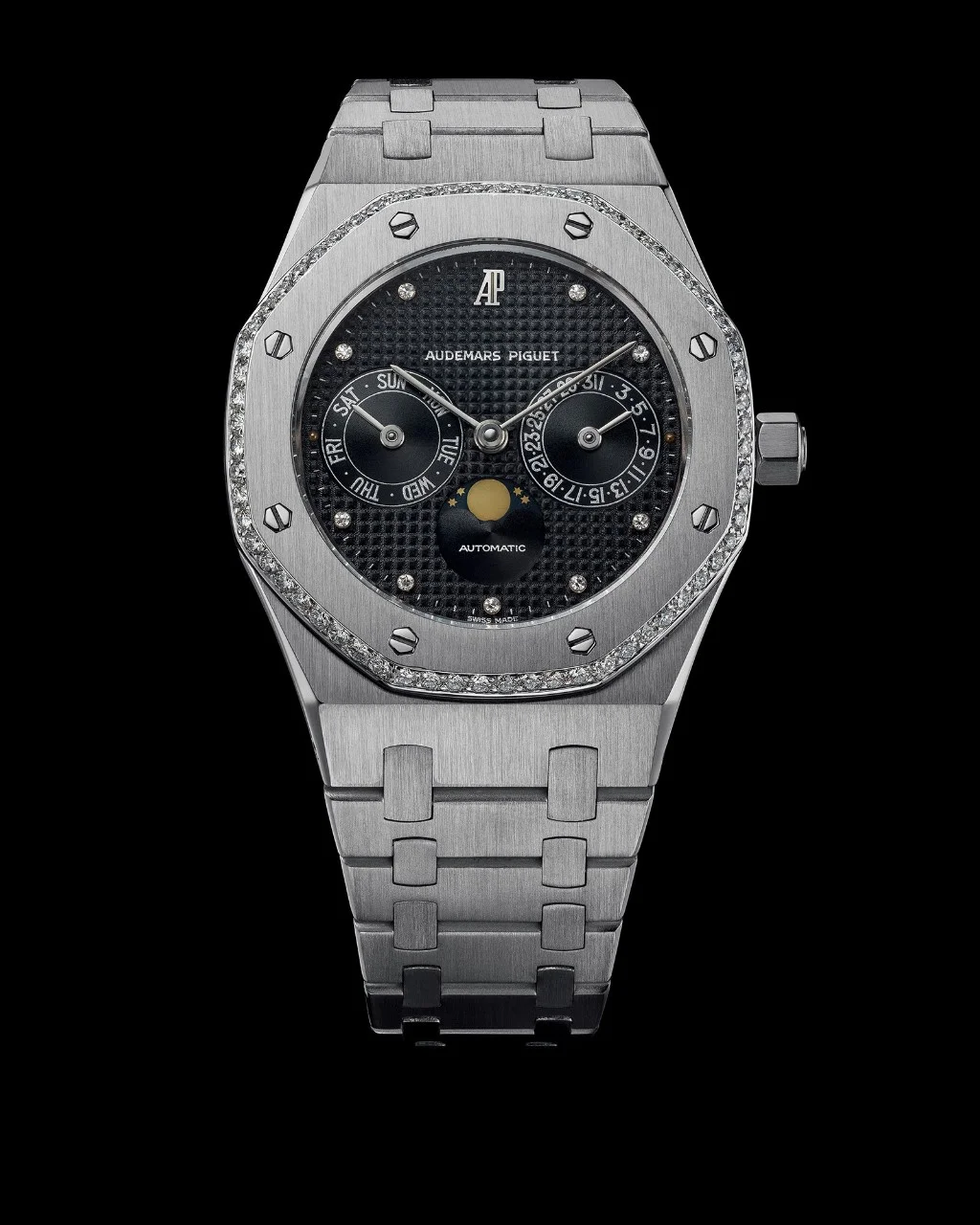
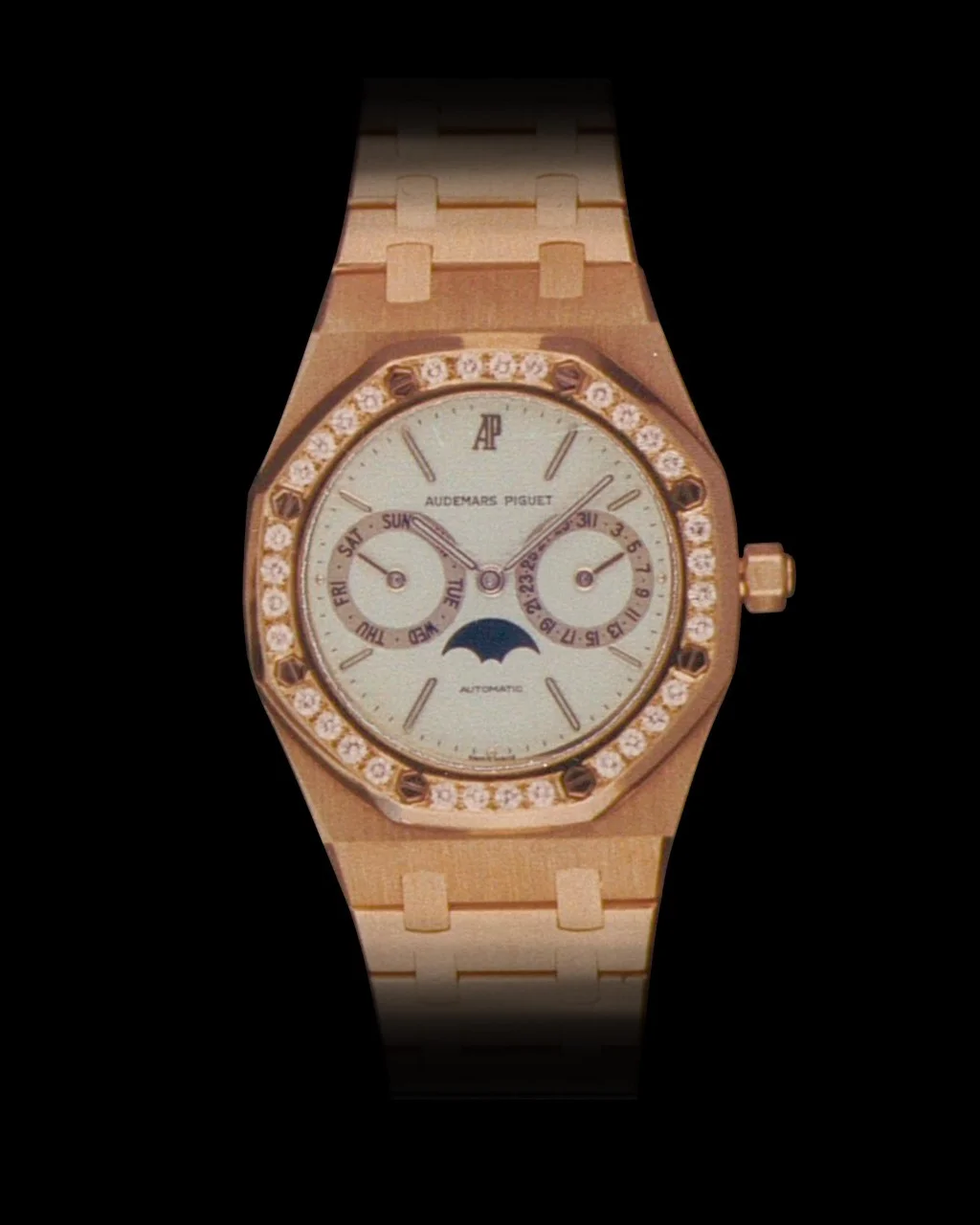
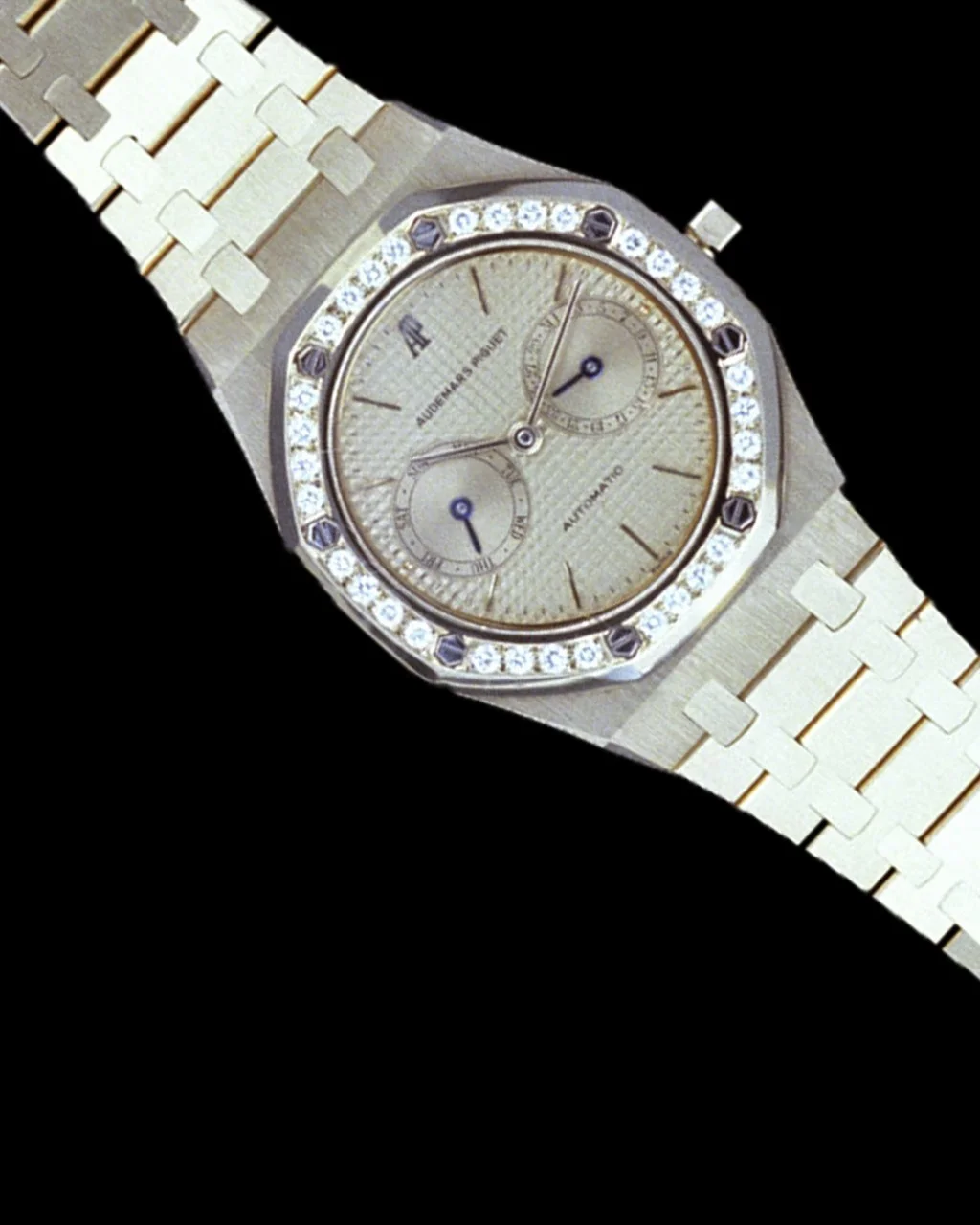
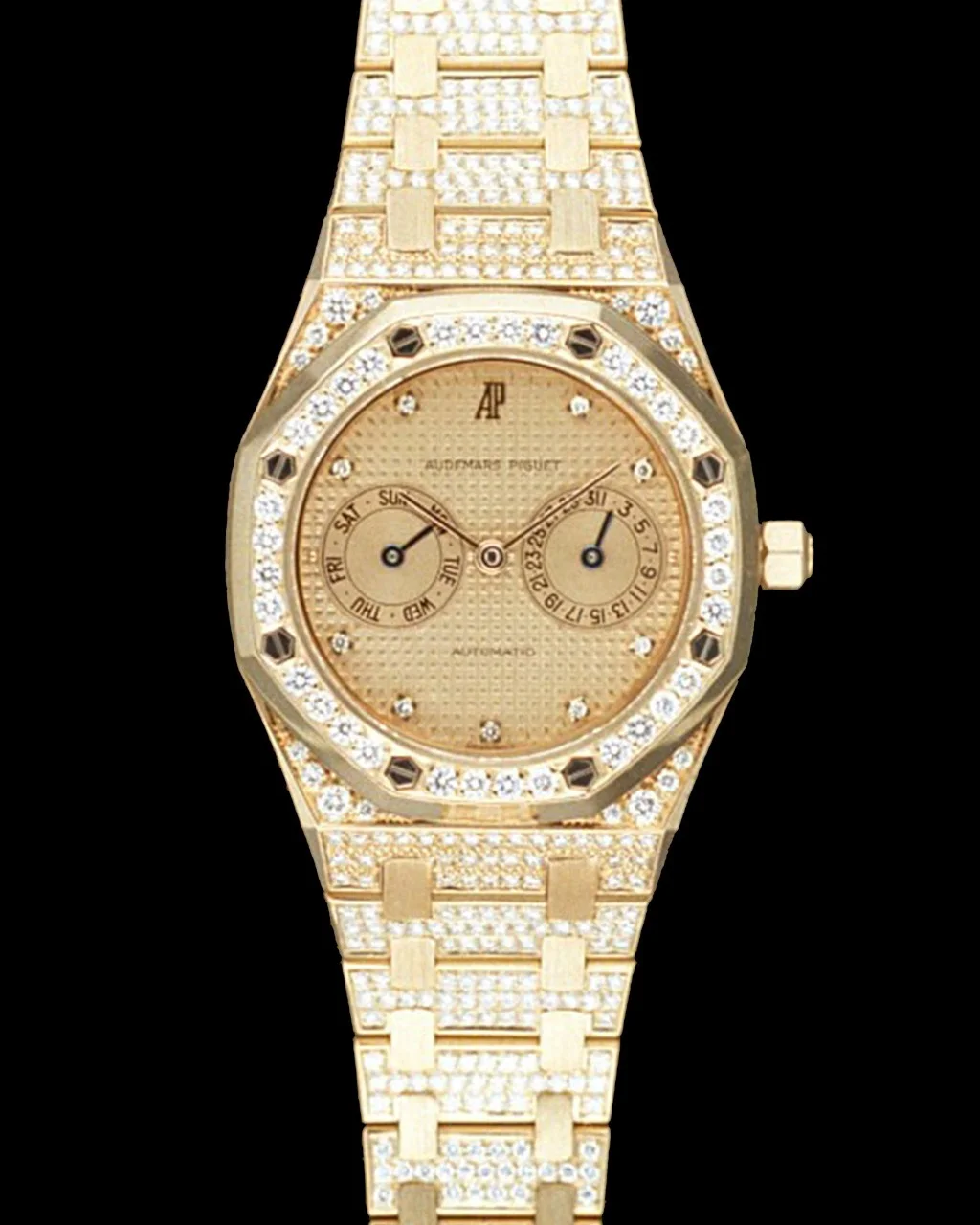
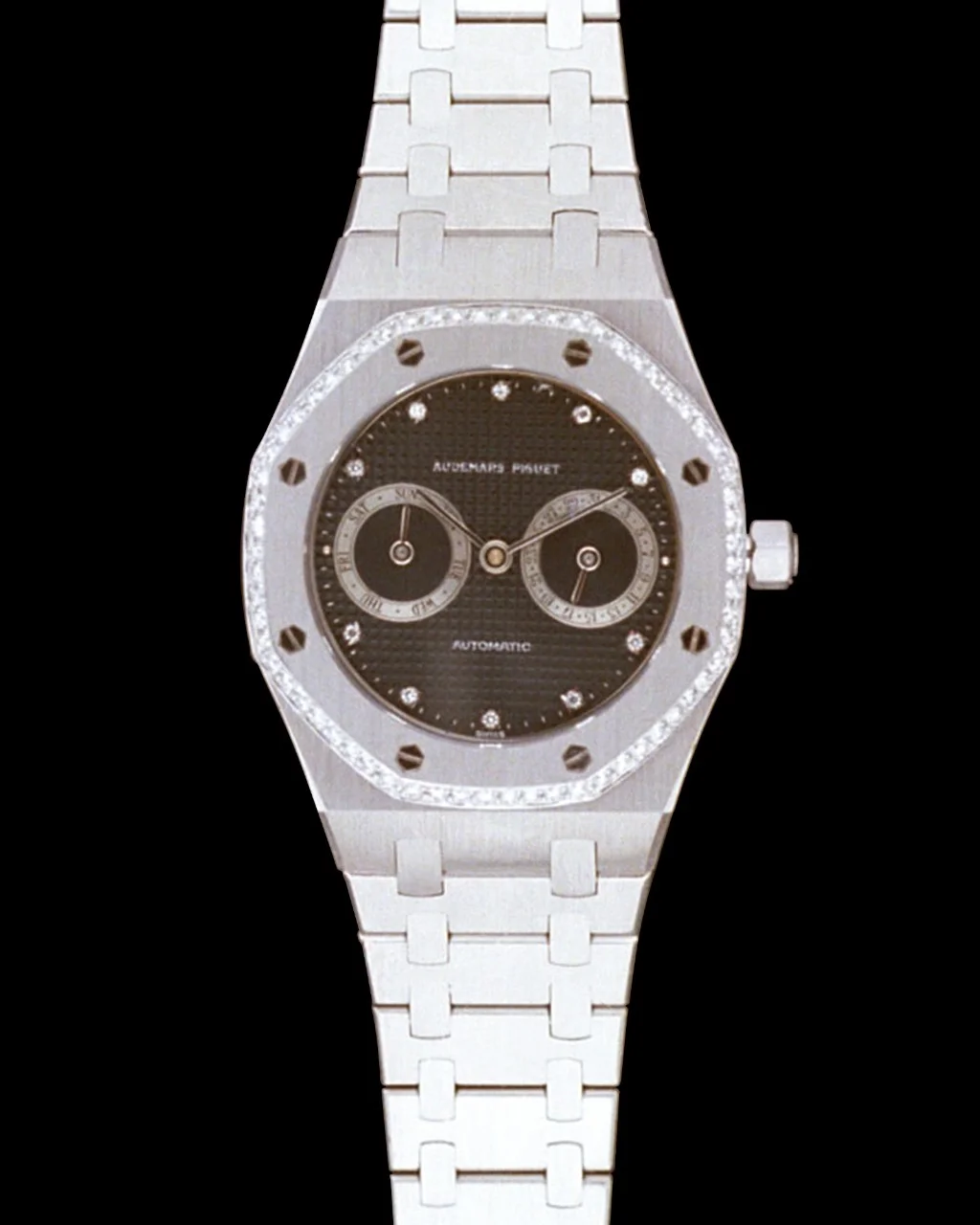
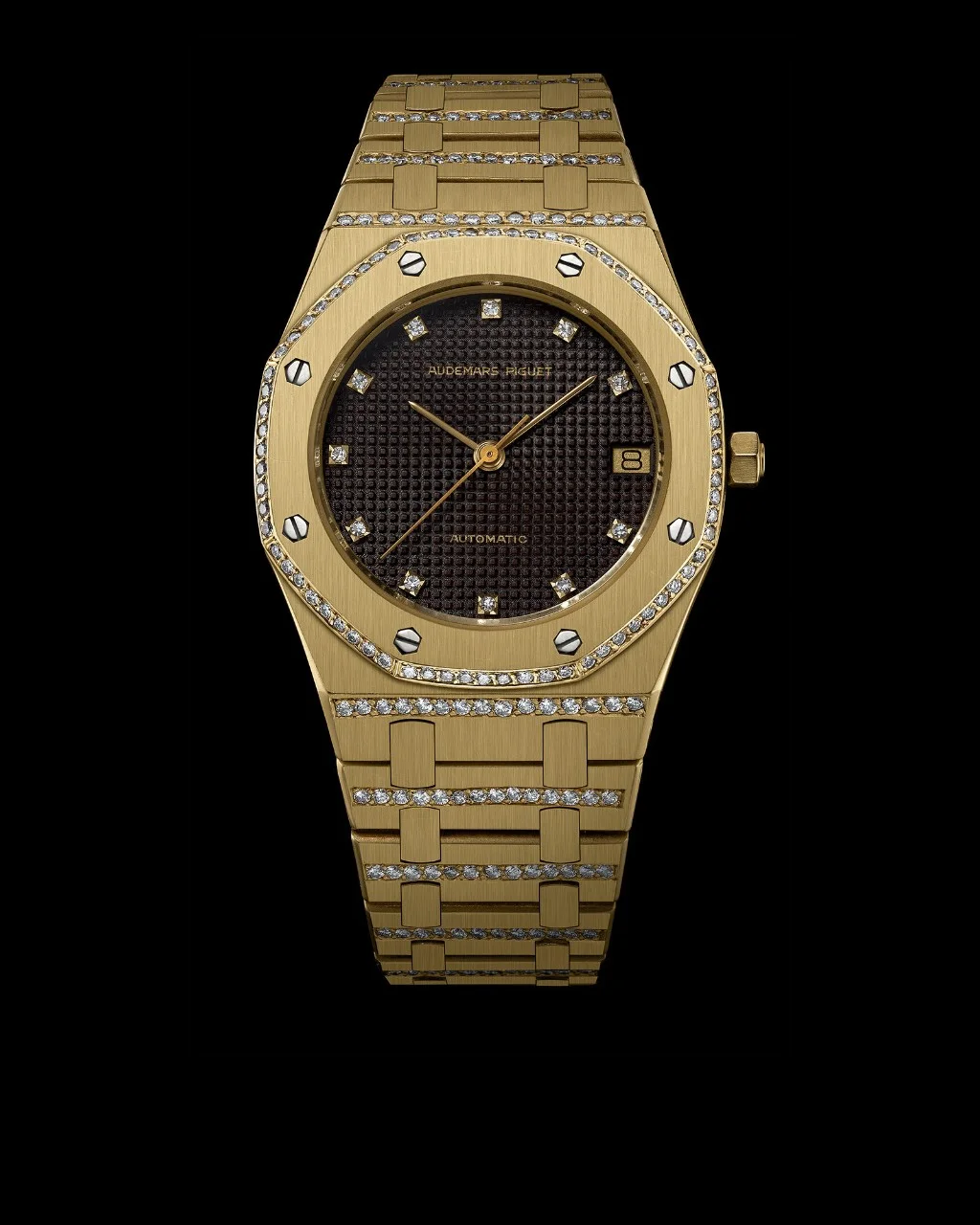
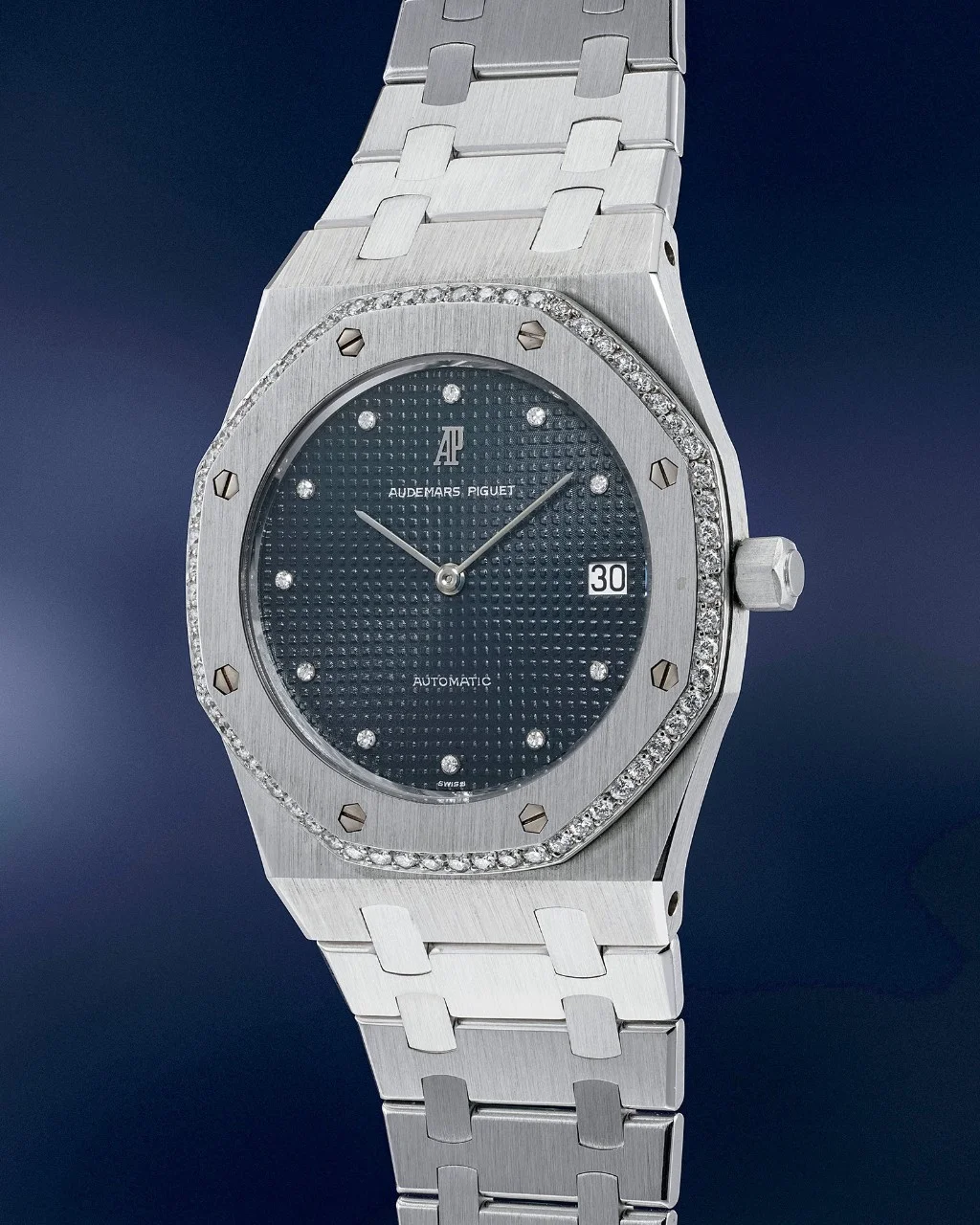
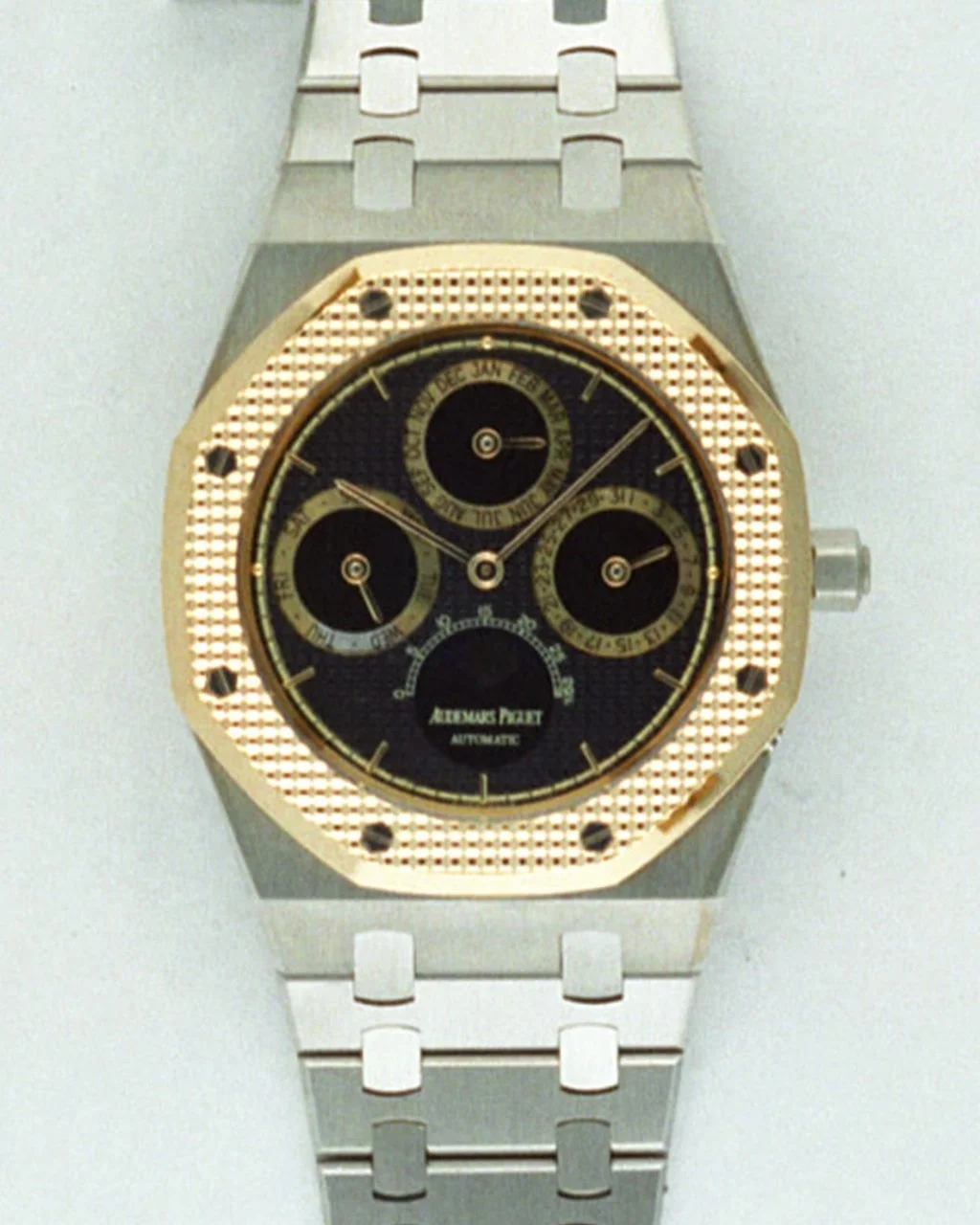
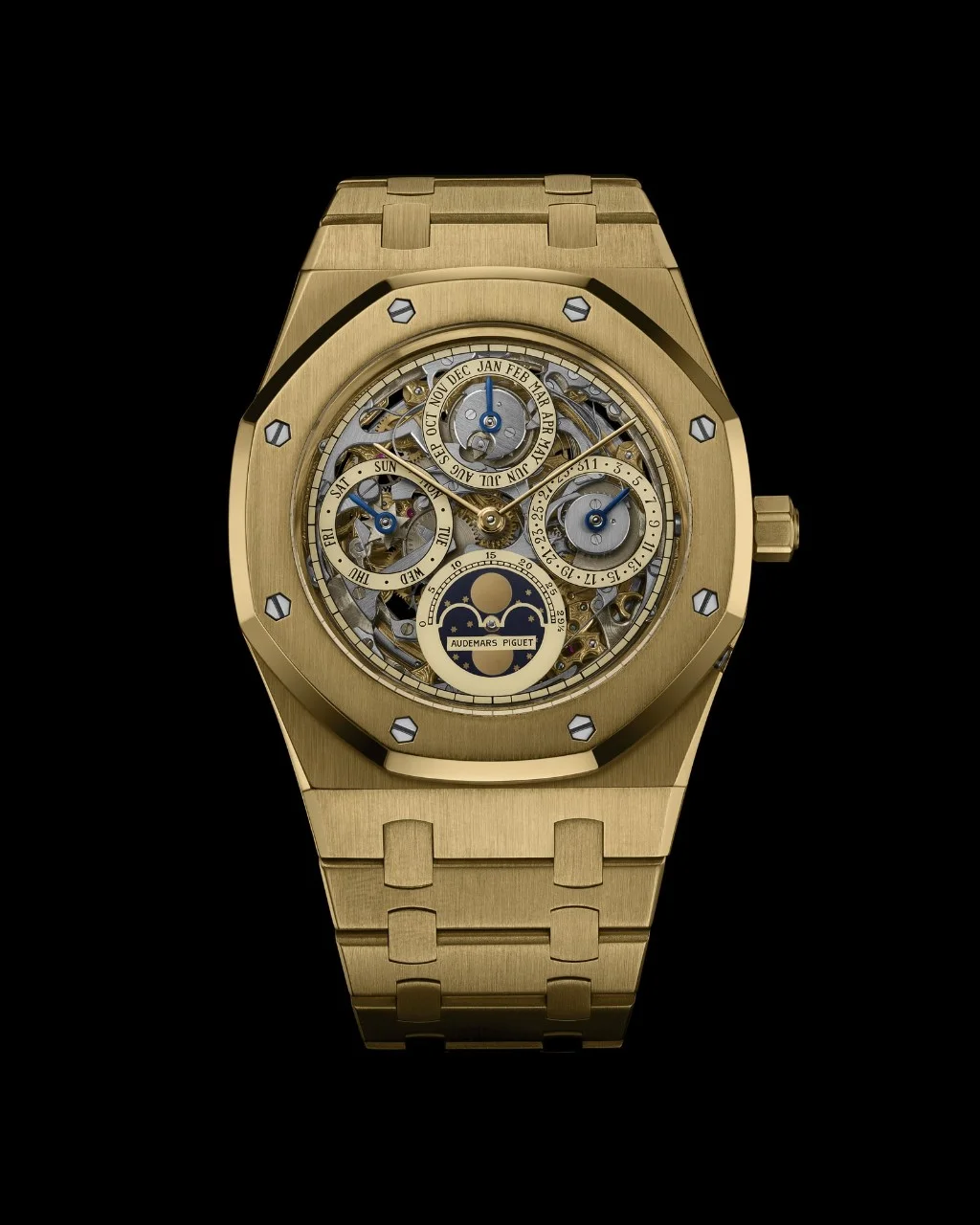
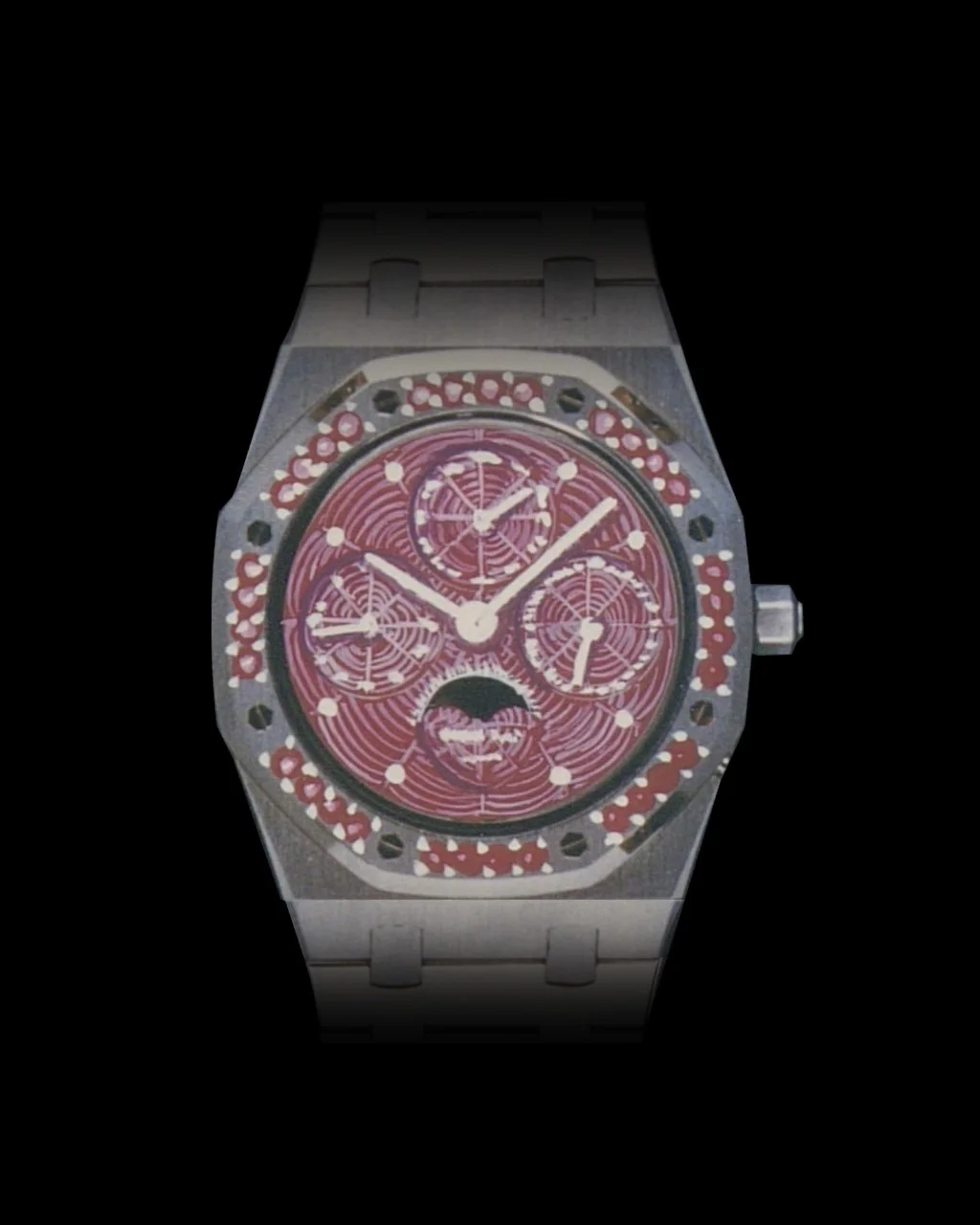
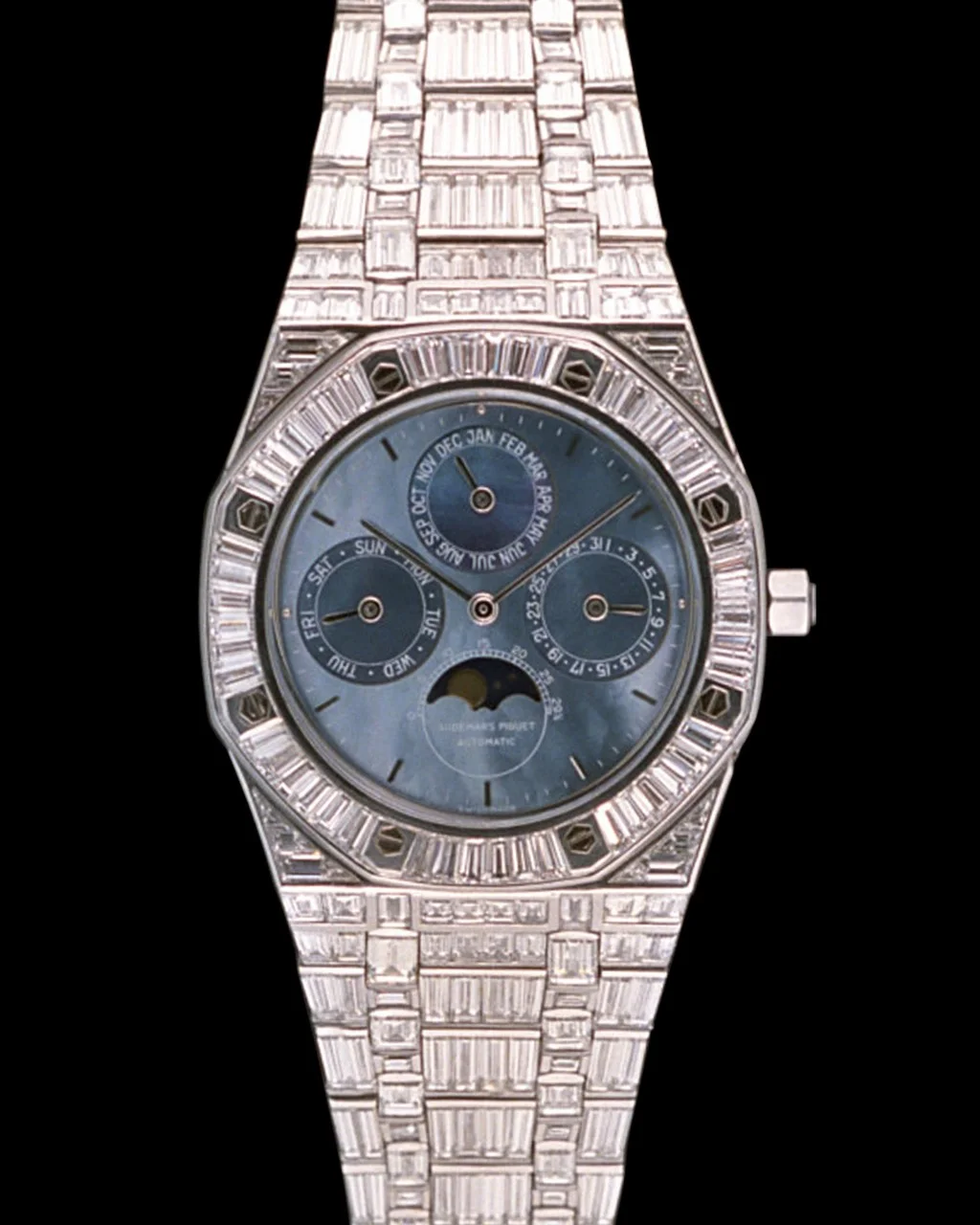
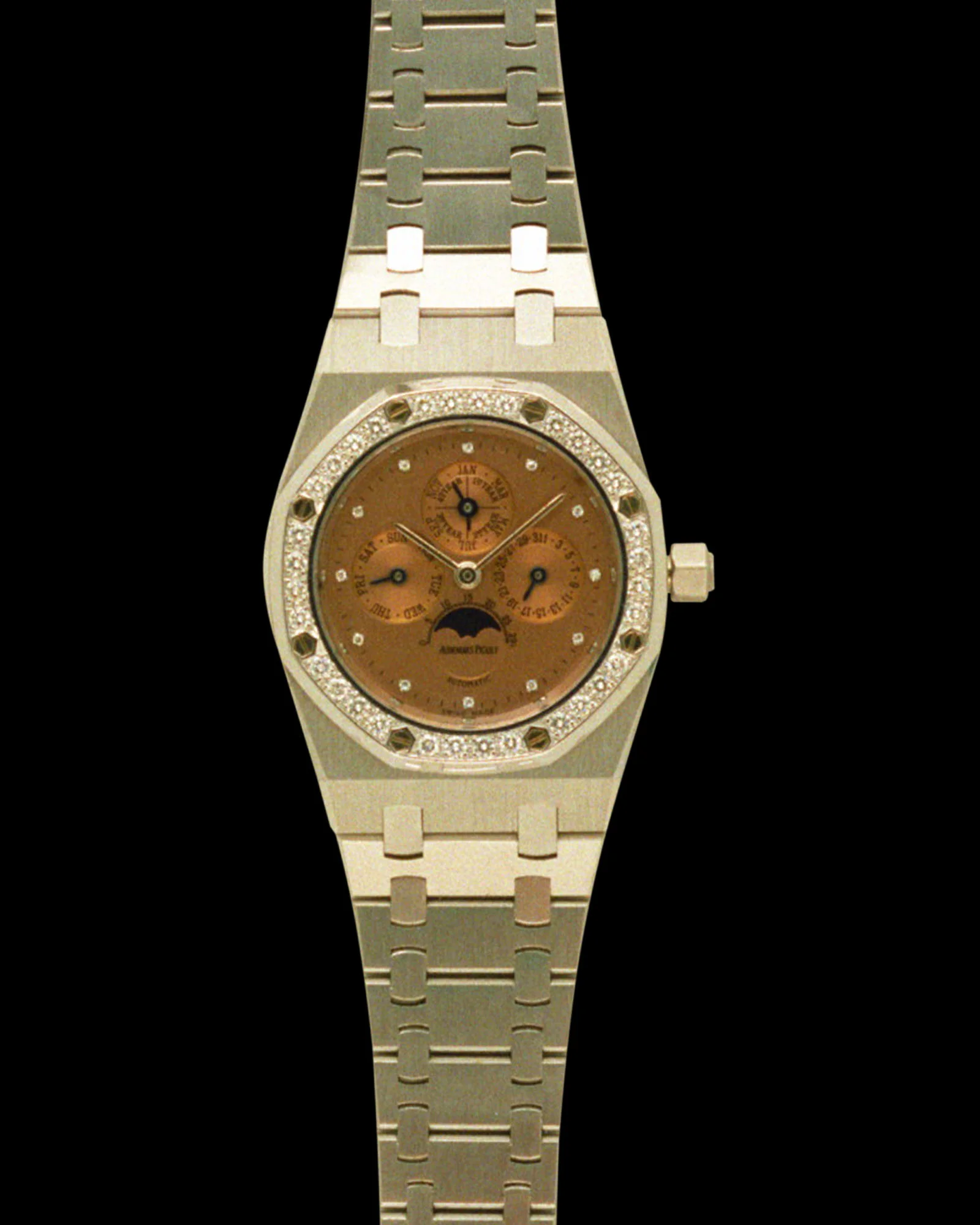
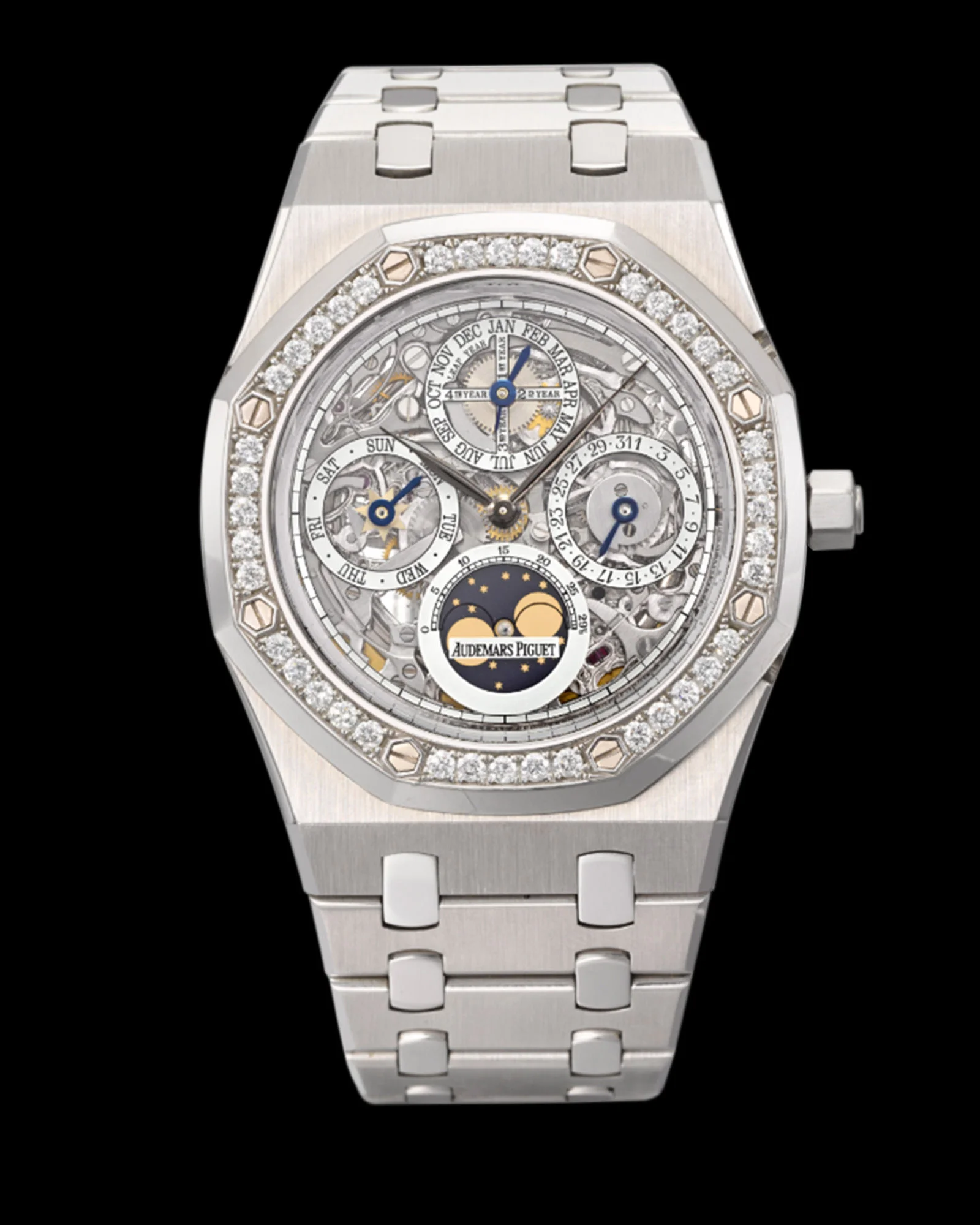
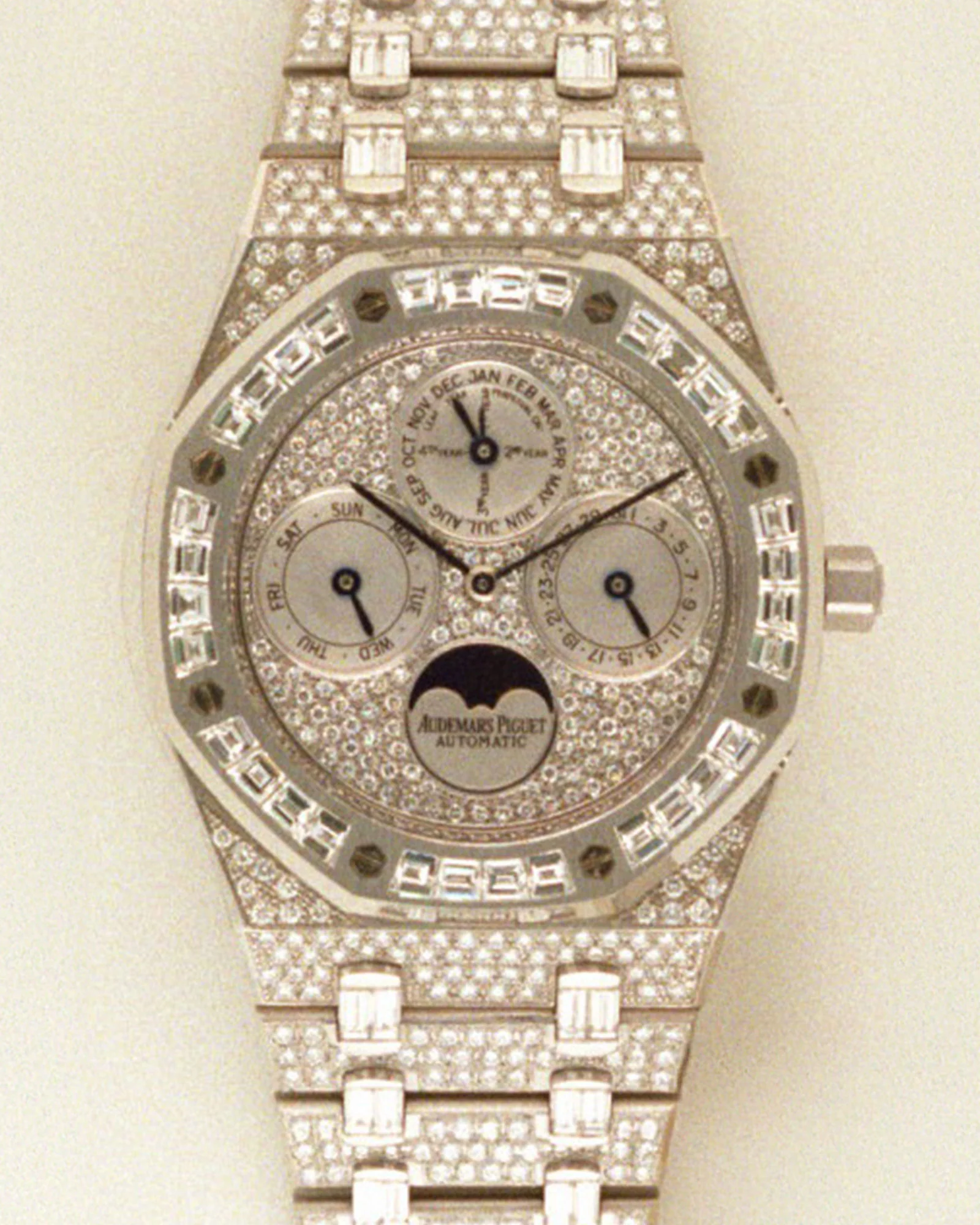
For almost 30 years, the Petite Tapisserie motif has been found on dozens of types of dial: from the 20 mm mini-Royal Oak to the 44 mm Royal Oak Grande Complication, including the first quartz models, perpetual calendars and gemset versions. Whether attired in shades of blue, slate, black, green, salmon pink or even red, it remains true to itself – meaning always a little different because it is hand-crafted. This pattern is one of the fundamental aesthetic codes of the Royal Oak. However, unlike the eight screws or the octagonal bezel, it is not exclusive. From the end of the 1970s, when the Royal Oak became a collection, many models featured dials without Tapisserie that were sandblasted, brushed or hammered, made of natural stone, mother-of-pearl, sapphire and even entirely paved with diamonds. This diversity enriched the collection and opened up new horizons. As the year 2000 approached, Jacqueline Dimier and the AP design team decided to give the traditional Tapisserie pattern a makeover.
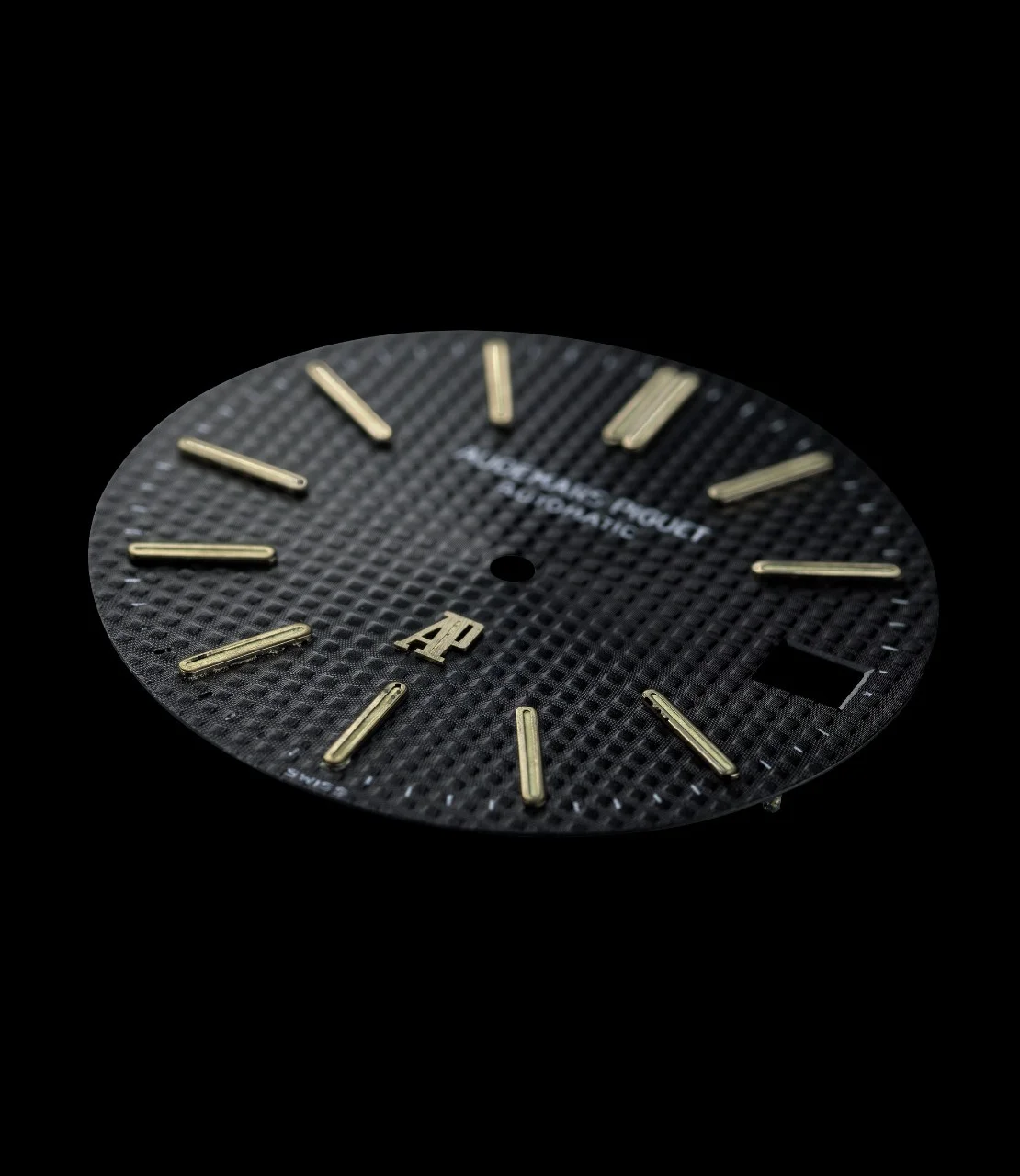
1972. Royal Oak 5402 dial. This dial adorns the Royal Oak 5402ST A26 series, case 67026, movement 127059, delivered by Audemars Piguet to the Swiss market (Gameo Lausanne) on June 16, 1972. Audemars Piguet Heritage, inv. 365.

1972. Royal Oak 5402ST No. A32. Calibre 2121, movement 127064. Bracelet 344. T21 Tapisseriedial. Case 67032, 39 mm. Steel. Sold to Gameo in 1972. Audemars Piguet Heritage, inv. 1135.
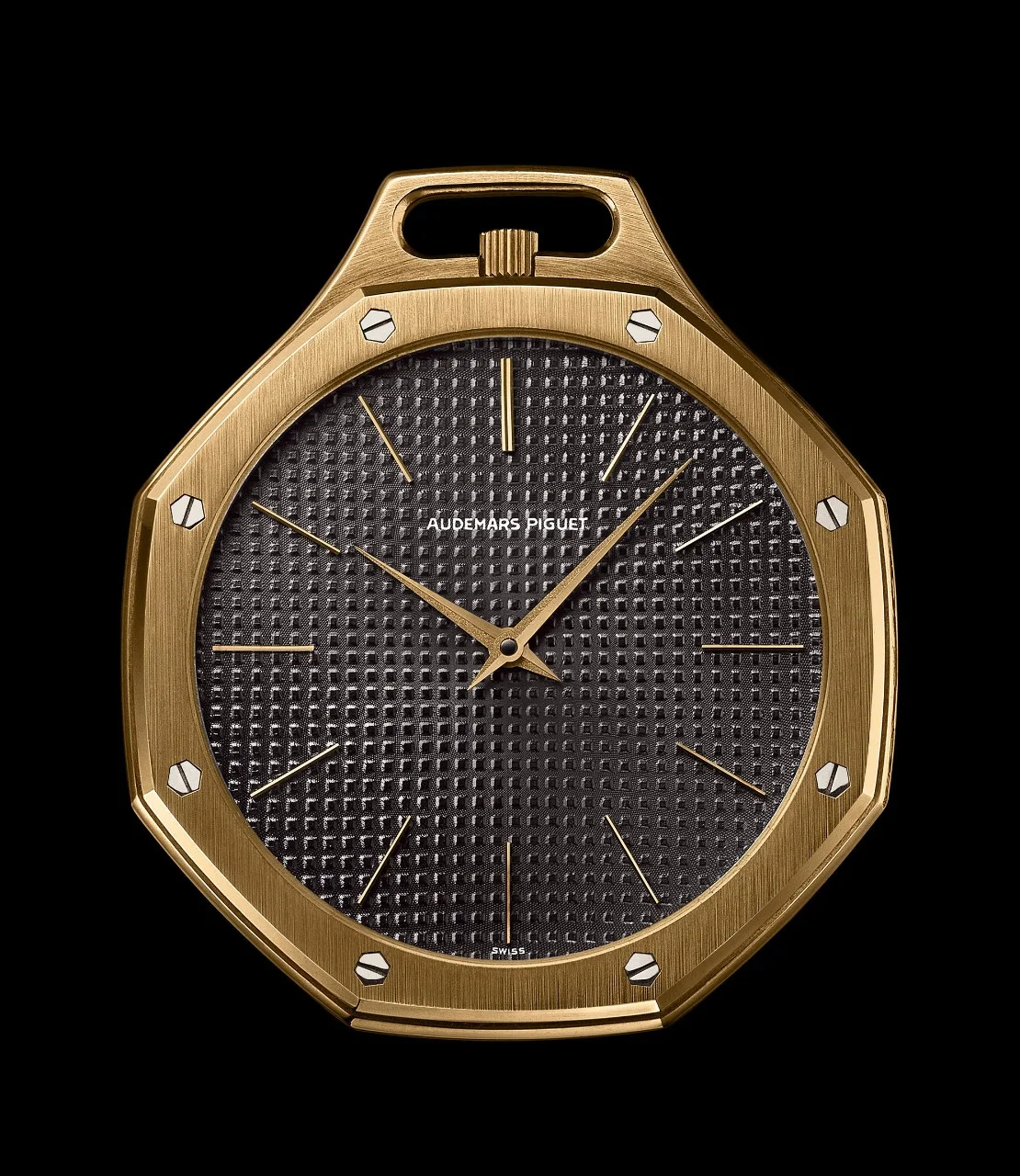
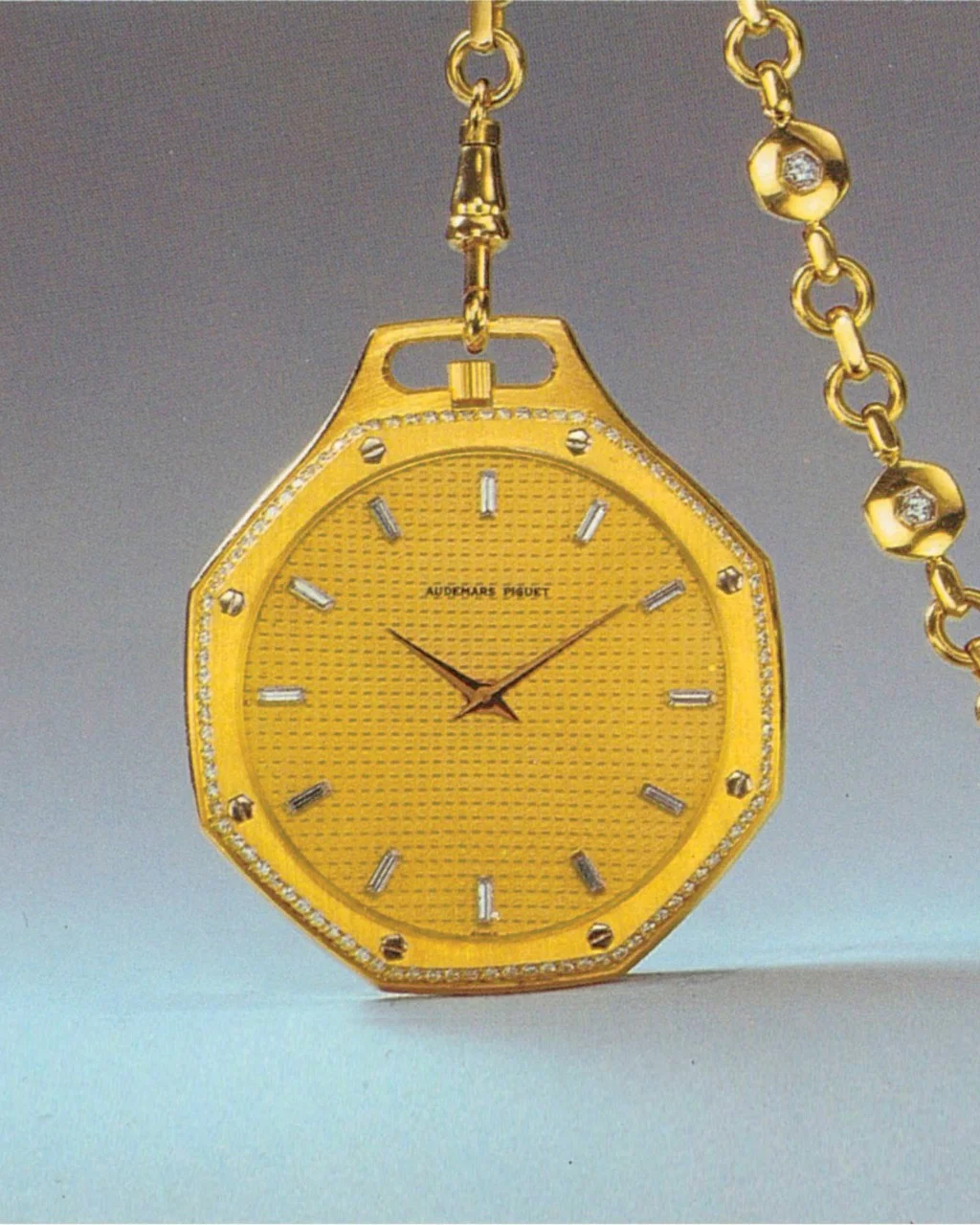
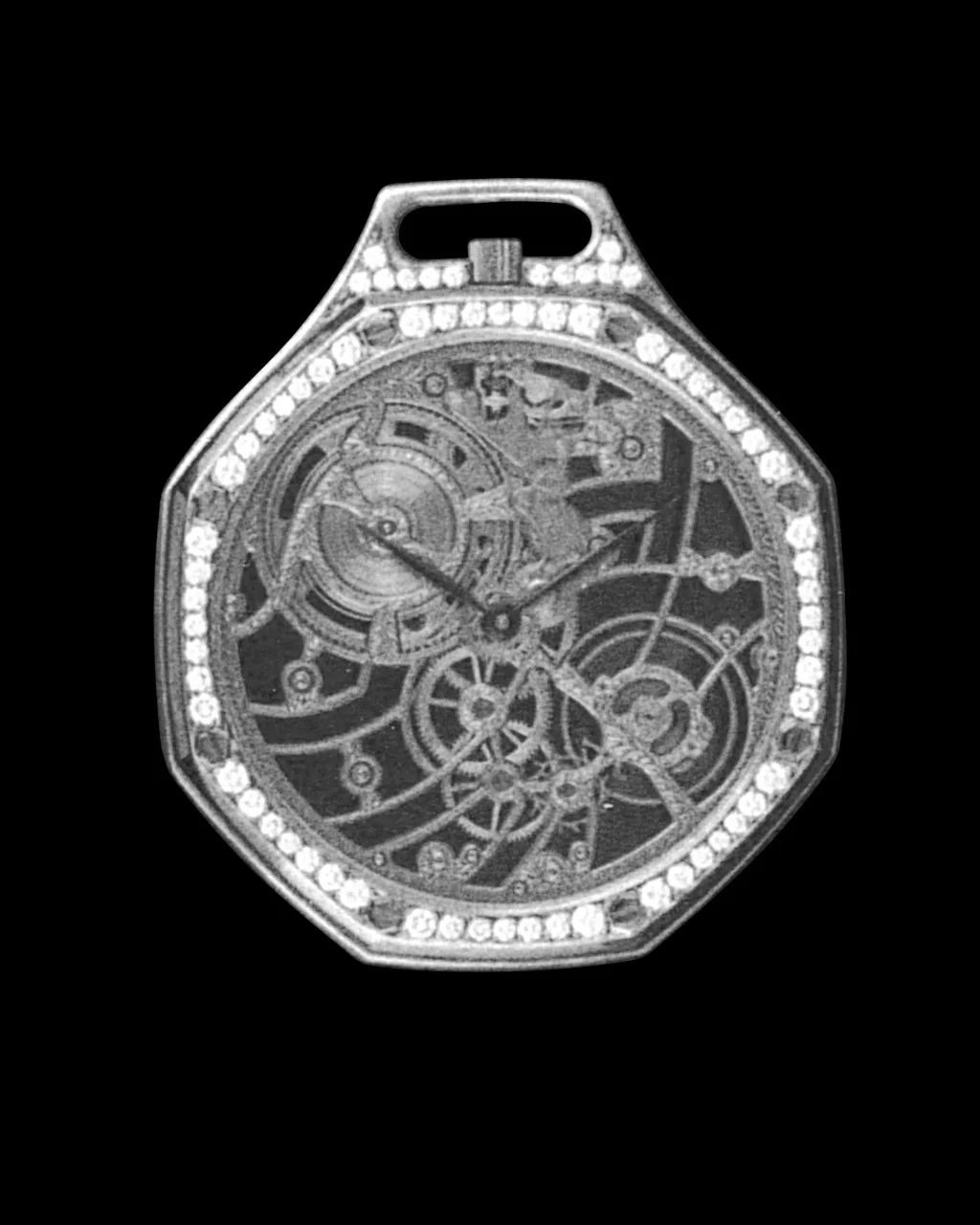
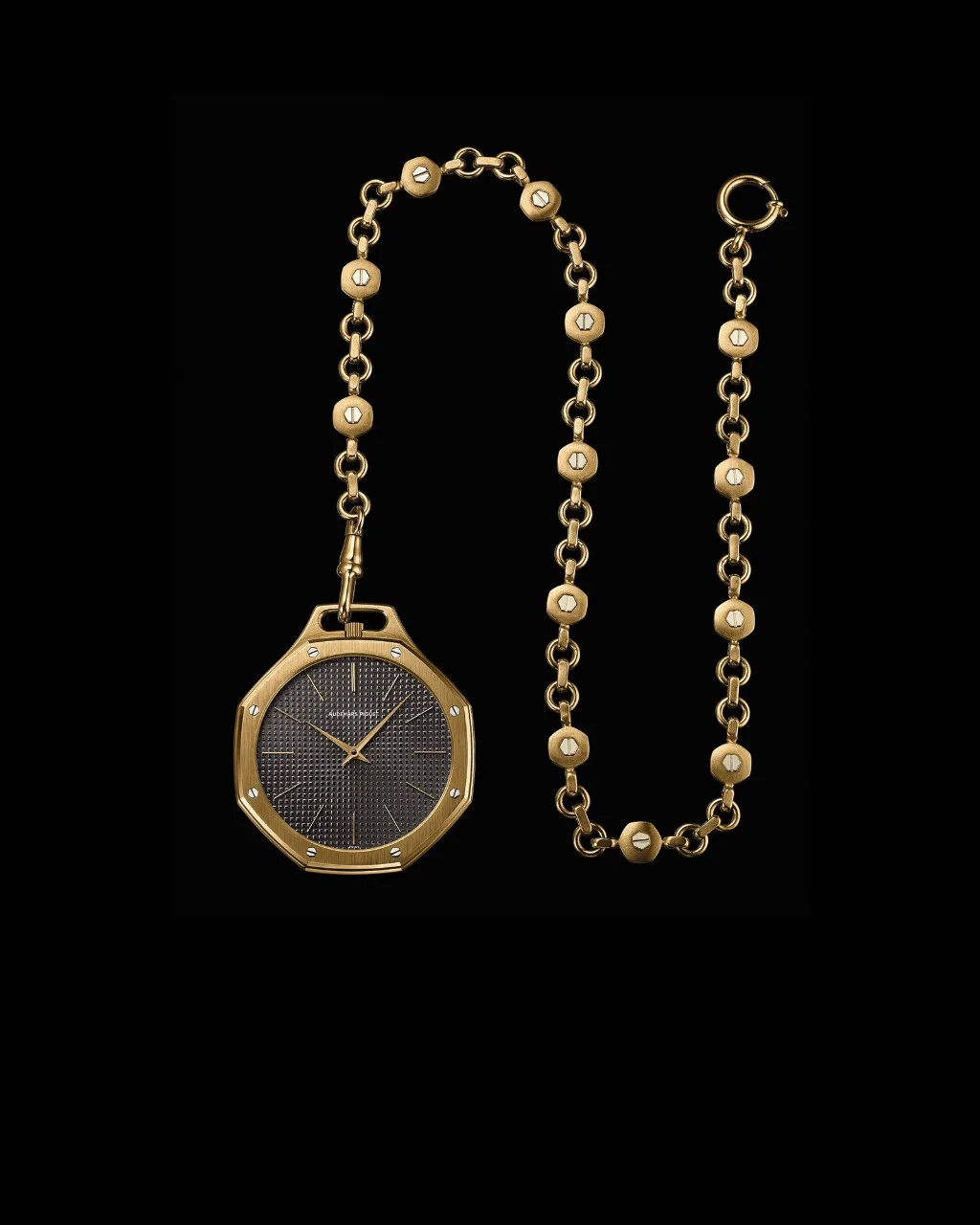
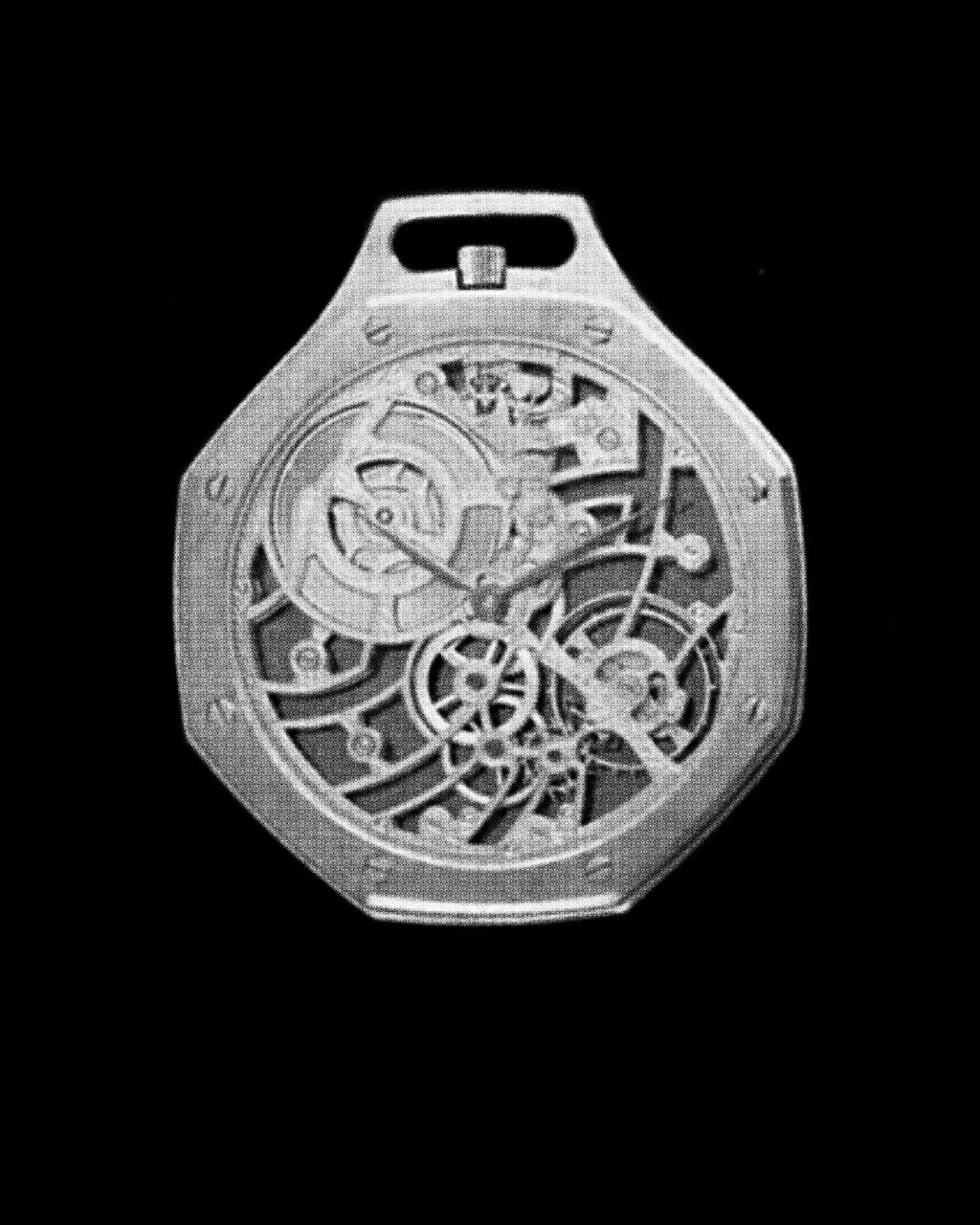
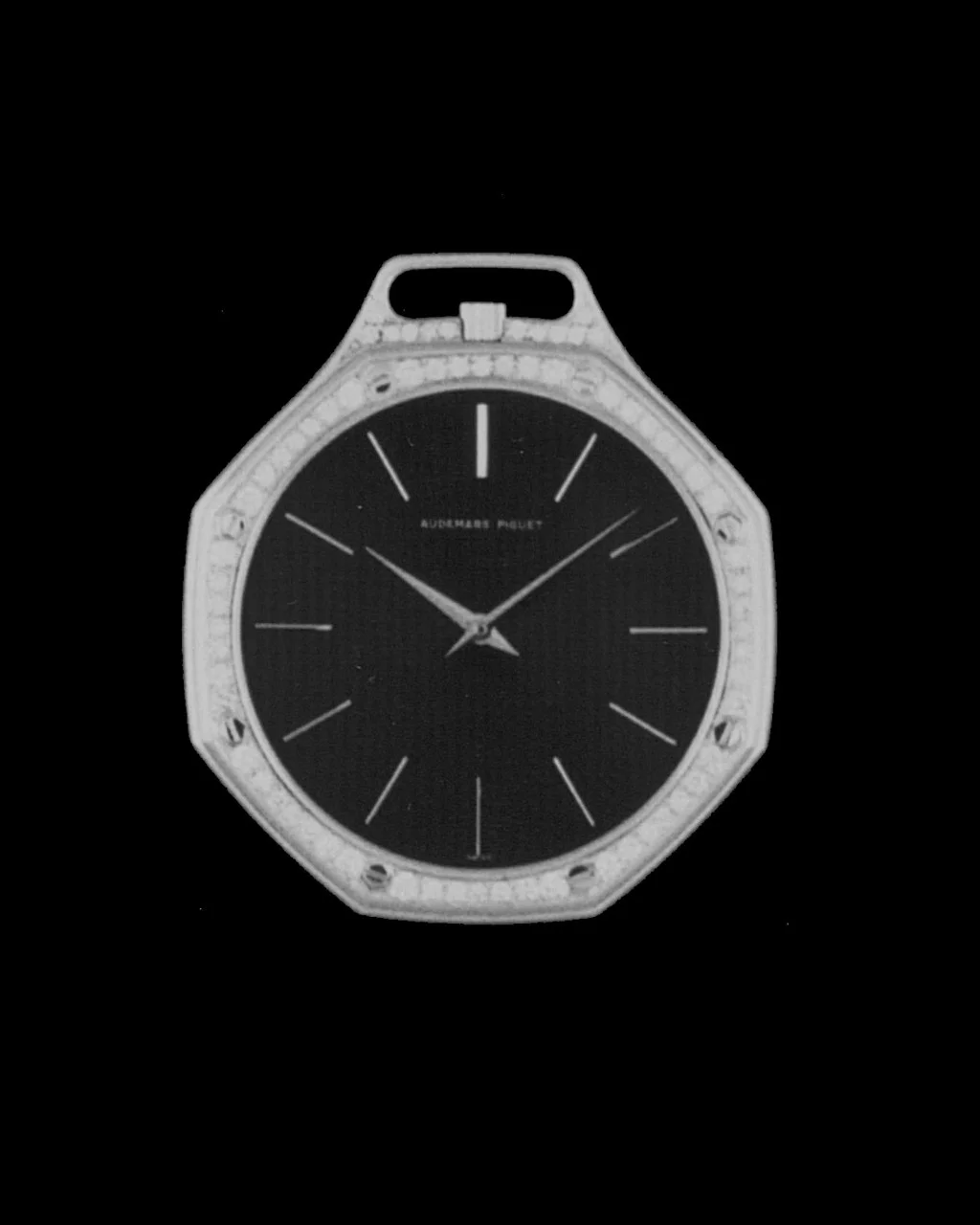
1980. Royal Oak 5691BA pocket watch. First Royal Oak model without a bracelet. Calibre 5020, movement 227380. Royal Oak chain. T21 Tapisserie dial. Case B45238, 44 mm. 18-carat yellow gold. Sold to Darcal (Switzerland) in 1980. Audemars Piguet Heritage, inv. 894.
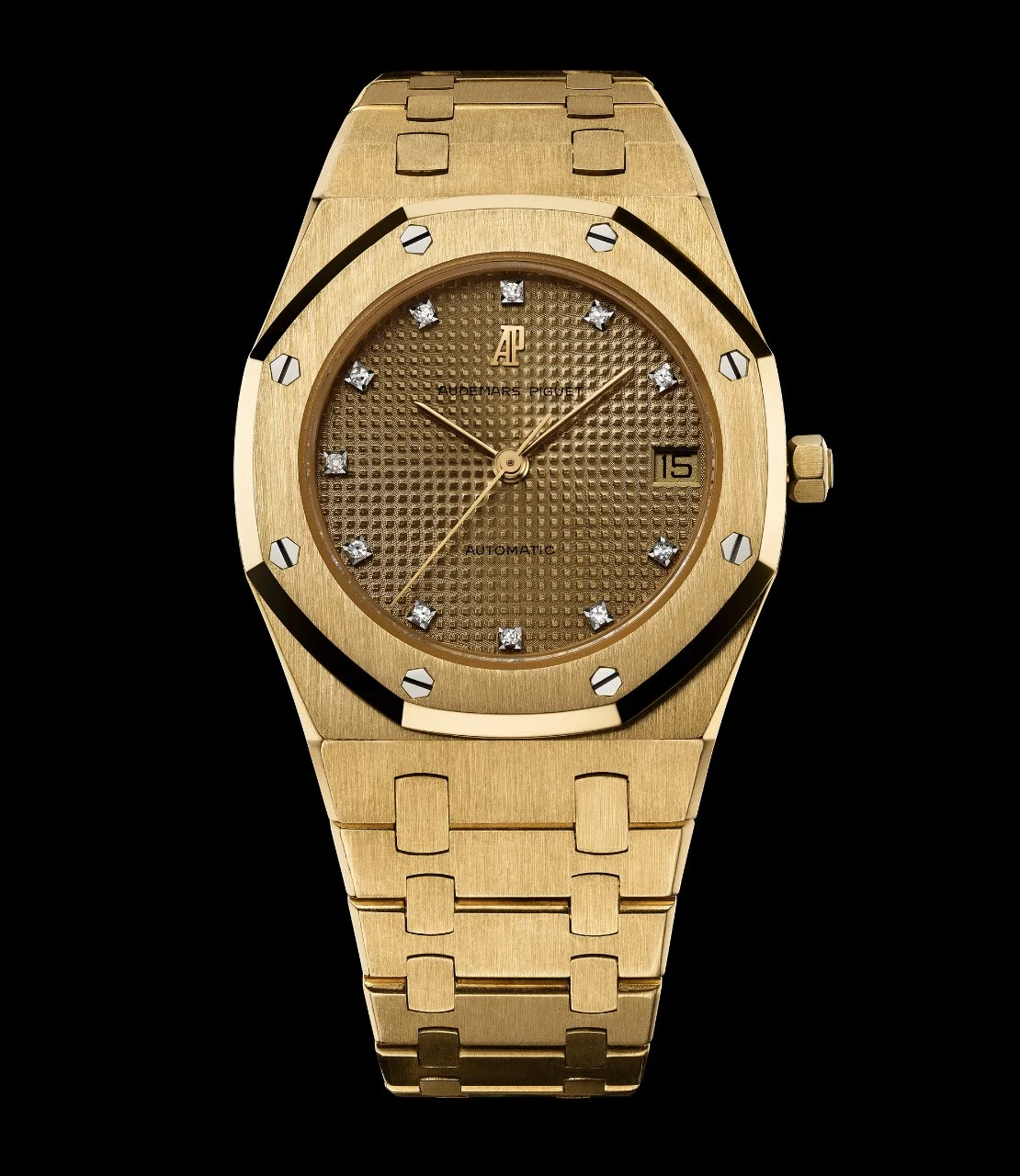
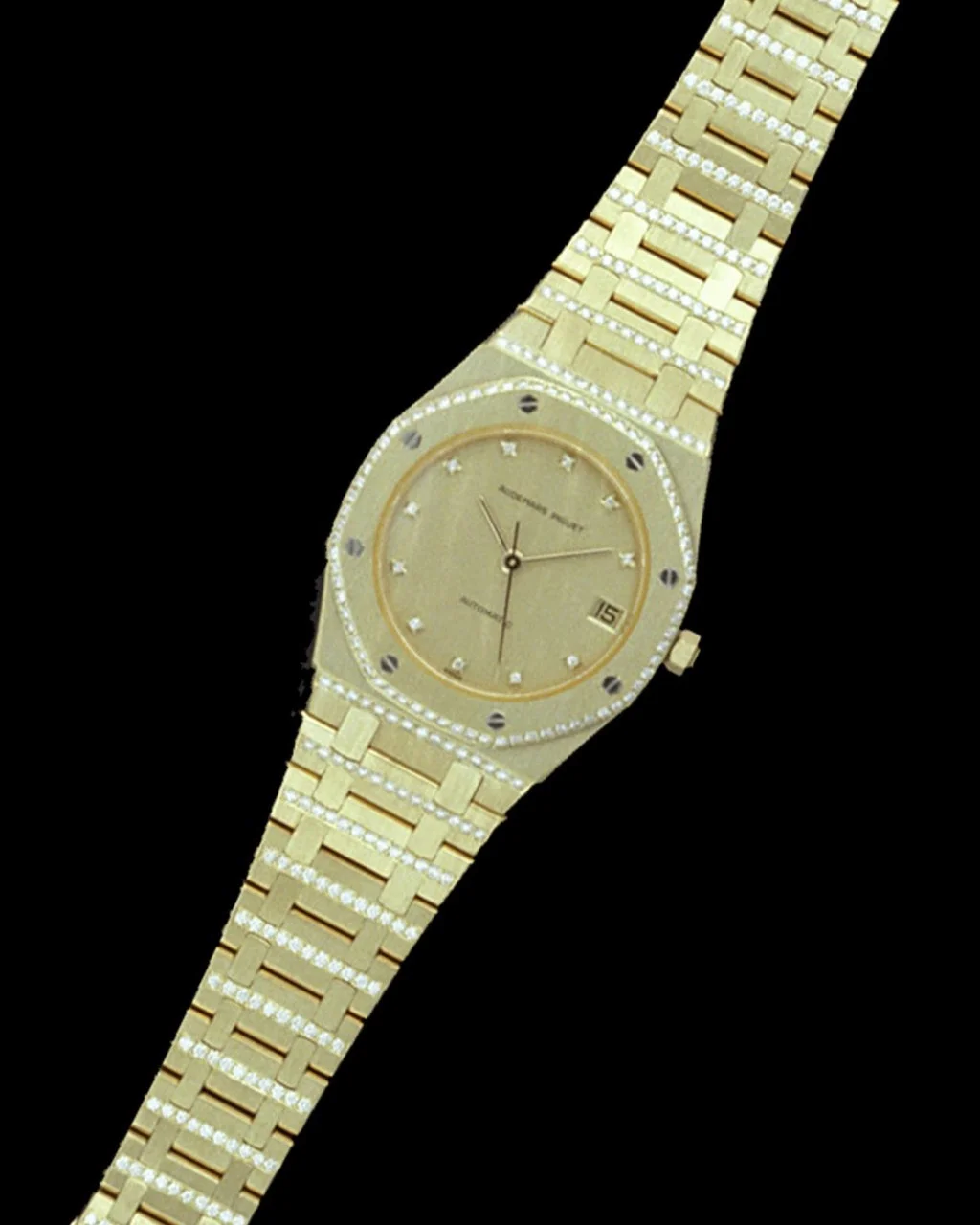
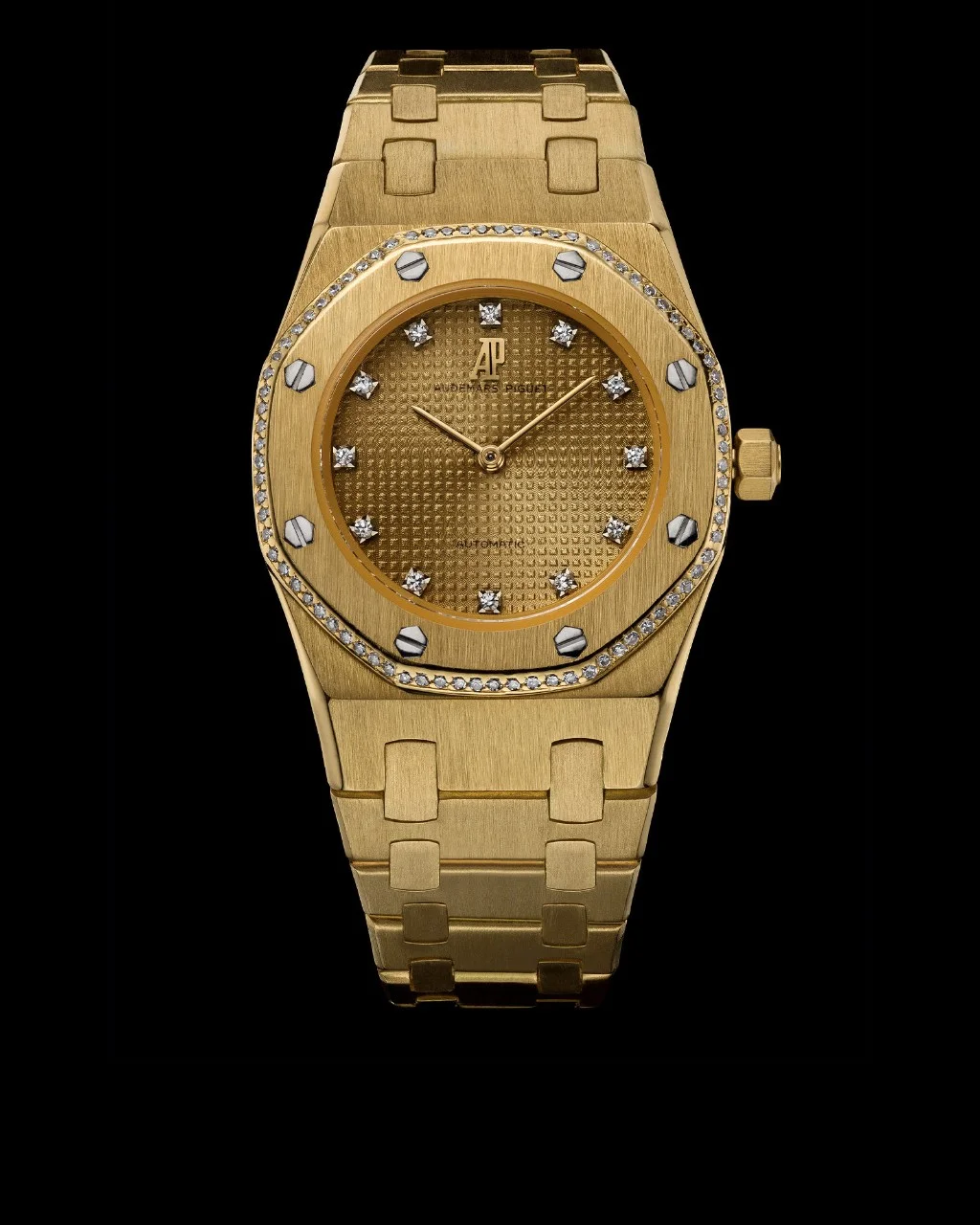
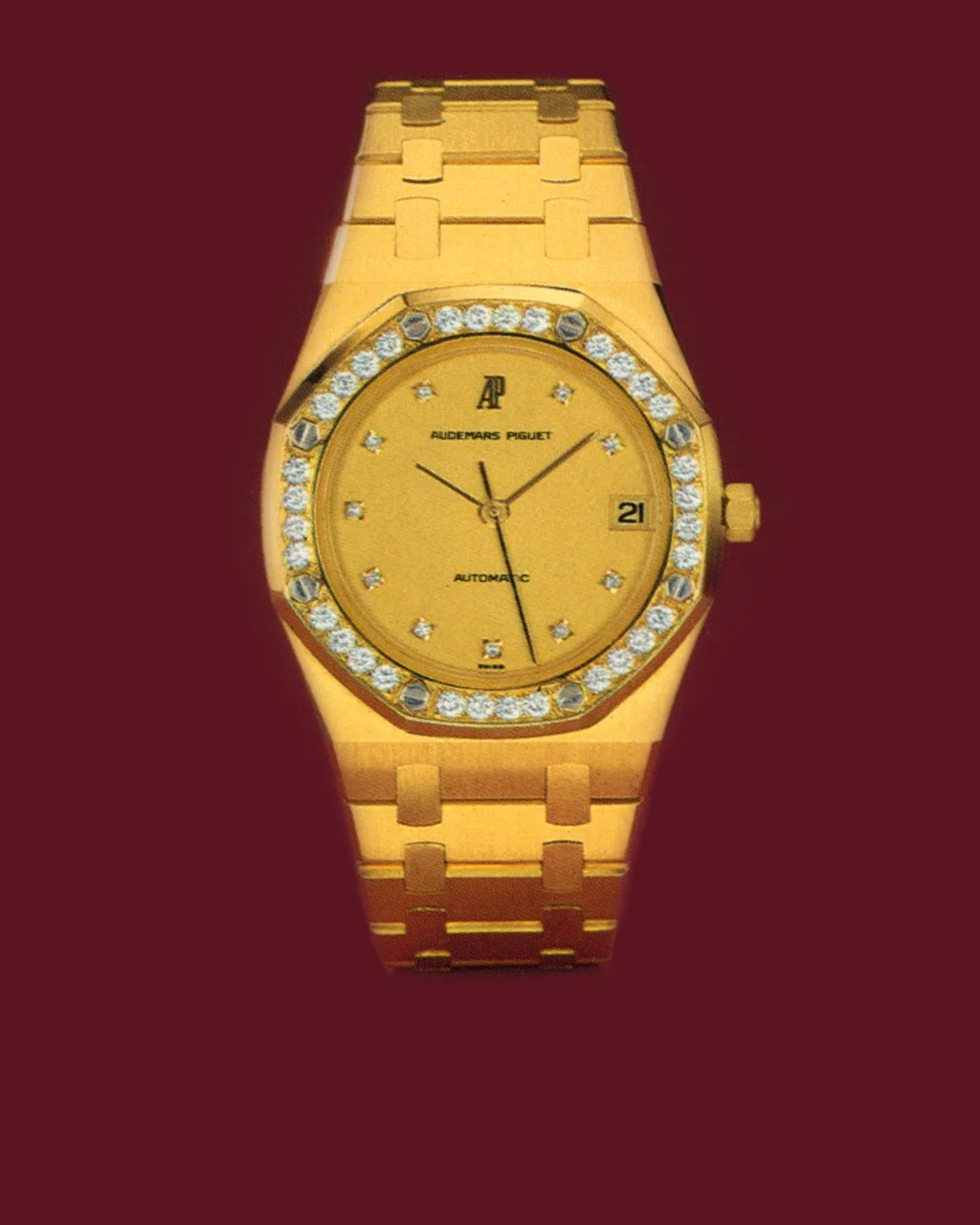
1982. Royal Oak 4100BA (1977), No. 1251 Date. Calibre 2123, movement 216522. Bracelet 477. Gilded T21 Tapisserie dial set with 11 brilliant-cut diamonds. Baton-type hands not documented in the catalogue. Case 552, 35 mm. 18-carat yellow gold. Sold to Grigoros (Greece) in 1982. Audemars Piguet Heritage, inv. 881.
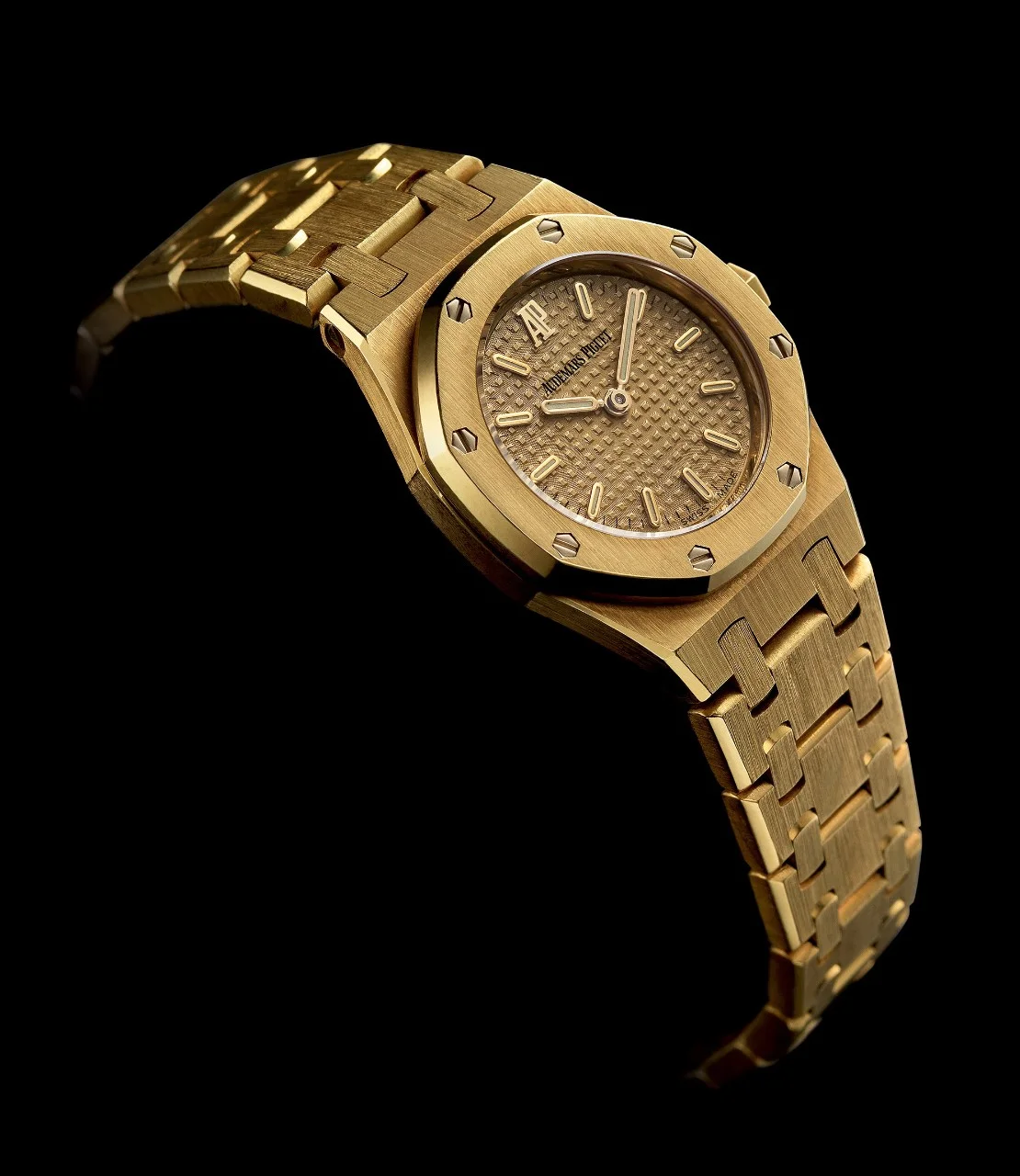
1997. Mini Royal Oak 67075BA, No. 184. Calibre 2601, movement 455107. Bracelet 1100. Gold-plated T21 Tapisserie dial. Case D91047, 20 mm. 18-carat yellow gold. Audemars Piguet Heritage, inv. 595.
Birth of the Grande Tapisserie Motif
The decision was taken at a Product Committee meeting: from the spring of the following year, a new more generous, legible and extensive Tapisserie pattern would be created. The manufacturing technique would remain the same, but the bases of the truncated pyramids would be up to twice as large. As a result, the number of pyramids would be considerably reduced. A Royal Oak "Jumbo" dial featured between 680 and 740 pyramids, whereas the new Grande Tapisserie pattern would have only about 380.
In 1999, after more than half a century of loyalty to the Basel Fair, Audemars Piguet presented its new models for the first time at the SIHH, the Salon International de la Haute Horlogerie in Geneva, created in 1991. Discreetly, in order to sound out the markets, two new models were adorned with the Grande Tapisserie motif: the Royal Oak Annual Calendar 25920 and the Royal Oak Time for the Trees 15100, issued in a 450-piece limited edition to support sustainable development projects run by the Audemars Piguet Foundation. In addition, Model 14790, regarded at the time as "the classic within the collection", also featured a Grande Tapisserie iteration.
This move proved a great success. In the year 2000, the new Tapisserie pattern was present on most of the Royal Oak collection: 14790, 15000, 5594, 25960, 25730, 25820, etc. Some came in both variations, while others were already available in the new version only. Among them, the brand-new Royal Oak "Jumbo" Model 15202 was aimed at purists. While reviving the original codes of 1972, it displayed its movement through a sapphire crystal caseback. But above all, the watch exclusively featured Grande Tapisserie dials, the first of which was immaculately silver-toned. The exhibition press release spoke of a “makeover”.
The following year, the Petite Tapisserie pattern vanished from the Royal Oak collection. However, far from having breathed its last, it returned in 2012 to celebrate the Royal Oak’s 40th anniversary on Model 15202. Meanwhile, it had lived on, sheltered by an unexpected host.

1999. Royal Oak 15100ST "Time for Trees". Model dedicated to the Audemars Piguet Foundation featuring one of the first dials with a Grande Tapisserie motif, embellished with an oak motif. Date. Calibre 2225, movement 478870. Bracelet 789. Case E20151, 39 mm. Steel. Limited edition of 450. Sold in Taiwan in 1999. Audemars Piguet Heritage, inv. 2004.
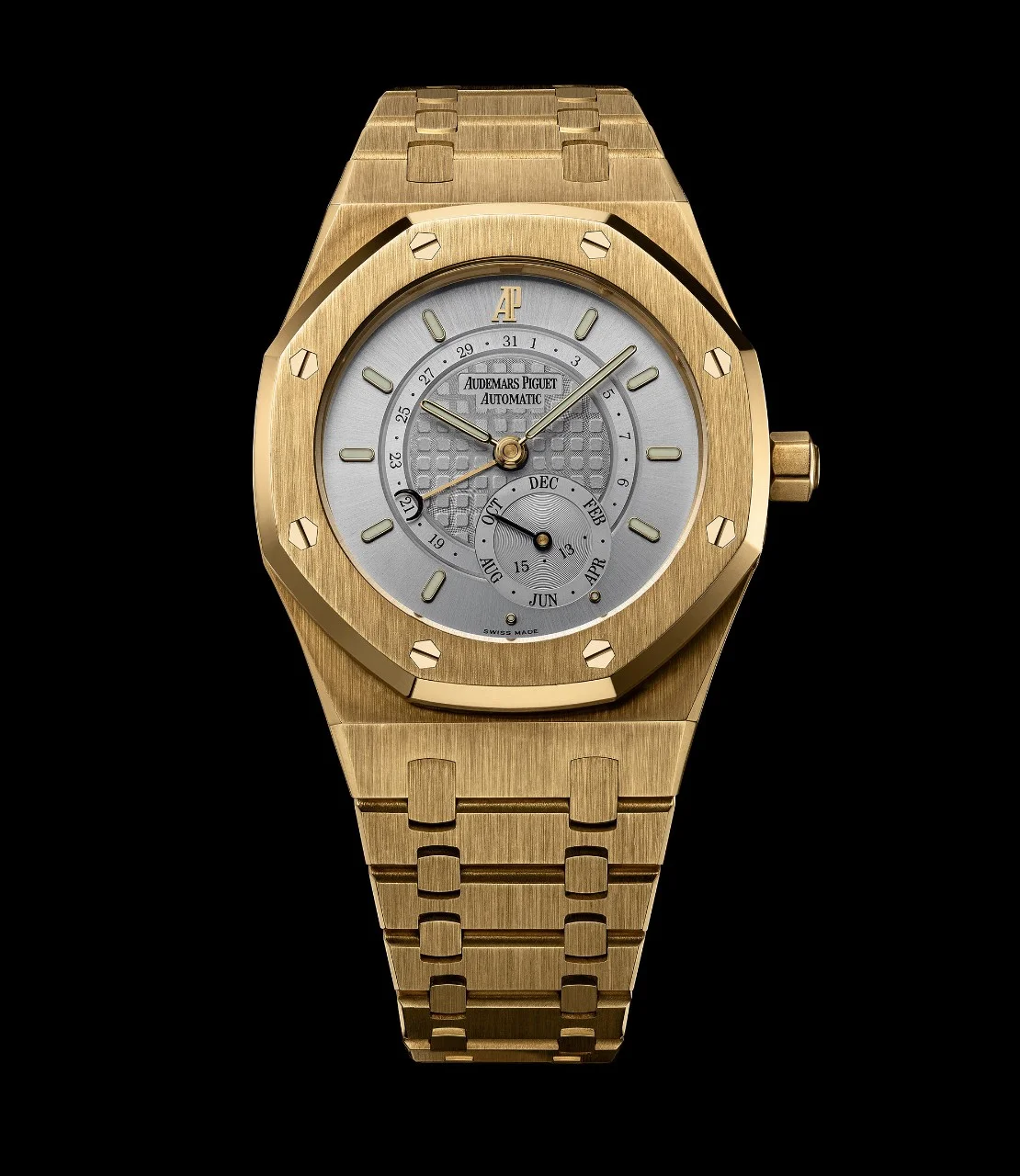
1999. Royal Oak Annual Calendar 25920BA. Annual calendar: pointer-type date and month display. Calibre 2224/1814. One of the first dials with a Grande Tapisserie motif. 36mm prototype in 18-carat yellow gold without movement probably presented at the SIHH (Salon de la Haute Horlogerie, Geneva) in 1999. Audemars Piguet Heritage, inv. 609.

Circa 1999. Royal Oak 14790ST. Date. Calibre 2225. One of the first dials with Grande Tapisserie motifs. 36 mm Prototype no. 1825 in steel without movement probably presented at the SIHH (Salon de la Haute Horlogerie, Geneva) in 1999. Audemars Piguet Heritage, inv. 1627.
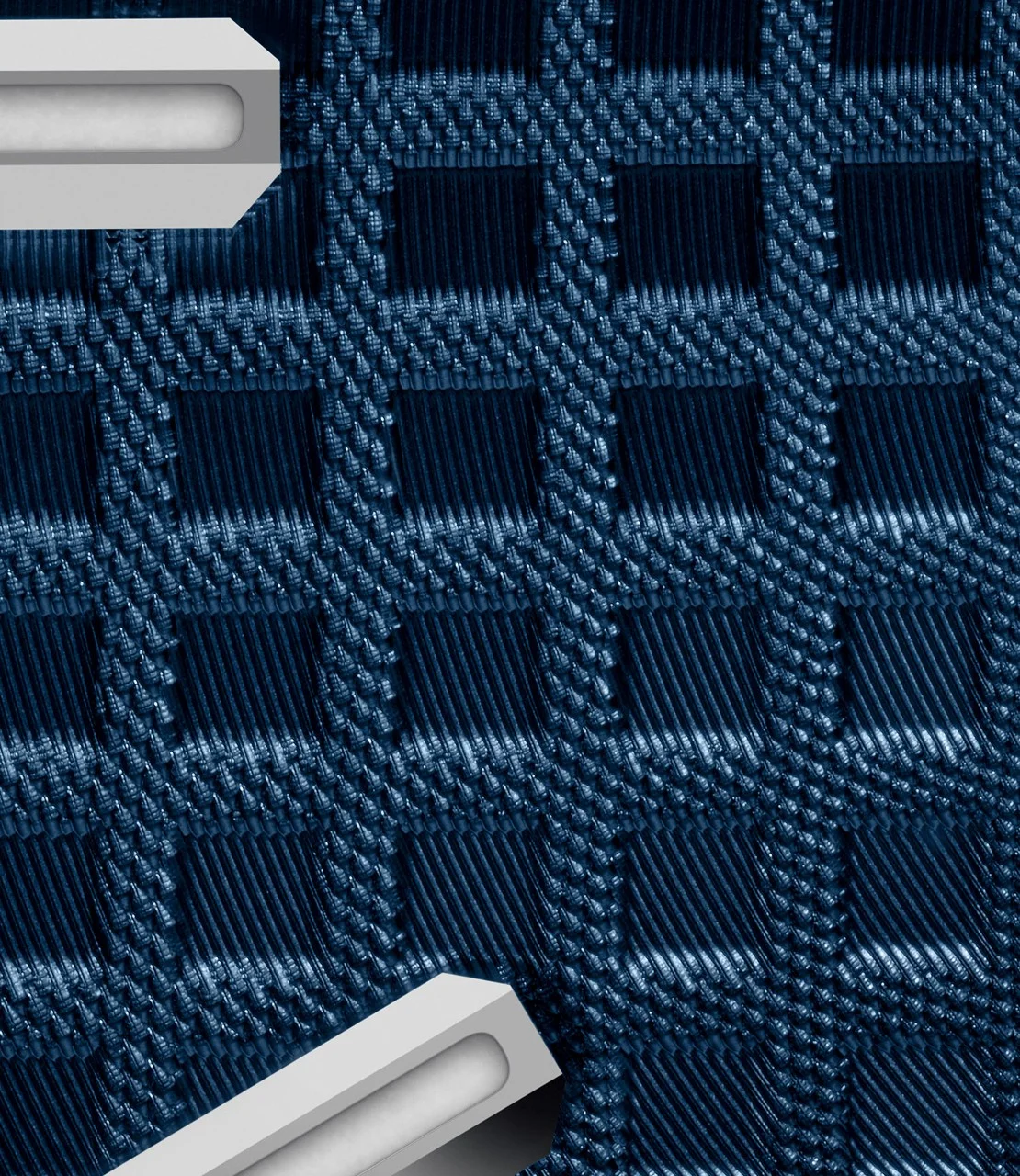
2020. Royal Oak 15500 dial. Zoom on the Grande Tapisserie dial.

2002. Royal Oak 15202ST (2000), No. 557 Date. Calibre 2121, movement 506507. Bracelet 944. Grande Tapisserie dial. Case E66948, 39mm. Steel. Sold in 2002 to AP Germany. Audemars Piguet Heritage, inv. 738.
Grande… Extra-Grande… Méga!
The Royal Oak Offshore collection was long considered the wild child of Haute Horlogerie. Oversized, excessive and outrageous, it made waves at the time of its birth in 1993. Nonetheless, from 2001 onwards, it perpetuated the tradition of the Petite Tapisserie pattern, which could be found on most of the collection (25721, 25770, 25807, 25854 and 79290). During the following years, while gradually adopting the Grande Tapisserie motif, the Offshore continued to keep the Petite version alive. Some variants of the original Model 25721 were indeed equipped with it at least until 2007.
Although loyal to its origins, the Royal Oak Offshore loves freedom. A designer's playground and an ardent fan of innovative materials and bright colours, it introduced, in 2001, a Tapisserie motif even larger than the Grande version on Model 25940SK (with its rubber bezel). While the catalogues initially referred to it as Extra-grande Tapisserie, it became famous under the name Méga Tapisserie adopted in 2005. Meanwhile, it gradually made its way into the Offshore collection, with Model 67450 in 2002, followed by Models 26007, 25986 and 25863 in 2003, then 26020 from 2004, etc...
Emblems of extreme sport and sturdiness, the truncated pyramids were larger than ever. They were also non-conformist in two respects: their size and their production technique. Although their shape was derived from the traditional Tapisserie pattern, they are obtained by stamping, using extremely powerful presses. In 2021, an additional, more complex Méga Tapisserie motif saw the light of day with the launch of a new Royal Oak Offshore model (26420) in a 43 mm size: on the dial of Model 26420, the squares were now linked by "mini arms" and the stamping pattern incorporated a vertical snailed motif.
It should also be noted that after renouncing it for five years, the Royal Oak Offshore revived the Petite Tapisserie in 2013 (with a 20-piece anniversary 26218 limited edition) and reinstated it within the current collection upon the timepiece’s 25th anniversary, with Model 26237ST.

2001. Royal Oak Offshore 25940SK. First model with Méga Tapisserie (or Extra-Grande Tapisserie)dial. Chronograph, date. Calibre 2326/2840. 42 mm prototype E39521, no. 2250 in steel and rubber, without movement, probably presented at the SIHH (Salon de la Haute Horlogerie de Genève) in 2001. Audemars Piguet Heritage, inv. 1152.
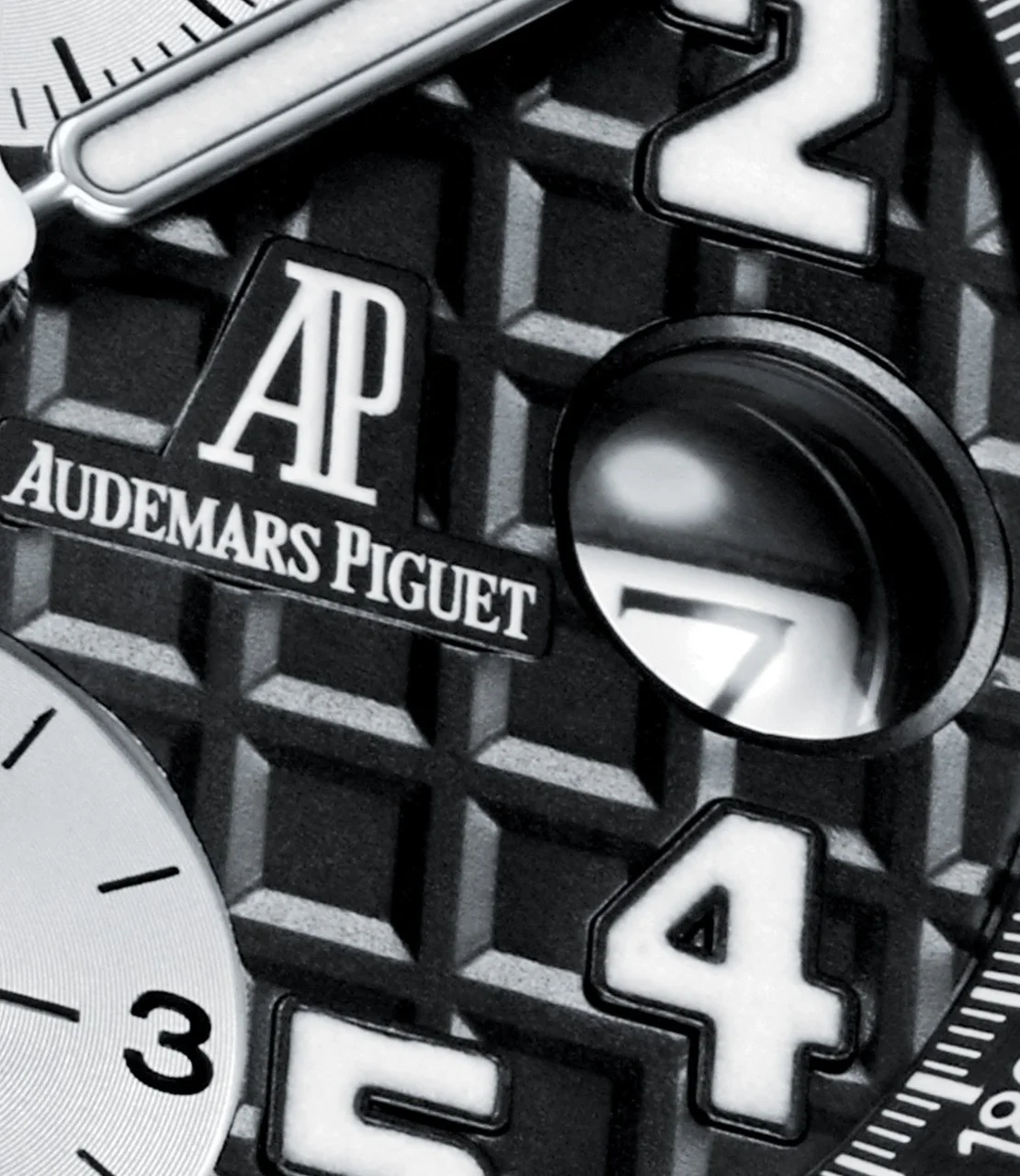
2001. Royal Oak Offshore 25940SK, detail. First model with Méga Tapisserie (or Extra-Grande Tapisserie) dial. Chronograph, date. Calibre 2326/2840. Prototype E39521, no. 2250, 42 mm, in steel and rubber, without movement, probably presented at the SIHH (Salon de la Haute Horlogerie, Geneva) in 2001. Audemars Piguet Heritage, inv. 1152.

2021. Royal Oak Offshore 26420IO. First model with a complex Méga Tapisserie dial and interchangeable bracelet. Flyback chronograph, date. Calibre 4401. Curved bezel and glass. Titanium and ceramic. Picture taken at the launch of the watch. Audemars Piguet archives.

2021. Royal Oak Offshore 26420IO, detail. Within the complex Méga Tapisserie pattern, the corners of each truncated pyramid are connected diagonally. Picture taken at the launch of the watch. Audemars Piguet archives.
Remaining Free
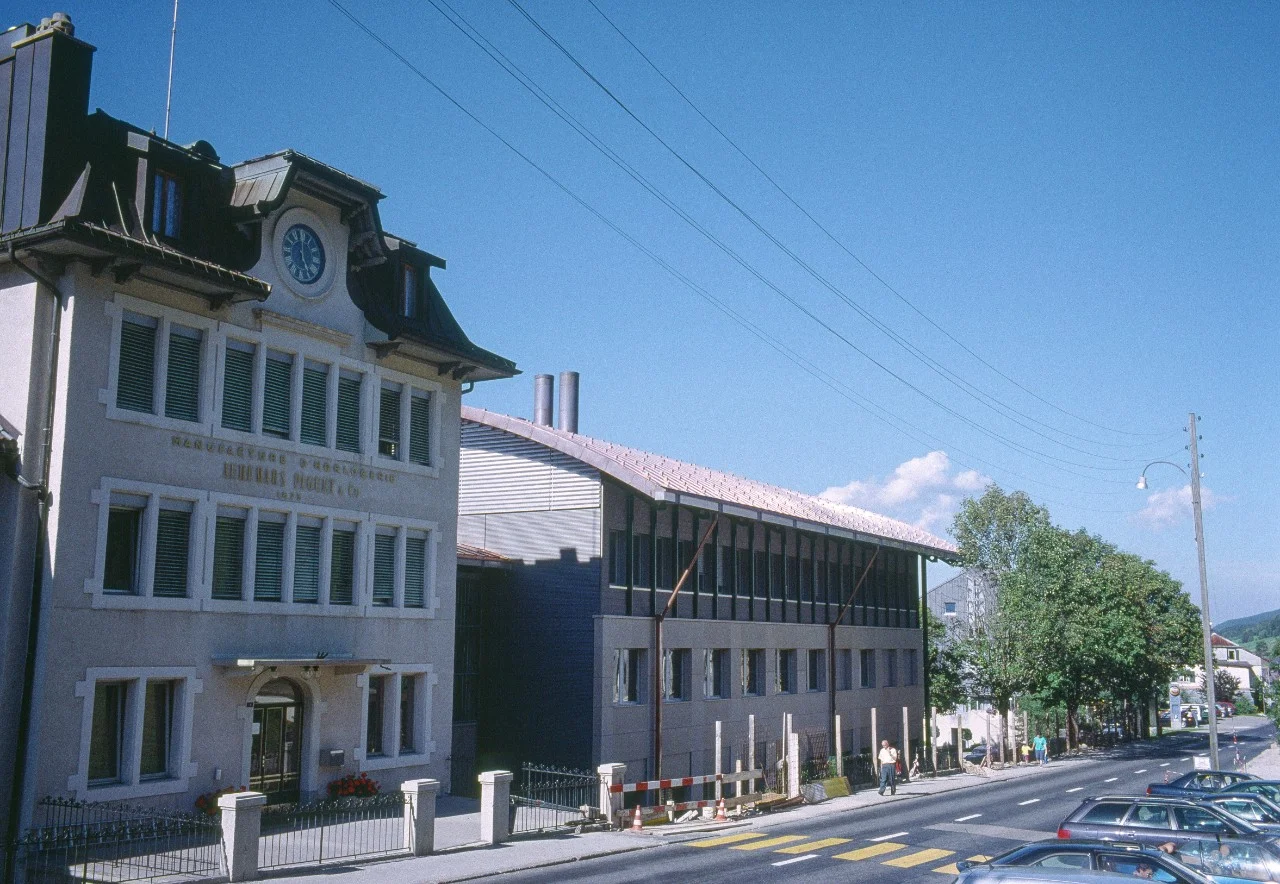
In the year 2000, the Geneva-based dial maker Stern Créations SA was bought up by the Richemont Group, a South African-based holding company notably owning Cartier and Vacheron Constantin and that had just acquired Jaeger-LeCoultre, Audemars Piguet's most important supplier of "ébauches". These stunning acquisitions were part of the profound reorganisation of the Swiss watch industry undertaken in the wake of the quartz crisis. Little by little, large holding companies such as LVMH, Swatch Group and Richemont International S.A. were buying up many traditional suppliers of movement "ébauches", cases, dials and hands.
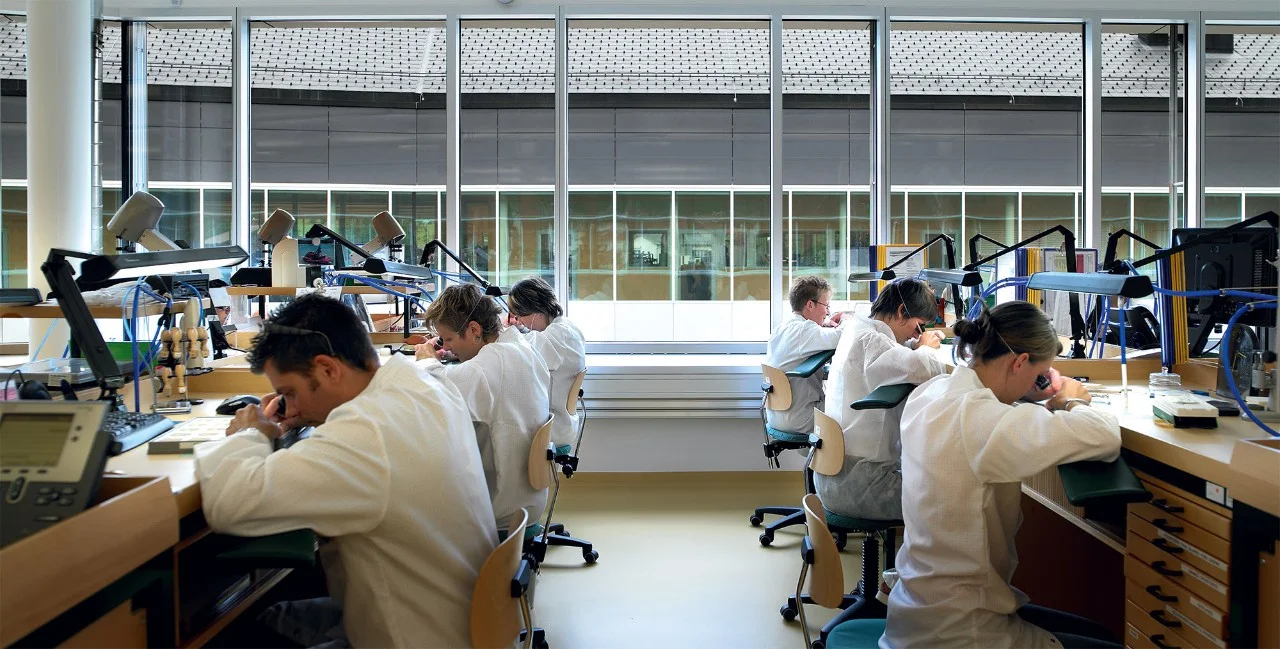
At the same time, the owners of Audemars Piguet – Paulette Piguet and Jasmine Audemars – represented the third and fourth generations on the Board of Directors since the founders. The company was managed by Georges-Henri Meylan, a native of the Vallée de Joux bearing the name of the region's first watchmaker. The corporate culture was strong and backed by a fierce desire to maintain its independence. Guaranteeing this autonomy over the long term meant making choices: Audemars Piguet had to become more vertically integrated. The process began with mechanical movements in the 1990s and 2000s (see the article on the history of Calibre 2120). During the following decade, Audemars Piguet started to learn the dial-making trade. The company began with one of the most difficult skills: the art of Tapisserie.

Conquering a Craft
In 2004, Audemars Piguet’s Board of Directors hired Bruno Moutarlier to accelerate the vertical integration of production. Trained as a robot engineer, the determined and charismatic Frenchman began his watchmaking career at Cartier. He was involved in the ascent of the Le Brassus-based brand which expanded between 2000 and 2010 from 350 employees to more than 1,100 and from 16,000 to 28,000 watches produced per year.
Upon his arrival, Bruno Moutarlier noticed that Stern Créations was no longer able to meet the growing demand from Audemars Piguet. Deliveries were often late, quality tended to be irregular, returns were increasing, yet the Geneva dial maker had a monopoly on this expertise. Not only did no one else know how to guilloché-work Tapisserie patterns, but the engraving machines were no longer manufactured. Lienhard was absorbed by its competitor Güdel in 1960 and the latter ceased production at the end of the 1970s. As a last resort, Bruno Moutarlier set out in search of second-hand machines. All those in Europe were acquired by the dial makers of the large groups. He found three in the United States that had been used by medal engravers. He purchased them and brought them back to Switzerland, entrusting Jean-Jacques Rochat – a micromechanical genius who founded a small company in the village of Aubonne in 1973 – with the task of understanding the tools and restoring them to their original condition. By a happy coincidence, Jean-Jacques Rochat had just received identical machines for repair... from Stern Créations, from which he was able to derive some precious information.
There are times when the stars align perfectly. In 2006, Canadian watchmaker Marc Ferland, who had been working in Audemars Piguet's After-Sales Service department for six years, began training as a guilloché artisan. At the time, this skill was under serious threat, as there were only a handful of such craftsmen left in Switzerland, including 76-year-old Pierre Rosenberg from La Chaux-de-Fonds. For five years, the venerable artisan passed on his knowledge to the young watchmaker in fortnightly sessions, a rhythm interrupted only by a few stays in hospital.
Creation of the Tapisserie Workshop in Le Brassus
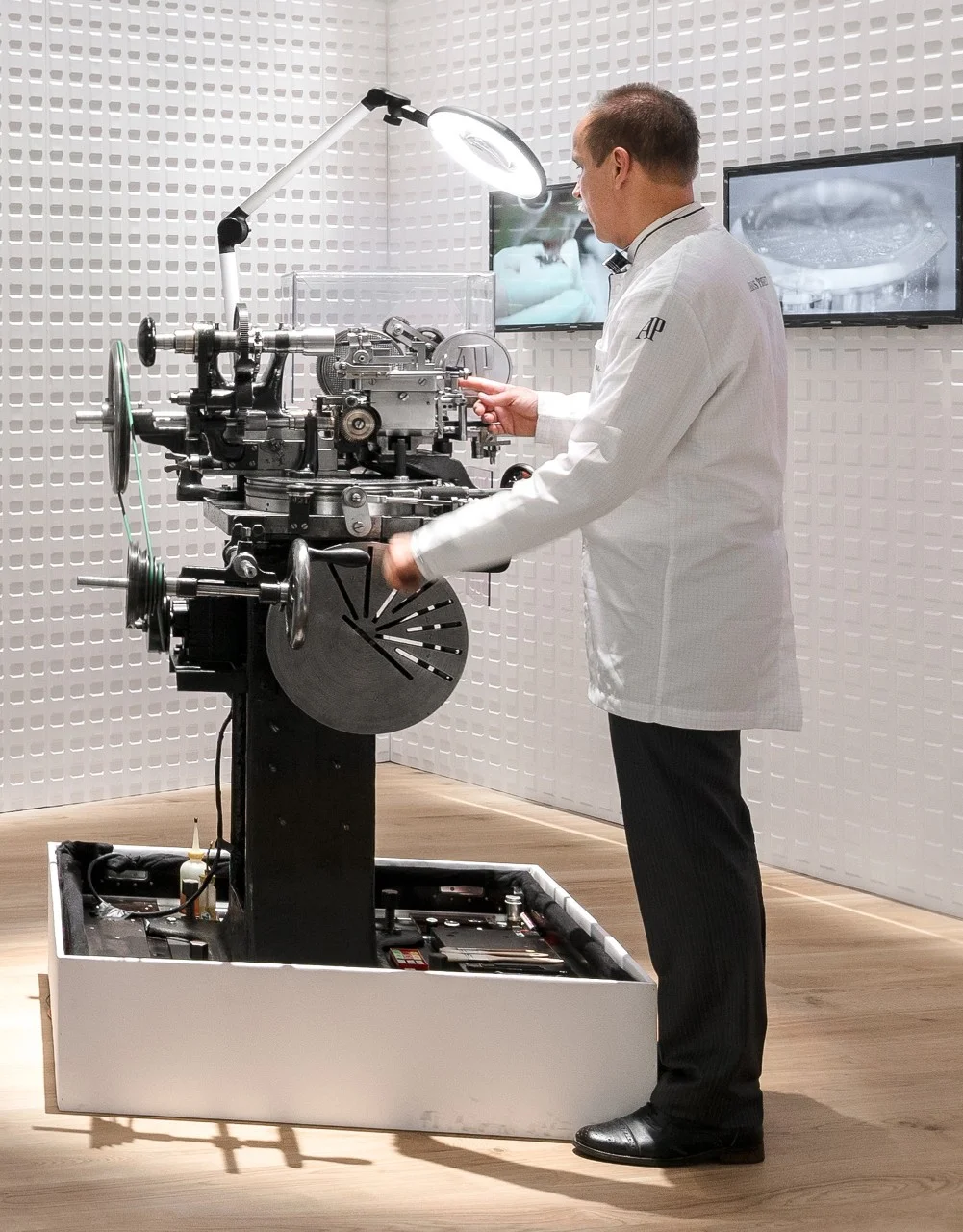
During this period, Bruno Moutarlier found other machines in the United States and Canada. He imported them, had them repaired and learned to use them. On many evenings, Audemars Piguet’s Industrial Director donned his working overalls, once again experiencing the smell of oil and blackened hands from ‘tinkering’ with ancient machines. In 2010, the first 300 guilloché Tapisserie dials left the workshops. The colouring, transfers and appliques were still made by Stern. The following year, Marc Ferland took over the workshop and production reached 9,000 dials. Since then, the workshop has continued to grow, welcoming more and more expertise and craftspeople.
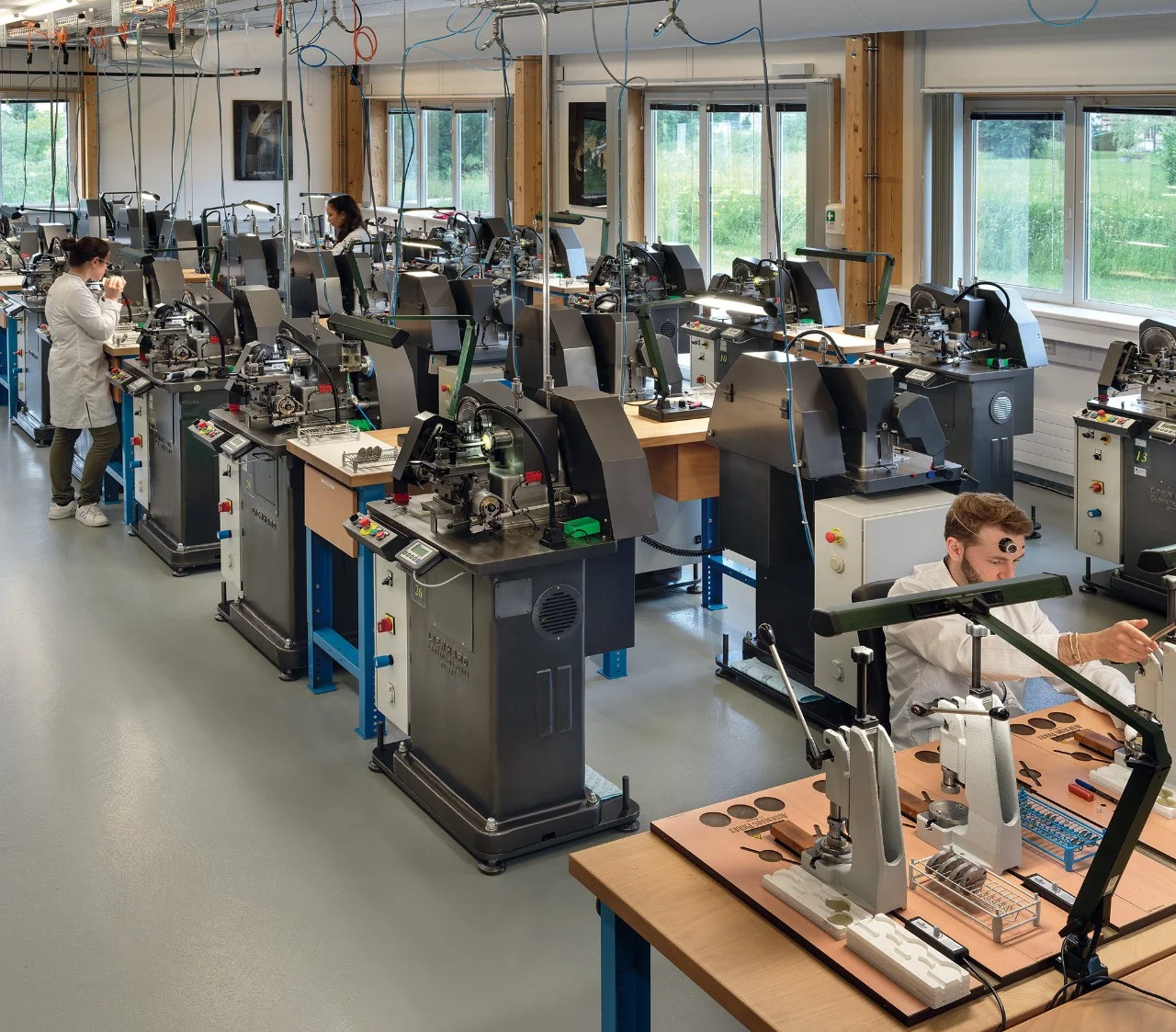
On June 14, 2014, the Stern Créations company informed Audemars Piguet that it was ceasing its activities, including making guilloché dials. By then, however, Audemars Piguet had achieved complete mastery of Tapisserie patterns. Better still, thanks to the traditional guilloché skills acquired between 2006 and 2011, Marc Ferland had raised the standards of perfection to unprecedented levels. Differences between dials were by then imperceptible to the naked eye, yet the machines were the same and adjusted by hand. In 2022, having scoured the world in the course of a veritable treasure hunt to find all existing antique machines, Audemars Piguet owns 49 of them, all made by Lienhard and his successor Güdel between 1950 and 1976. Thirty-five of them have been restored, improved and are in daily use within the workshop. The others have been carefully preserved to prepare for the future.
Editorial board: Audemars Piguet Heritage team, Le Brassus
First publication: 15 March 2022