Before 1875
Le Brassus in 1875
Imagine a small, mid-altitude valley surrounded by vast spruce forests after which it is named: Vallée de Joux, or, "valley of the forest". It stretches out at an altitude of 1,000 metres in the Swiss Jura mountains, a stone's throw from France. It is bathed by a lake brimming with fish, dotted with villages and ringed by passes rendered inaccessible by the snow every winter for several months.
In the village of Le Brassus, as in the nearby villages, most houses and farms have a small workshop under their roofs, alive with the clatter of watchmaking tools. Some workshops produce springs, gear trains, gongs or striking hammers, while others cut small stones. The établisseurs are watchmakers who coordinate the work of their neighbours, cousins and friends. As part of the établissage system, they acquire components, decorate them, adjust them, assemble them and fit them together to make complicated watches.
Among them were two young watchmakers – Jules Louis Audemars and Edward Auguste Piguet – who would found the first Audemars Piguet workshop. Neither of them could possibly have imagined the extraordinary destiny that awaited their future company. What they did know, however, was that their little village was one of the world's leading centres for the creation of complicated watches. How do we explain this very special destiny?
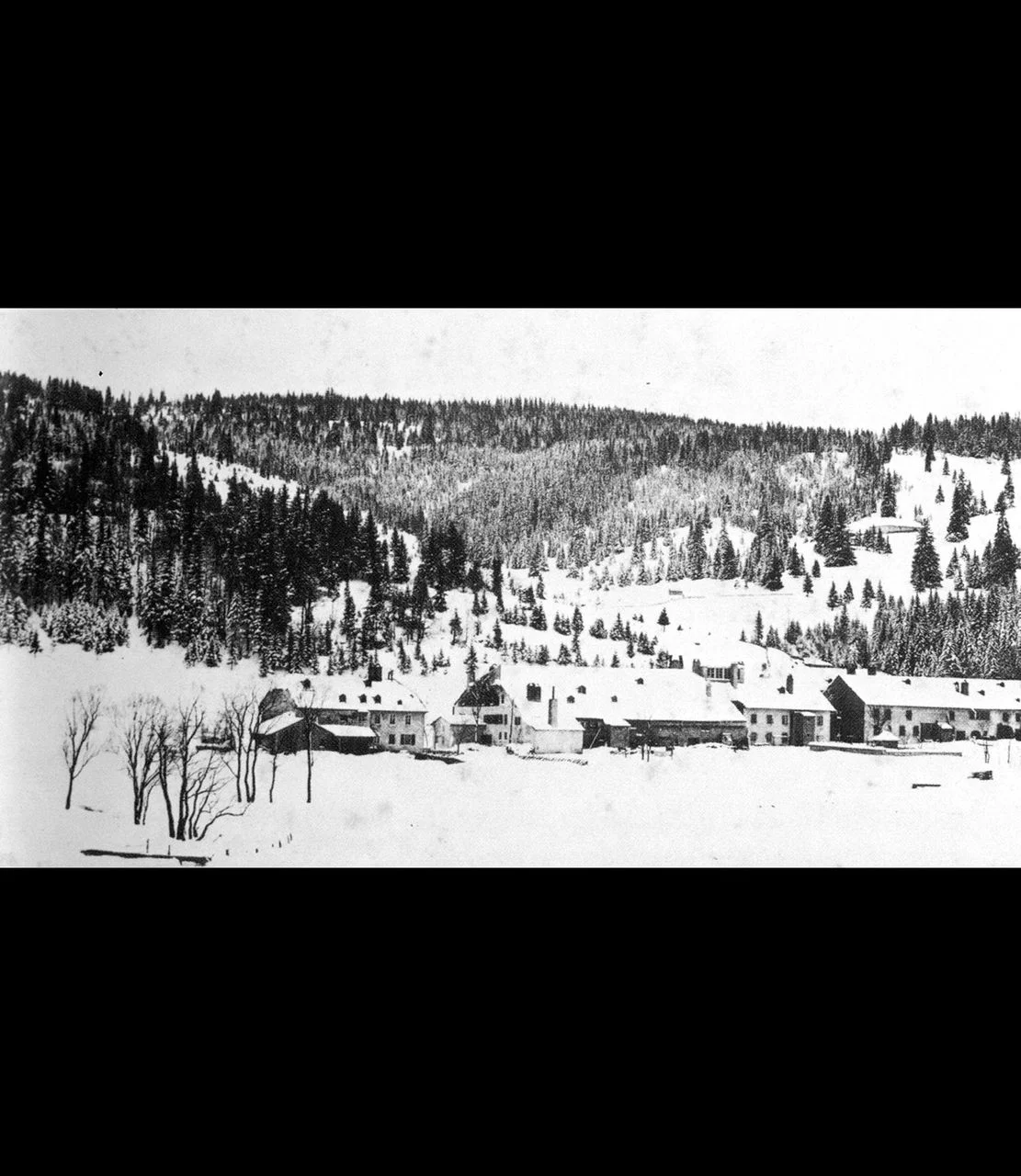
Circa 1900. Winter scene of Le Brassus. Private collection.
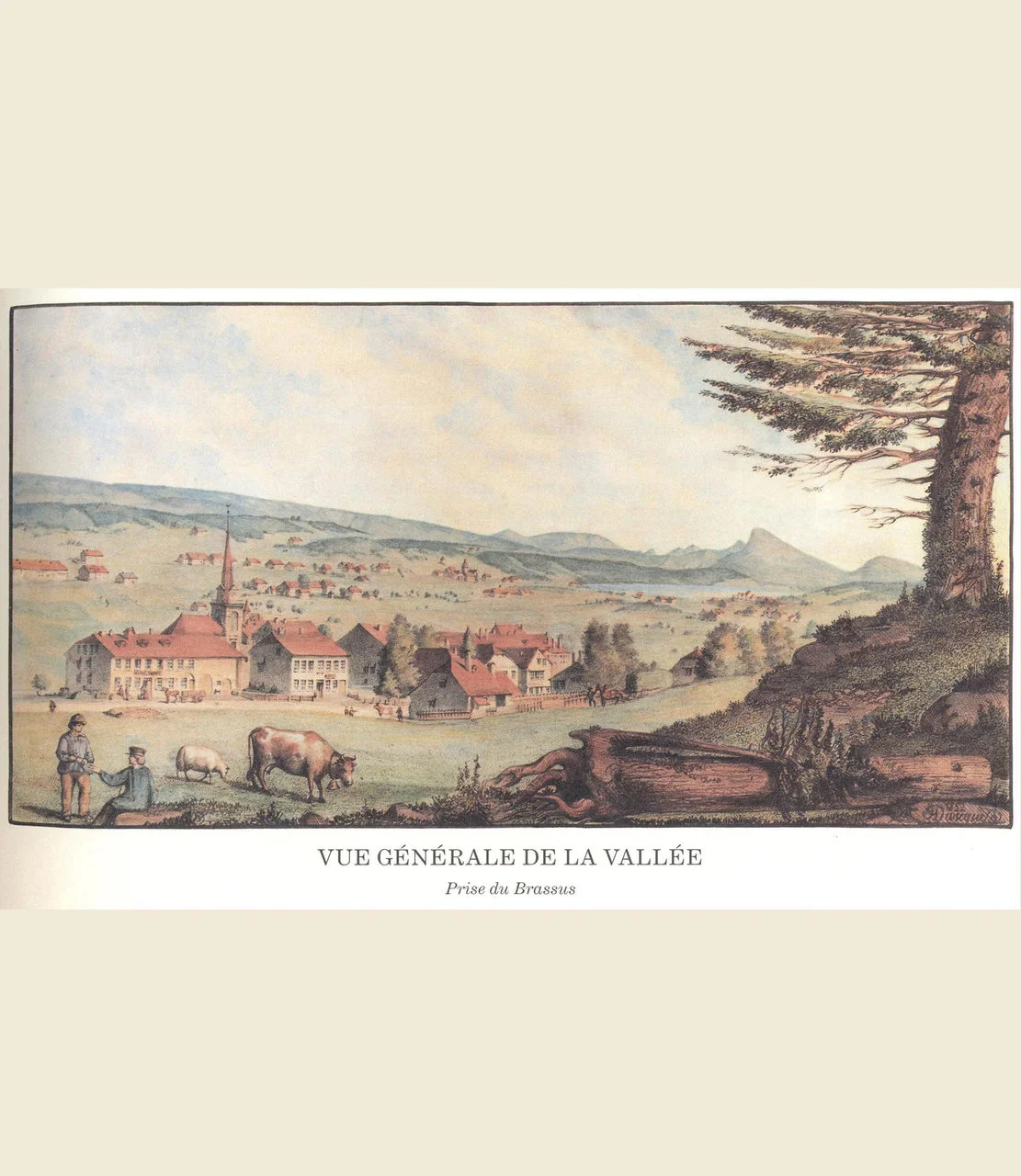
Engraving depicting Le Brassus in 1852. Julien Hippolyte Devicque, Merveilleuse Vallée de Joux, 1992.
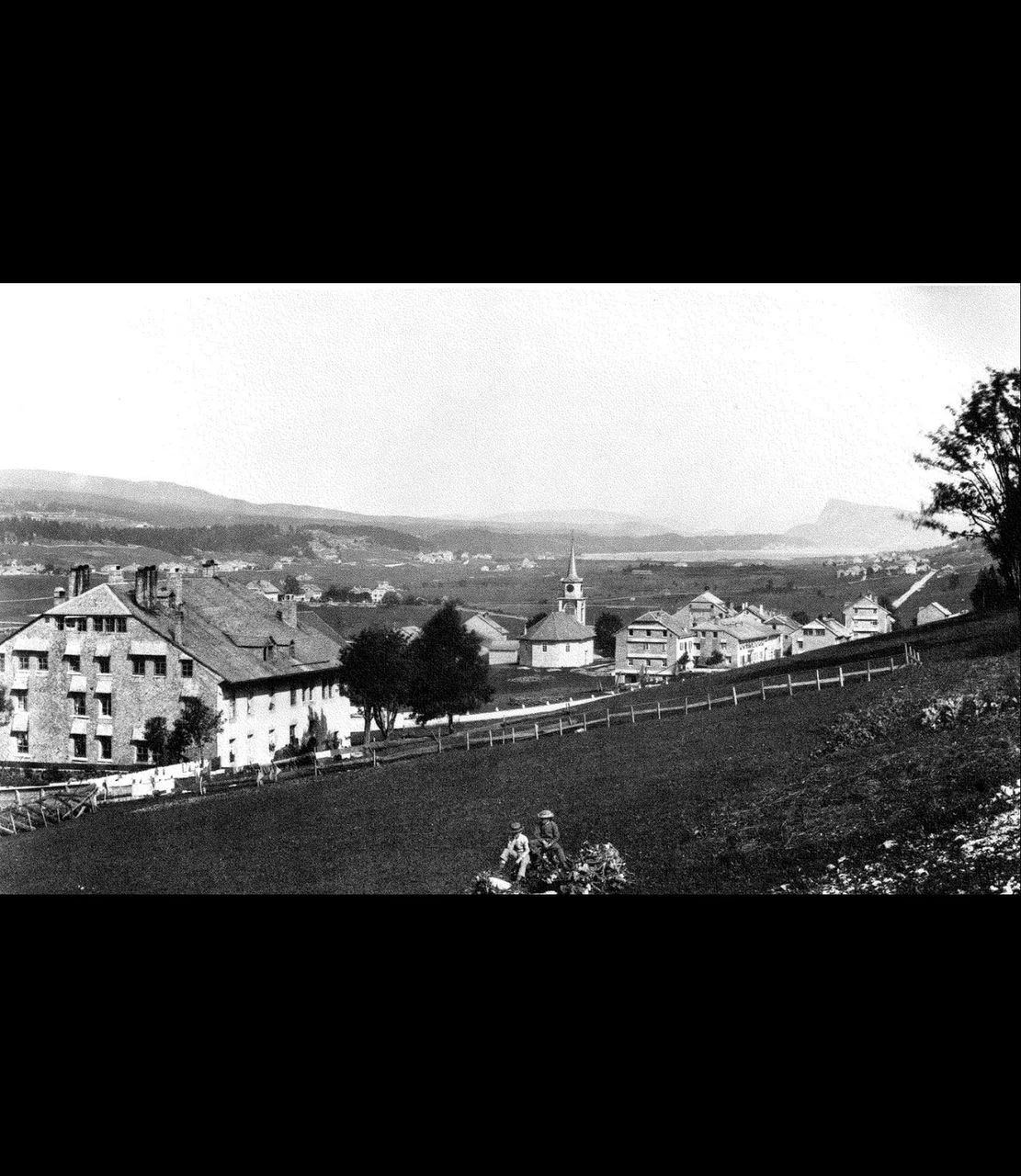
Le Brassus, circa 1875. Photograph by Auguste Reymond. Audemars Piguet Archives.
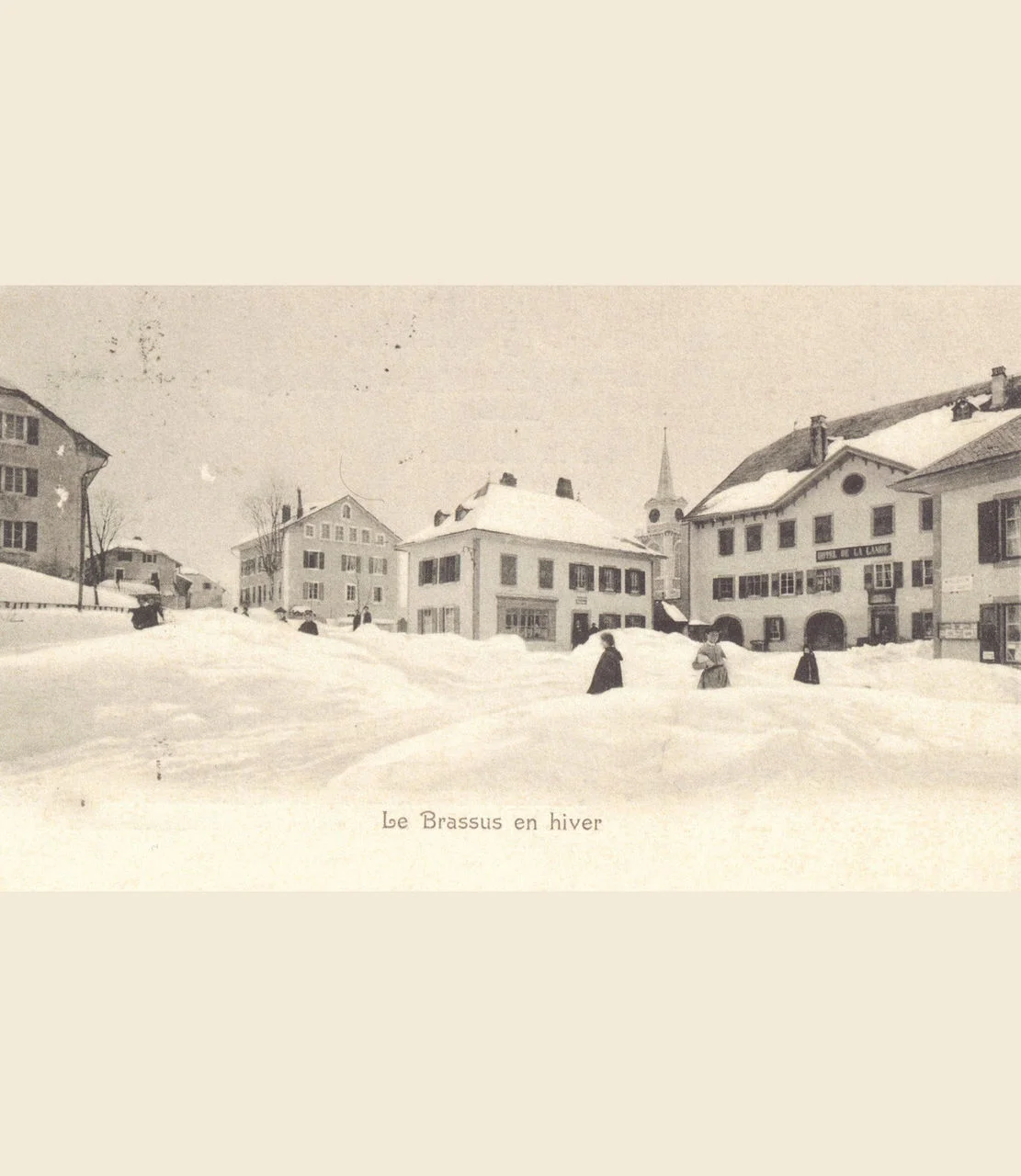
Postcard depicting Le Brassus around 1900. Audemars Piguet Archives.
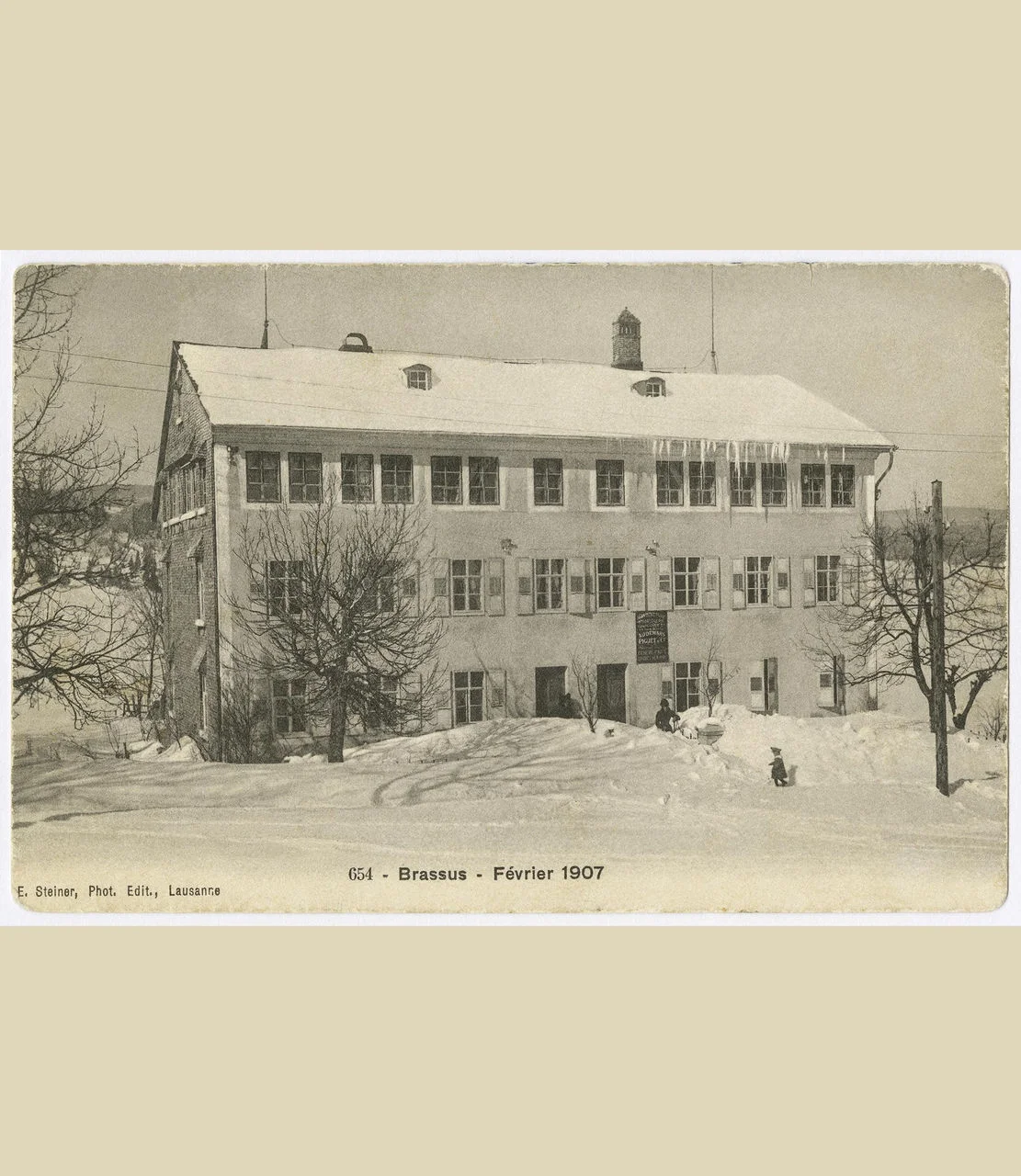
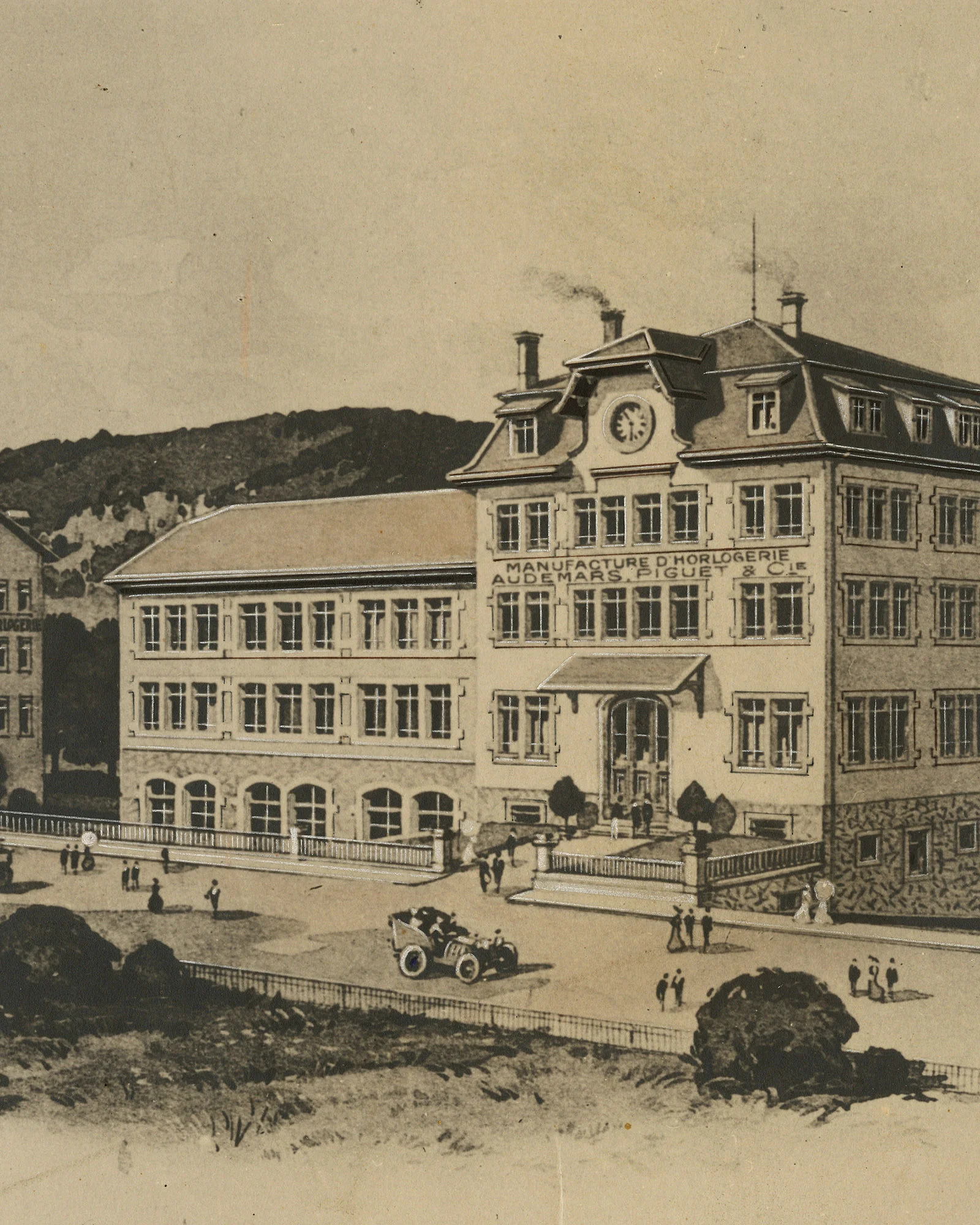
1907. Postcard depicting the first Audemars Piguet building, at "Chez-Les-Meylan" in the village of Le Brassus. The house dates from 1868. It was probably home to Jules Louis Audemars' first workshop in 1875. The upper windows were created when an extra floor was added circa 1890. Audemars Piguet Archives.
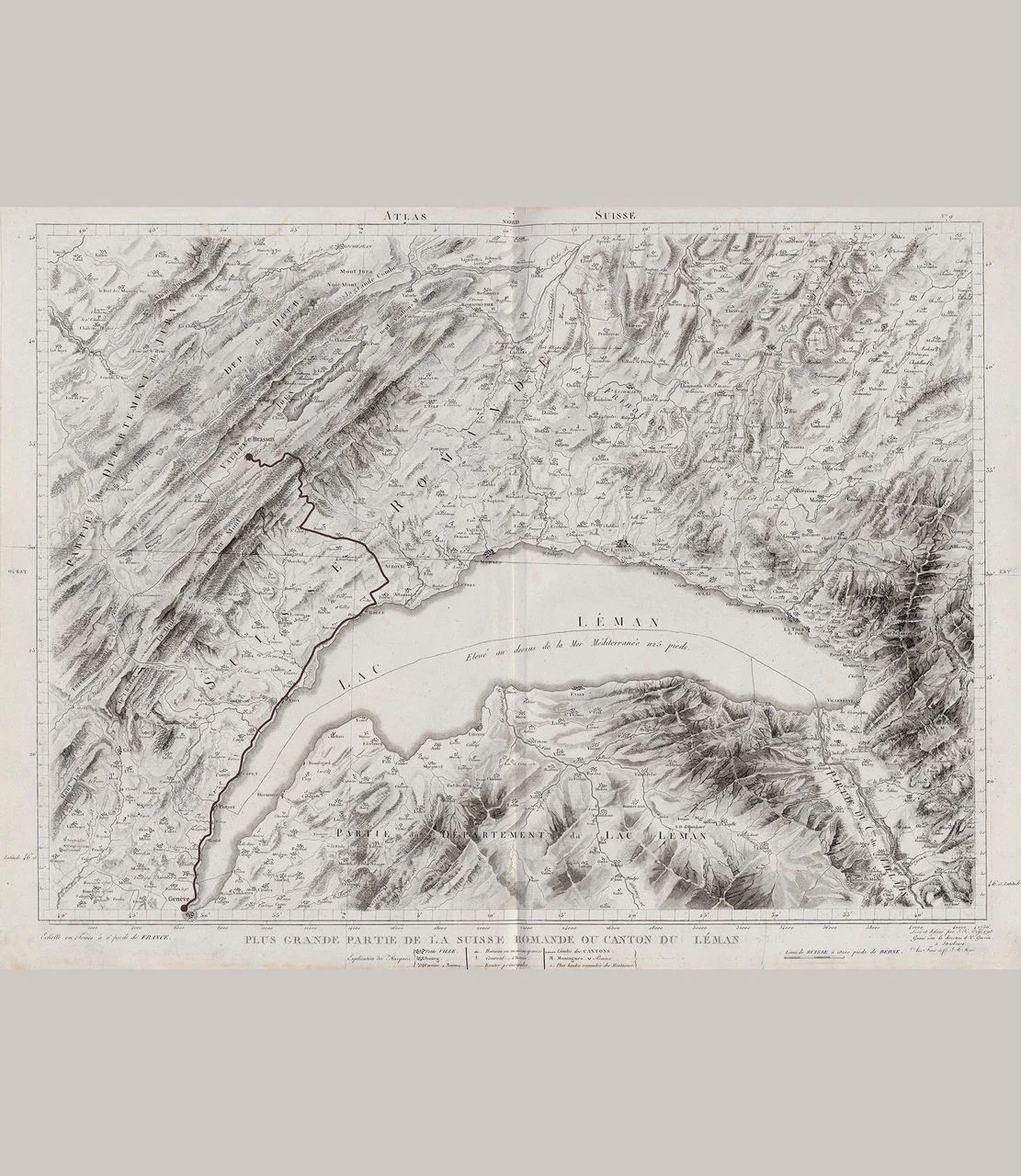
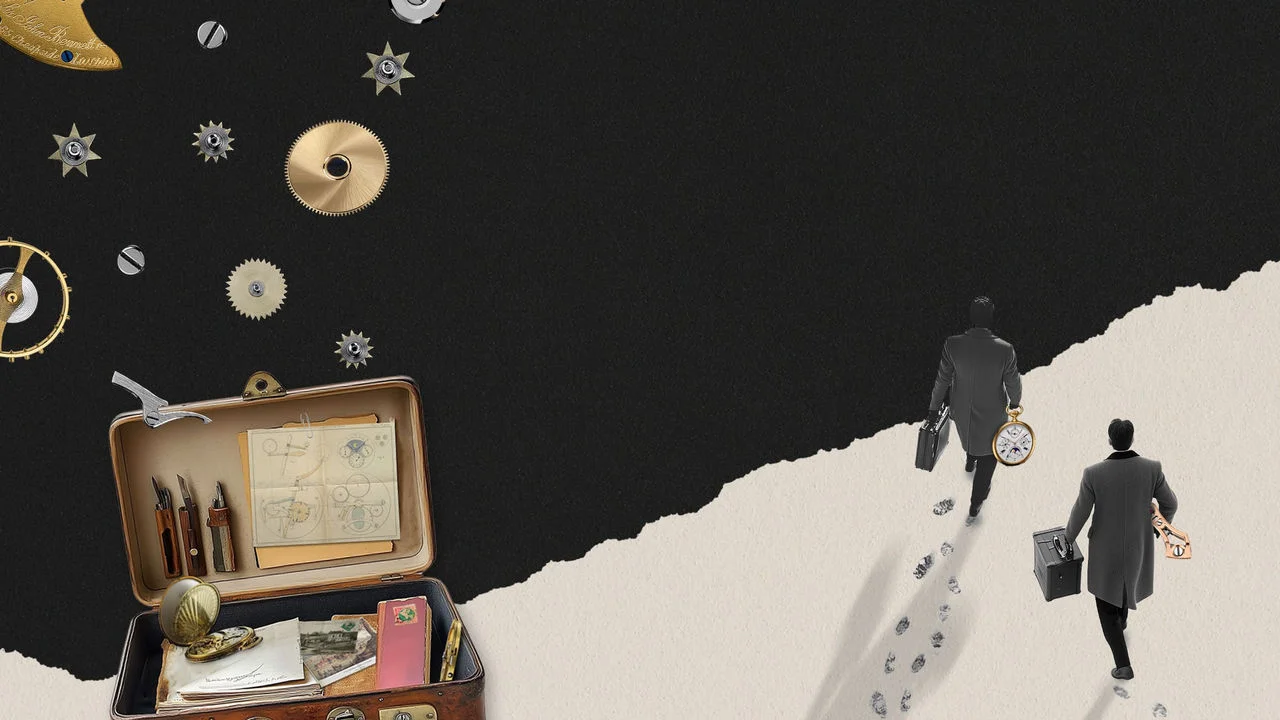
The watchmakers' route. When the snow melted, the watchmakers travelled from Le Brassus to Geneva on foot or on horseback to deliver the mechanisms they had made during the winter. Image taken from the Atlas of Switzerland 1798 – the path is a more addition.
Survival in the valley
The Vallée de Joux is closed off on all sides by mountain passes. It is therefore a combe, which is why its inhabitants are known as Combiers. Before global warming, average temperatures stayed below zero for half the year. The isolation and harshness of the climate may explain why the first inhabitants were monks, seeking silence and tranquillity. Above all, it explains why numerous activities developed alongside livestock farming, in order to compensate for the very limited yields from agriculture and to occupy the long winters.
The inhabitants have exploited all the resources available: wood to make tools, sand to make glass, ice from the lake to preserve food, milk to make cheese, modest deposits of iron to make tools... and of course, time to fashion craft objects, glassware, cheese boxes and soon, watch mechanisms...
As early as the 15th century, small iron mines fed blast furnaces, which in turn were fuelled by charcoal produced by charcoal burners in the surrounding forests. The cast iron was then forged in workshops using the power of water. This is how the village of Le Brassus came into being in 1555. It takes its name from a stream that fed small sawmills and forges.
Ironworking paved the way for clockmaking, as the first clocks were made of iron.
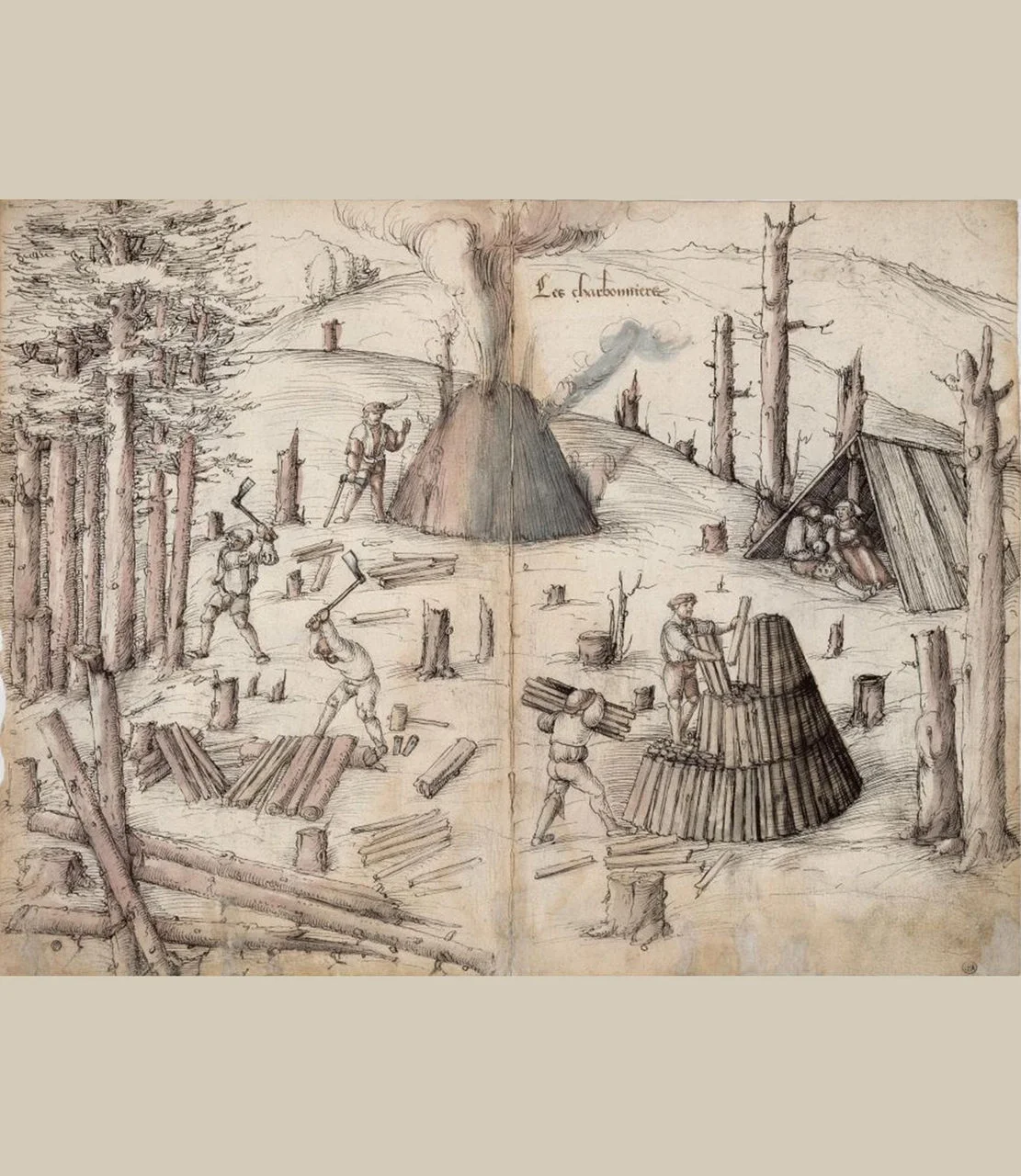
Circa 1600. Engraving showing the mining of coal to extract iron for blast furnaces. Traces of this activity can be found in the village of Les Charbonnières and the first land registers in the Valley. Source: Vallorbe Iron Museum.
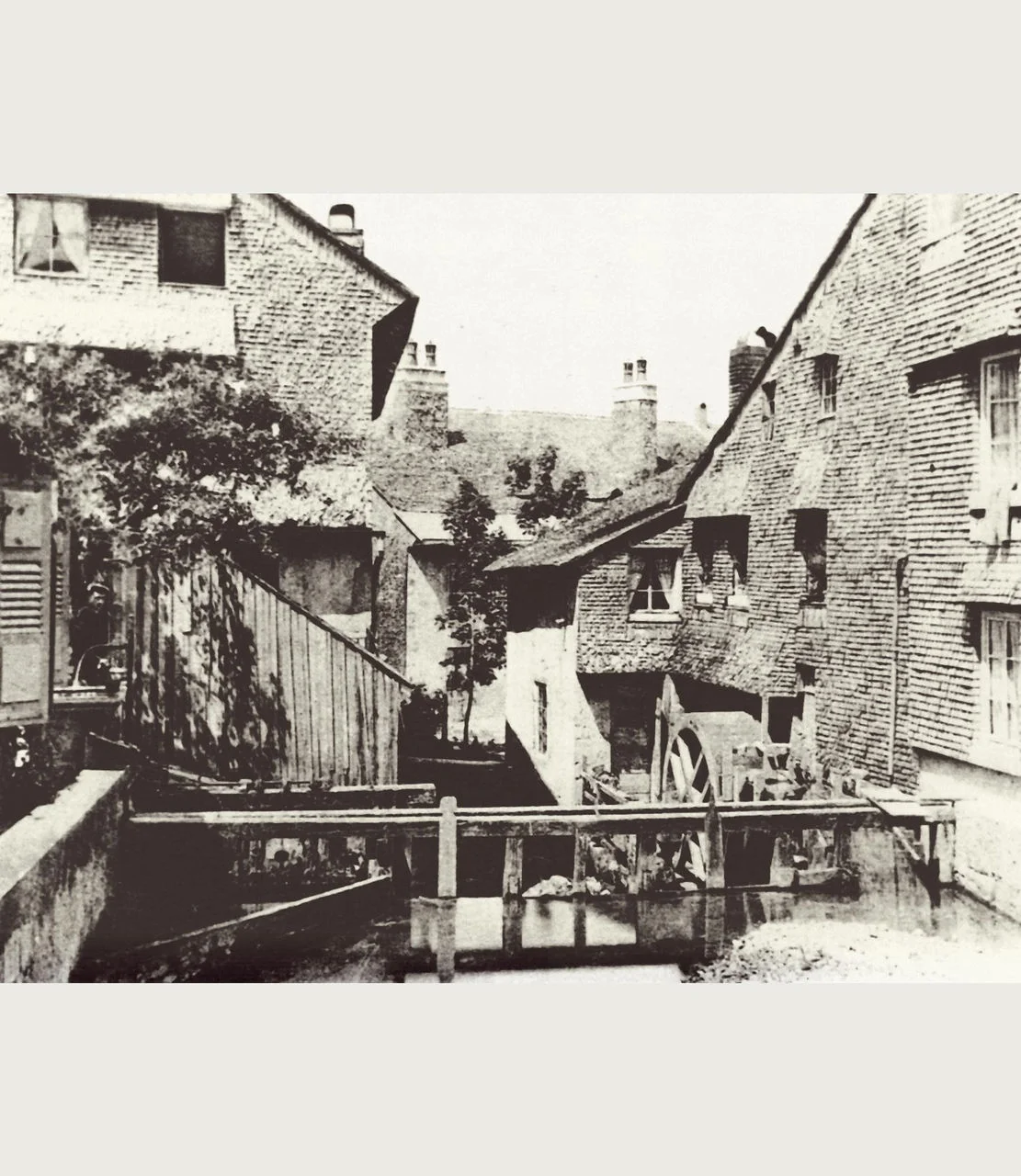
Circa 1910. Mill in Le Brassus. Postcard. Audemars Piguet Archives.
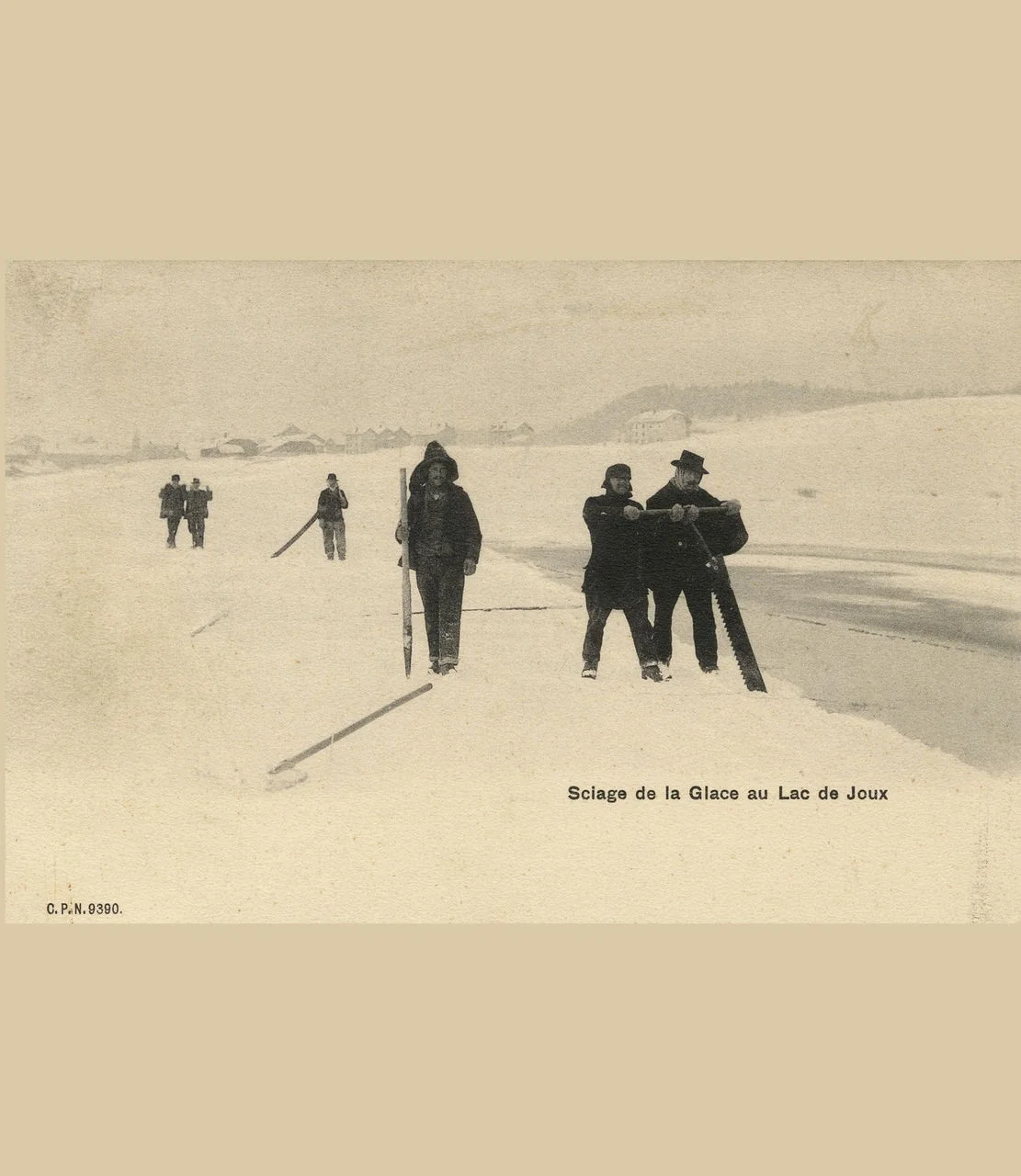
Circa 1900. Lake Joux ice mining. Postcard. Audemars Piguet Archives.
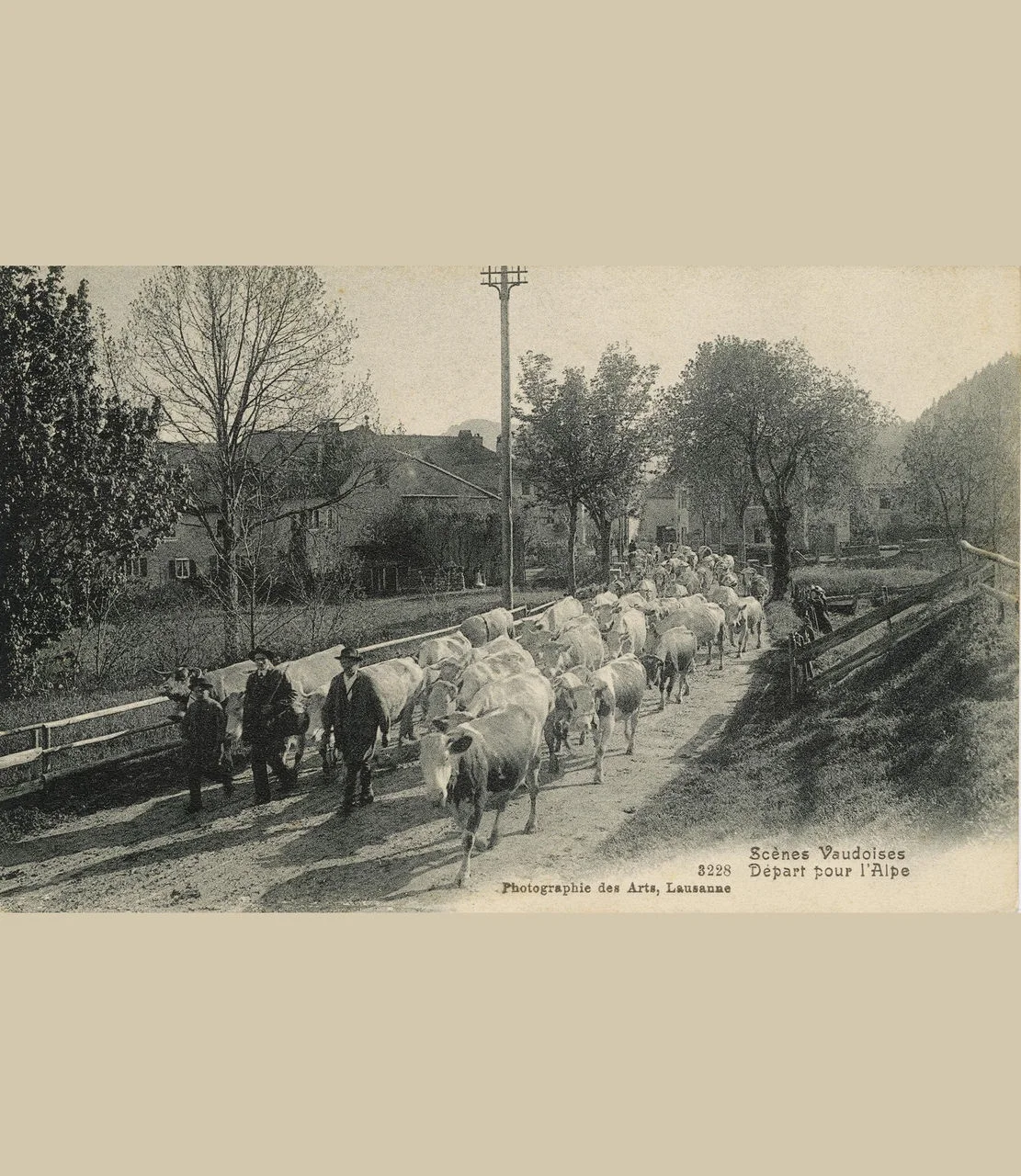
Circa 1900. In summer, the herds were driven up to the mountain pastures, to spare the pasturelands near the farms. Postcard. Audemars Piguet Archives.
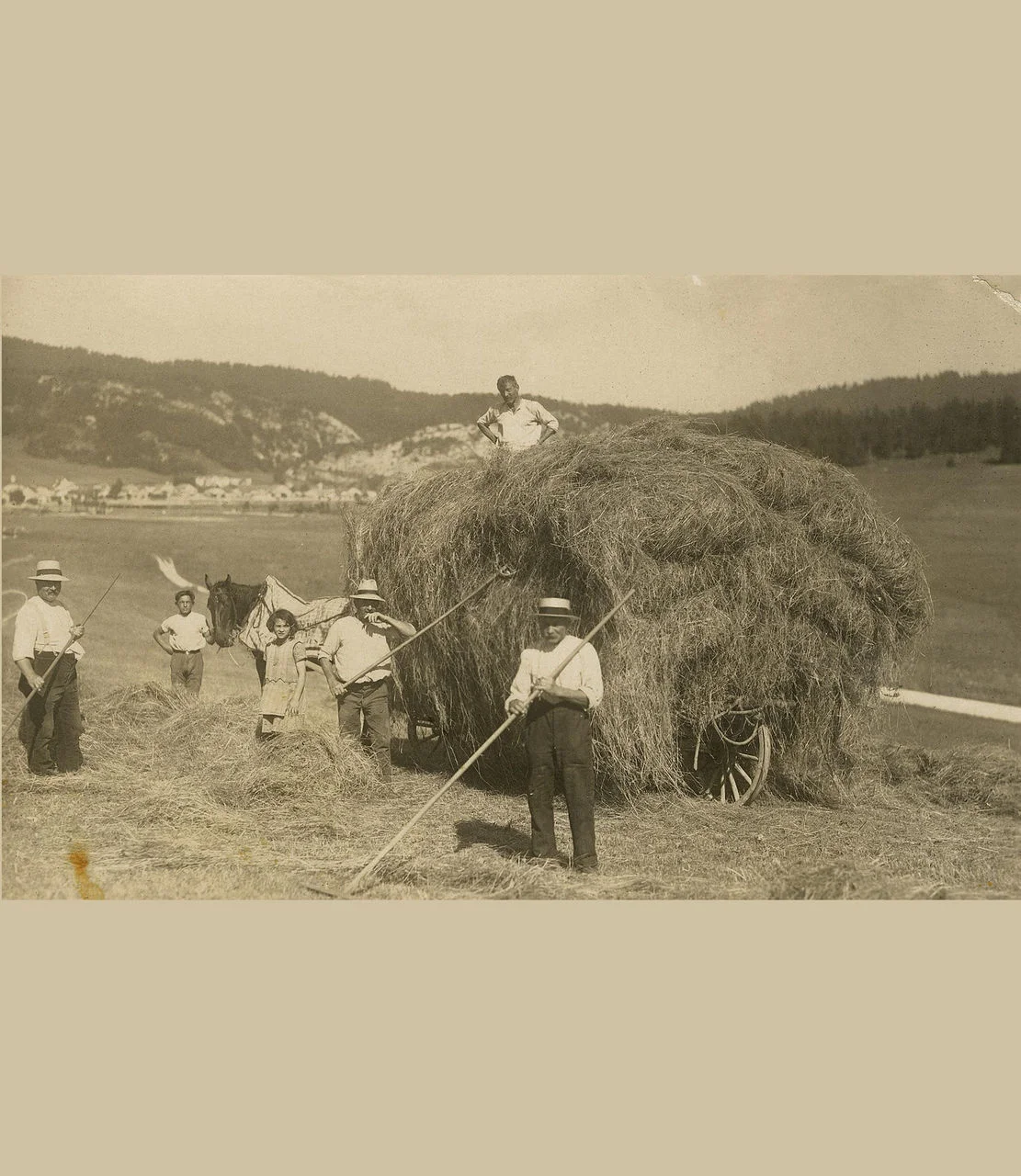
Circa 1900. Grass from the fields is cut and dried to feed the cattle during the winter. Postcard, Audemars Piguet Archives.
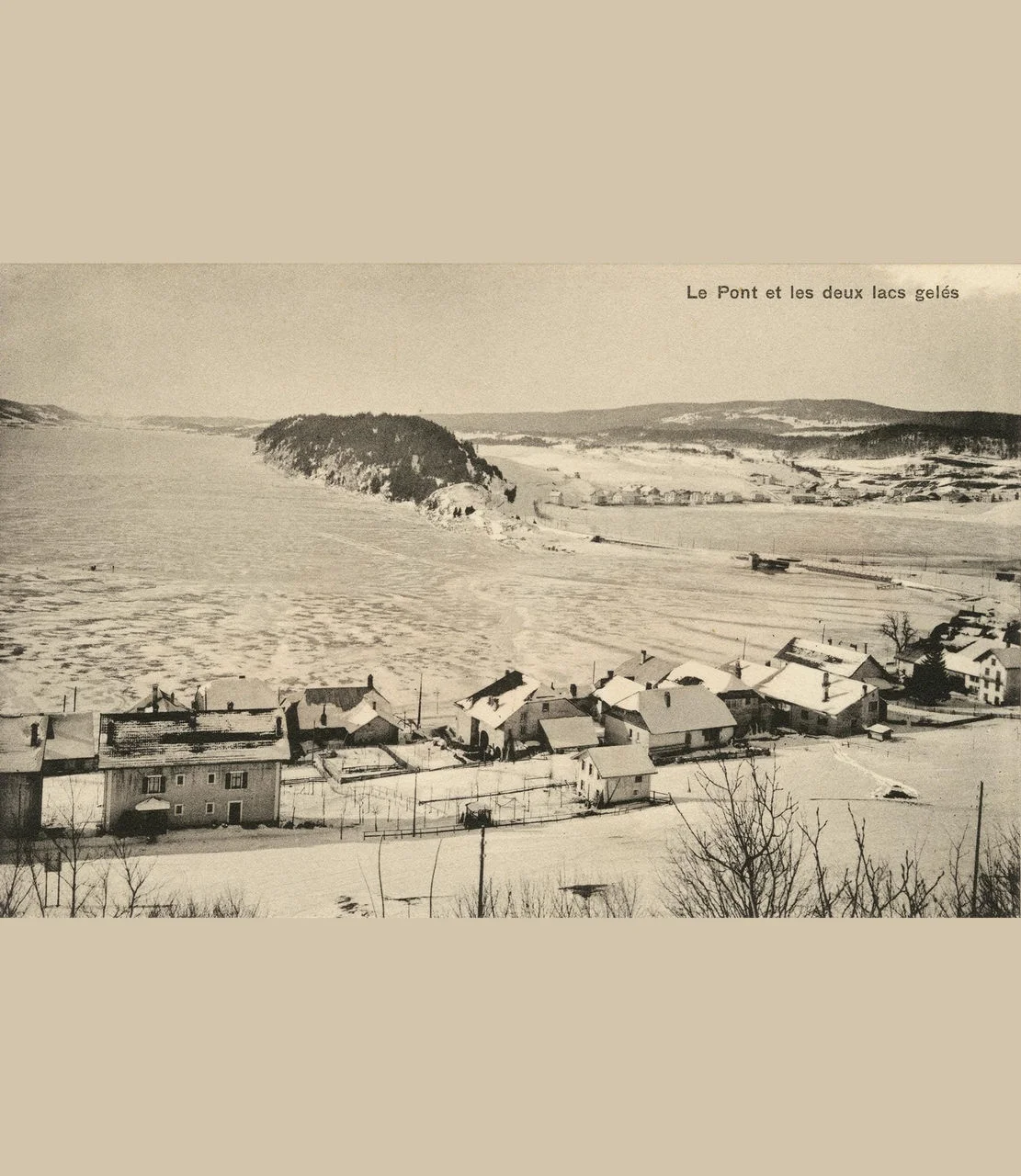
Circa 1900. Frozen Joux and Brenet lakes. Postcard. Audemars Piguet Archives.
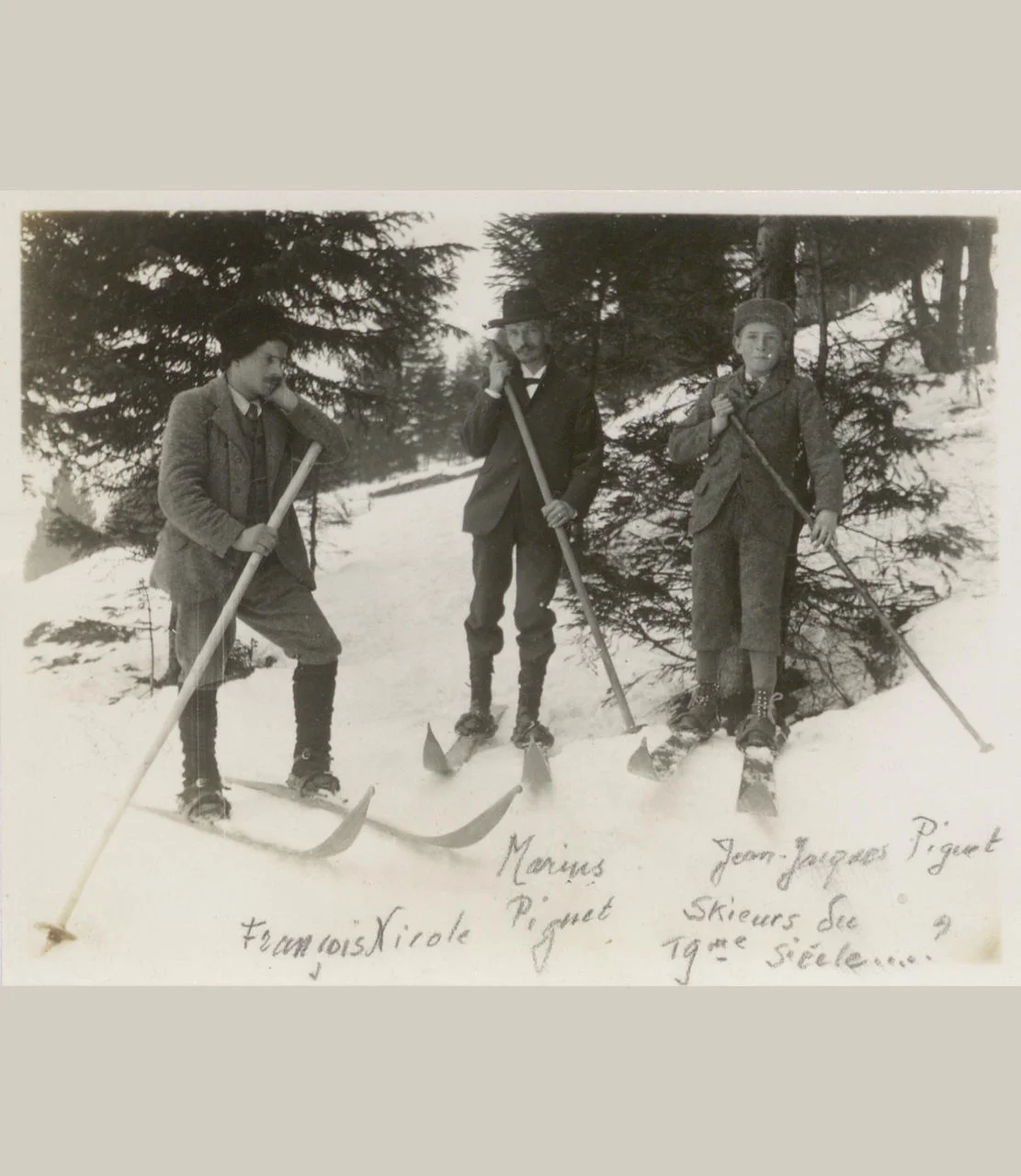
Circa 1890. Group of Vallée de Joux residents. «Patrimoine de la Vallée de Joux» archives.
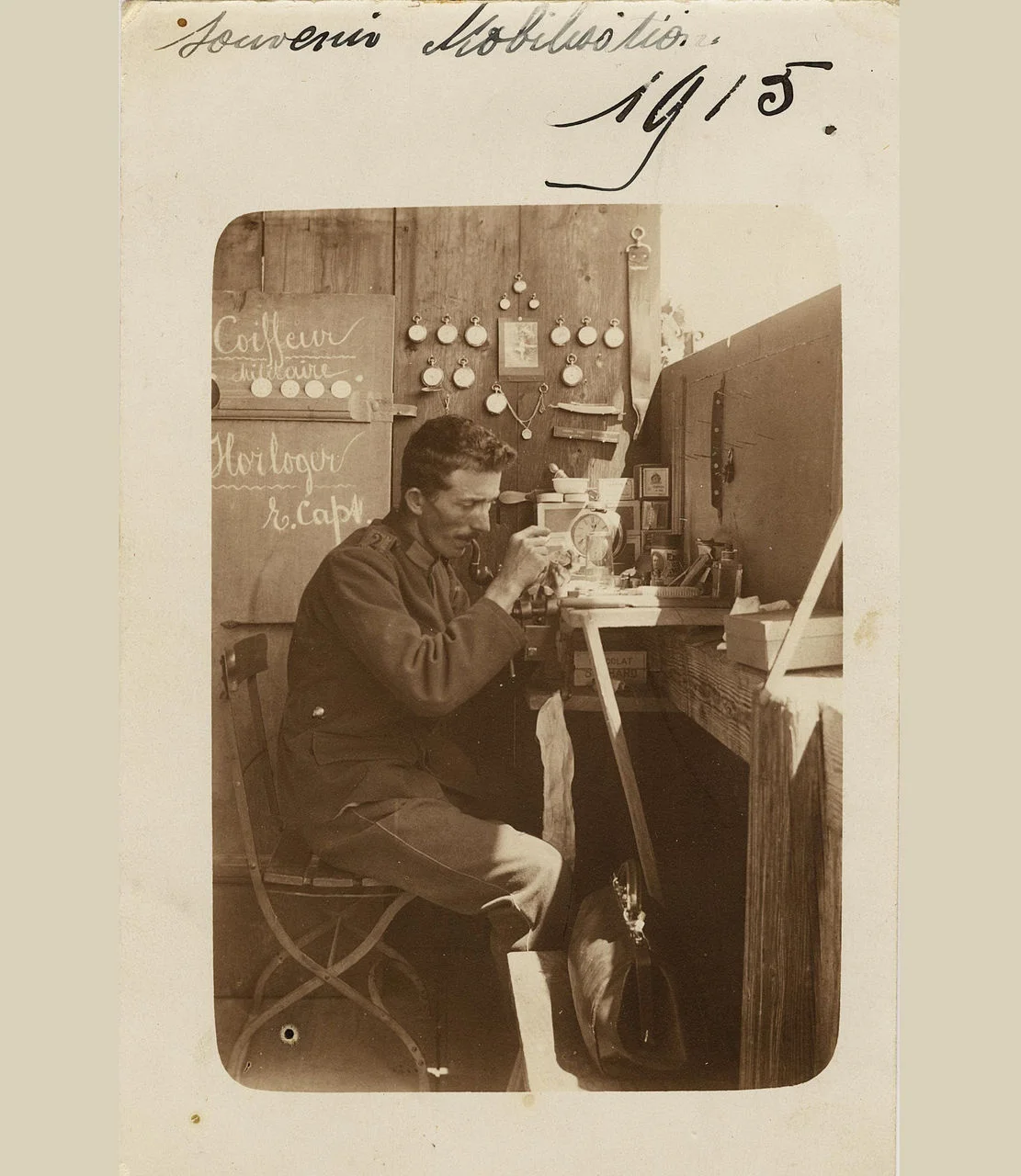
1915. Watchmaker and hairdresser. The seasonal nature and harshness of life in the Vallée de Joux often meant that people had to have several activities in order to survive. Postcard. Private collection.
The very first watchmakers
In 1740, a 19-year-old blacksmith's son named Samuel Olivier Meylan left his native valley for the small town of Rolle, on the shores of Lake Geneva. His dream was to become a watchmaker. At the time, the watchmaking industry was governed by guilds, which made it compulsory to complete an eight-year apprenticeship before establishing oneself as a watchmaker.
However, finding himself short of money after just two years, Samuel Olivier Meylan returned to the Vallée de Joux. Against the rules of the Rolle Guild, he began to pass on his knowledge to several apprentices, including to the brothers, David and Pierre Golay. The Vallée de Joux was so isolated and living conditions so harsh that the overly strict rules governing watchmaking were inapplicable, yet the young craftsmen were tenacious: in 1749, they obtained an exemption from the ruling authorities in Bern. They set up their own Guild in 1756, before this system was abolished 20 years later, giving rise to the établissage approach based on freedom.
Social ties are strong in the Vallée de Joux, so it was within families that watchmaking spread. The Piguet and Audemars families were early participants in this dynamic.

In 1740, Samuel Olivier Meylan went to Rolle to learn the watchmaking trade. Fictional representation in 2025. Image Audemars Piguet.
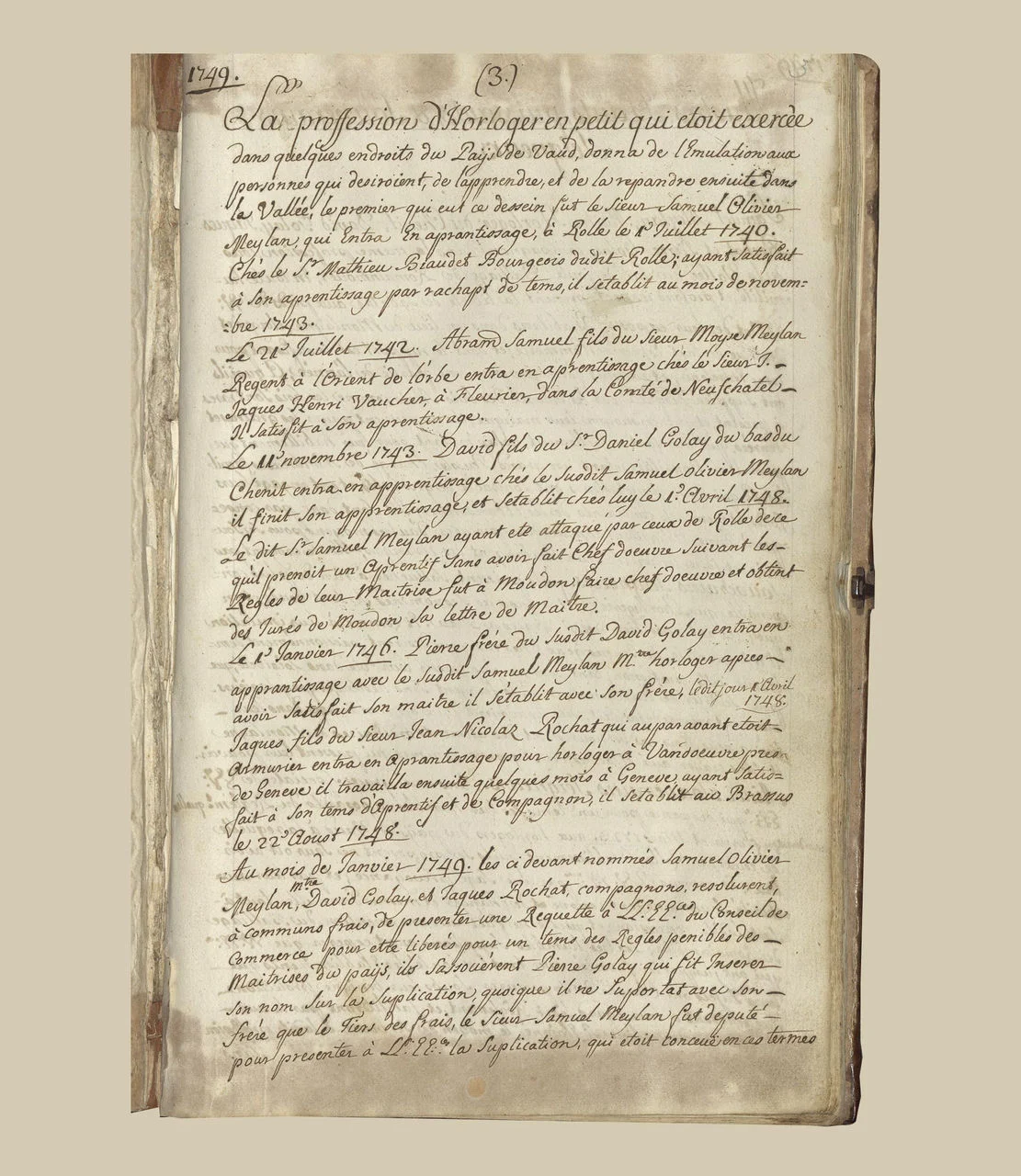
Written from 1749 onwards, the book entitled Maîtrise horlogère de la Vallée de Joux recounts the development of this activity up to 1776. The first page reproduced here relates its origins in 1740. Replica of the Maîtrise horlogère de la Vallée de Joux. Audemars Piguet Archives.
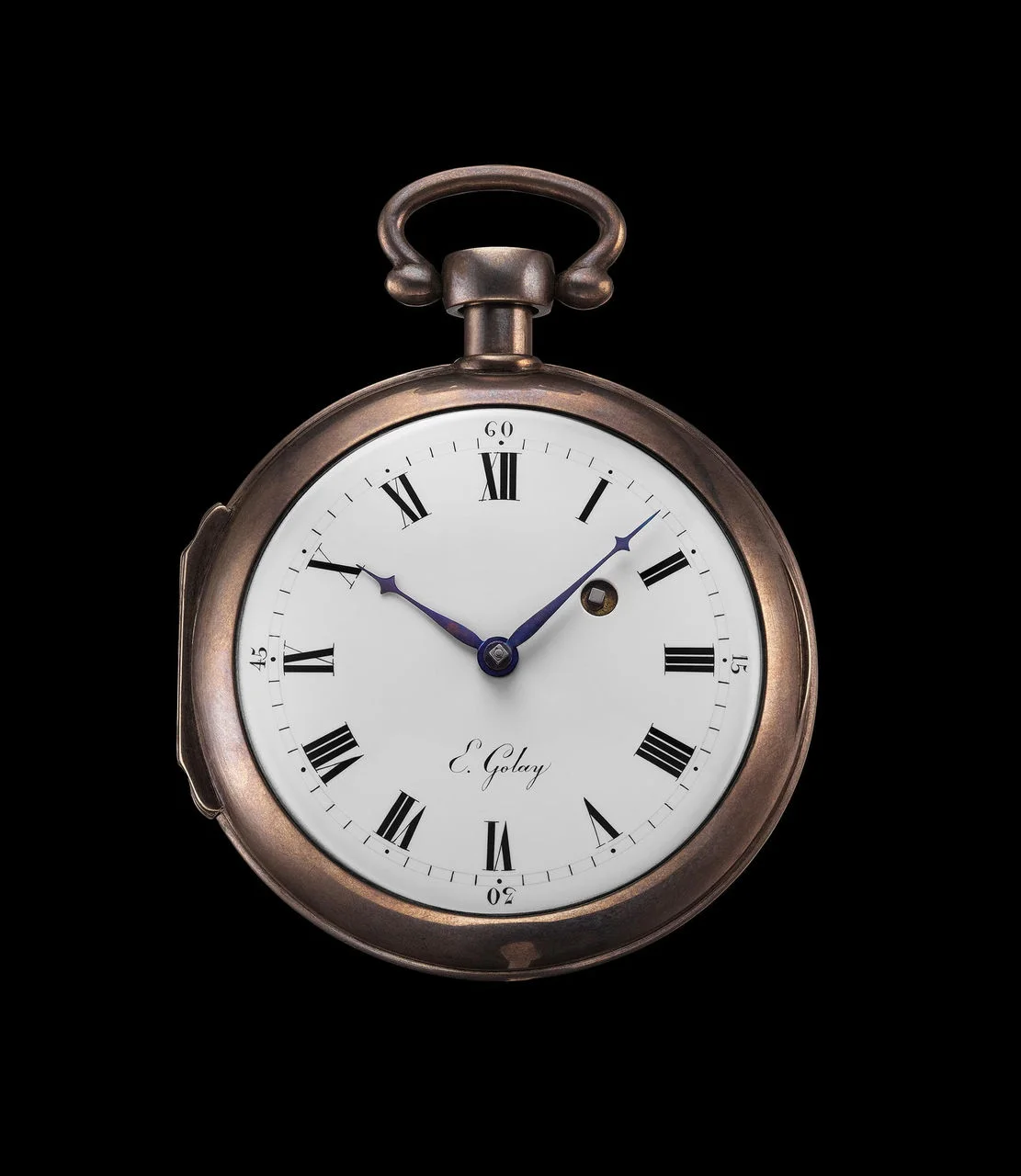
Circa 1780. One of the oldest watches in the Vallée de Joux bears the signature of Elisée Golay. It chimes the hours and quarters on demand by striking a bell. Audemars Piguet Heritage, Inv. 730.
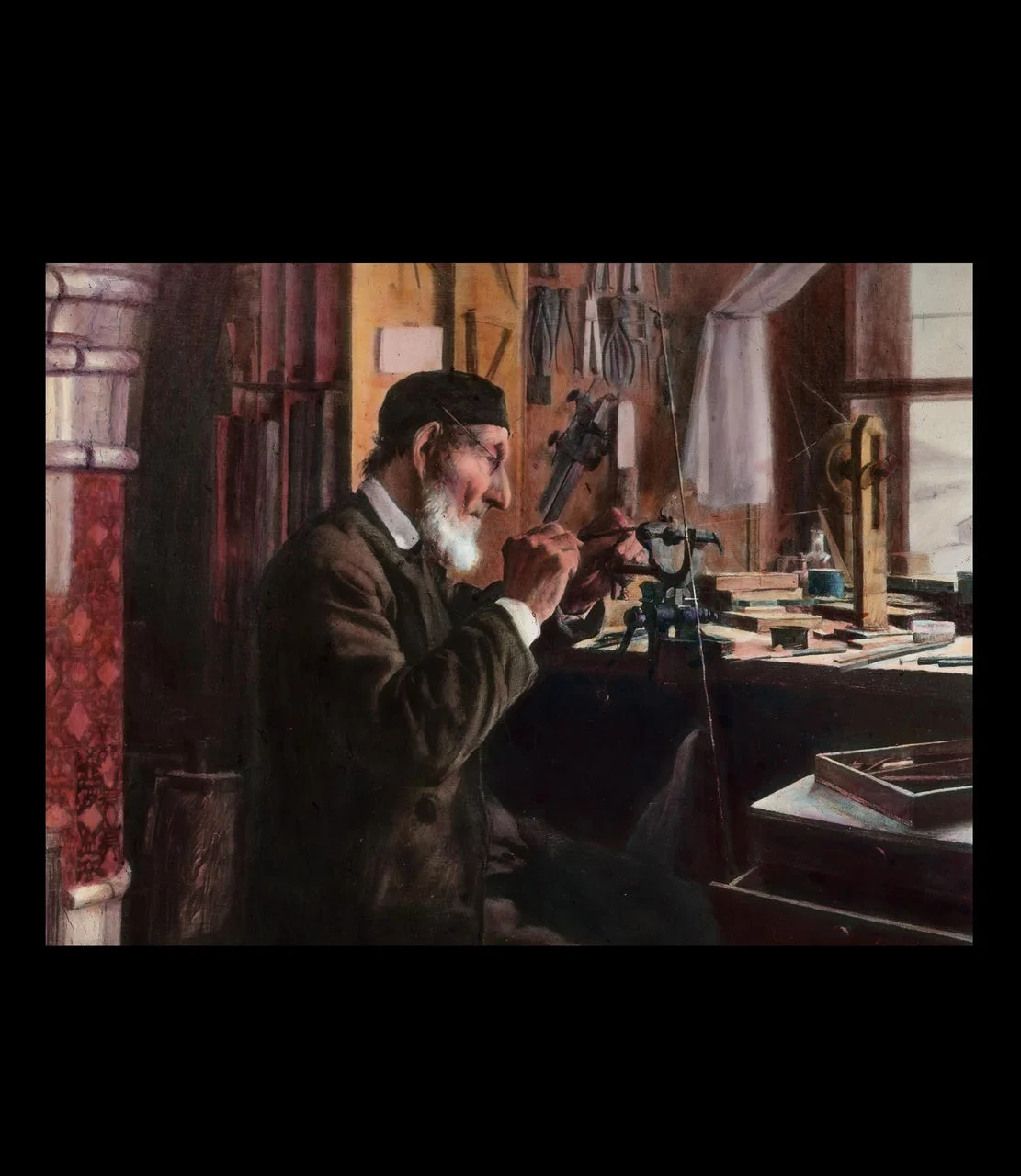
This old watchmaker was painted by Edouard Kaiser (1855–1931) circa 1890. In front of the workbench, the window lets in the winter light needed for the craftsman's delicate work. A wood-burning stove behind him provides heat. Pro Senectute Schweiz Archives, Stiftungsarchiv F5112_Gb_073.
The pioneering Piguets
Delving into the origins of the Piguet family in the Vallée de Joux means going back to the colonisation of this remote region. The family had no doubt been coming here for a long time to graze their cattle in the summer, but around 1264, some sources indicate that the Piguets (known as Peguet or Pegay), along with a few other pioneers, decided to settle here, even if it meant enduring the harsh winters. Little by little, they cleared land, built and helped found hamlets and then villages. Some places still bear their names, such as "Piguet-dessus” or "la Piguette"...
A few centuries later, the Piguet family members were once again pioneers, this time in watchmaking. Daniel Piguet (1733–1813), the first watchmaker of the Piguet name, began his apprenticeship in 1749 with David Golay, who had learned his trade from Samuel Olivier Meylan, the Valley's first watchmaker. In 1753, David Golay's brother began training another Piguet from a different branch of the family, Abraham Isaac Piguet (1738–1826). In those days, houses were small and families had many children. When Abraham Isaac began his apprenticeship, his younger brother Joseph (1748–1825) was just five years old.
Let's take a moment to imagine this little boy, fascinated by what his 15-year-old older brother tells and shows him: the mechanical heart of watches, the delicate inner workings, the magic of the workshops... Joseph had found his vocation. In 1769, his apprenticeship masterpiece earned him a place in the watchmakers’ Guild. The young man safeguarded this small silver watch, which was then passed on to his own son, also a watchmaker, and so on down to his great-grandson Edward Auguste Piguet, co-founder of Audemars Piguet.
Today, Joseph's little silver watch is still going strong. It belongs to Olivier Audemars, representing the fourth generation of the family and Vice-Chairman of Audemars Piguet’s Board of Directors. It is on display in the Musée Atelier Audemars Piguet in the village of Le Brassus.
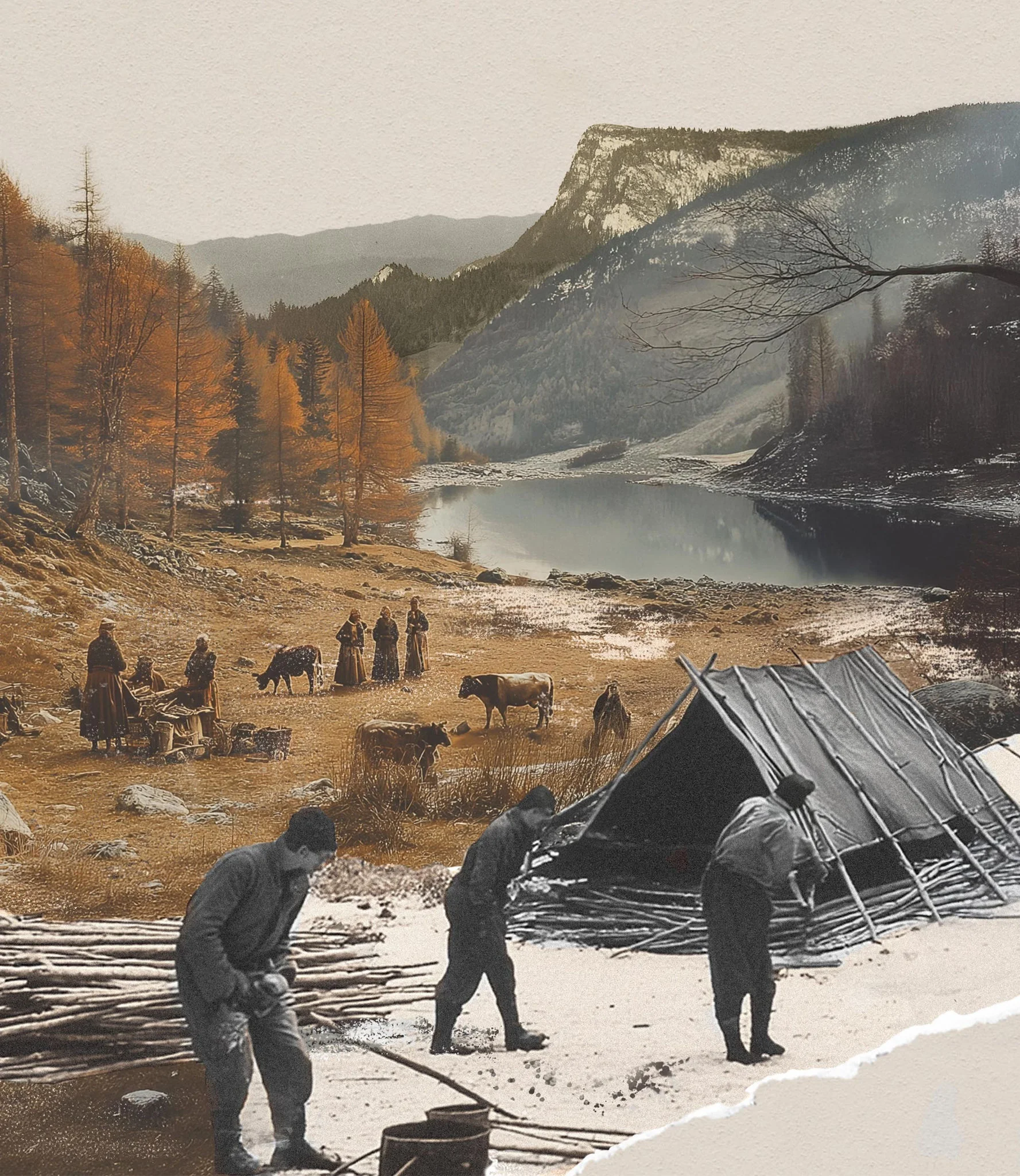
In the 13th century, the Piguet family settled in the Vallée de Joux, along with a number of other pioneers. Fictional representation in 2025. Image Audemars Piguet.
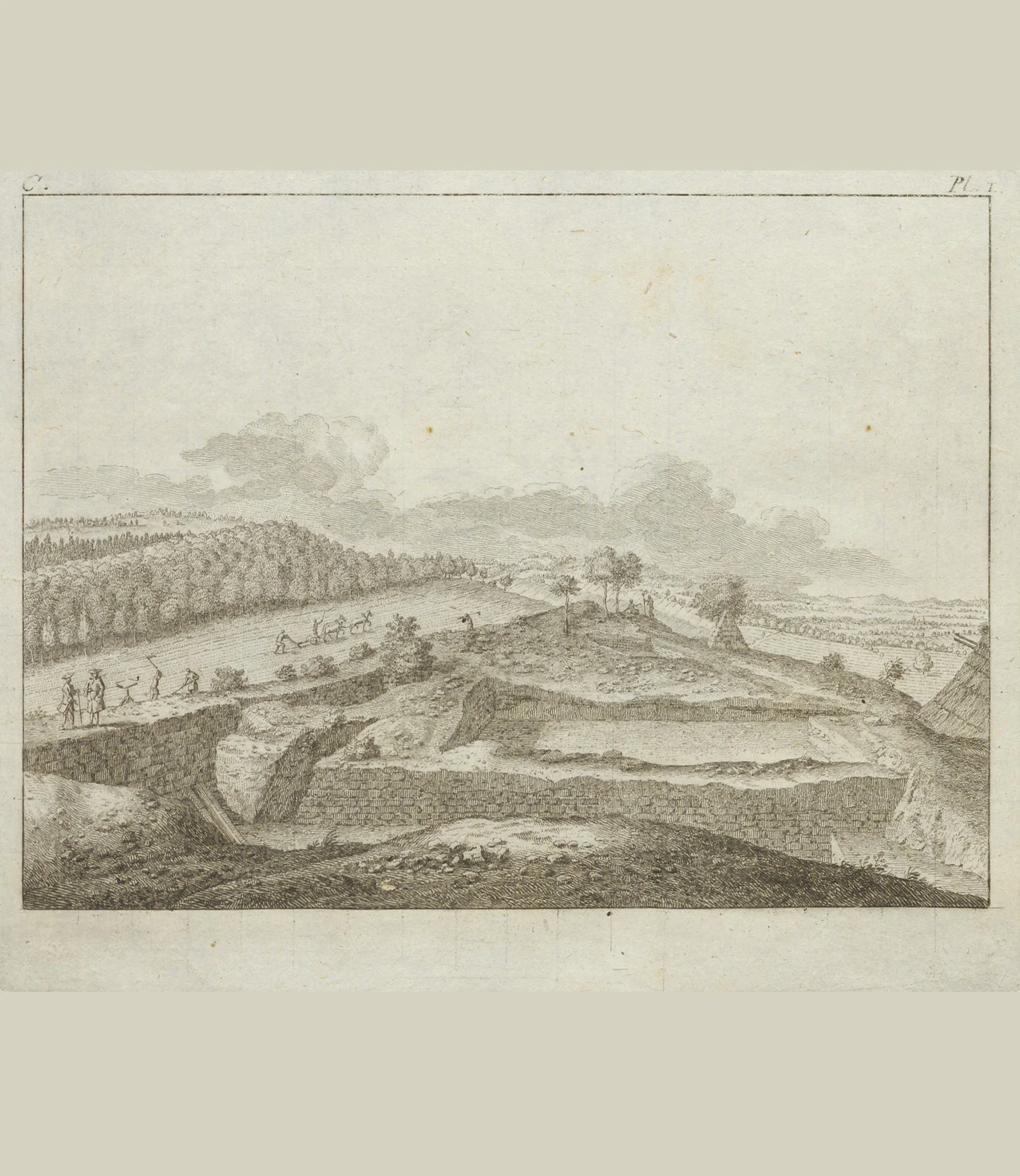
Engraving depicting mountain farmers ploughing the fields. Detail of a plate from Friedrich Samuel Schmidt's Recueil d'antiquités trouvées à Avenches, à Culm et en d'autres lieux de la Suisse, Bern, 1760, Geneva Library.
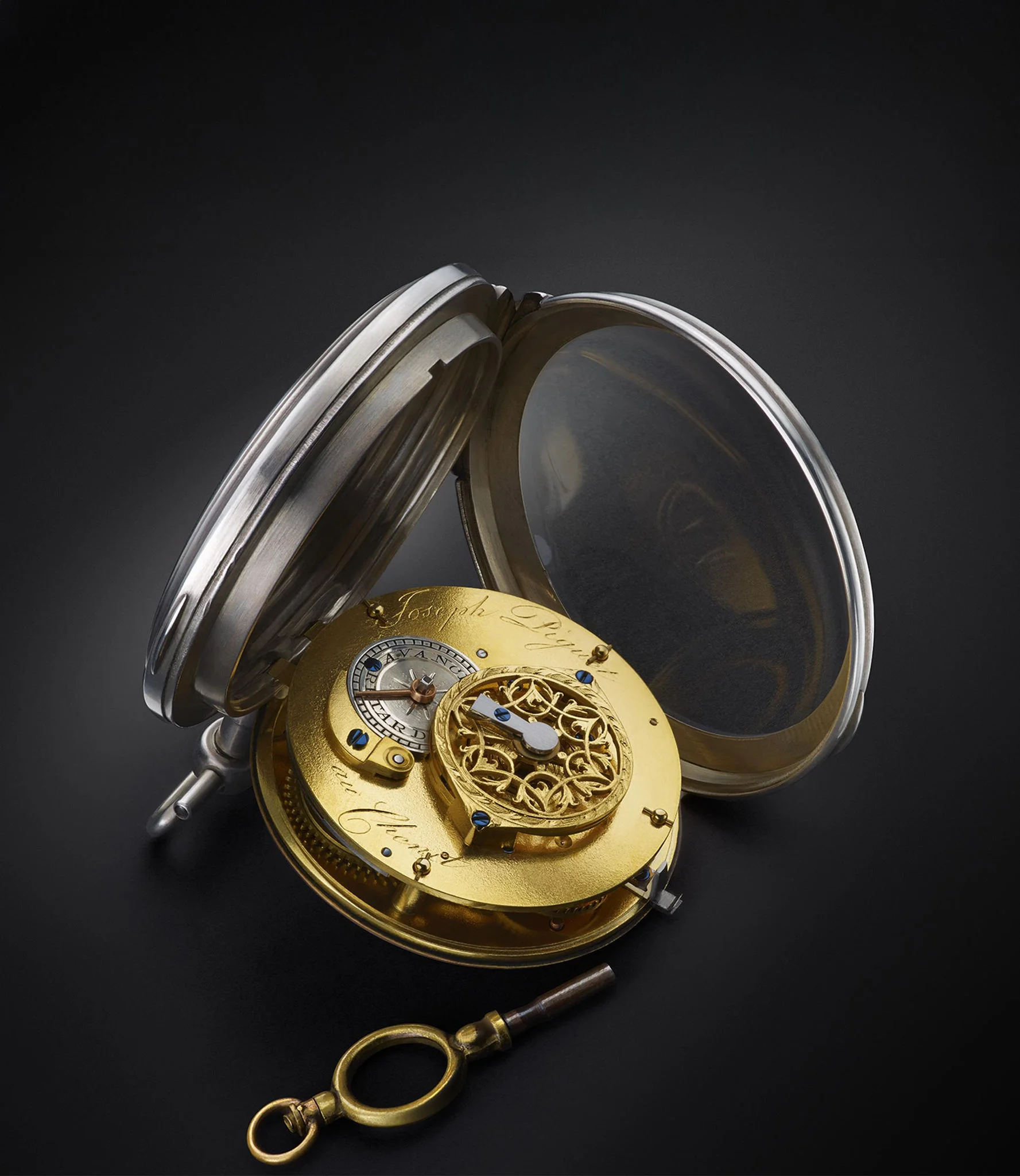
Circa 1769. A masterpiece by Joseph Piguet. The only known watch from the Vallée de Joux dating from the guild era and signed by its maker. Private collection.
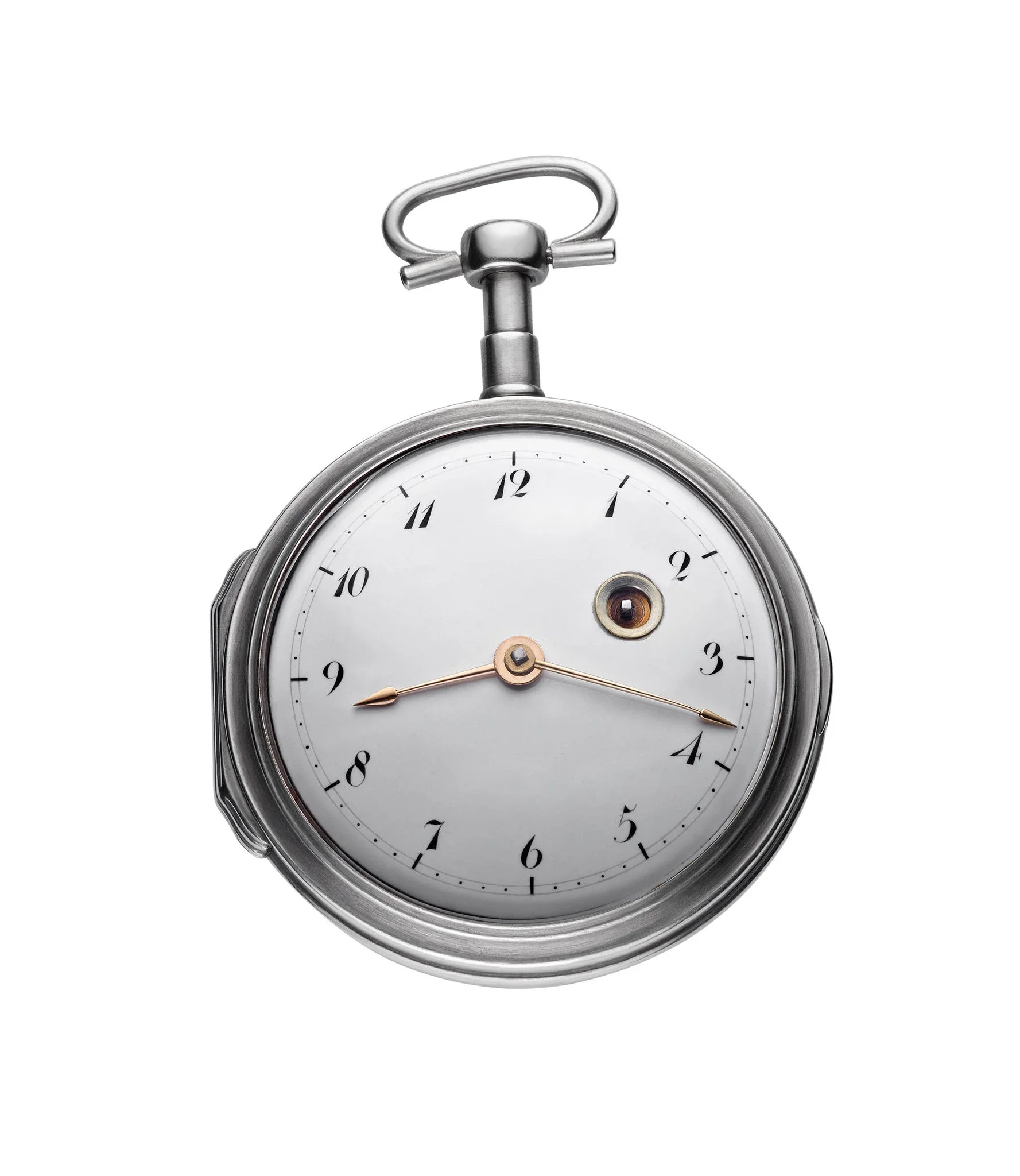
Circa 1769. A masterpiece by Joseph Piguet. The only known watch from the Vallée de Joux dating from the guild era and signed by its maker. Private collection.
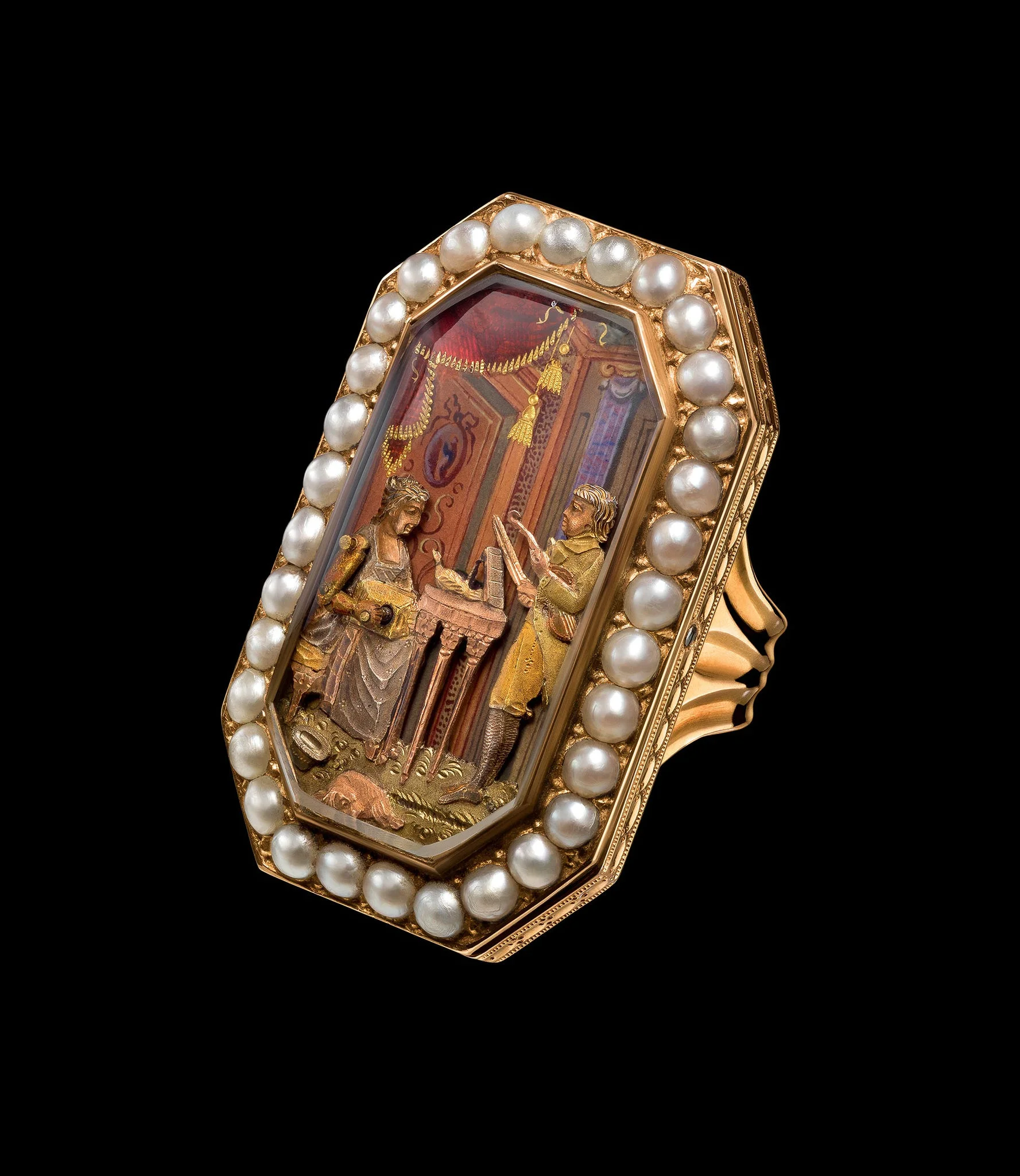
Circa 1800. Daniel Isaac Piguet automaton ring. The figures come to life when the ring plays music. Audemars Piguet Heritage, Inv. 1836.
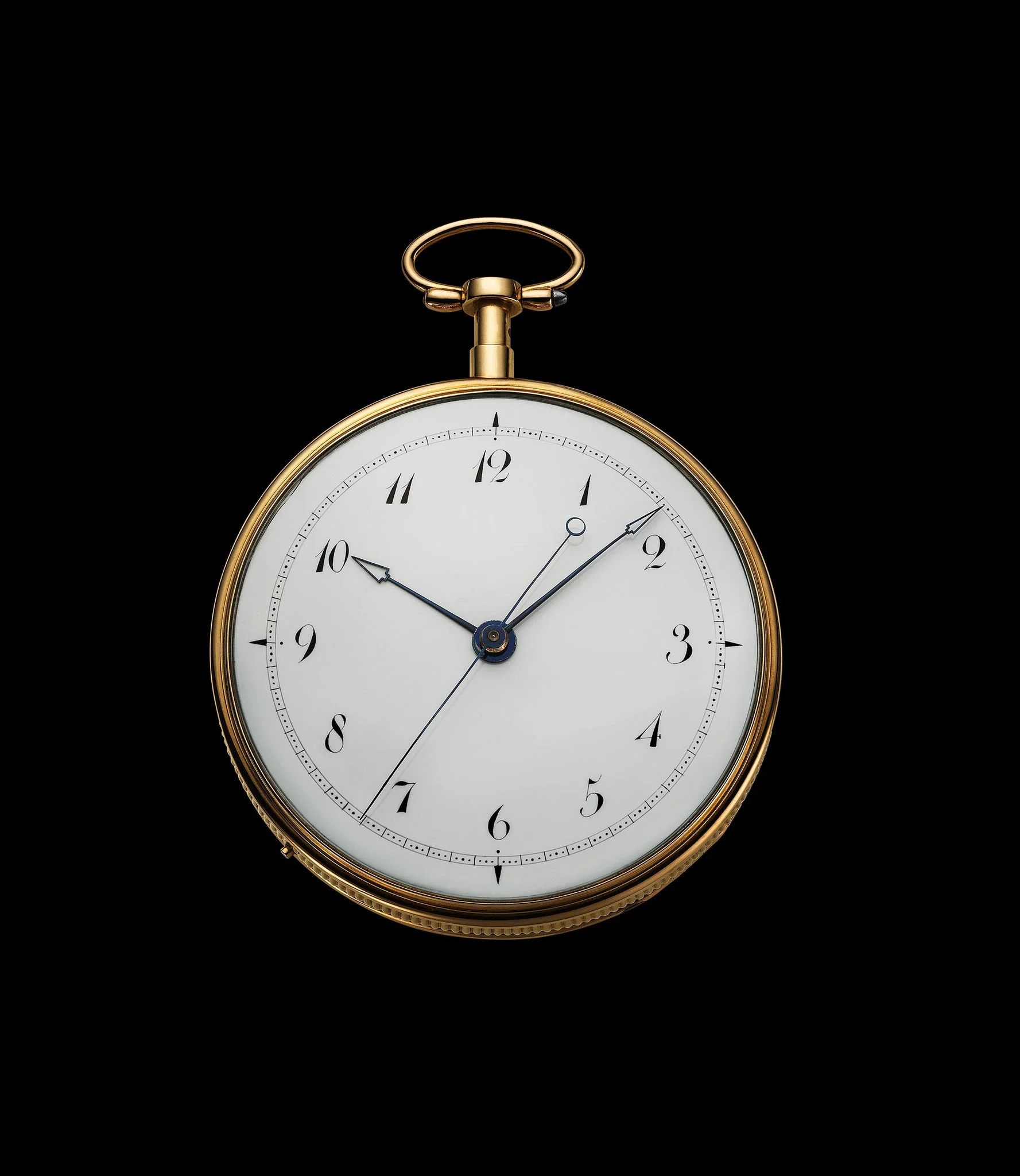
The watch chimes the hour and quarter hours on demand. Audemars Piguet Heritage, Inv. 770.
The Audemars family in the face of adversity
In the mid-1600s, religious strife was raging across Europe. The ruling Catholics were trying to curb followers of the Reformation, who were attempting to overhaul the institutions of Christianity. In 1558, Frenchman André Audemars (spelt Hodemart) fled persecution to find refuge in Geneva. It was his son Jacob who, circa 1580, became the first Audemars to settle in the Vallée de Joux.
The family quietly put down roots. In 1635, they built a small farm in a hamlet called Derrière les Grandes Roches, on the edge of the valley, close to Catholic Burgundy, in an area where robbery, wood theft and fires were commonplace.
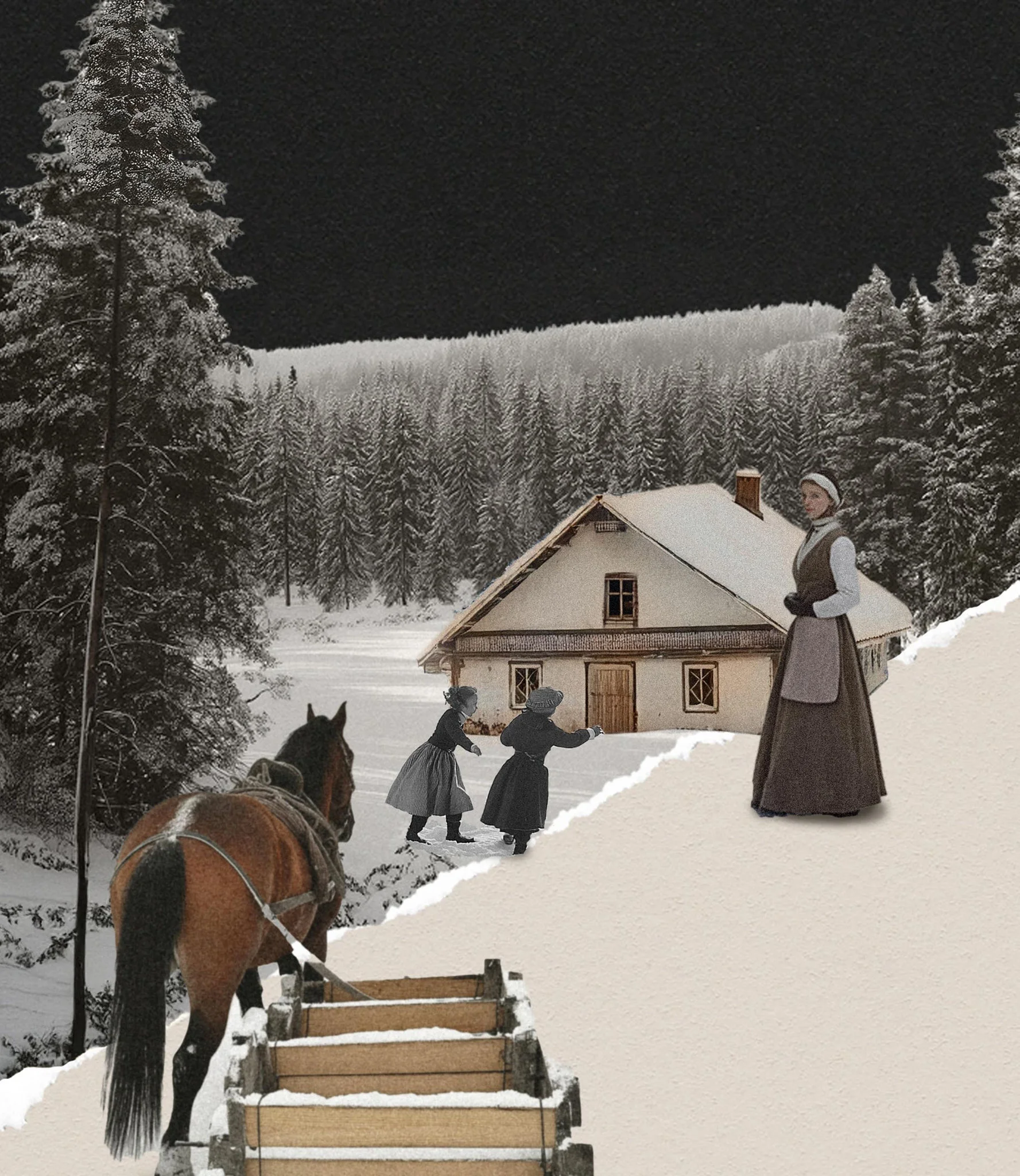
Woodworking, stone-cutting and animal husbandry formed the basis of their simple yet sometimes harsh lives. The winter of 1791–92 was marked by an episode as tragic as it was seminal. Suzanne Audemars, known as "La Zanne", née Piguet, lost three children and her husband in the space of a few weeks. All were victims of an epidemic whose nature was unknown because there was no doctor in the region. She found herself alone with three children aged between five and 12, isolated by the snow and the cold. She was however gifted with an exceptional character. As well as a stone-cutter, she is also said to have been a herbalist, a healer and even a smuggler; legend has it that she hid treasure under her bed and slept next to her rifle. With the support of her neighbours and parents, she managed to teach her three youngest children the watchmaking trade. In doing so, she unwittingly founded a veritable dynasty of which Audemars Piguet is the direct heir.
Louis-Benjamin was nine years old at the time. He was the first to usher the Audemars family into watchmaking history.
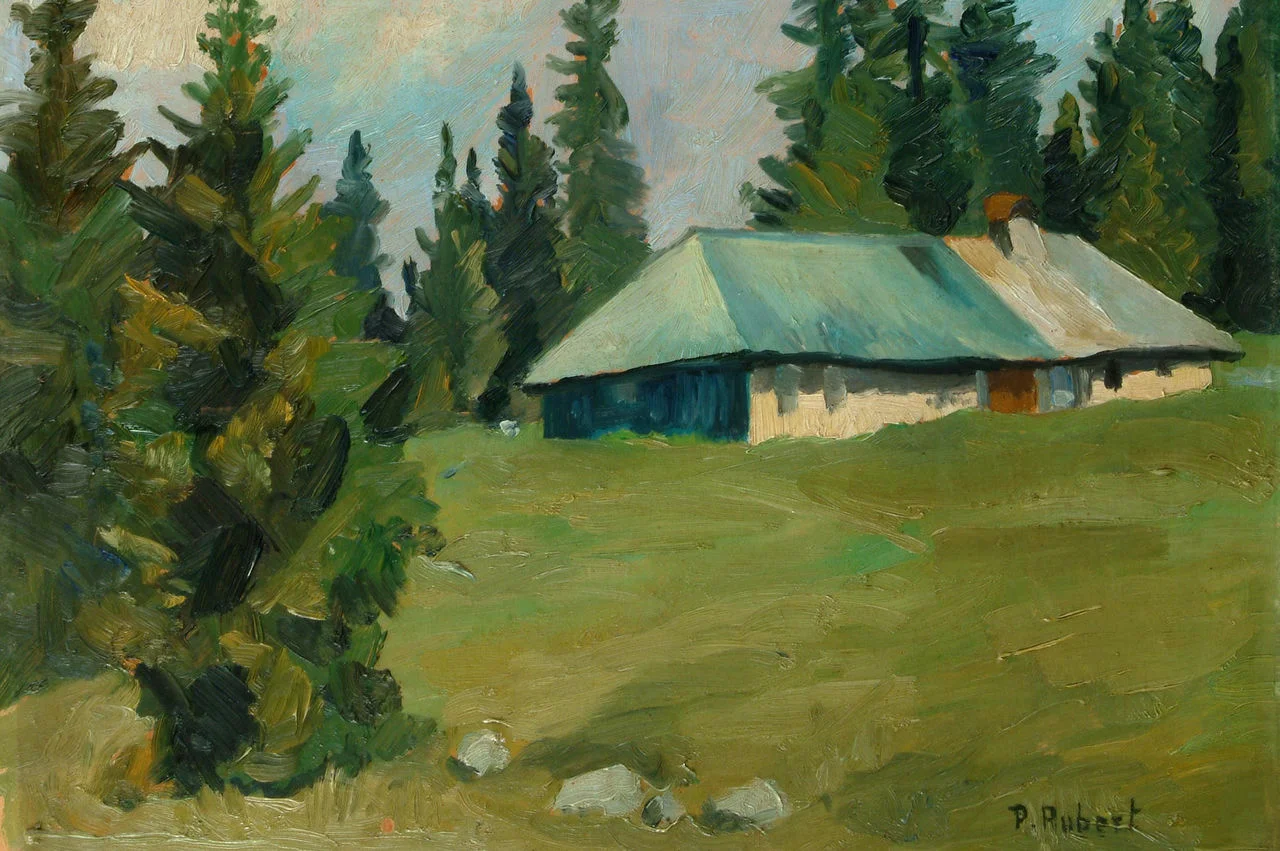
Painting "Chez La Zanne" farm at Derrière Les Grandes Roches, by painter Paul Aubert, circa 1930. Paul Audemars Archives.
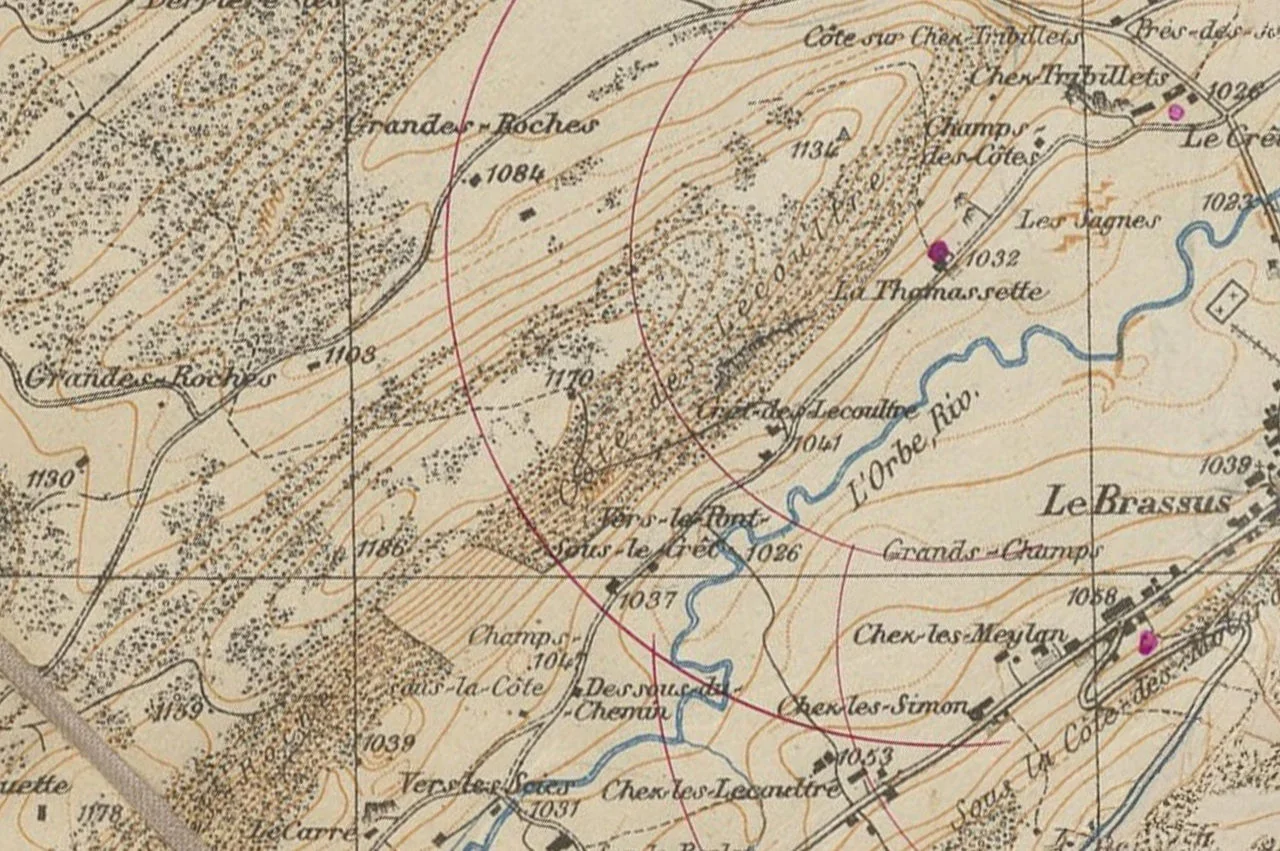
1886. Excerpt from the map of the Vallée district. In the centre, the hamlet of Grandes Roches was home to Suzanne Audemars. David Nicole Archives.
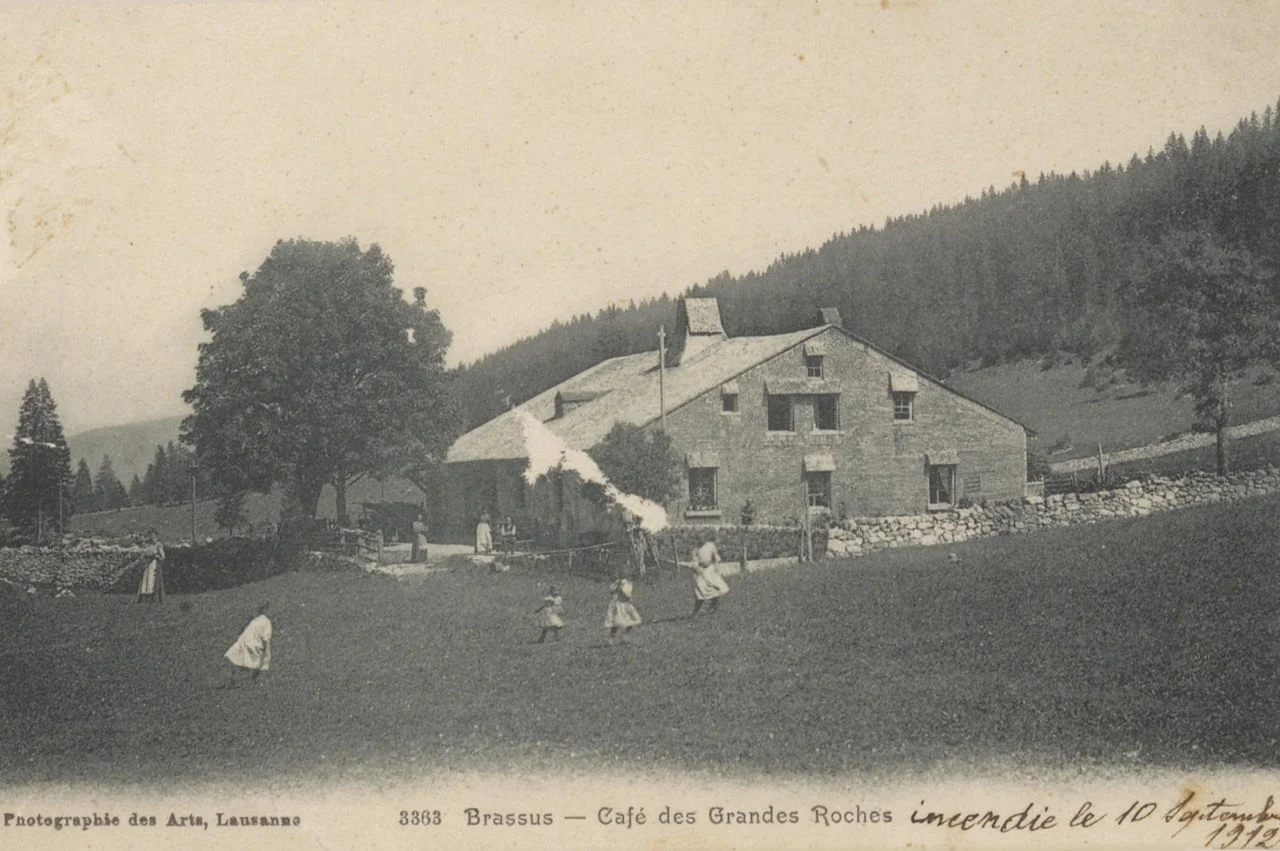
Circa 1900. Postcard depicting the Café des Grandes Roches, located near the farm known as "Chez La Zanne". Audemars Piguet Archives.
Louis-Benjamin Audemars
Which master watchmaker did Suzanne Audemars place her son Louis-Benjamin with for his apprenticeship? No one knows. Perhaps with the young man's uncle, Daniel Piguet, who in 1749 had been one of the first watchmakers in the Vallée (Chapter 4)... Perhaps with Phillipe Samuel Meylan, ten years his senior and a future partner in the famous firm of Piguet & Meylan. What is certain is that the friendship between Phillipe Samuel and Louis-Benjamin played a crucial role in the story.
In 1802, the Audemars and Meylan families lived side by side in the village of Le Brassus, at a place called Le Crêt-Meylan. At the age of 20, Louis-Benjamin married Julie Le Coultre, sister-in-law of Phillipe Samuel Meylan. The newlyweds asked him to be godfather to their first child. Friendship, family ties and watchmaking all went hand in hand. So in 1811, when Philippe Samuel left the Vallée to set up his company in Geneva with Daniel Isaac Piguet, the inventor of the automaton ring (Chapter 4), it was Louis-Benjamin who took over his entire workshop. This date marked the founding of the future Louis Audemars & Fils brand.
From then on, Louis-Benjamin Audemars did everything in his power to fulfil an old dream: to produce complete watches comprising both movement and case in the Vallée de Joux. And above all: to sign the watch in such a way that it would be seen by customers. He therefore sent his eight sons to some of the greatest watchmaking centres to learn each part of the watch as well as about its distribution. When he died in 1833, the dream still seemed far away, but little by little and despite numerous reversals in fortune, it was taking shape.
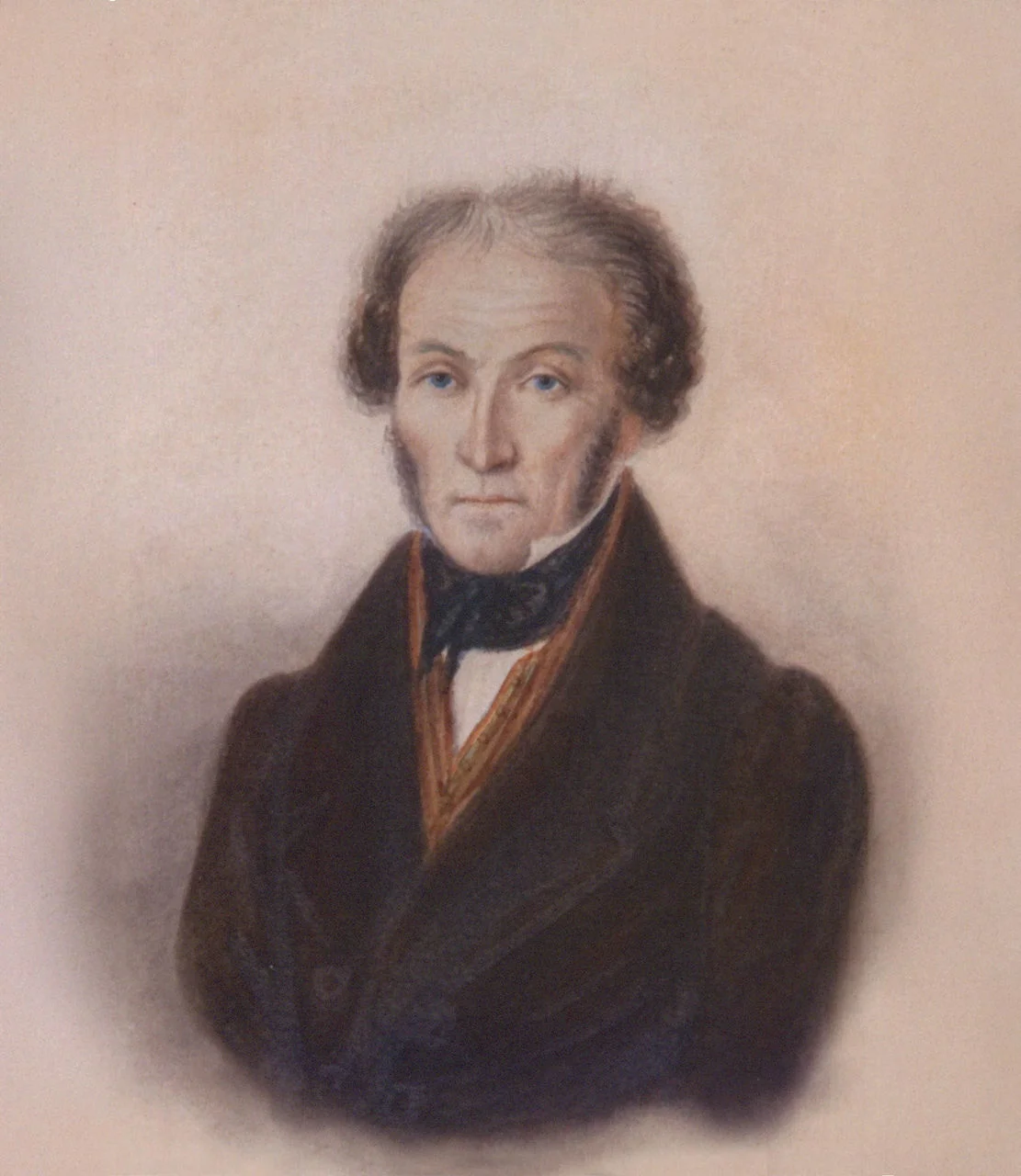
Louis-Benjamin Audemars (1782–1833) was one of the most important watchmakers in the Vallée de Joux. In 1811, he founded the Louis Audemars company, which became the most important watchmaker in Le Brassus between 1850 and 1880. Paul Audemars Archives.
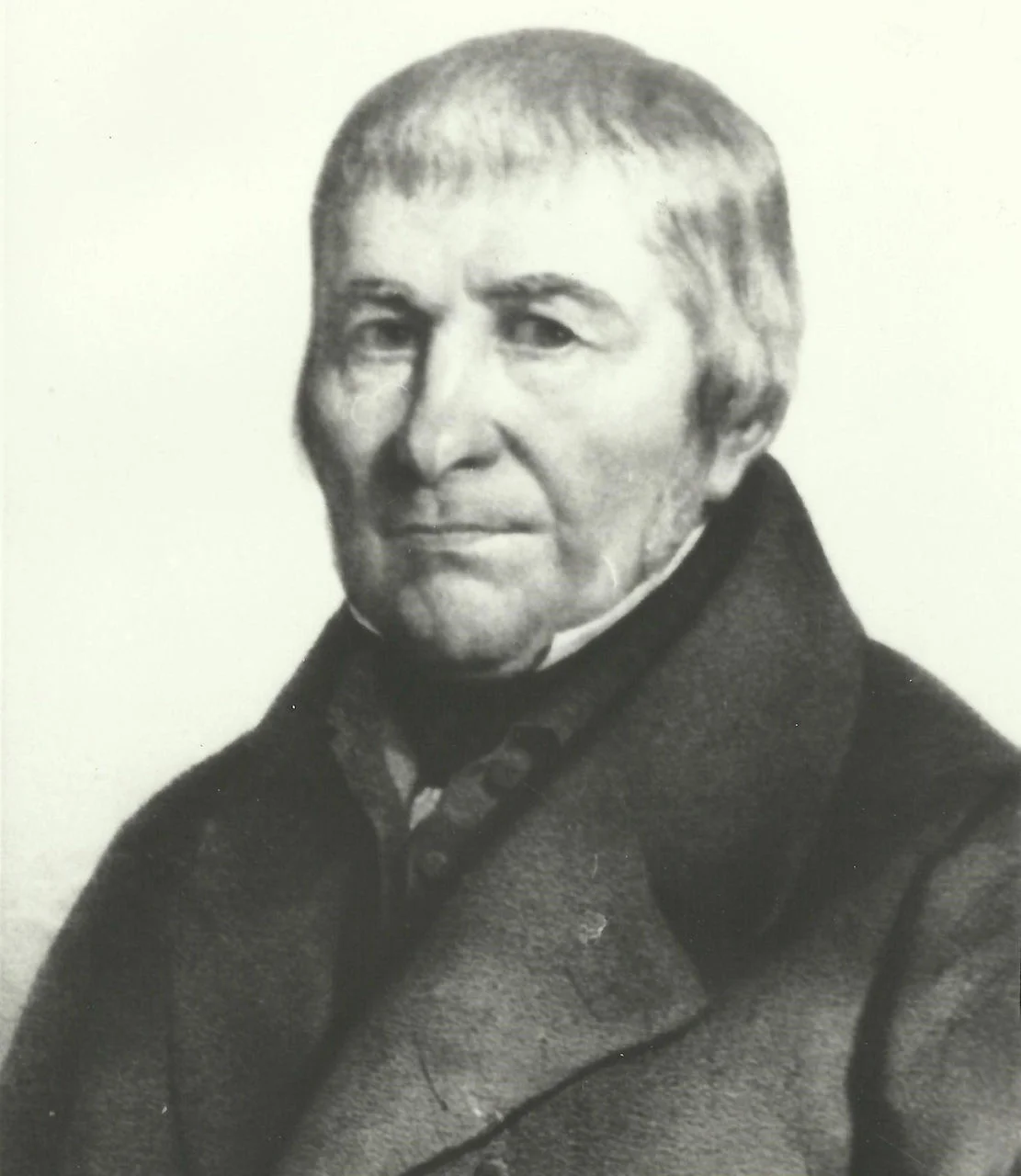
In 1811, Philippe-Samuel Meylan, born in 1770 in the hamlet of Crêt-Meylan, left the Vallée de Joux for Geneva, where he and Daniel Isaac Piguet founded the firm Piguet & Meylan. Geneva Library.
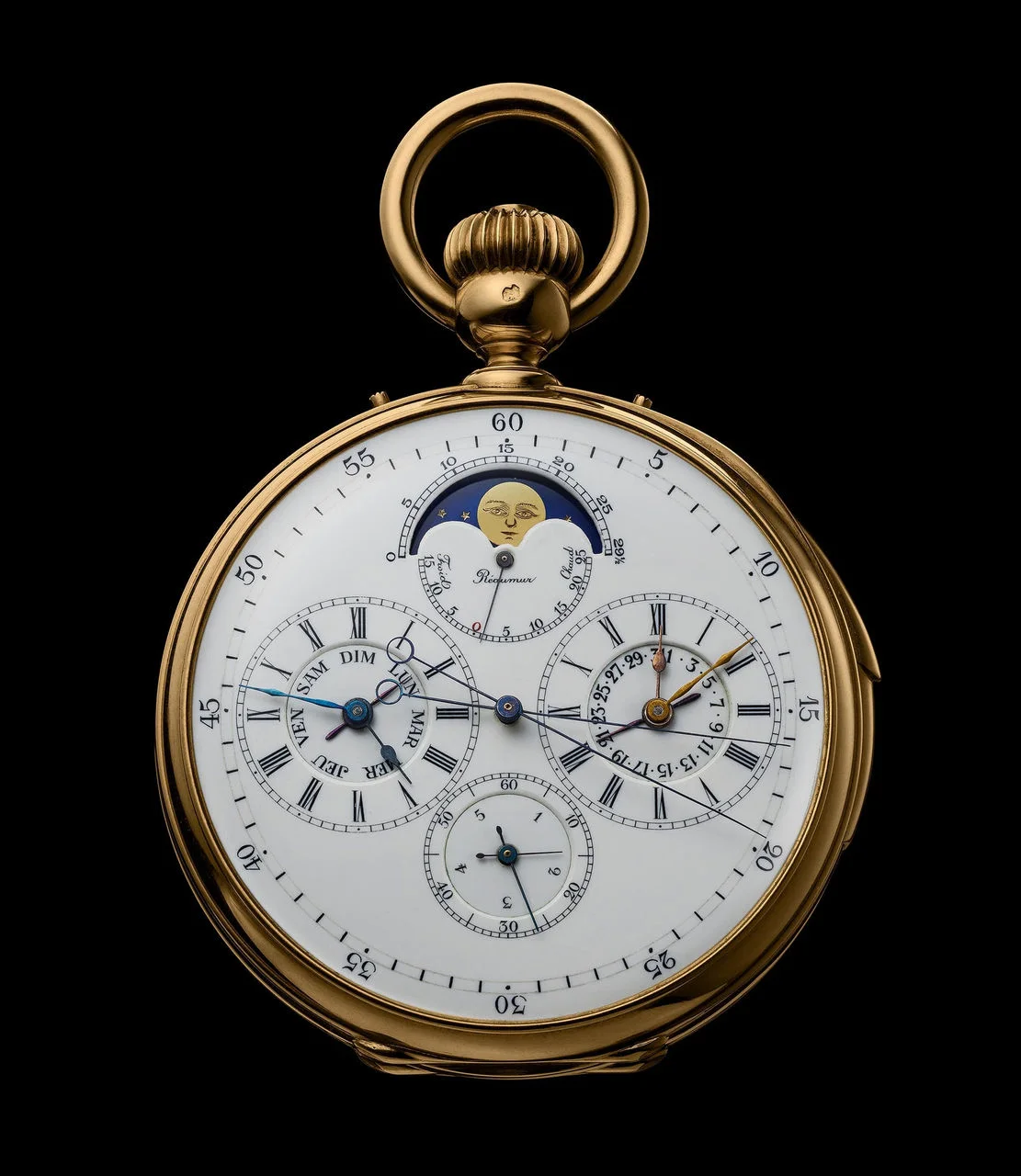
1867. Louis Audemars triple complication for Leroy Epsom Derby trophy in 1858. Chronograph, split-seconds, jumping seconds and small seconds, minute repeater, complete calendar, Réaumur thermometer. Audemars Piguet Heritage, Inv. 1066.
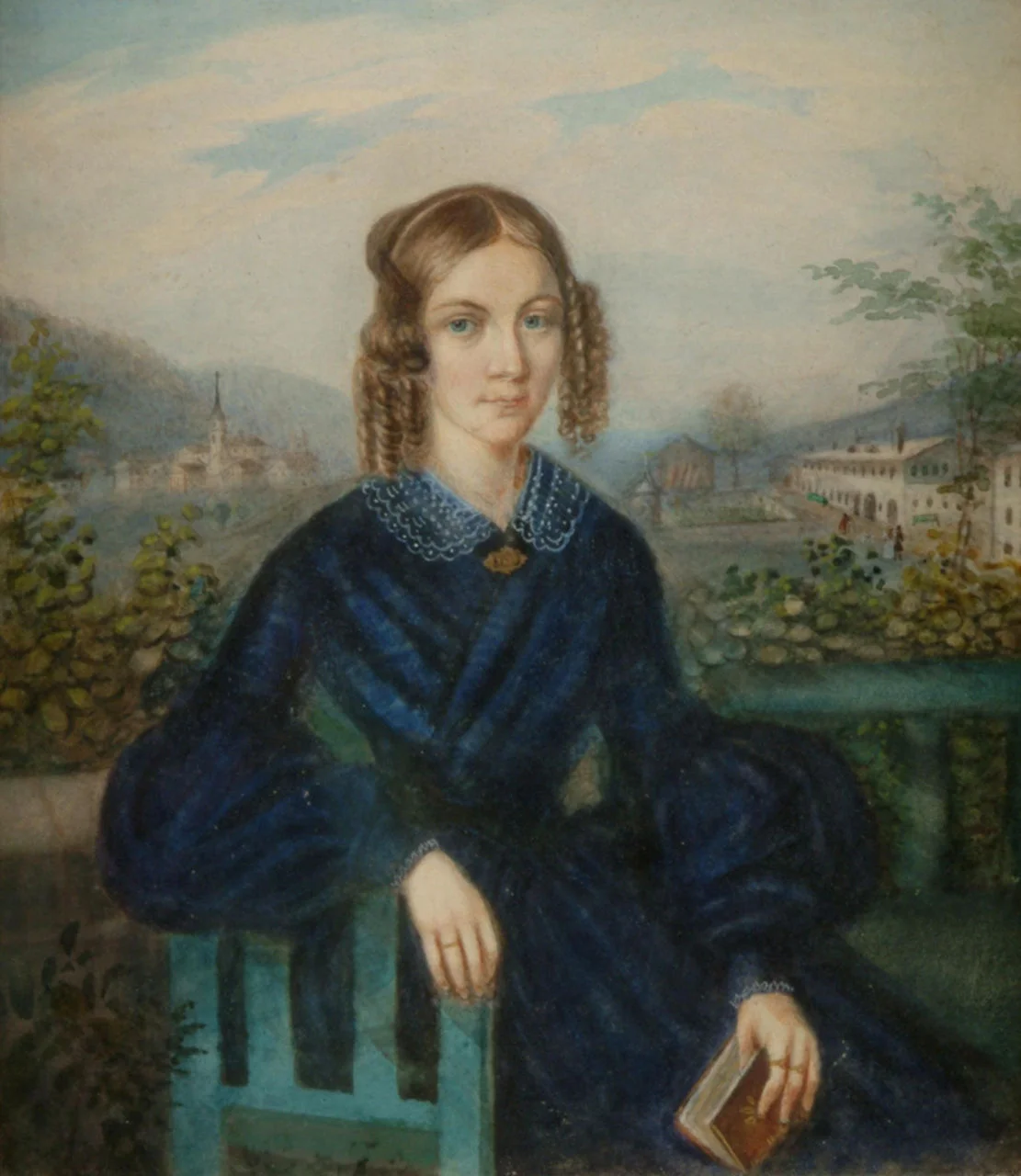
Circa 1830. Behind the portrait of Adeline Audemars, daughter of Louis-Benjamin, on the right one can see the hamlet of Crêt-Meylan, birthplace of the Louis Audemars company, and on the left the bell tower of the village of Le Brassus. Paul Audemars Archives.
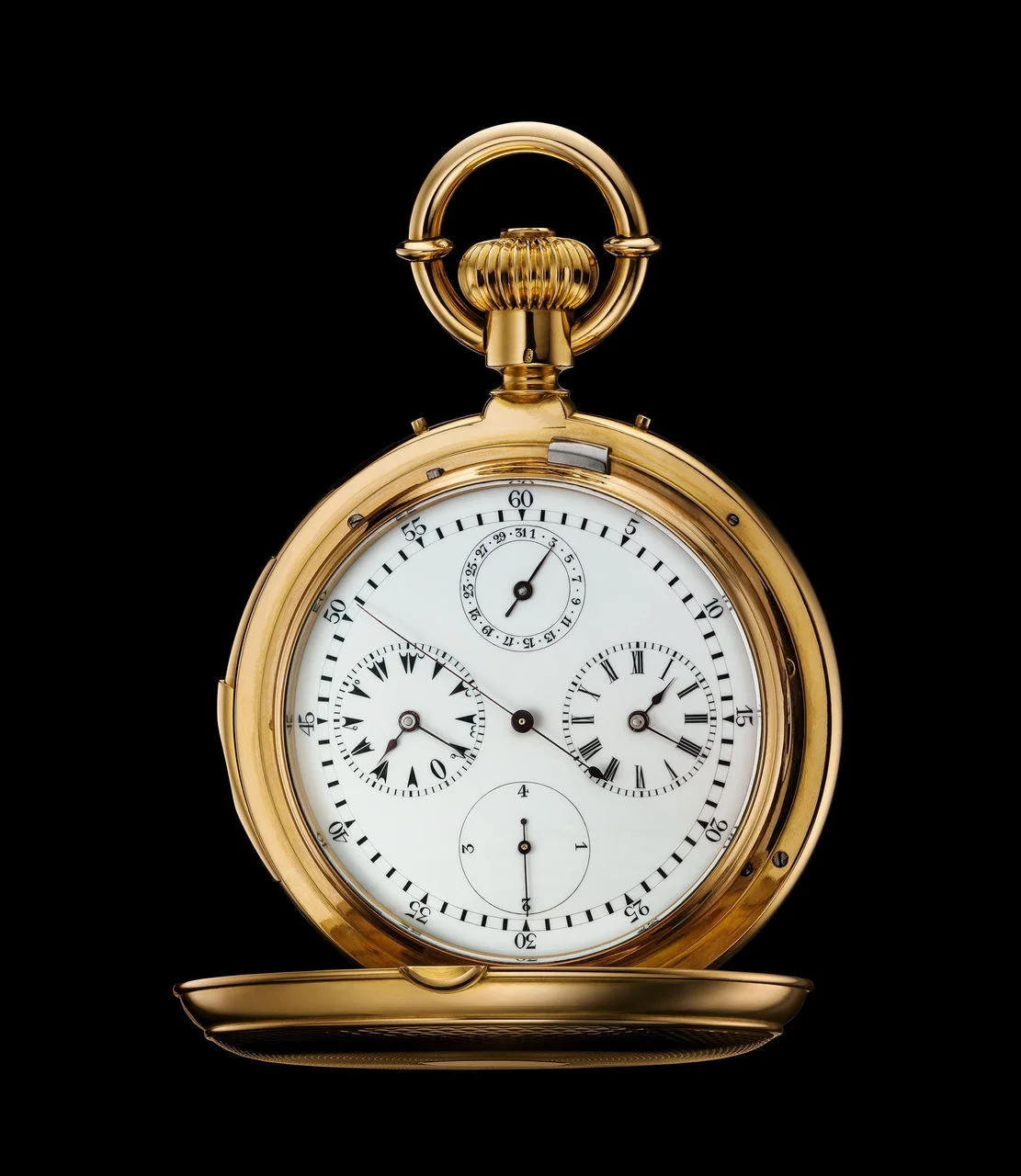
Circa 1880. Louis Audemars complication watch for Bornand. Western and Ottoman time, quarter repeater, double barrel, deadbeat seconds, jumping seconds and date. Audemars Piguet Heritage, Inv. 100.
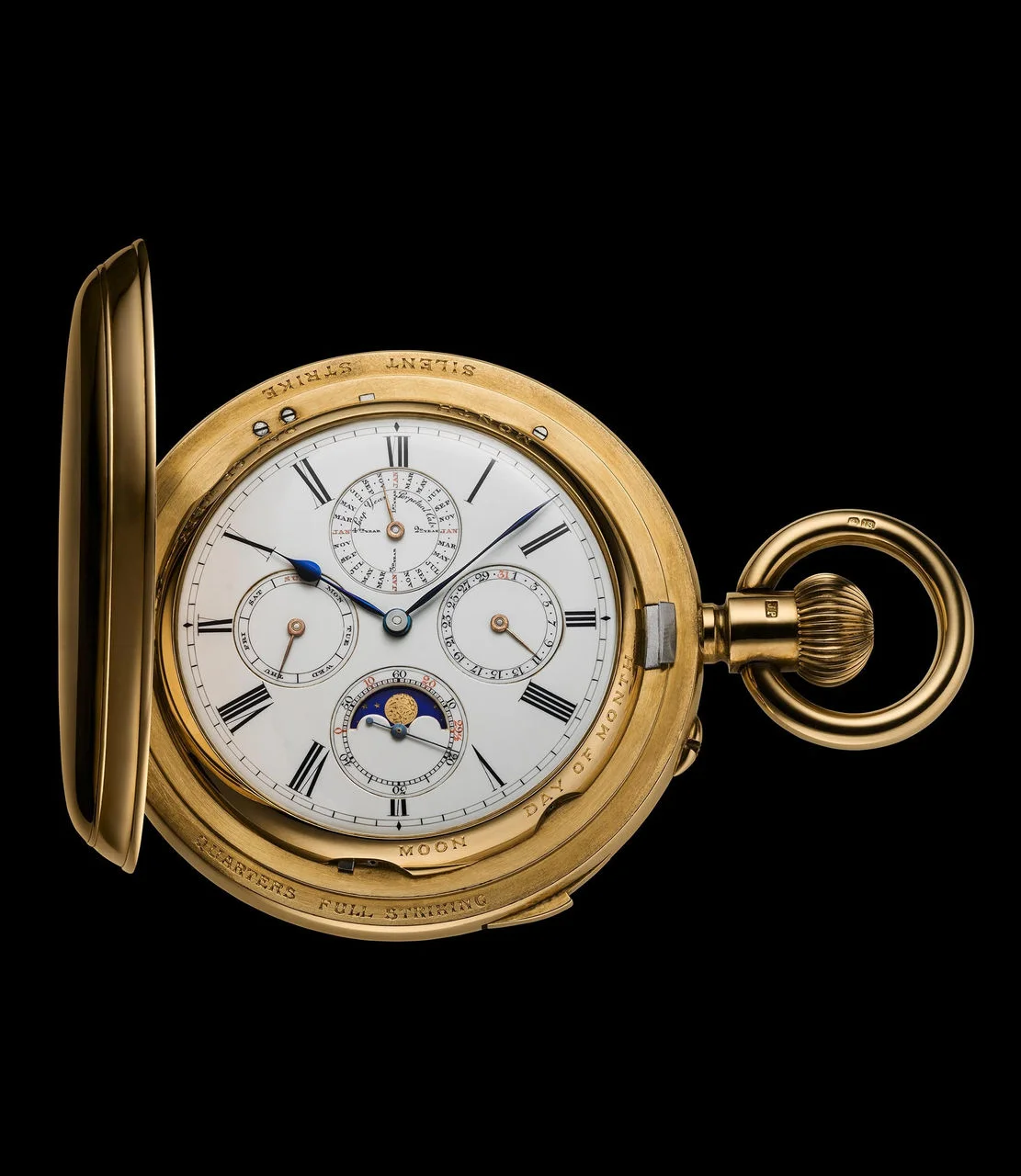
Circa 1872. Louis Audemars Grande Sonnerie watch for Benson. Dedicated to Queen Victoria and the Prince of Wales. Minute repeater and perpetual calendar. Movement 2691. Heritage Audemars Piguet, Inv. 974.
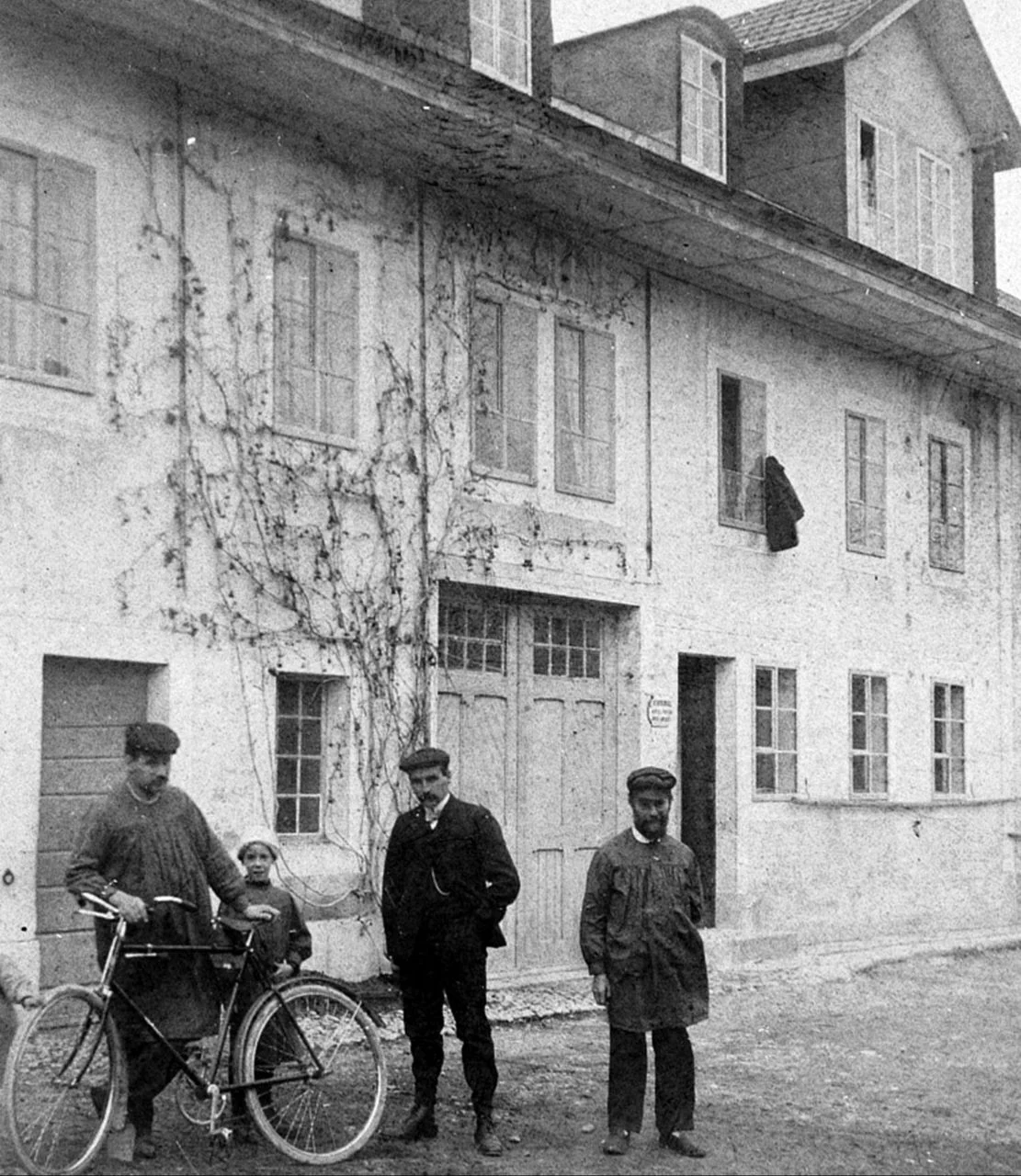
Circa 1880. On the right of the picture, Louis Audemars-Valette, grandson of Louis-Benjamin, watchmaker and historian, played a role in the birth of the first Jules Louis Audemars workshop in 1875. Paul Audemars Archives.
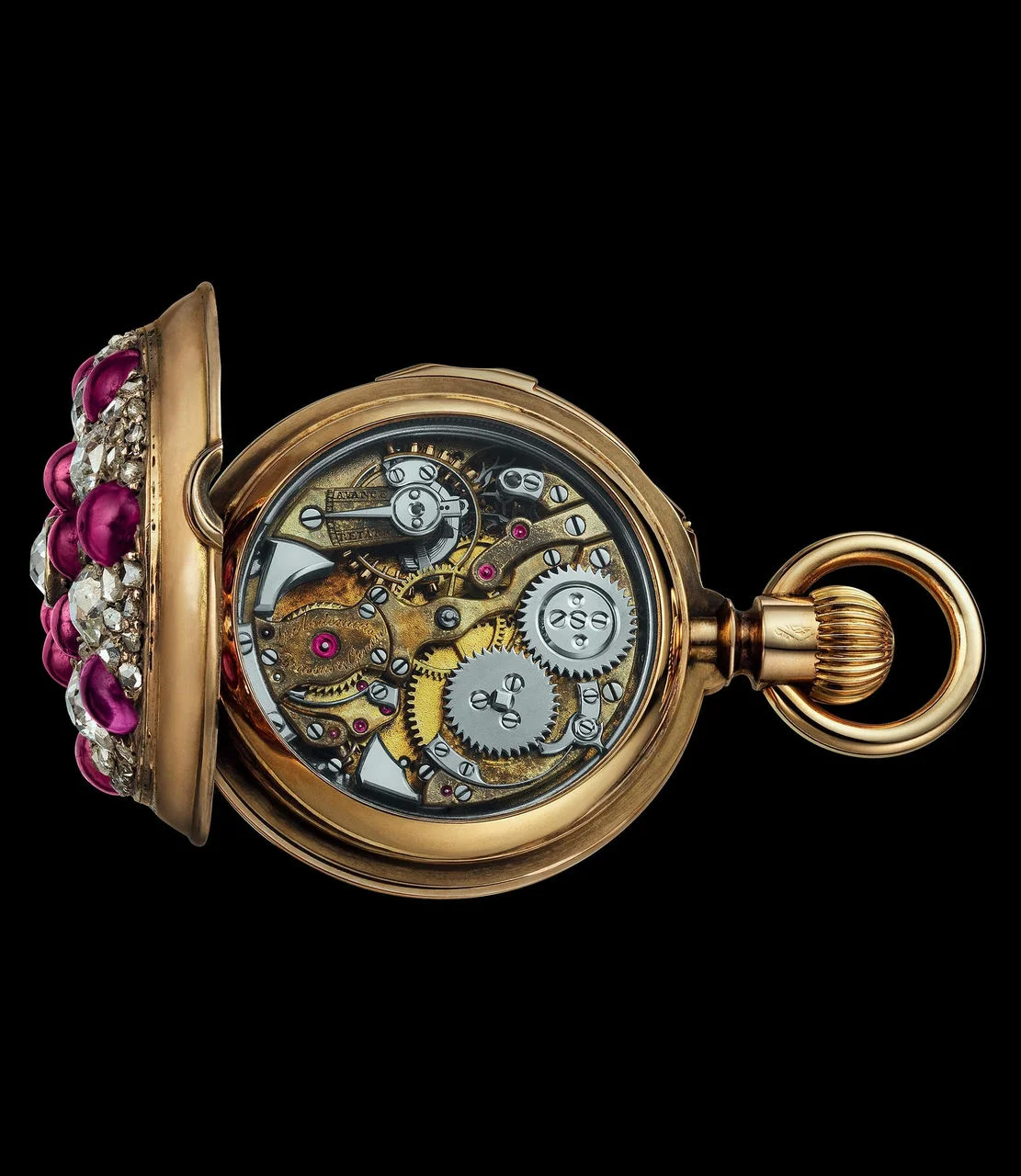
Circa 1880. Louis Audemars miniature minute repeater. This watch is said to have belonged to King Farouk of Egypt who ruled Egypt from 1936 to 1952. 8-ligne calibre (18 mm). Audemars Piguet Heritage, Inv. 423.
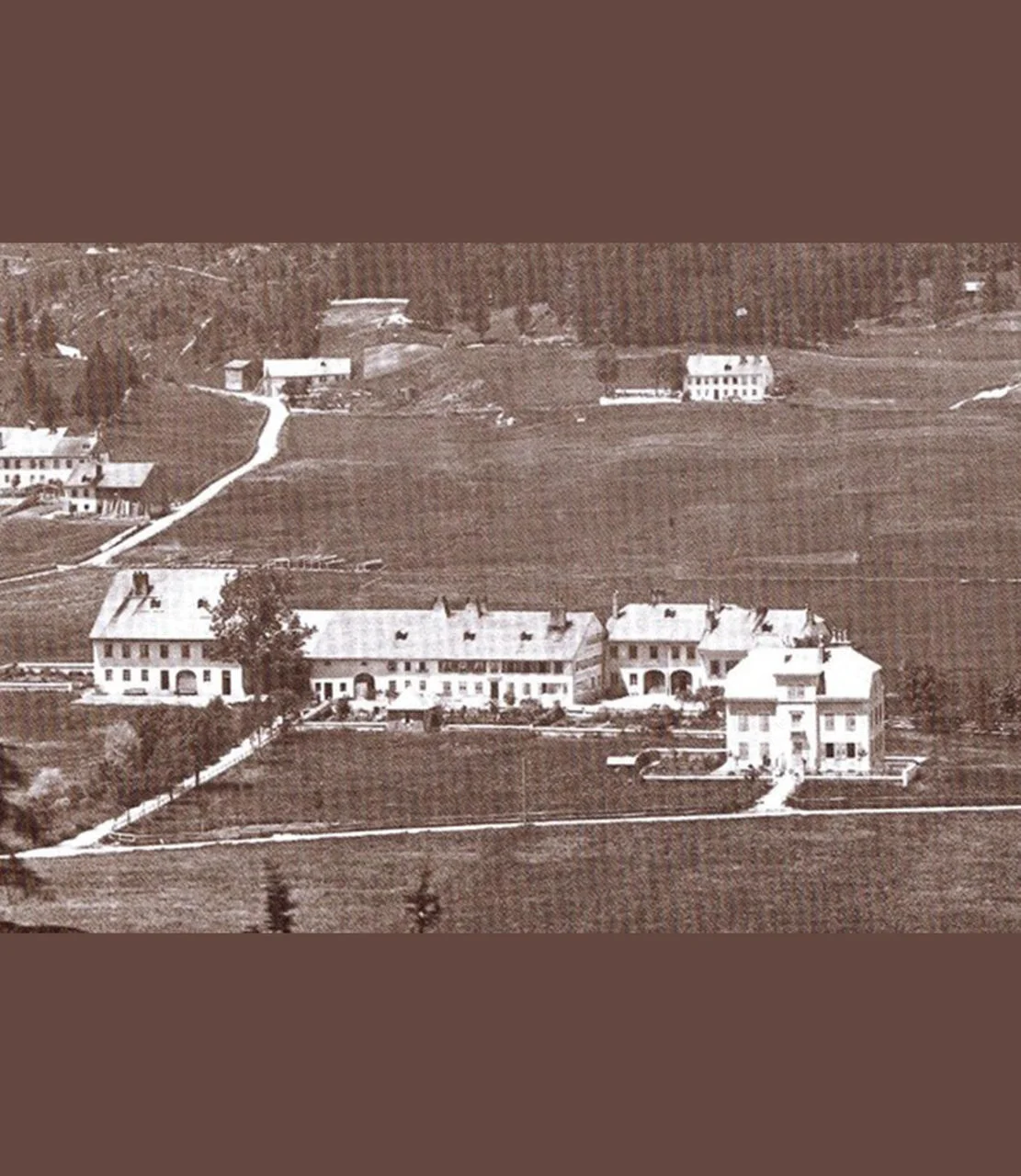
Le Crêt-Meylan, a hamlet in the village of Le Brassus, where Louis-Benjamin Audemars took over Philippe-Samuel Meylan's workshop in 1811. «Patrimoine de la Vallée de Joux» Archives.
Établissage
Some sources indicate that in 1833, Louis Audemars & Fils employed as many as 180 artisans. In fact, almost all of them worked at home, in their own small workshops, according to the établissage system. In the Vallée de Joux, since the end of the guilds in 1776, farms often had a small workshop in which the inhabitants made watchmaking components: wheels, bridges, gongs, under-dial work, springs, etc. For the most skilful, this activity, which complemented livestock farming, had even become their main source of income. This network of highly specialised and creative artisans enabled the region to become the epicentre of complicated watches from the 19th century onwards.
In this system, the établisseur was, in a way, the orchestra conductor: the repasseur (finisher) watchmaker who coordinated the work done by all the artisans, who ordered and collected their components and assembled them to create watch mechanisms. The small village of Le Brassus was home to many talented watchmakers, who were often overlooked because they rarely signed their creations. These include Victorin Piguet (1874–1949), co-author of Patek Philippe's famous ultra-complicated Graves watch; Charles Ami Lecoultre (1843–1921), co-author of the "Merveilleuse"; Charles Emile Piguet (1864–1947), co-author of the "Leroy 01"; and the Rochat brothers, ingenious automaton creators; Léon Ernest Aubert (1845–1920), a specialist in equation-of-time mechanisms; and Louis Elisée Piguet (1836–1924), best known for his Grande Sonnerie models as well as a number of other brilliant inventions.
Between 1830 and 1870, the village's largest Manufacture was Louis Audemars & Fils. It is said that during weekends, a queue of artisans would stretch out in front of the entrance to Crêt-Meylan. Everyone had to wait their turn to deliver their work. Also as access to the workshop passed through the children's bedroom, it was not unusual for the artisans to have to lower their voices in the evening so as not to wake them up...
Inspired by the work of Breguet, Louis Audemars & Fils excelled in the art of watches with multiple complications: chimes, calendars, deadbeat seconds, jumping seconds, thermometers, etc. By the end of the 1840s, the founder’s dream had become a reality. Some creations were finished and signed by their maker. The World's Fairs were to give greater prominence to the new Louis Audemars brand name.
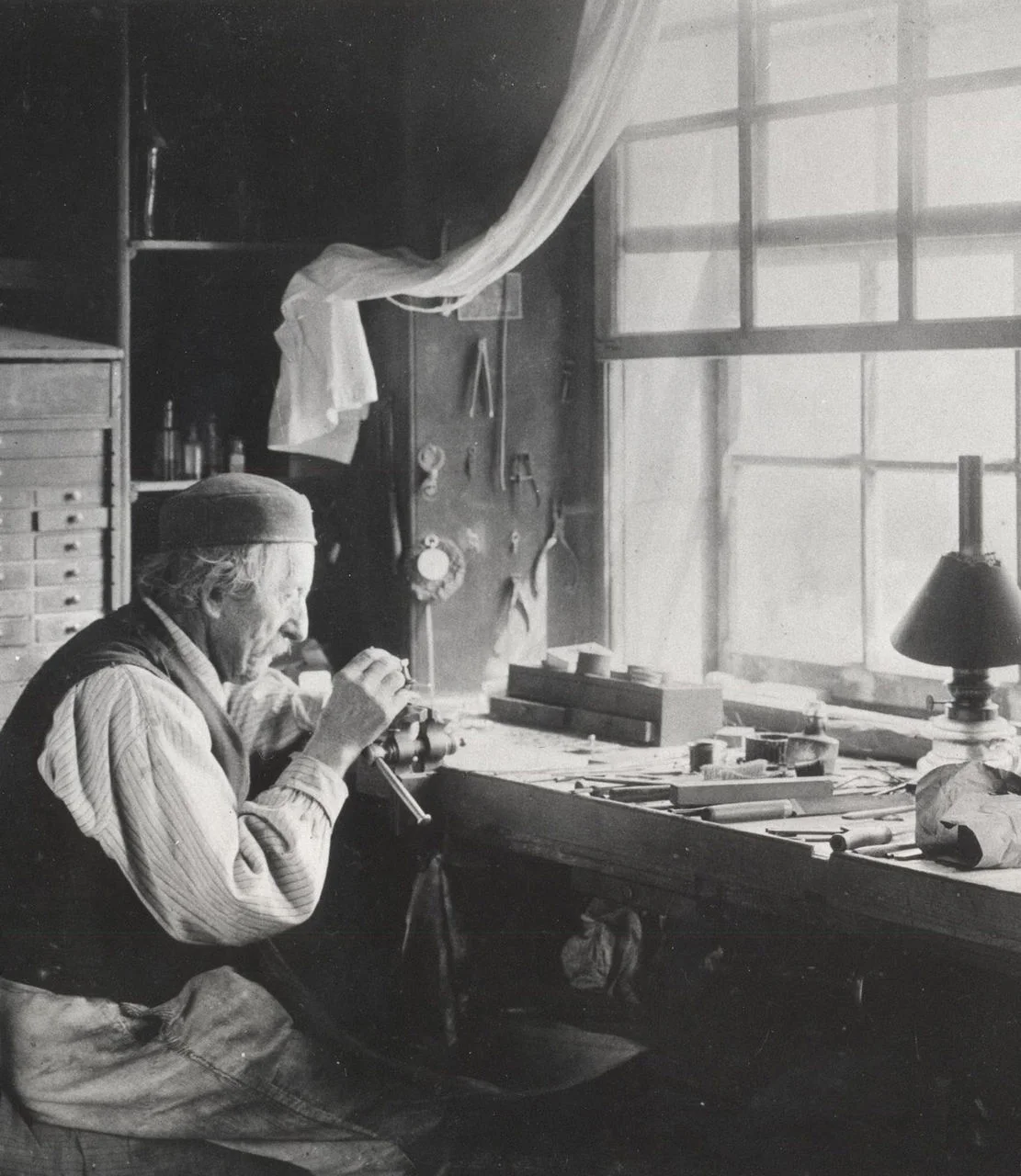
Circa 1880. Watchmakers' workbenches were usually placed facing the windows to catch the best light, and facing north to avoid direct sunlight. Anonymous, Old watchmaker, Vallée de Joux, around 1900, Photo Elysée, Lausanne, Vaudois iconographic collection
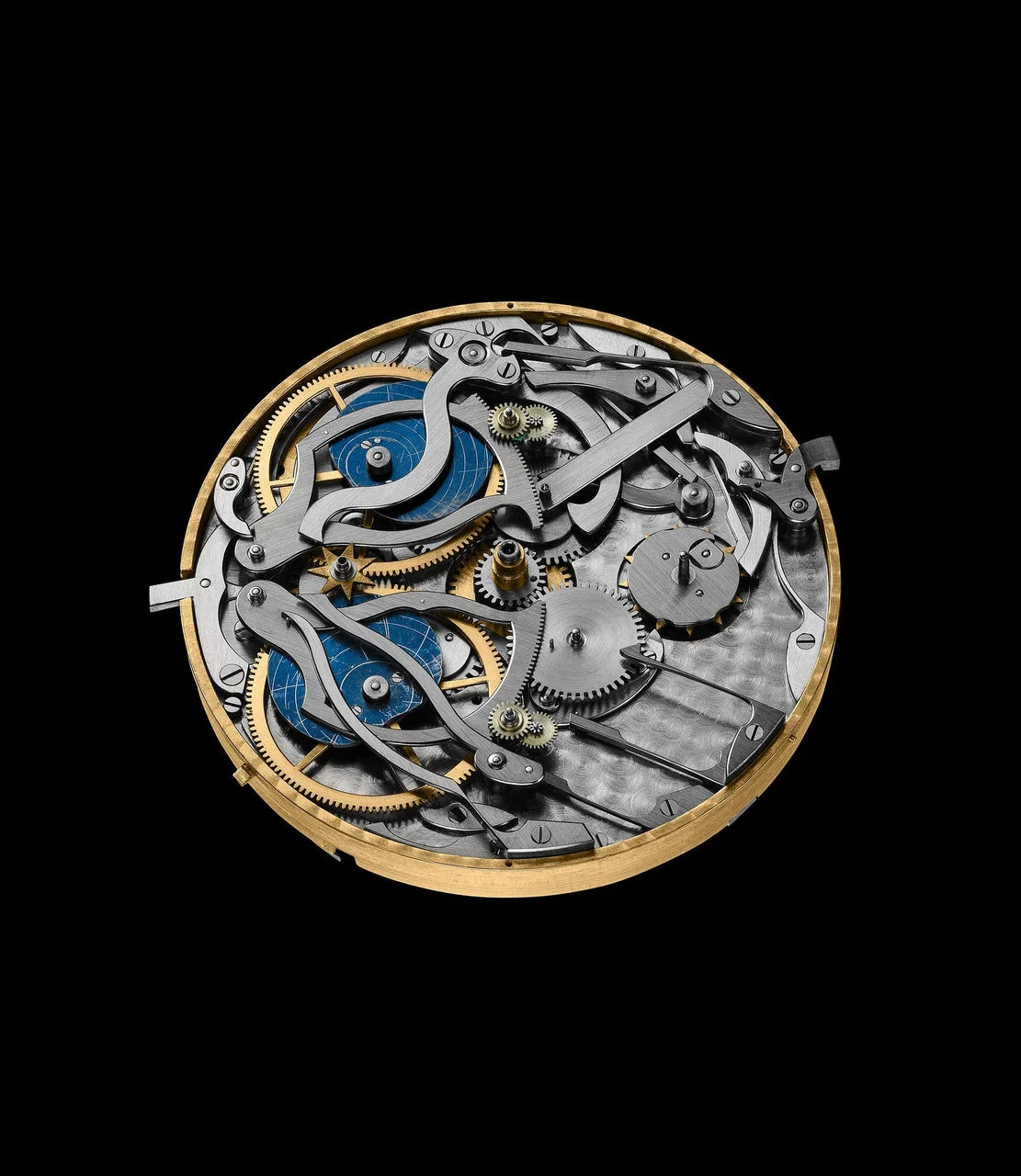
Circa 1900. Drawn by Victorin Piguet. Equation of time, sunrise and sunset, perpetual calendar, phases of the Moon. Movement 480943 transformed by Audemars Piguet in the 1990s. Audemars Piguet Heritage, Inv. 496.
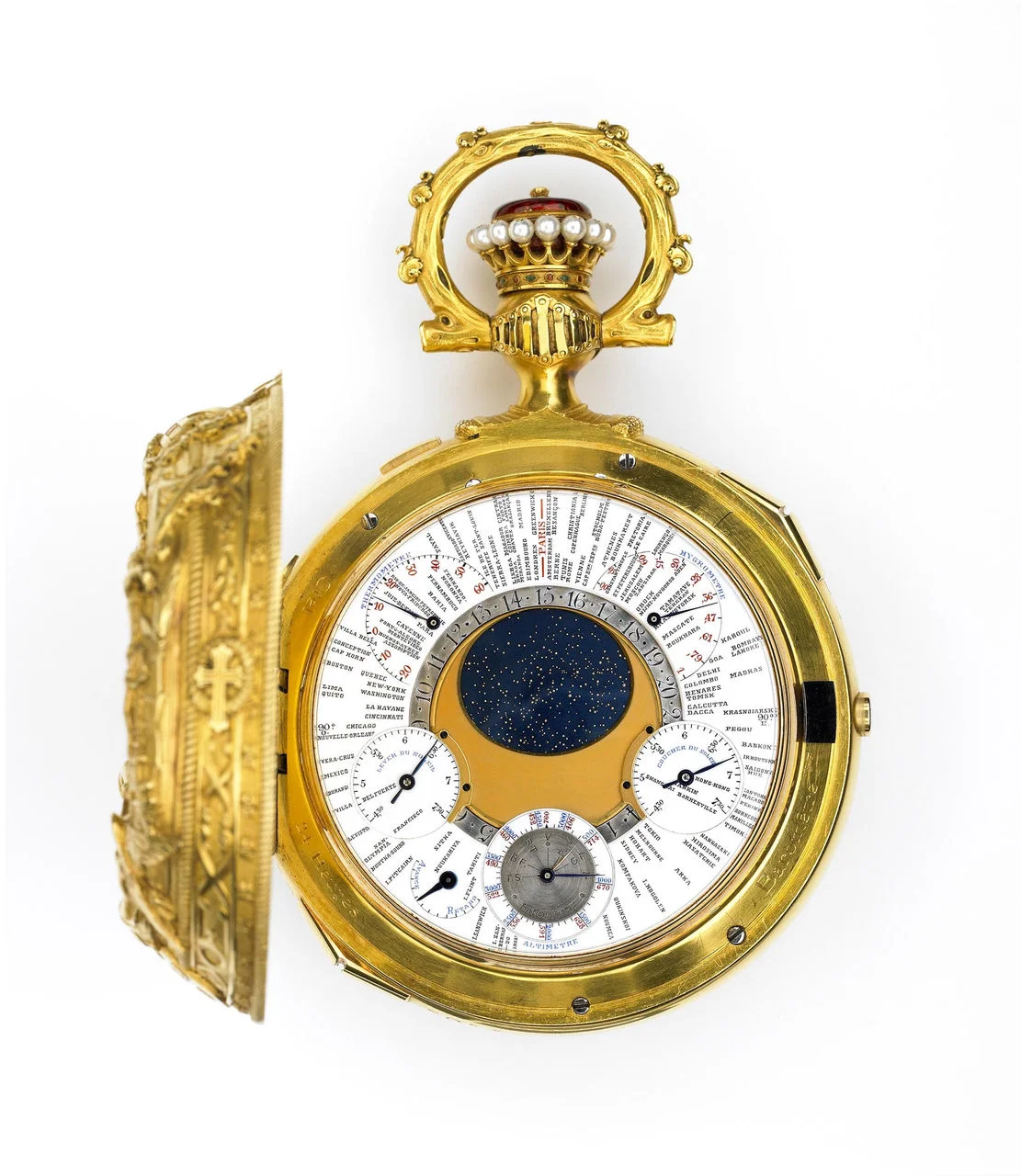
Circa 1900. Ultra-complicated pocket watch known as the "Leroy 01". 26 complications. Grand Prix at the Paris World’s Fair. "Ébauche" developed and manufactured by Charles Piguet in the Vallée de Joux. Musée du Temps of the town of Besançon.
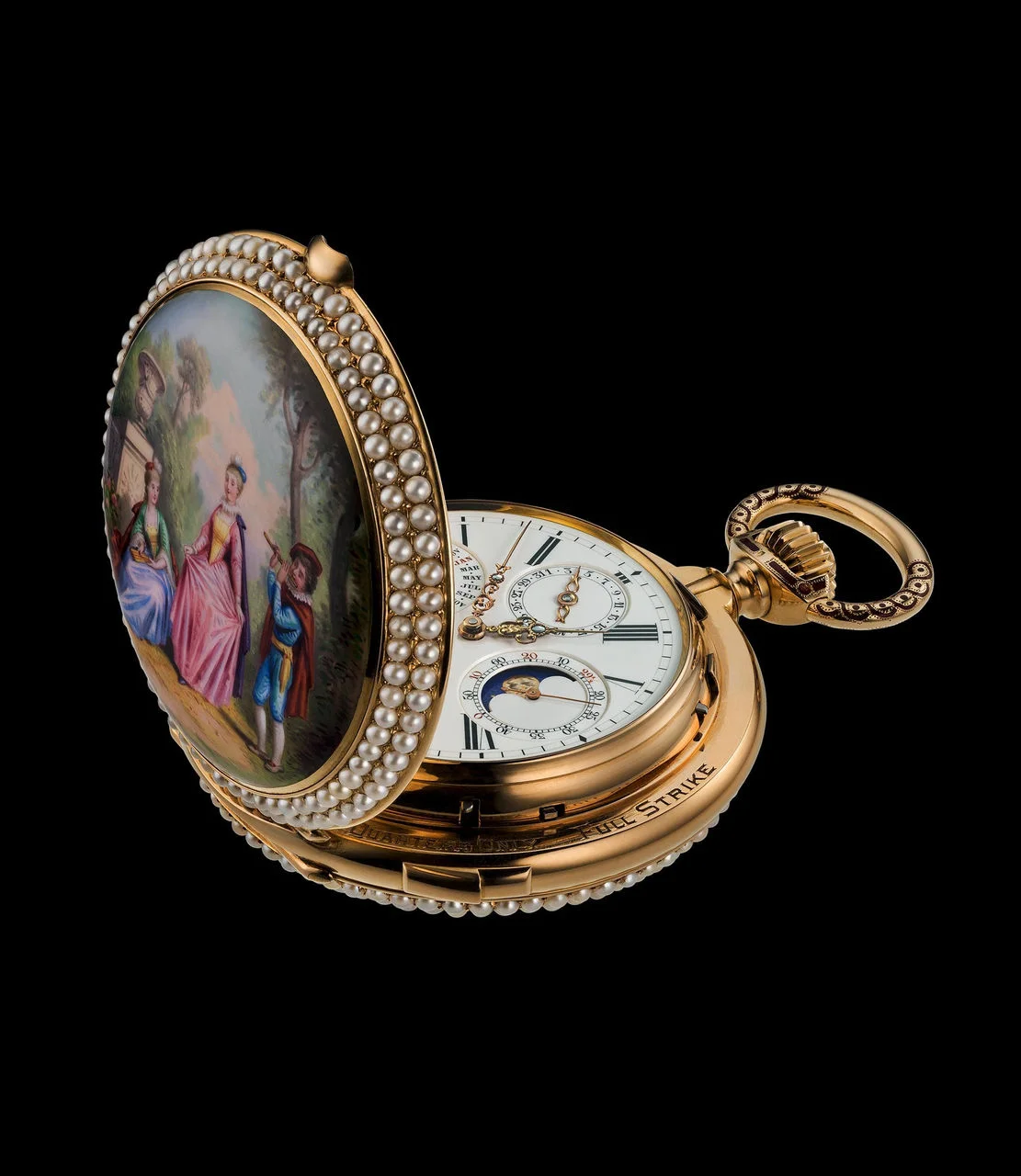
Circa 1890. Complication watch attributed to Louis Elisée Piguet. Grande and Petite Sonnerie, minute repeater and perpetual calendar. One side depicts two noble ladies in a romantic garden, listening to a flautist. The second reveals a romantic mountain landscape. Audemars Piguet Heritage, Inv. 10.
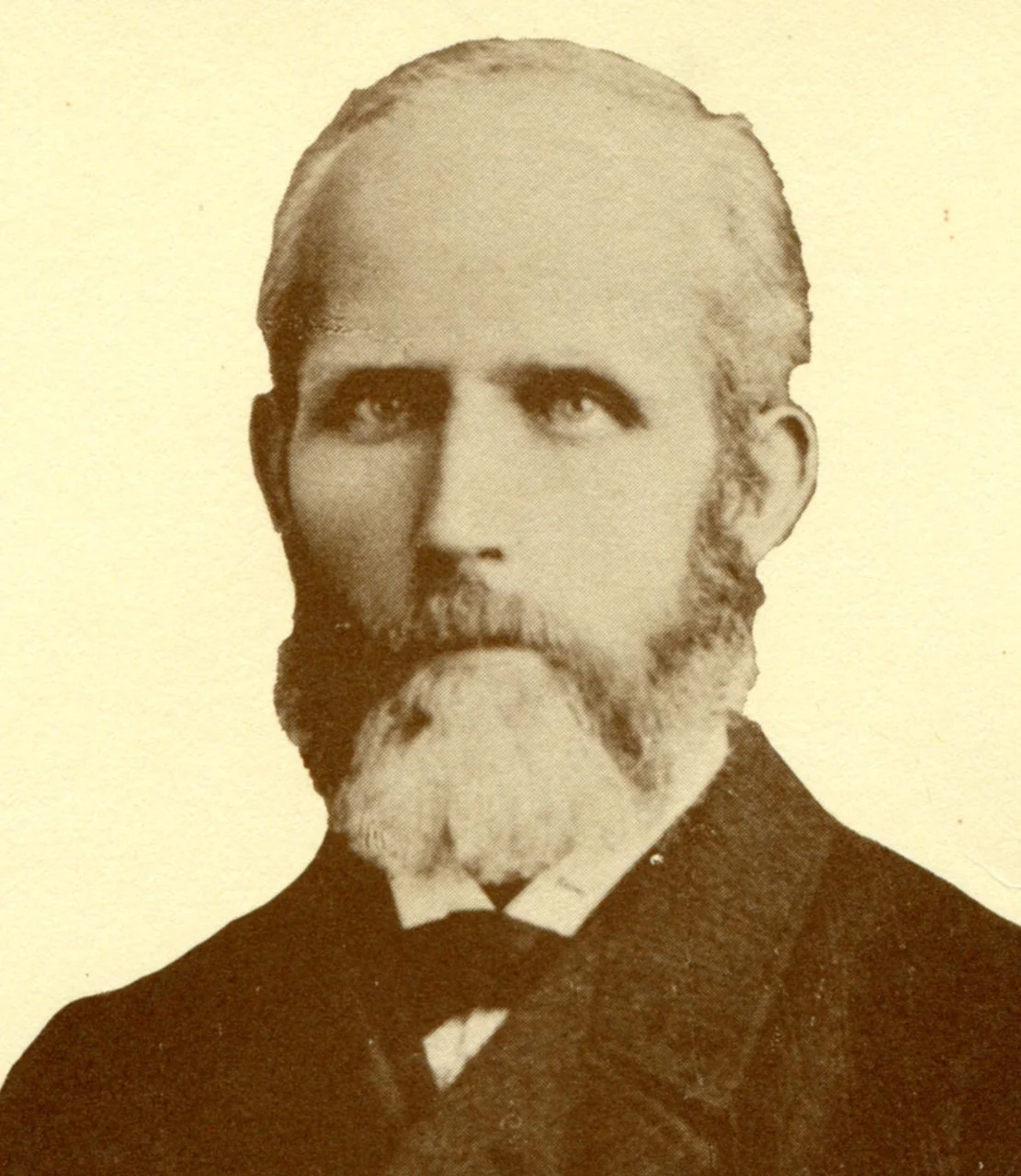
Louis Elisée Piguet (1836–1924). A great specialist in complications and co-author of numerous ultra-complicated movement "ébauches", including for the "Universelle" and the "Merveilleuse", Louis Elisée Piguet was one of the most important watchmakers in the Vallée de Joux.
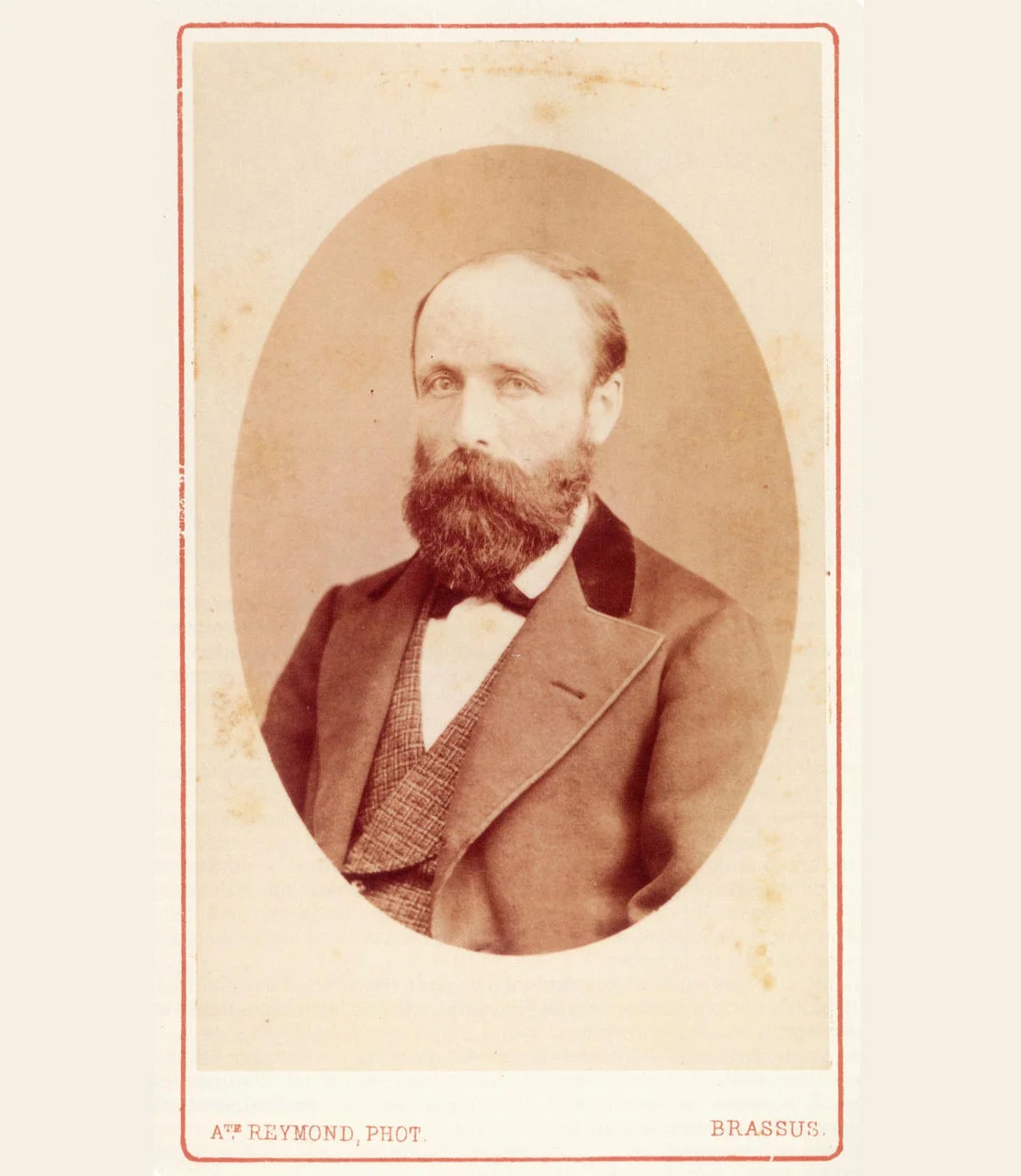
Charles Ami Lecoultre Piguet is the creator of one of the most complicated watches in the world. Called the “Merveilleuse”, it is on display at the Musée International d'Horlogerie in La Chaux-de-Fonds. Audemars Piguet Archives.
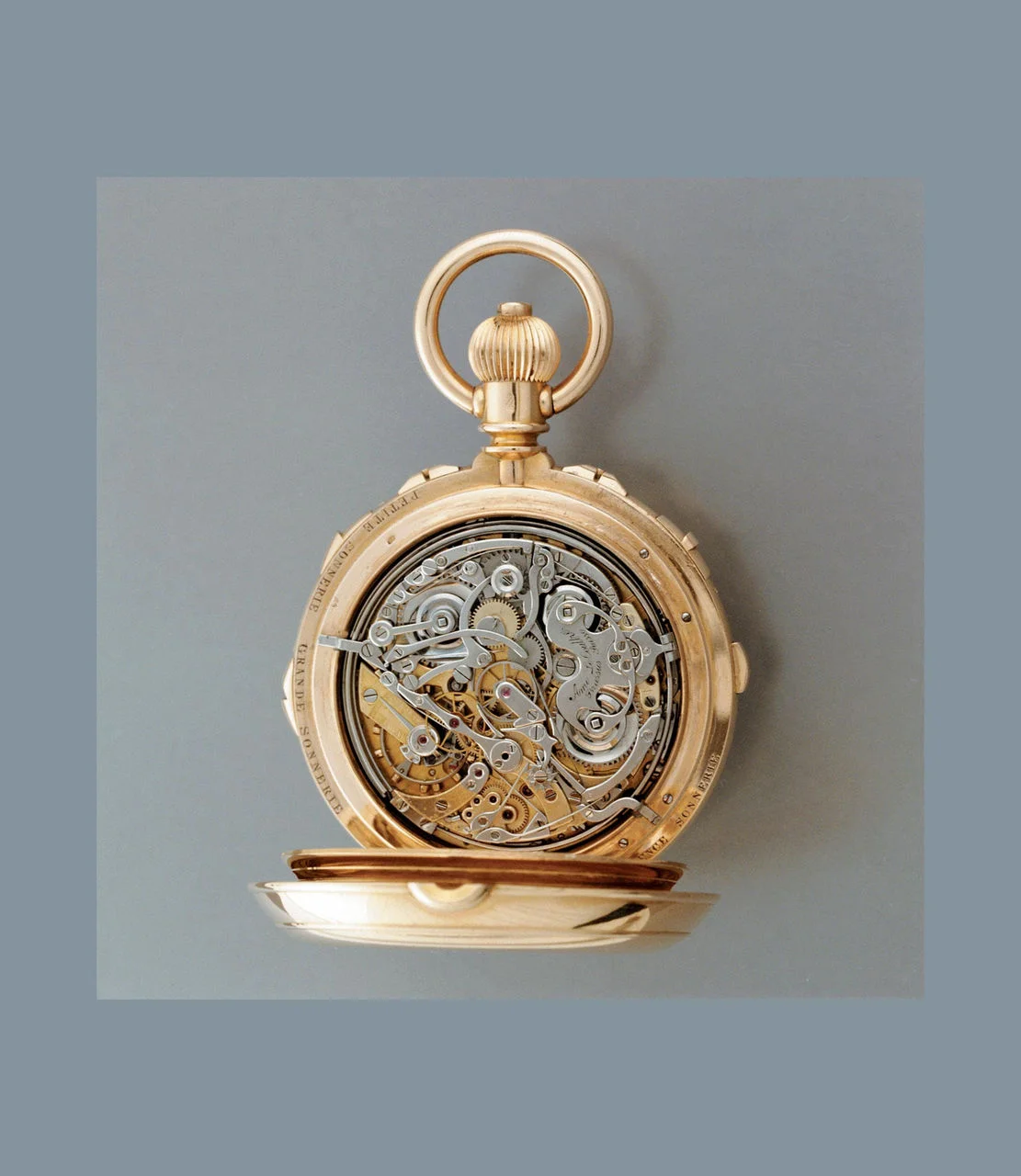
1878. Ultra-complicated watch known as the "Merveilleuse". Made by Charles Ami Lecoultre, Louis Elisée Piguet and Eugène Rodolphe Capt, this watch with 25 complications was presented at the 1878 World’s Fair in Paris. Collection of the Musée International d'Horlogerie in La Chaux-de-Fonds.
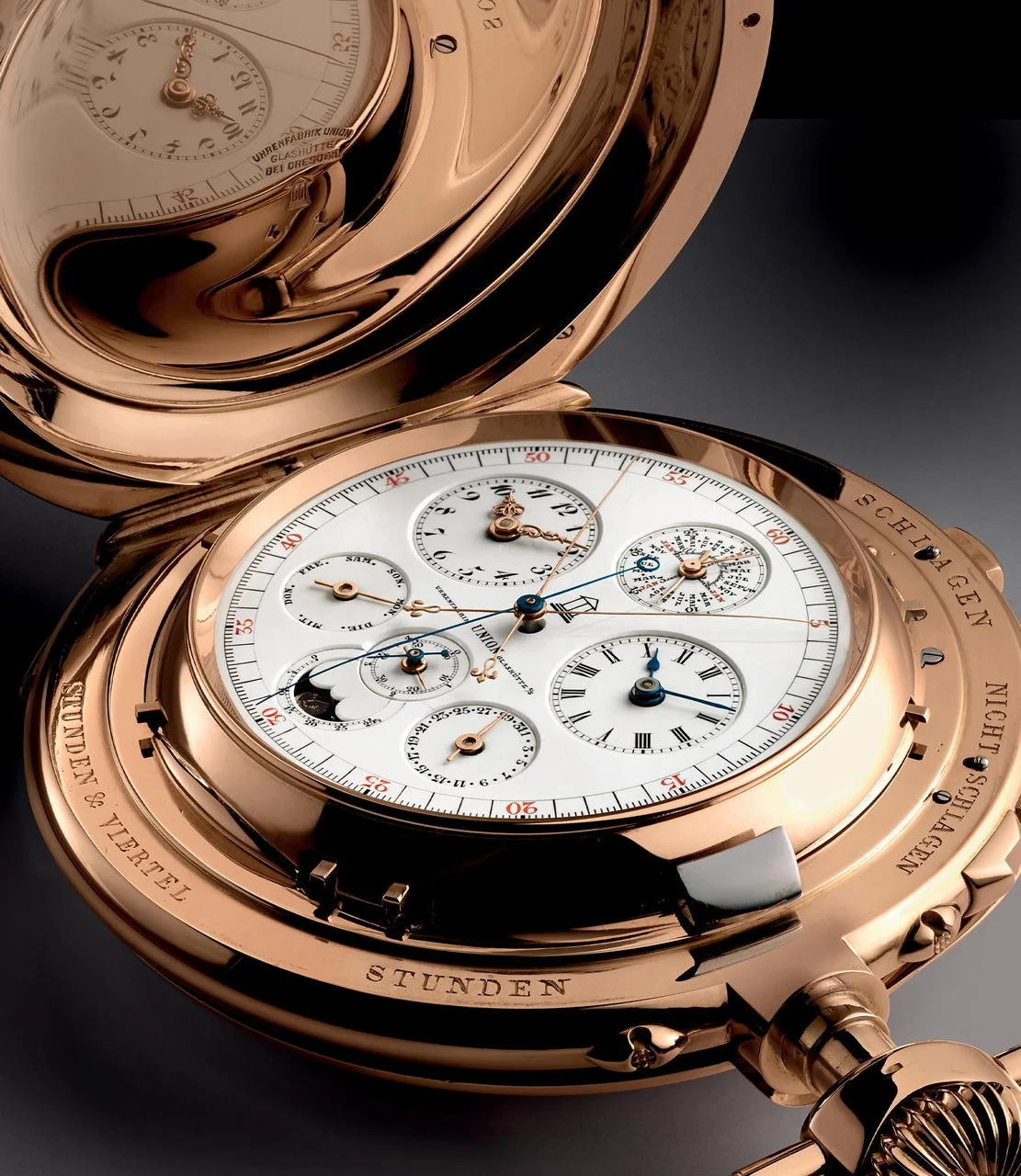
1899. Ultra-complicated Universelle watch. 19 complications. "Ébauche" by Louis Elisée Piguet, movement started and fitted by Audemars Piguet. Watch finished and marketed by Union Glashütte. Audemars Piguet Heritage, Inv. 1713.
Edward Auguste Piguet
Why did Edward Auguste Piguet's parents decide to use the English spelling of the French name “Edouard” back in 1853? The sources do not reveal the answer, but it is very likely that this choice was a tribute to the great English watchmaker Edward John Dent (1790–1853), who died a month and a half before the future co-founder of Audemars Piguet was born. Edward Dent developed the Westminster clock nicknamed Big Ben. He regularly came to the Vallée de Joux to acquire and complete complication mechanisms and worked with Louis Audemars & Fils. Unusually for an English watchmaker, he acknowledged the origin of his movements by sometimes signing them "Dent à Le Brassus".
Edward Auguste Piguet grew up in Crêt-Meylan surrounded by watchmakers. His great-grandfather Joseph, his grandfather David Joseph and his father George Eugène were all watchmakers. He served his apprenticeship with Charles Capt, a talented watchmaker who was also president of the Vallée de Joux court and village mayor. It was here that Edward Auguste learned the trade at the workbench as well as the spirit of involvement in society. He enjoyed both and was to combine the two activities throughout his life, a practice that was widespread in the Vallée de Joux. As a local councillor and member of the Le Brassus choir and many other associations, he continued and strengthened his family's involvement in the region's public life.
At the same time, he continued to ply this trade, for other établisseurs and for himself. His name appears in the records of Louis Audemars & Fils from 1872 to 1876. In 1881, he personally won a bronze medal at the National Watchmaking Exhibition in La Chaux-de-Fonds. In parallel, he also worked with a childhood friend, Jules Louis Audemars.
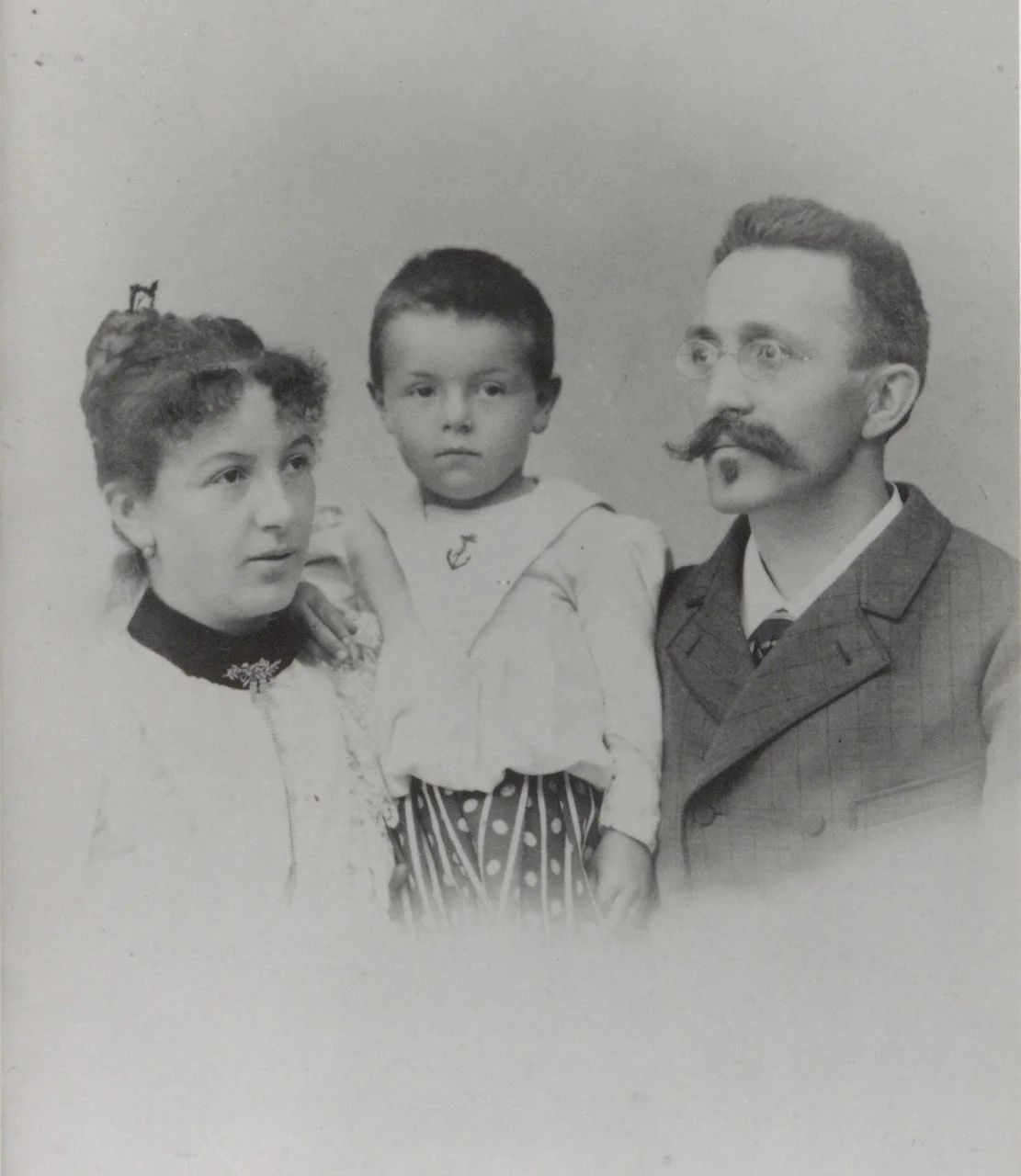
Audemars Piguet’s co-founder Edward Auguste Piguet (1853–1919) ran the commercial side of the company from 1882 to 1917. He is seen here with his wife Emilia Anna and one of their sons, probably Paul Edward, circa 1894. Audemars Piguet Archives.
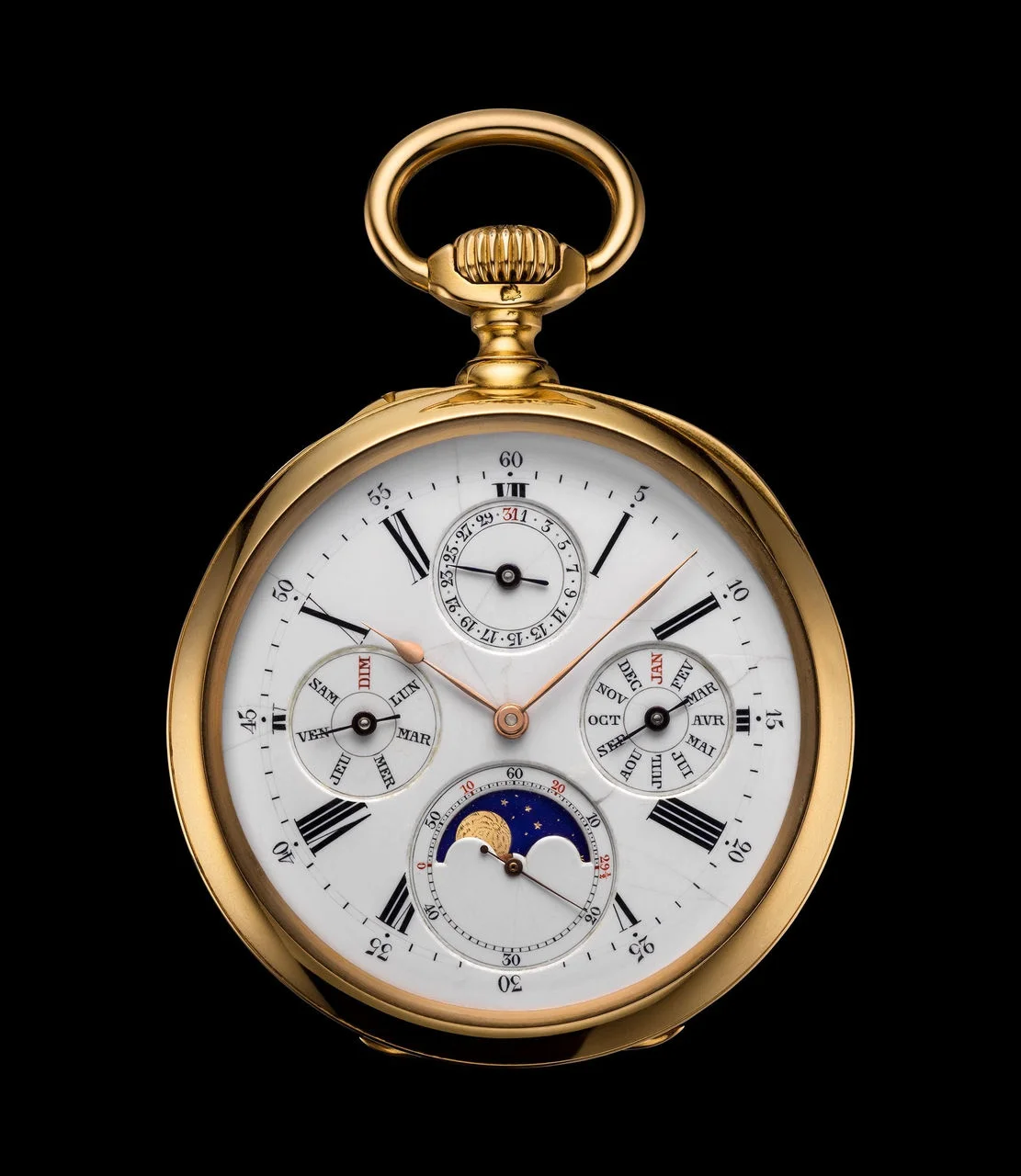
Circa 1875. Edward Auguste Piguet's apprenticeship masterpiece. Chronometer and complete calendar. Edward Auguste Piguet completed his training as a finisher-watchmaker, a speciality considered at the time to be the pinnacle of the watchmaking art. Private collection.
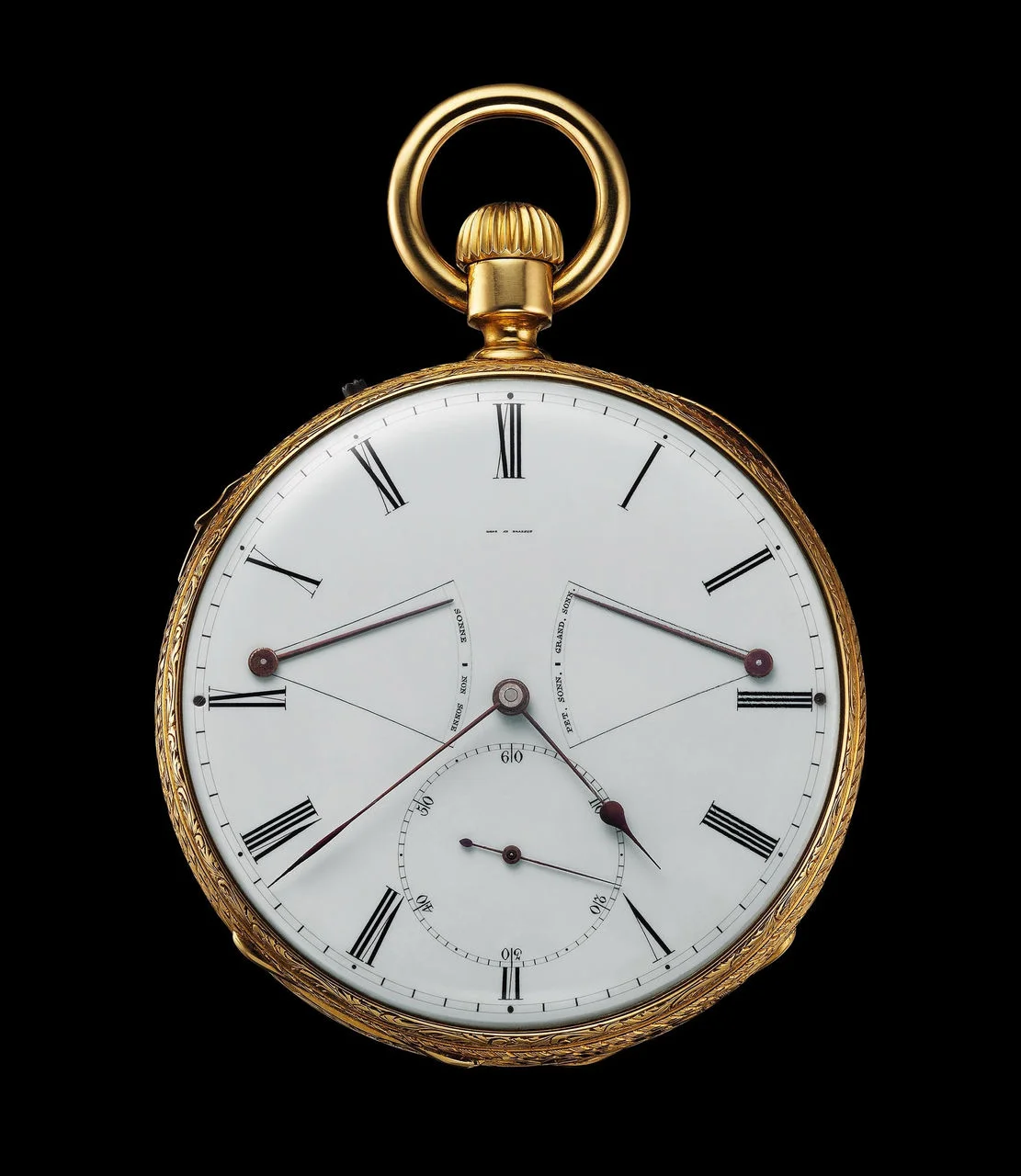
Circa 1850. Large chiming watch signed "Dent à le Brassus". "Ébauche" by Louis Audemars. Audemars Piguet Heritage, Inv. 695.
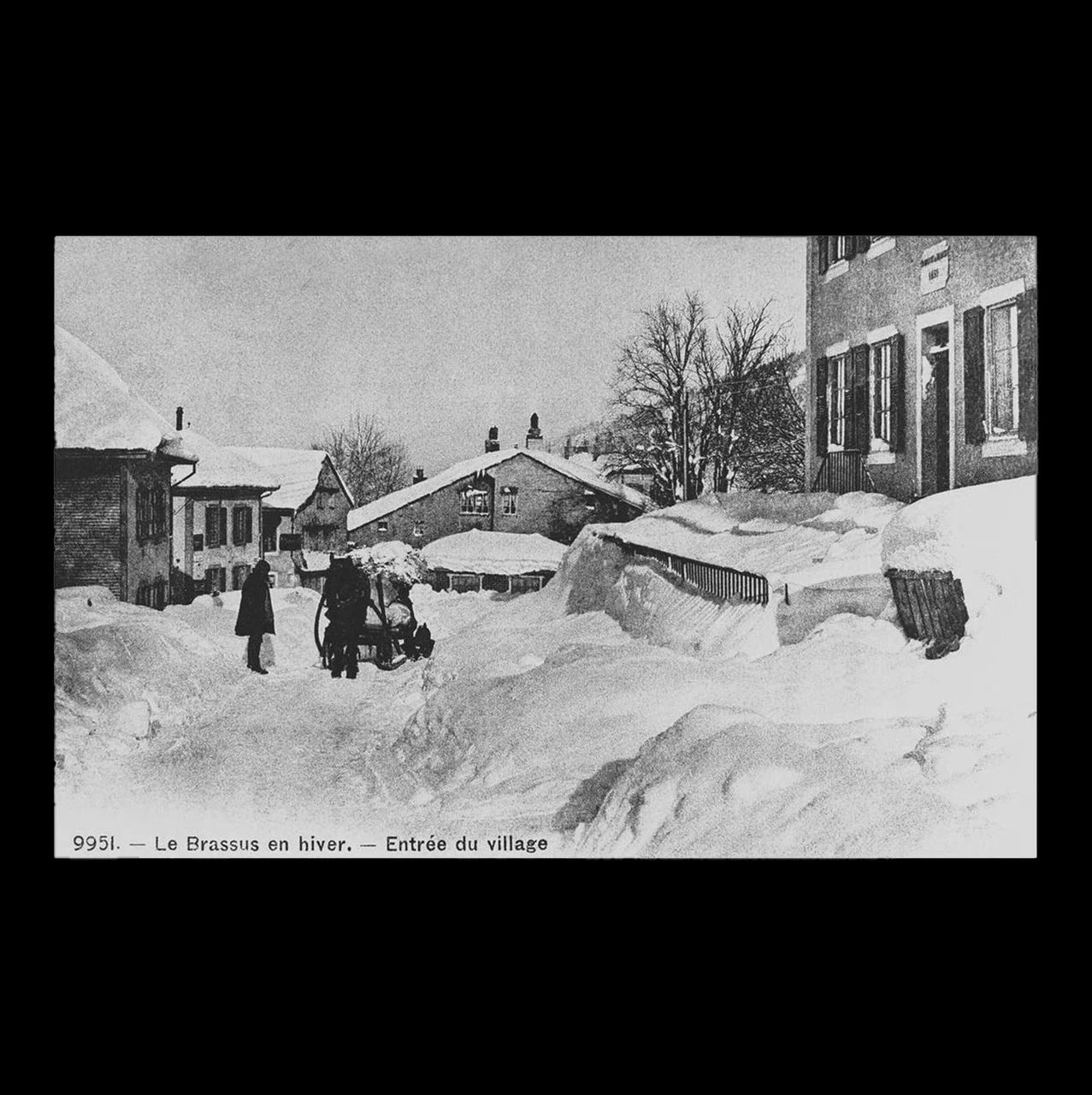
Around 1910. Le Brassus in winter. Postcard. Audemars Piguet Archives.
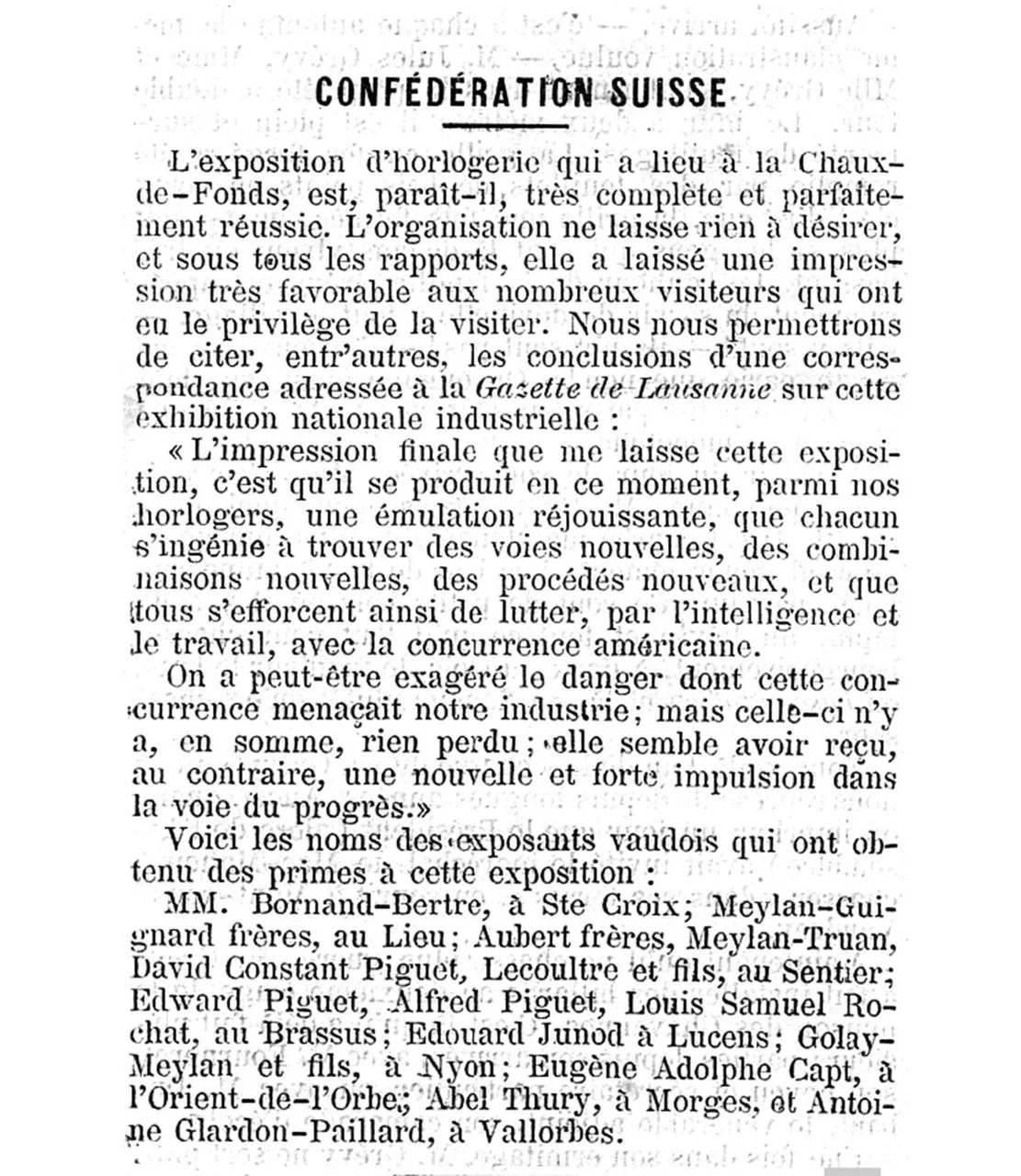
Among the watchmakers who won medals at the National Watchmaking Exhibition in La Chaux-de-Fonds in 1881 was Edward Auguste Piguet. The Messenger of the Vallée de Joux of August 3, 1881.
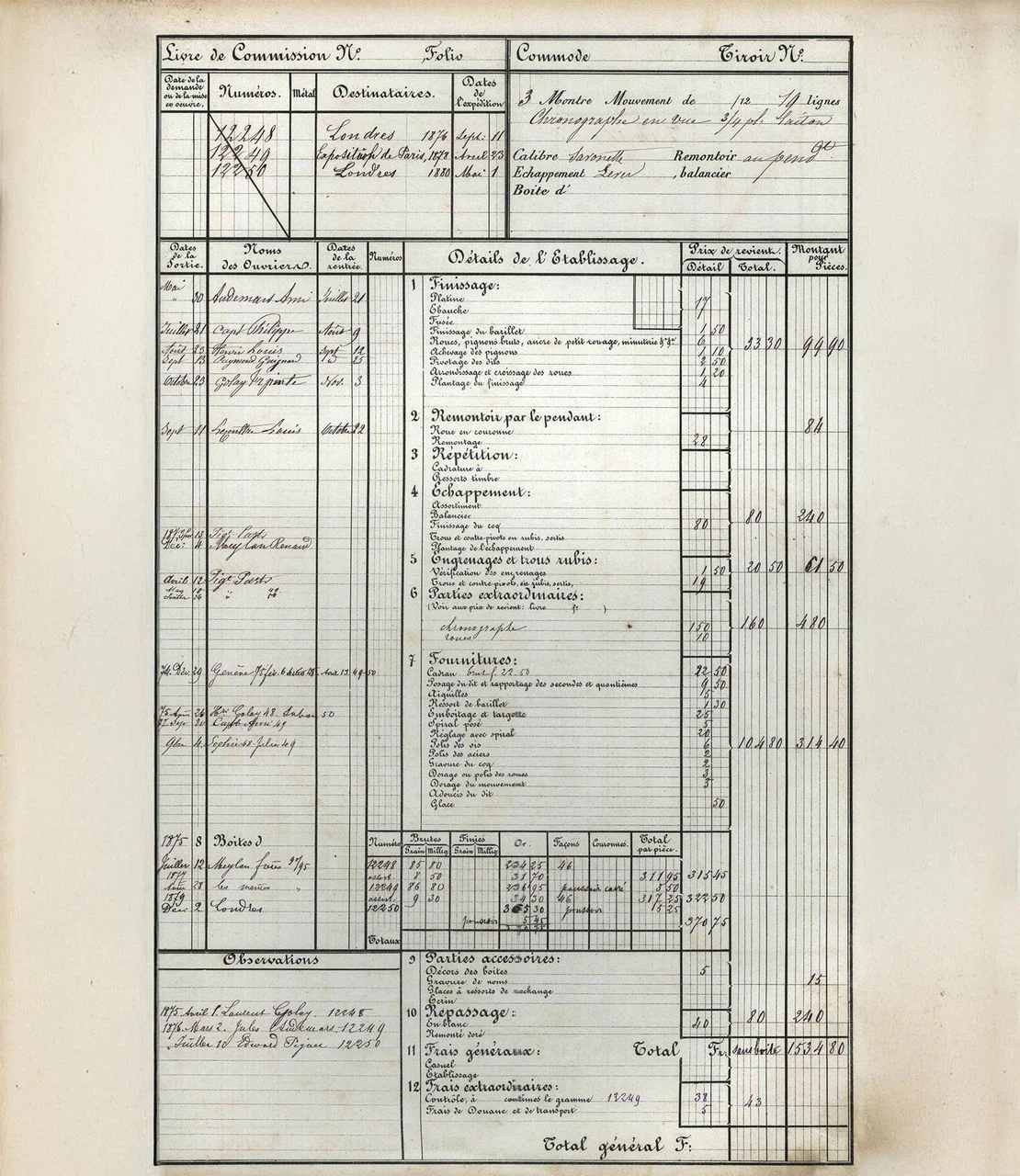
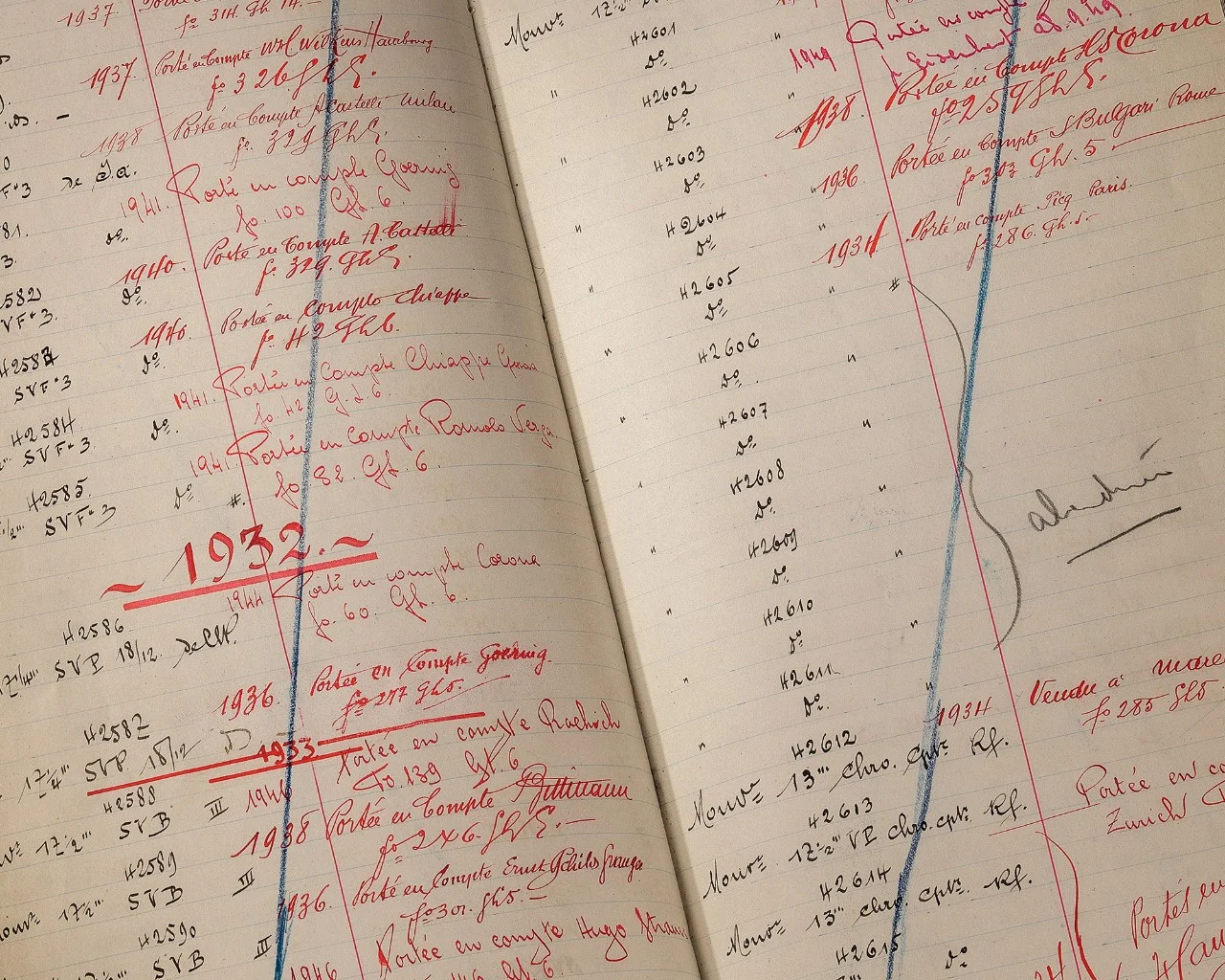
1876. Louis Audemars & Fils production register. At the bottom of the page, Edward Auguste Piguet and Jules Louis Audemars are mentioned as repasseurs (finishers) for two watches, one of which was destined for the 1878 Paris World’s Fair, where Louis Audemars won a gold medal. Paul Audemars Archives.
Jules Louis Audemars
Jules Louis Audemars was born at the end of March 1851, a month before the opening of the Universal Exhibition in London, where his cousin and neighbour Adolphe Audemars was to cause a sensation with a mechanical pistol barely 5 mm long.
Jules Louis spent his childhood on the family farm, dividing his time between school, horses and, of course, watchmaking. In the evenings, his father François Louis, known as "Loyal", would sometimes tell the story of his great-grandmother "La Zanne". He explained how his father Elisée had been involved in the early years of his brother Louis-Benjamin Audemars' workshop from 1811. He described the complicated mechanisms that he spent his days making for the company. It was he who finished the most beautiful pieces, which says a lot about his skills as a repasseur watchmaker. At the dinner table, conversation also turned to the future of watches from the Vallée de Joux. There was talk of New York, Hong Kong, St Petersburg and Philadelphia, as well as of prestigious clients such as the Grand Duke of Russia Alexis Romanov, Queen Victoria and other great names...
Initiated by his father, Jules Louis followed the watchmaking path. In May 1874, aged 23, he married Sidonie Renaud, who convinced him to move to the village of Gimel, on the other side of the mountains. His father-in-law even set up a watchmaking shop and workshop for him. But a year later, the young watchmaker decided to move back to Le Brassus. Homesick? Perhaps... But above all, he knew that it was here that one of the world's most talented and creative networks of watchmakers could be found. He also nurtured the dream of creating his own brand.
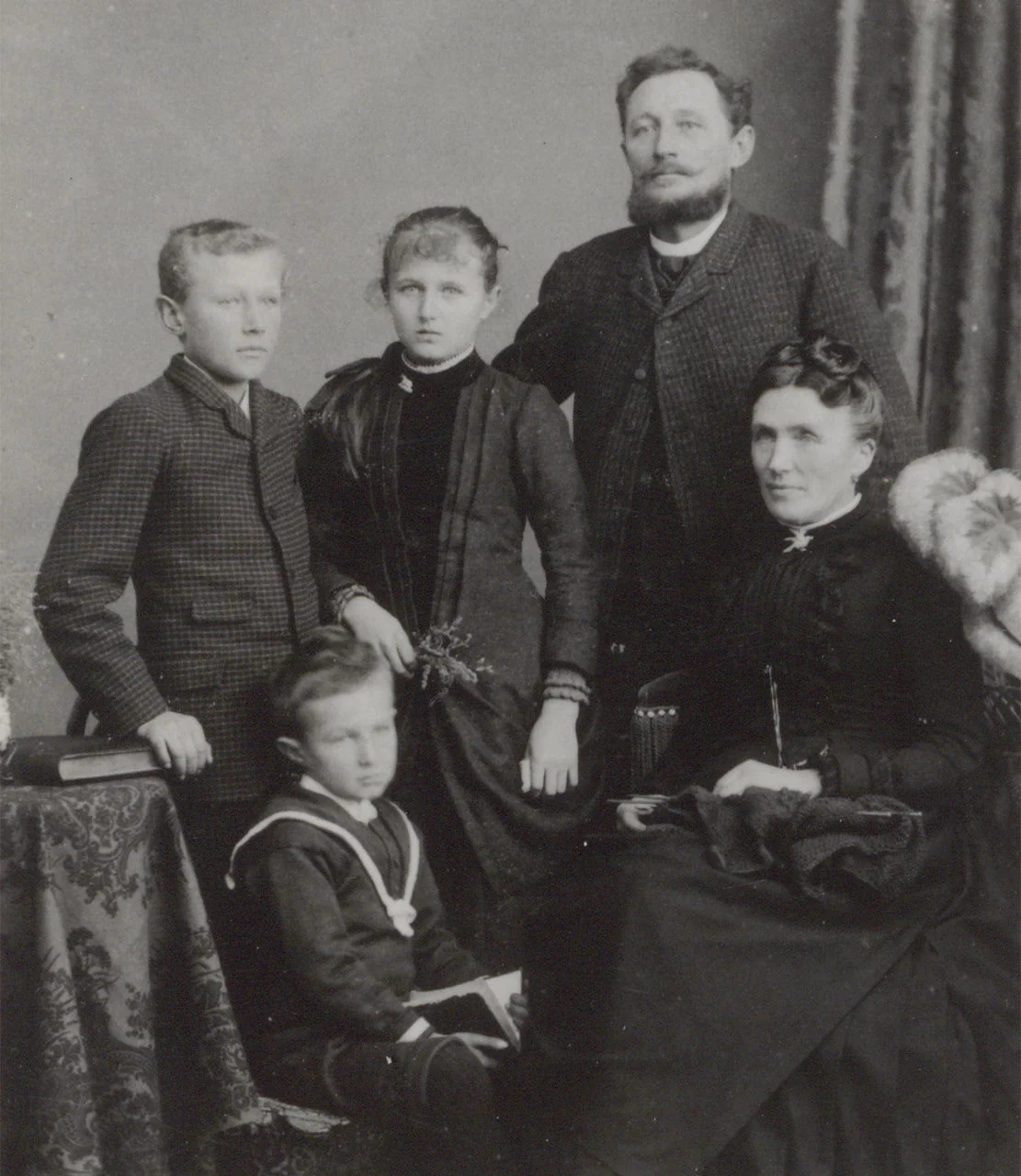
Circa 1887. Portrait of Jules Louis Audemars, co-founder of Audemars Piguet, with his wife Sidonie and their three children. On the left Robert Henri (1875–1891), on the right Bertha Eugénie (born 1876) with Paul Louis (1881–1969) in front of them. Audemars Piguet Archives.
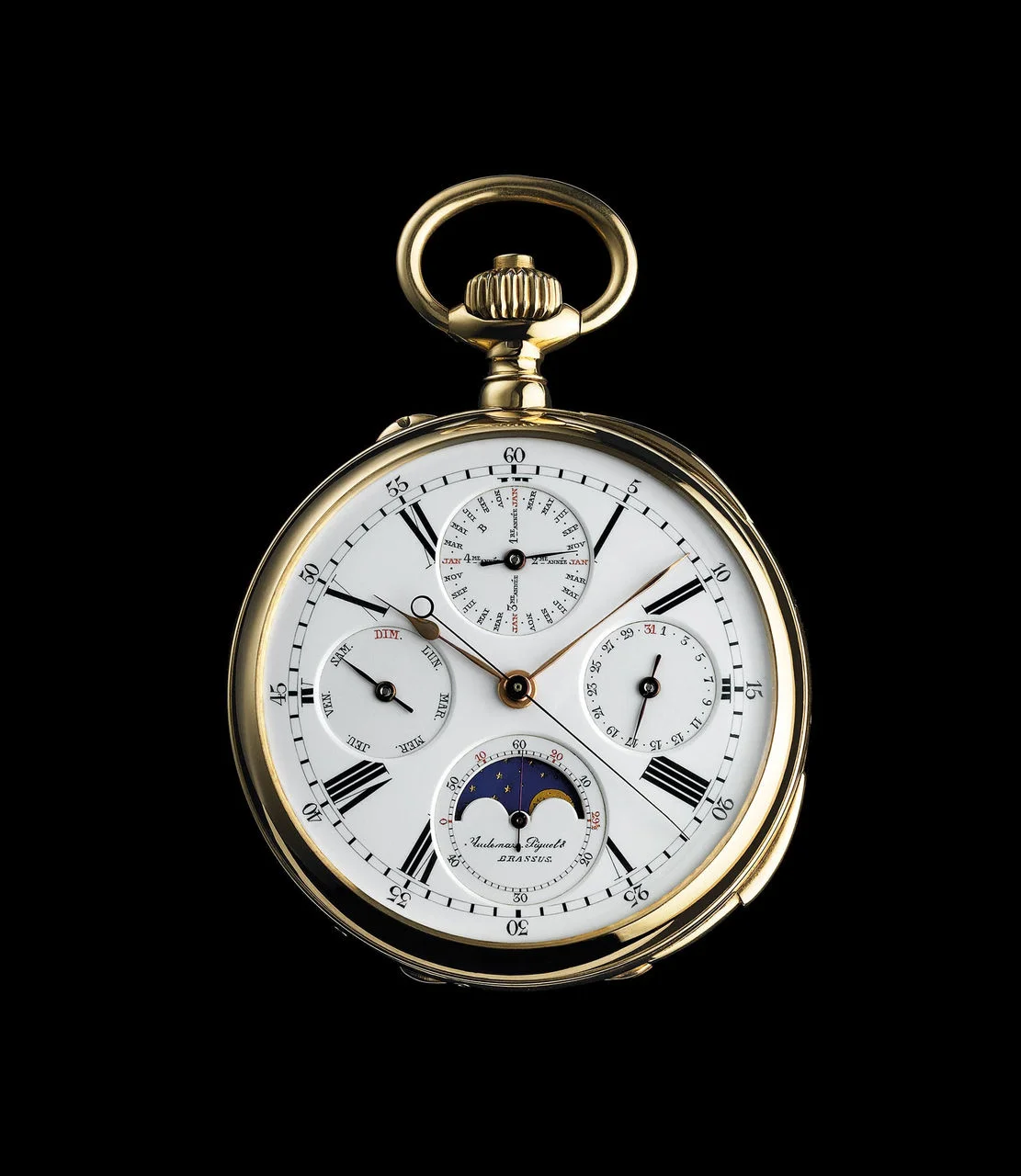
Circa 1875. Complication watch considered to be Jules Louis Audemars' apprenticeship masterpiece. Quarter repeater, perpetual calendar, deadbeat seconds. Movement "ébauche" probably by Louis Audemars. Modified in the Audemars Piguet workshops in 1882, 1887 and 1903. Audemars Piguet Heritage, Inv. 8.
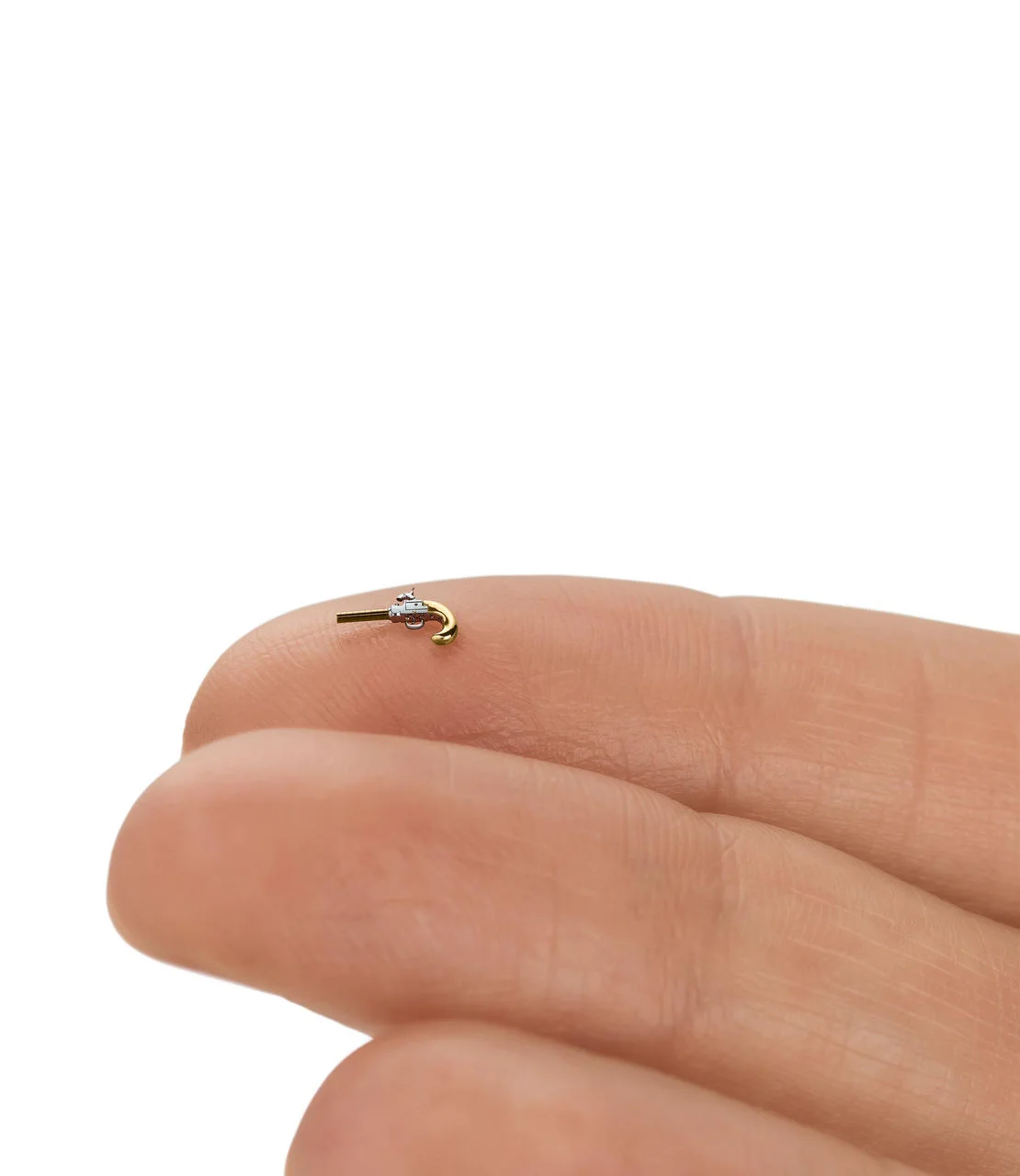
Circa 1850. Microscopic pistol. Made by Adolphe Audemars, this pistol caused a sensation at the Universal Exhibition in London in 1851. © Ville de Genève, Musée d’art et d’histoire, inv. N0502.
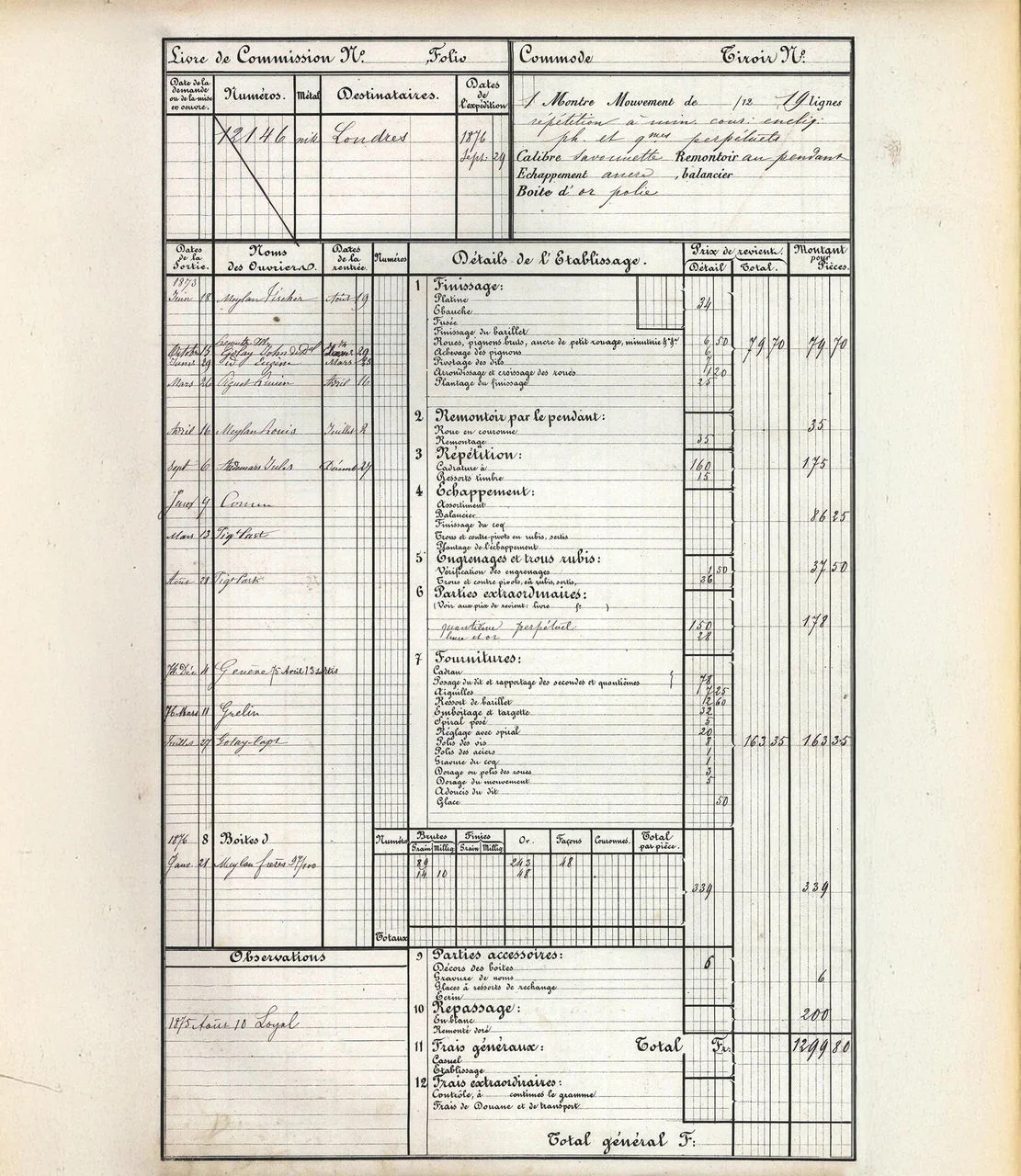
1875. François Louis Audemars, known as "Loyal", is mentioned several times as an ironer in the Register of Special Watches kept by Louis Audemars & Fils. On this page (mt 12146) he appears with his son Jules Louis, the year the first workshop of the future Audemars Piguet company was founded. Paul Audemars Archives.
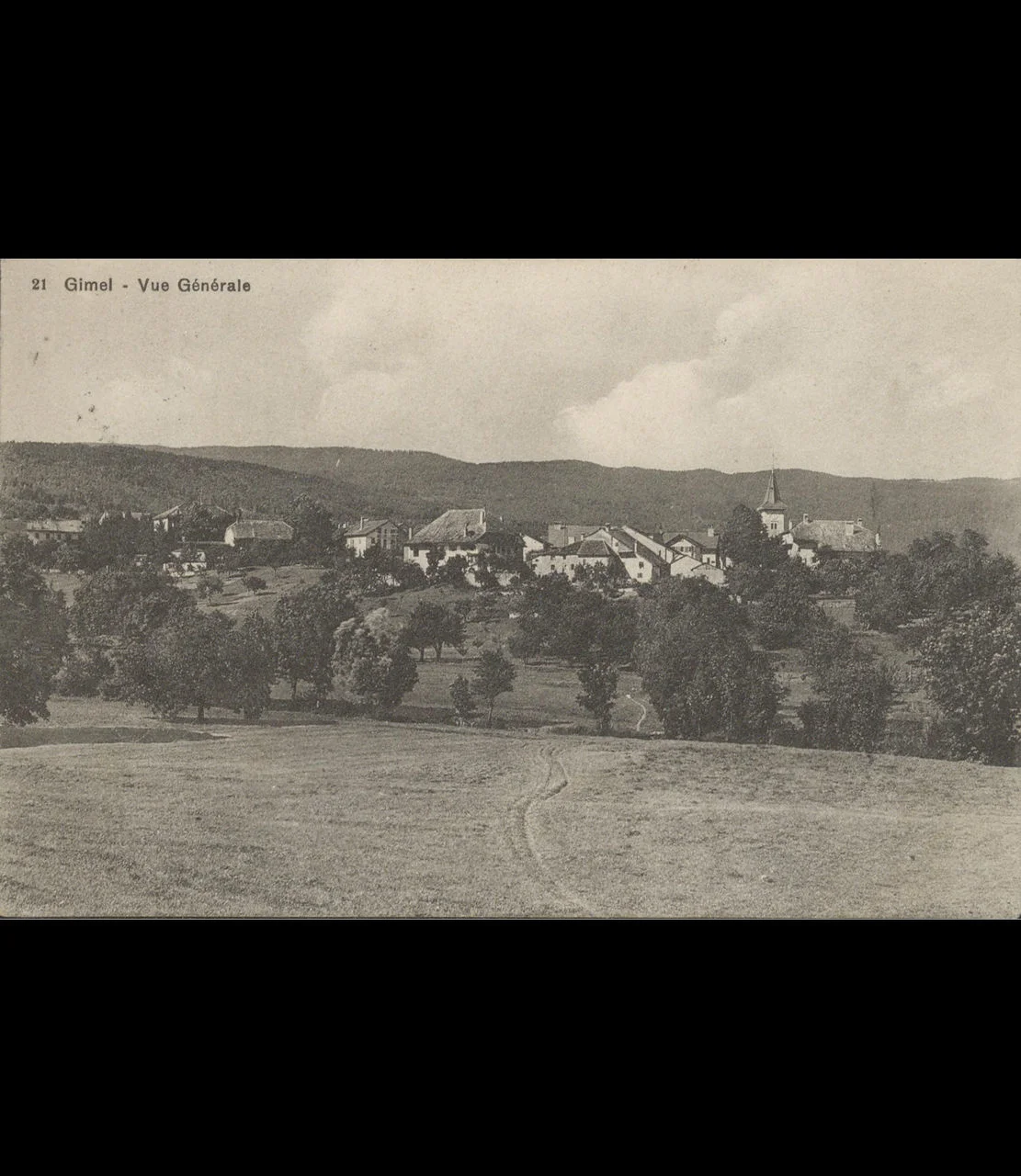
Image of Gimel in the 1870s. Postcard. Audemars Piguet Archives.
A friendship
Even before they were born, Jules Louis Audemars and Edward Auguste Piguet had a great deal in common. Their families had been linked for at least a century and a half. They had several ancestors in common, including David Piguet, known as Le Gouverneur, a wood artisan born in 1735, who was also an ancestor of Louis-Benjamin Audemars. Their fathers, grandfathers, uncles, cousins and great-uncles had all collaborated in one way or another to make extraordinary watch movements.
The two co-founders of Audemars Piguet were born two years apart – in 1851 and 1853 – in the village of Le Brassus. One likes to imagine them engaging in snowball fights in the village school playground or having fun on the frozen lake in the middle of the night. Unfortunately, friendship leaves few traces in the archives and the founders never kept their correspondence or wrote their memoirs.
It is to the birth and death registers that we must turn to get an idea of the links between the two men. On 10 May 1891, Robert Henri Audemars, the eldest son of Jules Louis, died suddenly at the age of 16, having just begun his commercial training in the small Swiss-German town of Winterthur. To support his bereaved friend and business partner, Edward Auguste Piguet went to the registry office to record the death. To honour their dear departed, Edward Auguste and his wife Emilia Anna named their second child born three weeks later Robert Henri.

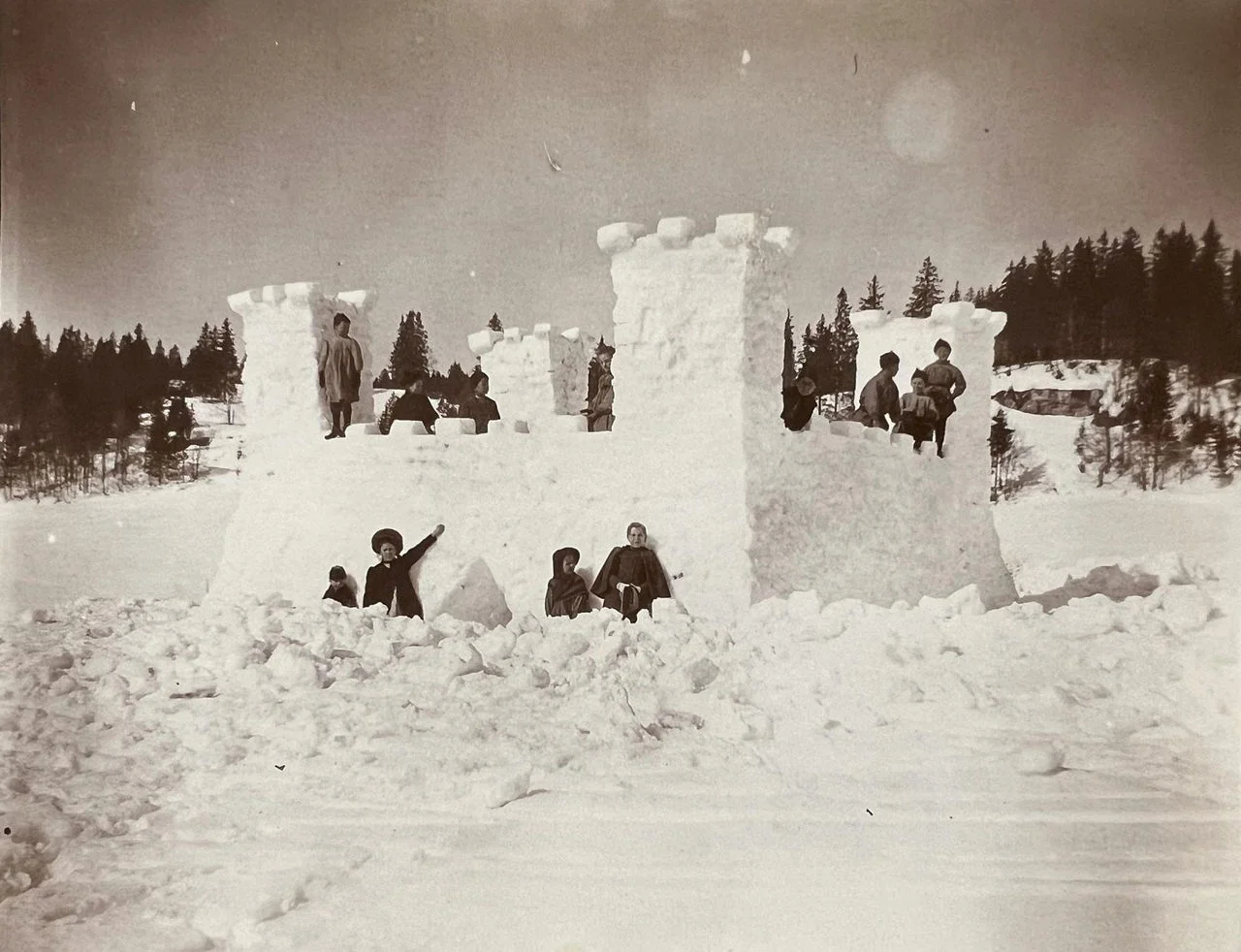
Circa 1910. Photograph showing children in the Vallée de Joux proudly building a snow castle. Patrimoine de la Vallée de Joux Archives.
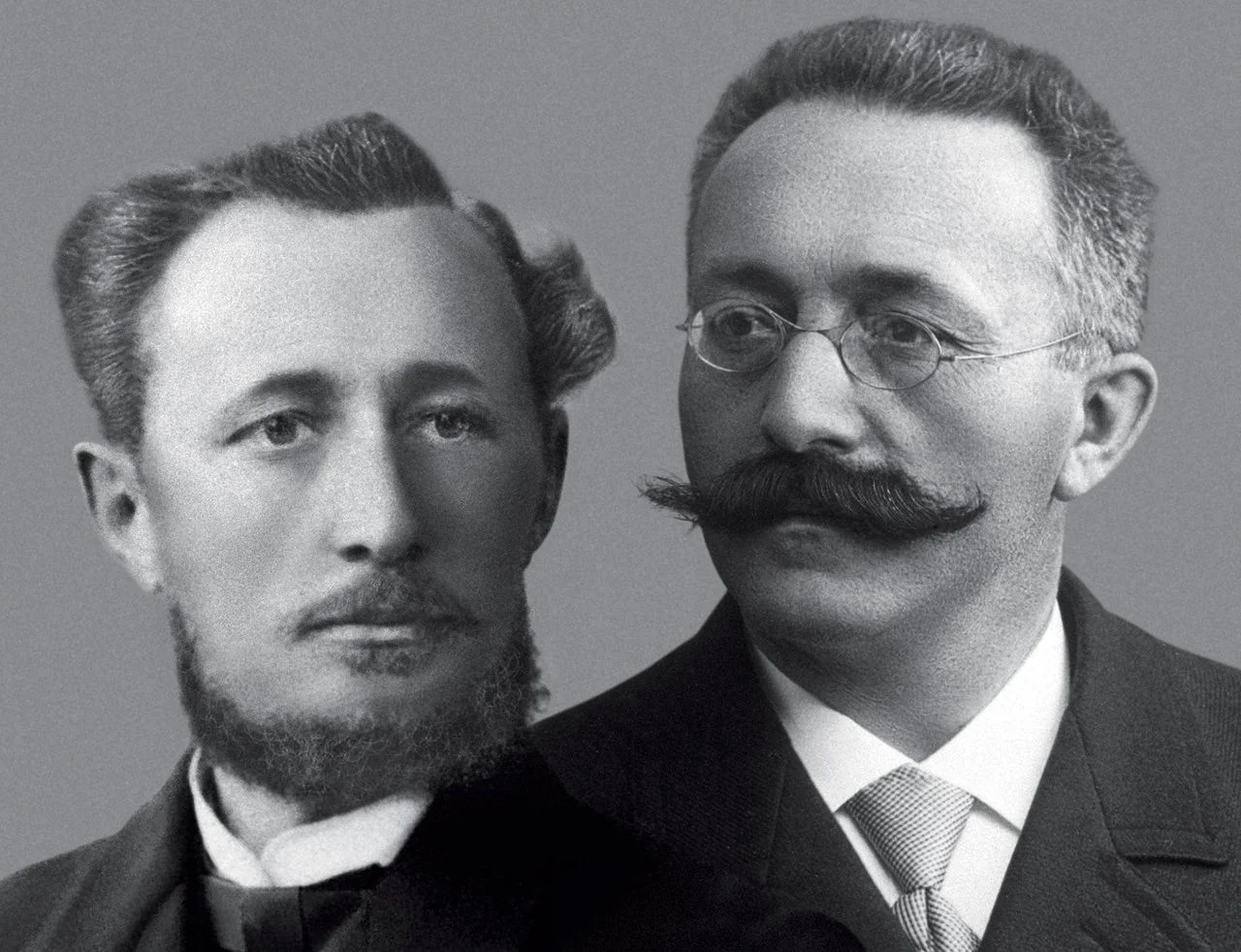
Jules Louis Audemars and Edward Auguste Piguet. The two men formalised their association in a contract signed in 1881, which officially gave birth to the Audemars Piguet brand in 1882. Audemars Piguet Archives.
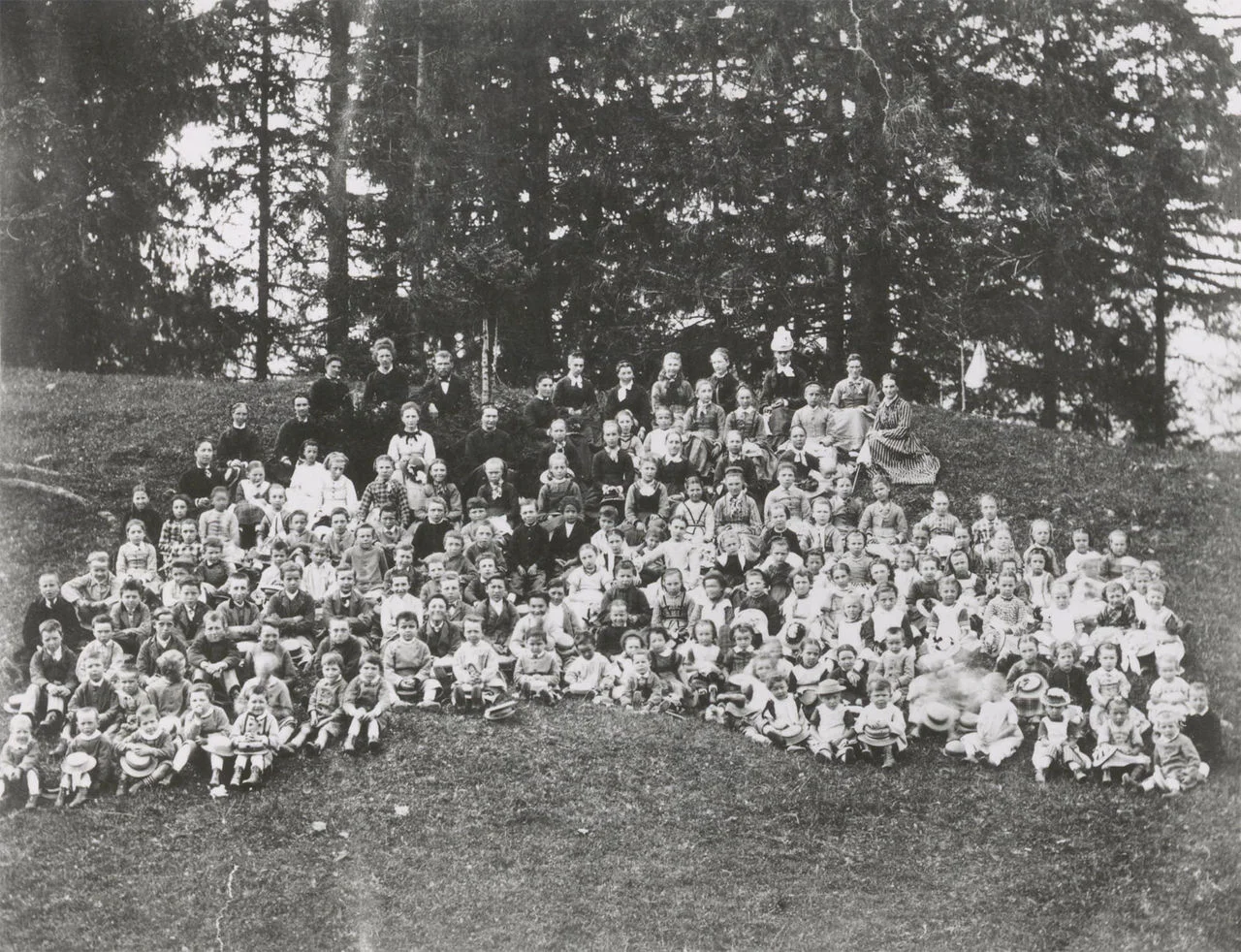
In this 1882 photograph, children from the village of Le Brassus are gathered for a Sunday school outing. Patrimoine de la Vallée de Joux Archives.
1875, a very discreet birth
Circa 1903, while preparing a promotional brochure for retailers, the two co-founders of Audemars Piguet thought it appropriate to include the date of their company's birth. Before opting for 1875, they probably hesitated a little, since this birth had been such a fluid, natural and dynamic process.
In the liberal Switzerland of the 1870s, companies were not required to register in a Commercial Register, which did not exist everywhere. Trademark protection and the patent system were still only in the planning stage. Most artisans had home workshops and worked for each other. Within such a context, it was almost impossible to date the start of a company, because if you looked hard enough, the main people involved could always remember an earlier collaboration, a mechanism sold earlier or made during their adolescence, their apprenticeship, on their father's or uncle's workbench... Economic historians are well acquainted with this phenomenon: in the 19th century, partnership contracts were often signed a few years after the start of an activity, when the business took on a certain scale.
This was probably the case for Audemars Piguet, since the first association contract dates from 1881 and no earlier records have been preserved. So what actually happened in 1875? That year marked the return to the Vallée de Joux of Jules Louis Audemars and his wife Sidonie, née Renaud, with their baby. They may have settled in the family farmhouse but more likely close to it, in a new building at 18 Route de France, where the Musée Atelier Audemars Piguet now stands. Jules Louis set up a small workshop here, under the roof, where the light was best. At least, that's what an advertisement published in the Feuille d'Avis de la Vallée de Joux on 23 December 1875 suggests, stating "HORLOGERIE, joli choix de montres en tous genres, depuis 11 lignes, chez Jules Audemars Renaud, Vers chez Meylan". ("WATCHMAKING, fine choice of watches of all kinds, from 11 lignes and more, at Jules Audemars Renaud, Vers chez Meylan”).
This document is the only known archival trace left by the company in the year of its birth. The rest of the story is told in the article entitled The epic AP saga.
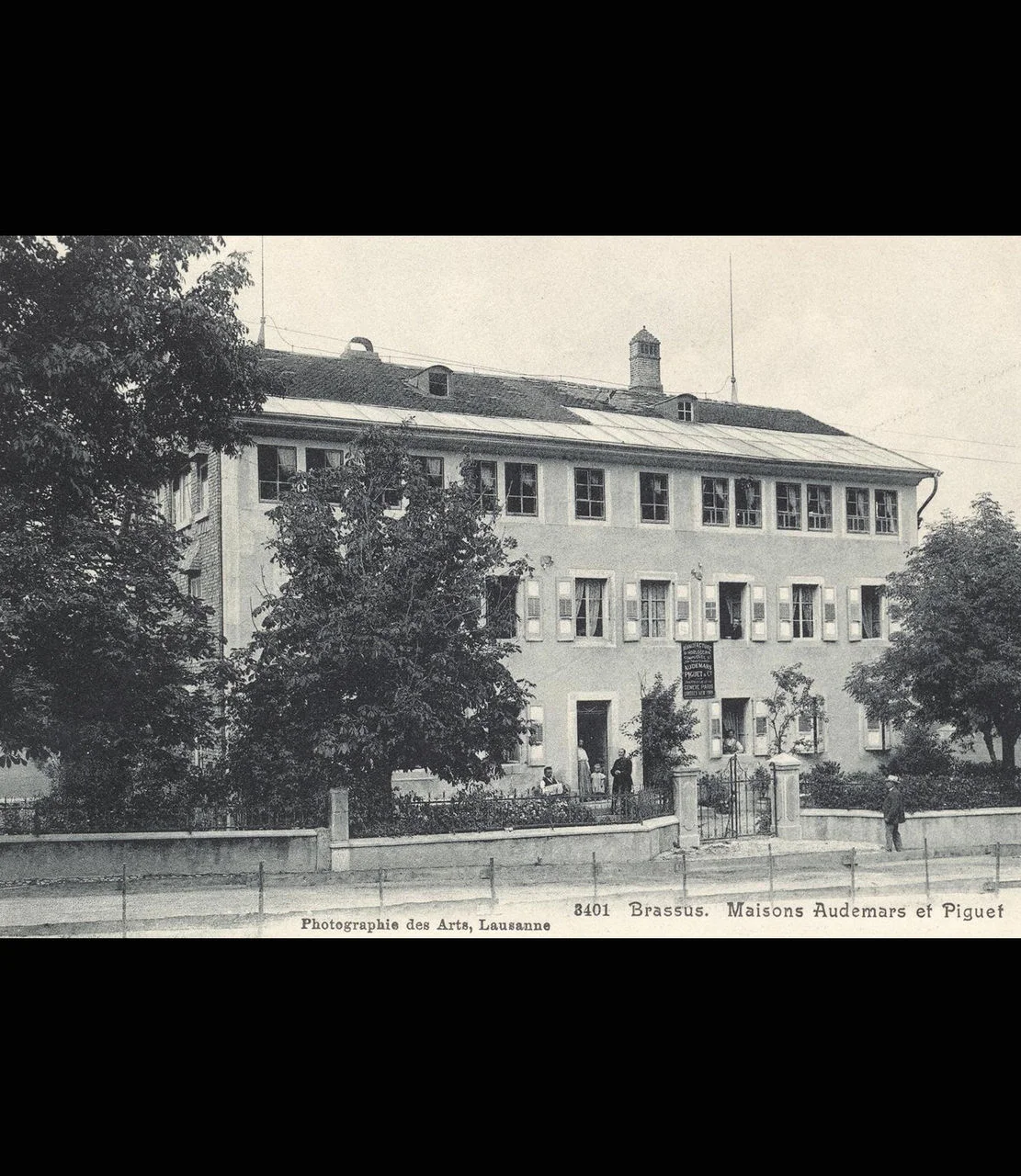
Located at 18 Route de France in the village of Le Brassus, at a place called "Vers chez Meylan", this house was probably home to Audemars Piguet's first workshop as early as 1875. It now houses the brand's museum and restoration workshop. Postcard from 1909. Jules Louis Audemars stands in front of the door while his son and future successor Paul Louis is at the window. Audemars Piguet Archives.
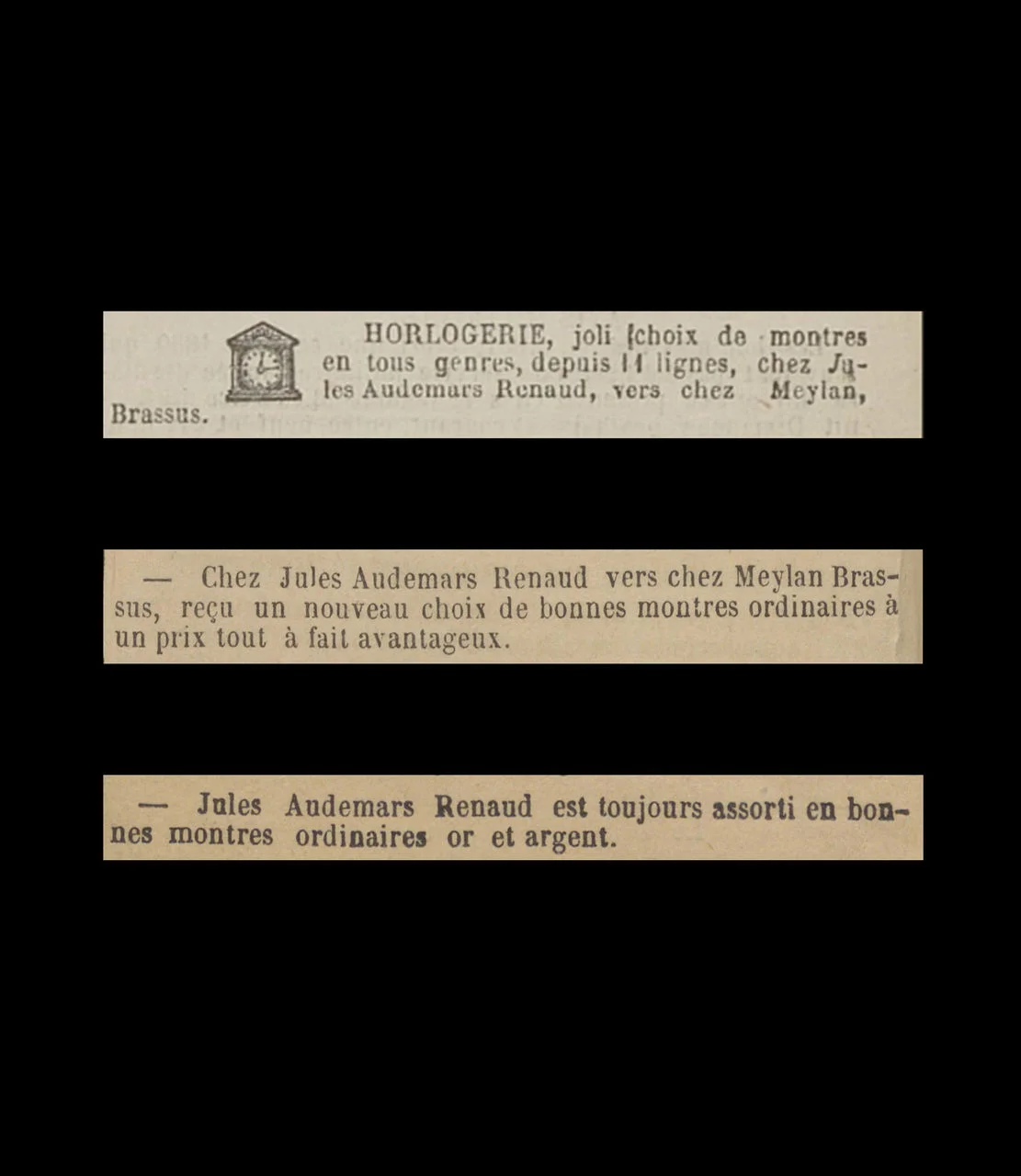
These three annals were published in the Feuille d'Avis de la Vallée de Joux on 23 December 1875, 17 August 1876 and 7 December 1876. They attest to the existence of Jules Louis Audemars' first workshop, at a place called "Vers chez Meylan" (also called "Chez-Les-Meylan" by geographers), in the village of Le Brassus, probably at the current 18 Route de France address. Feuille d'Avis de la Vallée de Joux (FAVJ) Archives.
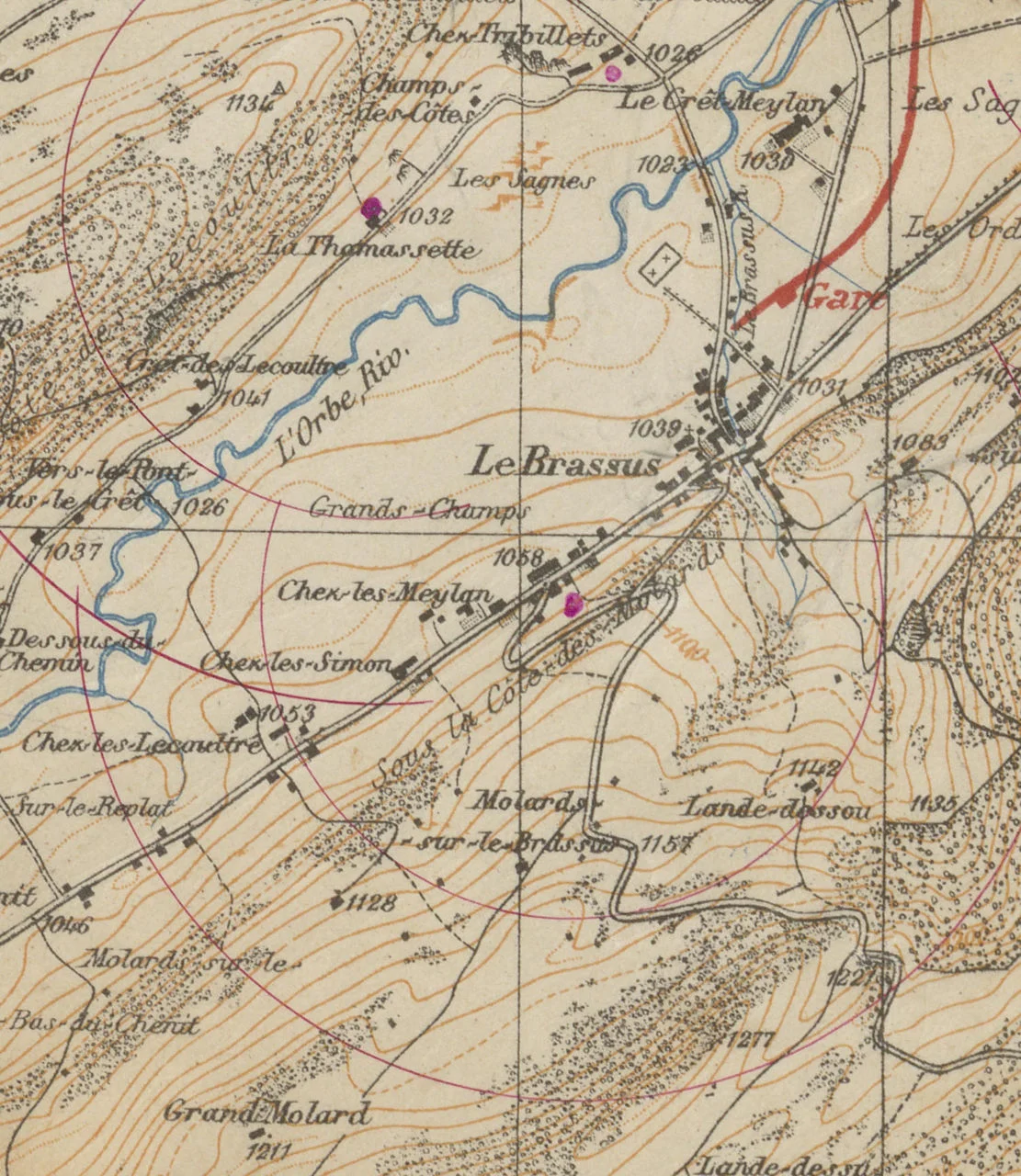
1886. Excerpt from the map of the Vallée district. "Chez-Les-Meylan" was home to the Audemars family farm and Audemars Piguet's oldest building. David Nicole Archives.
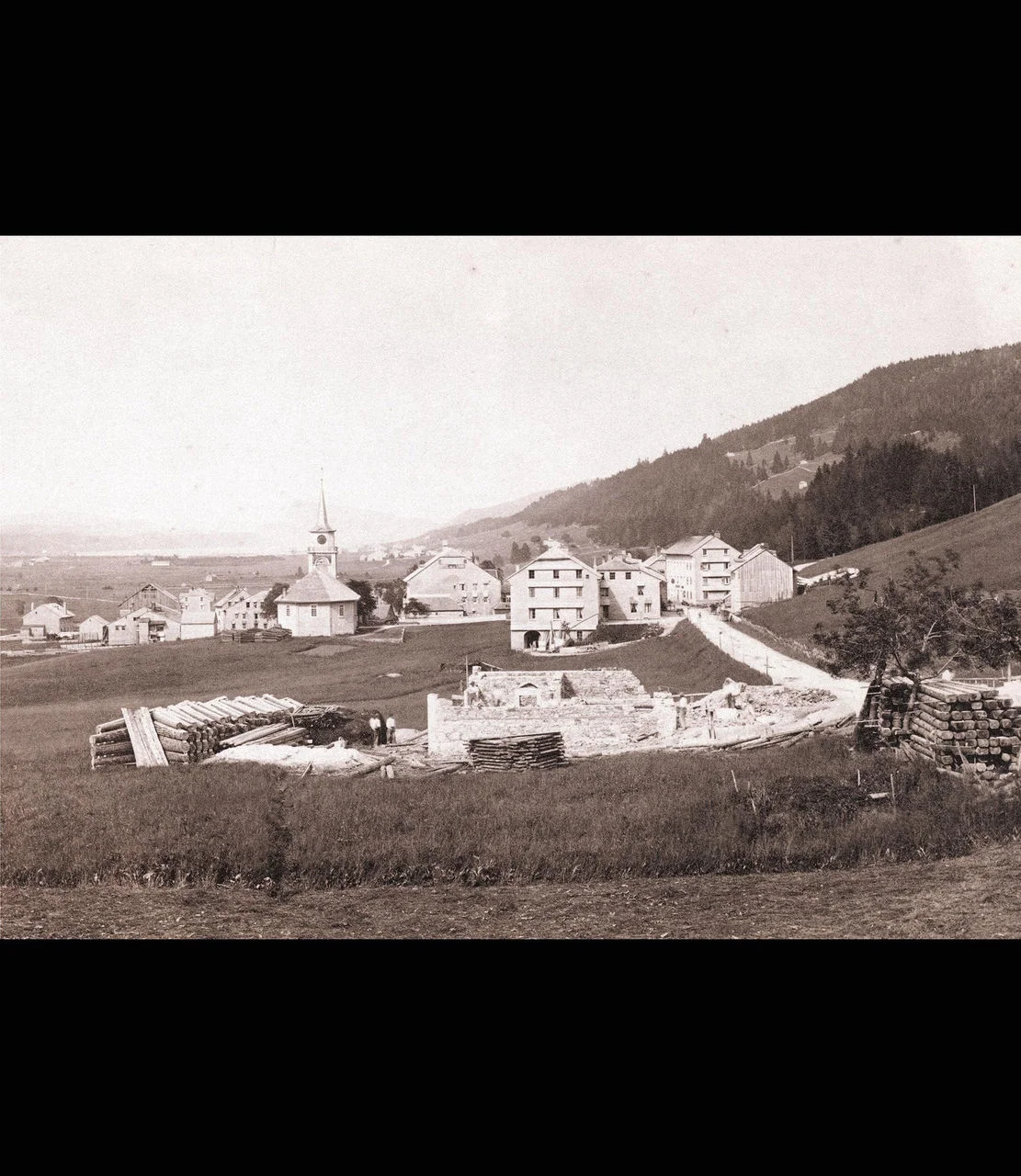
Circa 1868. Construction site of the future first Audemars Piguet building, now located at 18 Route de France in the village of Le Brassus. Audemars Piguet Archives.
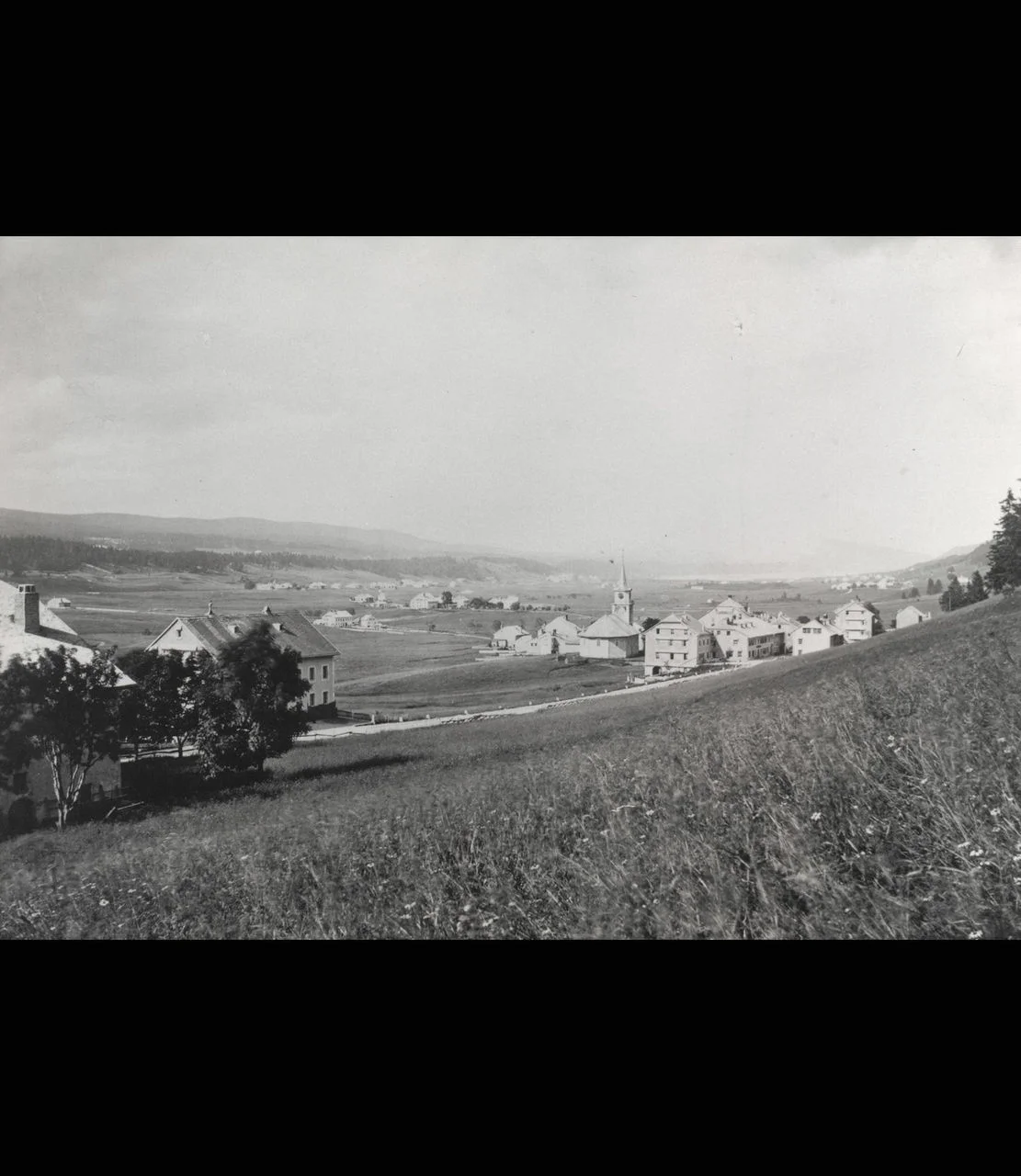
Around 1880. The first Audemars Piguet building can be seen behind the trees, before the roof was raised to enlarge the workshops. Audemars Piguet Archives.
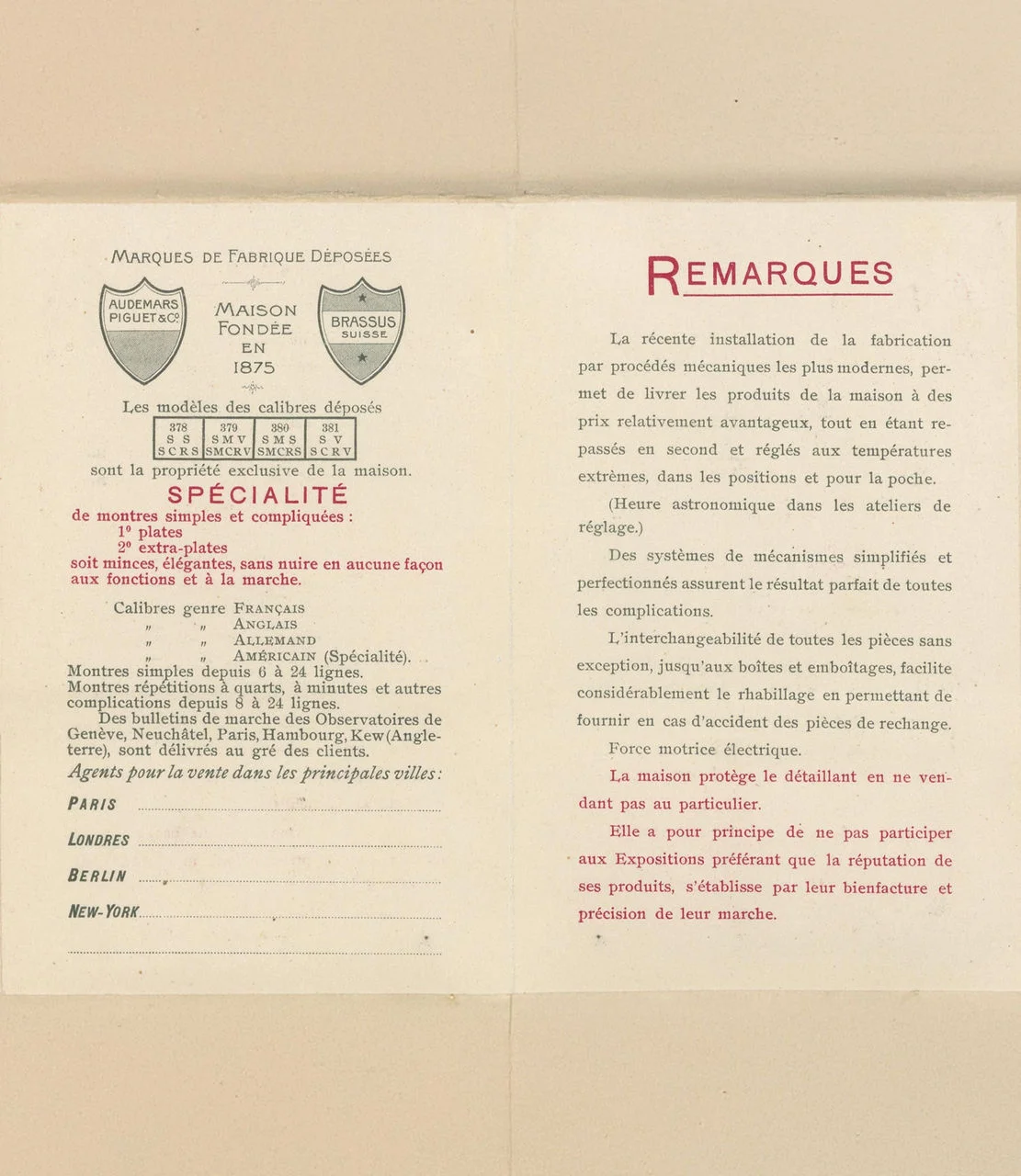
Glued into a 1905 catalogue, this leaflet produced circa 1903 contains the earliest known mention that Audemars Piguet was founded in 1875. Audemars Piguet Archives.
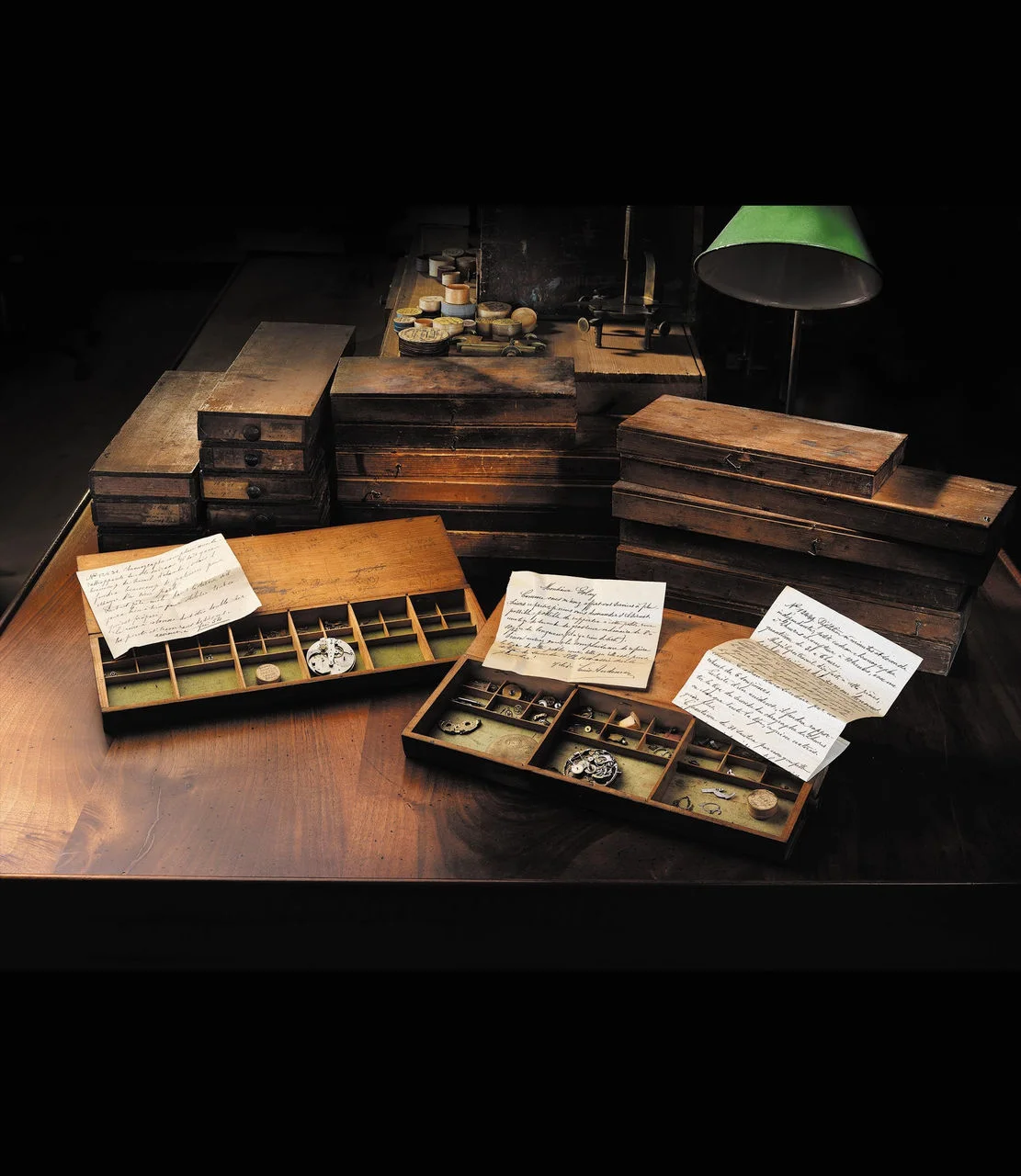
Watch movement "ébauches" were placed in wooden boxes that were transported from one home workshop to another. These come from the Louis Audemars workshops, one of the first clients of Jules Louis Audemars and Edward Auguste Piguet. Audemars Piguet Heritage.
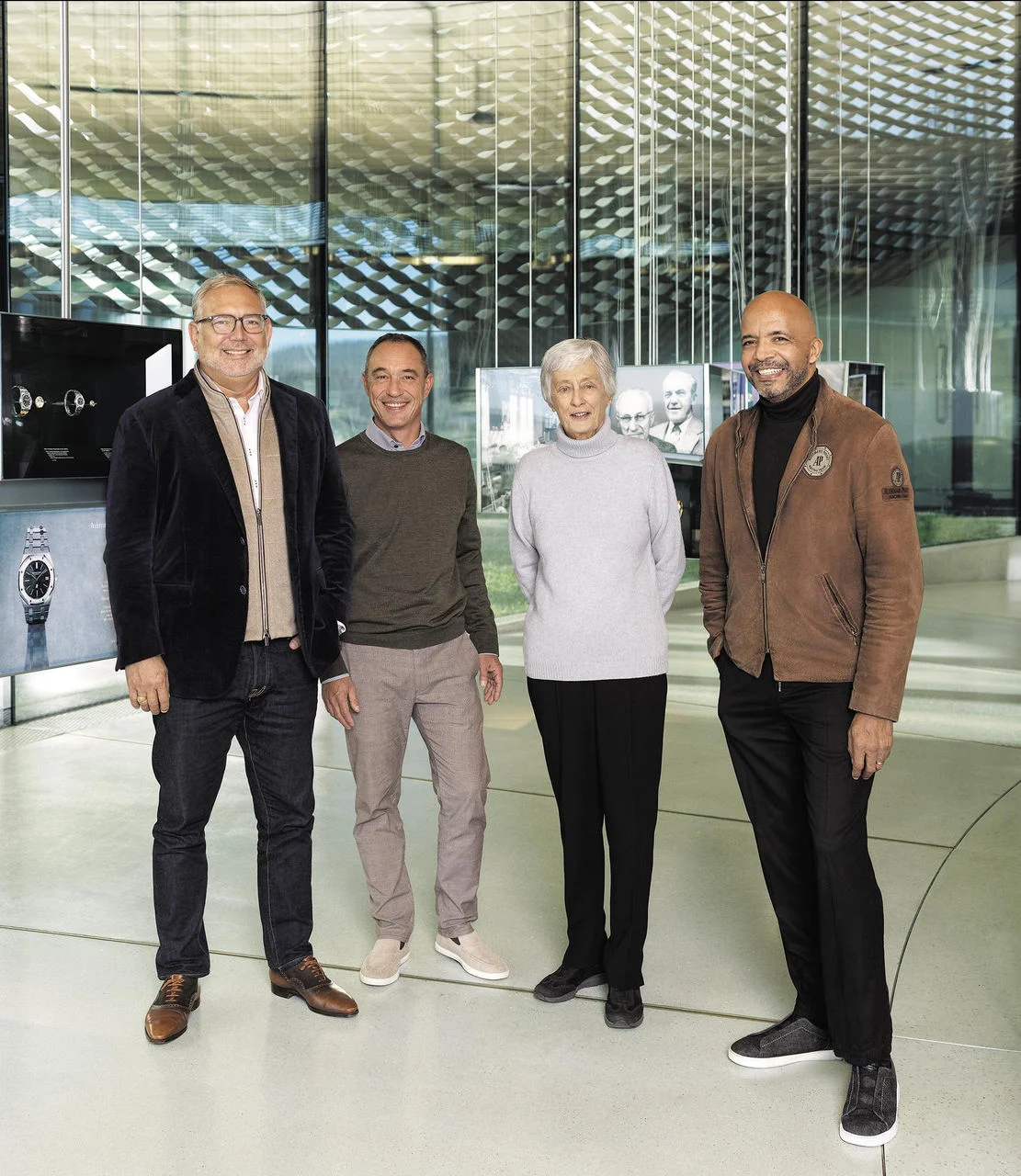
The four families
The development of watchmaking in the Vallée de Joux, and by extension that of Audemars Piguet, is first and foremost a family affair. Today, as in the past, Audemars Piguet belongs to its founding families. Representing the fourth generation since Jules Louis, Jasmine Audemars presides over the Audemars Piguet Foundations. Belonging to the fourth generation since Edward Auguste Piguet, Olivier Audemars is Vice-Chairman of the Board of Directors. While one wouldn’t guess it from his surname, he represents the Piguet family on the Board as his mother Michelle Piguet married Philippe Audemars. This is strangely reminiscent of the story of "la Zanne" (Chapter 5), a Piguet who married an Audemars in the 18th century and whose full surname was already "Audemars Piguet". Olivier Audemars is also a direct descendant of Louis-Benjamin Audemars.
In the 20th century, two other watchmaking families from the Vallée de Joux joined Audemars Piguet. To cope with the difficult conditions of the 1940s, the watchmaker in Le Brassus welcomed members of the Lecoultre family from LeCoultre & Cie, later to become Jaeger-LeCoultre, to its Board of Directors. Nicknamed La Grande Maison, this Manufacture based in the neighbouring village of Le Sentier nurtured commercial, friendly and industrial relations with Audemars Piguet for more than a century... and even longer, since Joseph Piguet, great-grandfather of Edward Auguste Piguet, was also the great-uncle of Antoine Lecoultre, founder of LeCoultre & Cie in 1833.
Between 1945 and 1986, Georges Golay also profoundly transformed the Audemars Piguet brand, introducing small-series production, the Royal Oak and the ultra-thin selfwinding perpetual calendar. The first executive from outside the founding families, he acquired a stake in the company in the 1960s.
Today, descendants of the Lecoultre and Golay families still sit on the Audemars Piguet Board alongside the founding families. Thus, four families deeply rooted in the Vallée de Joux – linked for centuries by countless marriages, associations and creations, all having participated in the development of watchmaking in this region since its origins – continue to write the present and future of Audemars Piguet. They ensure that the company remains firmly rooted in the region and continues a history deeply permeated by watchmaking culture.
Audemars Piguet Heritage Team, February 2025