L’Atelier des Établisseurs
Summary
Introduction
Launched on the first day of spring 2024, the idea for the Atelier des Établisseurs was one of the first projects initiated by Ilaria Resta, less than three months after taking the reins at Audemars Piguet. When discussing it, she highlights a point that holds particular importance to her: "This project is above all an original, agile and creative approach to design and production, a way of working together that revives a historical system called établissage, a wonderful playground for artisans."
Établissage: let’s take a pause to address this almost untranslatable term so inextricably bound up with Swiss watchmaking in the Jura region, much like the term cabinotier for watchmaking in Geneva. It could be summarised as follows: dozens of small independent workshops collaborate as a network – under the supervision of an établisseur watchmaker – in co-creating one-off or very small series of handcrafted watches.
The établissage system reached its pinnacle in the 19th century. Since the Industrial Revolution, Swiss watchmaking gradually adopted a manufacturing system built around large mechanised entities, a prerequisite for large-series watch production.
So why revive a mode of operation that had almost vanished? To better understand the reasoning behind this approach, this article takes us back to the origins of établissage and shows us how Audemars Piguet remained committed to this production method throughout the 20th century.
But before that, let us go back even further in time, as établissage only makes sense in contrast to the system that preceded it: the world of watchmaking guilds, also known as corporations or maîtrises.
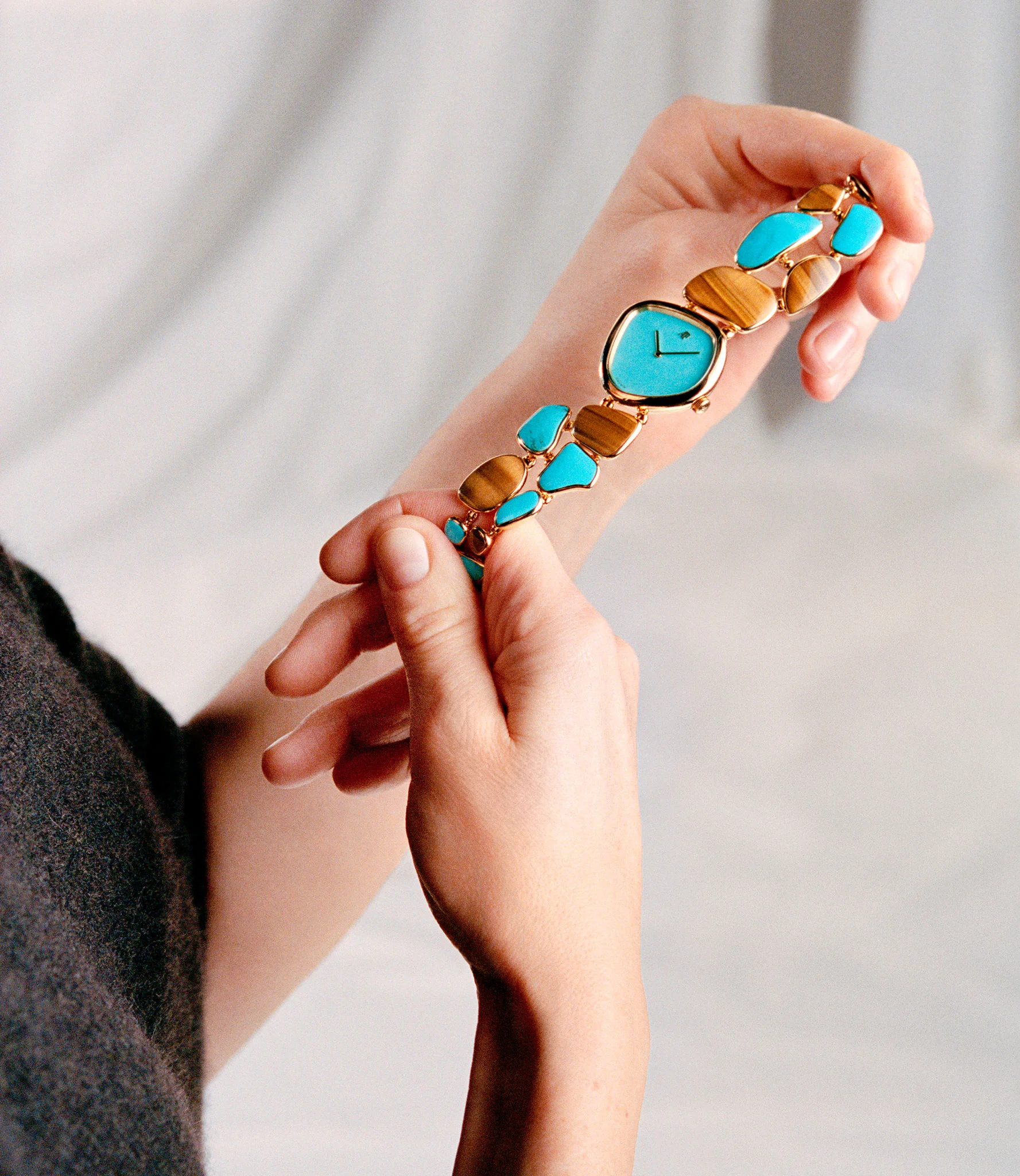
The Établisseurs Galets watch is one of the first projects to emerge from the Atelier des Établisseurs. It stems from collaboration between numerous independent workshops and the expertise cultivated within Audemars Piguet.
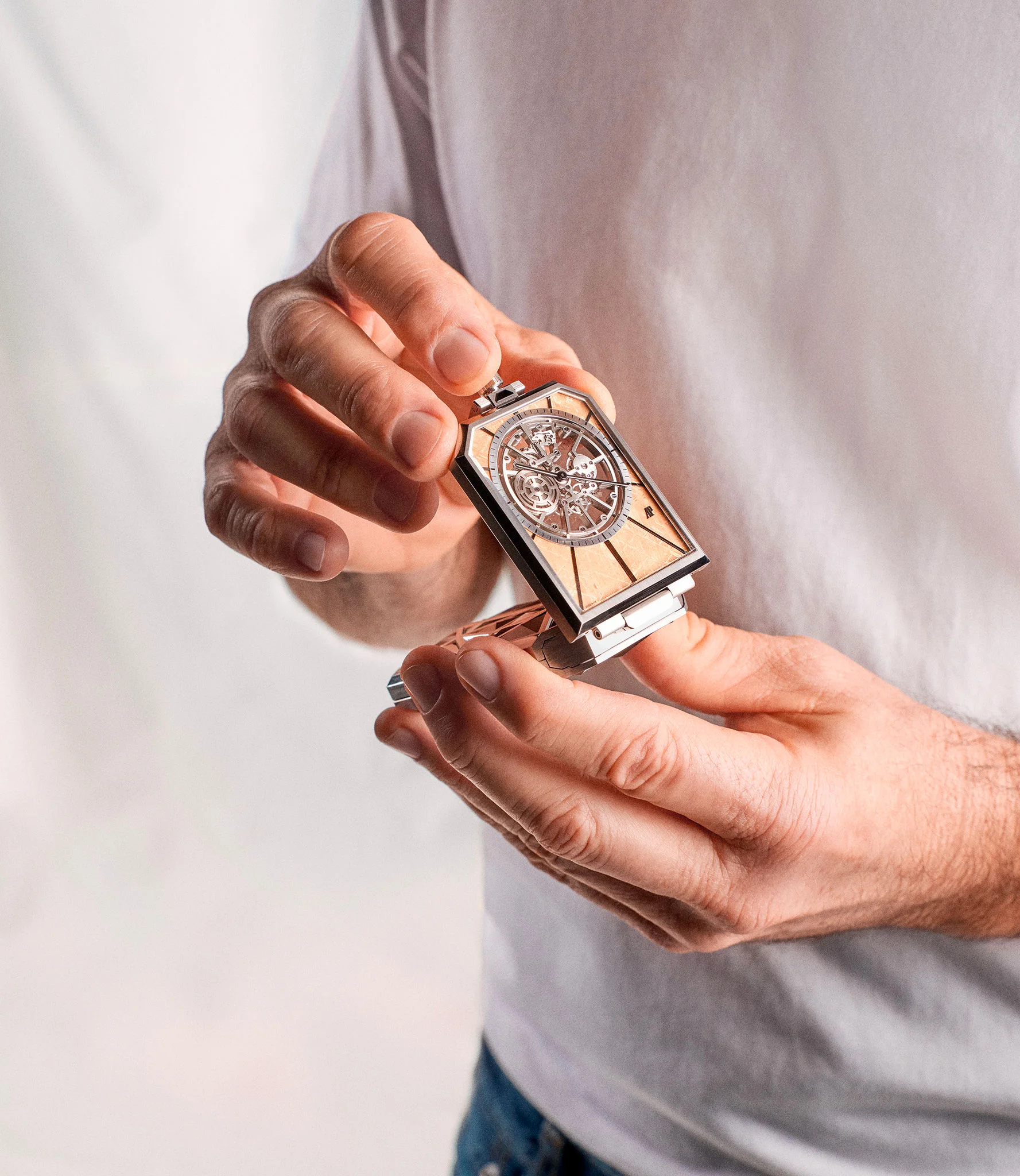
The Établisseurs Nomade watch is one of the first projects to emerge from the Atelier des Établisseurs. It stems from collaboration between numerous independent workshops and the expertise cultivated within Audemars Piguet.
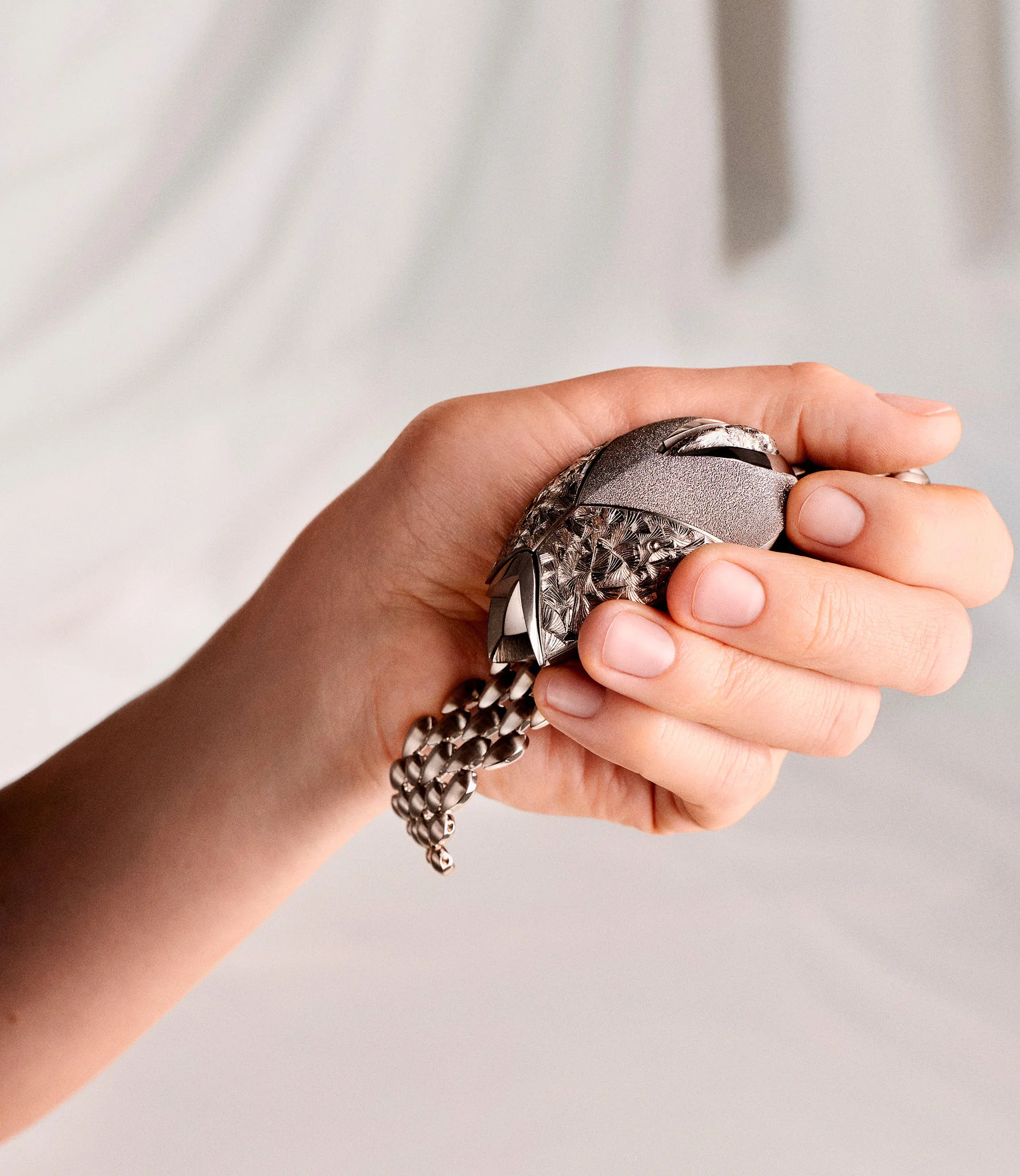
The Établisseurs Peacock watch is one of the first projects to emerge from the Atelier des Établisseurs. It stems from collaboration between numerous independent workshops and the expertise cultivated within Audemars Piguet.
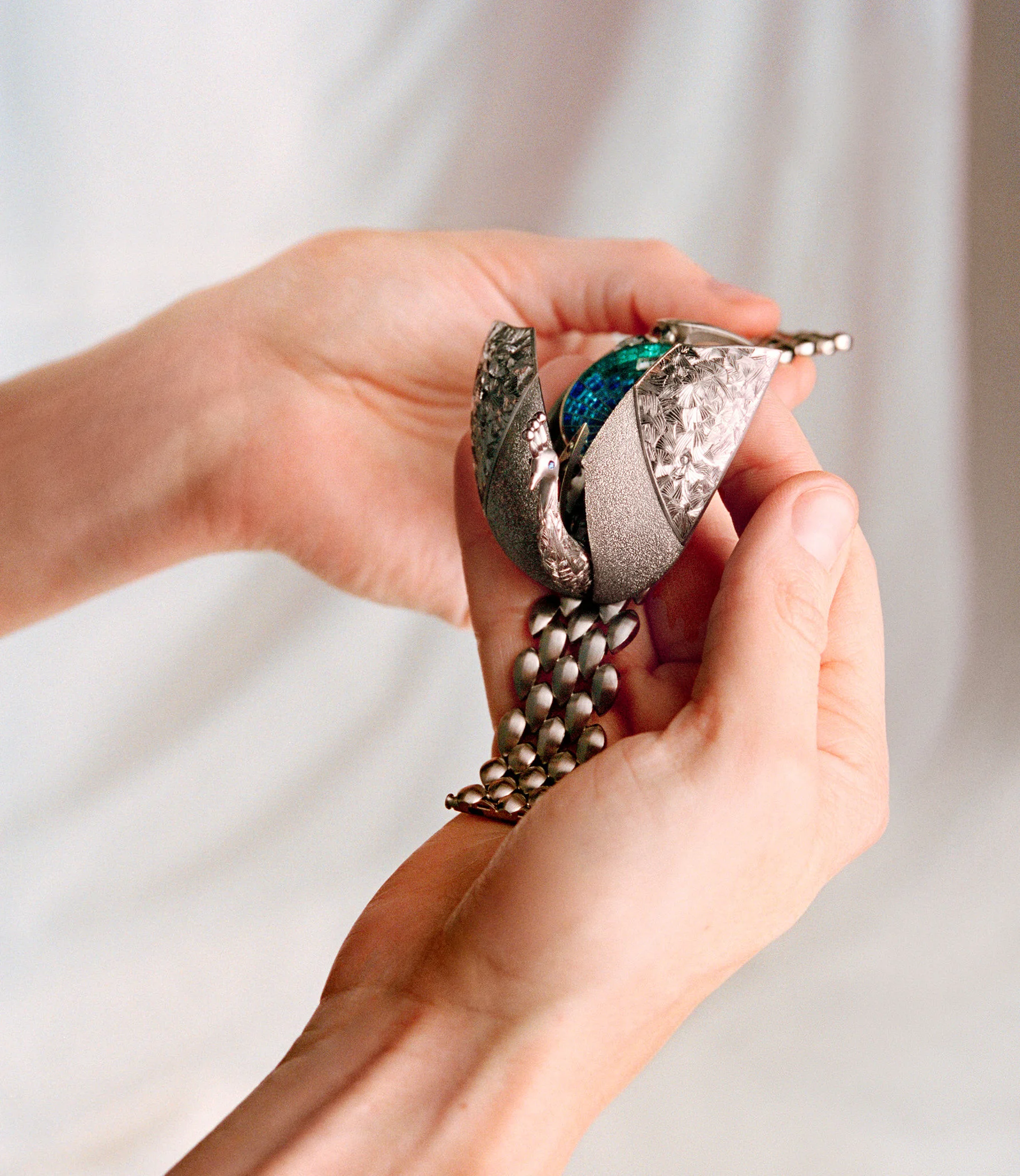
The Établisseurs Peacock watch is one of the first projects to emerge from the Atelier des Établisseurs. It stems from collaboration between numerous independent workshops and the expertise cultivated within Audemars Piguet.
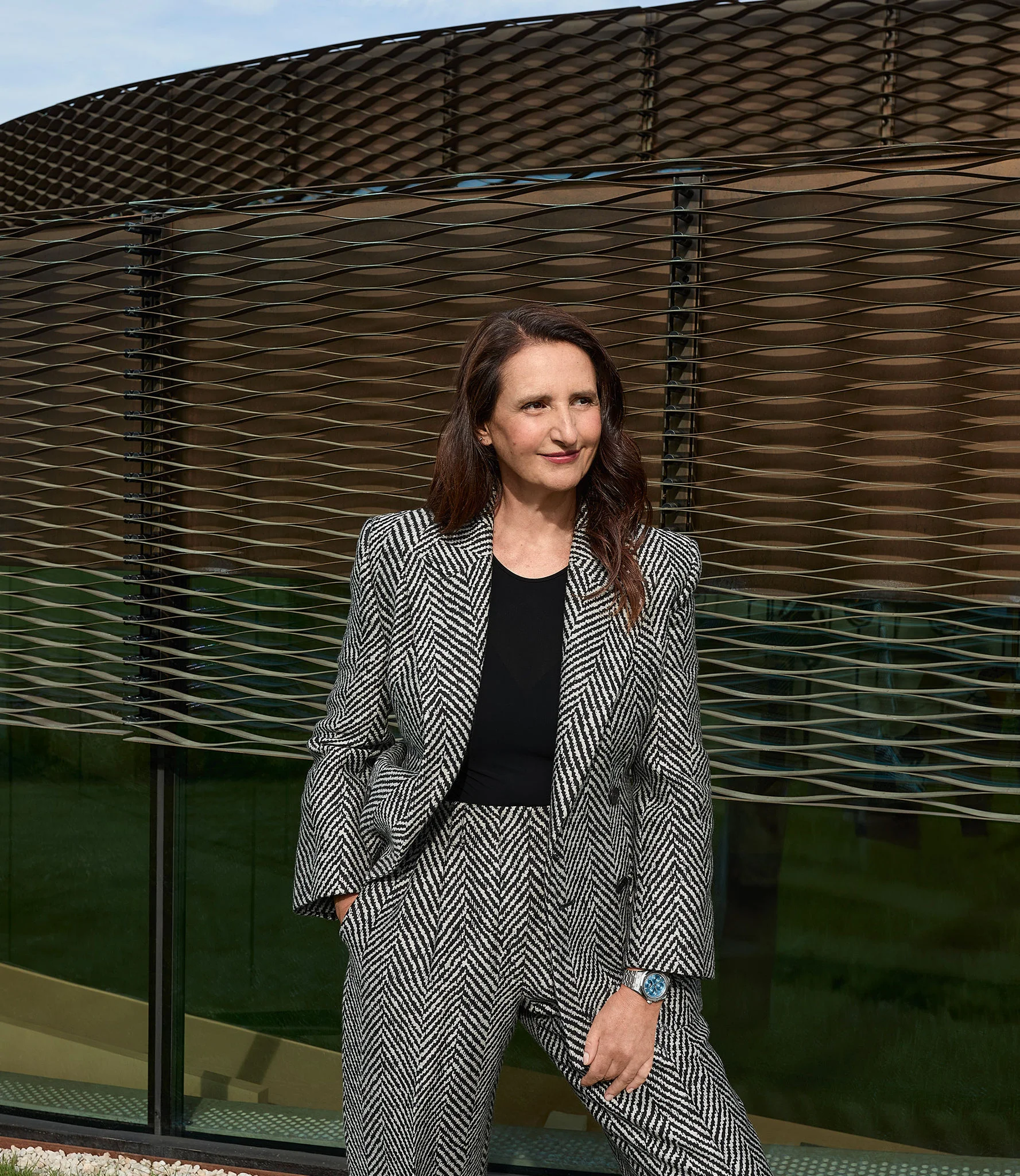
Upon joining Audemars Piguet, one of Ilaria Resta's first immersive experiences was a visit to the Musée Atelier Audemars Piguet in Le Brassus (seen here in the background). Image © AP.
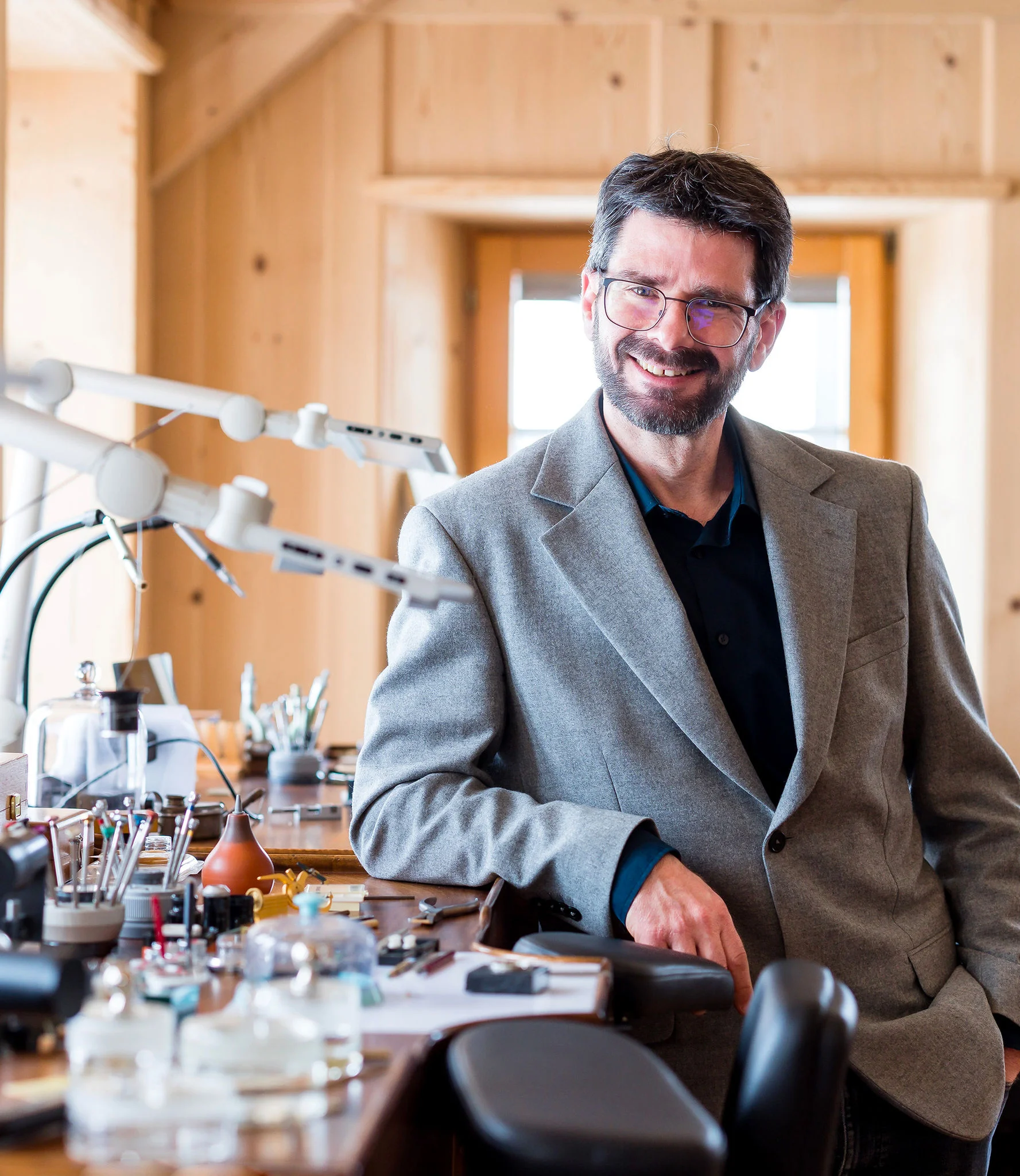
A historian by training, Sebastian Vivas has since 2012 been serving as Audemars Piguet’s Heritage and Museum Director with responsibilities including the Restoration Workshop (seen here in the background). Image © AP.
Établissage preceded by guilds
In the 16th century, as watches became increasingly popular in princely courts and the homes of Europe's upper middle classes, watchmakers in the main production centres decided to organise and protect their trade by creating guilds, following the example of many others such as weavers, goldsmiths and bakers.
Parisian watchmakers initiated this trend in 1544, followed by Nuremberg ten years later along with other German, English and Italian cities. In 1601, Geneva watchmakers established their own guild, which inspired other major cities in Switzerland.
The guild system was designed to guarantee quality standards. It often set prices and maintained limited production to ensure work for all its members. While some rules varied from one guild to another, one was immutable and shared by all: an artisan had to be admitted to the guild in order to have the right to practise a trade.
However, in a remote mountain region such as the Vallée de Joux, it was almost impossible for the inhabitants to finance the eight years of apprenticeship required to join the watchmakers' guild in the town of Rolle, upon which their territory depended.
As a result, in 1742, the region's first watchmaker named Samuel Olivier Meylan was obliged to return to his valley after two years of apprenticeship in Rolle, having depleted his financial resources. Defying the established rules, the young man himself took on an apprentice to pass on what he had learned. The movement snowballed and watchmaking spread so quickly that by 1756 the artisans had obtained their own guild, with rules adapted to their isolated valley.
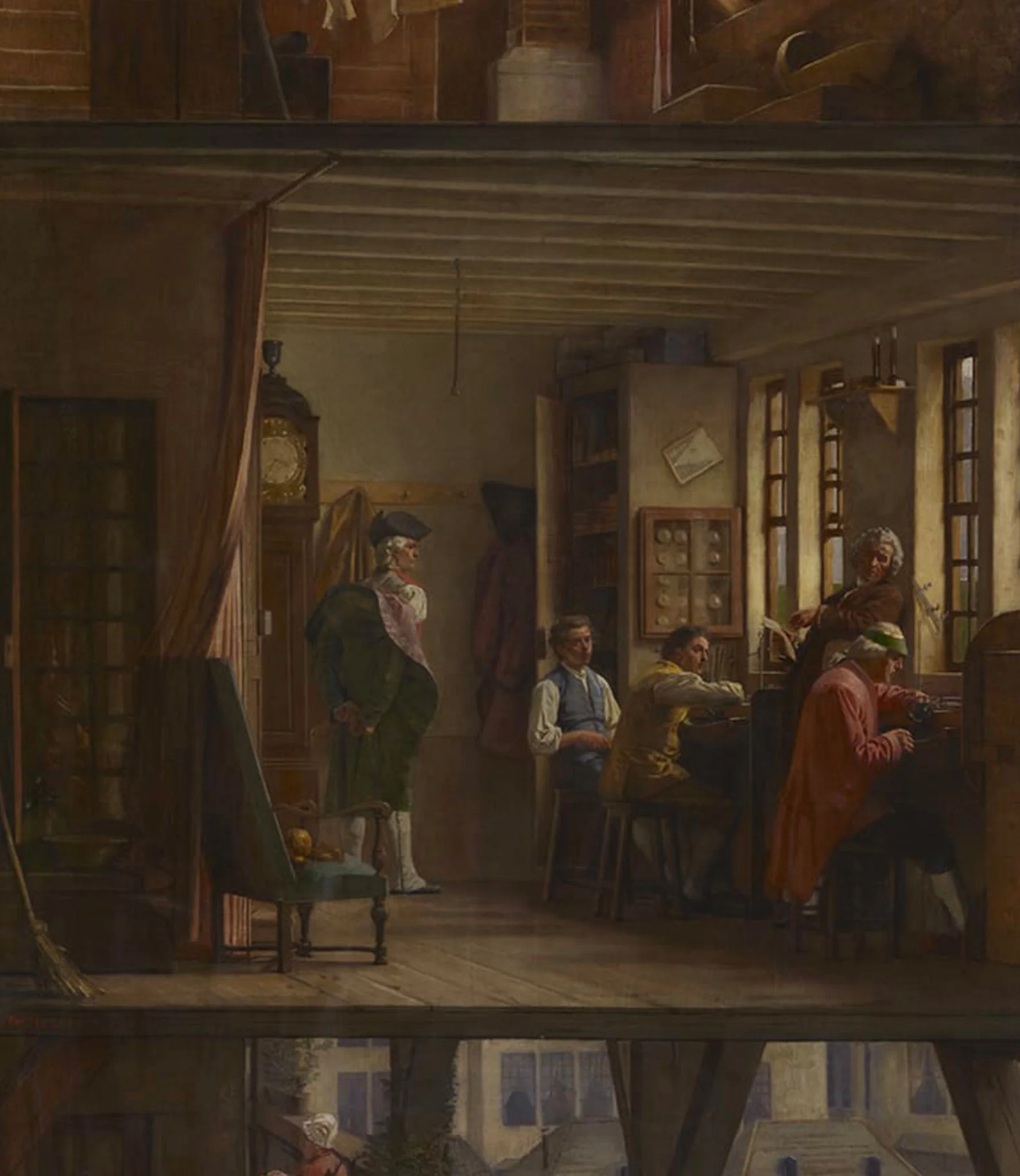
This 1879 oil on canvas painting by Christophe François von Ziegler (1855-1909),depicts Geneva's cabinotiers in the 18th century, a period during which watchmaking was organised into guilds. ©MAH, photo: B. Jacot-Descombes, inv. HM 26.
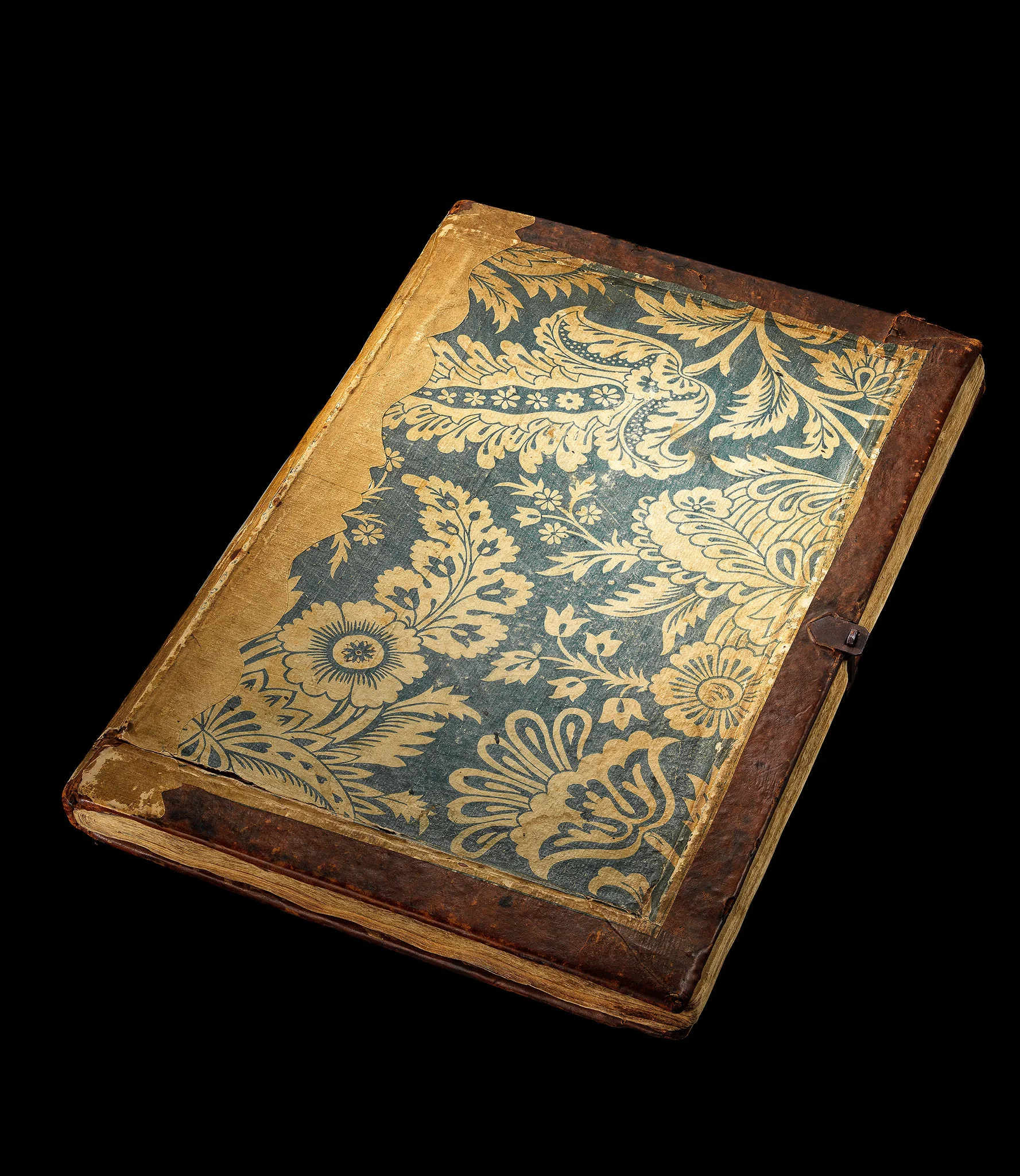
Written from 1749 onwards, the book dedicated to watchmaking guilds in the Vallée de Joux retraces this activity’s development through to 1776. Replica of the Livre de la Maîtrise horlogère de la vallée de Joux replica, Audemars Piguet Archives.
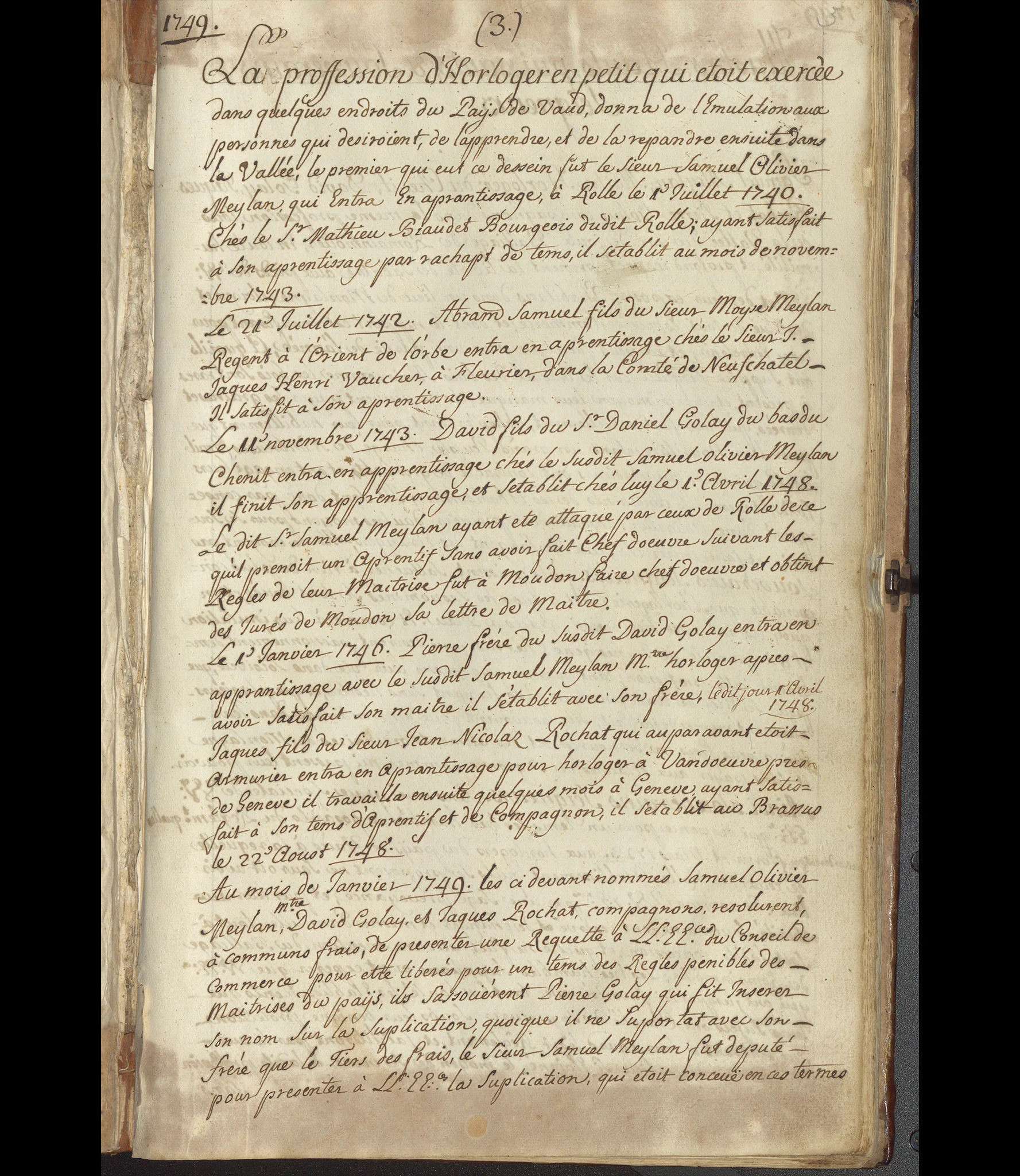
Written from 1749 onwards, the book dedicated to watchmaking guilds in the Vallée de Joux retraces this activity’s development through to 1776. The first page shown here deals with its origins in 1740. Replica of the Livre de la Maîtrise horlogère de la vallée de Joux replica, Audemars Piguet Archives.

Before the introduction of watchmaking, the Vallée de Joux lived mainly from livestock farming, as shown on this map of mountain pastures. “Yale map”, Archives Culturelles de la Vallée de Joux.
Birth of établissage
During the latter half of the 18th century, under the influence of the Enlightenment, liberal ideas denounced the guilds’ rigidity and protectionism. In 1776, Turgot's law marked the beginning of France’s move towards abolishing them.
That same year, watchmakers in the Vallée de Joux seized the opportunity to liberalise their profession, followed 20 years later by Geneva. From then on, anyone could freely establish themselves as a watchmaker or specialise in precise watchmaking parts, such as springs, wheels, movements or complications. This heralded the start of what is known as production en parties brisées, meaning in separate parts – and in other words, the birth of établissage.
For historians, tracing the history of the guilds is relatively simple: admissions, major decisions, disputes, etc. are all carefully recorded in large registers. Nonetheless, the subsequent collapse of the system means historical sources must be sought in hundreds of small home workshops that often combined several activities such as weaving, watchmaking or farming – and which rarely bothered to record and pass on their archives.
Watchmaking according to the établissage method is a bit like architecture before architects. In many instances, the blantier creates and crafts the bases of the mechanisms; the cadraturier adds complications; the cadranier conceptualises and produces the dials; the boîtier designs and crafts the cases, etc. The établisseur watchmaker defines the specifications, coordinates operations, assembles, decorates and finishes the watch. Each creation represents a joint endeavour. Plans are extremely rare. Brass templates called "calibres" are used, on which the artisans engrave the location of the arbors along with the shape of the bridges and wheels. Each craftsperson has their own tricks of the trade and secrets. Their exchanges are carried out through visiteurs who go from one workshop to another, which is why the term visite means "inspection" within the watch industry. This way of working is highly variable and relationships often extend beyond the strictly professional sphere, as family ties and friendships are inseparable from établissage.
In this respect, the Vallée de Joux provided very fertile ground for this manufacturing method. The related article explains how Audemars Piguet was founded there in 1875 as an établisseur and above all how the network of artisans and families gave birth to the world’s most complicated mechanisms.
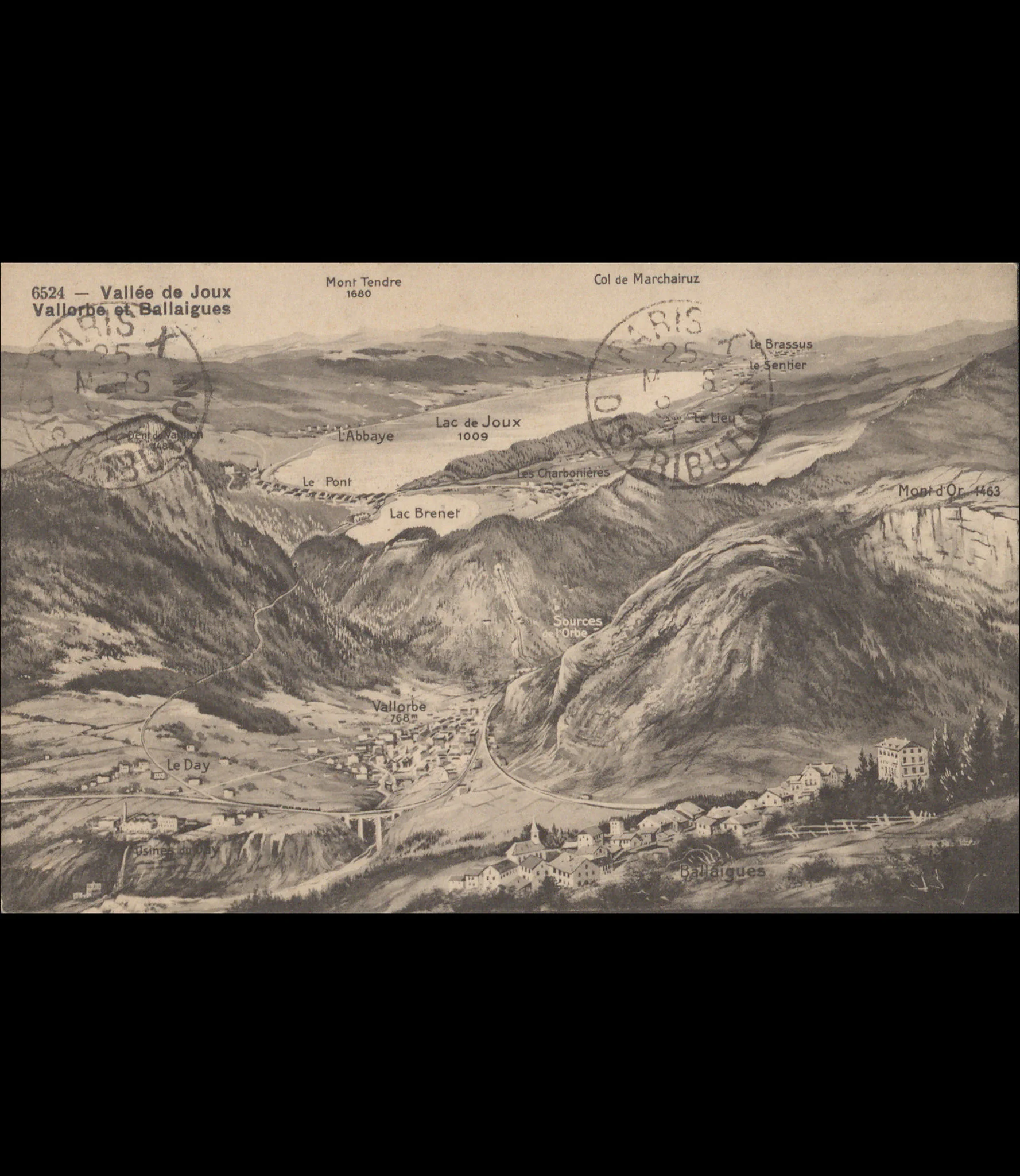
Featuring two small lakes framed by mountains, the Vallée de Joux is located at an altitude of over 1,000 metres. Family networks and a multitude of watchmaking workshops made it a major hub for établissage. Old postcard, AP Archives.
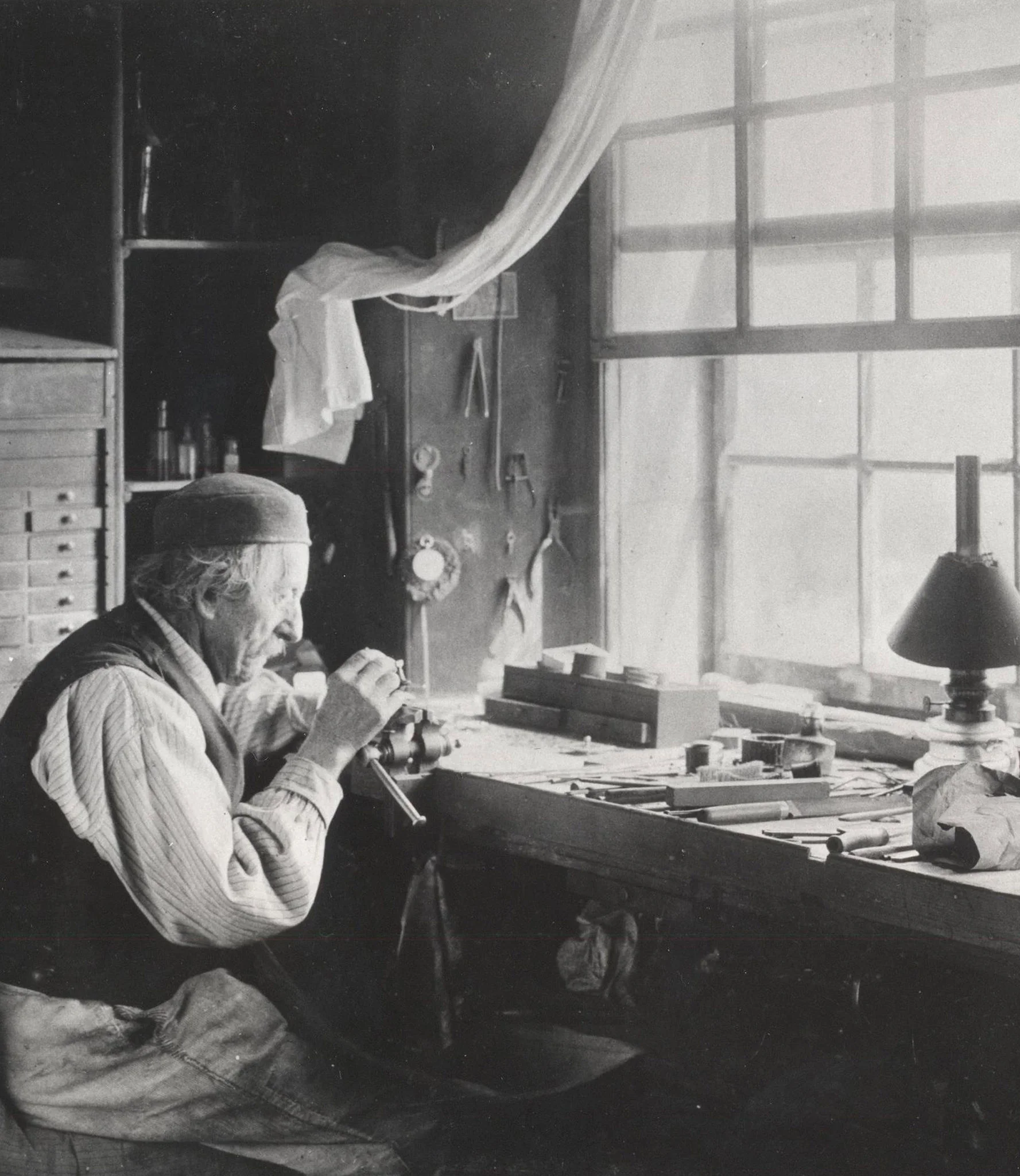
Établissage involves a network of numerous small workshops, often located in people's homes. MAH Musée d'art et d'histoire, Ville de Genève; Inv. AD3861.
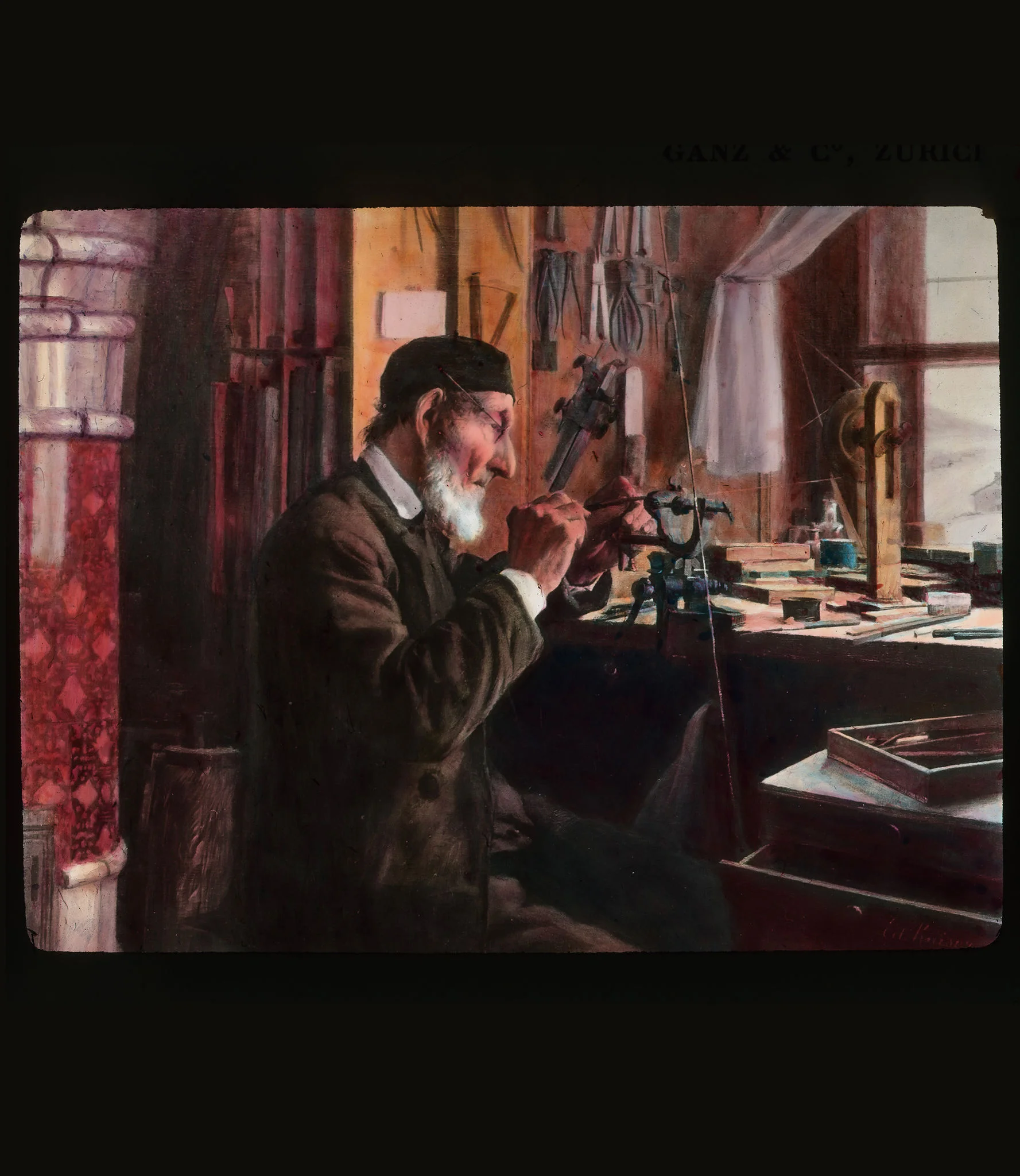
This old clockmaker was painted by Edouard Kaiser (1855–1931) circa 1890. The window facing the workbench lets in the winter light needed for the artisan’s painstaking work. Behind him is a wood stove to keep him warm. Pro Senectute Switzerland, Stiftungsarchiv F5112_Gb_073.
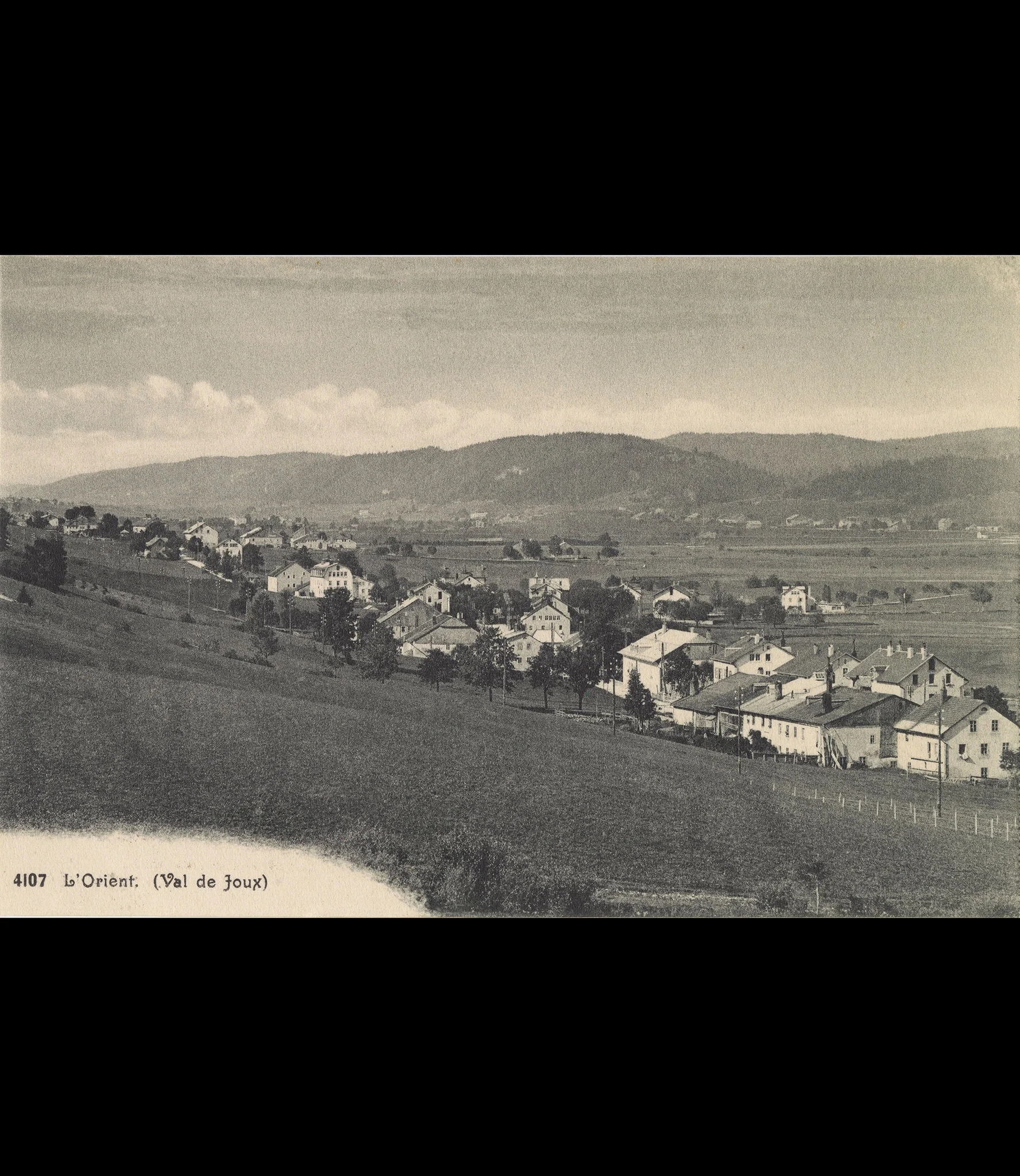
Under the roofs of most farmhouses in the Vallée de Joux, watchmakers used to carve out a series of windows designed to let in the light they needed for their meticulous work. Postcard circa 1920. L'Orient. AP Archives.
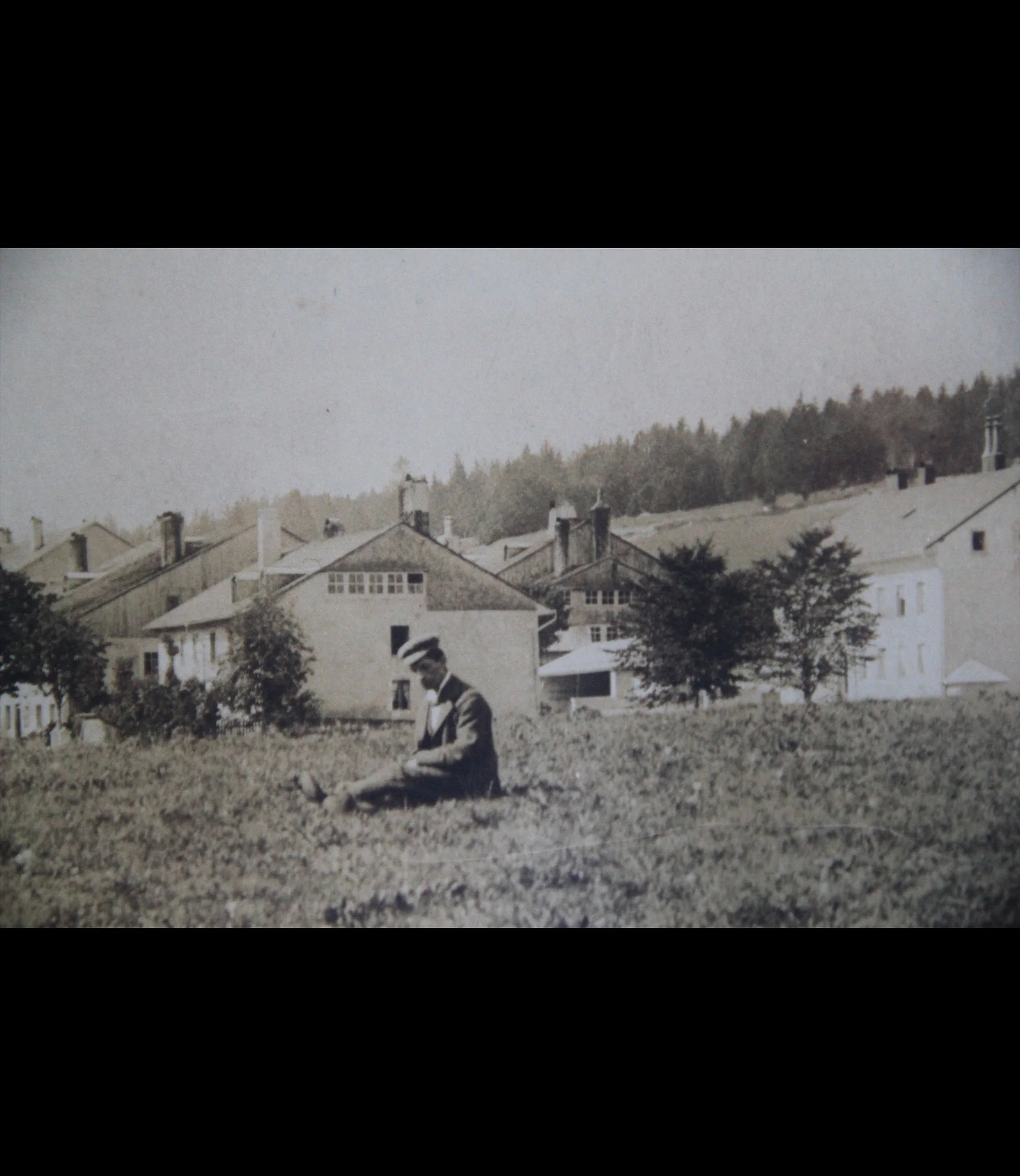
Under the roofs of most farmhouses in the Vallée de Joux, watchmakers used to carve out a series of windows designed to let in the light they needed for their meticulous work. Watchmaking farm in Chez-le-Maitre. Audemars Piguet Archives.
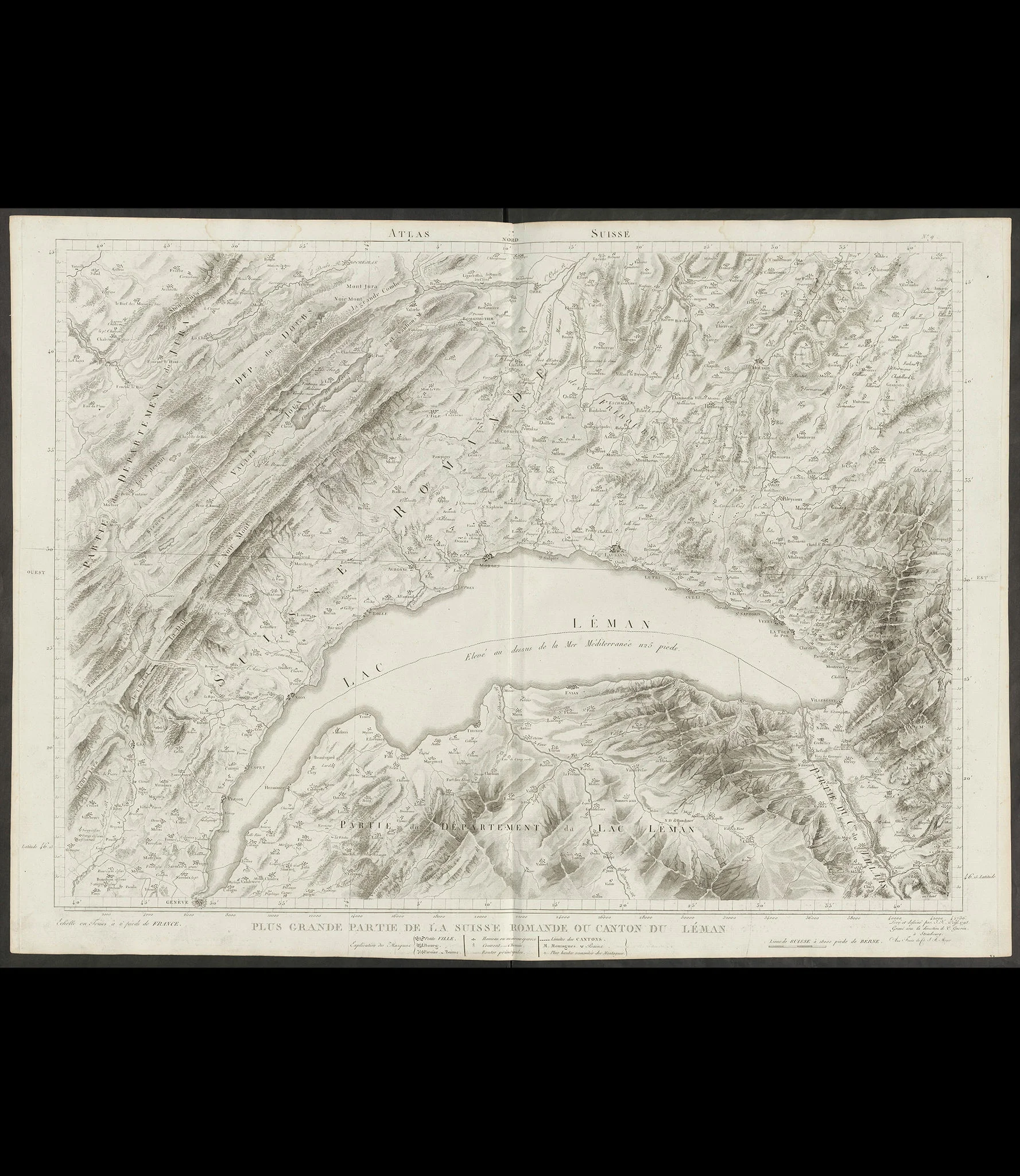
Produced in 1798, this map of the canton of Vaud shows both the isolation of the Vallée de Joux and its proximity to the towns around Lake Geneva. Atlas de la Suisse 1798, Johann Heinrich WEISS
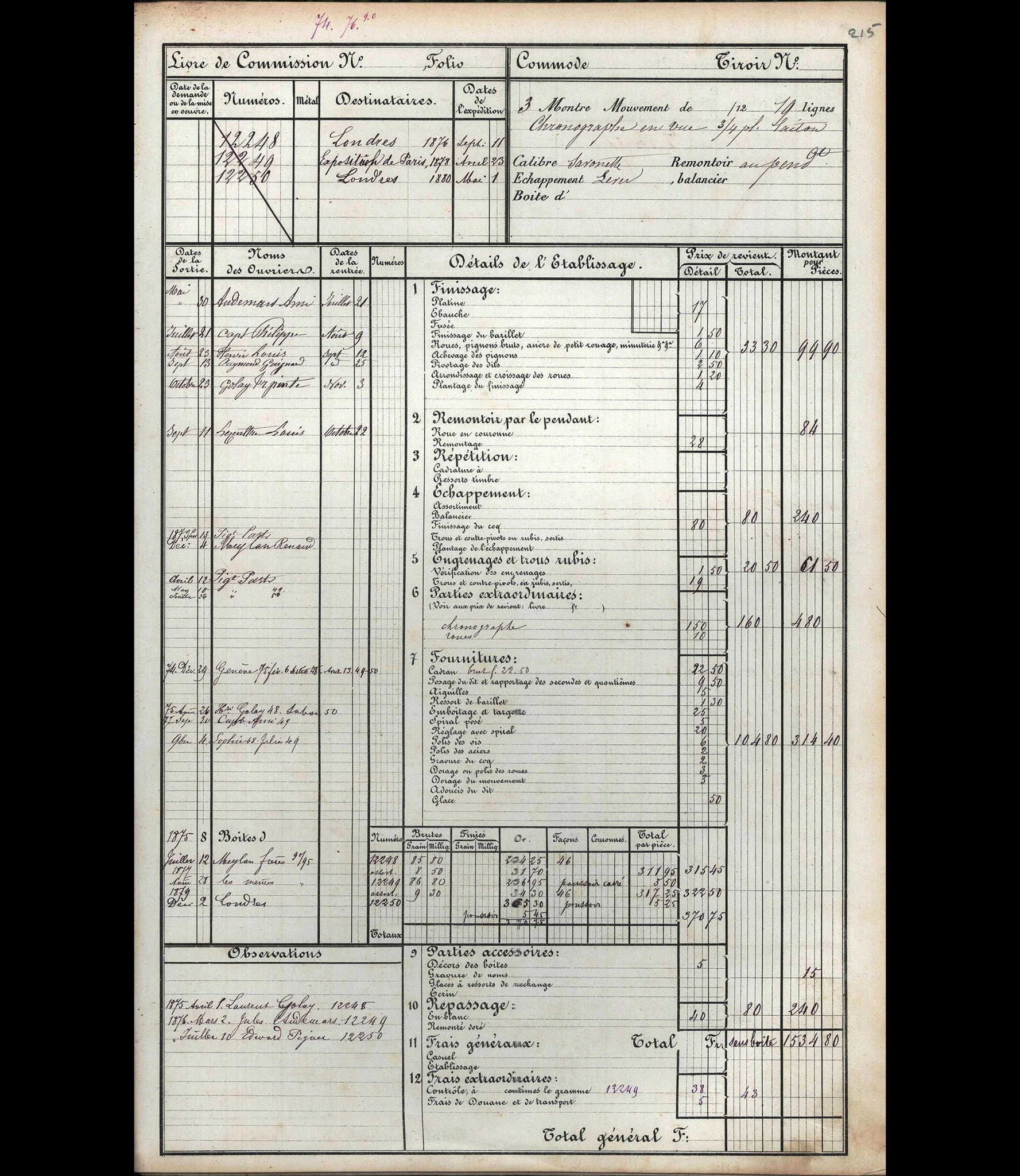
1876. Louis Audemars & Fils register. At the bottom of the page, Edward Auguste Piguet and Jules Louis Audemars are mentioned as finishers for two watches, one of which was intended for the 1878 Paris World’s Fair. Audemars Piguet archives.
The epic story of the Grosse Pièce
Audemars Piguet's records rarely detail the artisans who contributed to each creation. The ultra-complicated 16869 watch dating from 1921 and nicknamed Grosse Pièce is no exception. Nonetheless, additional archival material and analysis of the mechanisms have made it possible to identify most of them.
This pocket watch features nearly 20 complications. It first appeared in the Registre d’Établissage on 22 April 1914, with all its complications and dimensions already defined. The archives contain an envelope marked “Empereur Charles”, suggesting that the 26-ligne movement "ébauche" was created by Charles Piguet, known as "the Emperor" because he was the first person in the region to own a telephone. The archives indicate that the sons of Louis Elisée Piguet – the watchmaker who developed the striking mechanism for the 1899 Audemars Piguet Universelle pocket watch – were responsible for the Grande Sonnerie. The style of the perpetual calendar, equation of time and world-time mechanisms leaves little doubt as to their creator: Léon Aubert, the dial-maker who crafted the Leroy 01’s calendar – the most complicated watch of its time in 1901 – and whose apprentice P. A. Golay participated in the creation of Patek Philippe's Henry Graves watch in 1933. As for the tourbillon, sources indicate that it was the work of Jules César Capt, of Capt & Co.
While the mechanisms all came from workshops in the Vallée de Joux, Audemars Piguet called upon prestigious English artisans for the finishing touches. The case bears the hallmark of Frederick Thoms and the "Venetian off-white" dial features the style signature of famous dial-maker Thomas Willis.
Audemars Piguet sources show that in May 1915, the movement’s jewelling was “inspected” in the Le Brassus workshops. A year later, it was the escapement. The project was however delayed by the war and it was not until the end of 1919 that the striking mechanism was finalised, before being inspected by the company's co-founder’s son, Paul Edouard Piguet, in May 1920.
The watch was presented to the public at the Geneva Fair in the summer of 1920. It was then delivered to Audemars Piguet's English partner since 1885, the Golay Guignard company, which handed it over to the watchmaker S. Smith & Son – the timepiece’s final recipient and signatory. In 1921, The Graphic newspaper devoted an entire article to it, stating that this extraordinary watch had been sold to an American collector for a price similar to what one would pay for a house in London. Some sources suggest that the patron was the collector Elliot Cabot Lee, who died in 1920, and that he never saw this watch, which had been commissioned before the war.
A few decades later, the watch joined Robert M. Olmsted's collection. It was auctioned by Sotheby's New York on December 8, 2025, before entering the Audemars Piguet Heritage Collection.
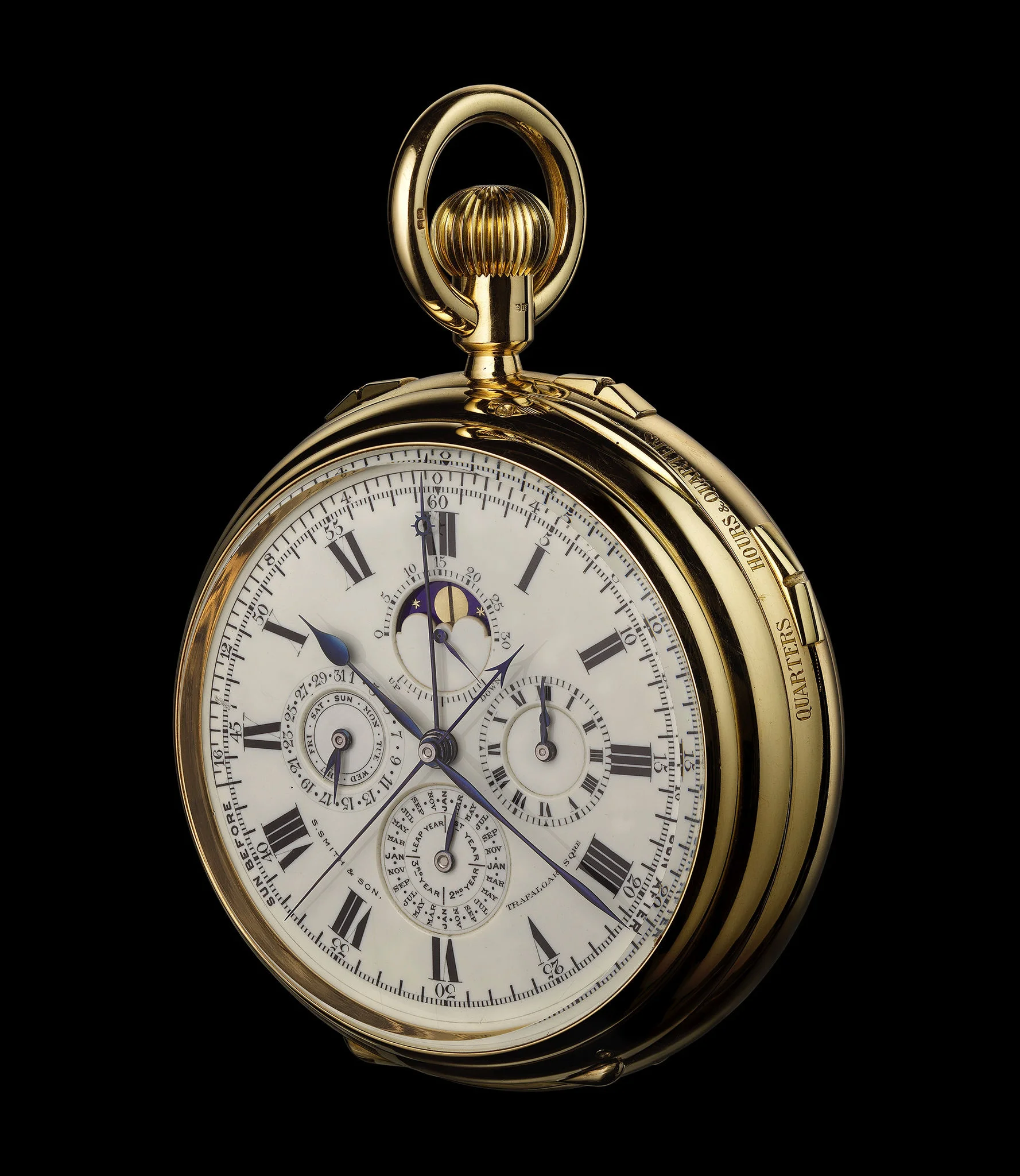
Nicknamed Grosse Pièce by the watchmakers of Le Brassus due to its generous size (78 mm), this ultra-complicated watch was created by a group of artisans who produced the world's most complicated watches between 1880 and 1930. AP Heritage, Inv. 2604.
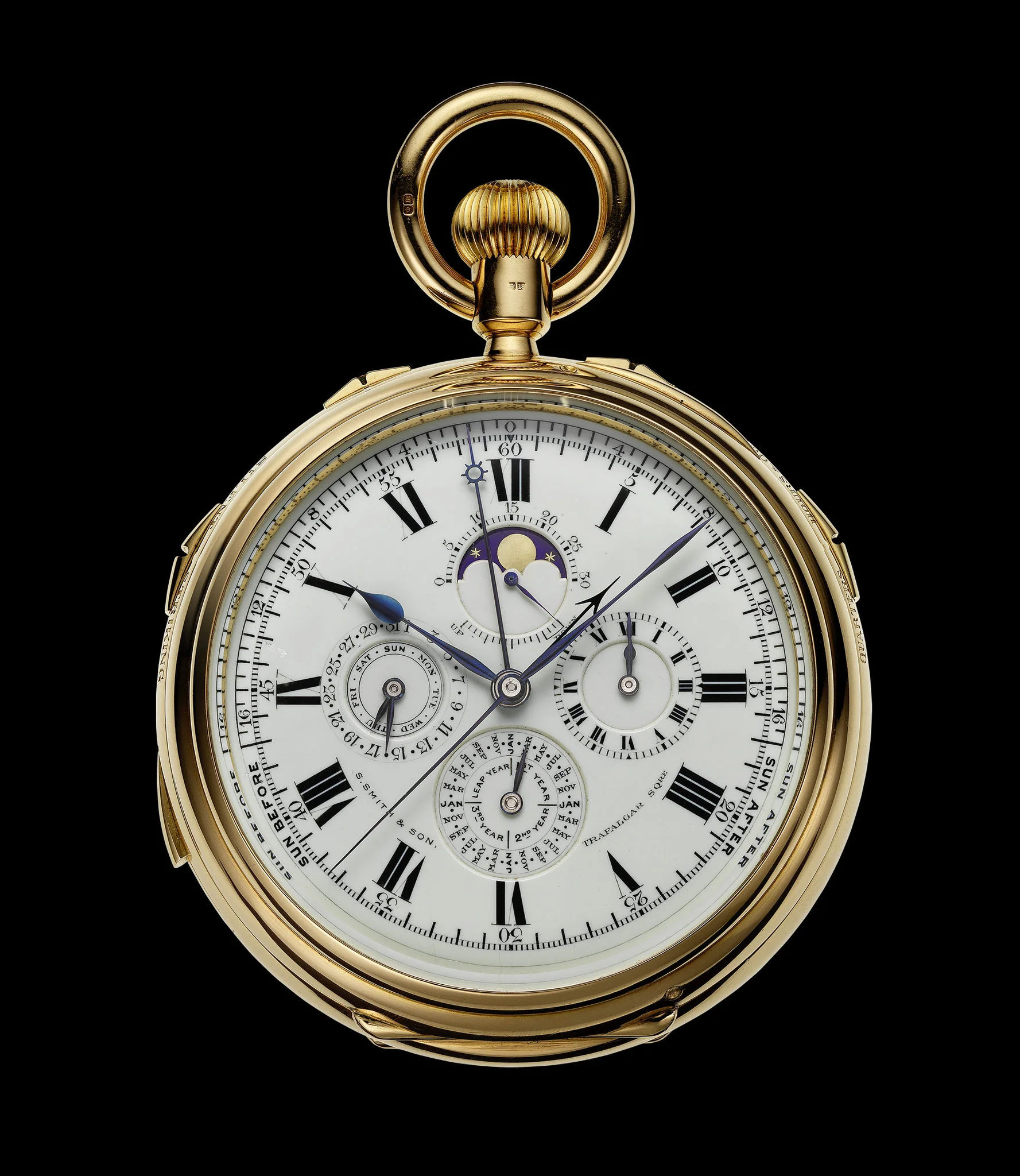
Nicknamed Grosse Pièce by the watchmakers of Le Brassus due to its generous size (78 mm), this ultra-complicated watch was created by a group of artisans who produced the world's most complicated watches between 1880 and 1930. AP Heritage, Inv. 2604.
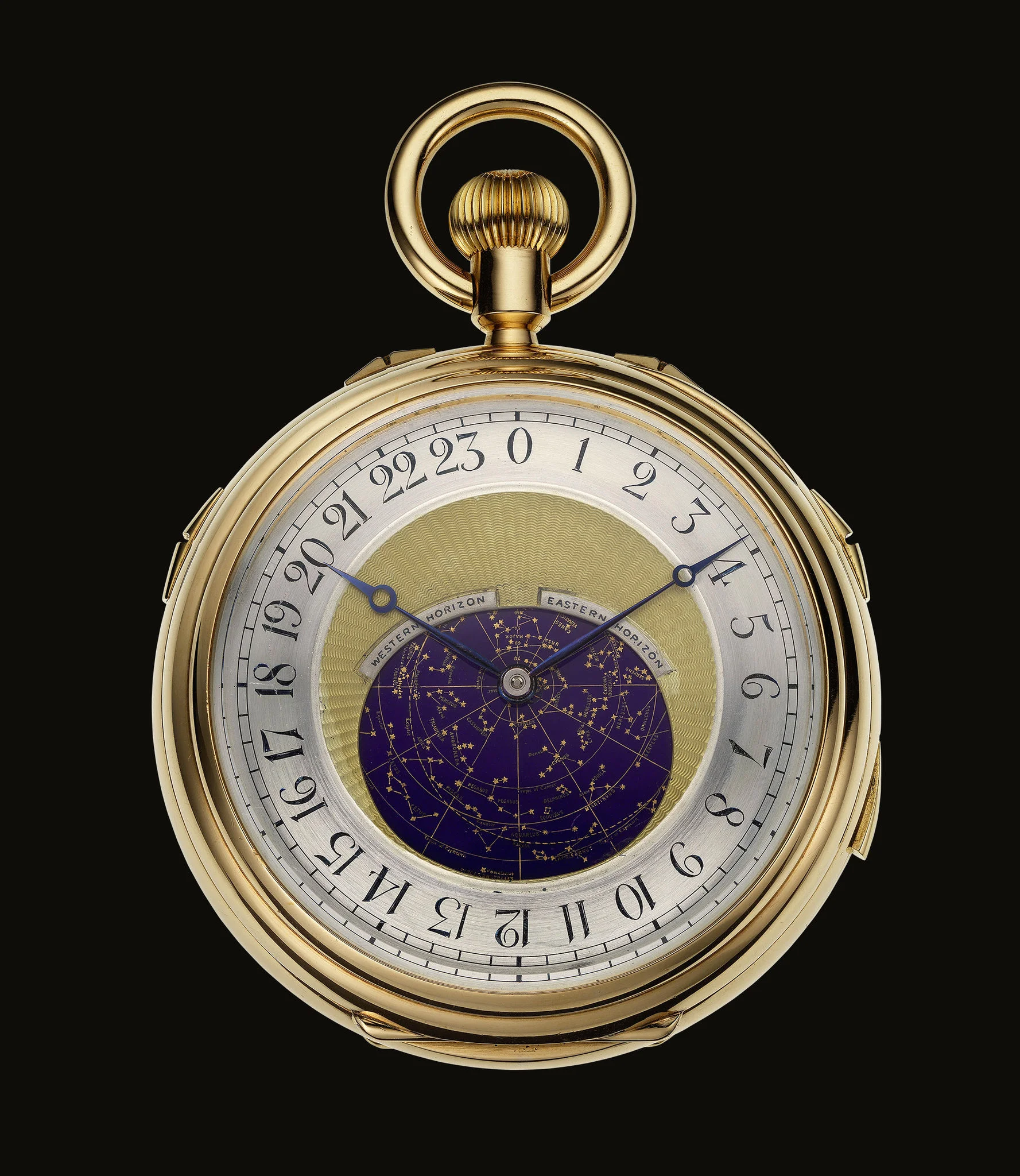
Nicknamed Grosse Pièce by the watchmakers of Le Brassus due to its generous size (78 mm), this ultra-complicated watch was created by a group of artisans who produced the world's most complicated watches between 1880 and 1930. AP Heritage, Inv. 2604.
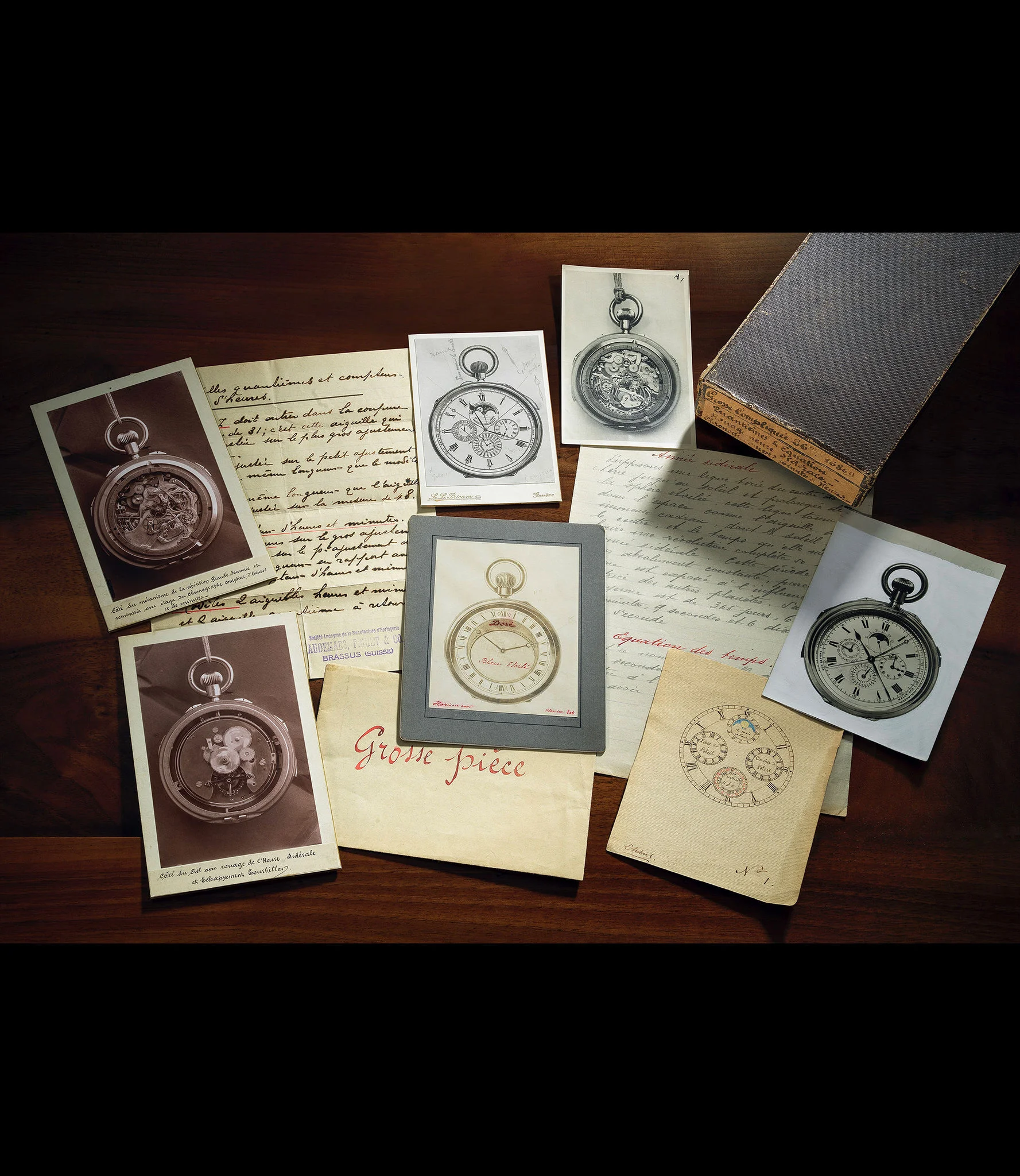
Archives relating to several ultra-complicated watches, including one commissioned in 1914 by the Emperor of Austria and another nicknamed the Grosse Pièce. Audemars Piguet Archives.
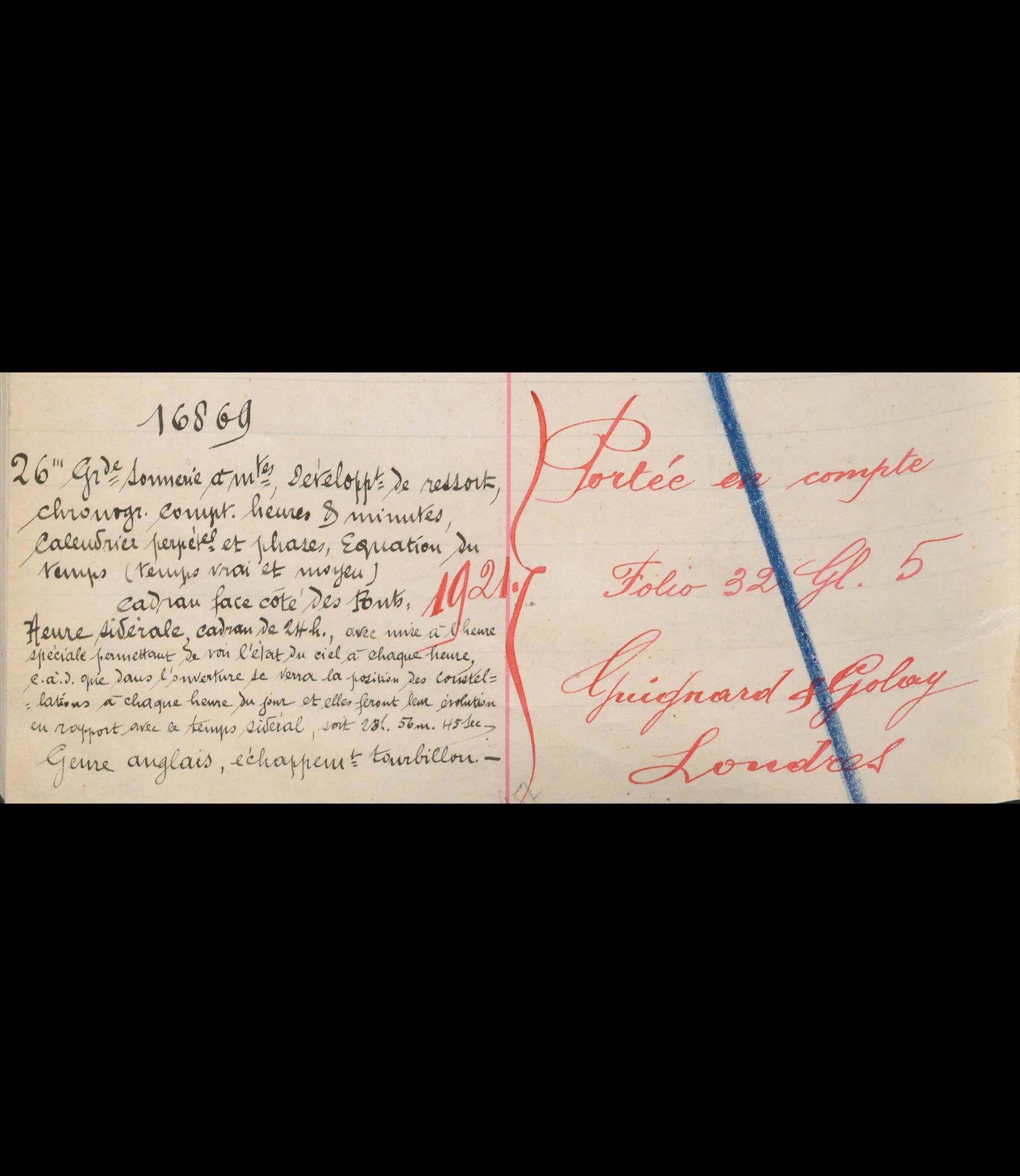
Dated April 22nd 1914, the description of the Grosse Pièce provides a detailed account of the watch’s numerous functions. Audemars Piguet Registre d’Établissage.
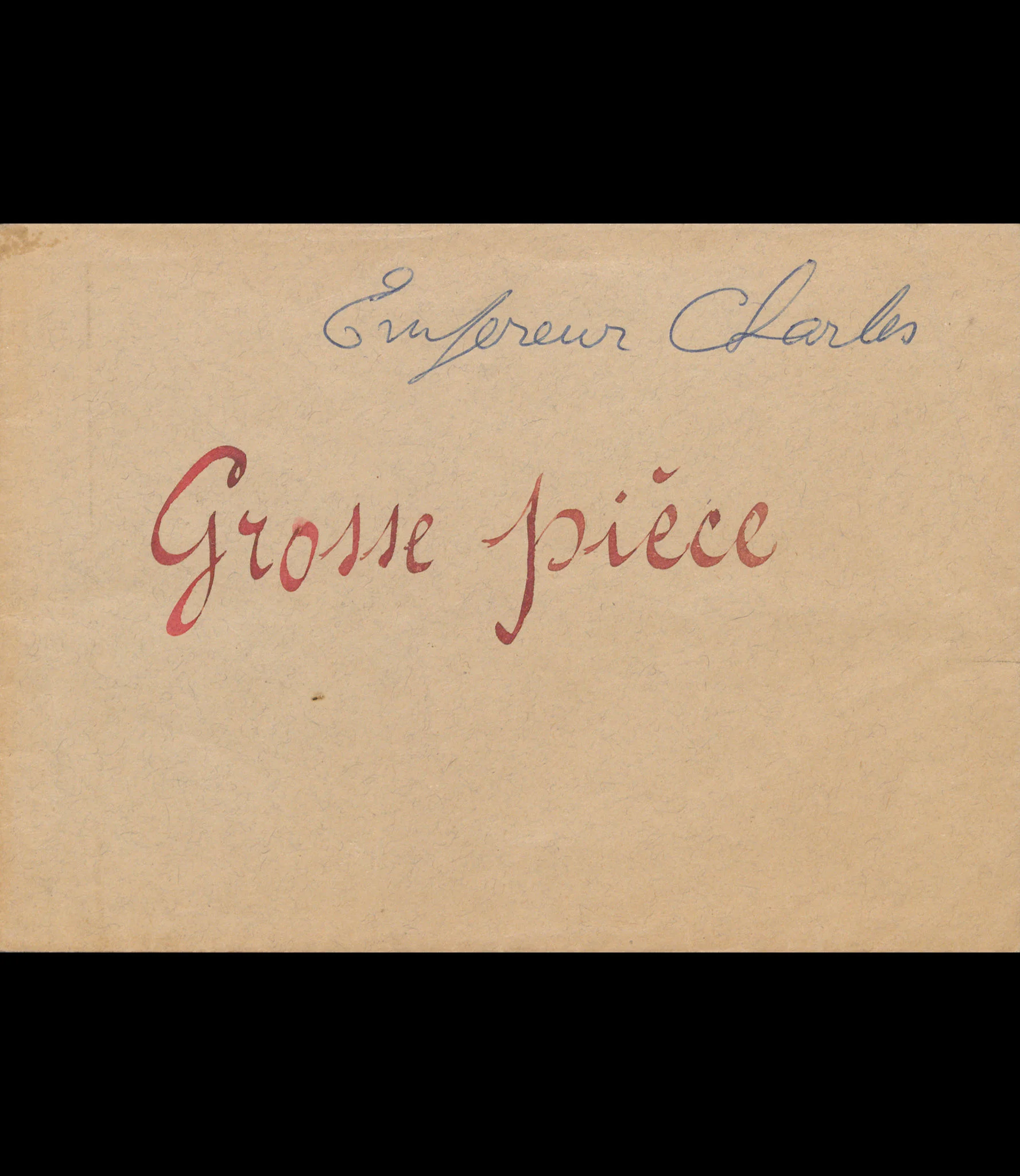
This envelope containing diagrams, correspondence and pictures of the Grosse Pièce bears the inscription "Empereur Charles", the nickname of the watchmaker Charles Piguet, who was responsible for the movement "ébauche".
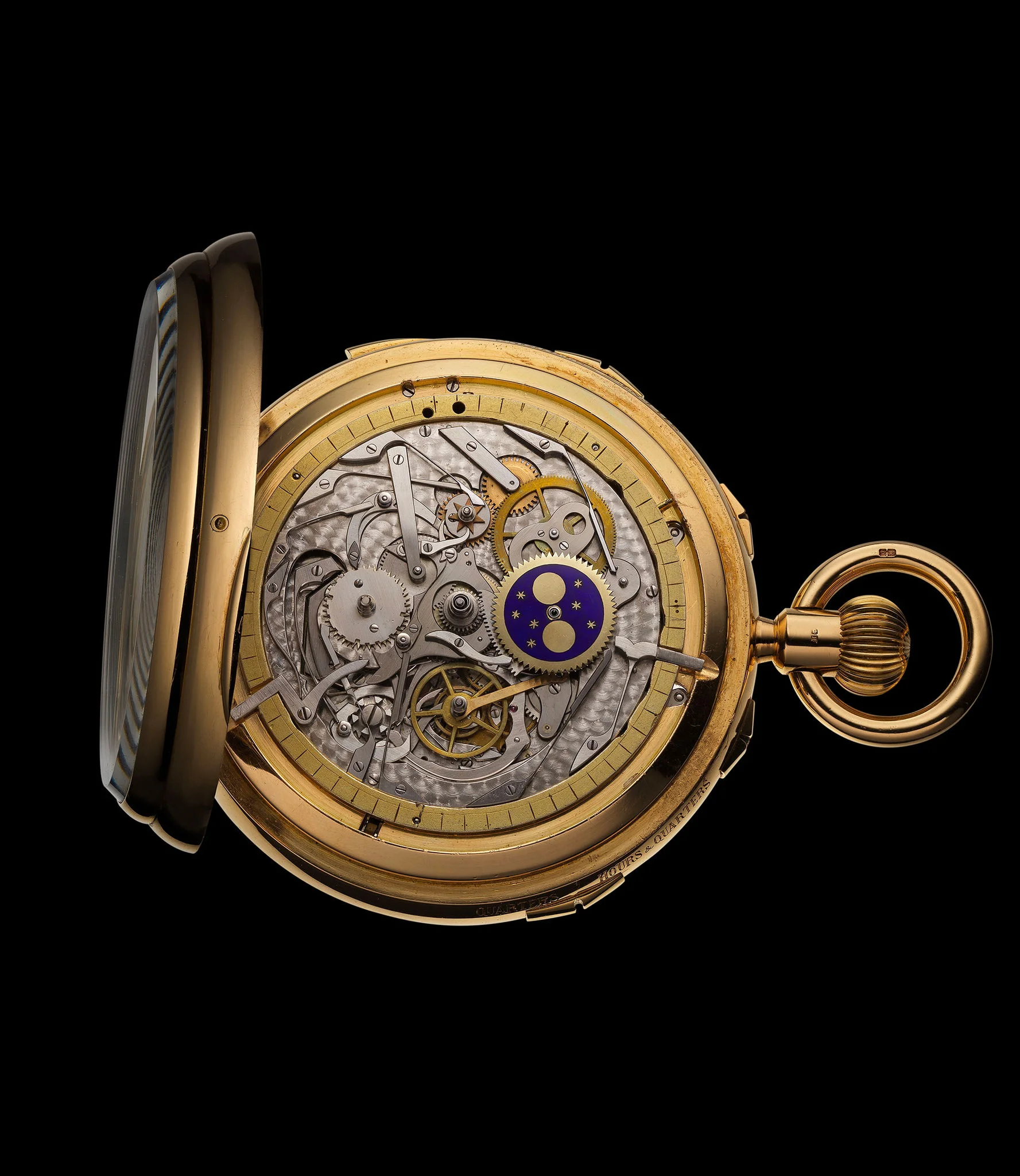
The dial of the perpetual calendar, equation of time, sidereal time and London sky bears the stylistic signature of Léon Aubert. AP Heritage, Inv. 2604.
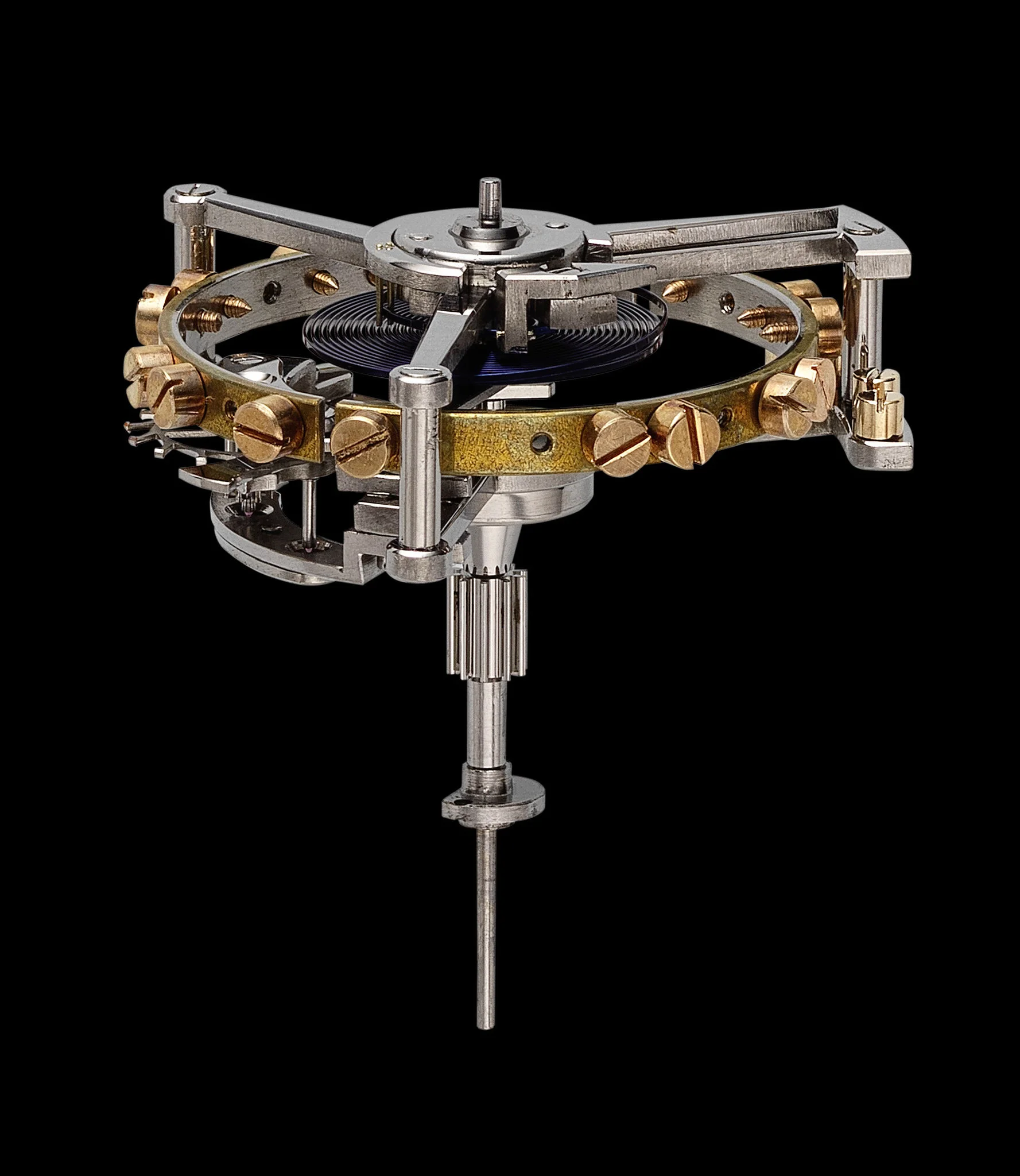
The tourbillon was made by Capt & Co. AP Heritage, Inv. 2604.
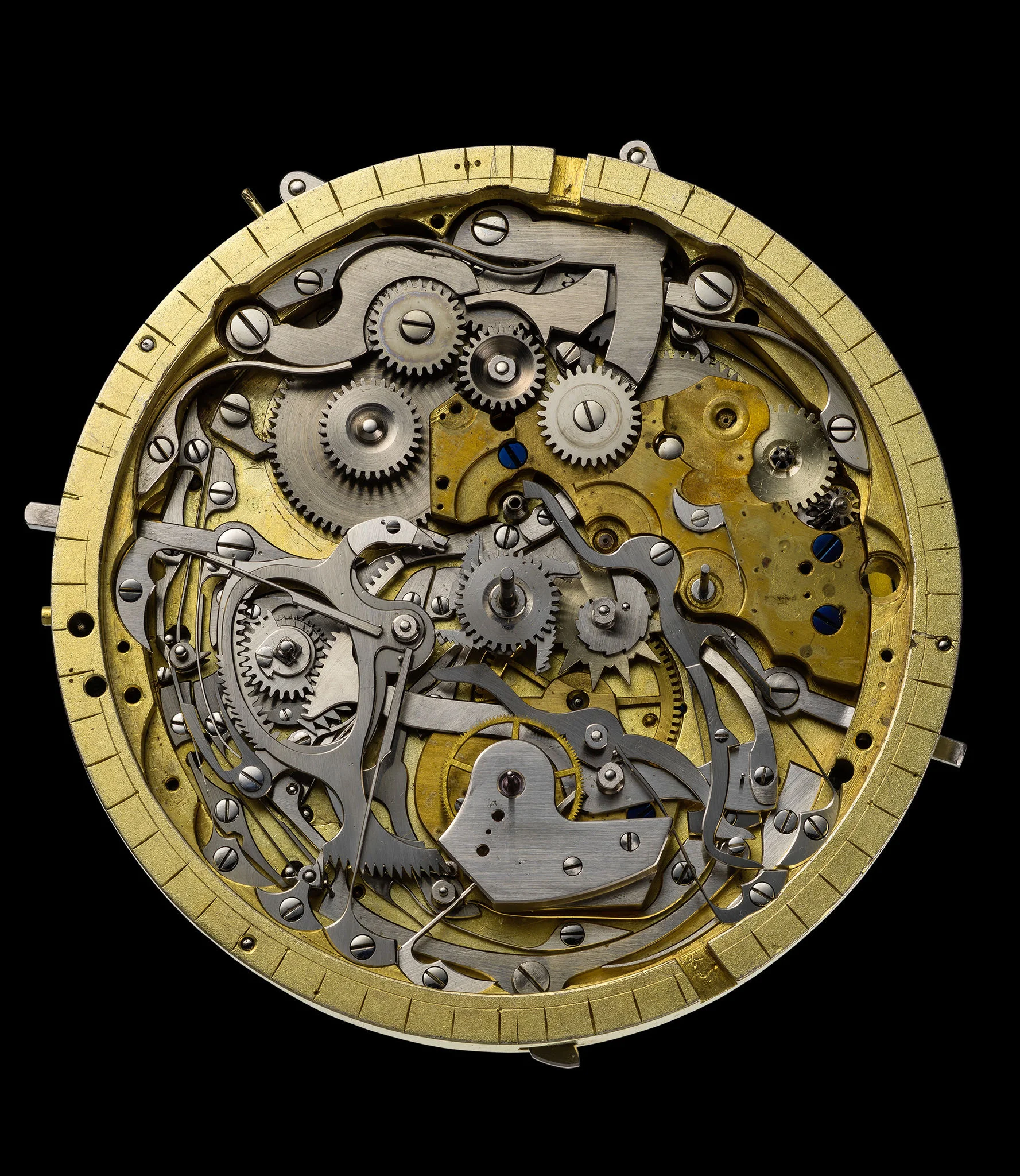
The striking mechanism was made by the workshops of Louis Elisée Piguet. AP Heritage Inv. 2604.
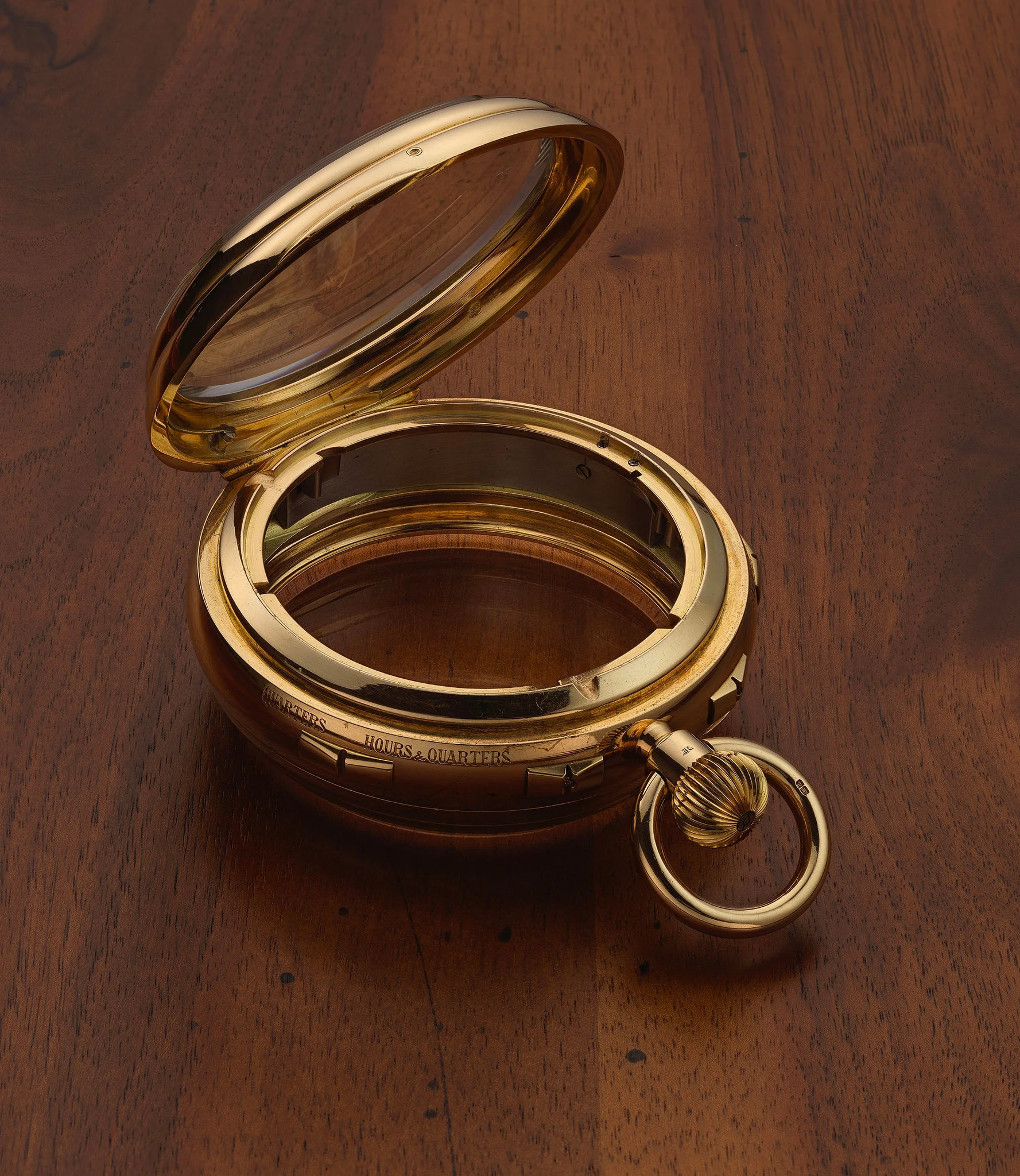
The case bears the signature of English watch-case maker Frederik Thoms. AP Heritage, Inv. 2604.
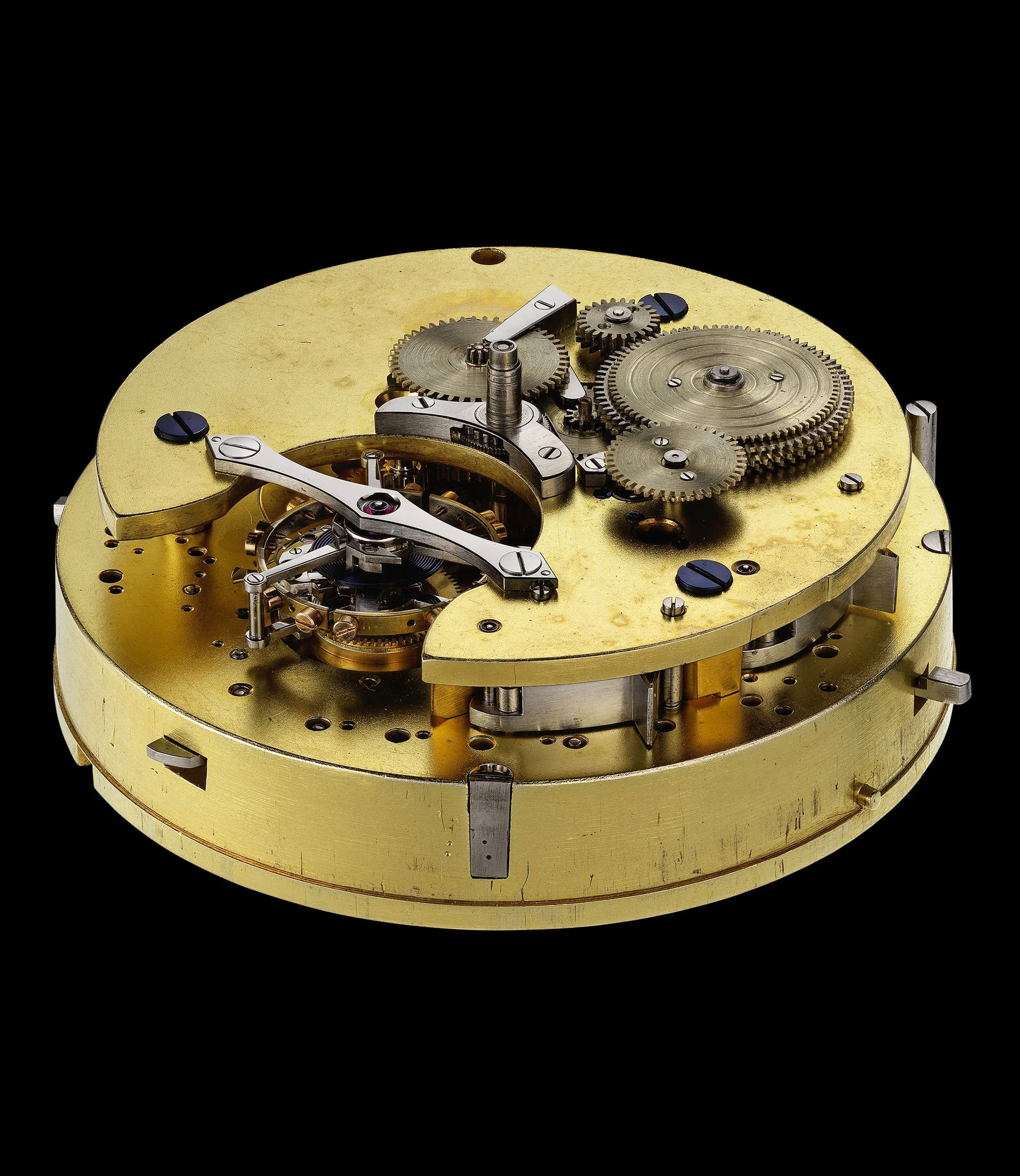
The English-style movement "ébauche" with three-quarter mainplate was probably made by Charles Piguet, known as the Emperor. AP Heritage, Inv. 2604.
The era of manufactories
The first movement "ébauche" manufactory was established at the end of the 18th century in the village of Fontainemelon, near the watchmaking town of La Chaux-de-Fonds. However, less than a century later, American manufacturers including the Waltham Watch Company had gained such a lead that they sparked a major crisis in Switzerland. Jacques David's report following his visit to the 1876 Philadelphia World's Fair sounded the alarm and promoted the "American model".
Certain firms such as Longines, Zenith and IWC ushered in the era of mechanised manufactories and Swiss watchmaking quickly industrialised, leading to spectacular growth from around three million watches produced in 1880 to 18 million in 1916.
Founded in 1875, the first year of the said crisis, Audemars Piguet emerged as the defender of établissage. For three generations, a handful of watchmakers produced a few hundred watches a year, all of which were one-of-a-kind. In 1951, small-series production was adopted and most of the movements now came from the manufacturer LeCoultre & Cie, a pioneer of industrialisation in the Vallée de Joux. This did not prevent Audemars Piguet from remaining an établisseur. In 1960, sales reached 3,000 watches for the first time, a tiny fraction of the 40 million watches exported by the Swiss watch industry.
In the wake of the quartz crisis, as the industry shifted its focus towards the high-end market, the concept of an "integrated manufactory" capable of mastering the main parts of the watch emerged as the ultimate model of integration. Beyond the marketing argument that tends to suggest internal handling is preferable to work carried out by partner workshops, the manufactory model offers undeniable advantages, notably including greater creative freedom in design. An integrated structure promotes innovation, enabling a brand to choose and apply their own quality standards as well as control production flows, stocks, etc.
For Audemars Piguet, there is another crucial advantage: vertical integration consolidates independence. The company is family-owned and keen to remain so. Thus, more than a century after its foundation, Audemars Piguet adopted the manufacturing model with the aim of controlling the entire process, from the first pencil stroke to watch production and distribution. Workshops multiplied and diversified, as methods became more complex in order to improve the performance of series-produced watches.
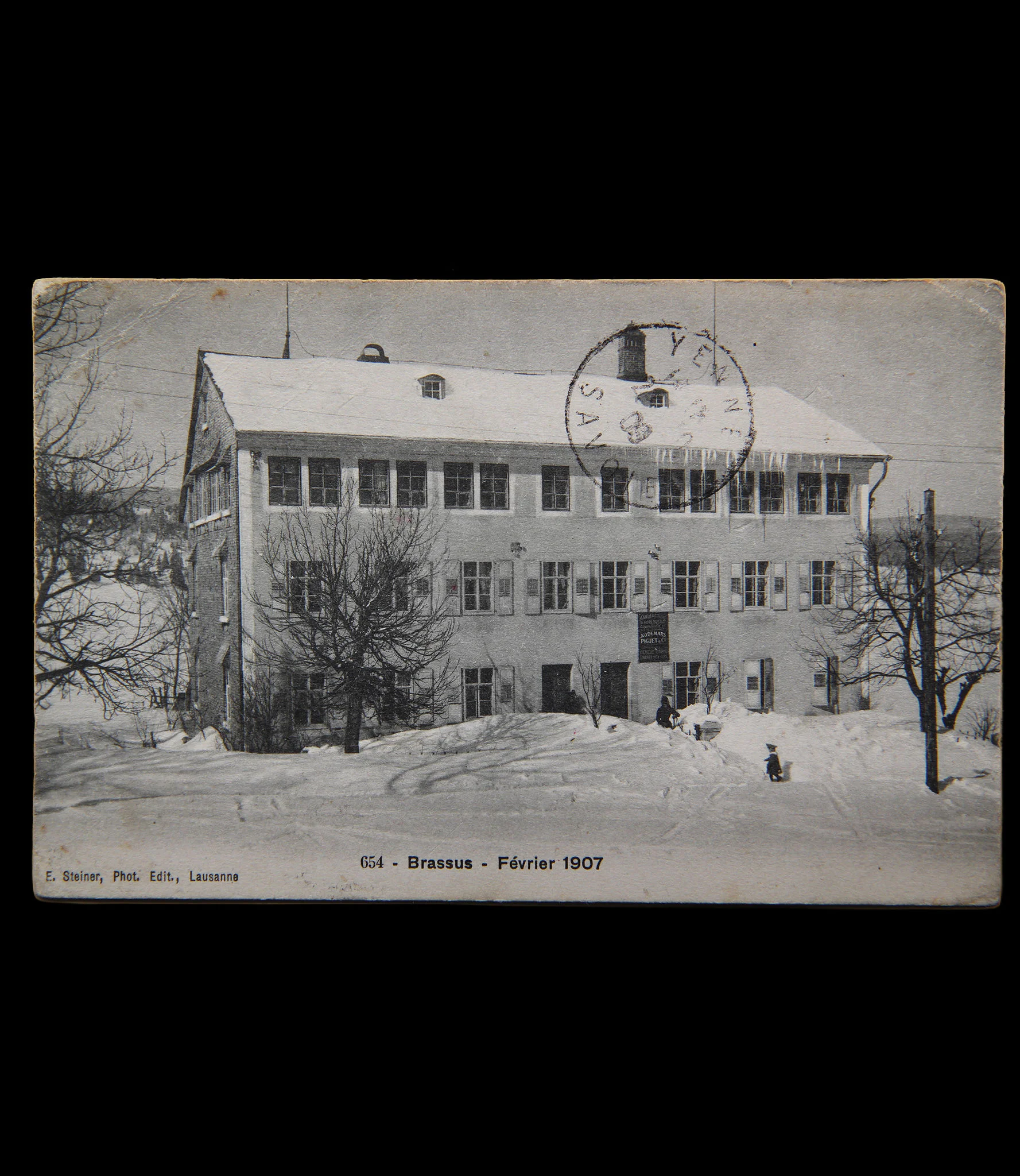
Audemars Piguet's first workshops in Le Brassus were located under the roofs to make the most of the light. The living quarters were on the lower floors. Audemars Piguet Archives.
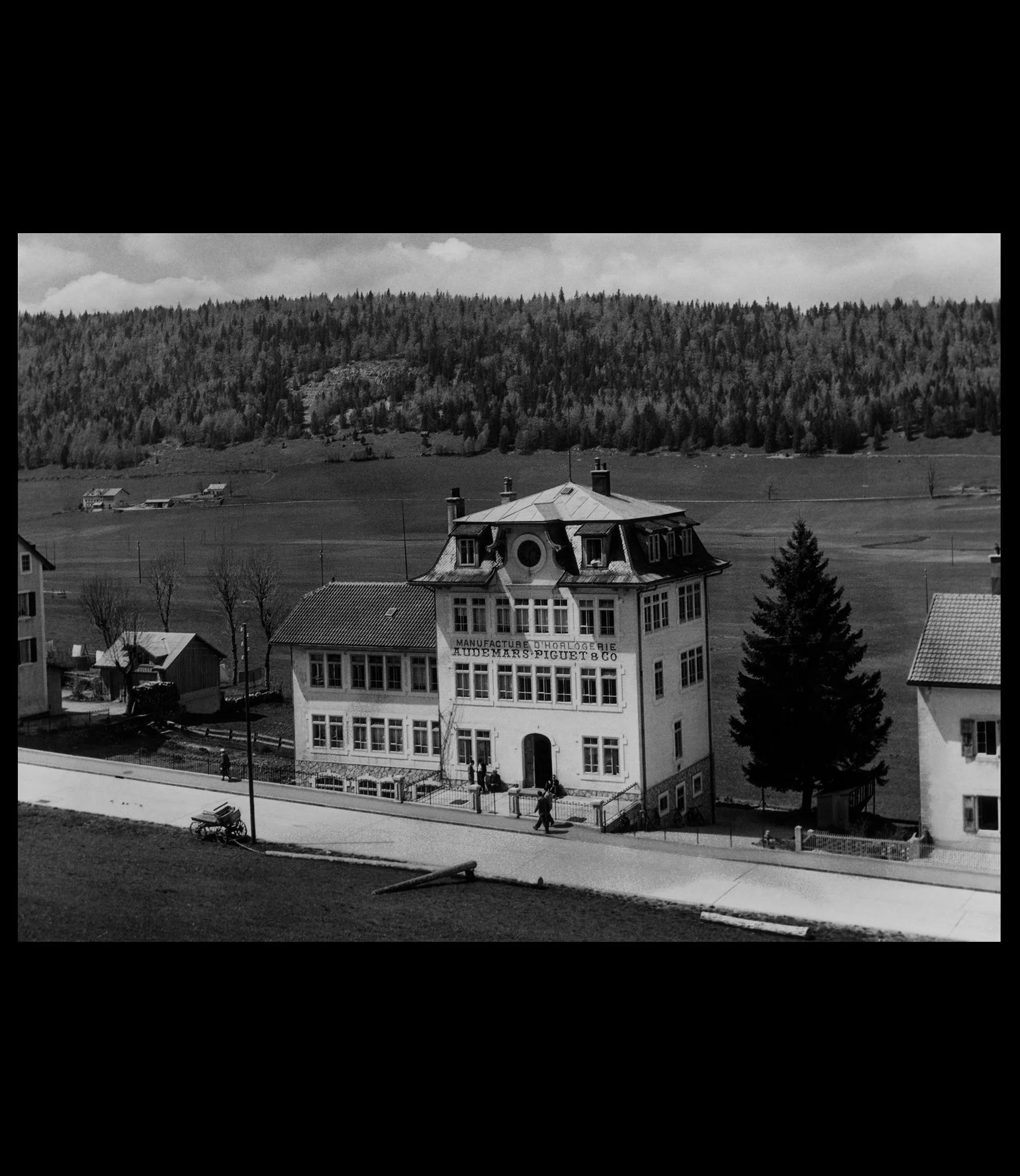
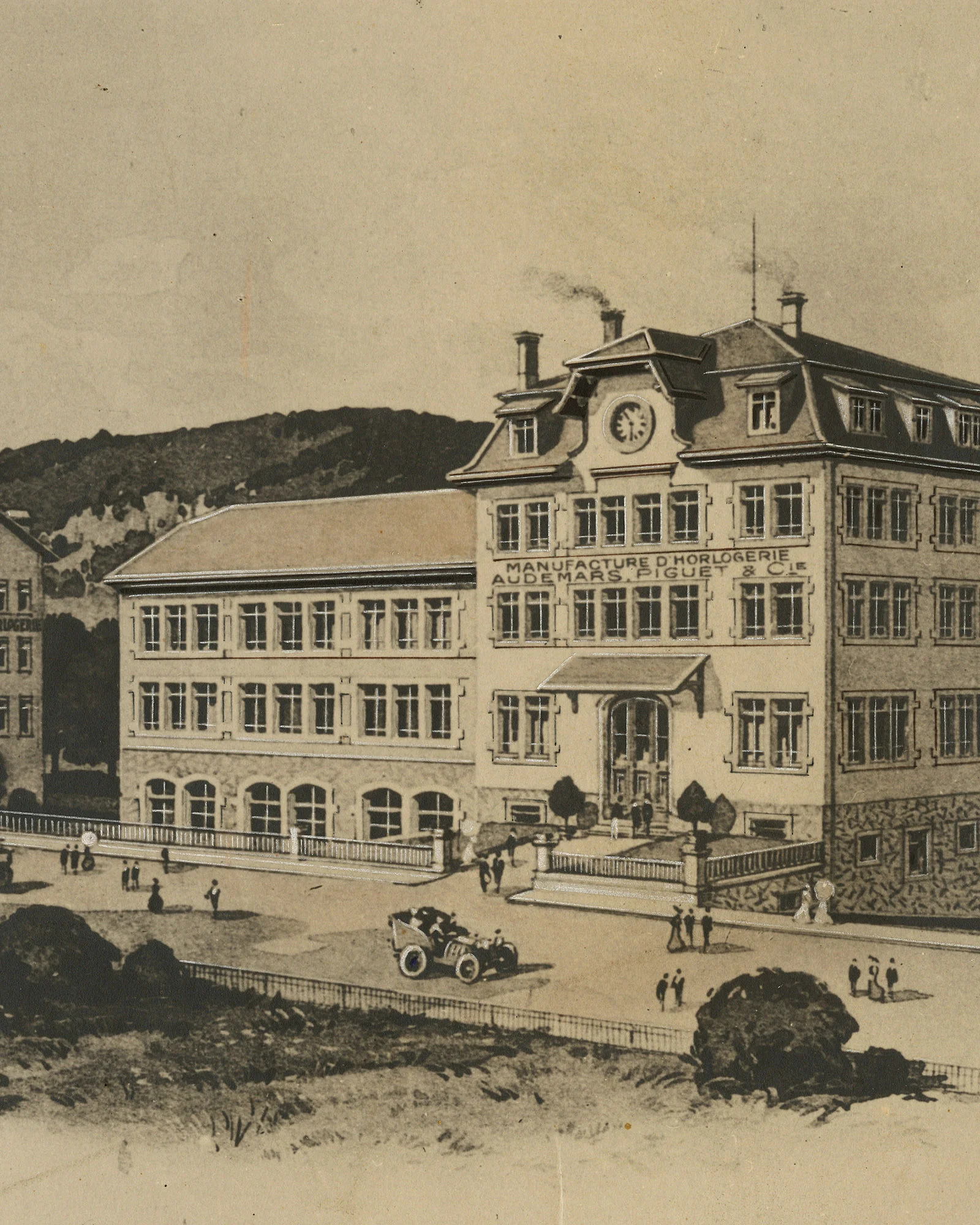
In 1910, Audemars Piguet's new building bore the name "Manufacture", although the company continued to work as an établisseur. Audemars Piguet Archives.
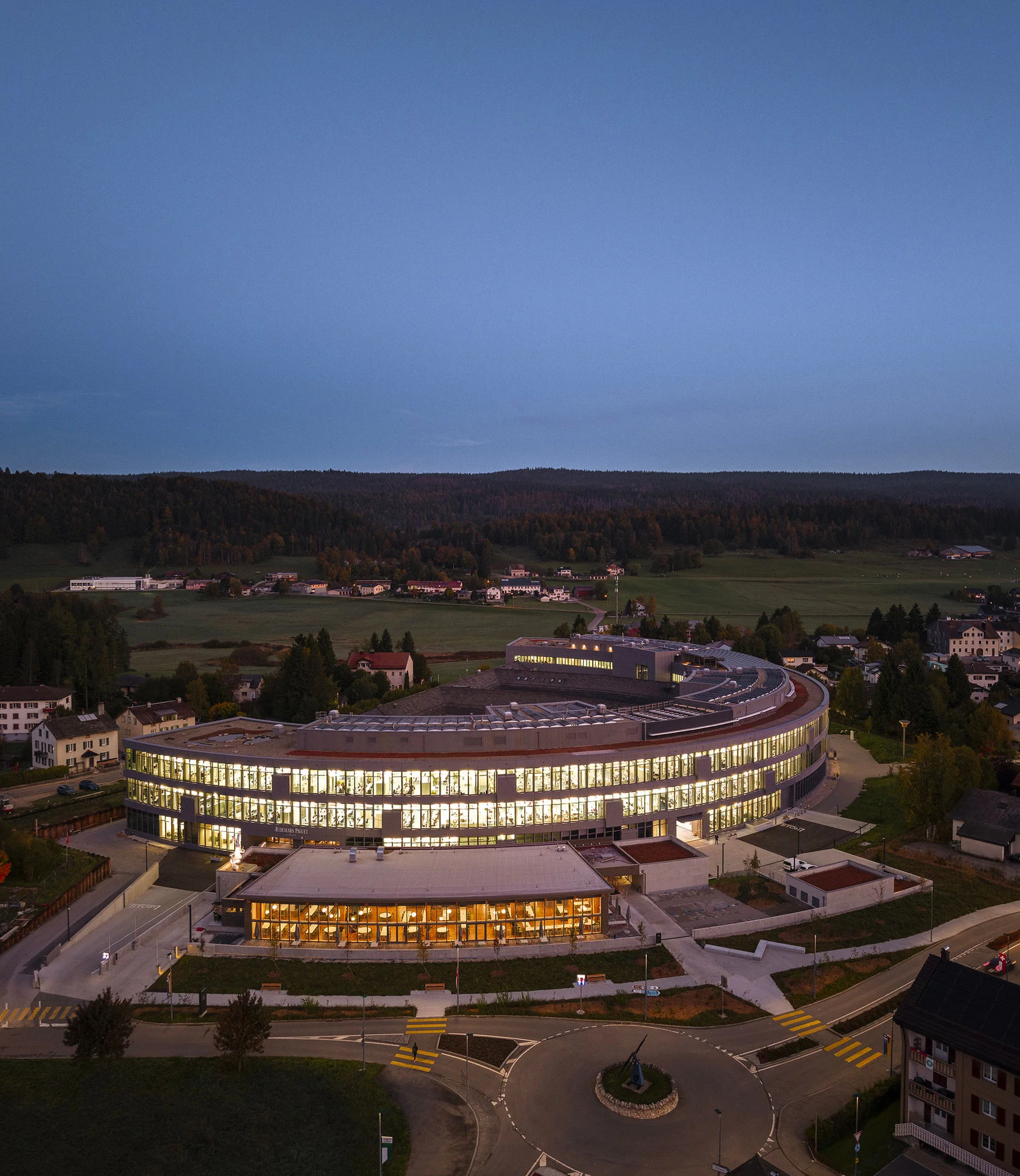
Inaugurated in January 2026, the Manufacture in Le Brassus brought all the main watchmaking skills under one roof, confirming Audemars Piguet's status as an integrated Manufacture. Image © AP.
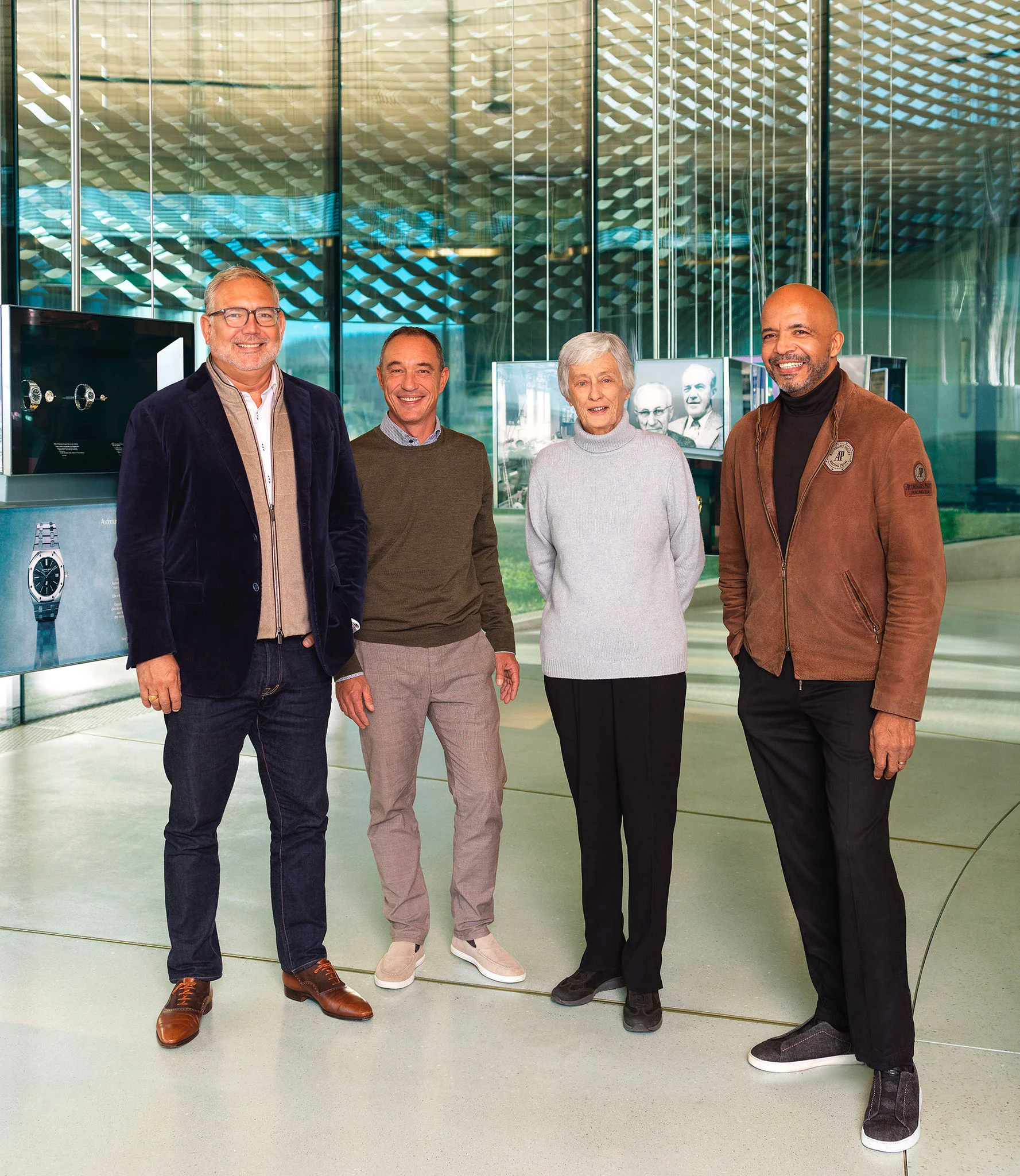
Representing the fourth generation at the helm of Audemars Piguet and descendants of watchmaking families that have lived in the Vallée for centuries, the company's owners chose the Manufacture model to guarantee their firm’s independence.
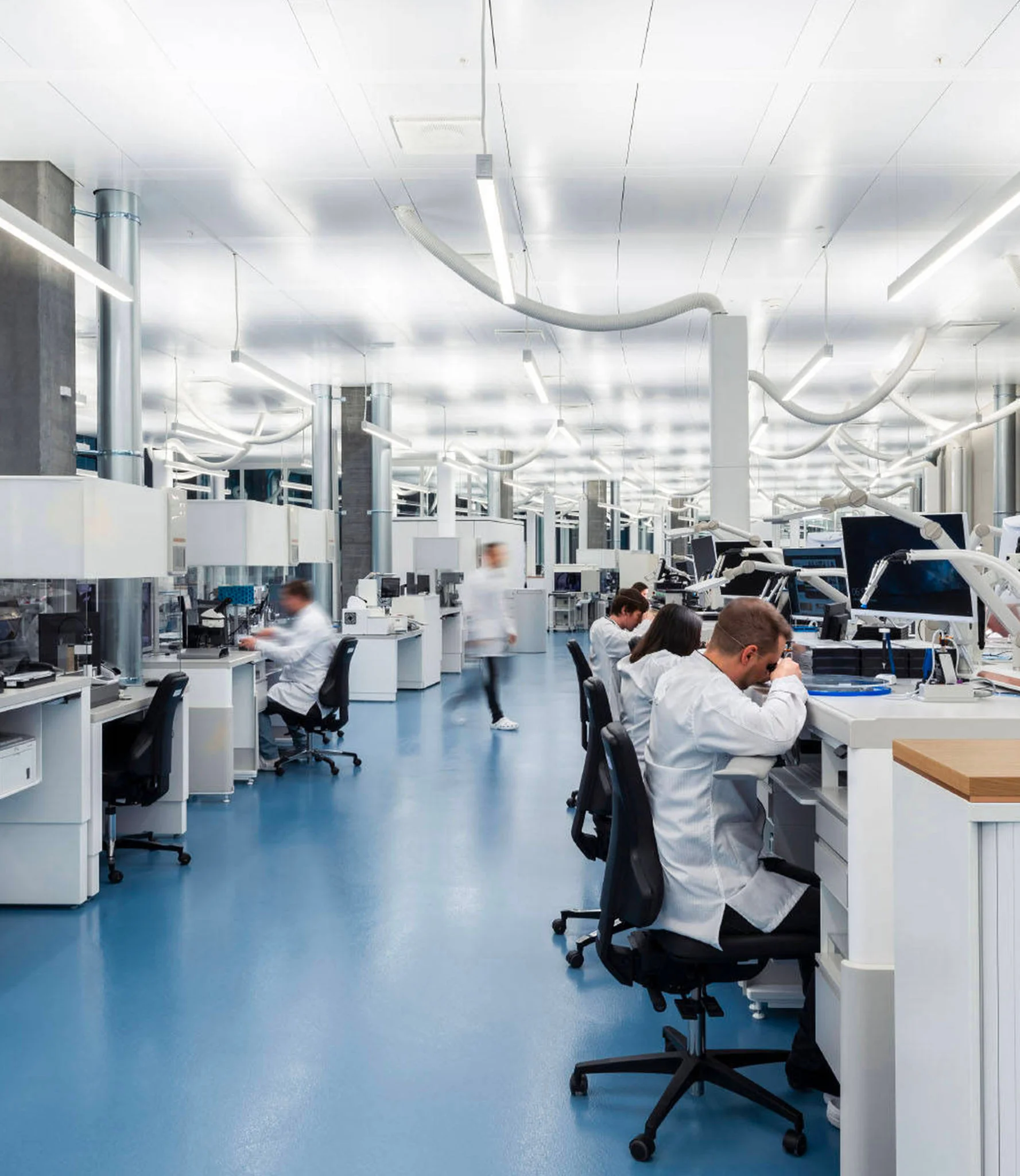
Complications workshop at the Manufacture in Le Brassus. Image © AP.
An idea emerges over coffee
The Atelier des Établisseurs project was born out of a chat over coffee and brioche on the first day of spring 2024. In the office she had occupied for barely three months at that point, Audemars Piguet’s CEO Ilaria Resta was hosting Sebastian Vivas, the historian who has been Heritage and Museum Director since 2012. The morning's discussion related to the potential acquisition of an exceptional collection of Audemars Piguet watches dating from the 1940s to the 1980s, including several "Bamboo" and "Cobra" models.
Faced with the diversity of shapes, finishes and dials, the richness of the collections and the beauty of certain models, Ilaria Resta raised the kind of question asked by many visitors to the Audemars Piguet museum : "Could we recreate this watch?"
The historian then outlined the context for that time: "These watches were created in a world on the verge of disappearing. Audemars Piguet was an établisseur. Its creations were born from a network of numerous independent artisans, often toiling in very small workshops. There was no Product Department, no Quality Department, no Methods Department nor even a Technical Office! Some artisans crafted metal without any plans. AP launched dozens of very different designs every year. The watches were often very small, rarely water-resistant and not particularly shock-resistant. Clients were aware of this and acted accordingly – something that would be impossible today."
Impossible. The word had been spoken. New to the world of watchmaking, Ilaria Resta loves challenges and her role also involves shaking up the way things are done. She therefore asked: "Who among us could revive this agile, creative, artisanal way of working?"
It was a difficult question, because for the teams in place, bypassing processes meant not only “unlearning” but also taking the risk of doing their job poorly. It thus gradually became apparent that the last artisans working in the traditional way – without plans or stocks of spare parts – were the restoration watchmakers attached to the Heritage department. "Why not suggest to the Heritage team that they create new watches in the true spirit of établissage?"
Ilaria Resta gave Sebastian Vivas a week to decide whether he wanted to embark on this adventure and head up the project.
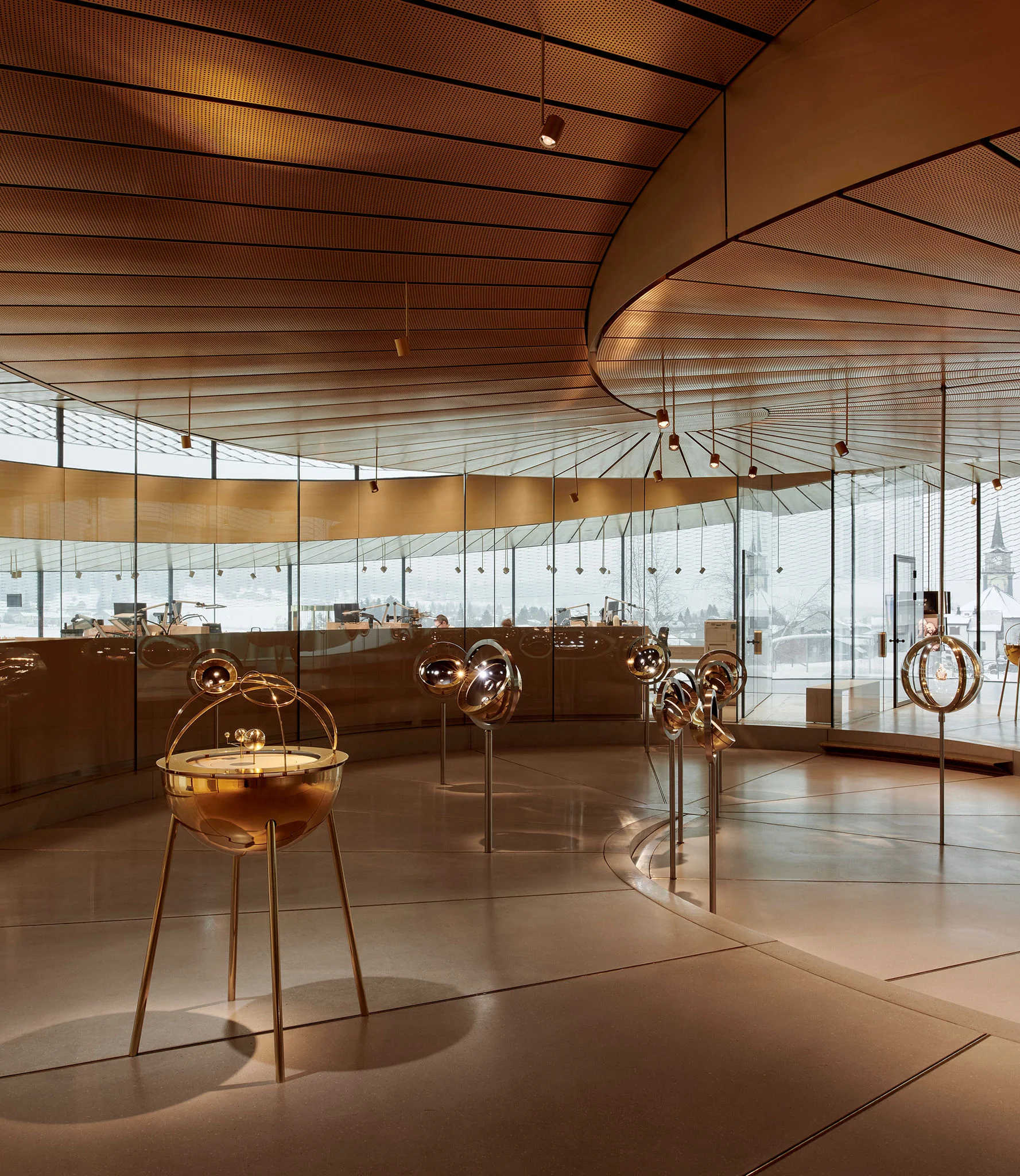
The Musée Atelier Audemars Piguet exhibits more than 200 watches featuring a wide variety of shapes and functions, most of which were created using the établissage system. AP image.
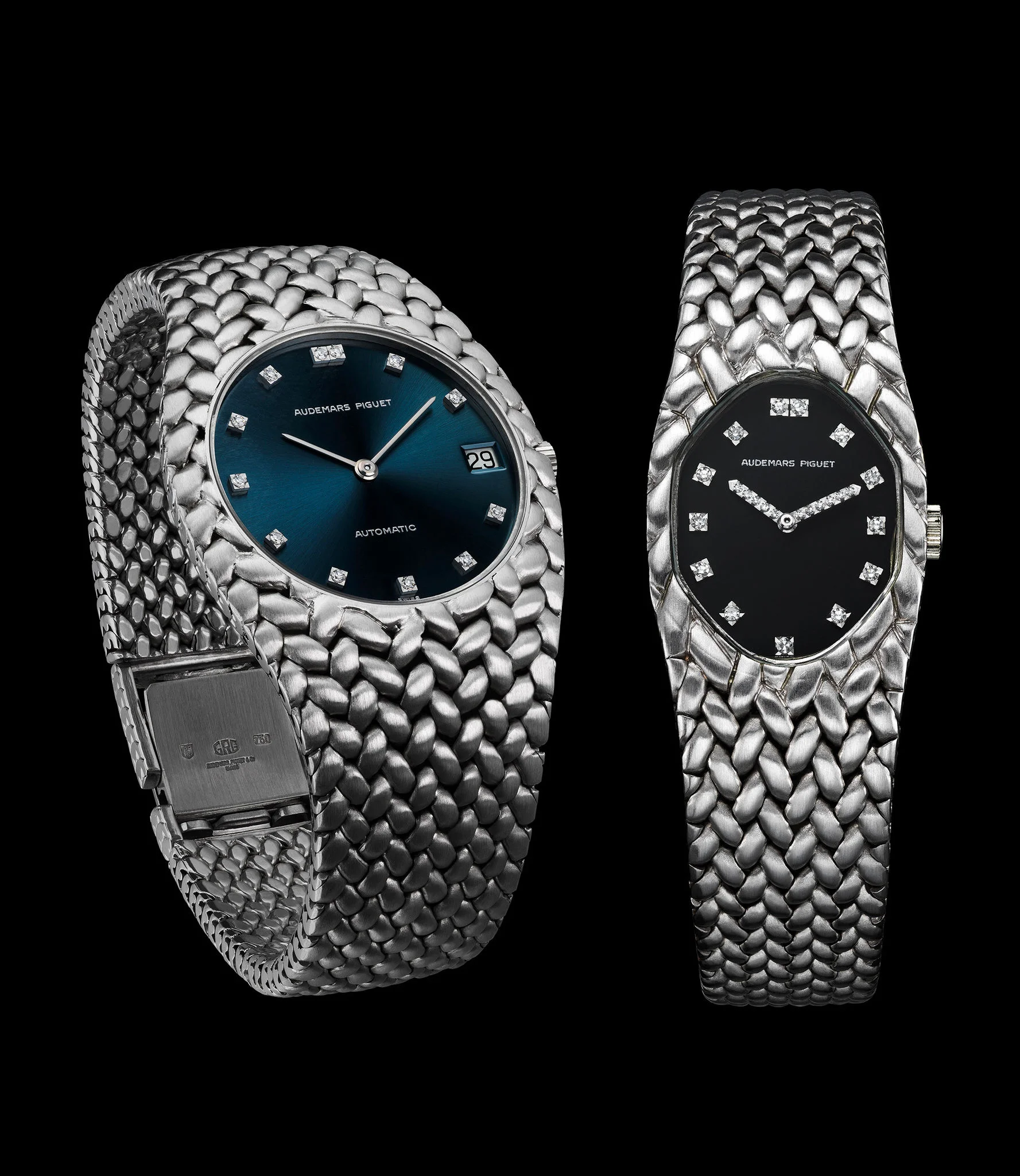
Designed by Gérald Genta, Model 5403 known as the "Cobra” is recognisable by its integrated thick-strand Polish mesh bracelet. On the left, Model 5403BC, Calibre 2121, sold in 1980. On the right, Model 8520BC, Calibre 2052, sold in 1978. AP Heritage, Inv. 2288 and 2511.
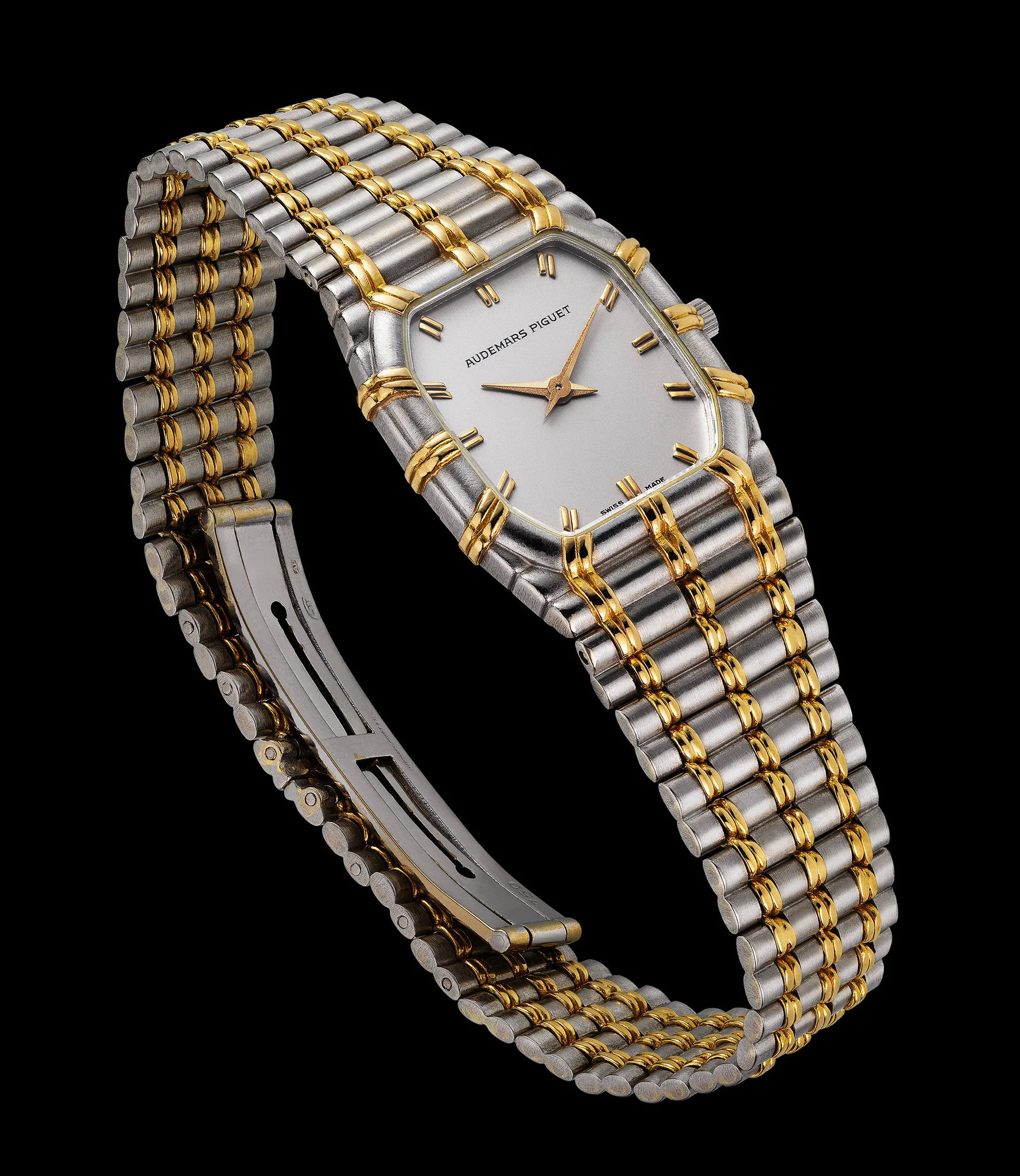
This Bamboo watch sold in 1989 combines yellow gold and white gold. Model 66192, Calibre 2508. AP Heritage, Inv. 1370.
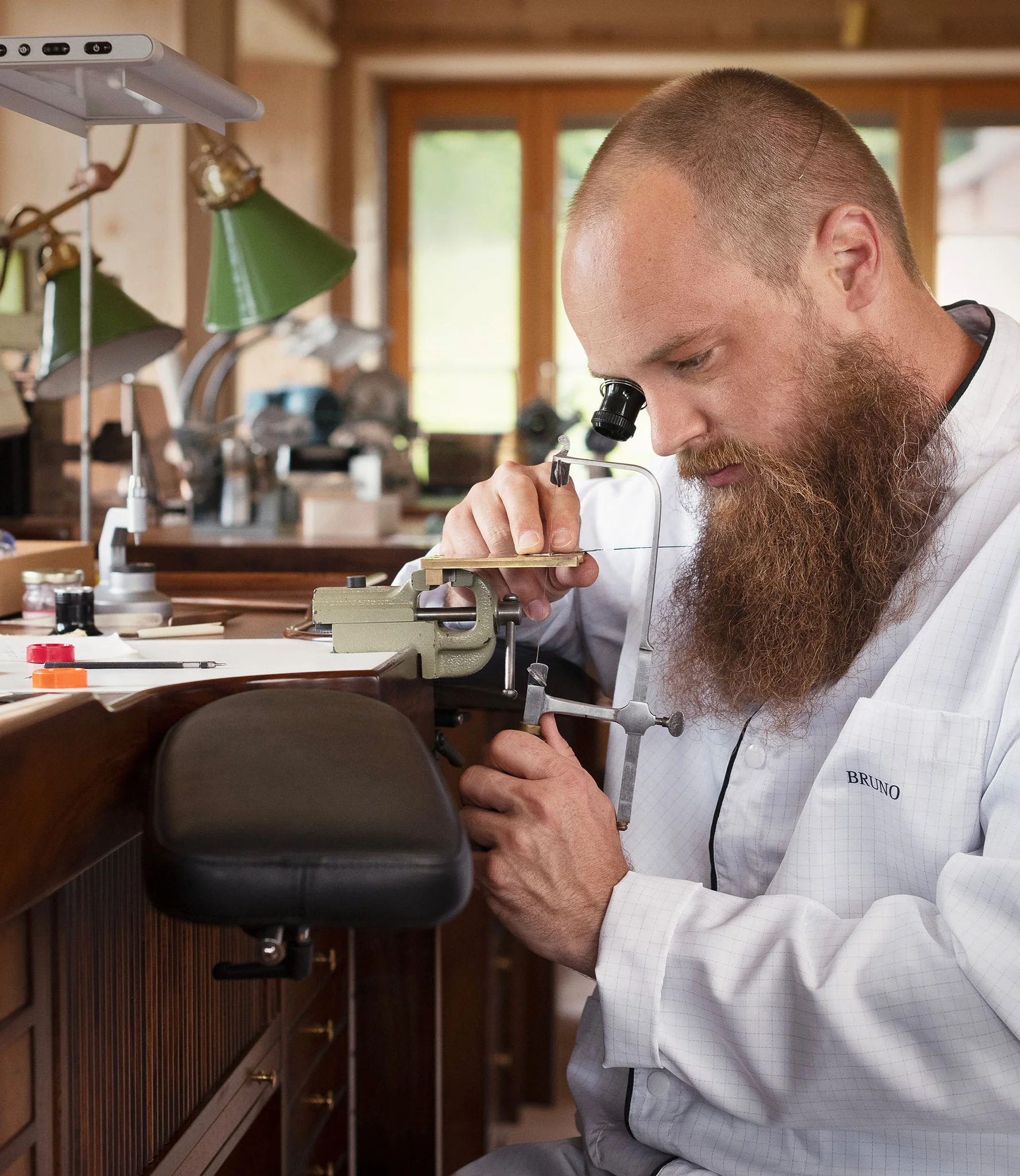
A descendant of Louis Elisée Piguet, Sébastien Berney plies his trade in the Restoration Workshop. Without resorting to computerised plans or CNC machines, he cuts the material using traditional tools. AP image.
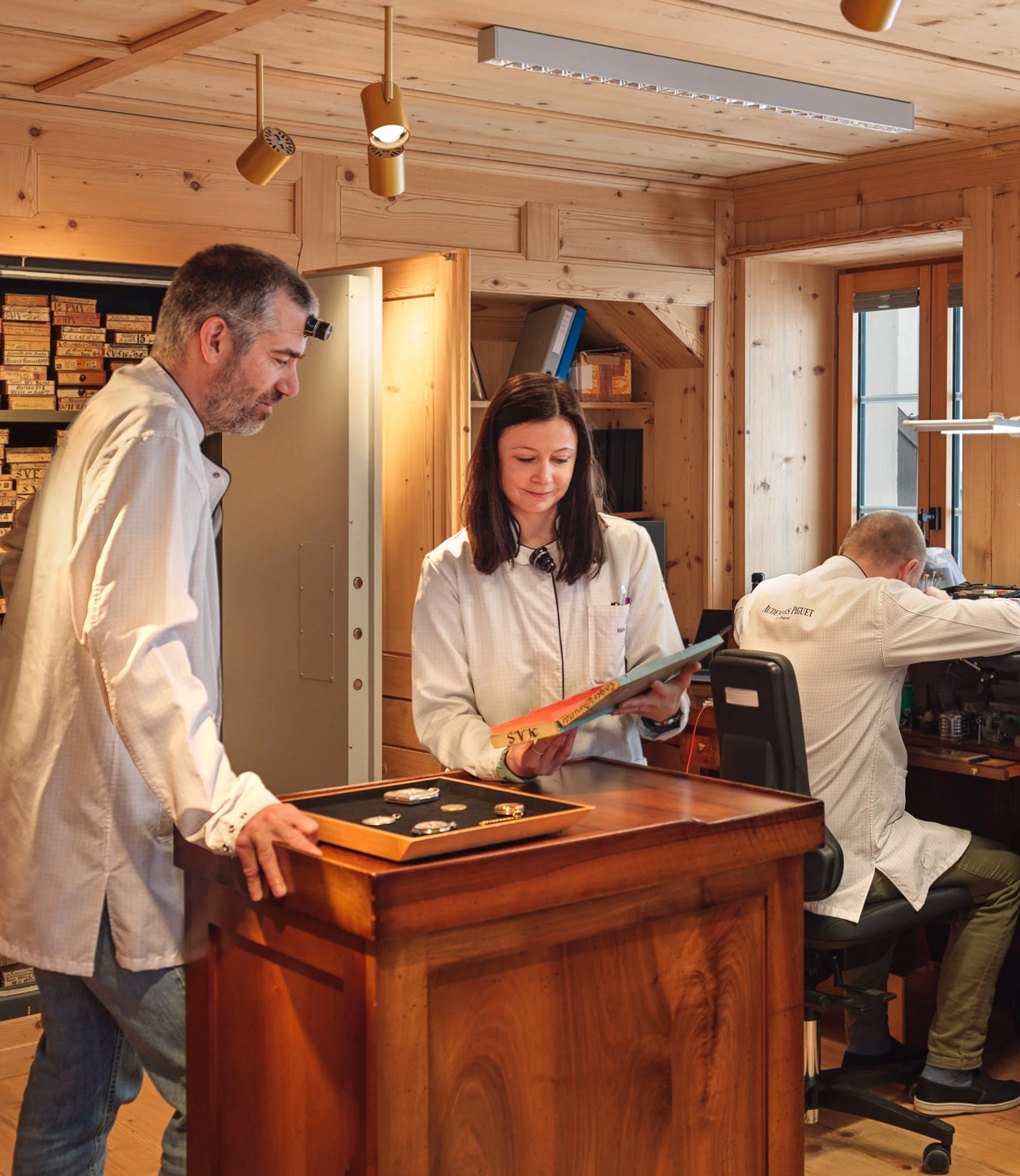
Located in the birthplace of Audemars Piguet, the Restoration Workshop perpetuates traditional watchmaking skills.
A blank page
In spring 2024, the Audemars Piguet Heritage department had around ten employees. In addition to studying and managing historical archives and restoring antique watches, the team was responsible for running the Musée Atelier Audemars Piguet that opened in 2020. In collaboration with the Marketing teams, it also handled the creation of travelling exhibitions, writing for publications including the APChronicles platform, as well as participation in numerous projects notably including preservation of endangered skills.
The period when the decision was taken to launch the Atelier des Établisseurs was already fraught with challenges. With less than a year to go before Audemars Piguet's 150th anniversary celebrations, the team was busy completing a 600-page book (The Watch, Stories and Savoir-Faire), delving into the archives to write articles on the history of the brand, and preparing the largest Audemars Piguet travelling exhibition ever presented, scheduled for Shanghai in May 2025 and Dubai six months later.
Nonetheless, a project like this simply could not be turned down and Sebastian Vivas established its guiding principles: "creativity, agility and the promotion of traditional skills." But should historical designs truly be the source of inspiration? Since 2020, the [RE]Master collection had already been exploring this avenue, freely reinterpreting old watches and producing them in series of a few hundred timepieces. The Atelier des Établisseurs would do the opposite. While the designs were to be resolutely forward-looking – free, surprising, even spectacular – the way watches would be developed and produced should draw inspiration from établissage. Giving pride of place to small independent artisans, each watch would be finished and then serviced by the workshop that created it.
In May 2024, the Board of Directors enthusiastically approved the project. The story could now begin to be written.
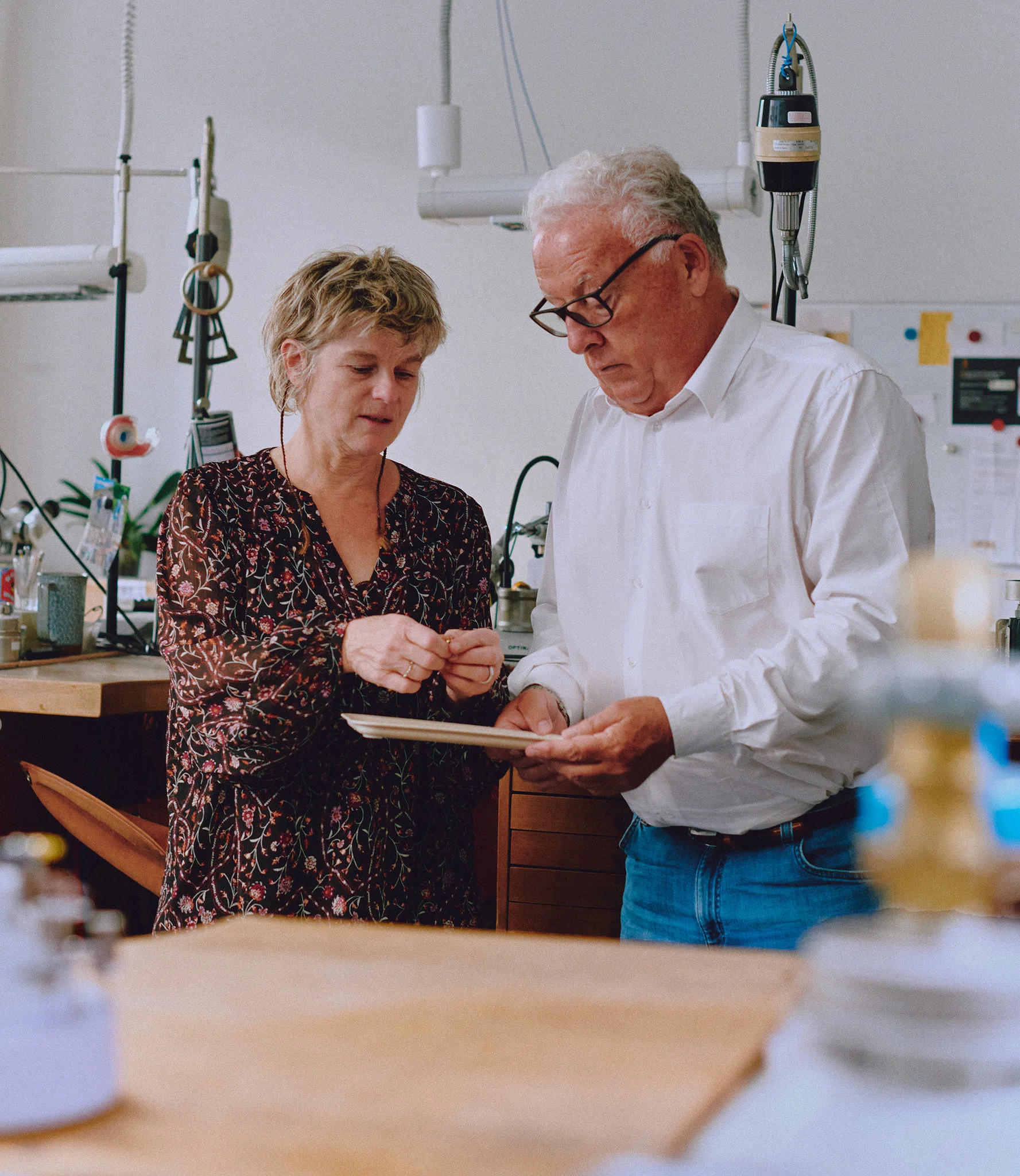
Claude Meylan (right) travelled throughout the Jura region to discover small workshops that preserve traditional skills. He is pictured here in jeweller Nadia Morgenthaler’s Geneva workshop. AP image.
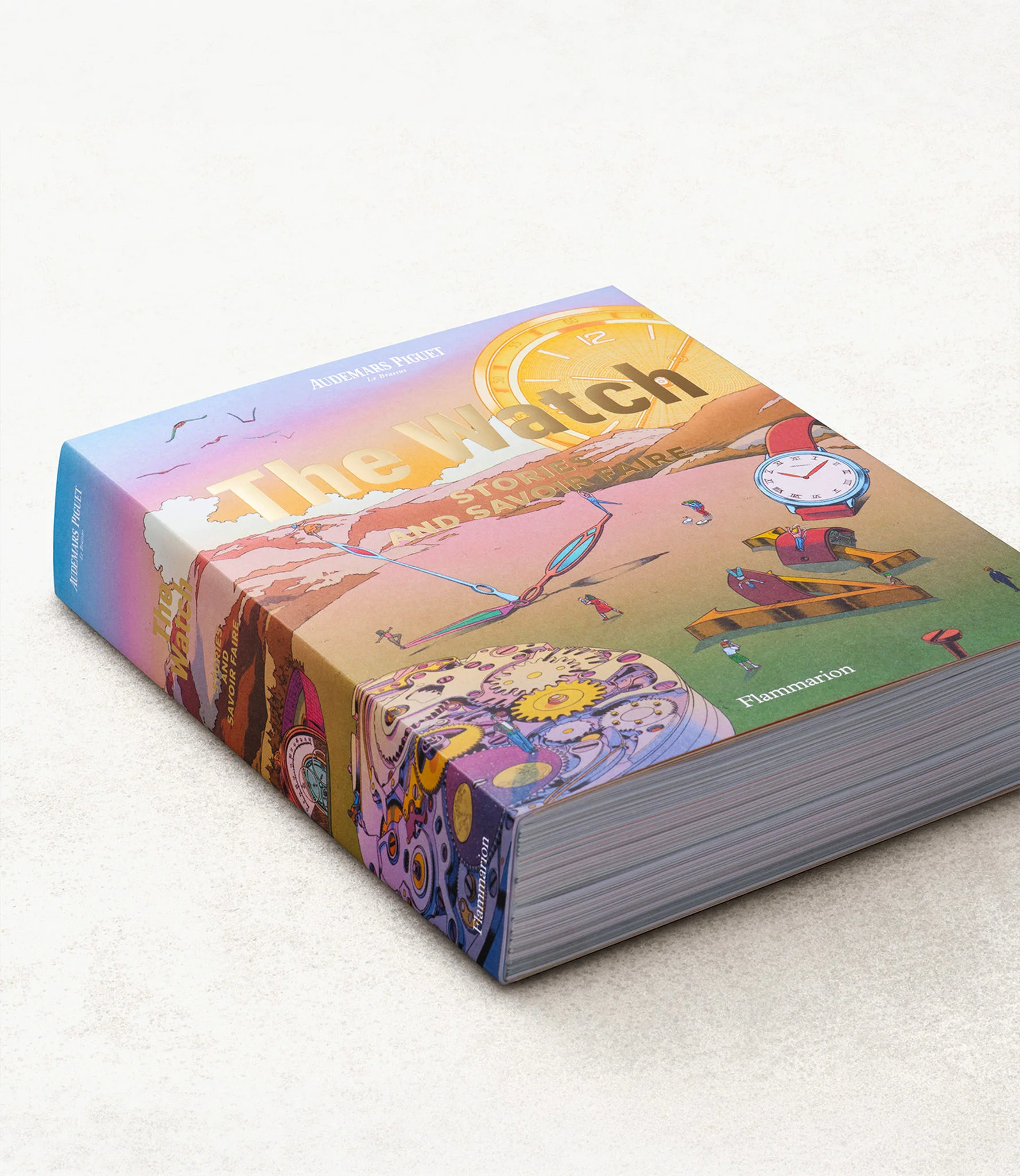
Produced for Audemars Piguet's 150th anniversary, this 584-page book pays tribute to watchmaking as a whole by describing each part of the watch and highlighting its main artisans.
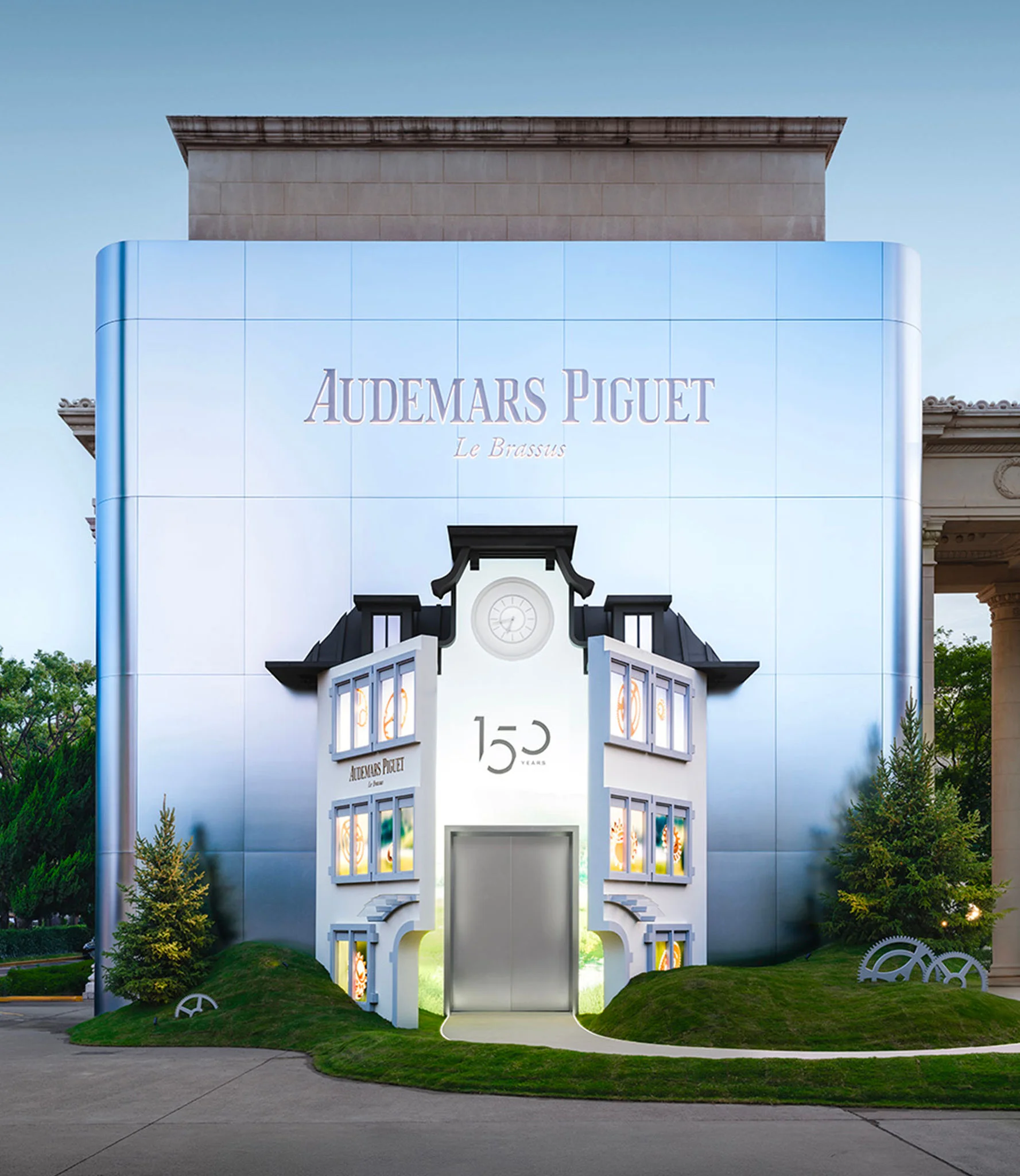
The House of Wonders anniversary exhibition presented in Shanghai in May 2025 is the most ambitious ever staged by the brand.
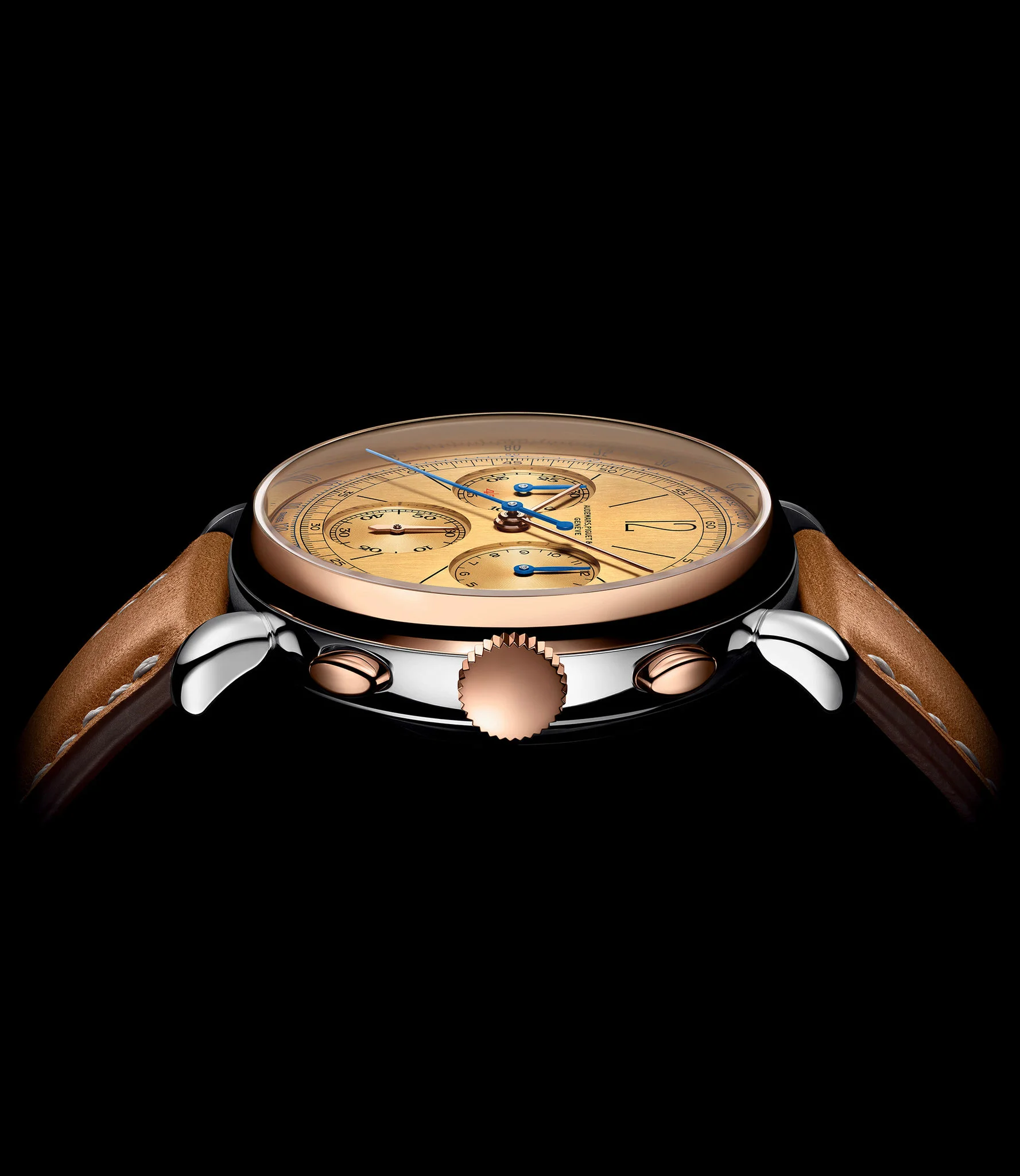
Launched in 2020, the [RE]Master01 is a free reinterpretation of a one-off chronograph watch made in 1943. It is issued in a 500-piece limited edition.
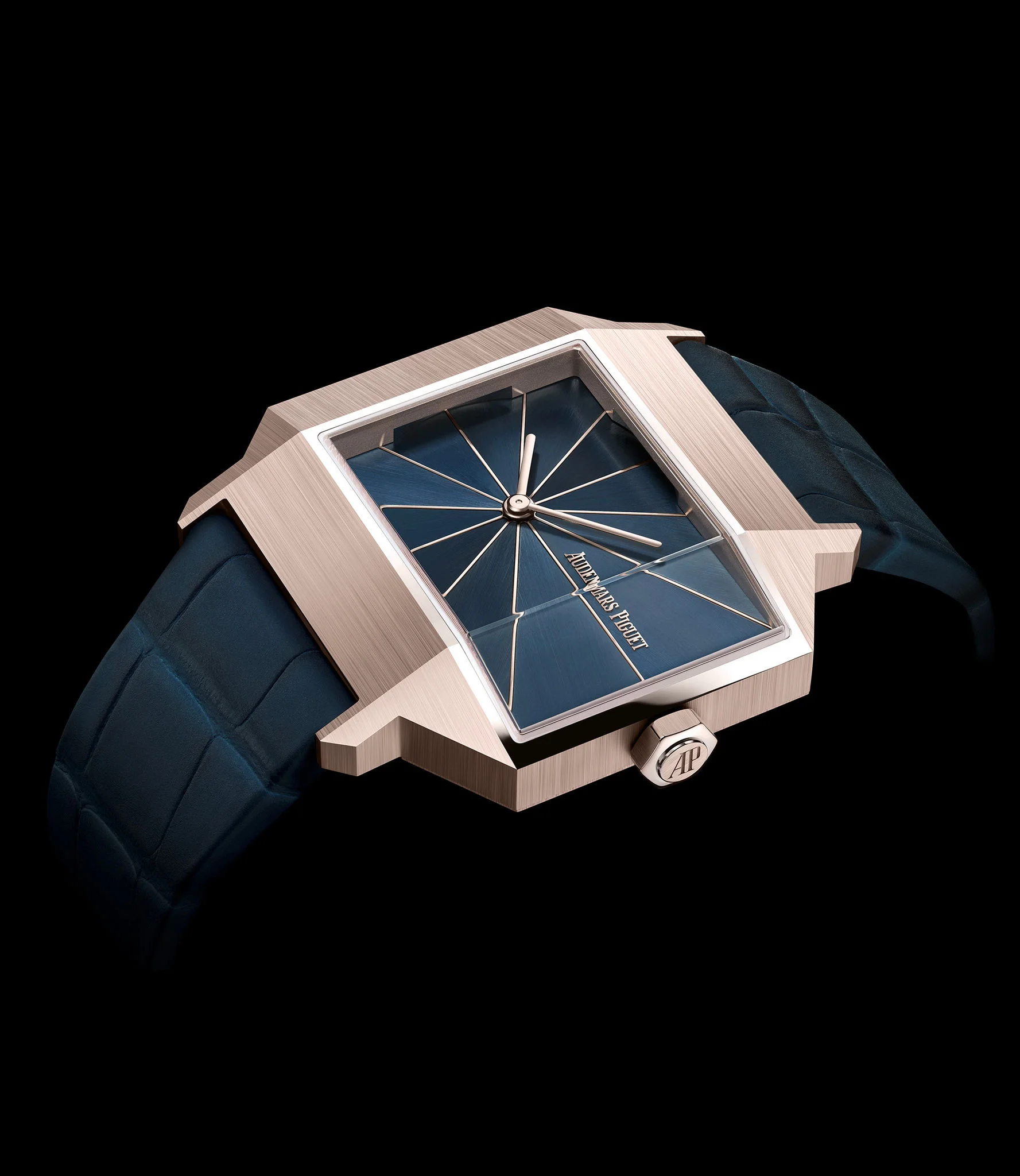
Launched in 2024, the [RE]Master02 is loosely based on a brutalist design from 1960. 250-piece limited edition.
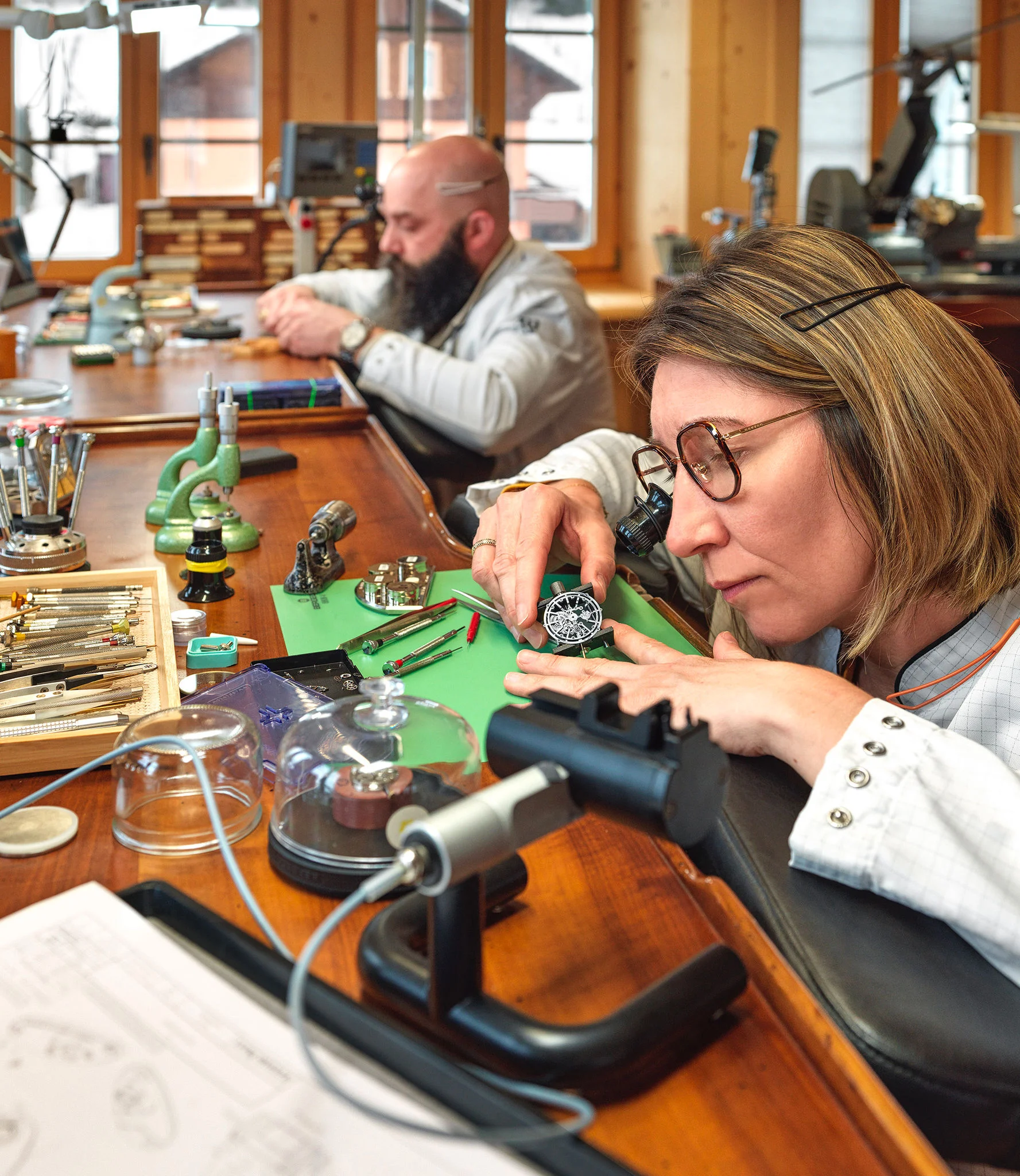
The Atelier des Établisseurs was set up near the Restoration Workshop, on the original spot where Audemars Piguet’s history began.
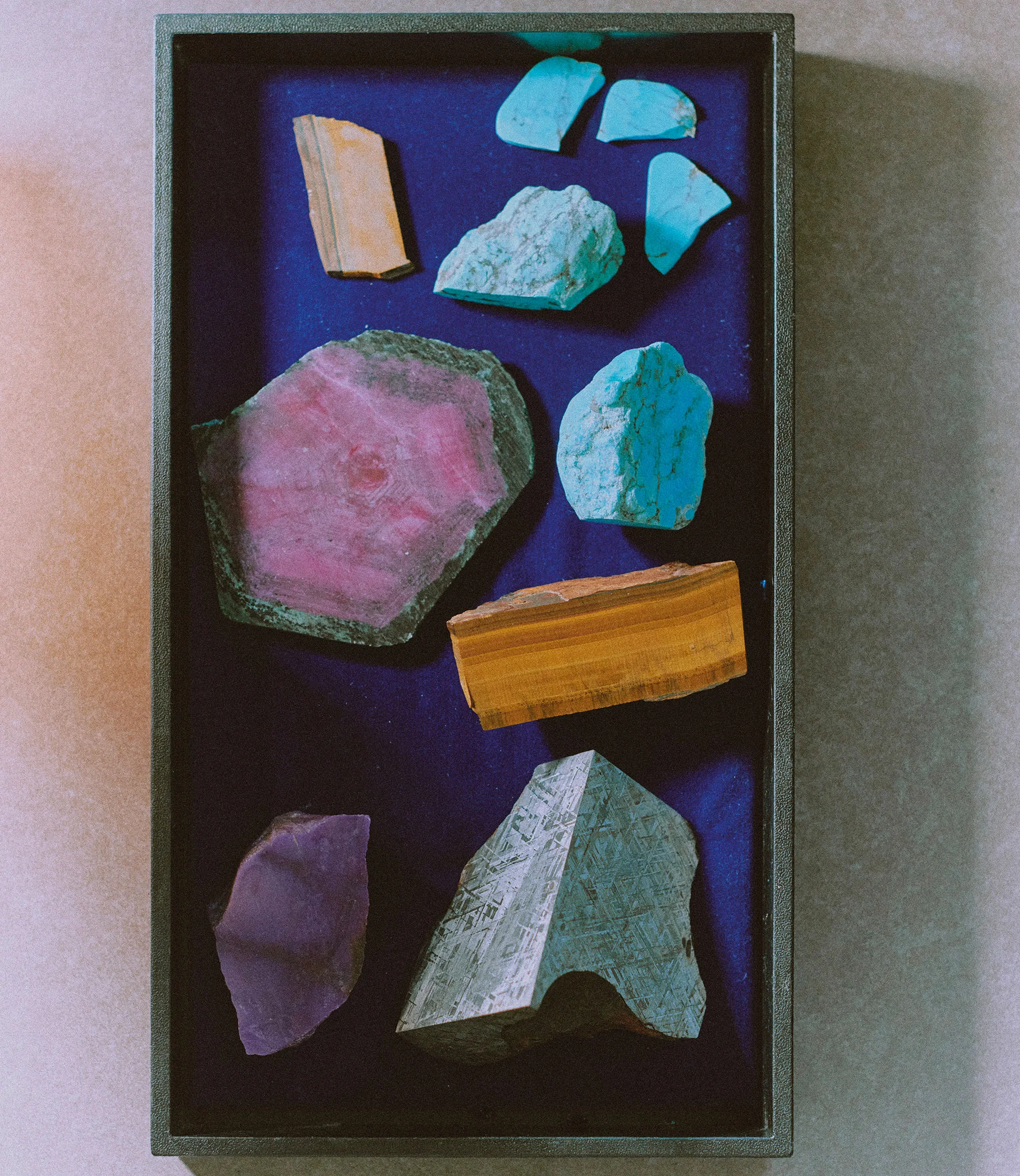
Un des éléments importants du développement des projets a été le choix des pierres fines. Atelier de Mario Senape.
Implementing the project
A small team was formed: watchmaker Nikolaas Dockx, former head of training at Audemars Piguet, joined the Heritage department as Head of Savoir-Faire in 2023. His knowledge of various trades and his role in promoting artisans made him the ideal project manager. Claude Meylan, founder of the eponymous brand and former head of purchasing at AP, is an expert on the network of artisans scattered throughout the Jura and Lake Geneva regions. He will devote his very active semi-retirement to researching and monitoring external artisans. Experienced watchmakers Joris Lavanchy and Aline Gagneux have transferred from the Customer Service department; while Brice Mercet is responsible for logistics.
The Atelier is supported by numerous internal departments at Audemars Piguet: the Product team, jewellery artisans and skeletonisation specialists, constructors, design project managers and all support functions. Each and every one of them strives to achieve the perfect balance between agility and process control, technical performance and craftsmanship. The exercise is often a high-wire act.
As every watch is built around a mechanism, the choice of calibres is crucial. Ideal for small watches, Calibre 3090 (measuring 20 mm in diameter) created in 1999 has been updated. For larger diameters, constructor Julien Martel reworked the brand-new Calibre 7121, launched in 2022. He simplified it by removing the selfwinding mechanism and date display as well as repositioning the components to create a symmetrical effect.
In September 2024, a handful of in-house and independent designers sketched the first designs. Their role was to highlight rare or endangered skills, such as hacksaw skeletonisation, production of special-shaped crystals as well as chain-making.
On 29 November, three designs were selected. The results were so promising that Ilaria Resta informed the team that the watches would become the centrepieces of the brand’s booth at Watches and Wonders Geneva a year and a half later. Until then, the project had been operating in exploratory mode with no real agenda, but the countdown was now on.
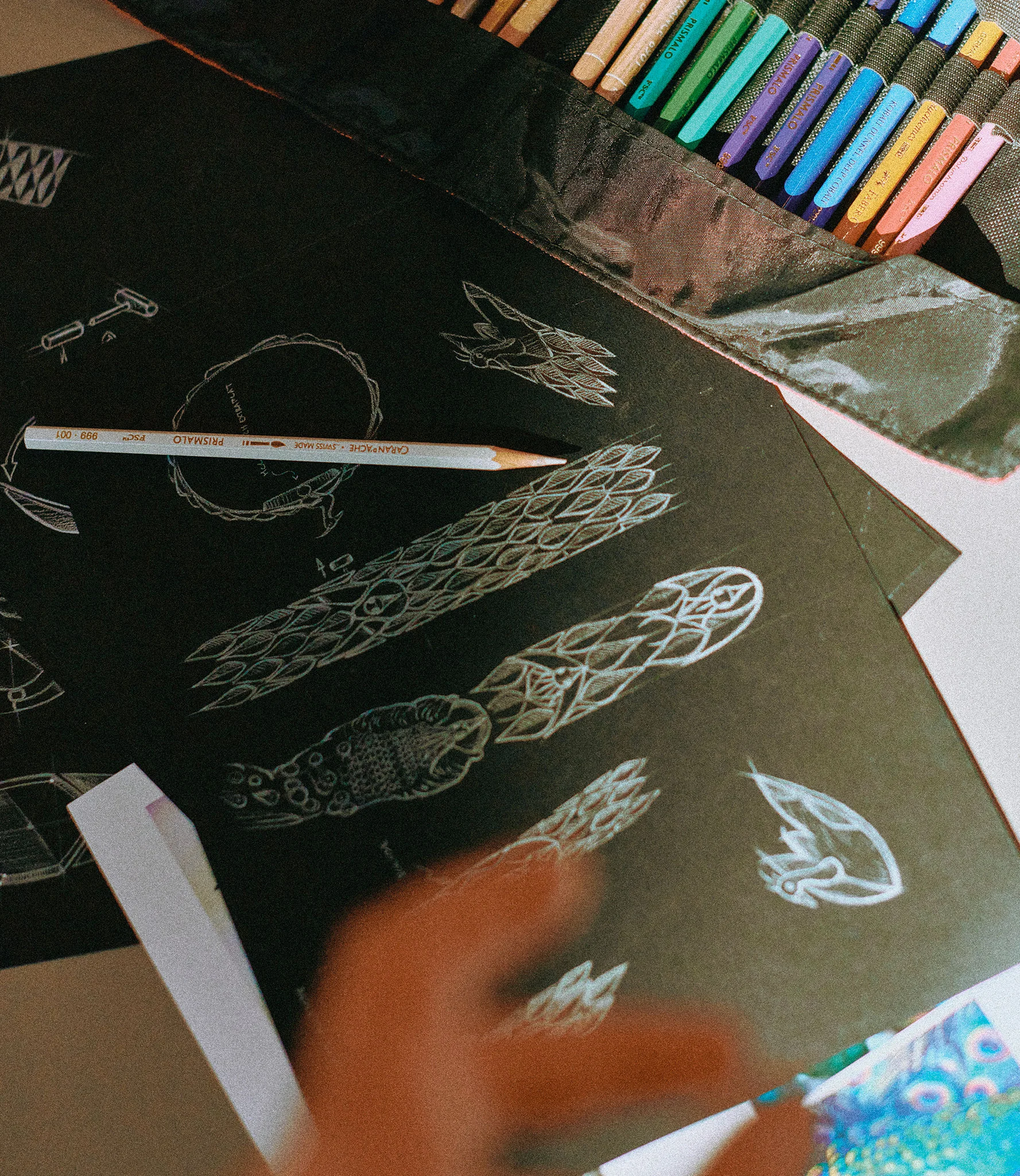
Kenan Géraud sketched numerous watches, all very different, before settling on a bird watch with a secret cover.
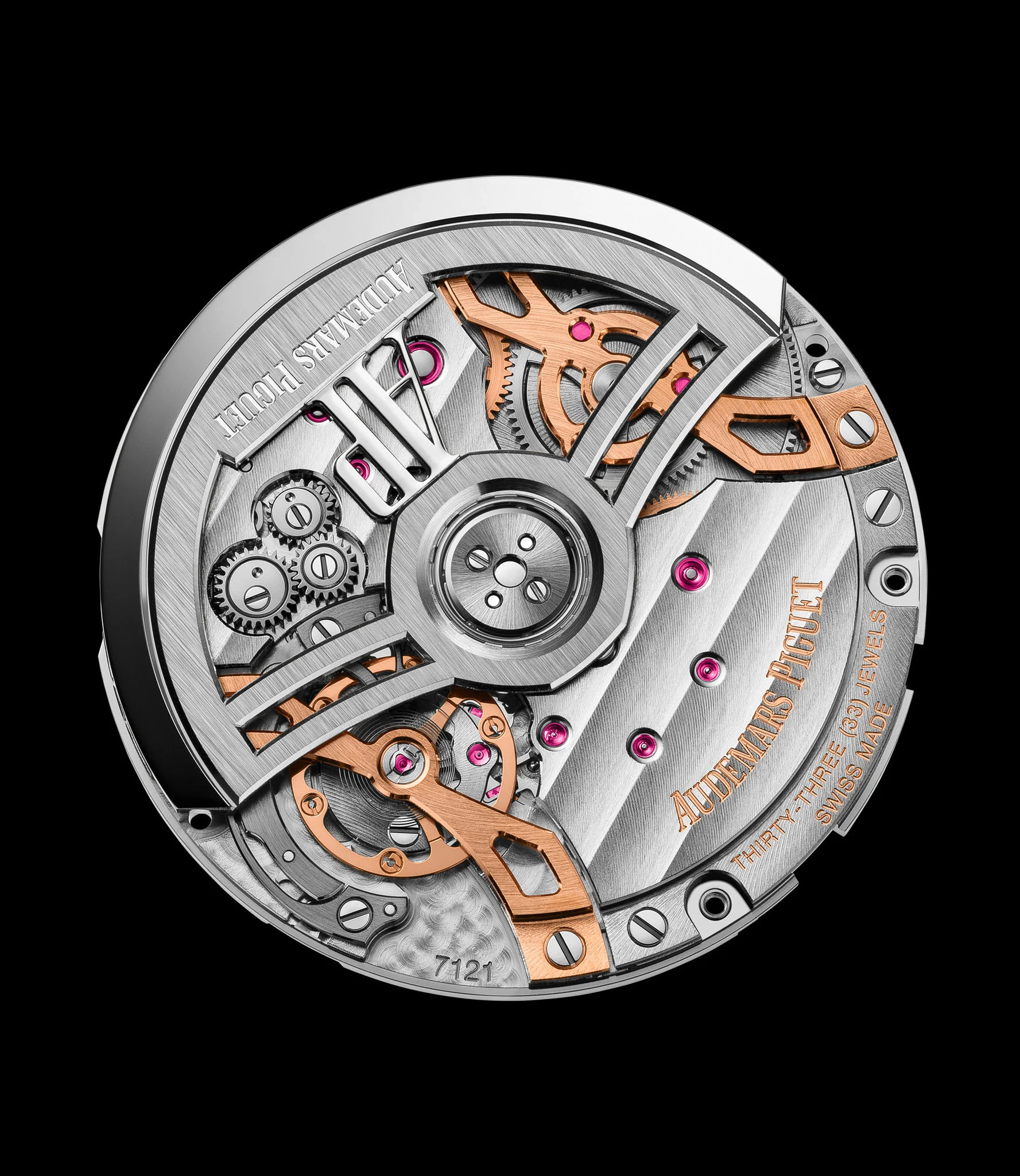
Unveiled in 2022, Calibre 2171 took over from the legendary 2121 that had been powering the Royal Oak "Jumbo" since 1972.
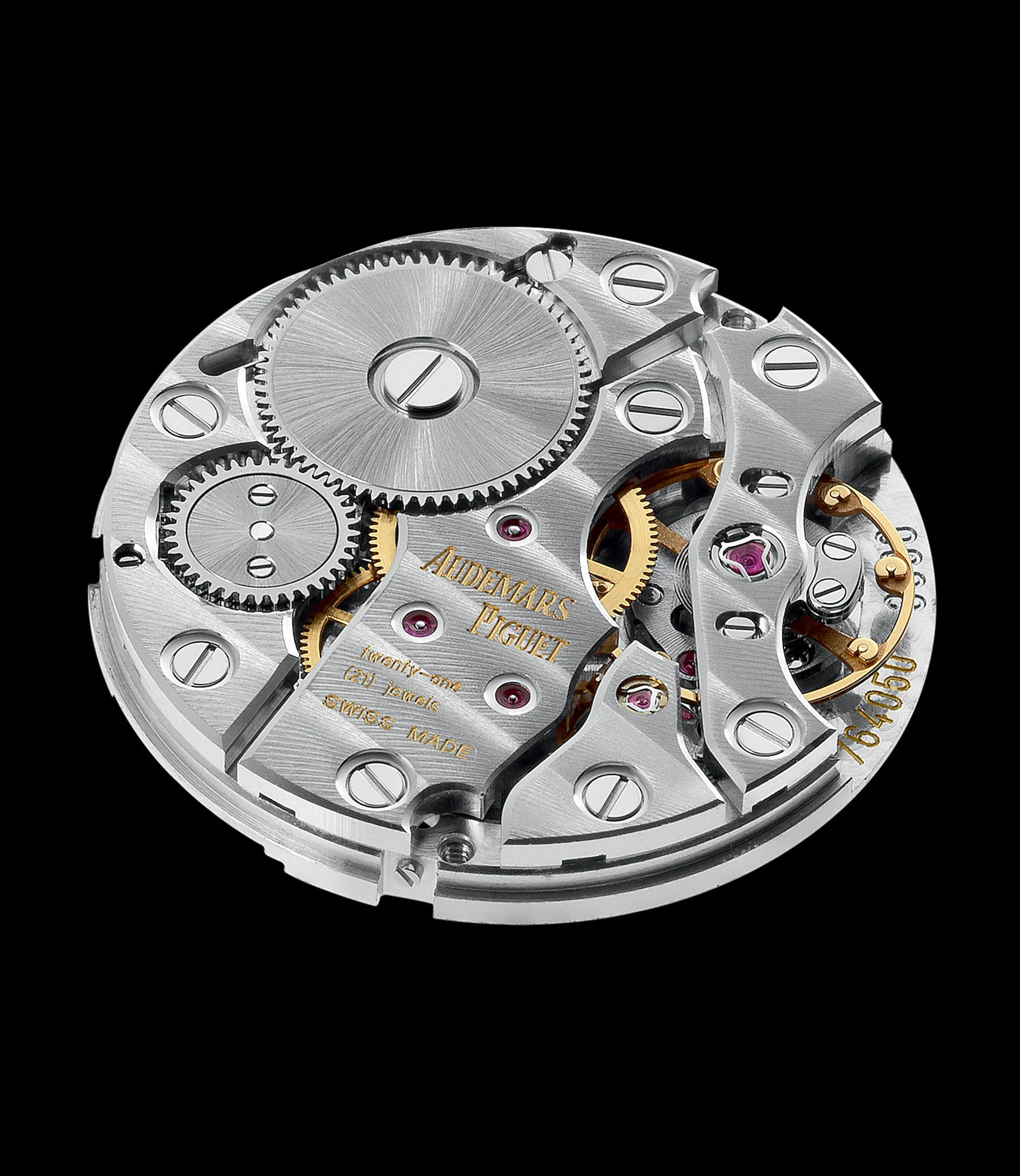
Introduced in 1999, Calibre 3090 was the first internally developed movement to be produced in large series within the Audemars Piguet workshops. Diameter: 9 lignes (20.3 mm). AP Heritage.
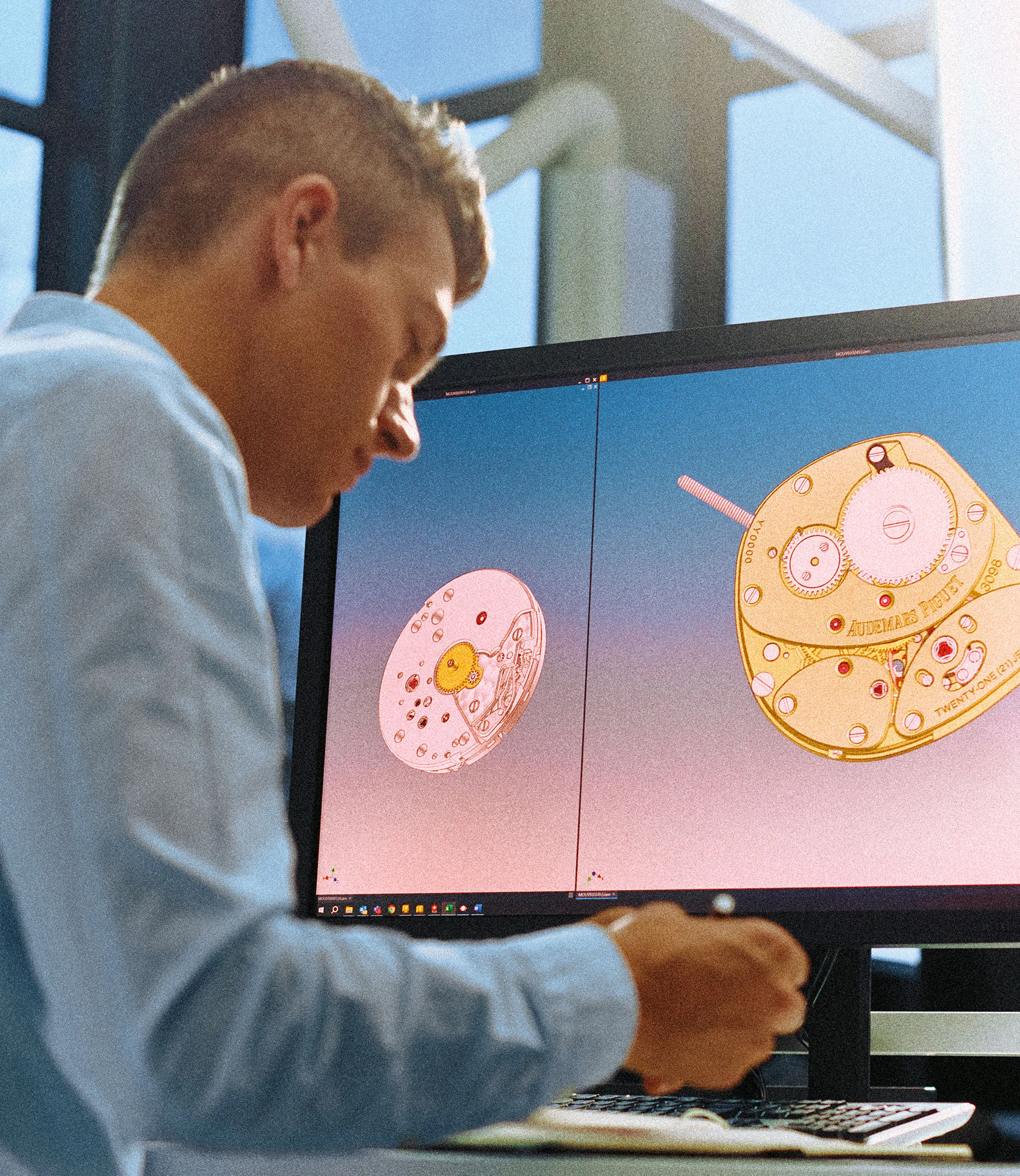
Watch movement constructor Arthur Gallezot orchestrated the evolution of the historical Calibre 3090 so as to adapt it to the Établisseurs Galets watch.
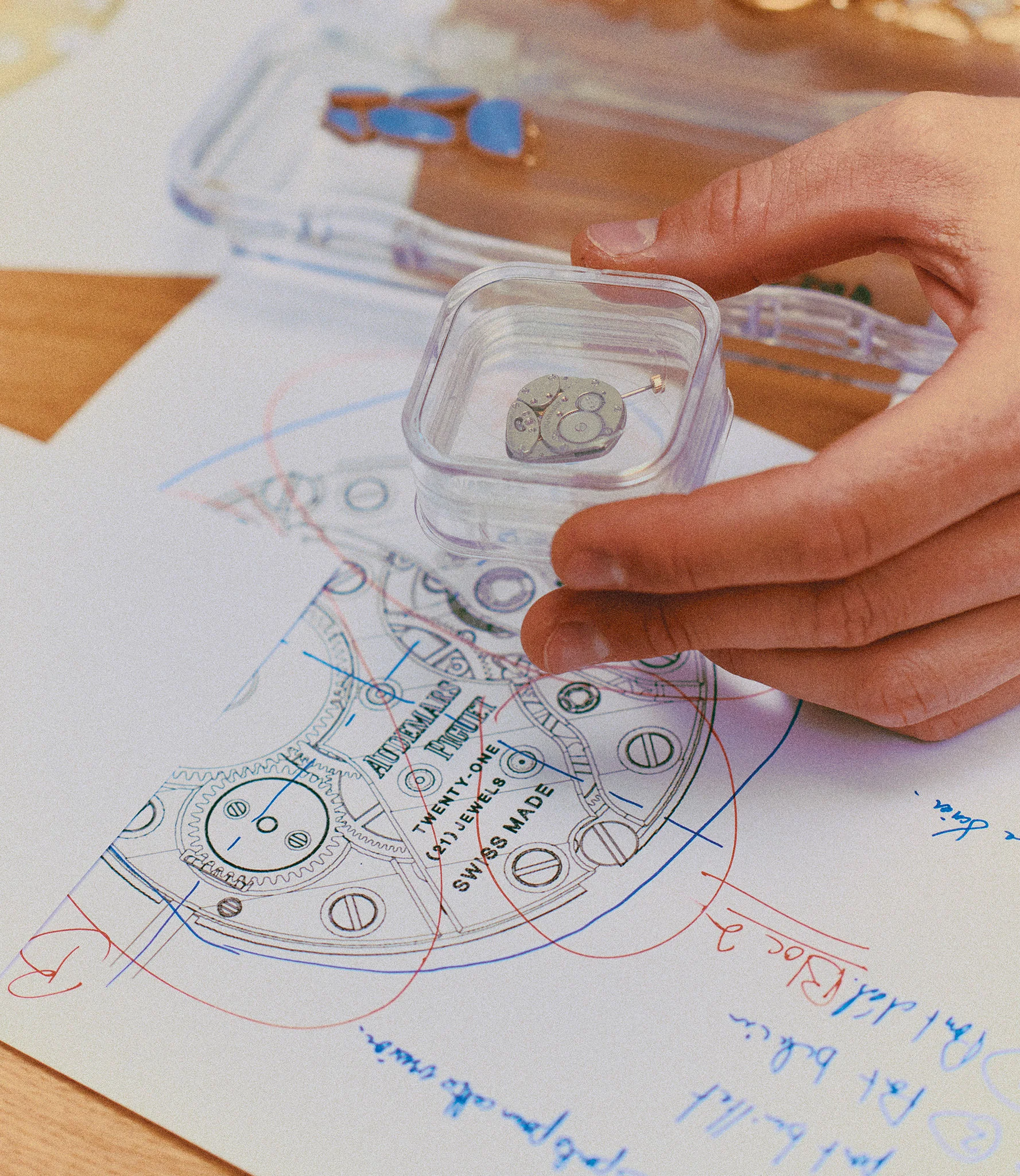
Assembling the first example of a calibre is always a very exciting moment, when reality can be compared with the plans.
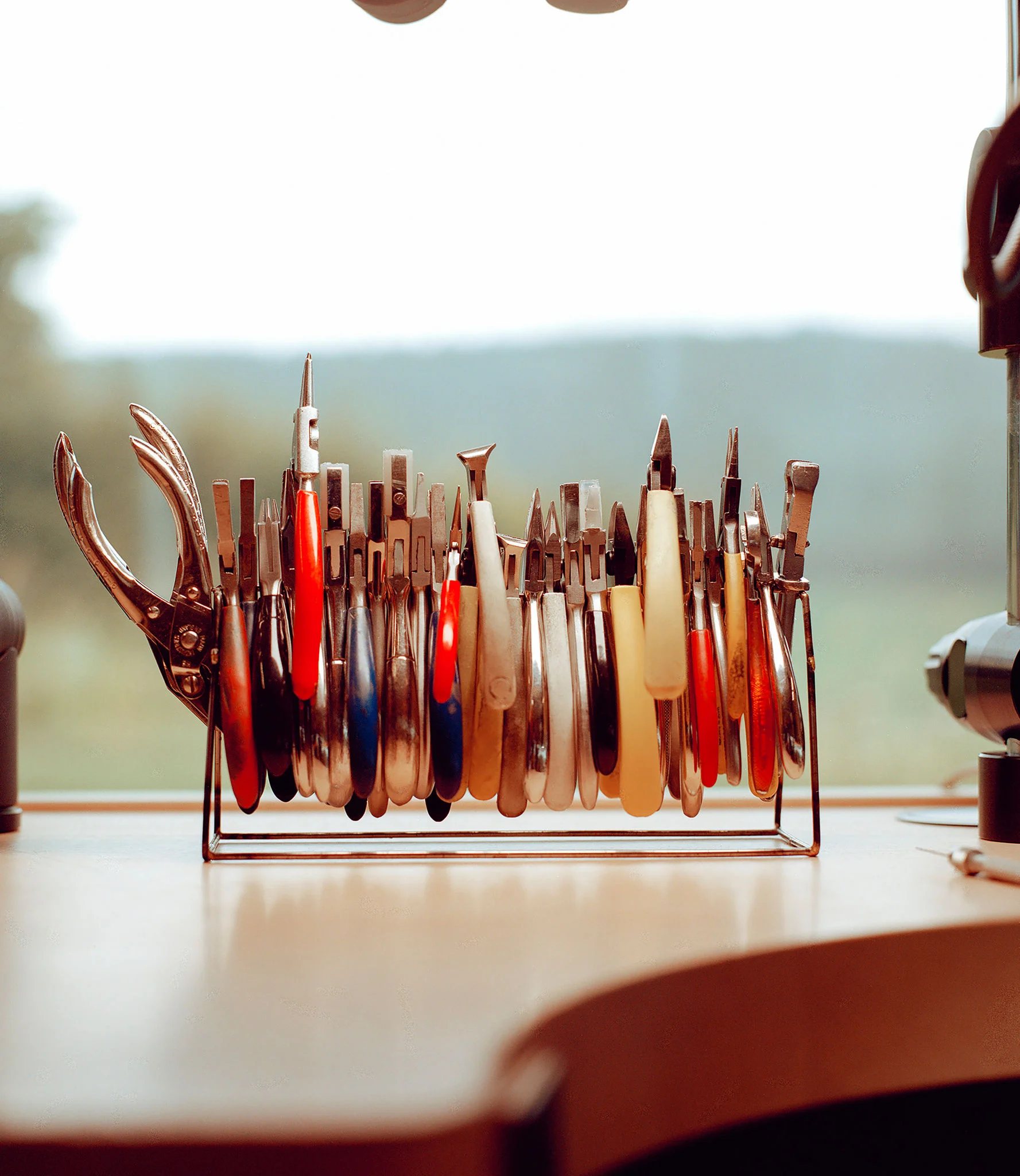
Jewellers' tools in the workshop located within the Musée Atelier Audemars Piguet.
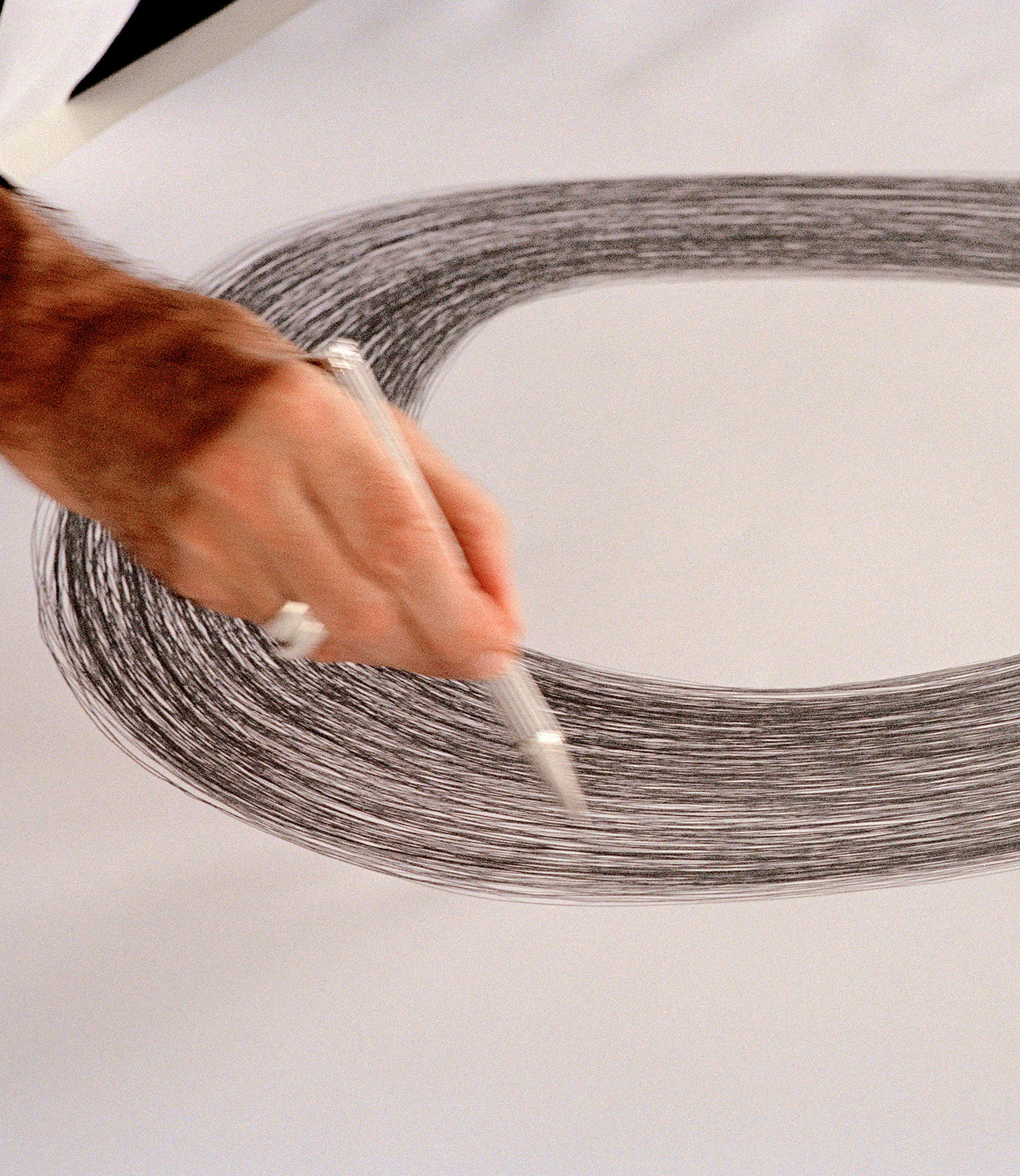
Artist and designer Xavier Perrenoud explores soft, rounded geometrical shapes. Image by AP.
The Établisseurs Galets watch
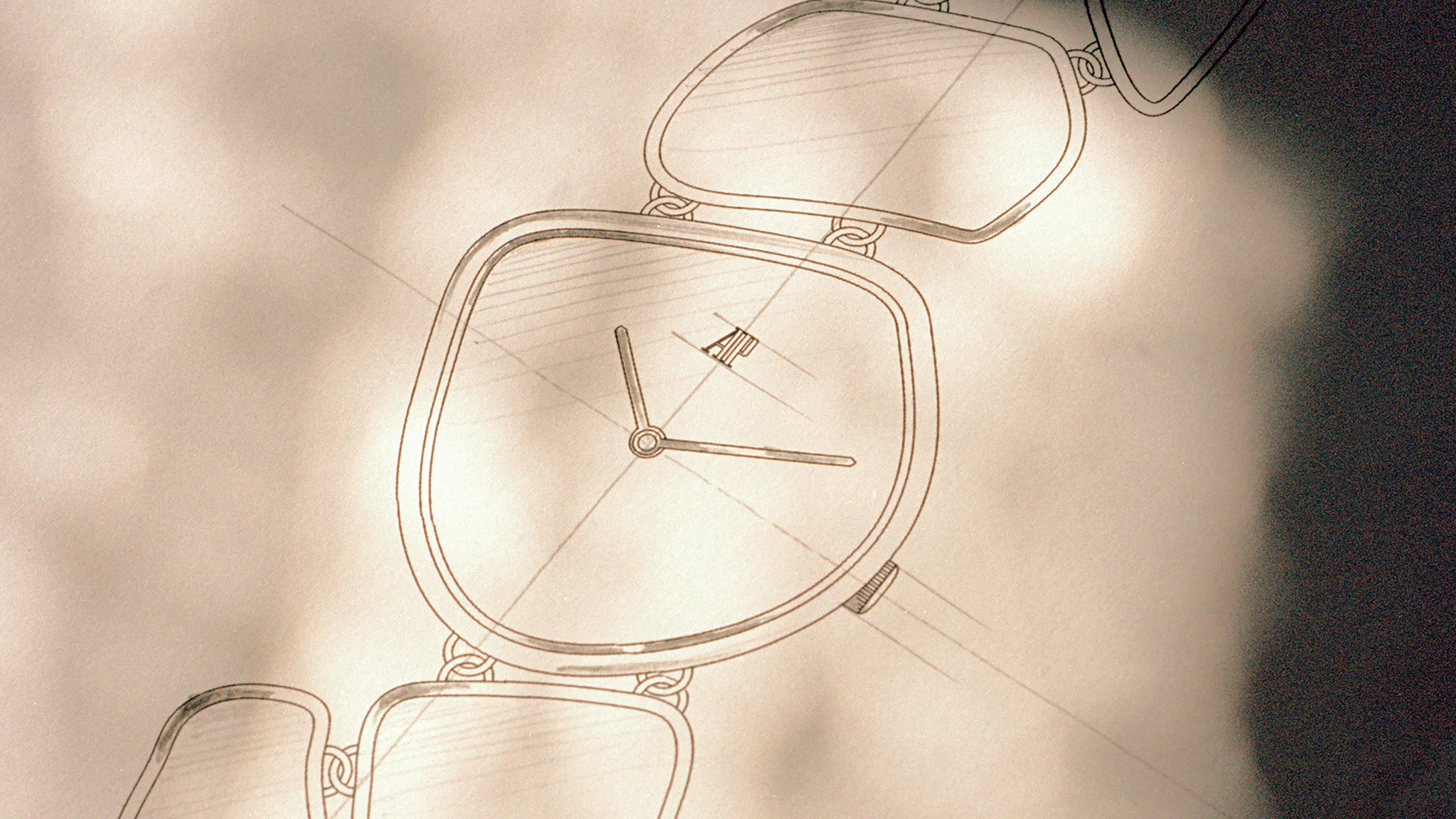
Located a few kilometres from the village of Le Brassus that is home to Audemars Piguet, the Lac de Joux is surrounded by small pebble beaches. It was the memory of these beaches and the design of a 1970s watch called "Arabella" that inspired independent designer Xavier Perrenoud / XJC.
Just as no two pebbles are identical, each link composing the bracelet is different from the others (apart from the extension links). To connect them despite their irregular geometry and arrangement, while maintaining a supple feel and flow, Geneva-based jeweller Nadia Morgenthaler conducted several tests before opting for tiny ball joints. To reduce their weight, the gold links are hollowed out and then set with semi-precious stones, carefully selected and cut in Mario Senape’s Cossonay workshops.
Watch movement constructor Arthur Gallezot redesigned the watch mechanism so that the movement perfectly matches the irregular form of the case and the bridges evoke the shape of pebbles. In the small village of Montmollin, Luca Soprana applies a light frosted texture to the bridges, an ancient technique that is more sophisticated than sandblasting.
In November 2024, the first "Ébauches" left Johann Rochat's workshops to be assembled and adjusted by Aline Gagneux, who had just joined the Atelier des Établisseurs. She checked the performance of Calibre 3098 and made the necessary adjustments before moving on to the small-series production phase.
The stone dial was finely cut and affixed to a very thin metal, before being fitted into asymmetrical oval-shaped cases designed and crafted by Théo Massouatis and Pablo Brenlla in their Plan-Les-Ouates workshop. The curves extend to the two sapphire crystals with their complex geometry.
Each watch takes weeks to craft and production will therefore be limited to just a few of these timepieces per year.
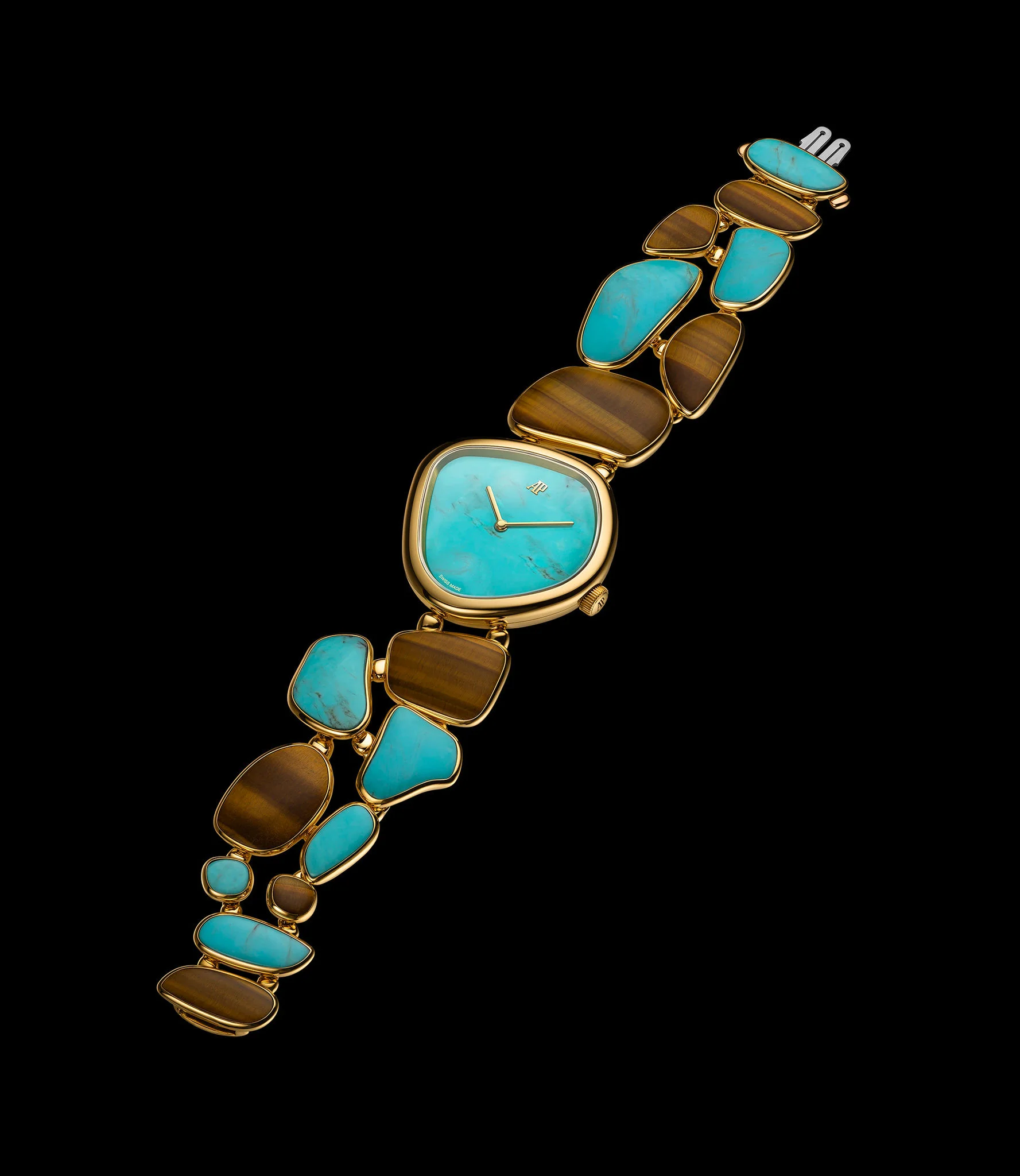
The first version of the Établisseurs Galets watch combines turquoise and tiger's eye stones. Prototype presented at Watches and Wonders Geneva 2026. AP Heritage, Inv. 2614.
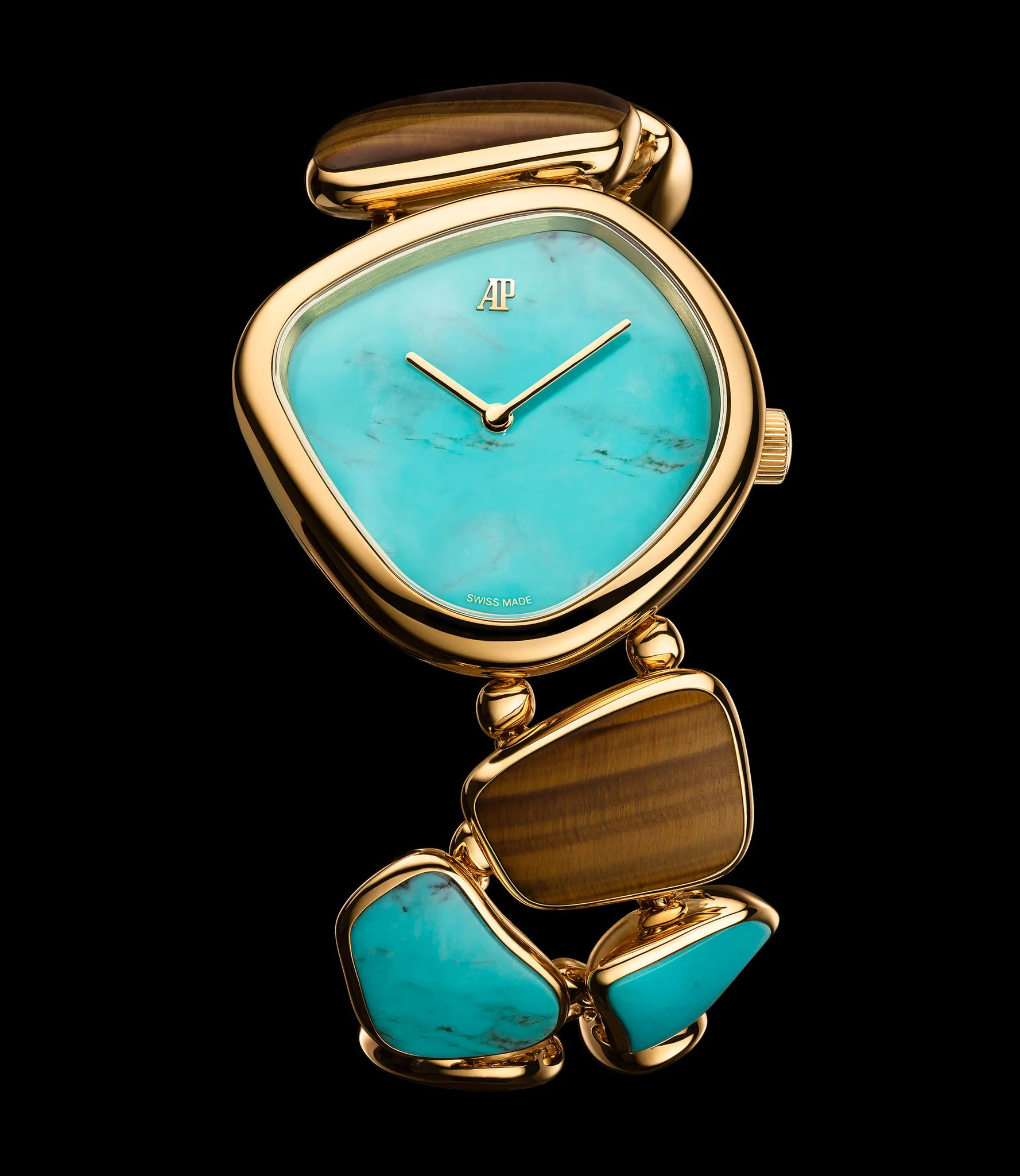
The first version of the Établisseurs Galets watch combines turquoise and tiger's eye stones. Prototype presented at Watches and Wonders Geneva 2026. Audemars Piguet Heritage, Inv. 2614. AP Heritage, Inv. 2614.
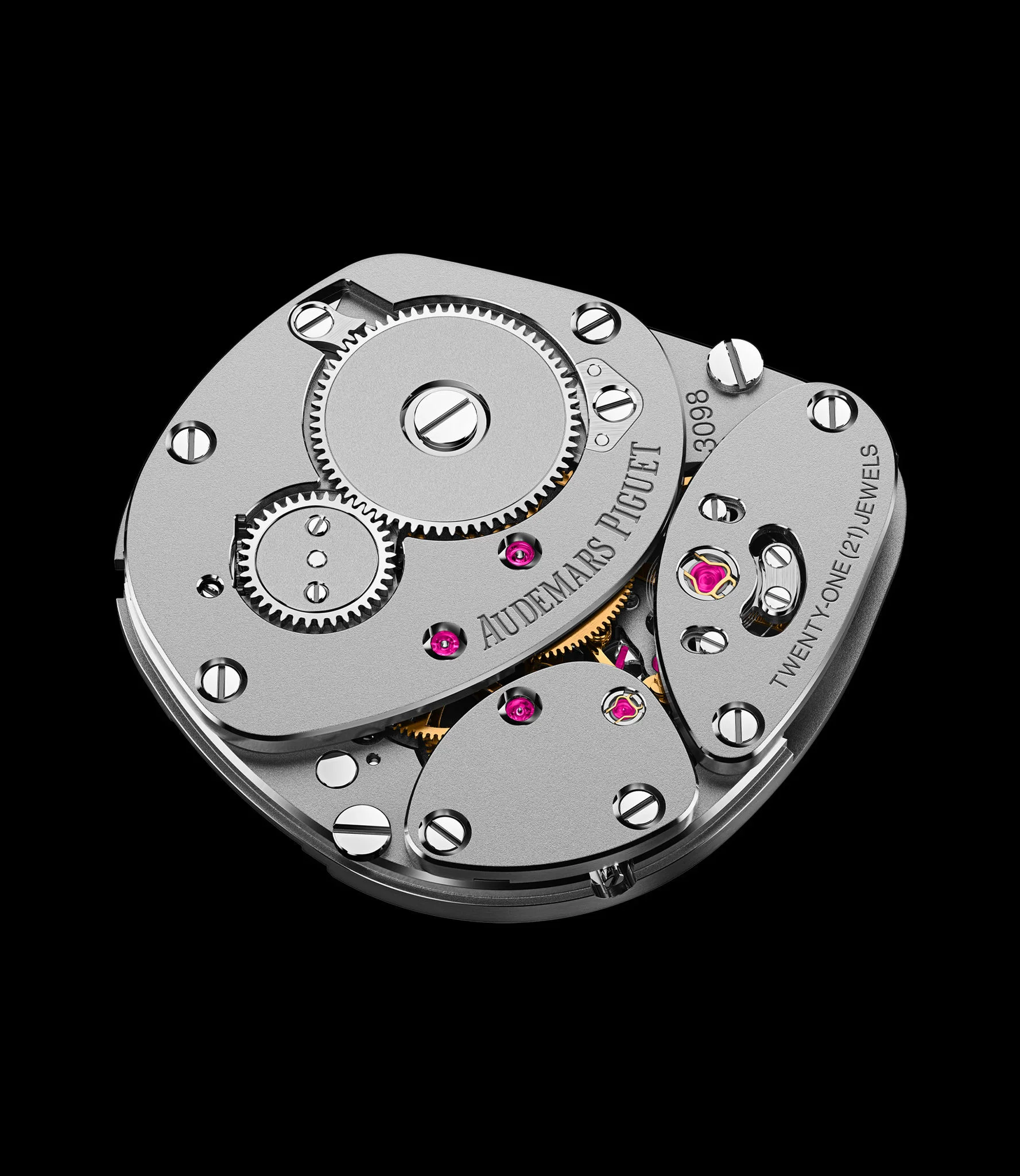
Calibre 3098 was developed especially for the Établisseurs Galets watch, based on the historical Calibre 3090. chamfered bridges. Movement assembled and finished in the Ateliers des Établisseurs.

In 1972, Audemars Piguet took part in the Baden Baden jewellery competition with the watch known as "Arabella", whose design inspired the Établisseurs Galets watch.
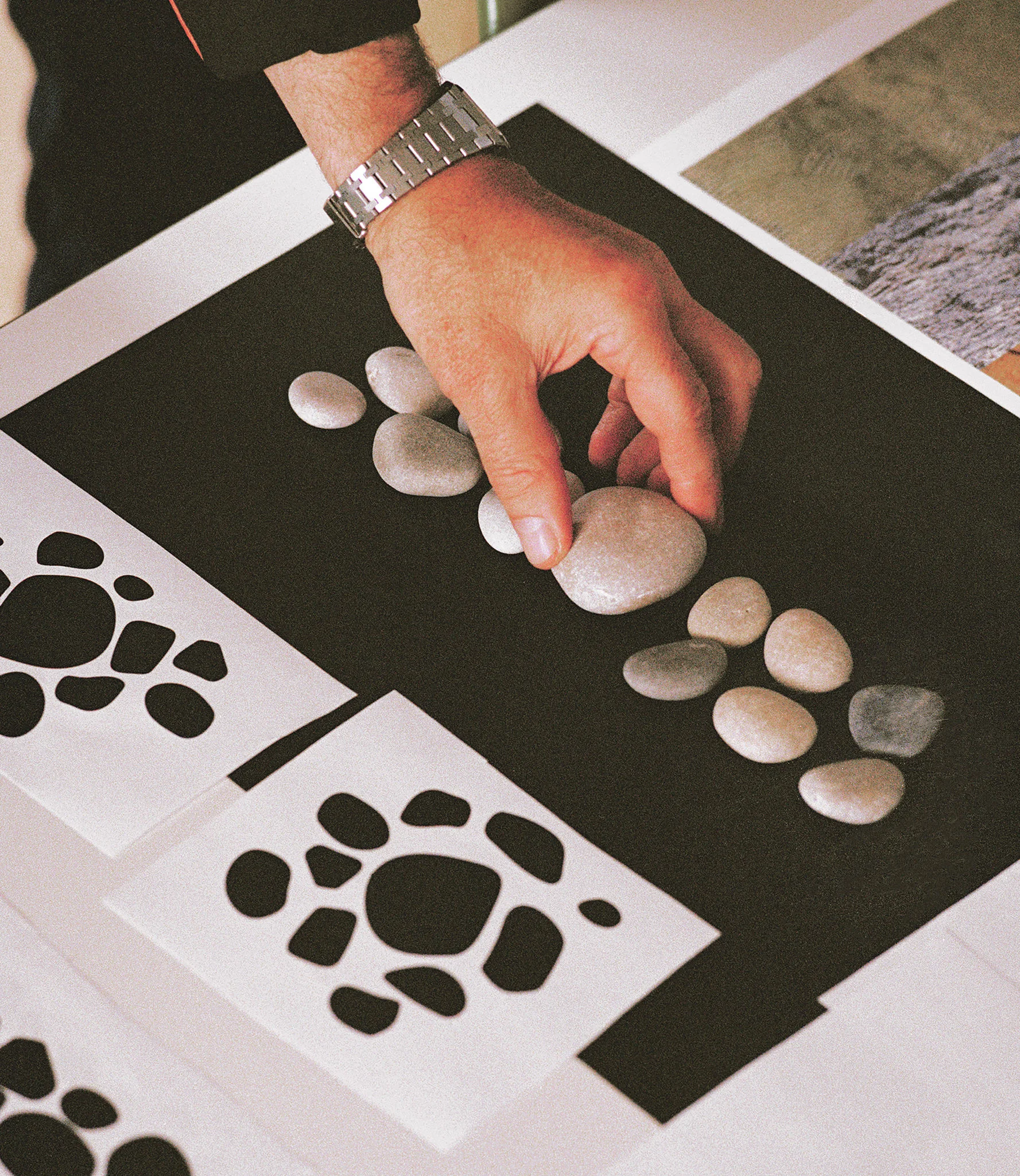
Composing the motifs on the Établisseurs Galets watch. XJC workshop, AP image.
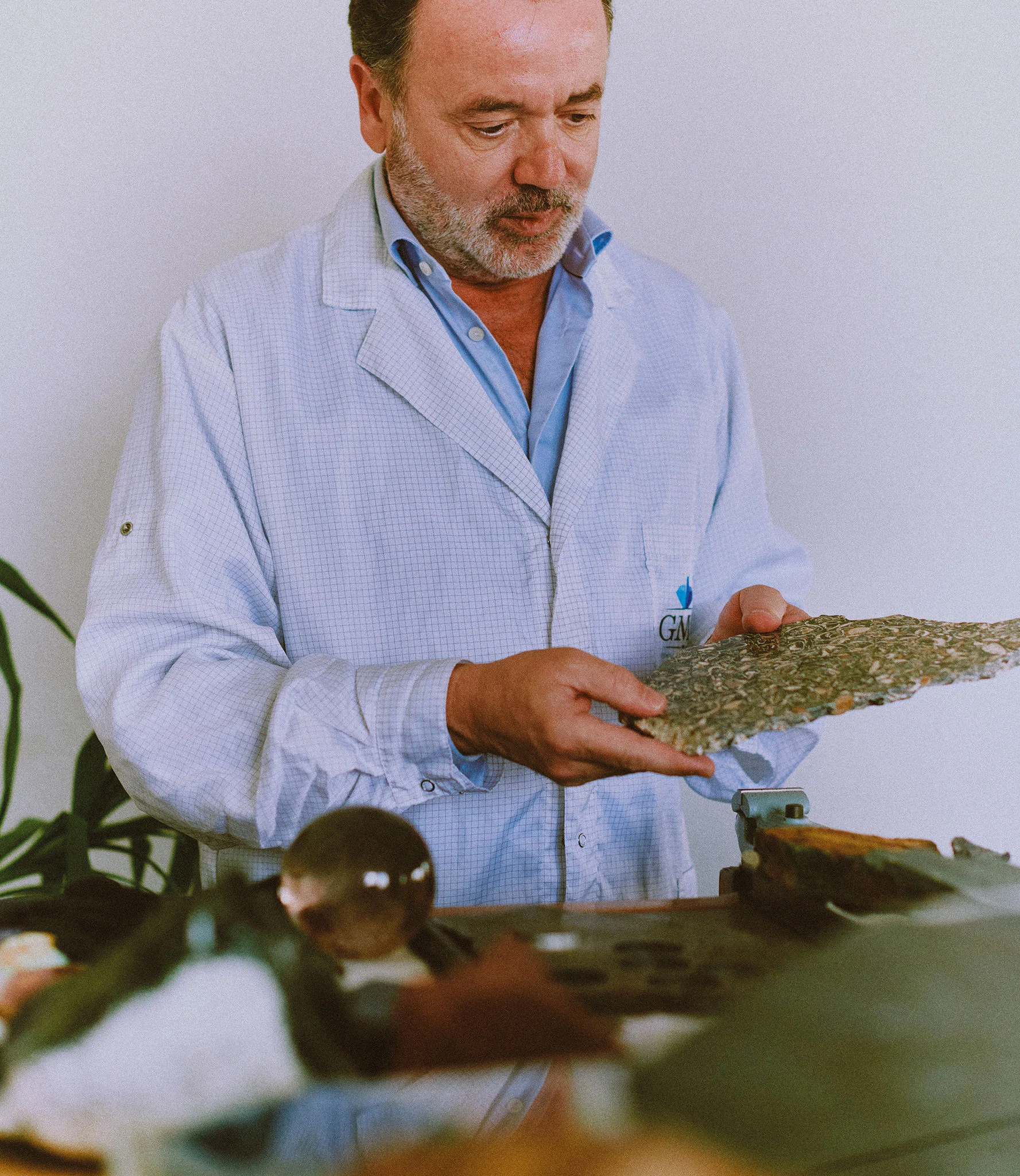
Stones selected by gemmologist and lapidary Mario Senape.
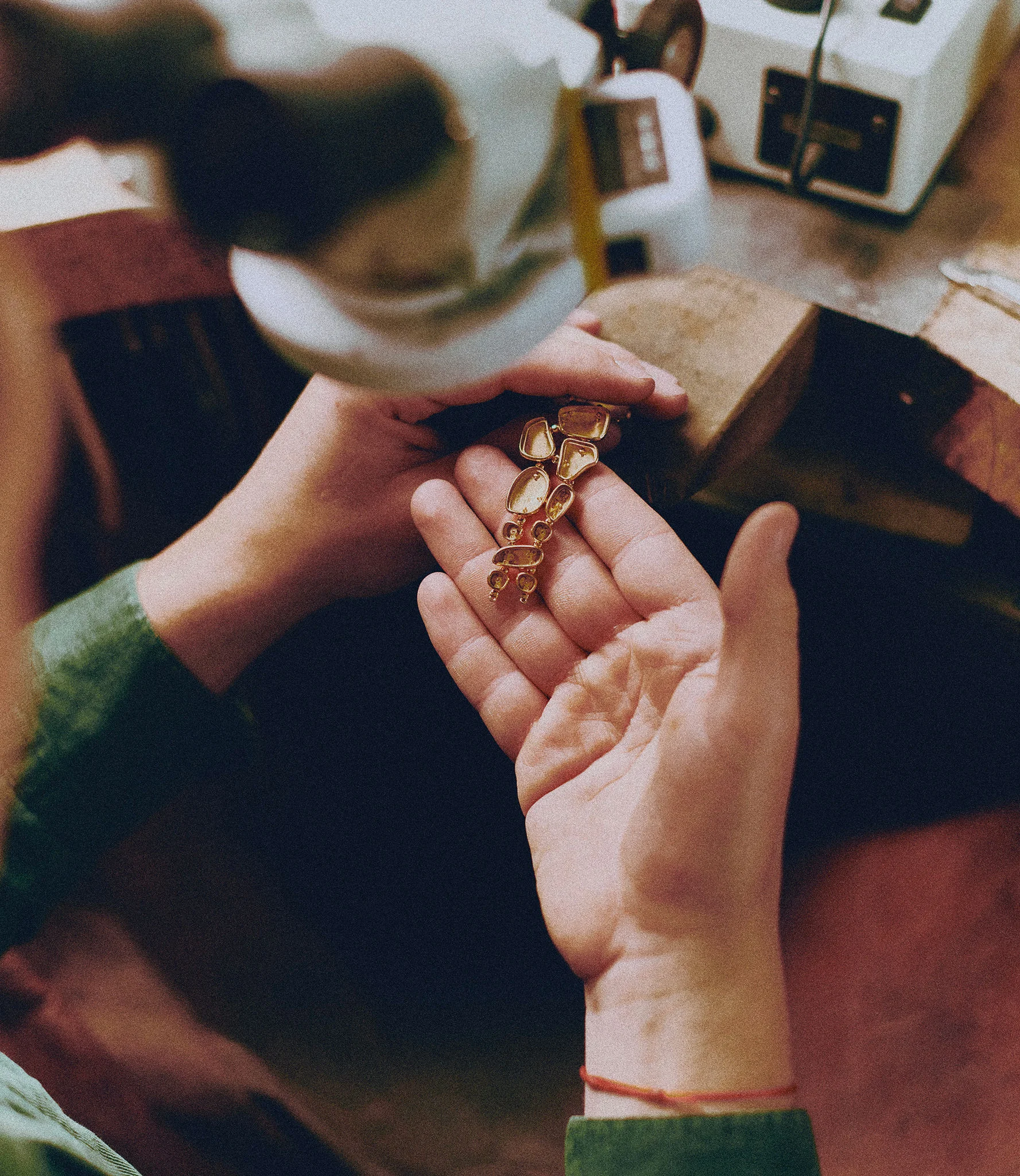
The bracelet links are hollowed out to reduce the weight of the watch. Each one then houses a custom-cut stone. Nadia Morgenthaler's workshop.
The Établisseurs Peacock watch
Surprising observers by exploring new forms and new territories: the Établisseurs project offers a magnificent playground for creativity. When he made his first sketches, young designer Kenan Géraud worked with abstract forms and played with the idea of revealing the time. Among the dozens of sketches, one resembled a bird. The team asked him: "Why not make a real bird? AP made elephant, lion and even mermaid watches in the 1990s."
As the idea matured, the project became more complex, raising various issues. On the wrist, a bird spreading its wings and raising its head could snag clothing... It would need to be possible to close them at will... How would the time be displayed? But when the project was presented to Ilaria Resta in November 2024, she fell in love with it: "Spectacular! If one particular watch must be made, this is the one!" Watch developer Giulio Papi shared her enthusiasm. He offered to design the mechanism for opening the wings and raising the head. The technique required the expertise of an automaton maker more than that of a watchmaker.
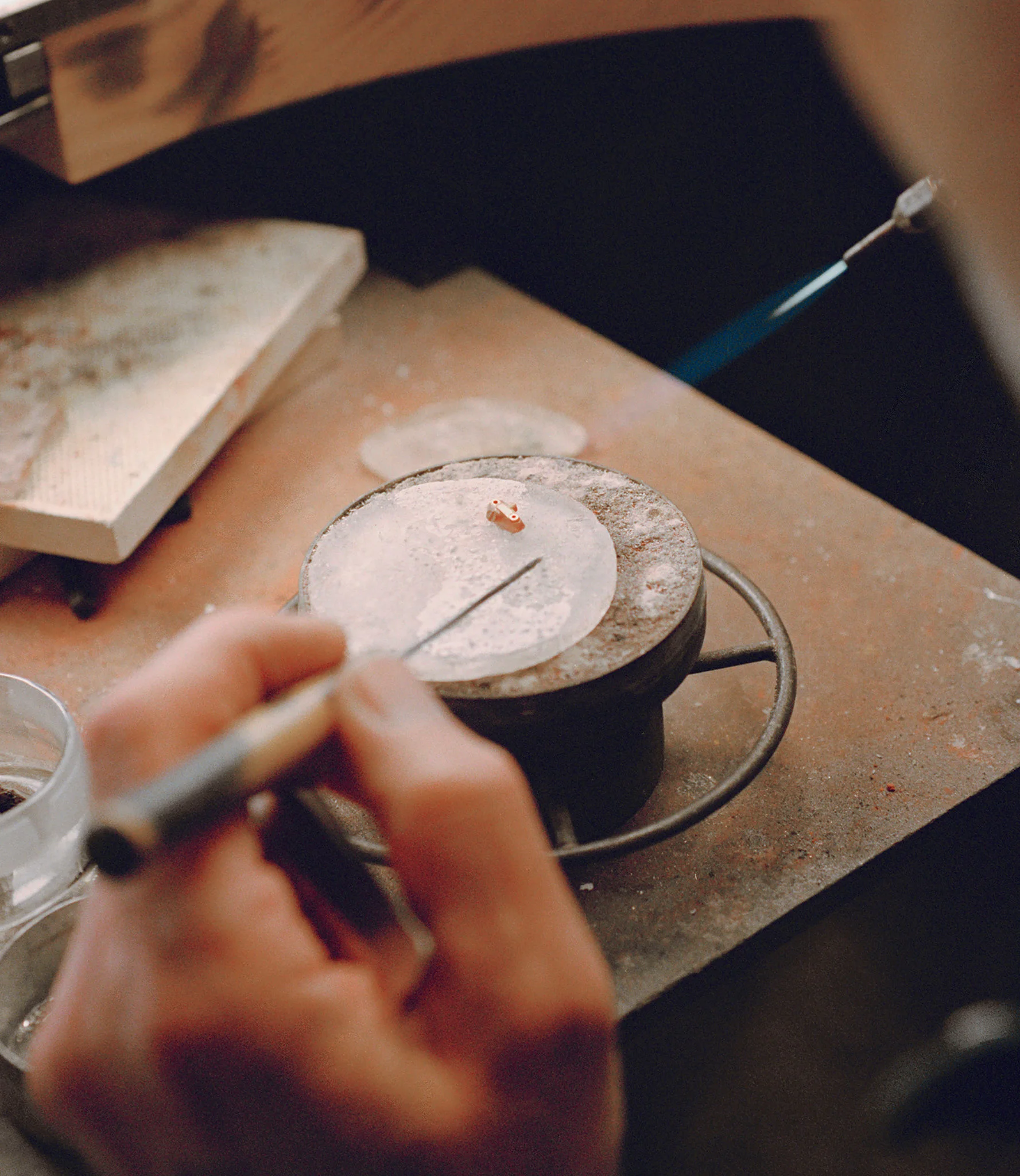
To evoke the flamboyance of a peacock tail with unfurled feathers, the gold dial crafted by Saint-Imier dial-maker Vincent Michel was carved into small compartments, featuring backgrounds hand-engraved by Guy Froidevaux based in La Chaux-de-Fonds and who is also responsible for engraving the head and neck. In her Peseux workshop, enameller Vanessa Lecci coats each dial compartment with a thin layer of translucent enamel in shimmering colours.
Meanwhile, the bracelet vividly evokes plumage. Based at the Musée Atelier Audemars Piguet, jeweller Ywan Kunzle was responsible for its design, handcrafting, assembly and finishing. Each link consisting of a shell and cover is connected to the others by invisible pins.
The wings were made using the jewellery casting method by Adrian Altman's workshops in Ipsach. The two parts – one hammered and the other engraved – were secured to a titanium frame. When opened, they reveal the case that rises to display the time. It is powered by Calibre 3098, redesigned for the occasion, with its sunburst-finished three-quarter mainplate, entirely assembled and finished by hand, as are all Établisseurs watches.
Although the Établisseurs Peacock watch was the first to be approved, its development proved to be long and complex, notably due to the secret opening system.
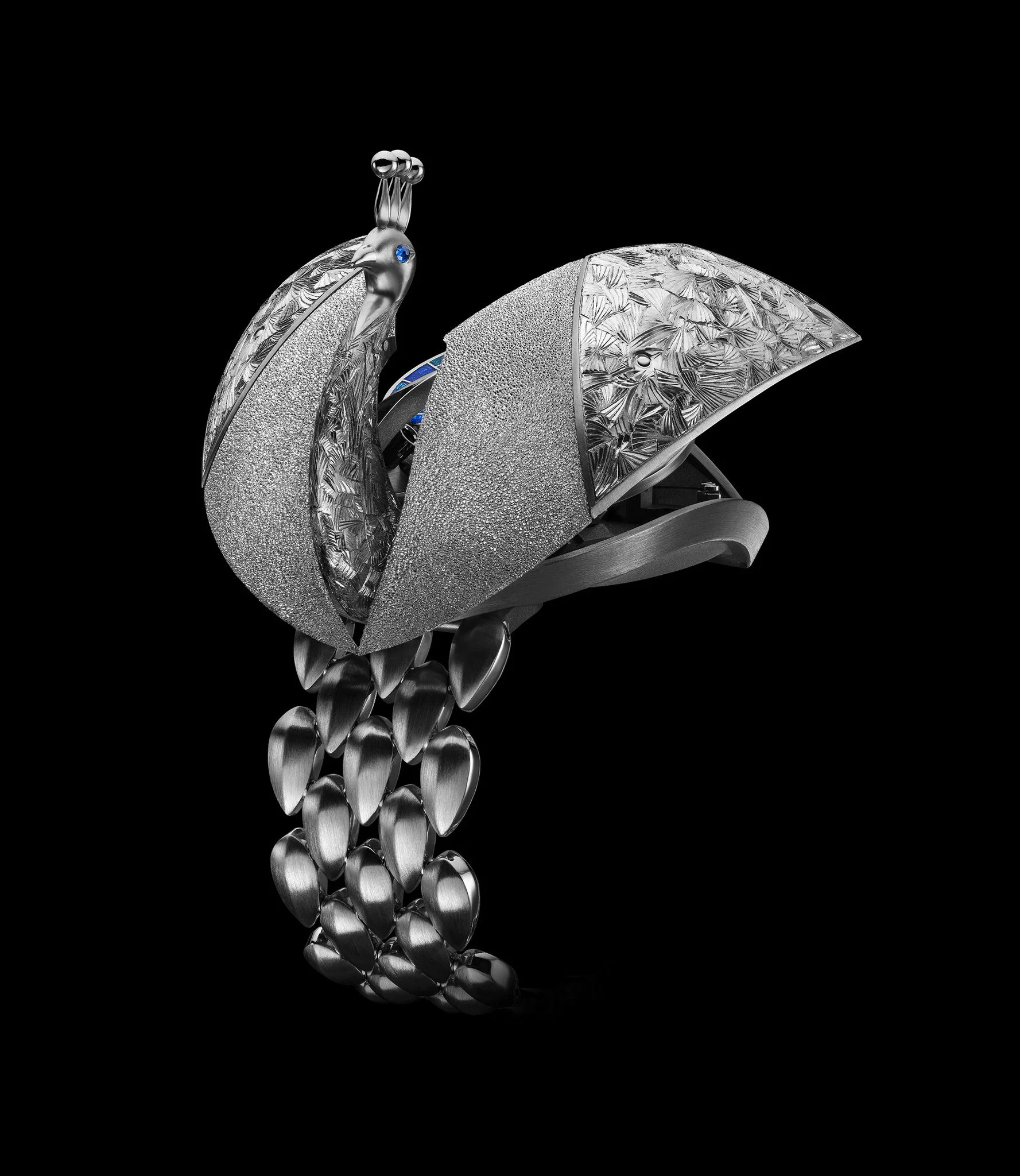
The Établisseurs Peacock watch plays on visibility and concealment. When closed, it resembles a beetle resting on the wrist. On demand, its head lifts and its wings unfold to reveal an enamelled dial indicating the time (in running mode). Prototype presented at Watches and Wonders Geneva 2026. AP Heritage, Inv. 2615.
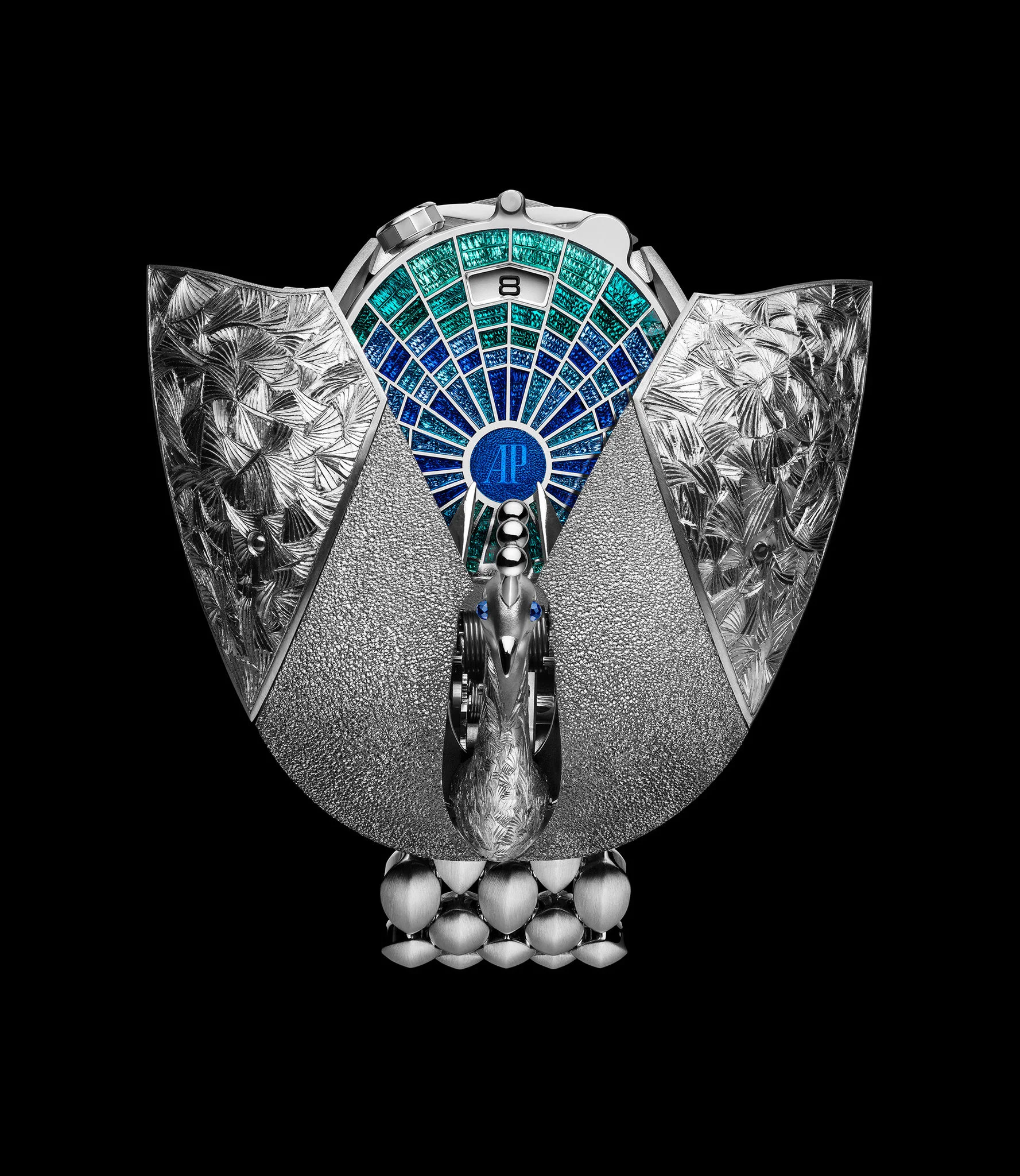
The Établisseurs Peacock watch plays on visibility and concealment. When closed, it resembles a beetle resting on the wrist. On demand, its head lifts and its wings unfold to reveal an enamelled dial indicating the time (in running mode). Prototype presented at Watches and Wonders Geneva 2026. AP Heritage, Inv. 2615.
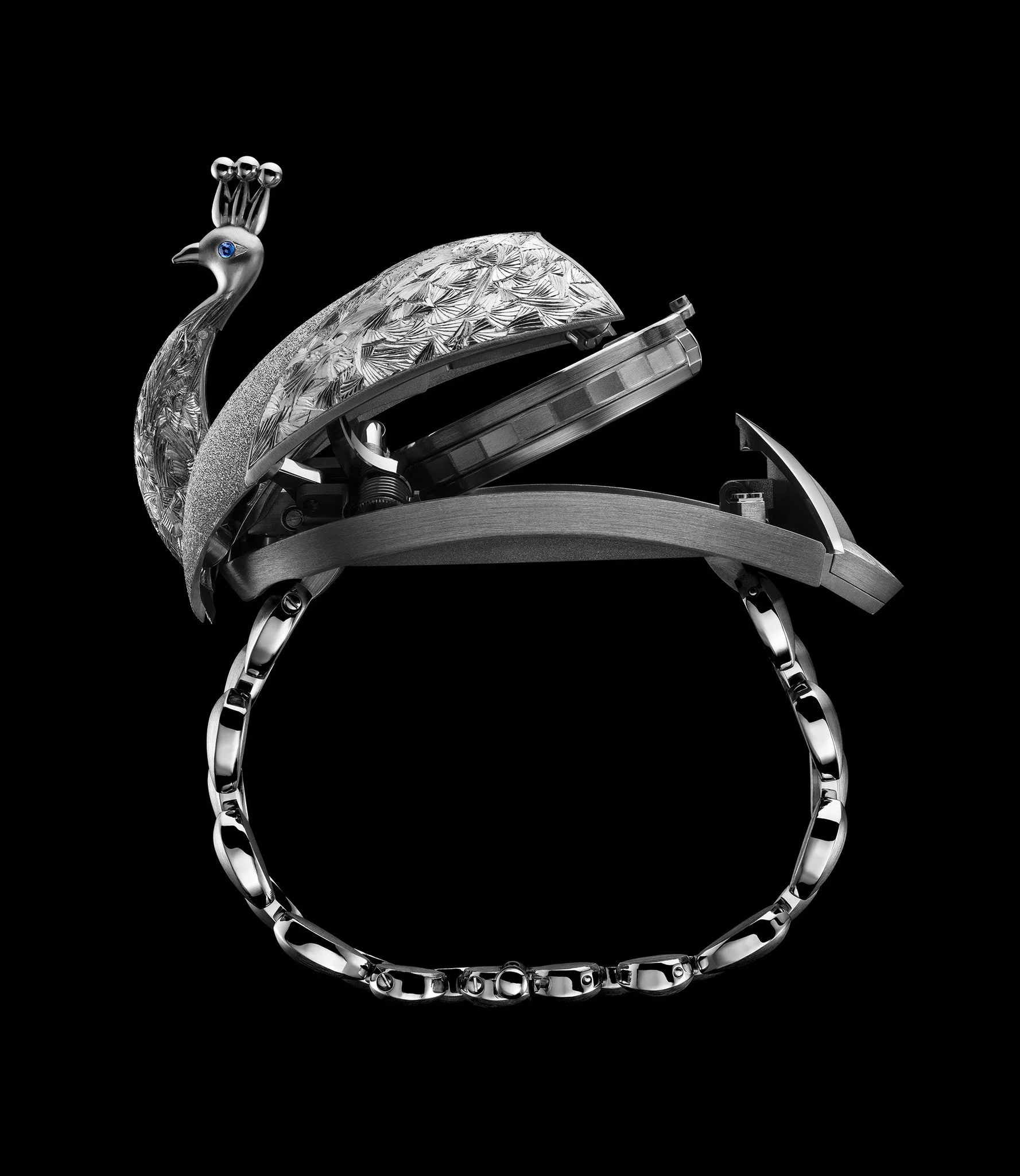
The Établisseurs Peacock watch plays on visibility and concealment. When closed, it resembles a beetle resting on the wrist. On demand, its head lifts and its wings unfold to reveal an enamelled dial indicating the time (in running mode). Prototype presented at Watches and Wonders Geneva 2026. AP Heritage, Inv. 2615.
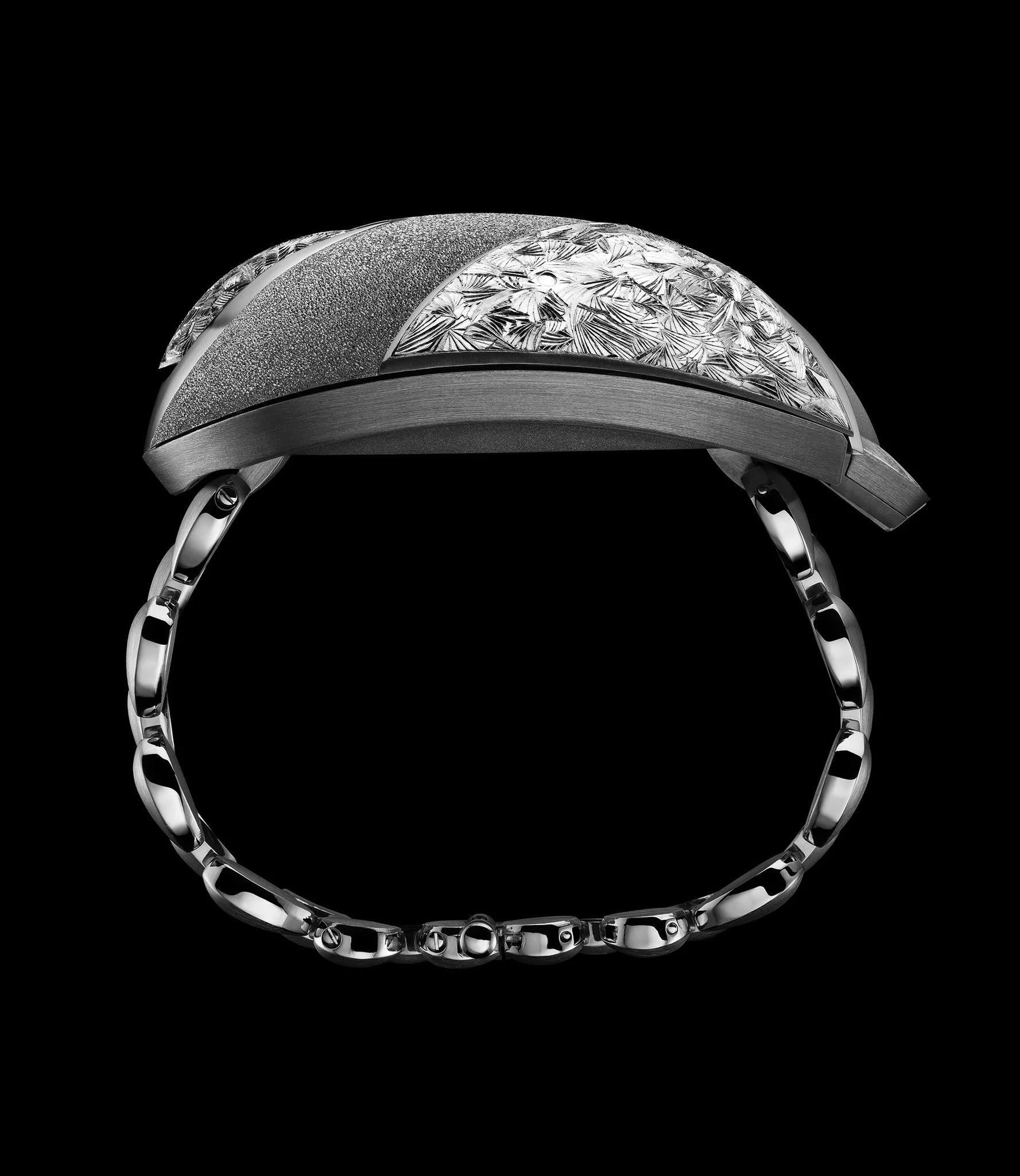
The Établisseurs Peacock watch plays on visibility and concealment. When closed, it resembles a beetle resting on the wrist. On demand, its head lifts and its wings unfold to reveal an enamelled dial indicating the time (in running mode). Prototype presented at Watches and Wonders Geneva 2026. AP Heritage, Inv. 2615.
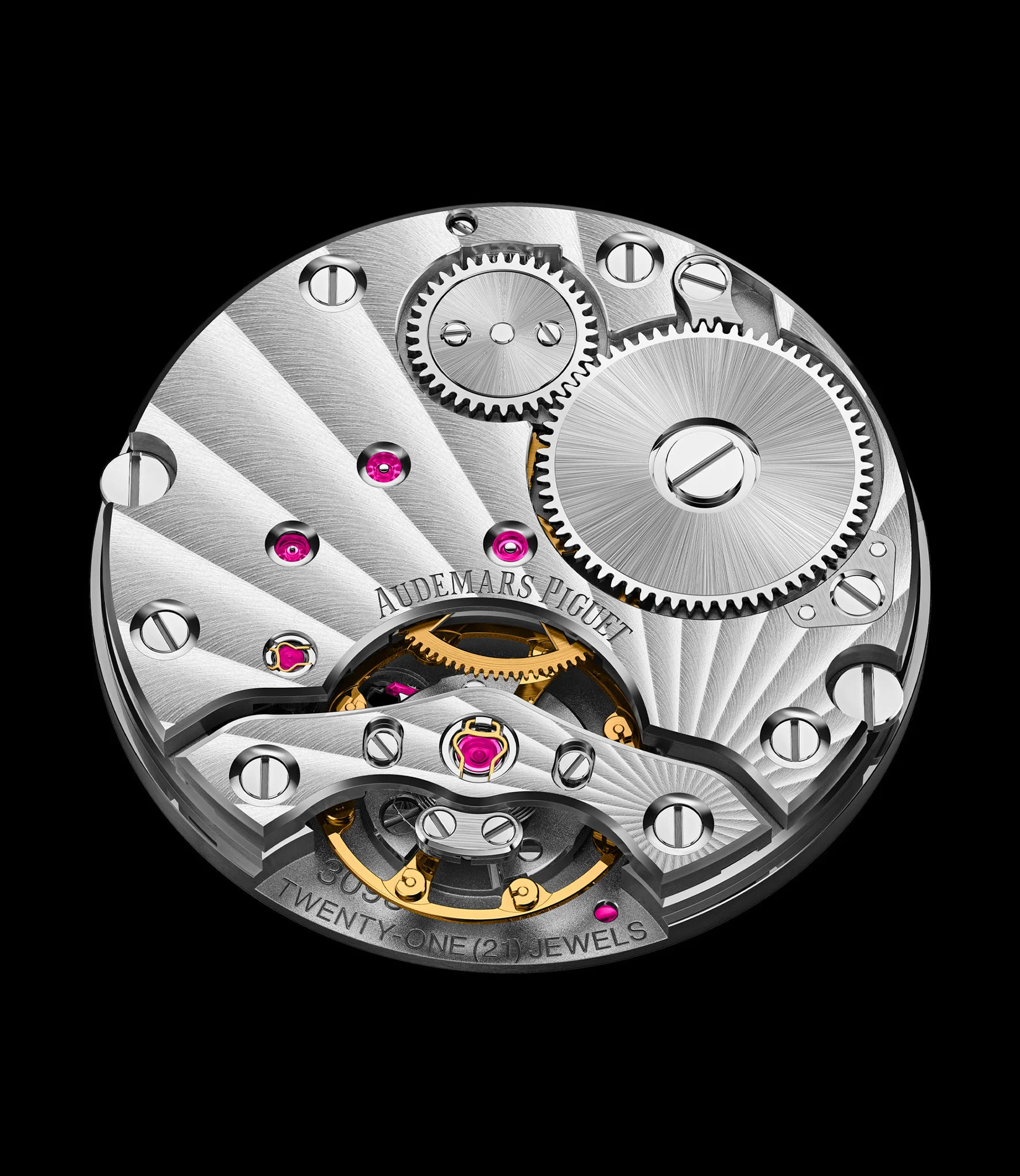
Specially created for the Établisseurs Peacock watch, the Calibre 3098 reinterprets the 3090 from 1999. It is notably distingushed by the sunburst Côtes de Genève pattern, crafted in the traditional manner to adorn a bridge on the three-quarter mainplate.
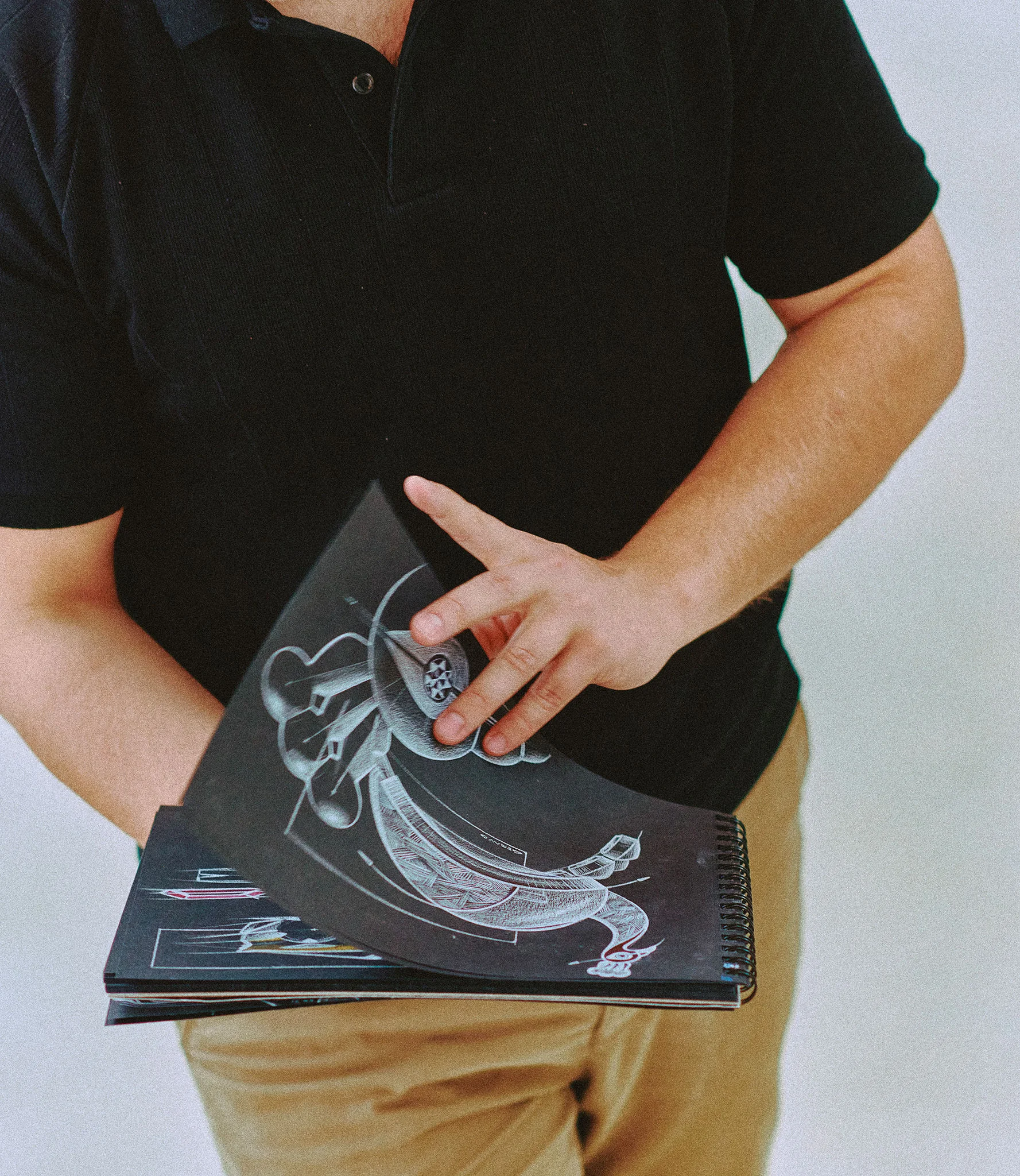
The watch was conceptualised by young designer Kenan Geraud at the Audemars Piguet manufactory in Le Locle.
Each bracelet link was crafted and finished by Ywan Kunzle, jeweller at the Musée Atelier Audemars Piguet.
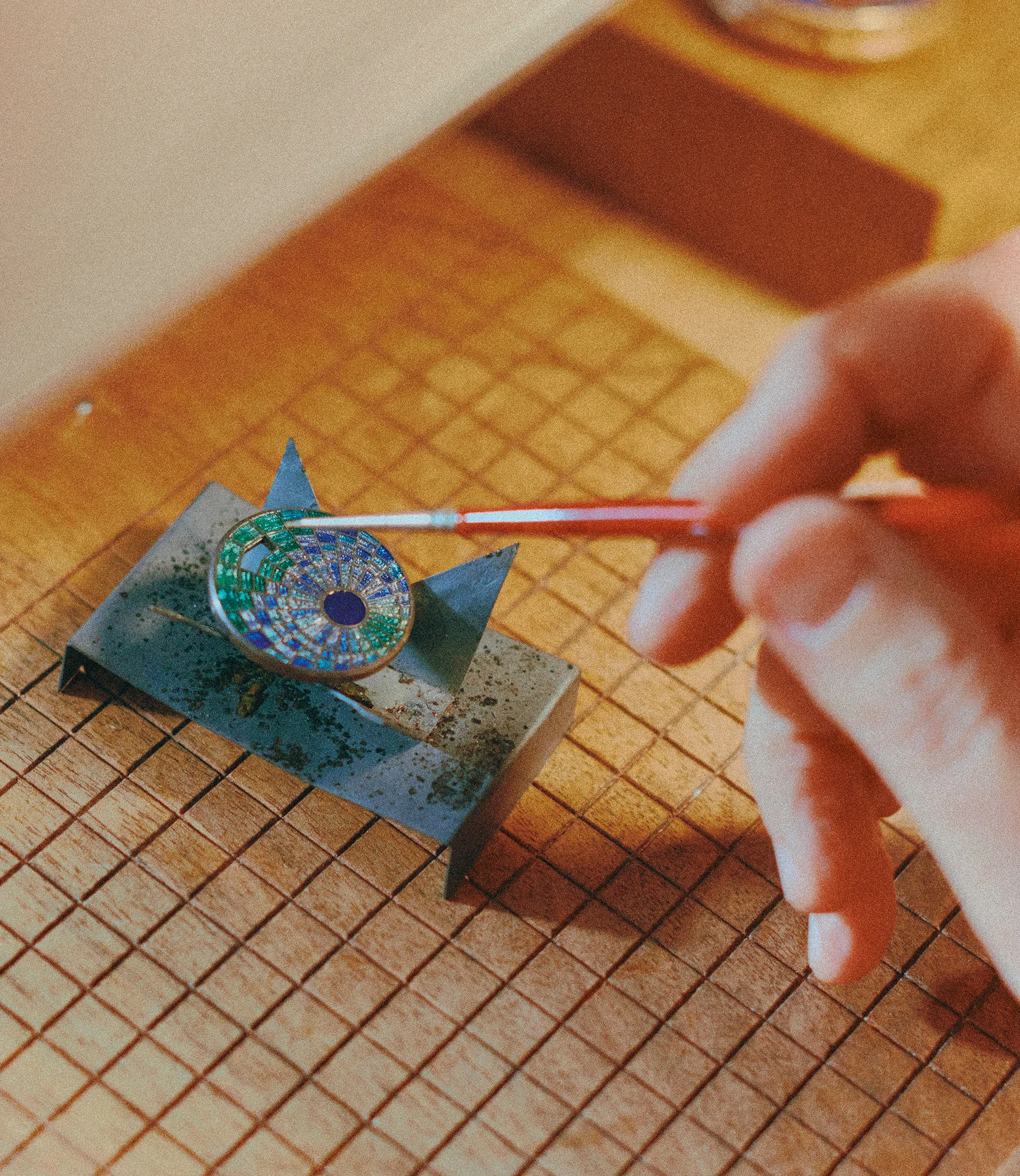
Enameller Vanessa Lecci applies translucent enamel powders to the engraved compartments of the gold dial (champlevé enamelling).
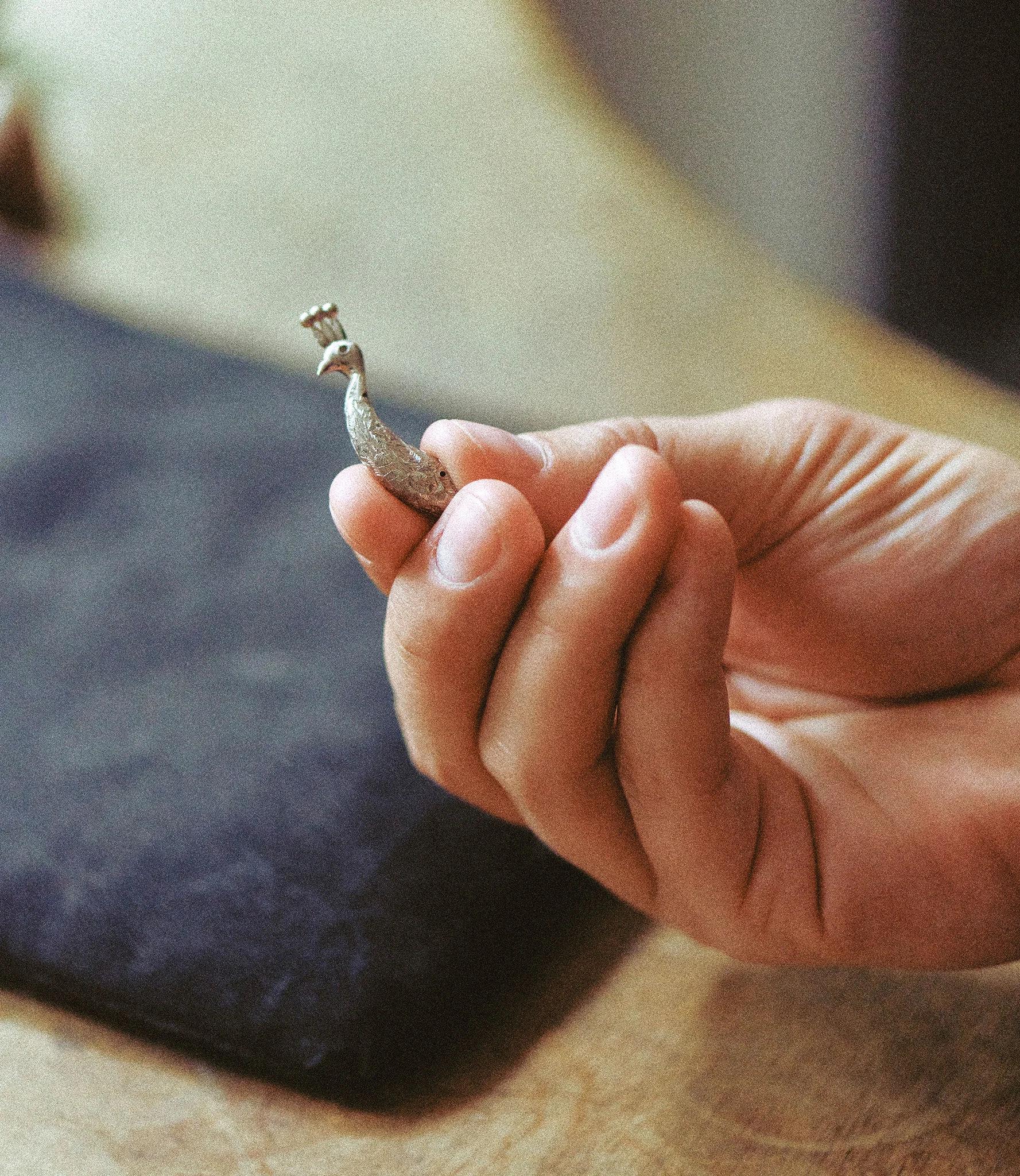
Engraver Guy Froidevaux holds the peacock's head between his fingers.
The Établisseurs Nomade watch
Polymorphic, multifunctional and contemporary, the Établisseurs Nomade watch combining traditional craftsmanship with high technology was designed by Ludovic Python.
When closed, its case is sized to fit into a small pocket on a pair of jeans. By pressing two mysterious pushers, the user unlocks the watch, which slides open to reveal the time through a skeletonised calibre whose bridges mark off the hours. Pulling the case out a further notch transforms it into a carriage clock.
Calibre 7501 reinterprets the extra-thin Calibre 7121 from 2022. It features an original three-layer sandwich construction, secured by the rim conceptualised by the designer and built by XXX. The structure is cut by a skeleton-work specialist using a tiny jeweller’s saw frame known as a bocfil, a skill that is becoming increasingly rare in watchmaking.
The casing alone is a tour de force. The metal structure along with the opening and pivoting system were developed and produced by Emmanuel Desuzinges' workshops in Carouge. It consists of a complex titanium mesh set with faceted stones by Mario Senape and a case that slides on a special carriage, articulated so that the watch tilts over to become a table clock.
Other notable details include the calibre's hour-markers, which extend onto the peripheral dial structured with stone plates. As for the sapphire crystal produced by Alexis Bernard in Colombier, its unusual size required special machining. The custom-designed chain is made of titanium, a material rarely used in such a complex geometrical structure.
The Atelier des Établisseurs plans to produce around 15 Établisseurs Nomade watches over a period of several years.
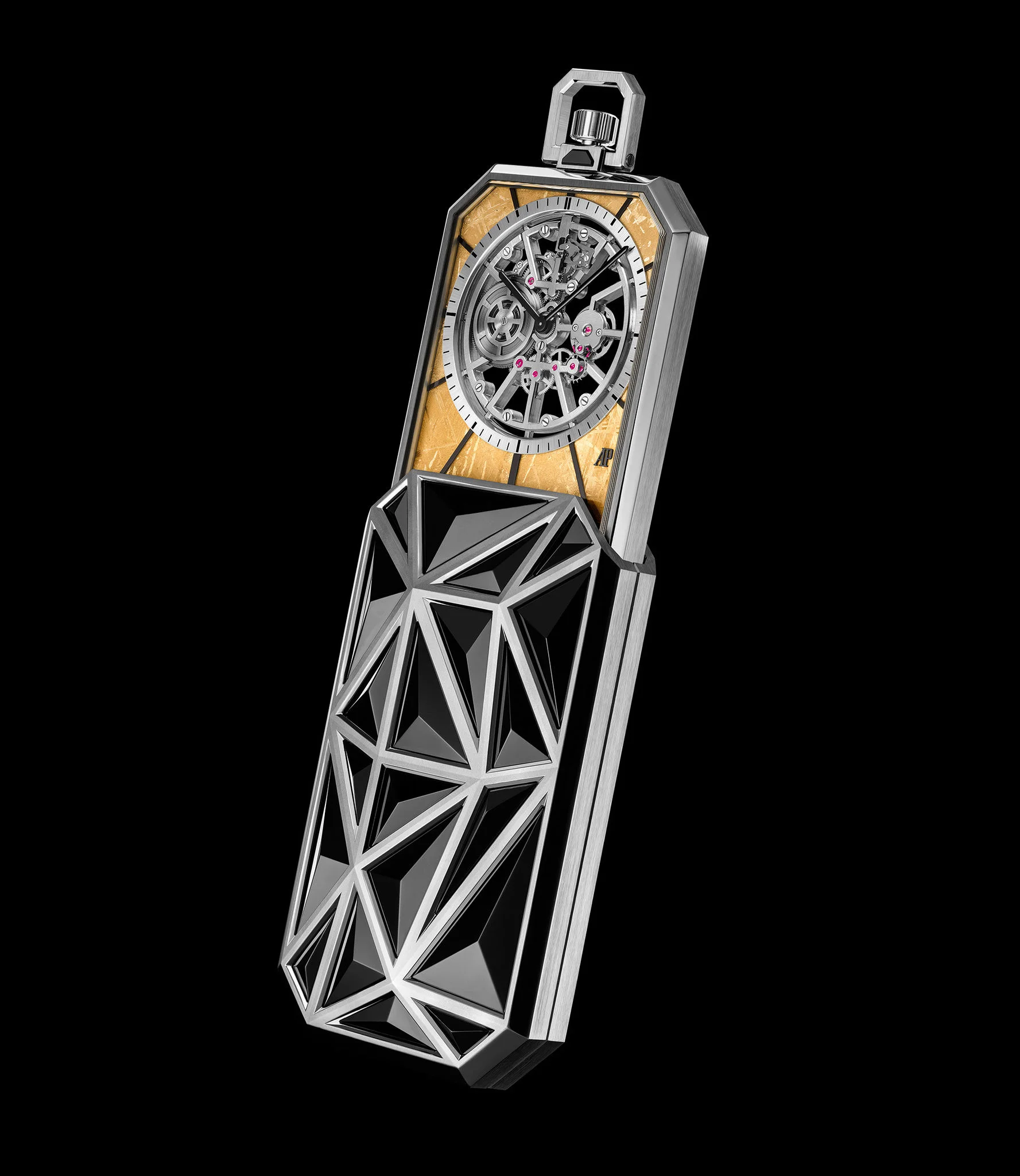
The Établisseurs Nomade watch showcases the traditional craft of openworking using a tiny jeweller’s hacksaw. Pressing two secret push-pieces opens the metal and semi-precious stone case to reveal the time. The watch can be transformed into a carriage clock at will. Prototype presented at Watches and Wonders Geneva 2026. AP Heritage, Inv. 2616.
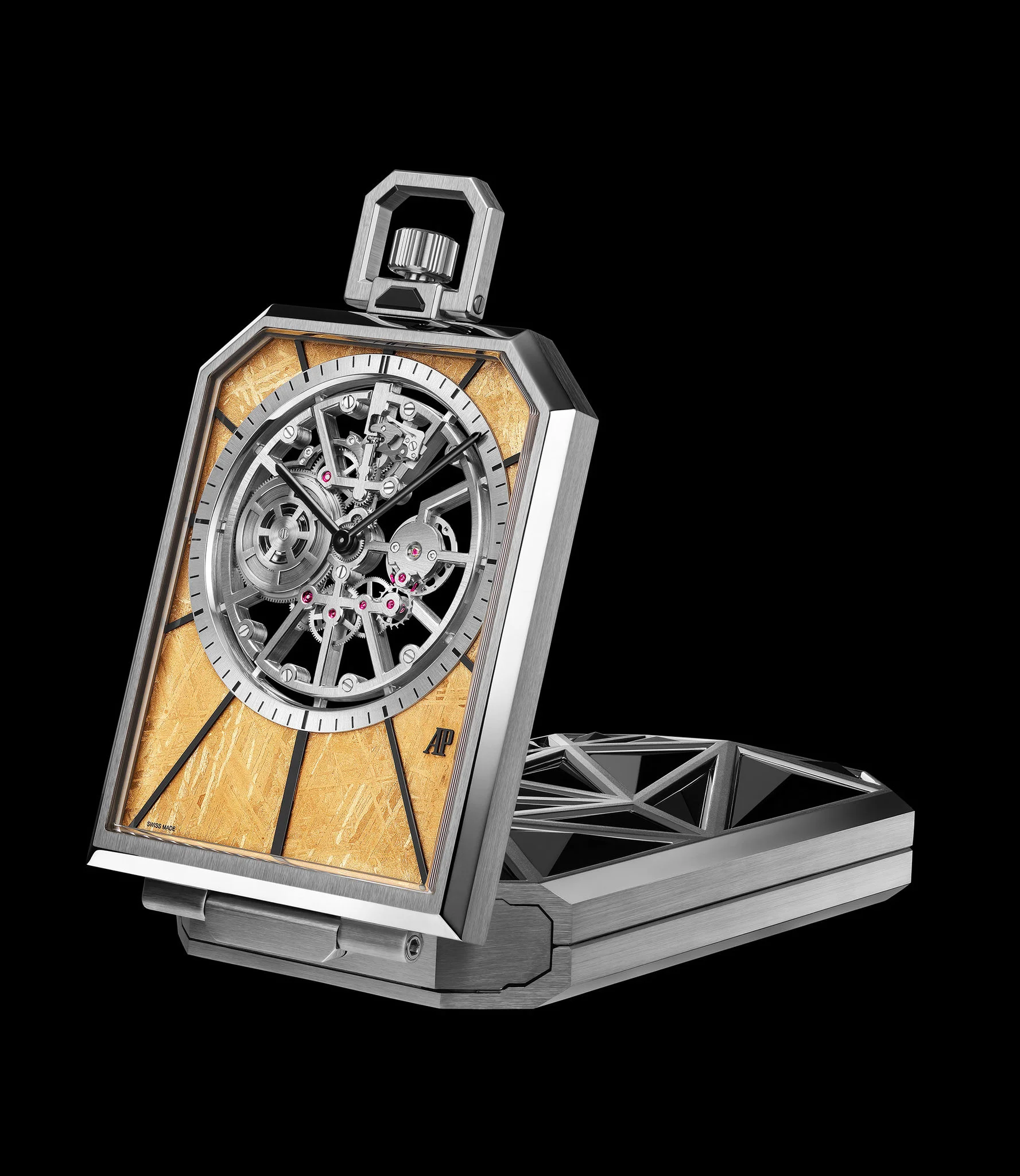
The Établisseurs Nomade watch showcases the traditional craft of openworking using a tiny jeweller’s hacksaw. Pressing two secret push-pieces opens the metal and semi-precious stone case to reveal the time. The watch can be transformed into a carriage clock at will. Prototype presented at Watches and Wonders Geneva 2026. AP Heritage, Inv. 2616.
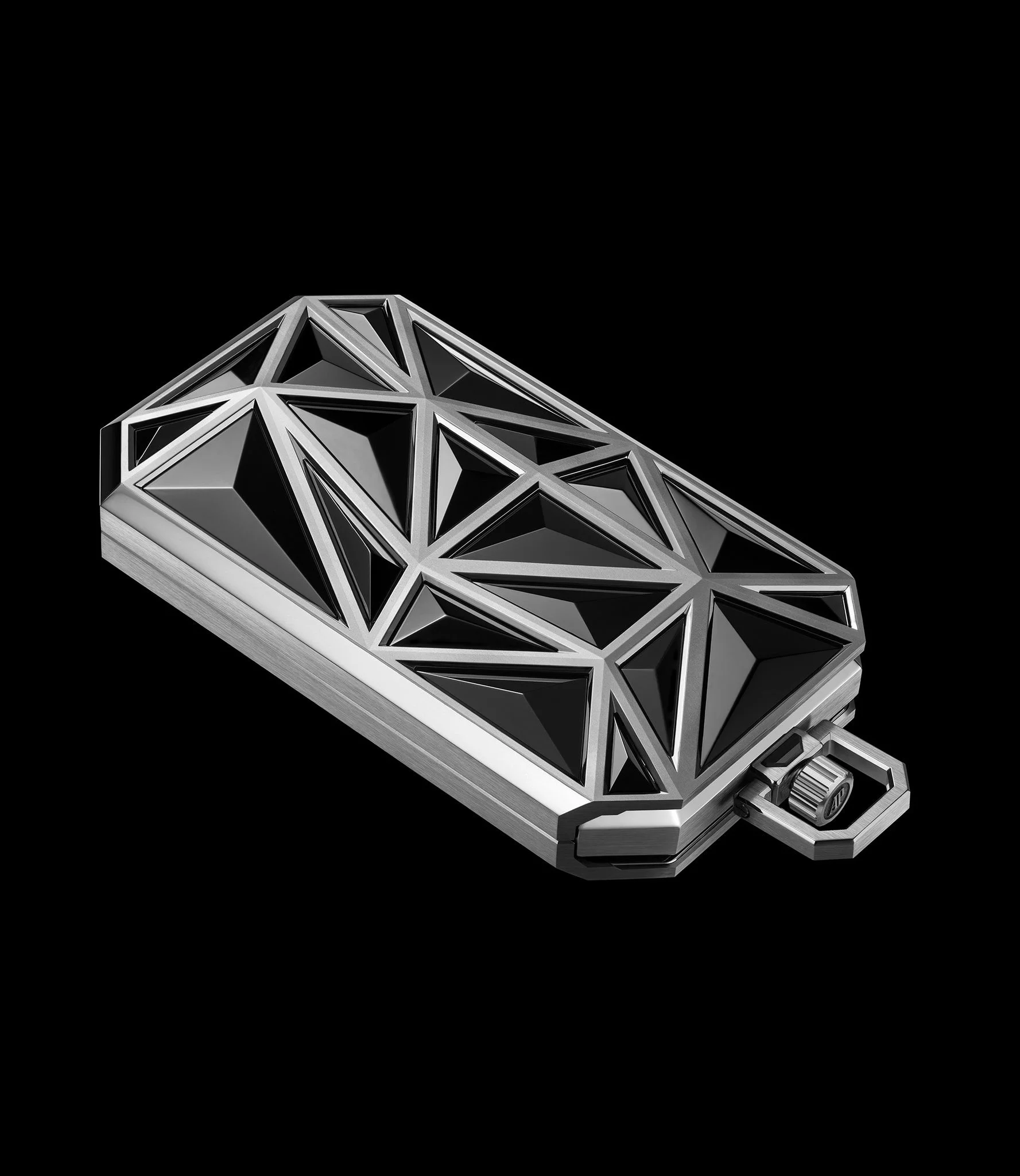
The Établisseurs Nomade watch showcases the traditional craft of openworking using a tiny jeweller’s hacksaw. Pressing two secret push-pieces opens the metal and semi-precious stone case to reveal the time. The watch can be transformed into a carriage clock at will. Prototype presented at Watches and Wonders Geneva 2026. AP Heritage, Inv. 2616.
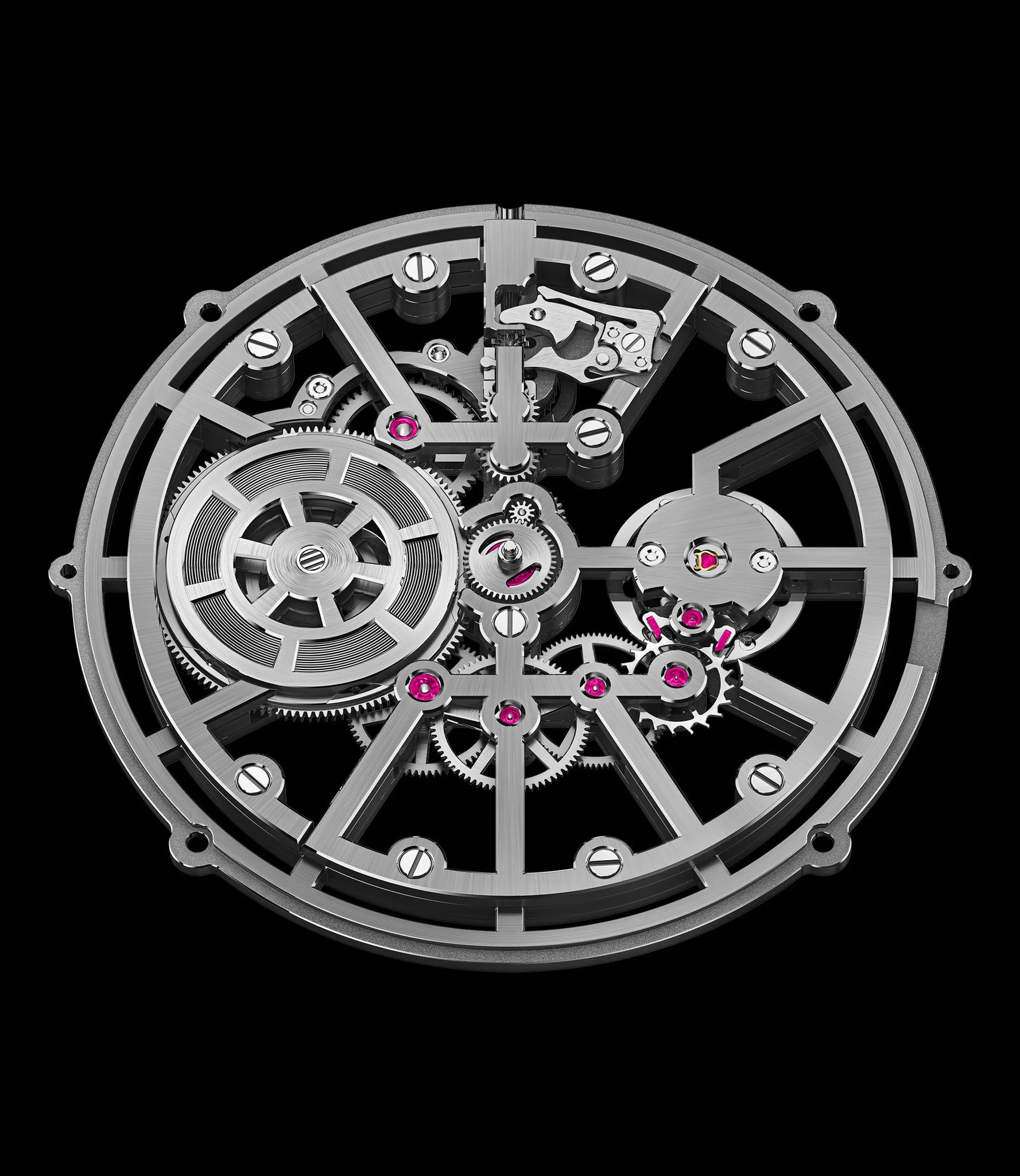
Entirely skeletonised by hand, Calibre 7501 is based on Calibre 7121 and was developed for the Établisseurs Nomade watch. Thickness: 3.69 mm Diameter: 36.30 mm.

Watch movement constructor Julien Martel talks with designer Ludovic Python about the structure of the Établisseurs Nomade watch.
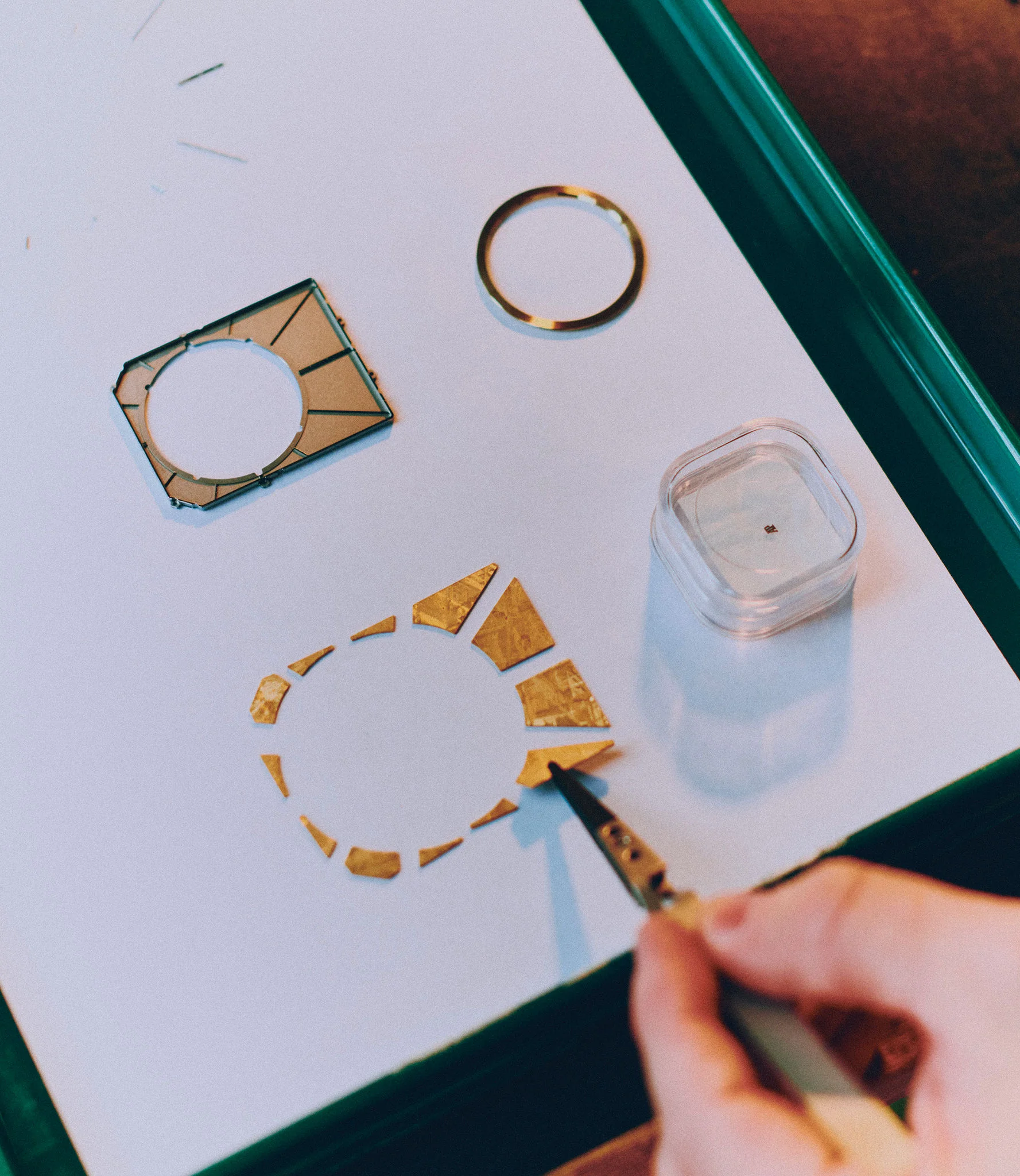
The gold-plated meteorite pieces are placed next to the dial base, structured to indicate 12 o'clock.
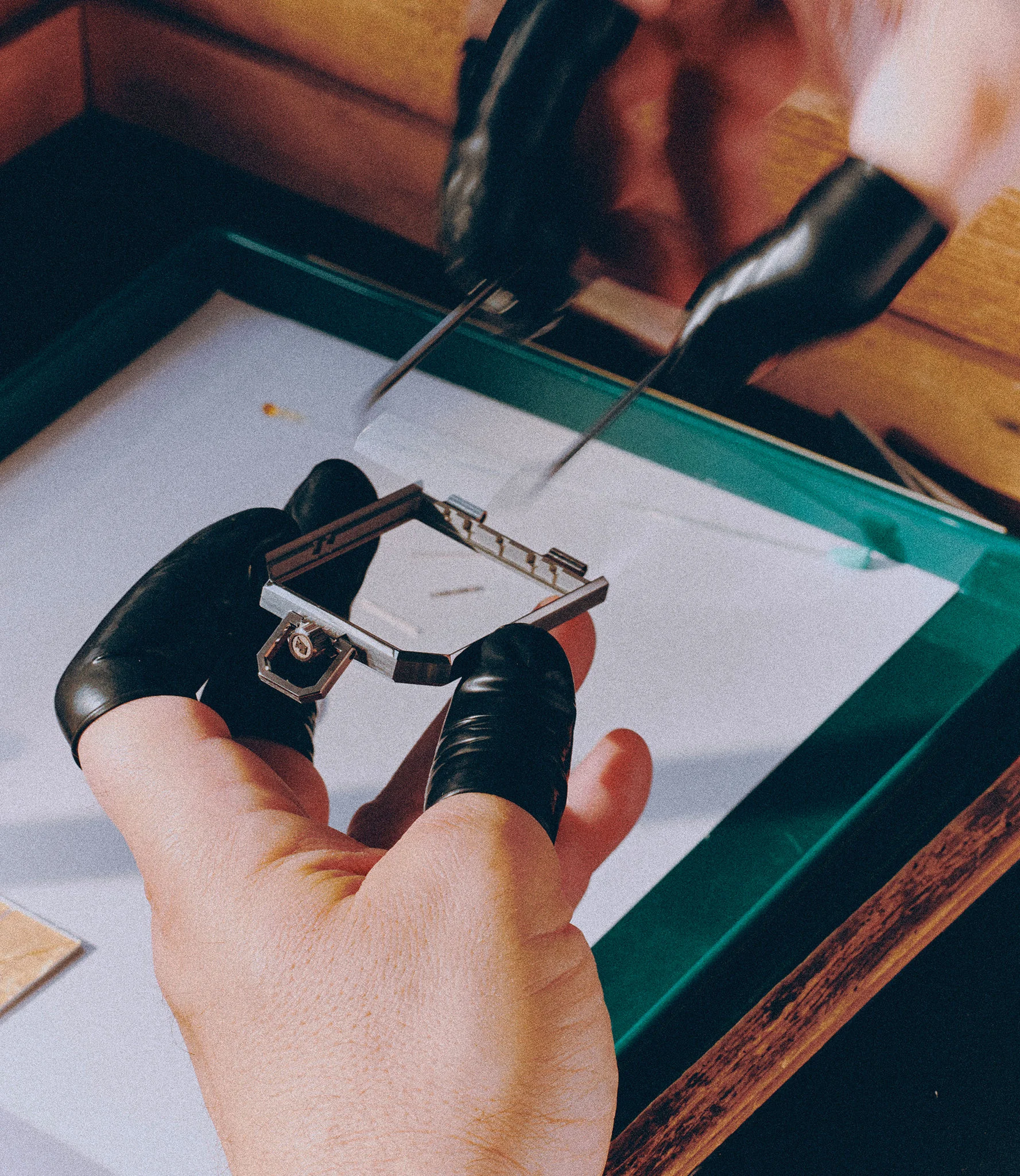
On either side of the sliding case of the Établisseurs Nomade watch, large sapphire crystals showcase the movement and the components surrounding it.
Public presentation
It took just over two years from the first discussion to the public presentation of three watches – radically different yet created according to the same philosophy – each housing a calibre adapted to its design and highlighting rare skills.
The Atelier des Établisseurs project began as a dream: to revive a world that had almost vanished from the history of the brand from Le Brassus. It began tentatively as an exploration of possibilities, with no need for immediate results. It caused the world of craftsmanship to converge with that of modern manufacturing. The former is all about trials, retouches and brilliant, sometimes rough ideas. It is driven by artisans attached to their independence, whose strength of character matches their talent. The latter is about process, mastery, control and flow. Both worlds are driven by passionate individuals and that key factor has helped overcome obstacles.
The public presentation could have remained discreet, given the limited production. Ilaria Resta decided to make this project the focus of Audemars Piguet's entry into Watches and Wonders Geneva, the world's largest watch show. This means that the brand is joining this institution not for commercial reasons, but instead to celebrate watchmaking by showcasing its skills and its artisans.
Établissage has been revived in an innovative way that, for the first time, involves naming the main artisans behind the creation of each watch, whether they work within Audemars Piguet or as independents. This approach makes clear that what truly matters is the talent, the expertise and the people who embody them.
Presented in a room called "The Future", the Atelier des Établisseurs faces the research laboratory for new mechanisms and materials. Because in watchmaking, tradition is also a way of looking to the future.
Audemars Piguet Heritage Team, April 2026.
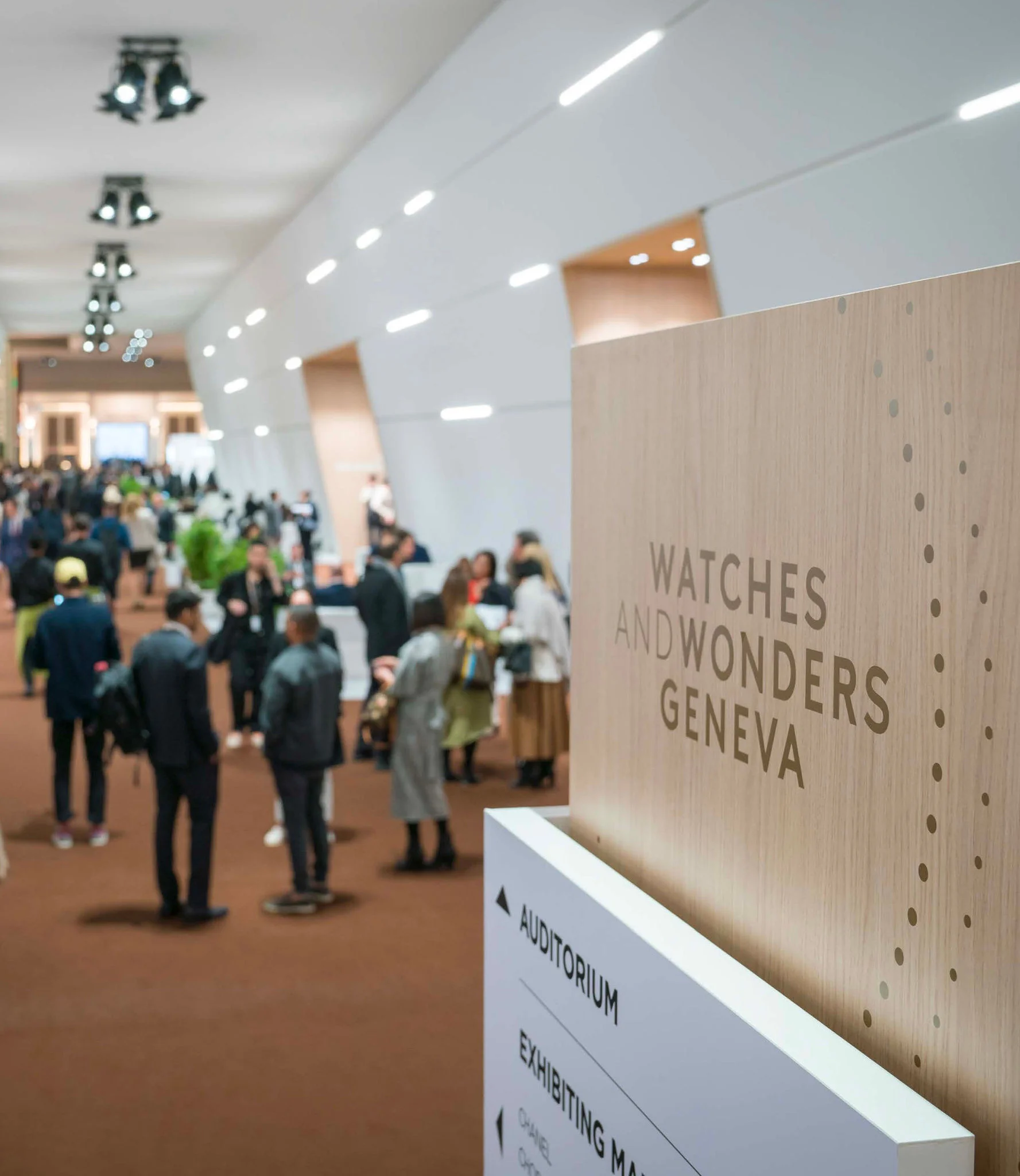
In 2026, Audemars Piguet is taking part for the first time in Watches and Wonders Geneva. The brand’s booth features a historical and technical exhibition, which concludes with the presentation of the first Atelier des Établisseurs watches.