The epic AP saga
Origins
Audemars Piguet made its debut in 1875 in the small village of Le Brassus in the Vallée de Joux. This mid-altitude region of the Swiss Jura mountains was already teeming with talented watchmakers and watchmaking was everywhere. Artisans had organised themselves into a dense network of professional, family and friendly relationships to create the world’s most complicated mechanical movements.
If you want to know more about the incredible watchmaking destiny of the Vallée de Joux, the connections between the families of Le Brassus, the youth of the two co-founders Jules Louis Audemars (1851–1918) and Edward Auguste Piguet (1853–1919) – in short, the circumstances that led to the creation of the first Audemars Piguet workshop – the article titled "Before 1875" is for you. Meanwhile, we pick up the story where that article left off, in 1875.
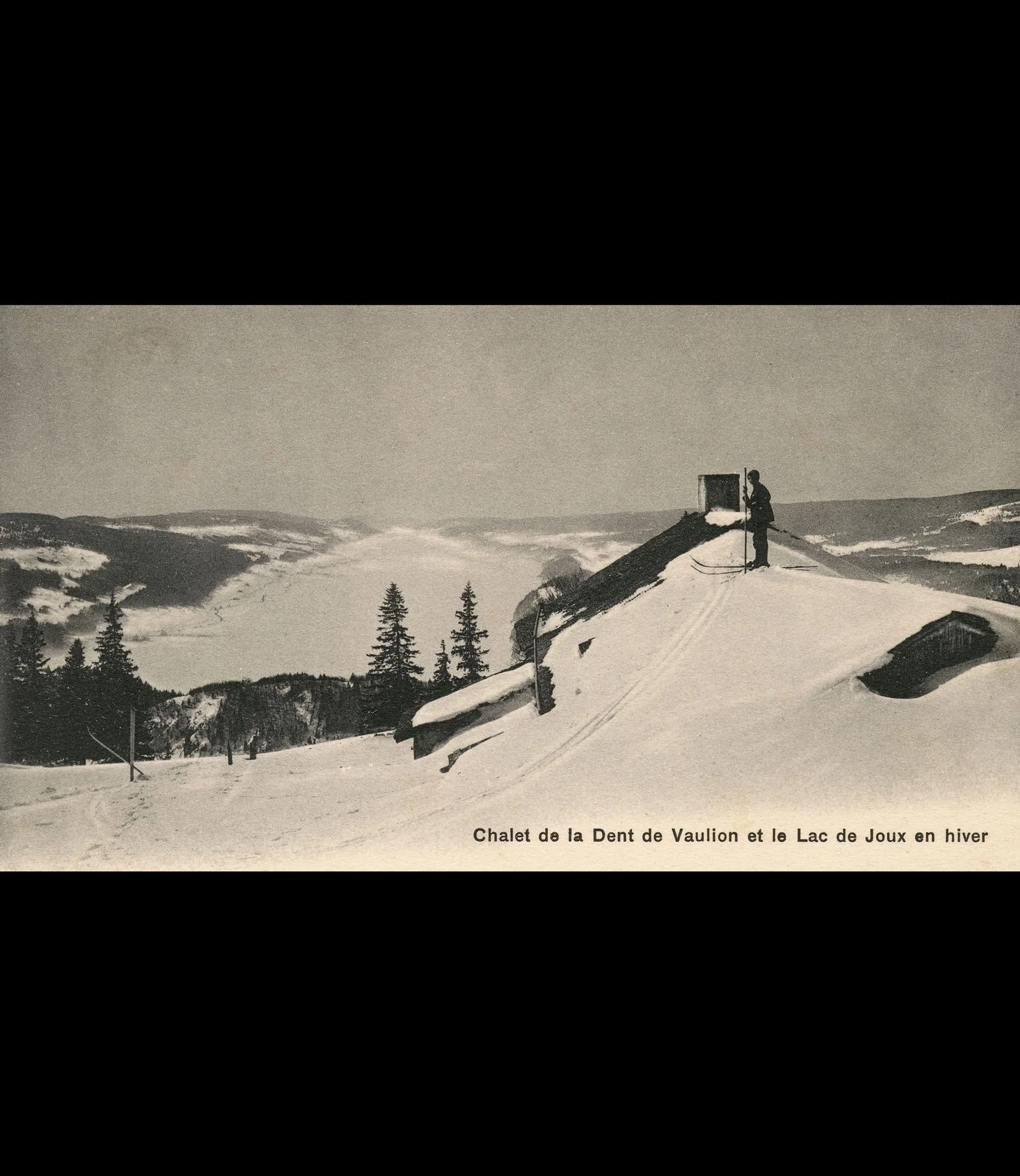
1906. Postcard featuring a winter scene in the Vallée de Joux. Audemars Piguet Archives.
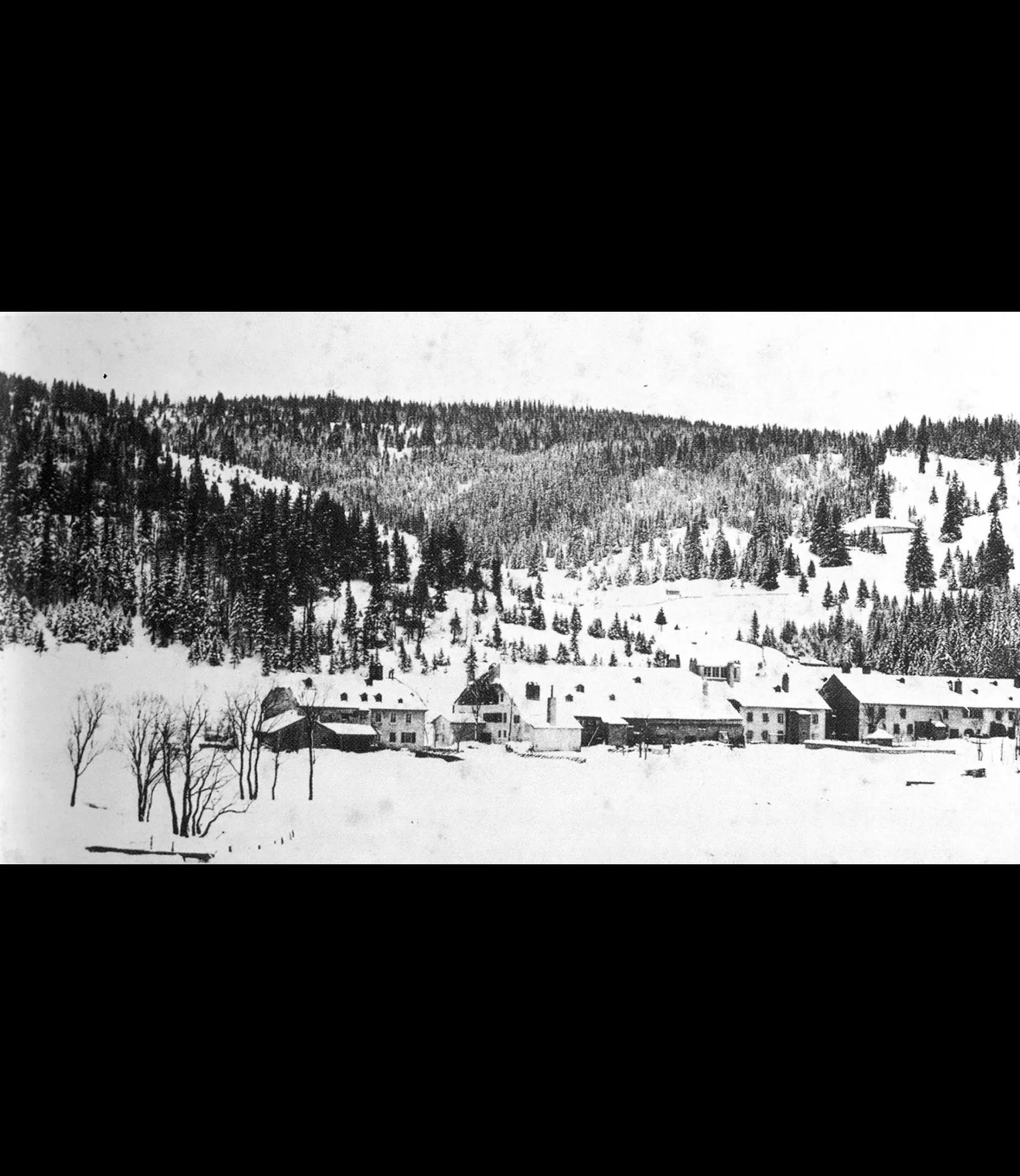
Circa 1900. View of Le Brassus in winter. Audemars Piguet Archives.
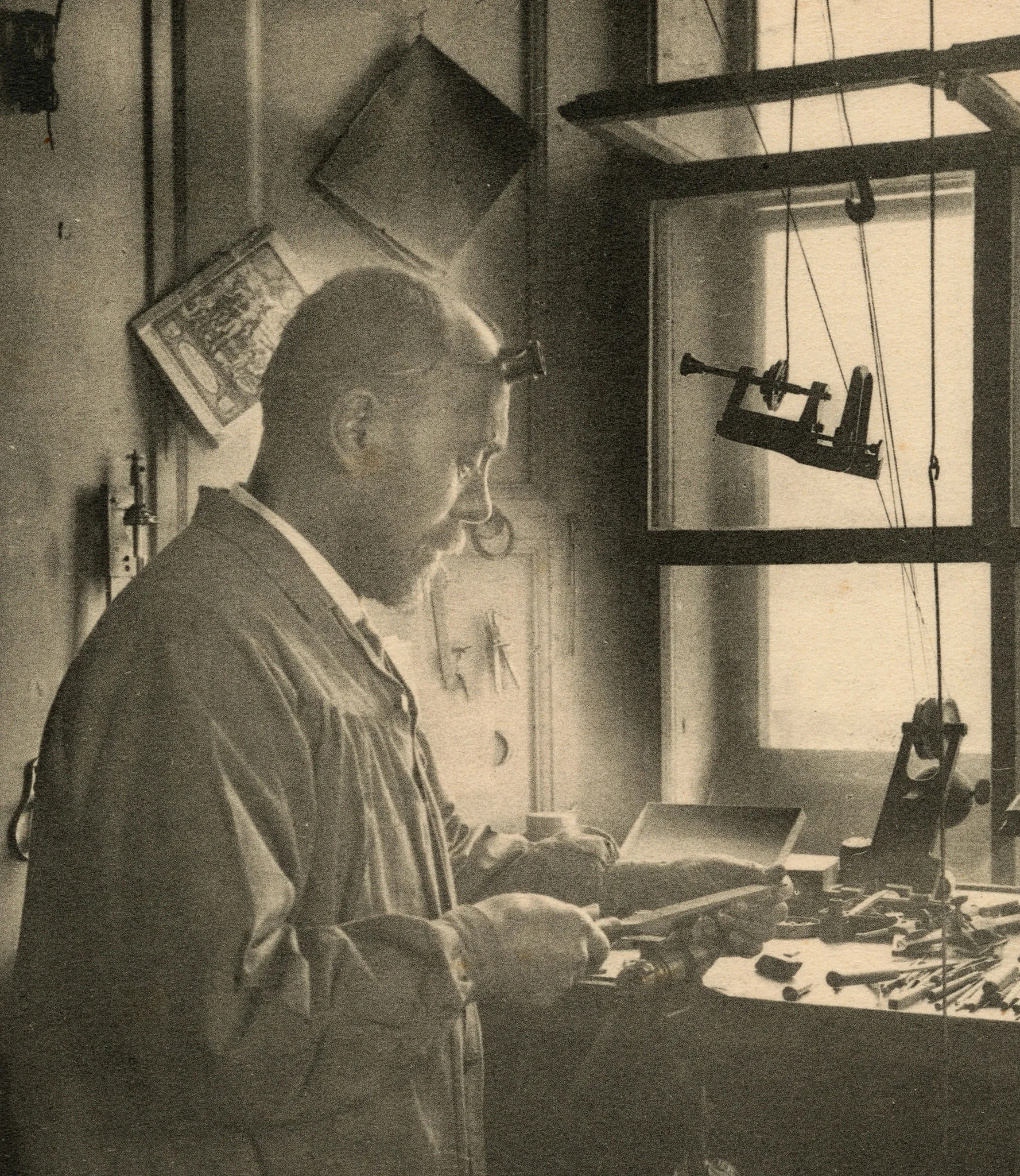
1904. Postcard depicting a watchmaker in the Vallée de Joux. Private collection.
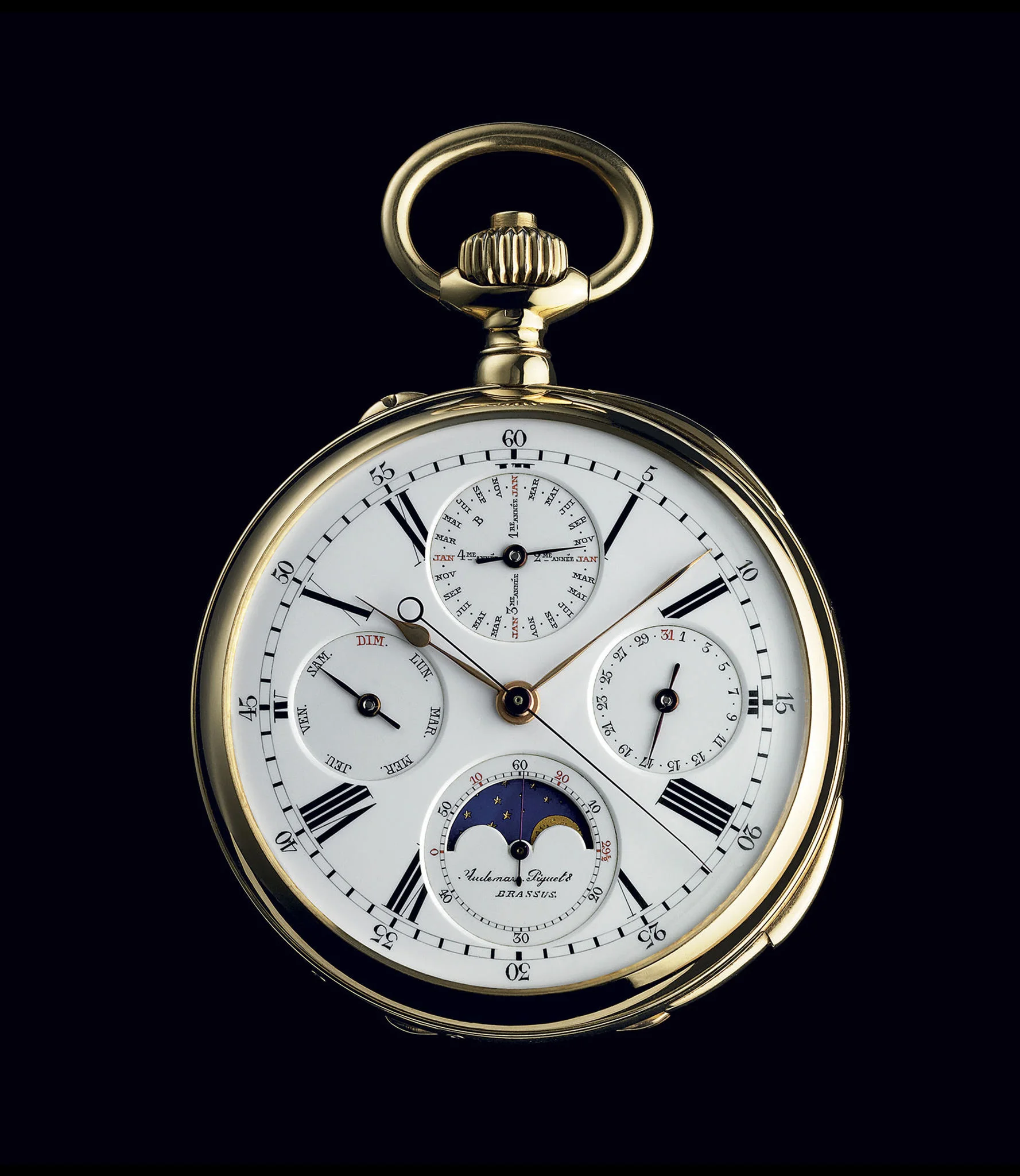
Circa 1875. Regarded as the apprenticeship masterpiece by Jules Louis Audemars, co-founder of Audemars Piguet. Quarter repeater, perpetual calendar, deadbeat seconds. 20-ligne calibre. "Ébauche" probably from the Louis Audemars workshops. Transformed in the Audemars Piguet workshops in 1882, 1887 and 1903. 18-carat yellow gold. Heritage AP, Inv. 8.
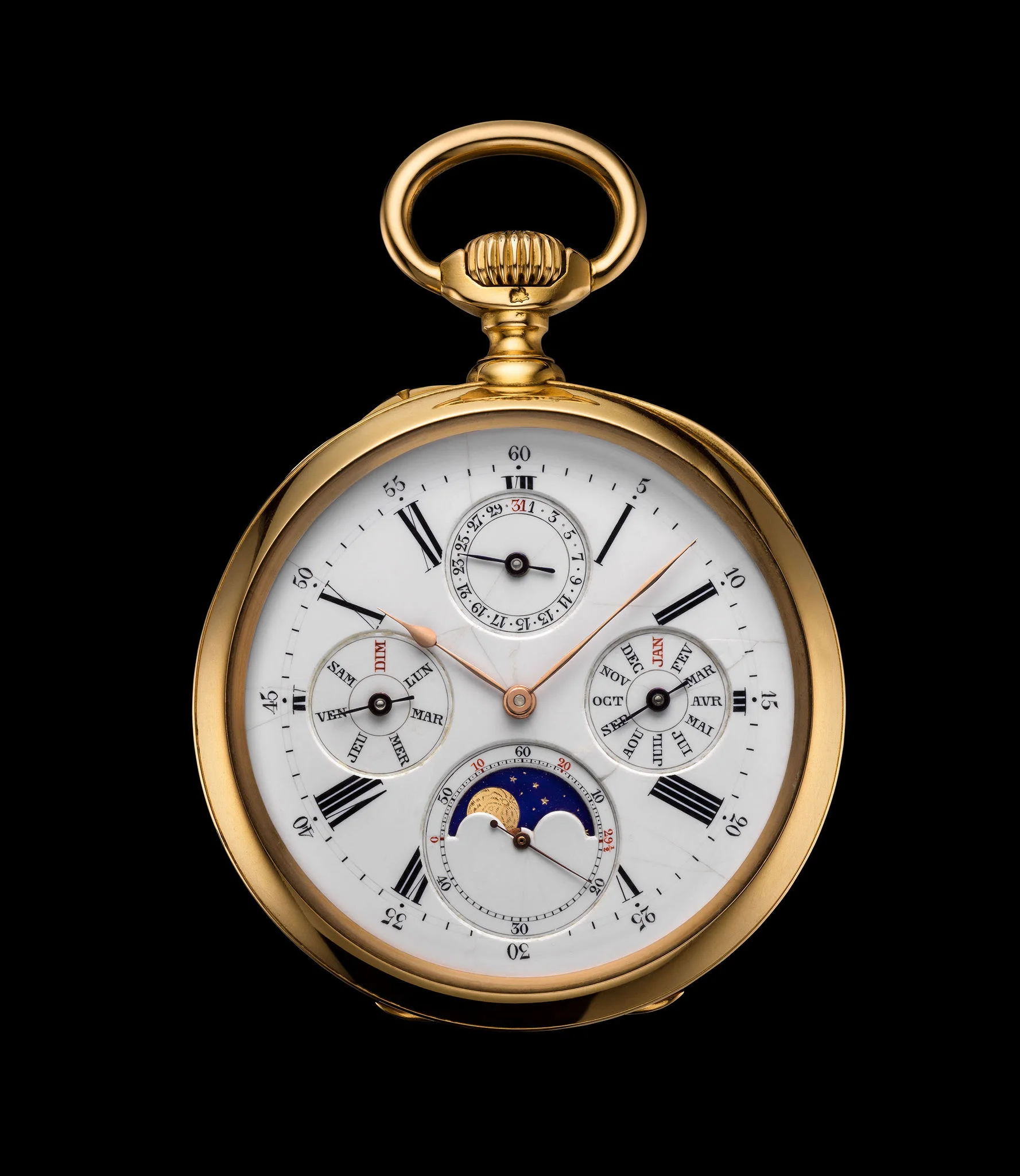
Circa 1875. Apprenticeship masterpiece by Edward Auguste Piguet, co-founder of Audemars Piguet. Complete calendar: day, date, month, phases and ages of the Moon, small seconds, chronometer. 19-ligne calibre. 18-carat pink gold. Private collection.
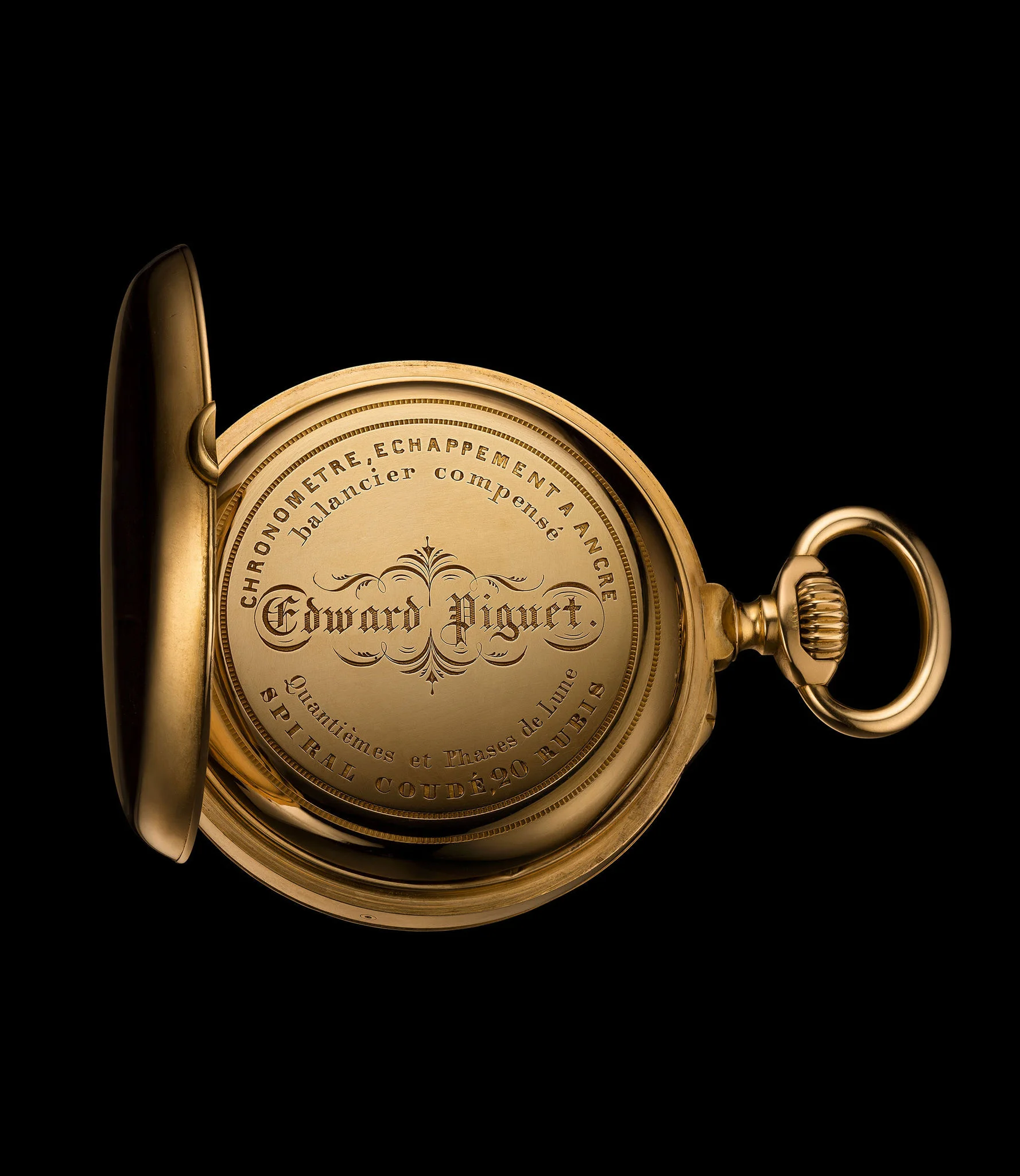
Circa 1875. Apprenticeship masterpiece by Edward Auguste Piguet, co-founder of Audemars Piguet. Complete calendar: day, date, month, phases and ages of the Moon, small seconds, chronometer. 19-ligne calibre. 18-carat pink gold. Private collection.
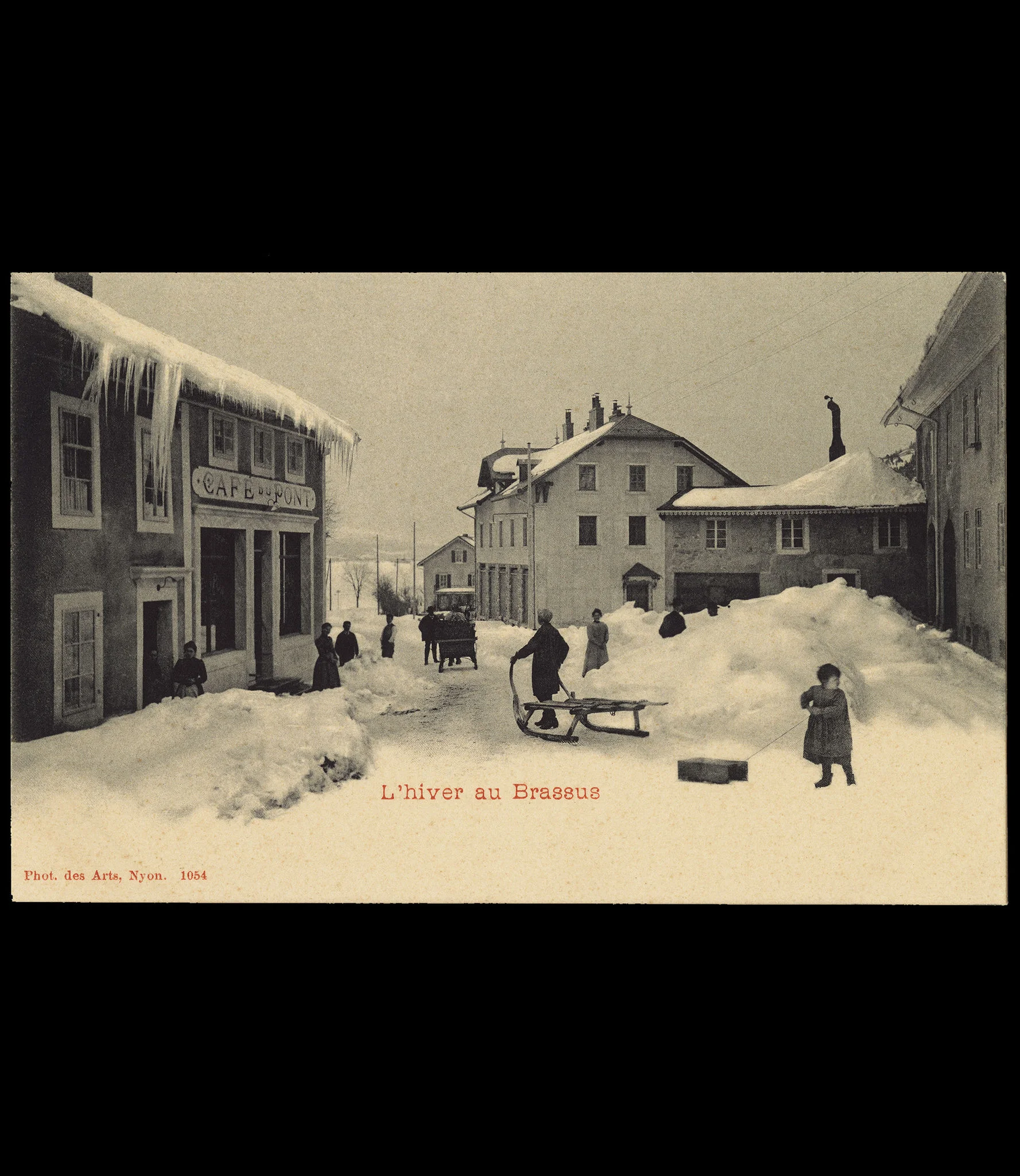
Circa 1900. Postcard depicting a winter view of the main street in Le Brassus. Audemars Piguet Archives.
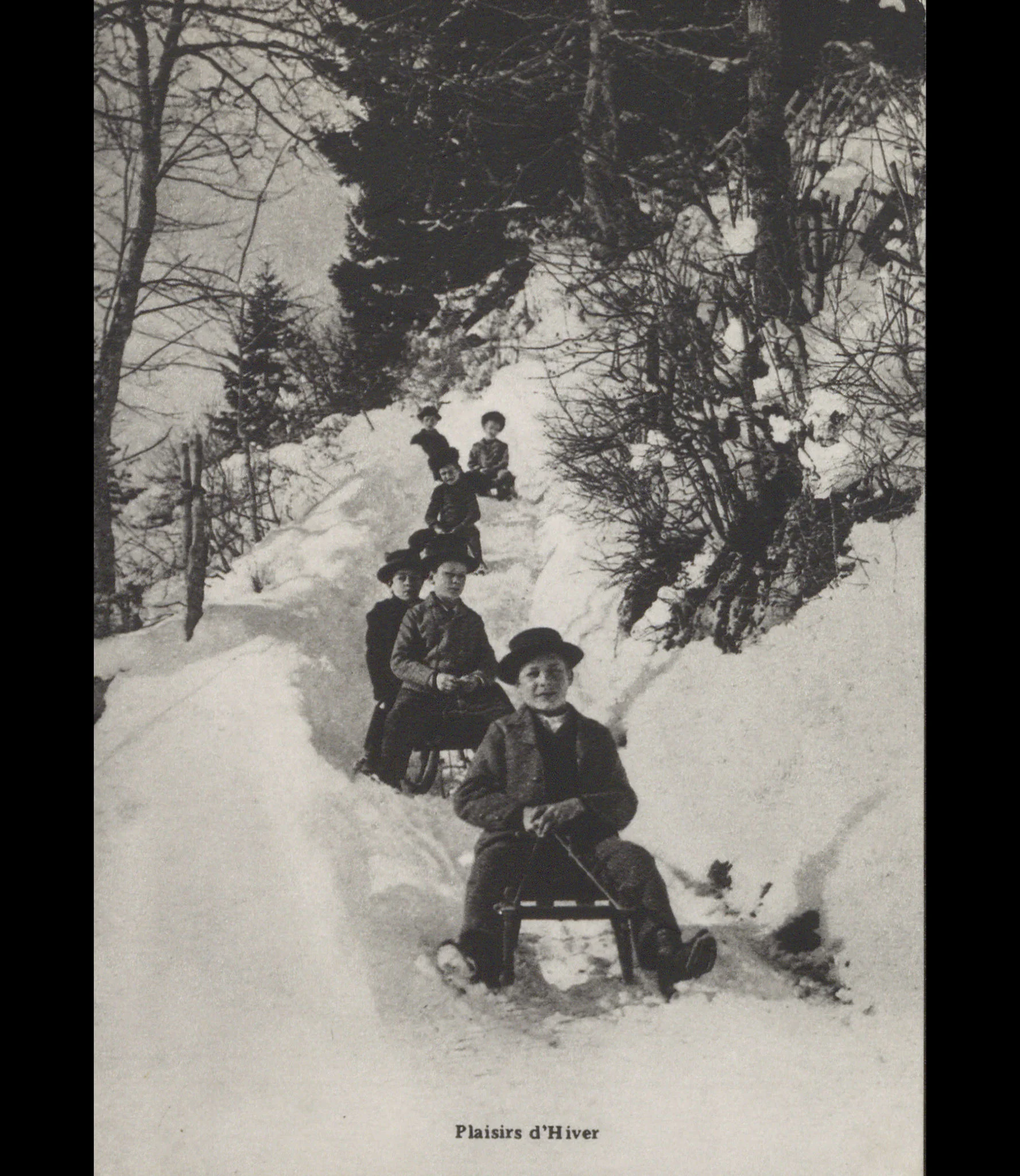
Circa 1910. Postcard depicting winter leisure activities in the Vallée de Joux. Audemars Piguet Archives.
1875. Trial by fire
In autumn 1875, aged 24, Jules Louis Audemars, his wife Sidonie and their baby, returned to the Vallée de Joux after spending just over a year in the village of Gimel at the foot of the Jura mountains. They settled in a place called "Chez-les-Meylan", most likely in the house that is now 18 Route de France in Le Brassus, a stone's throw from the Audemars family farm. The young watchmaker set up a small workshop under the rafters behind a row of windows, as light was essential for watchmakers’ meticulous work.
One hundred and fifty years later, the company still exists. On the exact site of Jules Louis' workshop, watchmaking restorers continue to cultivate traditional skills. Beyond this building, many others house watchmakers from the Audemars Piguet brand, which employs more than 1,800 people in the Vallée de Joux and nearly 3,000 worldwide. Back in 1875, however, Jules Louis could scarcely have imagined such a brilliant destiny. The very year he set up his workshop, the watch industry entered a crisis that was to last a full decade.
The downturn was all the more brutal in that it followed a lengthy period of prosperity. In the space of a few months, watchmakers in the Vallée de Joux saw orders dwindle at an alarming rate. The poor economic climate was exacerbated by growing competition from the American watch industry, which was in the throes of industrialisation and whose technological lead was revealed at the Philadelphia World's Fair in 1876. During the crisis, many unemployed watchmakers left the region in the hope of finding work in Geneva or in the Neuchâtel mountains. Some even changed profession.
Audemars Piguet's first workshop was therefore founded at a critical time. How did it develop? How did it survive? In the absence of any archives prior to 1881, the answers remain shrouded in mystery. Here is what we do know: between December 1875 and December 1876, Jules Louis Audemars published three short adverts in the local press, extolling his range of "watches of all kinds" and "good ordinary watches". In 1879, the Tissot archives recorded business dealings with Jules Louis Audemars. Finally, on 17 December 1881, he signed a partnership contract with Edward Auguste Piguet. This document along with the production register that began in 1882 enable one to deduce that the company had been employing loyal staff for several years and that it had sales depots in London and Paris.
More importantly, when the co-founders decided circa 1903 to mention the date of Audemars Piguet’s founding for the first time in a leaflet intended for retailers, they chose 1875. Moreover, Jules Louis Audemars’ obituary confirms that he had been making watches with complications since 1875.
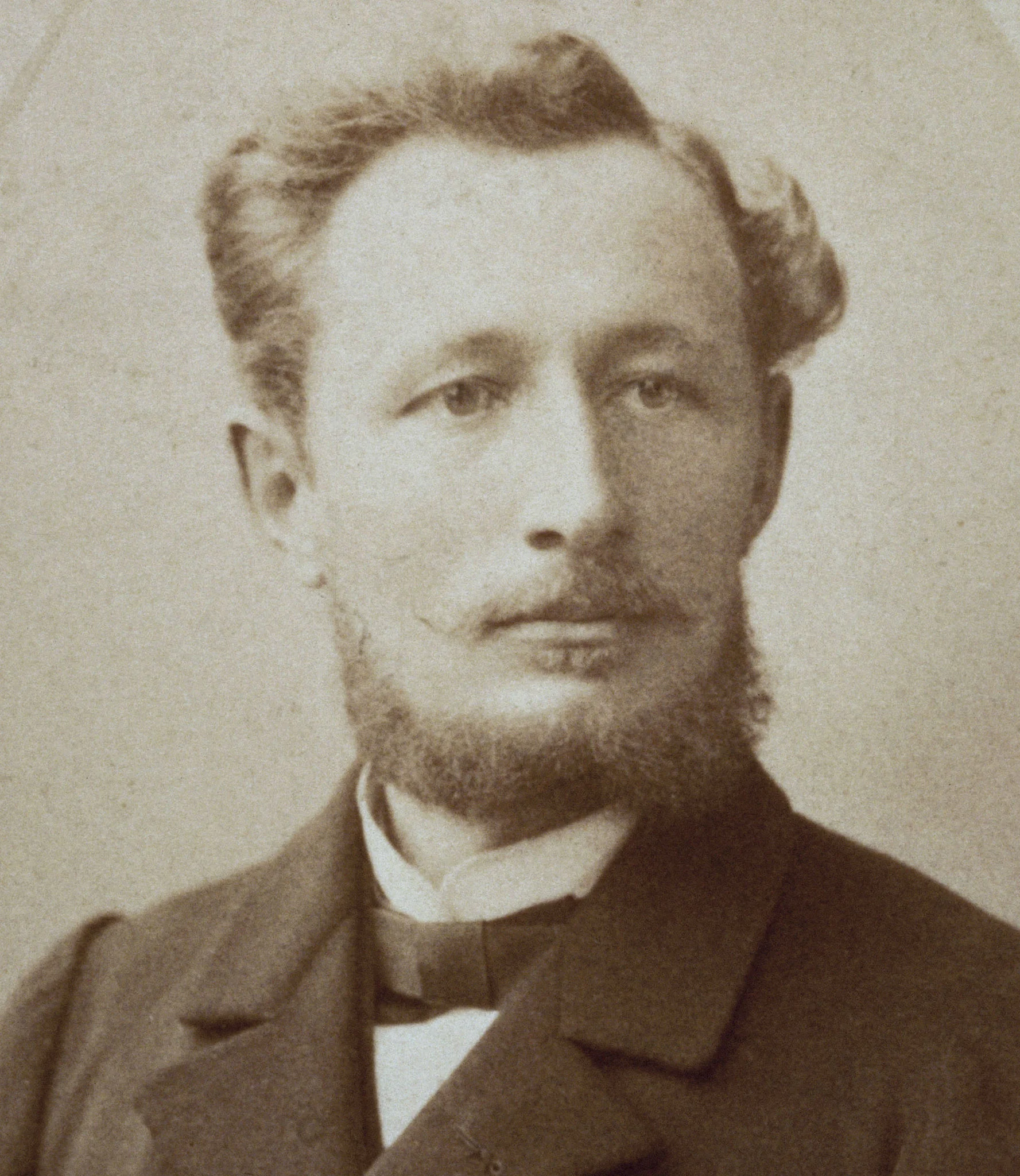
Circa 1880. Portrait of Jules Louis Audemars, co-founder of Audemars Piguet. Audemars Piguet Archives.
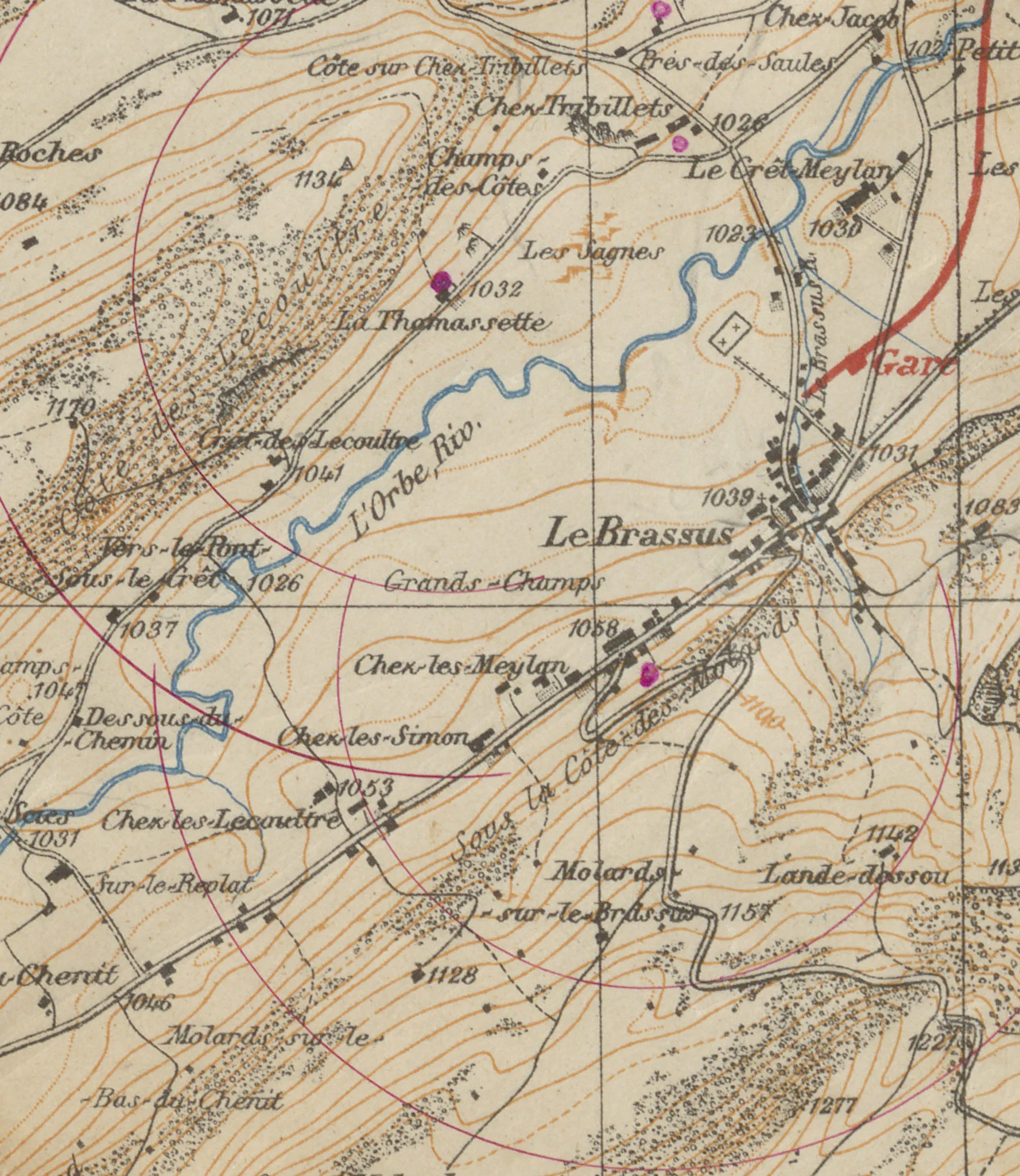
1886. Excerpt from the map of the Vallée district. "Chez-les-Meylan" was home to the Audemars family farm and Audemars Piguet's oldest building. David Nicole archives.
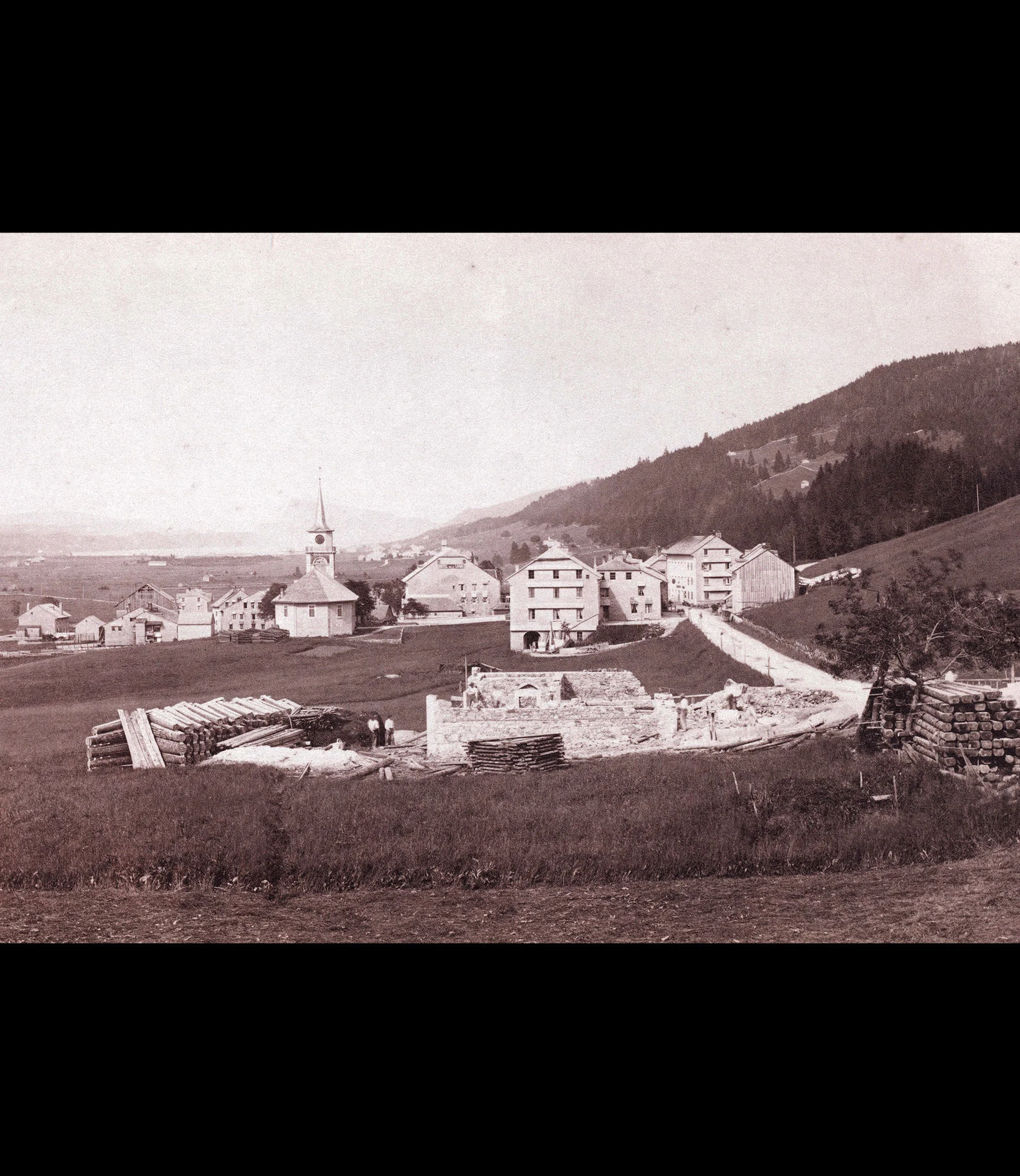
Circa 1868. Construction of the original Audemars Piguet building, “Chez-les-Meylan”, Route de France 18, Le Brassus. Audemars Piguet Archives.
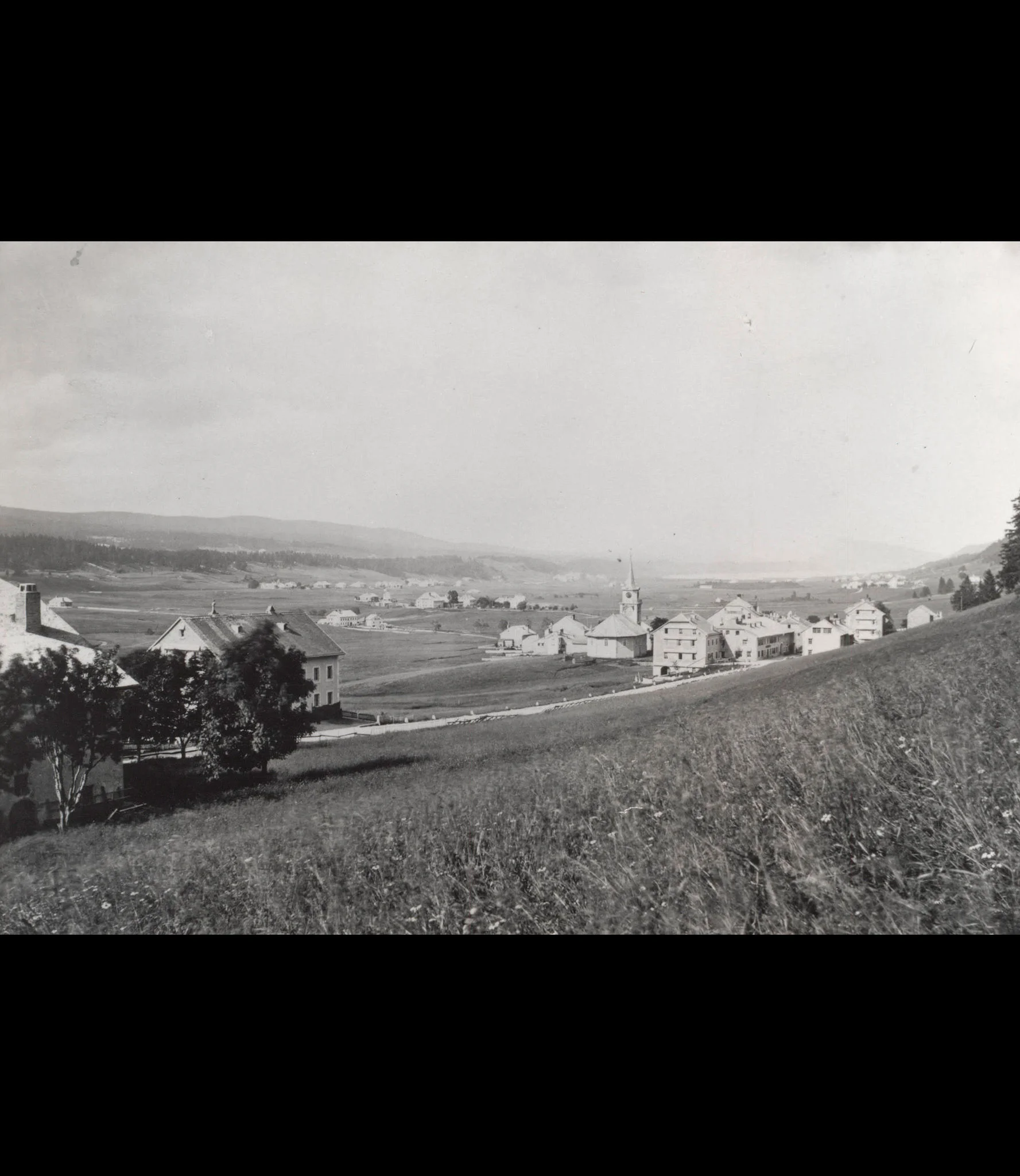
Circa 1880. The first Audemars Piguet building is visible behind the trees, before the roof was raised to enlarge the workshops. Audemars Piguet Archives.
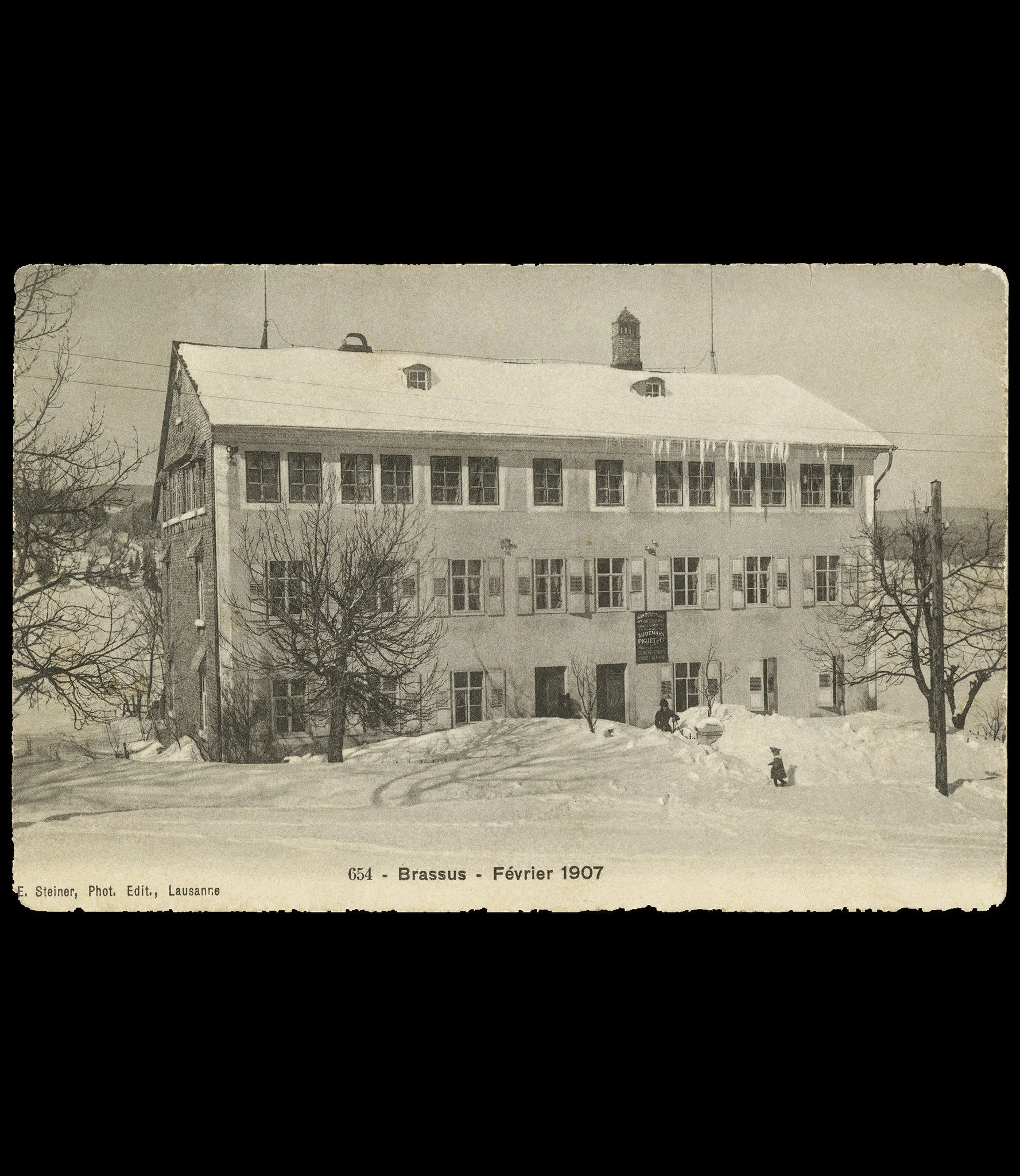
1907. Postcard depicting Audemars Piguet's first building at “Chez-les-Meylan” in the village of Le Brassus, now Route de France 18. The house dates from 1868. It probably housed Jules Louis Audemars' first workshop in 1875. The upper windows were created when another floor was added circa 1890. Audemars Piguet Archives.
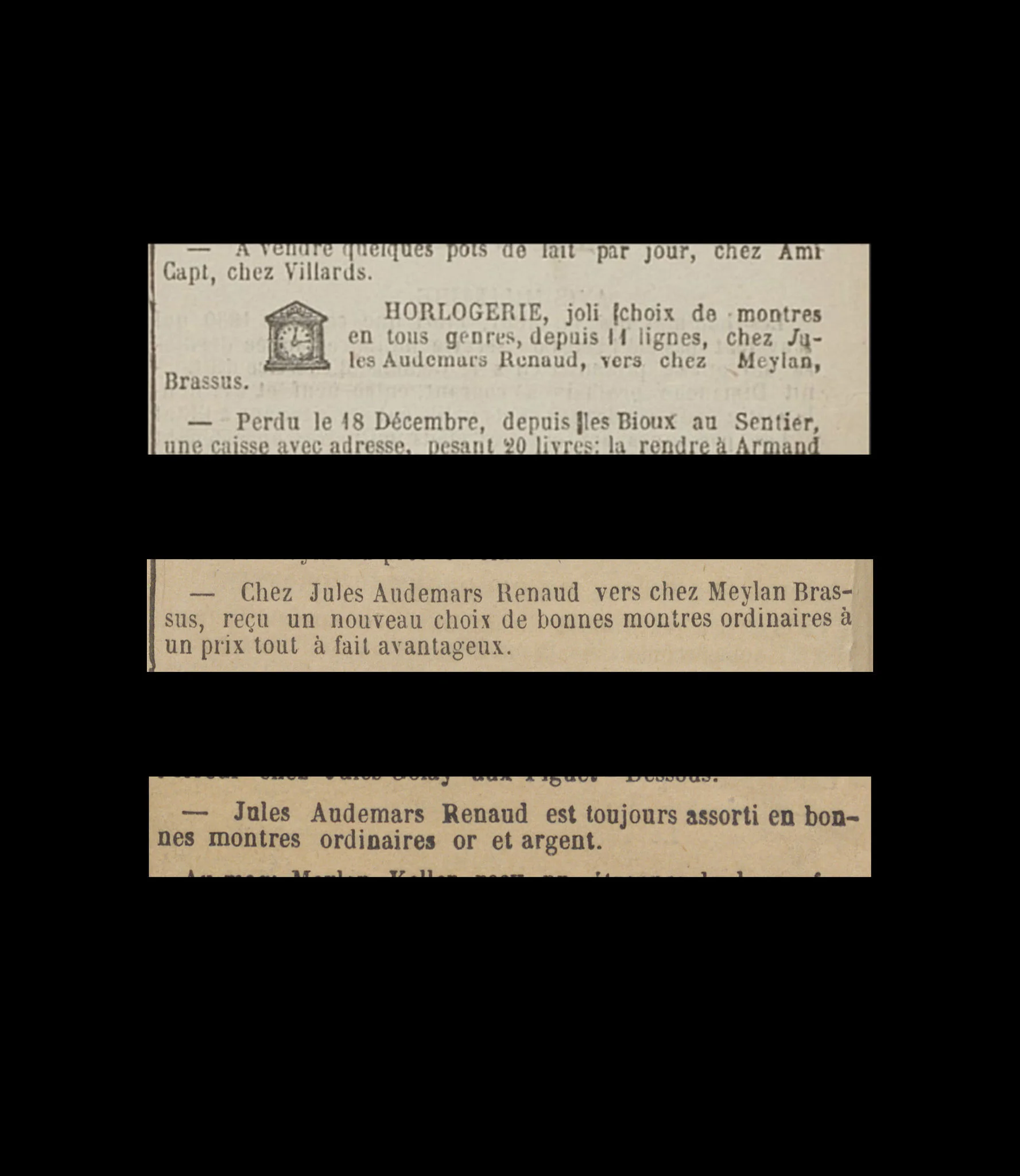
These three advertisements were published in the Feuille d'Avis de la Vallée de Joux on 12 December 1875, 17 August 1876 and 7 December 1876. They attest to the existence of Jules Louis Audemars' first workshop at a place called "Chez-Les-Meylan" in the village of Le Brassus, probably at the current 18 Route de France address. FAVJ Archives.
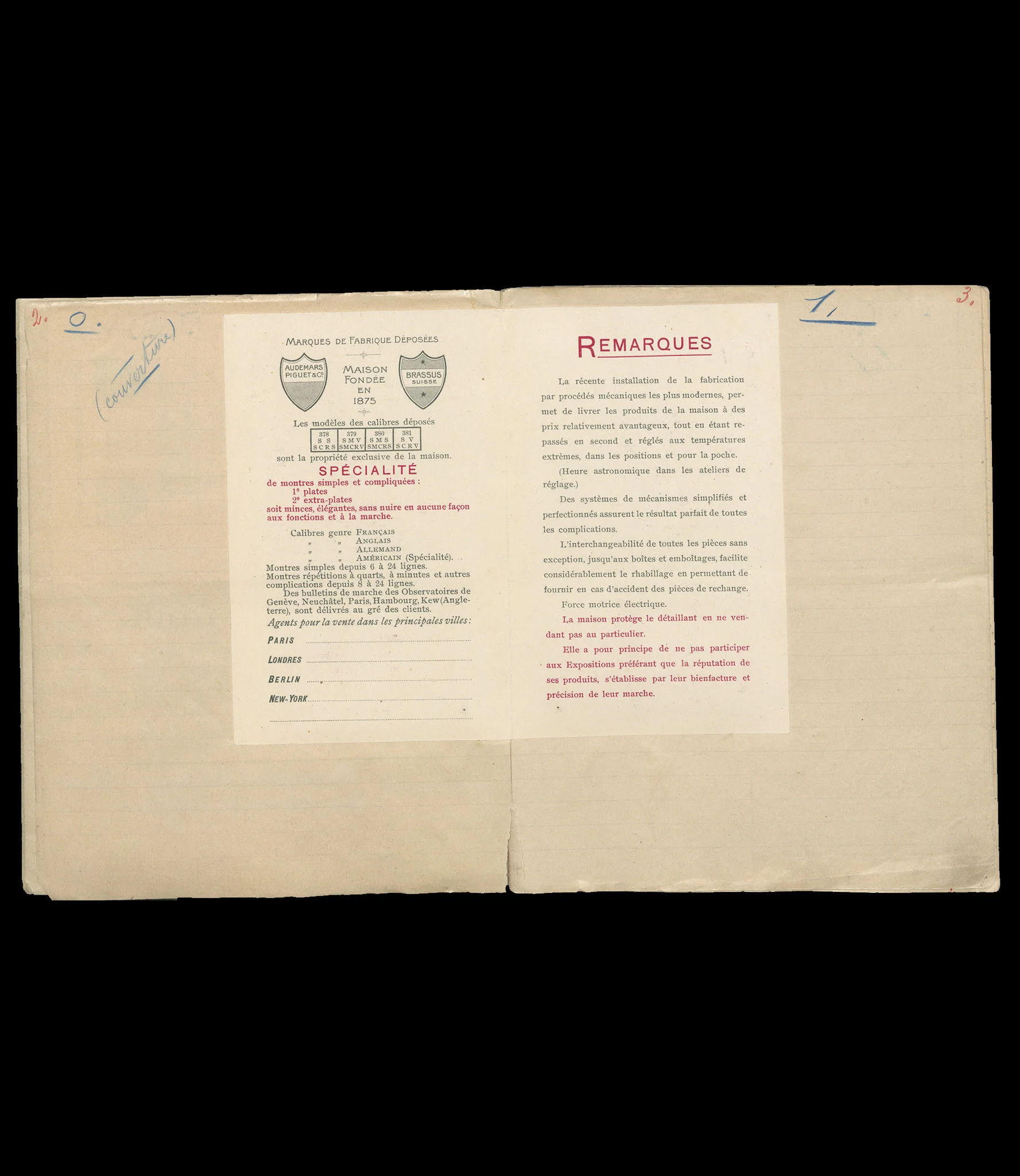
Glued into a 1905 catalogue, this leaflet contains the earliest known mention of Audemars Piguet being founded in 1875. The card was printed between 1900 and 1904. Audemars Piguet Archives.
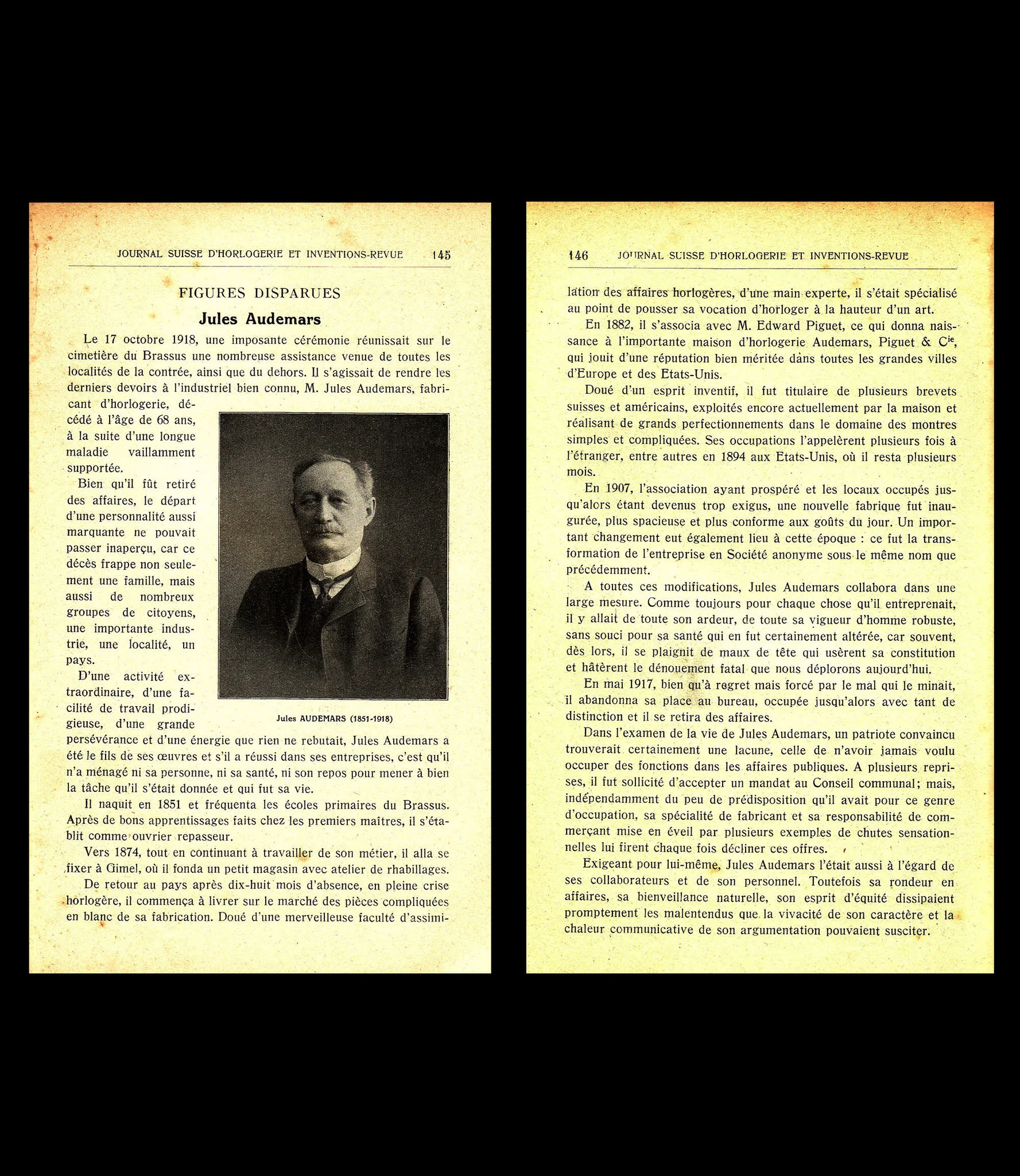
Published in the Journal Suisse d'Horlogerie in 1918, Jules Louis Audemars’ obituary retraces his career and offers a personal profile. Audemars Piguet Archives.
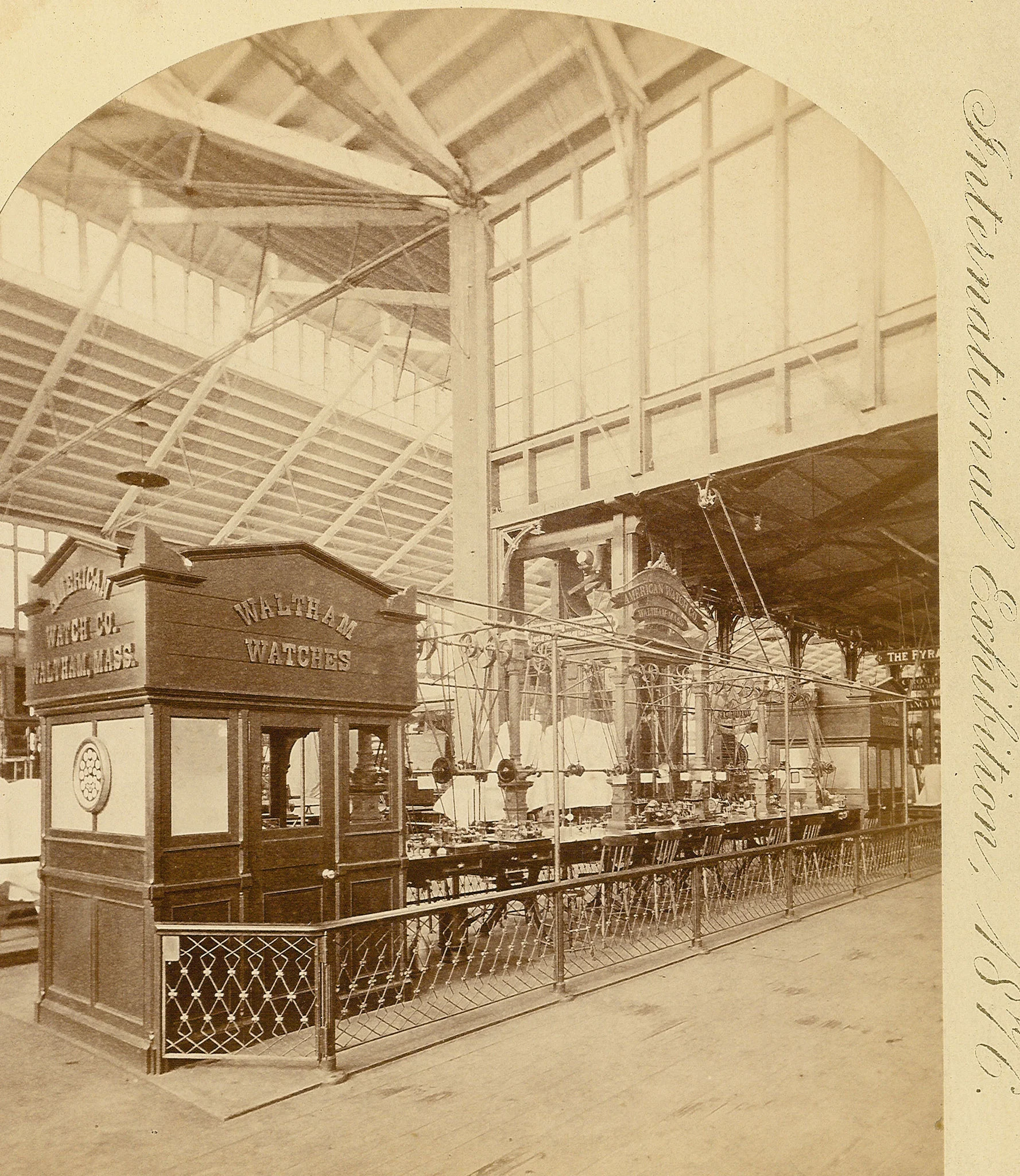
1876. The Waltham Watch Company promoted its industrial manufacturing methods at the Philadelphia World's Fair. The quality of the watches produced in large series at low prices accelerated the industrialisation of Swiss watchmaking. © Waltham Historical Society
The partnership contract
On 5 May 1881, the Vallée de Joux’s leading watchmakers convened to discuss the serious situation they were facing and signed a revealing letter: “The watchmakers of the Valley, who feel it is so important to breathe a little life back into our region through its main industry and perhaps bring back to this area many of the workers who have had to leave it and spread elsewhere knowledge that it would have been precious to be able to keep at home…”. To restore a semblance of prosperity, Edward Auguste Piguet, Jules Louis Audemars and their colleagues invited all watchmakers in the region to respect minimum sales prices, even if it meant compromising their sacrosanct freedom.
Was it on this occasion that the two co-founders launched the idea of signing their first partnership agreement? It is tempting to think so. On 17 December 1881, they did just that. Intended to last ten years, the partnership came into effect on 1 January 1882. As part of the founding capital, Jules Louis Audemars contributed 18 mechanical movements of which the production process was probably ongoing. When it came to allocating work, he reserved the right to prioritise his father and brother Albert as well as the other artisans he had been employing until then. Meanwhile, Edward Auguste Piguet contributed CHF 10,000: a substantial sum for the time since it corresponded to the price of a house with two dwellings along with a workshop, garden and fountain. It was enough to expand the Audemars Piguet workshop, acquire more equipment, invest in gold cases and even begin advertising – with the first advert appearing in February 1882.
Both men were talented watchmakers who decided to divide the tasks between them. Edward Auguste Piguet took commercial and financial responsibility for the company. A strong believer in networking, he belonged to the Vallée de Joux’s pioneering families that one is almost tempted to refer to as patricians. He took part in public life and excelled in communications.
For his part, Jules Louis Audemars retained management of the workshop he had founded in 1875. On 6 December 1882, at a time when the Swiss Intellectual Property Agency had just been set up, the company registered a trademark and its name: "Audemars, Piguet & Cie, fabricants, Brassus. Movements and watch cases made by them.” Complete watches were thus an integral part of the brand’s purpose right from the outset.
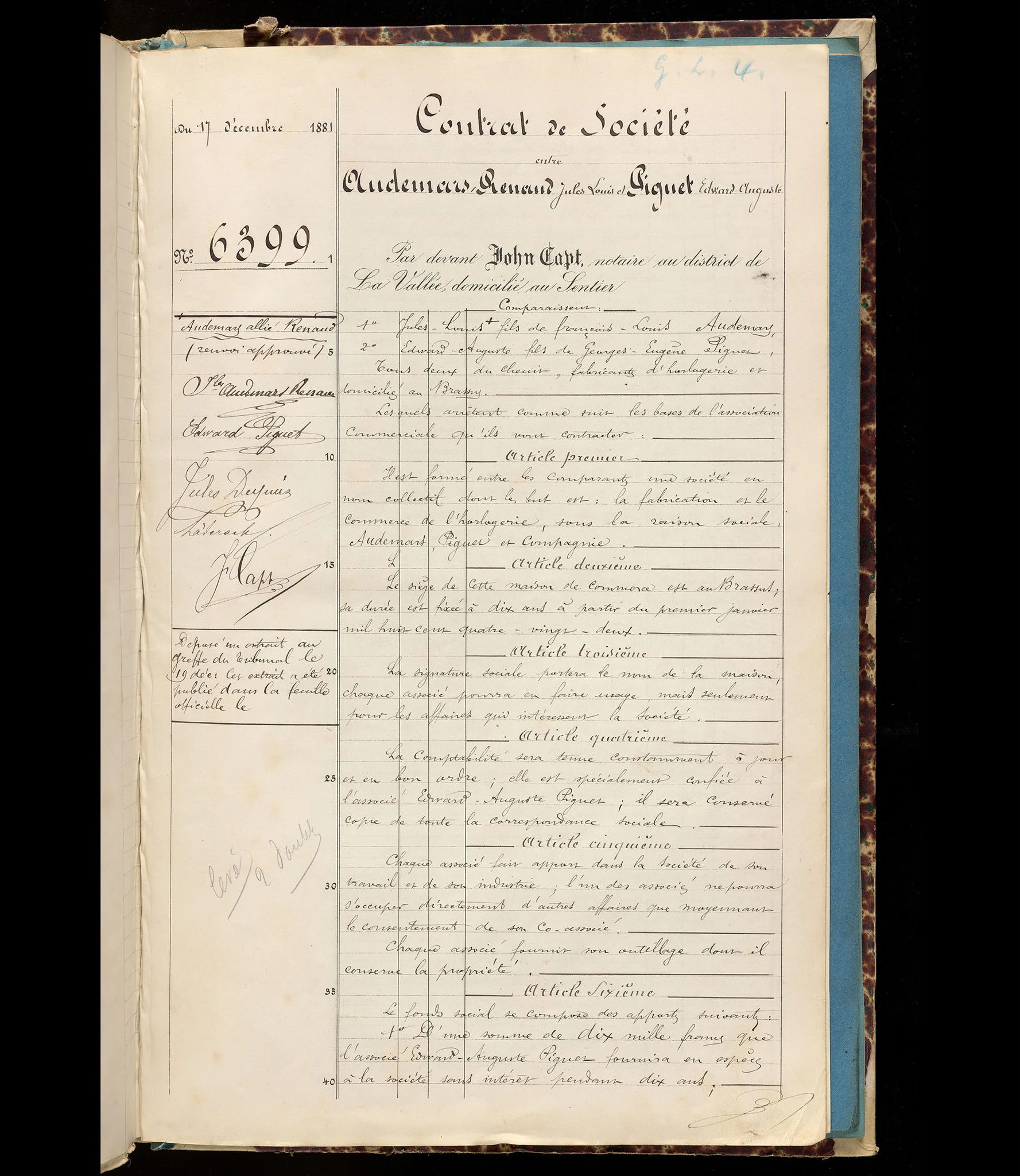
Signed in December 1881 and effective 1 January 1882, the contract between Jules Louis Audemars and Edward Auguste Piguet formalised the birth of the Audemars Piguet brand. Canton of Vaud Archives, S 118/50.
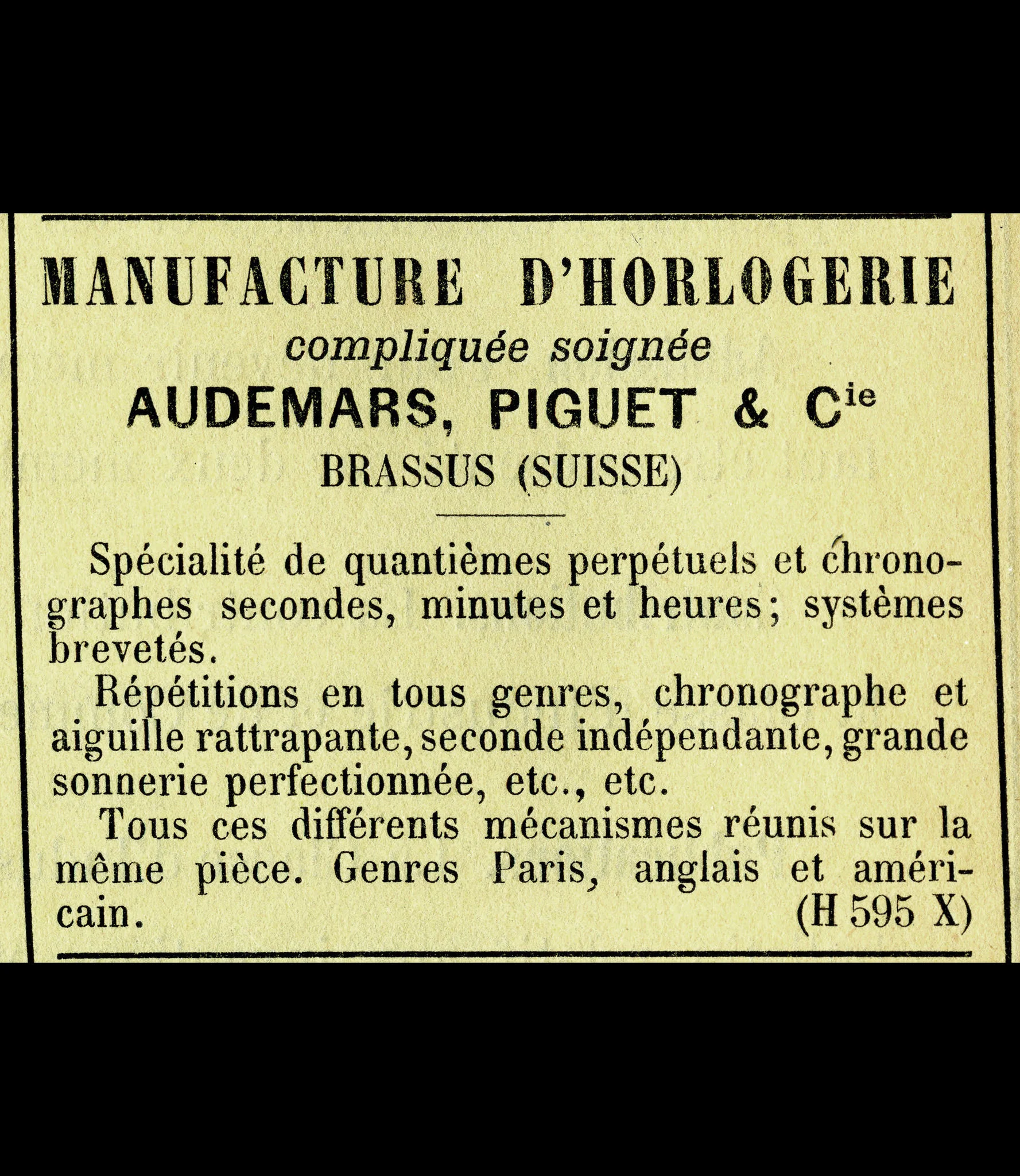
The first advertisement for Audemars, Piguet & Cie appeared twice in the Journal Suisse d’Horlogerie, in February and March 1882. The brand immediately positioned itself in the field of complications. Journal Suisse d’Horlogerie, February 1882.
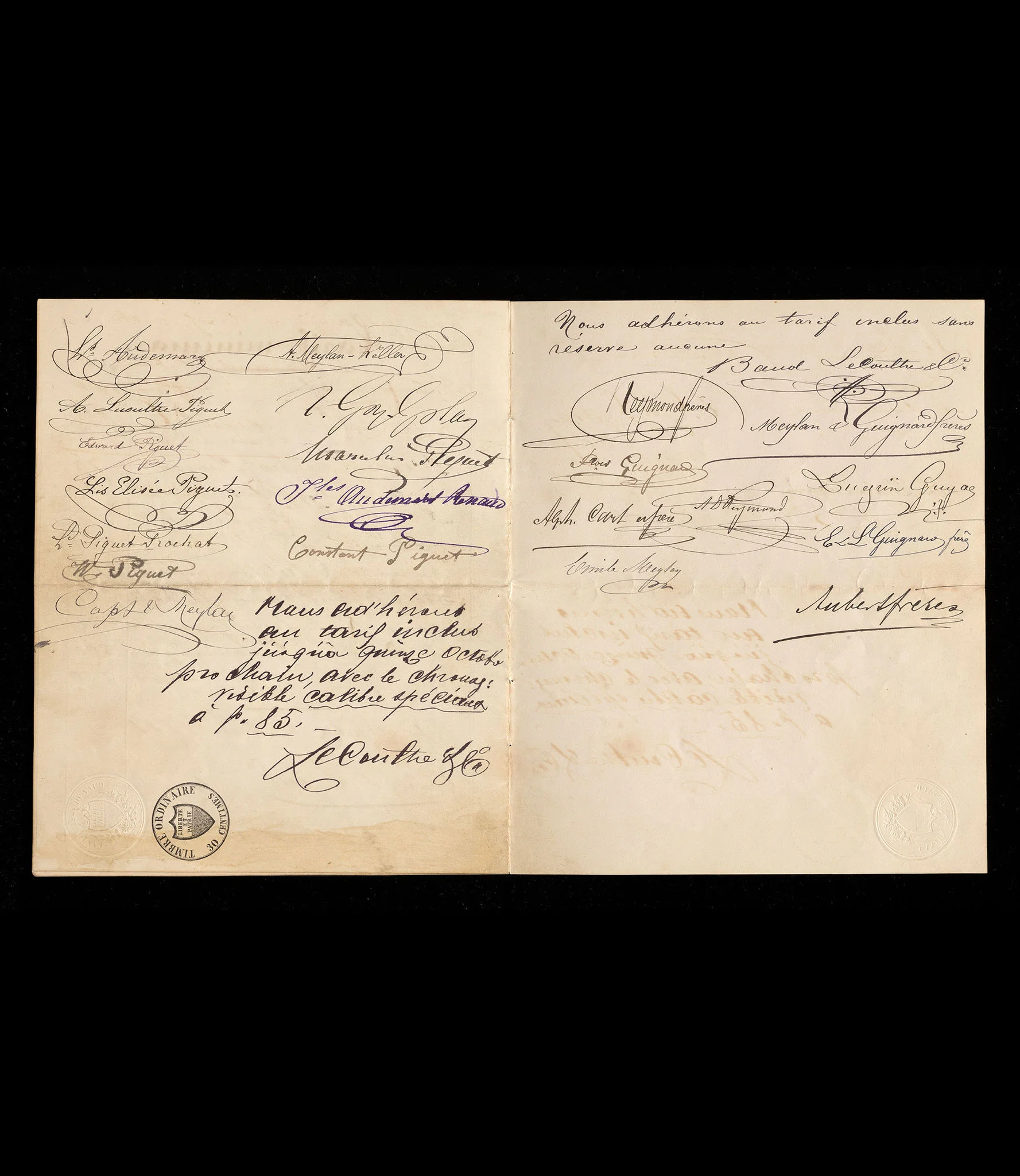
The letter from the Société Industrielle et Commerciale concerning minimum rates was signed by the main watchmakers in the Vallée de Joux, in particular Jules Louis Audemars, Edward Auguste Piguet, Ami LeCoultre-Piguet, Louis Audemars, Louis Elisée Piguet, Capt et Meylan, etc. Canton of Vaud Archives, P Société industrielle et commerciale de la Vallée de Joux B/1.
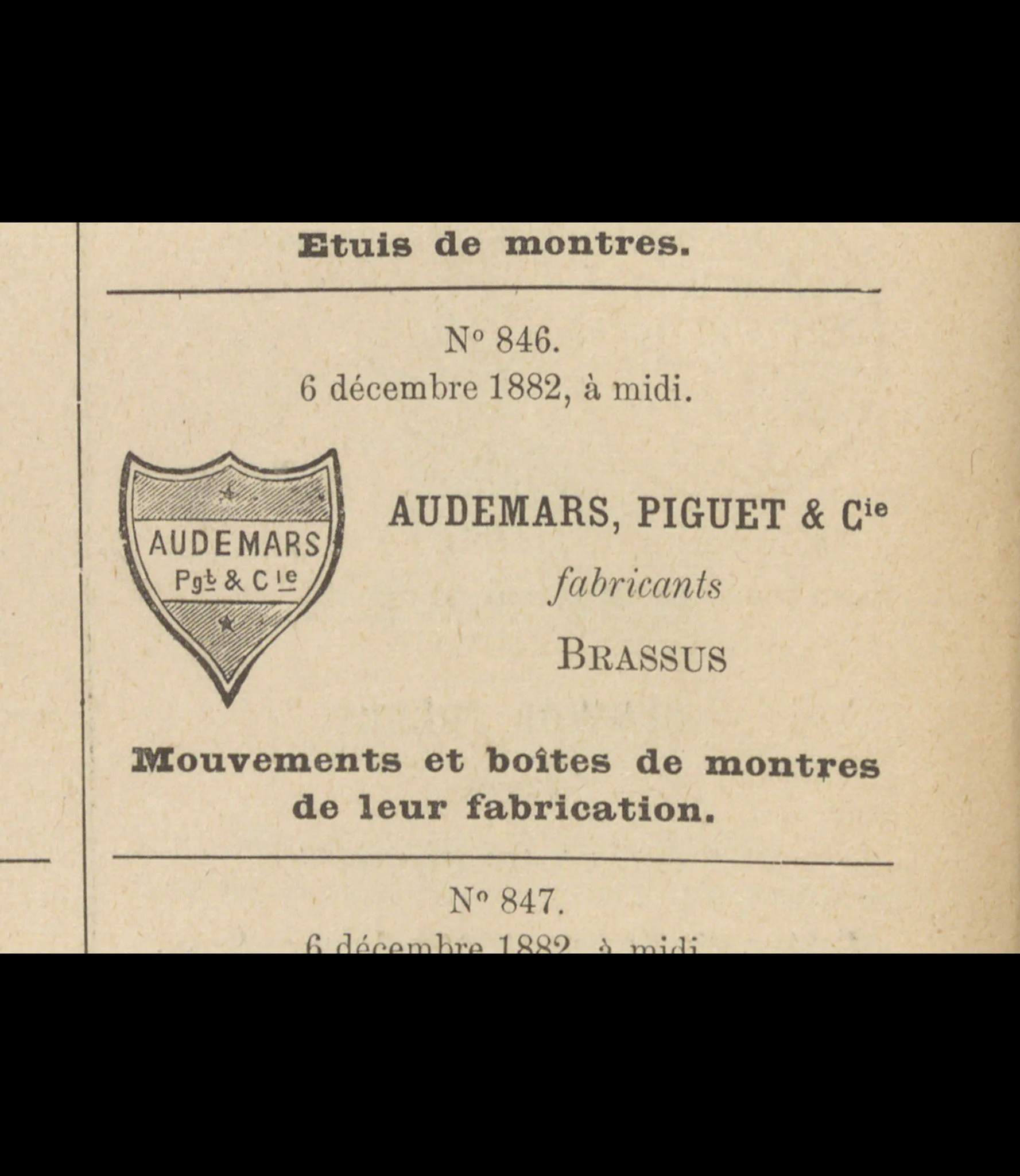
As soon as an intellectual property office was created, Audemars Piguet registered its hallmark to protect its Manufacture. Archives de l’Horlogerie. Archives AP.
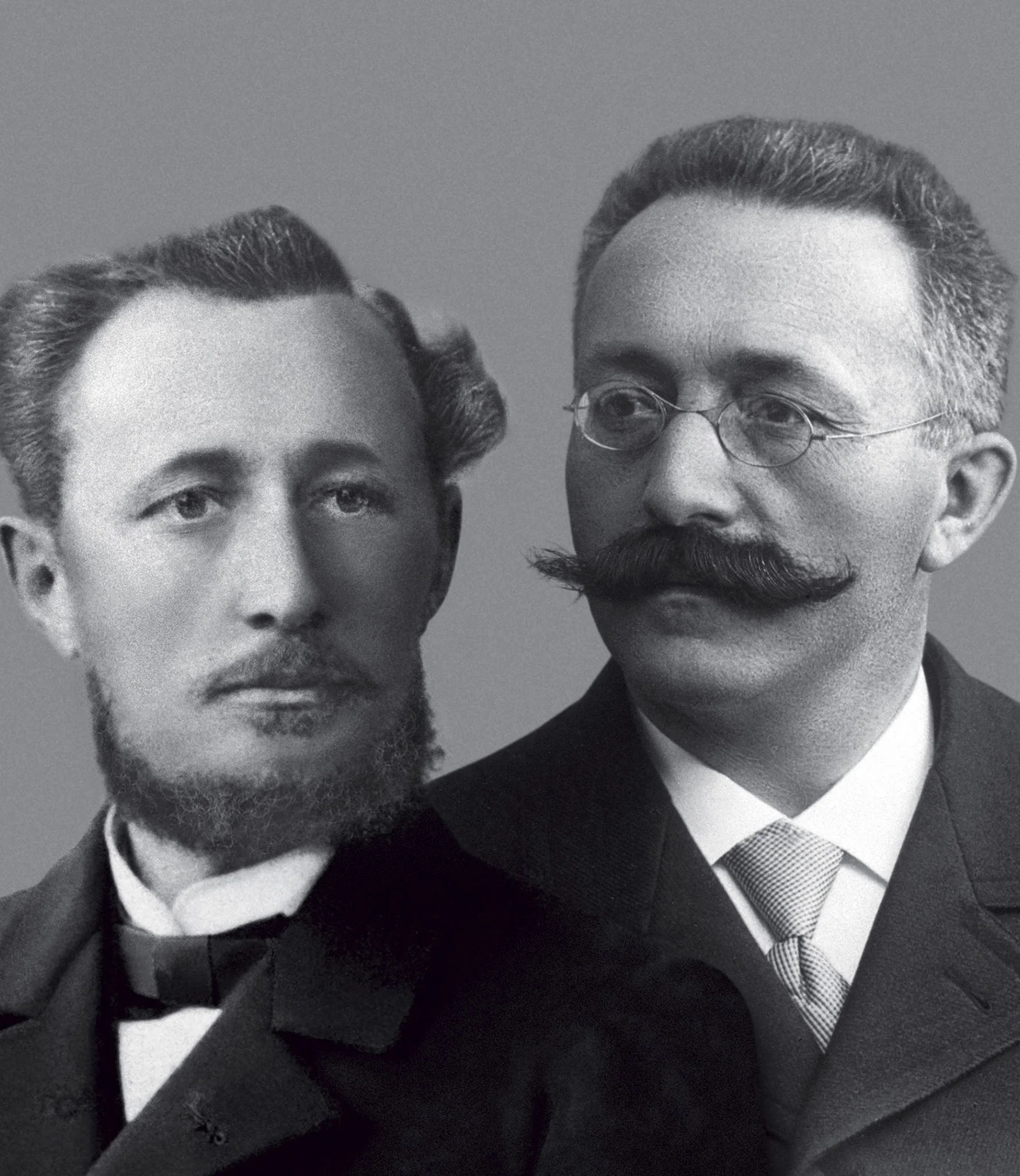
Jules Louis Audemars and Edward Auguste Piguet. The two men formalised their association through a contract signed in 1881, signalling the official birth of the Audemars Piguet brand.
Tradition, against all odds
Within the small world of Swiss watchmaking in the 1870s, a question on everyone's mind was the topic of much debate. Should production be industrialised? Could the industry survive in the face of American competition without undergoing radical change, at the risk of losing some of its expertise? Many companies, such as LeCoultre & Cie (the forerunner of Jaeger-LeCoultre), Zenith and Longines, opted for industrialisation. Audemars Piguet took the opposite gamble.
Audemars Piguet's first Registre d'Établissage (production register) covers around ten years of production. A read through it proves revealing, as each watch bears an identical number engraved on the case and mechanism, but there are no model or calibre numbers. The mechanisms are described by their size and functions. This basically meant that each watch was unique and contained a mechanism different from all others. In the age of the steam engine, this practice was almost a manifesto!
Audemars Piguet’s co-founders strongly and convincingly cultivated traditional craftsmanship and the organisation of work in very small, highly specialised units, often at home, according to the établissage system. They chose to work like their peers, predecessors, cousins, neighbours in Le Brassus and mentors, notably because their production was immediately oriented towards watches with complications, a very high added-value speciality that does not lend itself well to mass production. Until 1951, the company produced one-off watches exclusively.
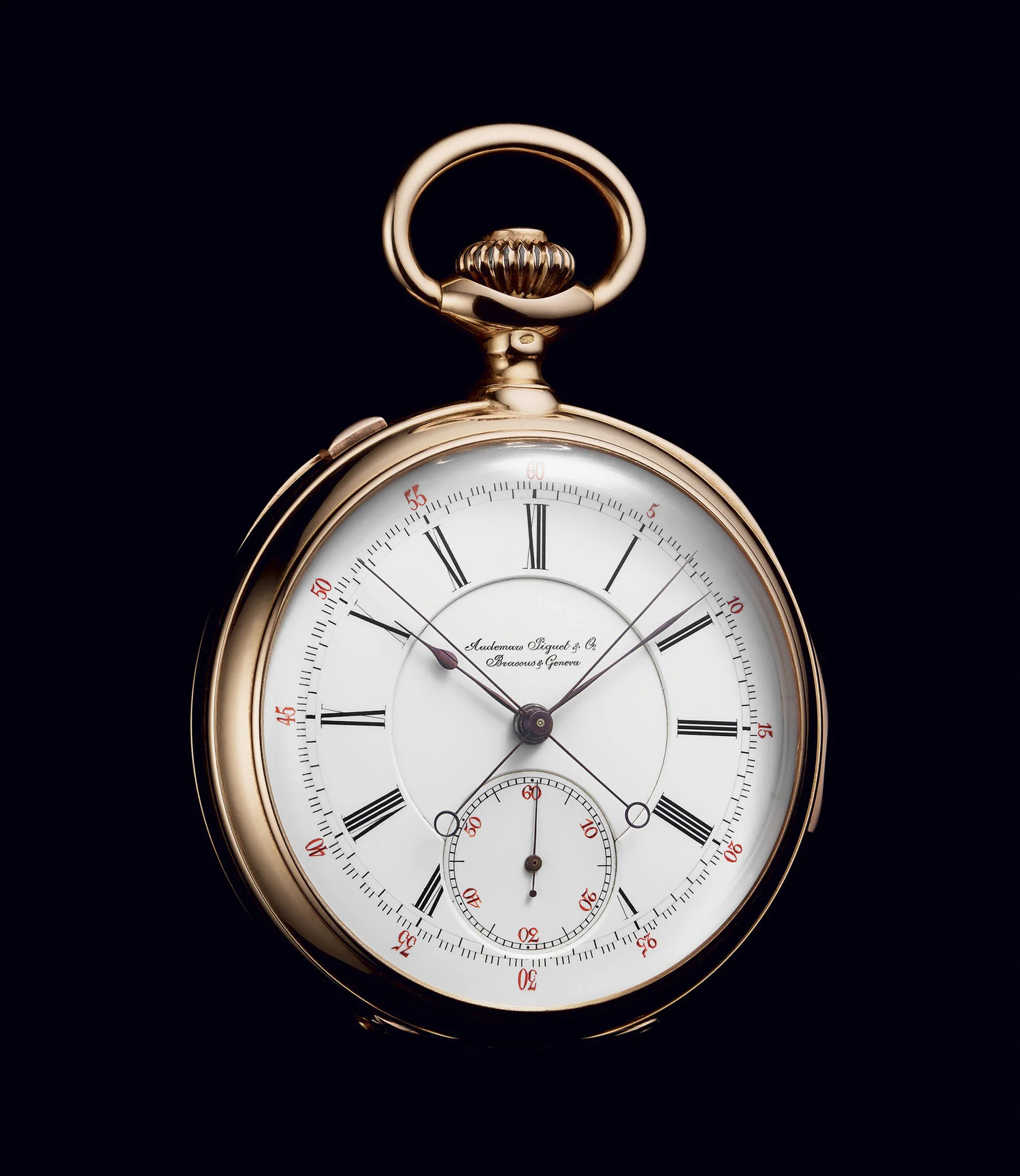
1890. Pocket watch with double complication. Split-seconds chronograph, minute repeater. 18-ligne calibre, movement and case No. 3824. 18-carat yellow gold case. Audemars Piguet Heritage, Inv. 25.
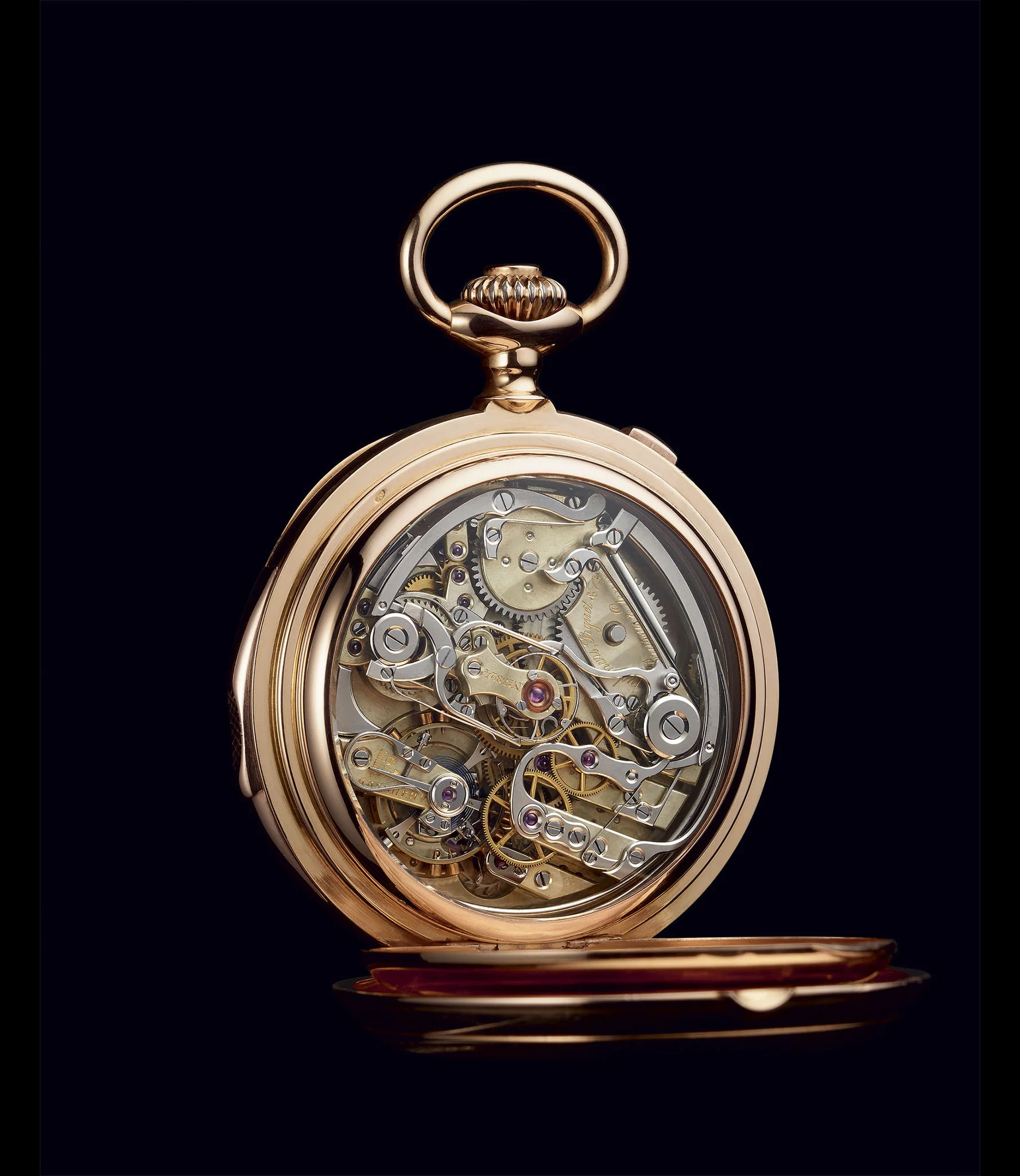
1890. Pocket watch with double complication. Split-seconds chronograph, minute repeater. 18-ligne calibre, movement and case no. 3824. 18-carat yellow gold case. Audemars Piguet Heritage, Inv. 25.
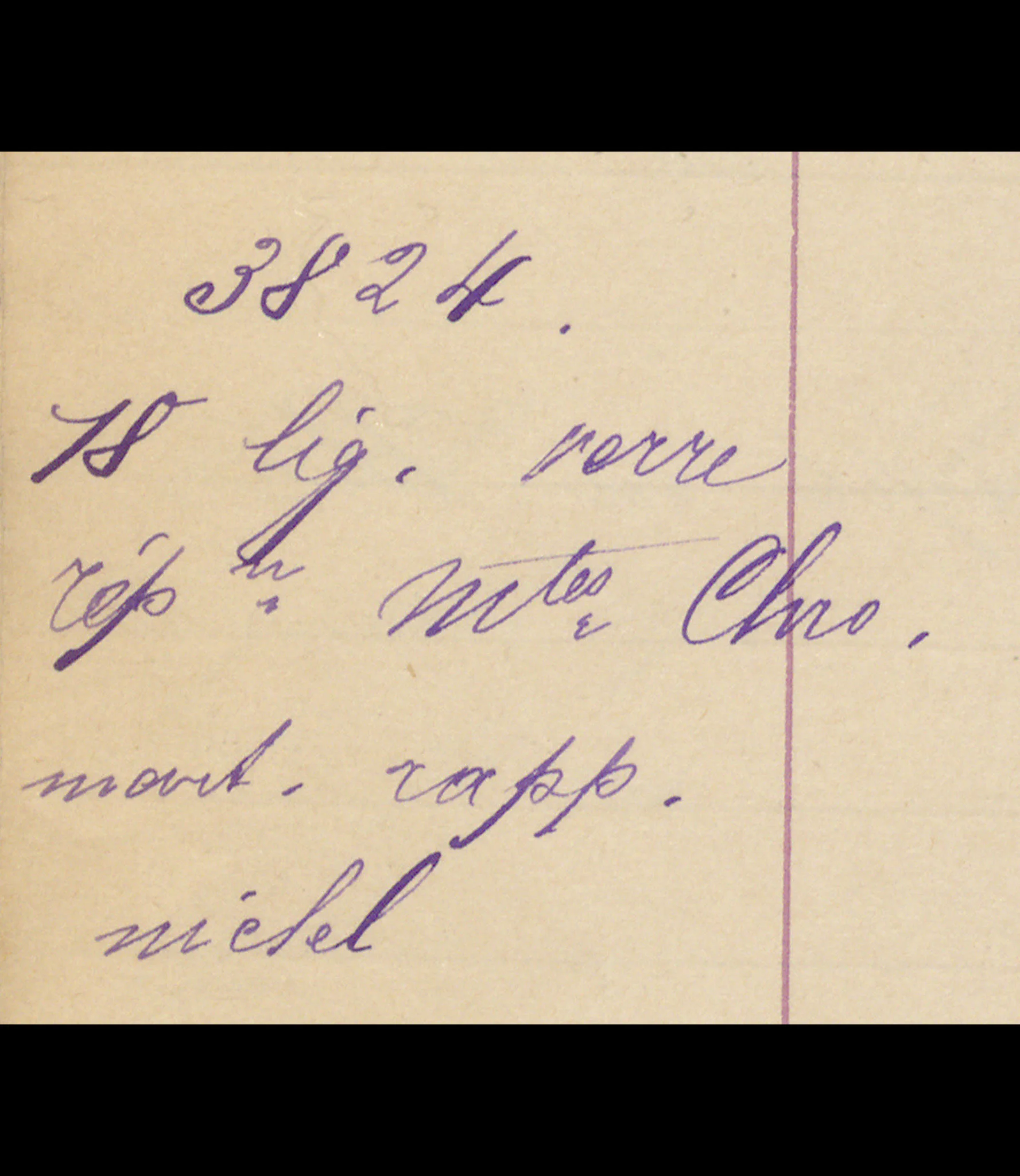
Description of previously illustrated watch No. 3824: 18 (40.6 mm), glass (Lépine), minute repeater, split-seconds chronograph, nickel silver. Audemars Piguet Archives.
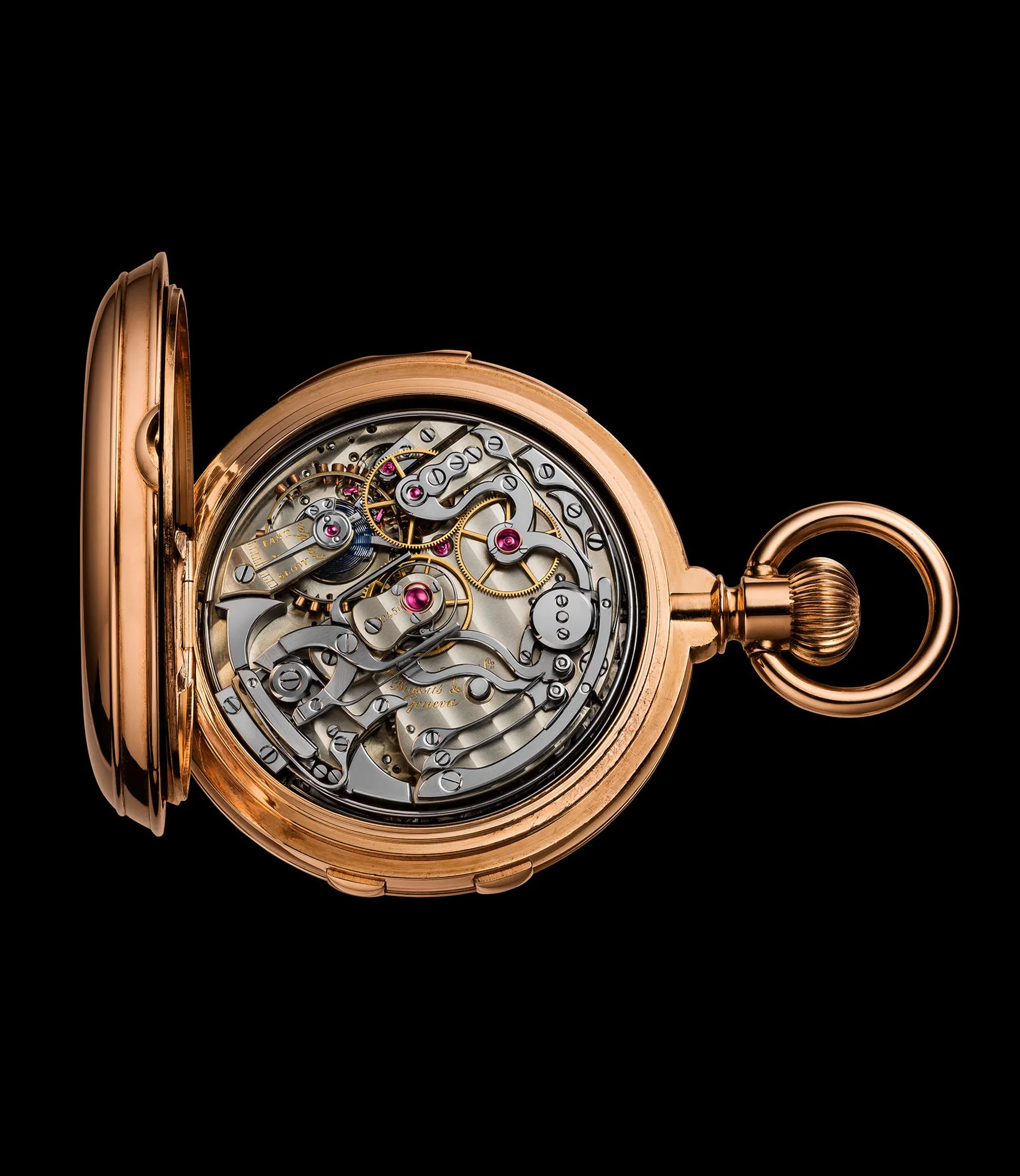
Completed by Audemars Piguet in 1886, this complication watch was sold five years later in England. Minute repeater, split-seconds chronograph, calendar. 19 ¾-ligne calibre, mainplate, movement and case no. 2450. Pygmalion Collection.
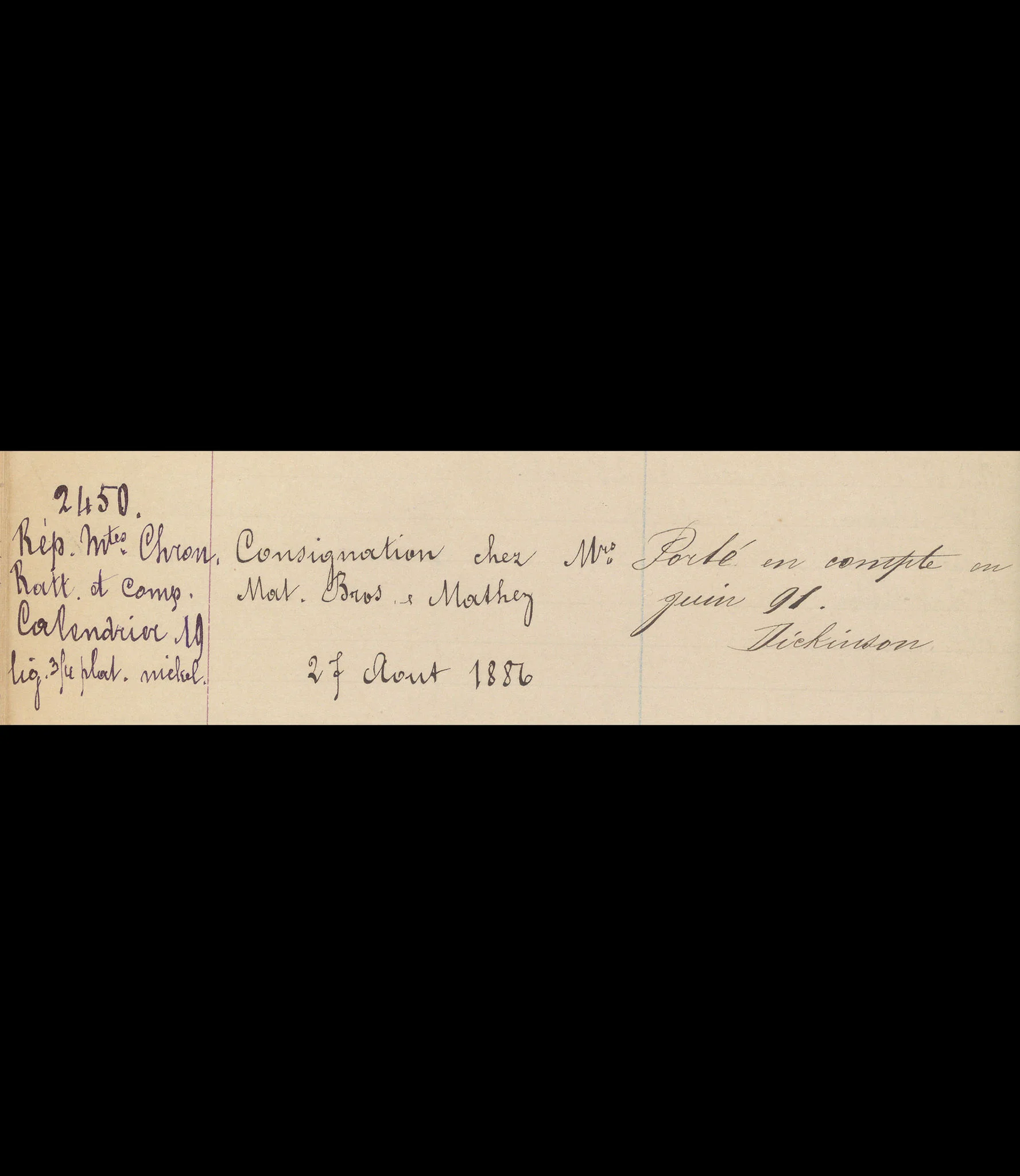
Description of watch No. 2450 illustrated above. No calibre number is given, only the functions and dimensions are described: minute repeater, chronograph and counter, calendar, 19 lignes (42.9 mm). Audemars Piguet Archives.
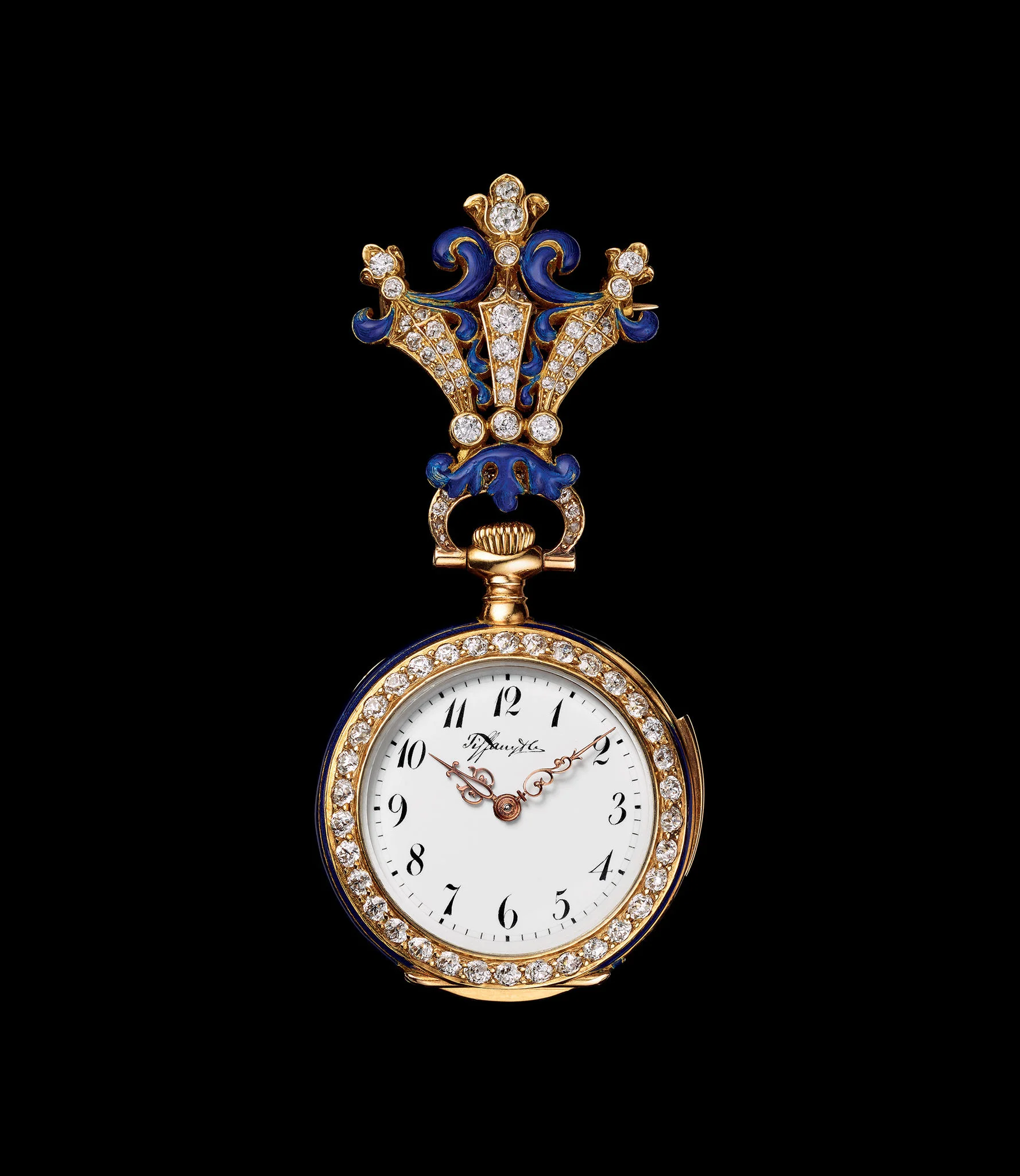
In 1894, Jules Louis Audemars travelled to the United States to defend a patent. He took this watch with him to deliver it to Tiffany. 10-ligne calibre with minute repeater. Movement 4269. 18-carat pink gold. AP Heritage , Inv. 35.
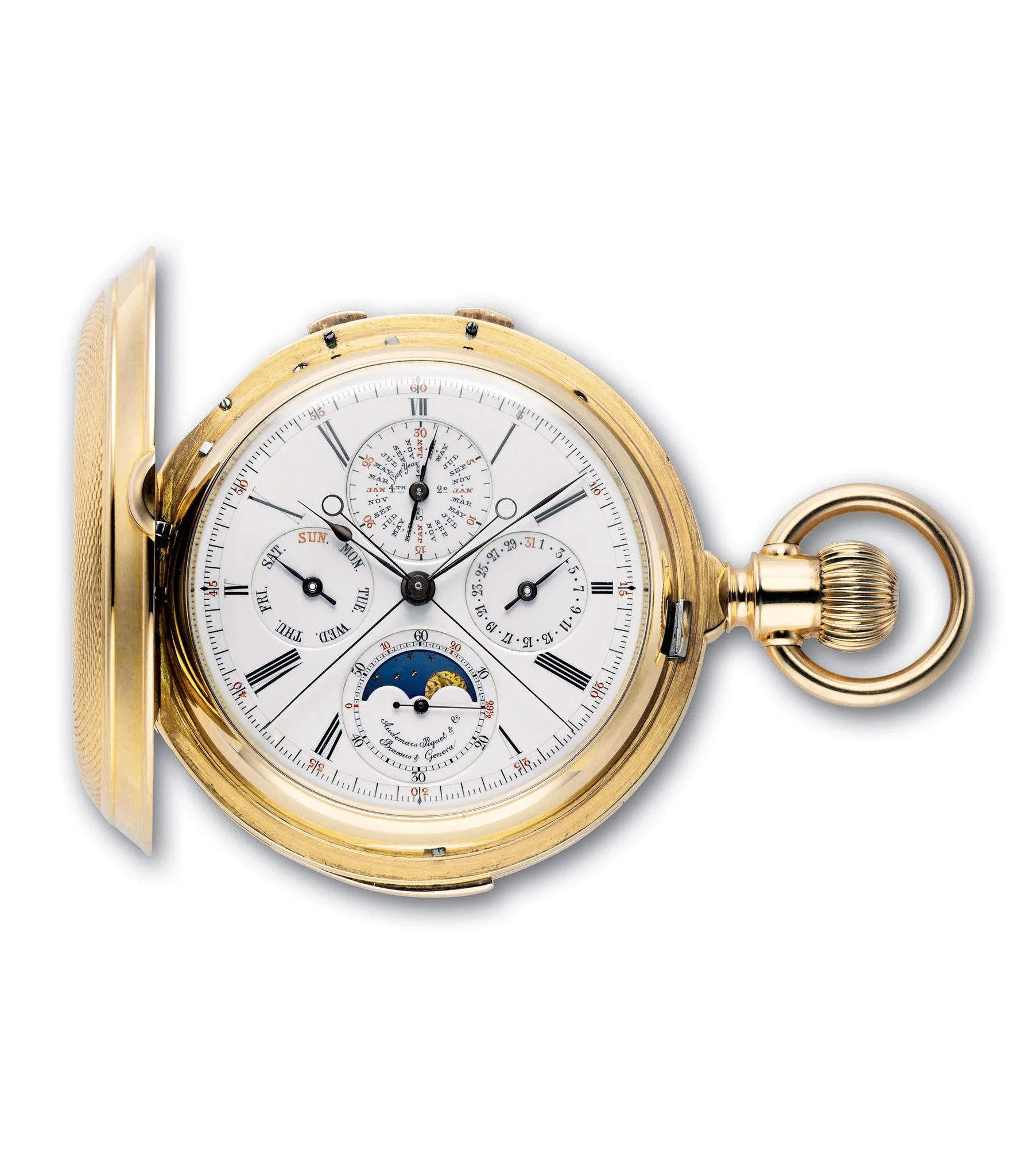
Grande Complication pocket watch: minute repeater, split-seconds chronograph, perpetual calendar. Movement 3781. Watch sold in 1885. Audemars Piguet Heritage, Inv. 591.
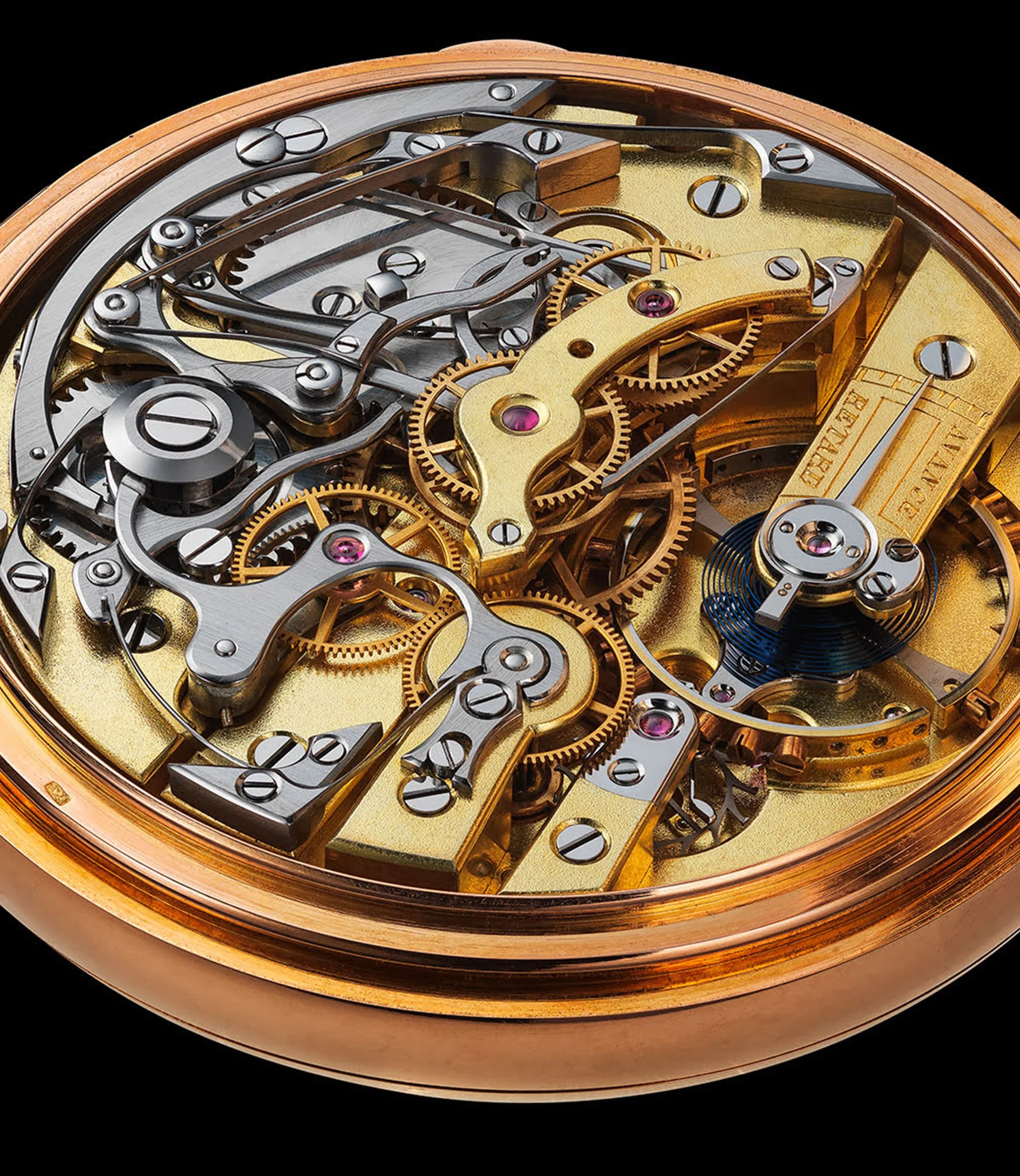
Delivered in 1899 to Swiss army colonel Henry Potter, this watch combines gilded bridges and polished steel components. Chronometer, chronograph with central 60-minute instantaneous counter. 18-carat pink gold. Calibre 20RWCS, movement and case no. 6225. Heritage Audemars Piguet, Inv. 57.
Ever more complicated!
Let's go back to the first Production Register. The first page describes 13 watches. All have at least one classic complication, and some have several. There are nine repeaters, seven chronographs and three calendars, offering a fine introduction to the subject! Of the 1,625 watches in the decade-long register, 75% have one or more complications – 52% a repeater, 38% a chronograph and 8% a calendar – while 20% feature more than one complication.
The first decades of Audemars Piguet's history were therefore strongly marked by watches with complications. This specialisation was no accident, as the Vallée de Joux had acquired its watchmaking credentials in this field. Since the 1850s, the small community of watchmakers in Le Brassus has developed and manufactured the majority of the world's most complicated calibres. These include the Merveilleuse by Ami Lecoultre Piguet (1878), the Leroy 01 (1900) and the Henry Graves by Patek Philippe in 1927. Whether signed in Geneva, Paris, Besançon or London, their movements come from the Vallée de Joux.
Audemars Piguet took part in this quest for ultra-complication. In April 1899, the workshops received a very special movement "ébauche" from the workshops of Louis Elisée Piguet, a cousin and neighbour. It took several months to complete the finishing of more than 1,000 components driving 19 complications. The cased-up watch was sent to Germany to be finished and marketed by the Union Dürrstein company in Glashütte under the name "Universal Uhr". Nicknamed the Universelle, the watch was acquired by the Audemars Piguet Heritage team in 2016 after four years of restoration. It is on display at the heart of the Musée Atelier in Le Brassus and inspired the creation of the Code 11.59 by Audemars Piguet Ultra-Complication Universelle (RD#4) wristwatch, winner of the “Aiguille d’Or” award in the 2023 Grand Prix d’Horlogerie de Genève.
Audemars Piguet has never stopped making watches with complications, an art that remains at the very core of its expertise.
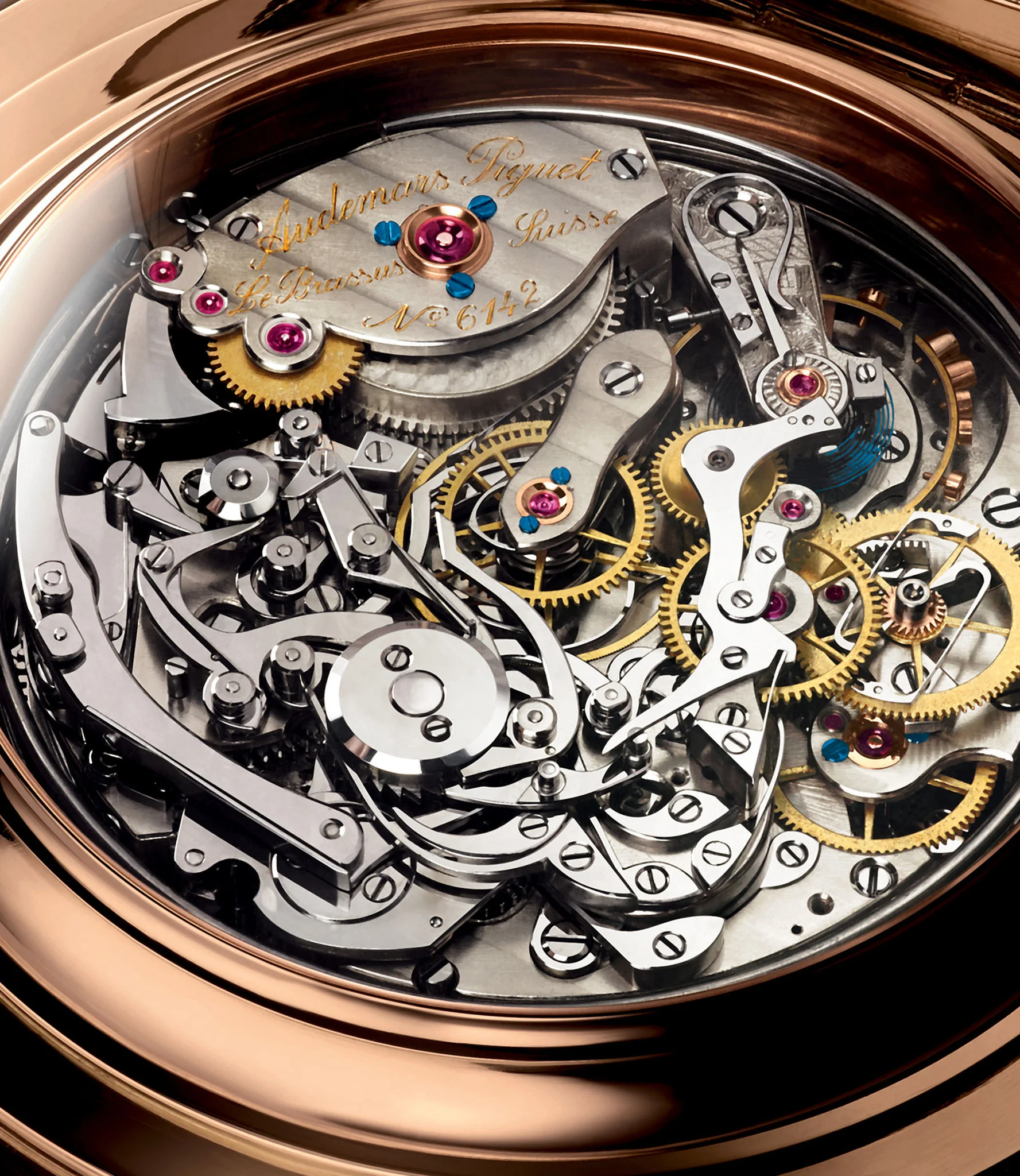
1899. Ultra-complicated Universelle pocket-watch calibre. 19 complications, including a Grande Sonnerie, minute repeater, perpetual calendar, American alarm, split-seconds chronograph, deadbeat seconds and jumping seconds. 22-ligne calibre. Audemars Piguet Heritage, Inv. 1713.
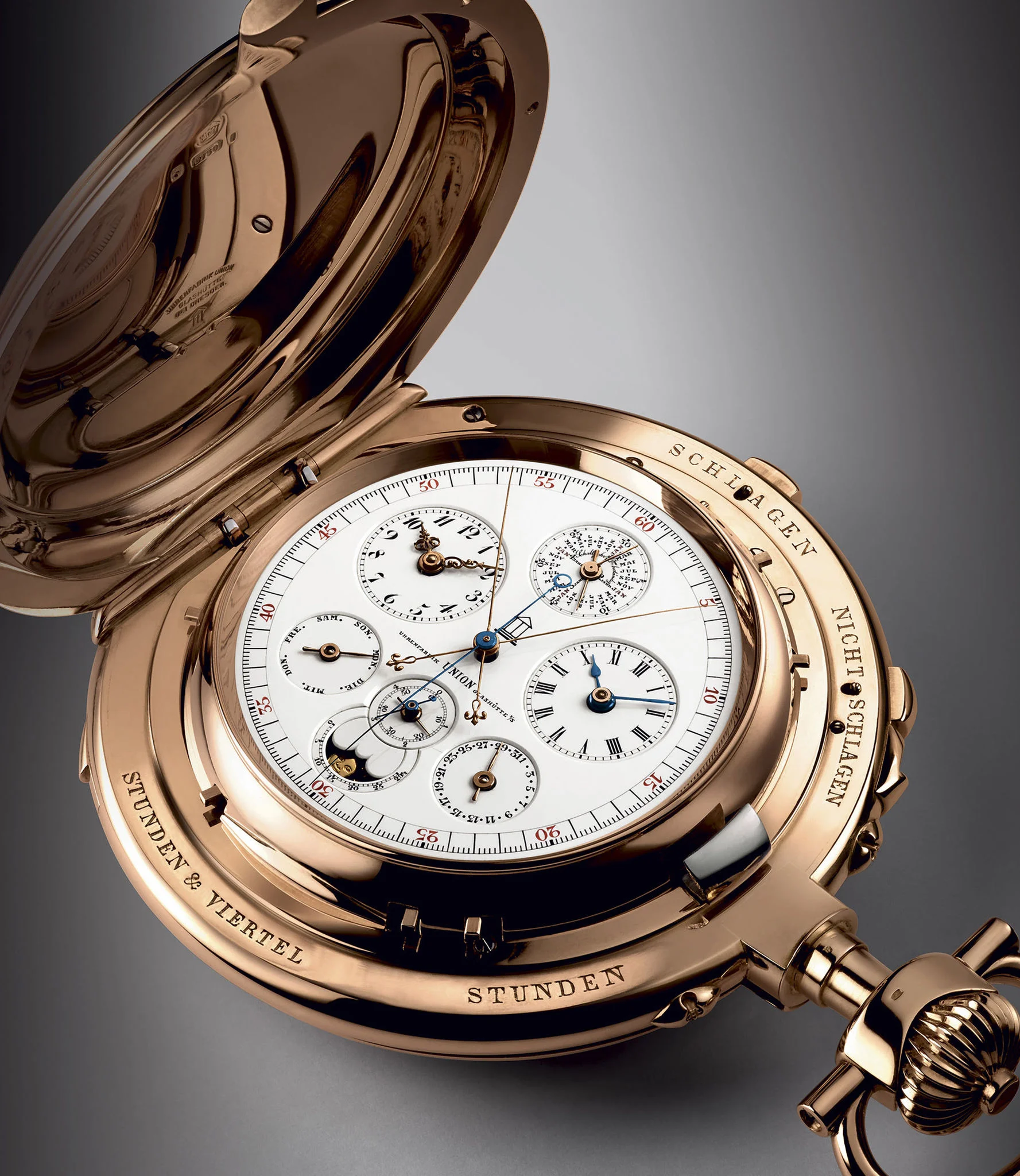
In 1899, Louis Elisée Piguet delivered three ultra-complex movement "ébauches" to his neighbouring company Audemars Piguet. One of them is used in this watch, signed by Union and offering 19 different complications. Audemars Piguet Heritage, Inv. 1713.
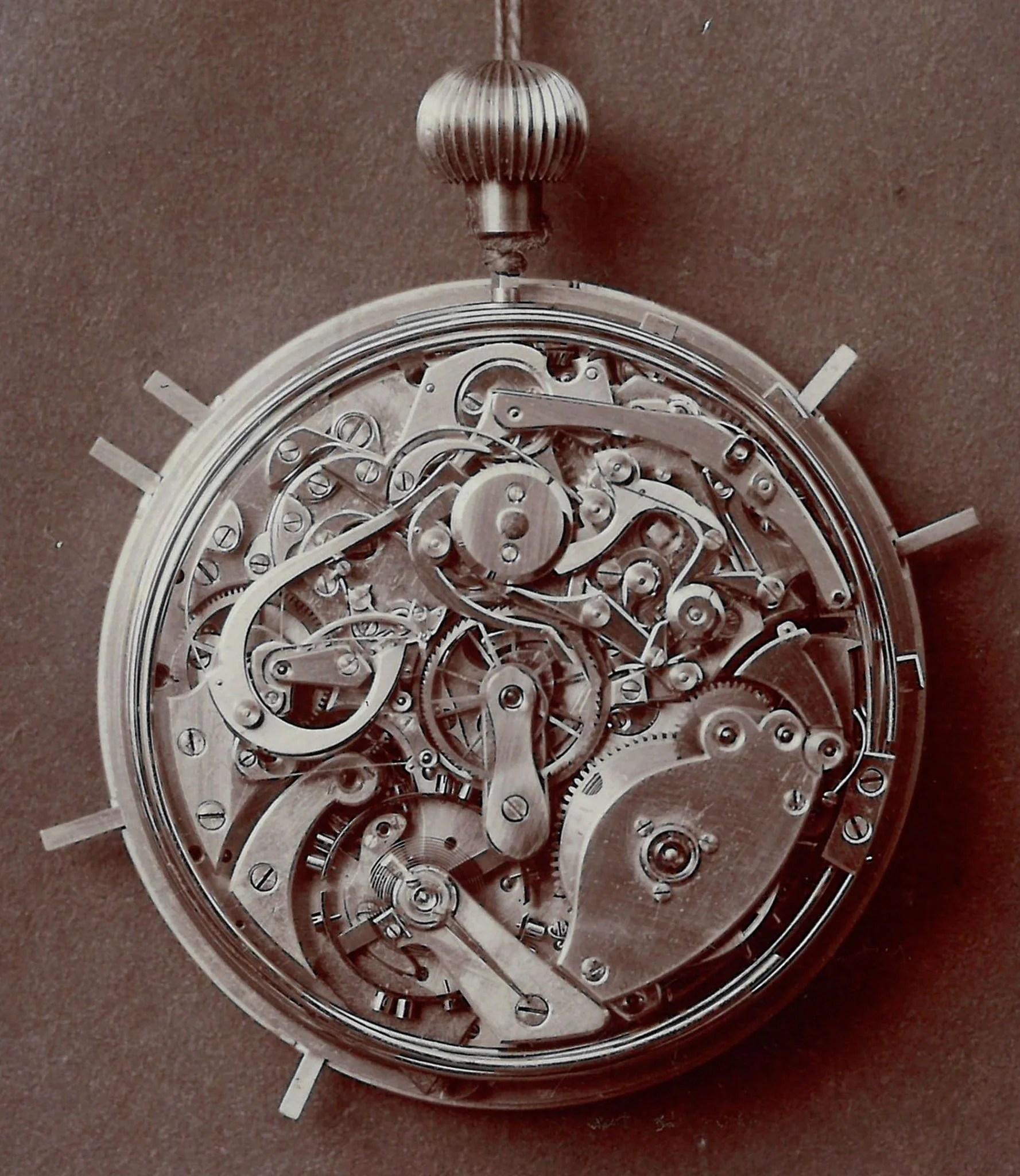
"Ébauche" of the 22-ligne calibre from the 1899 Universelle pocket watch. Photograph taken during production. Audemars Piguet Archives.
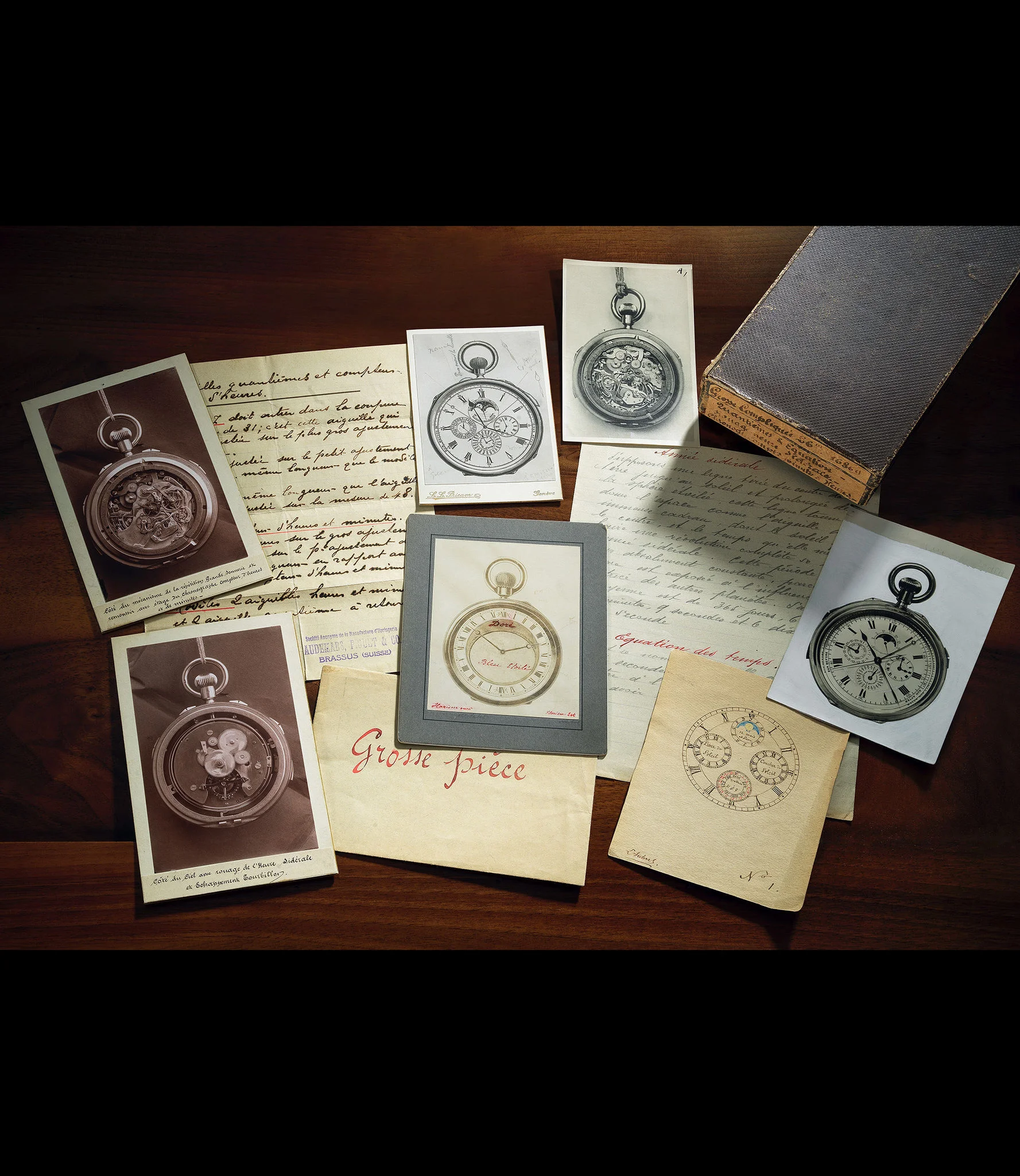
The archives relate to several ultra-complicated watches. One was commissioned in 1914 by the Emperor of Austria, while another, nicknamed “Grosse Pièce”, features 19 complications and was delivered to S. Smith & Sons in 1921. Audemars Piguet Archives.
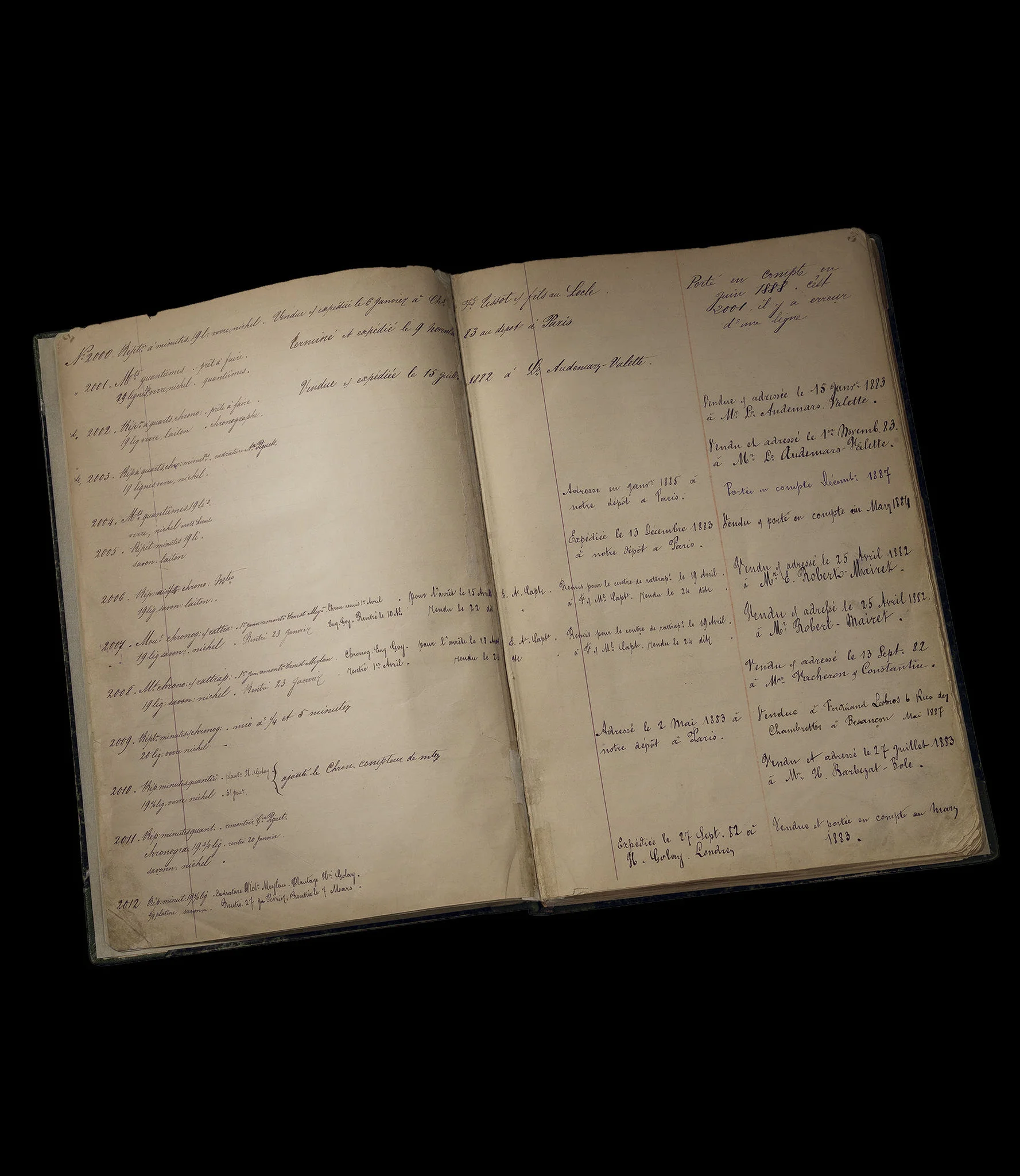
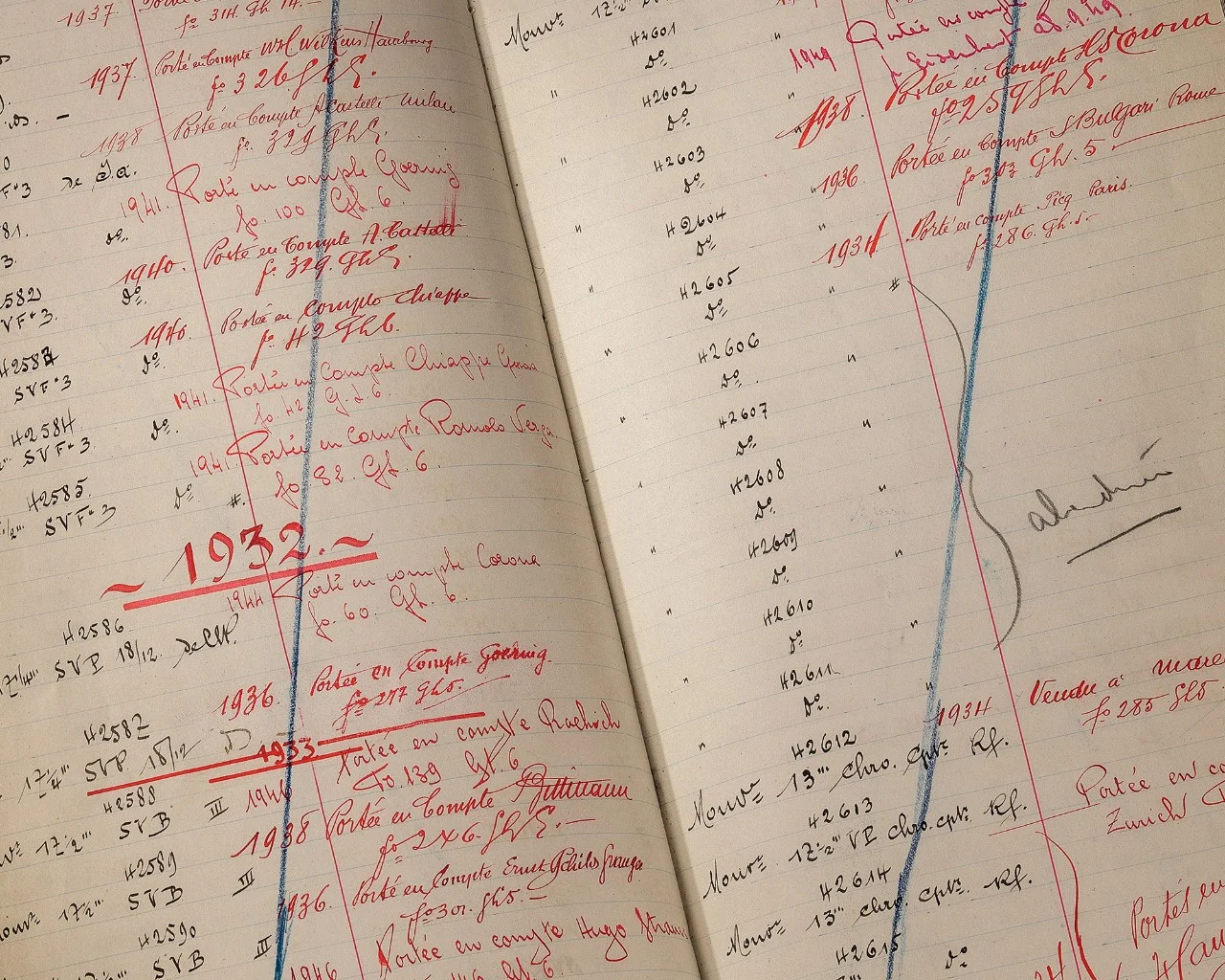
1882. Audemars Piguet Production Register. First double page of the oldest Production Register kept in the Audemars Piguet archives. Out of 13 watches, all are equipped with complications and nine include a minute repeater. Audemars Piguet Archives.
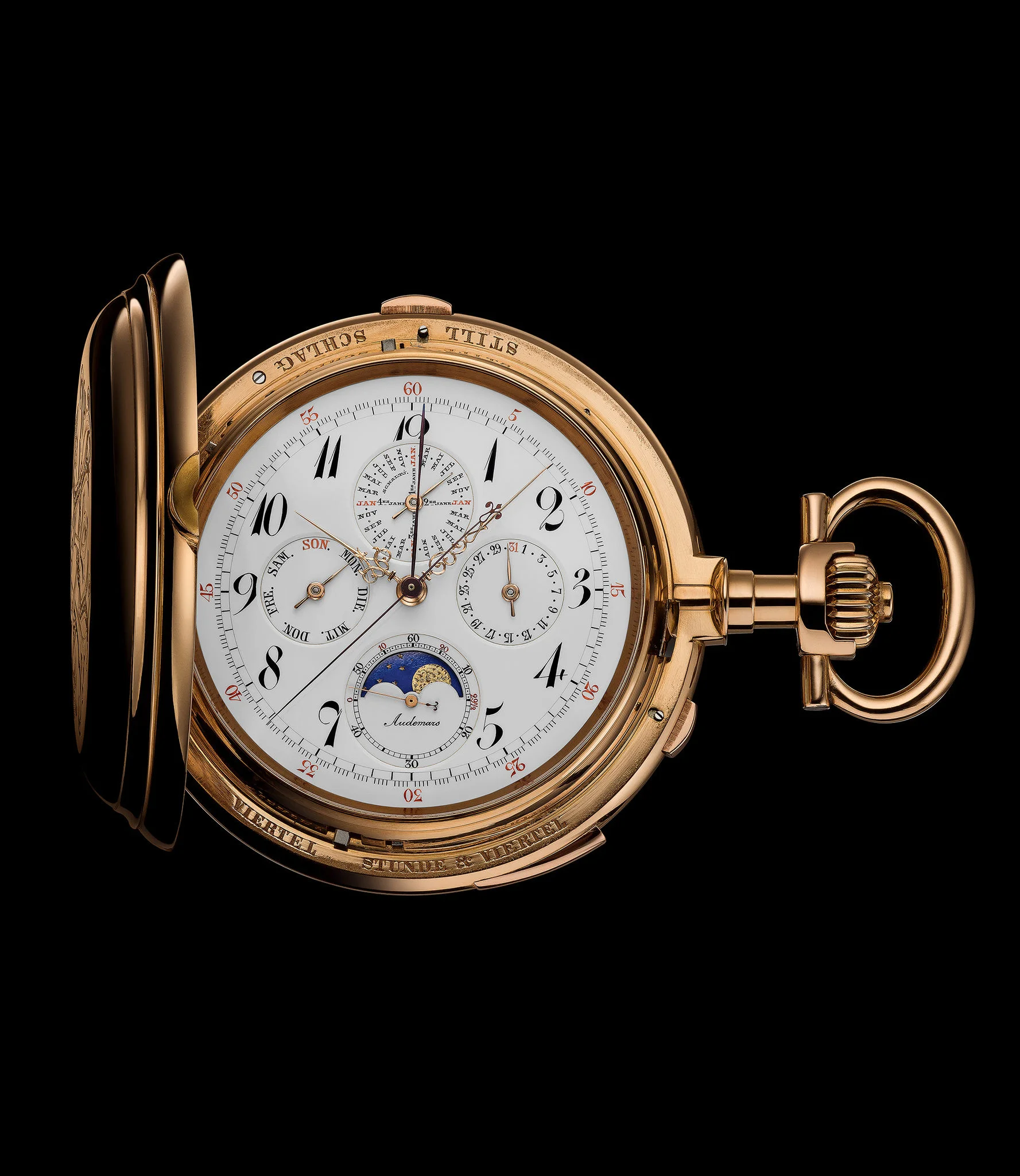
Audemars Piguet created this watch with Grande Sonnerie and perpetual calendar in 1895. Delivered to an Audemars store/boutique in Geneva, it bears the Audemars Piguet hallmark on the strikework, well hidden behind the dial and calendar mechanism. 19-ligne calibre, movement and case no. 4289. 18-carat pink gold. Audemars Piguet Heritage, Inv. 1944.
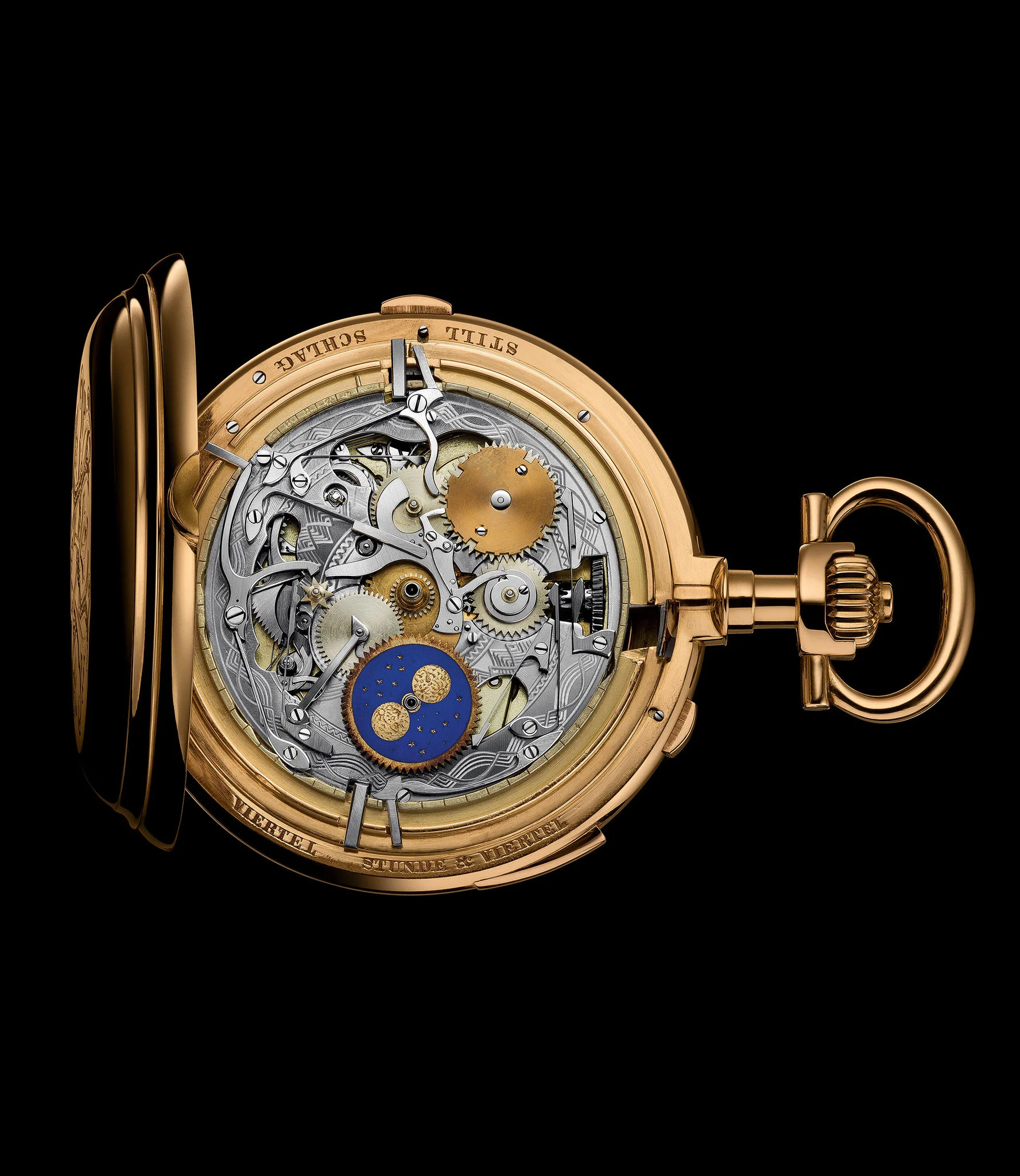
Audemars Piguet created this watch with Grande Sonnerie and perpetual calendar in 1895. Delivered to an Audemars store/boutique in Geneva, it bears the Audemars Piguet hallmark on the strikework, well hidden behind the dial and calendar mechanism. 19-ligne calibre, movement and case no. 4289. 18-carat pink gold. Audemars Piguet Heritage, Inv. 1944.
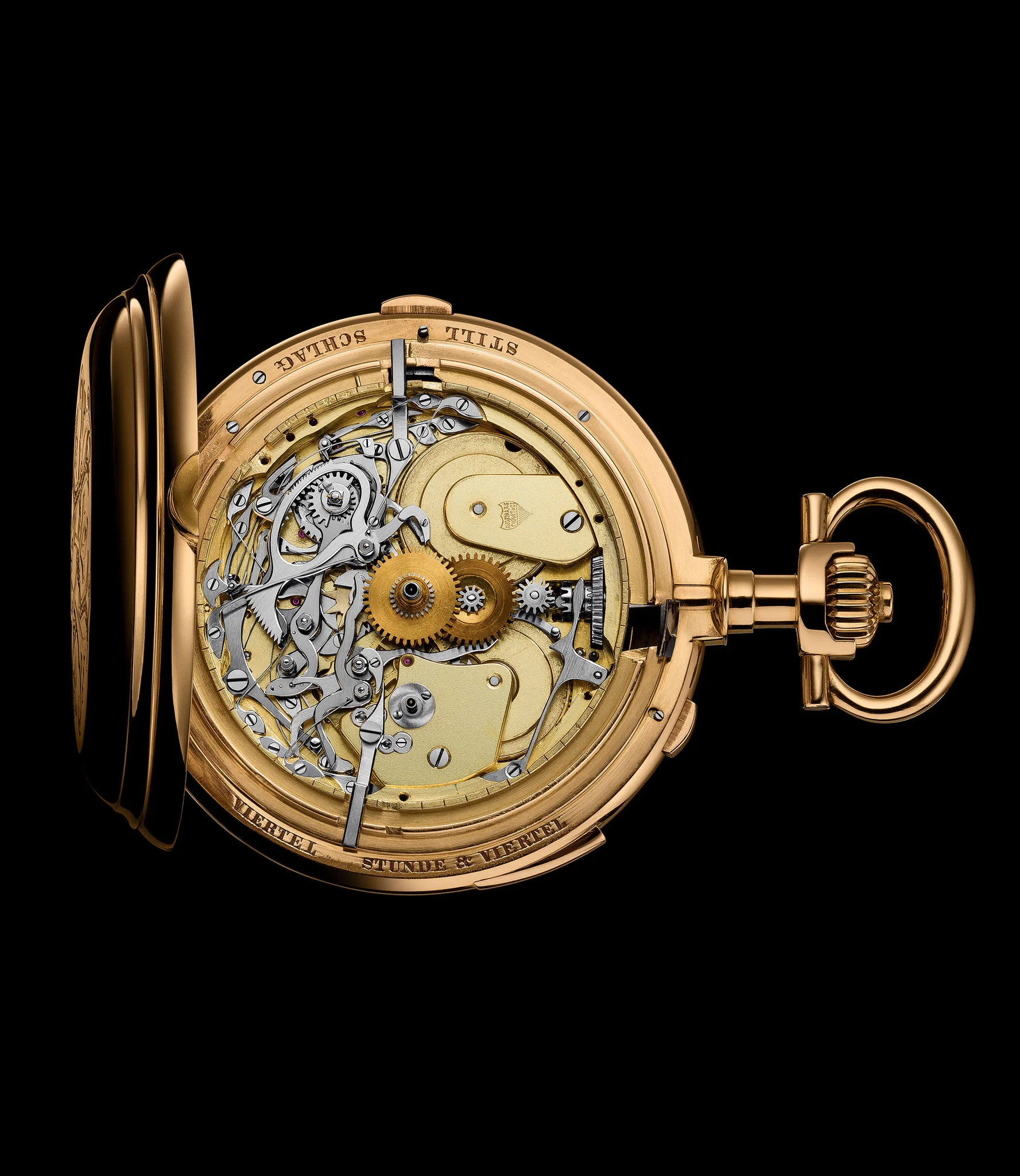
Audemars Piguet created this watch with Grande Sonnerie and perpetual calendar in 1895. Delivered to an Audemars store/boutique in Geneva, it bears the Audemars Piguet hallmark on the strikework, well hidden behind the dial and calendar mechanism. 19-ligne calibre, movement and case no. 4289. 18-carat pink gold. Audemars Piguet Heritage, Inv. 1944.
All those Audemars!
In the 19th century, watches were rare and those with complications even more so. They were aimed at connoisseurs, most of whom lived in major cities. However, access to aristocrats and captains of industry was not easy for the founders of a small workshop tucked away in a mountain village. For Audemars Piguet, the road to recognition was even steeper: in the years 1880–90, four watch brands bore the Audemars name in the village of Le Brassus alone!
The co-founders then explored all possible avenues, starting by selling their watches to other watchmakers with distribution networks. These included Vacheron Constantin and Patek Philippe in Geneva, Dent in London, Tiffany in New York and Cartier in Paris, as well as Louis Audemars, who had been based in Le Brassus since 1811 and was at once a competitor, a customer and a cousin.
At the same time, Audemars Piguet forged links with retailers with boutiques in the most prestigious cities and tourist centres, such as E. Gübelin in Lucerne, Wittnauer in New York and Shreve & Co in San Francisco. All these intermediaries helped distribute watches, but they often added their own signature, leaving the manufacturer in the shadows...
To make a name for itself, Audemars Piguet therefore entered competitions at the World's Fairs, won medals, launched advertising campaigns and opened small workshops in Geneva and London where the watches were finished and a network built up. Little by little, the brand name began to appear on the dial: "Audemars Piguet & Cie, Brassus et Genève". One thing led to another and the brand succeeded in winning over a demanding, cosmopolitan public with a thirst for novelty.
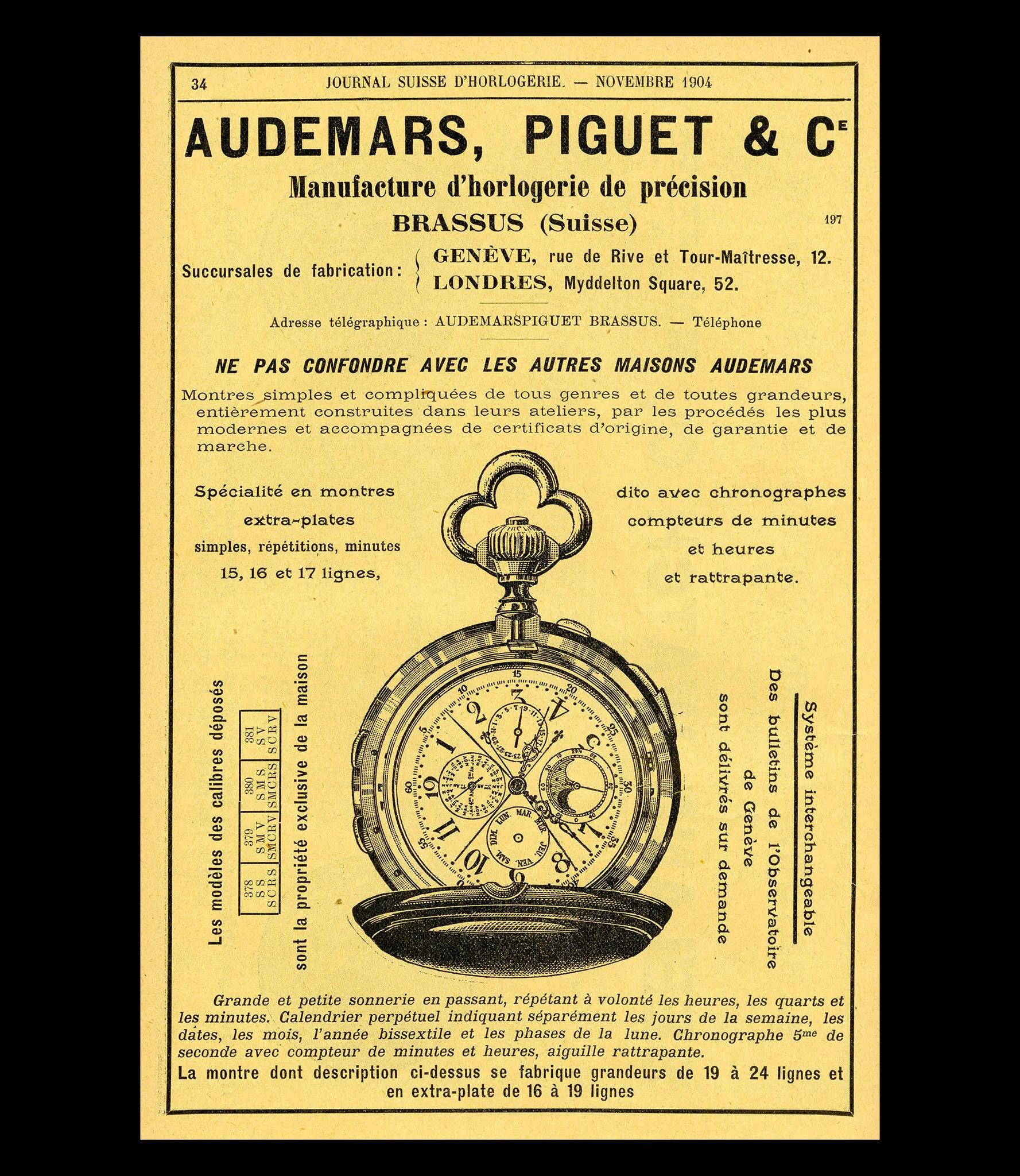
Aimed at retailers and watch brands, this 1904 advertisement describes the range of specialities offered by Audemars Piguet, from complications and chronometers to extra-thin watches and miniatures. Also note the words: NE PAS CONFONDRE AVEC LES AUTRES MAISONS AUDEMARS (DO NOT CONFUSE WITH OTHER AUDEMARS COMPANIES". Journal Suisse de l’Horlogerie archives .
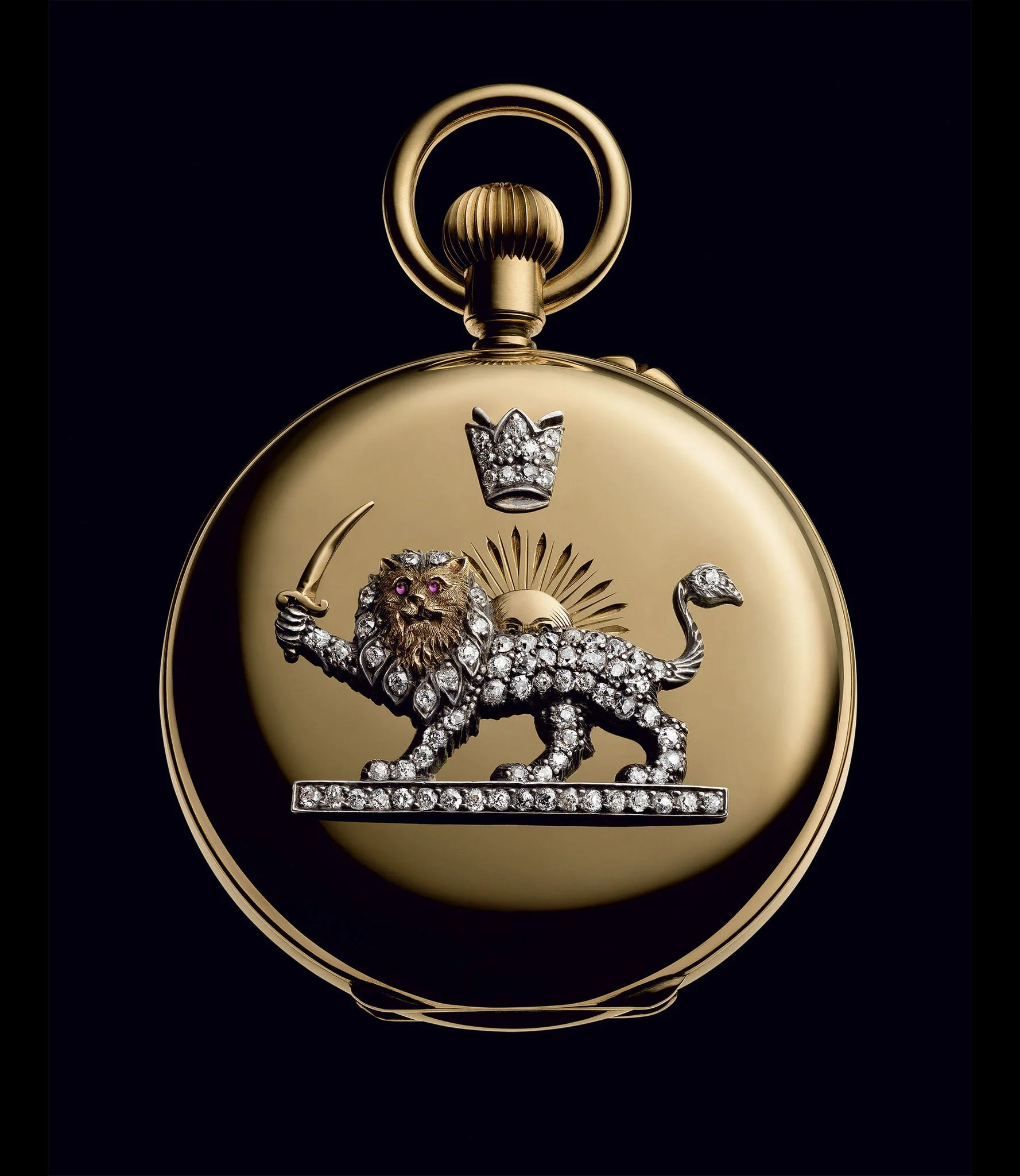
1884. Watch bearing the emblem of the Shah of Iran. Delivered by Audemars Piguet to the English watchmaker Donne & Sons, who signed it and sold it to the monarch. 19-ligne calibre. Movement 2121, yellow gold. Audemars Piguet Heritage, Inv. 9.
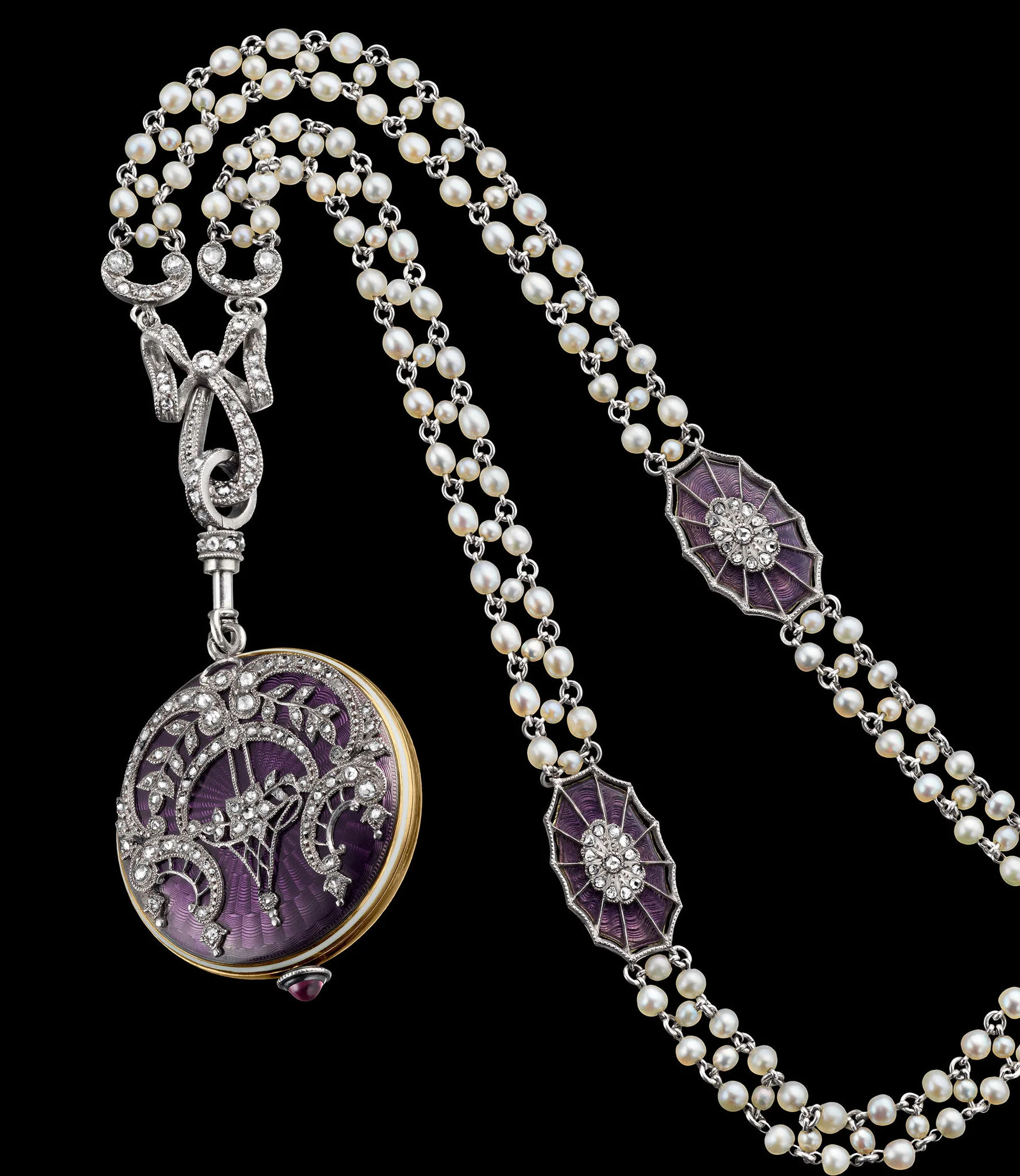
1918. Art Deco pendant watch. Purple translucent enamel case set with diamonds. Chain adorned with pearls. Unsigned white silver dial, painted numerals and blue hands. 9-ligne calibre. Movement 13943. Platinum and yellow gold. Audemars Piguet Heritage, Inv. 1848.
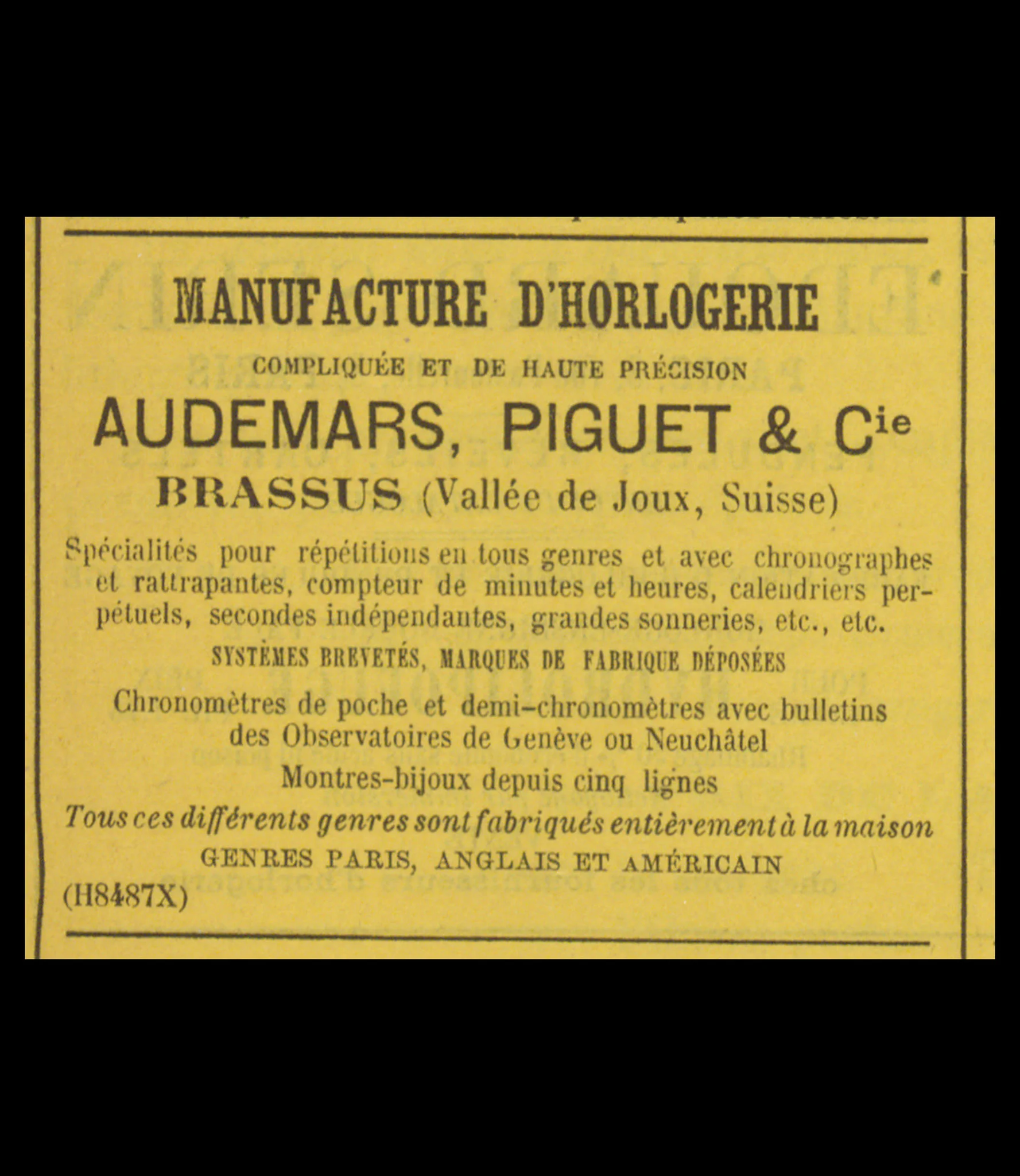
1884. Audemars Piguet advertisement. Archives Journal Suisse de l’Horlogerie.
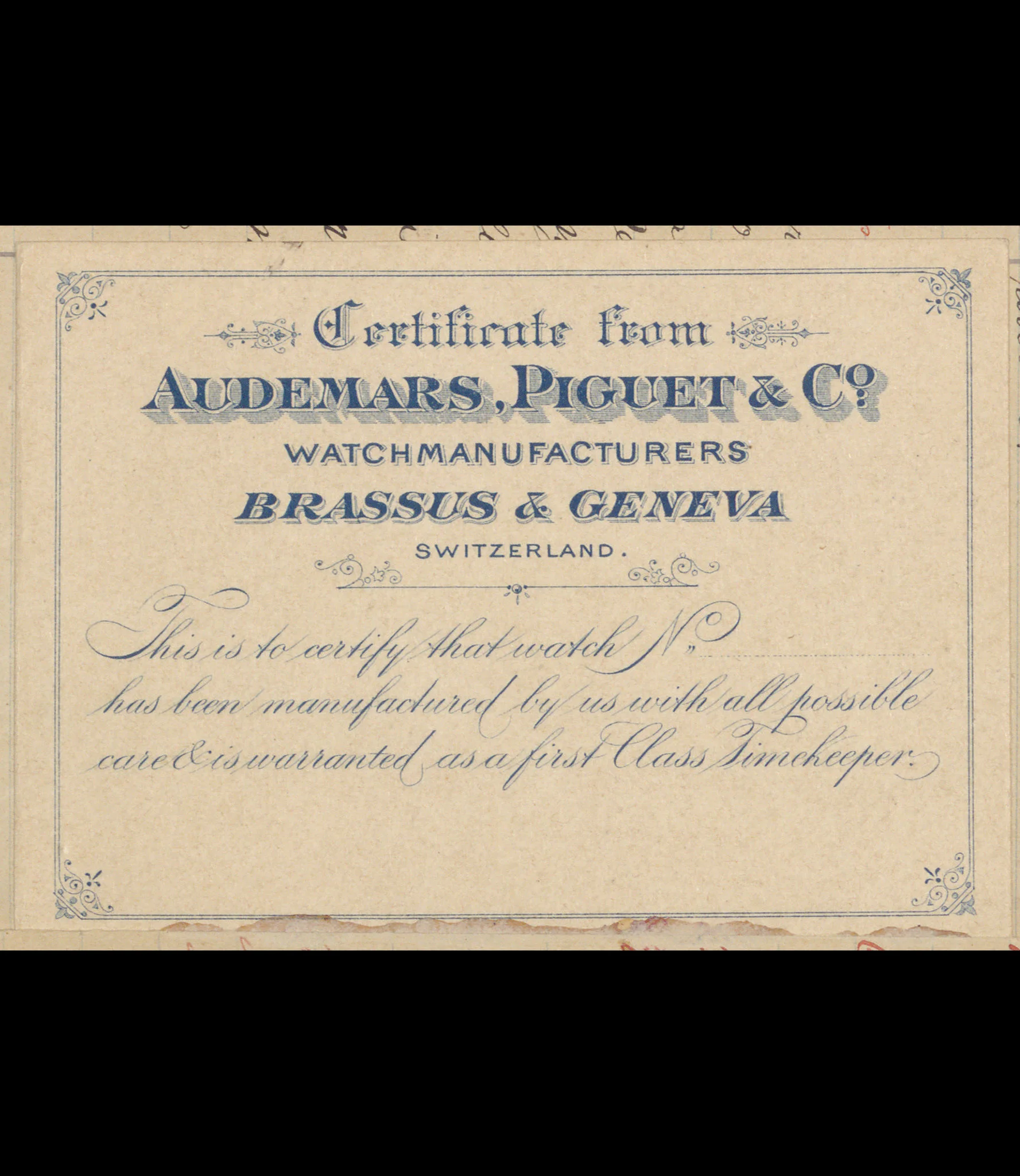
Circa 1890. Blank certificate of origin for Audemars Piguet watches. Audemars Piguet Archives.
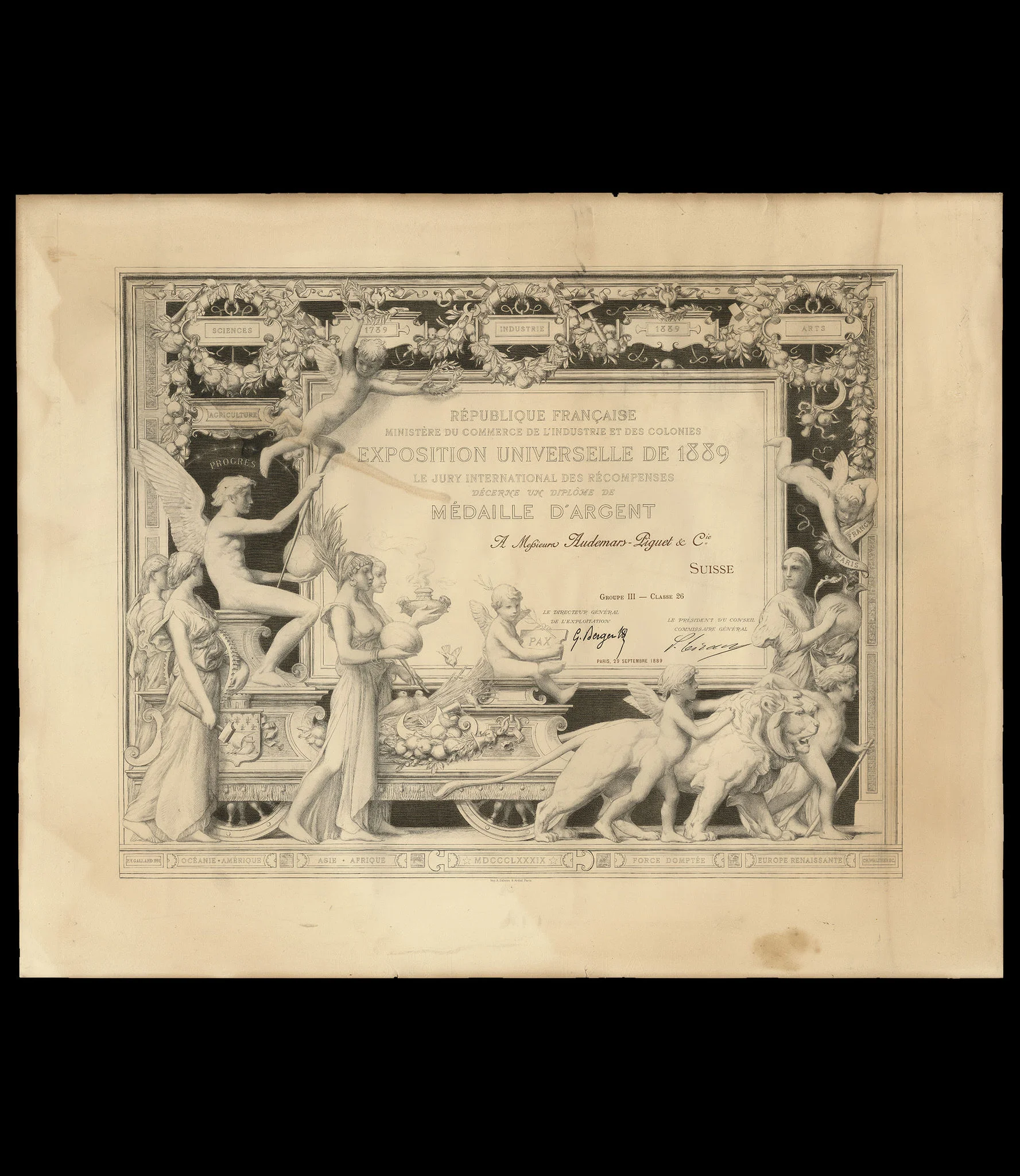
Diploma received by Audemars Piguet in 1889 following its participation in the Paris World’s Fair. Audemars Piguet Archives.
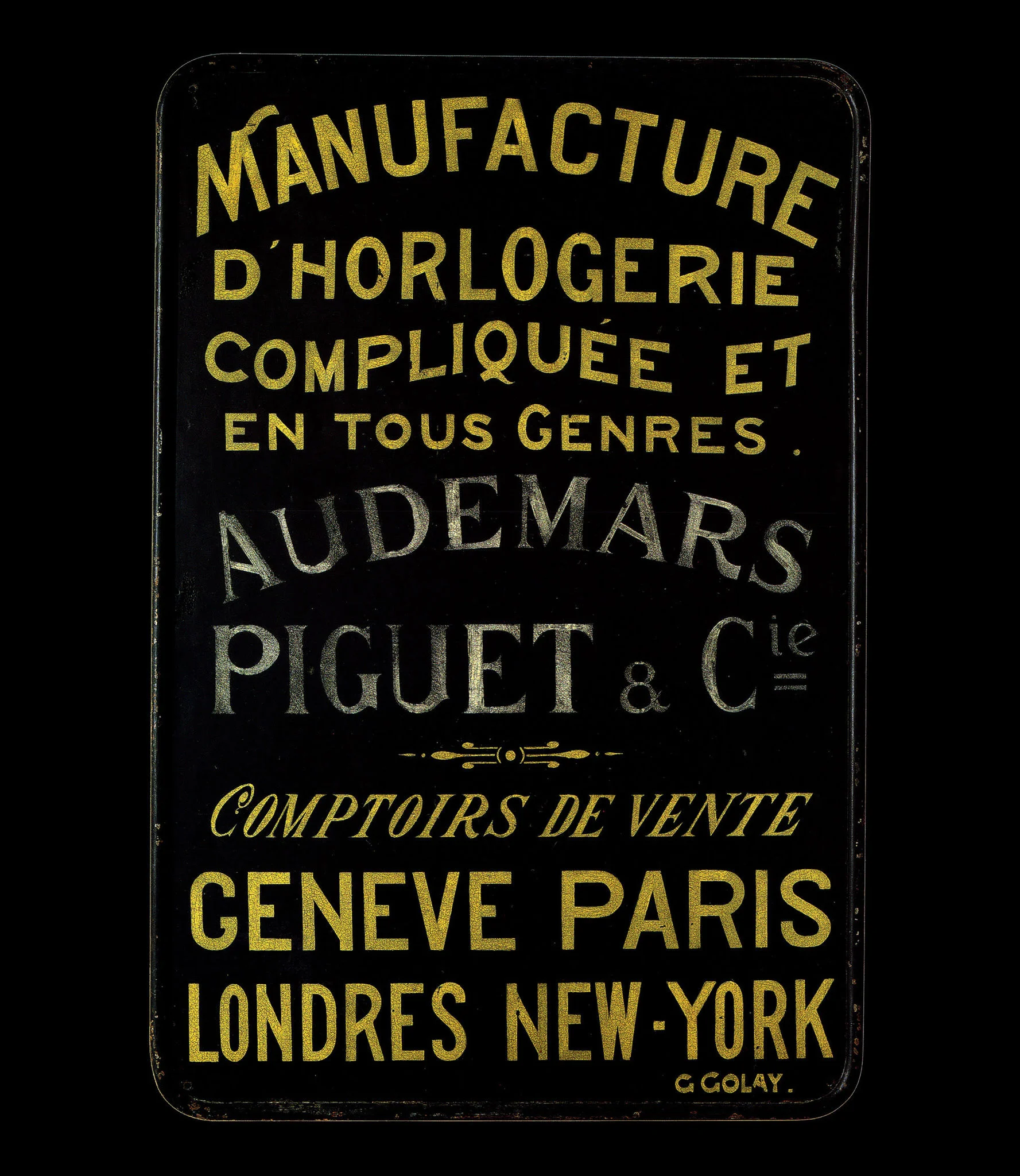
Circa 1890. This cast-iron plaque was hung on the façade of the Audemars Piguet workshops. Audemars Piguet Archives.
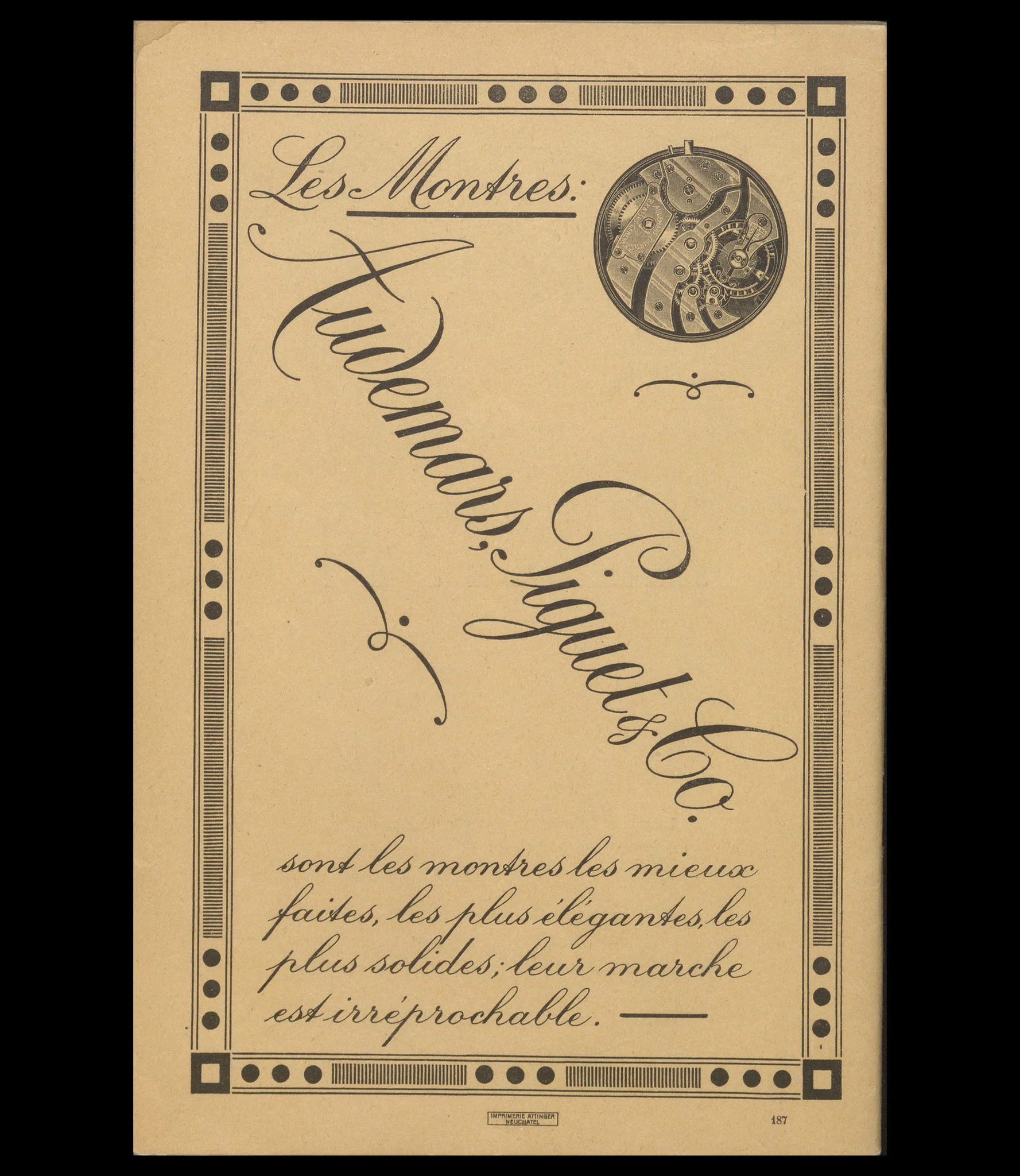
1919. Audemars Piguet advertisement. Journal Suisse d’Horlogerie. Audemars Piguet Archives.
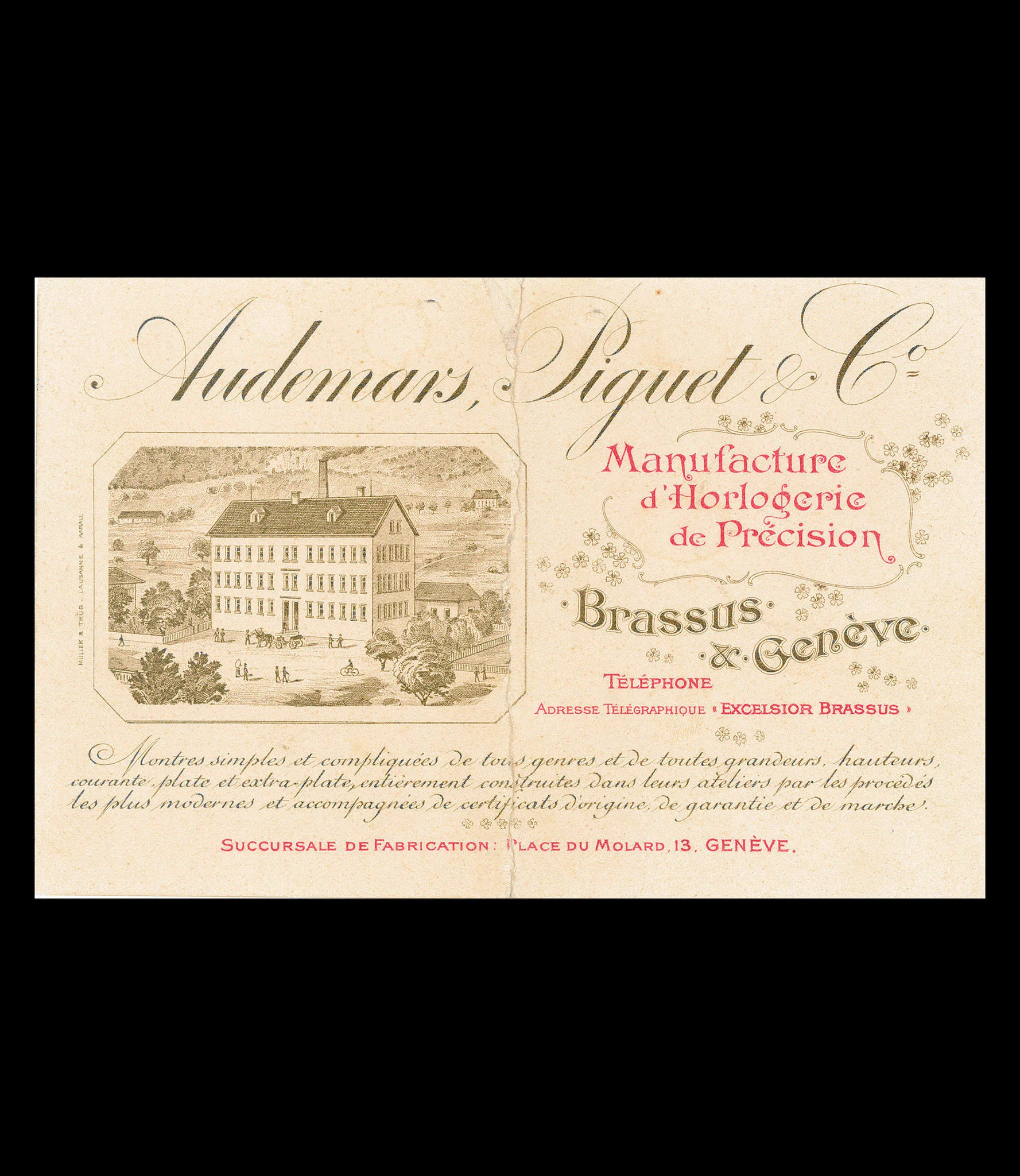
1900–1904. Audemars Piguet postcard. The indication “13, Place du Molard” serves to situate this document as dating from 1900 onwards. The telegraphic address remained valid until 1904. Audemars Piguet Archives.
1918–1919. First handover
From the 19th century to World War I, production grew slowly, from around a hundred watches a year finished by a handful of watchmakers in the 1880s to half a thousand in the 1910s by around 25 artisans. In the era of établissage, Audemars Piguet mainly employed watchmakers known as repasseurs. They did not make the watch components themselves, but instead coordinated the work of dozens of small workshops scattered across the Vallée de Joux and conducted inspections that involved going over their colleagues' work in detail. They adjusted, adapted, set into operation, finished, assembled, fit together and checked completed watches. At the time, time, the profession of repasseur was regarded as the most prestigious in the industry.
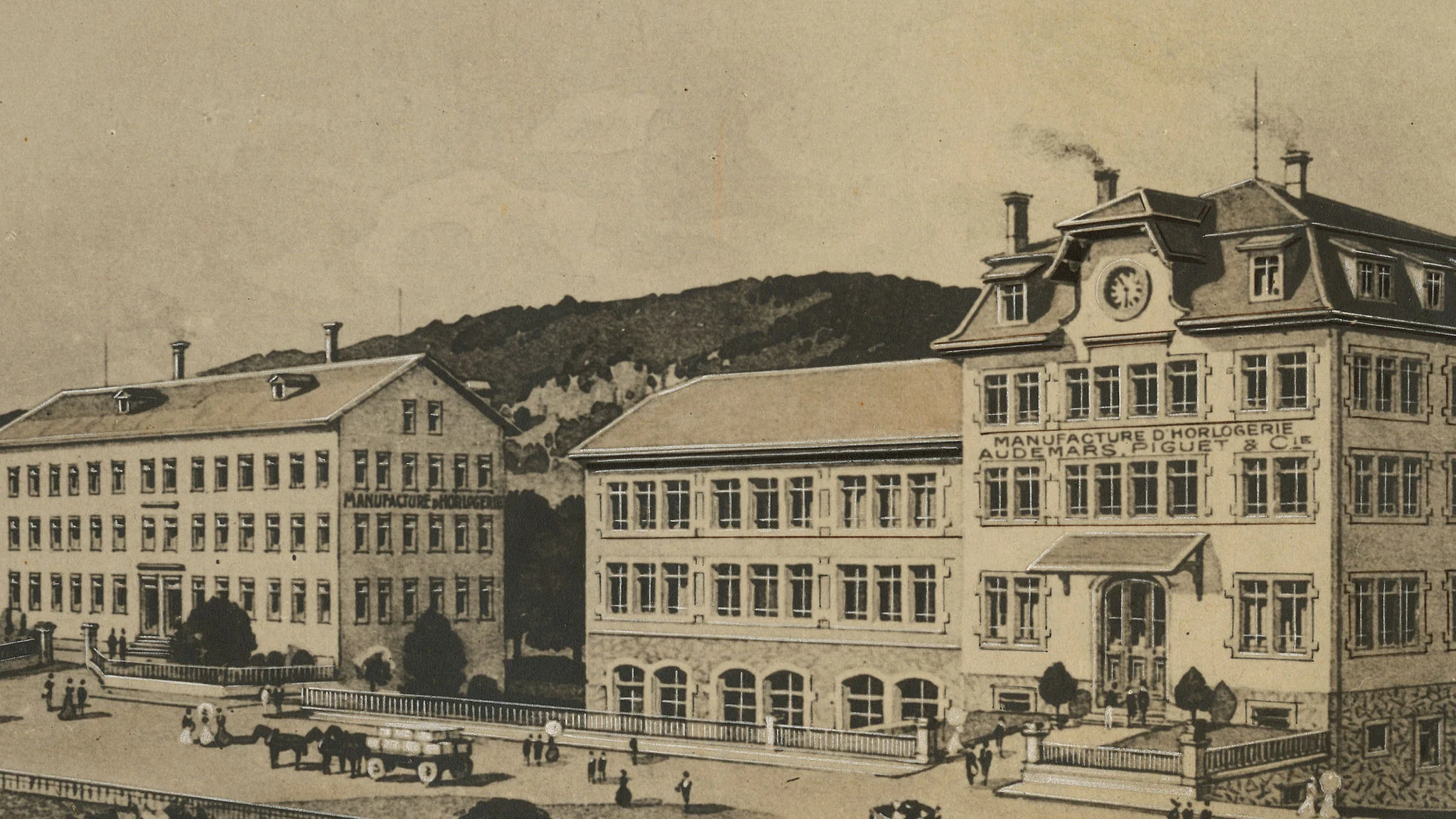
1907 was a pivotal year in the company's history, with the construction of a new building at 16 Route de France, the brand's current head office. The company was transformed into a Société Anonyme. This legal form gave its owners a certain degree of security, but it was anonymous only in legal terms, since its capital remained in the hands of the founding families, who were joined by several watchmaking families from the Vallée de Joux, including the LeCoultres and the Capts.
World War I spelt the end of the Belle Époque era and ushered in a period of uncertainty. Although Switzerland remained a neutral country, world trade was hampered and watchmakers of military age were mobilised. A month before the Armistice in 1918, Jules Louis Audemars died of an illness, followed a year later by Edward Auguste Piguet.
The second generation of the family took over. This was the time of two Pauls. A talented watchmaker, Paul Louis Audemars (1881–1969) had been active in the workshops since 1901. He succeeded his father in 1918, serving as technical director and Chairman of the Board until 1948. Paul Edward Piguet (1890–1979), a lover of the Vallée de Joux who was much admired for his communication skills, joined the workshops in 1910 as an apprentice watchmaker. He was appointed director in 1917 and succeeded his father two years later, taking over the firm’s financial and commercial management. Until his death at the age of 89, he travelled to the workshops every day by moped, spending a total of 68 years in the service of the company.
In taking over from their fathers, the two Pauls had no idea of the difficulties they would have to overcome.
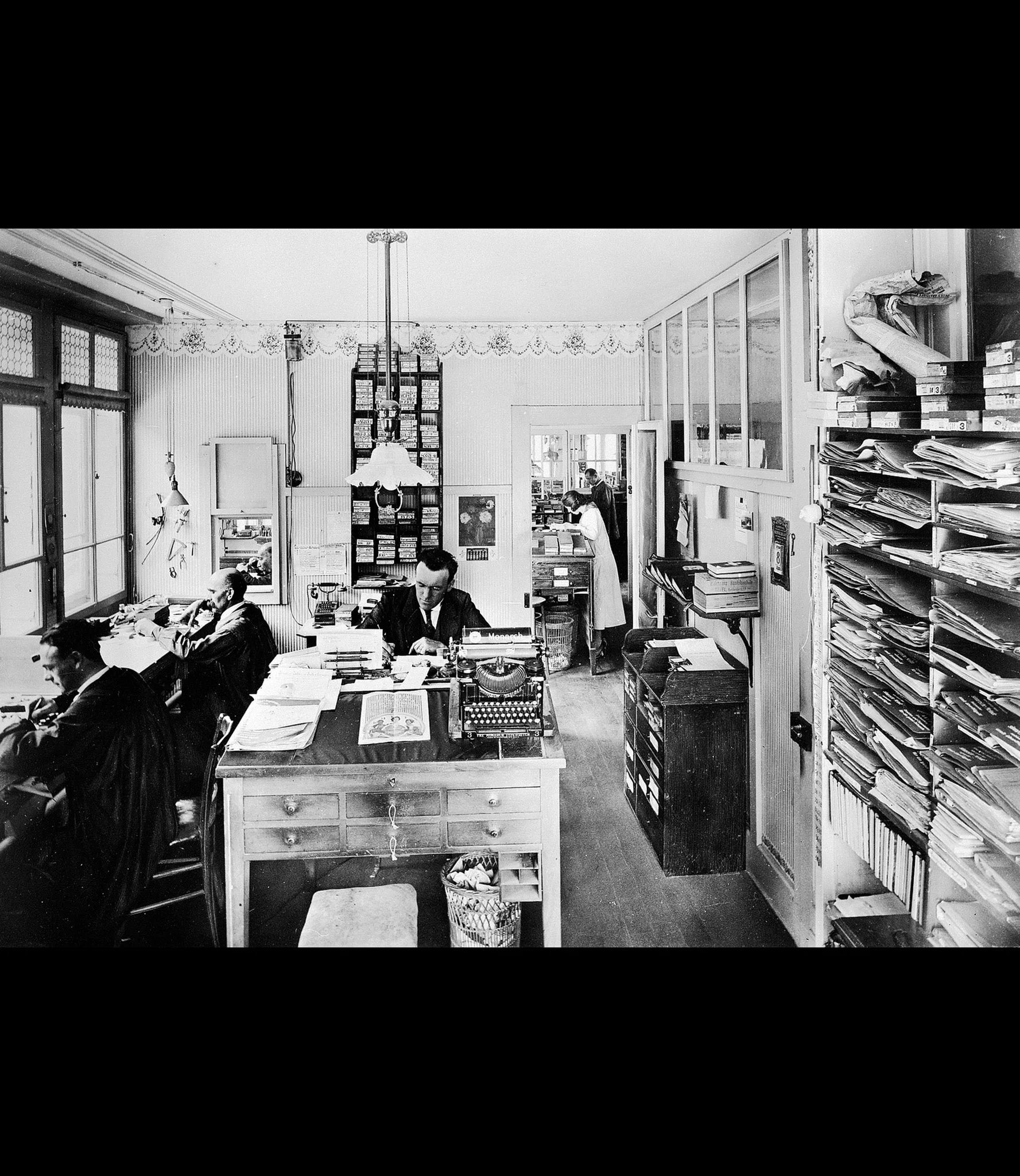
1923. Paul Edward Piguet (front), in charge of marketing watches, occupied an office opposite that of Paul Louis Audemars. The watchmakers are shown at their workbench enjoying the best possible light. Audemars Piguet Archives.
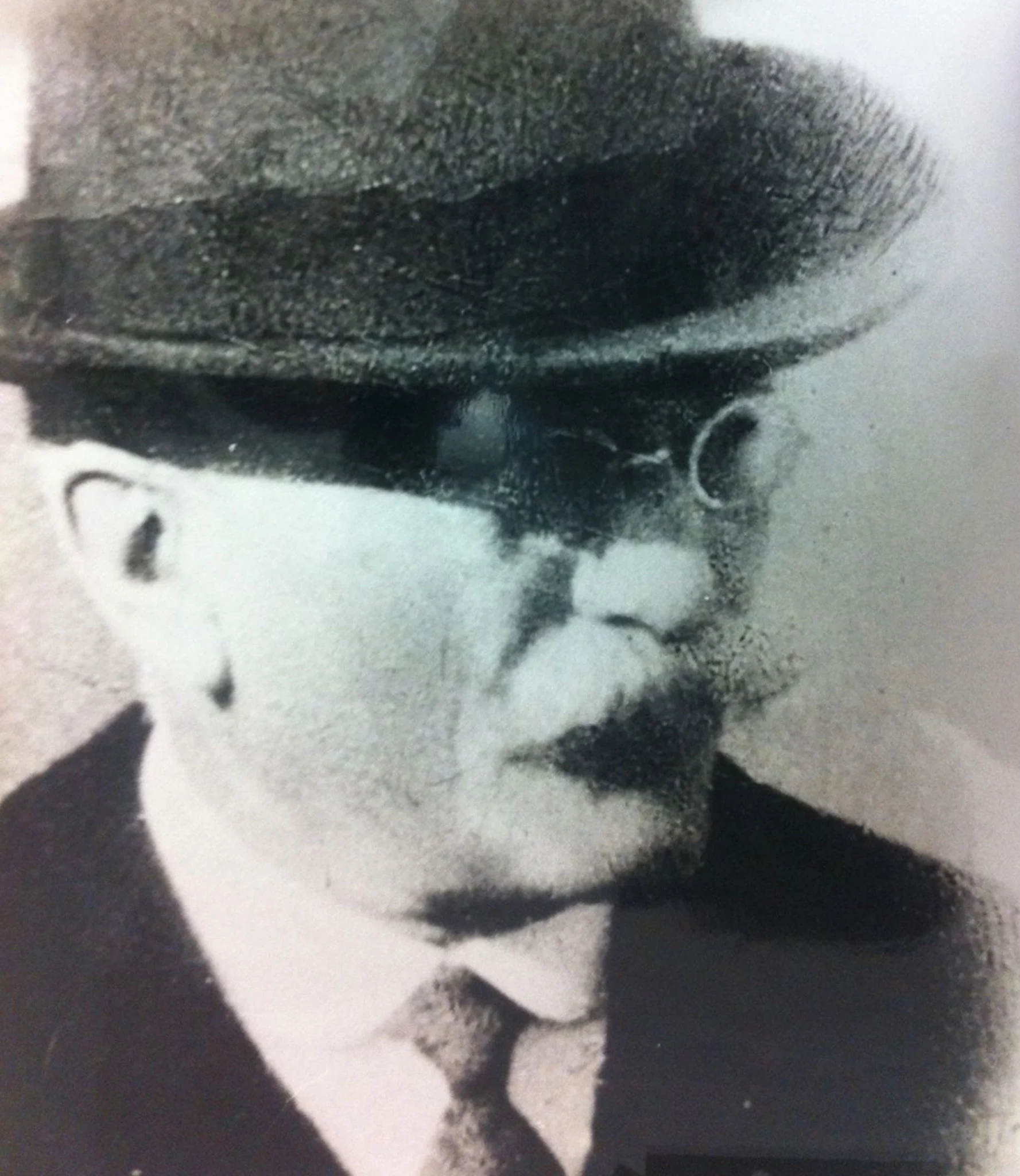
This photograph in the Audemars Piguet archives is probably the only known picture of Edward Auguste Piguet in the 20th century. Audemars Piguet Archives.
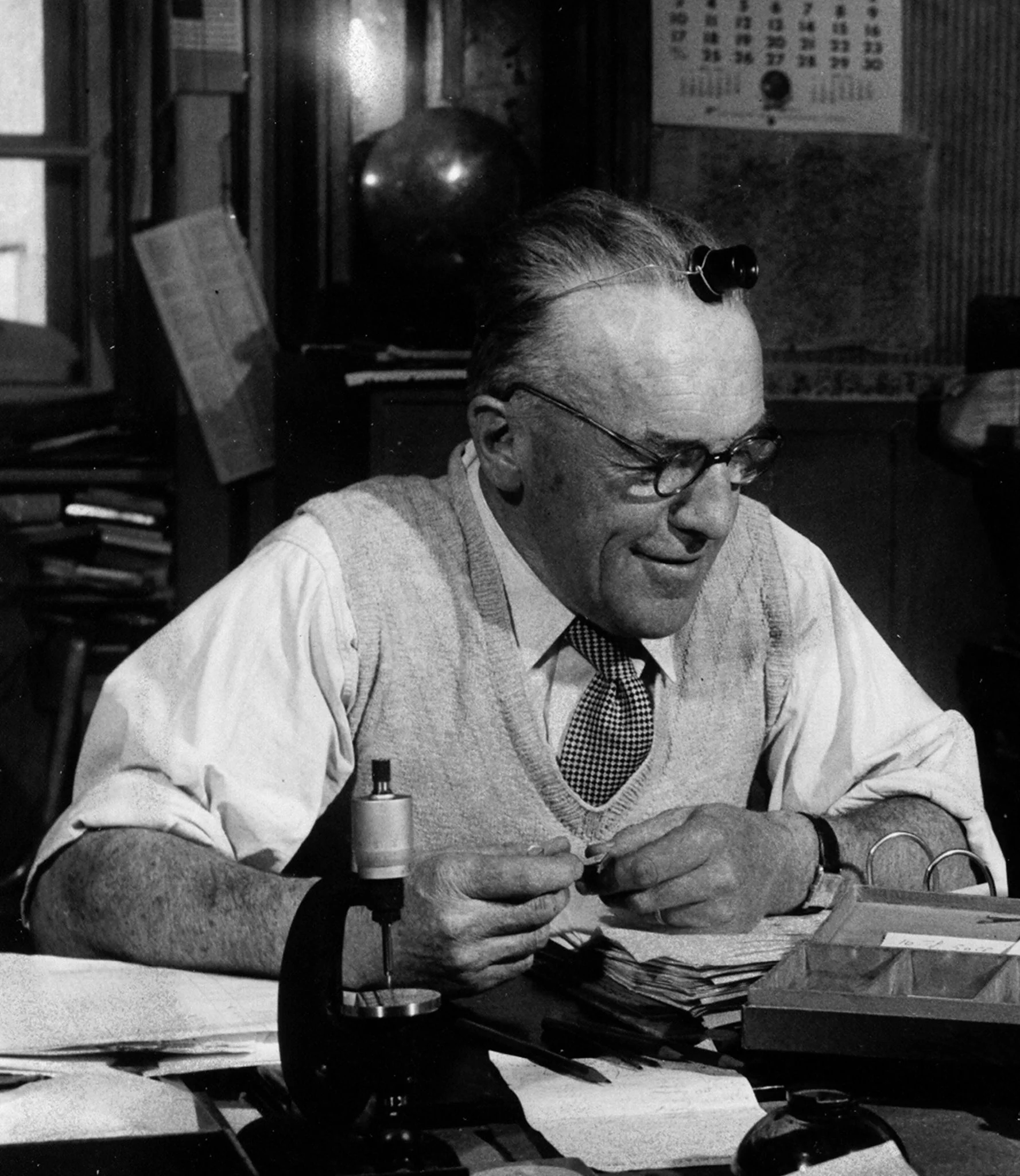
Paul Edward Piguet succeeded his father in 1919. He ran the commercial side of Audemars Piguet until 1962. He then handed over to Georges Golay and remained on the Board until 1979. Audemars Piguet Archives.
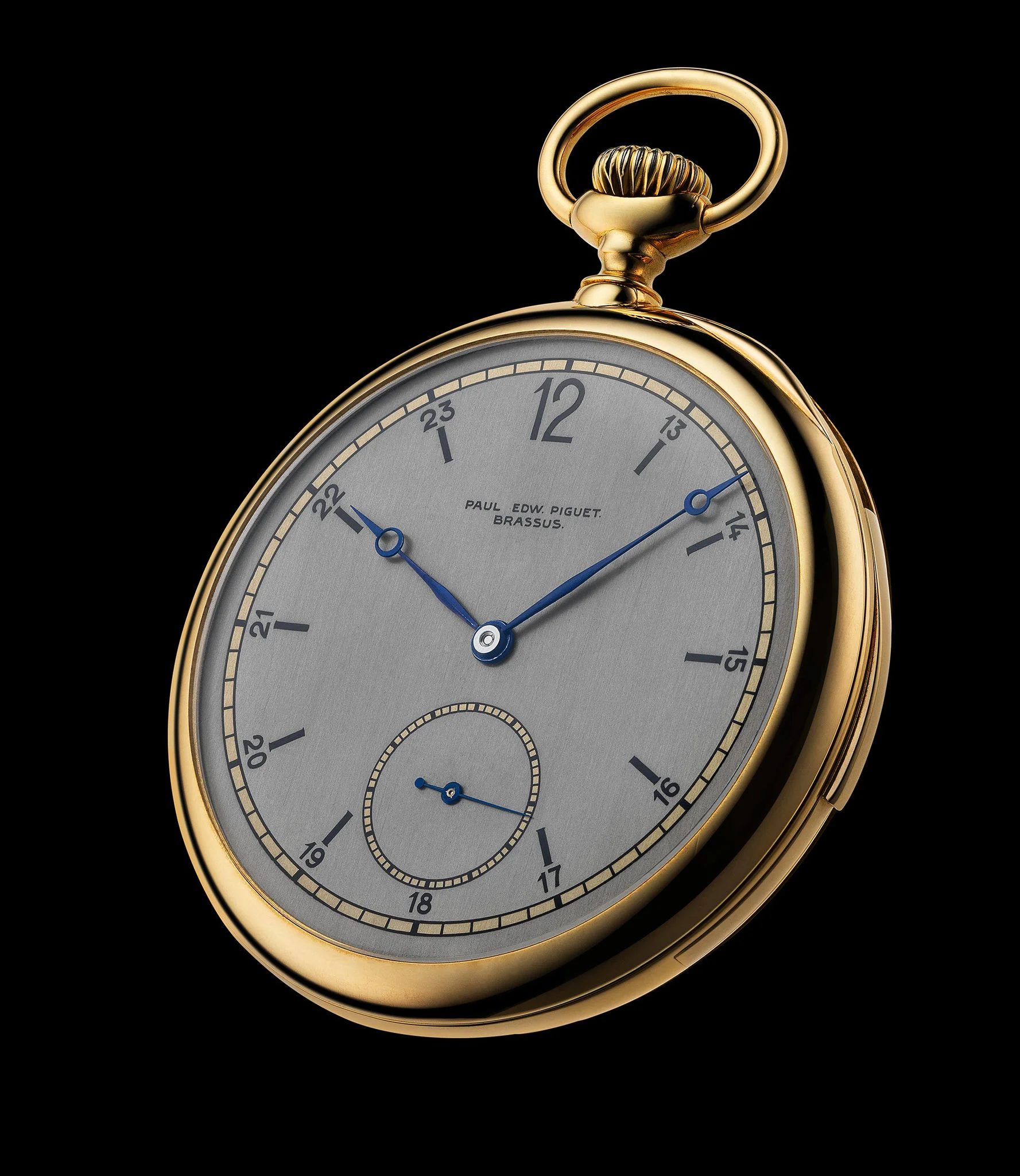
1920. Paul Edward Piguet’s apprenticeship masterpiece. Representing the second generation of the founding families, Paul Edward Piguet took over commercial management of the company in 1919. Private collection.
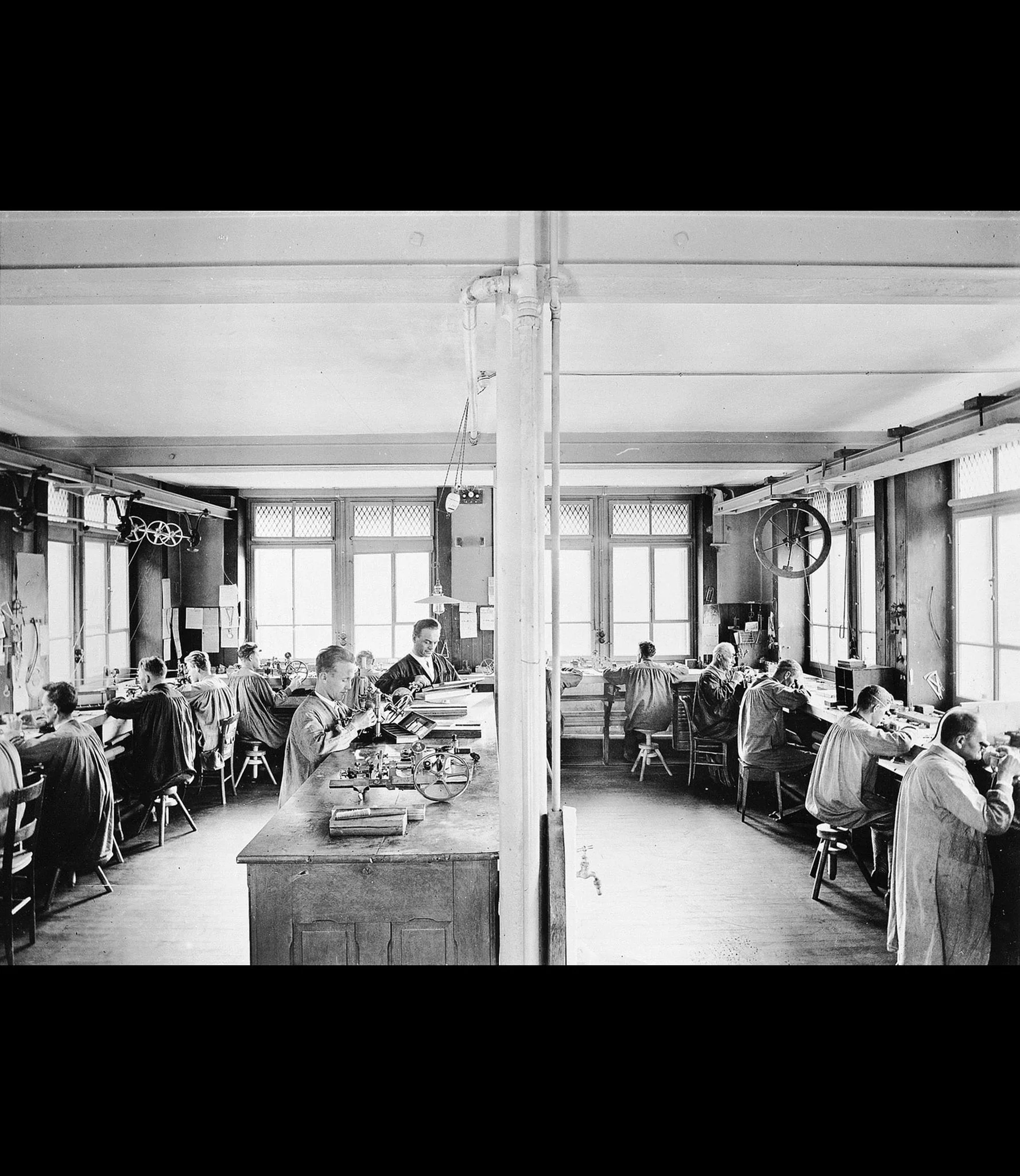
1923. Audemars Piguet workshop. Audemars Piguet Archives.
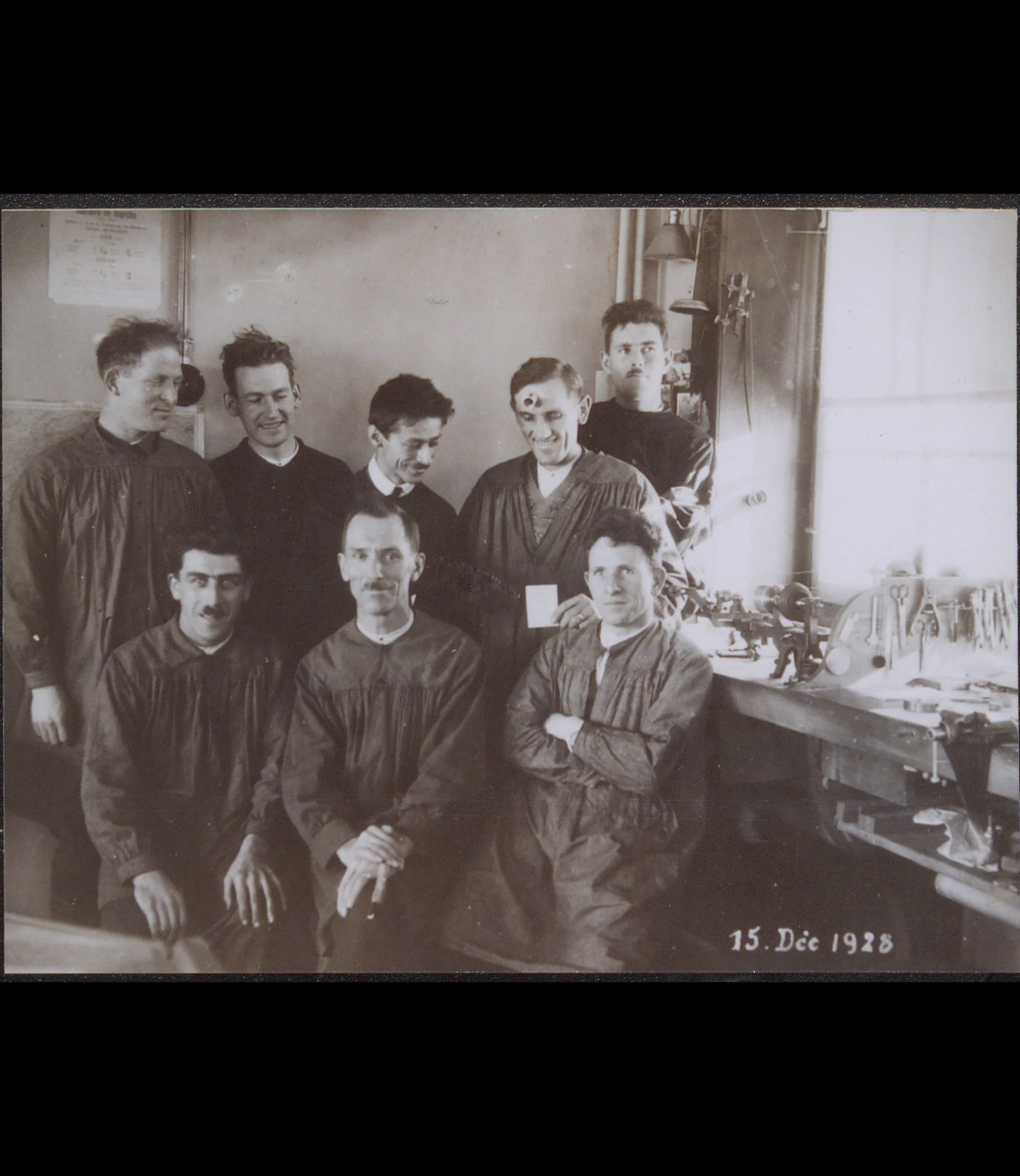
1928. Audemars Piguet workshop. Audemars Piguet Archives.
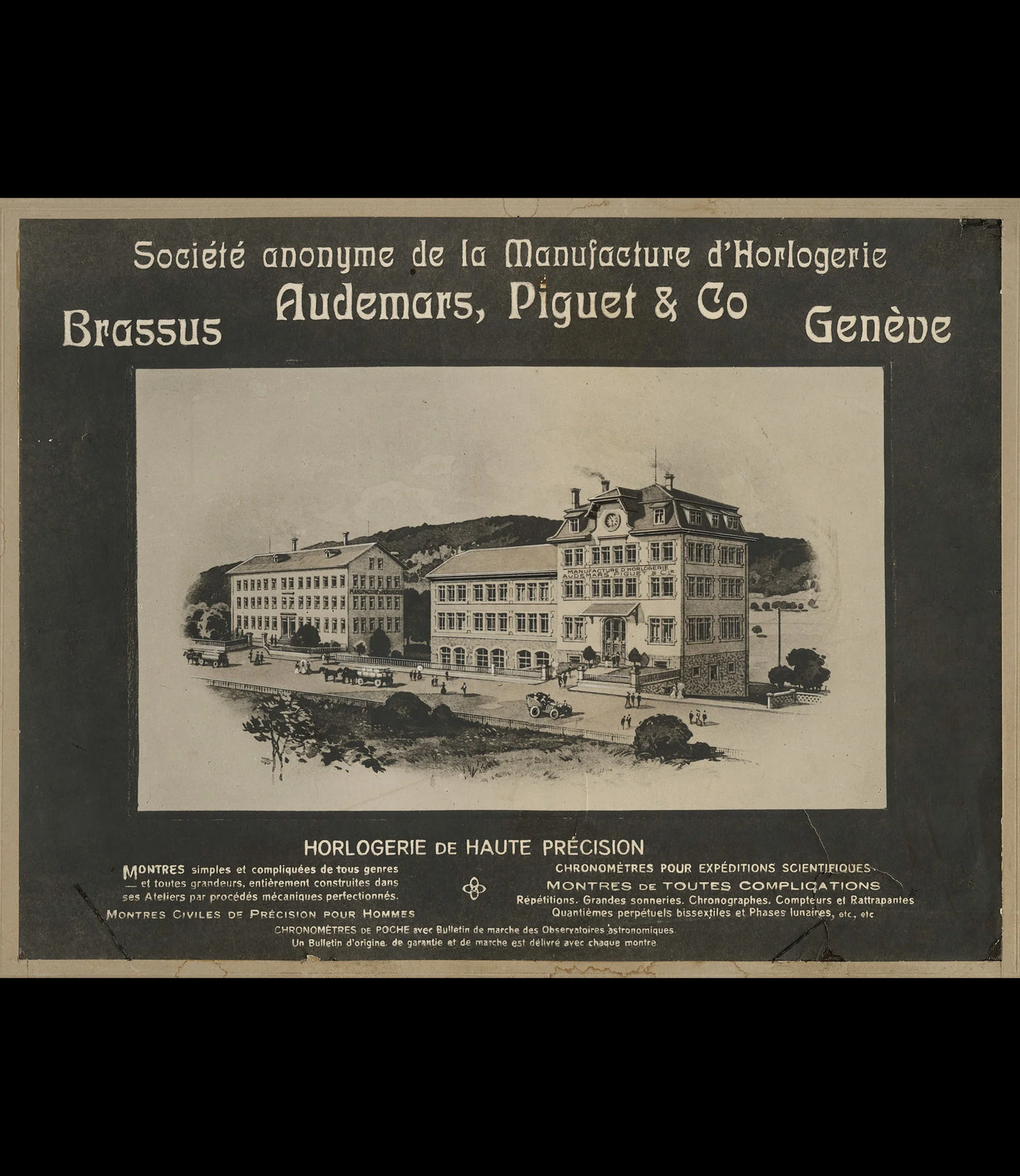
Circa 1910. Audemars Piguet advertisement. On the left, the building that probably housed the company's first workshop in 1875 and was home to the founding families; on the right, the company's second building, erected in 1907. They were numbers 16 and 18 on the Route de France in the village of Le Brassus. Audemars Piguet Archives.
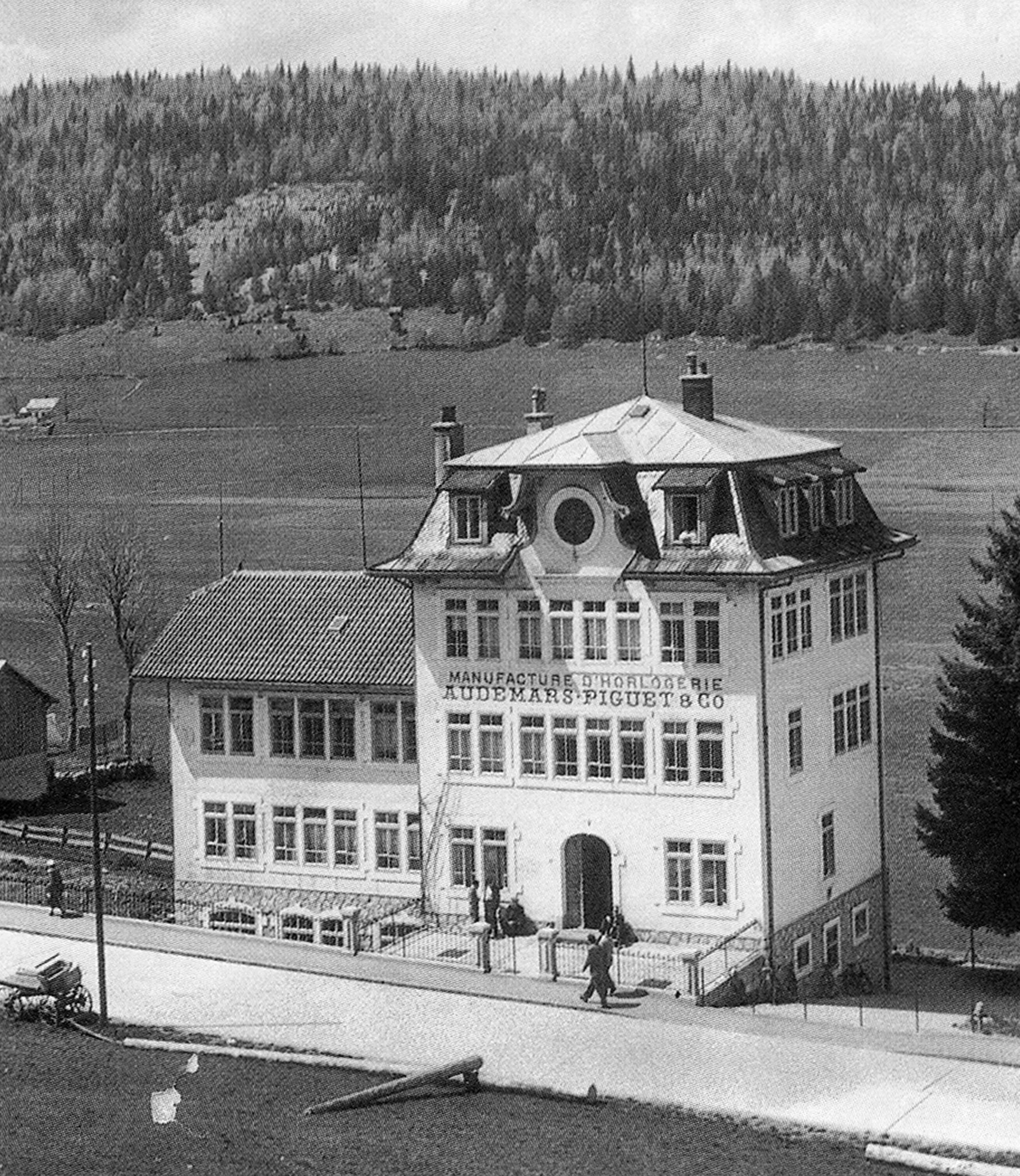
Erected in 1907 and located at 16 Route de France in the village of Le Brassus, this building marked an important stage in Audemars Piguet's growth. Audemars Piguet Archives.
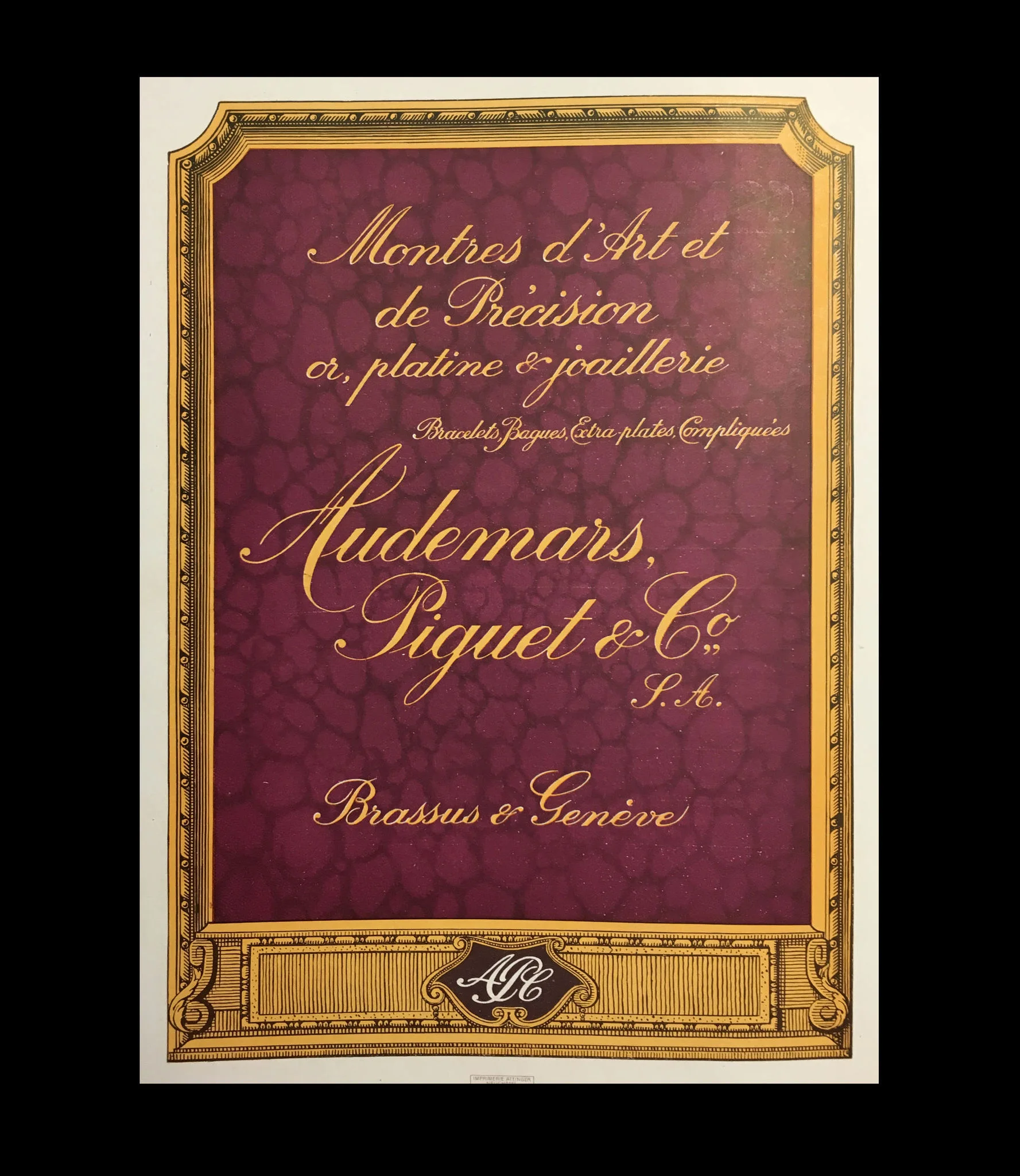
1921. Audemars Piguet advertisement. Source:Archives Journal Suisse d’Horlogerie
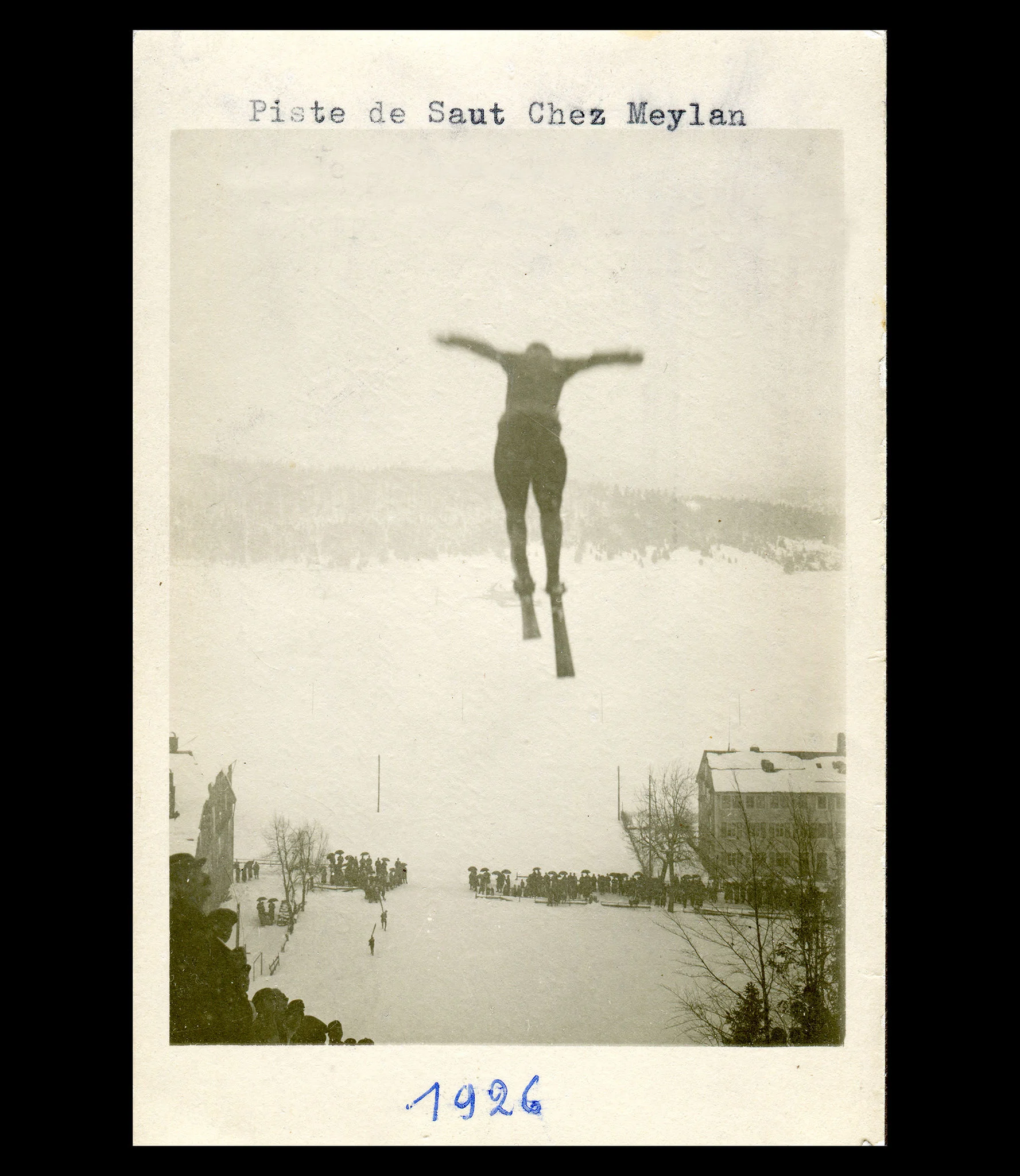
Circa 1920. Above the original Audemars Piguet building was a ski jump intended for winter sports. Paul Edward Piguet is depicted in full flight. Photograph from Jacques Piguet’s collection.
From one crisis to the next
With the end of the war approaching, Swiss watchmakers relaunched production, anticipating a boom as soon as peace was signed. Their hopes were dashed, however, as excessive stock levels exacerbated the economic situation, causing prices to plummet and a major crisis in the watchmaking industry. To combat the practice of chablonnage (low-cost exporting of movement "ébauches" and components), the Swiss watch industry adopted strict rules in the 1920s. It formed a cartel under the aegis of the State.
At that time, Audemars Piguet's total production represented just over one thousandth of the Swiss watch industry as a whole. The company’s top-of-the-range positioning protected it from falling prices; and in 1926, it sold more than 1,000 watches in a single year for the first time. The 33 artisans employed there made Audemars Piguet the largest watchmaking firm in Le Brassus. What they didn't know was that it would be 26 years before such sales were recorded again and in 1930, the company was dealt a blow that almost destroyed it.
As a result of the stock market crash of 1929, its main customer, the New York-based distributor Metric Watch, filed for bankruptcy. It left unpaid debts of CHF 425,000, equivalent to almost a year's sales! Paul Edward Piguet and Paul Louis Audemars were faced with an unprecedented global financial crisis and cash flow was extremely tight. Sales fell to less than 50 watches a year between 1931 and 1935. The two Pauls somehow managed to hold the company together and succeeded in keeping a dozen artisans in employment. They applied for government loans and tax exemptions, as well as creating two low-cost sub-brands, Audiguet and APCO. They opened discussions with other watchmakers, such as Universal, Rolex, Omega and Movado.
The period between 1930 and 1945 was the most difficult in the company's history from a financial standpoint, as it suffered losses for 15 consecutive years. However, adversity spurred the creativity of the craftspeople who came up with all kinds of inventive ideas during the inter-war period. Openworking watches kept watchmakers busy creating masterpieces while they awaited an uptick in the market. Adding complications to wristwatches also required considerable time. It is also worth mentioning jumping hour models, Haute Joaillerie, miniature, complicated and extra-thin timepieces. The range was spectacular, especially with such a small number of employees.
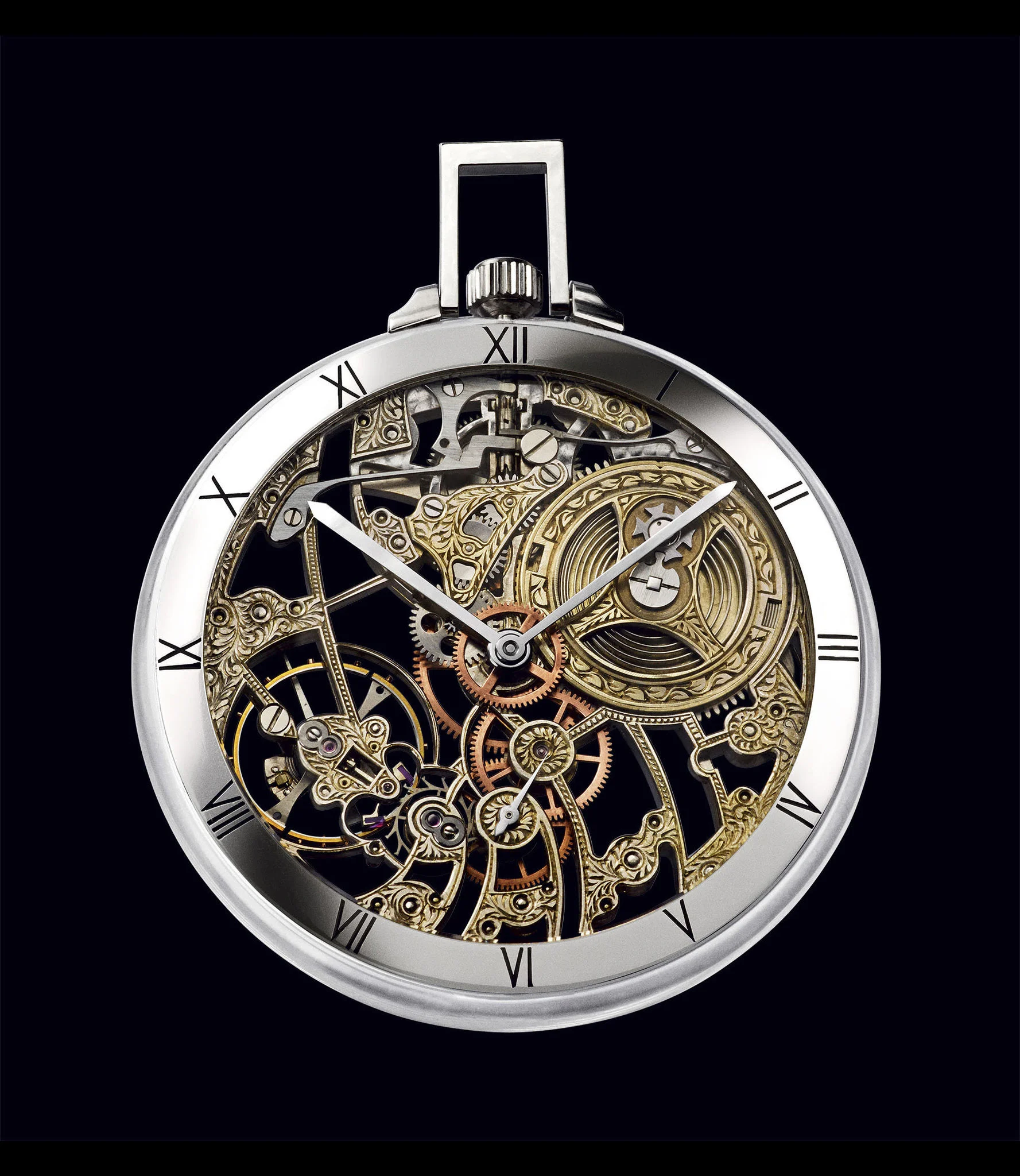
1939. Extra-thin openworked pocket watch. Calibre 17SVF#3, Movement 42972. Platinum and crystal case. Pre-Model 623. Movement produced in 1937. Watch sold in 1939. Private collection.
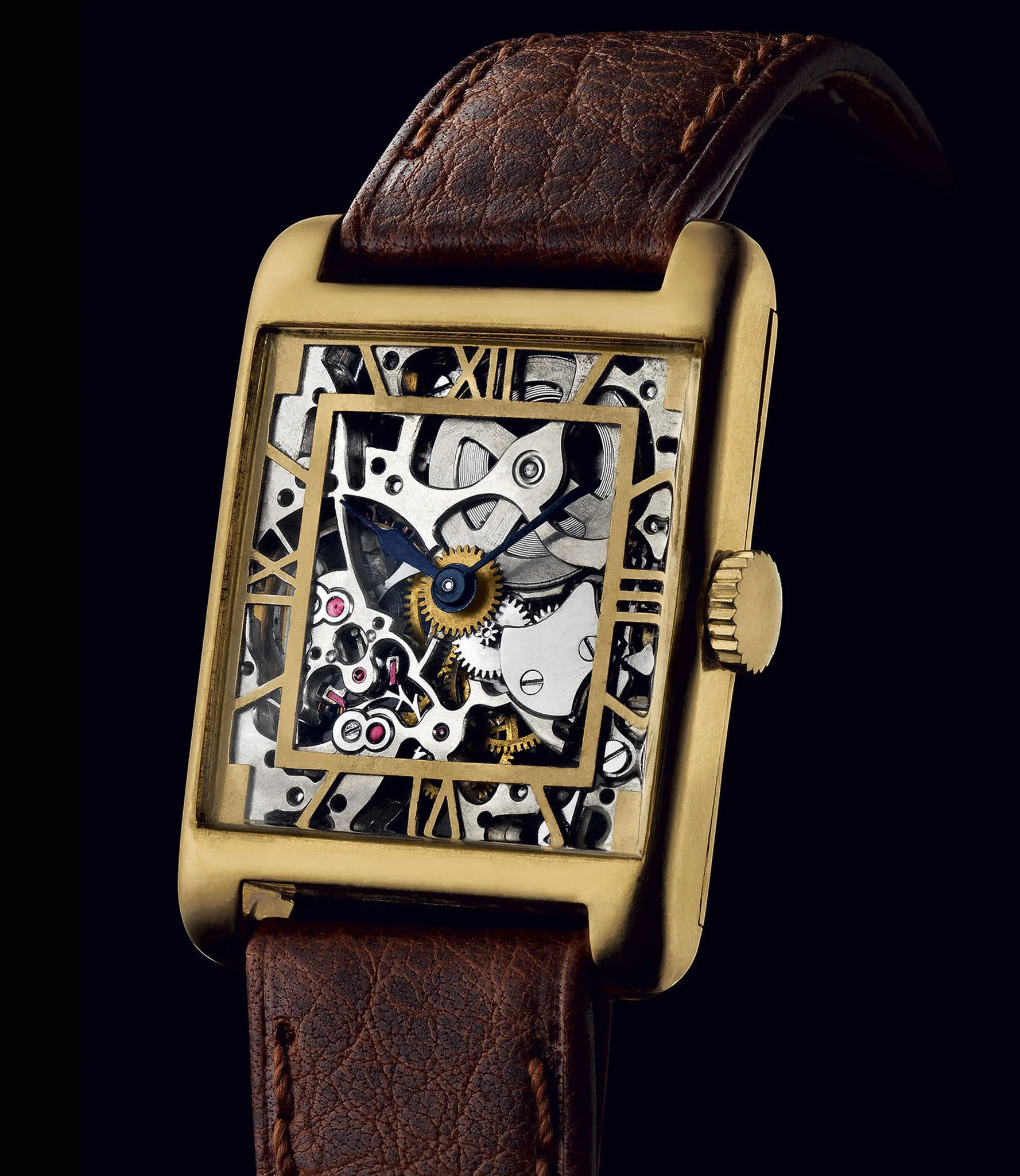
1935. Openworked wristwatch. Square shape, chased dial. Calibre 10TS, Movement 42699 produced in 1935. Sold in 1937. Pink gold. Pre-Model 556 and 557. Audemars Piguet Heritage, Inv. 1285.
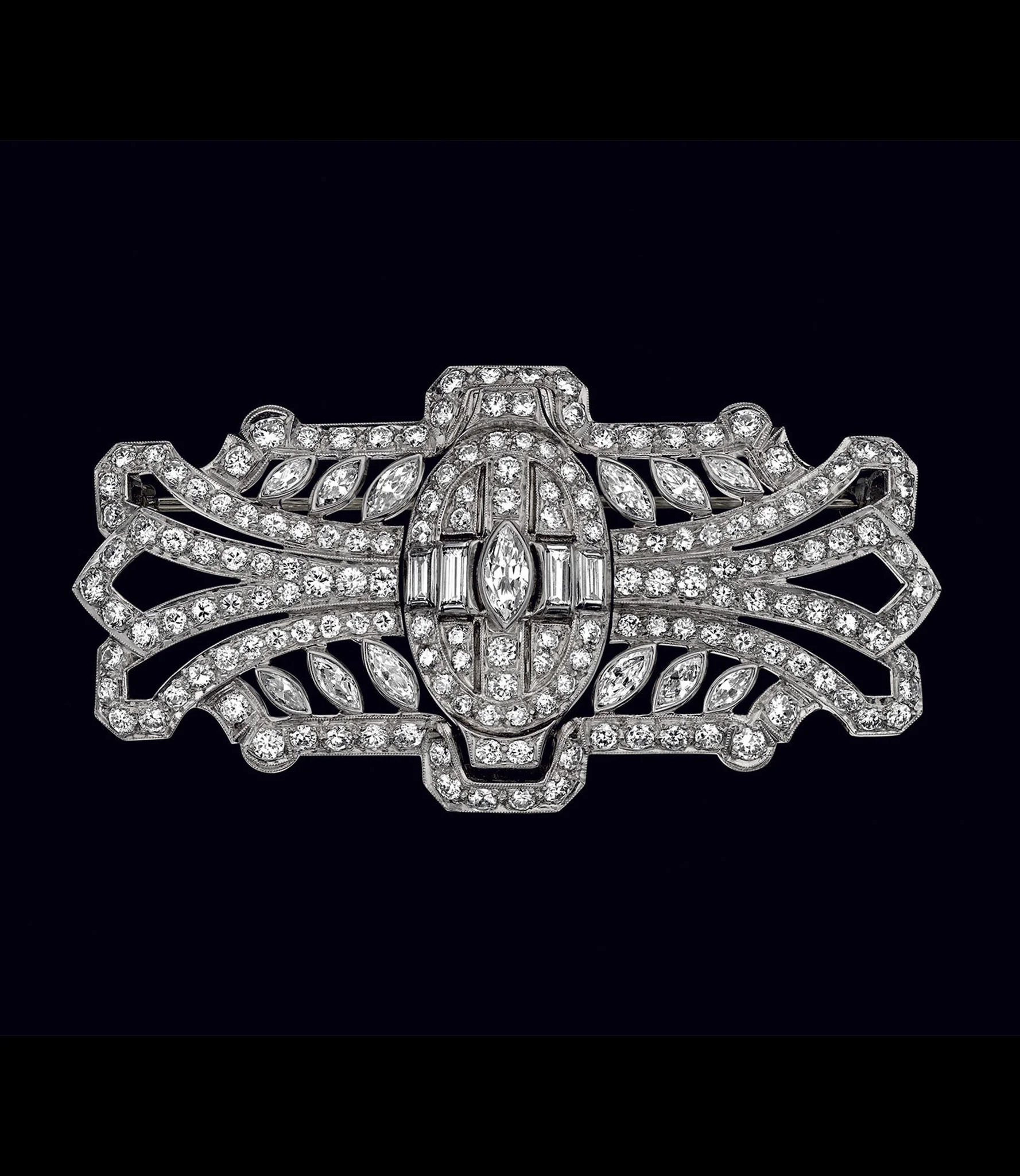
1922. Haute Joaillerie brooch watch with secret cover. Baguette-cut, brilliant-cut and marquise-cut diamonds. Swivel case. Calibre 7OP, movement 25562 produced in 1920. Sold in 1922. Platinum. Audemars Piguet Heritage, Inv. 1480.
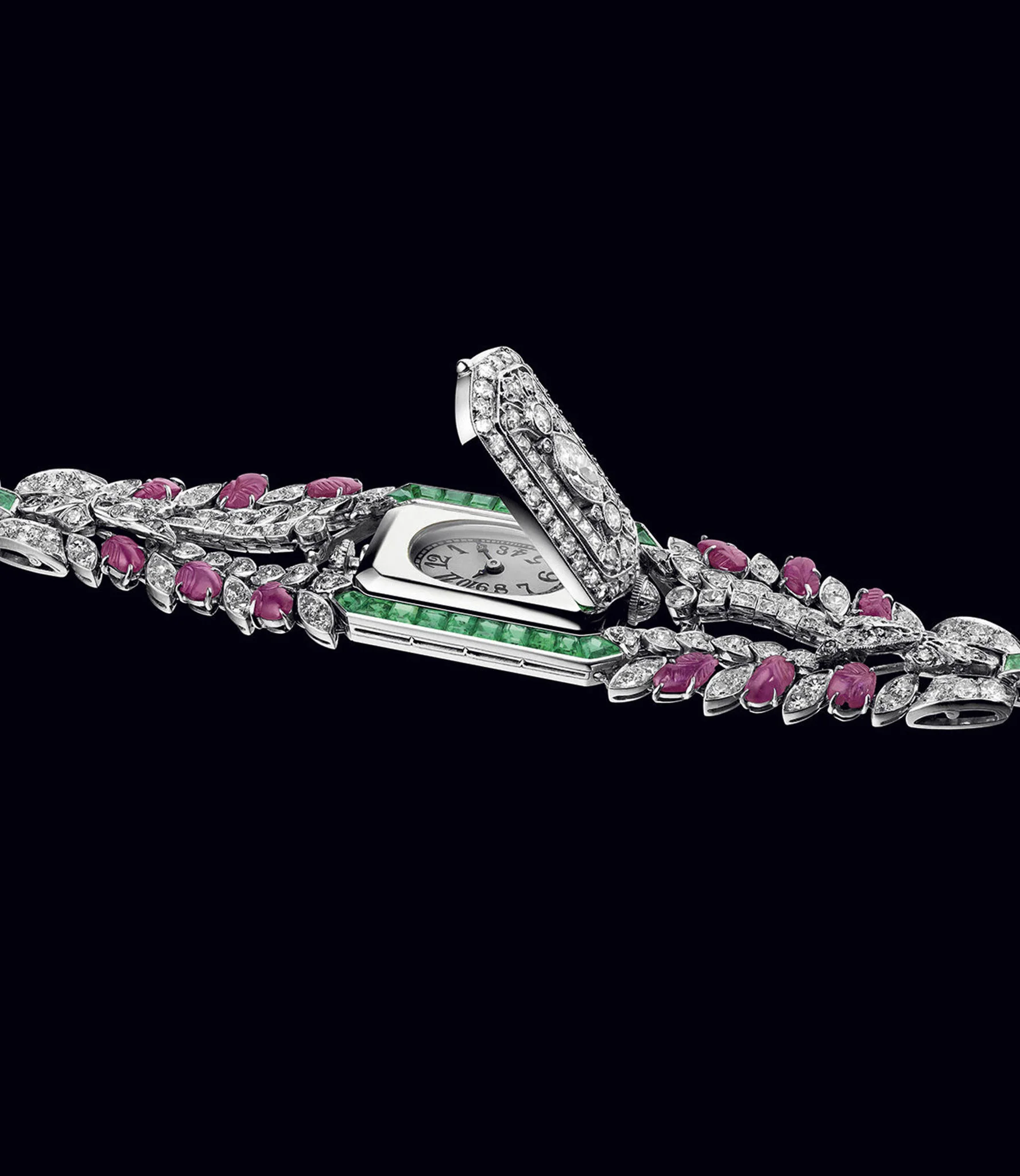
1921. Haute Joaillerie watch with secret cover designed by Oscar Heyman. Platinum case set with 261 brilliant-cut diamonds, 12 leaf-cut rubies, 35 baguette-cut emeralds, 16 princess-cut diamonds and 1 marquise-cut diamond. Calibre 8RP, movement 25525 produced in 1920. Sold in 1921. Audemars Piguet Heritage, Inv. 1666.
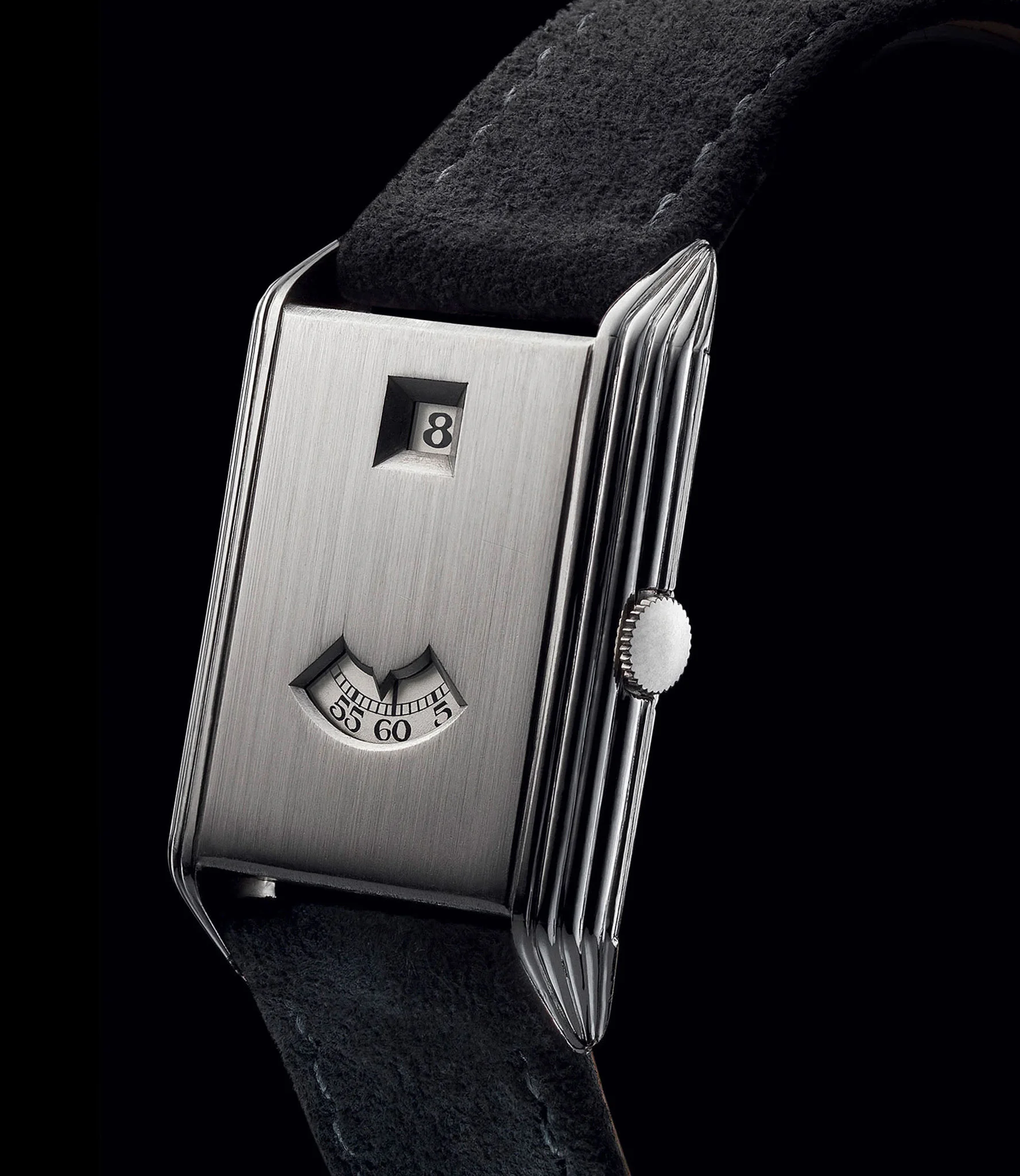
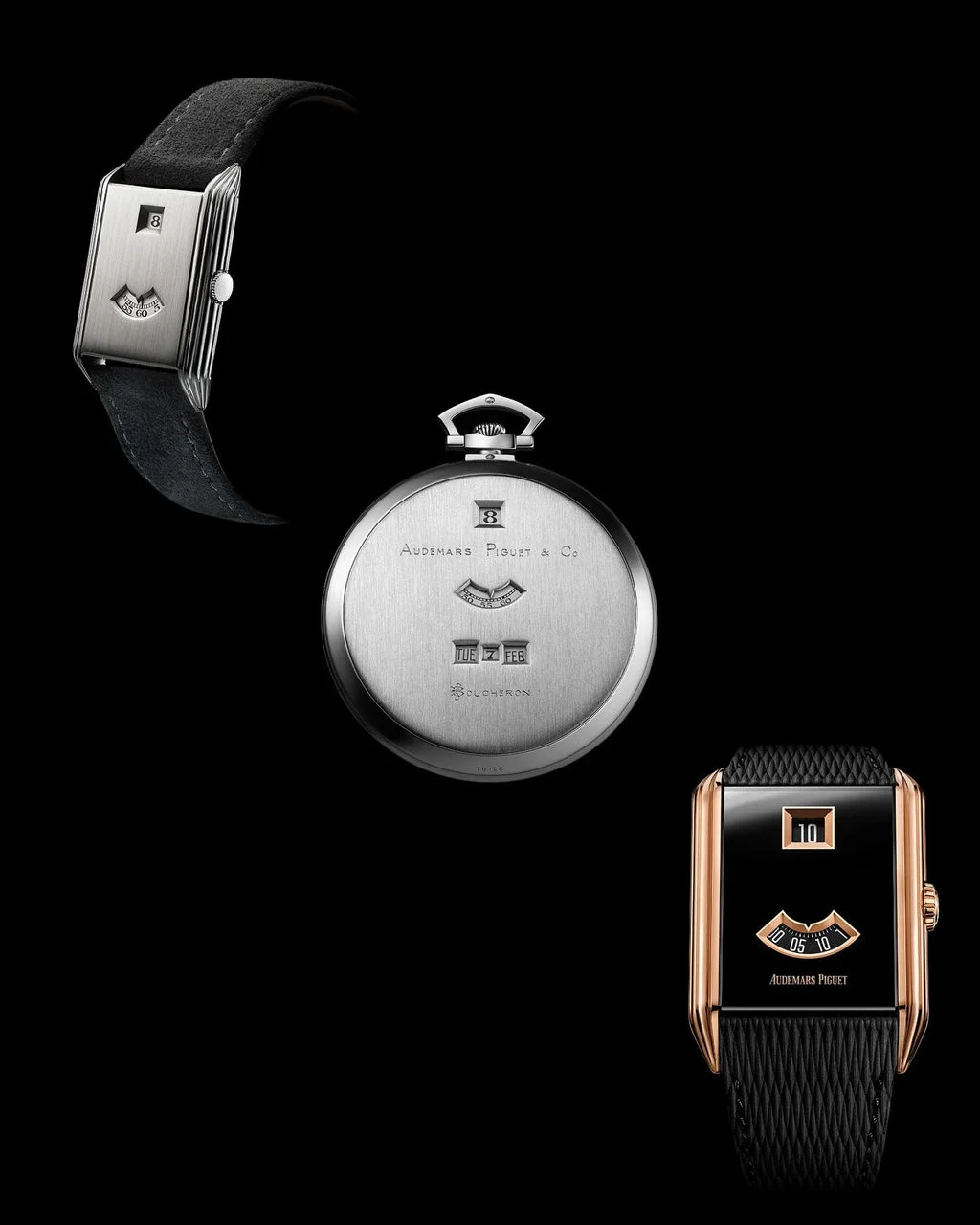
1930. Art Deco jumping hour watch. Two apertures for the hours and minutes. Satin-brushed case with vertical gadroons. Calibre 10GHSM, Movement 40546 made in 1929. Sold in 1930. White gold. Audemars Piguet Heritage, Inv. 1725.
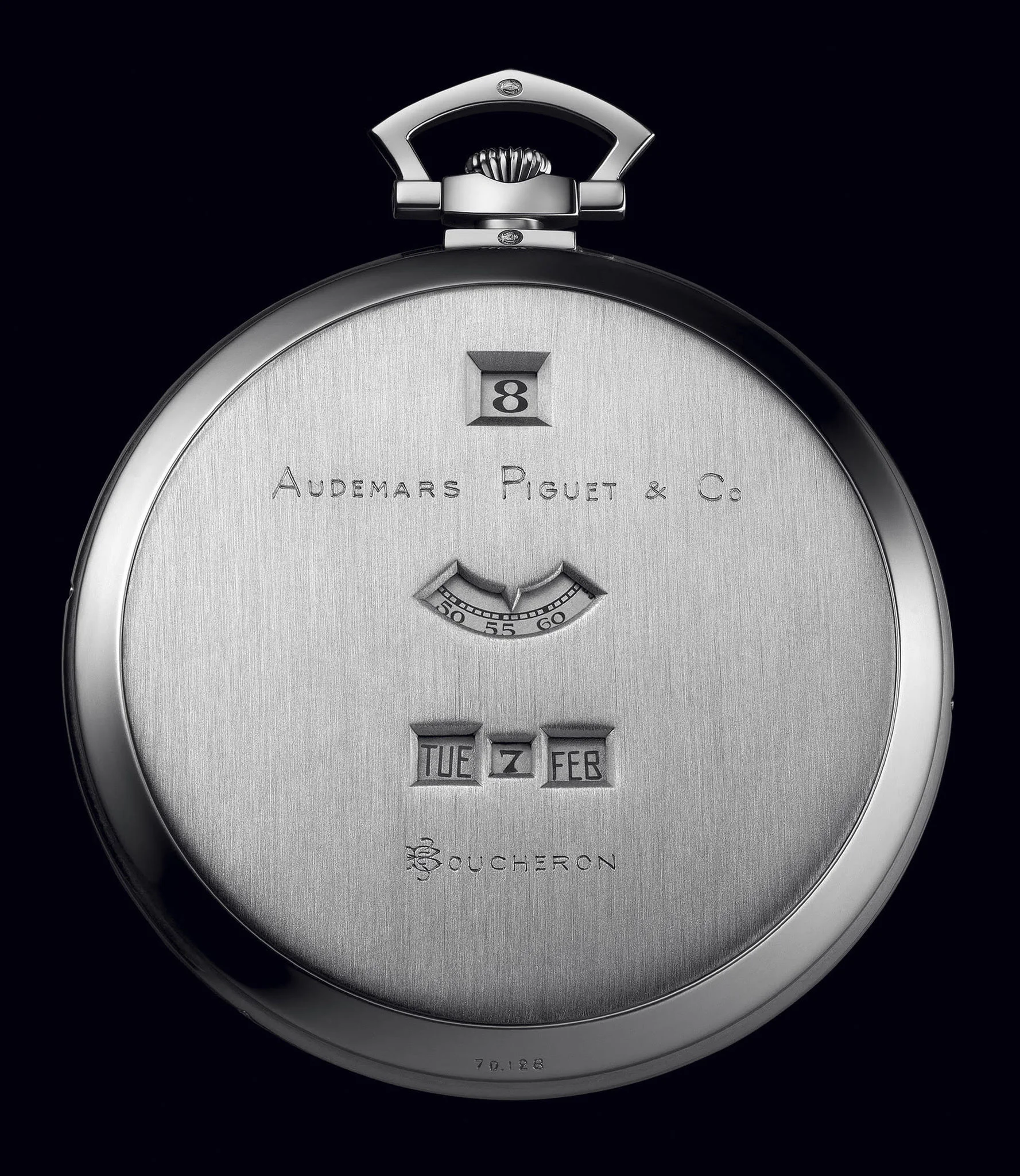
1928. Complete calendar with jumping hour. Day, date and month displayed in apertures. Jumping hour. Calibre 18QG, movement 39581 produced in 1928. Sold in 1929. White gold. Audemars Piguet Heritage, Inv. 655.
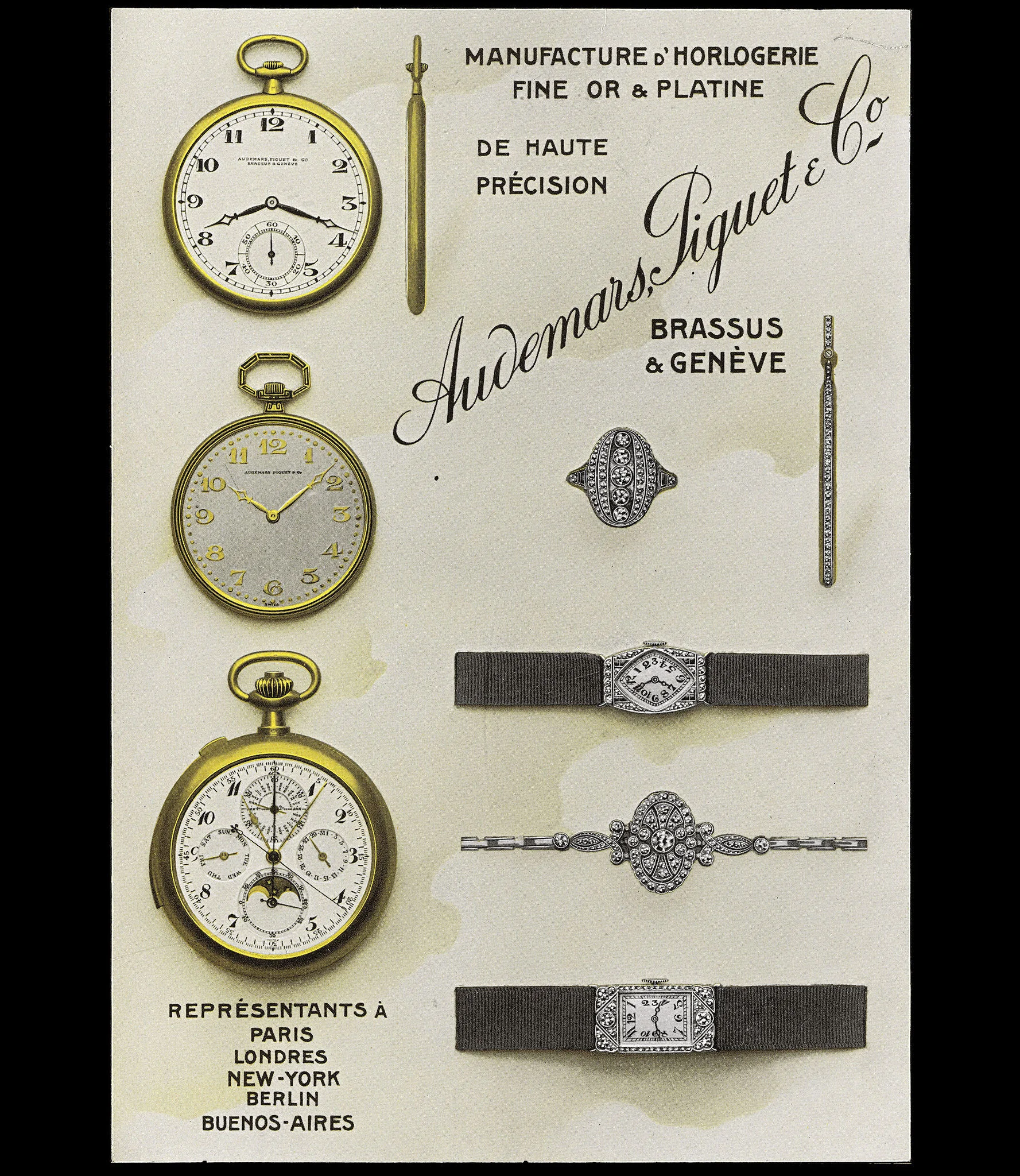
1921–1931. For a decade, this advertisement appeared in various newspapers. During the following decade, the brand stopped advertising as a cost-saving measure. Audemars Piguet Archives.
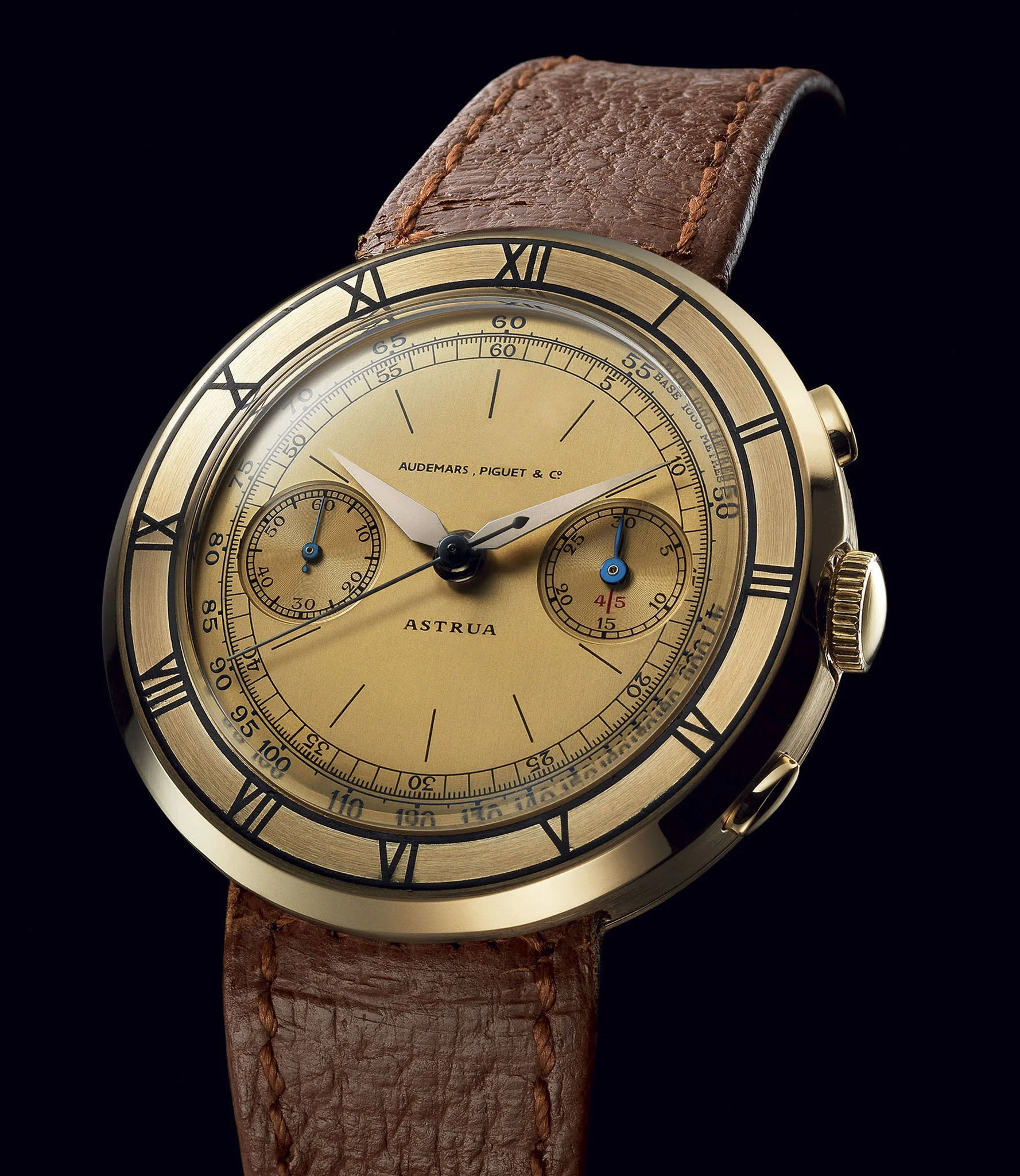
1936. Oversized chronograph. 37.75 mm in diameter. Pale yellow dial. Black enamel numerals. Strap secured in the case. Calibre 13 CHRO CPT, movement 42625 produced in 1933. Sold in 1936. Yellow gold. Pre-model 524. Audemars Piguet Heritage, Inv. 1752.
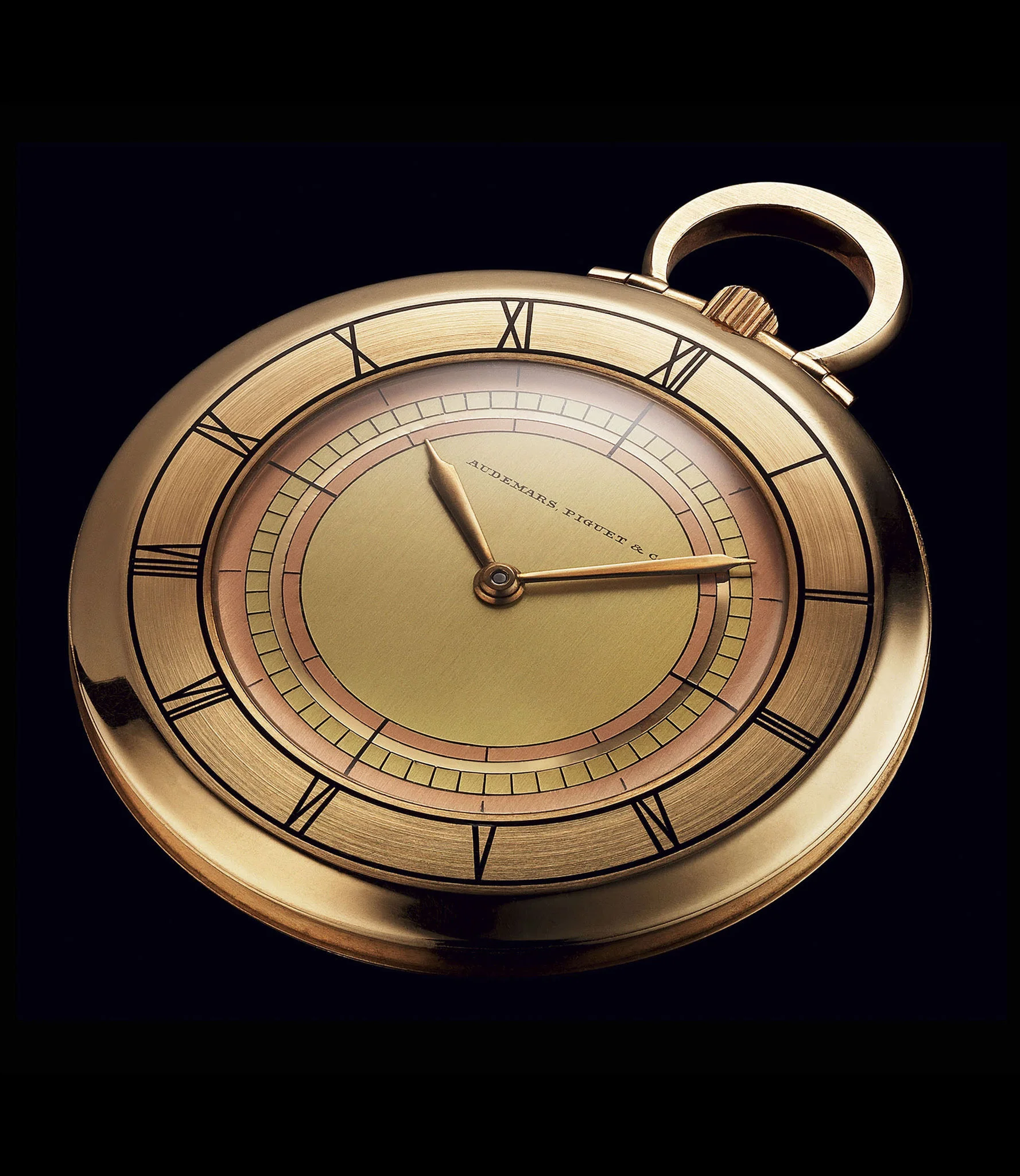
1936. Extra-thin pocket watch. Three-tone dial: brushed red gold, brushed yellow gold and polished yellow gold. Black enamel numerals. Calibre 17½ SSF, Movement 26879 produced in 1920. Sold in 1936. 14-carat yellow gold. Pre-model 619. AP Heritage, Inv. 1722.
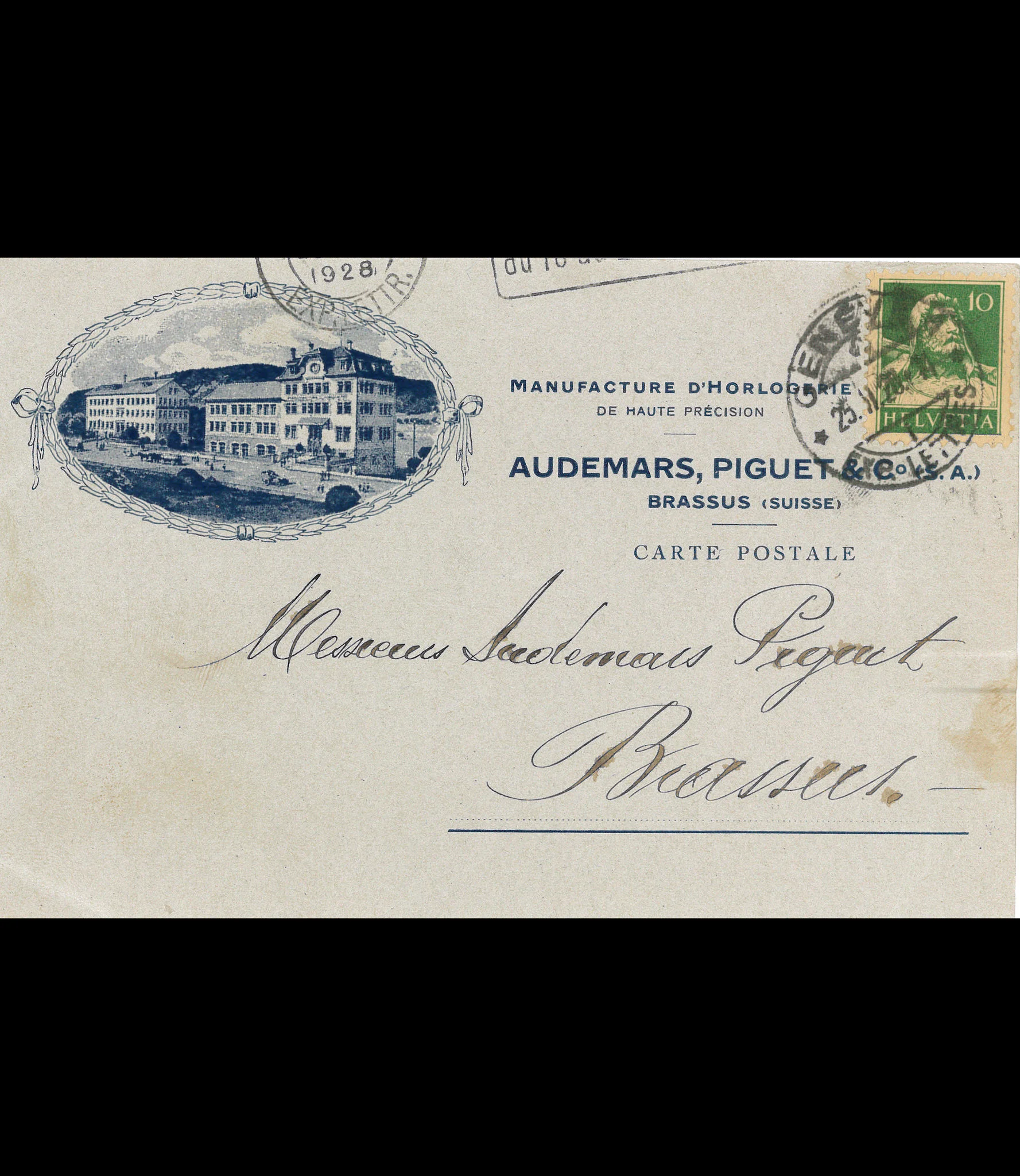
1928. Postcard. Audemars Piguet Archives.
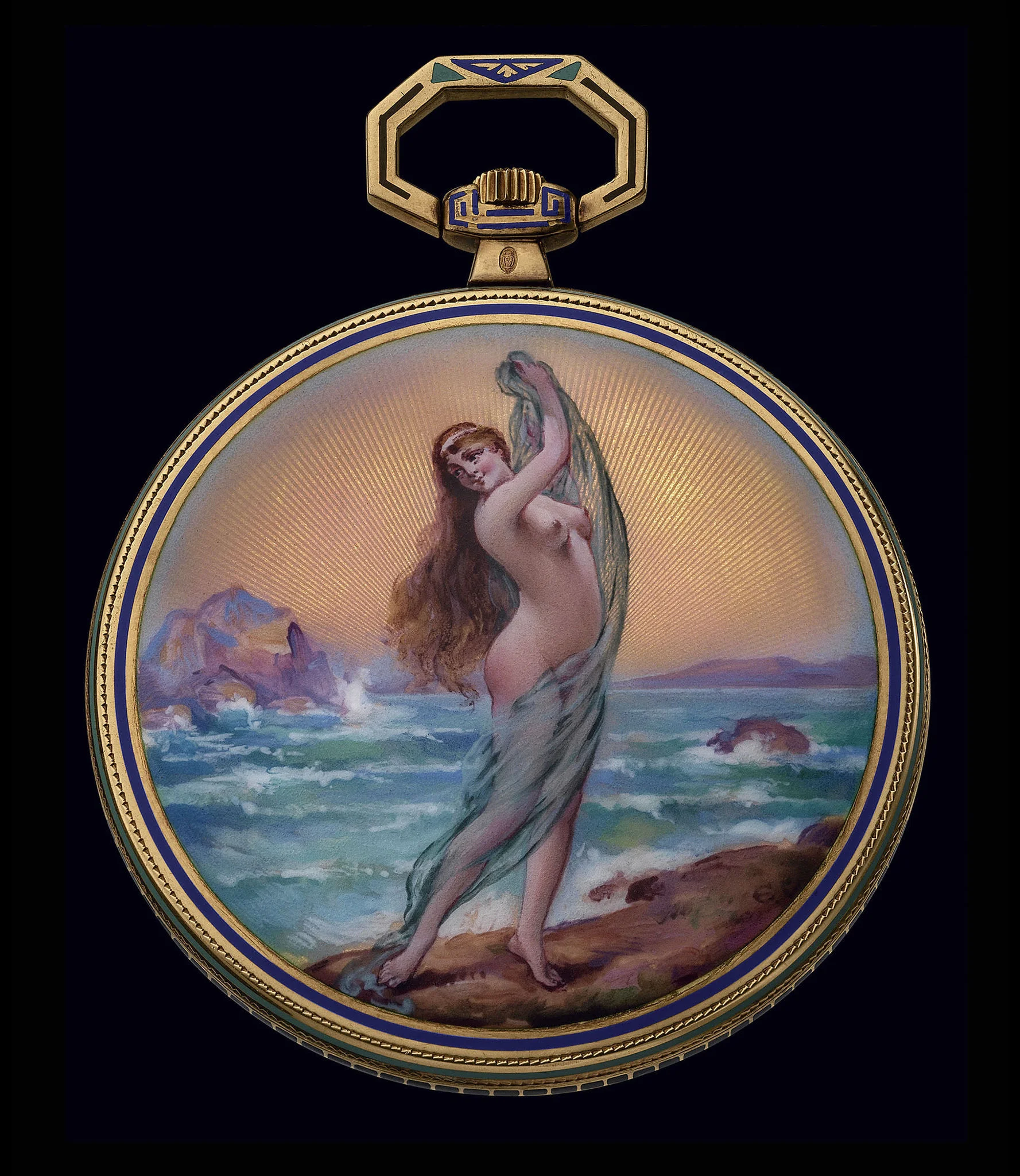
1921 . Rédiger la légende inv. 127
The rise of wristwatches
Although wristwatches had been around since the 16th century, it was not until the 1910s–20s that they became a necessary attribute of modern times. For watchmakers, the wristwatch posed several challenges. Firstly, the miniaturisation of the mechanism. Secondly, shock resistance, as the watch was much more exposed on the wrist than in the pocket. Finally, there was the matter of how to secure the strap/bracelet itself.
Audemars Piguet played a pioneering role in the development of wristwatches with complications. In 1892, the brand created one of the first minute repeater wristwatches with Louis Brandt & Frère (Omega), followed by several tiny chiming watches. The first wristwatches with calendars arrived in the 1920s, with chronographs making their appearance in the next decade.
This boom coincided with that of Art Deco. The movement dreamt of associating modernity with tradition as well as combining pure lines, geometric shapes, speed and light with fine craftsmanship – and that is exactly what Audemars Piguet did.
The artisans of Le Brassus collaborated with the case makers of Geneva and La Chaux-de-Fonds to explore and combine new shapes – cushion, barrel, rectangle, baguette, square, etc. – along with oversized or mobile lugs, representing seemingly boundless creative territory.
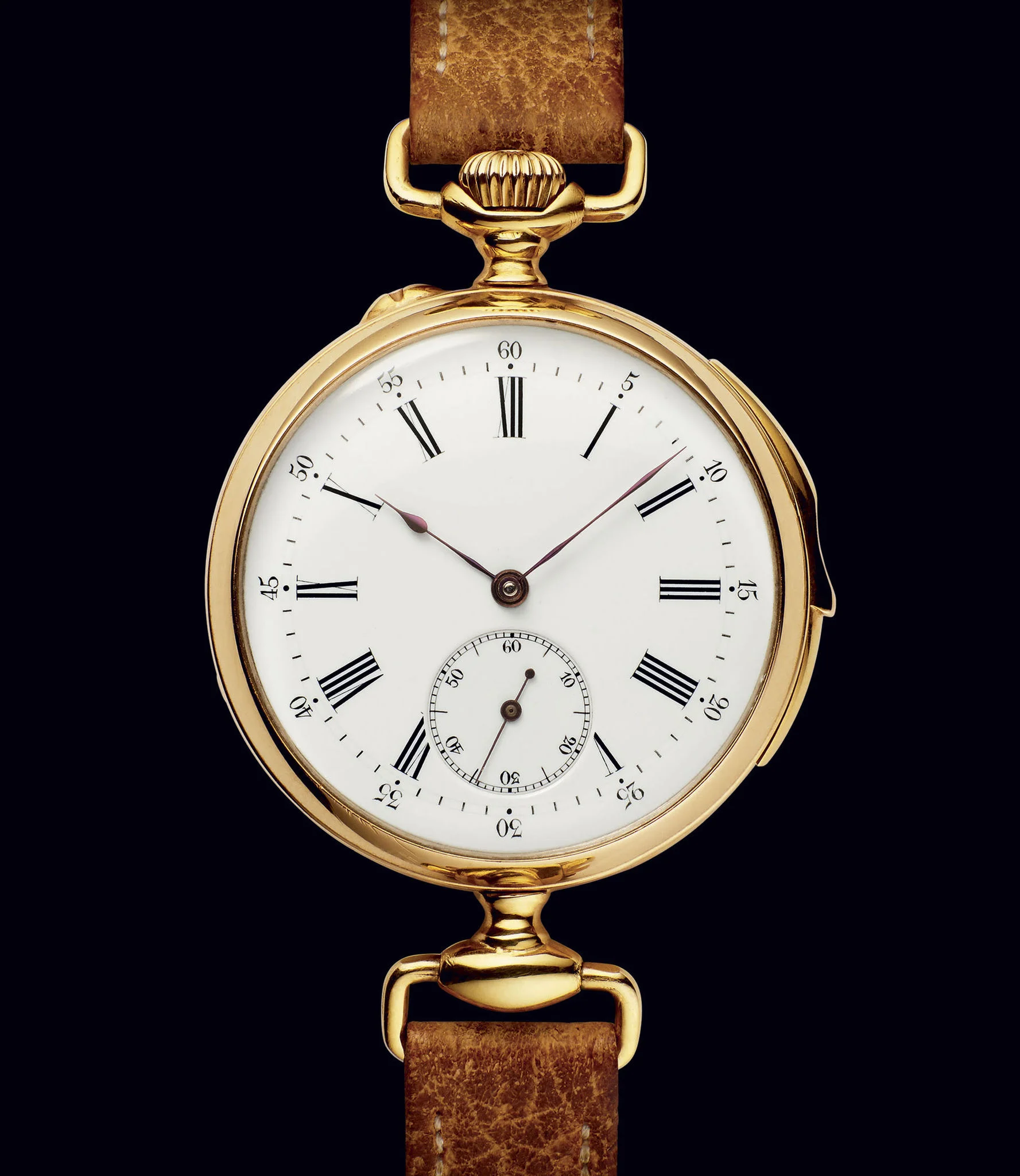
1892. Minute repeater wristwatch. 13-ligne calibre (29.3 mm), Movement 2416. Case in 18-carat yellow gold, enamel dial, painted Roman numerals, small seconds at 6 o'clock. Case engraved with the inscription Louis Brandt & Frère. Movement made by Audemars Piguet, sold to Louis Brandt & Frère in 1892. Omega Museum Collection.
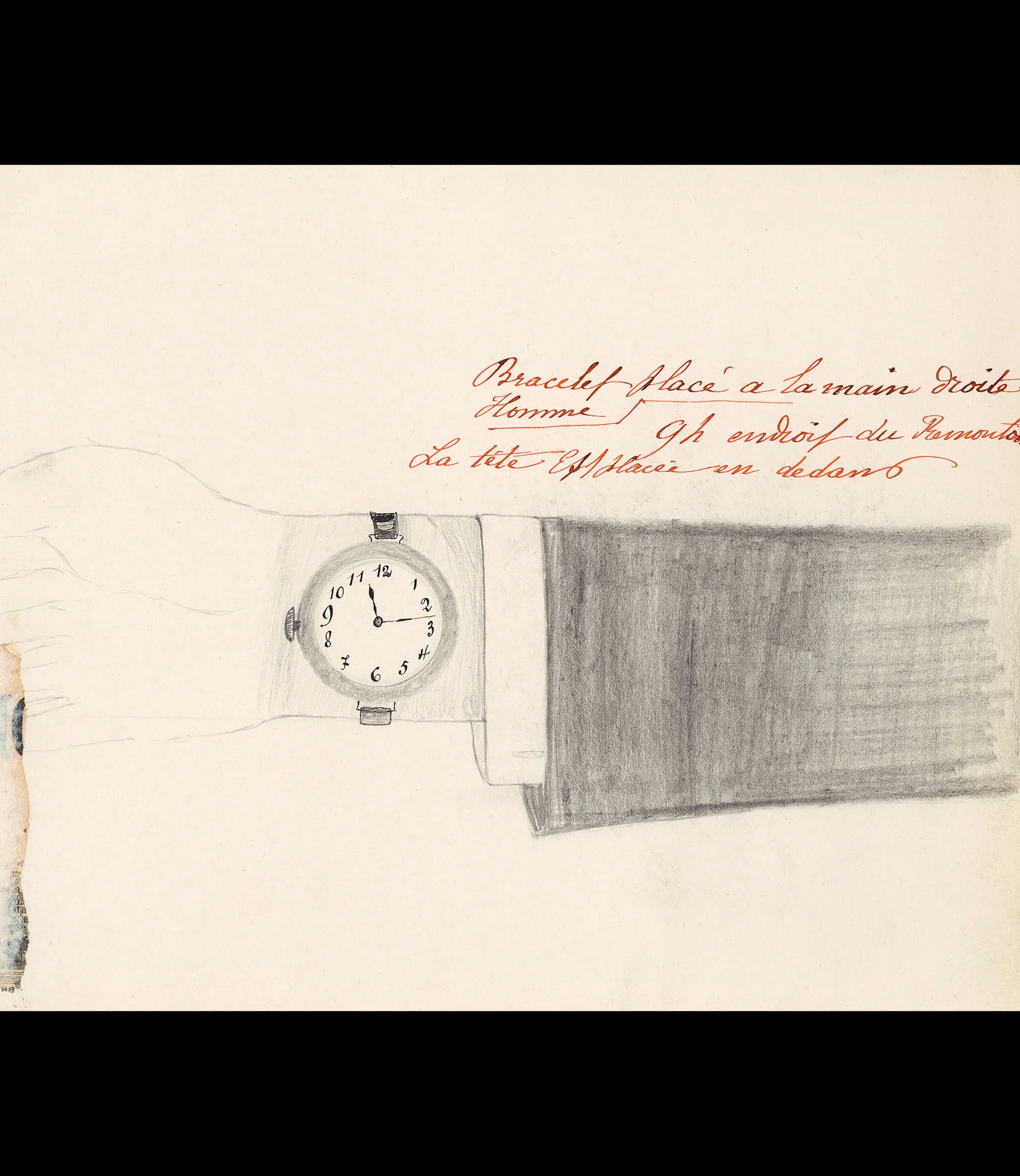
Circa 1910. Sketch of a men's watch worn on the right wrist. Audemars Piguet Archives.
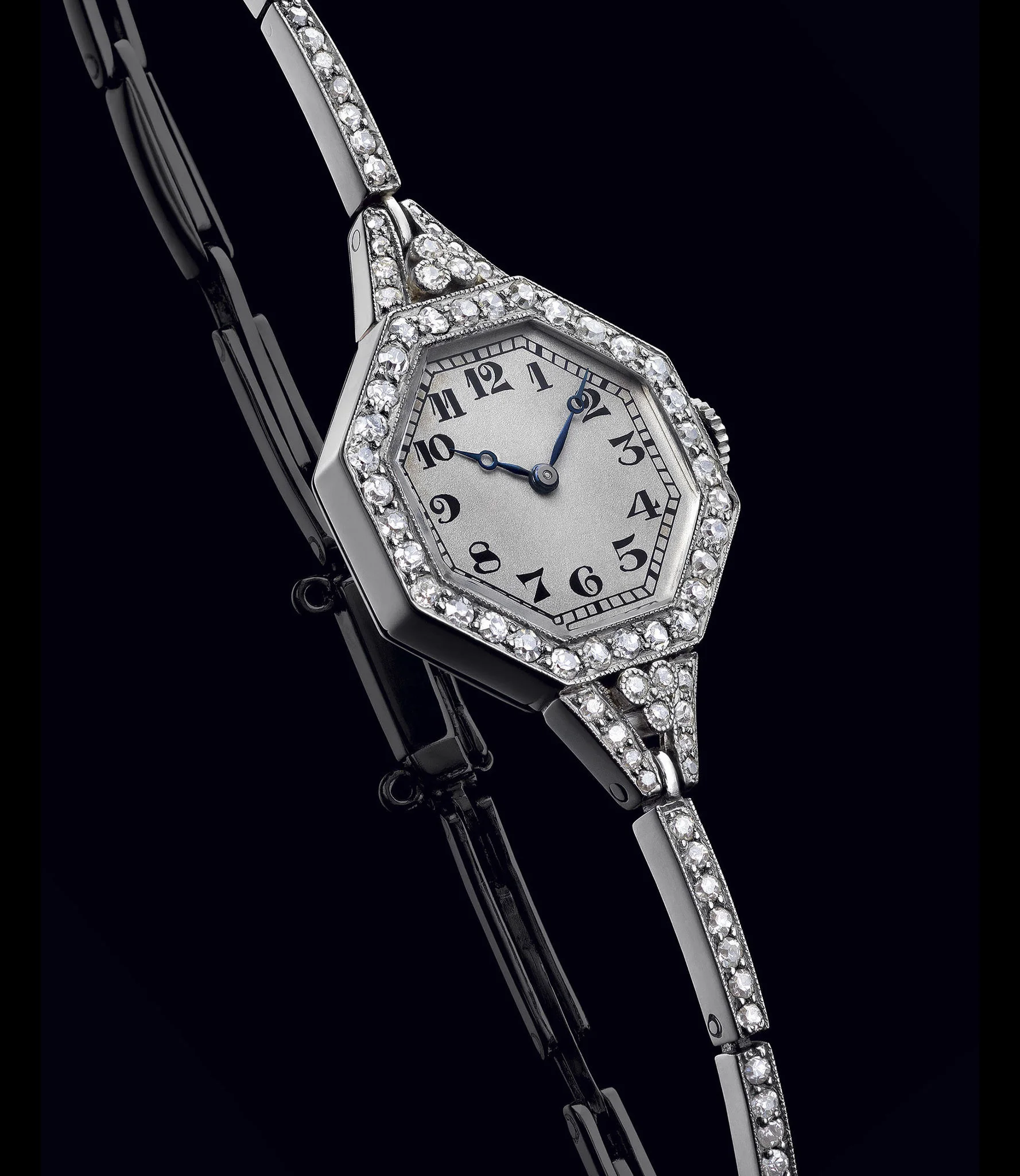
1917. Octagonal wristwatch. 82 brilliant-cut diamonds. 7-ligne calibre, Movement 18897. Made in 1916, sold in 1917. 18-carat white gold. Audemars Piguet Heritage, Inv. 1838.
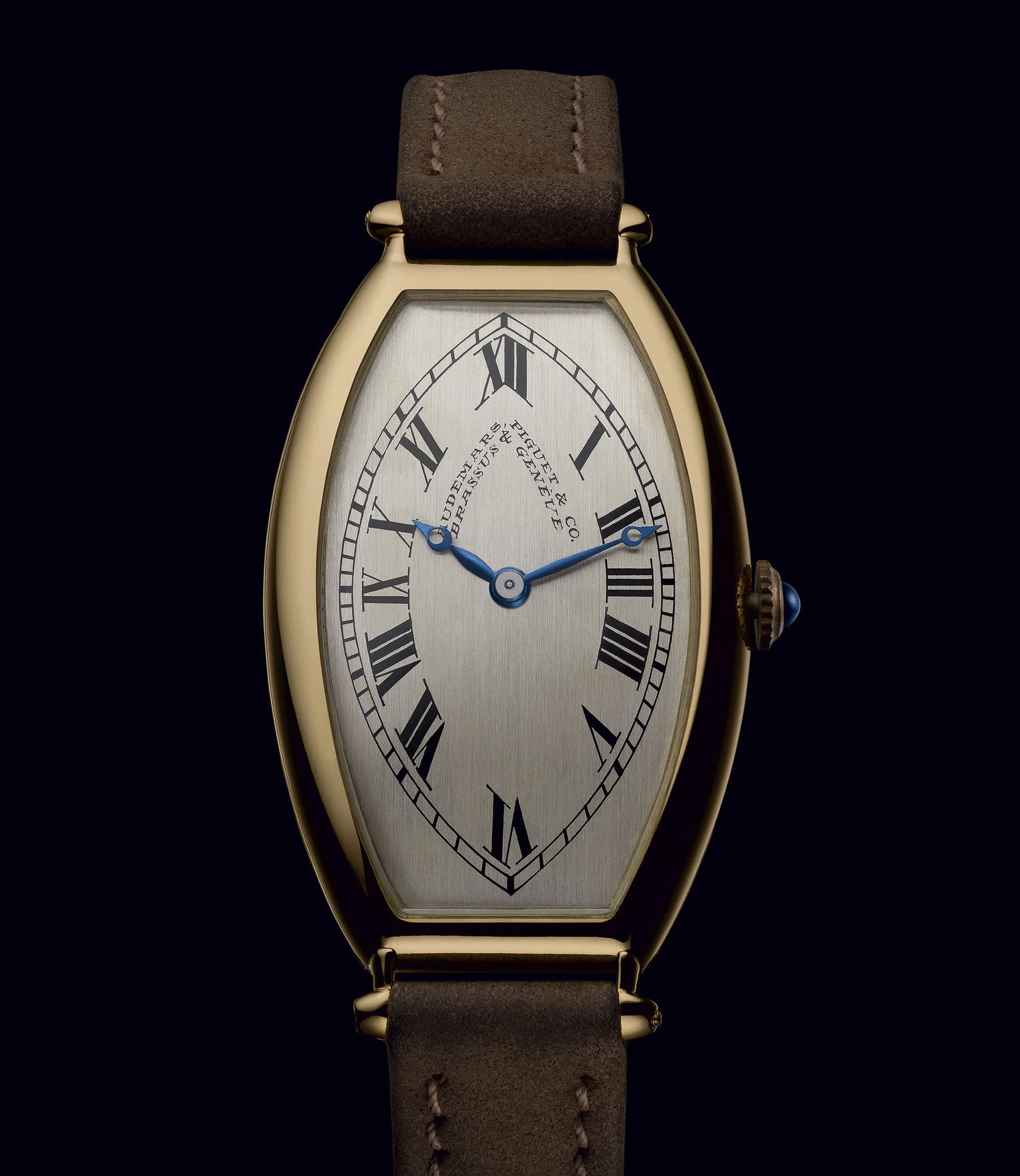
1918. Shaped wristwatch. Curved case. Calibre 10HPVM. Movement 21773 produced and sold in 1918. Yellow gold. Audemars Piguet Heritage, Inv. 1667.
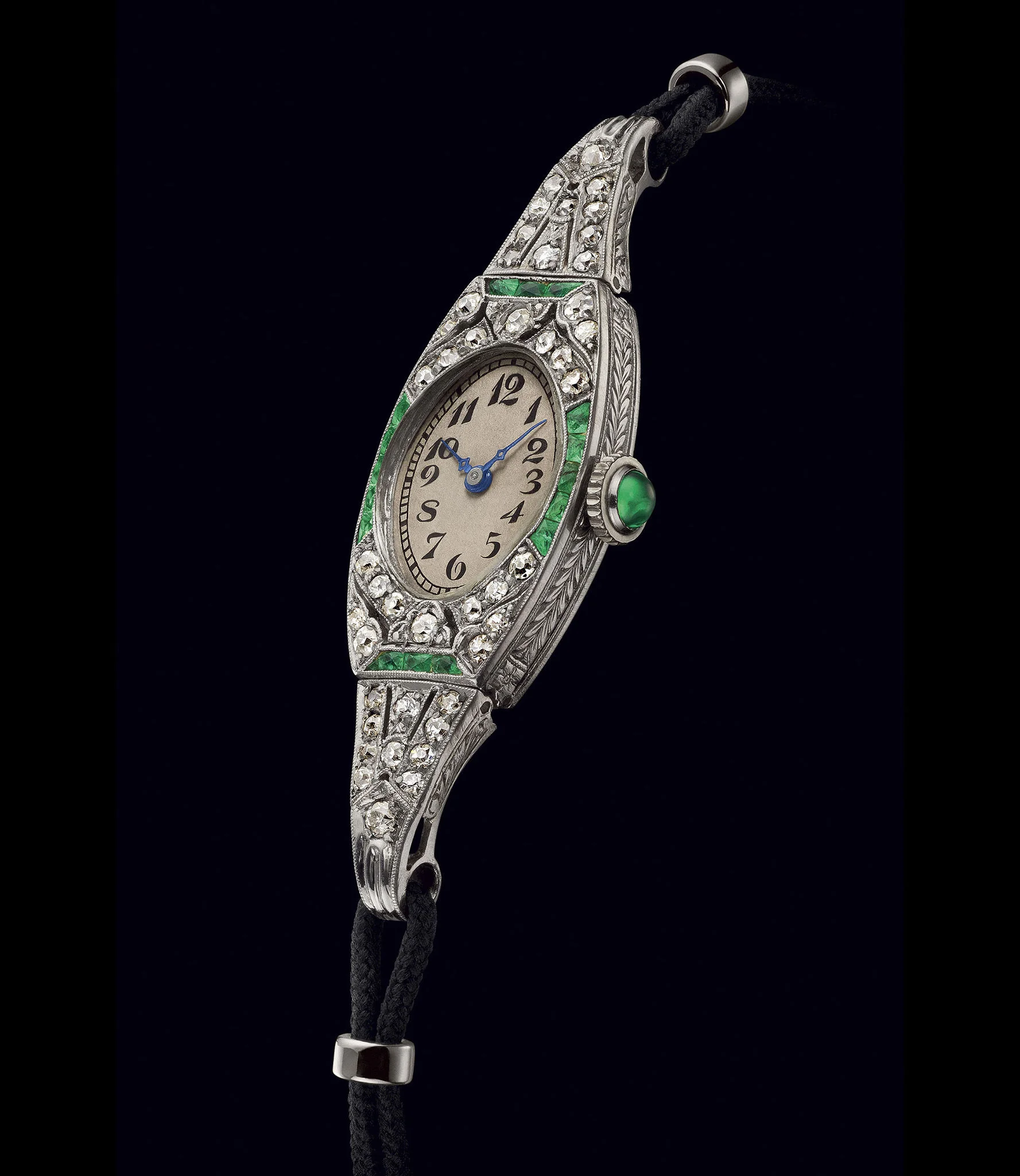
1922. Art Nouveau wristwatch set with diamonds and emeralds. Calibre 8RSO. Movement 26723 produced in 1920. Sold in 1922. White gold. Audemars Piguet Heritage, Inv. 133.
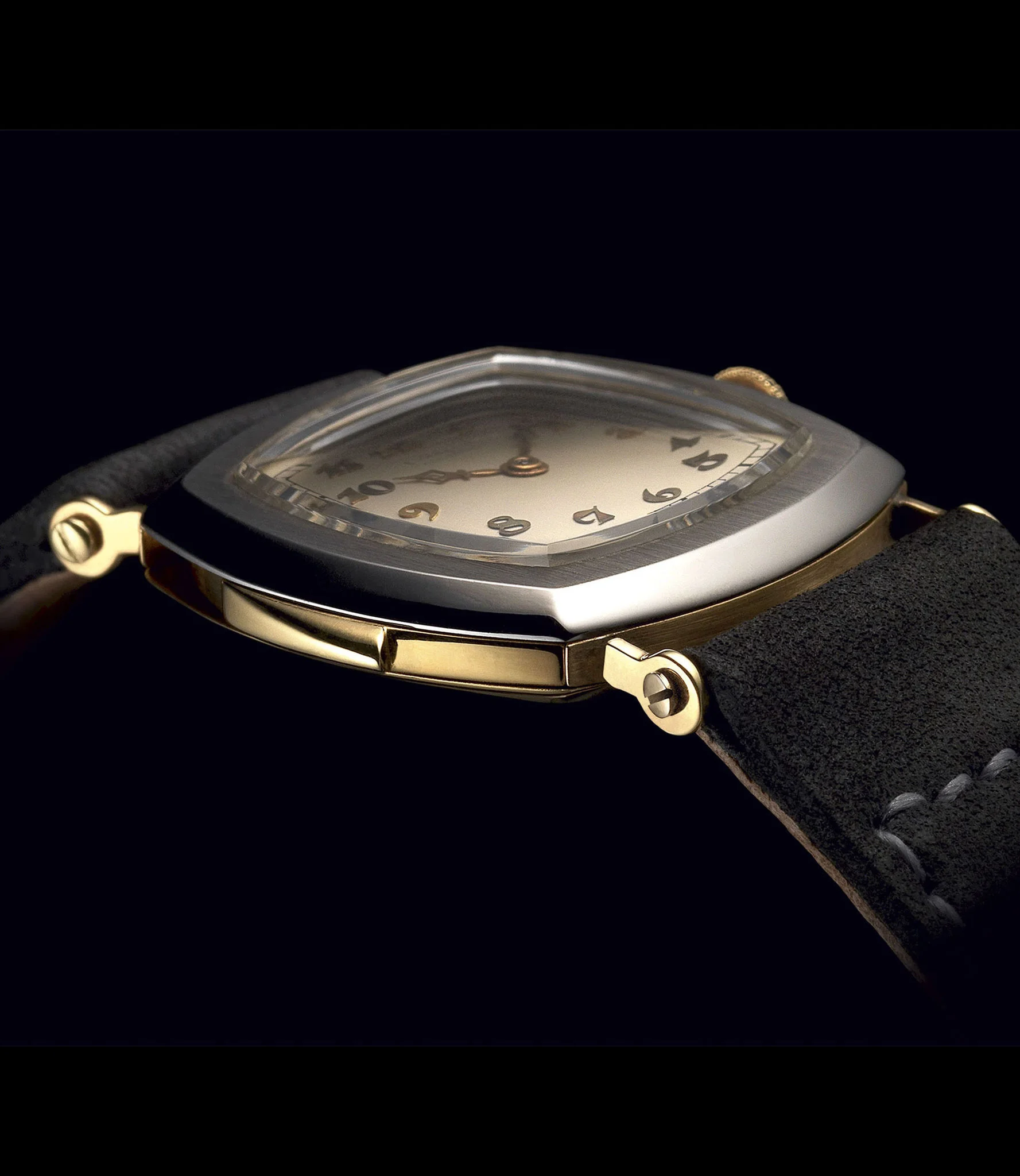
1923. Minute-repeater wristwatch. Fine striped dial signed E. Gübelin. Extra-flat Calibre 96SMV6. Movement 14996 produced in 1912. Sold in 1923. Yellow gold and platinum. Audemars Piguet Heritage, Inv. 1709.
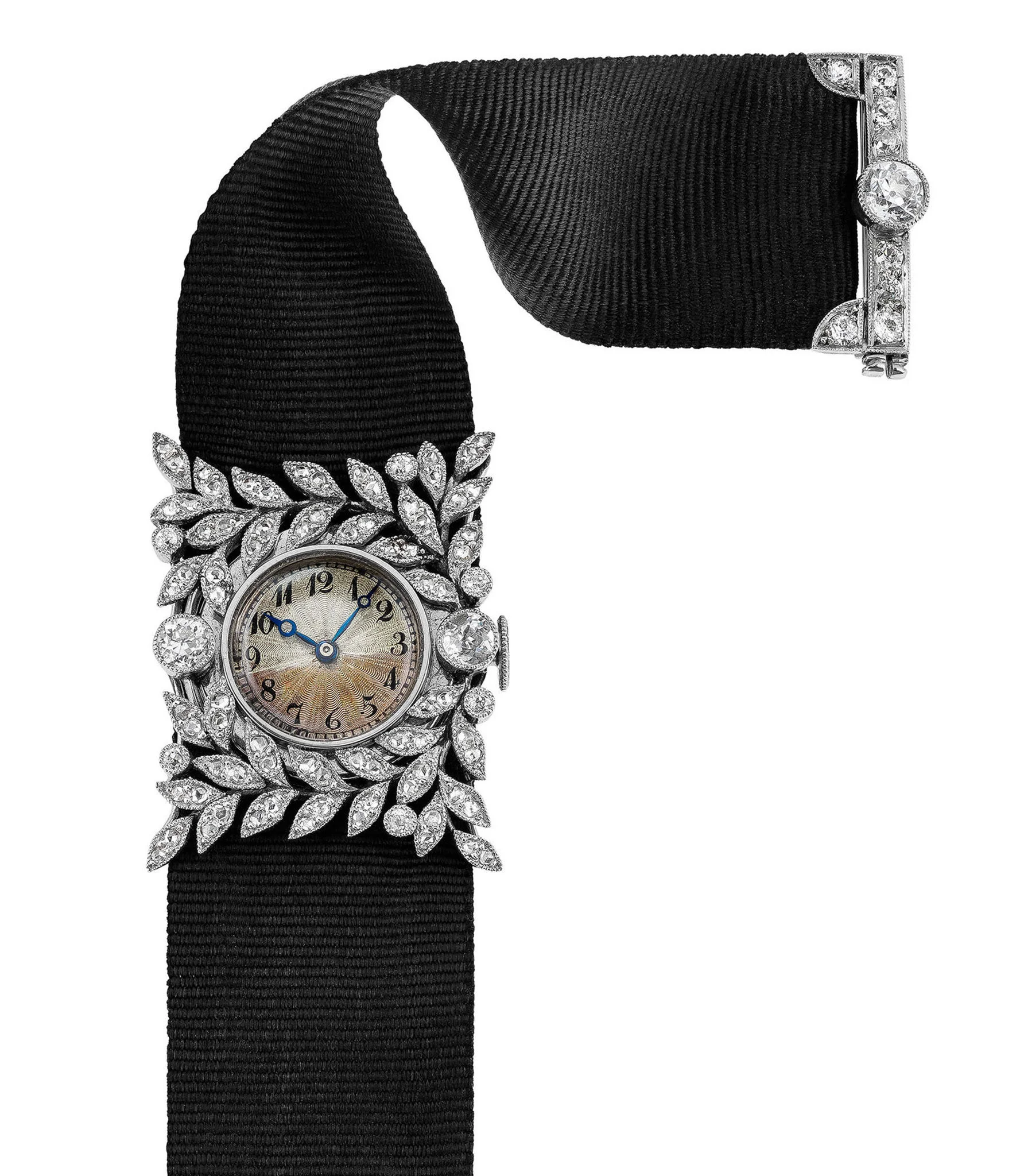
1924. Gemset wristwatch. Finely chased and diamond-set bezel. Calibre 7HPVM, movement 23683 produced in 1919. Sold in Paris in 1924. White gold. Audemars Piguet Heritage, Inv. 125.
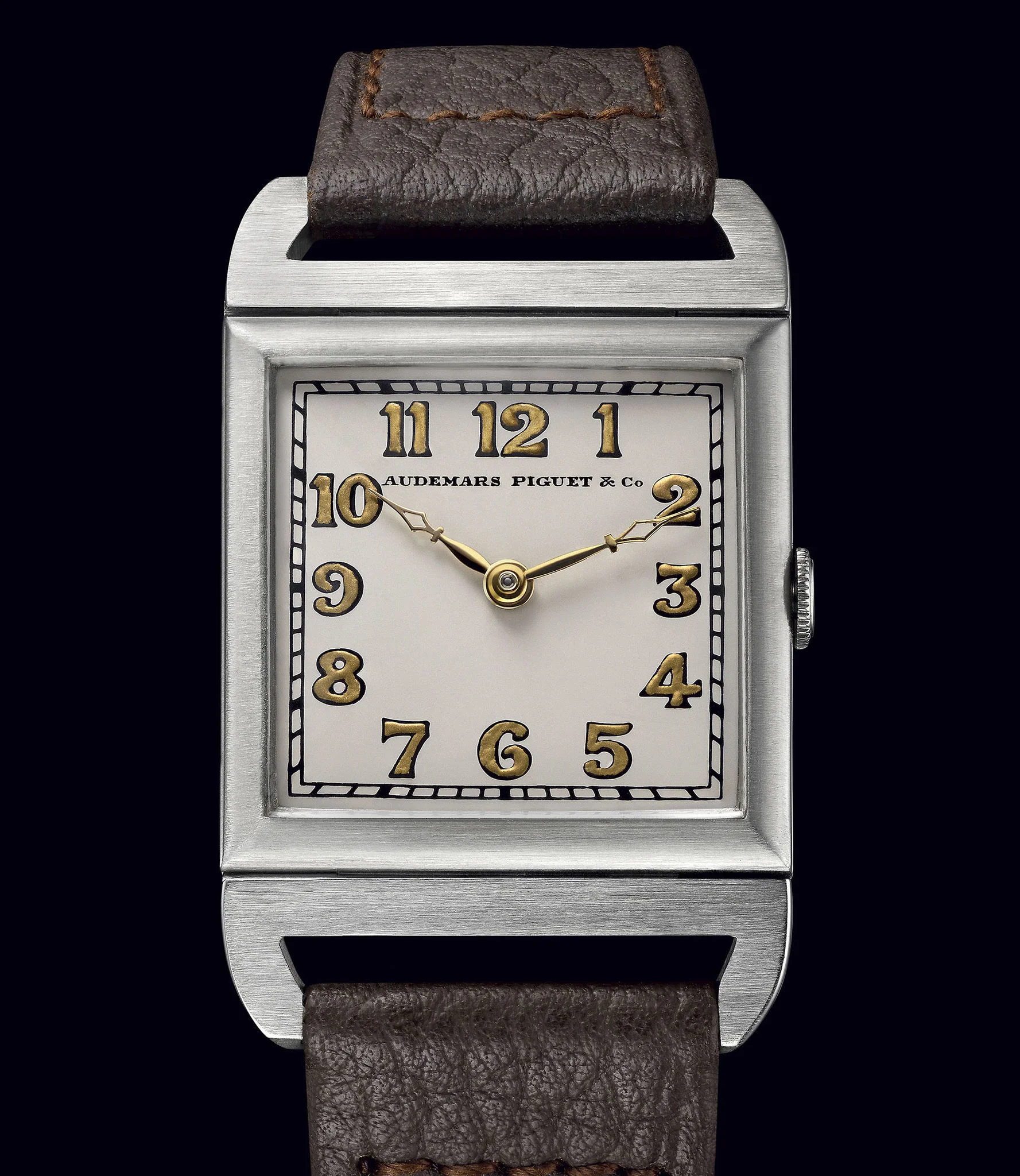
1927. Wristwatch with movable clasp. Calibre 10GHSM, movement 37665. Produced and sold in 1927. White gold. Audemars Piguet Heritage, Inv. 176.
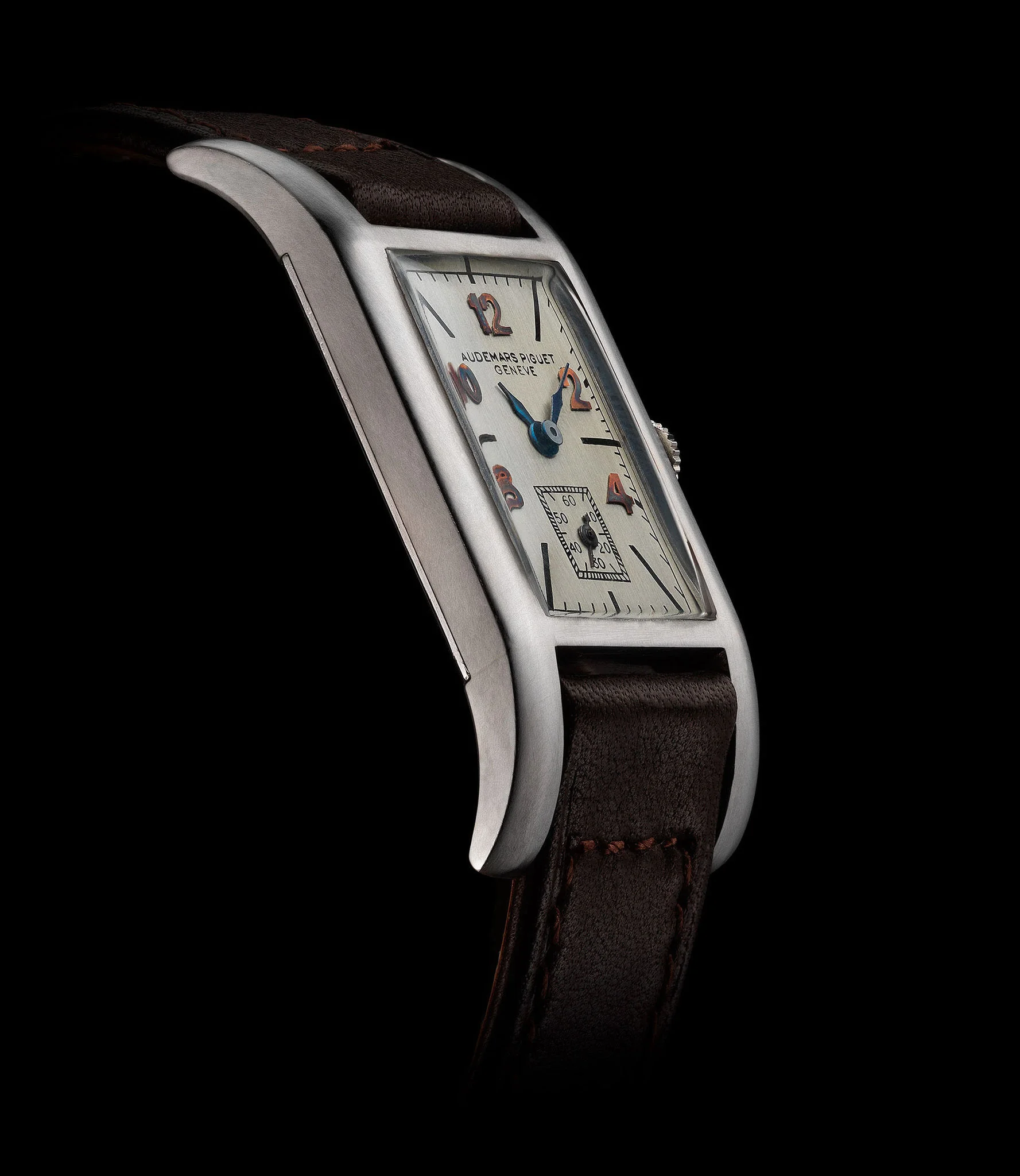
1938. Wristwatch with oversized lugs. Calibre 10TS, movement 43645 produced in 1937. Sold in 1938. White gold. Audemars Piguet Heritage, Inv. 1777.
The quest for the infinitely small
In watchmaking, miniaturisation is a field of excellence on a par with complications and chronometry. Reducing the size of a mechanism is a difficult art, a feat comparable to conquering the most inaccessible summits.
Audemars Piguet’s Production Registers record extremely small mechanisms dating back to the 19th century. A minute repeater calibre with an 18 mm diameter was created in 1891. From the 1900s onwards, watchmakers developed calibres they referred to as archiplats (super-thin).
The competition between LeCoultre & Cie and Audemars Piguet was a kind of brotherly rivalry. In 1907, LeCoultre & Cie presented a mechanism measuring just 1.38 mm thick: Calibre 17JVEB. Nineteen years later, Audemars Piguet beat this record by reducing the thickness by a hair’s breadth with Calibre 7SV (1.32 mm). In 1927, Audemars Piguet presented the world's smallest mechanism, Calibre 5/7SB (15.9 x 5.8 x 3.3 mm). Two years later, it was LeCoultre & Cie's turn to go one better with Calibre 101 (14 x 4.8 x 3.4 mm). These tiny mechanisms are intended for Haute Joaillerie watches, in which timekeeping almost takes a back seat to jewellery.
Another example: in 1921, Audemars Piguet created the world's smallest chiming watch. Measuring 15.8 mm (7 lignes) in diameter, Calibre 7MV is capable of playing 144 different tunes to indicate the time on demand. In keeping with the finest watchmaking traditions, Paul Louis Audemars called on an independent craftsman named Meylan Grosjean to create the chiming mechanism. When the latter delivered the precious movement, he attached a note that spoke volumes: "Here at last is this under-dial work (striking mechanism) that has involved two months of torment, head-spinning difficulties and intense visual fatigue. I won't make another one like it at any price".
Mastery of miniaturisation was applied to women's watches, from Haute Joaillerie to secret watches, pendants, brooches and even rings.
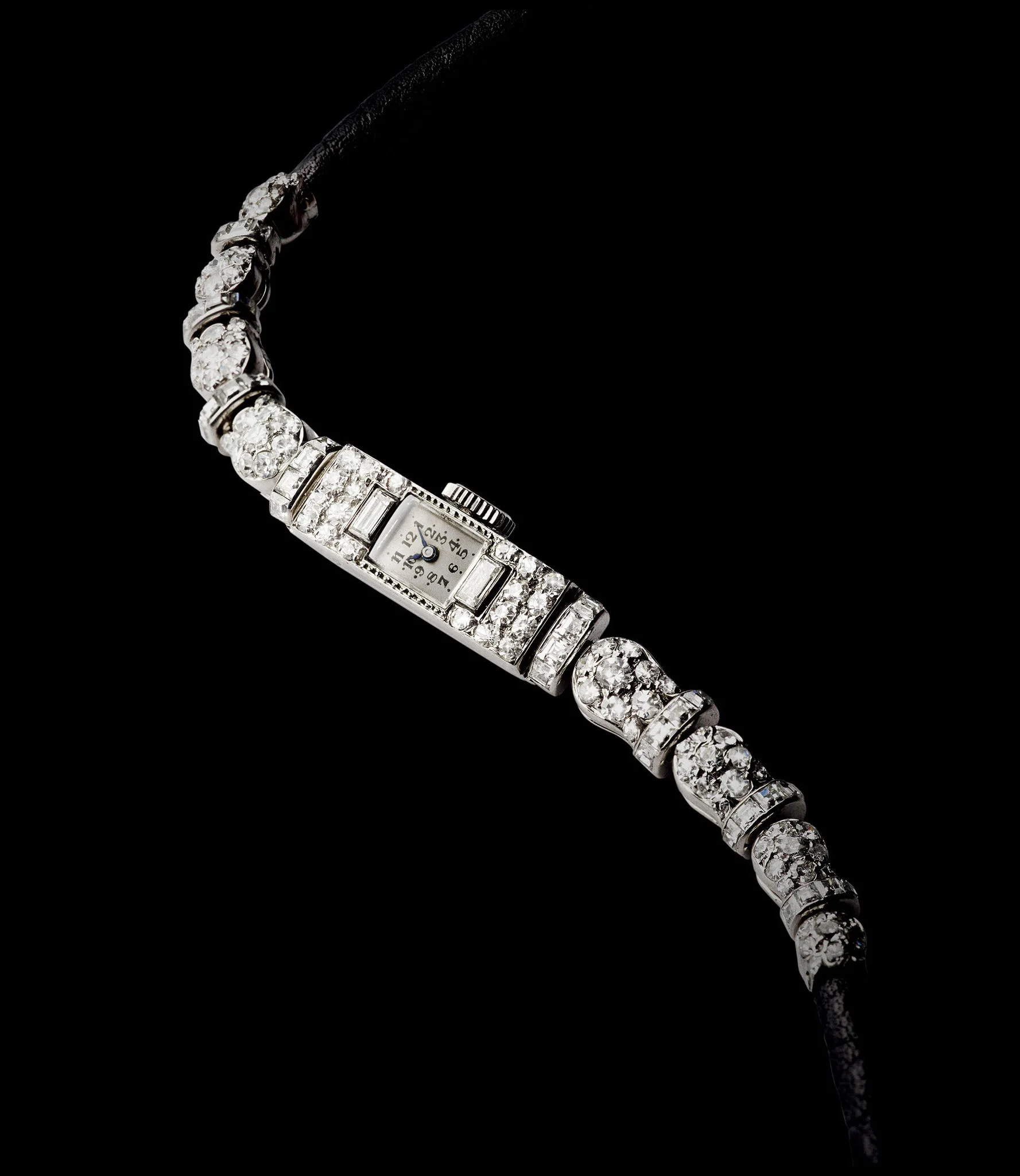
1928. Gemset miniature wristwatch. Calibre 5/7SB, the smallest of its time. Movement 38568 produced in 1927. Sold in 1928. Platinum. Audemars Piguet Heritage, Inv. 180.
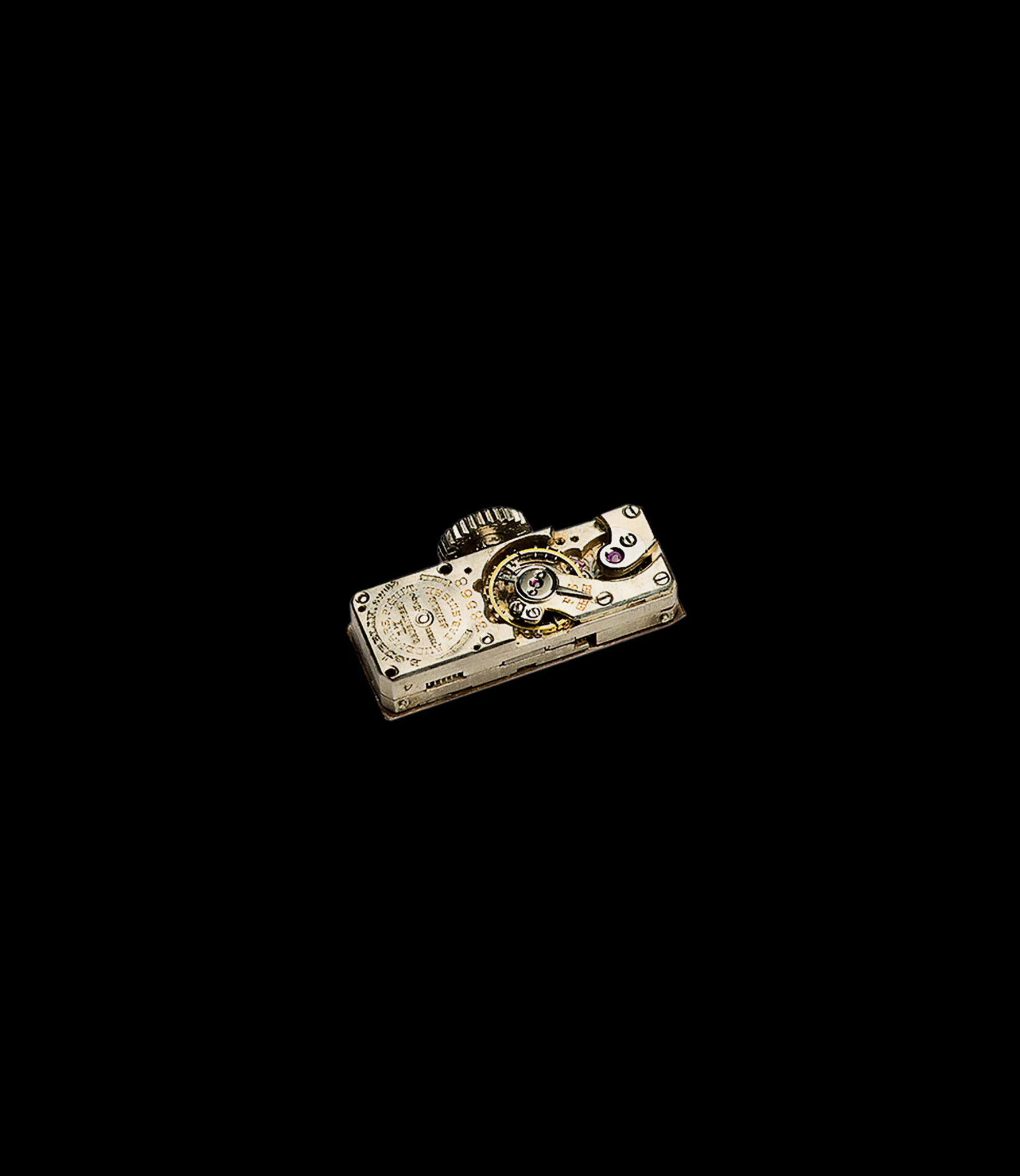
Calibre 5/7 SB. In 1927, this Audemars Piguet mechanism held the smallness record at 15.9 x 5.8 x 3.3 mm. Audemars Piguet Heritage.
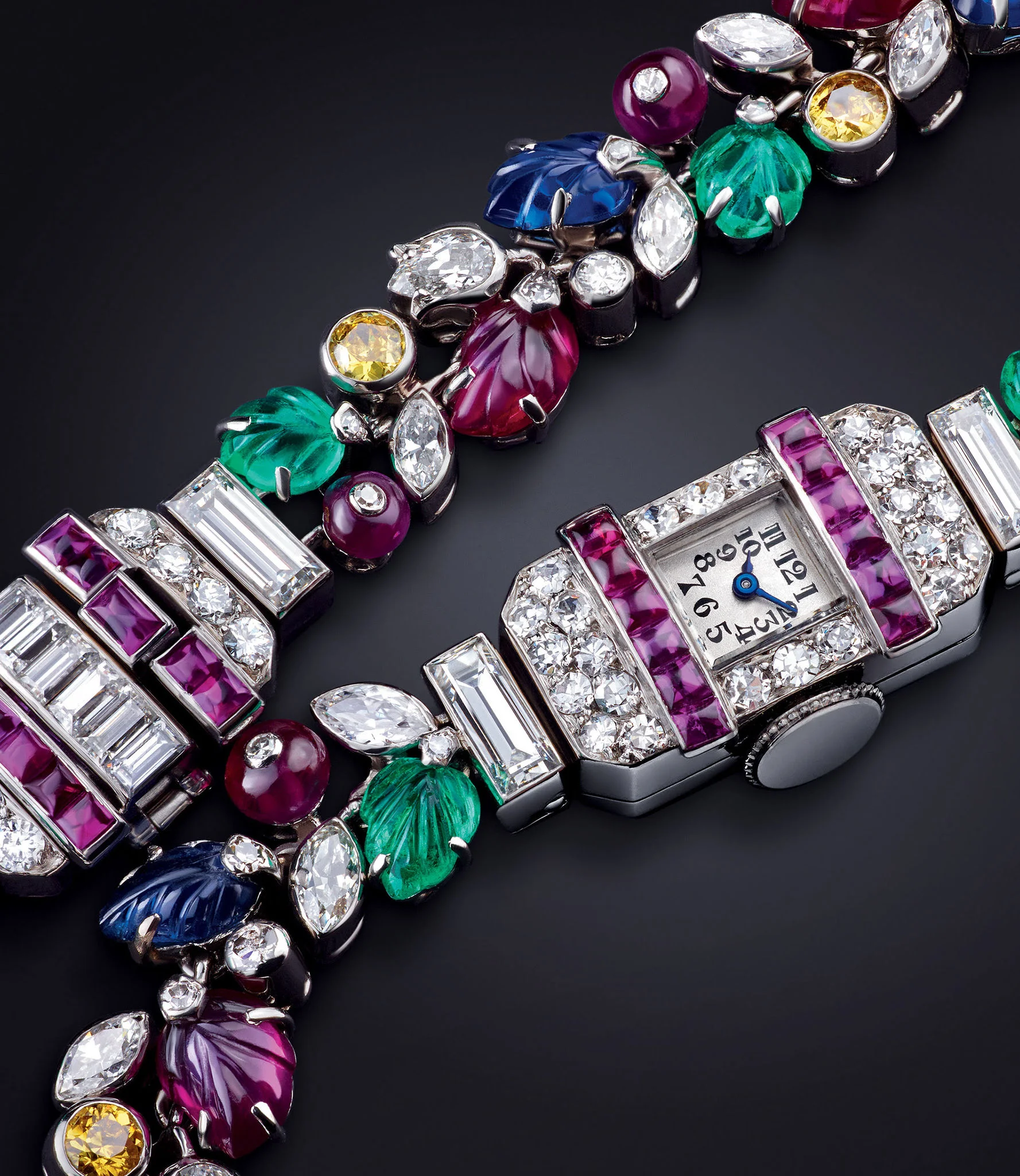
1929. " Tutti Frutti" jewellery watch. Rubies, sapphires, emeralds and diamonds. Egouvillon Lafon & Cie Paris. Calibre 5/7SB, movement 39765. Produced and sold in 1929 in Paris. Heritage Audemars Piguet, Inv. 1378.
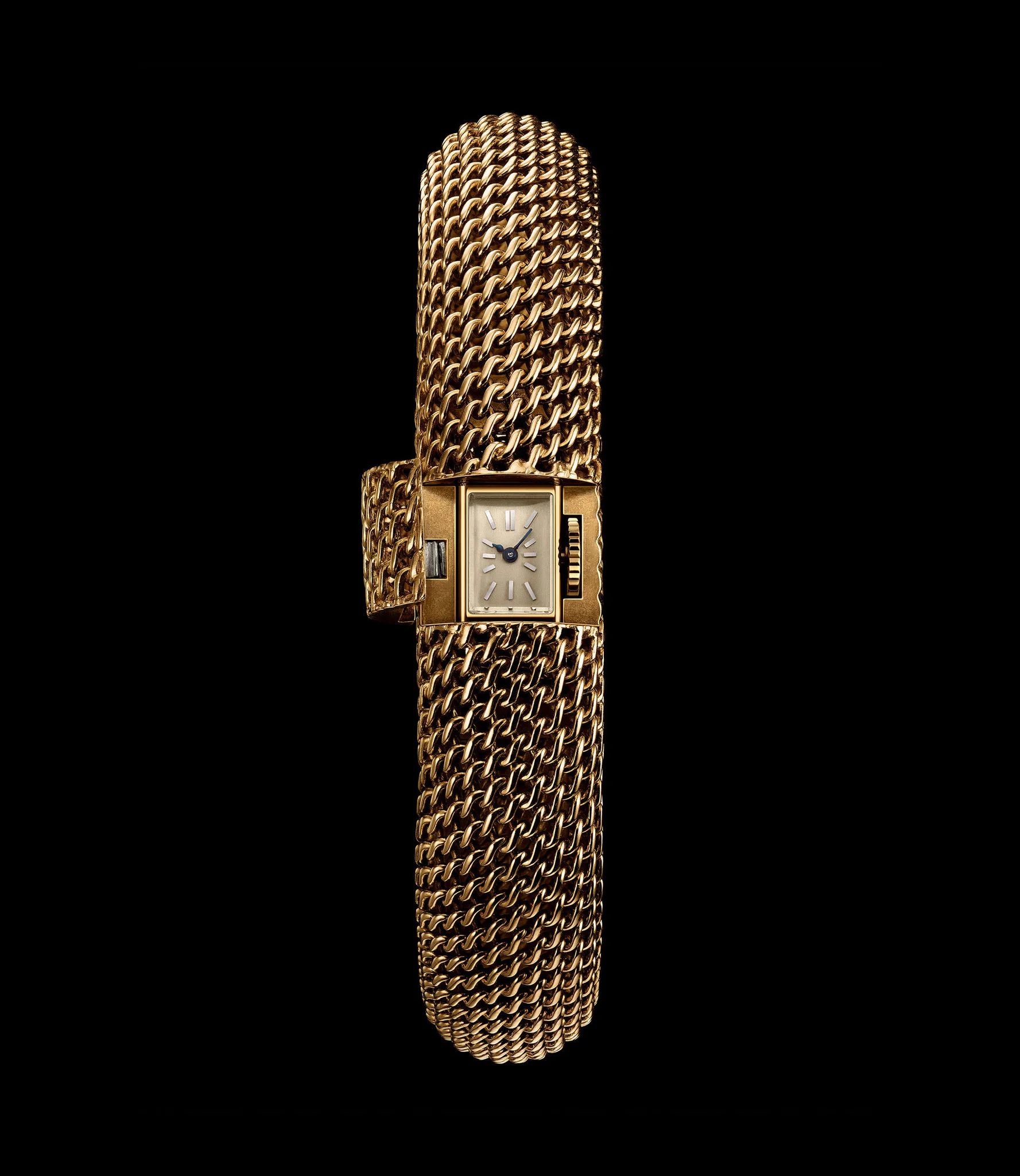
1950. Watch with secret cover. "Berganinia" Milanese mesh cylindrical bracelet. Calibre 5/7SB, movement 41790. Produced and sold in 1950. Yellow gold. Model 5912. Audemars Piguet Heritage, Inv. 1814.
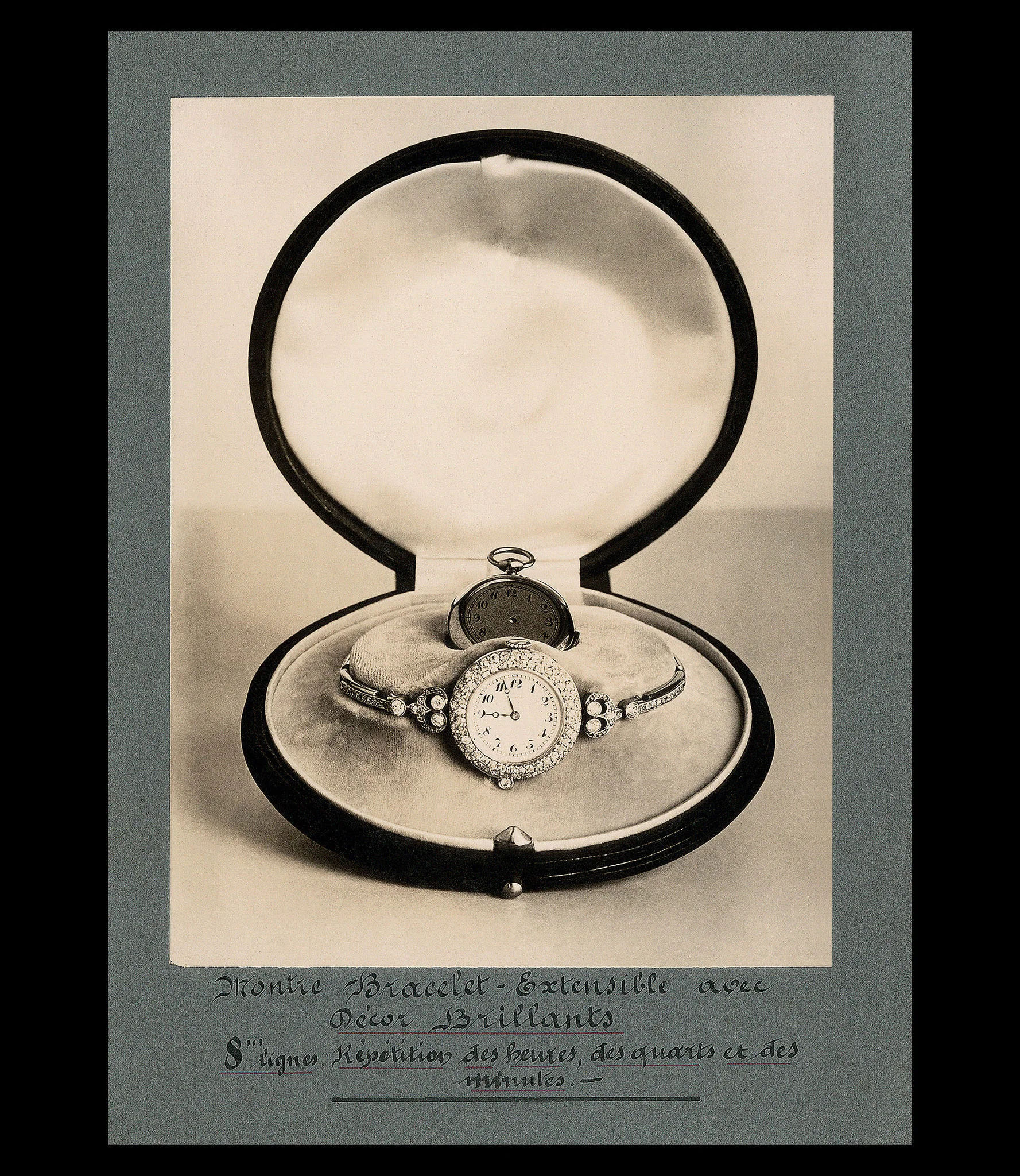
Stock photo of the miniature minute repeater pendant/wristwatch no. 8871. Calibre 8SMVVI (18 mm). Manufactured in 1904, sold to Gübelin in 1914. Audemars Piguet Archives.
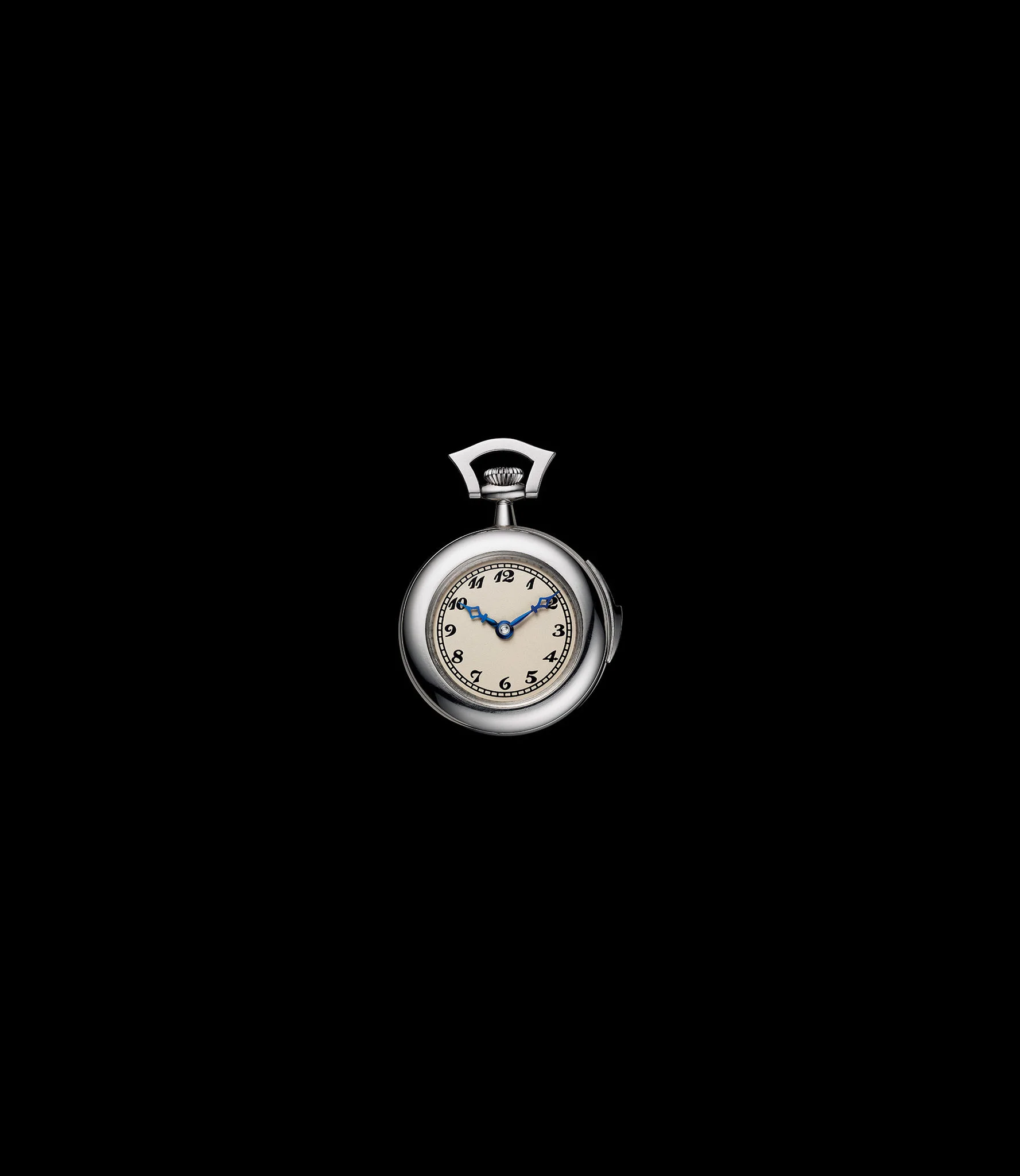
1922. The world's smallest 5-minute repeater pendant watch. Calibre 7MV5 (15.8 mm), movement 28680 produced in 1921. Sold in 1922 to Tiffany New York. Replica made by the Audemars Piguet Heritage department, Inv. 1437.
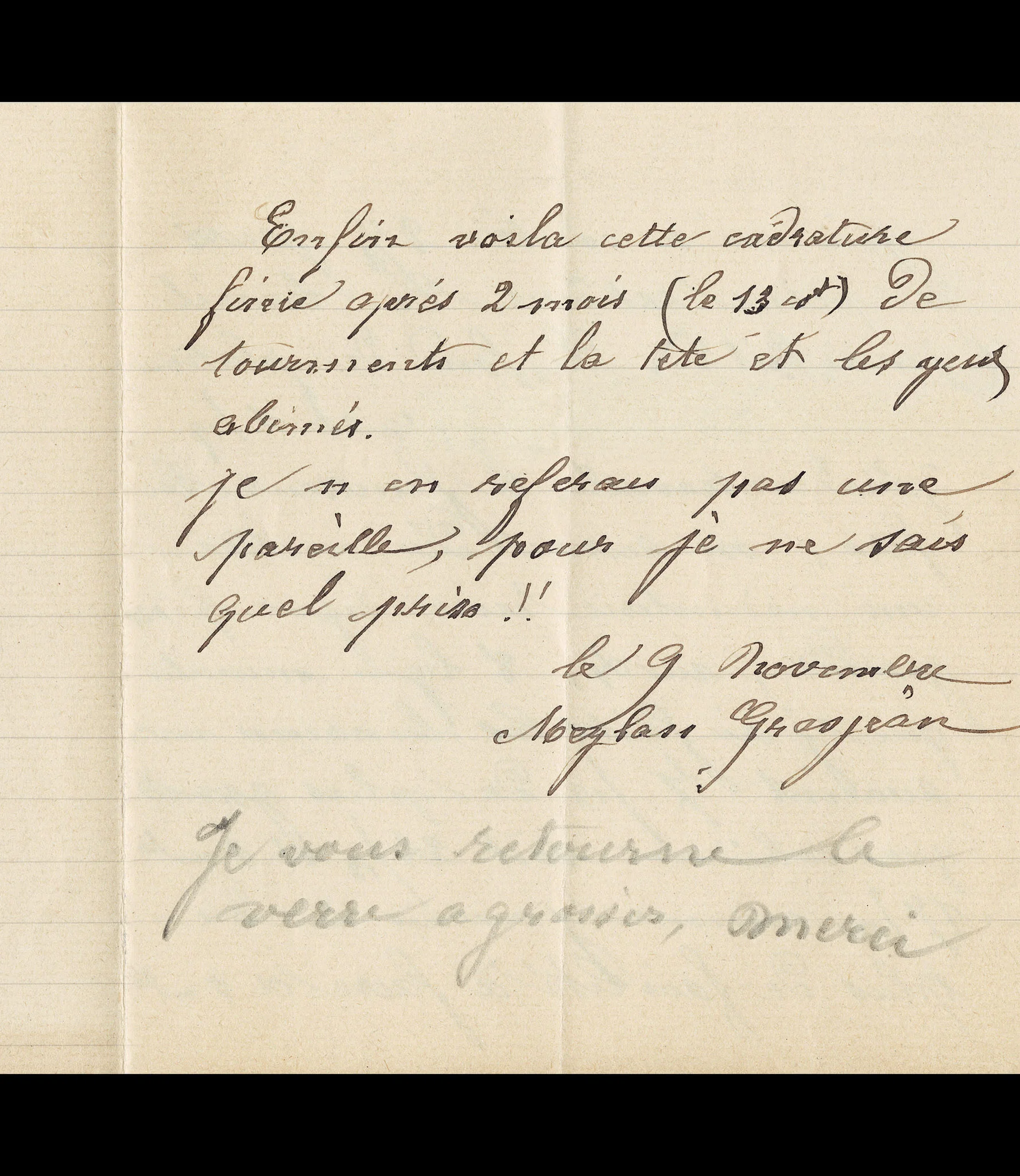
1921. Message from watchmaker Meylan Grosjean, after creating the mechanism for a 5-minute repeater with a diameter of 7 lignes (15.8 mm). “Here at last is this under-dial work (striking mechanism) that has involved two months of torment, head-spinning difficulties and intense visual fatigue. I won’t make another like it at any price.” Audemars Piguet Archives.
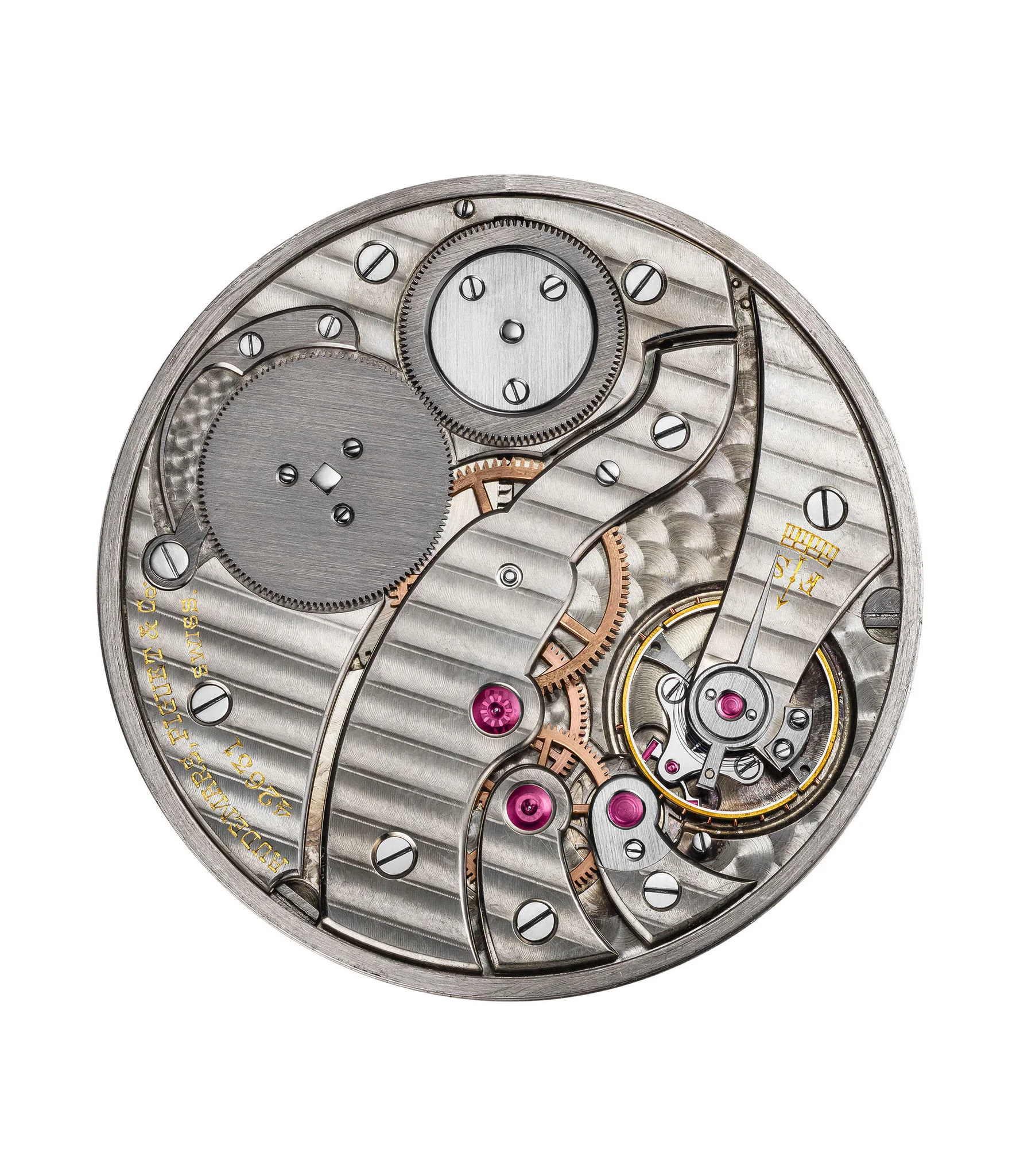
Calibre 17SVF5#5. In 1921, this Audemars Piguet mechanism was one of the thinnest in the world, measuring just 1.5 mm. Audemars Piguet Heritage.
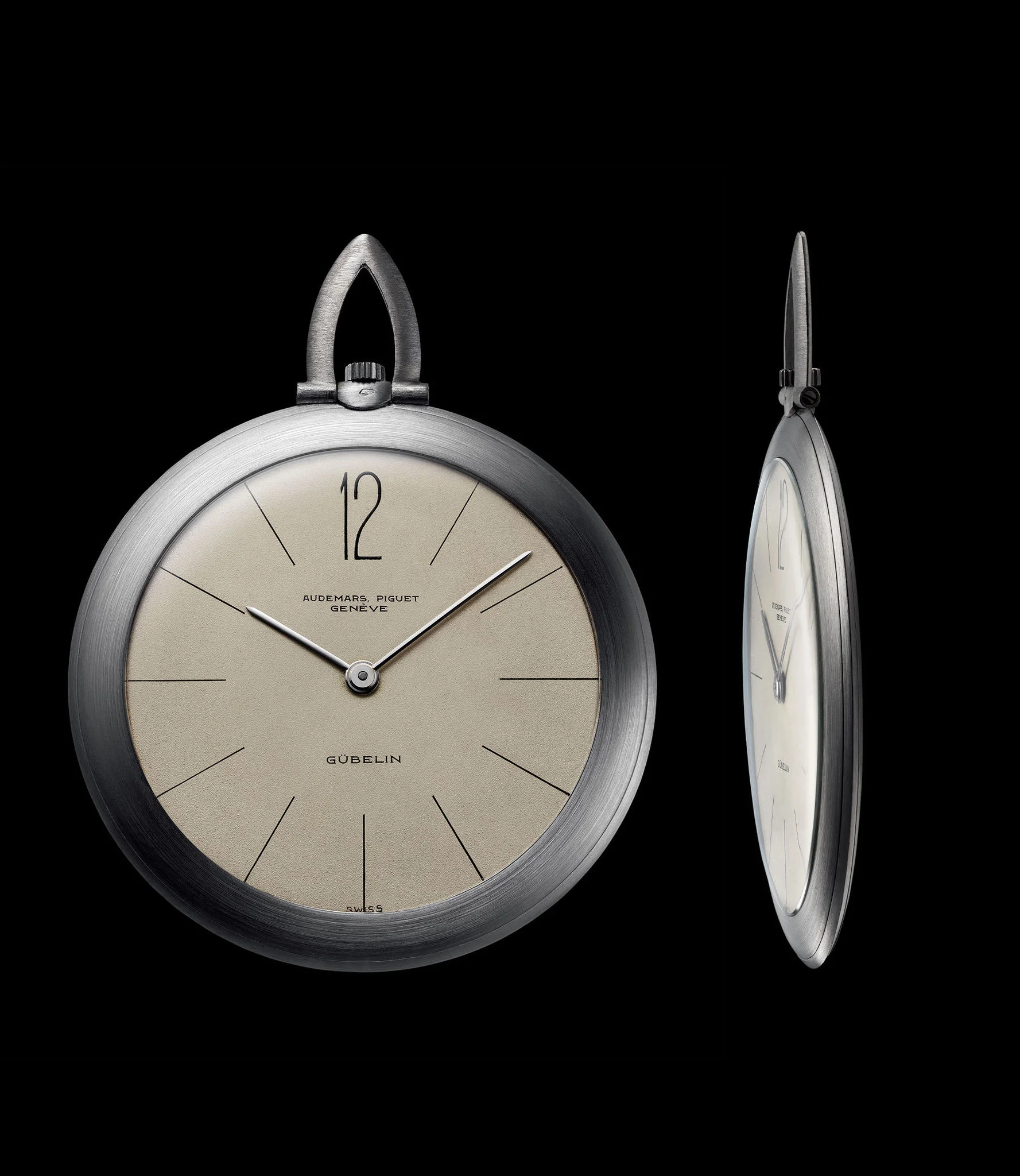
1952. Ultra-thin pocket watch. "Knife" case fitted with one of the thinnest mechanisms of its time (1.5 mm). Calibre 17SVF#5, movement 47831 produced in 1944. Sold in 1952. Platinum. Pre-Model 489. Audemars Piguet Heritage, Inv. 250.
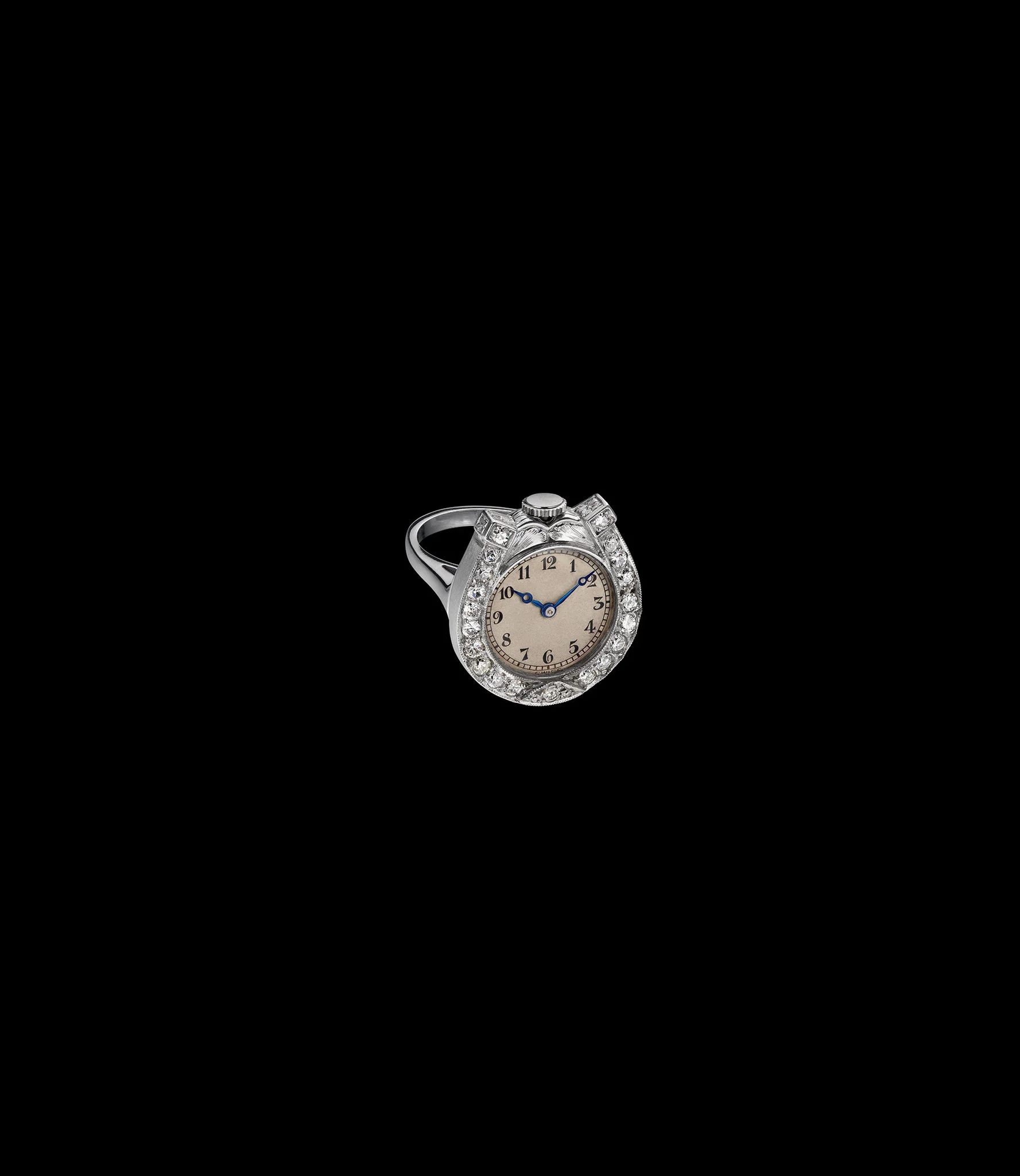
1921. Horseshoe-shaped ring watch. Brilliant-cut diamonds. Calibre 8SV, movement 24781 produced in 1919. Sold in 1921. Platinum. Audemars Piguet Heritage, Inv. 1670.
1945, a new lease of life
In 1945, a wind of optimism and modernity swept across the world. After the disasters of war, everything had to be rebuilt, rethought and reinvented. The West entered three decades of spectacular growth, dubbed the Les Trentes Glorieuses (the post-war boom years). Swiss watchmaking rocketed from around 12 million watches exported in 1945 to over 80 million in 1974.
For Audemars Piguet, prospects gradually began to improve. In 1945, the workshops employed around 30 artisans with an annual production of over 500 watches a year, but profits still seemed a long way off. The two Pauls wanted to benefit from the experience of Manufacture LeCoultre & Cie – located in the neighbouring village of Le Sentier and employing several hundred people – which had mastered mass production since the 19th century and had a modern distribution structure based in Geneva.
1948 was a year of major decisions. Audemars Piguet took part in the Basel Watch Fair for the first time; the collections were reshuffled; the brand was modernised; the words "& Co" gradually disappeared from dials and advertisements; the distribution network was reorganised; and the APCO and Audiguet sub-brands were abandoned. Production was overhauled, with LeCoultre & Cie becoming the main supplier of movement "ébauches". Audemars Piguet’s Board of Directors welcomed a number of key figures from the SAPIC group (Société anonyme des Participations Industrielles et Commerciales) founded in 1927 and which has holdings in Manufacture LeCoultre & Cie, the Jaeger-LeCoultre sales firm, Vacheron Constantin, Établissement Jaeger and other watchmaking companies. Jules César Savary (1899–1966) became Audemars Piguet’s Chairman of the Board. A man of action, a salesman, a visionary and a watchmaking connoisseur, he remained in this role until his death in 1966.
While the founding families retained ownership of the company, the contribution of new ideas, experience and resources enabled far-reaching modernisation that produced rapid results. In 1952, sales topped one million Swiss Francs and the 1000-watch mark was surpassed for the second time since 1926. Three years later, Audemars Piguet sold more than 2,000 watches. In 1970, the workshops employed 86 people who produced almost 5,500 watches.
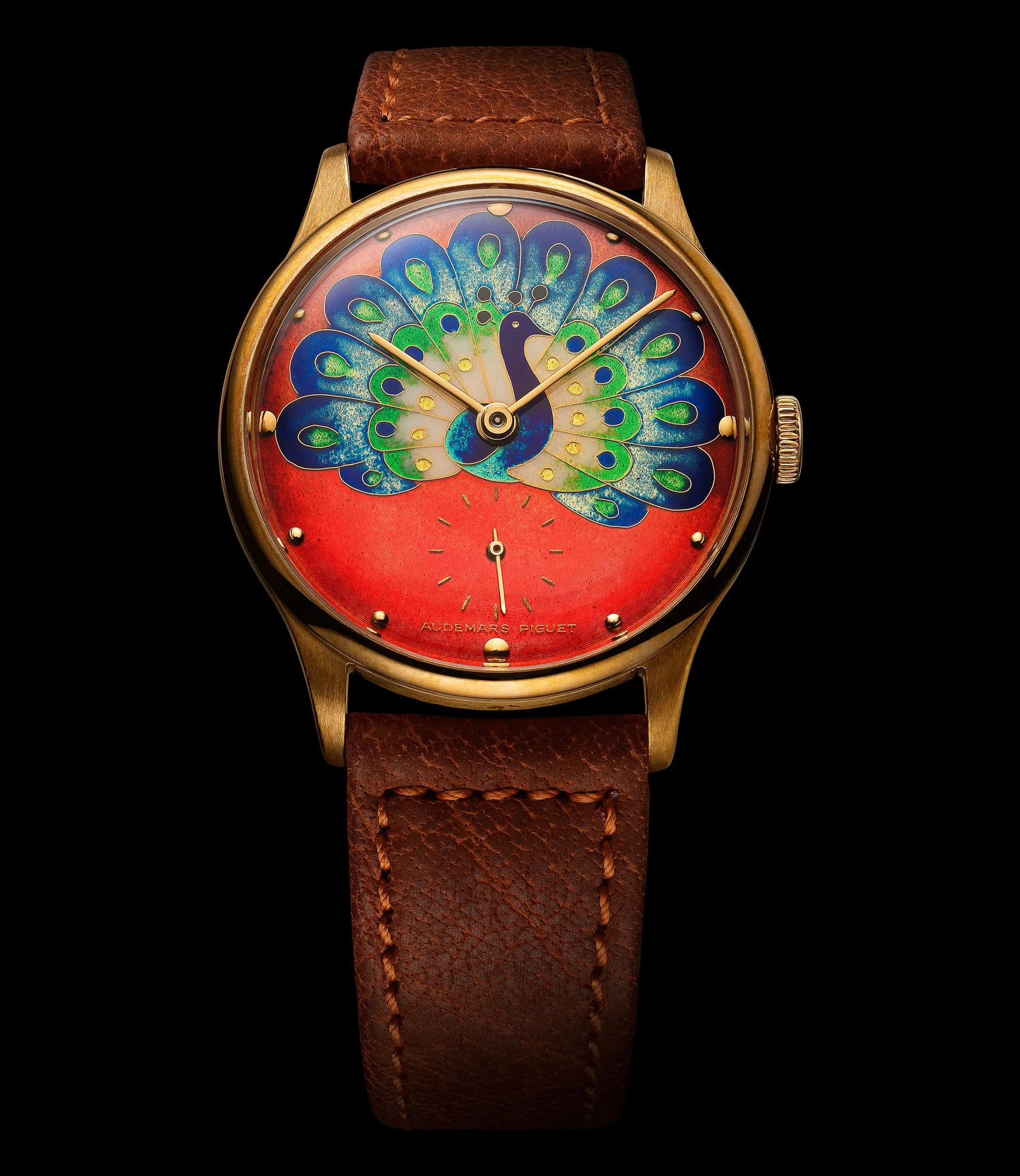
1954. Enamelled wristwatch featuring a peacock motif. Calibre VLSS. Movement 62563. Case 4253 made in 1953, sold in 1954. Yellow gold. Audemars Piguet Heritage, Inv. 1309.
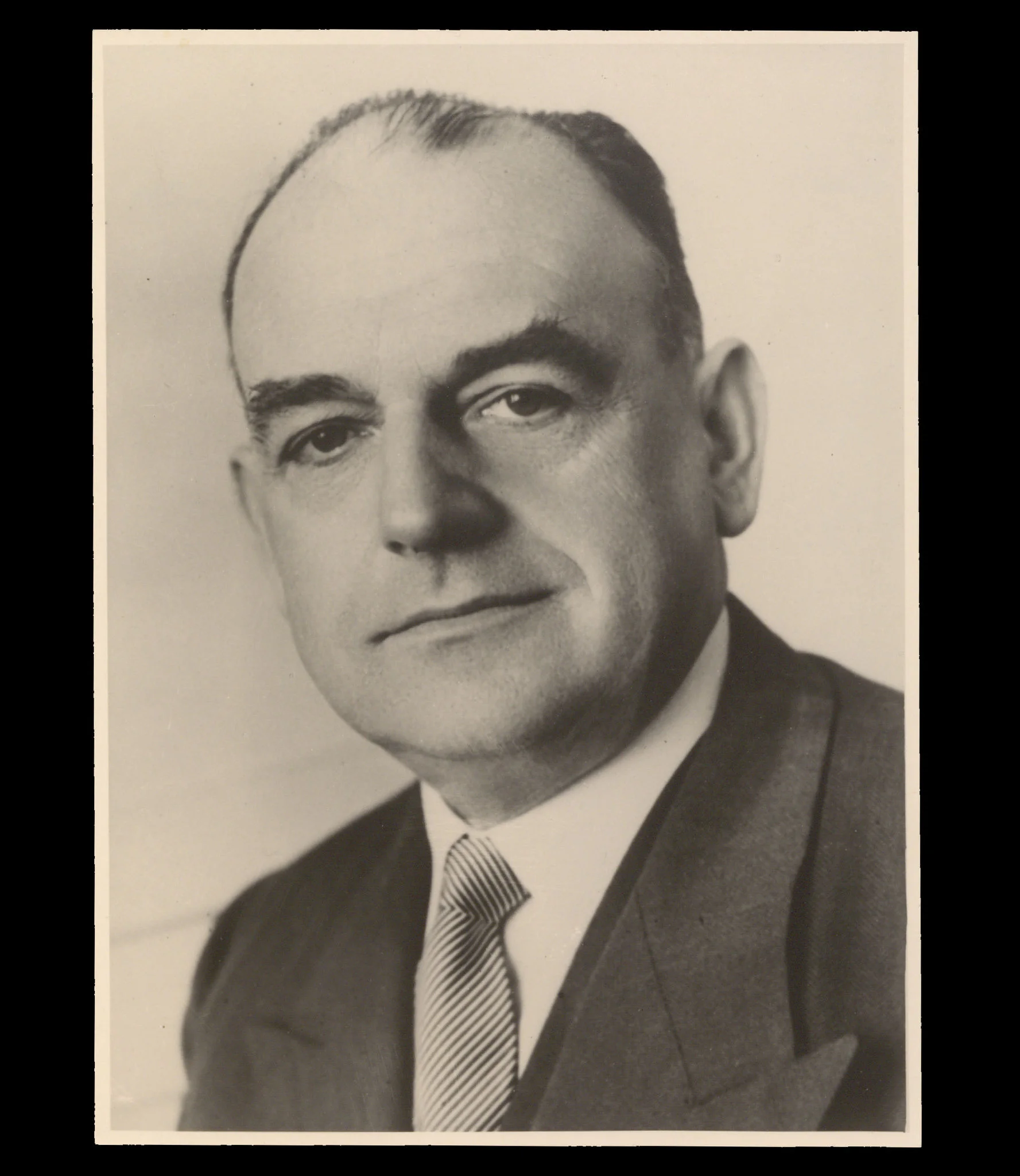
Jules César Savary chaired the Audemars Piguet Board of Directors from 1948 to 1966. He was instrumental in the brand's growth during the post-war boom years. JSH Archives ASK A TWL.
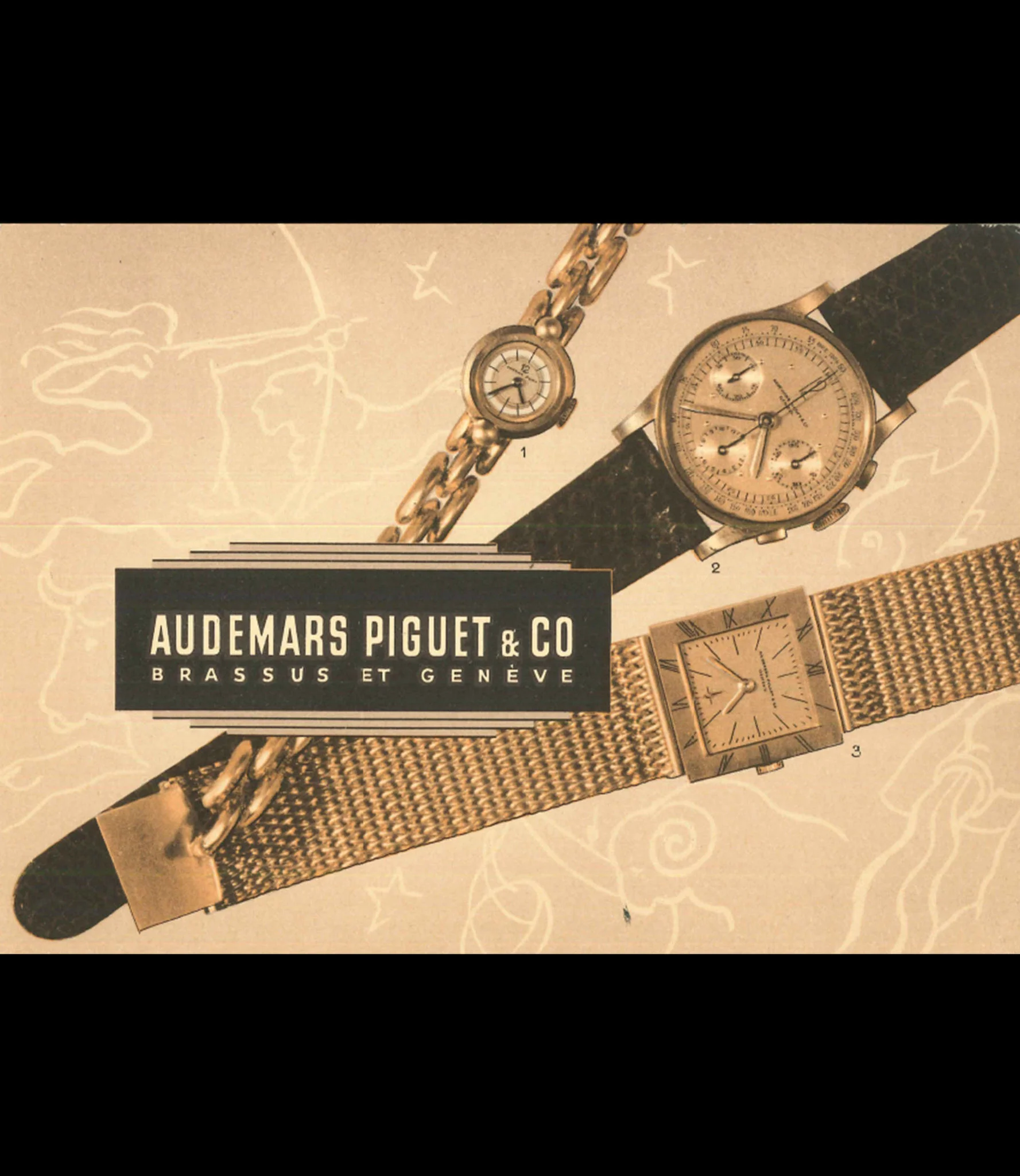
Circa 1950. Audemars Piguet advertisement. It is one of the last to include the "& Co". Audemars Piguet Archives.
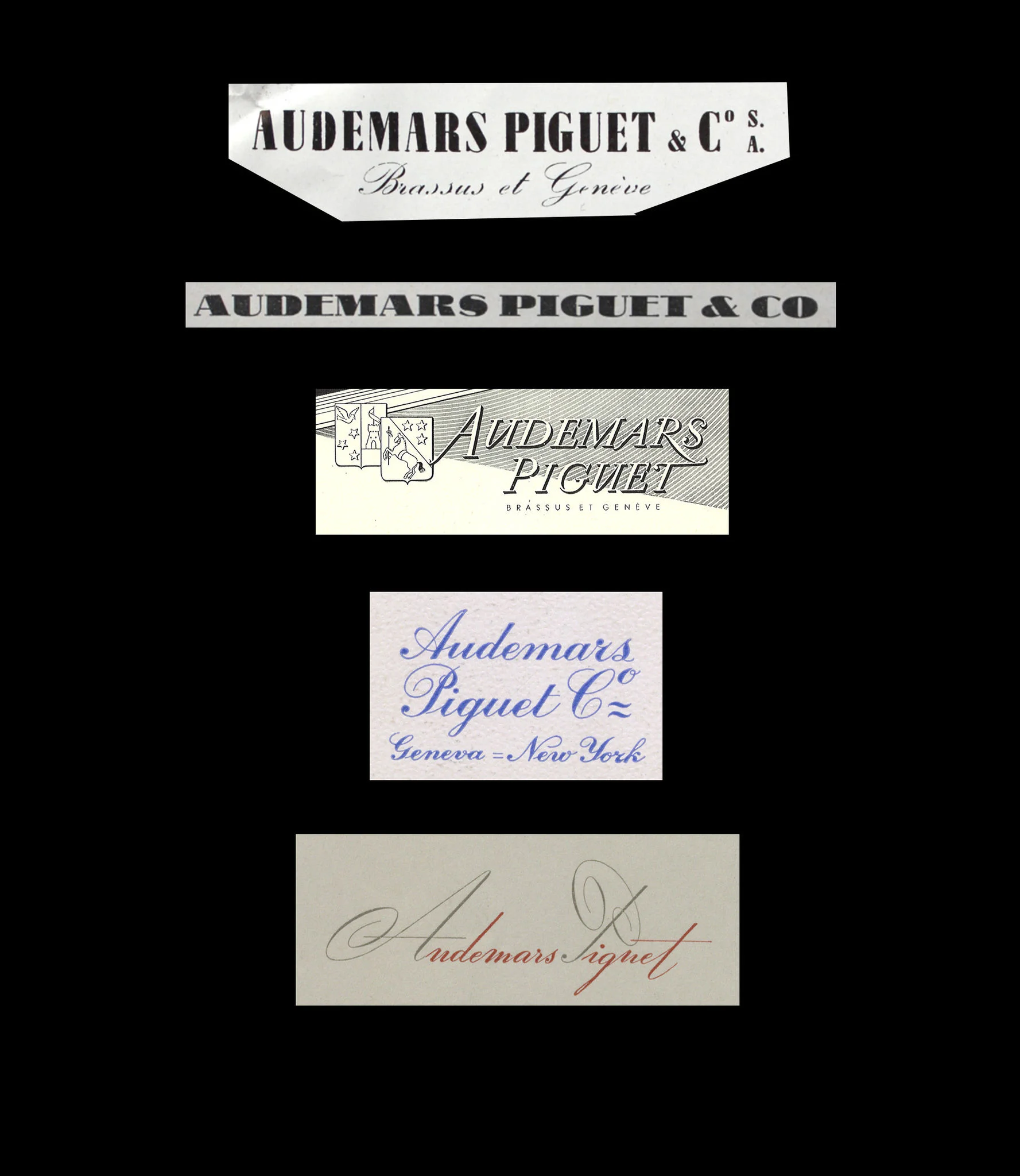
1940–1960. Extracts from Audemars Piguet advertisements. The brand's logo is the subject of much research and development. Audemars Piguet Archives.
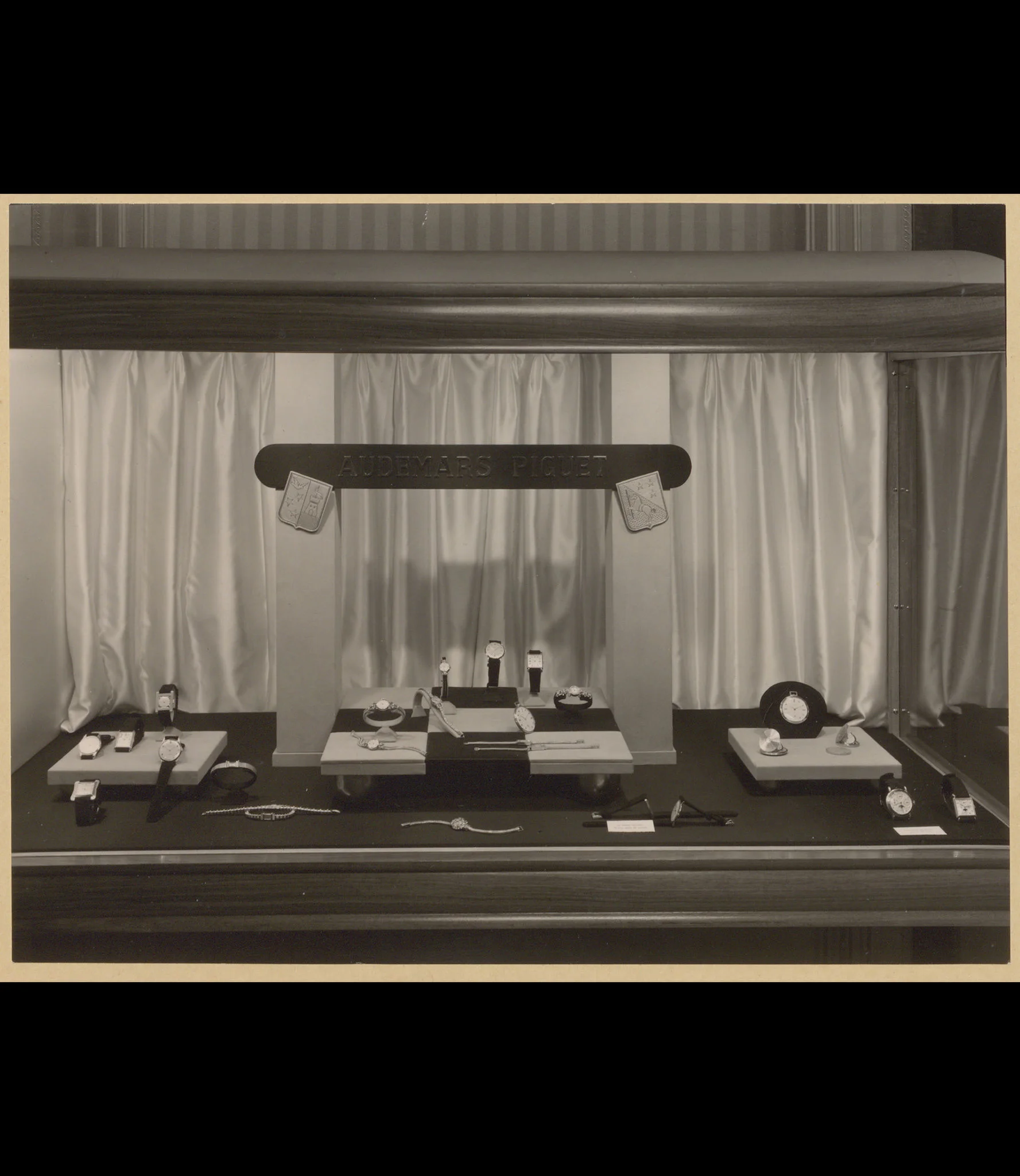
1951. Audemars Piguet showcase at the Basel Watch Fair. Audemars Piguet Archives.
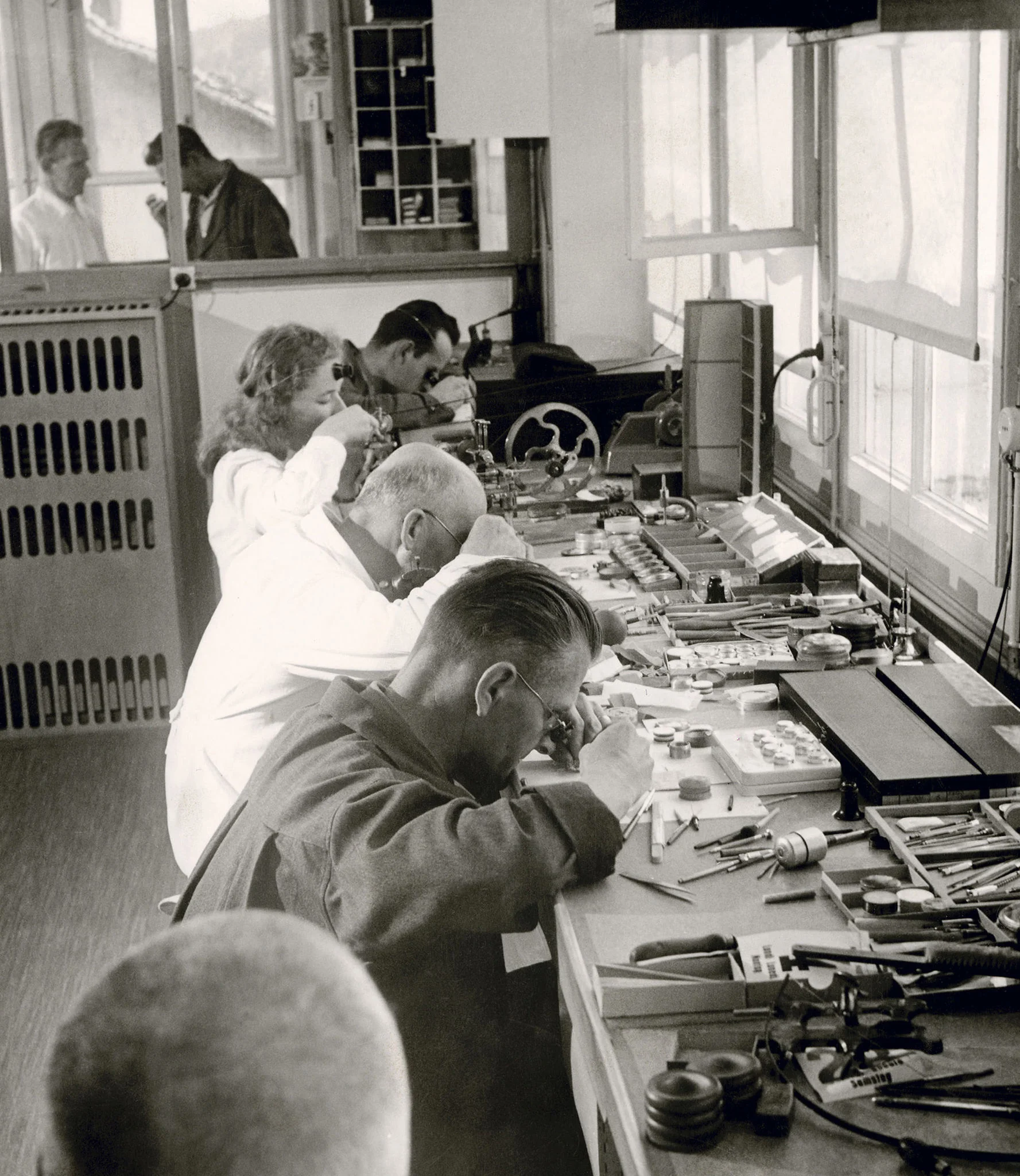
1953. Audemars Piguet workshop. Audemars Piguet Archives
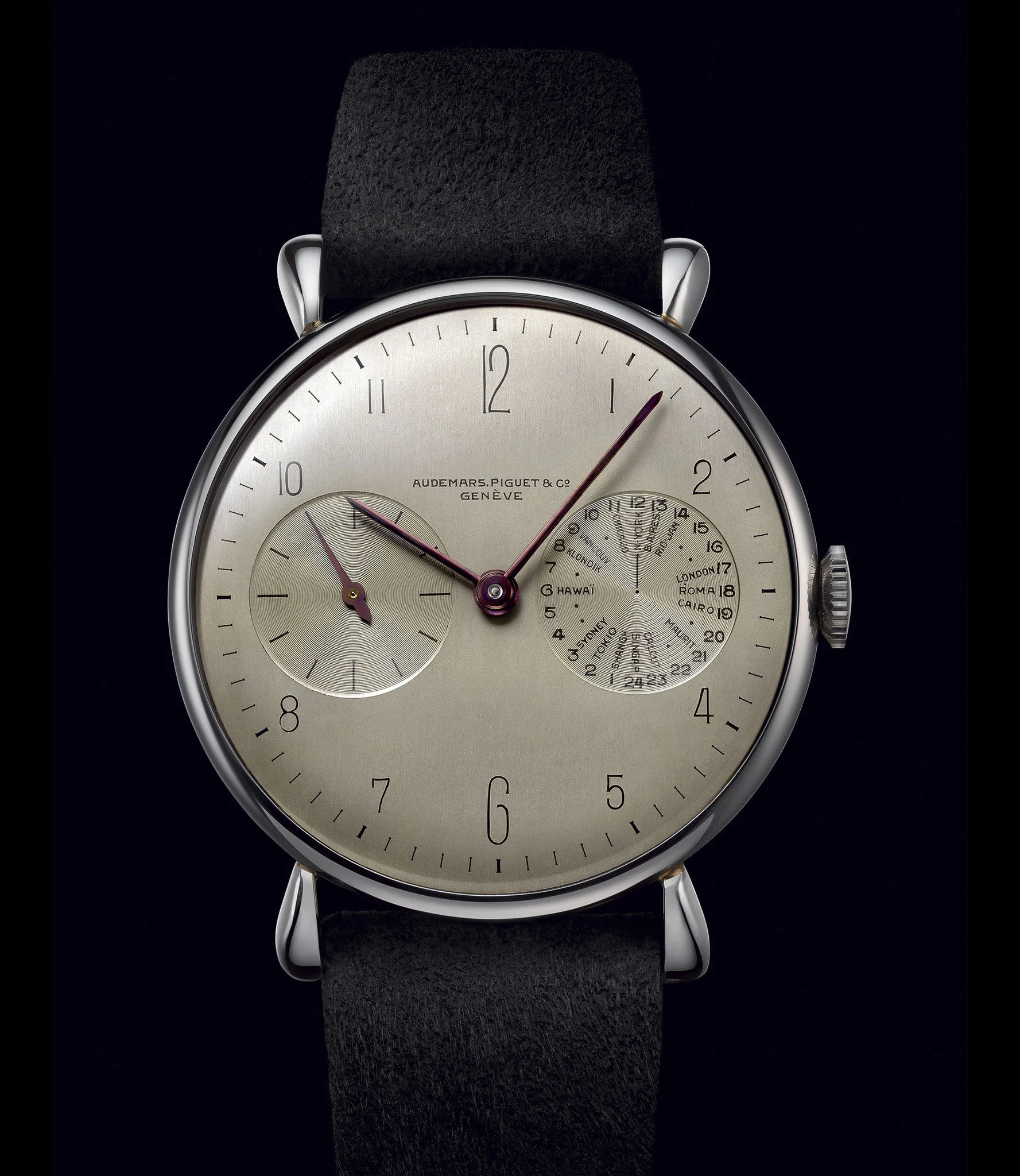
1944. Wristwatch with 24 time zone disc. Calibre 13VZAS, movement 45966B produced in 1942. Sold in 1944. White gold. Pre-Model 864. Audemars Piguet Heritage, Inv. 1773.
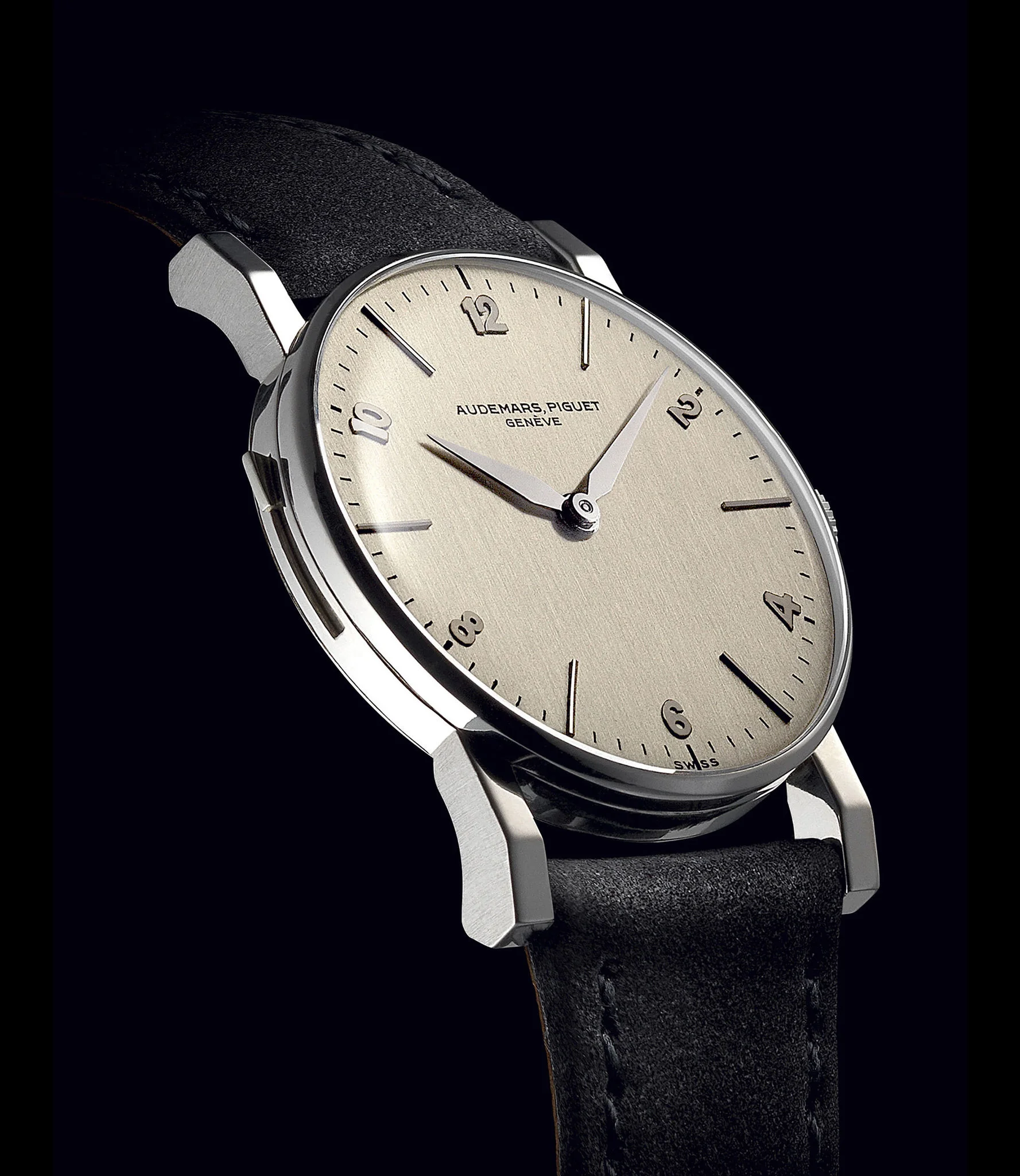
1945. Minute-repeater wristwatch. Brushed silver dial, polished steel hands. Calibre 12PMV, movement 38518 produced in 1927. Sold in 1945. Platinum. Audemars Piguet Heritage, Inv. 1707.
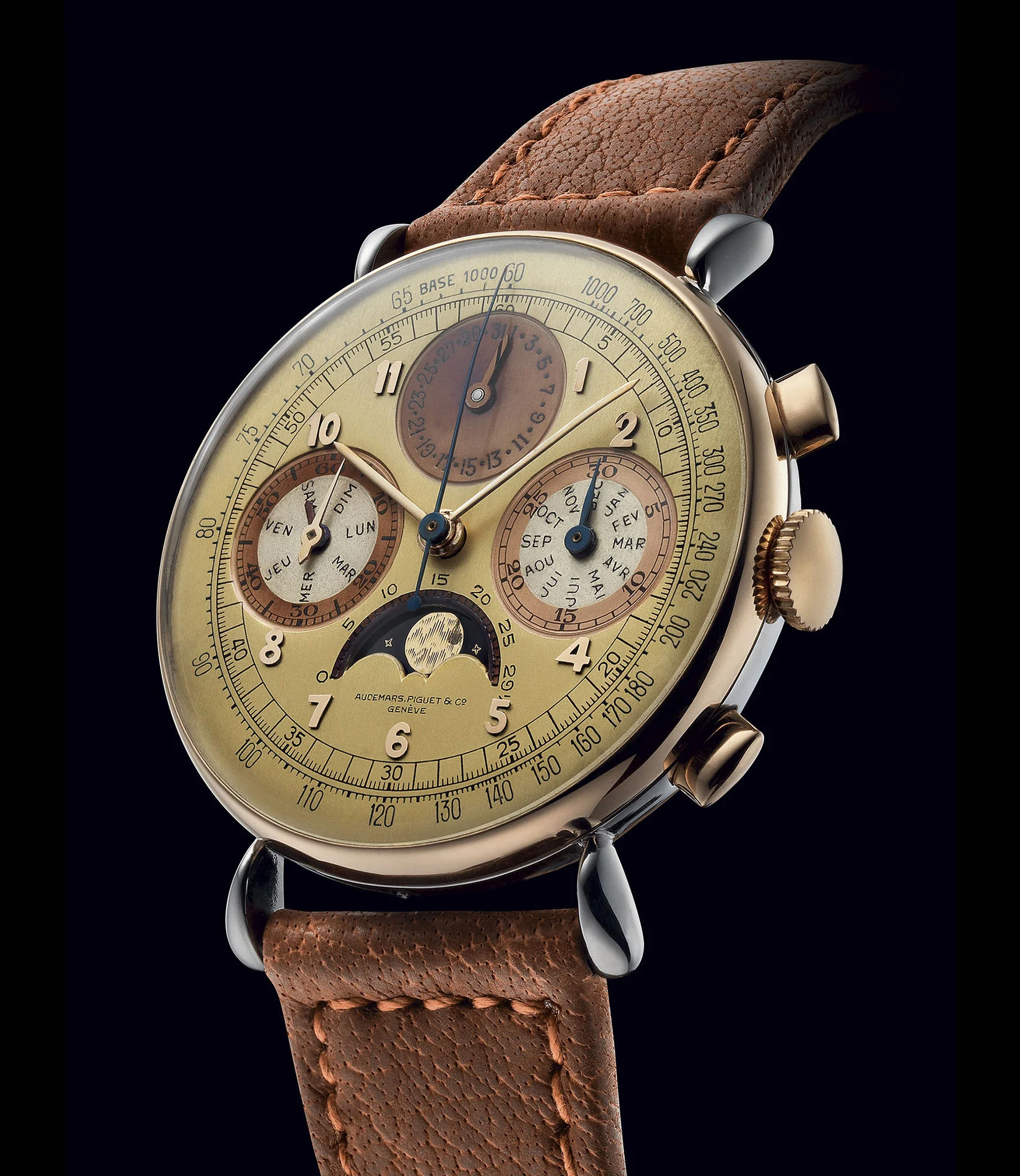
1947. Wristwatch with complete calendar and chronograph. Single three-tone dial. Calibre 13VZAQ. movement and case 45983 produced in 1942. Sold in 1947 to Vassallo (Milan). Steel and 14-carat pink gold. Model 5503. Pygmalion Collection.
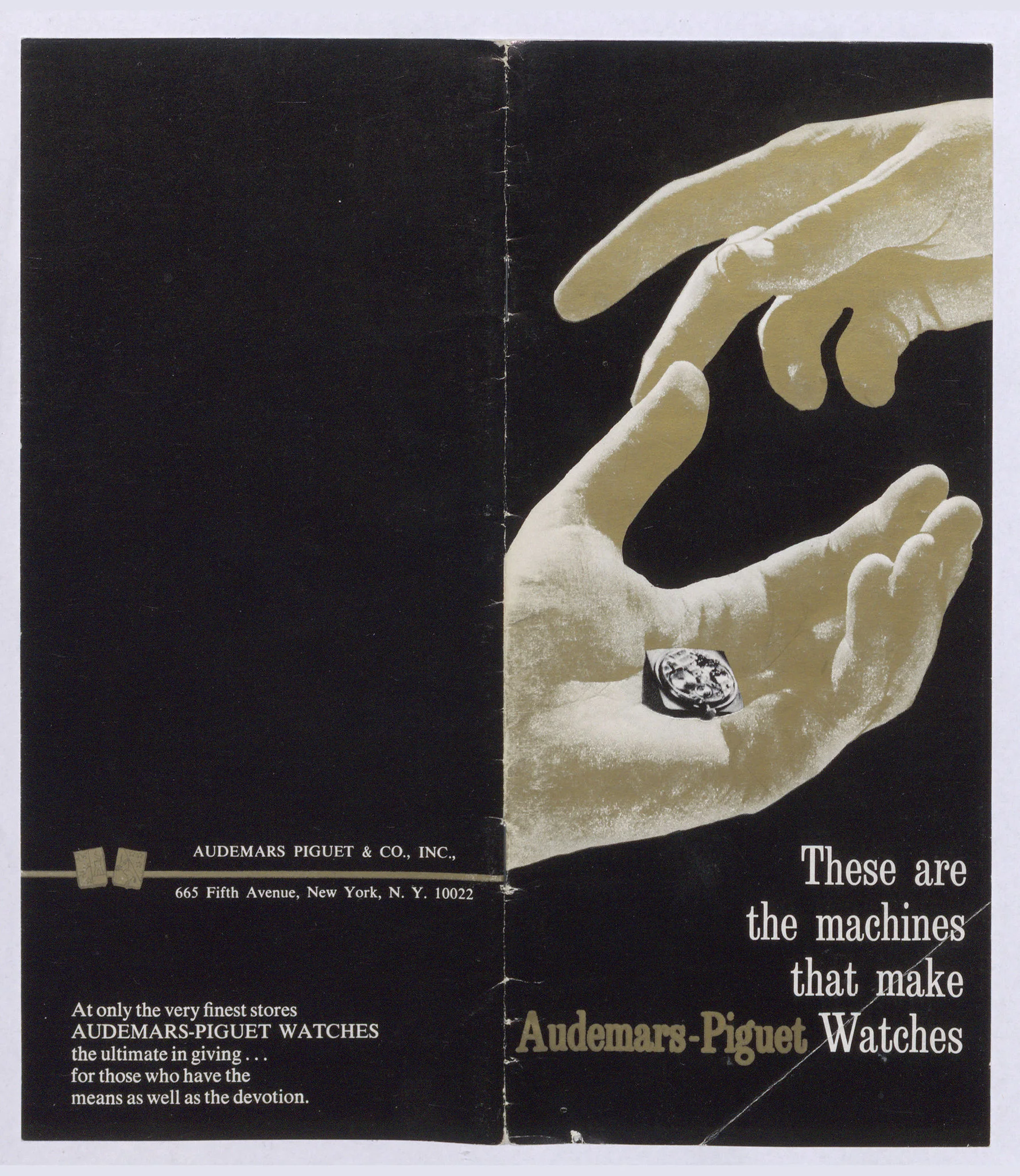
1966. Advertising leaflet. Despite the growth in production, work in the Audemars Piguet workshops remained essentially hand-crafted. Audemars Piguet Archives.

1972. Audemars Piguet advertisement. The woman with the cigar is wearing a watch called Arabella, which won a prize at the Baden Baden competition in 1971. Audemars Piguet Archives.
Did you say "model"?
As collectors are well aware, movements of Audemars Piguet watches no longer bore the same number as the cases from 1951 onwards. This detail was indicative of a profound change. For the first time in its history, Audemars Piguet took the liberty of producing several identical iterations of the same watch! From then on, watches were given a "model" number, or in other words, a "reference".
This mini-revolution did not mean the brand was embarking on large-scale industrial production. The transition was very gradual. Until the 1990s, the model reference applied to the shape of the case, the calibre and the material, but did not describe the dial or the hands. A look at several watches in the Audemars Piguet Heritage Collection carrying the same model number shows that small variations still exist, a fact explained by the still chiefly artisanal nature of the production processes.
Moreover, series were still produced in very limited numbers. In 1971, two decades after the introduction of series production, the 6,217 watches produced by Audemars Piguet represented 237 models, each often interpreted in several materials and equipped with several dials. Only 23 models were made in runs of more than 100 and 145 were produced in limited editions of less than ten units, while 55 were one-offs. The first watch to be made in quantities of more than 1,000 was the Royal Oak 5402 in 1972. To find out more about the birth of the model and the numbering of Audemars Piguet watches, click here.
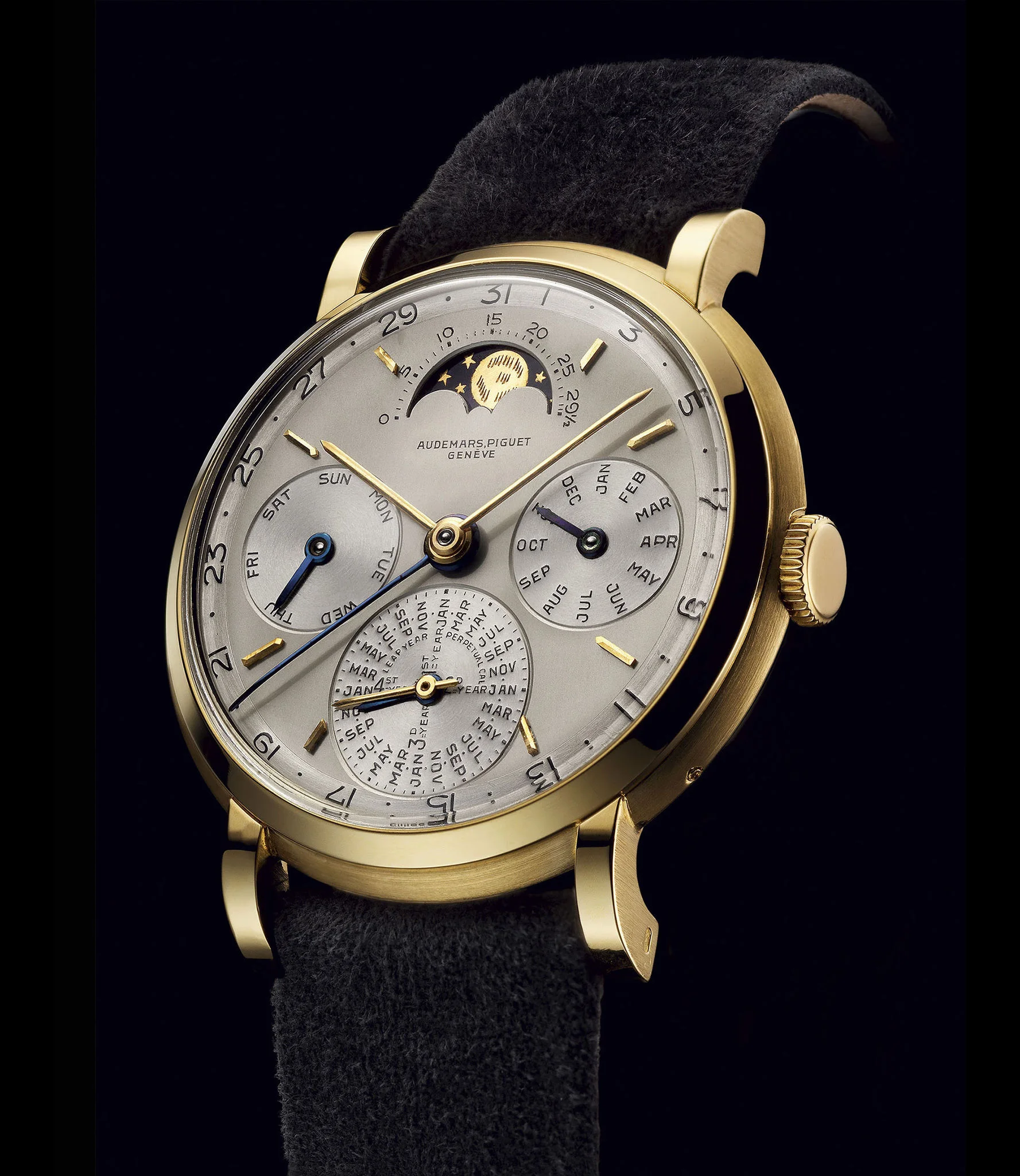
1955. Perpetual calendar wristwatch Model 5516. The first wristwatch with leap-year cycle indication. Calibre 13VZSSQP, movement 66136. Case 11151 in 18-carat yellow gold. Gold dial. "Ébauche" made in 1955, sold in 1959 to Vacheron Constantin. Audemars Piguet Heritage, Inv. 1732.
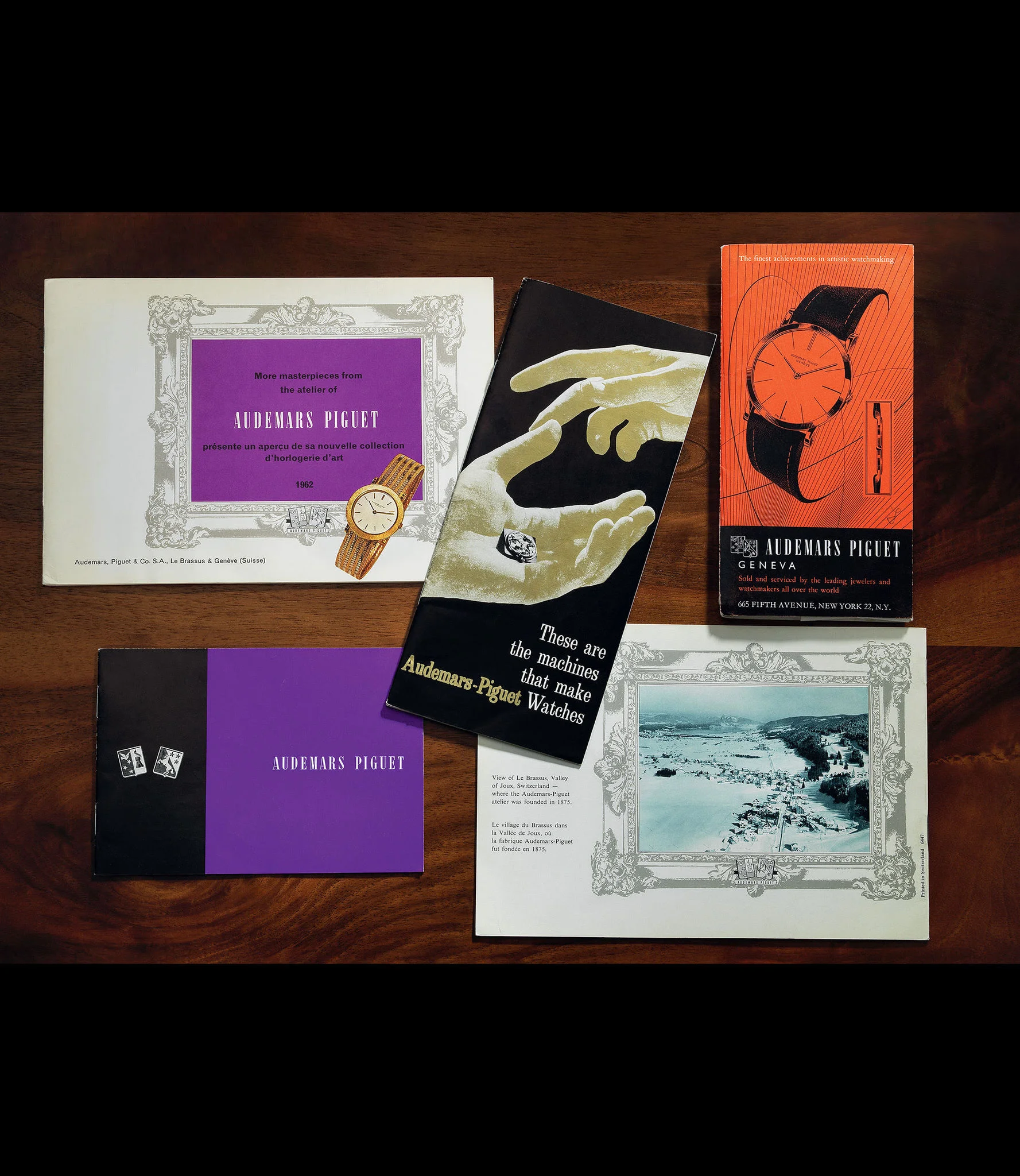
The creation of the model concept was accompanied by that of the first Audemars Piguet catalogues, intended not only for retailers but also for customers. Audemars Piguet Archives.
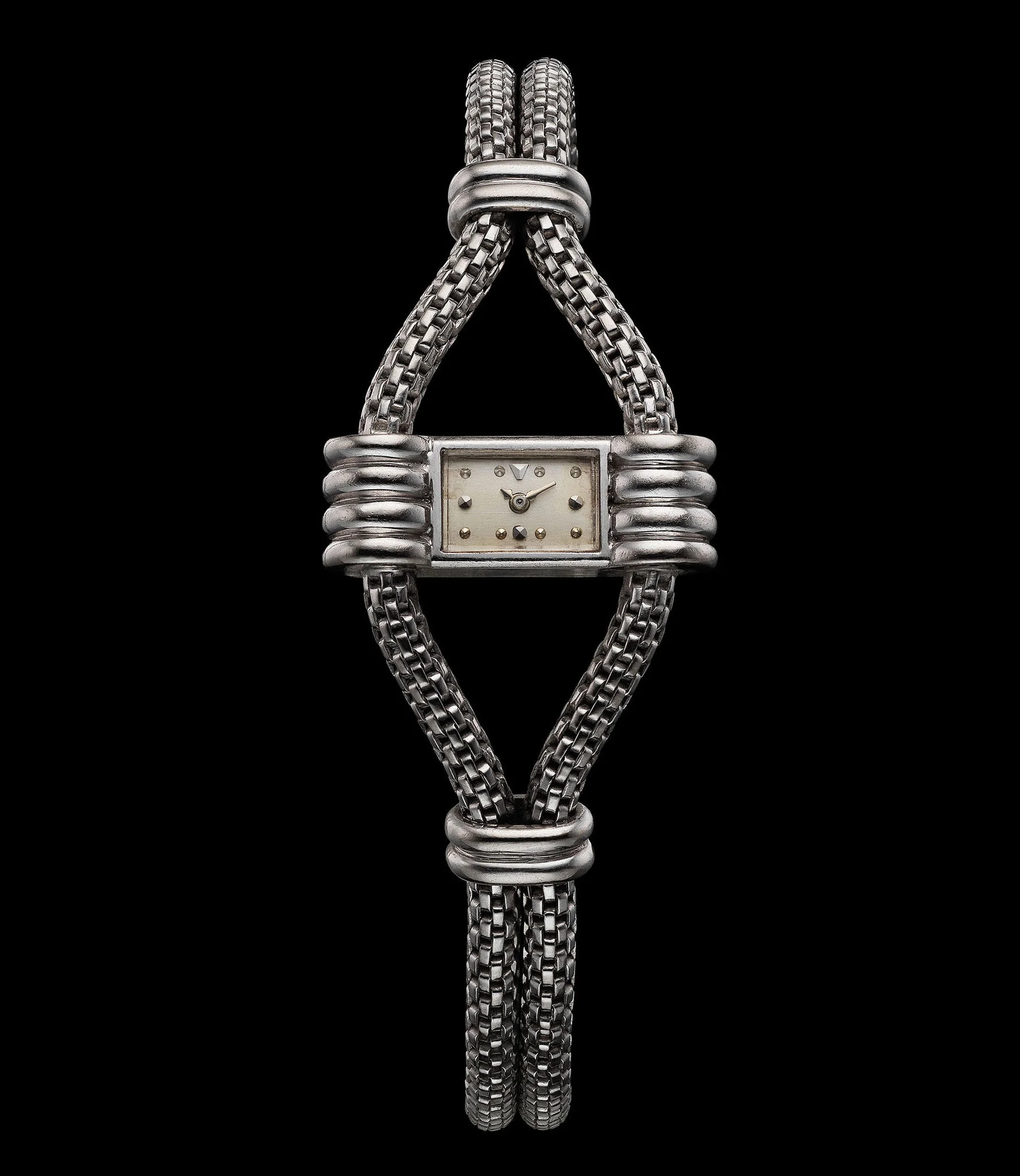
1956. Horizontal baguette-type watch. Double-braided metal cordlets. Miniature Calibre 2005 with winding mechanism concealed beneath the case. Movement 63179 produced in 1954. Sold in 1956. White gold. Model 5975. Audemars Piguet Heritage, Inv. 1862.
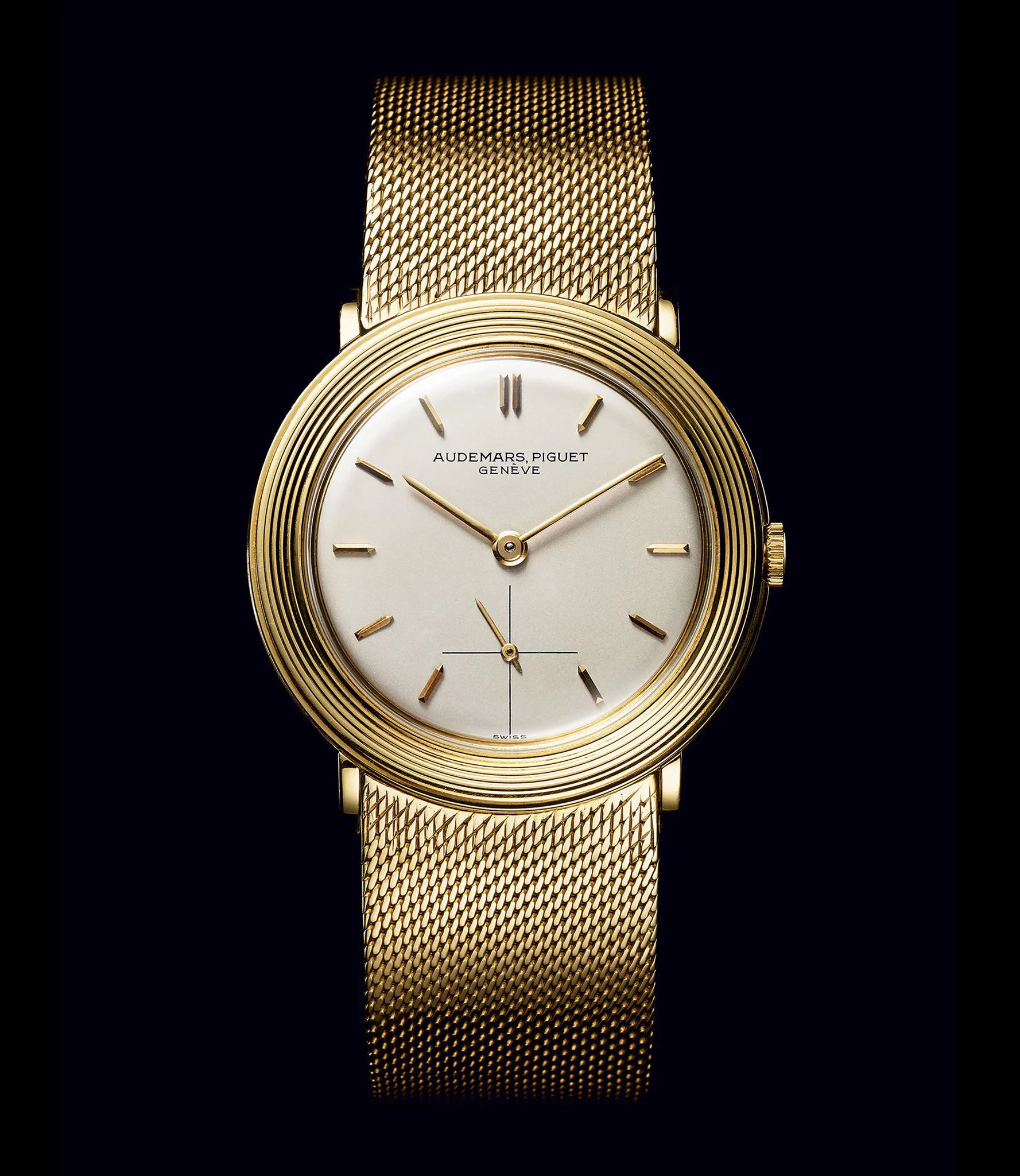
1960. Round small seconds wristwatch, hobnail-patterned bezel. Calibre 2001, movement 72642 produced in 1959. Sold in 1960. Yellow gold. Model 5138. Audemars Piguet Heritage, Inv. 832.
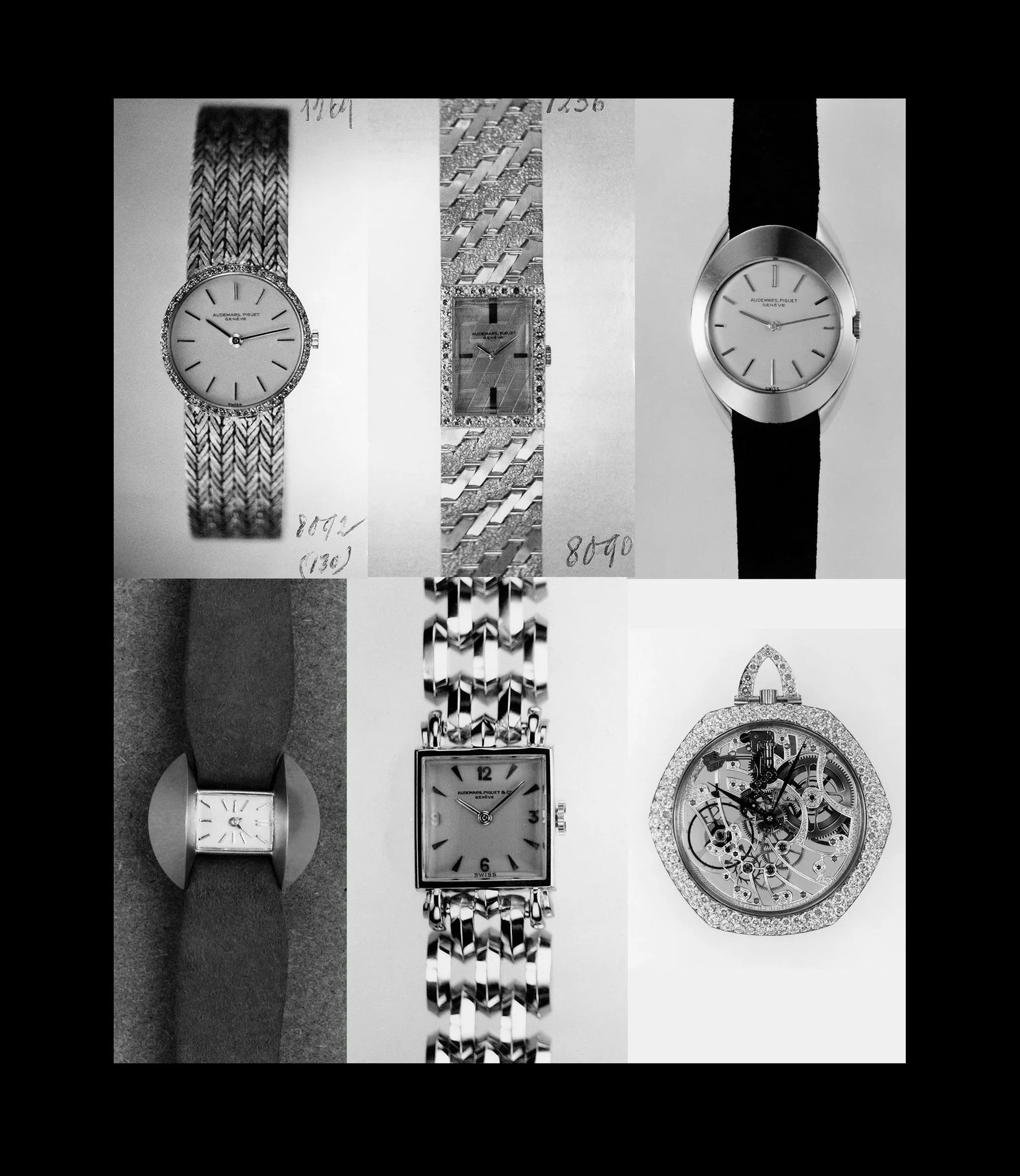
The Audemars Piguet archives contain thousands of small passport-size images, taken with a camera adapted by the watchmakers, which keep track of the brand's models in their main variants. Audemars Piguet Archives.
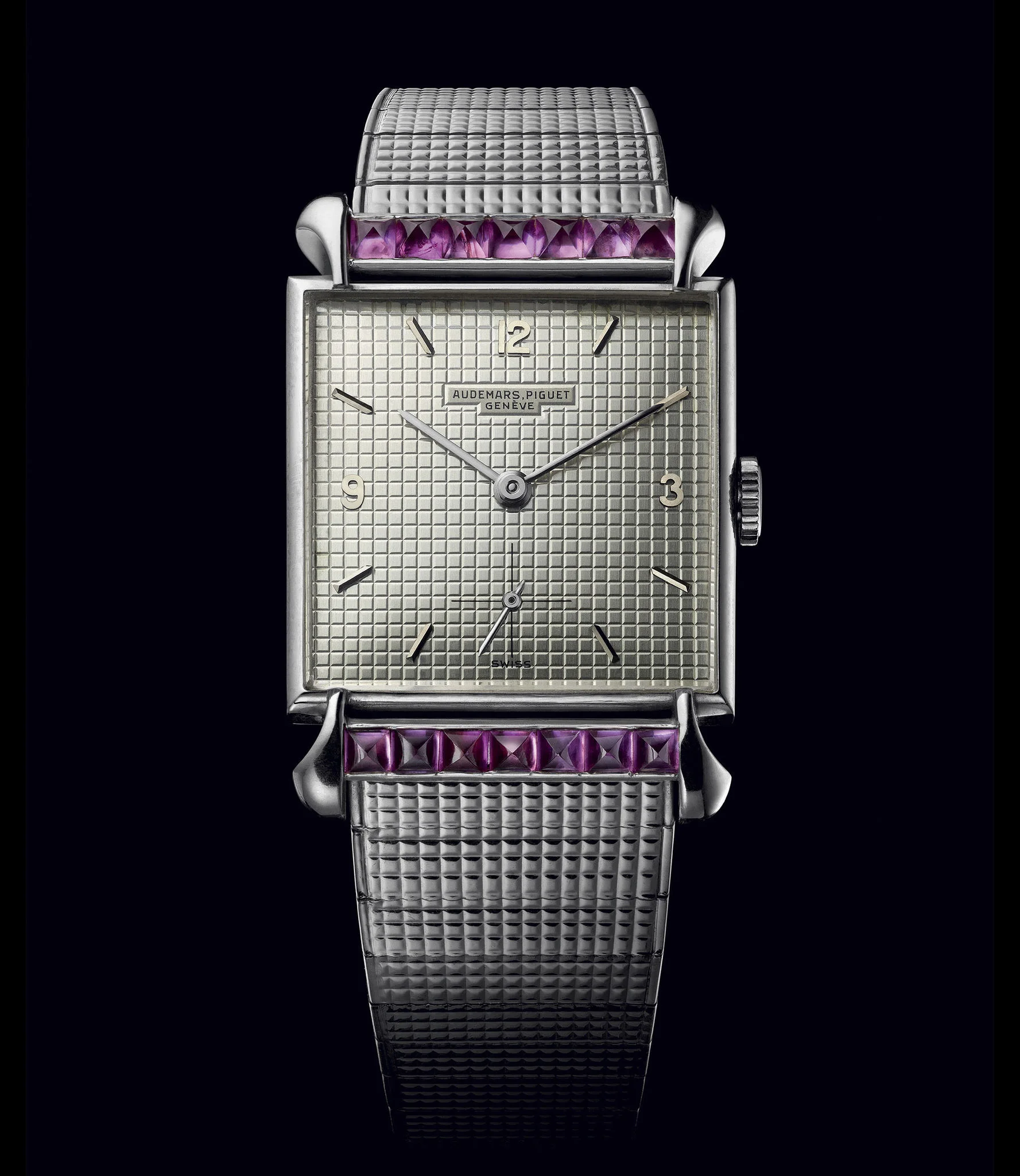
1960. Square wristwatch set with diamonds and pink rubies. Clou de Paris bracelet. Calibre 2001, movement 58221 produced in 1959. Sold in 1960. White gold. Model 5130. Audemars Piguet Heritage, Inv. 826.
Georges Golay
Georges Golay was the first Audemars Piguet executive who did not belong to one of the founding families. His career and his role nonetheless proved decisive for the brand.
The story begins with a chance encounter. In 1933, at the age of 23, Jacques-Louis Audemars (1910–2002), grandson of Jules Louis, joined the AP workshops as a watchmaker. Assistant manager since 1939, he knew that his father would one day hand over the reins of the company to him. While he was well aware of the fragility of the business, having lived through the lean years, he also saw its immense potential. One day in the spring of 1945, he got into a casual discussion with 23-year-old Georges Golay (1921–1987) with whom he had crossed paths at the Le Brassus gymnastics club. When Golay told him about his commercial training and his convictions, Jacques-Louis offered him a job.
Georges Golay began his career as an accountant, revealing exceptional commercial talent as well as strategic vision. A native of Le Brassus, this inveterate traveller with a charismatic personality played an active part in the brand's revival. At the end of the 1950s, he joined the Board of Directors as secretary and representative of the Lecoultre family. In 1962, he took over the role of Sales Director. A member of the Board since 1965, he served as Managing Director from 1966 until his death in 1987. It was during this pivotal period that he enabled the birth of two legends: the Royal Oak and the ultra-thin selfwinding perpetual calendar watch.
This man of contacts and conviction is said to have dined once a month with André Heiniger, President of Rolex, and Henri Stern, President of Patek Philippe, at the Venus restaurant in Geneva. The three men were known as the "Haute Horlogerie triumvirate". He played cards with the region's watchmaking bosses, employees, families, cousins and friends at the Hôtel de France in Le Brassus; and as a fervent promoter of his region, he notably presided over international ski events in Le Brassus.
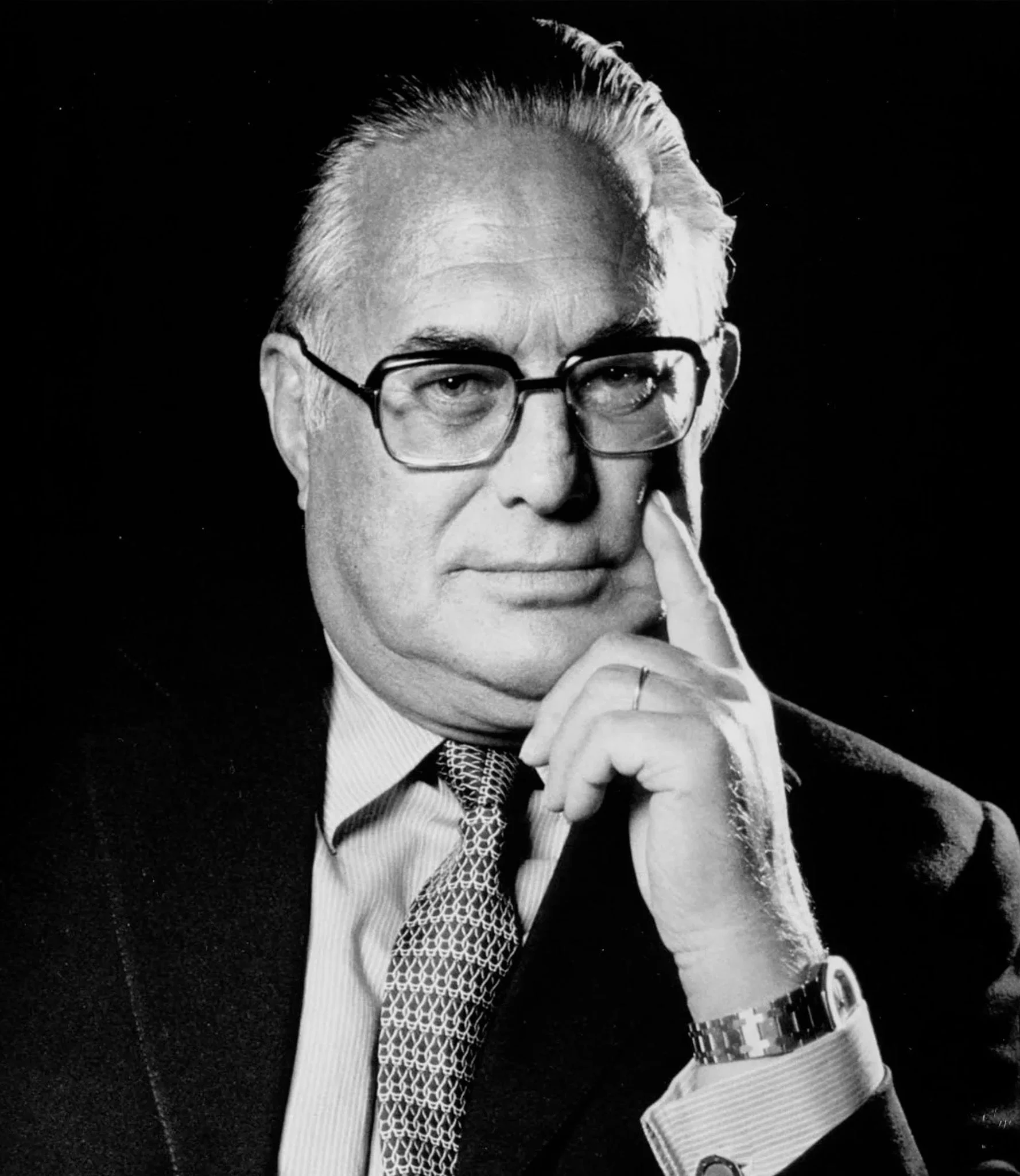
Georges Golay joined Audemars Piguet in 1945 and became Managing Director in 1966. He played a central role in the modernisation of the company. Audemars Piguet Archives.
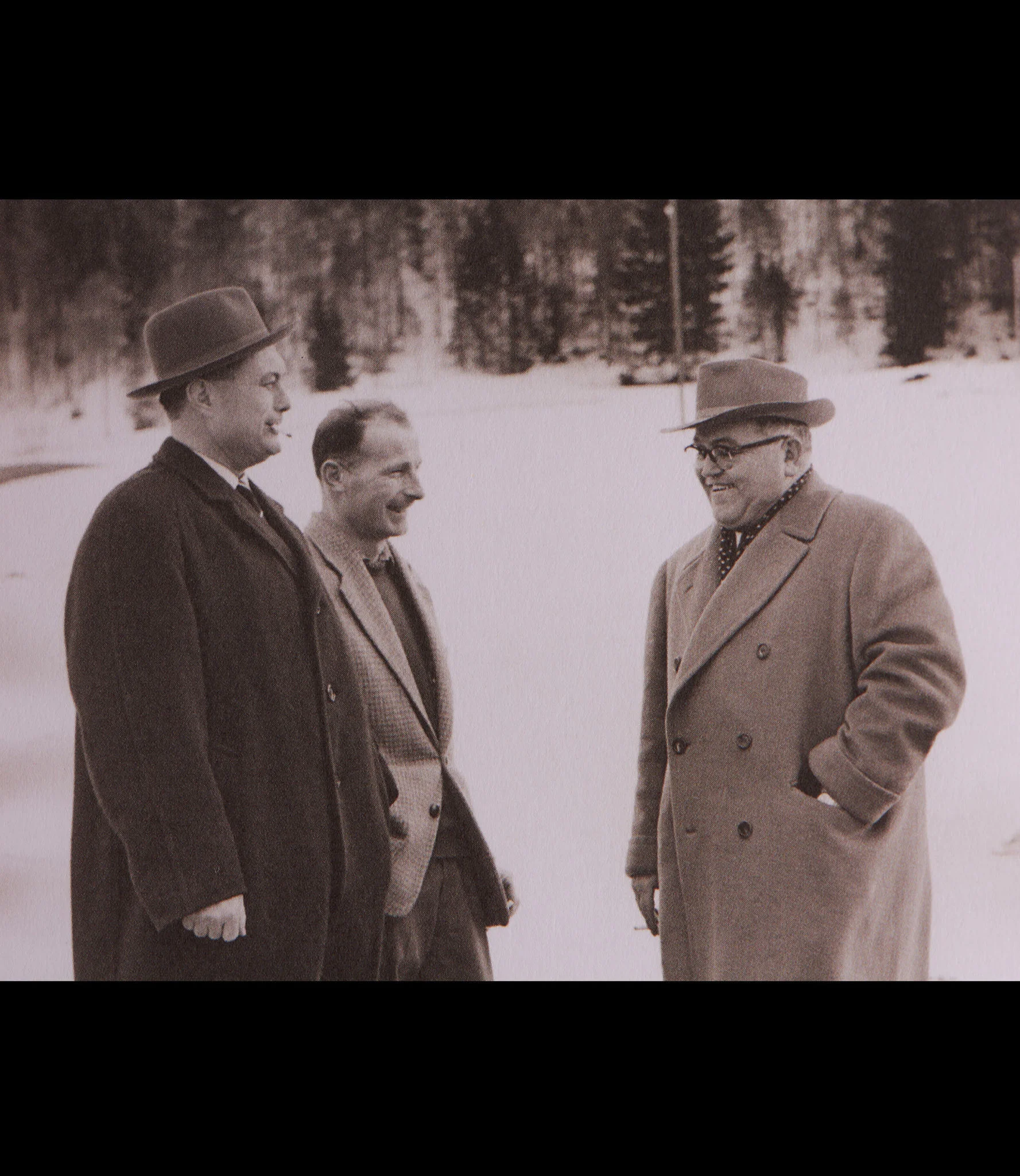
Georges Golay, initiator of the Le Brassus Nordic events, with Roger Lecoultre, director of LeCoultre & Cie and Georges Bianchi, president of the ski club. Image taken from the book Épreuves Internationales de ski Le Brassus, Vallée de Joux.
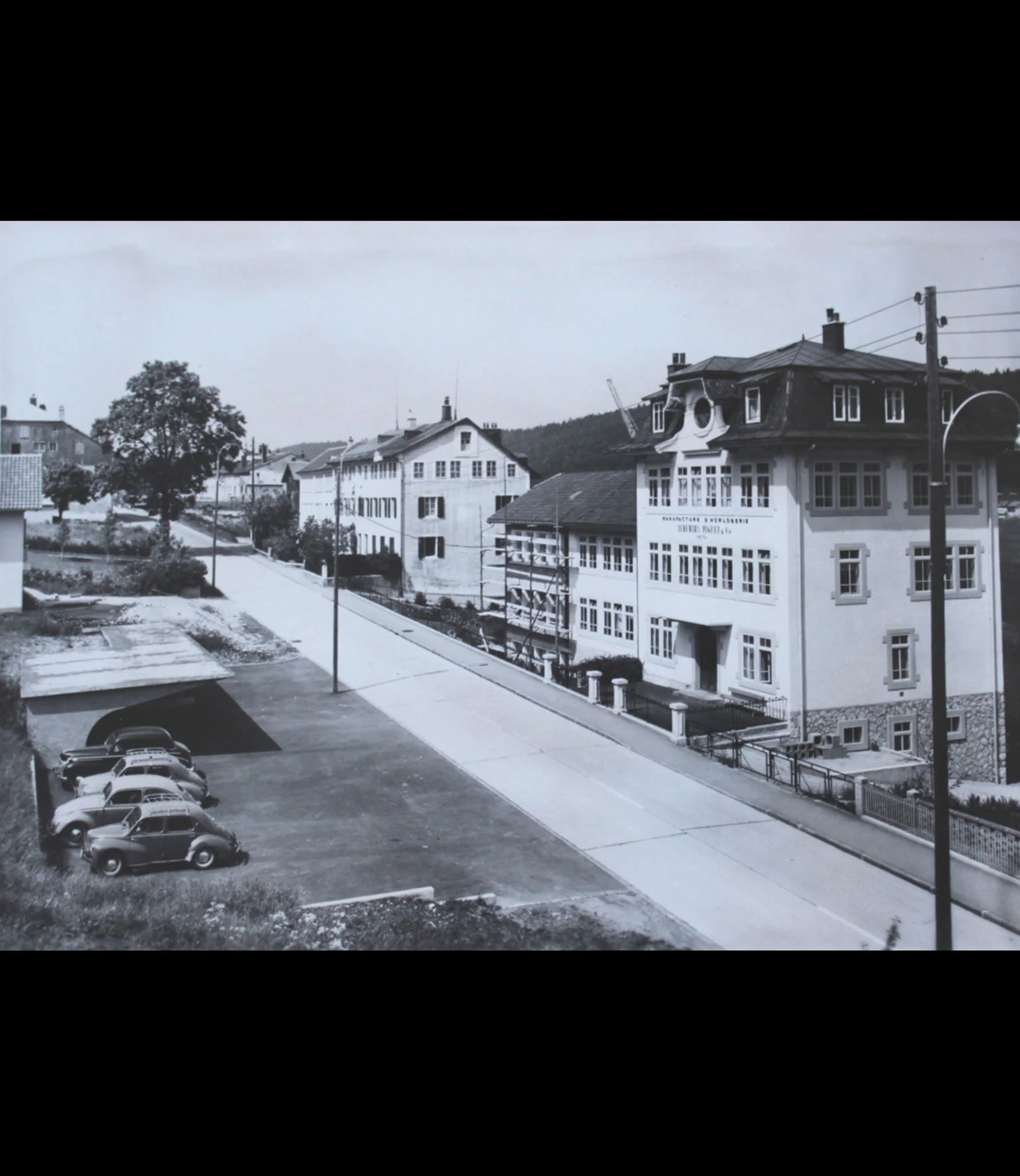
In 1958, the 1907 building was extended to keep pace with growth. By this time, some 60 people were finishing almost 2,500 watches a year. Audemars Piguet Archives.
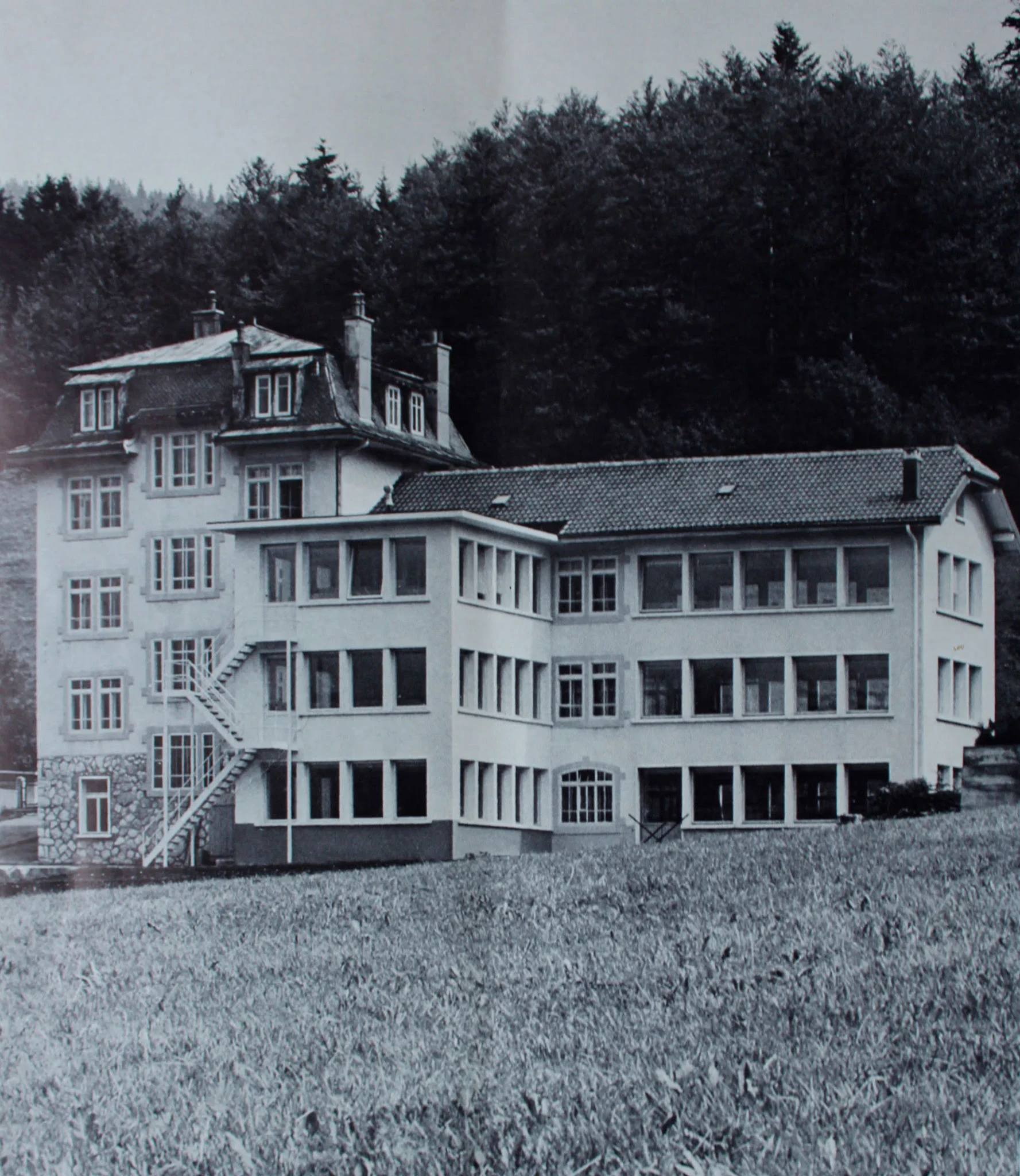
By 1969, some 80 people were producing some 4,800 watches, making it necessary to add a new wing to the buildings and move some workshops to other houses in the village. Audemars Piguet Archives.
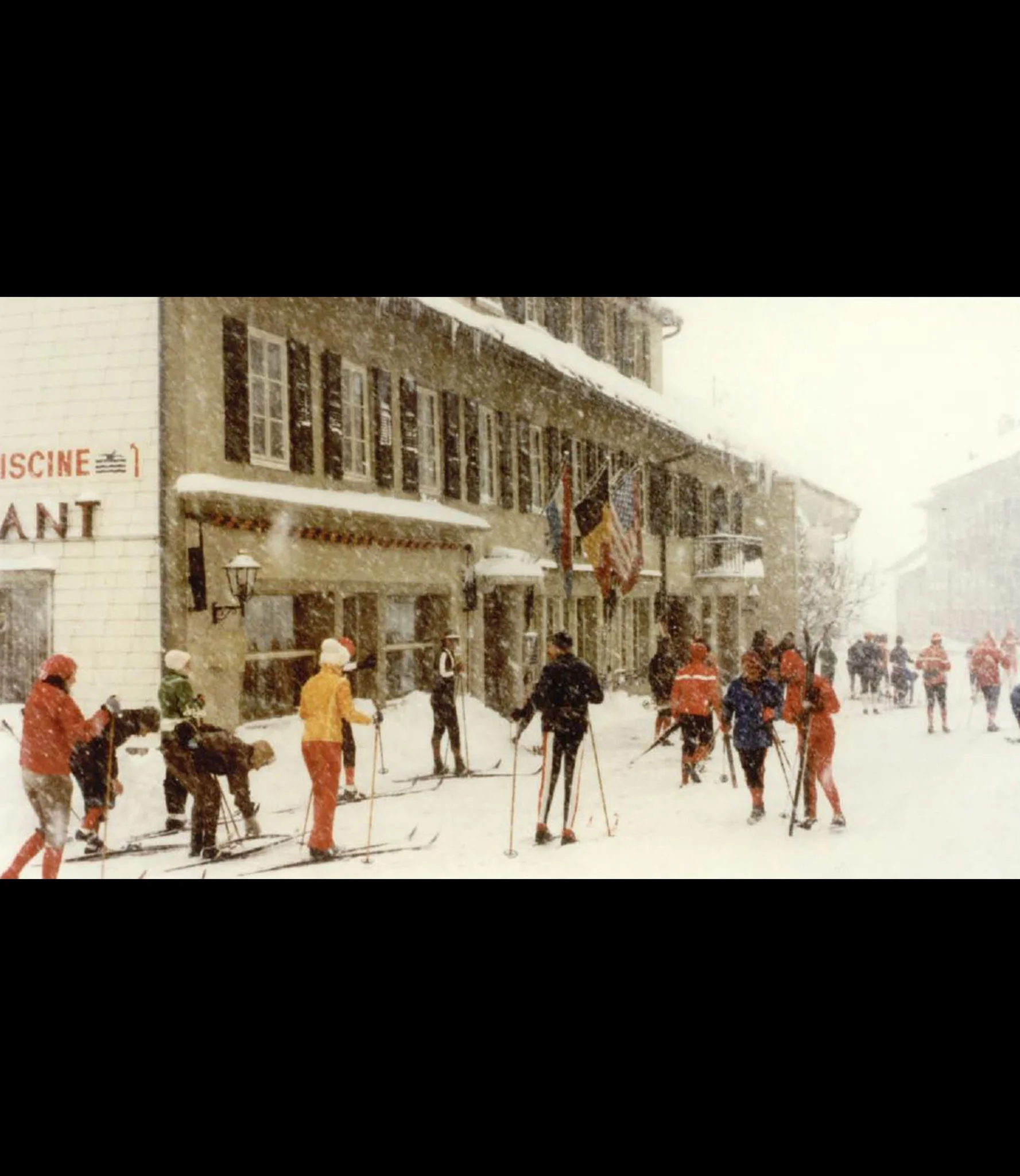
Circa 1965. Hôtel de France. Located next to Audemars Piguet, it was a favourite meeting place for the brand's employees and customers as well as sports enthusiasts. Audemars Piguet Archives
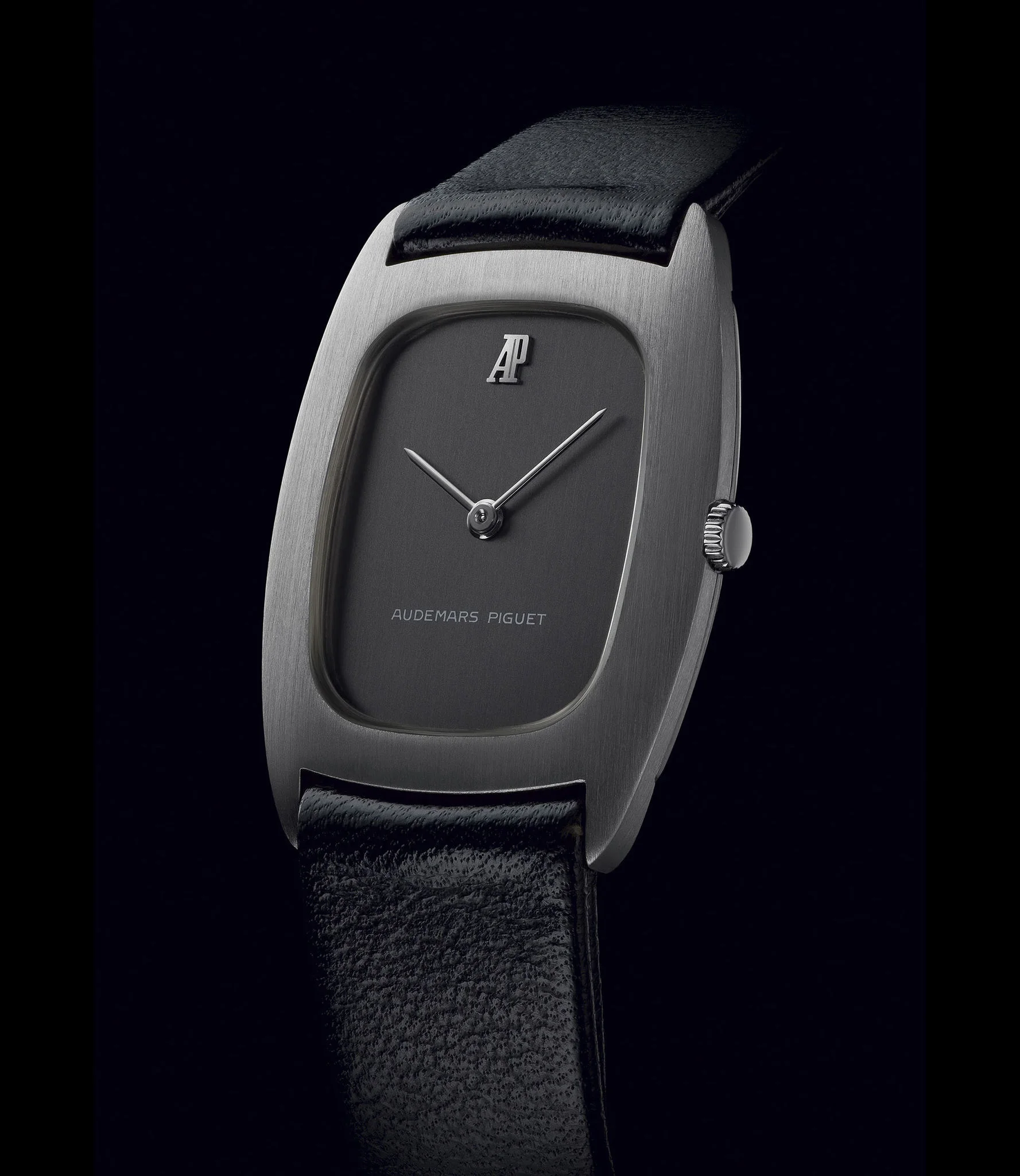
1974. 5233BC extra-thin wristwatch. Oral sources indicate that Gérald Genta and Georges Golay wore this same Model 5233 in the early 1970s. Calibre 2003, movement 155162 produced and sold in 1974 to Gaméo (Swiss market). White gold. Audemars Piguet Heritage, Inv. 930.
The golden age of extra-thin models
Extra-thin watches have been around since the invention of the Lépine calibre in the 18th century and Audemars Piguet has been interested in them since the 1900s. However, it was not until the 1950s that the brand became a benchmark in this field. In 1953, only 5% of Audemars Piguet watches were equipped with an extra-thin calibre. Over the next ten years, this figure rose to over 50% on average, peaking at 77% in 1958.
Created in 1953, LeCoultre Calibre 2003 accounts for the lion's share of these numbers. This legendary mechanism measures 9 lignes (20.3 mm) in diameter and 1.64 mm thick. It is so small that it fits inside a 20-dollar gold coin. Thinness and smallness are highly coveted attributes among designers, as the mechanism can almost vanish to leave scope for aesthetic creativity, resulting in an abundance of variations. Calibre 2003 is notably found in Model 5043, the heart of the collection, but also in the watch that the Italian market nicknamed Discovolante because it resembled a flying saucer. It can also be found in openworked models, etc.
Modernity also meant automatic winding. Created at LeCoultre & Cie in 1967 by Maurice Audemars, the same manufacturer as Calibre 2003, Calibre 2120 is the world's thinnest with a central rotor.
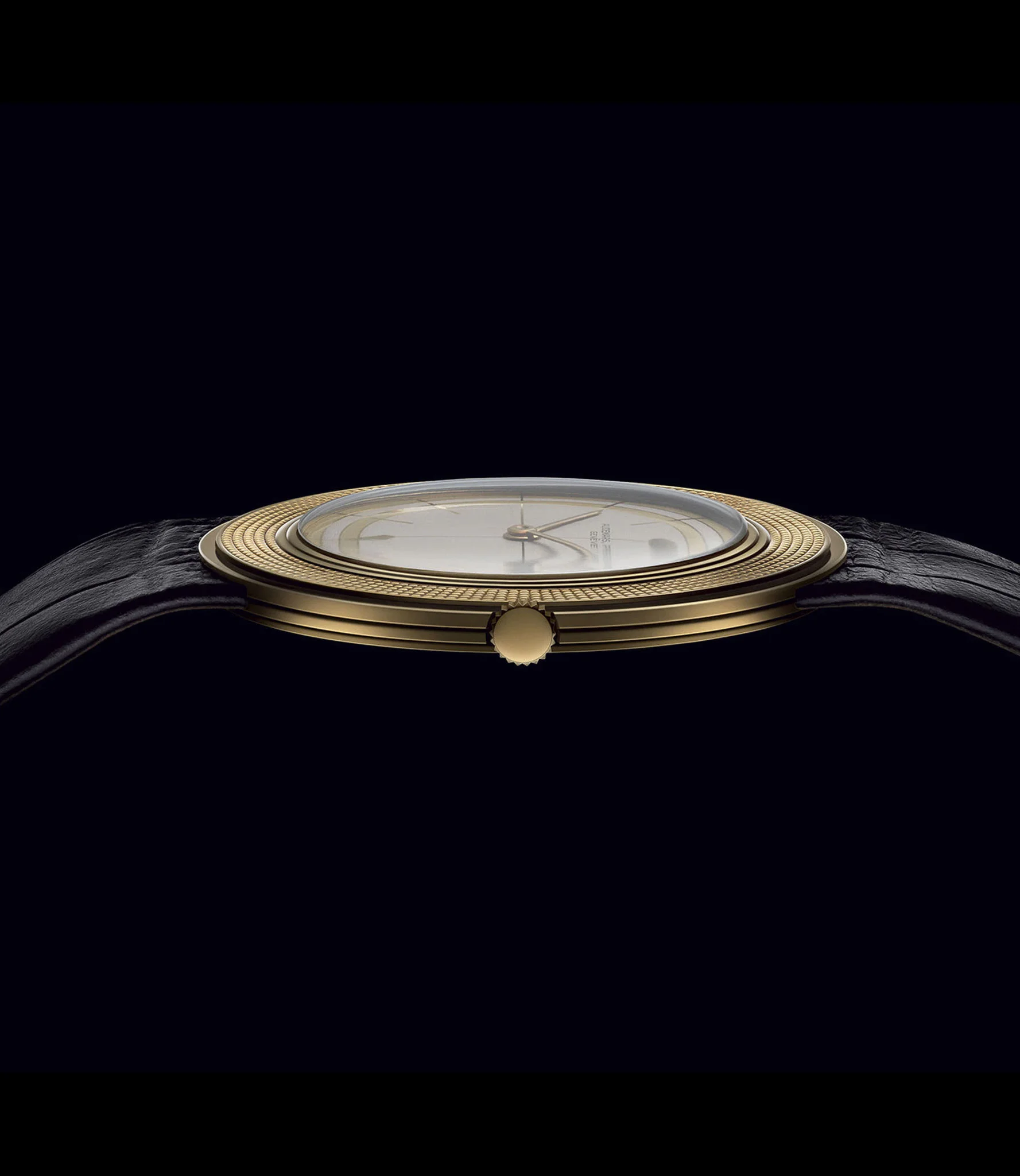
1959. Discovolante. Guilloché Clous de Paris hobnail-patterned bezel and two-tone dial. Calibre 2003, extra-thin (1.64 mm), Movement 71245 produced in 1958. Sold in 1959. Yellow gold. Model 5093. Audemars Piguet Heritage, Inv. 1801.
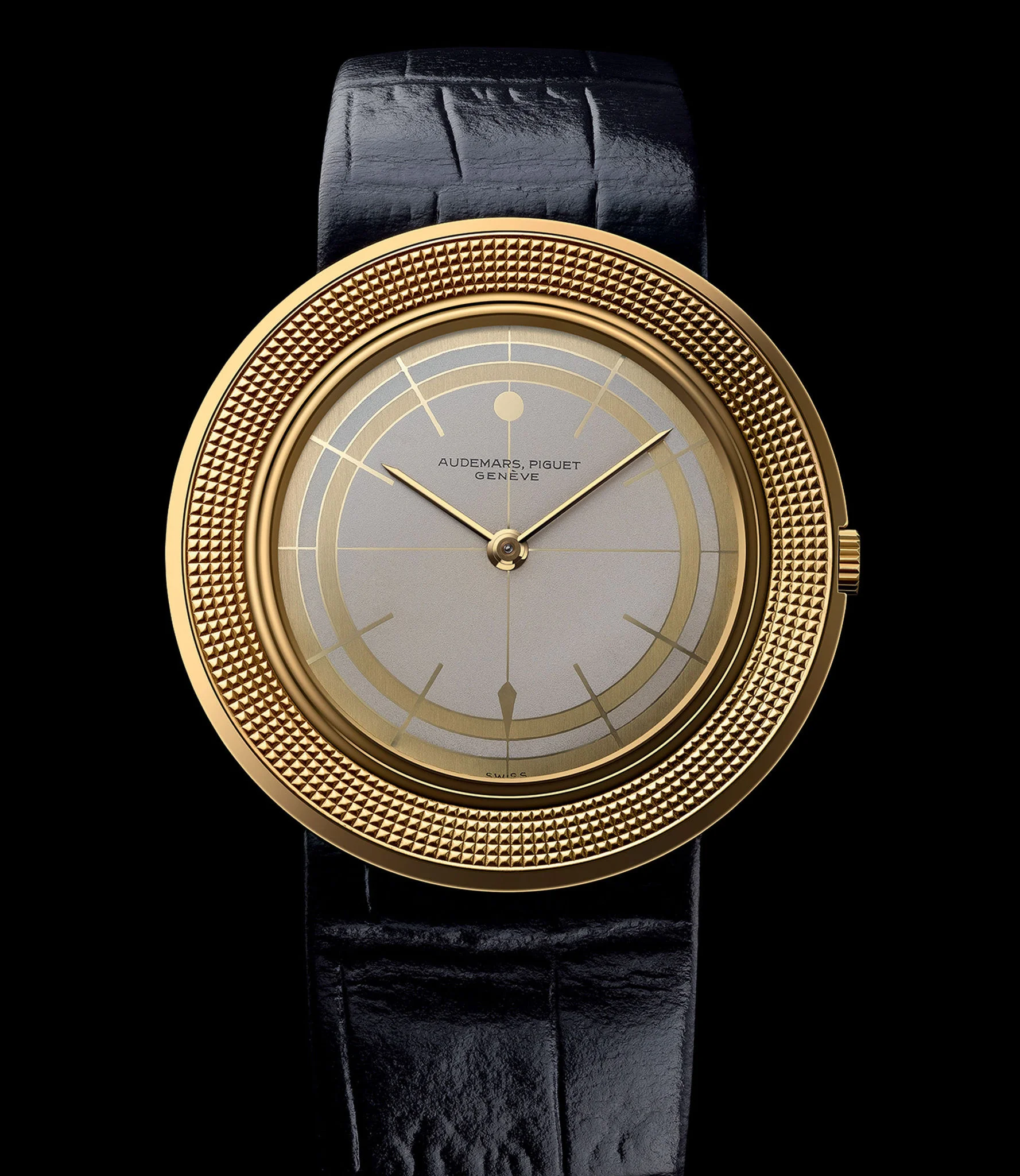
1959. Discovolante. Guilloché Clous de Paris hobnail-patterned bezel and two-tone dial. Calibre 2003 thin (1.64 mm), movement 71245 produced in 1958. Sold in 1959. Yellow gold. Model 5093. Audemars Piguet Heritage, Inv. 1801.
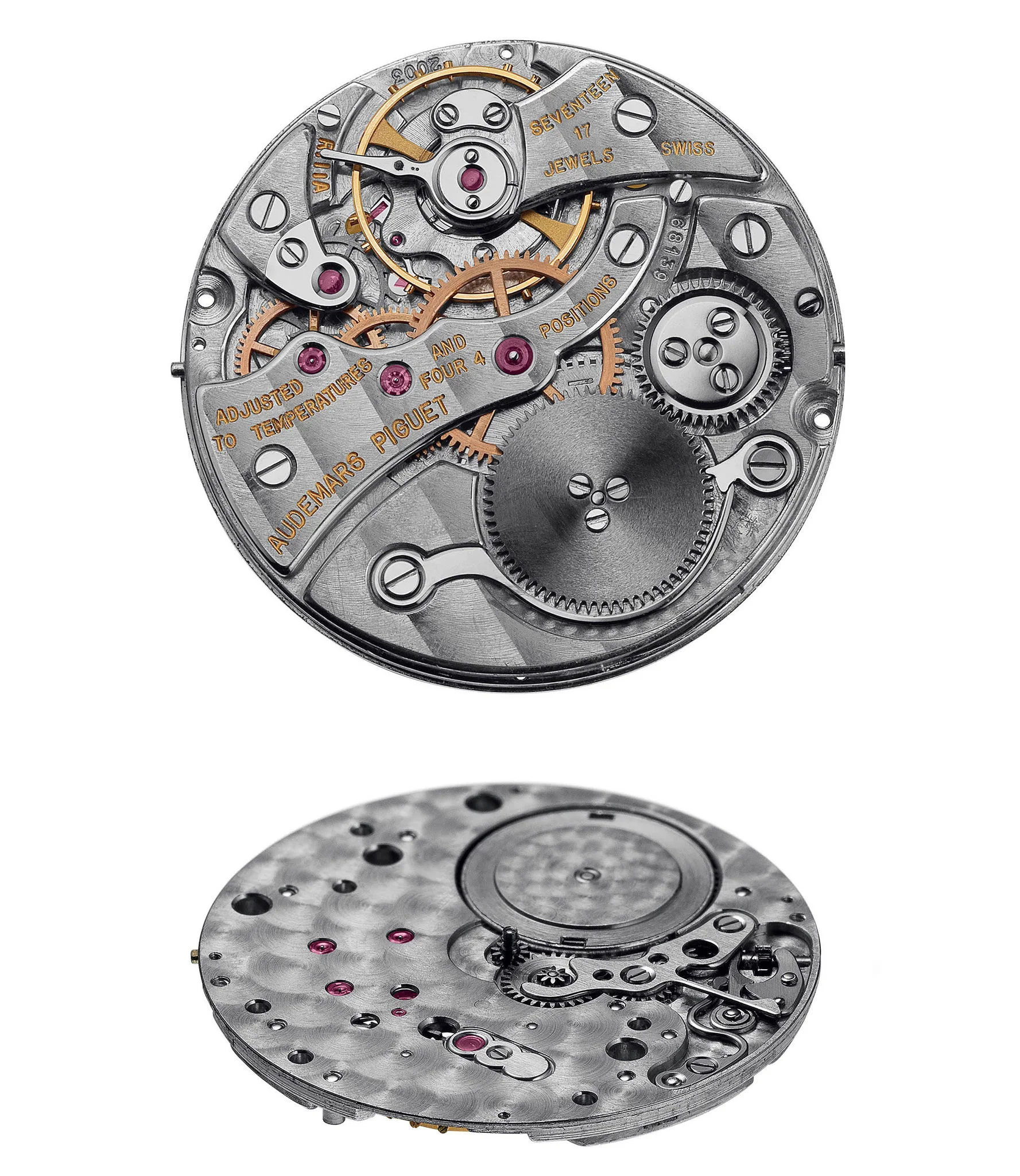
In 1953, Calibre 2003 replaced the 9ML, a Frédéric Piguet "ébauche", from which it adopted the exact same proportions: 9 lignes in diameter and 1.64 mm thick. This mechanism – for which the "ébauche" was produced by LeCoultre & Cie. – remained at the heart of the Audemars Piguet collections for half a century. Audemars Piguet Heritage.
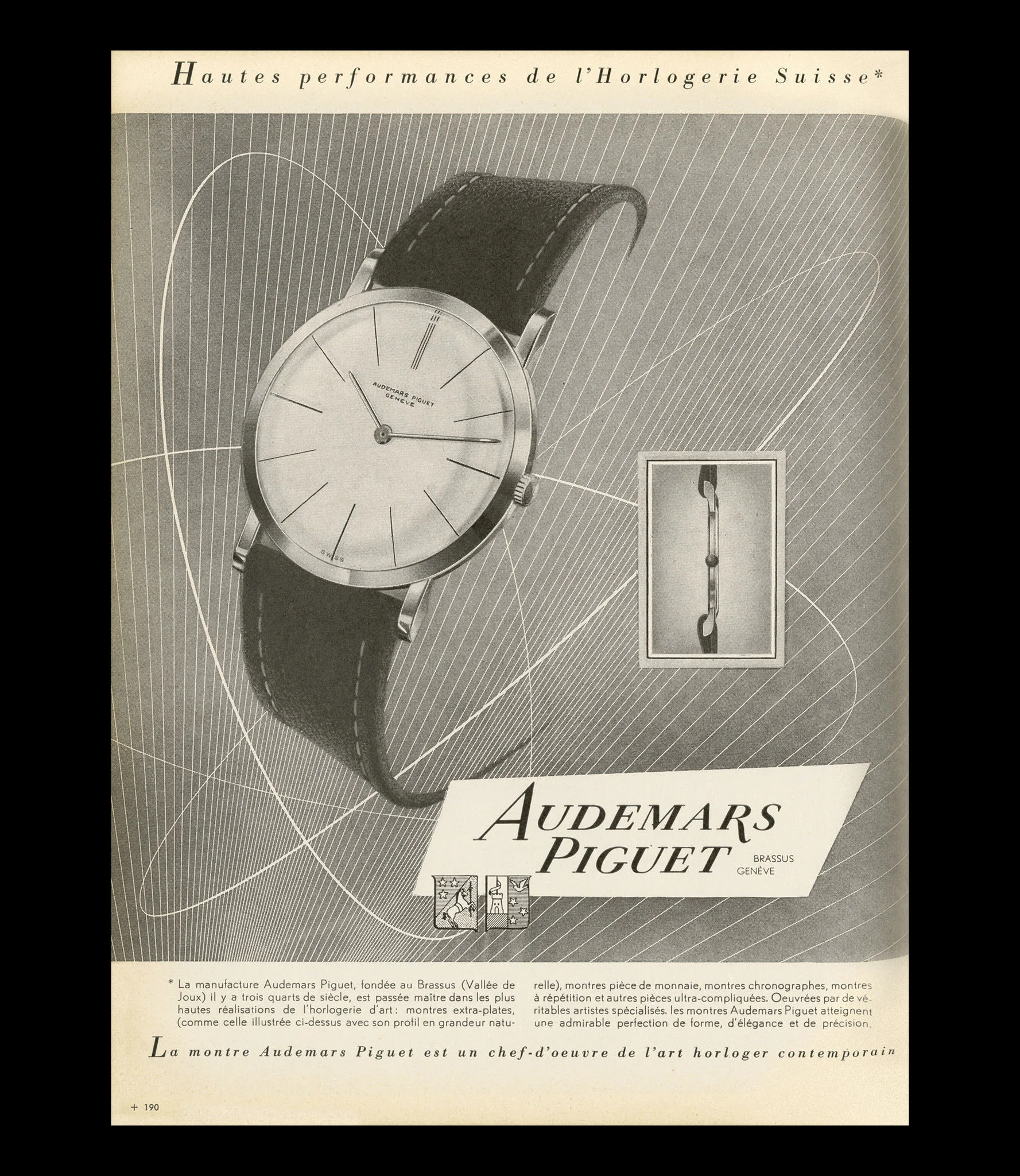
1950–1959. Audemars Piguet advertisement published for almost a decade in a number of watchmaking titles. It marked the company's specialisation in thin watches. Audemars Piguet Archives.
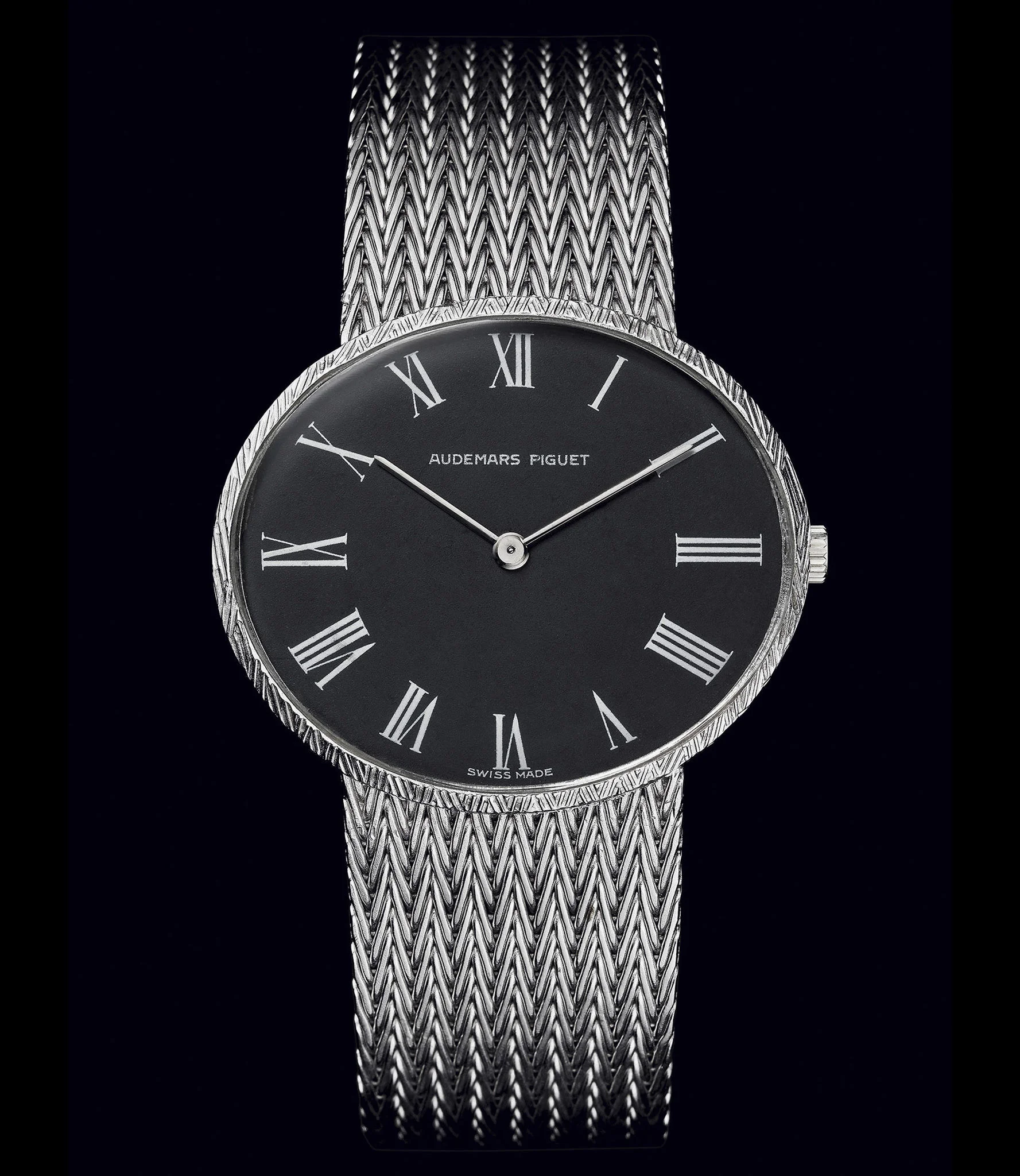
1970. Horizontal elliptical wristwatch. Double Polish mesh bracelet and engraved case. Extra-thin Calibre 2003, movement 114454, produced and sold in 1970. White gold. Model 5355. Audemars Piguet Heritage, Inv. 640.
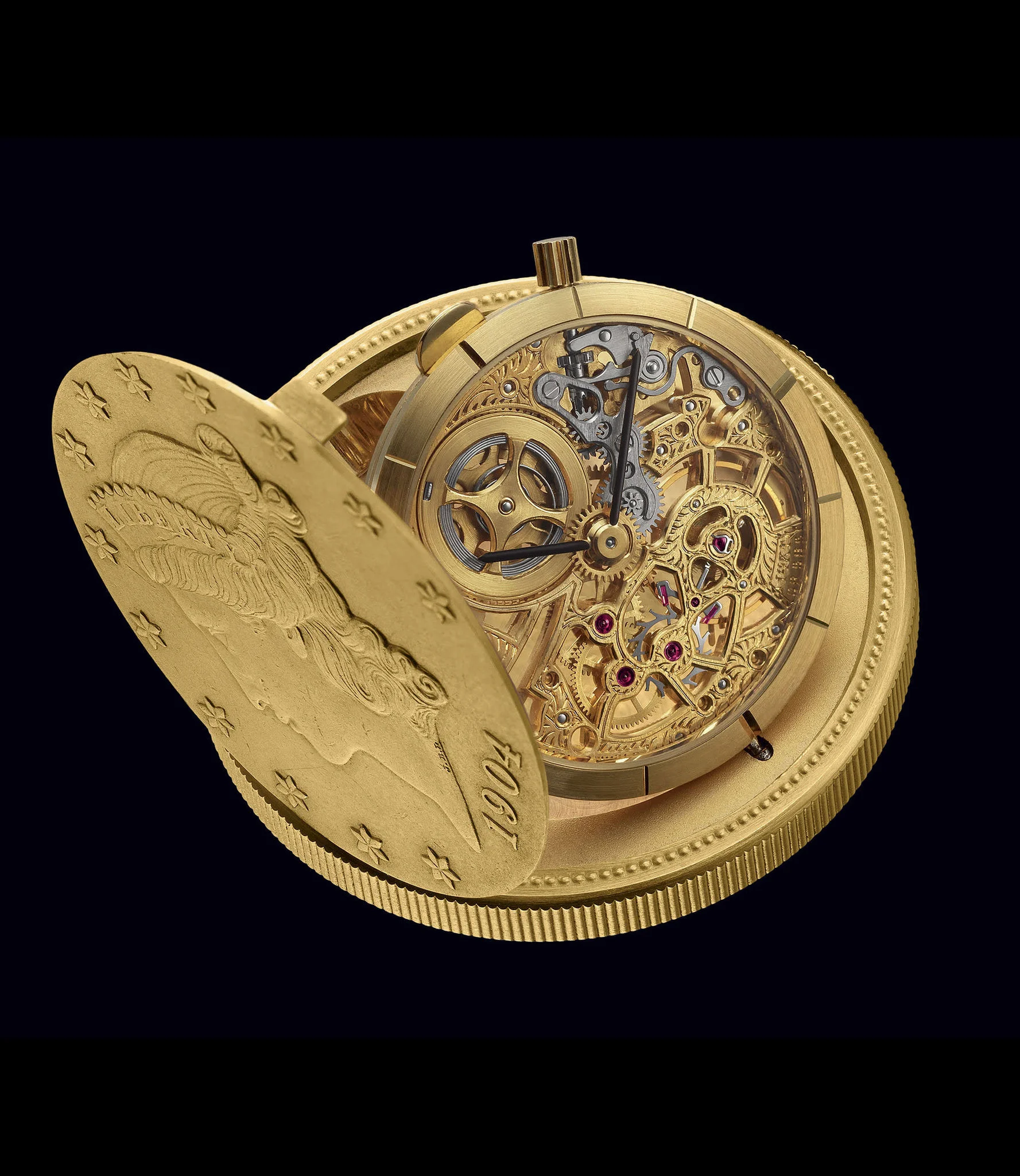
1994. Coin watch. This 20-dollar gold coin dating from 1904 was cut and hollowed out to accommodate an extra-thin openworked calibre in 14-carat gold. Calibre 2003SQ, movement 390920 produced in 1993. Sold in 1994. Yellow gold. Model 35677. Audemars Piguet Heritage, Inv. 935.
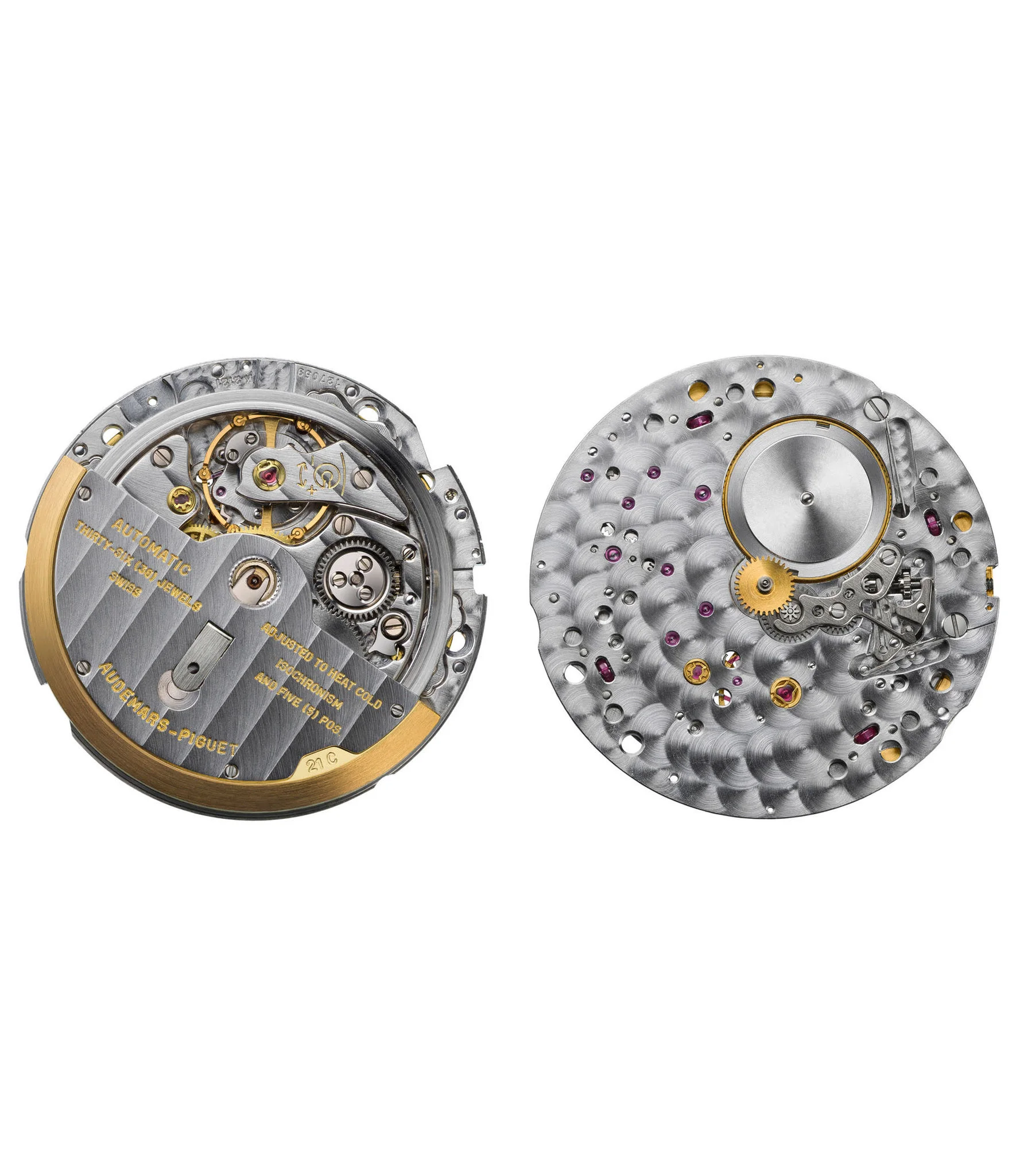
In 1967, Calibre 2120 became the world's thinnest selfwinding watch. Initially produced by LeCoultre & Cie, it remained at the heart of the Audemars Piguet collections until the 1990s. Its production was internalised by Audemars Piguet and it was replaced in 2022 by the 7121. Audemars Piguet Heritage.
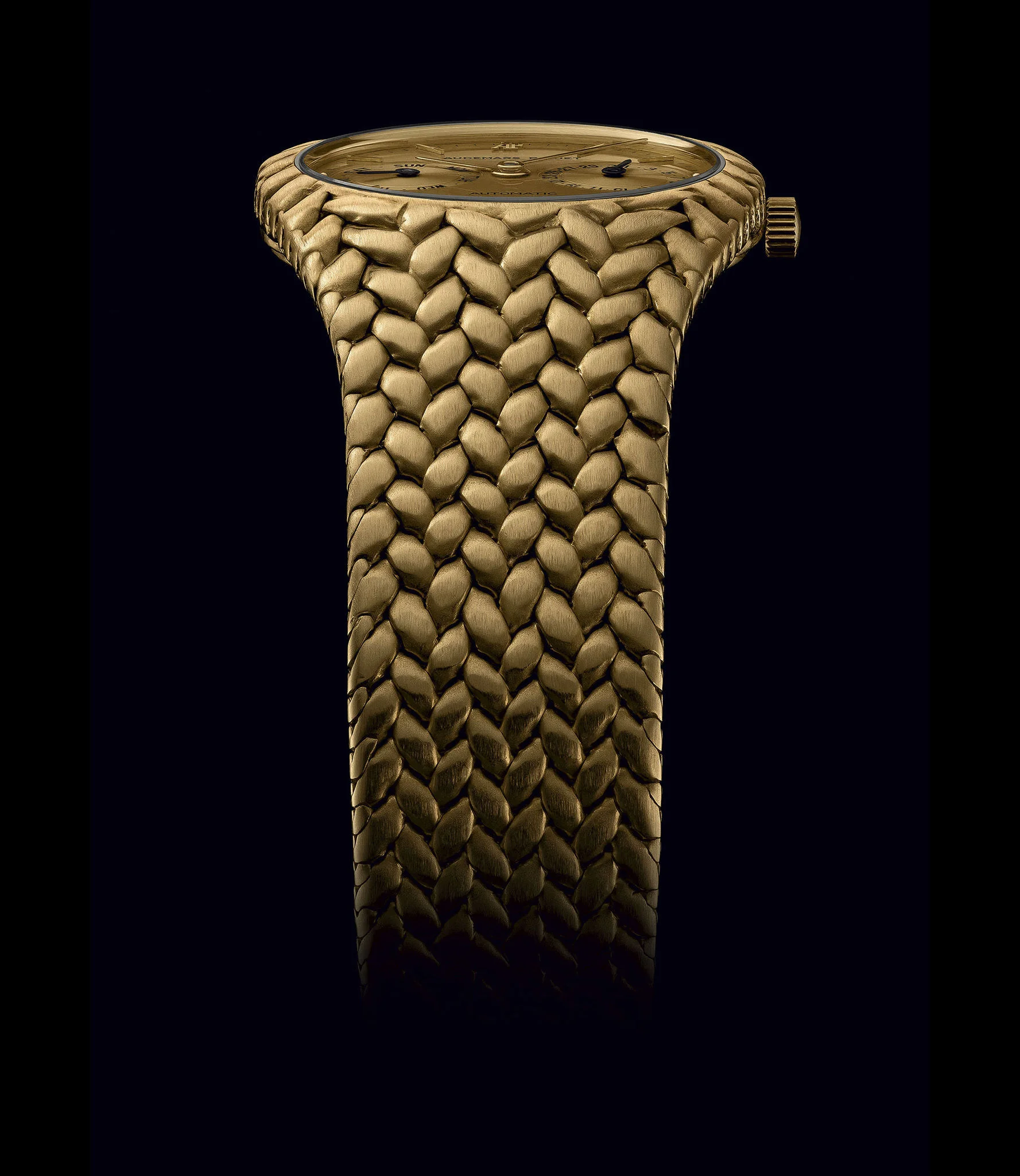
1984. "Cobra" watch. Day Date. Gold dial, "rice bead" mesh bracelet. Calibre 2121, movement 198333 produced and sold in 1984. Yellow gold. Model 5587. Audemars Piguet Heritage, Inv. 1230.
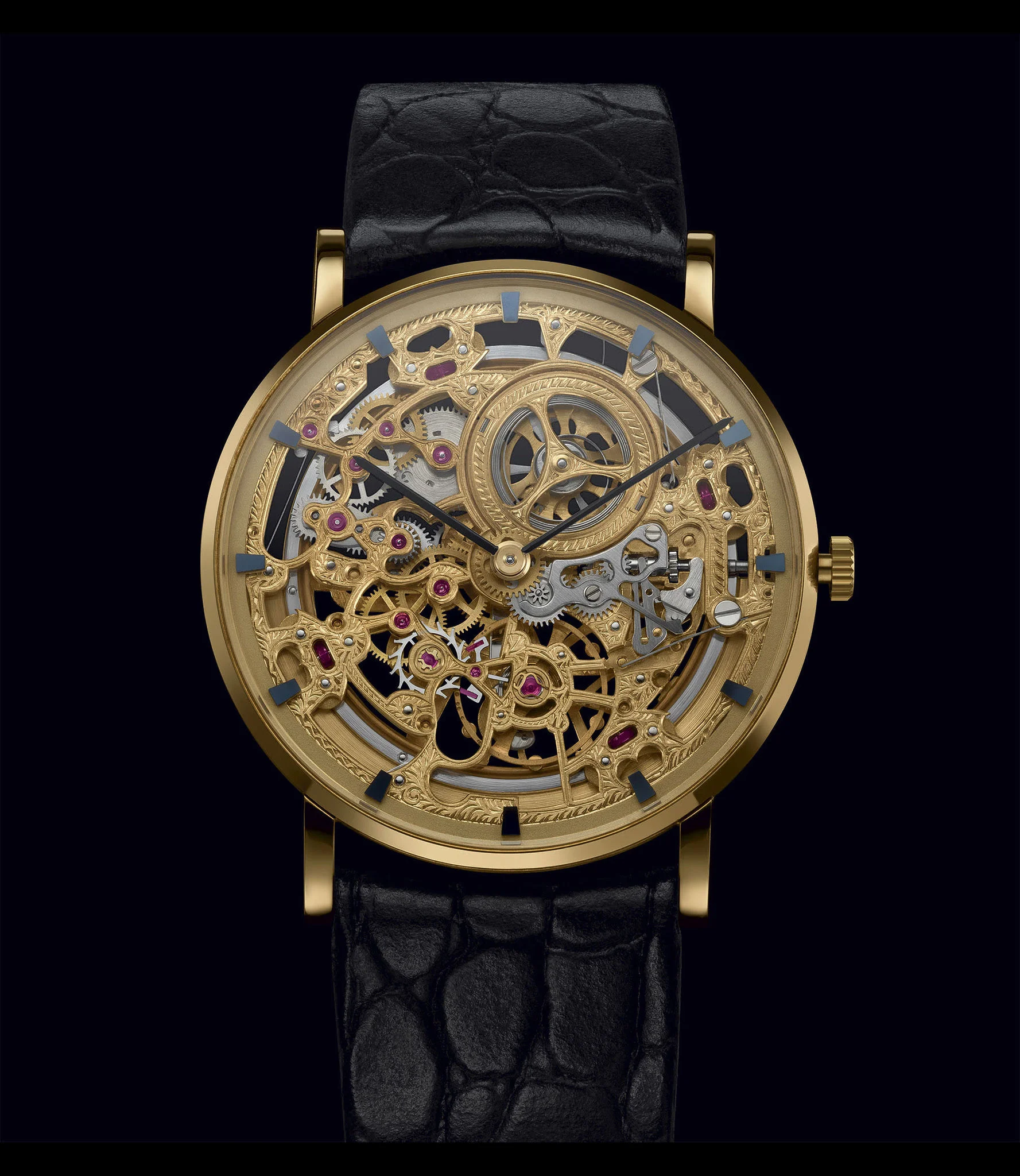
1976. Extra-thin openworked wristwatch. Calibre 2120SQ, Movement 136093 produced in 1972. Sold in 1976 in yellow gold. Model 5442. Audemars Piguet Heritage, Inv. 1123.
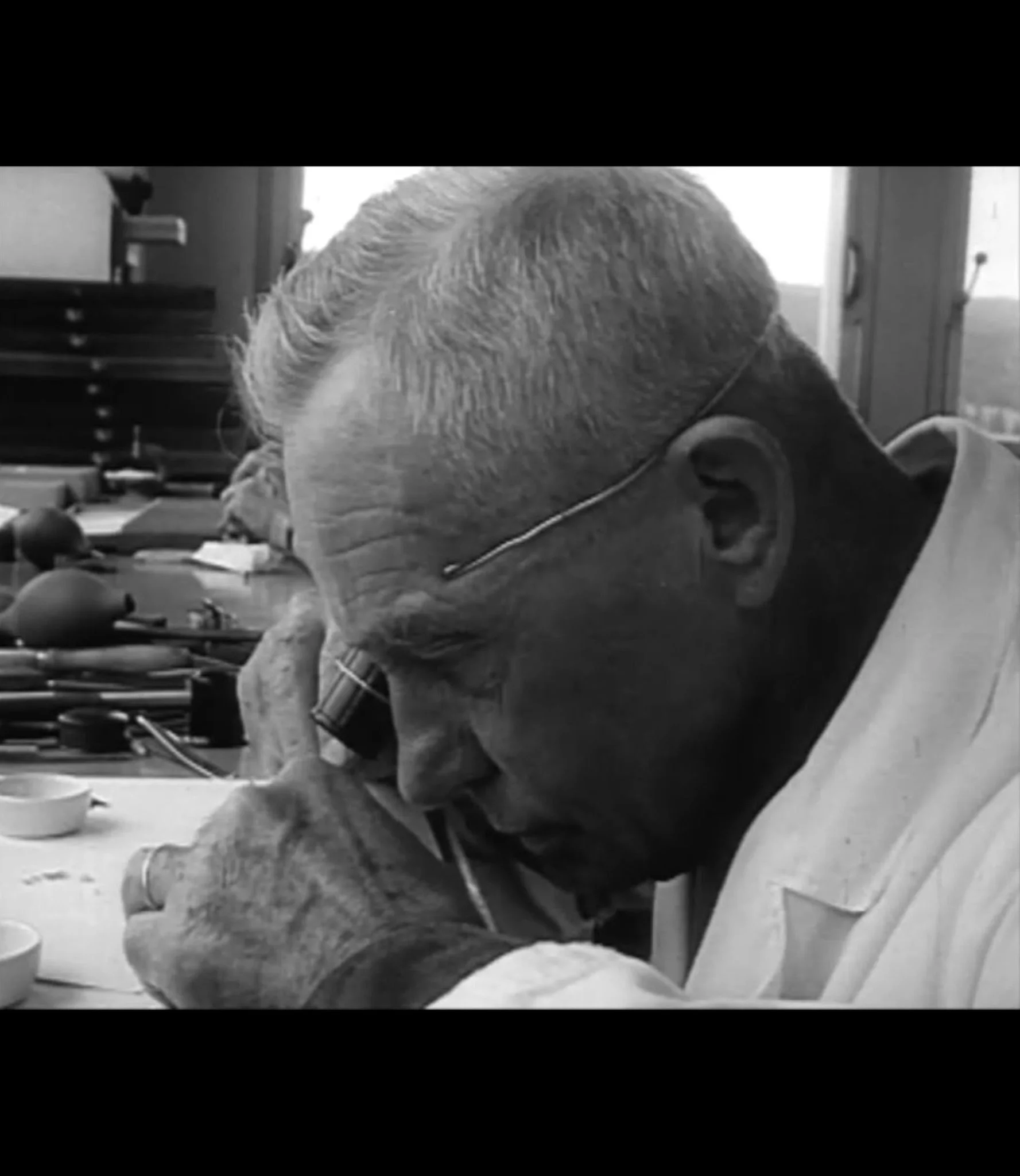
1969. Charles Reymond Berney pictured adjusting Calibre 2003. Audemars Piguet Archives.
Out of the ordinary
The space race, rock music, the birth of electronics, the sports boom and motor cars, utopias, economic growth... In the 1950s and 1960s, people imagined that by the year 2000, everyone would be spending their holidays on the Moon or Mars and travelling in flying cars.
This creative energy is reflected in the design of Audemars Piguet watches, inspired both by brutalism and Space Age design. With their taut lines, radical geometric shapes, perfect finishes and expressive dials, the watches created during these years were a reflection of their era and paved the way for the Royal Oak.
It was also at this time that the figure of the watch designer began to take shape. Audemars Piguet watches were conceived either in collaboration with case manufacturers, jewellers, or even clients such as retailers or brands. By way of example, asymmetrical watches were designed by Leu, Croisier, Bergerioux, Cristofol and others. The Discovolante models were the brainchild of German designer Gebhart Duve, best known for his cutlery and jewellery. Inspired by design pioneer Raymond Loewy, Gérald Genta was one of the first to specialise in watches. He signed a contract with Audemars Piguet in 1962, by which he undertook to design models at the brand's request while remaining independent.
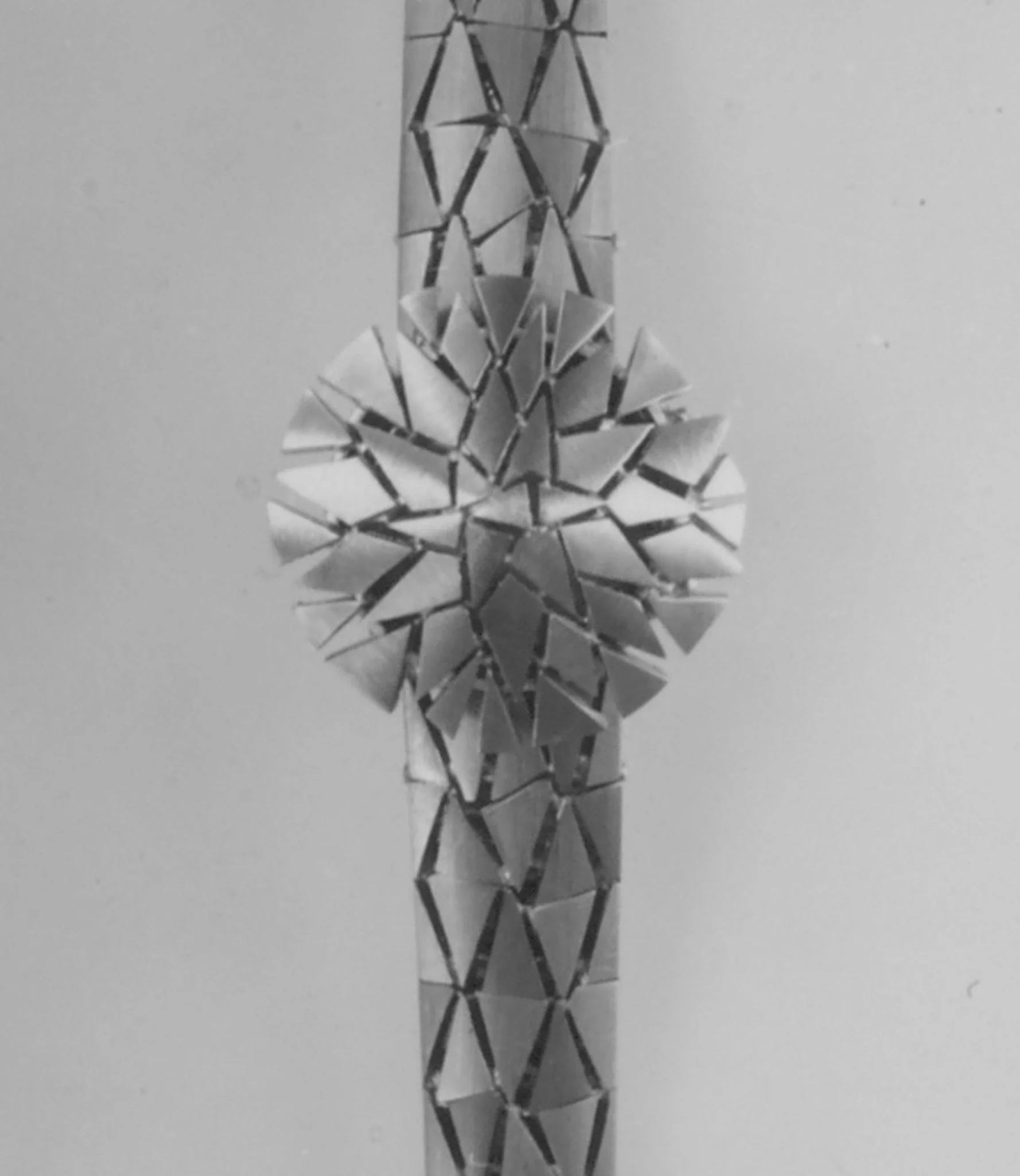
In 1962, Gérald Genta designed Model 8109 for Audemars Piguet in pure Brutalist style. Audemars Piguet Archives.
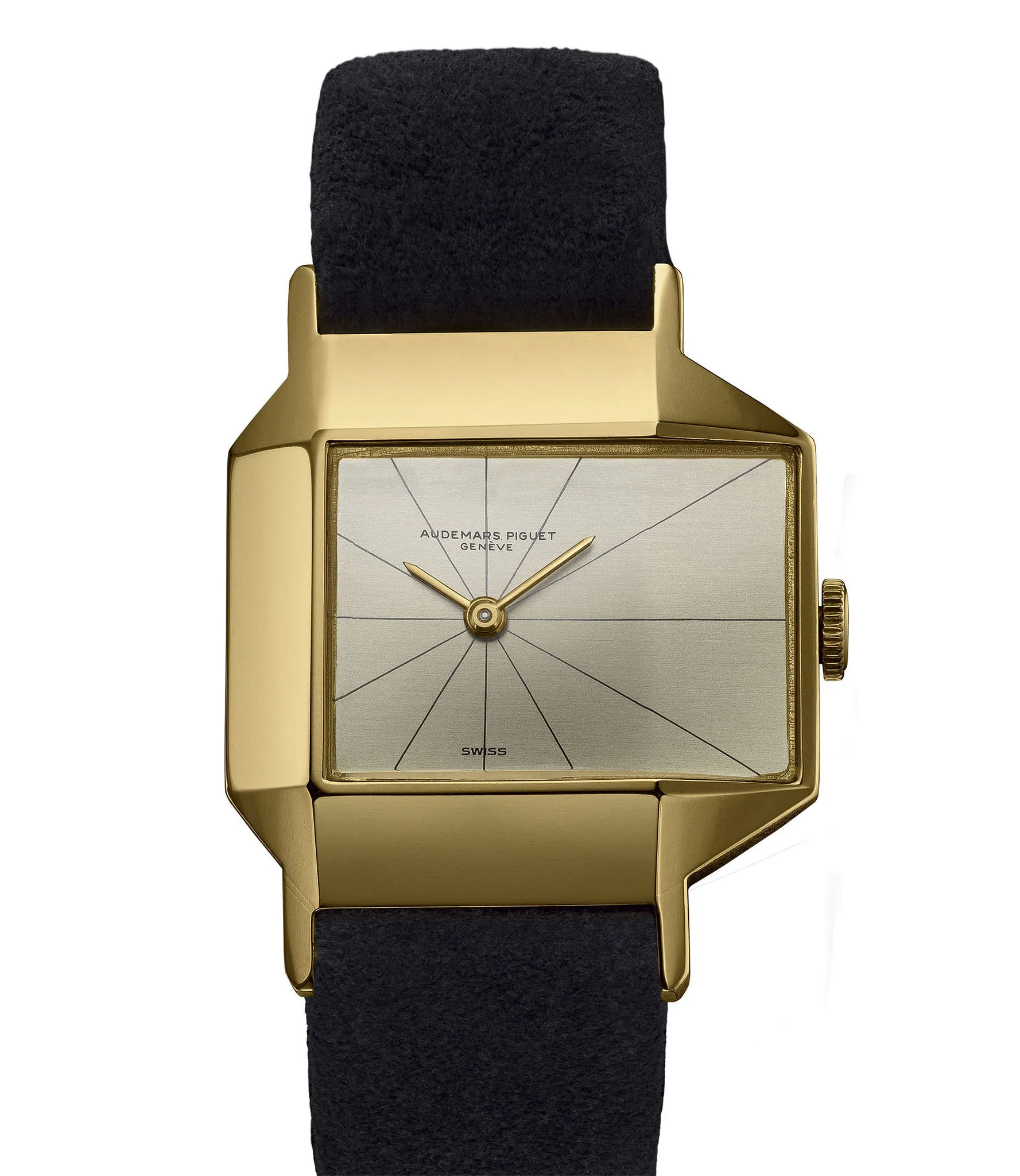
1961. Rectangular asymmetrical wristwatch. Facetted crystal. Calibre 10 TS, movement 62778 produced in 1953. Sold in 1961. Yellow gold. Model 5159. Audemars Piguet Heritage, Inv. 302.
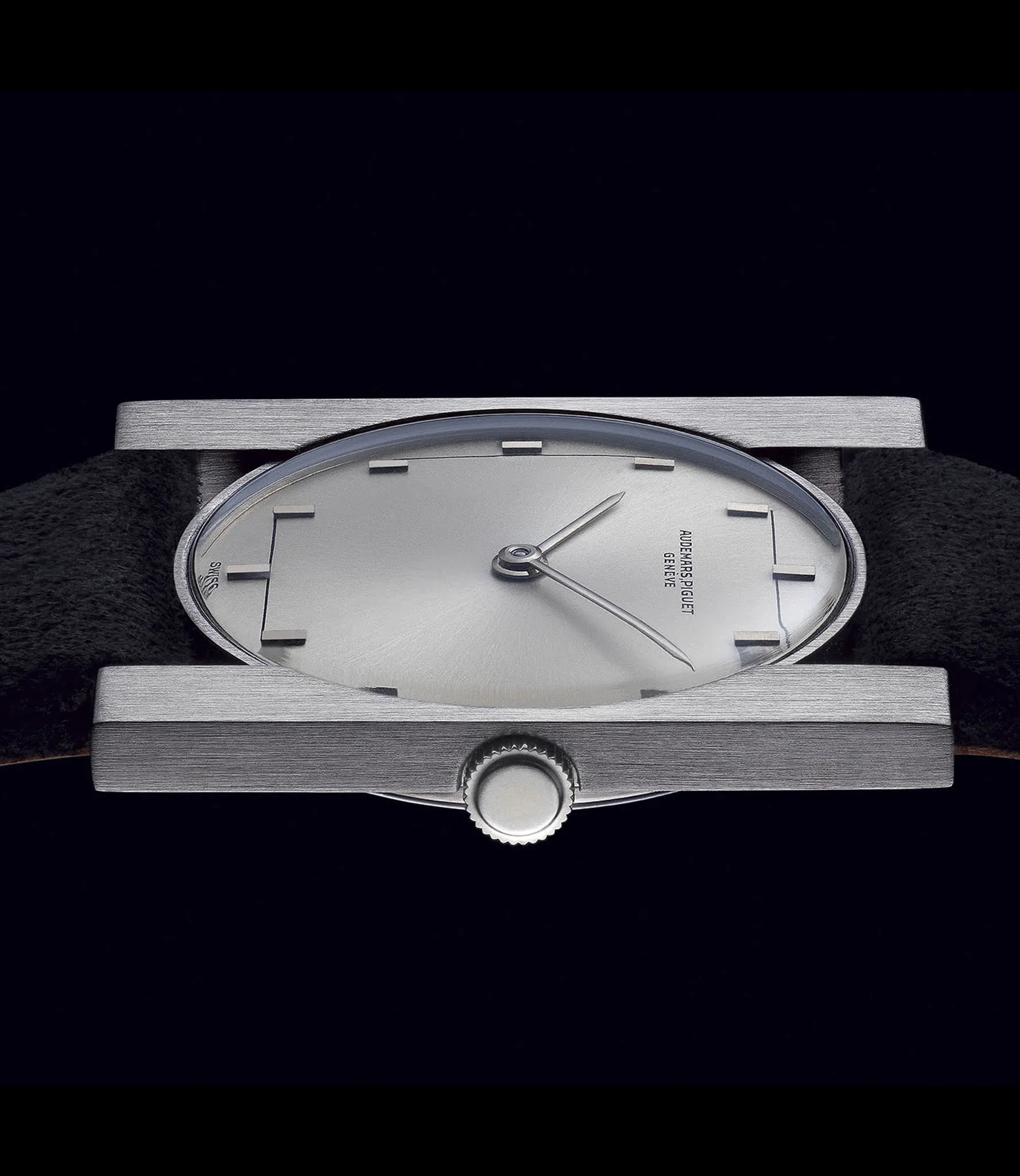
1961. Round and rectangular-shaped watch. Vertical hour-markers. Calibre 2001, movement 77437 produced and sold in 1961. White gold. Model 5179. Audemars Piguet Heritage, Inv. 1501.
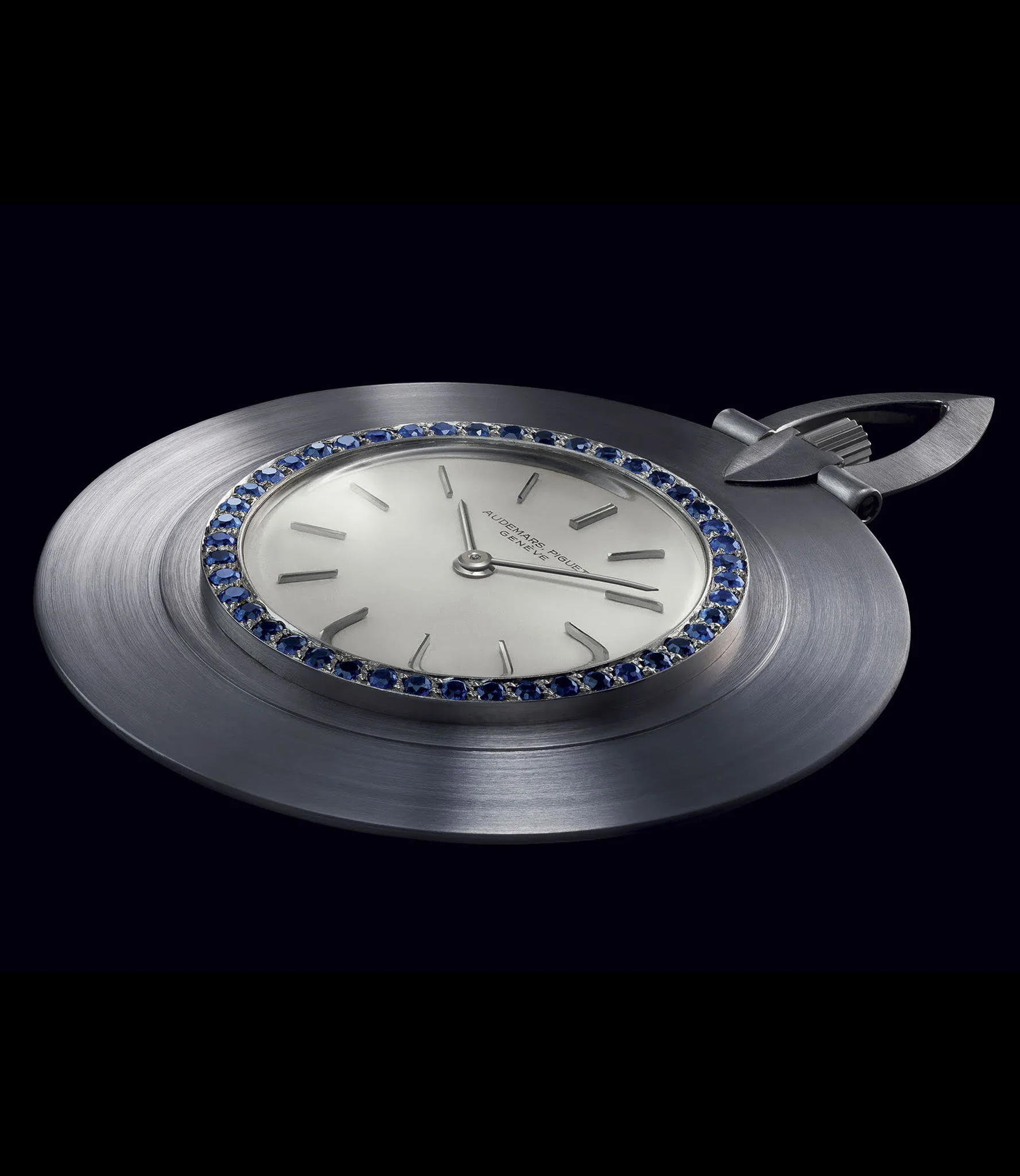
1962. Extra-thin pocket watch. Bezel set with blue sapphires. Calibre 2003, movement 84135 produced. Sold in 1962. White gold. Model 5616. Audemars Piguet Heritage. Inv. 343.
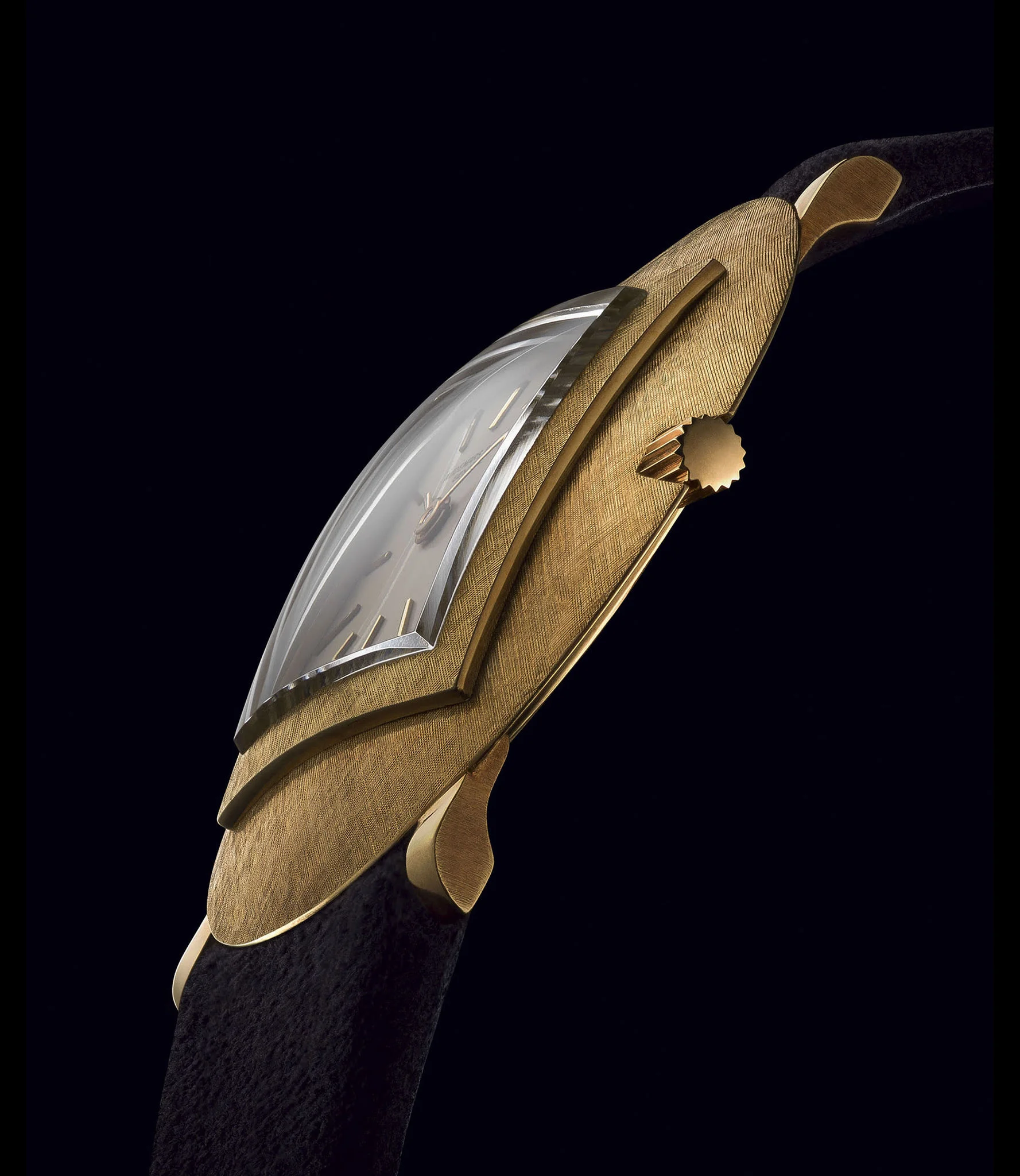
1959. Round and square-shaped watch. Domed crystal. Calibre 2001, movement 83148 produced in 1962. Sold in 1965. Yellow gold. Model 5148. Audemars Piguet Heritage. Inv. 341.
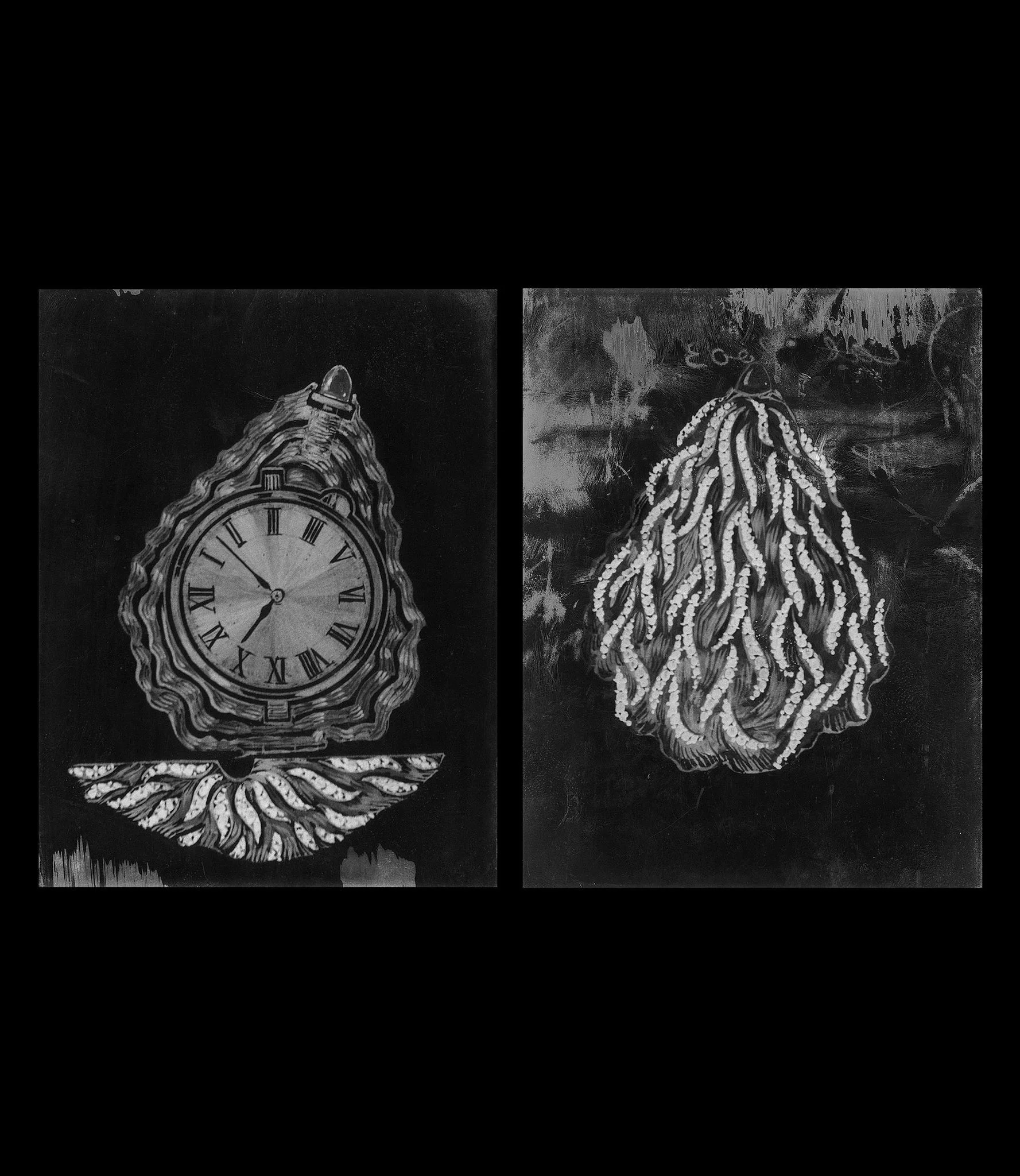
1967. Handbag watch. Model 8311. In 1967, Gérald Genta and Audemars Piguet won an honourable mention at the Prix de la Ville de Genève for the handbag watch made from this sketch. Audemars Piguet Archives.
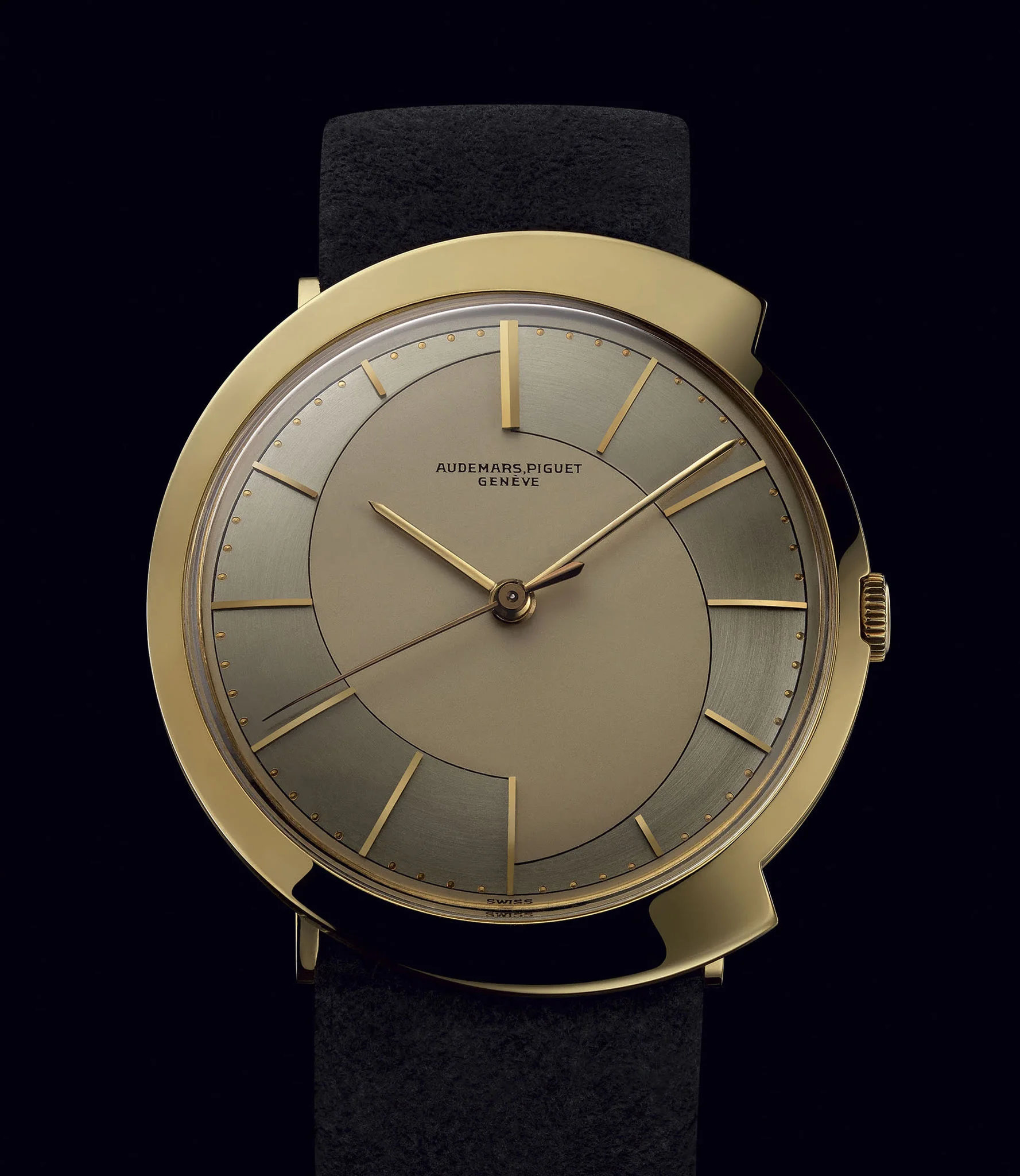
1962. Round asymmetrical wristwatch. Calibre 2002. Yellow gold. Model 5182. In the early 1960s, Audemars Piguet presented a series of asymmetrical wristwatches, which records indicate were probably designed by Gérald Genta. Audemars Piguet Heritage, Inv. 320.
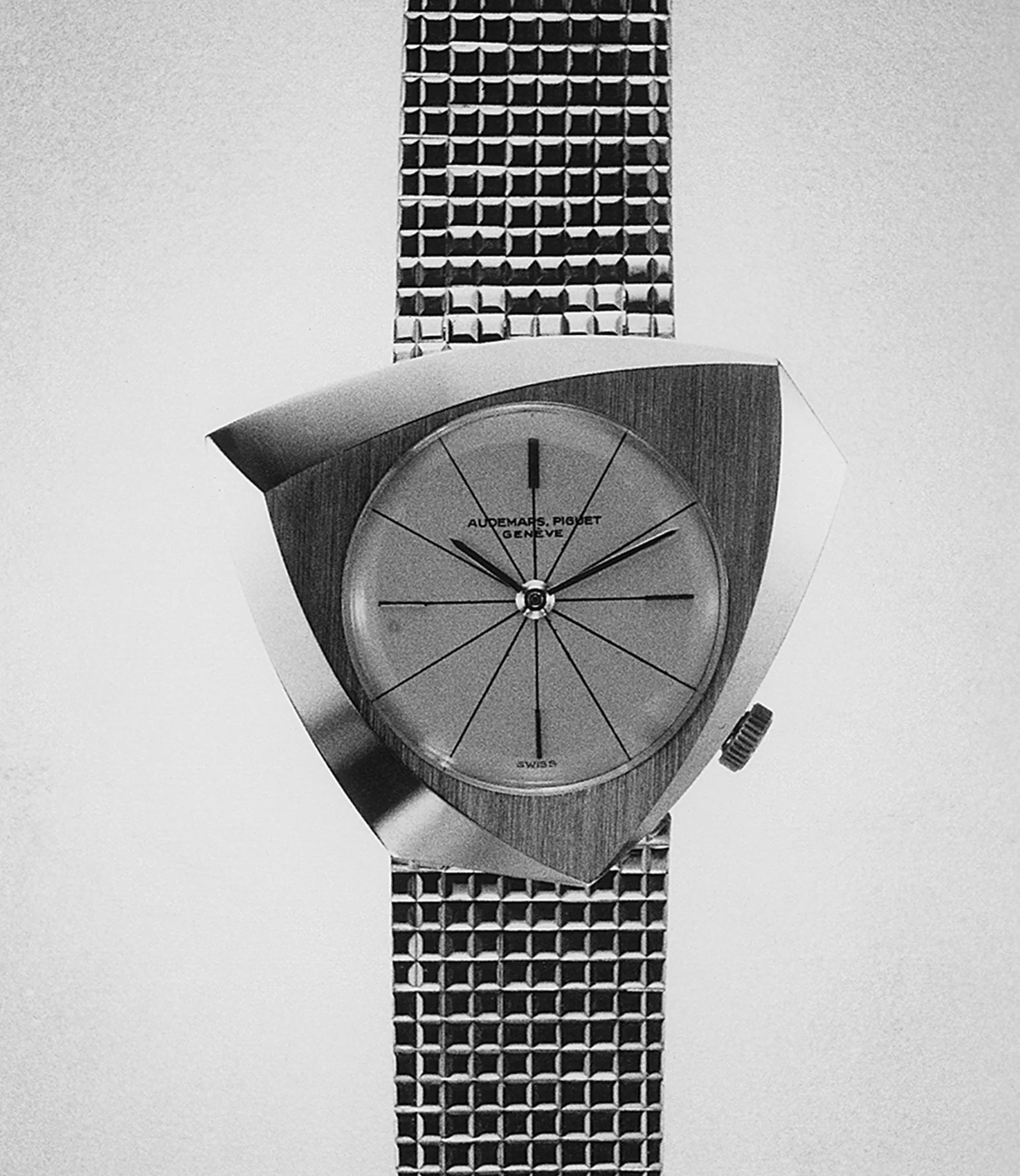
In the early 1960s, the Swiss designer Albert Leu created several asymmetrical models for Audemars Piguet, including the 5167 illustrated here. Bergerioux case. Audemars Piguet Archives.
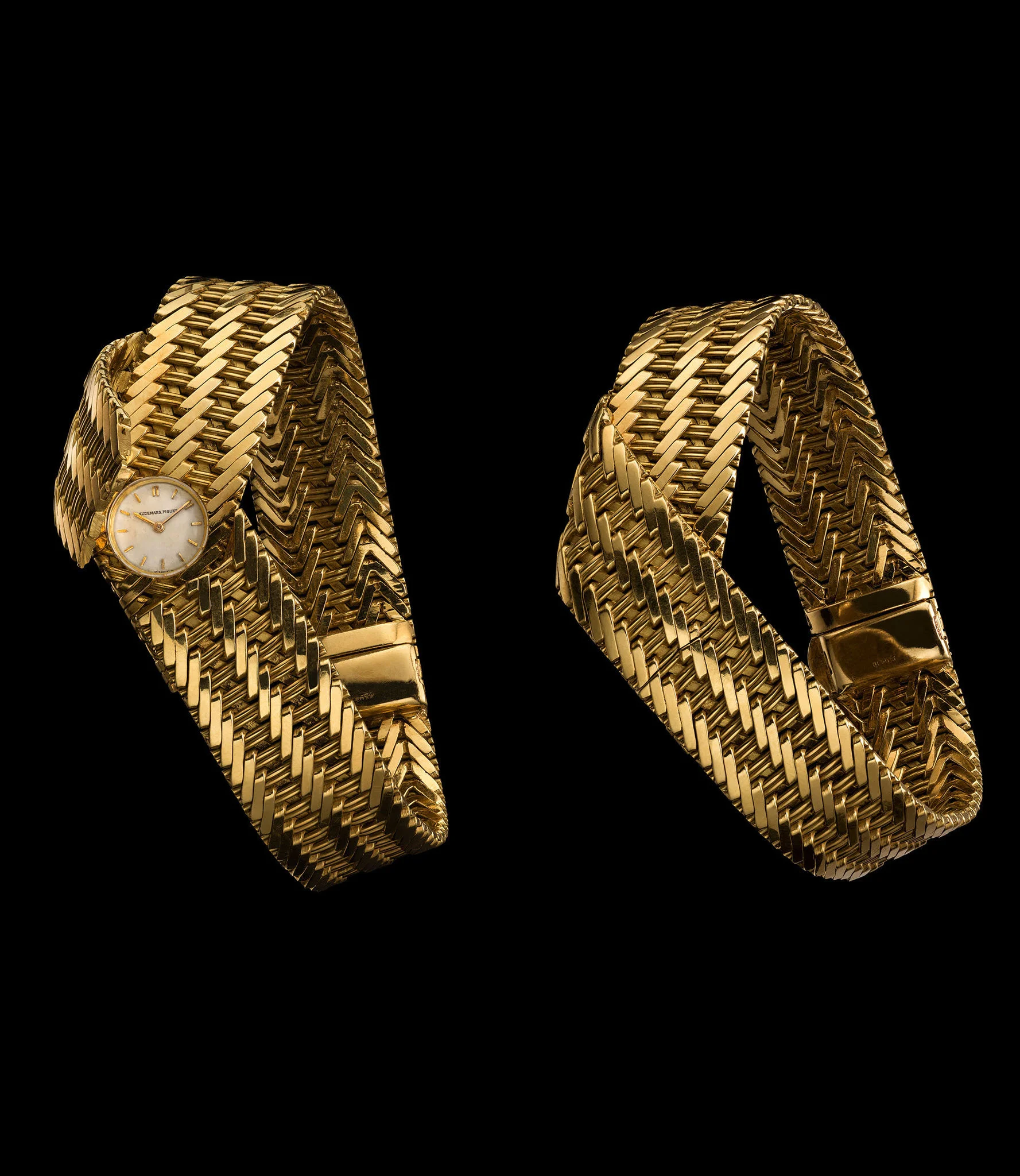
1962. Asymmetrical wristwatch with secret cover. Calibre 2426, movement 72950 produced in 1959. Sold in 1960. Yellow gold. Model 8004 made by Cristofol. Audemars Piguet Heritage, Inv. 2218.
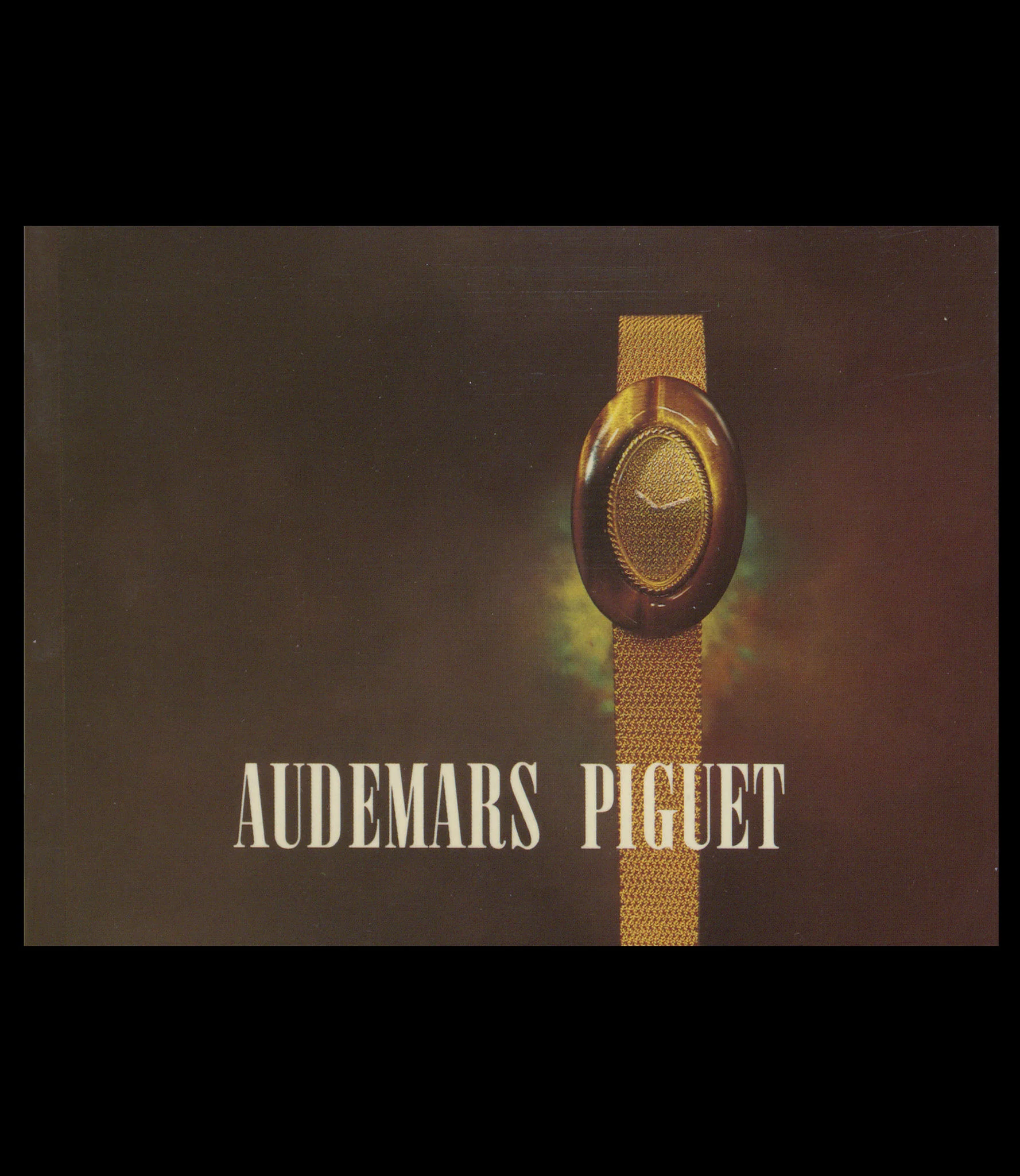
1970. Audemars Piguet brochure. Model 8455, tiger’s eye bezel. Gold dial and Milanese mesh bracelet Audemars Piguet Archives.
The quartz crisis
The Swiss watch industry has been through countless crises, but none since the 16th century as profound or as traumatic as the so-called "quartz crisis". For in addition to the oil crises (1973 and 1979) and the dizzying drop in the value of the dollar (1971–73) that marked the end of the post-war boom years, the brand-new quartz wristwatch was the undoing of the mechanical watch: it was more precise, less expensive and required different skills. Millions of them were manufactured by the American and Japanese electronics giants.
Between 1974 and 1984, no fewer than 1,000 Swiss watchmaking companies went bankrupt. The industry lost three-quarters of its jobs. Exports plummeted from 84 million watches in 1974 to 30 million ten years later. However, certain Haute Horlogerie firms were spared, thanks to the prestige value of mechanical watches, which electronics was unable to erode. Audemars Piguet continued to grow despite the headwinds. In 1974, its 125 employees produced 9,600 watches resulting in a turnover of CHF 25 million. A decade later, 212 people produced 12,000 watches and sales amounted to CHF 60 million.
There are several reasons for this success, including the Royal Oak, as well as the 5548 perpetual calendar, to which we will return later. But it was above all the company's attitude of ongoing research and openness that ensured growth. On the one hand, Audemars Piguet explored the possibilities of quartz, creating Model 6001 in 1974. On the other hand, the brand updated the grand watchmaking tradition. The beauty of the mechanism was showcased through openworking; complications were revisited and modernised to equip selfwinding wristwatches; while pocket watches were adorned with enamel. From the 1980s onwards, new materials were explored, including ceramics, tantalum, titanium, etc.
1976. Model 6001 illustrated in an Audemars Piguet catalogue. Commercialised in 1974, the first Audemars Piguet model featuring a quartz movement appeared on a double-page of the brand's 1976 catalogue. Audemars Piguet Archives.
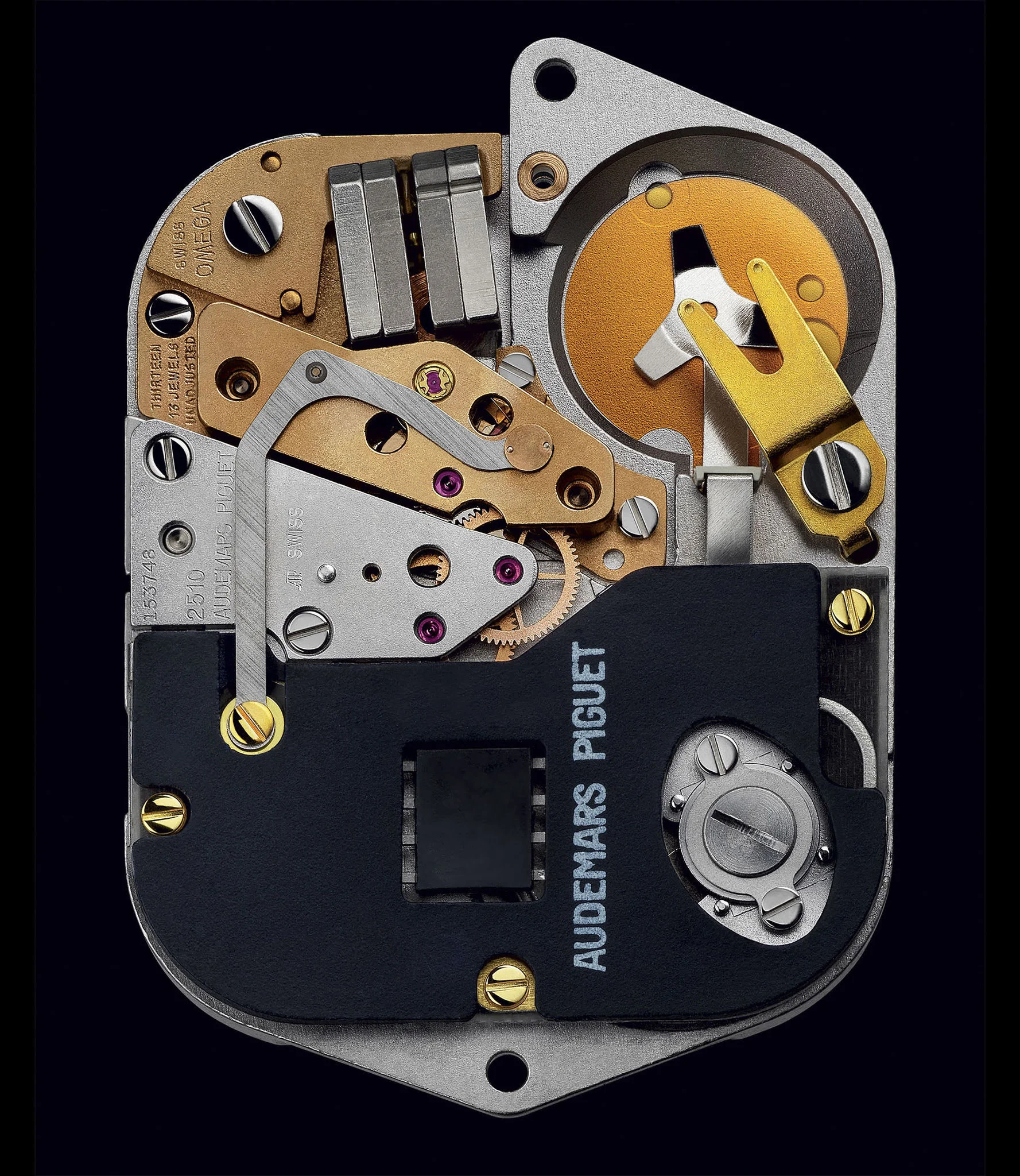
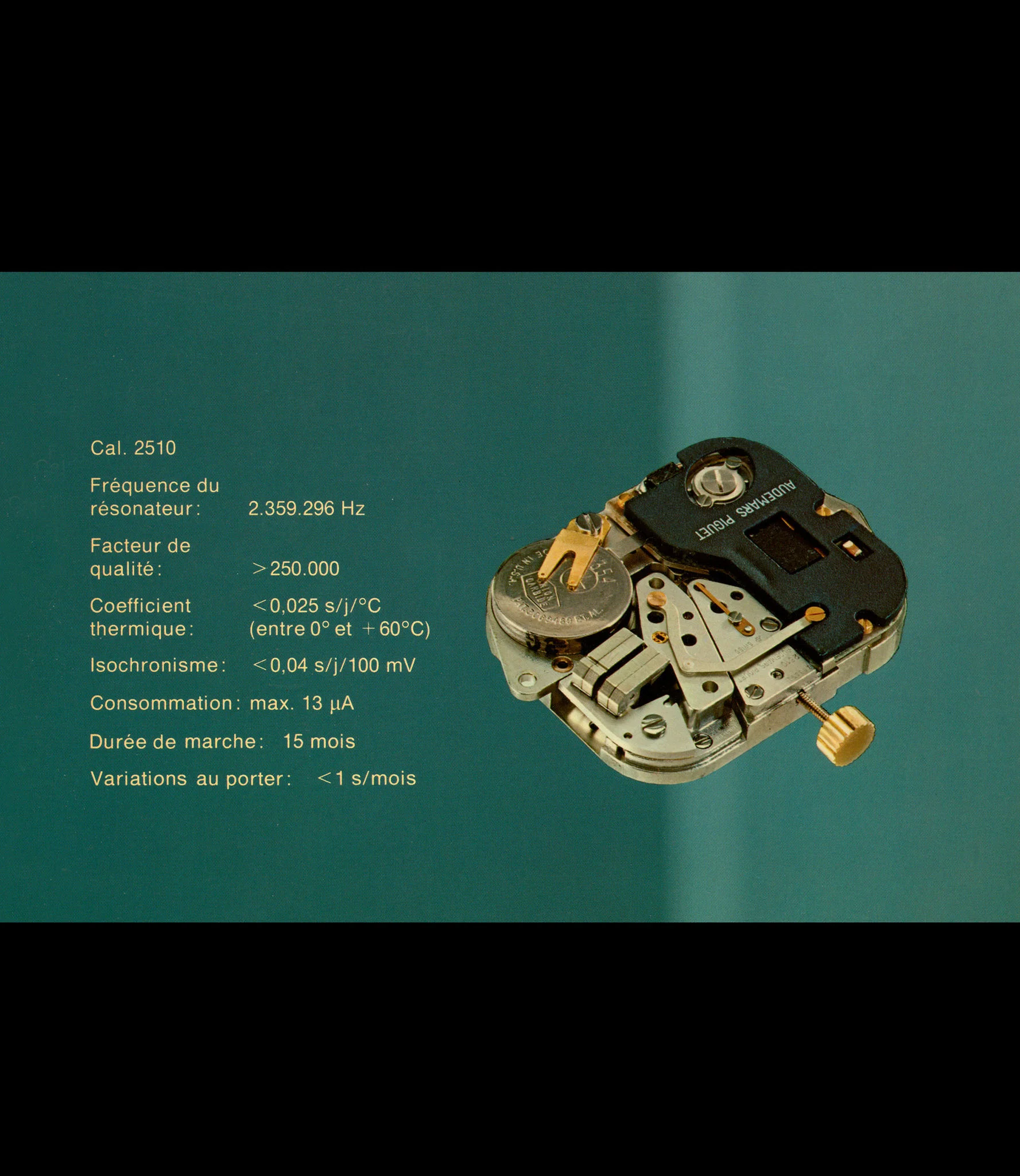
1974. High-frequency quartz Calibre 2510: 2.4 million oscillations per second. Audemars Piguet Heritage.
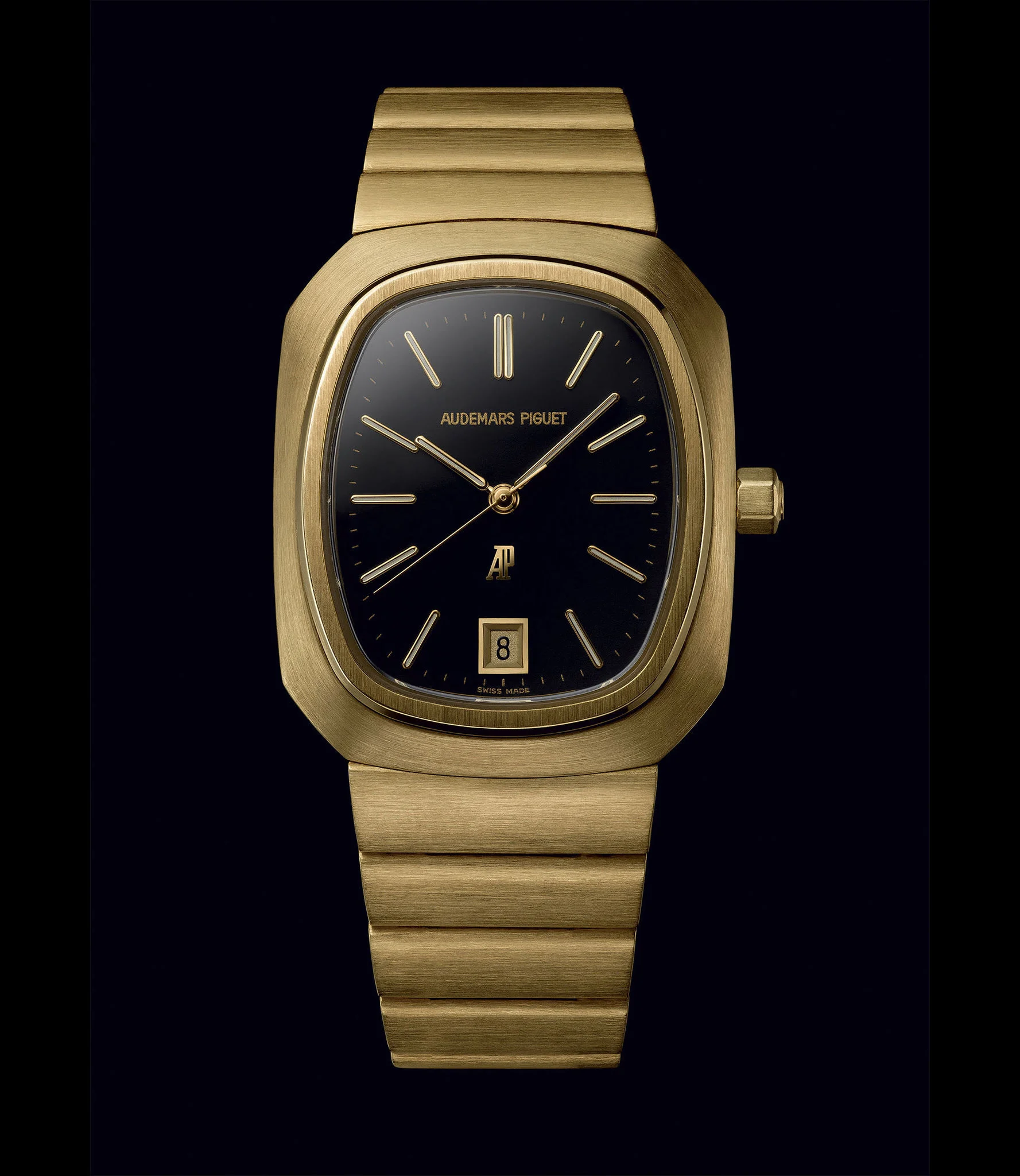
1974. Quartz wristwatch. Date aperture at 6 o'clock. Calibre 2510, movement 83148. Manufactured and sold in 1974. Yellow gold. Model 6001. Audemars Piguet Heritage, Inv. 341.
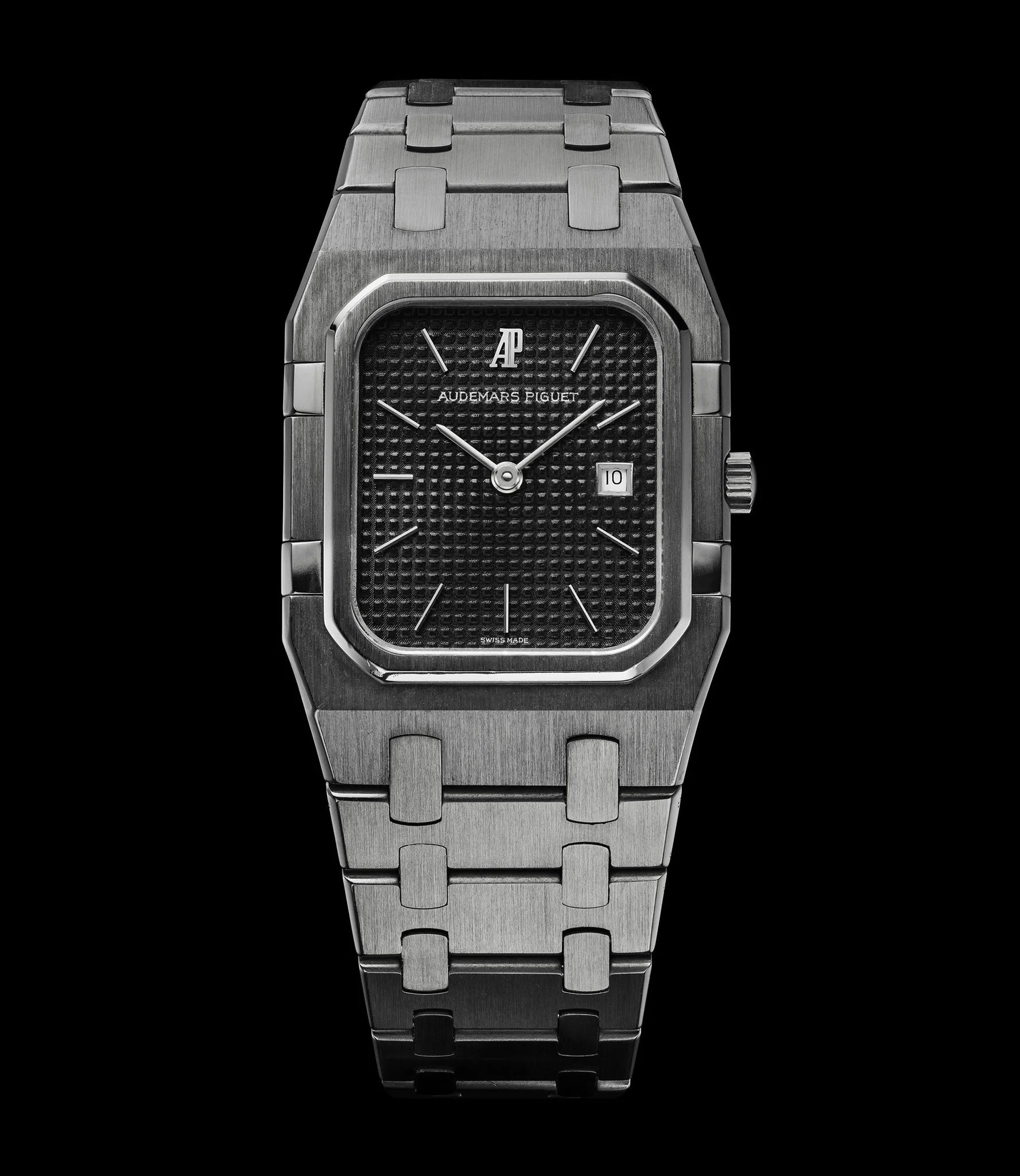
1992. Royal Oak rectangular quartz watch. Date aperture. Calibre 2610, movement 304010 produced in 1986. Sold in 1992. Made of steel. Model 6049. Audemars Piguet Heritage, Inv. 650.
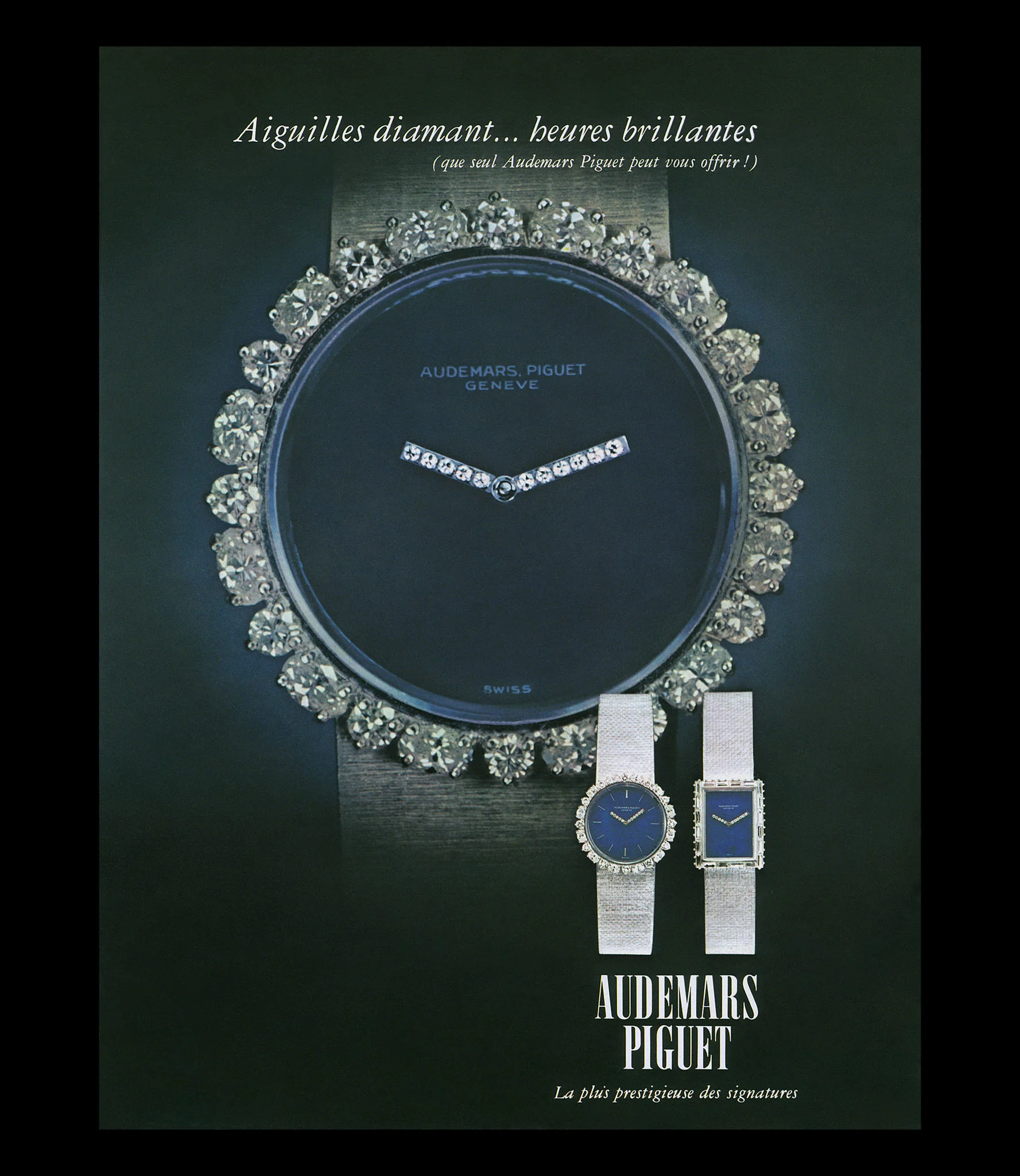
1970. Audemars Piguet advertisement presenting the exclusive skill of gemset hands. Audemars Piguet Archives.
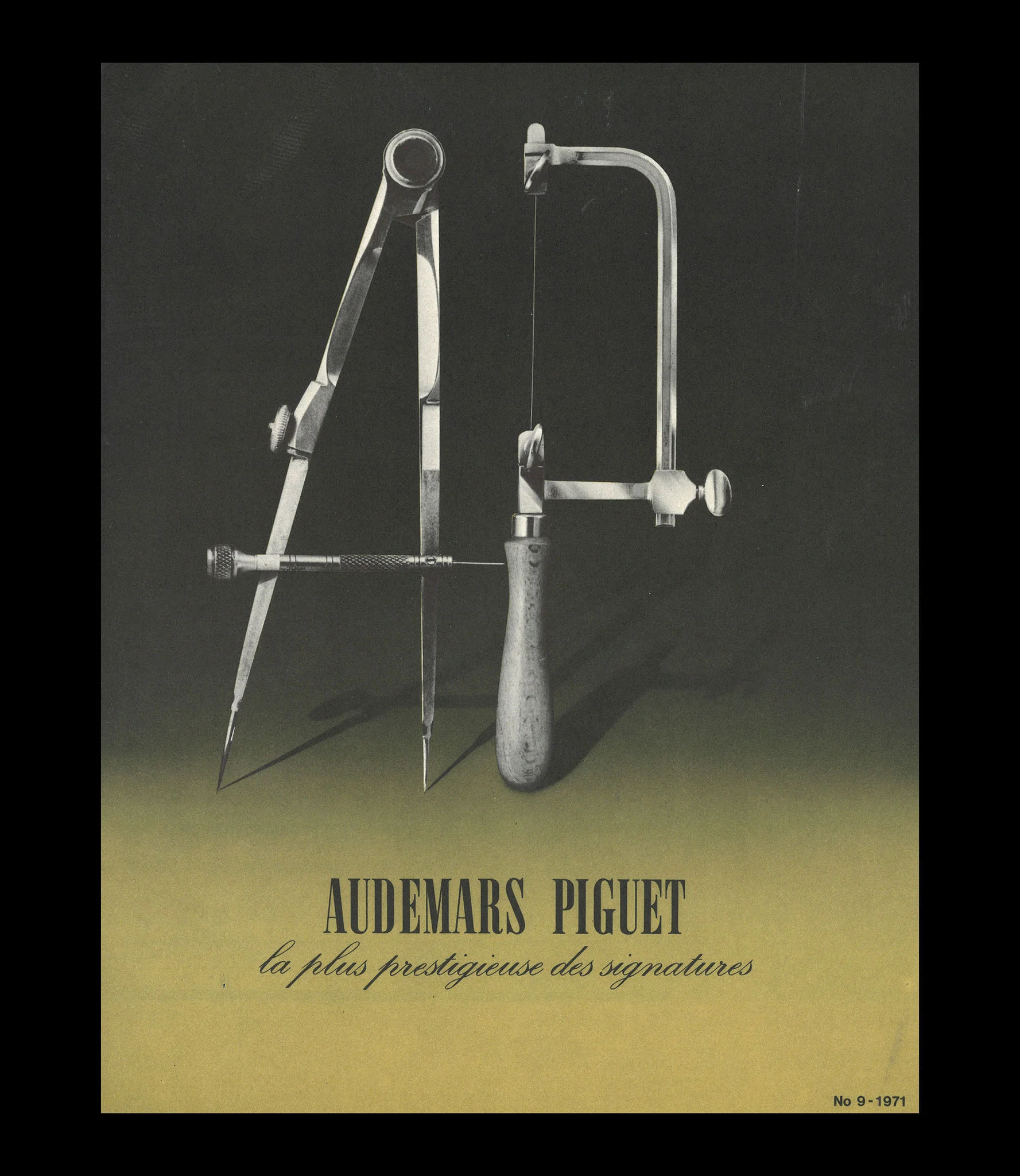
1971. Audemars Piguet advertisement. Watchmaking tools form the brand logo. Audemars Piguet Archives.
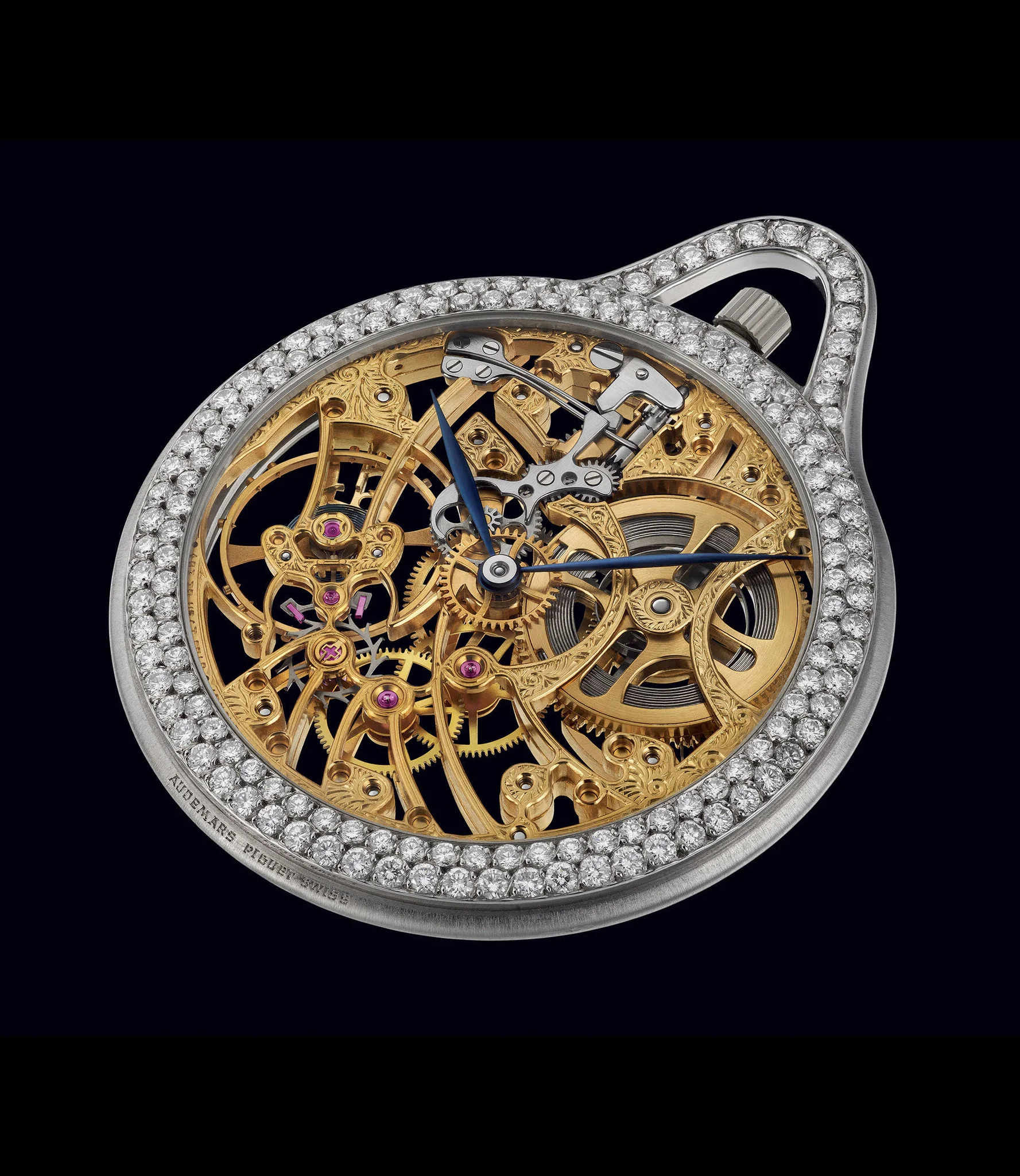
1979. Skeleton pocket watch. Brilliant-cut diamonds. Calibre 5017, movement 154096 manufactured in 1974. Sold in 1979. White gold. Model 5679. Audemars Piguet Heritage, Inv. 1730.
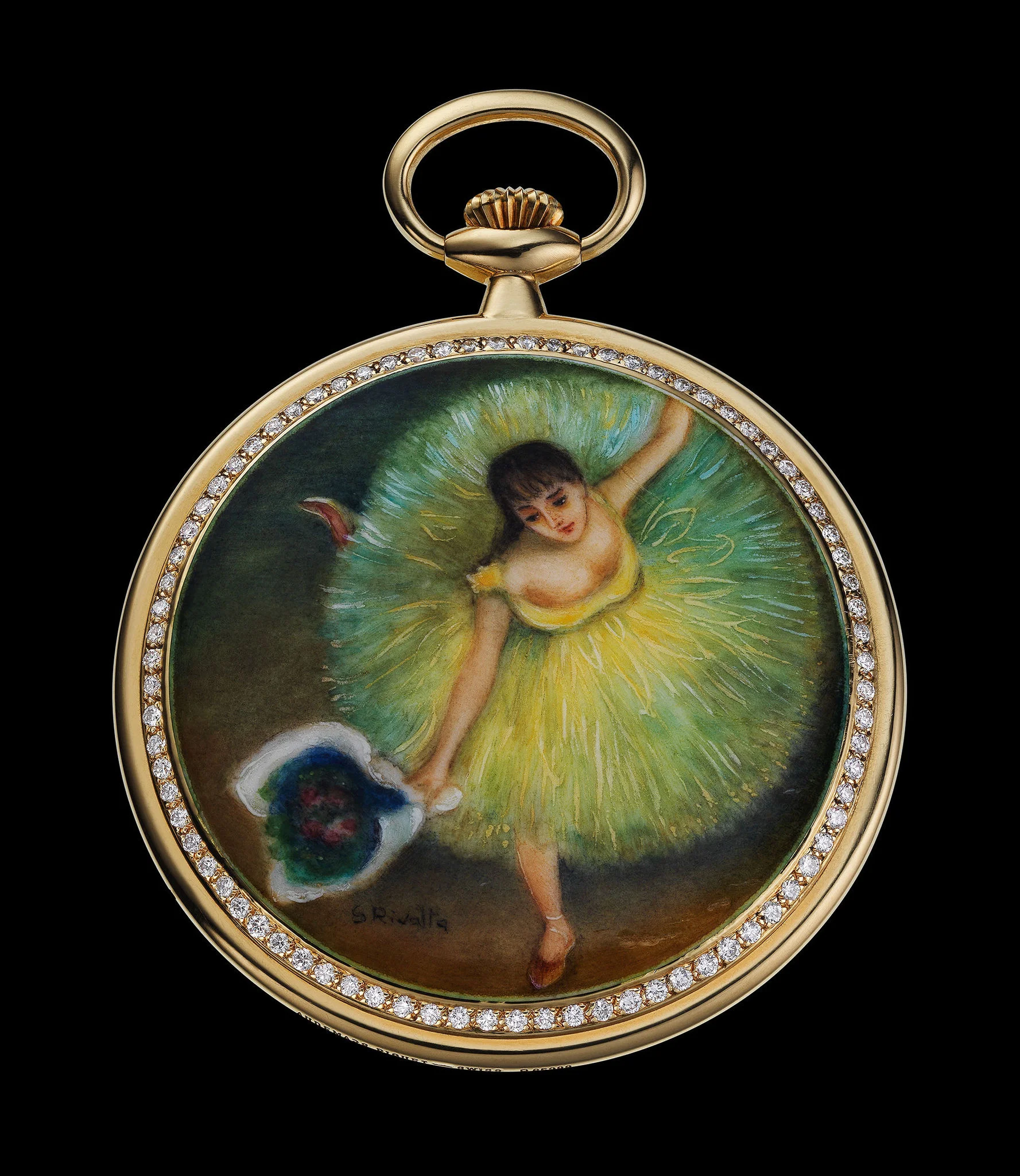
1984/89. Enamelled pocket watch. Circumference set with diamonds. Calibre 5020, movement 263928 produced in 1982. Sold in 1984. Yellow gold. Model 5715. Audemars Piguet Heritage. Inv. 2162.
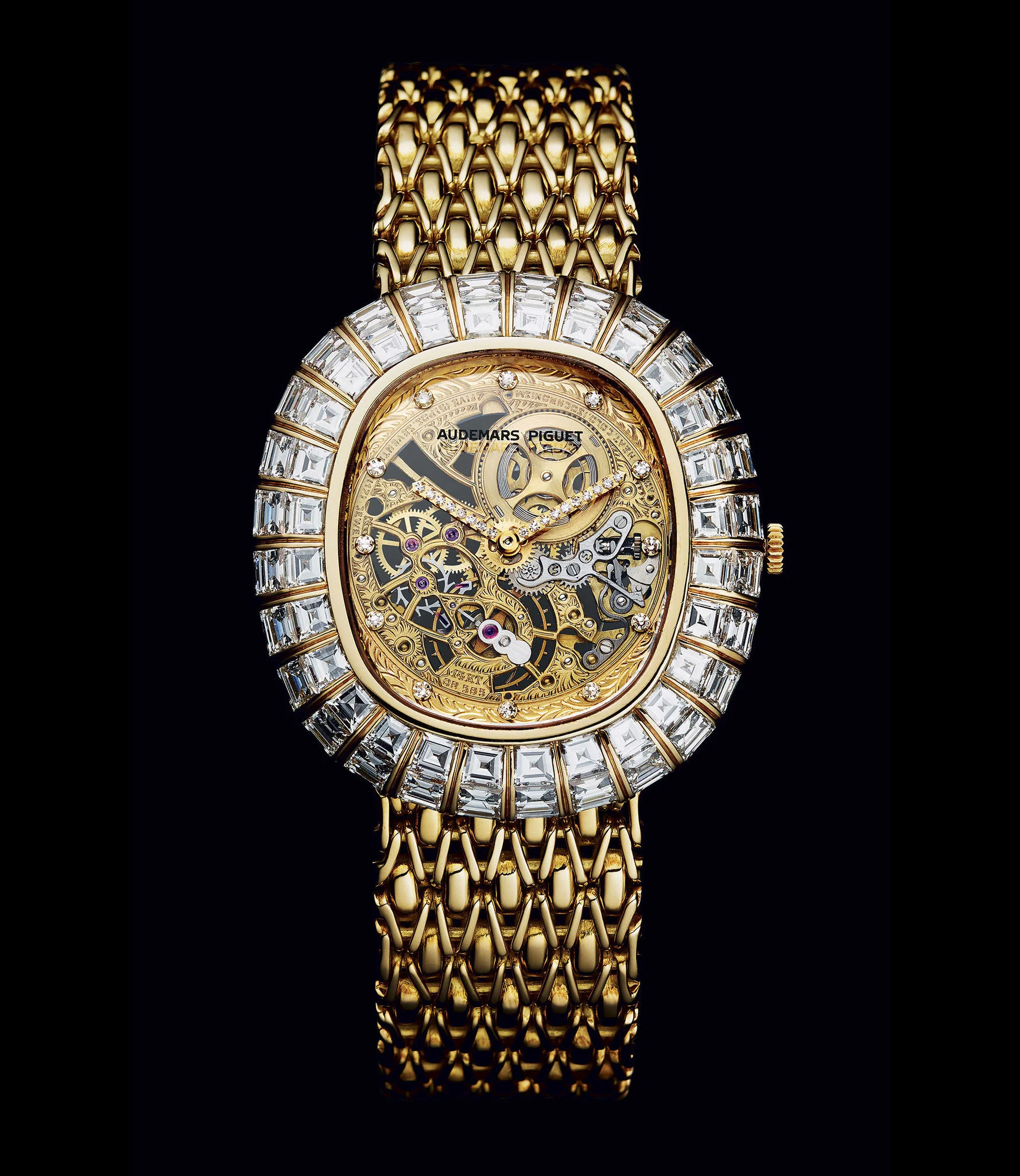
1993. Haute Joaillerie skeleton wristwatch. Bezel and hands set with diamonds. Calibre 2003SQ, movement 275389 launched in 1988. Sold in 1993. Yellow gold. Model 14771. Audemars Piguet Heritage, Inv. 1210.
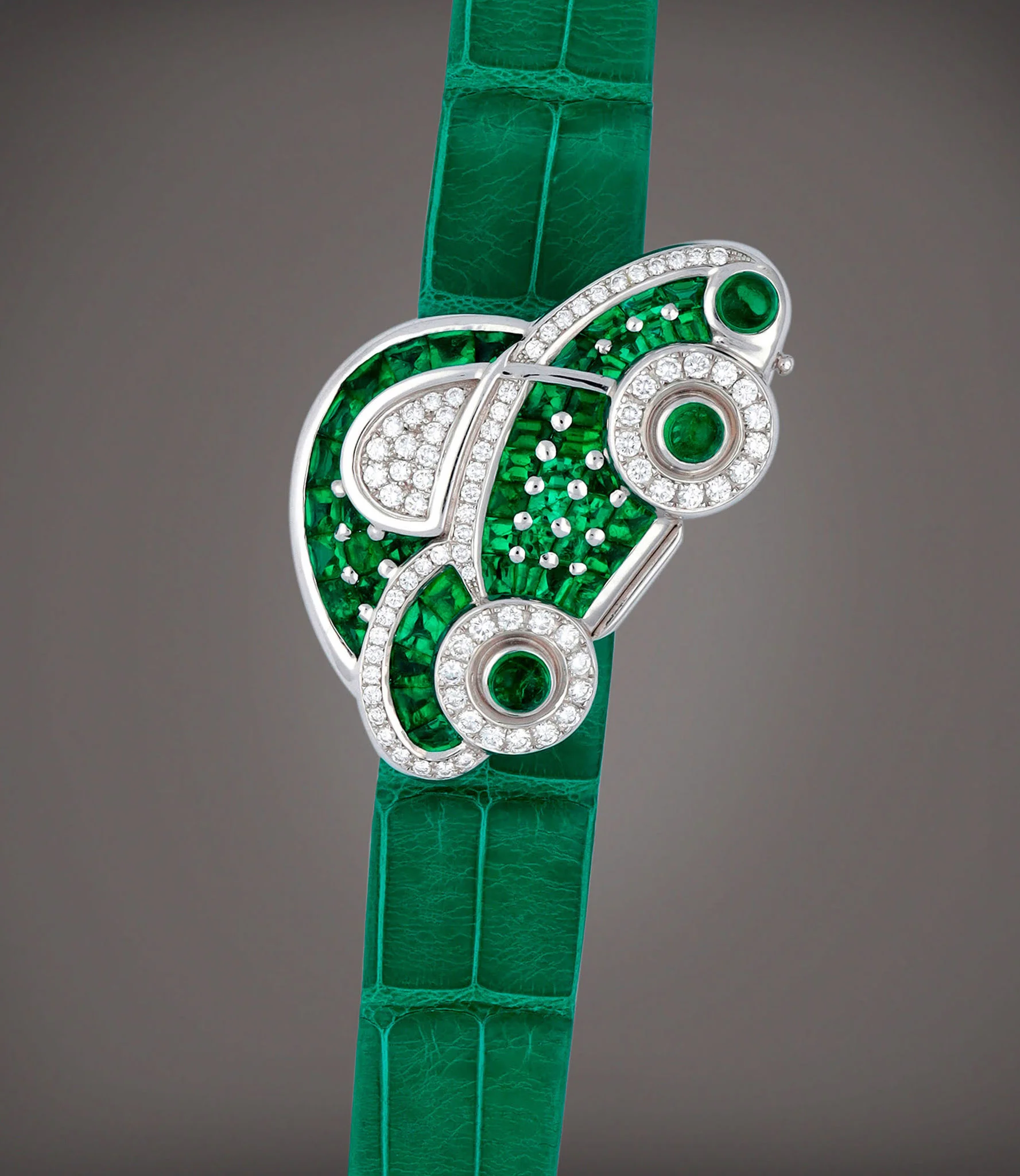
1996. One-of-a-kind Haute Joaillerie model with secret cover. Wristwatch convertible into a brooch and pendant. Set with diamonds and emeralds. Calibre 2601, movement 430787 produced in 1995. Sold in 1996. White gold. Audemars Piguet Heritage, Inv. 2277.
The revolutionary Royal Oak
The Royal Oak introduced in 1972 marked a turning point in the history of Audemars Piguet and of Swiss watchmaking in general. Created in response to demand from the Italian, French and Swiss markets and designed by Gérald Genta in one night, it was the first watch in the history of watchmaking to elevate steel to the rank of a precious materials, as well as the first to combine refinement and sport, elegance and casual chic, tradition and design in such a radical way.
Since the birth of Model 5402, the Royal Oak has been the subject of extraordinary developments. We invite you to discover the articles detailing its Tapisserie guilloché dial punctuated with 50,000 small perforations; its integrated monocoque case combining satin-brushing, polishing, octagonal, round and tonneau shapes; its tapering metal bracelet; as well as its world's thinnest selfwinding mechanism. The Royal Oak was the first Audemars Piguet model to be produced in a run of more than 1,000. More expensive than a gold watch, it offended some conservatives, yet met with an enthusiastic response from the moment it was launched in April 1972.
Across just over half a century, the Royal Oak has led to the creation of over 800 different models, including the Royal Oak Offshore and Royal Oak Concept variants, extra-thin, calendar, chronograph, tourbillon and jewellery models, in materials as diverse as gold, platinum, titanium, tantalum, ceramic and BMG. It has inspired numerous collections throughout the watch industry.
In 1993, designer Emmanuel Gueit gave it a facelift by creating the Royal Oak Offshore that ushered in the era of oversized watches. In 2002, Claude Emmenegger revisited it by creating a high-tech variant that gave rise to the Royal Oak Concept collection, a platform for innovation that would notably help revive chiming watches.
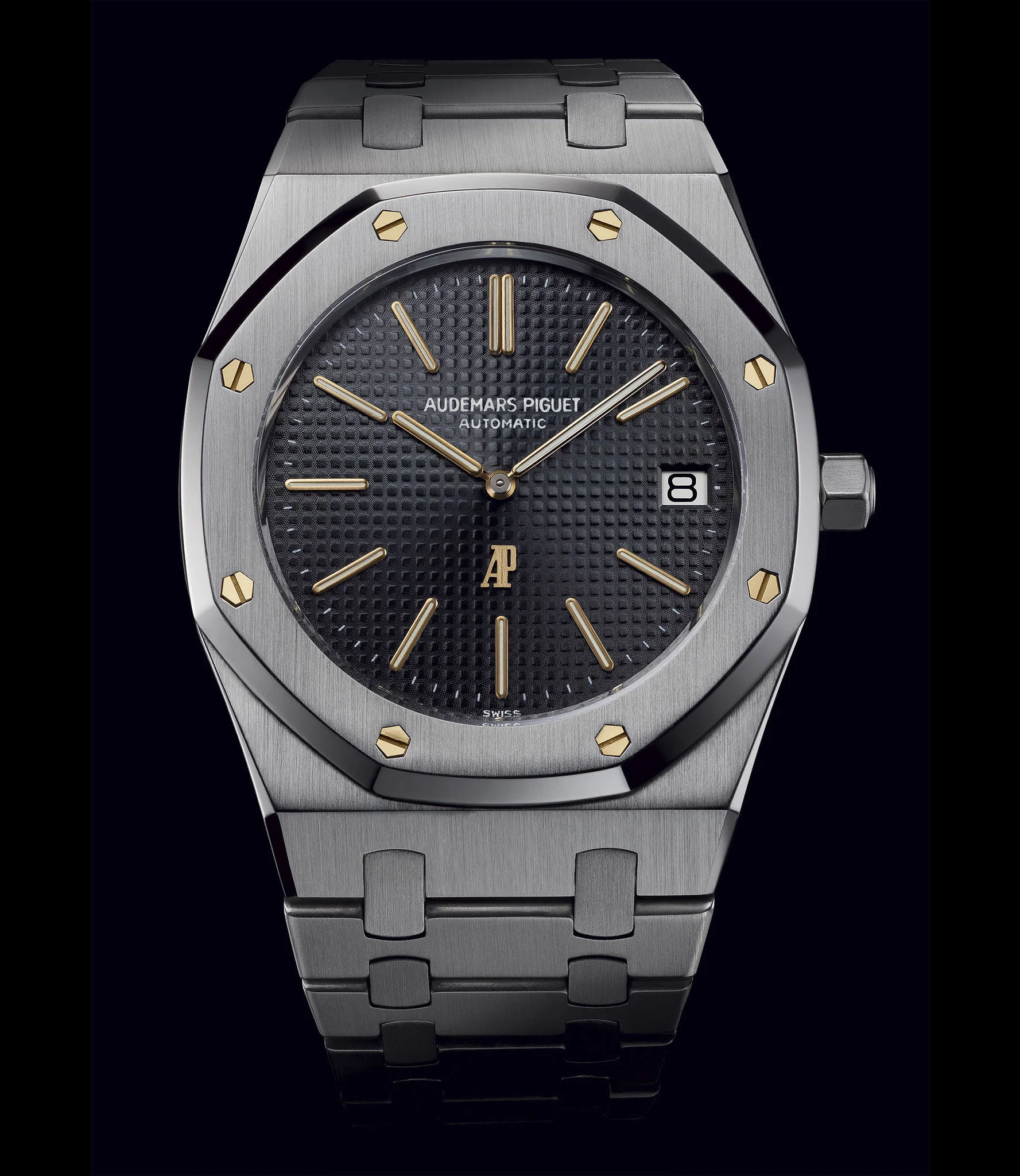
1972. Royal Oak 5402ST No. A26. Calibre 2121, Movement 127059. Bracelet 344, dial with T21 Tapisserie pattern. Steel 39 mm case 67026. Sold to Gameo in 1972. Audemars Piguet Heritage, Inv. 365.

Gérald Genta (1931–2011). A brilliant designer and founder of the eponymous brand, Gérald Genta designed many models that have become legendary, including Audemars Piguet's Royal Oak (1972), Patek Phillipe's Nautilus (1976) and Bulgari Bulgari (1977). Photograph taken in the 2000s. Gérald Genta Heritage Association.
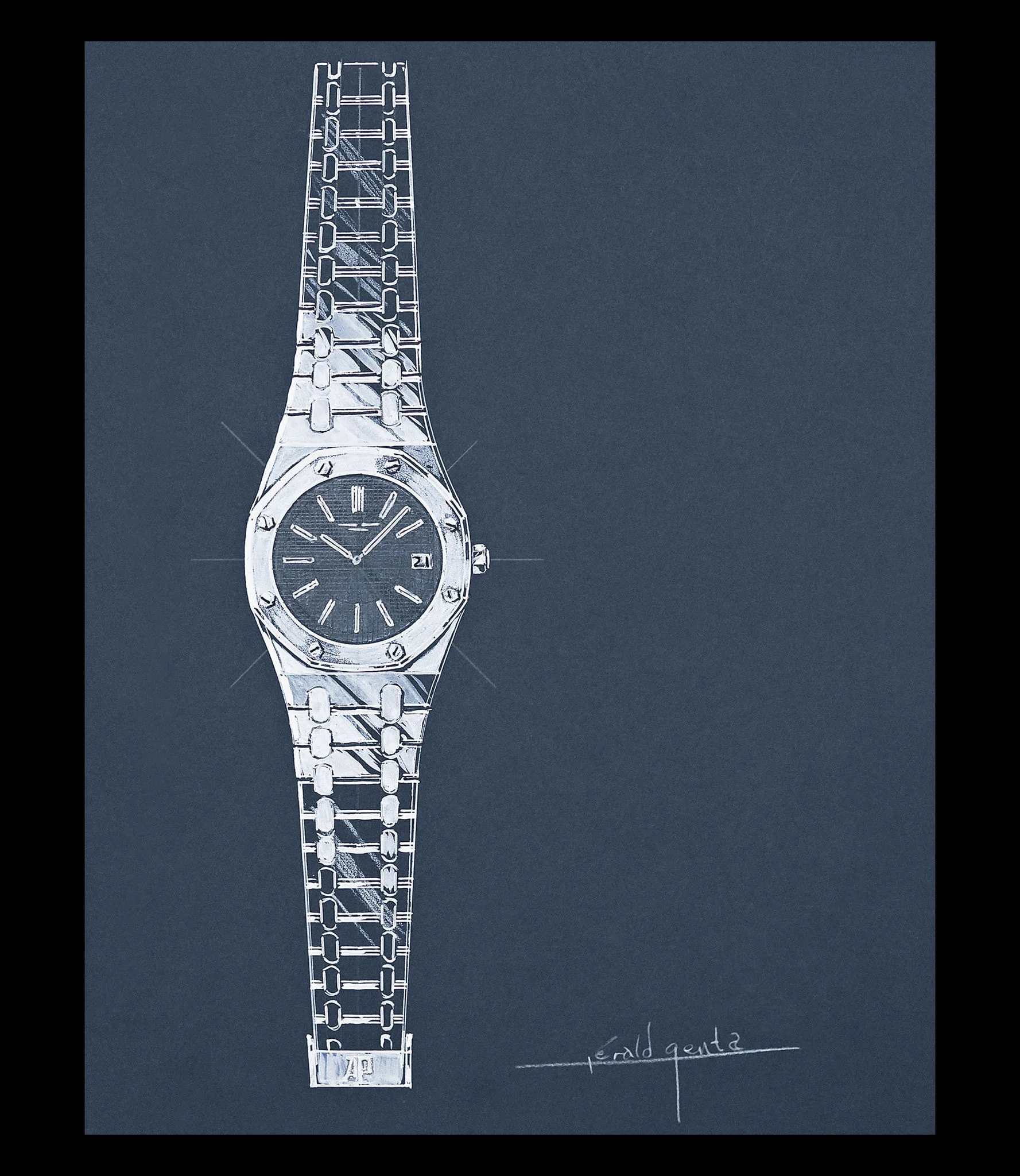
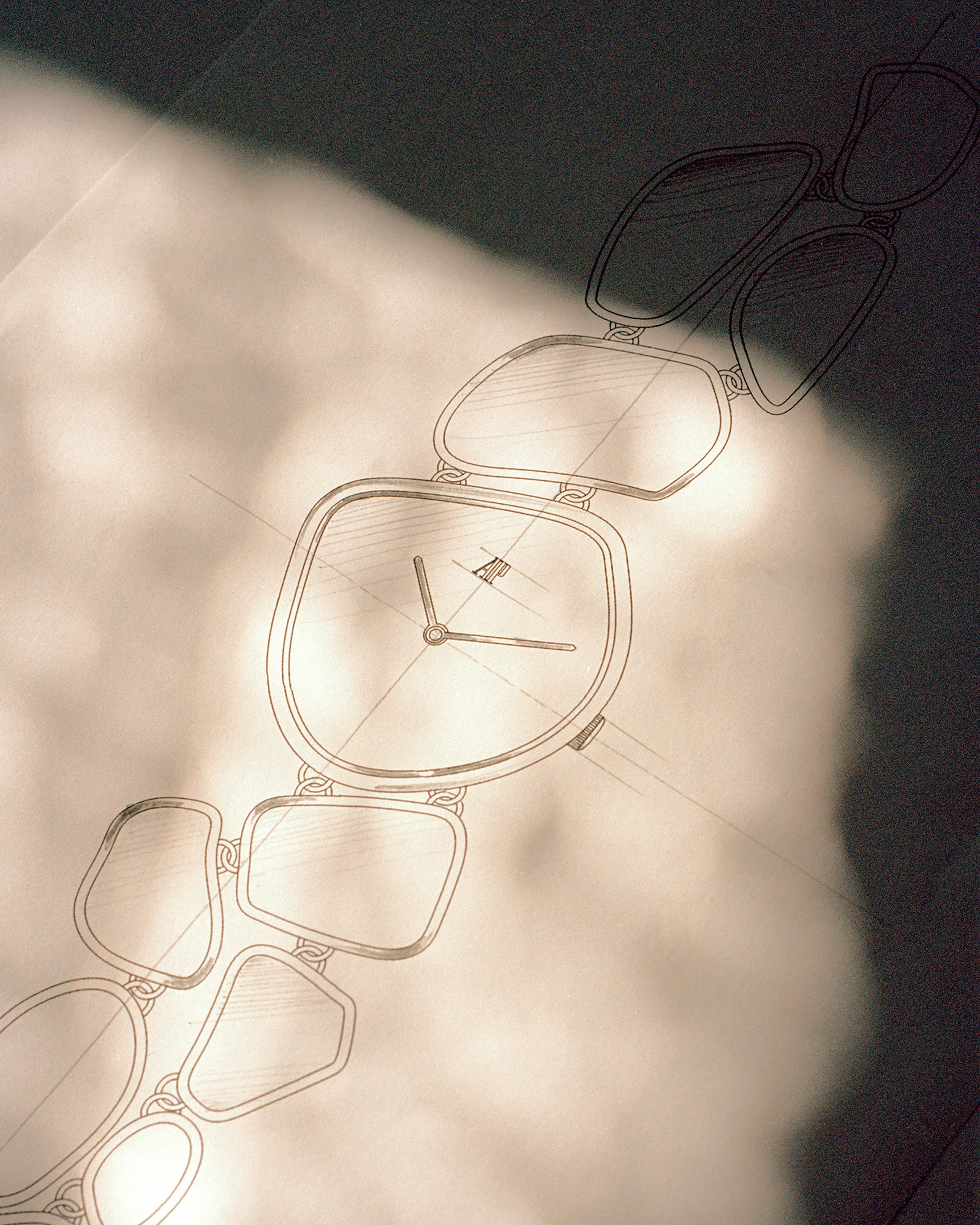
April 1970. First sketch of the Royal Oak. Drawn at Audemars Piguet's request by the designer Gérald Genta during the night of 10 to 11 April 1970, It already features all the watch’s essential characteristics. Gouache and pencil on card. Audemars Piguet Archives.
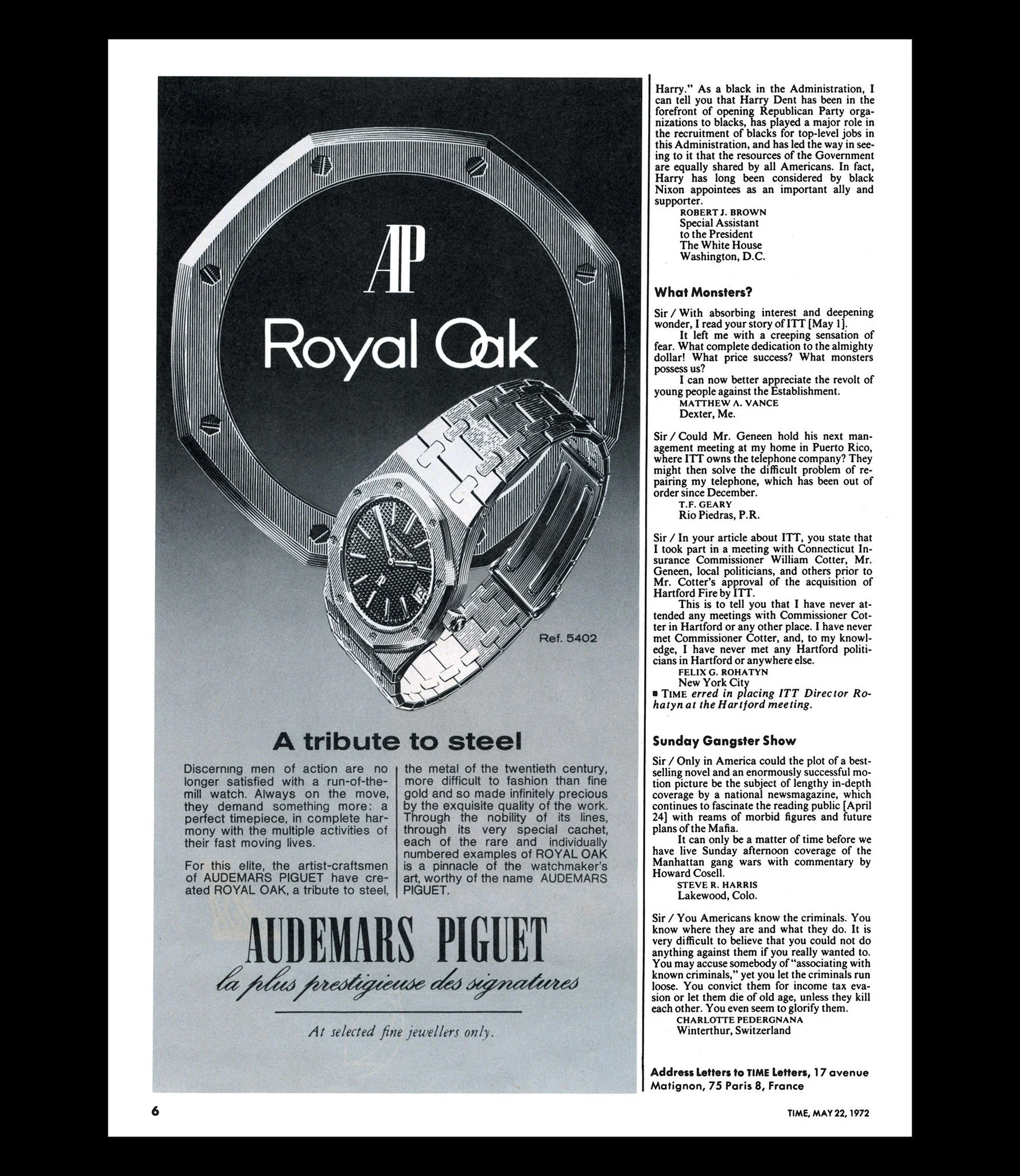
1972. Royal Oak advertisement. Audemars Piguet Archives.
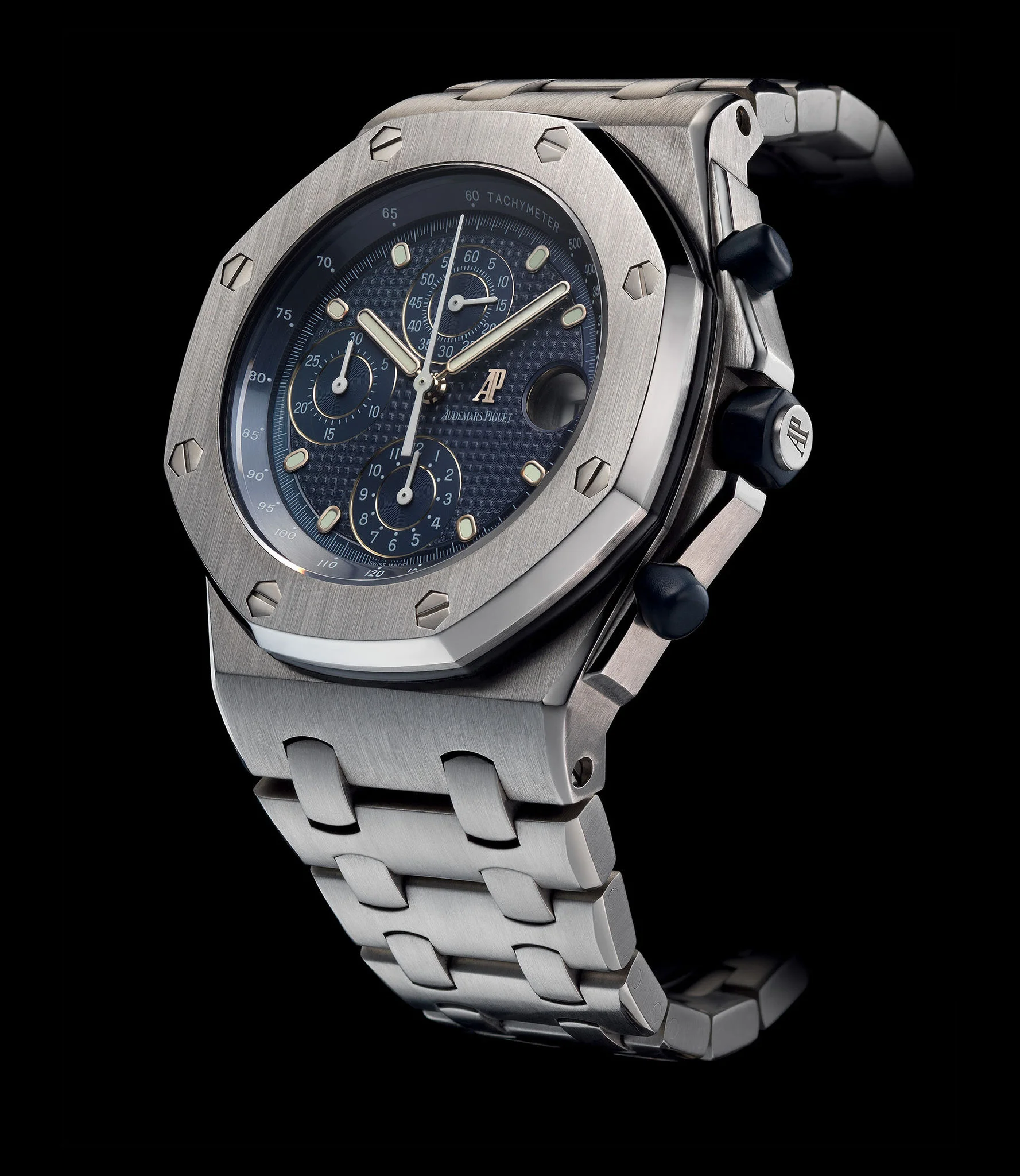
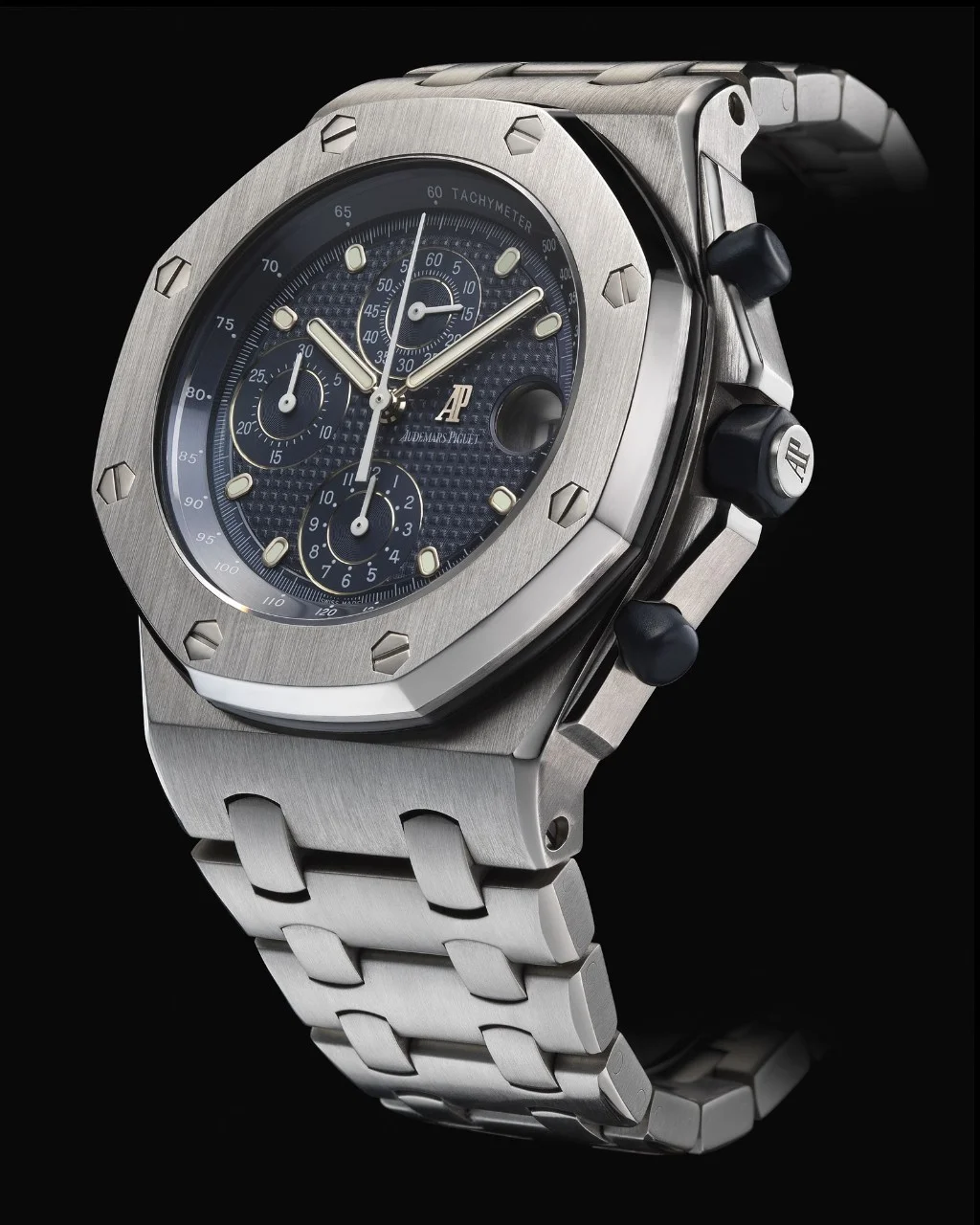
1993. Royal Oak Offshore 25721 No. 32. Selfwinding chronograph, blue Petite Tapisserie dial. Like the first 100 25721s, this watch has a Royal Oak engraving on the caseback, with no indication of the word Offshore. Calibre 2126/2840, movement 369368. Steel case measuring 42 mm x 14.05 mm, no. D23775. Sold in Italy on 13 December 1993. Audemars Piguet Heritage, Inv. 1382.
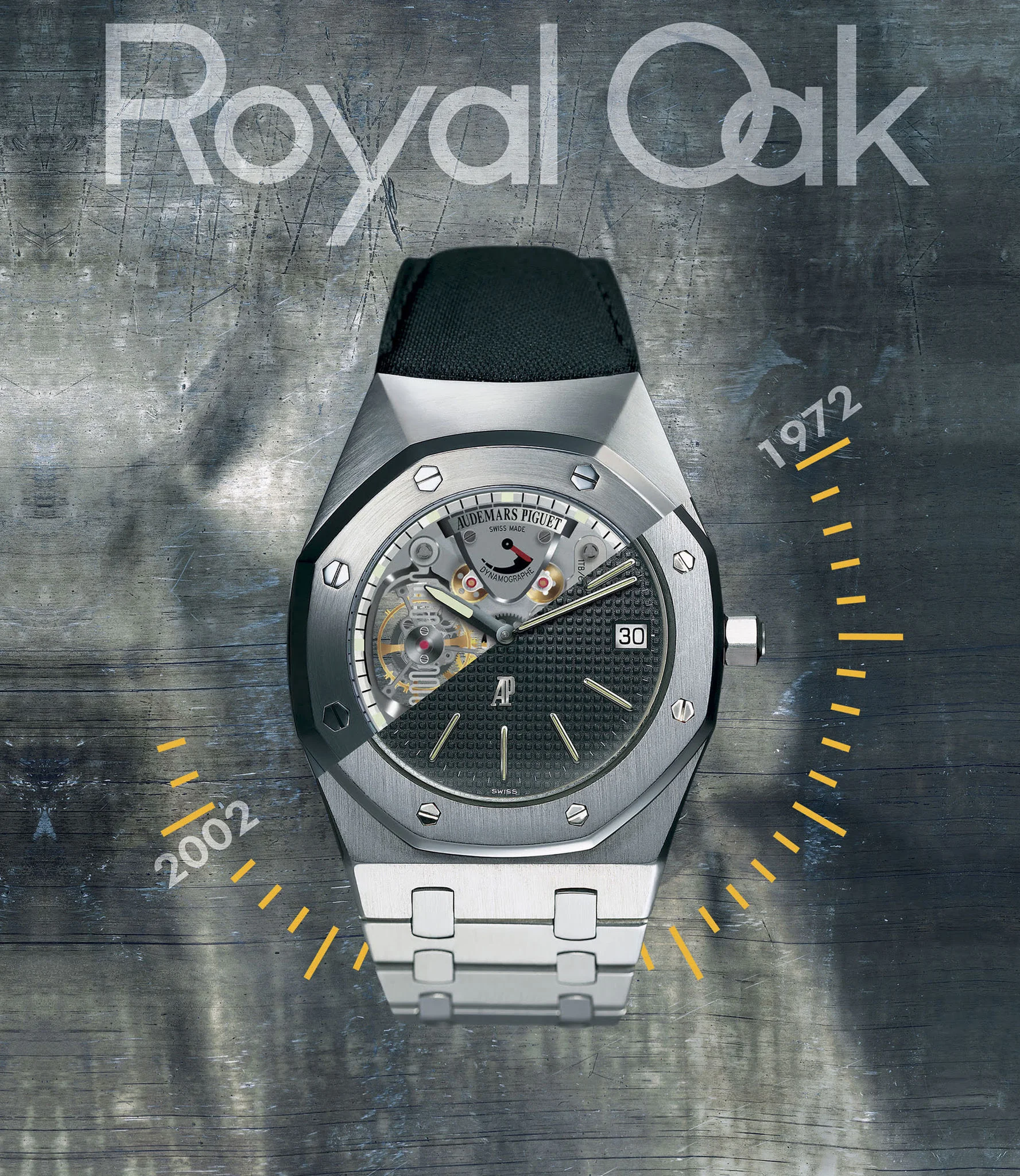
This image, taken in 2002, combines the aesthetics of the first Royal Oak with those of the Royal Oak Concept, created to mark the 30th anniversary of the collection. Audemars Piguet Archives.
1978, perpetual calendar
At the height of the quartz crisis, when watchmaking workshops in the Vallée de Joux were closing down one after the other, an Audemars Piguet watchmaker named Michel Rochat, known as "le Mic", launched a project amid complete secrecy. With the help of Jean-Daniel Golay, founder of the Technical Department in 1973, and Wilfred Berney, founder of the After-Sales Service in 1967, along with support from the Vallée de Joux watchmaking school, they developed an extra-thin perpetual calendar mechanism for selfwinding wristwatches.
When the first models were ready, the three men showed their prototype to Georges Golay. The project was appealing: Calibre 2120/2800 was the world's thinnest selfwinding perpetual calendar movement. Unfortunately, no one knew whether there was still a clientele for such creations. Almost no brand at the time was producing perpetual calendar wristwatches in series, yet Georges Golay took a gamble by ordering the production of 159 units, a very ambitious figure given that Audemars Piguet had only made 12 perpetual calendar wristwatches by that time.
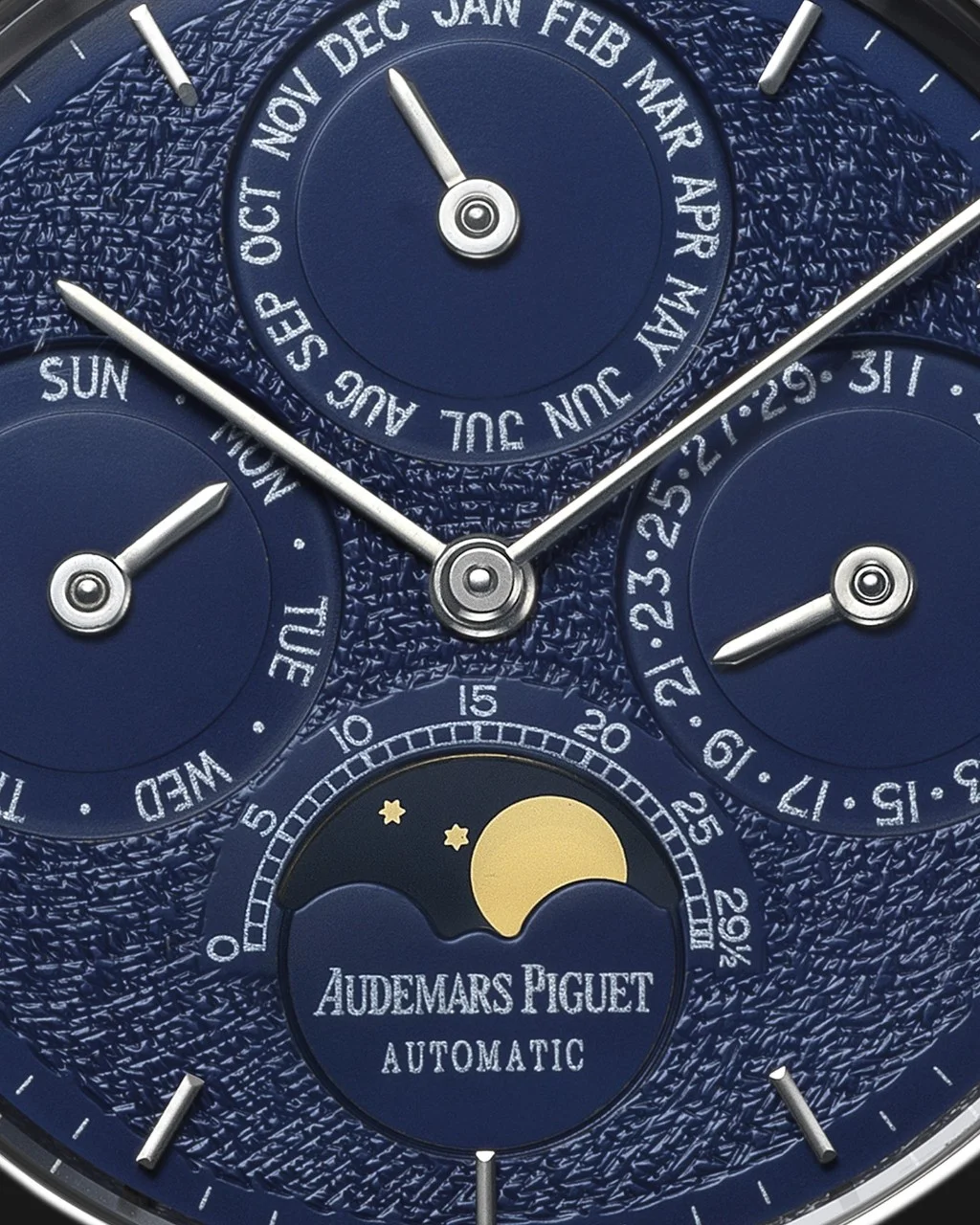
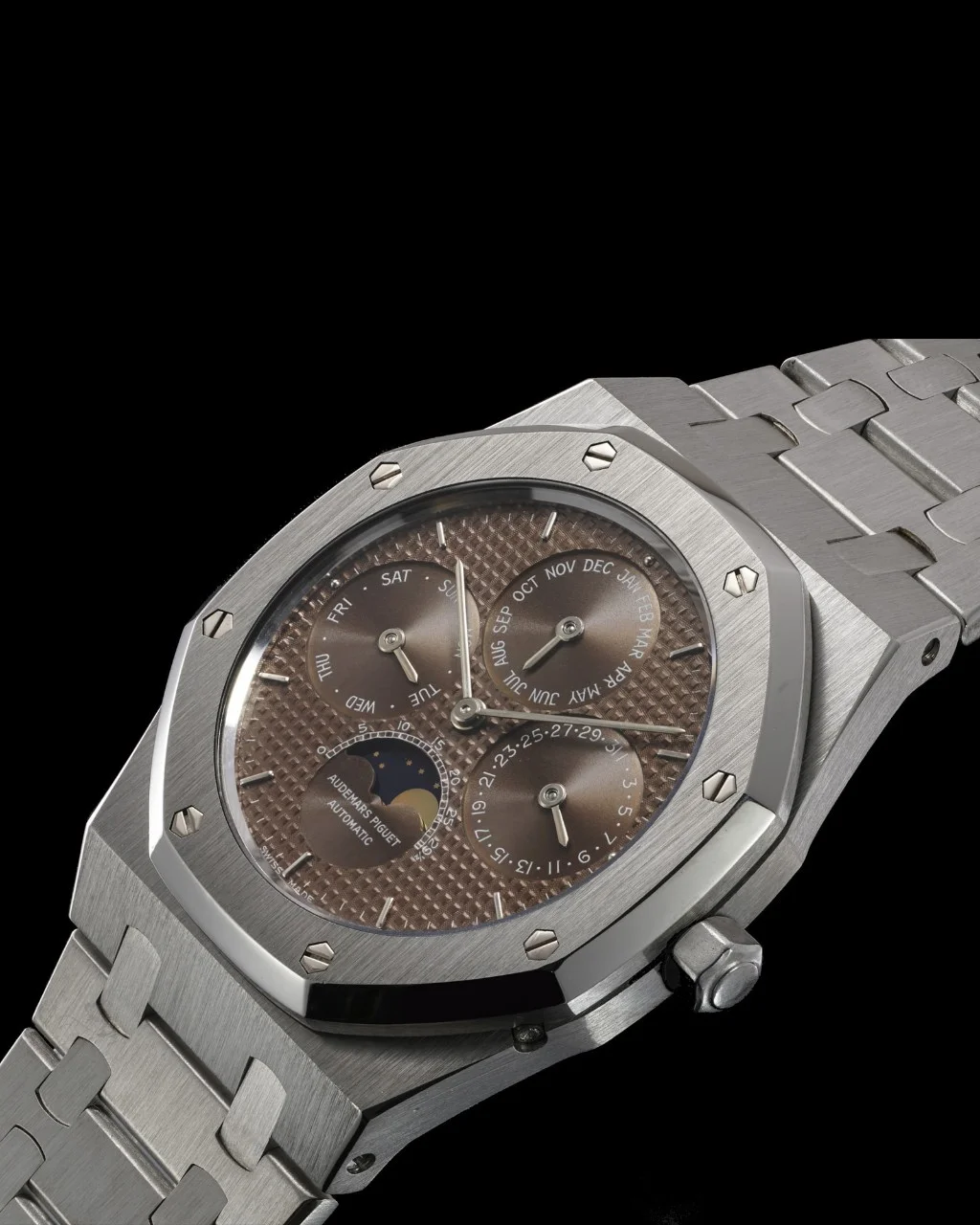
It was a master stroke that garnered unhoped-for success and over the subsequent 15 years, more than 7,000 watches representing 70 different models were equipped with this mechanism. The most important was Model 5548, with a run of 2,183. Royal Oak perpetual calendar watches were born in 1984 and their story is told here. Audemars Piguet’s selfwinding perpetual calendar demonstrated that there was a future for complication-based Haute Horlogerie.
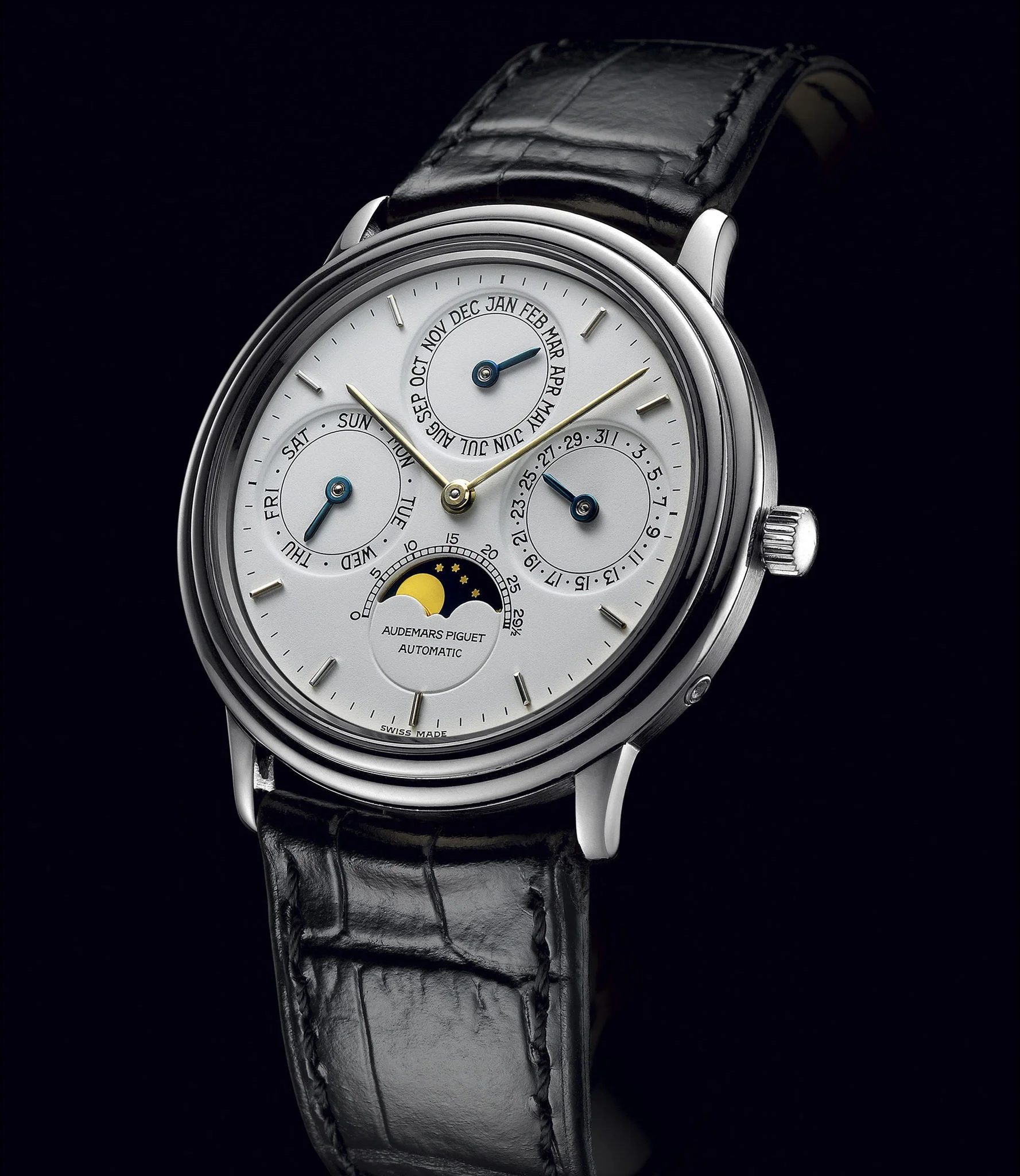
1987. Perpetual calendar wristwatch. Introduced in 1978, Calibre 2120/2800 contained in this 1987 watch has remained the world’s thinnest selfwinding movement with perpetual calendar and central rotor for 40 years. Movement 286311 launched in 1985. Sold in 1987. White gold. Model 25548B. Audemars Piguet Heritage, Inv. 1584.
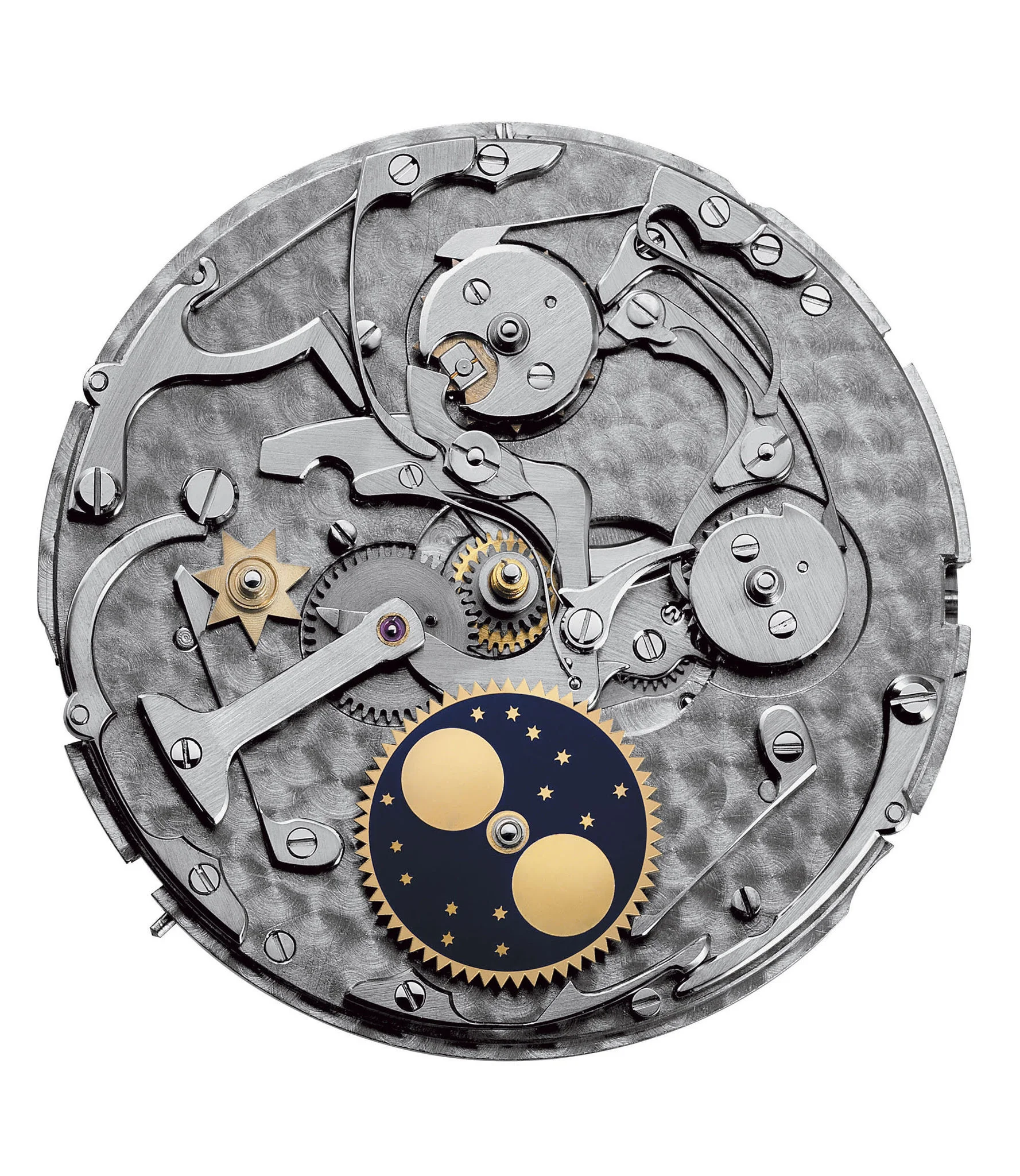
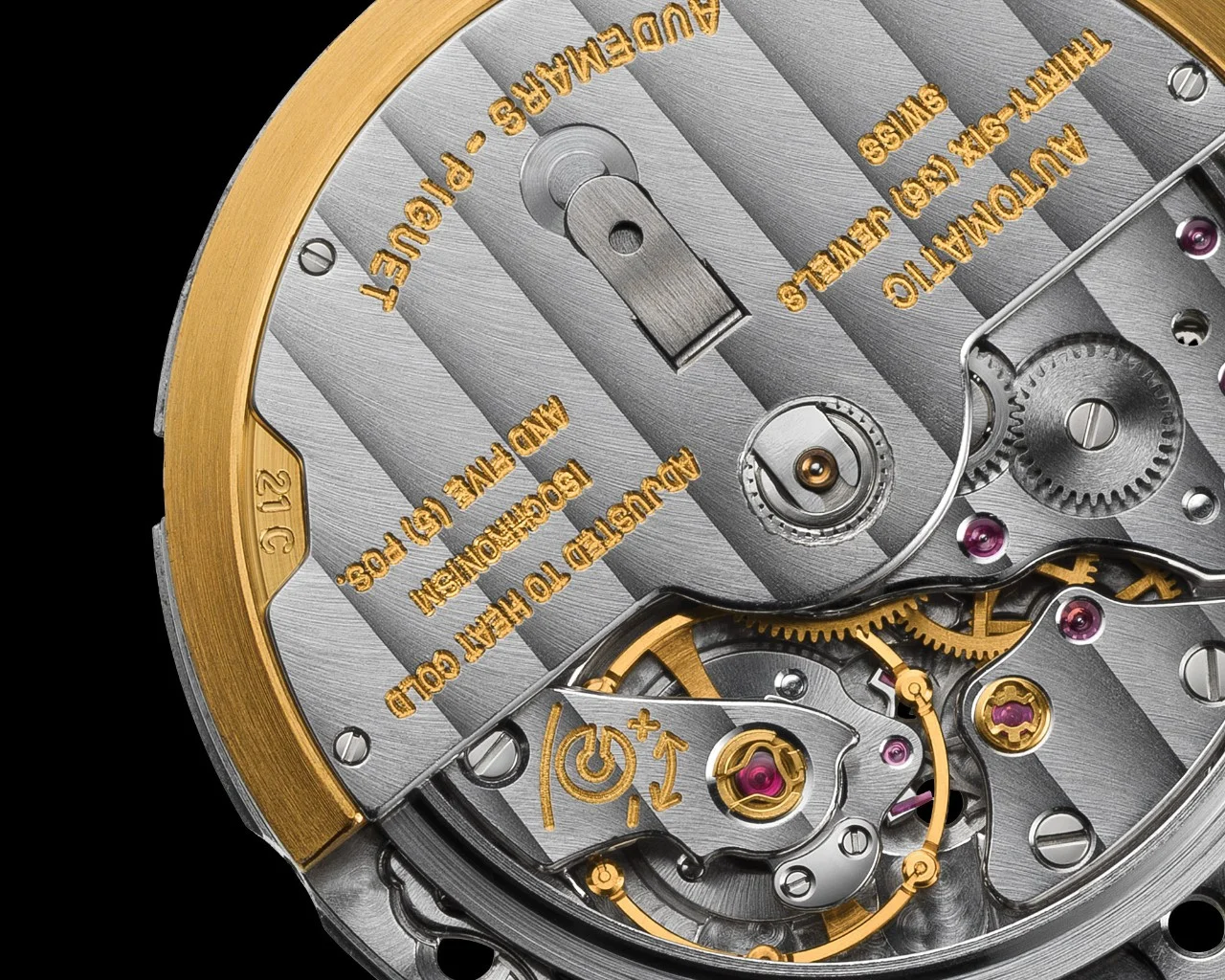
Dial-side view of Calibre 2120/2800 (1978–1996). The thinnest selfwinding perpetual calendar movement of its time (3.95 mm): day, date, month, moon phases. Movement 386456, produced in 1995. Audemars Piguet Heritage, Inv. 2010.
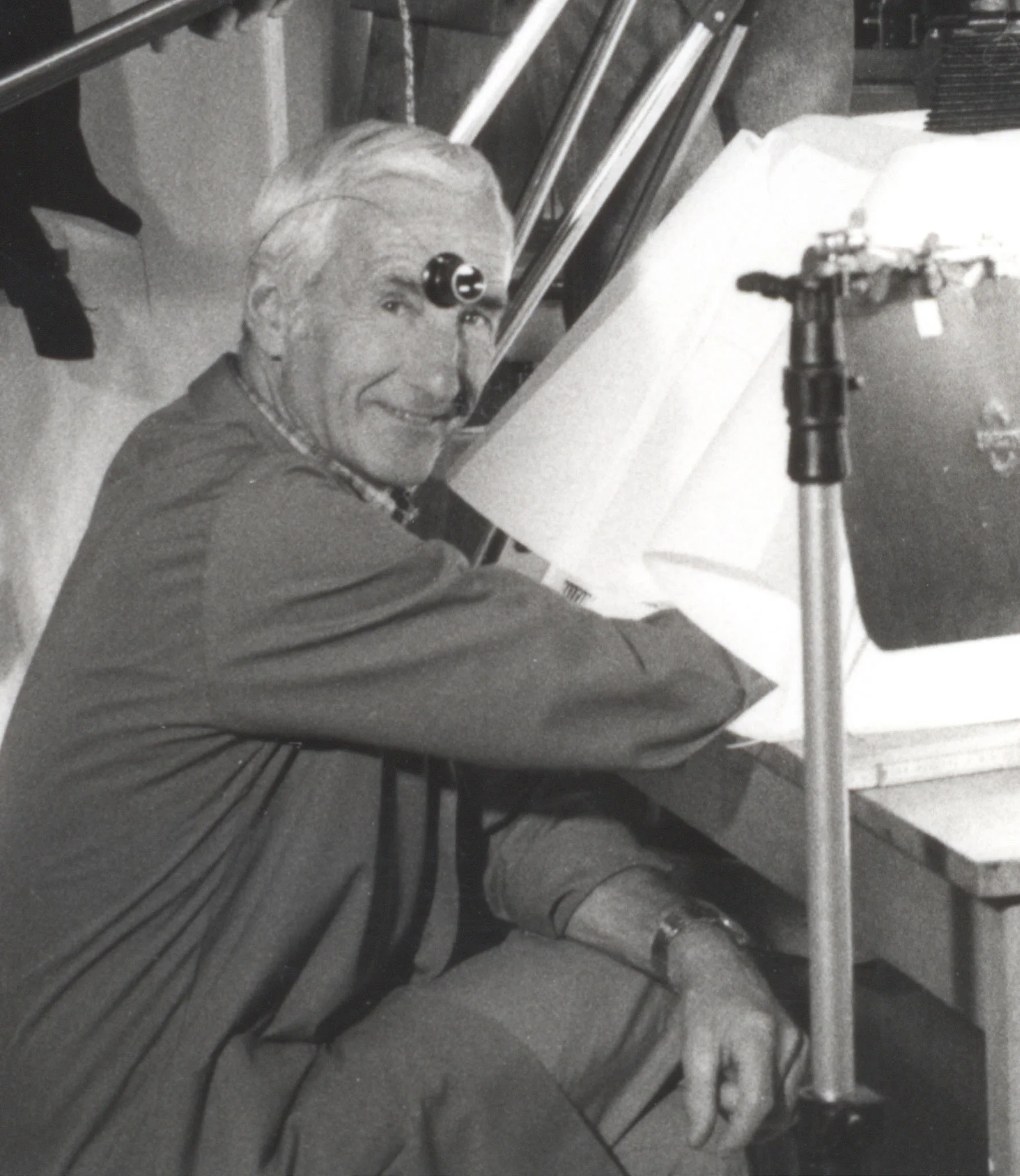
Michel Rochat, known as "le Mic", was behind the development of perpetual calendar Calibre 2120/2800, launched in 1978. Audemars Piguet Archives.
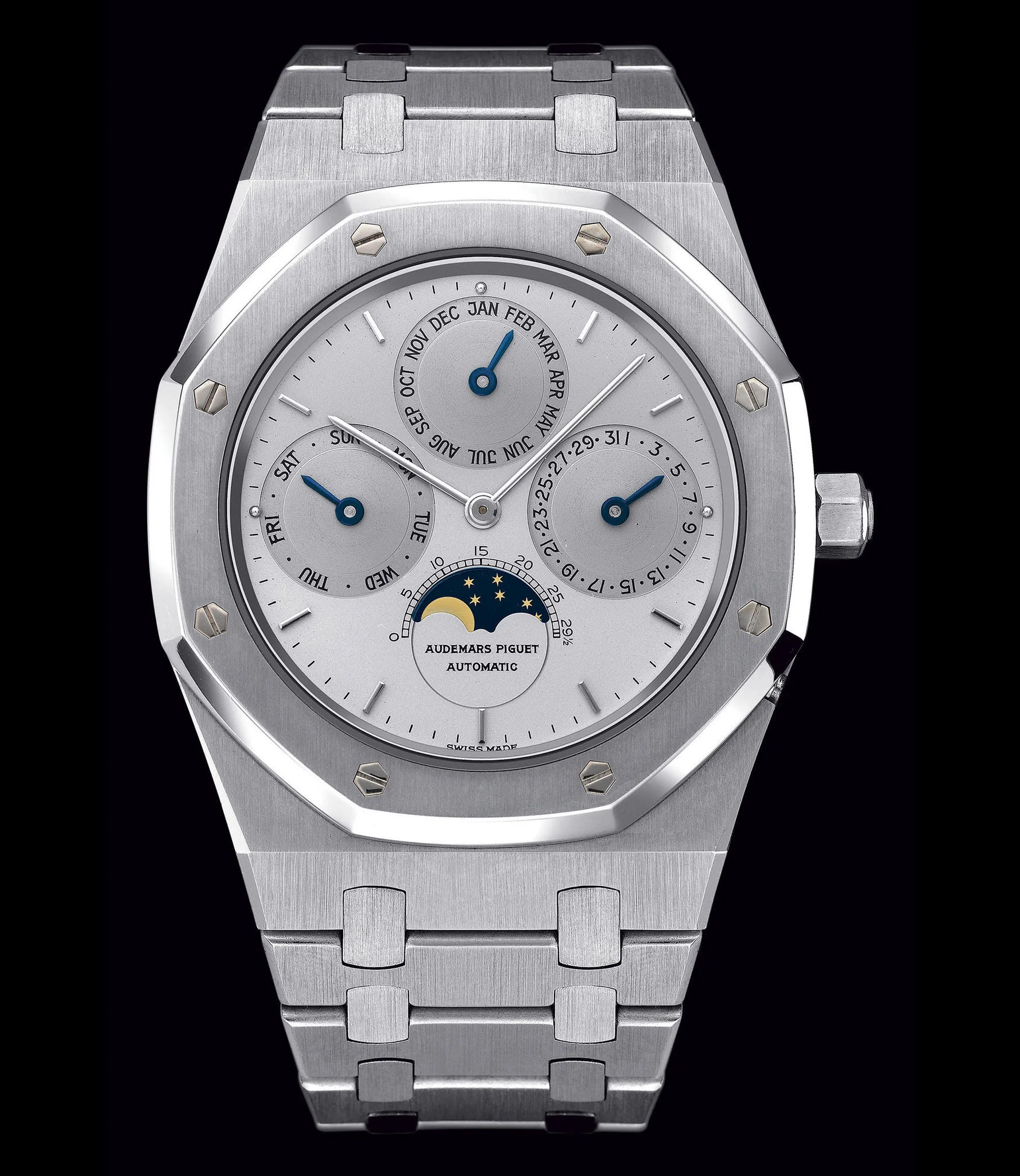
Circa 1984. Royal Oak Perpetual Calendar. Perpetual calendar: day, date, month and moon phases. Ultra-thin Calibre 2120/2800 (3.95 mm). Bracelet 344. Silver-toned dial. 39 mm case D1486, no. 37 (the first 50 25554ST cases were derived from Series D, Model 5402ST). Prototype without movement presented at the launch of Model 25554. Audemars Piguet Heritage. Inv. 455.
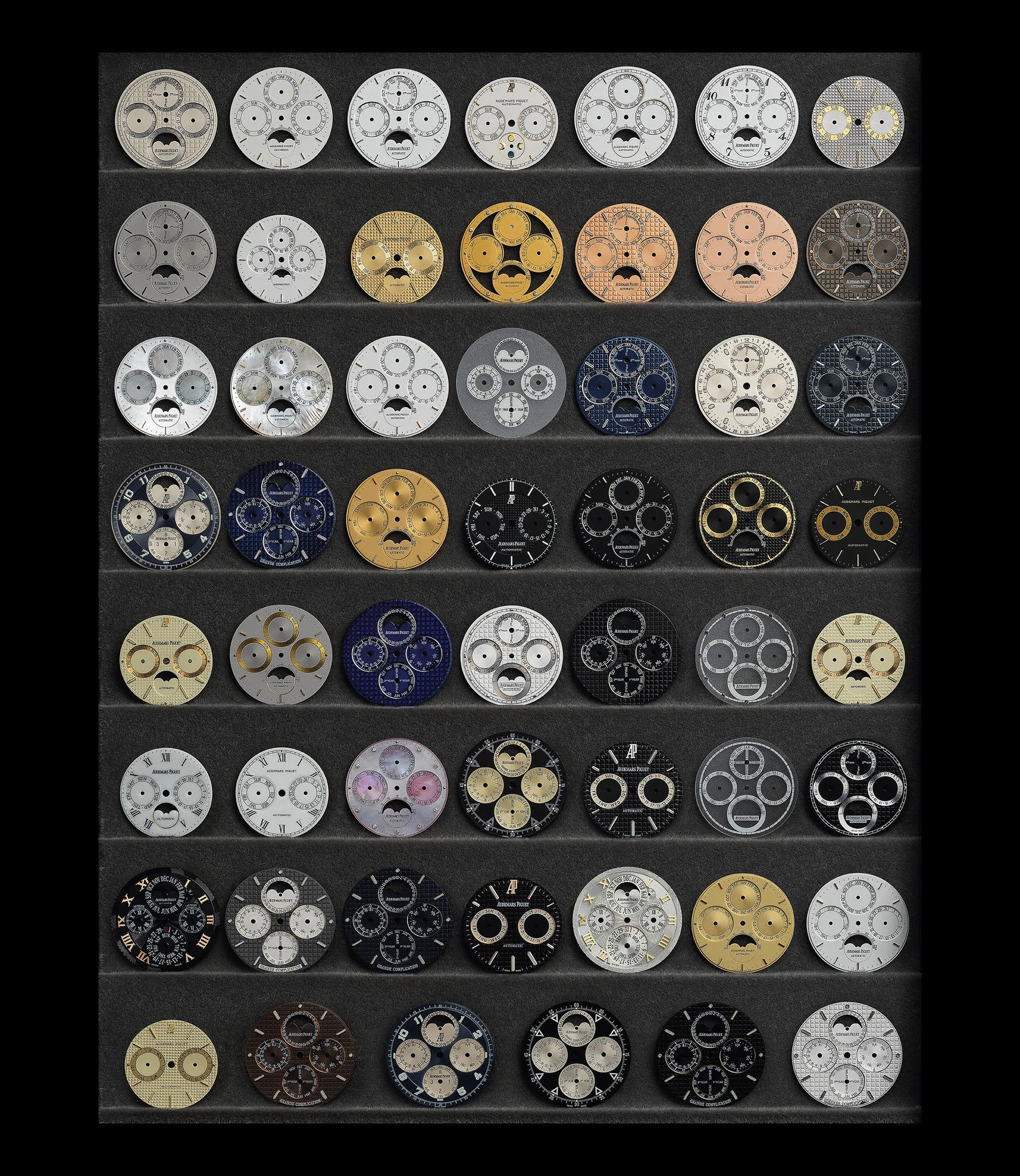
Library of Audemars Piguet calendar wristwatch dials assembled by Geneva-based dial-maker Stern between 1970 and 2000. Audemars Piguet Heritage.
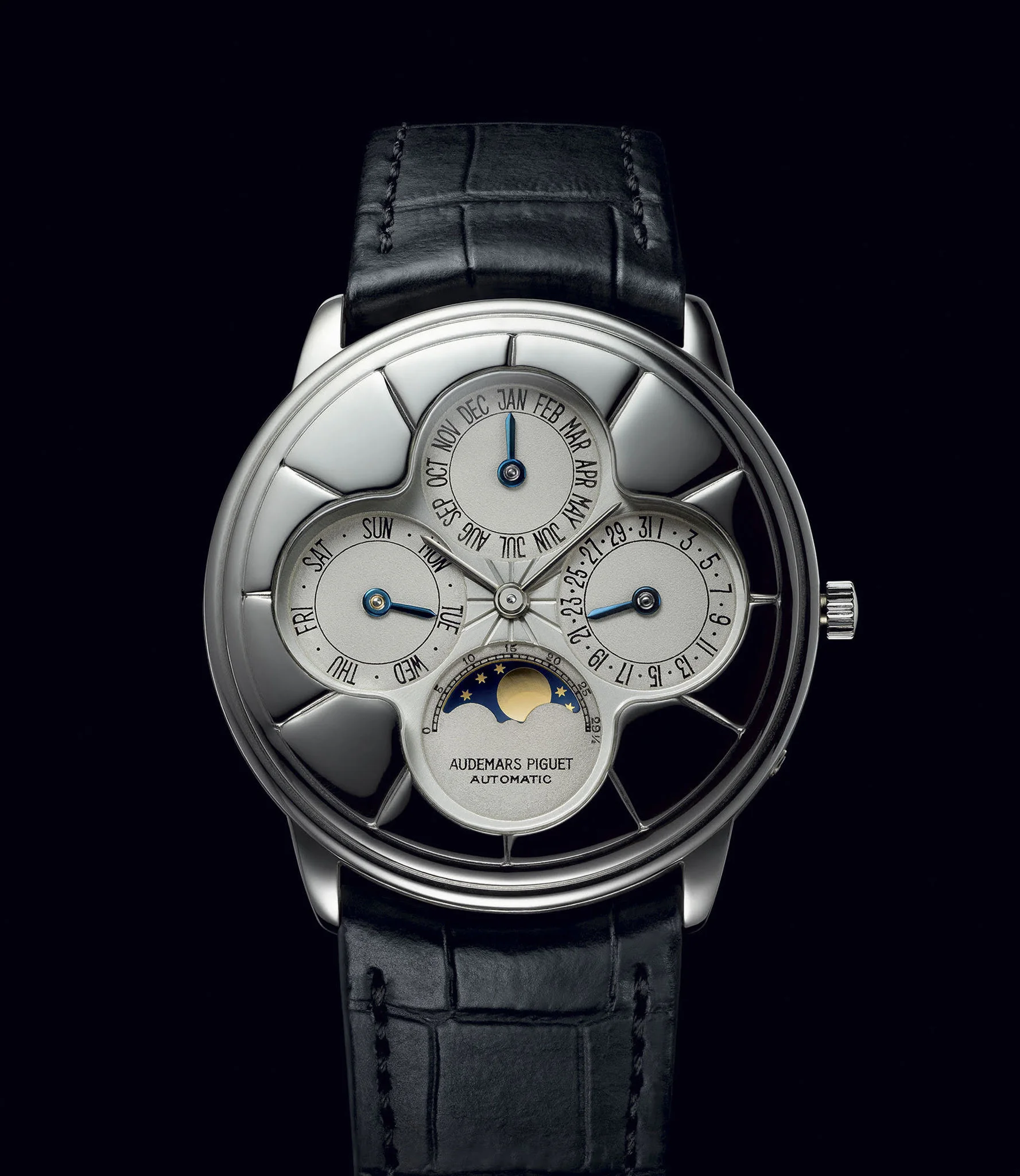
1990. Perpetual calendar wristwatch. Clover-shaped exterior Calibre 2120/2800. 324551 movement produced in 1989. Sold in 1990. Turntable. Model 25681. Audemars Piguet Heritage, Inv. 1125.
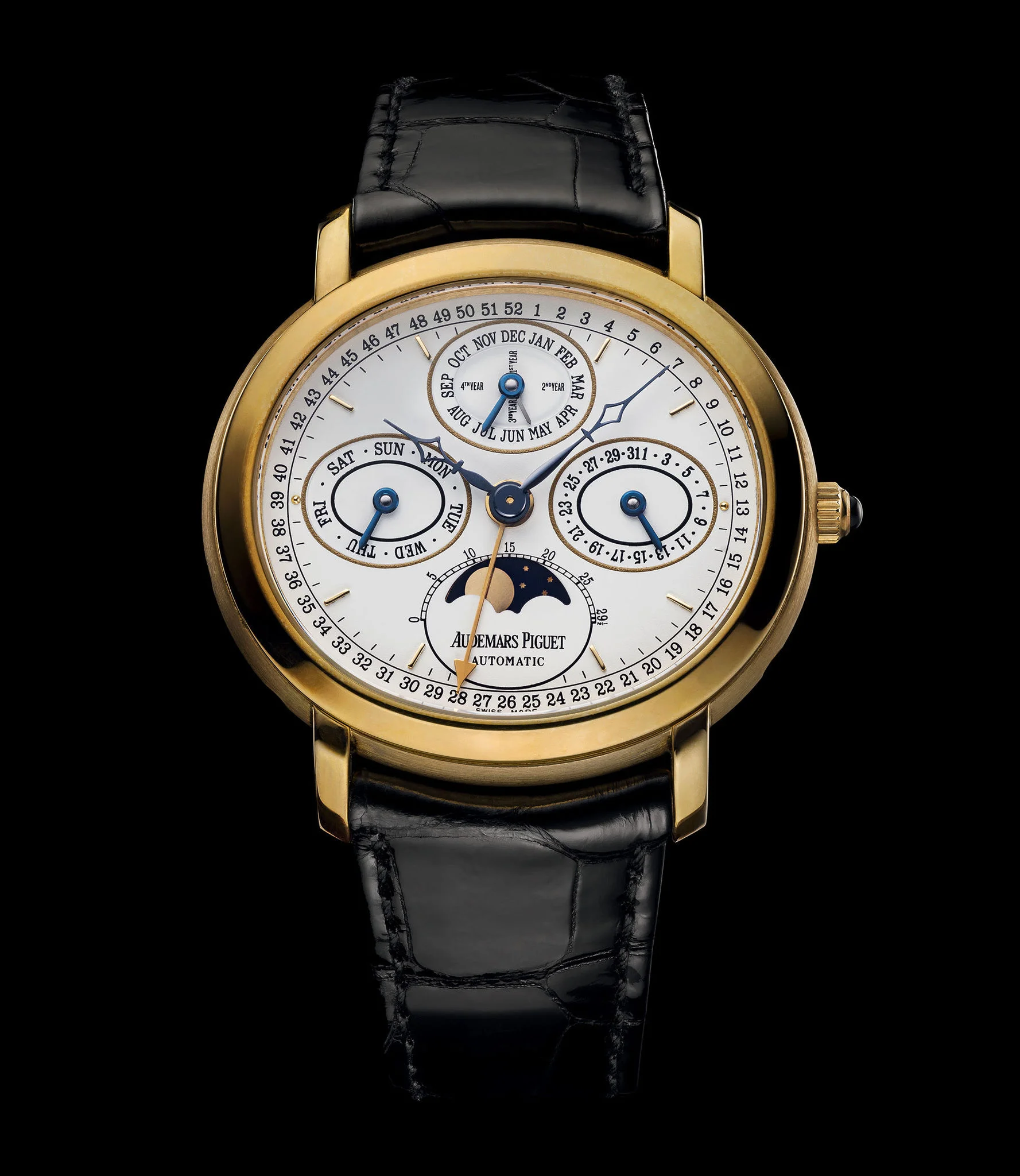
1995. Millenary Perpetual Calendar. Leap-year indication. Calibre 2120/2801. Mock-up/Prototype without movement/Non-functional reproduction/model??. Yellow gold. Model 25777. Audemars Piguet Heritage, Inv. 481
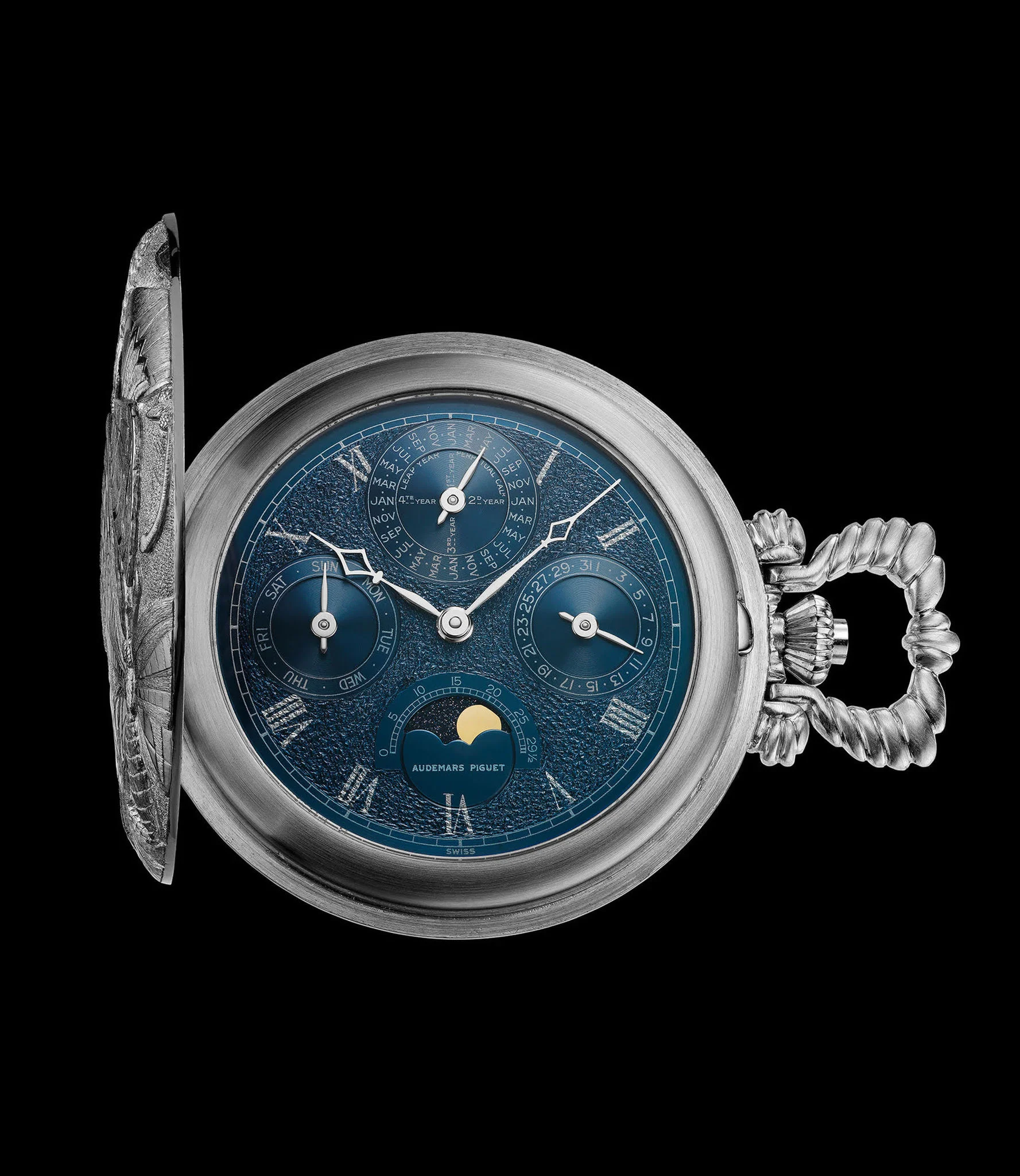
2000. Perpetual calendar pocket watch. One-of-a-kind 125th anniversary piece. Tuscany blue dial, caseback engraved with butterflies. Calibre 5020/2819, movement 366940 produced in 1996. Sold in 2000. Platinum. Model 12501. Audemars Piguet Heritage, Inv. 971.
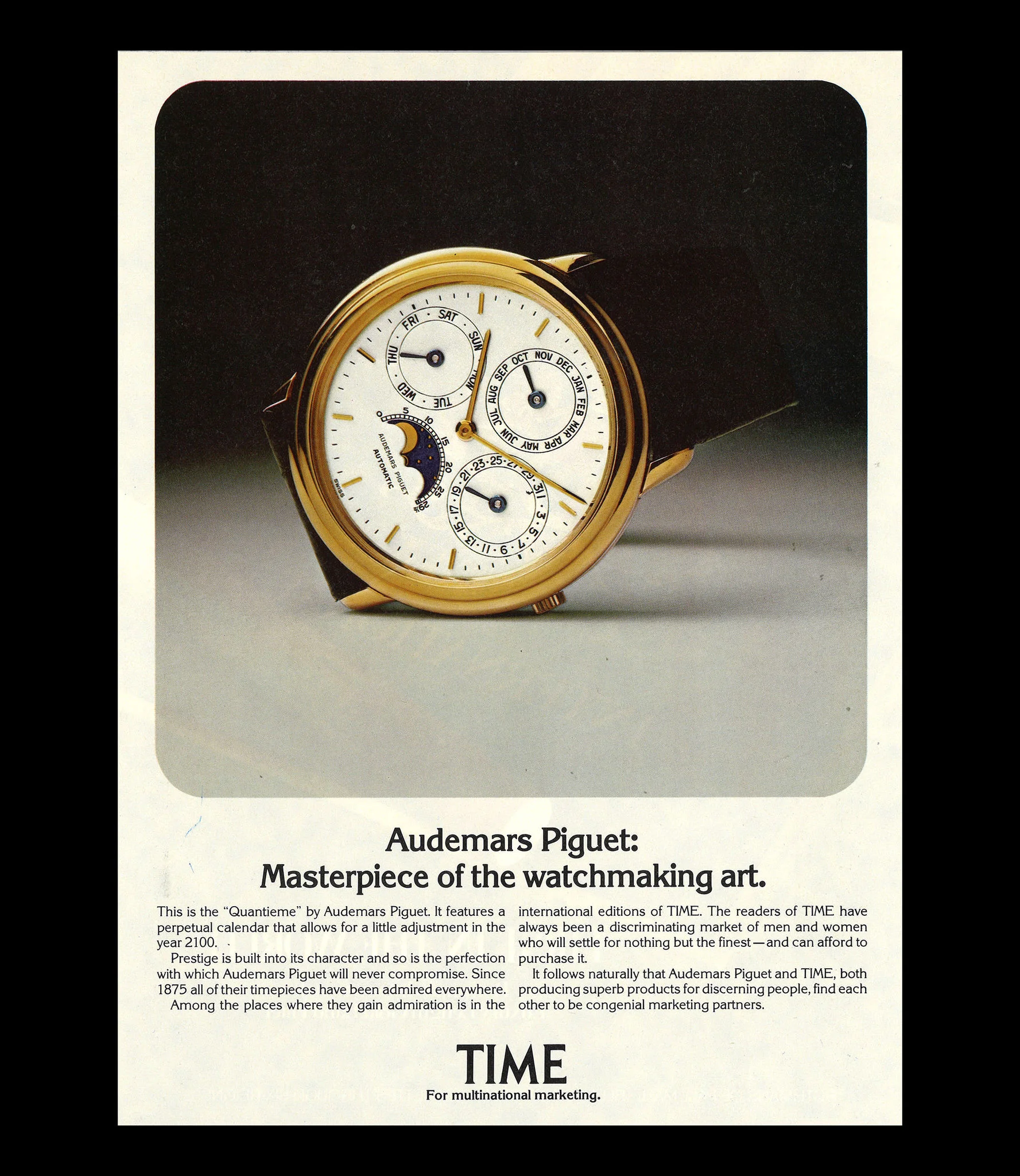
1978. Advertisement for Model 5548. Audemars Piguet Archives.
Third generation
When the wave of Asian and American quartz watches hit, the third generation of the founding families was at the helm. Jacques-Louis Audemars succeeded his father Paul Louis as Technical Director in 1959. It was he who oversaw the creation of Calibre 2121 and quartz research. At that time, the job included watch design, so Jacques-Louis supervised each new model, including the Royal Oak. A great fan of football, English boxing and motoring, he chaired the Board of Directors from 1966 to 1992.
The Piguet family was represented on the Board from 1979 onwards by Paulette Gabrielle Piguet (1921–2003). Discreet by nature, she was the first woman to sit on the Board, alongside her role as Secretary General of the World Alliance of Reformed Churches. Another woman played a key role in the company, with Florence Piguet joining the firm in 1961 as an accountant, before becoming Head of Personnel and then Deputy Director. It was she who introduced the first computer in the Vallée de Joux to manage the staff roster.
When Georges Golay died suddenly in October 1987 after 42 years with the company, the Board asked Florence Piguet to succeed him. She declined out of modesty but agreed to take on financial management. The brand was co-directed by two men. The first, Steven Urquhart, brought with him a spirit of openness to the world at large. Born in 1946 in Trinidad, this economist with a flair for products, marketing and customers had taken over as Sales Director in 1974. The second director comes from one of the oldest families in the Vallée de Joux and bears the surname of the region's first watchmaker. An engineer who joined Audemars Piguet in 1985, Georges-Henri Meylan took over responsibility for Production. When Steven Urquhart joined Omega in 1997, where he had begun his career as a watchmaker and of which he would later become Chairman of the Board, Georges-Henri Meylan was appointed CEO of Audemars Piguet.
The "post-quartz" years featured spectacular creative dynamism in terms of products and collections. They also marked a turning point in the consolidation of distribution and the beginnings of vertically integrated production.
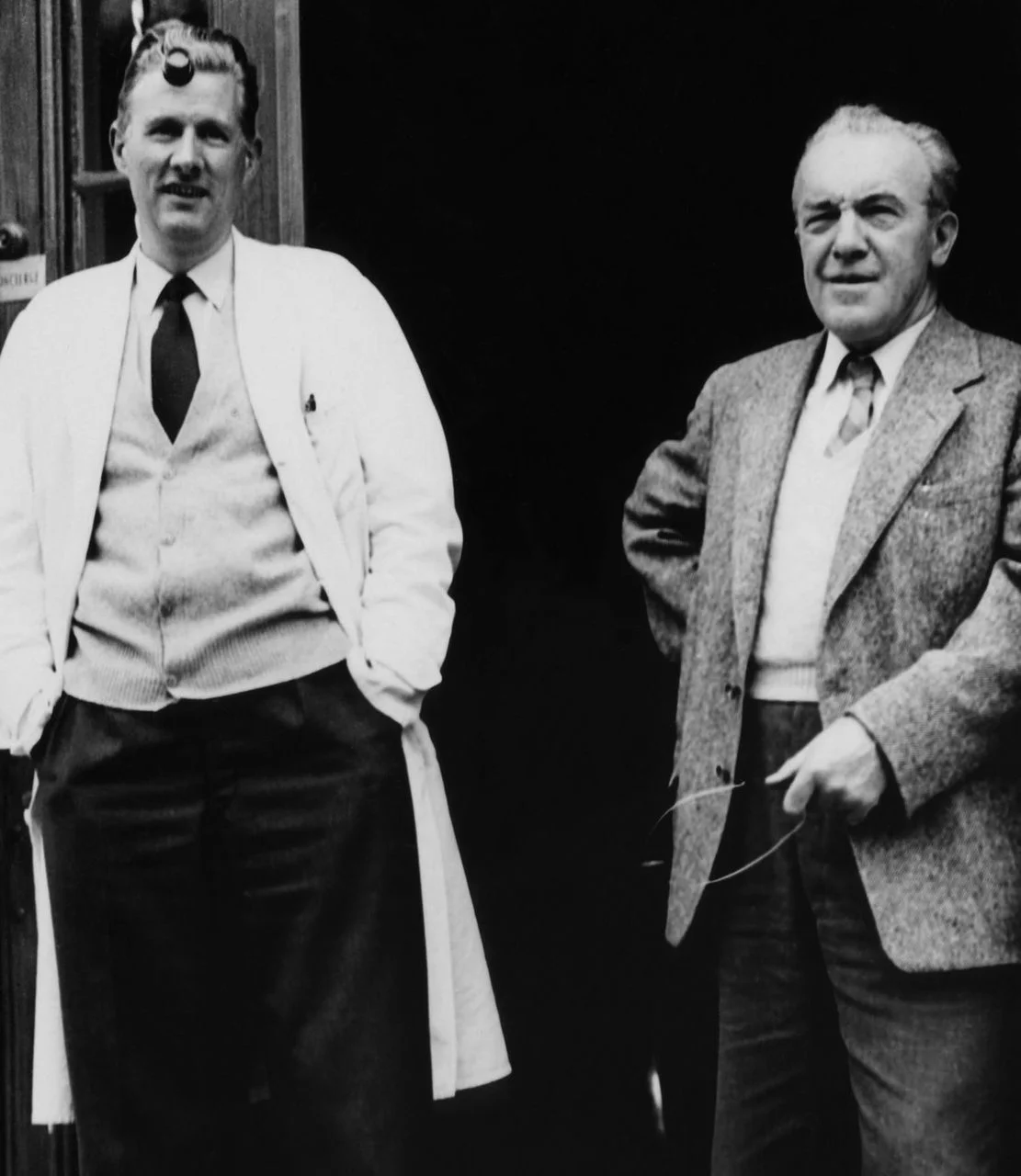
Circa 1954. Jacques-Louis Audemars and Paul Edward Piguet represented the second and third generations of the founding families.
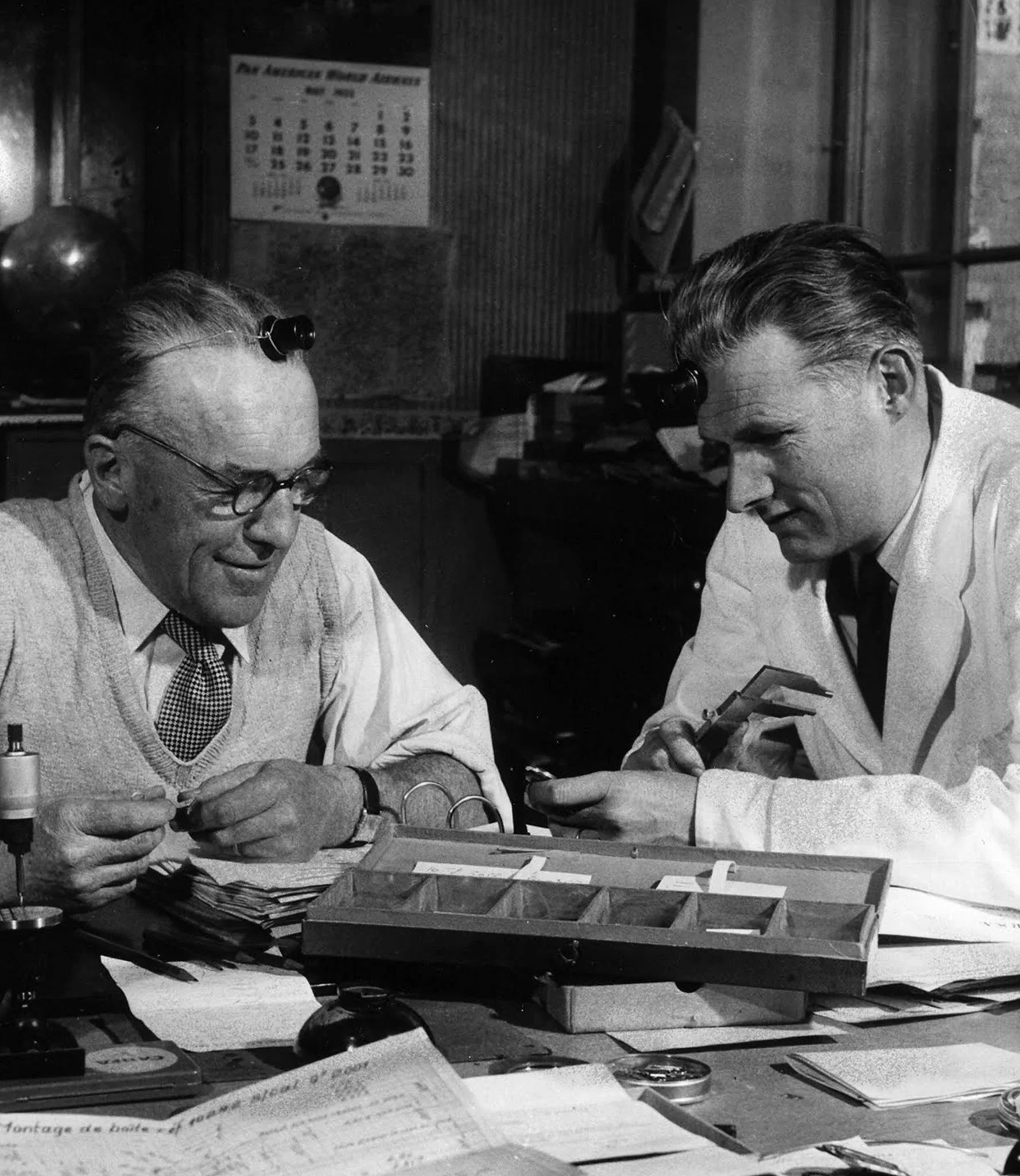
Circa 1954. Jacques-Louis Audemars and Paul Edward Piguet represented the second and third generations of the founding families.
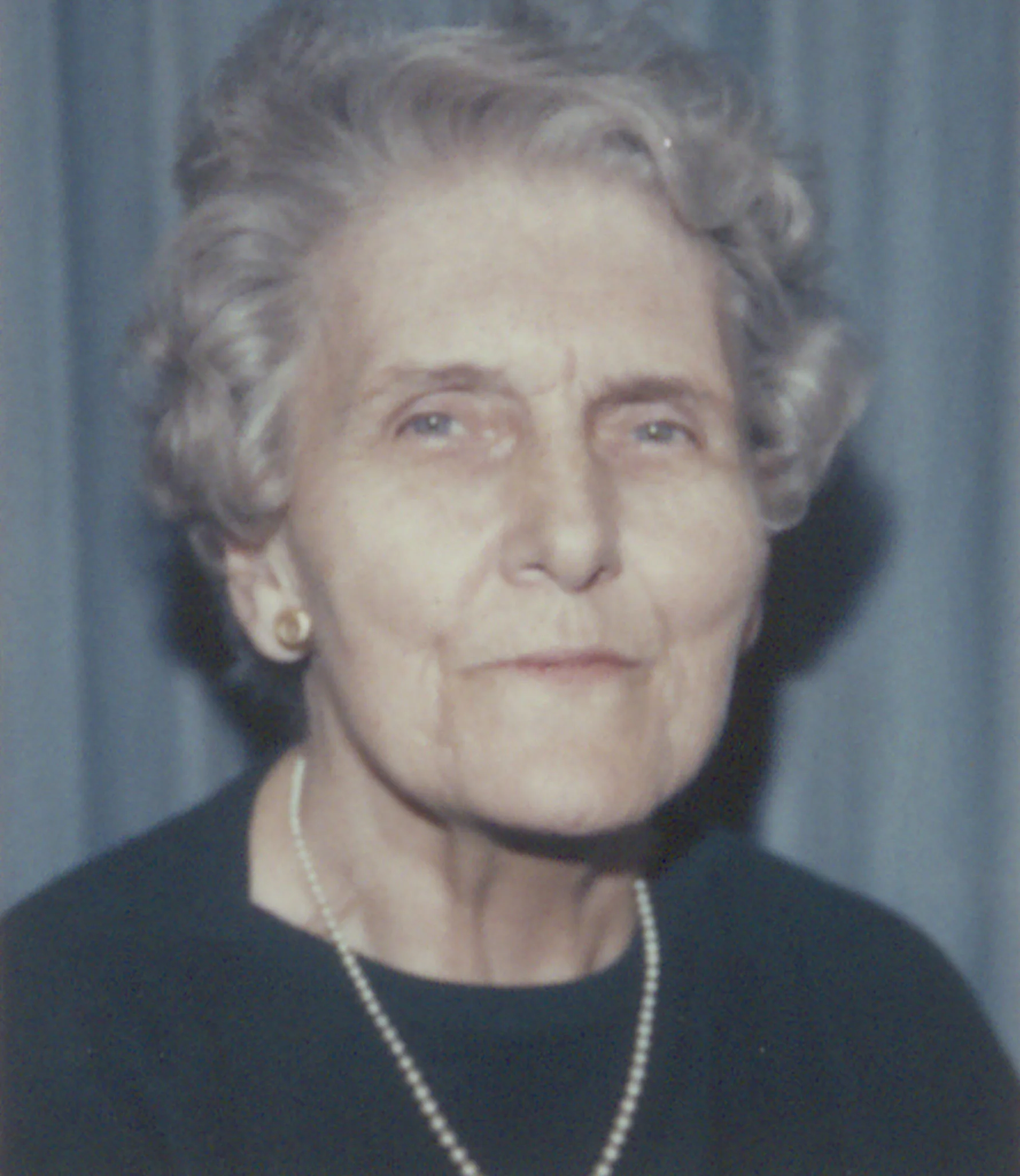
Paulette Gabrielle Piguet (1921–2003) represented the third generation of the Piguet family. She was a member of the Board from 1979 to the 1990s. SOURCE image
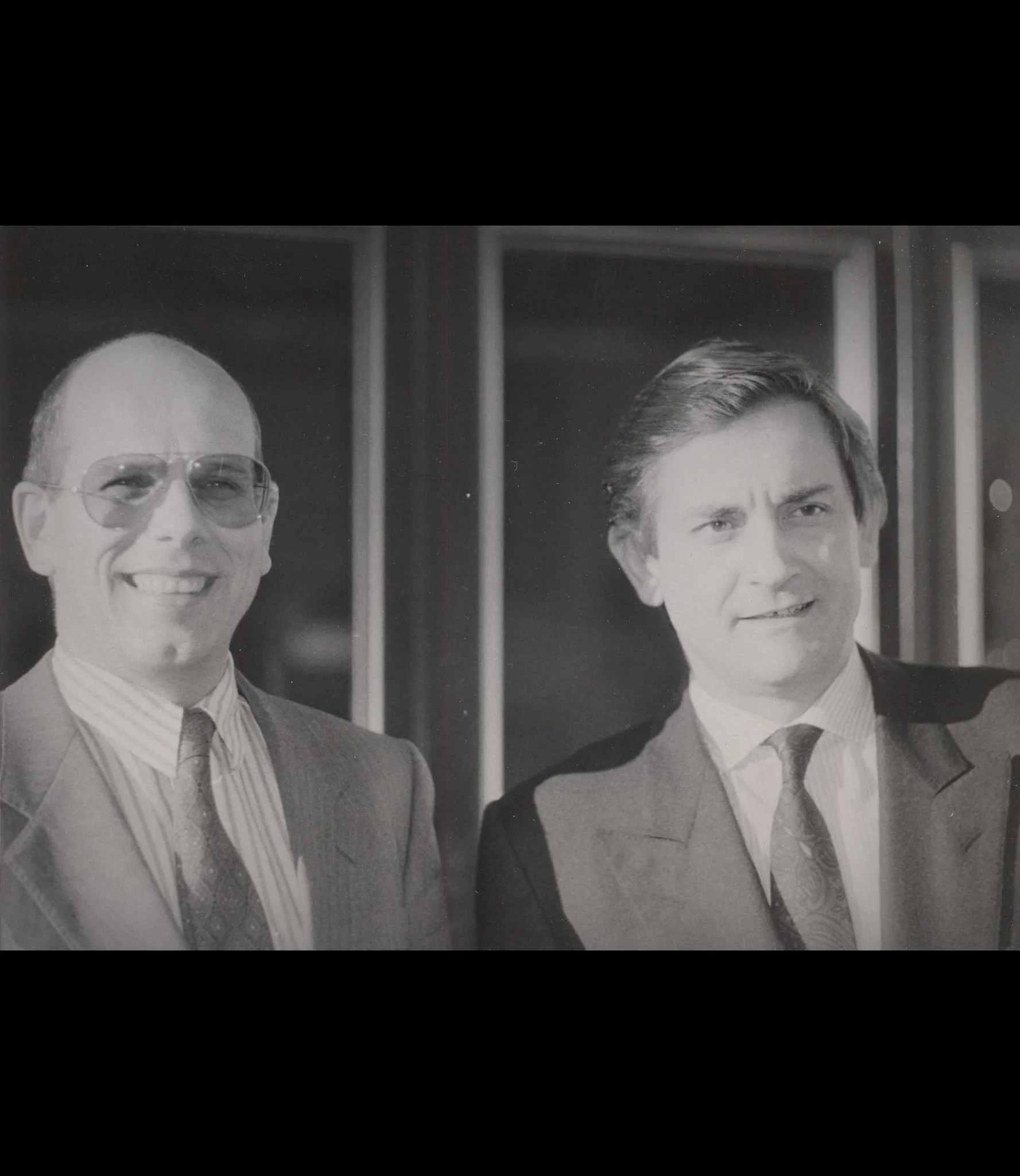
From 1987 to 1997, two men co-directed Audemars Piguet. Steve Urquhart (right) was in charge of design and distribution, while Georges-Henry Meylan (left) oversaw production. Audemars Piguet Archives.
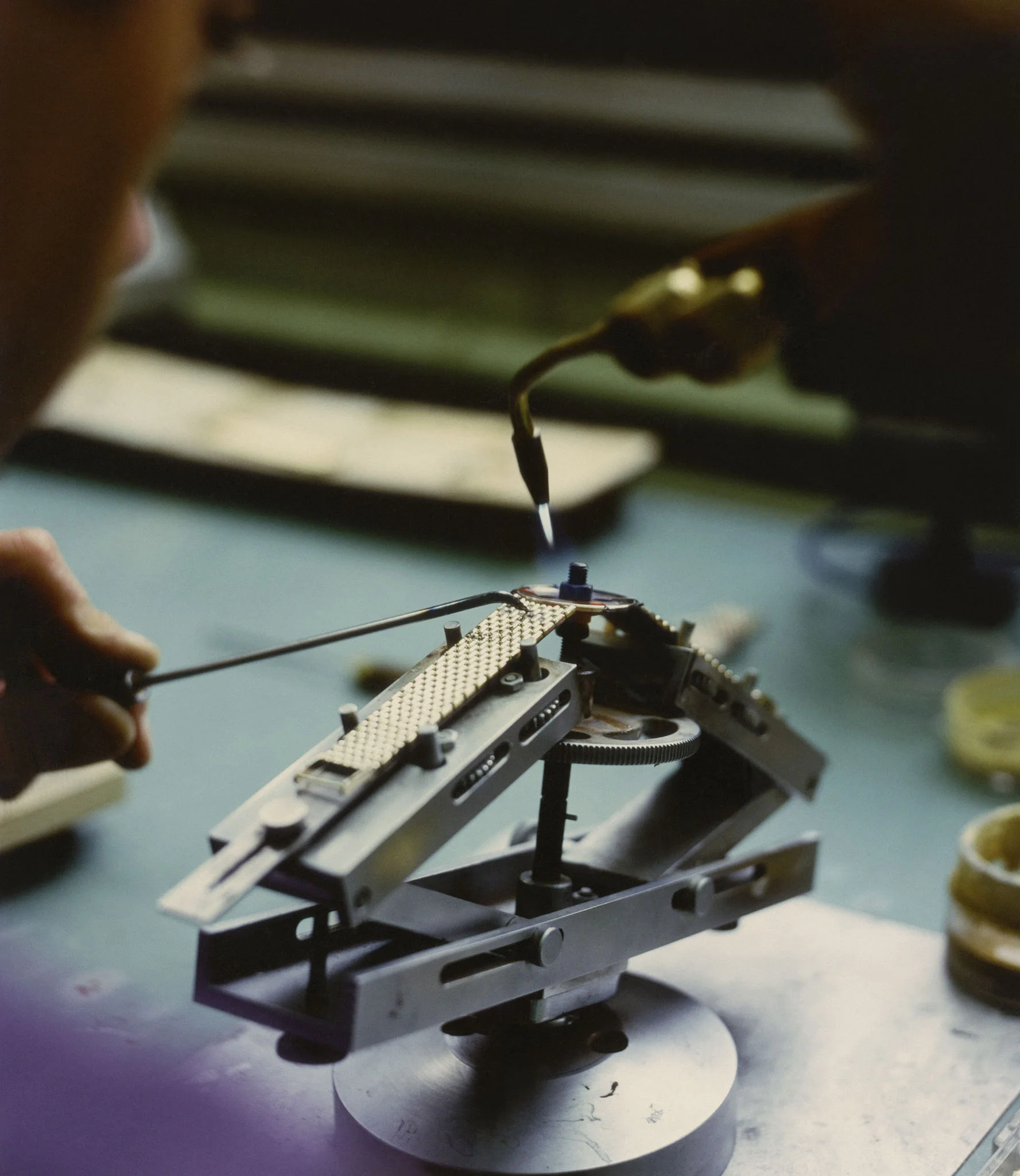
Circa 1985. Bracelet-welding workshop. Audemars Piguet Archives.
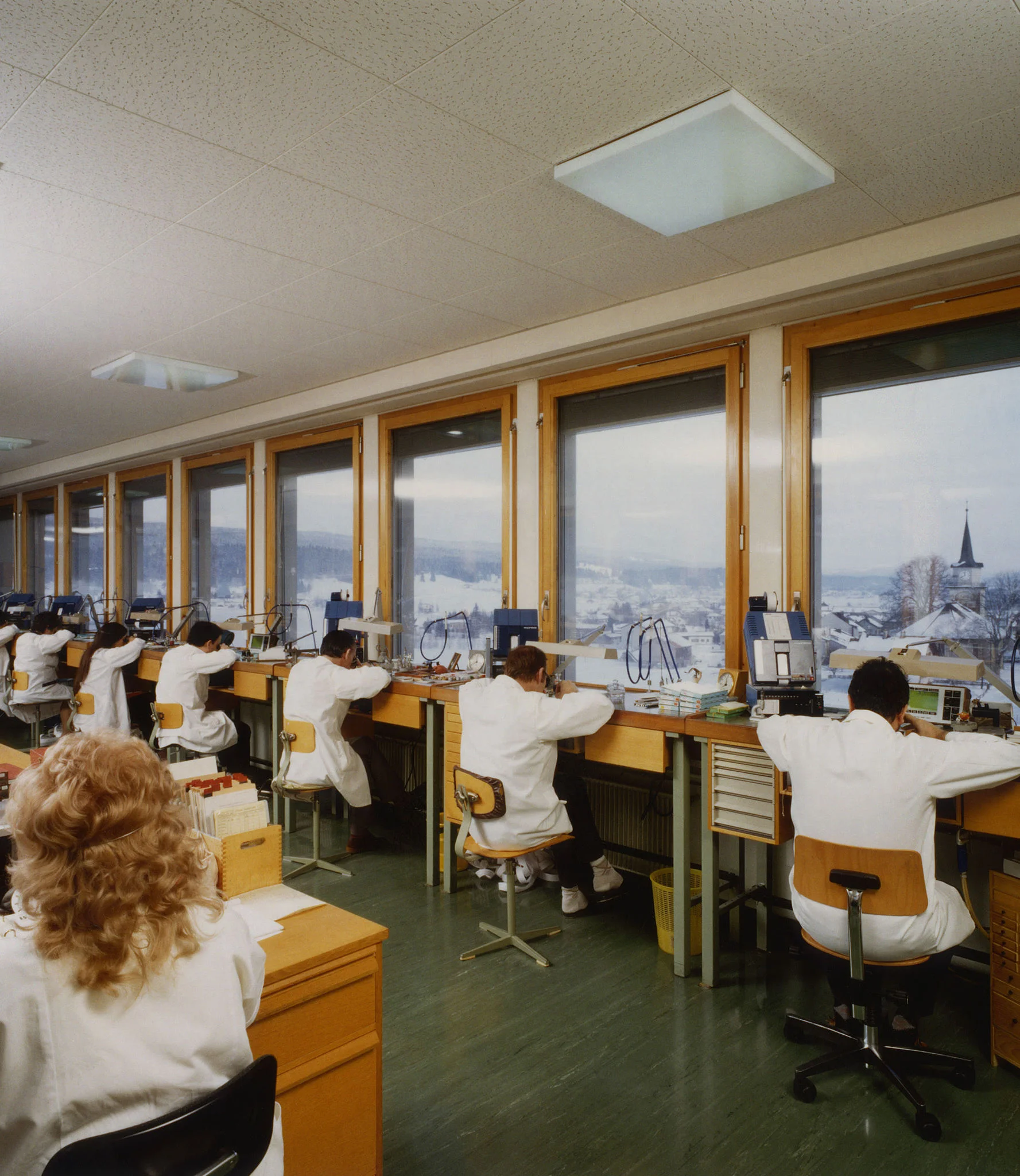
Circa 1995. Watchmaking workshop. Audemars Piguet Archives.
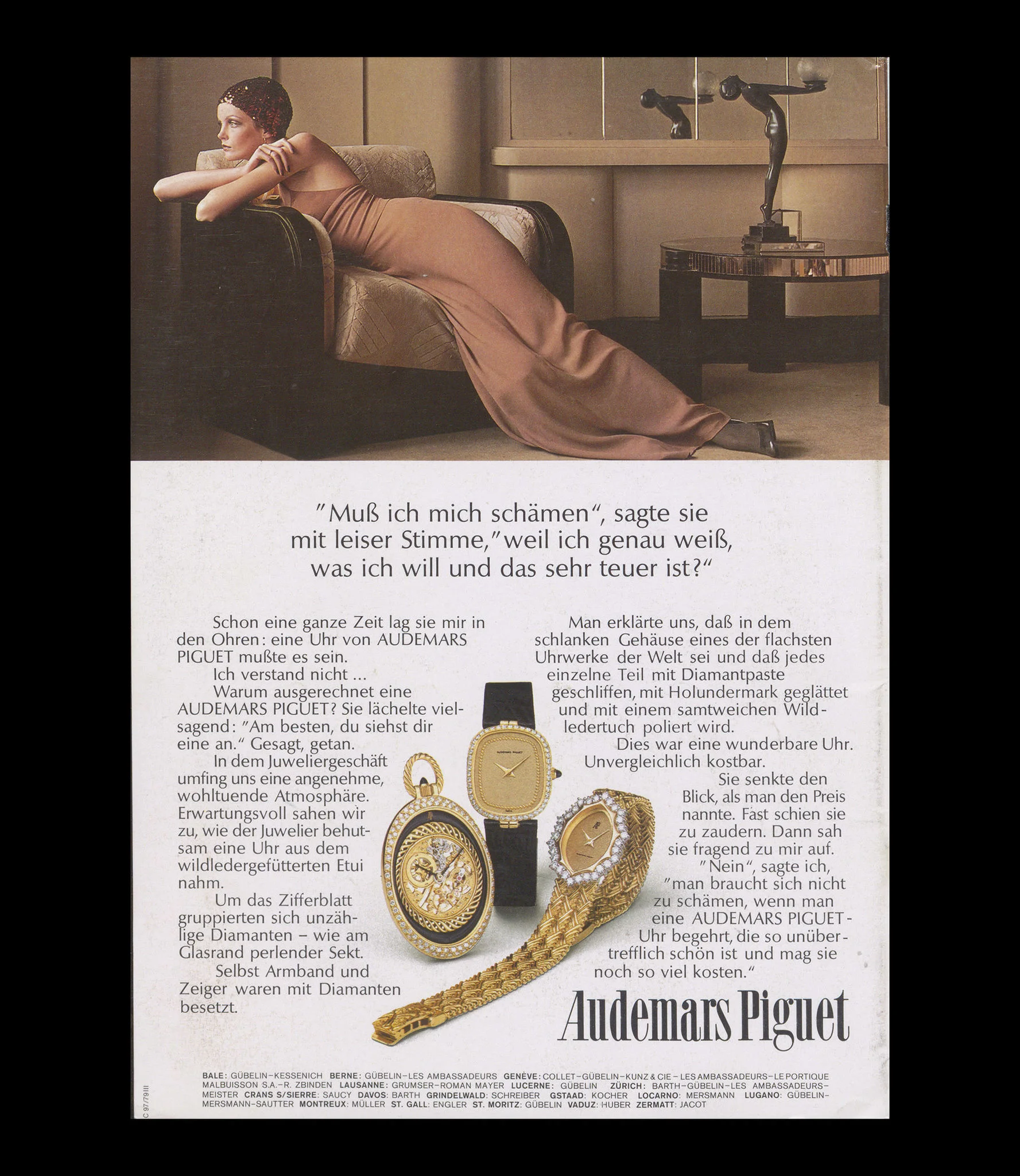
1979. Audemars Piguet advertisement. Audemars Piguet Archives.
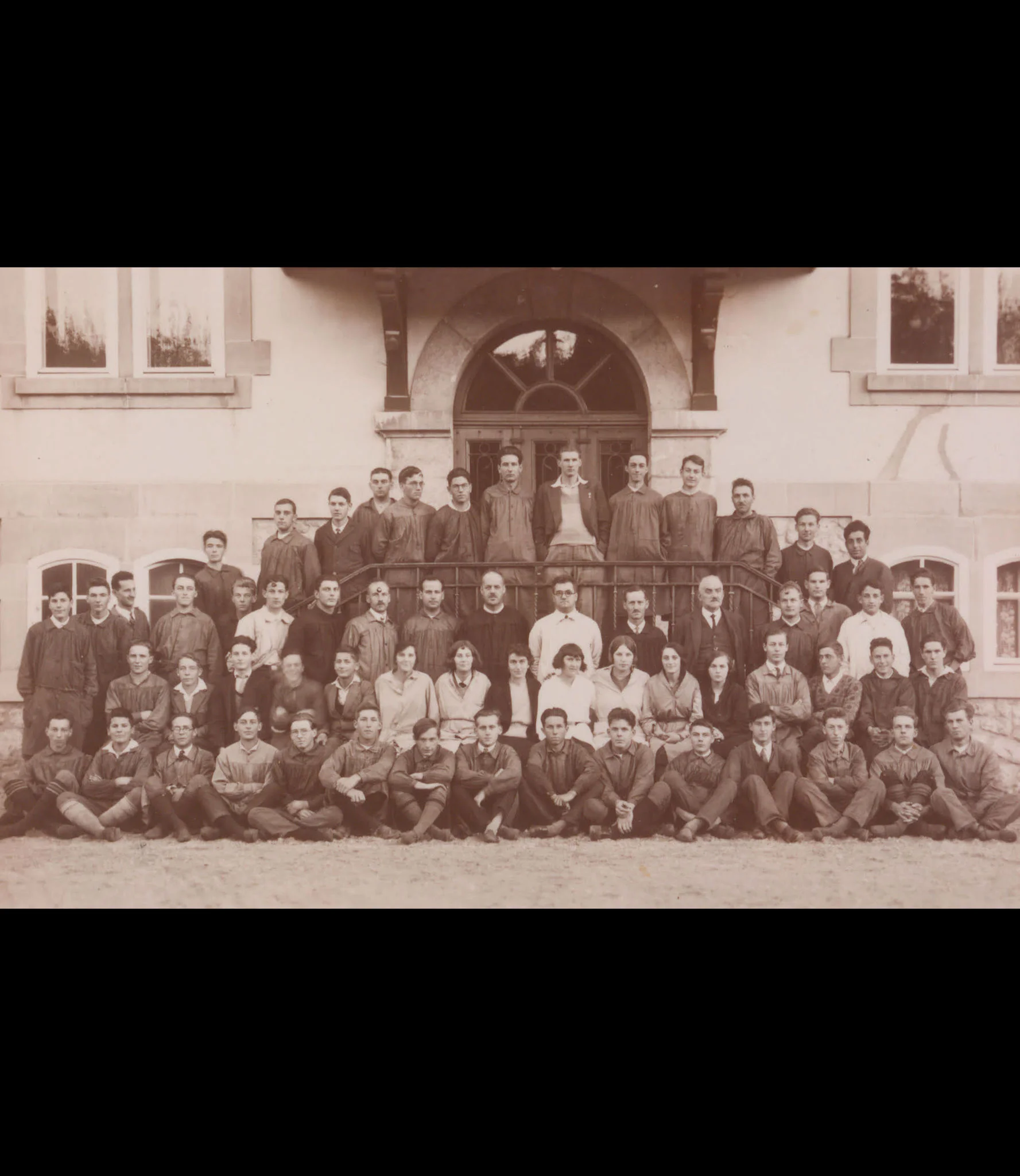
1930. Class photograph from the watchmaking school in the Vallée de Joux. Standing in the middle of the top row with his waistcoat unbuttoned, Jacques-Louis Audemars is 20 years old. He represents the third generation since Audemars Piguet was founded. Audemars Piguet Archives.
Did you say "collections"?
In 1972 – 21 years after the introduction of the concept of "model" – Audemars Piguet named a watch for the first time and the Royal Oak became the brand's first collection.
At the same time, the company created its first in-house designer position. After a brief stint by Jean-Fred Meylan (1972–1975), Jacqueline Dimier held this position for 24 years, assisted by Emmanuel Gueit from 1987 onwards. It is to them that Audemars Piguet owes the aesthetics of most of the watches created until 1999. Based in Geneva, the two designers travelled to Le Brassus every week to present their designs to Sales Director Steve Urquhart and the Head of the Technical Department Jean-Daniel Golay.
This led to a profusion of collections, including the Philosophique (1981), the Baroque (1986), the Huitième (1988), the Audemarine (1990), the Starwheel variations (1991), the Royal Oak Offshore (1993), the John Schaeffer (1995), the Millenary (1996), the Carnegie (1996), the Promesse (1998) and the Savannah (1998)...
The late 1990s saw the beginnings of the Product and Communication departments. The company was preparing to celebrate its 125th anniversary and the artisans were busy making 125 one-of-a-kind timepieces. At the same time, Audemars Piguet launched two flagship collections in 1999 named after its founders. The Jules Audemars collection featured round watches, while the Edward Piguet collection comprised rectangular watches. Gradually, the number of collections was reduced and the references in each collection were expanded, in terms of limited editions, complications and new materials.
The Design team changed in 1999. Claude Emmenegger (1999–2003), then 2015–2017) succeeded Jacqueline Dimier. He designed the Royal Oak Concept in 2002 and also the Code 11.59 by Audemars Piguet launched in 2019. Other key figures in the department's history notably include Philippe Vaptzarov and Octavio Garcia from 2003. The latter redefined the brand identity, giving rise in 2012 to the memorable campaign "To break the rules, you must first master them". Since 2019, the in-house design office has been run from Neuchâtel by Sébastien Perret.
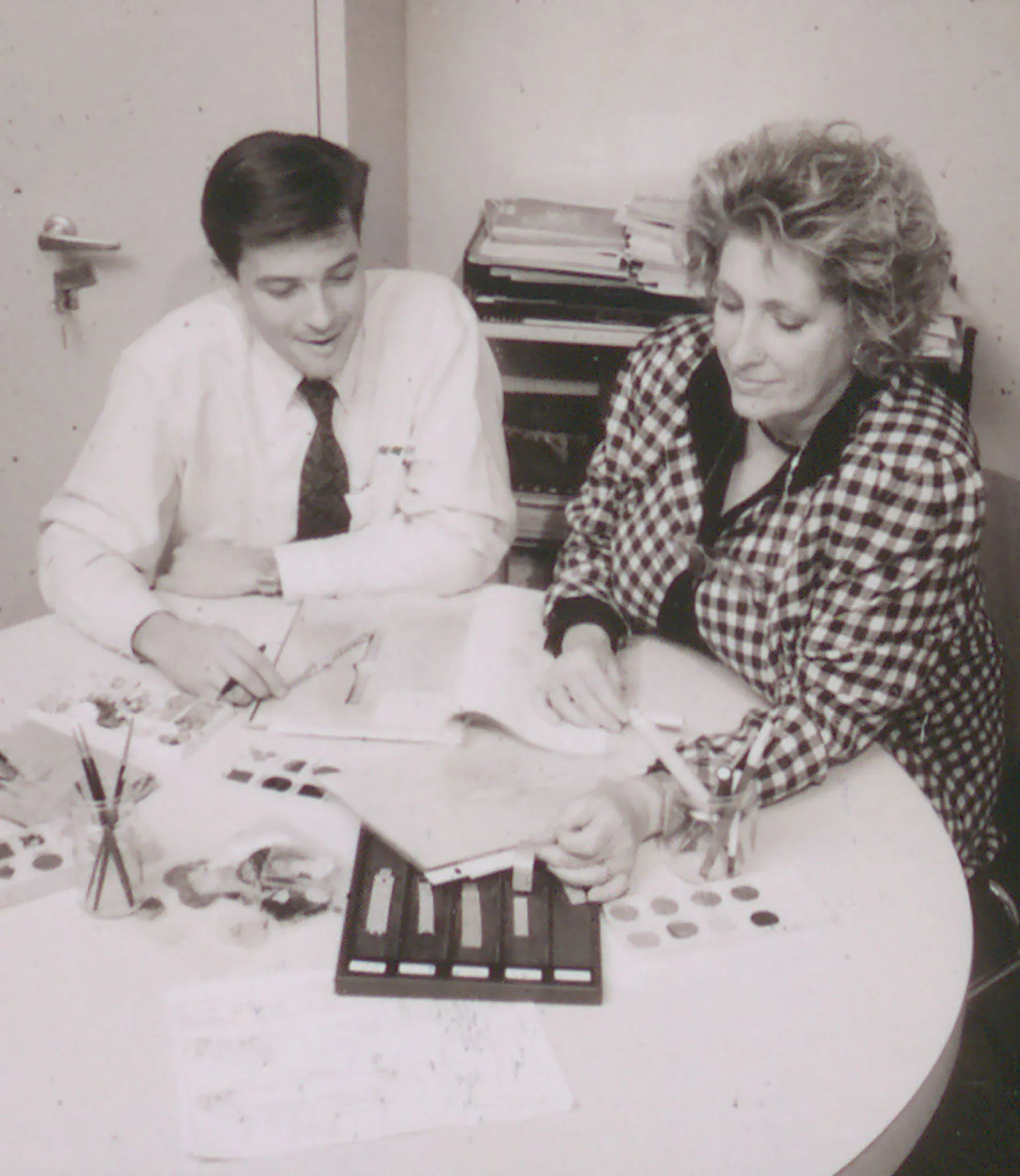
Circa 1990. Jacqueline Dimier and Emmanuel Gueit collaborate on the design of the new Audemars Piguet collections. Audemars Piguet Archives.
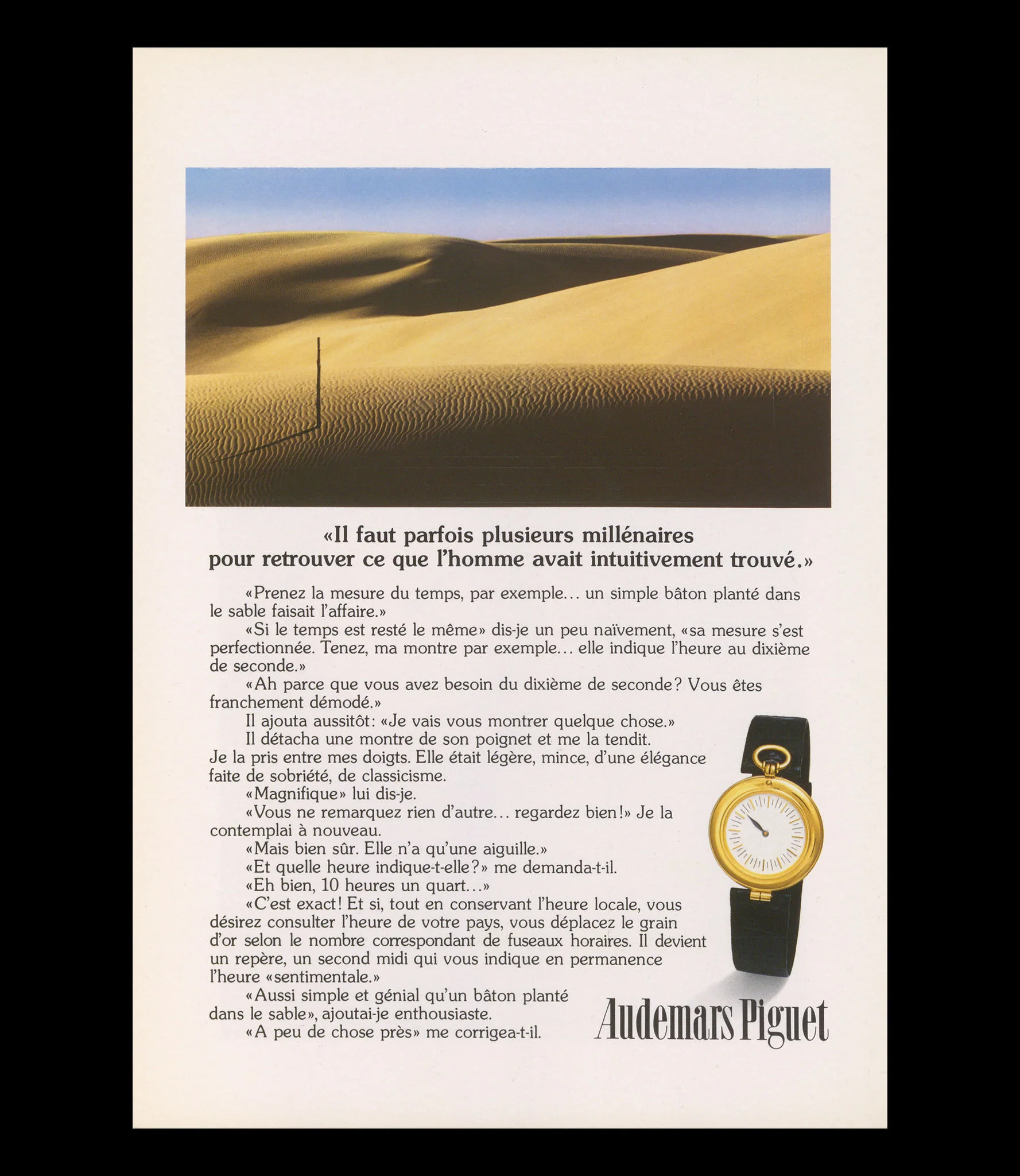
Circa 1983. Advertisement for the Philosophique watch with a single hand. Audemars Piguet Archives.
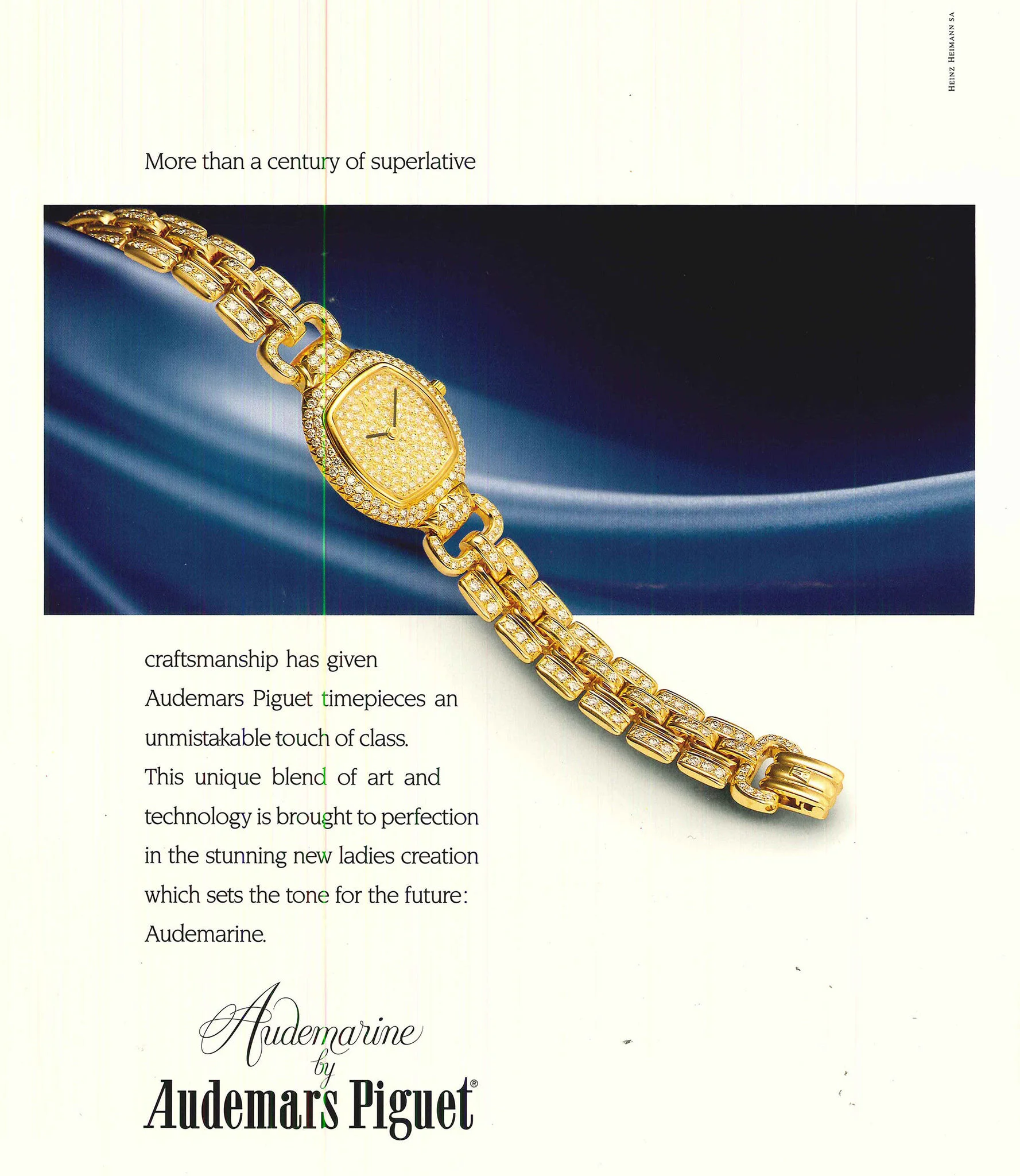
Circa 1990. Advertisement for the Audemarine watch. Audemars Piguet Archives.
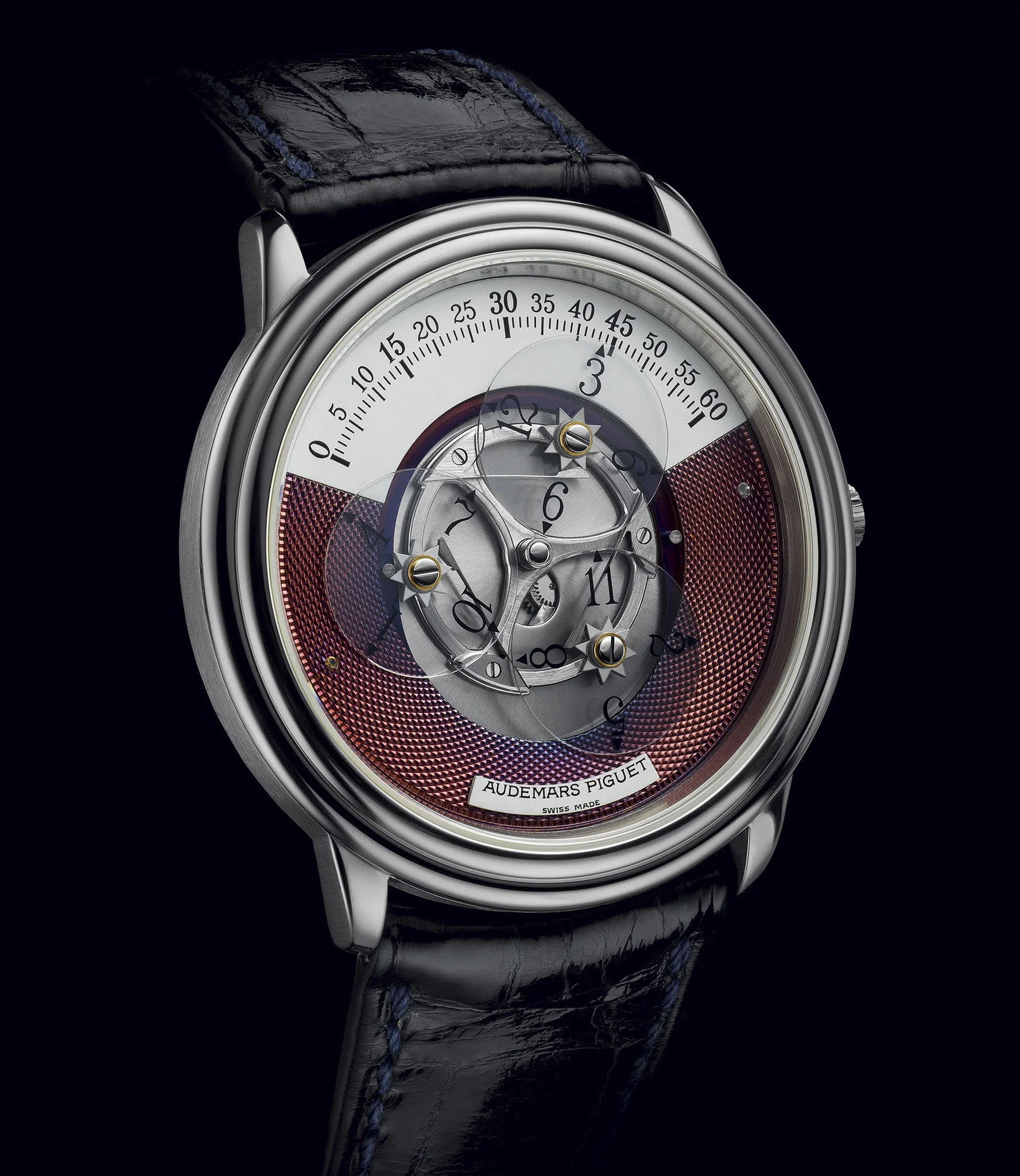
1992. Star Wheel watch. Wandering time indicated by three rotating crystal discs. Calibre 2124/2812, movement 376449 produced and sold in 1992. Platinum. Model 25720, Audemars Piguet Heritage, Inv. 2120.
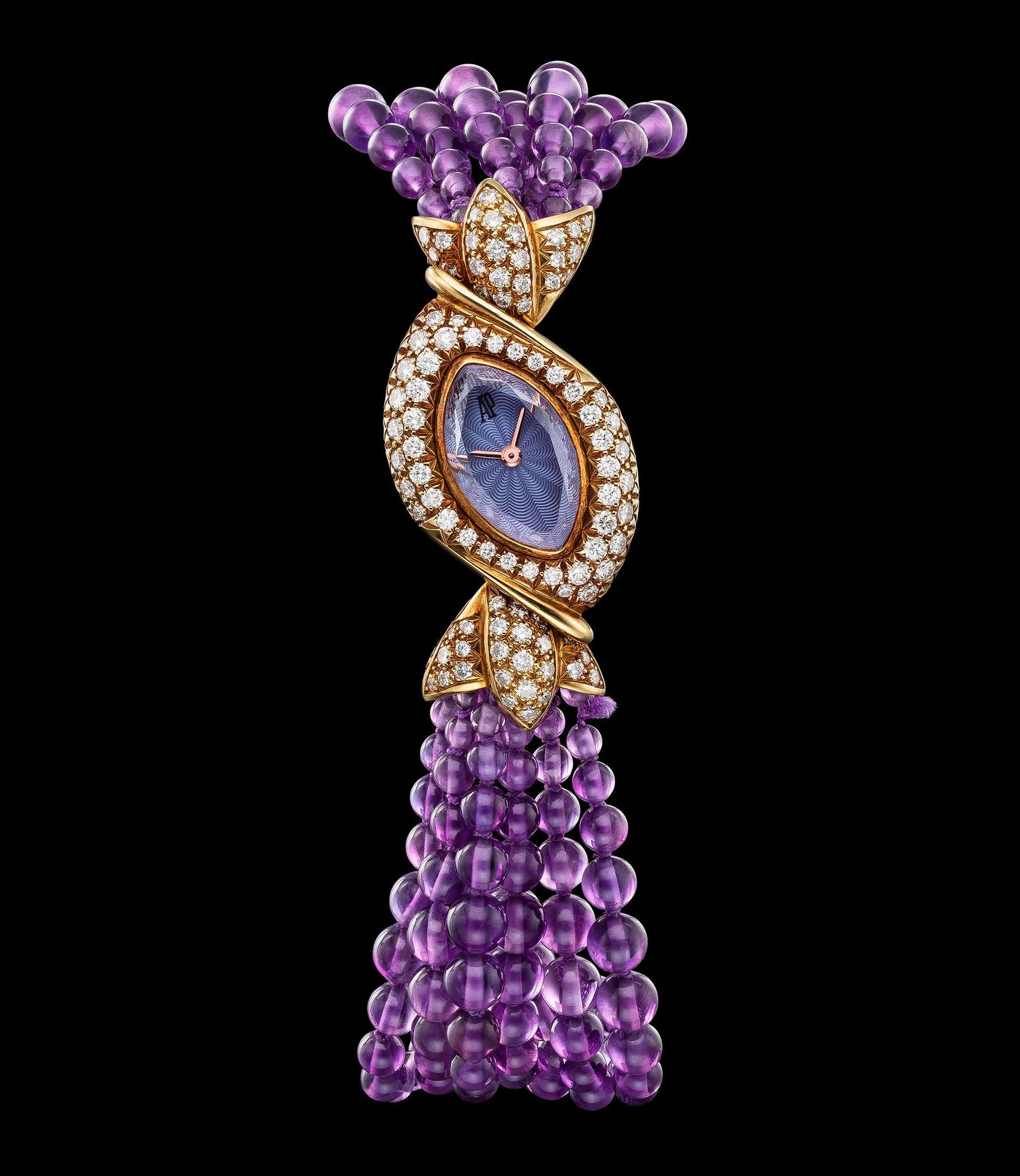
1994. Baroque wristwatch. Amethyst watch crystal and bracelet. Quartz Calibre 2601. Movement 403783 produced in 1993. Sold in 1994. Yellow gold set with brilliant-cut diamonds. Audemars Piguet Heritage, Inv. 754.
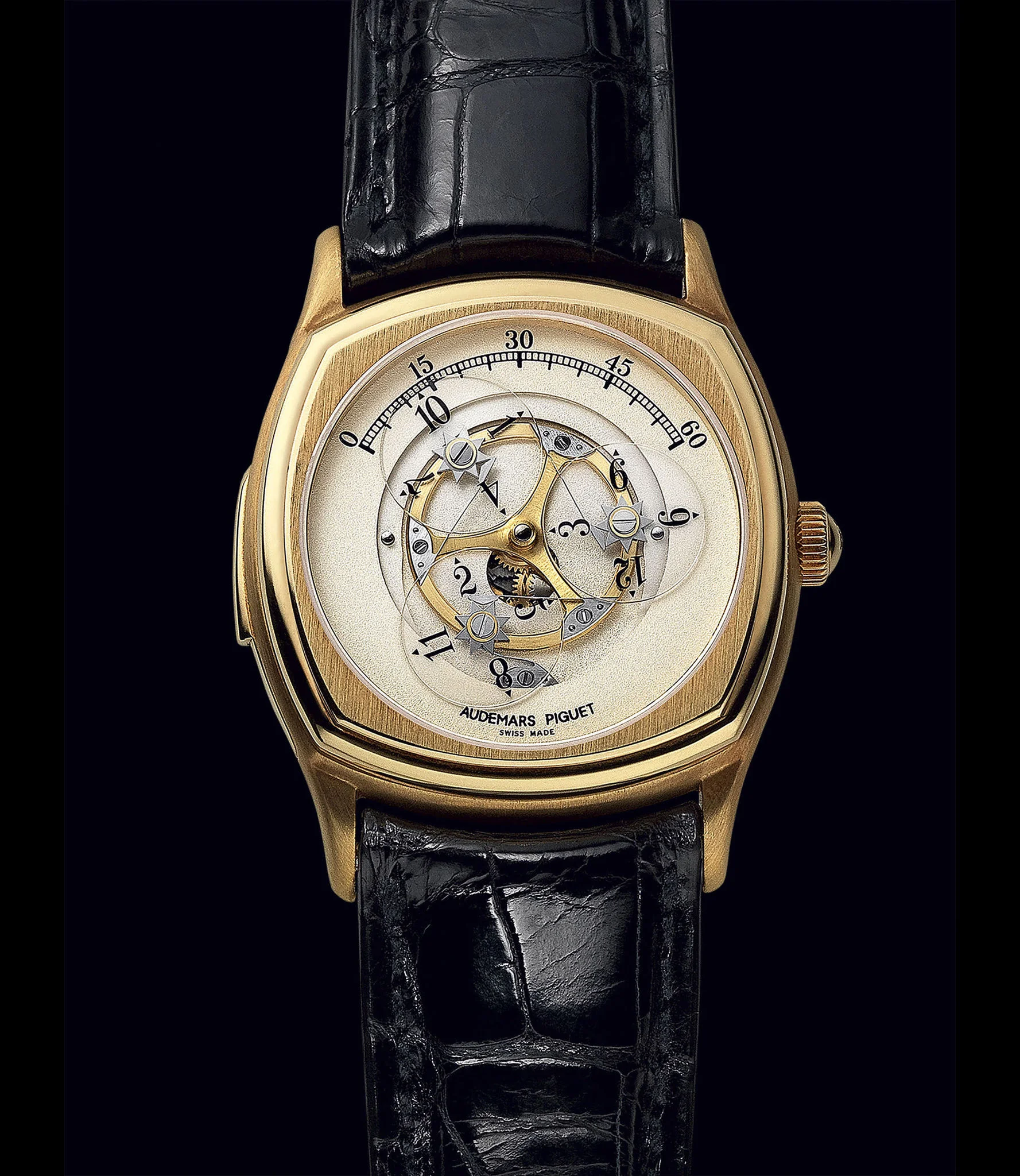
1995. John Shaeffer repeater watch with star wheel display. Calibre 2867, movement 404206 produced and sold in 1995. Yellow gold. Model 25881 (17 units, including seven with pink gold cases). Audemars PiguetHeritage, Inv. 578.
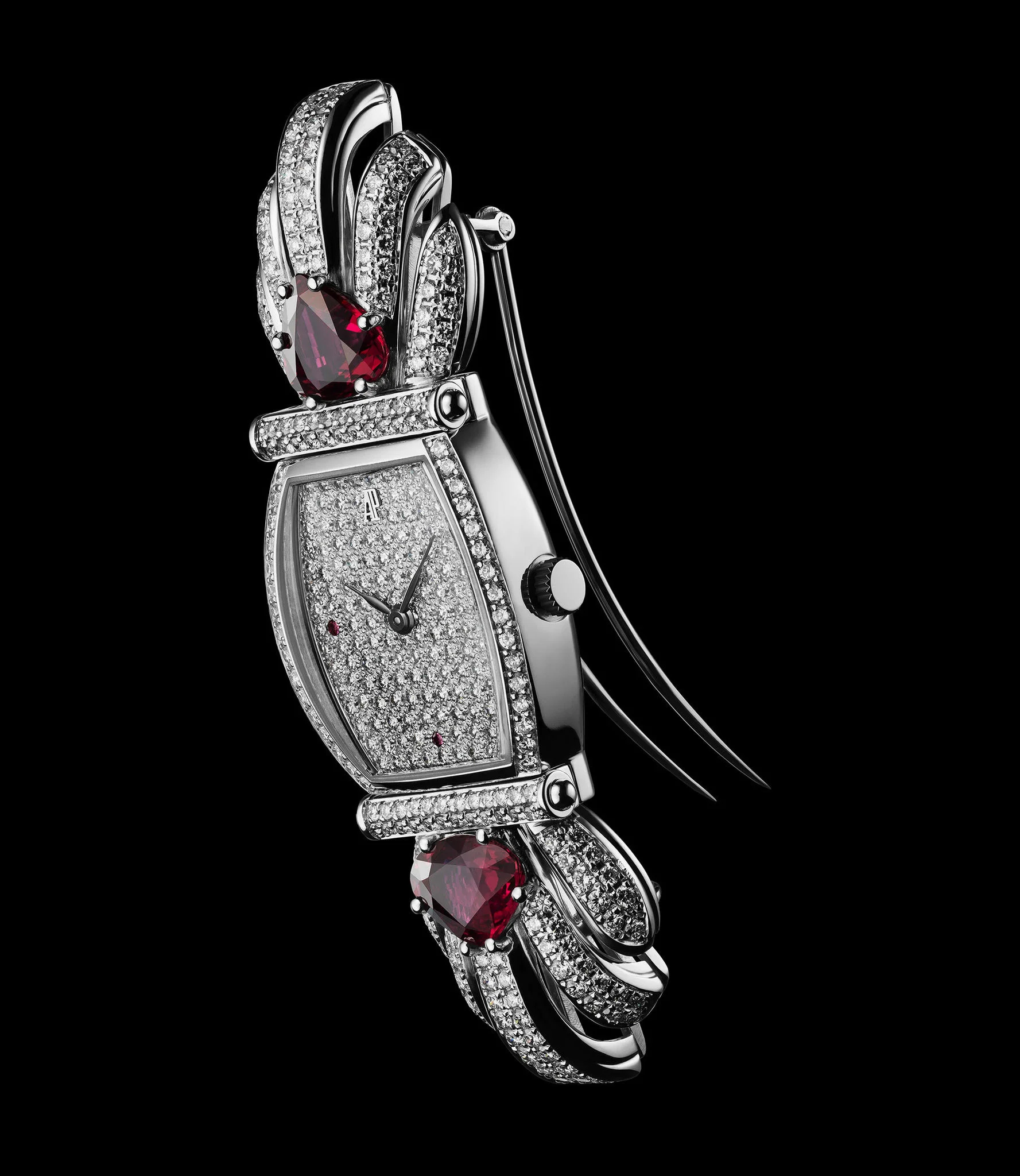
2000. Special 125th anniversary Carnegie brooch watch. Set with over 6 carats of diamonds and rubies. Calibre 2046, movement 447794 produced in 1998. Sold in 1999. White gold. Model 12539. Audemars Piguet Heritage, Inv. 1371.
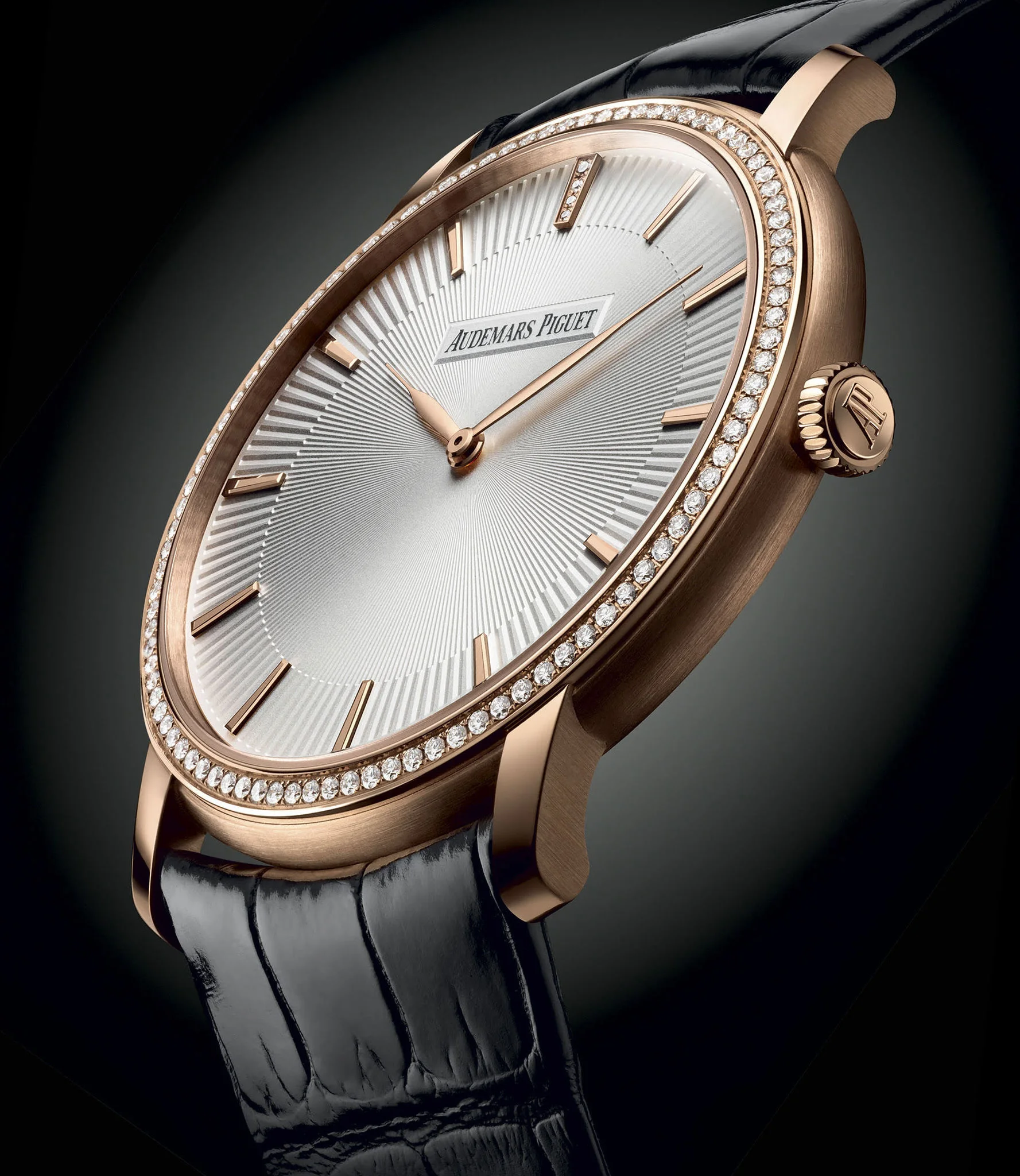
2013. Extra-thin Jules Audemars. Diamond-set bezel. Selfwinding Calibre 2120. Pink gold. Model 15182. Audemars Piguet Heritage, Inv. 762.
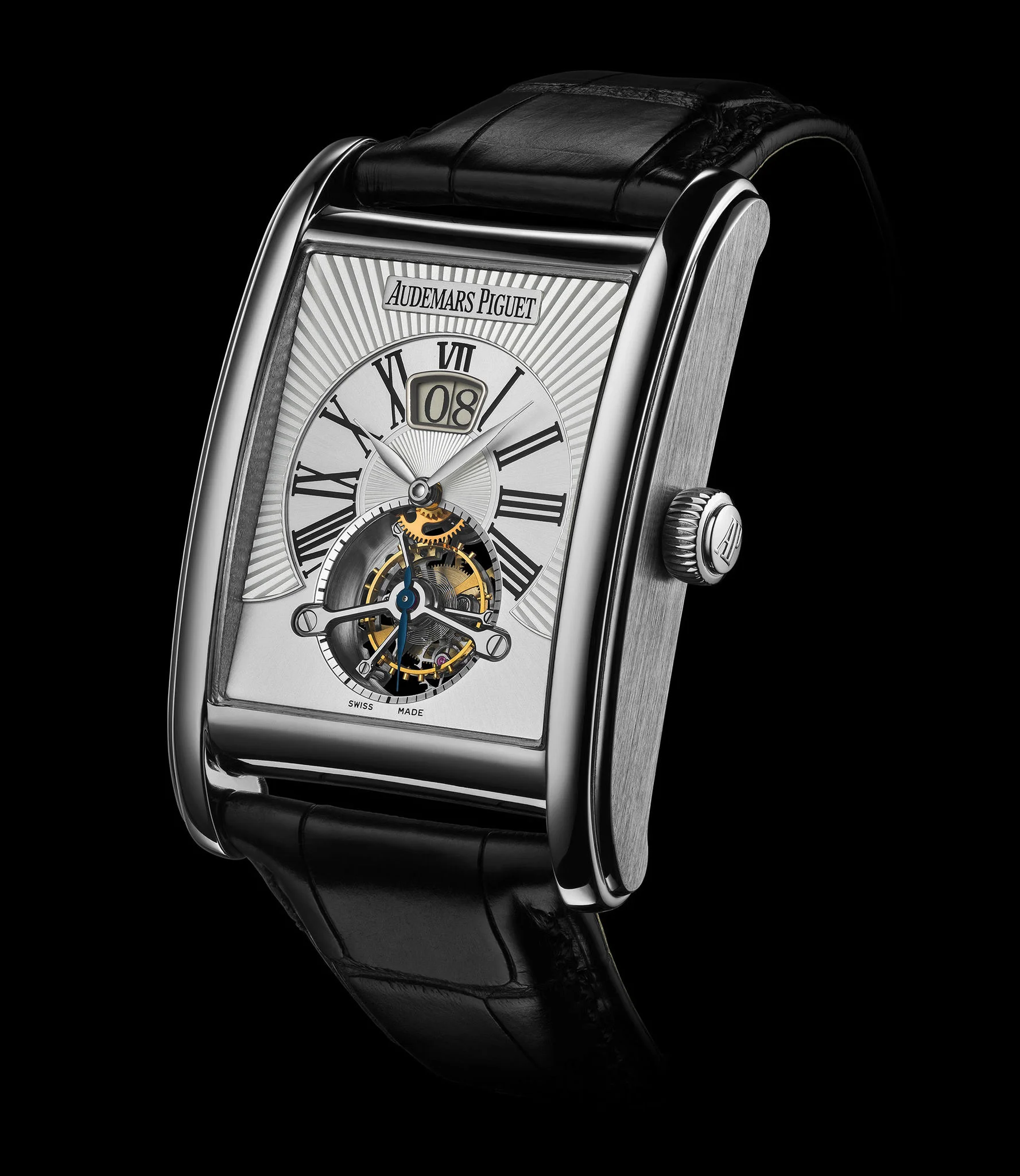
2006. Edward Piguet Large Date and Tourbillon. Calibre 2886. White gold. Model 26009. Audemars Piguet Heritage, Inv. 1395.
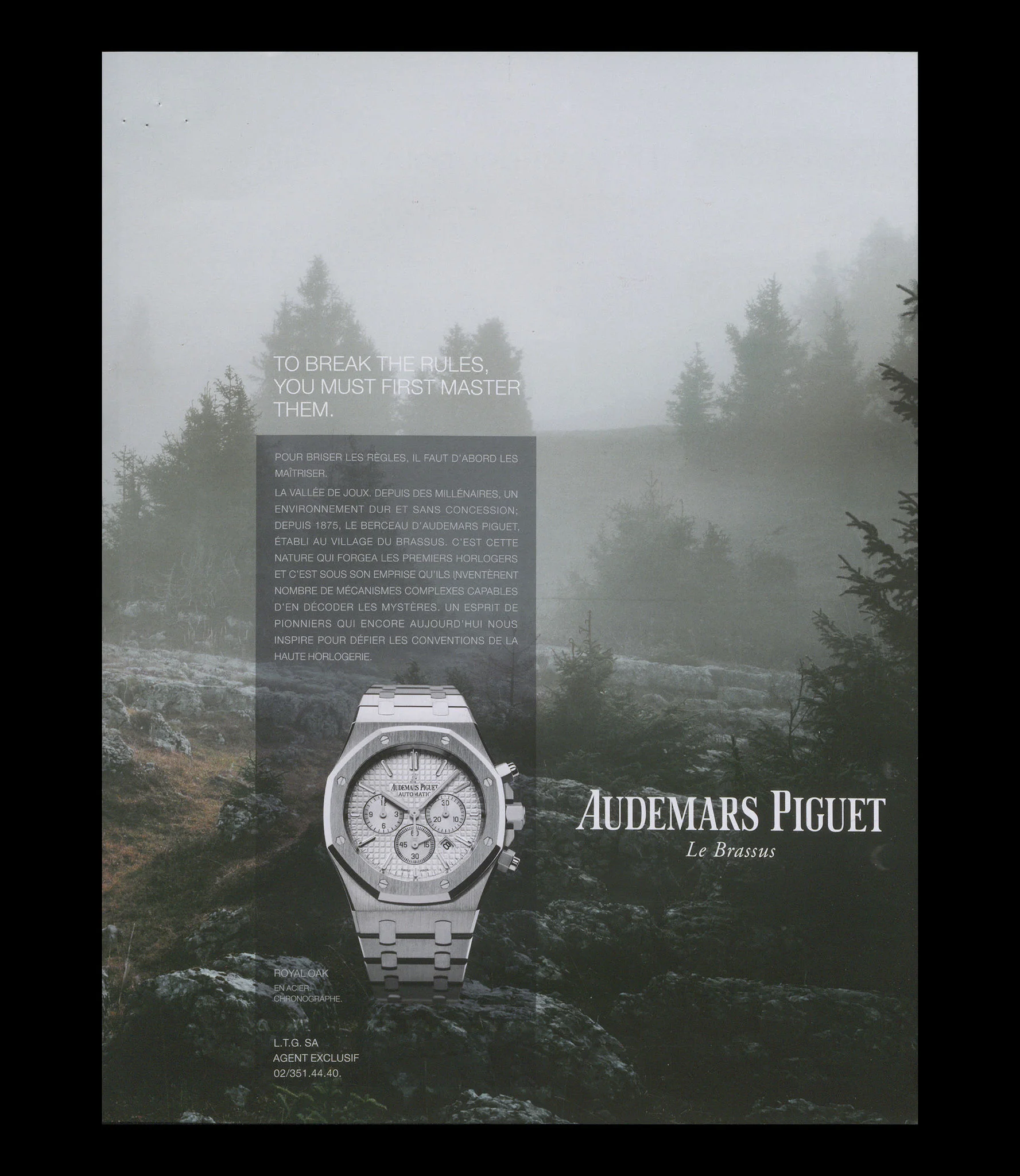
2012. Presented in 2012, the “To break the rules" campaign was based on the brand's roots and the founders' spirit of independence, combined with the pursuit of excellence. Audemars Piguet image.
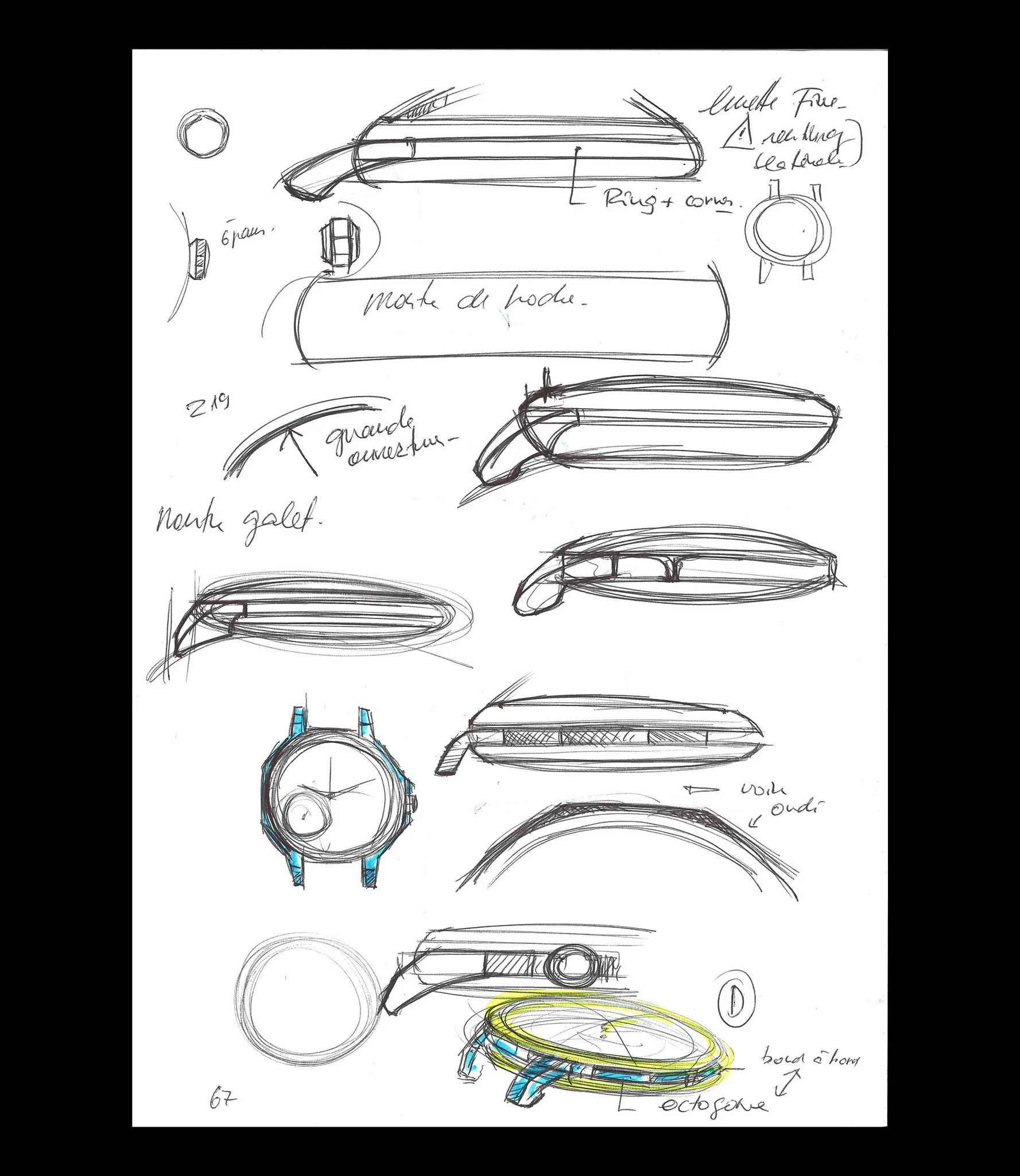
First sketches of the future Code 11.59 by Audemars Piguet collection. Work focuses on the lugs, the facetted case middle and the case profile. Audemars Piguet Archives.
A whirl of complications
The success of the 5548 perpetual calendar watch (Chapter 18) paved the way for all other complications. In 1986, Audemars Piguet presented the first ever selfwinding tourbillon watch (Model 25643), based on an idea by André Beyner, the inspiration behind the Swatch. At the time, only a few insiders knew what a tourbillon was. This speciality, designed to improve precision, also made it possible to showcase the heart of the watch, a crucial element in highlighting the value of mechanical horology compared with quartz technology. The idea was so brilliant that in just a few years, the tourbillon spread throughout the watch industry.
That same year, 1986, two talented young watchmakers from the Le Brassus workshops founded their company in the small town of Le Locle. Giulio Papi and Dominique Renaud set out to radically rethink the way in which mechanical movements with complications were created. Six years later, Renaud & Papi created Calibre 2865 for Audemars Piguet, marking the return of repeater wristwatches from Audemars Piguet (Model 25723).
In 1992, the Manufacture created its first selfwinding triple complication wristwatch with minute repeater, perpetual calendar and chronograph (Model 25725). In 1996, the addition of the split-seconds function led to the birth of Calibre 2885, which has since been fitted to Grande Complication wristwatches, thereby perpetuating an uninterrupted tradition dating back to the 19th century, yet previously confined to pocket watches.
Another technical feat related to the Grande Sonnerie, probably watchmaking’s most sophisticated single complication. In the mid-1980s, at a time when this function had not been fitted to an AP watch for almost a century, a young watchmaker came along. His name was Philippe Dufour and he offered to make one (Model 25711) for the brand from Le Brassus. This function was then miniaturised in the Le Locle workshops, resulting in the first Audemars Piguet Grande Sonnerie wristwatches in 1994 (Model 25750).
The complications dynamic was relaunched. This was followed by six models named Tradition d'Excellence and numerous innovations that have perpetuated and renewed the art of mechanical complications, including the carillon chime in 1998 and the equation of time in 2000.
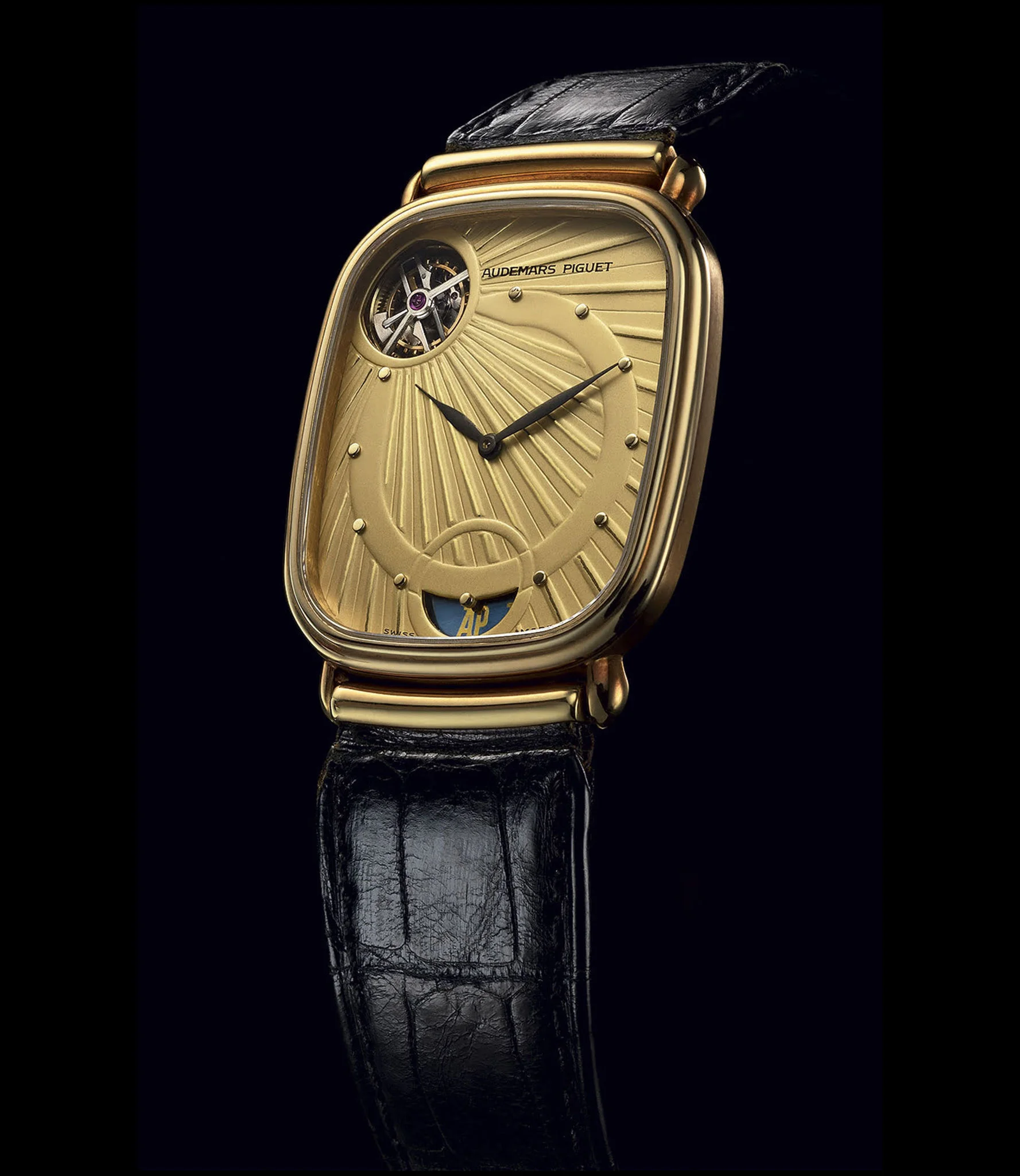
1986. First selfwinding tourbillon wristwatch. Hammer-type oscillating weight. The world's smallest tourbillon (7.2 mm in diameter). Case thickness: 5.3 mm. Calibre 2870. Launched in 1986. Sold in 1990. Yellow gold. Model 25643 (382 units). Audemars Piguet Heritage, Inv. 1057.
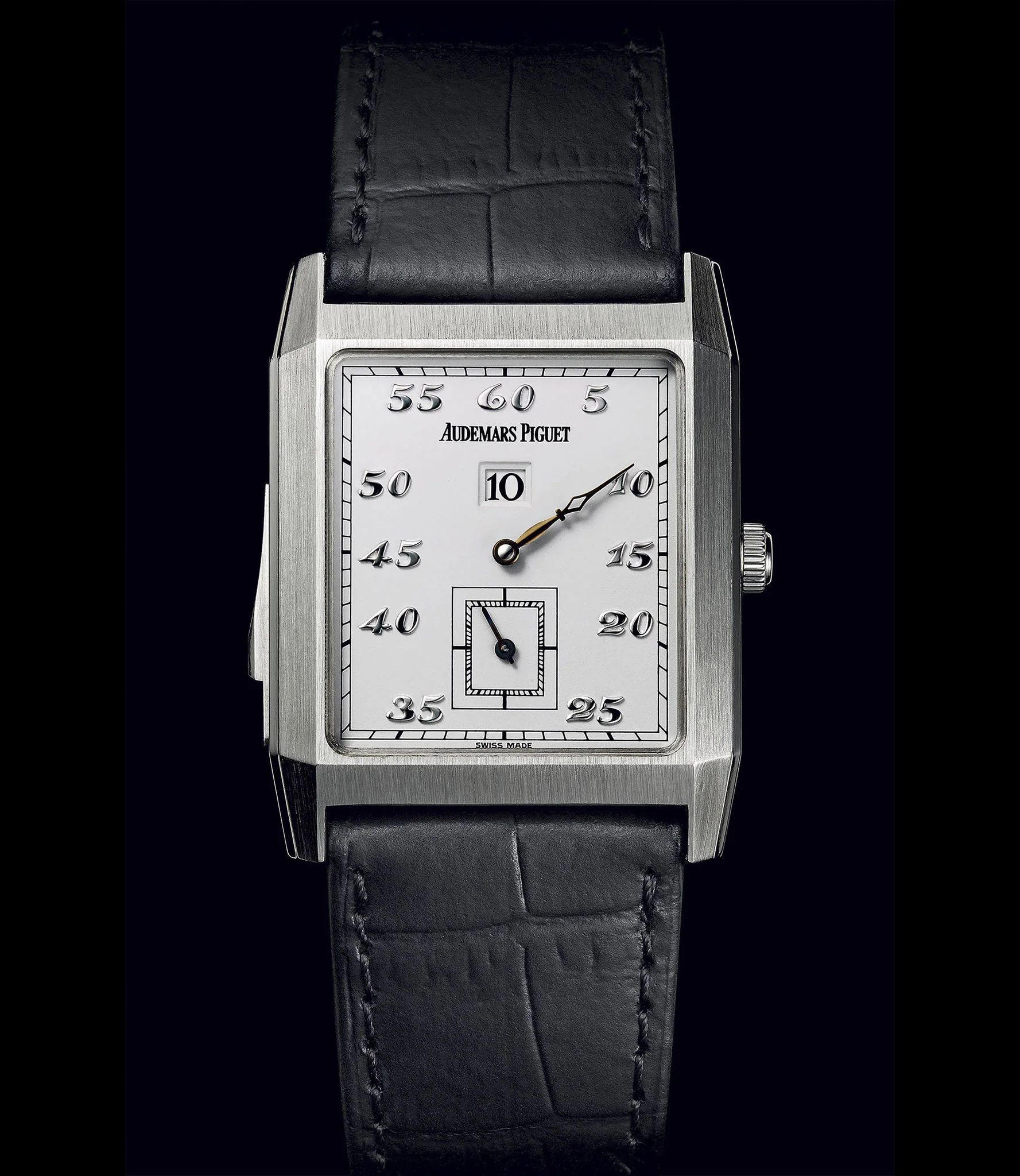
1994. Minute repeater jumping hour wristwatch. Calibre 2865, movement 398958. Sold in 1994. Platinum. Model 25723. Audemars Piguet Heritage, Inv. 753.
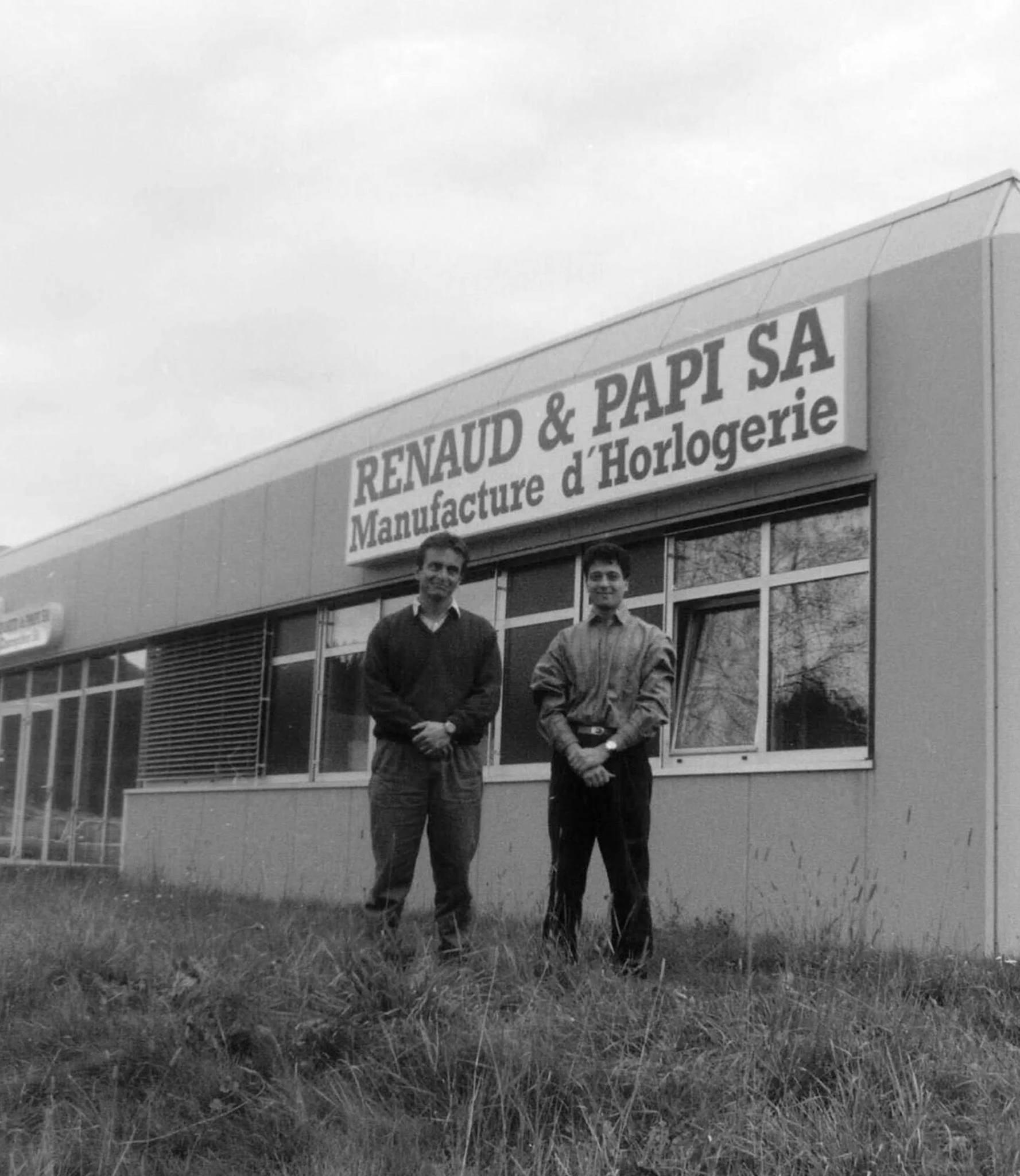
Circa 1986. Dominique Renaud and Giulio Papi pose in front of their complication mechanism development company. by Sébastien Perret.
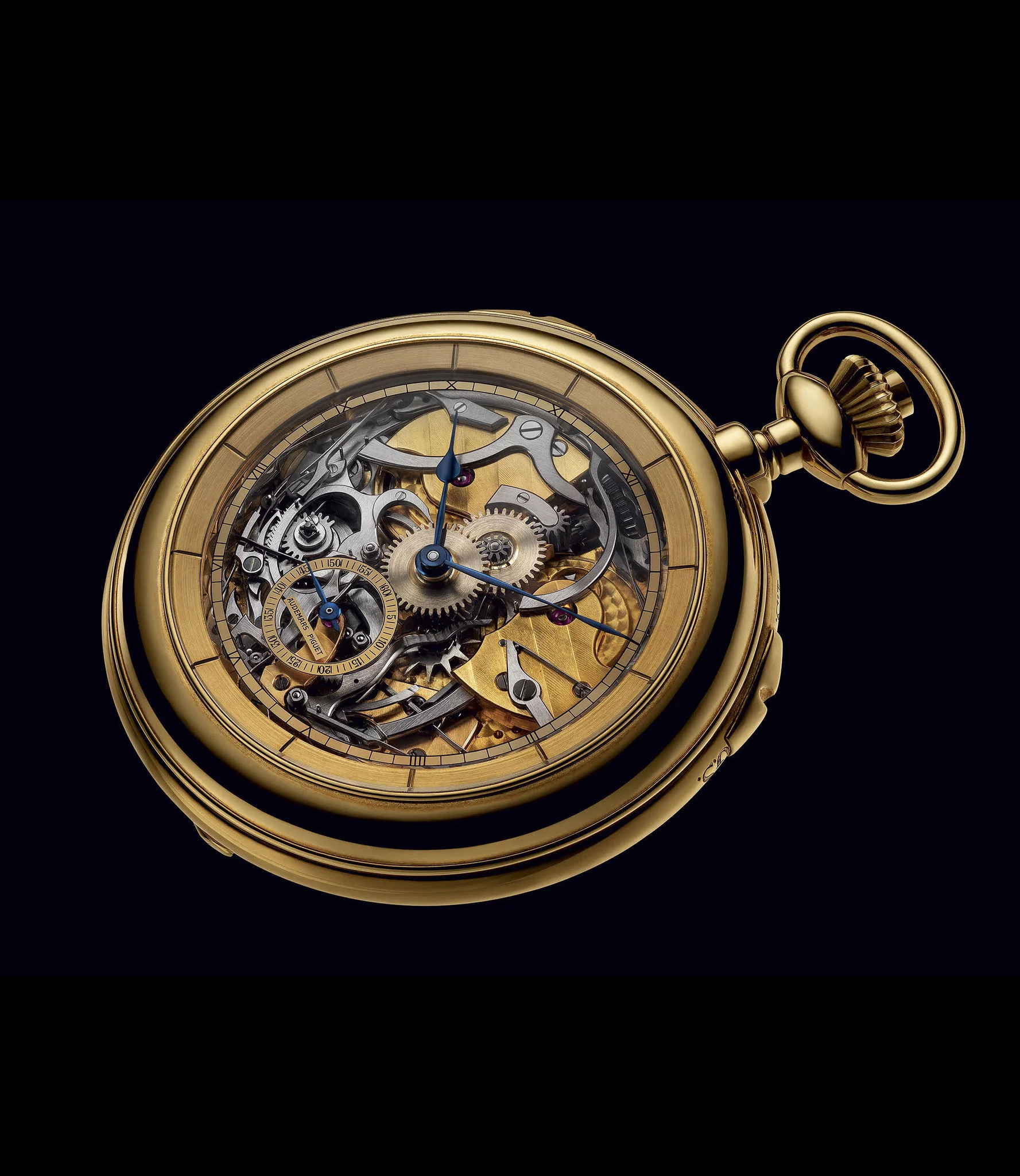
1987. Grande Sonnerie. Watch developed by Philippe Dufour for Audemars Piguet. Calibre 19GSMV, movement 265036 produced in 1987. Yellow gold. Model 25711 (5/5). Audemars Piguet Heritage, Inv. 389.
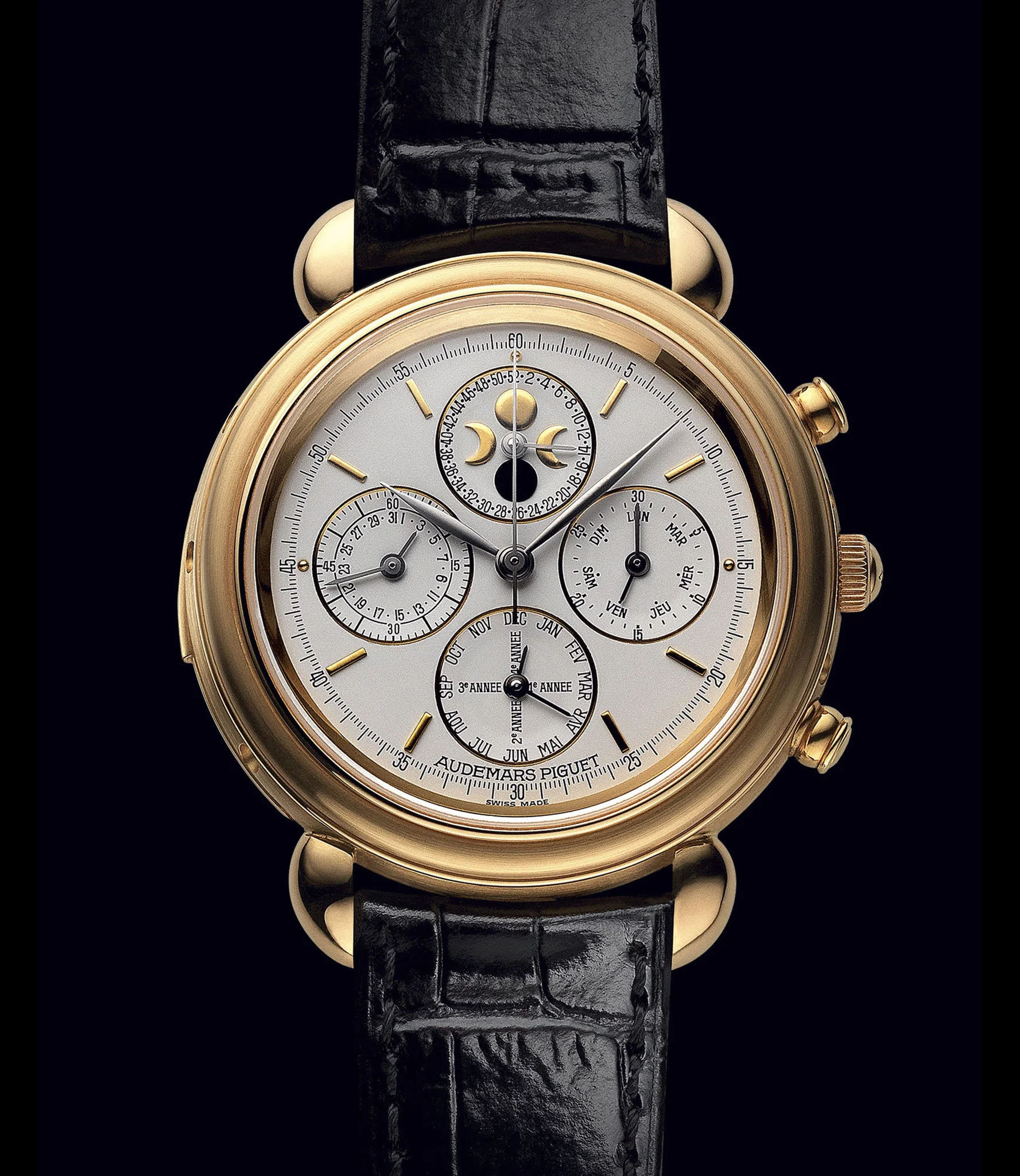
1992. Triple complication watch. Minute repeater, chronograph and perpetual calendar. Calibre 2880. Mock-up/Prototype without movement/Non-functional reproduction/model? Yellow gold. Model 25725 (31 units). Audemars Piguet Heritage, Inv. 452.
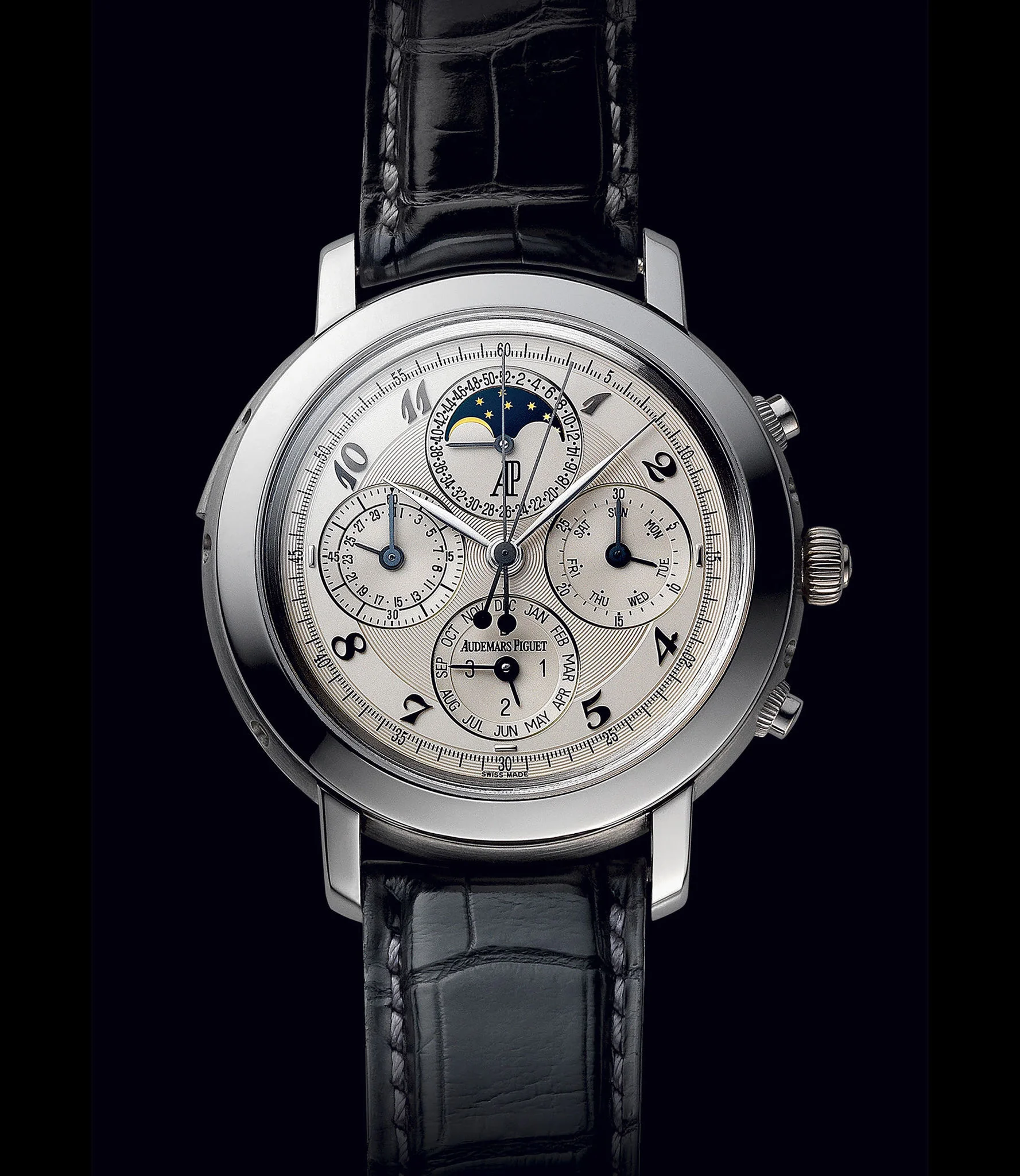
1996. Grande Complication watch. Minute repeater, split-seconds chronograph and perpetual calendar. Calibre 2885. Prototype presented at Basel World in 1996. Platinum. Model 25866. Audemars Piguet Heritage, Inv. 1529.
1995. Grandes Complications workshop. Audemars Piguet Archives.
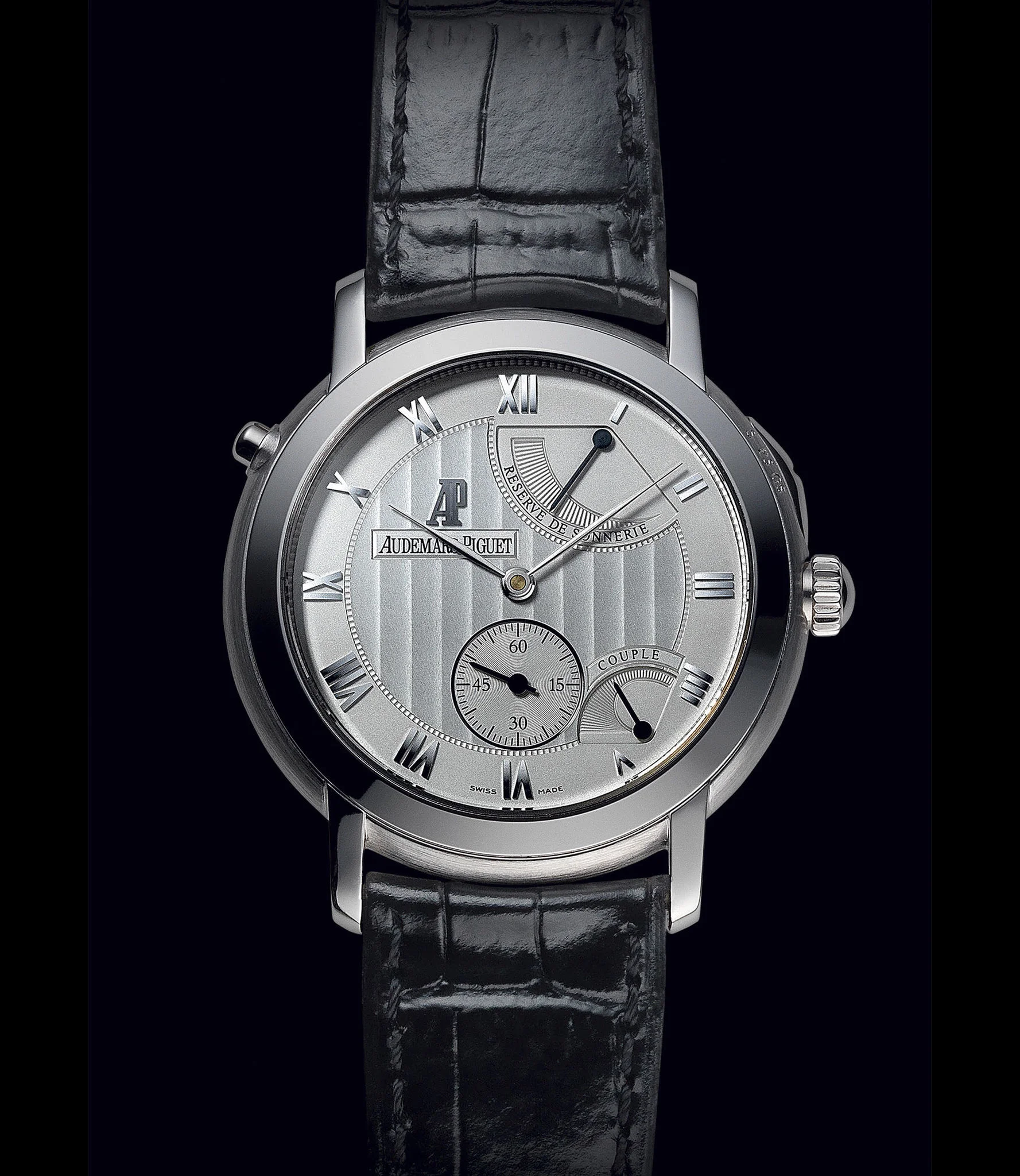
2000. Jules Audemars Grande Sonnerie. Carillon, Petite Sonnerie, minute repeater, dynamograph. Calibre 2891. Model 25945 (41 units, including 12 in white gold). White gold. Prototype produced for the Basel Watch and Jewellery Show in 2000. Audemars Piguet Heritage, Inv. 622.
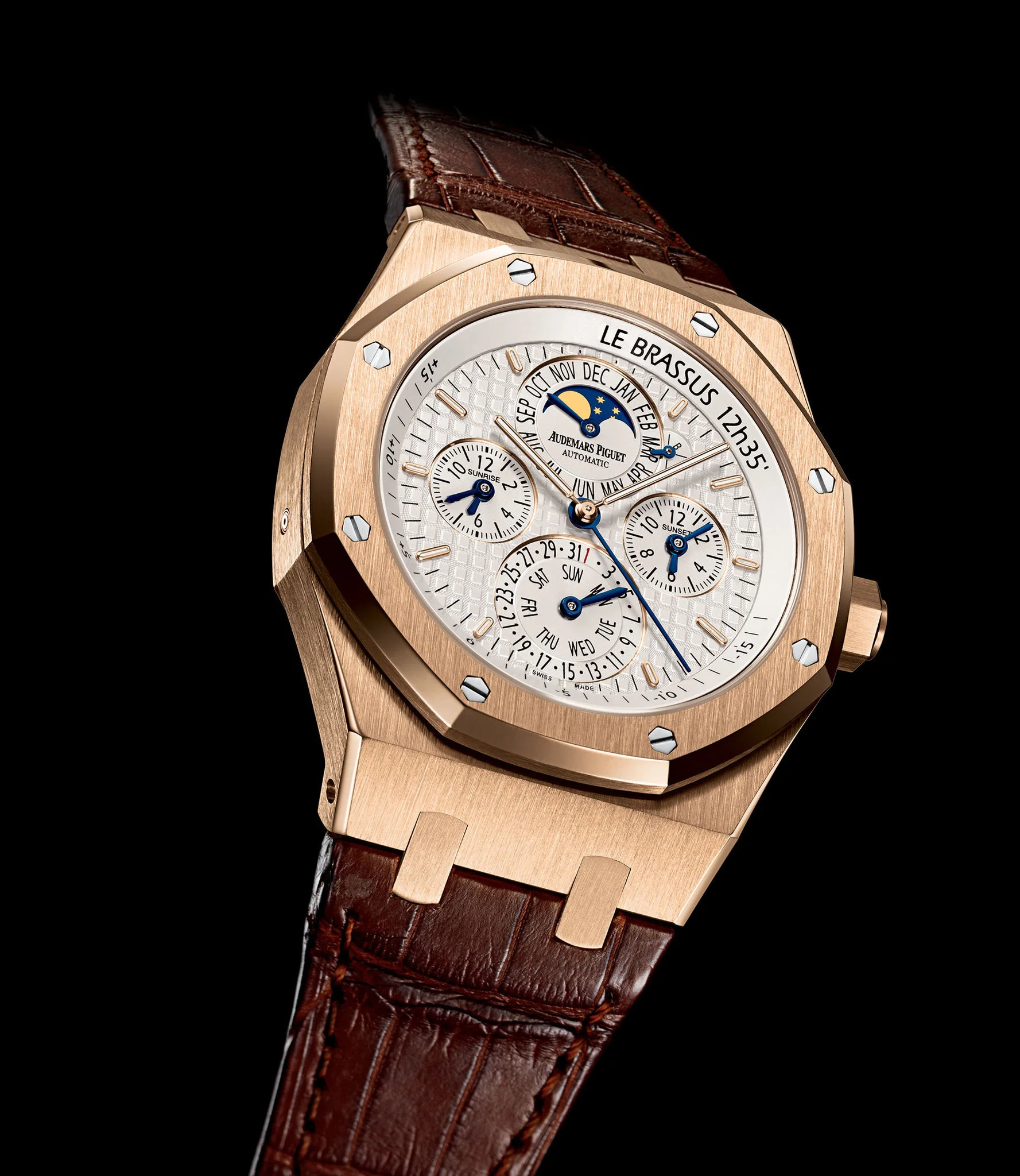
Circa 2010. Royal Oak Equation of Time 26606. Perpetual calendar, sunrise and sunset times, equation of time (solar time). Selfwinding Calibre 2120/2808. Photograph taken circa 2010. Audemars Piguet Archives.
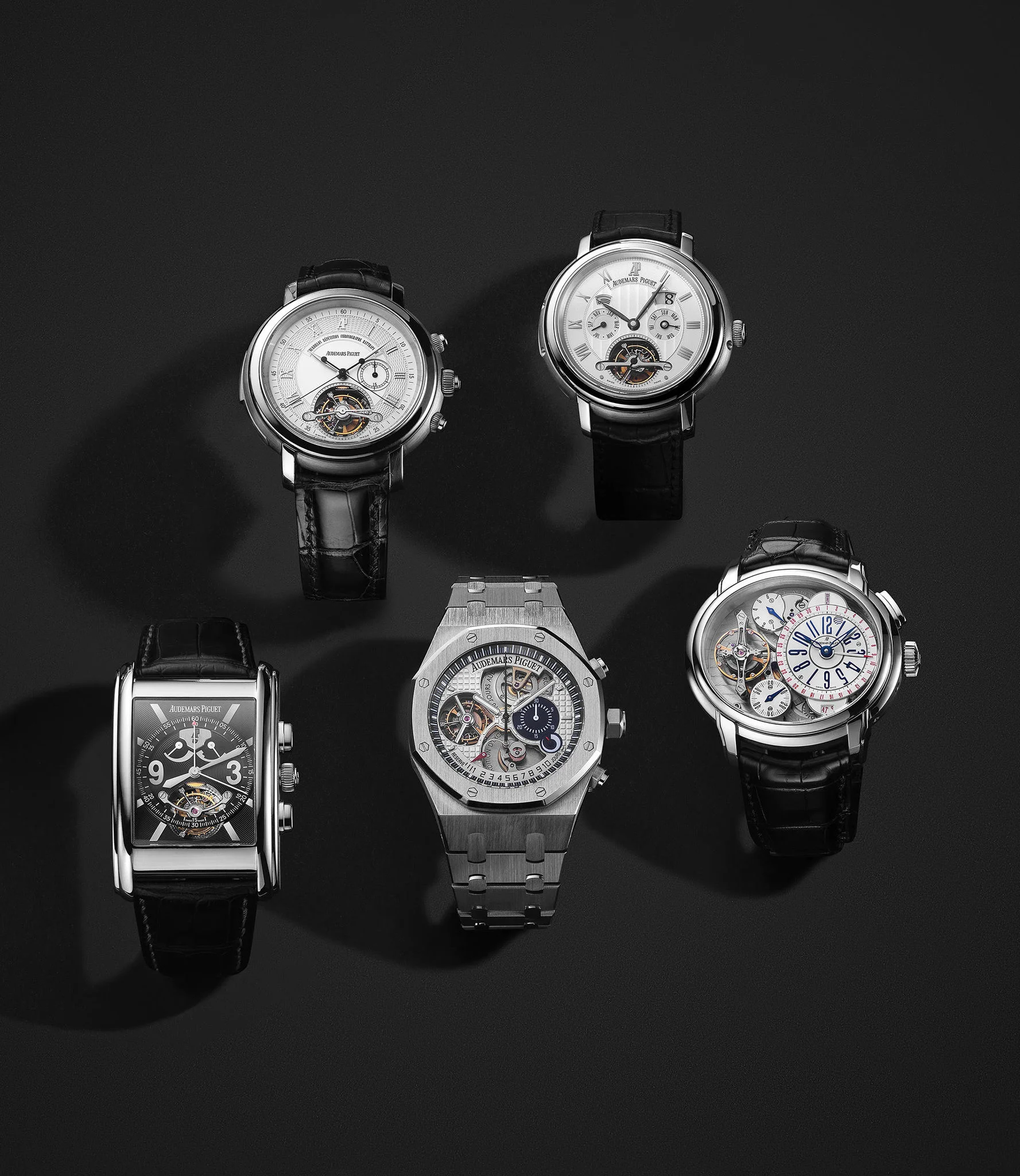
1999–2006. The five 20-piece Tradition d'Excellence limited editions. No 1, Model 25923 in 1999; No 2, Model 25948 in 2000; No 3, Model 25958 in 2002; No 4, Model 25969 in 2004; No 5, Model 26066 in 2007.
New techniques, new materials
In the wake of the quartz crisis, the way in which mechanical watches were designed and manufactured was profoundly transformed. Within just a few decades, computers were everywhere. They were used in design and engineering offices. In digital format, a design could easily be retouched, shared and combined with others, even merging all the components of a movement into a single file. Computers also served to equip quality control laboratories, as well as revolutionising manufacturing and prototyping methods. Thanks to new technologies, CNC (computer numerically controlled) machining centres could autonomously carry out dozens of successive operations using dozens of different tools. This new equipment opened up a whole new world of possibilities in terms of component geometry, offering unprecedented precision and paving the way for the use of innovative materials. New professions emerged, shaking up age-old expertise.
In its quest for a balance between manual craftsmanship and high-tech methods, Audemars Piguet played a pioneering role in exploring new perspectives in terms of functions, ergonomics, dimensions, etc. However, if there is one area in which innovation was particularly visible, it was that of materials.
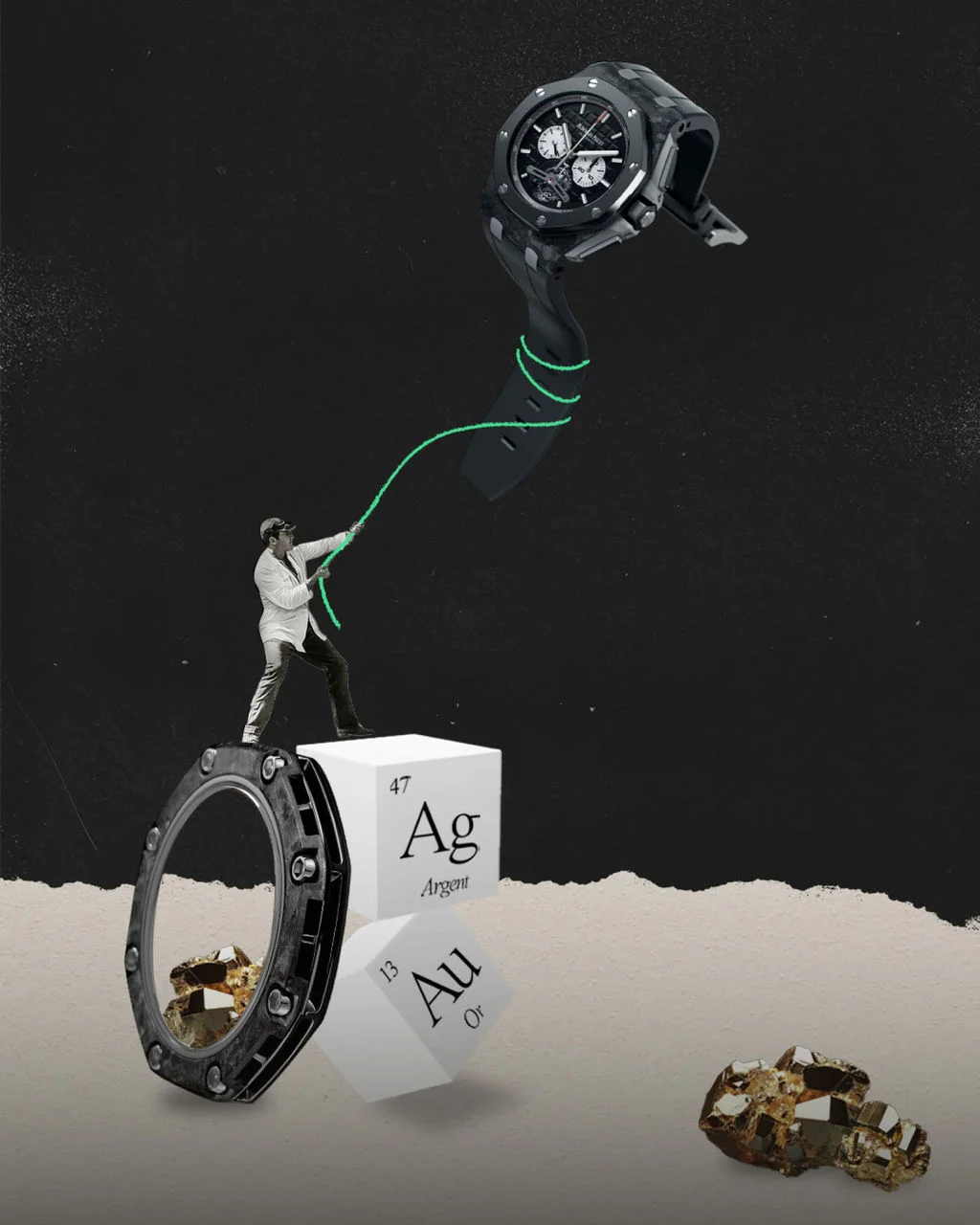
In 1981, the brand combined steel and gold in the so-called ”Pyjama" watch. Five years later, ceramic was introduced on the bracelets and cases of the "Bamboo" watches, followed in 1988 by the first tantalum cases. Titanium made its appearance in 1997. In 2002, the third millennium brought a watch that was innovative in every respect: the first Royal Oak Concept appeared clothed in alacrite, a material considered impossible to machine. In 2001, the bezel of the Royal Oak Offshore was protectively clad in rubber, even when it was made of gold! Another world first saw the light of day in 2007, with the introduction of forged carbon, derived from the aerospace industry, on the Royal Oak Offshore Alinghi. Cermet, an ultra-resistant material combining metal and ceramic, was also introduced in 2010.
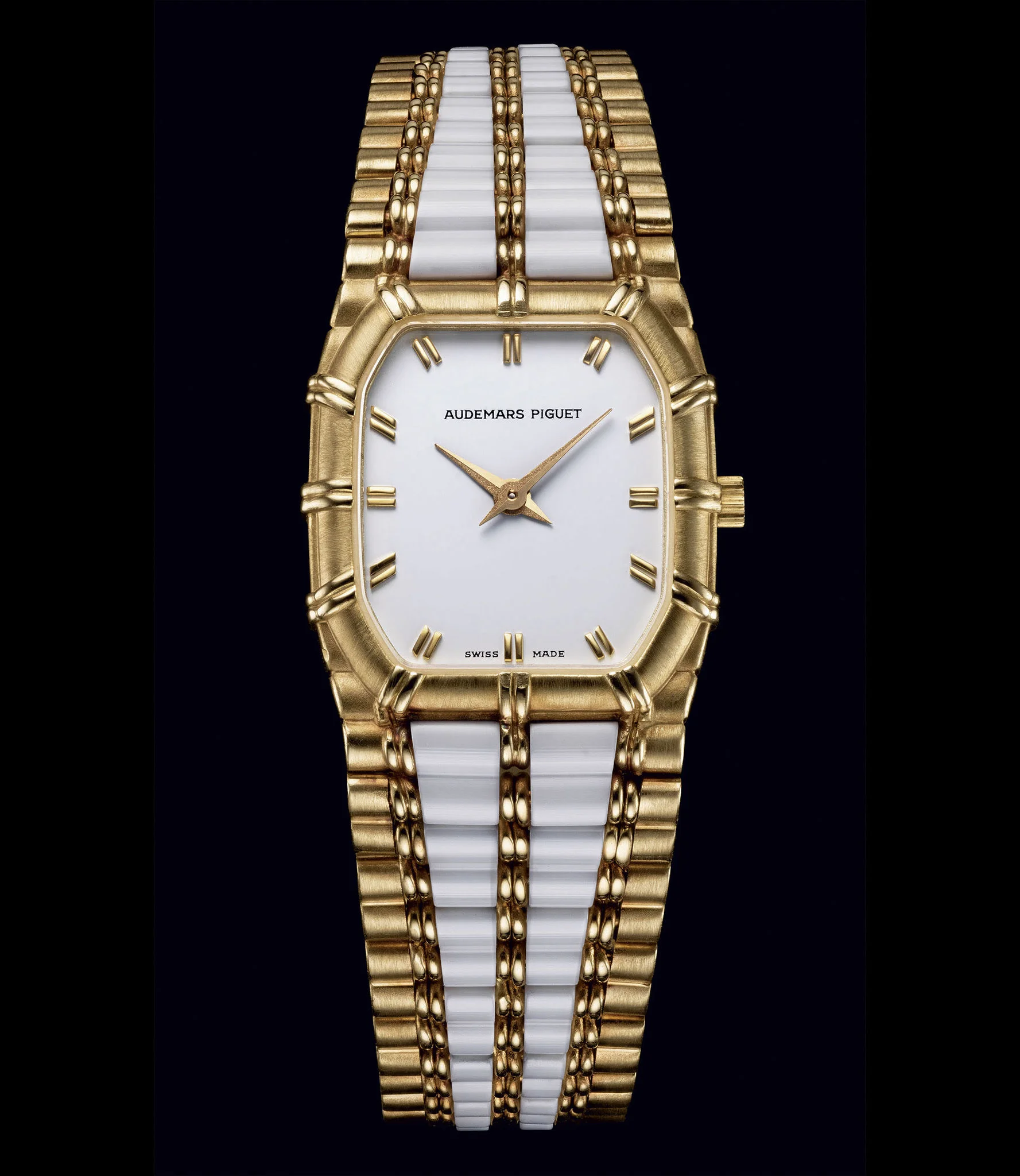
1989. Bamboo wristwatch. AP's first use of white ceramic. Calibre 2508 (quartz). Movement 303535 produced in 1983. Sold in 1989. Yellow gold. Model 66192. Audemars Piguet Heritage, Inv. 1704.
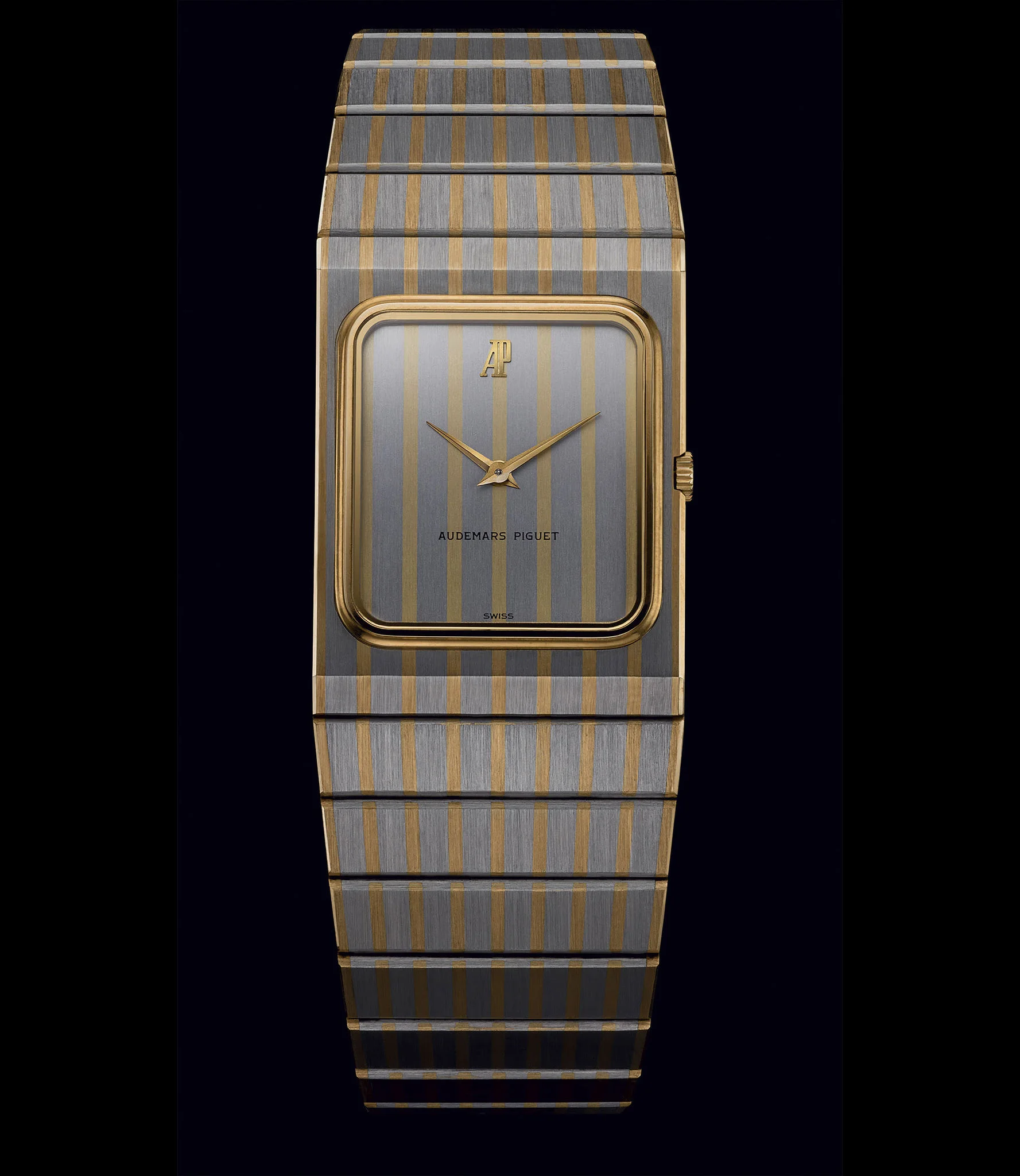
1981. Pyjama wristwatch. Thin, integrated bracelet combining steel and yellow gold. Calibre 2003, movement 107088 produced in 1981. Model 4274. Audemars Piguet Heritage, Inv. 587.
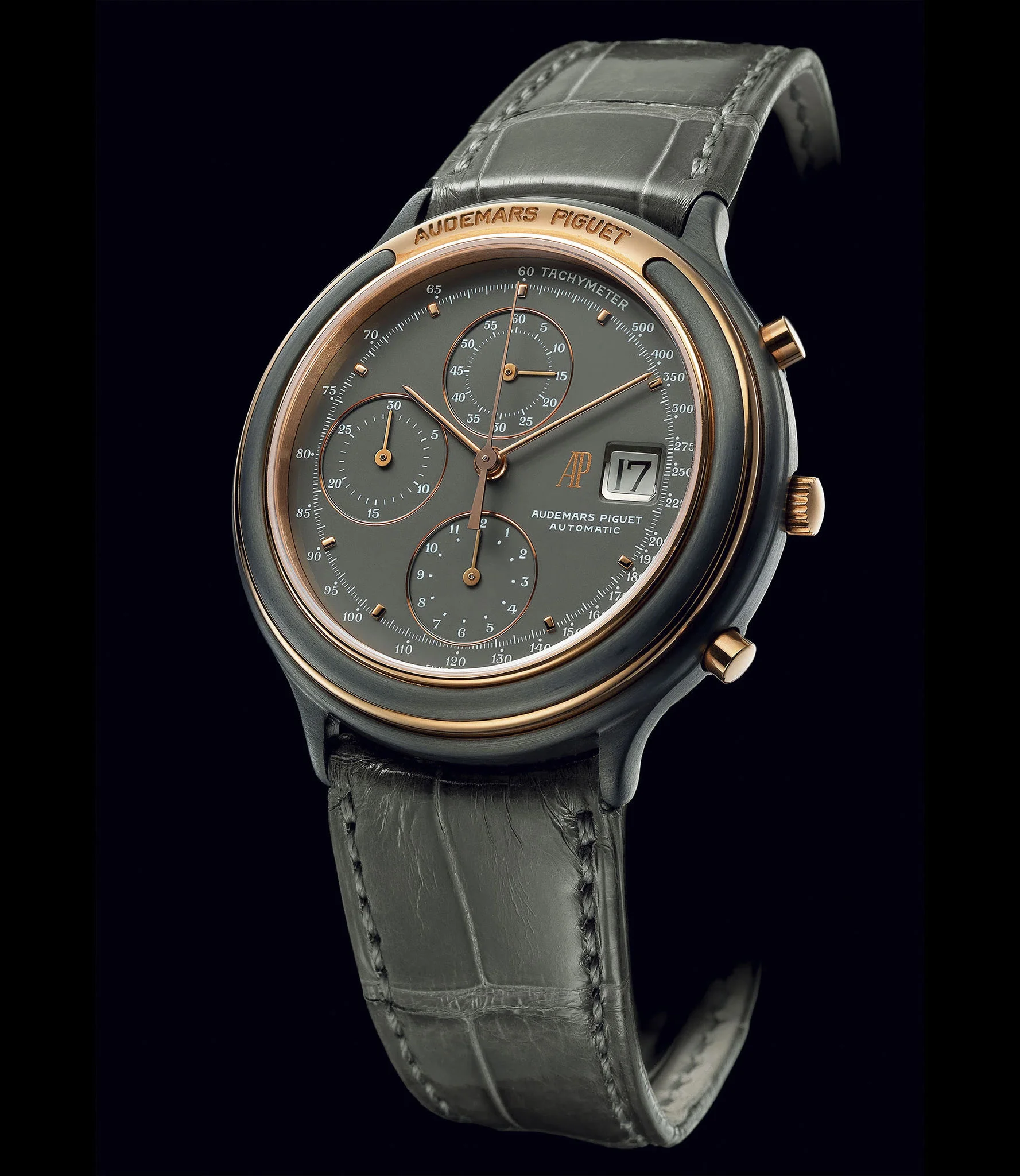
1990. Huitième wristwatch. Chronograph and date aperture. Calibre 2126/2840, movement 331853 produced in 1989. Sold in 1990. Tantalum and pink gold. Model 25644. Audemars Piguet Heritage. Inv. 817.
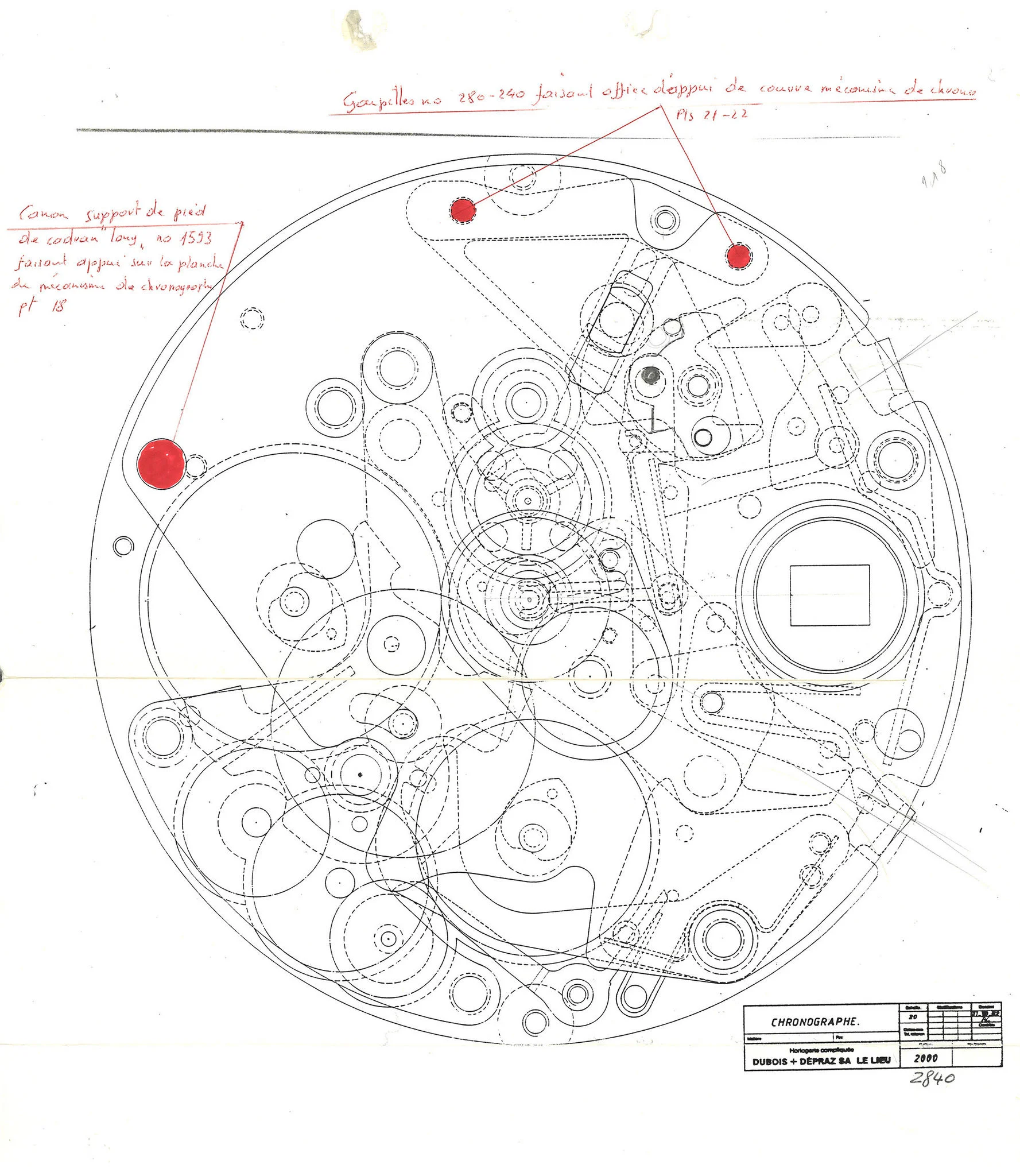
Circa 1985. Development plan for the dial of the selfwinding chronograph, Calibre 2126/2840. This technical drawing was one of the first to be computer-generated at Audemars Piguet. Audemars Piguet Archives.
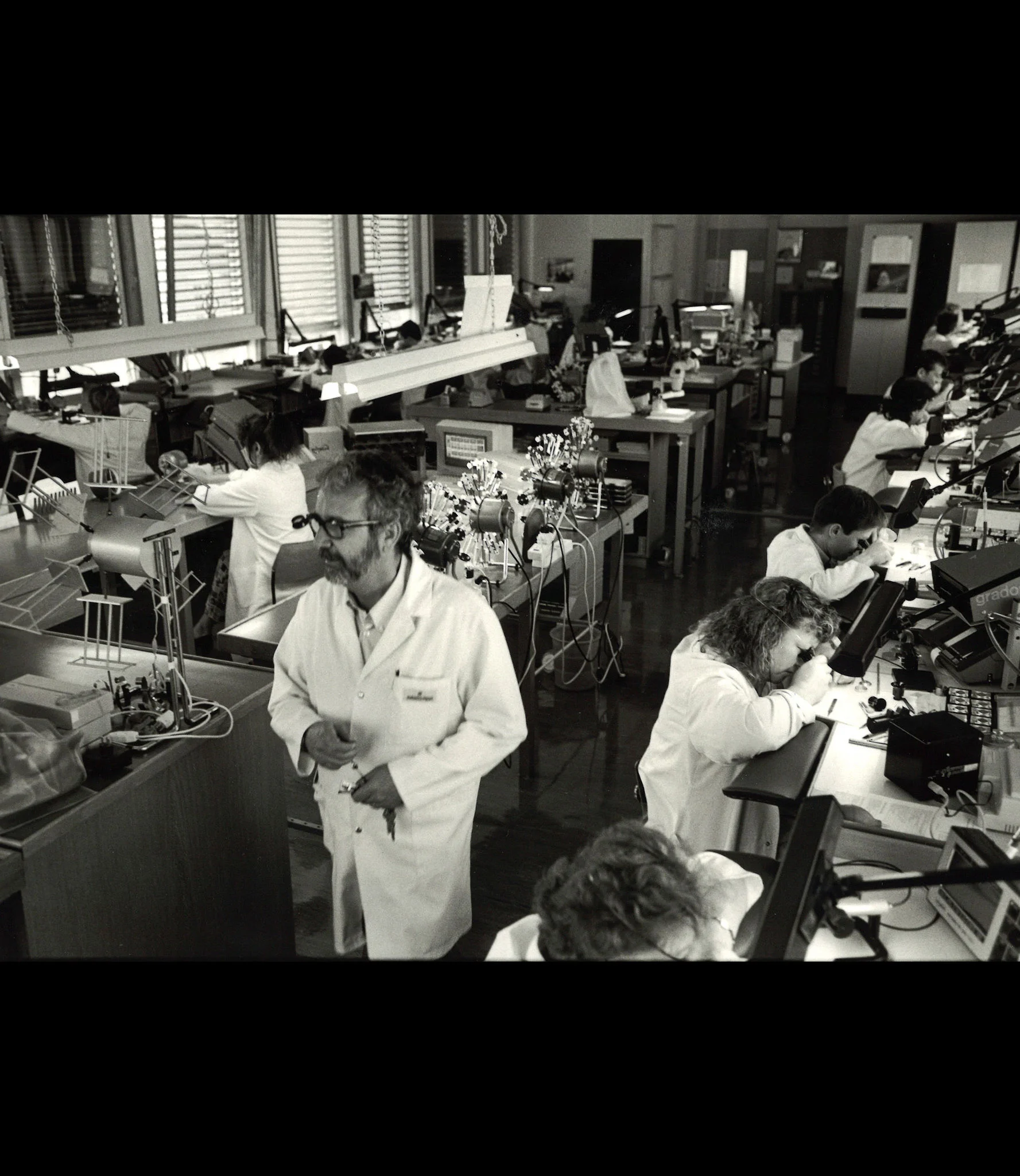
Circa 1980. Audemars Piguet workshop. Audemars Piguet Archives.
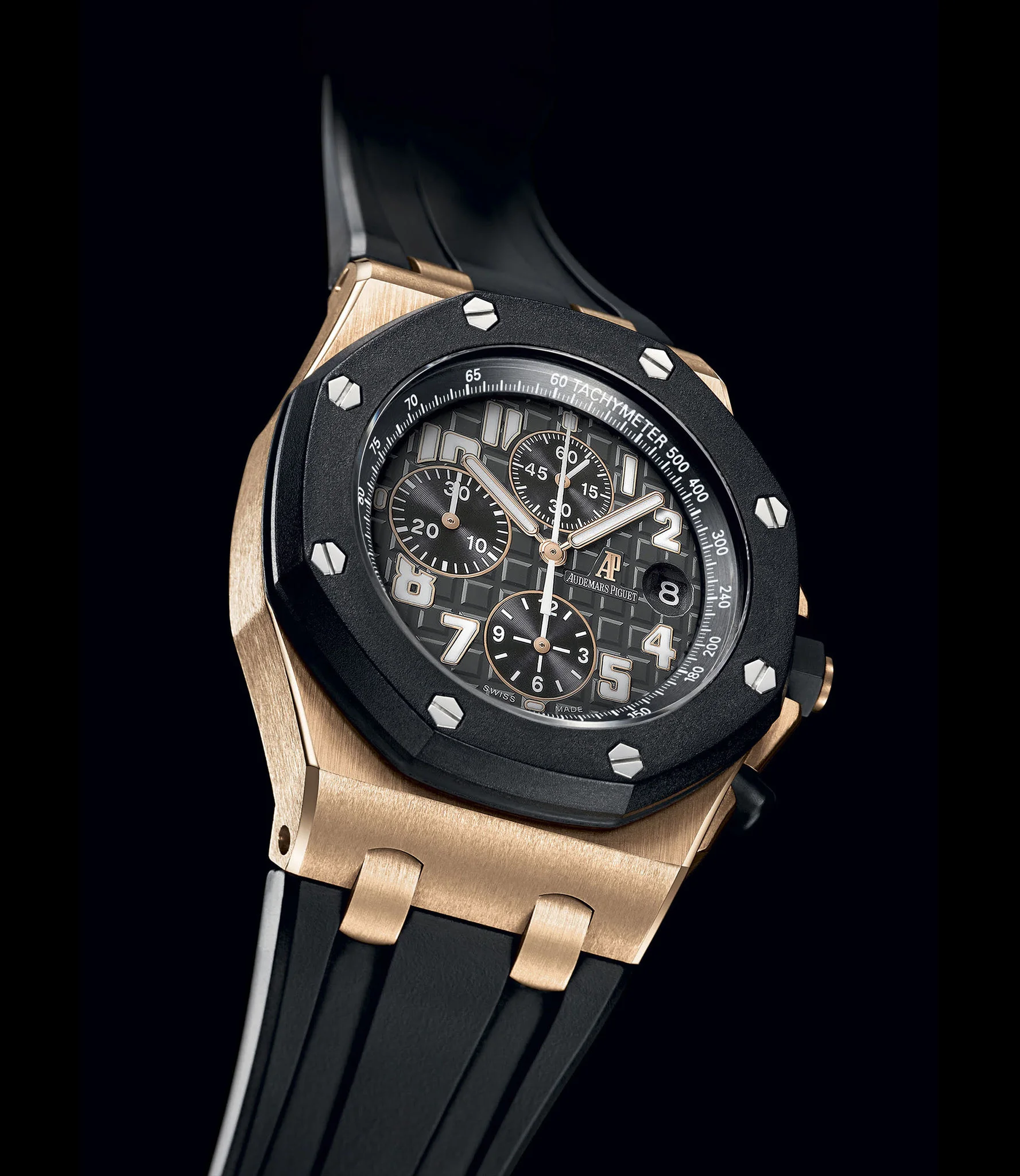
2001. Royal Oak Offshore. Rubber covers the pink gold bezel. Chronograph and date aperture. Calibre 2326/2840. Pink gold and rubber. Model 25940. Audemars Piguet Heritage, Inv. 1339.
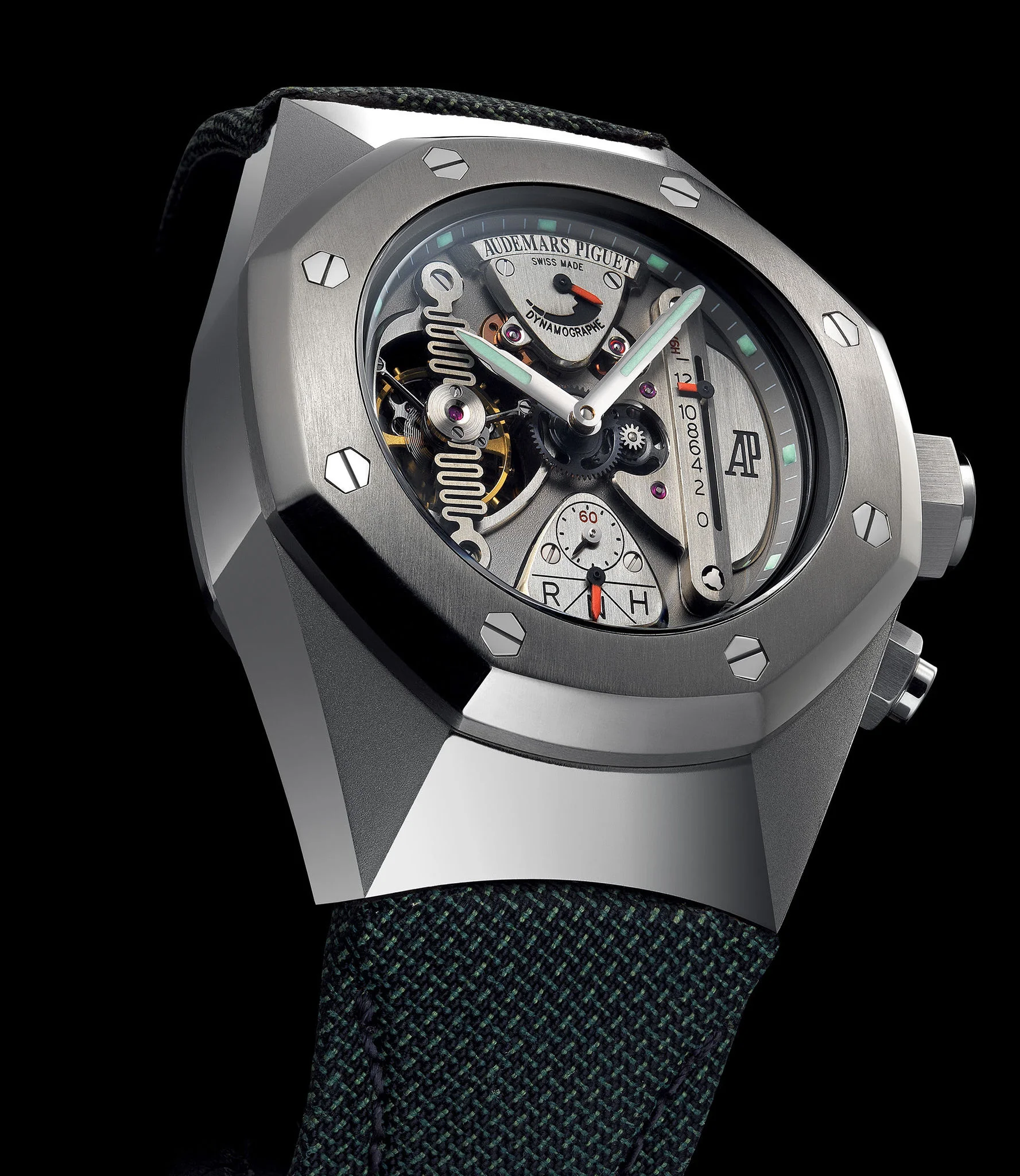
2002. First Royal Oak Concept. 150-piece limited edition. Calibre 2896. Alacrite, titanium and Kevlar strap. Model 25980. Prototype. Audemars Piguet Heritage, Inv. 564.
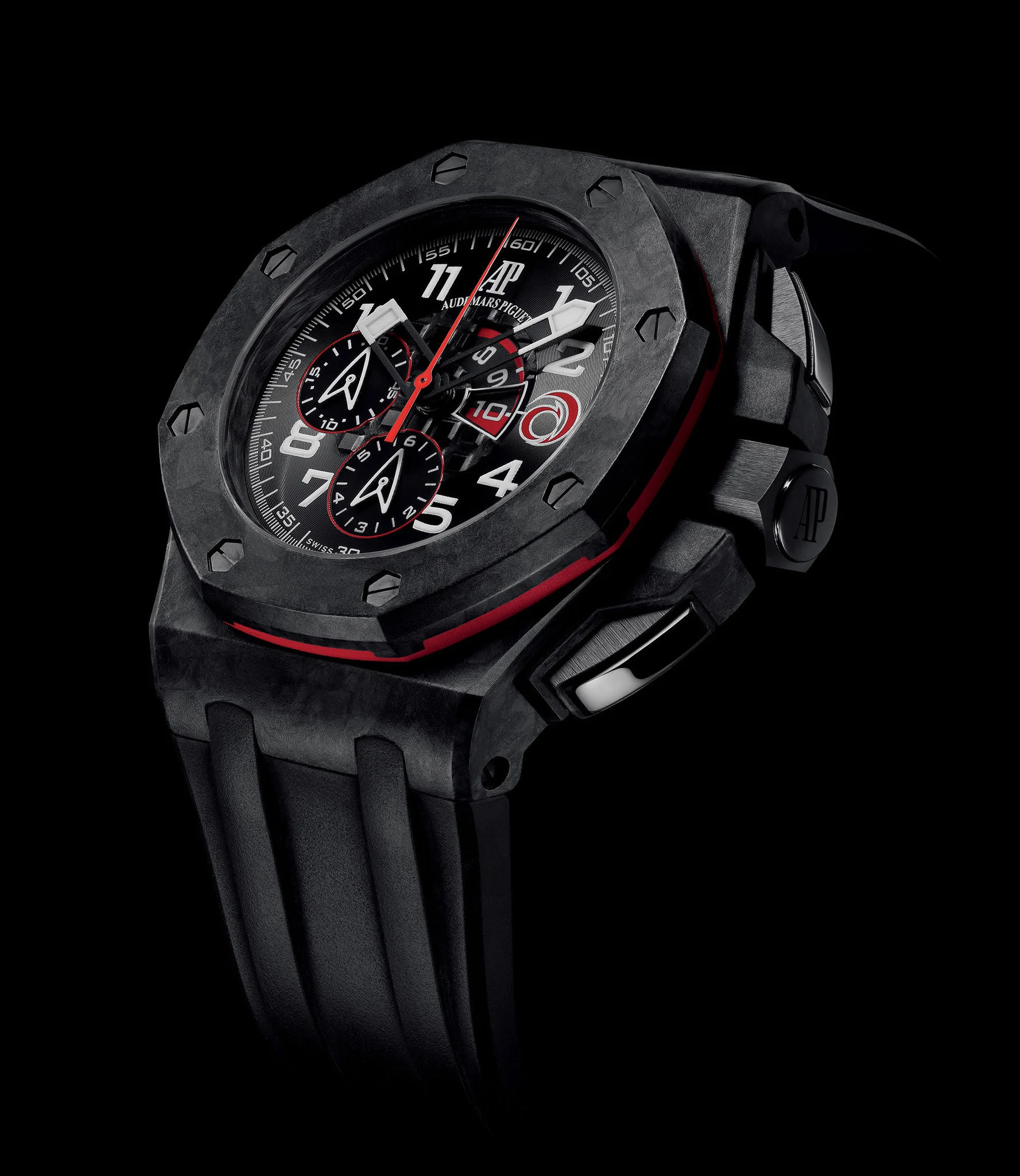
2007. Royal Oak Offshore Alinghi Flyback regatta model. First watch in forged carbon. Selfwinding Calibre 2326/2848. Model 26062 (601/1300). Ø 44 mm. Audemars Piguet Heritage, Inv. 1379.
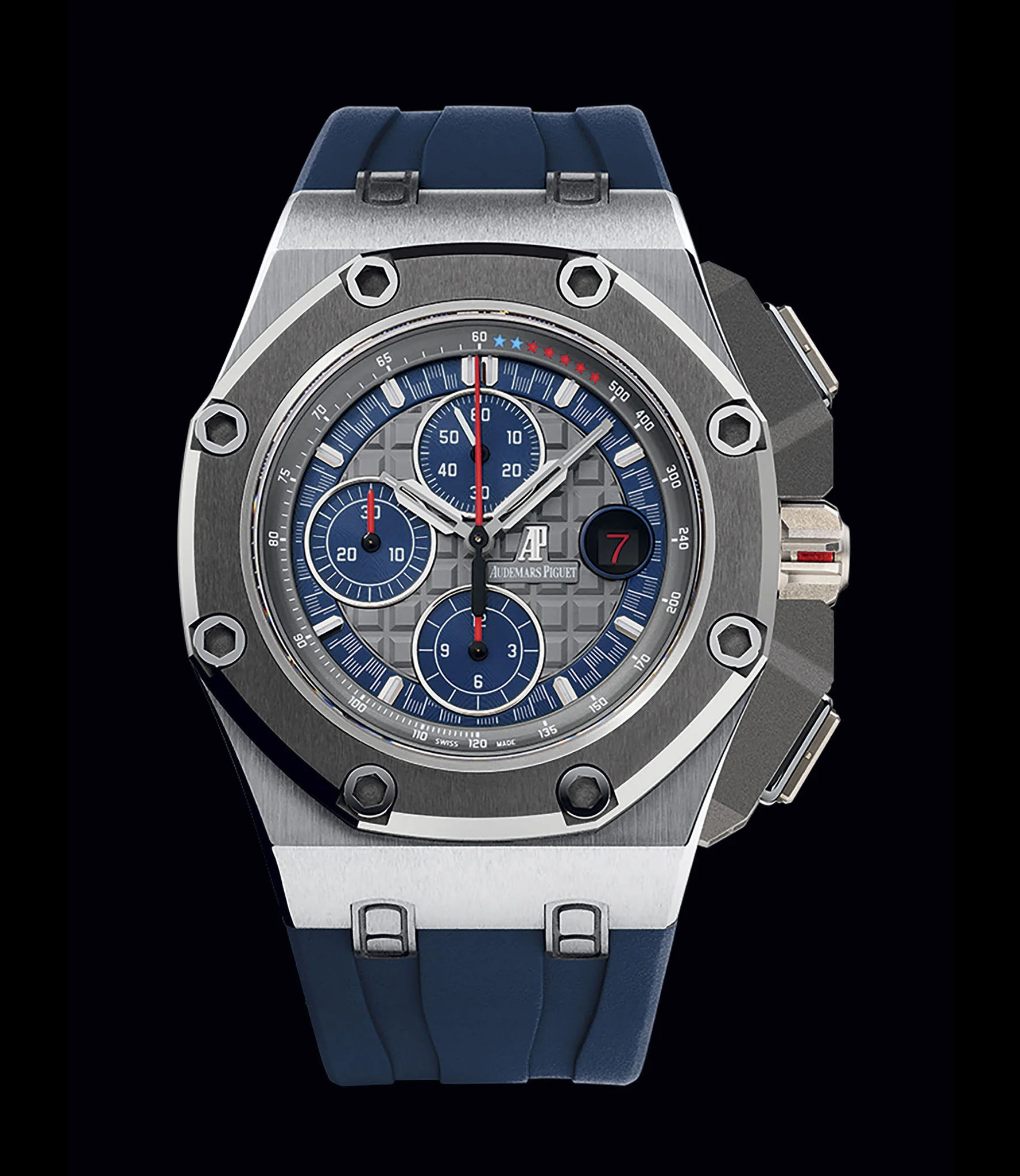
2012. This Royal Oak Offshore Michael Schumacher 26568PM features a cermet bezel, 13 times harder than its 950 platinum case. It alone embodies a repertoire of new materials: rubber, titanium, ceramic, cermet and platinum. AP Heritage, Inv. 1592.
Stars and superstars
Since the birth of Audemars Piguet, many celebrities have worn watches from the Le Brassus workshops on their wrists or in their jacket pockets. These include Walter Chrysler (1875–1949), founder of the brand and of the eponymous building, President Dwight Eisenhower (1890–1969), singer Frank Sinatra (1915–1998), the Shah of Iran Mohammed Reza Pahlavi (1919–1979), as well as fashion designer Karl Lagerfeld (1933–2019).
From the 1980s onwards, certain friendships led to partnerships. In 1989, for example, young golf prodigy Nick Faldo became a brand ambassador. Other champions also associated their names with Audemars Piguet, such as chess champion Garry Kasparov and skier Alberto Tomba. Audemars Piguet became interested in sailing and gained fame through the victory of the crew of Swiss boat Alinghi, which won the America's Cup in 2003 and 2007.
But let's go back to 1999. Audemars Piguet was on a roll and preparing to celebrate its 125th anniversary. Its 330 employees were producing just under 15,000 watches a year and sales were approaching the CHF 100 million mark. Yet the brand remained virtually unknown to the general public. It therefore invited a loyal customer named Arnold Schwarzenegger to visit the workshops in Le Brassus. A friendship was born, followed by a limited edition. The Royal Oak Offshore End of Days considerably broadened the brand's audience. The youthful director of the American subsidiary, François-Henry Bennahmias, immediately organised the Time to Give charity auction, for which he succeeded in attracting the participation of several film superstars, including Sharon Stone, Sophia Loren and George Clooney, as well as boxer Mohammed Ali.
The Royal Oak Offshore has been a driving force in this opening up to the world of entertainment and culture. This creative, extrovert model embodies success and youth. It has appealed to sports stars such as Michael Schumacher and Rubens Barrichello, Lionel Messi and Serena Williams. In 2005, American rapper Jay-Z celebrated his tenth career anniversary with a Royal Oak Offshore special edition. The Offshore was thus introduced to the world of music and became the first luxury watch to be adopted by hip-hop stars. AP even became one of the most quoted brands in hip-hop songs. The brand has continued its exploration of pop culture, teaming up with Marvel Studios in 2020, rapper Travis Scott's Cactus Jack brand in 2023, as well as artist KAWS in 2024.
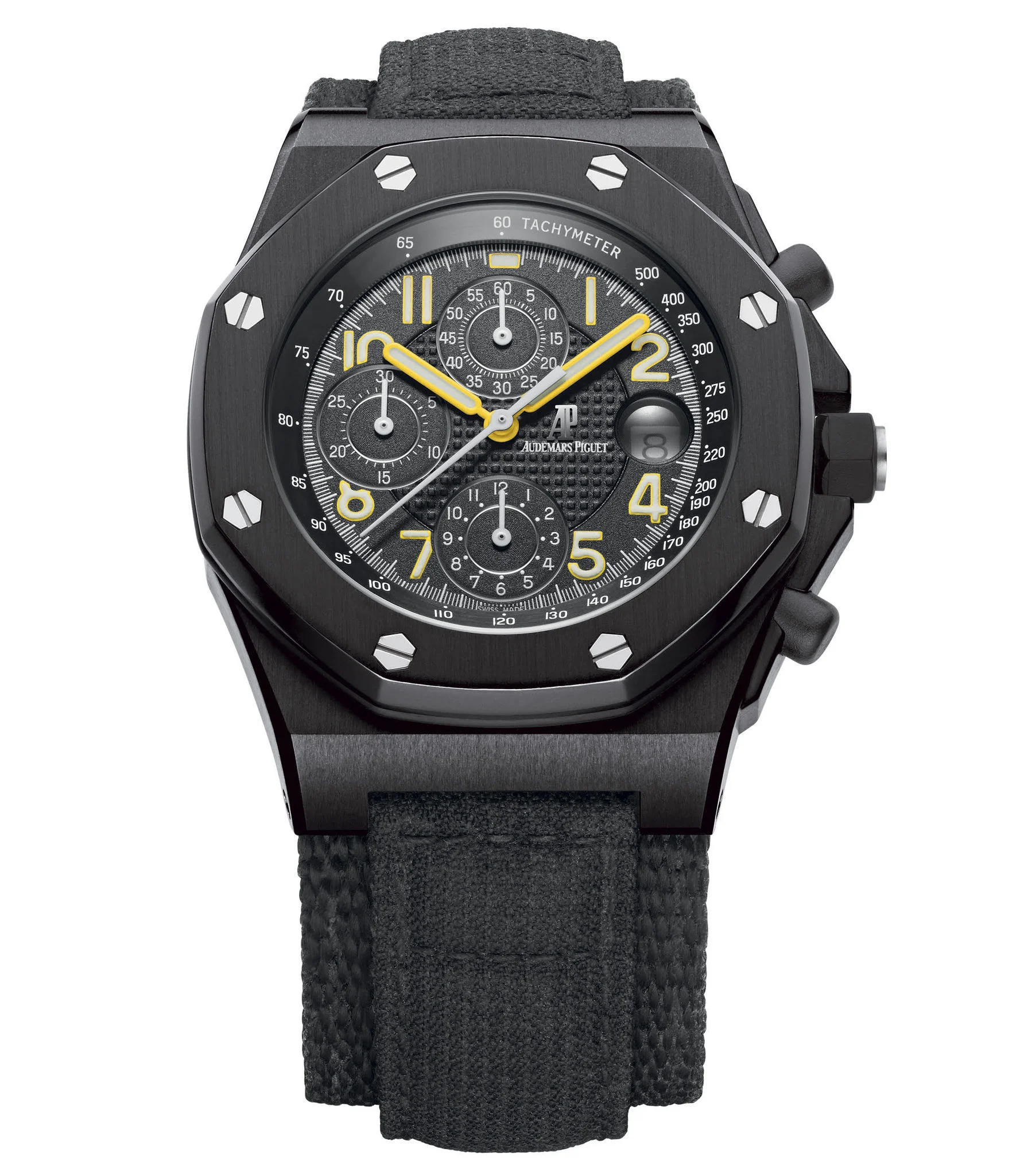
1999. Royal Oak Offshore End Of Days. Special edition for the film End of Days starring Arnold Schwarzenegger, in which he wore this watch. 500-piece limited edition. Chronograph. Calibre 3126/3840, movement 482070, produced in 1999. Sold in 2012. Steel, black PVD and Kevlar (strap). Model 25770, Audemars Piguet Heritage, Inv. 1338.
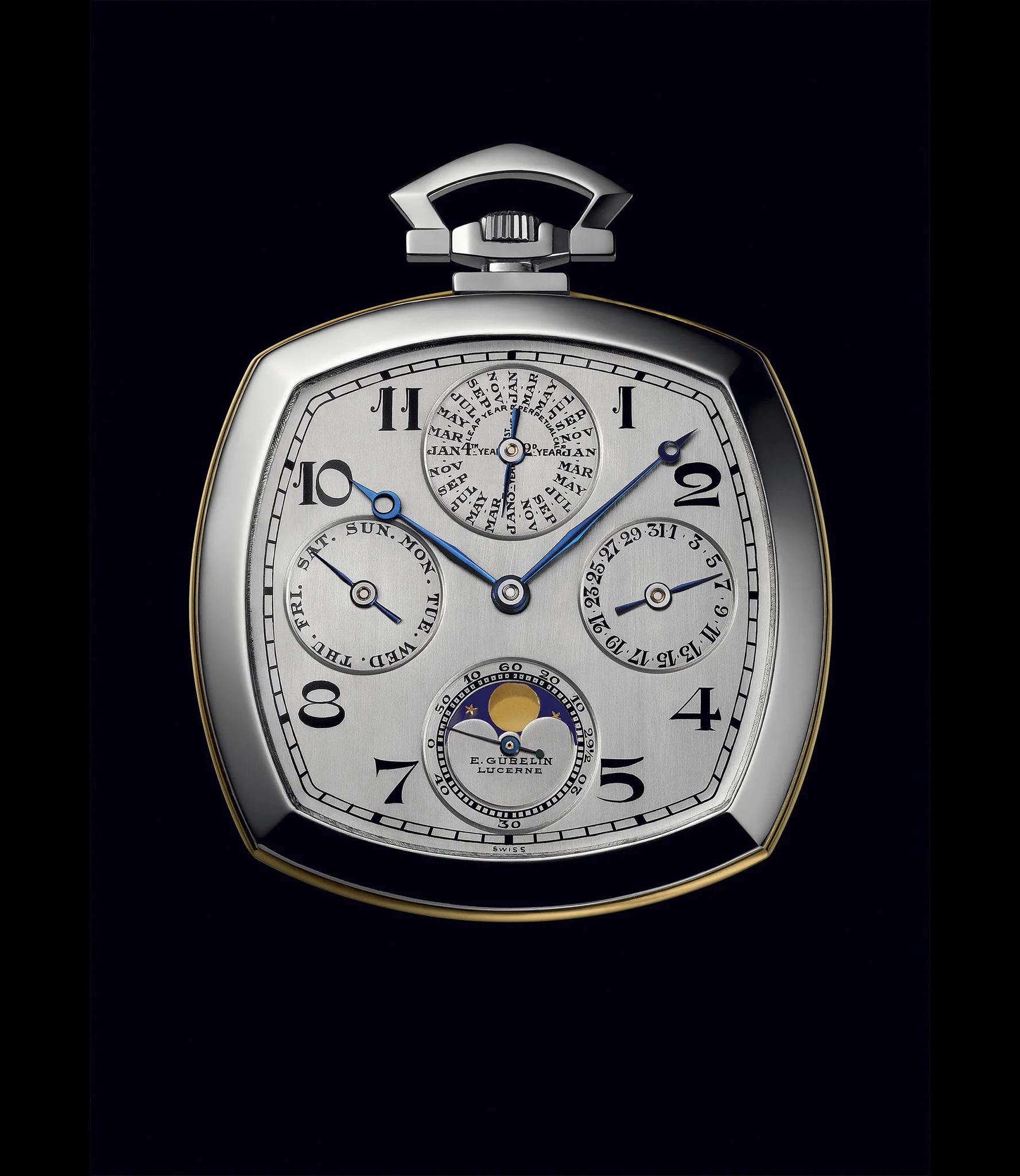
1924. Extra-thin pocket perpetual calendar watch once owned by Dwight D. Eisenhower. This watch was presented to him in 1954 during his tenure as President of the United States from 1953 to 1961. Calibre 17SVF#3. movement 29521 produced in 1922, sold in 1924. Platinum and yellow gold. Audemars Piguet Heritage, Inv. 1712.
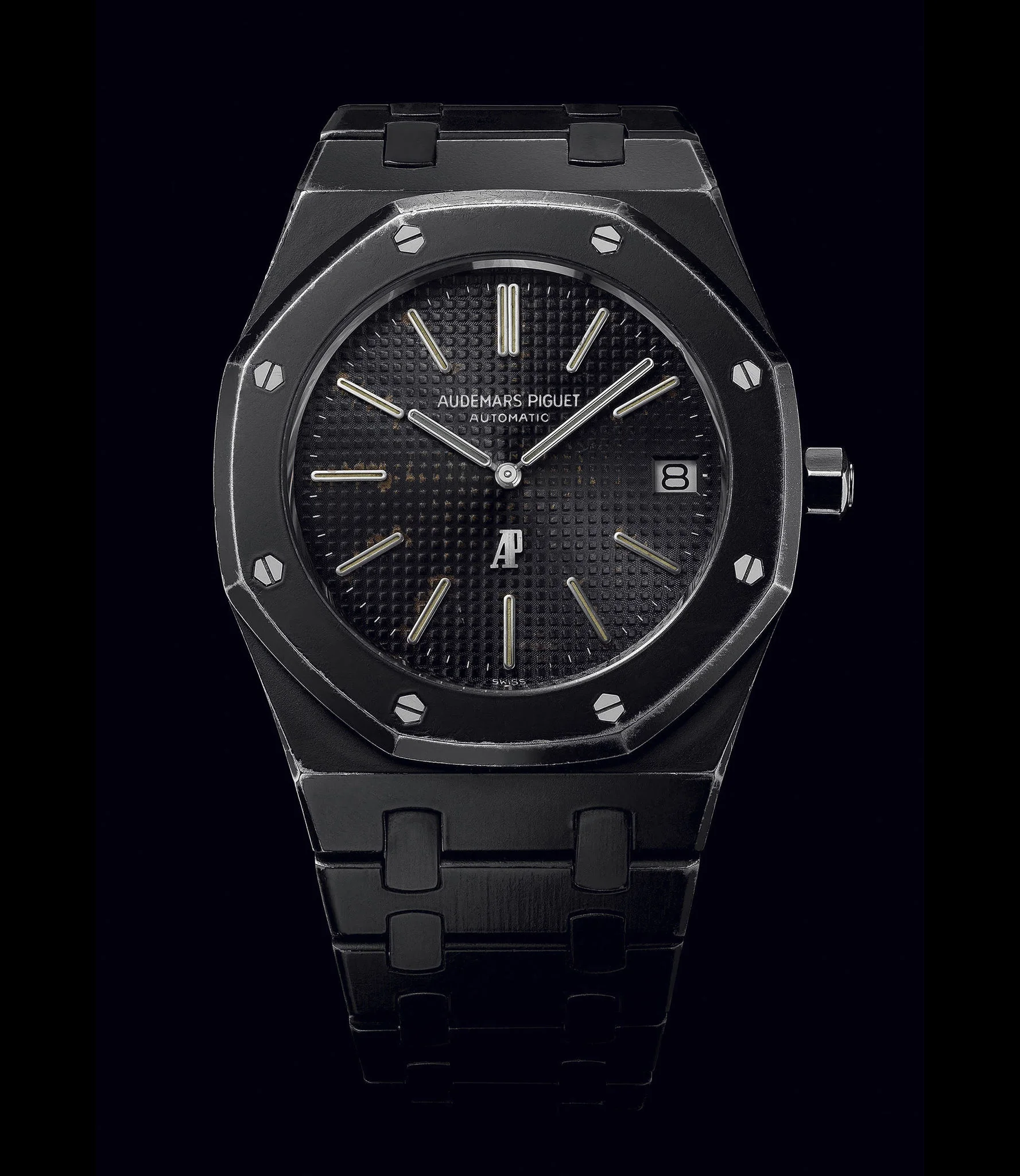
1973. Royal Oak Karl Lagerfeld. The first ever Royal Oak in black PVD. Lagerfeld wore it during numerous catwalk shows. Calibre 2121, movement 128442. Produced and sold in 1973. Black PVD-coated steel. Model 5402. Audemars Piguet Heritage, Inv. 2128.
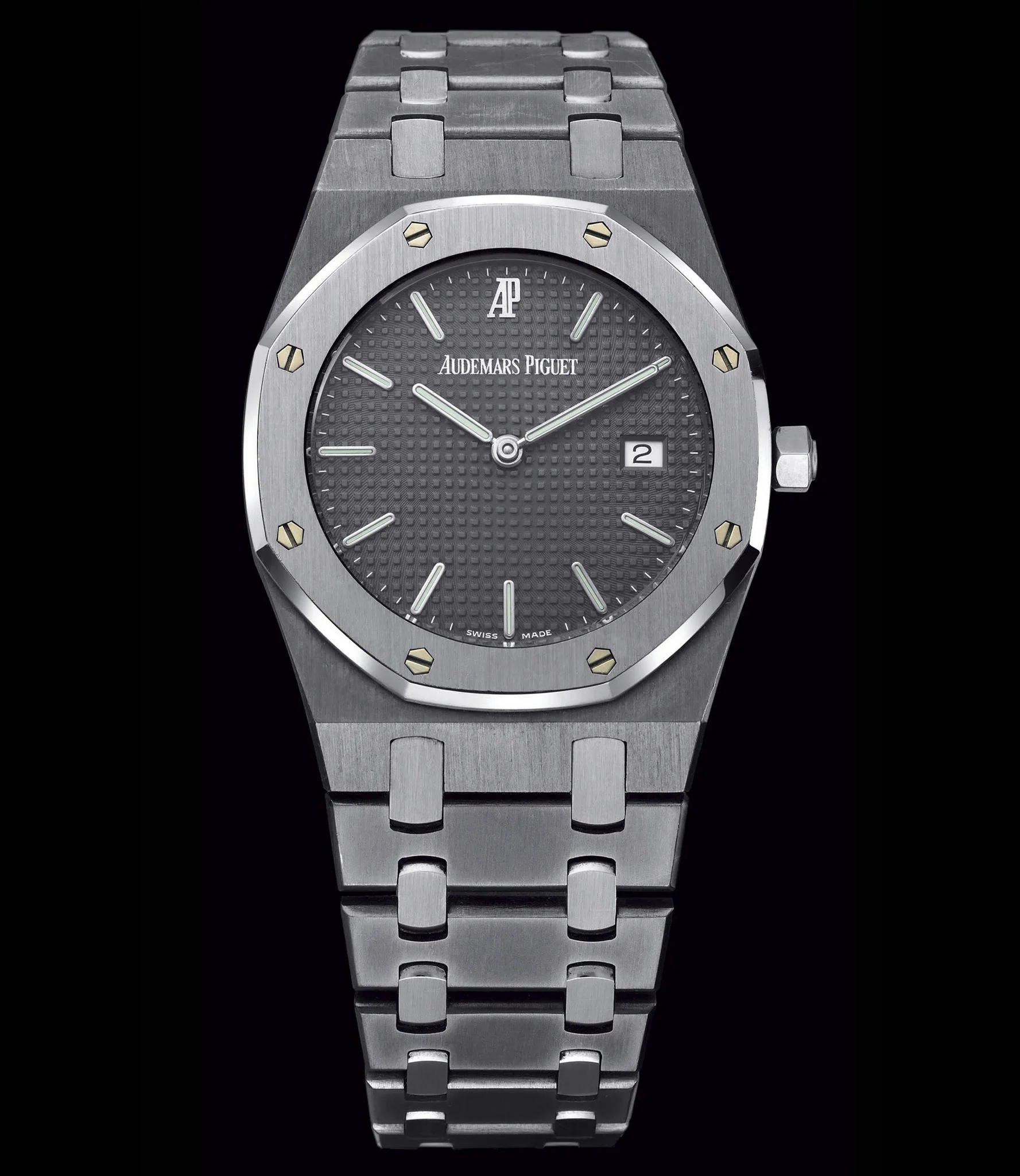
1992. Royal Oak Championship Nick Faldo. Limited edition of 200 created as a tribute to Nick Faldo's victories. Calibre 2612, movement 372789 produced in 1991. Sold in 1992. Tantalum and steel. Model 56175TT. Audemars Piguet Heritage, Inv. 1229.
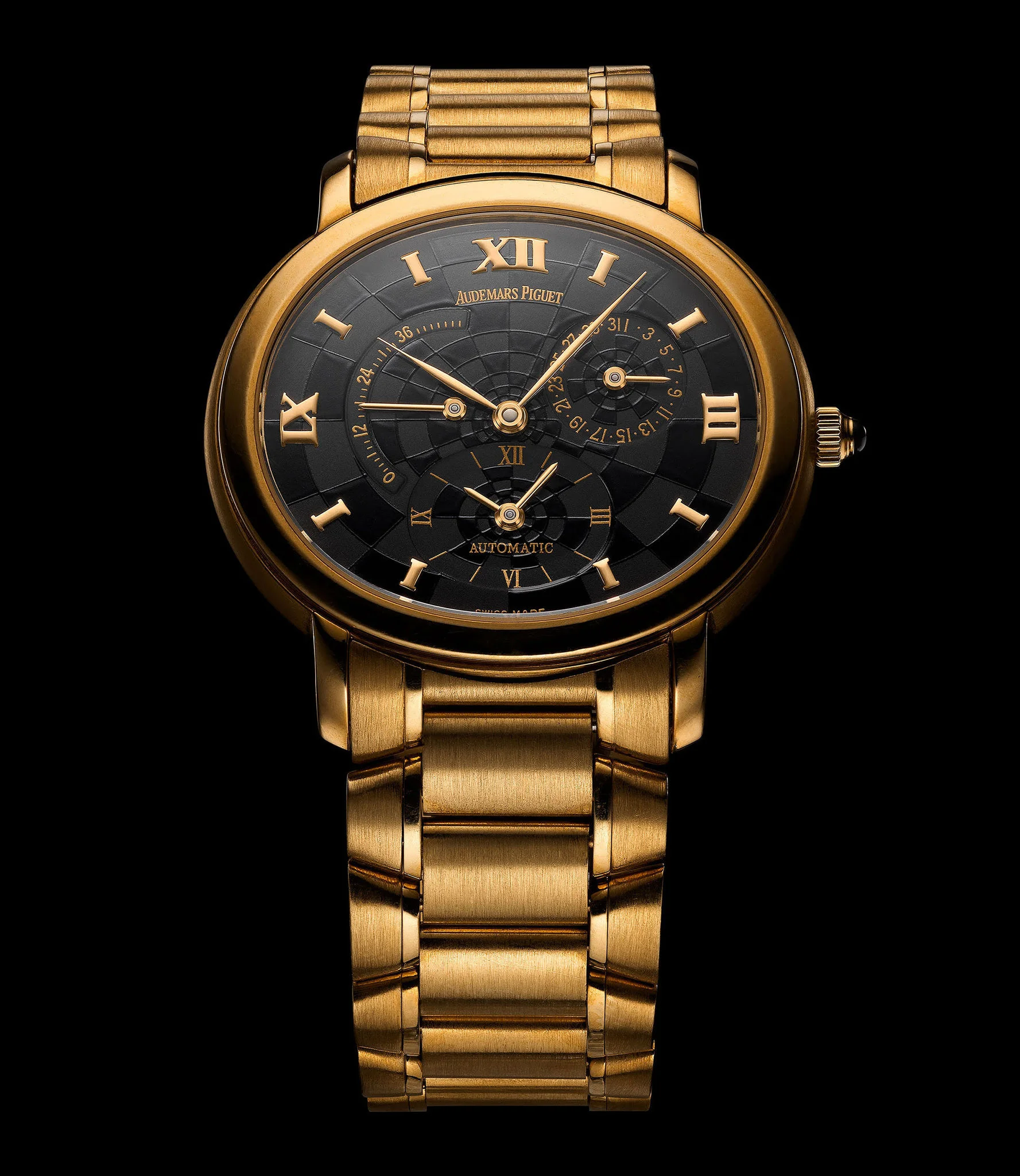
1999. Millenary Dualtime Garry Kasparov. Selfwinding movement driving dual time, date and power reserve indications. Calibre 2229/2845, movement 463470 produced in 1998. 18-carat yellow gold watch sold in 1999. Model 25914. Audemars Piguet Heritage, Inv. 1067.
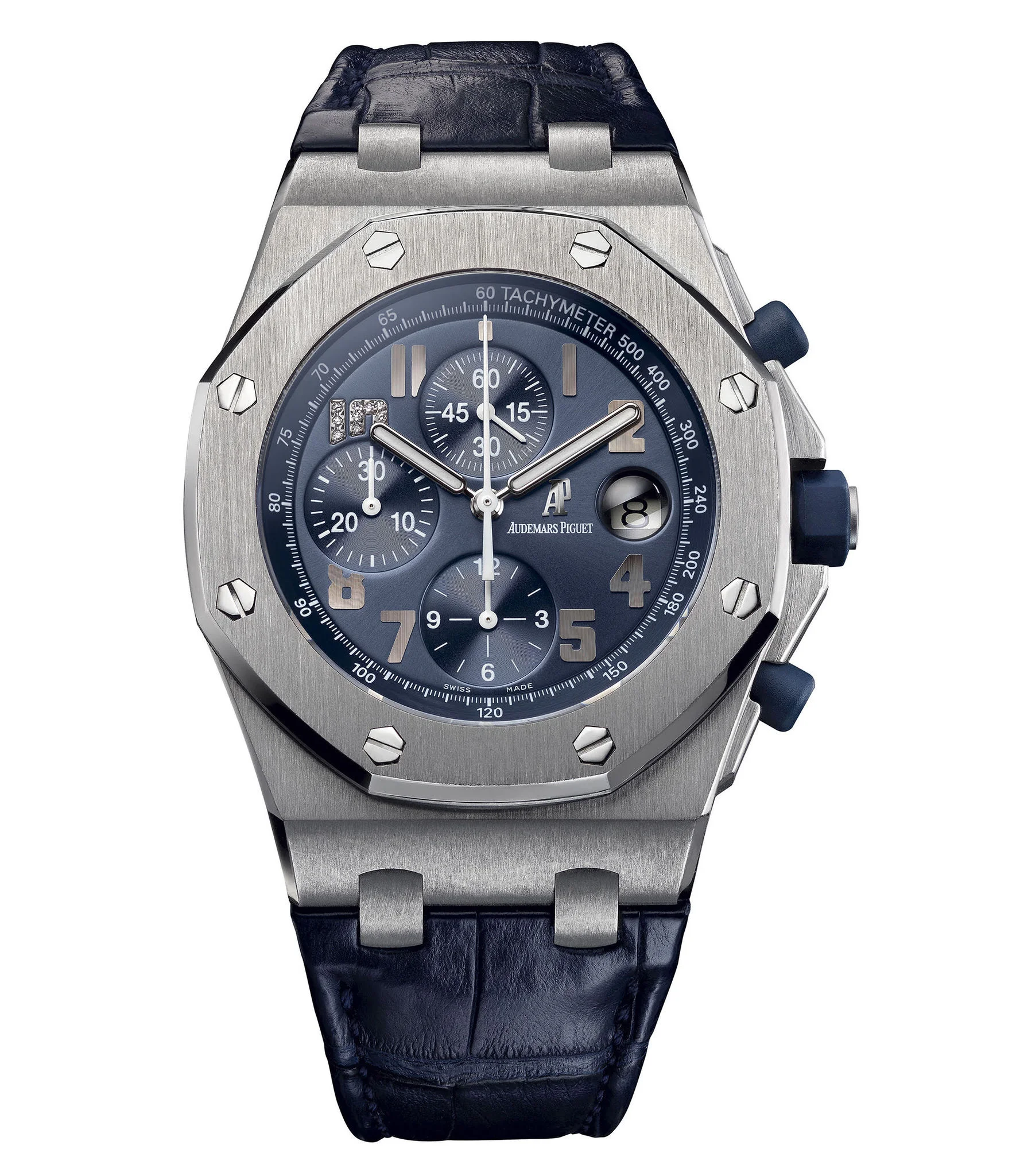
2005. Royal Oak Offshore Jay-Z. Selfwinding chronograph, date. Limited edition created for the singer-songwriter's 10th career anniversary. Calibre 2326/2840, movement 604028. Platinum watch sold in 2006. Model 26055. Audemars Piguet Heritage, Inv. 1819.
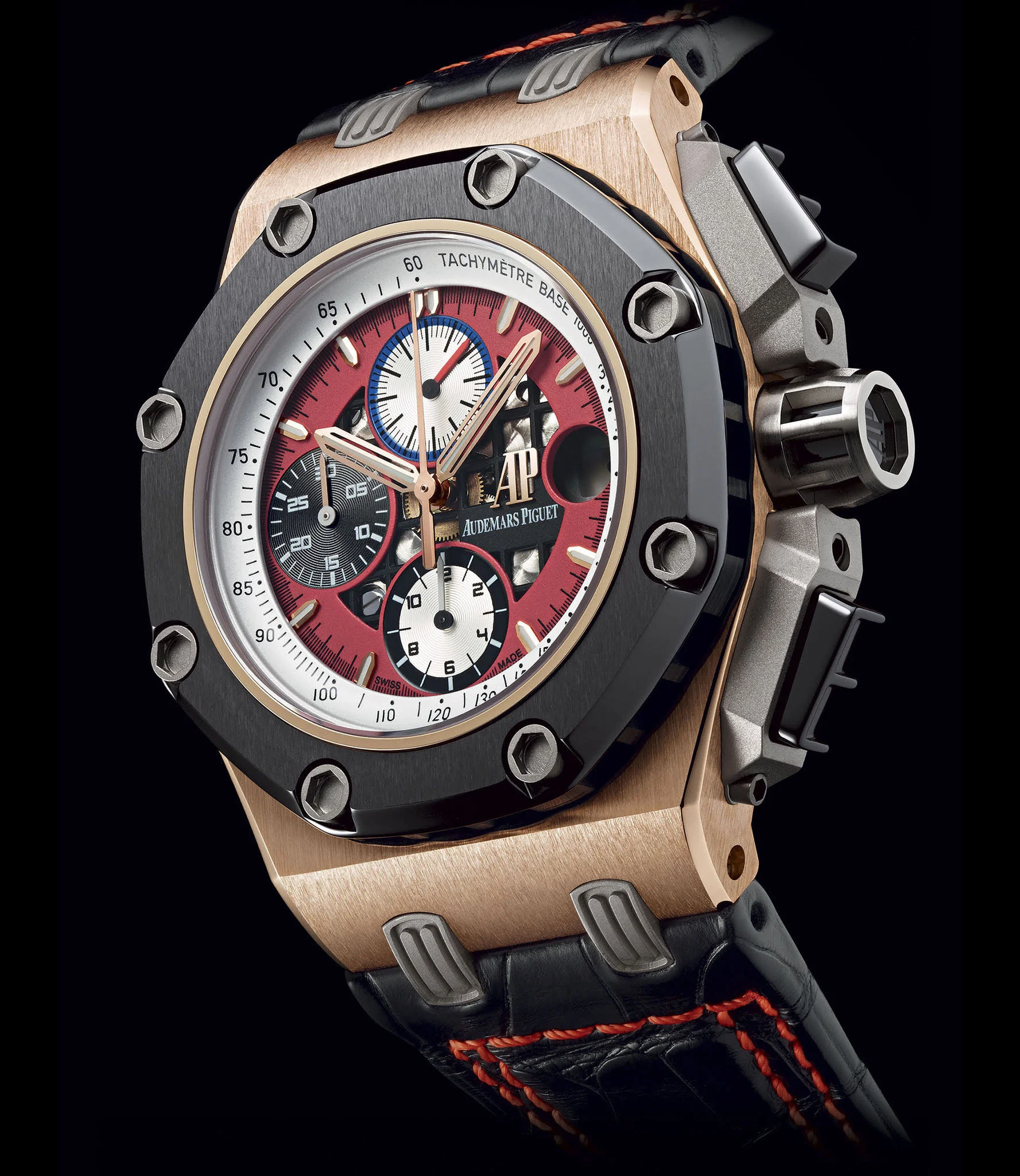
2008. Royal Oak Offshore Rubens Barrichello 26284. Design inspired by automobiles. Calibre 2226/2840. 257-piece limited edition in partnership with Rubens Barrichello. Prototype 000/000 presented at the model launch. Audemars Piguet Heritage, Inv. 1322.
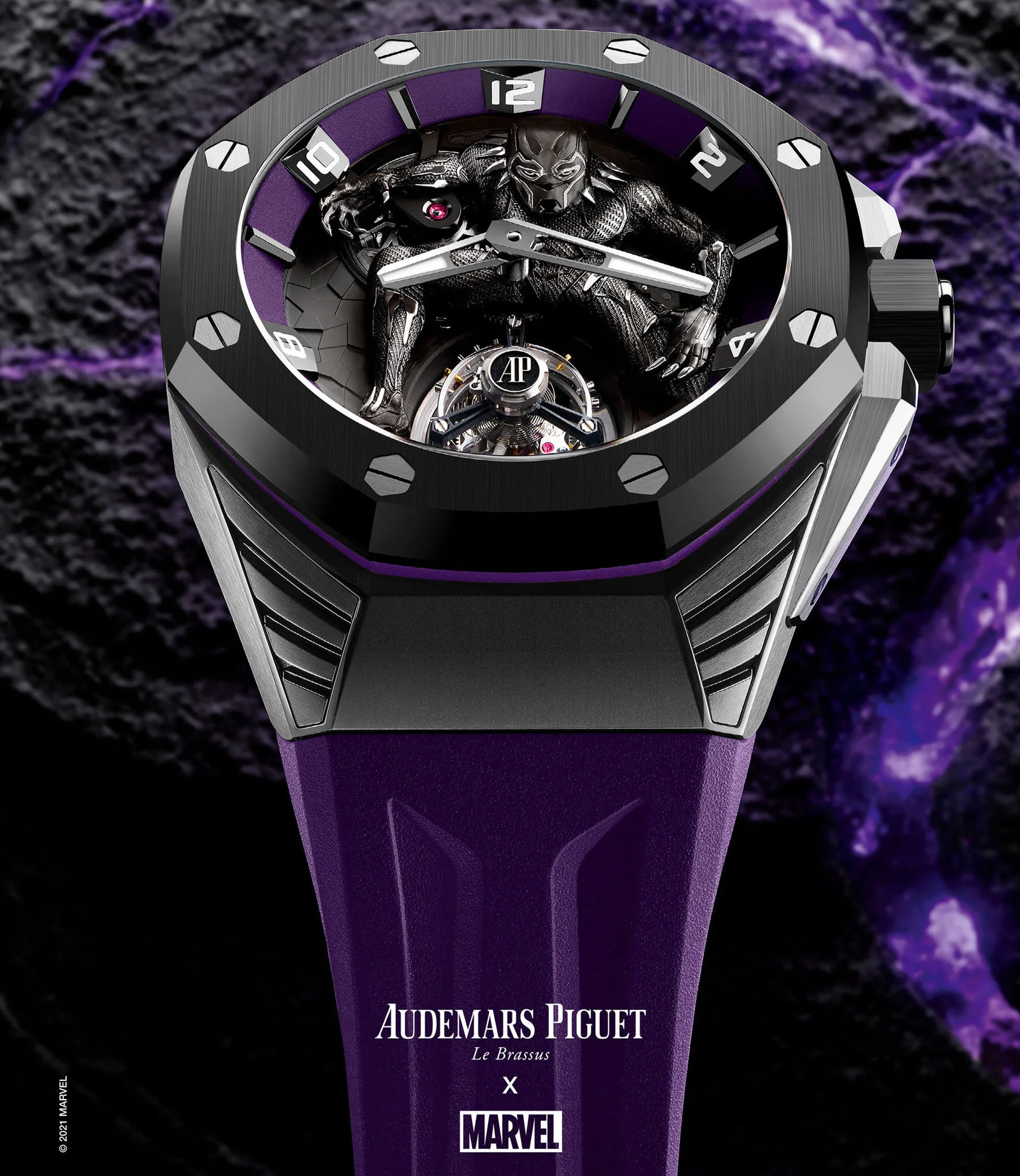
2021. Royal Oak Concept "Black Panther". Audemars Piguet pays tribute to a new generation of heroes from the Marvel universe. 250-piece limited edition. Titanium and ceramic. Model 26620. Audemars Piguet image.
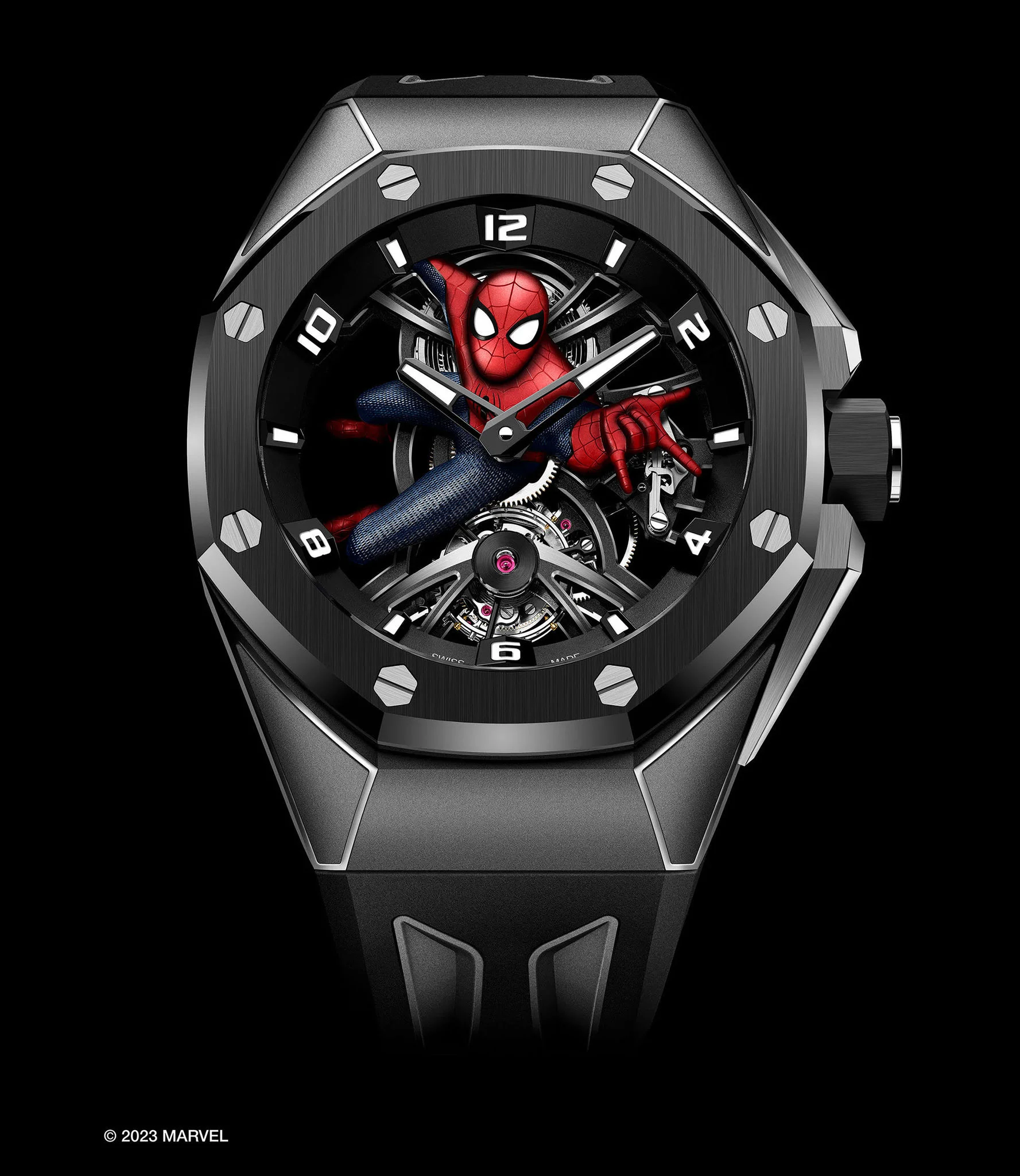
2023. Royal Oak Concept "Spider-Man". This second collaboration with Marvel pays tribute to Spider-Man, who appears to be suspended from the dial as he passes through the tourbillon. 250-piece limited edition. Titanium and ceramic. Model 26331. Audemars Piguet image.
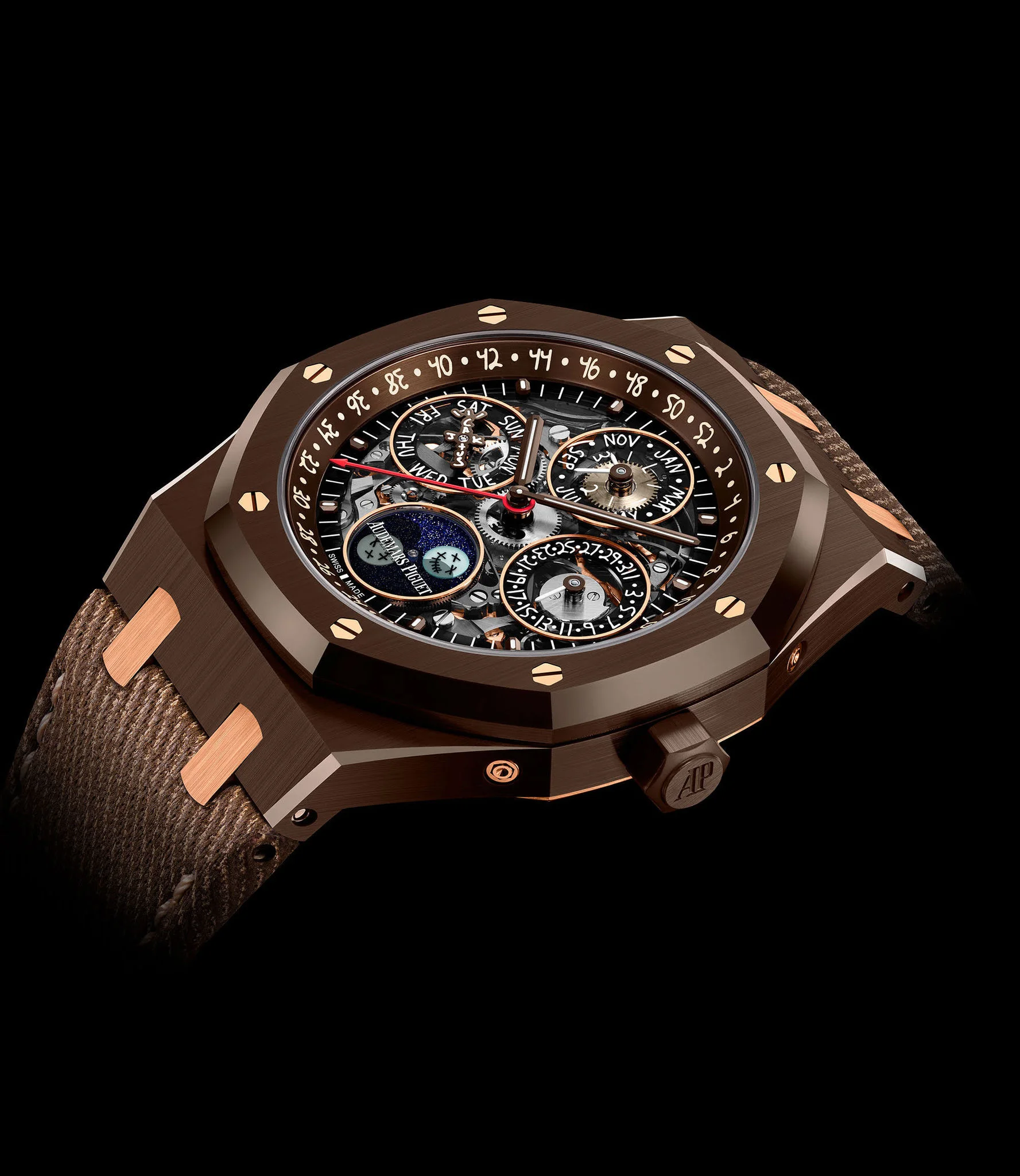
2023. Royal Oak Perpetual Calendar "Cactus Jack". Day, date, month, weeks, moon, leap year cycle. Model 26585 in chocolate-coloured ceramic, 200-piece limited edition. Openworked selfwinding Calibre 5135. Audemars Piguet image.
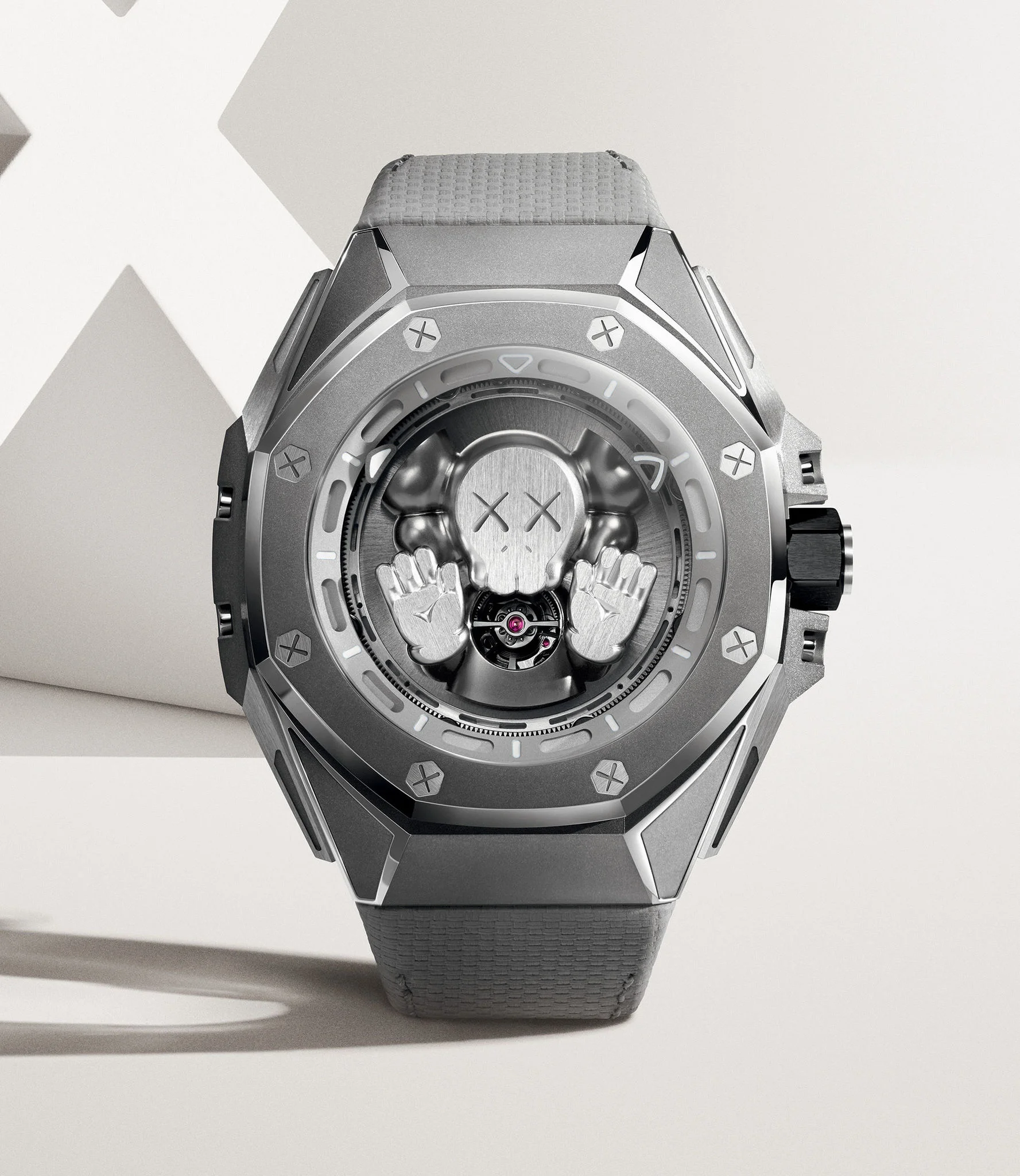
2024. Royal Oak Concept "COMPANION". Collaboration with New York-based artist KAWS. Peripheral display. 250-piece limited edition. Titanium. Model 26656. Audemars Piguet image.
The fourth generation
To become better acquainted with the company’s governance, the fourth generation of the founding families discreetly joined the Board of Directors in 1987, following Georges Golay’s death.
In 1992, the grandson of Jules Louis Audemars handed over his seat as Chair of the Board to his daughter Jasmine, a brilliant journalist and charismatic personality, editor-in-chief of the Journal de Genève. On the same date, AP celebrated the 30th anniversary of the Royal Oak and created the Audemars Piguet Foundation dedicated to safeguarding forests.
That same year, Olivier Audemars joined the Board to prepare to succeed his aunt Paulette Piguet. Olivier Audemars bears the surname of the other founding family because his mother Michelle Piguet married into the Audemars family. Olivier Audemars therefore represents the Piguet family, even though his ancestors include Louis-Benjamin Audemars. An engineer, entrepreneur and communicator with a deep attachment to the Vallée de Joux and its expertise, he is continuing his predecessors’ vocation.
In the 1990s, to guarantee their company's independence from the large watchmaking groups that were in the process of being set up, Olivier and Jasmine Audemars launched a vast vertical integration programme. In 1988, Audemars Piguet had invested in Jaeger-LeCoultre, which was in great difficulty at the time. In 2000, these shares were sold to the Richemont group, a move that accelerated the creation of distribution subsidiaries around the world, as well as new workshops.

2012. Jasmine and Olivier Audemars represent the fourth generation of the founding families.
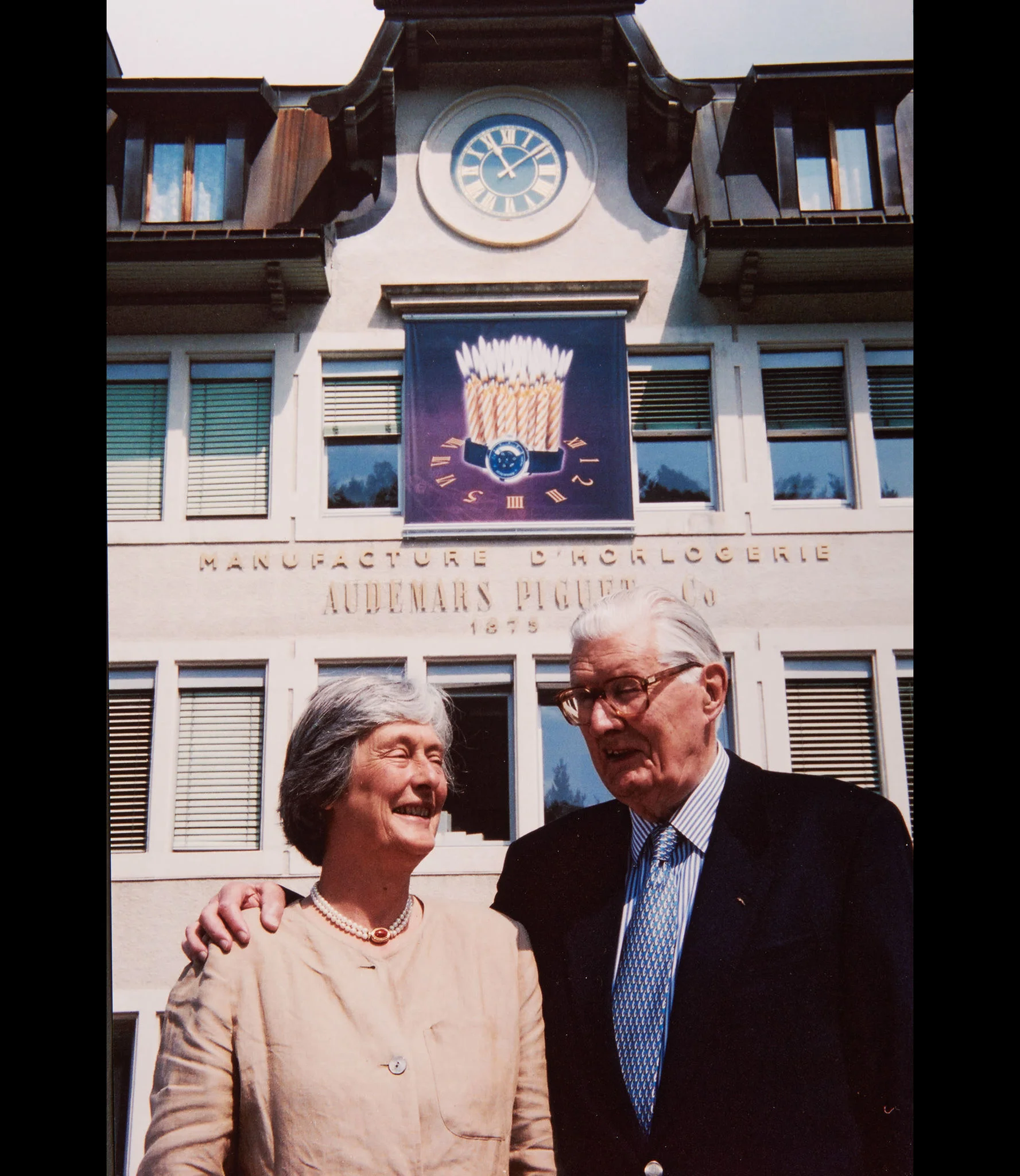
2000. Jasmine Audemars pictured with her father Jacques-Louis Audemars in front of the entrance to the head office in Le Brassus. Audemars Piguet Archives.
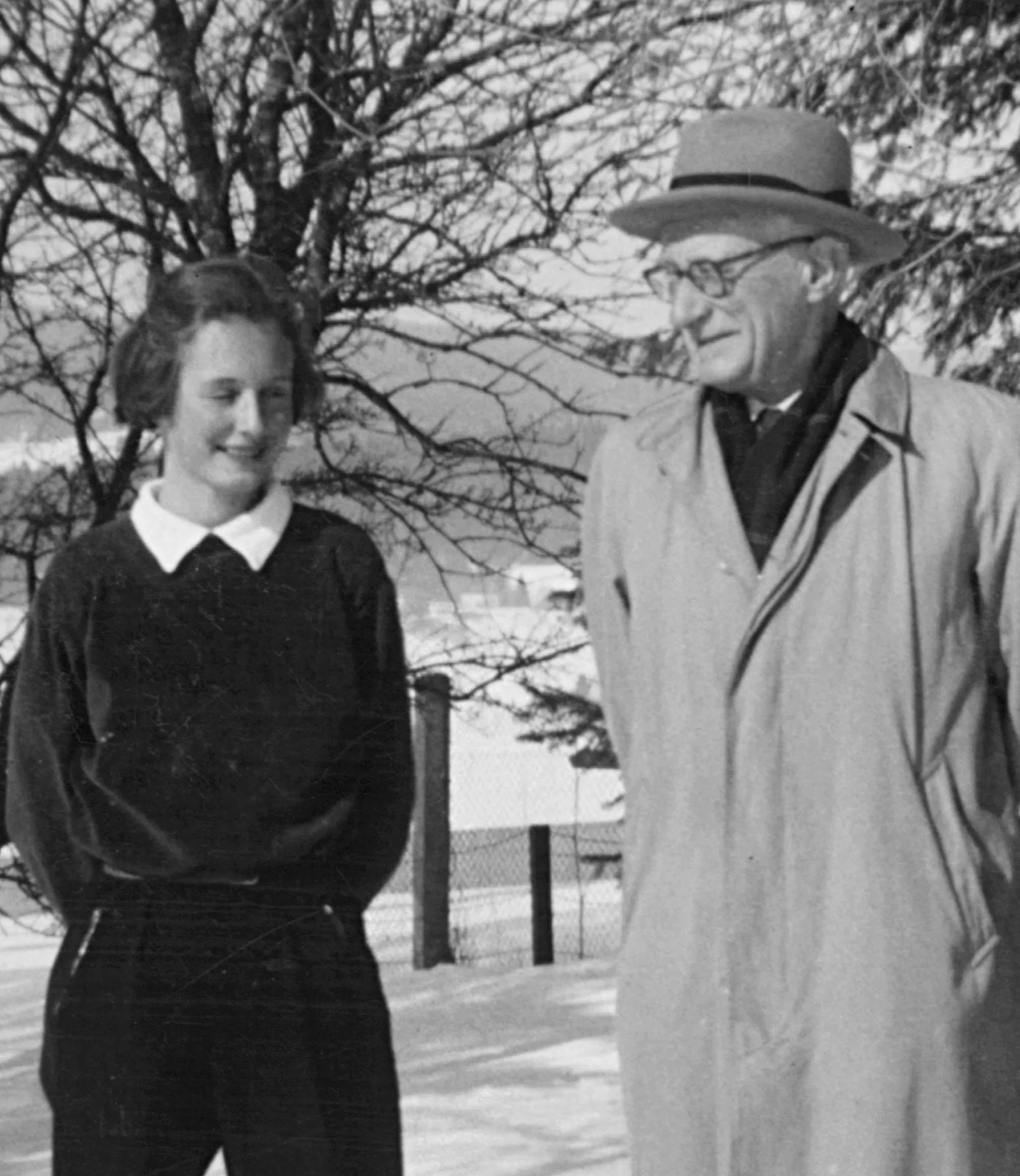
Circa 1960. Paul Louis Audemars represented the second generation of Audemars and his granddaughter Jasmine, the fourth generation. Audemars Piguet Archives.

Pictured in the Musée Atelier Audemars Piguet in November 2024, Jasmine and Olivier Audemars represent the fourth generation of the founding families. Audemars Piguet image.
Vertical integration
Moving from the status of établisseur to that of integrated Manufacture involved acquiring numerous skills and creating a corresponding number of workshops: "ébauches", cutting, laboratory, case production, dials, guilloché work, finishing, mechanics, profile-turning, cutting, pad printing, etc.
To house them, Audemars Piguet had to build several sites in the village of Le Brassus over the years, starting in 2000 with an extension to the historical building at 16 Route de France. In 2008, the Manufacture des Forges was inaugurated as the main production site. Now too small, the Manufacture des Forges will make way for the Manufacture du Brassus, a 300-metre-long building shaped like an oscillating weight and scheduled for completion in 2027. Part of this building, named the Arc, welcomed employees in 2024.
In Geneva, the Centror case manufacturing workshops, founded in 1982, were acquired in 1991, expanded several times and relocated to a new building in 2014. Renamed Audemars Piguet Meyrin in 2021, they are preparing to move into a brand-new manufacturing site in 2026. Renaud & Papi in the small watchmaking town of Le Locle was acquired by Audemars Piguet in 1992. It moved to a new building in 2003, before relocating again in 2021 to the Manufacture des Saignoles. At that time, the company was renamed Audemars Piguet Le Locle. In addition, other workshops and buildings have been created around the world to ensure that watches are serviced as close as possible to customers, notably in Singapore, Besançon and Florida.
Two emblematic buildings designed to welcome visitors to Le Brassus have been set up to complement the production sites. Since 2020, the spiral-shaped Musée Atelier Audemars Piguet has served as a showcase for the history of the brand and the region, as well as a source of inspiration. Nearby, a new version of the Hôtel des Horlogers plays with the natural topography and views of a timeless landscape. Both buildings were designed by Danish architect BIG – Bjarke Ingels Group.

Computer-generated image of the Manufacture in Le Brassus. The outer part of the circular arc is to be inaugurated in 2025. Credits : DE GIULI & PORTIER ARCHITECTES SA

In 2000, a major extension to the right of the 1907 building doubled the production area. Audemars Piguet Archives.

Inaugurated in 2008, just a few hundred metres from the original buildings, the Manufacture des Forges was the first Swiss industrial building to comply with Minergie- ECO sustainable development standards. Audemars Piguet image.

In 2021, Audemars Piguet Le Locle moved into a glass building designed to encourage the circulation of ideas and components. Audemars Piguet image.
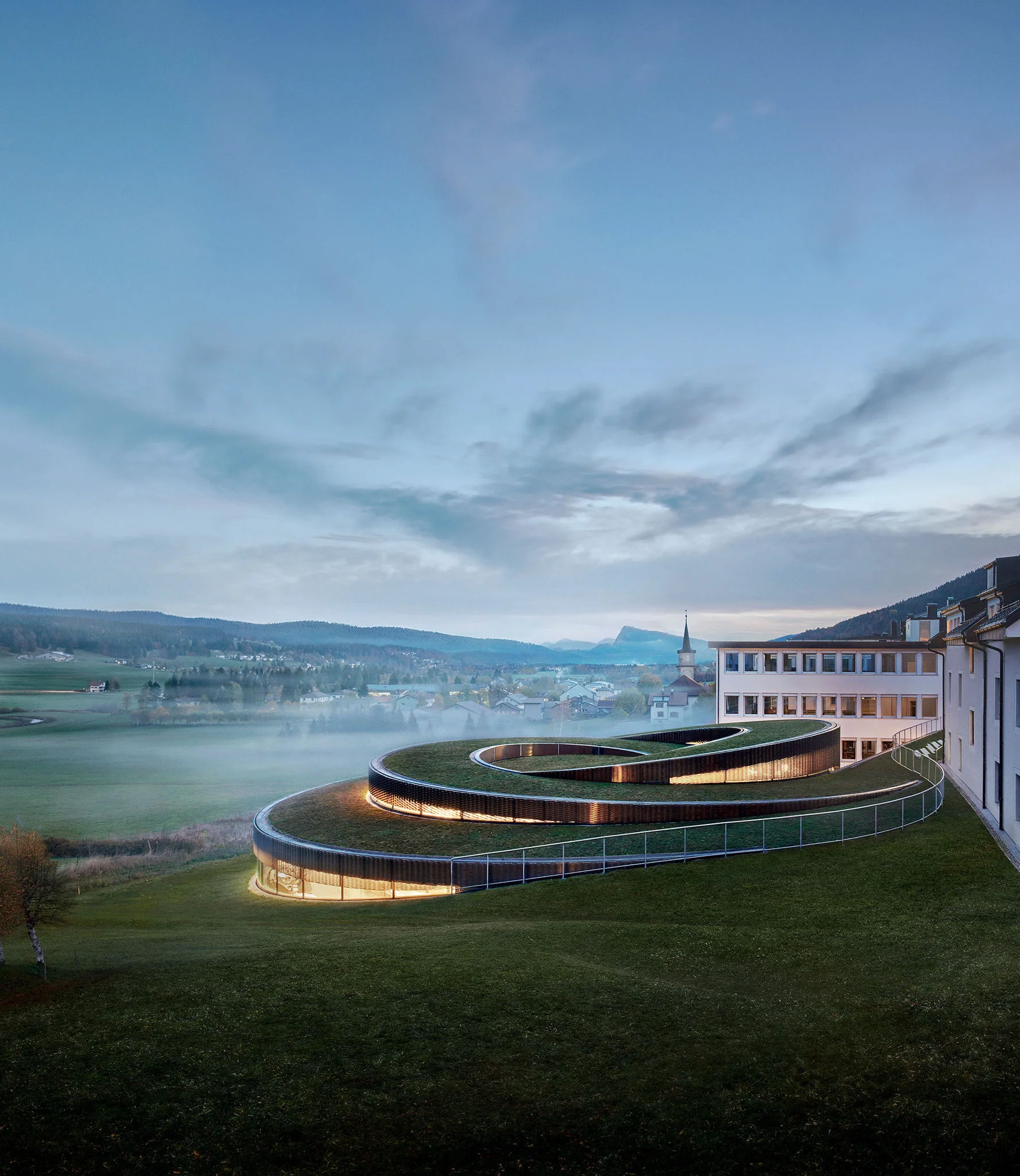
Opening in 2020, the Musée Atelier Audemars Piguet comprises two parts: the brand's original building and a spiral entirely supported by glass walls. Audemars Piguet image.
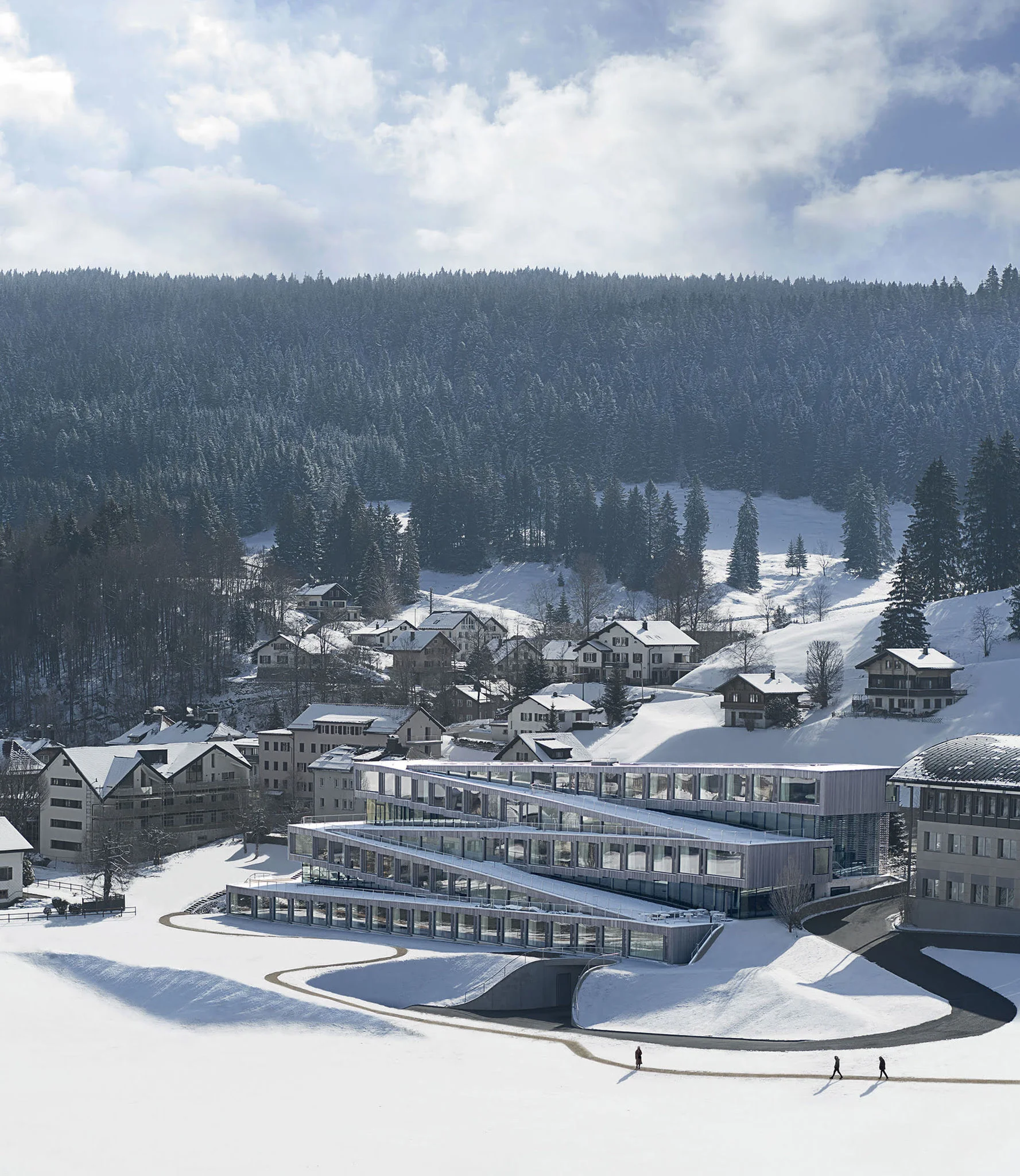
The Hôtel des Horlogers which opened in 2021 is adjacent to the Audemars Piguet buildings. Its shape evokes the path that the first watchmakers trod to climb the mountain pass and deliver their creations to Geneva. Audemars Piguet image.

Slated for completion in 2026, the new building at Audemars Piguet Meyrin, near Geneva, will be used to produce the brand's watch cases. Audemars Piguet 3D image.
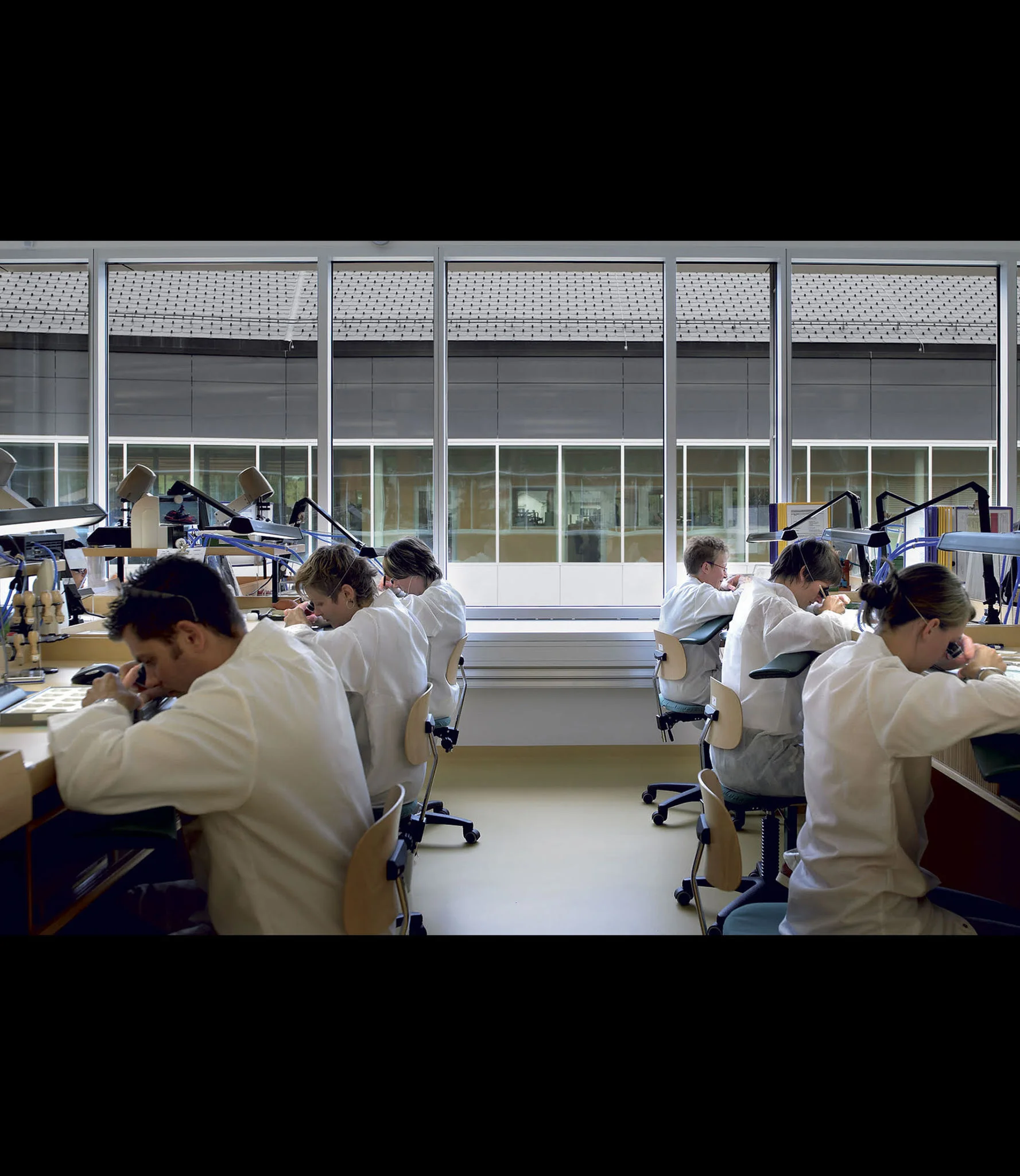
Circa 2015. Audemars Piguet workshop located in the Manufacture des Forges. Audemars Piguet image.
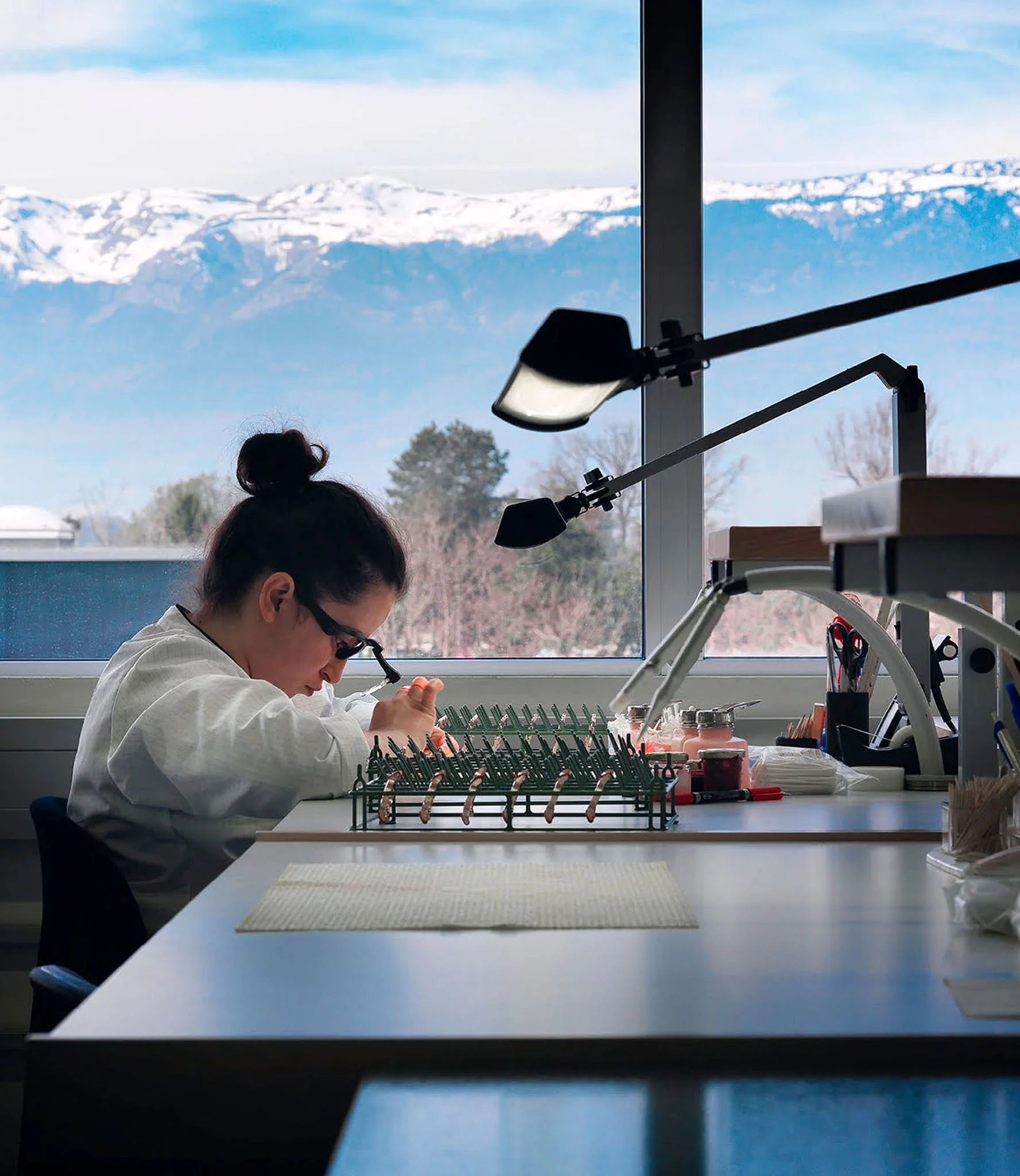
Circa 2020. Cases workshop at Audemars Piguet Meyrin. Audemars Piguet image.
Rapid growth
This vertical expansion was accompanied by dazzling growth, accelerated by the appointment of François-Henry Bennahmias as CEO in 2012. Regarded as a watch industry maverick, this self-made man with a gift for retailing succeeded Philippe Merk (2009–2012) and propelled the brand to unprecedented visibility. Under his leadership, the company underwent sweeping changes, primarily guided by long-term qualitative growth and a culture based on human relationships. Bennahmias notably shifted the corporate business model towards an integrated network of single-brand boutiques, forging closer and more direct relationships with end customers, while improving the quality of their experience.
Under his leadership, sales topped the CHF 1 billion mark in 2018. Four years later, it had doubled, despite the Covid crisis.
The number of employees has risen from 355 in 2000 to almost 3,000-strong 25 years later. While 1,800 employees are based in Switzerland, including 1,300 in the Vallée de Joux, almost 1,000 work in the world's major capitals. Production capacity is also increasing, rising from 18,500 watches at the turn of the third millennium to around 50,000 watches in 2025.

2009, Philippe Merk

2023. François-Henry Bennahmias began his career in 1994 as a salesman for a French retailer. In 1999, he became head of the American market and then CEO of the brand from 2012 to 2023. Audemars Piguet image.
Meeting customers
Getting to know the customers who wear the watches on their wrists, forging friendships, listening to their expectations. At Audemars Piguet, this precious proximity remained a dream for more than a century. Customers were multi-brand retailers, jewellers and even other watch brands.
To establish closer contacts with its customers, Audemars Piguet opened its first boutique in Geneva in 1993, but the expansion of the brand's boutiques really began in the 2000s, with Milan (2005), Singapore (2006), Kuala Lumpur and Tokyo (2007), Taipei (2008), New York (2010) and so on. These points of sale were often run in partnership with retailers, but sometimes directly by Audemars Piguet. One of the new skills the company had to learn was that of sales. For the record, the employee register shows that the brand's first "salesman" was hired in 1976 and was called Jean-Claude Biver. To ensure that each salesperson became an ambassador, a training programme was launched, overseen by a training centre called the "AP Academy", which opened in 2007. To guarantee that each point of sale offers optimum quality and a true brand experience, the number of outlets was reduced from around 700 in 2000 to 300 in 2010 and 82 worldwide by early 2025, including 52 Audemars Piguet boutiques.
In 2018, Audemars Piguet launched the innovative AP House concept to forge special relationships with its customers in a warm, friendly setting. Above and beyond a role as points of sale, these are meeting spaces based in major cities, each different from the next, featuring a large bar, a family table, a lounge area; decorated with contemporary art and sometimes enhanced by a small museum, a piano, a table tennis table or table football... The first AP House opened in Milan in 2018, followed by Hong Kong in 2019, then Madrid, Bangkok, London, Tokyo, New York, etc. By the beginning of 2025, the brand had 22 AP Houses, the largest of which is the five-storey AP House in Milan, opened in 2024.
Housed in the former Leu bank, the AP House in Zurich combines classic architecture with contemporary furnishings. Audemars Piguet image.
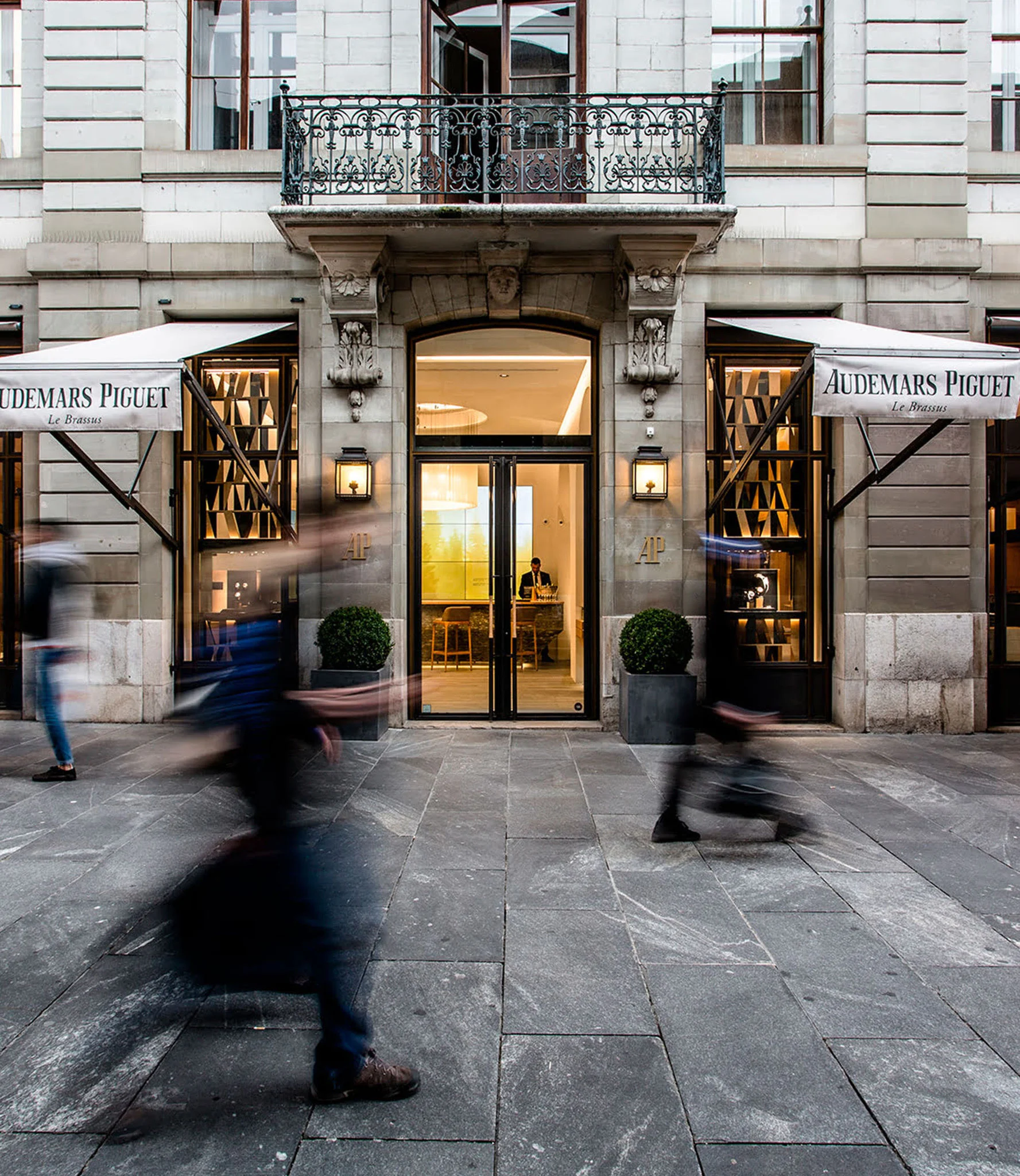
In 1993, on Place de la Fusterie in Geneva, Audemars Piguet opened its first boutique entirely dedicated to the brand. Audemars Piguet image.
In 2005, the Audemars Piguet boutique in Milan marked the beginning of the international expansion of single-brand boutiques. Audemars Piguet image.
The Audemars Piguet Madrid boutique in 2012 stands out for its understated elegance and contrasting colours. Audemars Piguet image.
2016. The Audemars Piguet Boutique on Place de la Fusterie in Geneva was one of the first to roll out a new decorative concept. Audemars Piguet image.
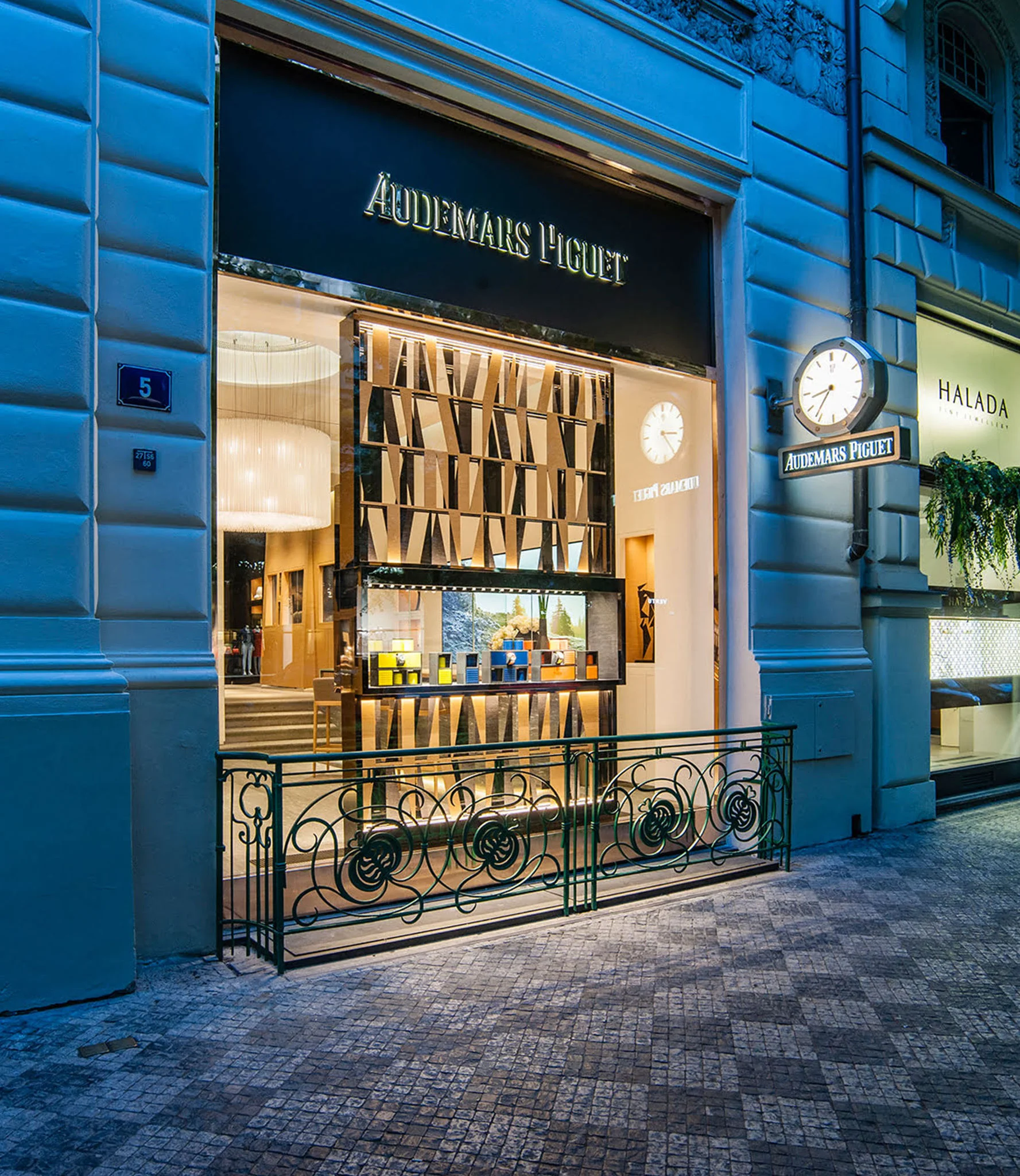
Outside view of the Audemars Piguet Boutique in Prague in 2016. Audemars Piguet image.
Since 2020, Bangkok has been home to an AP House with generous space, opening onto to the greenery outside. Audemars Piguet image.
Lighting is one of the elements to which the greatest attention is paid, as demonstrated by the Audemars Piguet boutique in Rome in 2021. Audemars Piguet image.
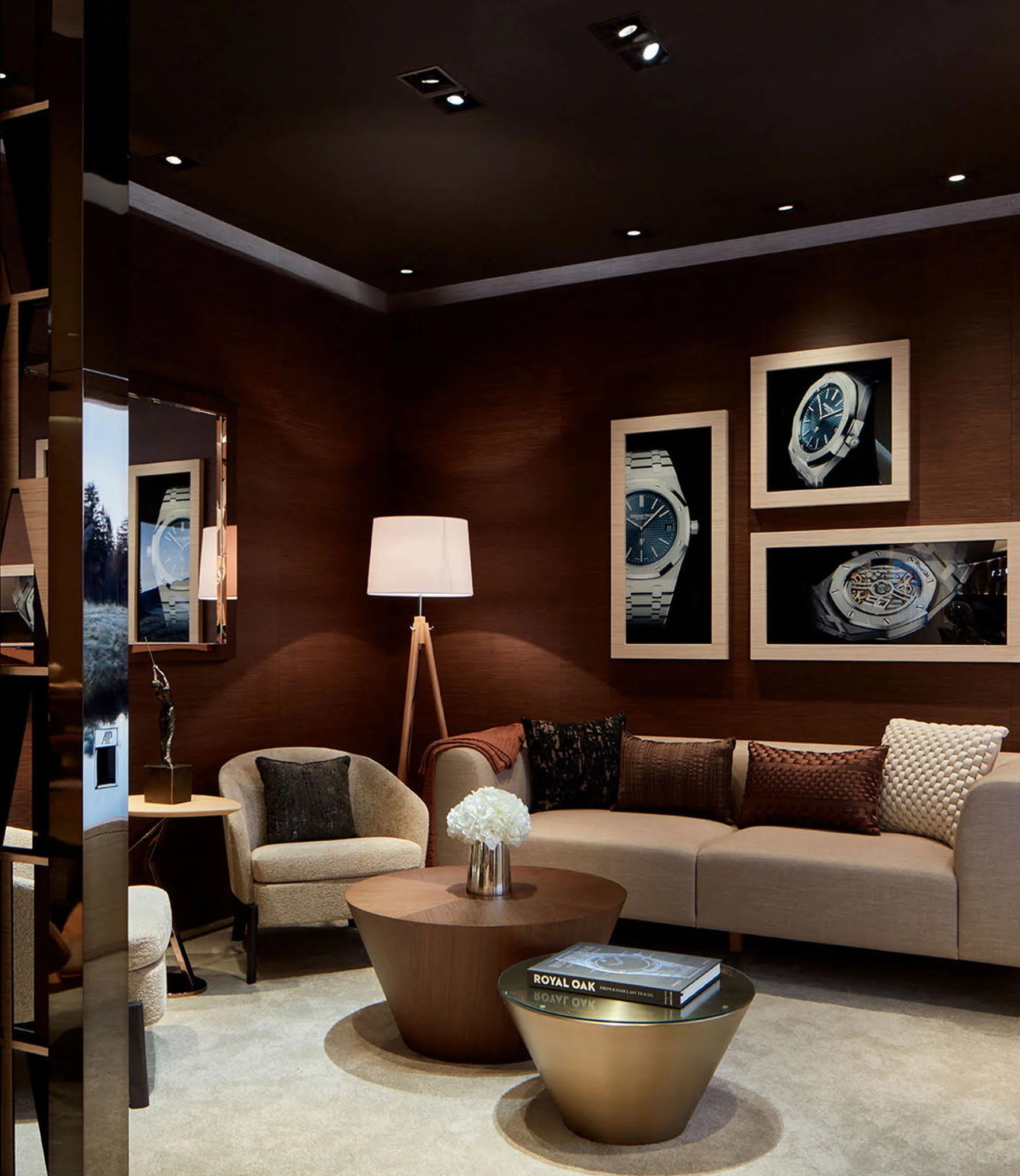
2022. Lounge area of the Audemars Piguet Boutique in Abu Dhabi. Audemars Piguet image.
Opened in 2022 in the arty Meatpacking district, New York's AP House features a miniature version of the Musée Atelier in Le Brassus, as well as a piano and a bar. Audemars Piguet image.
In each AP House, the bar plays a central role, as demonstrated by the AP House in Amsterdam, which opened in 2023. Audemars Piguet image.
Inaugurated in 2024, Milan's AP House occupies an iconic 1930s building. It spans five floors. Image Audemars Piguet.
R&D generation
Contrary to certain predictions, the quartz watch has not caused the mechanical watch to disappear. If the spread of smartphones and connected objects has not diminished the fascination that mechanical watches arouse, it is because they offer much more than just the time. Objects of culture, symbols of design and technology, they represent a store of value, a vector of recognition and prestige... as they have always been since the Renaissance. What is new, however, is that for several decades now, a mechanical watch has also had to be sturdy, water-resistant, able to run for several days without winding, user-friendly without the risk of mishandling, easy to read, comfortable... In a word: ergonomic.
To meet these new demands, Audemars Piguet set up research departments and a laboratory in 2000. Engineers and watchmakers vie with each other in finding inventive ways to create extraordinary watches, some of which bear the name RD, standing for "research and development".
In 2009, for example, the Millenary Carbon One (Model 26152) weighed less than 70 grams. In 2015, the mechanical "Laptimer" system made it possible to measure consecutive laps during motor-racing events (Model 26221). The following year, the Supersonnerie RD#1 (Model 26577) improved the beauty and volume of the sound produced by repeater watches while preserving water-resistance. In 2018, the mechanical architecture of the perpetual calendars was redesigned to make them thinner yet equally reliable (RD#2, Model 26586). Introduced in 2022, a large-amplitude escapement (RD#3, Model 26660) improved energy control and paved the way for the Code 11.59 by Audemars Piguet Ultra-Complication Universelle watch (RD#4, Model 26398), winner of the “Aiguille d’Or” award at the 2023 Grand Prix d’Horlogerie de Genève. Endowed with 23 complications and 17 special technical features, this watch offers unprecedented user-friendliness and wearability in the ultra-complicated watch category.
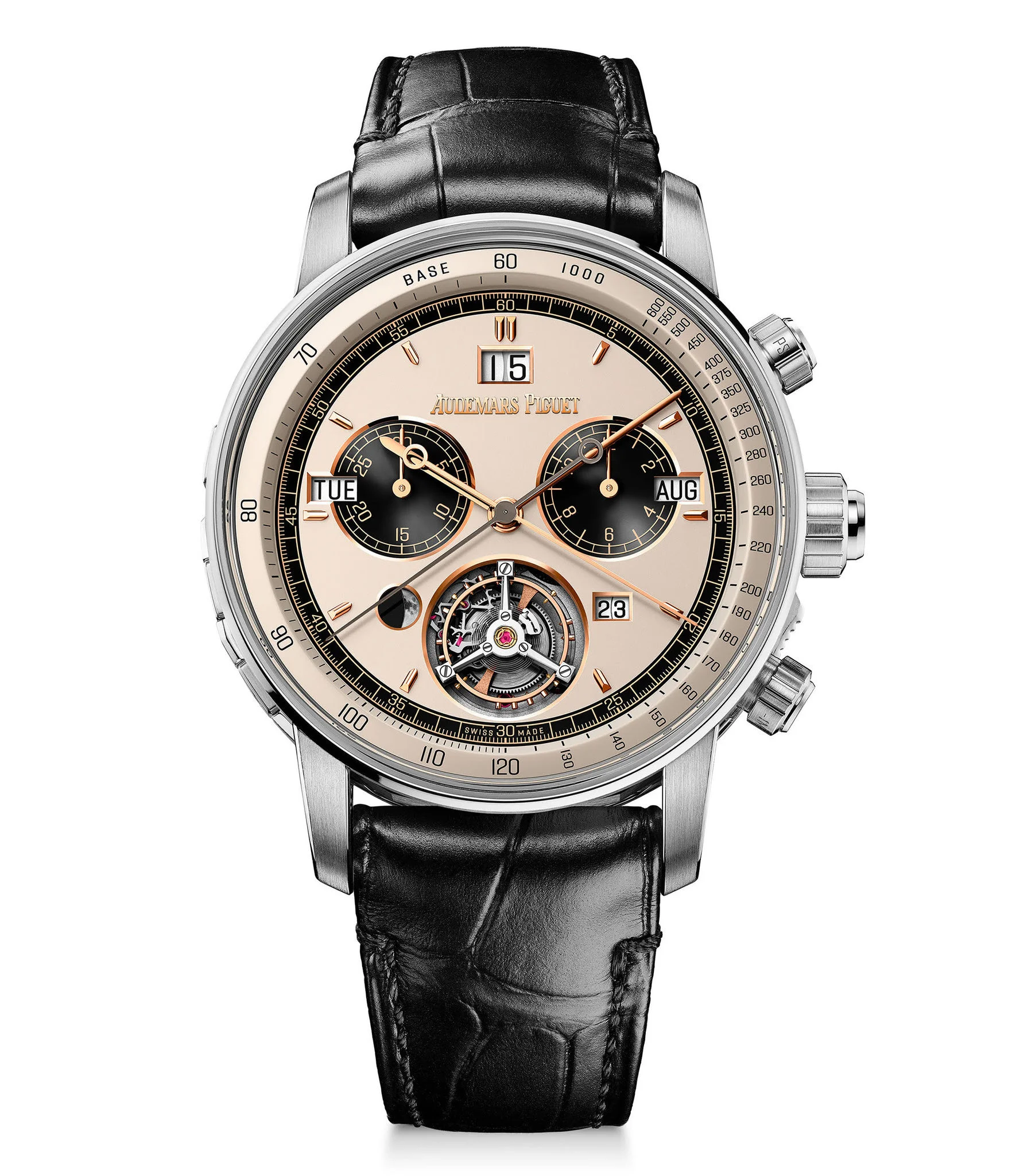
2023. Code 11.59 by Audemars Piguet Ultra-Complication Universelle RD#4. The result of combining the three previous R&Ds, the RD#4 features 40 functions, 23 complications and 17 technical devices. Seven years of development and teamwork were required to produce this white gold Model 26398. Audemars Piguet image.
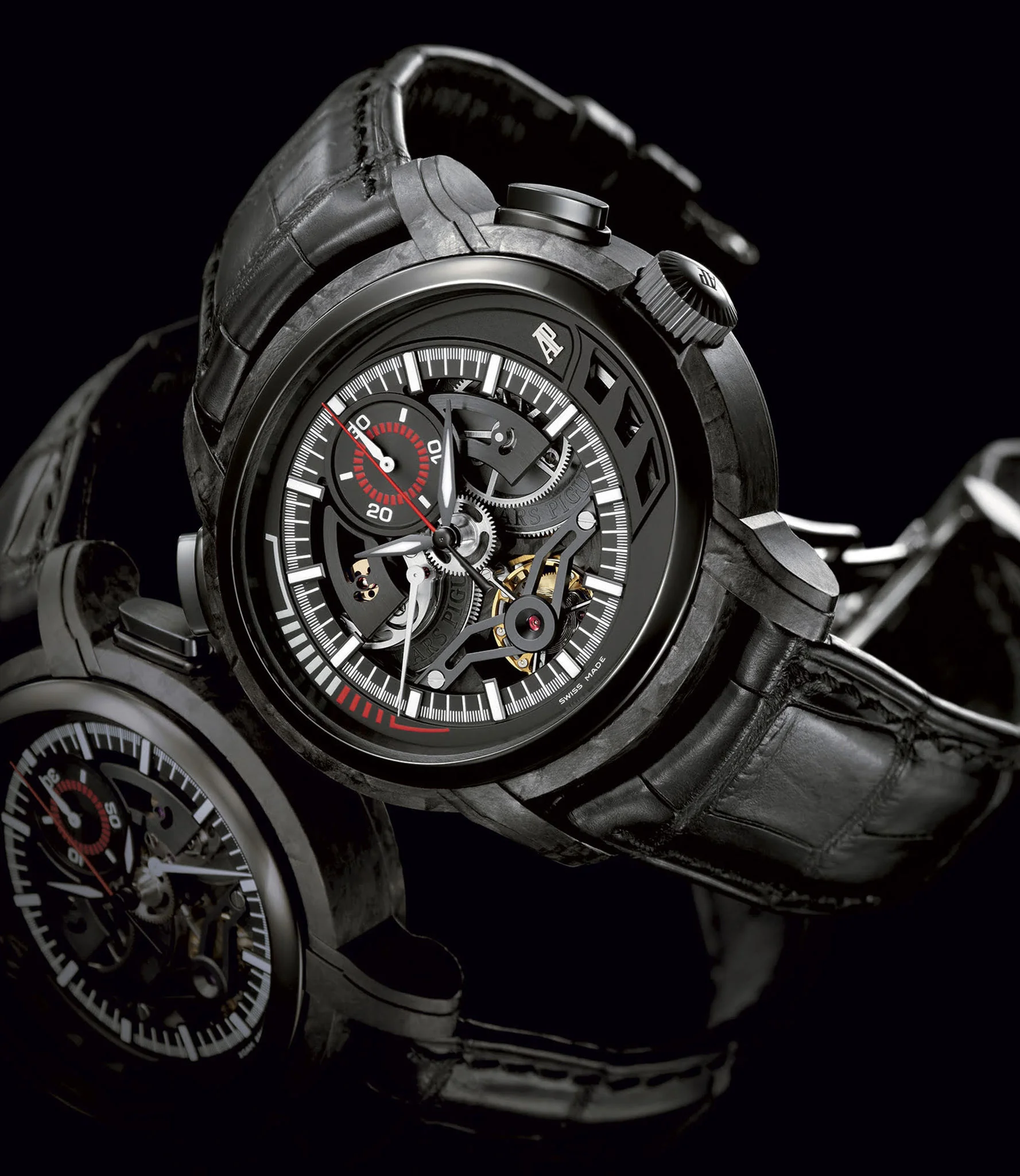
2009. Millenary Carbon One. 120-piece limited edition. The mainplate is in carbon and the bridges in anodised aluminium and blackened steel. Tourbillon, chronograph and ten-day power reserve. Calibre 2884. Prototype x. Forged carbon, ceramic and titanium. Model 26152. Audemars Piguet Heritage, Inv. 1485.
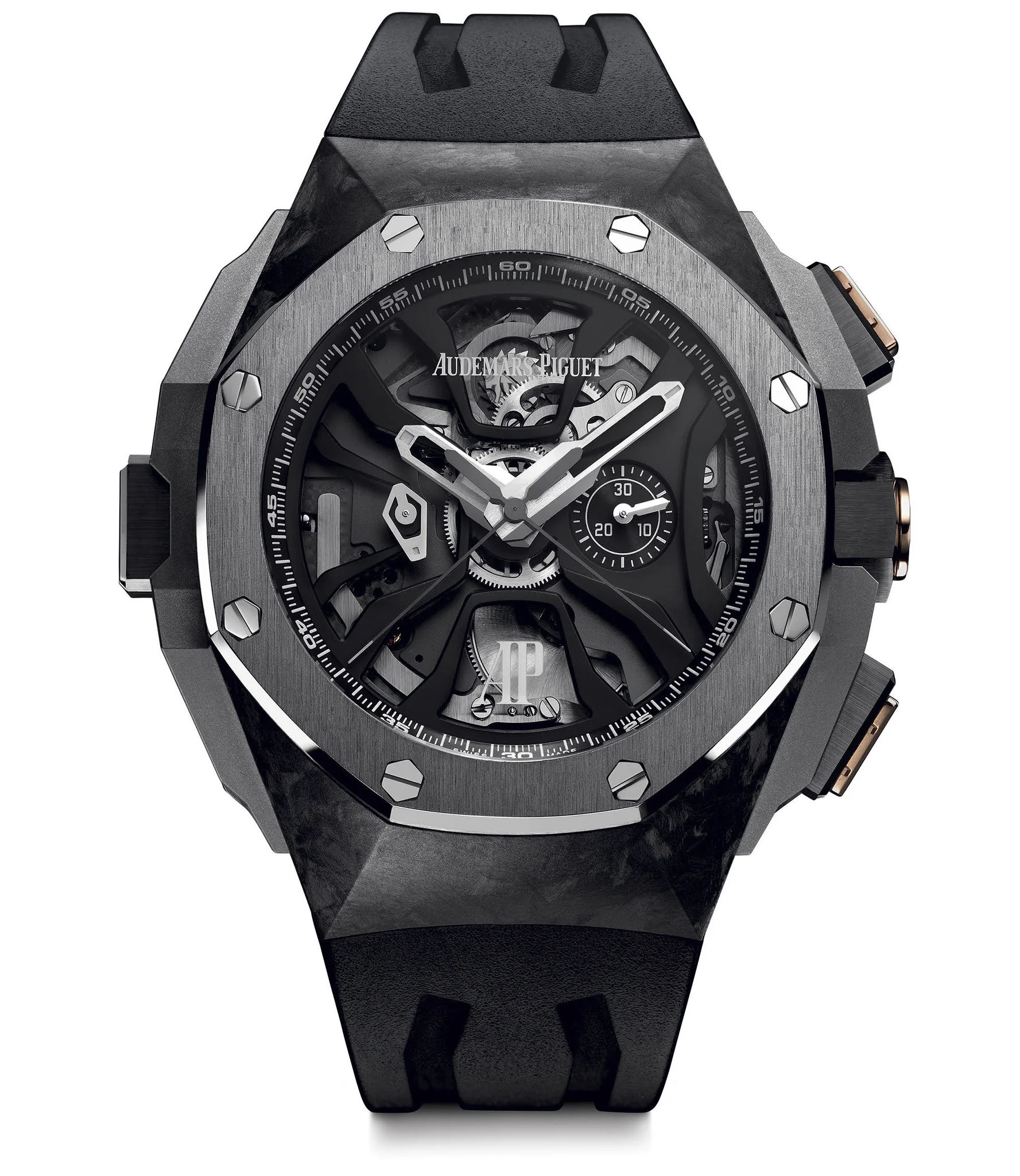
2015. Royal Oak Concept Laptimer. Tourbillon, chronograph with measurement of successive laps. Calibre 2923. Movement 881688 (prototype). Forged carbon, titanium, ceramic and pink gold. 26221FT. 221-piece limited edition in partnership with Michael Schumacher, Audemars Piguet Heritage, Inv. 1842.
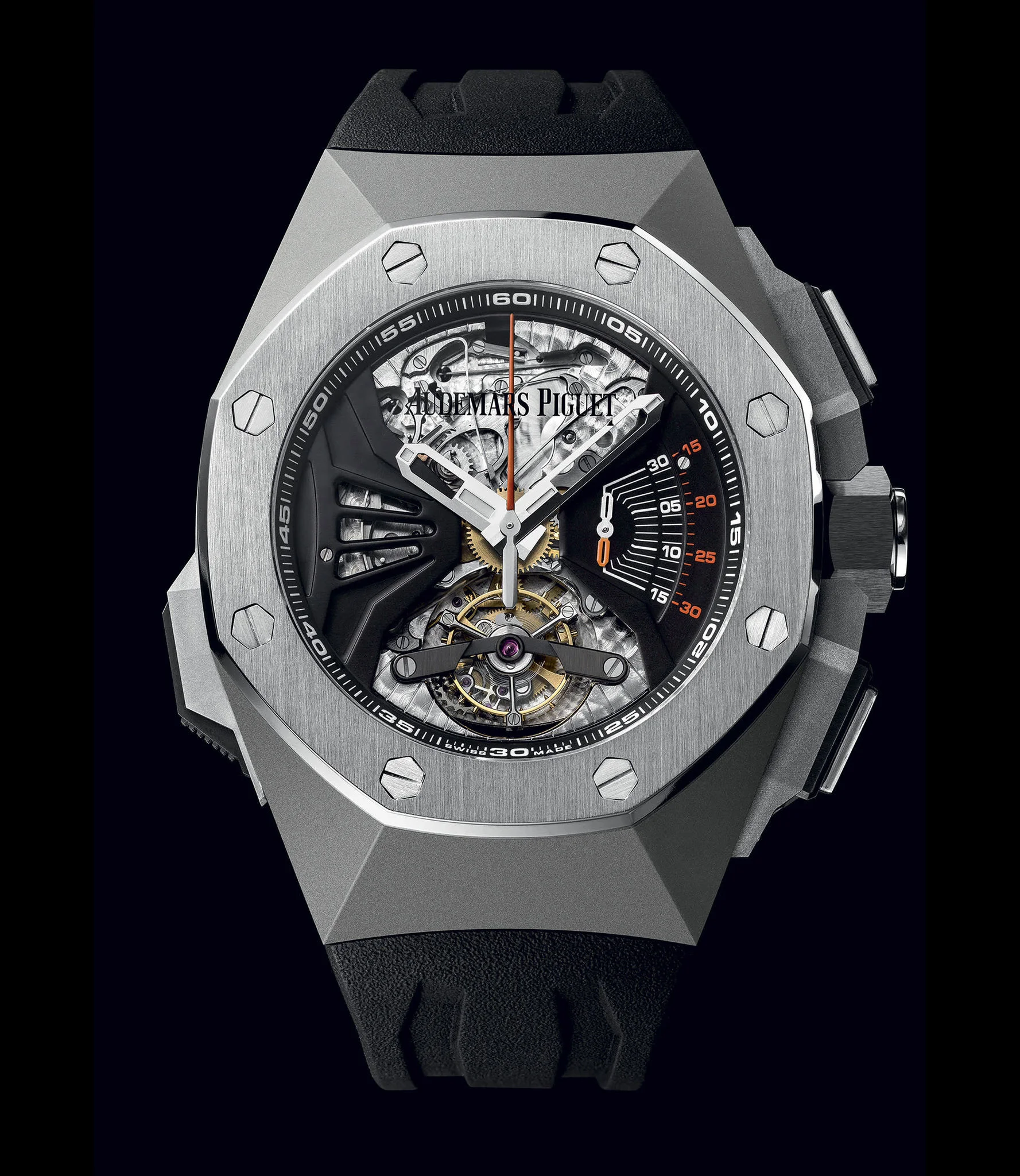
2015. Royal Oak Concept RD#1 "Supersonnerie". Gongs striking a soundboard. Silent governor. Minute repeater, tourbillon and chronograph. Developed over seven years with engineers at EPFL, the technology of the RD#1 enables it to produce a powerful, pure sound for devotees of chiming watches. Prototype. Calibre 2937. Titanium. Model 26576. Audemars Piguet image.
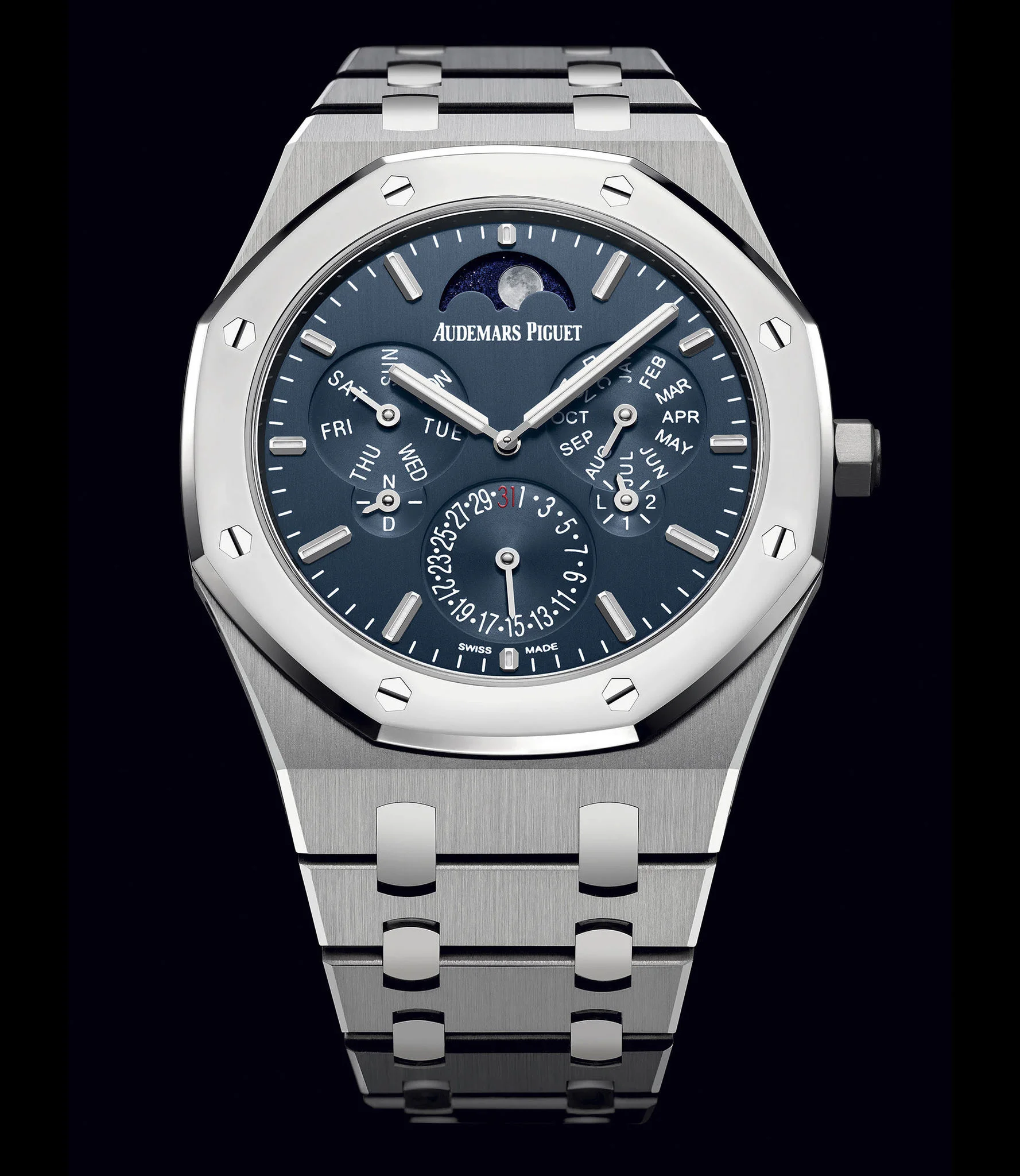
2018. Royal Oak Selfwinding Perpetual Calendar Ultra-Thin RD#2. Perpetual calendar: day, date, month and moon phases. The world's thinnest selfwinding Calibre 5133 (2.89 mm) at the time of its launch. The Royal Oak RD#2 rethought the architecture of mechanical movements to reduce the thickness of the mechanism while maintaining maximum robustness. Titanium and platinum. Model 26586. Audemars Piguet image.
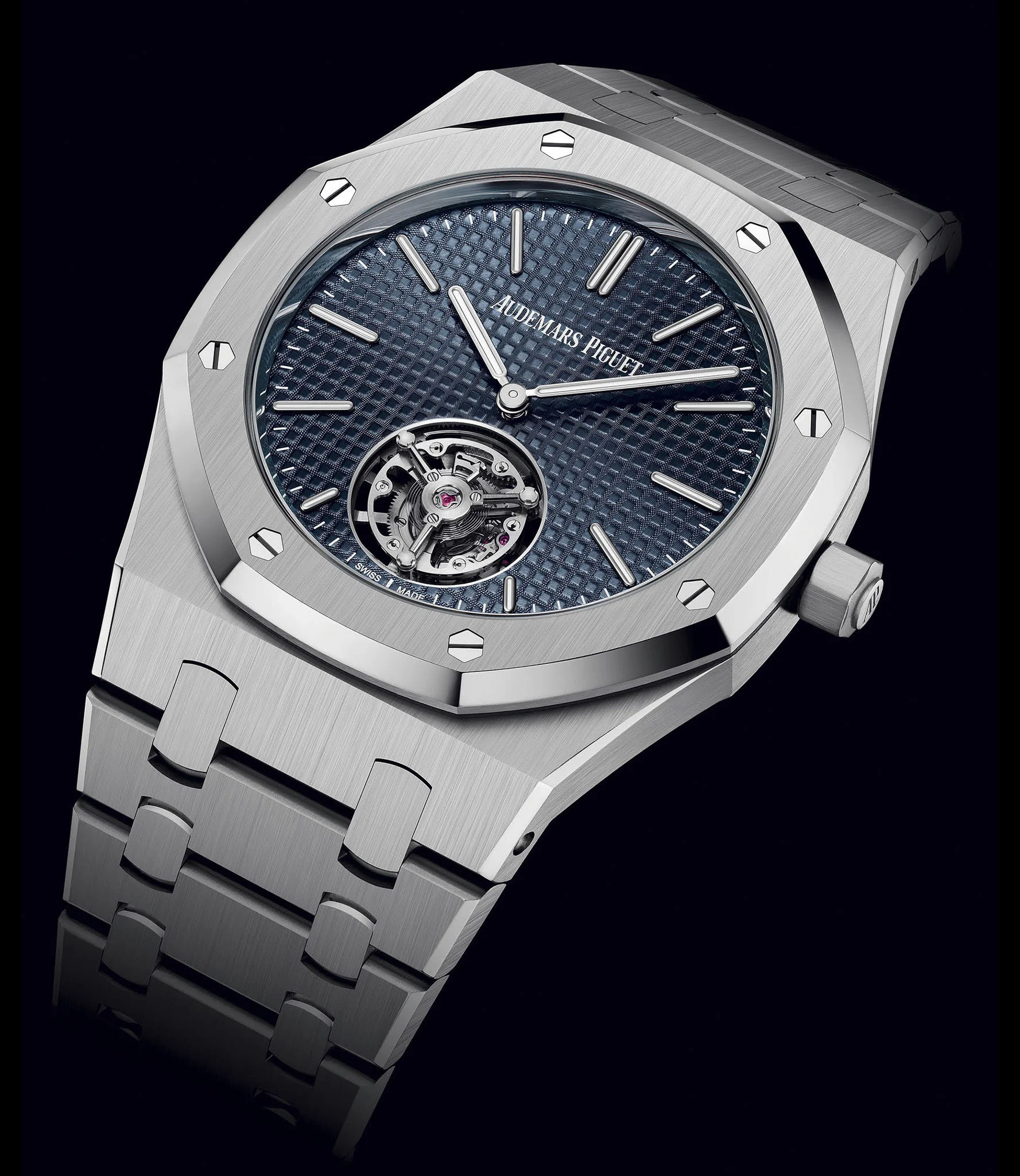
2022. Selfwinding Royal Oak Flying Tourbillon Extra-Thin RD#3. At 8.1 mm thick, this is the first "Jumbo" in history to be equipped with a selfwinding flying tourbillon. Calibre 2968 (3.4 mm). Made of steel. Model 26670. Audemars Piguet image.
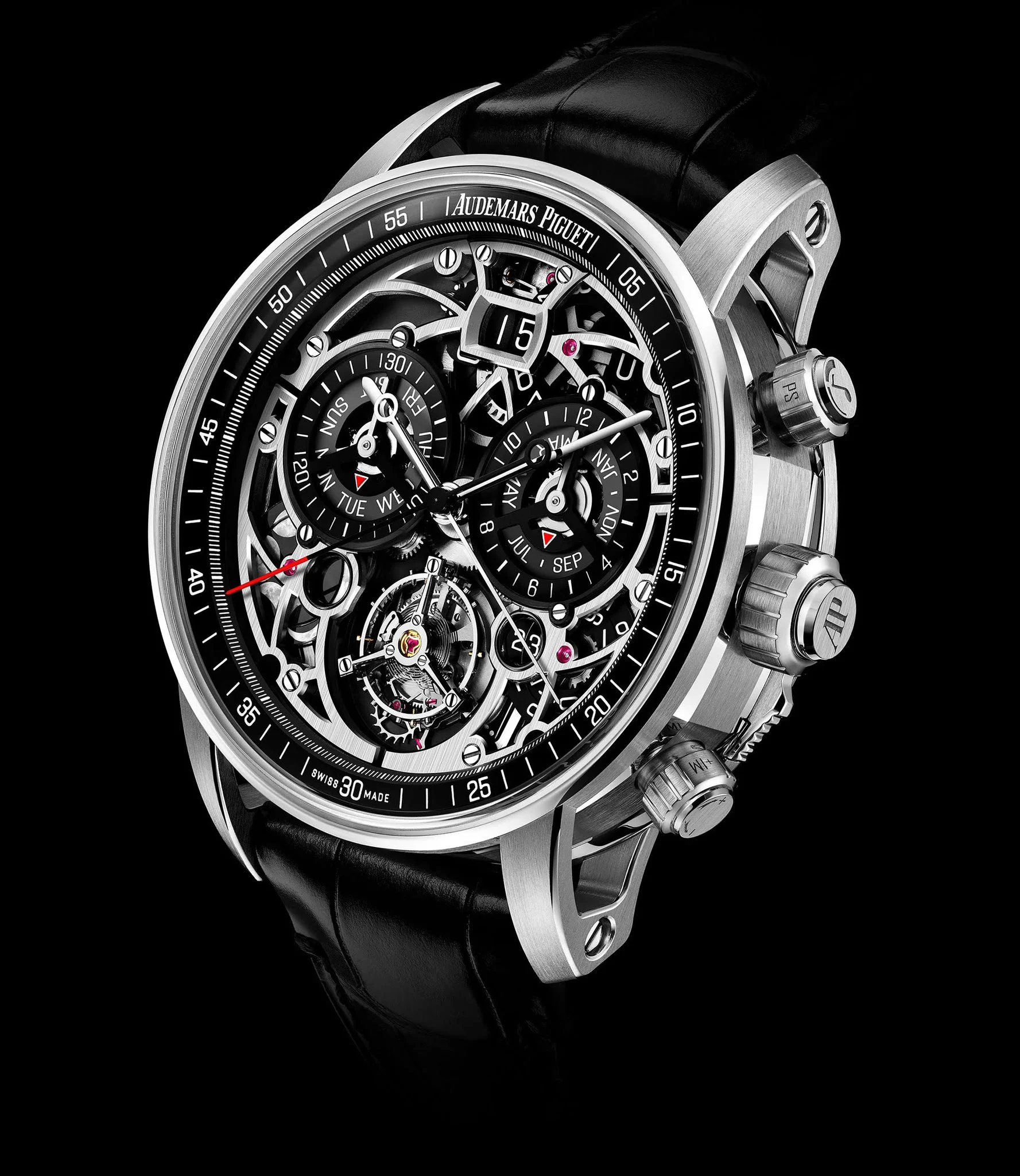
2023. Code 11.59 by Audemars Piguet Ultra-Complication Universelle RD#4. Openworked. The result of combining the three previous RDs, the RD#4 features 40 functions, 23 complications and 17 technical devices. Seven years of development and teamwork were required to produce this white gold Model 26398. Audemars Piguet image.
Fireworks!
The brand's creative energy and the contribution of new talent from the world of watchmaking and other fields such as cars, fashion, materials engineering, jewellery, contemporary art, music, architecture and scenography have given rise to a large number of watches associated with countless fields: complications, materials, decoration, case architecture, miniaturisation, Haute Joaillerie, sport, pop culture, fine stones, acoustic performance, and so on. We will limit ourselves here to a few recent creations.
Launched in 2019, the Code 11.59 By Audemars Piguet collection combines a circle with an octagon. Simple at first glance, the watch is packed with details reaching a rare degree of technical and aesthetic sophistication. These include its rounded octagonal case middle, its architectural lugs soldered to the ultra-thin bezel, as well as its double-curved crystal.
On another front, the materials laboratory used SPS (Spark Plasma Sintering) technology to juxtapose colours in a perfectly homogeneous material: ceramic or gold (Chroma project). Audemars Piguet then introduced a new gold colour, called sand gold, featuring rich, polychromatic reflections. At the same time, the brand created the watch industry's first precious BMG (bulk metallic glass).
When it comes to finishing, in collaboration with jewellery designer Carolina Bucci, AP introduced a new decoration in 2016: diamond hammering called “Frosted Gold”. Up to a million of tiny facetted holes adorn the exterior of a Royal Oak watch, making it sparkle like diamond dust.
Midway between jewellery, watchmaking and fashion, the Royal Oak Mini has a diameter of just 23 mm. It revives a miniature icon from 1997. Finally, in vintage mode, the first two [RE]Master releases highlight two creations that marked the brand's history in 1943 and 1960, inaugurating a new heritage collection.

Presented in 2023, the Code 11.59 by Audemars Piguet Starwheel revives a display speciality that originated in the 17th century and was rediscovered by Audemars Piguet in 1991. Model 15212. Audemars Piguet image.
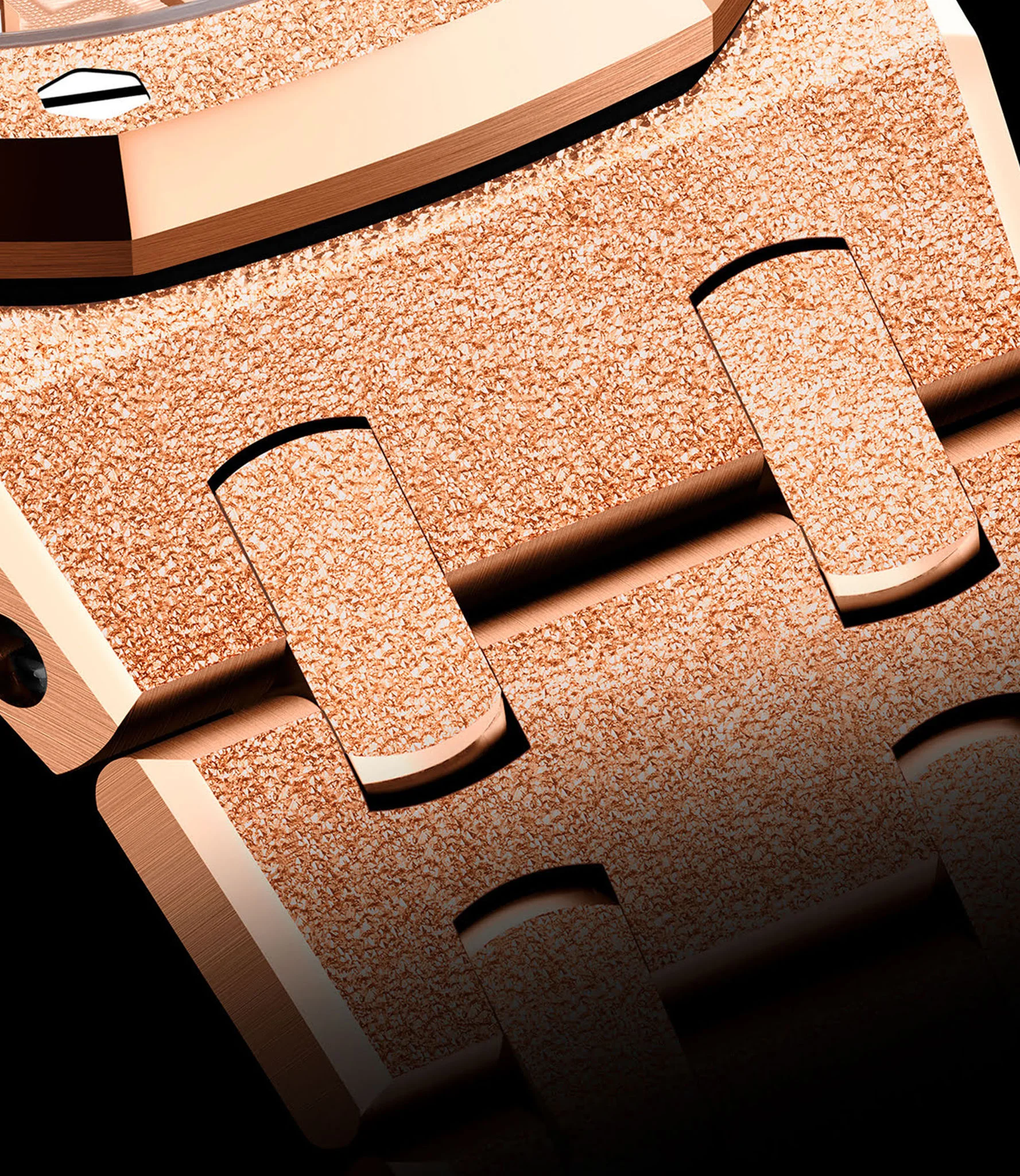
In 2016, Audemars Piguet teamed up with Italian jewellery designer Carolina Bucci to develop a new case finishing technique. "Frosted Gold" involves hammering the gold with a facetted diamond, creating up to a million tiny textured effects adorning each Royal Oak. Audemars Piguet image.
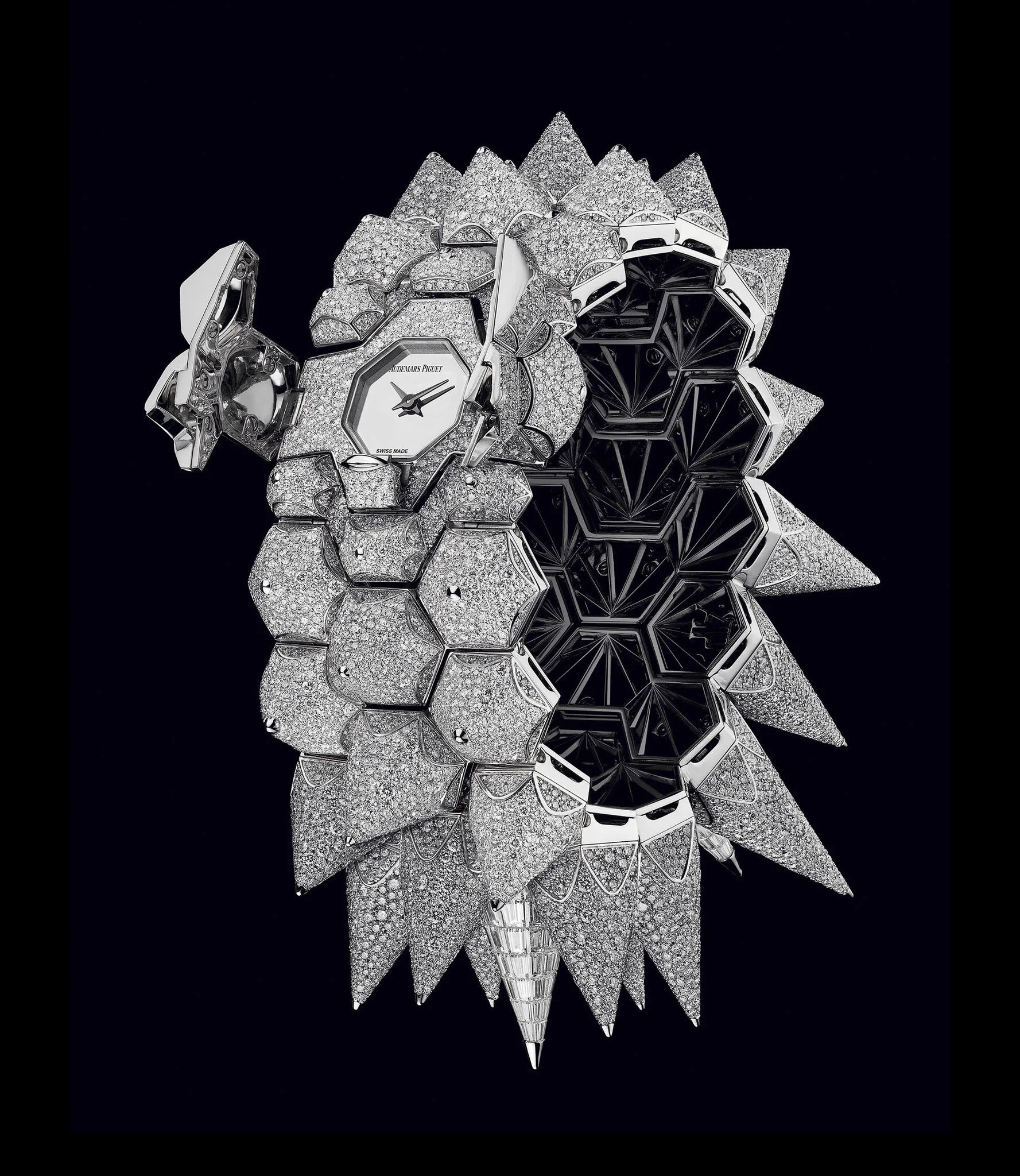
2017. Diamond Outrage. Haute Joaillerie cuff watch with secret cover. Inspired by the scenery surrounding the Manufacture, this timepiece reflects the snow-blanketed, frozen expanses that accompany the harsh winters of the Vallée de Joux with its stalactite-like structure of peaks and the sparkle provided by the gemsetting. Quartz Calibre 2701. White gold. Model 67700. Audemars Piguet image.
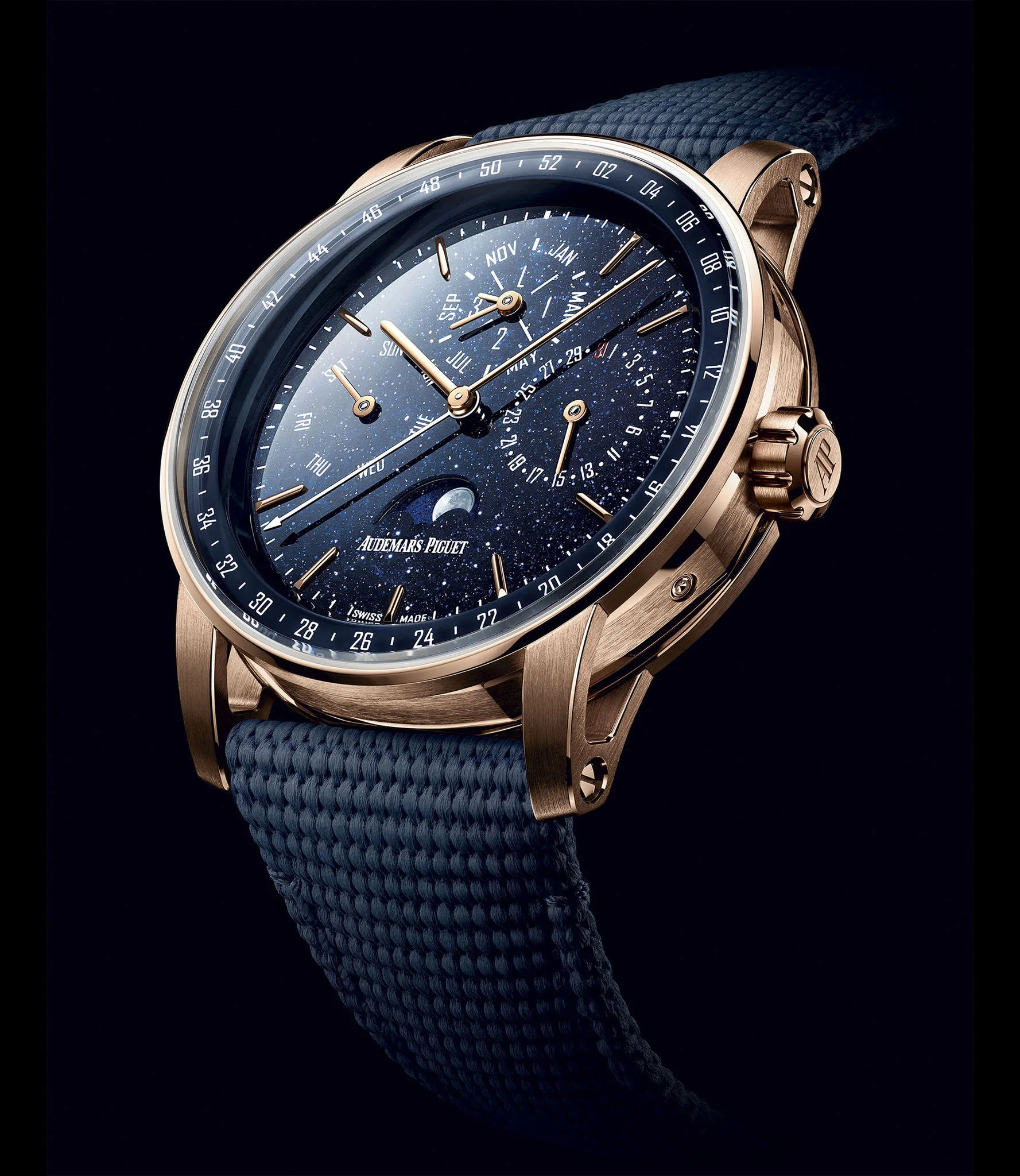
In 2019, Audemars Piguet launched a new collection of classic yet unconventional watches called Code 11.59 by Audemars Piguet. This variant features a perpetual calendar on an aventurine dial. Model 26394. Audemars Piguet image.
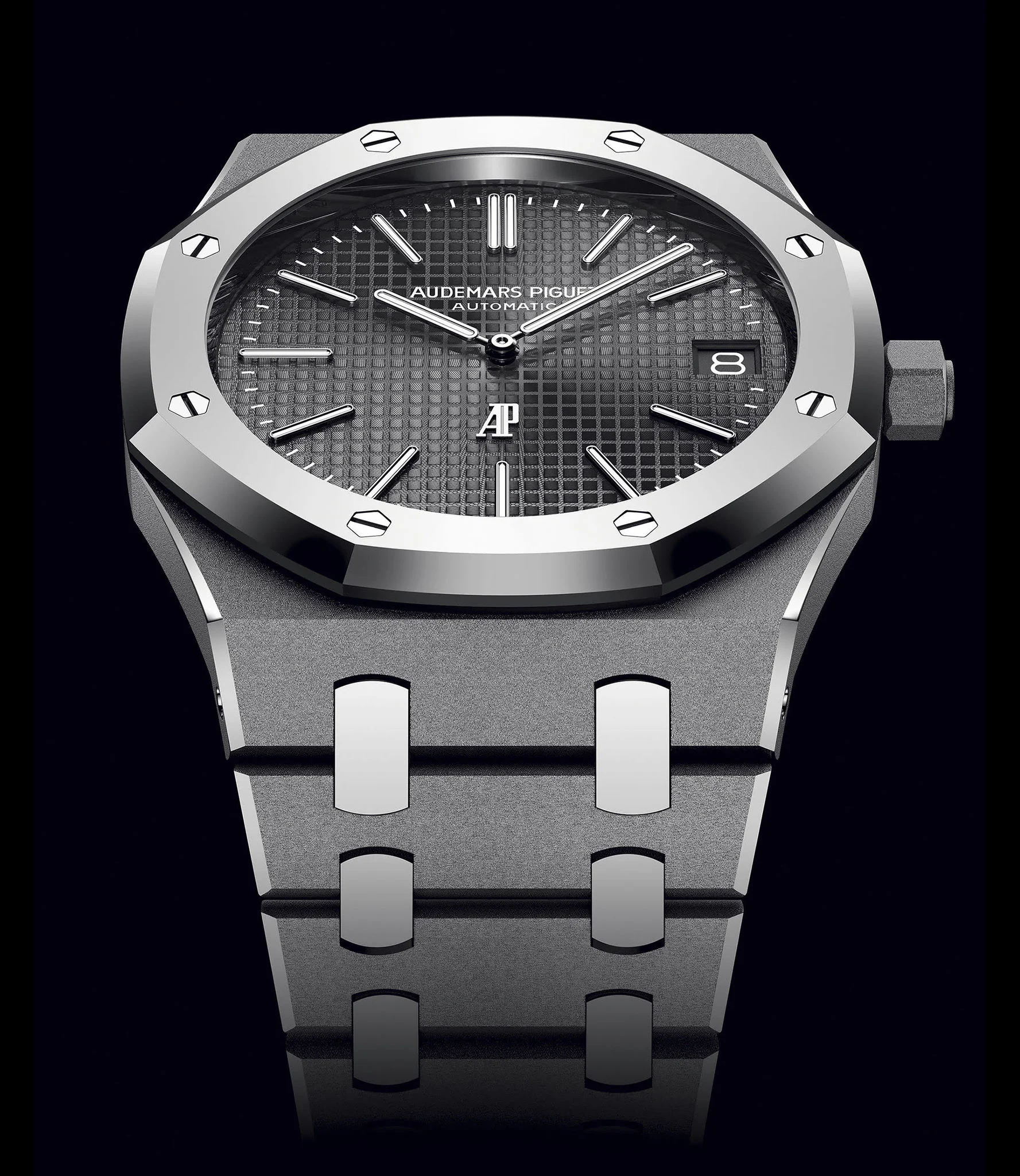
2021. Royal Oak "Jumbo" 15202XT. The first Audemars Piguet watch to feature BMG in its exterior. Hallmarked Pd500 by the Precious Metals Control Office, the alloy contains at least 50% palladium. A one-of-a-kind model donated by Audemars Piguet for the Only Watch charity auction. Audemars Piguet image.
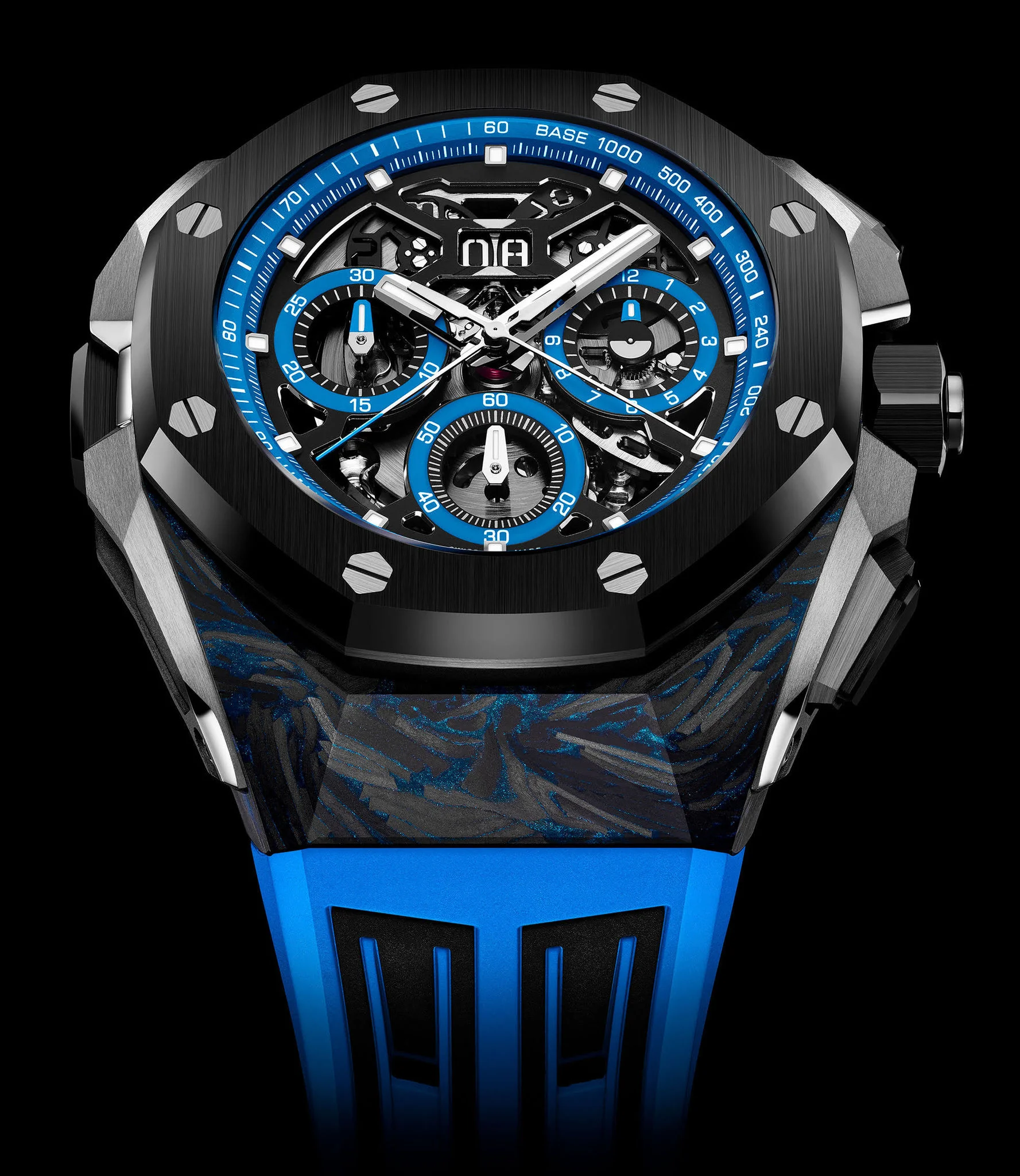
In 2024, Audemars Piguet introduced a new generation of forged, polychrome carbon featuring unprecedented performance. It made its debut on the Royal Oak Concept Split-Seconds Chronograph GMT Large Date. Model 26650. Audemars Piguet image.
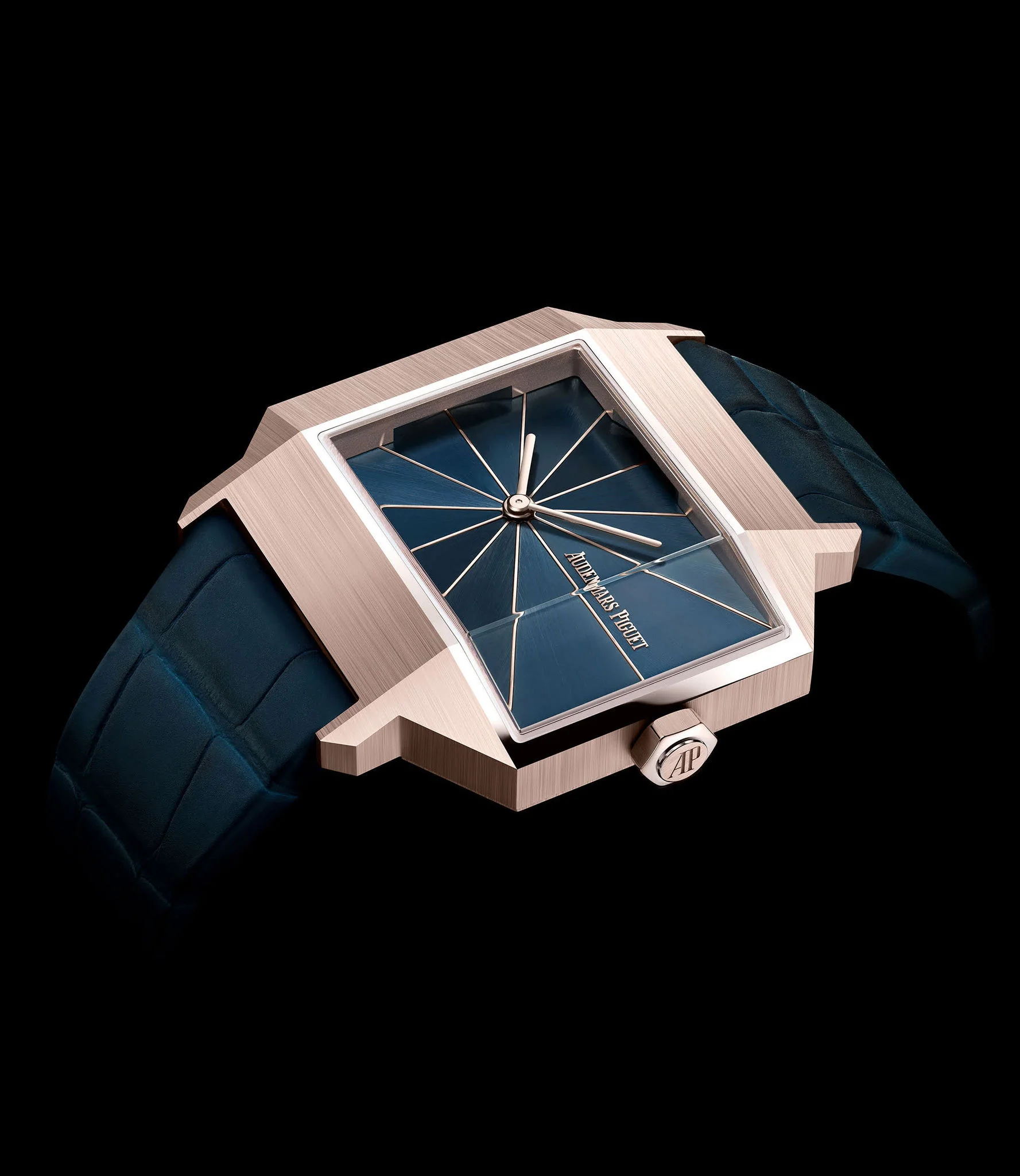
2024. [RE]Master02. Inspired by an asymmetrical vintage watch from 1960, the [RE]Master02 makes its mark with brutalist codes, a facetted crystal and the new 18-carat sand gold. Calibre 7123, Model 15240, Audemars Piguet image.
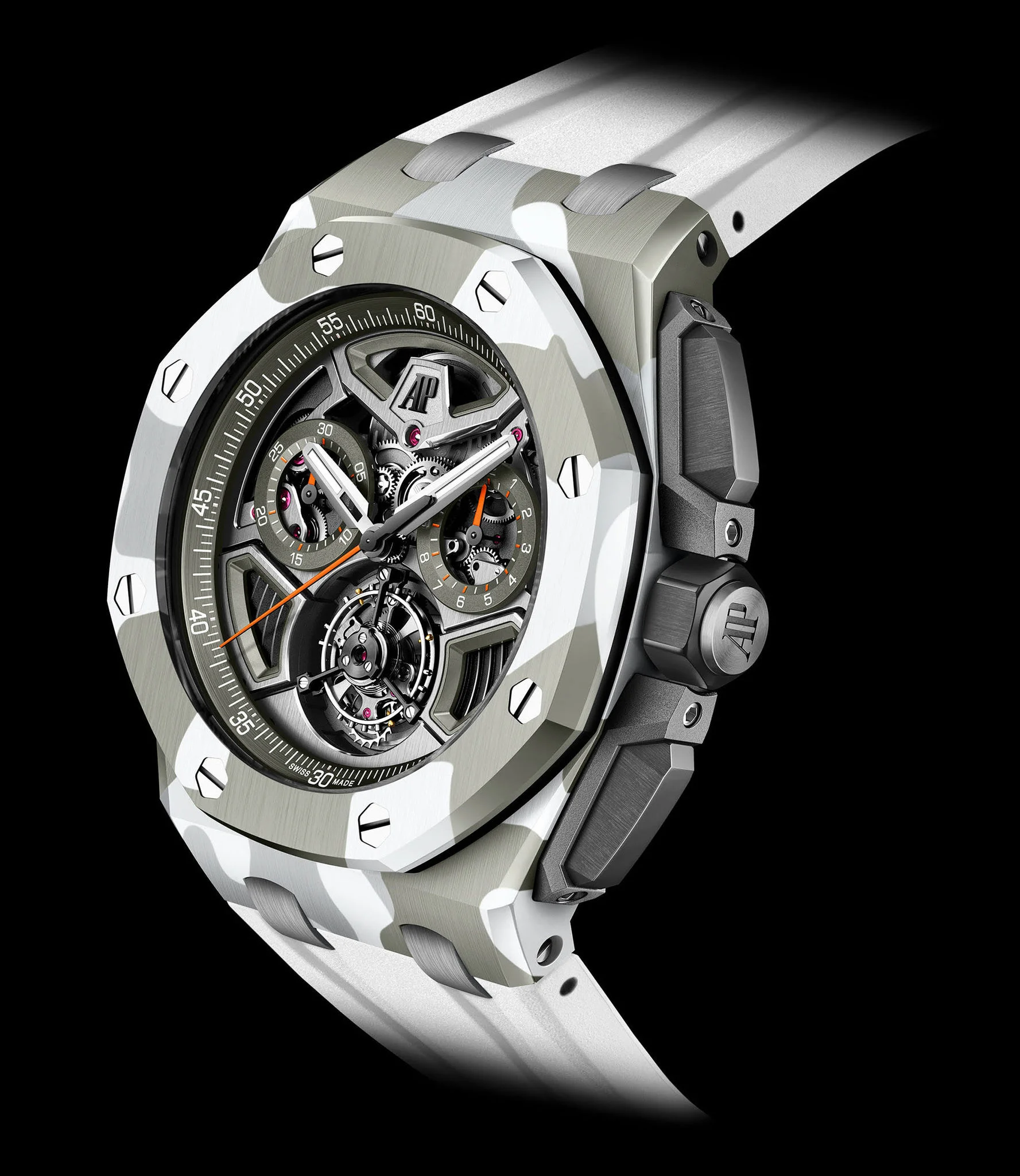
The "chroma" project involves combining several colours in a single block of homogeneous material, either ceramic or gold. Audemars Piguet image.
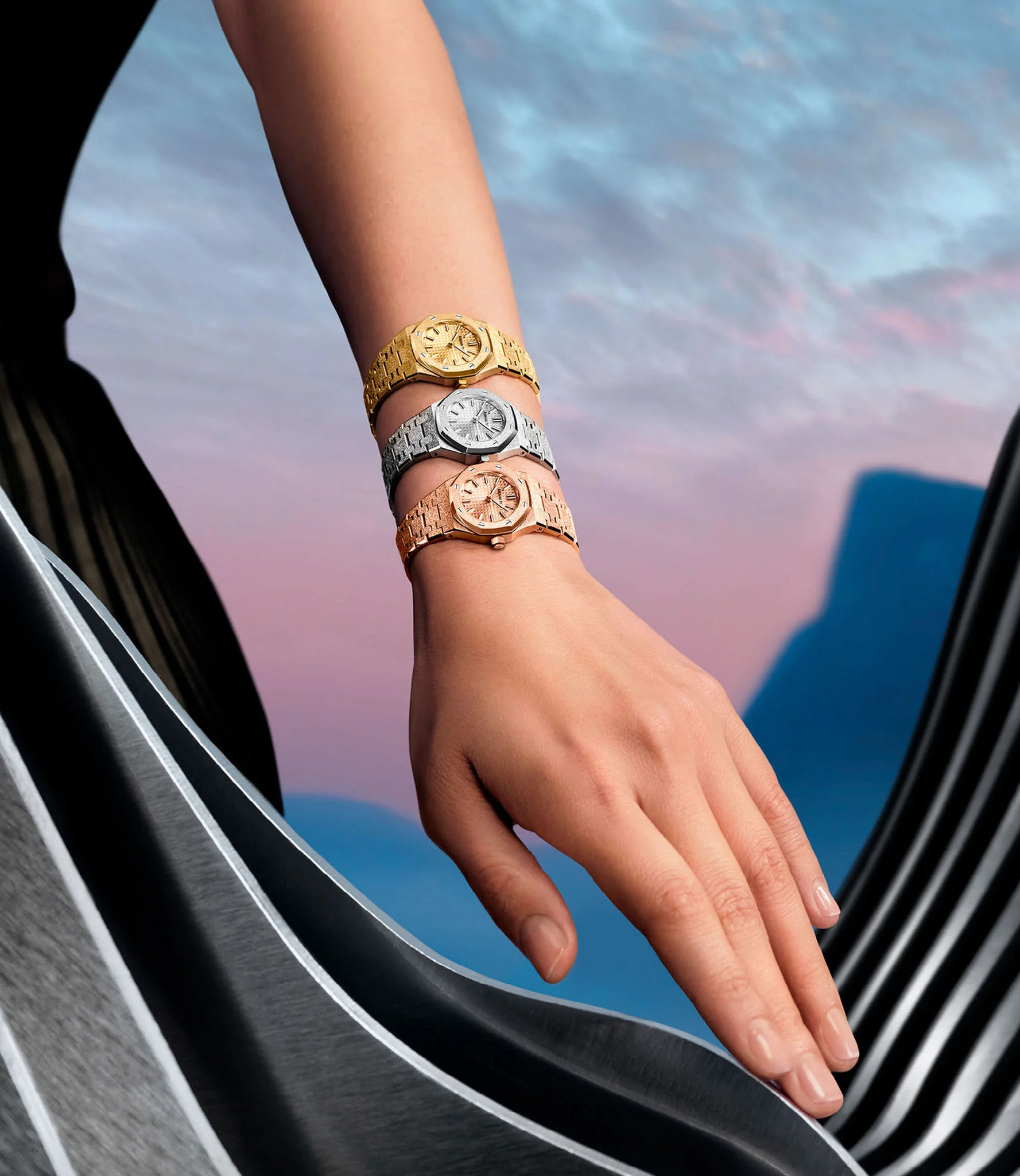
2024. The 23 mm-diameter Royal Oak Mini is a 2024 revival of a collection that became a legend in 1997. Audemars Piguet image.
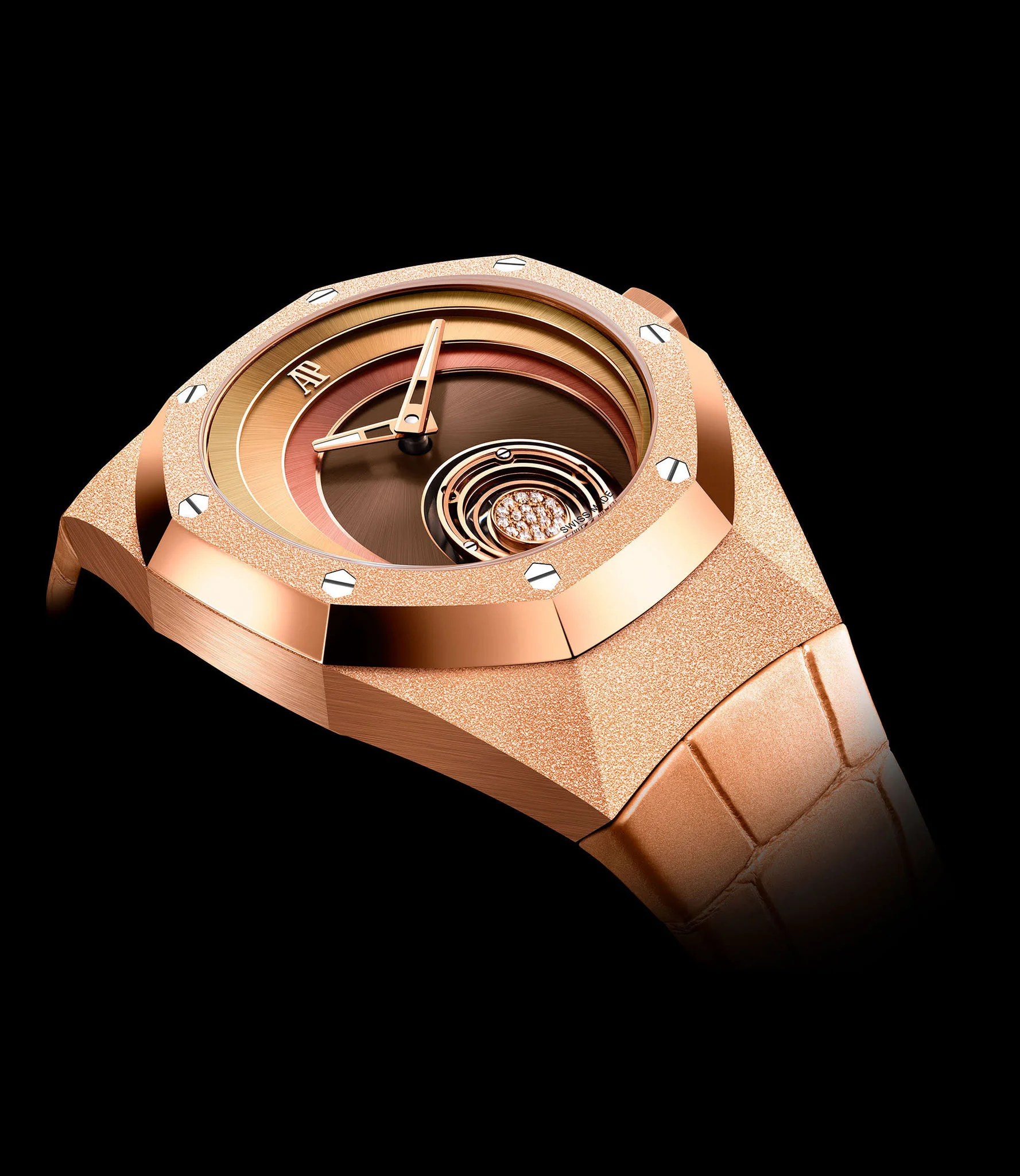
2024. Royal Oak Concept "Tamara Ralph". A famous Haute Couture designer, this watch has been designed in harmony with watchmaking and Haute Couture expertise. Flying tourbillon and three-tone dial. Pink gold case with Frosted Gold finish. Calibre 2951. Model 26630. Audemars Piguet image.
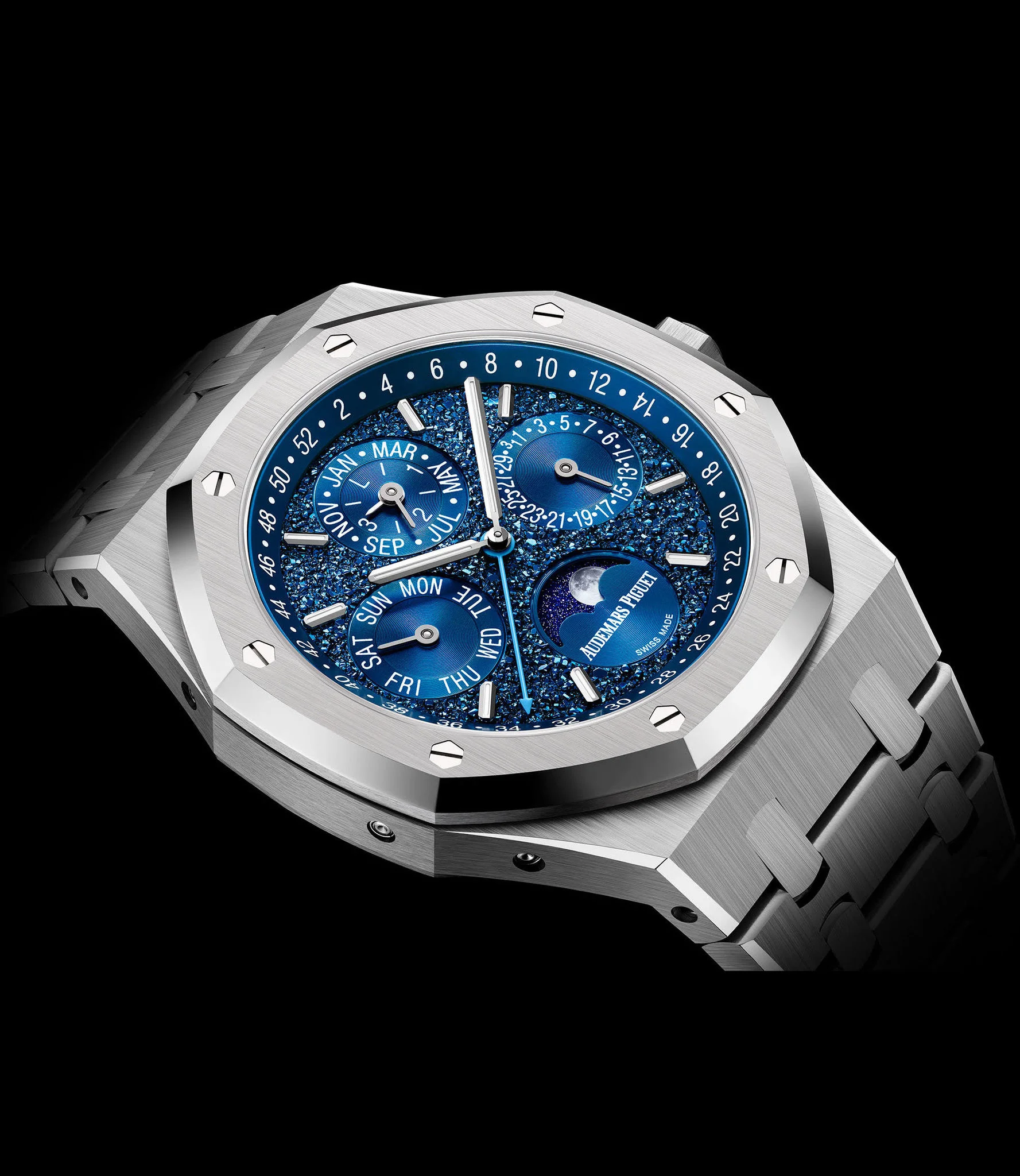
2024. A new dial-stamping technique was developed for this watch, created in partnership with musician John Mayer. Model 26574. Audemars Piguet image.
AP in 2025
One hundred and fifty years after Jules Louis Audemars opened his small workshop in Le Brassus, the company has not moved to another village. It is still owned by its two founding families, who have been joined over the years by a number of others, notably including descendants of the Lecoultre and Golay families. Its roots in the Vallée de Joux have been enriched by the contribution of personalities from other regions and other fields. Since 2022, the Board of Directors has been chaired by Alessandro Bogliolo, an entrepreneur and luxury goods connoisseur who is also a former director of Tiffany. Since January 2024, the company has been headed by Ilaria Resta, an energetic visionary who forged a career path outside the watchmaking world with Firmenich and Procter & Gambles.
Despite crises, boom periods, along with moments of doubt and jubilation, Audemars Piguet has remained true to the spirit of its founders. As independent as ever, proud of its artisans and fiercely protective of its know-how, the company has never ceased to innovate, remaining open to the world and drawing inspiration from it to create extraordinary watches.
More than ever, our almost 3,000 employees are driven by a spirit of family, passion and commitment. As in the days of établissage, projects are born from the combination of multiple talents, collective work and energy. Attention to detail remains the guiding light behind each new watch. Audemars Piguet continues to chart its course, freely and without compromise.
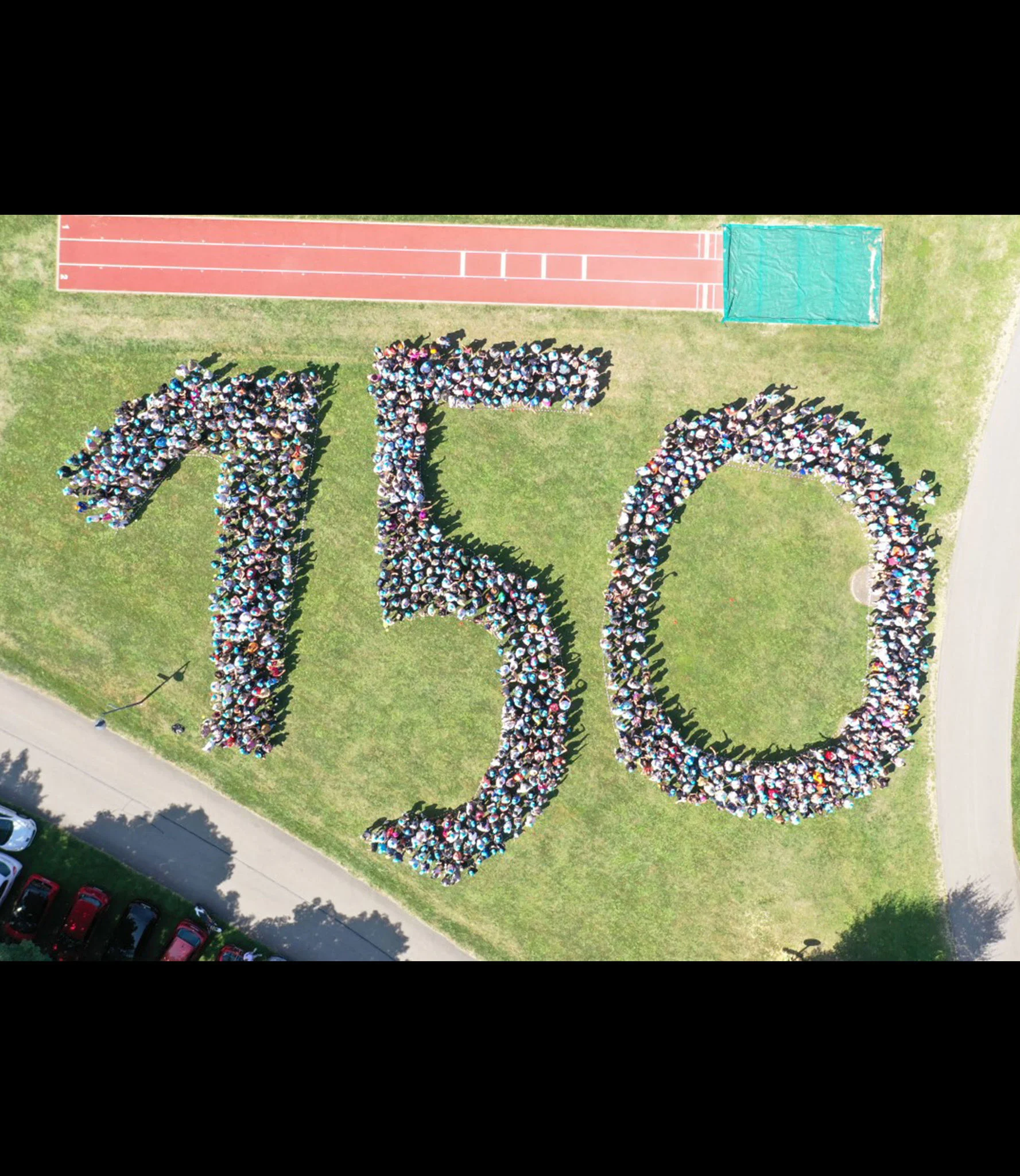
At the Audemars Piguet staff party, employees came together to form the number 150, in preparation for the brand's anniversary.
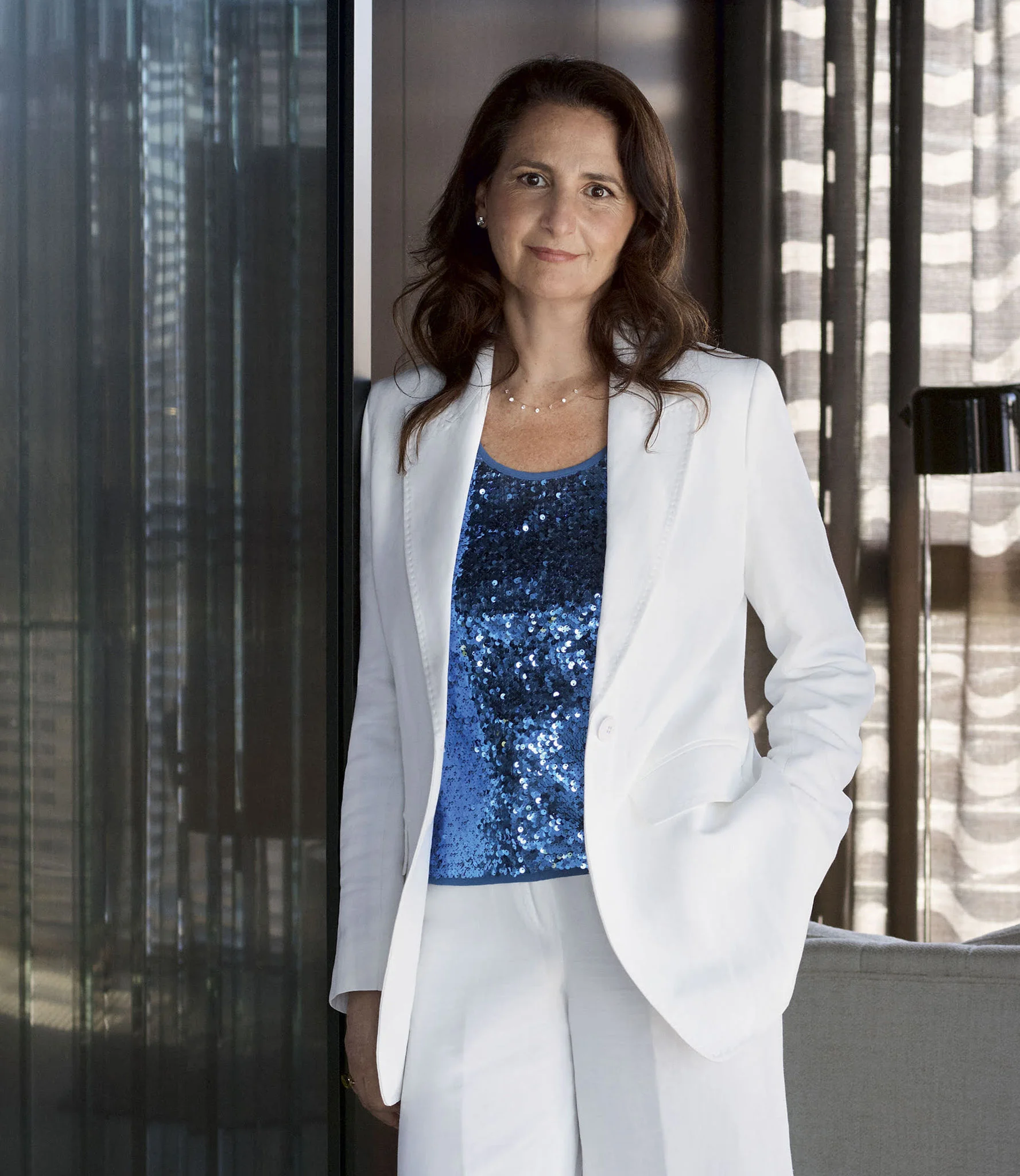
A visionary committed to the fundamental values of watchmaking, Ilaria Resta took over as CEO of Audemars Piguet in January 2024. Audemars Piguet image.
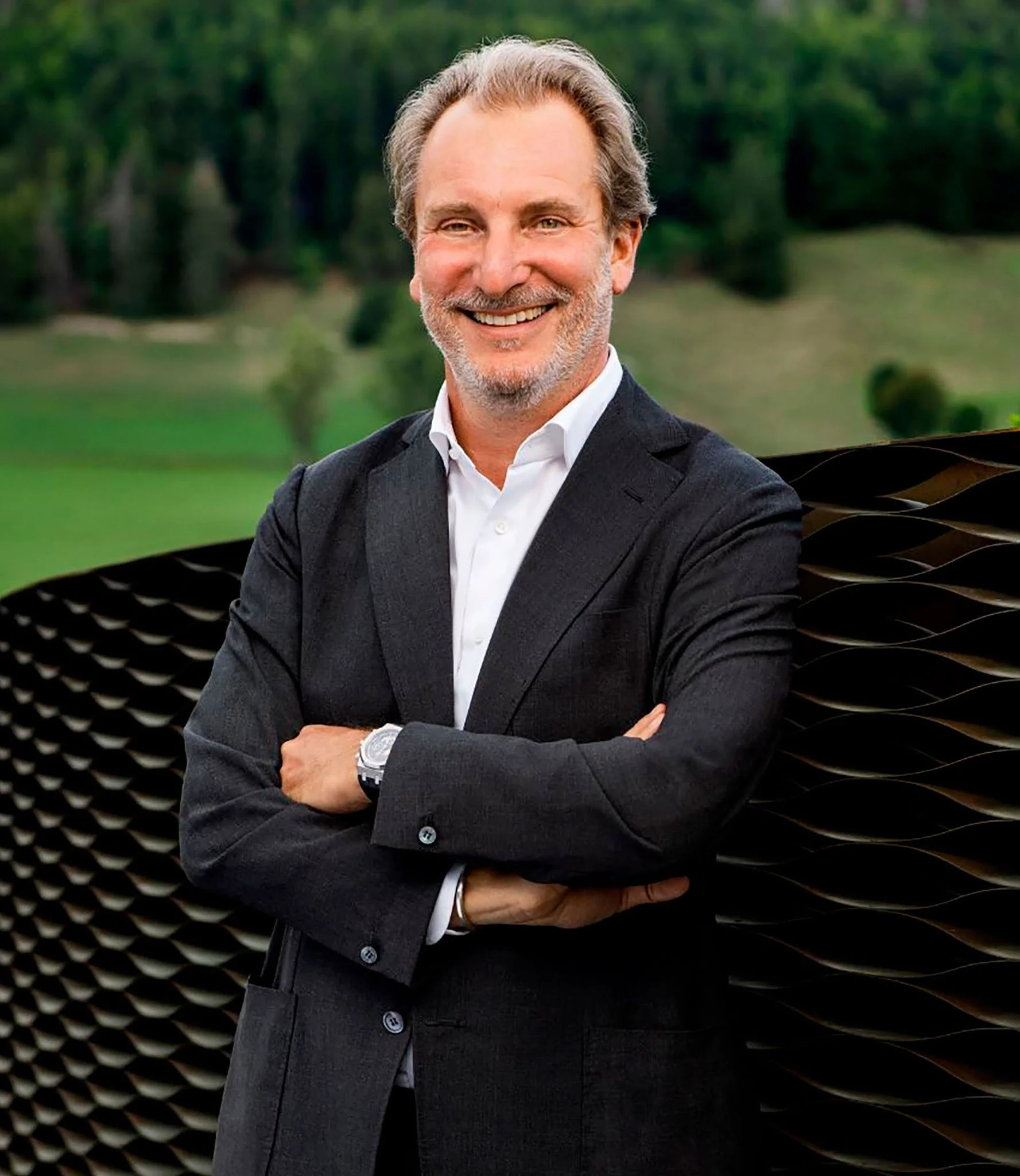
Since 2022, Alessandro Bogliolo has brought his international experience to Audemars Piguet as Chairman of the Board. Audemars Piguet image.
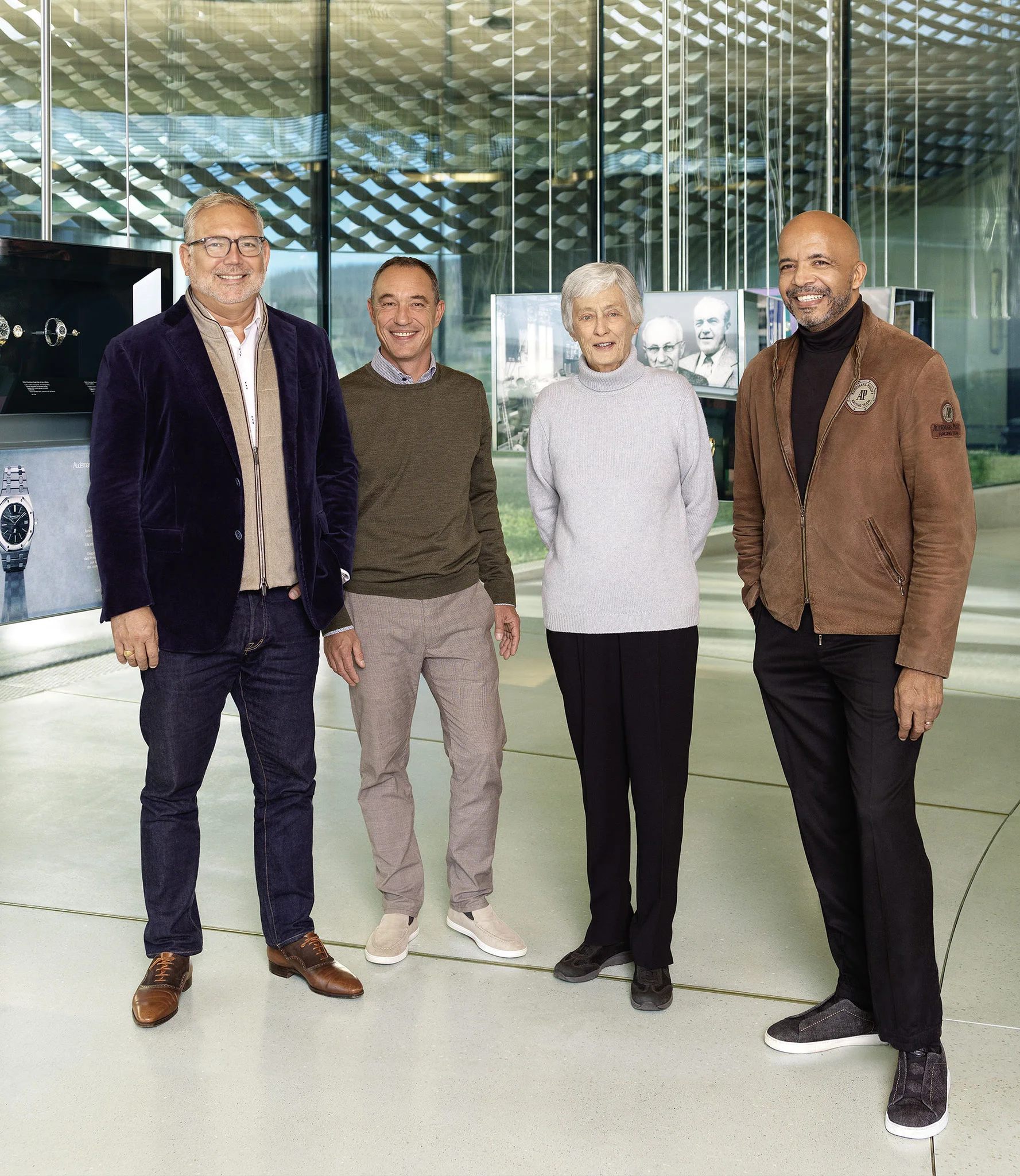
2024. The four watchmaking families on the Audemars Piguet Board of Directors in the brand's Musée Atelier. From left to right: Oliviero Bottinelli, descendant of the Golay family; Steve Petruzzello, descendant of the Lecoultre family; Jasmine Audemars; and Olivier Audemars, descendant of the Piguet family.
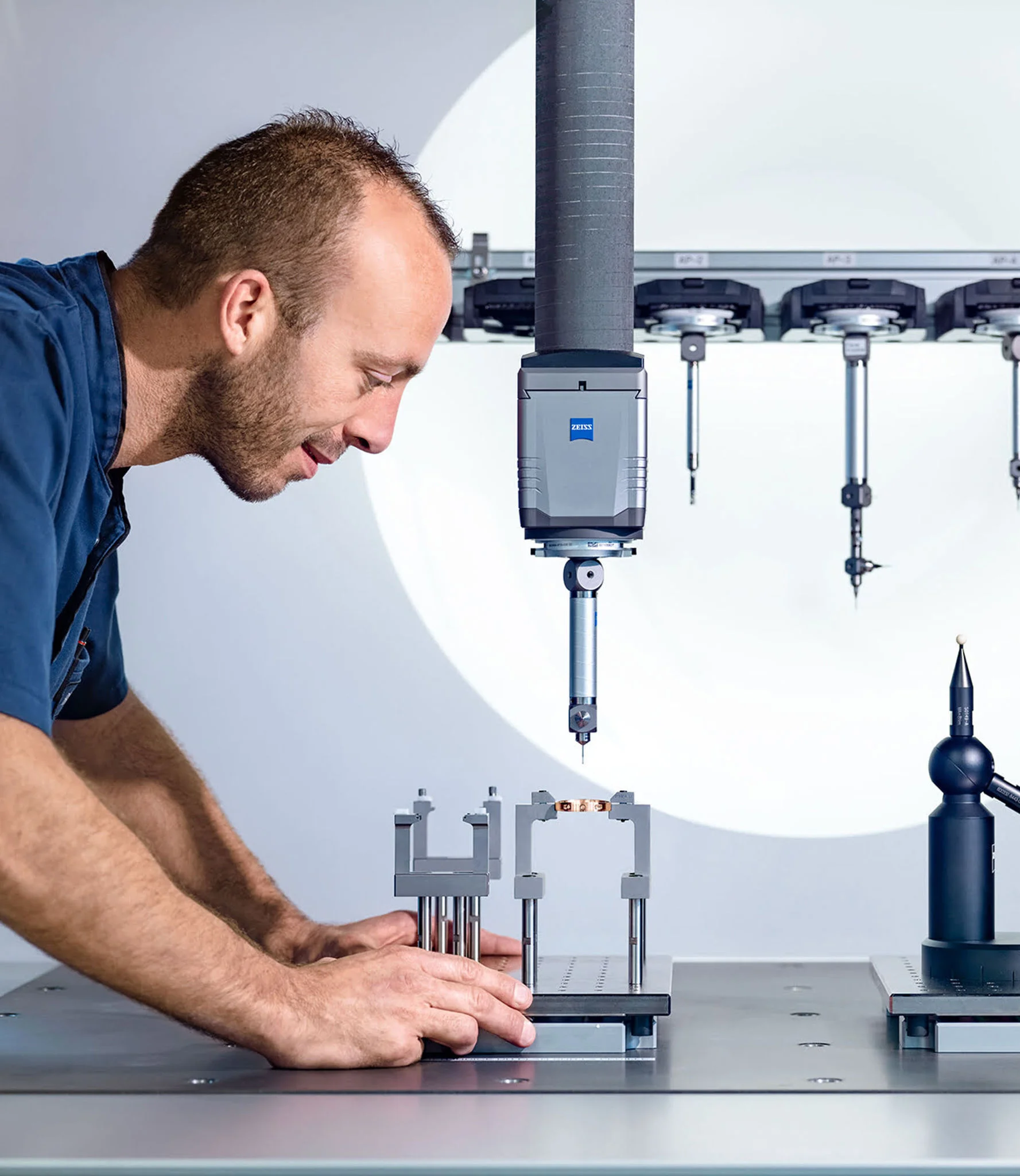
Hand craftsmanship is complemented by the use of high-tech tools, guaranteeing high performance in terms of precision, reliability and quality. Audemars Piguet image.
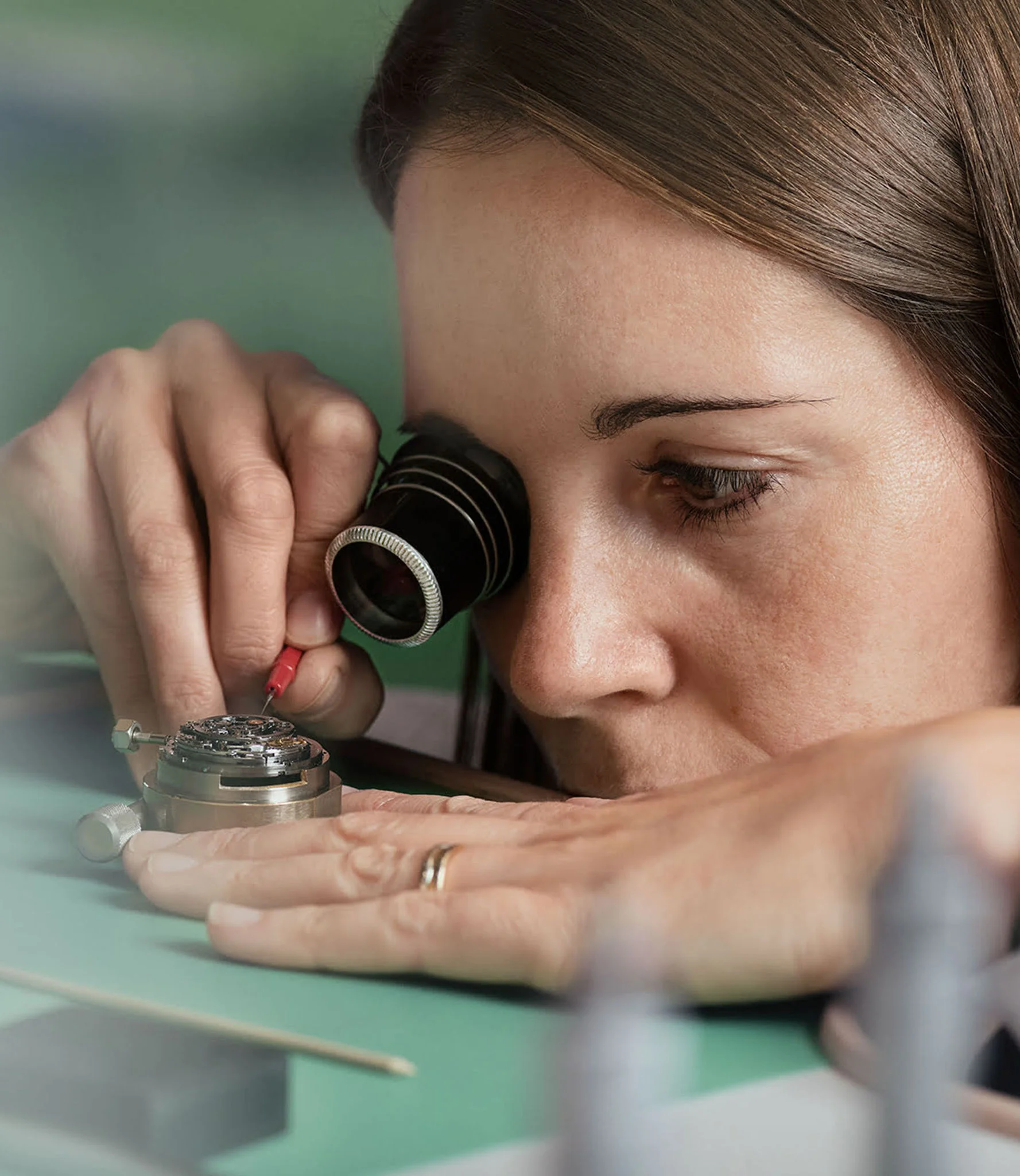
Finishing, assembling and fitting Grande Complication Calibre 2885 requires the same expertise as those dating from 1875. It takes six to eight months to complete each watch. Audemars Piguet image.

Since 1875, Audemars Piguet has never left the Vallée de Joux, which is still the heart of the brand's production and development activities. Audemars Piguet image.

Since 1875, Audemars Piguet has never left the Vallée de Joux, which is still the heart of the brand's production and development activities. Audemars Piguet image.