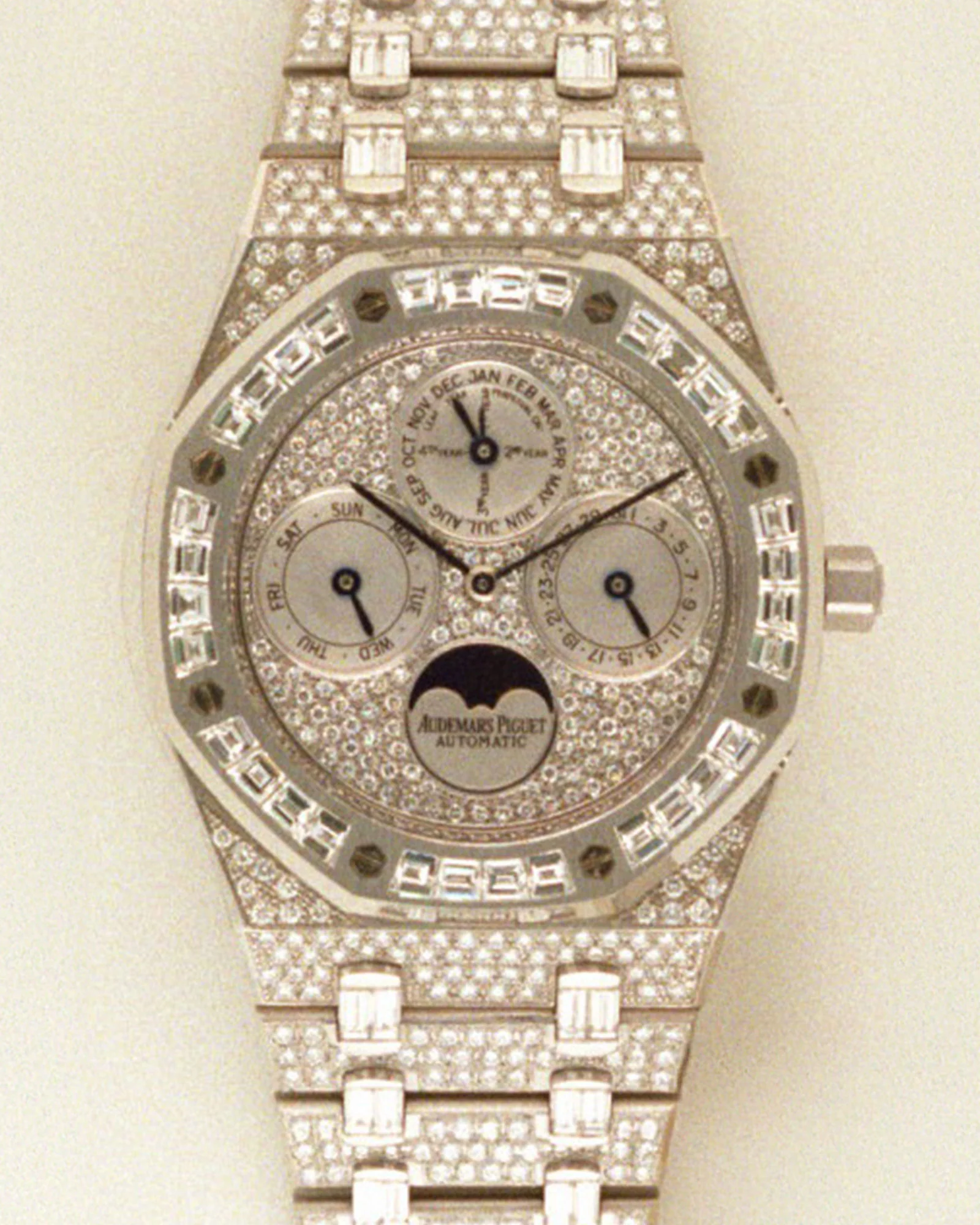
25654, Royal Oak Perpetual Calendar
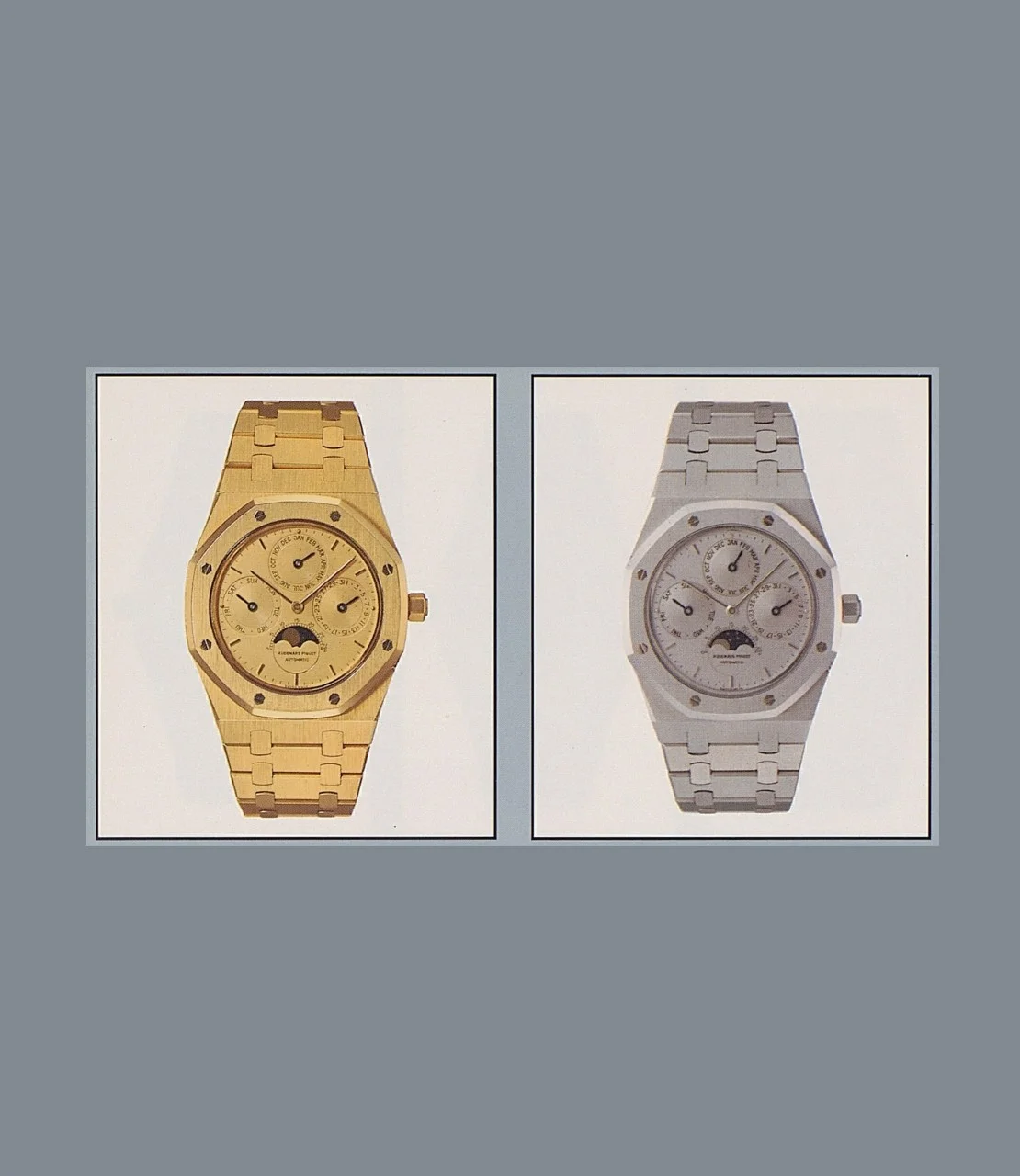
1987–94. Royal Oak 25654 variants. Only two of the variants of the 25654 Royal Oak Perpetual Calendar were presented in the following editions of the Audemars Piguet catalogues: 1987–88, 1988–89, 1990–91 and 1993–94. Audemars Piguet Archives.
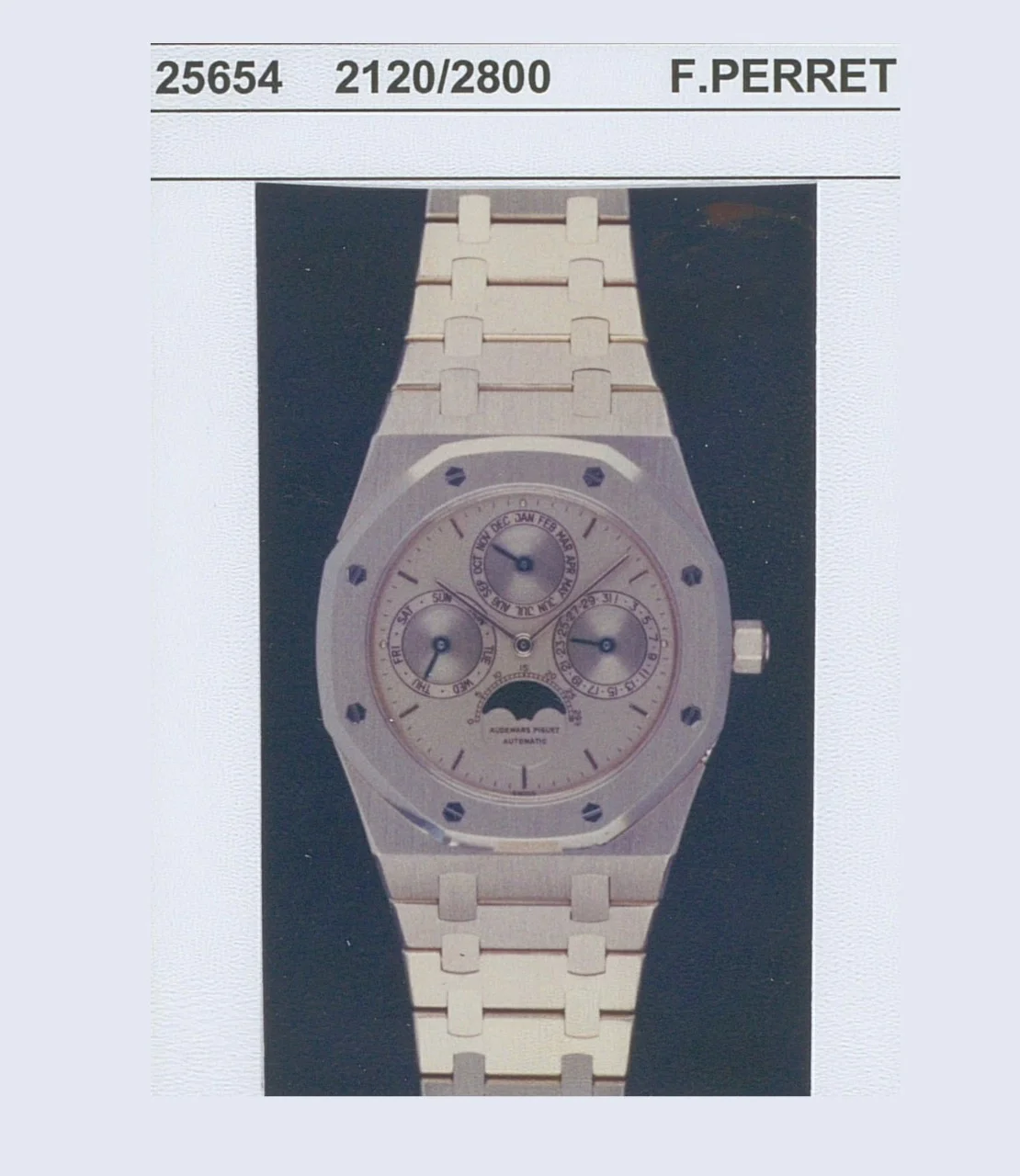
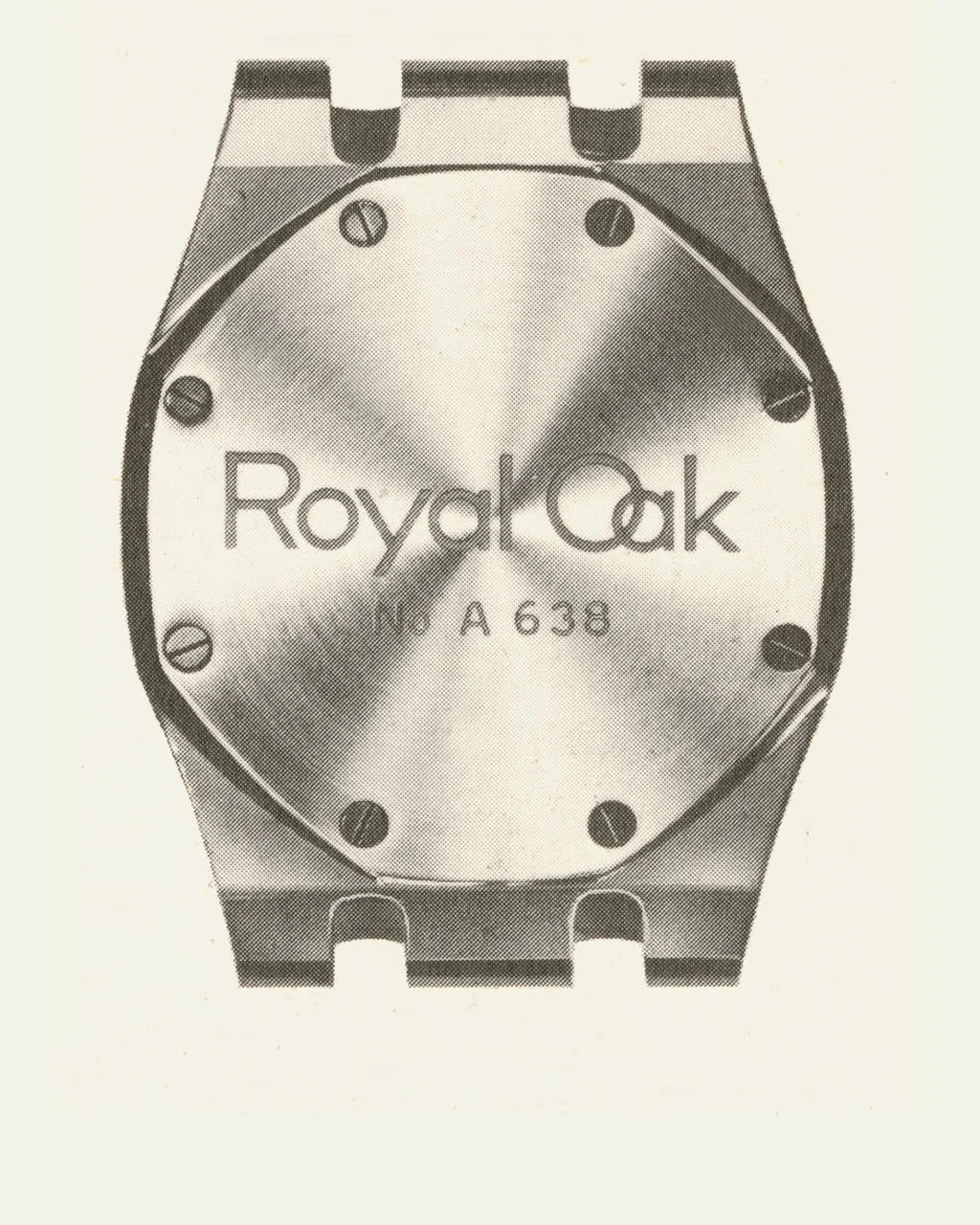
Circa 1987. Identification image of Model 25654. Audemars Piguet Archives.
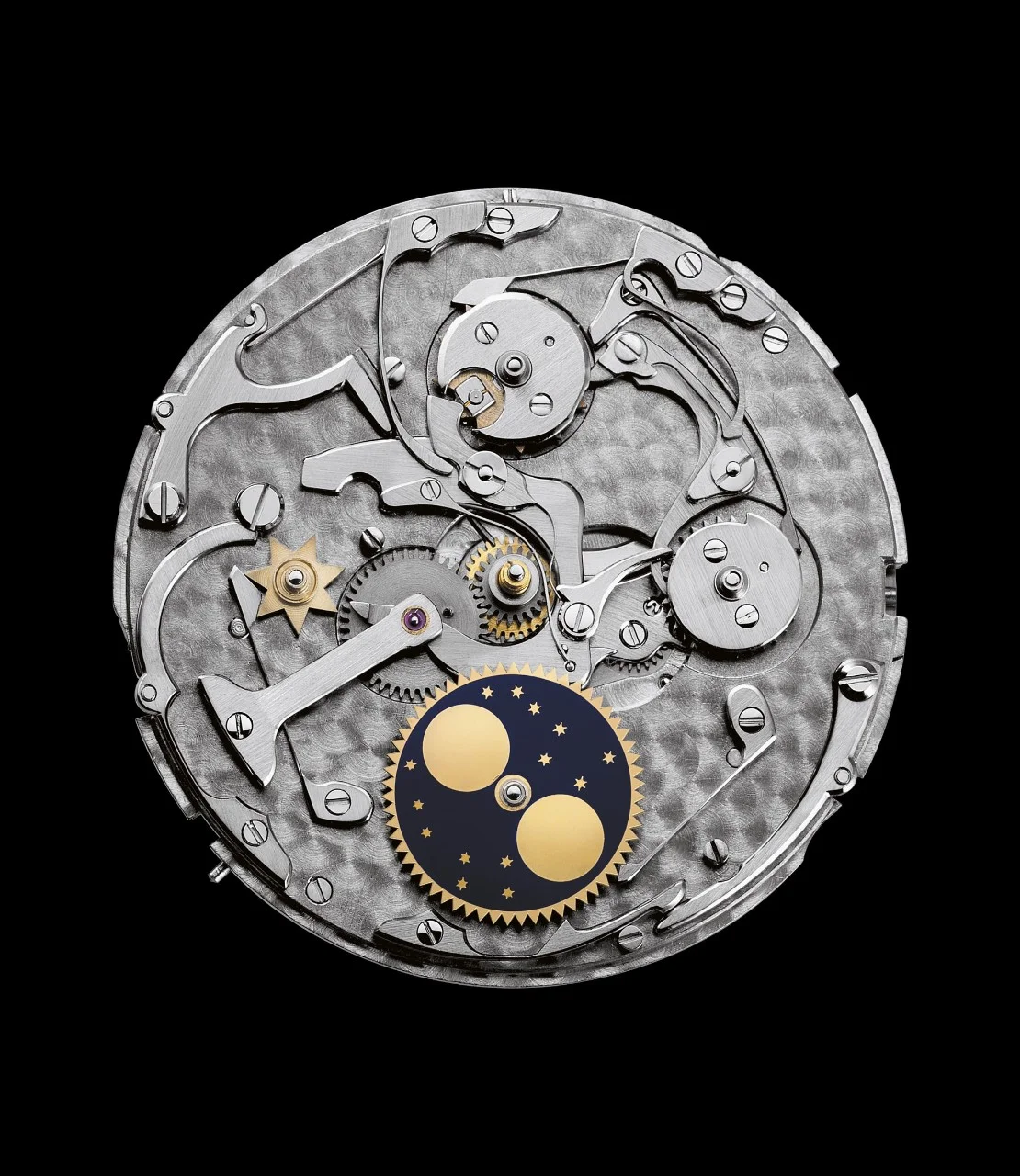
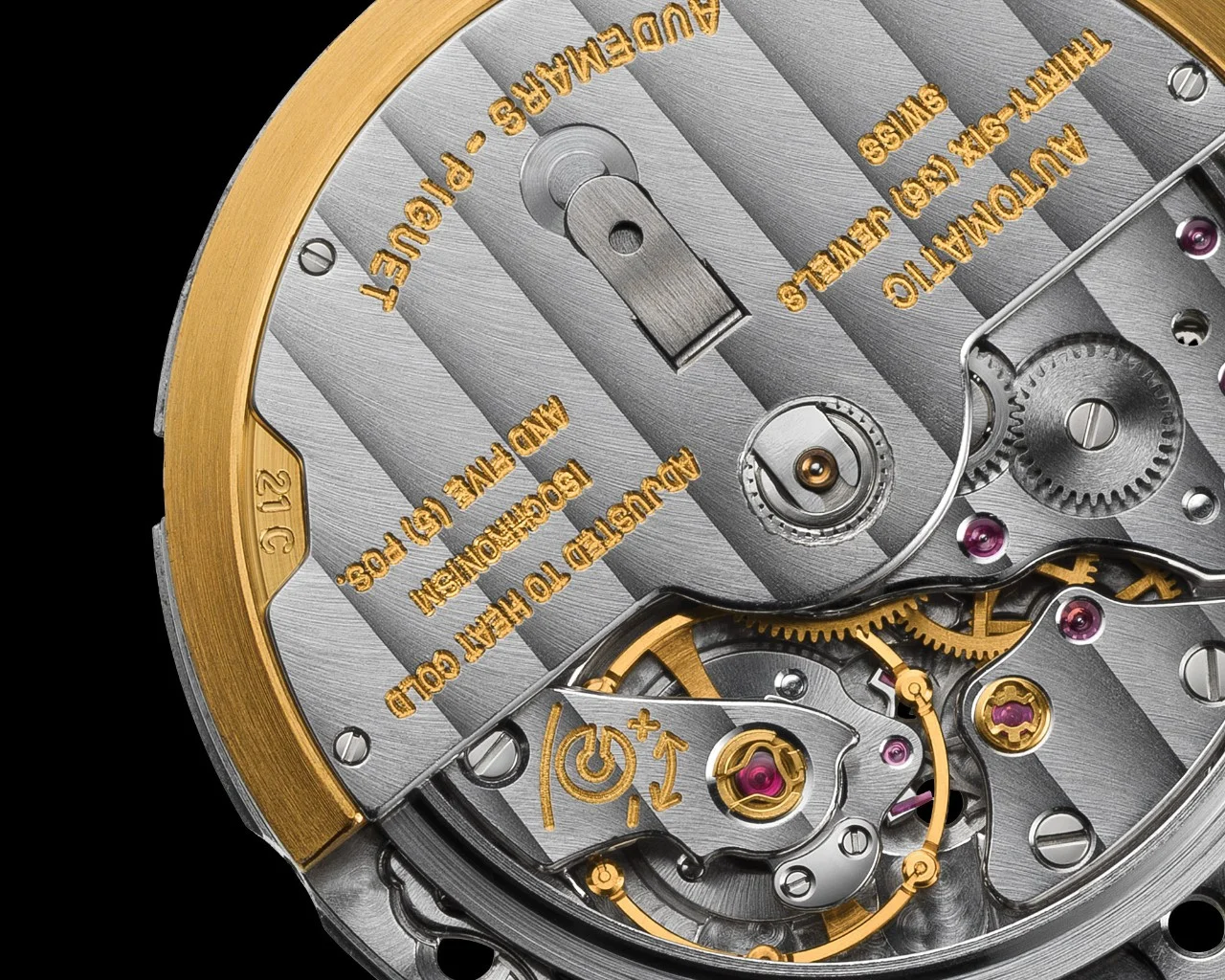
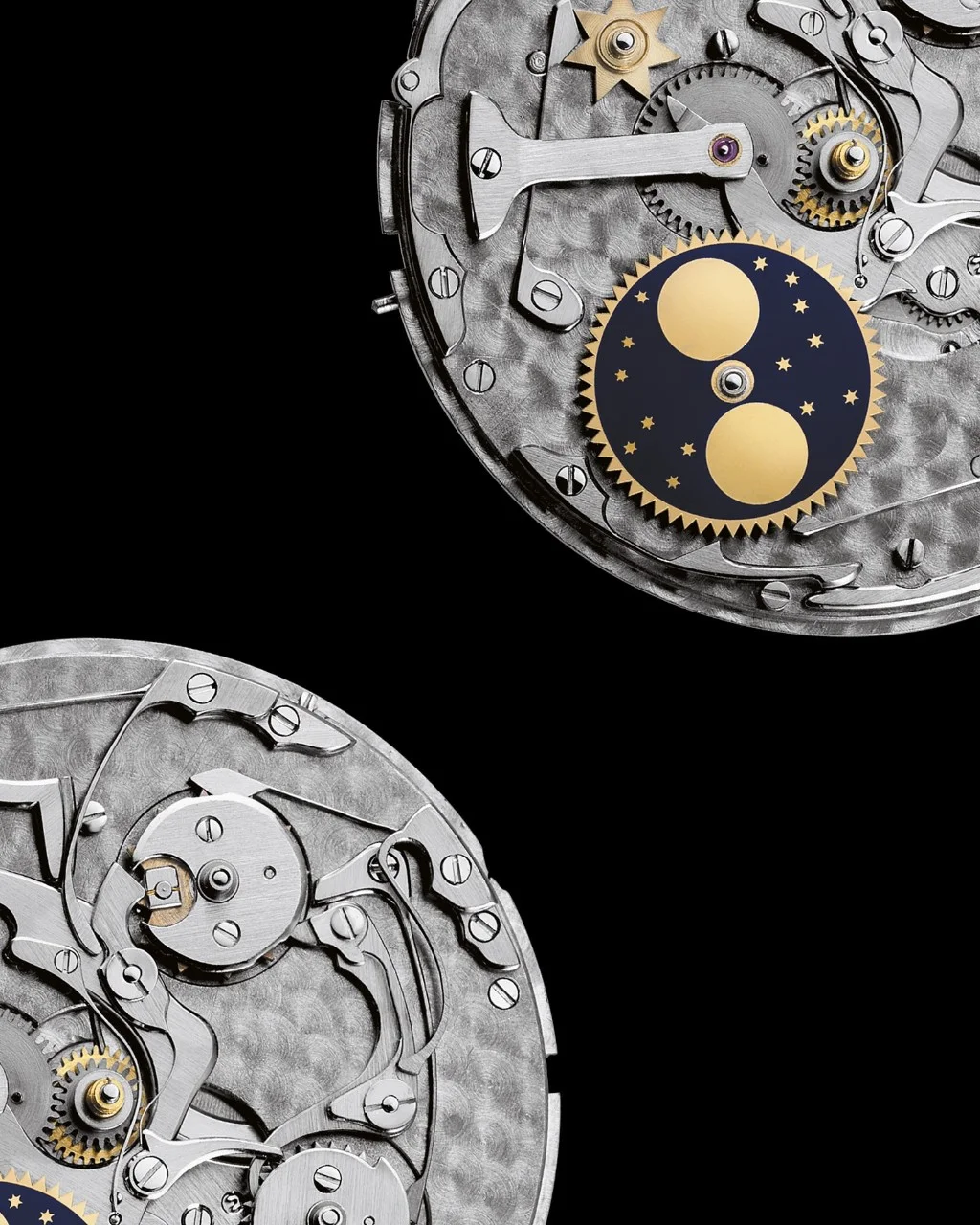
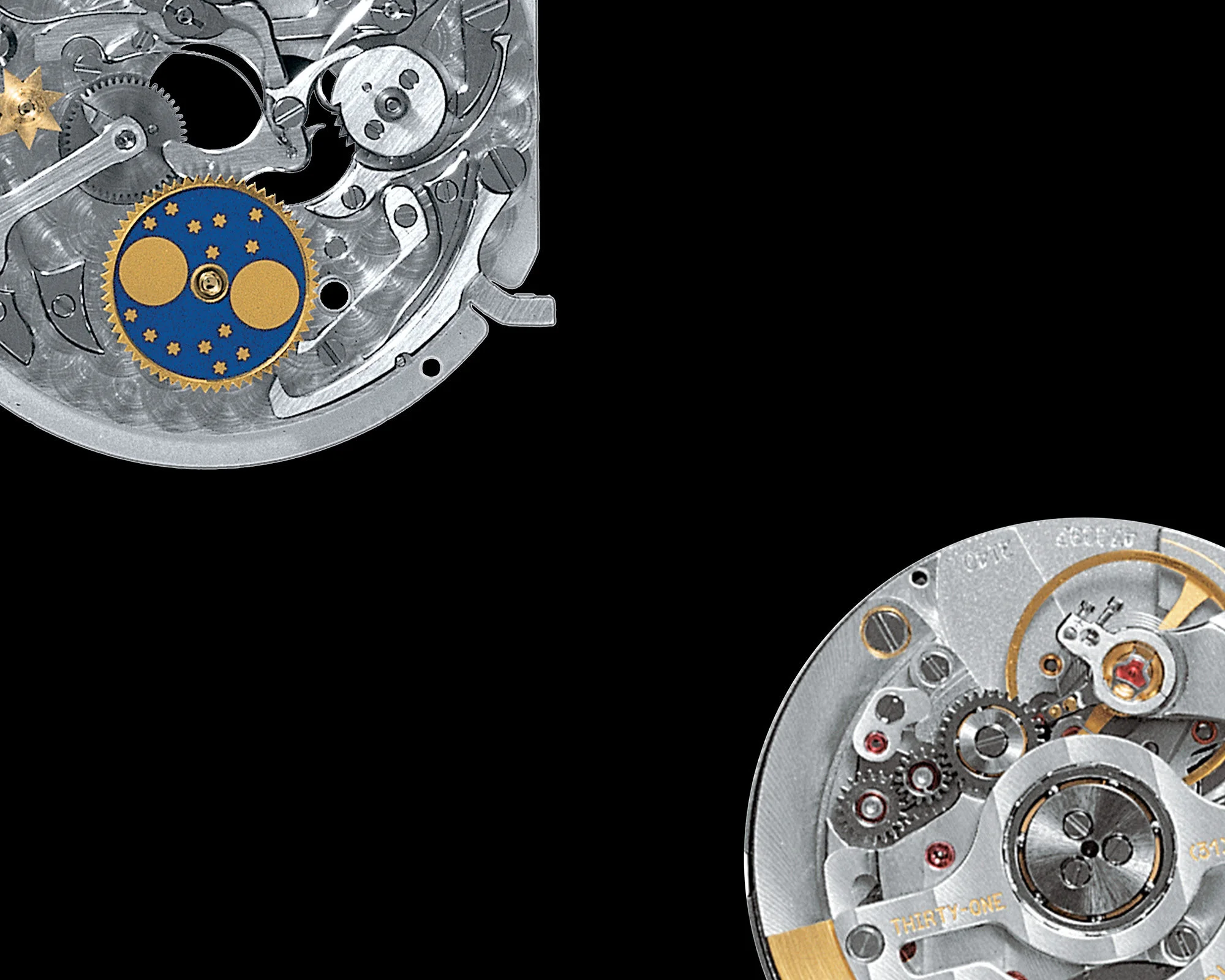
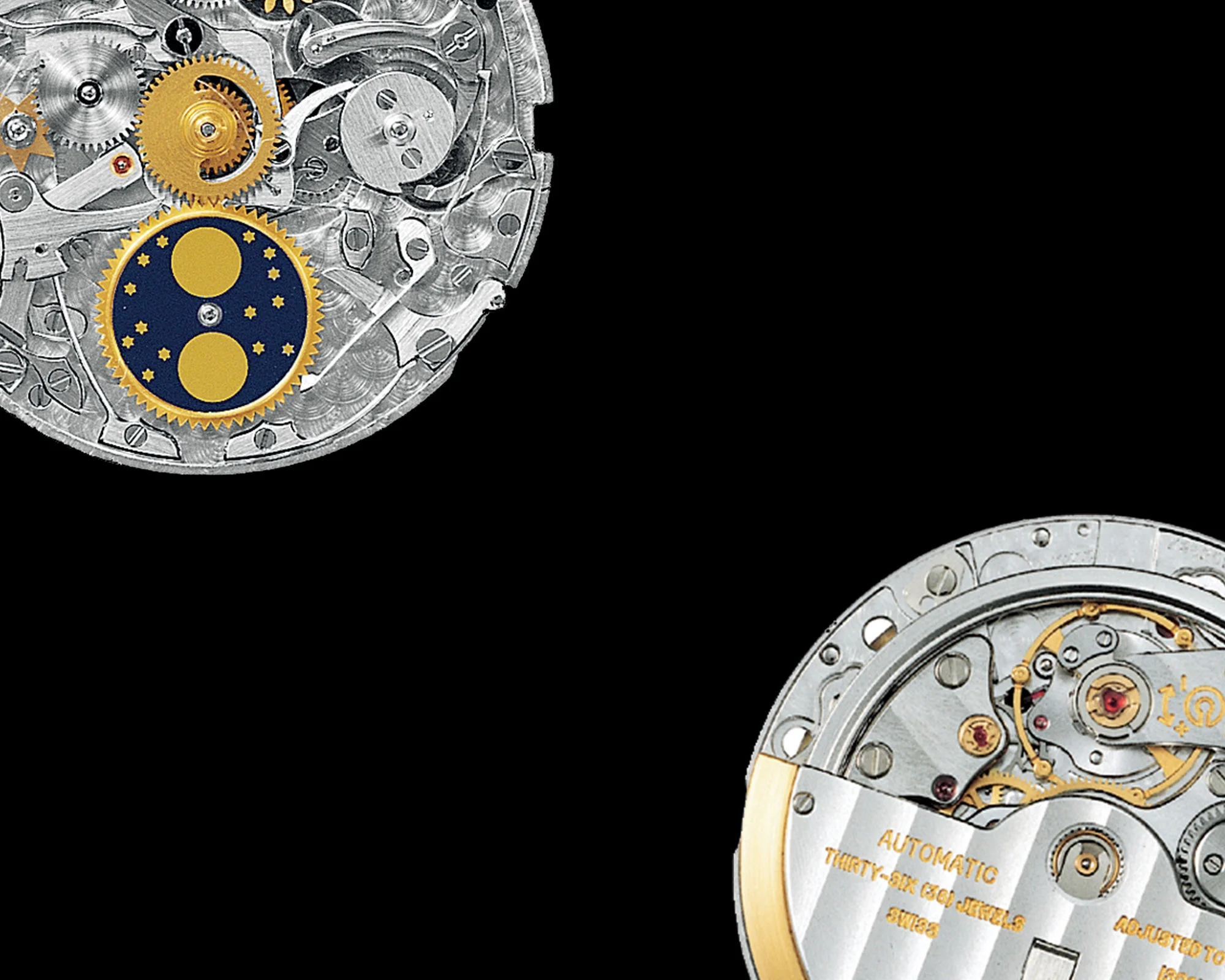
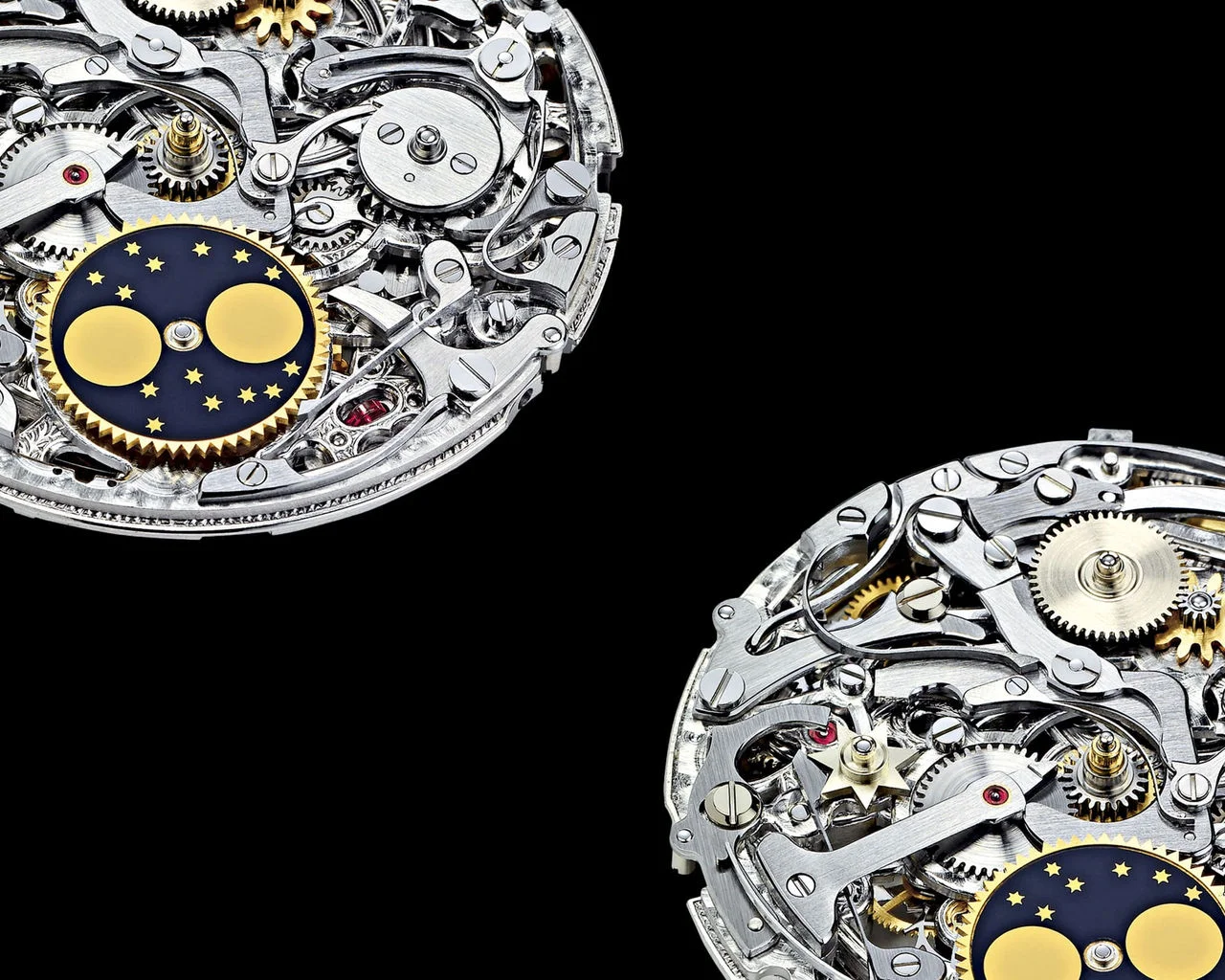
1978–1996. Calibre 2120/2800, dial side. Thinnest selfwinding perpetual calendar calibre of its time (3.95 mm): day, date, month, moon phase. Movement 386456, made in 1995. Audemars Piguet Heritage, inv. 2010.
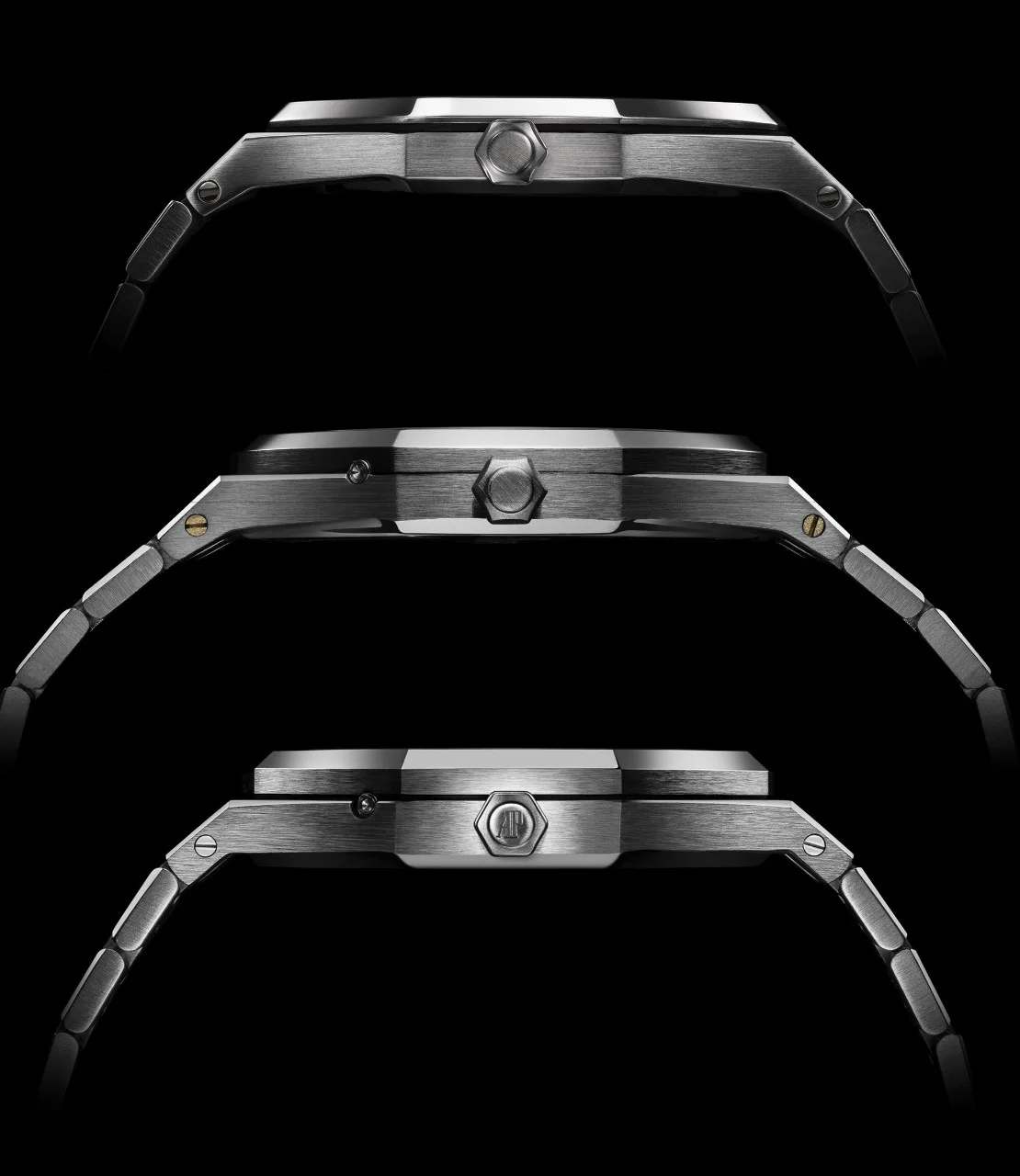
1972, 1984 and 1987. Profile view of Royal Oak Models 5402ST, 25554ST and 25654. Pictured at the top, Model 5402 is distinguished by its extreme thinness (7.1 mm). Shown in the middle, the 25554ST uses the same caseback, but its bezel is raised to accommodate a perpetual calendar (7.5 mm). The lowest-pictured Model 25654 boasts improved water-resistance and measures 8.3 mm. Audemars Piguet Heritage, inv. 365, 455 and 1608.
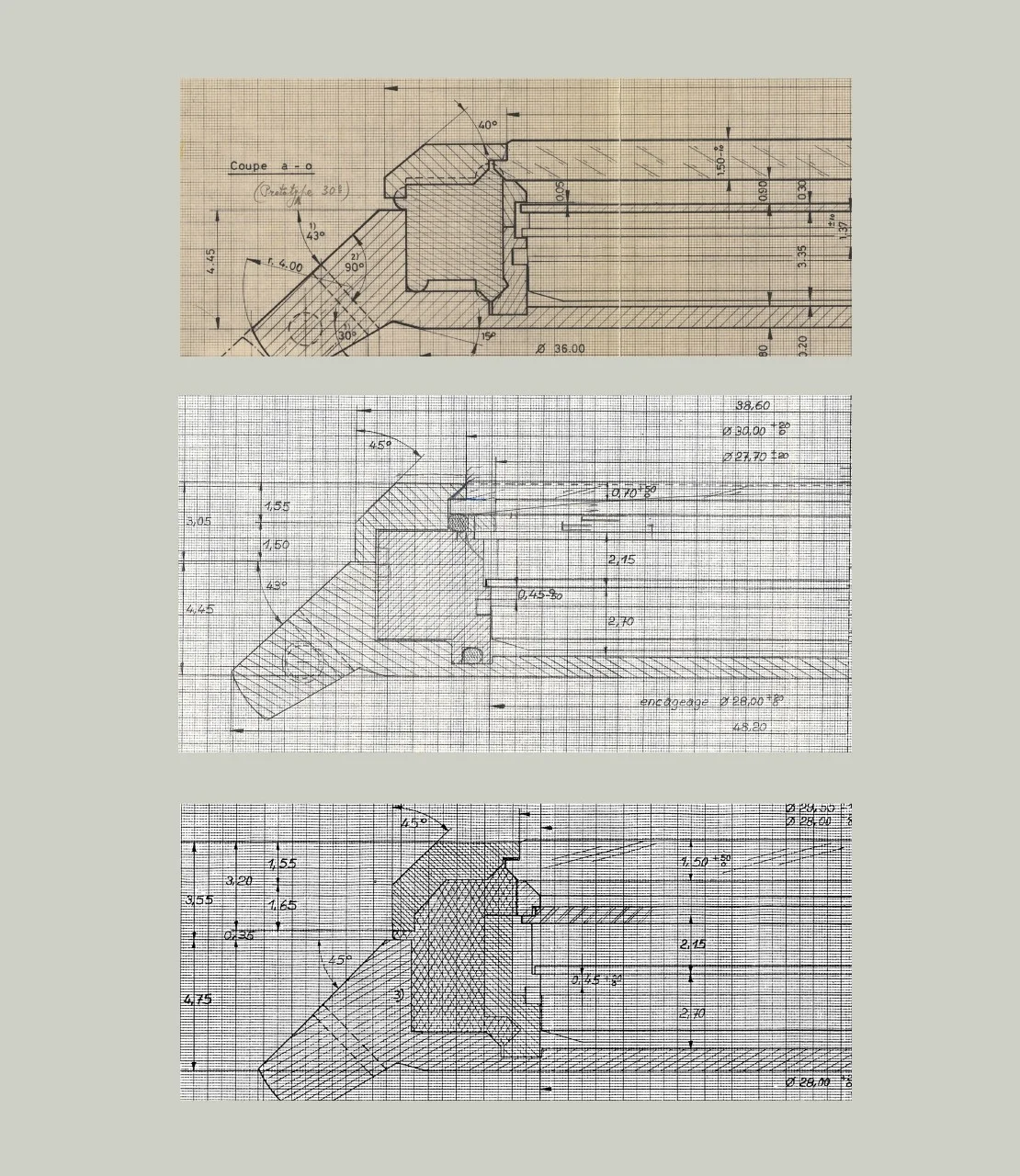
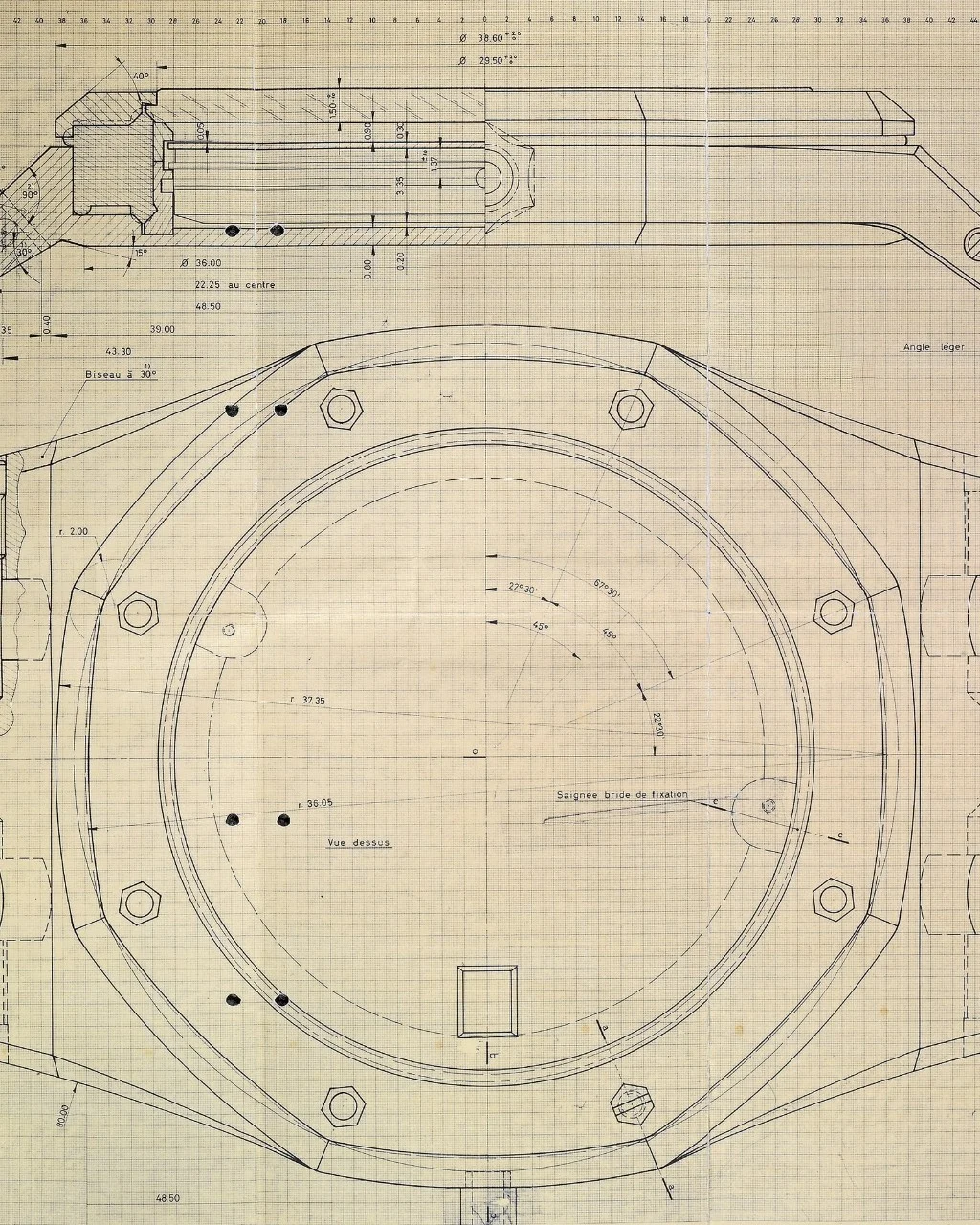
1972, 1984 and 1987. Cross-sectional drawings of Royal Oak Models 5402ST, 5554ST and 25654. At the top of the three technical drawings shown here, Model 5402 is distinguished by its extreme thinness (7.1 mm). In the middle, Model 5554ST uses the same caseback-case middle, but raises its bezel to accommodate a perpetual calendar (7.5 mm). At the bottom, Model 25654 features improved water-resistance of the system (8.3 mm). Audemars Piguet Archives.
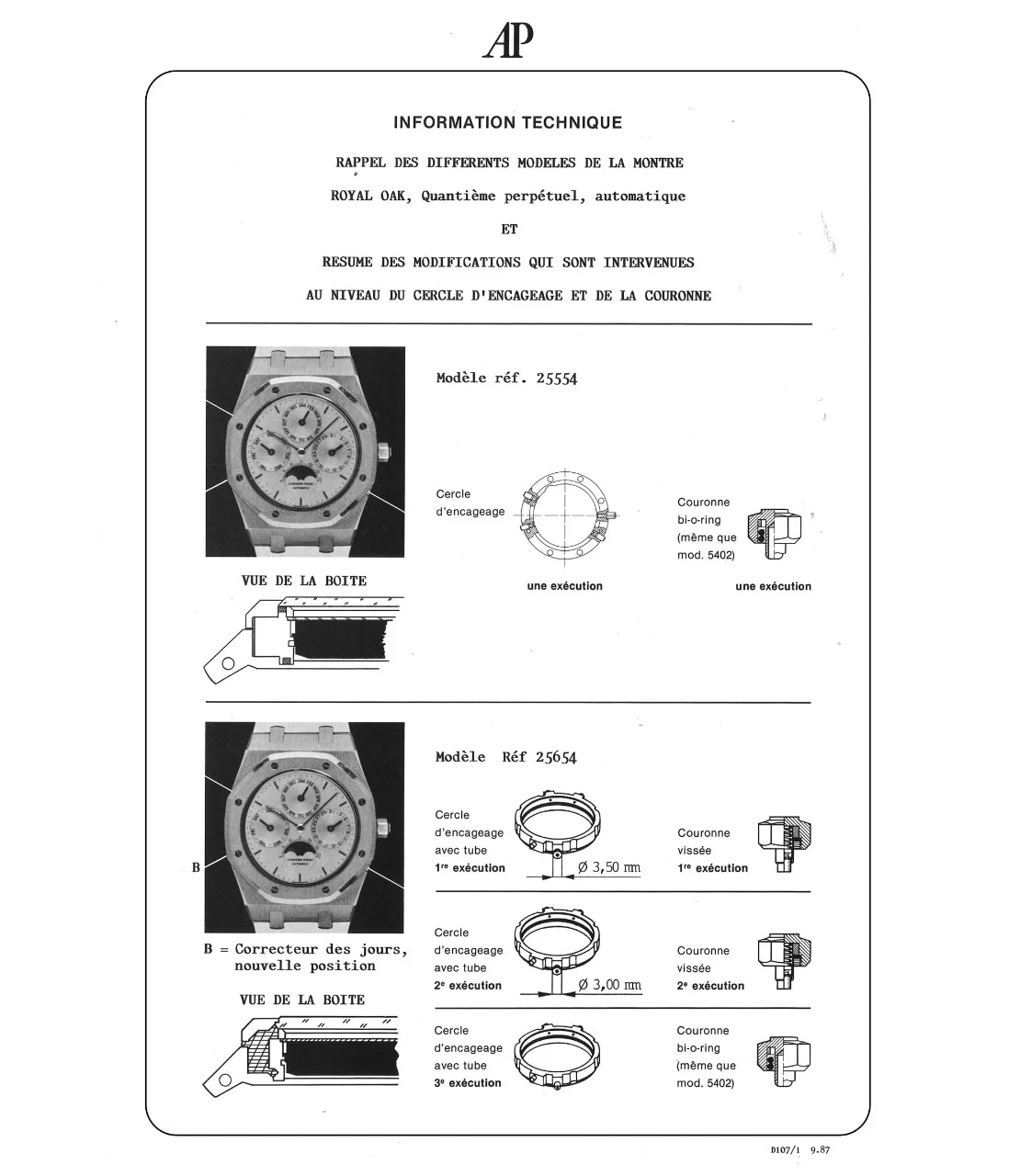
1987. After-sales service technical data for Models 25554 and 25654. Produced for the watchmakers of the Audemars Piguet After-Sales Service department, this document establishes the differences in case construction between Models 5554 and 25654. Audemars Piguet Archives.
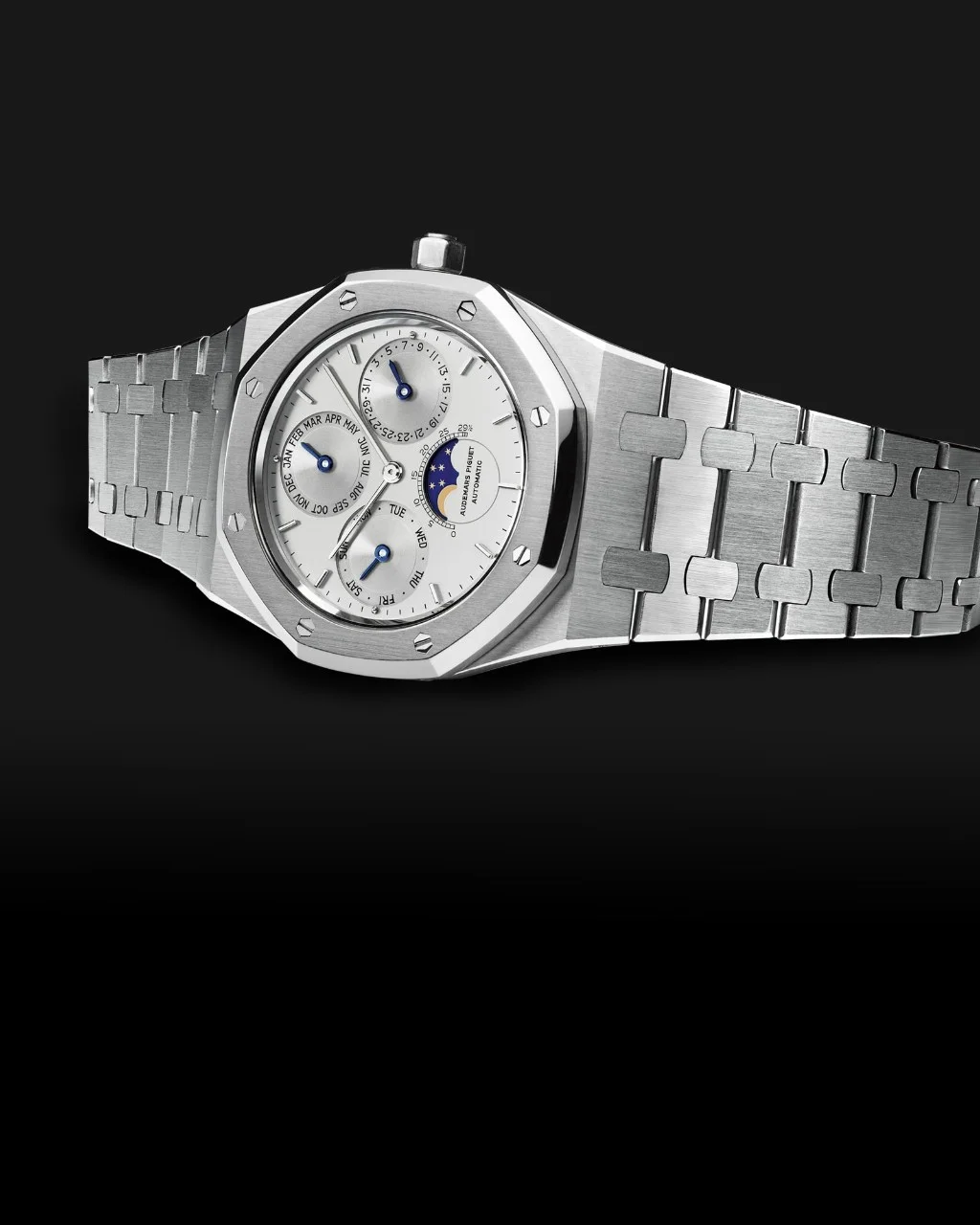
Introduced in 1987, most often with dials without the Tapisserie motif, the Royal Oak 25654 perpetuates the aesthetics of Model 5554 (1984), but improves its water-resistance by revisiting the construction of the case, which is slightly thicker, increasing from 7.5 mm to 8.3 mm.
For almost a decade, this model was the heart of the collection of 39 mm Royal Oak perpetual calendar models. Of the 12 Royal Oak models equipped with Calibre 2120/2800, Model 25654 accounted for almost half of those produced. It did not leave the Audemars Piguet catalogue until 1996, when its successor, Model 25820, introduced the leap-year cycle indication on the dial, replacing Calibre 2120/2800 with Calibre 2120/2801.
Sales from 1987 to 1998: a total of 851 units, of which: 163 (1987), 72 (1988), 81 (1989), 71 (1990), 59 (1991), 80 (1992), 84 (1993), 64 (1994), 46 (1995), 73 (1996), 44 (1997) and 8 (1998), as well as 6 non-dated transformations of various models that were first cased-up between 1983 and 1986
Derived models: 25687 (1989) and 25773 (circa 1995)
Introduced in 1987, most often with dials without the Tapisserie motif, the Royal Oak 25654 perpetuates the aesthetics of Model 5554 (1984), but improves its water-resistance by revisiting the construction of the case, which is slightly thicker, increasing from 7.5 mm to 8.3 mm.
For almost a decade, this model was the heart of the collection of 39 mm Royal Oak perpetual calendar models. Of the 12 Royal Oak models equipped with Calibre 2120/2800, Model 25654 accounted for almost half of those produced. It did not leave the Audemars Piguet catalogue until 1996, when its successor, Model 25820, introduced the leap-year cycle indication on the dial, replacing Calibre 2120/2800 with Calibre 2120/2801.
Sales from 1987 to 1998: a total of 851 units, of which: 163 (1987), 72 (1988), 81 (1989), 71 (1990), 59 (1991), 80 (1992), 84 (1993), 64 (1994), 46 (1995), 73 (1996), 44 (1997) and 8 (1998), as well as 6 non-dated transformations of various models that were first cased-up between 1983 and 1986
Derived models: 25687 (1989) and 25773 (circa 1995)
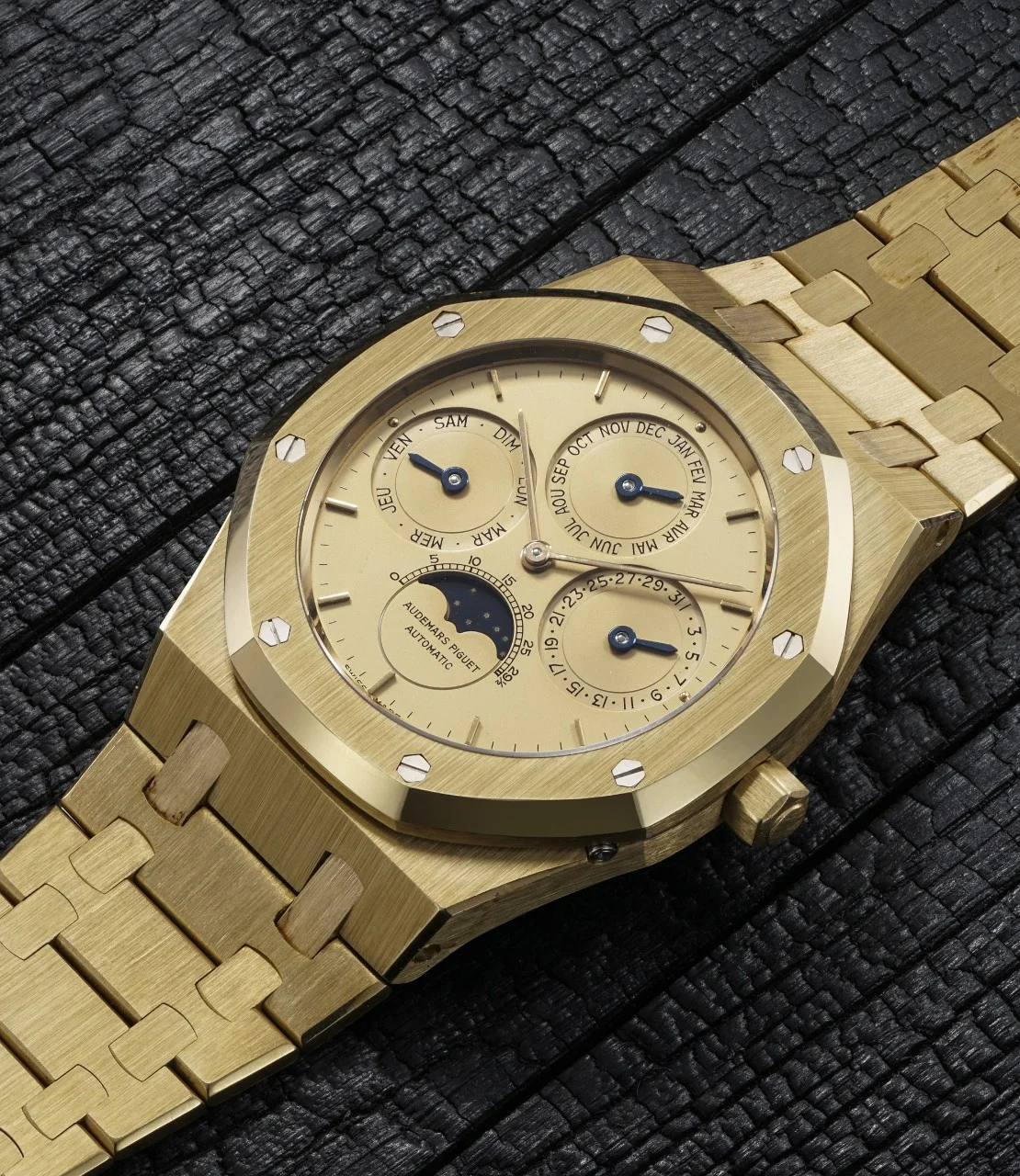
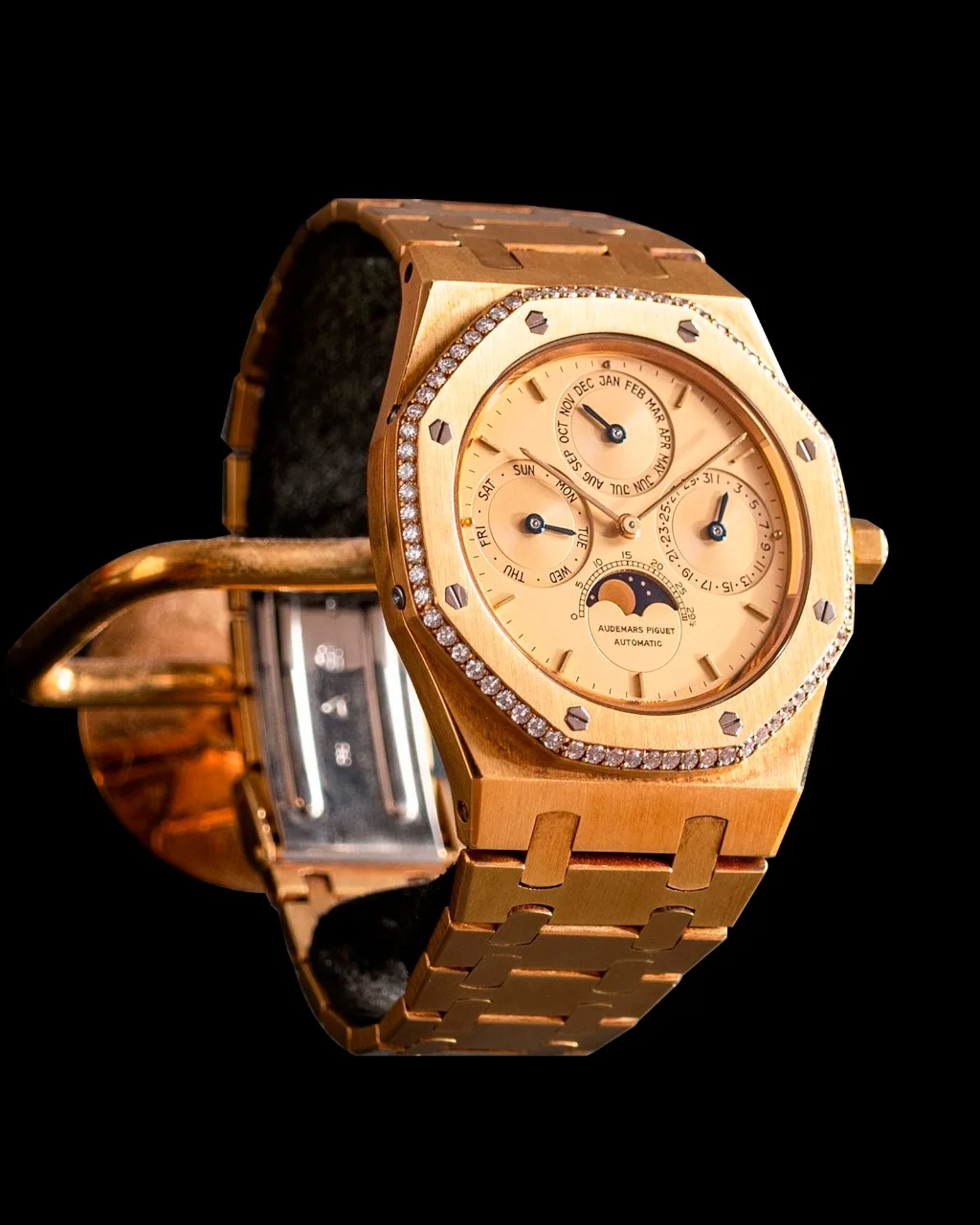
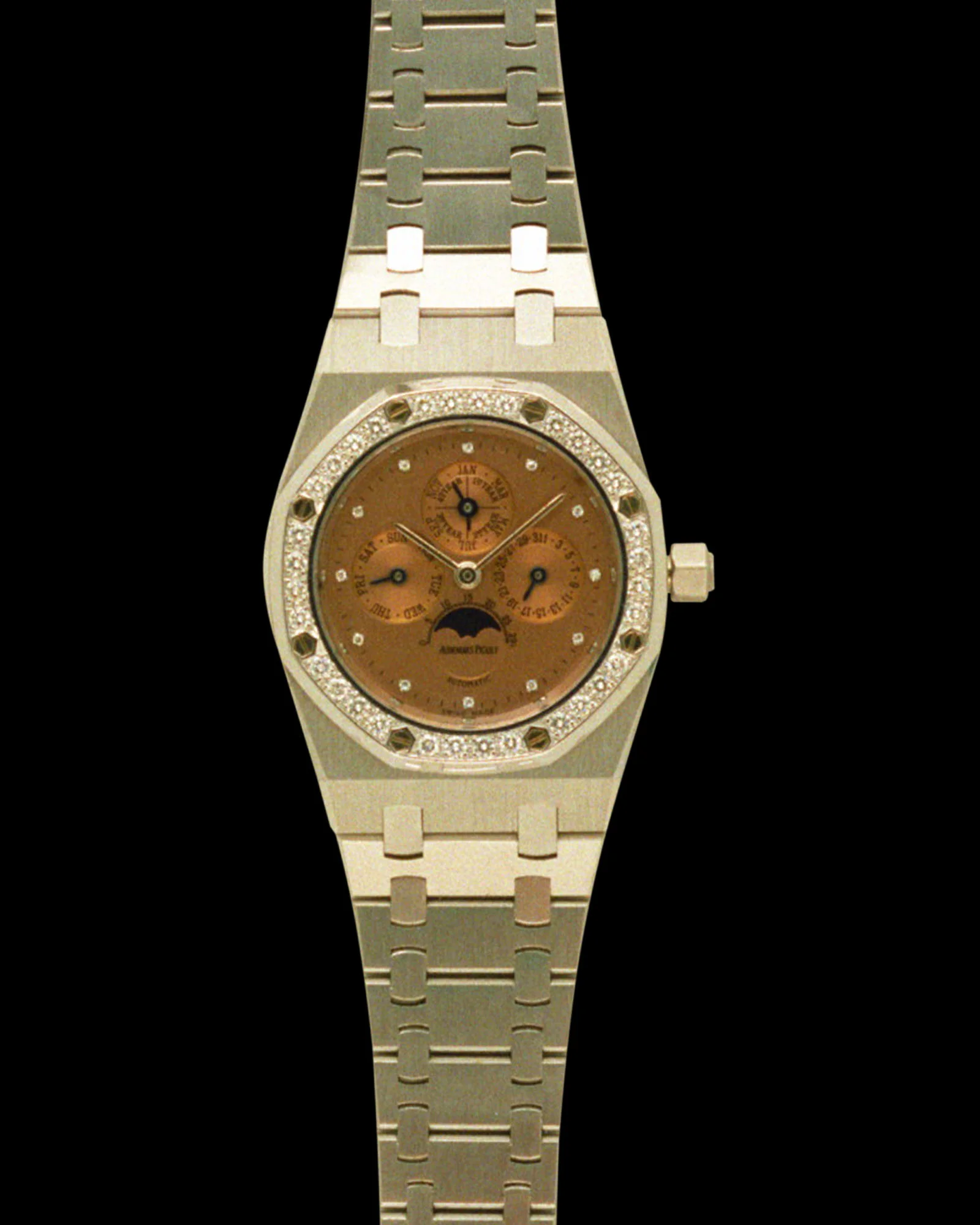
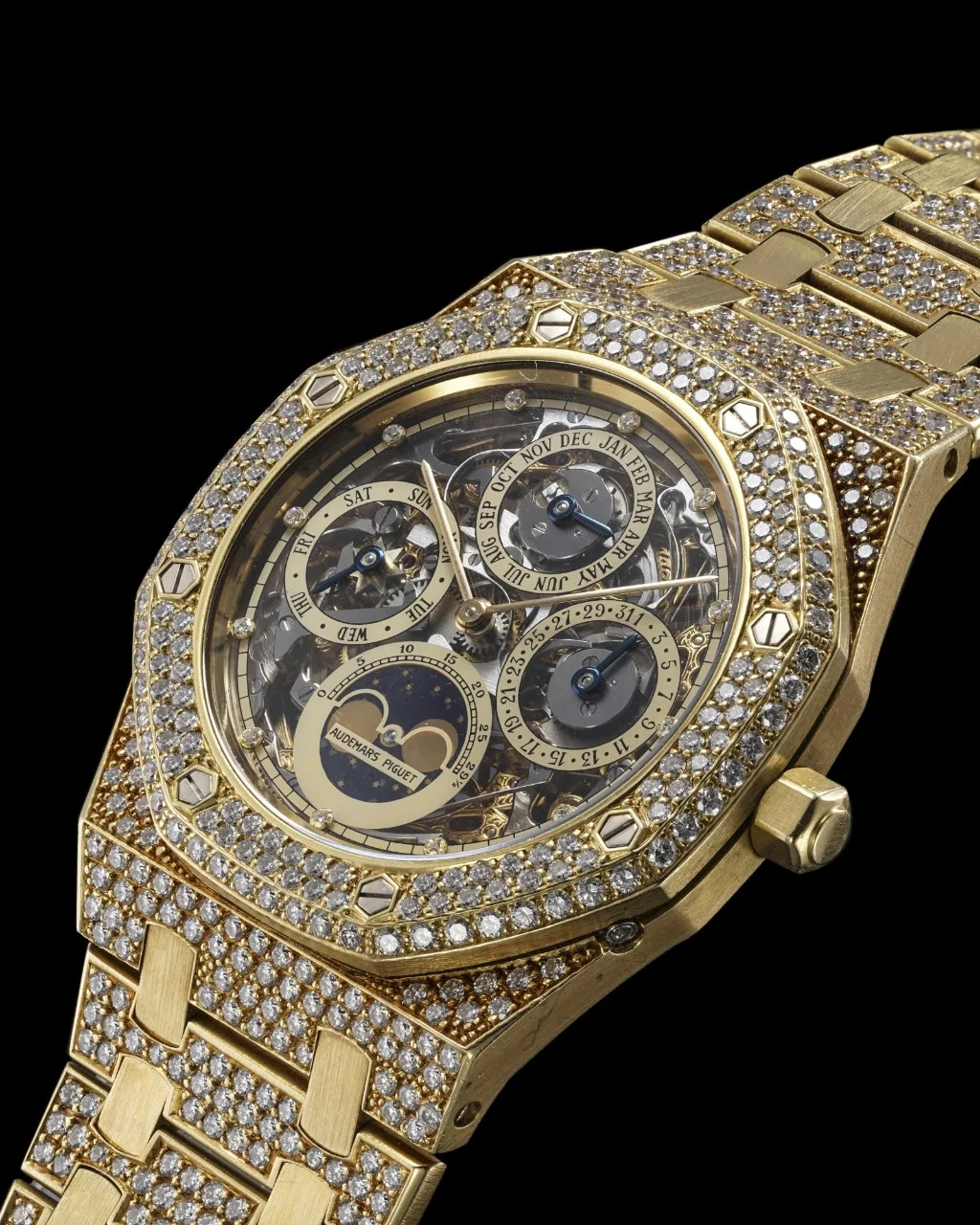
1989. Royal Oak Perpetual Calendar 25654BA, N° 606. Perpetual calendar: day, date, month, phase and age of the moon. Selfwinding Calibre 2120/2800, movement 294336. Bracelet 344. Gold dial. 39 mm case C61387. 18-carat yellow gold. Sold to A.P.S. in 1989. Sold by Phillips in Geneva on May 6, 2022, lot 7. Image © Phillips
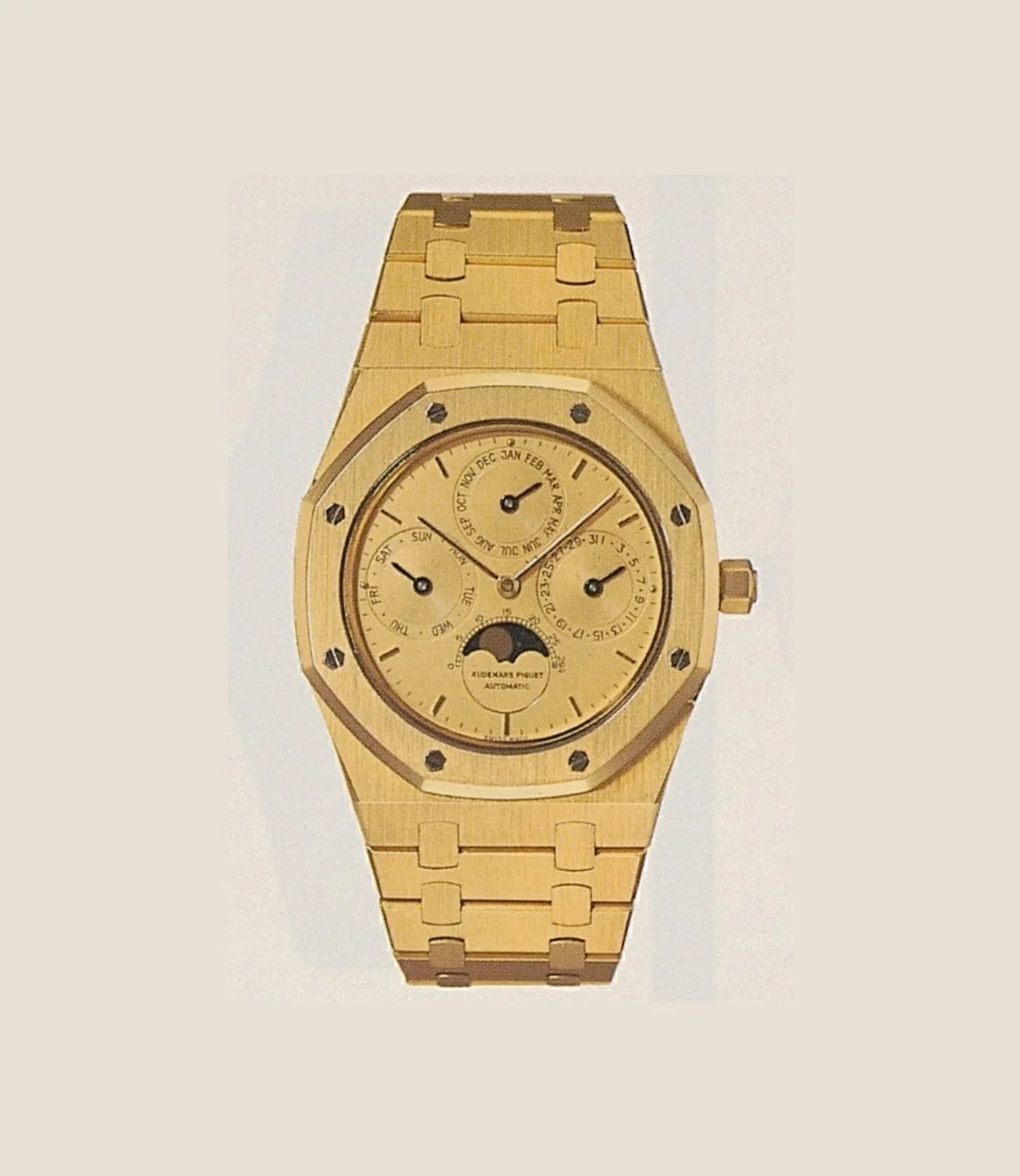
1987–94. Royal Oak 25654BA. Only one example of Model 25654BA is presented in the following editions of the Audemars Piguet catalogues: 1987–88, 1988–89, 1990–91 and 1993–94. Audemars Piguet Archives.
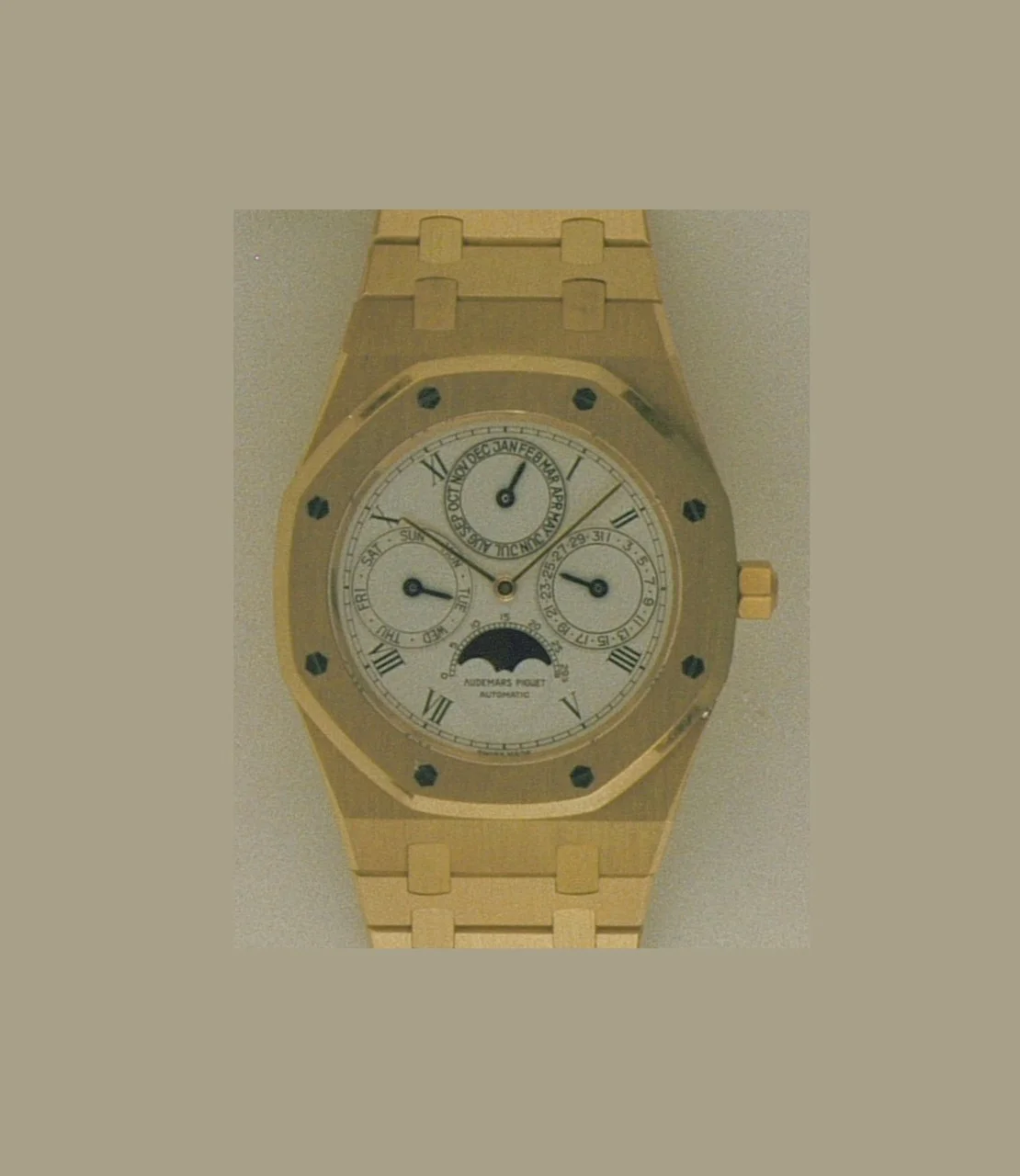
Circa 1987. Identification image of Model 25654BA. Audemars Piguet Archives.
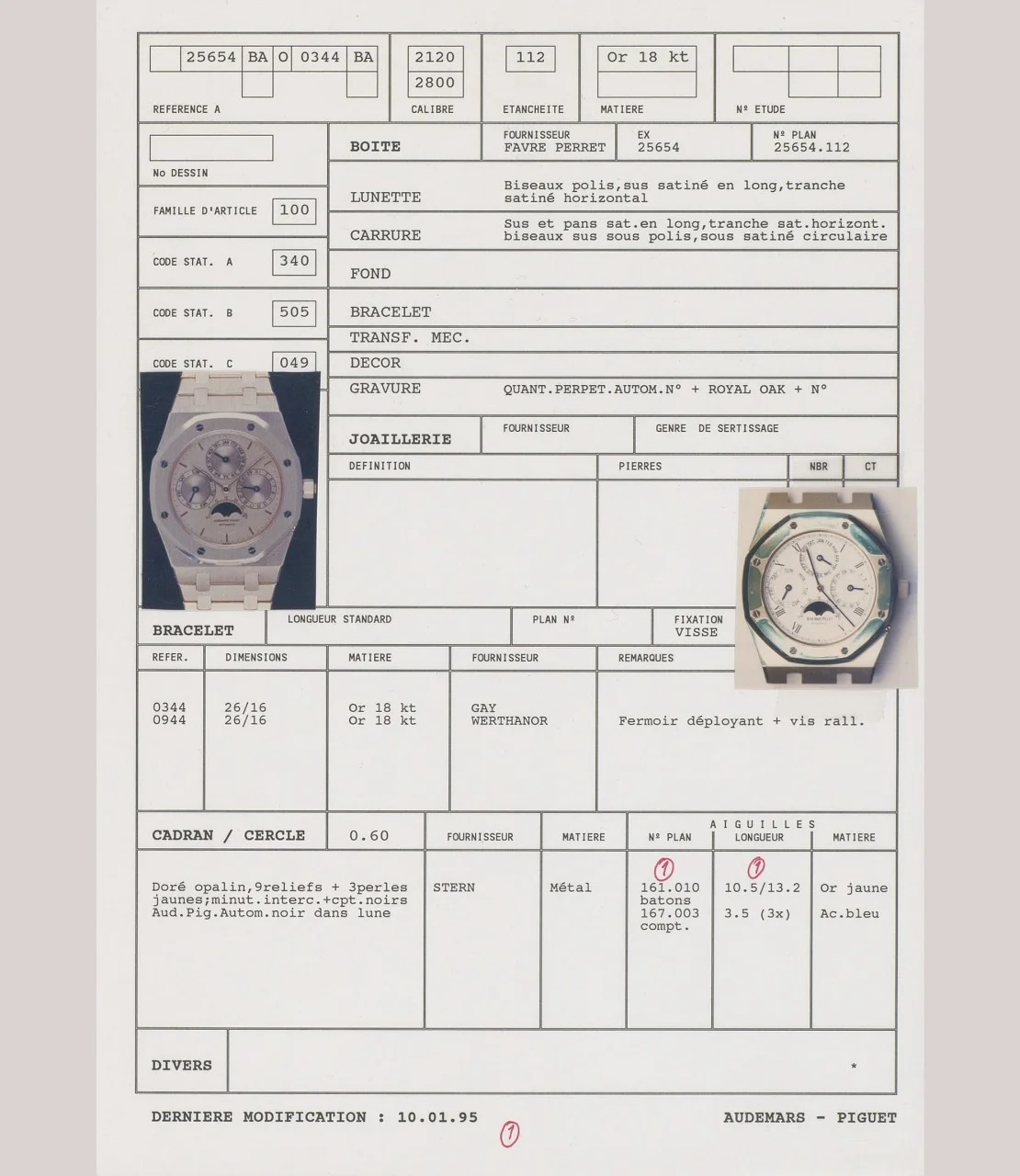
1995. Technical data for case 25654BA. Audemars Piguet Archives.
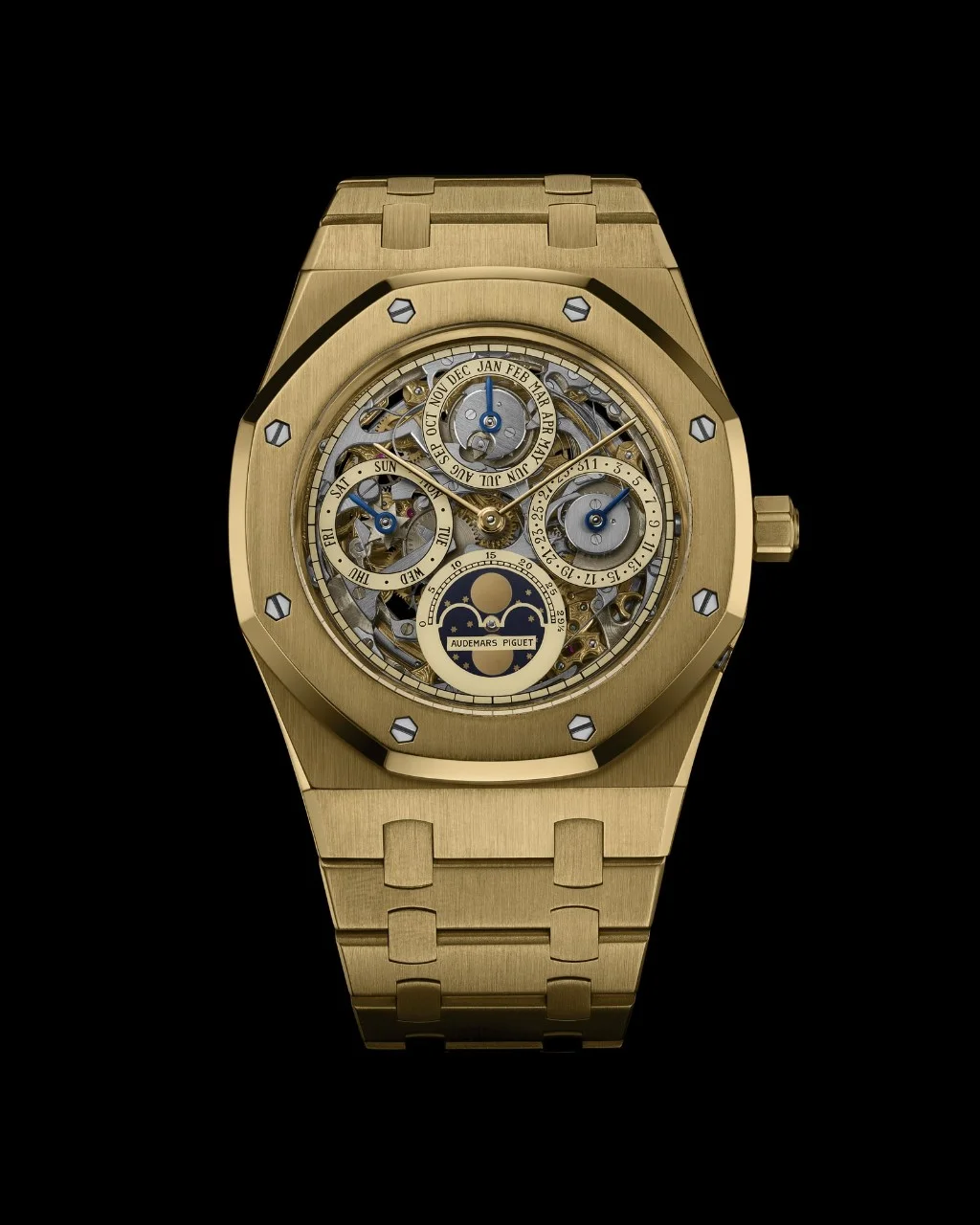
The yellow gold variant of this model is the most widely represented, accounting for more than half of production. It appears either in a monochrome version with a gold dial featuring shiny or matt counters; or with a white dial with Roman numerals, which is particularly rare in the Royal Oak collection.
Sales from 1987 to 1998: a total of 430 units, of which: 52 (1987), 42 (1988), 56 (1989), 52 (1990), 38 (1991), 39 (1992), 49 (1993), 31 (1994), 30 (1995), 31 (1996), 3 (1997), and 1 (1998), as well as 6 undated transformations of various models, which were first cased-up between 1983 and 1986.
The yellow gold variant of this model is the most widely represented, accounting for more than half of production. It appears either in a monochrome version with a gold dial featuring shiny or matt counters; or with a white dial with Roman numerals, which is particularly rare in the Royal Oak collection.
Sales from 1987 to 1998: a total of 430 units, of which: 52 (1987), 42 (1988), 56 (1989), 52 (1990), 38 (1991), 39 (1992), 49 (1993), 31 (1994), 30 (1995), 31 (1996), 3 (1997), and 1 (1998), as well as 6 undated transformations of various models, which were first cased-up between 1983 and 1986.
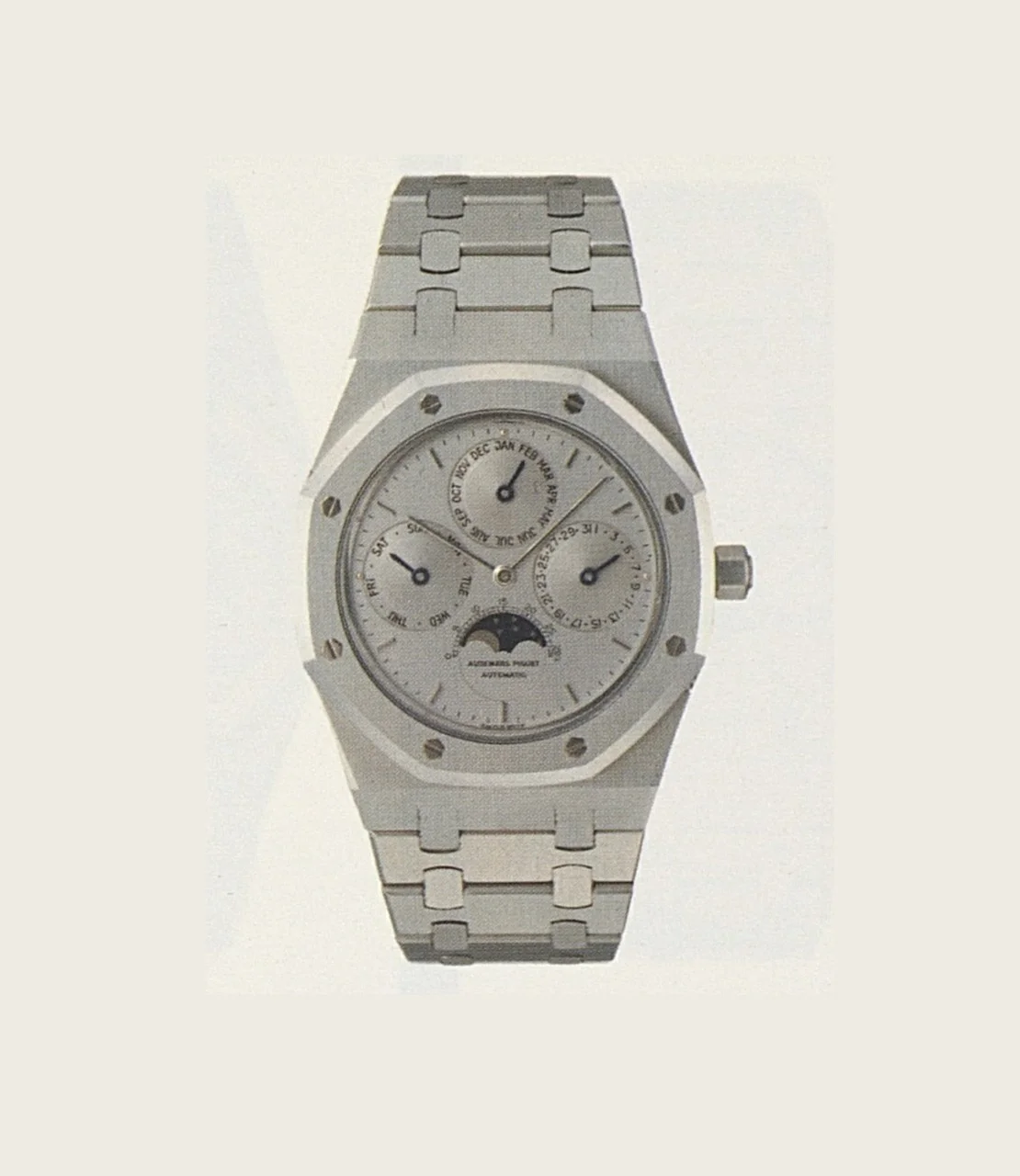
1987–94. Royal Oak 25654ST. Only one variant of the Royal Oak Perpetual Calendar 25654ST is presented in the following editions of the Audemars Piguet catalogues: 1987–88, 1988–89, 1990–91 and 1993–94. Audemars Piguet Archives.
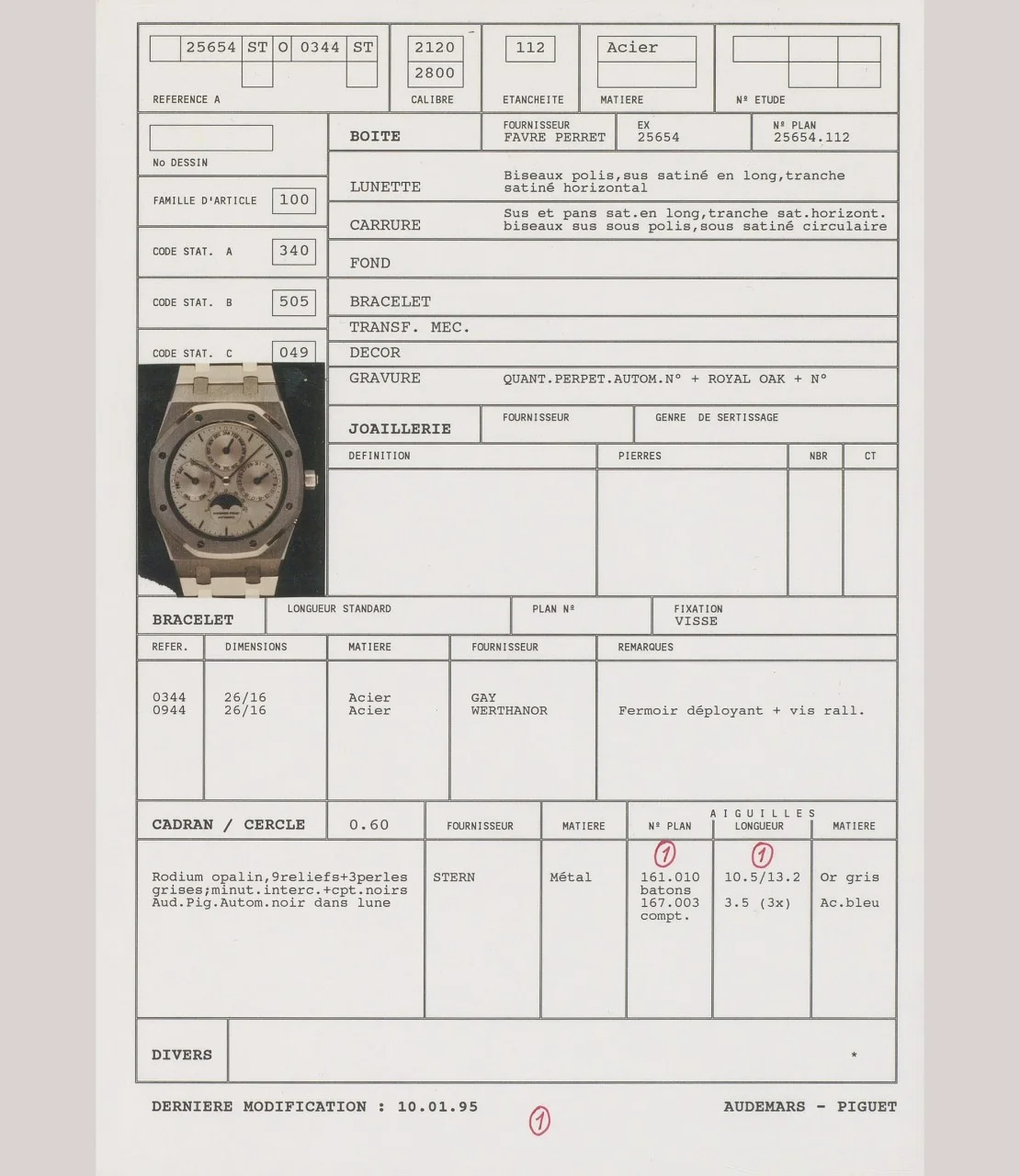
1995. Technical data for case 25654ST. Audemars Piguet Archives.
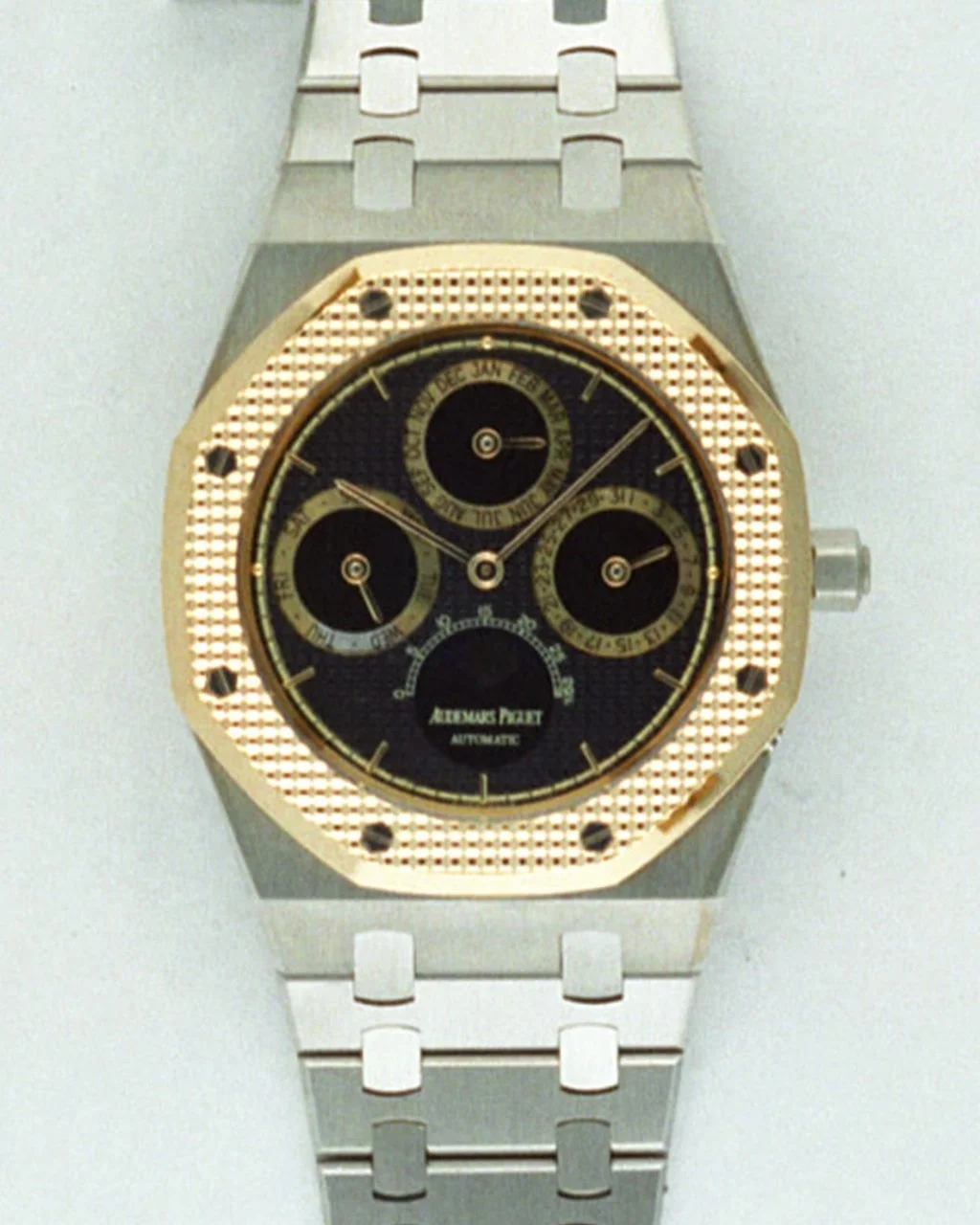
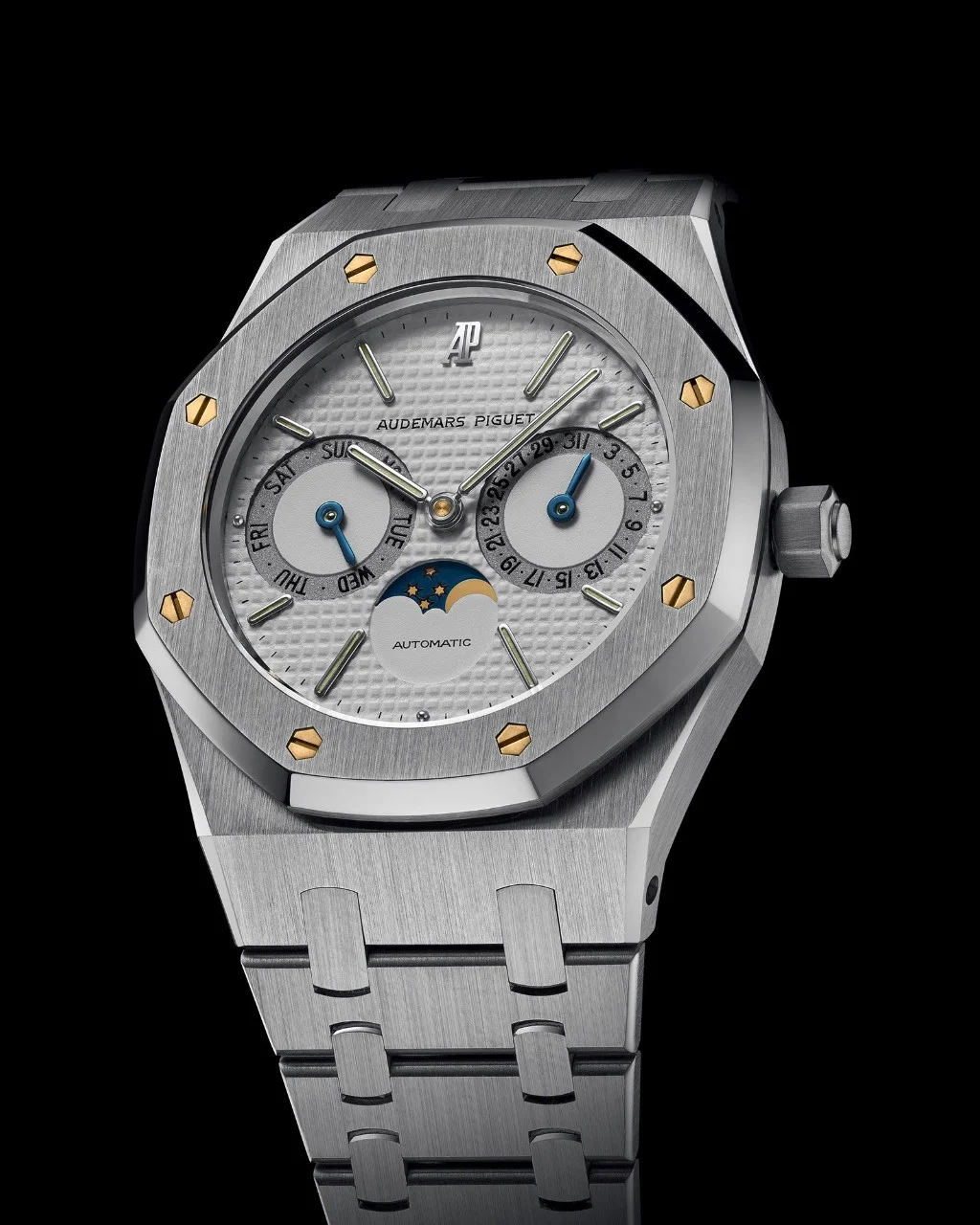
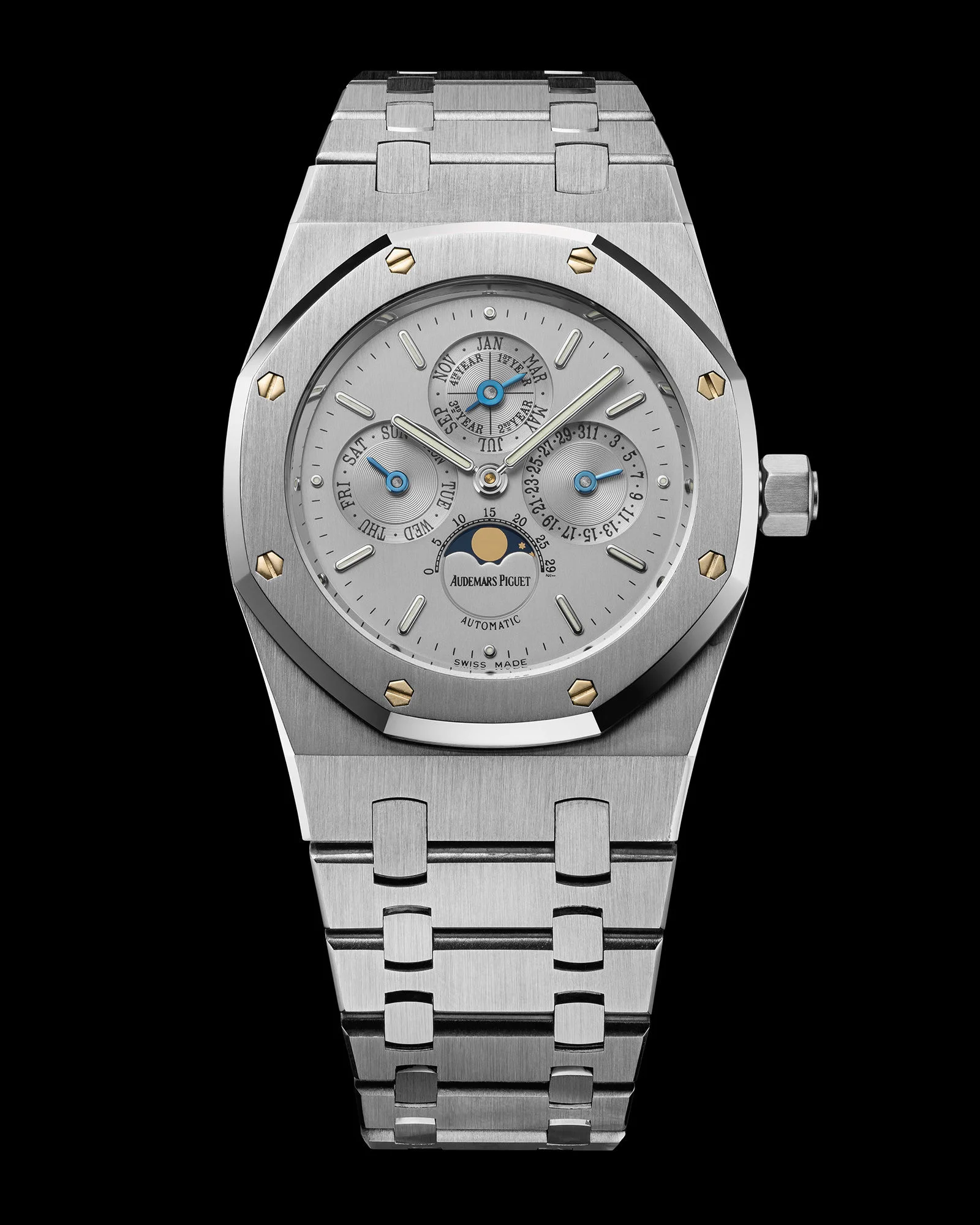
Between 1987 and 1994, only one variant of Model 25654ST was presented in the Audemars Piguet catalogues. It opted for a perfectly monochrome approach. Punctuated by particularly slender hour-markers, the discreetly sandblasted matt grey dial echoes the colour of the steel case and bezel. The blue of the starry sky and the golden moon stand out from the whole to evoke the cycle of the heavenly bodies.
The non-operational prototype kept in the Audemars Piguet Heritage Collection and probably presented at the 1987 Basel Fair has a superb dial with shiny counter rims.
Sales from 1987 to 1998: a total of 315 units, of which: 66 (1987), 24 (1988), 15 (1989), 16 (1990), 21 (1991), 38 (1992), 30 (1993), 26 (1994), 15 (1995), 27 (1996), 34 (1997) and 3 (1998).
Between 1987 and 1994, only one variant of Model 25654ST was presented in the Audemars Piguet catalogues. It opted for a perfectly monochrome approach. Punctuated by particularly slender hour-markers, the discreetly sandblasted matt grey dial echoes the colour of the steel case and bezel. The blue of the starry sky and the golden moon stand out from the whole to evoke the cycle of the heavenly bodies.
The non-operational prototype kept in the Audemars Piguet Heritage Collection and probably presented at the 1987 Basel Fair has a superb dial with shiny counter rims.
Sales from 1987 to 1998: a total of 315 units, of which: 66 (1987), 24 (1988), 15 (1989), 16 (1990), 21 (1991), 38 (1992), 30 (1993), 26 (1994), 15 (1995), 27 (1996), 34 (1997) and 3 (1998).
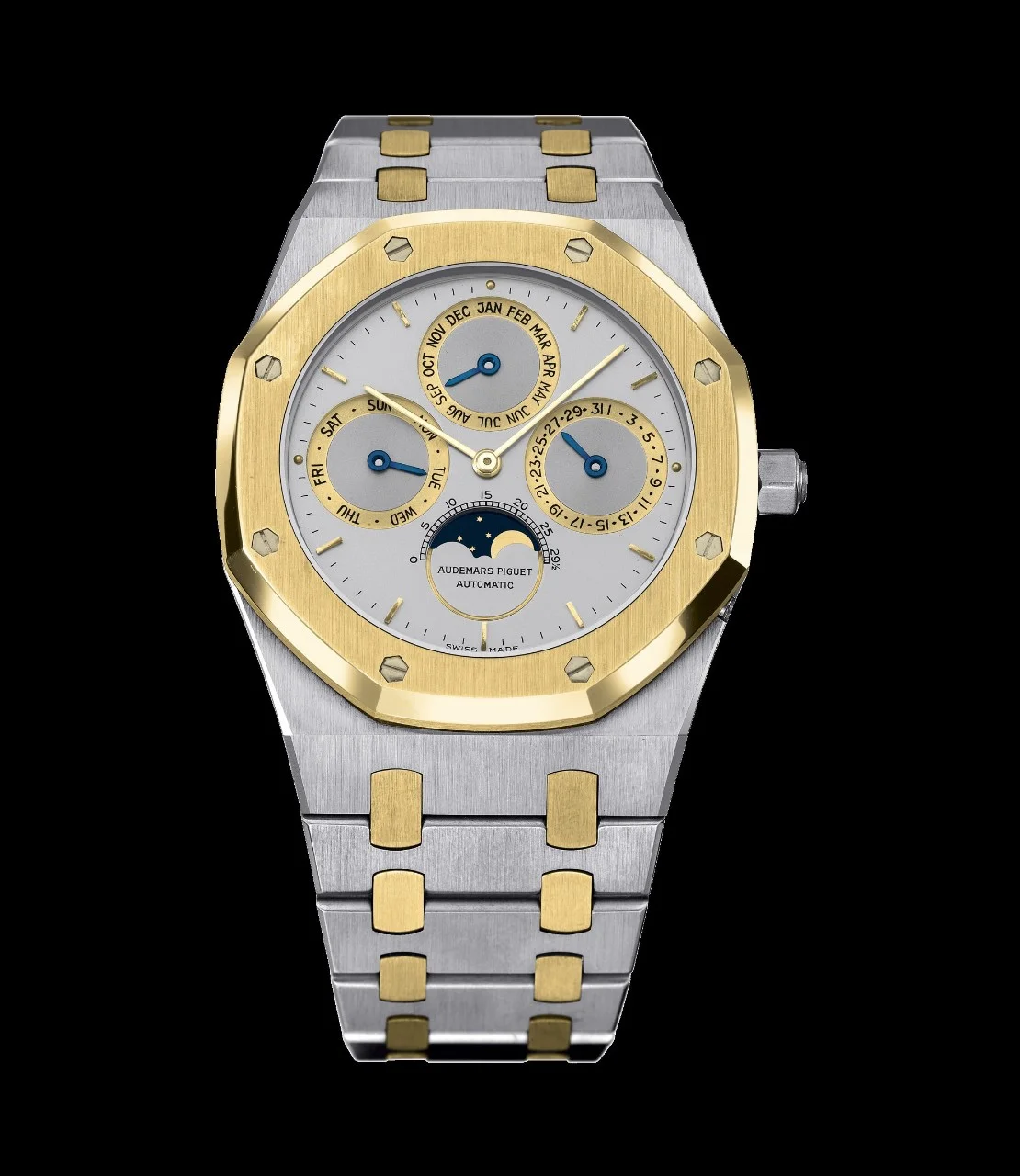
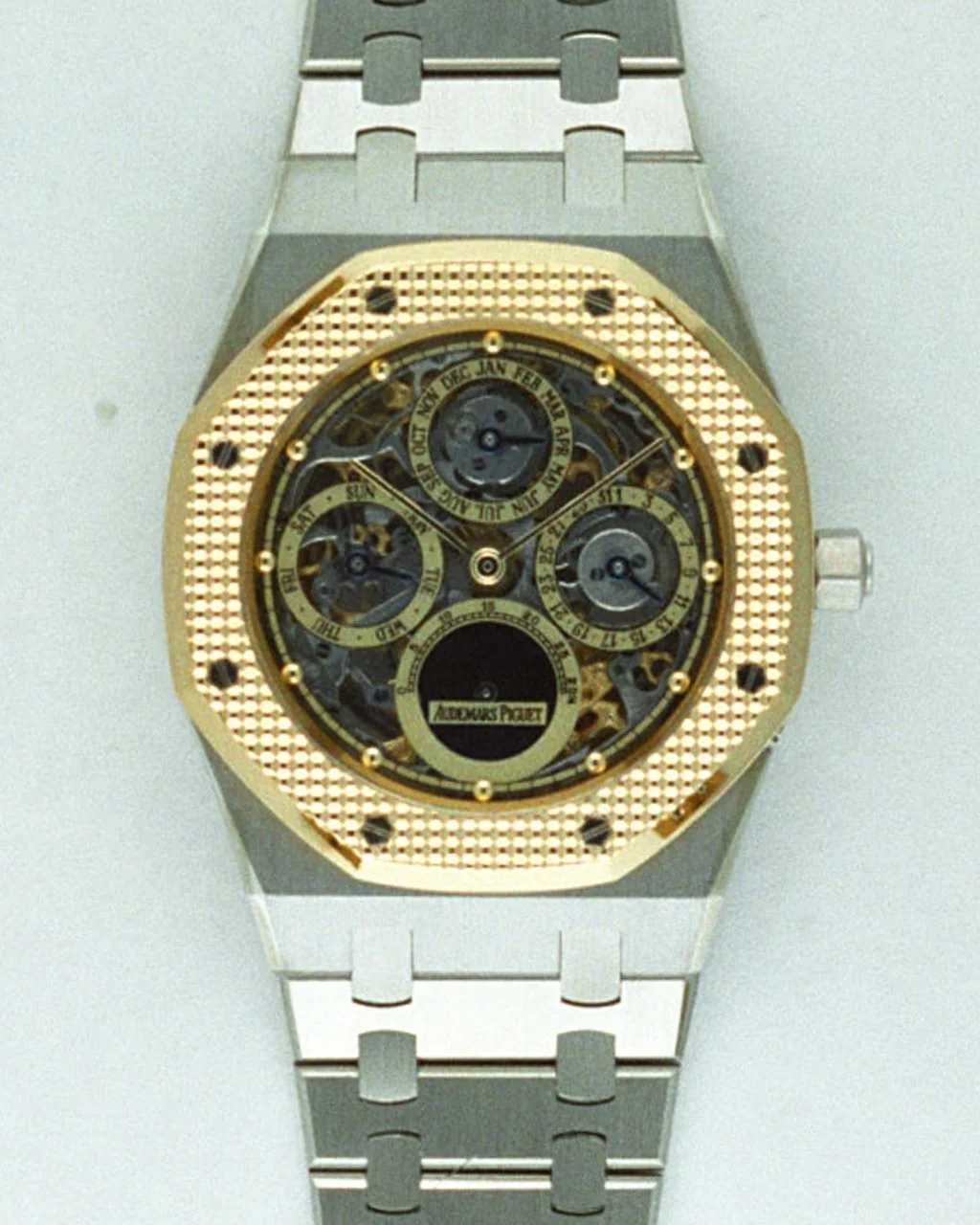
Circa 1987. Royal Oak Perpetual Calendar 25654SA, N° 505. Perpetual calendar: day, date, month, phase and age of the moon. Selfwinding Calibre 2120/2800. Bracelet 344. Two-tone dial. 39 mm case C49557. Steel. Prototype probably presented at the 1987 Basel Fair. Audemars Piguet Heritage, inv. 441.
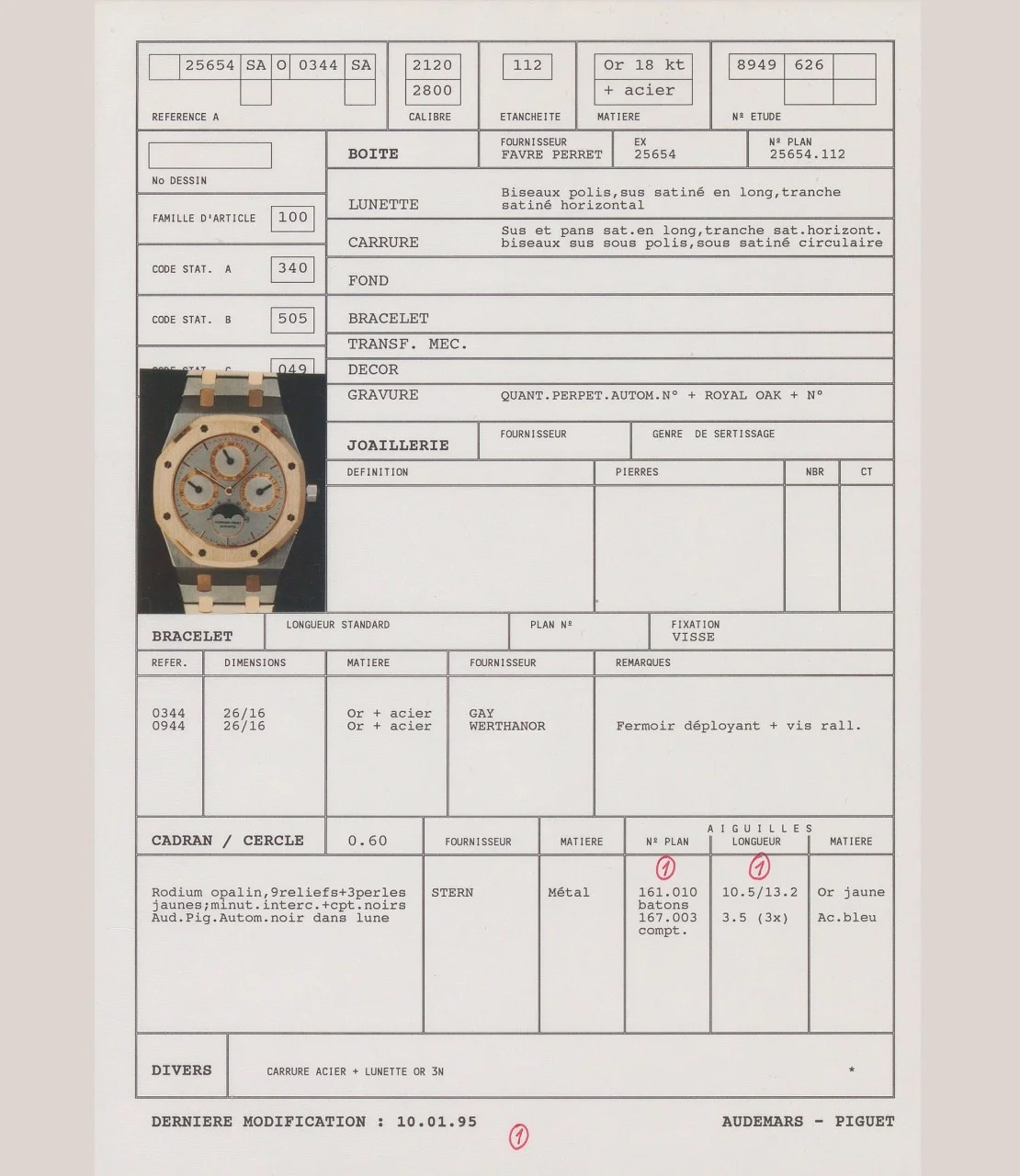
1995. Technical data for case 25654SA. Audemars Piguet Archives.
While Royal Oak watches combining steel and yellow gold were often dominant in the 1980s, this composition of materials became less common in the 1990s.
Jacqueline Dimier, who designed these models, sought the perfect balance between the grey background and the subtle gold touches, which punctuate the passage of time and highlight the calendar information. The blue of the three calendar hands echoes the blue of the sky, against which the moon and some stars stand out.
Sales from 1987 to 1998: total 68 units, of which: 45 (1987), 5 (1988), 7 (1989), 1 (1990), 1 (1992), 1 (1996), 6 (1997) and 2 (1998).
While Royal Oak watches combining steel and yellow gold were often dominant in the 1980s, this composition of materials became less common in the 1990s.
Jacqueline Dimier, who designed these models, sought the perfect balance between the grey background and the subtle gold touches, which punctuate the passage of time and highlight the calendar information. The blue of the three calendar hands echoes the blue of the sky, against which the moon and some stars stand out.
Sales from 1987 to 1998: total 68 units, of which: 45 (1987), 5 (1988), 7 (1989), 1 (1990), 1 (1992), 1 (1996), 6 (1997) and 2 (1998).
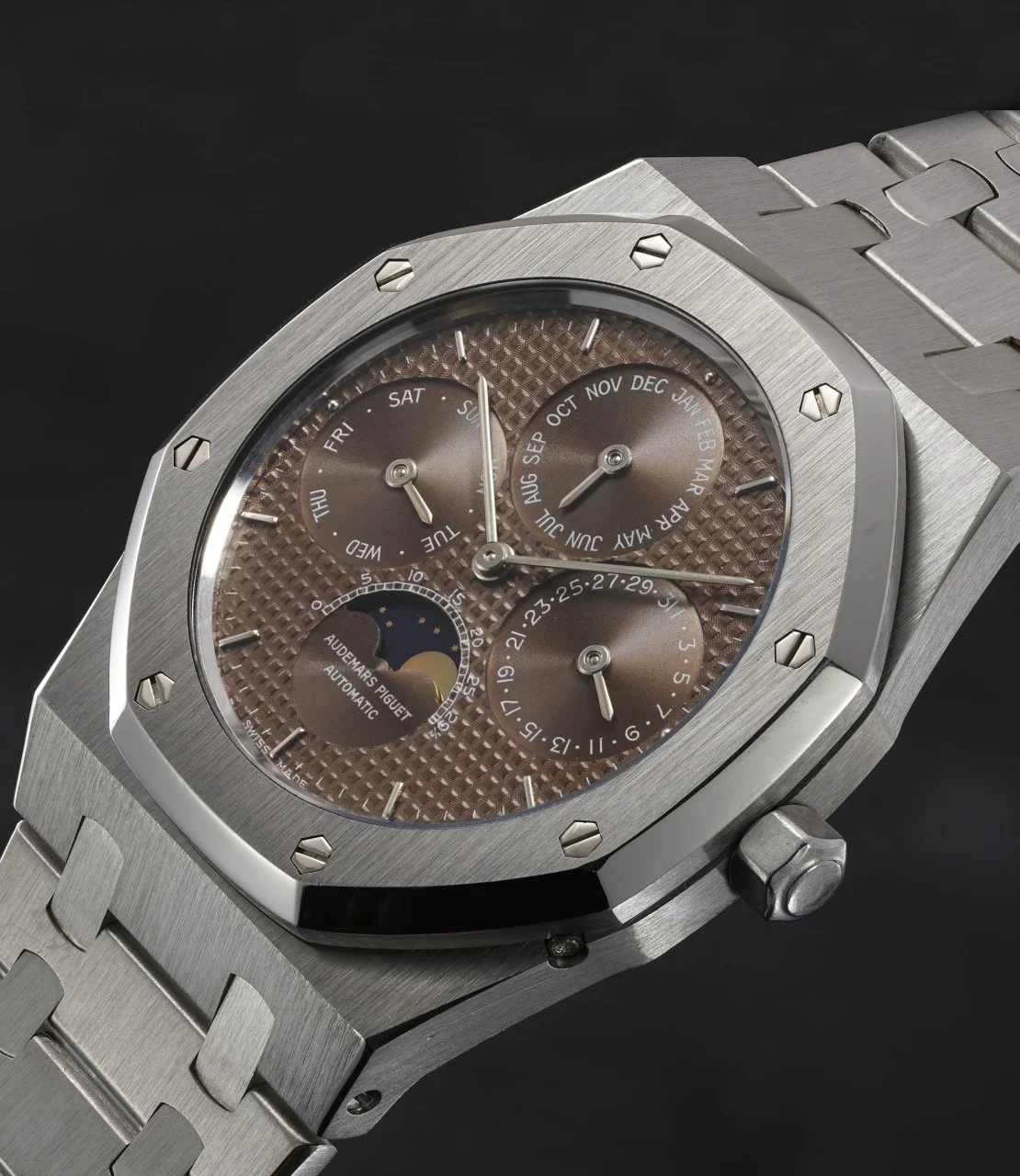
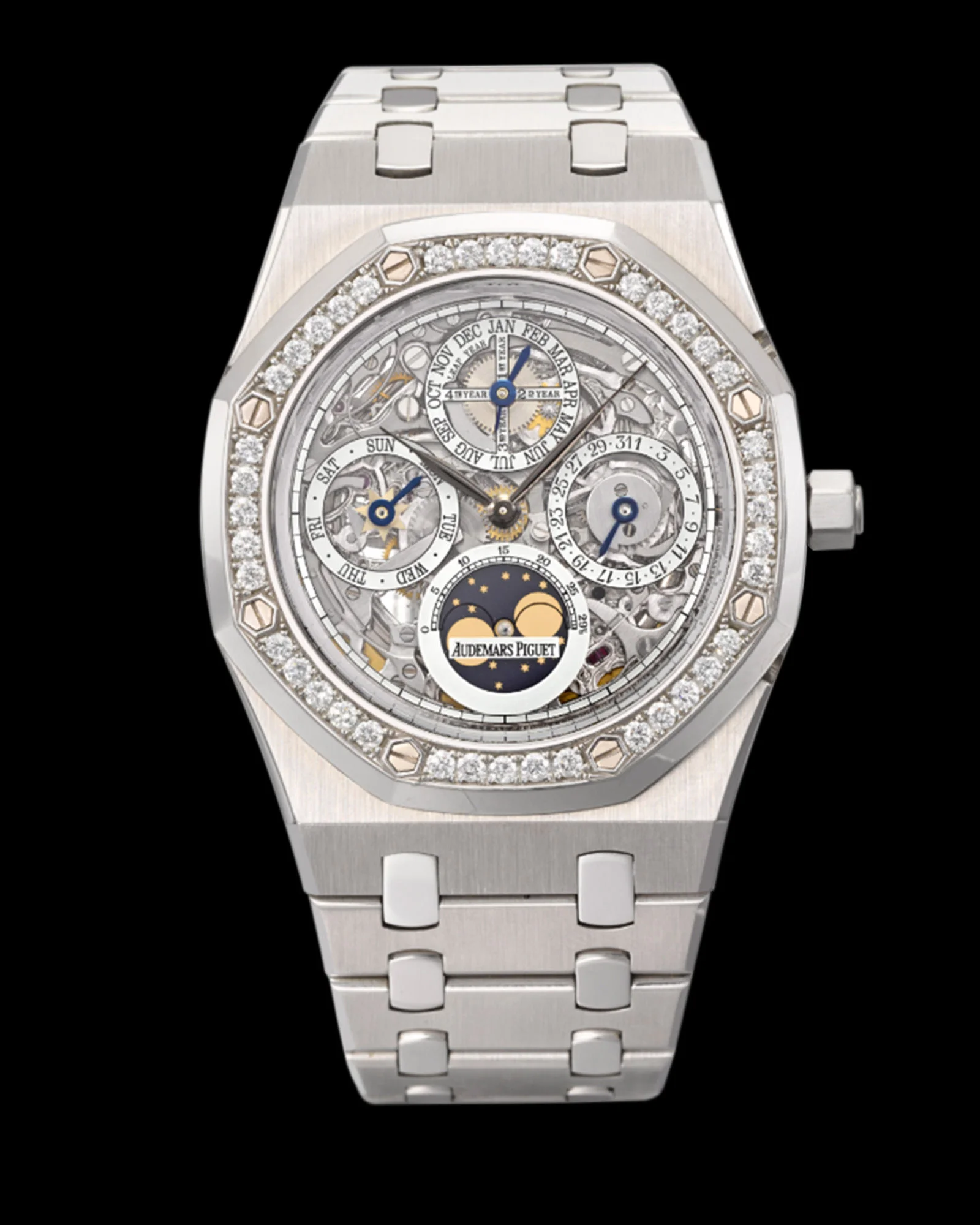
1988. Royal Oak Perpetual Calendar 25654PT, N° 001. Perpetual calendar: day, date, month, phase and age of the moon. Selfwinding Calibre 2120/2800, movement 286619. Bracelet 344. Dial with Tapisserie motif. 39 mm case C54927 with Asprey engraving. 950 platinum. Sold to Elco (United Kingdom) in June 1988. Auctioned by Phillips in Geneva on May 6, 2022. Image © Phillips.
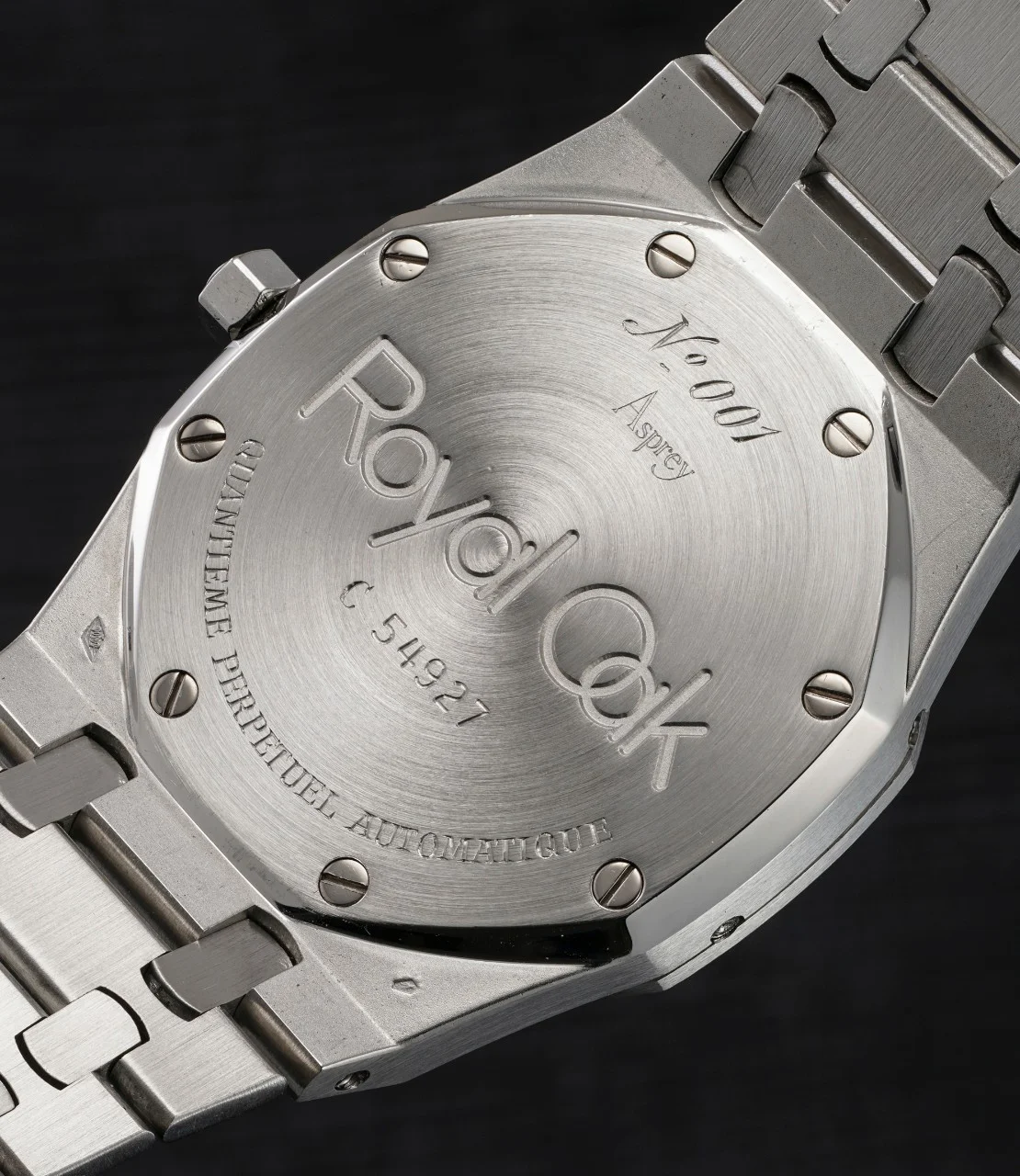
1988. Royal Oak Perpetual Calendar 25654PT, N° 001. Perpetual calendar: day, date, month, phase and age of the moon. Selfwinding Calibre 2120/2800, movement 286619. Bracelet 344. Dial with Tapisserie motif. 39 mm case C54927 with Asprey inscription. 950 platinum. Sold to Elco (United Kingdom) in June 1988. Auctioned by Phillips in Geneva on May 6, 2022. Image © Phillips.
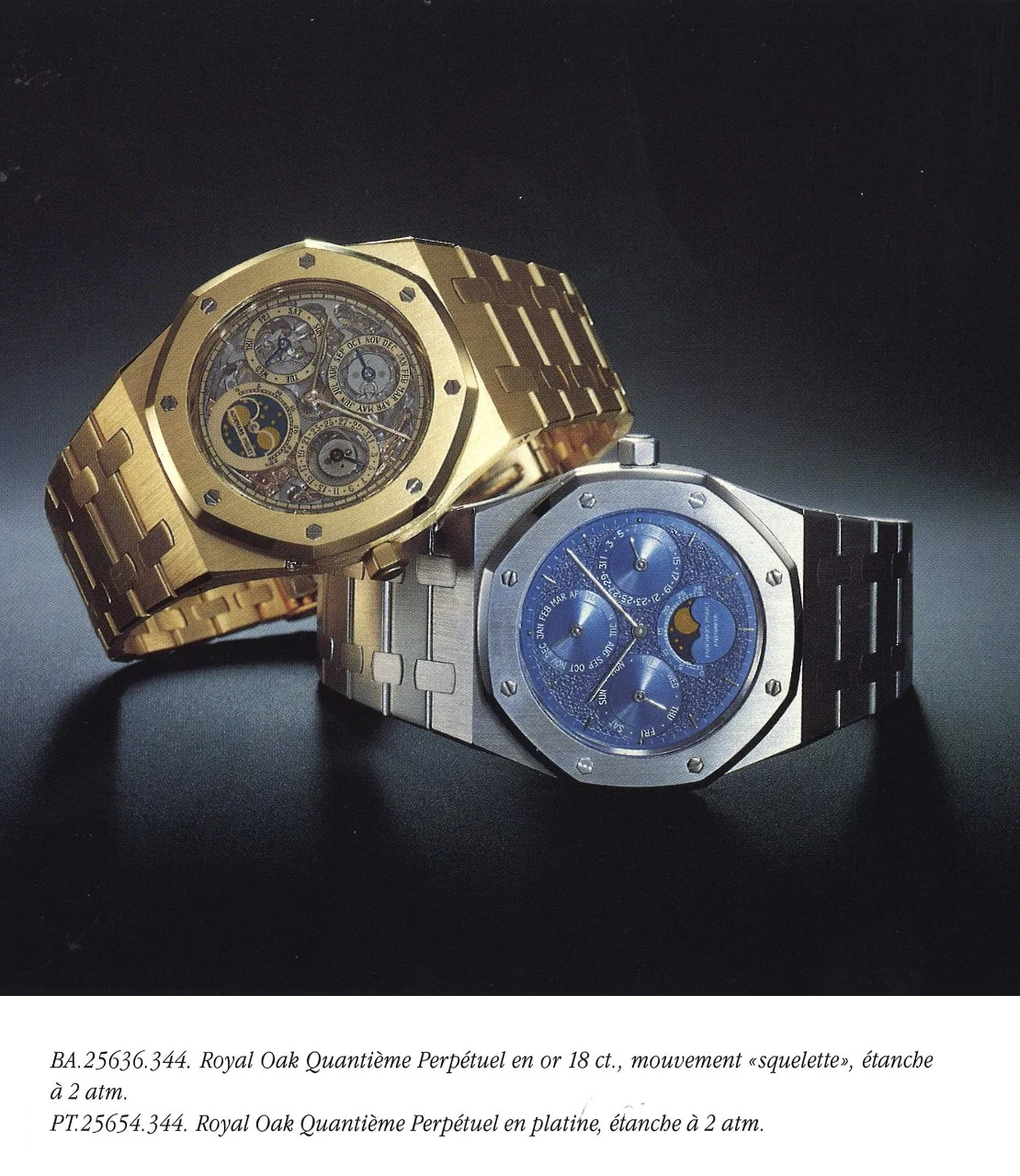
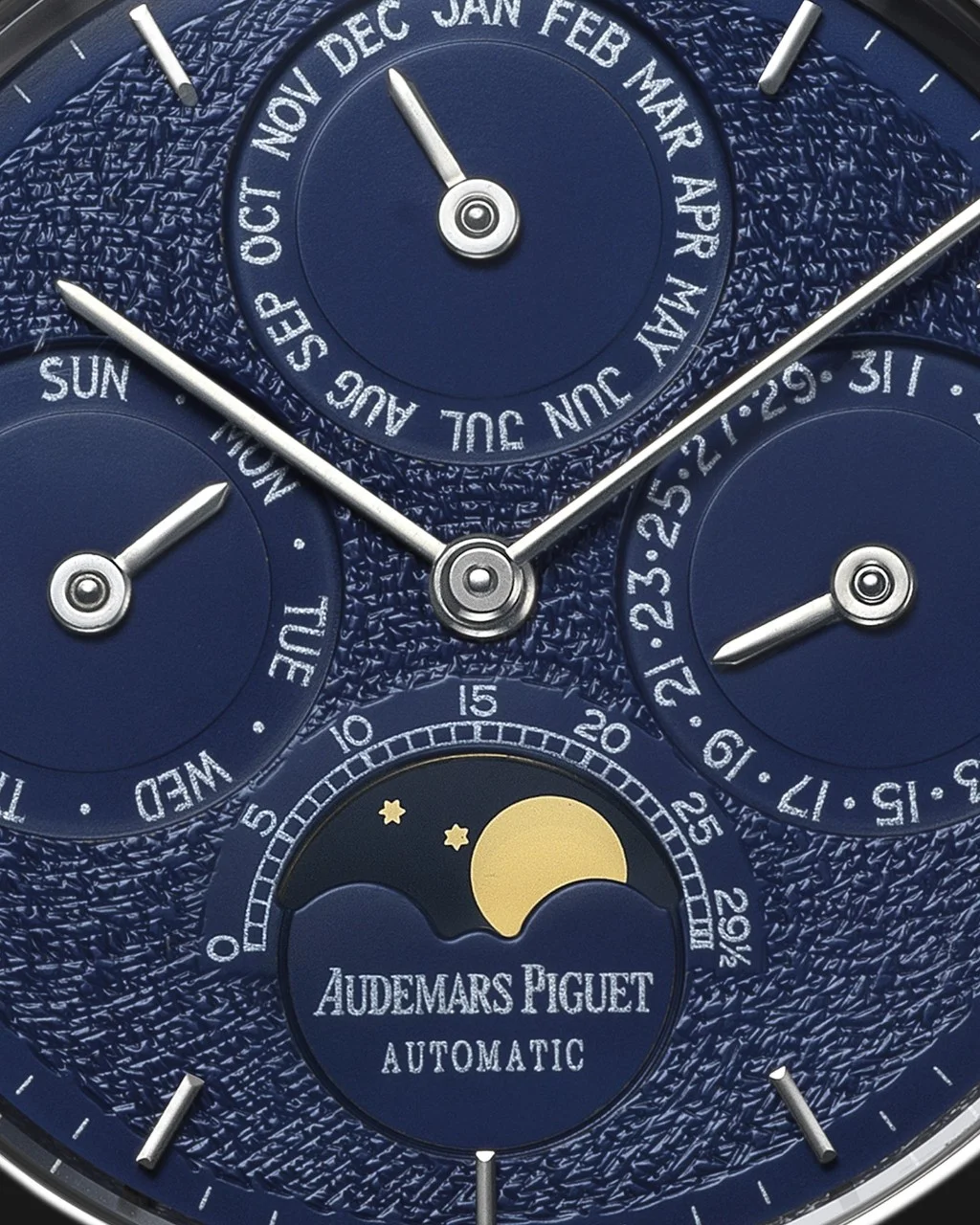
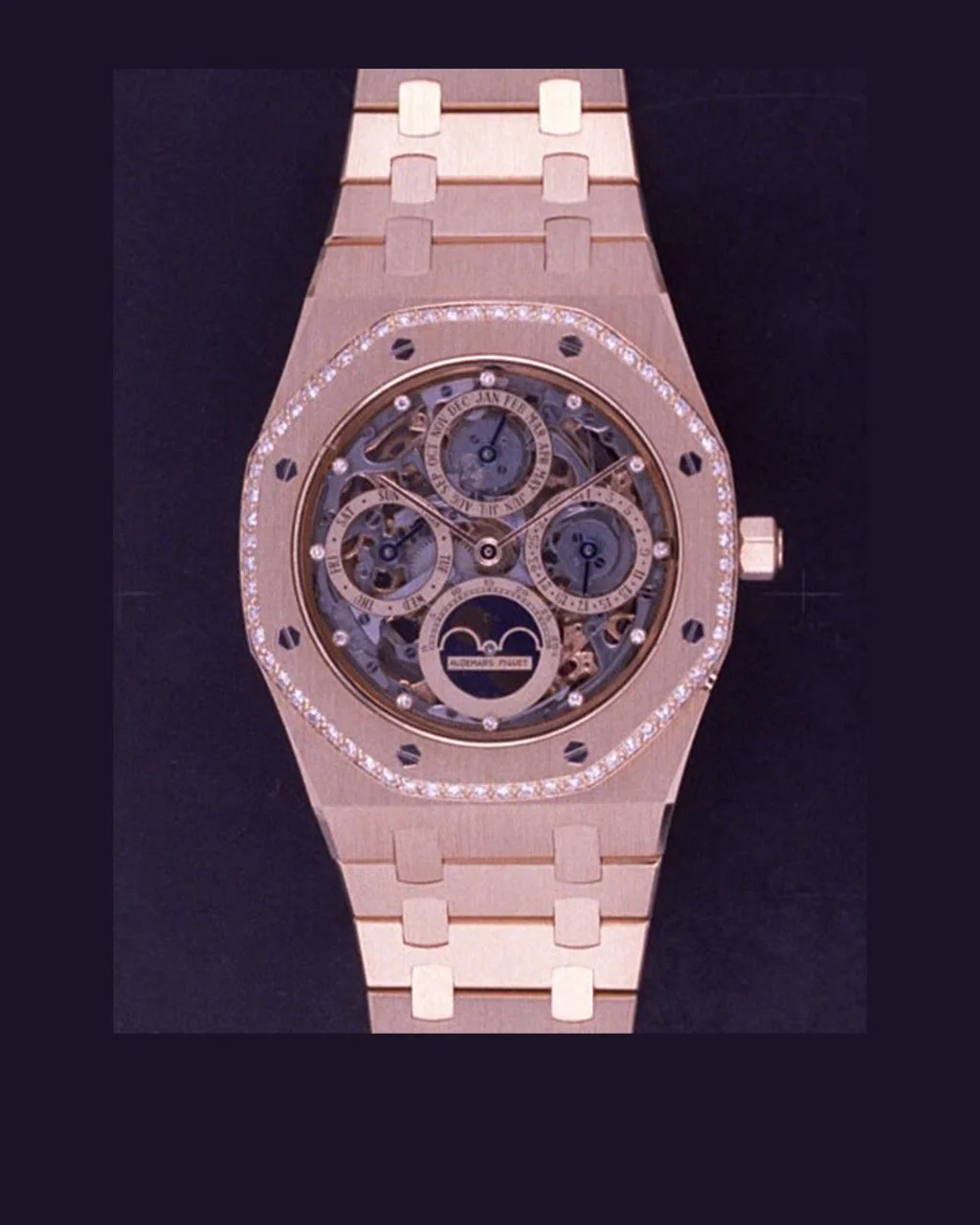
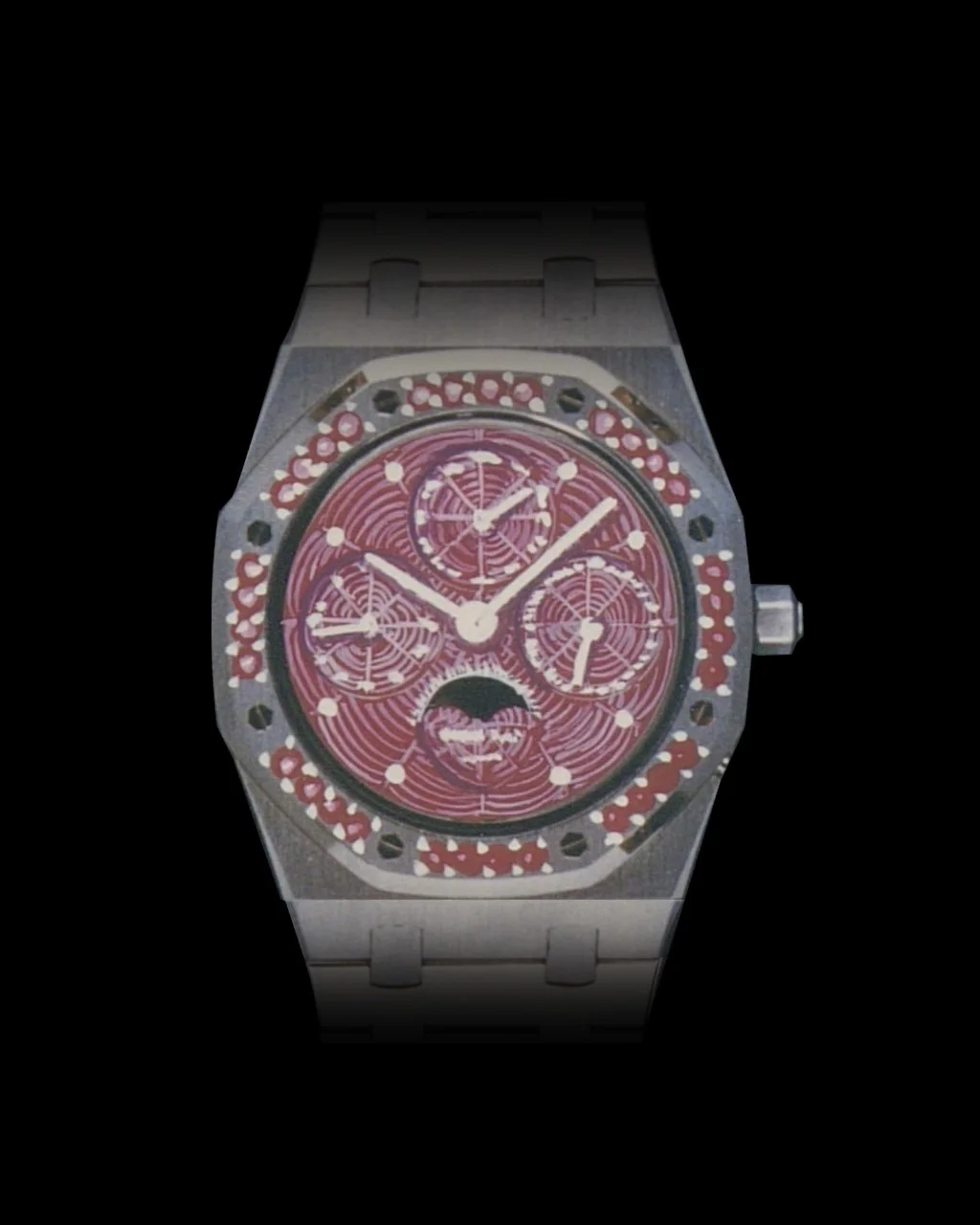
1991. Modèles 25636BA et 25654PT. Juxtaposed with the first Royal Oak Perpetual Calendar Openworked, Model 25654 in platinum features, probably for the first time in the collection, a finely chased "Tuscany Blue" dial. Audemars Piguet catalogue dated April 1991. Audemars Piguet Archives.
The 38 Royal Oak Perpetual Calendar 25654 in platinum have been on sale for 10 years. At the Phillips sale celebrating the 50th anniversary of the Royal Oak, No. 001 was sold for CHF 1,022,200, setting a record for this extremely rare model, of which the Audemars Piguet archives have no photographs until proven otherwise.
Sales from 1988 to 1998: a total of 38 units, of which: 1 (1988), 3 (1989), 2 (1990), 2 (1992), 5 (1993), 7 (1994), 1 (1995), 14 (1996), 1 (1997) and 2 (1998).
The 38 Royal Oak Perpetual Calendar 25654 in platinum have been on sale for 10 years. At the Phillips sale celebrating the 50th anniversary of the Royal Oak, No. 001 was sold for CHF 1,022,200, setting a record for this extremely rare model, of which the Audemars Piguet archives have no photographs until proven otherwise.
Sales from 1988 to 1998: a total of 38 units, of which: 1 (1988), 3 (1989), 2 (1990), 2 (1992), 5 (1993), 7 (1994), 1 (1995), 14 (1996), 1 (1997) and 2 (1998).