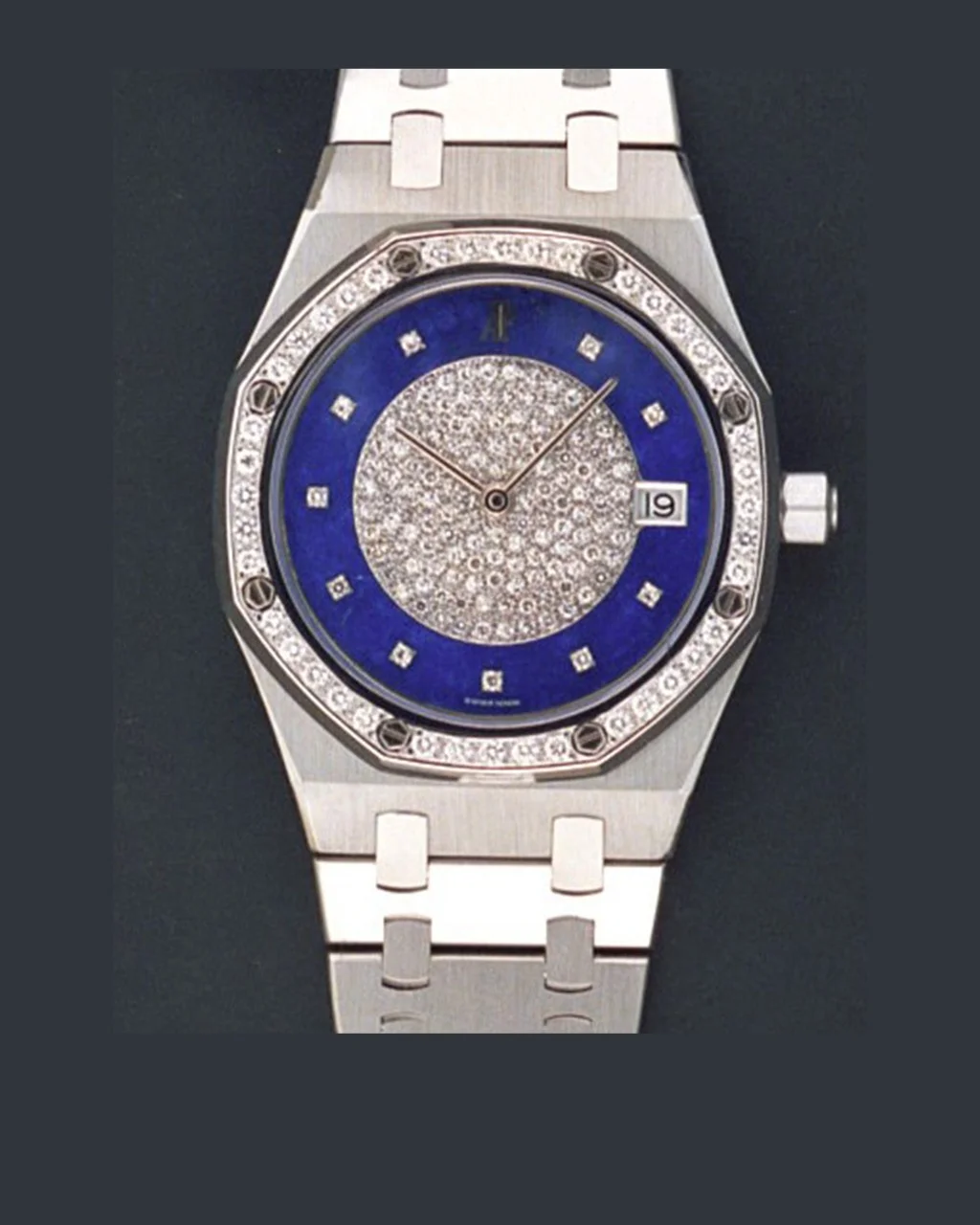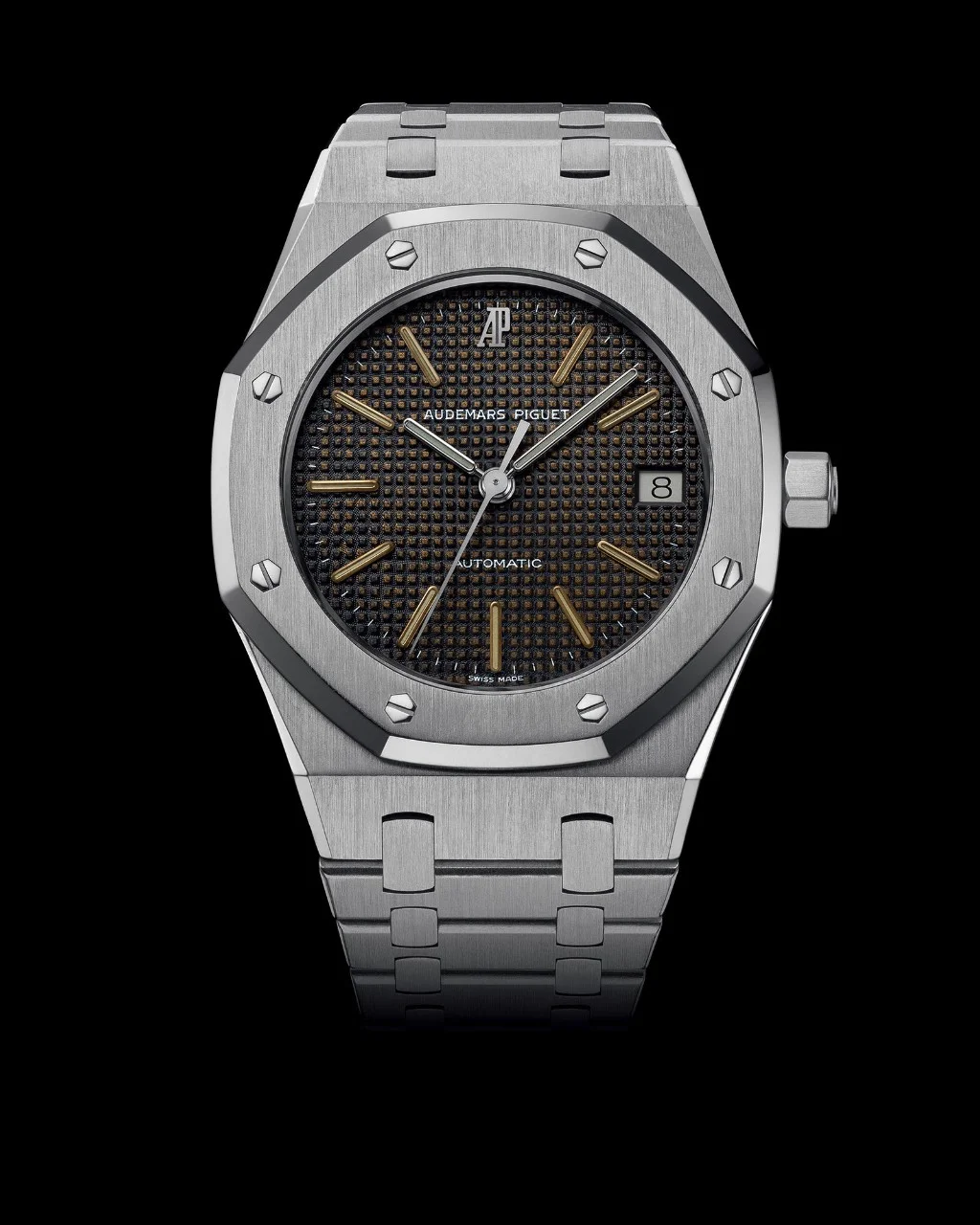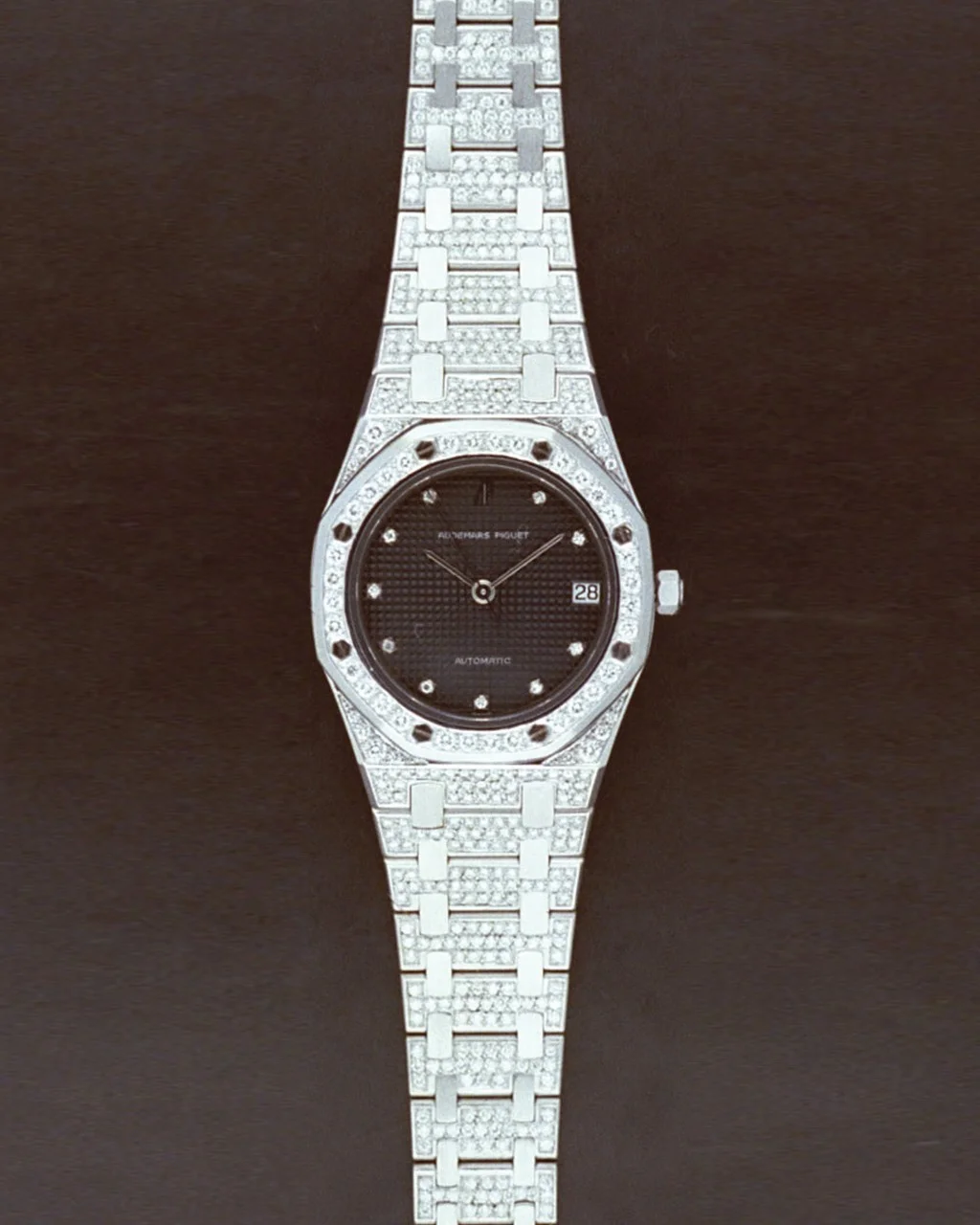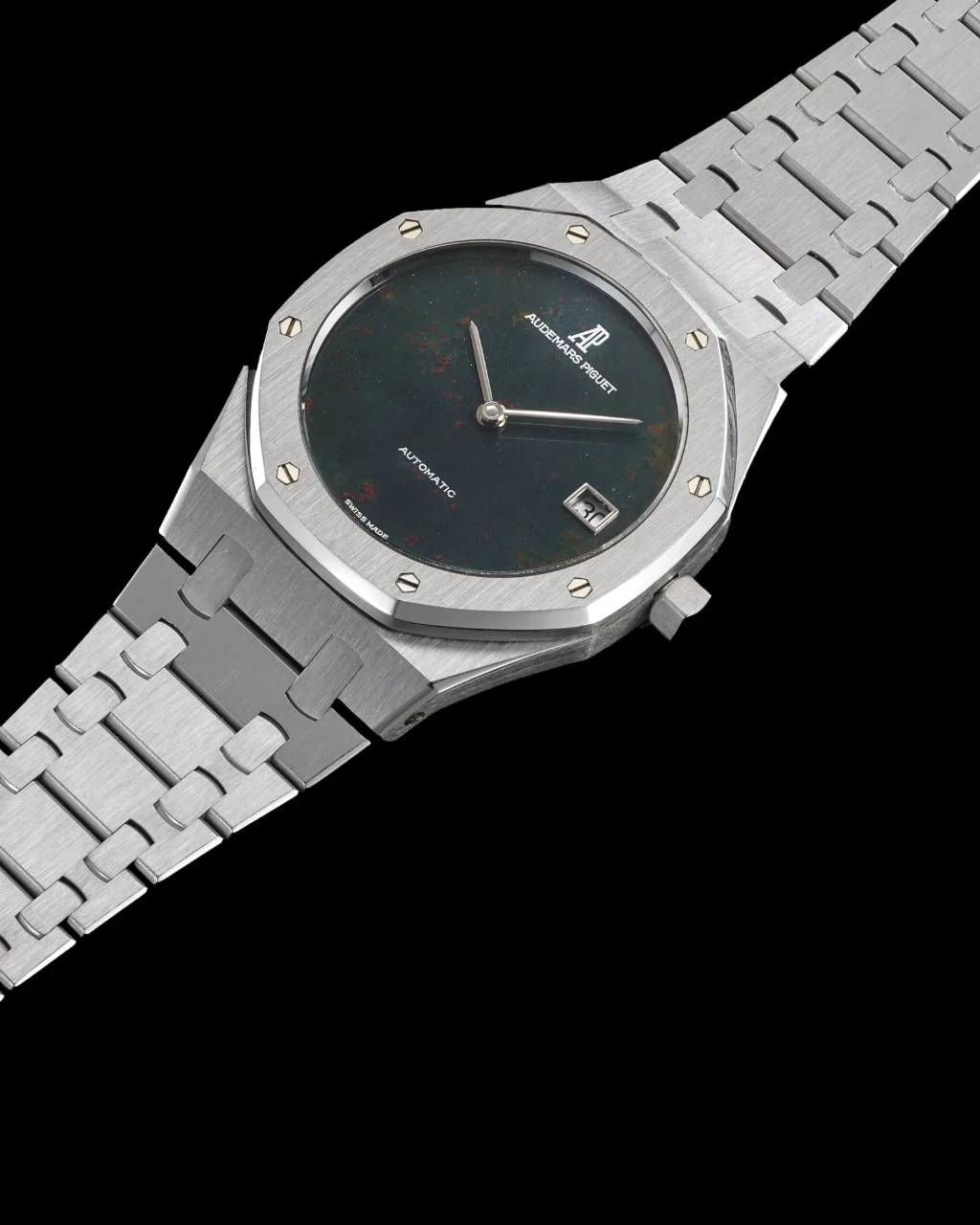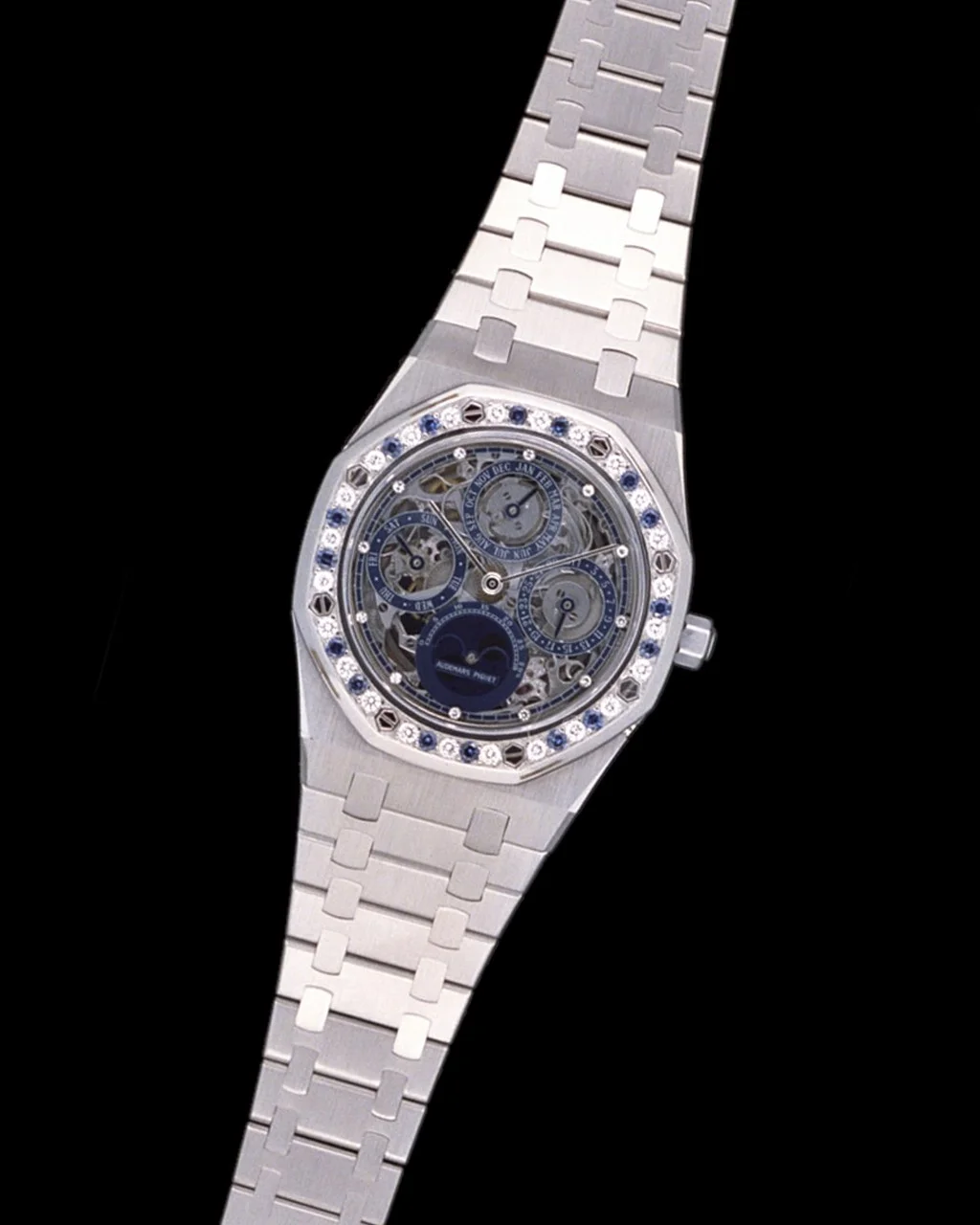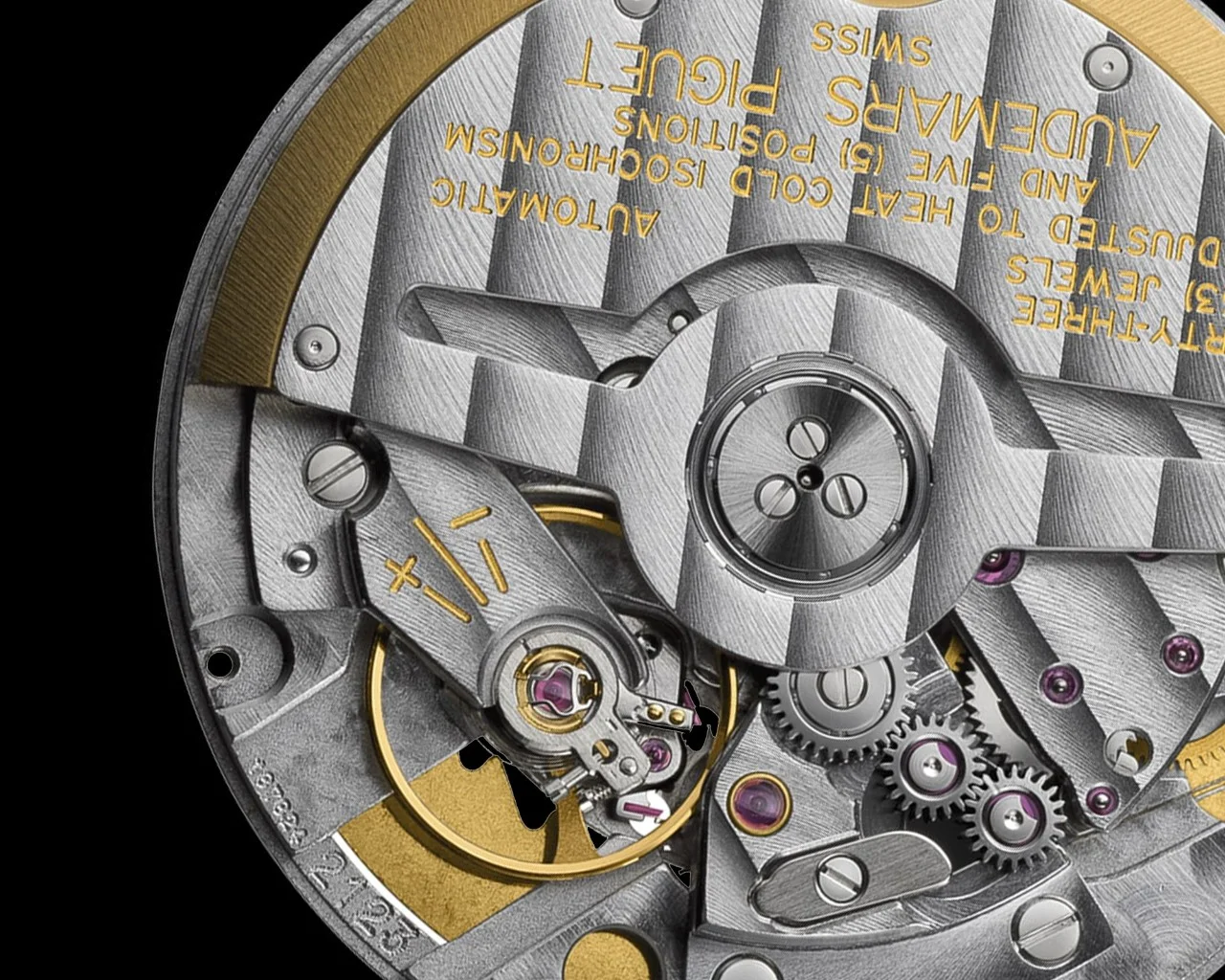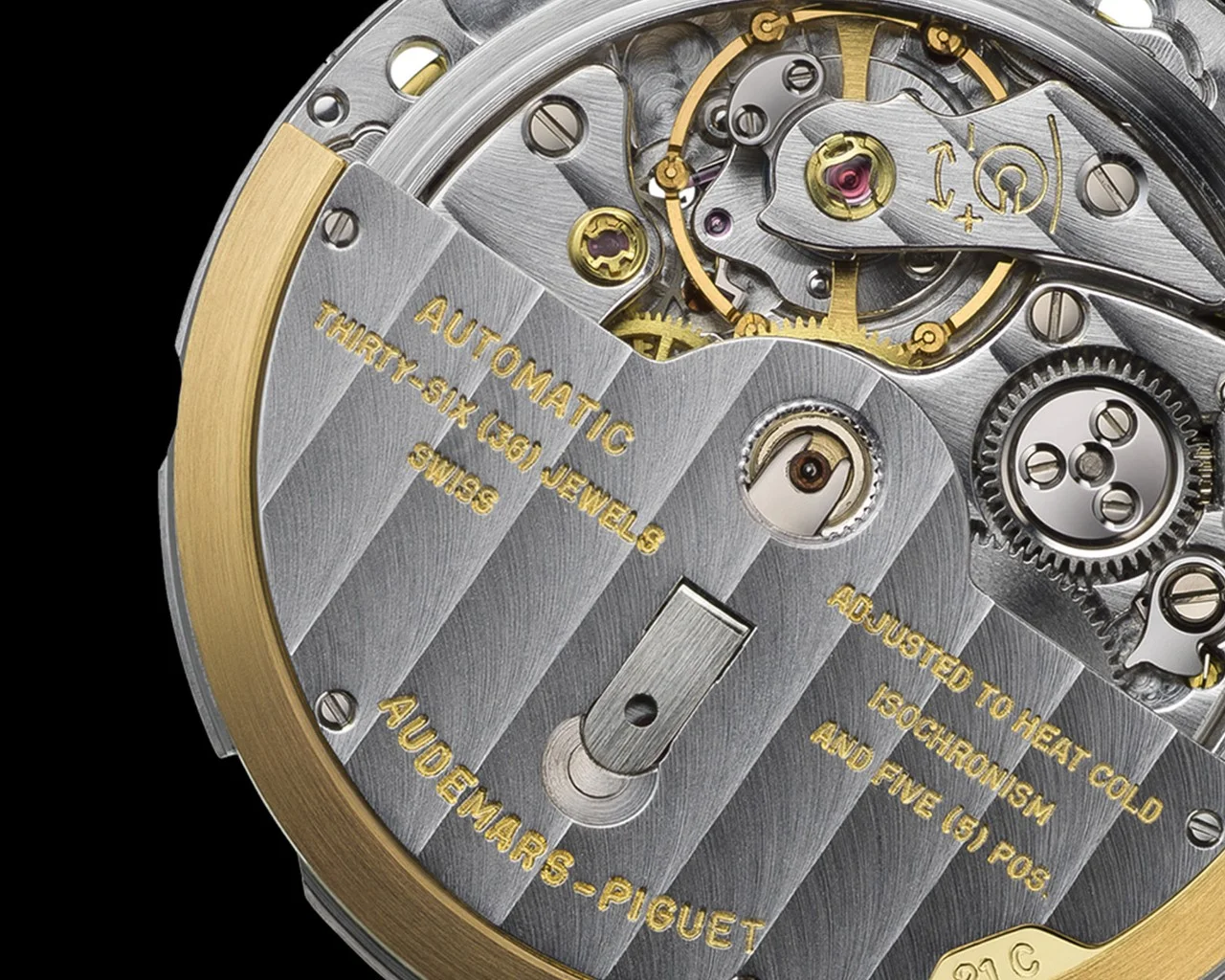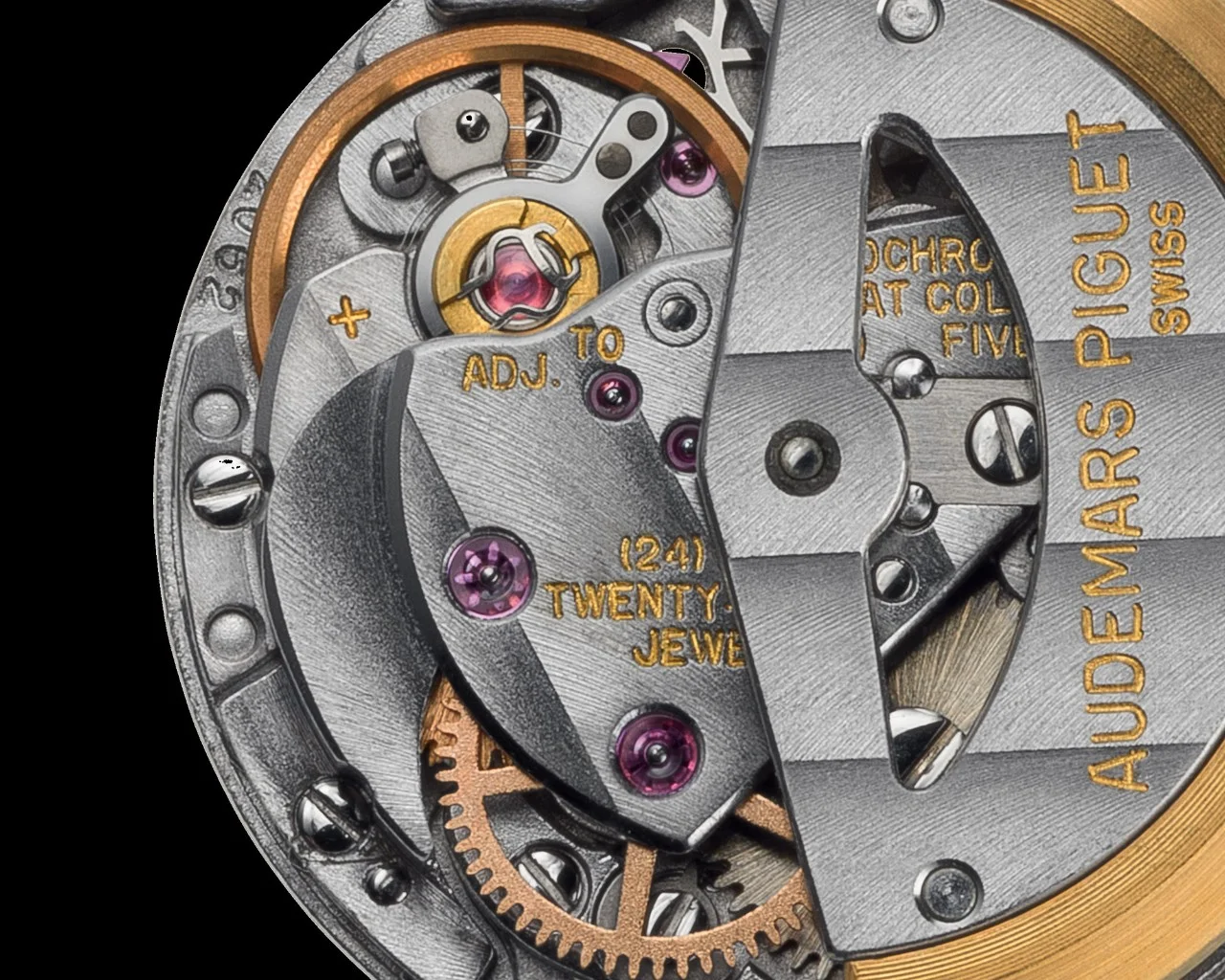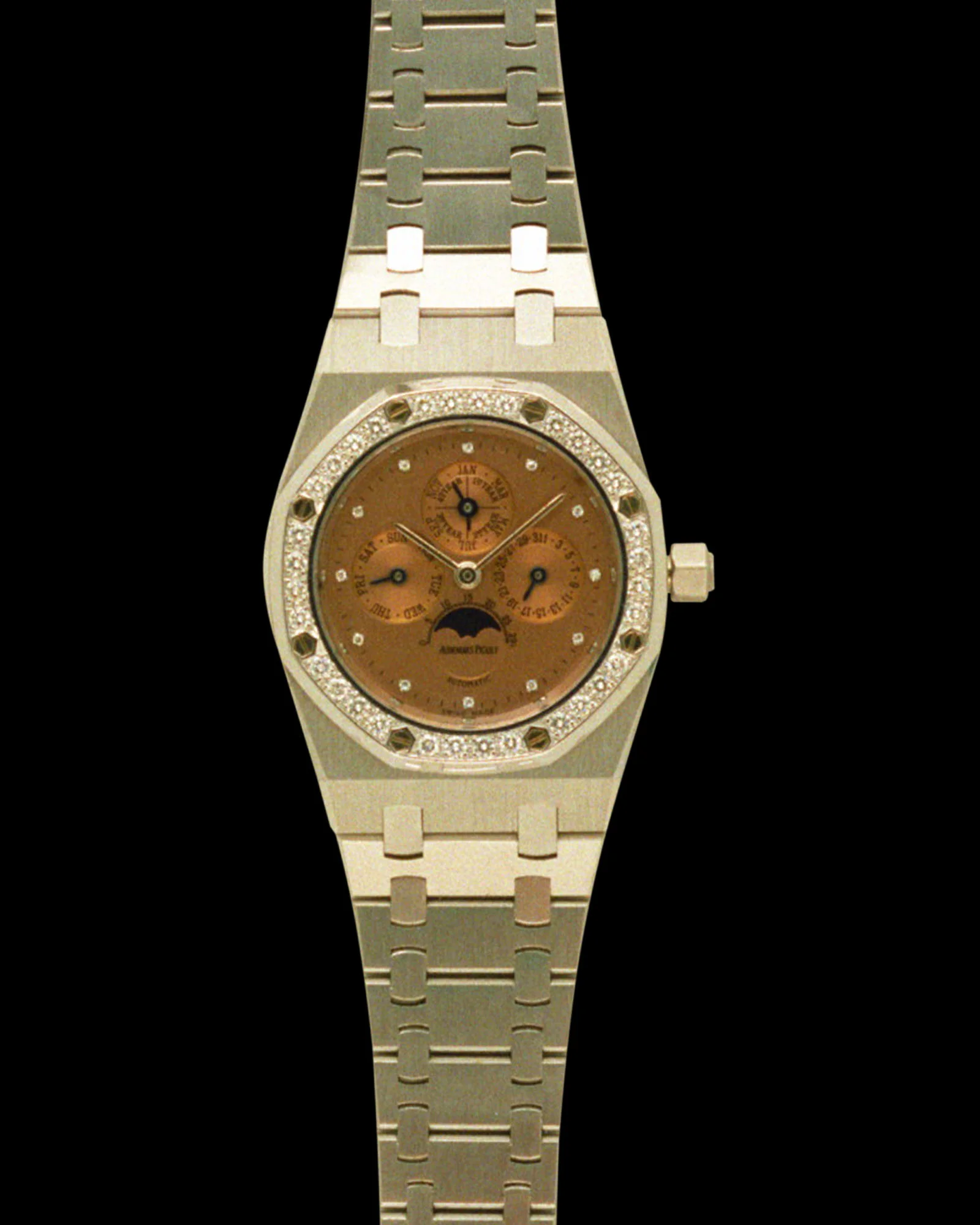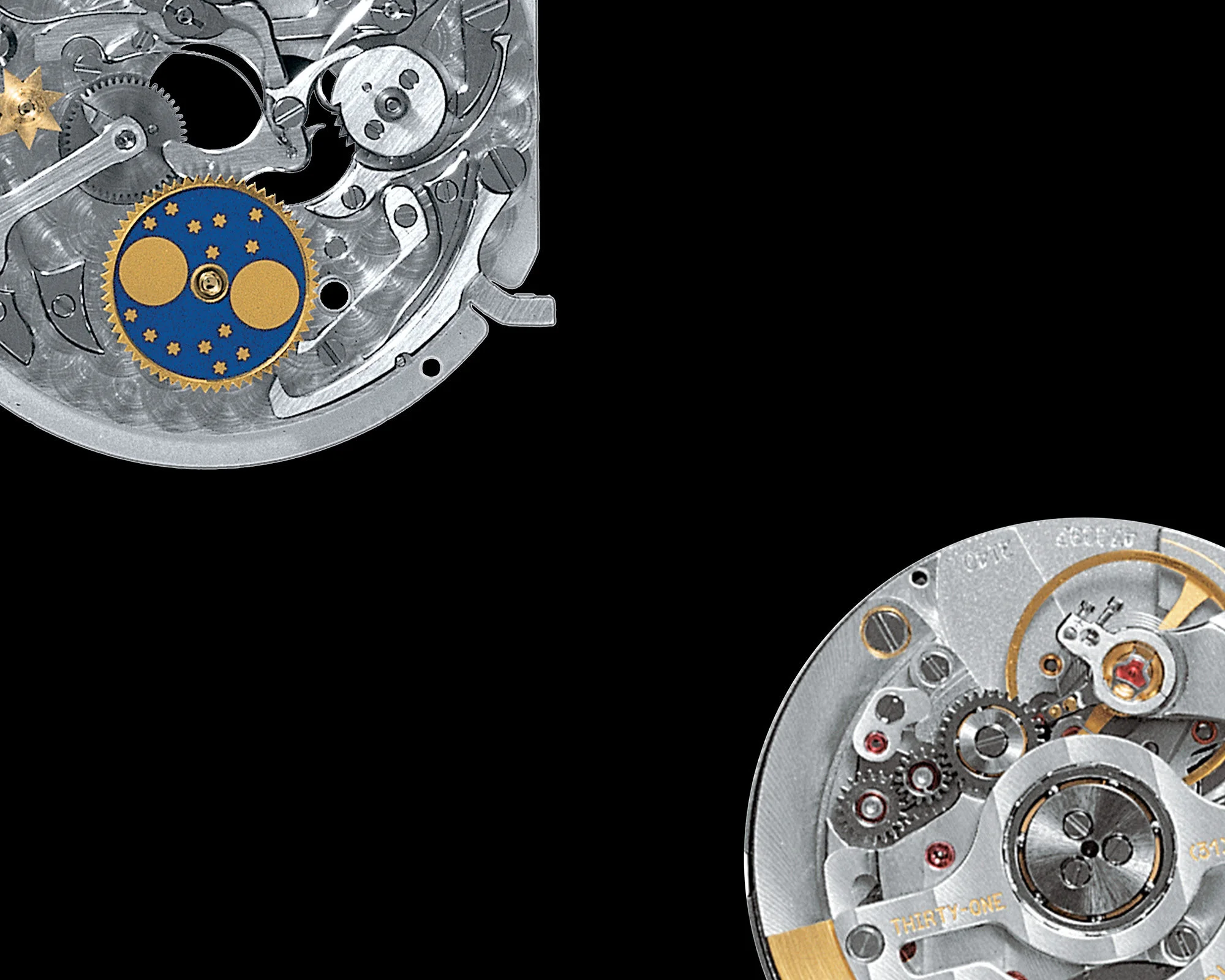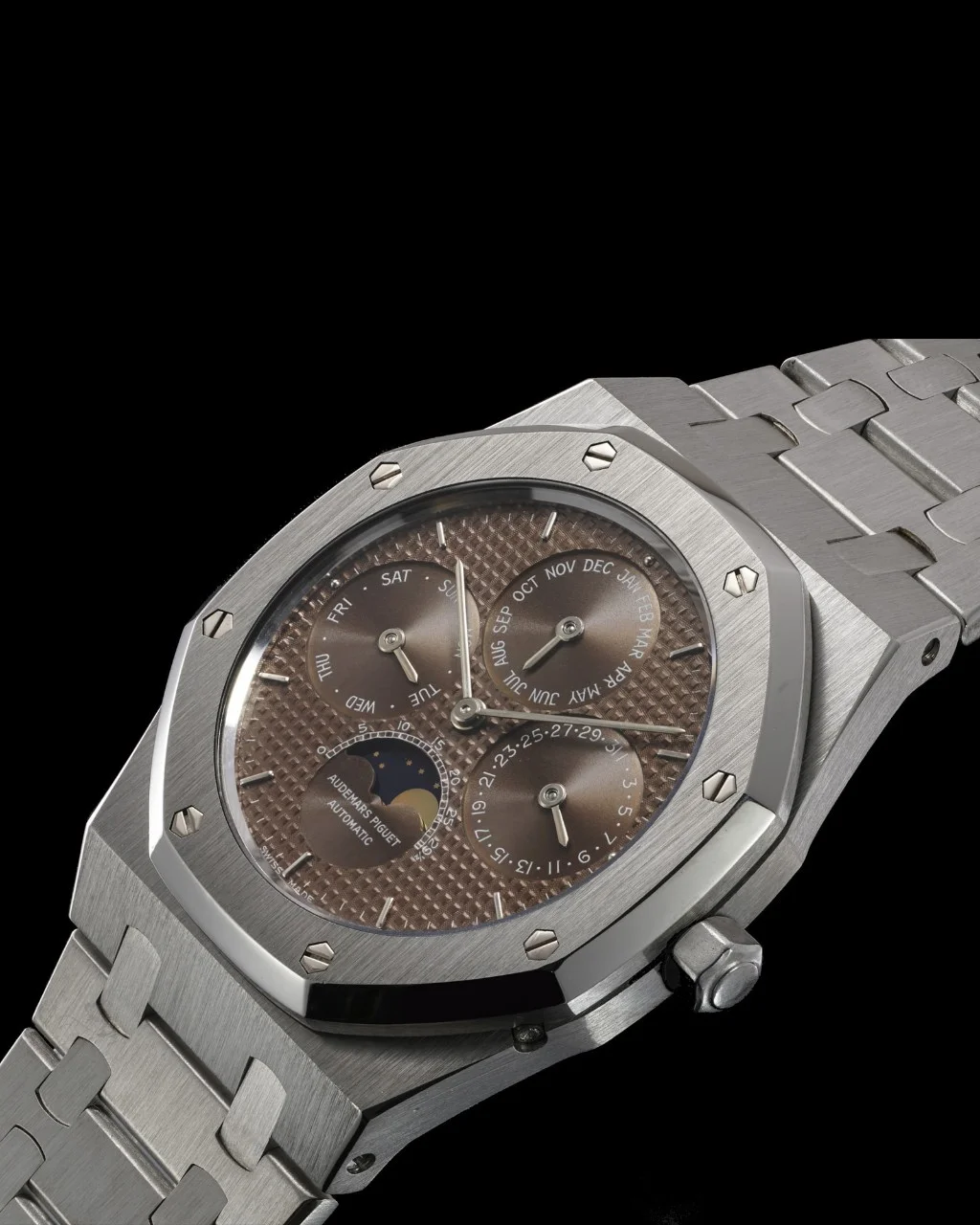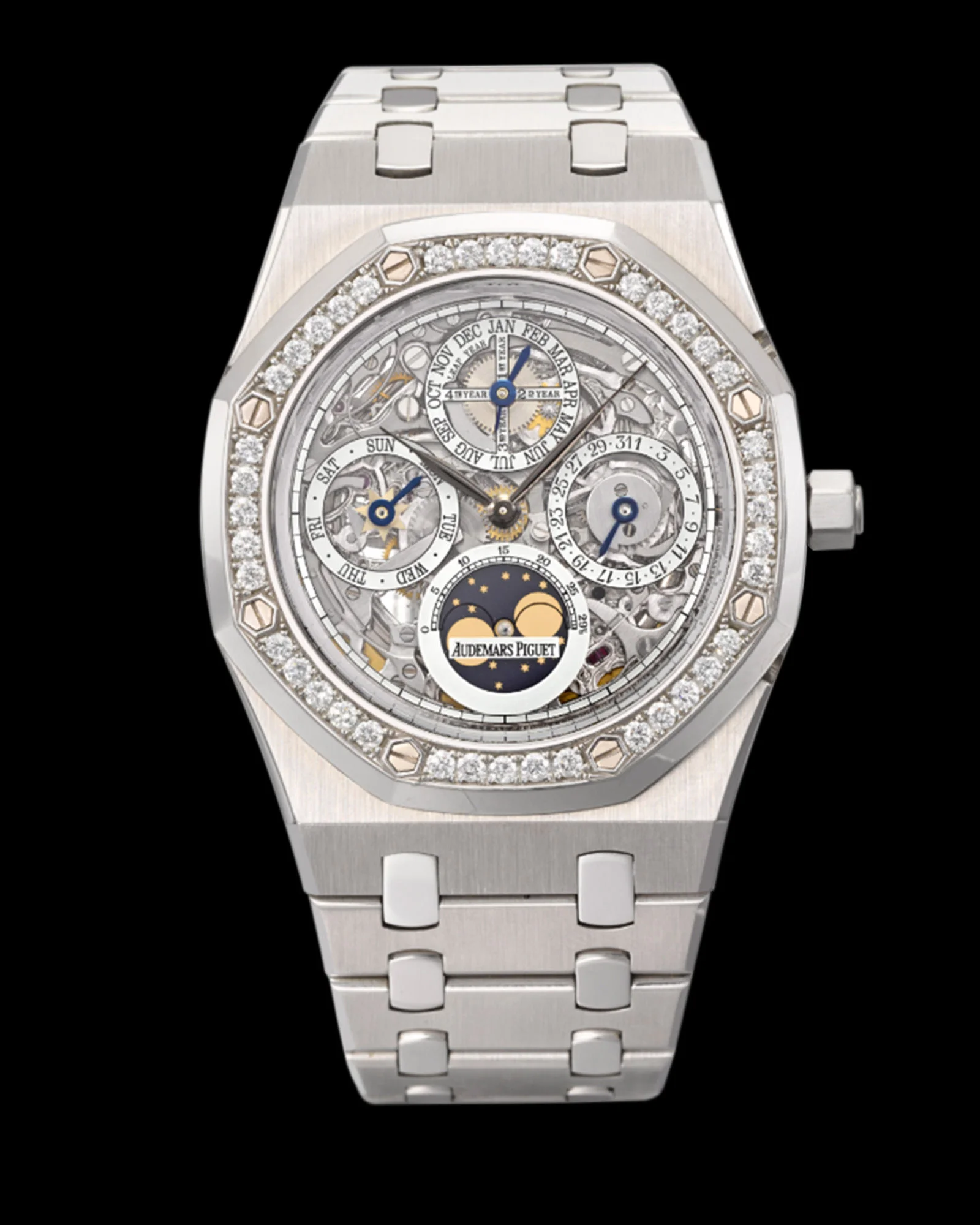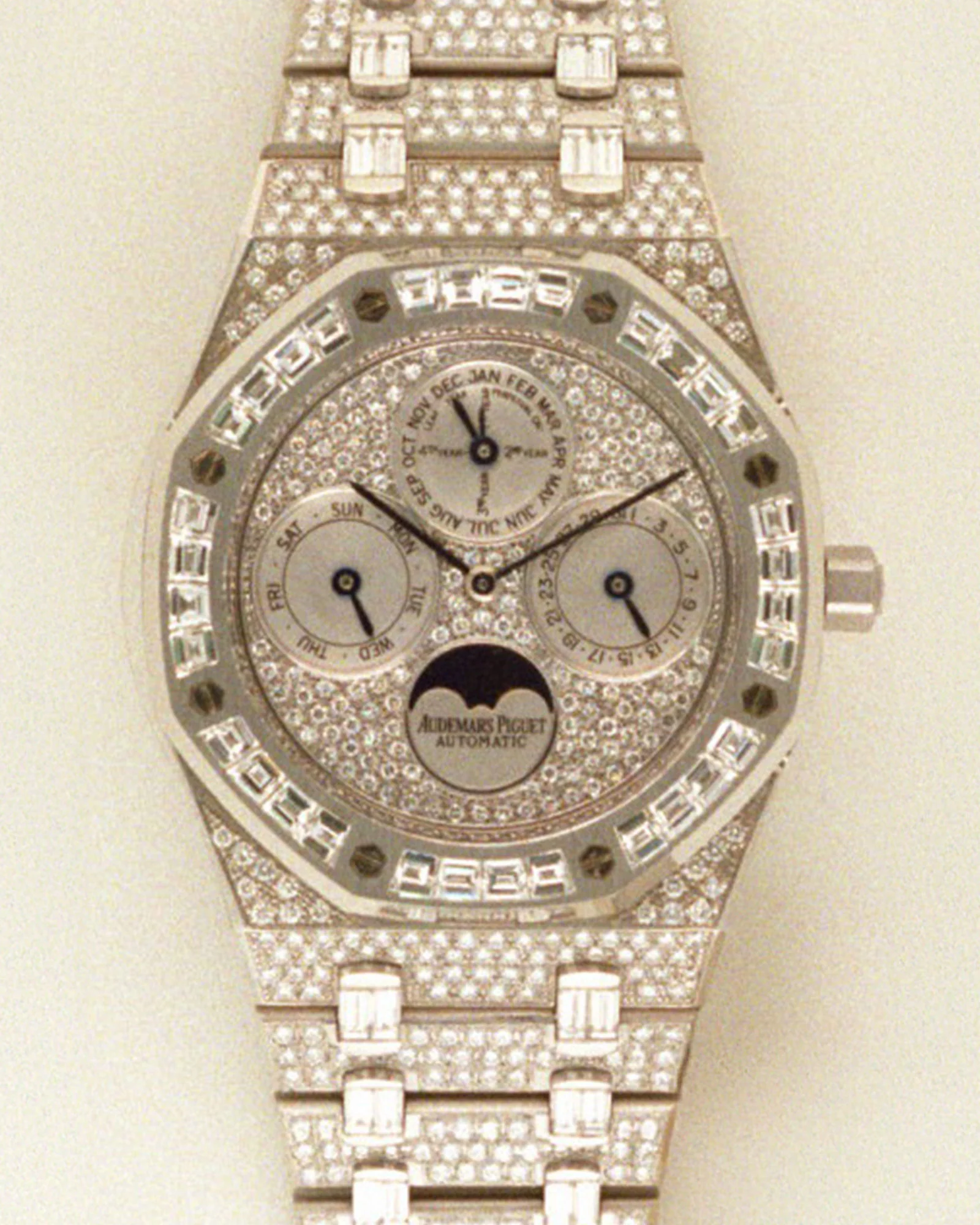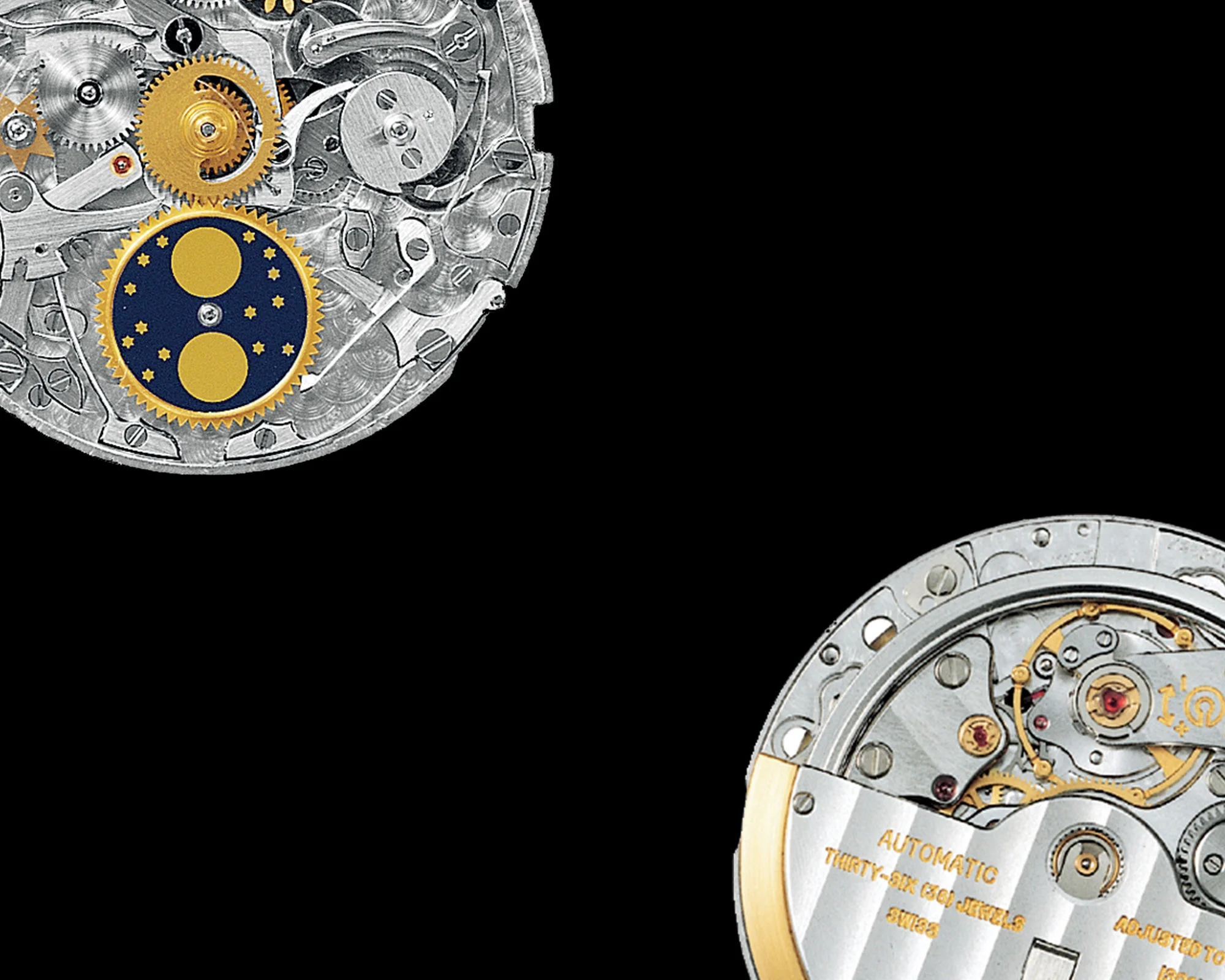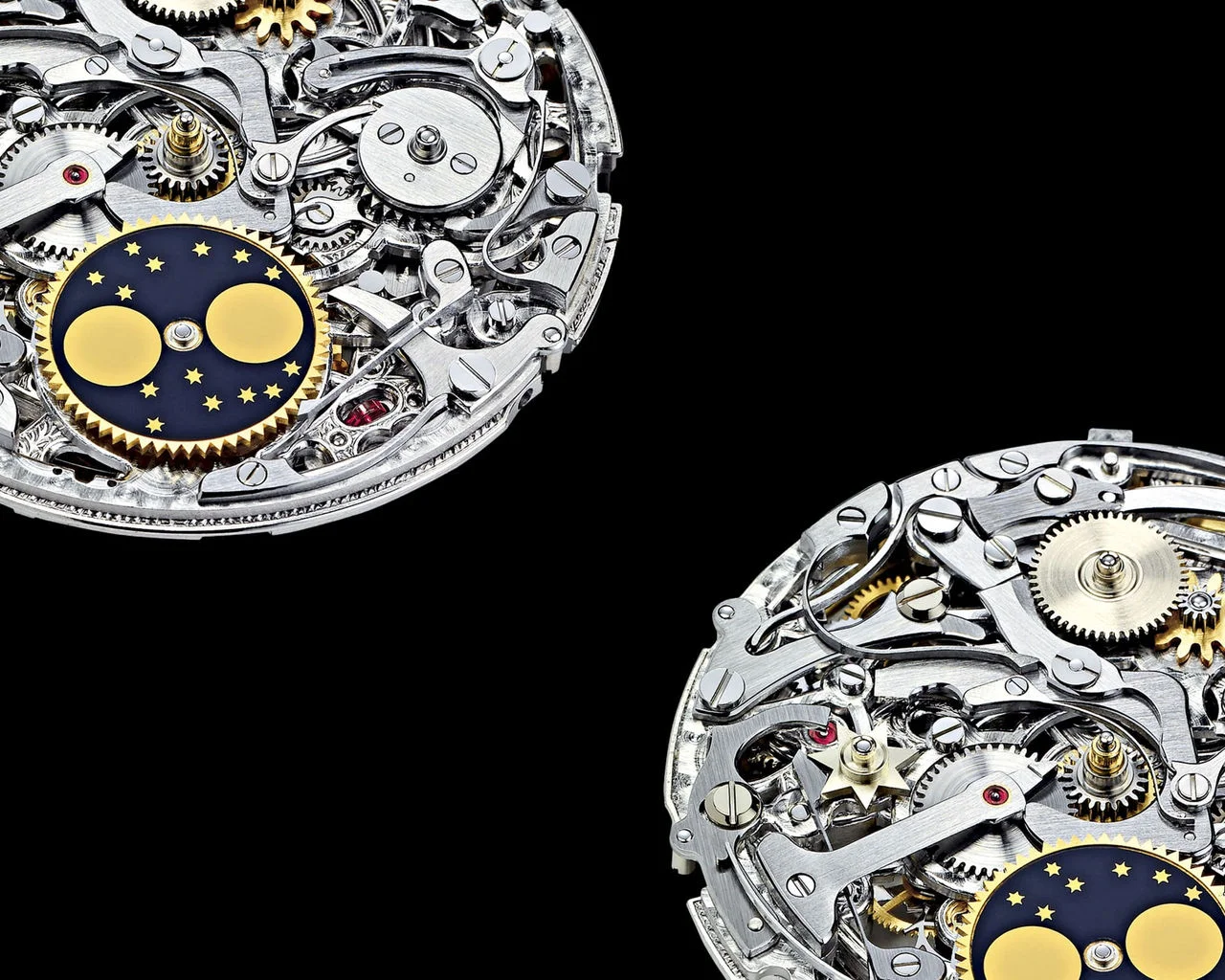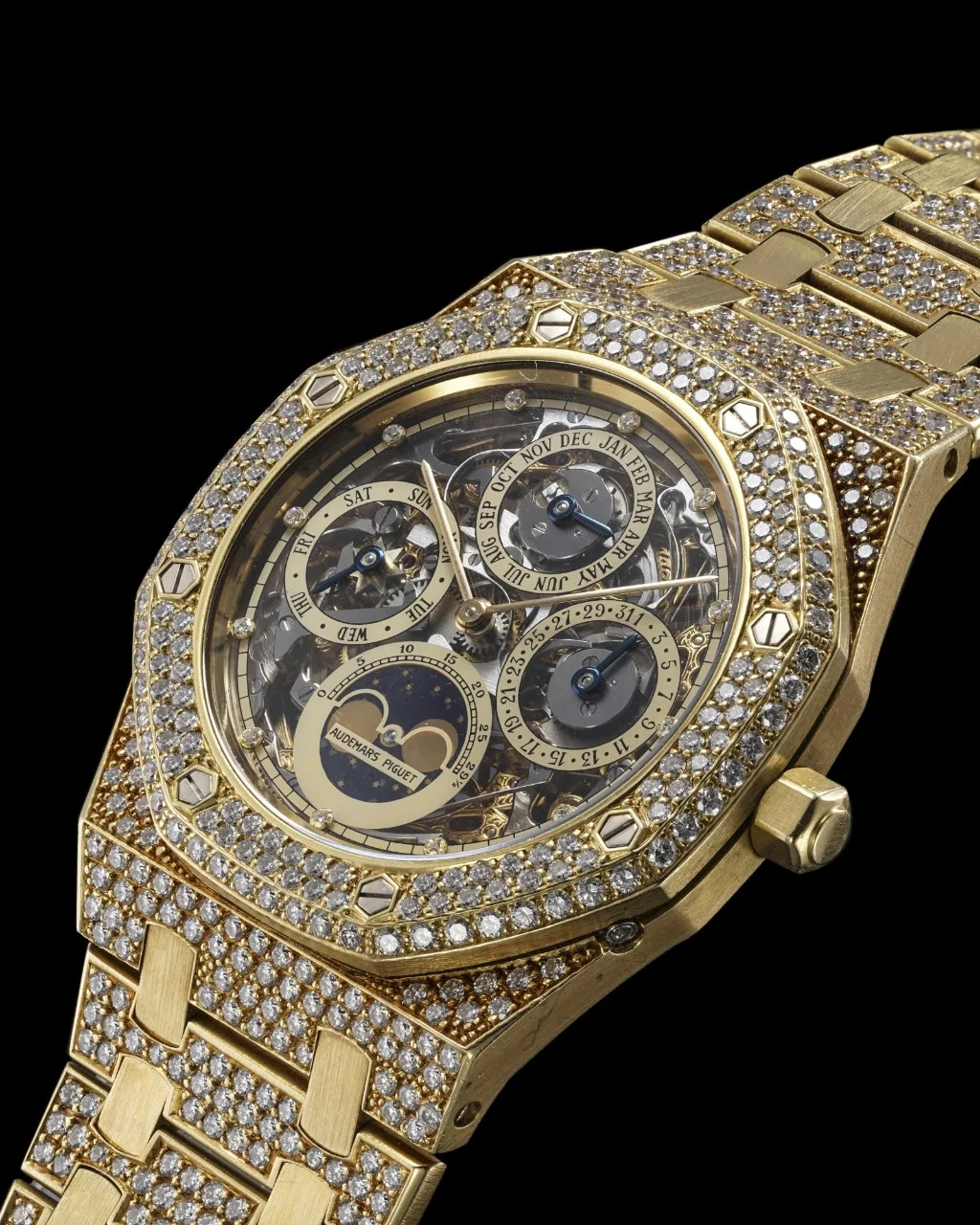
The Royal Oak opens up to other materials
Summary
Ennobling Steel...
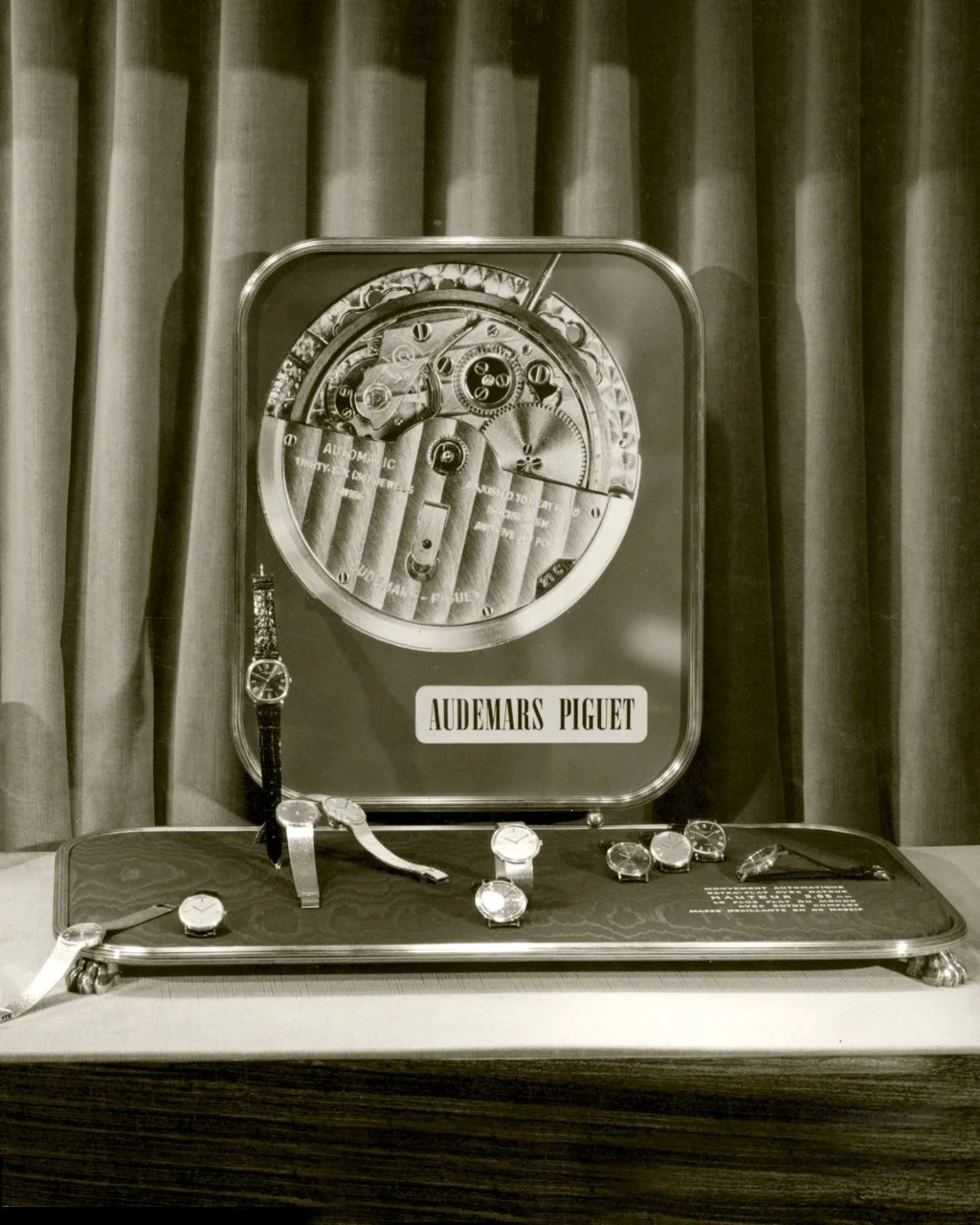
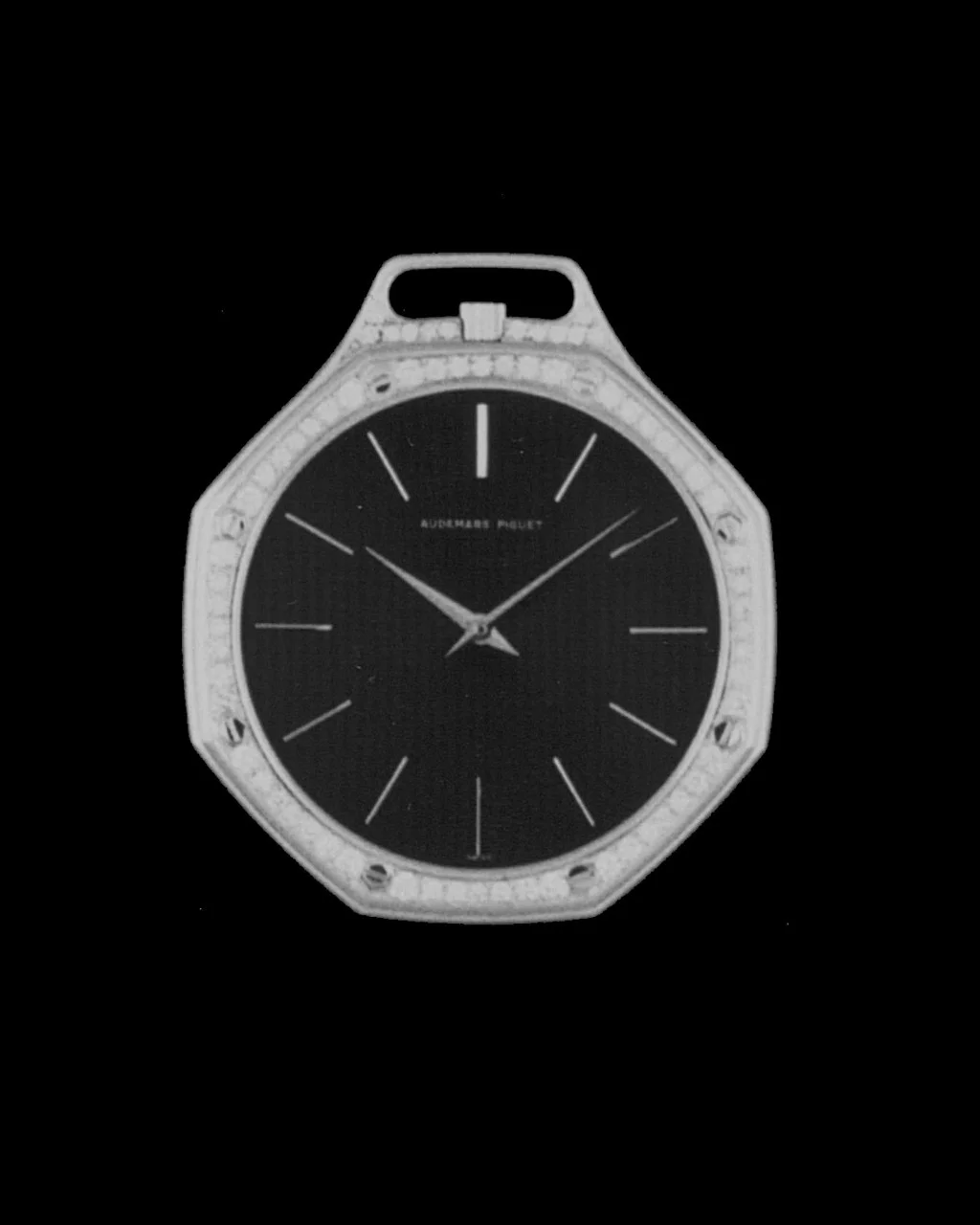
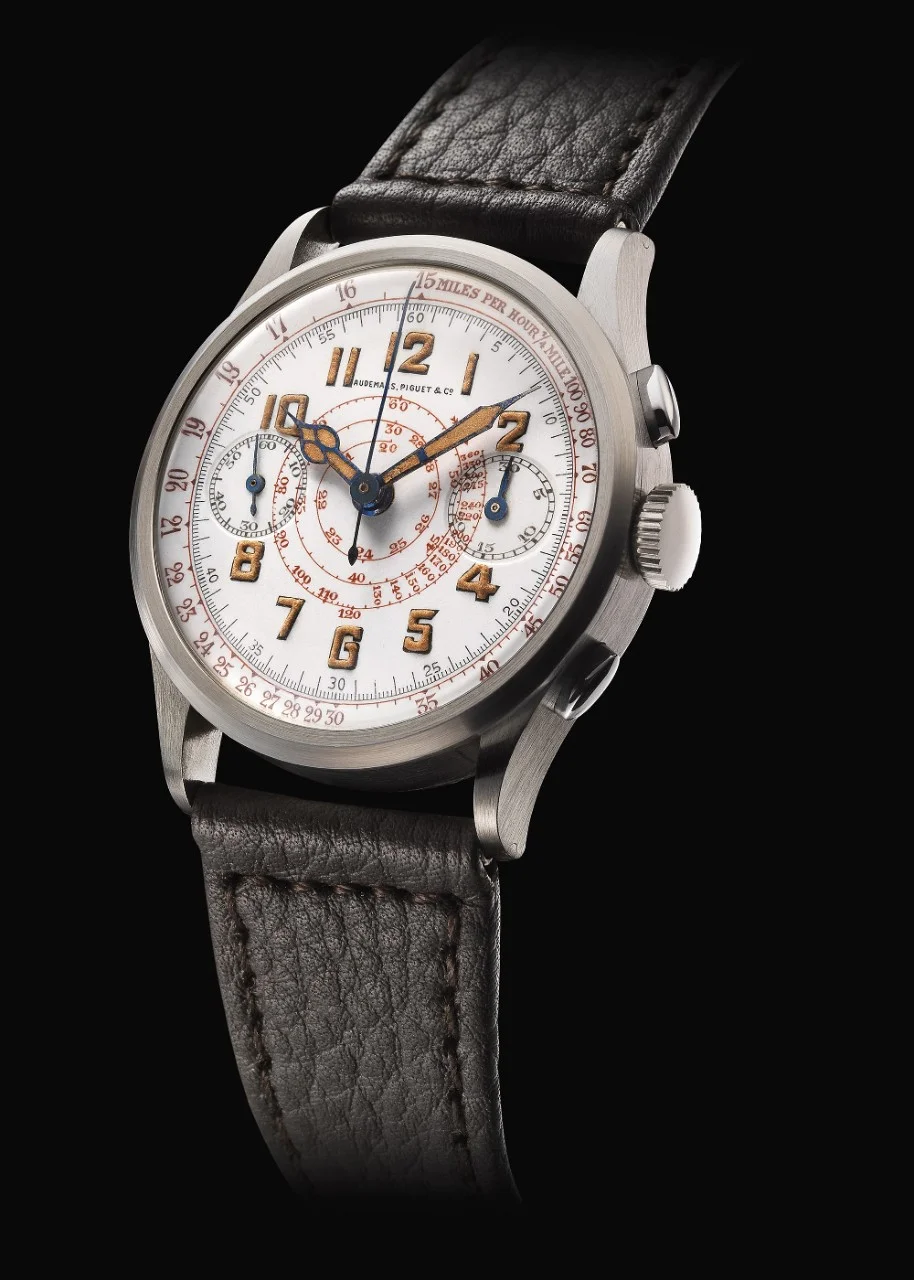
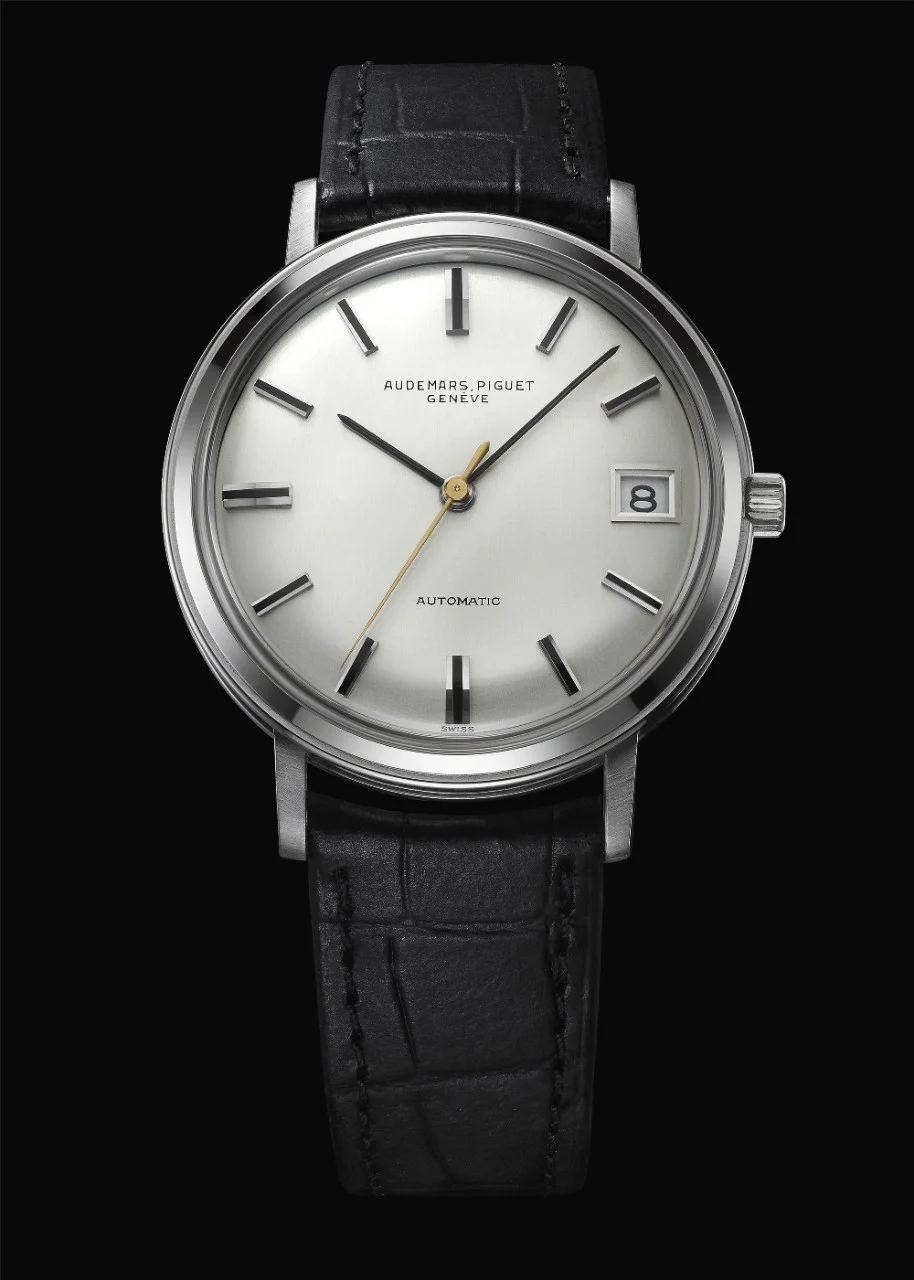
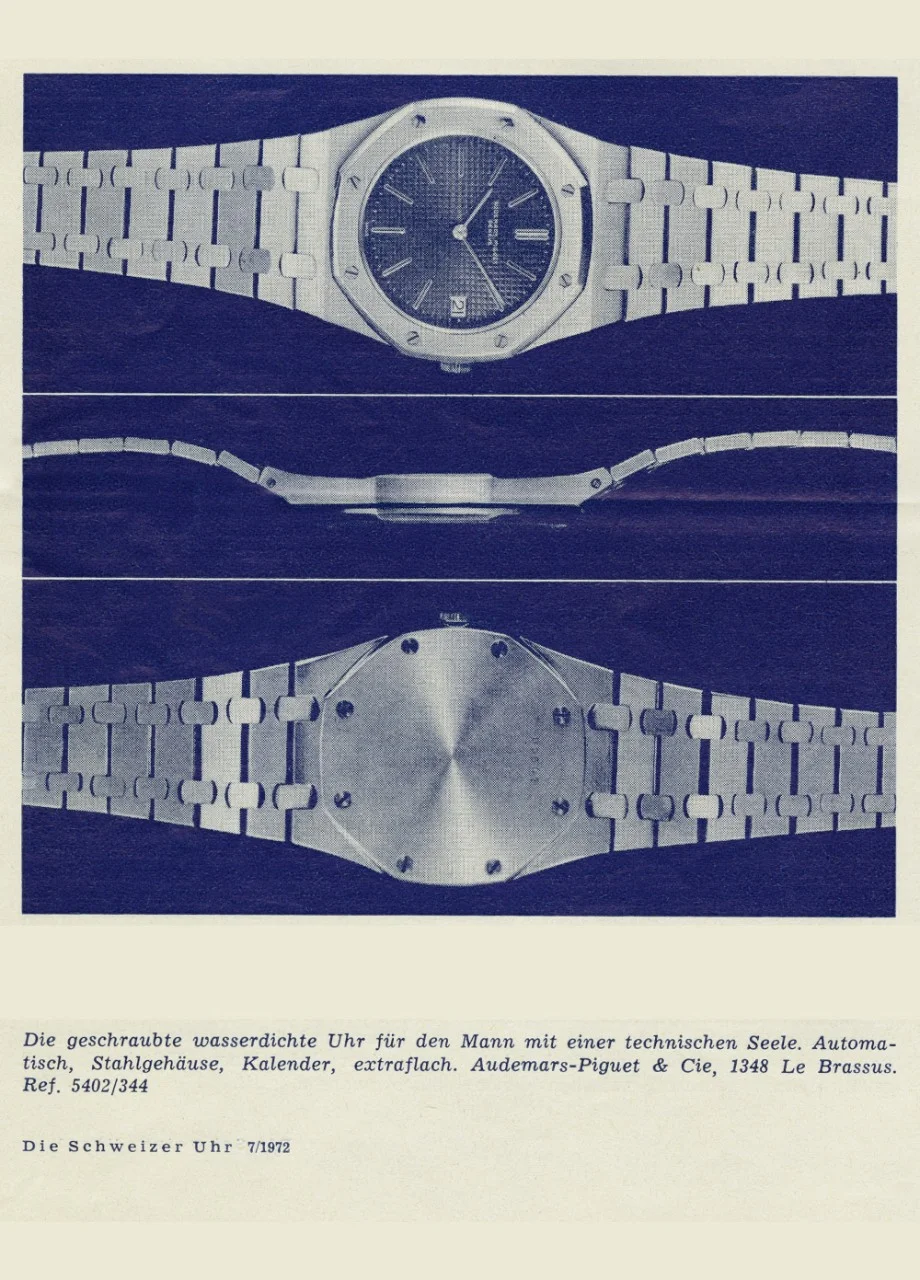
In the 1960s and 1970s, steel sports watches were not uncommon in the Swiss quality watch industry, with Rolex's Oyster, Omega's Speedmaster and Tag Heuer's Monaco among the most notable examples. However, the most prestigious brands, such as Patek Philippe, Vacheron Constantin and Audemars Piguet, had almost never made steel watches. These three companies, often referred to as the watch industry "triumvirate” because they were so prominent at the time, worked mostly with gold and platinum. Their rare steel creations were produced in extremely modest quantities: between 1934 and 1962, Audemars Piguet crafted 52 chronograph wristwatches, almost all unique (see Audemars Piguet 20th Century Complicated Wristwatches). Another example is the selfwinding Model 5281ST produced in the early 1960s (illustration).
The fact that the Royal Oak broke every Haute Horlogerie rule in the book back in 1972 was not so much because of its material as its price. The extreme complexity of its steel exterior, endowed with prestigious finishes, placed it on a par with gold watches. The Royal Oak bridged the gap between two previously opposing worlds: craftsmanship and sport. It was aimed at a new generation that wanted a watch suited to a modern, versatile and faster-paced lifestyle. The concept was both radical and transgressive. It profoundly altered the status of steel, which became a noble material thanks to the work of the finest artisans and the fact that it was built into the watch design right from the outset, rather than being merely a variation. The success of the Royal Oak marked a milestone and carved a path that other players in the world of Haute Horlogerie would soon follow.
... Then Transcending It
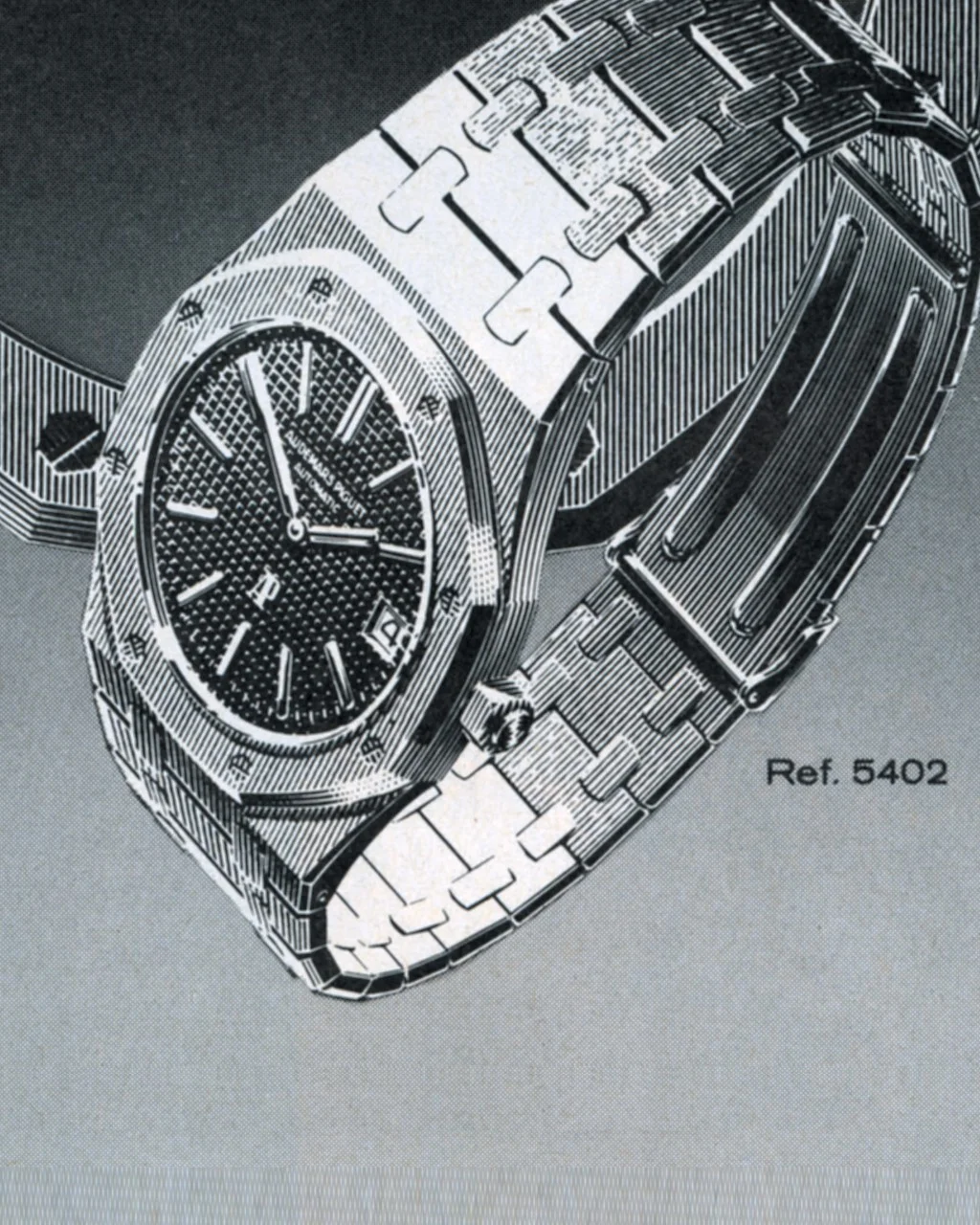
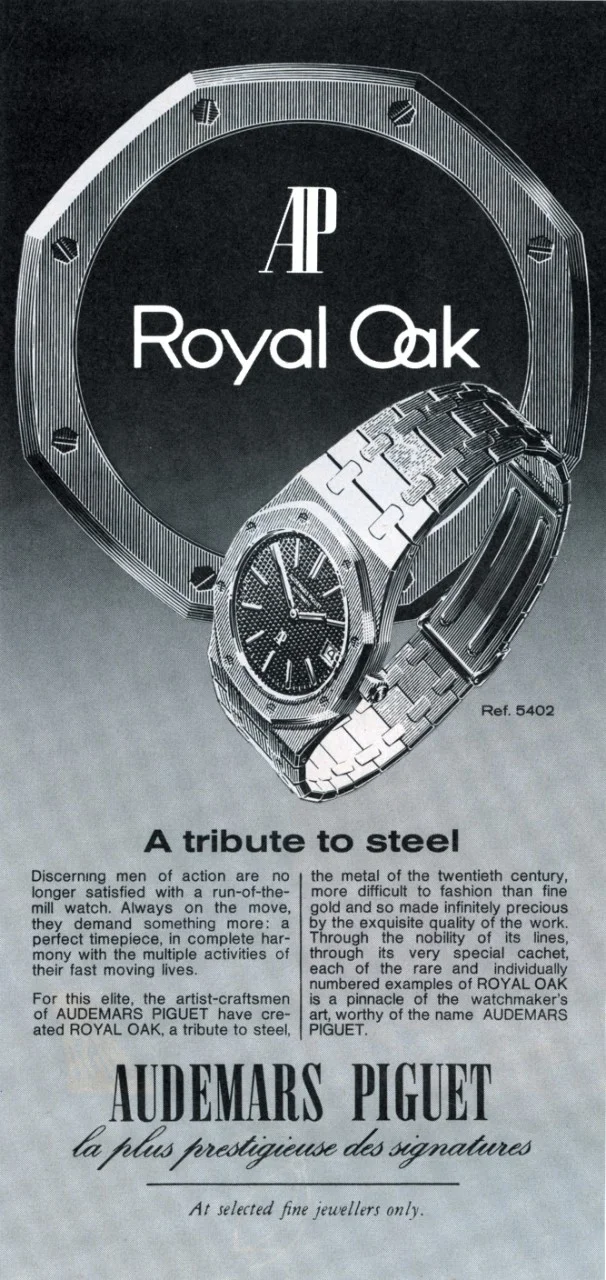
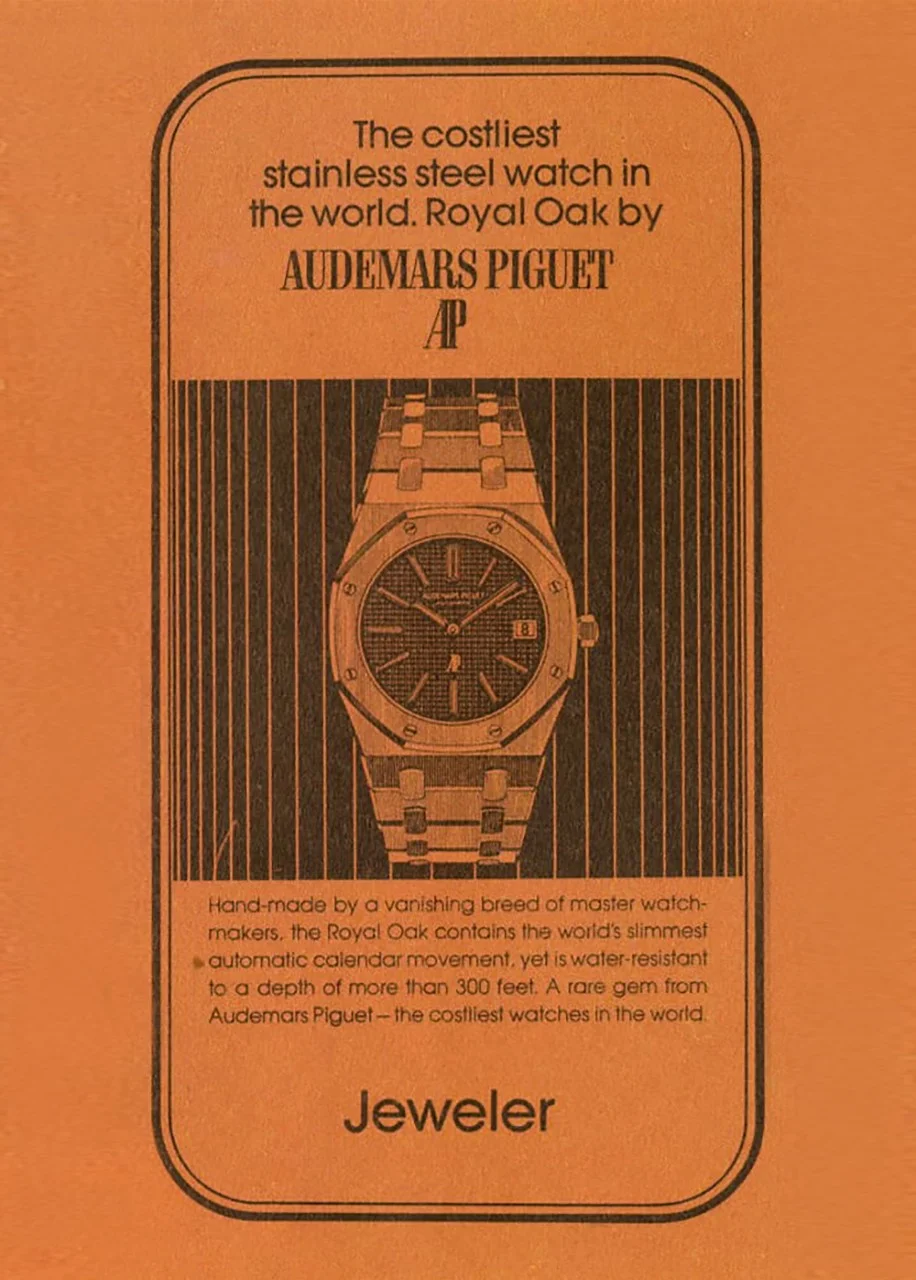
Presented in 1976 by Patek Philippe, the Nautilus was supported by a campaign whose arguments echoed those accompanying the success of the Royal Oak 5402 (pictured). The Geneva-based Manufacture announced: "One of the world’s costliest watches is made of steel". It went on to stress that the value lay in the craftsmanship applied to steel, before concluding with the modernity of a watch made for both formal and informal occasions. For Audemars Piguet, the time had come to begin the next chapter and to treat the Royal Oak’s “armour” to a variety of materials.
Global Context in 1977
In 1977, the Earth’s population had just passed the four billion-mark. The first Star Wars movie was a box-office hit and John Travolta was dancing his heart out in Saturday Night Fever. In the small village of Le Brassus, Audemars Piguet’s founding families were playing a more active role than ever in the development of the brand. Already 87 years old by then, Paul Edward Piguet (1890 – 1979) – son of company co-founder Edward Auguste Piguet (1851 – 1918) – daily drove to the workshops on his moped to keep up with everything that was going on. Jacques-Louis Audemars (1910 – 2002) represented the third generation of the Audemars family since his grandfather, the other co-founder Jules Louis Audemars. He was in charge of technical and creative activities, while executive management had for the previous decade been in the hands of Georges Golay.
Audemars Piguet had 130 employees at the time, most of whom were involved in developing and producing nearly 9,000 watches per year. Three people were in charge of sales: Martin K. Wehrli, future Director of the Audemars Piguet Museum; Stephen Urquhart, future joint Managing Director of AP (and subsequently President & CEO of Omega); and the young Jean-Claude Biver, who was making his first forays into watchmaking and whose experience at Audemars Piguet would enable him to play a central role in the development of Blancpain, Omega, Hublot and the other watch brands of the LVMH group.
Audemars Piguet's turnover had just topped CHF 26 million, representing five times more than ten years previously. Despite the global economic upheavals and the watchmaking crisis that was wiping out entire swathes of the industry, the company was making steady progress. As for the Royal Oak, even though it represented less than ten percent of the brand's turnover, the watch industry’s enfant terrible had acquired a fine reputation. Having demonstrated the value of steel, Audemars Piguet decided to give in to market demands and create Royal Oak watches in gold. This decision was reminiscent of the first Royal Oak prototypes which had already been designed in white gold.
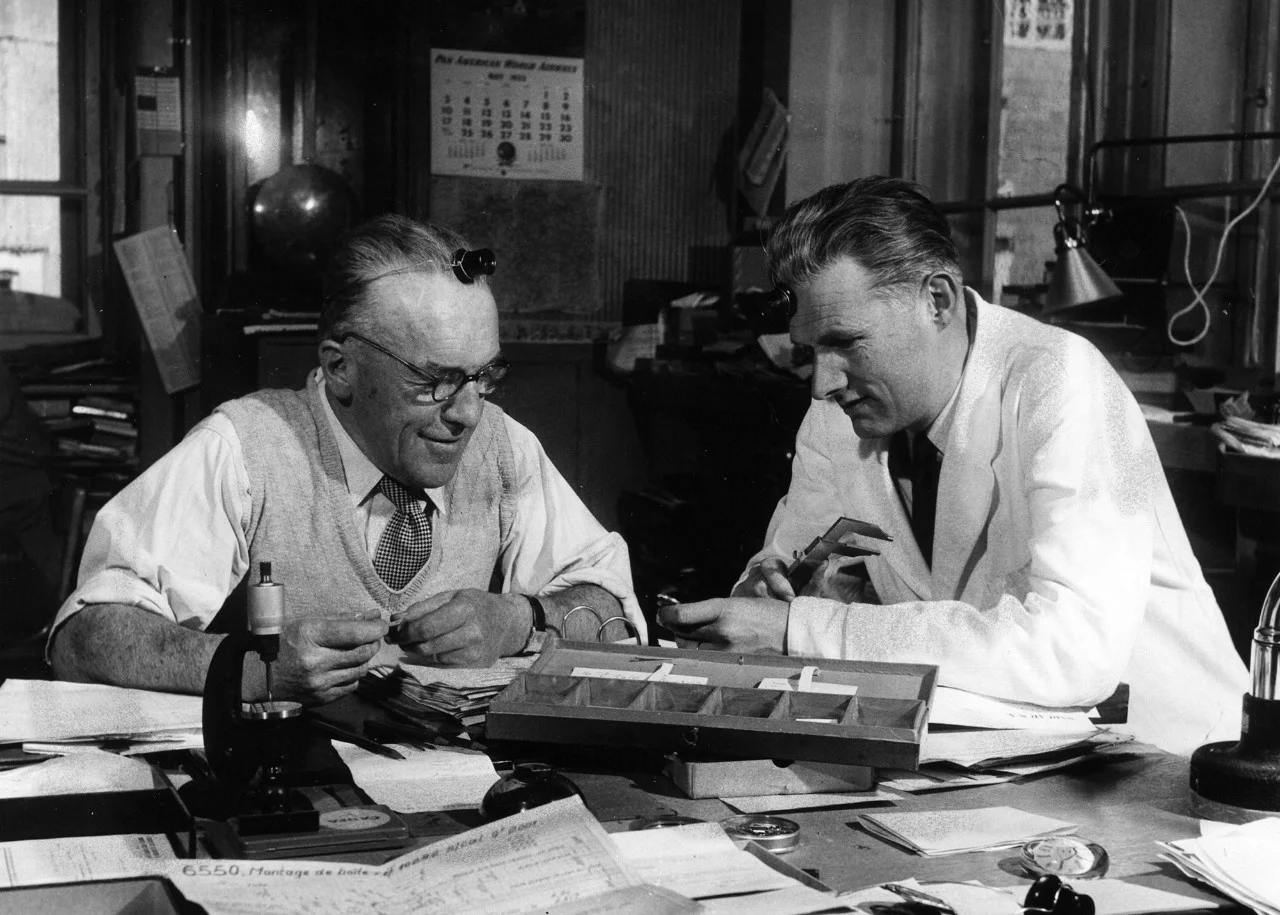
Paul Edward Piguet (1890–1979) et Jacques-Louis Audemars (1910–2002). The second and third generations of the Audemars and Piguet families perpetuated and expanded the family business founded in 1875. Audemars Piguet Archives.
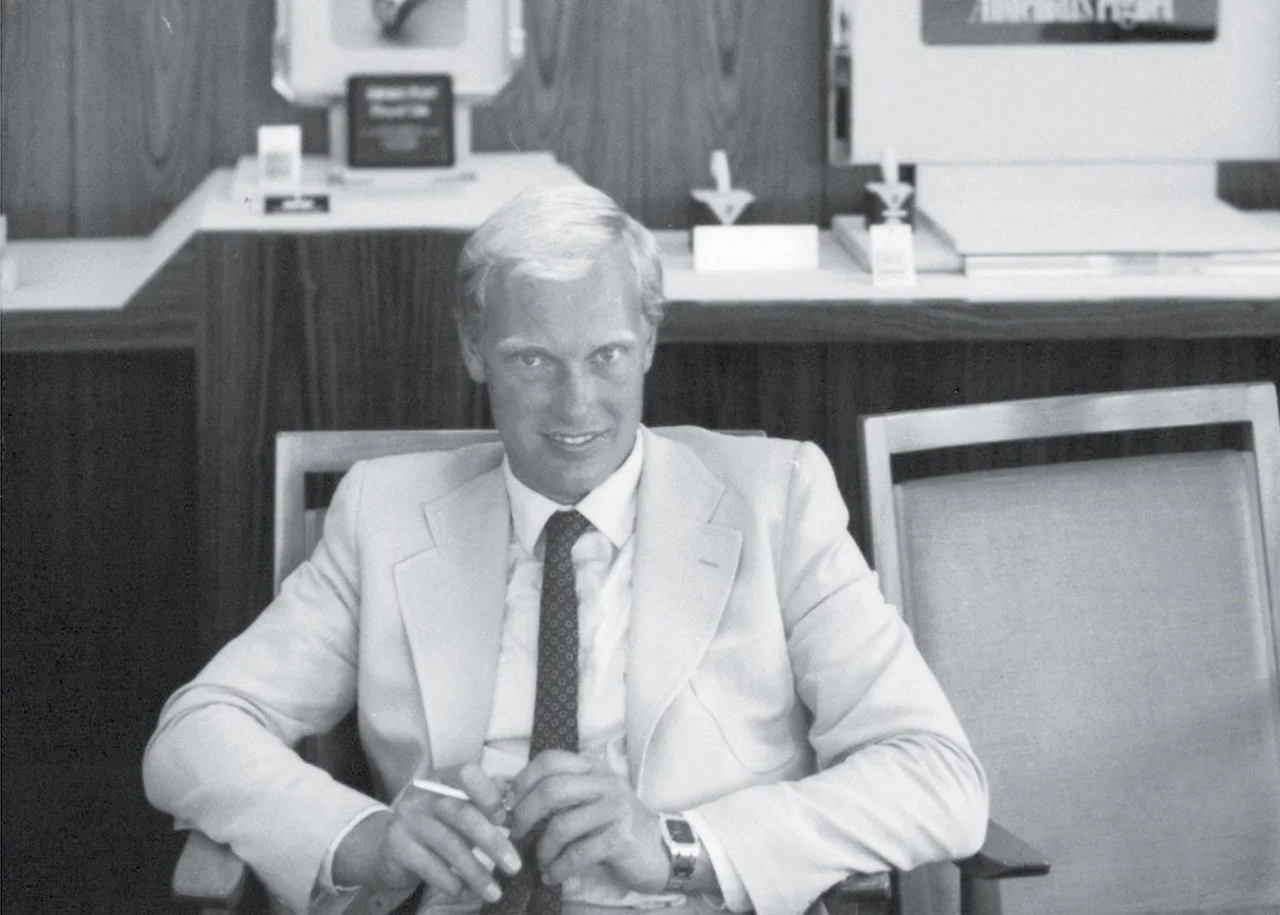
Circa 1978. Jean-Claude Biver, salesman in an Audemars Piguet sale point Employed as a salesman from 1976 and 1979, Jean-Claude Biver was initiated into watchmaking in Le Brassus. He contributed to the Royal Oak's success and to its transformation into a collection. Audemars Piguet Archives.
Four White Gold Prototypes – One of Them Made for the Shah of Iran
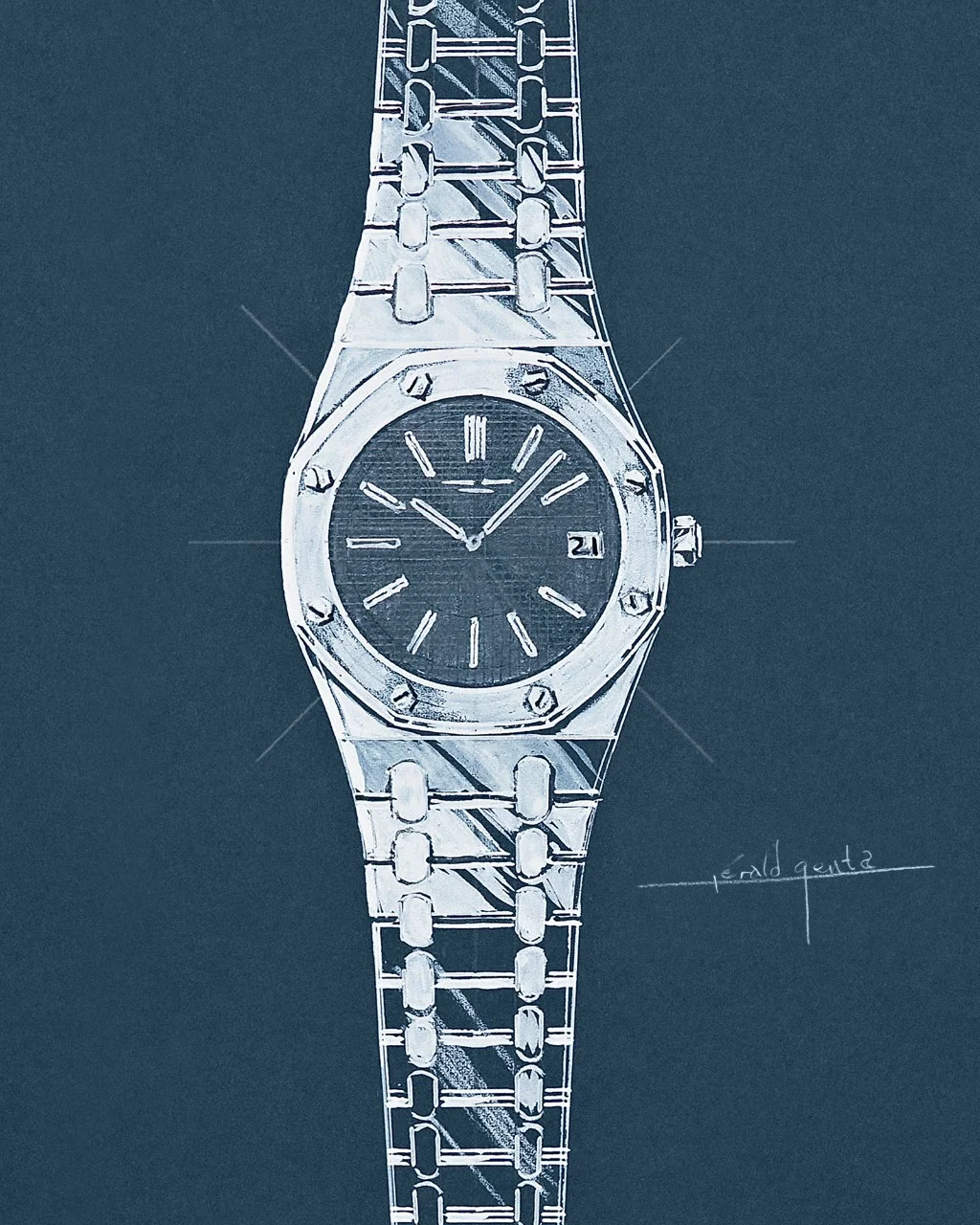
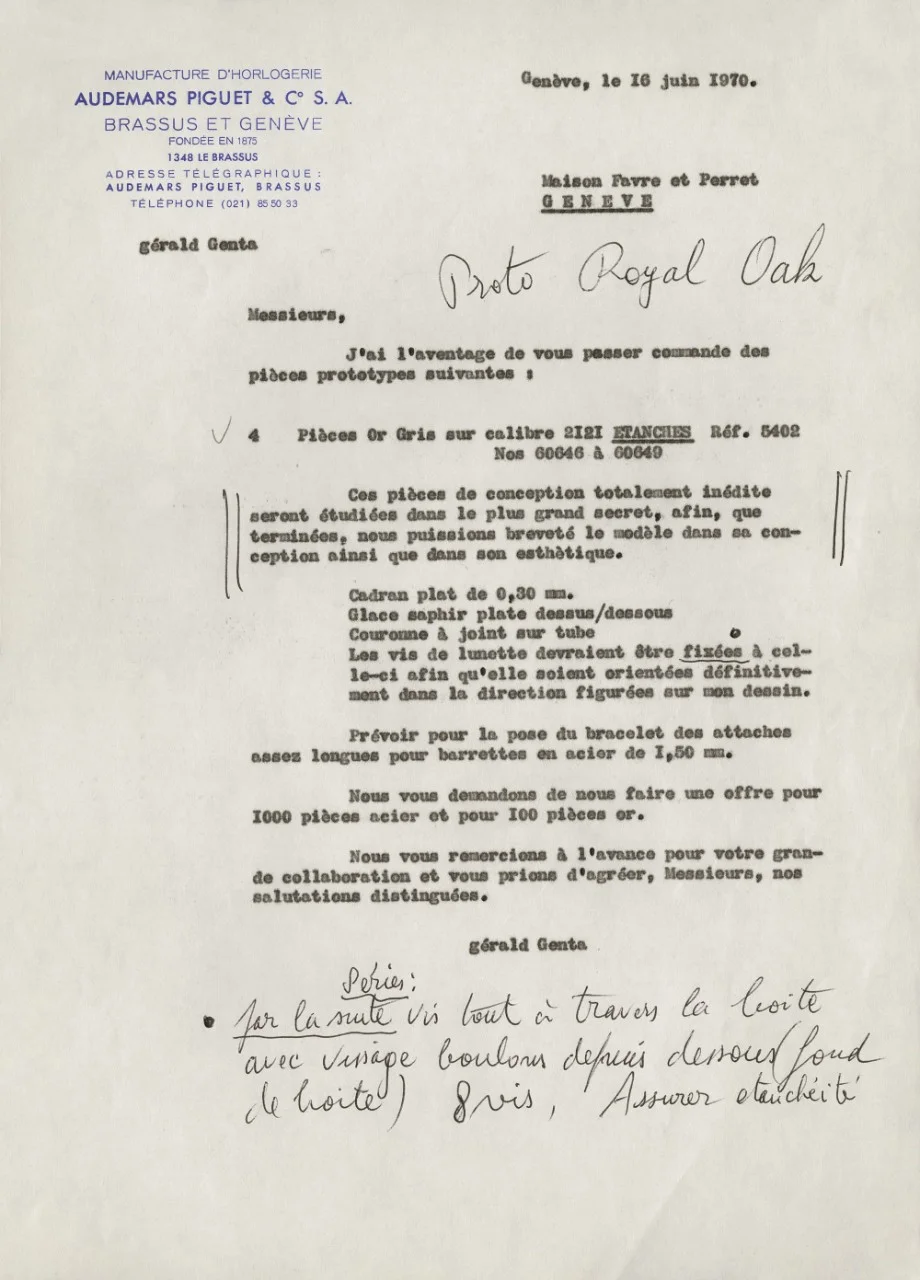
It may seem surprising that the first Royal Oak prototypes were made in gold in 1970, whereas steel was already a fundamental element of this model in 1972 (see the article on the birth of the Royal Oak). The reason is twofold. On the one hand, Georges Golay had entrusted production of the case to Favre-Perret, which had never worked with steel and which needed time to adapt its traditional expertise to this material, which is much harder than gold and platinum. On the other hand, the case structure was unprecedented and posed a major challenge in terms of water resistance. In June 1970, the four prototypes numbered from 60646 to 60649 and ordered by Gérald Genta were made of white gold. At least two were melted down and only one was fitted with a movement, for a prestigious customer.
Prototype No. 60647, bearing small number 101 and equipped with movement 127230 was sold to Vacheron Constantin on July 6, 1972. Verbal sources close to the Iranian court suggest that this watch was intended for Shah Mohammad Reza Pahlavi, who is said to have previewed a white gold prototype and ordered a model of this kind, on condition that it remained in white gold. Audemars Piguet is said to have bent the rules and assembled this single example. Since the 1950s, Vacheron Constantin had been distributing the Audemars Piguet brand and enjoyed good relations with the Shah's court.
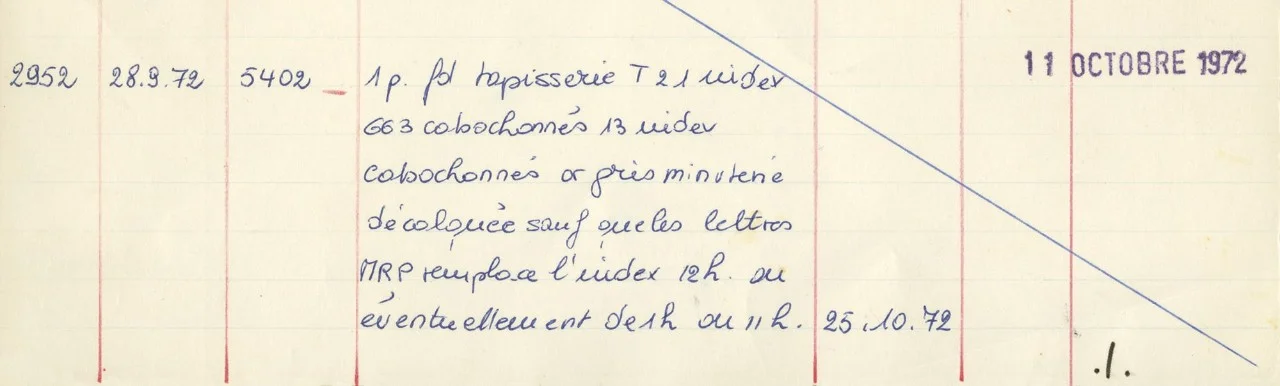
In addition, the Audemars Piguet archives mention a special order for dial 5402, dated September 28, 1972, for a single dial with the initials "MRP" (probably standing for Mohammad Reza Pahlavi) on the 12 o’clock hour-marker, suggesting that the Shah wanted to personalise his watch. In 1980, it returned to Switzerland via Jean-Pierre Cottier, a famous lawyer from the princely and royal courts. Badly damaged (it is said that the Shah tested the watch in his swimming pool), case no. 60647 was then destroyed and replaced by no. B34438.
The white gold prototype assembled especially for the Shah of Iran is therefore an exception, as it was not until 1977 that gold officially entered the collection.
Paternity Dispute
Whose idea was it to introduce gold into the Royal Oak collection? A study of the sources reveals several possible origins. Gérald Genta, the designer of the Royal Oak, had been wearing the Royal Oak 5402 no. A175 on his wrist since September 1972. At that time, he had distanced himself from Audemars Piguet, notably because he had just founded his own watch brand. In a recorded interview given in 2011, the man whom Asian collectors had nicknamed the "Picasso of Watches" tells how he replaced the bezel of his steel Royal Oak with yellow gold at a very early stage: "The Royal Oak I usually wear is in steel with a gold bezel. Georges Golay didn't know about this gold bezel, but I made one for Les Ambassadeurs [Editor’s Note: the famous Geneva retailer].” Genta explains that the latter had delivered 20 steel Royal Oak watches to him and that he had made gold bezels in his own workshops before reselling the transformed watches to Les Ambassadeurs for the retailer to market in the United States. Gérald Genta adds: "…because it is obvious that America at that time could not bear a watch that was any other colour than yellow.” For many regions of the world, including the United States, yellow gold was indeed long considered as THE metal for Haute Horlogerie watches.
The Audemars Piguet archives contain the manuscript of an unpublished book written by a certain Edgar Barry between 1993 and 1995 and devoted to the history of the Royal Oak. This document relates that the idea of a two-tone Royal Oak was born during a discussion between the Parisian jeweller Fred and Georges Golay on a sunny terrace in the south of France: "It was the kind of day which makes you feel that all is right with the world. And Fred, perhaps seeing a reflection of the sun on Golay's Royal Oak, said: ‘Why don't you do a version with a band of gold – mix the stainless steel and gold together?’”
In 1977, Jean-Claude Biver was responsible for the Swiss, German and Italian markets. In an interview from 2021, he explains more prosaically that the success of the Royal Oak in steel naturally inspired its variations in precious materials: "It was an obvious choice.”
The archives do not enable us to decide which of these three versions is the most accurate. No doubt all three were combined to produce the gold variations of the Royal Oak. Nonetheless, a close examination of the records reveals an unexpected fact: the first variations appeared not on the legendary Model 5402, but on the first women’s Royal Oak, Model 8638.
Gold and Steel: An Improbable Pairing
Watches with exteriors featuring several metal colours have appeared since the Renaissance. Associating different shades enriched the ornamentation and various colours in the form of enamels, pearls or gems were sometimes added. During the Art Deco years, Audemars Piguet continued this tradition by combining gold and platinum, sometimes adding rubies, emeralds or coloured dials.
In the field of Haute Horlogerie, on the other hand, it is infinitely rarer for a watch to combine gold and steel. This pairing was doubtless perceived as an alliance between the noble and the prosaic, the aristocratic and the mundane. At Audemars Piguet, a few rare examples appeared during World War II, in particular the Pre-Model 1533 chronograph, whose 18-carat pink gold bezel was teamed with a steel case middle (and which inspired the Model [Re]master01 26595SR presented in 2020 on the occasion of the opening of the Musée Atelier Audemars Piguet). One oral tradition explains the choice of steel by the shortage of gold during the conflict. Another justifies it by the customs restrictions on trade in precious metals, particularly with Italy. Nevertheless, this case is exceptional and after the war, several bimetallic examples of similar watches were re-cased-up entirely in gold.
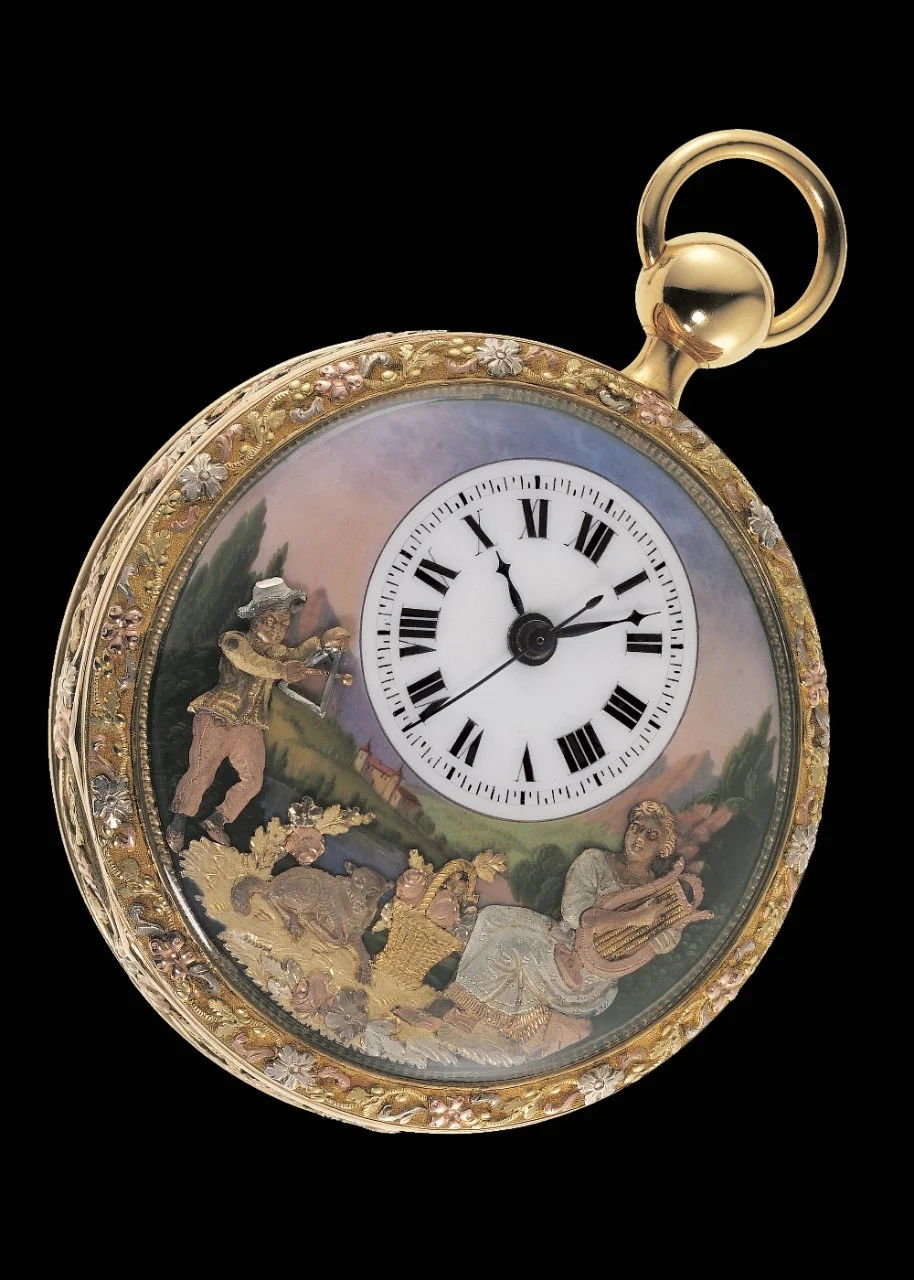
Circa 1825. Piguet and Meylan music watch and automaton. Music and automaton on demand and in passing (19 blades). Quarter repeater. 53.5 mm. Pink, white, yellow and green gold. Enamel. Audemars Piguet Heritage, inv. 53.
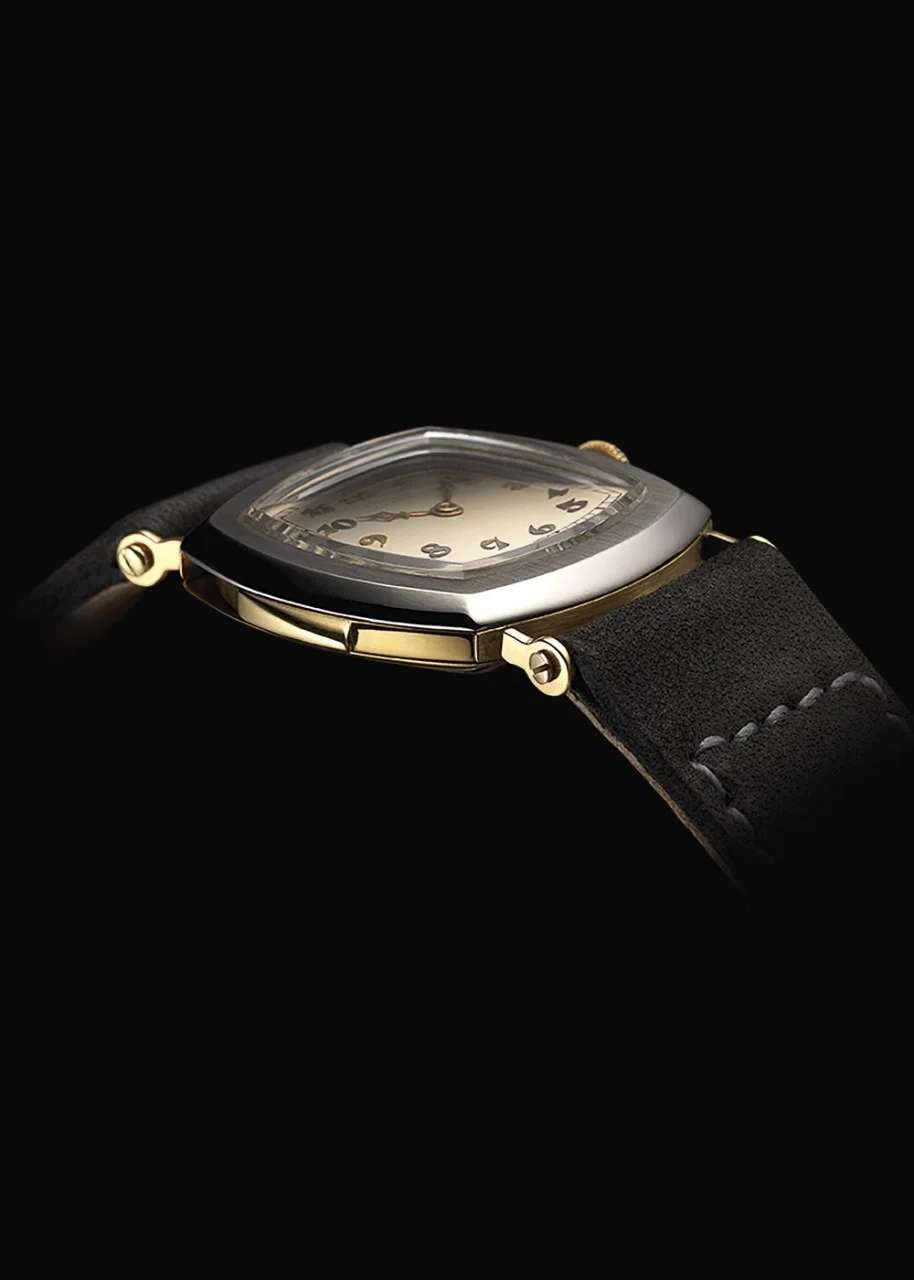
1923. Repeater wristwatch. Minute repeater. Ultra-thin Calibre 9½SMV#6 (3.11 mm). Movement and case no. 14996. Fine striped dial signed Gübelin. Case in 18-carat yellow gold and platinum. Sold to Gübelin in 1923. Audemars Piguet Heritage, inv. 1709.
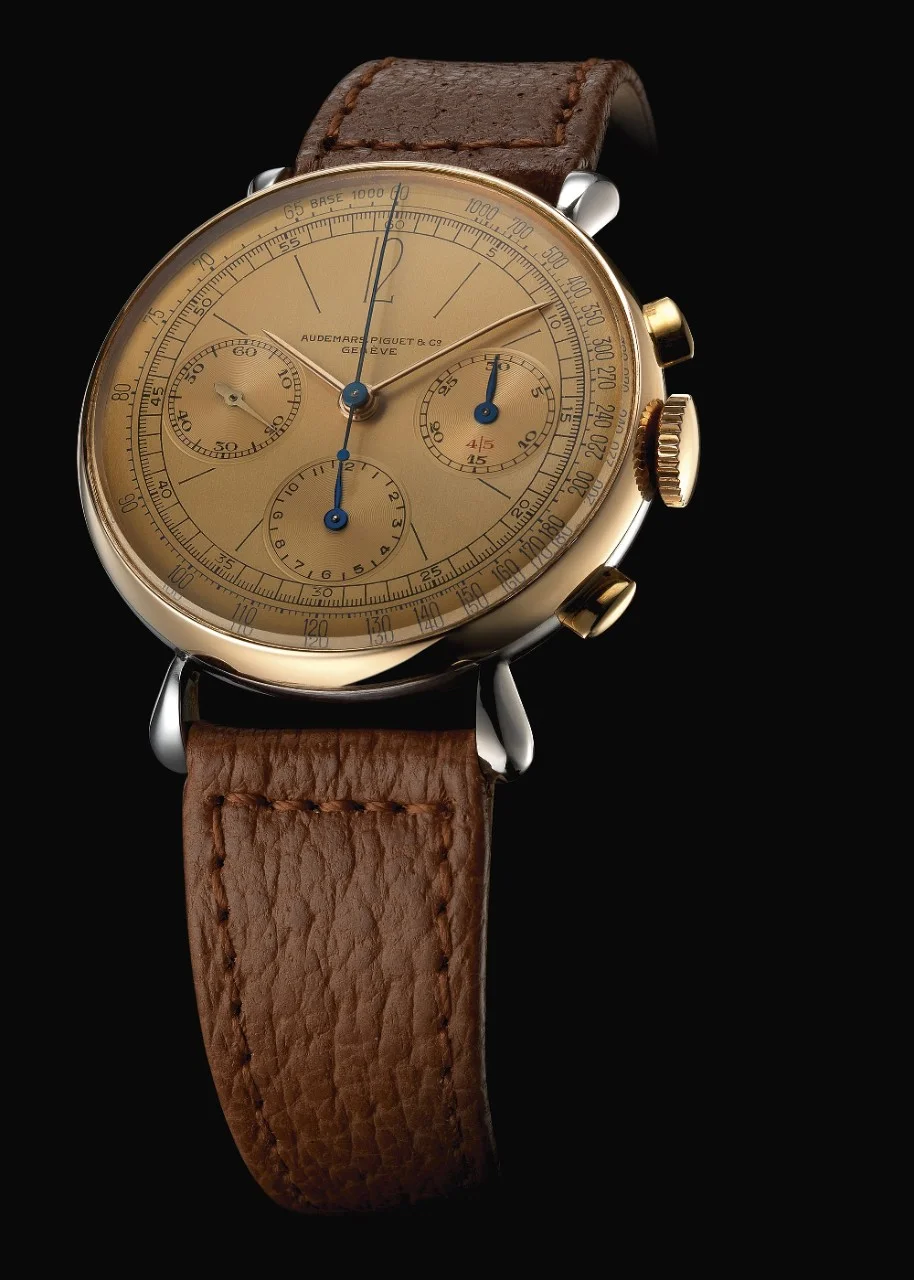
1943. Chronograph wristwatch Pre-Model 1533. Calibre 13VZAH. Movement and case no. 45603. Pink-gold-toned dial. Steel and 18-carat pink gold case. Sold to Casanova (Bologna) in 1943. Audemars Piguet Heritage, inv. 1660.
First Two-Tone Royal Oak
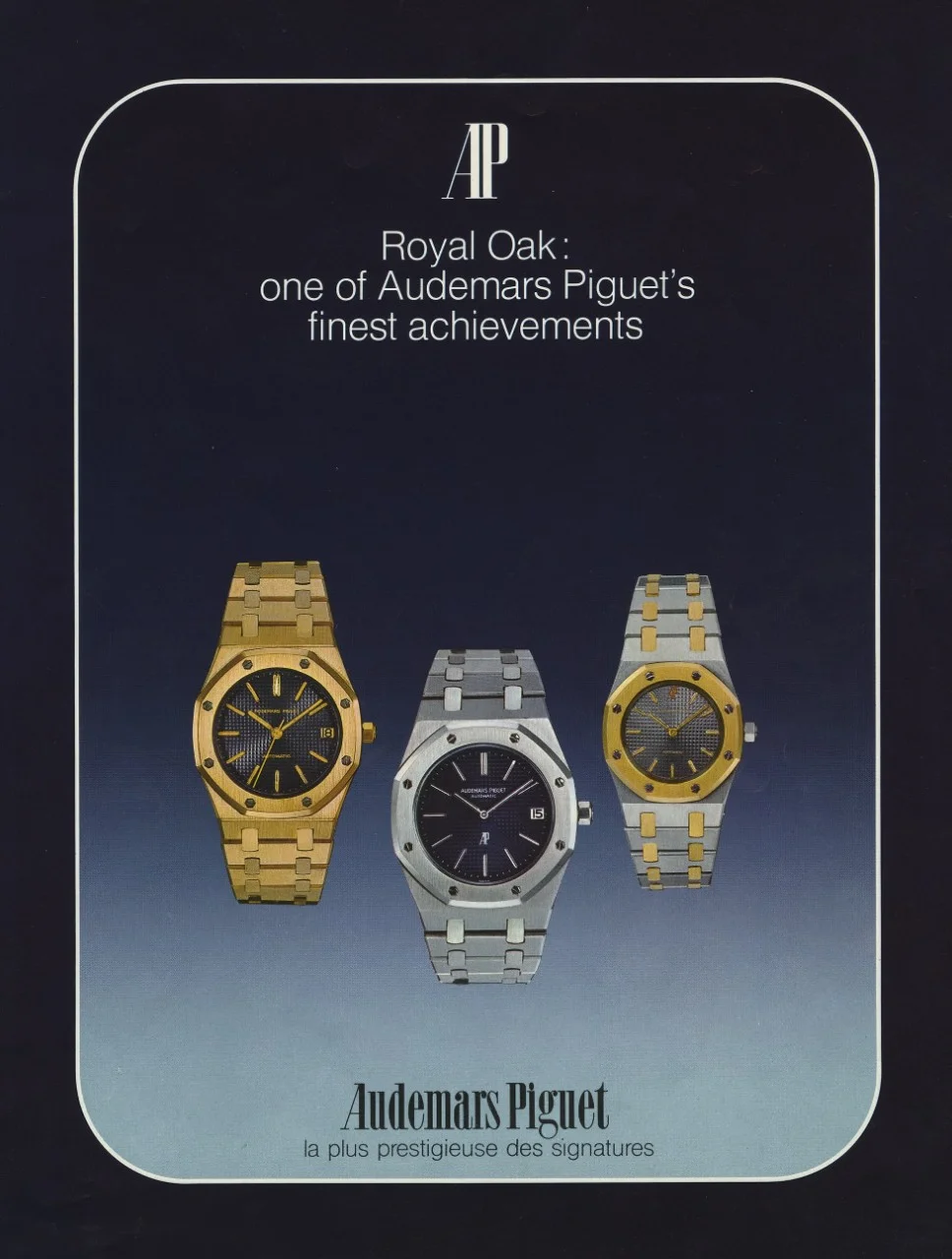
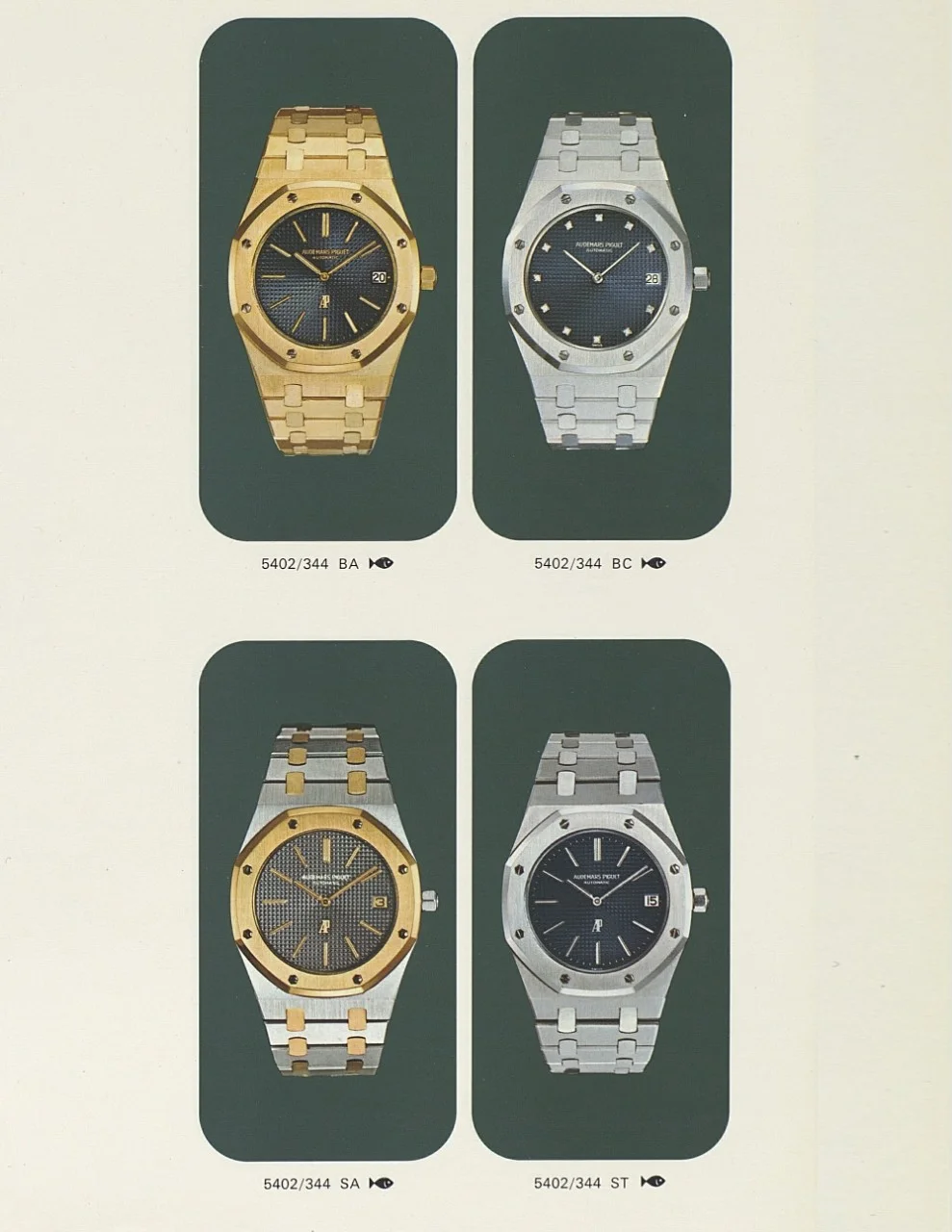
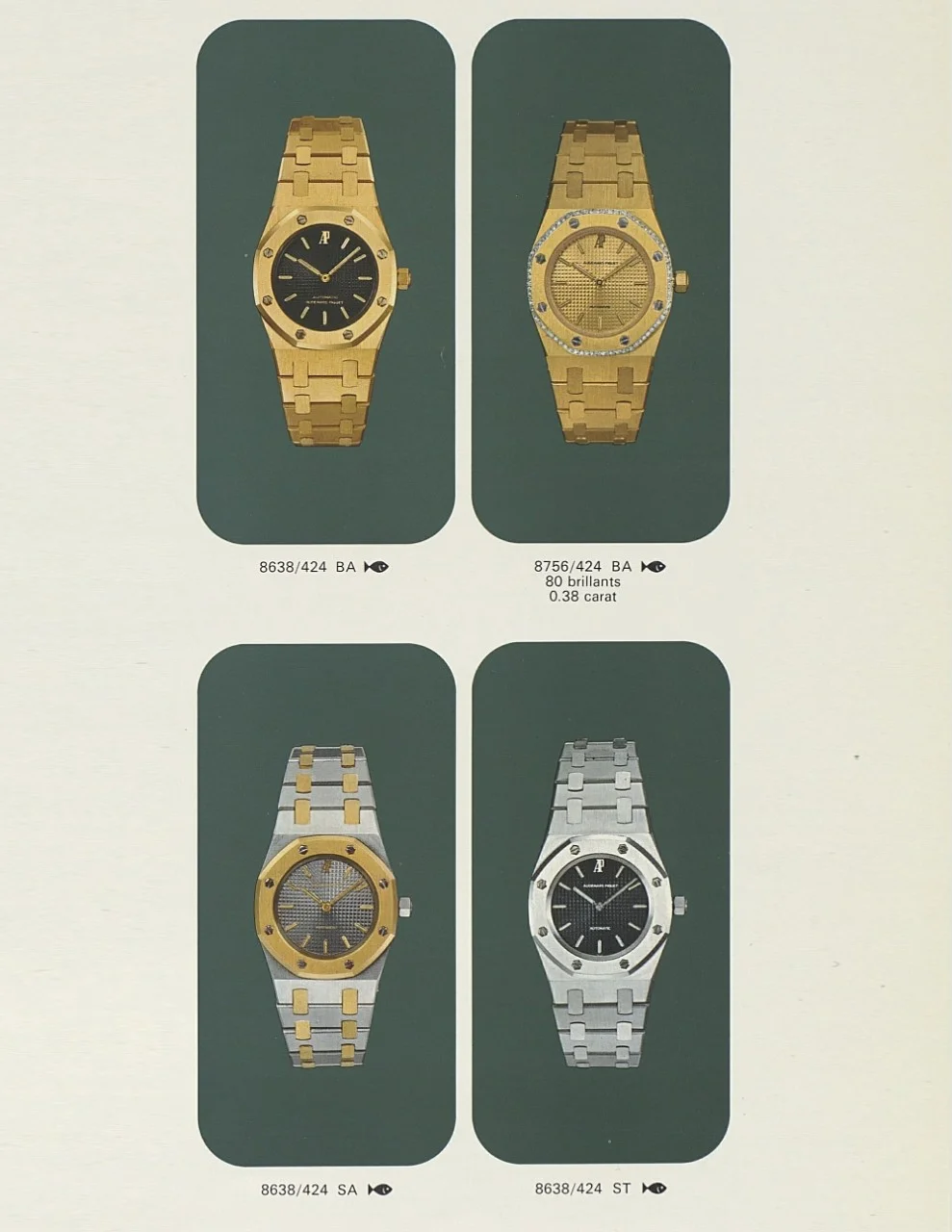
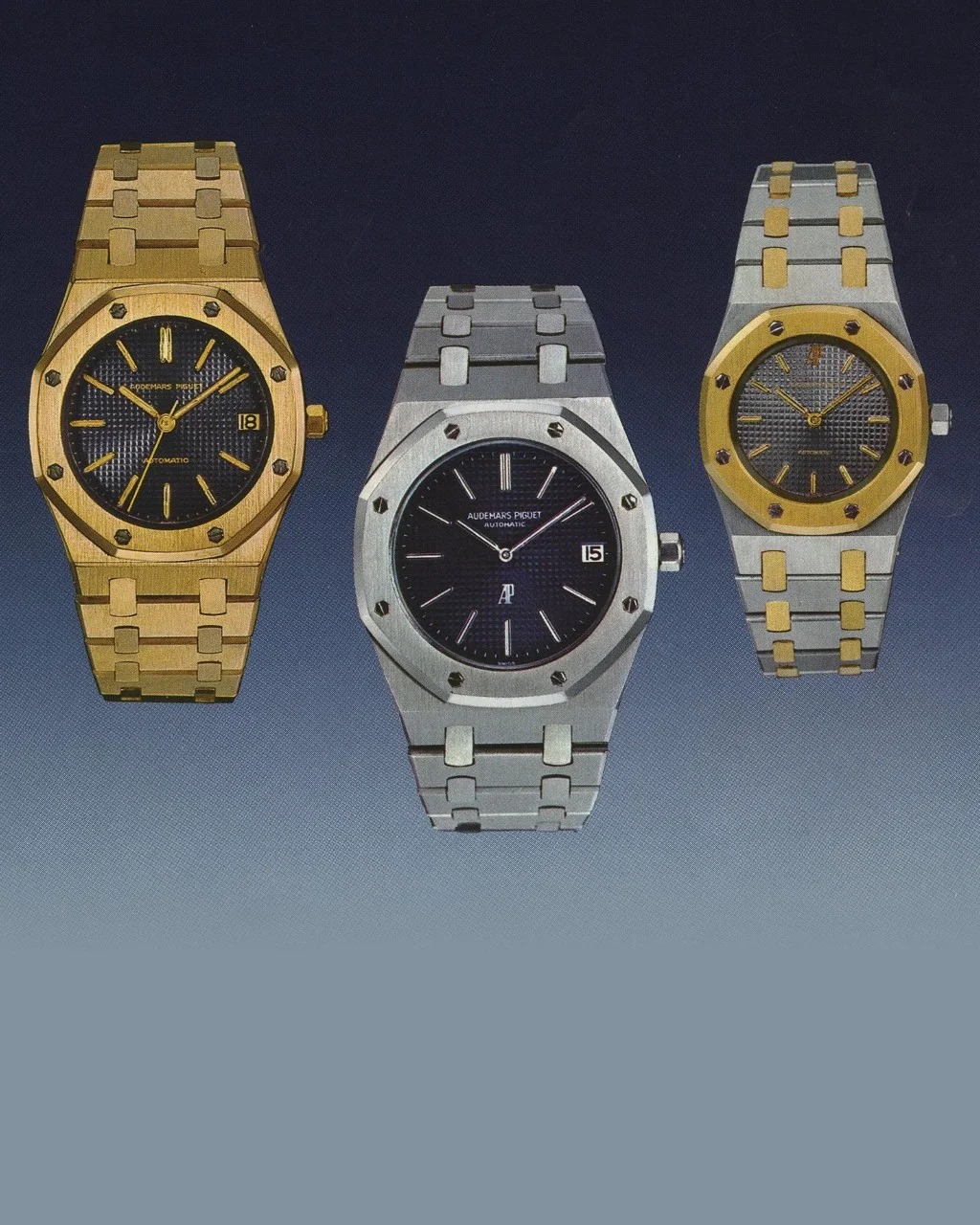
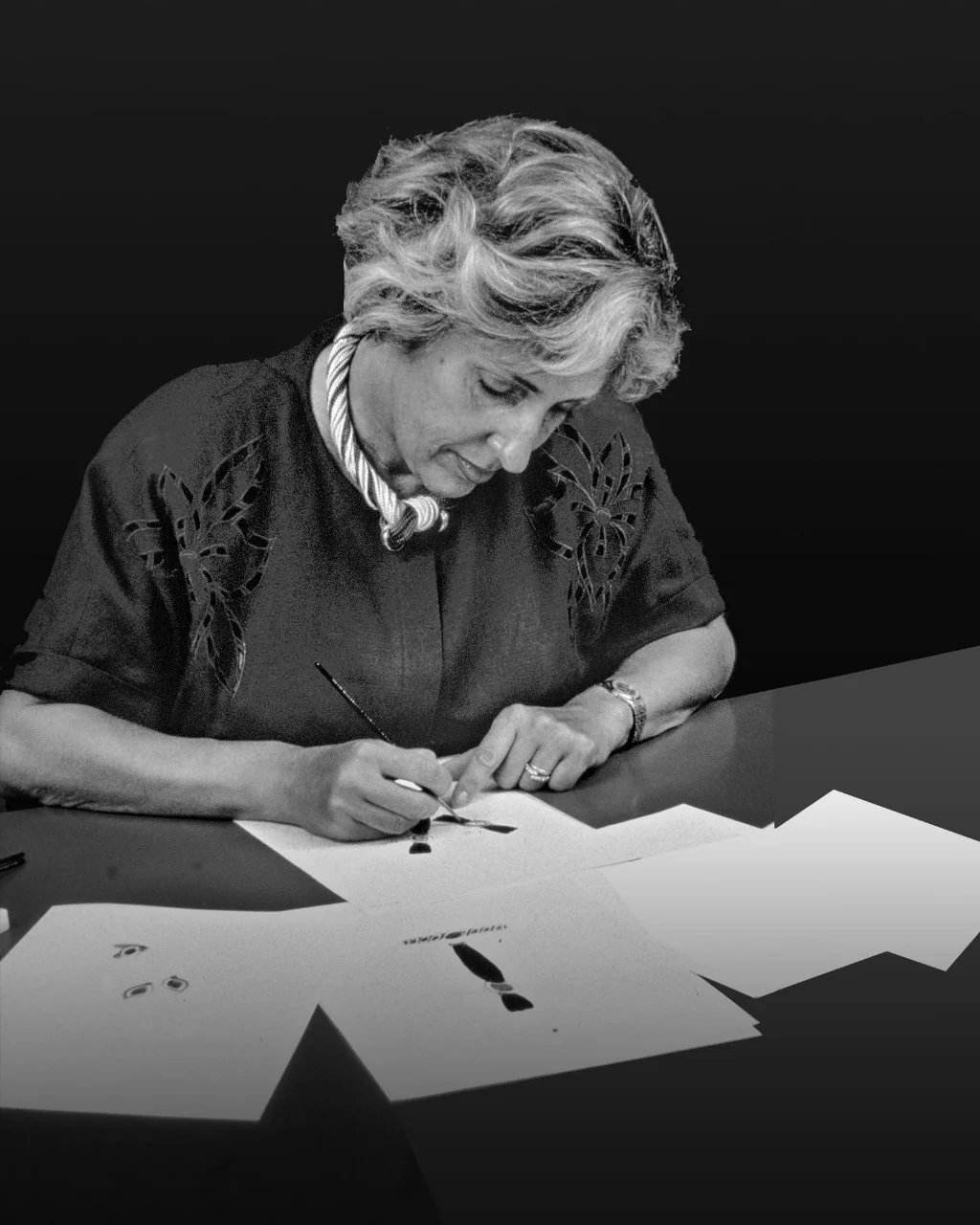
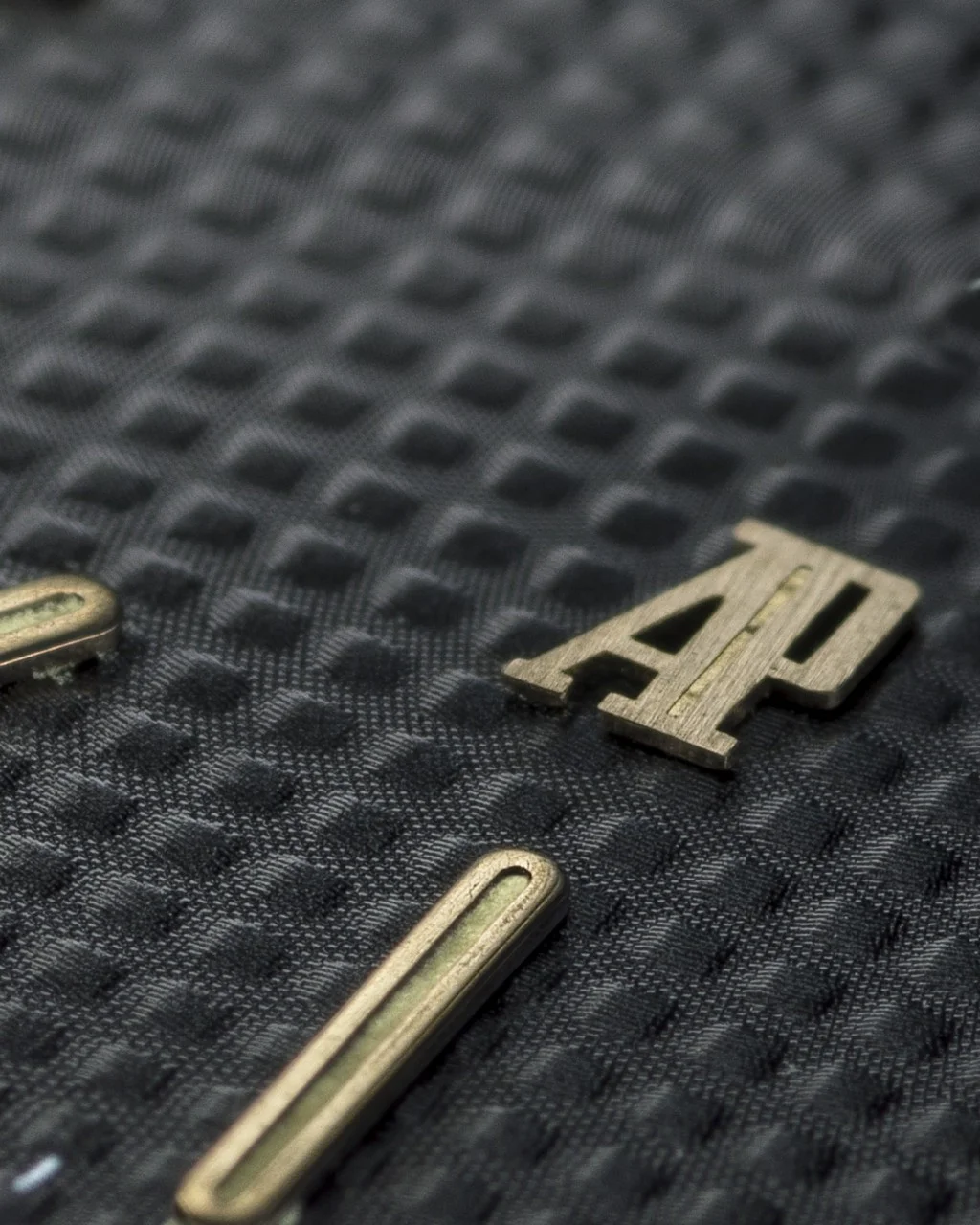
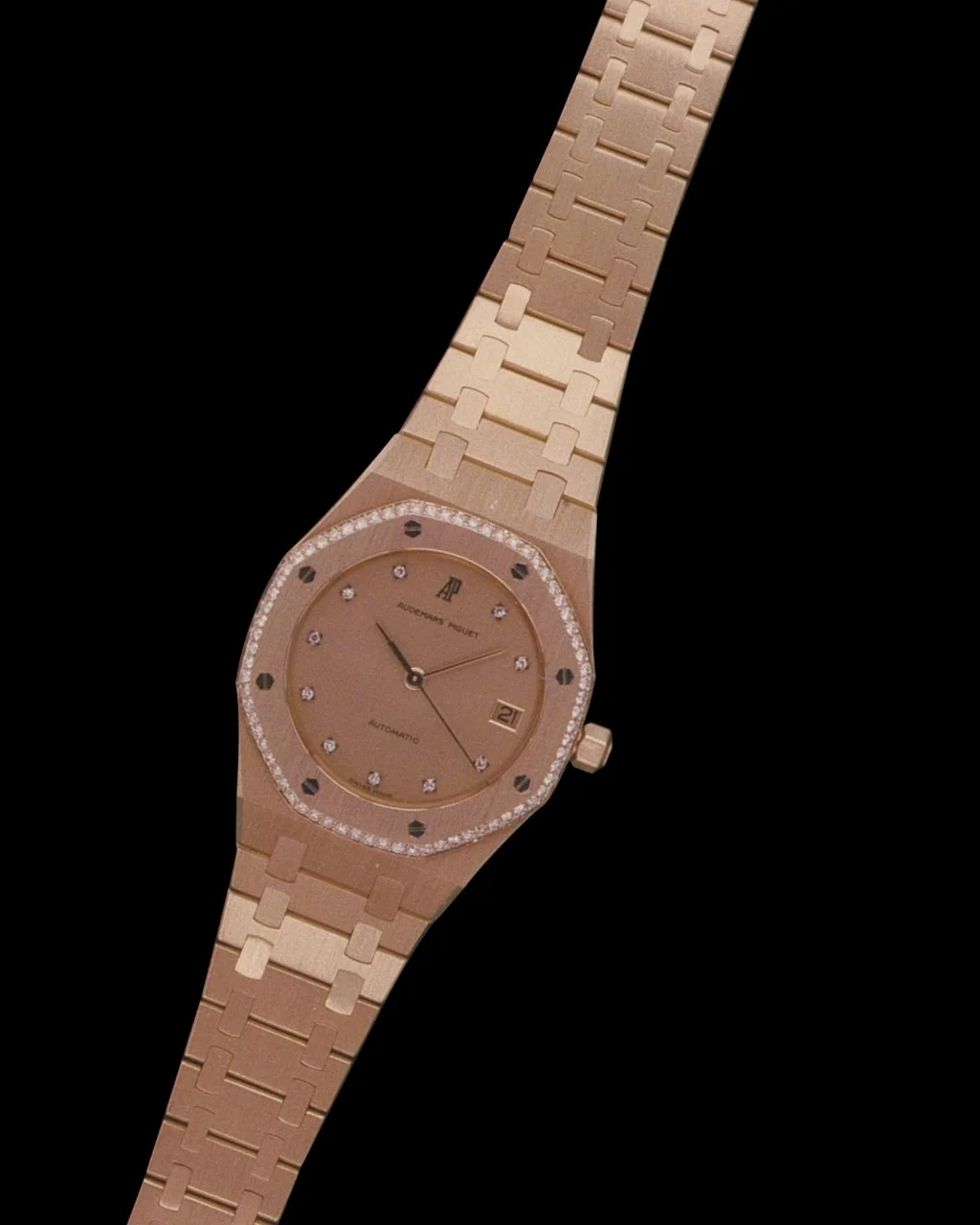
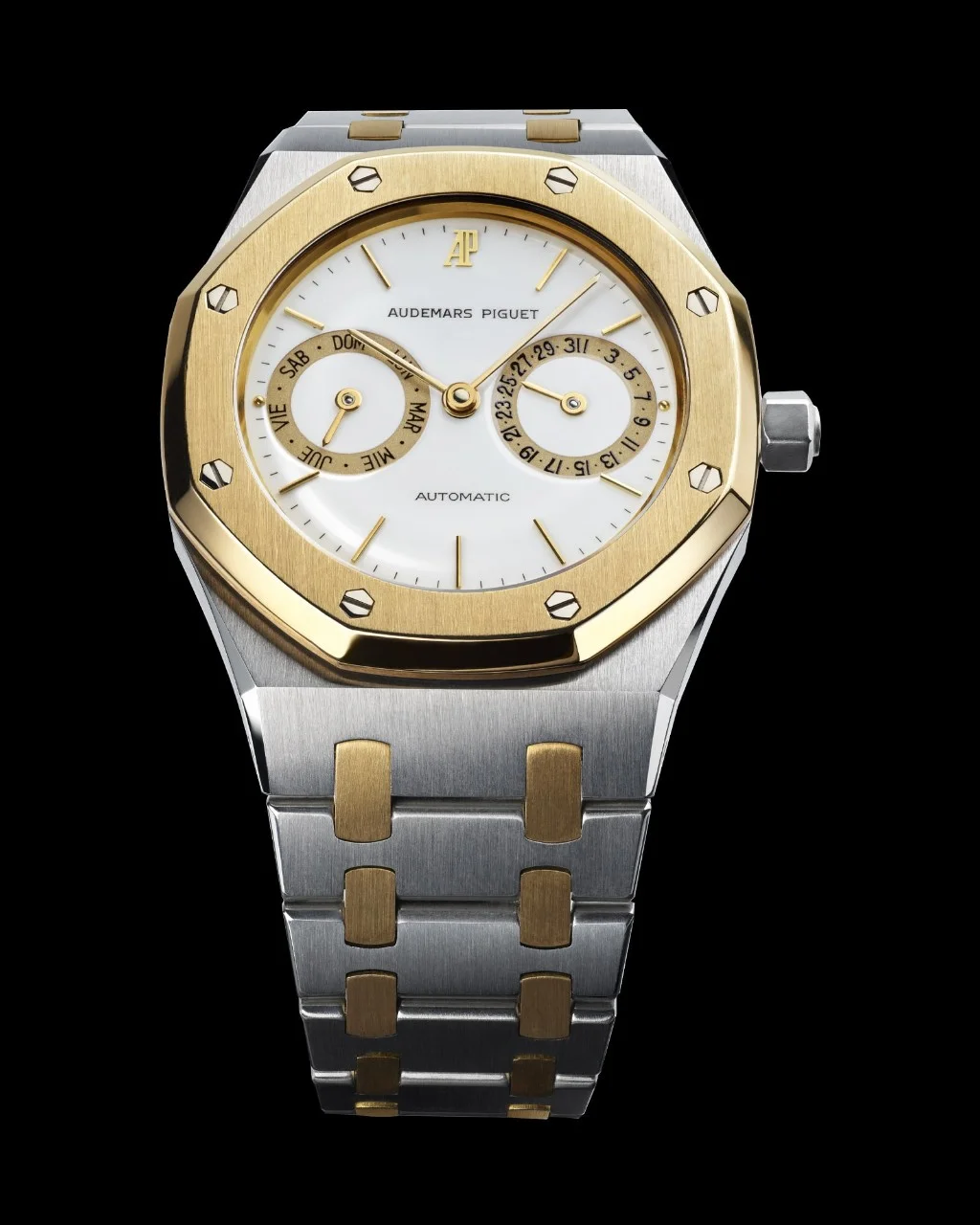
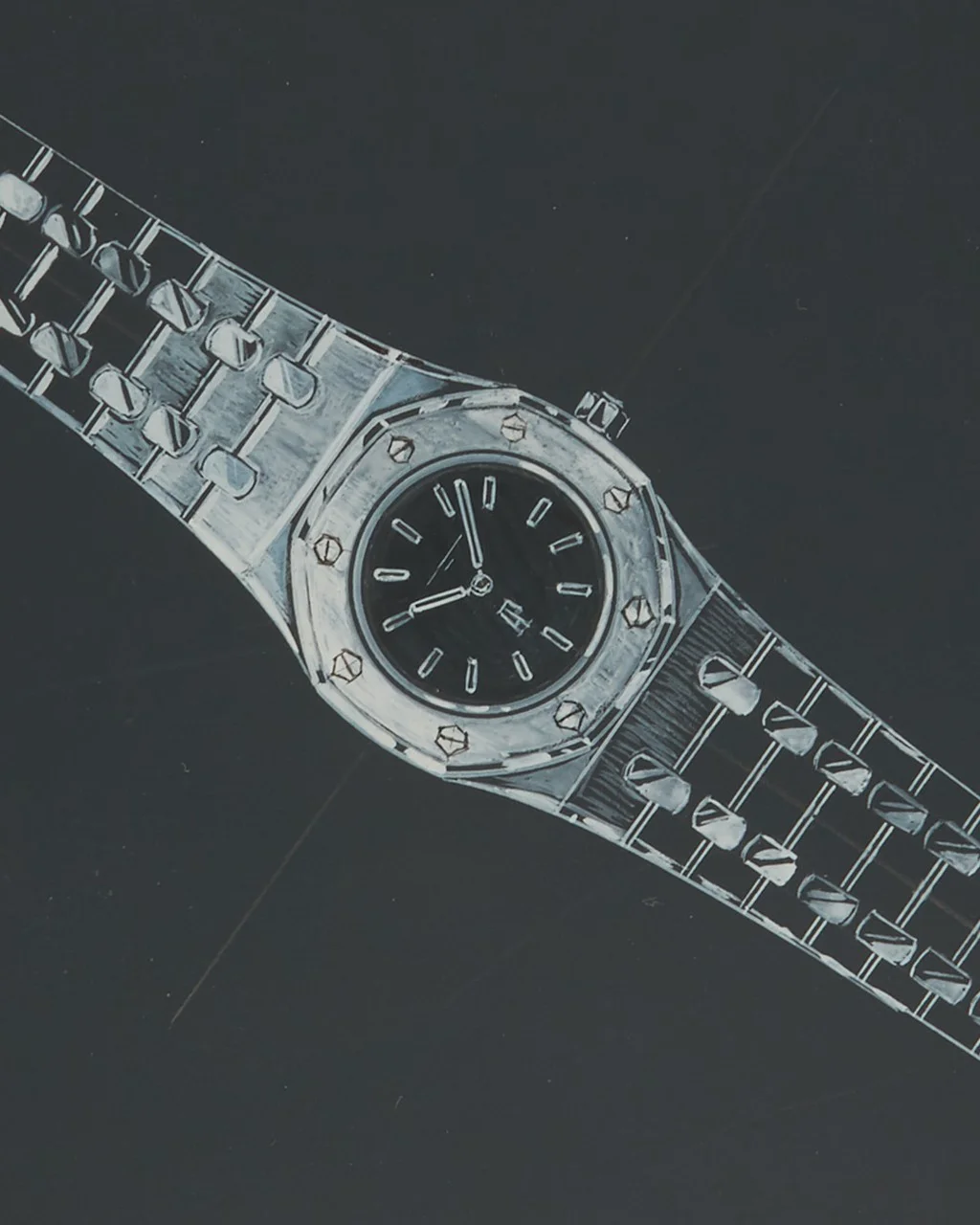
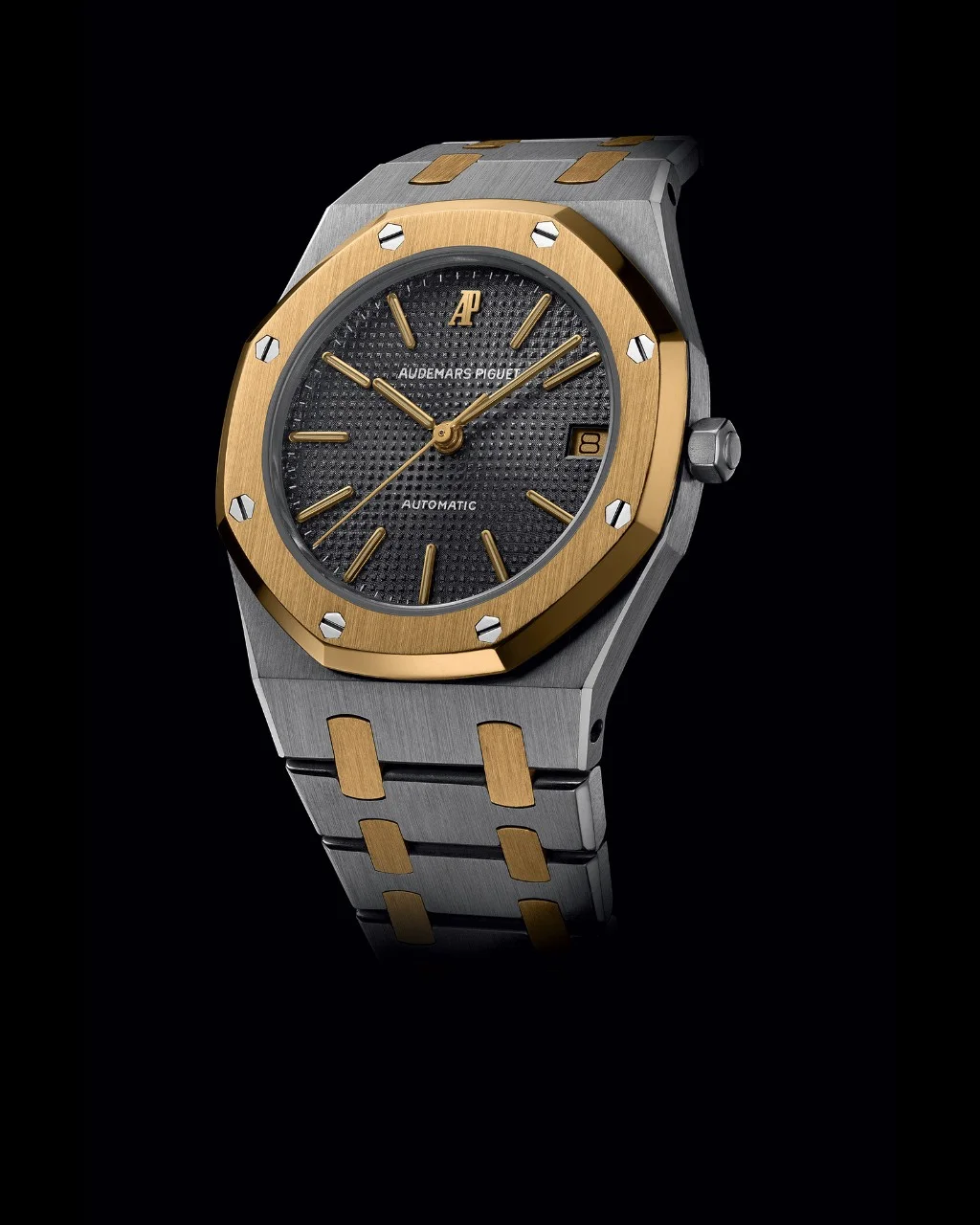
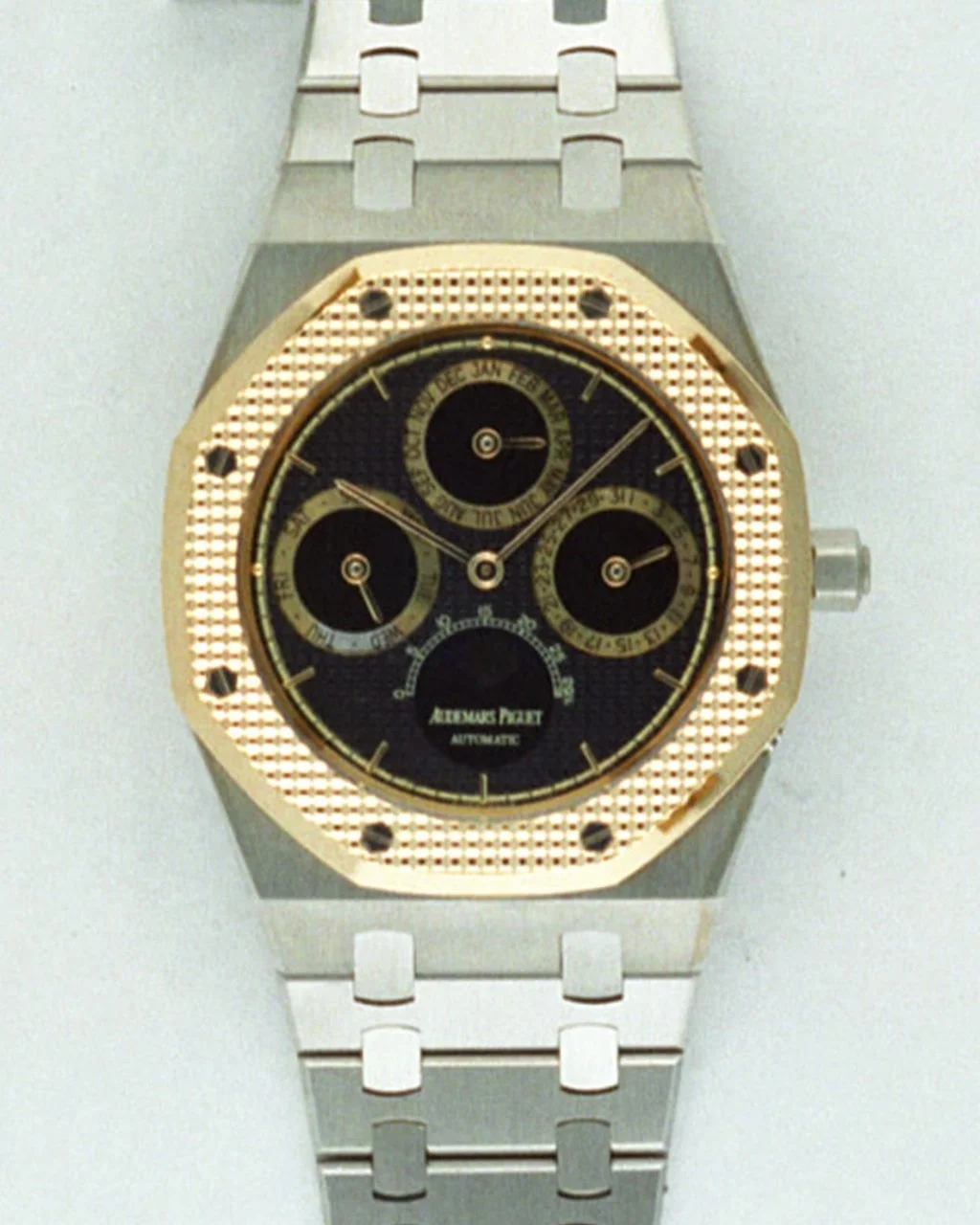
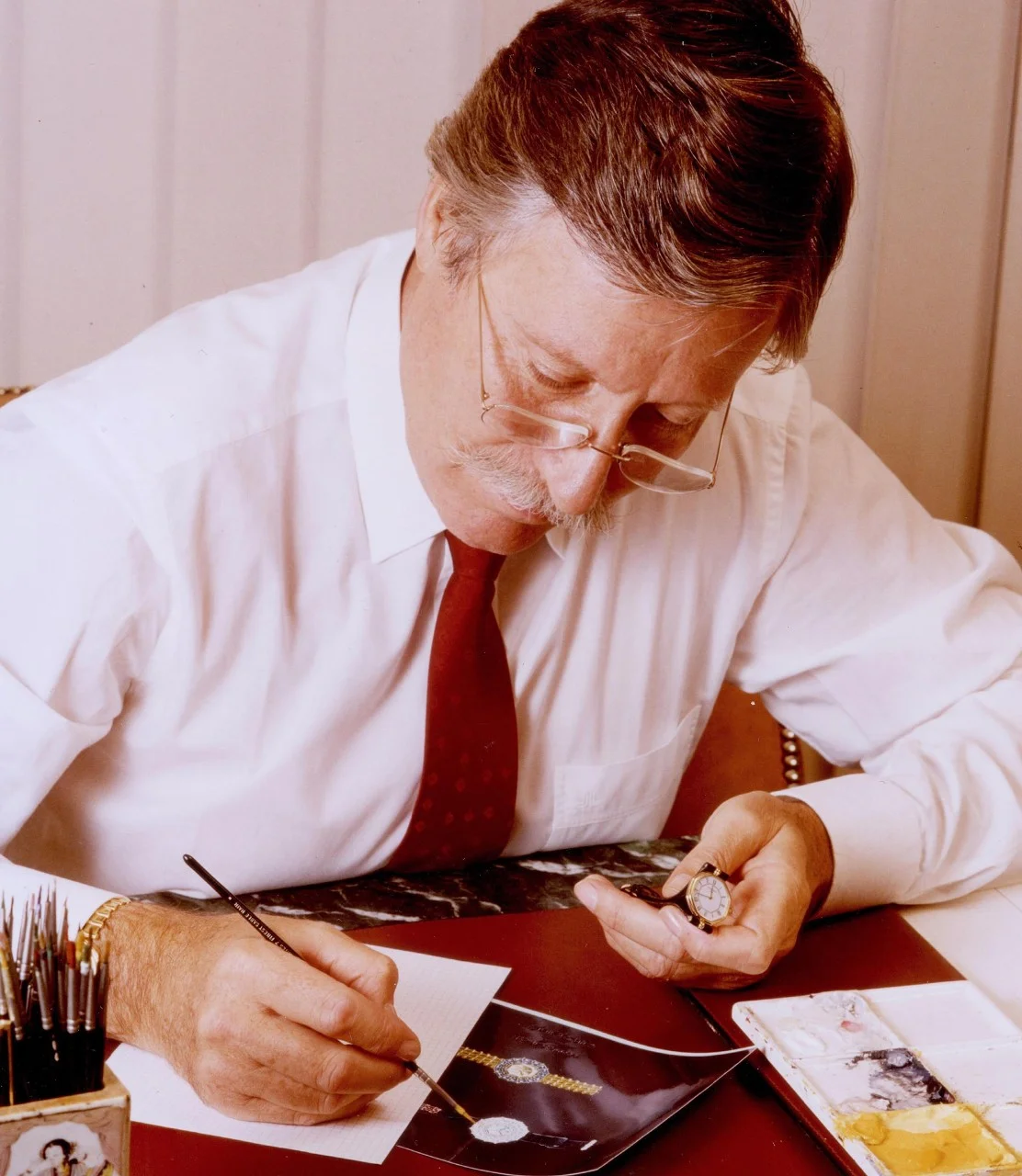
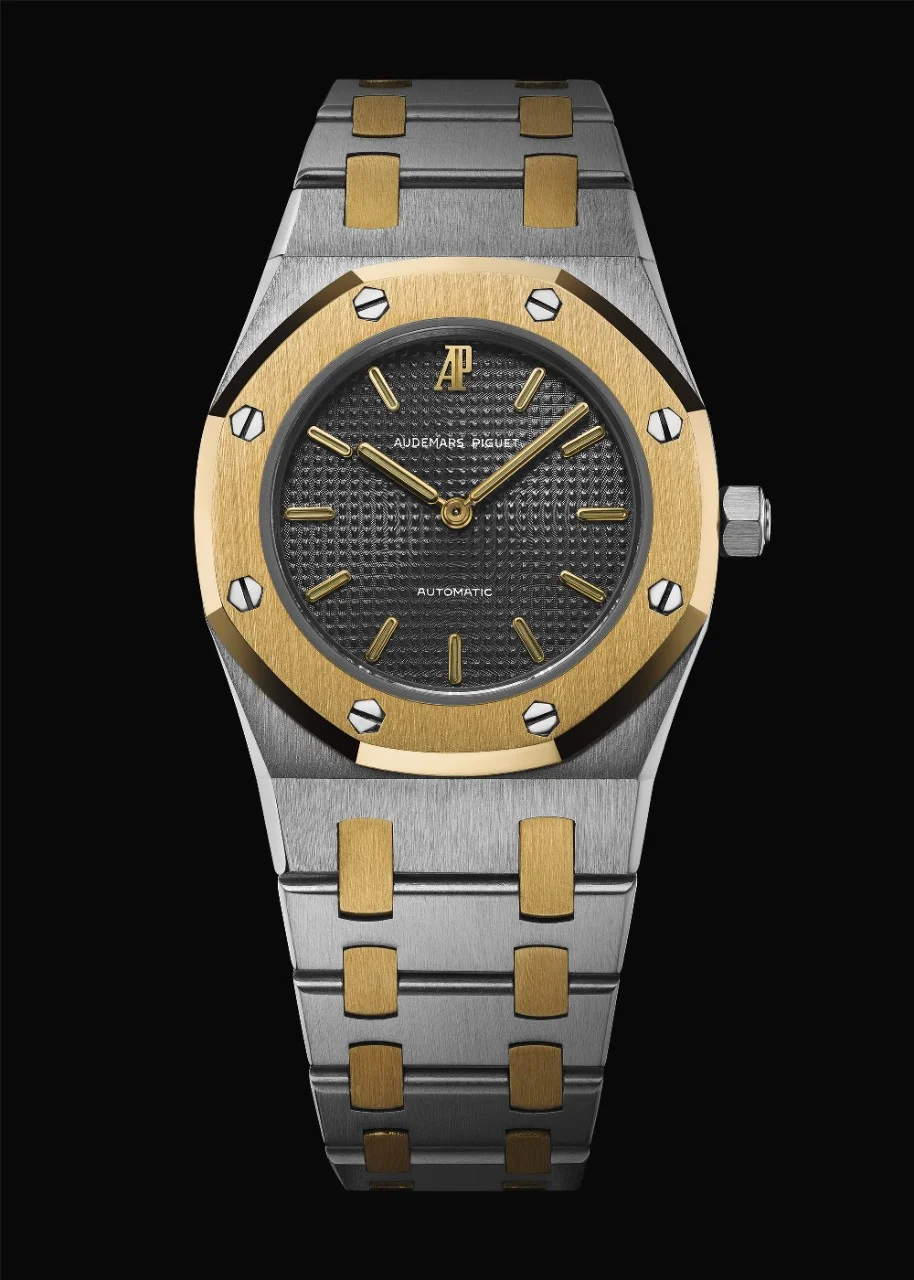
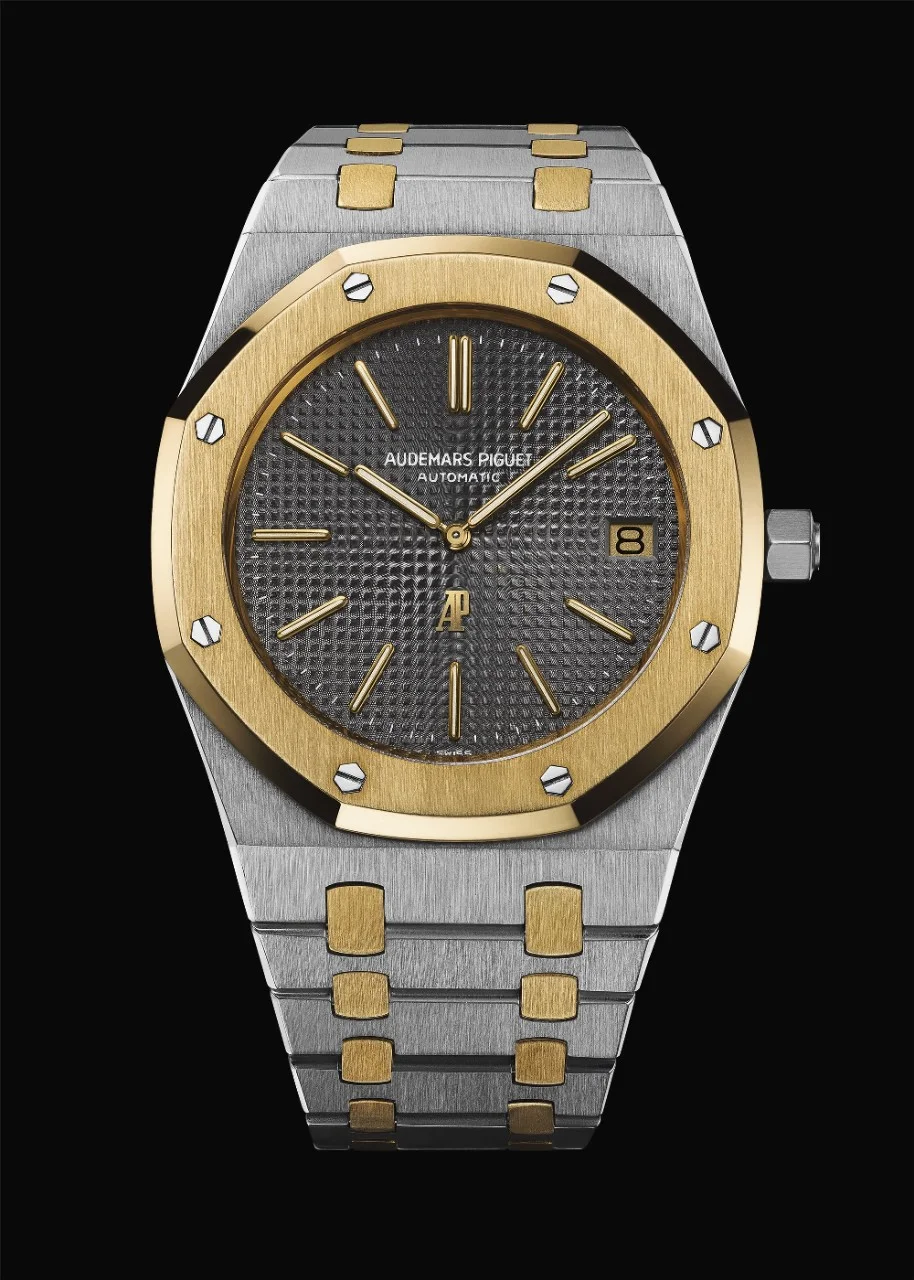
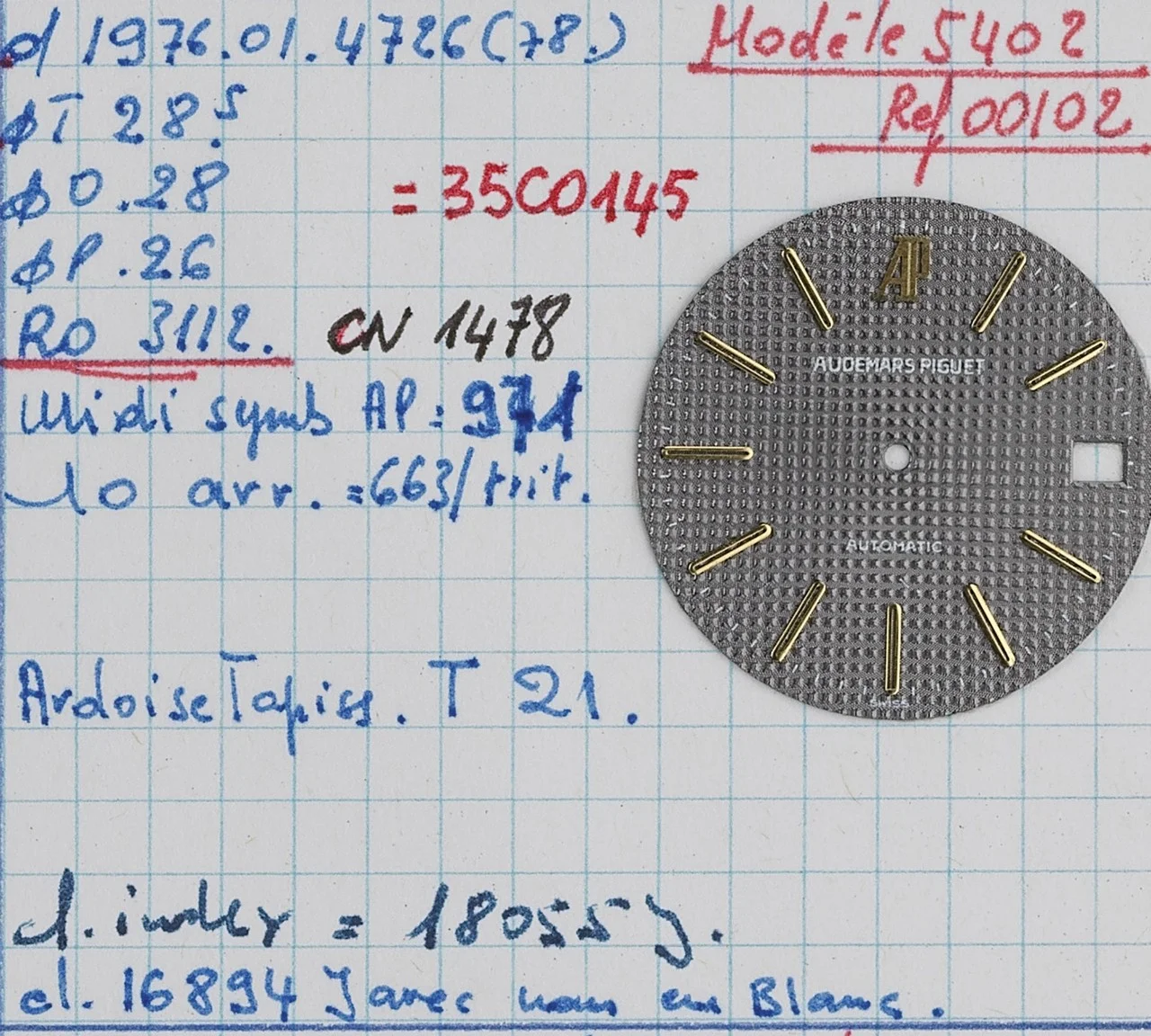
The first Royal Oak combining gold and steel was made for women. Model 8638SA (the "SA" code is a contraction of "ST" for steel and "BA" for yellow gold), bearing case number 14103, left Le Brassus on February 23, 1977 for the Swiss market, followed the next day by two identical watches – one destined for Italy and the other for New York. Three months later Model 5402SA made its debut. These two Royal Oak examples are among the first in history to associate steel with gold, on both case and bracelet, a combination which enriches the light effects with contrasting colours. Jacqueline Dimier designed these timepieces like paintings. The background was uniformly grey: from the bracelet to the case middle, slate grey T21 Tapisserie dial and crown. The gold components stood out, strongly highlighting their most salient features. The yellow gold bezel gave structure to the watch and framed the dial which was also enhanced by hands, hour-markers and the AP monogram, all crafted in yellow gold. Similarly, the bracelet featured gold studs adding further yellow accents.
From then on, the so-called "two-tone" or "bimetallic" Royal Oak watches were all to adopt this same principle. The bezel, studs and hour-markers/hands were interpreted in the same material (or the same colour) – whether steel, gold, platinum, titanium or tantalum – while a second material was reserved for the case middle, bracelet links and crown. In the space of 50 years, dozens of different combinations have been created. Among them are the "AC" with a yellow gold case and a white gold bezel, the "SP" which marries steel and platinum, the "TR" which unites tantalum and pink gold, and the "IP" titanium and platinum versions, etc. These codes are described in detail in the article dedicated to Audemars Piguet watch numbering.
All-Gold Variations
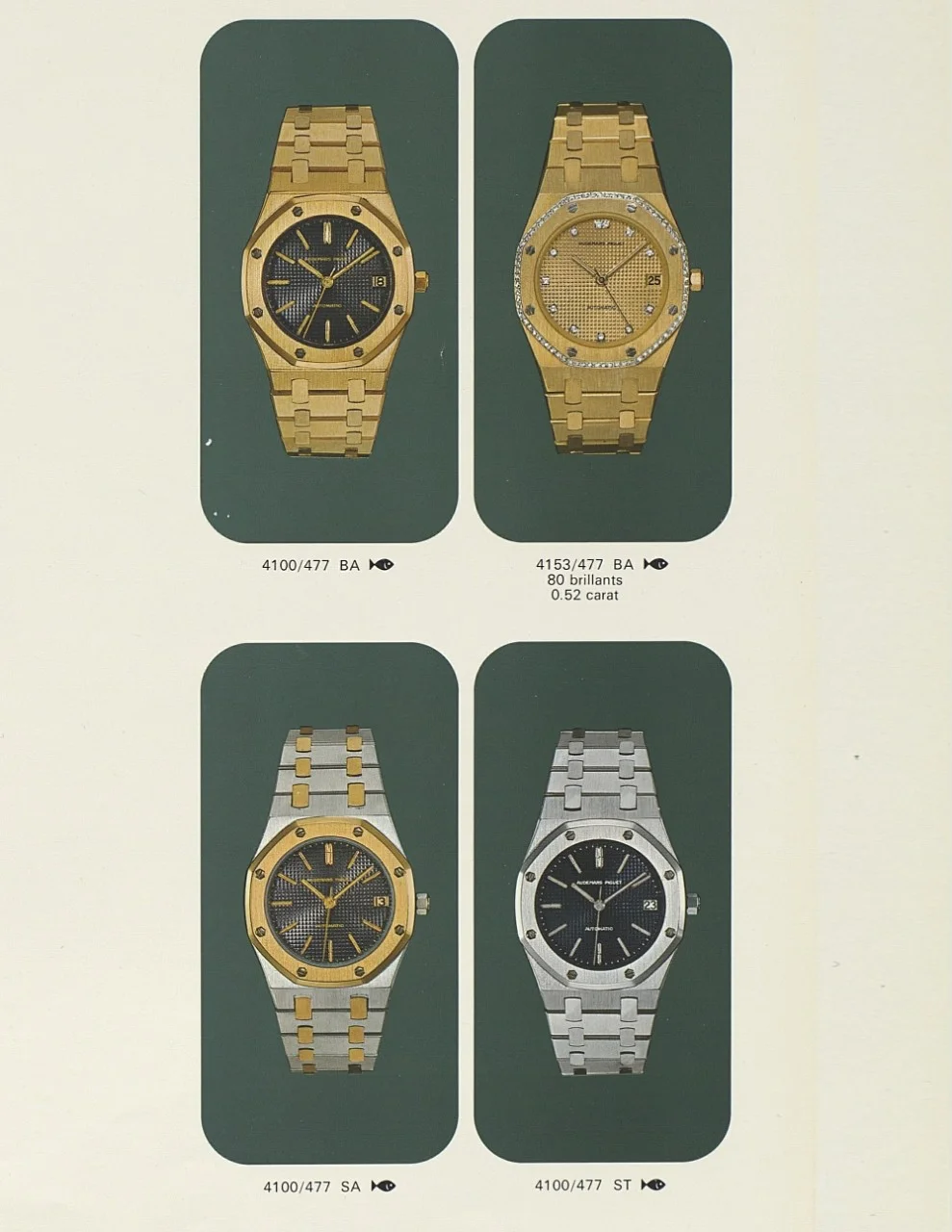
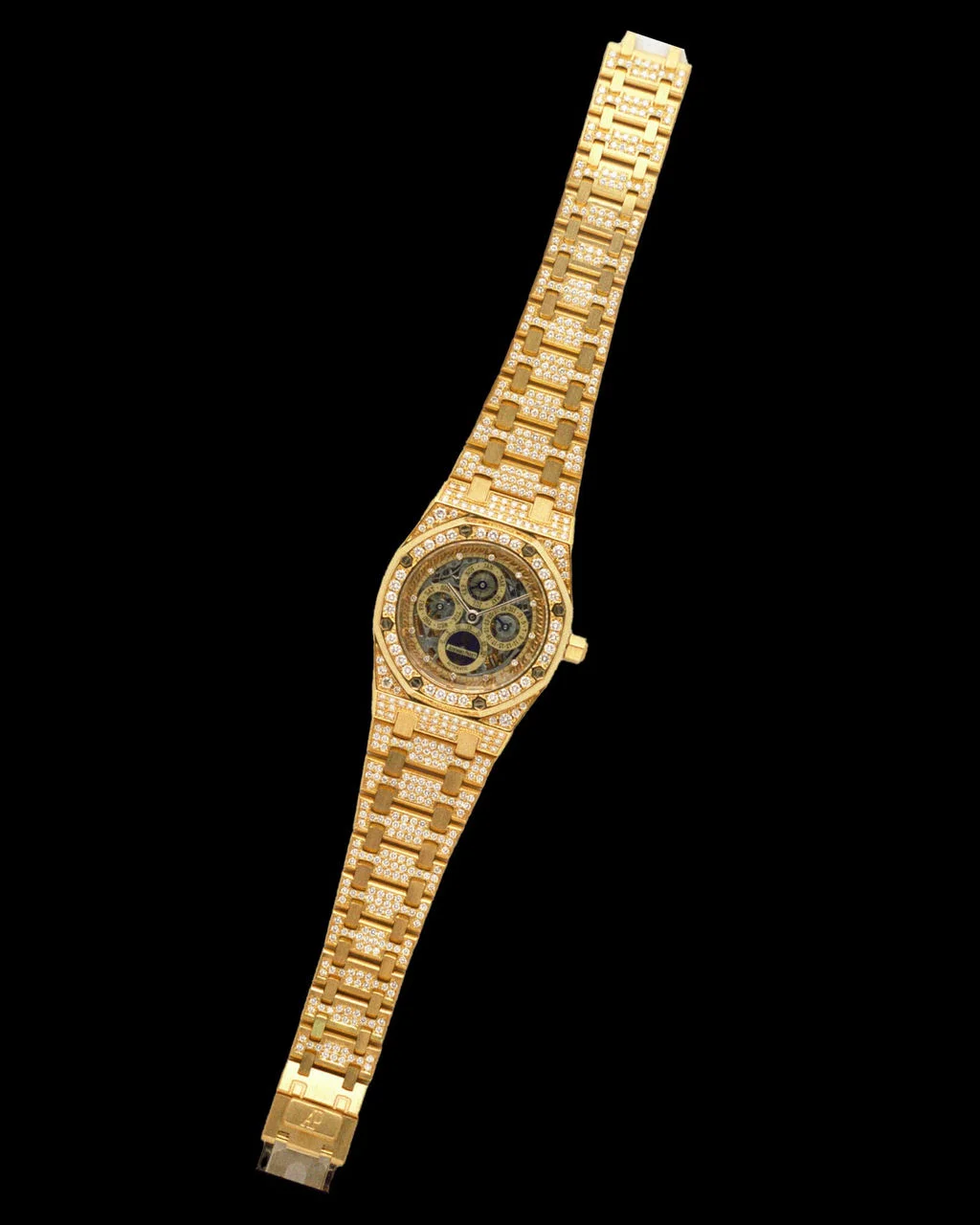
In the 1970s and 1980s, yellow gold dominated the world of luxury watches and the "metal of kings" was the focus of attention. The end of the gold standard and the financial crises caused its price to soar, resulting in supply problems for some watchmakers and a significant rise in prices for customers. So much so that several associations launched campaigns to promote gold watches, including a company named Intergold and the Association pour la promotion industrielle de l’or (APRIOR, Association for the Industrial Promotion of Gold). When considered in this context, the first Royal Oak in yellow gold (BA) takes on a special meaning, especially when one knows that the case of a Model 4100 weighs over 100 grams of gold.
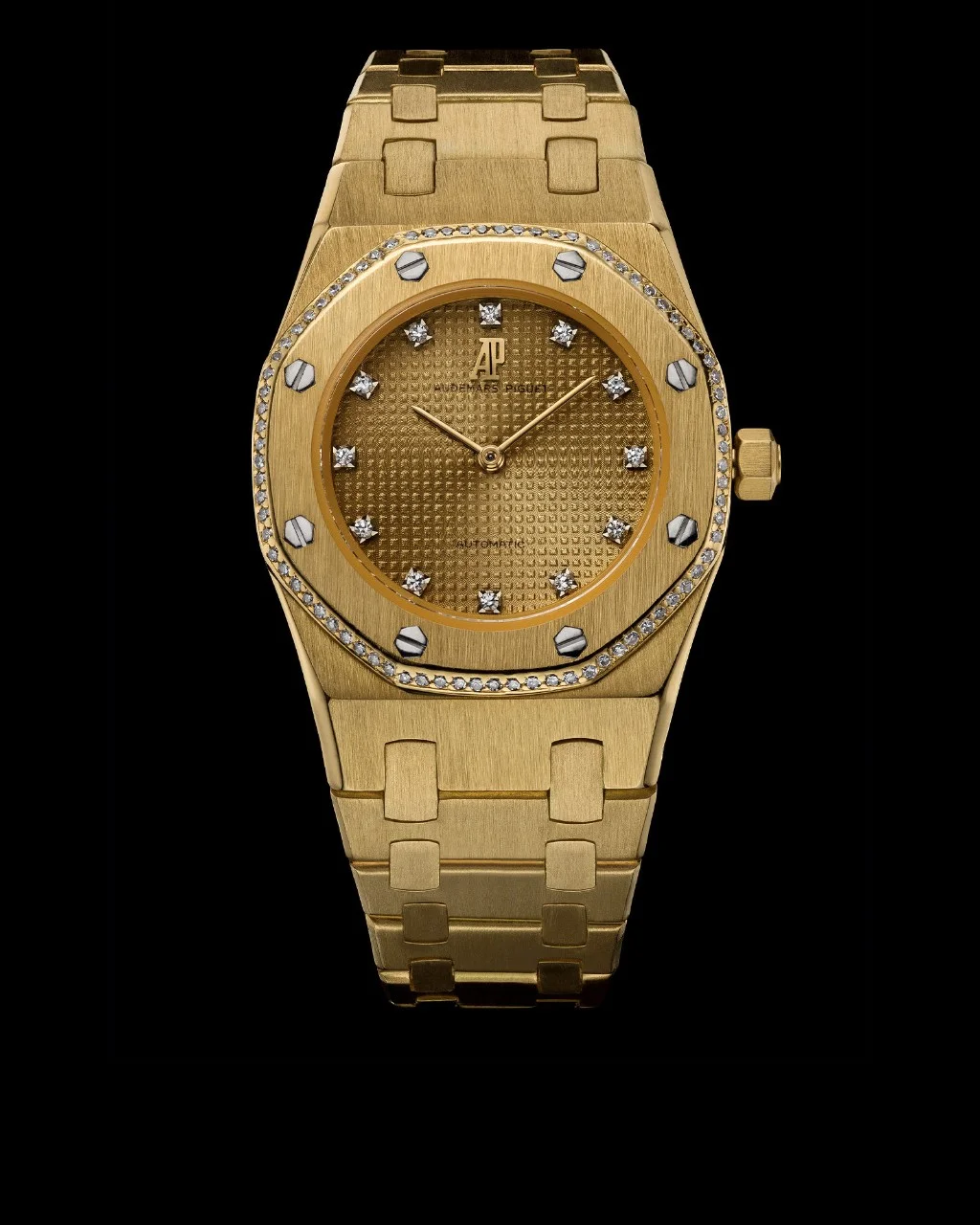
Like the two-tone variations, the women's Model 8638BA got the ball rolling and the first models were delivered in March 1977, followed in June that same year by the first Models 5402BA and 4100BA.
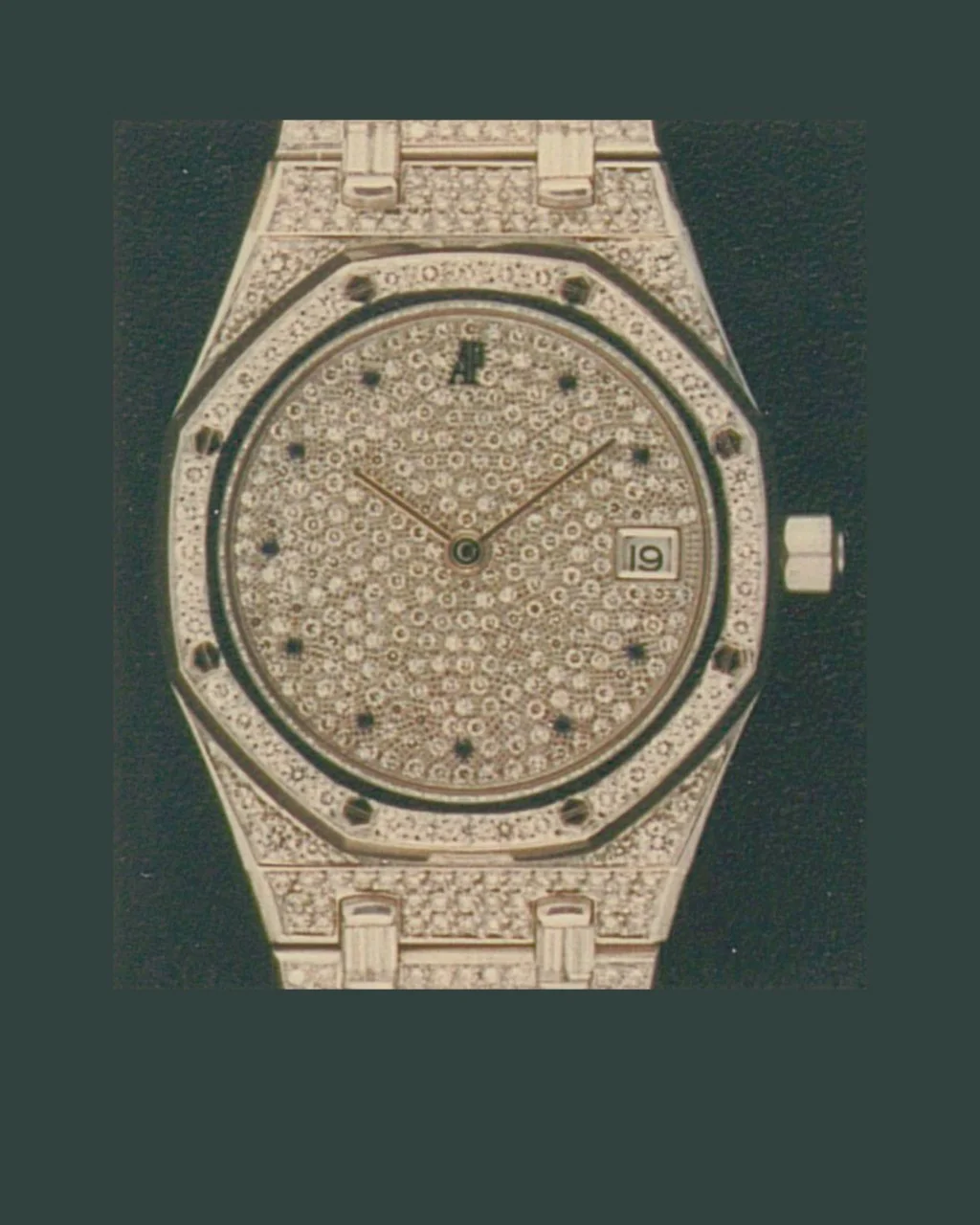
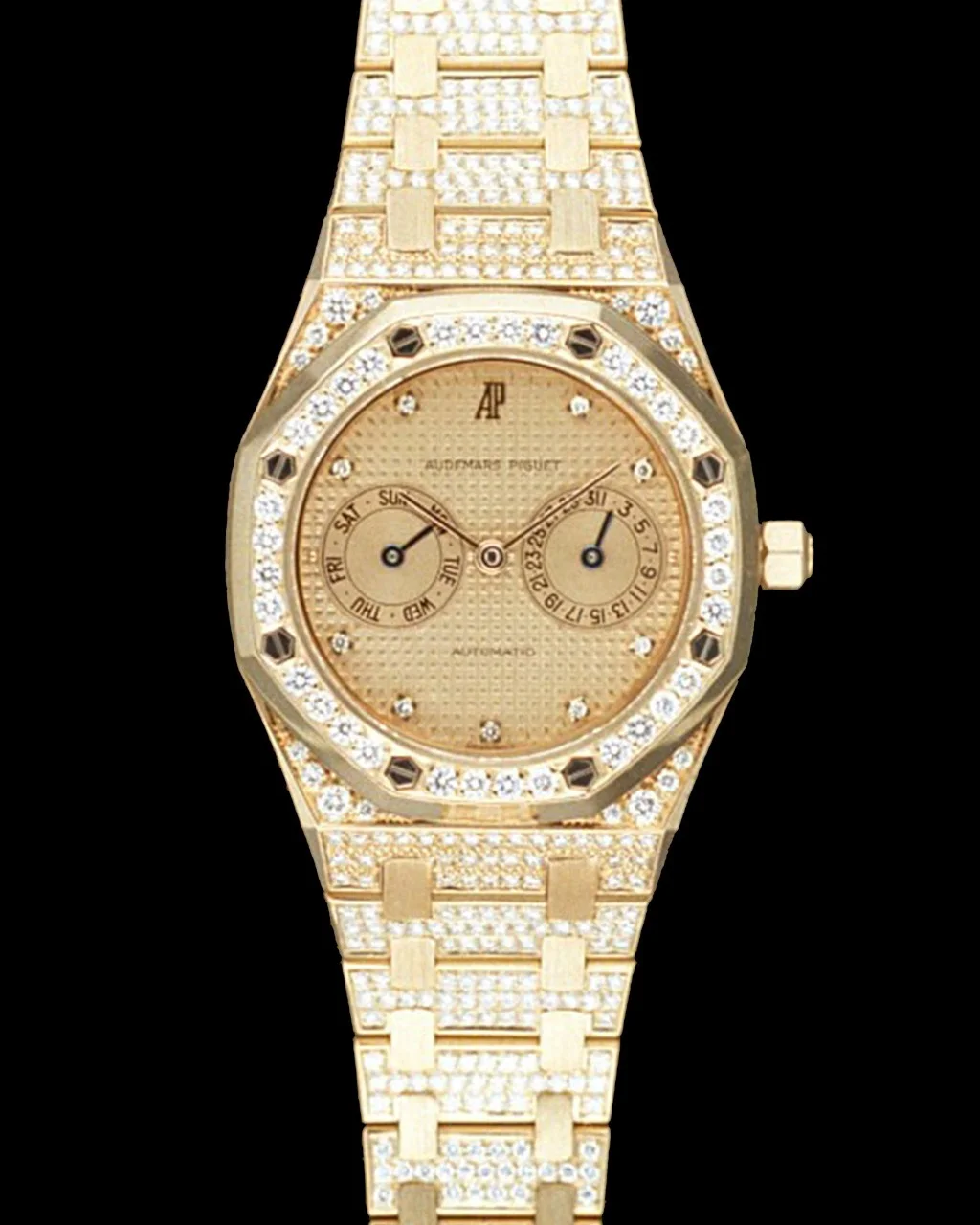
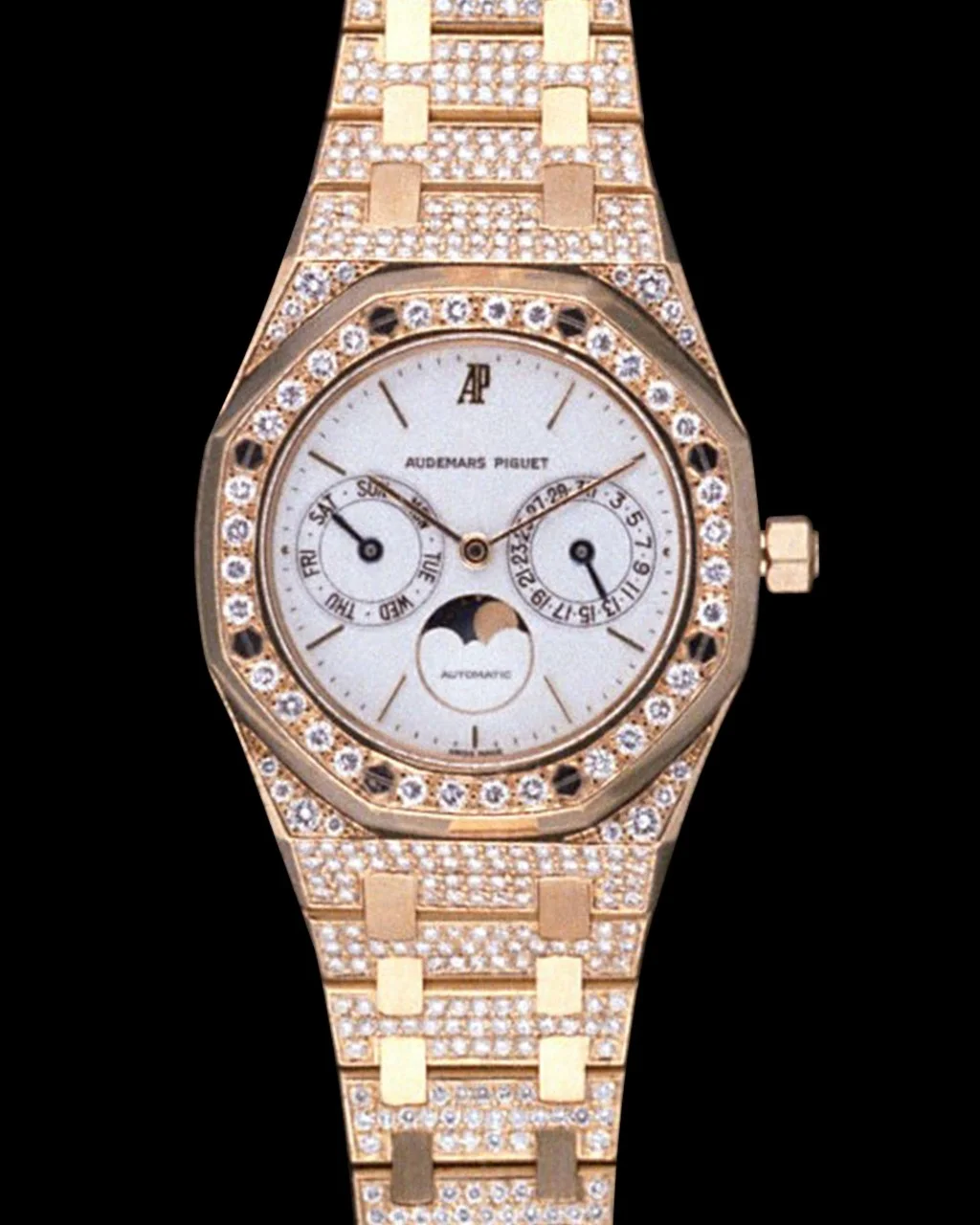
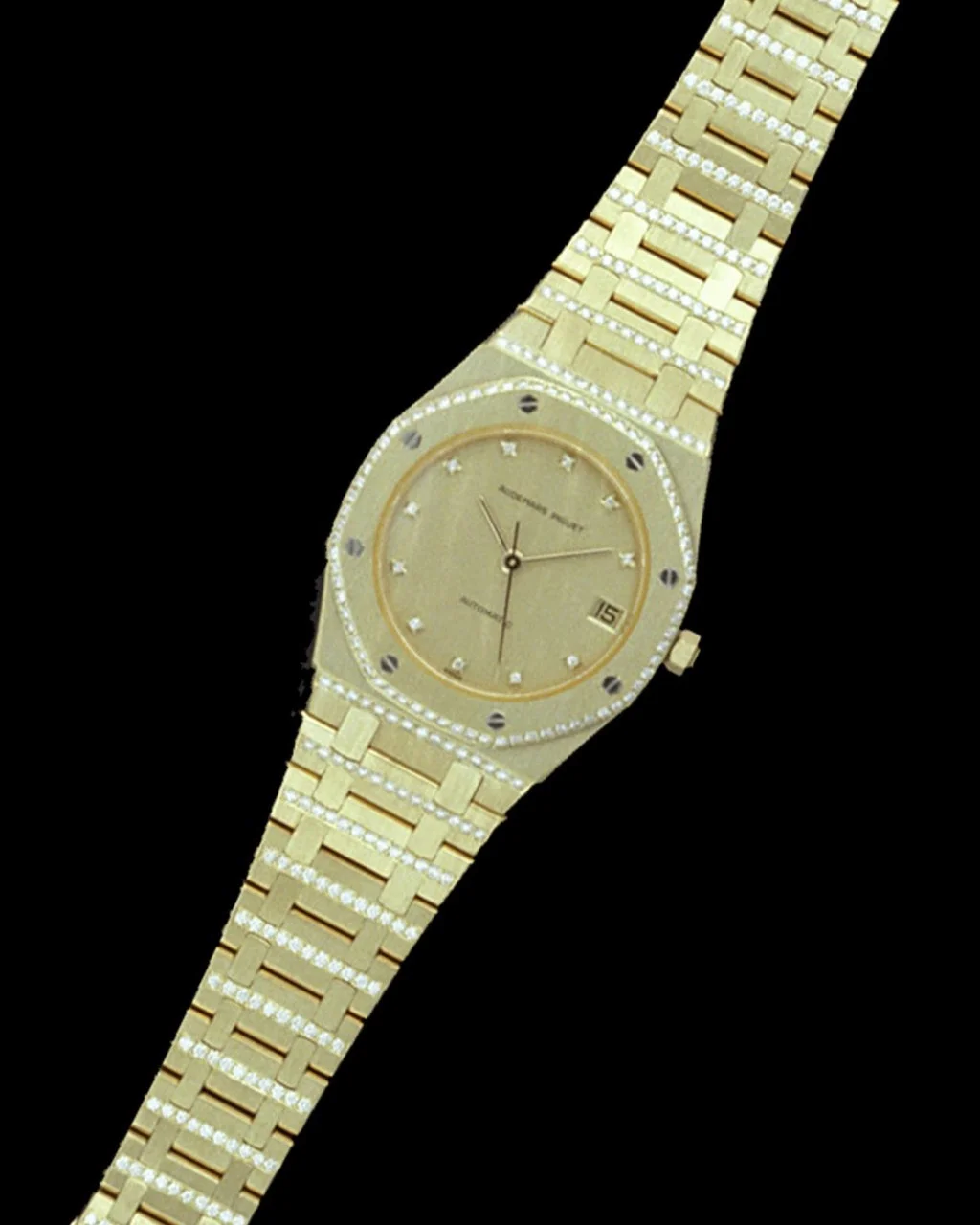
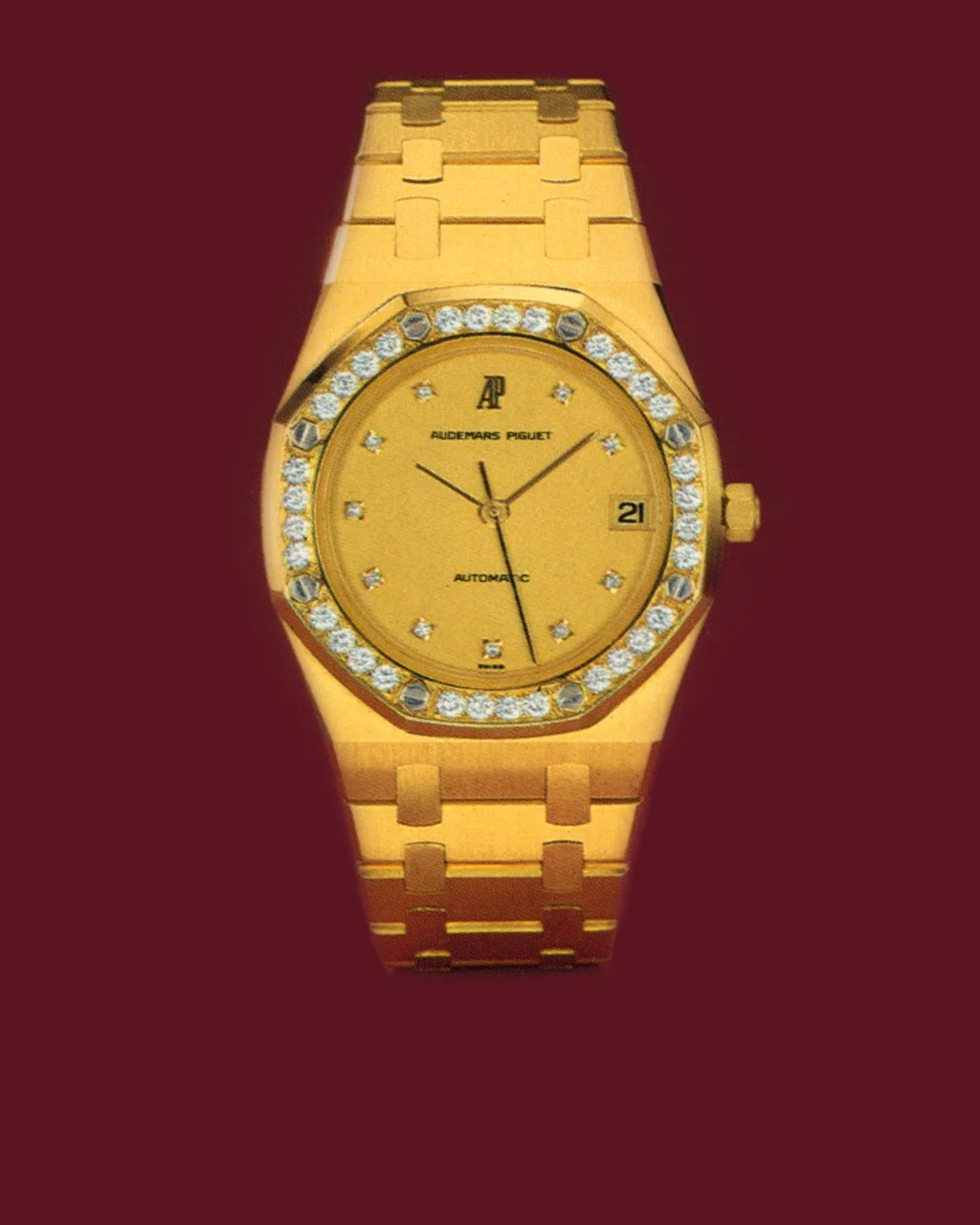
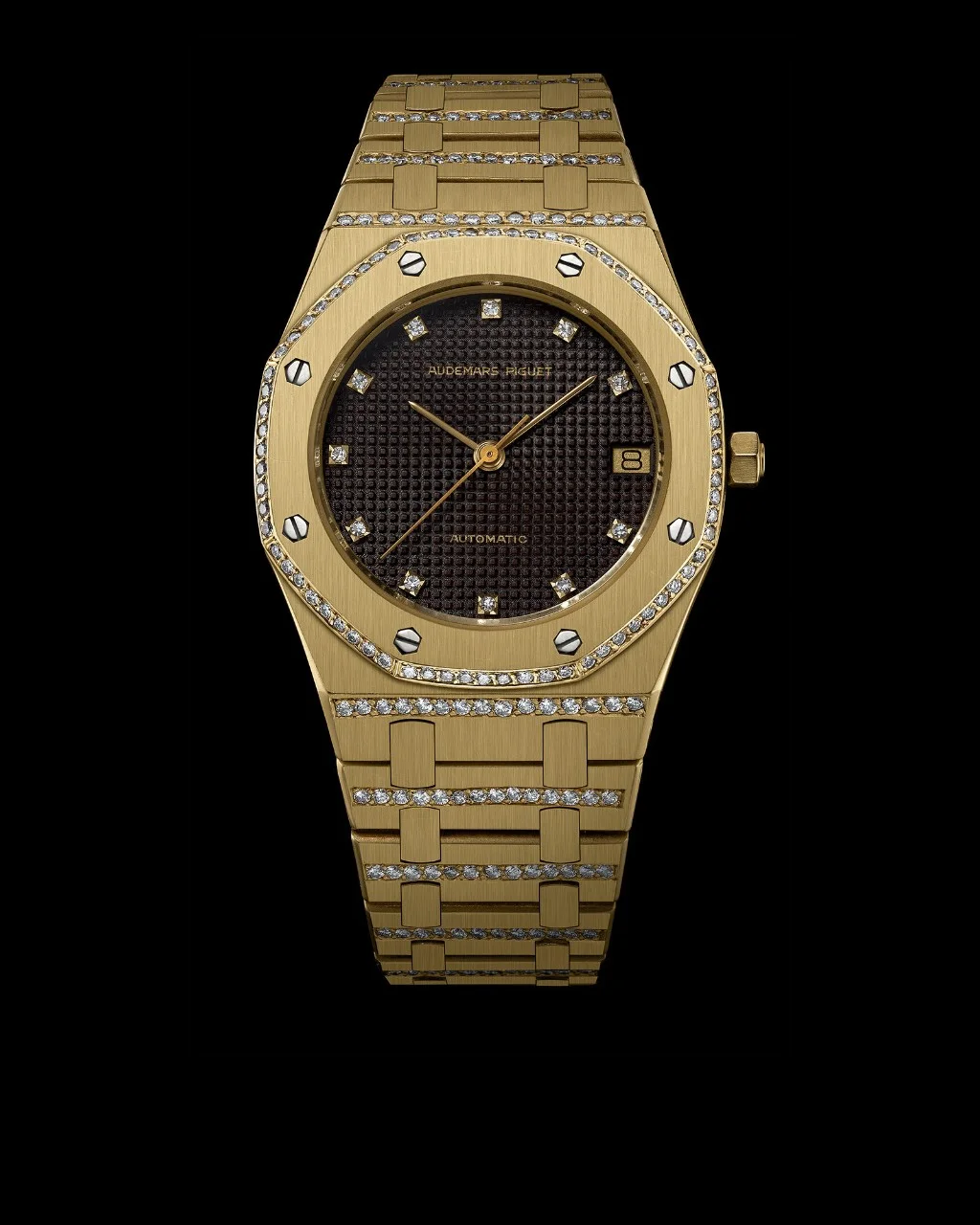
Until that point, each Royal Oak model had been available with one dial only. With the introduction of yellow gold, several variations on the same model became available. Some dials were Bleu Nuit, Nuage 50 while others were gold-toned. In this respect, the Stern archives use the name "Brun Nuage 21". Their gold hour-markers adopted the same colour as the case, as did the hands, some of which were tritium-free for the first time, most often on the gemset variations. On some dials, the hour-markers were replaced by diamonds, particularly on the variations set around the edge of the bezel (see for example Models 4187, 4275, 4153).
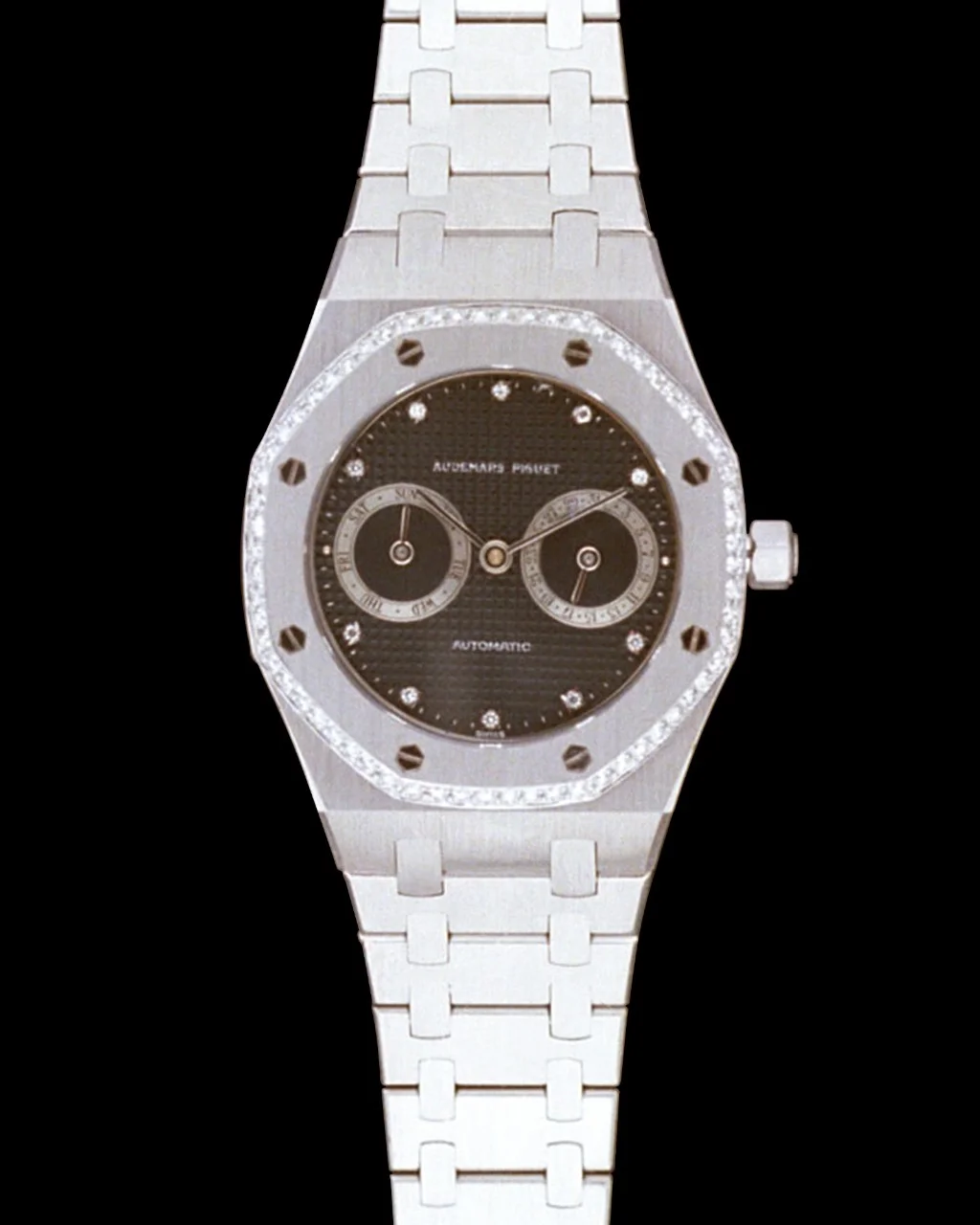
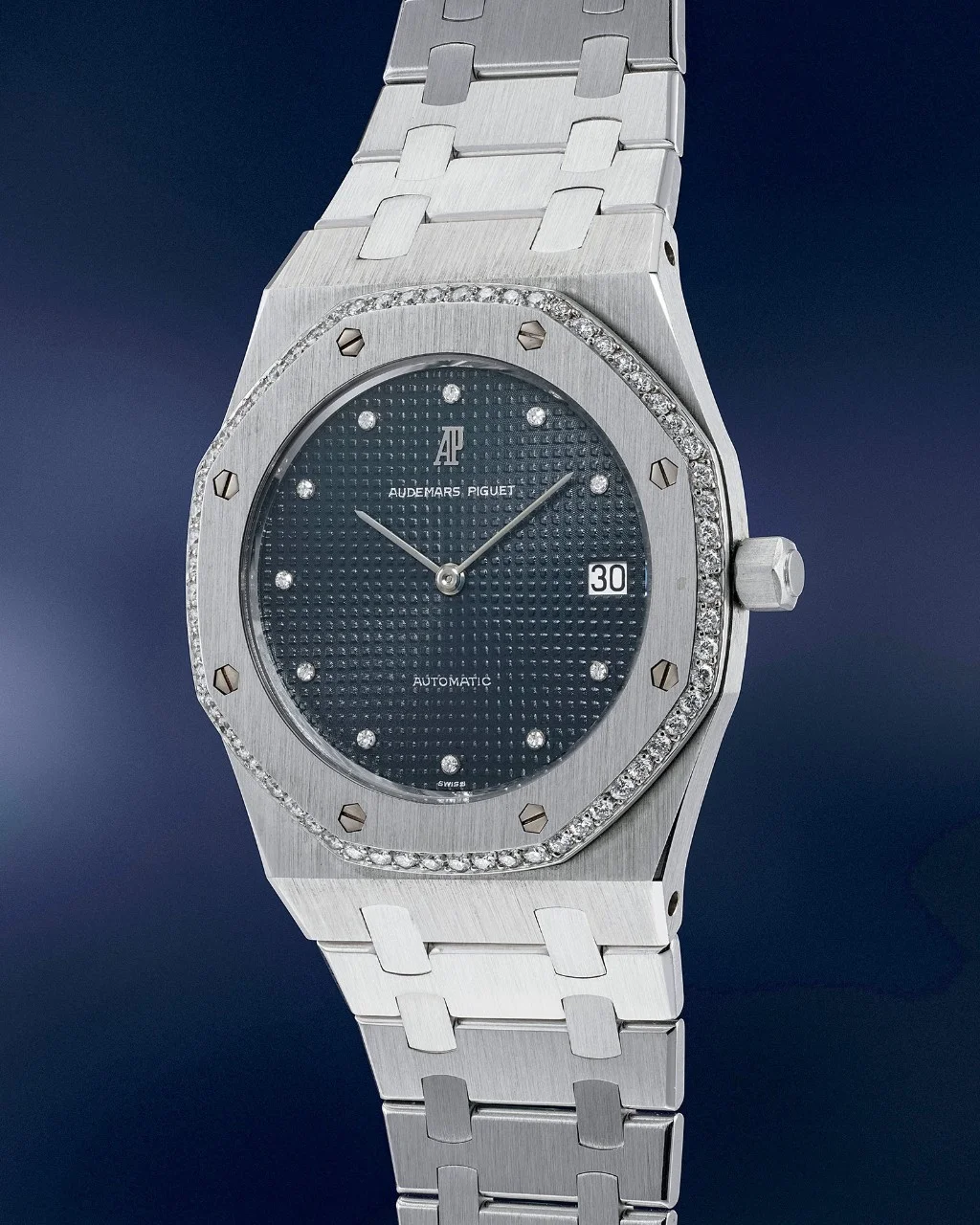
As for white gold models (bearing the BC code), apart from the Shah's Royal Oak, the first 5402BC watch was sold in 1977. It was the only white gold Royal Oak to leave the workshops that year, in December. Fifty more were produced the following year. In November 1978, it was Model 8638 that appeared attired in white gold for the first time, and it was not until October 1981 that Model 4100 was adorned with the same metal.
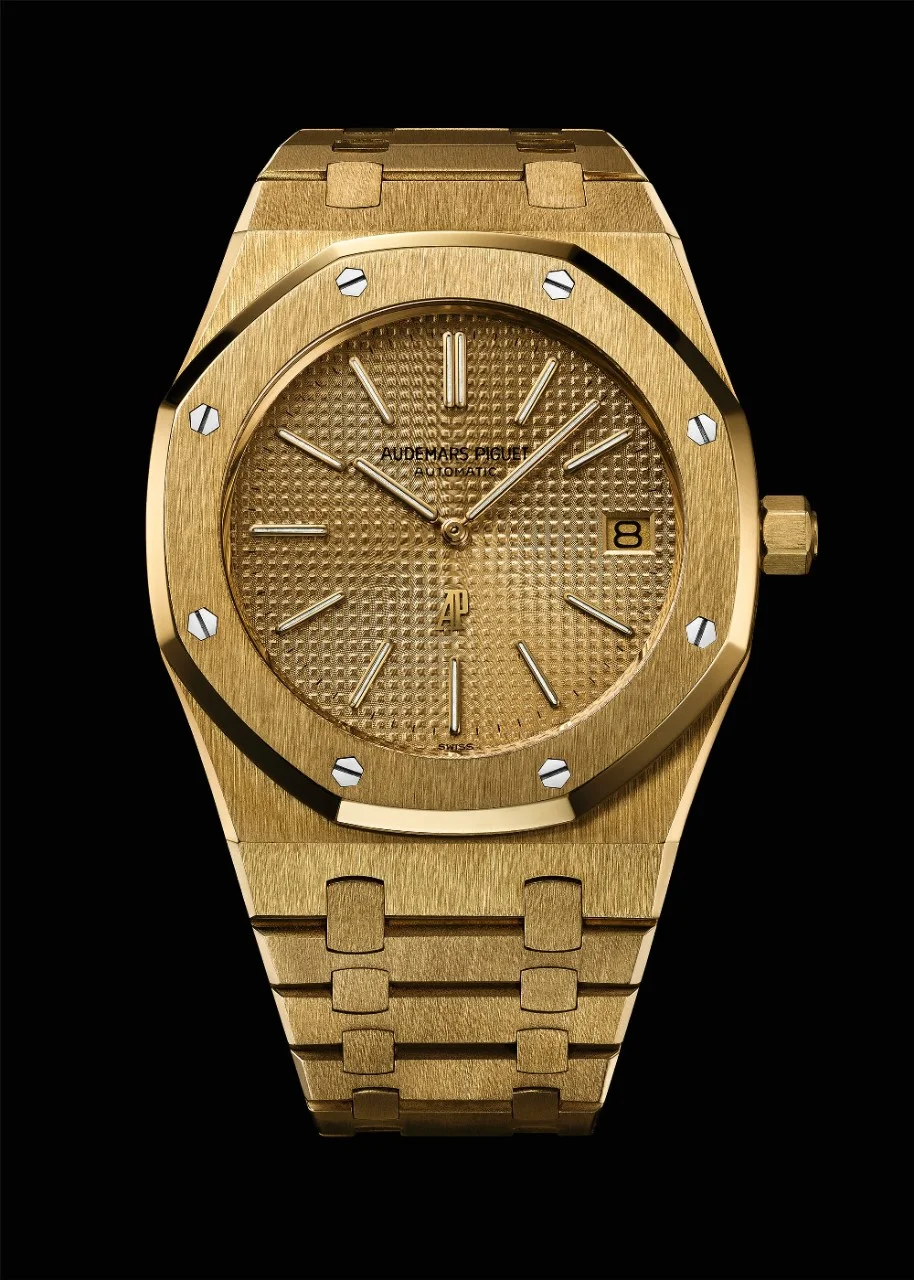
1978. Royal Oak 5402BA No. 192. Date. Calibre 2121, movement 174038. Bracelet 344, T21 Tapisserie dial. Case 39 mm B19030, no. 192 in 18-carat yellow gold. Sold in Mexico in May 1978. Audemars Piguet Heritage, inv. 1073.
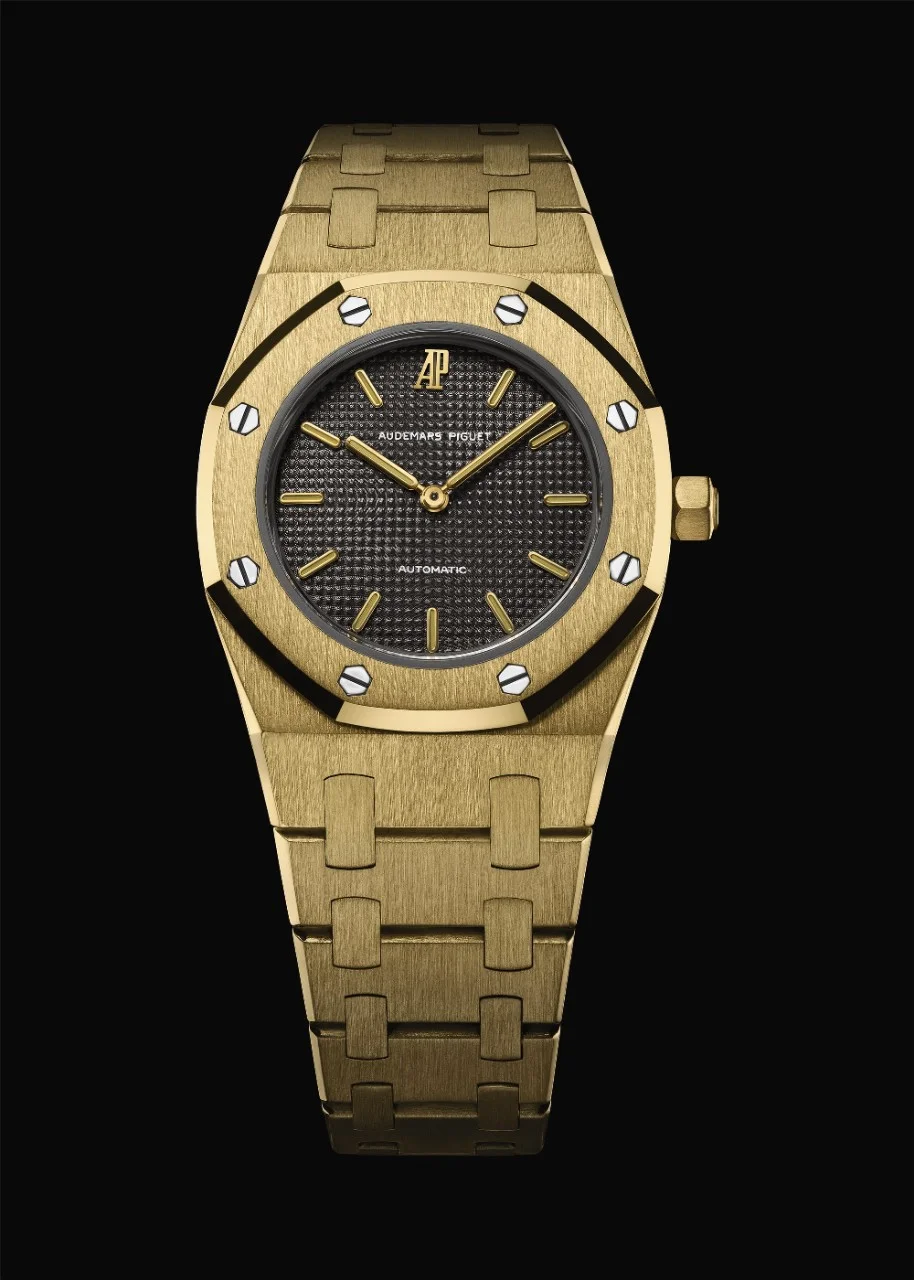
1977. Royal Oak 8638BA, No. 1. Date. Calibre 2062, movement 176166. Bracelet 424. T21 Tapisserie dial. Case B14001, 29 mm. 18-carat yellow gold. Sold to Darcal (Swiss market) on May 4, 1977. Audemars Piguet Heritage, inv. 1873.
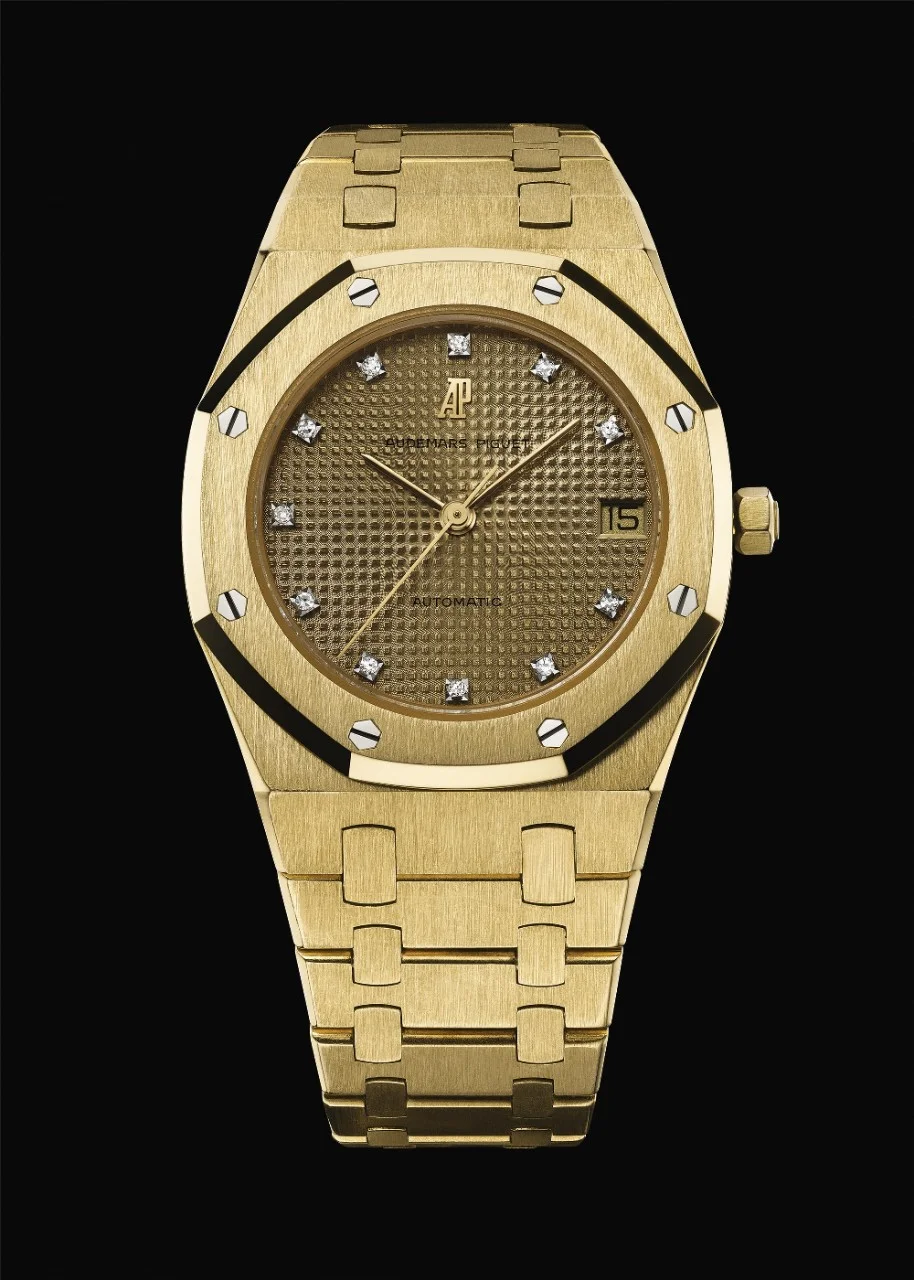
1982. Royal Oak 4100BA (1977), No. 1251. Date. Calibre 2123, movement 216522. Bracelet 477. Gilded T21 Tapisserie dial set with 11 brilliant-cut diamonds. Baton-type hands not documented in the catalogue. Case 552, 35 mm. 18-carat yellow gold. Sold to Grigoros (Greece) in 1982. Audemars Piguet Heritage, inv. 881.
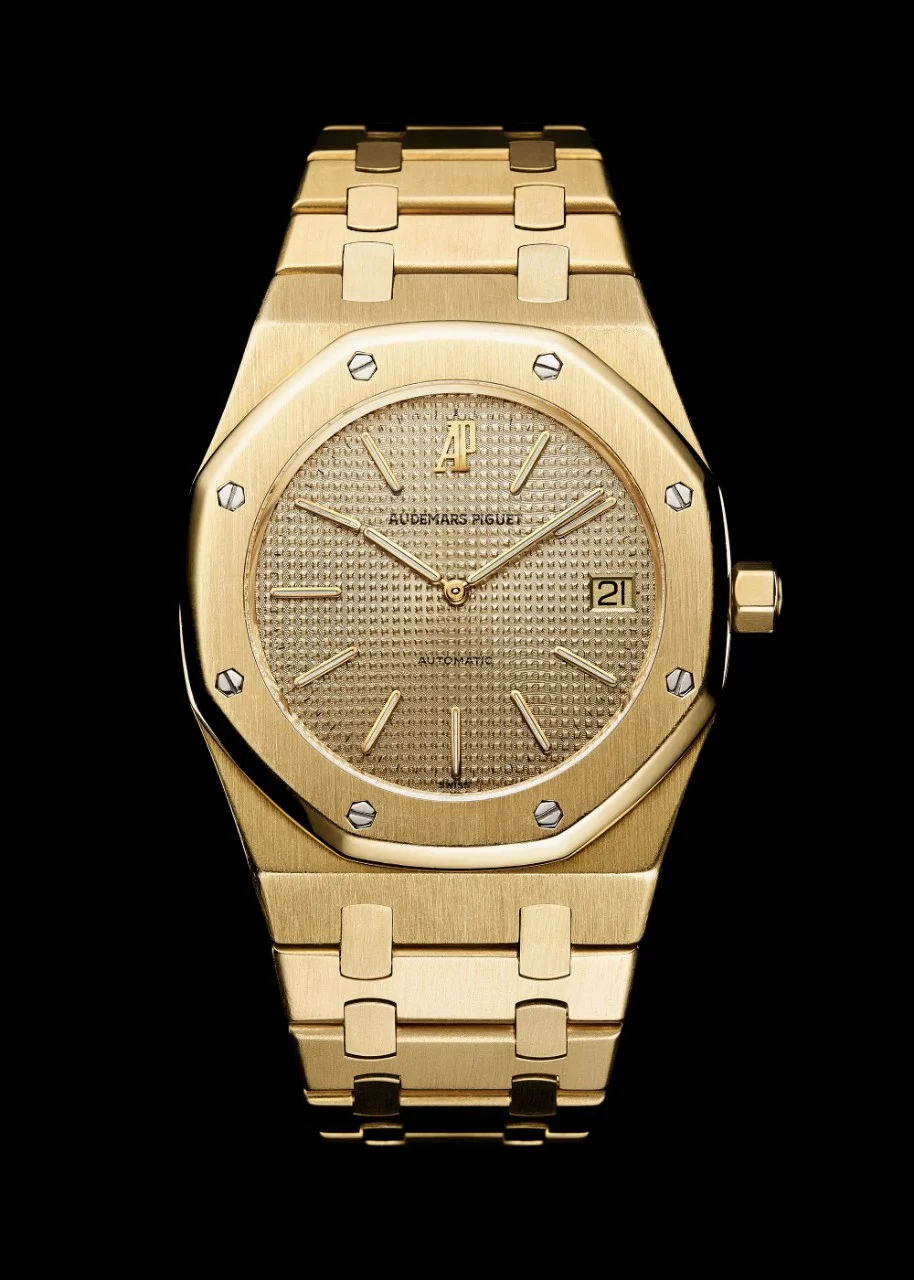
1978. Royal Oak 5402BA No. 231. Calibre 2121, movement 174138. Dial probably changed in the 1980s. 39 mm case B22139. 18-carat yellow gold. Sold in the USA in 1978. Audemars Piguet Heritage, inv. 1610.
Advertising Turnaround
Between 1972 and 1976, Royal Oak advertising relied heavily on the steel argument. The ads featured terms such as: "tribute to steel", "metal of the 20th century", "finest of steel", or "men of steel." The announcement was made that "the gold watch has found its rival in steel." Expressions abounded: "luxus in Stahl", "the most intractable of materials", "steel now a noble metal." Some ads asked: "What makes steel more valuable than gold?" and promoted "functional steel brought to its highest degree of refinement", because "materials alone do not make a masterpiece."
The introduction of gold in 1977 required a change in the sales pitch. The Heinz Heimann advertising agency, which took over from Hugo Buchser in 1975, managed the transition brilliantly. In 1977, steel was presented as the “starting point of a range of thoroughbred watches." The focus was on the bezel: "The entire world knows the distinctive bezel held with eight miniature screws." Thus, even in its new diversity, "the Royal Oak remains unique and exclusive. Through its satin finish, its audacious lines, by the perfection of its movement, it is coveted by those who know that the summum of watchmaking is a subtle alliance of technology and art."
As early as 1978, some adverts featured stories mingling humour with watchmaking messages. One of the most successful of these drew attention to the visible screws. As transgressive and innovative as steel itself, the screws became the focus of debate. In one scenario, two friends are leaning against a rail: "A price like that", he teased, "and they don’t conceal the screws?” A discussion ensues highlighting the watch's qualities, its character and its history.
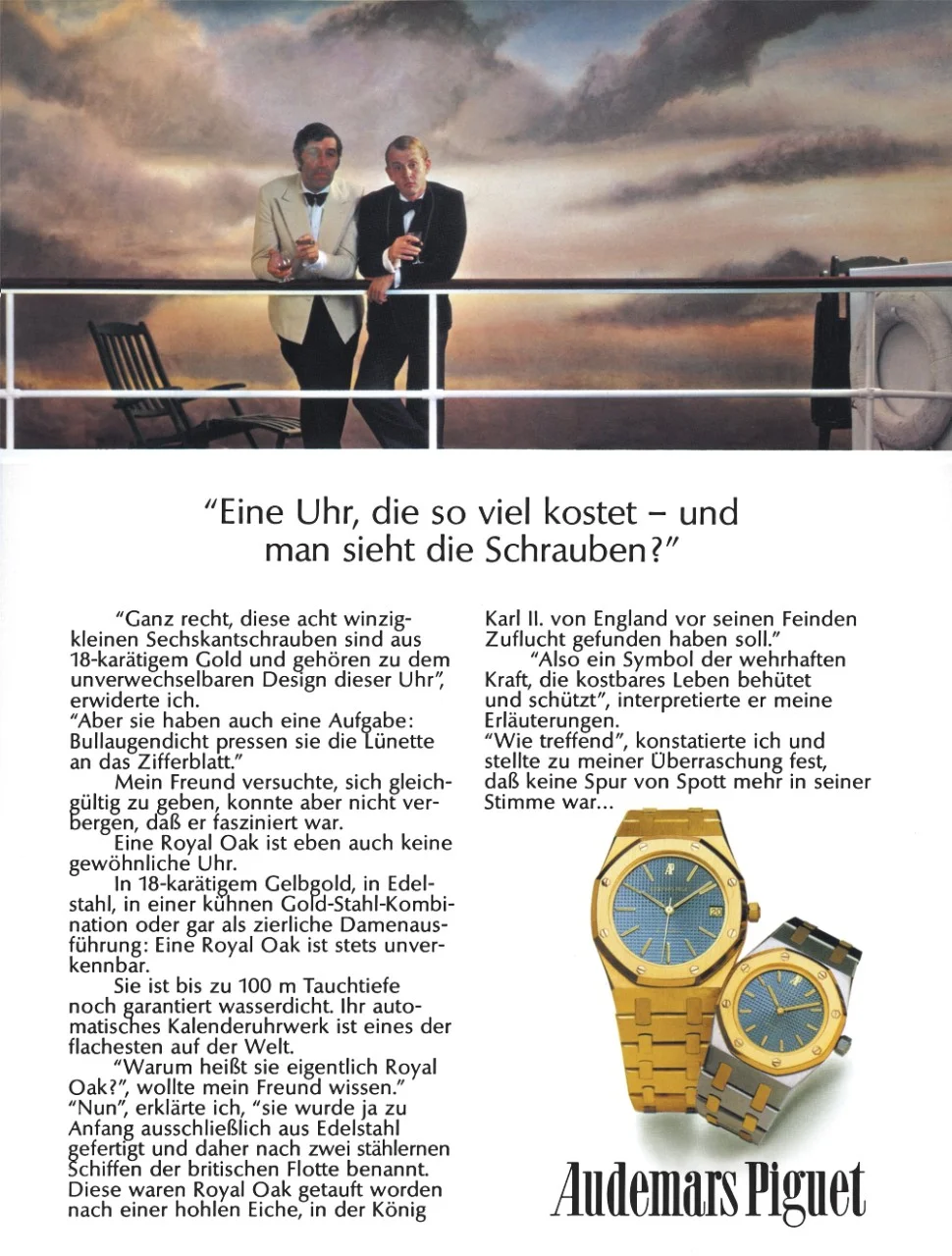
1980. "A price like that" advertisement, Model 5402BA. Two friends leaning on a rail are chit-chating about the Royal Oak, humorously drawing attention to its visible screws. Audemars Piguet Archives.
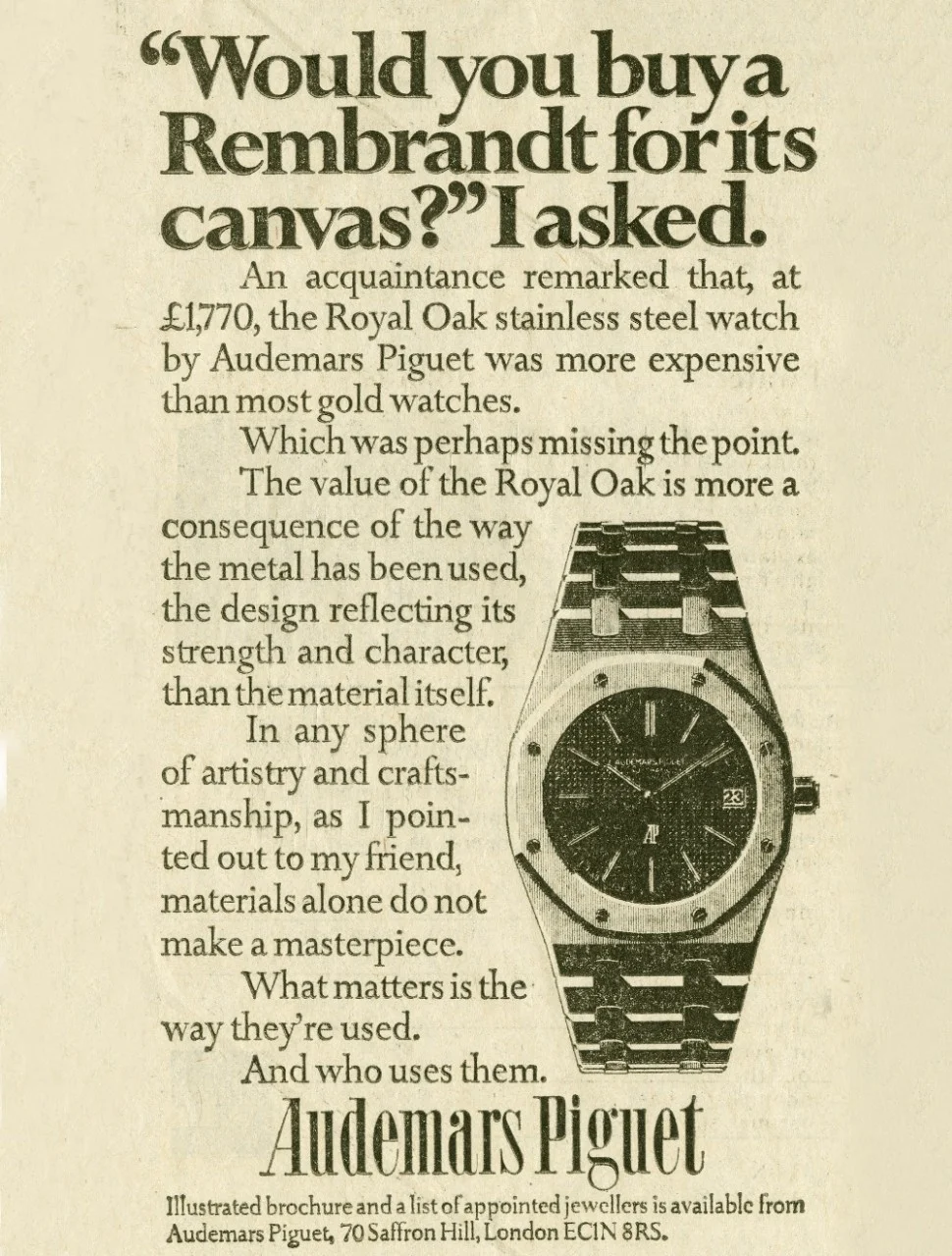
1980. 5402ST Royal Oak Advertisement. This ad thematises the artisanal and artistic value of the Royal Oak, especially its body of steel. Audemars Piguet Archives.
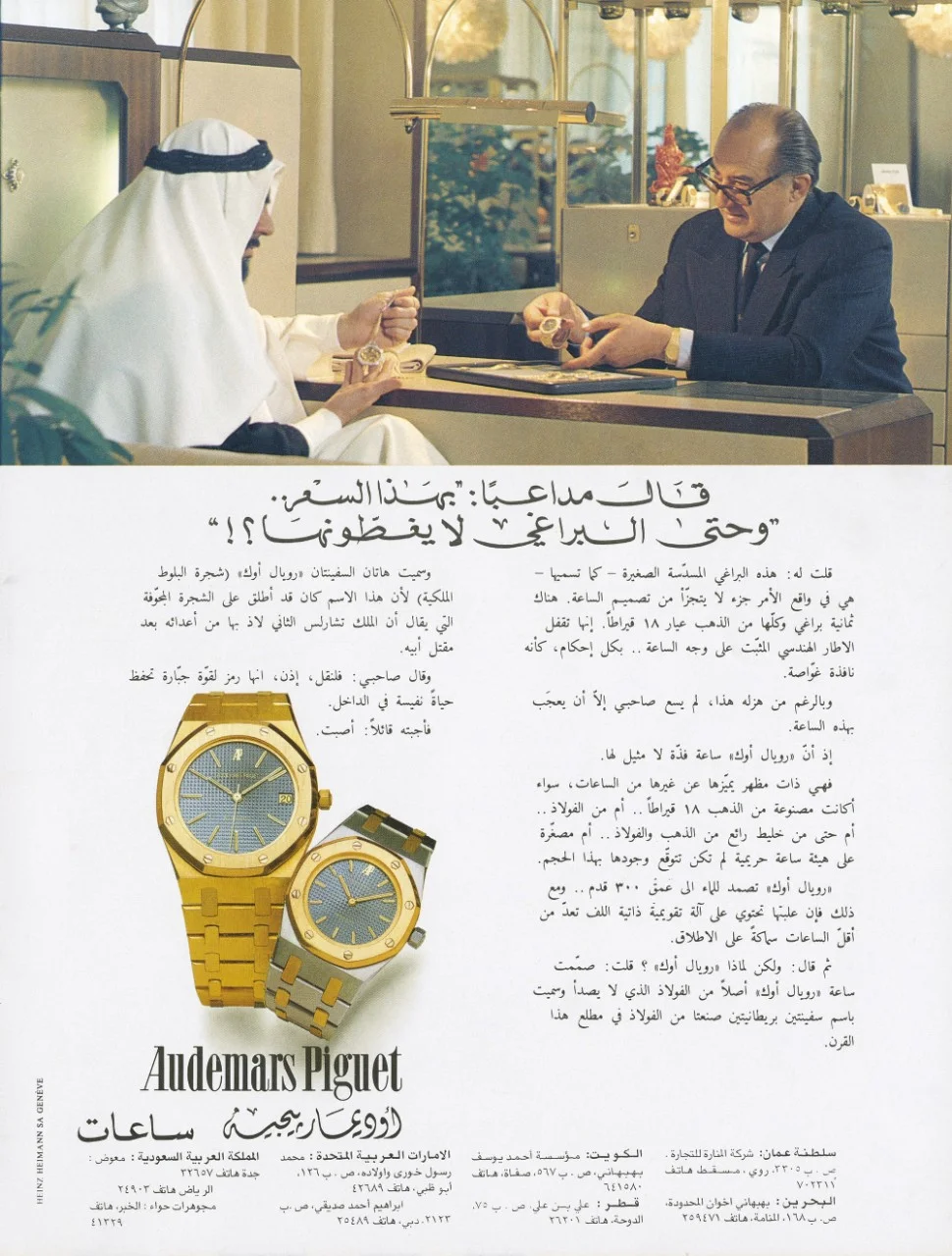
1980. Royal Oak advertisement for the Middle East. At the beginning of the 1980s, the Audemars Piguet ads often staged dialogues between friends or between a client and a retailer. Audemars Piguet Archives.
Mixed Reception
In 1977, 188 Royal Oak Model 5402 watches with all or partially gold exteriors were delivered worldwide. Half were in yellow gold, the other half in two-tone gold and only one in white gold. The following year, 580 watches were delivered, then 347 in 1979, 264 in 1980, 182 in 1981, 64 in 1982. It took 20 years to sell the next 136. A total of 876 two-tone Model 5402SA watches were sold, 736 in yellow gold Model 5402BA and 150 in white gold Model 5402BC.
Figures for the various markets confirm Gérald Genta's claim that the American market associated luxury with yellow gold. Until 1977, the United States had distributed barely 8% of the Royal Oak watches sold to date. The year gold was launched, they ordered one-third of the new models. At the same time, the Royal Oak 5402 was gradually making inroads in Asia, a continent that was also particularly keen on traditional noble materials.
The situation was different in Italy. In ten years, only six 5402 watches in gold were sold there! Appearances can however be deceptive, as Italy gave an exceptional welcome to the Royal Oak II (29 mm) and III (35 mm) gold and two-tone versions. It was in their smaller, usually gold, cases that the Royal Oak models conquered the world's fashion capital, where the idea for the first Royal Oak was born.
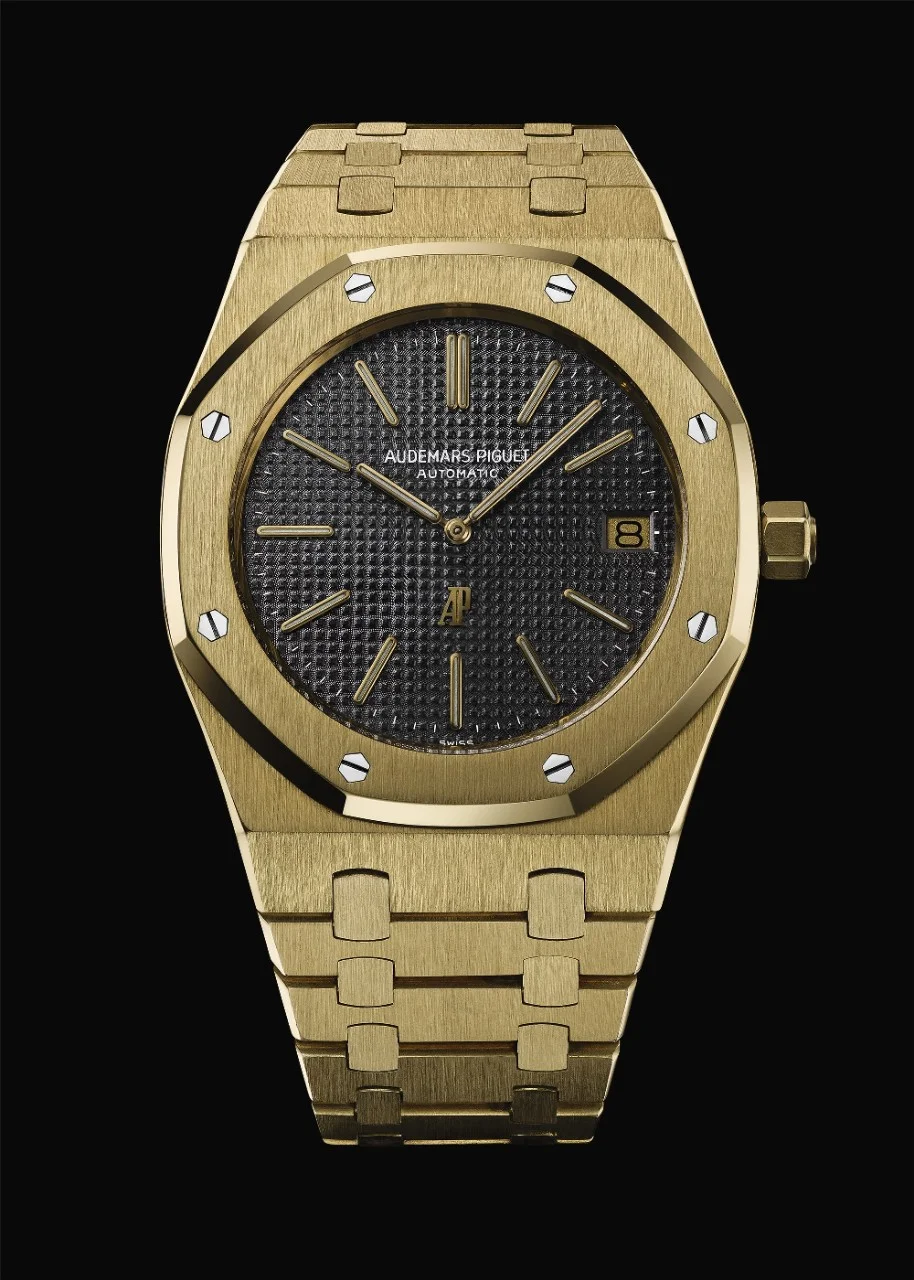
1978. Royal Oak 5402BA, No. 330. Date. Calibre 2121, movement 196615. Bracelet 344. T21 Tapisserie dial. 39 mm case B28716, no. 39 in 18-carat yellow gold. Sold in Mexico in November 1978. Audemars Piguet Heritage, inv. 1134.
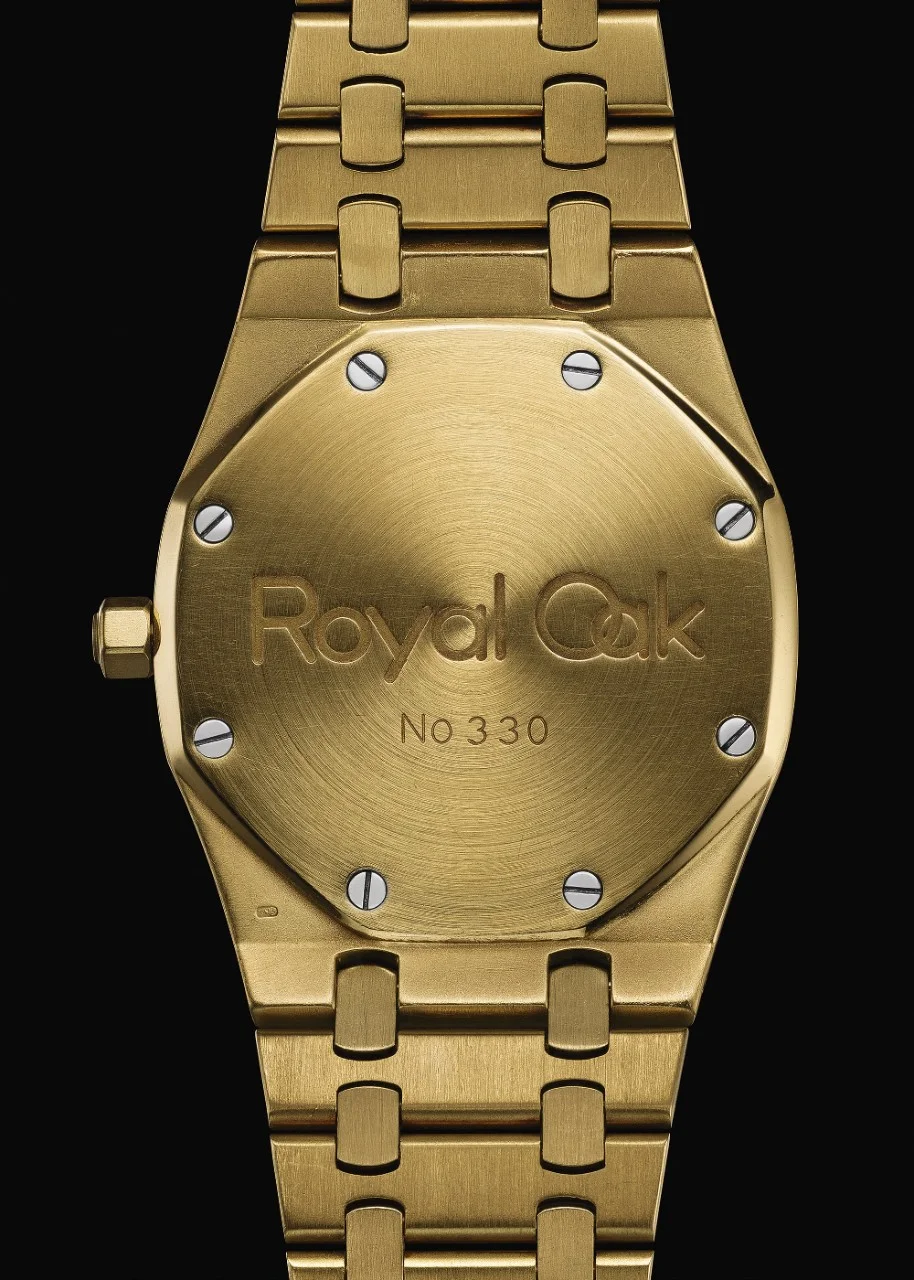
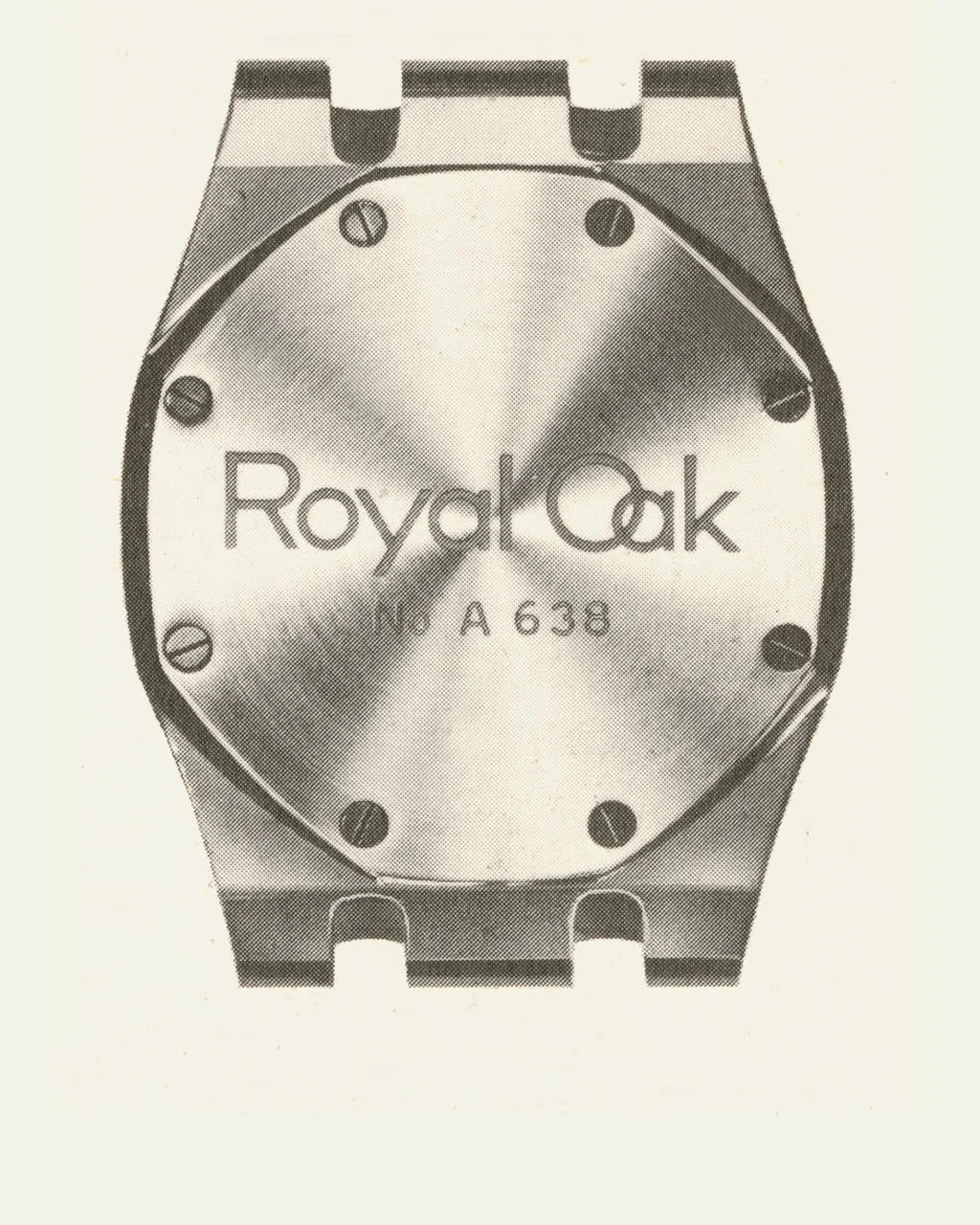
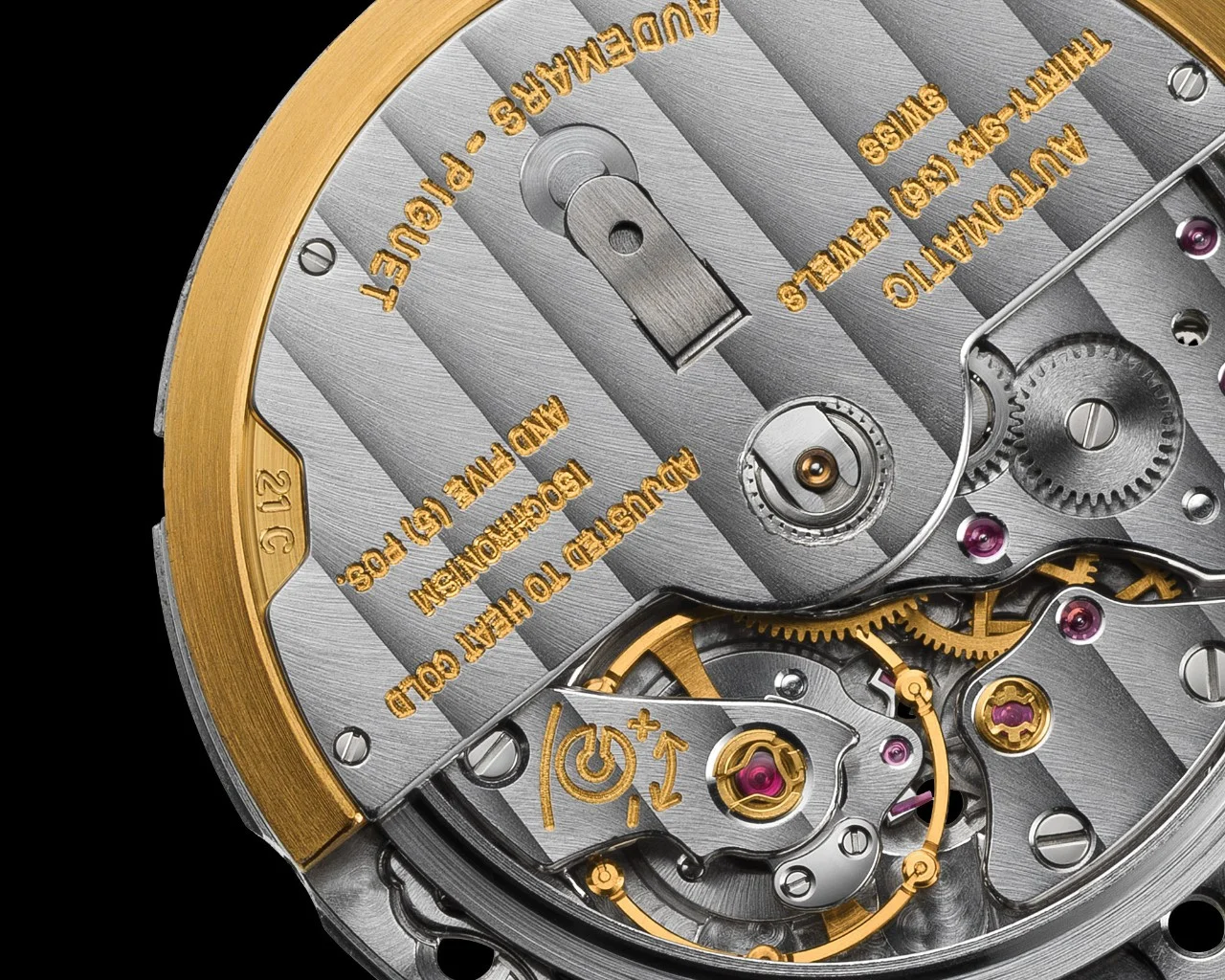
1978. Royal Oak 5402BA No. 330, caseback view. Date. Calibre 2121, movement 196615. Bracelet 344. T21 Tapisserie dial. 39 mm case B28716, no. 39 in 18-carat yellow gold. Sold in Mexico in November 1978. Audemars Piguet Heritage, inv. 1134.
Gold Makes Its Presence Felt in the Royal Oak 29 mm and 35 mm Versions
Oral sources inform us of longstanding market demand for precious metal interpretations of the Royal Oak. An analysis of sales shows that the requests were well founded and that gold was expected by customers. In 1977, 17% of Royal Oak watches came in gold or two-tone versions. The following year, that percentage rose to over 61% and in 1979, it passed the 72% mark. From that point on, nearly three-quarters of Royal Oak watches were partially or entirely made of gold!
The operation was a twofold success. Not only did gold make its presence felt, but the number of Royal Oak watches sold increased rapidly. In 1976, Audemars Piguet delivered a total of 1,009 Royal Oaks, all in steel. The following year, thanks to the launch of Model 4100 and the integration of gold into Models 5402 and 8638, this figure almost doubled to 1,926 watches. In 1979, more than 3,500 Royal Oak watches with mechanical movements left the Le Brassus workshops – to which must be added the quartz versions, which were enjoying a major boom at the time. On the scale of Audemars Piguet back then, this was a veritable tidal wave.
While some purists had feared that attiring the Royal Oak in gold would weaken it, the reality of the operation definitively removed any doubts. At the dawn of the 1980s, all hopes were justified... the enfant terrible of watchmaking had become a collection full of promise.
Editorial board: Audemars Piguet Heritage team, Le Brassus
First publication: 24 January 2022