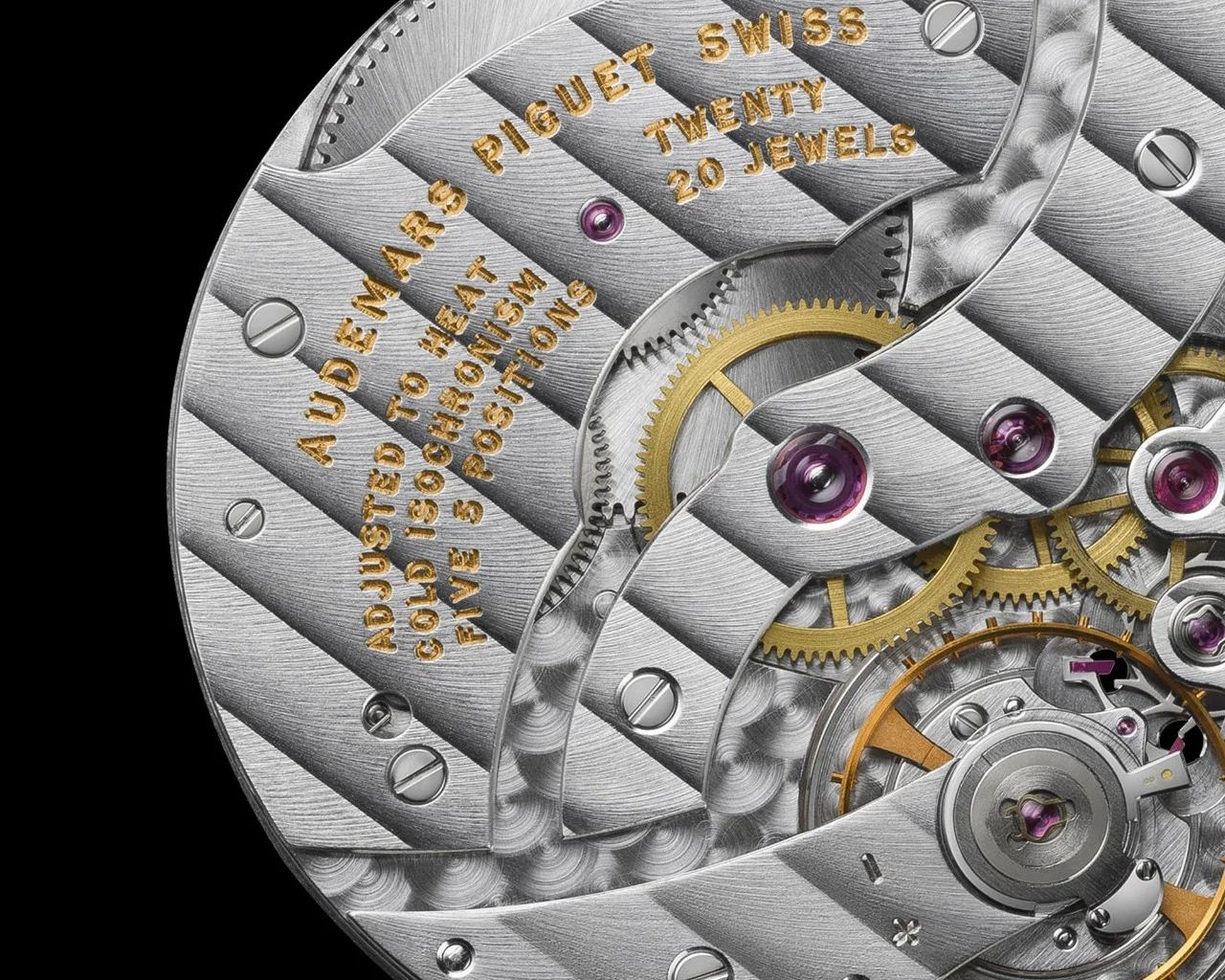
5691, First Royal Oak pocket watch

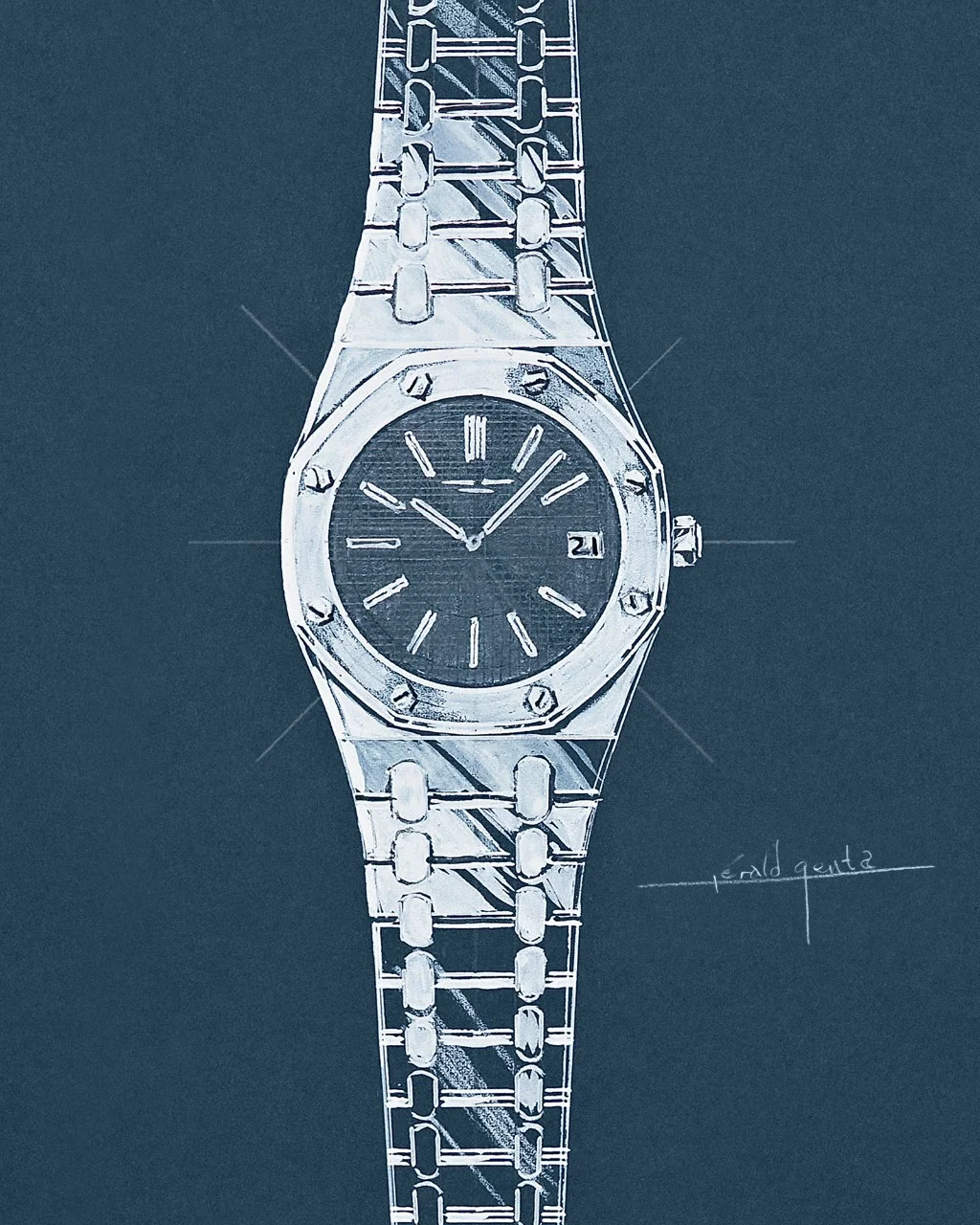
1981. 5691BA Royal Oak pocket watch (44 mm). Audemars Piguet 1981 and 1985 catalogues. Audemars Piguet Archives.

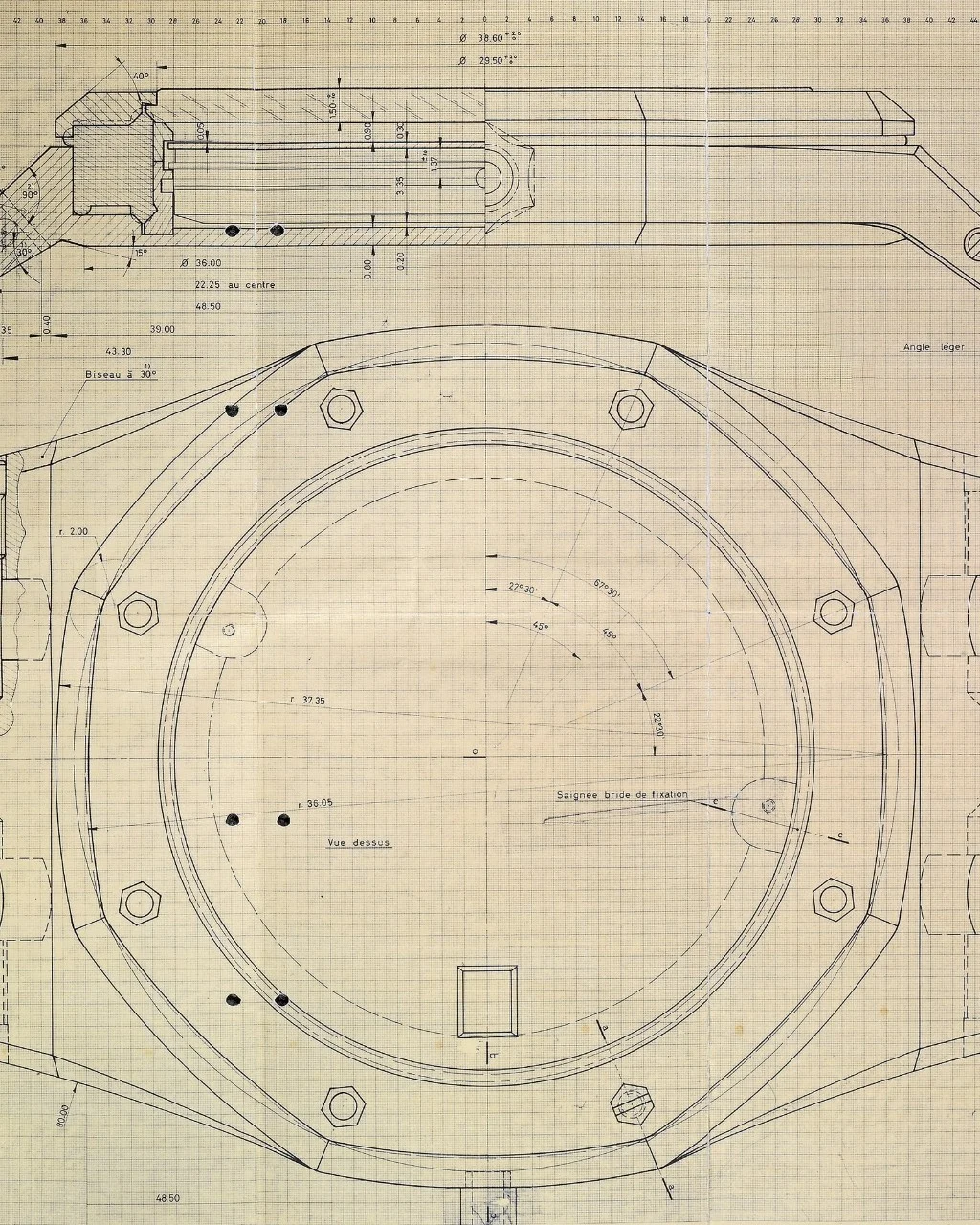
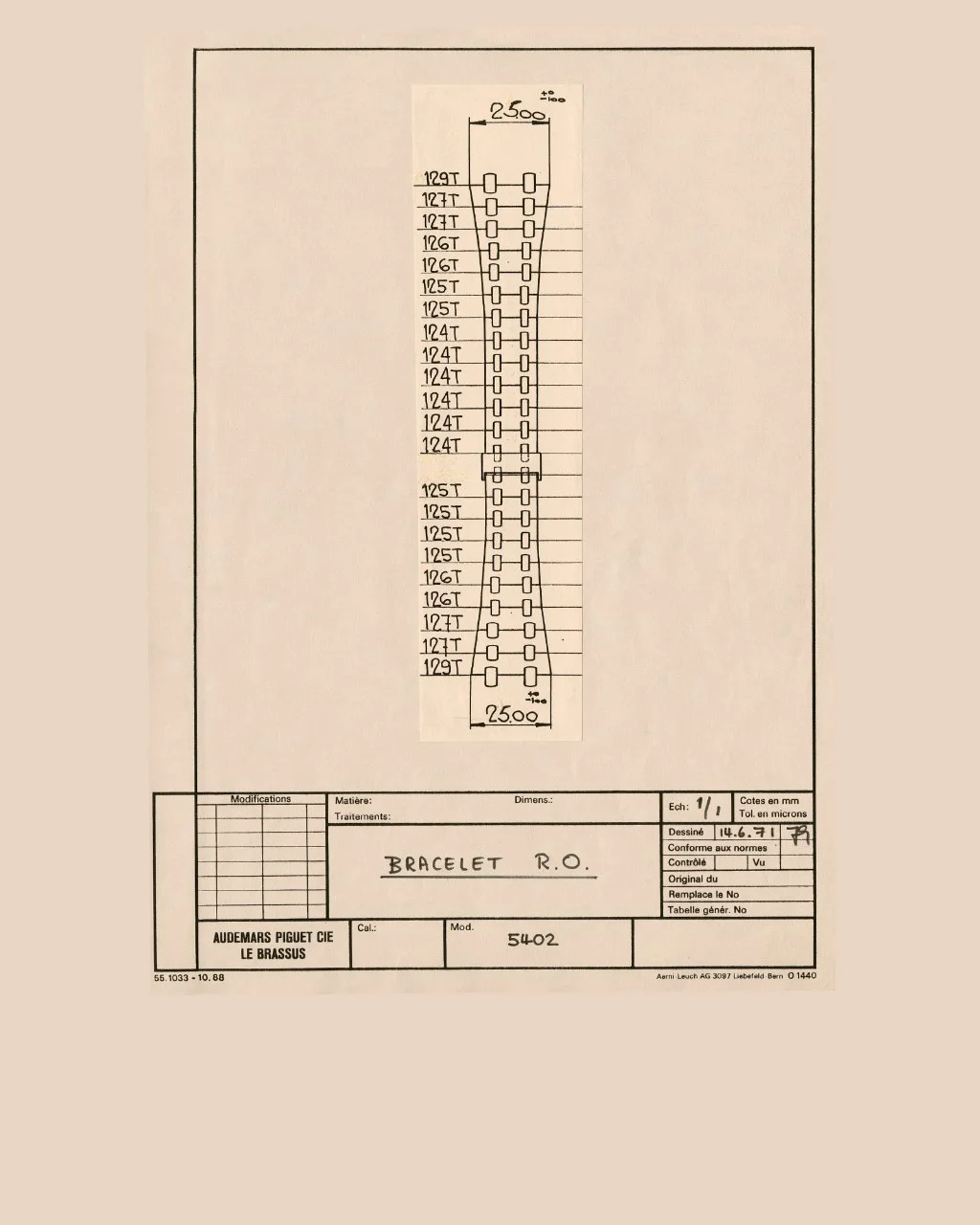
1979. Technical Data Sheet for the case of Royal Oak Model 5691BA. Audemars Piguet Archives.

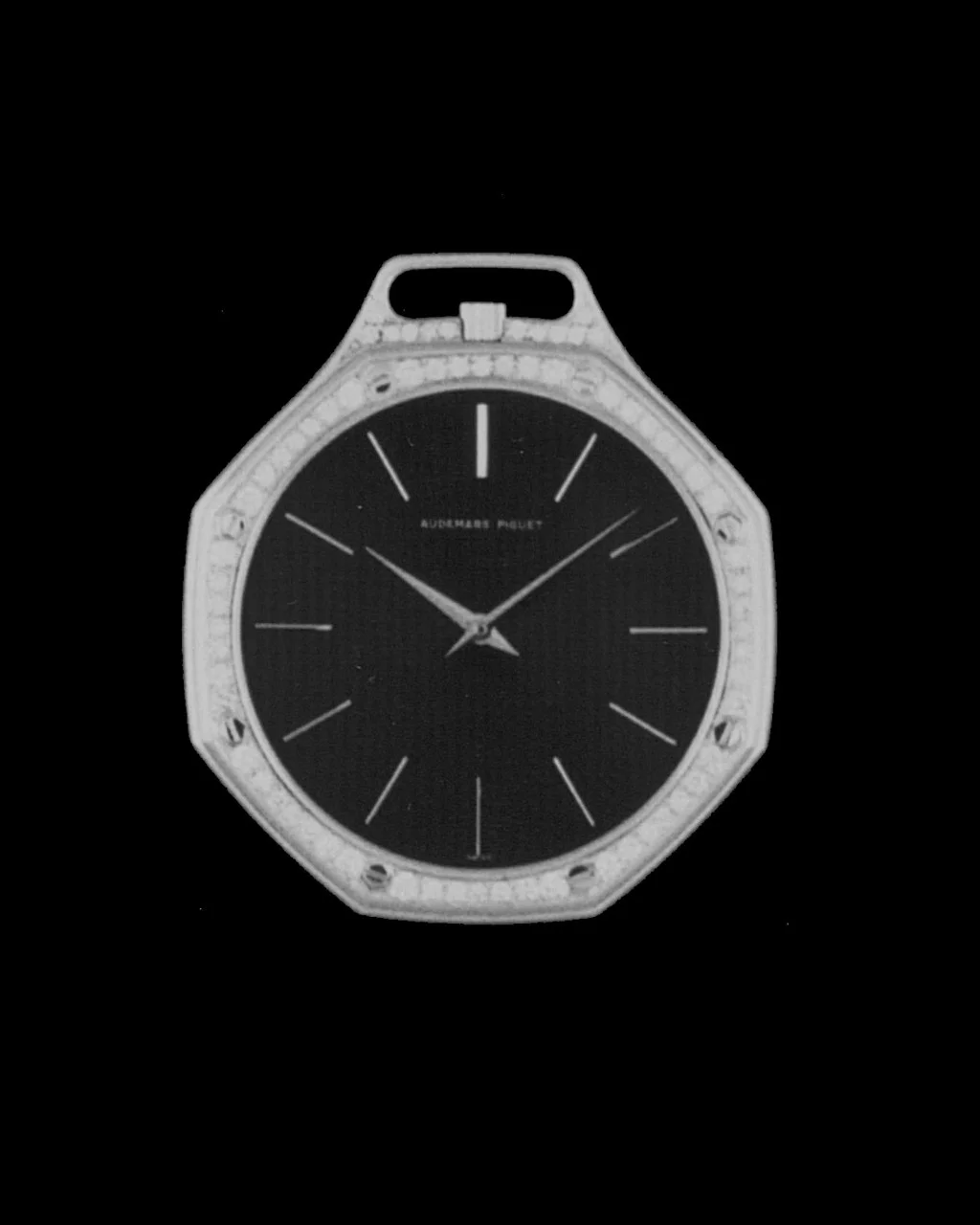
Circa 1985. Royal Oak 5691 identification picture. Created in 1979, Model 5691 is renamed 35691 around 1985. Audemars Piguet Archives.
This model is part of the long tradition of Audemars Piguet pocket watches, which has its roots in the 19th century. During the 1960s and 1970s, many variations of ultra-thin watches were created in very small series, which were sometimes round in shape, but often polygonal, hexagonal and even octagonal. Model 5691 (renamed 35691 in 1984–85) was the first to interpret the Royal Oak as a pocket watch.
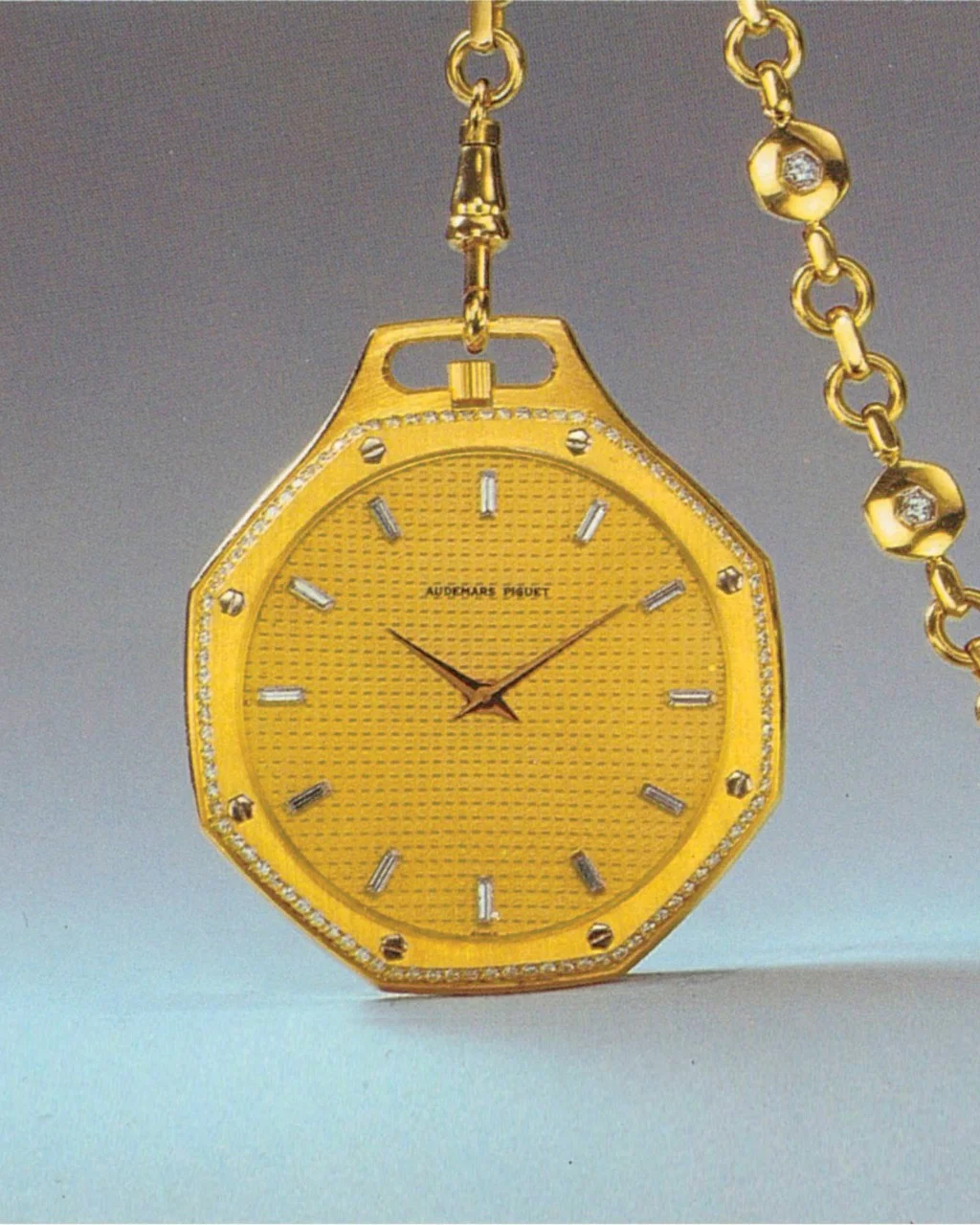
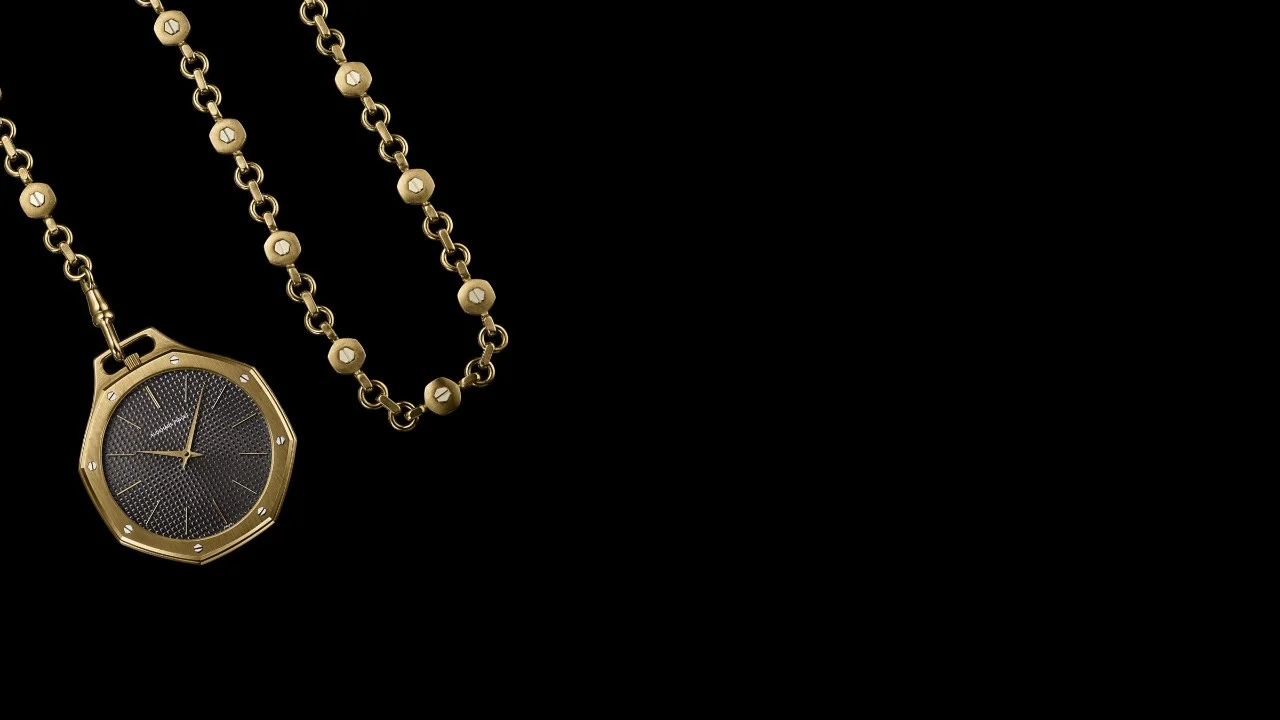
The eight non-cross-through hexagonal screws punctuate the bezel as well as the chain links. It is worth noting that the sword-type hands and hour-markers have no luminescent material.
The archives mention a launch in 1979, but the Production Registers (Registres d'Etablissage) indicate that the 116 or so of these watches produced were sold between 1980 and 1982.
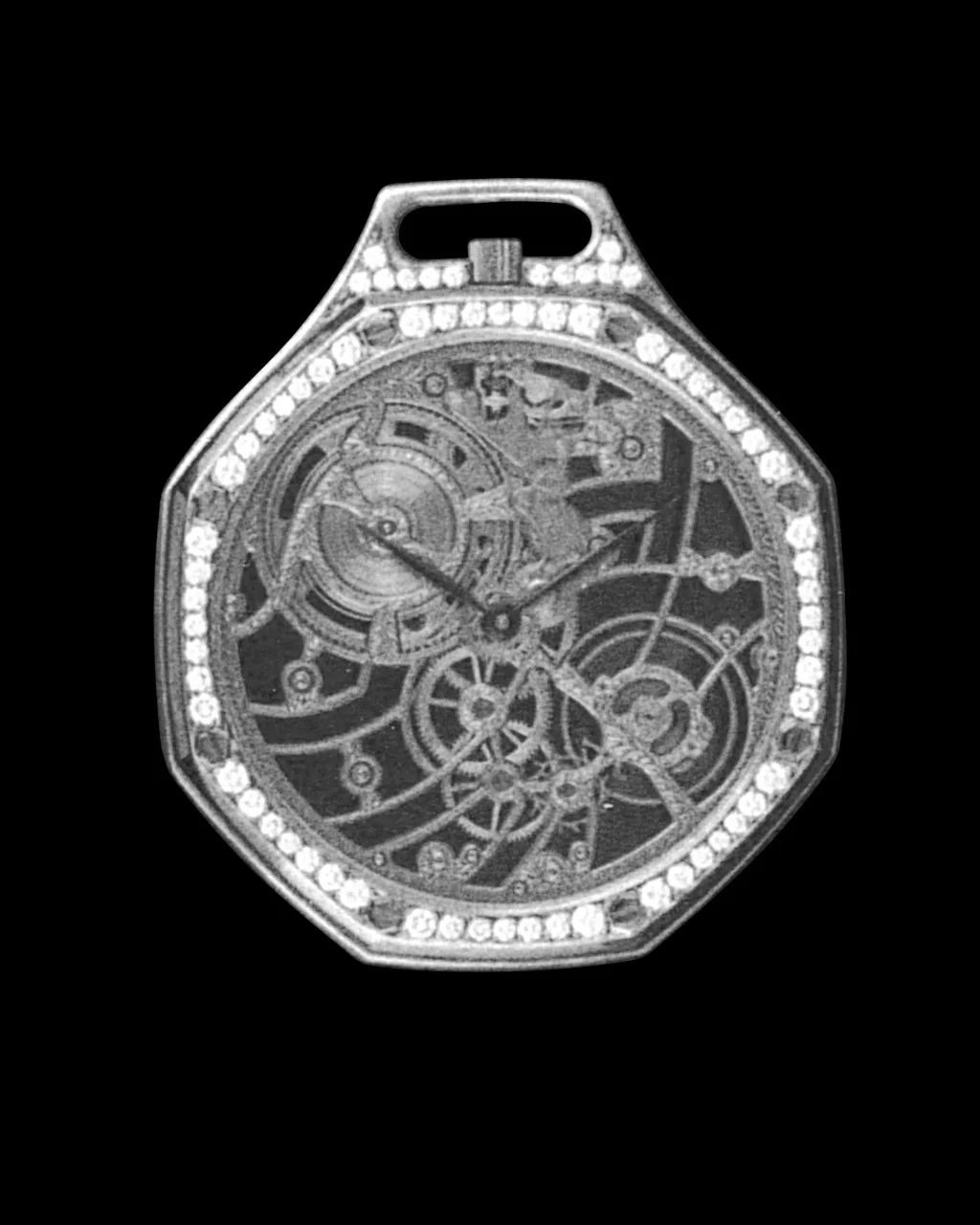
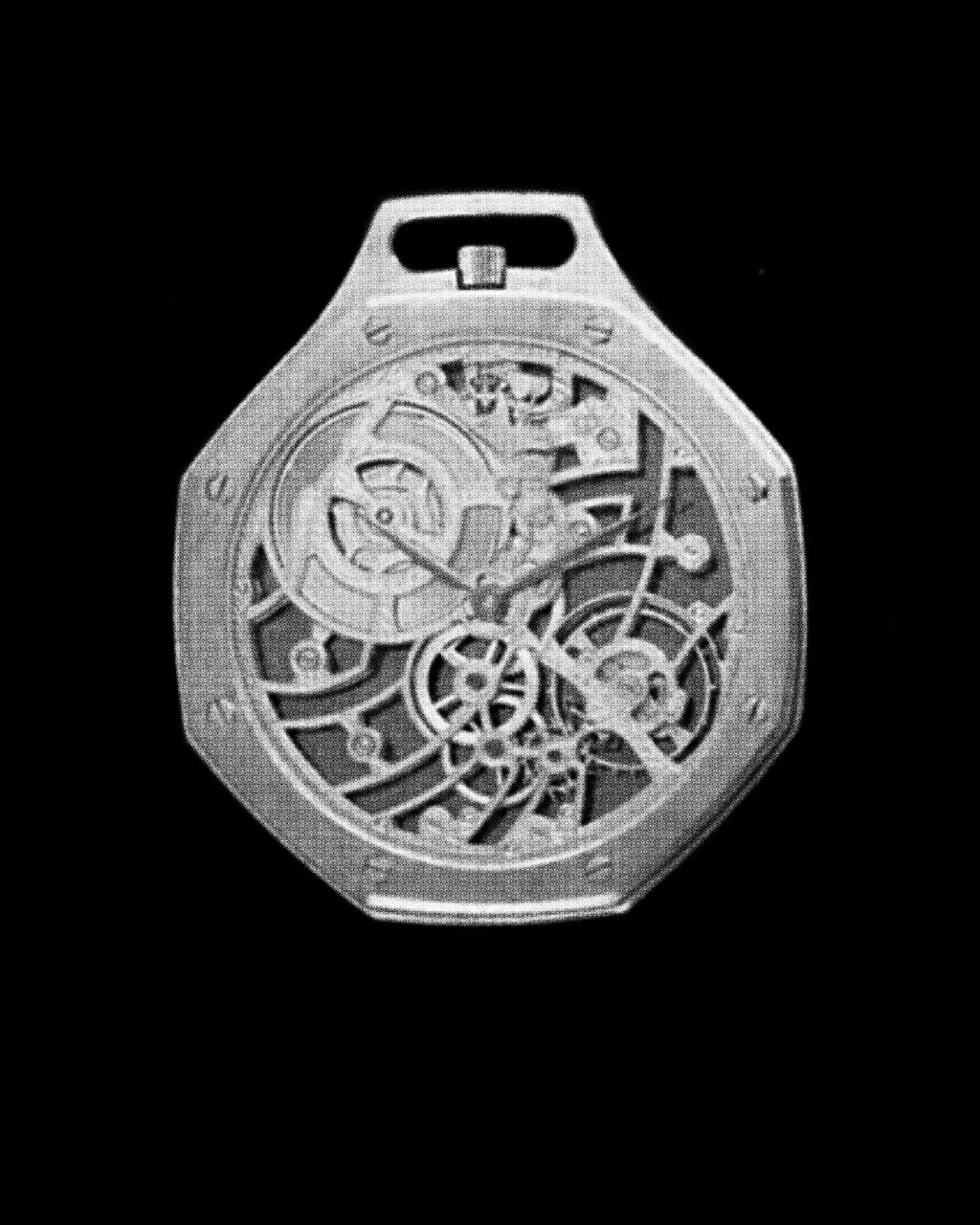
Model 5691 appeared in the Audemars Piguet catalogue in 1981, as did its gemset version, Model 5709. Three other variations also appear in the archives: solid dial 5745 (1981), openworked 5710 (1981) and 5746 (1983). In the 1990s, they were succeeded by a new generation of Royal Oak pocket watches, with a 48 mm diameter. Some models were also equipped with Calibre 5020 (35797, 35798 and 35801) while others were fitted with Calibre 5025 (35796, 35800). Model 25729 (1993) featured an additional perpetual calendar under-dial work.
This model is part of the long tradition of Audemars Piguet pocket watches, which has its roots in the 19th century. During the 1960s and 1970s, many variations of ultra-thin watches were created in very small series, which were sometimes round in shape, but often polygonal, hexagonal and even octagonal. Model 5691 (renamed 35691 in 1984–85) was the first to interpret the Royal Oak as a pocket watch.
The eight non-cross-through hexagonal screws punctuate the bezel as well as the chain links. It is worth noting that the sword-type hands and hour-markers have no luminescent material.
The archives mention a launch in 1979, but the Production Registers (Registres d'Etablissage) indicate that the 116 or so of these watches produced were sold between 1980 and 1982.
Model 5691 appeared in the Audemars Piguet catalogue in 1981, as did its gemset version, Model 5709. Three other variations also appear in the archives: solid dial 5745 (1981), openworked 5710 (1981) and 5746 (1983). In the 1990s, they were succeeded by a new generation of Royal Oak pocket watches, with a 48 mm diameter. Some models were also equipped with Calibre 5020 (35797, 35798 and 35801) while others were fitted with Calibre 5025 (35796, 35800). Model 25729 (1993) featured an additional perpetual calendar under-dial work.
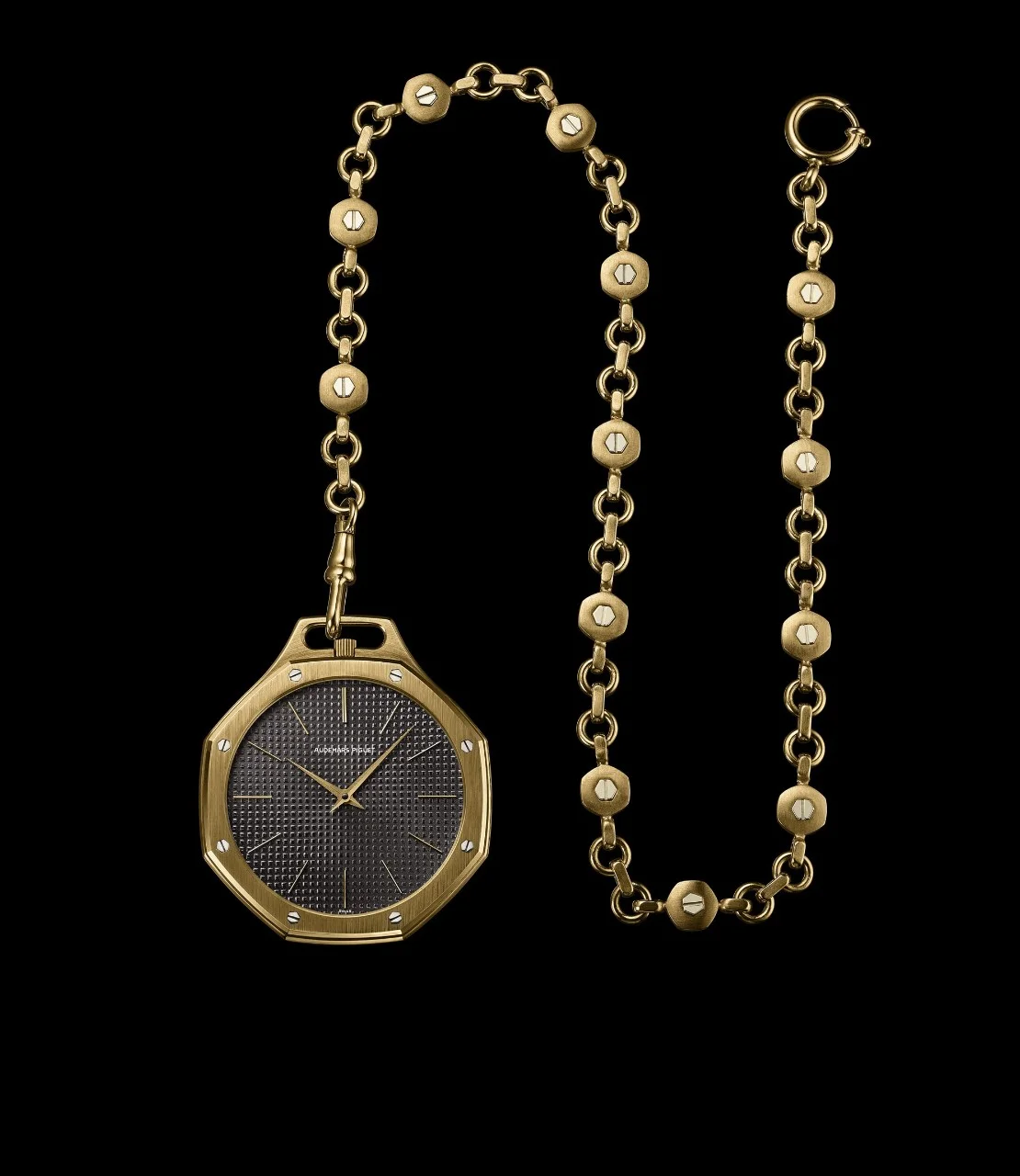
1980. Royal Oak 5691BA pocket watch. First Royal Oak model without a bracelet. Calibre 5020, movement 227380. Royal Oak chain. T21 Tapisserie dial. Case B45238, 44 mm. 18-carat yellow gold. Sold to Darcal (Switzerland) in 1980. Audemars Piguet Heritage, inv. 894.
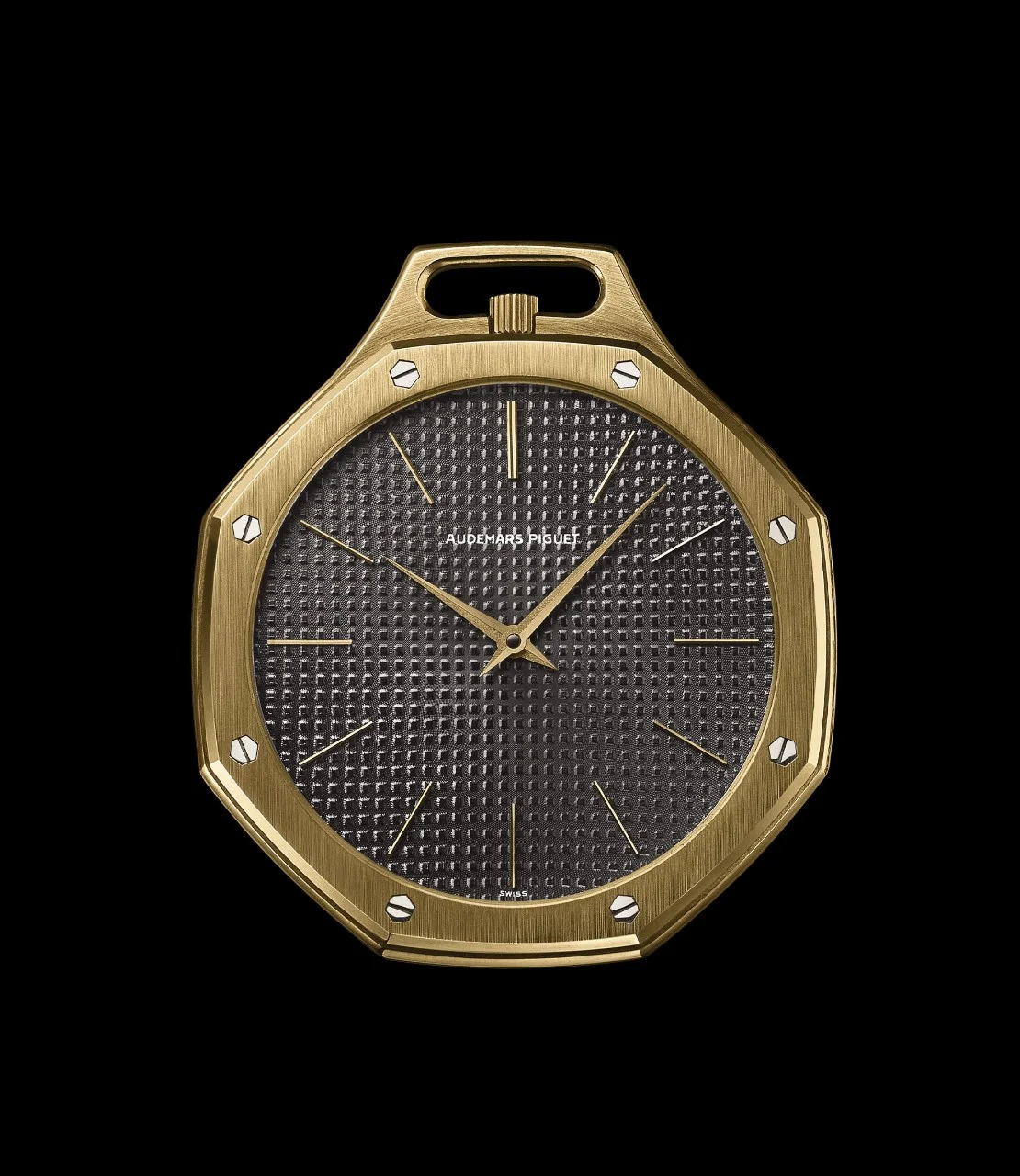
1980. Royal Oak 5691BA pocket watch. First Royal Oak model without a bracelet. Calibre 5020, movement 227380. Royal Oak chain. T21 Tapisserie dial. Case B45238, 44 mm. 18-carat yellow gold. Sold to Darcal (Switzerland) in 1980. Audemars Piguet Heritage, inv. 894.
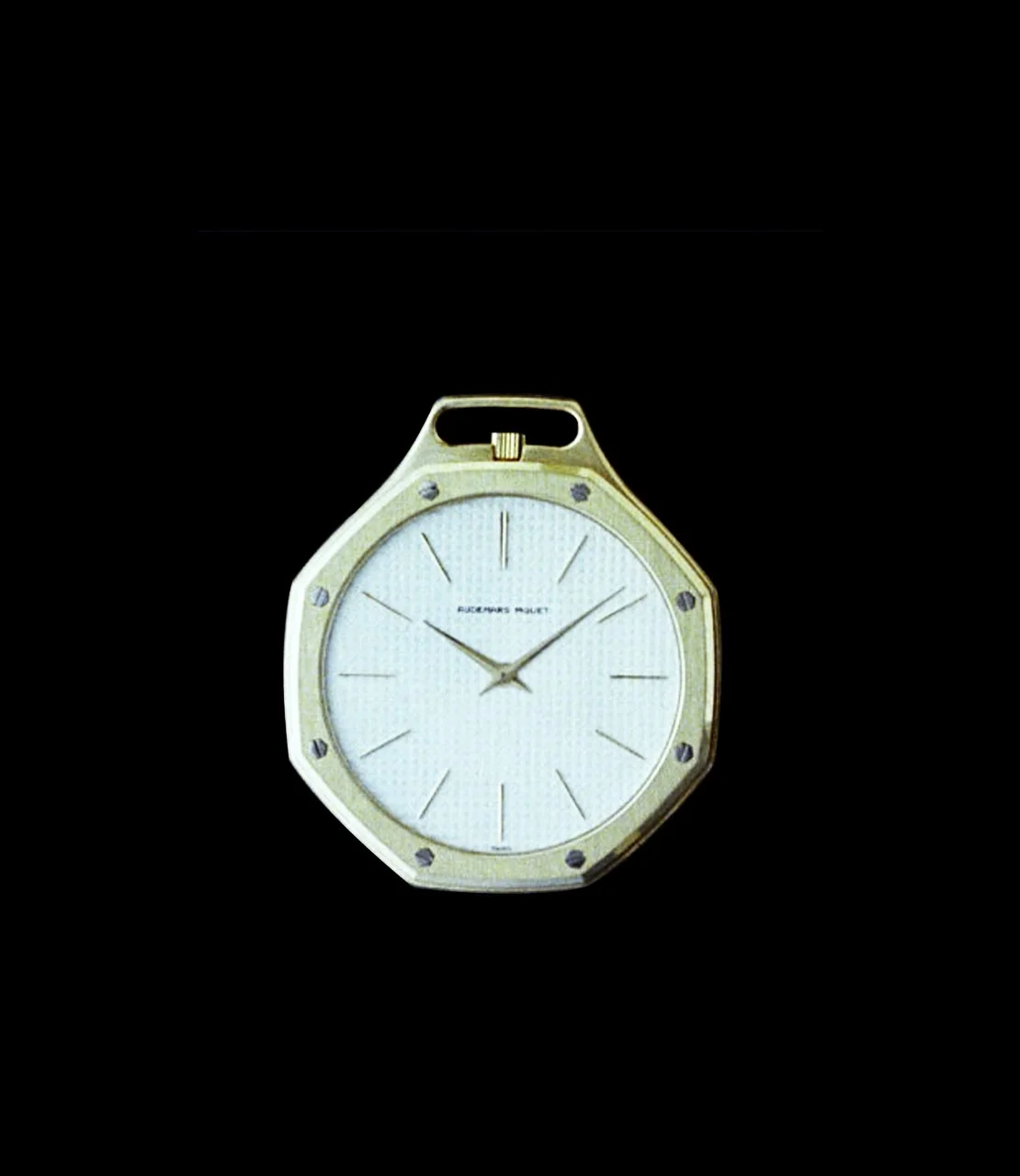
Circa 1979. Royal Oak 5691BA identification picture. Audemars Piguet Archives.
At least 53 watches in the yellow gold version were sold between 1980 and 1981. Some of them are equipped with one of the very first white Tapisserie dials to be introduced in the Royal Oak collection.
Sales from 1980 to 1985: 64 units in all, of which 12 (1980), 43 (1981), 5 (1982), 3 (1983) and 1 (1985)
At least 53 watches in the yellow gold version were sold between 1980 and 1981. Some of them are equipped with one of the very first white Tapisserie dials to be introduced in the Royal Oak collection.
Sales from 1980 to 1985: 64 units in all, of which 12 (1980), 43 (1981), 5 (1982), 3 (1983) and 1 (1985)

1981. Royal Oak pocket watch 5691BC with its chain. Calibre 5020, movement no. 227406. T21 Tapisserie dial. 44 mm case no. B49730 in 18-carat white gold. Sold at Darcal (Swiss market) in January 1980. Audemars Piguet Heritage, inv. 895.
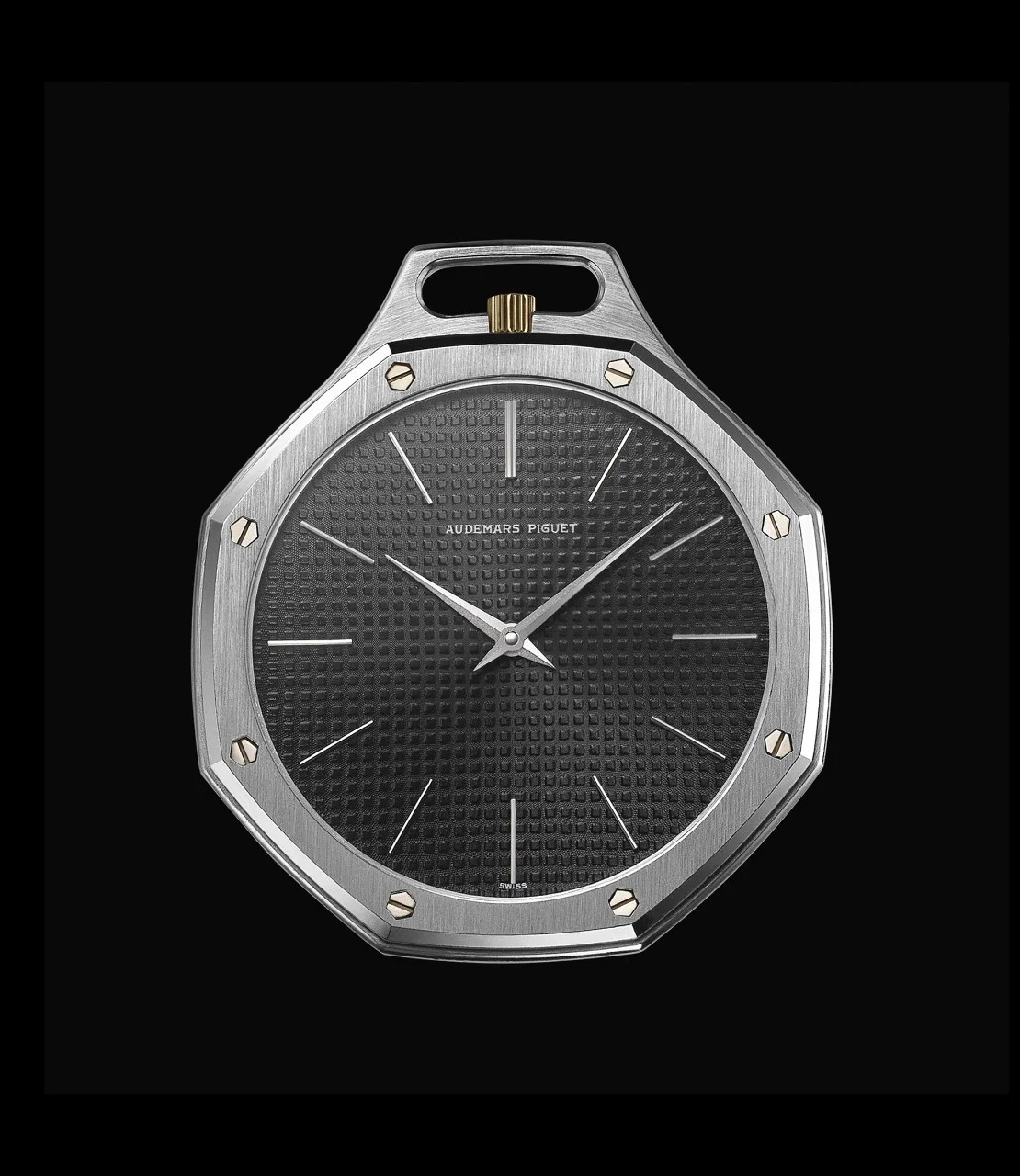
1981. Royal Oak pocket watch 5691BC. Calibre 5020, movement no. 227406. T21 Tapisserie dial. 44 mm case no. B49730 in 18-carat white gold. Sold at Darcal (Swiss market) in January 1980. Audemars Piguet Heritage, inv. 895.

1981. 5691BC Royal Oak pocket watch (44 mm). Audemars Piguet 1981 and 1985 catalogues. Audemars Piguet Archives.
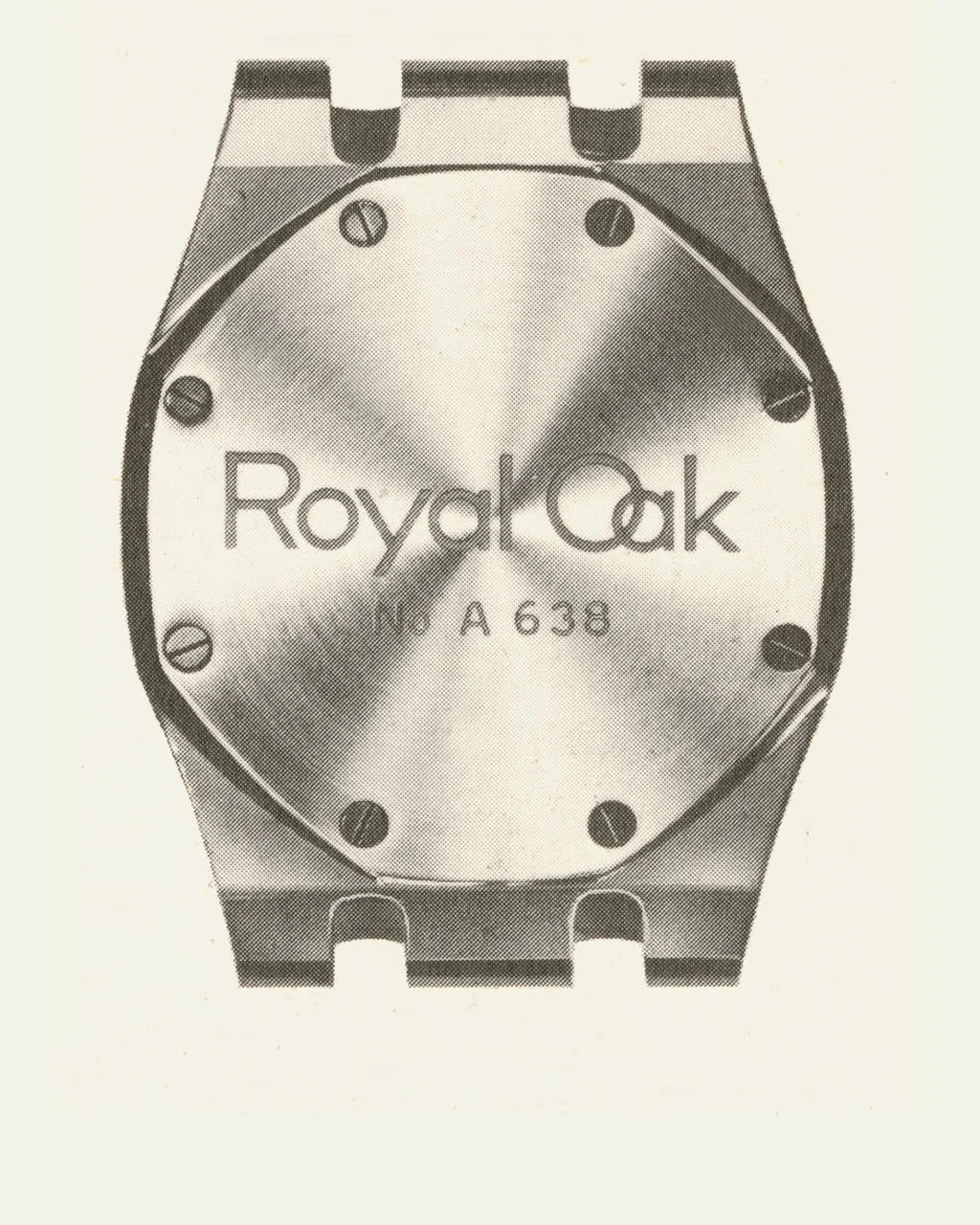
The Production Registers mention 19 of the Model 5691BC watches in white gold. Some of them featured the Royal Oak logo engraved on the back.
Sales in 1981: 9 units in all
The Production Registers mention 19 of the Model 5691BC watches in white gold. Some of them featured the Royal Oak logo engraved on the back.
Sales in 1981: 9 units in all
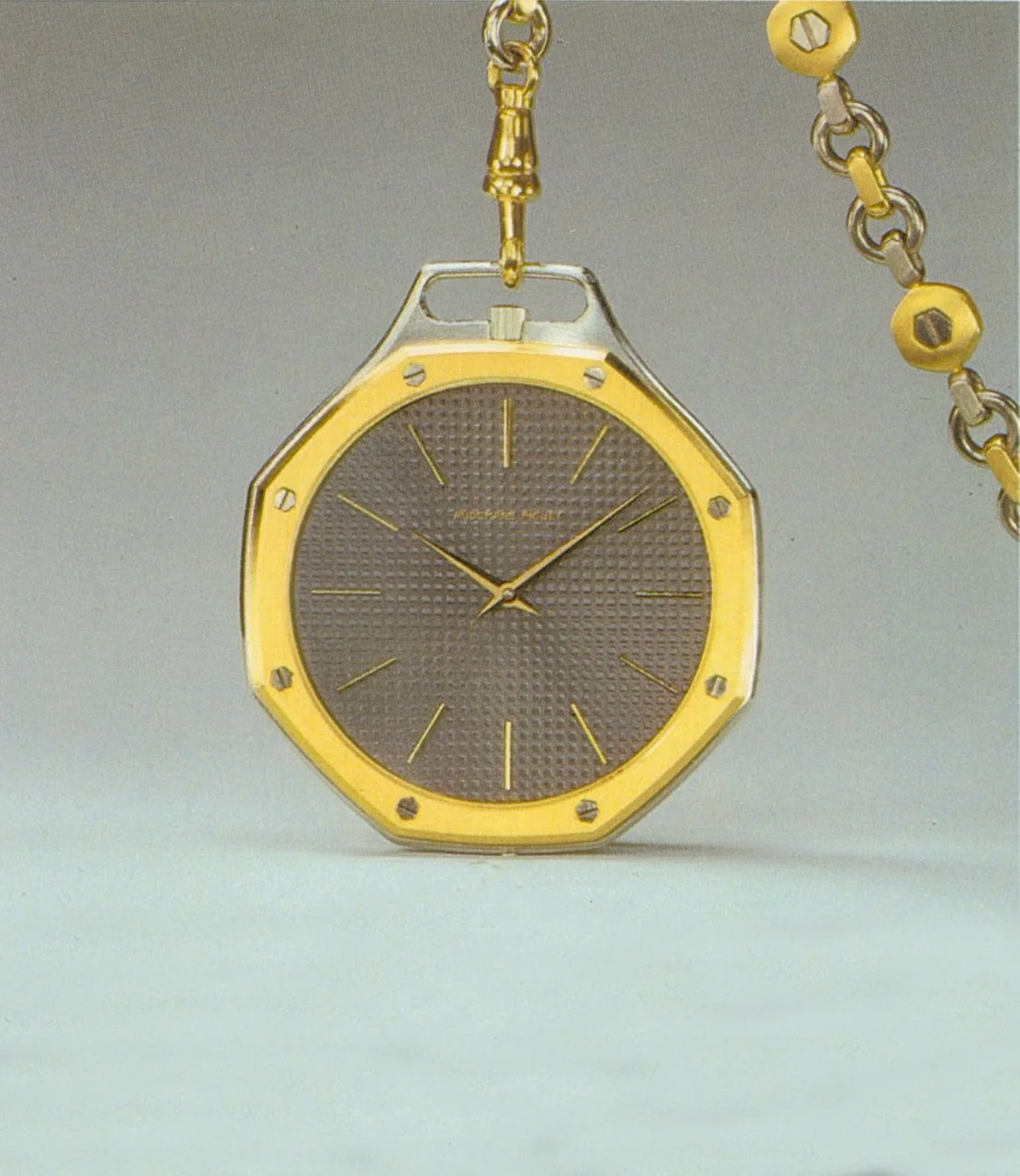
1981. 5691CA Royal Oak pocket watch (44 mm). Audemars Piguet 1981 and 1985 catalogues. Audemars Piguet Archives.

Circa 1979. Royal Oak 5691CA identification picture. Audemars Piguet Archives.
The Production Registers mention at least 43 two-tone examples, sold between 1980 and 1982.
Unlike the very first two-tone Royal Oak watches, which combine steel and yellow gold, Model 5691CA combines white and yellow gold. This association of different gold colours is also interpreted on the chain. The letters "CA" are a contraction of "BC" (white gold) and "BA" (yellow gold).
Sales from 1980 to 1982: 43 units in all, of which 14 (1980), 28 (1981) and 1 (1982)
The Production Registers mention at least 43 two-tone examples, sold between 1980 and 1982.
Unlike the very first two-tone Royal Oak watches, which combine steel and yellow gold, Model 5691CA combines white and yellow gold. This association of different gold colours is also interpreted on the chain. The letters "CA" are a contraction of "BC" (white gold) and "BA" (yellow gold).
Sales from 1980 to 1982: 43 units in all, of which 14 (1980), 28 (1981) and 1 (1982)