The Royal Oak “Jumbo” Models
Summary
“Jumbo”: from Elephant to Plane to Watch
The term “Jumbo” has retained an informal connotation due to its popular origins. The word first appeared in a London slang dictionary in 1823 and denoted “a big, clumsy person, animal or thing.” The term began to enter everyday language in the late 19th century, thanks to the giant elephant named "Jumbo", whose fame spread across borders and continents. When the aircraft manufacturer Boeing presented its oversized 747 model in 1969, it was immediately nicknamed the "Jumbo Jet" because of its gigantic proportions and the term became increasingly popular from then on.
The watch trade press rarely used the term "Jumbo" before 1970, with Europa Star magazine only beginning to use it in 1974. Small, now extinct brands such as Amida, Cattin, Ufo, Nice Time Watch Trading & Co and Ebohr adopted it for their most generous-sized creations. The press did not yet associate this term with the Royal Oak or the Nautilus – now the most famous "Jumbo" watches – upon their release because it was merely an insider nickname at the time.
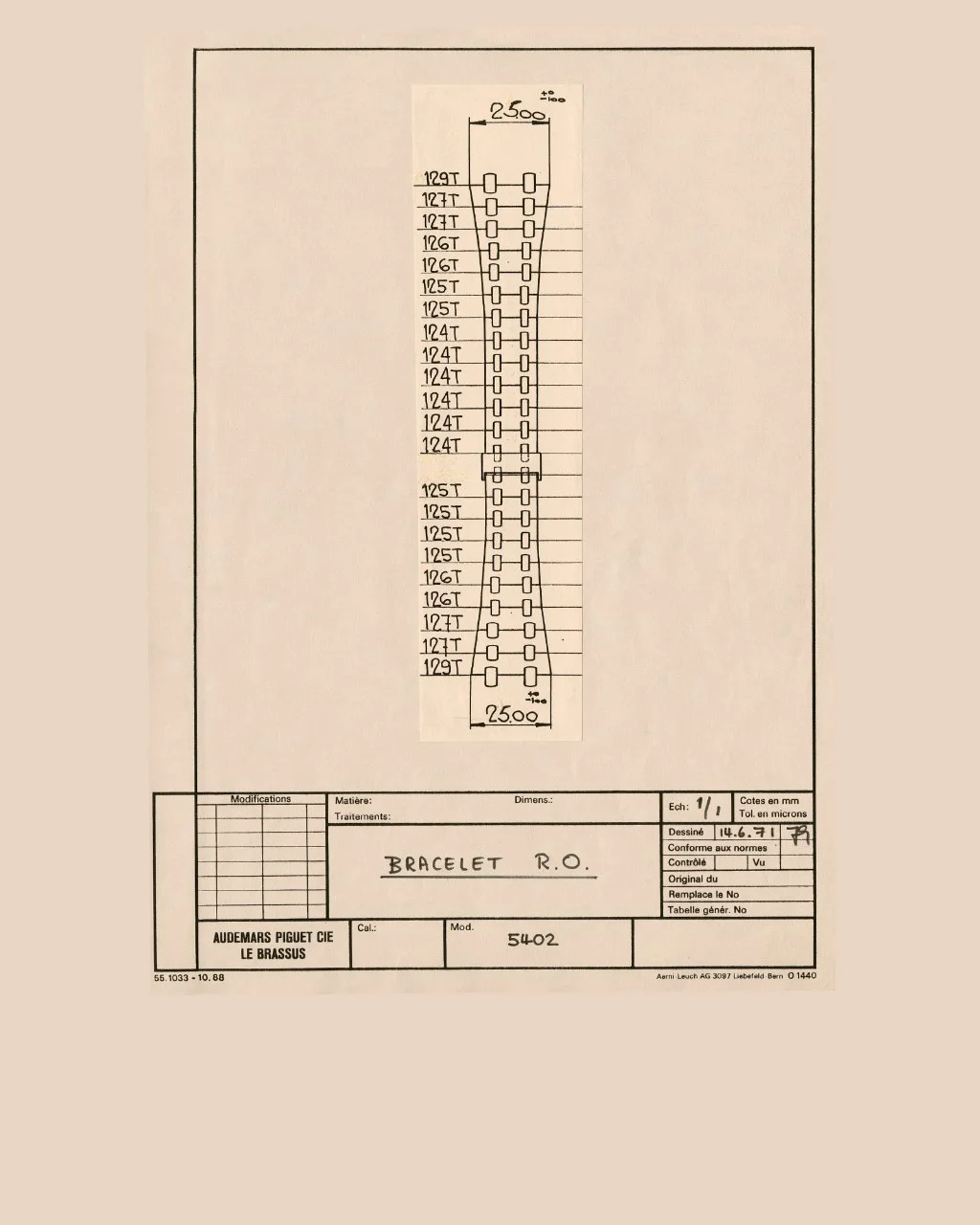
The only occurrence of the term discovered in the Audemars Piguet archives before the 1990s stems from a small publication by Asian distributor Desco, which introduced the Royal Oak in 1973. The "Jumbo Size" expression featured there evoked the exceptional size of an example intended for a sumo wrestler, whose wrist required a 25 cm-long bracelet!
Since the early 21st century, the “Jumbo” adjective has become so widespread that it designates any watch deemed to be oversized by the standards of its time. A 1940s watch measuring 36 mm can thus be called “Jumbo” even though it is undersized according to 21st century norms. The same is true of the Royal Oak “Jumbo”: in 1972, 39 mm was an above-average size.


1969. First flight of the "Jumbo Jet" Boeing 747 The biggest jetliner of its time was quickly nicknamed "Jumbo", which popularised the idiom and enabled it to cross borders. © Photograph from Bettman/Getty Images.

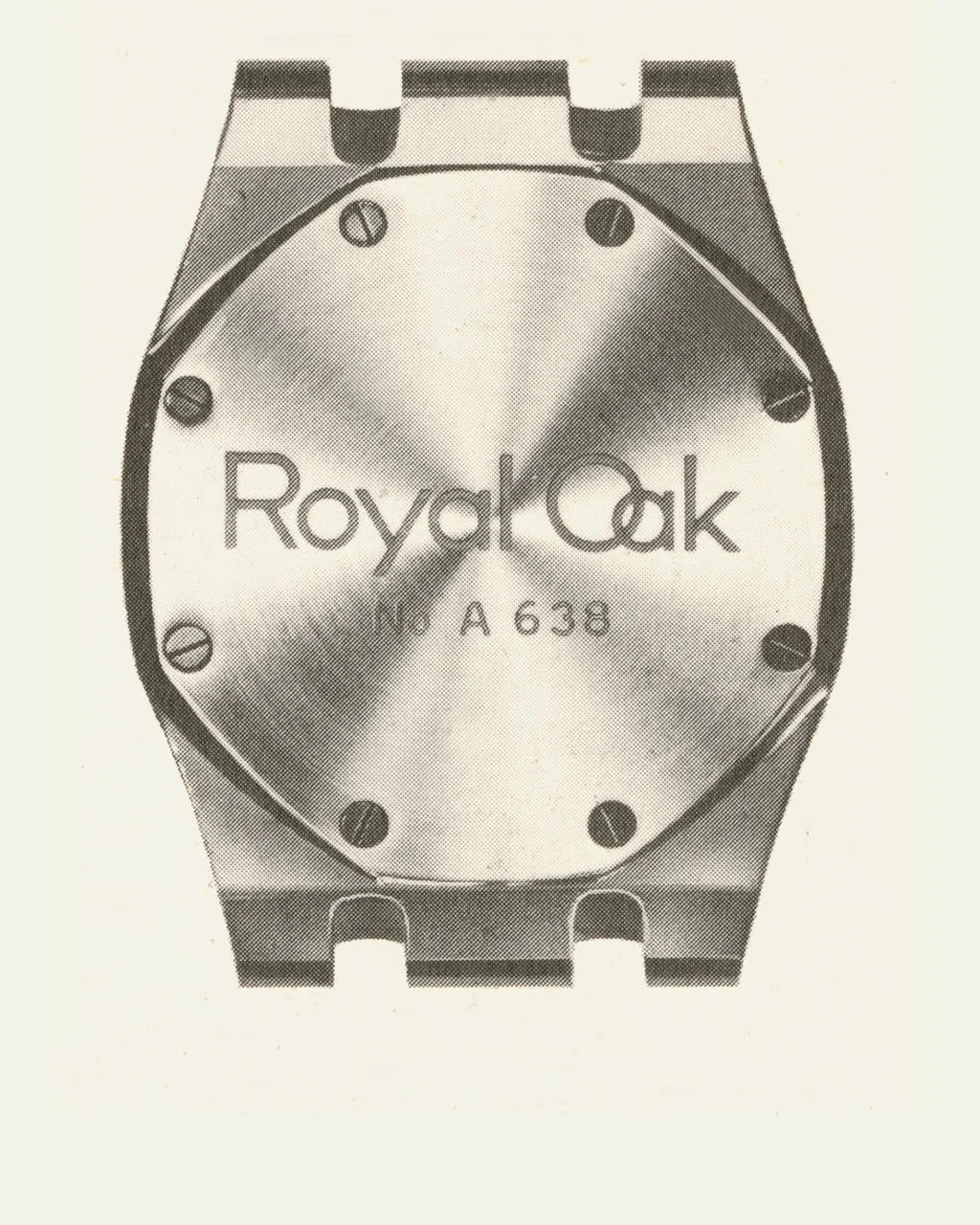
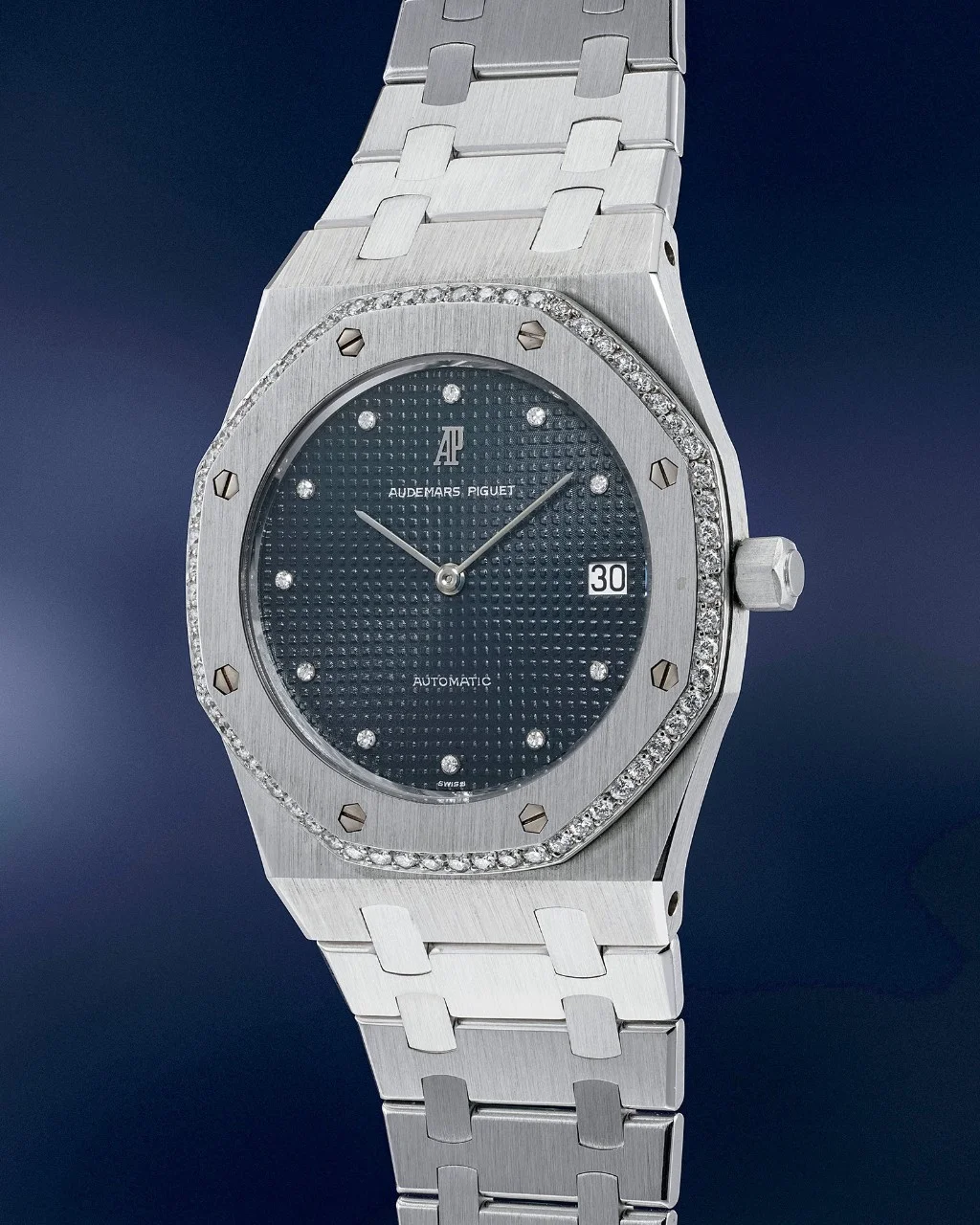
1972. Royal Oak 5402ST No. A26. Calibre 2121, movement 127059. Bracelet 344, T21 Tapisserie dial. Case 67026, 39 mm. Steel. Sold to Gameo in 1972. Audemars Piguet Heritage, inv. 365.
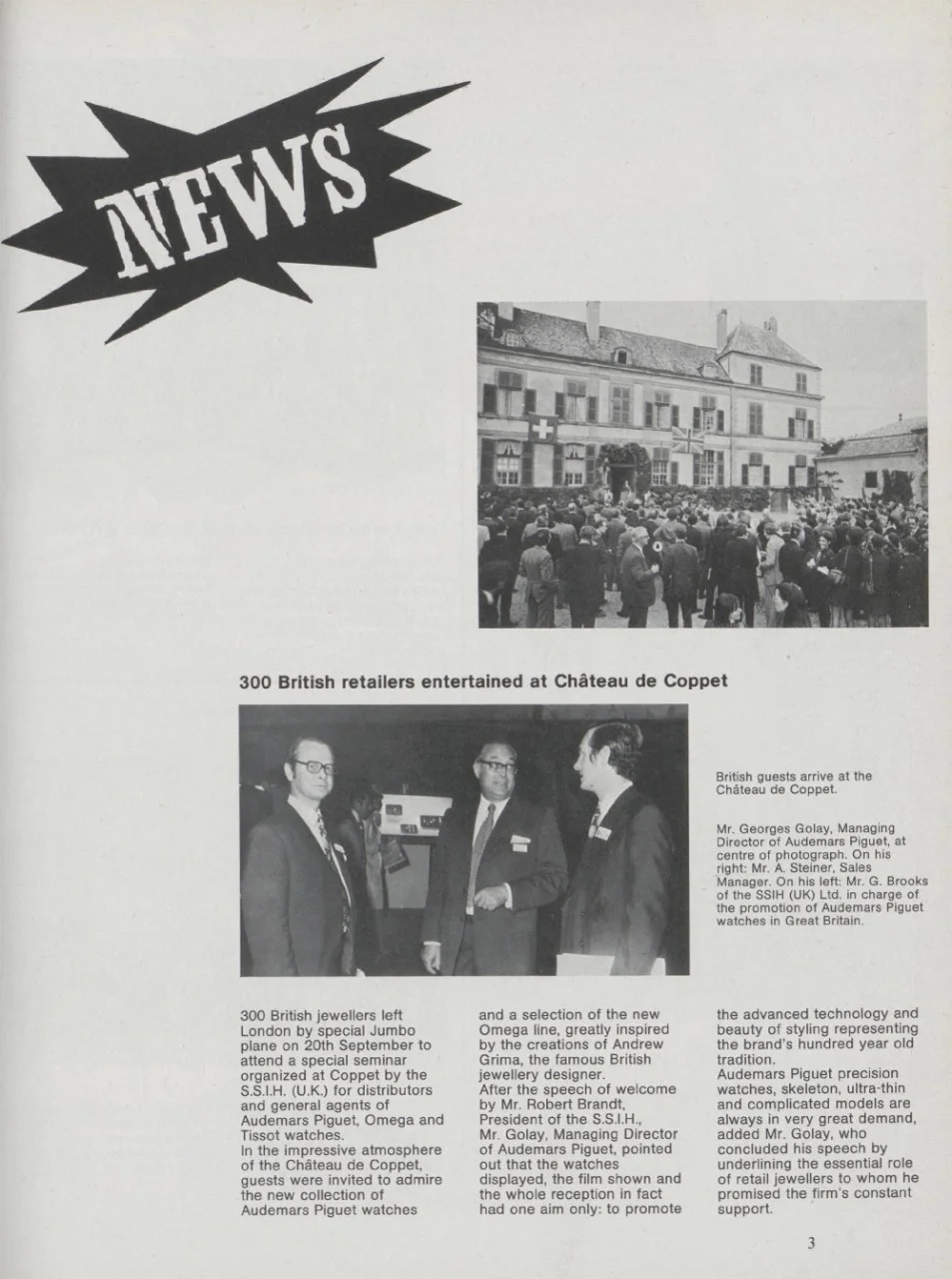
20 September 1972. SSIH training workshop A Jumbo plane was specifically charted to bring 300 English retailers to Geneva for a SSIH sales workshop. For the occasion, Georges Golay presented the Audemars Piguet collection including the first Royal Oak. © Europa Star 1972, no 77, 5/6, p. 23.
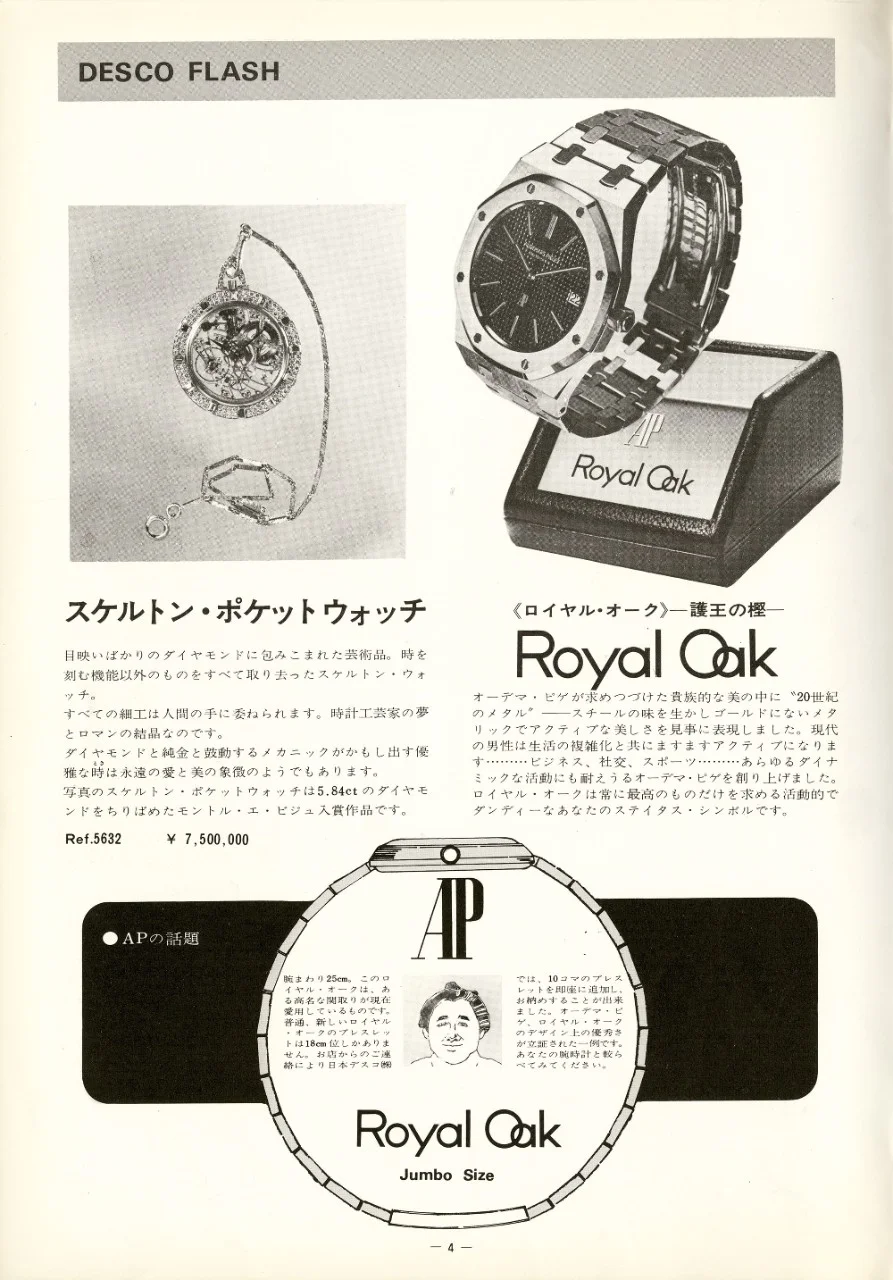
1973. First use of the term "Jumbo" associated with the Royal Oak. In its promotional review, the Asian importer Desco presented a so-called Royal Oak "Jumbo". This nickname was given due to the oversized bracelet destined to the wrist of a famous sumo wrestler. Audemars Piguet Archives.
Watchmaking’s Miniaturisation Race
In watchmaking, the perception of size is eminently subjective, personal and above all cultural, while also influenced by the state of technology. Let’s take a brief look back at the major stages of this evolution.
The history of horology, and more generally that of technology, can be envisioned through the prism of miniaturisation. For example, from the 15th century onwards, some belfry clocks occupied an entire purpose-built tower. As the size of the mechanisms decreased, clocks made their way indoors into castles, palaces and subsequently bourgeois buildings. They were initially affixed to walls, high up so as to leave space for the weights driving the mechanism. Little by little, they shrank to a table clock format. From the 16th century onwards, they could be worn either around the neck, on the belt or in the pocket.
By the time the wristwatch became popular in the 1920s and 1930s, the miniaturisation of mechanical movements had reached its ultimate stage. Brass and steel components could not be made any smaller without threatening timepieces’ reliability. As a general rule, each reduction in a movement’s dimensions leads to an exponential decrease in the precision tolerances of its components. The slightest inaccuracy can be fatal to the mechanism. In 1927, Audemars Piguet became a master in this field, creating the world's smallest mechanical movement: Calibre 5/7BF measuring a mere 15.9 mm x 5.8 mm.
Having reached their extreme point of miniaturisation, wristwatches then began moving in the opposite direction. Decade after decade, their dimensions became increasingly generous. During the 1920s, the measurements of men's wristwatches were almost always less than 30 mm in diameter across the entire watch industry. It was not until the second half of the 1930s that watches with a diameter of more than 32 mm appeared and only in the 1950s that over 35 mm models began to make their mark. This evolution was notably due to the development of selfwinding watches whose mechanism required more space, as well as to the socio-economic context. The acceleration of activities, travel and lifestyles called for enhanced ergonomics and a larger dial size was required to ensure legibility.

Calibre 2121 Imposed an Oversized Case on the First Royal Oak
In the 1970s, the average size of men's watches was around 35–36 mm, even though the trend for sports watches, particularly diving models, tended to impose more generous measurements. One could mention in this respect the Rolex Daytona (37 mm), the Monaco by TAG Heuer in 1969 (38 mm) and the Memovox Polaris II by Jaeger-LeCoultre in 1970 (41 mm), to name but a few.
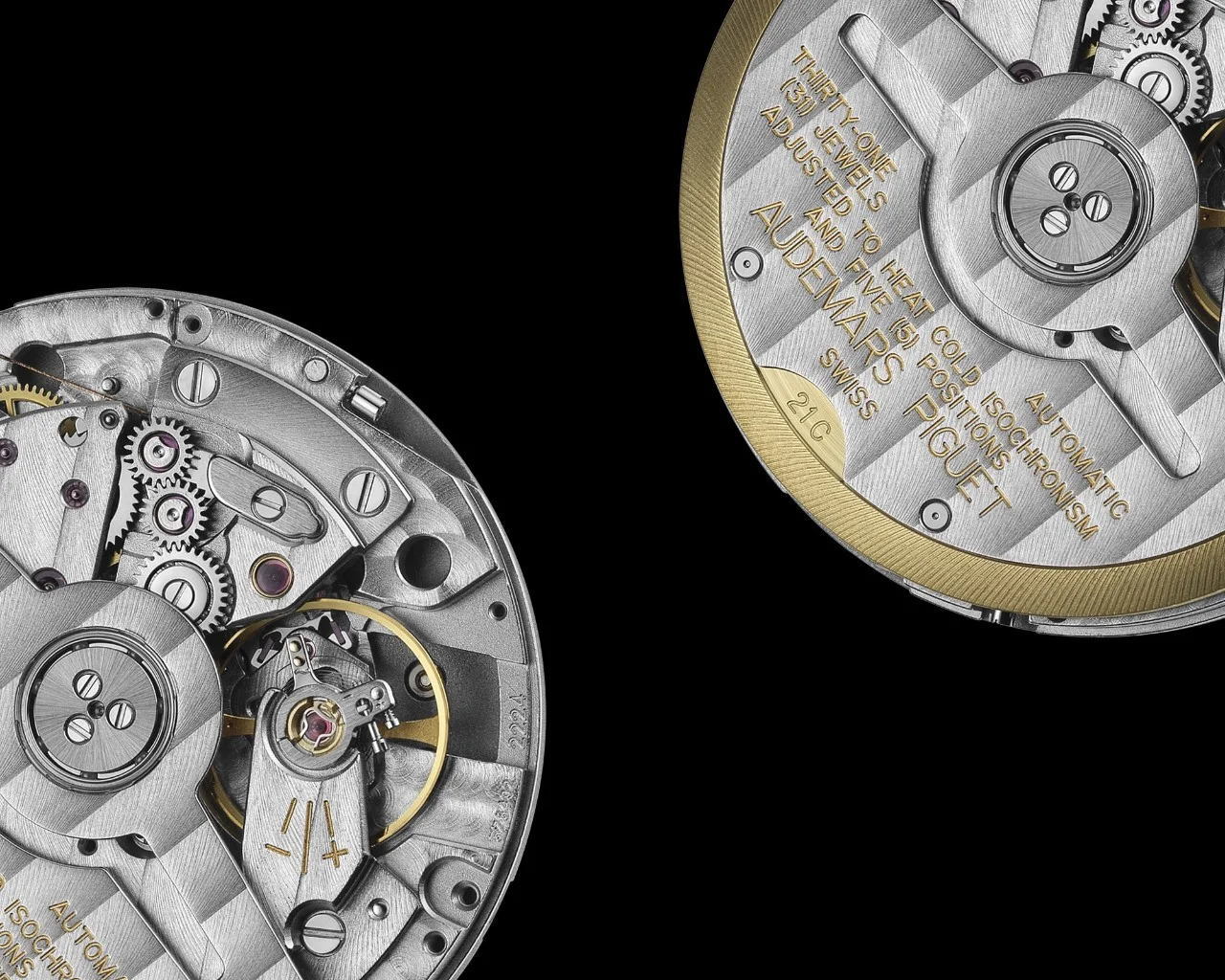
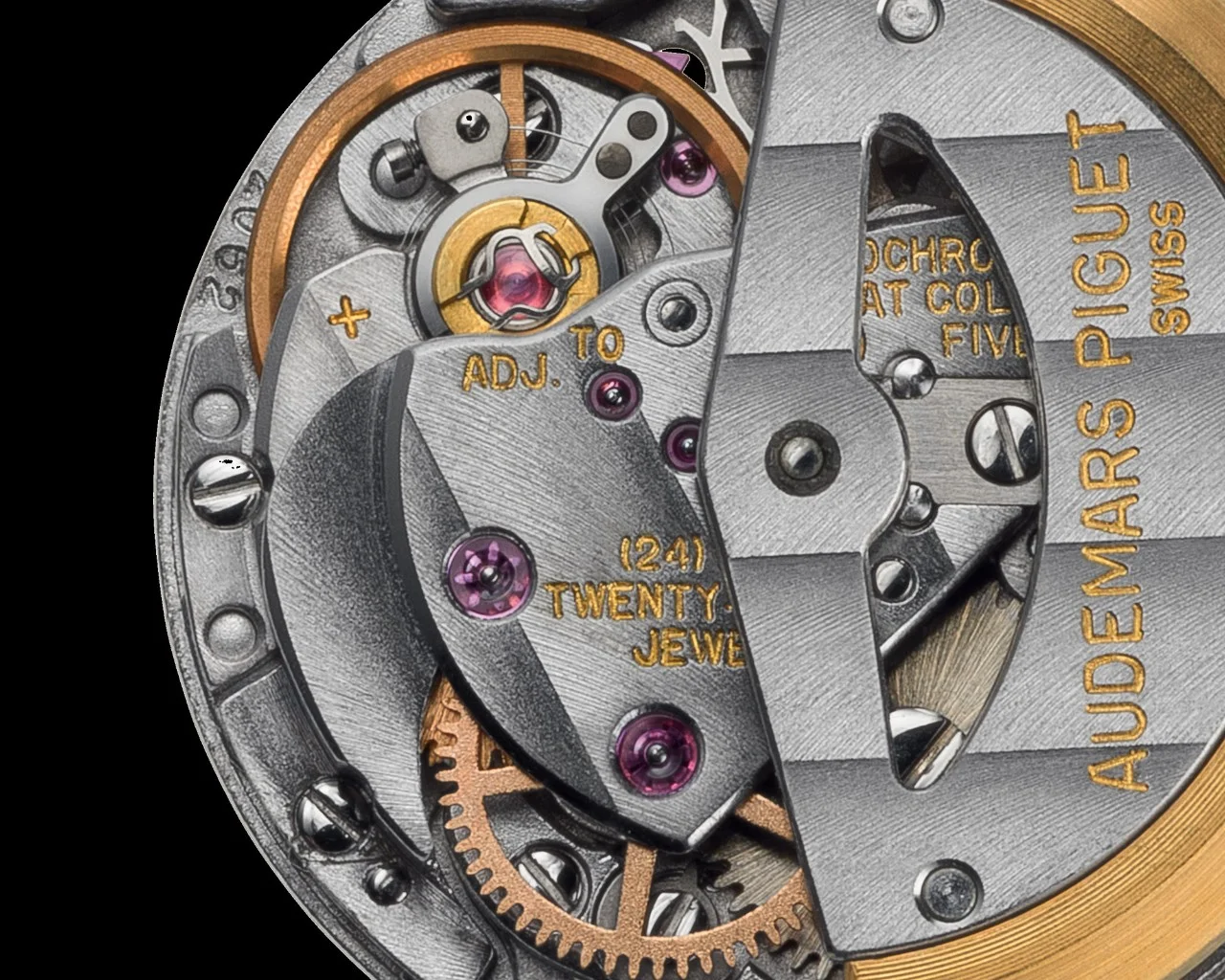
At 39 mm, the Royal Oak 5402 was the first Audemars Piguet watch produced in series and belonging to the oversized category. Unlike other watches of a similar diameter, it featured a very thin case (with a total thickness of approx. 7.15 mm). It was the contrast between this extreme thinness and its generous diameter that made it the ultimate sport-chic watch. Its Calibre 2121 was then the world's thinnest selfwinding movement driving a date indication (3.05 mm).
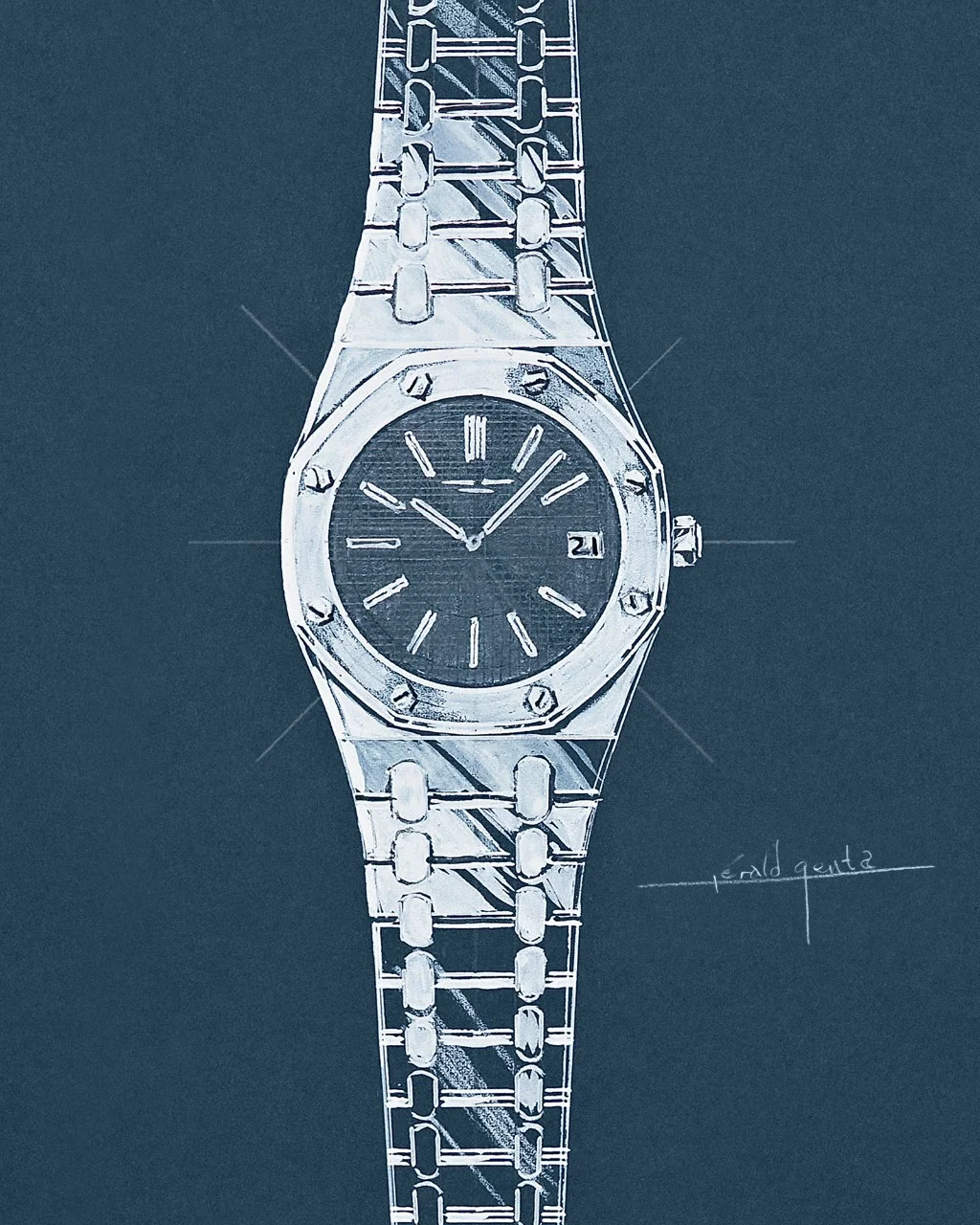
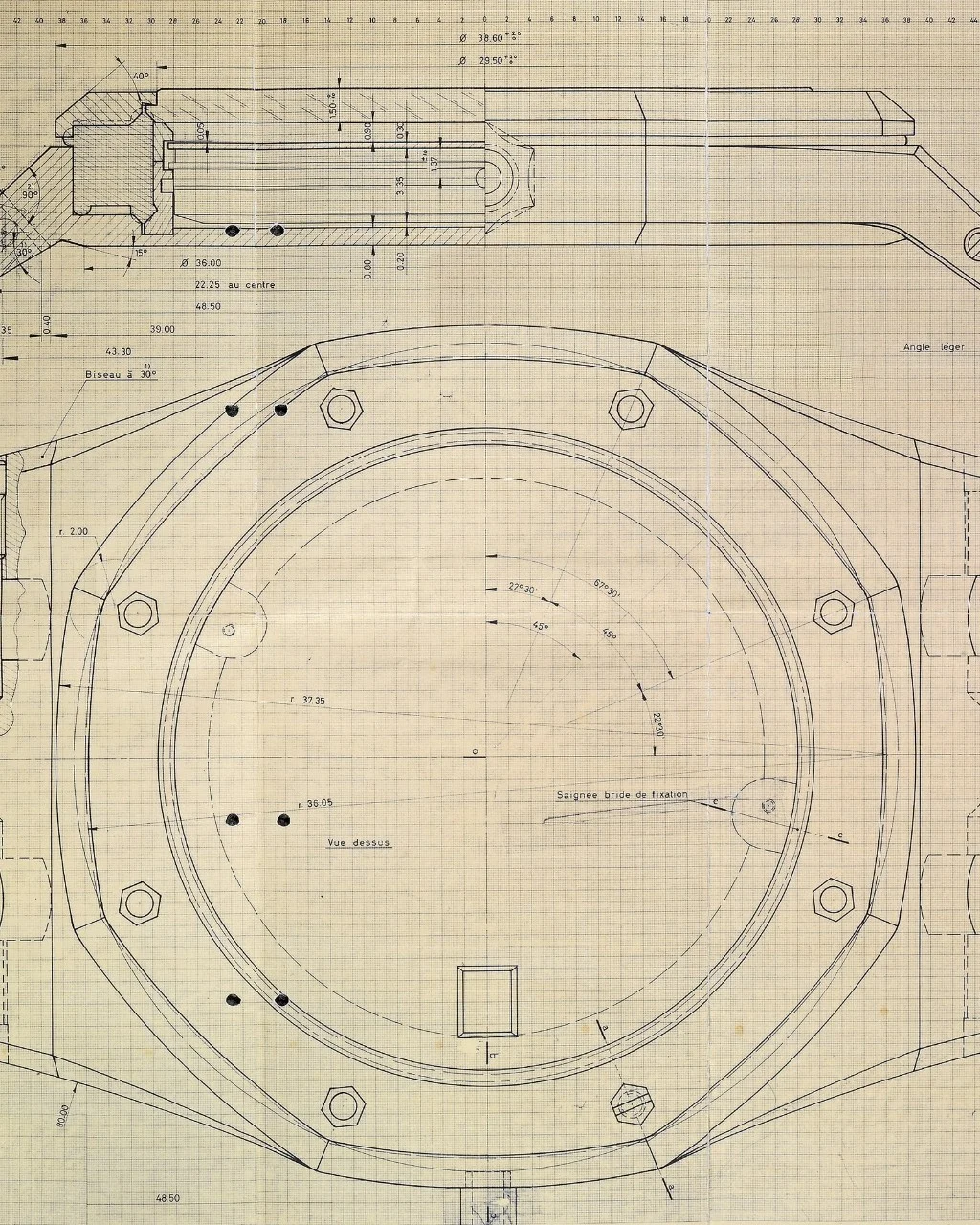
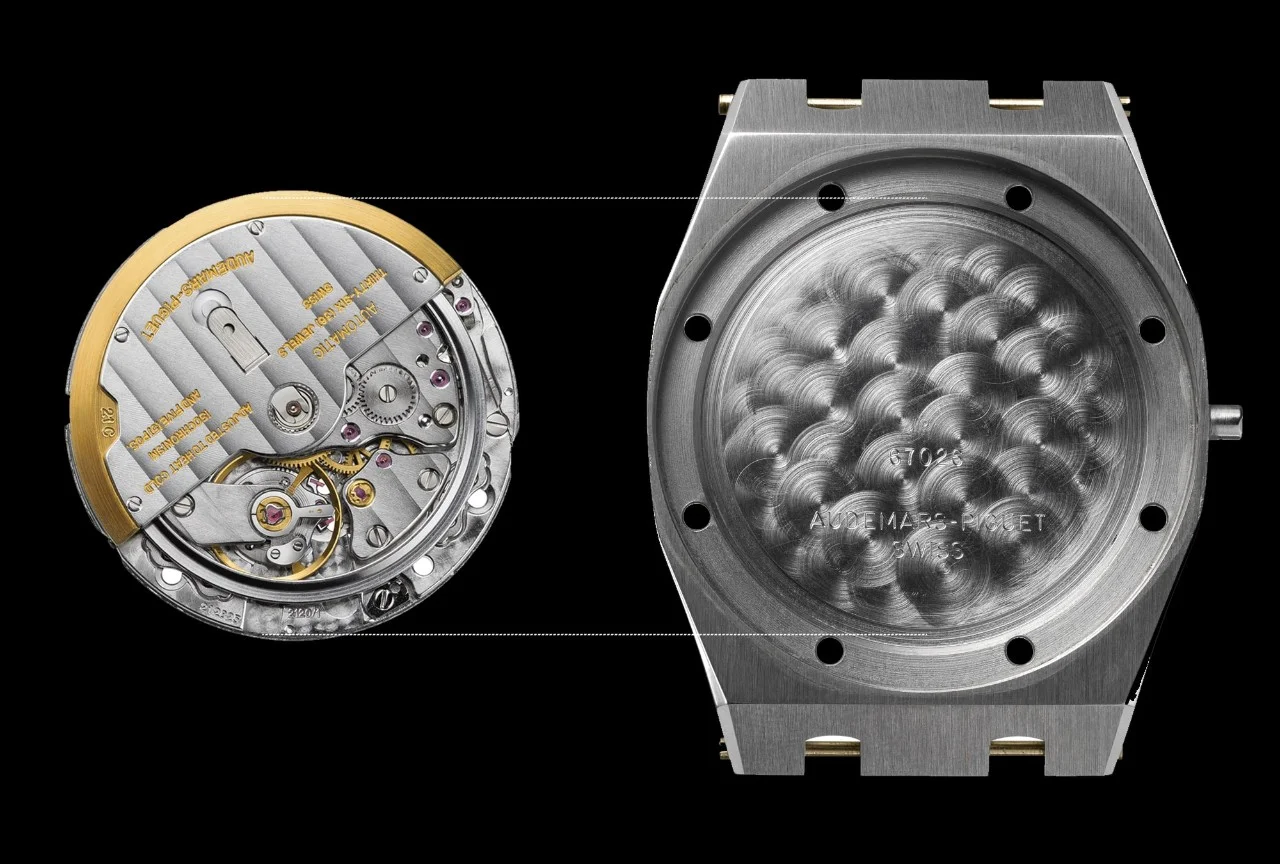
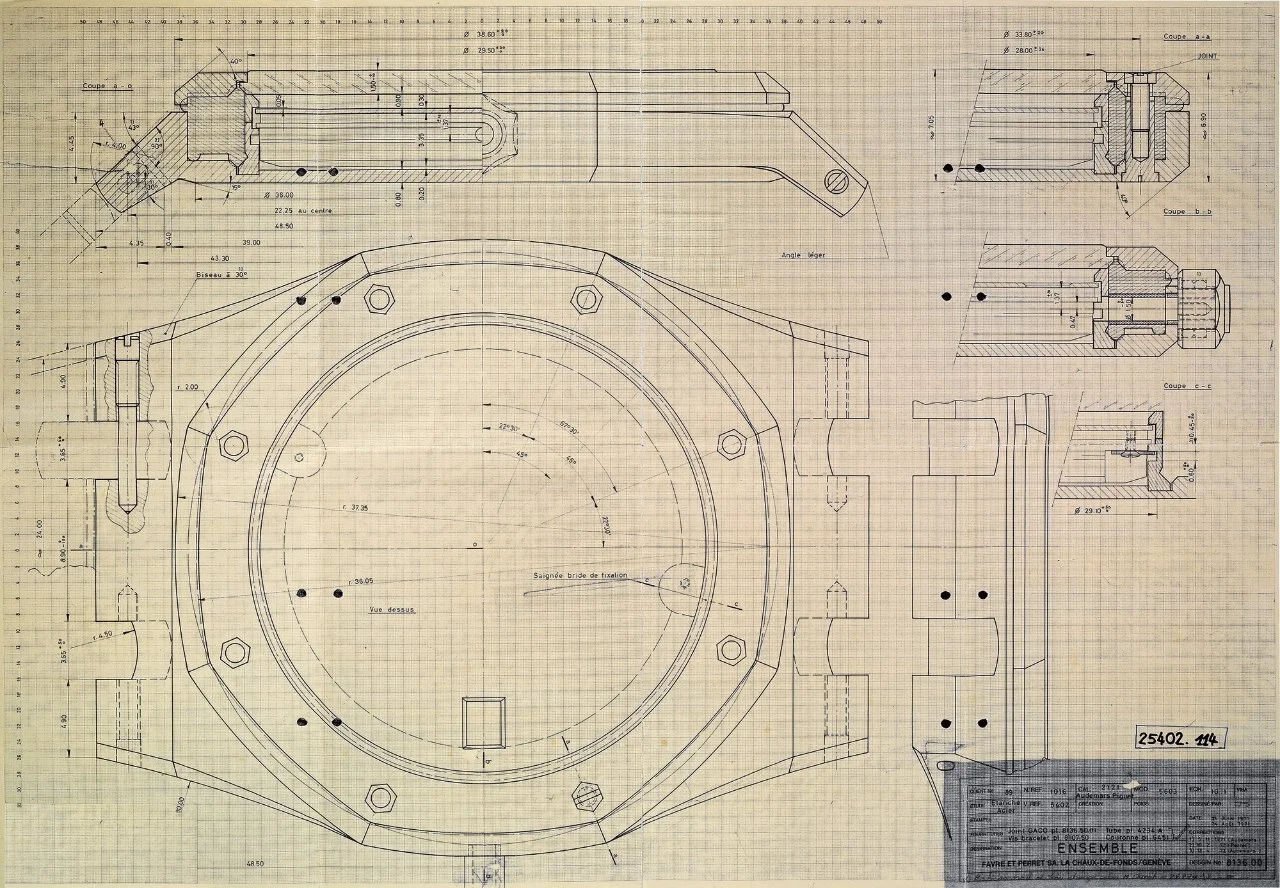
While it is probable that Gérald Genta wanted to give the Royal Oak an imposing diameter, his later testimonies do not mention this desire. It was the relatively large diameter of the movement (28 mm), coupled with the unusual case construction, that imposed such measurements. The eight hexagonal screws punctuating the bezel were driven through the whole monocoque case and the oversized seal. Since it would have been impossible to make them pass through the mechanical movement, watchmakers placed them on the periphery of the latter. As a result, size was born of function.

Shrinking the Royal Oak...
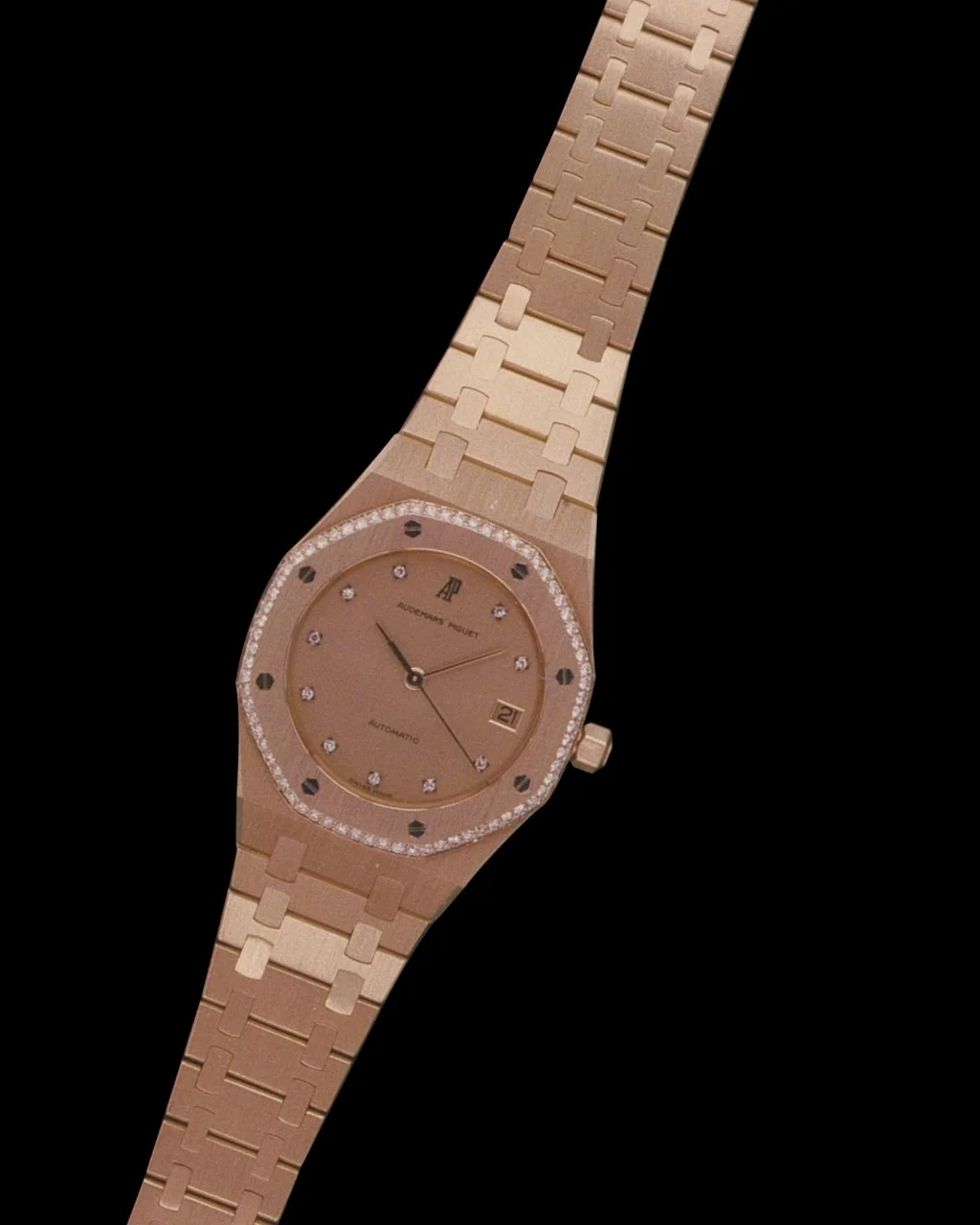
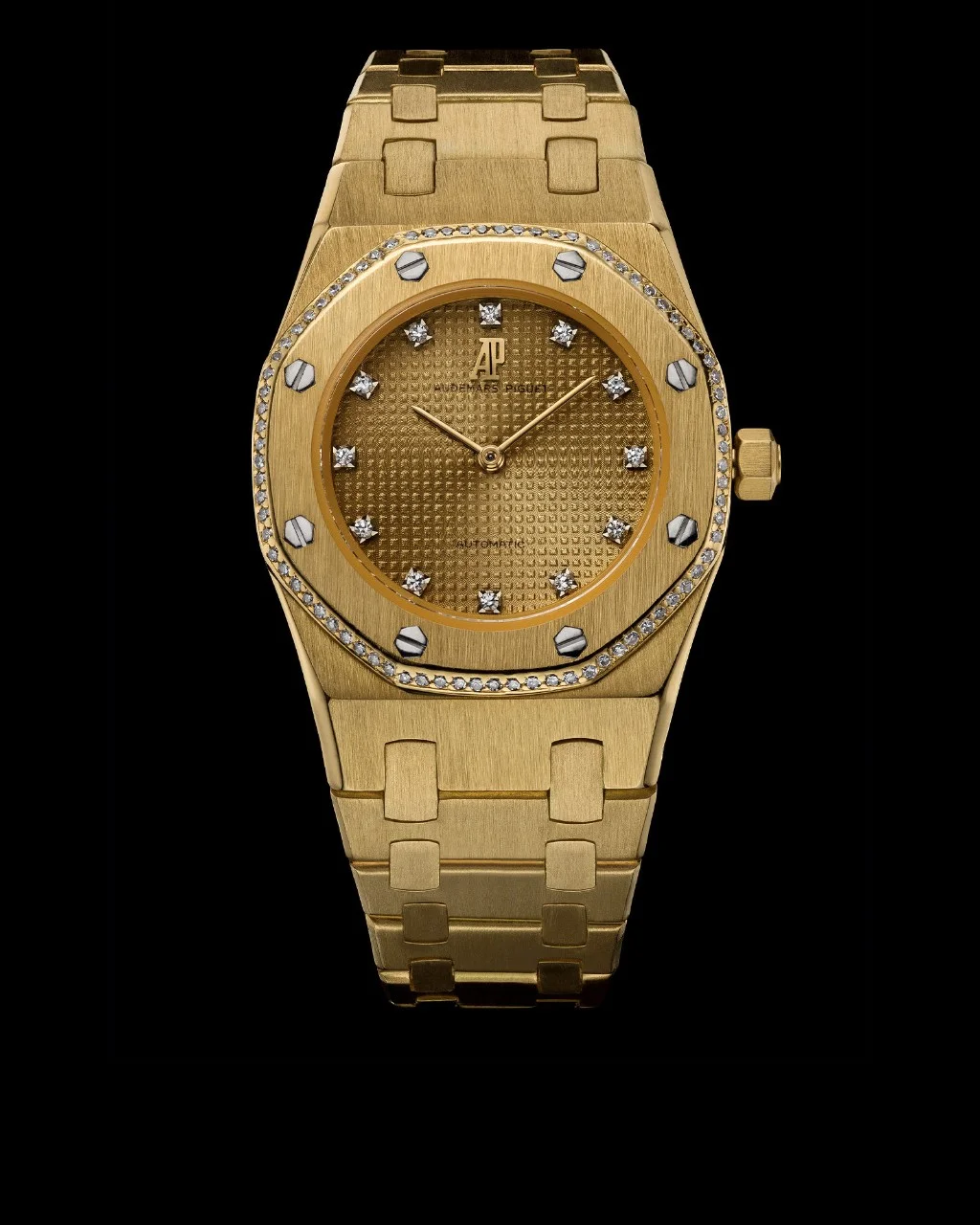
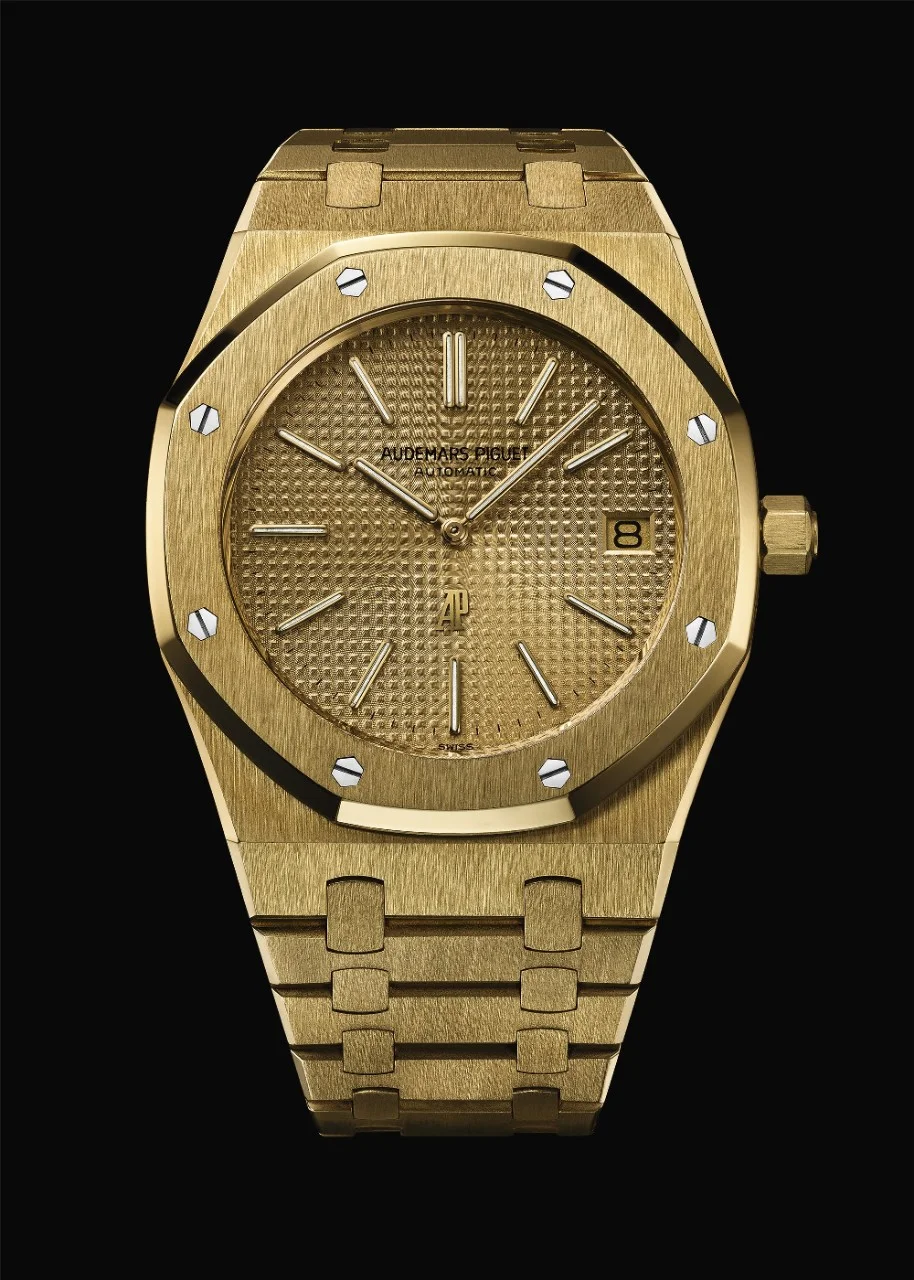
From the second half of the 1970s, the Royal Oak became a collection. In response to market demand, Audemars Piguet created smaller versions. The women’s Model 8638 designed by Jacqueline Dimier in 1976 measured just 29 mm in diameter. From 1980, it was followed by numerous other feminine models with a diameter of 30 mm (6008, 4587, 14470, etc.) and even 26 mm (6010, 6012, 6007, etc.). This miniaturisation reached its limits in 1997 with the Mini Royal Oak family, featuring a diameter of 20 mm (67075, 67076, 67287, etc.), notably created for the Japanese market.
The men's models were also shrinking. Introduced in 1977, the Royal Oak 4100 measured 35 mm in diameter and set a new standard. For six years, all the new mechanical men's models (4120, 4153, 4331) featured this diameter, as did some quartz models (6023, 6036, 6037, etc.). The lines shifted slightly in 1983 and from then on, the 35 mm size continued to appear in only a few rare models (14544 in 1987; 14486, 14567, 14575, 14674 in 1990), whereas the new 36 mm standard prevailed for two decades.
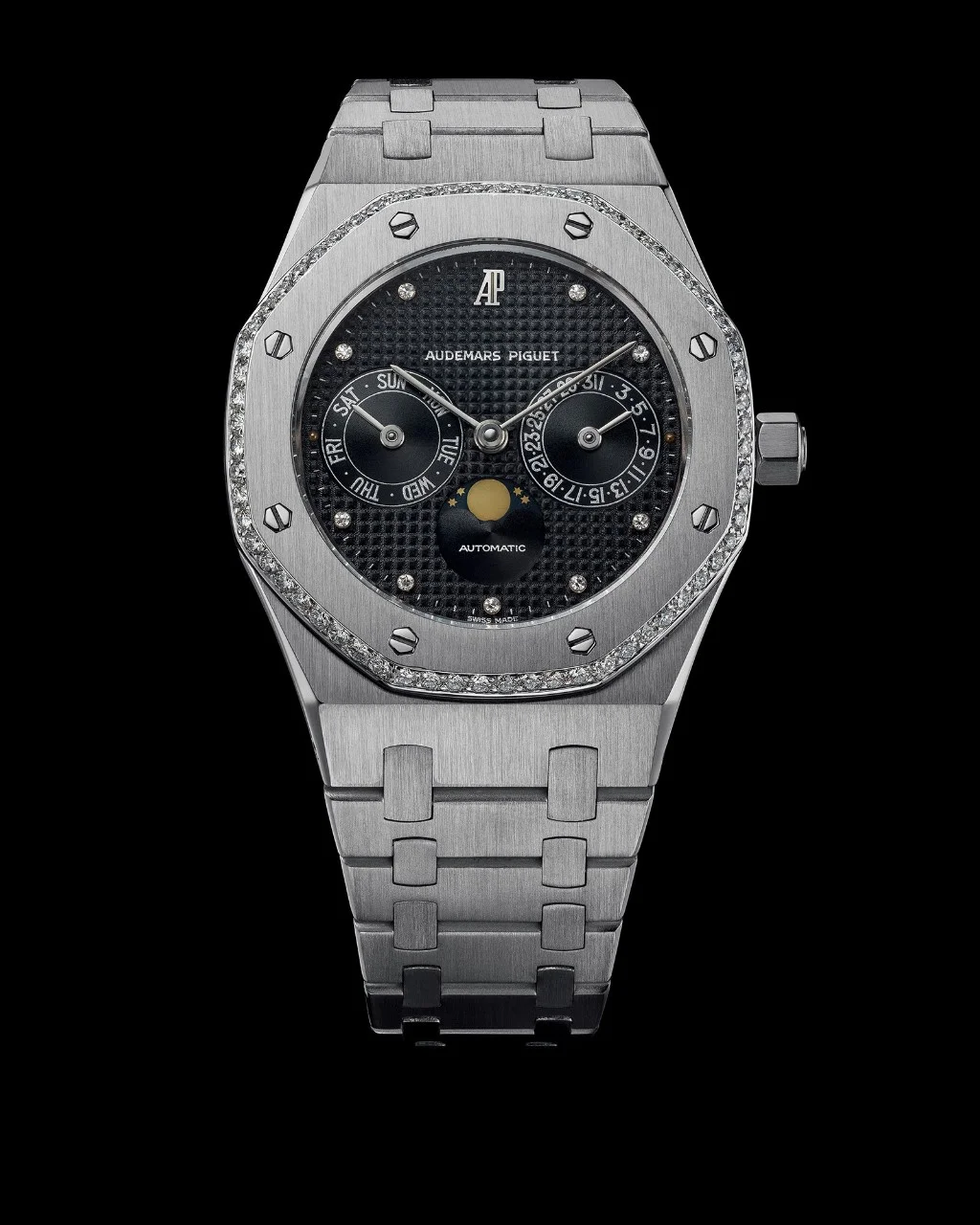
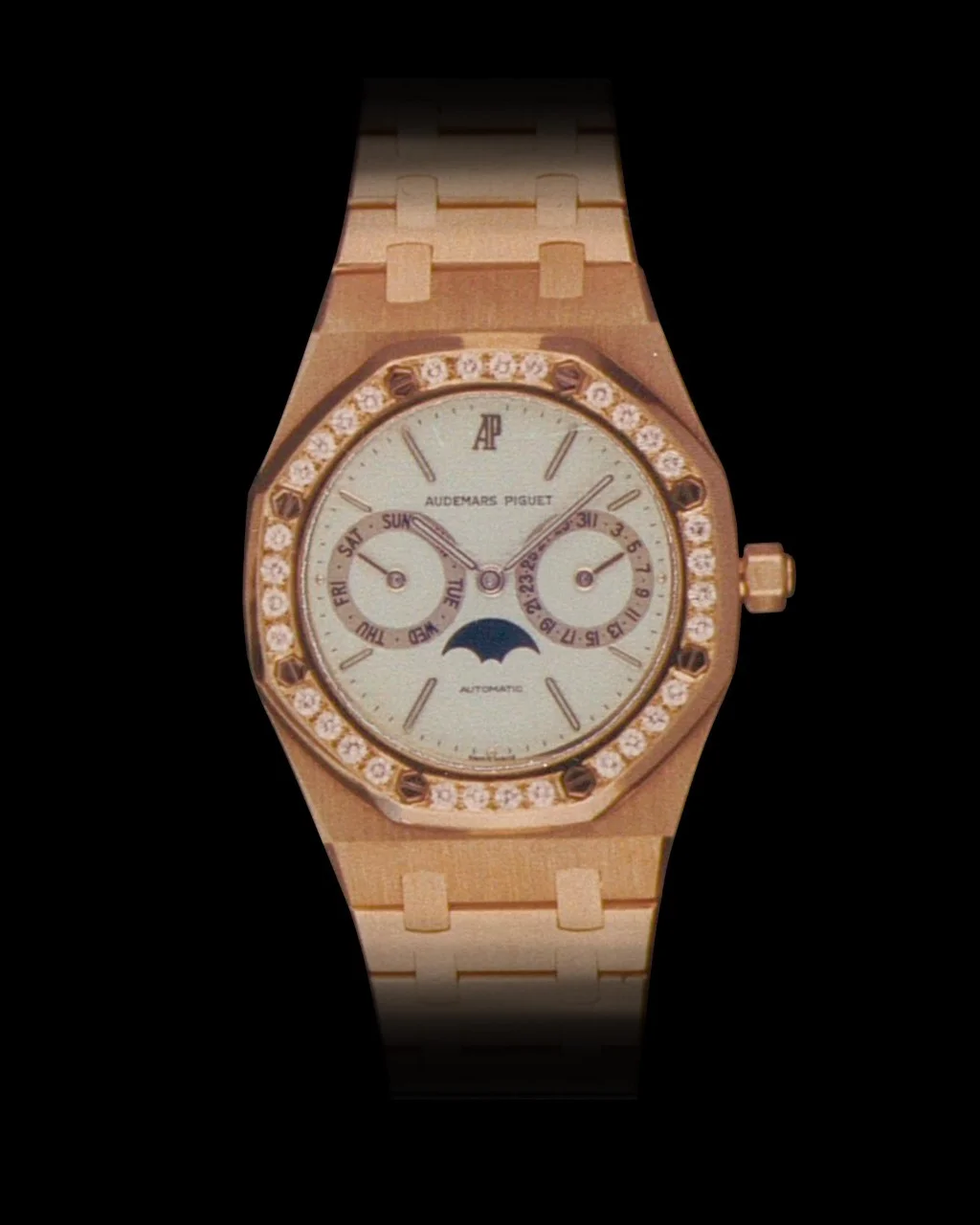
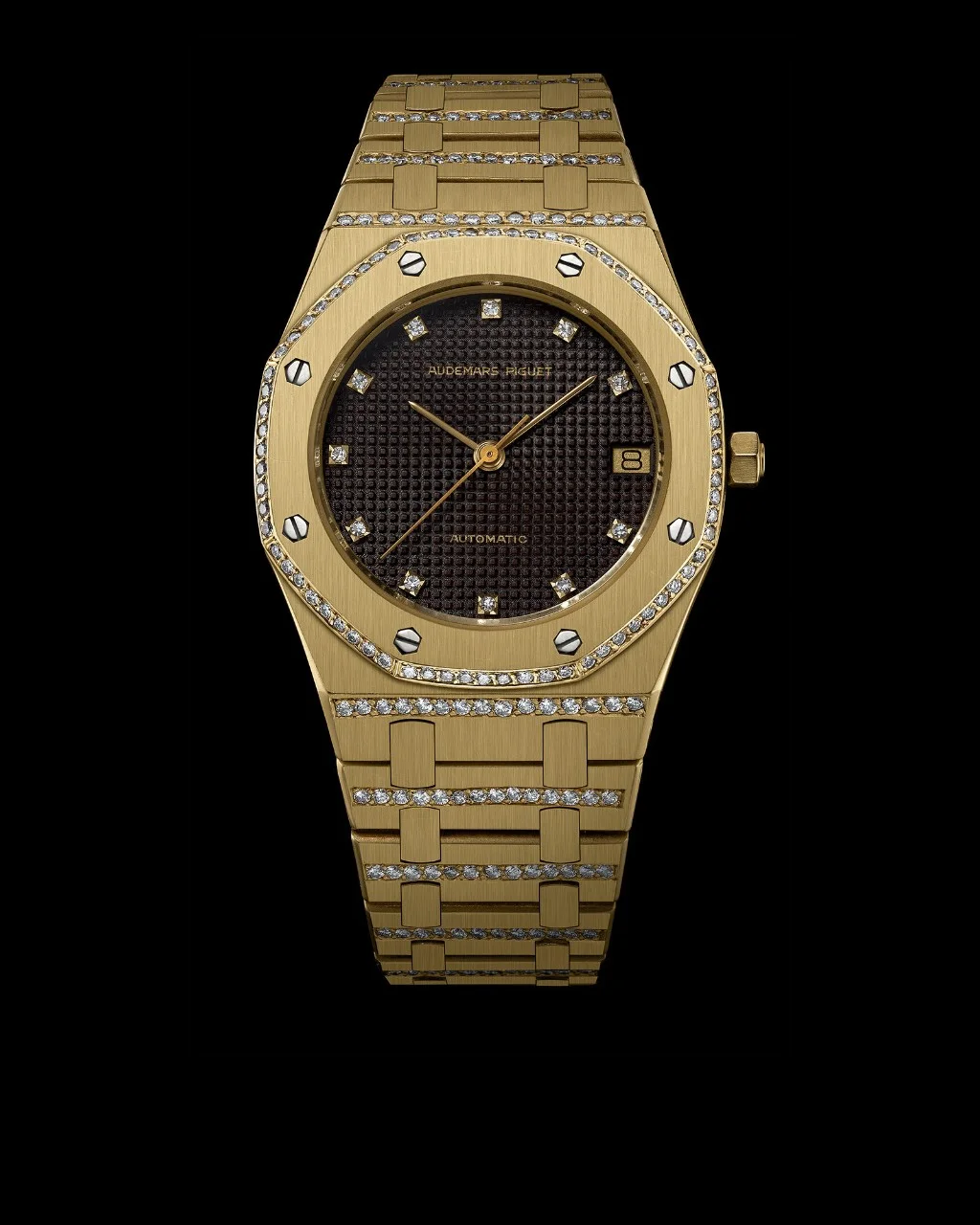
The wild child had mellowed. The Royal Oak was no longer oversized or exclusively in steel, but also available in gold, in gemset versions, etc. Equipped with Calibre 2125, Model 4332 introduced in 1983 heralded the line of 36 mm Royal Oak watches. That same year, the range was enriched with calendar functions (Day Date, 5572, 5581, 5584; moon phases 5658, 5595). This was followed by "three-hand" models, including Model 14498 (1986), the Royal Oak 14700 (1990) as well as its derivatives 14701, 14702 and 14704 released two years later. The year 1992 saw the birth of Model 14790, which remained the central model in the Royal Oak collection for over a decade.
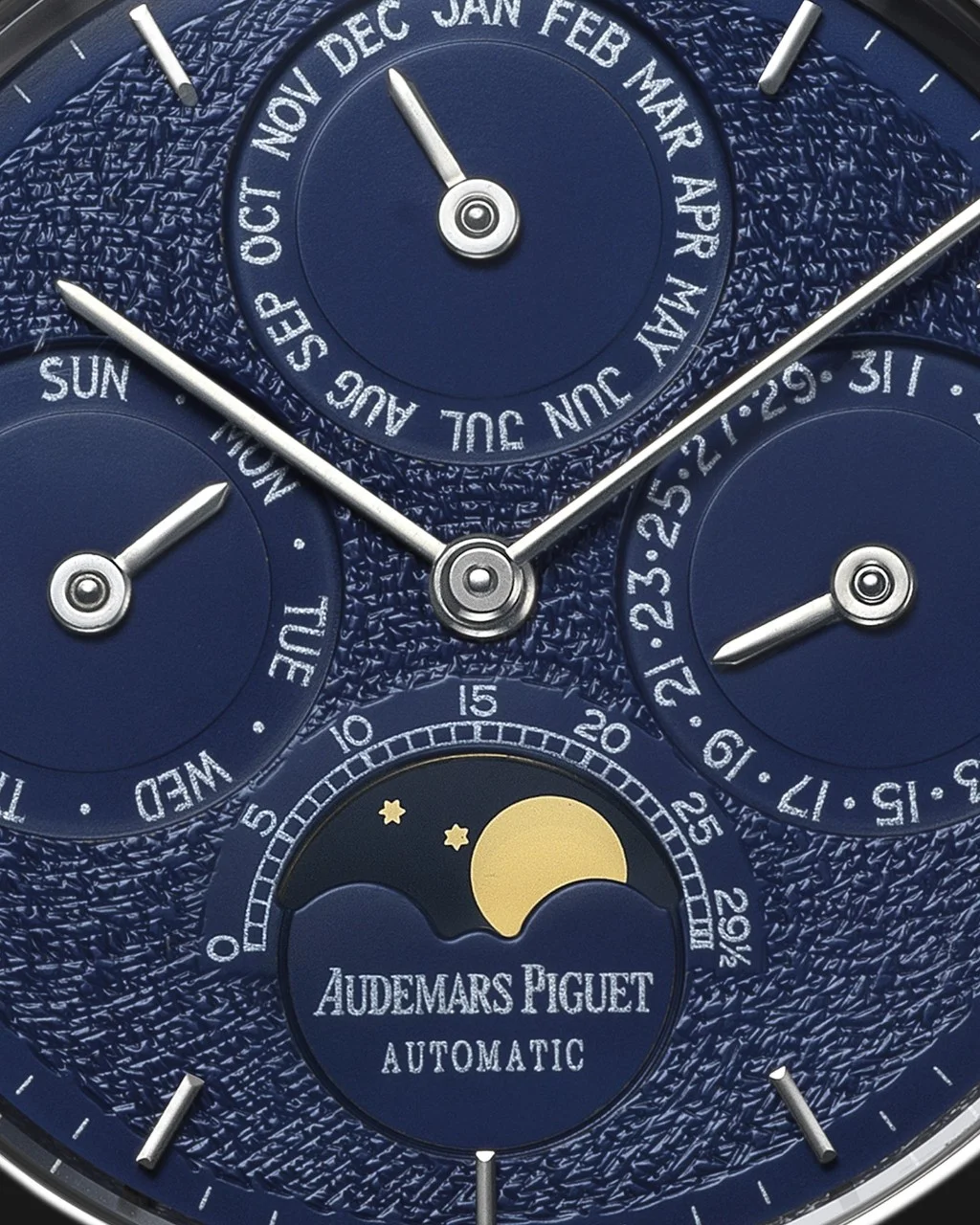
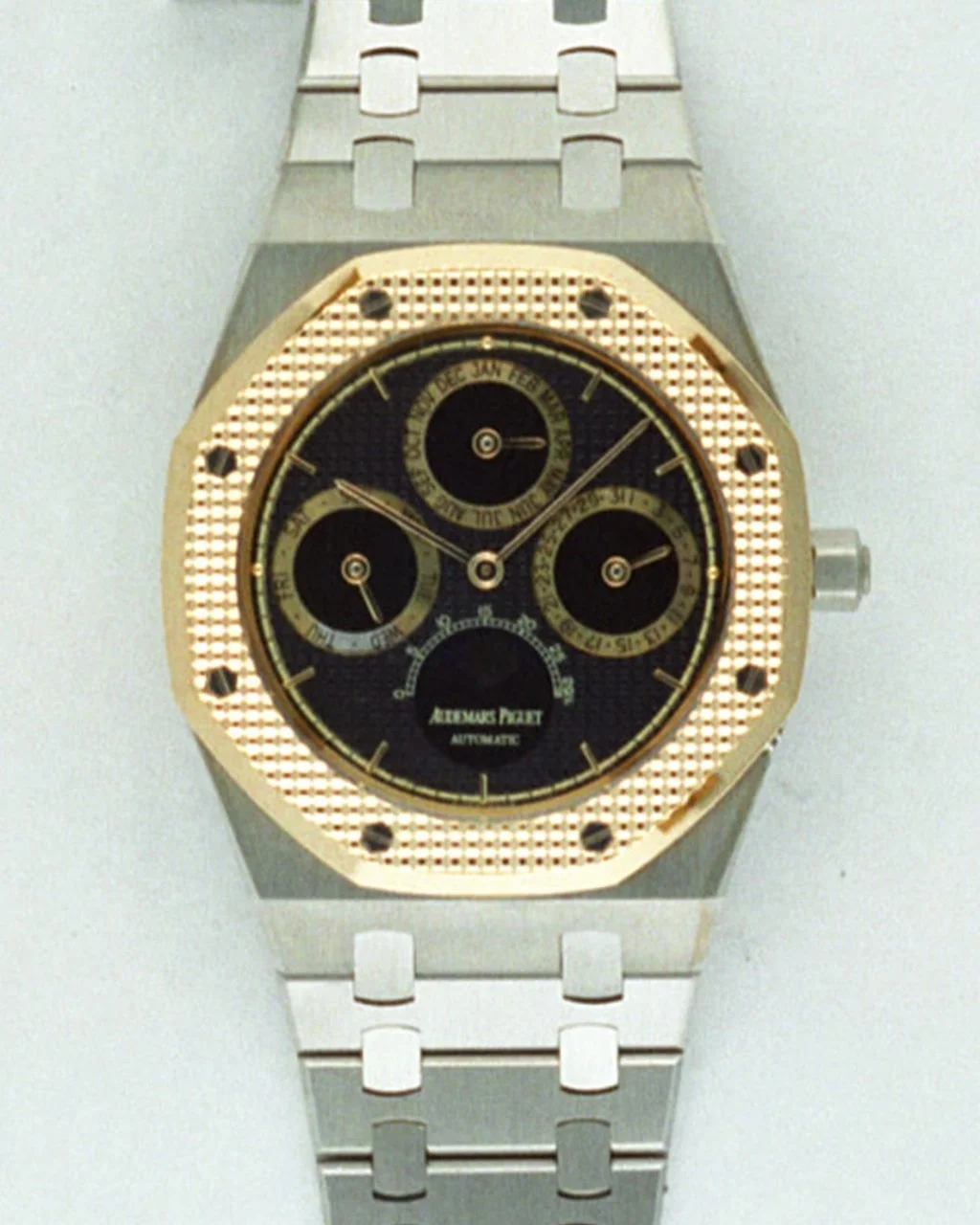
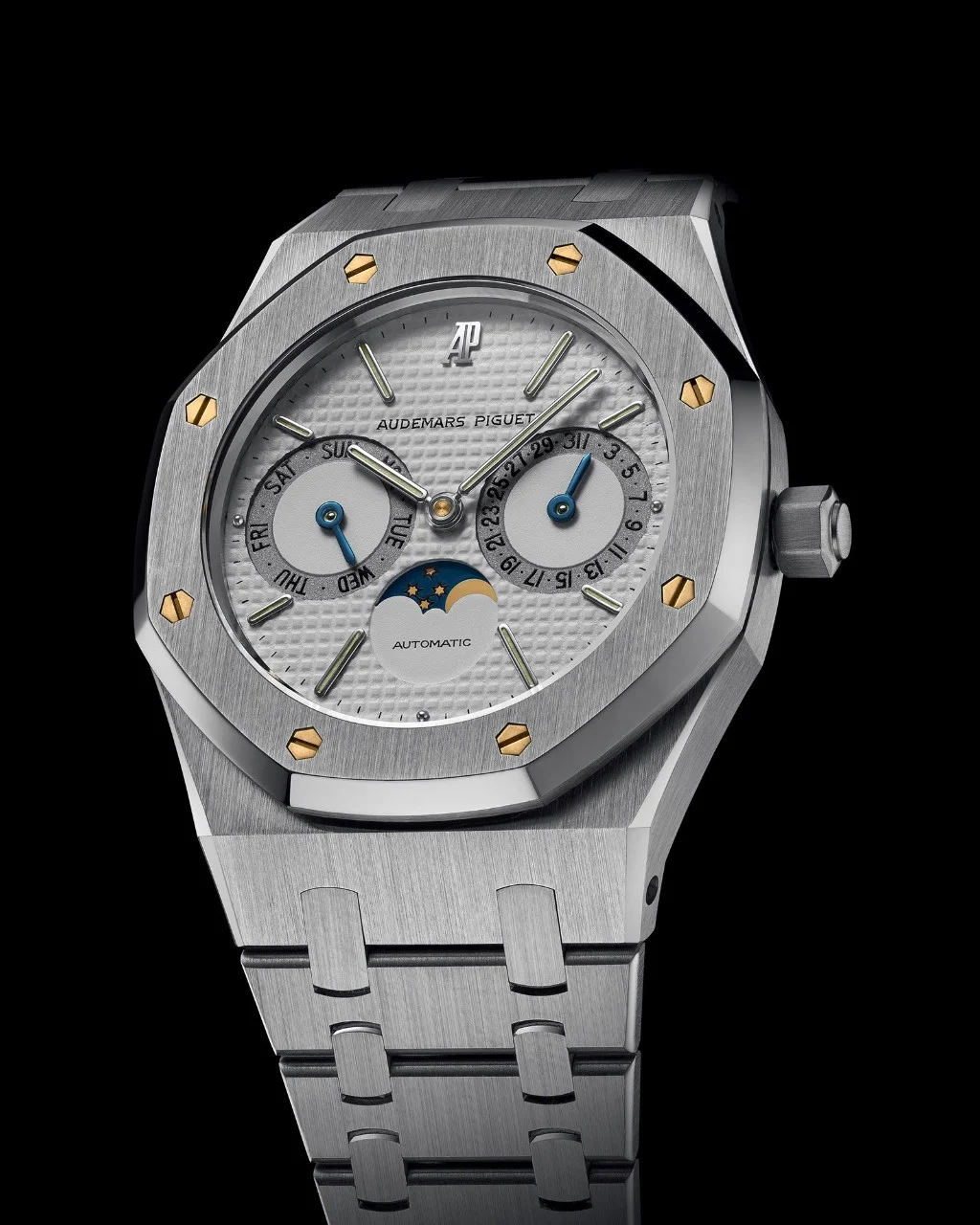
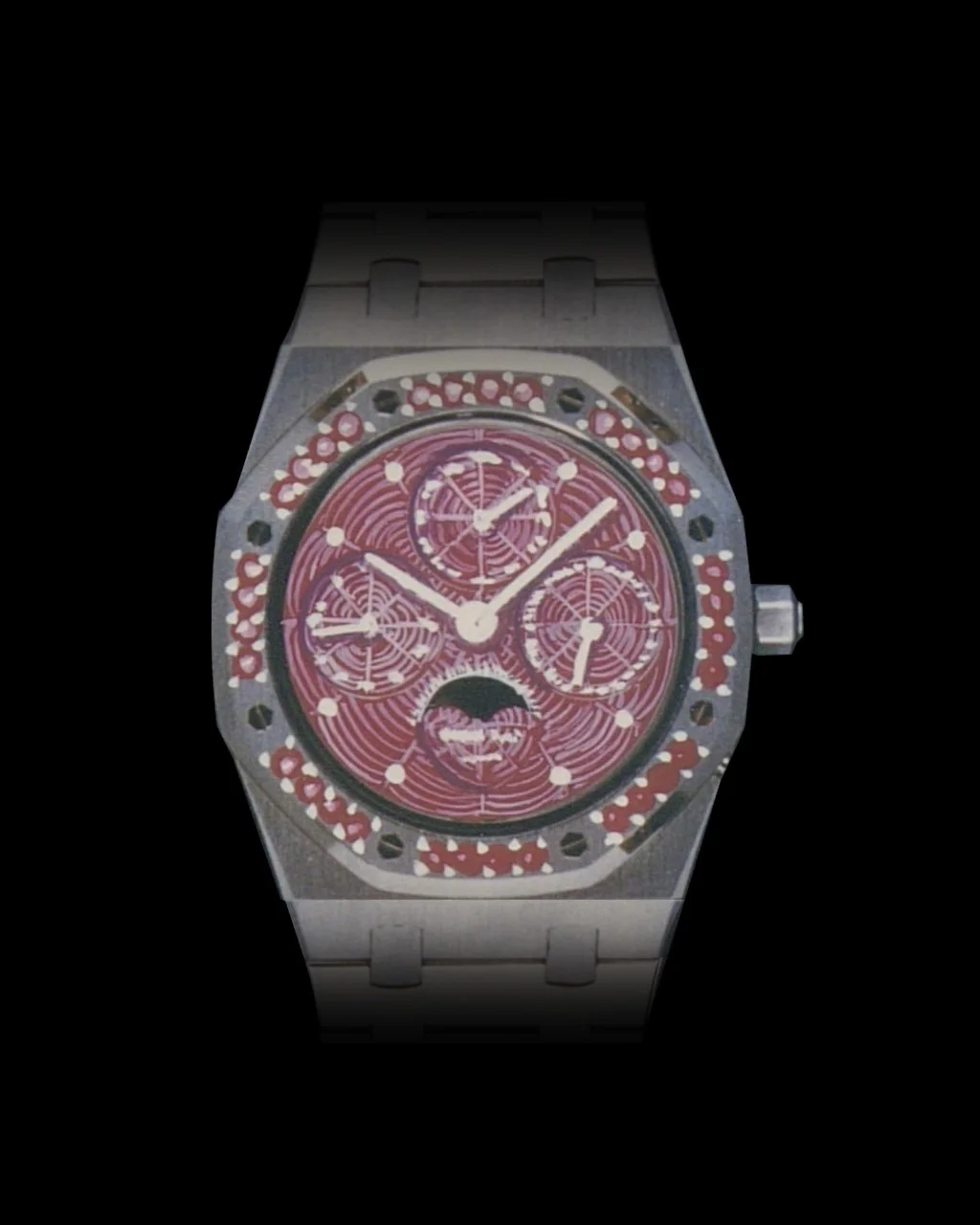
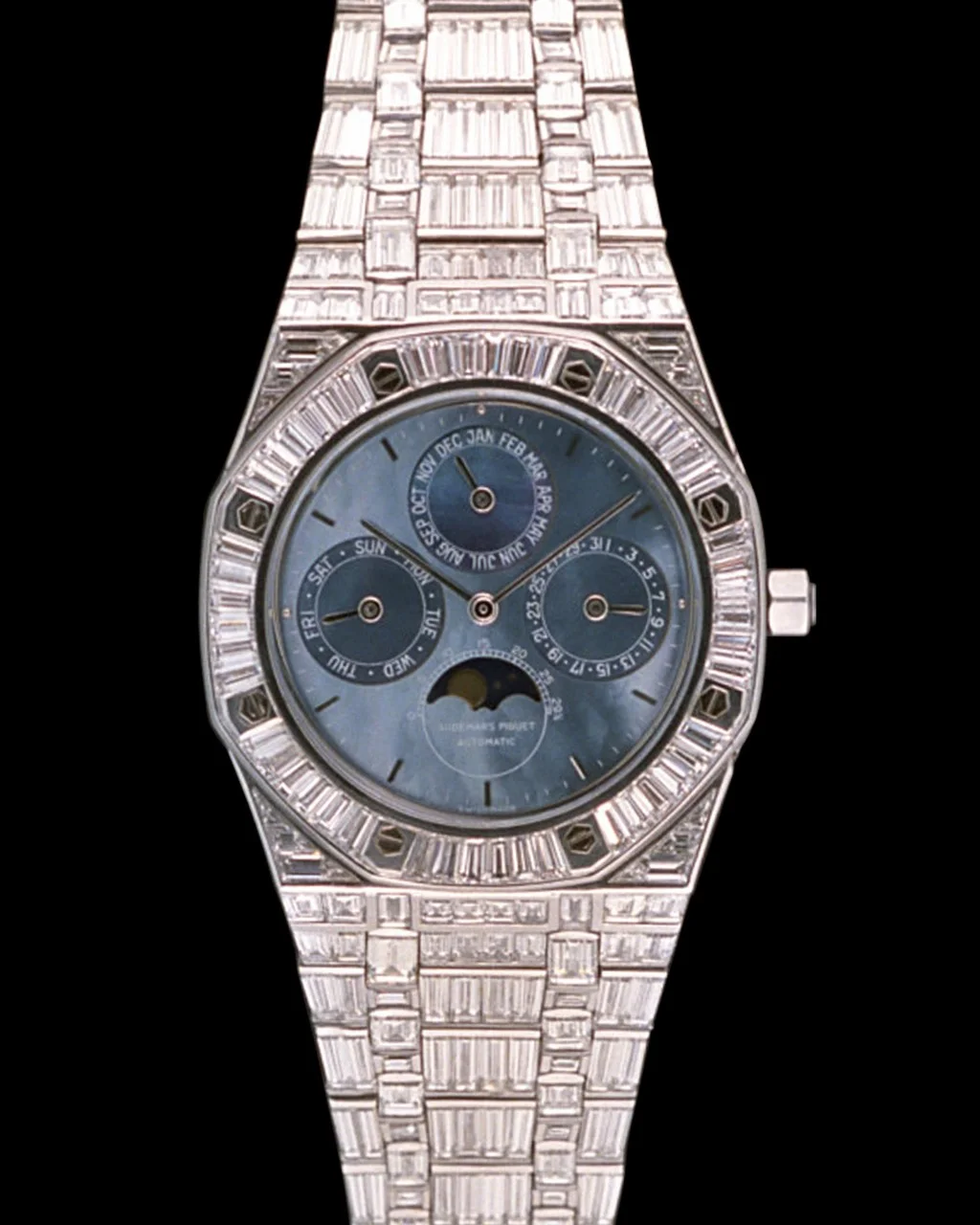
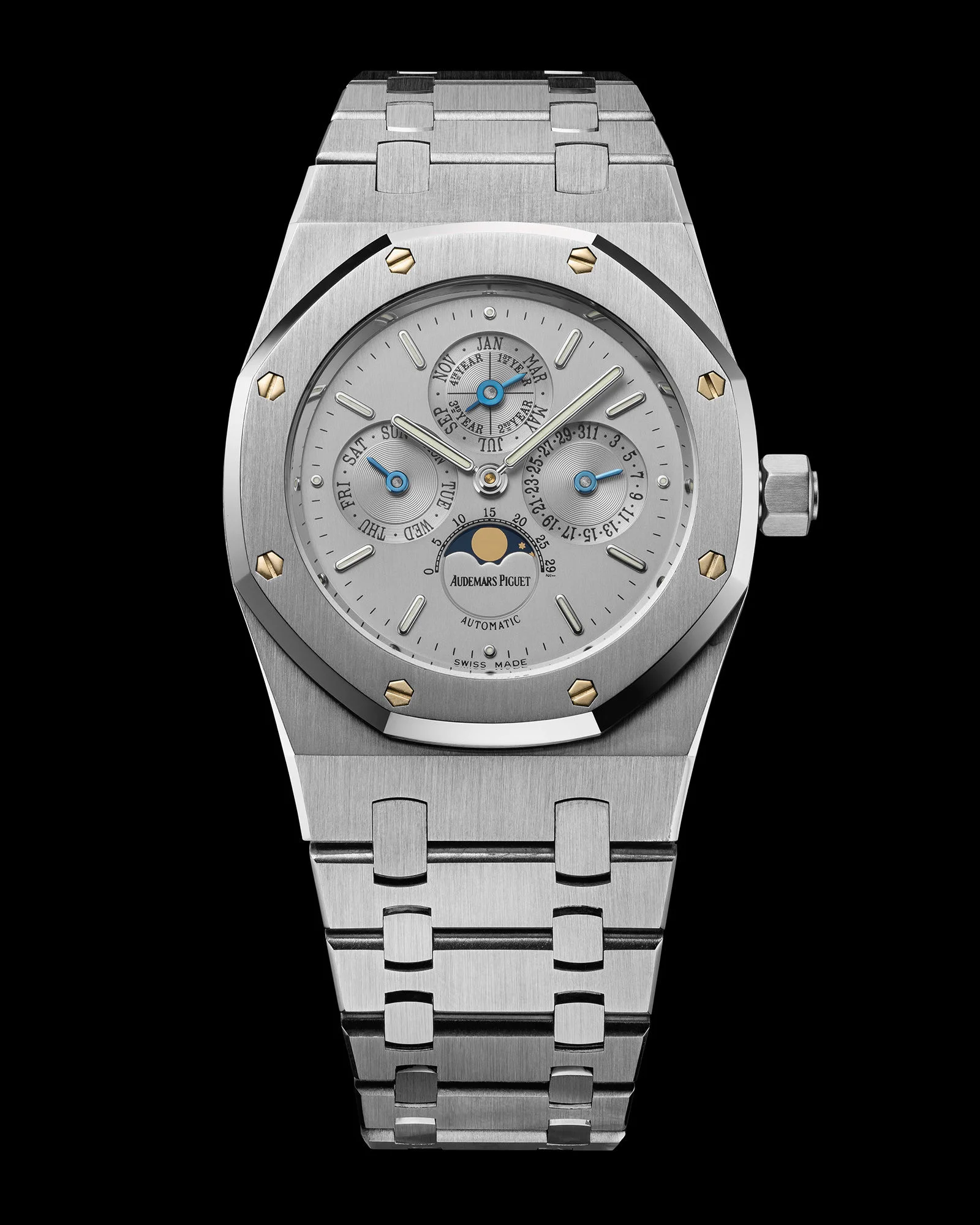
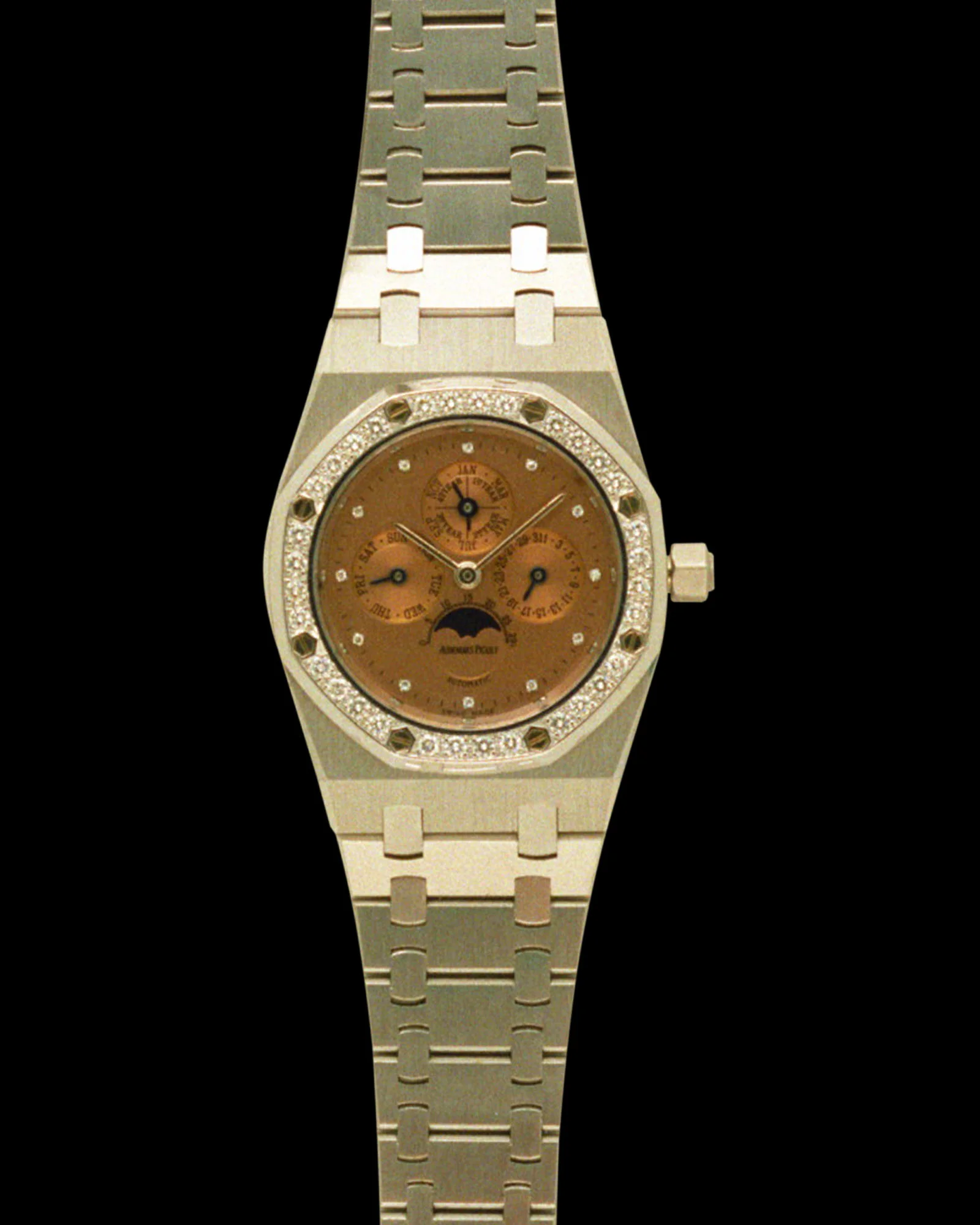
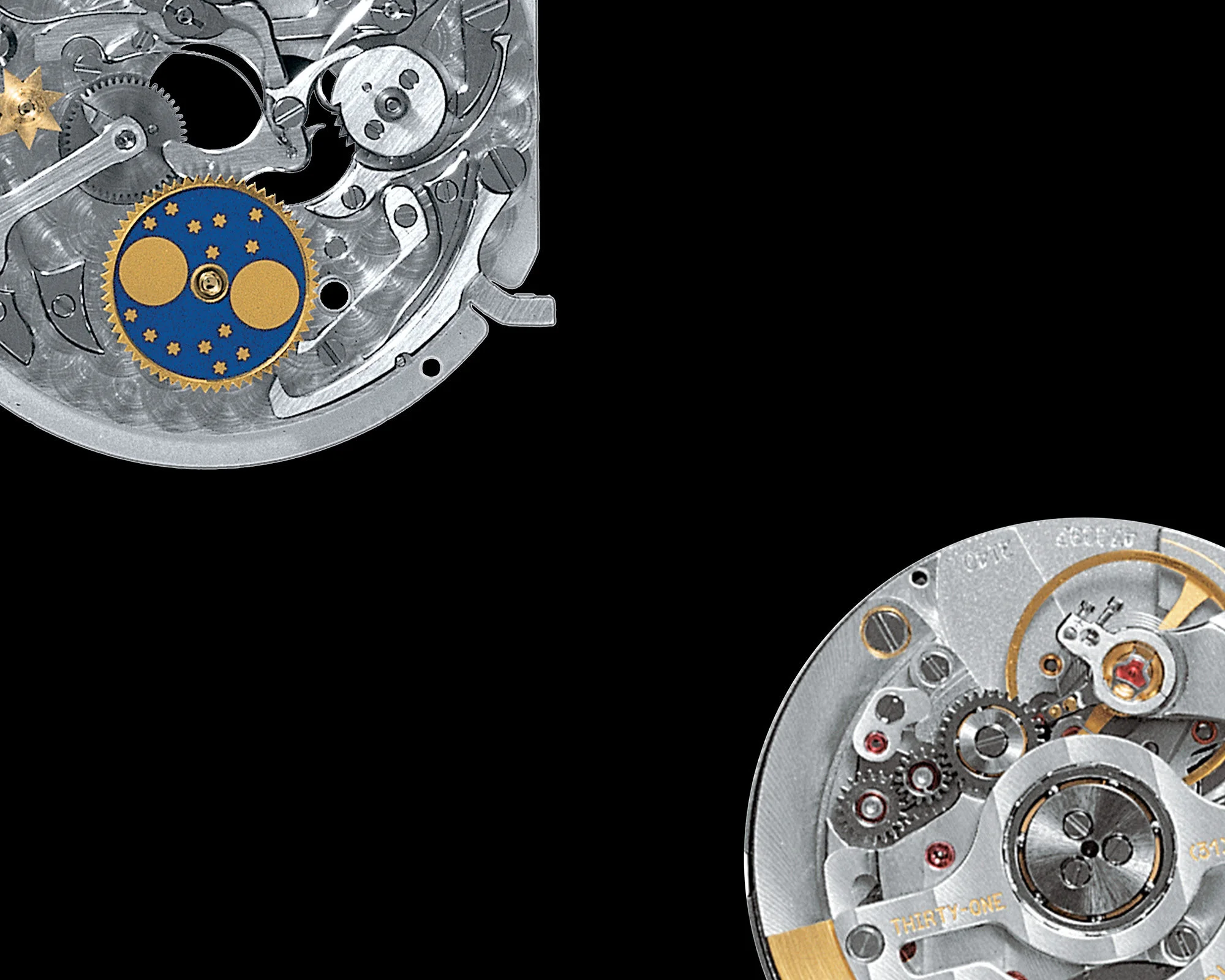
This evolution explains why the term “Jumbo” remained associated with the original Model 5402. It is even likely that this nickname became established during the 1980s and 1990s. When referring at the time to the first Royal Oak, adding the epithet “Jumbo” ensured a contrast with the 36 mm models dominating the market. For three decades, the only 39 mm Royal Oak models were those with a perpetual calendar, simply because Calibre 2120/2800 featured the same base movement as the original model from 1972. In such cases, the diameter of the watch is dependent on that of the mechanism it houses.

... Before Expanding it Again
At the end of the 1990s, the trend was towards imposing, assertive, uninhibited objects. In the automotive field, for example, the Hummer 4x4s launched in 1992 paved the way for the SUV (Sport Utility Vehicle) age. In the watchmaking field, it was the testosterone-laden Royal Oak Offshore 25721, 42 mm that kicked off the oversized era in 1993. The average size of watches until then had been around 35–36 mm. Given that the 39 mm Royal Oak 5402 had already been nicknamed "Jumbo", how would one describe a 42 mm watch? When he first saw it at the Basel Fair, Gérald Genta forcefully expressed his sense of betrayal, dubbing it a "sea elephant". Collectors opted to call it "The Beast". The success was as unexpected as it was spectacular and the Royal Oak Offshore swept the entire industry in its wake. Within a decade, the average diameter of the watches exploded, exceeding 40 mm and in some instances 50 mm!
The classic Royal Oak was part of this trend. In 2005, the flagship model of the 15300 collection (Calibre 3120, centre seconds) replaced Model 14790. By then, the standard diameter was 39 mm. Seven years later, at 41 mm, Model 15400 went even further. In 2019, Model 15500 (equipped with Calibre 4302) succeeded it and confirmed this dimension. Since the beginning of the third millennium, the Royal Oak "Jumbo" has clearly no longer been oversized, despite its now inseparable nickname. For now, back to the 1990s.

14802 – Rebirth of the Royal Oak “Jumbo”
During its first 20 years, the Royal Oak (excluding perpetual calendar versions) came in just one 39 mm version, 95% of which were sold before 1982.
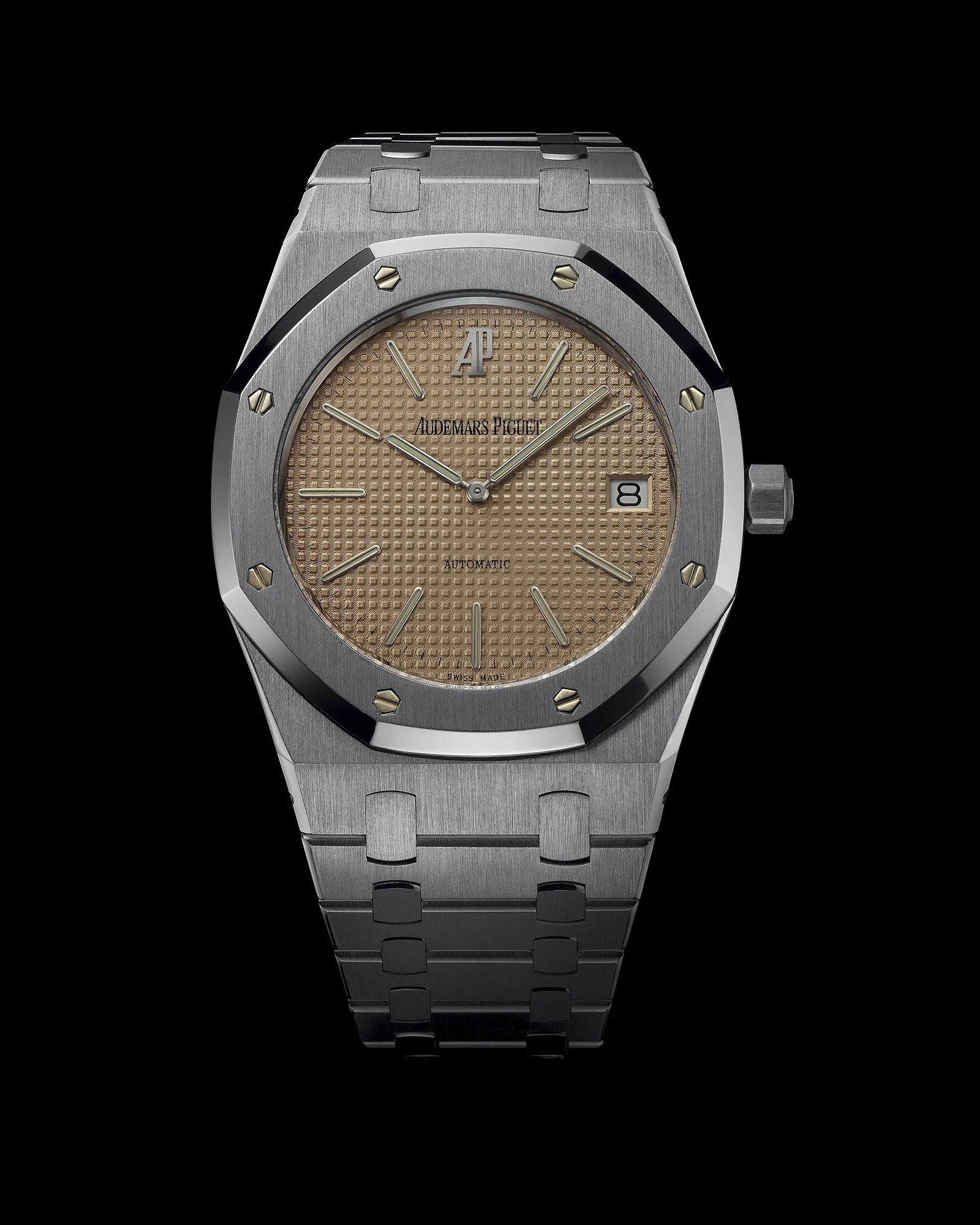
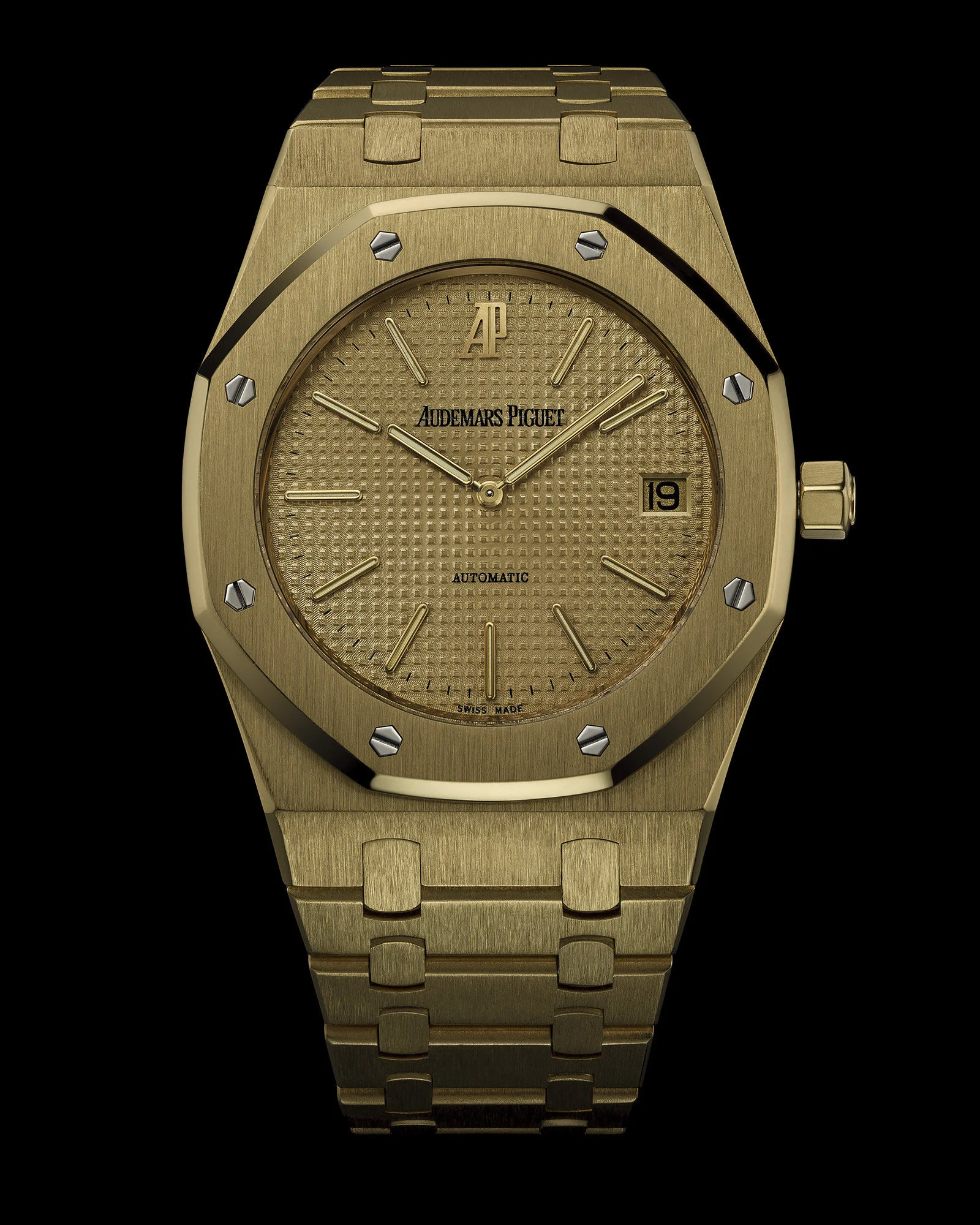
It was not until 1992 that the "Jumbo" version was revived to mark the 20th anniversary of the Royal Oak. By then, the Royal Oak had become a watchmaking icon and an essential collection for Audemars Piguet, which offered around 20 models in a wide range of variations. An anniversary often provides an opportunity for a return to roots. Issued in a 1,000-piece limited edition, the Jubilee 14802 paid tribute to Model 5402. In all, 691 examples were produced in steel, 286 in yellow gold, along with 20 in platinum from 1995 onwards.
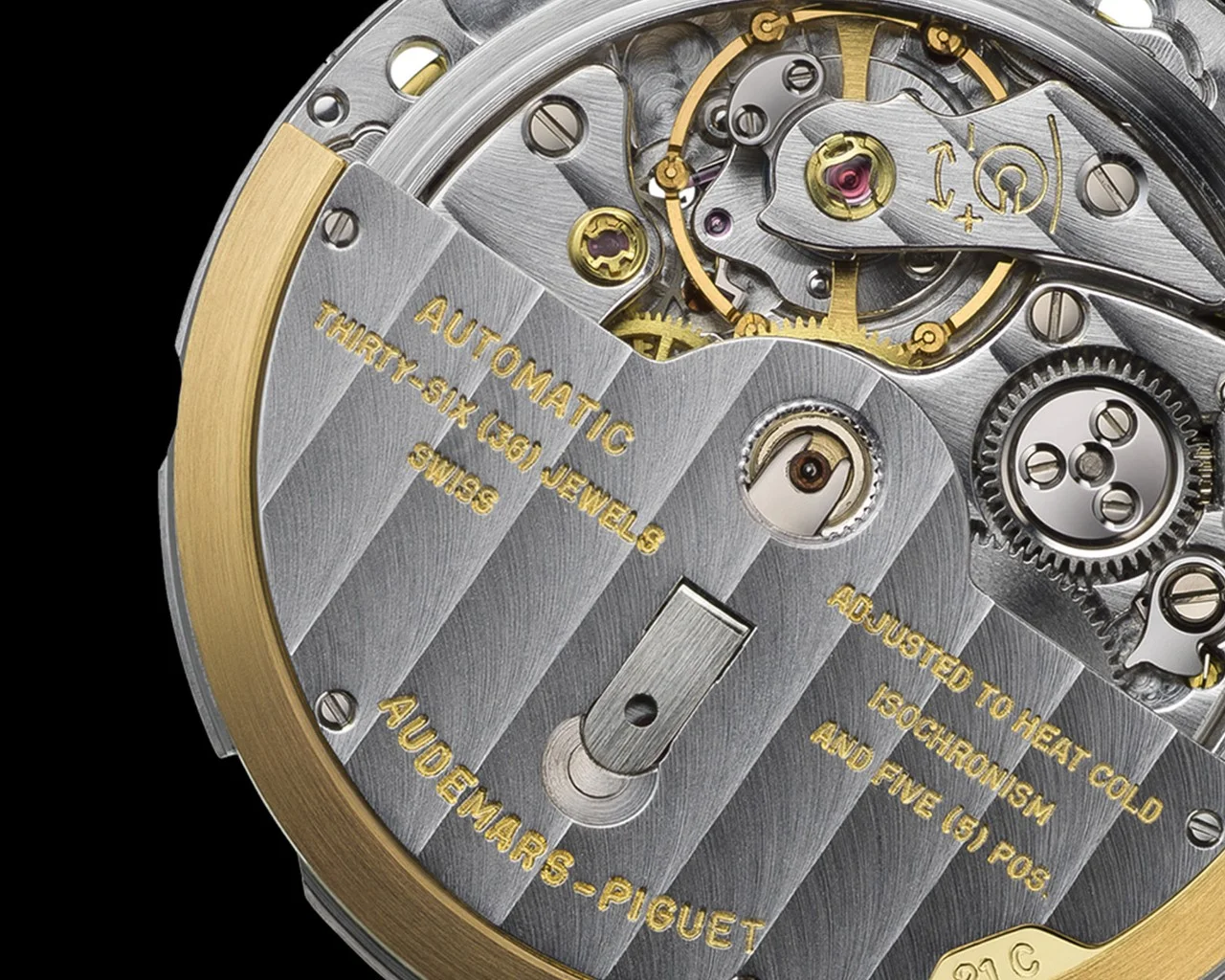
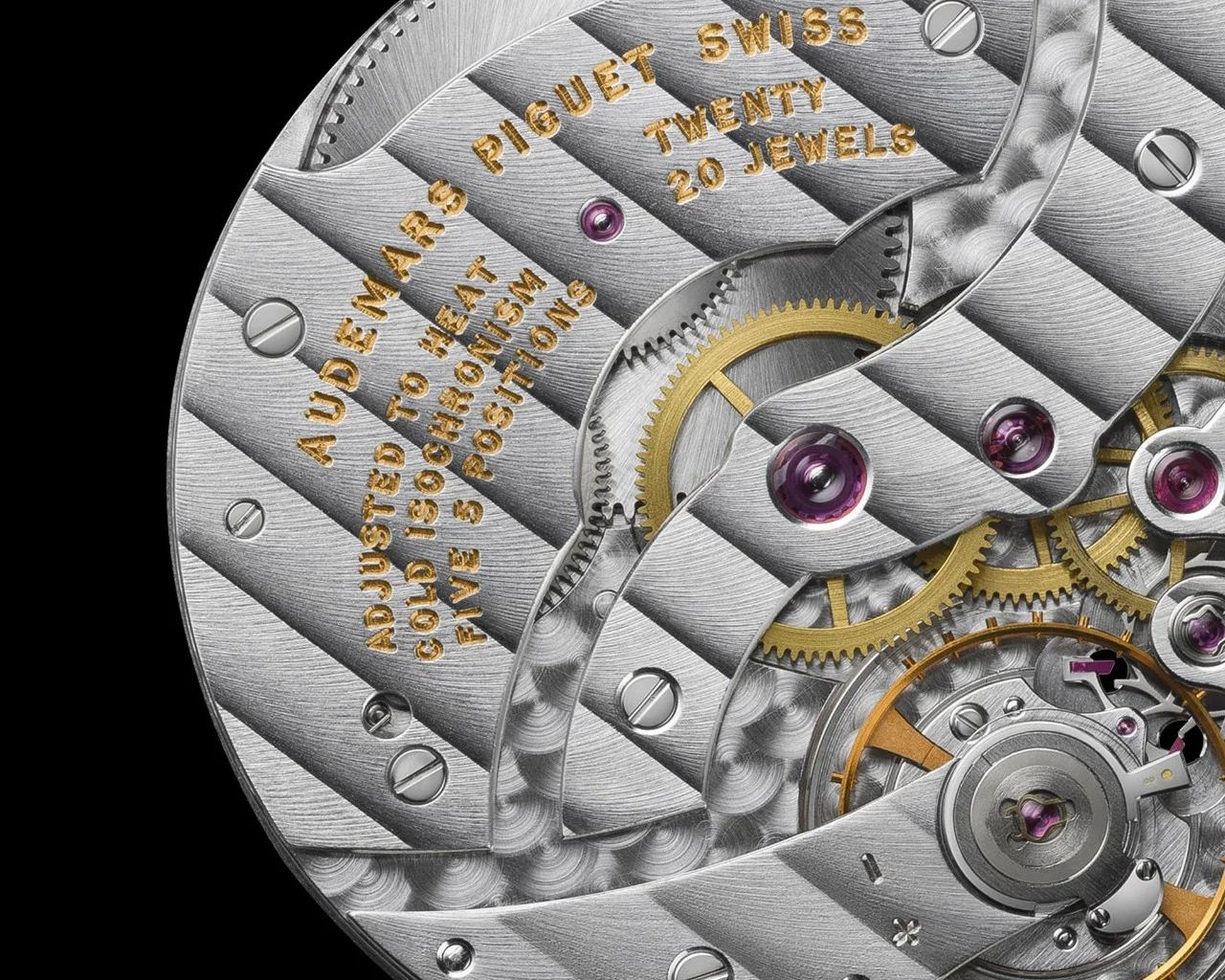
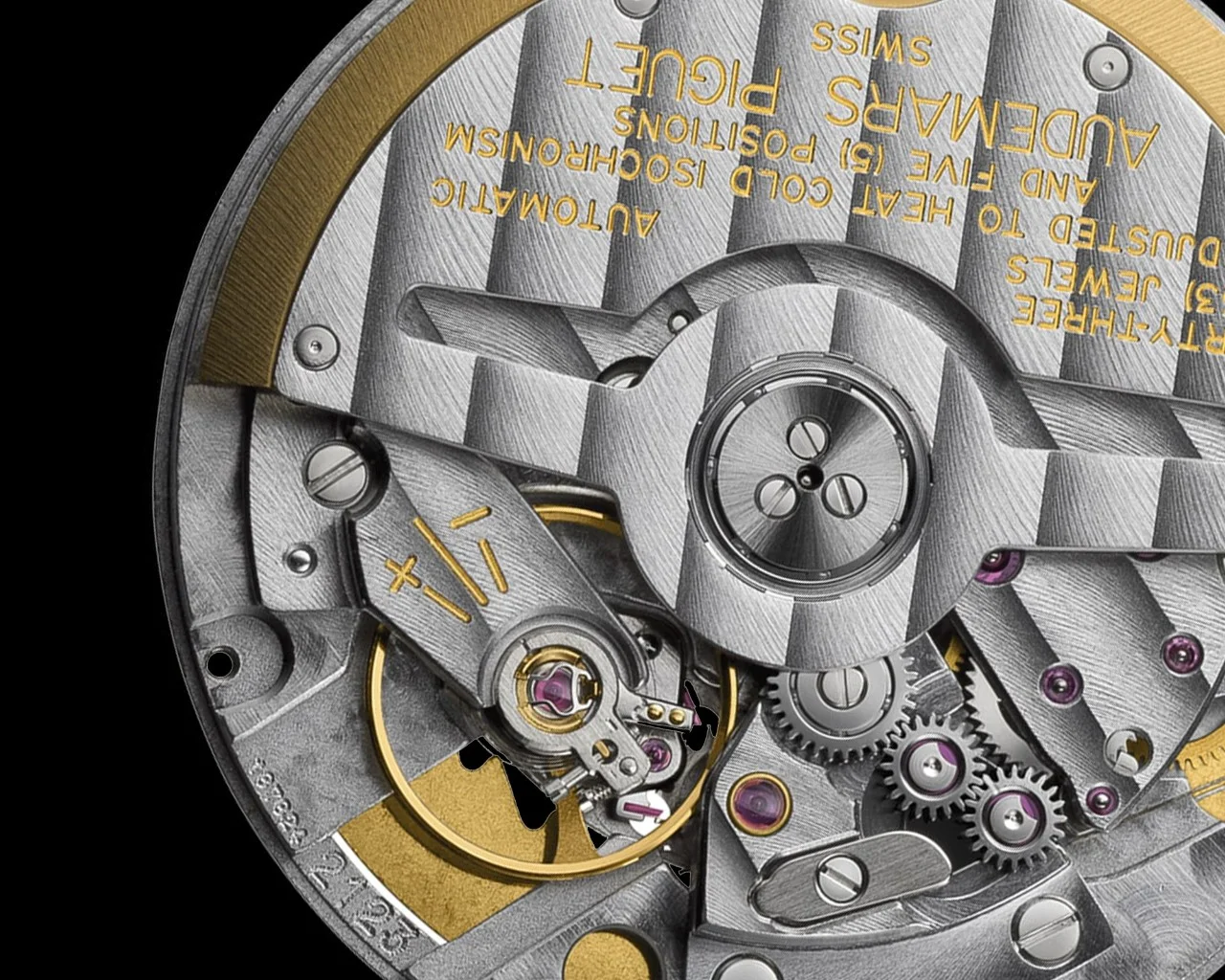
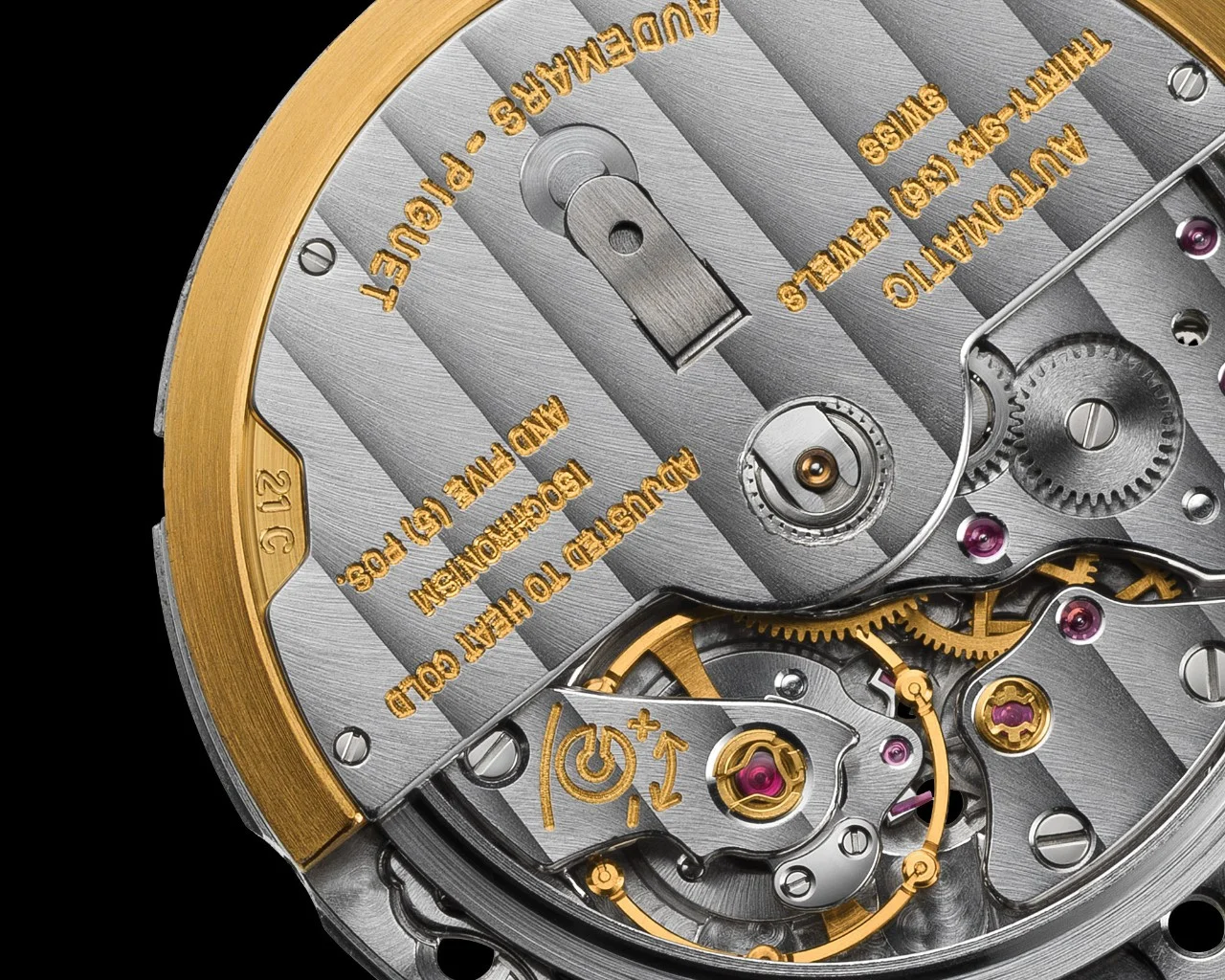
Model 14802 introduced the first salmon pink dials as well as hammered "Tuscany blue" iterations, although there is no record of how many of these special dials were produced. In addition, a sapphire caseback revealed Calibre 2121 and most of the latter’s gold oscillating weights featured an anniversary motif accompanied by the case number.

1993. Royal Oak 14802ST (1992), No. 130. Date. Calibre 2121, movement 374378. Bracelet 944. T21 Tapisserie dial. Case D12288, 39 mm. Steel. Sold in 1993 to Elco (United Kingdom). Audemars Piguet Heritage, inv. 1051.
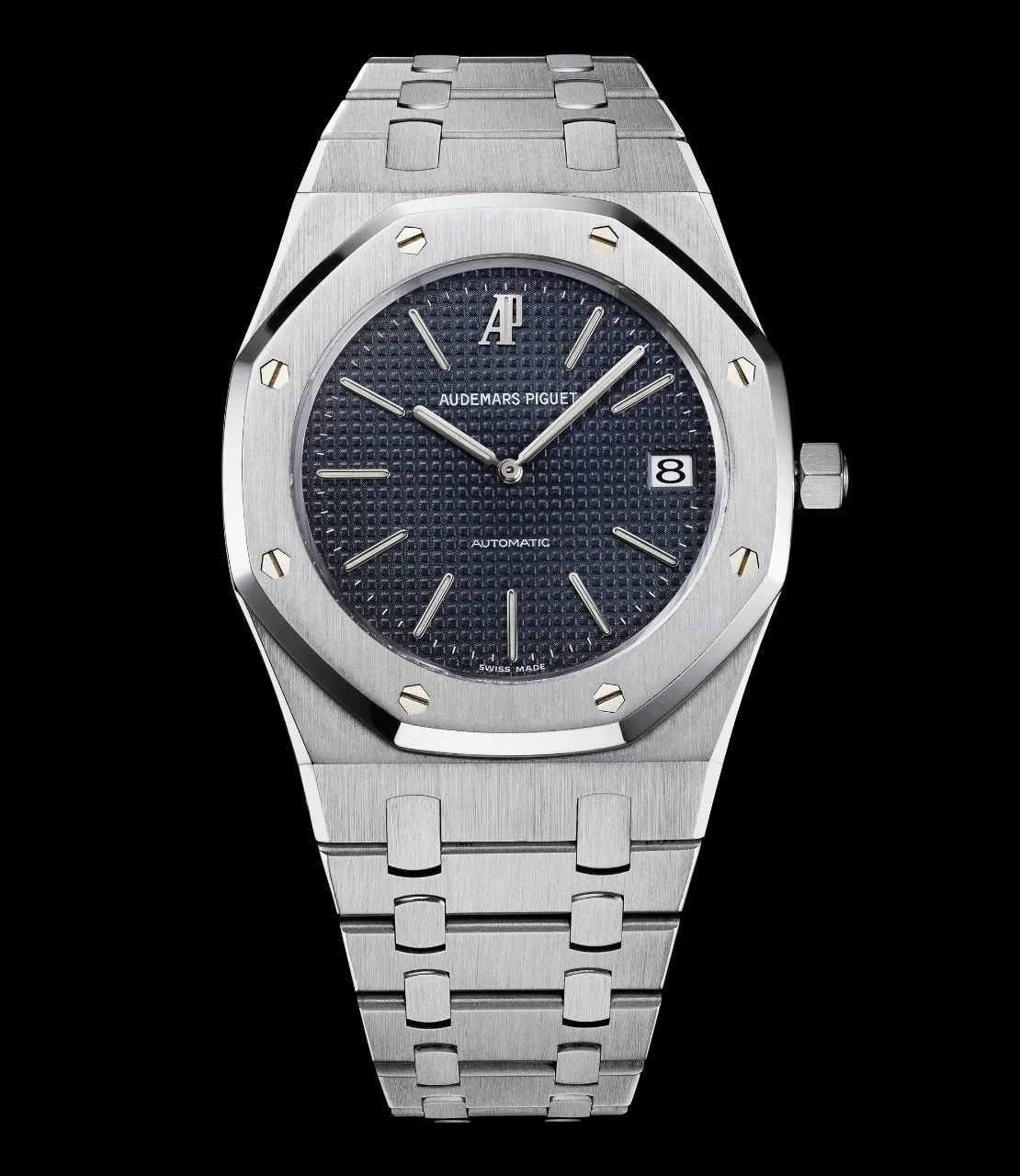
1993. Royal Oak 14802ST (1992), No. 130. Date. Calibre 2121, movement 374378. Bracelet 944. T21 Tapisserie dial. Case D12288, 39 mm. Steel. Sold in 1993 to Elco (United Kingdom). Audemars Piguet Heritage, inv. 1051.
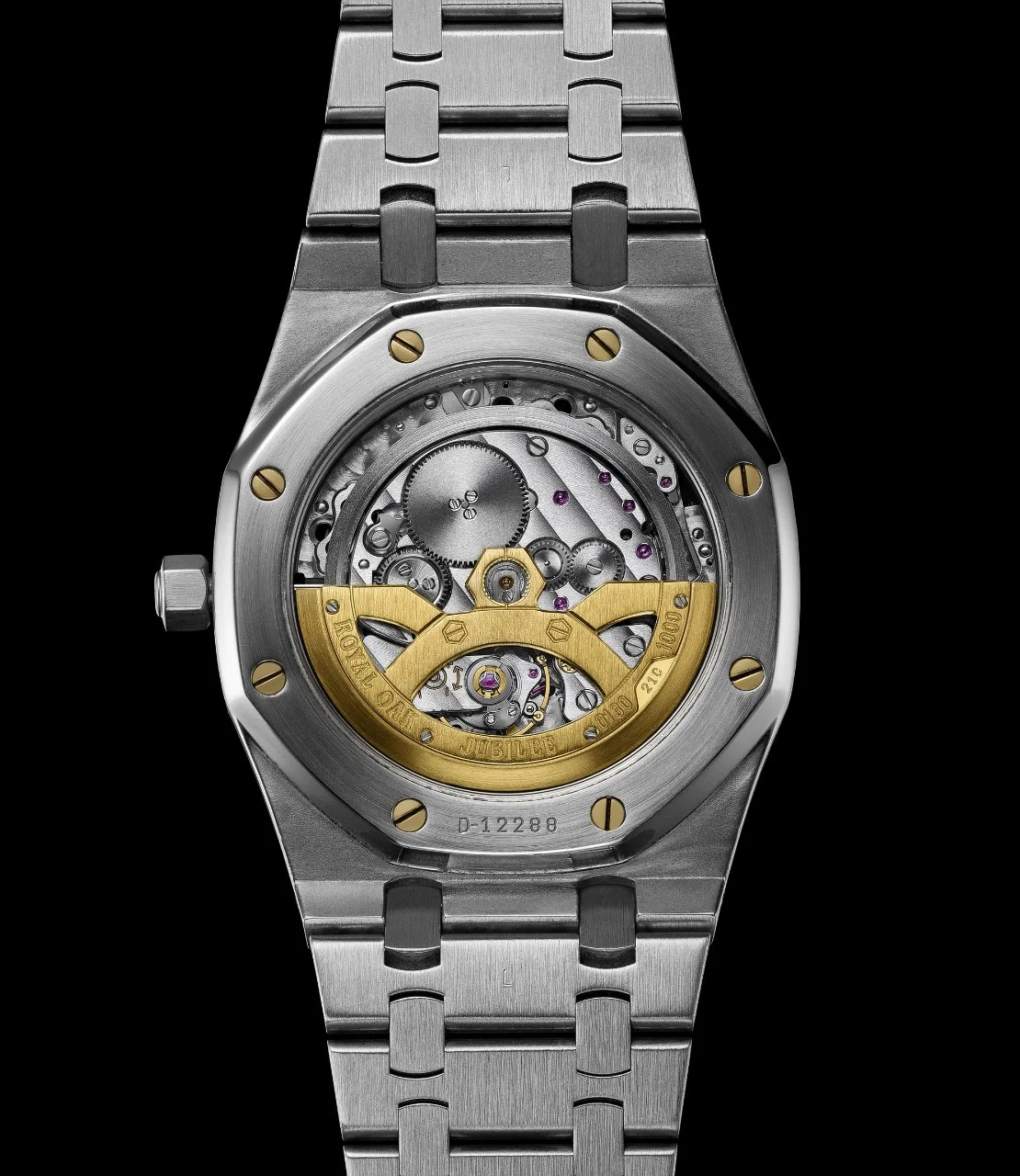
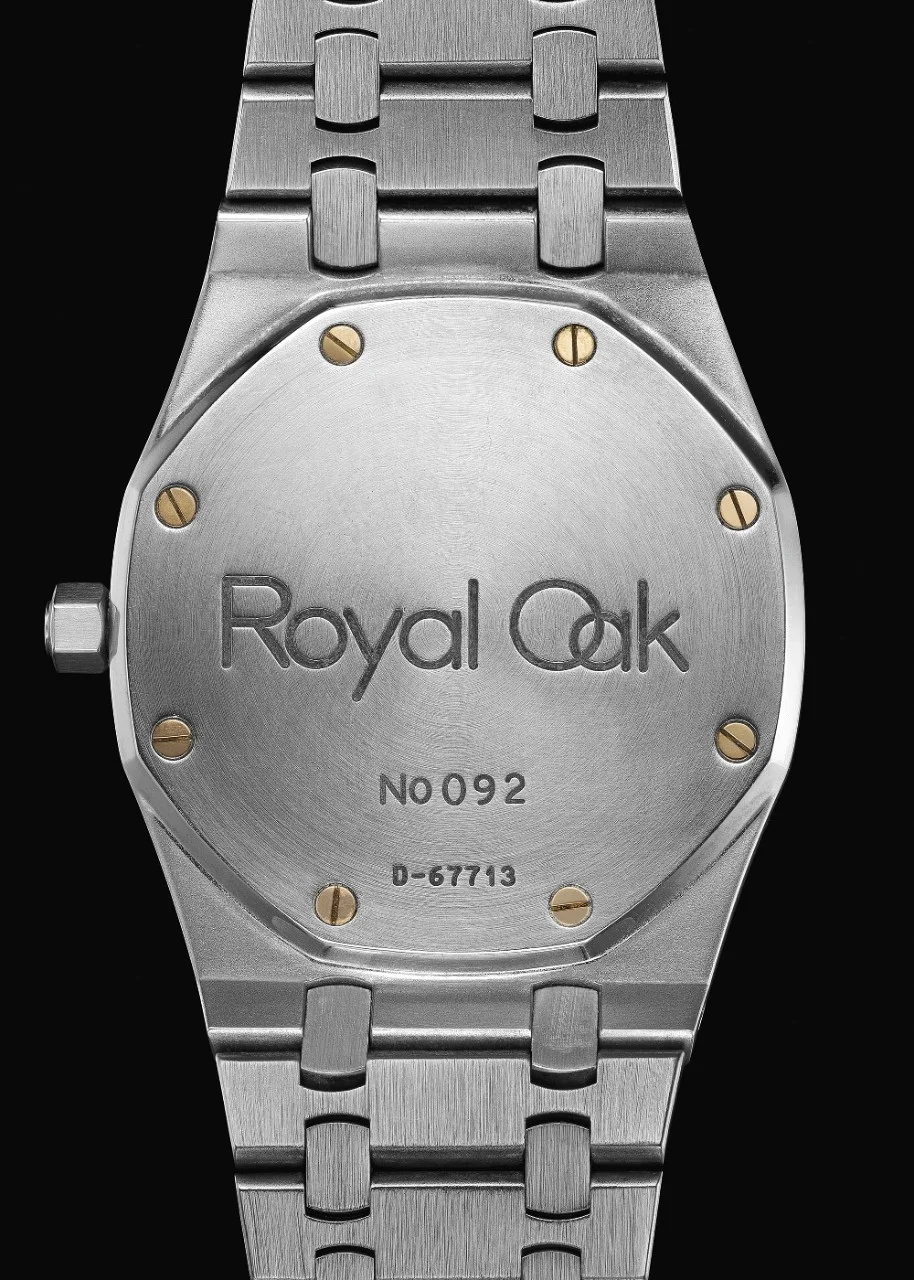
1993. Royal Oak 14802ST (1992), No. 130, caseback view. Date. Calibre 2121, movement 374378. Bracelet 944. T21 Tapisserie dial. Steel. Sold in 1993 to Elco (United Kingdom). Audemars Piguet Heritage, inv. 1051.
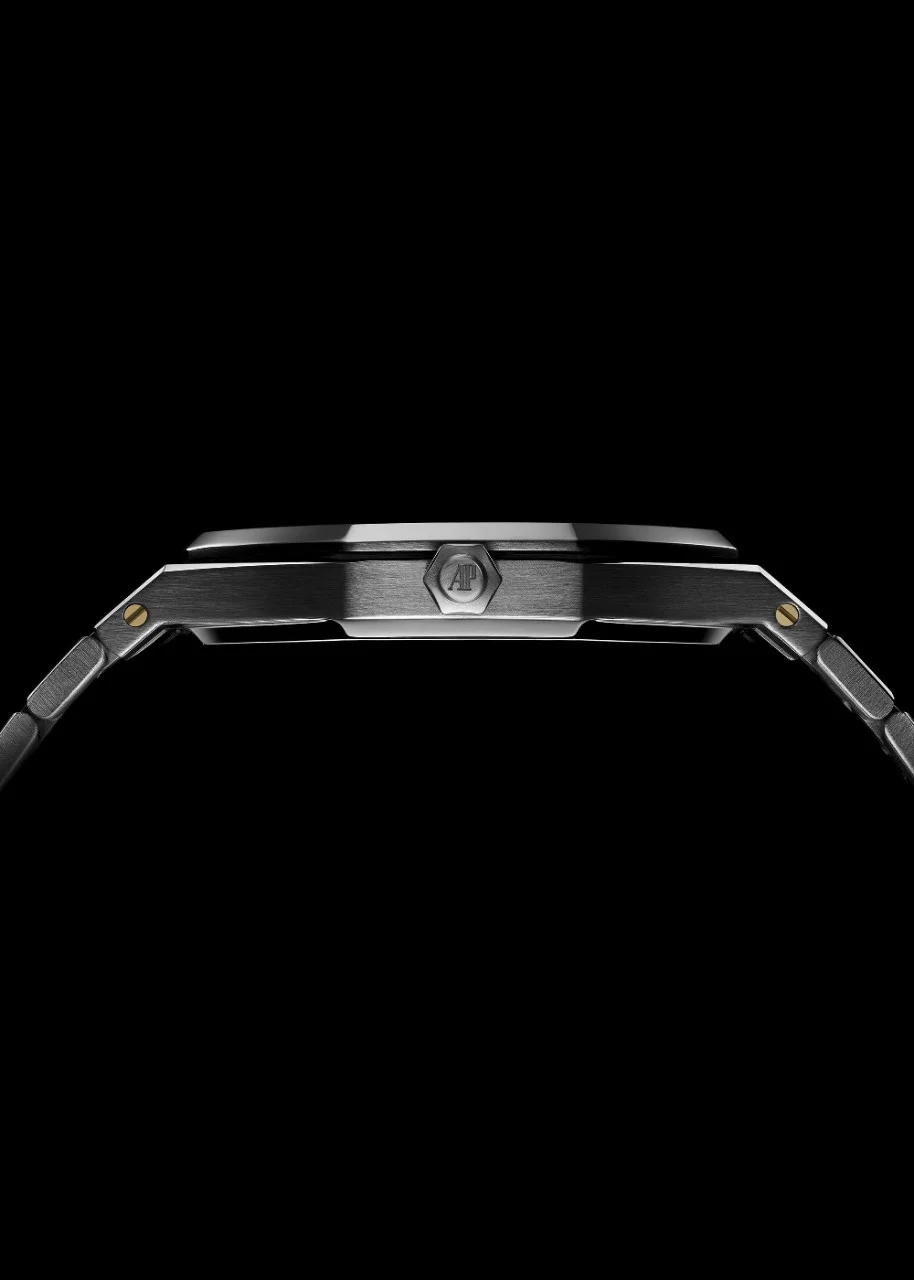
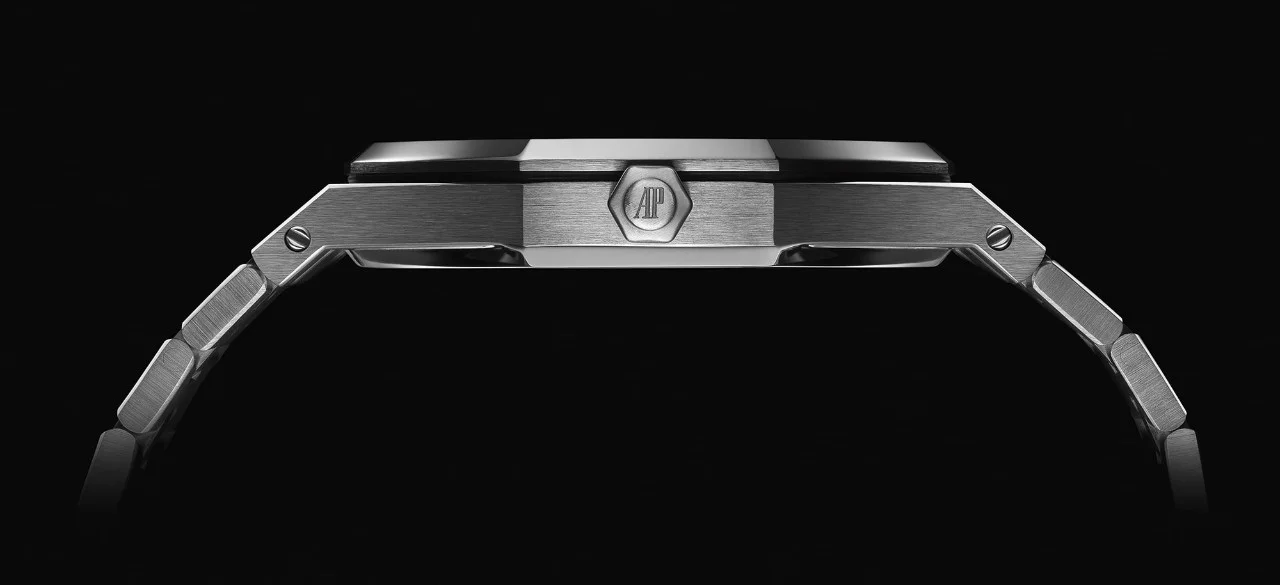
1993. Royal Oak 14802ST (1992), No. 130, side view. Date. Calibre 2121, movement 374378. Bracelet 944. T21Tapisseriedial. Case D12288, 39 mm. Steel. Sold in 1993 to Elco (United Kingdom). Audemars Piguet Heritage, inv. 1051.
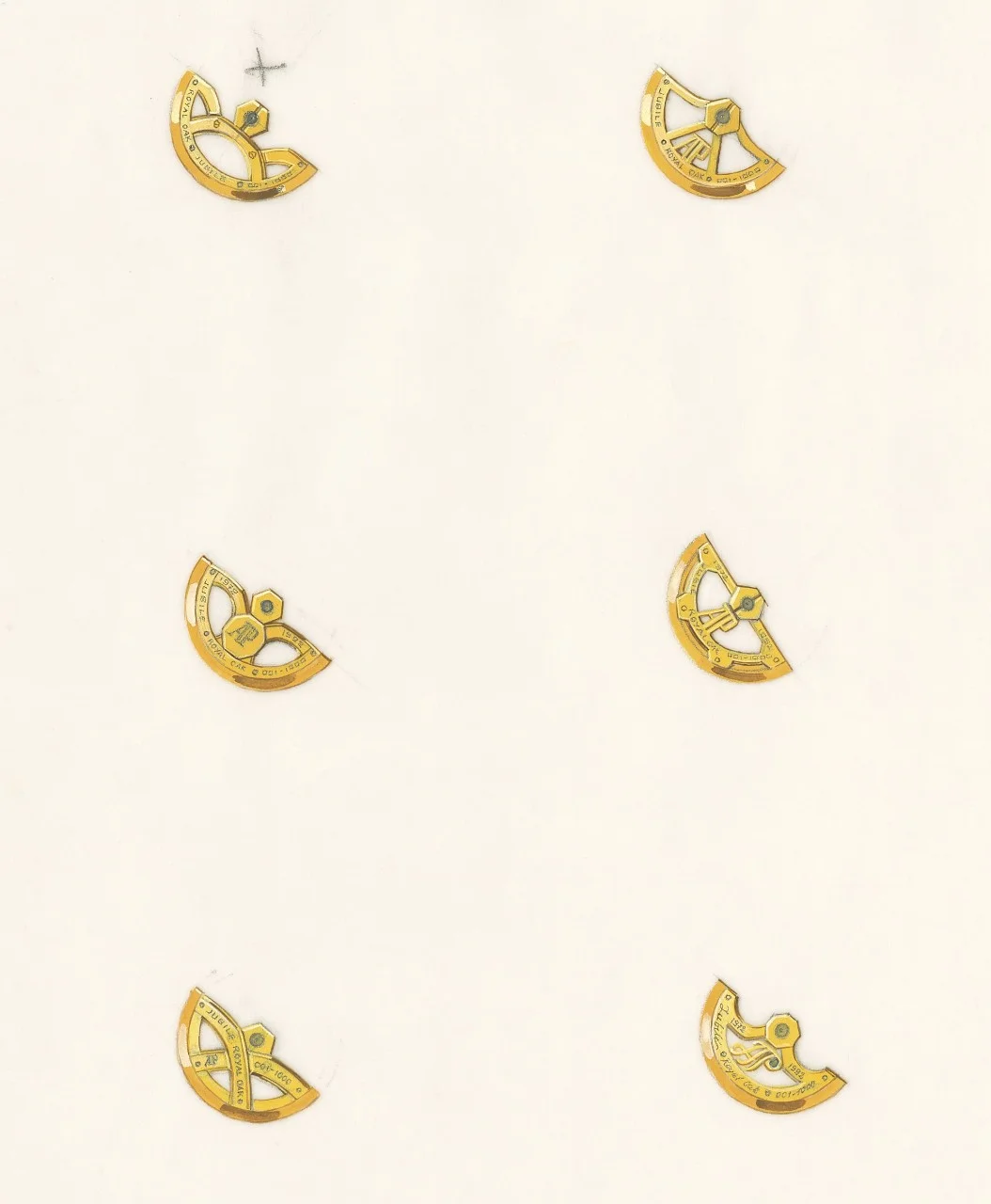
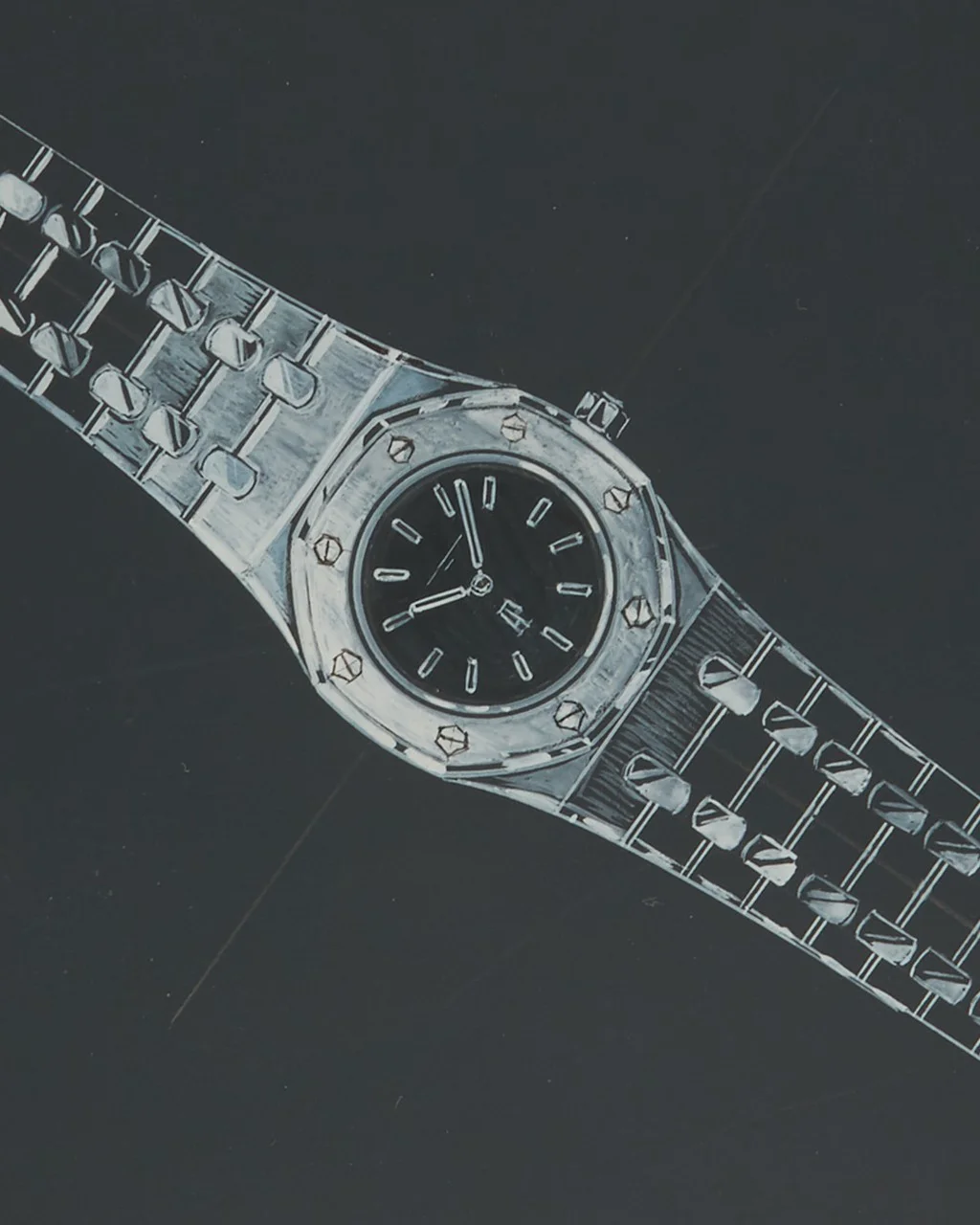
Circa 1990. Sketch of anniversary oscillating weights for the Royal Oak 14802. Gouache drawing on translucent paper. Audemars Piguet Archives.
Openworked Variations on Calibre 2120
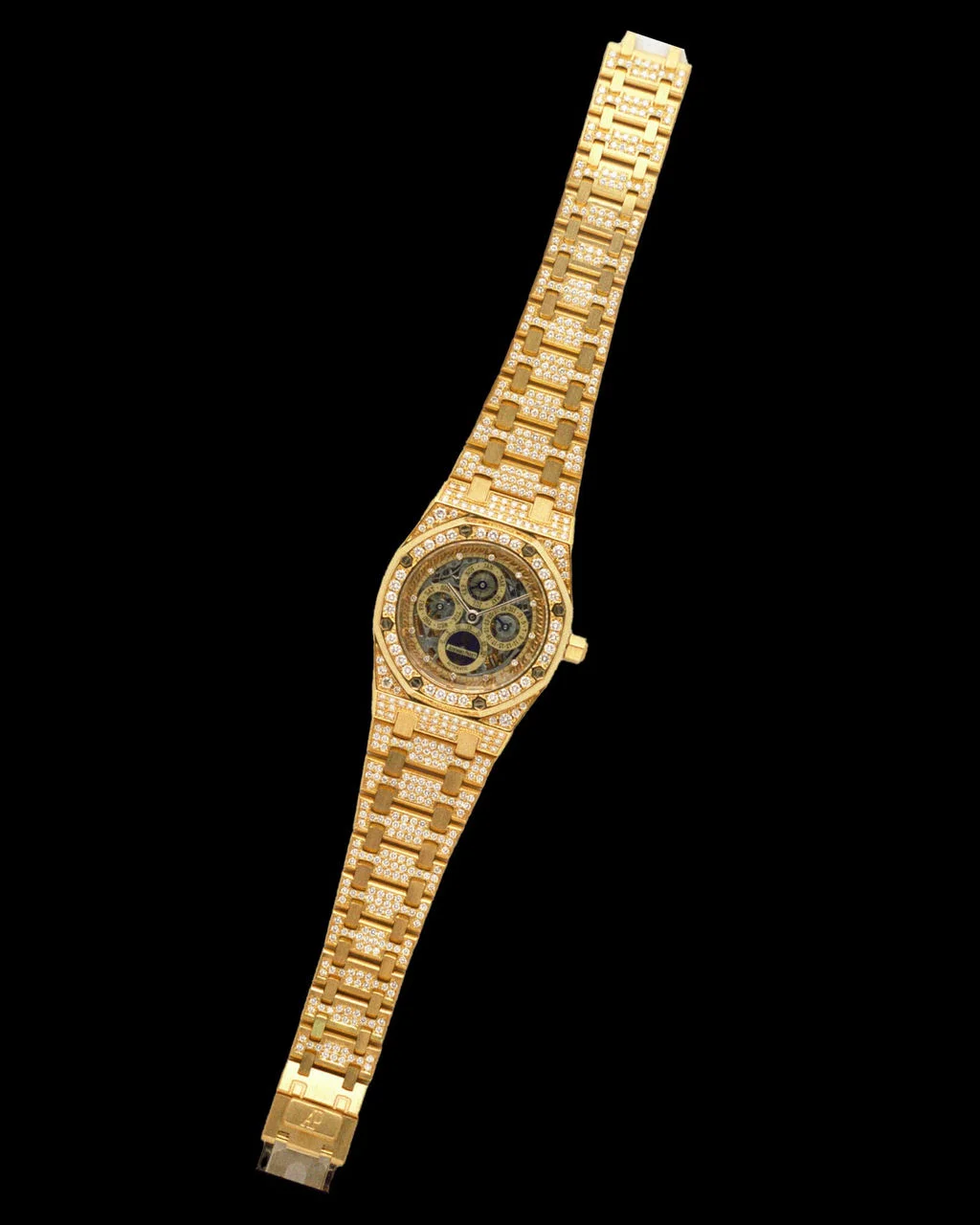
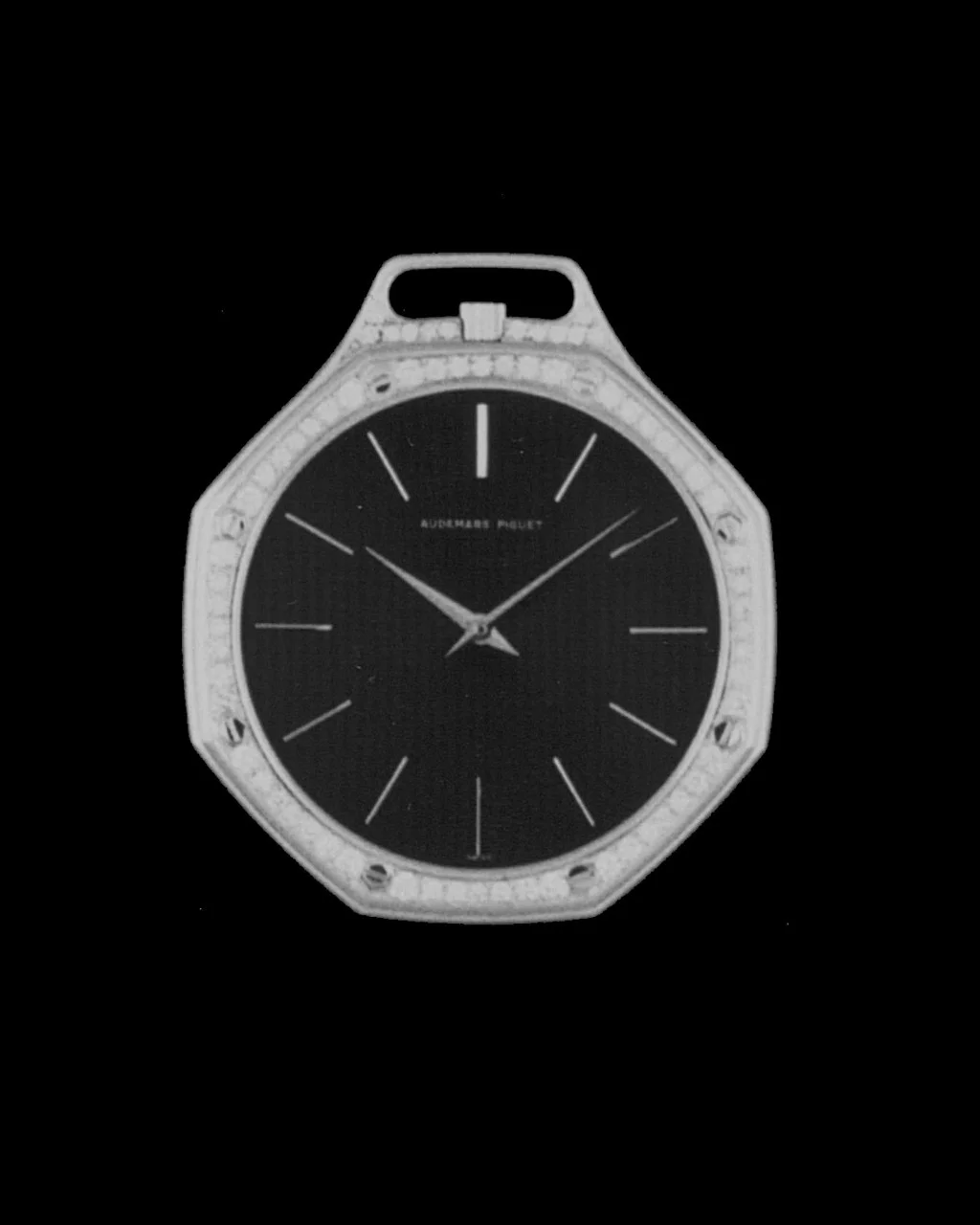
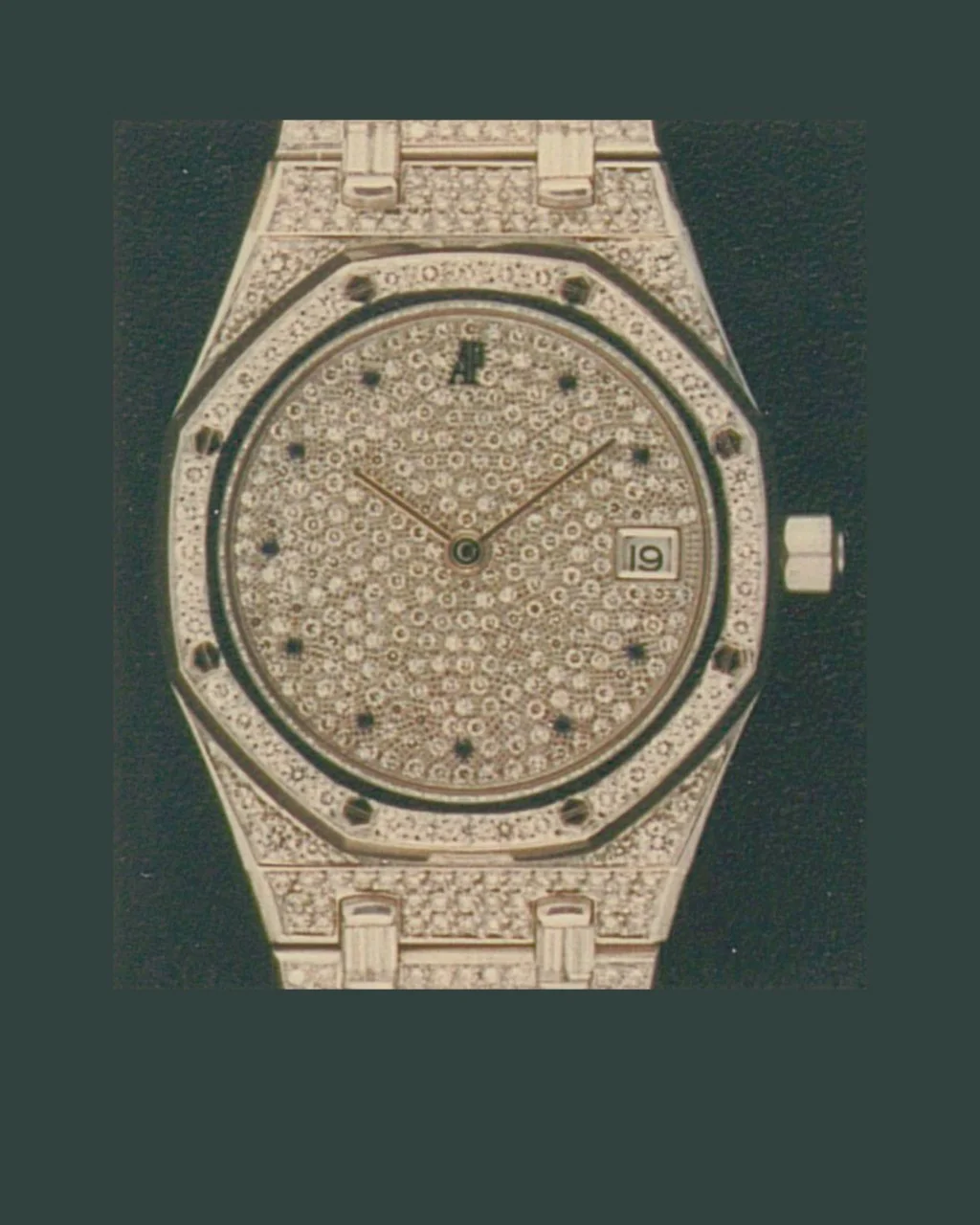
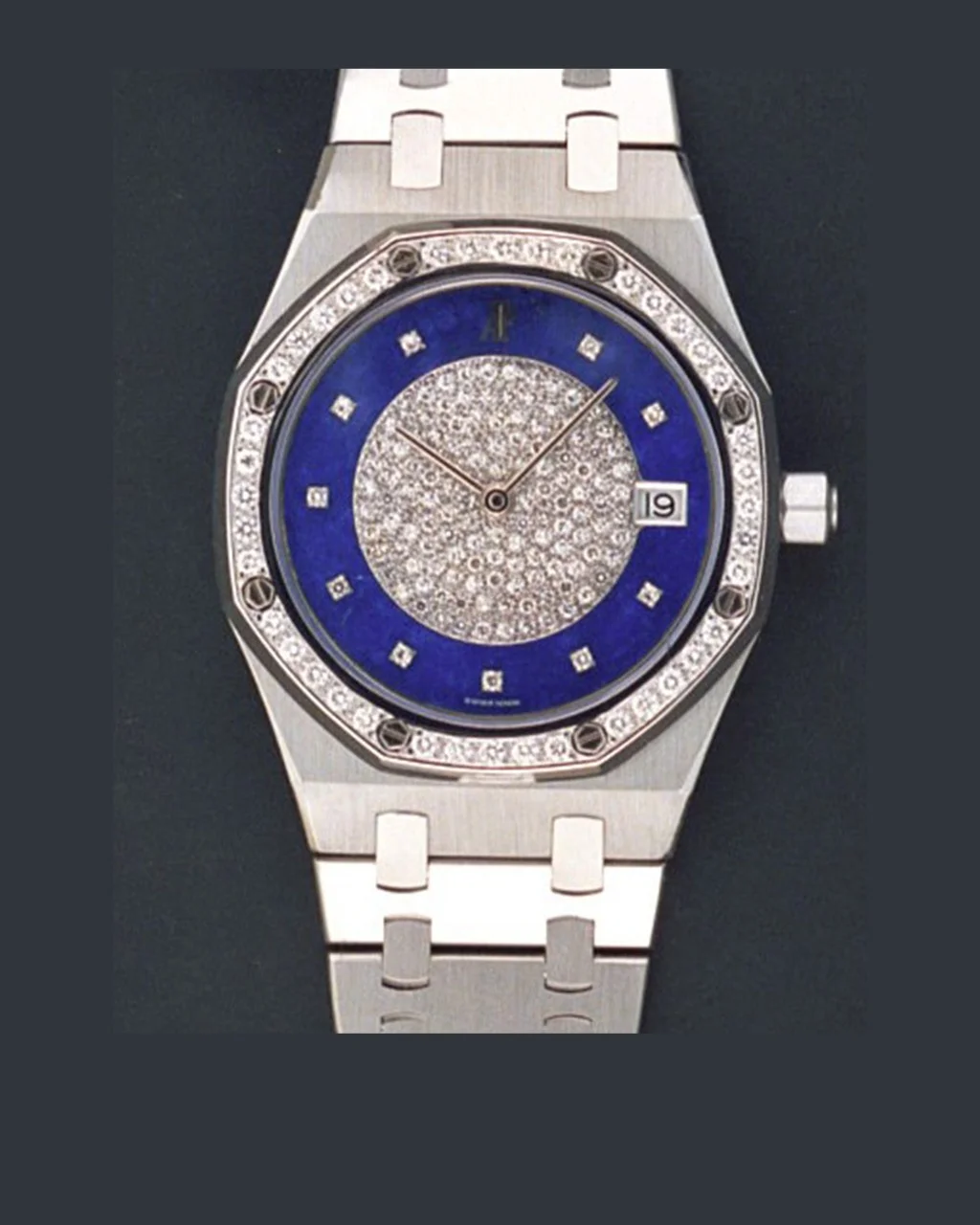
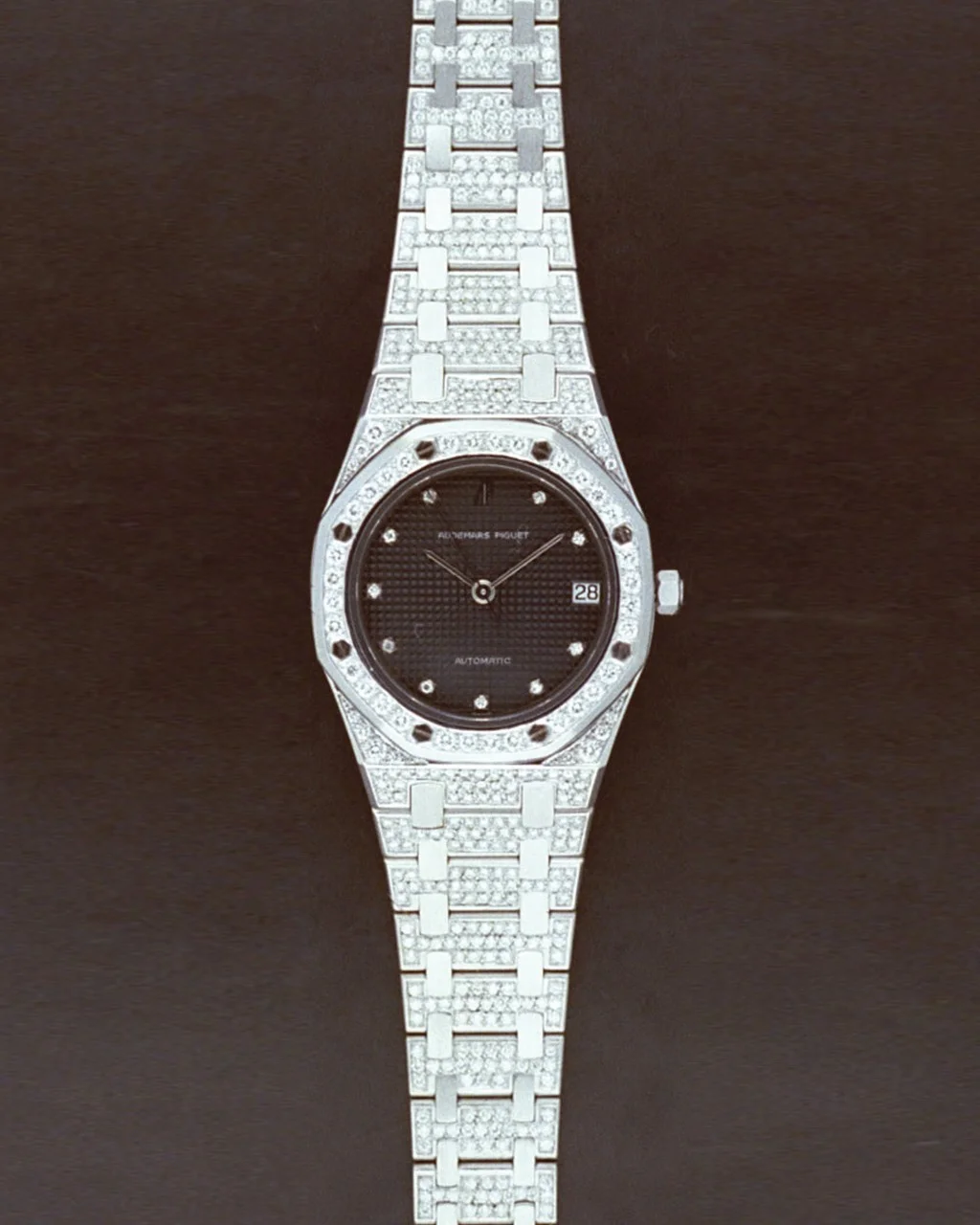
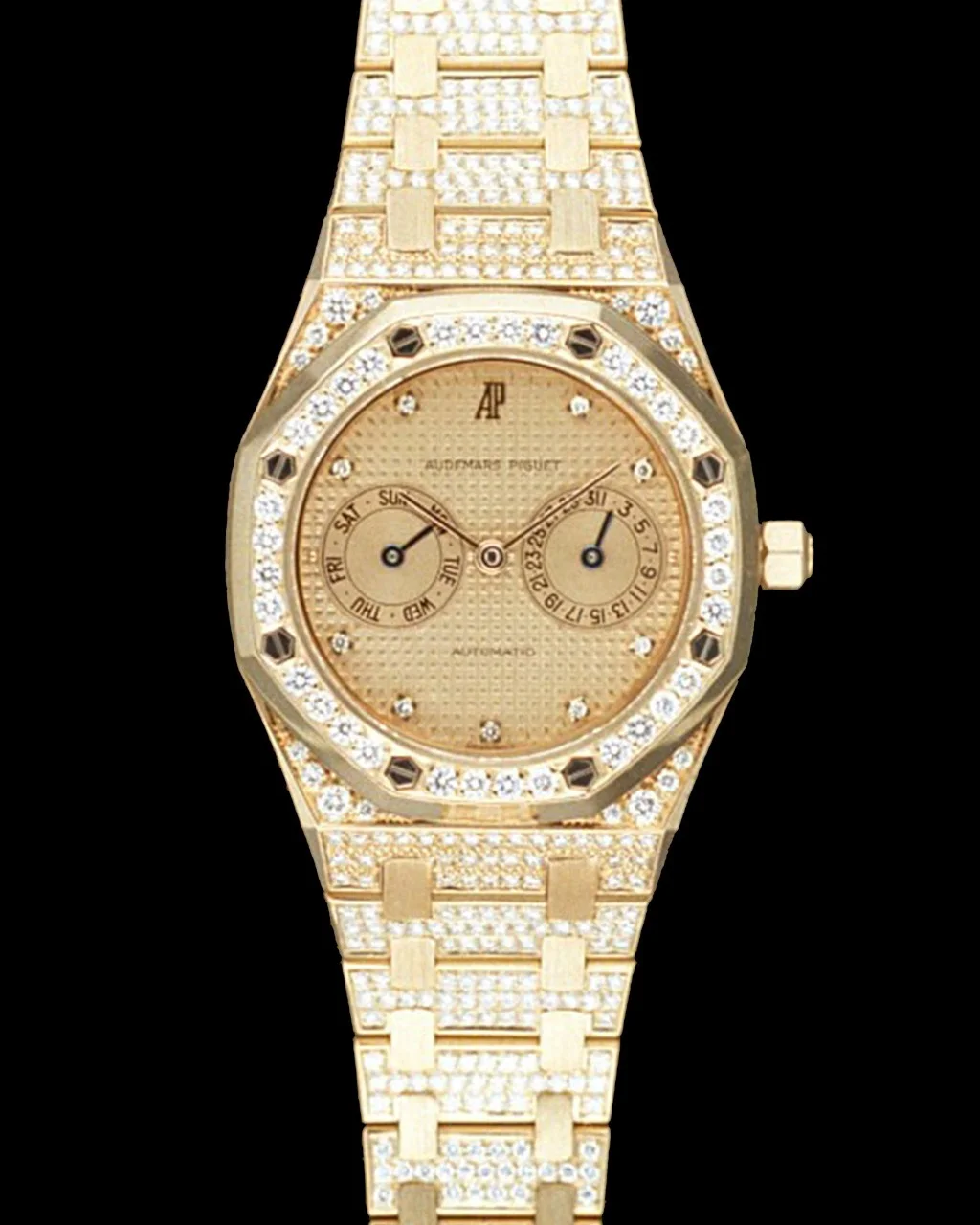
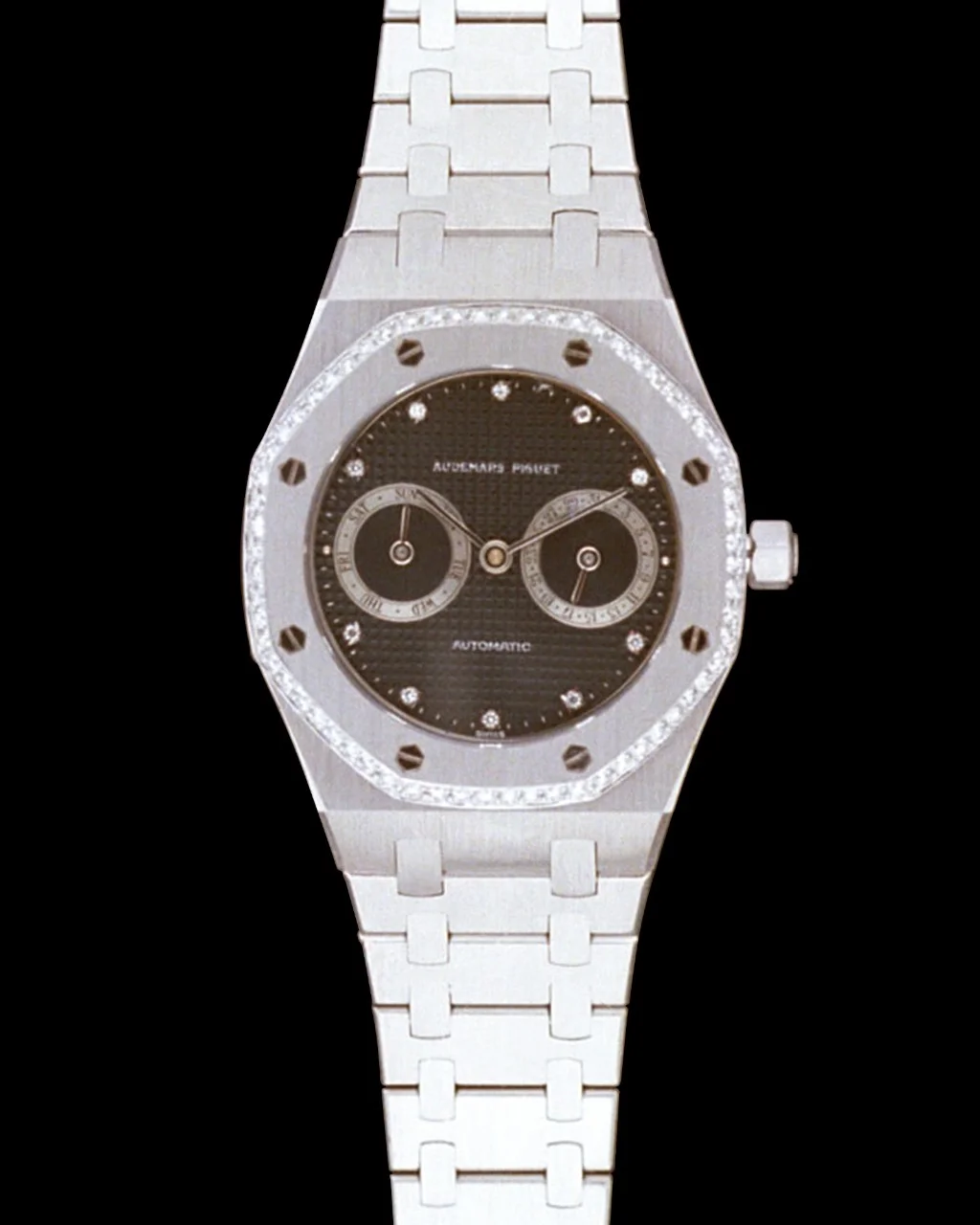
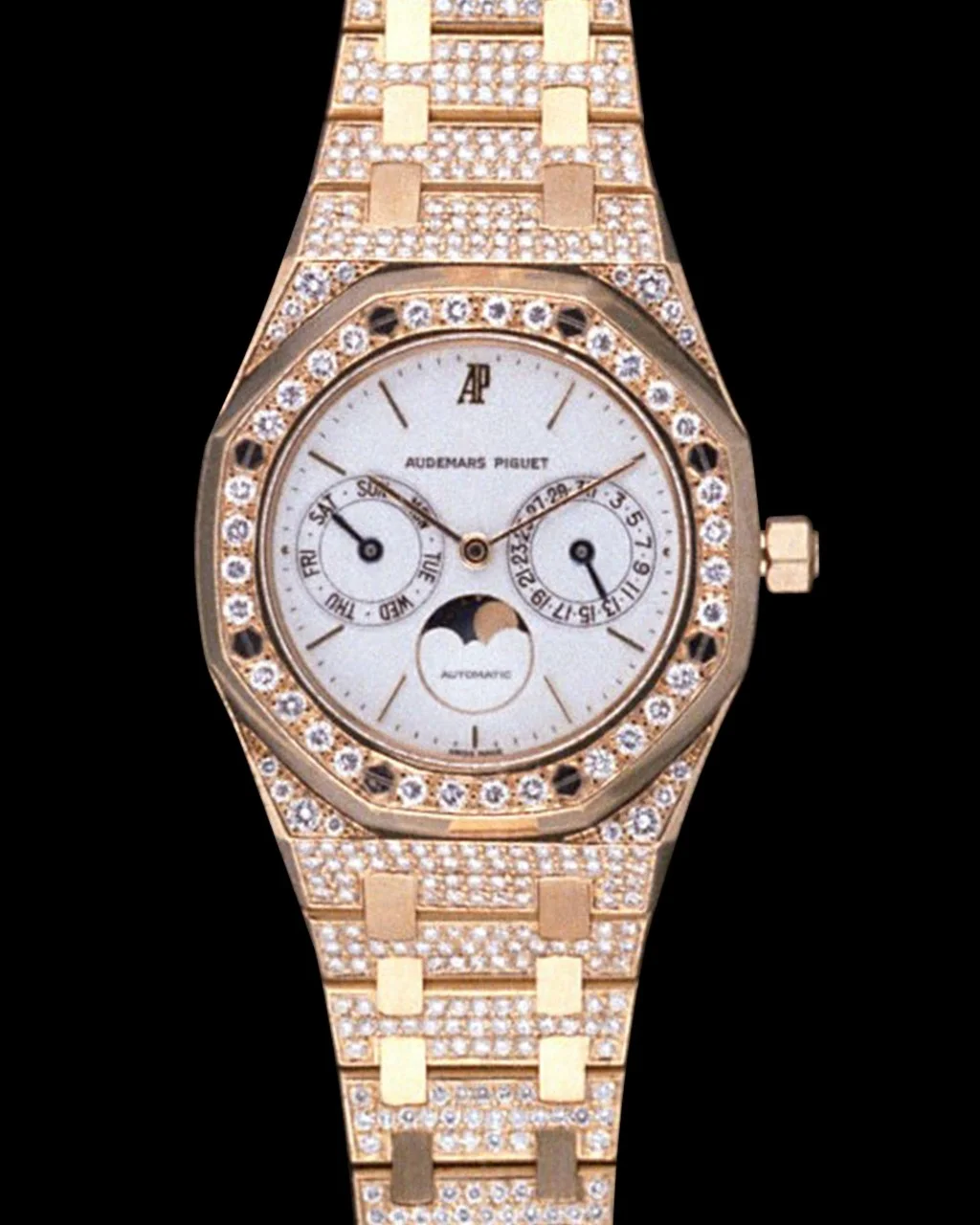
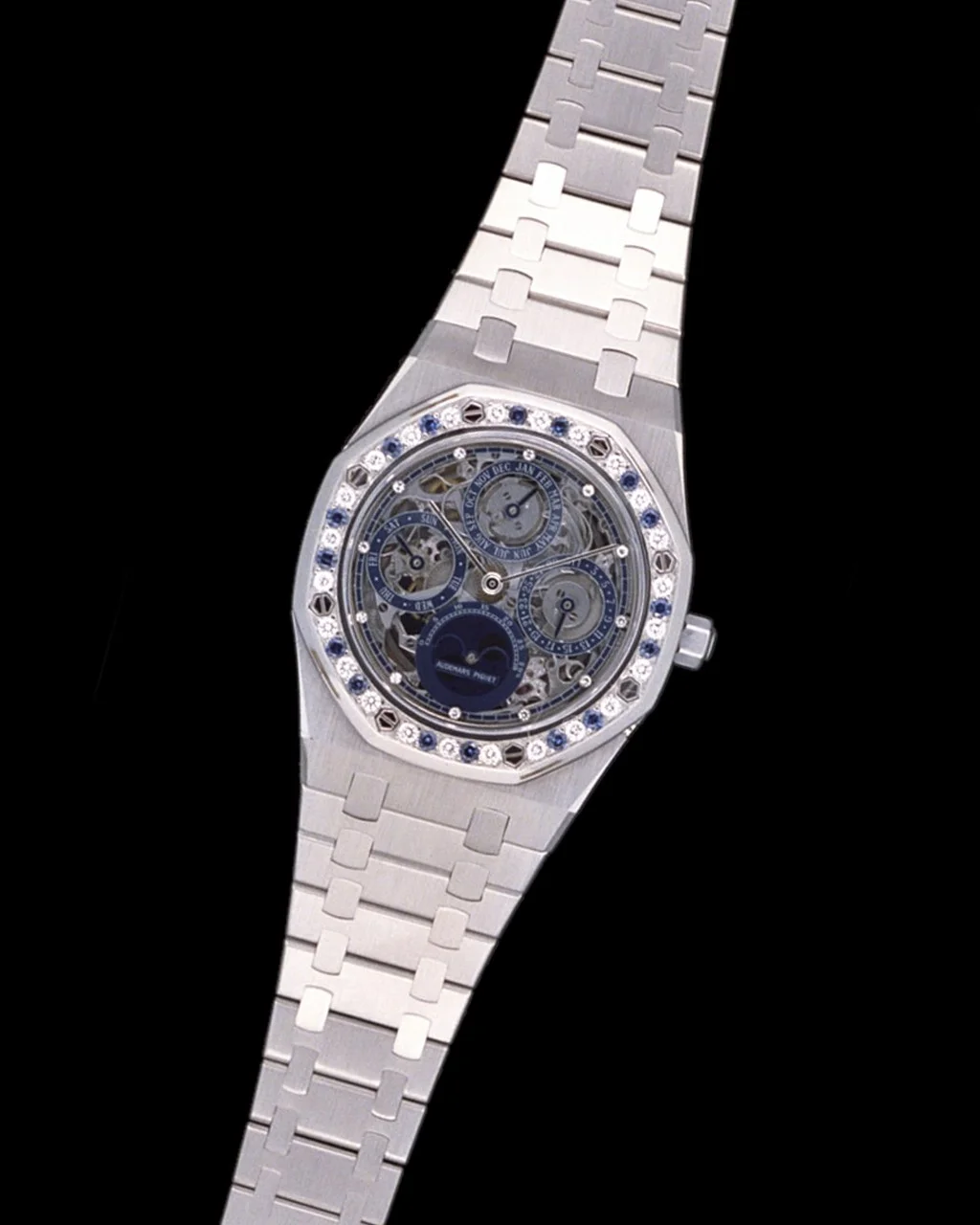
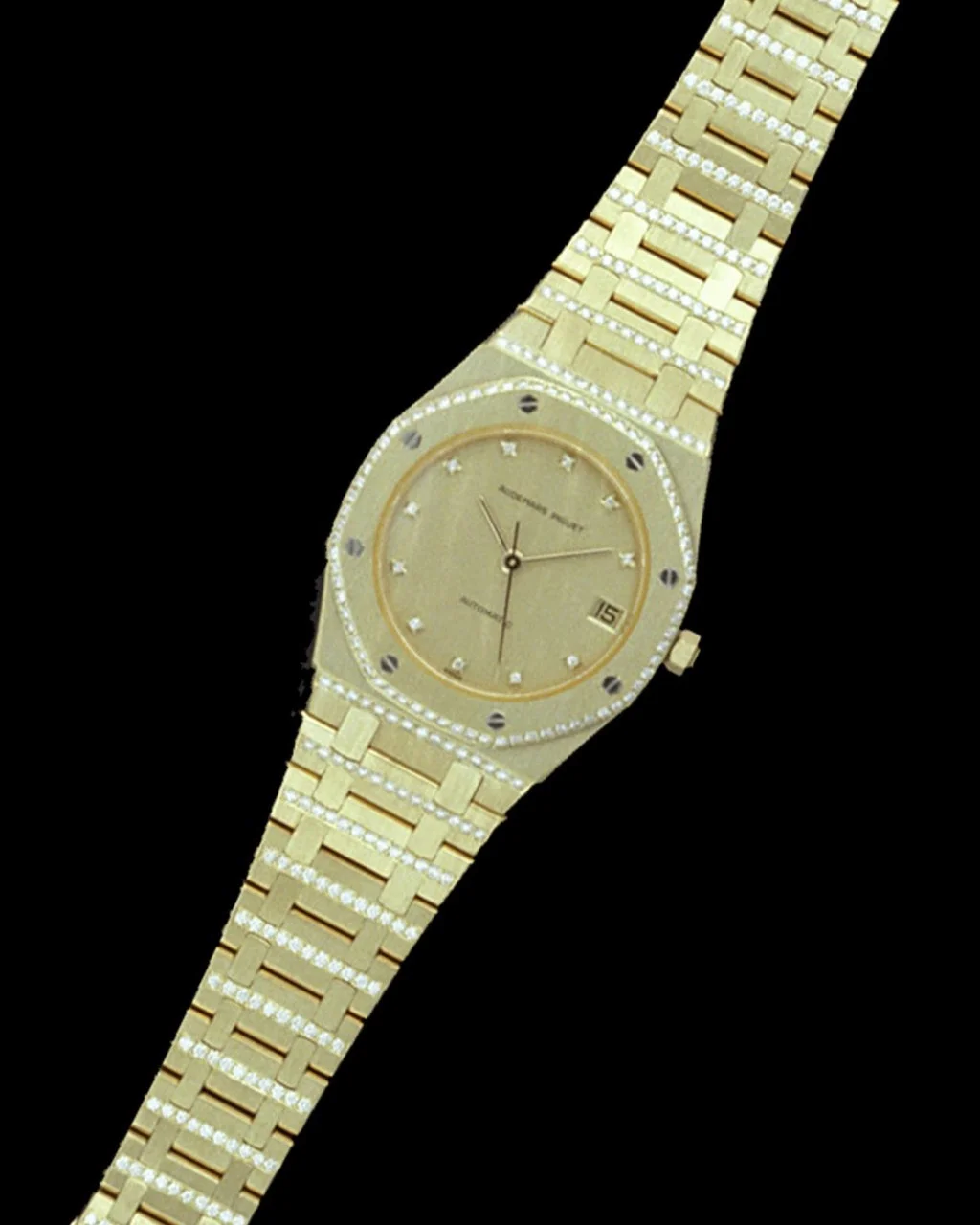
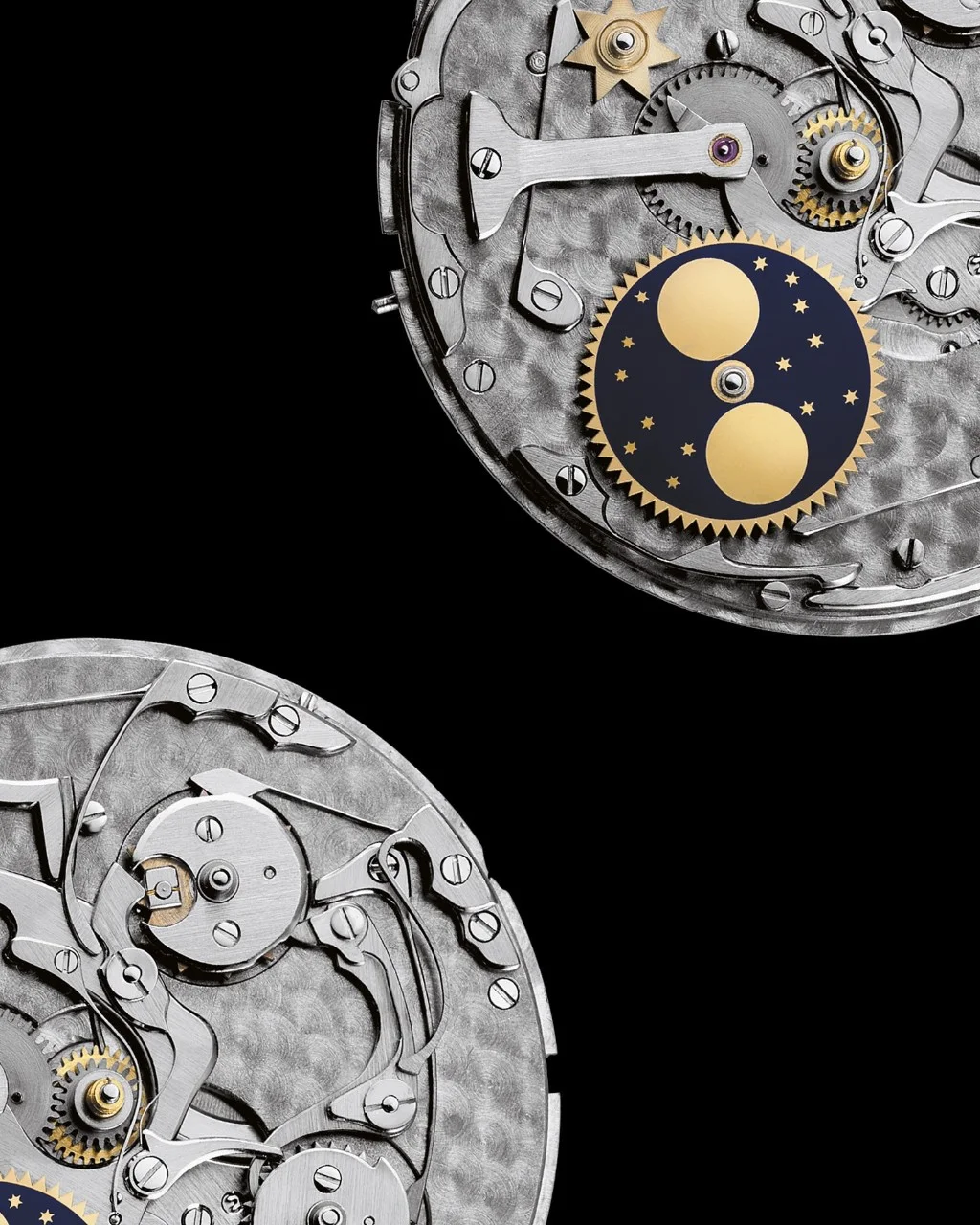
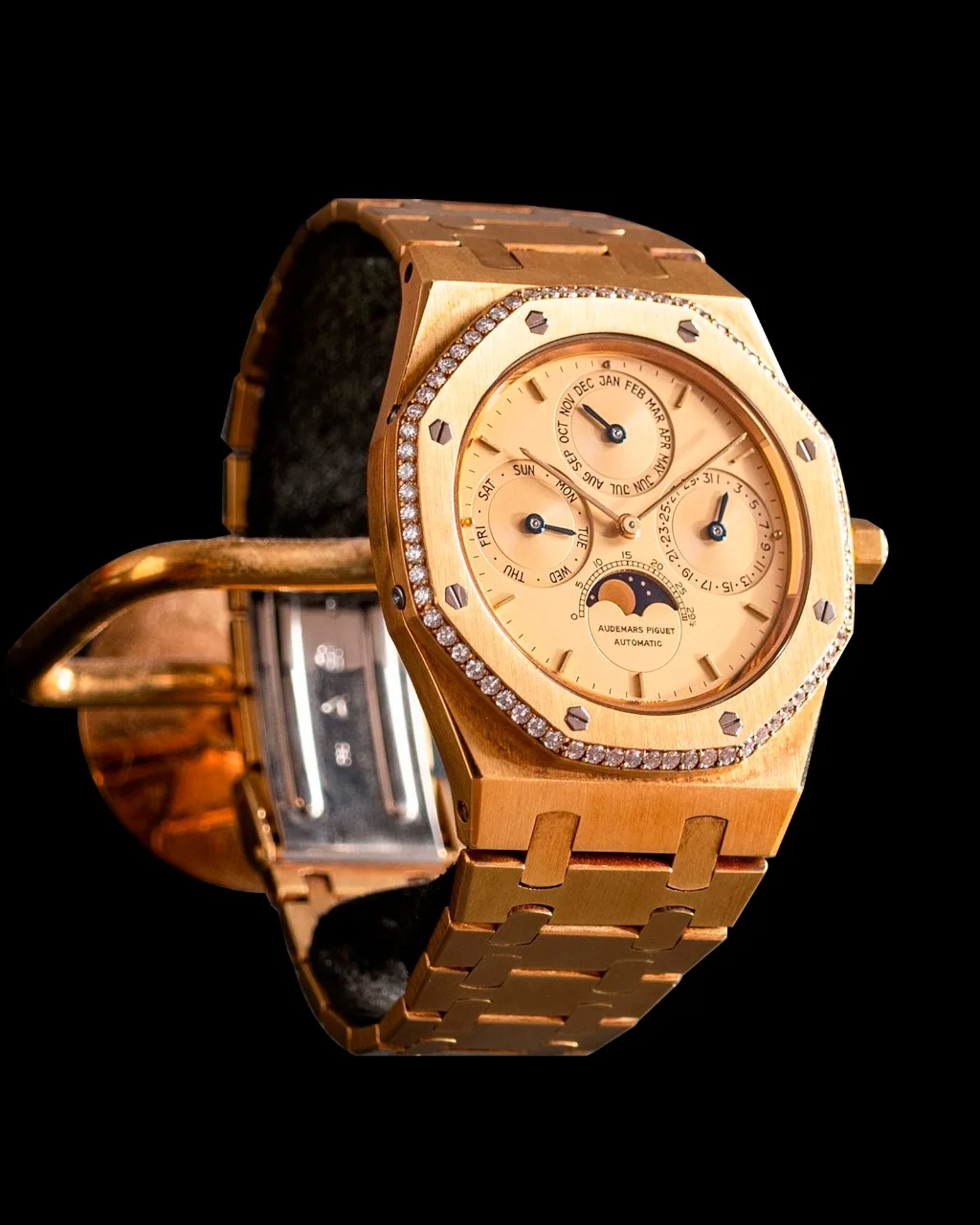
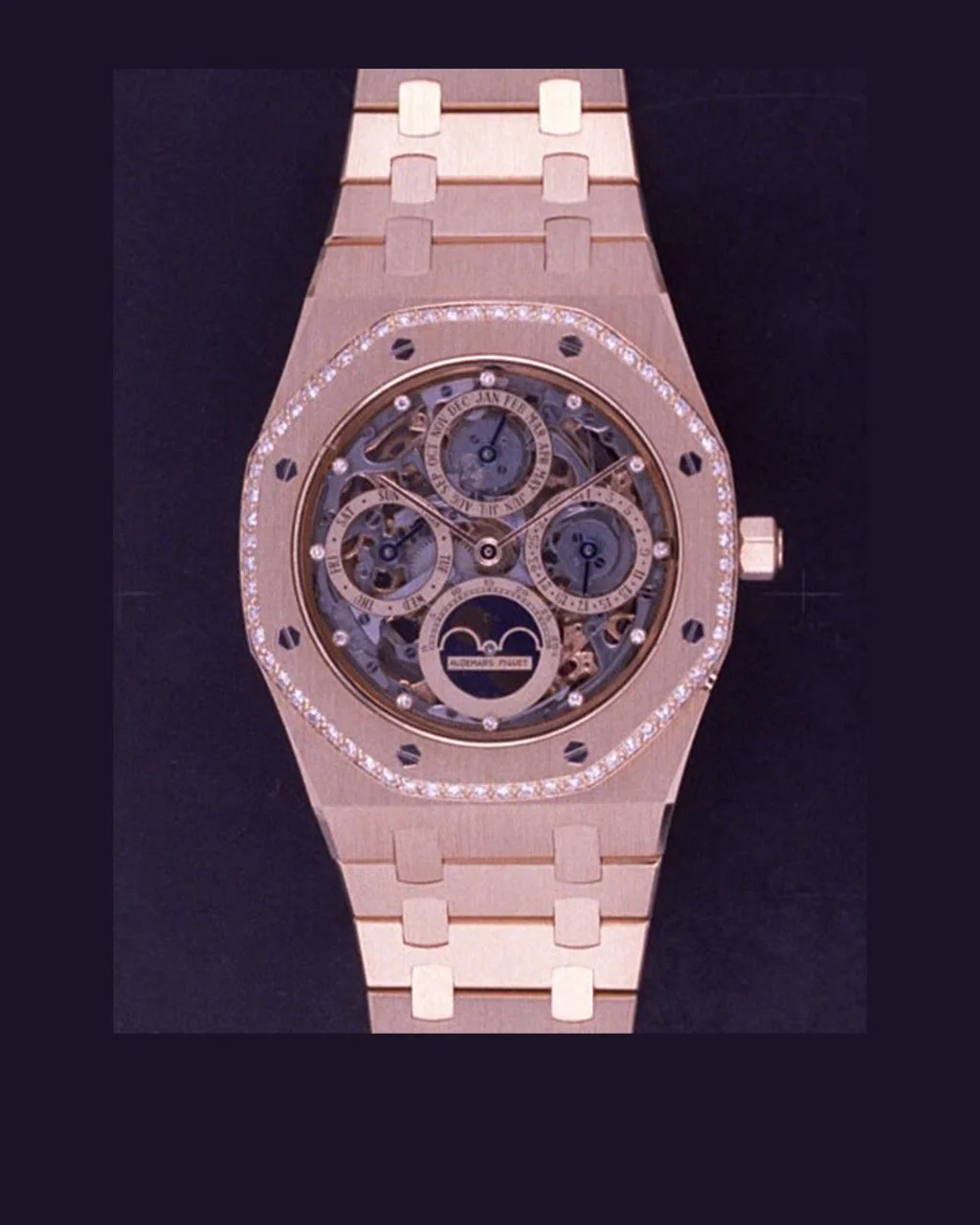
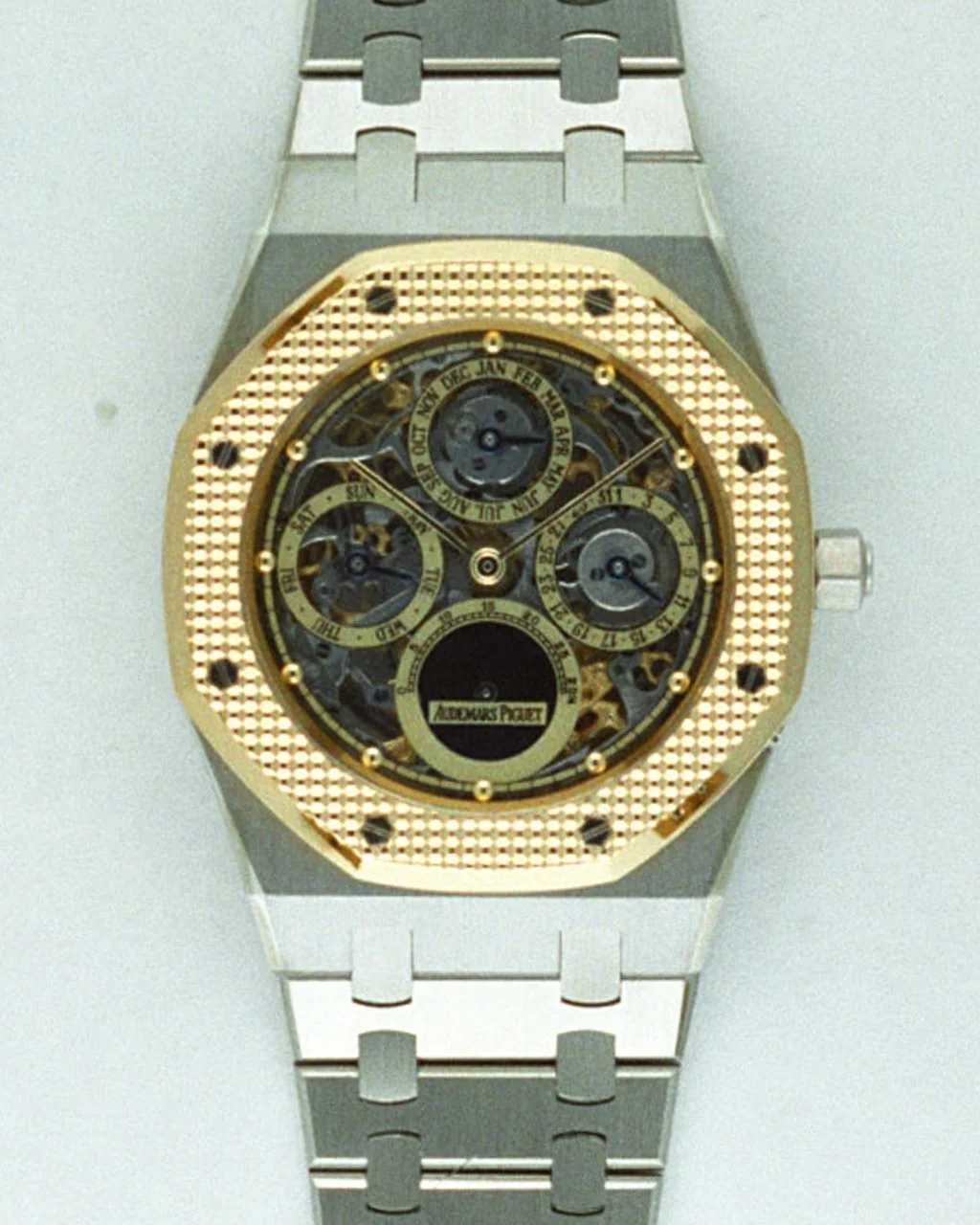
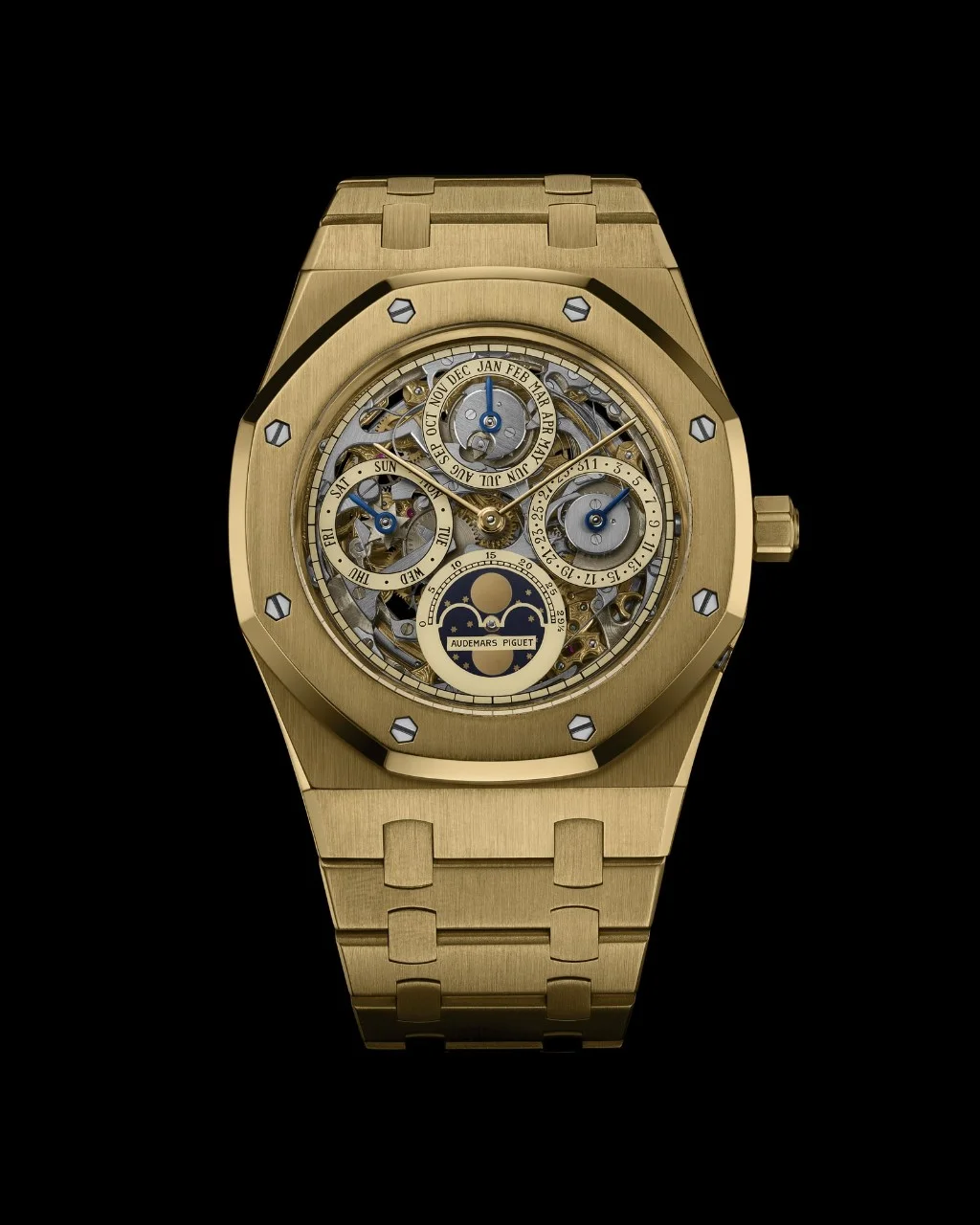
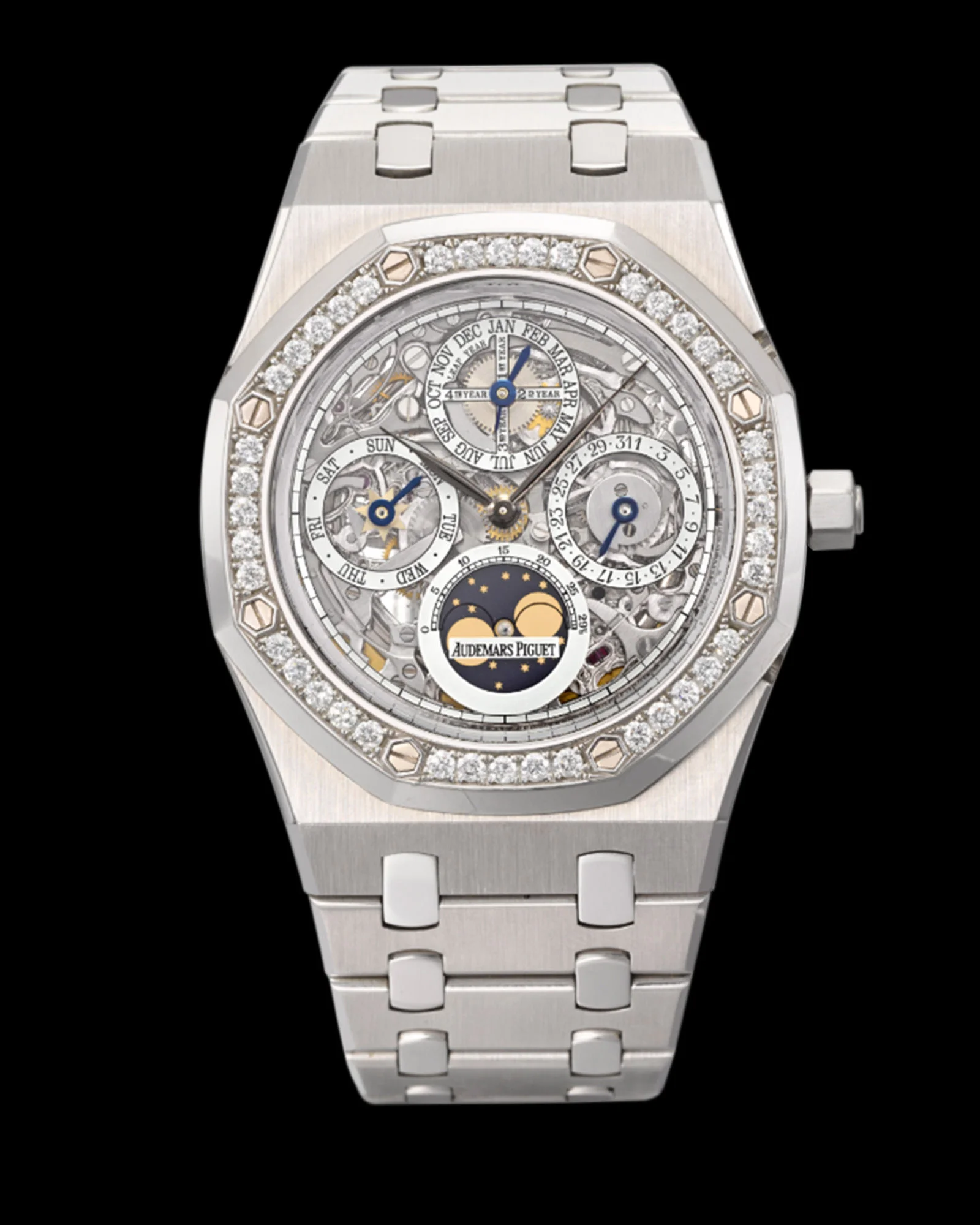
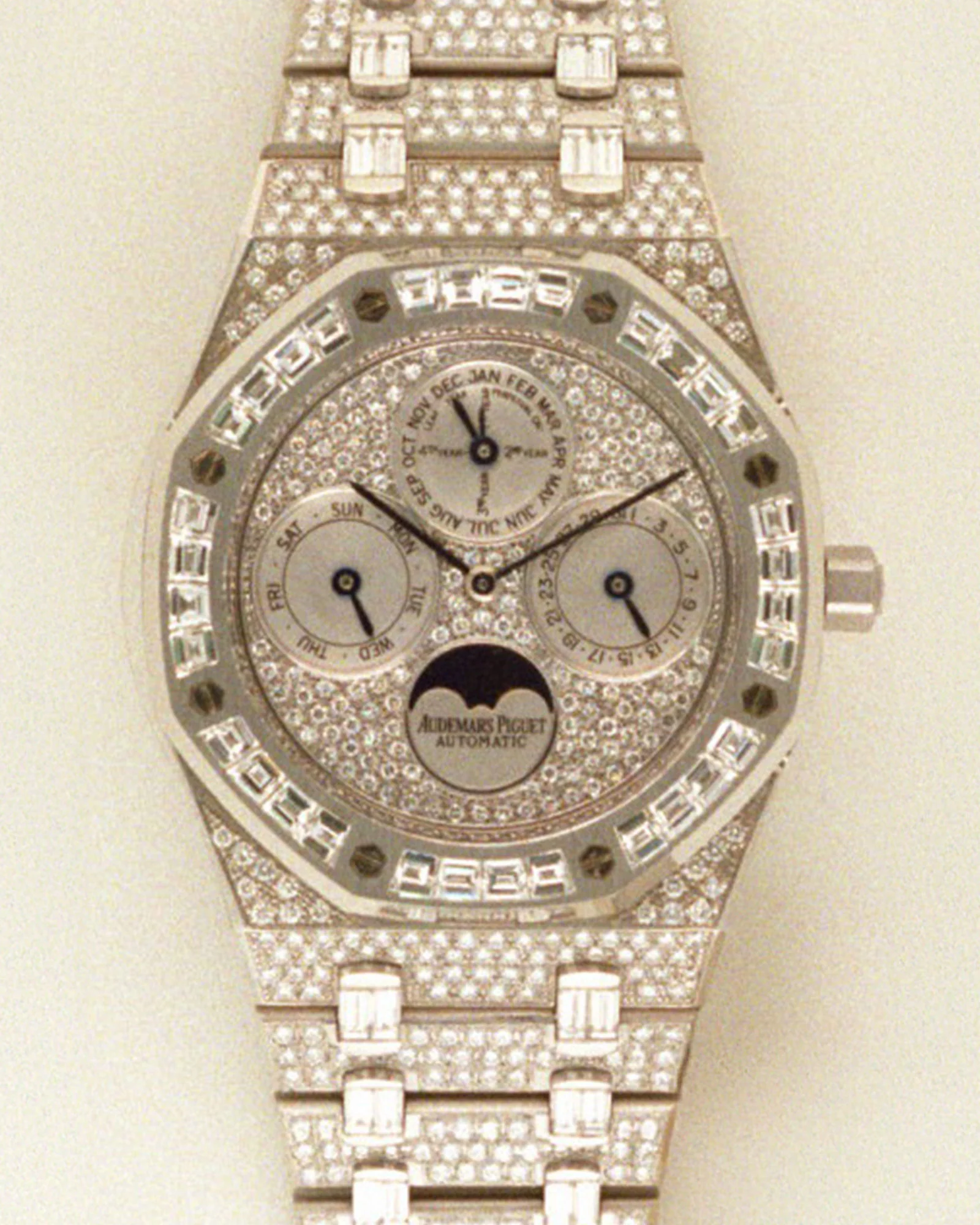
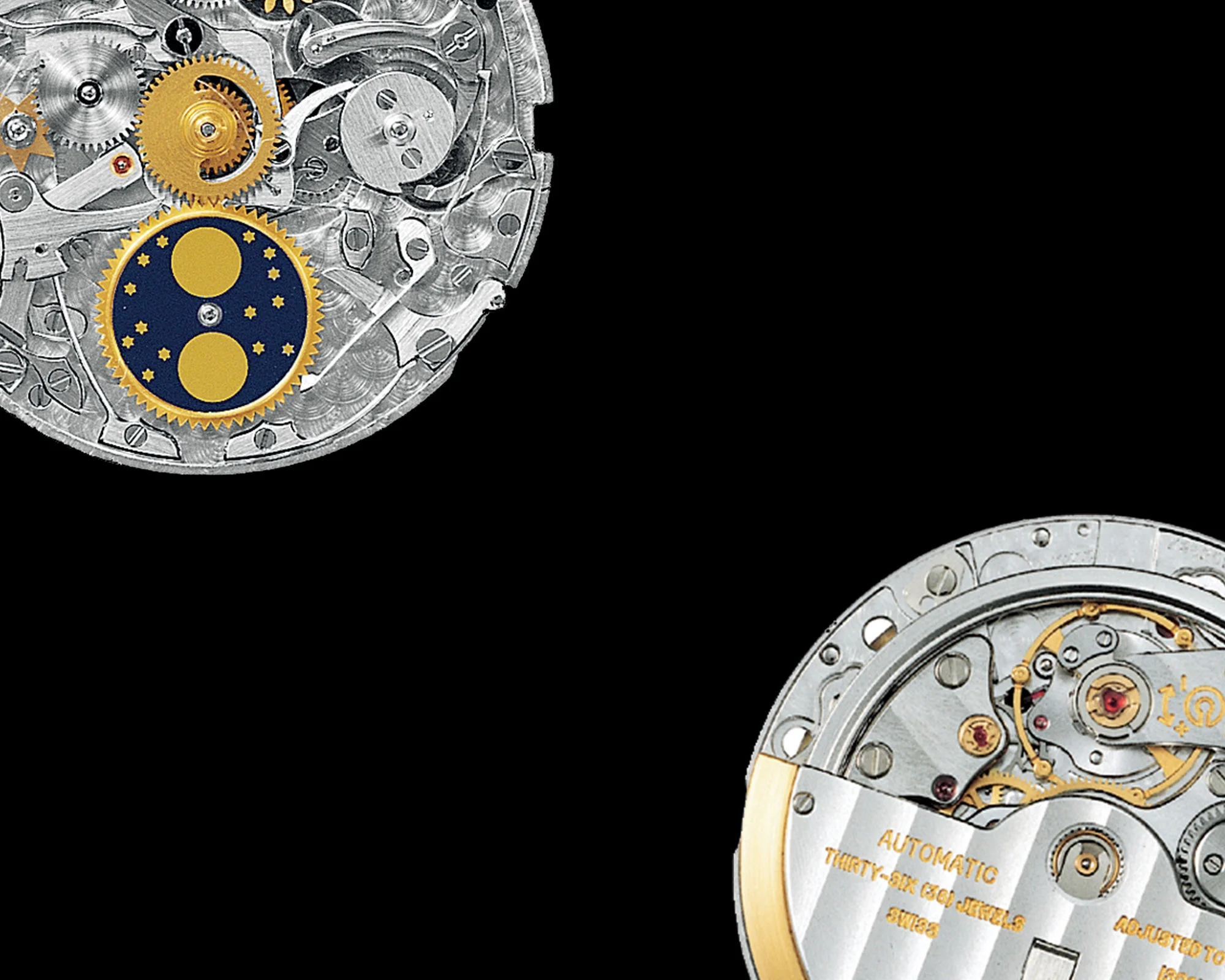
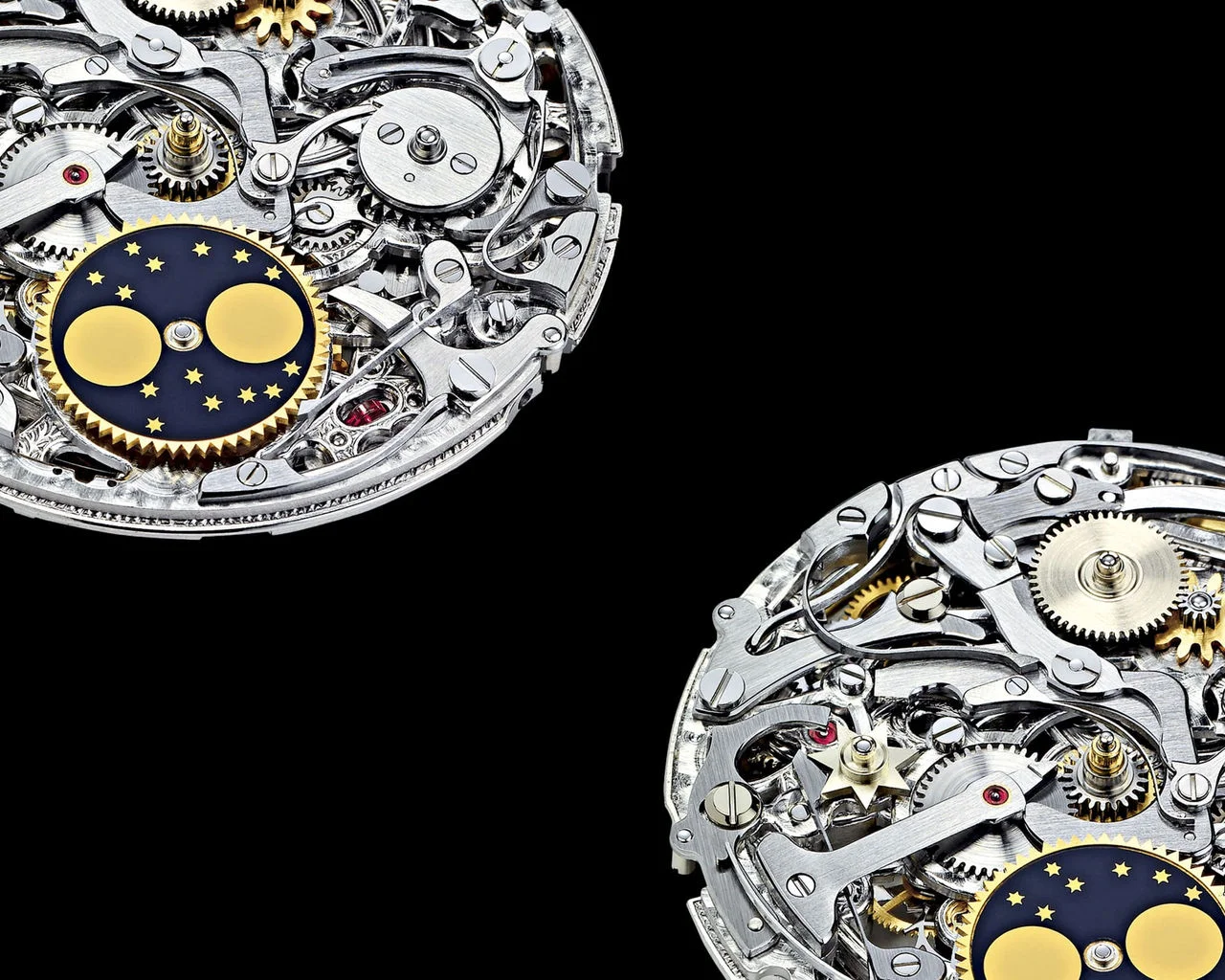
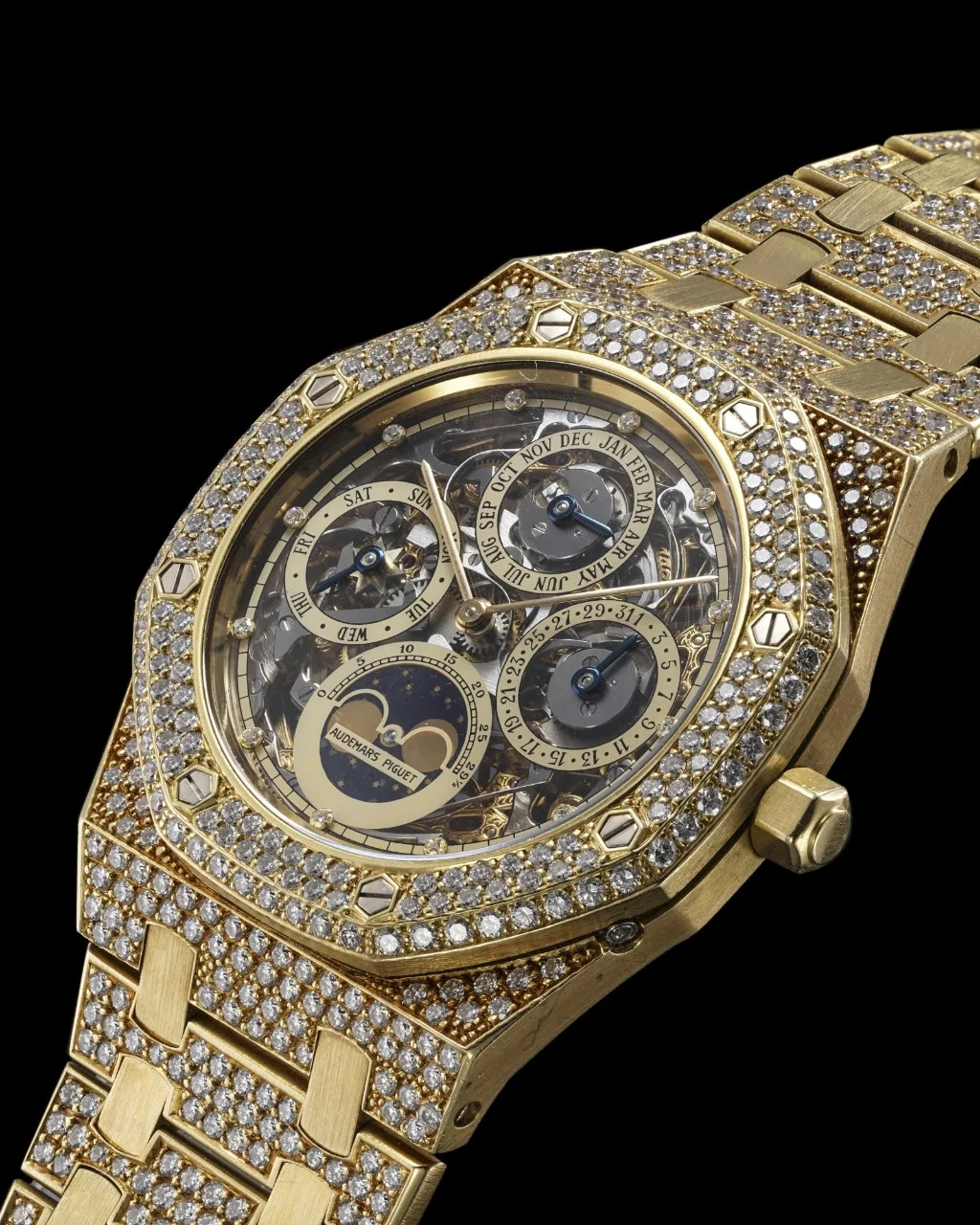
From 1992 to 2000, several "Jumbo" models equipped with ultra-thin Calibre 2120 were introduced in very small series, without date, almost always openworked and often gemset.
The first of these variants was the Royal Oak 14811 in 1992. This one-of-a-kind model was auctioned to support the newly created Audemars Piguet Foundation, which has since been contributing to the cause of worldwide forest conservation through environmental protection and youth awareness-raising programmes. The watch features a royal oak tree depicted by a modelled engraving. Later, the finely chased oak motif adorned at least three models: 15075 (around 1995), 12517 and 12530 (one-of-a-kind anniversary pieces in 2000).
While the Royal Oak 14789, 14793 and 14814 housed an openworked calibre graced with gemset hands, Models 14884 and 12518 (a unique 125th anniversary creation) featured a naval anchor against a background of stormy waves surrounded by ropes, in tune with the collection’s name inspired by the Royal Oak English naval vessels.

1992. Royal Oak Foundation Audemars Piguet 14811ST (replica of a one-of-a-kind model). Calibre 2120SQ. Engraved and gilded dial adorned with a royal oak. Bracelet 944. Case D30241, 39 mm. Steel. Audemars Piguet Heritage, inv. 1193.
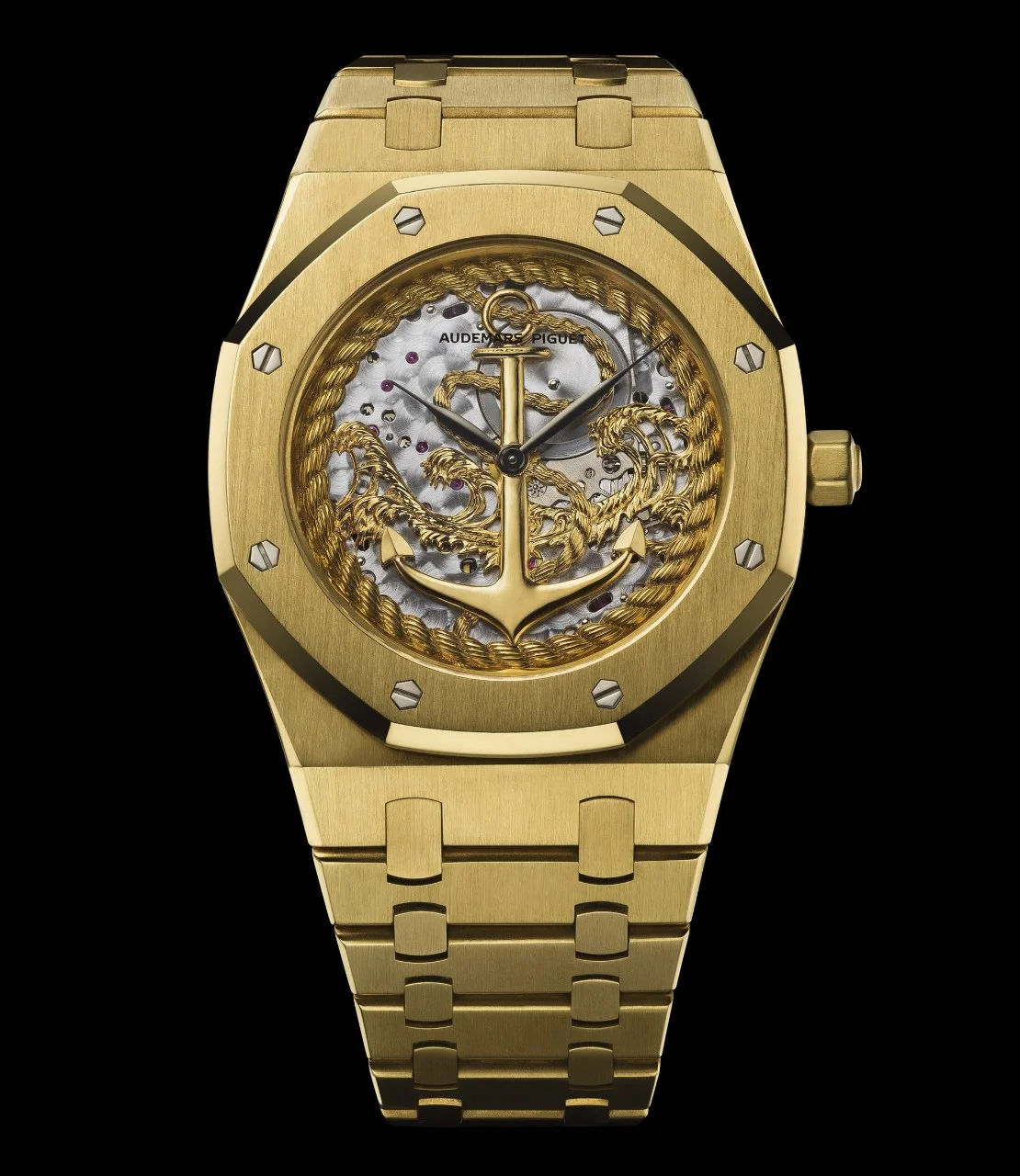
1993. Royal Oak 14884BA. Calibre 2120SQ. Movement 354380, openworked anchor-shaped dial. Case D30250, 39 mm. 18-carat yellow gold. Sold to DHK (Hong Kong) in 1993. © Pygmalion collection.
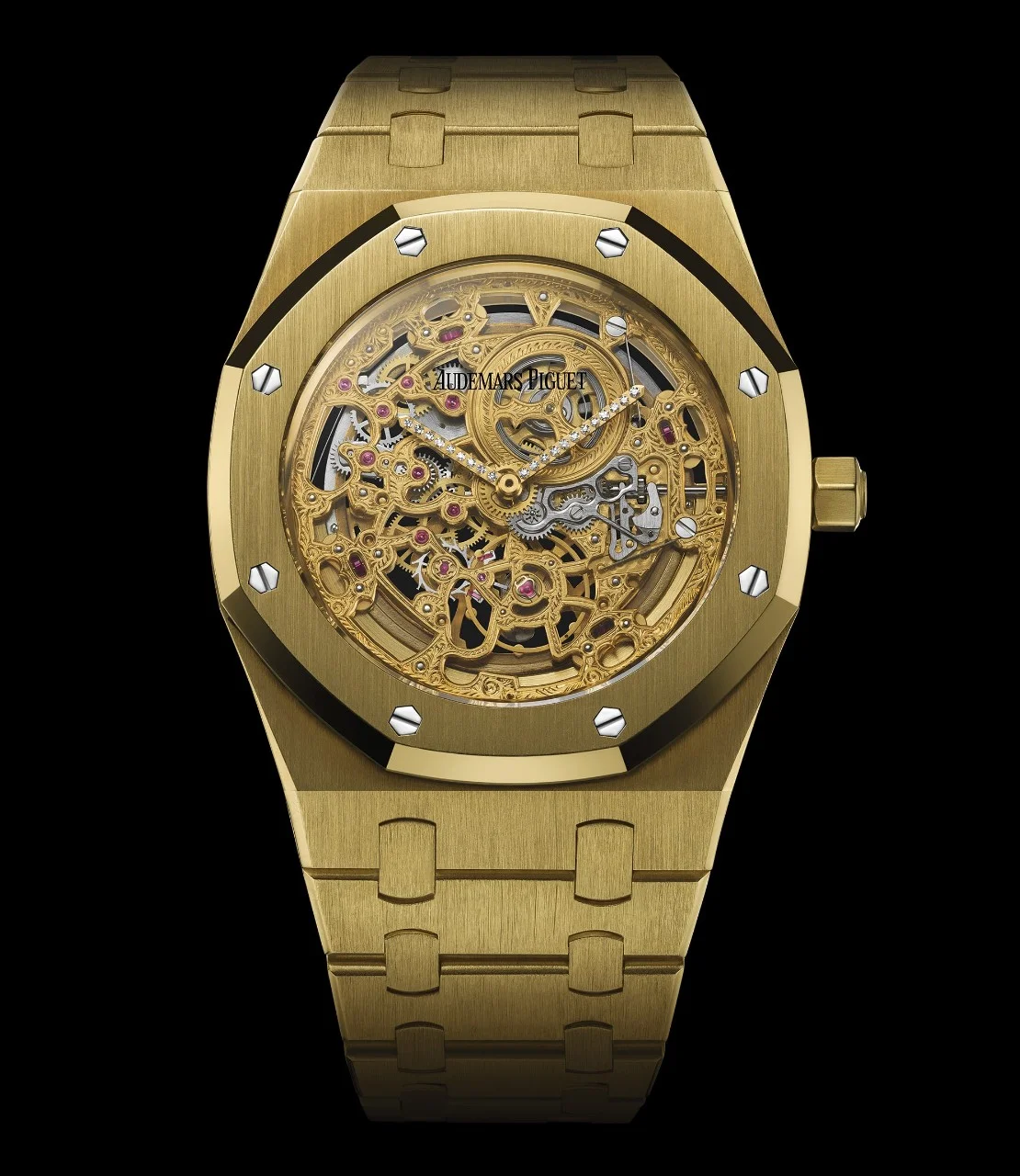
1997. Openworked Royal Oak 14814BA. Date. Calibre 2120SQ, movement 367889, entirely openworked and gilded. Bracelet 944. Diamond-set hands. Case D93405, 39 mm. 18-carat yellow gold. Audemars Piguet Heritage, inv. 1216.
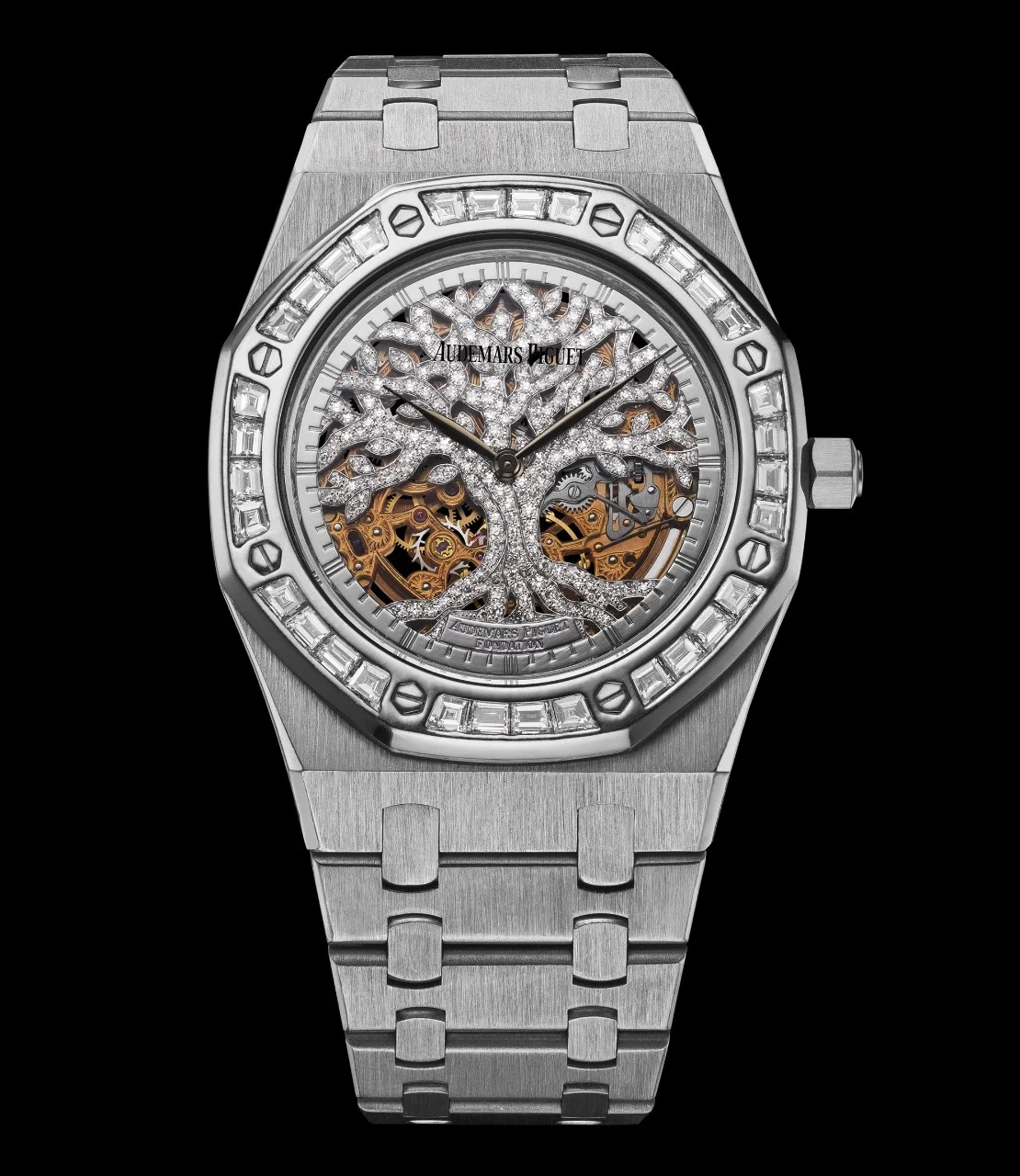
2000. Royal Oak 12517BC. Calibre 2120SQ. Openworked movement 399622 and dial. Brilliant-cut and baguette-cut diamonds. Case E9919, 39 mm. 18-carat white gold. One-of-a-kind model created for Audemars Piguet's 125th anniversary, sold in Singapore in December 2000. © Pygmalion collection.
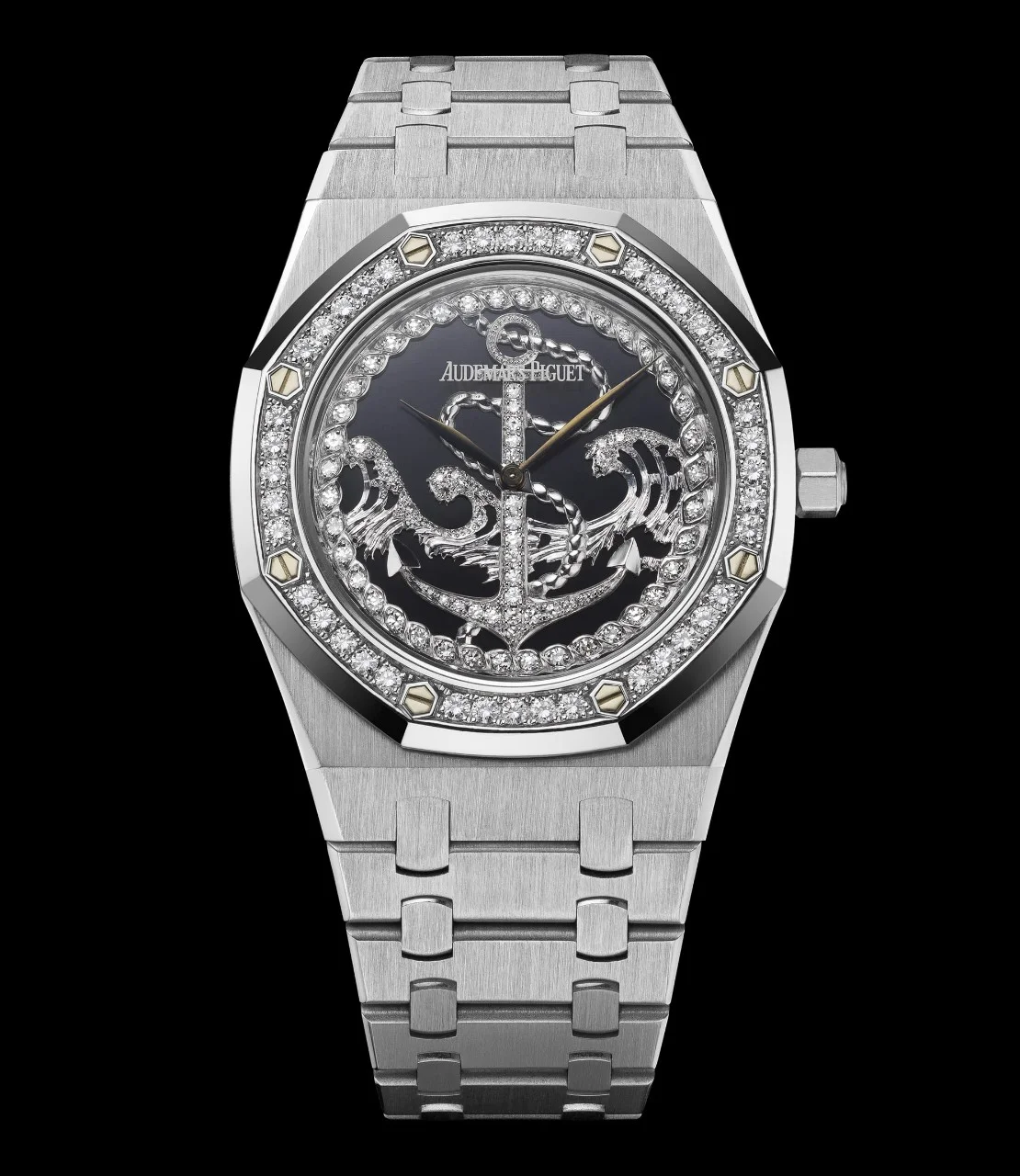
2000. Royal Oak 12518BC. Calibre 2120SQ. Movement 414557. Modelled-engraving dial. Brilliant-cut diamonds. 39 mm case E9922 in 18-carat white gold. Unique piece created for Audemars Piguet's 125th anniversary. Sold in France in December 2000. © Pygmalion collection.
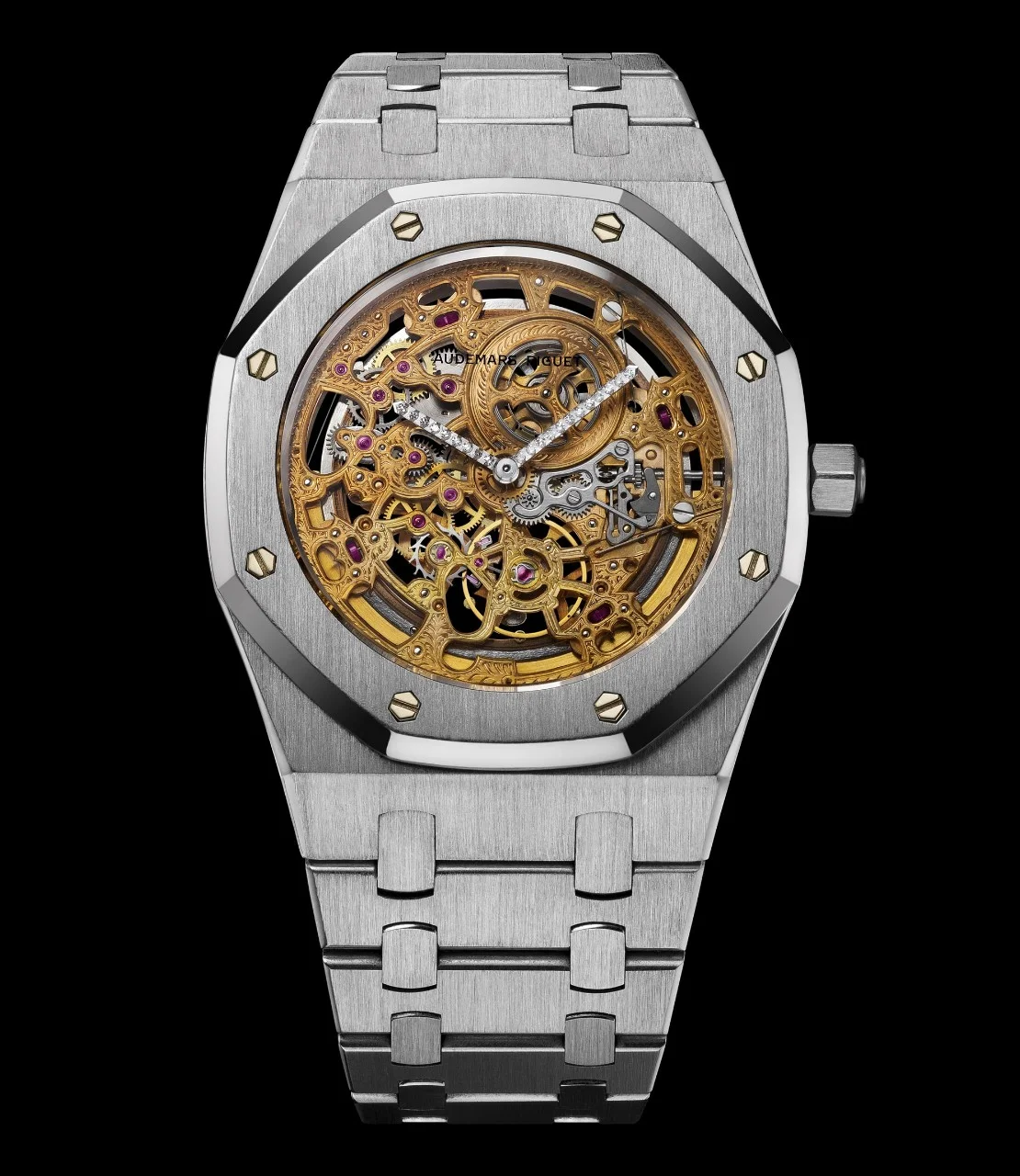
2003 Royal Oak 14789PT (1992). Calibre 2120SQ. Openworked movement 367846 ("ébauche" 1991). Gemset hands. 39 mm case D33029. Platinum. Sold at DHK (Hong Kong) in 2003. © Pygmalion collection.
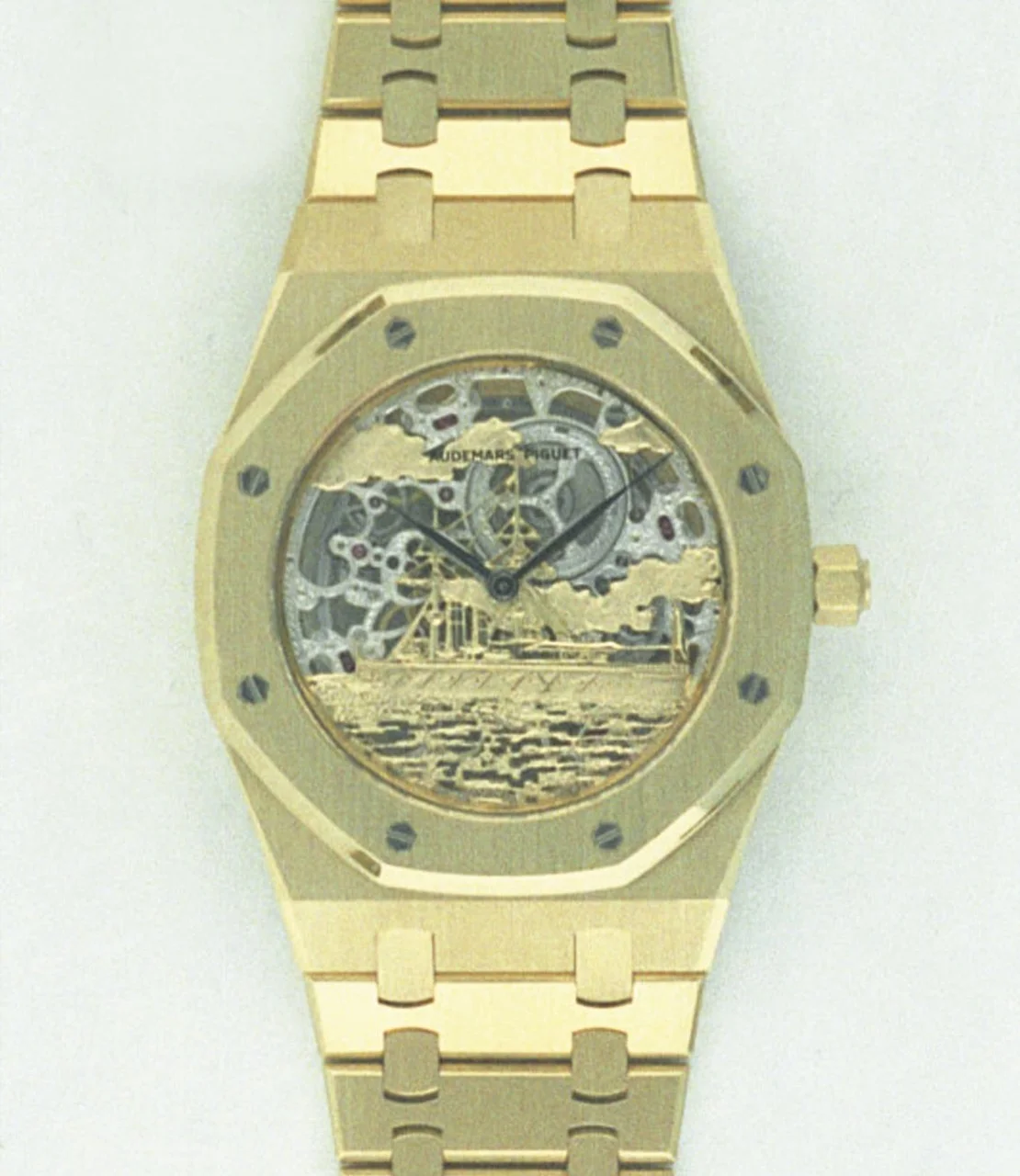
Circa 1992. Royal Oak 14811BA identification photograph. Audemars Piguet Archives.
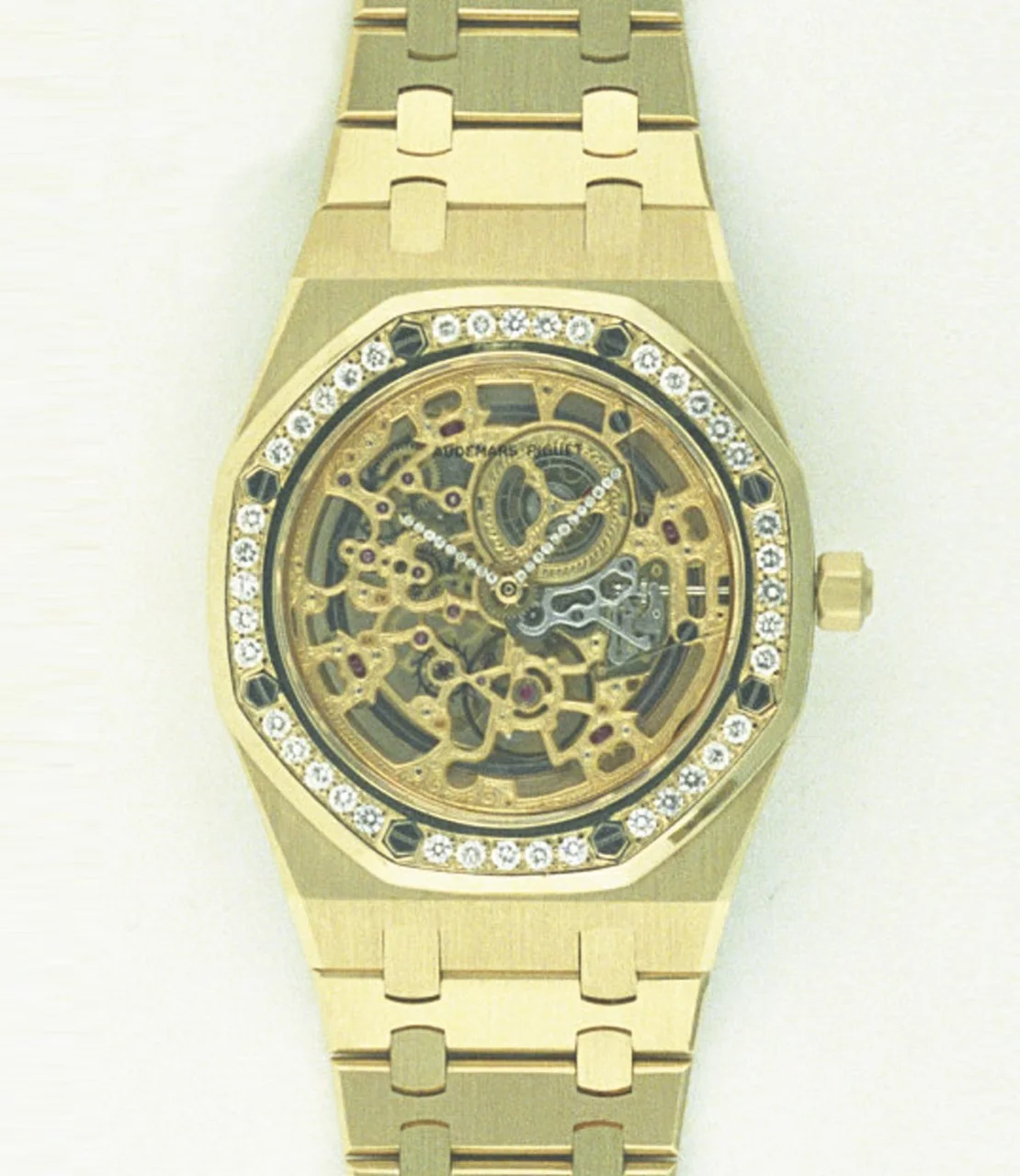
Circa 1992. Royal Oak 14793BA identification photograph. Audemars Piguet Archives.
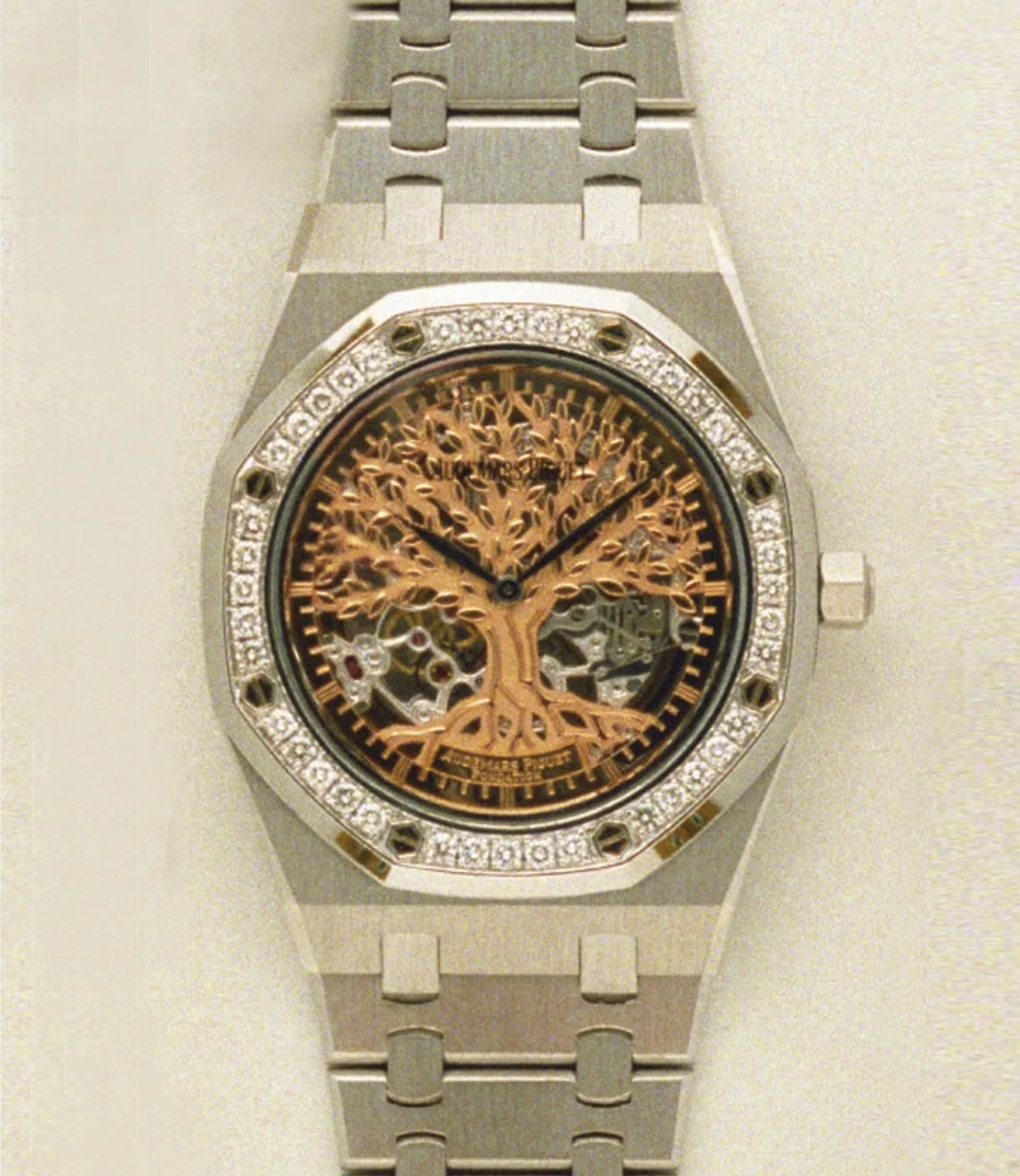
Circa 1997. Royal Oak 15075BC identification photograph. Audemars Piguet Archives.
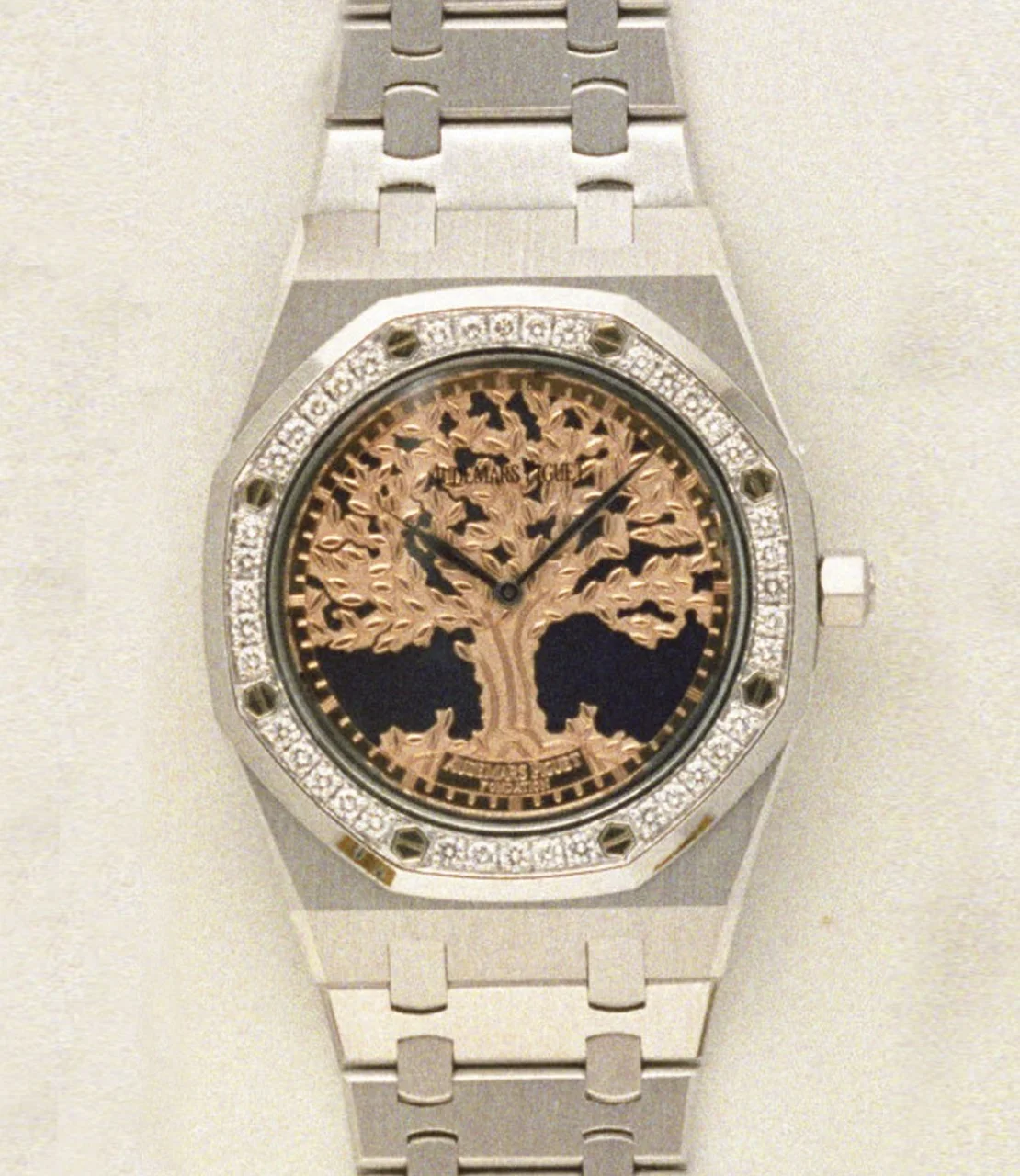
2000. Royal Oak 12530BC identification photograph. Audemars Piguet Archives.
Model 15002
The archives reveal that as early as 1991, technical plans were ready to relaunch a non-limited Royal Oak "Jumbo" in the current collection, with a solid caseback. However, Steve Urquhart and Georges-Henri Meylan, who were co-directors of Audemars Piguet at the time, put the project on hold until the 1,000 examples of Model 14802 were sold out. That took four years, compared with the less than two years required to distribute the first 1,000 Royal Oak 5402 watches 20 years earlier.
In 1996, Audemars Piguet had a stock of 350 Calibre 2121 "ébauches" and the time had come to case them up. Model 15002 was finally launched in 1996. Its production was limited however, as out of the 14,000 watches planned for that year, only 100 were Royal Oak "Jumbo" watches! The following years confirmed these extremely modest proportions. In three years, 174 of these timepieces were produced in steel and 12 in yellow gold.
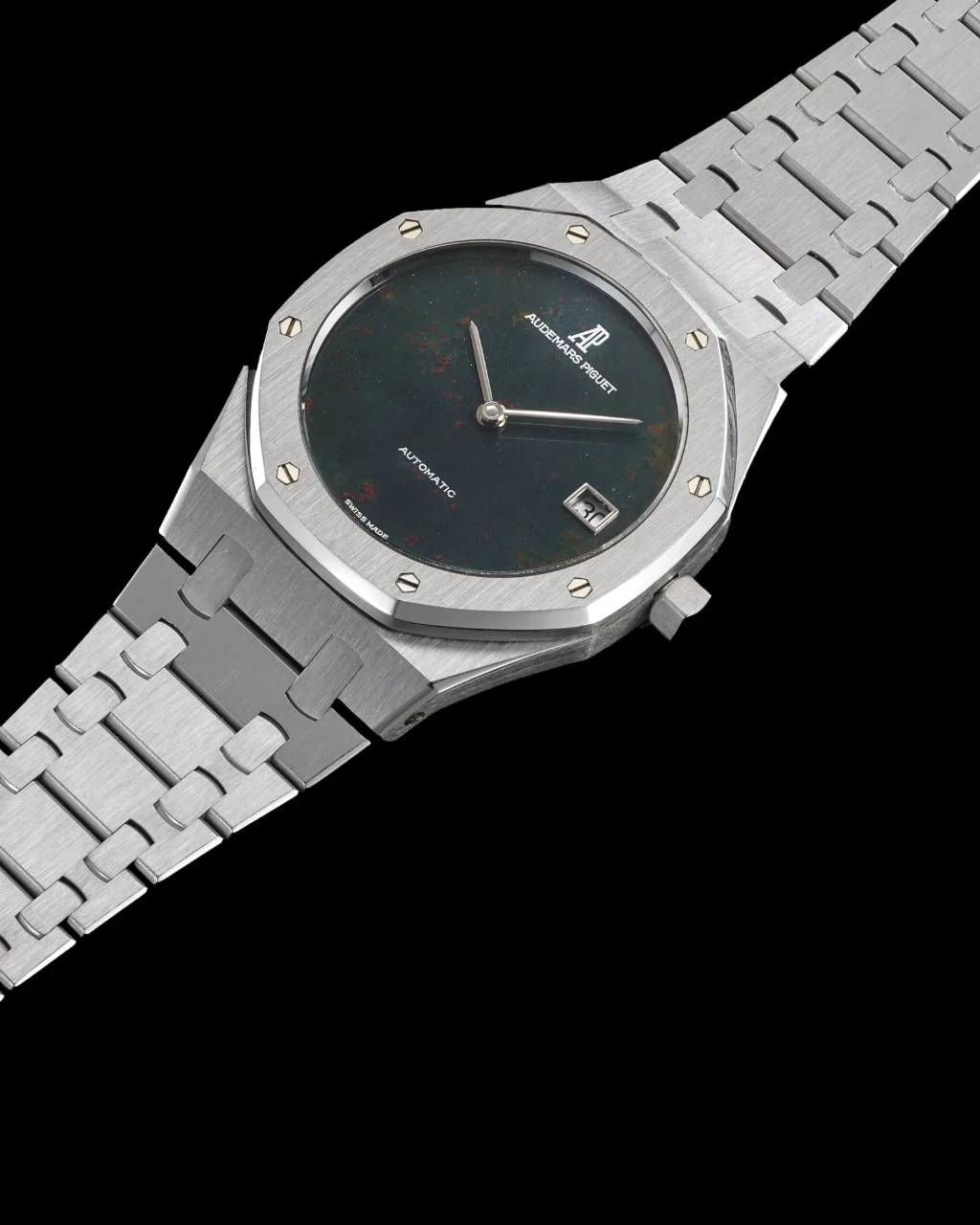
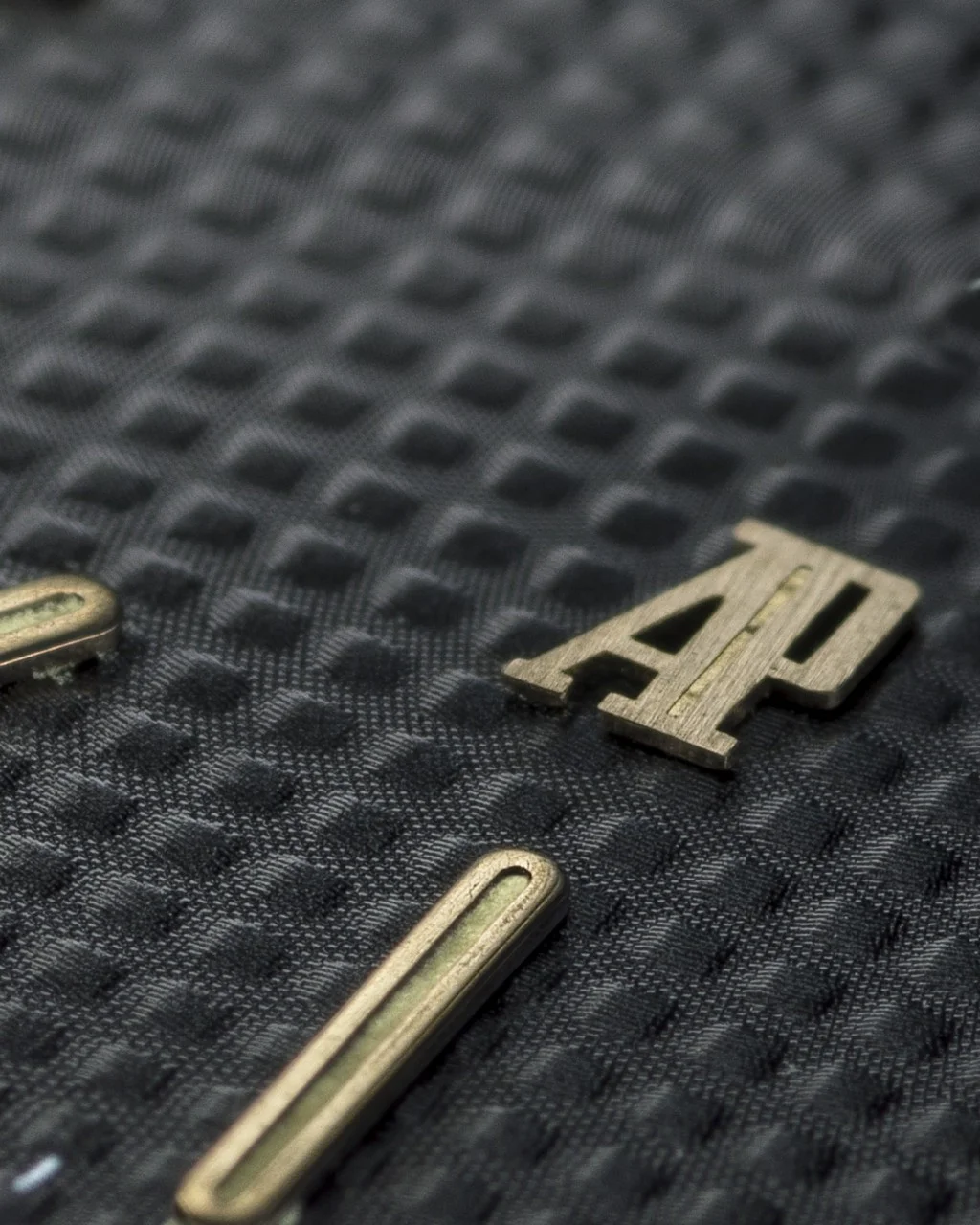
From aesthetic and technical standpoints, Model 15002 was the one most closely resembling the 5402 from 1972 – so much so that many components were interchangeable with the latter. The architecture of the exterior showed little change: a monocoque case with a solid caseback, a Tapisserie dial, a tapered bracelet and an oversized seal. Only the angle of the bevelled bezel was slightly modified to reach 45 degrees, compared with 40 degrees for Models 5402, 14802 and future 15202. It is also worth noting the monogram AP at 12 o’clock and the AUDEMARS PIGUET signature featuring slightly more generous dimensions than in 1972. Although respectable, this utmost fidelity to the origins of the watch had reached its limits. In order to enter the third millennium in due style, the Royal Oak "Jumbo" had to be renewed – and that is exactly what Model 15202 would accomplish.


Birth of the Royal Oak 15202
On June 6, 1999, the Audemars Piguet Product Committee expressed concern that Model 15002 was no longer available. Some suggested that production should be relaunched. Despite the 186 of these watches sold, the stock of 350 Calibre 2121 "ébauches" had not decreased for three years, while the extremely modest orders placed with Jaeger-LeCoultre had sparked rumours that the manufacturer in Le Sentier was going to cease production of this mechanical marvel. To save this precious heritage, Audemars Piguet began examining two avenues. One was a medium-term attempt to internalise this production (see the Calibre 2120 story); and the other a short-term bid to revitalise the Royal Oak "Jumbo", the spearhead model driven by Calibre 2121 since 1972. Two weeks later, the Committee decided to replace the 15002 with a new reference, the Royal Oak 15202 which, in addition to evolving the design of the collection, also heightened its ambitions: 300 of these timepieces were scheduled for production in 2000, 250 of which in steel and 50 in yellow gold.
The Royal Oak 15202 was presented on March 30, 2000 at the SIHH (Salon Internationale de la Haute Horlogerie). It interpreted the original 5402 codes much more freely than the 14802 and 15002. For the first time, the Royal Oak "Jumbo" sported a silver-toned dial, available for both the steel and yellow gold variants. The 15202ST version also remained available in "dark blue" and "cosmos blue". In 2006, a pink gold (OR) variant was added, also with a silver-toned dial. In addition, all these dials featured a guilloché Grande Tapisserie pattern. The monocoque case, whose water-resistance had shifted to 50 m, retained the same proportions, while its sapphire caseback highlighted the mechanism’s beauty.
The Royal Oak 15202 was steadily forging its path. In parallel, a number of "Jumbo" models in limited series were created, including the Royal Oak 15128 in 2003 for Italy; the 15201 edition celebrating the 10th anniversary of the pioneering watch collectors' website "The Purist" in 2011; and the 15205 created for the Hong Kong Hour Glass boutique in 2015.
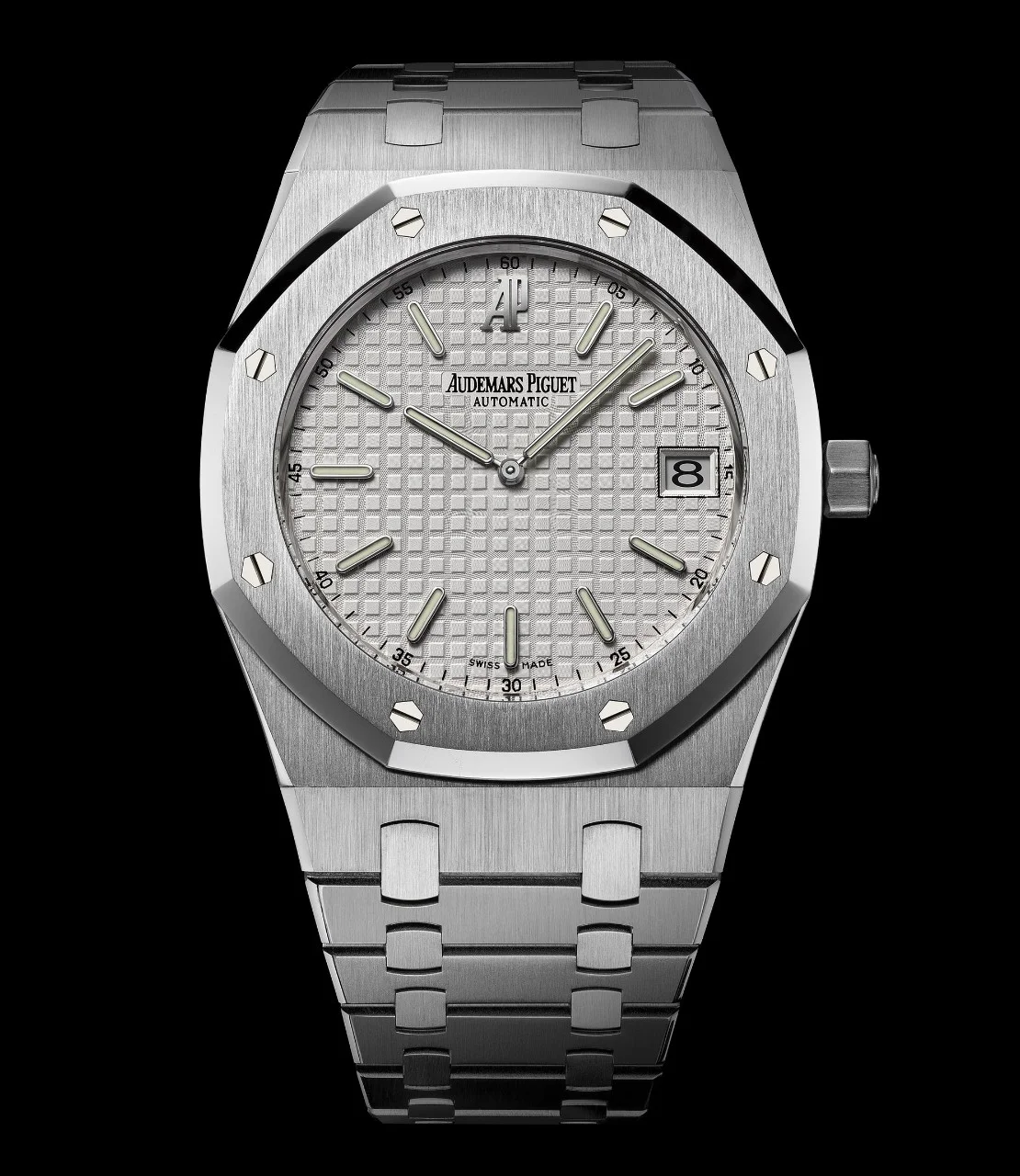
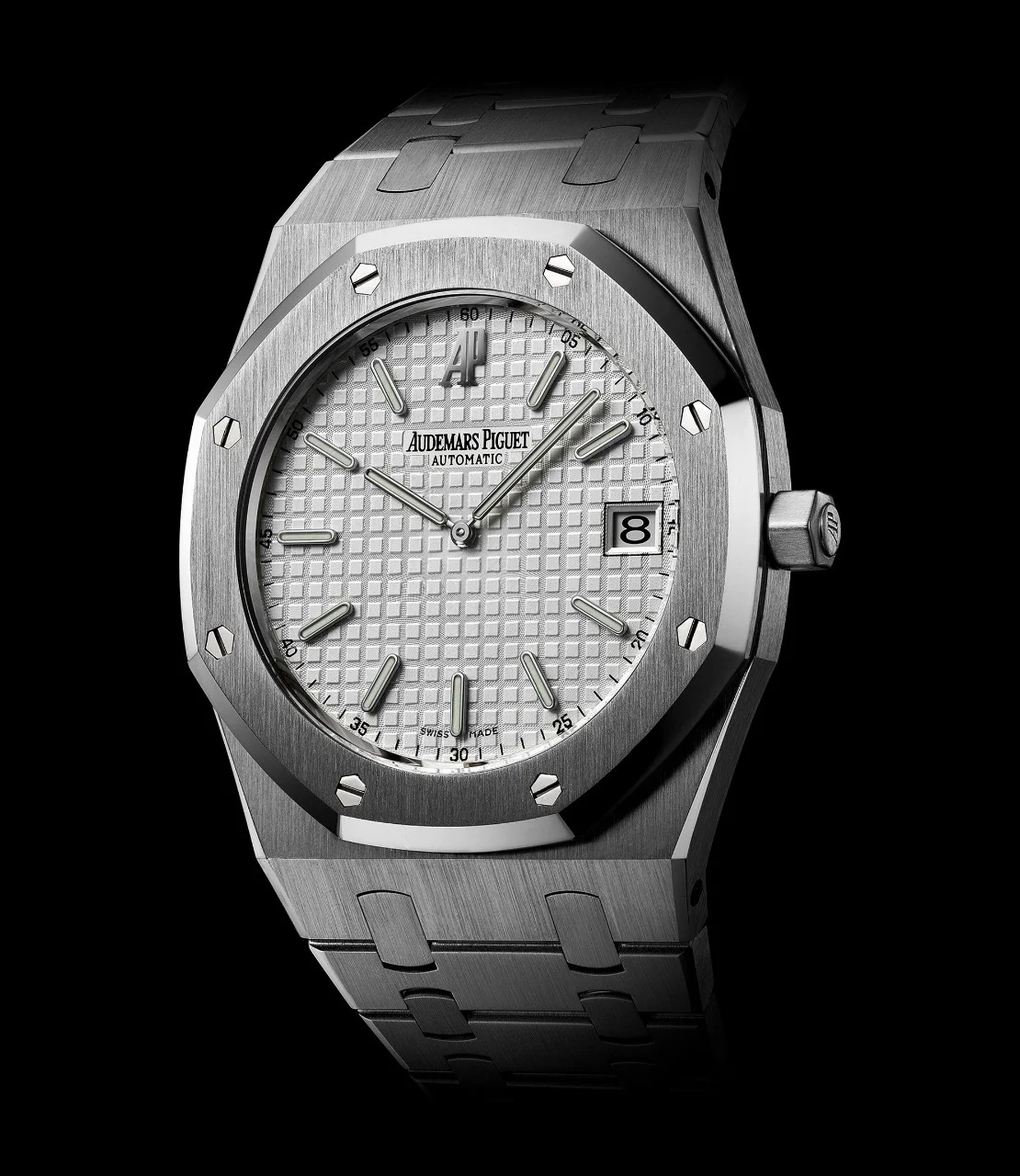
2002. Royal Oak 15202ST (2000), No. 557. Date. Calibre 2121, movement 506507. Bracelet 944. Grande Tapisserie dial. Case E66948, 39mm. Steel. Sold in 2002 to AP Germany. Audemars Piguet Heritage, inv. 738.
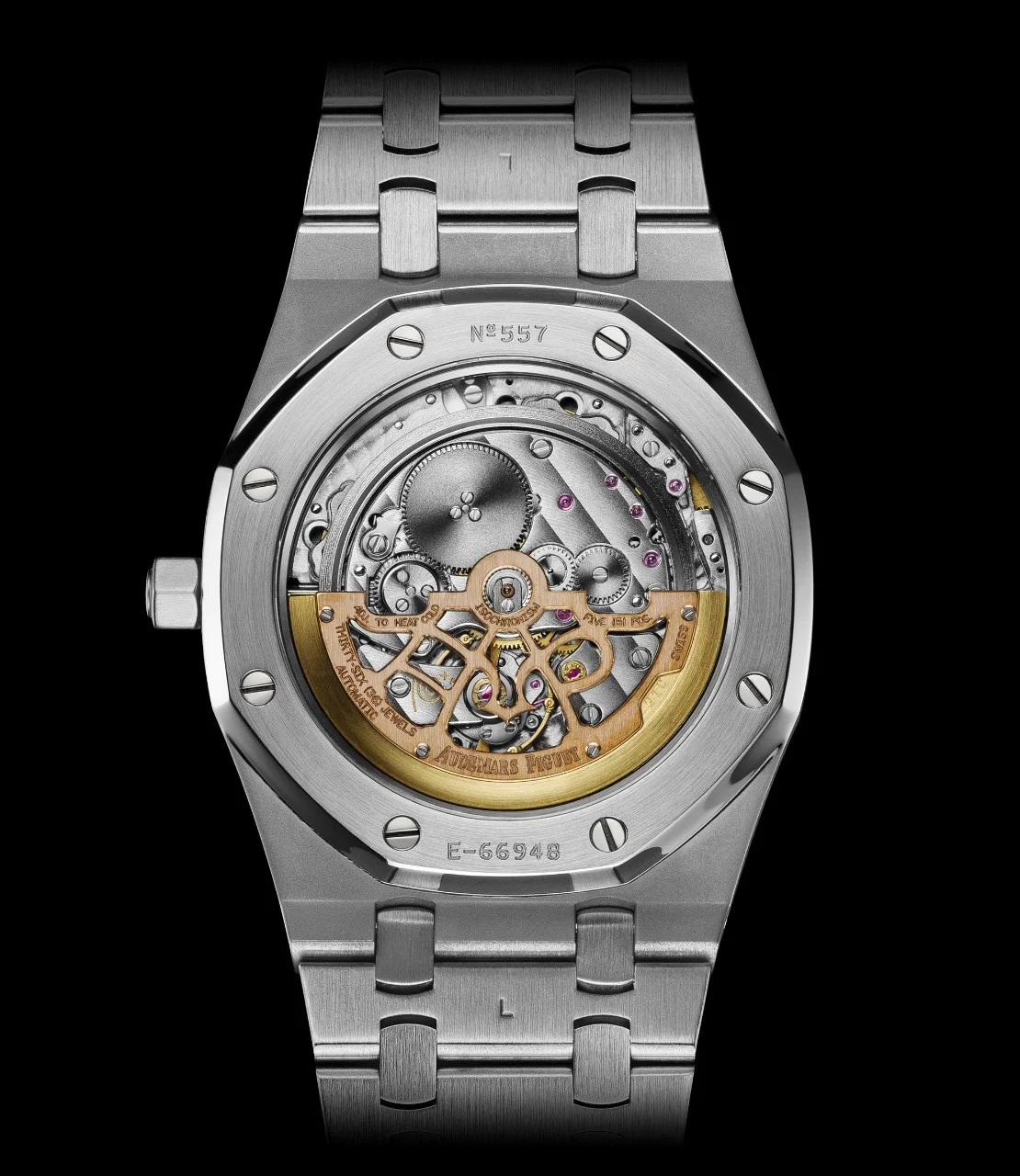
2002. Royal Oak 15202ST (2000), No. 557, caseback view. Date. Calibre 2121, movement 506507. Bracelet 944. Grande Tapisseriedial. Case E66948, 39 mm. Steel. Sold in 2002 to AP Germany. Audemars Piguet Heritage, inv. 738.
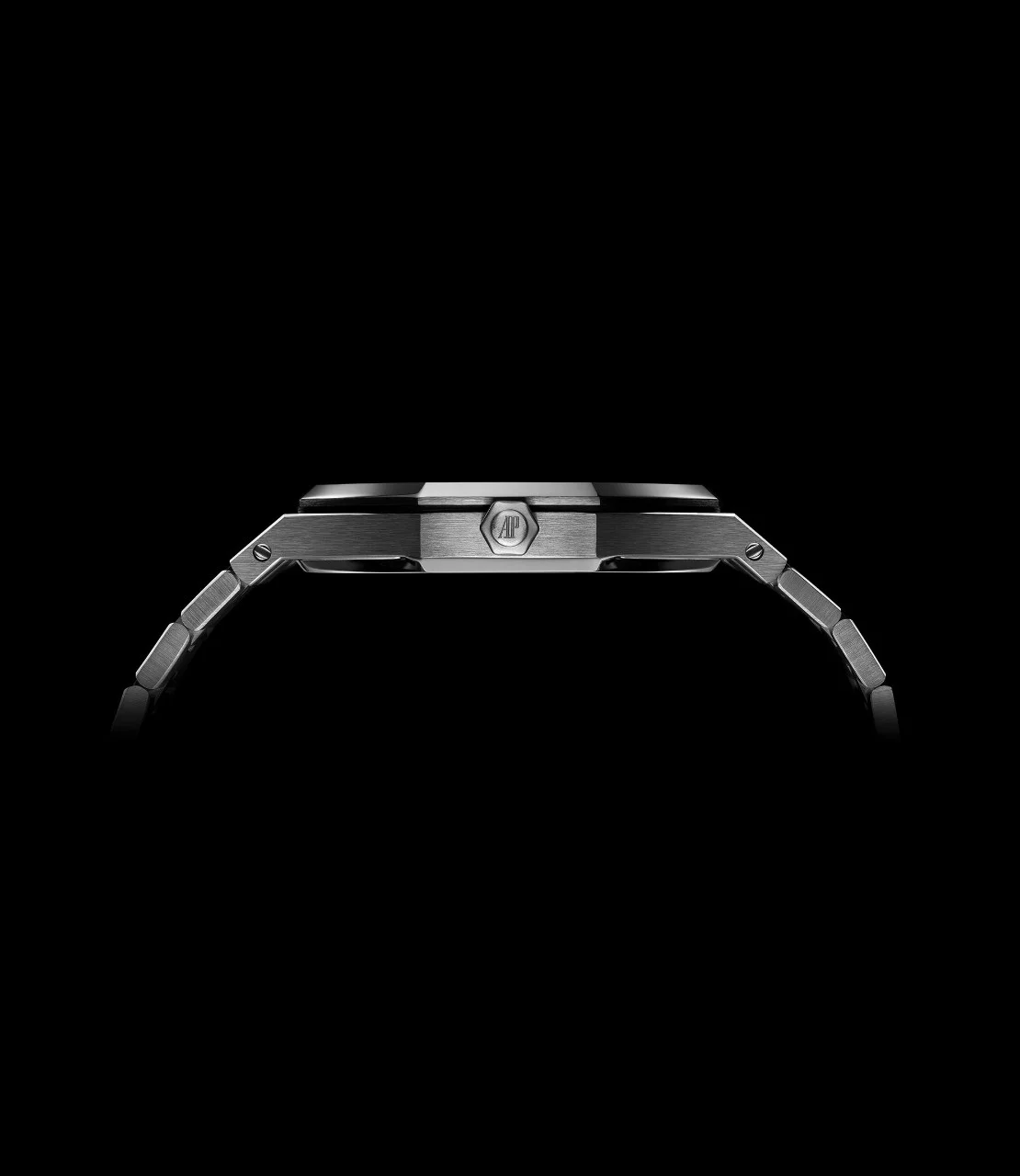
2002. Royal Oak 15202ST (2000), No. 557, side view. Date. Calibre 2121, movement 506507. Bracelet 944. Grande Tapisserie dial. Case E66948, 39 mm. Steel. Sold in 2002 to AP Germany. Audemars Piguet Heritage, inv. 738.
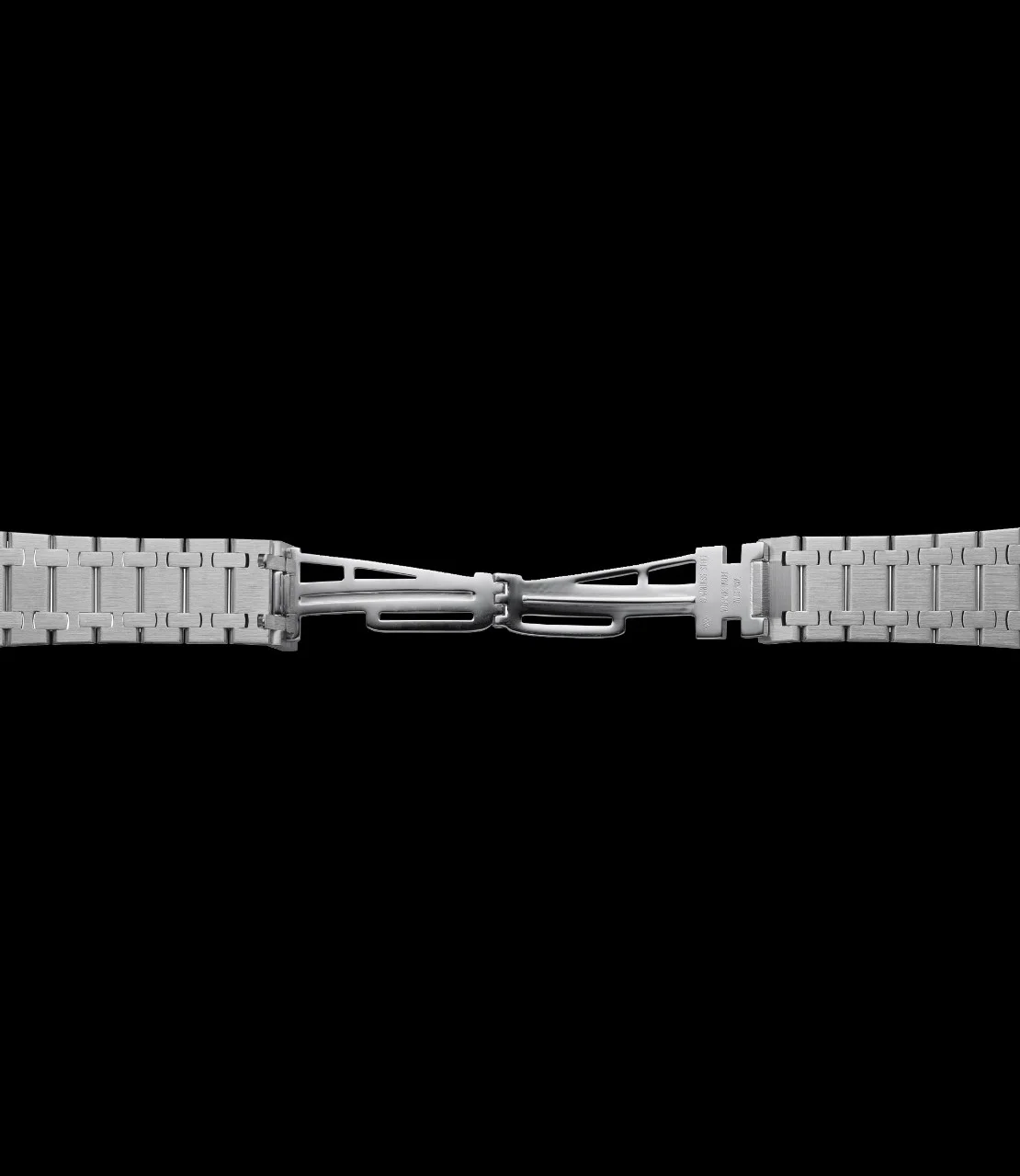
2002. Folding clasp, Royal Oak 15202ST (2000), No. 557. Audemars Piguet Heritage, inv. 738.

2002. Royal Oak 15128ST. Date. Calibre 2121, movement 540880. Bracelet 944. Arabic numerals, anniversary oscillating weight. Case E92947, 39 mm, small number 1133 from the 15202 series, from which the 15128 Model is derived. Steel case. Limited series of 50, made at the request of the Italian market to celebrate the Royal Oak's 30th anniversary. Supplied with an additional khaki green dial. Sold to Fintime (Italy) in September 2003. Audemars Piguet Heritage, inv. 1063.
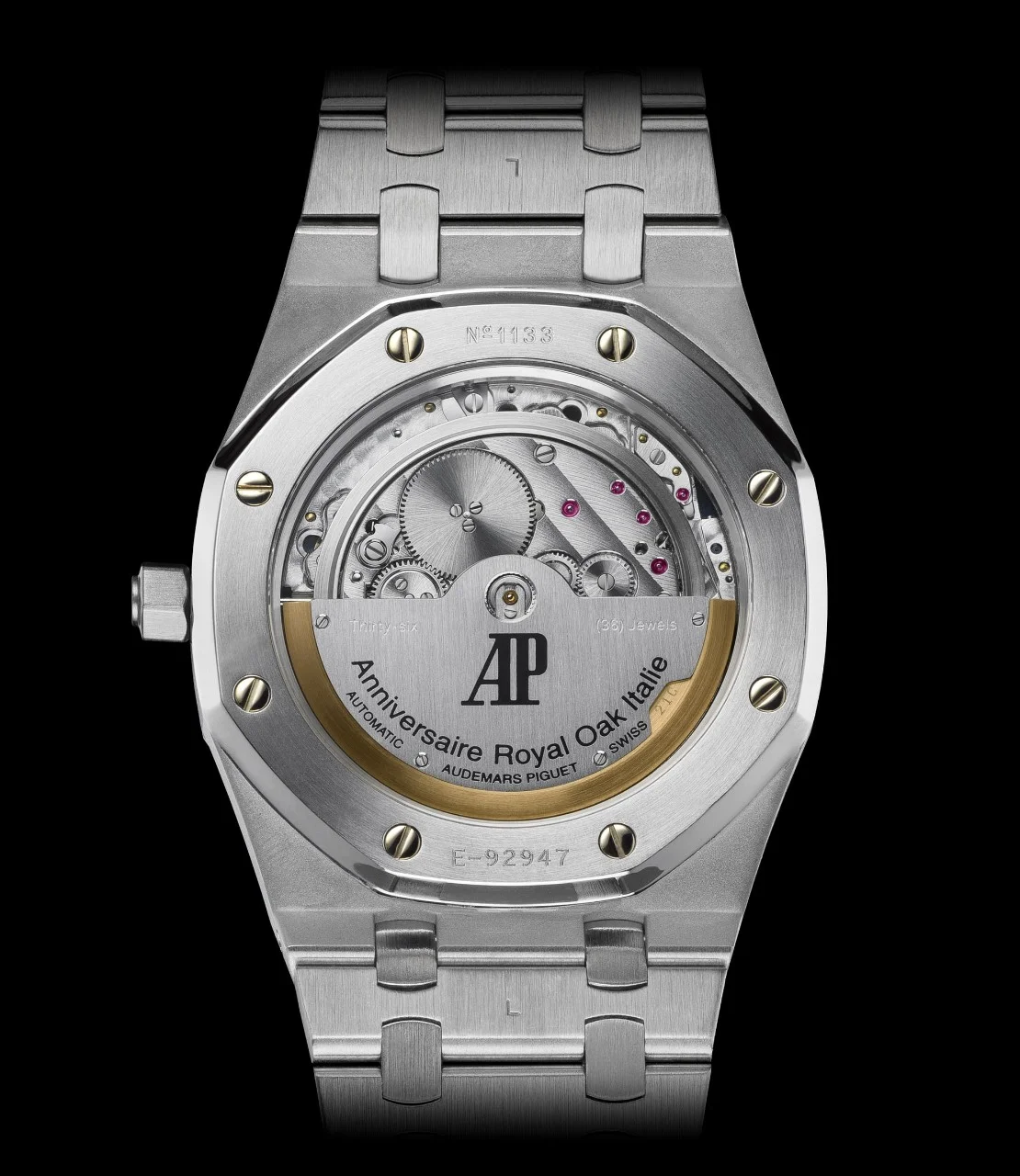
2002. Royal Oak 15128ST, caseback view. Date. Calibre 2121, movement 540880. Bracelet 944. Arabic numerals, anniversary oscillating weight. Case E92947, 39 mm, small number 1133 from the 15202 series, from which the 15128 Model is derived. Steel case. Limited series of 50, made at the request of the Italian market to celebrate the Royal Oak's 30th anniversary. Supplied with an additional khaki green dial. Sold to Fintime (Italy) in September 2003. Audemars Piguet Heritage, inv. 1063.
Unprecedented Success
From the Royal Oak’s 40th anniversary in 2012 onwards, Model 15202 set the watchmaking world on fire. An anniversary book by Martin K. Wehrli and Heinz Heimann was published and a major retrospective exhibition toured the world.
But above all, the 15202OR (pink gold) and ST (stainless steel) were equipped with dials faithful to the 1972 series A, with the AP monogram at 6 o'clock, Petite Tapisserie motif and Bleu Nuit, Nuage 50 colour. A modernised openworked variant was introduced, with pure lines and blackened bridges: Model 15203 initially issued in a 40-piece platinum limited edition, followed by a pink gold iteration. The yellow gold Royal Oak 15202 disappeared temporarily – to return in 2017 with blue and gold-toned Petite Tapisserie dials. In 2014, the 15202 Grande Tapisserie variants disappeared from the catalogue. More importantly, the 15202 became the only 39 mm model in the collection (along with its derivative 15205), as the Royal Oak 15300 (39 mm, Calibre 3120) was replaced by the 15400 (41 mm) in 2012 and the Royal Oak Perpetual Calendars also shifted up to 41 mm in 2015 (Calibre 5134).
After several decades of discretion, the Royal Oak "Jumbo" enjoyed renewed popularity by combining tradition and modernity. Demand rocketed. In response, workshops grew and watchmakers were trained in the secrets of ultra-thin Calibre 2121, which had been made in-house since the 2000s. Efforts were focused on increasing production. Having started with an annual production of a few dozen, Audemars Piguet managed to deliver more than 1,000 of these timepieces from the mid-2010s. At the same time, the market for old Royal Oak "Jumbo" watches was growing rapidly and enthusiasm was the order of the day.
2018 marked the revival of bimetallic variants, which had been absent since the 1970s. This time, titanium was combined with platinum in the Royal Oak 15202IP, featuring a gradient-effect smoked blue dial. Three years later, in 2021, platinum made a comeback (after the 20 examples of Model 14802) in a variant with a smooth smoked green sunburst dial. It was in April of that same year that François-Henry Bennahmias – at the helm of Audemars Piguet since 2012 – made headlines by announcing the end of Model 15202. A very last version was created for the Only Watch charity auction, with a case in beadblasted titanium and a polished bezel in metallic glass – a palladium-based alloy representing a first for AP. On November 6th, 2021, this Royal Oak "Jumbo" was sold for CHF 3 100 000.-.


2012. Royal Oak 15203PT 3/4. Prototype P795 presented in 2012 at the SIHH (Salon International de la Haute Horlogerie) in Geneva. Date. Calibre 5122. Openworked and blackened, movement 822289. Case P00795, 39 mm. Limited edition of 40 in platinum. Anniversary oscillating weight. Audemars Piguet Heritage, inv. 1336.

2017. Three Royal Oak 15202 watches Date. Calibre 2121. Blue and gold-toned Petite Tapisserie dials, AP monogram at 6 o'clock. Models presented to mark the 40th anniversary of the introduction of gold in the Royal Oak collection. Steel and 18-carat yellow gold. Picture taken at the SIHH (Salon International de la Haute Horlogerie, Geneva) in 2017. Audemars Piguet Archives.

2015. Royal Oak 15205BA. Date. Calibre 2121. Green dial. Special oscillating weight shaped like an hourglass. 39 mm case. Limited edition of 50 in yellow gold made for the Singapore retailer The Hour Glass. Picture taken at the launch of the watch. Audemars Piguet Archives.

2018. Royal Oak 15202IP. Date. Calibre 2121. Smoked dial. 39 mm case. First Royal Oak ""Jumbo"" combining platinum and titanium. Image taken at the launch of the watch. Audemars Piguet Archives.

2021. Royal Oak 15202PT. Date. Calibre 2121. Smooth smoked green sunburst dial. One of the very rare non-limited platinum Royal Oak ""Jumbo"" models. 39 mm case. Picture taken at the launch of the watch. Audemars Piguet Archives.

2021. Royal Oak 15202XT. One-of-a-kind model, the first to combine sandblasted titanium and bulk metallic glass (BMG), a new and particularly resistant material. Date. Calibre 2121. 39 mm case. Watch gifted to and auctioned at the Only Watch 2021 charity auction. Picture taken during the presentation of the watch. Audemars Piguet Archives.
Model 16202
To celebrate the 50th anniversary of its icon, Audemars Piguet is introducing seven new calibres into the collection and evolving the aesthetics of many models. All 72 references in production are fitted with a "50 years" oscillating weight! The collection is also witnessing the replacement of Model 15202 by a new Royal Oak "Jumbo" reference.
Model 16202 complies with the original 5402 aesthetic codes to the letter. The major change is to be found inside, where Calibre 7121 replaces the legendary 2121. A little larger than its predecessor (29.6 mm rather than 28 mm in diameter), its 3.2mm thickness remains faithful to the original. Developed and produced by Audemars Piguet engineers and watchmakers, its performance benefits from the latest technical advances. Its barrel, for example, stores nearly three times more energy within the same volume. This makes it possible to increase the frequency of the balance (28,800 vph compared with 19,800 vph), which improves reliability and precision, while increasing its power reserve (55 hours as against 40 hours). In addition, a fast date-setting system has been introduced.
In 2022, Model 16202 comes in four steel, pink gold, yellow gold and platinum variants. While the stainless steel version hews as closely as possible to the original design codes with its Petite Tapisserie in Bleu Nuit, Nuage 50 shade, the pink and yellow gold versions respectively adorn a smoked Petite Tapisserie in grey or yellow gold-toned hues. For its part, the platinum version presents a deep smoked green sunburst dial evoking the colour of the spruce trees in the Vallée de Joux.
In addition, two versions in steel and pink gold (Models 16204) are equipped with an entirely new openworked mechanism measuring a mere 2.7 mm in thickness, Calibre 7124, with no date indication. Some collectors have adopted the term “Jumbo” to describe all ultra-thin 39 mm Royal Oak watches. This includes the perpetual calendar variants, equipped with Calibres 2120/2800, created between 1984 and 2015. From 2022 onwards, they can add the 26670 selfwinding flying tourbillon model, whose revolutionary Calibre 2968 architecture is just 3.4 mm thick!

The “Jumbo” showcase at the Musée Atelier Audemars Piguet
Since June 2020, a full showcase pays tribute to the Royal Oak “Jumbo” at the Musée Atelier Audemars Piguet in Le Brassus, with nine variations displayed. These timepieces narrate 50 years of history and radiate around one example of Model 5402, A26 series.
Editorial board: Audemars Piguet Heritage team, Le Brassus
First publication: 24 January 2022