Calibre 2124

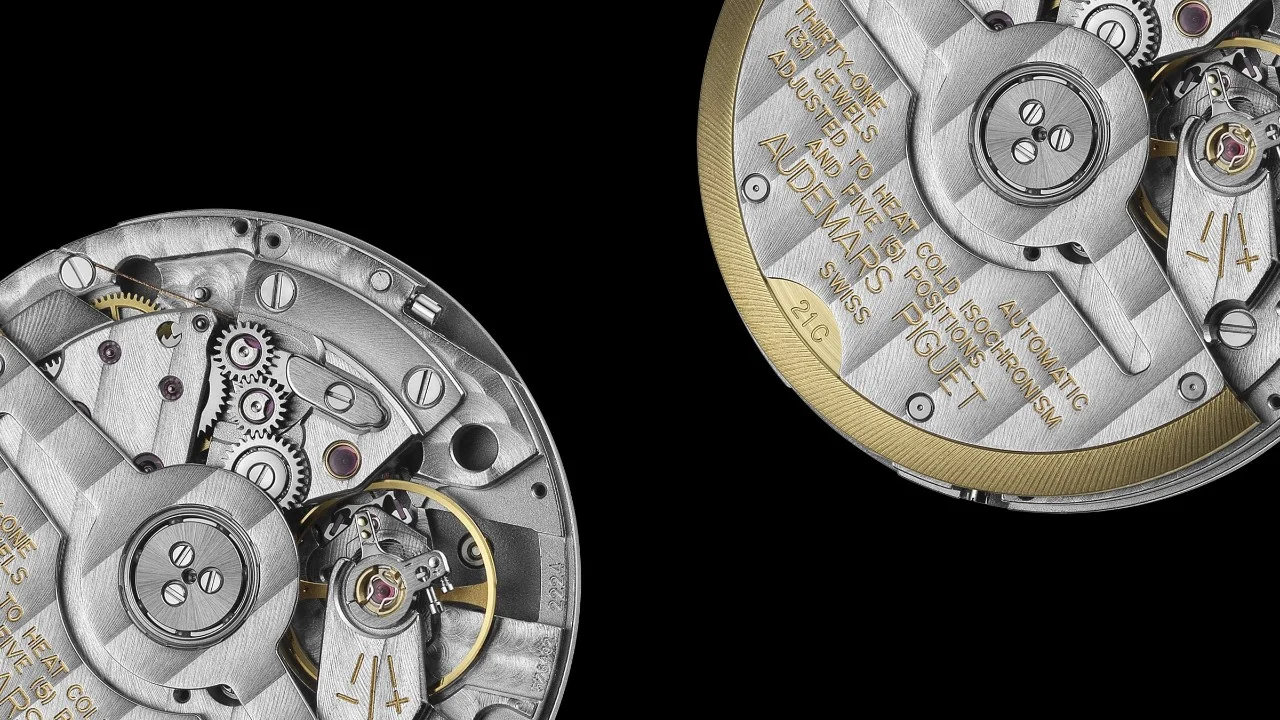
1999. Calibre 2224 from the bridge side. 26 mm in diameter (11½ lignes), 3.25 mm thick. Hours, minutes, date, selfwinding. 28,800 vph. Movement 576492 made in 2015. Bridge side aesthetic identical to that of its predecessor Calibre 2124 (as of 1983, 21,600 vph) and its successor Calibre 2324 (as of 2004).

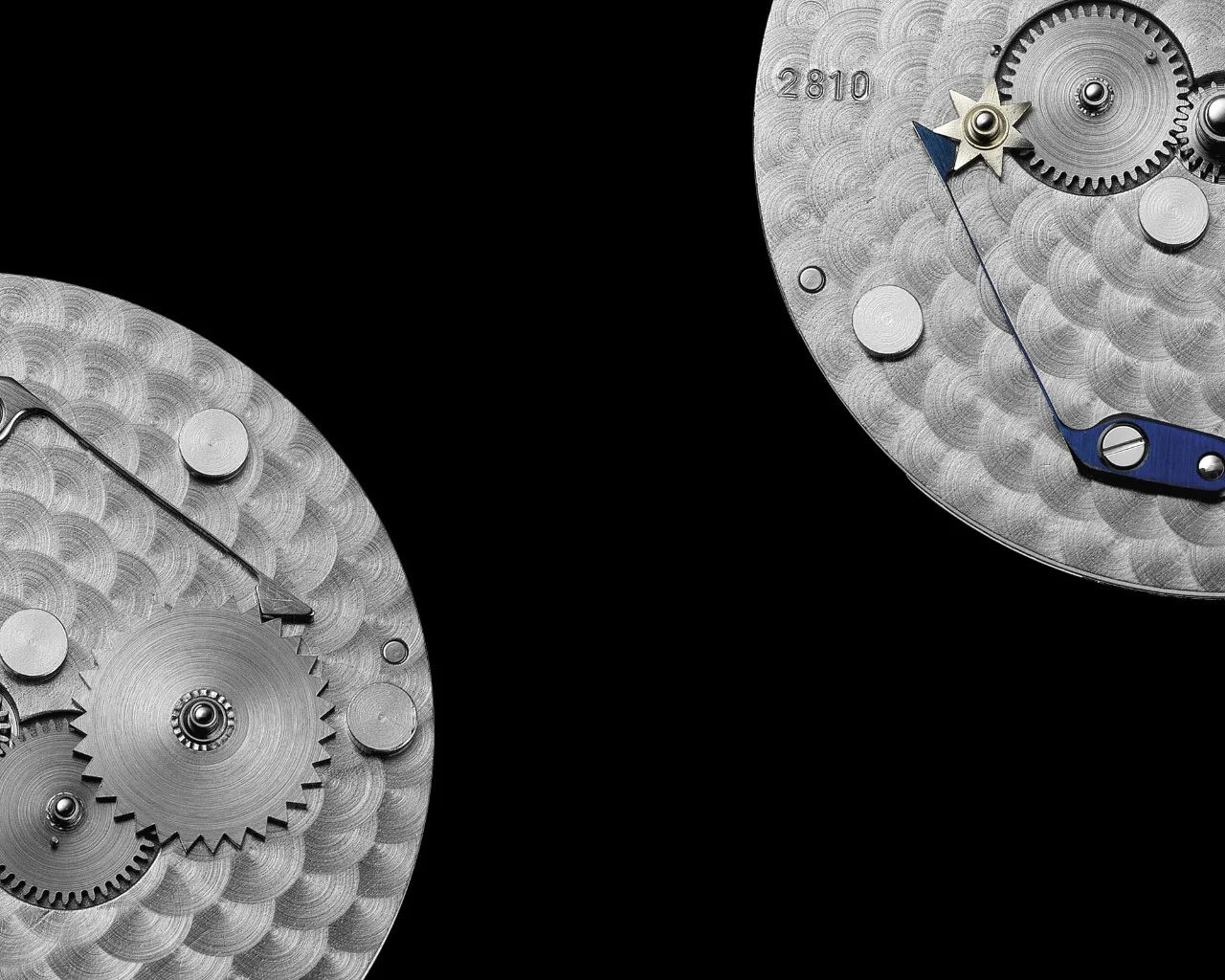
1987. Calibre 2125 from the dial side. 26 mm in diameter (11½ lignes). Hours, minutes, date, selfwinding. Movement 368995 made in 1991. Dial-side aesthetic identical to Calibres 2124 (1983), 2225 (1997), 2224 (1999) and 2325 (2005).

Circa 1990. Calibre 2124. Technical data. Audemars Piguet Archives.

2000–2001. Calibres 2124 and 2224. The only difference between Calibres 2124 (1983) and 2224 (1999) lies in the frequency of the balance. 2000–2001 catalogue. Audemars Piguet Archives.

March 1997. Technical information intended for watchmaker-repairers. The document sums up the transition from the second to the third generation of selfwinding 11 ½-ligne calibre that had taken place the previous year. Audemars Piguet Archives.
Mechanism
Selfwinding, 21-carat gold rotor
Functions
Hours, minutes, date (fast adjustment)
Diameter
26 mm (11½ lignes)
Thickness
3.25 mm
Frequency
21,600 vph (3 Hz)
Power Reserve
approx. 50 h
Jewels
32 (some examples with 33 and 35 jewels)
Dates
Movement "ébauche" production from 1983 to 1996
Movement Blank
LeCoultre & Cie
Calibre 2124 belongs to the 11½-ligne family. It was introduced in 1983 to replace Calibre 2123, whose performance it improved, while renouncing high frequency.
It plays the role of a base calibre, which means that it is designed to operate alone, but also to accommodate additional mechanisms, called "modules" or “cadratures” in watchmaking parlance.
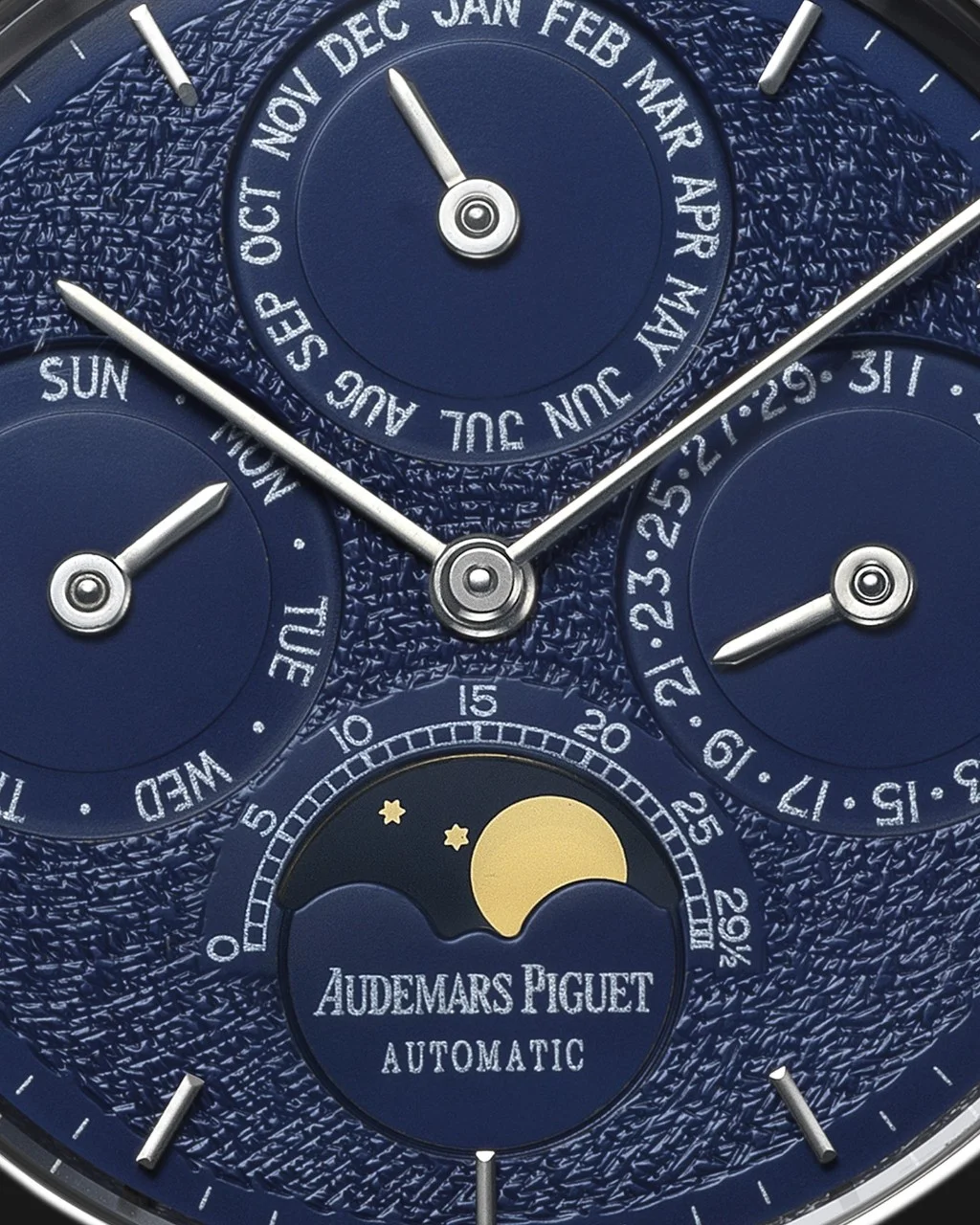
Thus, in the very year of its birth, Calibre 2124 was fitted in models with the 2810 dial (pointer-type day and date display), which was used on the so-called “Owl” Royal Oak Day Date models 5572, 5581, 5584, 25577 (1985) and 26330 (2009). From 1984 onwards, Calibre 2124 was complemented by the 2825 cadrature (day, pointer-type date and moon phase) which equipped the Royal Oak Day Date Moon Phase models 25594 and 25595 in 1984, then 25627 in 1985 and finally 25658 in 1987.
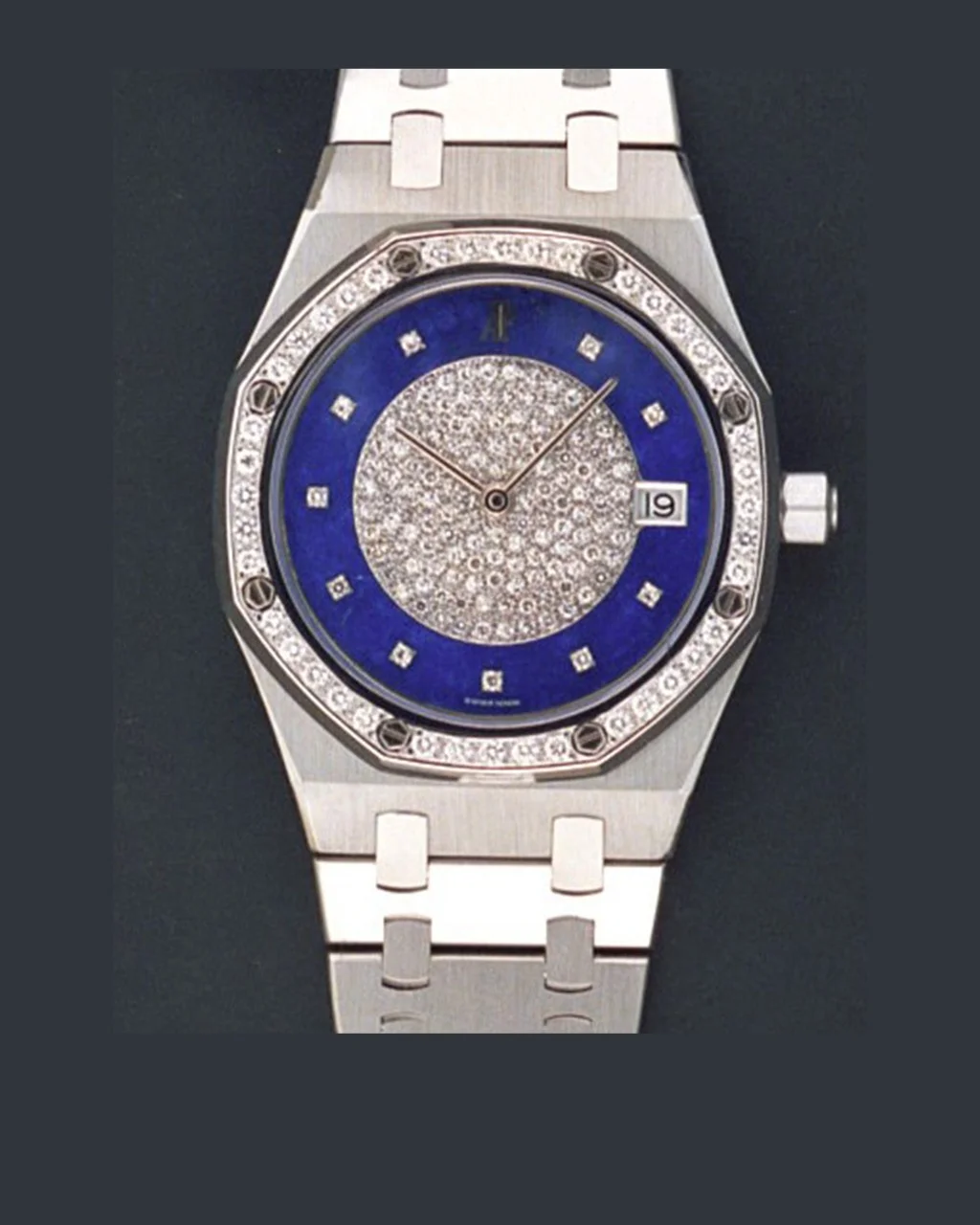
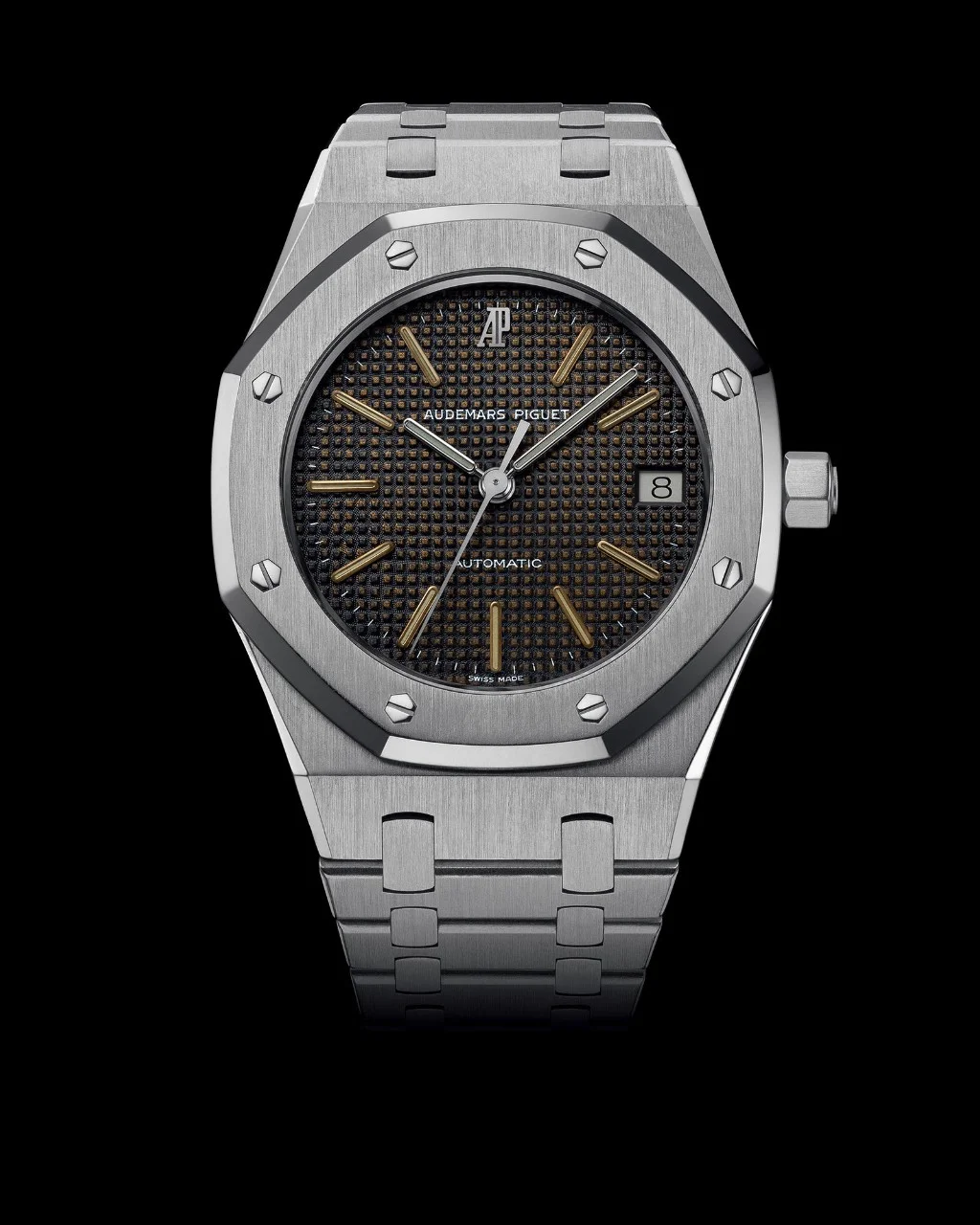
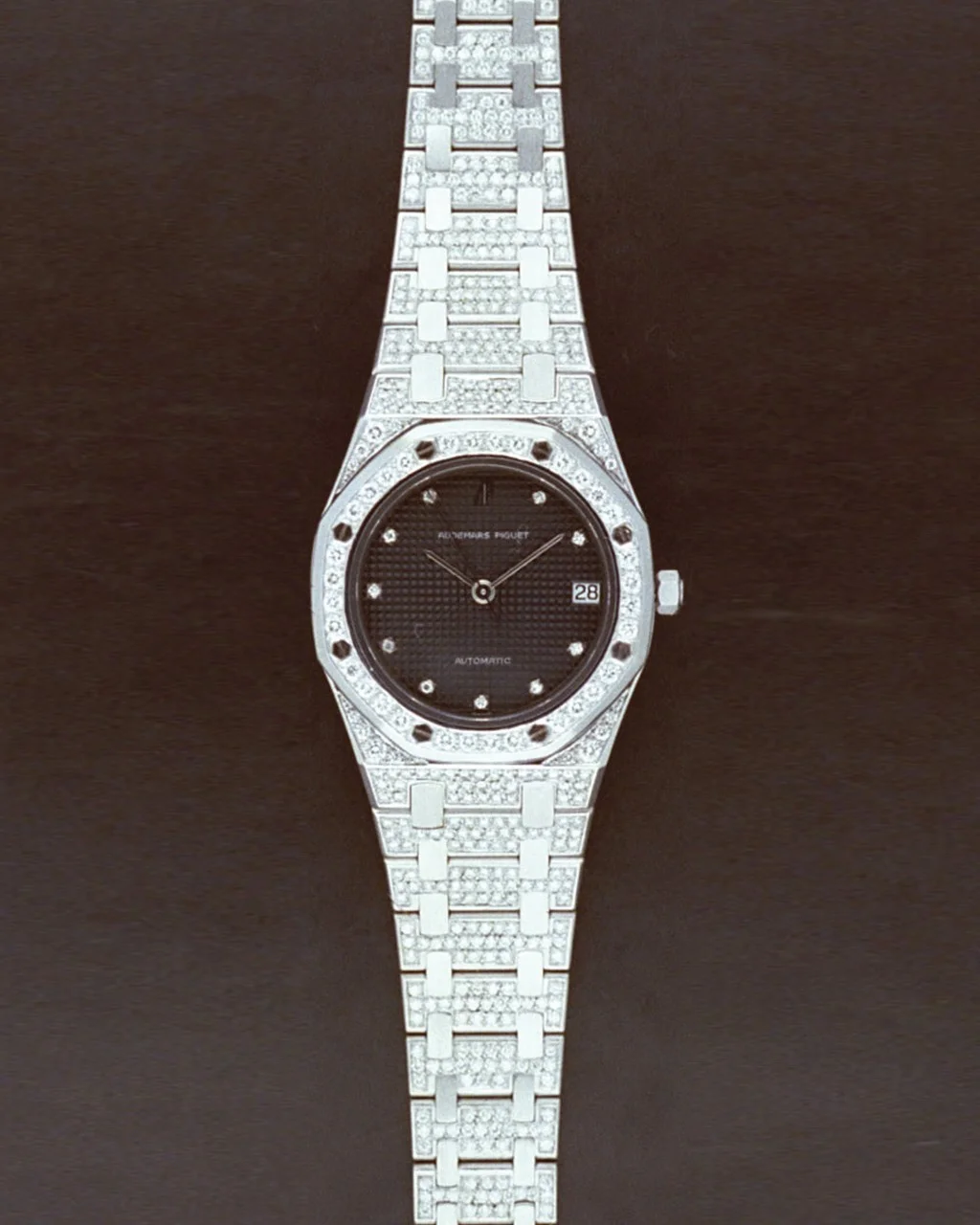
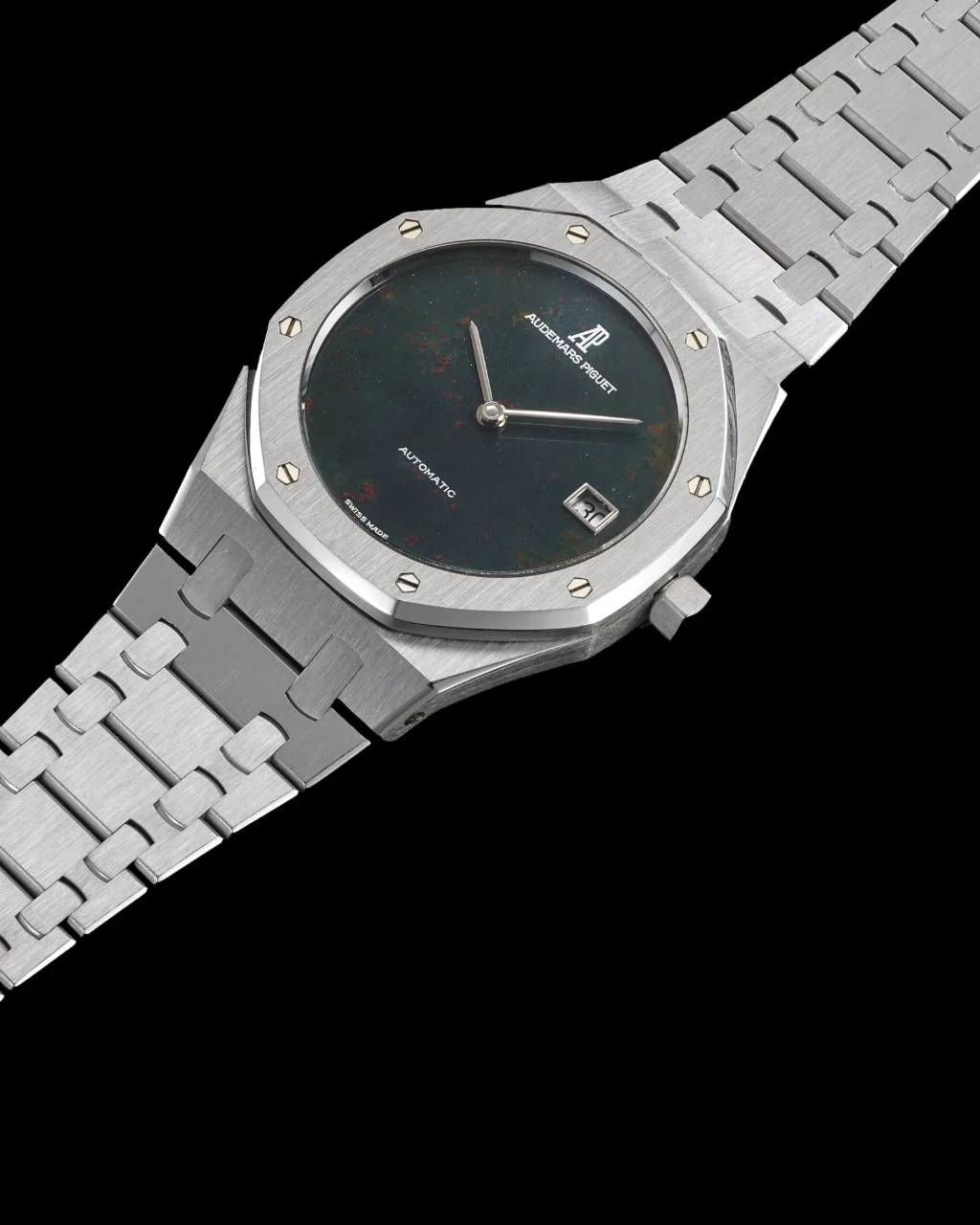
Some Royal Oak models were equipped with Calibre 2124 without an additional cadrature, in particular the Royal Oak 4332 (from 1983), 4100 (25 pieces in 1984–87), 14702 (1991), 14701 (1992) and 14705 (1992).
Its most direct derived version is Calibre 2125 (1987–1997), which is not designed to accommodate an additional mechanism but features indirect centre seconds. Its successor is Calibre 2224, which features a high frequency of 28,800 vph (1999–2004 and which notably housed the Starwheel 2811 cadratures), then Calibre 2324 (from 2005 onwards).
Between 1983 and 1996, Audemars Piguet acquired 14,650 2124 movement "ébauches", including: 2,440 (1983), 3,310 (1984), 1,900 (1985), 500 (1986), 700 (1987), 600 (1988), 700 (1989), 300 (1990), 600 (1991), 1,900 (1992), 1,000 (1993), 400 (1994) and 300 (1996).
6,866 examples of Calibre 2124 were fitted in 16 Royal Oak models between 1983 and 1999.
Calibre 2124 belongs to the 11½-ligne family. It was introduced in 1983 to replace Calibre 2123, whose performance it improved, while renouncing high frequency.
It plays the role of a base calibre, which means that it is designed to operate alone, but also to accommodate additional mechanisms, called "modules" or “cadratures” in watchmaking parlance.
Thus, in the very year of its birth, Calibre 2124 was fitted in models with the 2810 dial (pointer-type day and date display), which was used on the so-called “Owl” Royal Oak Day Date models 5572, 5581, 5584, 25577 (1985) and 26330 (2009). From 1984 onwards, Calibre 2124 was complemented by the 2825 cadrature (day, pointer-type date and moon phase) which equipped the Royal Oak Day Date Moon Phase models 25594 and 25595 in 1984, then 25627 in 1985 and finally 25658 in 1987.
Some Royal Oak models were equipped with Calibre 2124 without an additional cadrature, in particular the Royal Oak 4332 (from 1983), 4100 (25 pieces in 1984–87), 14702 (1991), 14701 (1992) and 14705 (1992).
Its most direct derived version is Calibre 2125 (1987–1997), which is not designed to accommodate an additional mechanism but features indirect centre seconds. Its successor is Calibre 2224, which features a high frequency of 28,800 vph (1999–2004 and which notably housed the Starwheel 2811 cadratures), then Calibre 2324 (from 2005 onwards).
Between 1983 and 1996, Audemars Piguet acquired 14,650 2124 movement "ébauches", including: 2,440 (1983), 3,310 (1984), 1,900 (1985), 500 (1986), 700 (1987), 600 (1988), 700 (1989), 300 (1990), 600 (1991), 1,900 (1992), 1,000 (1993), 400 (1994) and 300 (1996).
6,866 examples of Calibre 2124 were fitted in 16 Royal Oak models between 1983 and 1999.