4332, First Royal Oak 36mm
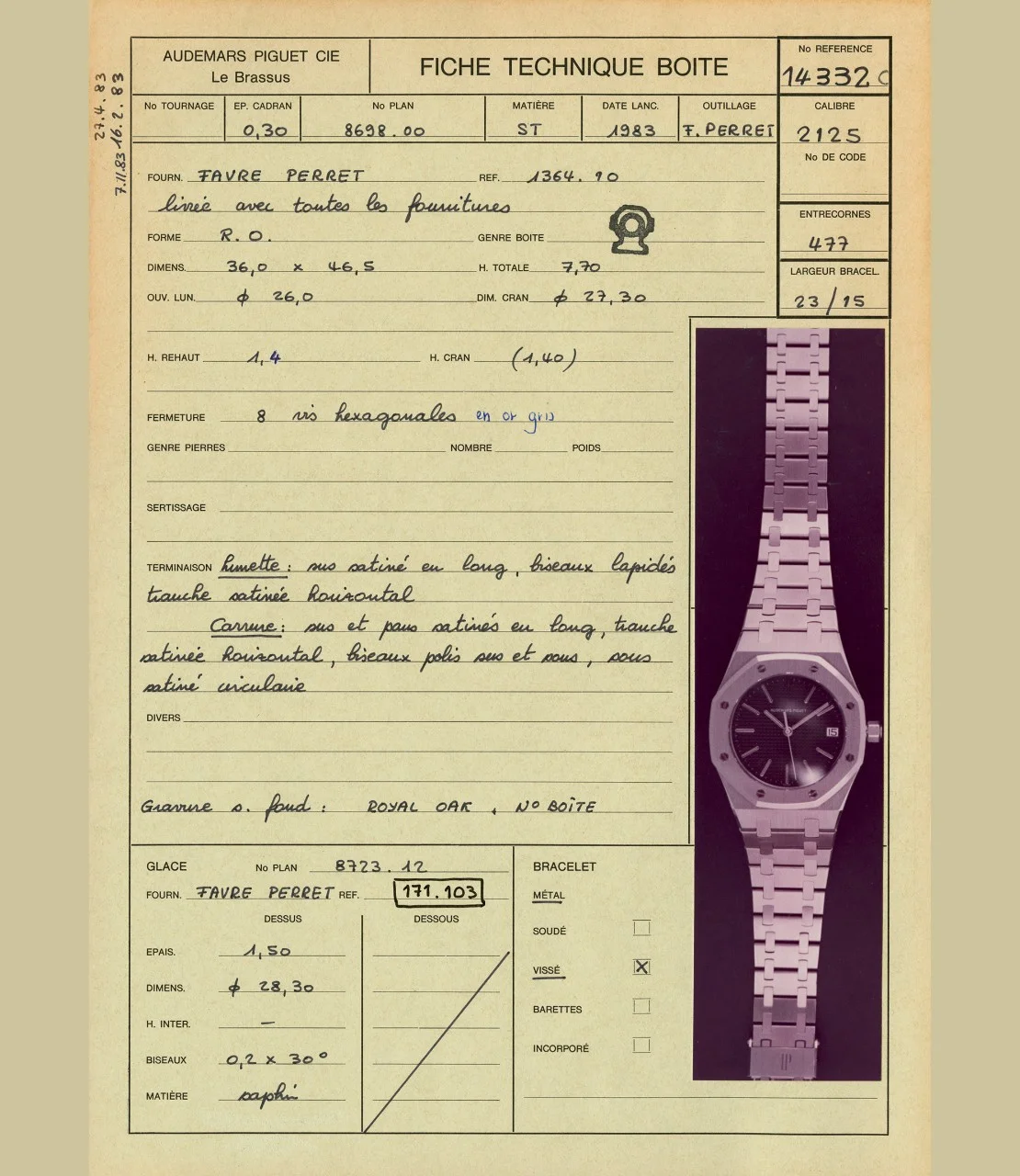
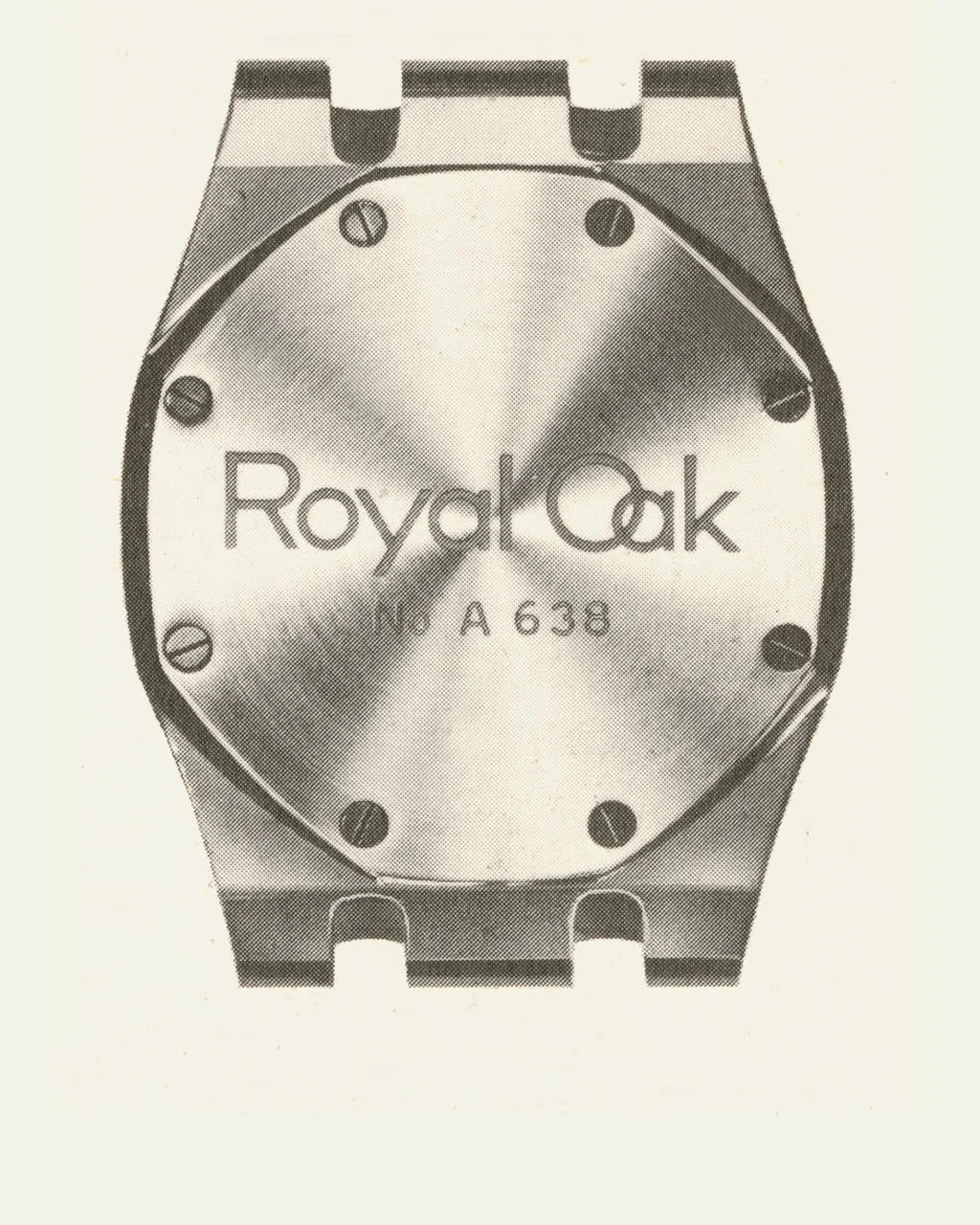
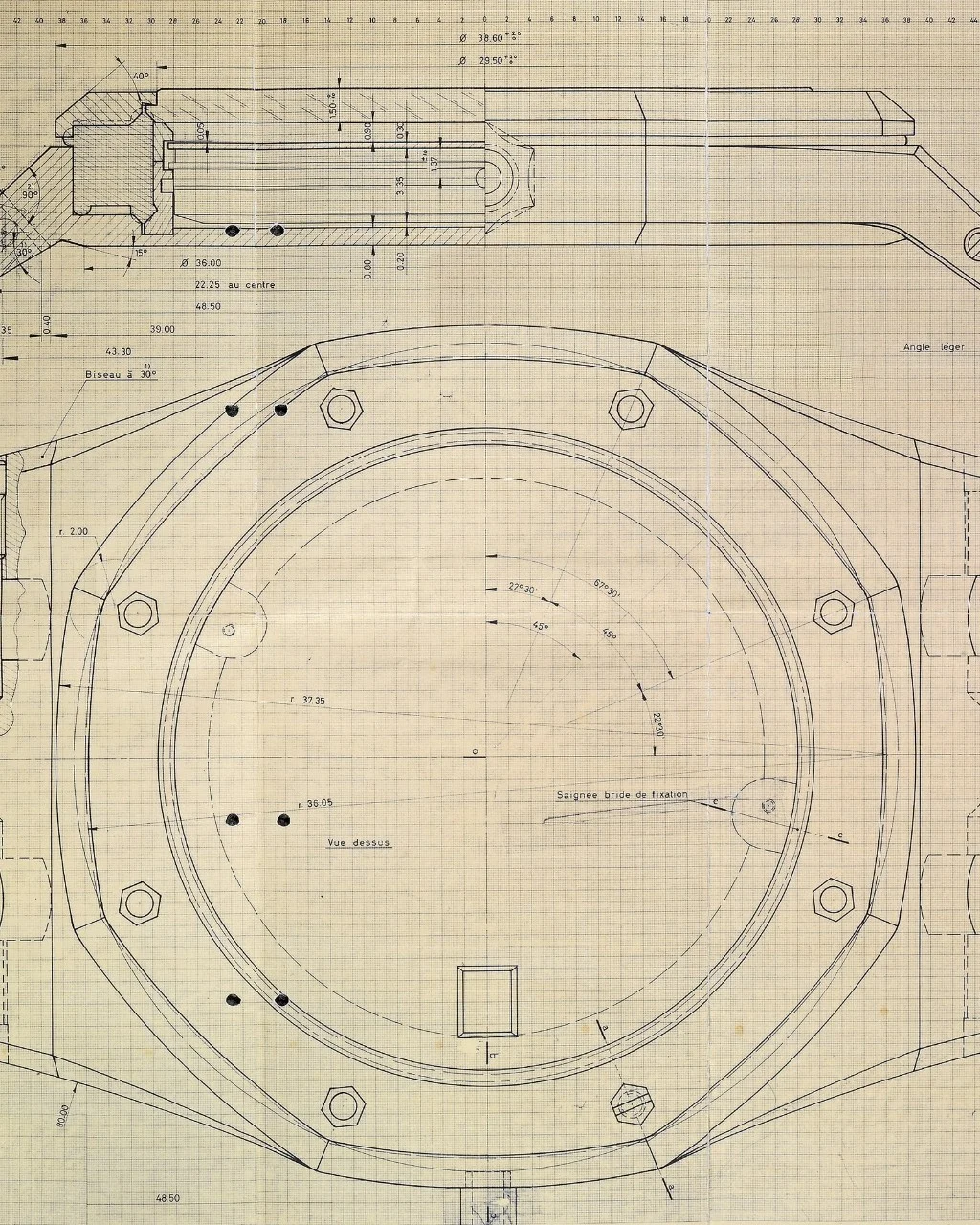
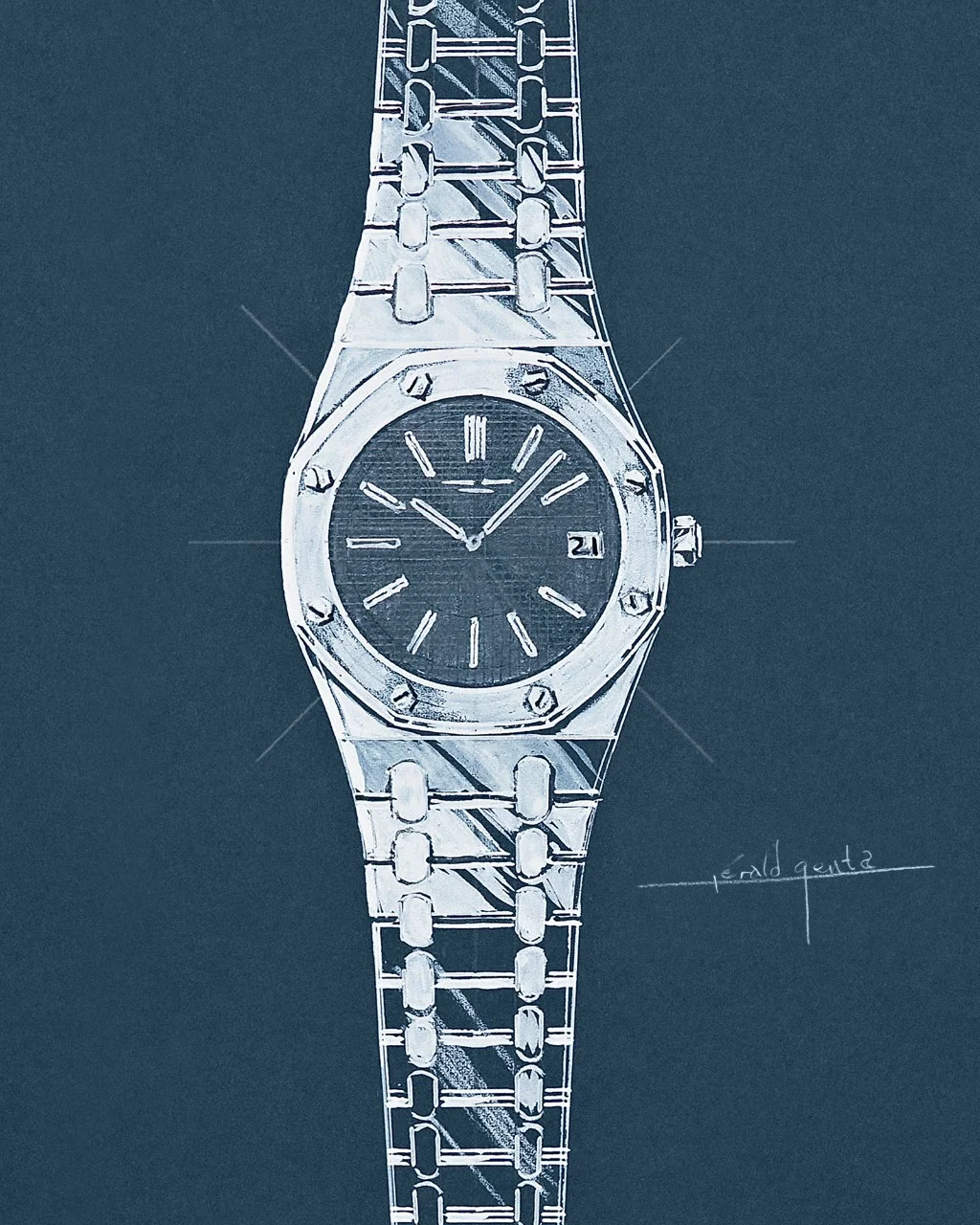
1983. Technical data for the case of Model 4332ST. Audemars Piguet Archives.

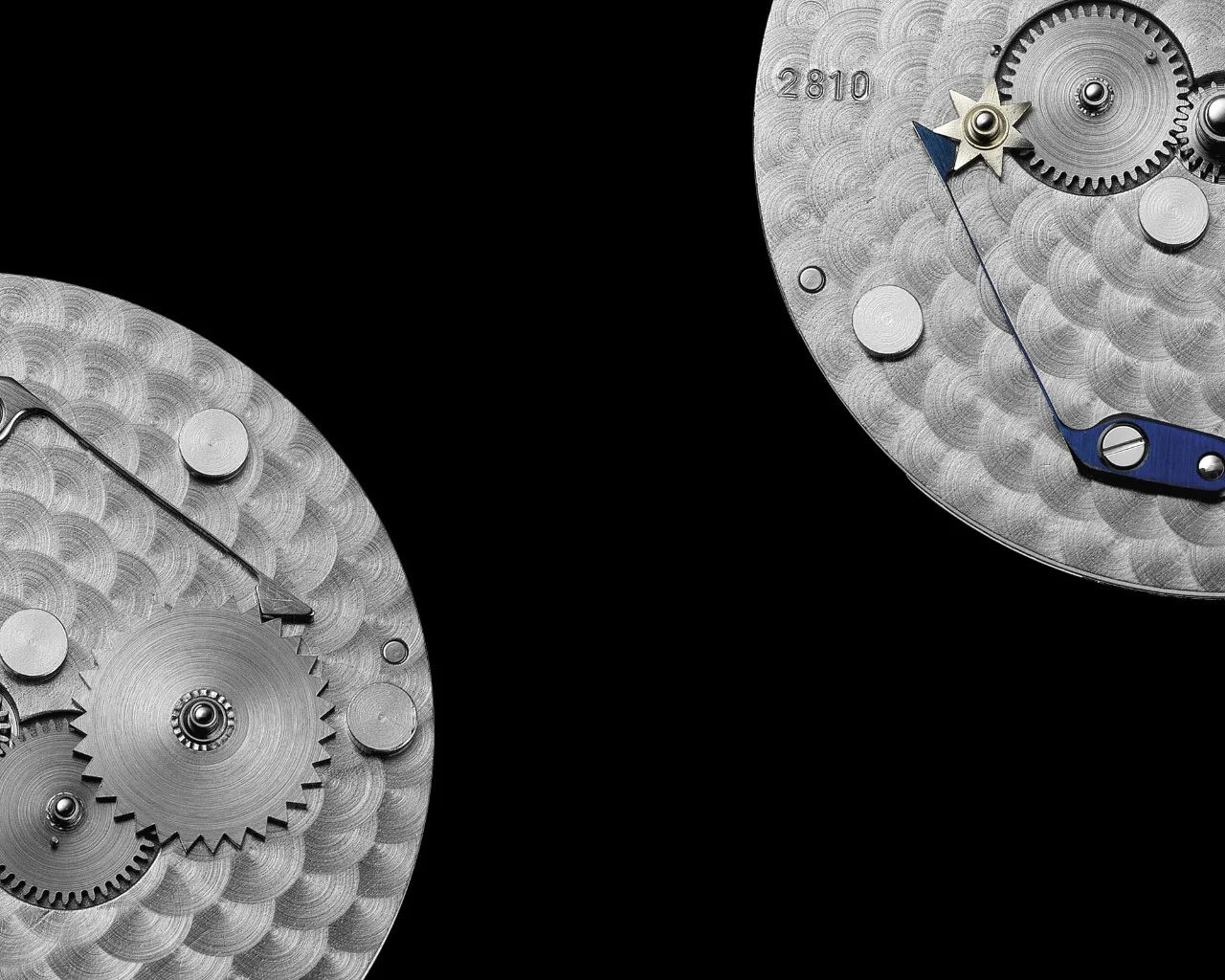
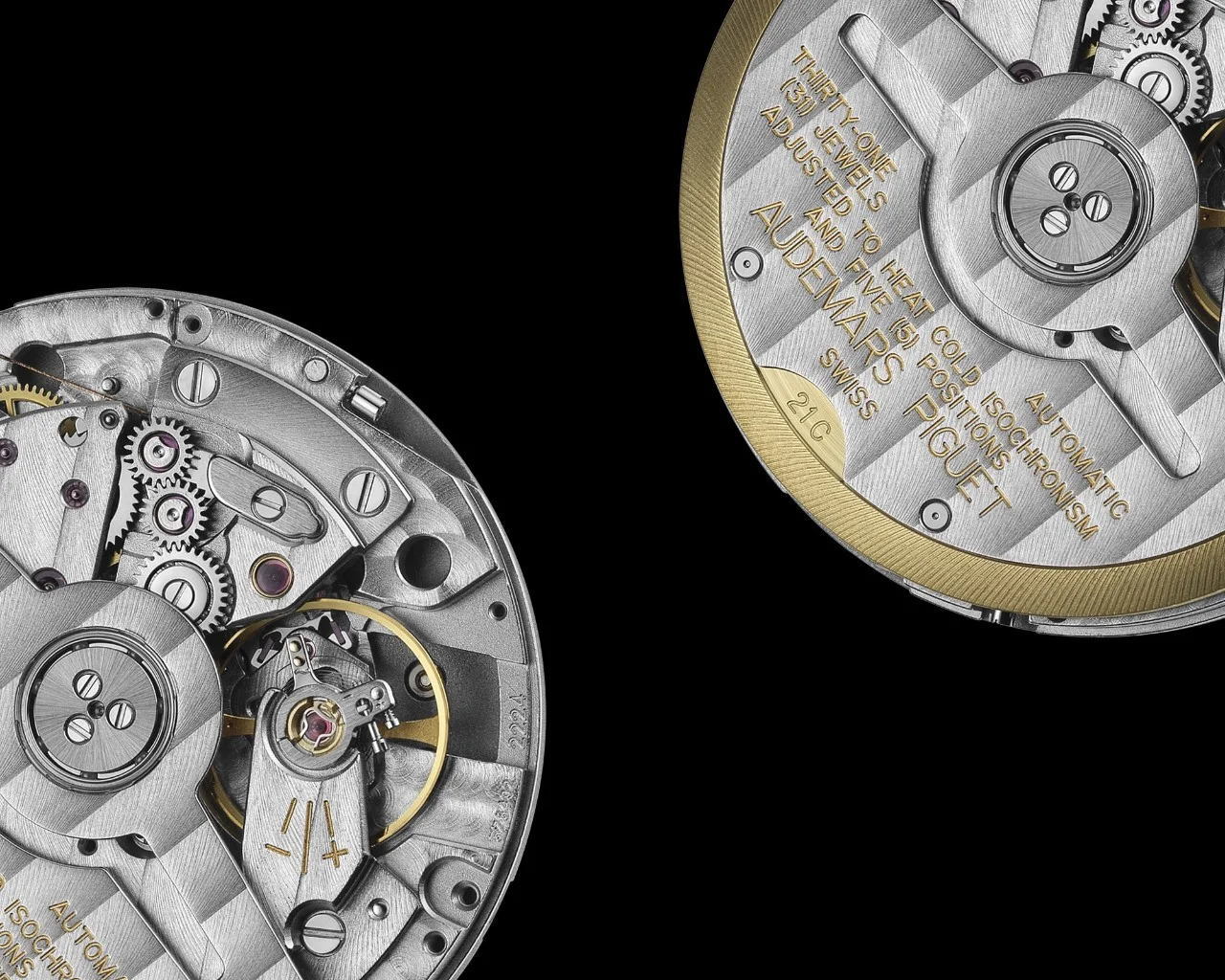
1999. Calibre 2224 caseback side. 26 mm diameter (11½ lignes), 3.25 mm height. Hour, minute, date, selfwinding. 28,800 vph. Movement 576492 manufactured in 2015. Aesthetics on the bridge side identical to its predecessor 2124 (from 1983, 21,600 vph) and its successor 2324 (from 2004).

1985–1986. Whitbread Round the World Race. Swiss skipper Pierre Fehlmann and his crew won the fourth Whitbread race (1985–1986). Christened in Monaco by Prince Albert, the USB Switzerland boat was fitted with a large spinnaker sail in the Royal Oak colours. Each crew member was gifted a Royal Oak 4332. Audemars Piguet Archives.
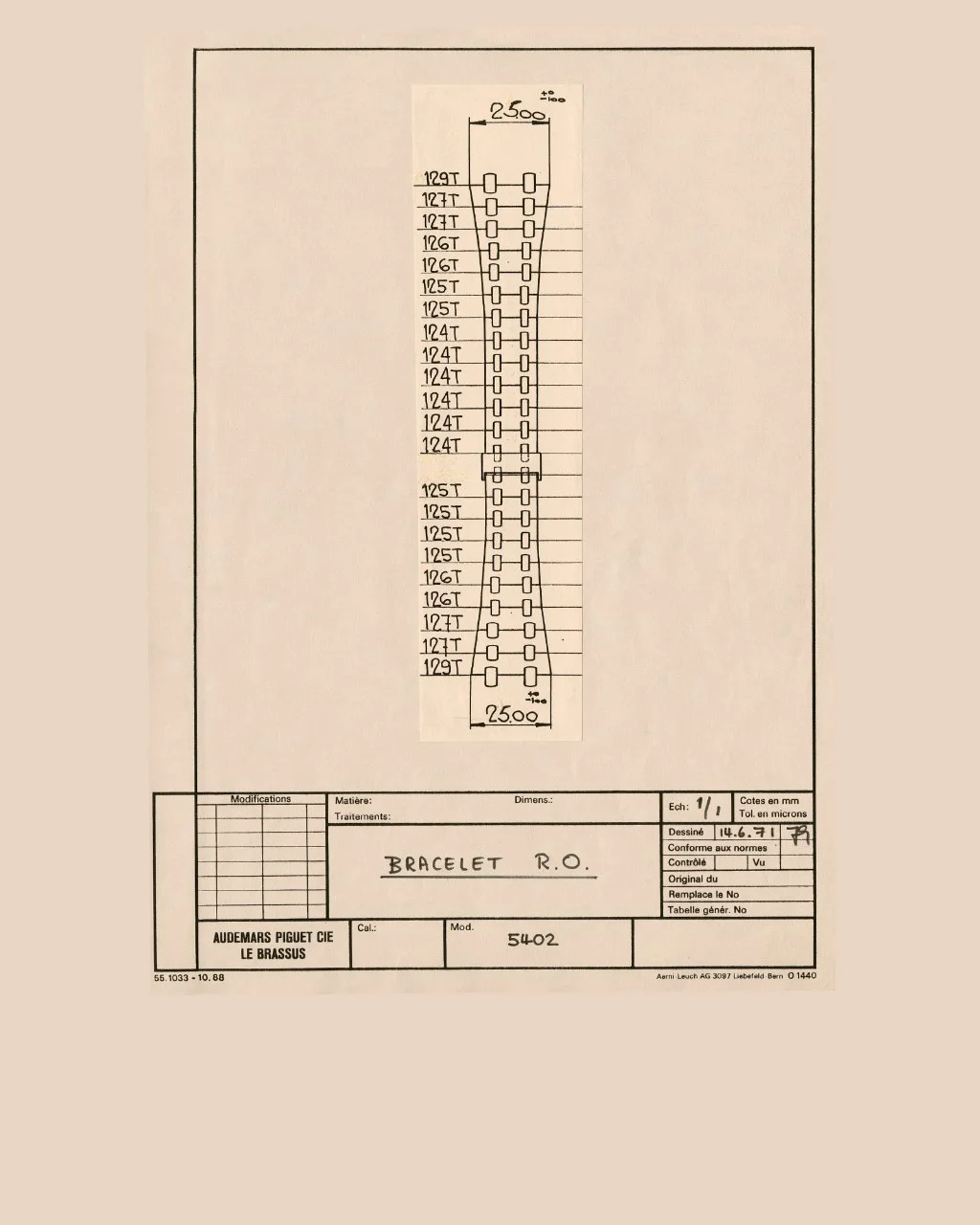
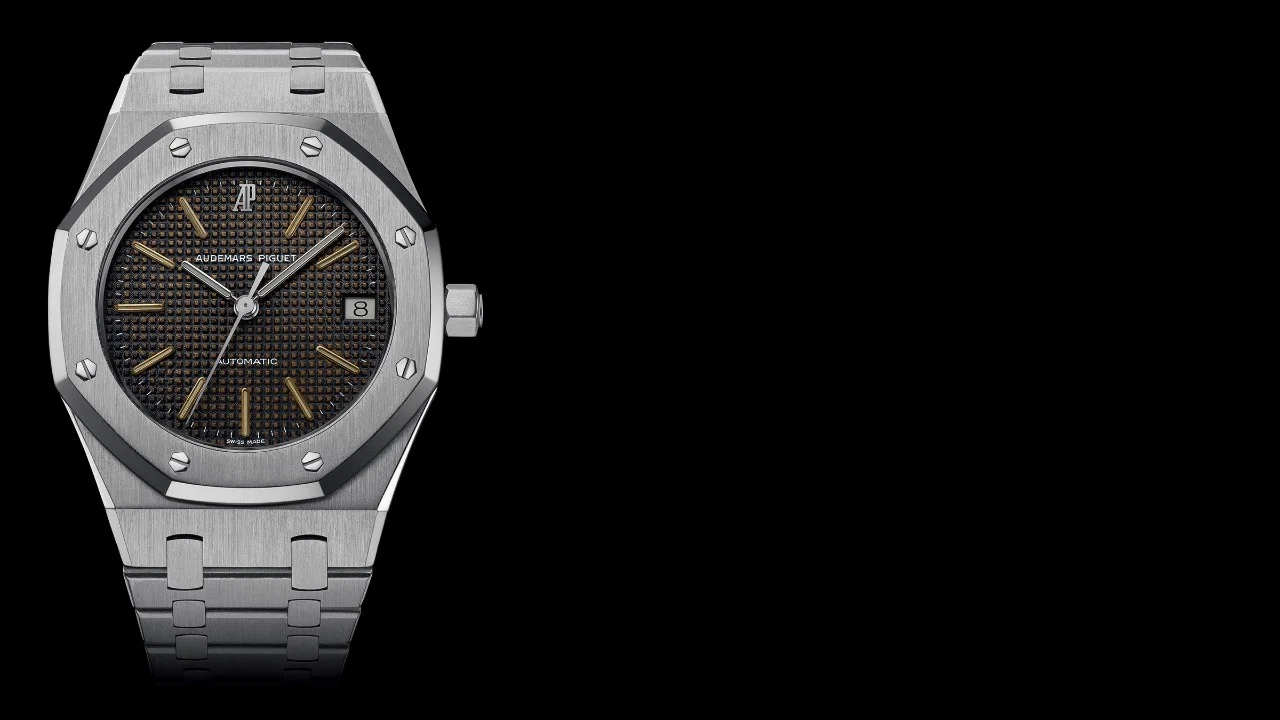
In 1972, the Royal Oak 5402 made headlines, particularly because of its 39 mm diameter, which was considered oversized. In 1977, Model 4100 model marked the start of an interlude by reducing the size of the Royal Oak for men to 35 mm. In 1983, Model 4332 heralded the grand chapter of the Royal Oak 36 mm (exception Model 14486, introduced in 1986). For 32 years, this size became the core of the collection, interpreted through more than 50 models. Among them, the Royal Oak hour, minute and date, notably Model 14700 (1990), then 14790 (1992) and 14800 (1992), as well as the Royal Oak Day Date 5572 (1983), its version with moon phases 25594 (1984–2005), then Dual Time 25730 (1993), annual calendar 25920 (1999) and numerous gemset variations.
It was not until 2005, with the introduction of Model 15300, that the diameter of the heart of the collection was increased from 36 mm to 39 mm, before stabilising at 41 mm in 2012 (15400).
Production of Model 4332 is the most modest of all the Royal Oak collection's core models in terms of volume. Of the 895 units listed in the Audemars Piguet archives, 484 were fitted with Calibre 2124, 406 with Calibre 2125, and five with Calibre 2123. 85 units were delivered in 1983 and 321 the following year. In 1985, the model was renamed 14332 and 248 watches were produced. When in 1986 its successor Model 14486 (35 mm) was introduced, the production dropped to 176 watches, then 30 the following year. A few of them were sold sporadically until 1996.
In 1985, each member of the crew of the UBS Switzerland boat, whose spinnaker bore the Royal Oak logo, received a Royal Oak 4332 engraved with "TOUR DU MONDE 85–86". The Swiss sailors were the first to cross the finish line of the famous Whitbread Round the World race, after 117 days and four hours of fighting the elements.
Total sales: 907 units, of which 376 two-tone (steel and yellow gold); 298 in yellow gold; 201 in steel and 26 in white gold.
Derived version: Model 14998.
In 1972, the Royal Oak 5402 made headlines, particularly because of its 39 mm diameter, which was considered oversized. In 1977, Model 4100 model marked the start of an interlude by reducing the size of the Royal Oak for men to 35 mm. In 1983, Model 4332 heralded the grand chapter of the Royal Oak 36 mm (exception Model 14486, introduced in 1986). For 32 years, this size became the core of the collection, interpreted through more than 50 models. Among them, the Royal Oak hour, minute and date, notably Model 14700 (1990), then 14790 (1992) and 14800 (1992), as well as the Royal Oak Day Date 5572 (1983), its version with moon phases 25594 (1984–2005), then Dual Time 25730 (1993), annual calendar 25920 (1999) and numerous gemset variations.
It was not until 2005, with the introduction of Model 15300, that the diameter of the heart of the collection was increased from 36 mm to 39 mm, before stabilising at 41 mm in 2012 (15400).
Production of Model 4332 is the most modest of all the Royal Oak collection's core models in terms of volume. Of the 895 units listed in the Audemars Piguet archives, 484 were fitted with Calibre 2124, 406 with Calibre 2125, and five with Calibre 2123. 85 units were delivered in 1983 and 321 the following year. In 1985, the model was renamed 14332 and 248 watches were produced. When in 1986 its successor Model 14486 (35 mm) was introduced, the production dropped to 176 watches, then 30 the following year. A few of them were sold sporadically until 1996.
In 1985, each member of the crew of the UBS Switzerland boat, whose spinnaker bore the Royal Oak logo, received a Royal Oak 4332 engraved with "TOUR DU MONDE 85–86". The Swiss sailors were the first to cross the finish line of the famous Whitbread Round the World race, after 117 days and four hours of fighting the elements.
Total sales: 907 units, of which 376 two-tone (steel and yellow gold); 298 in yellow gold; 201 in steel and 26 in white gold.
Derived version: Model 14998.
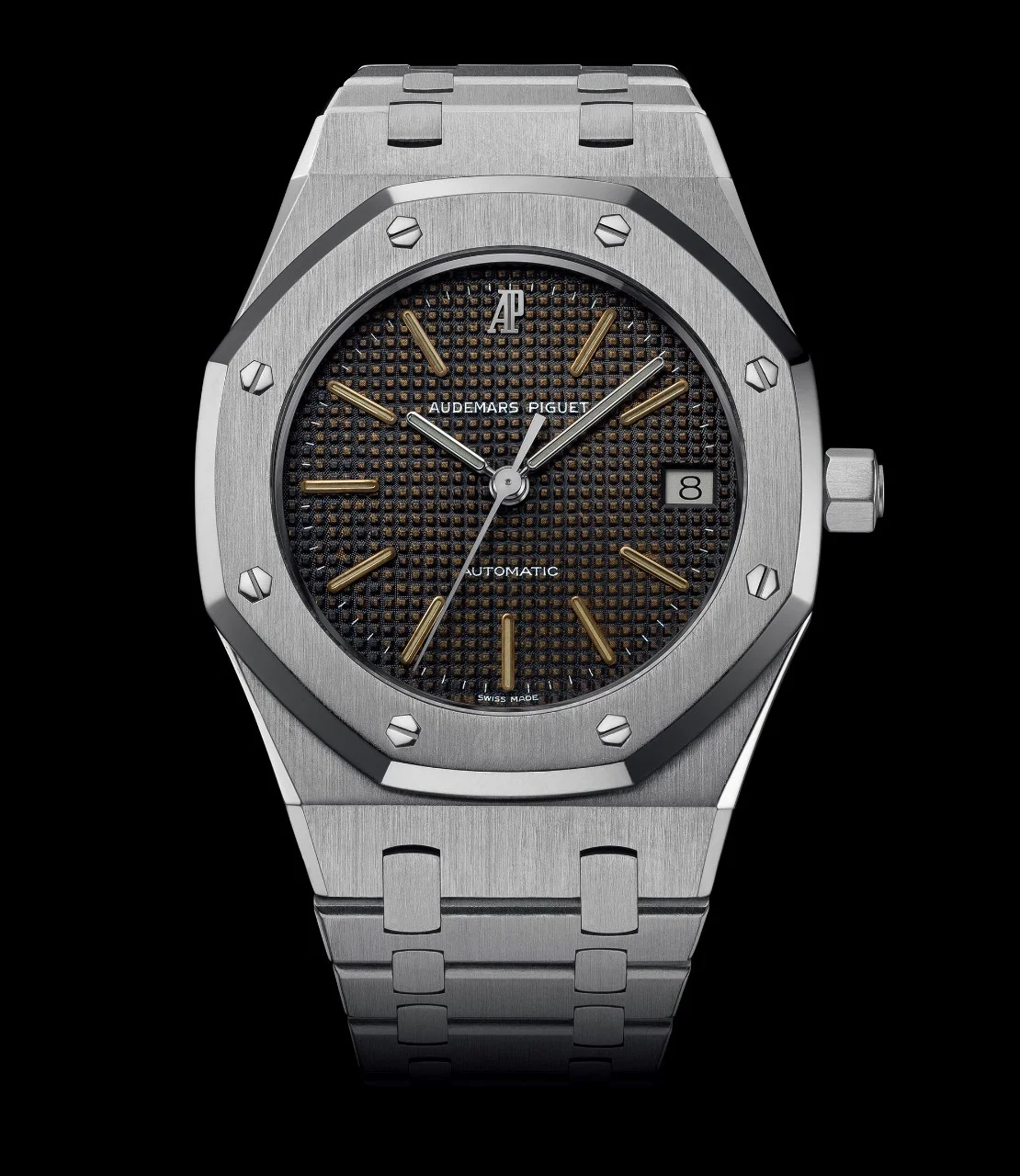
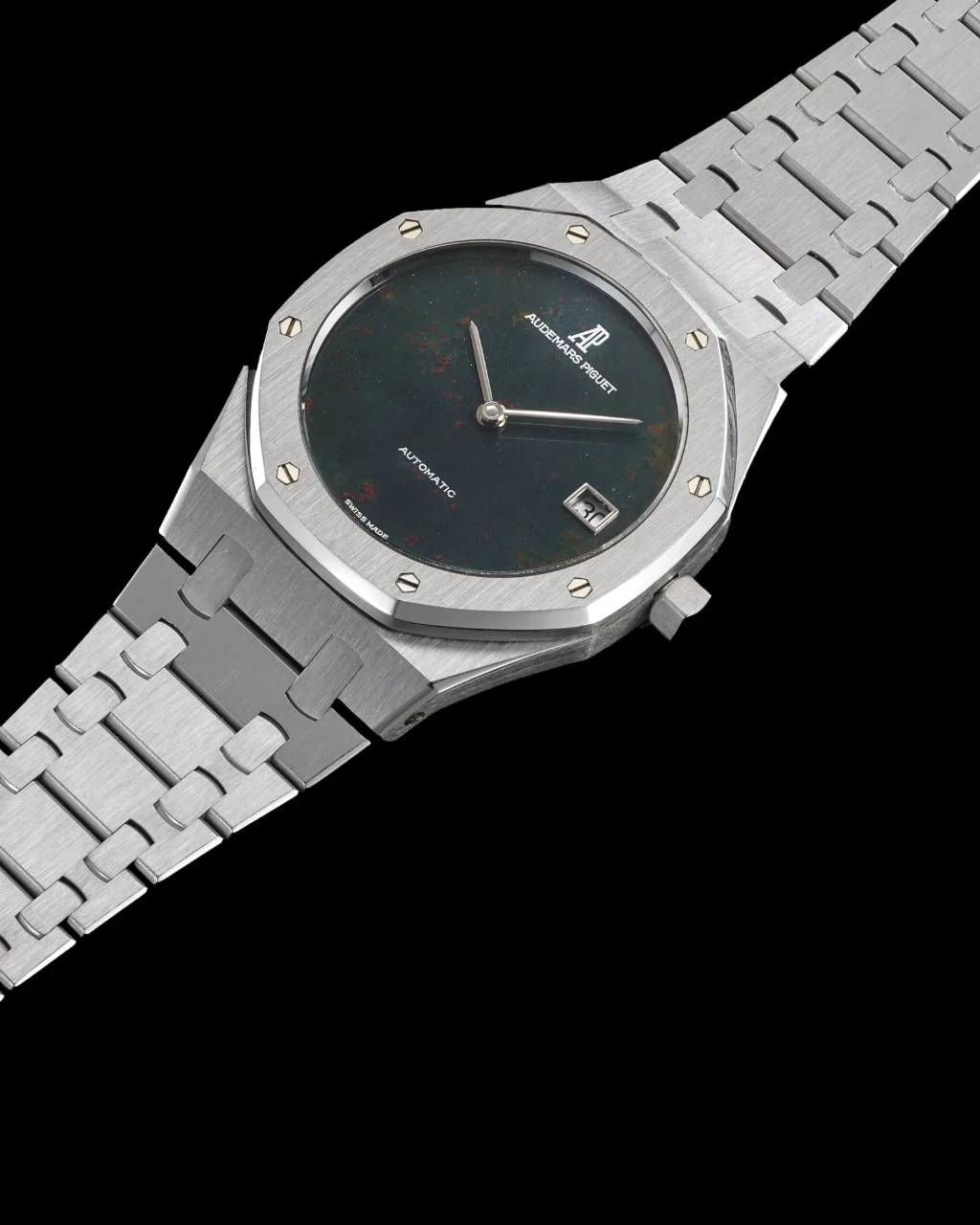
1985. Royal Oak 4332 (1983), N° 148 engraved “TOUR DU MONDE 85-86”. Date. Calibre 2124, movement 280248. Bracelet 477. T21 Tapisserie dial. 36 mm steel case. Each crew member of the UBS Switzerland boat received a 4332 watch as part of the Whitbread Round the World competition. Audemars Piguet Heritage, inv. 1840.
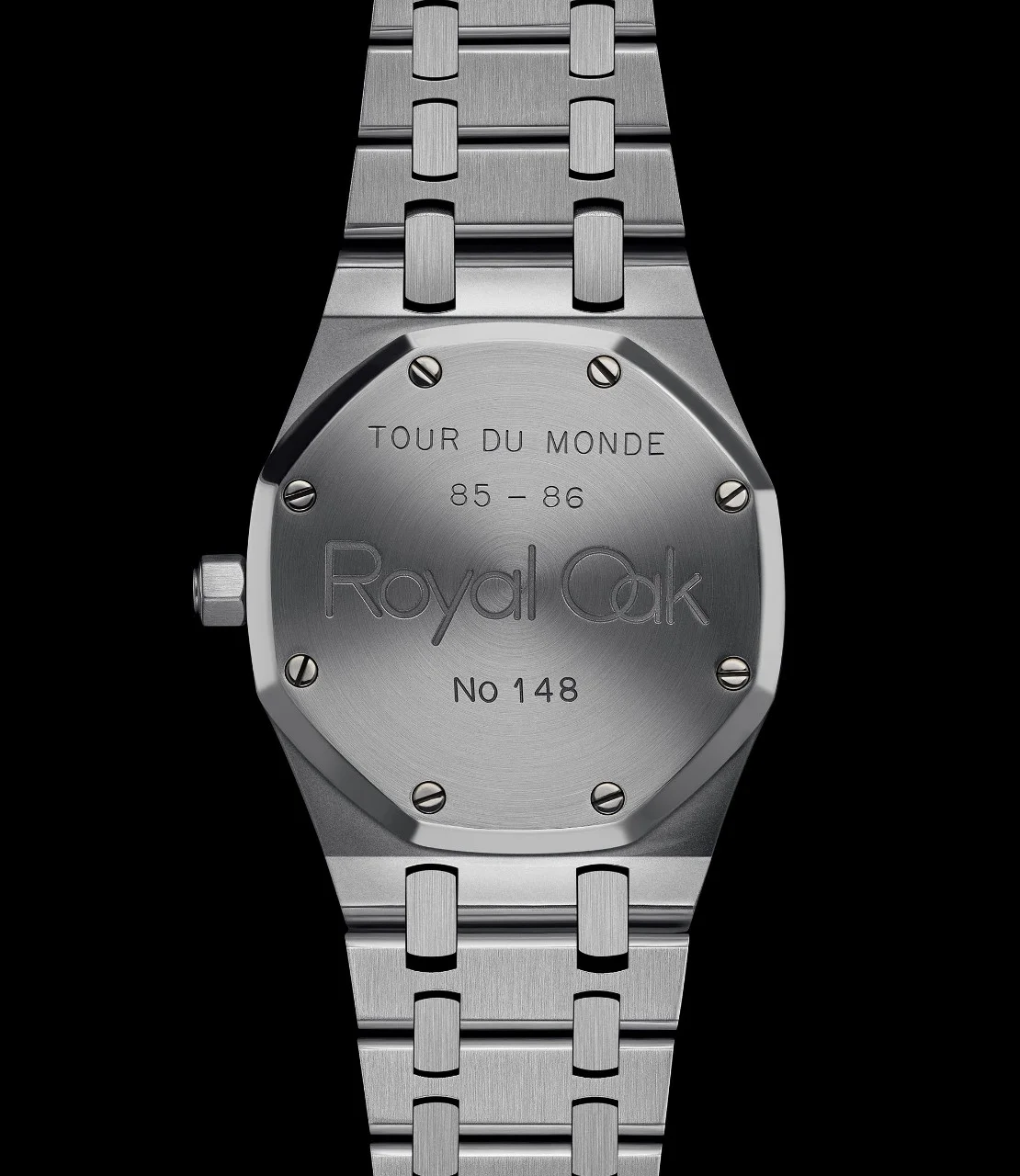
1985. Royal Oak 4332 (1983), N° 148 engraved “TOUR DU MONDE 85-86”. Date. Calibre 2124, movement 280248. Bracelet 477. T21 Tapisserie dial. Each member of the crew of the UBS Switzerland boat received a 4332 watch as part of the Whitbread Round the World competition. Audemars Piguet Heritage, inv. 1840.
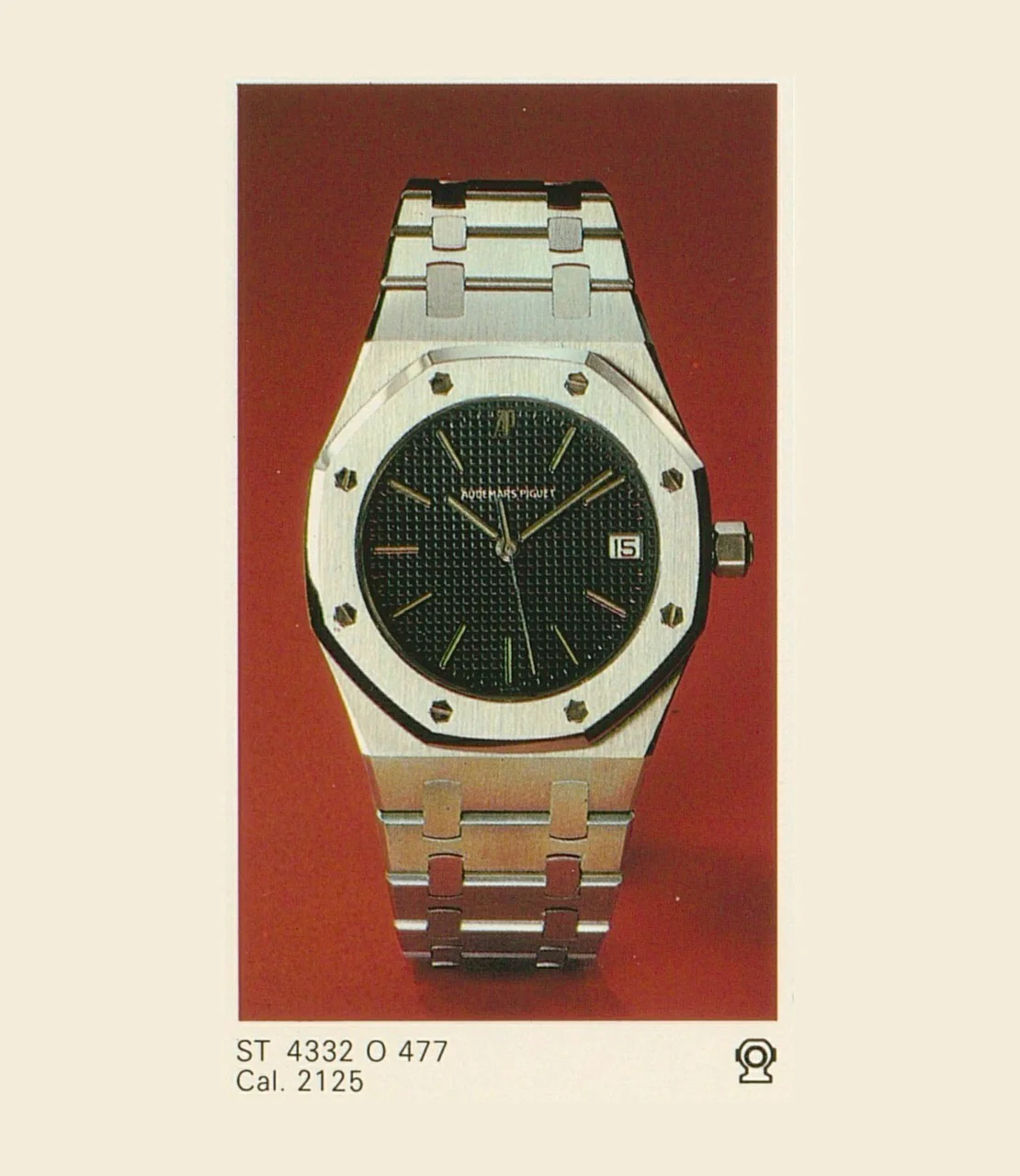
1984–85. Royal Oak Model 4332ST (36 mm). 1984 and 1985 Audemars Piguet Catalogues. Audemars Piguet Archives.
Like its predecessor Model 4100, Model 4332 houses a calibre with a 26 mm diameter (11½ lignes). Thanks to the diameter of the new case being enlarged by one millimetre, watchmakers had a little more space inside to ensure the watch's water resistance.
Sales from 1983 to 1994: a total of 201 units, of which 17 (1983), 99 (1984), 48 (1985), 23 (1986), 1 (1987), 6 (1988), 1 (1989), 4 (1990), 1 (1993), and 1 (1994).
Like its predecessor Model 4100, Model 4332 houses a calibre with a 26 mm diameter (11½ lignes). Thanks to the diameter of the new case being enlarged by one millimetre, watchmakers had a little more space inside to ensure the watch's water resistance.
Sales from 1983 to 1994: a total of 201 units, of which 17 (1983), 99 (1984), 48 (1985), 23 (1986), 1 (1987), 6 (1988), 1 (1989), 4 (1990), 1 (1993), and 1 (1994).
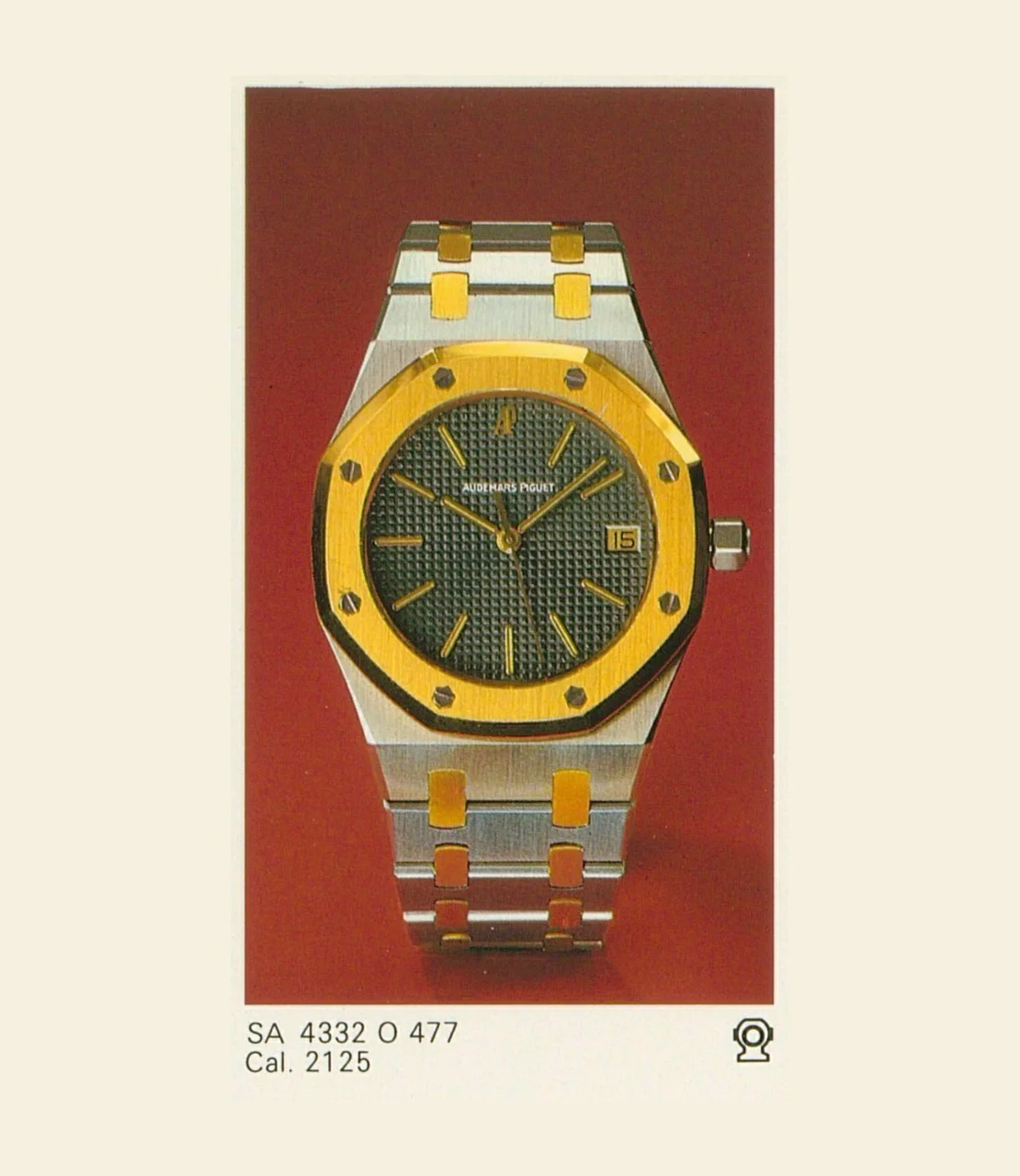
1984–85. Royal Oak Model 4332SA (36 mm). 1984 and 1985 Audemars Piguet Catalogues. Audemars Piguet Archives.

1976. Technical data for the case of Model 4332SA. Audemars Piguet Archives.
In the 1980s, the two-tone variants combining steel and yellow gold were the most sought-after.
With its T21 Petite Tapisserie decorative pattern, luminescent baignoire hour-markers and hands, applied logo at 12 o'clock and central seconds hand, the Royal Oak 4332SA perpetuates the aesthetic codes introduced by Model 4100SA.
Sales from 1983 to 1996: a total of 376 units, of which 23 (1983), 140 (1984), 82 (1985), 102 (1986), 24 (1987), 2 (1988), 1 (1989), 1 (1992), and 1 (1996).
In the 1980s, the two-tone variants combining steel and yellow gold were the most sought-after.
With its T21 Petite Tapisserie decorative pattern, luminescent baignoire hour-markers and hands, applied logo at 12 o'clock and central seconds hand, the Royal Oak 4332SA perpetuates the aesthetic codes introduced by Model 4100SA.
Sales from 1983 to 1996: a total of 376 units, of which 23 (1983), 140 (1984), 82 (1985), 102 (1986), 24 (1987), 2 (1988), 1 (1989), 1 (1992), and 1 (1996).
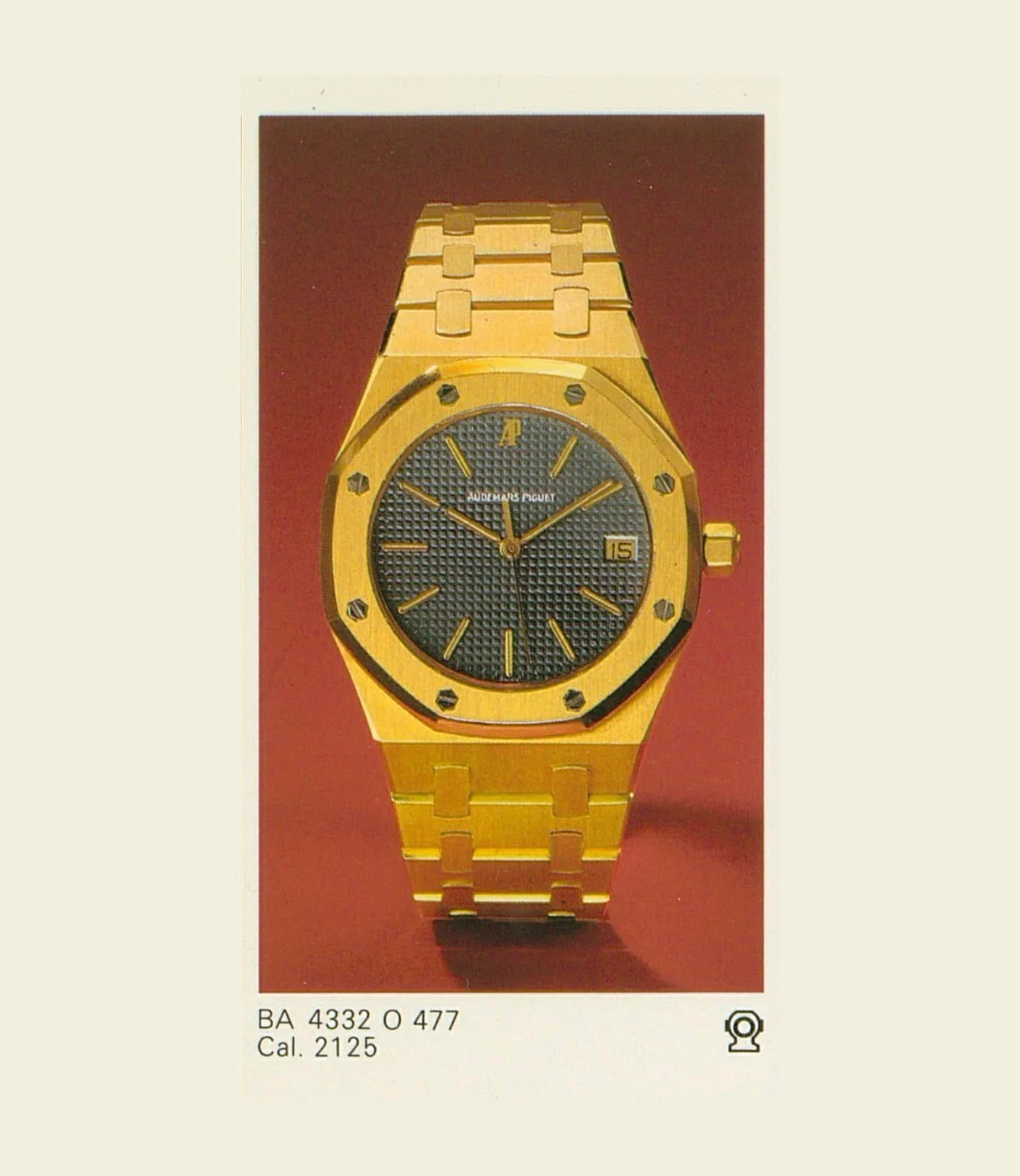
1984–85. Royal Oak Model 4332BA (36 mm). 1984 and 1985 Audemars Piguet Catalogues. Audemars Piguet Archives.
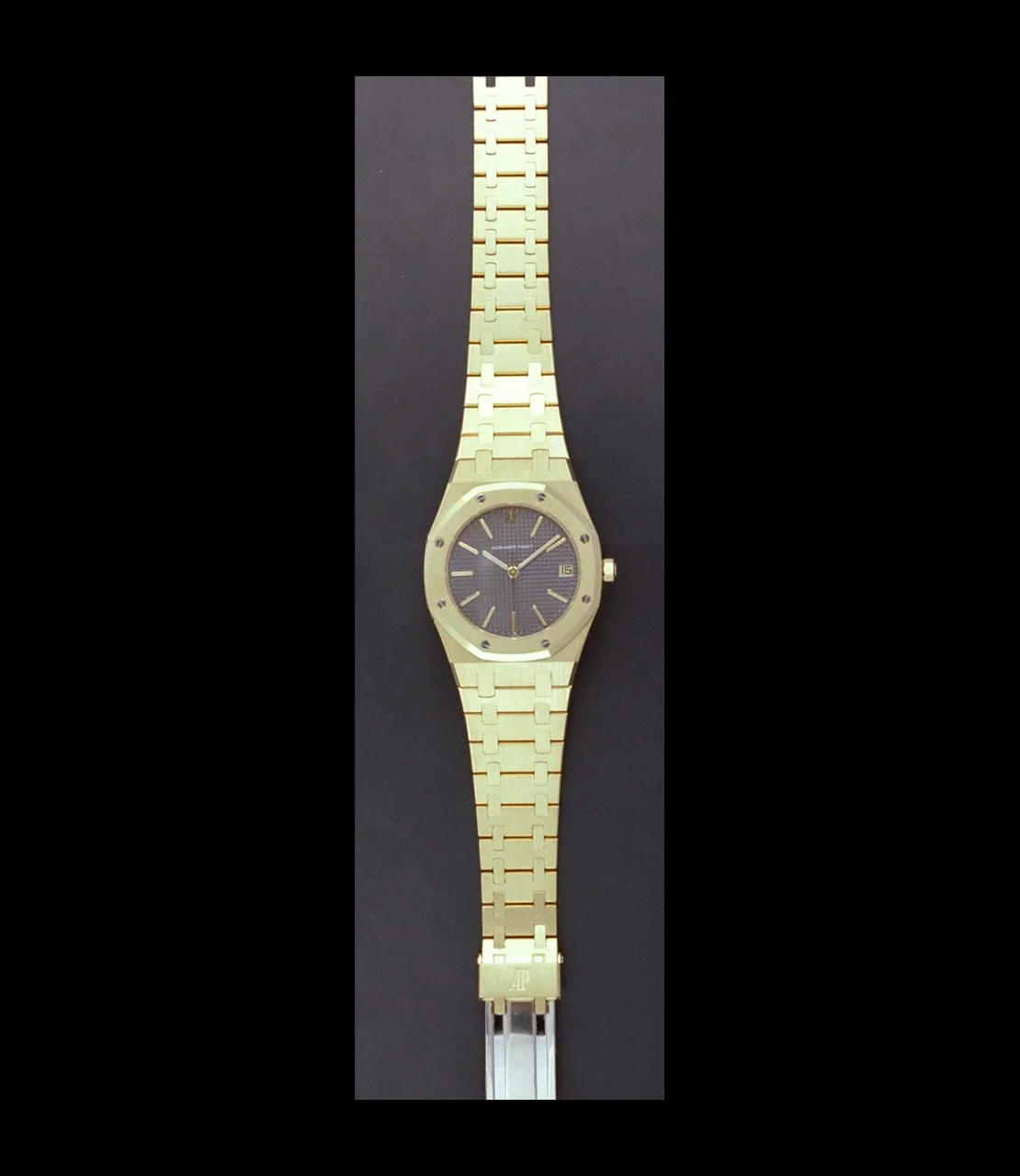
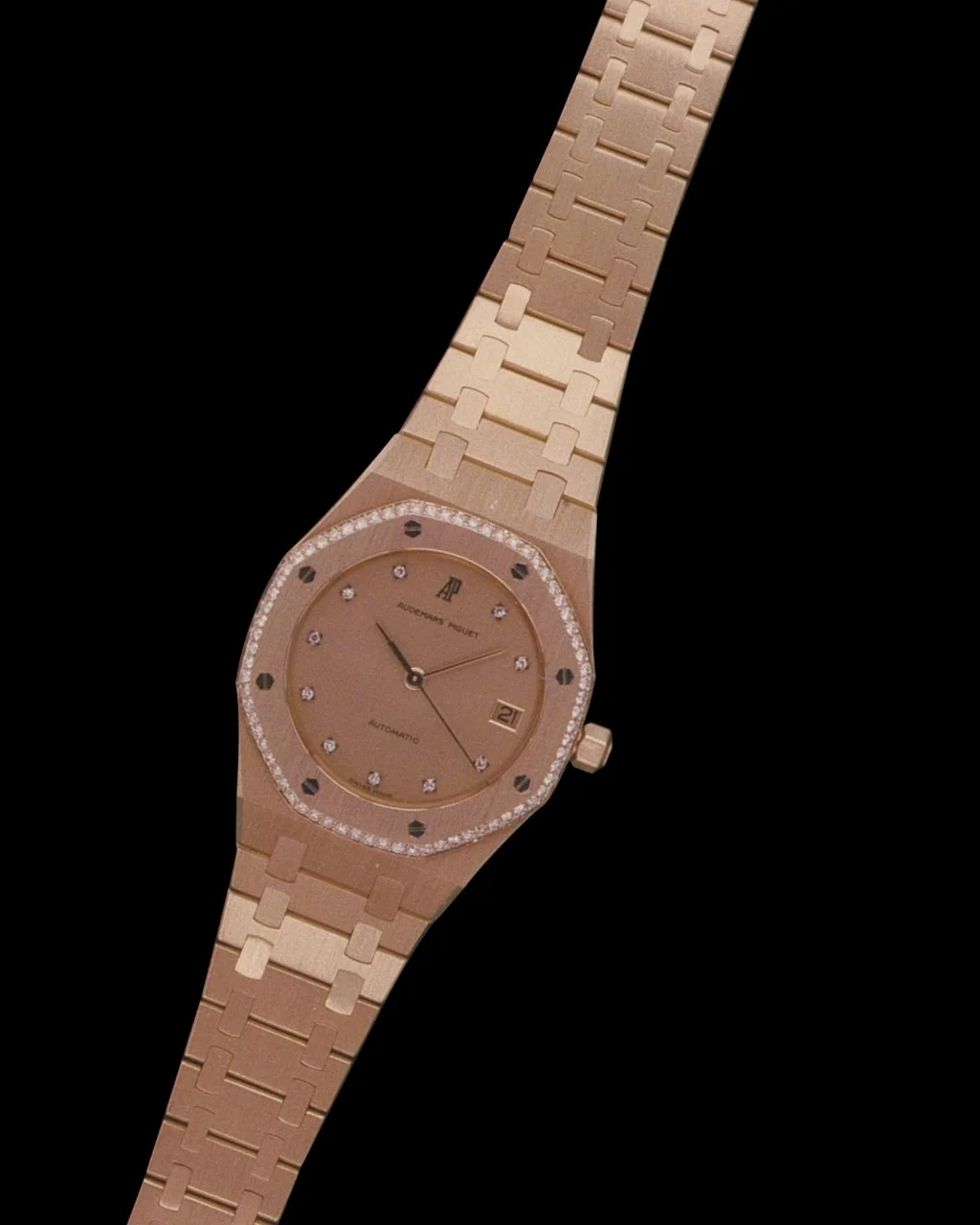
Circa 1983. Identification image of Model 4332BA. Audemars Piguet Archives.
Identical to the two-tone version, the dial features yellow gold appliques in a colour that echoes that of the case. The Calibre 2124 date disc is gilded in harmony with the overall aesthetic of the watch.
Sales from 1983 to 1989: a total of 298 units, of which 45 (1983), 76 (1984), 113 (1985), 45 (1986), 3 (1987), 15 (1988), and 1 (1989).
Identical to the two-tone version, the dial features yellow gold appliques in a colour that echoes that of the case. The Calibre 2124 date disc is gilded in harmony with the overall aesthetic of the watch.
Sales from 1983 to 1989: a total of 298 units, of which 45 (1983), 76 (1984), 113 (1985), 45 (1986), 3 (1987), 15 (1988), and 1 (1989).
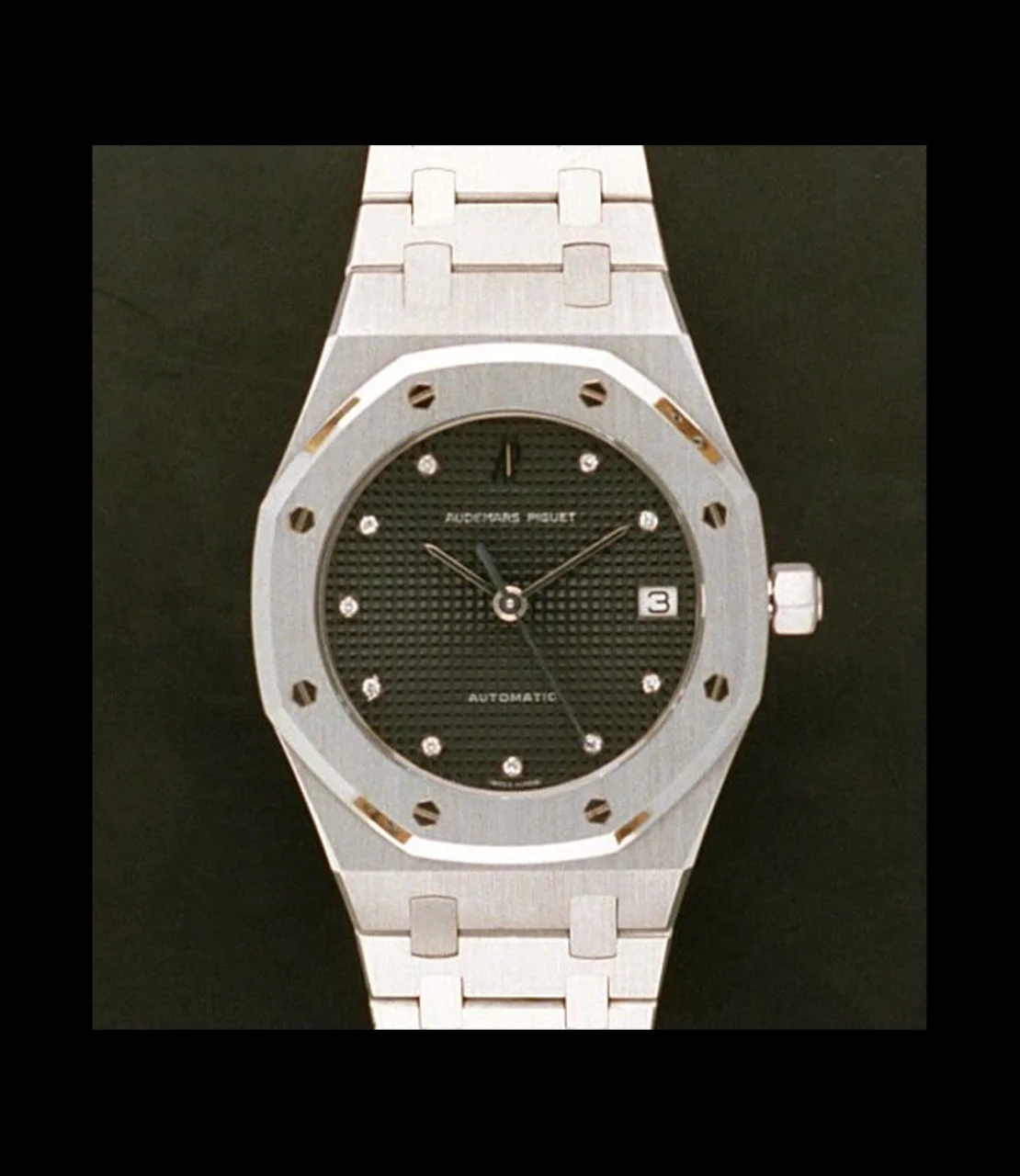
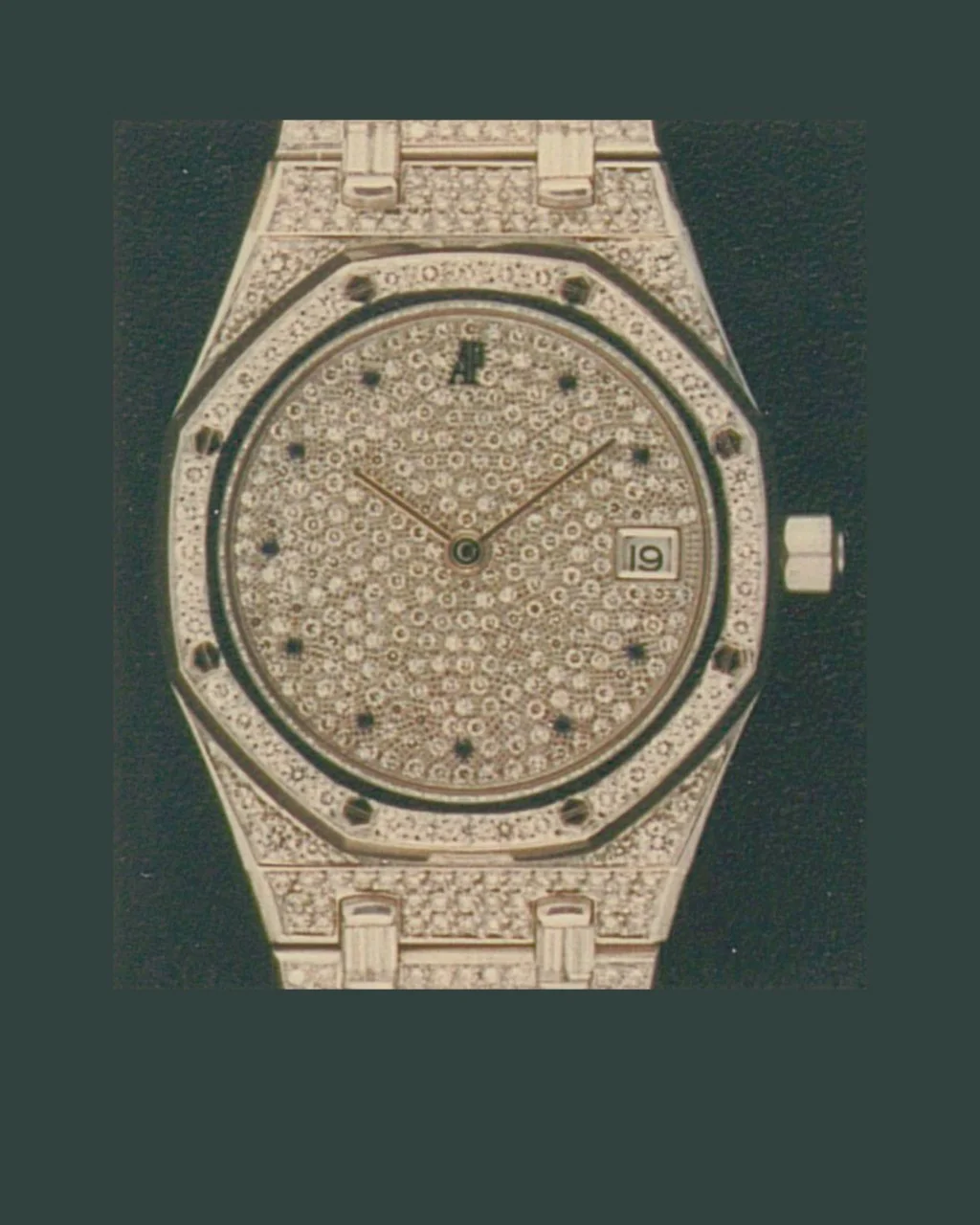
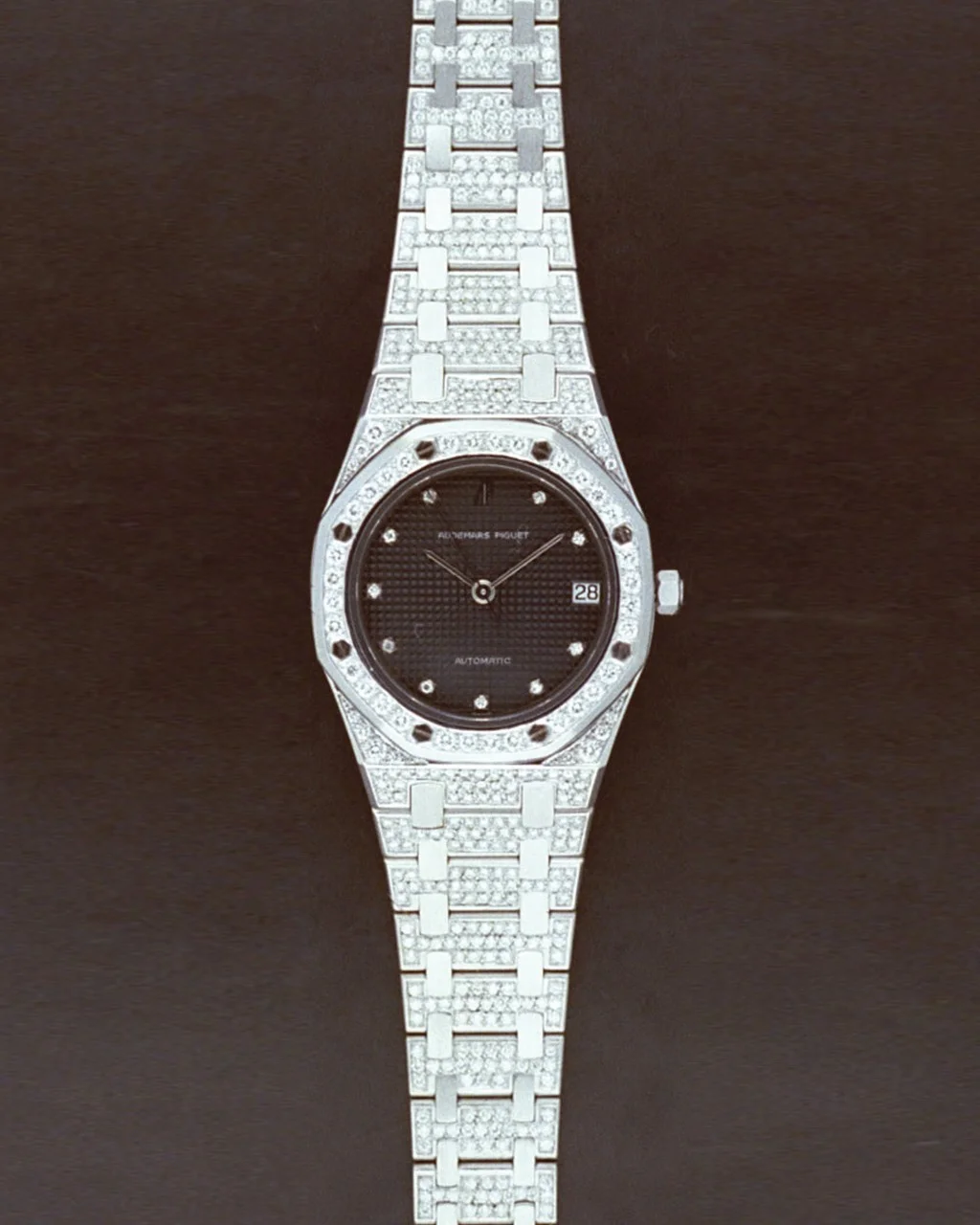
Circa 1984. Identification image of Model 4332BC featuring a gemset dial. Detail. Audemars Piguet Archives.

1984. Excerpt from the Production Registers. List of 7 examples of Model 4332BC produced in 1984 and sold between 1984 and 1987. Audemars Piguet Archives.
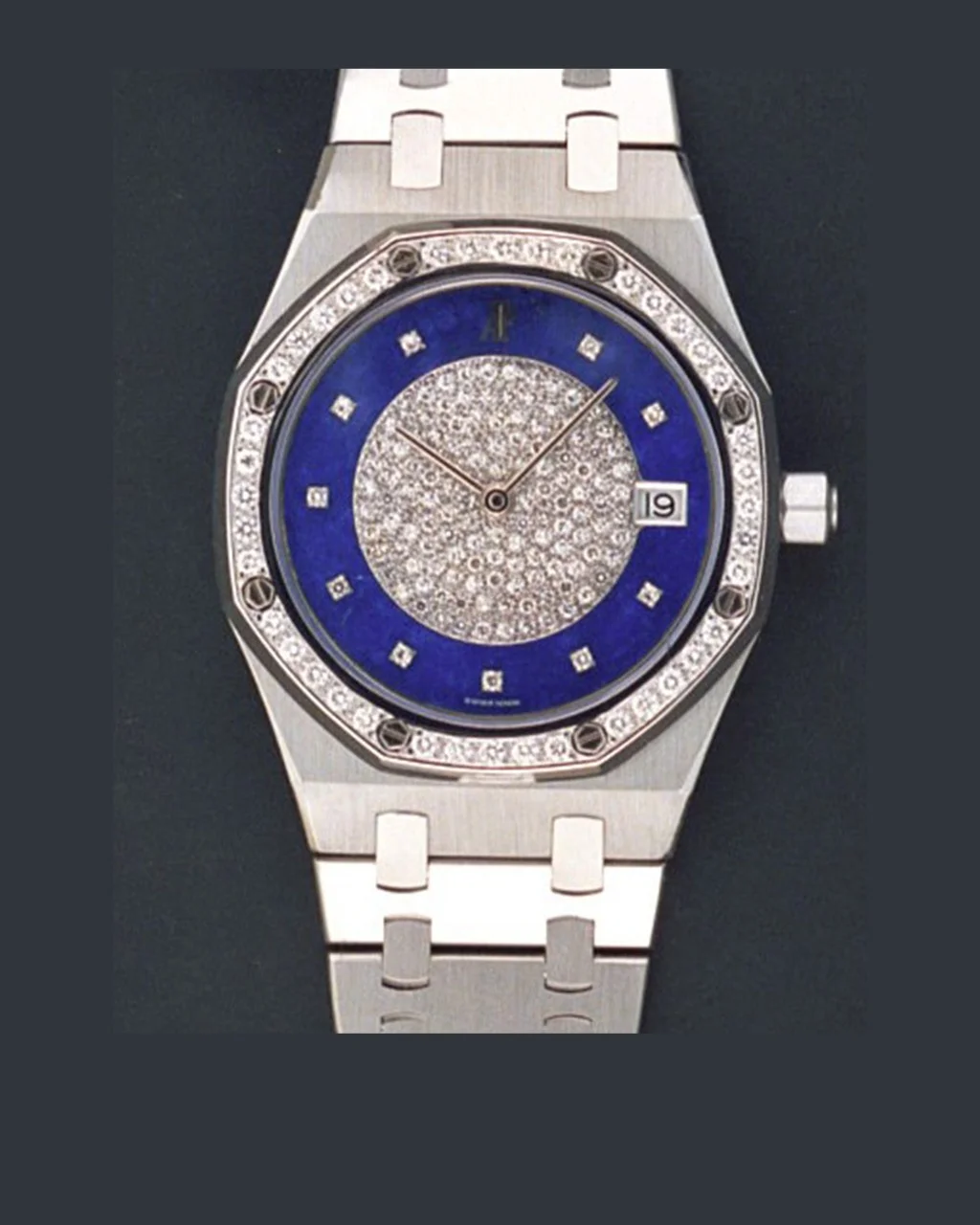
Just as with Models 8636 and 4100, the white gold variants are so rare that they are not included in the catalogue. Only 20 examples are documented in the Audemars Piguet Production Registers.
Sales from 1984 to 1988: a total of 26 units, of which 10 (1984), 8 (1985), 5 (1986), 2 (1987) and 1 (1988).
Just as with Models 8636 and 4100, the white gold variants are so rare that they are not included in the catalogue. Only 20 examples are documented in the Audemars Piguet Production Registers.
Sales from 1984 to 1988: a total of 26 units, of which 10 (1984), 8 (1985), 5 (1986), 2 (1987) and 1 (1988).