25594, Royal Oak Day Date Moon Phase
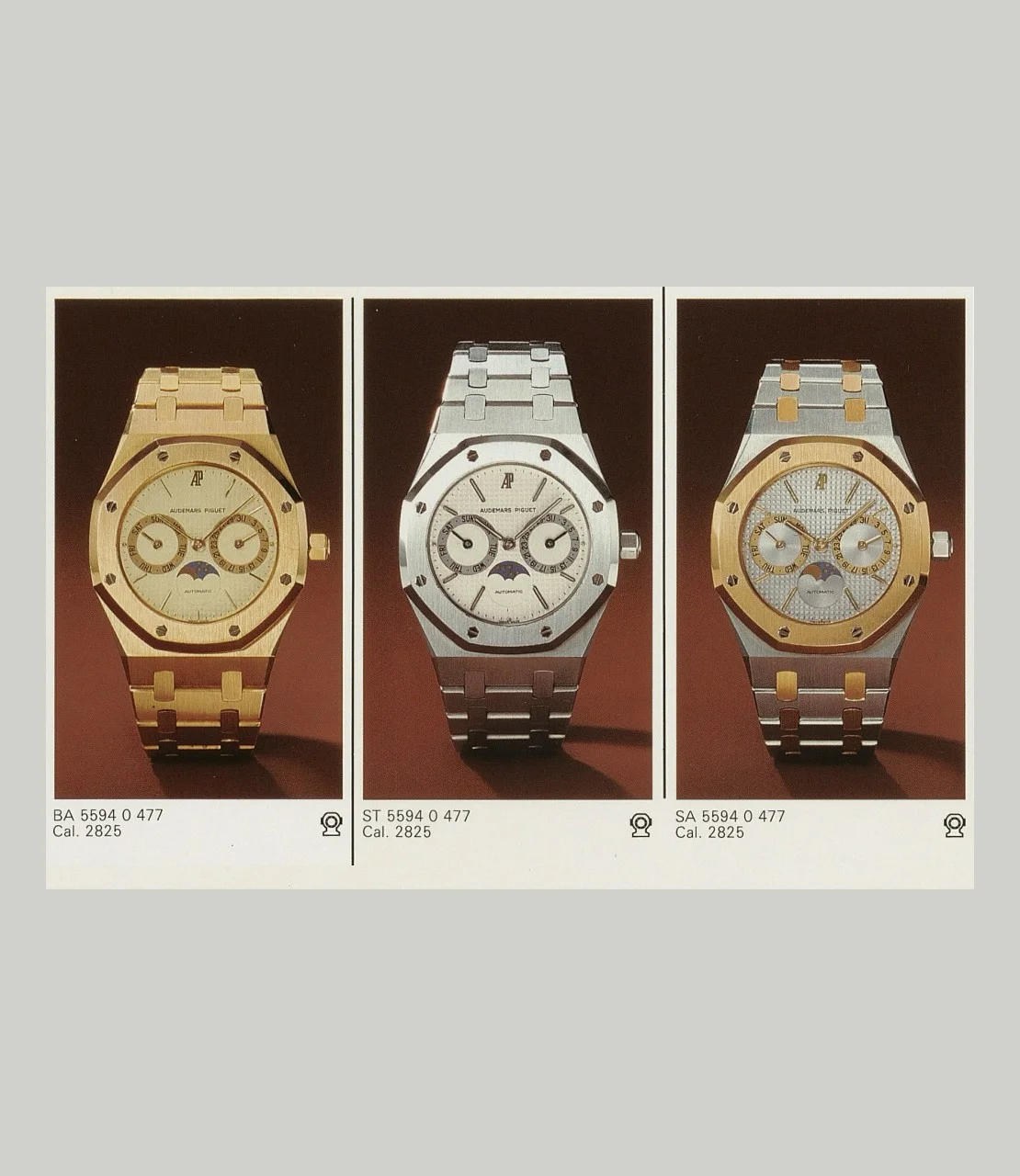
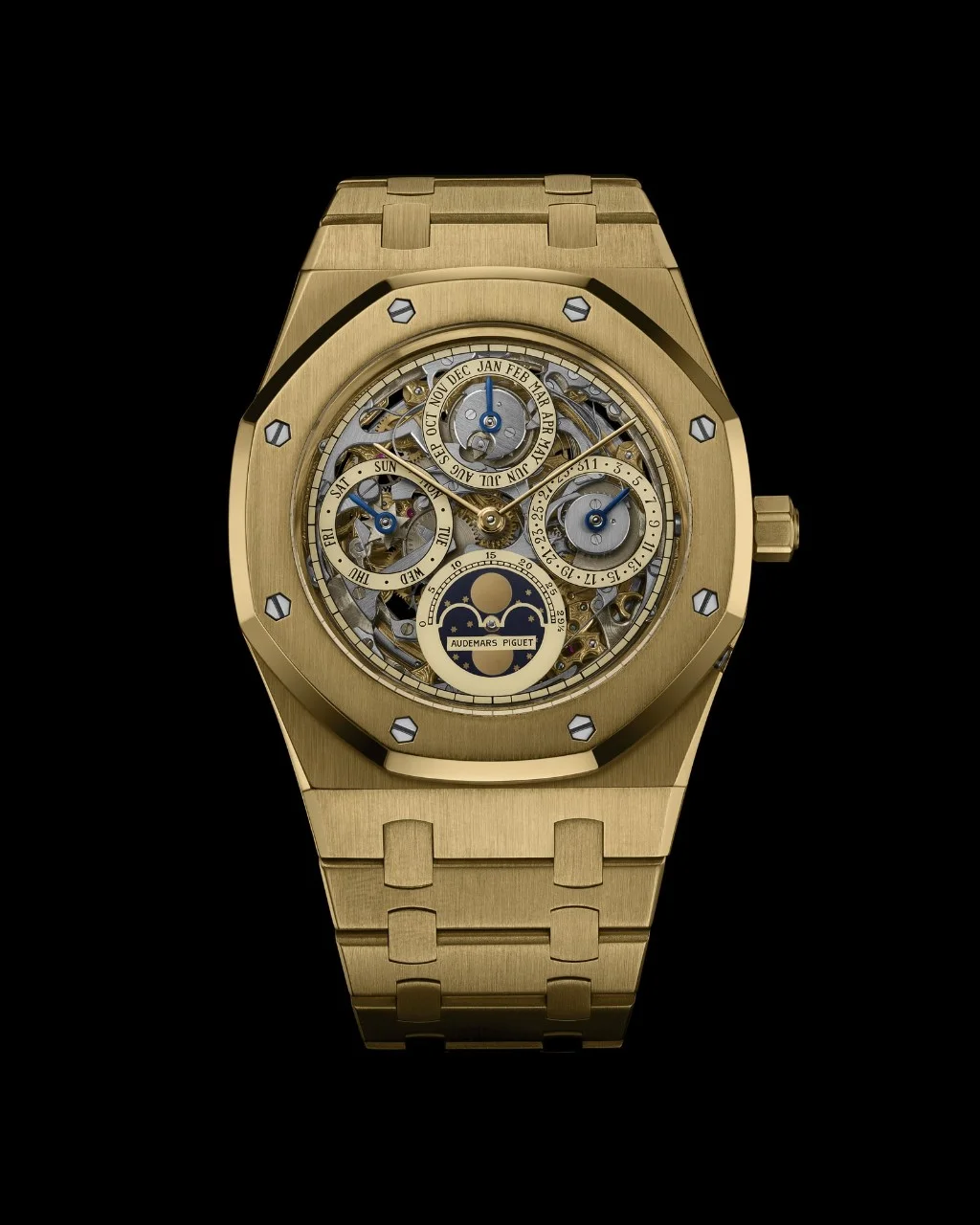
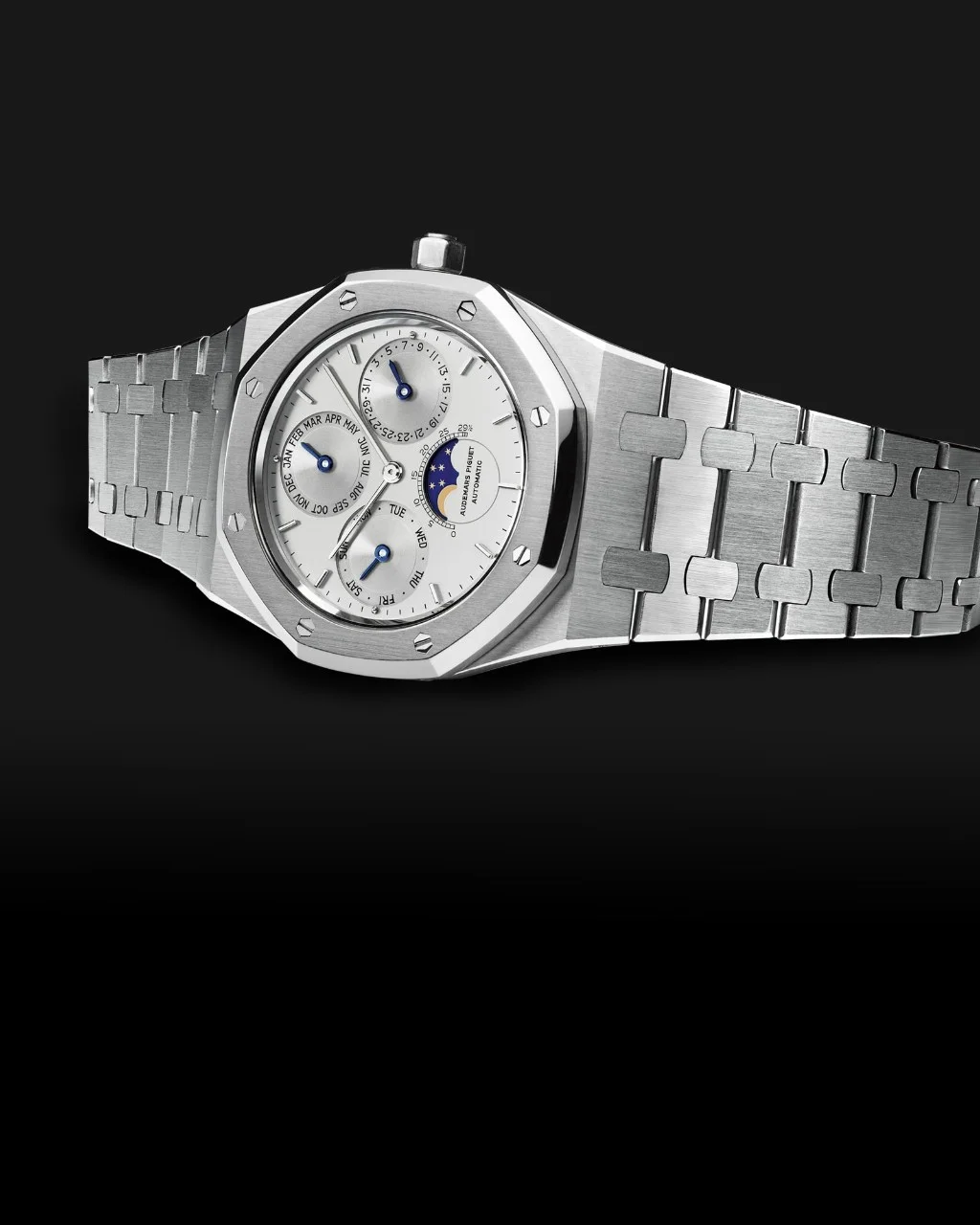
1985. Royal Oak 5594 (36 mm). From the first publication of Model 5594 (25594) in the catalogue in 1985 to its last occurrence in 2006, three materials were offered: steel (ST), yellow gold (BA) and a combination of the two (SA). Audemars Piguet Archives.

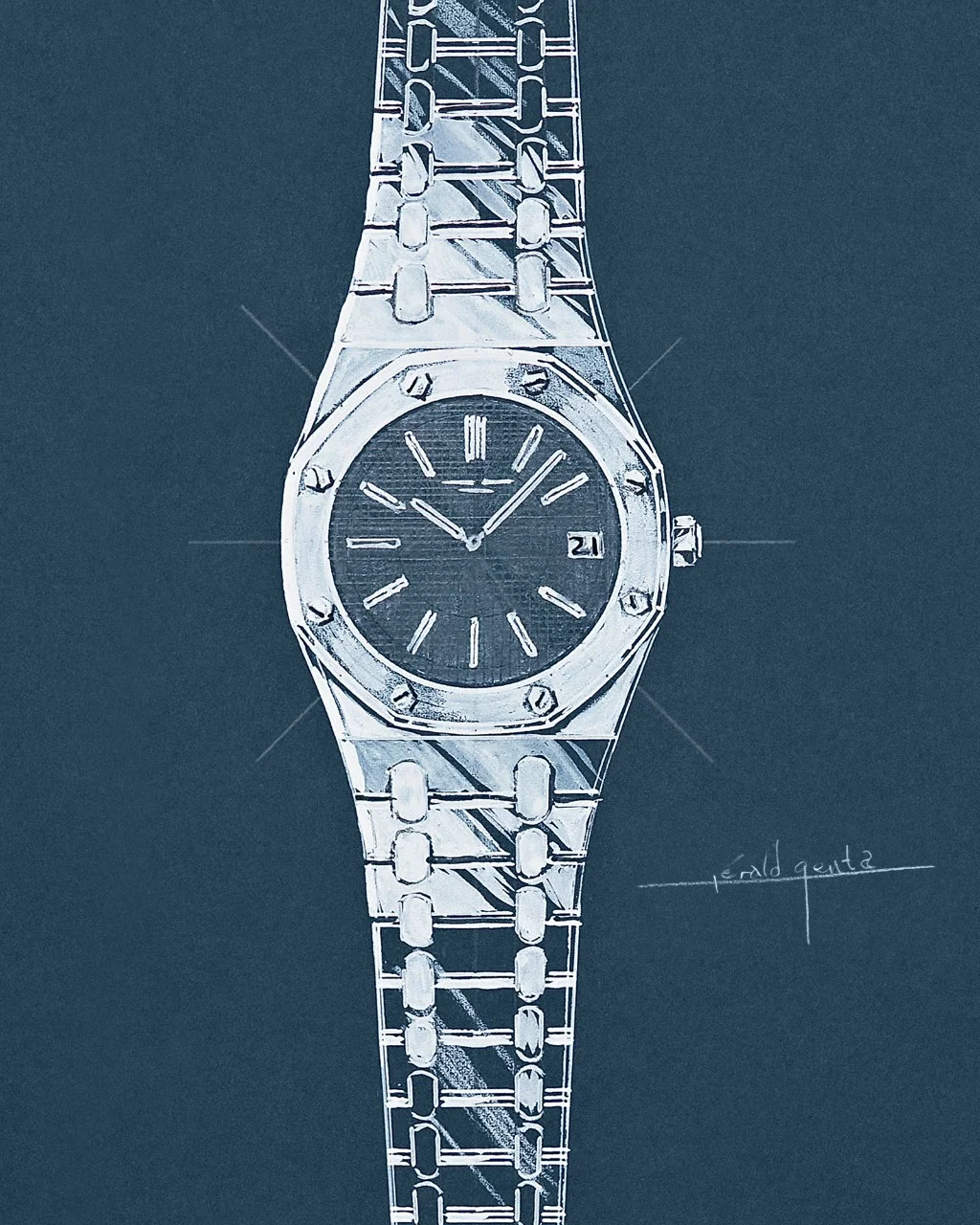
Circa 1985. Audemars Piguet advert intended for the Middle East. This advert presents two variations of the first Royal Oak with additional functions: Model 25572. The title is in French, the text in English and the points of sale list in Arabic. Audemars Piguet Archives.

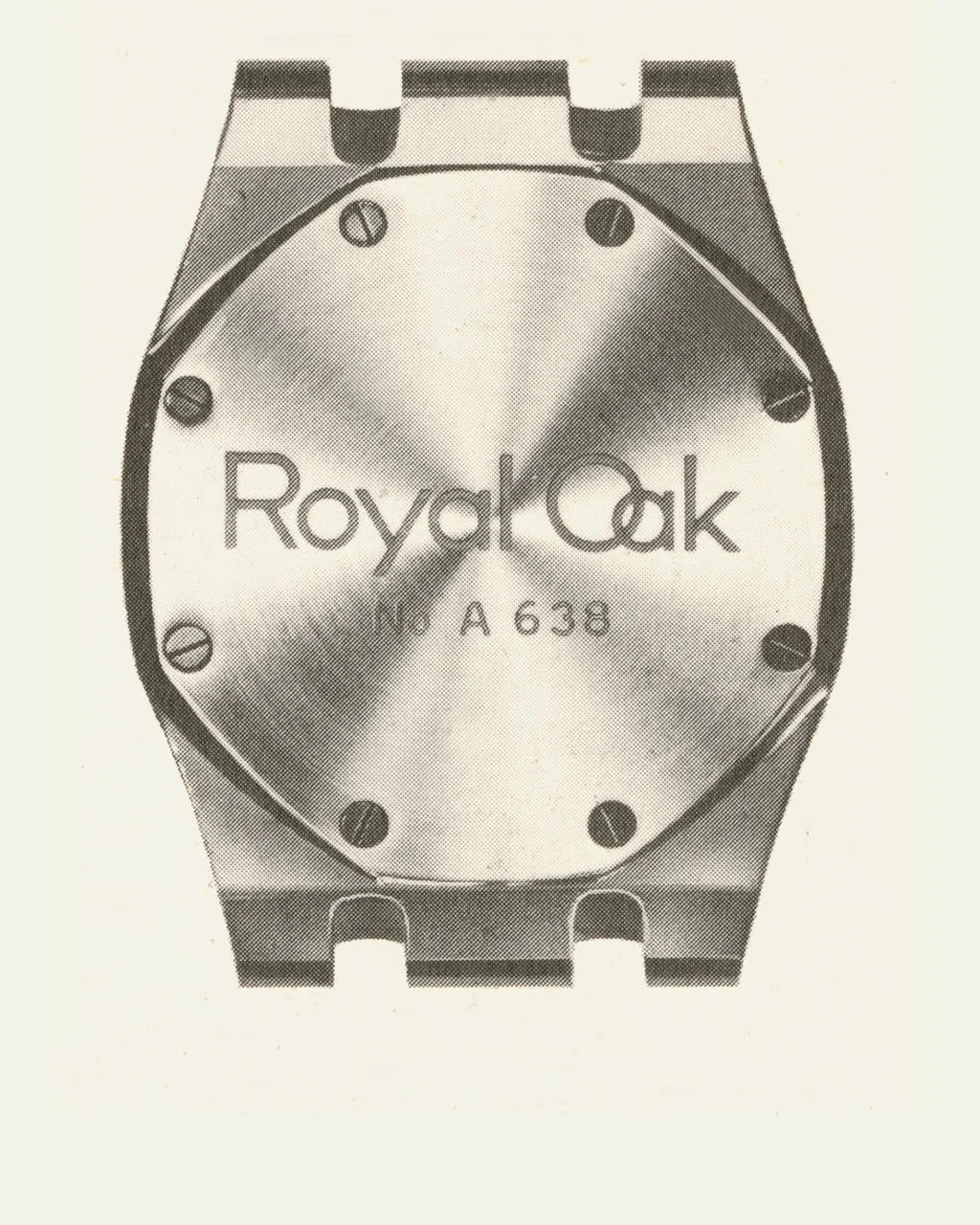
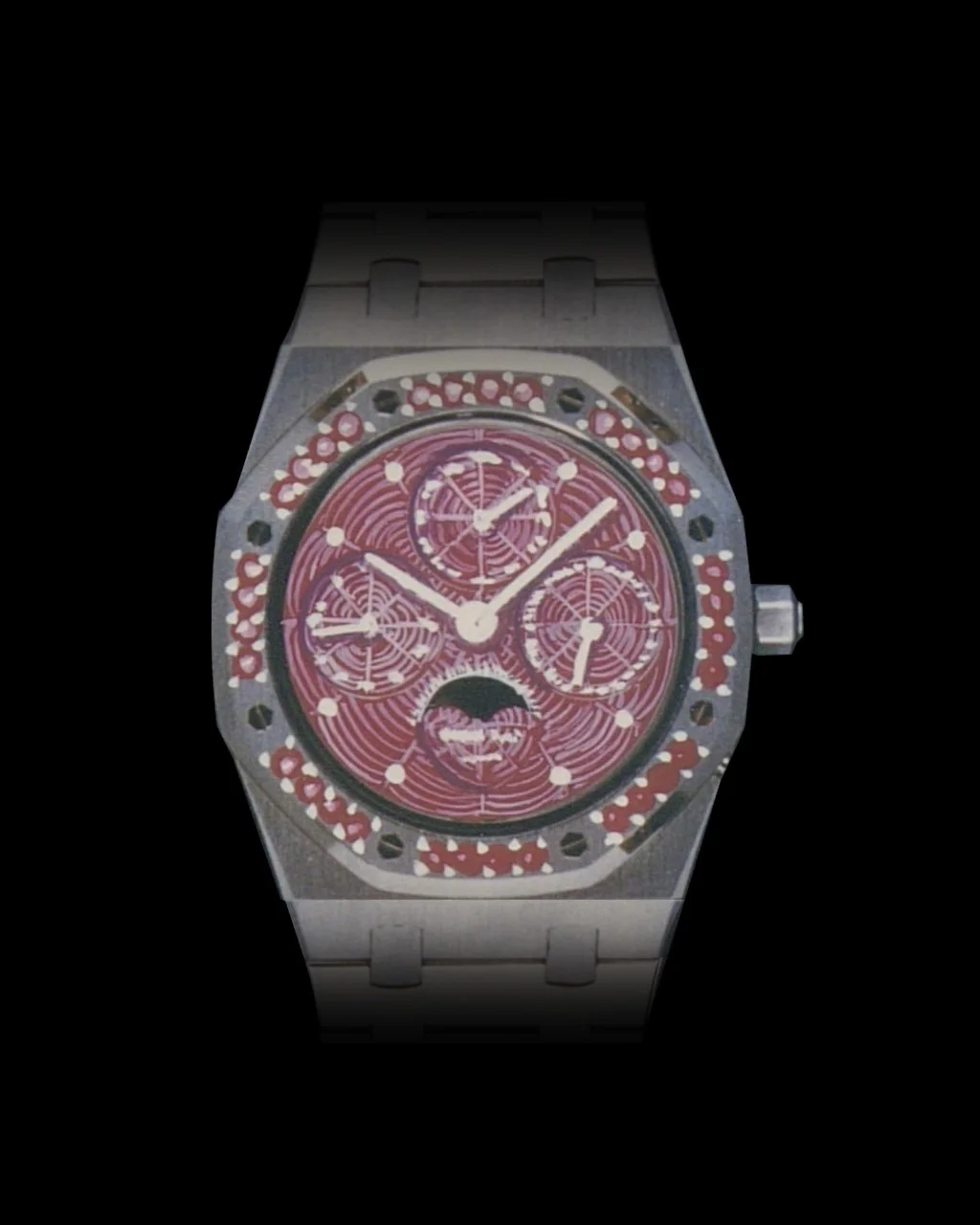
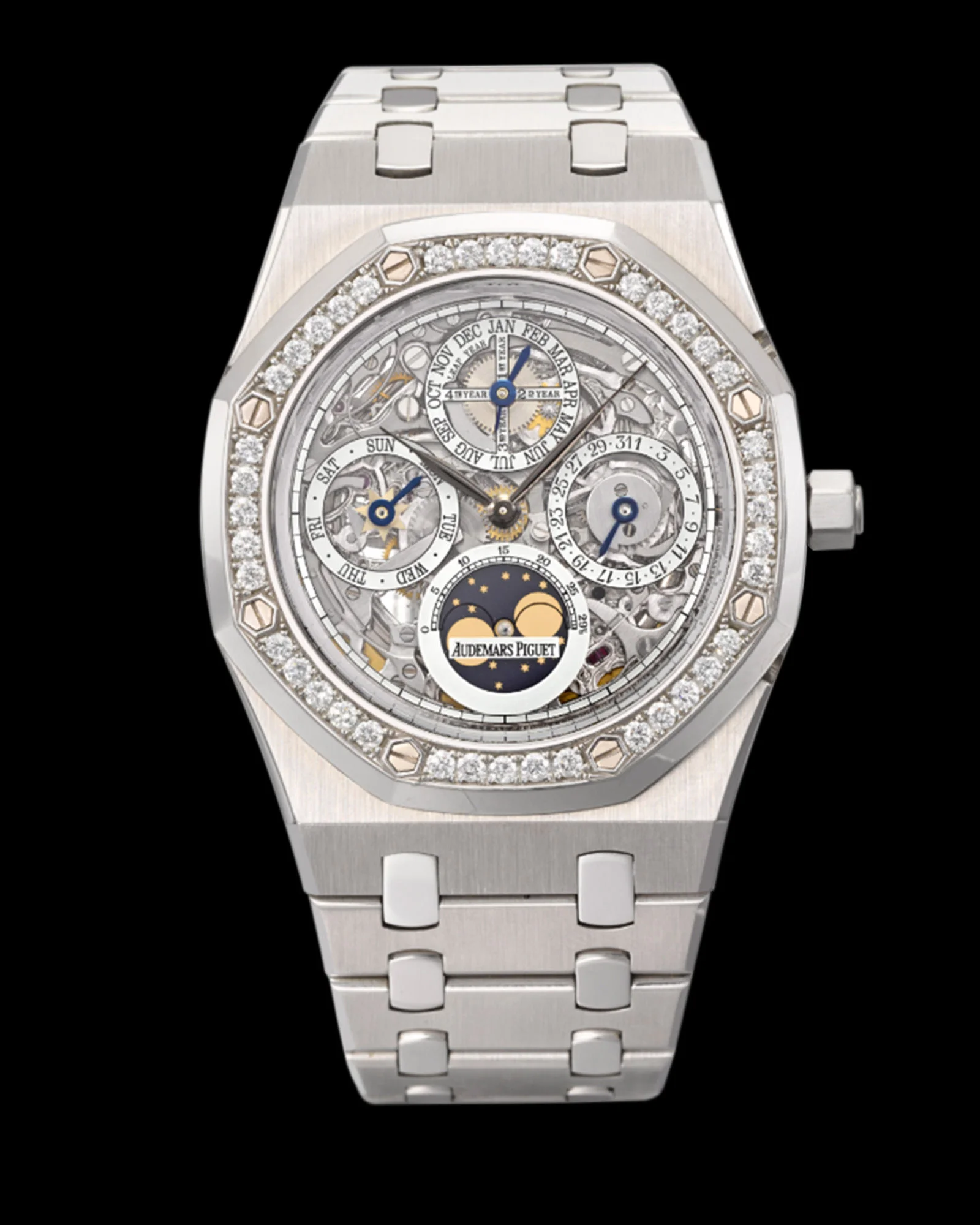
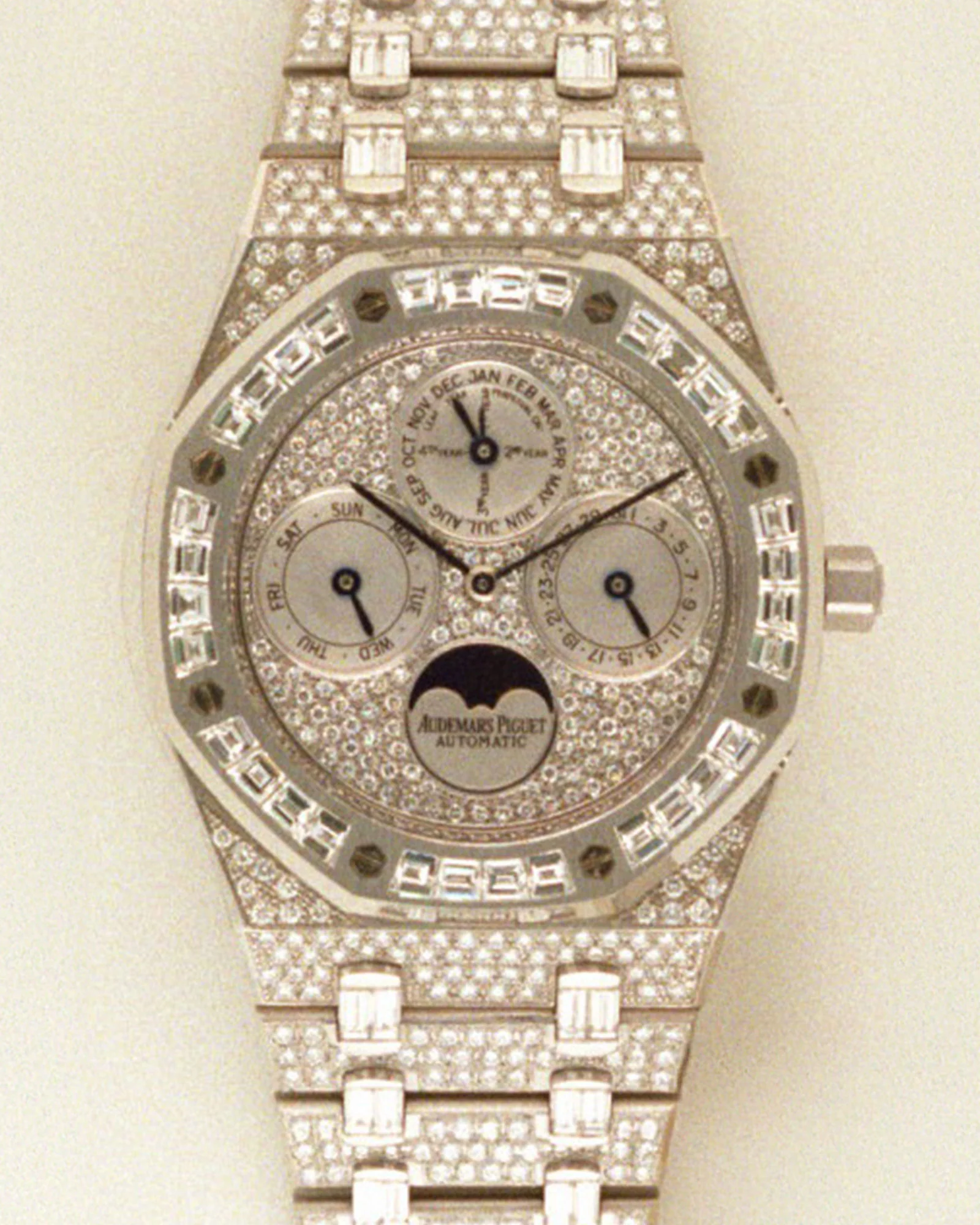
2004. Illustration of Model 25594. A photomontage produced for a promotional publication. Audemars Piguet Archives.

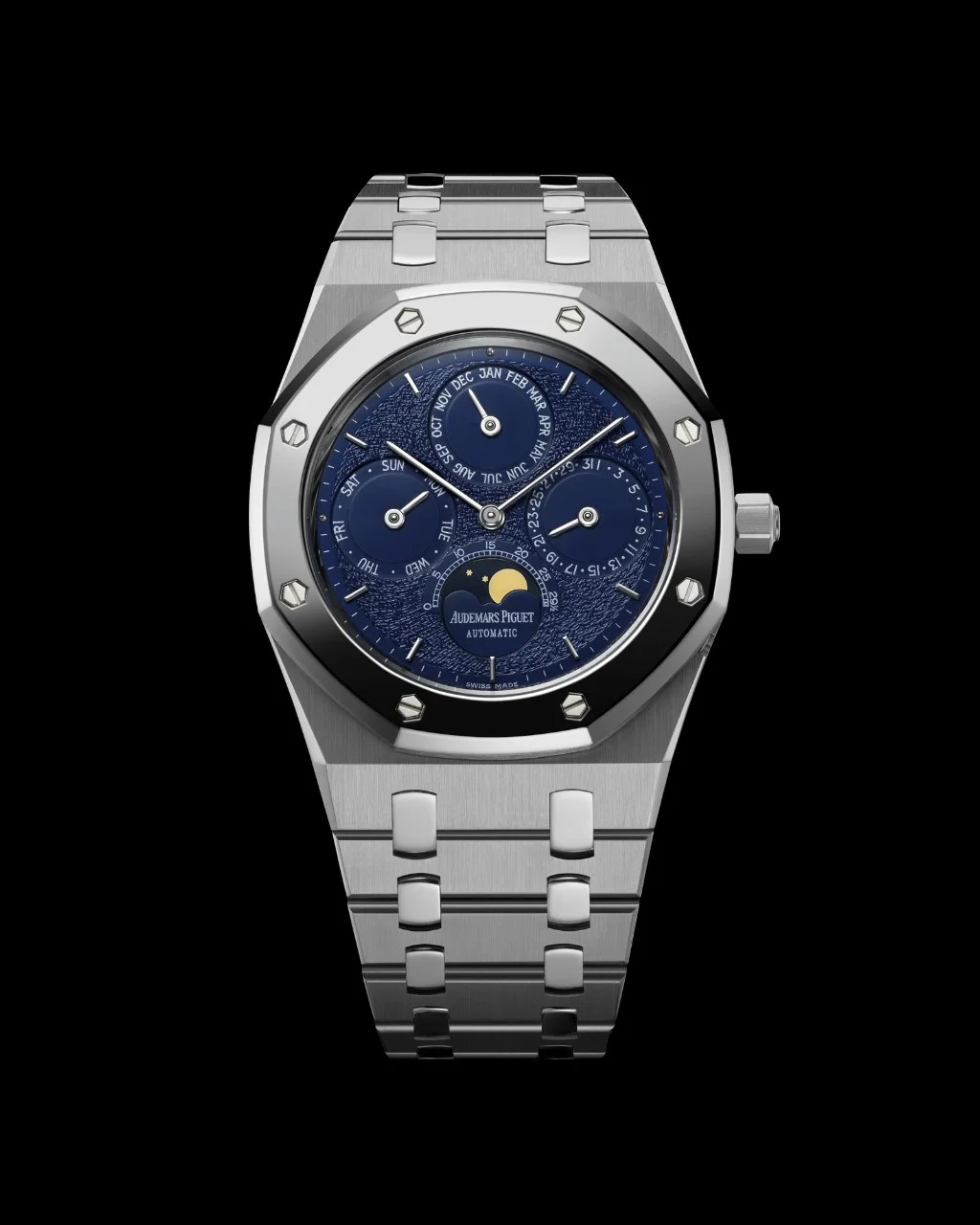
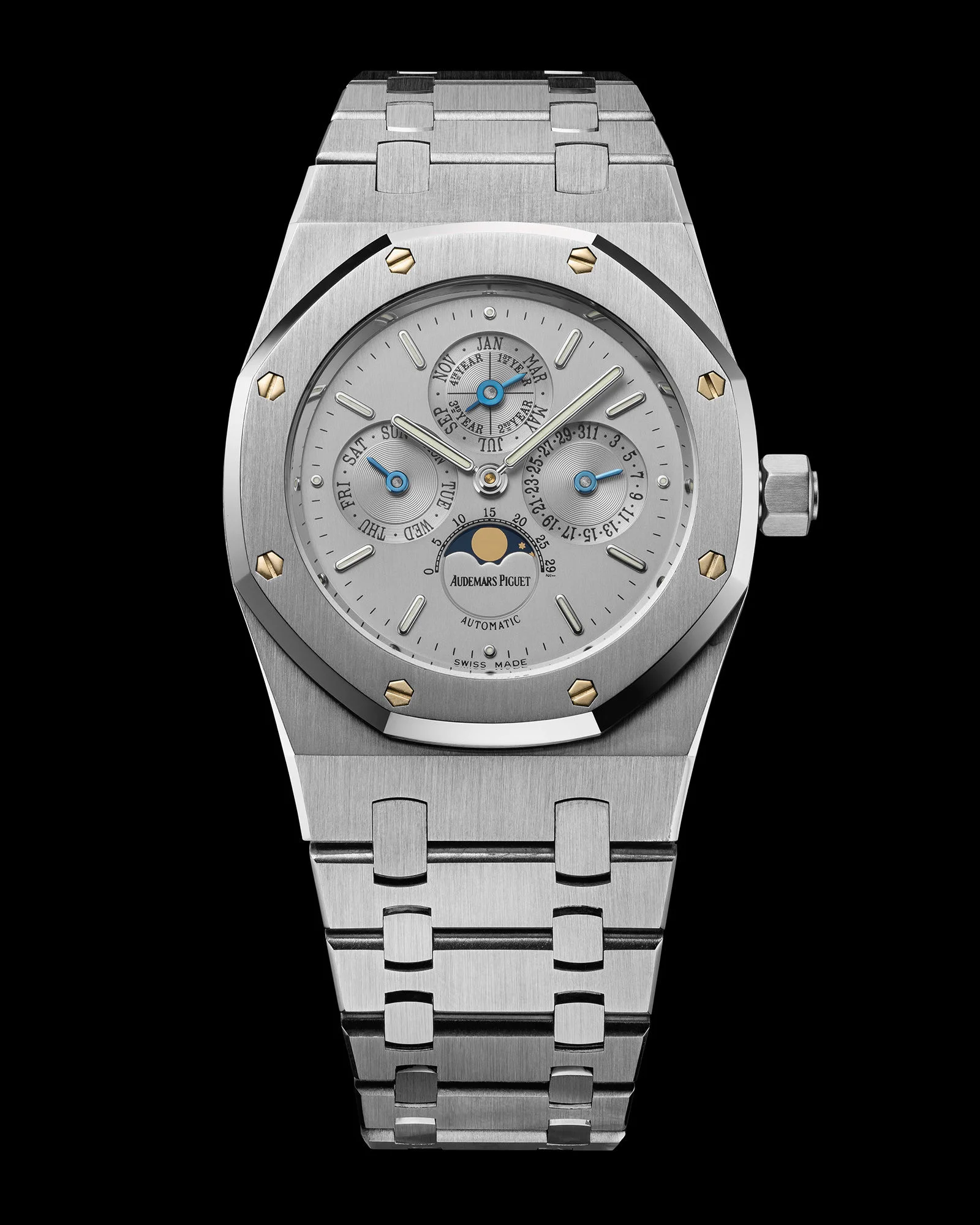
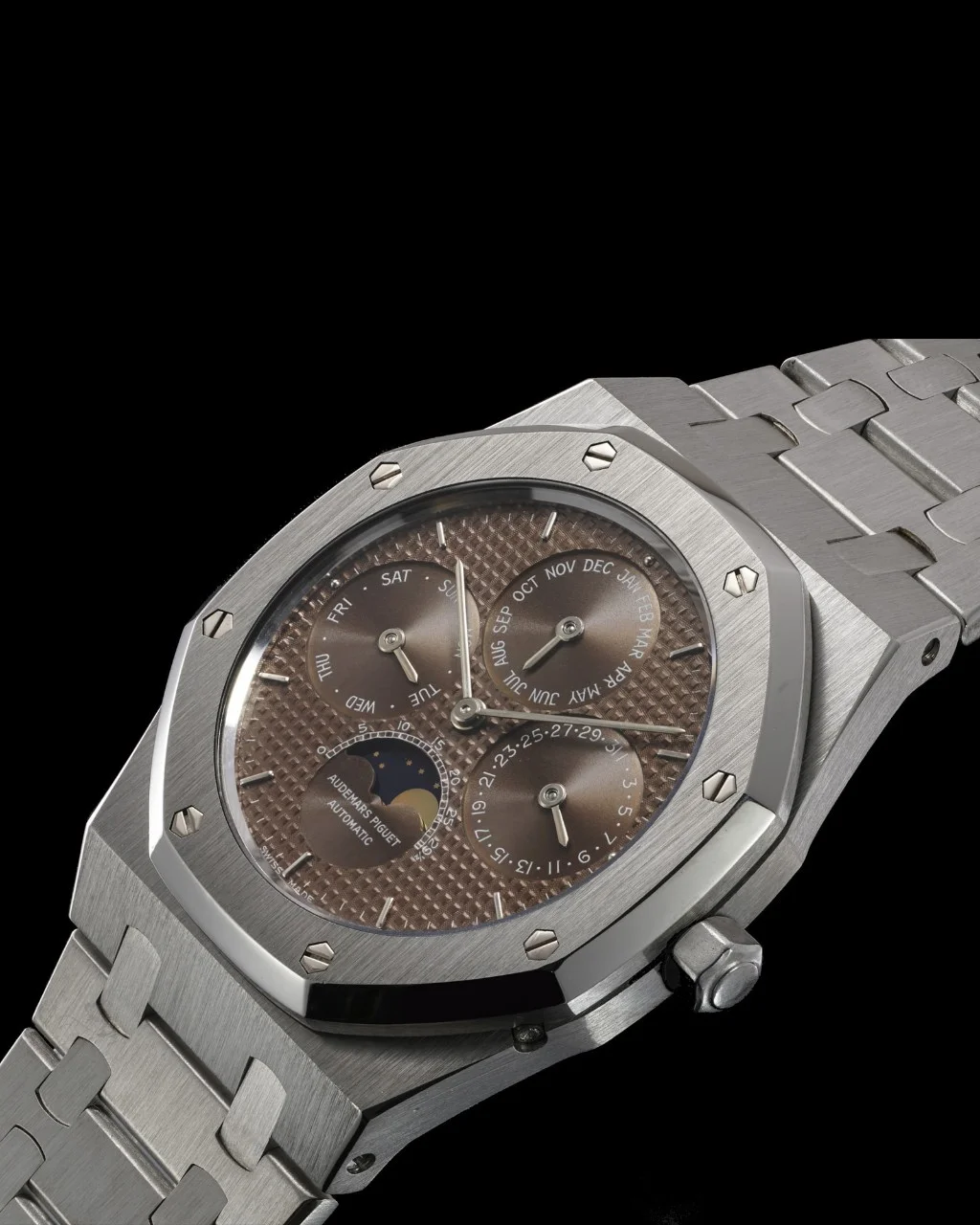
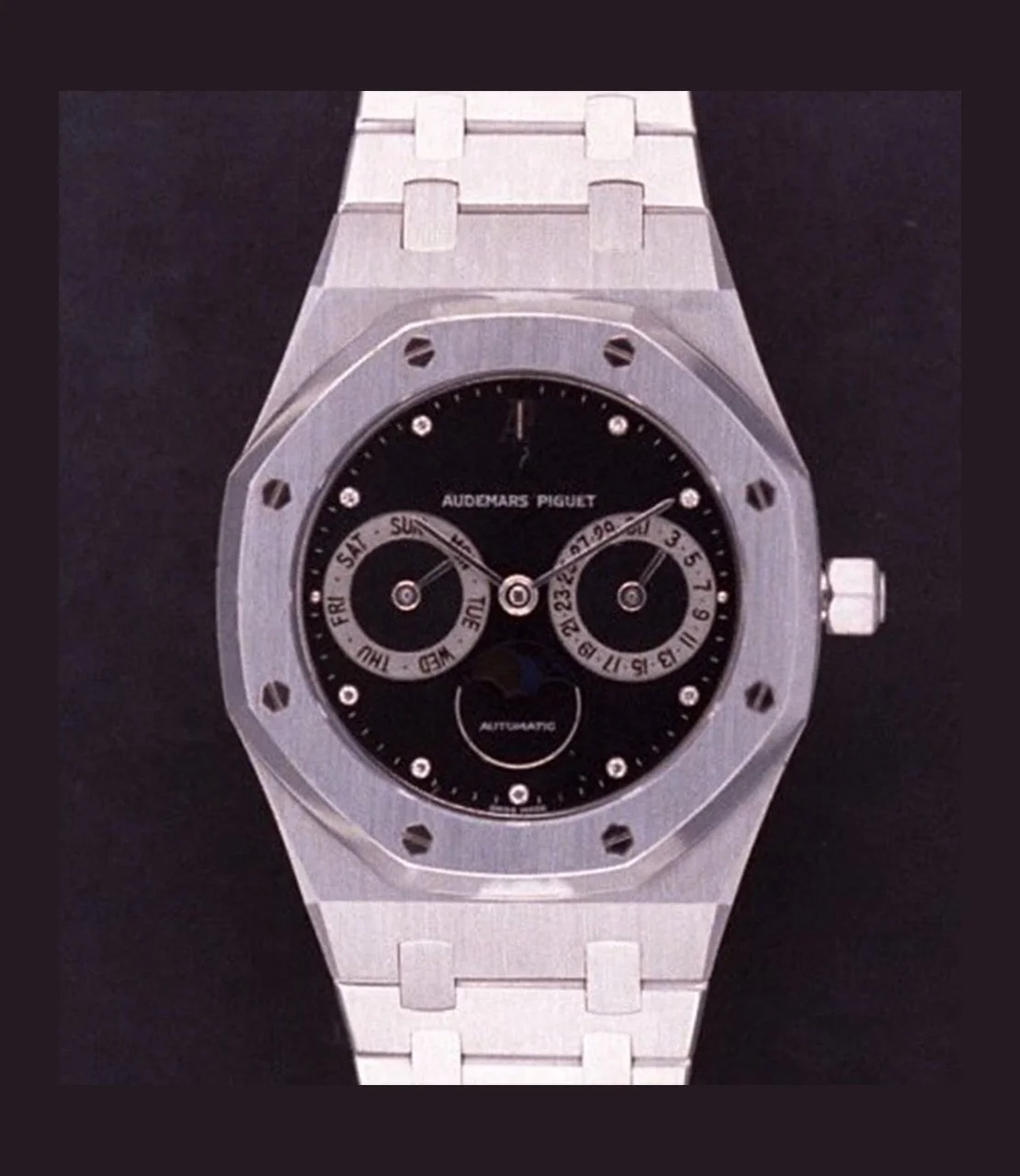
Circa 1984. Royal Oak Day Date Moon Phase 25594ST no. 1302. Pointer-type day-date display. Moon phases. Calibre 2124/2825. Silver-toned dial with Petite Tapisserie motif. 36 mm steel case no. D33257. Prototype presented at the launch of the model. Audemars Piguet Heritage, inv. 463.

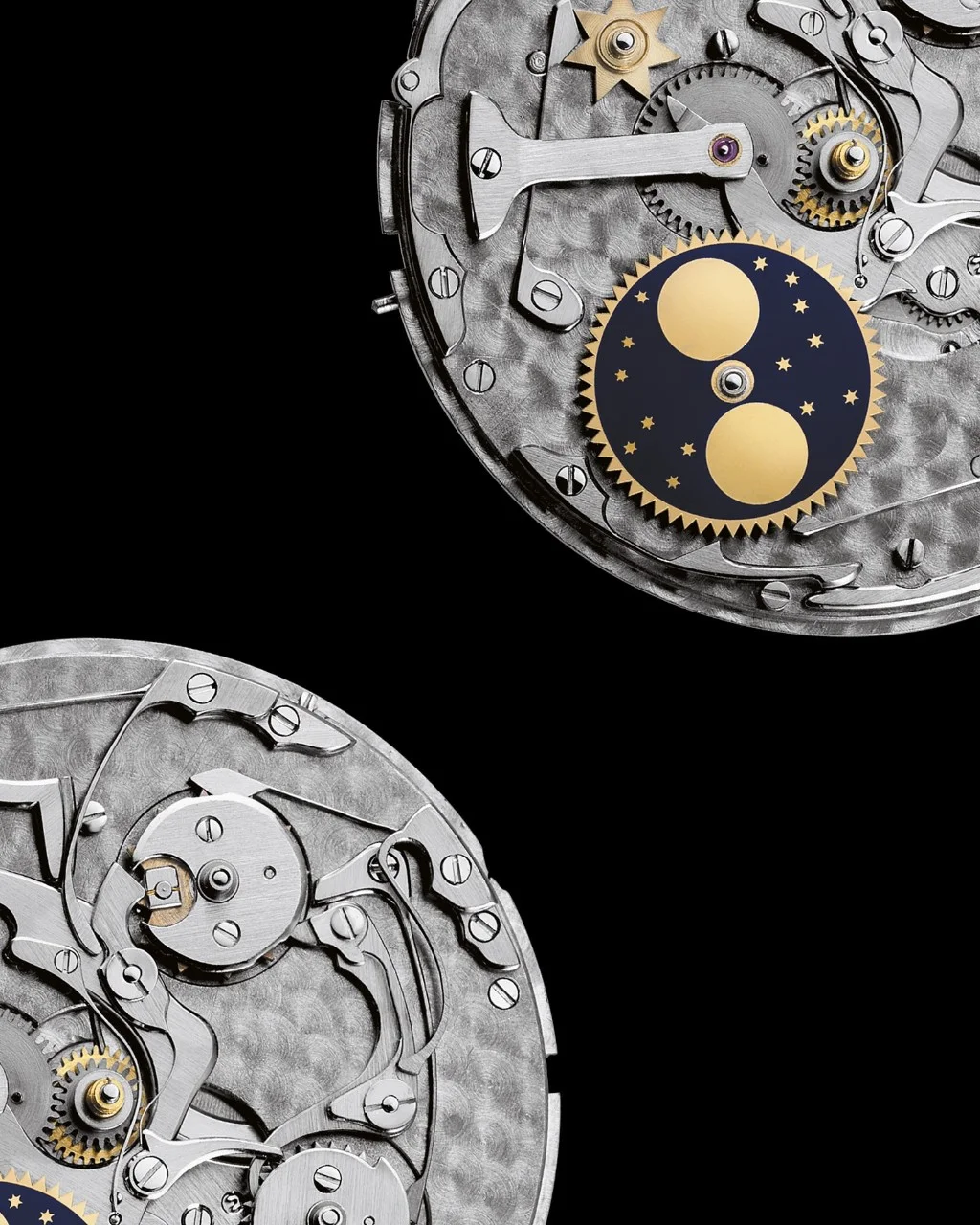
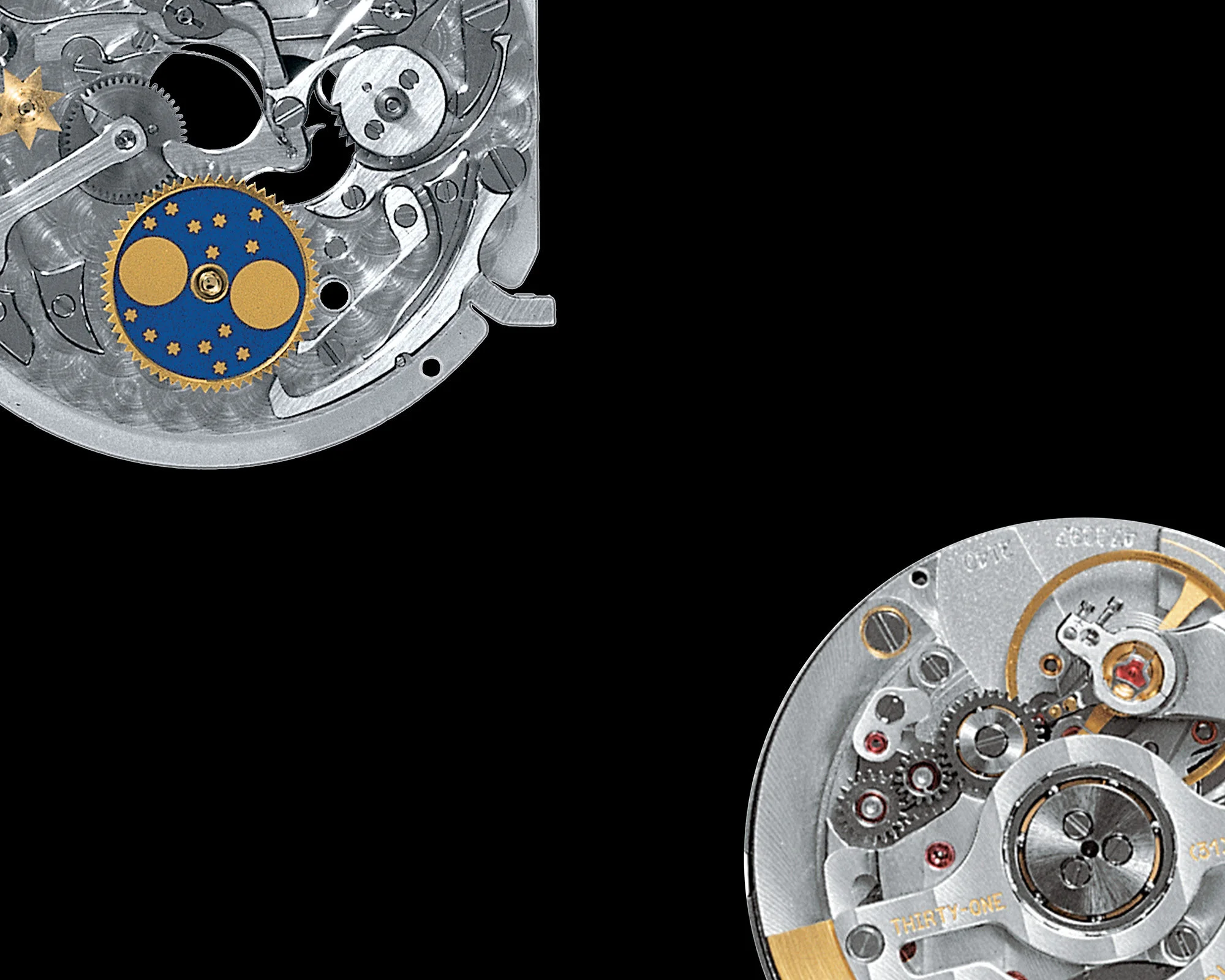
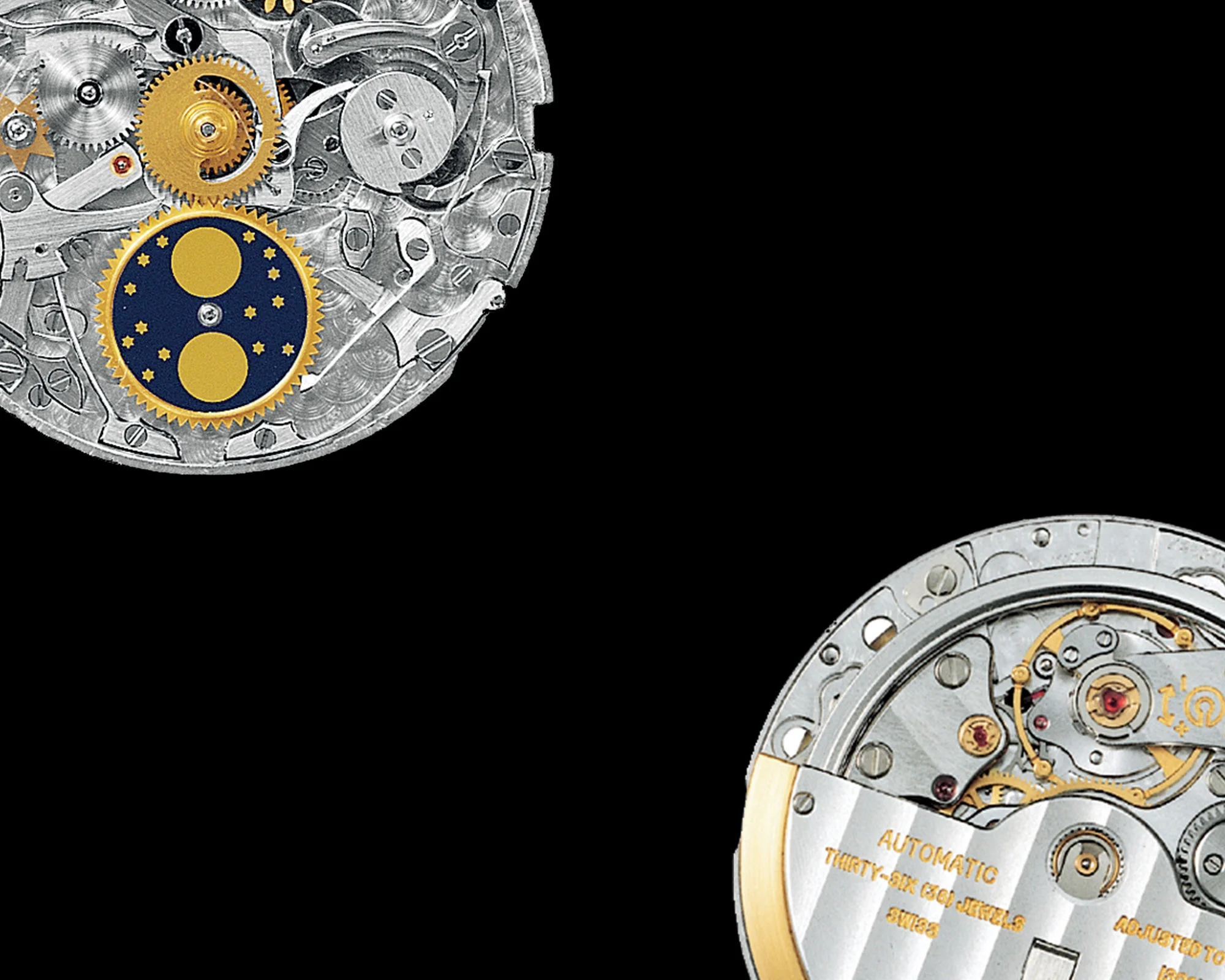
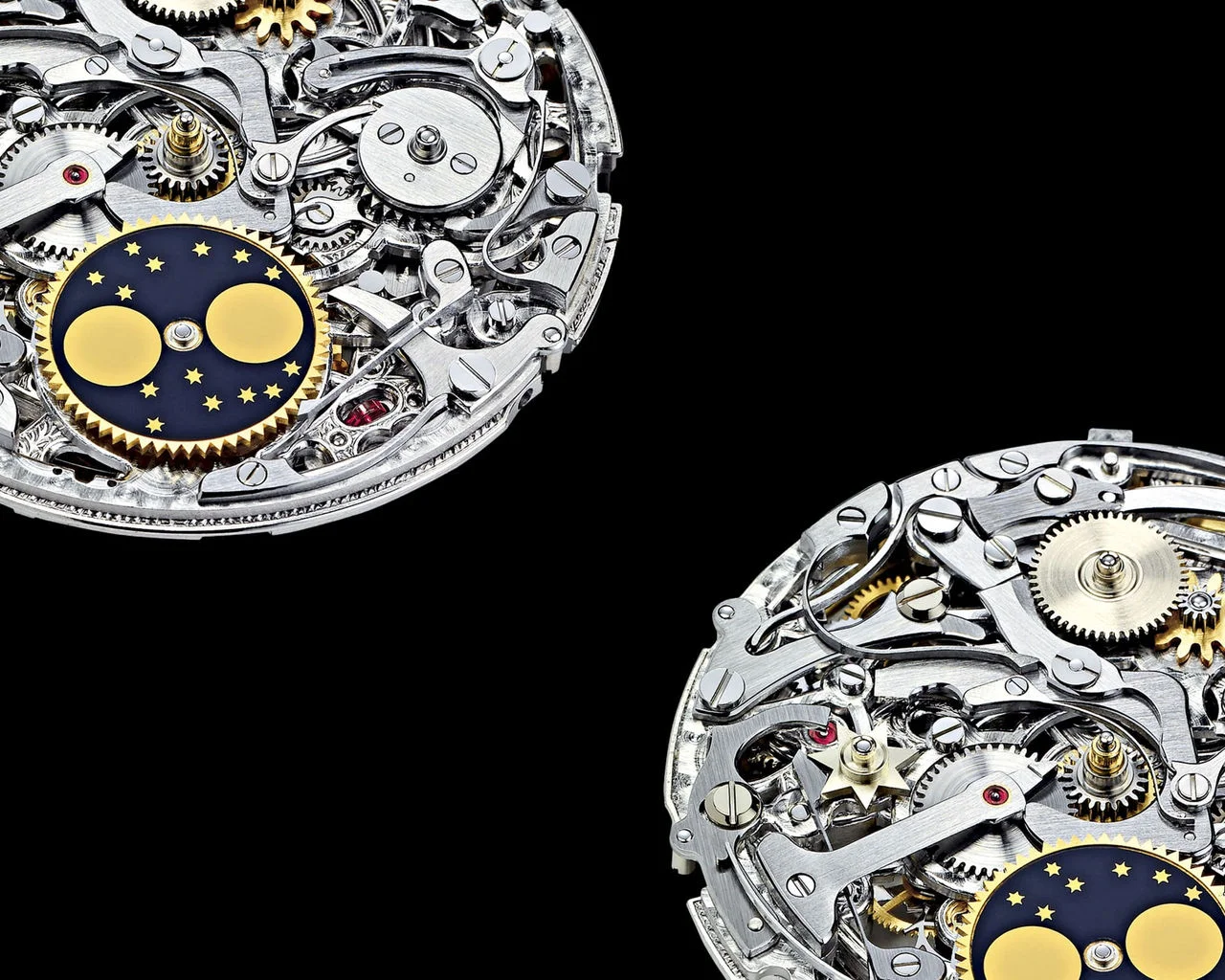
Circa 1984. Cadrature 2825. Additional mechanism created to equip Calibre 2124, then its successors 2224 (1997) and 2324 (2006). Cadrature 2825 was notably used on the Royal Oak Day Date Moon Phases 25594 (1984–2006, 6,534 units) and its derived versions. Image created for the 2006 Audemars Piguet Catalogue.

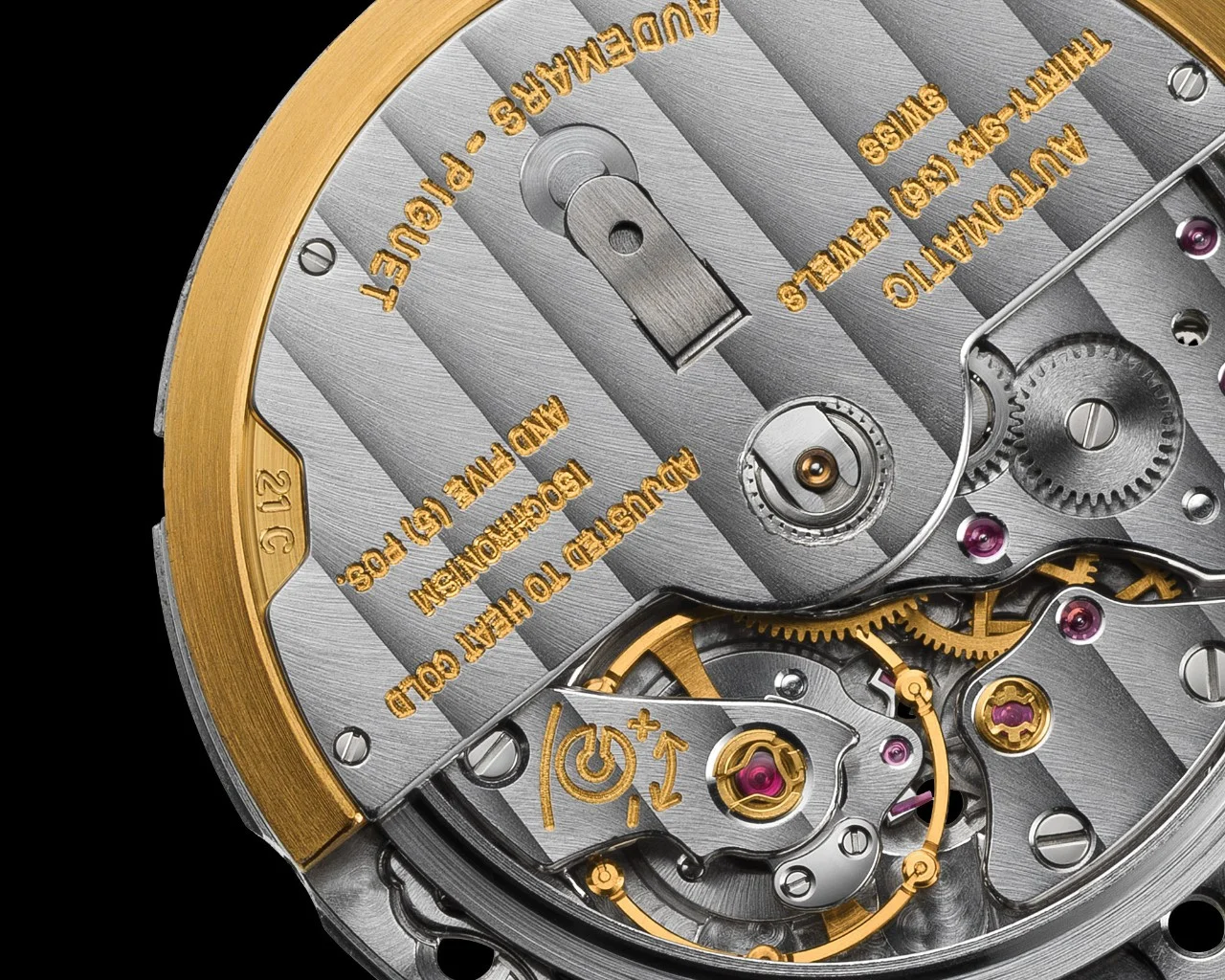
1999. Calibre 2224, bridge-side view. 26 mm diameter (11 ½ lignes), 3.25 mm thick. Hours, minutes, date, selfwinding. 28,800 vph. Movement 576492 produced in 2015. Aesthetics on the bridge side identical to its predecessor Calibre 2124 (dating from 1983, 21,600 vph) and its successor 2324 (from 2004).
Model 25594 is a direct descendant of the Royal Oak Day Date 5572 created in 1983. Developed at the same time but presented a year later, Model 25594 adds a moon-phase aperture endowing the dial with remarkable aesthetic balance.
It proved an immediate success, with 333 units sold in 1984, and more than 600 the following year. Nevertheless, what sets this Royal Oak apart from all others is its longevity. Within the overall history of the Royal Oak, this is the only model to have remained in the catalogue for more than 20 years, from 1985 to 2006.
The 36 mm diameter places this Royal Oak at the heart of the collection. While there was a succession of three-hand 35 and 36 mm generations (4100 from 1977, 4332 from 1983, 14486 from 1986, 14790 from 1992...), Model 25594 remained very stable. Over a 25-year period, the catalogues feature less than 10 dial variations, including all materials. From a technical standpoint, Calibre 2124/2825 gradually gave way between 1997 and 2002 to Calibre 2224/2825, which equipped the last 2,000 or so watches.
Just under half of the 6,534 Royal Oak Day Date Moon Phase 25594 were crafted in steel (ST), 27% combined steel and yellow gold (SA) and 24% were produced in yellow gold (BA). Only 19 white gold (BC) watches are listed, and only one in pink gold (OR), sold in 1997.
Derived models: 25595 (1984), 25627 (1985) and 25658 (1987).
Model 25594 is a direct descendant of the Royal Oak Day Date 5572 created in 1983. Developed at the same time but presented a year later, Model 25594 adds a moon-phase aperture endowing the dial with remarkable aesthetic balance.
It proved an immediate success, with 333 units sold in 1984, and more than 600 the following year. Nevertheless, what sets this Royal Oak apart from all others is its longevity. Within the overall history of the Royal Oak, this is the only model to have remained in the catalogue for more than 20 years, from 1985 to 2006.
The 36 mm diameter places this Royal Oak at the heart of the collection. While there was a succession of three-hand 35 and 36 mm generations (4100 from 1977, 4332 from 1983, 14486 from 1986, 14790 from 1992...), Model 25594 remained very stable. Over a 25-year period, the catalogues feature less than 10 dial variations, including all materials. From a technical standpoint, Calibre 2124/2825 gradually gave way between 1997 and 2002 to Calibre 2224/2825, which equipped the last 2,000 or so watches.
Just under half of the 6,534 Royal Oak Day Date Moon Phase 25594 were crafted in steel (ST), 27% combined steel and yellow gold (SA) and 24% were produced in yellow gold (BA). Only 19 white gold (BC) watches are listed, and only one in pink gold (OR), sold in 1997.
Derived models: 25595 (1984), 25627 (1985) and 25658 (1987).
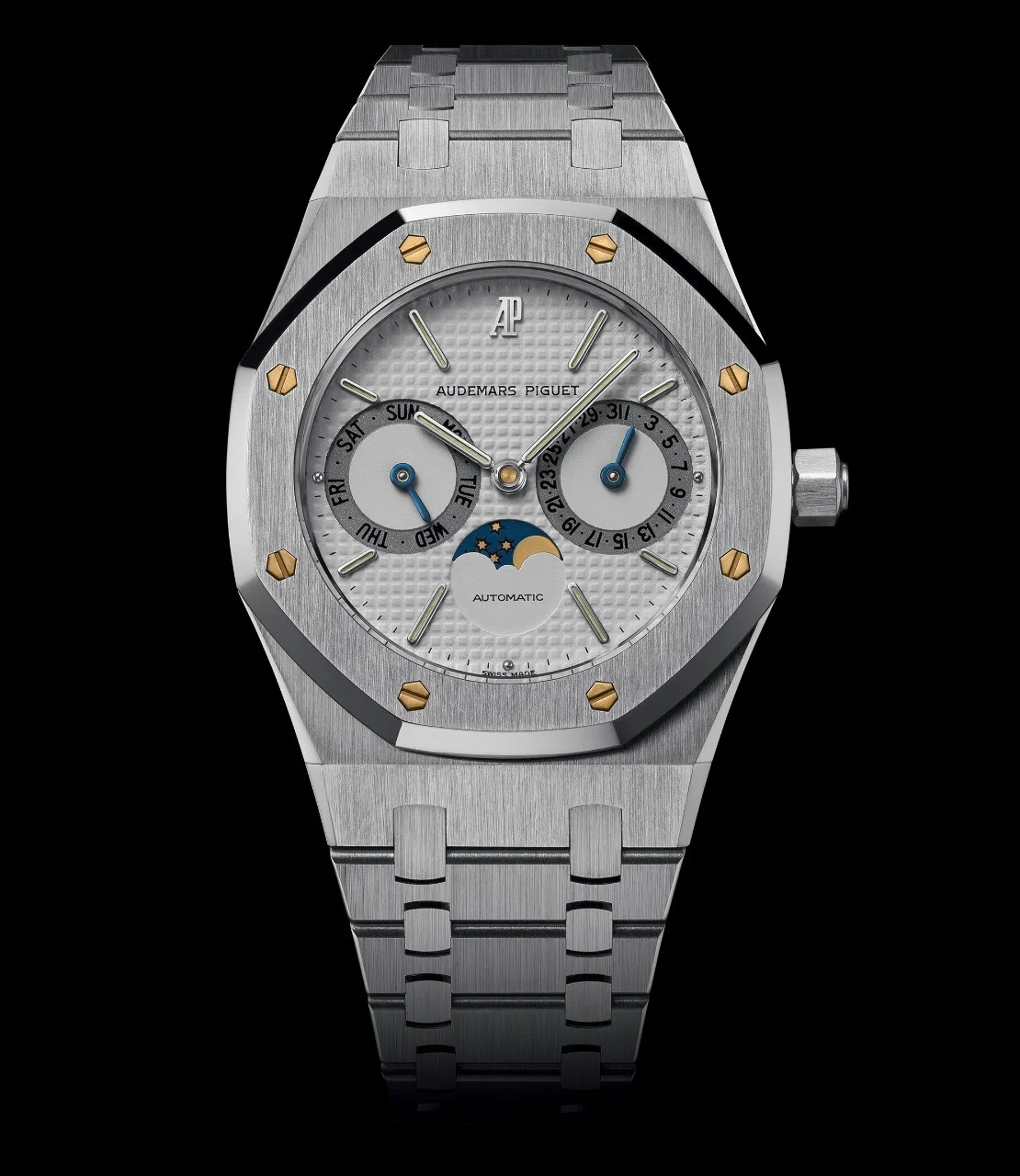
Circa 1984. Royal Oak Day Date Moon Phase 25594ST no. 1302. Pointer-type day-date display. Moon phase. Calibre 2124/2825. Silver-toned dial with Petite Tapisserie motif. 36 mm Steel case no. D33257. Prototype presented at the launch of the model. Audemars Piguet Heritage, inv. 463.
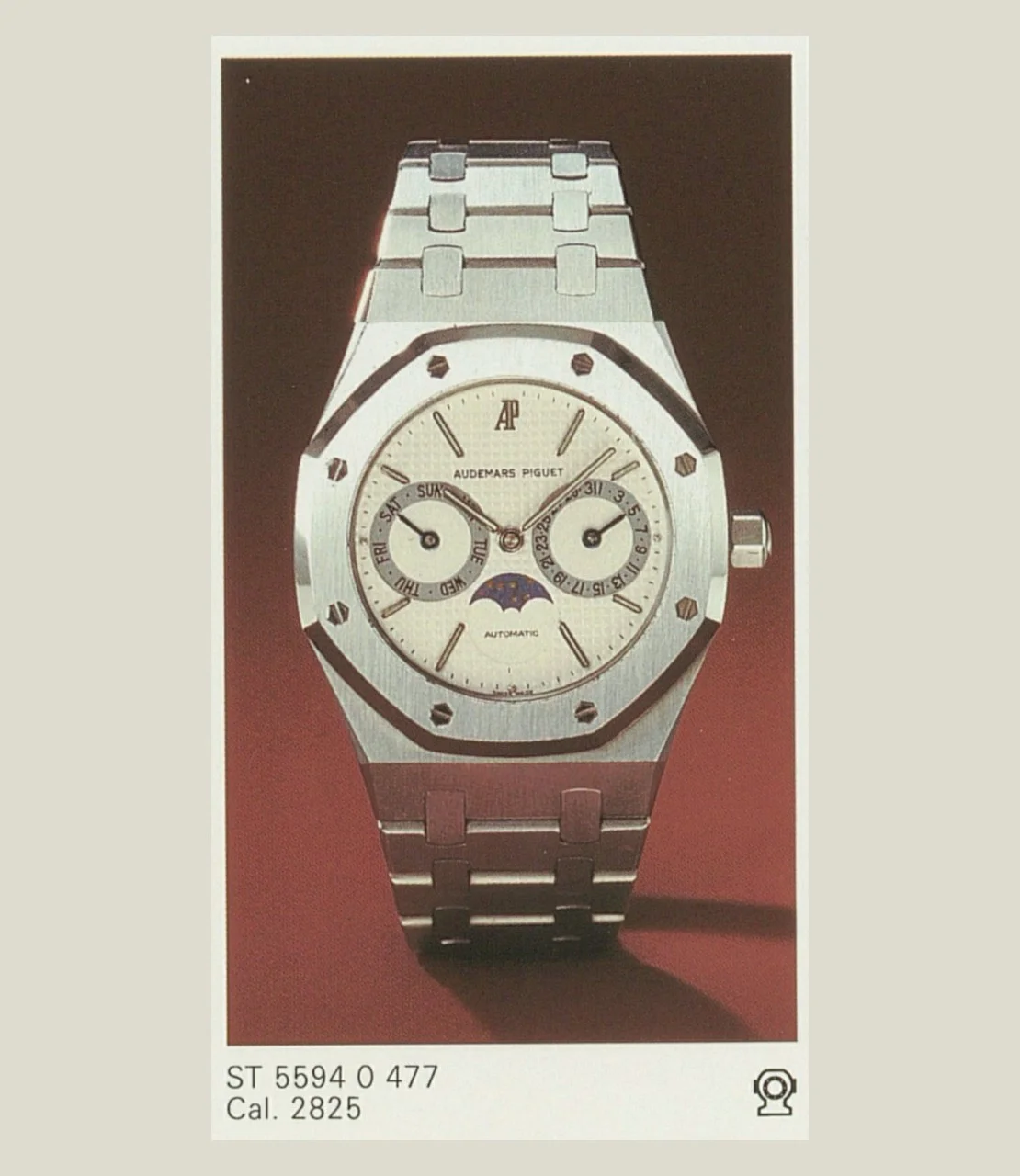
1985. Royal Oak 5594ST (36 mm). 1985 Audemars Piguet Catalogue. Audemars Piguet Archives.
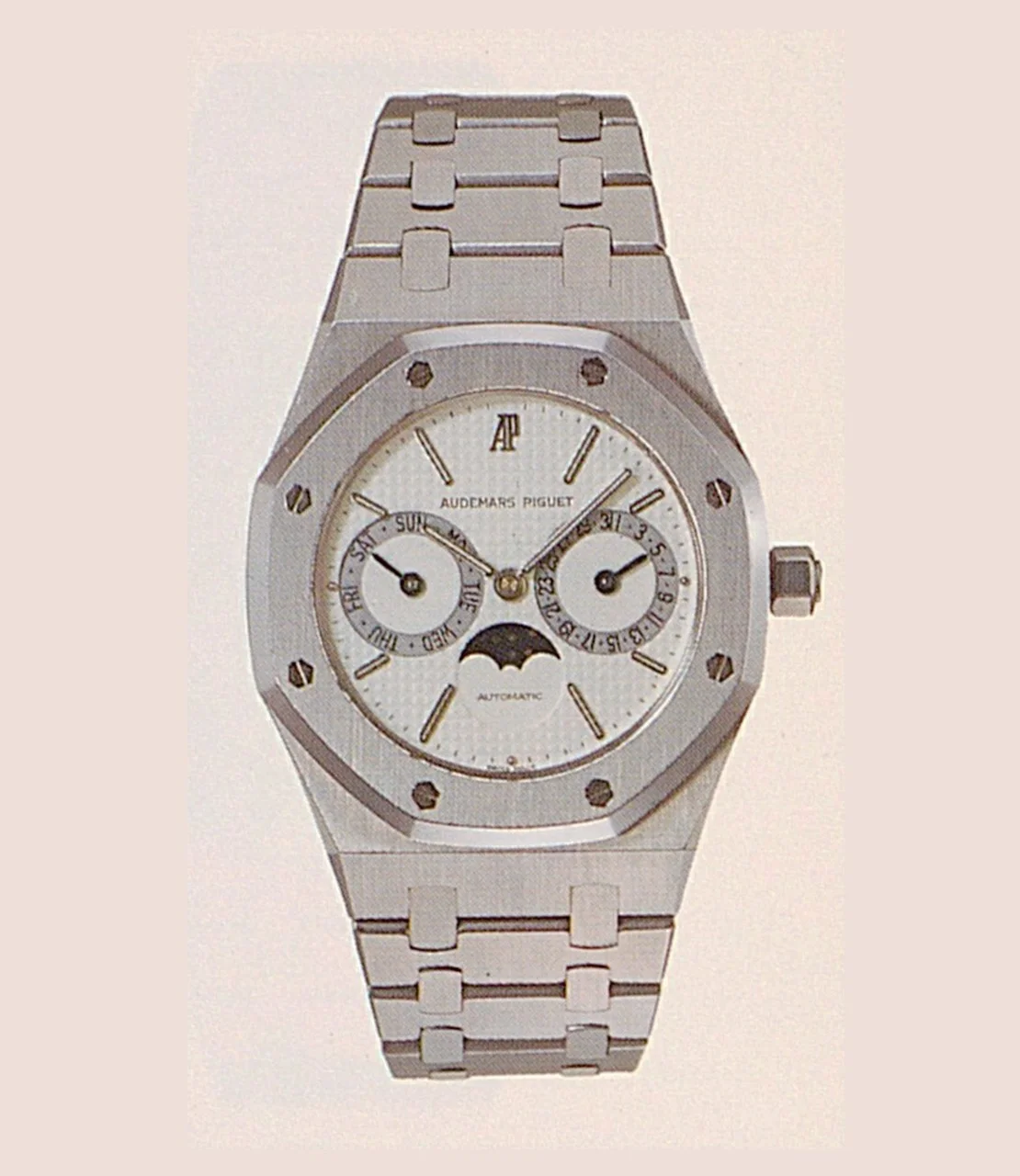
1986-2000. Royal Oak 25594ST (36 mm). Audemars Piguet Catalogues from 1986–87, 1987–1988, 1988–89, 1990–1991, 1993–1994. 1996–97, 1997–98 and 1999–2000 Audemars Piguet Archives.
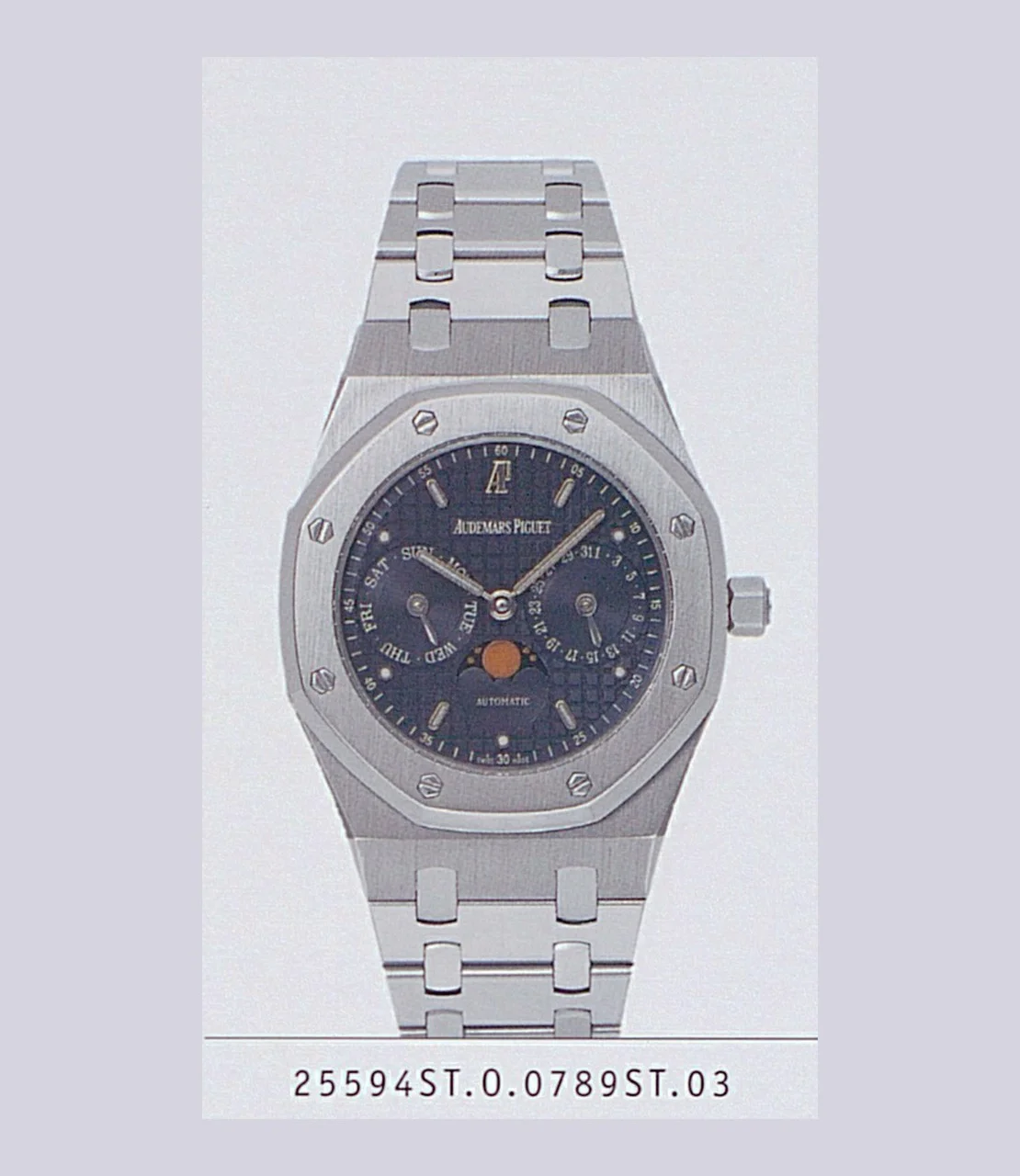
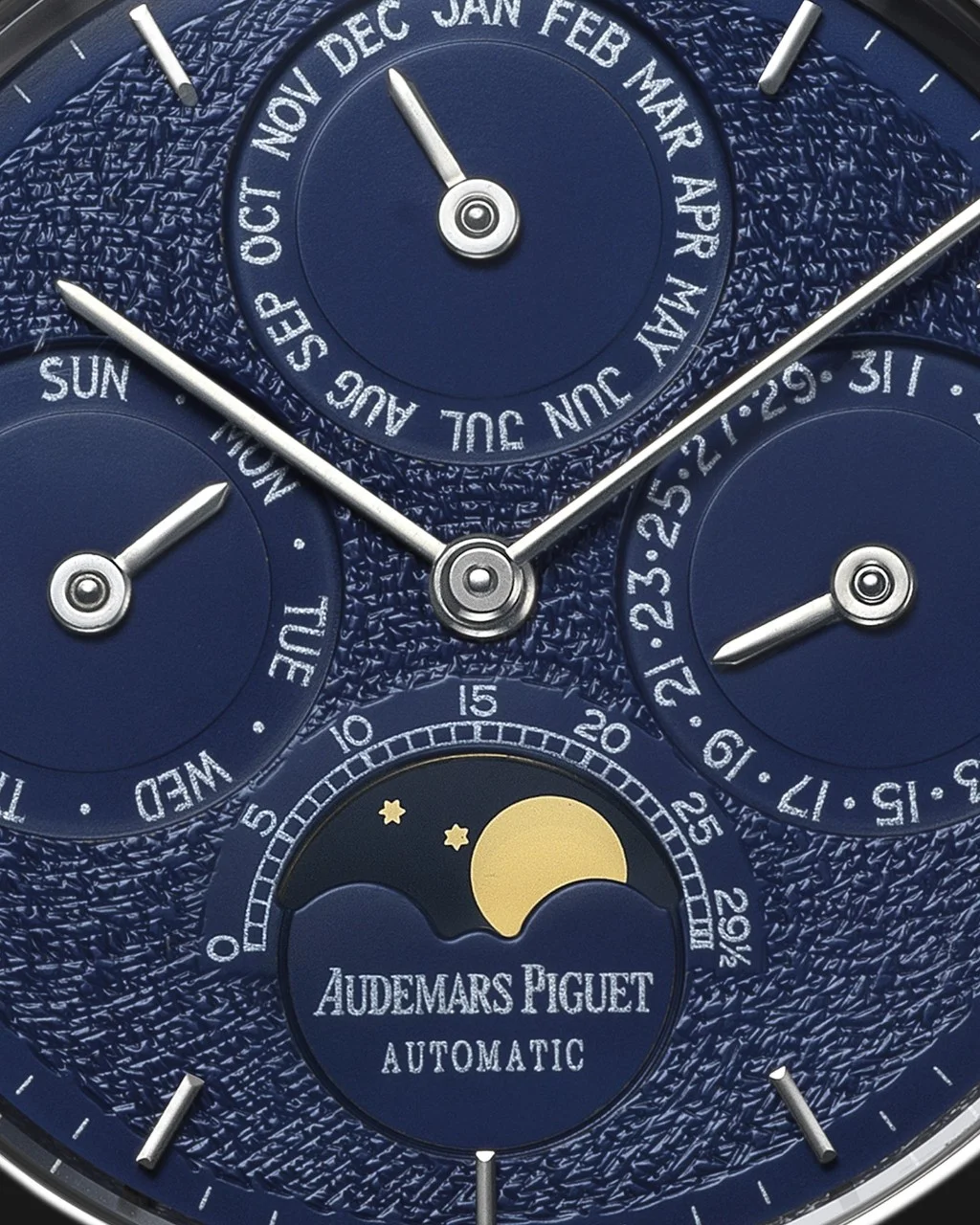
2000–2006. Royal Oak 25594ST (36 mm). 03 “Dark blue” dial. Audemars Piguet Catalogues from 2000–01, 2001–02, 2002–03, 2003–04, 2004–05 and 2005–06. Audemars Piguet Archives.
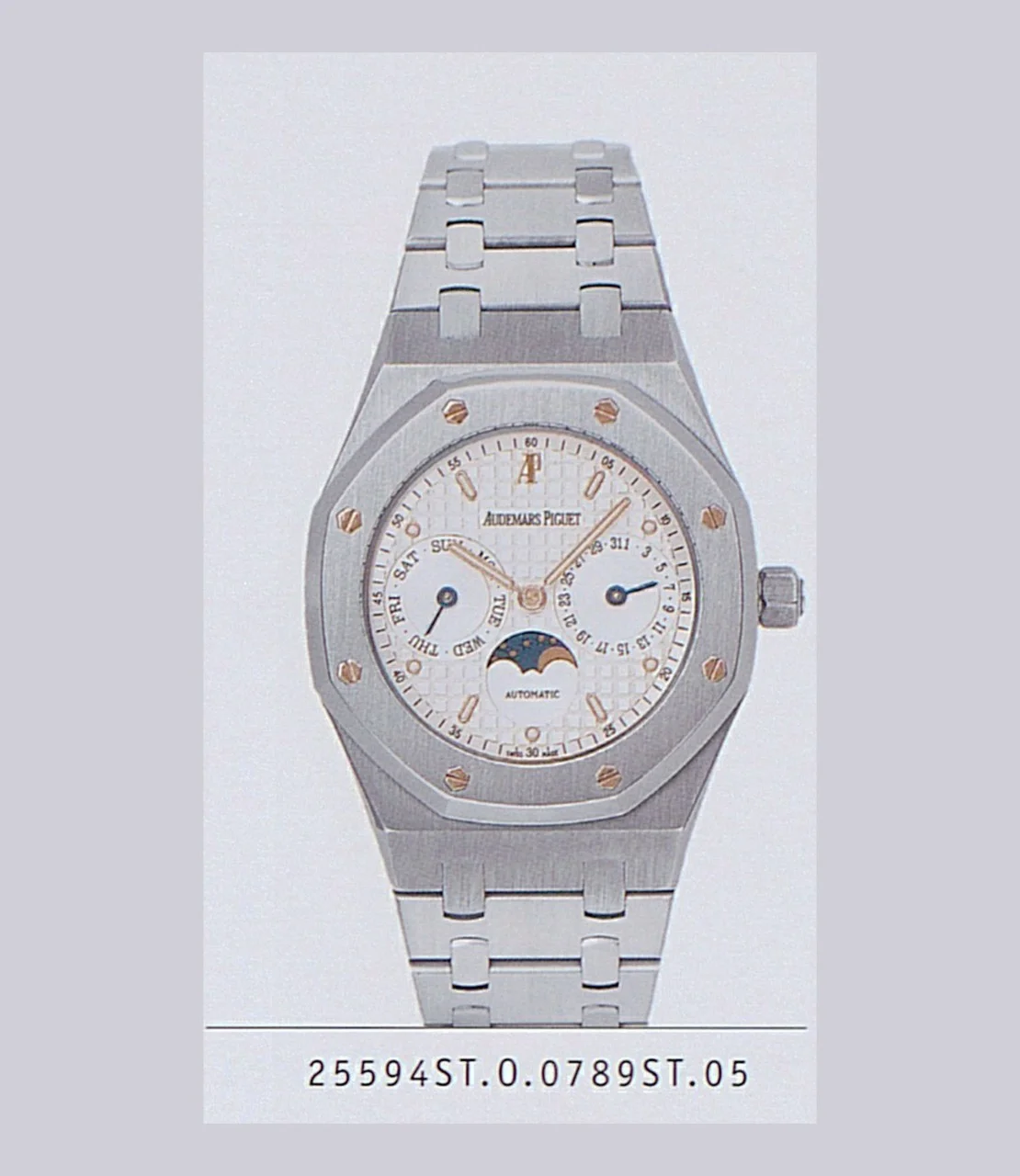
2000–2006. Royal Oak 25594ST (36 mm). 05 ”Silver” dial. Audemars Piguet Catalogues from 2000–01, 2001–02, 2002–03, 2003–04, 2004–05 and 2005–06. Audemars Piguet Archives.
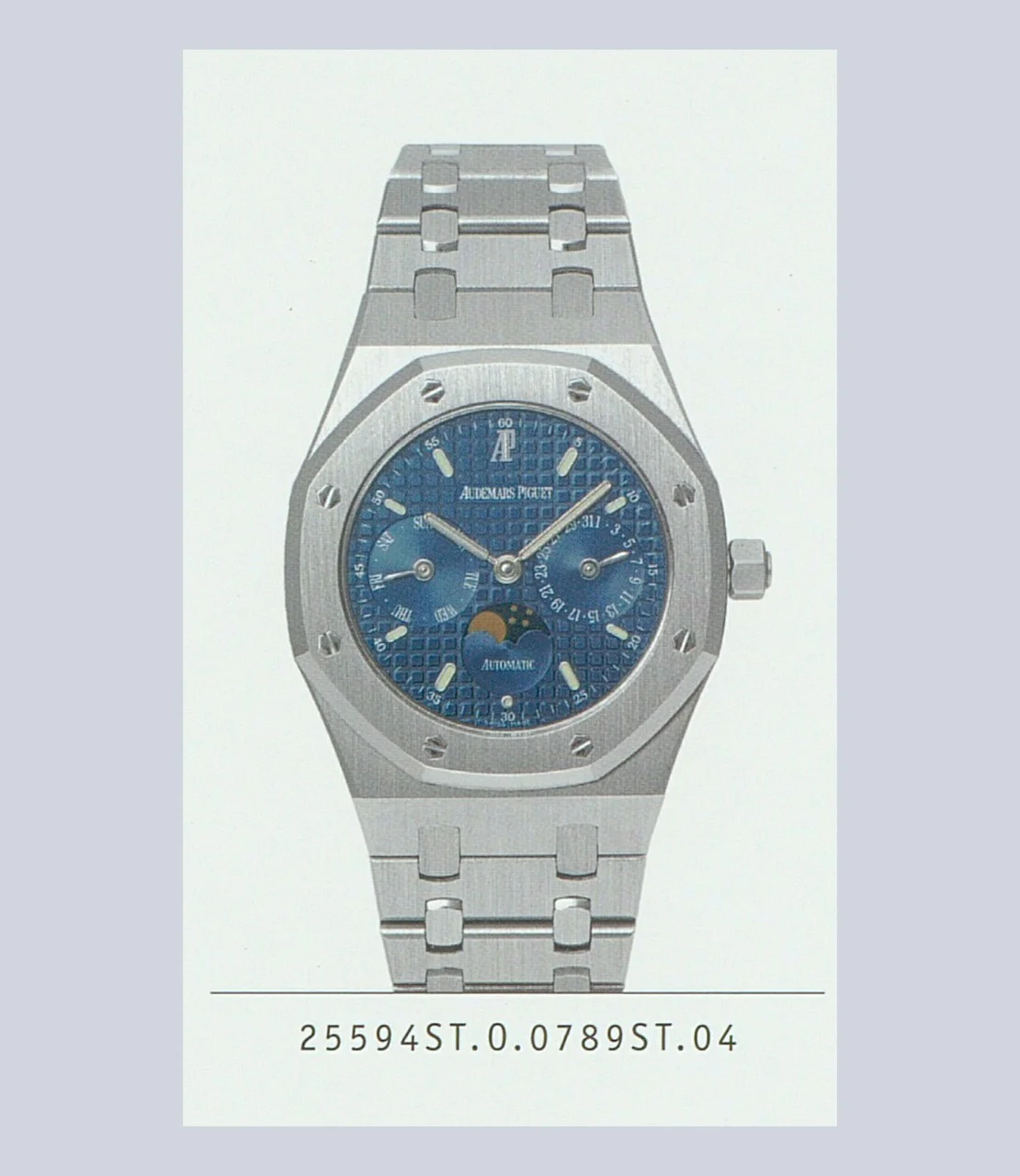
2000–2006. Royal Oak 25594ST (36 mm). “Cosmos Blue” 04 dial. Audemars Piguet Catalogues from 2000–01, 2001–02, 2002–03, 2003–04, 2004–05 and 2005–06. Audemars Piguet Archives.
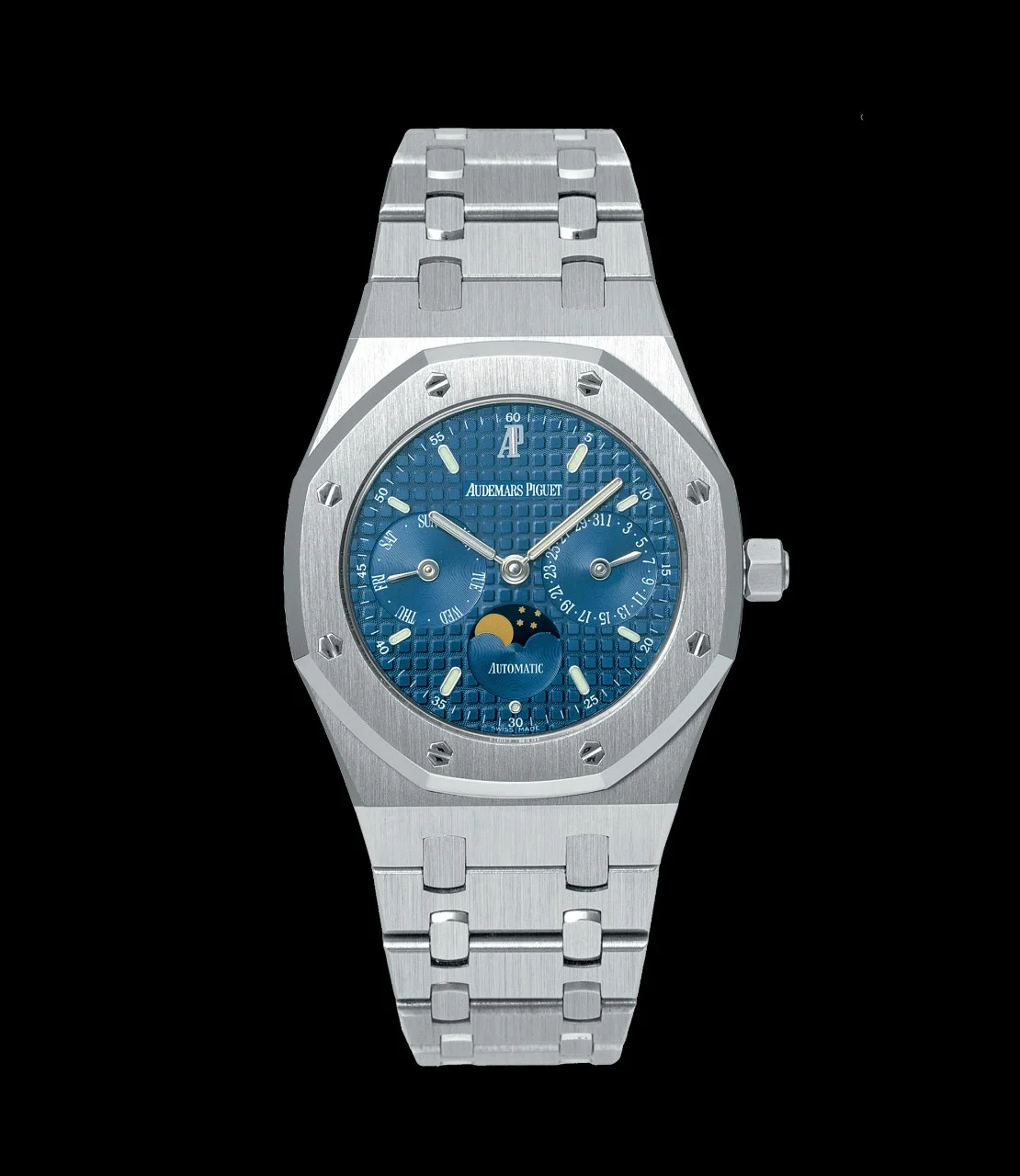
2004. Royal Oak 25594ST (36 mm). “Cosmos Blue” 04 dial. Image created in 2004. Audemars Piguet Archives.
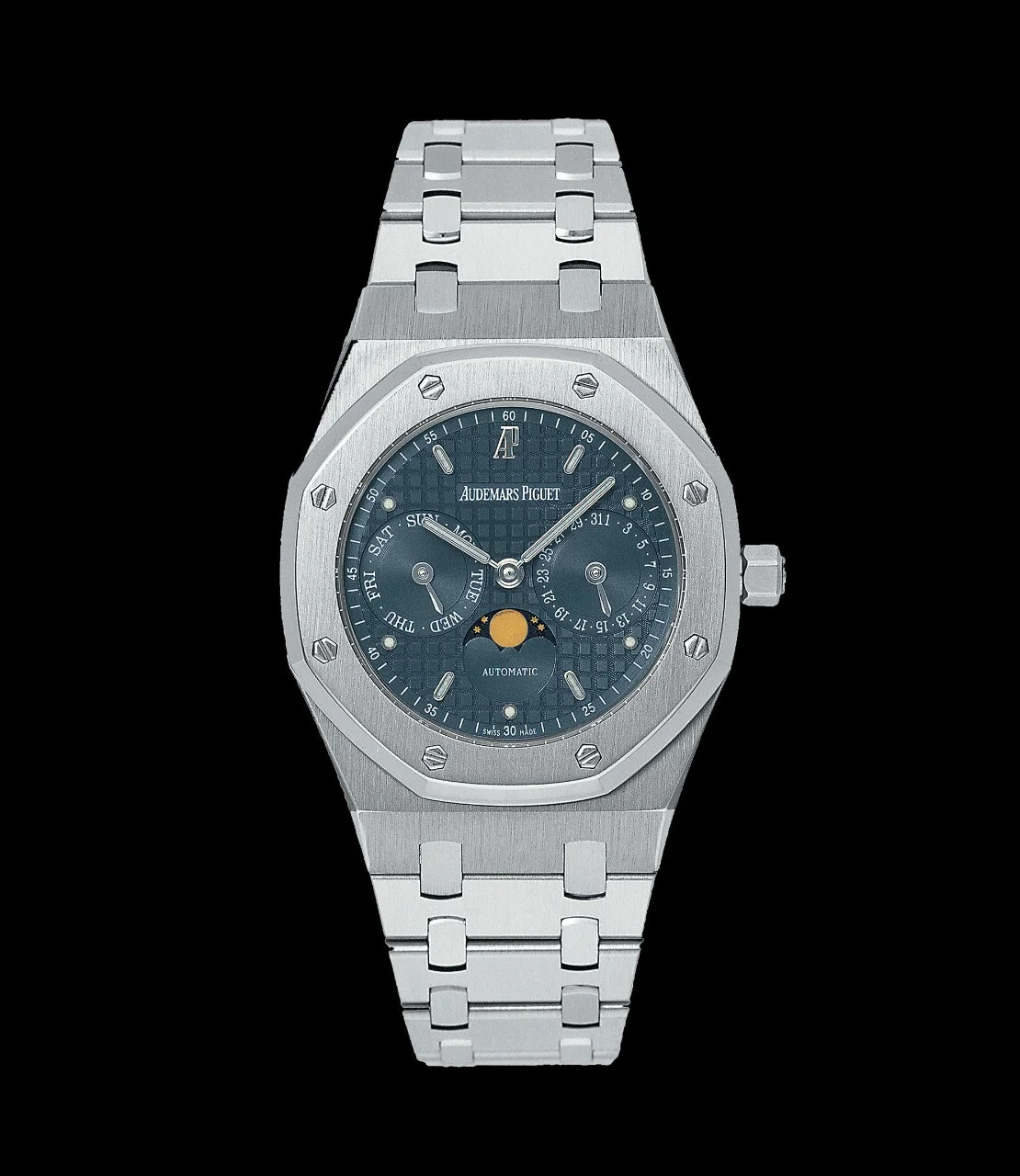
2004. Royal Oak 25594ST (36 mm). 03 “Dark Blue” dial. Image created in 2004. Audemars Piguet Archives.
Although they represent more than half of the production of the Royal Oak Day Date Moon Phase 25594 model, the steel variants have experienced contrasting phases of commercial success.
After relatively slow sales during the 1980s, the 1990s were more dynamic, but it was in the 21st century that the model most regularly exceeded 200 watches sold per year. This revival was notably due to a diversification of dials from the year 2000, with the introduction of the "Dark Blue" and the "Cosmos Blue” variants.
Sales from 1984 to 2007: a total of 3,131 units, of which 4 (Royal Oak 5572 sold in 1983, later transformed into 25594), 70 (1984), 145 (1985), 85 (1986), 65 (1987), 53 (1988), 41 (1989), 38 (1990), 94 (1991), 142 (1992), 168 (1993), 152 (1994), 115 (1995), 91 (1996), 126 (1997), 219 (1998), 86 (1999), 109 (2000), 264 (2001), 253 (2002), 266 (2003, 236 (2004), 253 (2005), 39 (2006) and 17 (2007).
Although they represent more than half of the production of the Royal Oak Day Date Moon Phase 25594 model, the steel variants have experienced contrasting phases of commercial success.
After relatively slow sales during the 1980s, the 1990s were more dynamic, but it was in the 21st century that the model most regularly exceeded 200 watches sold per year. This revival was notably due to a diversification of dials from the year 2000, with the introduction of the "Dark Blue" and the "Cosmos Blue” variants.
Sales from 1984 to 2007: a total of 3,131 units, of which 4 (Royal Oak 5572 sold in 1983, later transformed into 25594), 70 (1984), 145 (1985), 85 (1986), 65 (1987), 53 (1988), 41 (1989), 38 (1990), 94 (1991), 142 (1992), 168 (1993), 152 (1994), 115 (1995), 91 (1996), 126 (1997), 219 (1998), 86 (1999), 109 (2000), 264 (2001), 253 (2002), 266 (2003, 236 (2004), 253 (2005), 39 (2006) and 17 (2007).
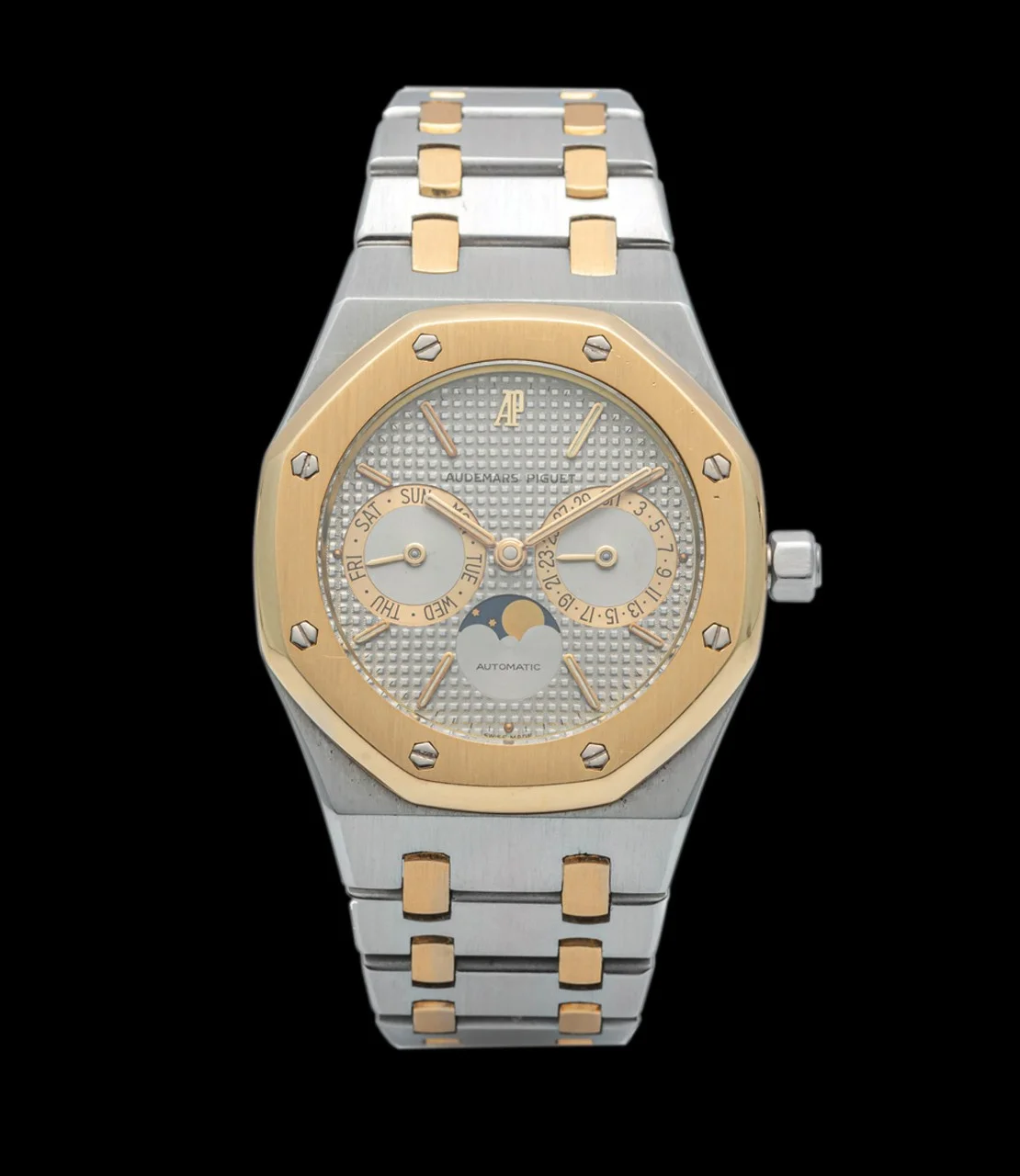
1991. Royal Oak Day Date Moon Phase 25594SA (1984), No. 1659. Pointer-type day-date display. Moon phase. Caibre 2124/2825, Movement 340811. Bracelet 477. Grey dial with T21 Tapisserie motif. Steel and 18-carat yellow gold case, 36 mm. Sold to a client in Singapore in July 1991. Auctioned by Antiquorum Hong Kong on December 5, 2021 (Lot 331). © Antiquorum.
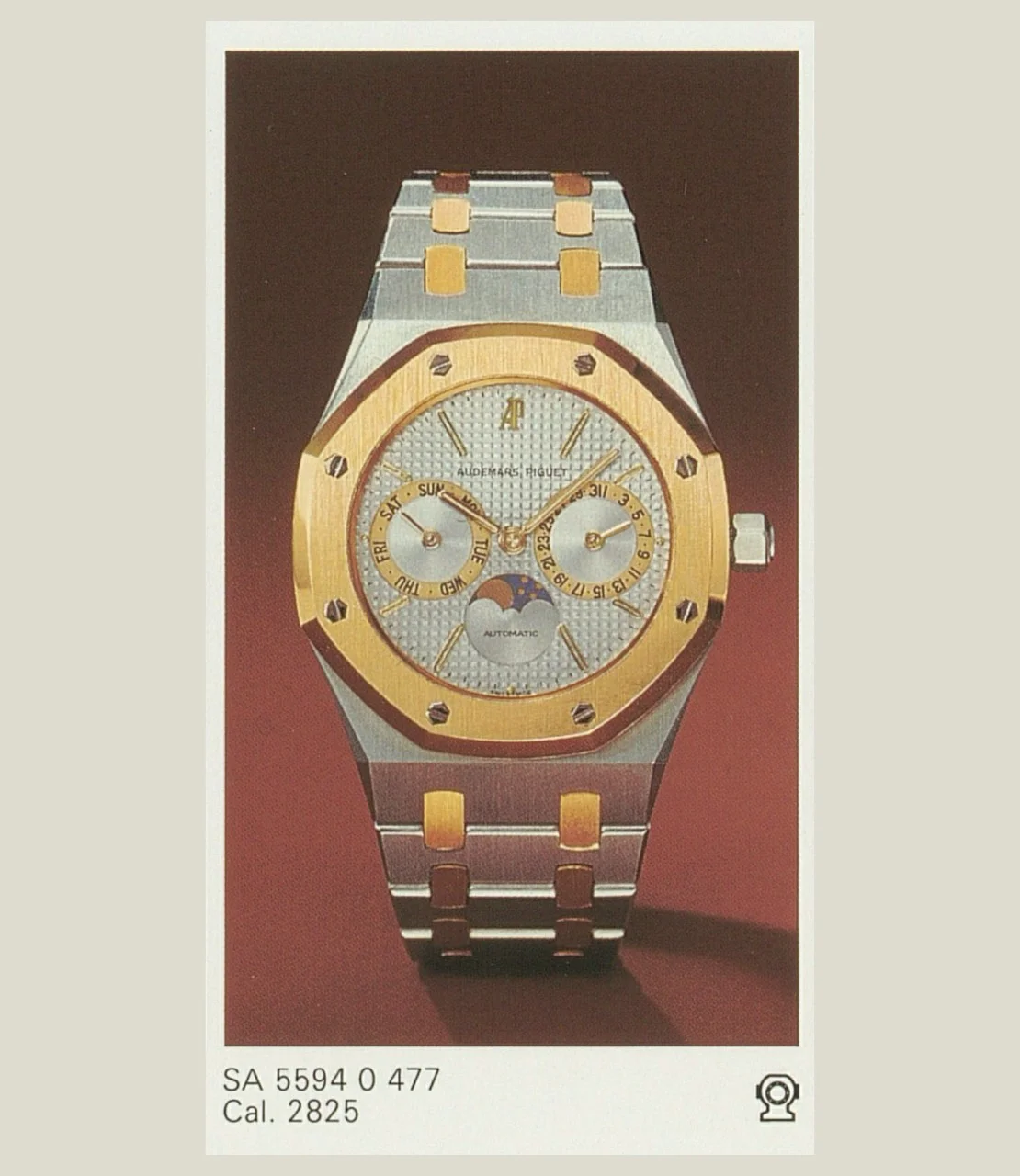
1985. Royal Oak 5594SA (36mm). 1985 Audemars Piguet Catalogue. Audemars Piguet Archives.
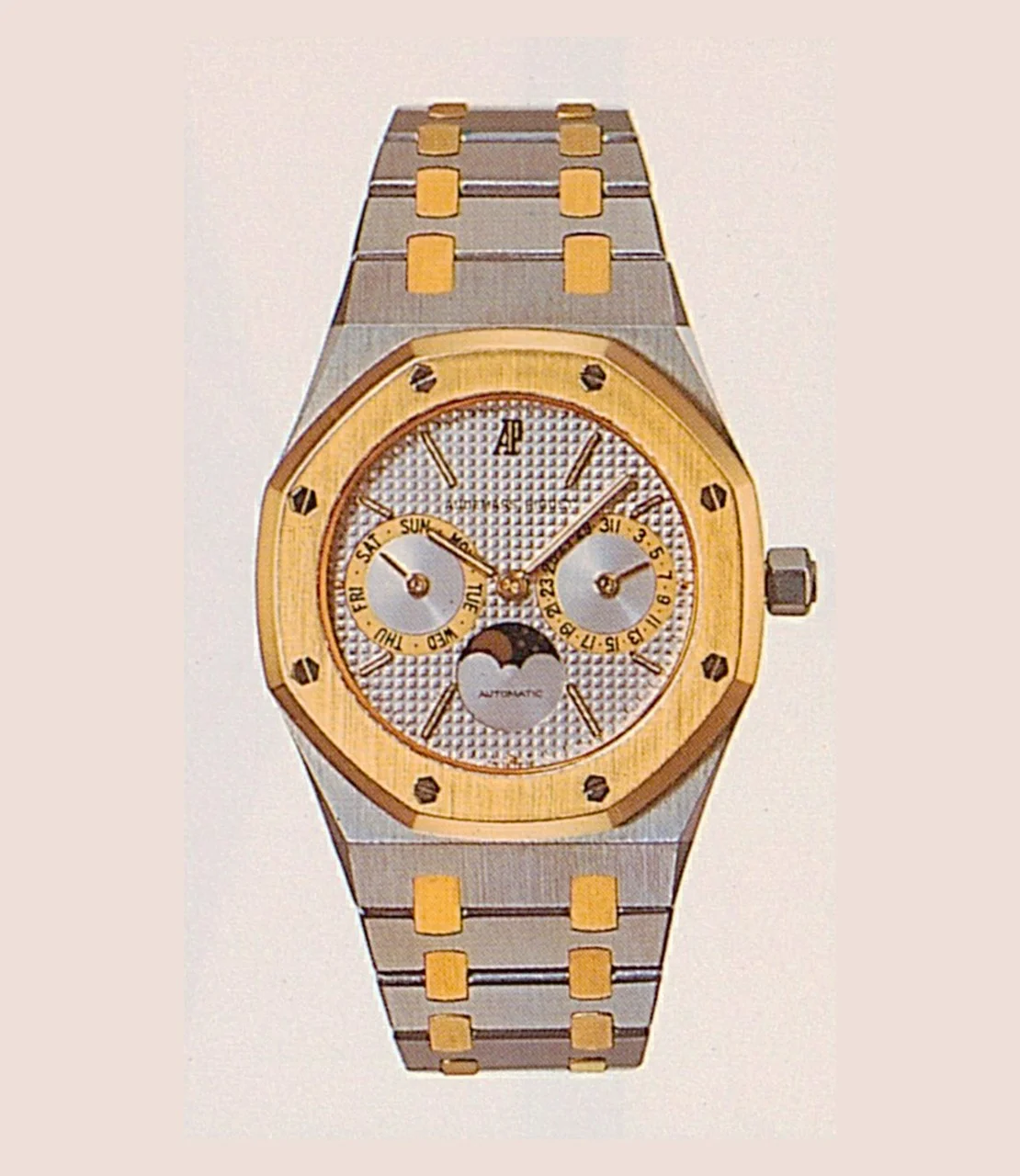
1986–2001. Royal Oak 25594SA (36 mm). “Dark Grey” 01 dial – numbering from 2000 onwards. Audemars Piguet Catalogues from 1986–87, 1987–1988, 1988–89, 1990–1991, 1993–1994, 1996–97, 1997–98, 1999–2000 and 2000–01. Audemars Piguet Archives.
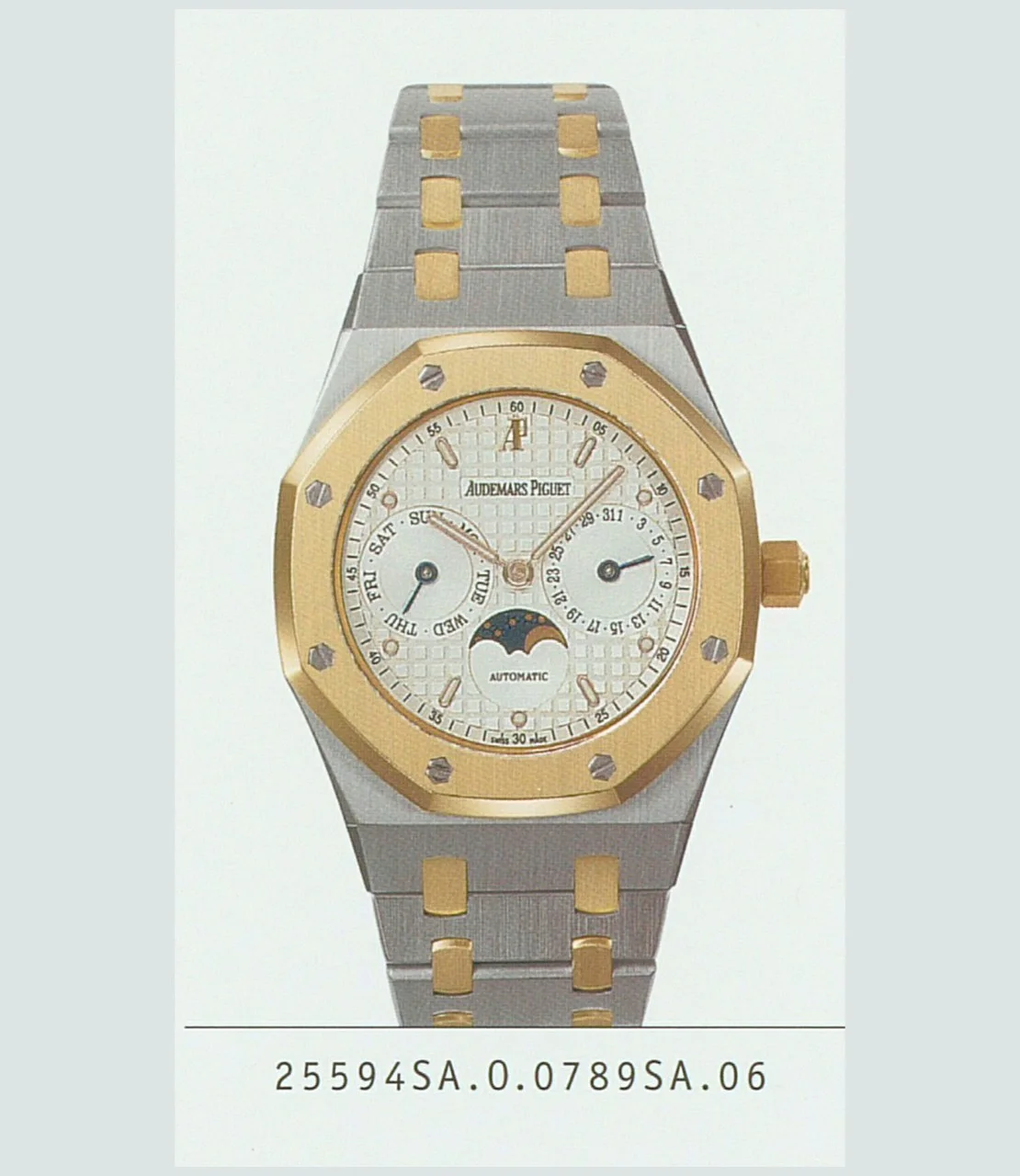
2001–2006. Royal Oak 25594SA (36 mm). “Silver” 06 dial. Audemars Piguet catalogues from 2000–01, 2001–02, 2002–03, 2003–04, 2004–05 and 2005–06. Audemars Piguet Archives.
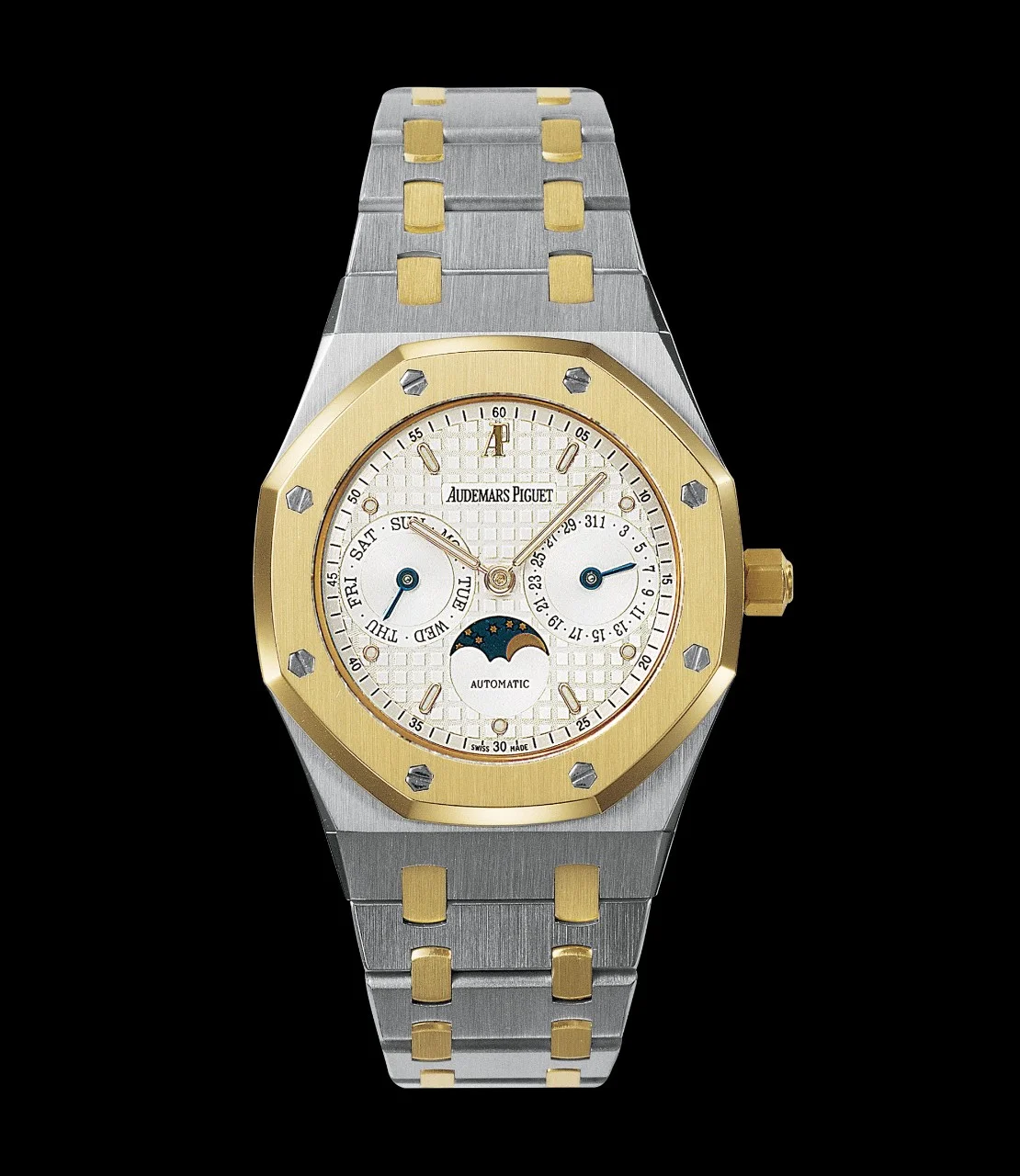
2004. Royal Oak 25594SA (36 mm). “Silver” 06 dial. Image created in 2004. Audemars Piguet Archives.
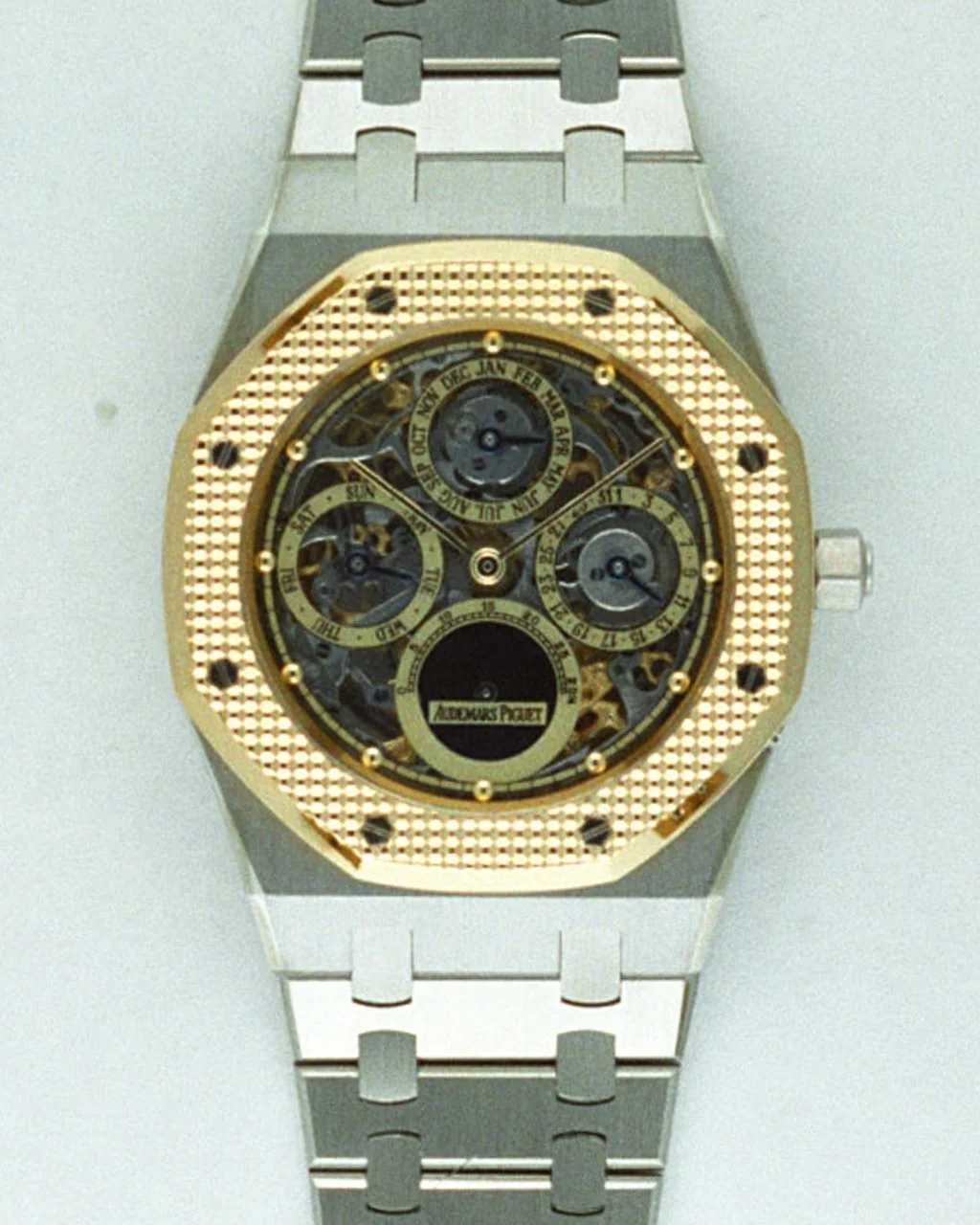
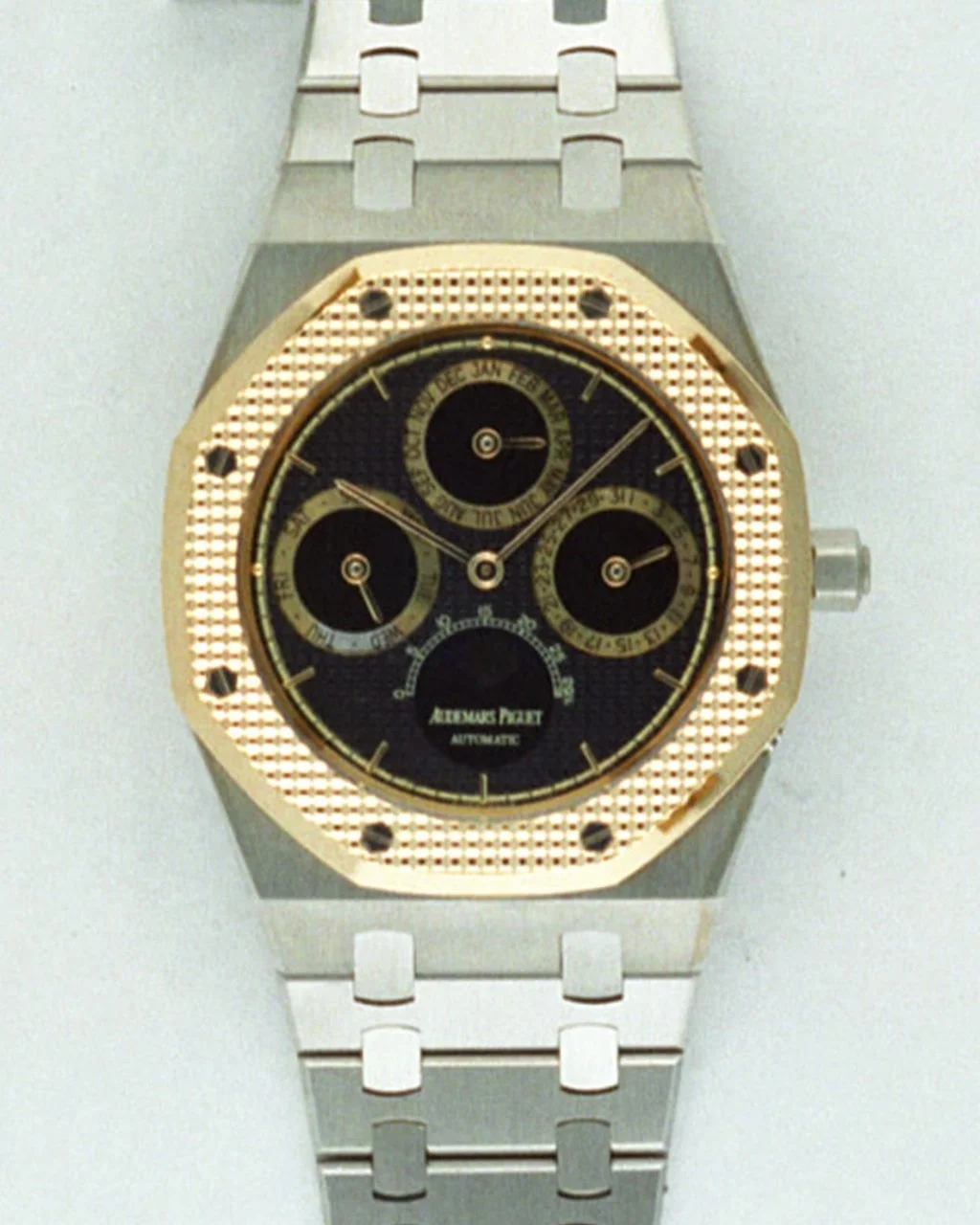
From 1984 to 2001, the Royal Oak Day Date Moon Phase 25594SA appeared in a two-tone combination. The dial picks up the colour of the case middle, the crown and the eight screws punctuating the bezel. All other elements are yellow, with the notable exception of the night sky surrounding the moon. In 2001, the dial became noticeably lighter for this and many other models.
Sales from 1984 to 2006: a total of 1,802 units, of which 11 (Royal Oak 5572 sold in 1983, later transformed into 25594), 140 (1984), 254 (1985), 186 (1986), 135 (1987), 148 (1988), 49 (1989), 78 (1990), 91 (1991), 149 (1992), 202 (1993, 68 (1994), 62 (1995), 23 (1996), 40 (1997), 28 (1998), 20 (1999), 16 (2000), 17 (2001), 28 (2002), 13 (2003), 27 (2004), 7 (2005) and 10 (2006).
From 1984 to 2001, the Royal Oak Day Date Moon Phase 25594SA appeared in a two-tone combination. The dial picks up the colour of the case middle, the crown and the eight screws punctuating the bezel. All other elements are yellow, with the notable exception of the night sky surrounding the moon. In 2001, the dial became noticeably lighter for this and many other models.
Sales from 1984 to 2006: a total of 1,802 units, of which 11 (Royal Oak 5572 sold in 1983, later transformed into 25594), 140 (1984), 254 (1985), 186 (1986), 135 (1987), 148 (1988), 49 (1989), 78 (1990), 91 (1991), 149 (1992), 202 (1993, 68 (1994), 62 (1995), 23 (1996), 40 (1997), 28 (1998), 20 (1999), 16 (2000), 17 (2001), 28 (2002), 13 (2003), 27 (2004), 7 (2005) and 10 (2006).
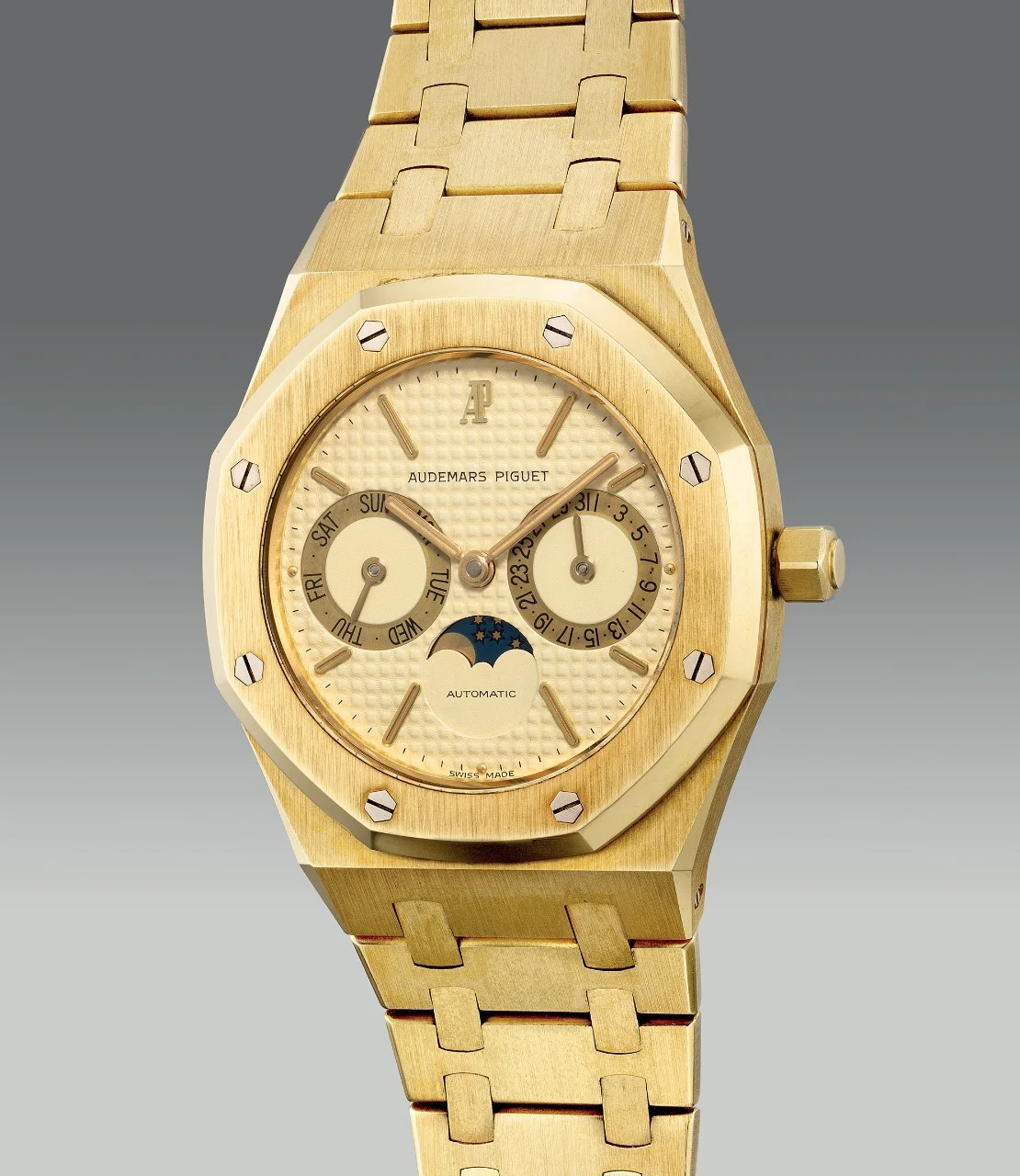
1986. Royal Oak Day Date Moon Phase 25594BA (1984), No. 879. Pointer-type day-date display. Moon phase. Calibre 2124/2825, movement 289721. Bracelet 477. Dial with T21 Tapisserie motif. 36 mm case no. C22495 in 18-carat yellow gold. Sold to a client in Hong Kong in April 1986. Auctioned by Phillips Hong Kong on November 26, 2021, lot 1050. © Phillips.
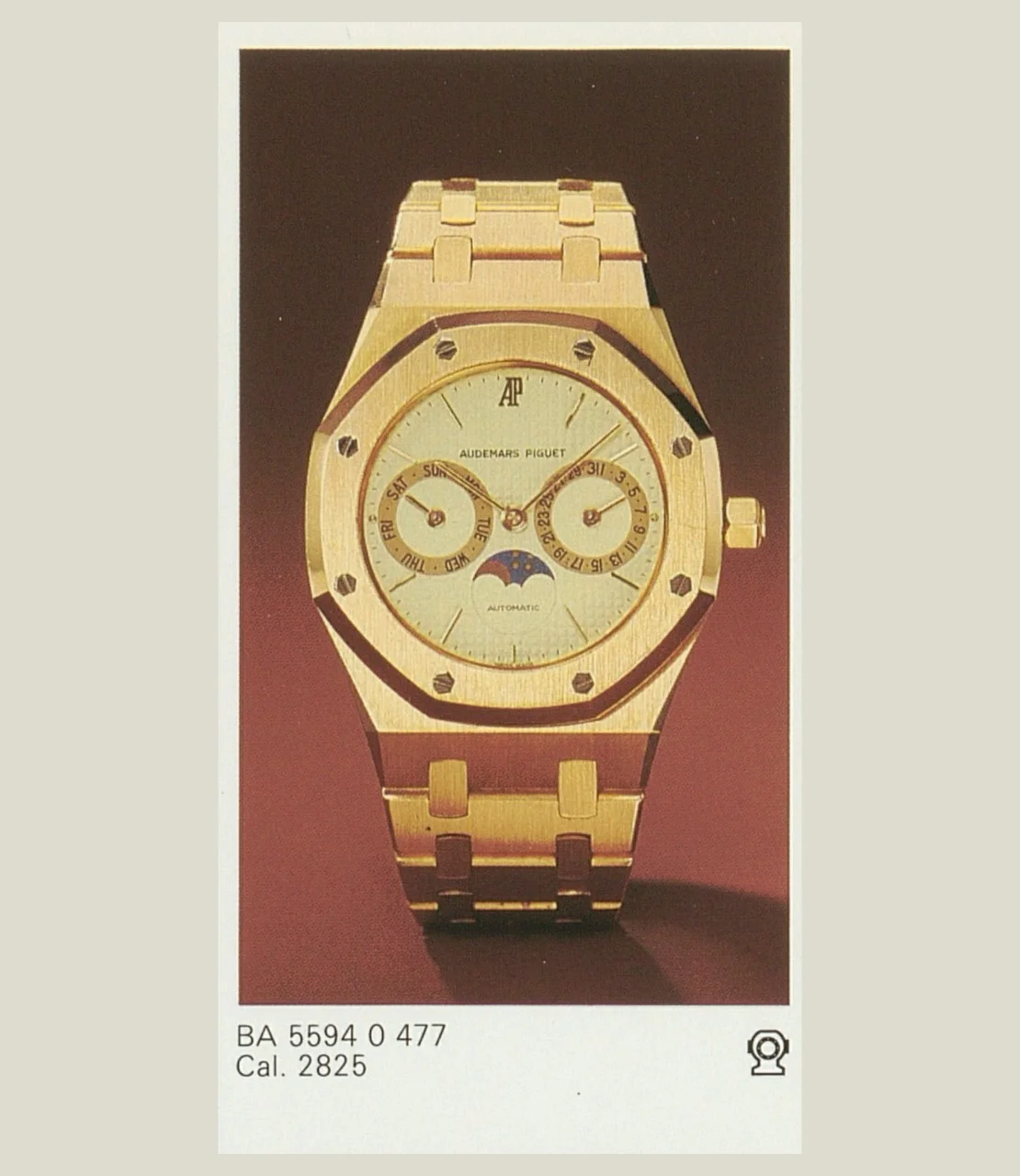
1985. Royal Oak 5594BA (36 mm). 1985 Audemars Piguet Catalogue. Audemars Piguet Archives.
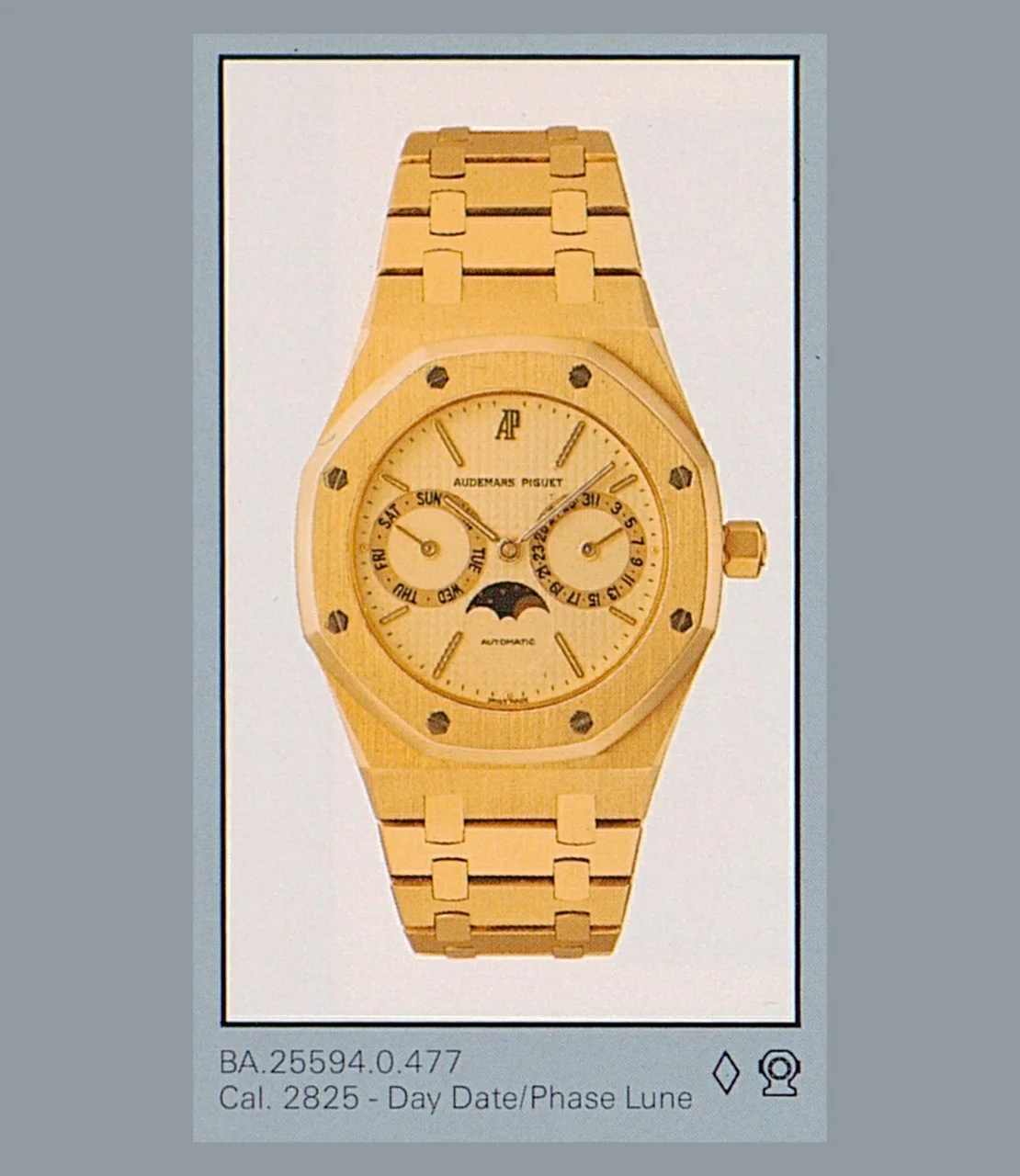
1986–1989. Royal Oak 25594BA (36 mm). Audemars Piguet Catalogues from 1986–87, 1987–1988 and 1988–89. Audemars Piguet Archives.
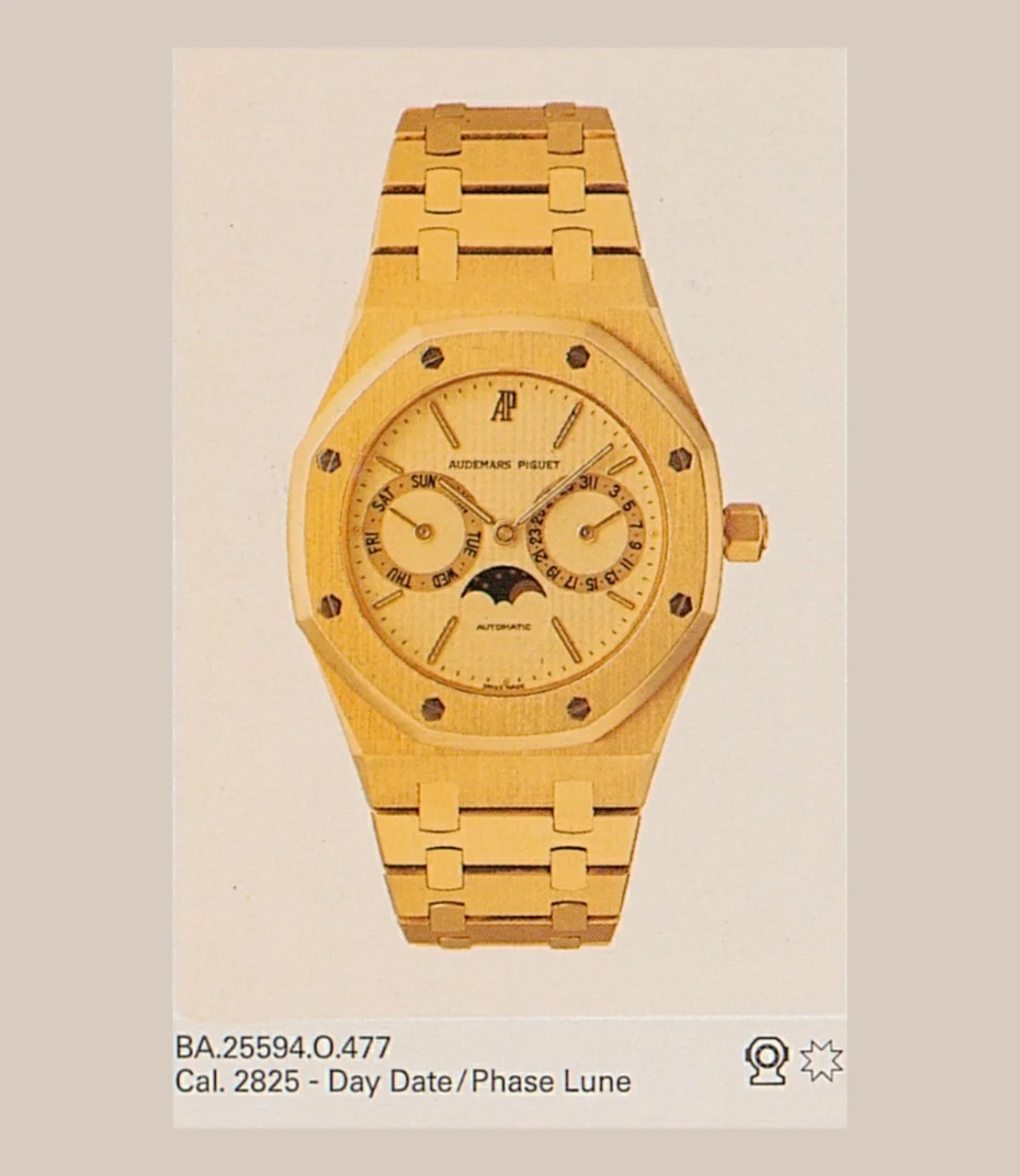
1990–1994. Royal Oak 25594BA (36 mm). Audemars Piguet Catalogues from 1990–1991 and 1993–1994. Audemars Piguet Archives
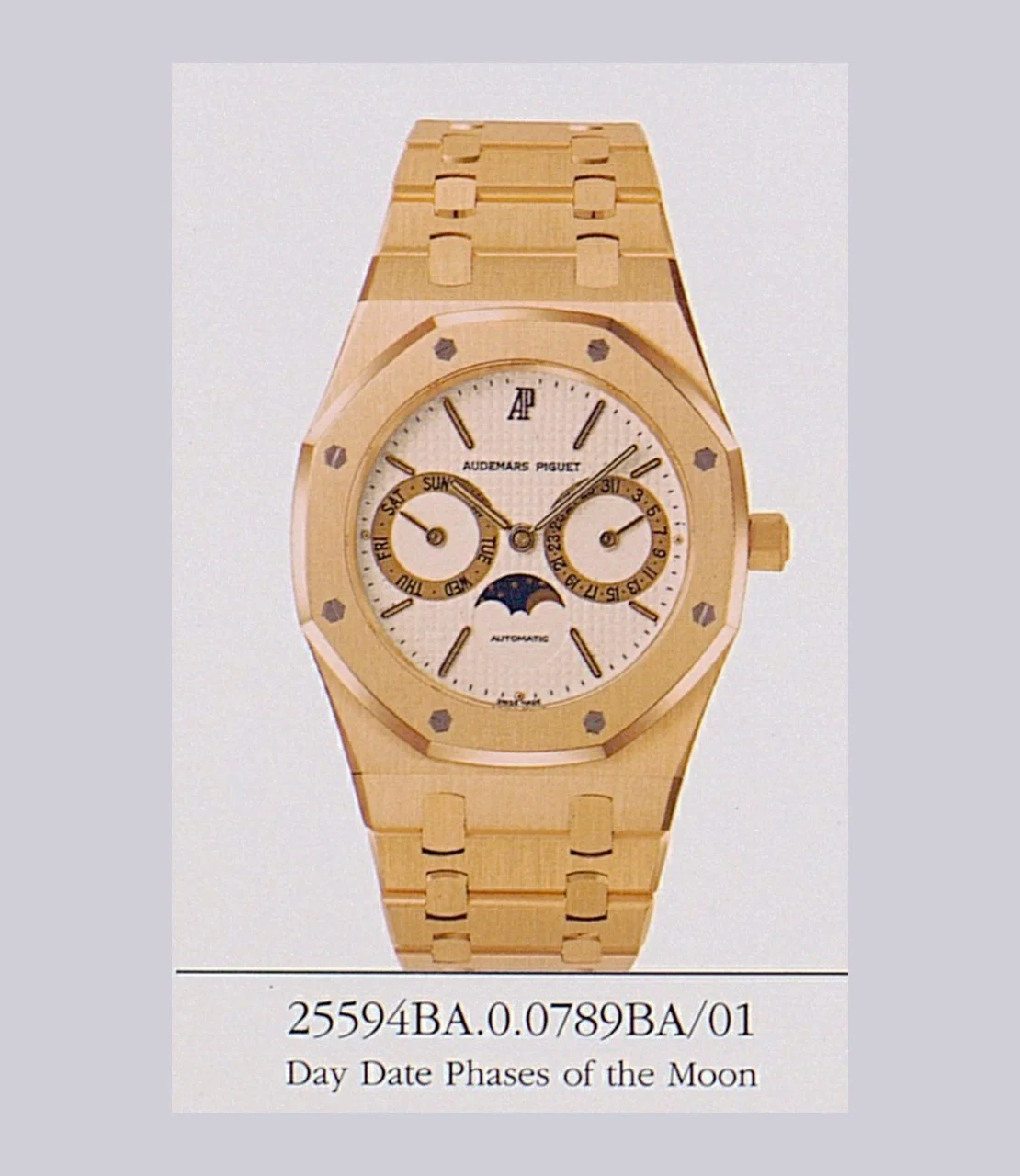
1996–2001. Royal Oak 25594BA (36 mm). Dial 01. Audemars Piguet Catalogues from 1996–97, 1997–98, 1999–2000 and 2000–2001. Audemars Piguet Archives.
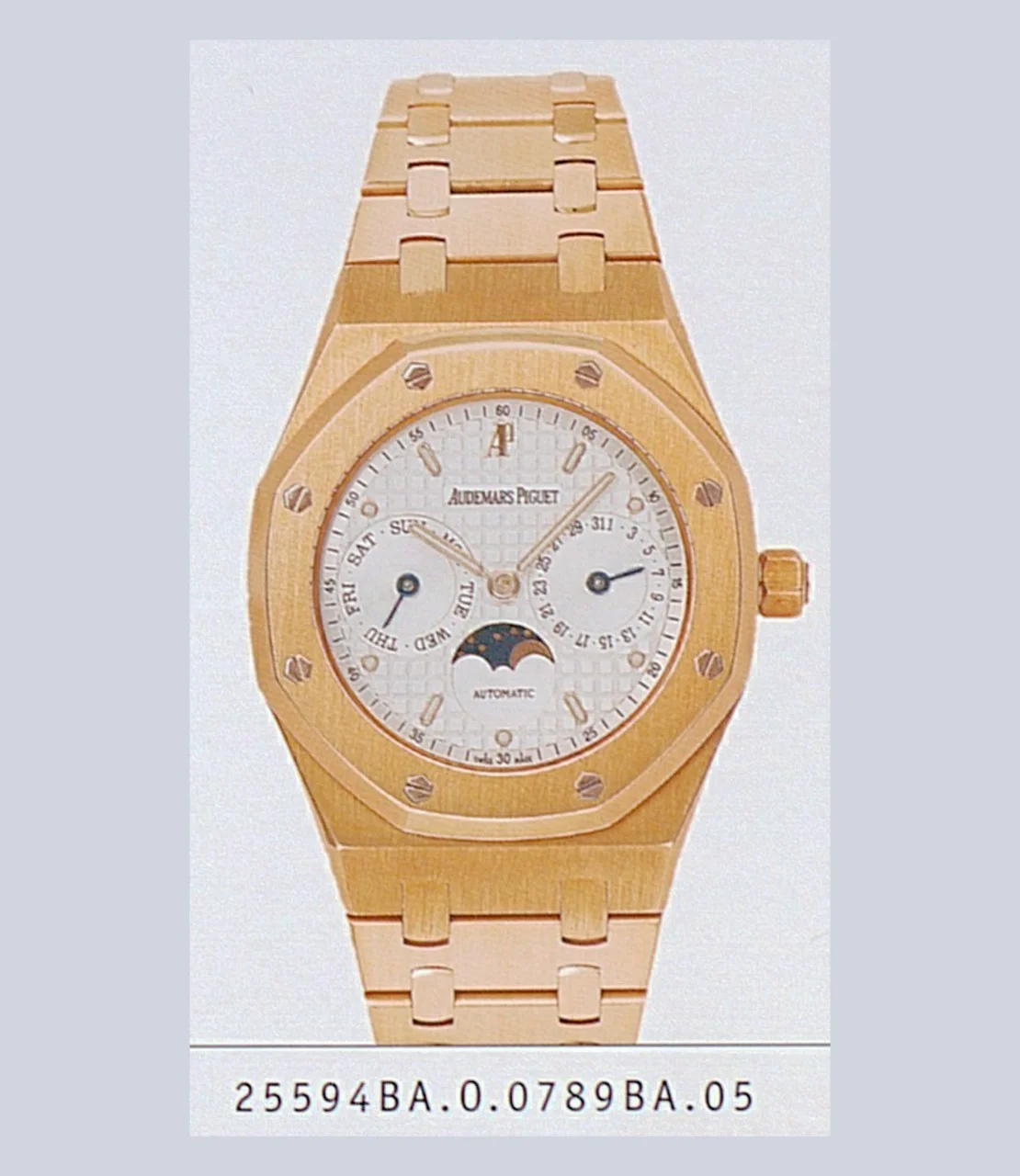
2000–2006. Royal Oak 25594BA (36mm). Dial 05. Audemars Piguet Catalogues from 2000–01, 2001–02, 2002–03, 2003–04, 2004–05 and 2005–06. Audemars Piguet Archives.
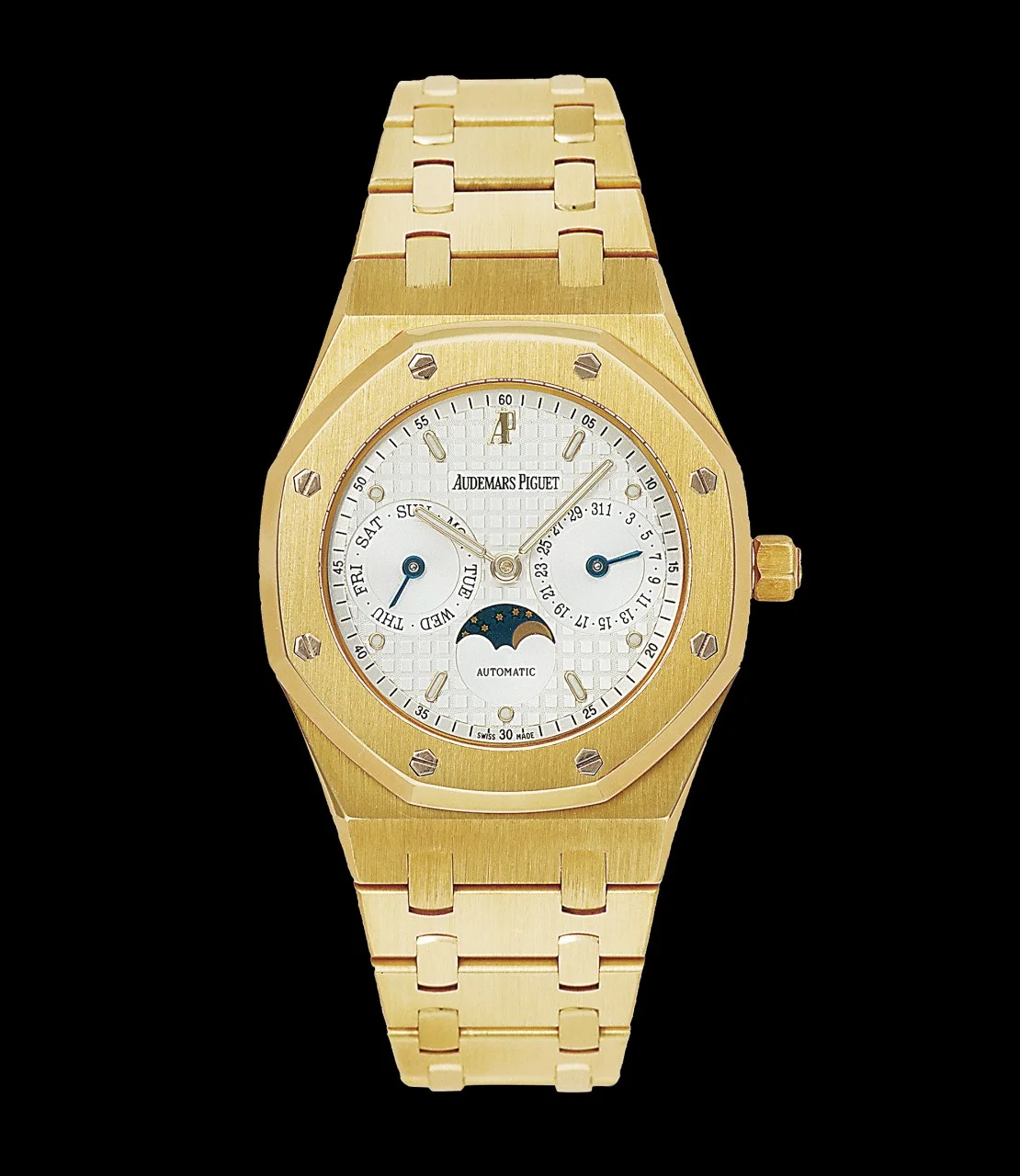
2004. Royal Oak 25594BA (36 mm). Dial 05. Image produced in 2004. Audemars Piguet Archives.

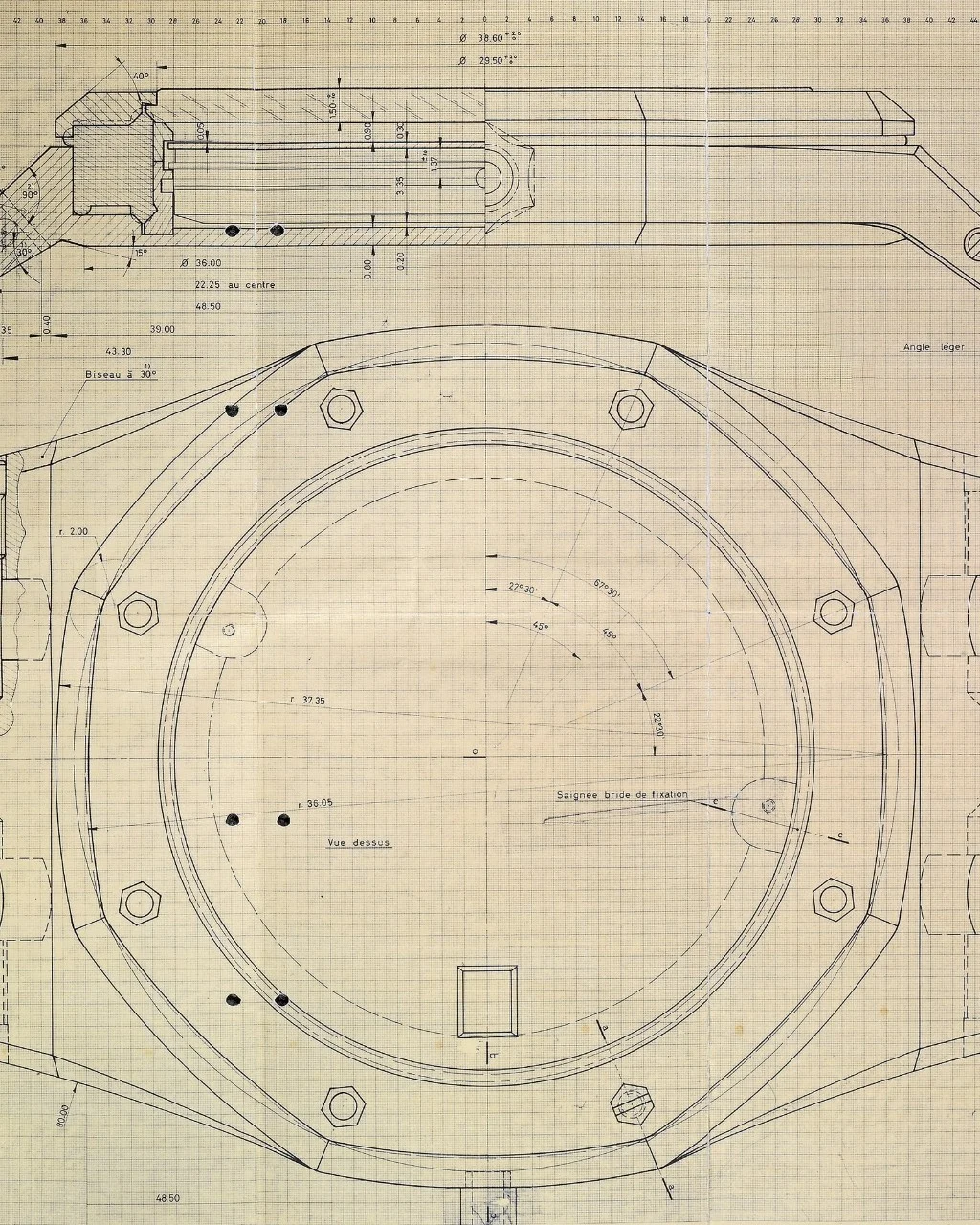
Circa 2002. Technical data for the case of Model 25594BA. Audemars Piguet Archives.
In the 25 years of its existence, the Royal Oak Day Date Moon Phase 25594BA had only three dial variants. Until 1996, the light gold colour echoed the yellow gold of the case, bracelet, hour-markers and hands, as well as the moon. The two day and date indicators remained in dark gold until the year 2000. From then on, like the newly released Model 15202, the Royal Oak 25594 in yellow gold was adorned with a silver-toned dial featuring a Grande Tapisserie motif.
Sales from 1984 to 2008: a total of 1,581 units, of which 7 (Royal Oak 5572 sold in 1983, later transformed into 25594), 123 (1984), 199 (1985), 144 (1986), 143 (1987), 128 (1988), 47 (1989), 56 (1990), 121 (1991), 101 (1992), 66 (1993), 79 (1994), 93 (1995), 17 (1996), 37 (1997), 41 (1998), 58 (1999), 27 (2000), 28 (2001), 14 (2002), 9 (2003), 12 (2004), 14 (2005), 15 (2006), 1 (2007) and 1 (2008).
In the 25 years of its existence, the Royal Oak Day Date Moon Phase 25594BA had only three dial variants. Until 1996, the light gold colour echoed the yellow gold of the case, bracelet, hour-markers and hands, as well as the moon. The two day and date indicators remained in dark gold until the year 2000. From then on, like the newly released Model 15202, the Royal Oak 25594 in yellow gold was adorned with a silver-toned dial featuring a Grande Tapisserie motif.
Sales from 1984 to 2008: a total of 1,581 units, of which 7 (Royal Oak 5572 sold in 1983, later transformed into 25594), 123 (1984), 199 (1985), 144 (1986), 143 (1987), 128 (1988), 47 (1989), 56 (1990), 121 (1991), 101 (1992), 66 (1993), 79 (1994), 93 (1995), 17 (1996), 37 (1997), 41 (1998), 58 (1999), 27 (2000), 28 (2001), 14 (2002), 9 (2003), 12 (2004), 14 (2005), 15 (2006), 1 (2007) and 1 (2008).

Circa 1984. Identification image of Model 25594BC. Audemars Piguet Archives.
Circa 1984. Identification image of Model 25594BC. Detail. Audemars Piguet Archives.
Only 19 white gold models have been identified in the Audemars Piguet Production Registers. They were on sale for more than 15 years. None of them has re-emerged in the main auction houses since 2010.
Sales from 1983 to 1998: a total of 19 units, of which 2 (Royal Oak 5572 sold in 1983, later transformed into 25594), 5 (1985), 1 (1986), 2 (1987), 5 (1988), 1 (1989), 1 (1990), 1 (1995) and 1 (1998).
Only 19 white gold models have been identified in the Audemars Piguet Production Registers. They were on sale for more than 15 years. None of them has re-emerged in the main auction houses since 2010.
Sales from 1983 to 1998: a total of 19 units, of which 2 (Royal Oak 5572 sold in 1983, later transformed into 25594), 5 (1985), 1 (1986), 2 (1987), 5 (1988), 1 (1989), 1 (1990), 1 (1995) and 1 (1998).

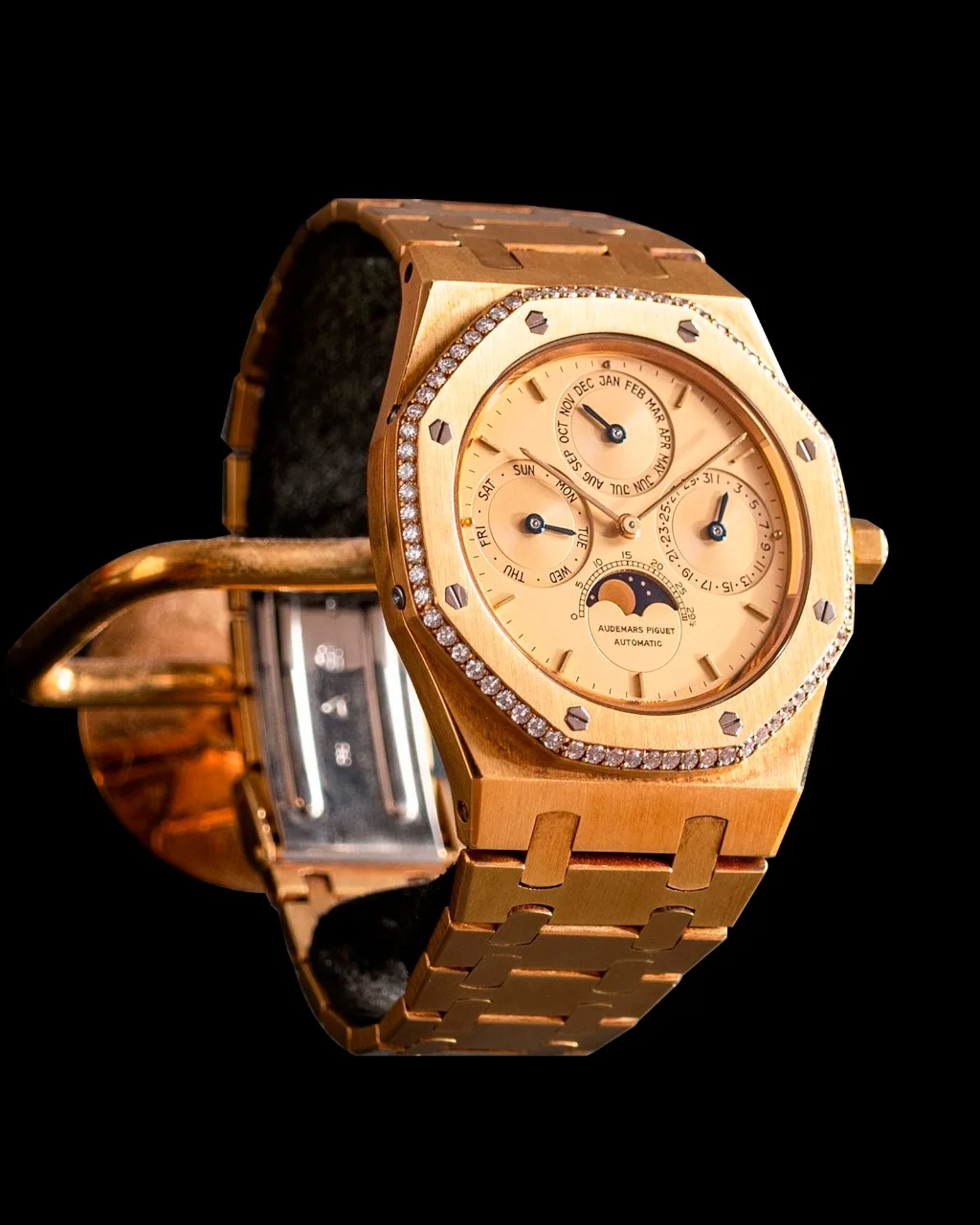
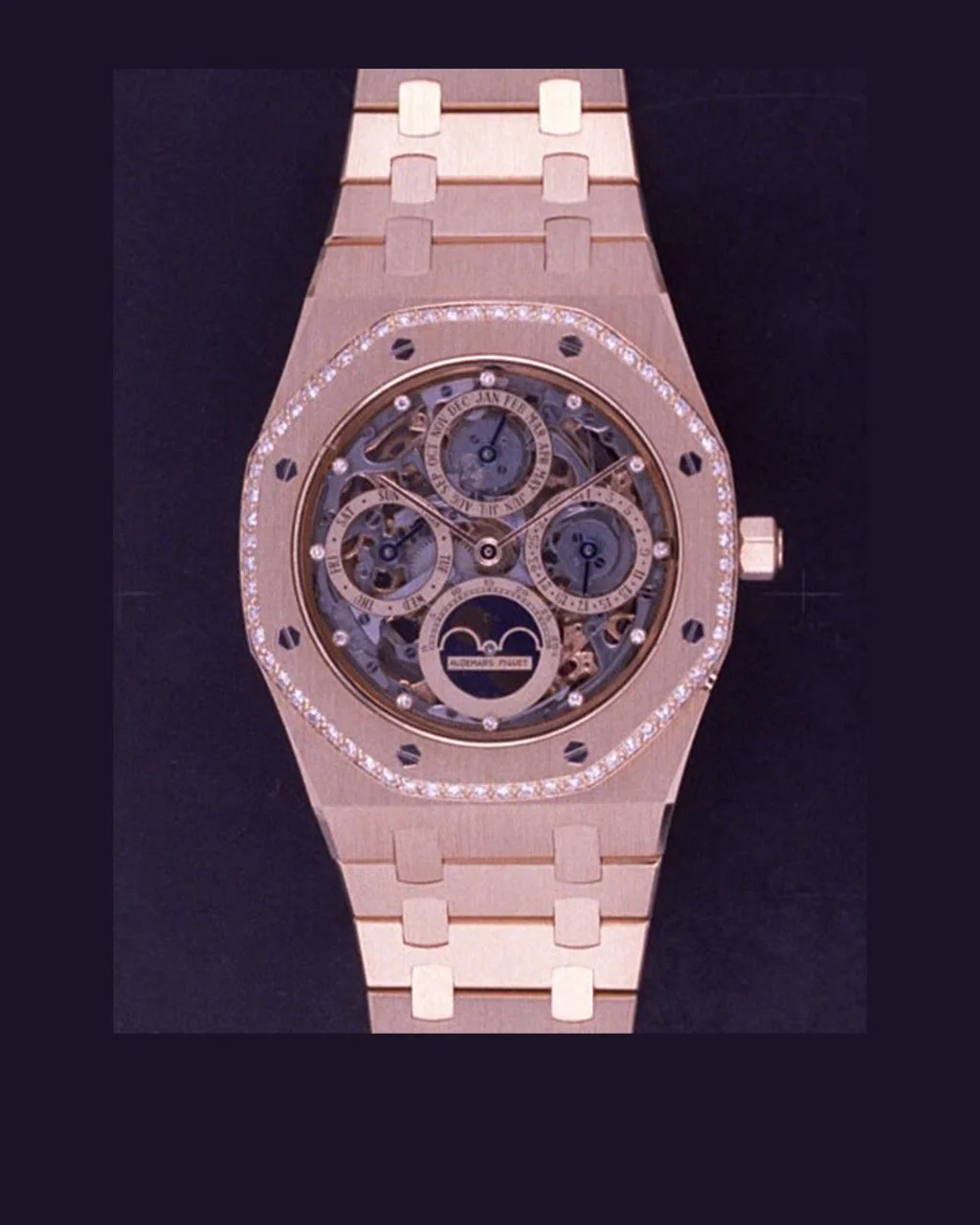
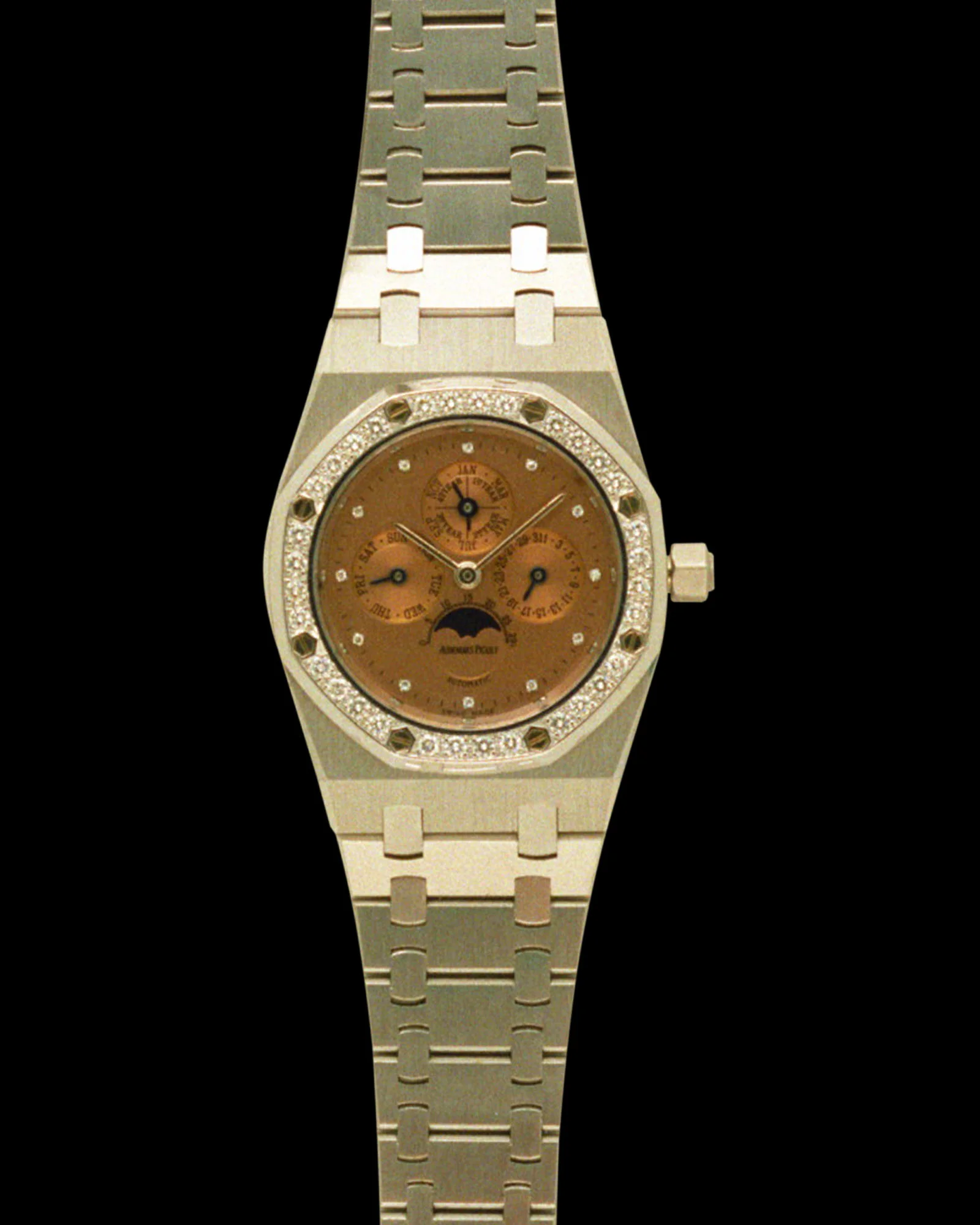
1997. Only pink gold occurrence of Model 25594 in the Production Registers. Audemars Piguet Archives.
Only one pink gold Royal Oak is documented in the Audemars Piguet Production Registers, sold to a client in Spain in June 1997. Surprisingly, its small case number is 47, which means that the watchmakers most likely adapted an originally numbered case for another Royal Oak 36 mm model.
Only one pink gold Royal Oak is documented in the Audemars Piguet Production Registers, sold to a client in Spain in June 1997. Surprisingly, its small case number is 47, which means that the watchmakers most likely adapted an originally numbered case for another Royal Oak 36 mm model.