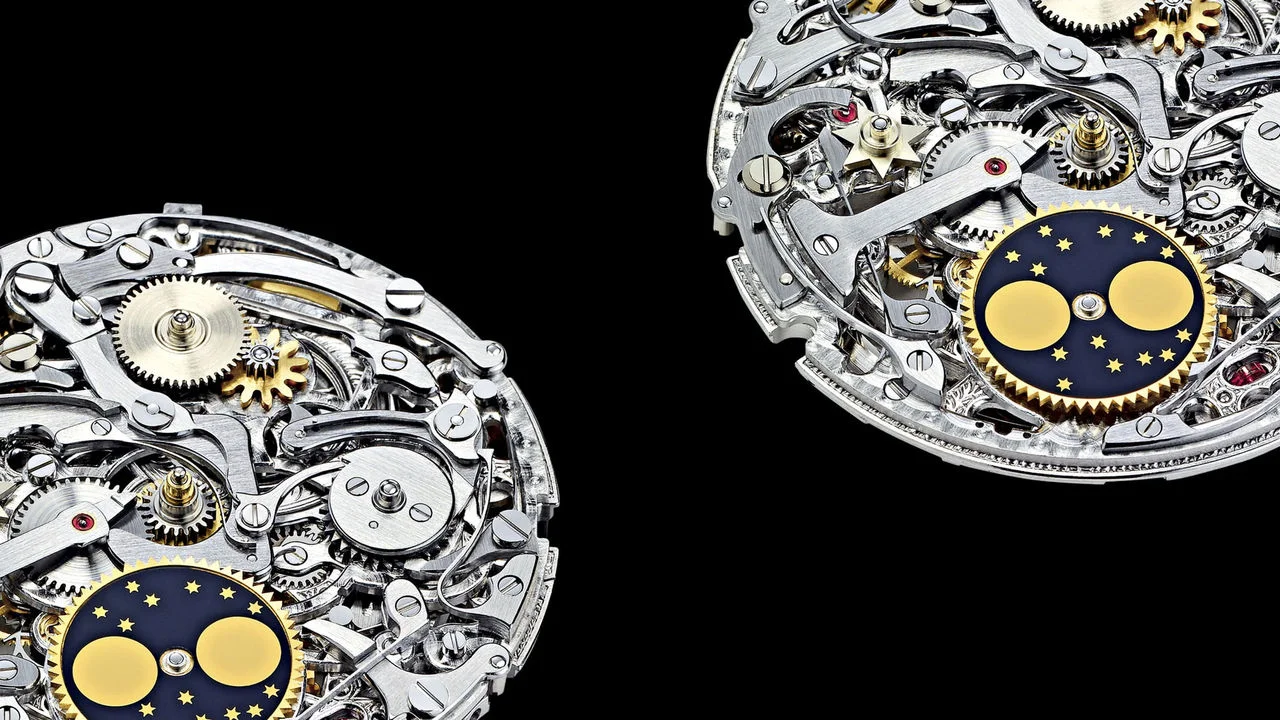
Calibre 2120/2802 and 2120/2802SQ

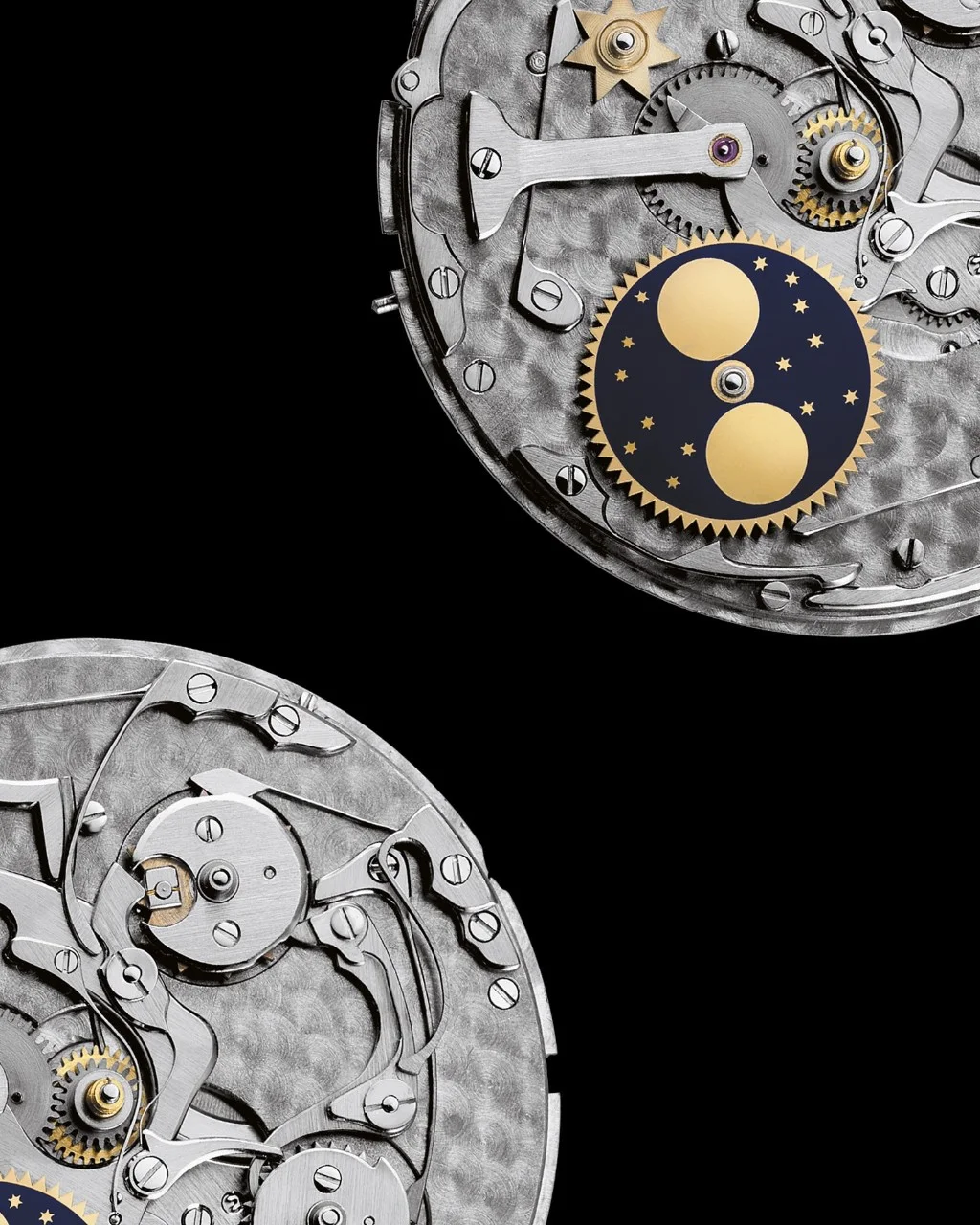
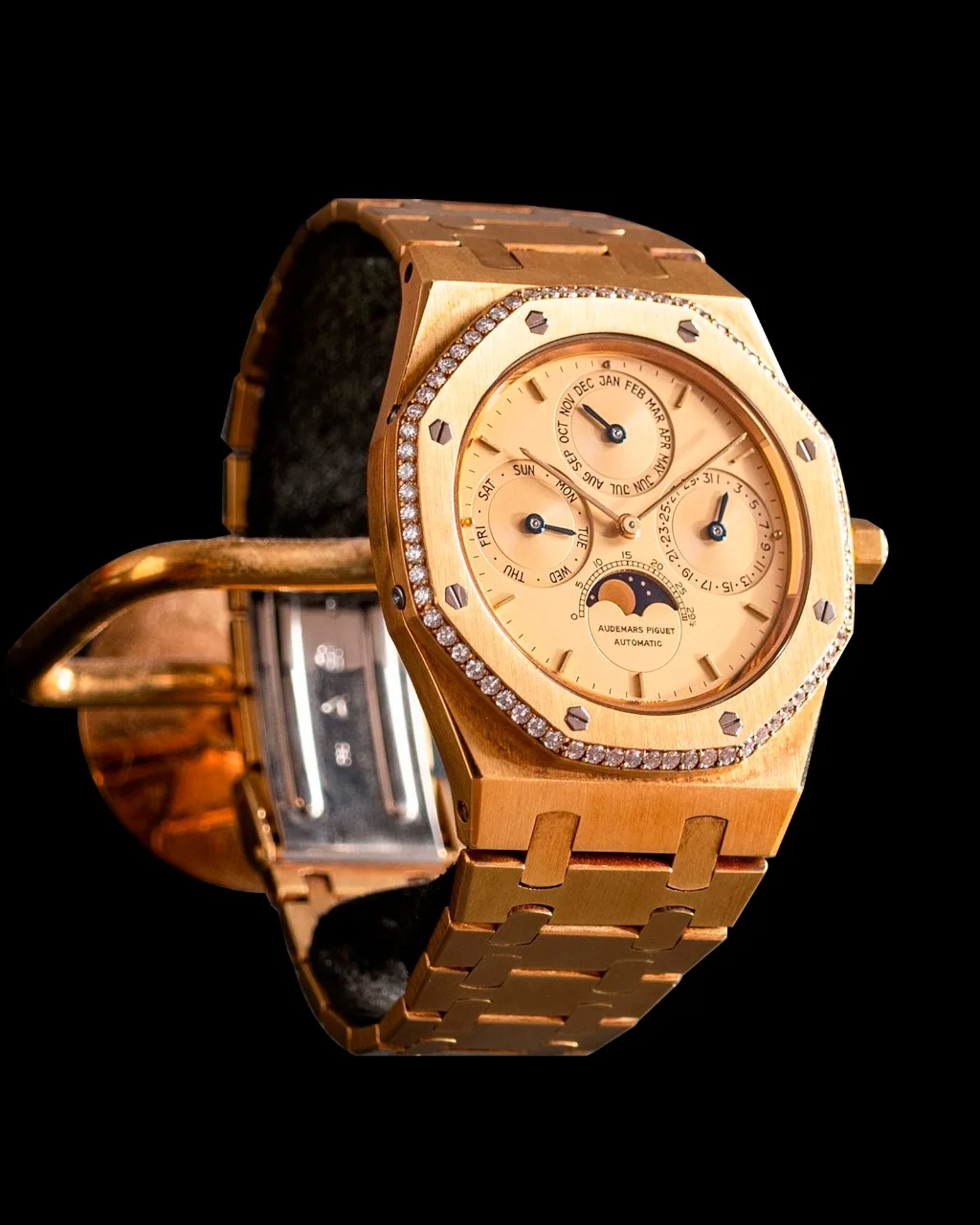
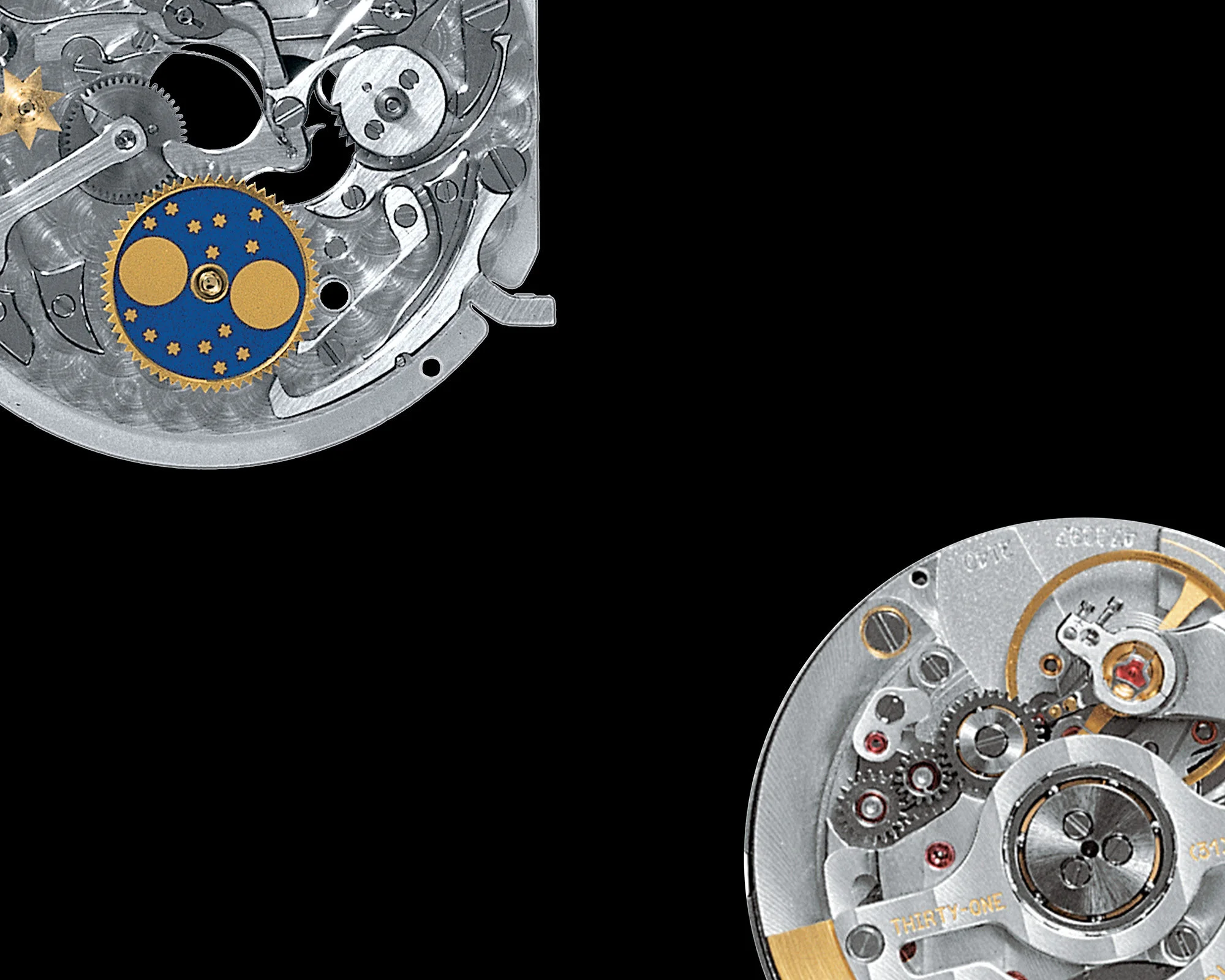
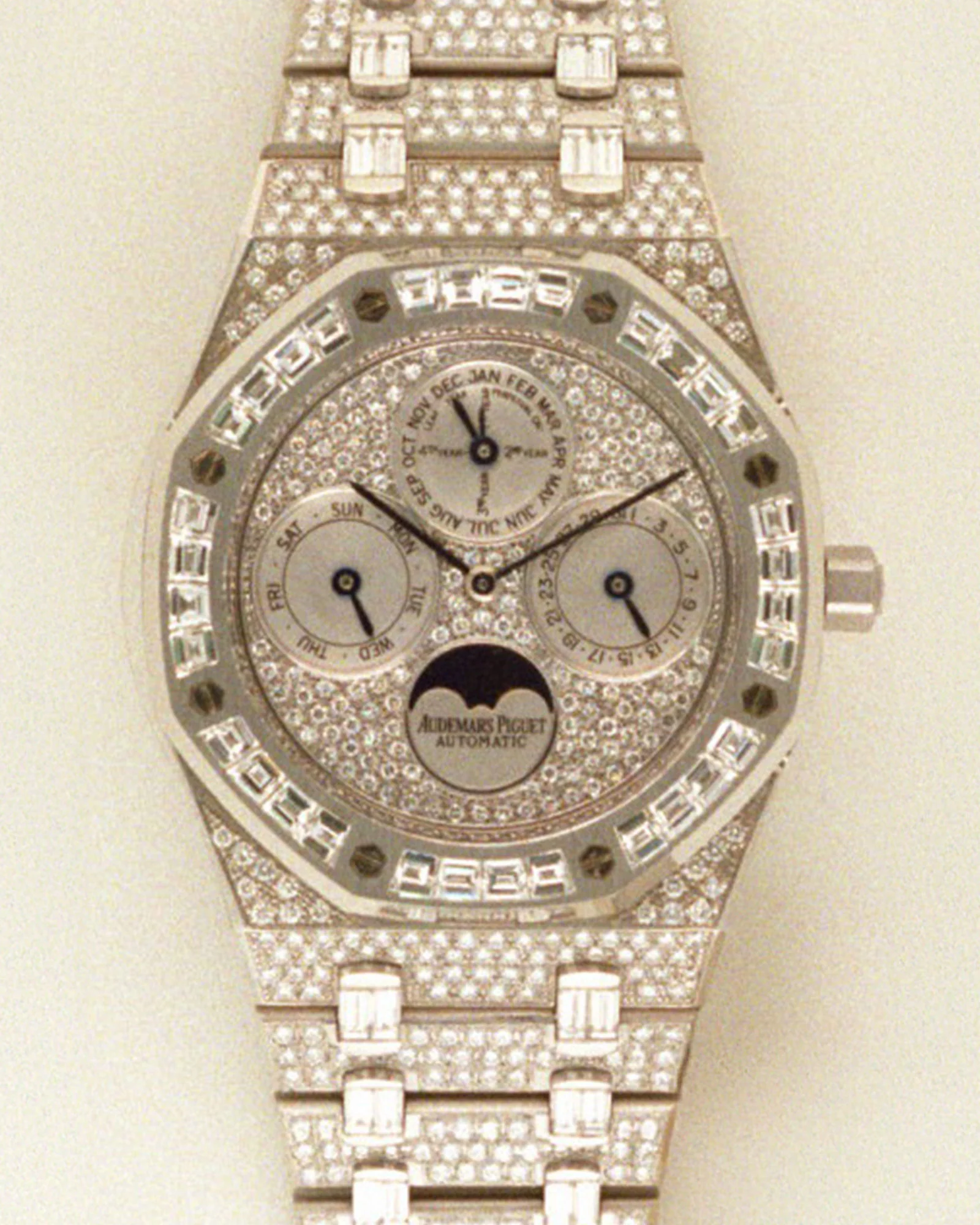
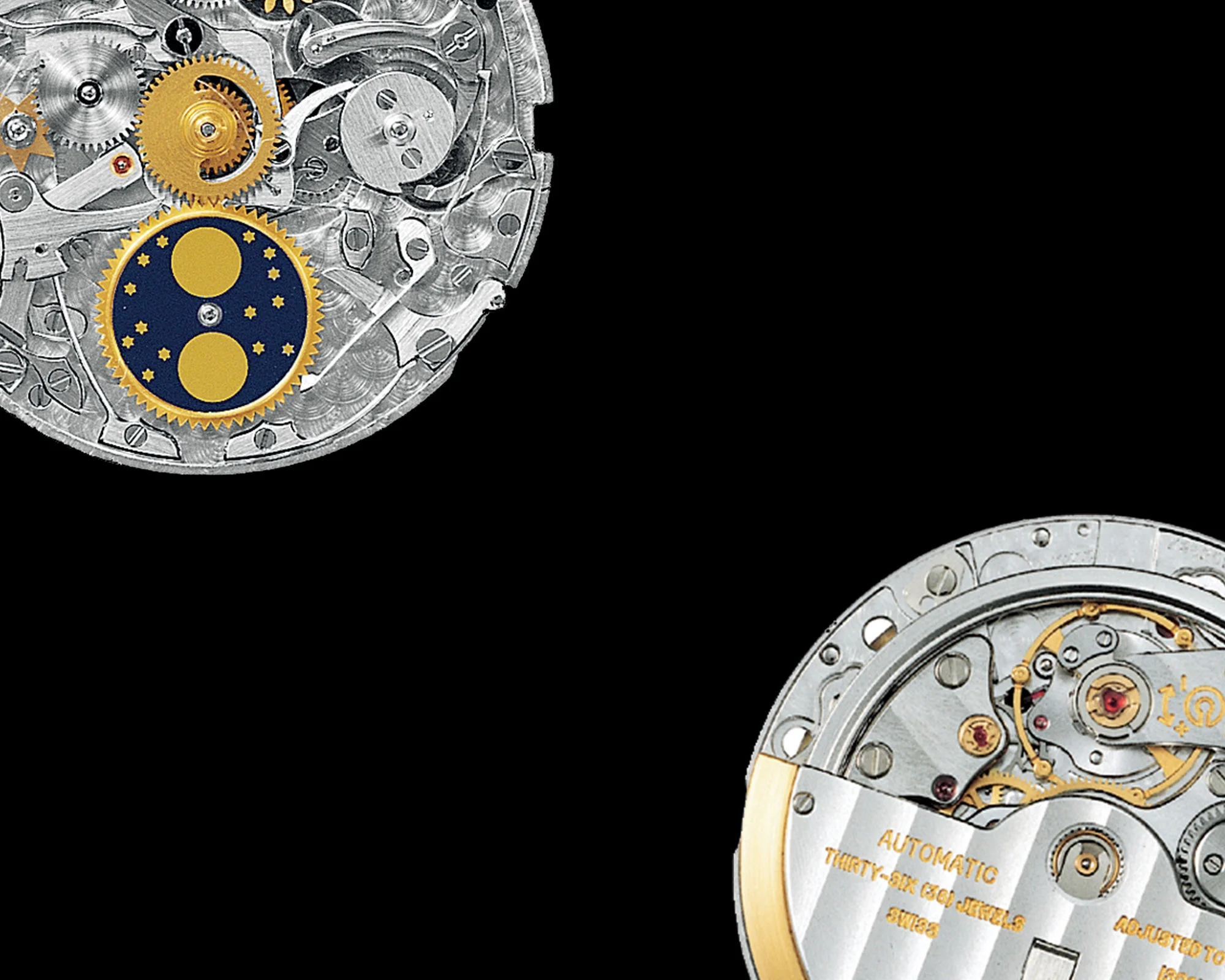
1996-2014. Selfwinding Perpetual Calendar Caliber 2120/2802 as seen from the dial side. Archives Audemars Piguet Archives Audemars Piguet

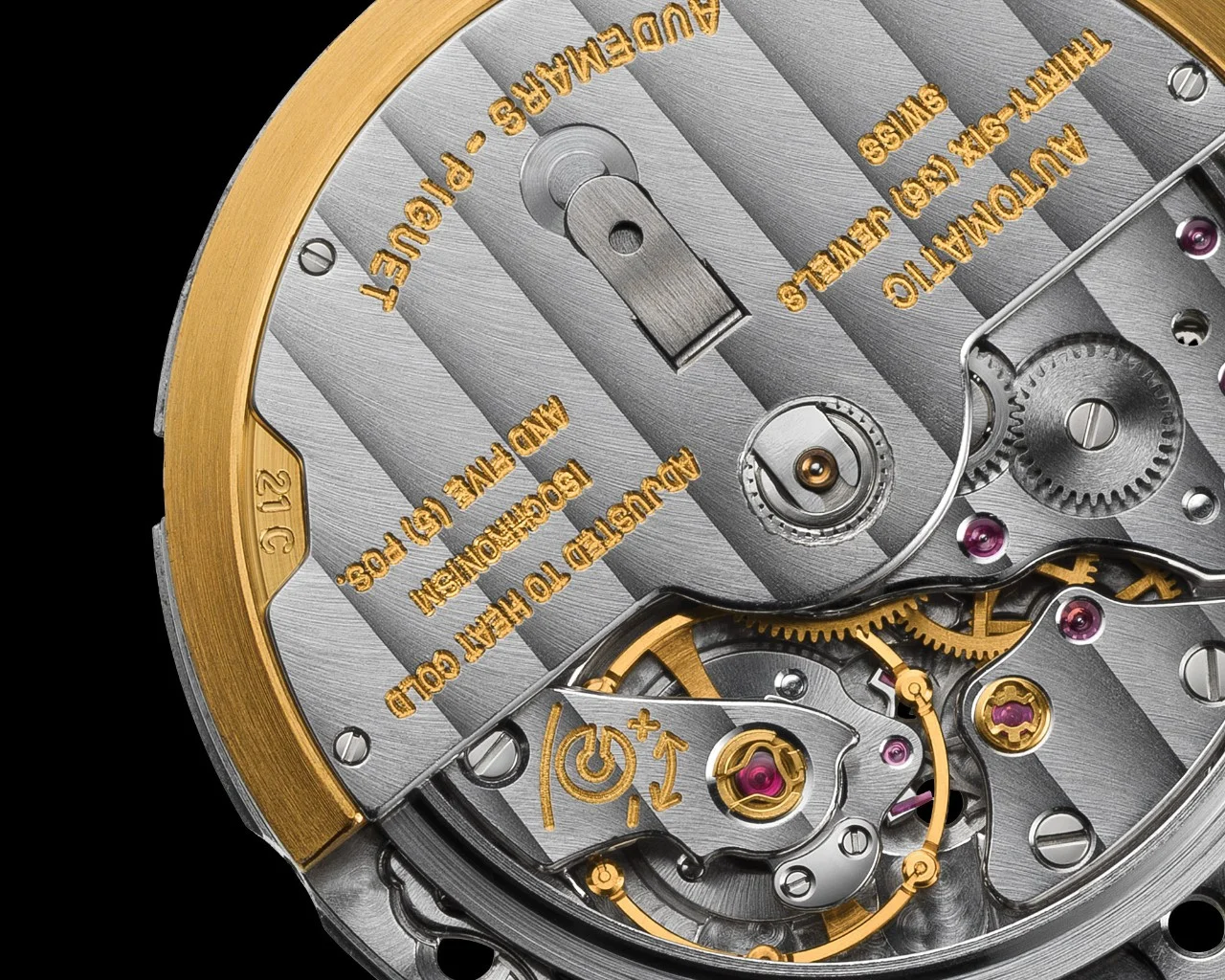
1996-2014. Selfwinding Perpetual Calendar Calibre 2120/2802 as seen from the bridge side. Audemars Piguet Archives.

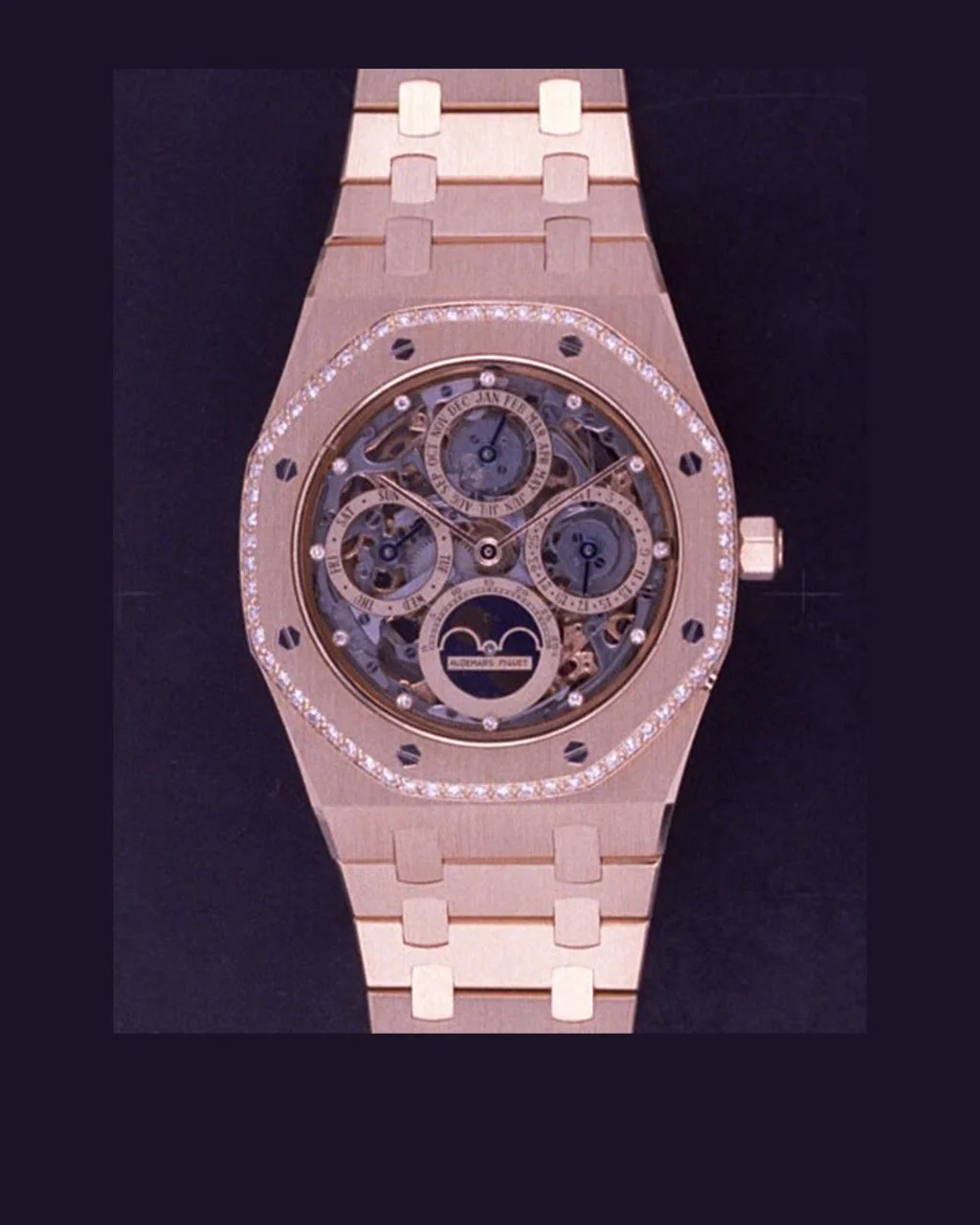
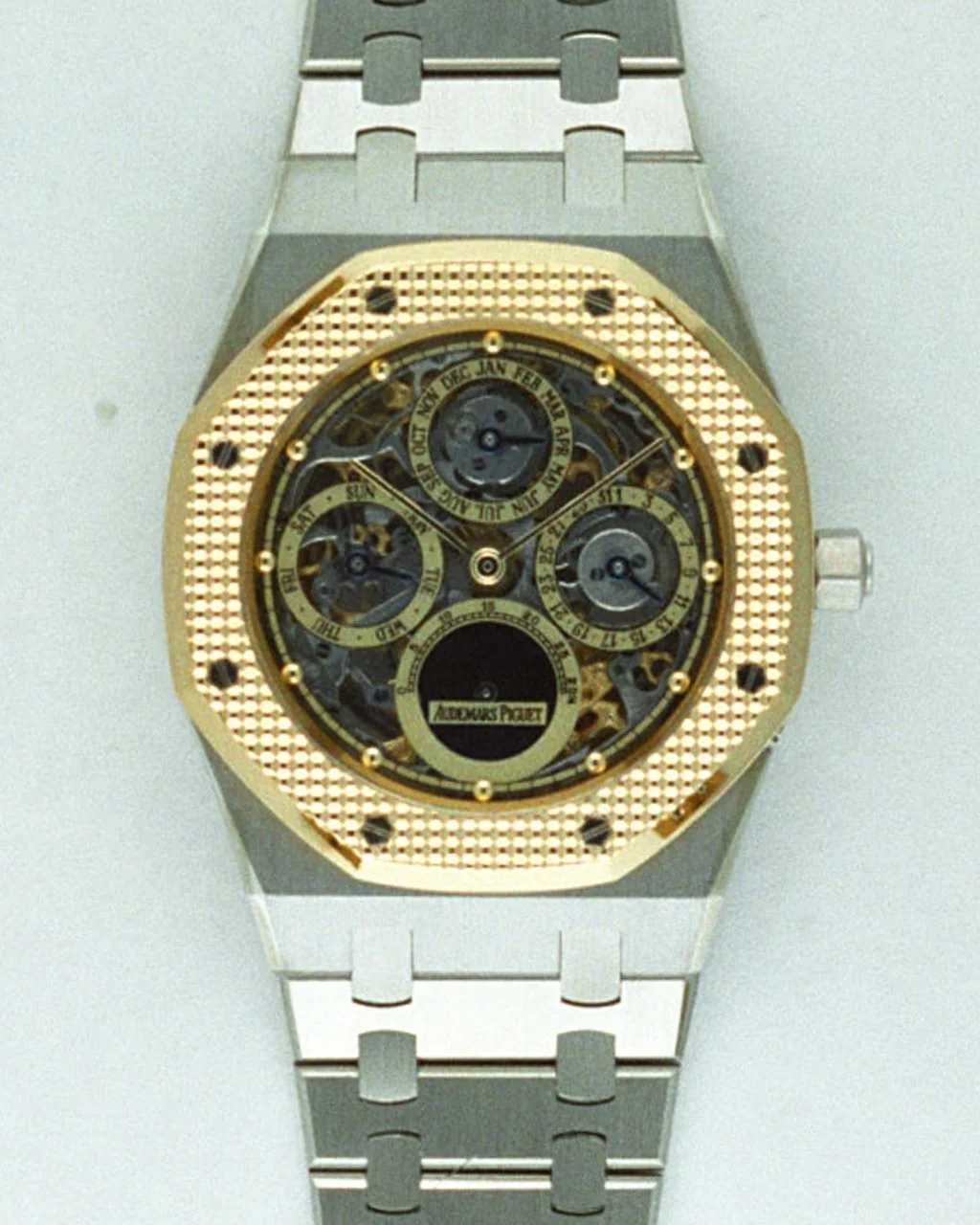
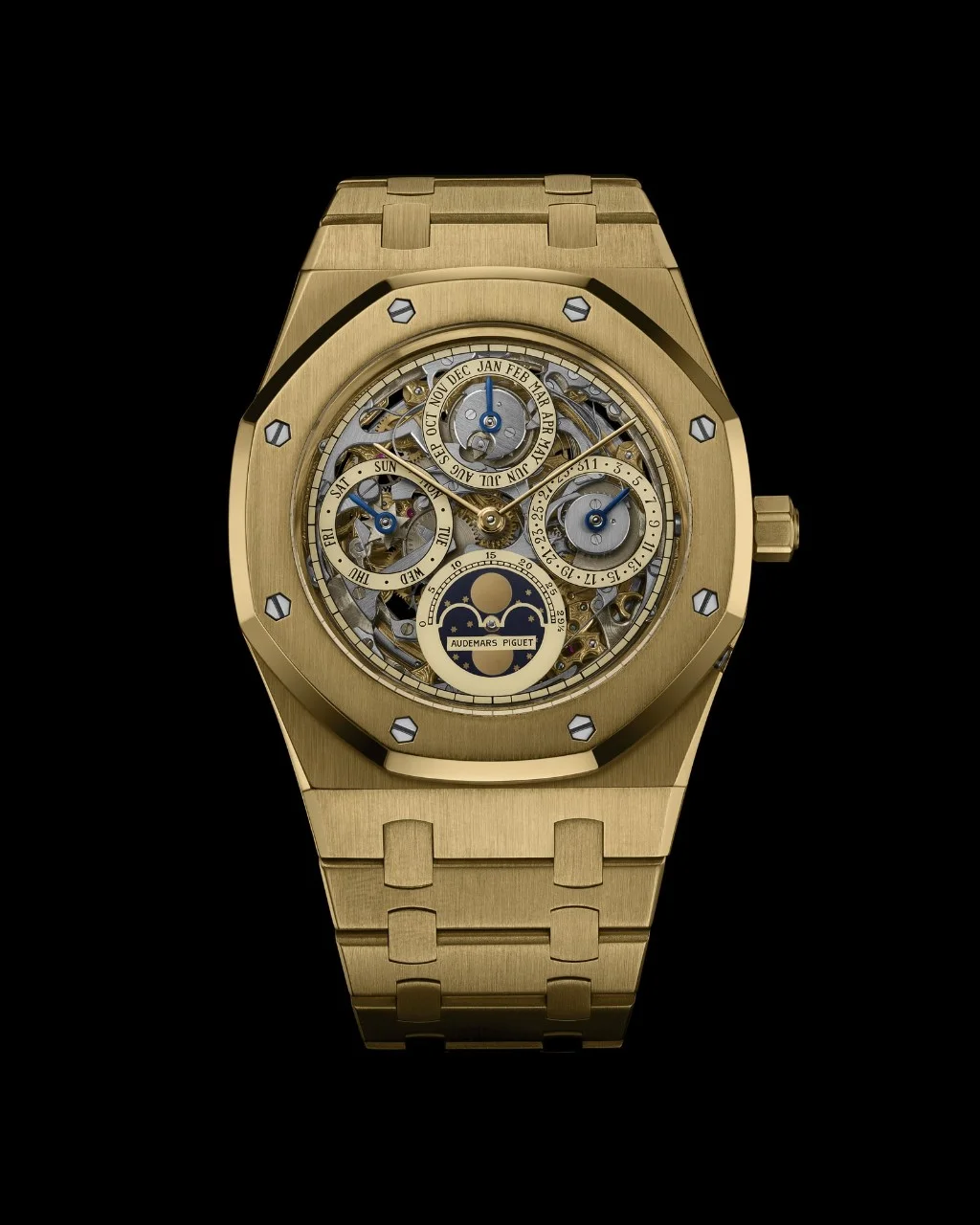
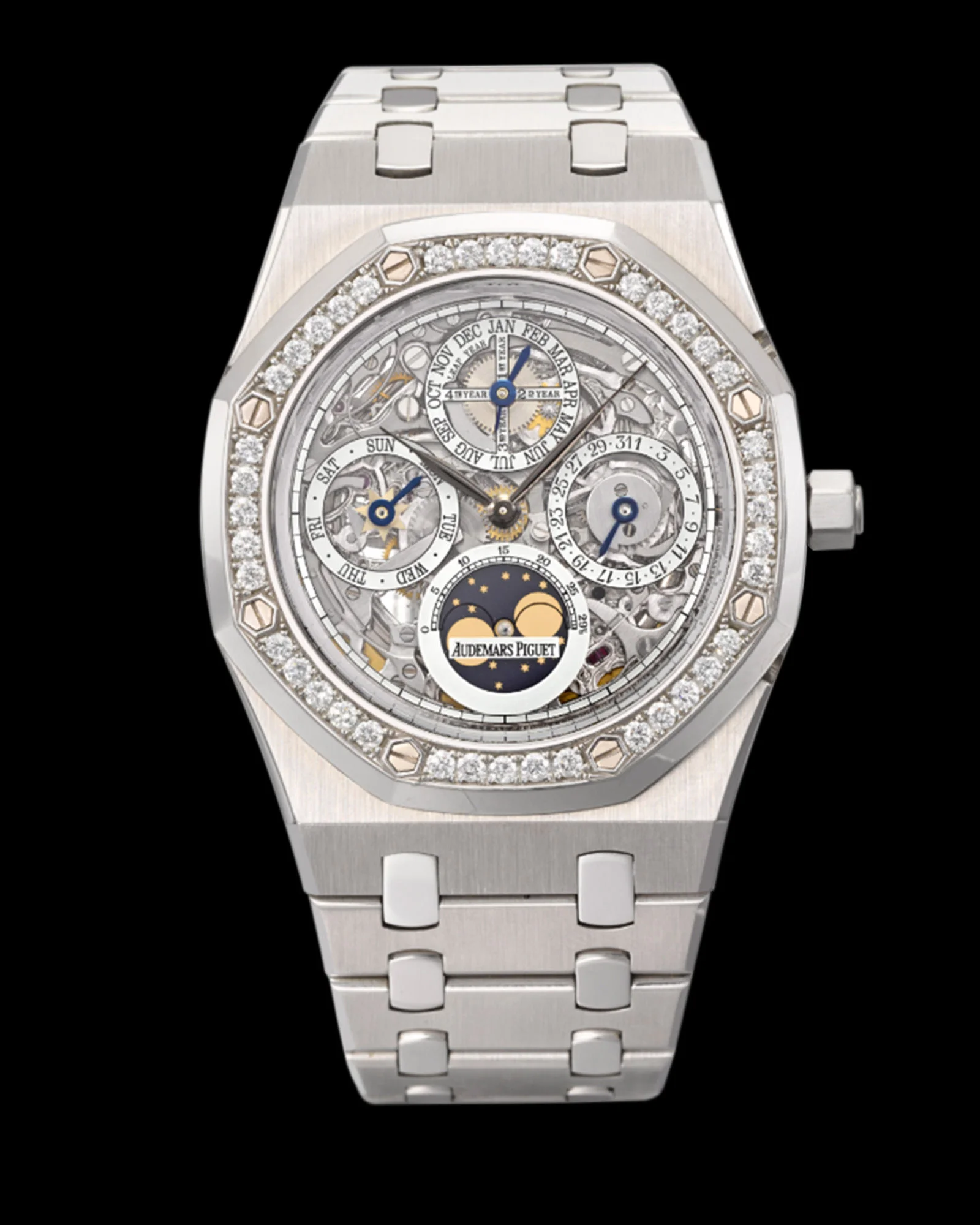
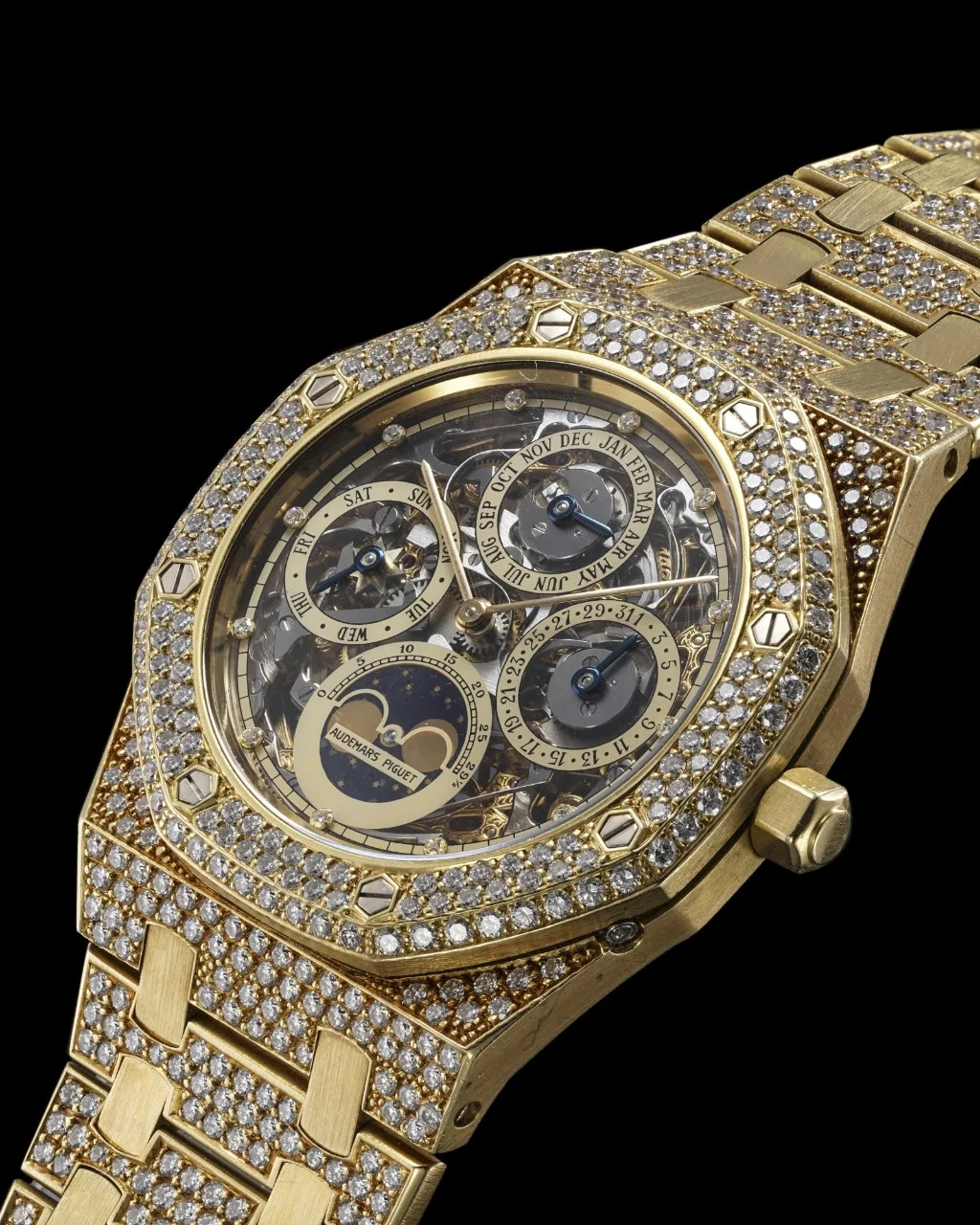
1996-2014. Openworked Selfwinding Calibre 2120/2802SQ Perpetual Calendar as seen from the bridge side. Audemars Piguet Archives.

1996-2014. Selfwinding Perpetual Calendar Caliber 2120/2802SQ as seen from the side. Audemars Piguet Archives.

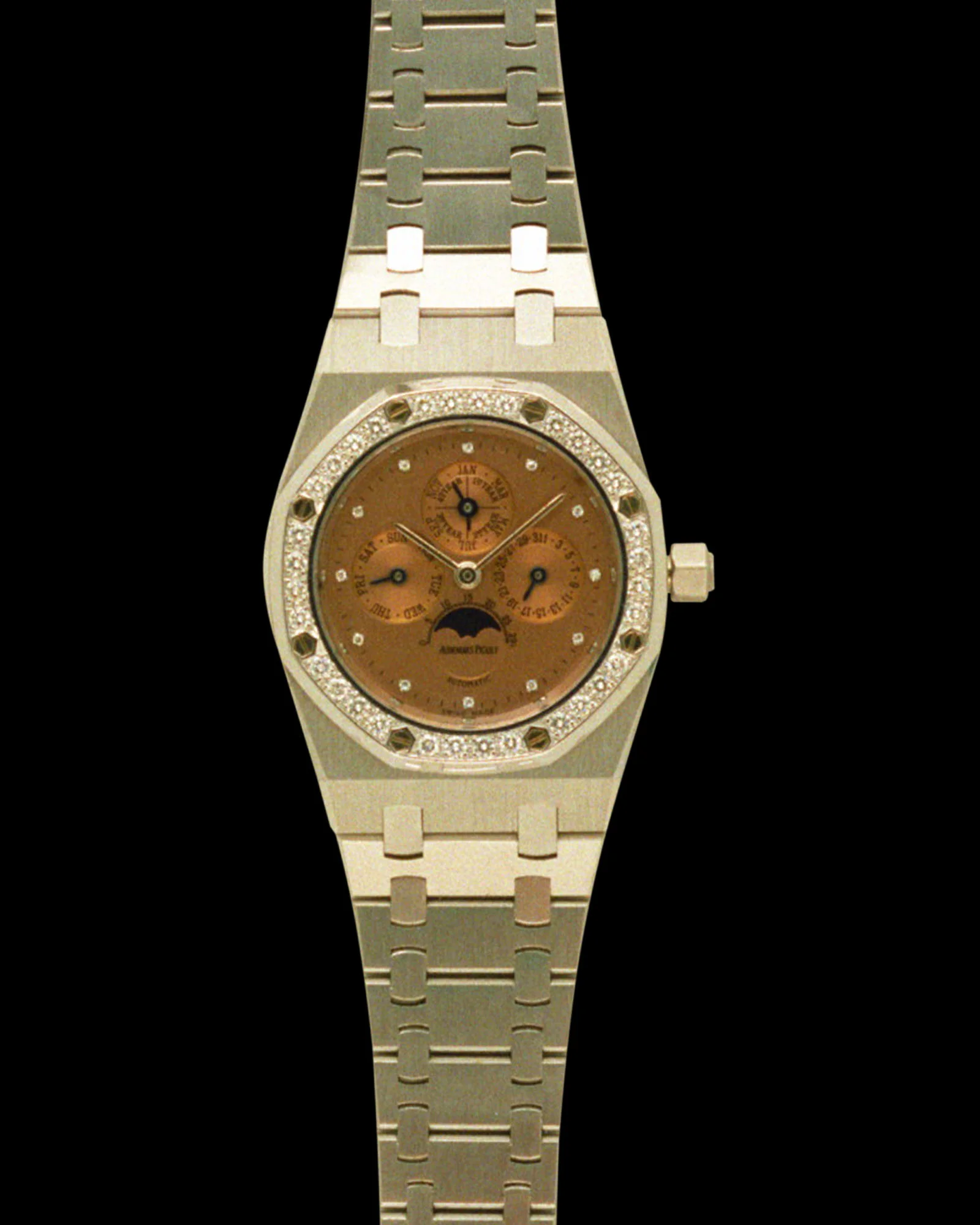
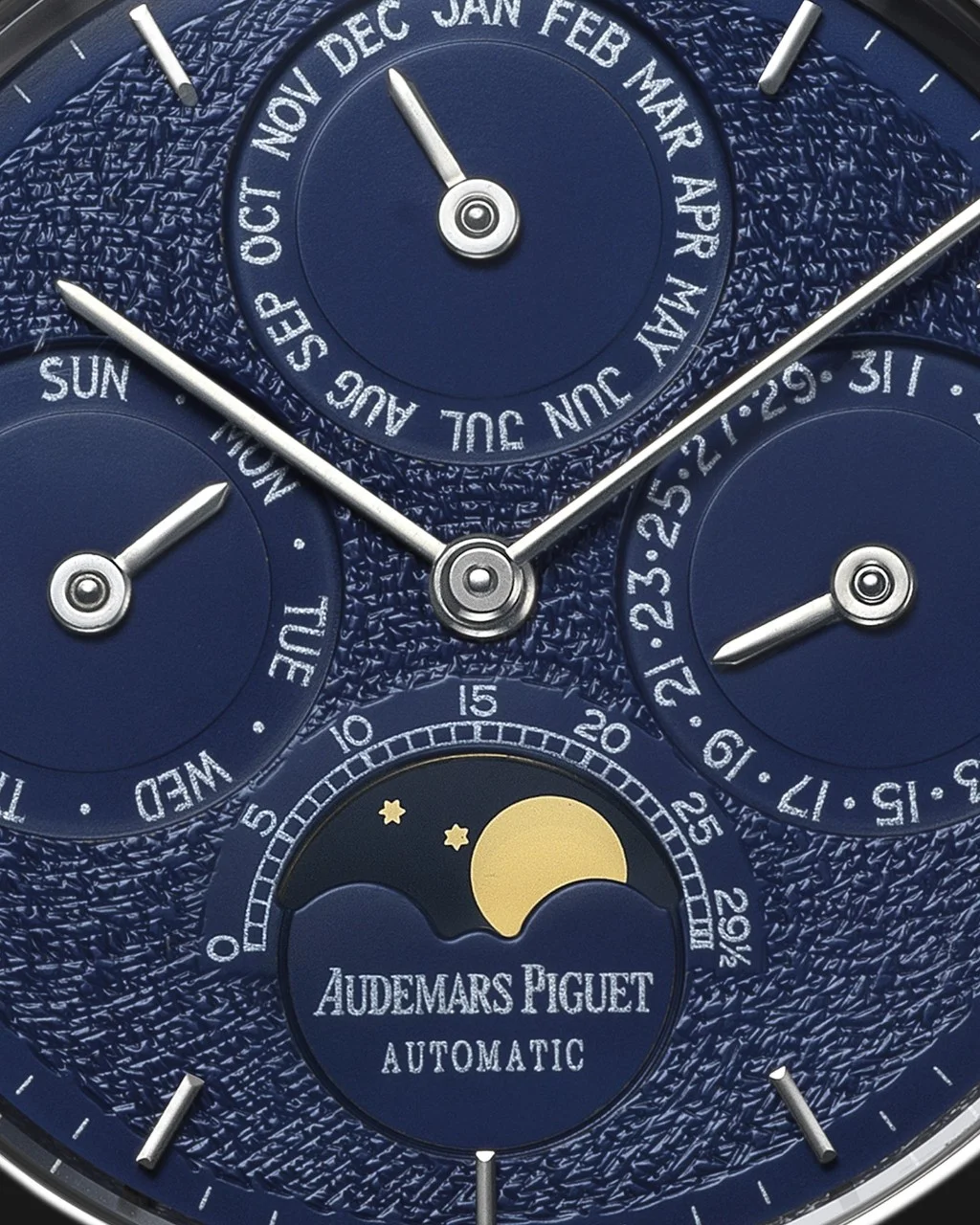
Circa 1996. Perpetual calendar dial. Focus on the 206 dial for the new versions of the 5548 and 5549 models. Documented by the dialmaker Stern. Audemars Piguet Archives.

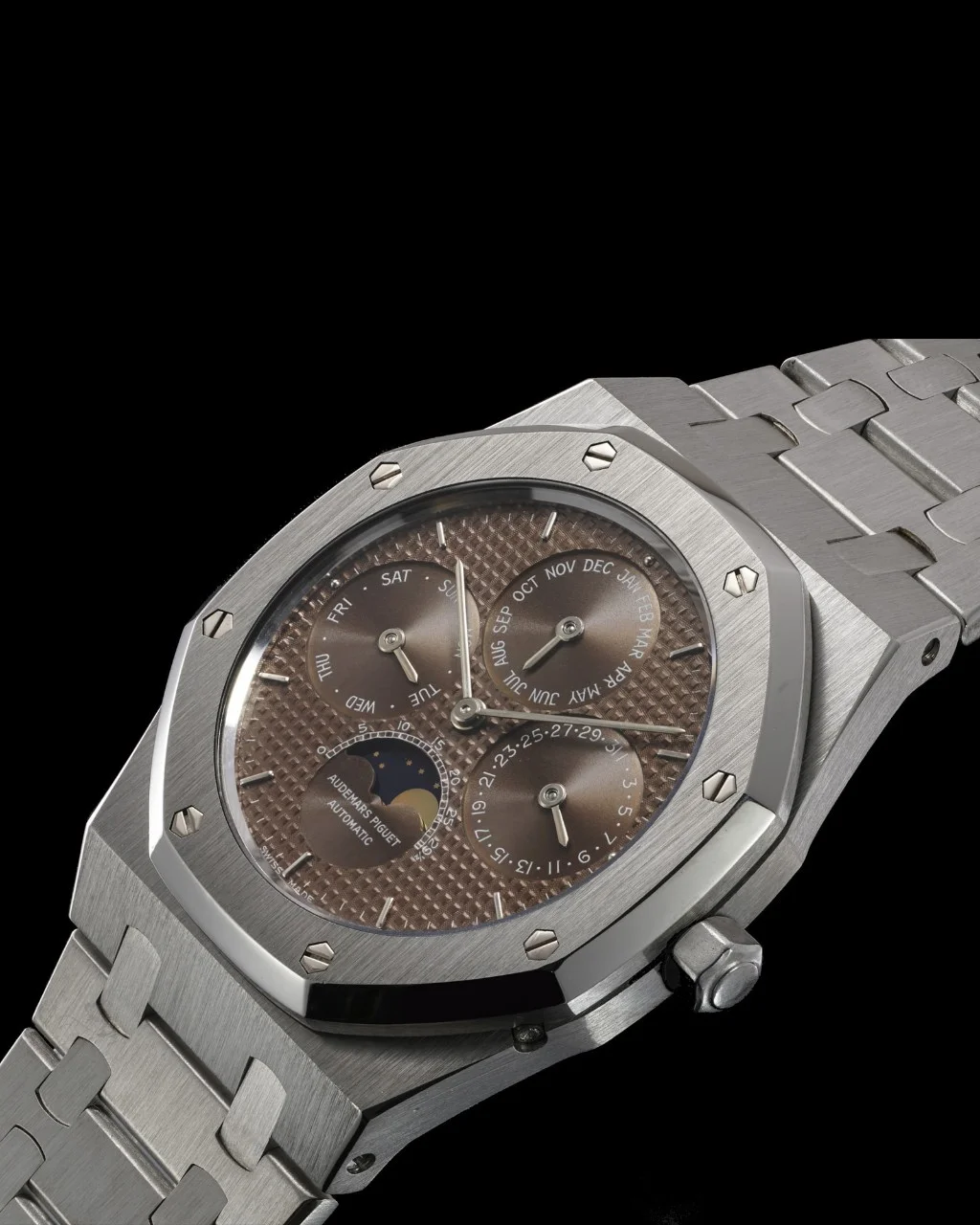
2010. Example of a watch from the Jules Audemars collection with perpetual calendar Calibre 2120/2802, ref 26390OR. Audemars Piguet Archives.

2013. Technical sheet for Calibre 2120/2802 drawn up by the After-Sales Service. Audemars Piguet Archives.
Mechanism
Selfwinding with 21-carat oscillating weight, variable-inertia balance.
Functions
Hour, minute, perpetual calendar: date, day, month and phase of the Moon.
Diameter
28 mm (121/2 lignes)
Thickness
4.00 mm
Frequency
19,800 vph (2.75 Hz)
Power Reserve
Approx. 40 h
Jewels
38
Dates
1996 - circa 2018
Movement Blank
LeCoultre & Cie (movement) and Dubois-Dépraz (casing)
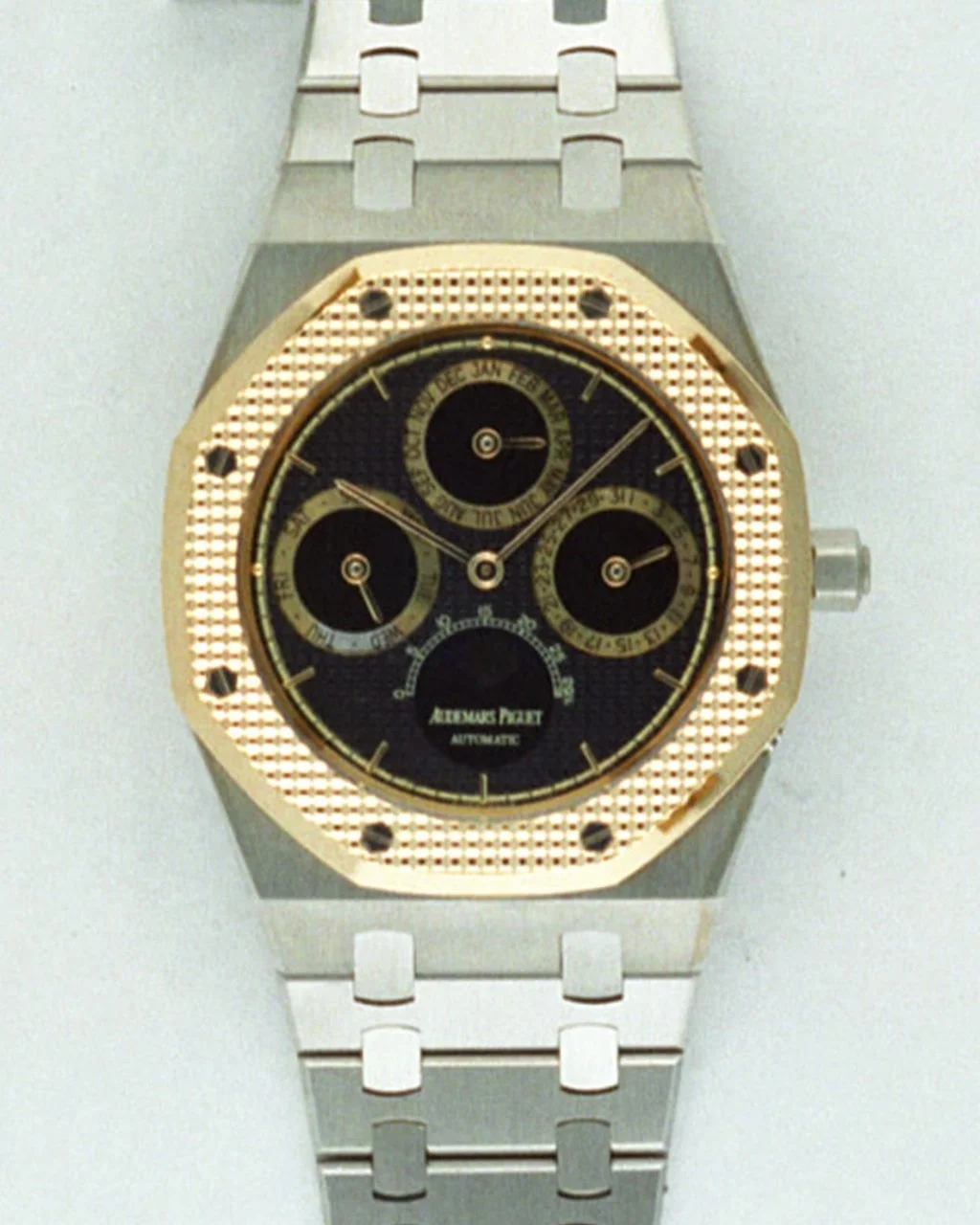
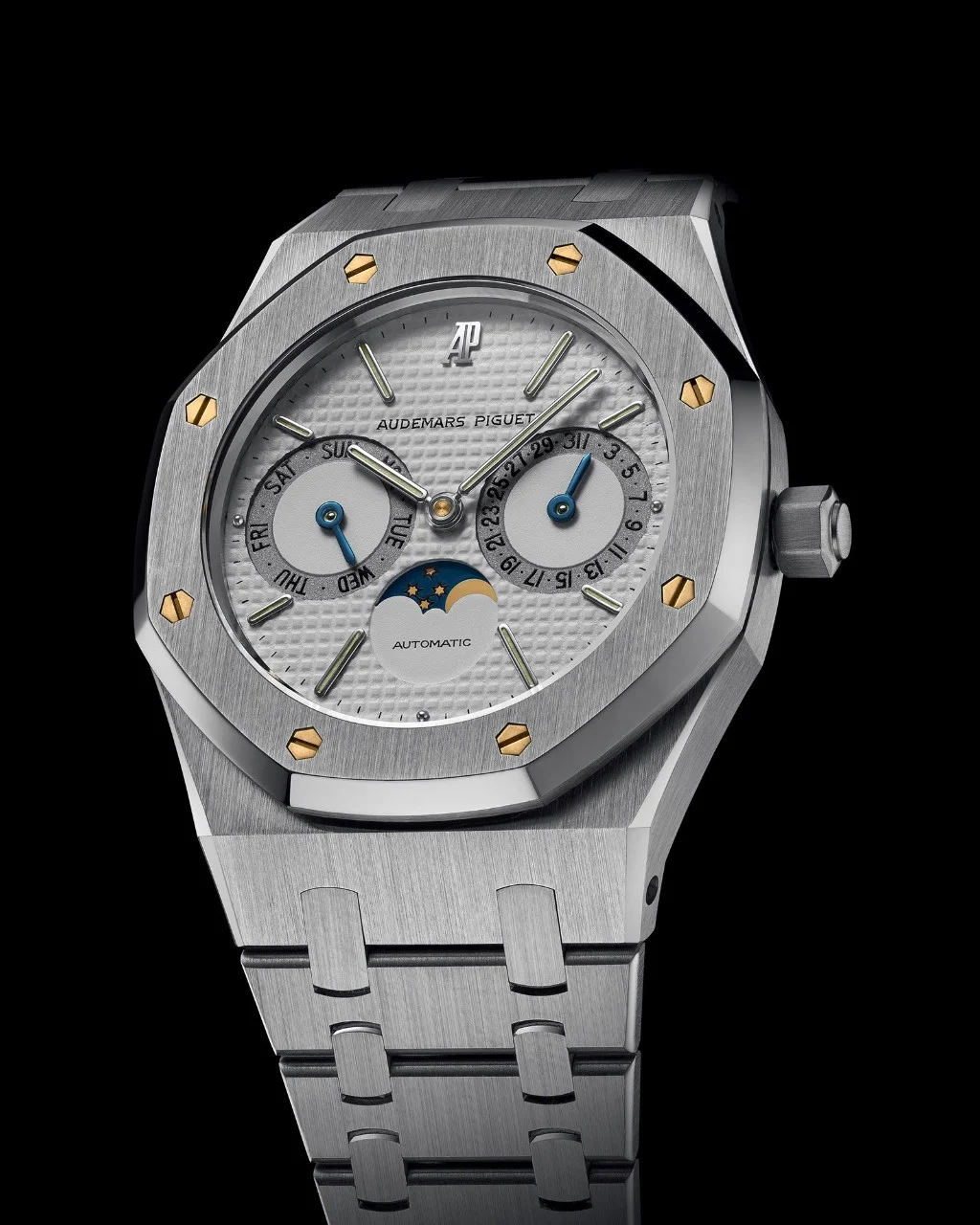
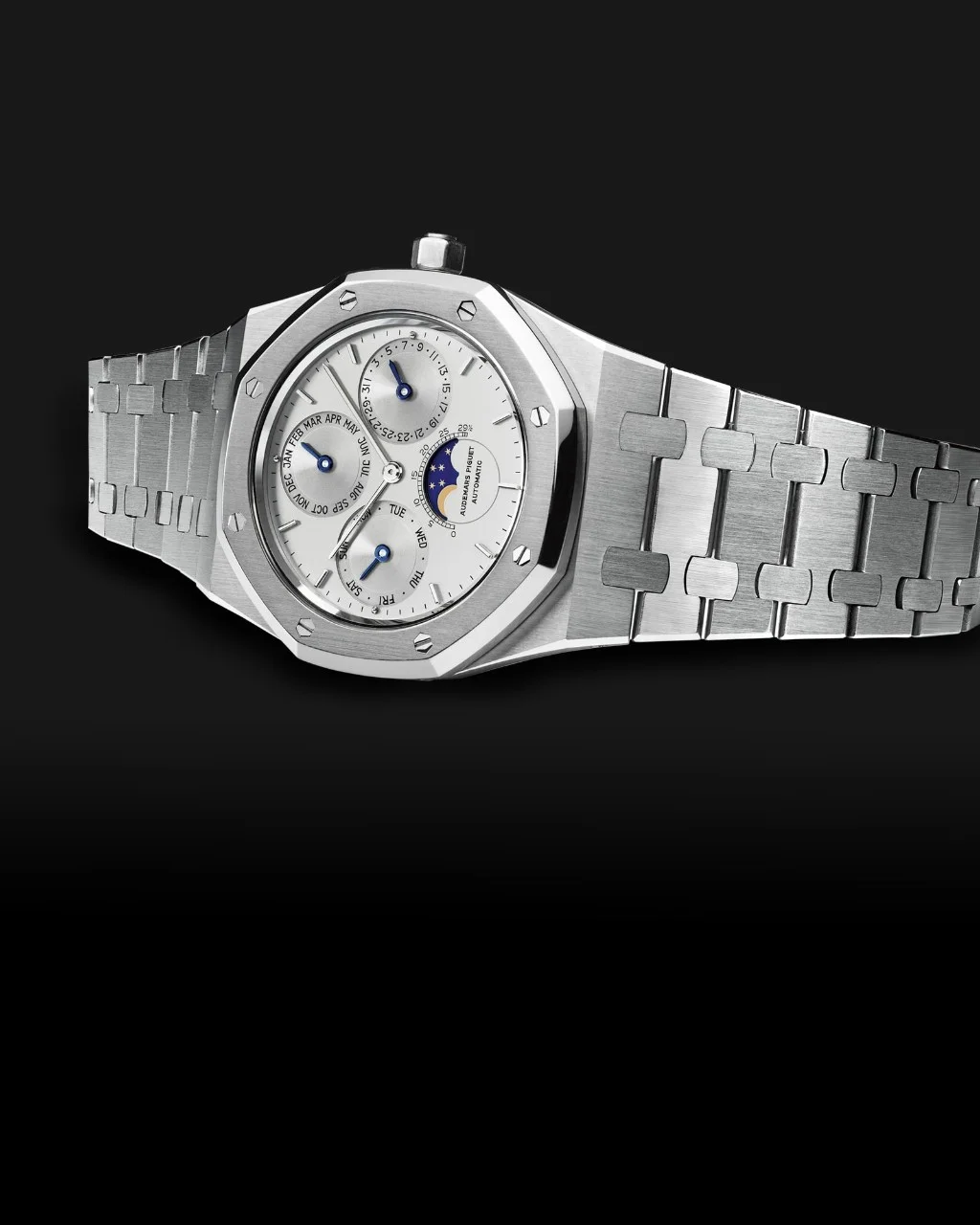
Calibre 2120/2802 was developed as the successor to Calibre 2120/2800, a movement that marked a significant milestone in the history of Audemars Piguet’s perpetual calendar wristwatches.
The addition of the leap year indication made it easier to set the calendar, allowing the wearer to synchronise the mechanism with the leap year cycle more intuitively.
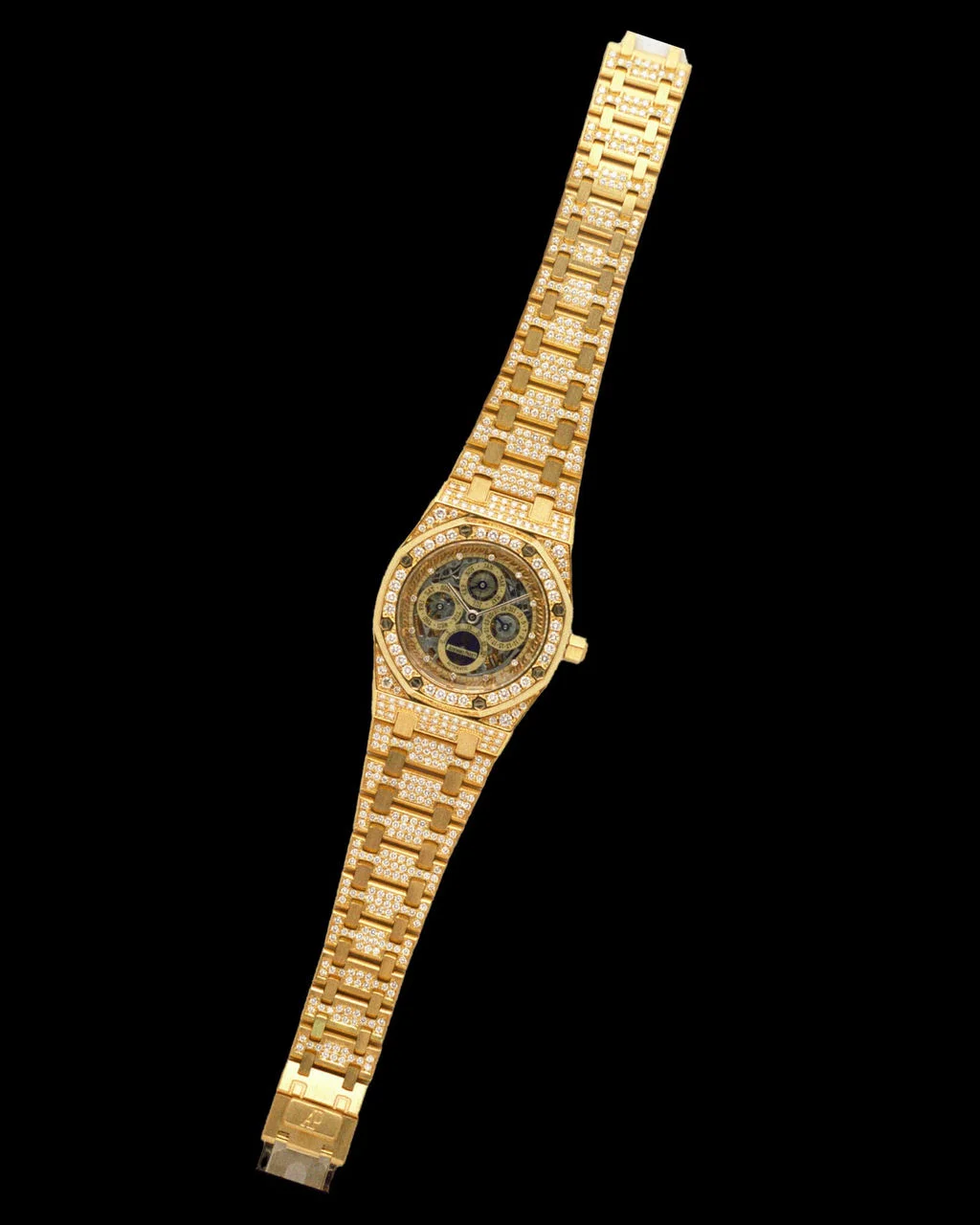
From its inception, the calibre was produced in two distinct versions: classic and openworked. Openworked was was done in the traditional way, using a fine saw known as a boc-fil. A single movement required approximately one month of meticulous craftsmanship by a highly skilled artisan.
Remained in the catalogue for almost 20 years, this calibre powered various Royal Oak models as well as pieces from other collections, including the Jules Audemars line. It was ultimately succeeded in 2015 by Calibre 5134.
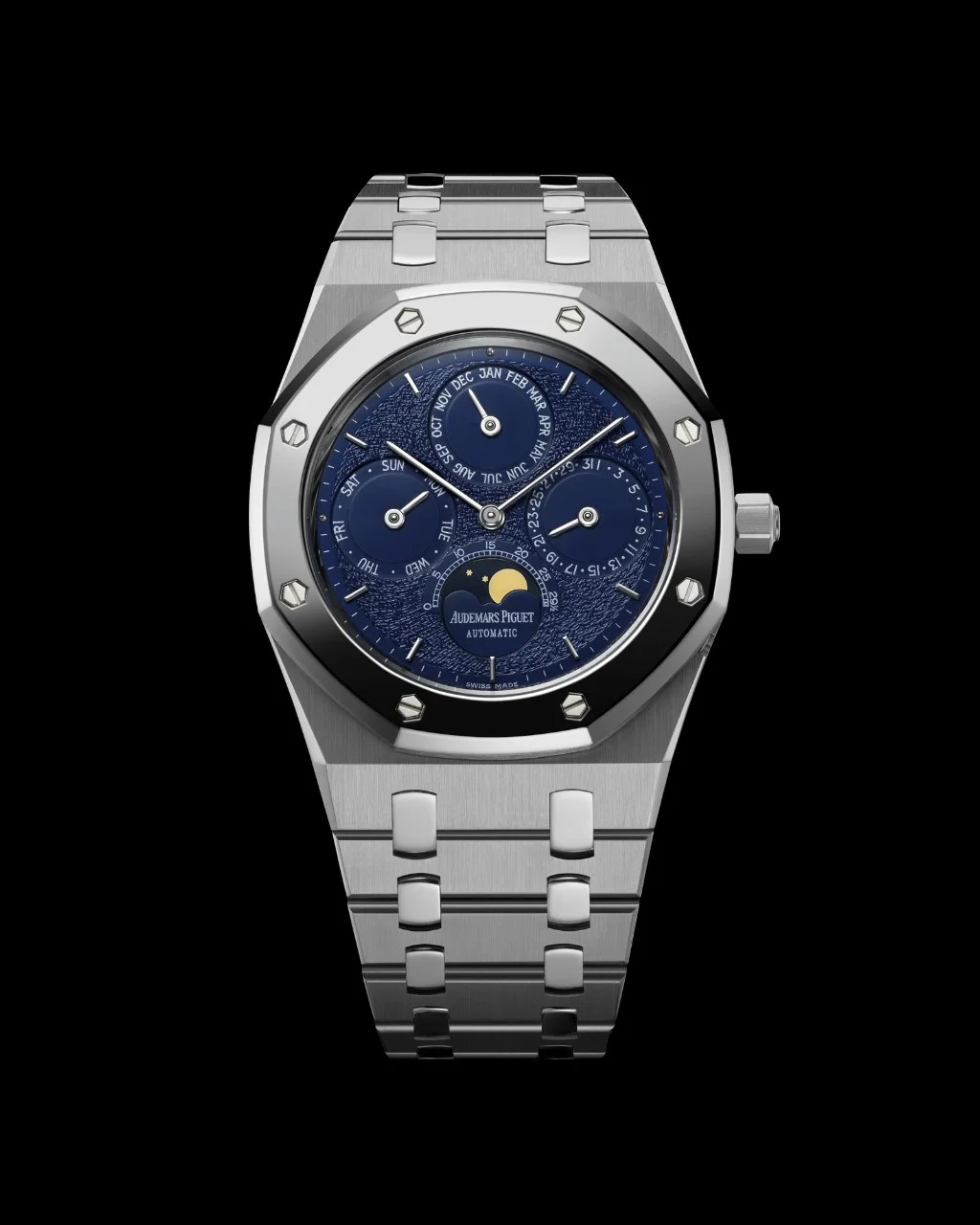
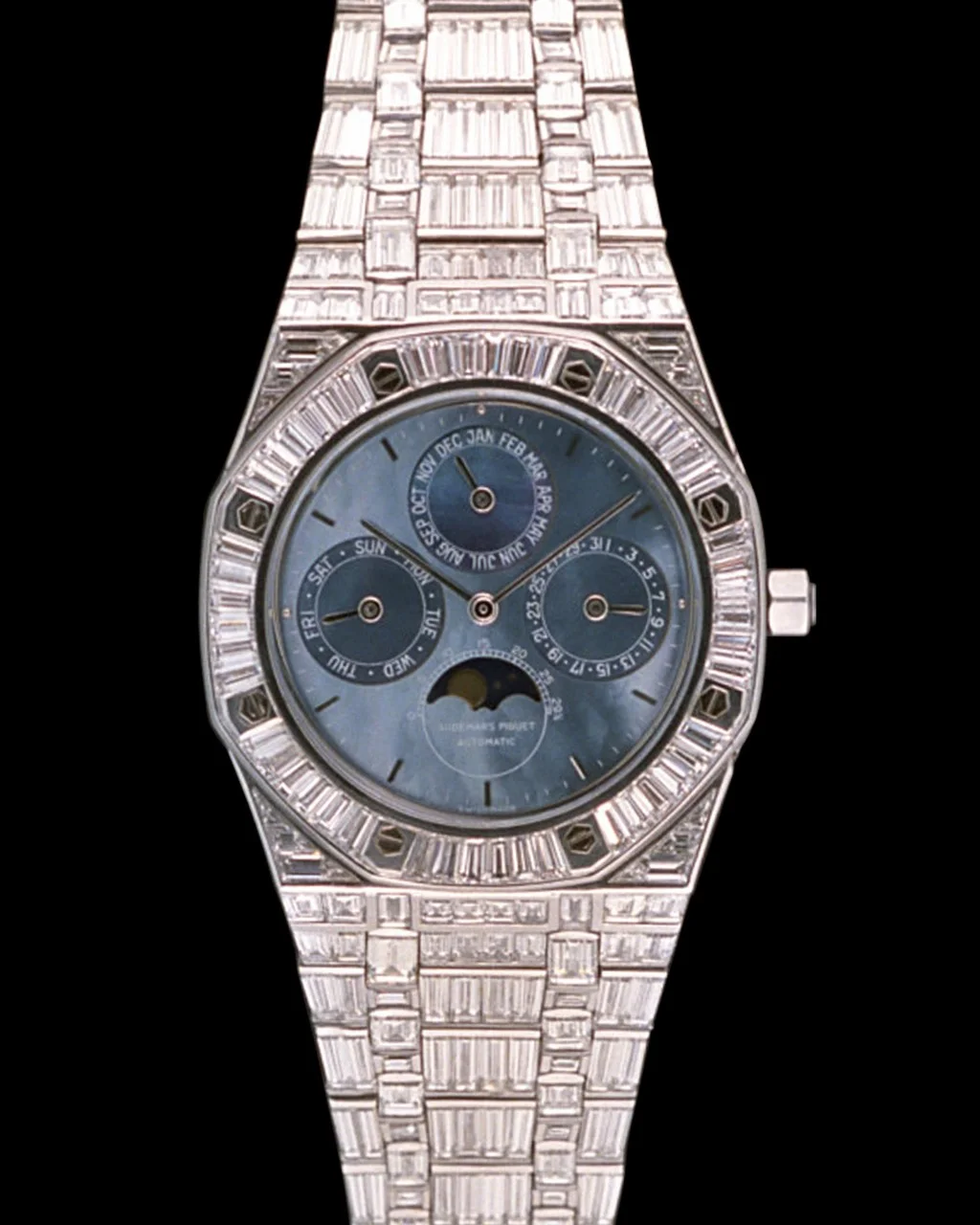
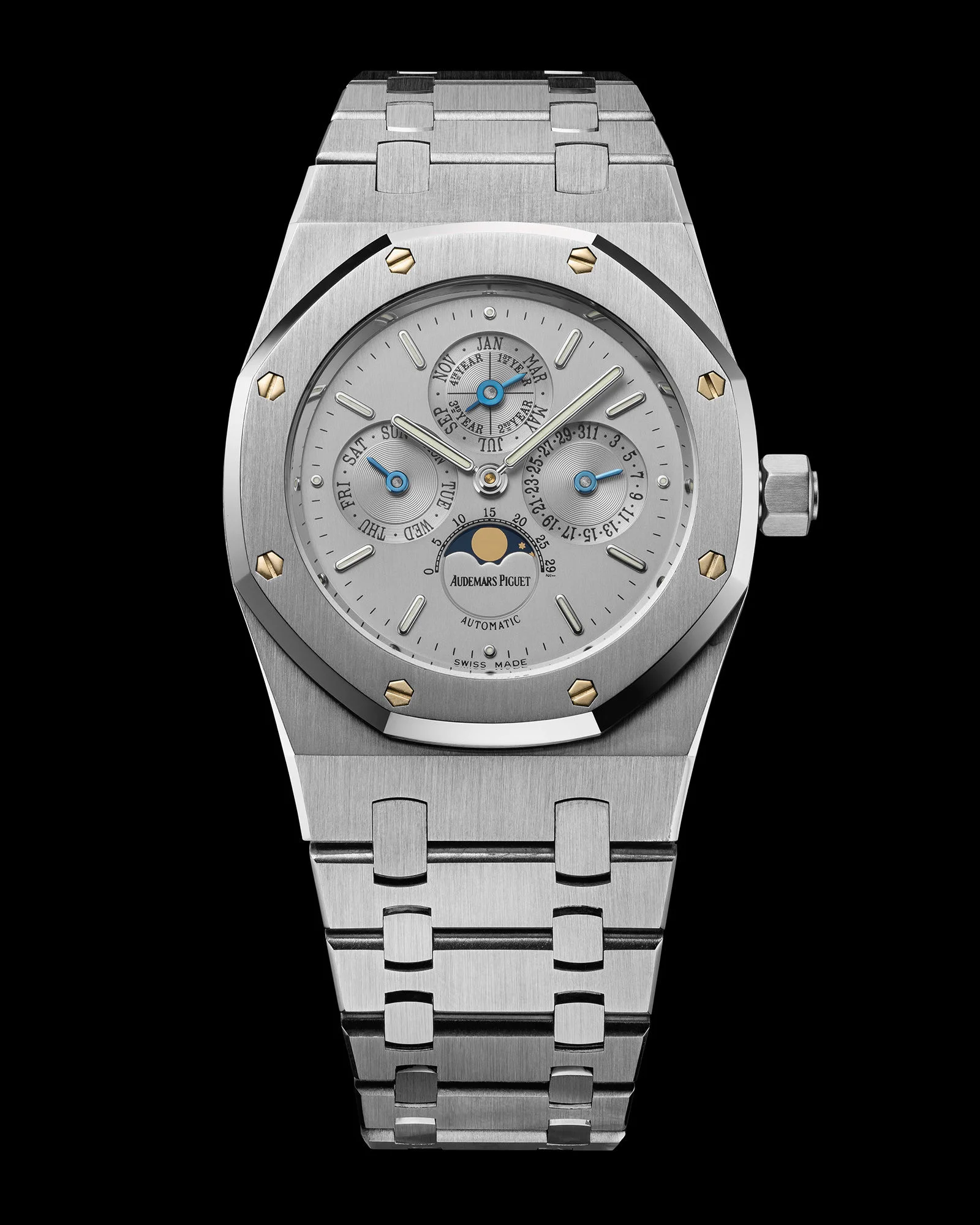
Royal Oak models equipped with Caliber 2120/2802:
25820 (1996-2010) | 25829 (1996-2014) | 25930 (1999-2009) | 25917 (2001) | 26017 (2003) | 26252 (2008-2013).
Sales Breakdown (1996–2018)
Total: 2,326 pieces
1996: 15 | 1997: 126 | 1998: 72 | 1999: 145 | 2000: 146 | 2001: 137 | 2002: 111 | 2003: 160 | 2004: 190 | 2005: 187 | 2006: 169 | 2007: 280 | 2008: 207 | 2009: 257 | 2010: 23 | 2011: 31 | 2012: 16 | 2013: 51 | 2014: 1 | 2015: 1 | 2018: 1
Calibre 2120/2802 was developed as the successor to Calibre 2120/2800, a movement that marked a significant milestone in the history of Audemars Piguet’s perpetual calendar wristwatches.
The addition of the leap year indication made it easier to set the calendar, allowing the wearer to synchronise the mechanism with the leap year cycle more intuitively.
From its inception, the calibre was produced in two distinct versions: classic and openworked. Openworked was was done in the traditional way, using a fine saw known as a boc-fil. A single movement required approximately one month of meticulous craftsmanship by a highly skilled artisan.
Remained in the catalogue for almost 20 years, this calibre powered various Royal Oak models as well as pieces from other collections, including the Jules Audemars line. It was ultimately succeeded in 2015 by Calibre 5134.
Royal Oak models equipped with Caliber 2120/2802:
25820 (1996-2010) | 25829 (1996-2014) | 25930 (1999-2009) | 25917 (2001) | 26017 (2003) | 26252 (2008-2013).
Sales Breakdown (1996–2018)
Total: 2,326 pieces
1996: 15 | 1997: 126 | 1998: 72 | 1999: 145 | 2000: 146 | 2001: 137 | 2002: 111 | 2003: 160 | 2004: 190 | 2005: 187 | 2006: 169 | 2007: 280 | 2008: 207 | 2009: 257 | 2010: 23 | 2011: 31 | 2012: 16 | 2013: 51 | 2014: 1 | 2015: 1 | 2018: 1