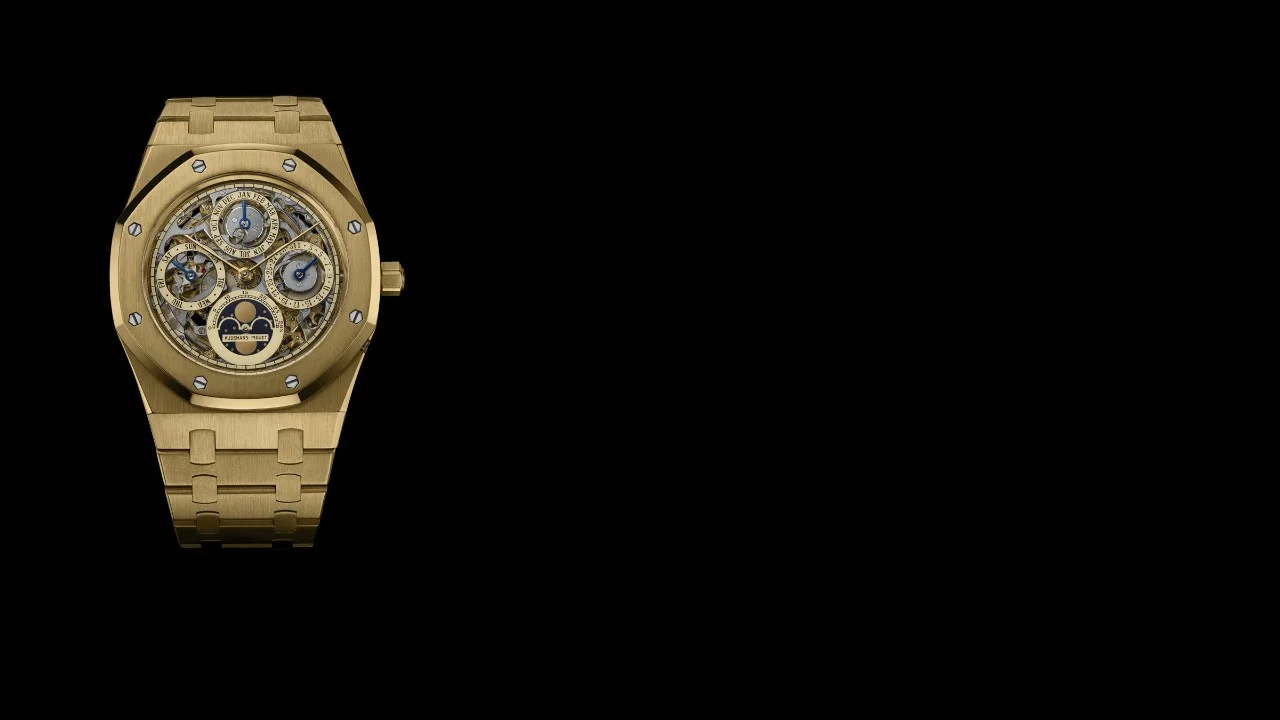
25636, Royal Oak Perpetual Calendar Openworked

1984. Openworking workshop. To accompany the renewal of openworking, Audemars Piguet created a workshop entirely dedicated to this art. Audemars Piguet Archives.

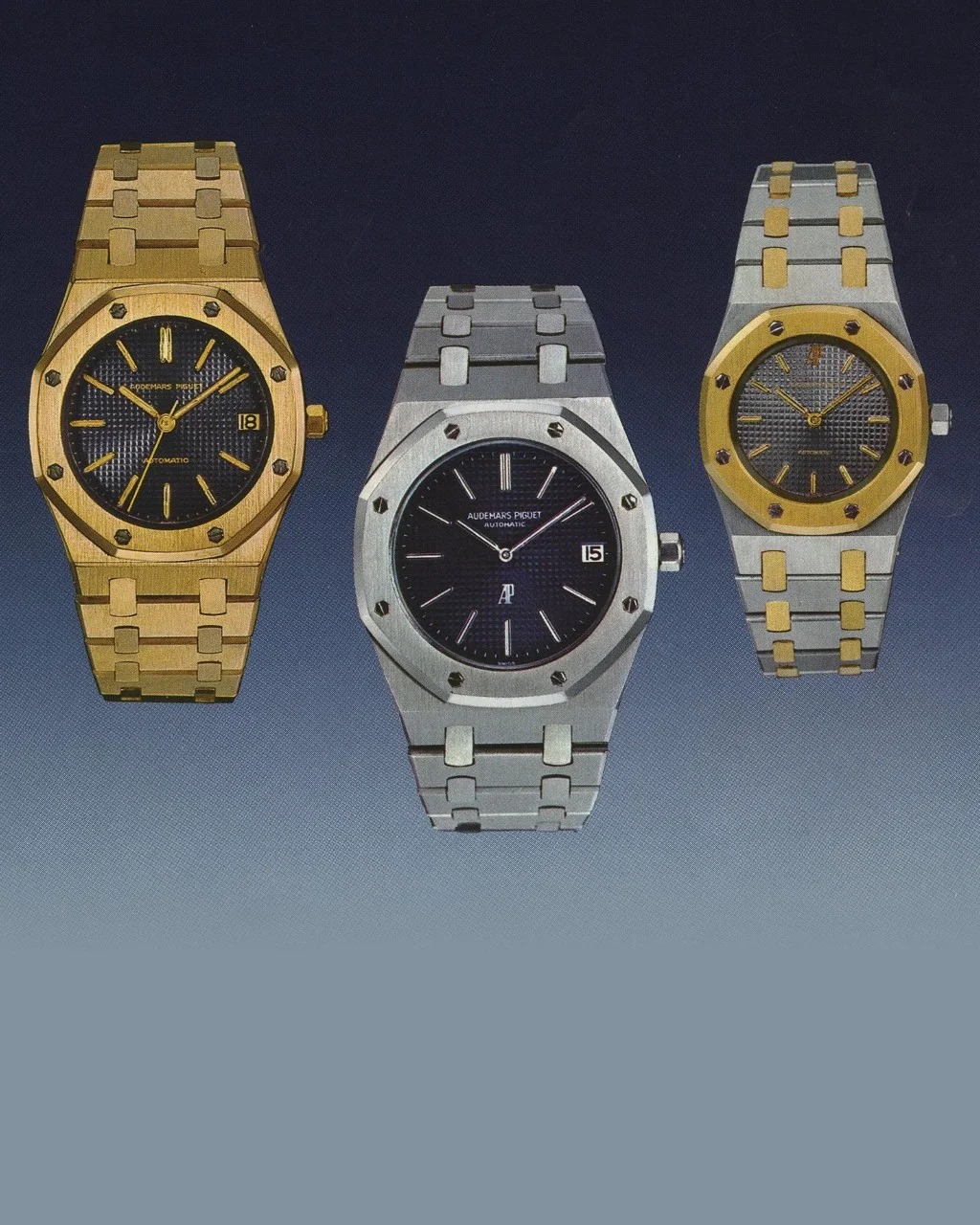
1975. Advert for the Royal Oak 5402ST and 5442BA. In the midst of the quartz crisis, these two models blazed a new trail. The 5402ST created a new "”sporty-chic” segment with its unconventional body of hand-finished steel, while Model 5442BA highlighted ancestral techniques. Audemars Piguet Archives.

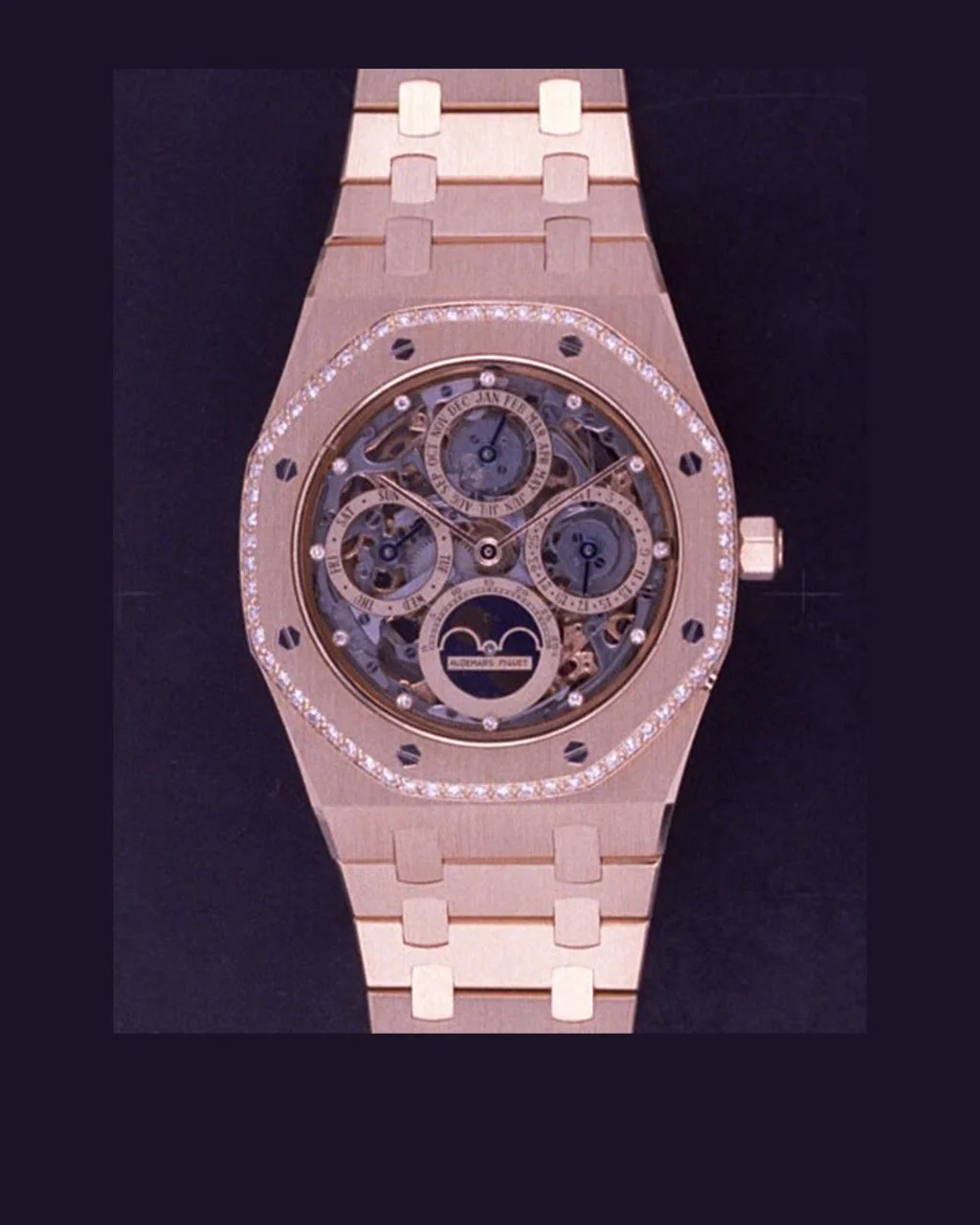
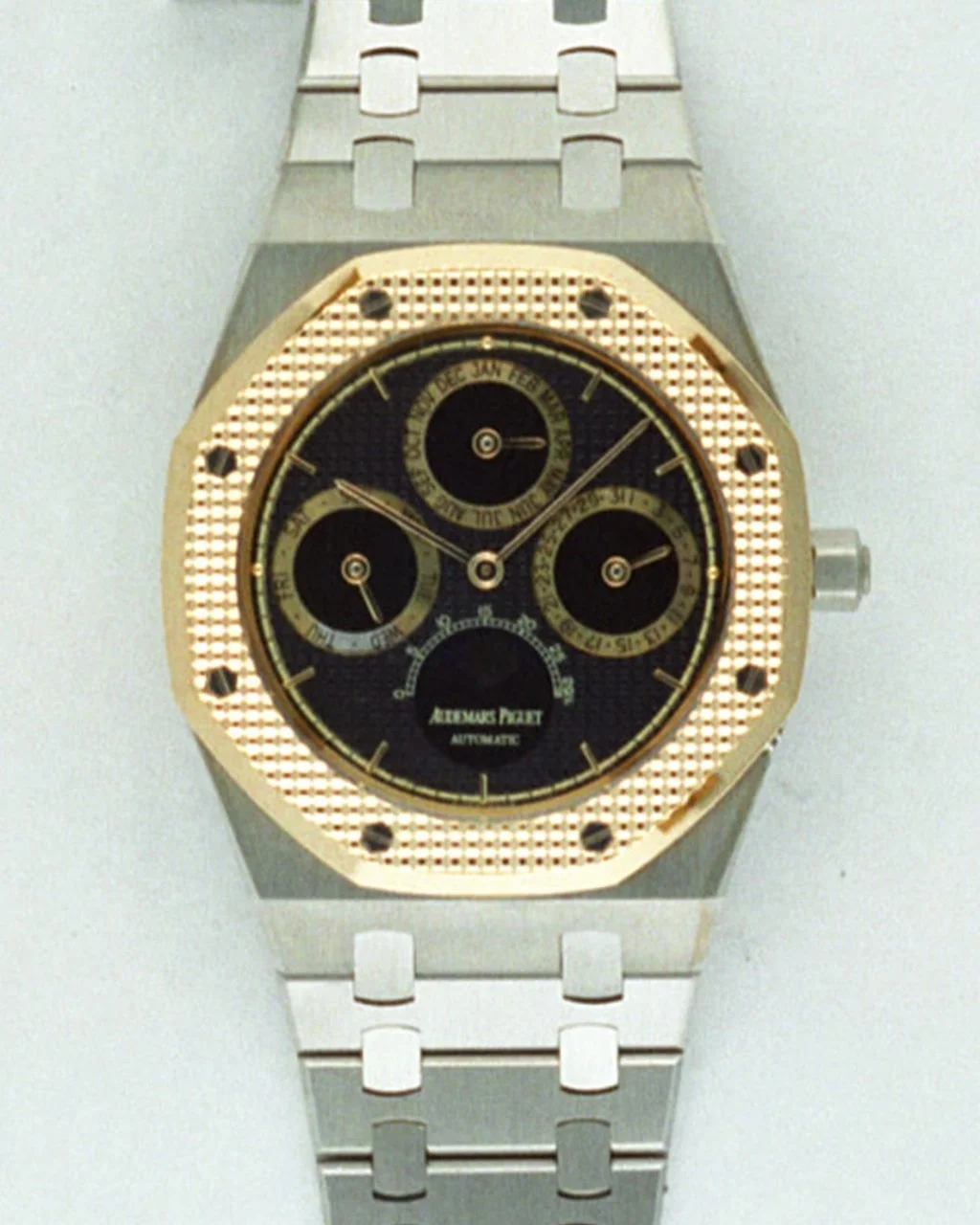
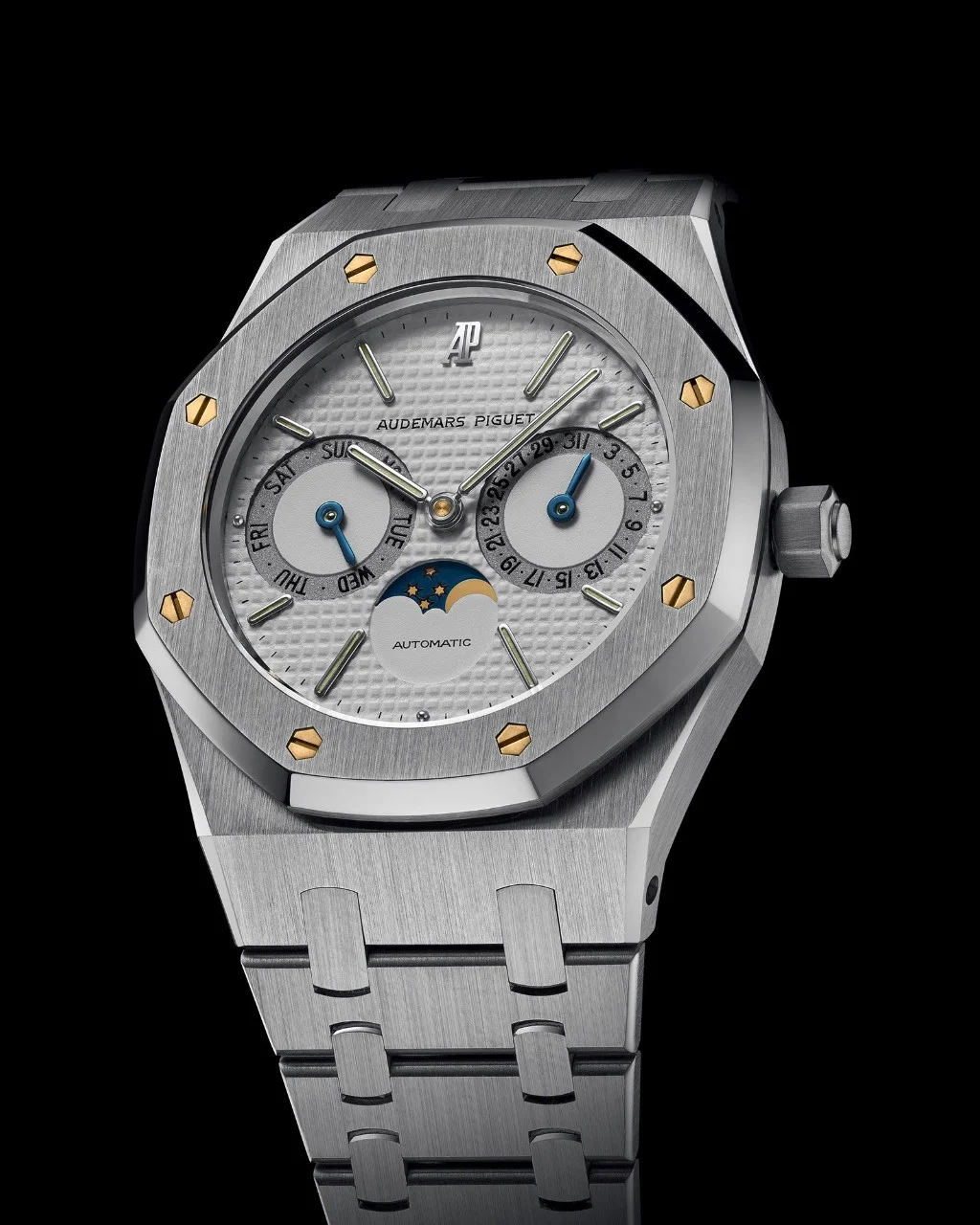
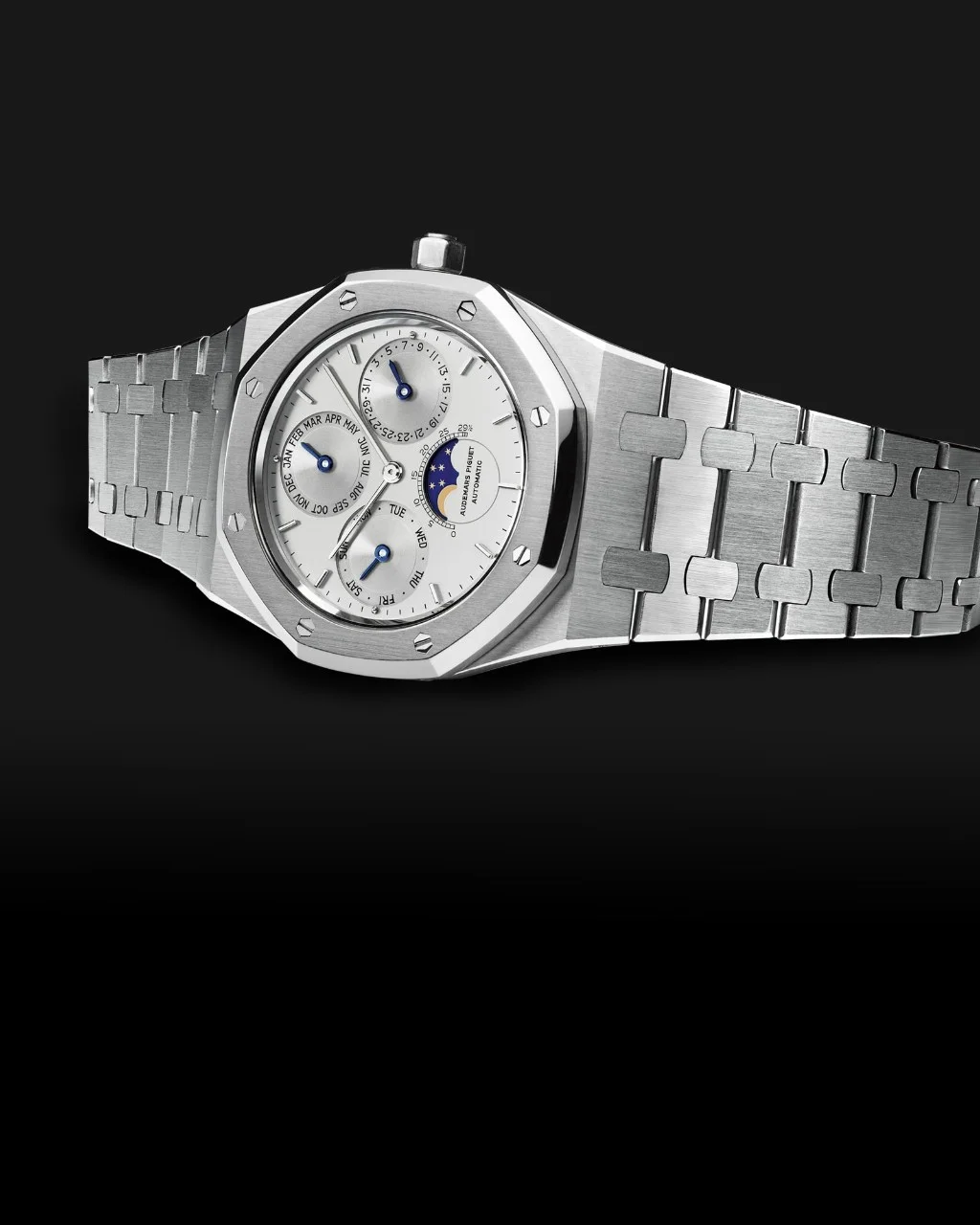
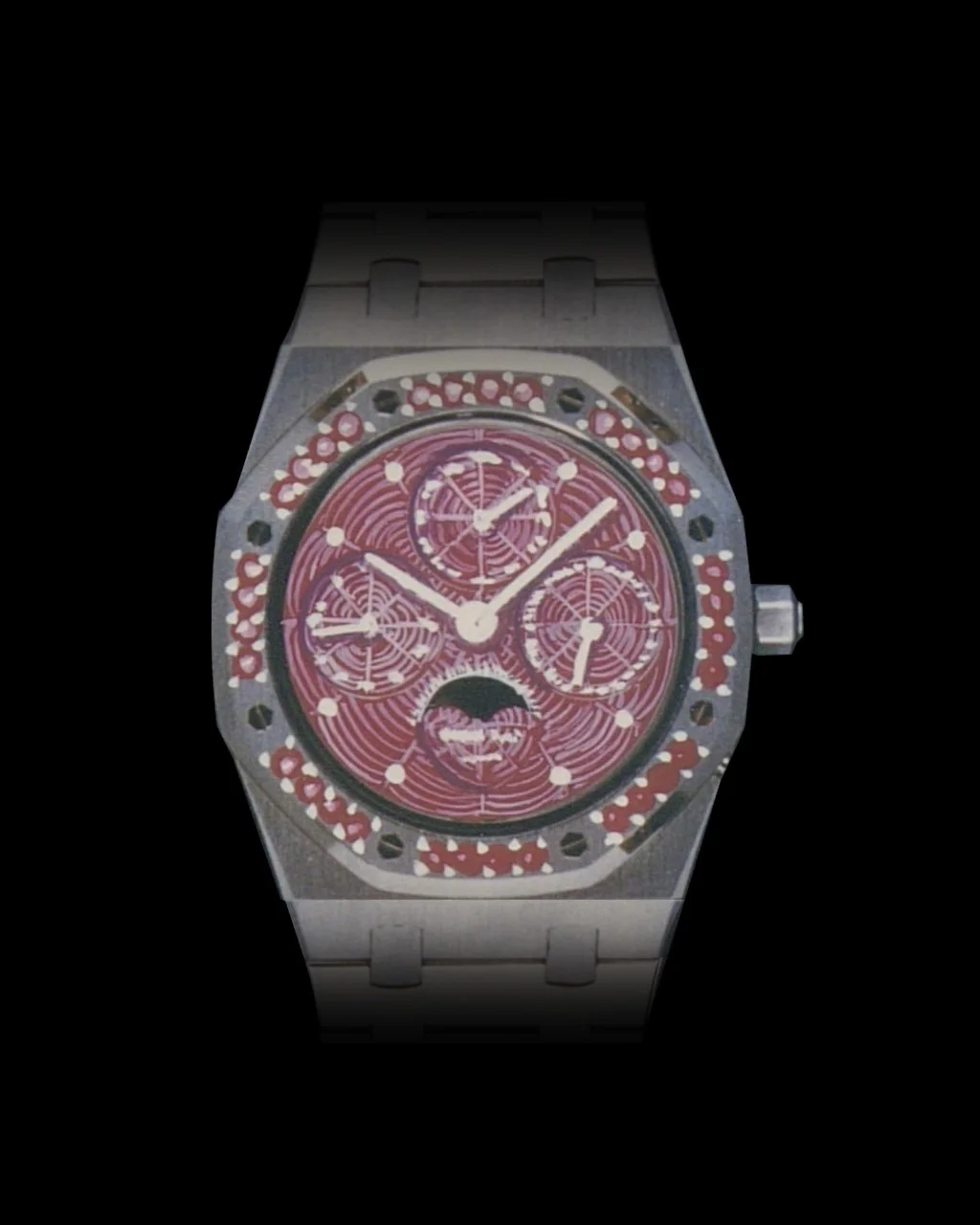
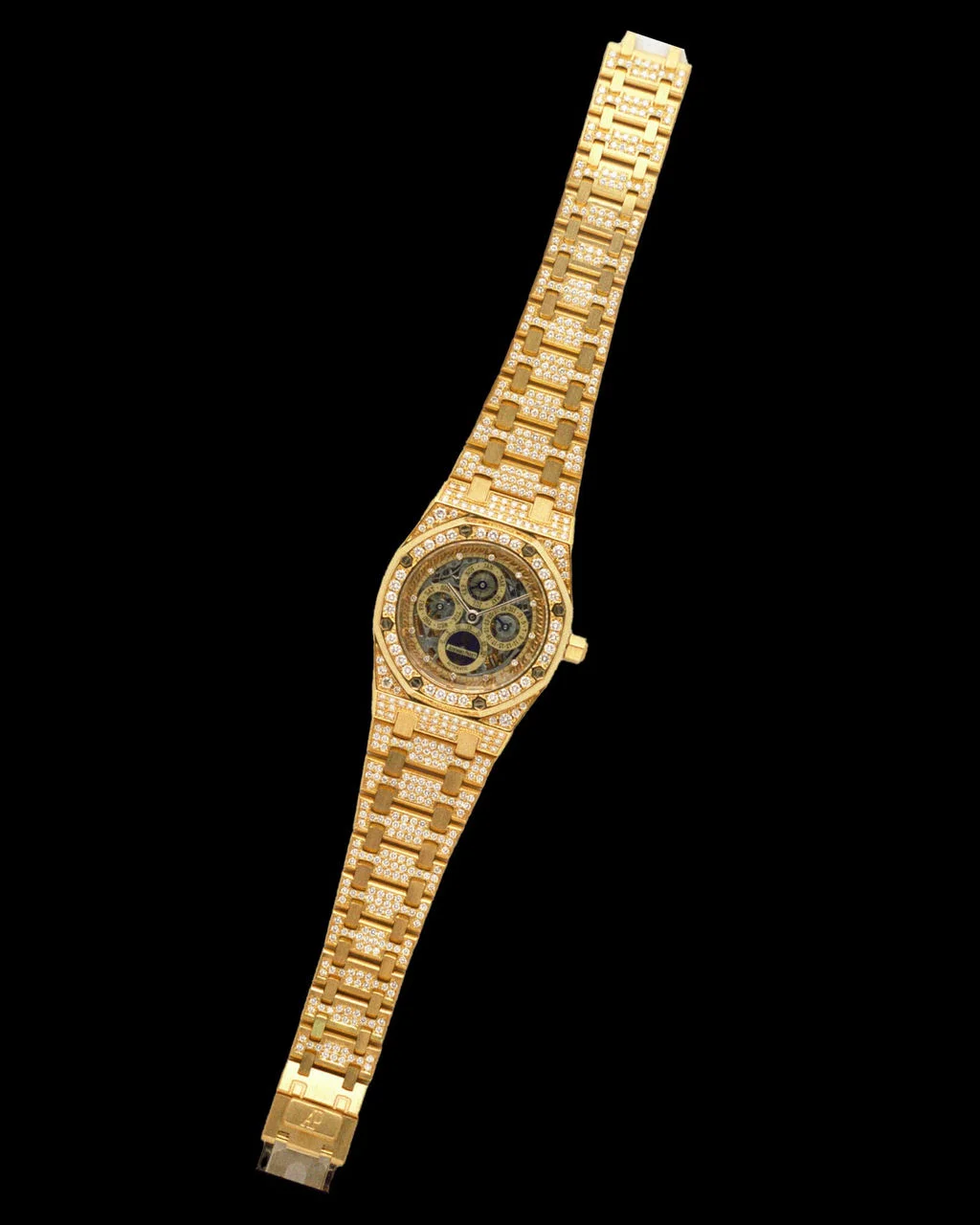
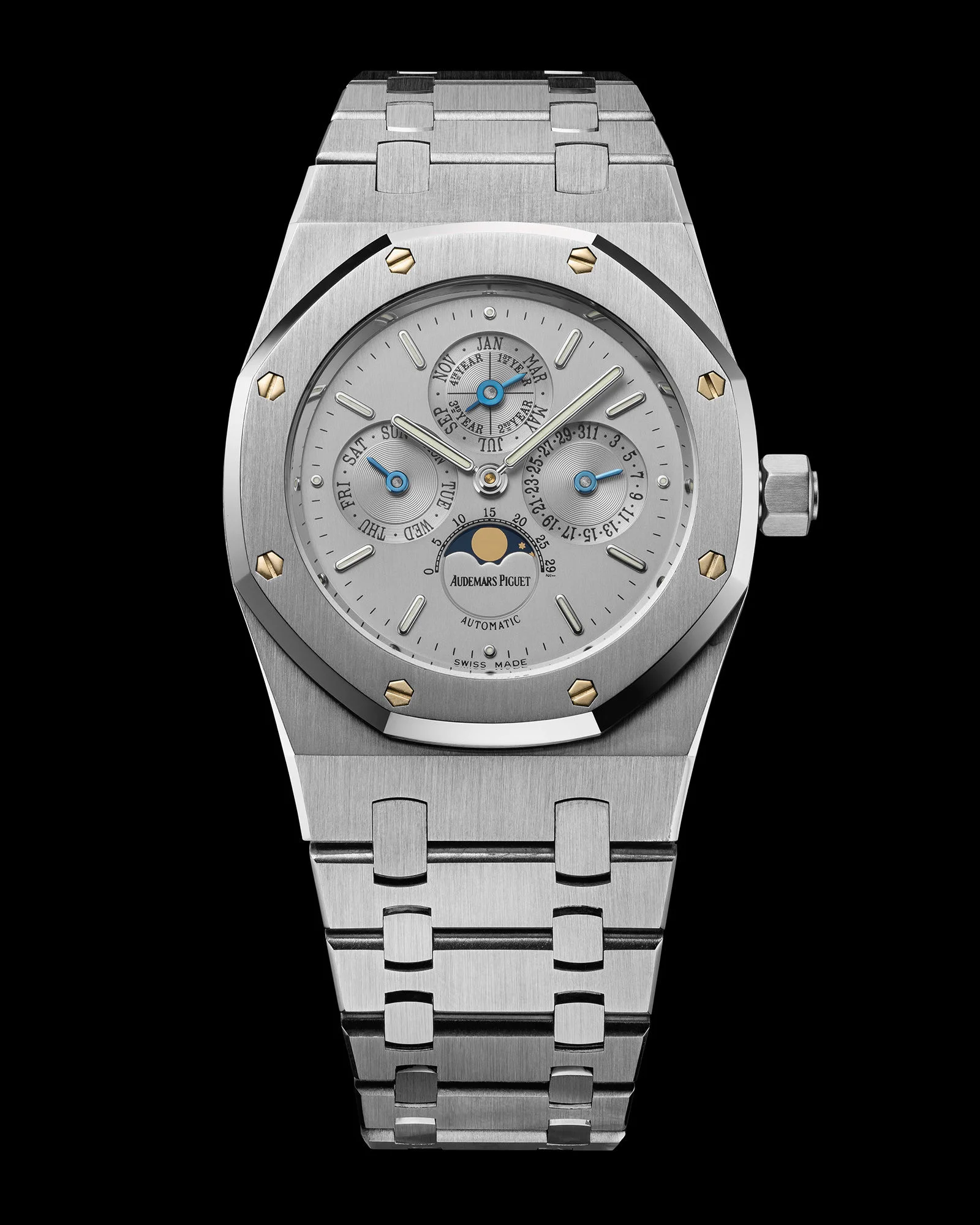
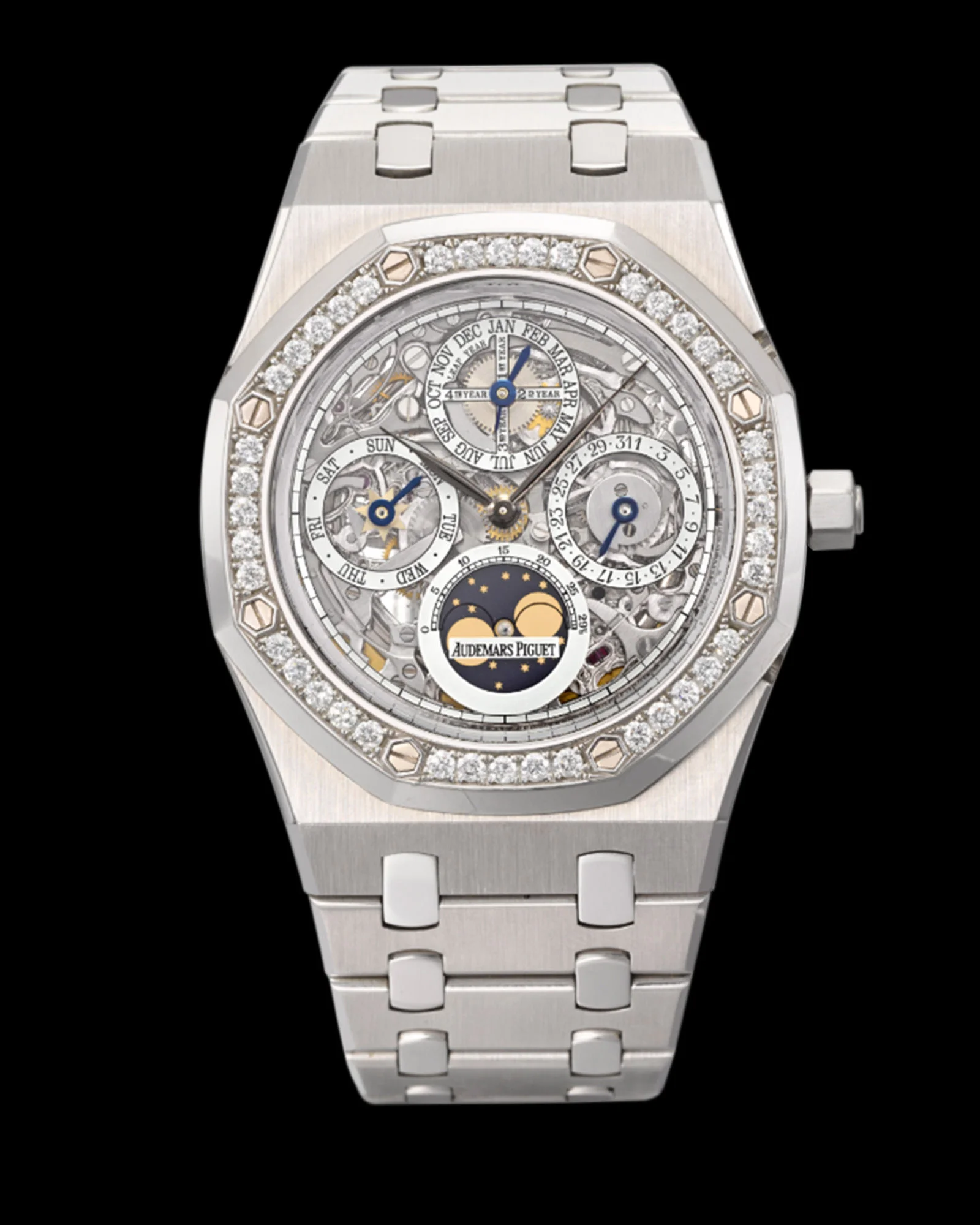
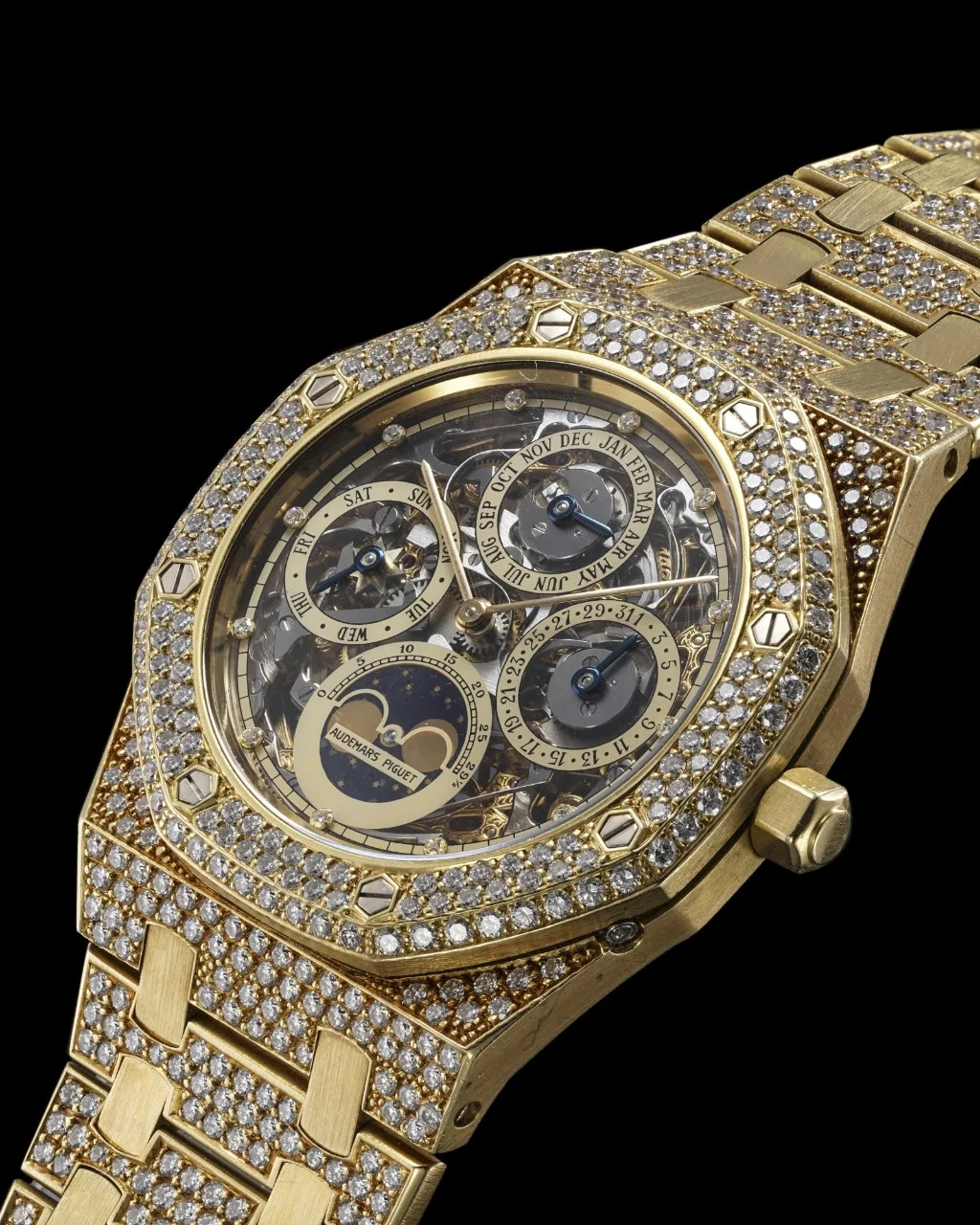
1986–1994. Royal Oak Perpetual Calendar Openworked Model 25636BA. Only the yellow gold version appeared in the Audemars Piguet Catalogues from 1986 to 1994. Audemars Piguet Archives.
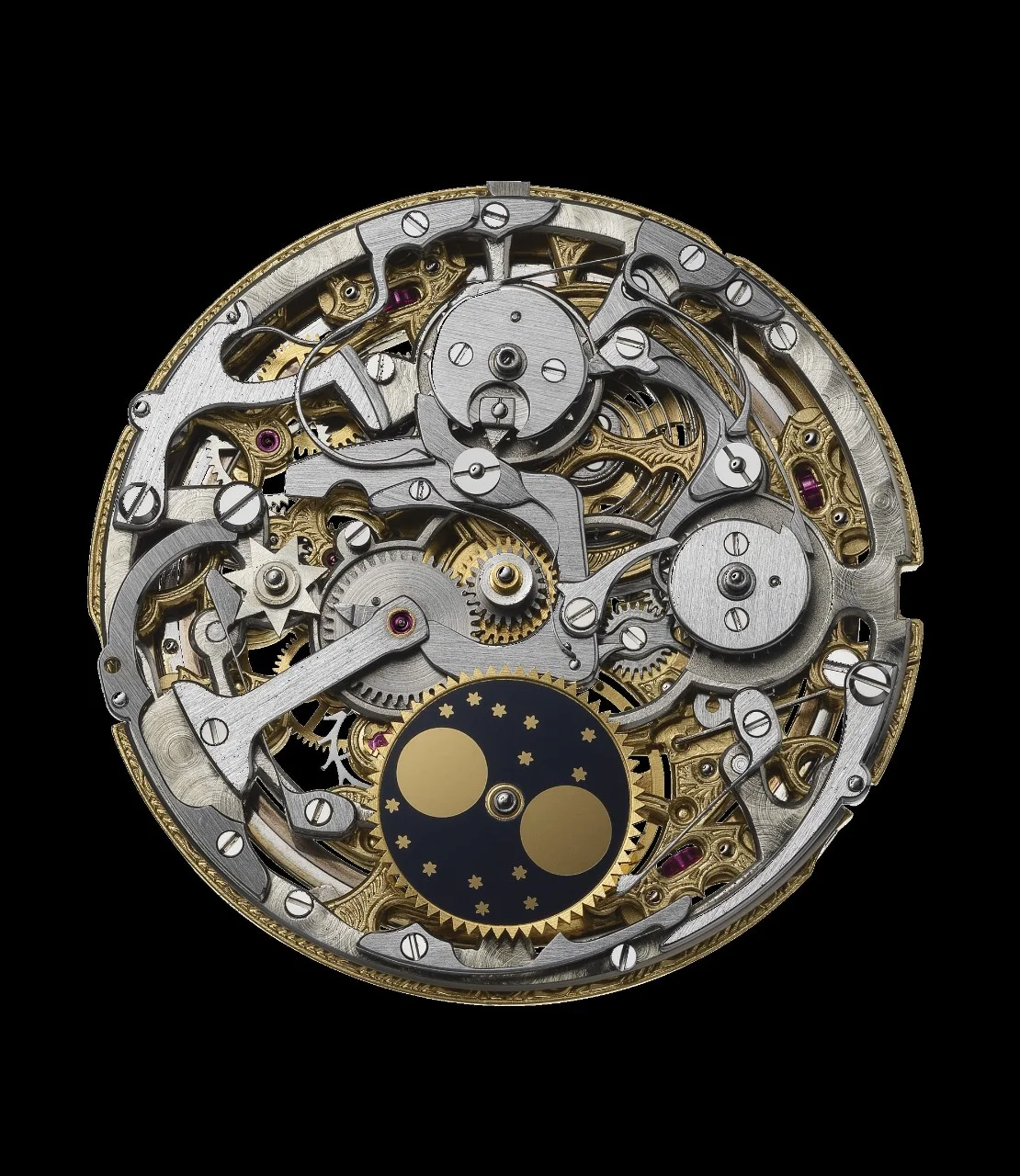
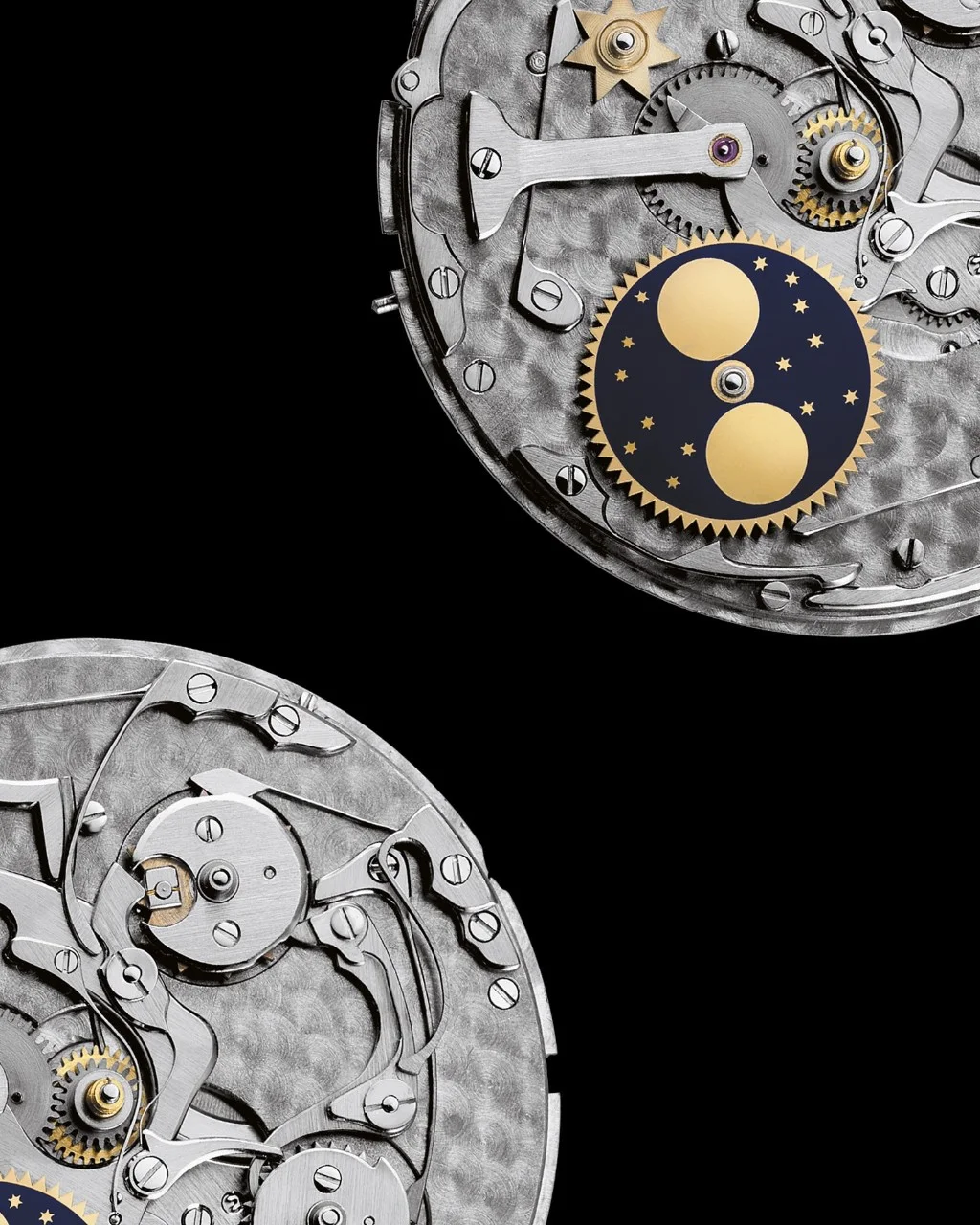
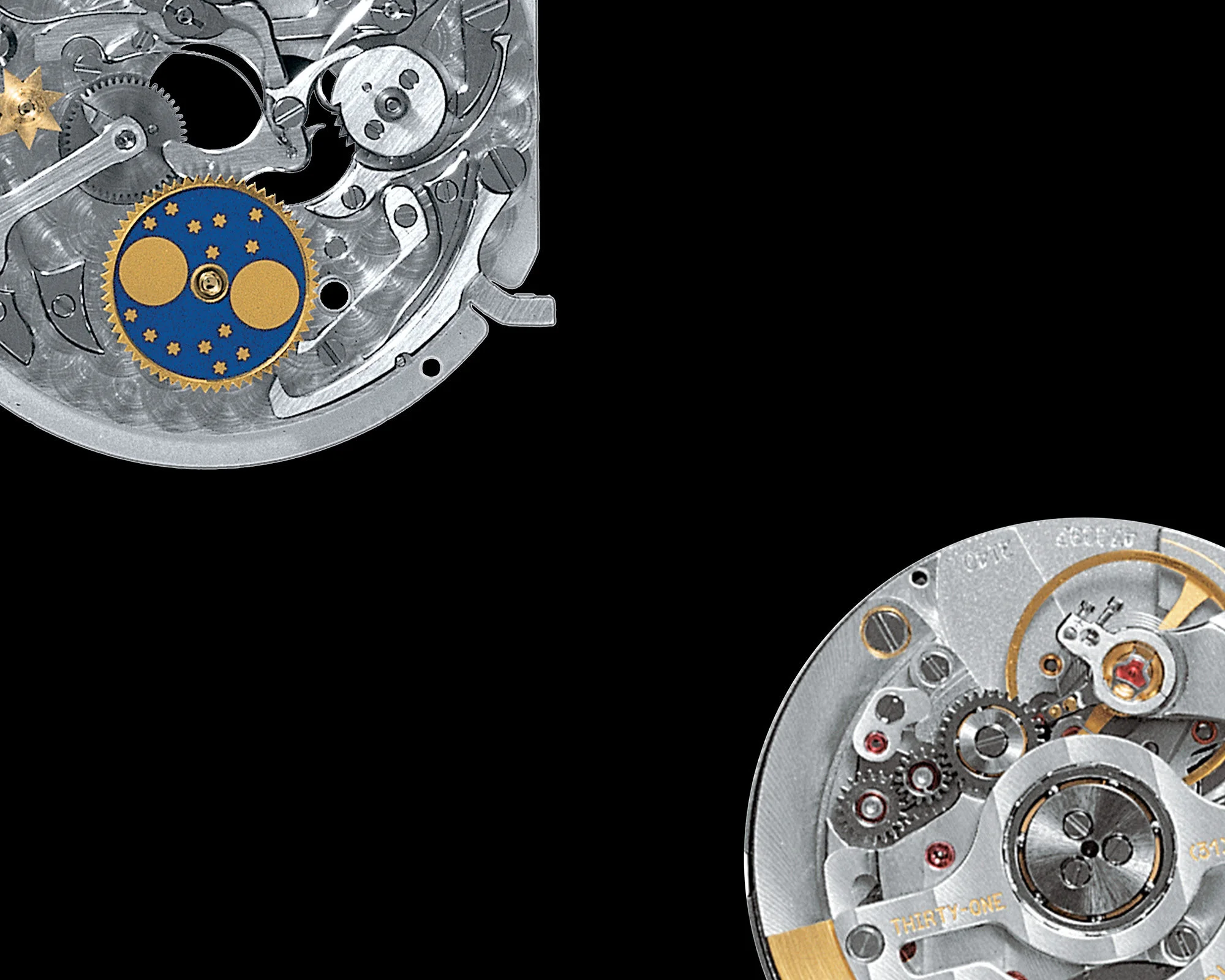
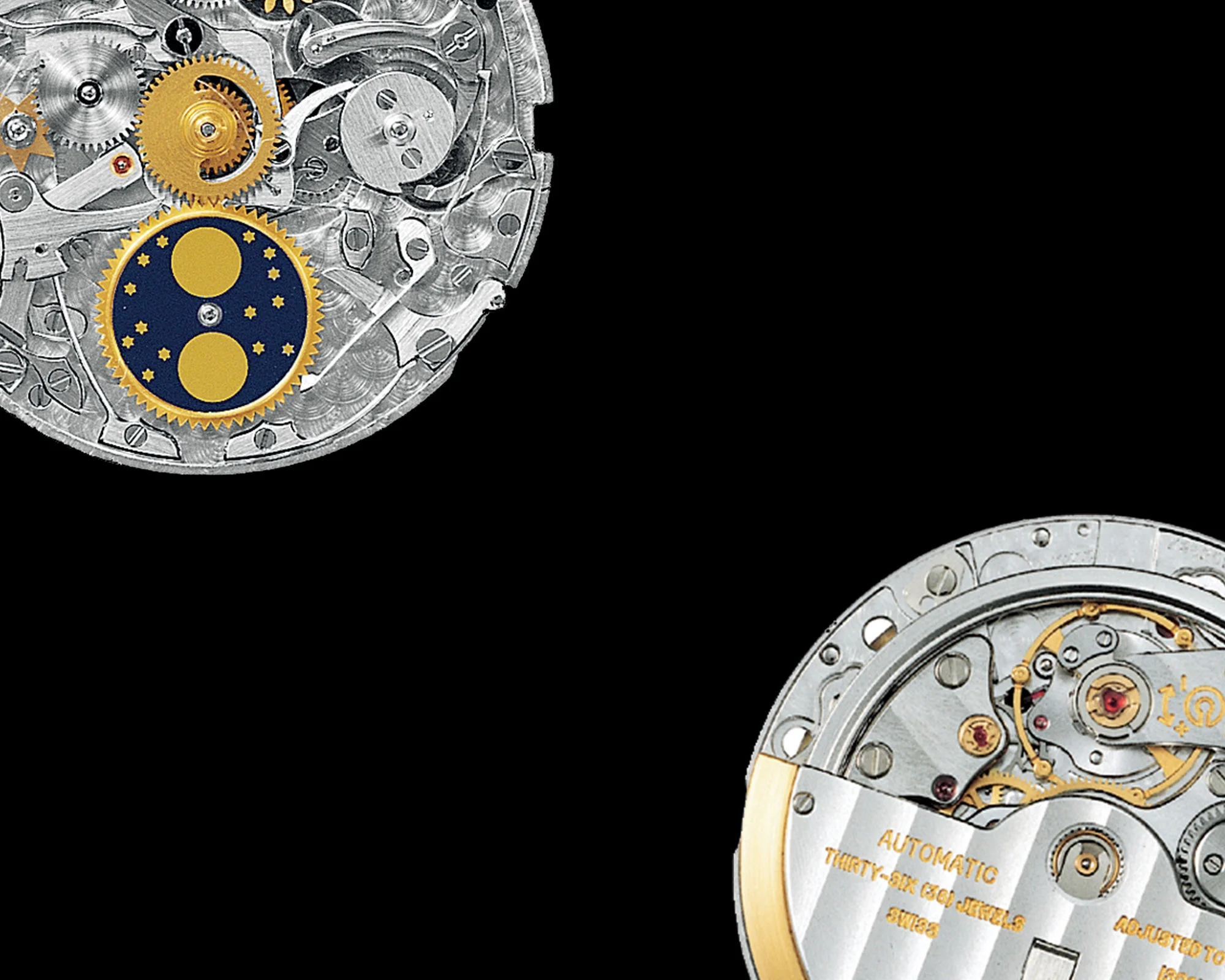
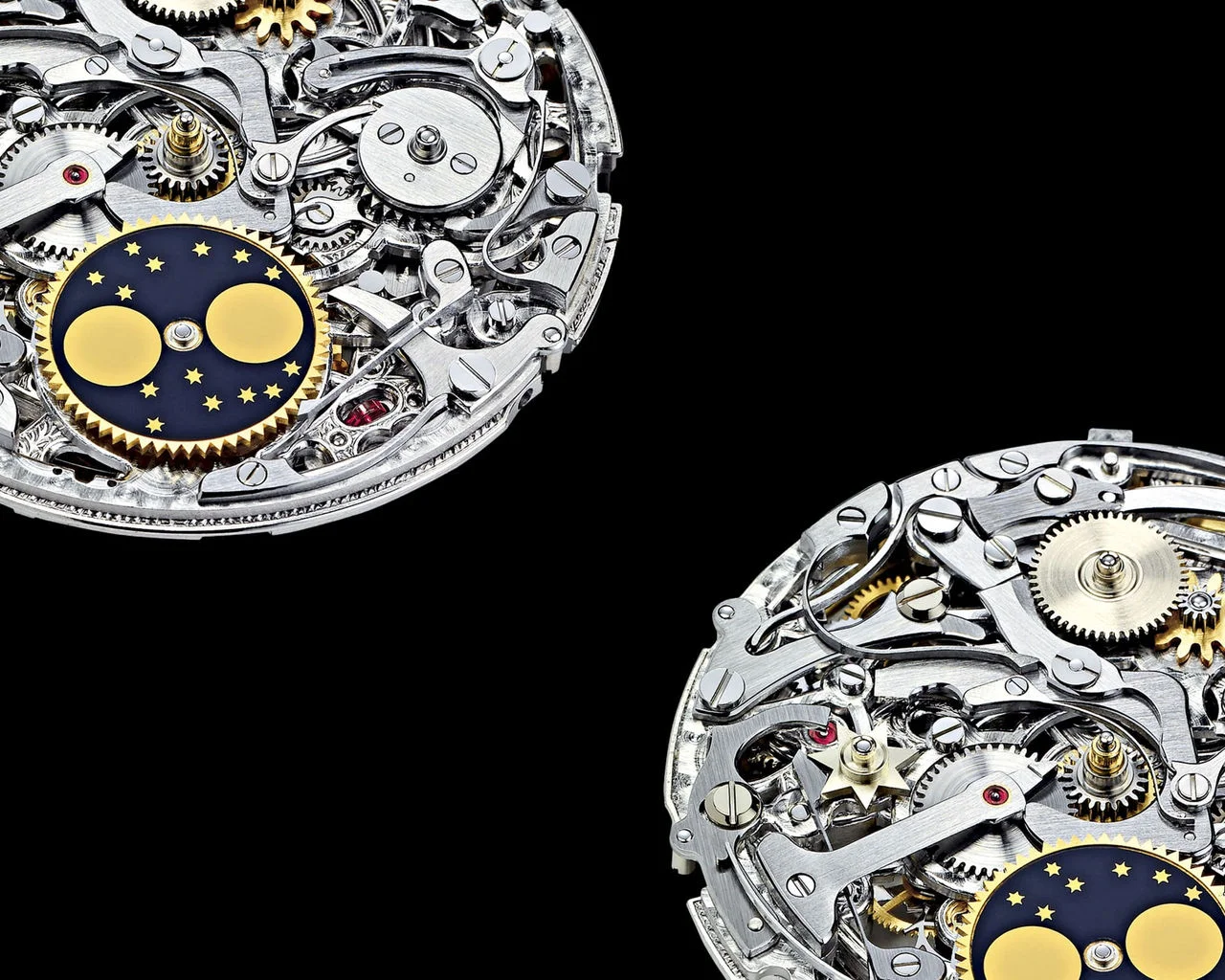
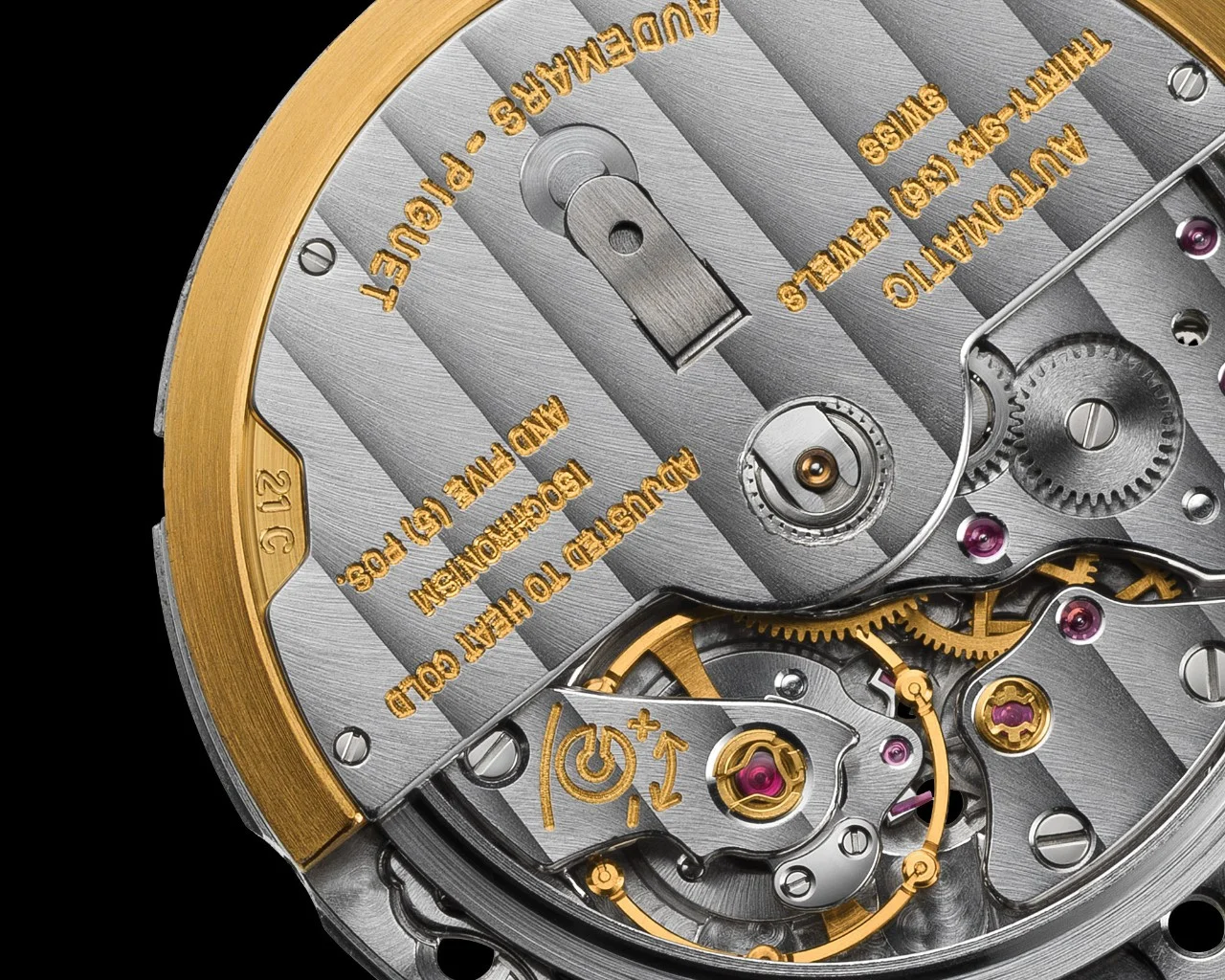
1982–1996. Calibre 2120/2800SQ, dial-side view. Thinnest openworked selfwinding perpetual calendar of its era (3.95 mm): day, date, month, moon phases. Movement 324301, produced in 1991. Audemars Piguet Heritage, inv. 723.

1982–1996. Calibre 2120/2800SQ, bridge-side view. Thinnest openworked selfwinding perpetual calendar of its era (3.95 mm): day, date, month, moon phases. Movement 324301, produced in 1991. Audemars Piguet Heritage, inv. 723.
Model 25636 was born in a workshop that has played a very special role in the history of the Manufacture Audemars Piguet. Régis Meylan was its foreman from 1974 to 2018. He recalls that it was here that the art of openworking was revitalised in 1975, at the dawn of the quartz crisis. It was also here that the legendary Calibre 2120/2800 was created in 1978, and the first Royal Oak perpetual calendar watches were born in 1984. In 1996, the workshop also produced the first Audemars Piguet Grand Complication selfwinding wristwatch.
In 1986, the Royal Oak Perpetual Calendar Openworked Model 25636 expressed the quintessence of traditional expertise: complications, miniaturisation, decoration, engraving, etc. More than a month was needed to openwork the extra-thin calibre before decorating, adjusting and fitting it into the very thin Royal Oak case (8.8 mm thick in all). For the first time in the Royal Oak collection, a sapphire caseback enabled the beauty of the calibre to be admired from the back, a feature that was repeated in five derived models created between 1989 and 1993.
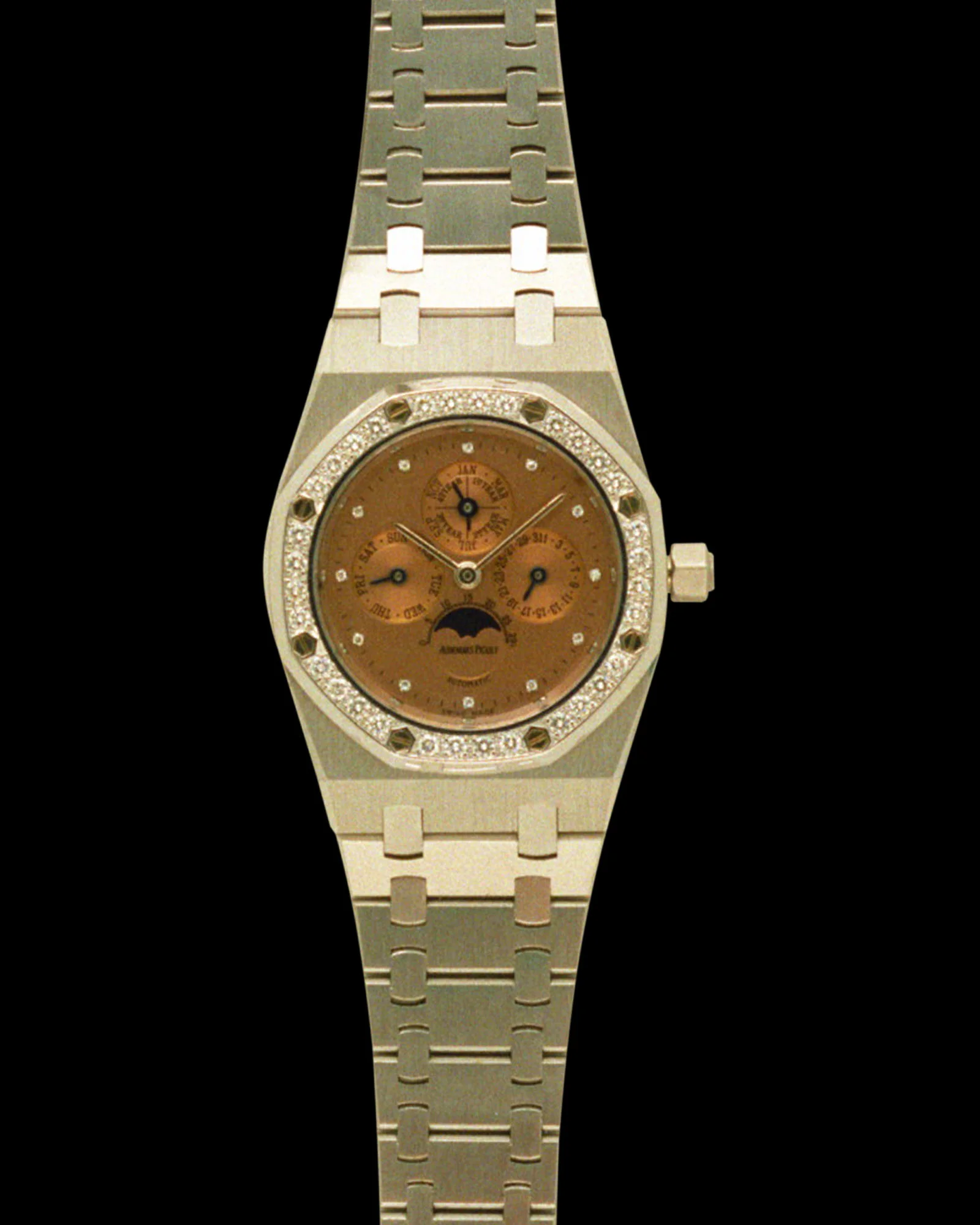
Although Model 25636 lasted for 10 years, the materials used in its casing evolved. In 1986, the first and only model to leave the Le Brassus workshops was in yellow gold. The following year, platinum was introduced, followed by steel in 1988. A first example in pink gold appeared in 1991. And from 1994 onwards, new combinations of materials were added: the stunning "SP" version (steel and platinum), the precious "RP" composition (pink gold and platinum) and its its reversed "PR" variation (platinum and pink gold).
Sales from 1986 to 1997: a total of 313 units, of which 1 (1986), 34 (1987), 34 (1988), 12 (1989), 23 (1990), 21 (1991), 24 (1992), 8 (1993), 52 (1994), 43 (1995), 48 (1996) and 13 (1997).
Derived models: 25688 (1989), 25651 (1989), 25694 (1990), 25686 (1992), 25775 (1993).
Model 25636 was born in a workshop that has played a very special role in the history of the Manufacture Audemars Piguet. Régis Meylan was its foreman from 1974 to 2018. He recalls that it was here that the art of openworking was revitalised in 1975, at the dawn of the quartz crisis. It was also here that the legendary Calibre 2120/2800 was created in 1978, and the first Royal Oak perpetual calendar watches were born in 1984. In 1996, the workshop also produced the first Audemars Piguet Grand Complication selfwinding wristwatch.
In 1986, the Royal Oak Perpetual Calendar Openworked Model 25636 expressed the quintessence of traditional expertise: complications, miniaturisation, decoration, engraving, etc. More than a month was needed to openwork the extra-thin calibre before decorating, adjusting and fitting it into the very thin Royal Oak case (8.8 mm thick in all). For the first time in the Royal Oak collection, a sapphire caseback enabled the beauty of the calibre to be admired from the back, a feature that was repeated in five derived models created between 1989 and 1993.
Although Model 25636 lasted for 10 years, the materials used in its casing evolved. In 1986, the first and only model to leave the Le Brassus workshops was in yellow gold. The following year, platinum was introduced, followed by steel in 1988. A first example in pink gold appeared in 1991. And from 1994 onwards, new combinations of materials were added: the stunning "SP" version (steel and platinum), the precious "RP" composition (pink gold and platinum) and its its reversed "PR" variation (platinum and pink gold).
Sales from 1986 to 1997: a total of 313 units, of which 1 (1986), 34 (1987), 34 (1988), 12 (1989), 23 (1990), 21 (1991), 24 (1992), 8 (1993), 52 (1994), 43 (1995), 48 (1996) and 13 (1997).
Derived models: 25688 (1989), 25651 (1989), 25694 (1990), 25686 (1992), 25775 (1993).
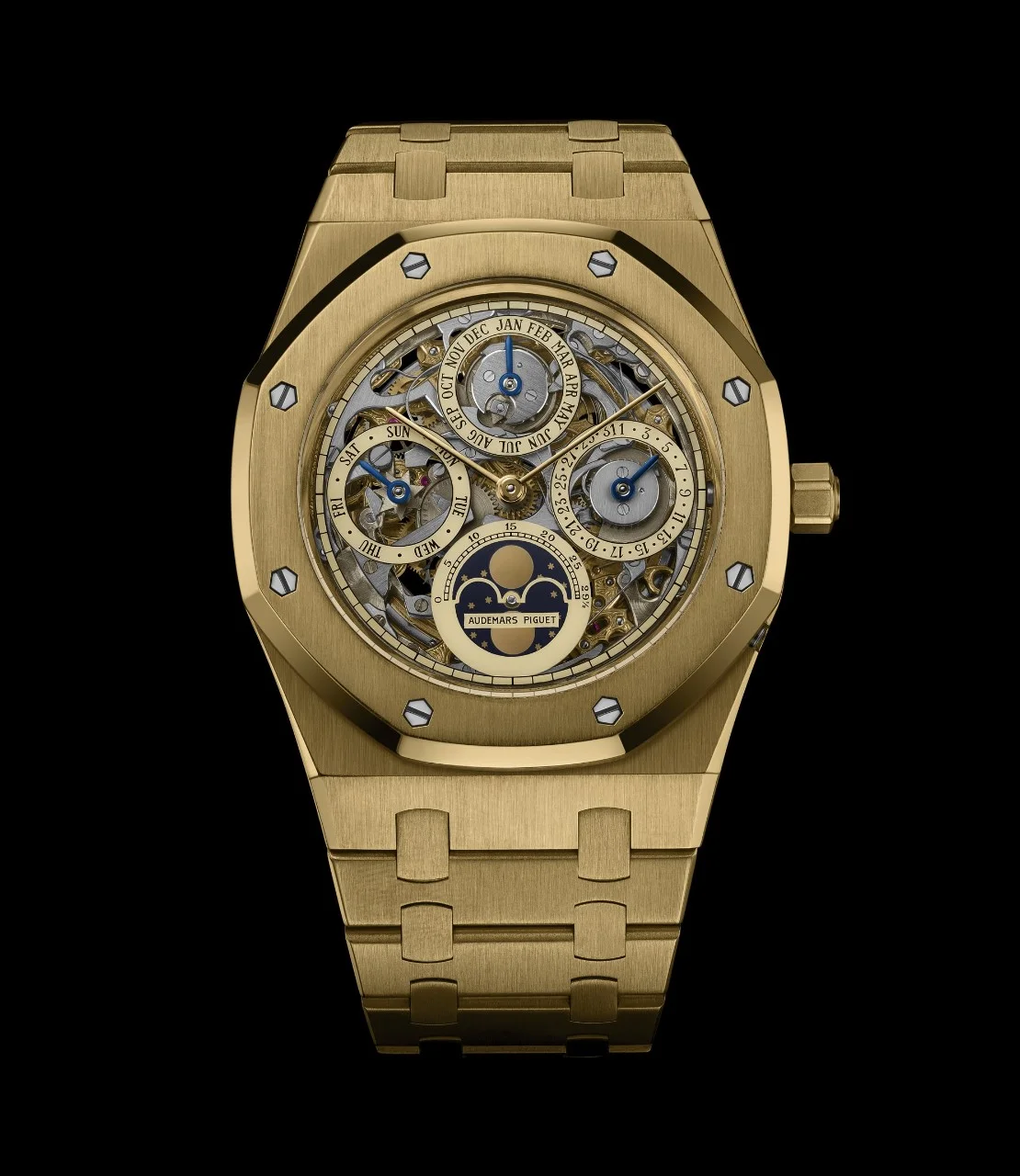
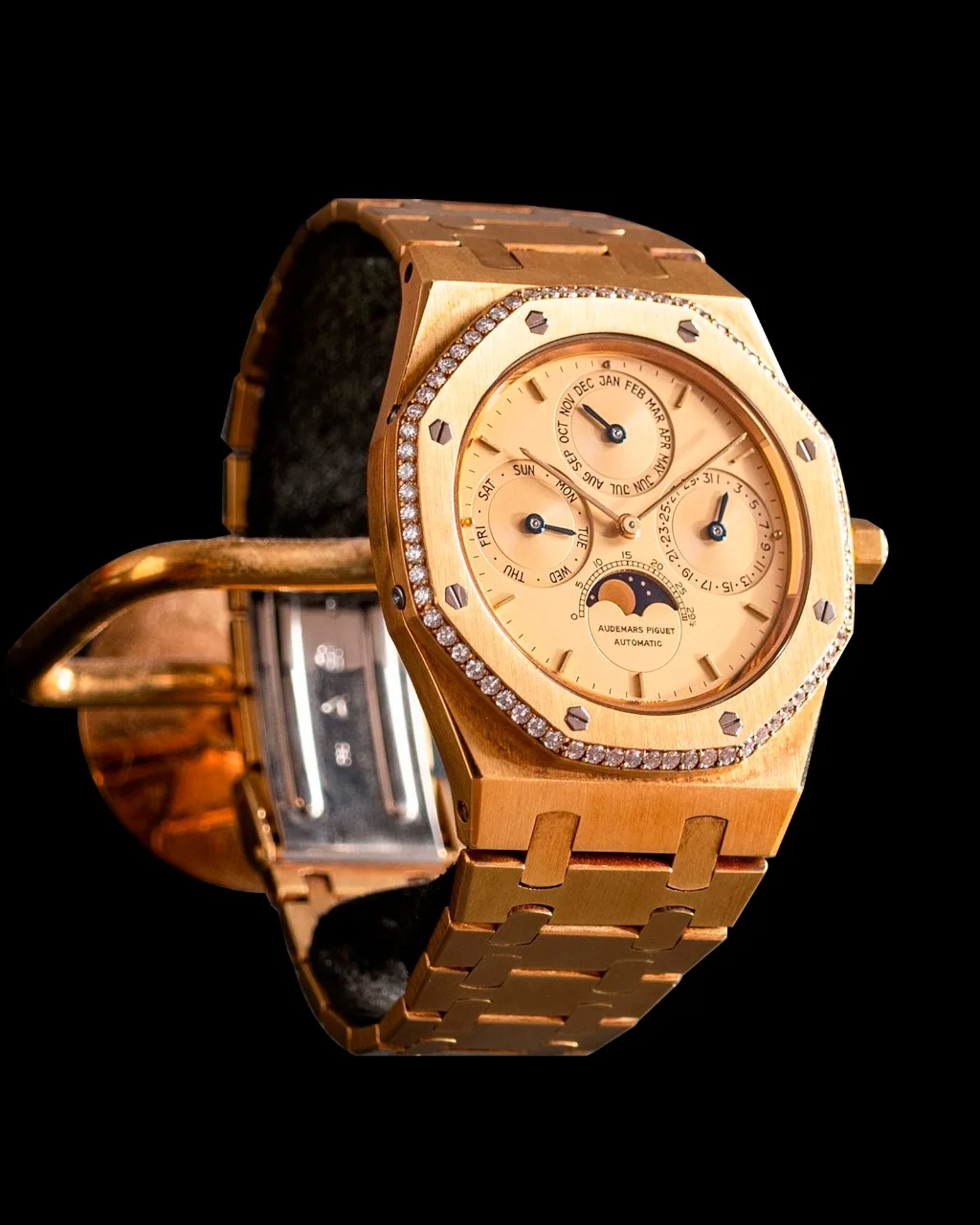
1991. Royal Oak Perpetual Calendar 25636BA no. 108. Perpetual calendar: day, date, month, phase and age of the moon. Calibre 2120/2800 selfwinding, extra-thin (3.95 mm) and openworked, movement 324301. Bracelet 344. 39 mm case C89525. 18-carat yellow gold. Sold to a client in Hong Kong in October 1991. Audemars Piguet Heritage, inv. 723.

1991. Royal Oak Perpetual Calendar 25636BA N° 108. Perpetual calendar: day, date, month, phase and age of the moon. Calibre 2120/2800 selfiwinding, extra-thin (3.95 mm) and openworked, movement 324301. Bracelet 344. 39 mm case C89525. 18-carat yellow gold. Sold to a client in Hong Kong in October 1991. Audemars Piguet Heritage, inv. 723.

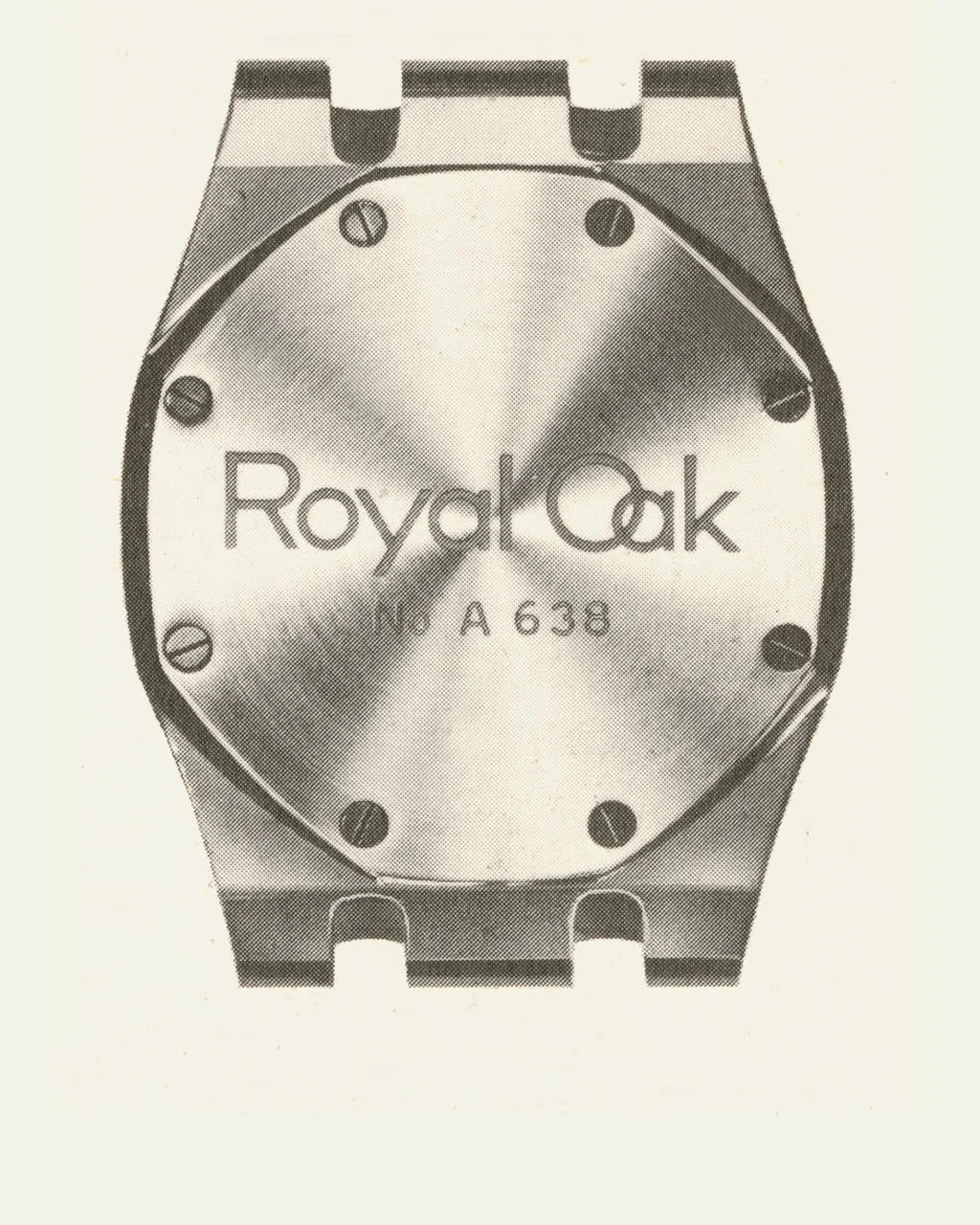
Circa 1986. Identification image of Model 25636BA. Audemars Piguet Archives.
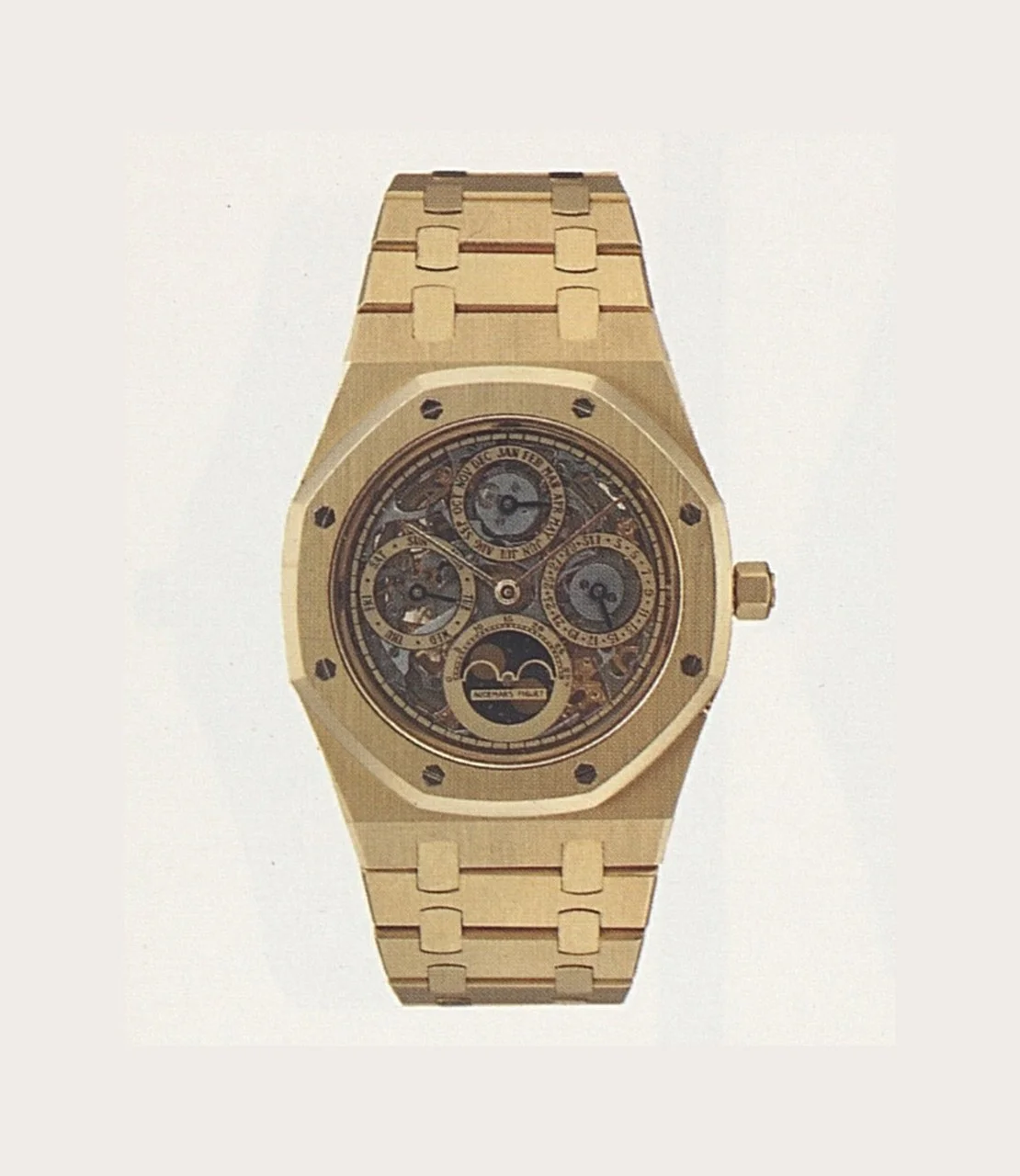
1986–1994. Royal Oak Perpetual Calendar Openworked 25636BA. Only the yellow gold version appears in the Audemars Piguet Catalogues from 1986 to 1994. Audemars Piguet Archives.

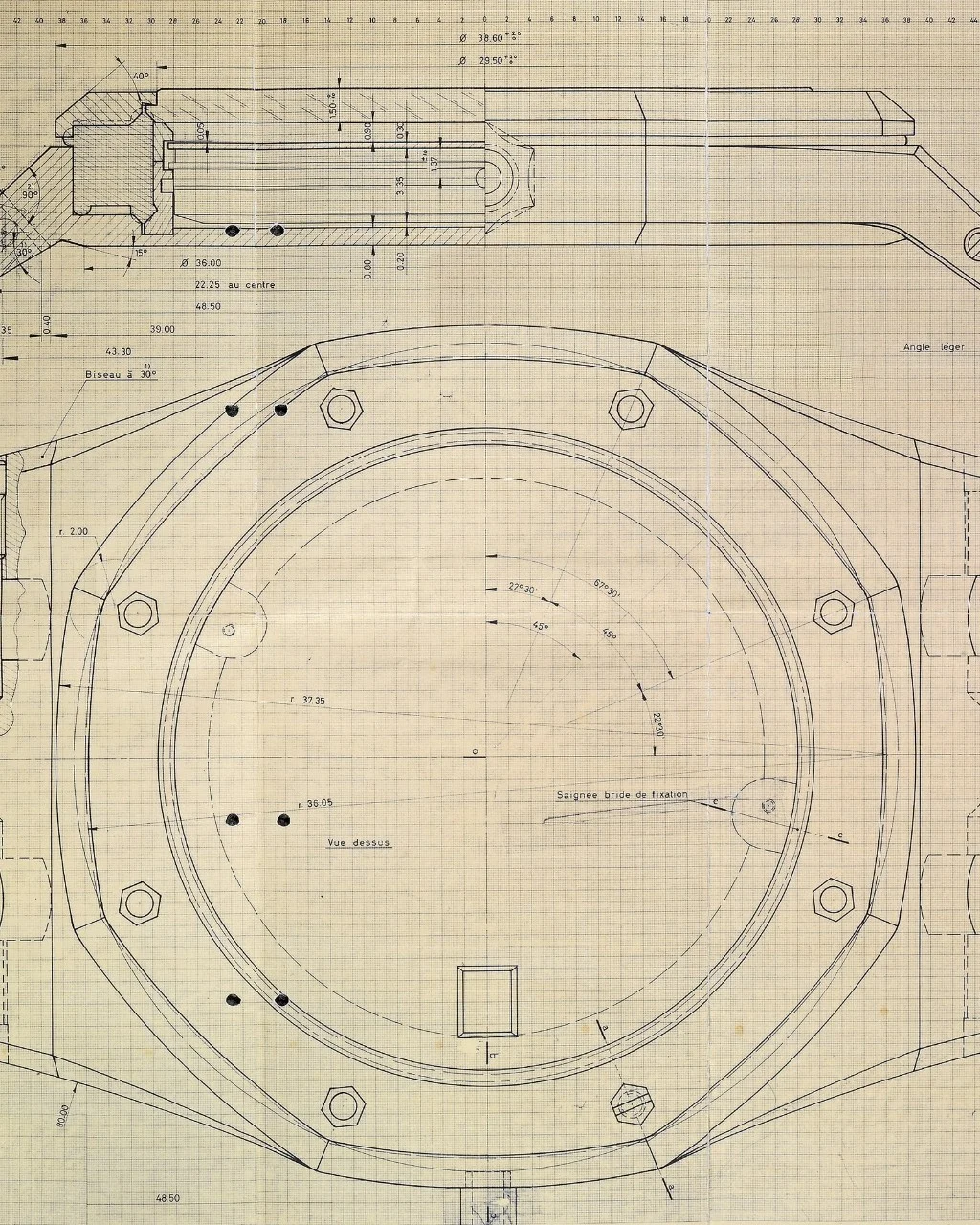
Circa 1995. Technical data for the case of Royal Oak Perpetual Calendar 25636BA. Audemars Piguet Archives.
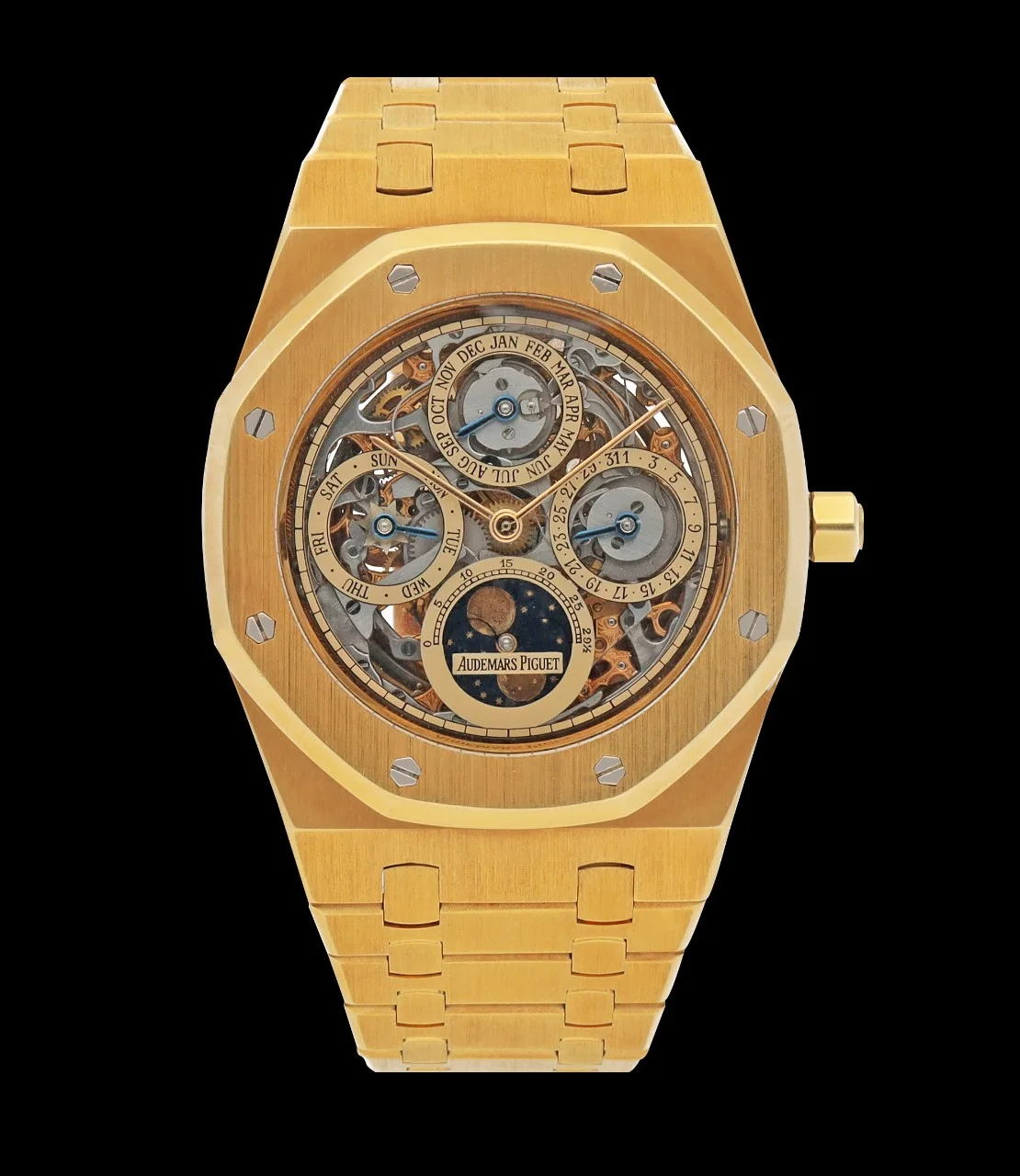
1987. Royal Oak Perpetual Calendar 25636BA N° 108. Perpetual calendar: day, date, month, phase and age of the moon. Calibre 2120/2800 selfwinding, extra-thin (3.95 mm) and openworked, movement 286845. Bracelet 344. 39 mm case C32029. 18-carat yellow gold. Sold to a client in Hong Kong in July 1987. Auctioned by Sotheby's in Geneva on November 11, 2021, lot 36. © Sotheby’s.
The yellow gold variant is not only the one that covers the longest period of time, but also the one that was produced in the largest number of units, with 156 in total. Some of the bridges and movement elements are gold-plated, others in gold, thereby highlighting by contrast the satin-brushed and bevelled steel dial.
Swept over by blued hands, the day, month and date indications are printed on the watch's sapphire crystal so as to reveal the beauty of the movement that drives the perpetual calendar.
Sales from 1986 to 1996: a total of 156 units, of which 1 (1986), 33 (1987), 29 (1988), 5 (1989), 21 (1990), 15 (1991), 20 (1992), 3 (1993), 10 (1994), 3 (1995) and 16 (1996).
The yellow gold variant is not only the one that covers the longest period of time, but also the one that was produced in the largest number of units, with 156 in total. Some of the bridges and movement elements are gold-plated, others in gold, thereby highlighting by contrast the satin-brushed and bevelled steel dial.
Swept over by blued hands, the day, month and date indications are printed on the watch's sapphire crystal so as to reveal the beauty of the movement that drives the perpetual calendar.
Sales from 1986 to 1996: a total of 156 units, of which 1 (1986), 33 (1987), 29 (1988), 5 (1989), 21 (1990), 15 (1991), 20 (1992), 3 (1993), 10 (1994), 3 (1995) and 16 (1996).

1991. Royal Oak Perpetual Calendar 25636PT N° 24. Perpetual calendar: day, date, month, phase and age of the moon. Calibre 2120/2800 selfwinding, extra-thin (3.95 mm) and openworked, movement 324268. Bracelet 344. 39 mm case C84188. Platinum. Sold in Switzerland in March 1991. Auctioned by Phillips in Geneva on May 6, 2022, lot 15. © Phillips

1991. Royal Oak Perpetual Calendar 25636PT N° 24. Perpetual calendar: day, date, month, phase and age of the moon. Calibre 2120/2800 selfwinding, extra-thin (3.95 mm) and openworked, movement 324268. Bracelet 344. 39 mm case C84188. Platinum. Sold to a client in Switzerland in March 1991. Auctioned by Phillips in Geneva on May 6, 2022, lot 15. © Phillips

Circa 1995. Technical data for the case of the Royal Oak Perpetual Calendar 25636PT. Audemars Piguet Archives.
The production and distribution of the 41 or so Model 25636 watches in platinum spanned a decade, with a few units being produced each year.
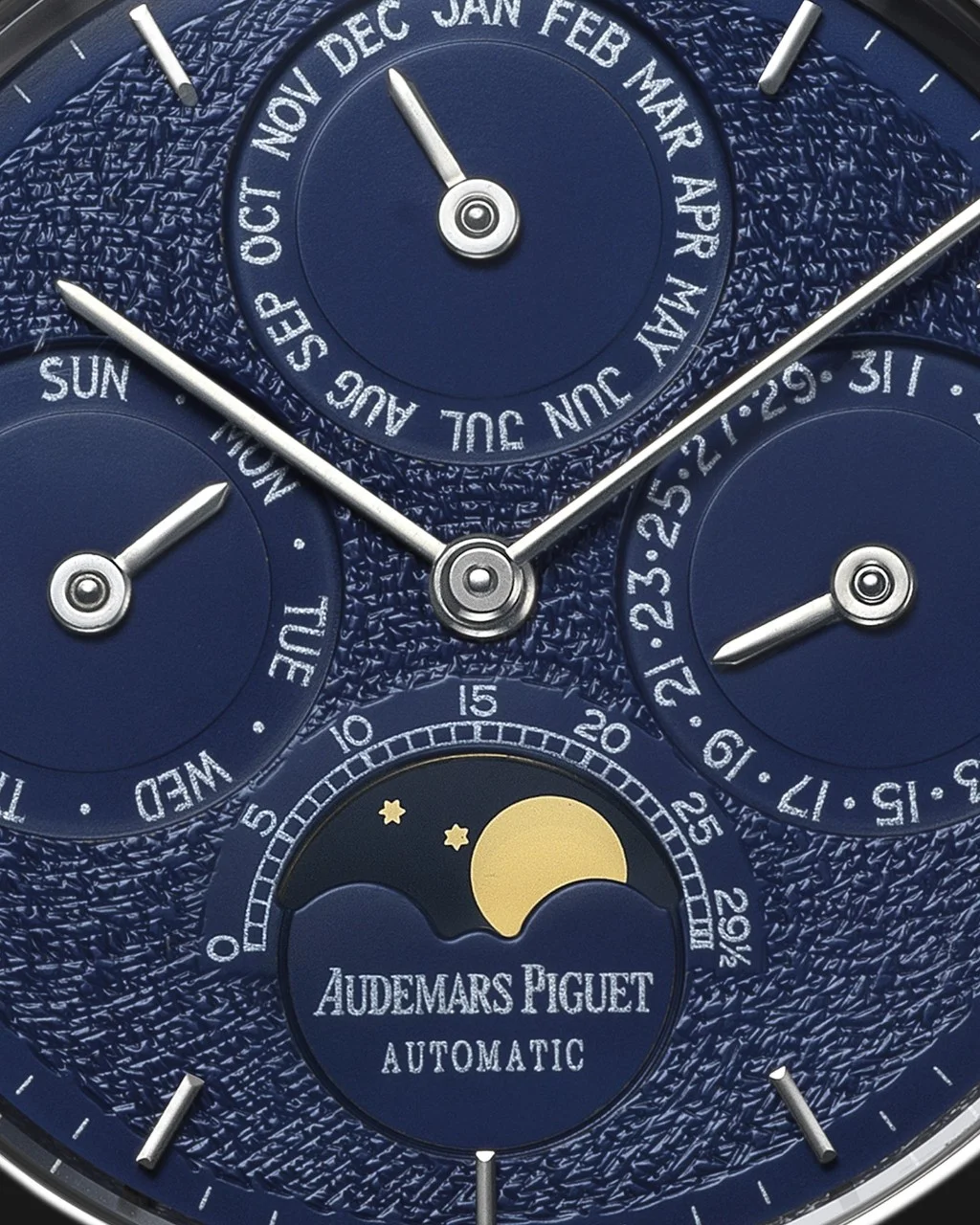
Unlike the gold versions, the movement is uniformly grey, with the exception of the 21-carat gold oscillating weight on the outside of the rotor. As tradition dictates, the platinum is associated with the blue colour of the dial, but unlike most platinum Royal Oak models, the studs and the bezel are finely brushed instead of being mirror-polished.
Note that the blue colour of the dial is also found on some Model 25636 watches in steel.
Sales from 1987 to 1997: a total of 41 units, of which: 1 (1987), 4 (1988), 7 (1989), 2 (1990), 5 (1991), 4 (1992), 5 (1993), 2 (1994), 4 (1995), 3 (1996) and 4 (1997).
The production and distribution of the 41 or so Model 25636 watches in platinum spanned a decade, with a few units being produced each year.
Unlike the gold versions, the movement is uniformly grey, with the exception of the 21-carat gold oscillating weight on the outside of the rotor. As tradition dictates, the platinum is associated with the blue colour of the dial, but unlike most platinum Royal Oak models, the studs and the bezel are finely brushed instead of being mirror-polished.
Note that the blue colour of the dial is also found on some Model 25636 watches in steel.
Sales from 1987 to 1997: a total of 41 units, of which: 1 (1987), 4 (1988), 7 (1989), 2 (1990), 5 (1991), 4 (1992), 5 (1993), 2 (1994), 4 (1995), 3 (1996) and 4 (1997).
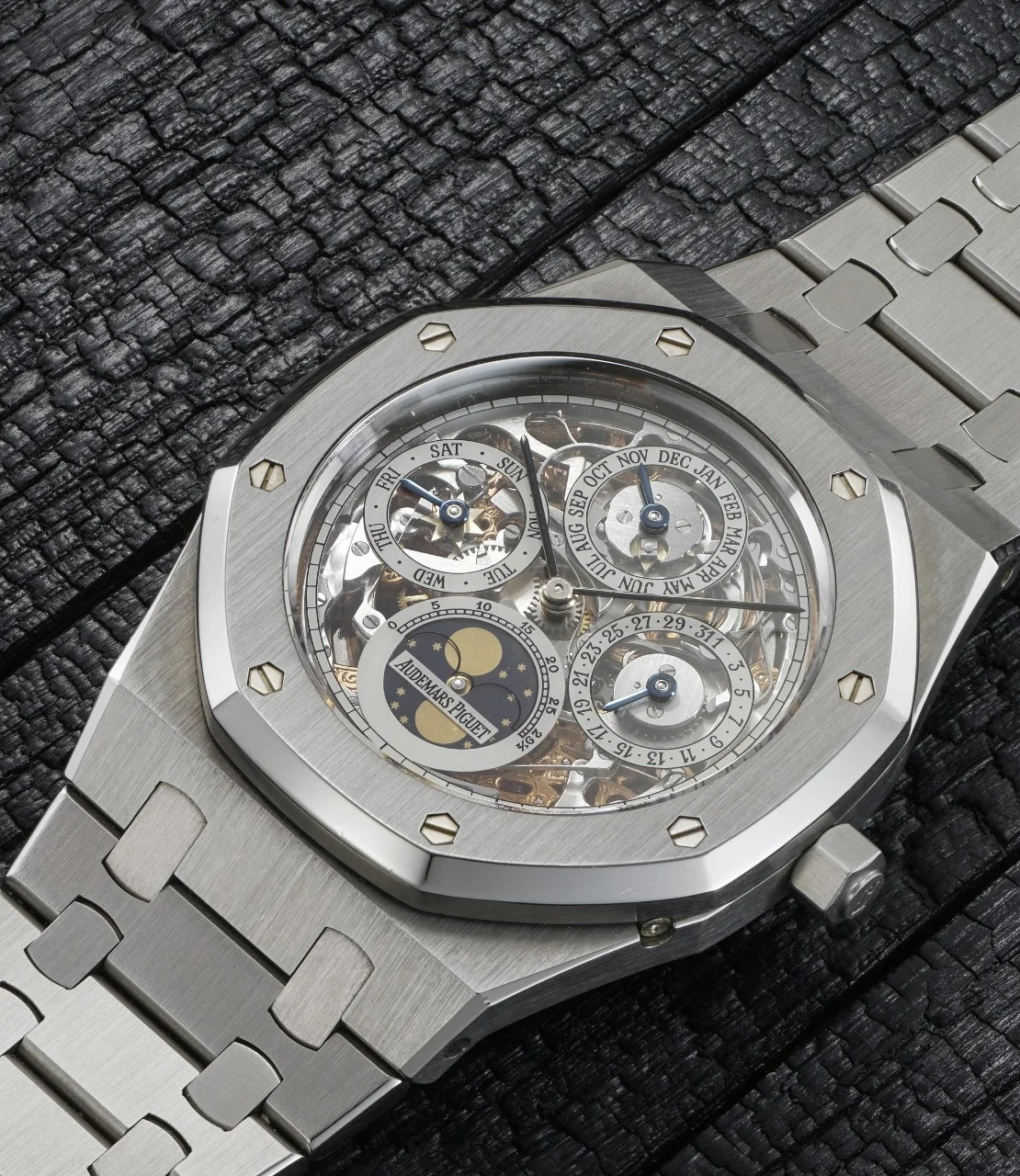
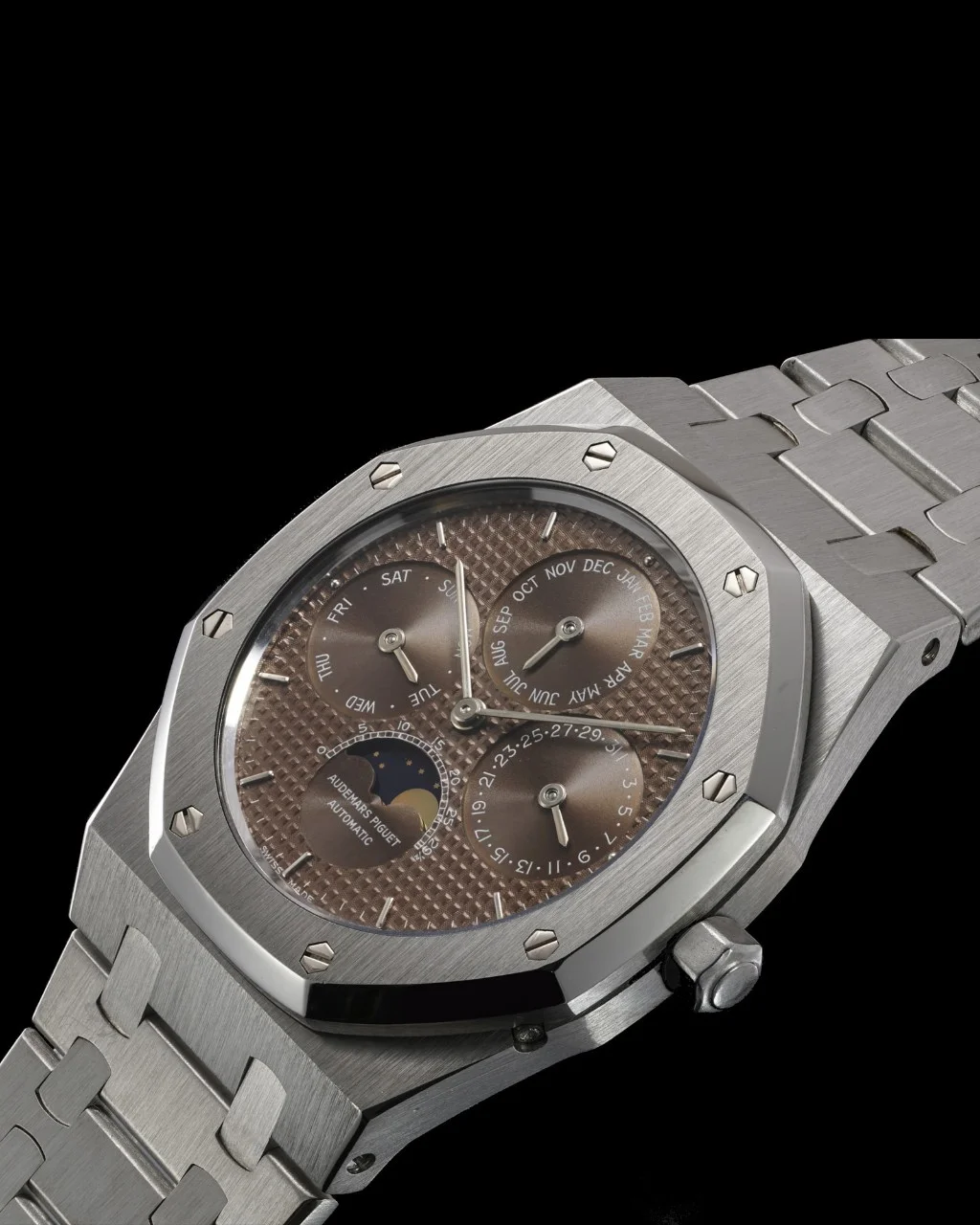
1995. Royal Oak Perpetual Calendar 25636ST N° 27/50. Perpetual calendar: day, date, month, phase and age of the moon. Calibre 2120/2800 selfwinding, extra-thin (3.95 mm) and openworked, movement 391032. Bracelet 944. 39 mm case C84188. Steel. Sold to a client in New York in March 1995. Auctioned by Phillips in Geneva on May 6, 2022, lot 63. © Phillips
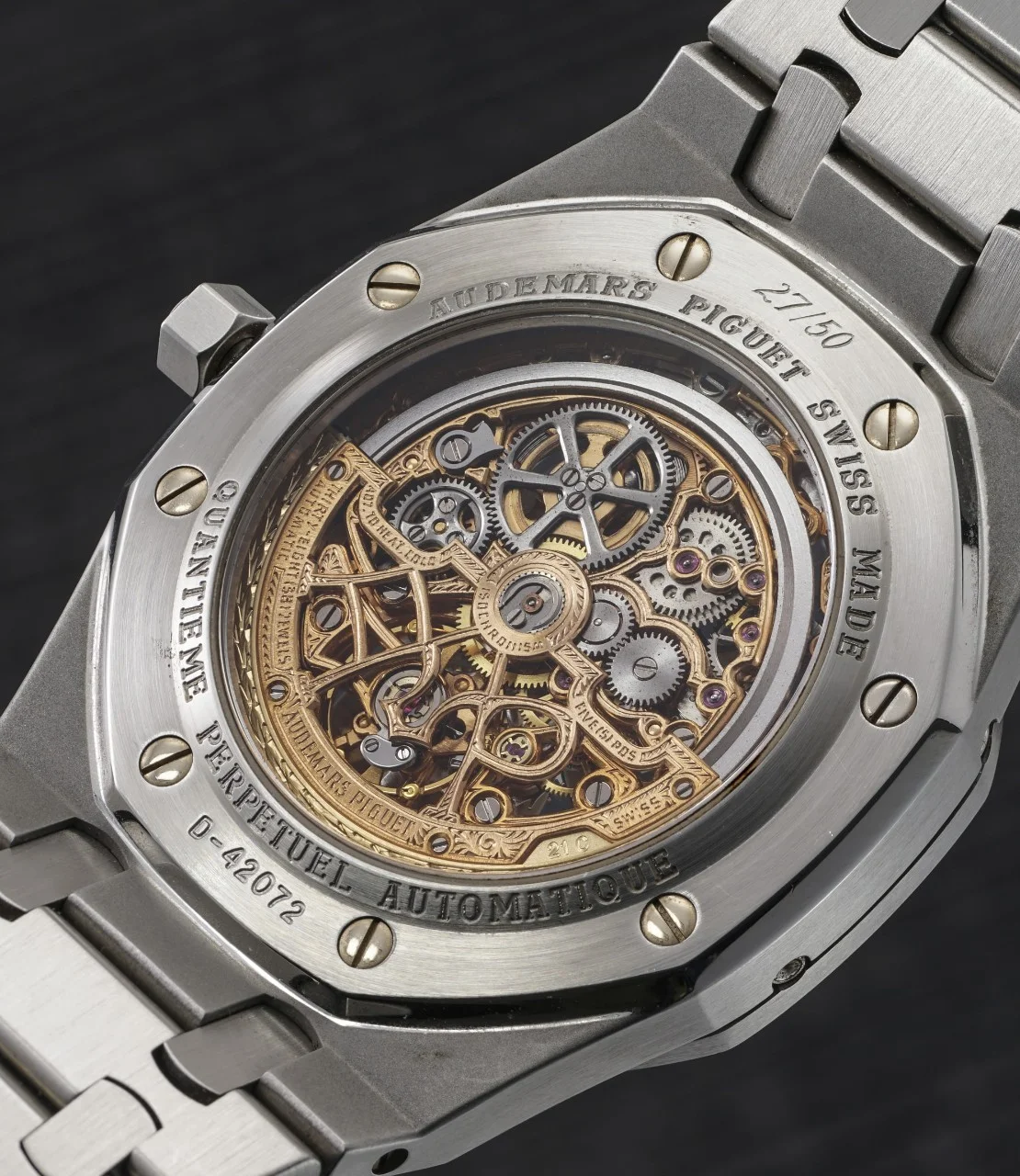
1995. Royal Oak Perpetual Calendar 25636ST N° 27/50. Perpetual calendar: day, date, month, phase and age of the moon. Calibre 2120/2800 selfwinding, extra-thin (3.95 mm) and openworked, movement 391032. Bracelet 944. 39 mm case C84188. Steel. Sold to a client in New York in March 1995. Auctioned by Phillips in Geneva on May 6, 2022, lot 63. Image © Phillips.

Circa 1986. Identification image of Model 25636ST. Audemars Piguet Archives.
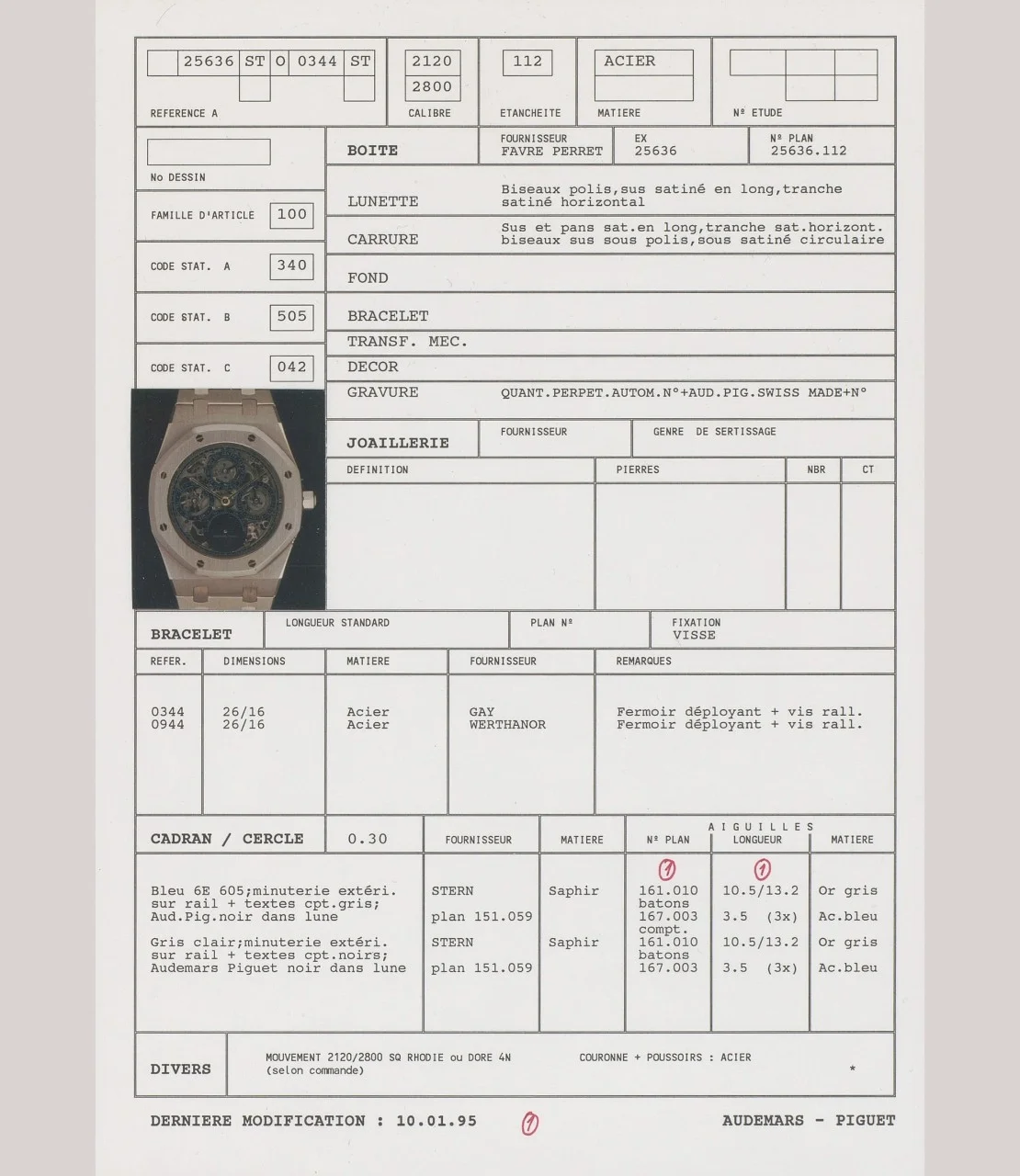
Circa 1995. Technical data for the case of Royal Oak Perpetual Calendar 25636ST. Audemars Piguet Archives.
In the 1980s and 1990s, it was not common to craft a perpetual calendar watch in steel, equipped with an extra-thin movement that was entirely openworked by hand and partly in gold. Nonetheless, the quality of the case finish, the geometric complexity and the combination of satin-brushed and polished surfaces demanded such prowess that steel almost acquired the status of a precious metal.
Several limited-edition Model 25636ST watches were produced in steel, but the records are too sketchy to understand exactly what sets them apart. The colour of the oscillating weight definitely plays a role, as well as certain finishes and engravings and perhaps the dial, which is sometimes white and sometimes blue.
Sales from 1988 to 1997: a total of 61 units, of which: 1 (1988), 14 (1994), 21 (1995), 16 (1996) and 9 (1997).
In the 1980s and 1990s, it was not common to craft a perpetual calendar watch in steel, equipped with an extra-thin movement that was entirely openworked by hand and partly in gold. Nonetheless, the quality of the case finish, the geometric complexity and the combination of satin-brushed and polished surfaces demanded such prowess that steel almost acquired the status of a precious metal.
Several limited-edition Model 25636ST watches were produced in steel, but the records are too sketchy to understand exactly what sets them apart. The colour of the oscillating weight definitely plays a role, as well as certain finishes and engravings and perhaps the dial, which is sometimes white and sometimes blue.
Sales from 1988 to 1997: a total of 61 units, of which: 1 (1988), 14 (1994), 21 (1995), 16 (1996) and 9 (1997).

Circa 1986. Identification image of Model 25636OR. Audemars Piguet Archives.
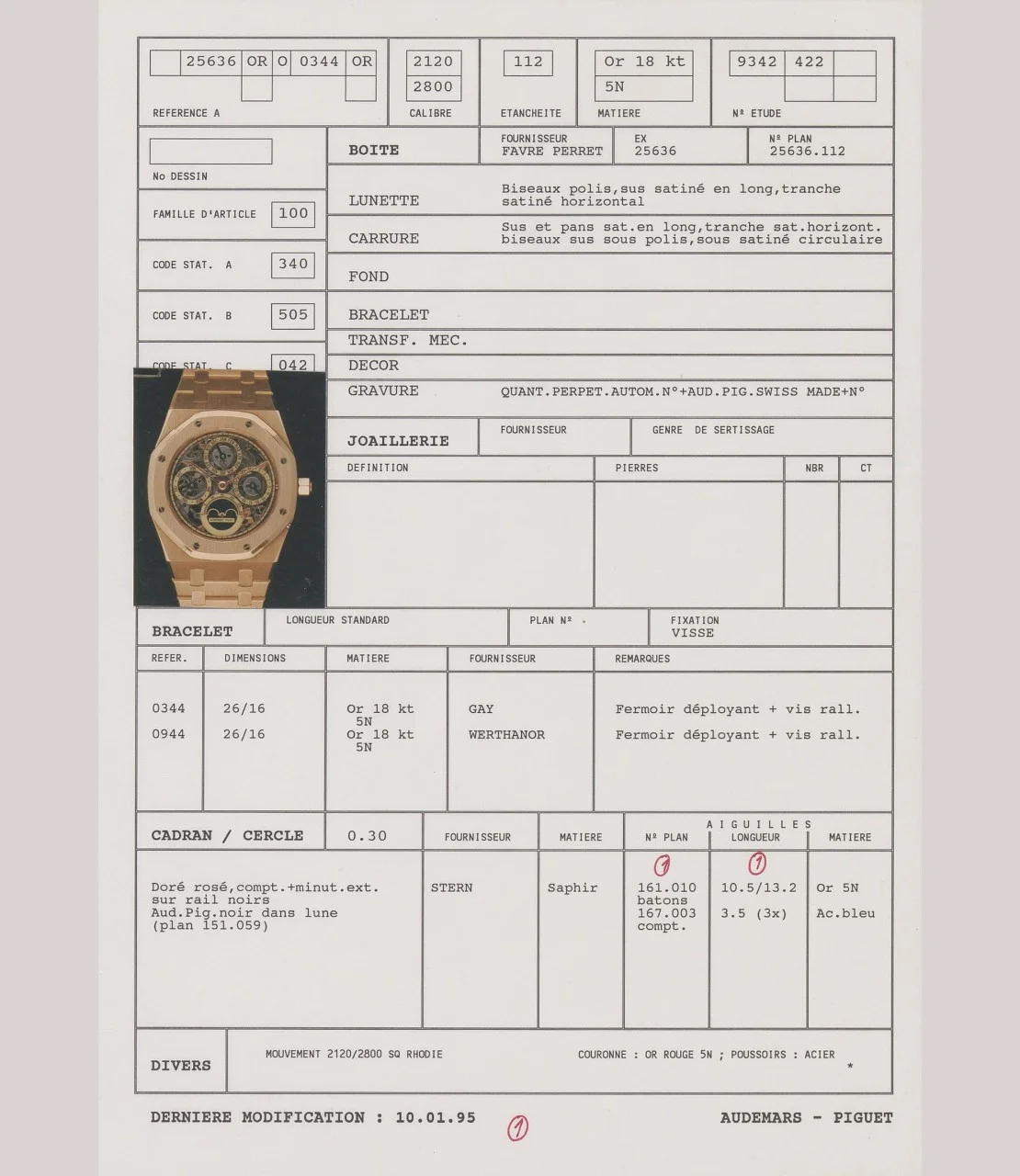
Circa 1995. Technical data for the case of Royal Oak Perpetual Calendar 25636OR. Audemars Piguet Archives.
Only six Model 25636 watches are entirely made in pink gold. Number 1 was sold in 1991. Records show that the recipient was named "Alexandre," a retailer based in Belgium at the time.
It was not until 1995 and 1996 that the next five of these watches left the workshops in Le Brassus, bound for New York, Germany and Switzerland. Their engraved numbers 24, 25, 26 and 28 exceed the total production of this variant, suggesting that similar pink gold cases were used for several related models, probably the 25636RP variant.
Sales from 1991 to 1996: a total of 6 units, of which: 1 (1991), 2 (1995) and 3 (1996).
Only six Model 25636 watches are entirely made in pink gold. Number 1 was sold in 1991. Records show that the recipient was named "Alexandre," a retailer based in Belgium at the time.
It was not until 1995 and 1996 that the next five of these watches left the workshops in Le Brassus, bound for New York, Germany and Switzerland. Their engraved numbers 24, 25, 26 and 28 exceed the total production of this variant, suggesting that similar pink gold cases were used for several related models, probably the 25636RP variant.
Sales from 1991 to 1996: a total of 6 units, of which: 1 (1991), 2 (1995) and 3 (1996).

1993. Royal Oak Perpetual Calendar 25636RP N° 14/25. Perpetual calendar: day, date, month, phase and age of the moon. Calibre 2120/2800 selfwinding, extra-thin (3.95 mm) and openworked, movement 391004. Bracelet 944. 39 mm case D41939. Steel. Sold to a client in Switzerland in February 1996. Auctioned by Phillips in Geneva, May 8–9, 2021, lot 43. © Phillips

1993. Royal Oak Perpetual Calendar 25636RP No. 14/25. Perpetual calendar: day, date, month, phase and age of the moon. Calibre 2120/2800 selfwinding, extra-thin (3.95 mm) and openworked, movement 391004. Bracelet 944. 39 mm case D41939. Steel. Sold to a client in Switzerland in February 1996. Auctioned by Phillips in Geneva, May 8–9, 2021, lot 43. © Phillips

Circa 1986. Identification image of Model 25636RP. Audemars Piguet Archives.

Circa 1995. Technical data for the case of Royal Oak Perpetual Calendar 25636RP. Audemars Piguet Archives.

Circa 1995. Technical data for the case of Royal Oak Perpetual Calendar 25636PR. Audemars Piguet Archives.
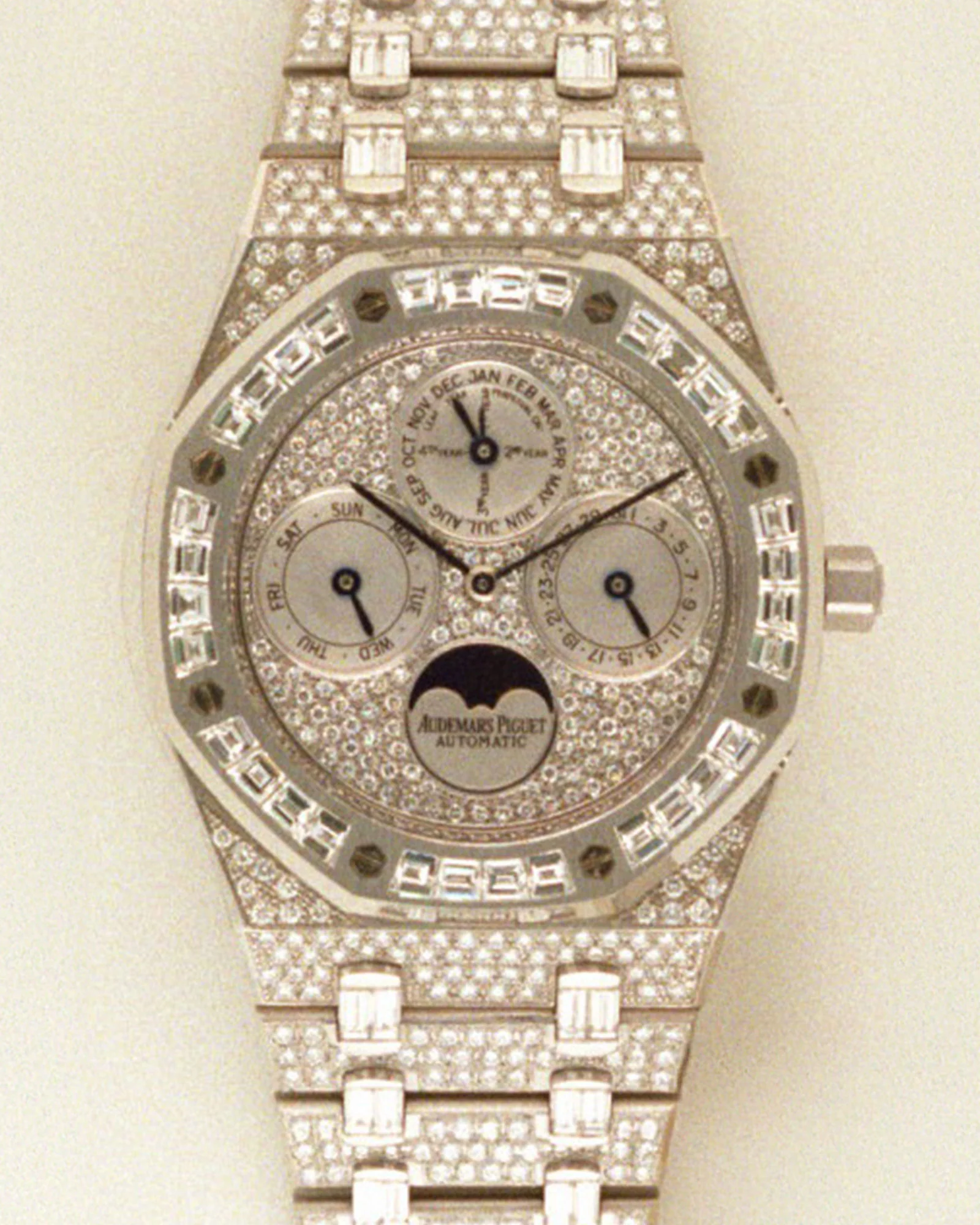
The Case Technical Data sheets mention two variants combining platinum and pink gold. The first is called “RP”: the bezels and studs are in platinum while the rest is in pink gold. The "PR" variant adopts the opposite composition, reserving the pink gold for the bezel and studs.
A search through the records revealed 24 examples of the RP version (limited edition of 25, one of which was not made), but no mention of the PR variant was found, although at least one was made, photographed for the Case Technical Data sheet. The mystery of this variant has yet to be solved.
Sales from 1994 to 1996: a total of 24 units, of which: 10 (1994), 4 (1995) and 10 (1996).
The Case Technical Data sheets mention two variants combining platinum and pink gold. The first is called “RP”: the bezels and studs are in platinum while the rest is in pink gold. The "PR" variant adopts the opposite composition, reserving the pink gold for the bezel and studs.
A search through the records revealed 24 examples of the RP version (limited edition of 25, one of which was not made), but no mention of the PR variant was found, although at least one was made, photographed for the Case Technical Data sheet. The mystery of this variant has yet to be solved.
Sales from 1994 to 1996: a total of 24 units, of which: 10 (1994), 4 (1995) and 10 (1996).
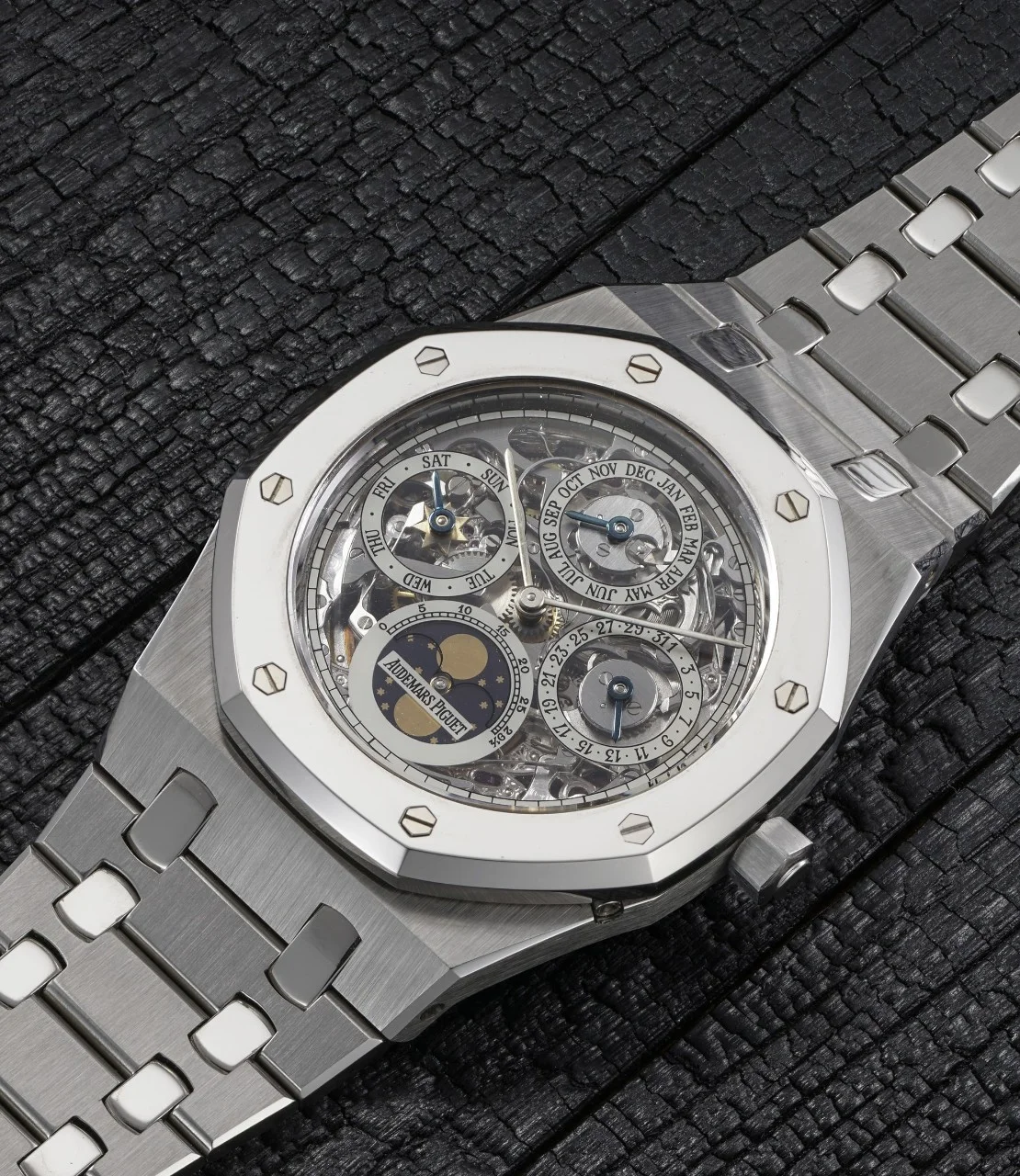
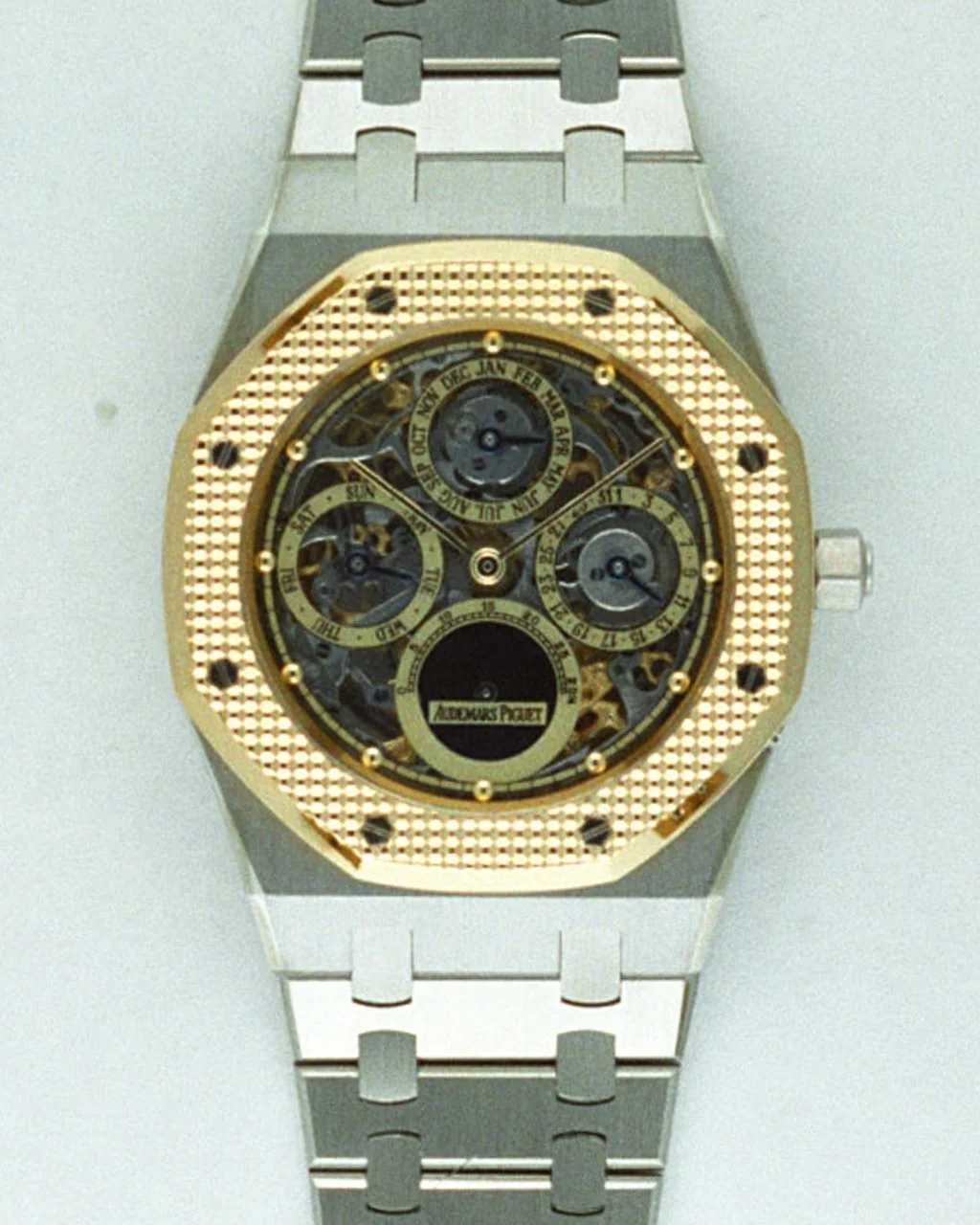
1994. Royal Oak Perpetual Calendar 25636SP N° 16/25. Perpetual calendar: day, date, month, phase and age of the moon. Calibre 2120/2800, selfwinding, extra-thin (3.95 mm) and openworked, movement 391011. Bracelet 944. 39 mm case D42001. Steel and platinum. Sold to a client in Belgium in October 1994. Auctioned by Phillips Geneva on May 6, 2022, lot 42. © Phillips

1994. Royal Oak Quantième Perpétuel 25636SP N° 16/25. Perpetual calendar: day, date, month, phase and age of the moon. Calibre 2120/2800 selfwinding, extra-thin (3.95 mm) and openworked, movement 391011. Bracelet 944. 39 mm case D42001. Steel and platinum. Sold in Belgium in October 1994. Auctioned by Phillips in Geneva on May 6, 2022, lot 42. © Phillips

Circa 1986. Identification image of Model 25636SP. Audemars Piguet Archives.
Combining steel with platinum must have seemed like a crazy idea, as these two materials are at one visually similar and structurally distant. They do indeed differ radically in weight, hardness and of course rarity – hence also price – yet their colours are so close that only a trained eye can tell them apart.
To underline their aesthetic difference, the watchmakers mirror-polished the platinum bezel and studs (no mean feat considering how difficult it is to polish such a material). The steel if finely brushed except for the polished bevels.
Limited edition of 25 units, of which: 16 sold in 1994 and 9 in 1995.
Combining steel with platinum must have seemed like a crazy idea, as these two materials are at one visually similar and structurally distant. They do indeed differ radically in weight, hardness and of course rarity – hence also price – yet their colours are so close that only a trained eye can tell them apart.
To underline their aesthetic difference, the watchmakers mirror-polished the platinum bezel and studs (no mean feat considering how difficult it is to polish such a material). The steel if finely brushed except for the polished bevels.
Limited edition of 25 units, of which: 16 sold in 1994 and 9 in 1995.