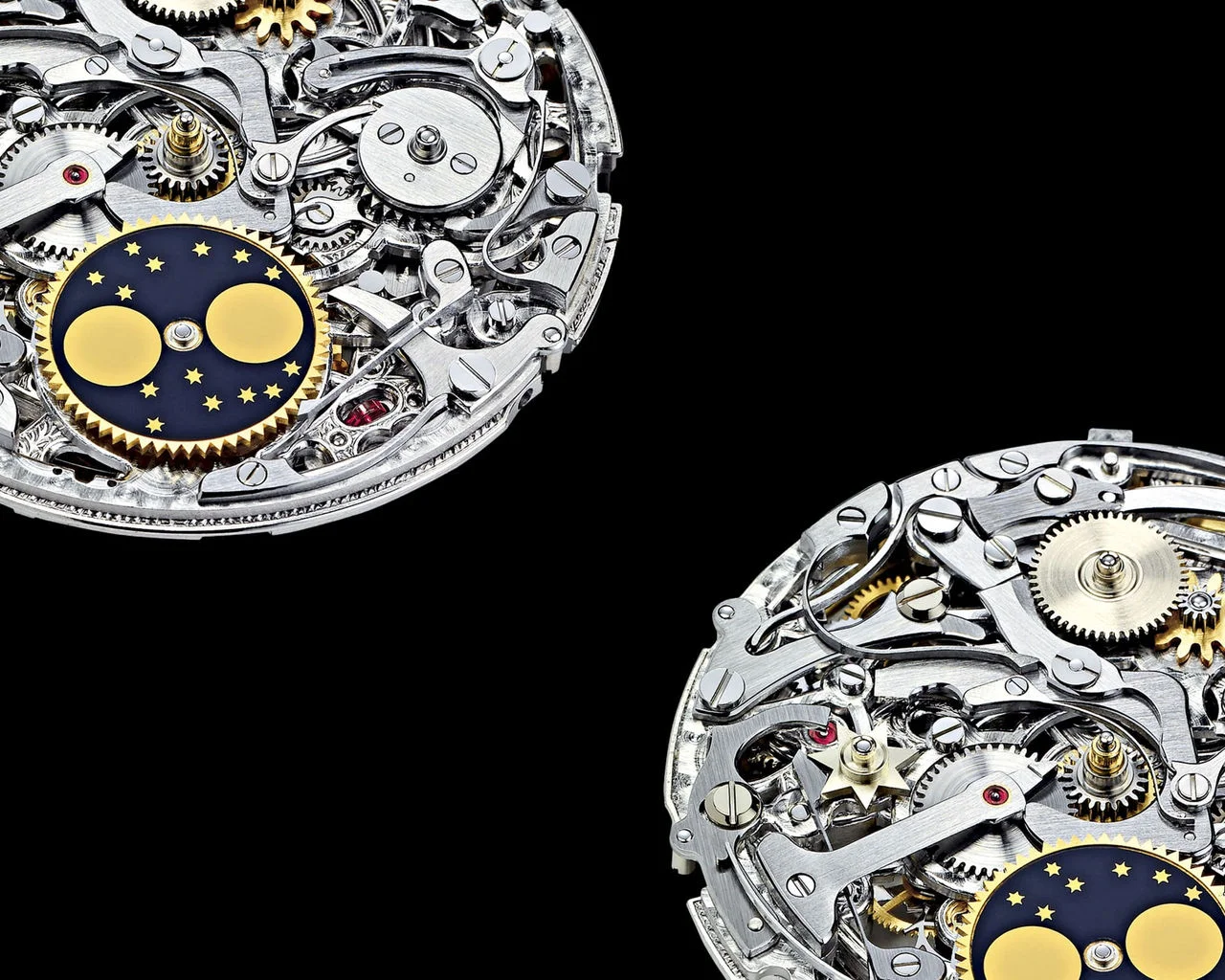
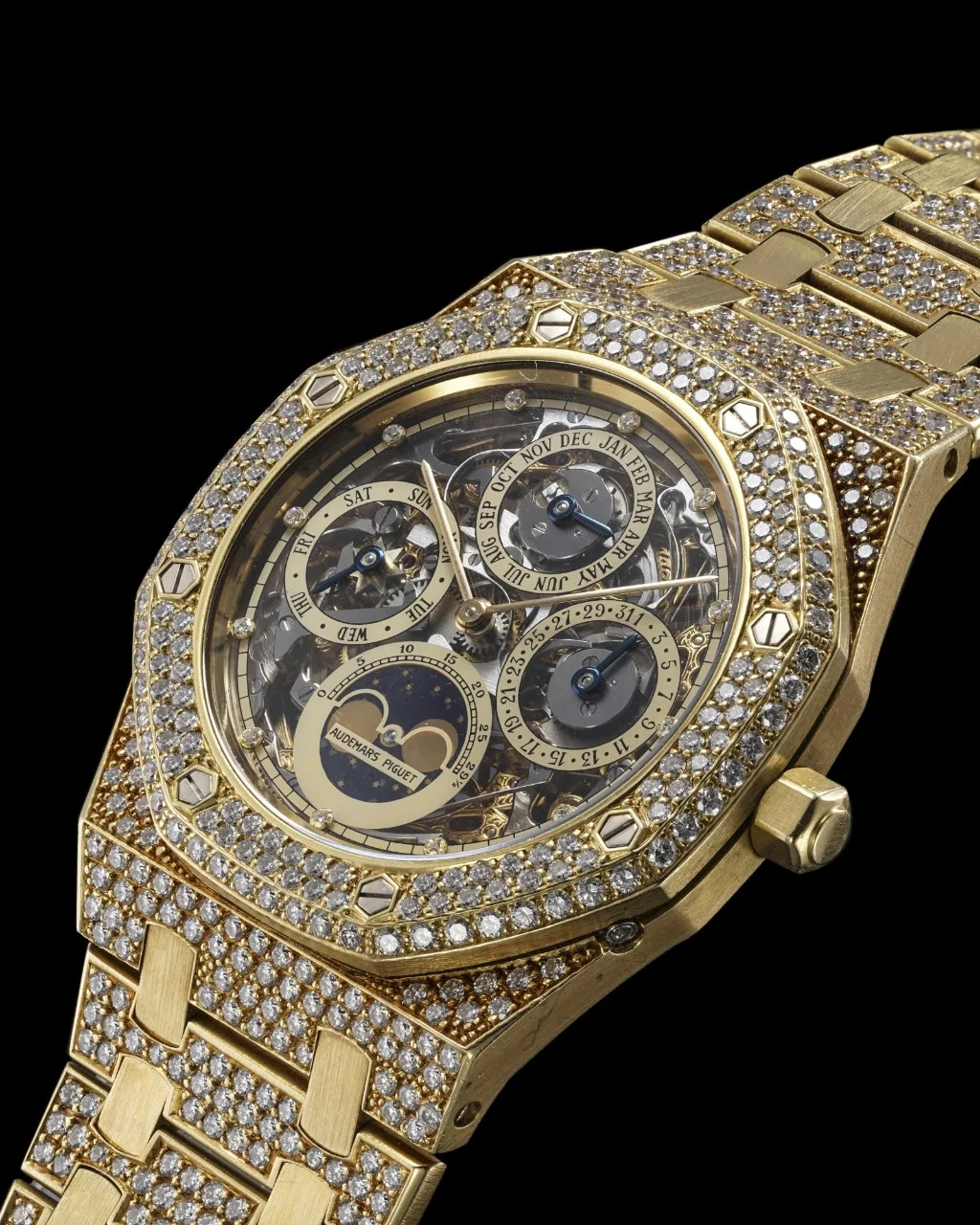
Calibre 2120
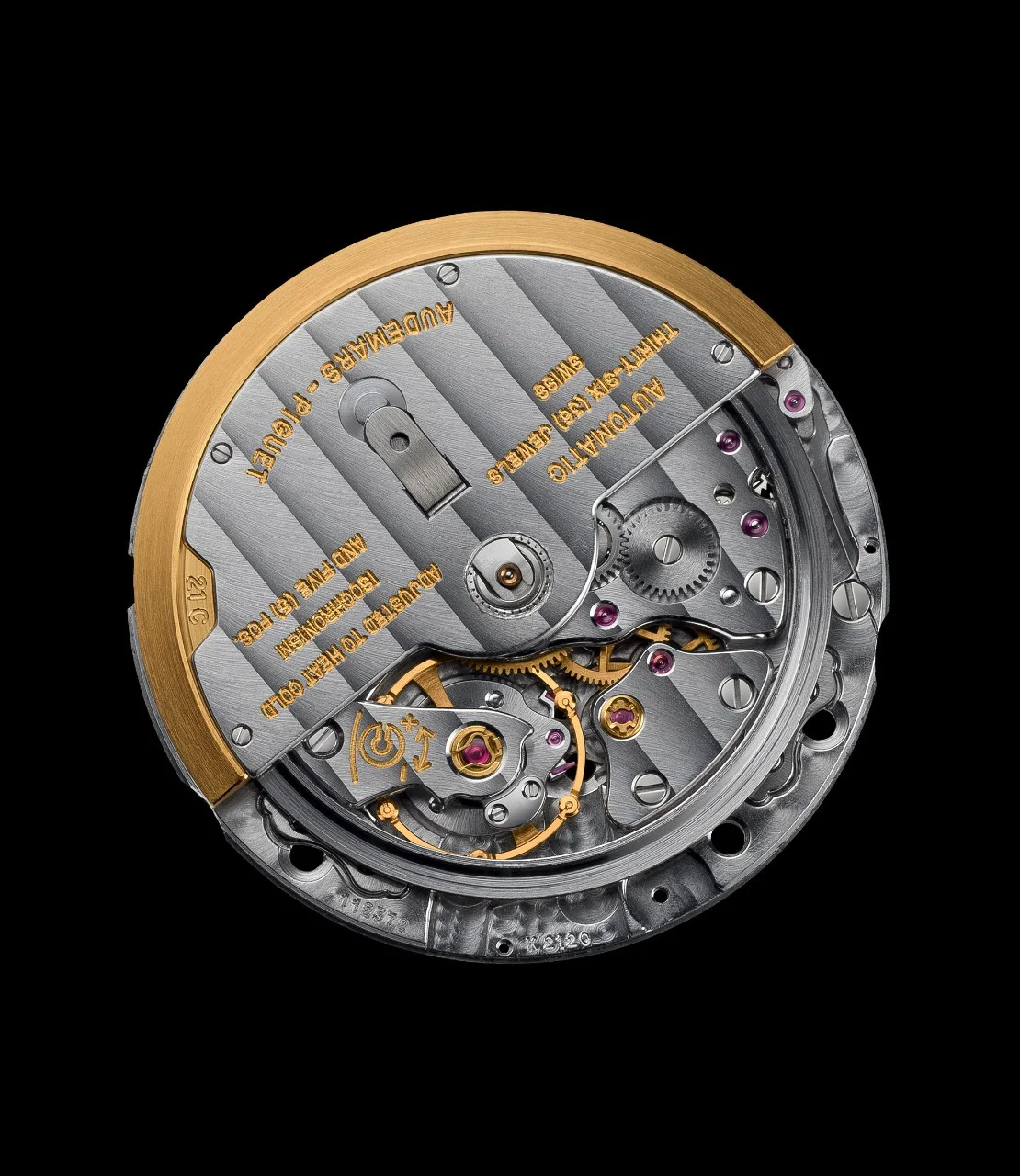
1967–2011. Calibres 2120 and 2121, caseback side. Extra-thin selfwinding calibres. Diameter of 28 mm (12½ lignes). The aesthetic on the caseback side is similar for Calibre 2120 (between 1967 and 2006) and Calibre 2121 (between 1970 and circa 2011). Movement 127053 produced in 1970. Audemars Piguet Heritage, inv. 365.

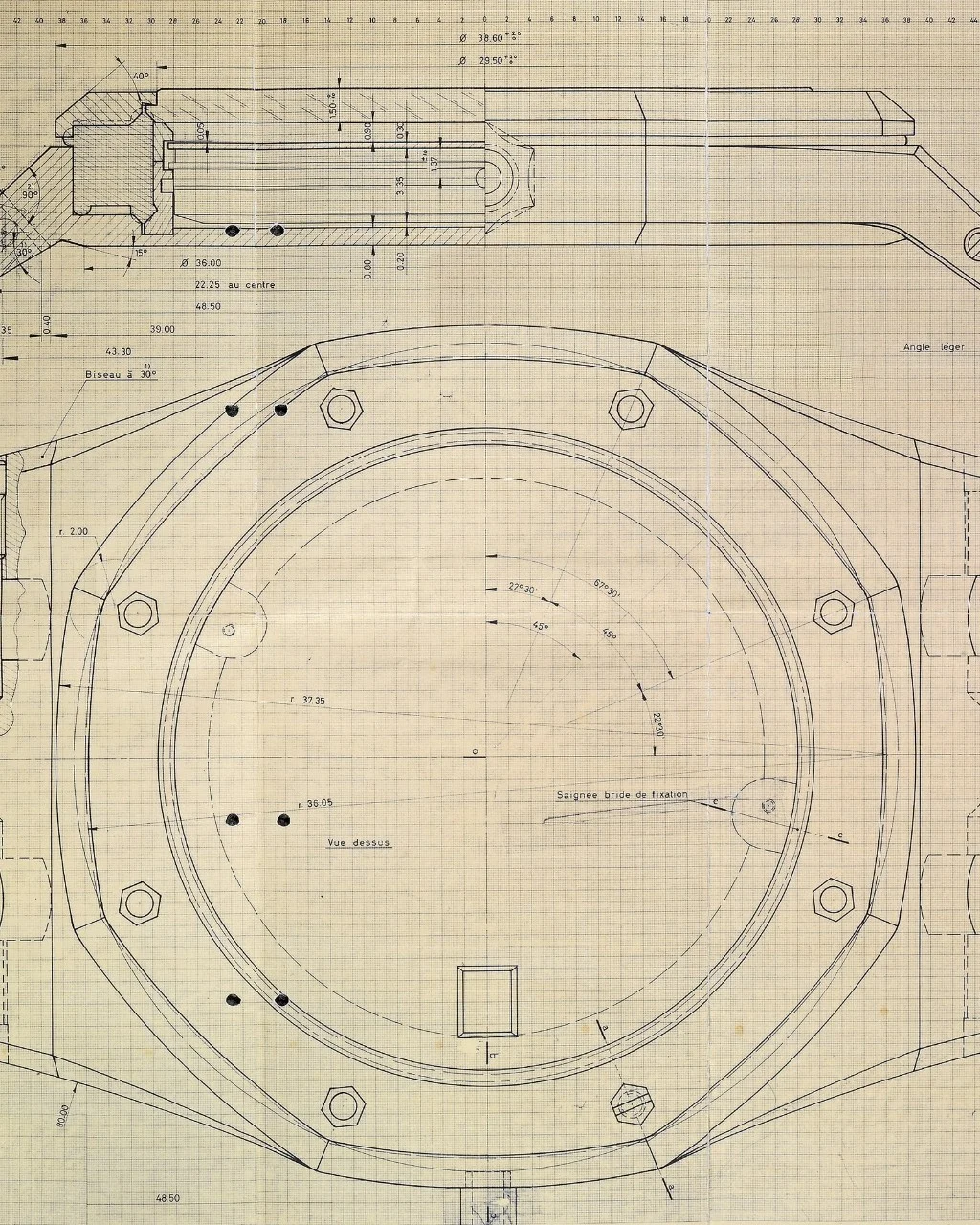
1971. General characteristics of Calibre 2120 (LC 920). Copy of LeCoultre Cie Plan 24114b for Audemars Piguet. Audemars Piguet Archives.

1970. Decoration table for Calibres 2120 and 2121 (VC 1120/1121). Copy of the LeCoultre Cie Plan 24131a for Audemars Piguet. Audemars Piguet Archives.

1967–circa 1978. Calibre 2120, first generation. Selfwinding ultra-thin Calibre. 22 mm in diameter (12½ lignes). Variable inertia balance wheel. Movement 112572, produced in 1970. Audemars Piguet Heritage.

Circa 1978–circa 1991. Calibres 2120/1 (second generation). Selfwinding ultra-thin calibre. 28 mm in diameter (12½ lignes). Index-regulated, three-arm annular balance wheel. Movement 212825 produced in 1980. Audemars Piguet Archives.
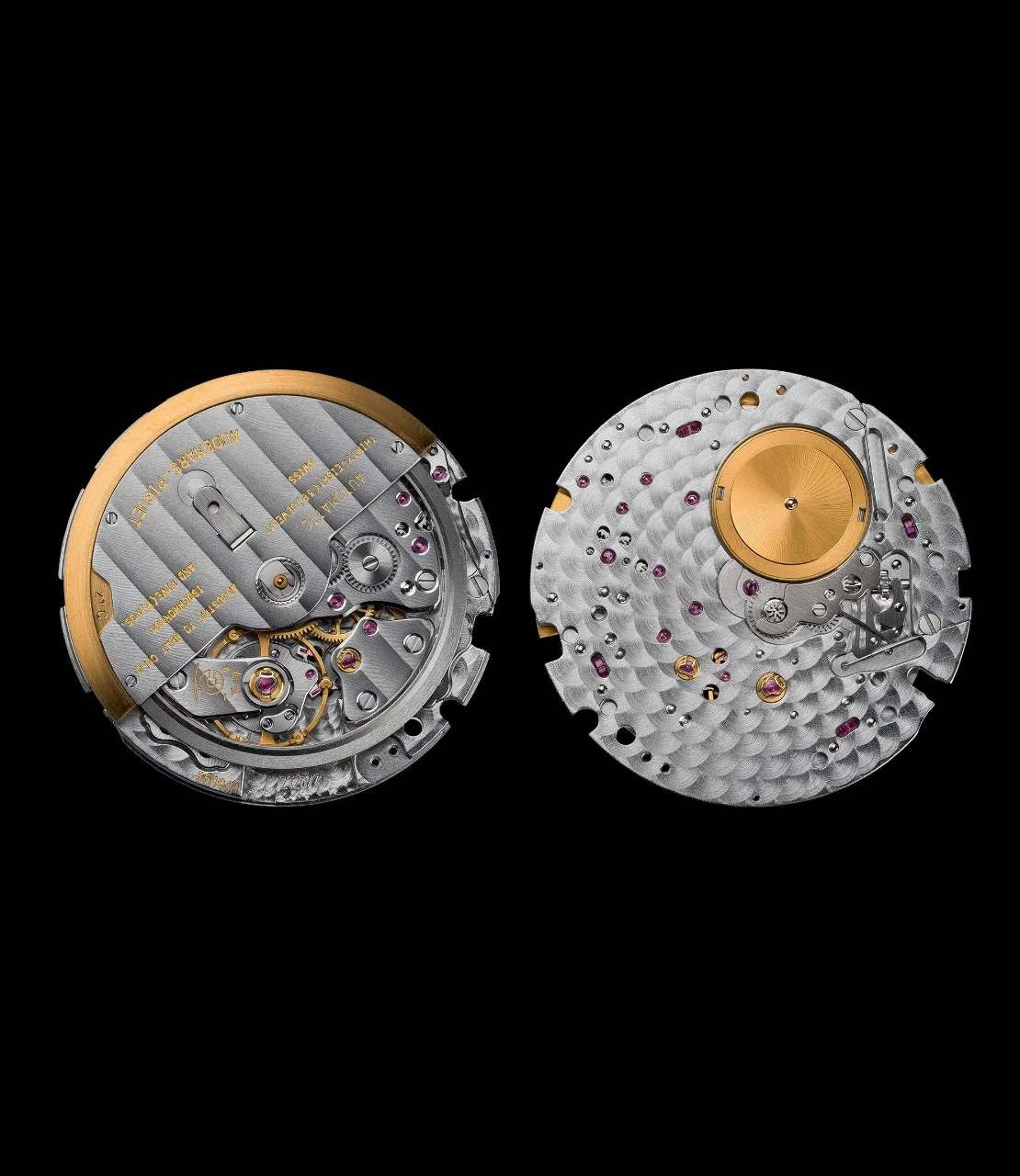
Circa 1991–circa 2012. Calibre 2120, third generation. Selfwinding ultra-thin calibre. 28 mm in diameter (12½ lignes). Index-regulated, three-arm annular balance wheel. Audemars Piguet Heritage.

1967–2021. Regulating organs that equipped Calibres 2120 and 2121. Main balance-wheel and balance-coq aesthetic and technical evolutions. Top: since 1967; Middle: since circa 1980; Bottom: since circa 1991.

1998. Variations of Calibre 2120. Audemars Piguet 1998–1999 General Catalogue. Audemars Piguet Archives.
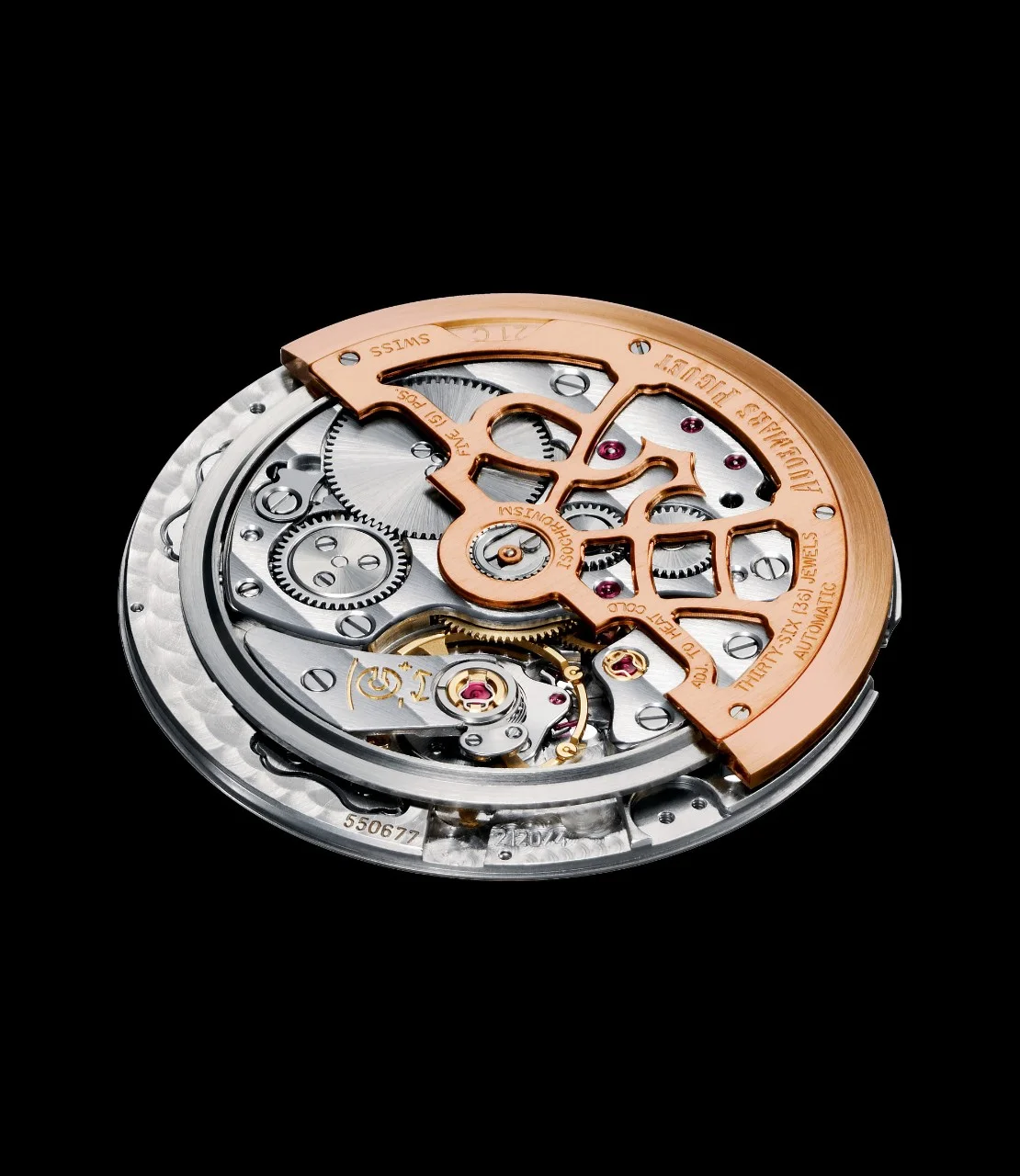
2007–2019. Calibres 2120 and 2121, caseback side. This openworked oscillating weight is documented in the Audemars Piguet catalogues between 2007 and 2012 for Calibre 2121 and between 2011 and 2019 for Calibre 2120. It was also probably used before and after these dates.
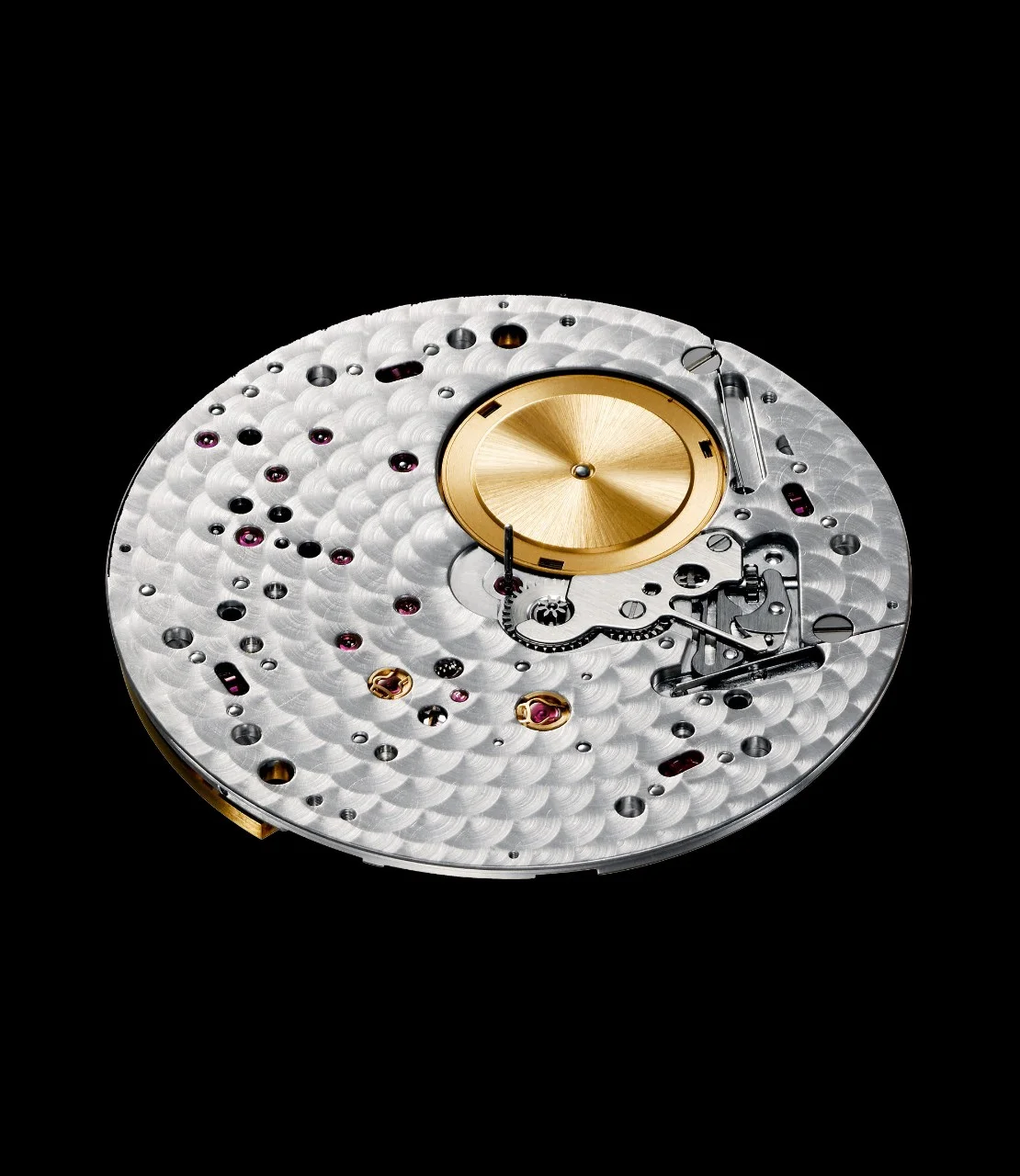
2000s–2010. Calibre 2120, dial side. The barrel is hanging so as to gain in thinness. Audemars Piguet Archives

2011. Detailed description of Calibre 2121. Audemars Piguet 2011 General Catalogue. Audemars Piguet Archives.
Mechanism
Selfwinding
Functions
hours, minutes
Diameter
28 mm (12 ½ lignes)
Thickness
2.45 mm
Frequency
19,800 vph (3 Hz)
Power Reserve
40 hours
Jewels
36
Dates
1967 – circa 2019
Components
212
Movement Blank
Movement "ébauche": LeCoultre & Cie (Calibre 920), then Audemars Piguet from the early 21st century onwards
Derivatives
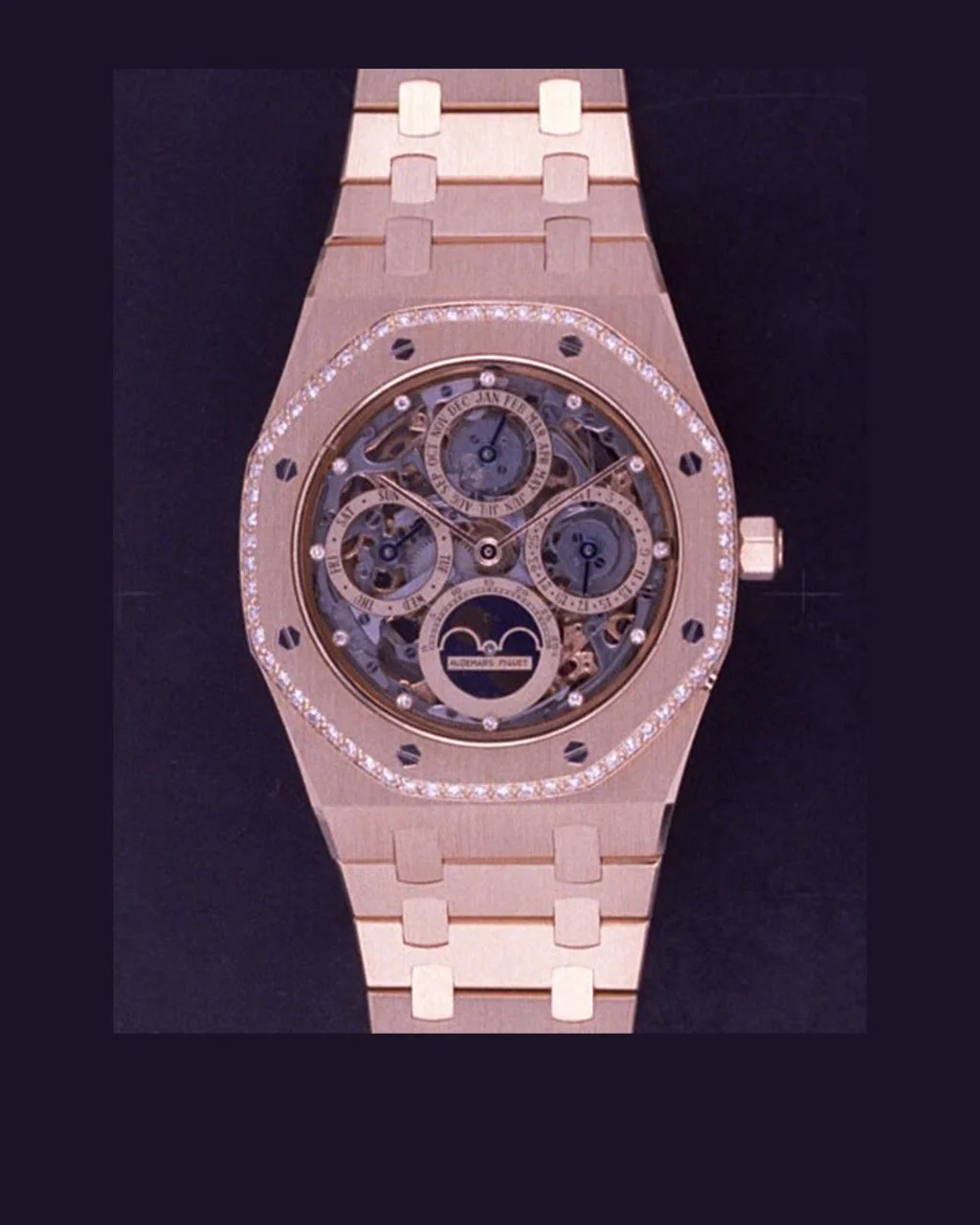
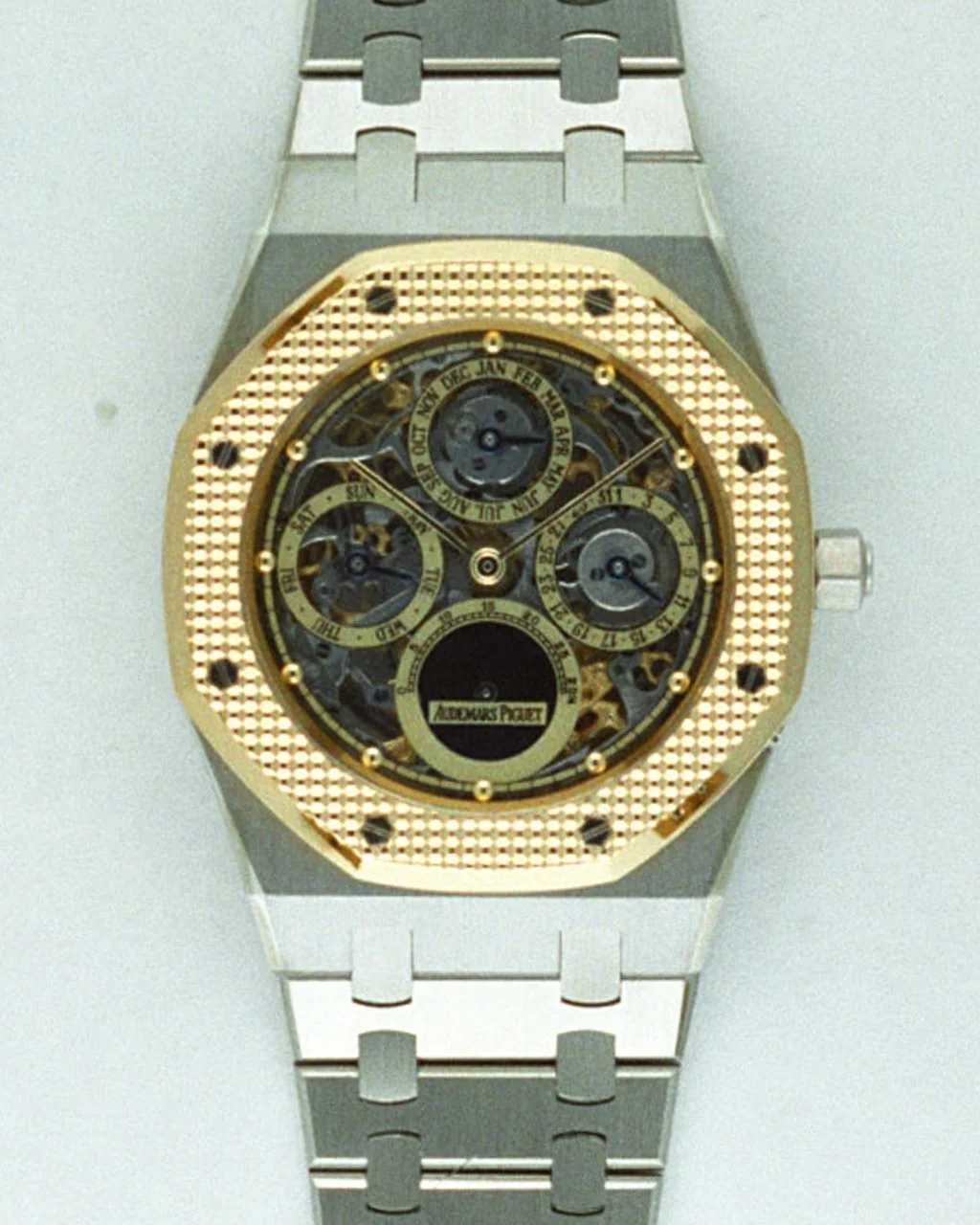
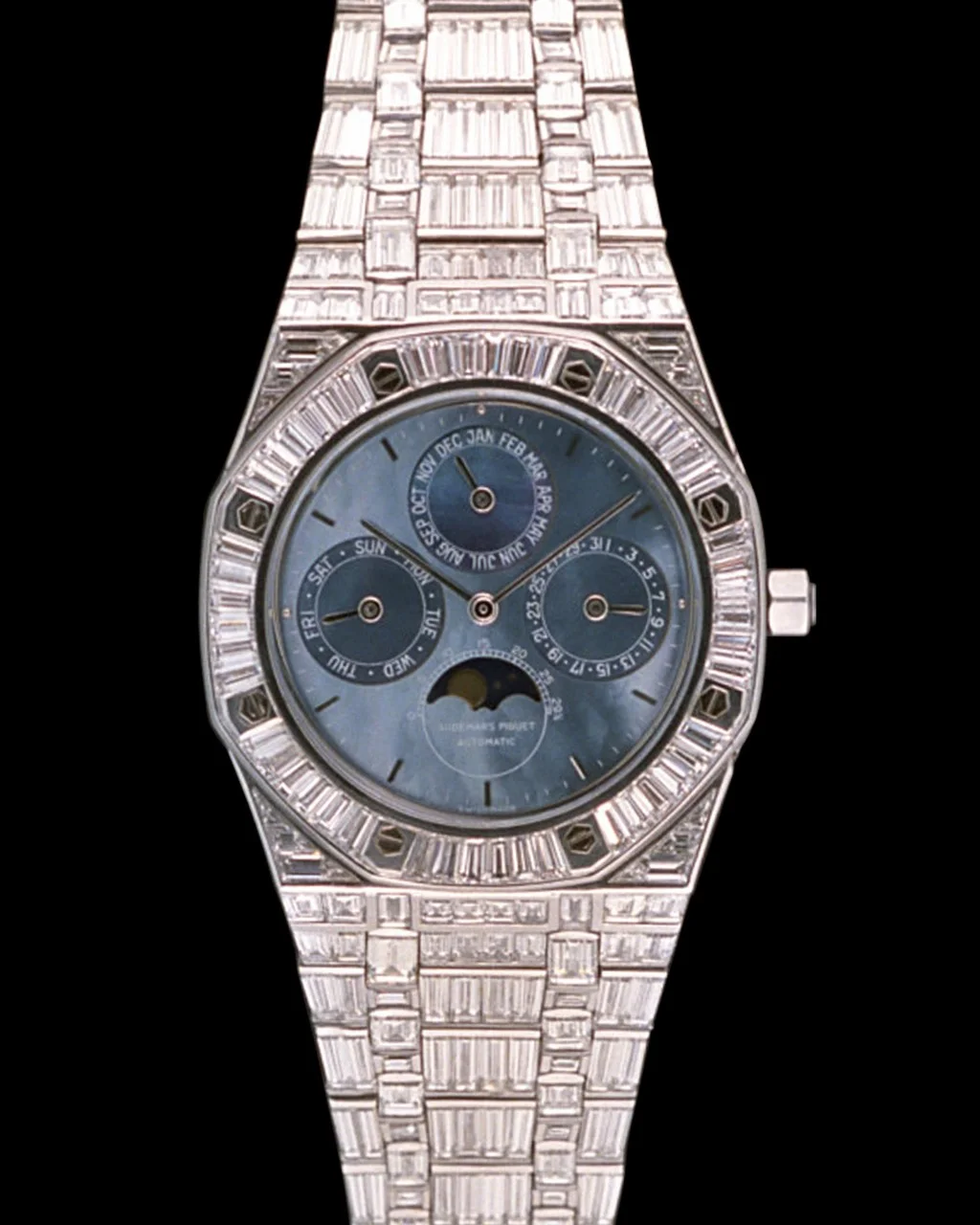
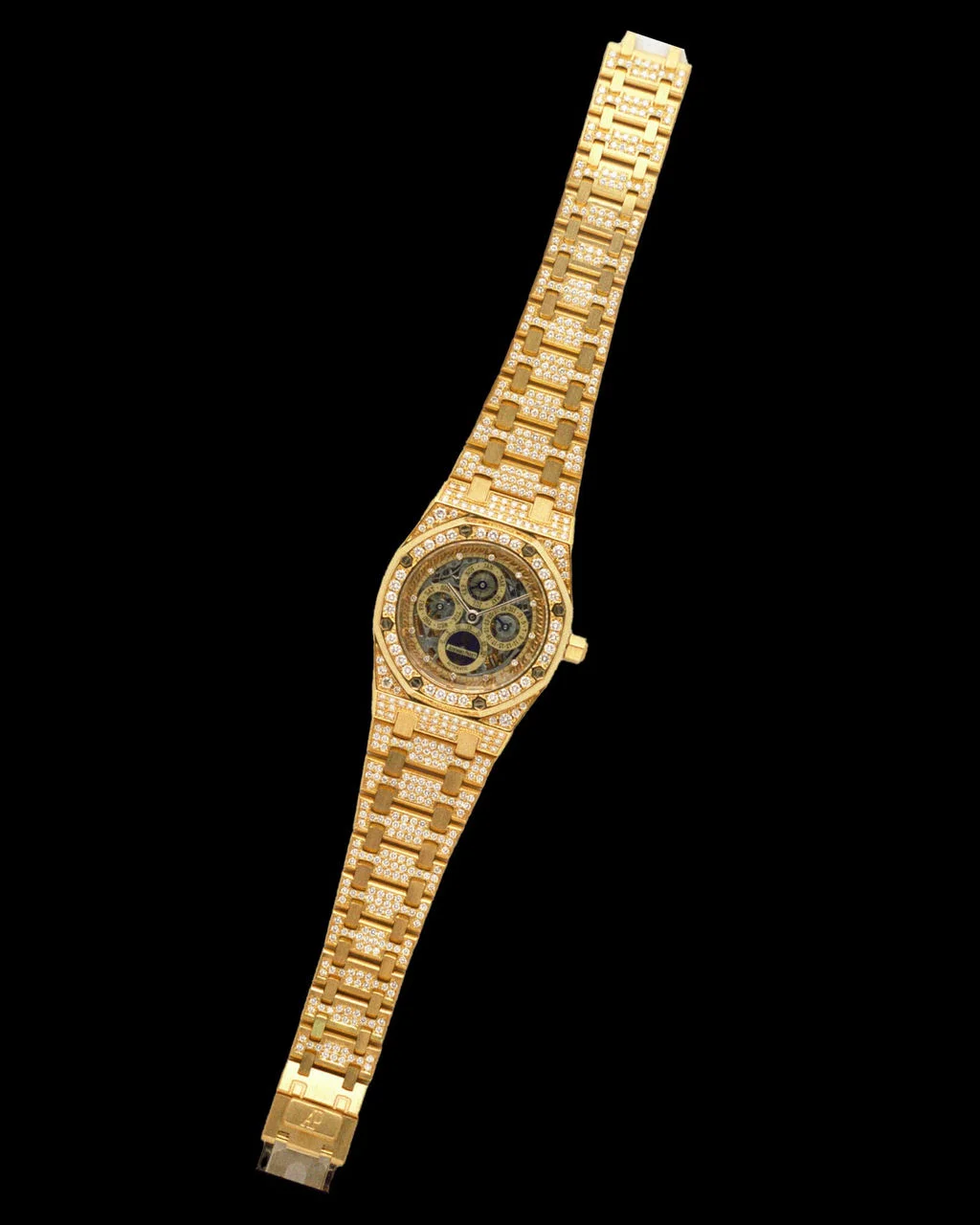
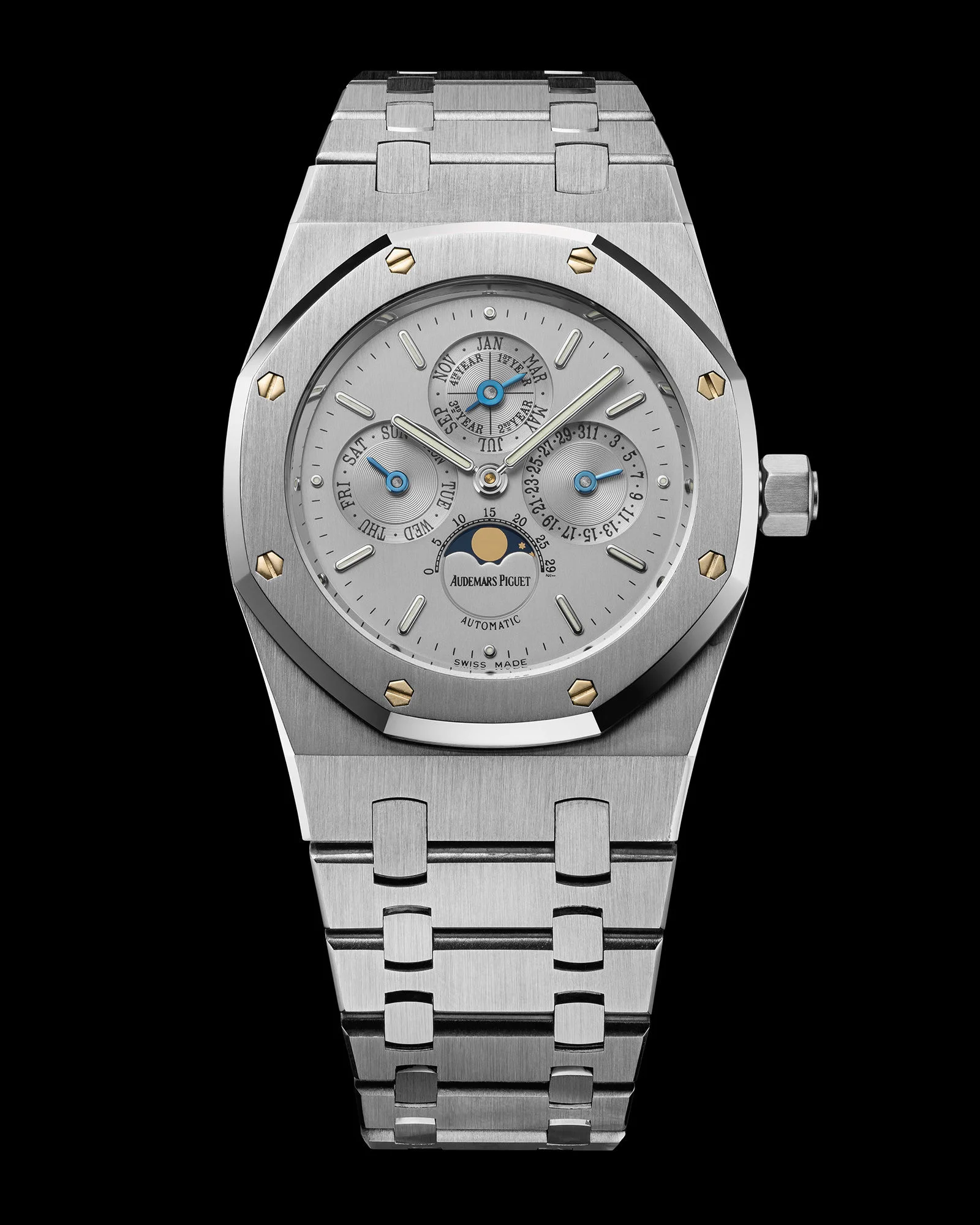
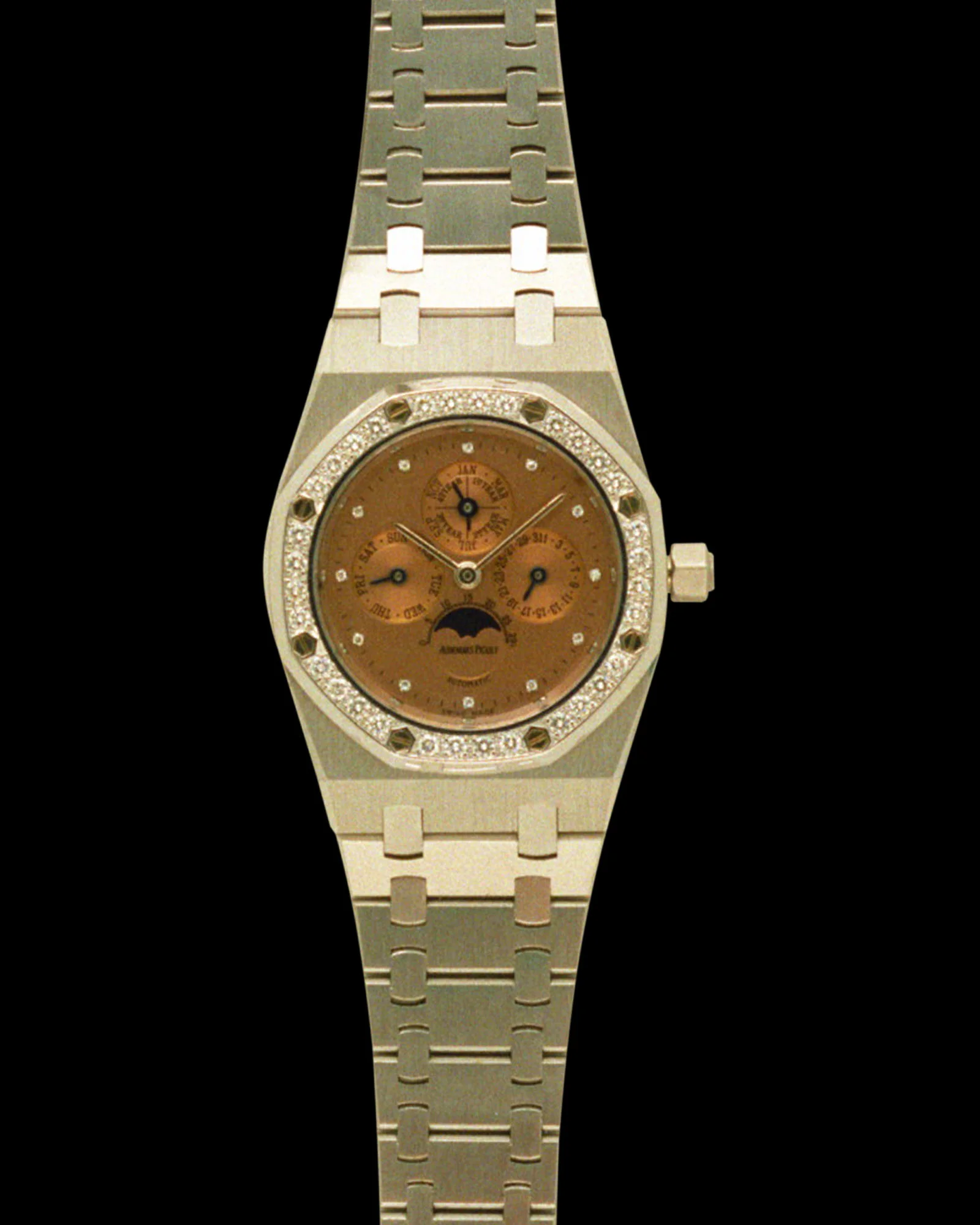
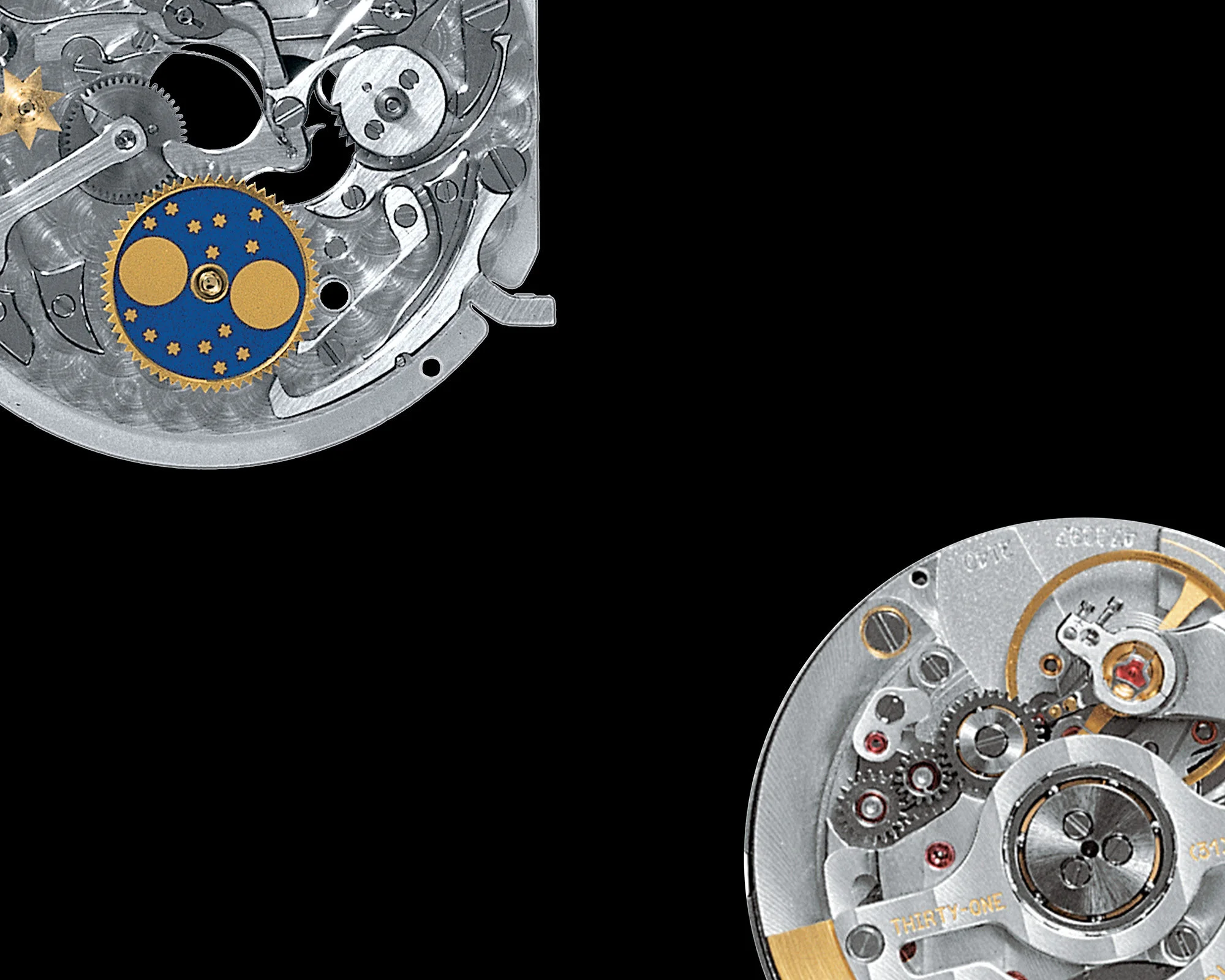
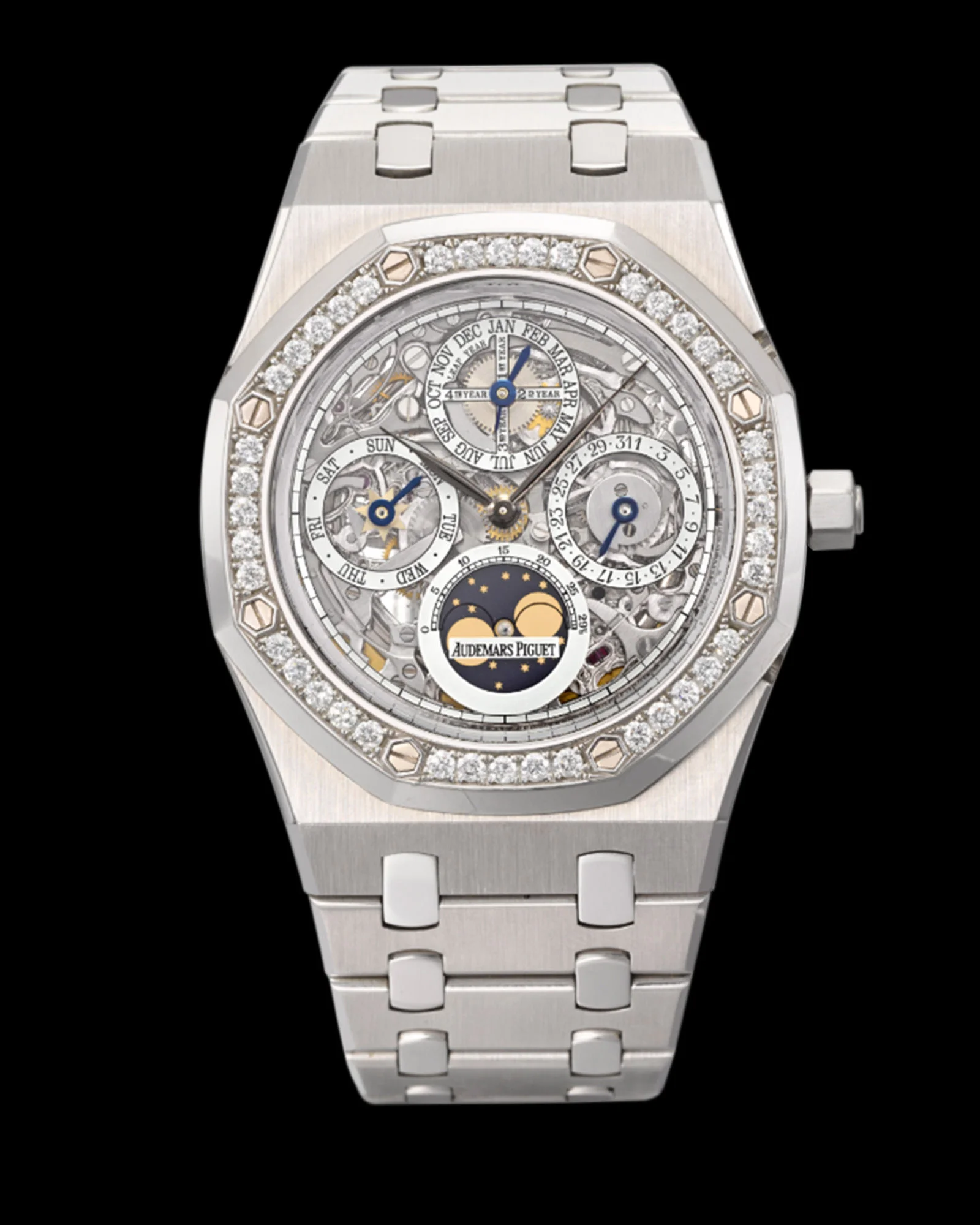
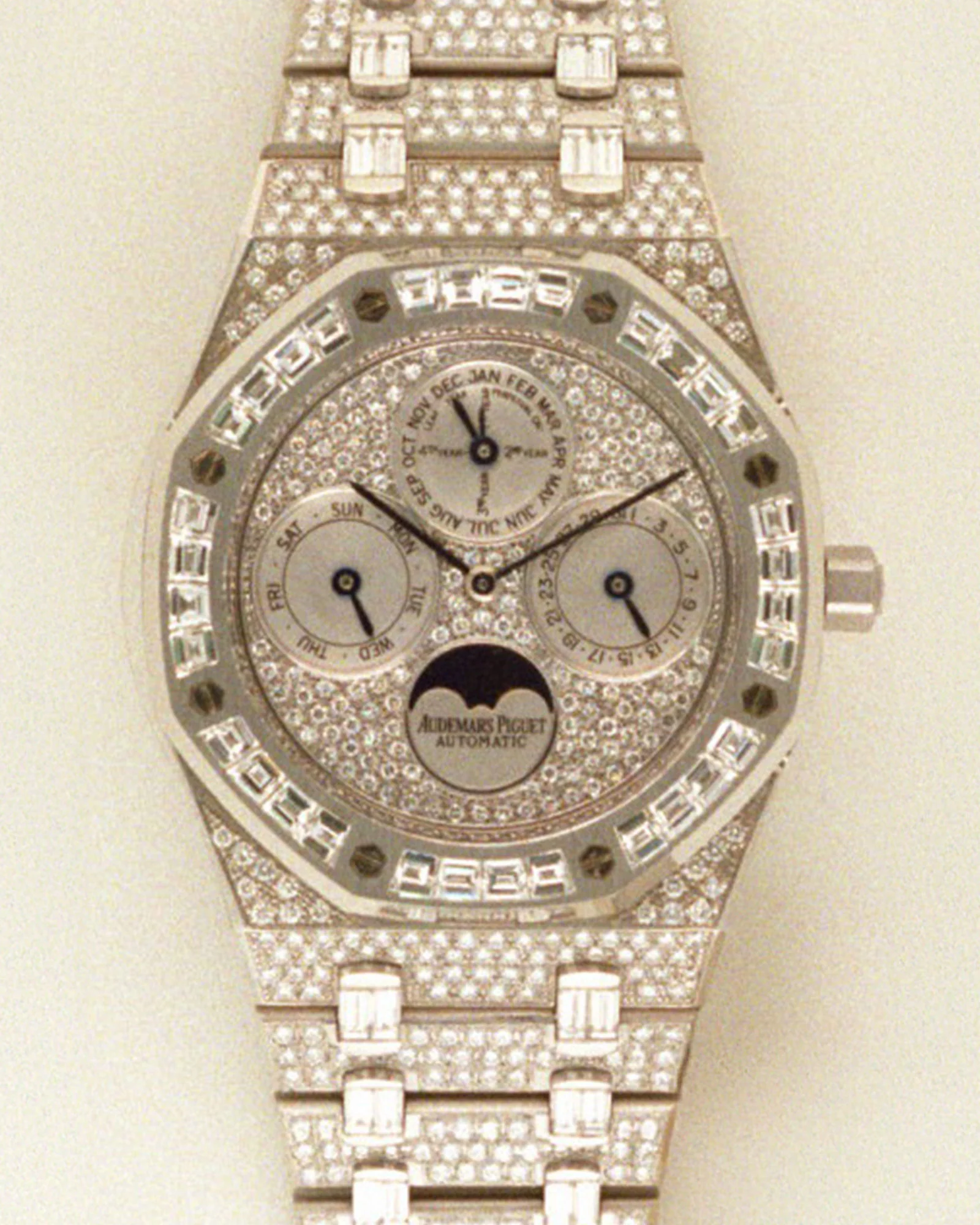
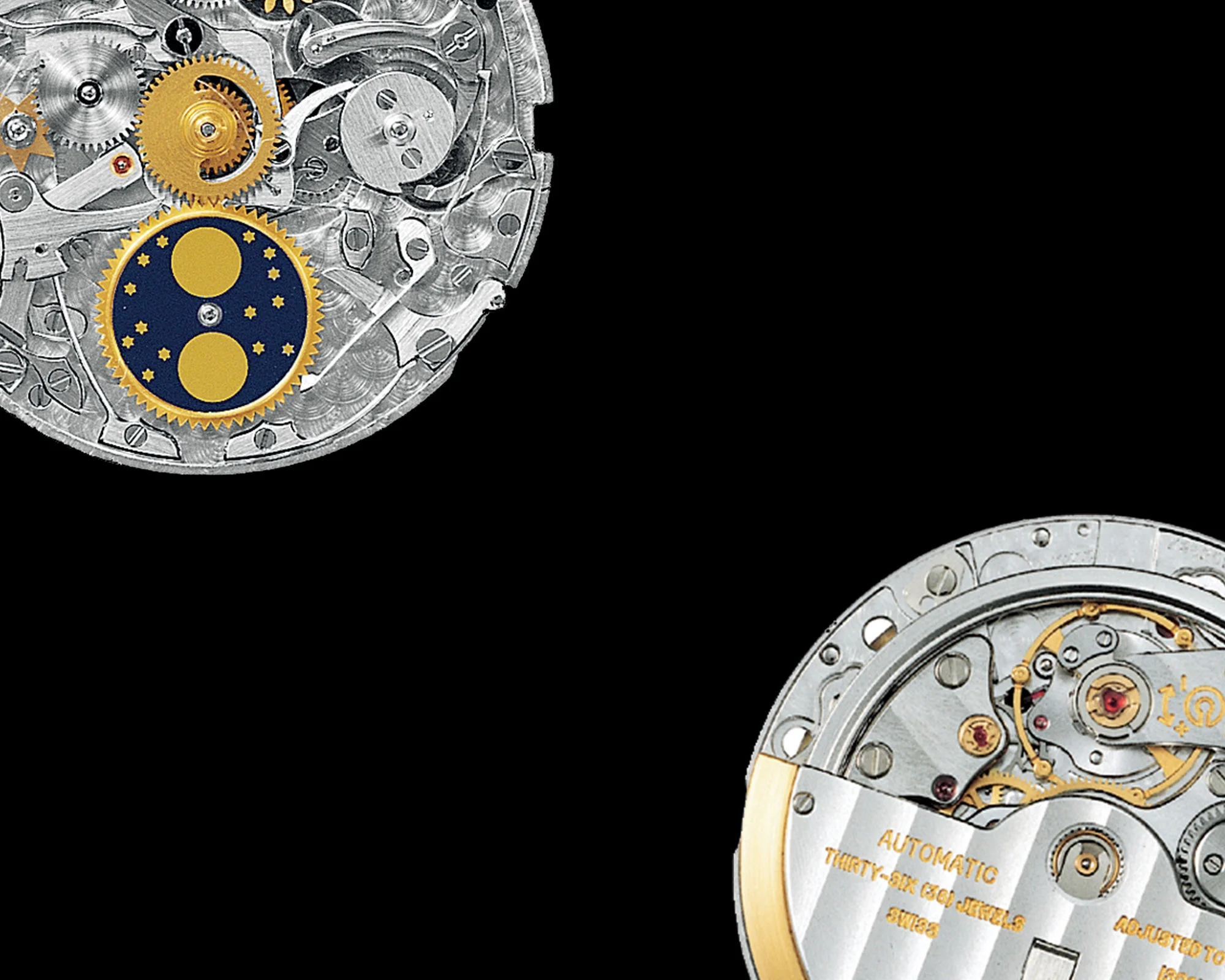
Derivatives: 2121 (1970), 2120SQ (1973), 2120/2800 (1978), 2120/2801 (circa 1992), 2120/2802 (circa 1995), 2120/2803, 2120/2804, 2120/2808 (circa 2000) and then partially Calibre 5134 (2015).
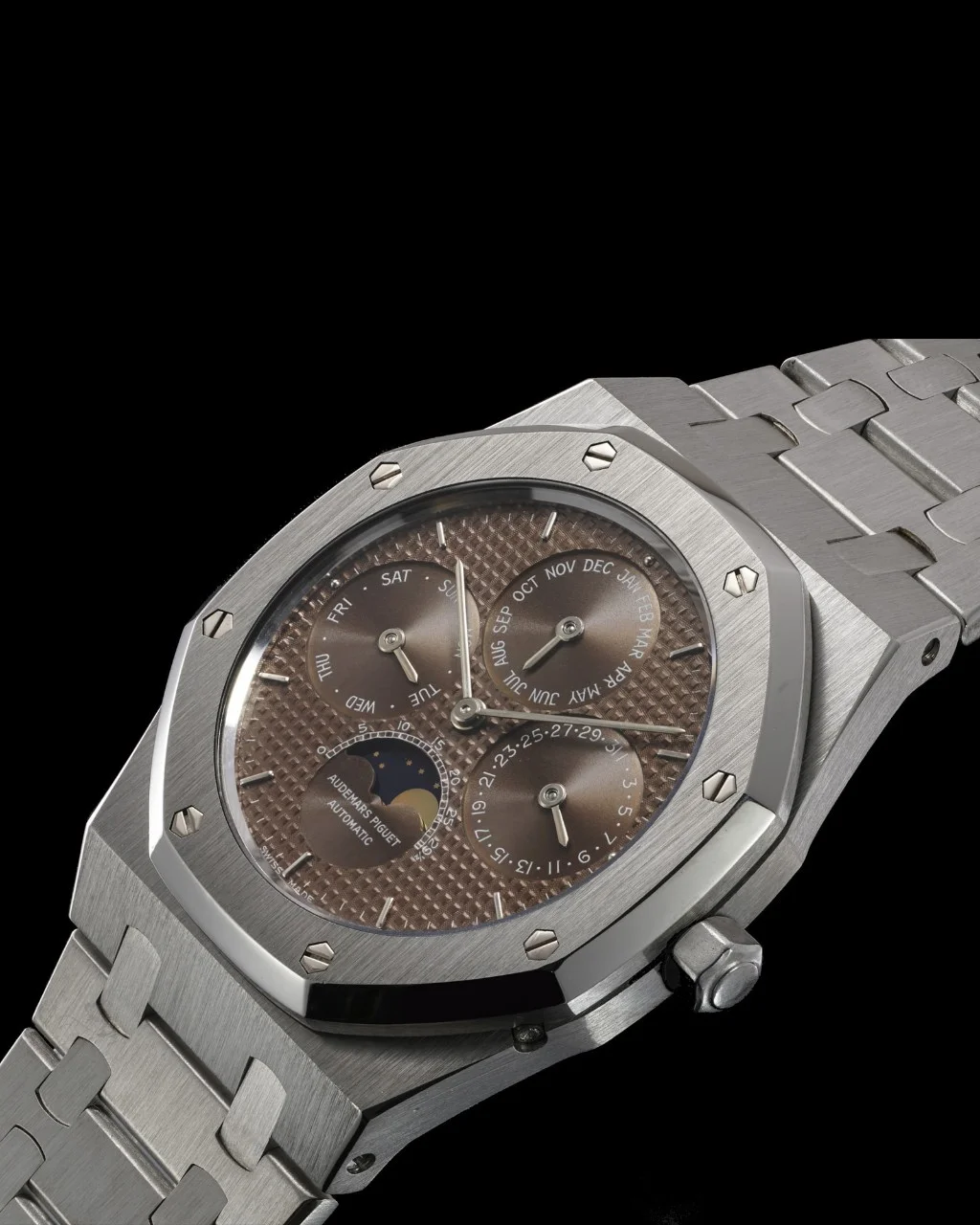
Calibre 2120 is one of the most famous in the watch industry. Its long history is told in a dedicated article available here. Jointly developed by LeCoutre & Cie, Audemars Piguet and Vacheron Constantin, it remained for several decades the world's thinnest mechanical movement with automatic winding and central rotor. It is notably distinguished by its 21-carat oscillating weight on ruby rollers, which gravitates around a circular track.
For a long time, movement "ébauche" production was carried out by LeCoultre & Cie (renamed Jaeger-LeCoultre in 1979), before being brought in-house in the Audemars Piguet workshops at the beginning of the 21st century.
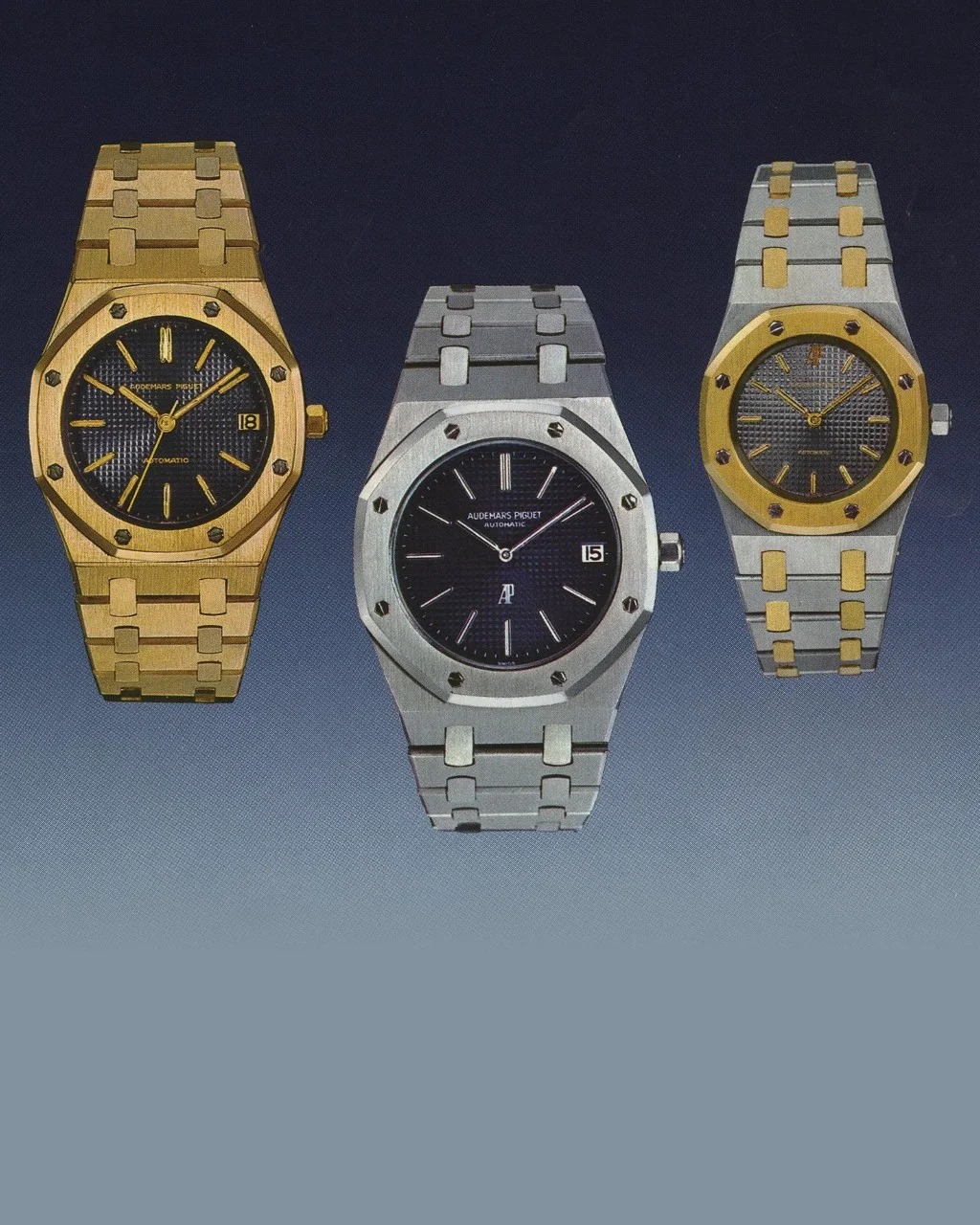
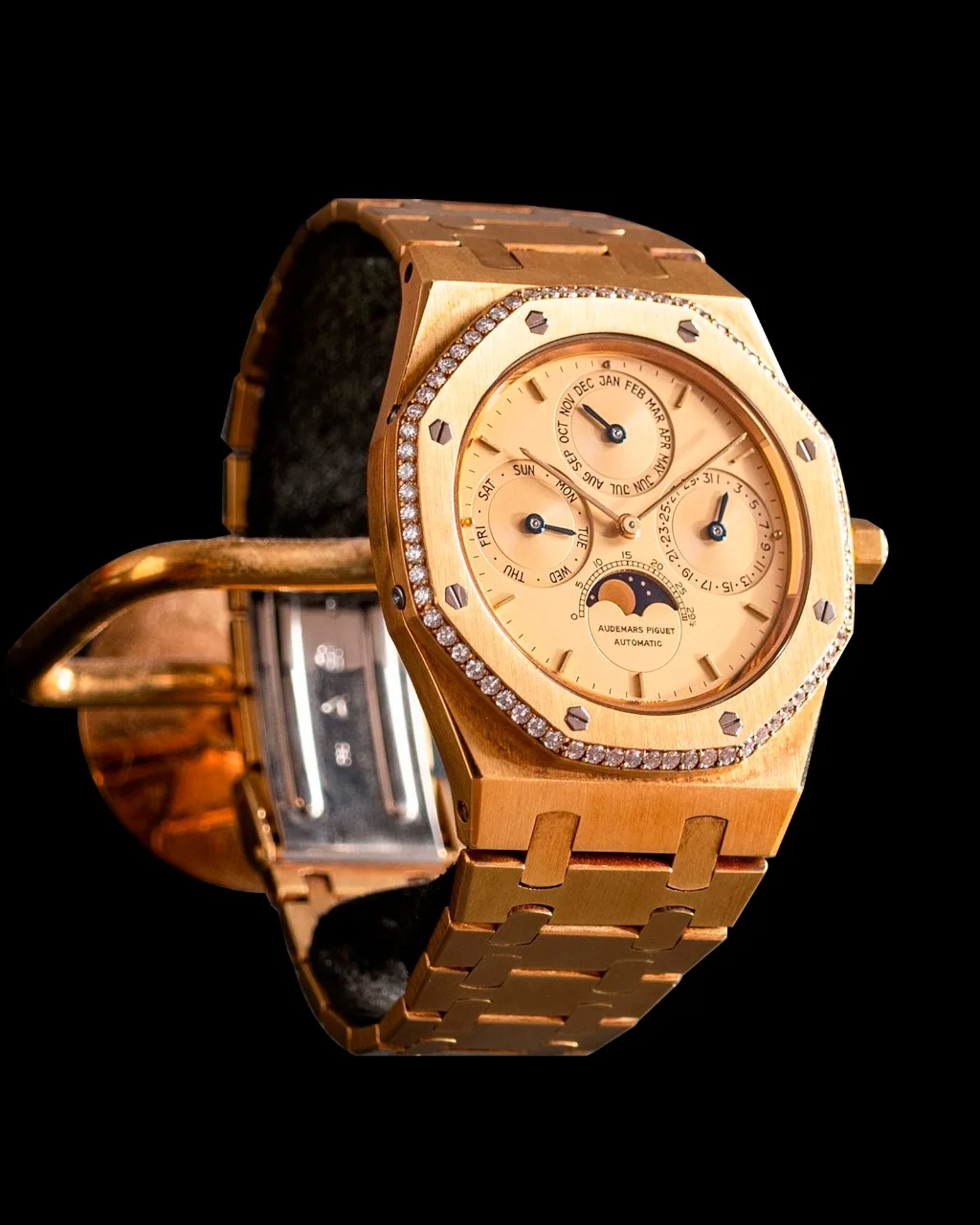
Model 5271 was the first to be equipped with Calibre 2120, followed by dozens of others, including several Royal Oak limited series from 1992 (14789, 14793, 14811, etc.).
While the exact number of 2120 movements produced by Audemars Piguet remains to be seen, statistics from 1967 to 1995 show that more than 12,000 were cased during this period alone. Its derivative Calibre 2121 was even more successful and equipped the Royal Oak "Jumbo" until the end of 2021.
Calibre 2120 is one of the most famous in the watch industry. Its long history is told in a dedicated article available here. Jointly developed by LeCoutre & Cie, Audemars Piguet and Vacheron Constantin, it remained for several decades the world's thinnest mechanical movement with automatic winding and central rotor. It is notably distinguished by its 21-carat oscillating weight on ruby rollers, which gravitates around a circular track.
For a long time, movement "ébauche" production was carried out by LeCoultre & Cie (renamed Jaeger-LeCoultre in 1979), before being brought in-house in the Audemars Piguet workshops at the beginning of the 21st century.
Model 5271 was the first to be equipped with Calibre 2120, followed by dozens of others, including several Royal Oak limited series from 1992 (14789, 14793, 14811, etc.).
While the exact number of 2120 movements produced by Audemars Piguet remains to be seen, statistics from 1967 to 1995 show that more than 12,000 were cased during this period alone. Its derivative Calibre 2121 was even more successful and equipped the Royal Oak "Jumbo" until the end of 2021.