5572, First Royal Oak Day Date
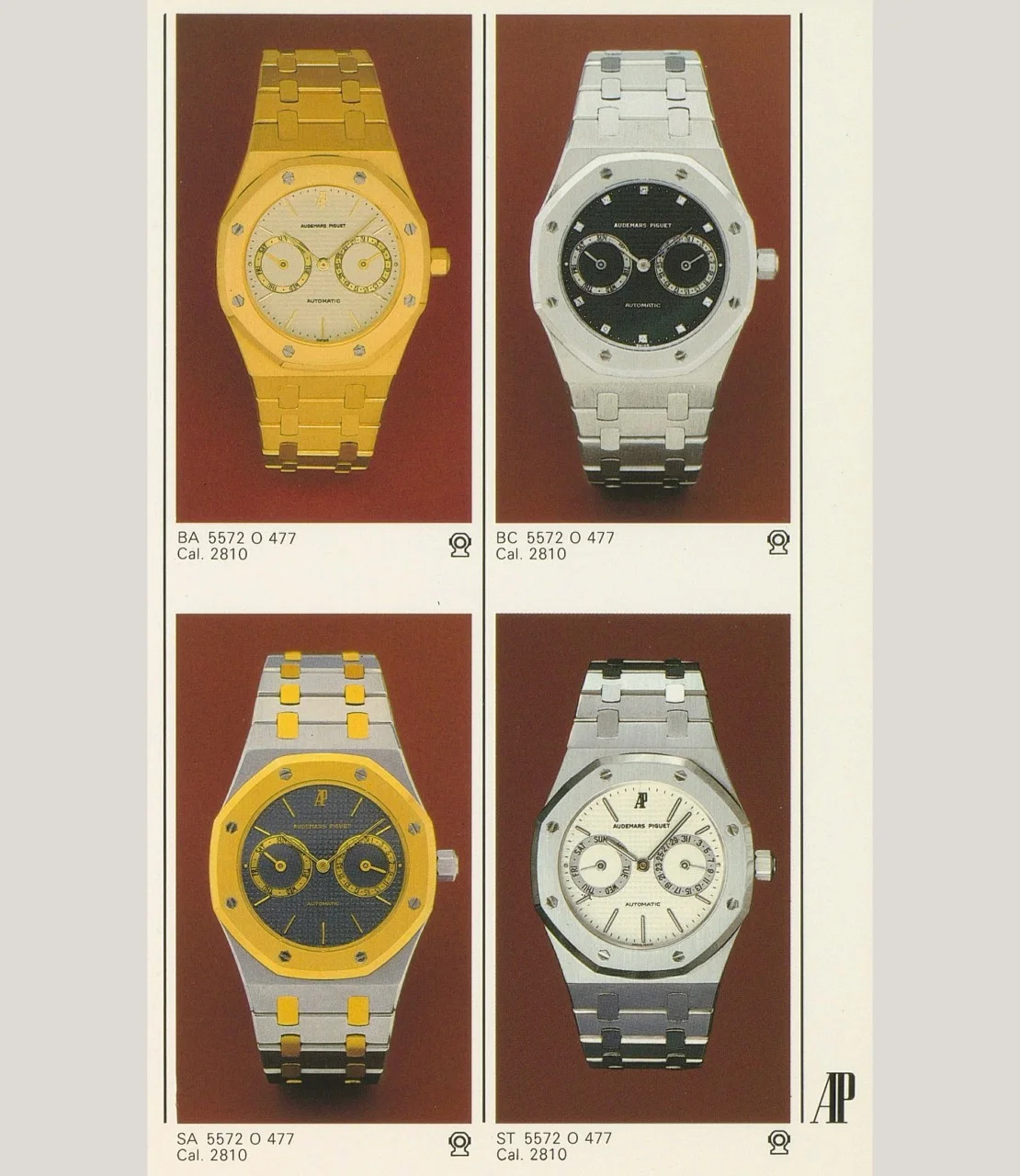
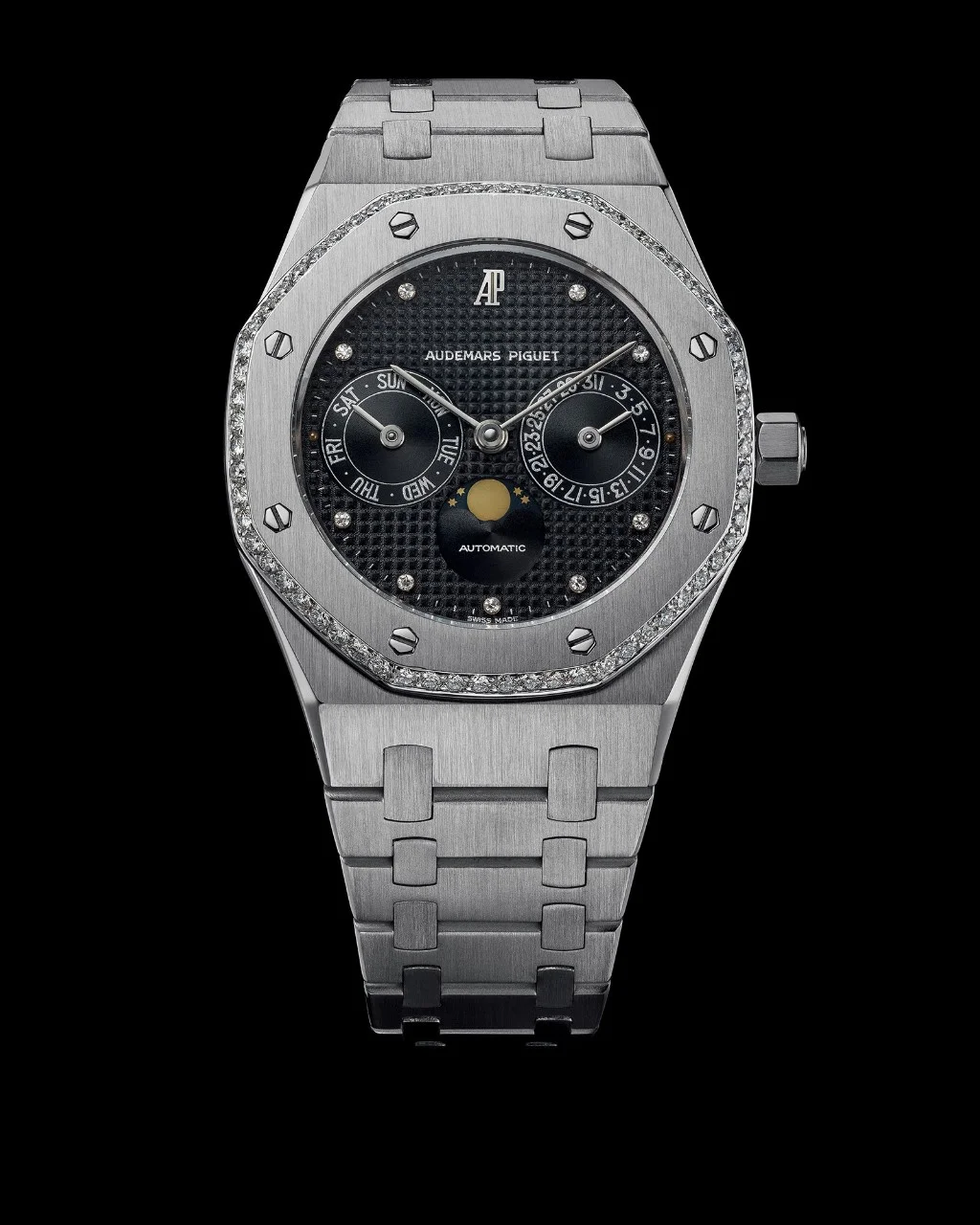
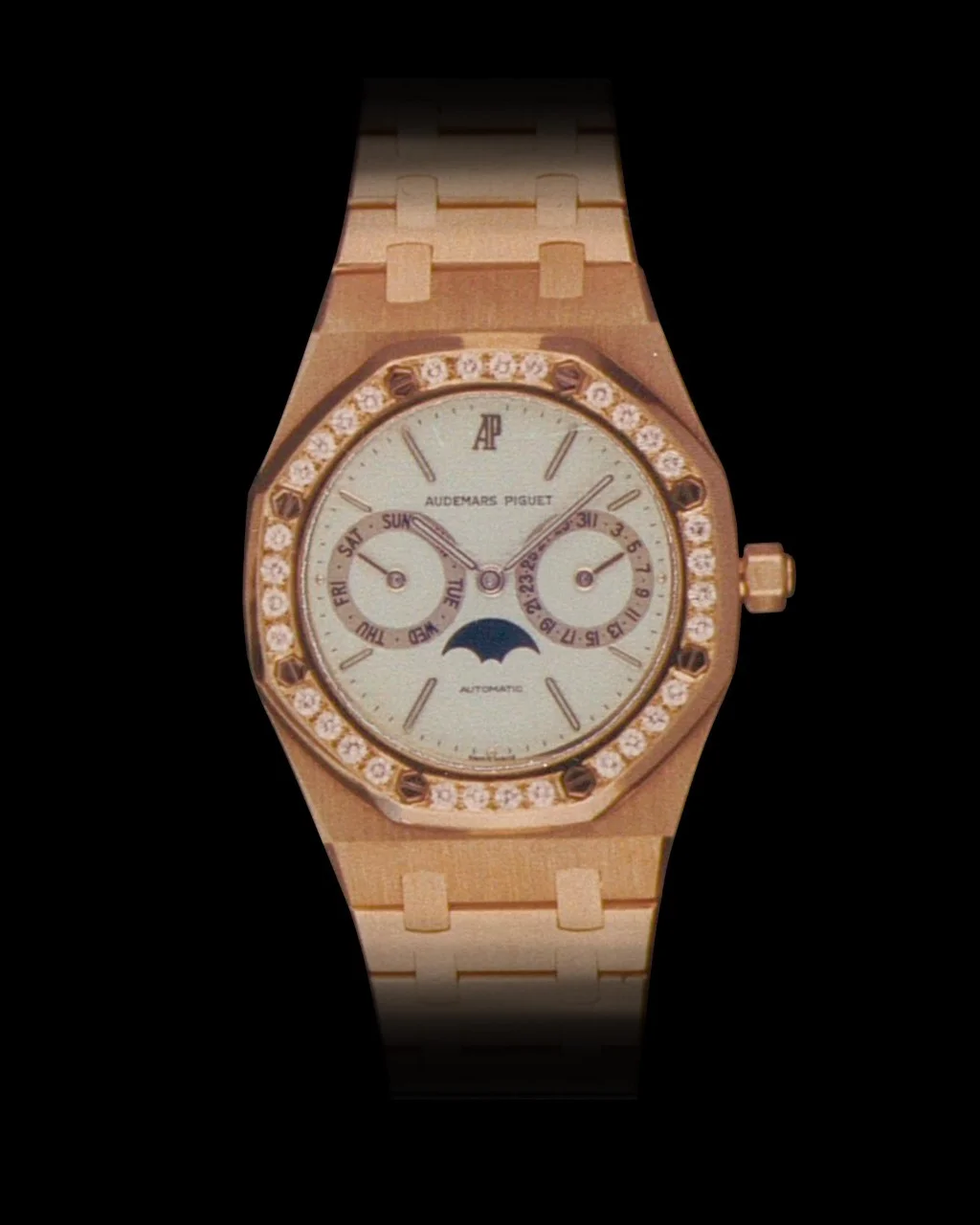
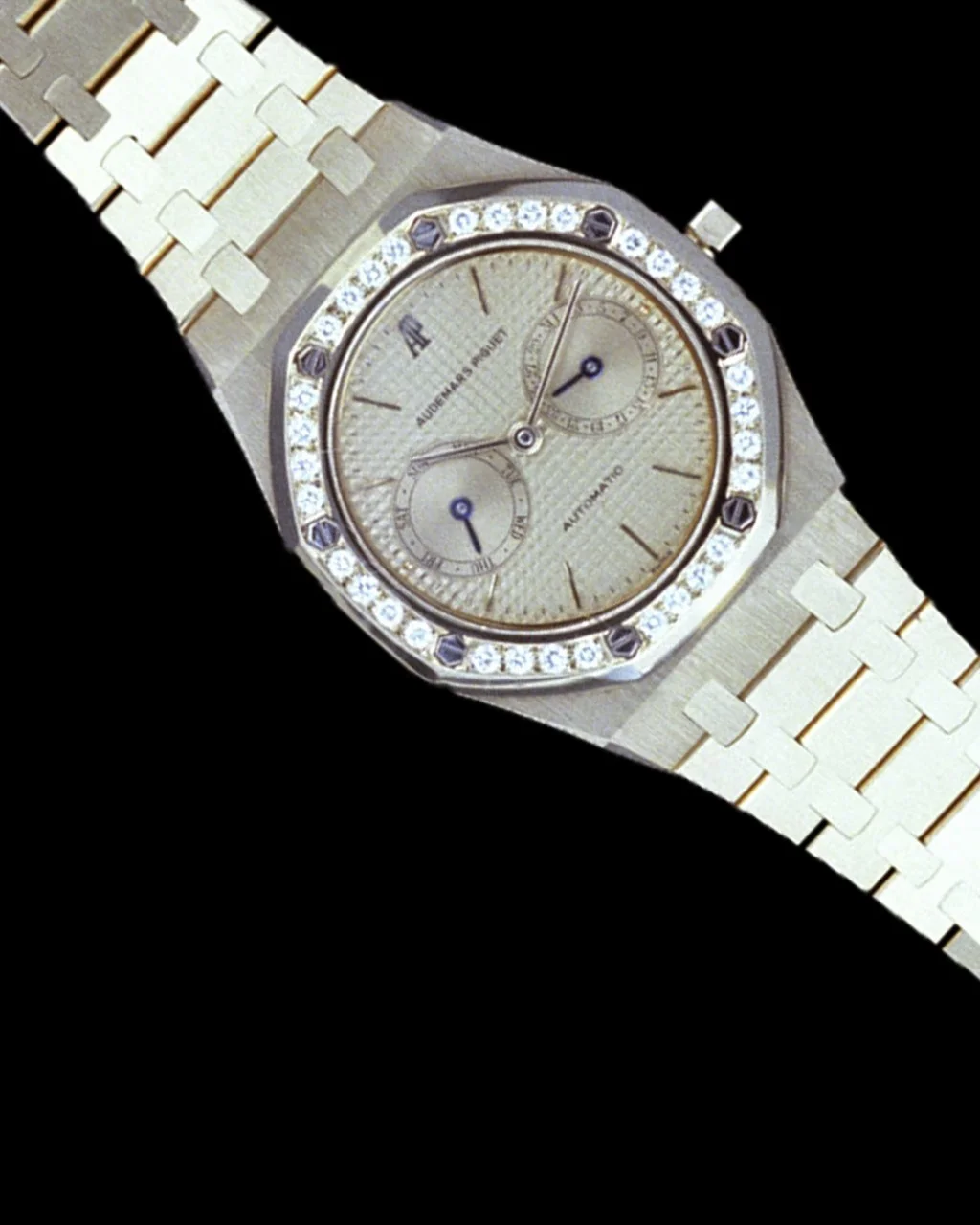
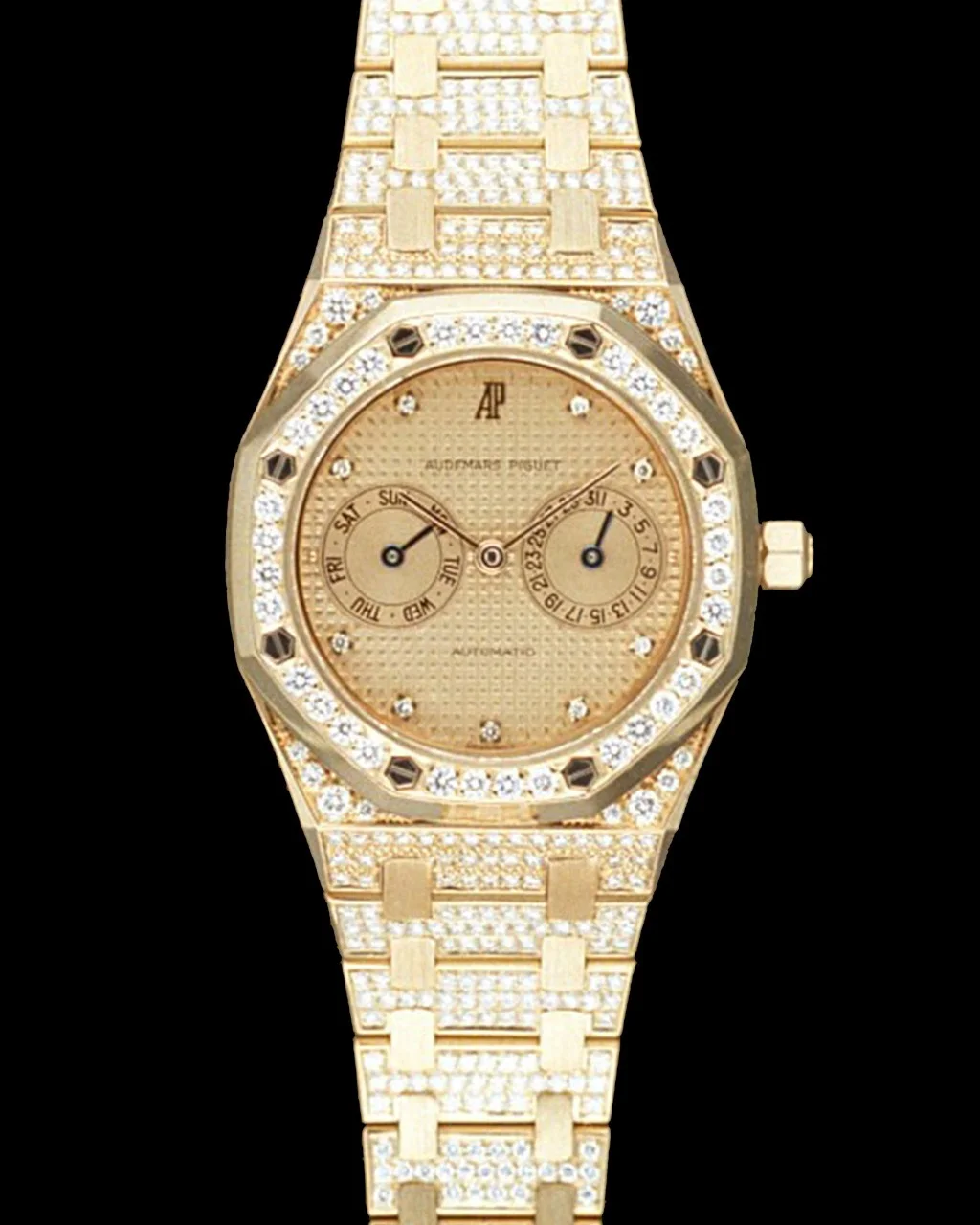
1984. Variants of Model 5572 (36 mm) Royal Oak Day Date. Variations presented in Audemars Piguet catalogues between 1984 and 1985. Audemars Piguet Archives.

Circa 1983. Audemars Piguet advert intended for the Middle East. This advert presents two variants of the first Royal Oak with additional functions, Model 25572. The title is in French, the text in English and the list of sales outlets in Arabic. Audemars Piguet Archives. .
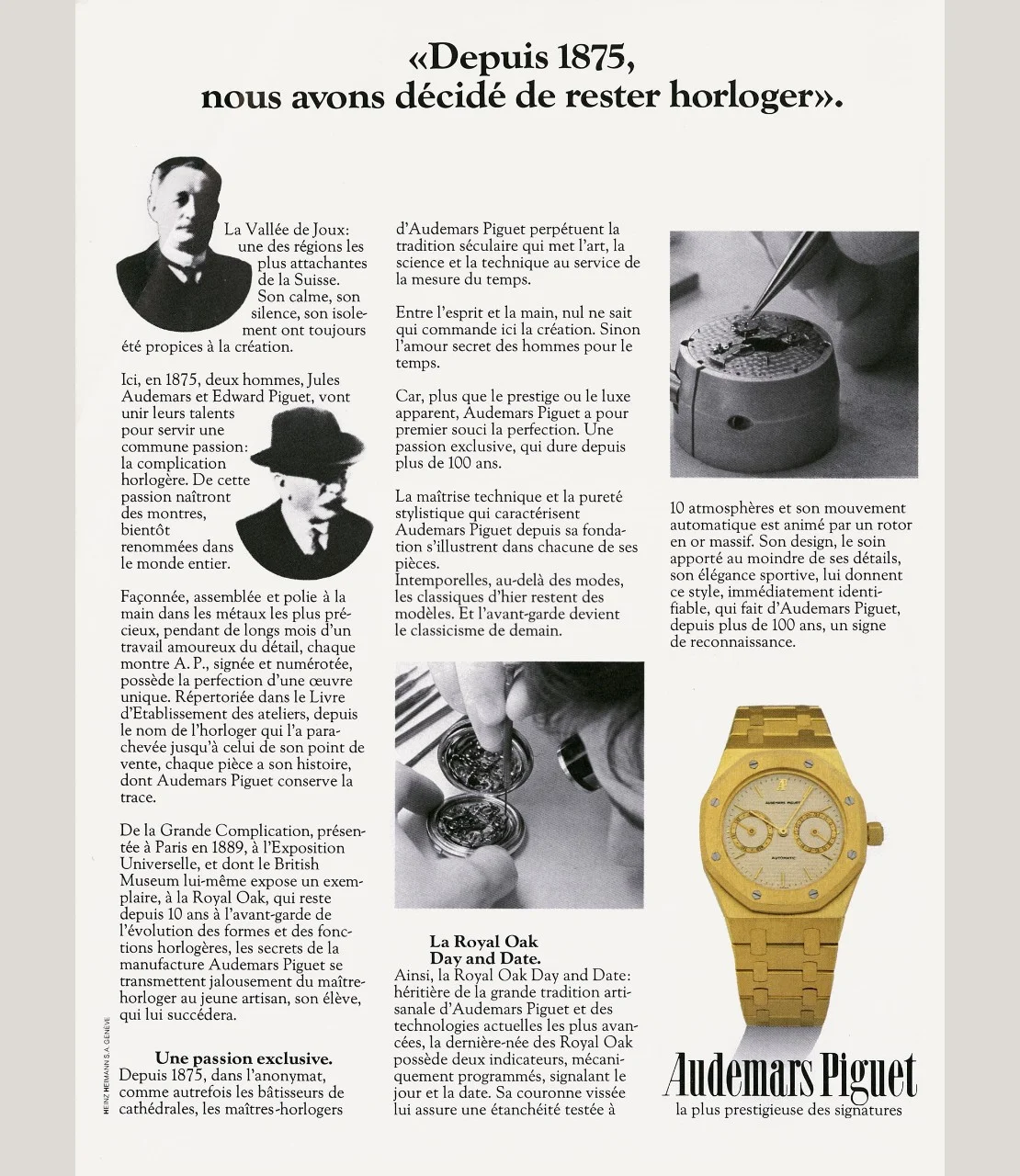
1984. Royal Oak advert. The advert tells the story of Audemars Piguet, its natural surroundings in the Vallée de Joux and the age-old expertise of the watchmakers, before introducing the first Royal Oak with additional functions, Model 25572. Audemars Piguet Archives.
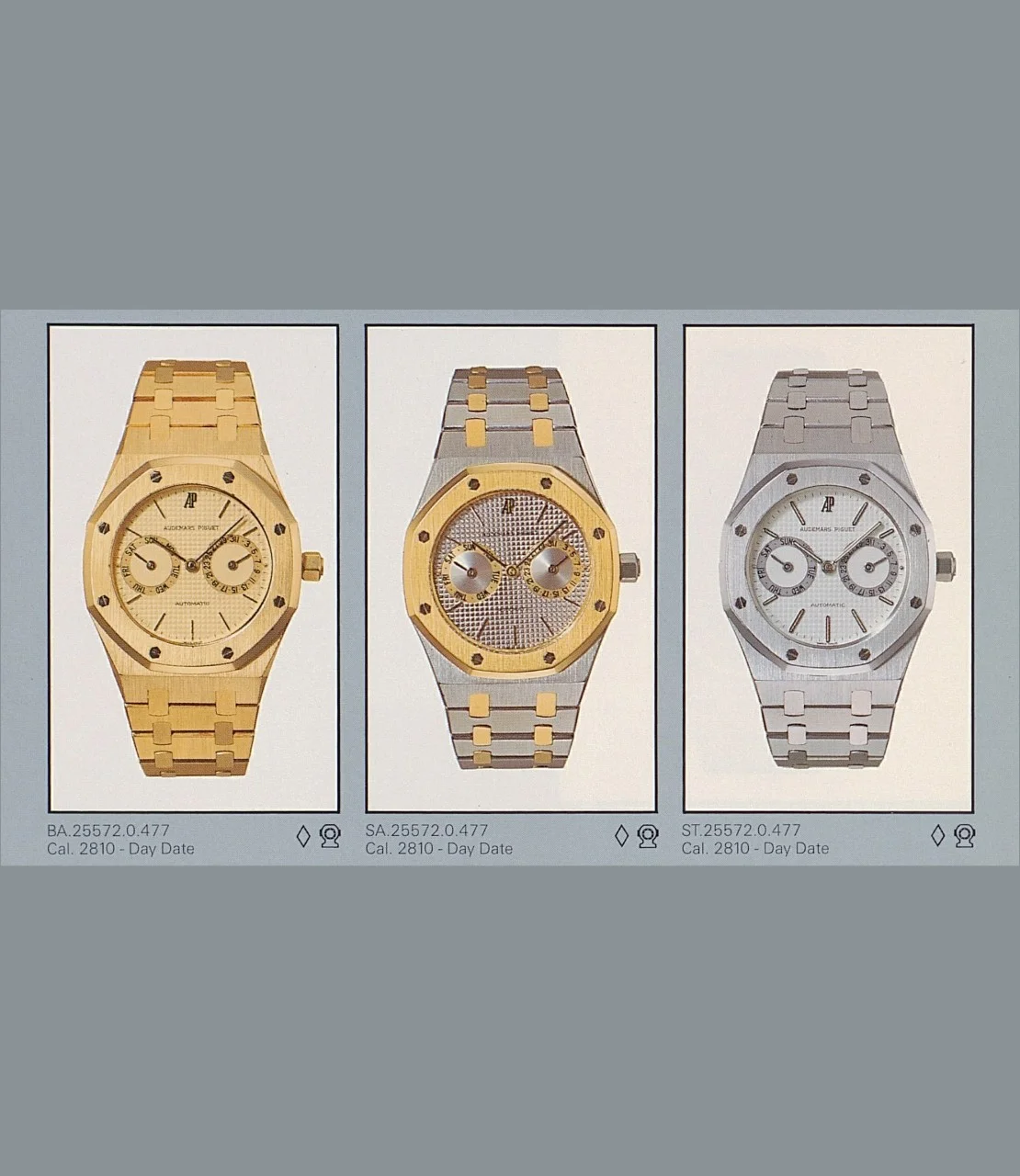
1986-87. Variants of Model 5572 (36 mm). Royal Oak Day Date presented in the Audemars Piguet catalogues between 1986-87 and 1987–1988. Audemars Piguet Archives.

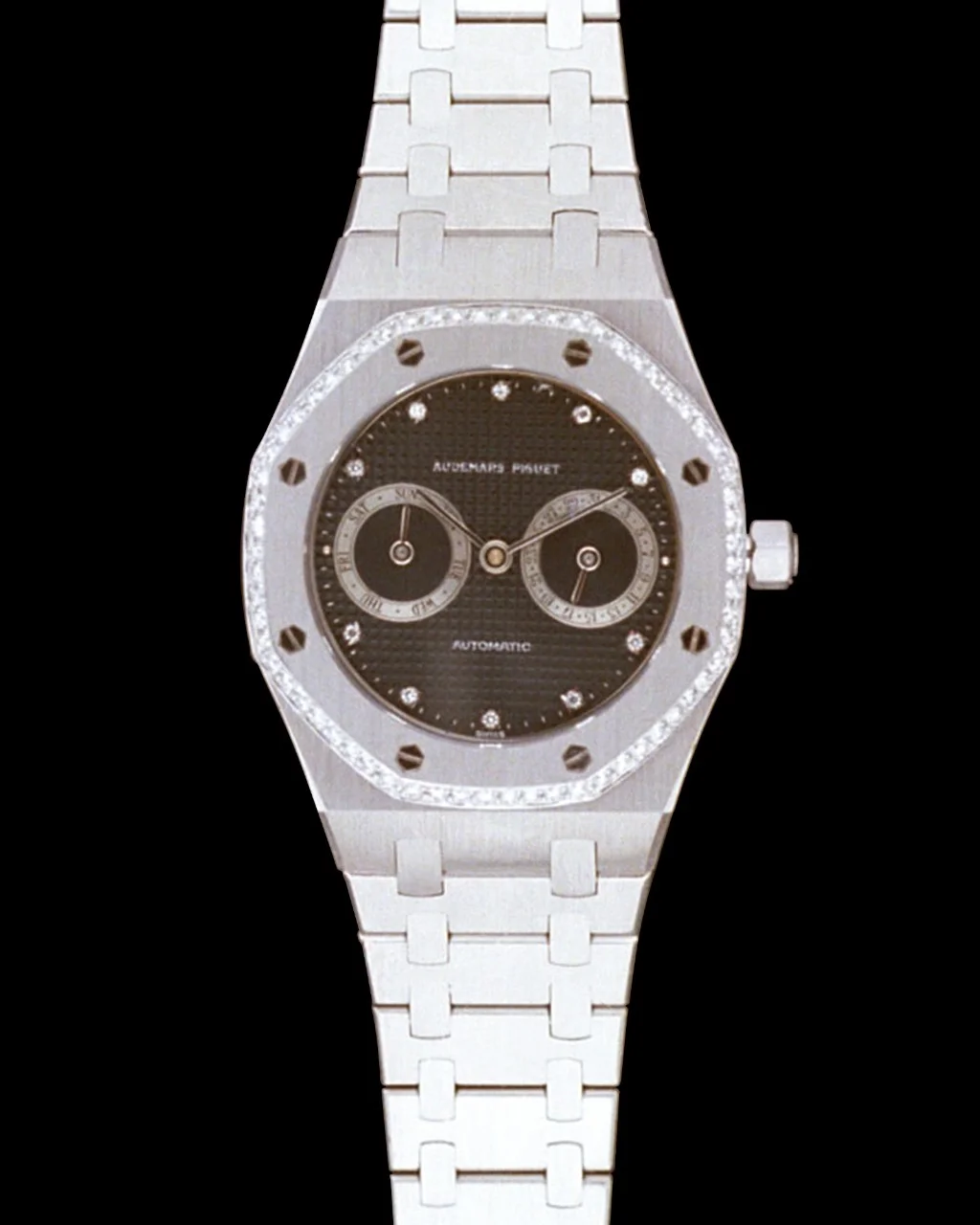
1986. Royal Oak Day Date 5572BC, N° 34. Pointer-type day-date display. Calibre 2124/2810, movement 289657. Bracelet 477. T21 Petite Tapisserie dial. 36 mm Case C7661. 18-carat white gold. Sold to Fintime in August 1986. Audemars Piguet Heritage, inv. 1228.
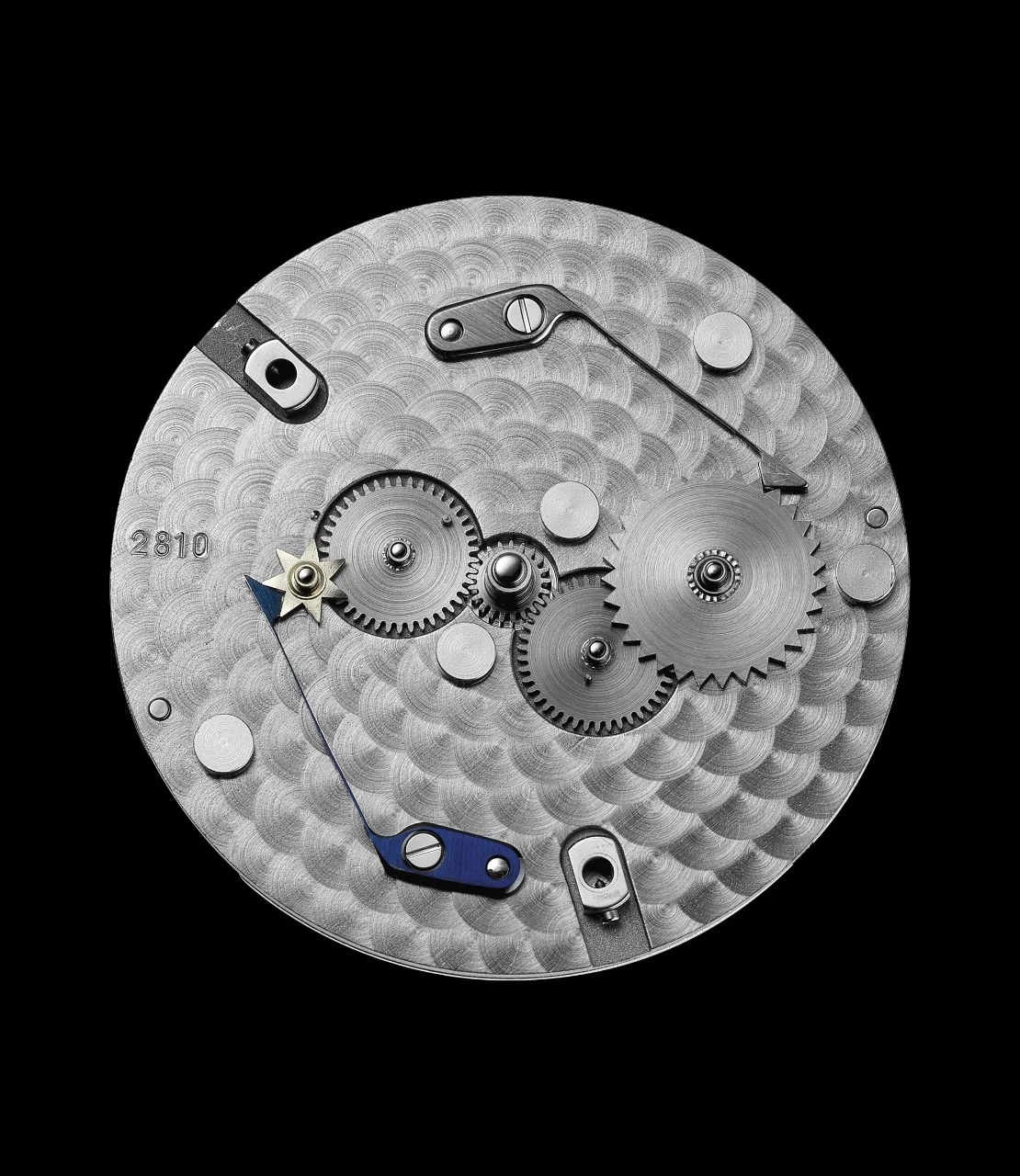
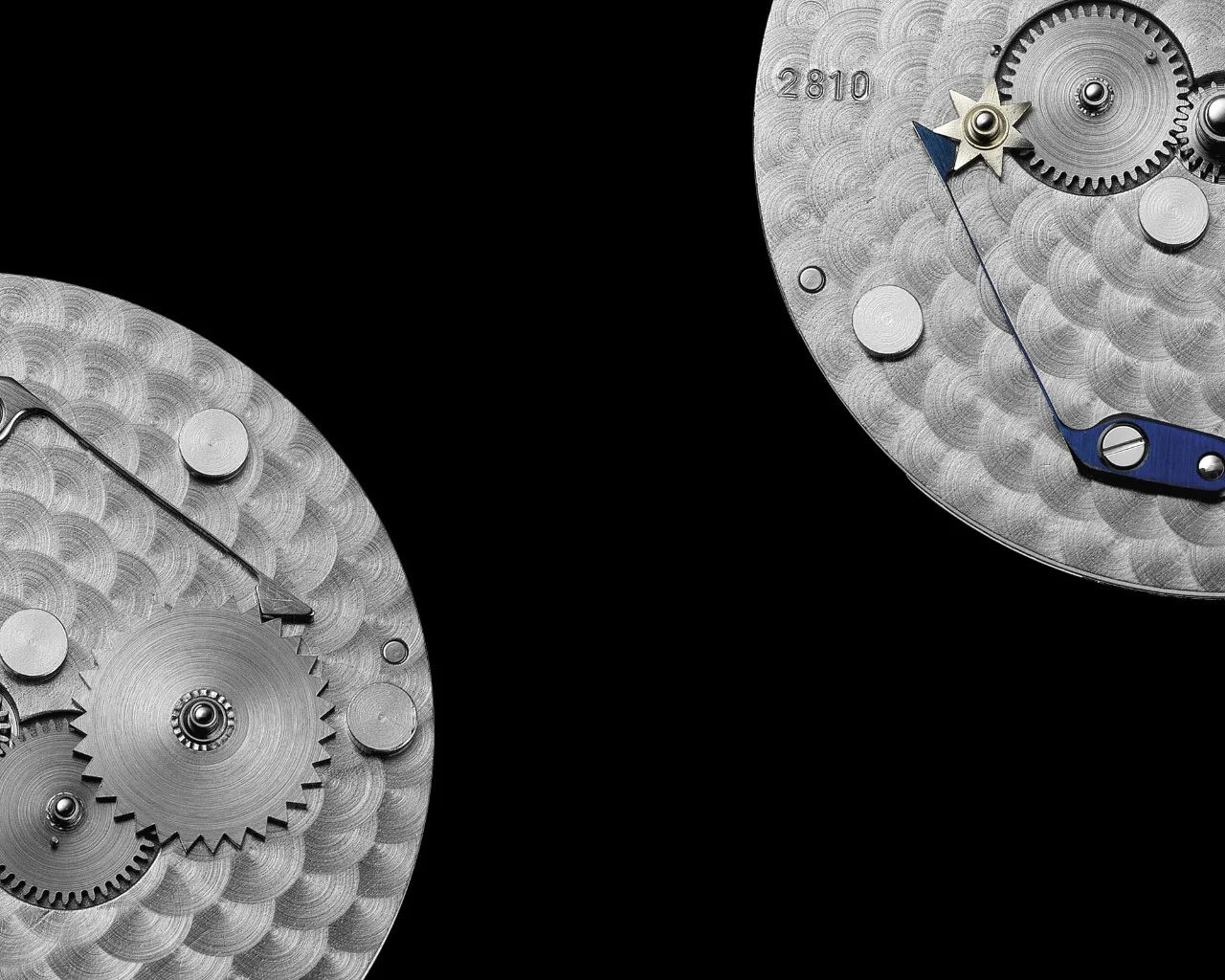
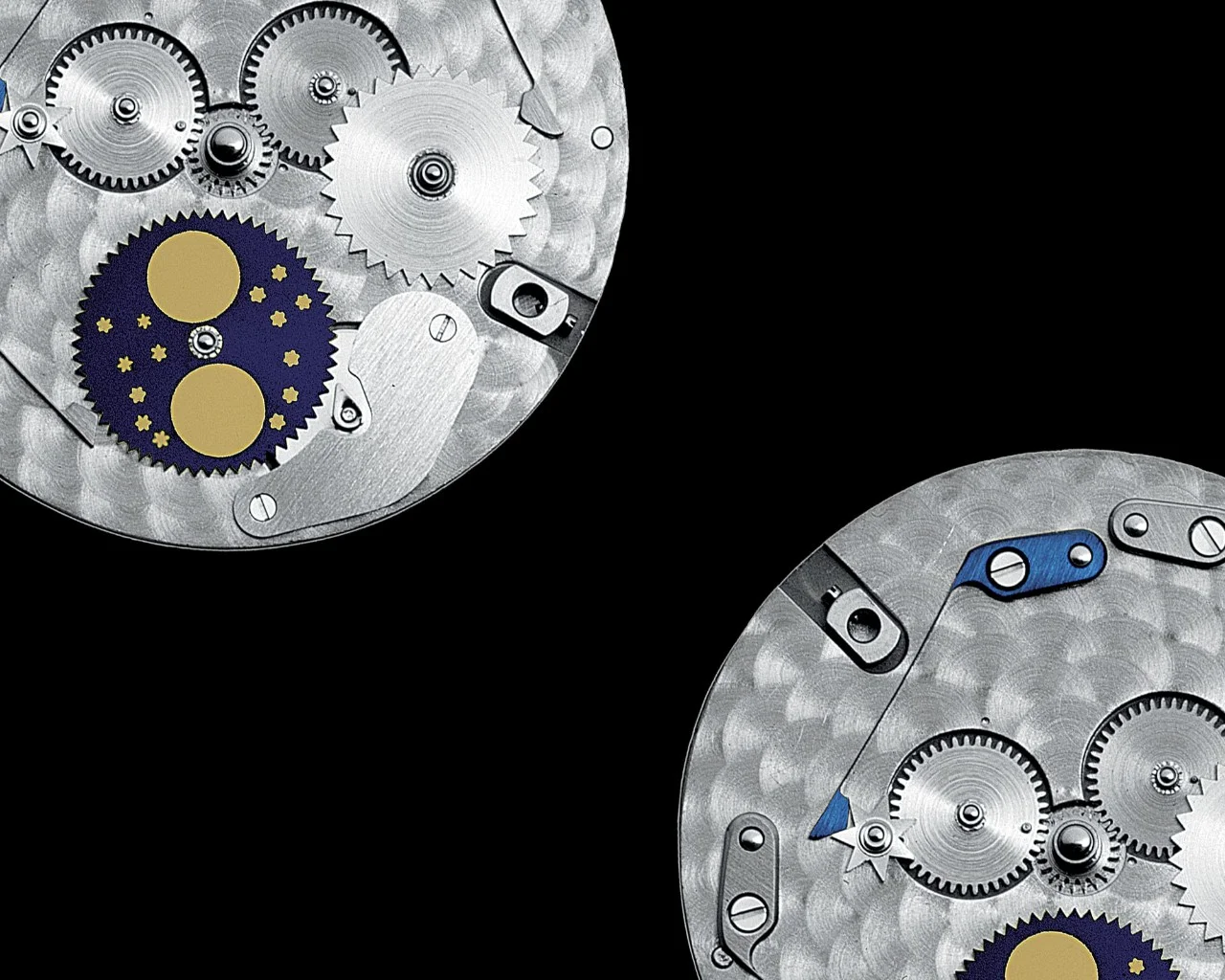
Circa 1983. Cadrature 2810. On the left, the seven-pointed star bears the day hands. On the right, the 31-pointed star carries the date. This additional mechanism was created to equip Calibre 2124, then its successor Calibre 2224. It equipped the Royal Oak Day Date 5572 (1983) and its derived versions. Audemars Piguet image.
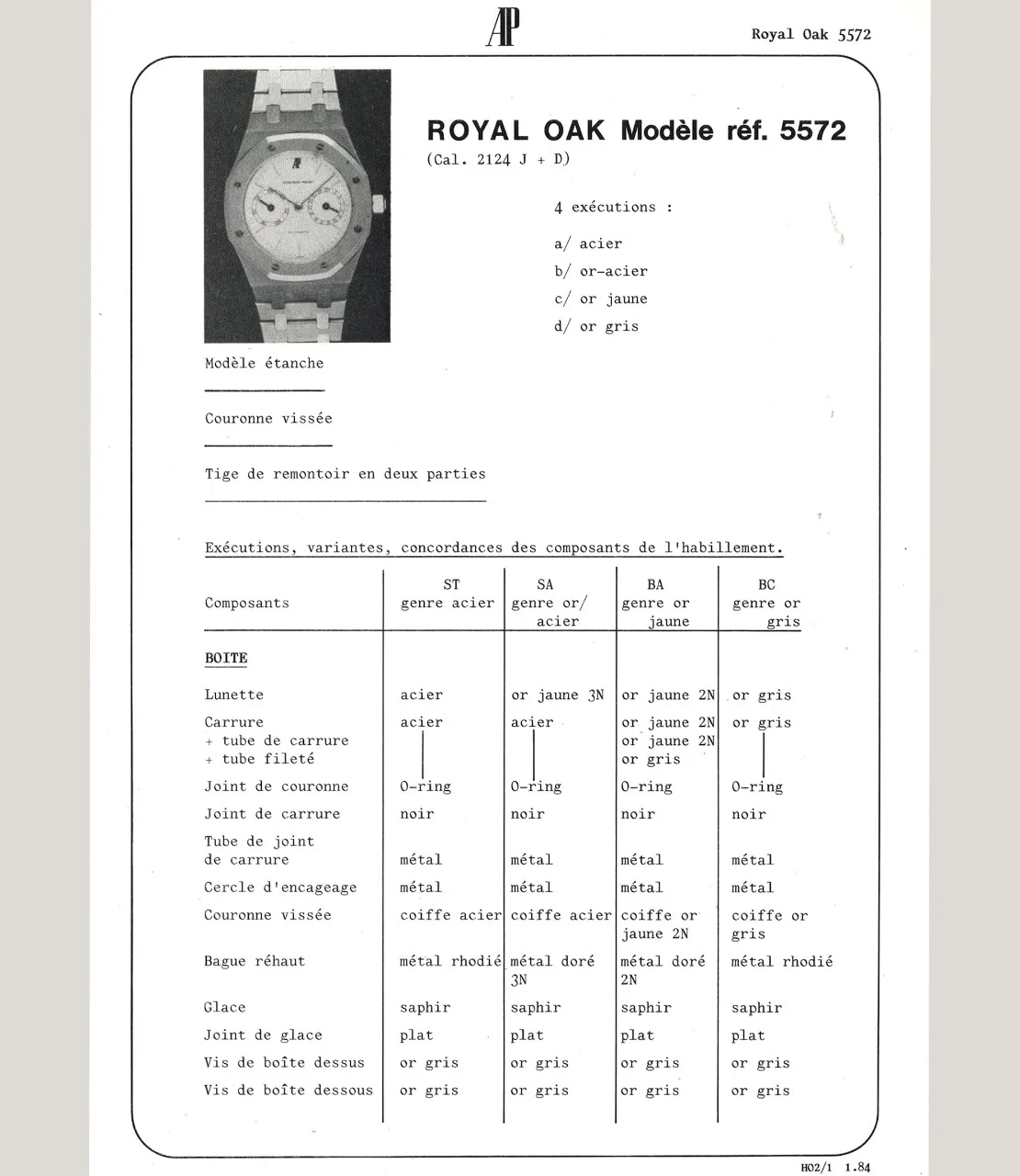
1984. Technical data for the Royal Oak Day Date 5572. This document provides details of the four variations foreseen right from the introduction of the model. Audemars Piguet Archives.
The first Royal Oak with calendar complications in addition to the aperture-type date display, Model 5572 was a response to extremely strong market demand. This is at least what can be deduced from the fact that in 1983, a year before its appearance in the catalogue, 606 of them were delivered by the Le Brassus Manufacture. The subsequent gradual decrease in numbers was due to a variant: Model 5594 that was born from Model 5572 and presented in 1984 with the addition of the moon phase to the Day Date. Model 5594 remained in the catalogue for over 20 years, an absolute record for Audemars Piguet.
Collectors nicknamed the Royal Oak Day Date 5572 “The Owl", in reference to the two large circular indicators placed on either side of the centre, indicating the day on the left and the date on the right.
1,770 units were sold between 1983 and 1998 and Model 5572 was renamed 25572 as early as 1984–85. The materials are fairly evenly distributed, with approximately one third in steel, a bit less than one third in yellow gold and a little more than one third in the two-tone version (steel and yellow gold). By contrast, white gold variants account for less than 1% of total production.
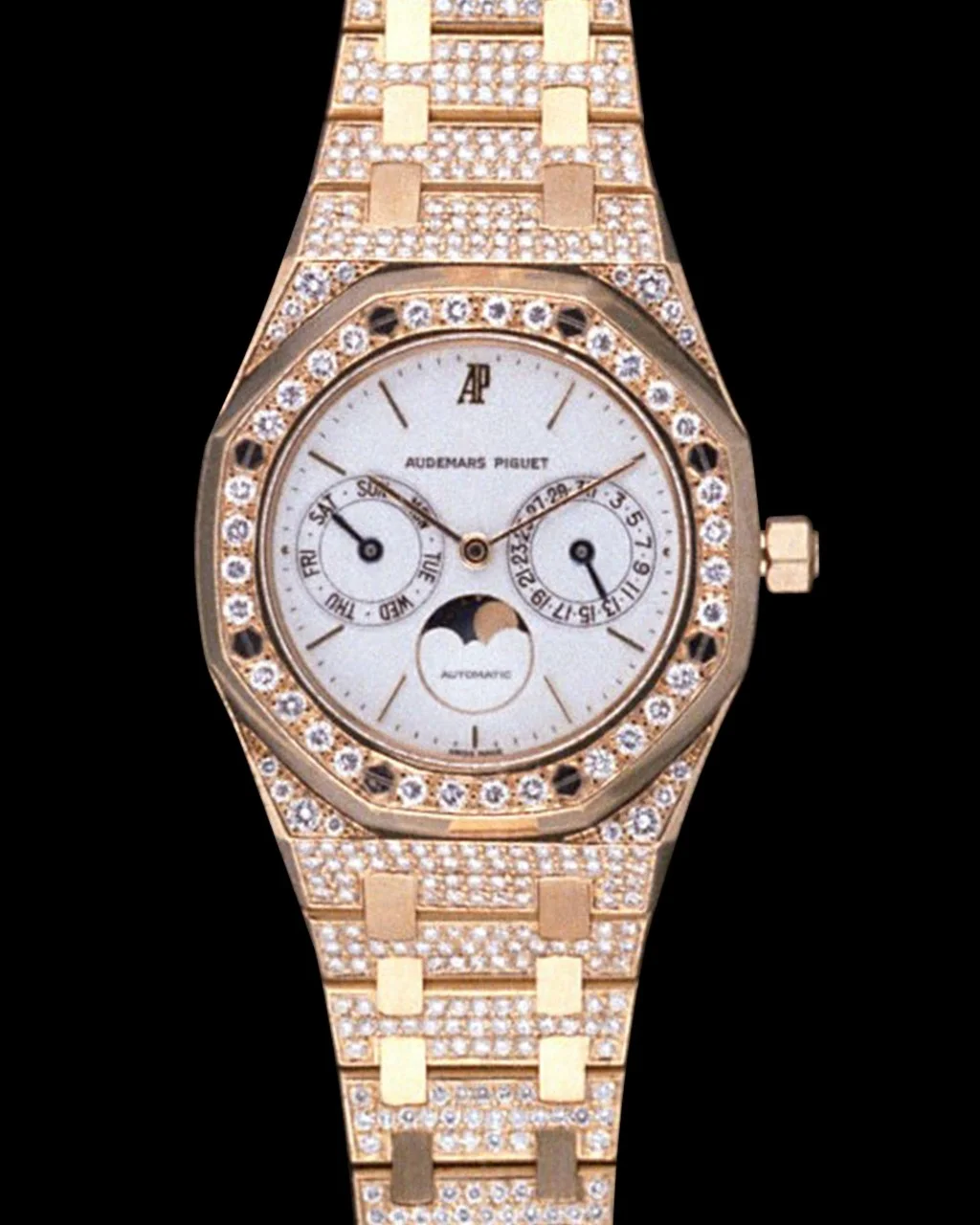
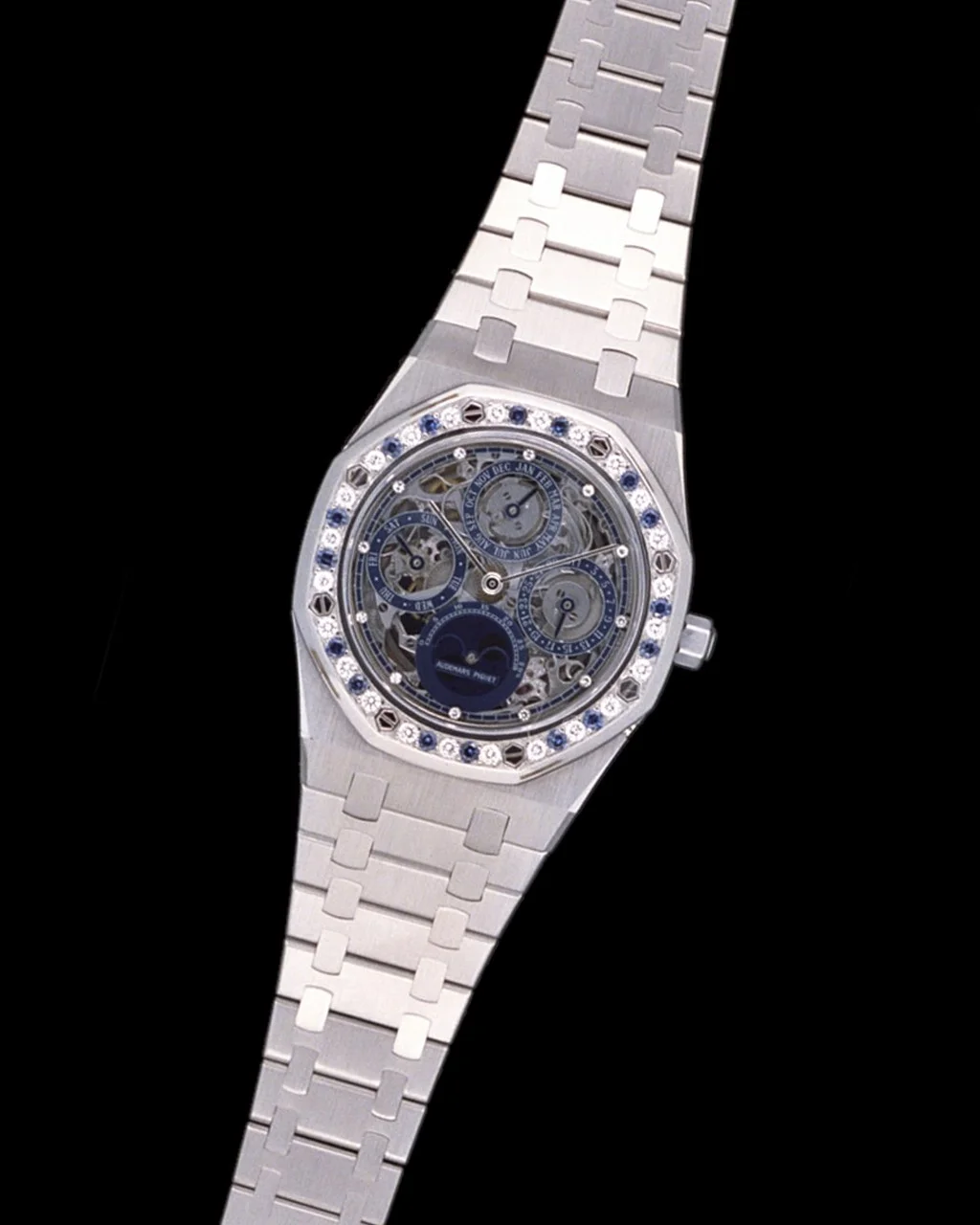
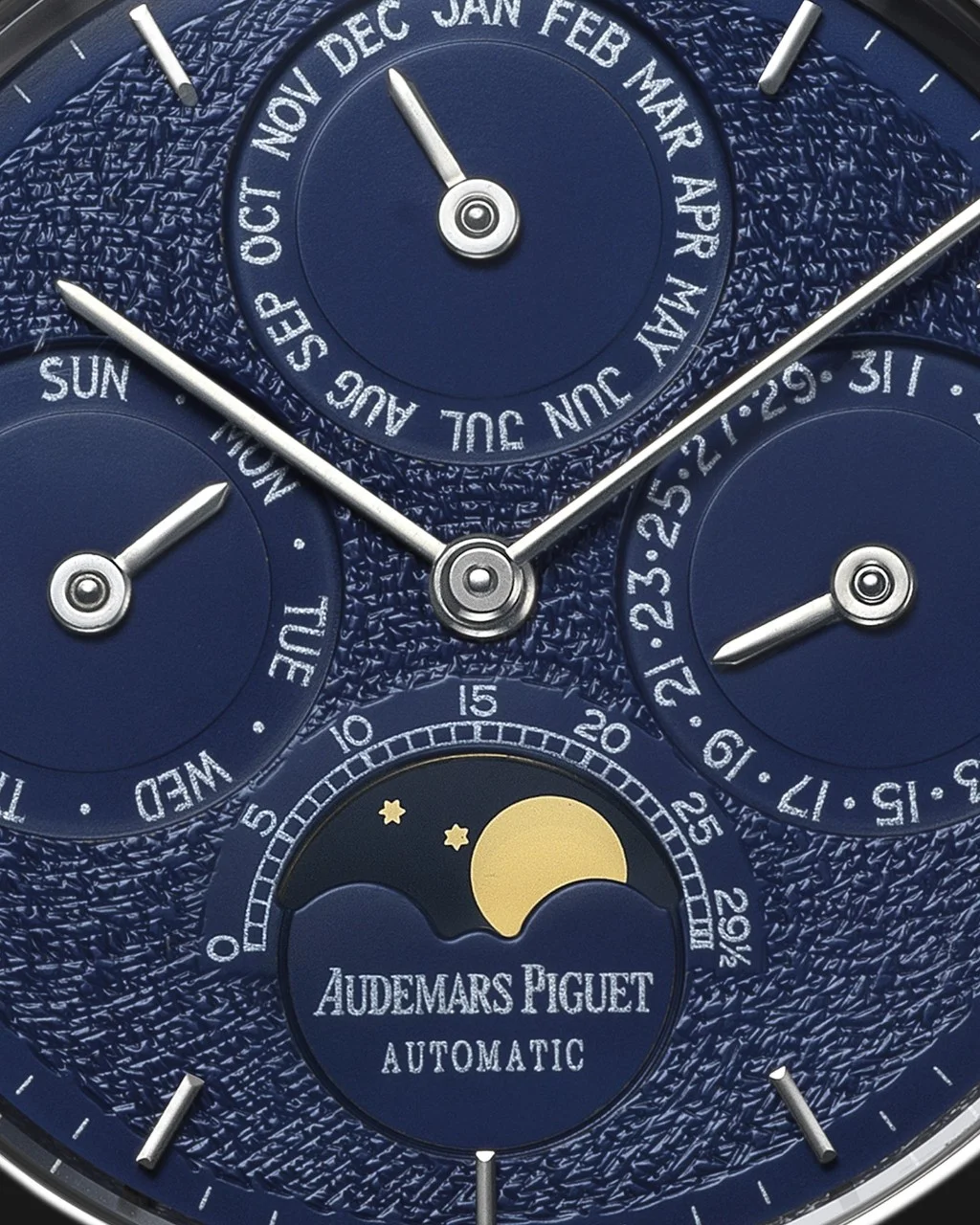
In addition to the above-mentioned Model 5594, the Royal Oak 5572 gave rise between 1983 and 1985 to six jewellery interpretations, all of which were produced in quantities of less than 10: Models 5581 (1983), 5584 (1983), 5658 (1983), 25577 (1983), 25595 (1983) and 25627 (1985).
In 2009, a new interpretation of the Royal Oak Day Date was launched: Model 26330, with a 39 mm diameter.
The first Royal Oak with calendar complications in addition to the aperture-type date display, Model 5572 was a response to extremely strong market demand. This is at least what can be deduced from the fact that in 1983, a year before its appearance in the catalogue, 606 of them were delivered by the Le Brassus Manufacture. The subsequent gradual decrease in numbers was due to a variant: Model 5594 that was born from Model 5572 and presented in 1984 with the addition of the moon phase to the Day Date. Model 5594 remained in the catalogue for over 20 years, an absolute record for Audemars Piguet.
Collectors nicknamed the Royal Oak Day Date 5572 “The Owl", in reference to the two large circular indicators placed on either side of the centre, indicating the day on the left and the date on the right.
1,770 units were sold between 1983 and 1998 and Model 5572 was renamed 25572 as early as 1984–85. The materials are fairly evenly distributed, with approximately one third in steel, a bit less than one third in yellow gold and a little more than one third in the two-tone version (steel and yellow gold). By contrast, white gold variants account for less than 1% of total production.
In addition to the above-mentioned Model 5594, the Royal Oak 5572 gave rise between 1983 and 1985 to six jewellery interpretations, all of which were produced in quantities of less than 10: Models 5581 (1983), 5584 (1983), 5658 (1983), 25577 (1983), 25595 (1983) and 25627 (1985).
In 2009, a new interpretation of the Royal Oak Day Date was launched: Model 26330, with a 39 mm diameter.
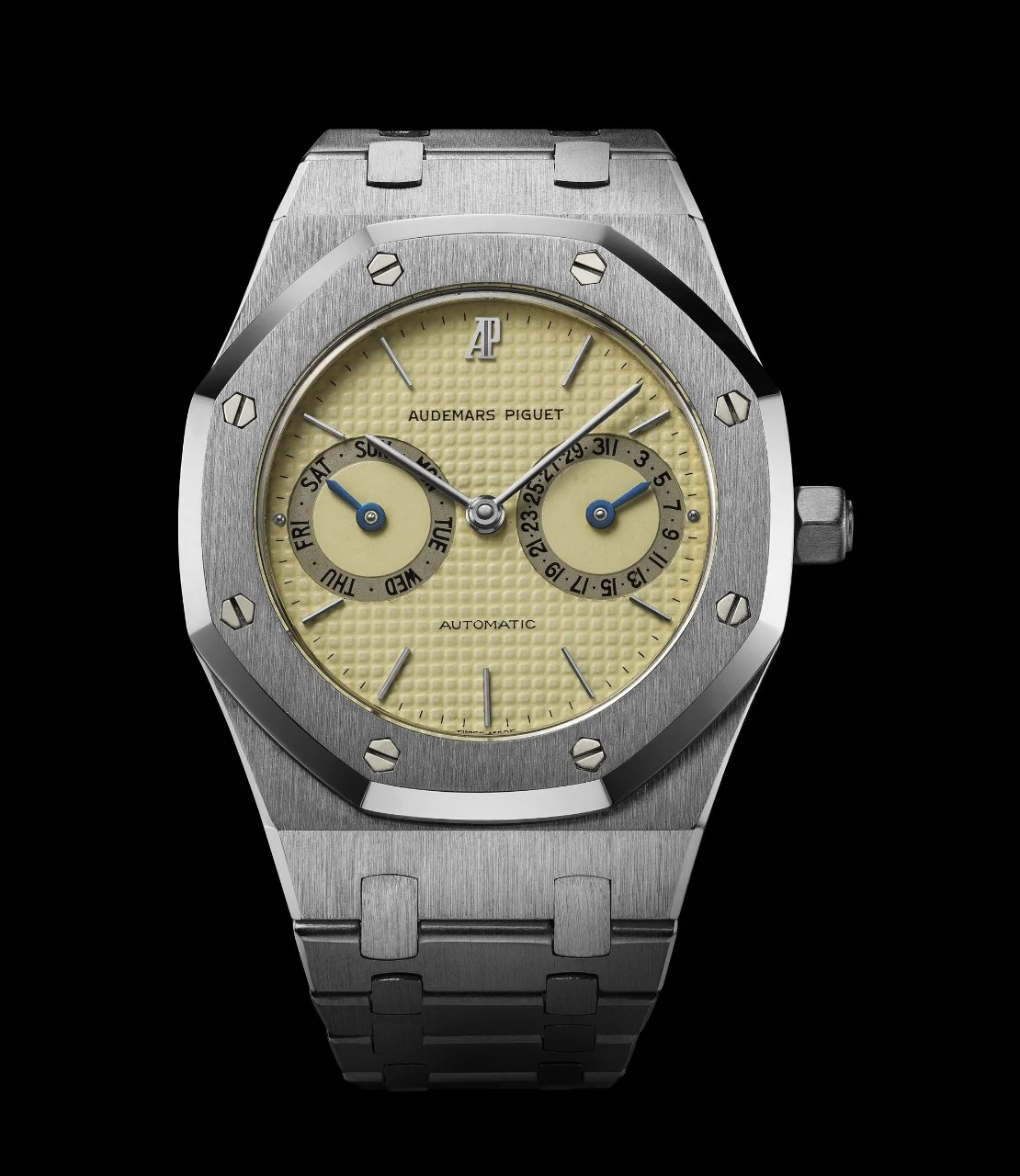
1983. Royal Oak Day Date 5572ST, N° 39. Pointer-type day-date display. Calibre 2124/2810, mouvement 267219. Bracelet 477. Petite Tapisserie dial. 36 mm case B88210. Stainless steel. Sold to Grigoros (Greece) in June 1983. Audemars Piguet Heritage, inv. 2132.

1984. Royal Oak Model 5572ST (36 mm). 1984 Audemars Piguet Catalogue. Audemars Piguet Archives.

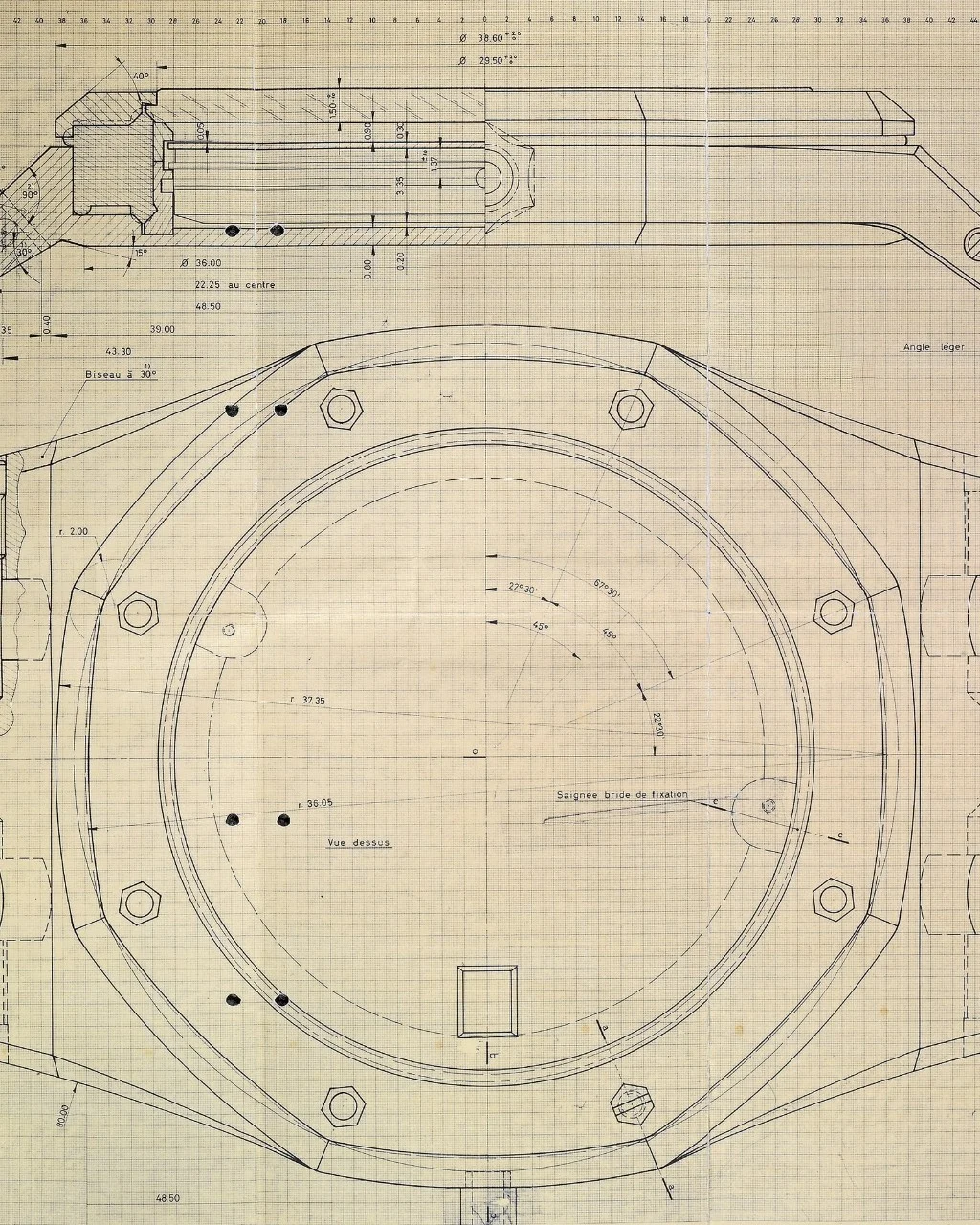
1983. Technical data for the Case of the Royal Oak 5572ST. Audemars Piguet Archives.

Circa 1992. Identification image of Model 5572ST. Audemars Piguet Archives.
The earliest occurrences of the 5572 model all have a white dial, with the day and date indicators either silver-toned or highlighted with a black line. The archives show a variant with a black dial, probably dating from the 1990s, since the bracelet bears the number 789, which replaced the 477 at that time. Sales figures confirm a resurgence of interest in this model between 1992 and 1997.
Sales between 1983 and 1998: a total of 576 units, of which 125 (1983), 133 (1984), 50 (1985), 8 (1986), 1 (1987), 12 (1988), 1 (1989), 1 (1990), then 11 (1991), 35 (1992), 38 (1993), 8 (1994), 45 (1995), 73 (1996), 21 (1997) and 14 (1998).
The earliest occurrences of the 5572 model all have a white dial, with the day and date indicators either silver-toned or highlighted with a black line. The archives show a variant with a black dial, probably dating from the 1990s, since the bracelet bears the number 789, which replaced the 477 at that time. Sales figures confirm a resurgence of interest in this model between 1992 and 1997.
Sales between 1983 and 1998: a total of 576 units, of which 125 (1983), 133 (1984), 50 (1985), 8 (1986), 1 (1987), 12 (1988), 1 (1989), 1 (1990), then 11 (1991), 35 (1992), 38 (1993), 8 (1994), 45 (1995), 73 (1996), 21 (1997) and 14 (1998).
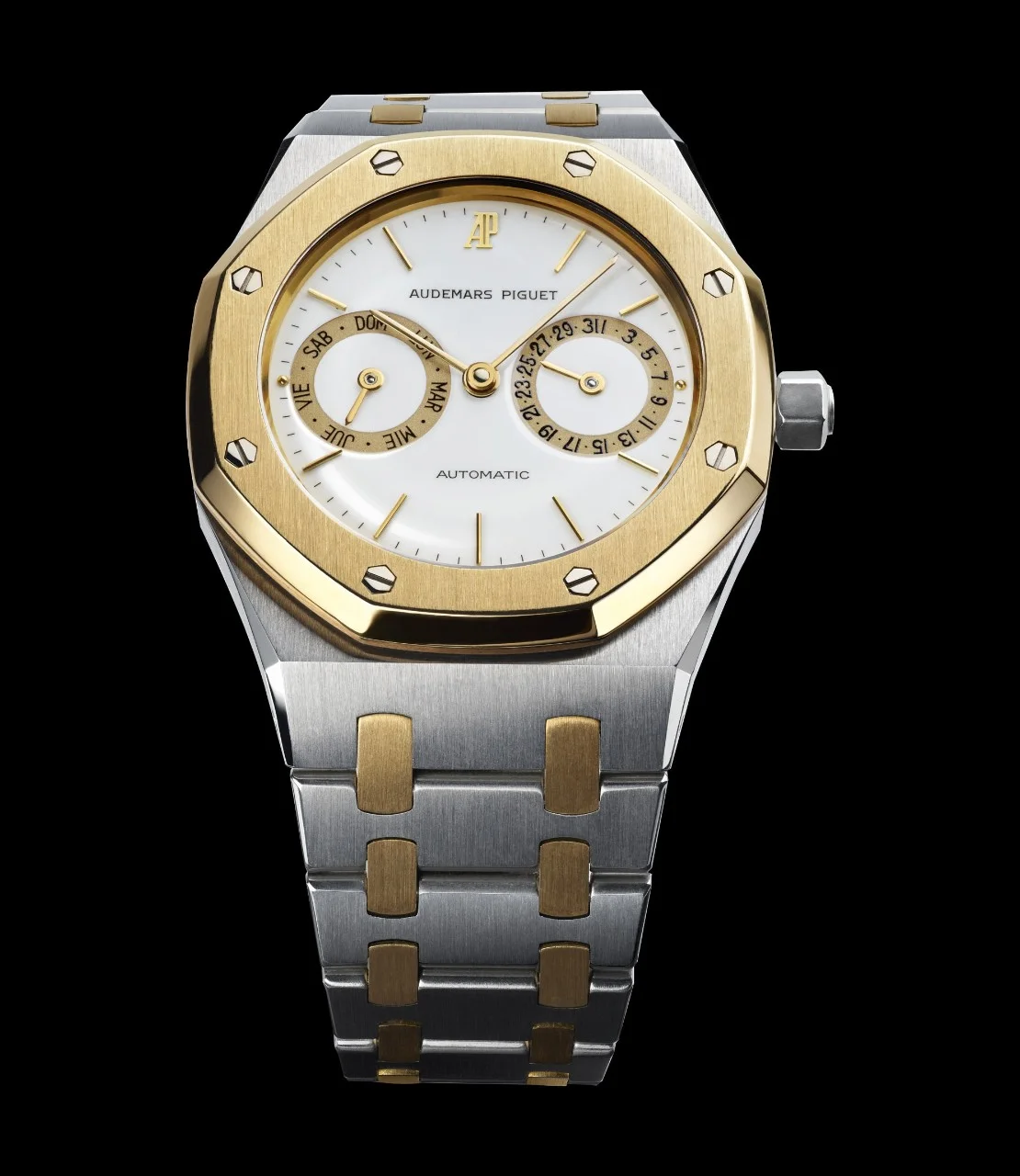
1983. Royal Oak Day Date 5572SA, N° 88. Pointer-type day-date display. Calibre 2124/2810, movement 267558. Bracelet 477. White enamel dial. 36 mm case, B87959. Steel and 18-carat yellow gold. Sold to Darcal in August 1983. Audemars Piguet Heritage, inv. 391.
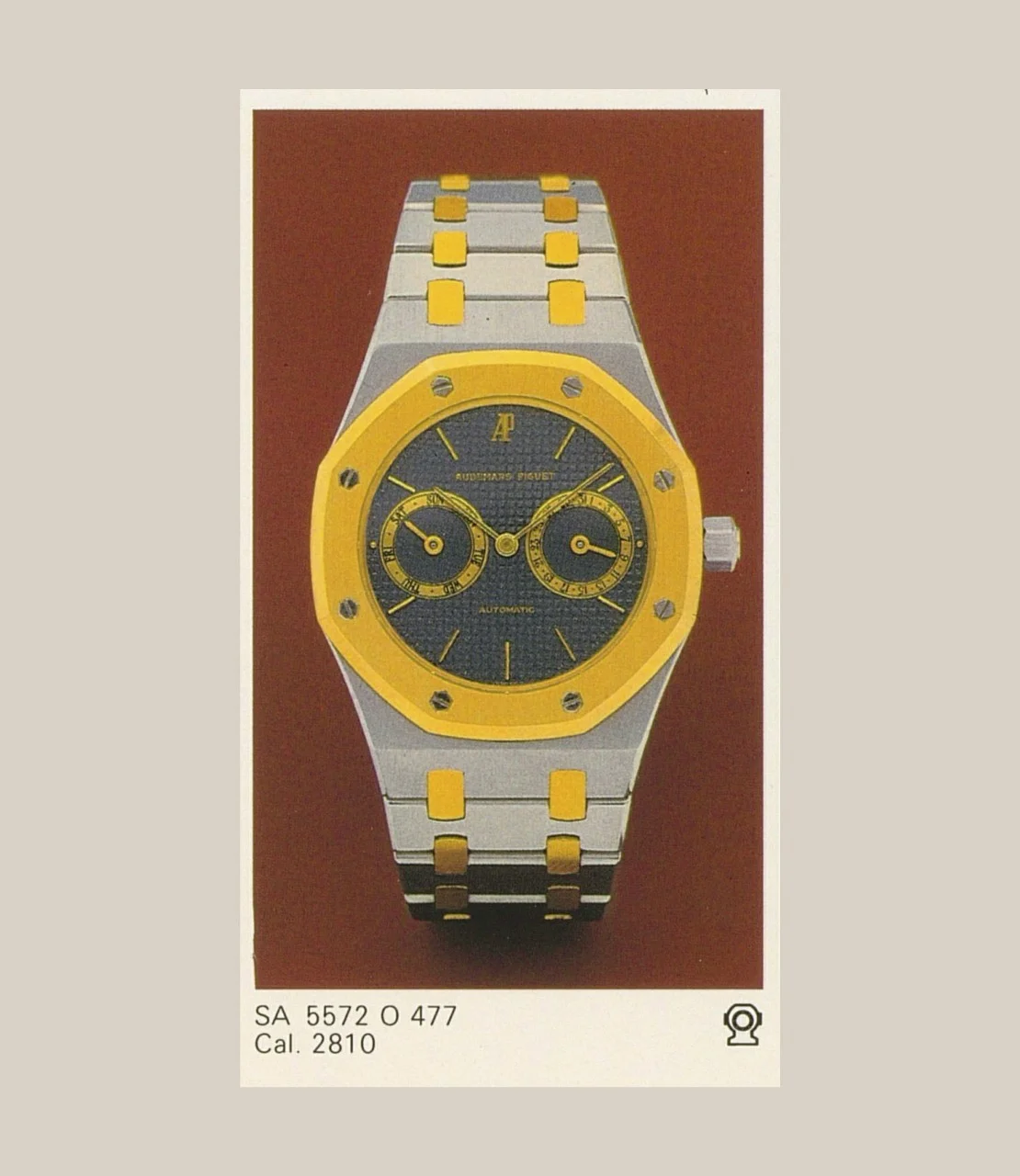
1984. Royal Oak Model 5572SA (36 mm). 1984 Audemars Piguet Catalogue. Audemars Piguet Archives.
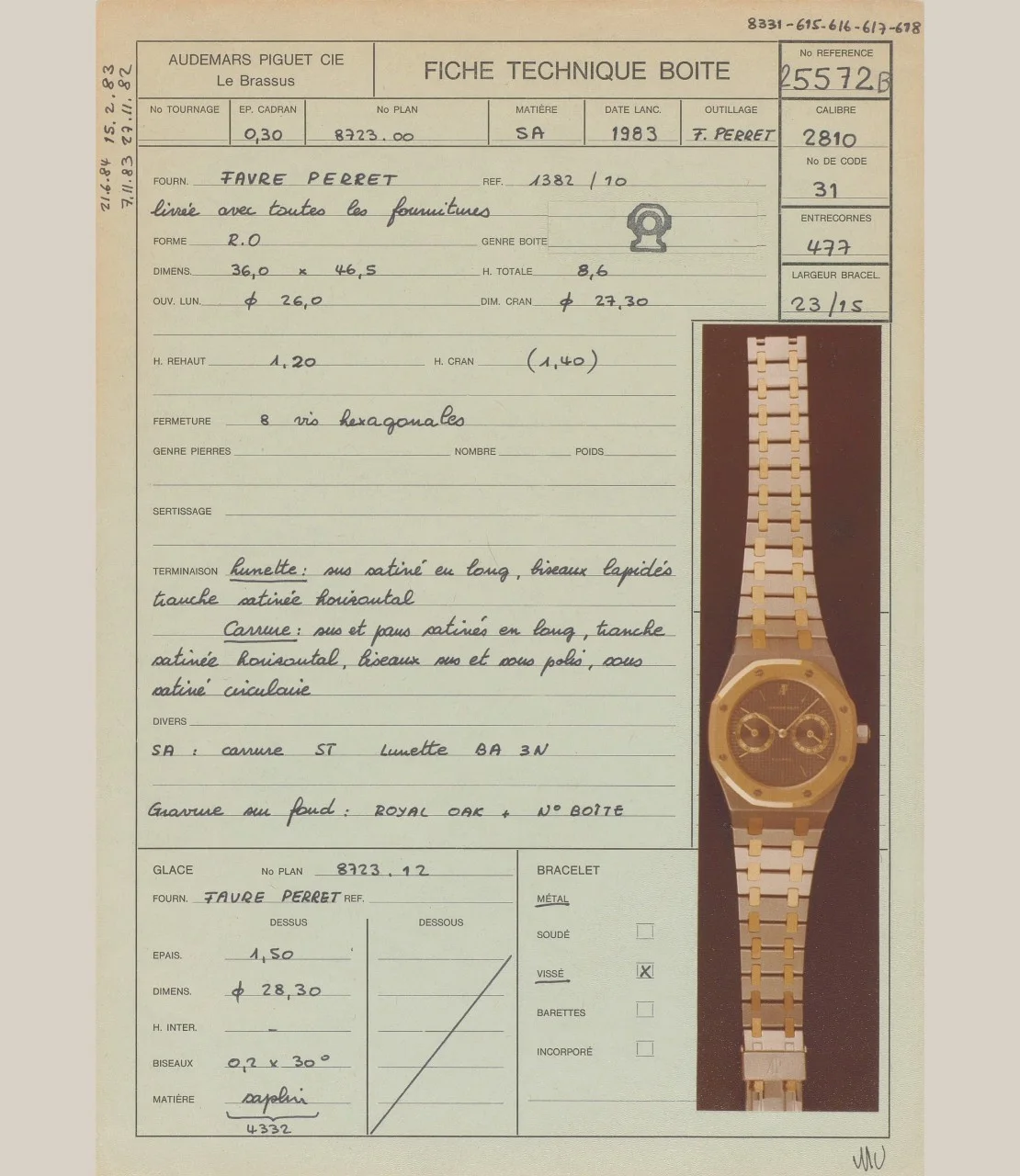
1983. Technical data for the case of Model 5572SA. Audemars Piguet Archives.

Circa 1983. Identification image of Model 5572SA. Audemars Piguet Archives.
The rims of the pointer-type day-date indicators are gilded, echoing the colour of the bezel, the studs, the hands and the appliques.
Sales between 1983 and 1996: a total of 654 units, of which 256 (1983), 240 (1984), 86 (1985), 18 (1986), 9 (1987), 6 (1988), 18 (1989), 10 (1993), 3 (1994) and 8 (1996).
The rims of the pointer-type day-date indicators are gilded, echoing the colour of the bezel, the studs, the hands and the appliques.
Sales between 1983 and 1996: a total of 654 units, of which 256 (1983), 240 (1984), 86 (1985), 18 (1986), 9 (1987), 6 (1988), 18 (1989), 10 (1993), 3 (1994) and 8 (1996).
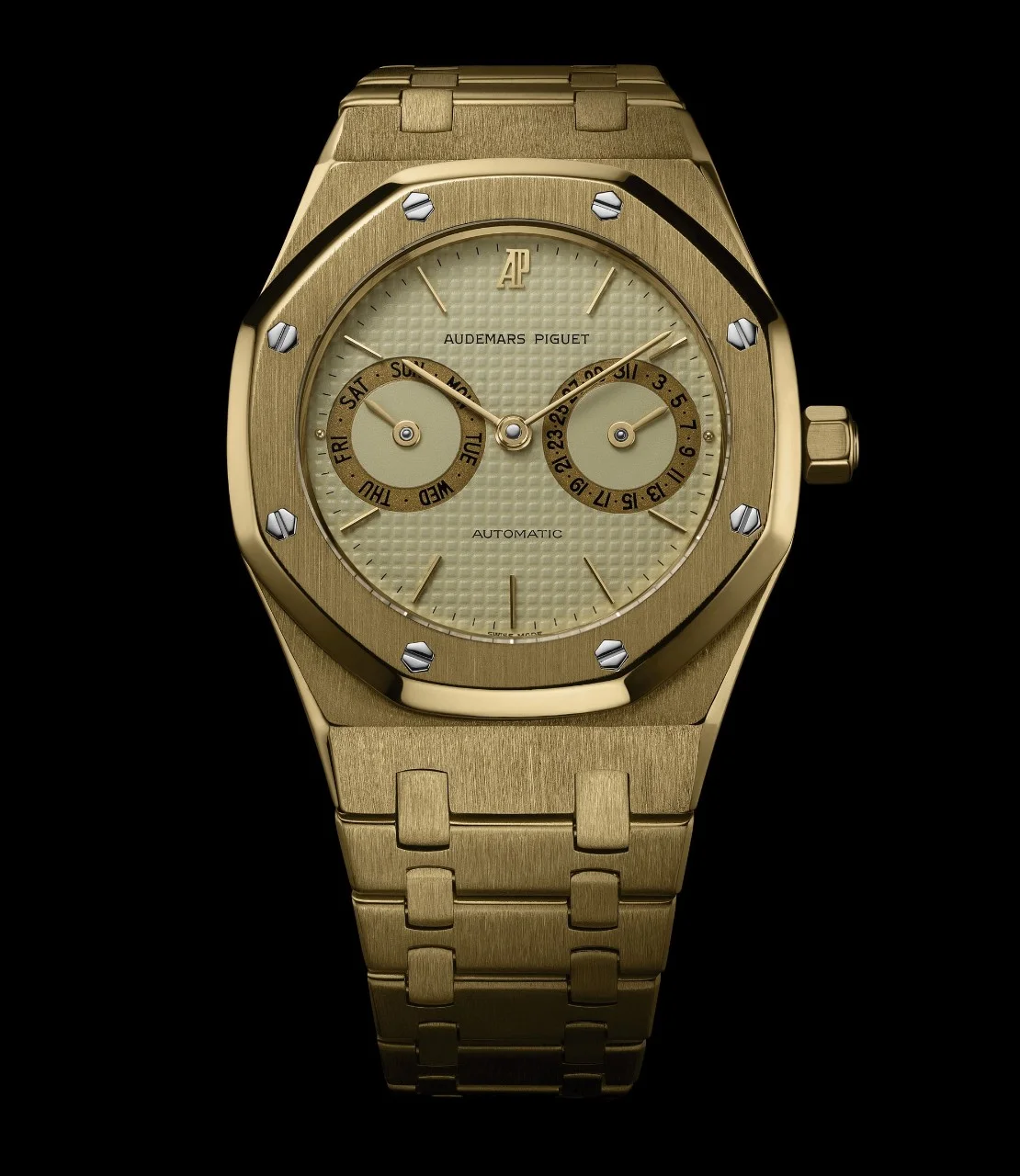
1985. Royal Oak Day Date 5572BA, N° 645. Pointer-type day-date display. Calibre 2124/2810, movement 288404. Bracelet 477. Petite Tapisserie dial. 36 mm case, C09219. 18-carat yellow gold. Sold to AFP in September 1986. Audemars Piguet Heritage, inv. 2133.
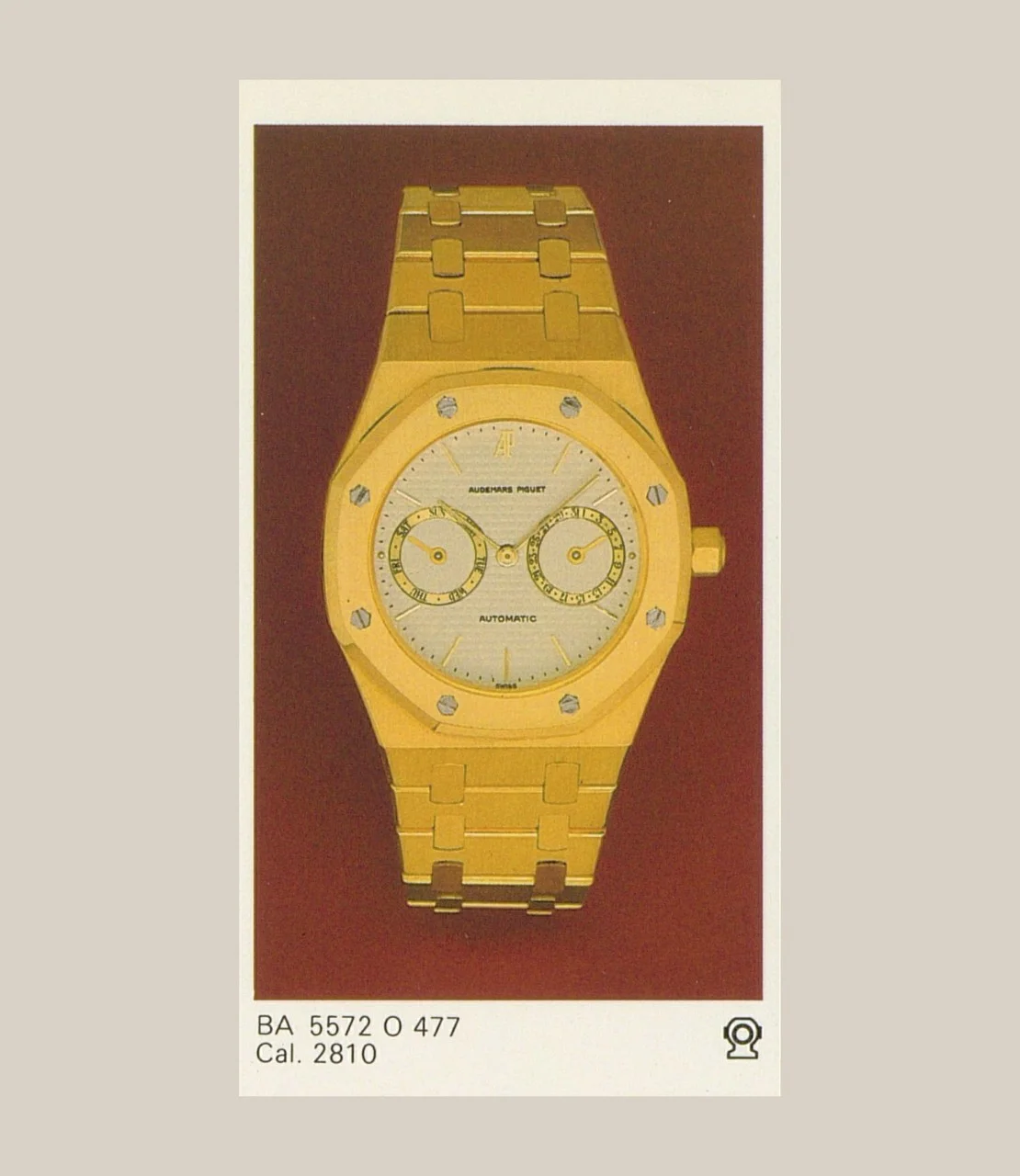
1984. Royal Oak Model 5572BA (36 mm). 1984 Audemars Piguet Catalogue. Audemars Piguet Archives.
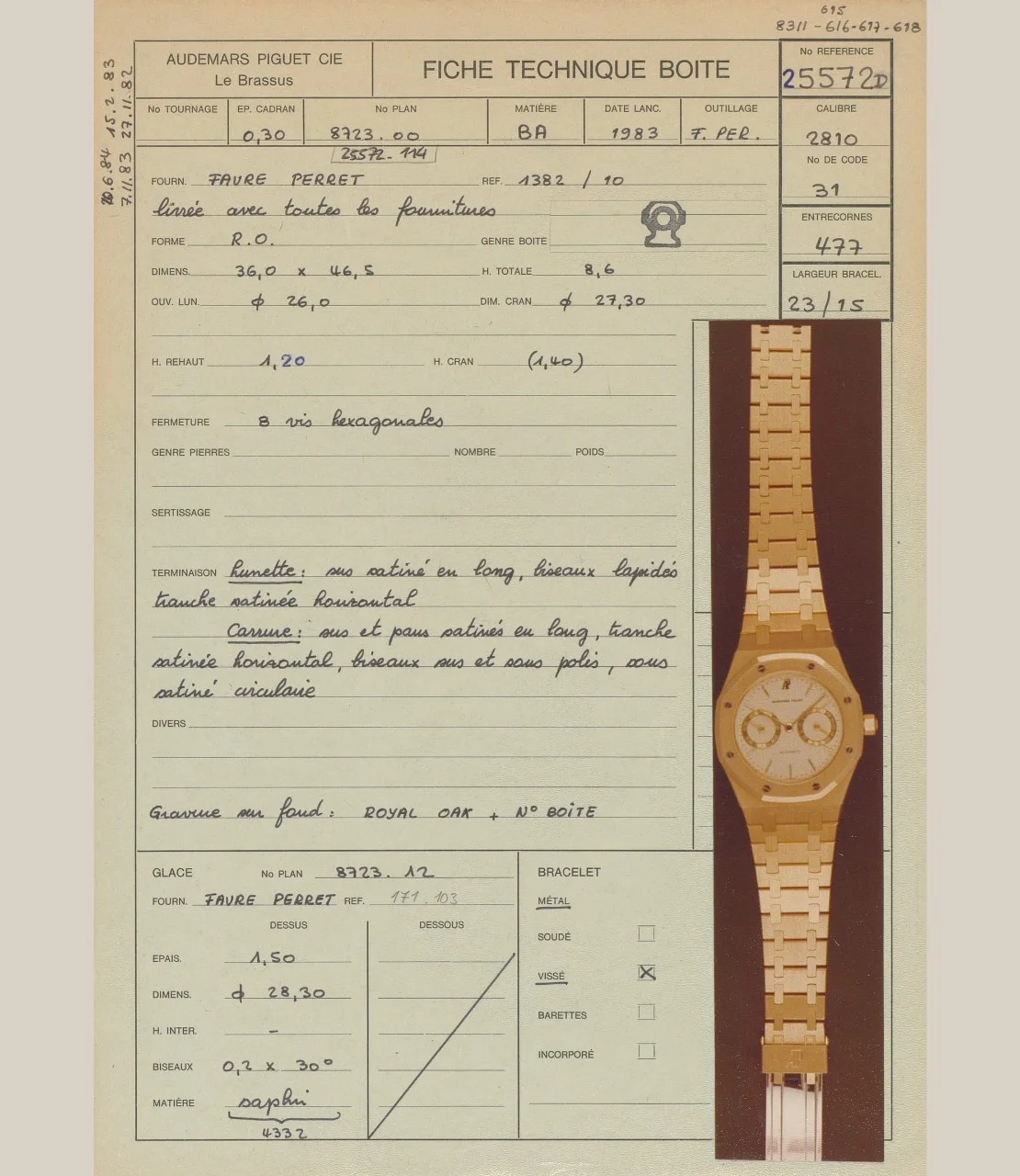
1983. Technical data for the case of Royal Oak 5572BA. Audemars Piguet Archives.
The day-date indicators are finely hollowed into the thickness of the guilloché dial to create a flat surface whose gilding creates a contrast with the pointer-type day-date indication.
Sales between 1983 and 1997: a total of 524 units, of which 212 (1983), 147 (1984), 70 (1985), 31 (1986), 14 (1987), 5 (1988), 3 (1989), 40 (1993), 1 (1994) and 1 (1997).
The day-date indicators are finely hollowed into the thickness of the guilloché dial to create a flat surface whose gilding creates a contrast with the pointer-type day-date indication.
Sales between 1983 and 1997: a total of 524 units, of which 212 (1983), 147 (1984), 70 (1985), 31 (1986), 14 (1987), 5 (1988), 3 (1989), 40 (1993), 1 (1994) and 1 (1997).

1986. Royal Oak Day Date 5572BC, N° 34. Pointer-type day-date display. T21 Petite Tapisserie dial. 36 mm case C7661. 18-carat white gold. Sold to Fintime in August 1986. Audemars Piguet Heritage, inv. 1228.
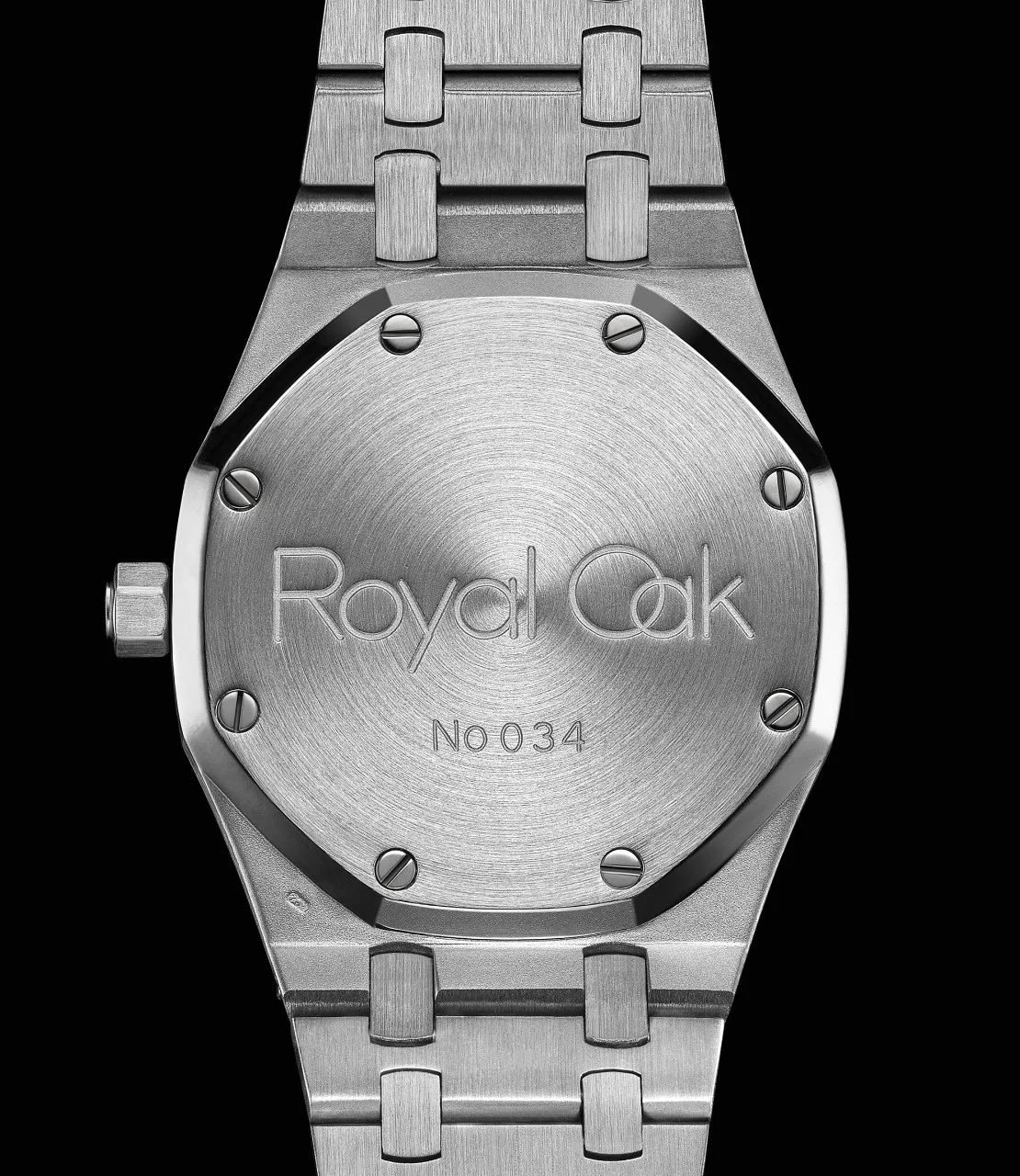
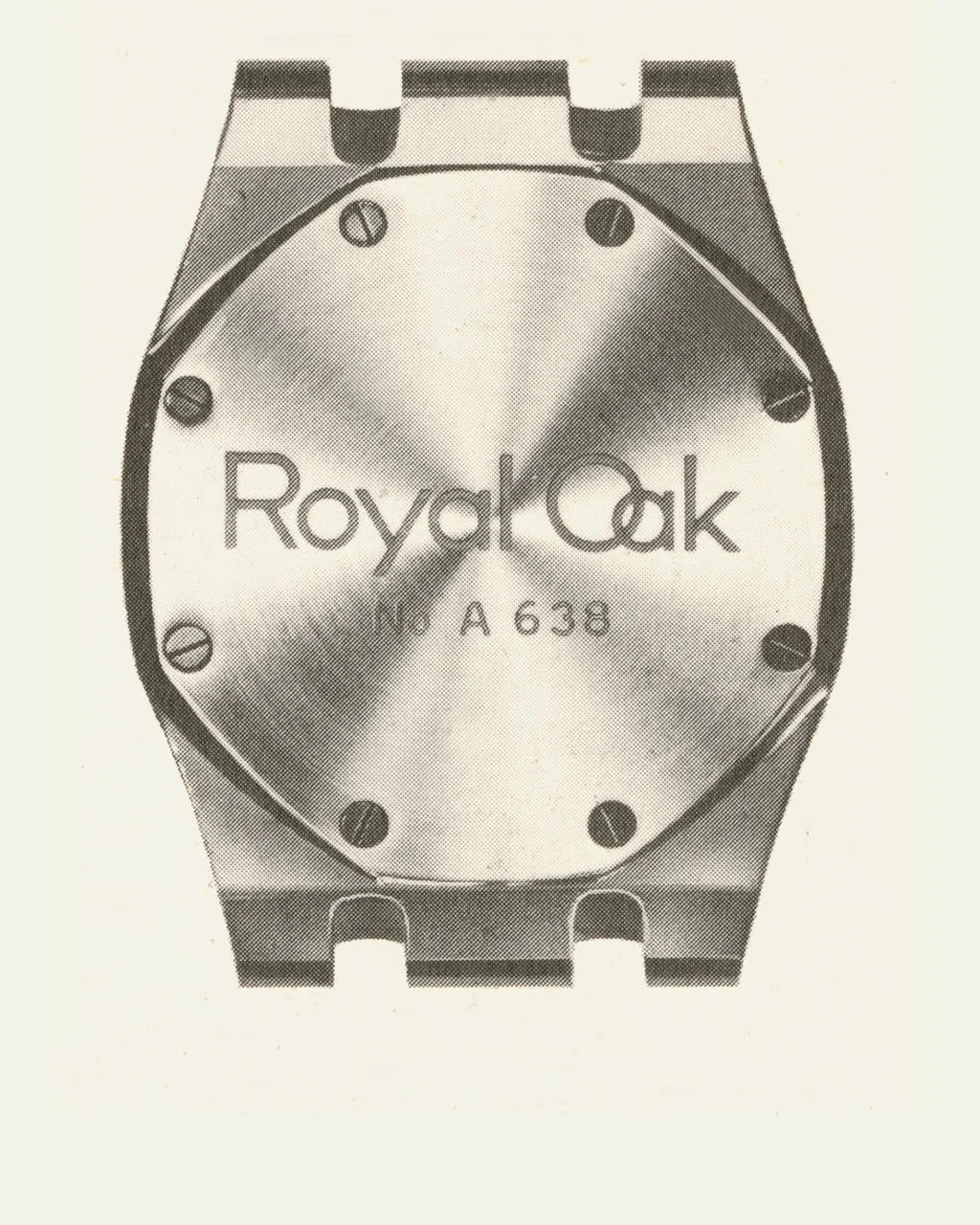
1986. Royal Oak Day Date 5572BC, N° 34, caseback side. Pointer-type day-date display. T21 Petite Tapisserie dial. 36 mm case C7661. 18-carat white gold. Sold to Fintime in August 1986. Audemars Piguet Heritage, inv. 1228.
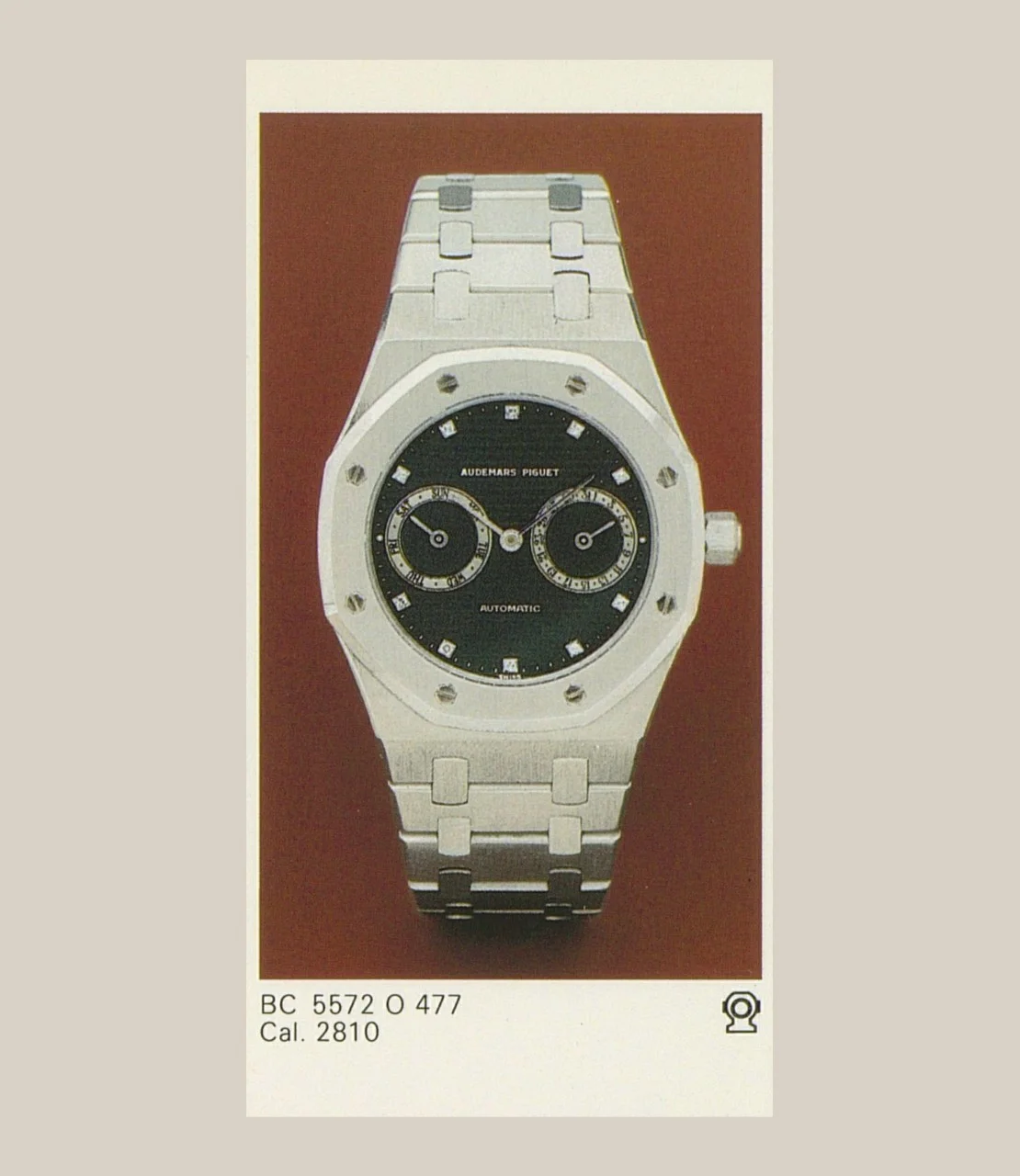
1984. Royal Oak Model 5572BC (36 mm). 1984 Audemars Piguet Catalogue. Audemars Piguet Archives.

1983. Technical data for the Royal Oak 5572BC case. Audemars Piguet Archives.
Unlike the other materials, Model 5572BC in white gold was produced in a very limited number of units and was only sold for three years. Examination of the Production Registers revealed only 16 such timepieces, sold between 1983 and 1985, mainly in France, Switzerland and Germany.
Sales between 1983 and 1985: a total of 16 units, of which 13 (1983), 2 (1984), 1 (1985).
Unlike the other materials, Model 5572BC in white gold was produced in a very limited number of units and was only sold for three years. Examination of the Production Registers revealed only 16 such timepieces, sold between 1983 and 1985, mainly in France, Switzerland and Germany.
Sales between 1983 and 1985: a total of 16 units, of which 13 (1983), 2 (1984), 1 (1985).