Model 5402 Dial Variants
Summary
Combining Geometries to Create Light Effects
The dial of Model 5402 combines two complementary geometrical shapes: the circle and the square. Curved and straight lines, straightness and fluidity; or more symbolically rigorous discipline and flexibility. On the one hand, the circular shape of the dial is highlighted by the 12 applied hour-markers, finely punctuated by the minute markers and, above all, by the tens of thousands of tiny diamond shapes carved into concentric circles.
On the other hand, the square shape is expressed through the hundreds of small, flattened pyramids aligned in a checkerboard pattern, crisscrossed by the same number of horizontal and vertical lines, like the streets of a city. This verticality is reinforced by the axis between the double 12 o'clock hour-marker and the AP monogram at 6 o'clock, while the horizontality is based on the AUDEMARS PIGUET signature, accentuated by the AUTOMATIC indication and the date window at 3 o'clock. It is also worth noting that the latter creates an asymmetrical effect because, as is widely acknowledged, a harmoniously pleasing face is always slightly asymmetrical.
This subtle combination of geometrical shapes takes on its full meaning when viewed in relation to the Royal Oak's faceted case, which also plays with shapes. The bezel is indeed a rounded octagon and the monocoque case is shaped like a tonneau (barrel). Thus, like the watch case and perhaps even more so, the dial of the Royal Oak is designed to reflect light, superimposing several patterns featuring different geometries to create infinitely varied moiré effects.
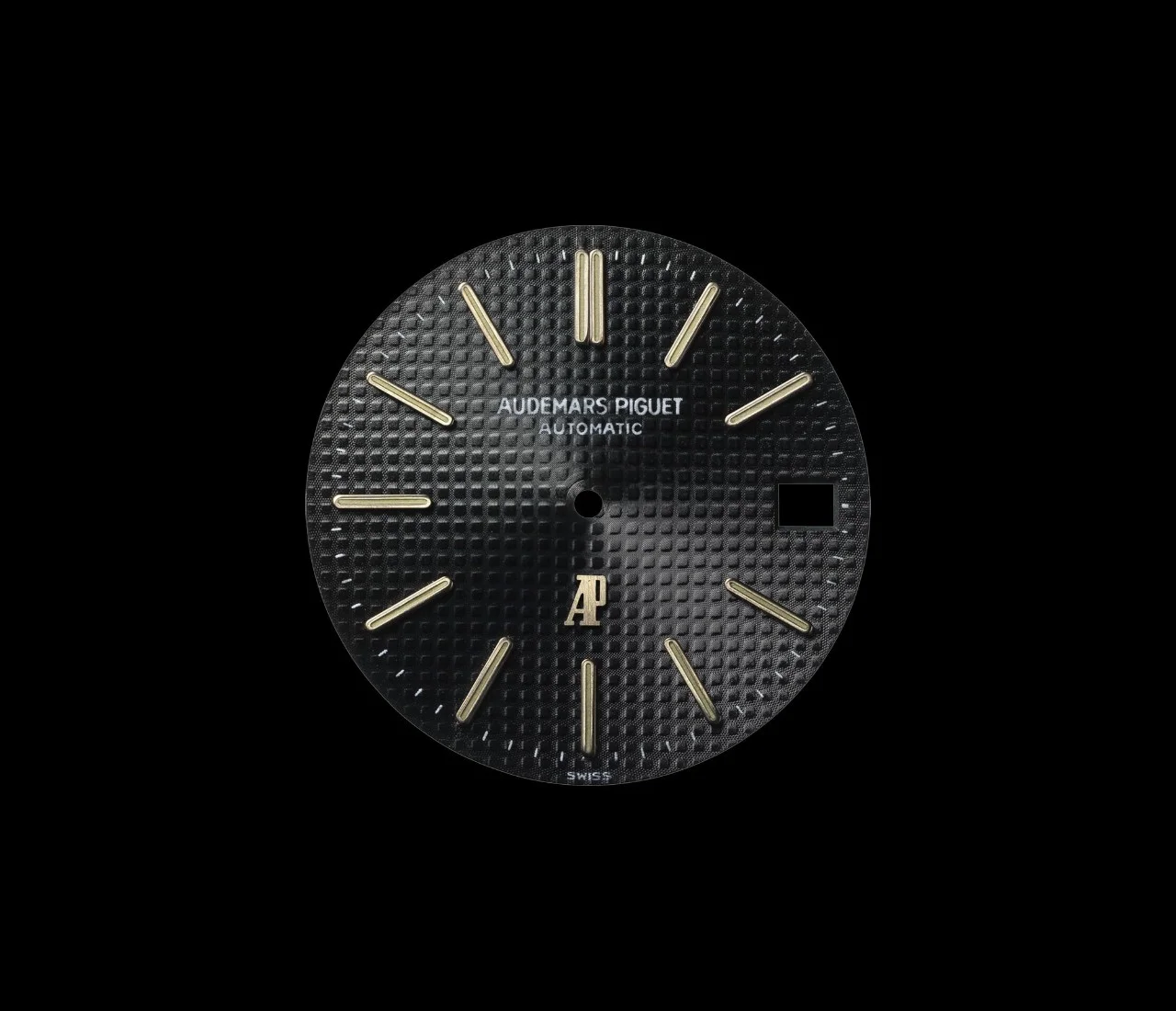
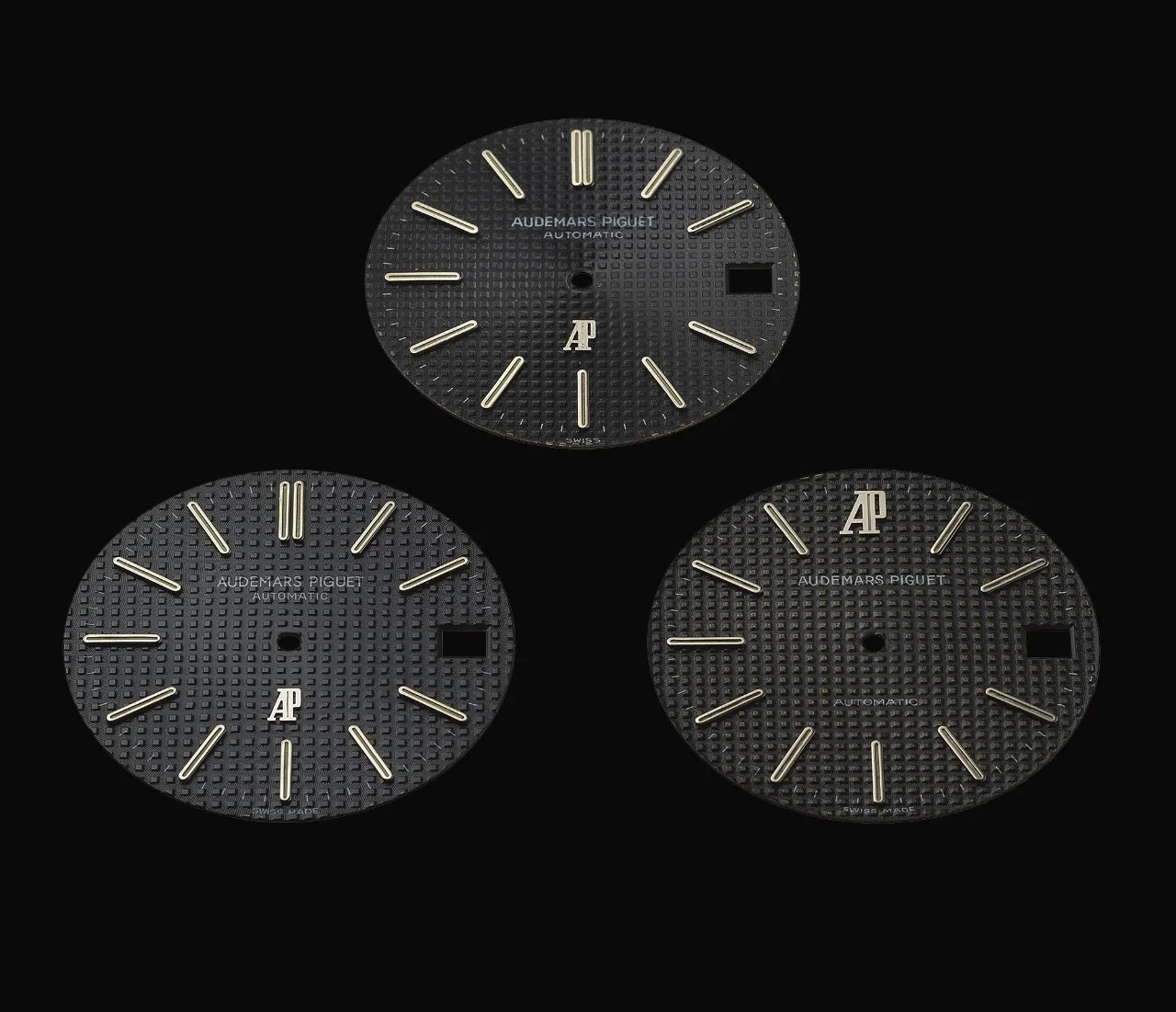
1972. Royal Oak 5402 dial. This dial adorns the Royal Oak 5402ST A26 series, case 67026, movement 127059, delivered by Audemars Piguet to the Swiss market (Gameo Lausanne) on June 16, 1972. Audemars Piguet Heritage, inv. 365.
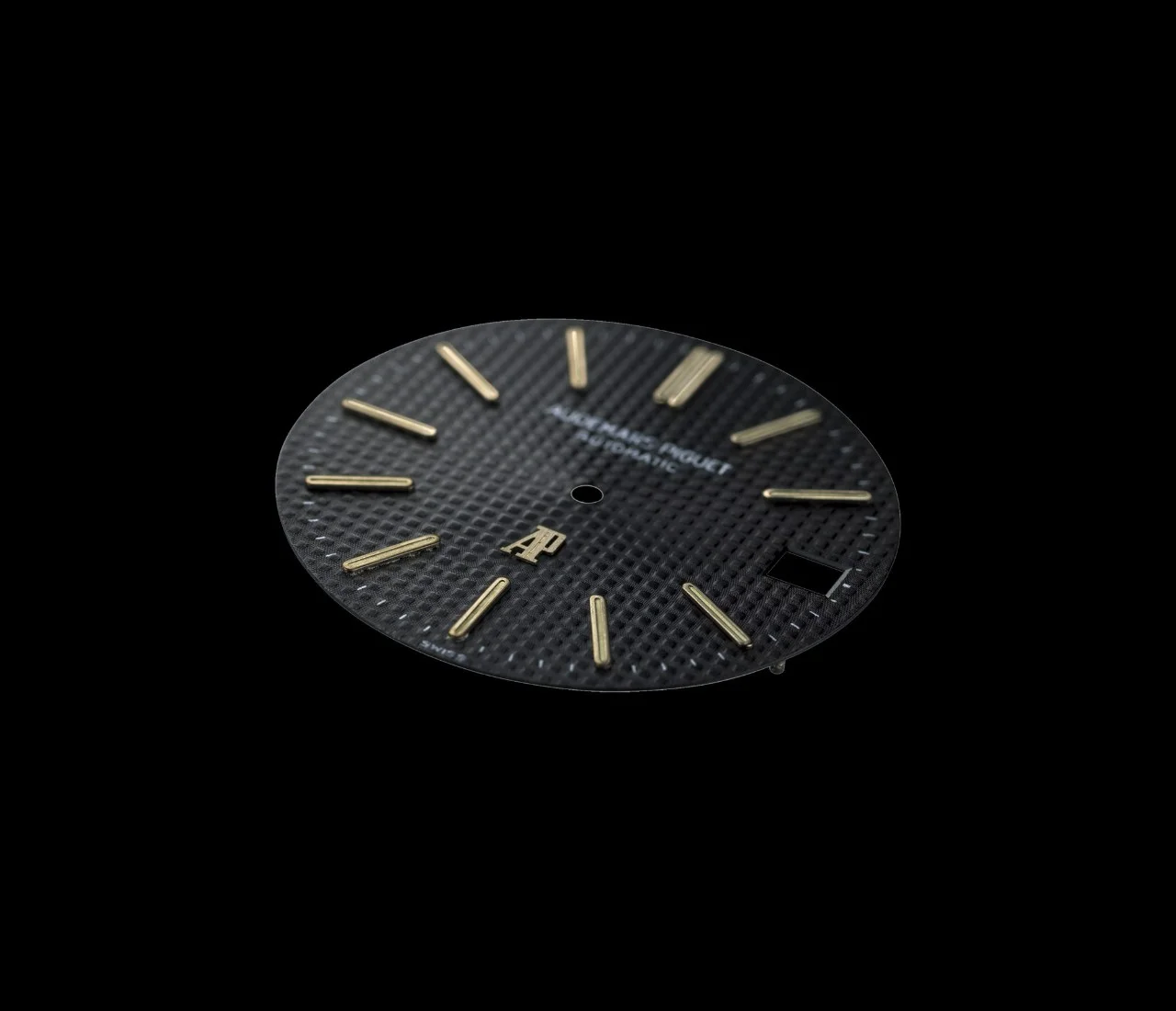
1972. Royal Oak 5402 dial. This dial adorns the Royal Oak 5402ST A26 series, case 67026, movement 127059, delivered by Audemars Piguet to the Swiss market (Gameo Lausanne) on June 16, 1972. Audemars Piguet Heritage, inv. 365.
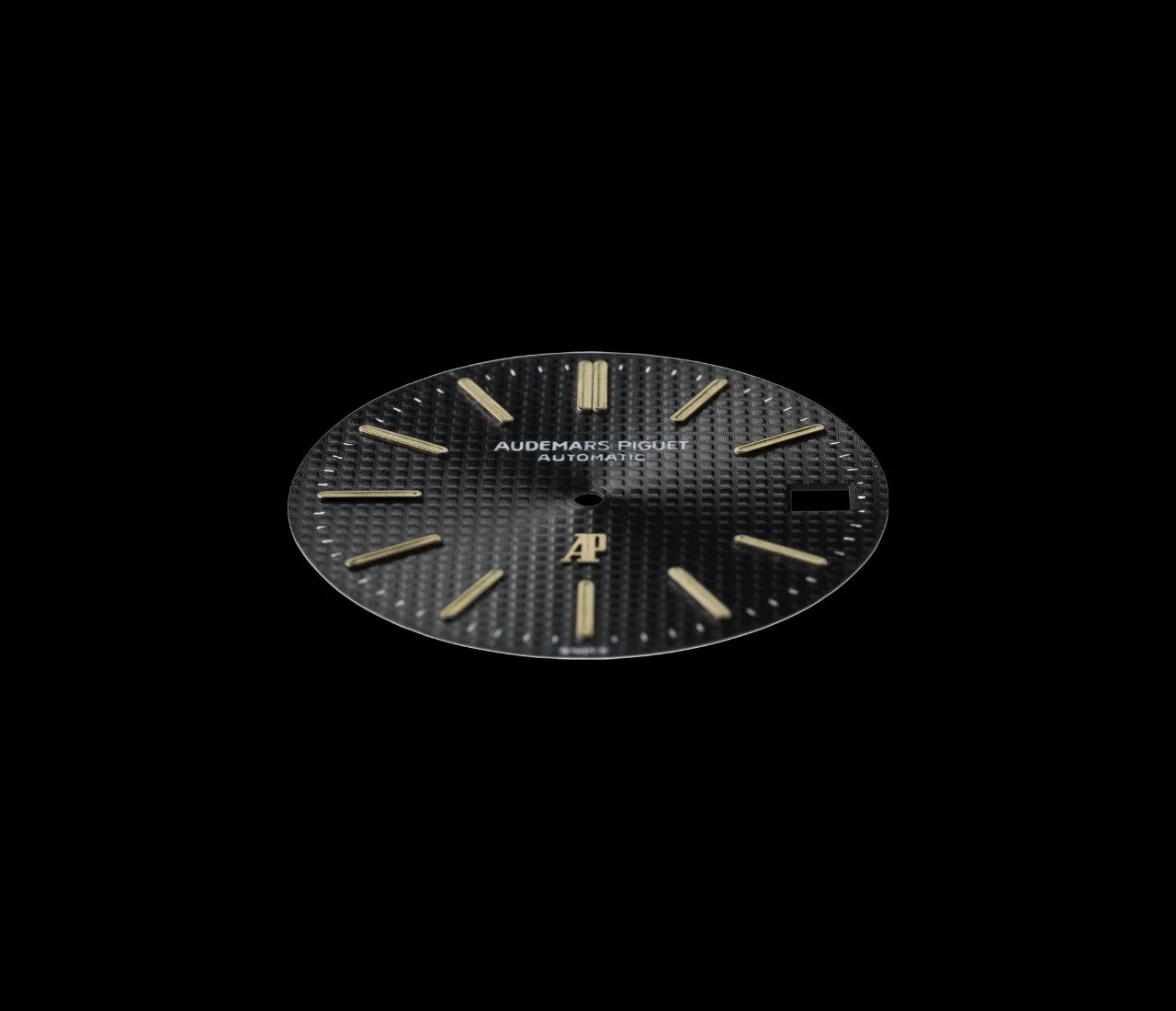
1972. Royal Oak 5402 dial. This dial adorns the Royal Oak 5402ST A26 series, case 67026, movement 127059, delivered by Audemars Piguet to the Swiss market (Gameo Lausanne) on June 16, 1972. Audemars Piguet Heritage, inv. 365.
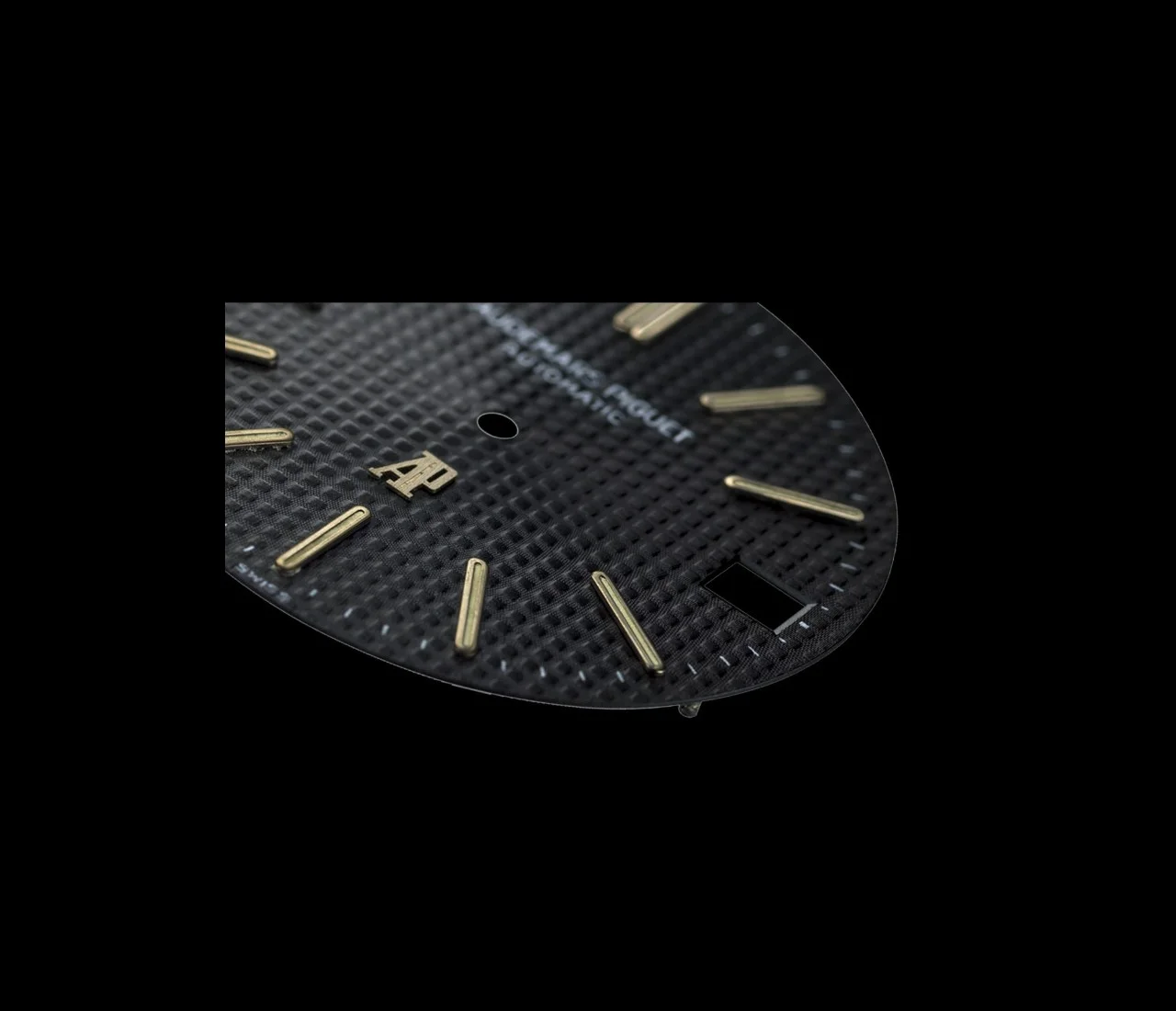
1972. Royal Oak 5402 dial. This dial adorns the Royal Oak 5402ST A26 series, case 67026, movement 127059, delivered by Audemars Piguet to the Swiss market (Gameo Lausanne) on June 16, 1972. Audemars Piguet Heritage, inv. 365.
The Stern Technical Data Sheet
The article dedicated to the birth of the Royal Oak recounts the development of the famous 5402 dial. It recalls how the prestigious Geneva dial-maker Stern, who had just – somewhat by chance – inherited some old guilloché machines, suggested to designer Gérald Genta that he use them to model the face of the future Royal Oak. It also explains how the pattern was chosen and why the craftsmen opted for a galvanic colouring treatment.
When Stern Créations ceased its activities in 2016, some of its archives were distributed to its former clients. This represented a rare and welcome initiative conducive to long-term transmission of watchmaking knowledge and expertise. Audemars Piguet inherited more than 30 linear metres of documents, consisting of thousands of plans, files, orders, correspondence and reference dials.
Among them was the first Royal Oak dial, pictured here. The "benchmark dial" is glued to a cardboard sheet next to which are technical indications, unfortunately all too often impossible to understand. In this article we will examine those that are still comprehensible, in particular "Tapisserie T21"; the "Bleu Nuit 1 + N50" colour; the "satin-finished" "ultra-thin 12/100” AP monogram; and the openworked "trit" (for tritium) hour-markers.
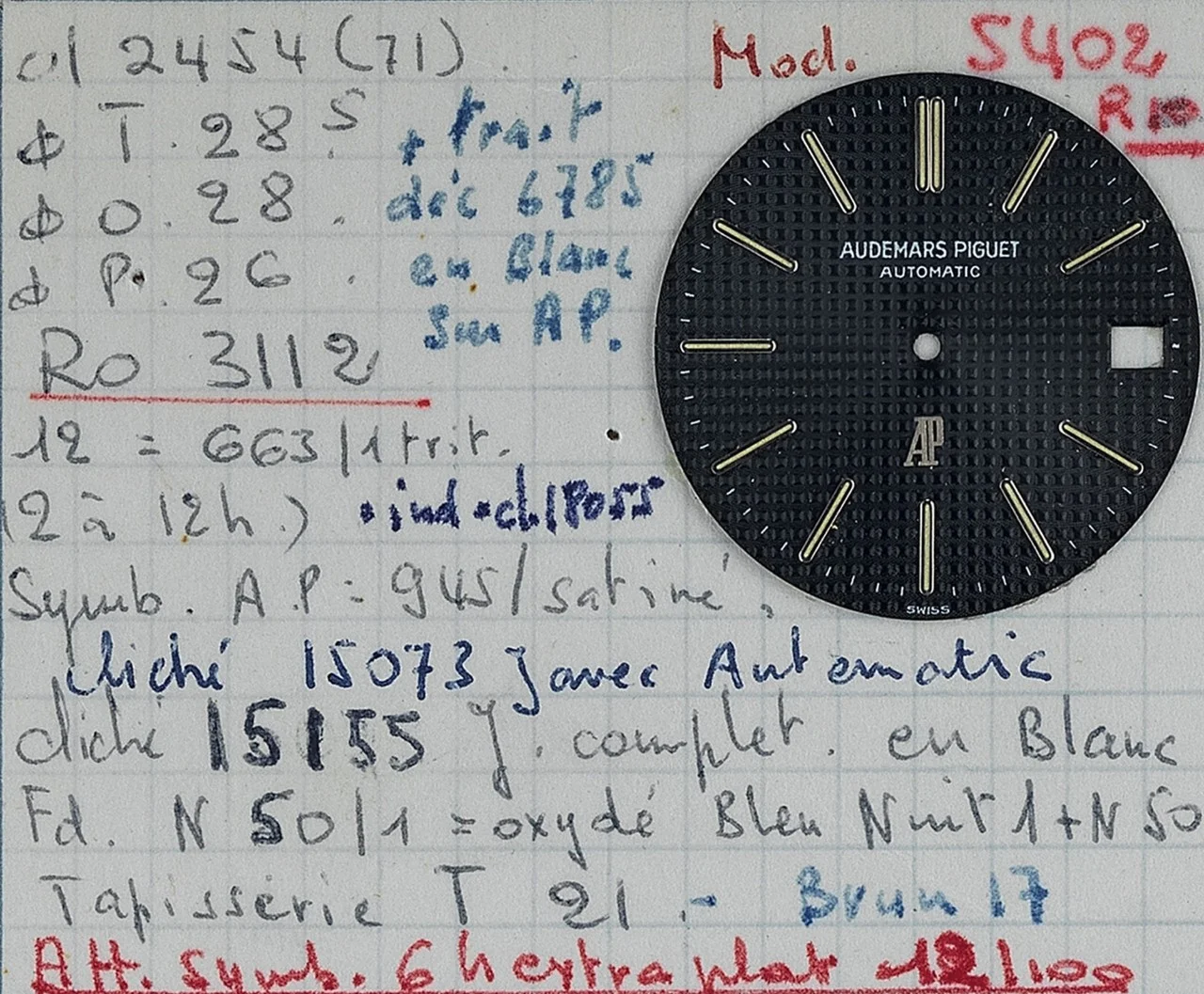
Tapisserie T21, aka Petite Tapisserie
The Stern archive indicates that the guilloché pattern is labelled 'T21', an abbreviation of ‘Tapisserie No. 21'. The name Tapisserie deserves a small aside. The watchmaking world, and more particularly that of collectors, has become accustomed to using the term Tapisserie to describe the Royal Oak's dial motifs. This metonymy results from the fame of the model. As stated by the website of the Fondation de la Haute Horlogerie (FHH), tapisserie means "a pattern of repetitive motifs, similar to a tapestry. A die of this motif guides the movement of the tool on a specially adapted rose engine.”
Most of the Tapisserie designs in the Stern archive are floral or arabesque motifs. The T21 pattern, on the other hand, is loosely inspired by the Clous de Paris guilloché pattern that can be traced back to at least the 18th century and consists of small pyramids with square bases. Adopted for Model 5402, the T21 motif became widespread in the Royal Oak collection from 1976 onwards, particularly on Models 8638, 4100, etc. At the beginning of the 21st century, its name changed to Petite Tapisserie, in contrast to a larger variant created in 1999, known as Grande Tapisserie, which replaced it within a few years. In 2012, for the Royal Oak’s 40th anniversary, the Petite Tapisserie made a comeback on Model 15202 which also bears the AP monogram at 6 o'clock.
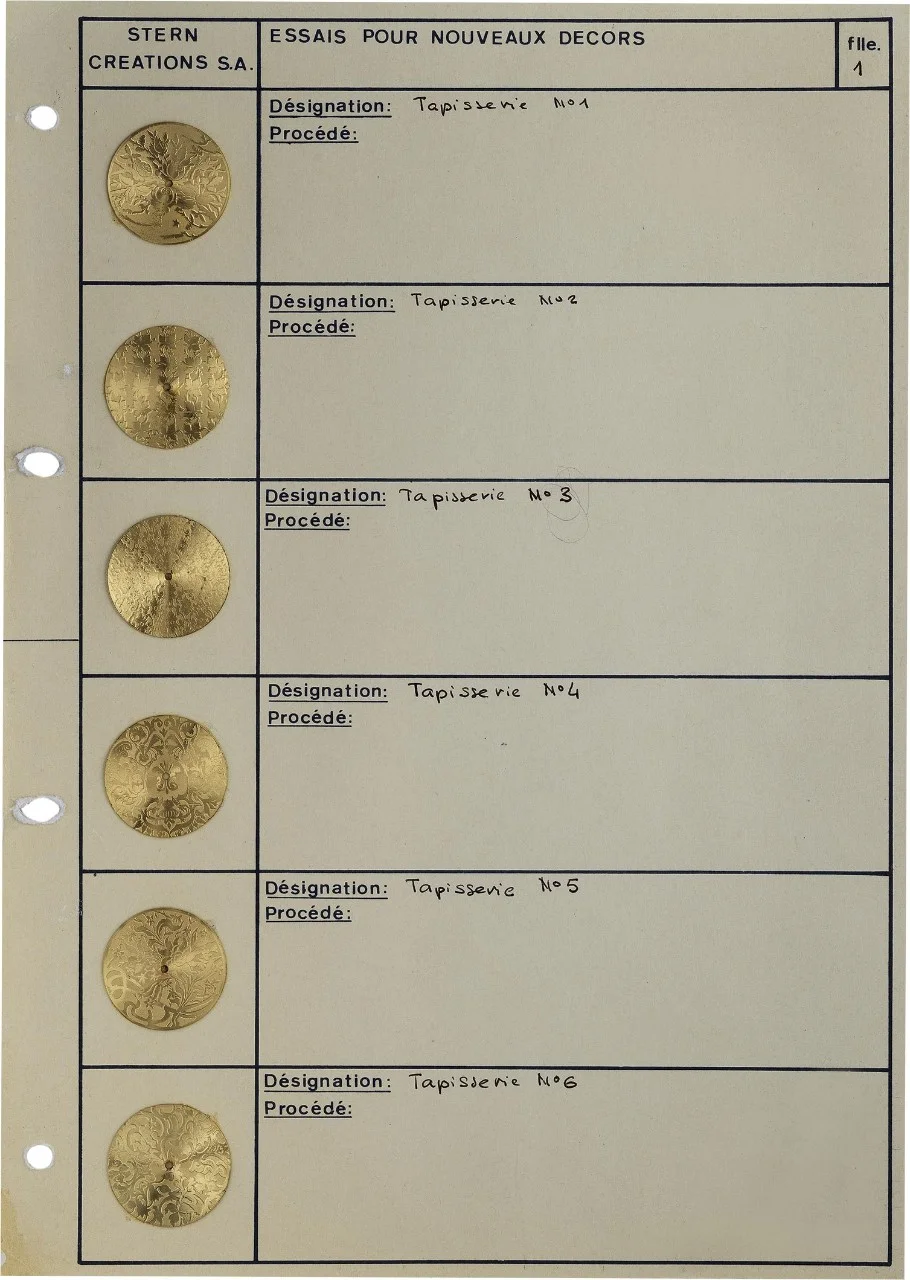
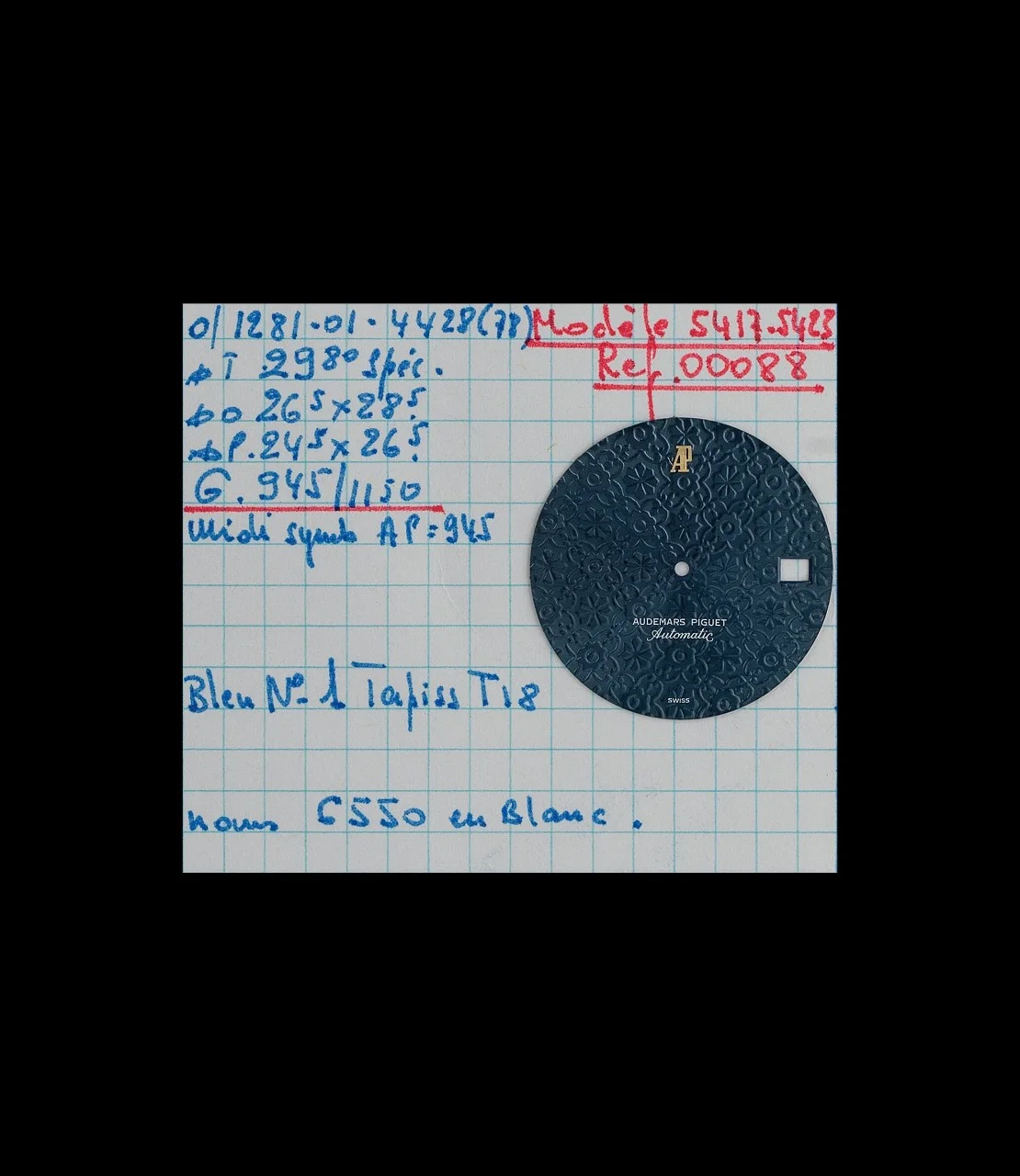
Circa 1975. T18 Tapisserie dial. Made for the Models 5417 and 5423, this dial uses the Tapisserie technique to create floral motifs. Audemars Piguet Archives.
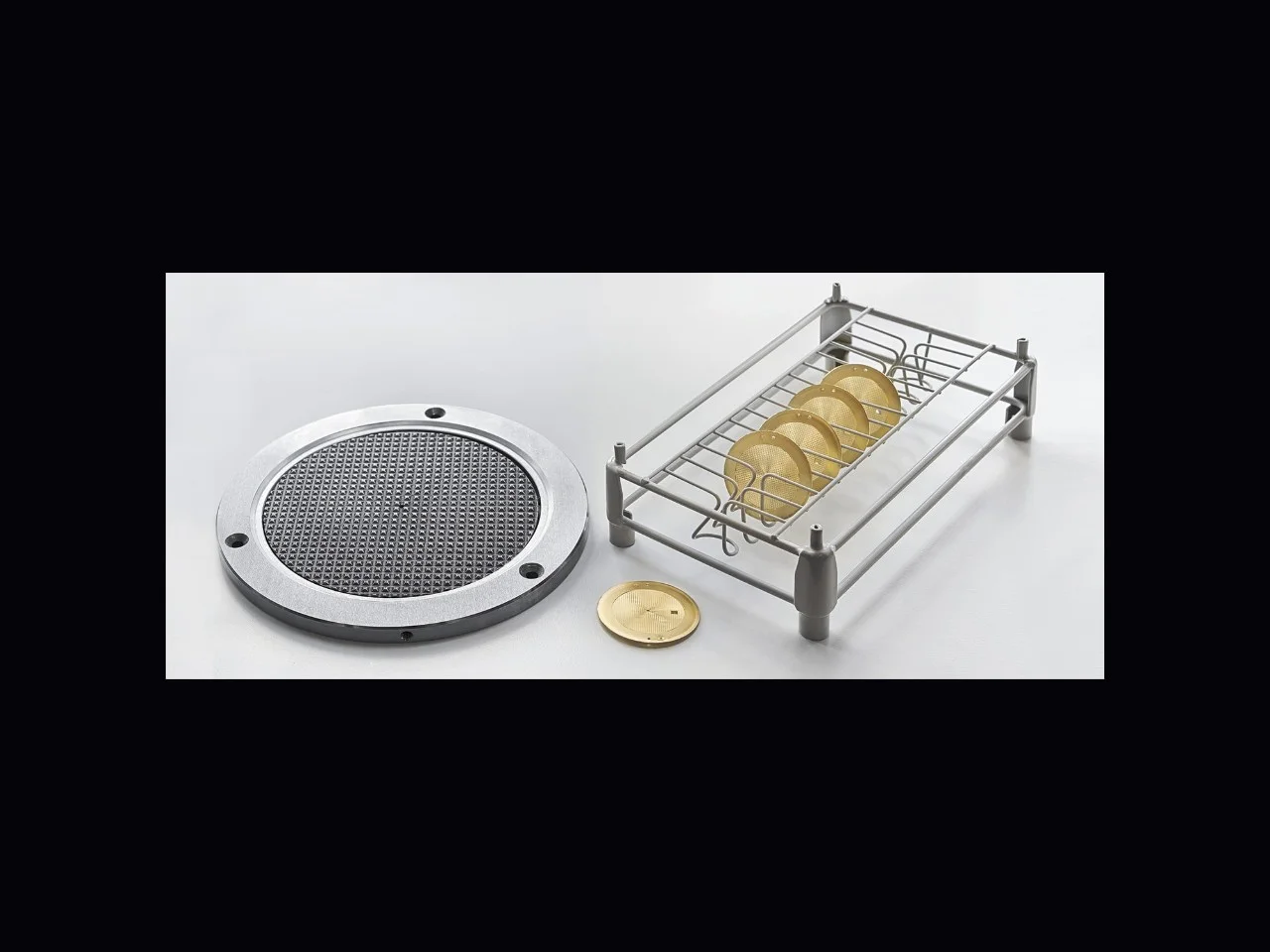
2021. Manufacturing of 5402 "Classic Parts" dials. Preserved since the 1970s, this old T21 matrix (on the left) was used in 2021 to reconstitute and produce 5402 dials with ancient techniques. Upholding traditional guilloché techniques, these replicas or classic parts have been made for 5402 Royal Oak models, whose dials are no longer original or in such a poor condition that they cannot be restored.
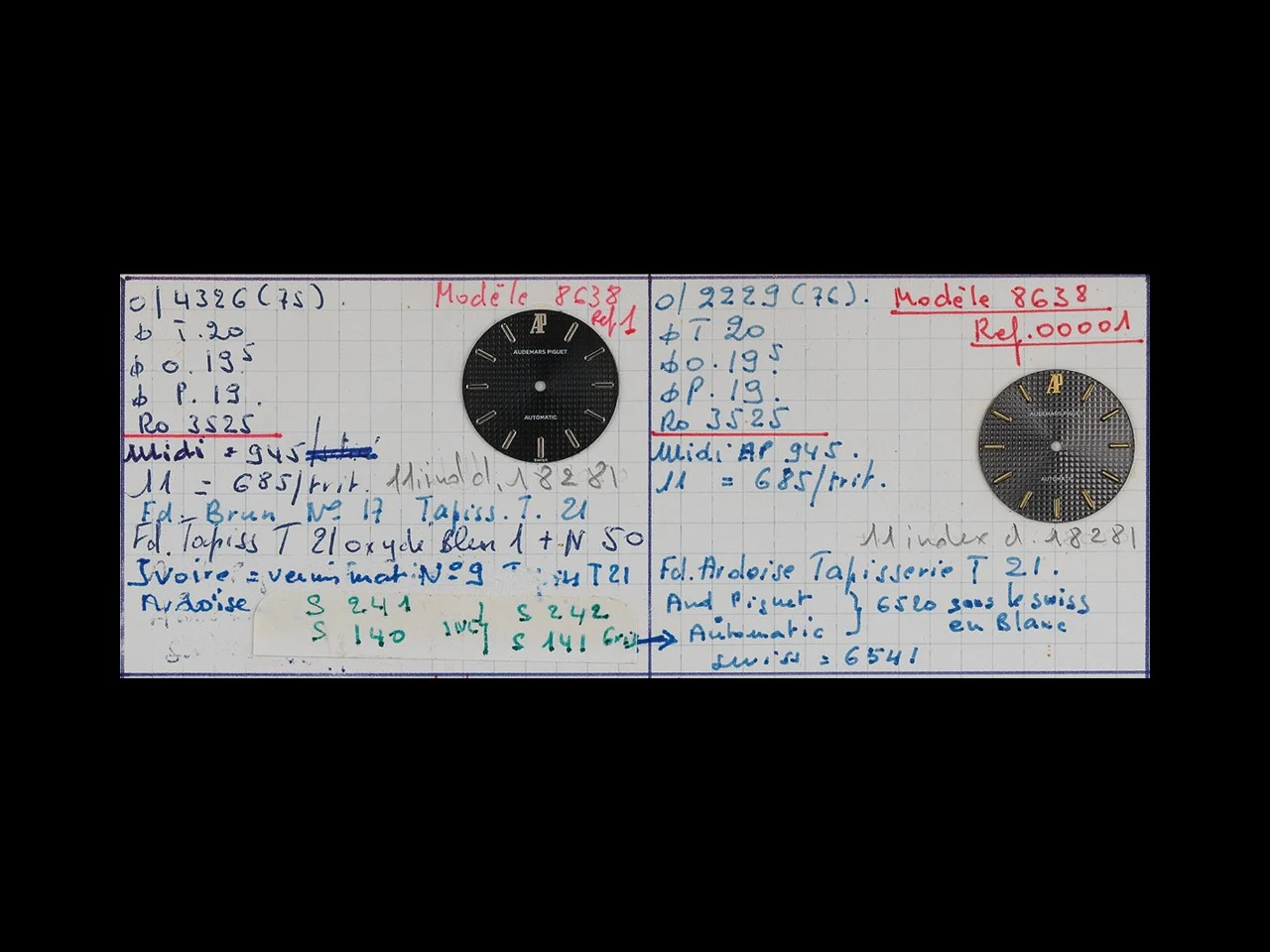
1976–1977. 8638 dials. As its 5402 predecessor, the first women's Royal Oak welcomes a similar Bleu Nuit, Nuage 50 guilloché T21 Tapisserie dial. For the first time, the AP monogram is positioned at 12 o'clock. Stern's technical sheet (on the left: dial for ST models; on the right: slate grey variant for SA models). Audemars Piguet Archives.
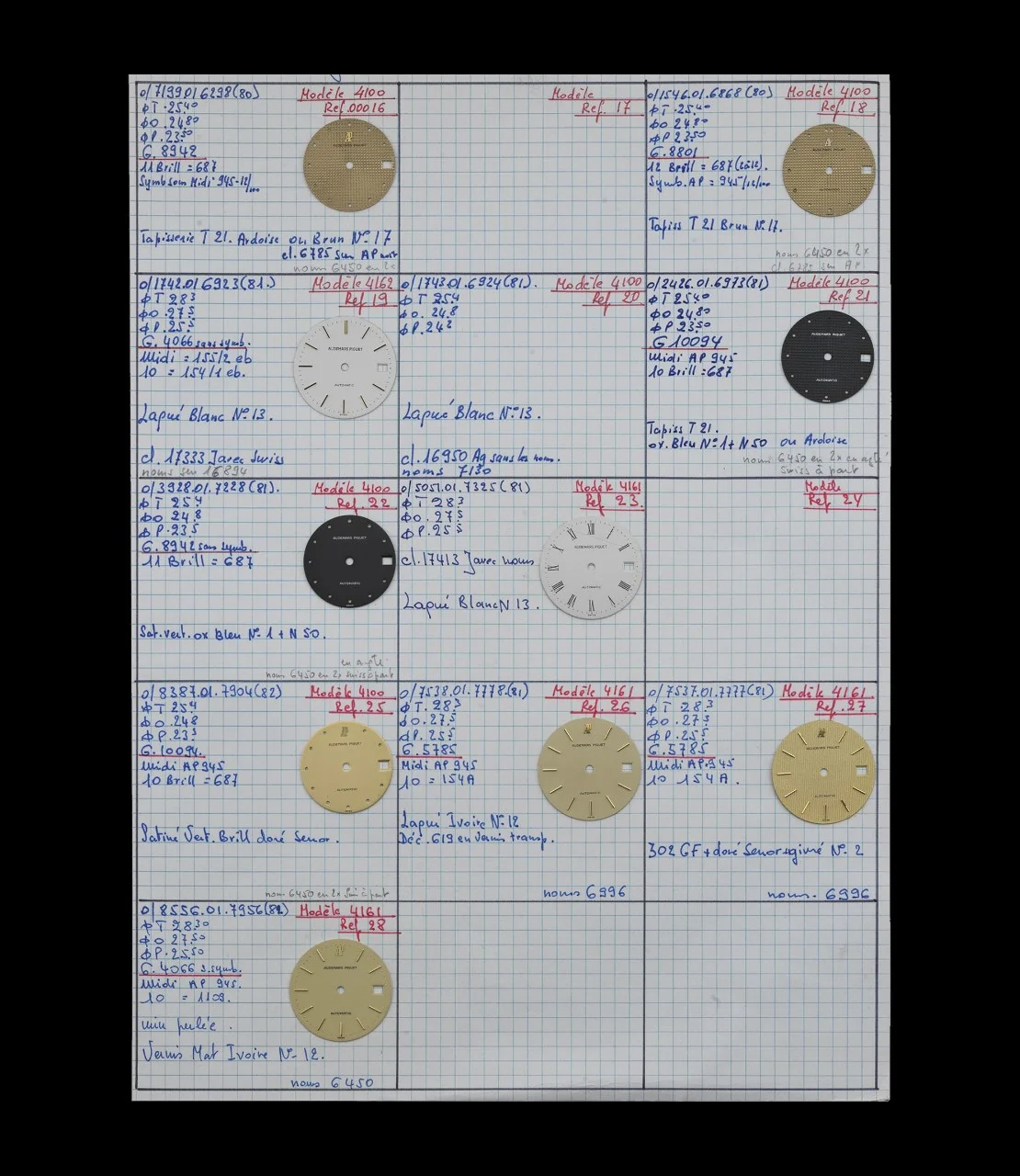
Circa 1980. Technical sheet for dials 4100, 4161 and 4162. This document lists a few 4100, 4161 and 4162 dials. Three among them feature a guilloché T21 Tapisserie, a motif which progressively spreads in the freshly created Royal Oak collection. Audemars Piguet Archives.
Building Pyramids
Since 1972, Model 5402 dials have been made on special machines, which have a long history that we retrace in a dedicated article. During the first decades, the working methods and the tools used led to significant aesthetic variations from one batch of dials to another. Canadian Marc Ferland, who oversaw the Tapisserie dial workshop from 2011 to 2021, explains that although the machines have been perfected, the method remains artisanal, as adjustments can considerably modify the engraving: "The machines are designed to reproduce the patterns of the chablon (the matrix) in a miniaturised way, somewhat like pantographs. In fact, they do much more than produce slavish copies since they interpret the motif. So much so indeed that – with a little skill – an artisan can turn squares into flowers!”
In the 1970s and 80s, the centring of the truncated pyramids sometimes differed slightly from one dial to another (see illustrations). The dimensions of the pyramids also sometimes varied considerably, not only in height and width, as did their number! To confirm that, all you need to do is count the number of pyramids between the date window and the dial centre. Over that same distance, some dials have 9 pyramids, others 10 or even 11, meaning a 20% variation! It is important to know that the large matrixes used on the engraving machines wore out quickly and had to be replaced regularly. As they were also made by hand, they were slightly different from each other. In addition, the size and number of squares could be changed considerably by adjusting the machine.
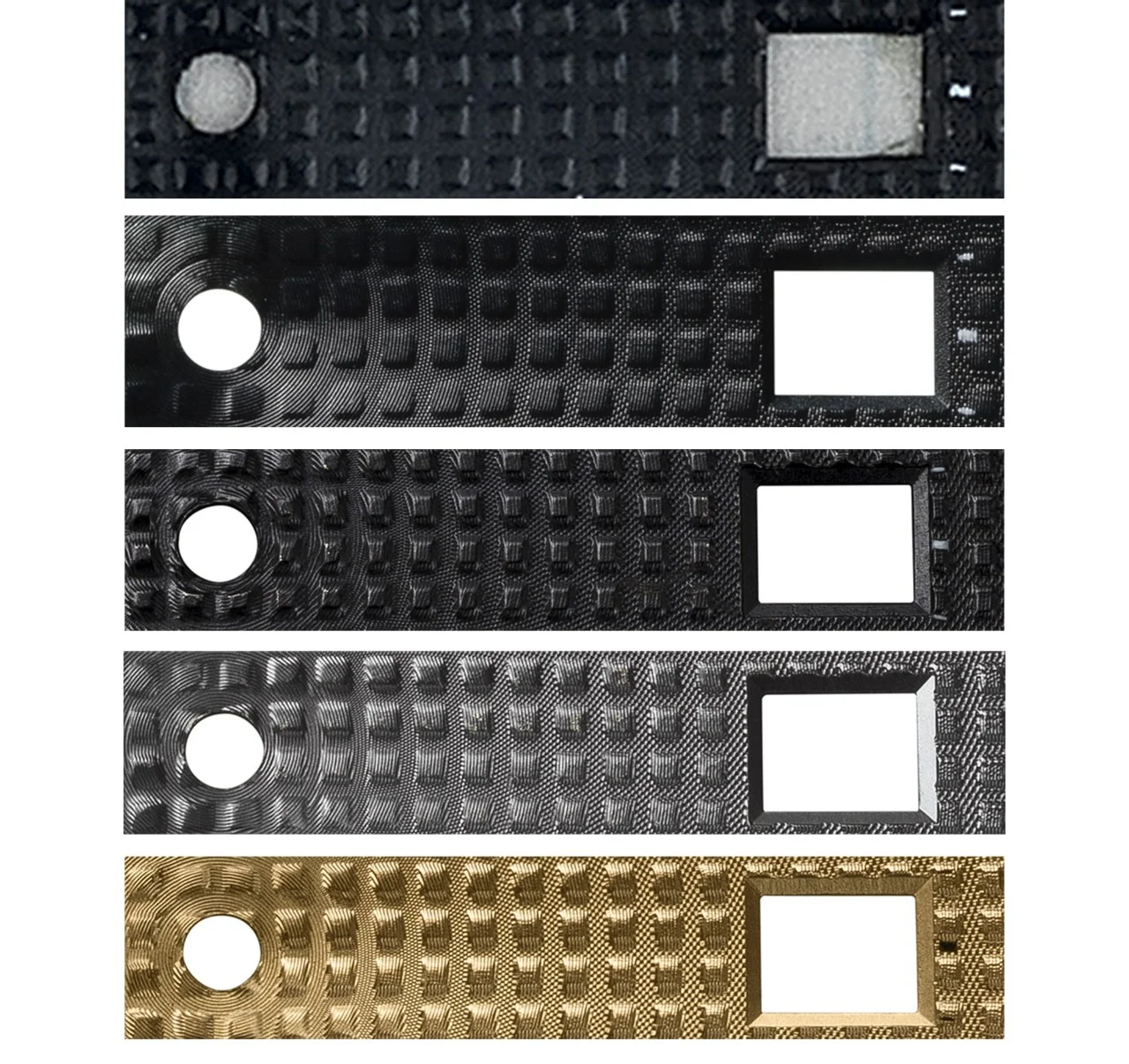
1970. 5402 dials, details. Each dial is unique due to their artisanal manufacturing. The number of pyramids between the centre and the date window can vary from 9 to 11 units. The form and the base of the squares also change depending on the wear of the matrix and the machine setting. The bevel of the date window can be more or less prominent. The same goes for the lines of the minute track on the right side. From top to bottom: Stern technical sheet for 5402ST control dial; Bleu Nuit, Nuage 50 5402ST dial, engraved with no. 6, followed by a star and by 3126N4 (inv. 365); Bleu Nuit, Nuage 50 5402BA dial, engraved with 60021 (inv. 1134), slate grey 5402SA dial, engraved with 60021 and 00010 (inv. 1446); gilded ""brown no. 21"" 5402BA dial, engraved with 60021 and 00010 (inv. 1610). Audemars Piguet Heritage Collection and Archives.
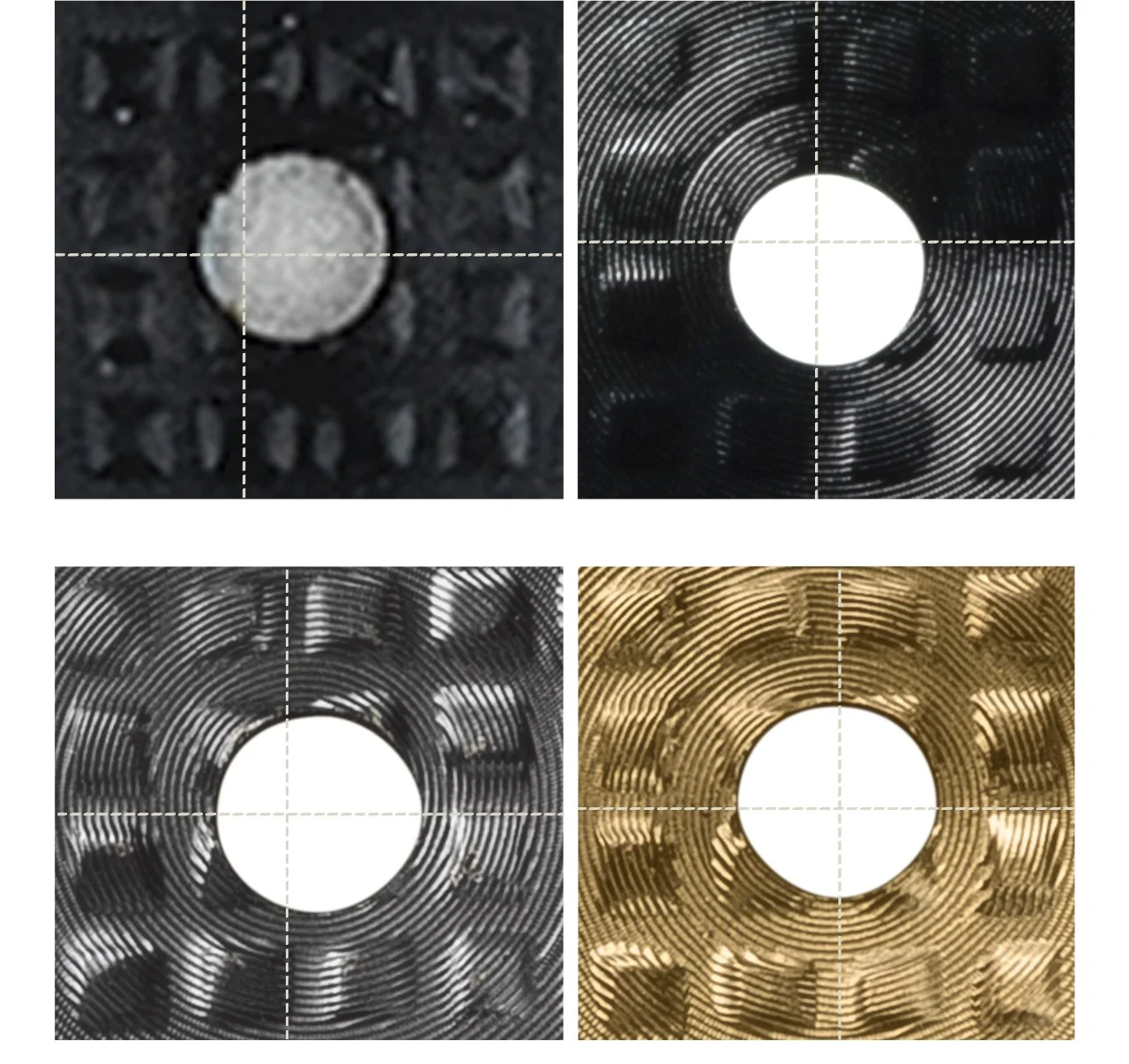
1970s. Centring variation for 5402 dials. In the 1970s, the alignment between the dial's centre and the squares varied. From left to right and from top to bottom: Stern's technical sheet for 5402ST control dial; Bleu Nuit 1, Nuage 50 5402ST dial, engraved with no. 6, followed by a star and by 3126N4 (inv. 365); slate grey 5402SA dial, engraved with 60021 and 00010 (inv. 1446); gilded ""brown no. 21"" 5402BA dial, engraved with 60021 and 00010 (inv. 1610). Audemars Piguet Heritage Collection and Archives.
The Secret of the 50,000 Diamond Shapes
Between each of the pyramids, and partially on top of them, an extremely fine dotted line plays with the light. Marc Ferland explains: "We fix the dial on the guilloché machine and it then begins spinning on its axis.” And as it turns, the sharpened tip of a burin makes small holes without ever going through the metal, like a woodpecker digging its nest. In one complete turn, it enters the material 339.5 times and comes within an 11th of a millimetre of the dial centre. For a dial with a 28 mm diameter, it takes 154 turns to cover the entire metal surface with over 50,000 microscopic holes.
But if you walk into Marc Ferland's workshop and talk to him about "little dots", he immediately responds: "They're not dots, they're diamond shapes! If they were round, the dial wouldn't shine.” Each diamond shape has four small inner faces that reflect the light. More importantly, because the number of diamonds is the same for each turn, the closer the circles get to the dial centre, the closer the holes also get. "That's when you'll see new curved lines appear, formed by the ever-tighter pattern”, enthuses Marc Ferland, who completes the picture with technical explanations that are as passionately detailed as they are abstruse for the uninitiated, punctuated by terms such as "rosettes", "cam", "ideal angle" and "pointer."
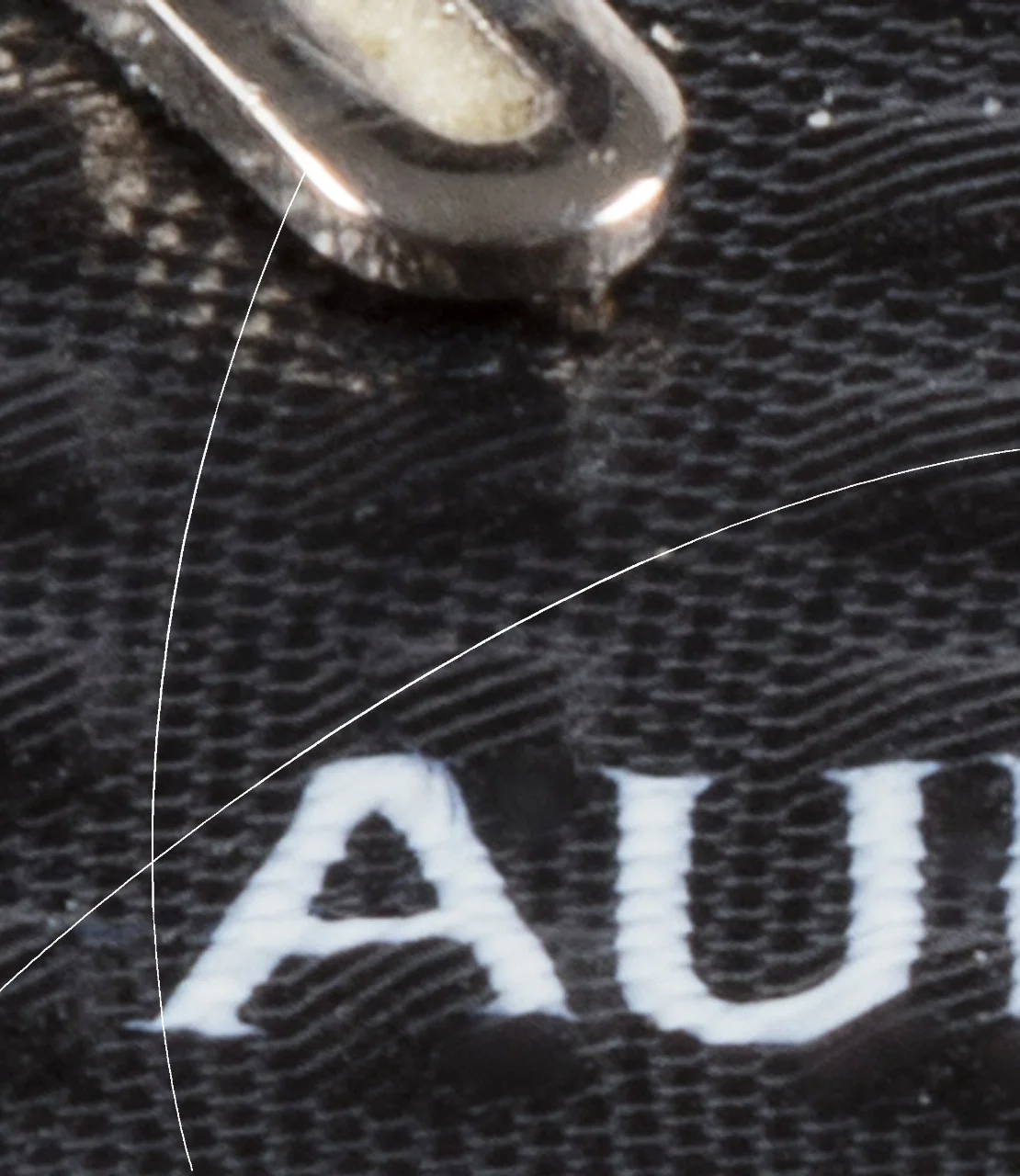
1972. Close-up on the Royal Oak 5402 dial. The distance separating each minuscule diamond shape shrinks as we get closer to the dial's centre, thus creating complex interlacing curve effects and rich plays of light.
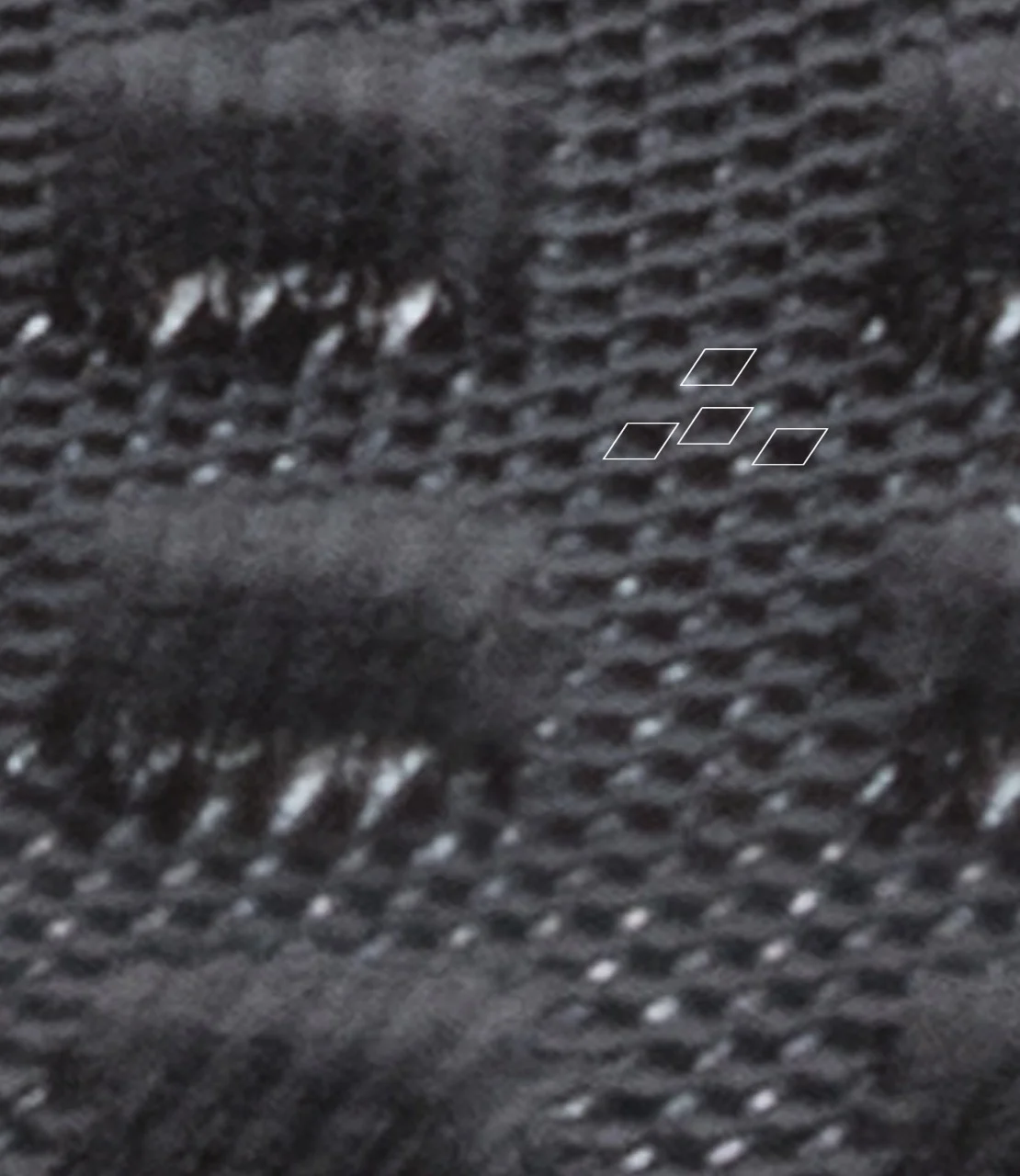
1972. Close-up on the diamond shapes of the Royal Oak 5402 dial. 50,000 minuscule diamond shapes punctuate each 5402 dial. Reflecting the light, their four faces create moiré effects to give life to the dial.
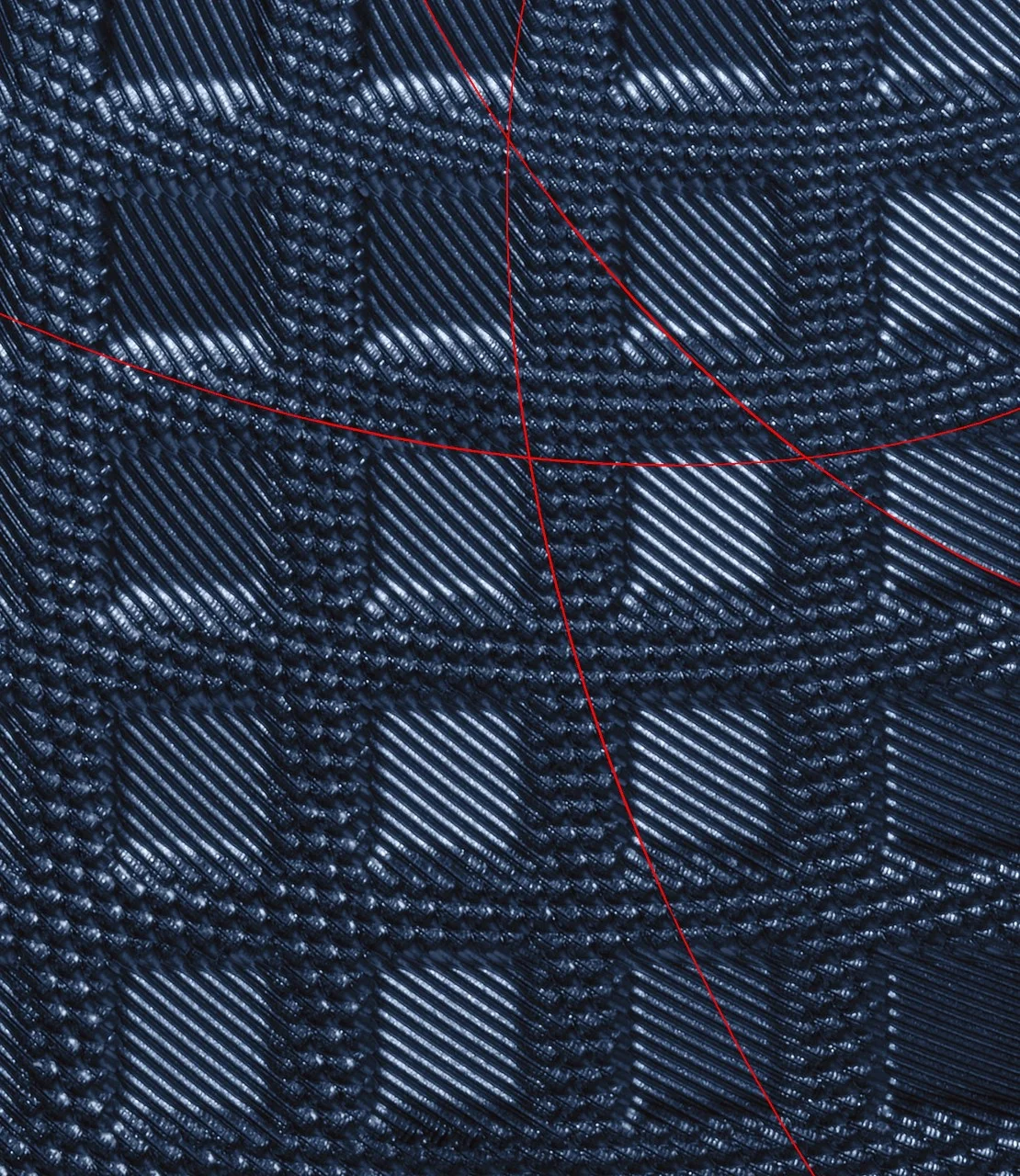
2020. Close-up on the Grande Tapisserie of the Royal Oak 15500 dial. By improving the way of using machines dating from the 1950s and 60s, artisans have reached an unprecedented level of precision. The combination of curves and squares remains the secret and beauty of the Royal Oak's Tapisserie dials.
Bleu Nuit, Nuage 50
The Stern card defines the colour of the 5402ST dial as Bleu Nuit 1 + N50. This code corresponds to a kind of recipe. The Bleu Nuit, no 1 colour was created by Stern, which has jealously guarded its trade secret. N50 stands for "Nuage (cloud) No. 50" and corresponds to the black colour No. 50 added to the protective varnish (or zapon) of the dial. The term "cloud" is said to derive from the cloud that the drop of colour forms when it enters the liquid varnish.
Blue has always been the most difficult colour to reproduce perfectly. The hue is obtained by immersing the dials in a galvanic bath. While the formulation of the mixture is important, the duration of the bath and the temperature are also crucial. If the artisan removes the dial just a little too early, it comes out purple, and if removed too late, it will have turned black. The exercise is further complicated by the fact that the dial looks rather grey when emerging from the bath and it is only when the protective varnish is applied (the one to which a drop of black is added) that the blue begins to show.
Varnish stabilises the colour but does not prevent its long-term evolution. Prolonged exposure to light or humidity gradually changes the colour, creating a patina that is at times aesthetically close to the original and at others quite remote. To ascertain the original colour, one must observe the back of the dial, to which access requires the skill and tools of a specialised watchmaker.
The Back Holds the Keys
Hidden from view and from the light, the back of the dial is not destined for observation, yet it contains information of interest to both collectors and watchmakers.
On the one hand, its colour remains closer to the original. In this respect, the Audemars Piguet Heritage team was surprised to discover slightly purplish reflections, which suggest that in 1972, some dials must have had a very different colour from what we usually imagine.
On the other hand, the back of the dial is engraved. The reference book written by Helmut Crott entitled Le cadran, visage de la montre-bracelet au 20e siècle unlocks the code: "the 6 designates the Audemars Piguet customer, while the star corresponds to the Stern Frères hallmark at the time.” The following number represents the order number, as confirmed by the Audemars Piguet archives. On the other hand, Helmut Crott indicates that 4N (appearing here as "N4") refers to the colour of 4N gold, but this information is not corroborated by sources, since analysis conducted by the Audemars Piguet laboratory has shown that the plates of the first Royal Oak dials are made from a variety of bronze called Chrysoscale.
Finally, the watchmaker will be able to check at a glance if the dial has been refurbished in the course of its history, by examining the colour, the finish, as well as the feet of the hour-markers and the AP monogram. Redoing a dial colour entails removing and then refitting the applied elements (hour-markers and logo) and such an operation always leaves traces.
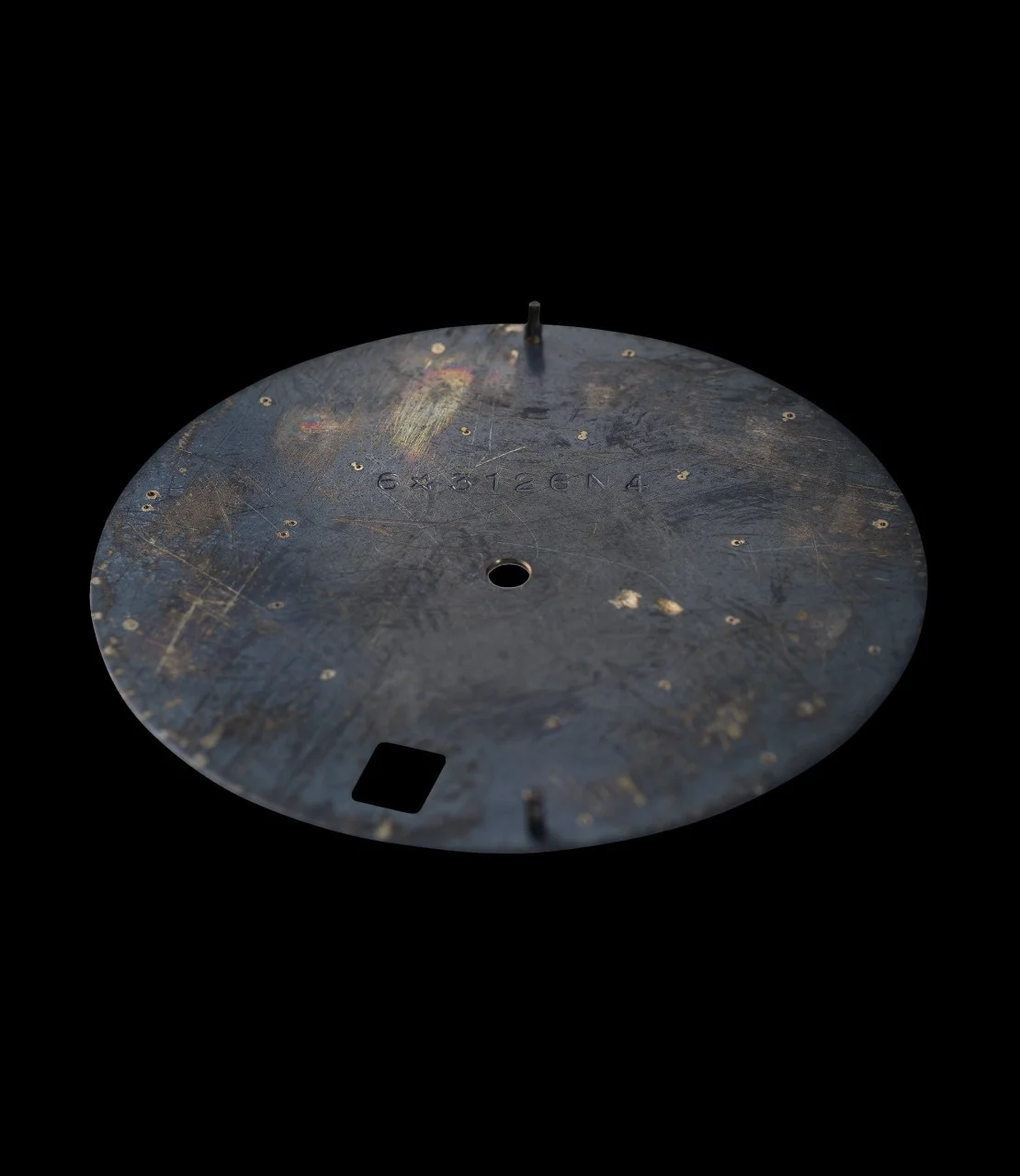
1972. Backside of the Royal Oak 5402 dial. This dial adorns the Royal Oak 5402ST A26 series, case 67026, movement 127059, delivered by Audemars Piguet to the Swiss market (Gameo Lausanne) on June 16, 1972. Protected from light, the back of the watch has retained its original bluish hue. Audemars Piguet Heritage, inv. 365.

1972. Backside of the Royal Oak 5402 dial, engraving. The first number identifies Stern Frères' client. The star is the dial maker's symbol. The following numbers probably correspond to the order number. This dial adorns the Royal Oak 5402ST A26 series. Audemars Piguet Heritage, inv. 365.
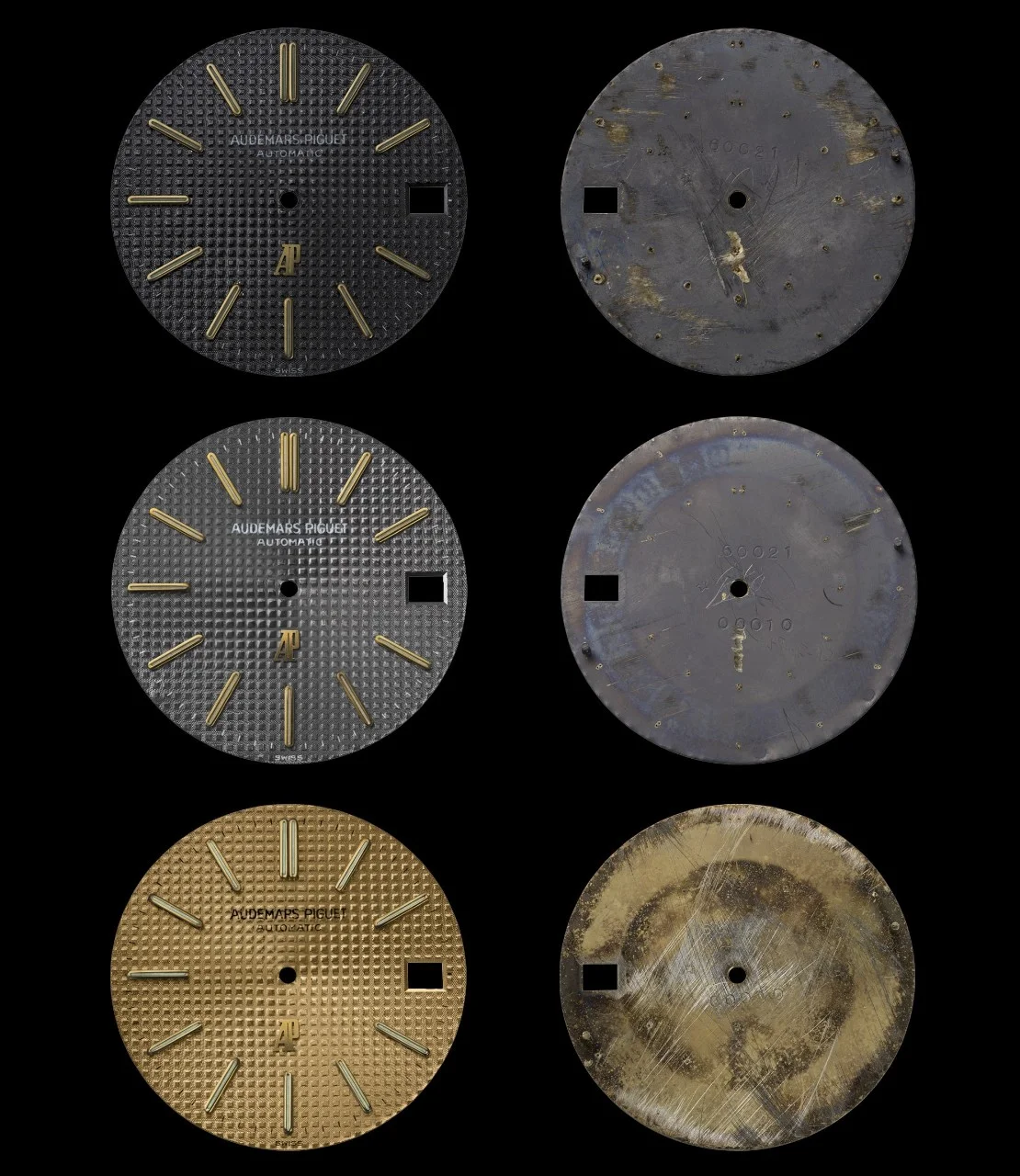
1978. Royal Oak 5402BA dials. These three dials adorn Royal Oak 5402 models in yellow gold, all sold in 1978. They all belong to the Audemars Piguet Heritage collection (inv. 1134, 1446 and 1073). Very few freshening-up marks can be seen on the back, which testifies to their good preservation.
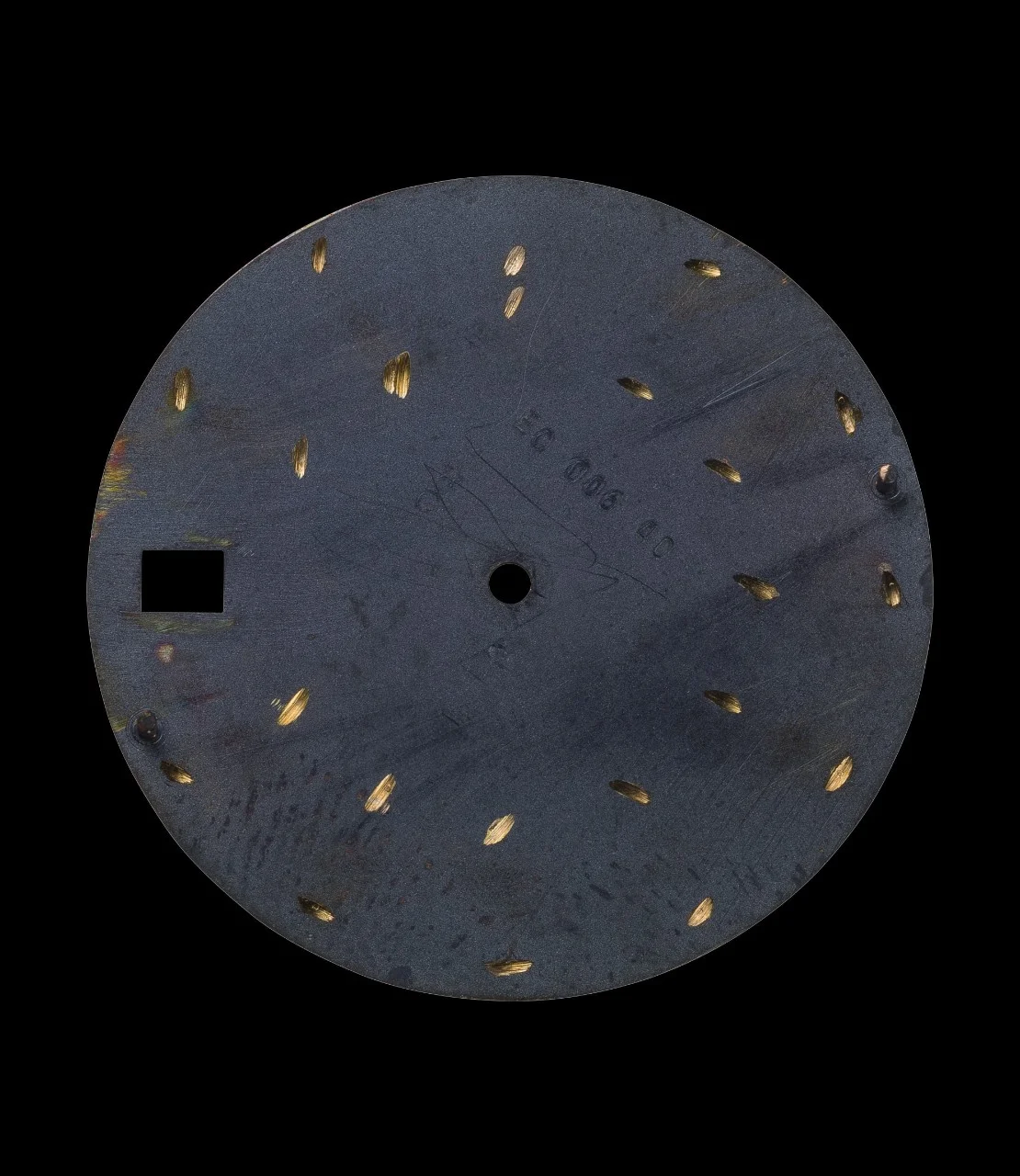
Circa 2000. Back of the Royal Oak 14802 dial. 22 small grinding-wheel marks reveal brass under the blue colour. They were made during the disassembly and reassembly of the hour-markers and monogram, which are fixed on the other side of the dial. This type of marks often results from freshening up as the applied elements have to be removed to redo the colouring.
The Ultra-Thin AP Monogram at 6 o'clock
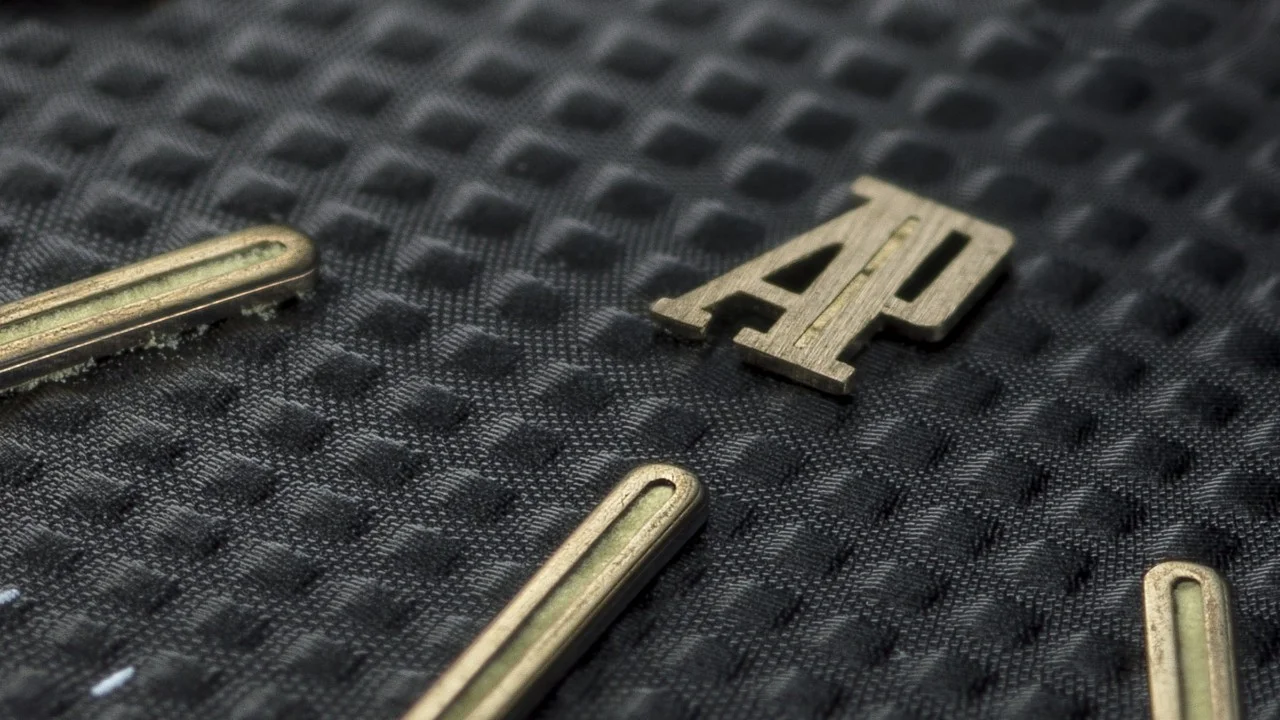
One of the distinctive features of the original Royal Oak dial is the applied AP monogram. Based on known records, this was a first for Audemars Piguet. The two juxtaposed letters A and P had been used in advertising material before, but they had hardly ever adorned the dial of a watch.
The Stern technical data sheet (see "The Stern technical data sheet" section above) provides a red indication inviting artisans to ensure that the height of the AP not exceed "12/100" of a millimetre. The Royal Oak watch was indeed ultra-thin, since the space between the dial and the crystal amounted to no more than 0.9 mm, just enough to leave enough room for the hours and minutes hands. Making such a thin white gold monogram proved all the more difficult in that the vertical bar of the A and that of the P touch each other, thus requiring the cutting of a small relief (0.002 mm deep, half a hair's breadth) between the two.
There is another indication that deserves collectors’ attention. "Symb AP 945 satin finish" means that the AP symbol (monogram) bearing reference number 945 at Stern must be satin-finished. Whereas the vast majority of the applied logos were in fact satin-finished rather than polished, the archives do not explain this change. Several hypotheses circulating in the Audemars Piguet Customer Service workshops have sought to explain this change. According to the first, satin-finishing such thin components would have proven too difficult. The second holds that the change might have made it possible to improve the legibility of the letters AP by creating a contrast. A belated "+ white line on AP" mention on the Stern technical data sheet appears to support the latter version, by indicating that the gap between the two letters was sometimes coloured white to improve legibility.
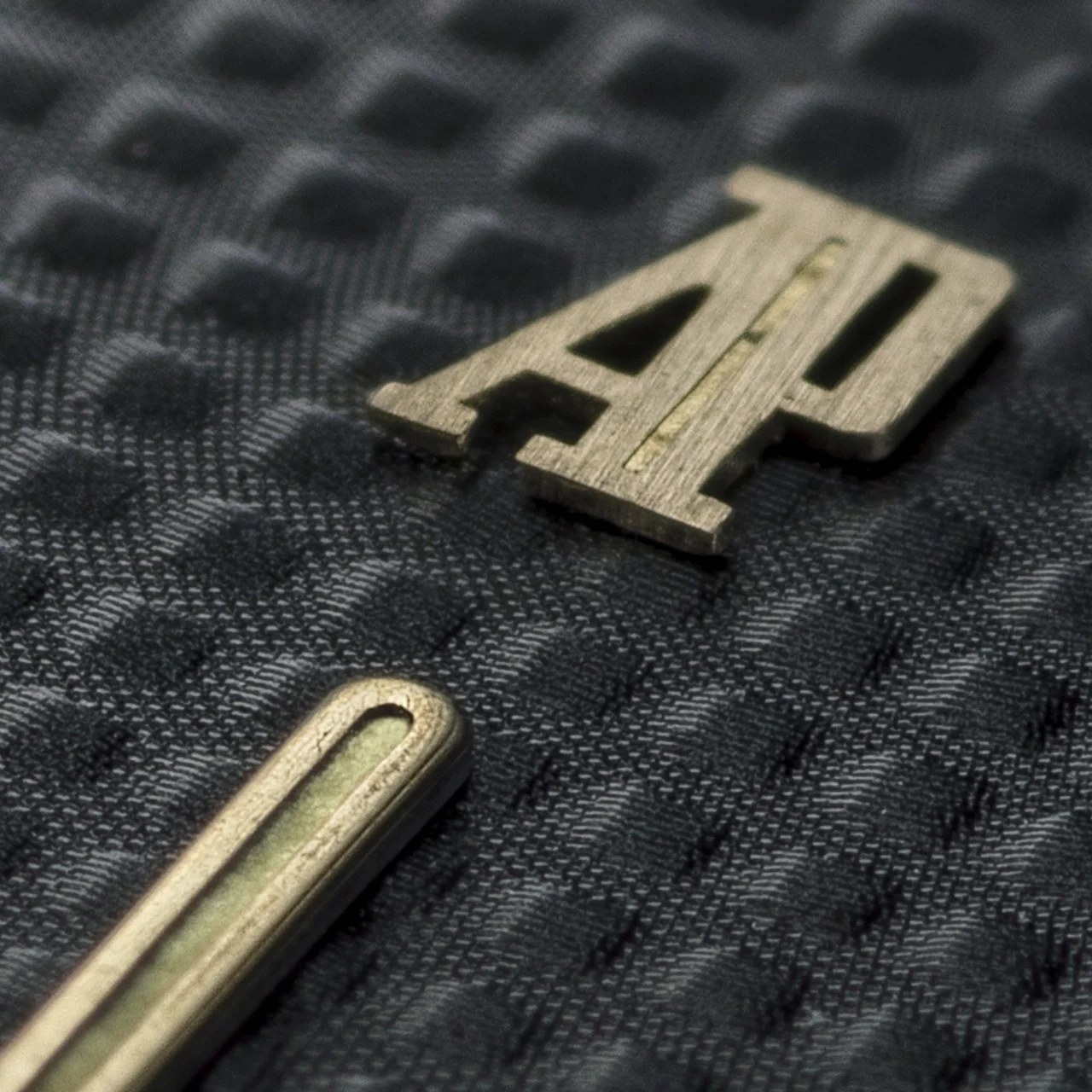
1972. AP monogram, Model 5402ST. Fixed onto the dial with two minuscule feet, the white gold AP monogram measures just over a tenth of a millimetre in height. Close-up on the Royal Oak 5402ST A26 series dial. Audemars Piguet Heritage, inv. 365.

1972. AP monogram, Model 5402ST. Fixed onto the dial with two minuscule feet, the white gold AP monogram measures just over a tenth of a millimetre in height. Close-up on the Royal Oak 5402ST A26 series dial. Audemars Piguet Heritage, inv. 365.
The AP Monogram Migrates from 6 to 12 O’clock
Collectors have long since known that while the first generation of 5402ST has the AP monogram at 6 o'clock, many examples are equipped with later dials featuring an AP logo at 12 o’clock. Here again, while the archives do not document the reason for this change, watchmakers’ memories fill that gap. Restorers explain how, after several years, certain watch hands begin to rub or even bump into the applied logo, sometimes to the point of stopping the watch. Within this context is it important to remember that the distance between the hand and the logo is five to ten hundredths of a millimetre! Some artisans have humorously noted that it was almost as hard to get the hand through this narrow passage as for a camel to pass through the eye of a needle.
To solve the problem, Customer Service watchmakers initially used to bend the hands manually, a tricky operation that consisted of creating two tiny, inverted Z-shaped bends to raise the two hands high enough to pass without touching either the logo or the glass and without touching each other. However, in order to provide a permanent solution, Audemars Piguet decided on February 24, 1977 to move the logo to 12 o’clock, so as to leave sufficient space for the movement of the hours hand. The next day, a first order for 210 "new execution" dials was sent to Stern.
This decision might lead one to assume that from spring 1977 onwards, all new Royal Oak 5402 watches featured the new dial with monogram at 12 o'clock. This is not the case and to understand why, it is important to know that between 1972 and the last order of March 1977, Audemars Piguet ordered 4,336 of the 5402 dials, whereas during that same period the company sold 2,978 Royal Oak 5402 watches. That meant that by the spring of 1977, over 1,200 dials with the 6 o’clock monogram were still in stock!
The archives documenting the dial change reveal little and do not for example mention when the first watch with an AP monogram at 12 o'clock was produced or when the last new 5402 with the monogram at 6 o'clock was delivered. They remain equally silent regarding the timepieces on which dials with the monogram at 6 o’clock were replaced by “12 o’clock” variants. Worse still, they do not even reveal whether the two variants ever coexisted.
As is often the case, historians have to be ingenious and build hypotheses. Let's first take a look at the big numbers. From 1971 to 1990, Audemars Piguet ordered a total of 6,983 dials for Model 5402, of which 5,189 were blue, 1,548 slate grey and 246 gold-toned (also referred to as "brown"). Of these, at least 62% had the AP monogram at 6 o'clock. More importantly, Audemars Piguet ordered 911 more dials than the number of watches sold! This implies that a maximum of 15% of 5402 watches could potentially have had their dials replaced in the Audemars Piguet workshops.
Let us focus exclusively on the Bleu nuit, Nuage 50 variant with white gold hour-markers, intended for the stainless steel Royal Oak 5402ST. Between 1971 and 1990, the company ordered a total of 4,992 dials, of which at least 4,085 have an AP monogram at 6 o'clock – implying that a maximum of 907 had it in the 12 o’clock position. In an amusing little exercise, assuming that each of the last 907 Royal Oak watches sold were equipped with a dial bearing a logo at 12 o'clock, the dial change would have taken place in the spring of 1978, i.e. around number 1500 of the C series (see article on 5402 serial numbers). This is unlikely, since we know that many 12 o'clock dials were used to replace earlier variants.
Another theoretical exercise, this time in reverse. If Audemars Piguet had used the 4,085 dials with the AP monogram at 6 o'clock available in stock before starting to use the dials with AP at 12 o'clock, the watchmakers would have started to equip 5402 watches with AP at 12 o'clock dials in November 1981, corresponding to the end of the D series. Only 219 new watches would have been fitted with this dial at the time of their first sale. This hypothesis is even more improbable because it implies that Audemars Piguet would have waited more than three years between the order of the first “6 o'clock” dials and their first use! The truth probably lies somewhere between these two extremes, between February 1977 and November 1981.
In conclusion: if it was seamless, the change probably took place towards the end of 1978. If it was slow, which is more likely, the two variants probably coexisted between the summer of 1977 and the summer of 1979. The only certainty, based on dial orders, is that of the 4,304 examples of the 5402ST, a maximum of 16% have the AP monogram at 12 o’clock.
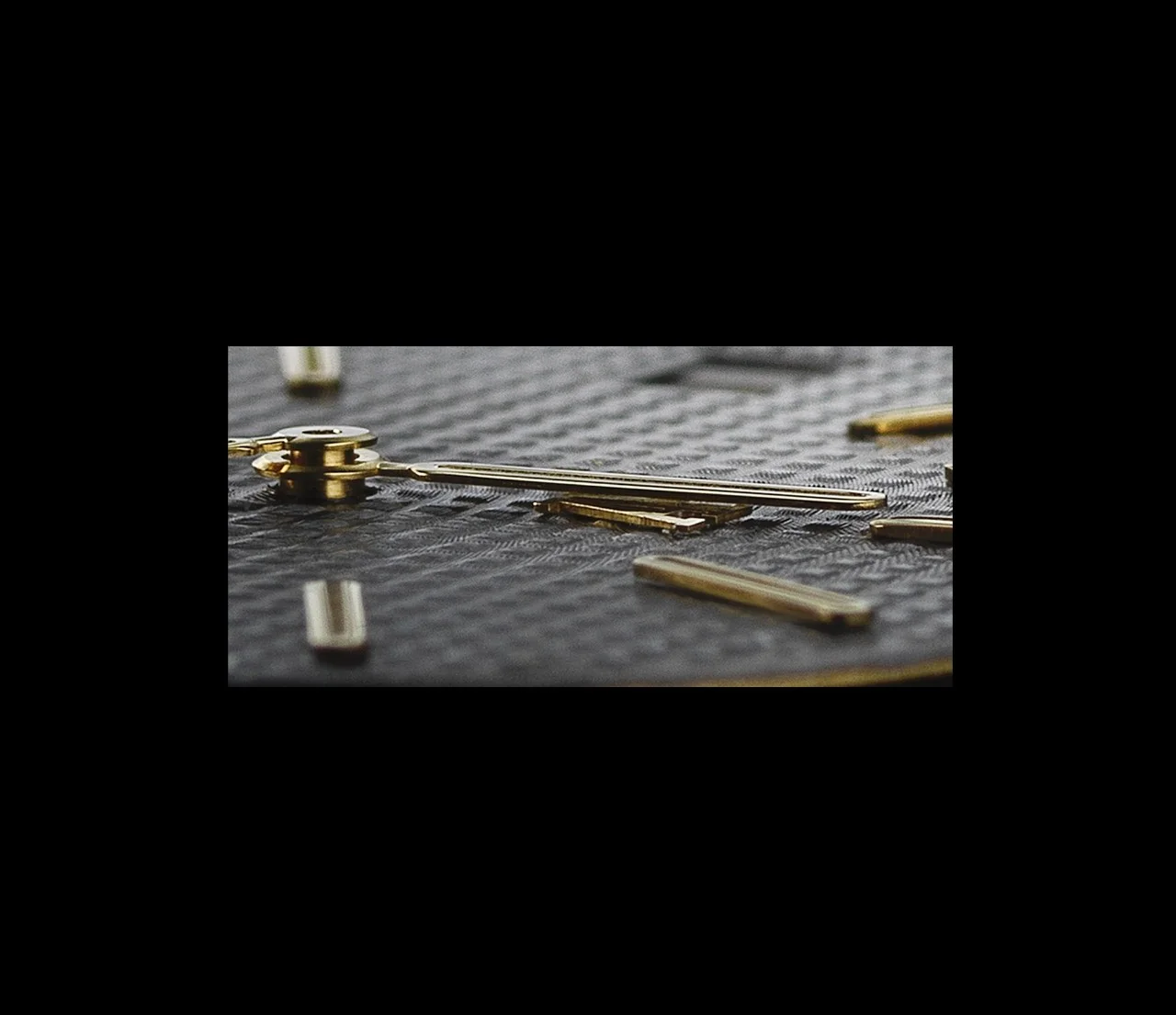
Passing of the hour hand on the AP monogram. The hour hand passes on top of the AP monogram at a distance of less than a tenth of a millimetre. Close-up on the dial of the Royal Oak 5402SA no. 186 sold in 1978. Audemars Piguet Heritage, inv. 1446.
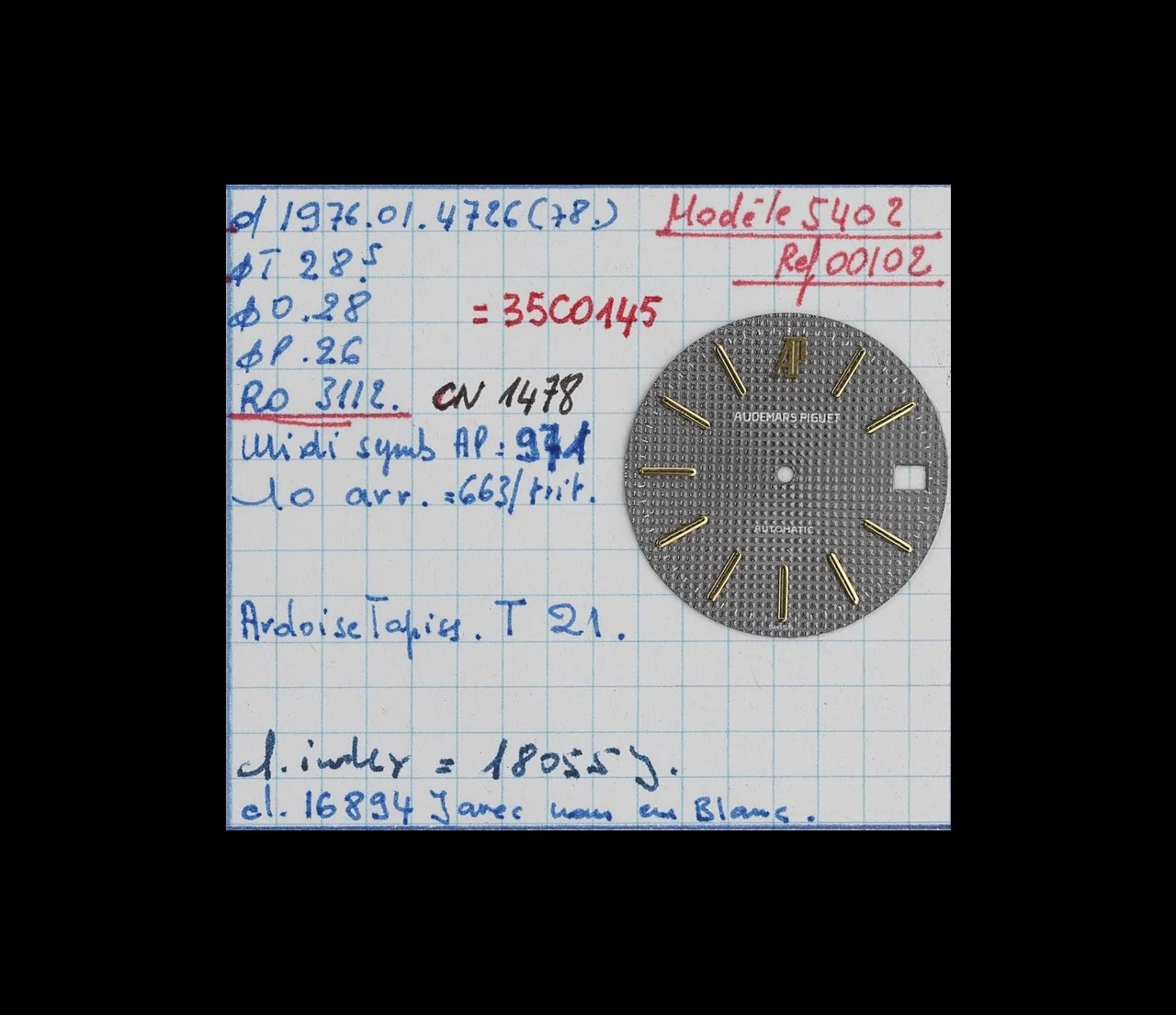
Circa 1980. Technical sheet for dial 5402SA. Yellow gold applied hour-markers and monogram. Slate grey colour. Audemars Piguet Archives.
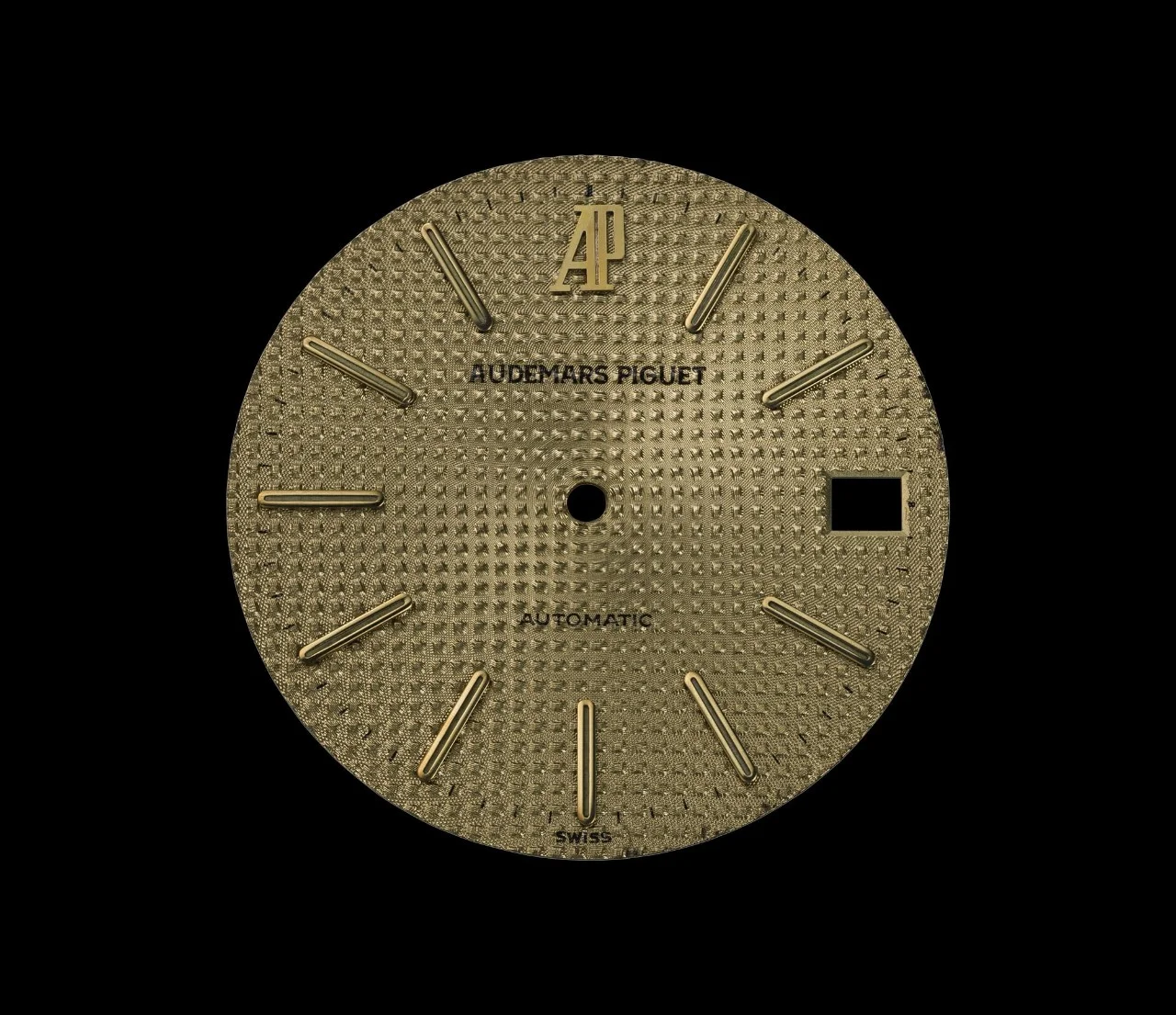
1980s. Royal Oak 5402BA, T21 Tapisserie dial. This dial adorns the Royal Oak 5402BA no. 231, sold in 1978, the dial of which was probably changed in the 1980s. Audemars Piguet Heritage, inv. 1610.
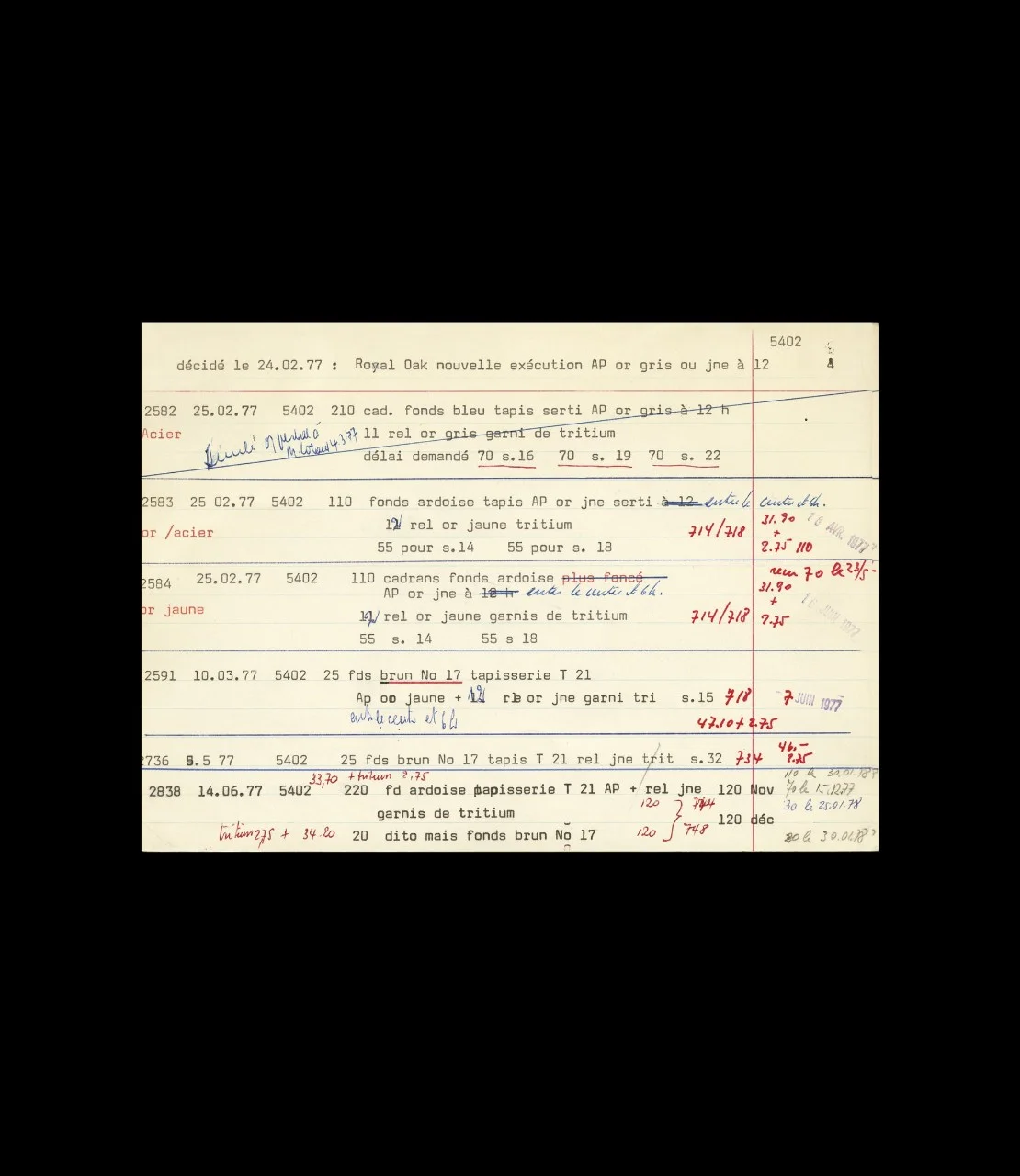
1977. Order for the first 5402 dials with AP at 12 o'clock The card indicates that the decision to create 5402 dials with an AP at 12 o'clock was taken on February 24, 1977 and that the first dials were ordered the following day. Audemars Piguet Archives.
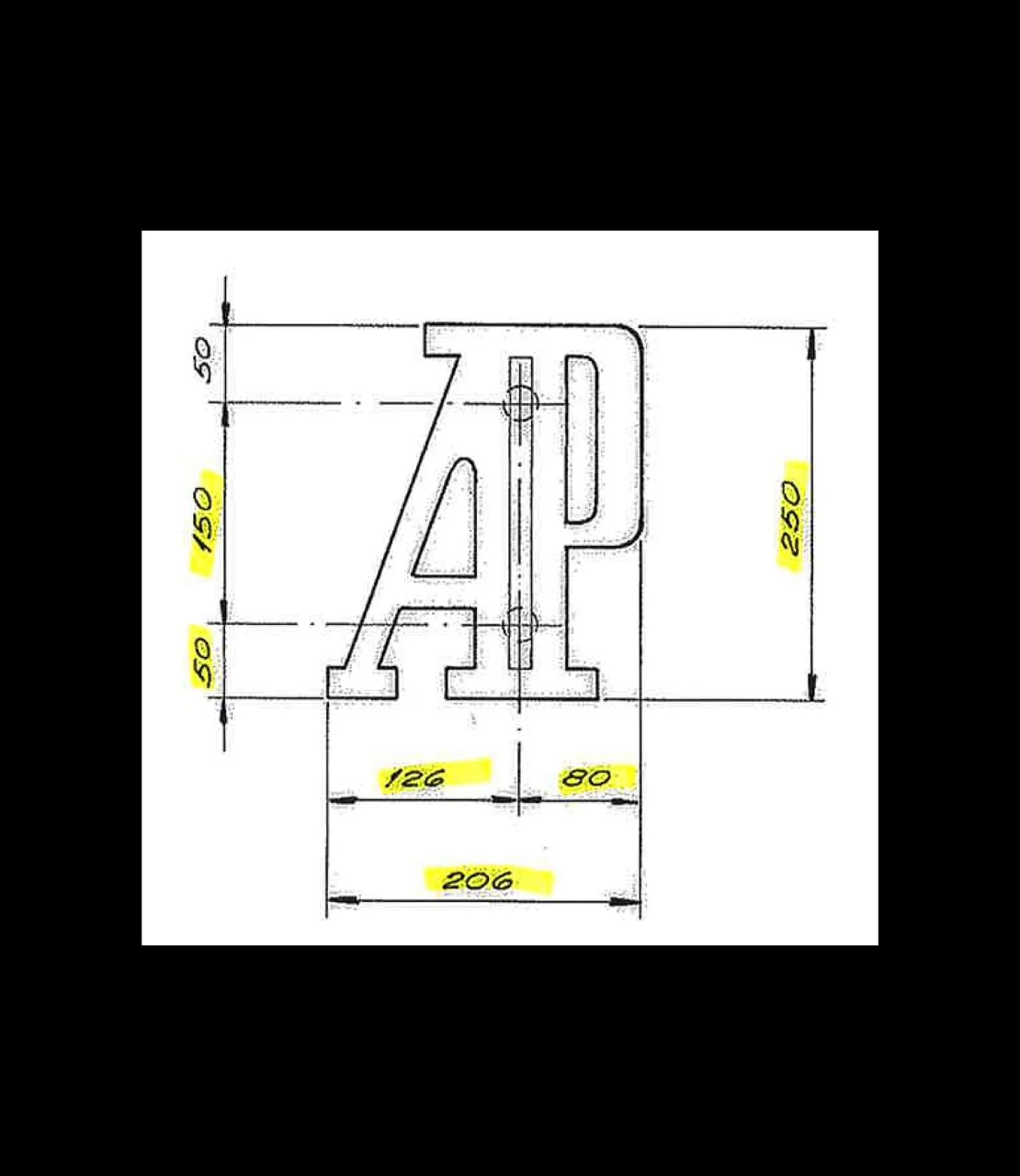
1984. Plan of the AP monogram Audemars Piguet Archives.

1978. Royal Oak 5042BA No. 231. Calibre 2121, movement 174138. Dial probably changed in the 1980s. 39 mm case B22139. 18-carat yellow gold. Sold in the USA in 1978. Audemars Piguet Heritage, inv. 1610.
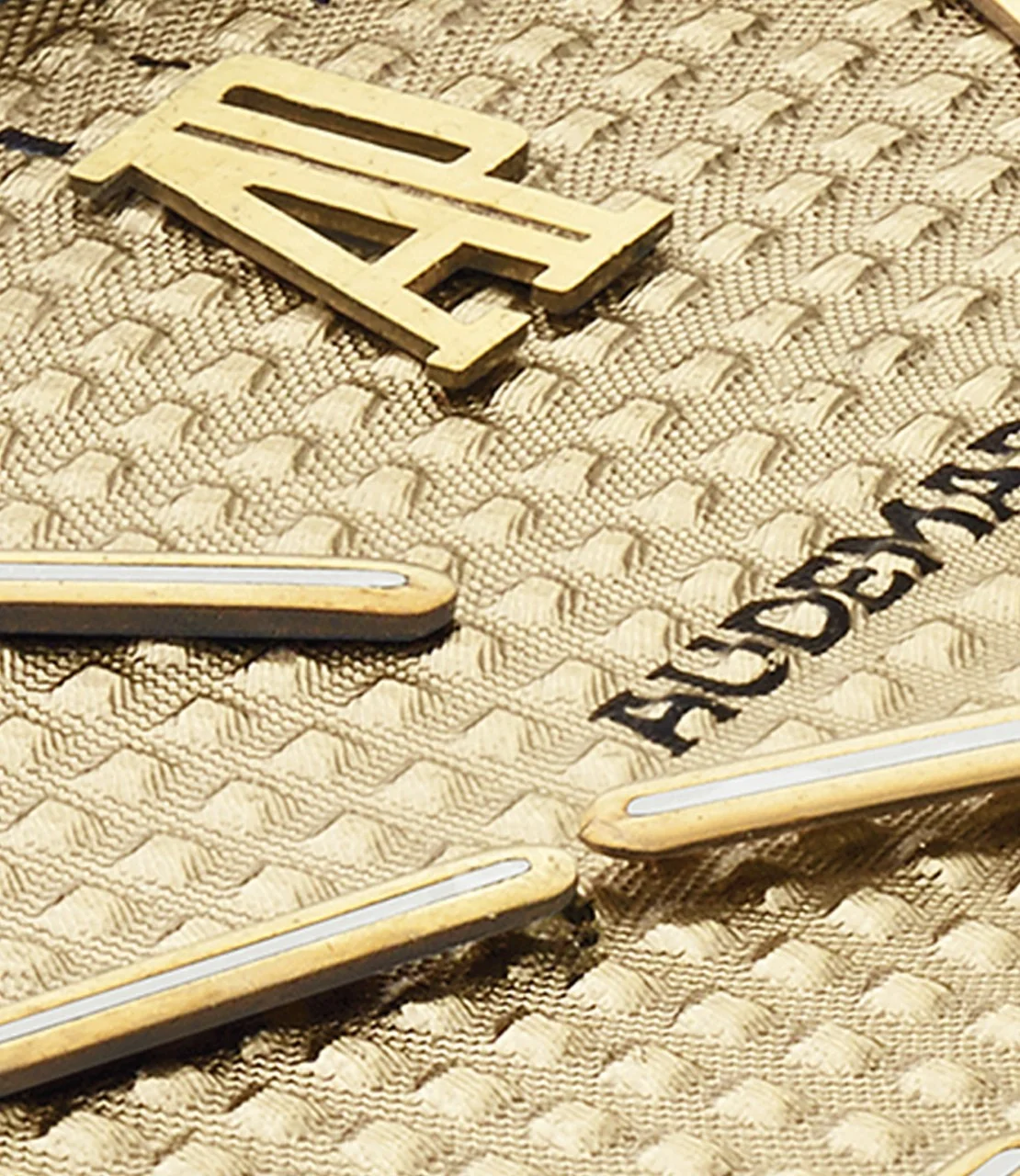
Circa 1980. AP monogram at 12 o'clock, Model 5402BA. At the end of the 1970s, the AP monogram progressively moved from its original position at 6 o'clock to 12 o'clock. Detail of the Royal Oak 5402BA no. 231 dial. Audemars Piguet Heritage, inv. 1610.
Transfers
The Stern technical data sheet indicates several cliché numbers. The French term cliché refers to metal plates engraved by means of an acid-based photographic process and used to transfer inscriptions: signatures, railway-type minute tracks and indications of origin. Printing tiny letters on a base with as many depth effects as the Tapisserie proved tricky, as the paint ran down the side of the pyramids and entered the small diamond-shaped holes before drying. To 'smooth out the terrain' and fill the holes, dial-makers first printed two layers of transparent ink, then switched to two layers of white paint. This process is still used today.
Just as the colour of the dials may vary slightly from one watch to another, the position of the transfers may differ slightly, as do the thickness of the lettering and the lines. However, the brand name generally appears within a triangle formed by the extremities of the hour-markers at 10, 12 and 2 o'clock. Note that the AUTOMATIC indication extends slightly below the triangle (see diagrams). This indication migrated permanently to 6 o'clock when the monogram AP replaced the double hour-marker at 12 o’clock.
The second transferred element is very discreet: between each end of the hour-markers, four tiny radiating lines mark the minutes and subtly accentuate the roundness of the dial. Attentive connoisseurs will have noticed that the three half-lines for the minutes on the right of the date aperture appear only on the original 5402 dials. Even the dials refurbished by Stern in the 1980s no longer incorporate them. Finally, the third element is even more discreet and consists of a reminder of the Swiss origin of the watch just below the 6 o'clock hour-marker.
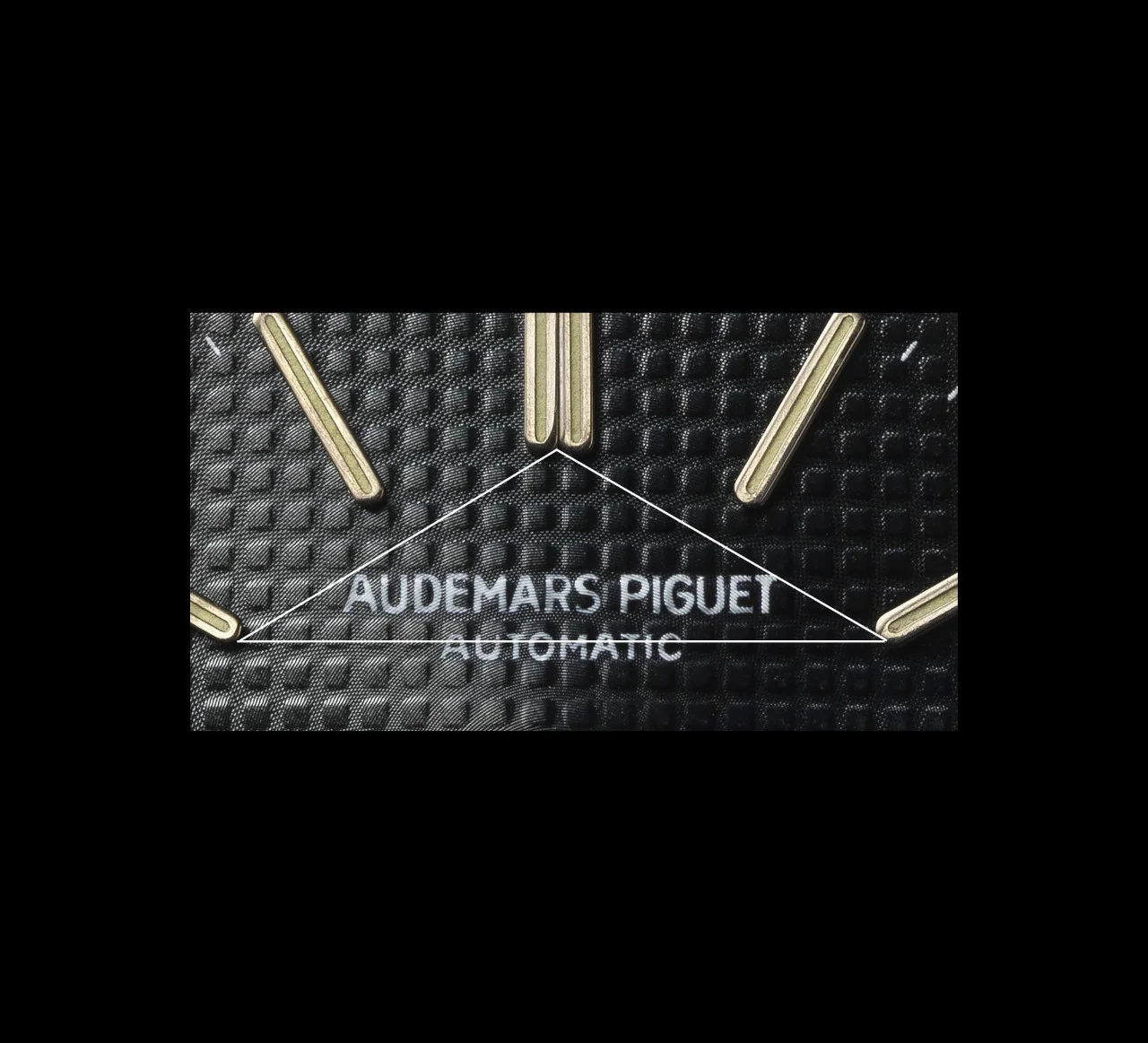
1972. Close-up on the Royal Oak 5402 dial. The signature on the first Royal Oak appears within a triangle formed by the white gold hour-markers. The printing of the white letters onto the surface in relief requires several preparation stages. Audemars Piguet Heritage, inv. 365.
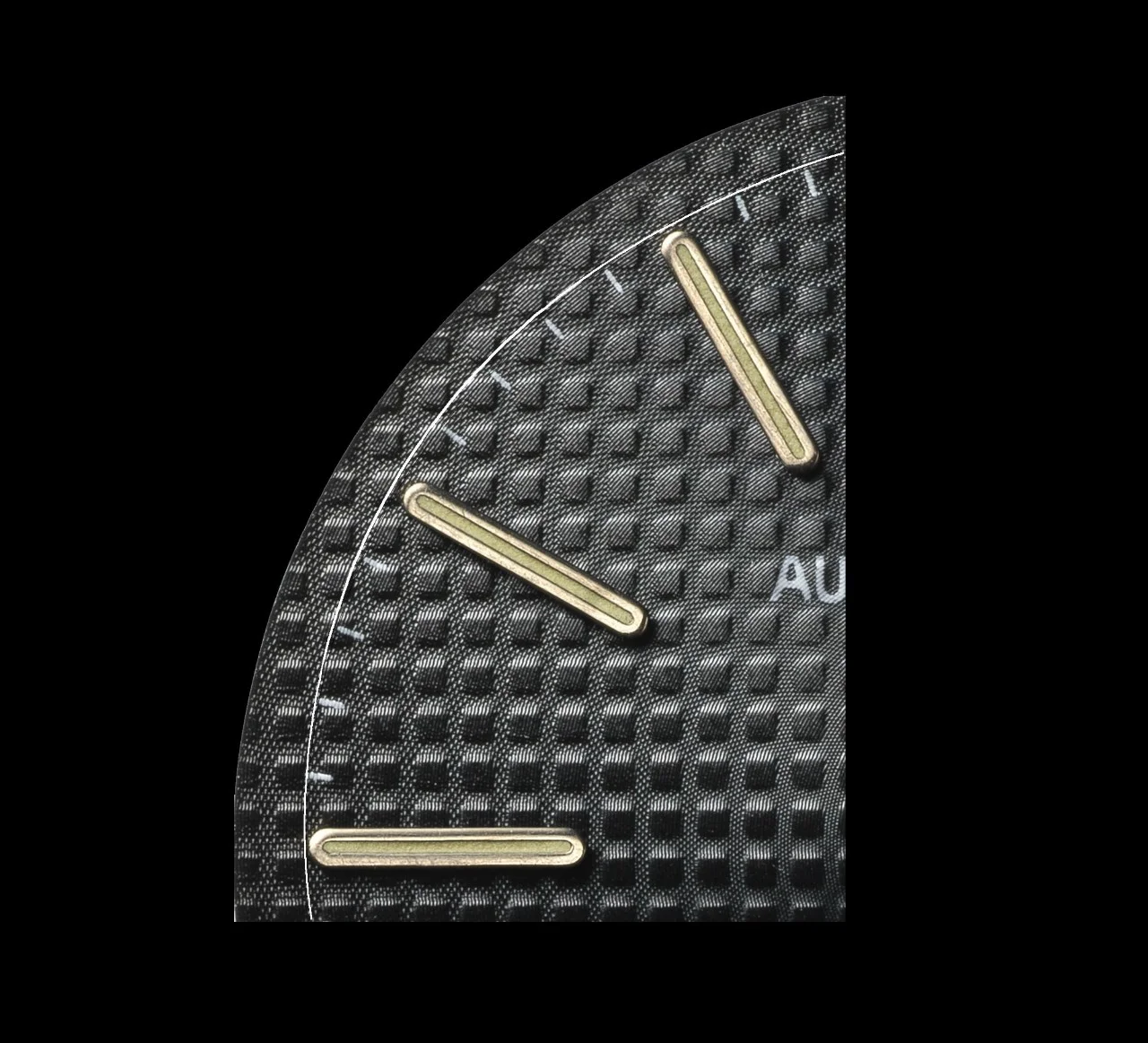
1972. Close-up on the Royal Oak 5402 dial. The minute track's transferred lines extend the circle formed by the external extremity of the white gold hour-markers. Audemars Piguet Heritage, inv. 365.
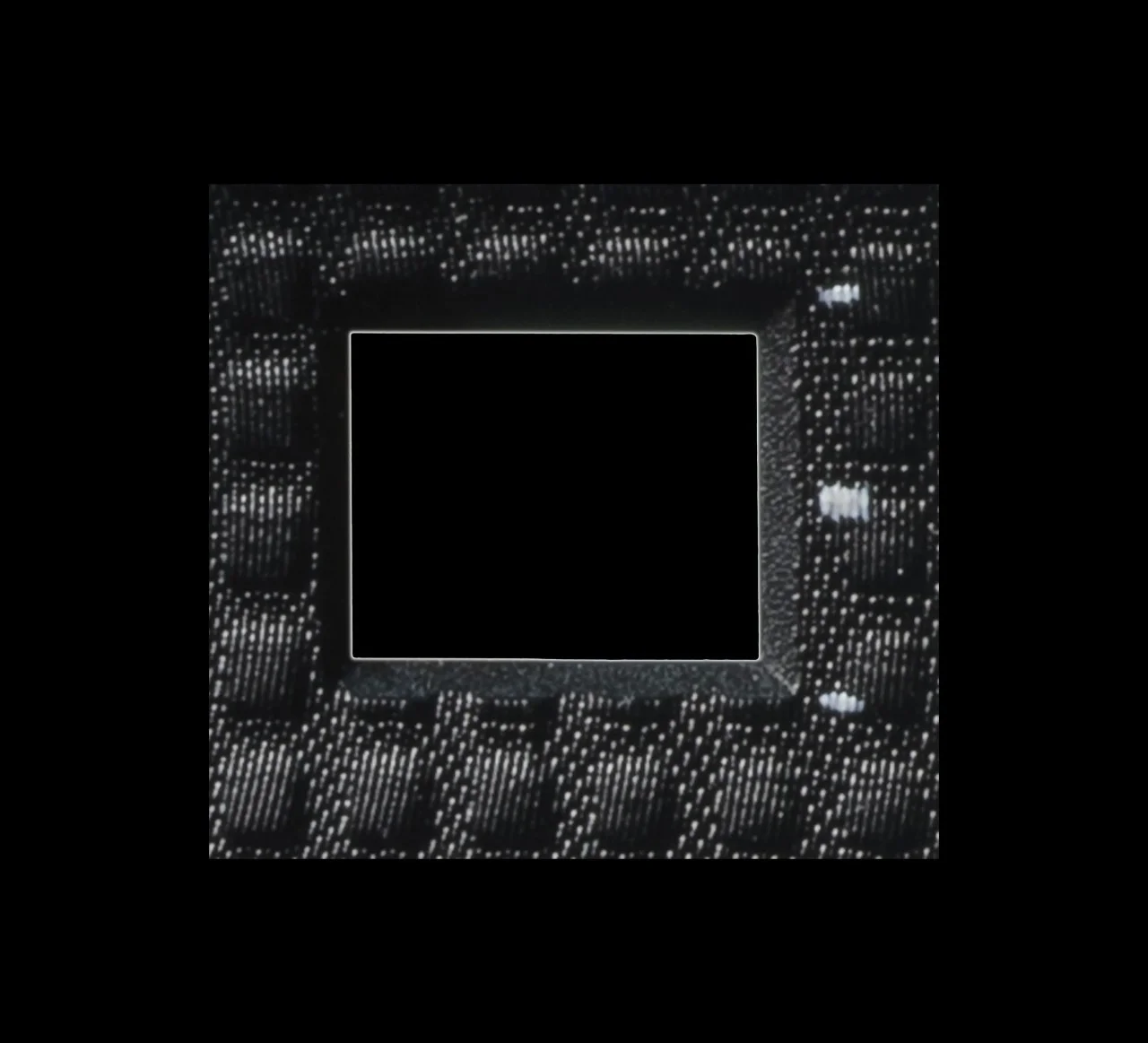
1972. Close-up on the Royal Oak 5402 dial. Shortened by half, the minute track lines are transferred on the right side of the date window. Audemars Piguet Heritage, inv. 365.
From SWISS to SWISS MADE
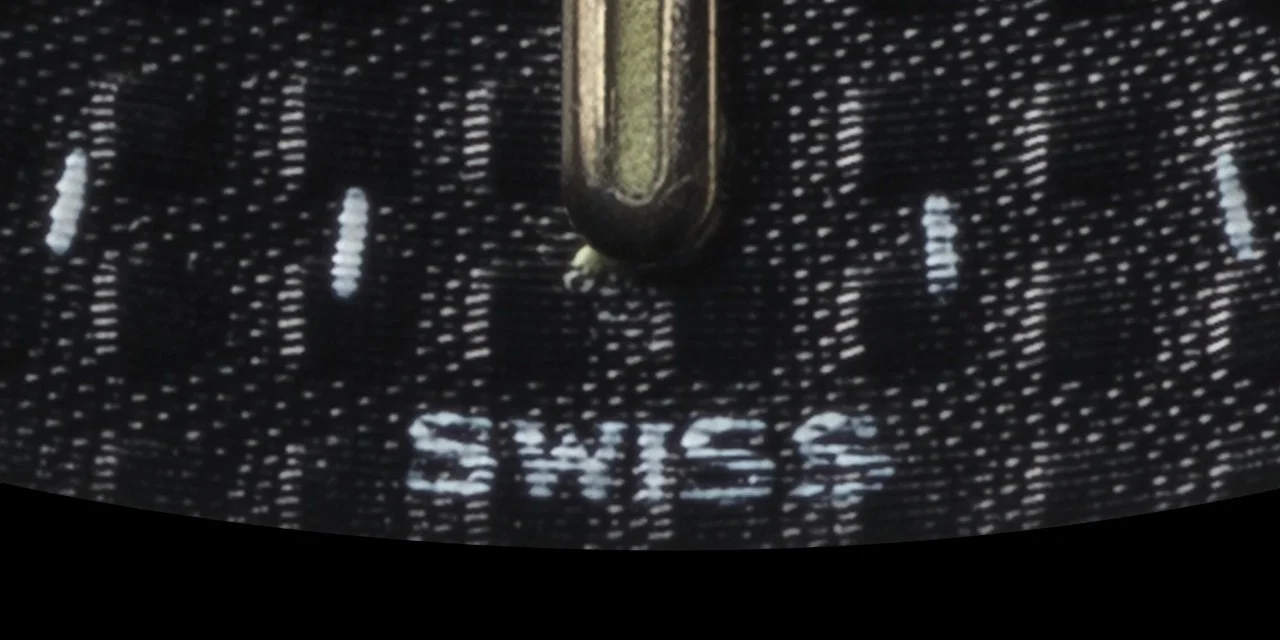
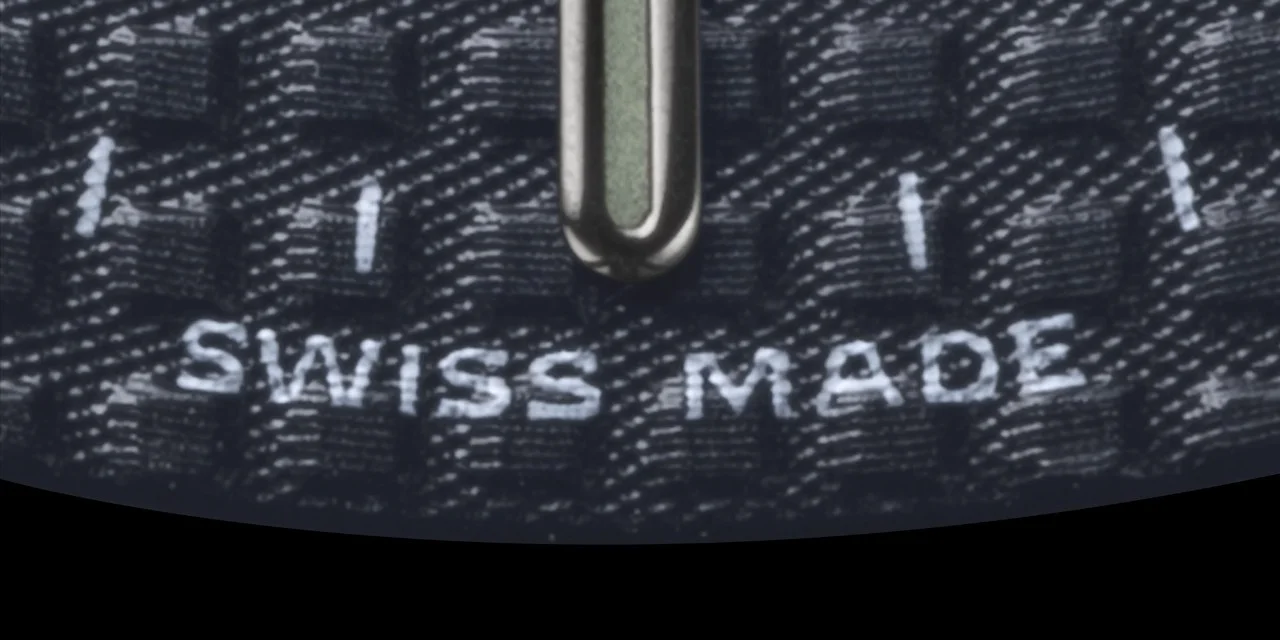
A distant descendant of the watchmaking guild hallmarks of the 17th century, the Swiss Made indication guarantees the quality of watches bearing it. Protected by an ordinance since 1971, it complements the numbers engraved on the watches and their movements; the multiple hallmarks (precious material, dial-maker, case-maker, bracelet, etc.); the engravings relating to the number of jewels; and of course the dial signature.
On Audemars Piguet dials, the indication of origin gradually established itself. In the 19th century, "Le Brassus" occasionally appeared beneath the trademark. From the 1930s to the late 1960s, this same position was often occupied by the "Genève" toponym, a reminder that Audemars Piguet had a complications workshop in this city. As for the name SWISS appearing in small letters below the hour-marker at 6 o'clock, it progressively asserted itself from the 1920s onwards. By the 1970s, it had become the norm – so much so that all the first Royal Oak watches were fitted with it.
Over time, dials develop a patina. They can become scratched and oxidised. The dial restorers then suggest “refurbishing” them, an operation which consists in dismantling the appliques, removing the paint, the varnish and the colour, as well as the oxidation. The dial is then given a facelift that involves redoing the electroplating, transfers and repositioning the refurbished hour-markers, while the guilloché work on the Tapisserie pattern is never touched up.
While the "refurbishment operations" comply with the original techniques and aesthetics, they sometimes show traces of the period in which they were performed. For example, the SWISS indication that appeared below the 6 o’clock hour-marker until around 1985 was replaced from that date onwards (approximately) by a SWISS MADE indication. This minor change, to which contemporaries probably did not attach any particular importance, has become an important criterion for collectors in the valuation of watches, as has the position of the applied AP monogram.
The reason is simple. When a dial bears the indication "SWISS MADE", it means that it was either completed or refreshed after the mid-1980s. The Audemars Piguet Heritage team has scoured the archives and tapped former employees’ memories at length in order to find the reason for this change. It seems to be simply aesthetic: the two words SWISS and MADE on either side of the hour-markers at 6 o’clock help balance the dial.
It should also be noted that the SWISS MADE indication may have appeared on 5402 watches when they were first marketed, as the last 133 examples were sold between 1985 and 2002.

Double Signatures
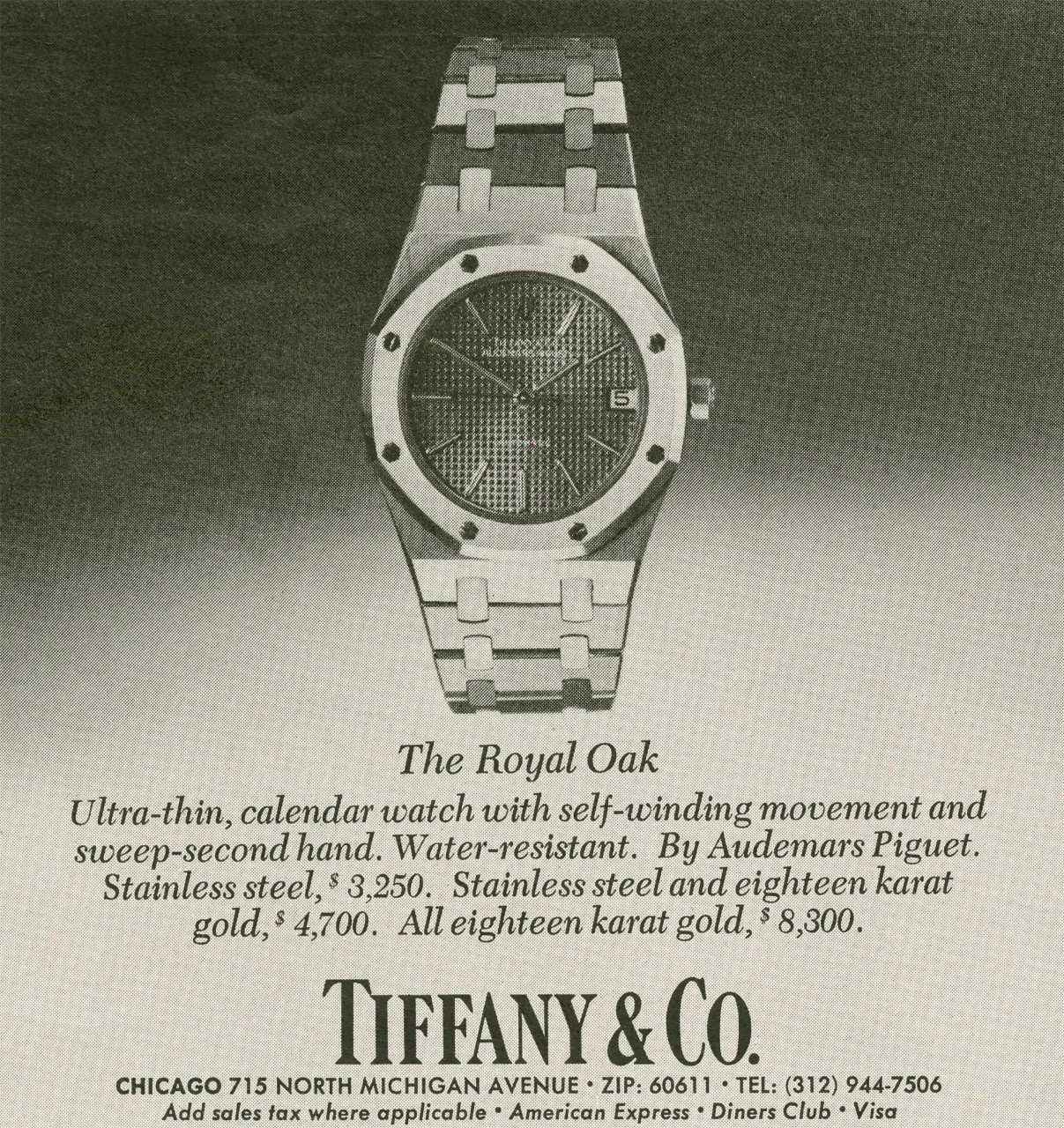
The collector community highly values timepieces that encompass the signatures of two prestigious brands on the dial: collectors’ admiration for each brand combines in one single object. As far as the 5402 Royal Oak is concerned, the extreme rarity of double signatures makes these models particularly coveted. Such is the case of a few Audemars Piguet timepieces co-signed by Bulgari, Tiffany or Chaumet.
To better understand the double signature, we need to go back in time to Audemars Piguet’s inception in 1875. Painstakingly working at their workbench in an isolated valley situated in the Jura mountains, the handful of Audemars Piguet watchmakers had limited and rare access to their end clients. They relied on distributors, as well as other watchmakers and jewellers, such as Tiffany, Cartier, Gübelin or Bulgari to name but a few, that were already established in some of the most prestigious metropolises. These brands often added their name on the watches produced in the Vallée de Joux either because they were in charge of their distribution or because they participated in their creation.
Over the years, reverence for Audemars Piguet increased within the collectors’ circle – a growing reputation reflected by the progressive rise of watches signed by Audemars Piguet. Until the mid-20th century, the brand’s signature was often accompanied by the retailer’s name. However, from the 1950s onwards, the Le Brassus brand affirmed itself and the double signature became less common. In the 1970s, it had become the exception.
Even more important, the practice had changed. Before the 1970s, Audemars Piguet watchmakers ordered dials signed by other brands and assembled them in the Le Brassus workshops. In 1972, brands at times added their own signature after receiving the finished watch. As a result, Audemars Piguet’s archives have no record of double signatures for Model 5402. Yet, the destination city can sometimes offer an interesting clue. For instance, a dial co-signed by Tiffany is more likely to be original if Audemars Piguet delivered the watch to the jeweller’s headquarters in New York, rather than to Tokyo or Paris. However, this information cannot provide definitive evidence. Only the brand that co-signed the dial can certify, if recorded in its archives, that a watch had the double signature when it was first commercialised.
Model 5402 Dial Variants
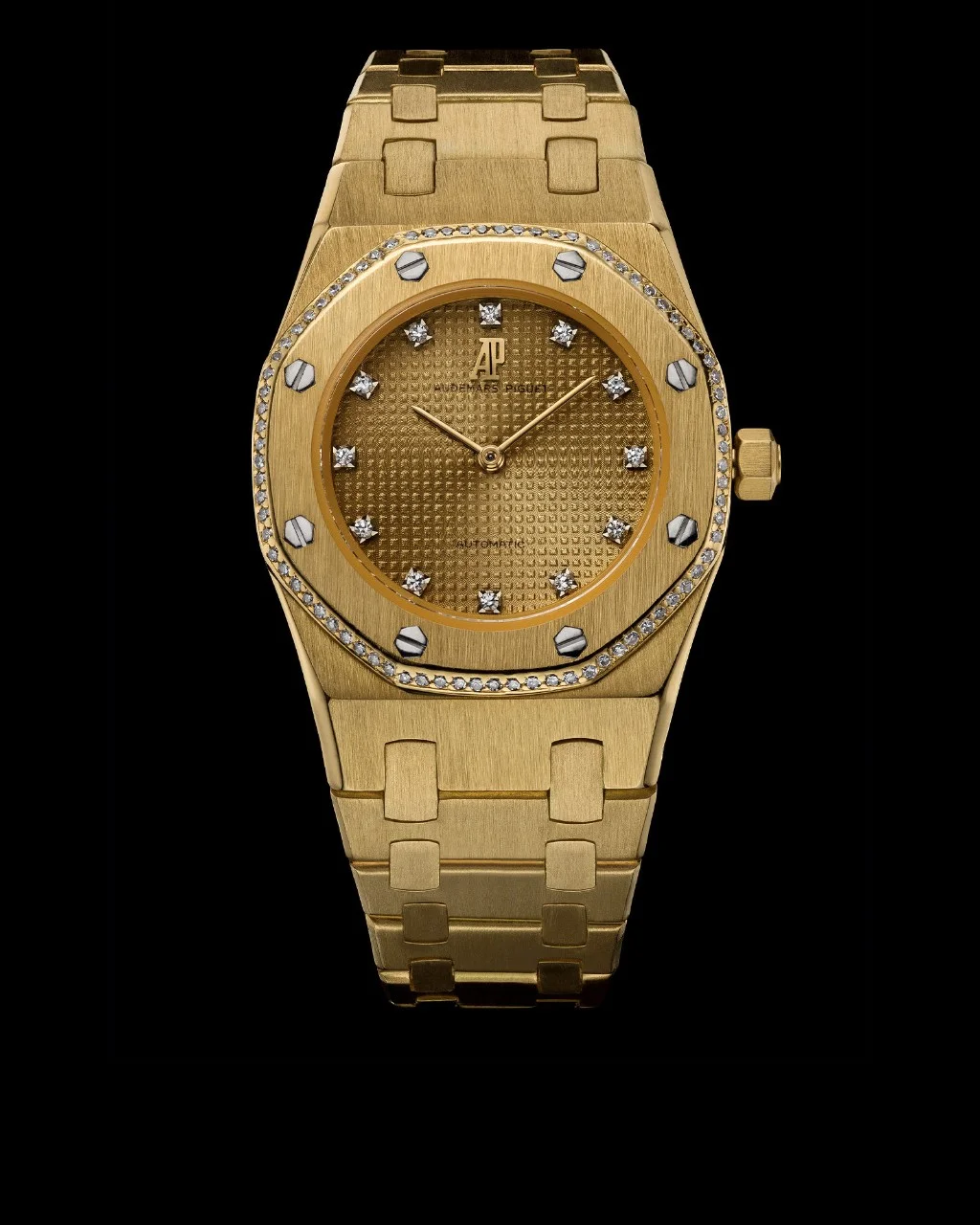
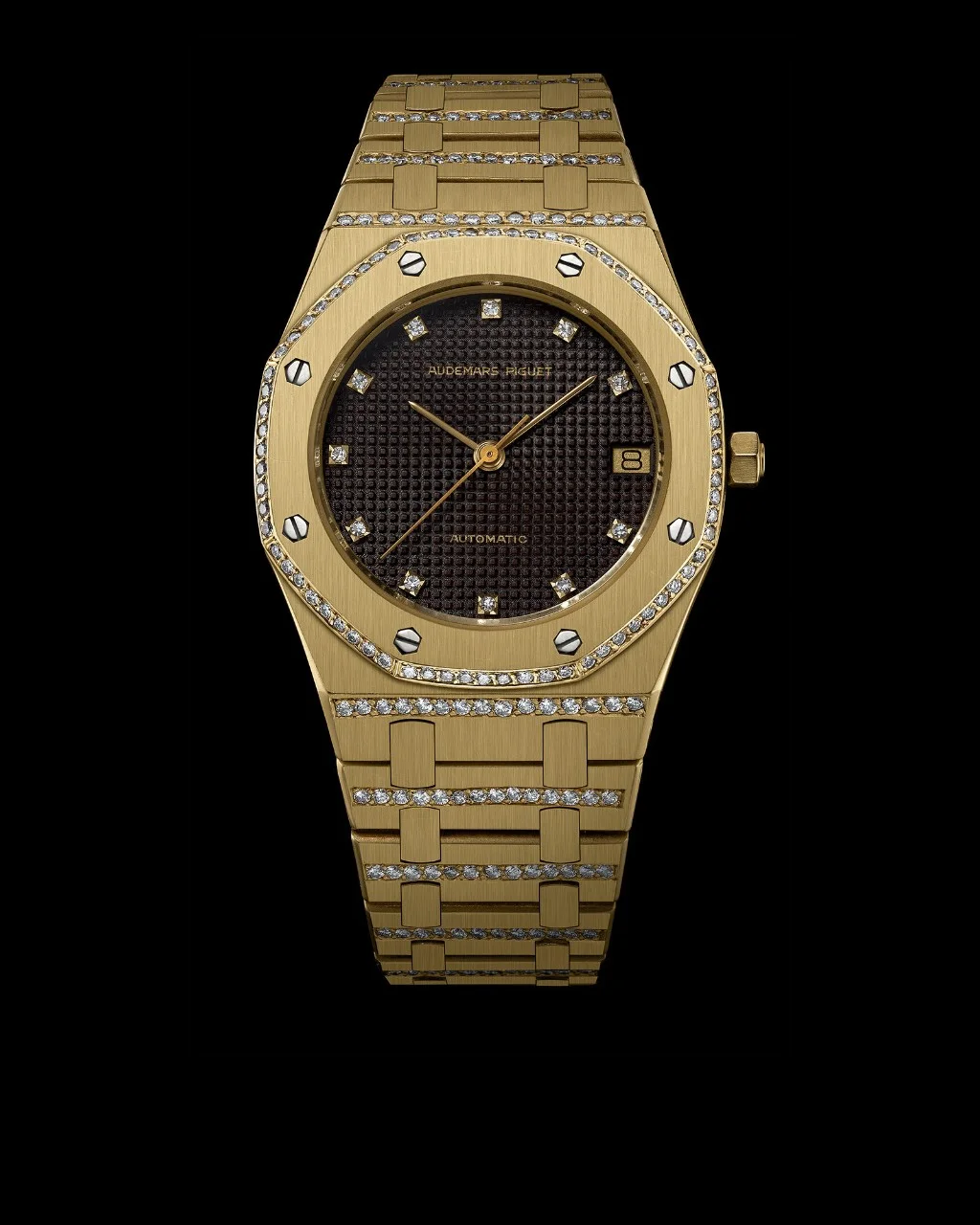
In 1977, the Royal Oak 5402 was interpreted for the first time in yellow gold, white gold and in a two-tone version. The guilloché dials followed the trend by offering a variety of colours, changing the material of the monogram and the hour-markers and even replacing the latter with diamonds.
Slate Grey Dials
Between February 1977 and September 1990, 1,548 "slate grey" dials were ordered to equip the two-tone 5402SA model. At least 220 of these had an AP monogram at 6 o'clock and at least 980 at 12 o’clock. The dial colour recalled the stainless steel of the case and bracelet, while the yellow gold hour-markers echoed the gold of the bezel and the studs. It is worth noting that while the Tapisserie pattern is the most emblematic, dials without this decoration emerged during the late 1970s in different colour variants as presented here.
Brown (or Gilded) Dials
Produced in a run of 740, Model 5402BA most often featured blue dials punctuated by yellow gold hour-markers. However, this model was also equipped with 146 gilded dials, including 25 with the AP monogram at 6 o'clock, 76 at 12 o’clock and 45 whose position is not specified in the archives. It should be noted that gilded variants with AP at 6 o'clock are extremely rare. No examples have been received by the AP Customer Service since 2000.
Gemset Dials
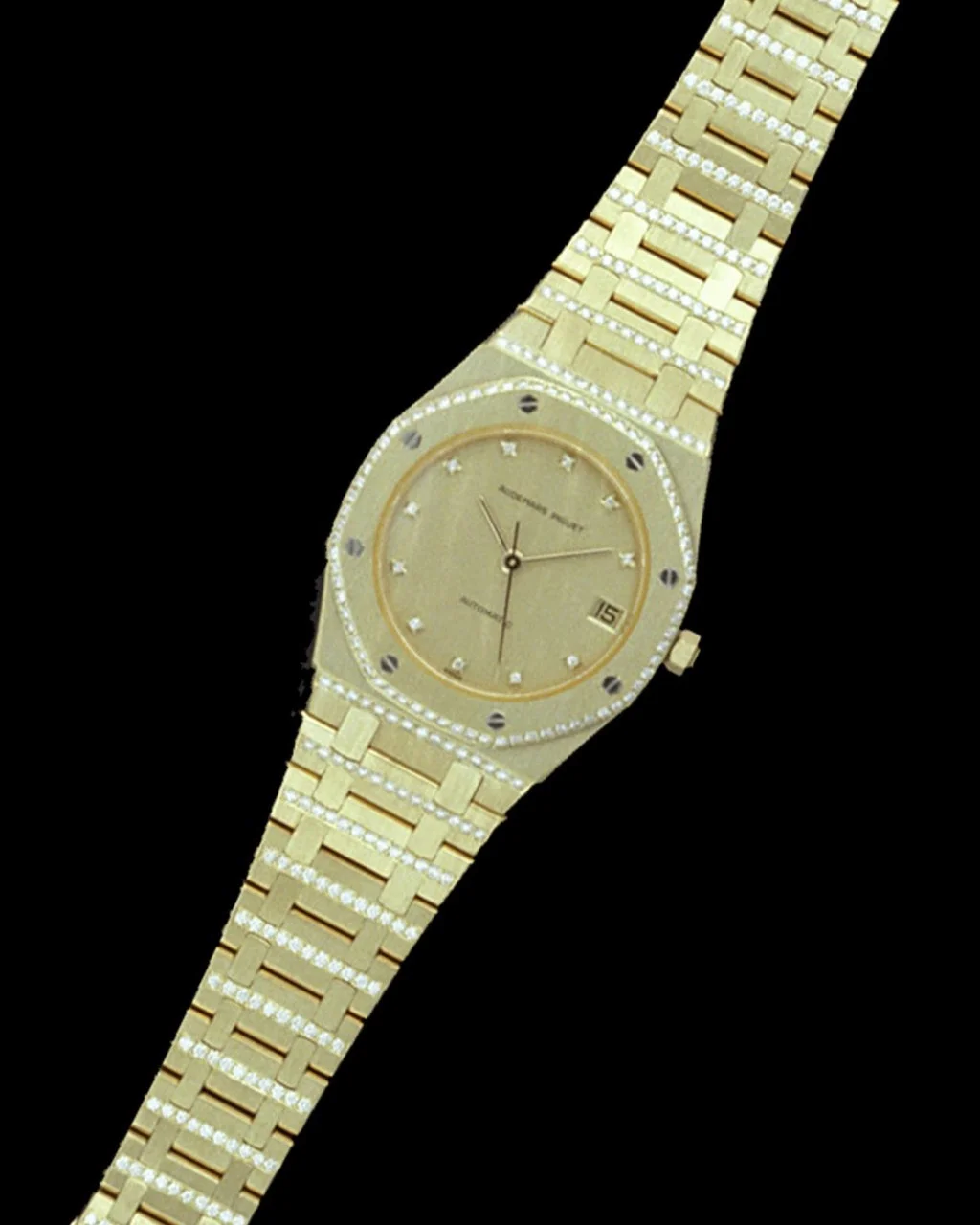
The archives record 23 orders for dials with diamond hour-markers. Blue, gilded or slate grey, with square or round studs, intended for Model 5402 or its 4187 gemset derivative, they revive the tradition of very small series or even one-of-a-kind models.
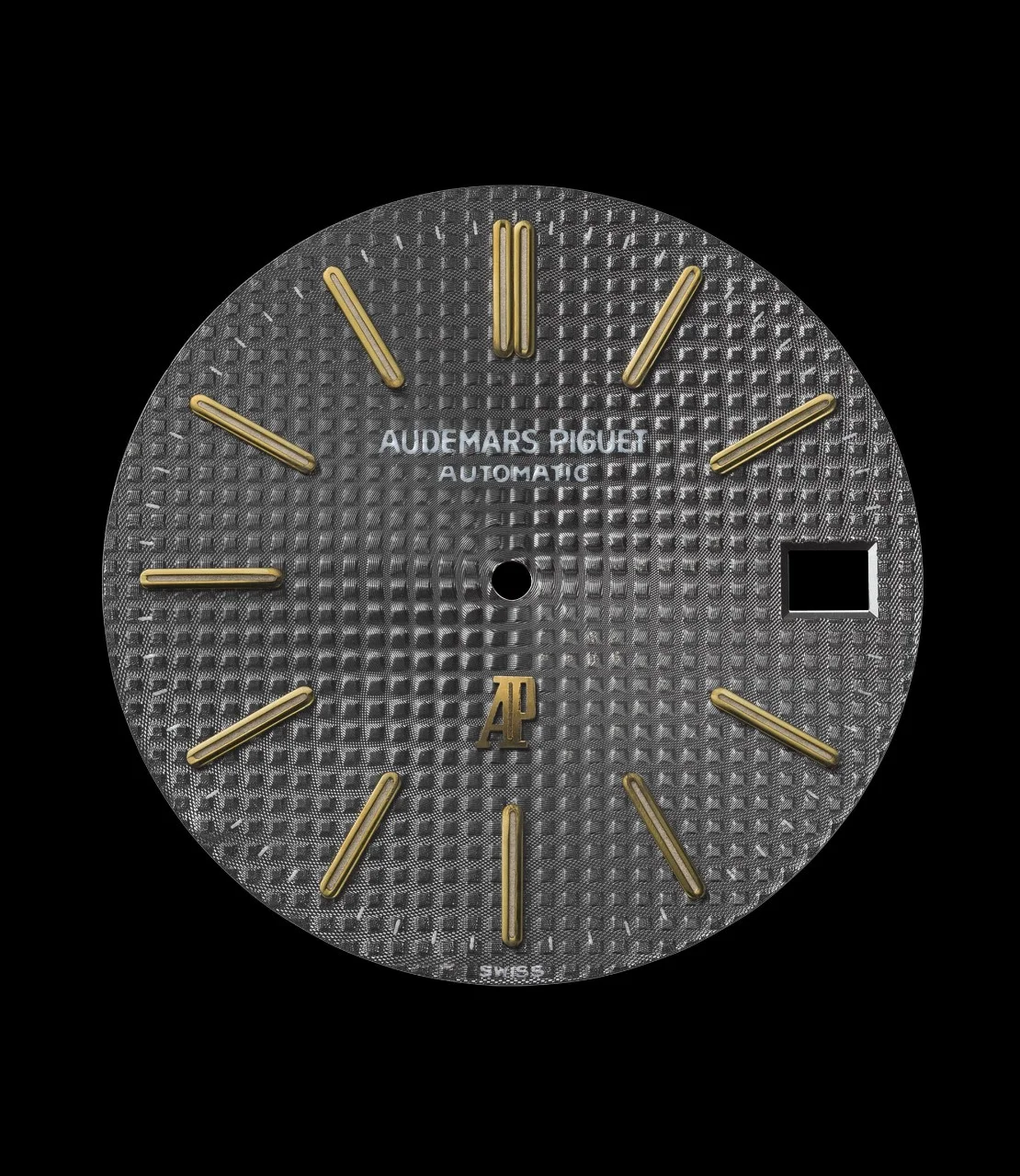
1978. Royal Oak 5402SA dial. This slate grey dial punctuated with applied yellow gold hour-markers is destined to Model 5402's two-tone (SA) versions. The dial illustrated here adorns the Royal Oak 5402SA no. 192, sold in Mexico in May 1978. Audemars Piguet Heritage, inv. 1446.
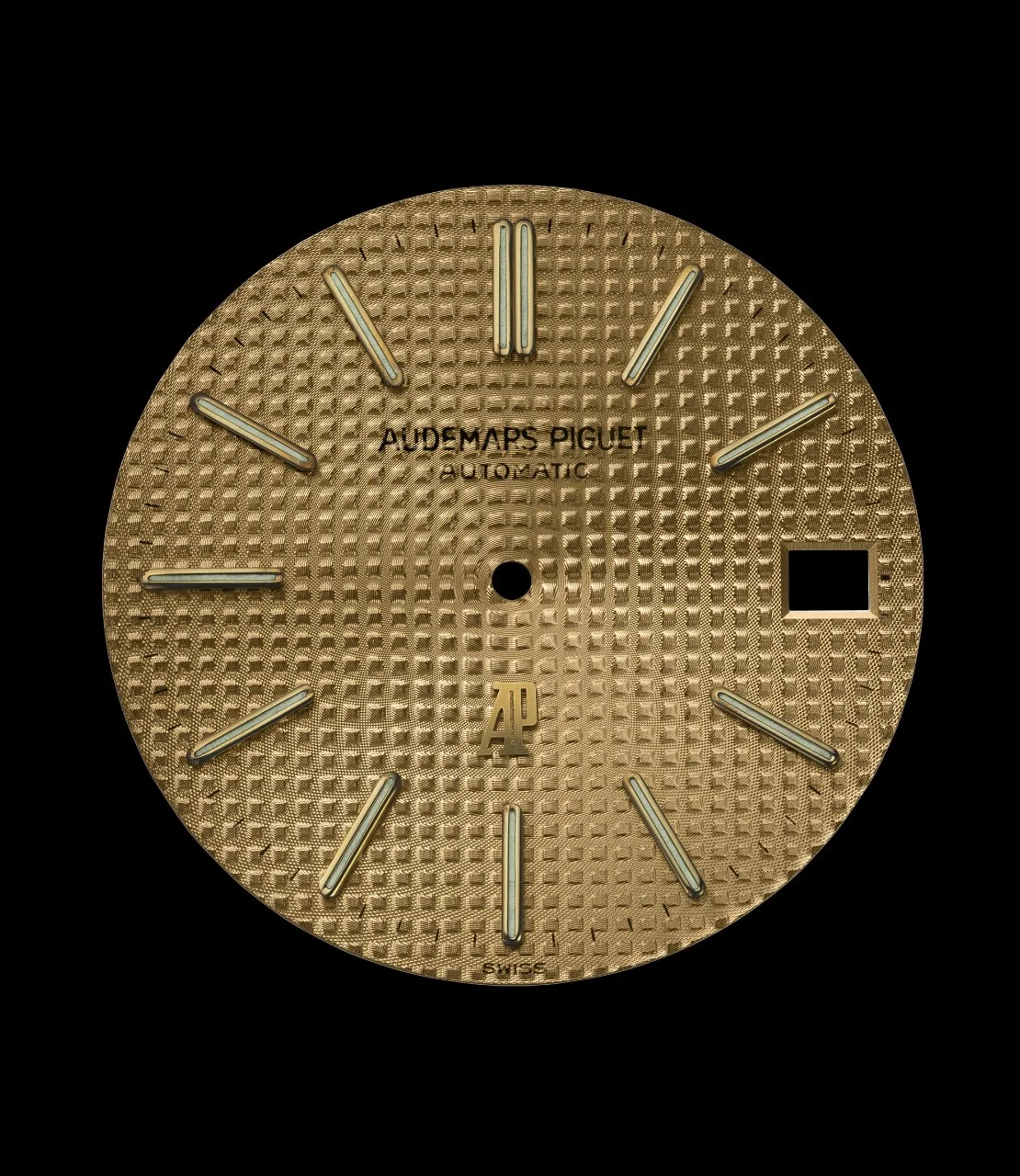
1978. Royal Oak 5402BA dial. This golden dial with the AP monogram positioned at 6 o'clock was made in 25 examples. It adorns the Royal Oak 5402BA no. 192, sold in Mexico in May 1978. Audemars Piguet Heritage, inv. 1073.
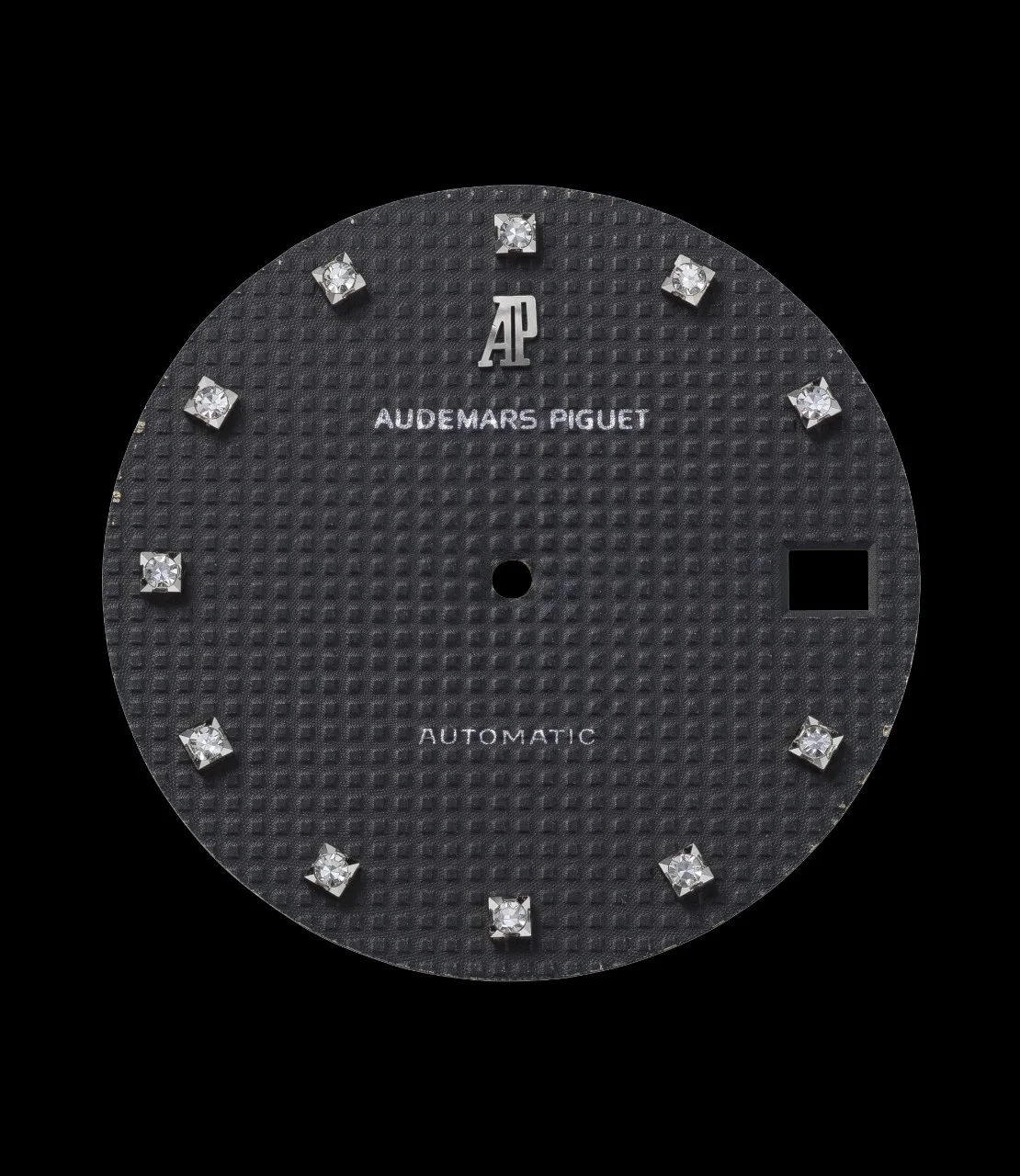
1978. Royal Oak 5402BC dial. The white gold variants of Model 5402 are often adorned with a gemset dial, with square or round setting. This example is fitted on the Royal Oak 5402BC no. 110, sold in Germany in 1980. Audemars Piguet Heritage, inv. 1835.
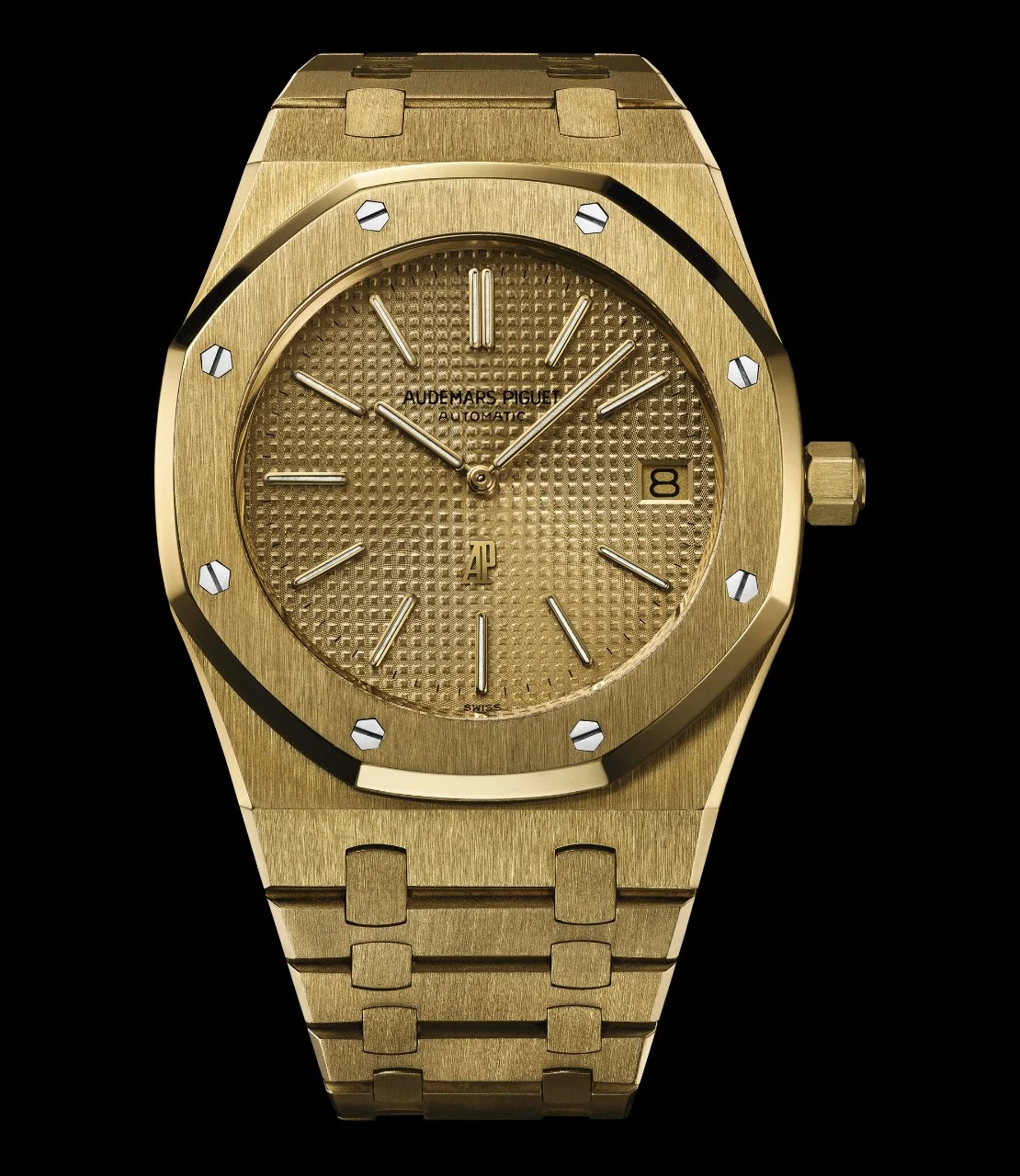
1978. Royal Oak 5402BA No. 192. Date. Calibre 2121, movement 174038. Bracelet 344, T21 Tapisserie dial. Case 39 mm B19030, no. 192 in 18-carat yellow gold. Sold in Mexico in May 1978. Audemars Piguet Heritage, inv. 1073.
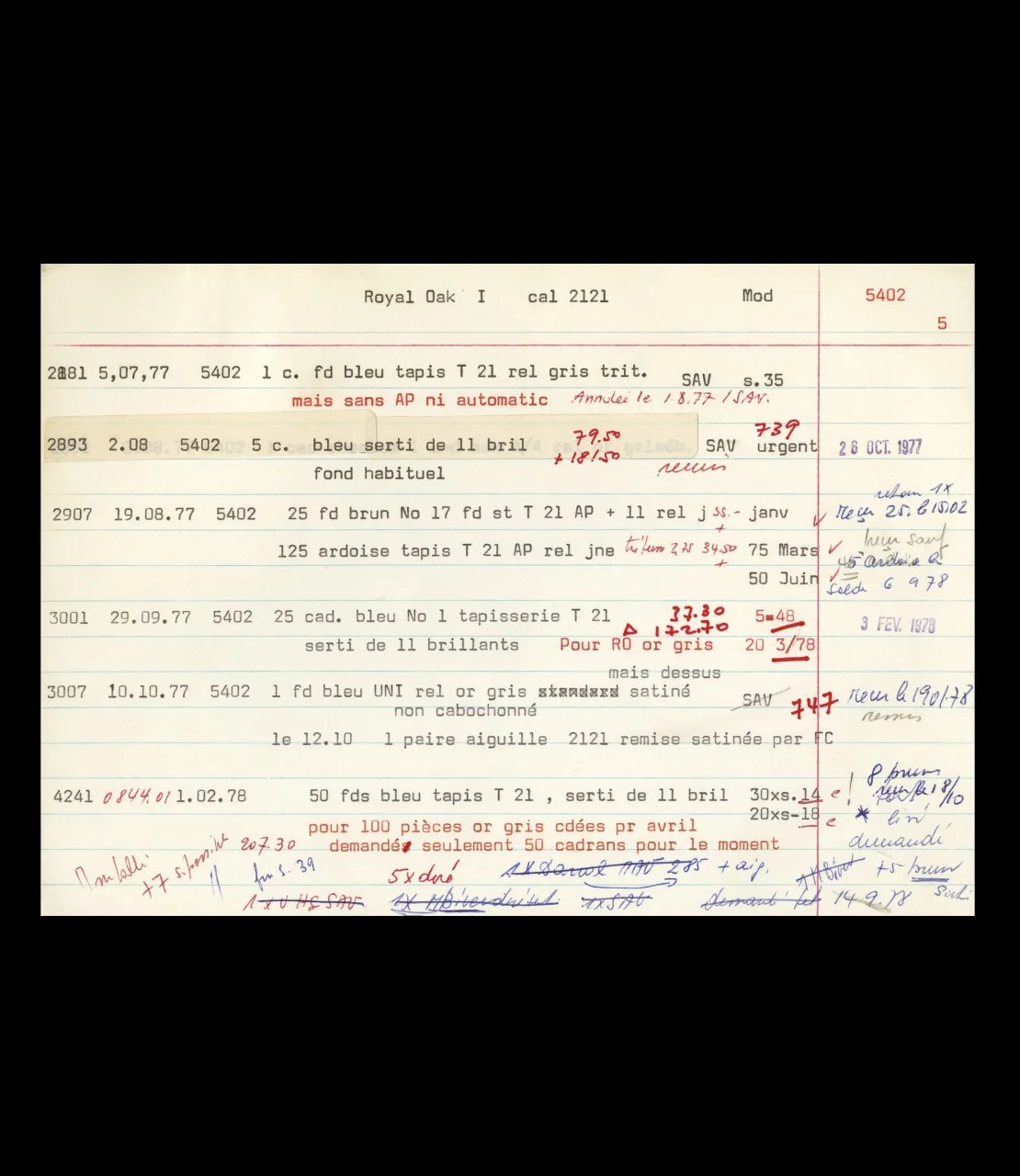
1977. Orders for the first 5402 gemset gilded dials. The introduction of precious materials in the Royal Oak 5402 was accompanied by the creation of a multitude of dials, a significant proportion of which were for the 5402BC and 4187 gemset variations. The Model 2907 order corresponds to the 25 gilded dials (described here as "brown") with an AP monogram at 6 o'clock. Audemars Piguet Archives.

1978. Royal Oak 5042SA No. 286. Calibre 2121, movement 175031. 39 mm case B20804. Steel and 18-carat yellow gold. Sold in Hong Kong in 1978. Audemars Piguet Heritage, inv. 1446.
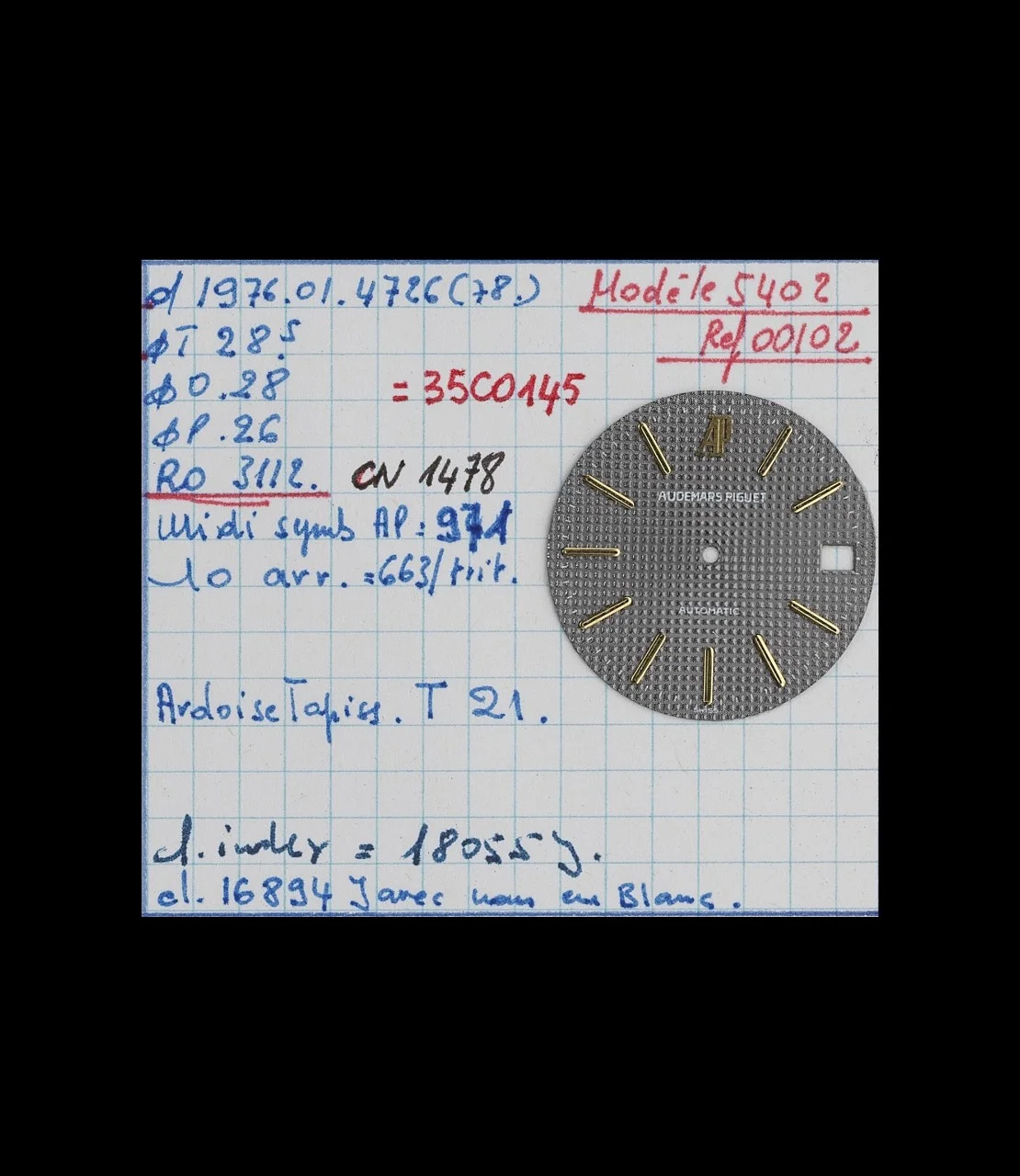
Circa 1980. Technical sheet for dial 5402SA. Yellow gold applied hour-markers and monogram. Slate grey colour. Audemars Piguet Archives.

1980. Royal Oak 5042BC no. 110. Calibre 2121, movement 211839. Case B43447, 39 mm. 18-carat white gold. Sold in Germany in 1980. Audemars Piguet Heritage, inv. 1835.
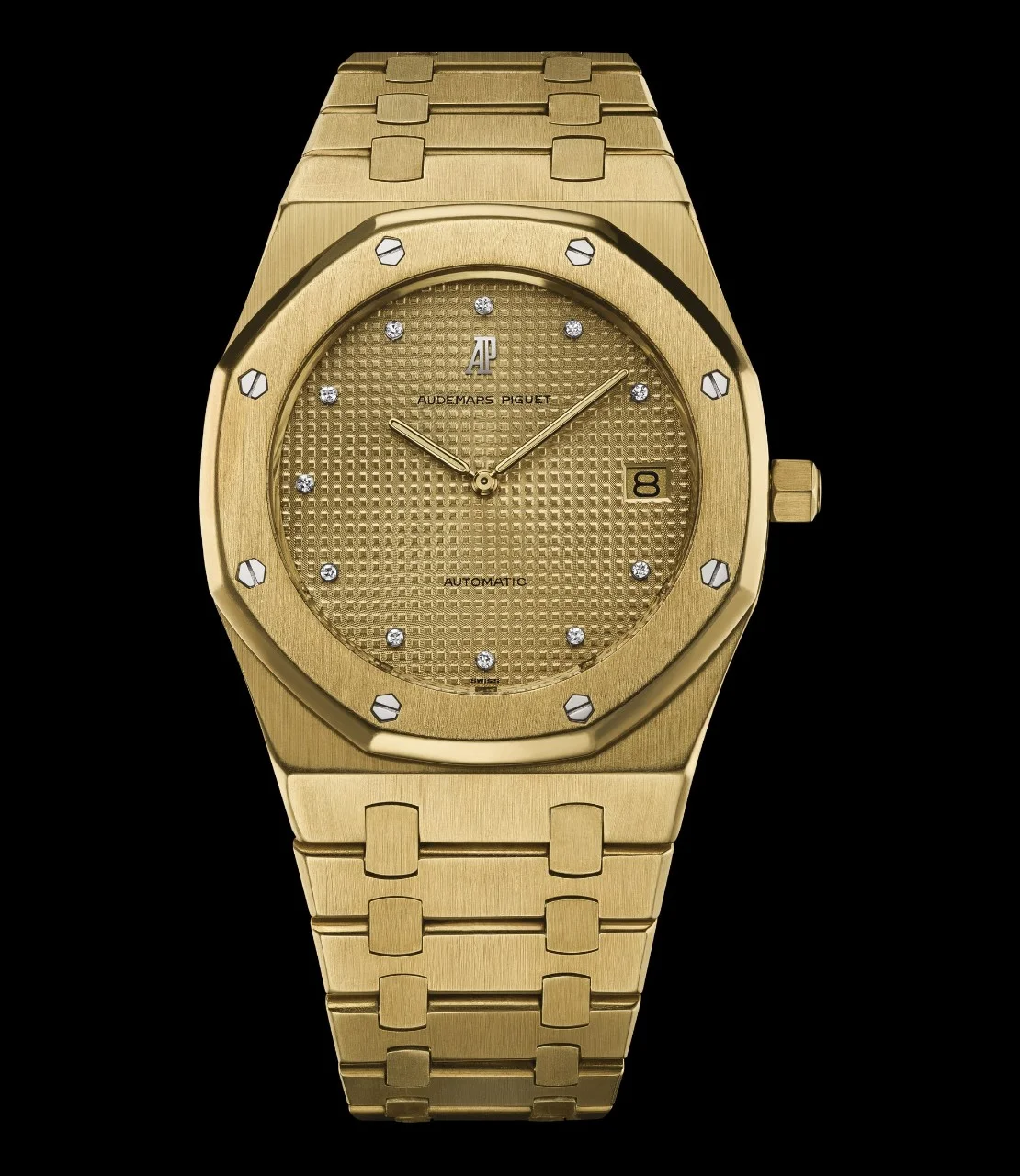
1978. Royal Oak 5402BA No. 113. Date. Calibre 2121, movement 174319. Gemset T21 Tapisserie dial. Bracelet 344. 39 mm case B18951 no. 113 in 18-carat yellow gold. Sold to UHG (German market) in June 1978. Pygmalion collection.
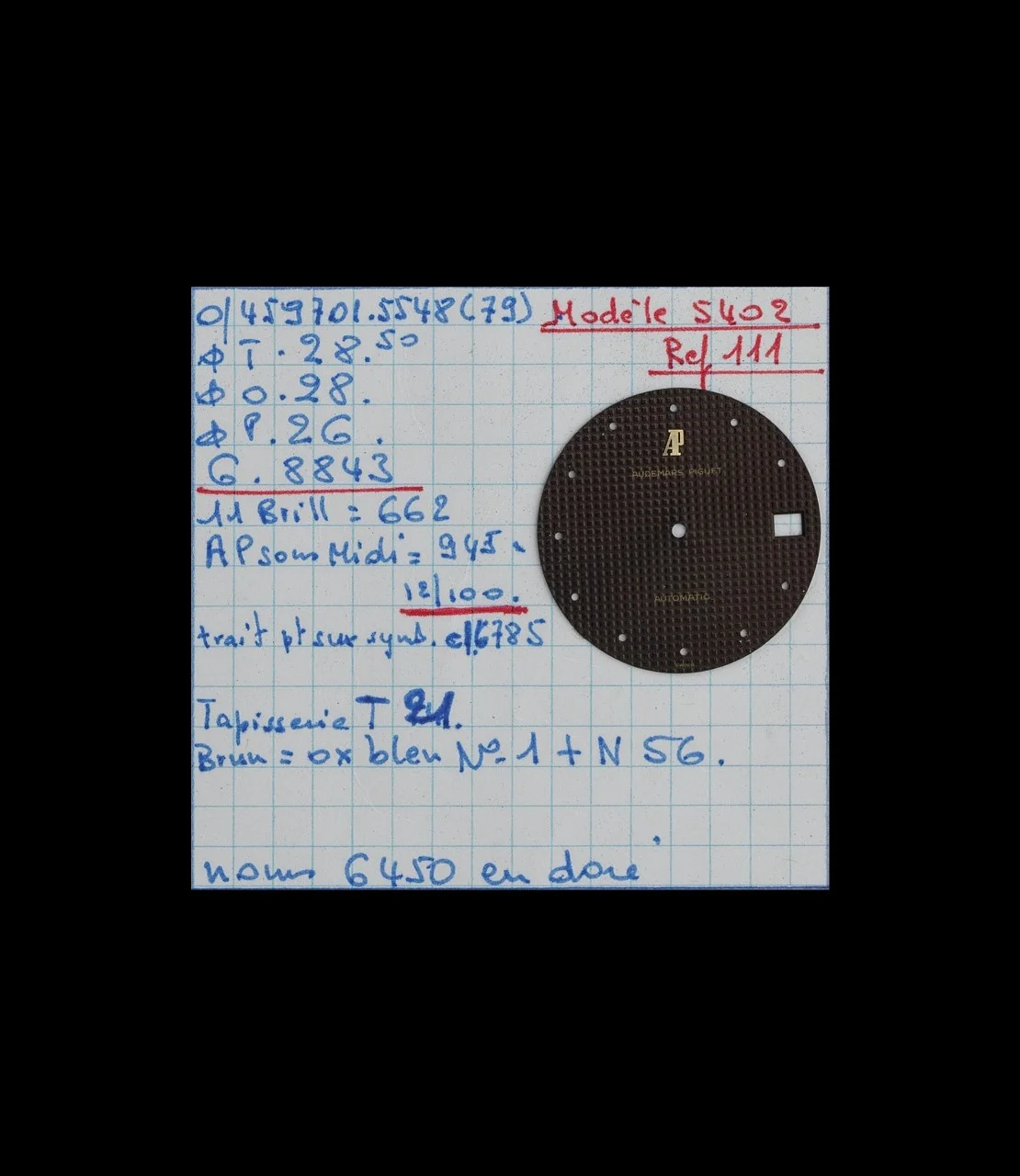
Circa 1980. Technical sheet for dial 5402, No. 111. The 11 holes have been made for diamonds. Audemars Piguet Archives.
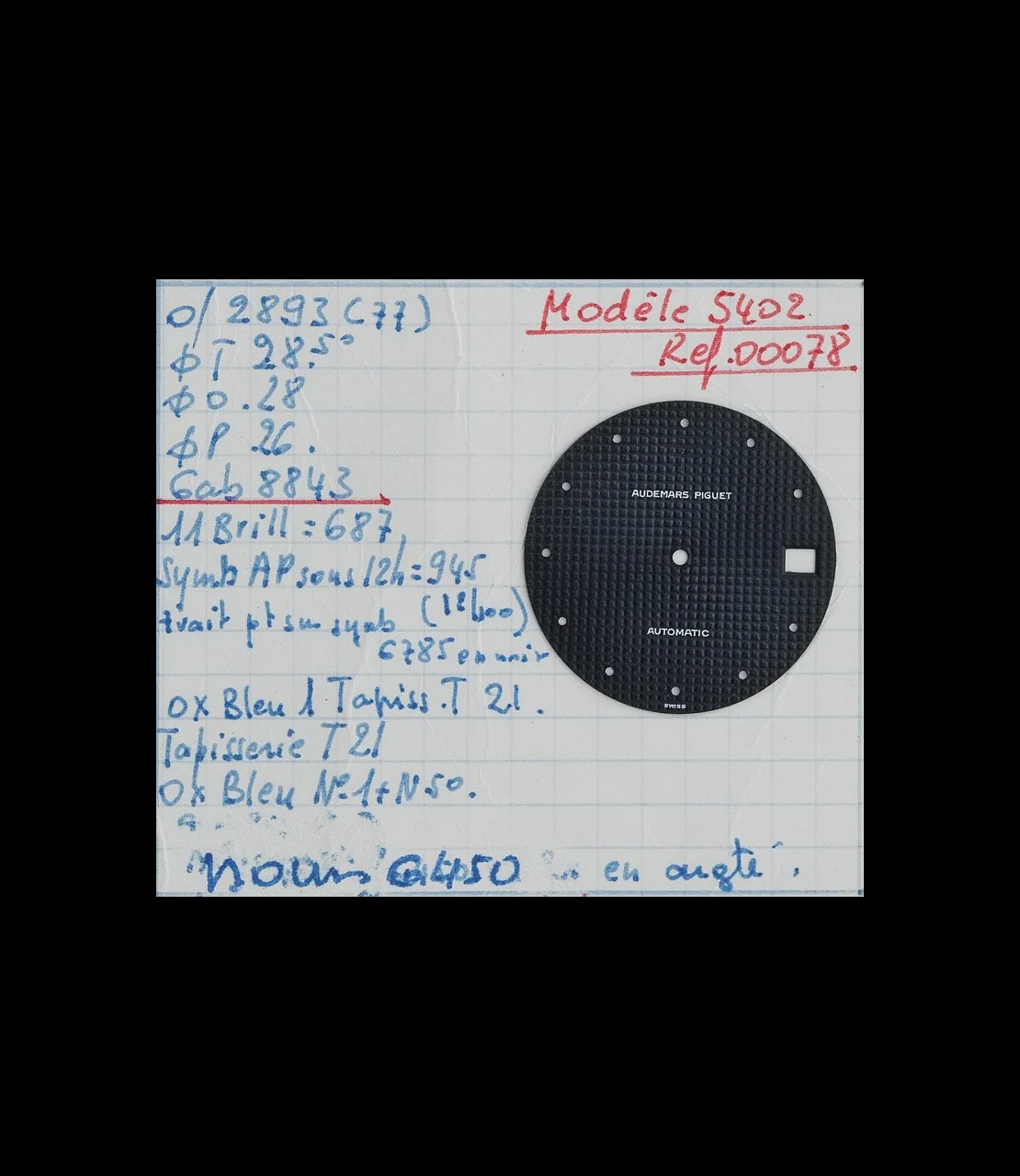
Circa 1980. Technical sheet for dial 5402, No. 78. The 11 holes are destined to welcome diamonds. Audemars Piguet Archives.
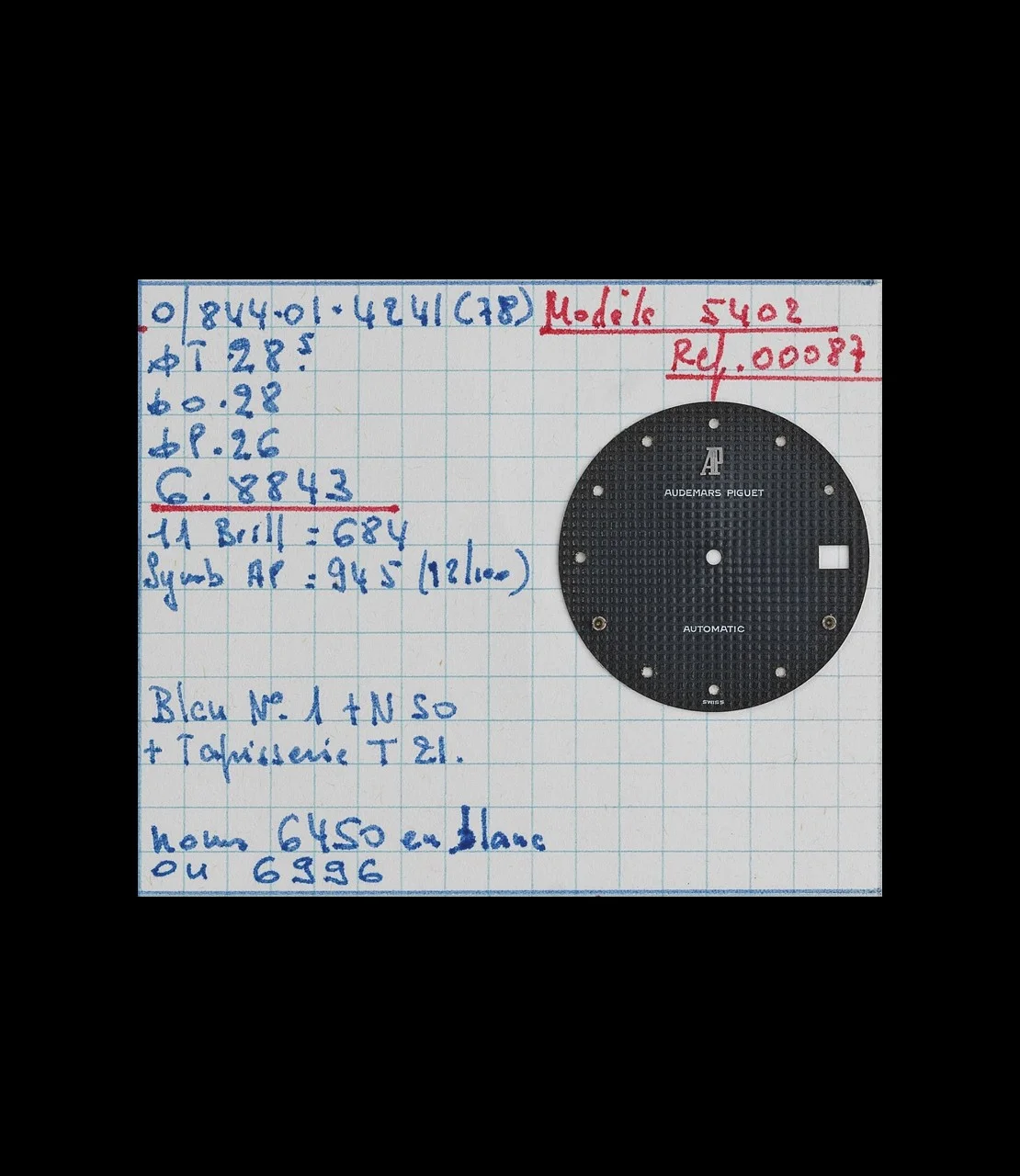
Circa 1980. Technical sheet for dial 5402, No. 87. The 11 holes are destined to welcome diamonds. Audemars Piguet Archives.
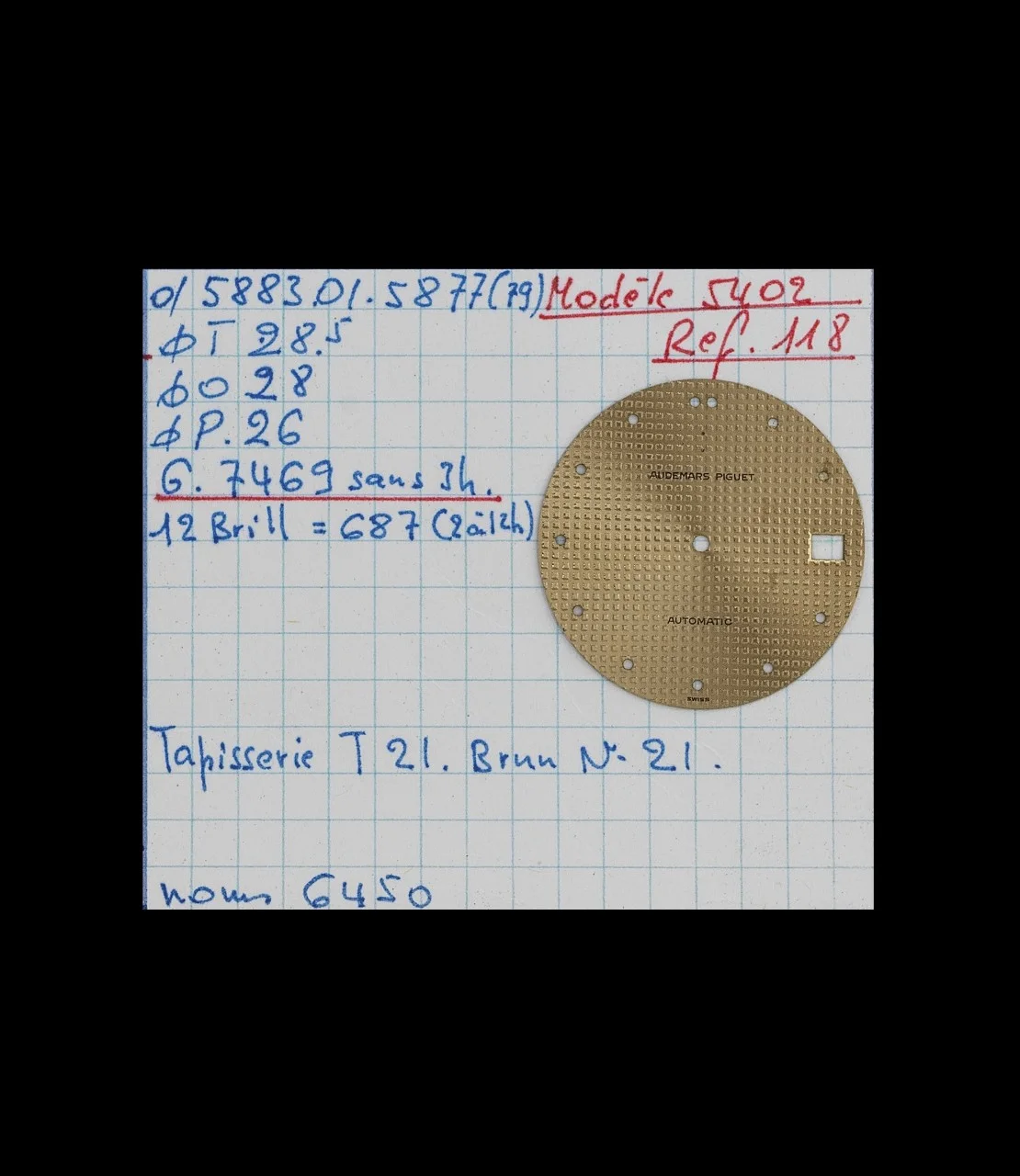
Circa 1980. Technical sheet for dial 5402, No. 118. The 11 holes are destined to welcome diamants. Audemars Piguet Archives.
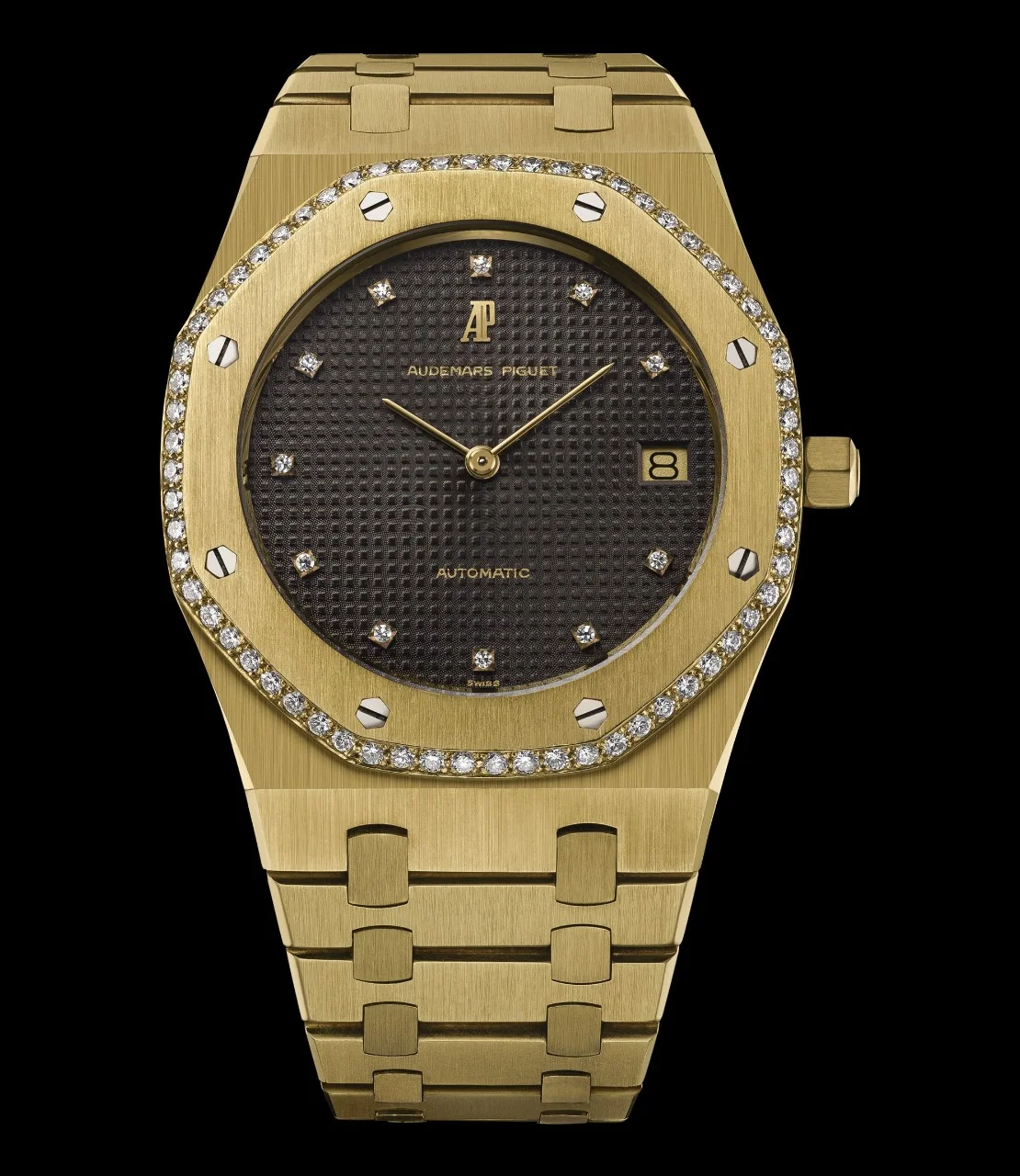
1979. Royal Oak 4187BA No. 399. Date. Calibre 2121, movement 197643. Gemset T21 Tapisserie dial. Bracelet 344. 39 mm case B34725 no. 399 (consecutive number 5402BA) in 18-carat yellow gold. Sold to Darcal (Swiss market) in July 1977. Transformation of Model 5402BA into Model 4187BC not documented, but probably done in the Audemars Piguet workshops. Pygmalion collection.
Tritium Hour-Markers and Hands
The Royal Oak's hour-markers and hands have always been in gold. Both speak the same aesthetic language of gentle curves and lightness. Gérald Genta, designer of Model 5402, described them as follows: "hour-markers and hands in the shape of rings framing the luminous material, which creates an extremely delicate effect.” The term baignoire (bathtub) was widely used in the Audemars Piguet workshops, obviously by analogy with respect to the shape, but certainly also because the hollowed-out (openworked) interior was filled with additional material: tritium.
The use of luminescent materials on watch dials was widespread throughout the 20th century. In an article published in the Swiss daily newspaper Le Temps in June 2018, Iaz Chams explains that radium, discovered by Marie Curie in 1898, was long perceived as beneficial to health. It was used everywhere, even in fabrics: "Radioactive underwear from the Iradia brand was promoted for skiing!” It was also touted as an ingredient in antidepressant pills, because "taking radioactivity means absorbing life." In the Swiss watchmaking industry, thousands of women worked as "radioluminators", manually applying radium to the dials, hour-markers and hands of mostly sports watches. In the United States, "Radium Girls" performed the same tasks. Their story is told in a film of the same name, directed by Lydia Dean Pilcher and released in 2018.
In the 1930s and 1940s, some Audemars Piguet chronograph watches were equipped with radium. However, once it became aware of the dangerous nature of this material, the company in Le Brassus gave up its use in 1957, six years ahead of the regulation established by the Swiss government on the subject.
As the night-time luminescence of dials was a much-appreciated quality, the industry began looking for an alternative. It subsequently adopted tritium, a less radioactive material. For watches with a radioactivity level of less than 7.5 mCi – and such was the case with the Royal Oak – there was no obligation to mention the presence of tritium, whereas others had to feature a T on the dial. It should be noted that tritium was progressively replaced from February 1999 onwards by Super-LumiNova©, a non-radioactive phosphorescent material that must accumulate light in order to restore it, in contrast to the "self-luminescent" materials that preceded it.
The early Royal Oak hands are slightly different from the more modern hands. A trained eye (with the aid of a good magnifying glass or even a microscope) will recognise the older generations by their flatter, wider metal surface and a line of luminescent material. Watchmakers call these "flattened hands" and they are only found on Model 5402. As later models had more space between the glass and the dial, the hands were no longer "flattened", meaning that from Models 8638 and 4100 onwards, the visible metal part was more raised, thinner and left more space for the luminescent material.
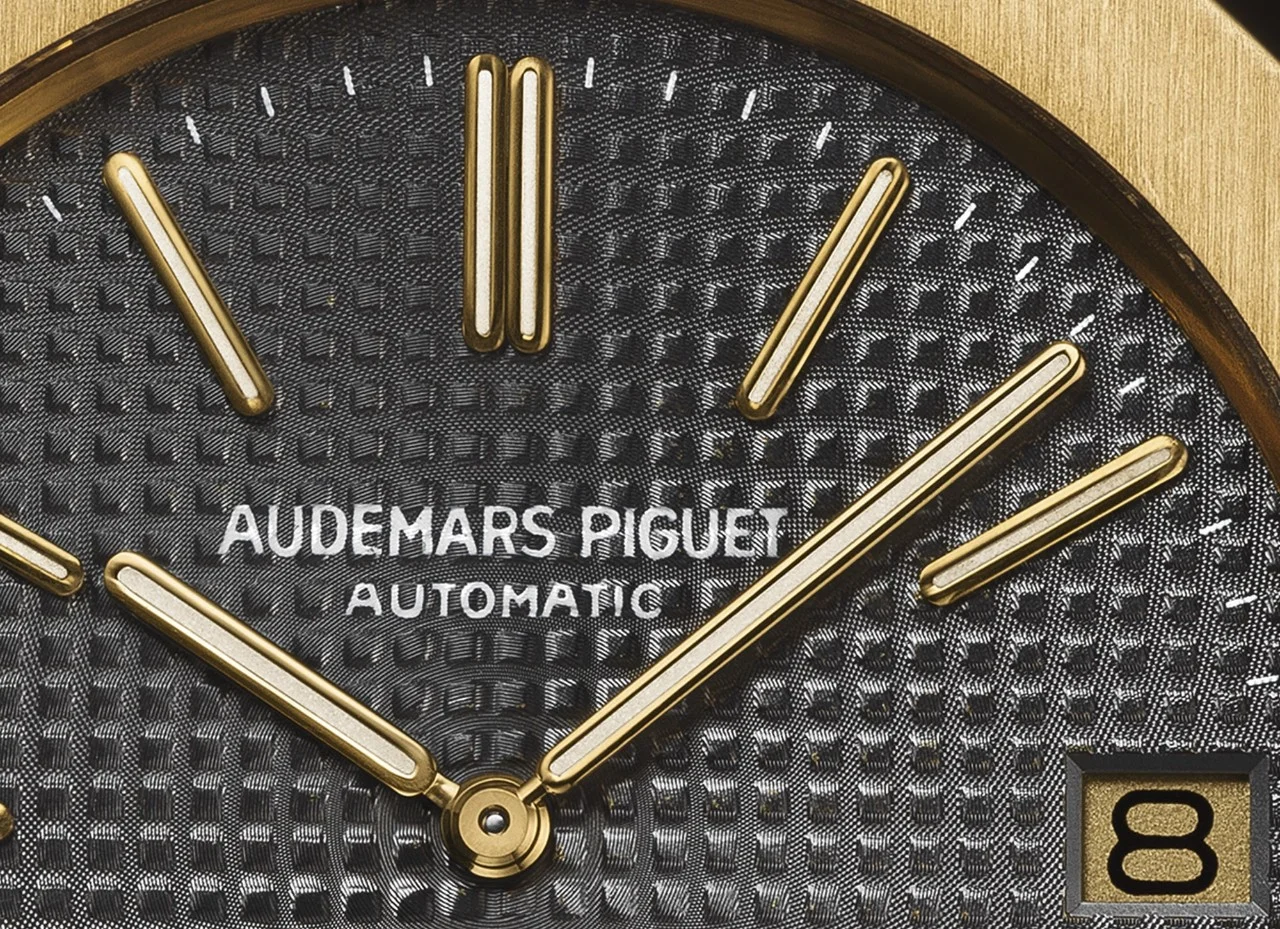
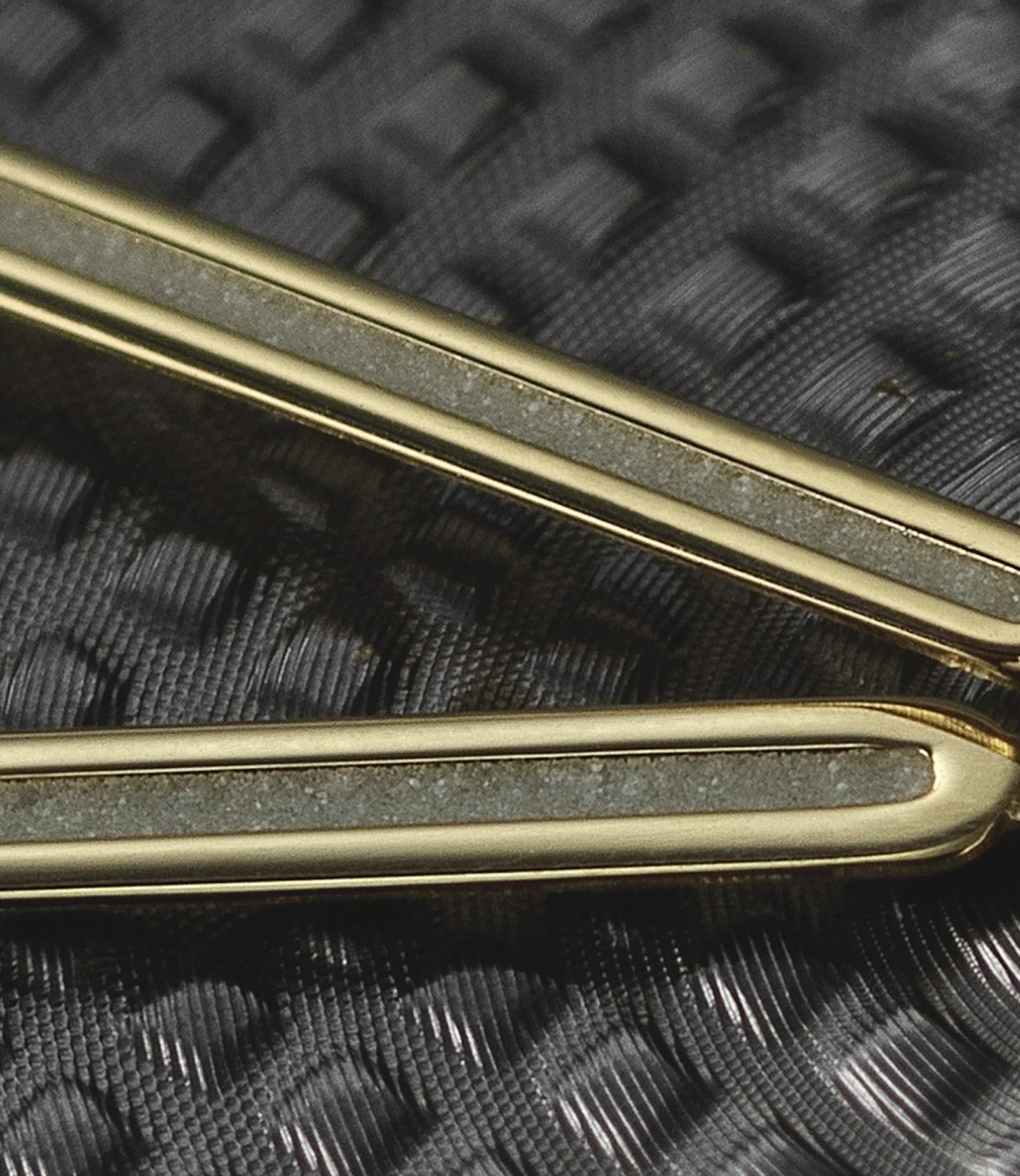
1978. Close-up on the baignoire-shaped hands, Model 5402BA. The hands are composed of a minuscule gold thread which encircles the luminescent material. They have been slightly compressed to reduce their thickness. Close up on the Royal Oak 5402SA no. 186 dial. Audemars Piguet Heritage, inv. 1446.
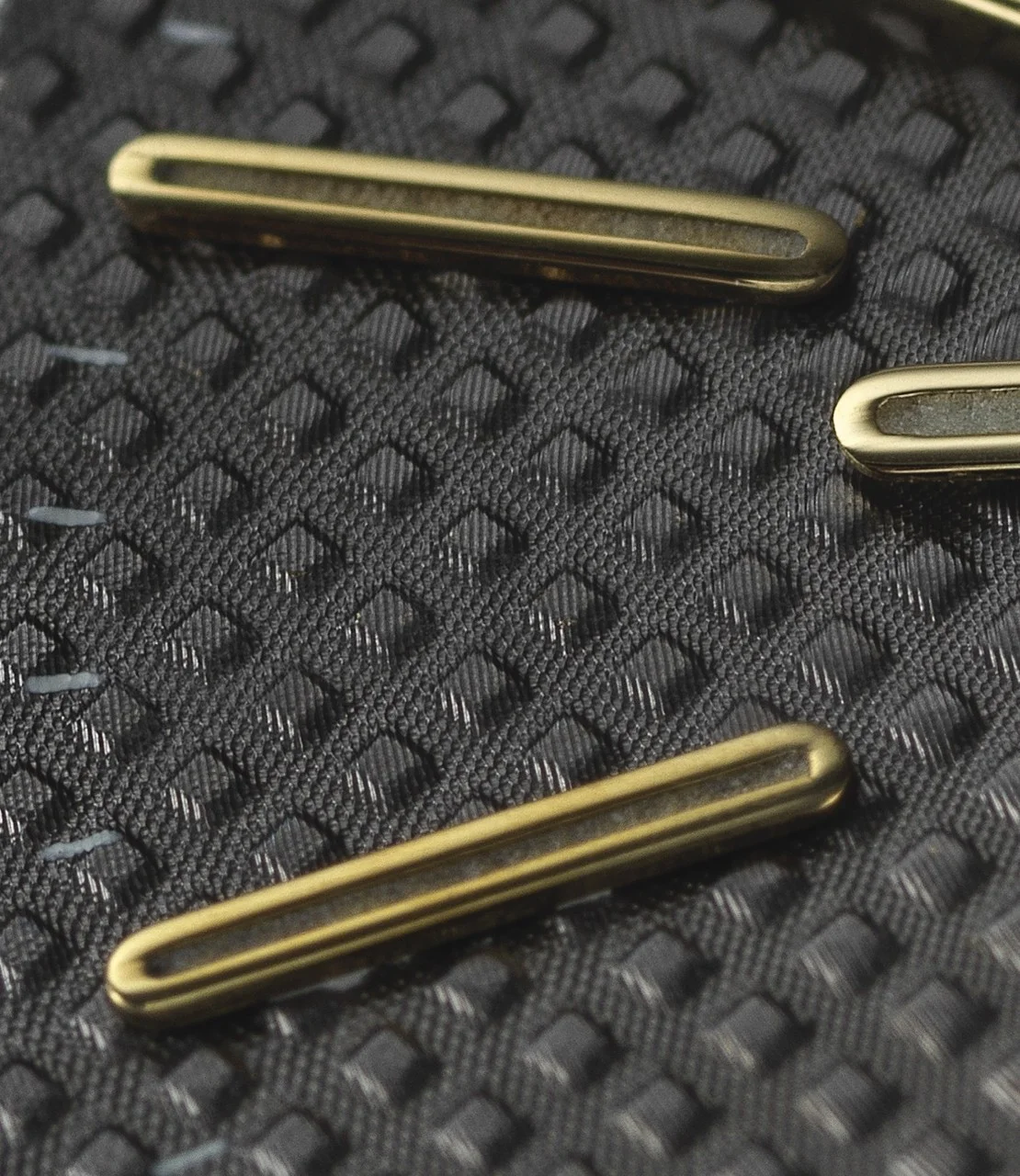
1978. Hour-marker, Model 5402BA. The hour-marker contains a small amount of tritium so as to be visible in the dark. It is fitted on the dial with minuscule legs, thinner than a hair. Close-up on the Royal Oak 5402SA no. 186 dial. Audemars Piguet Heritage, inv. 1446.
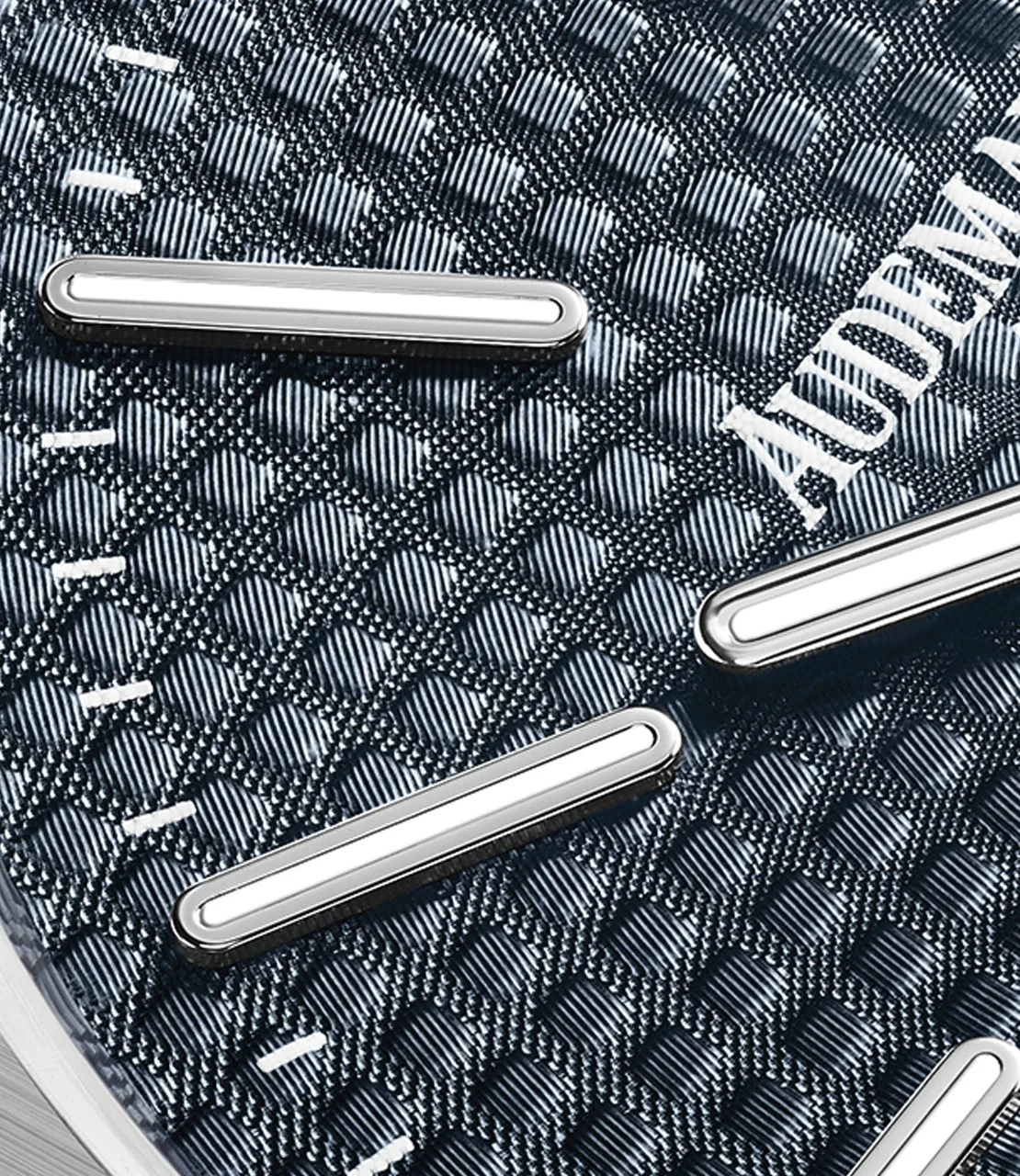
2022. Hand and hour-marker, Royal Oak 16202ST. Launched in 2022 to celebrate the 50th anniversary of the Royal Oak, this model presents hands with inert luminescent material. The metallic part of the hands and hour-markers appears slightly thinner than for Model 5402. Picture taken for the model's launch. Audemars Piguet Archives.
Conclusion
The dial of the first Royal Oak watches is a masterpiece of technical and aesthetic design that can be admired on several levels. From a distance, its moiré reflections play with the light while maintaining perfect legibility of the time. Viewed at close-hand, hundreds of small square pyramids with truncated tops (some view them as chocolate squares) are juxtaposed in a checkerboard pattern that accentuates the watch's horizontal and vertical lines. When seen under a microscope, the dial becomes a landscape punctuated by tens of thousands of diamond shapes that sometimes overlap and create complex curves.
Interpreted over the last 50 years in countless variants, the Tapisserie pattern has become one of the essential codes of the Royal Oak: larger or smaller, evolving, radiating, etc. This omnipresence should however not obscure the fact that – as early as the late 1970s – the Royal Oak also featured more classical dials without guilloché motifs, one of the most significant being that of the first Royal Oak Perpetual Calendar, Model 5554 released in 1984.
Editorial board: Audemars Piguet Heritage team, Le Brassus
First publication: 15 March 2022