Calibre 2123

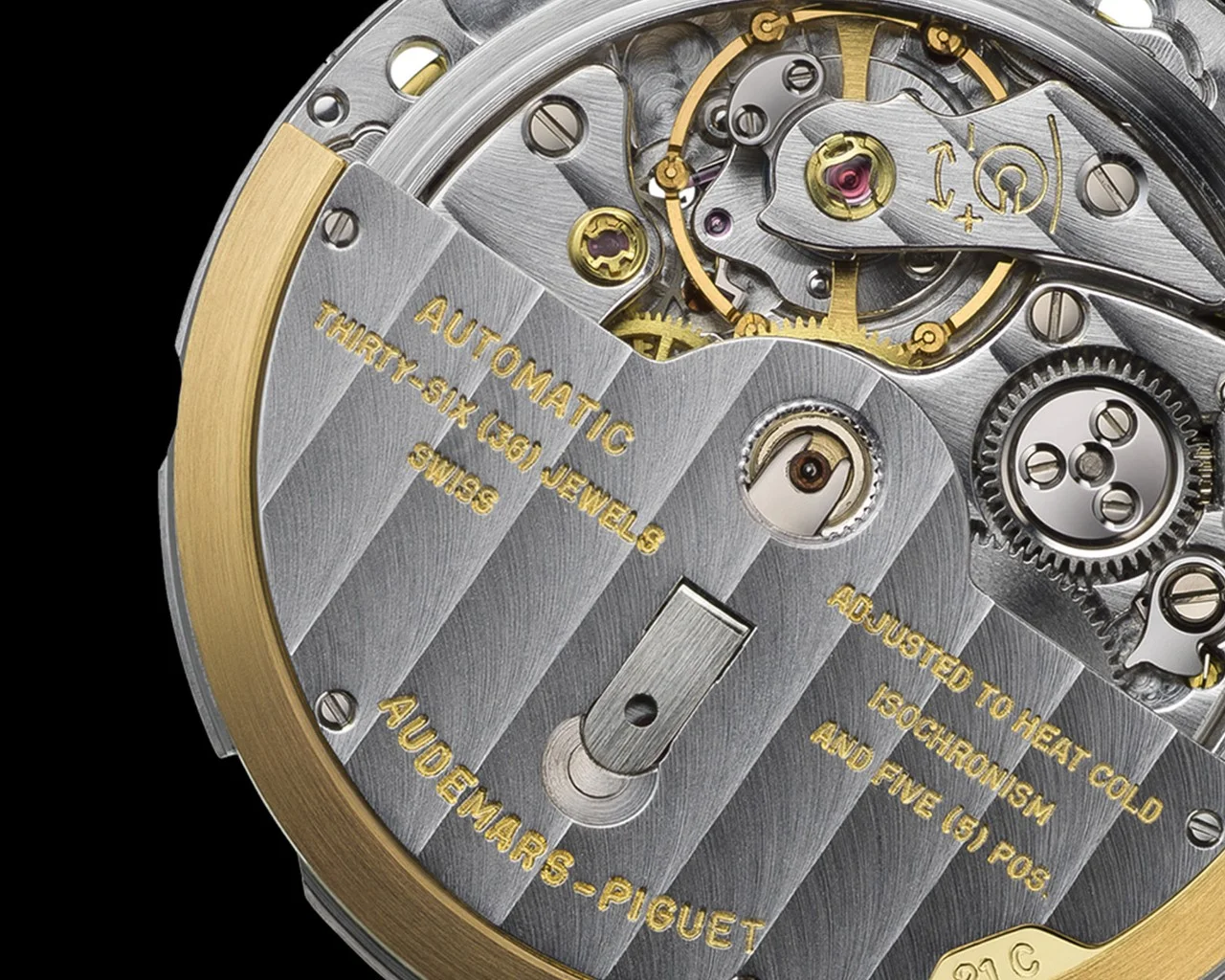
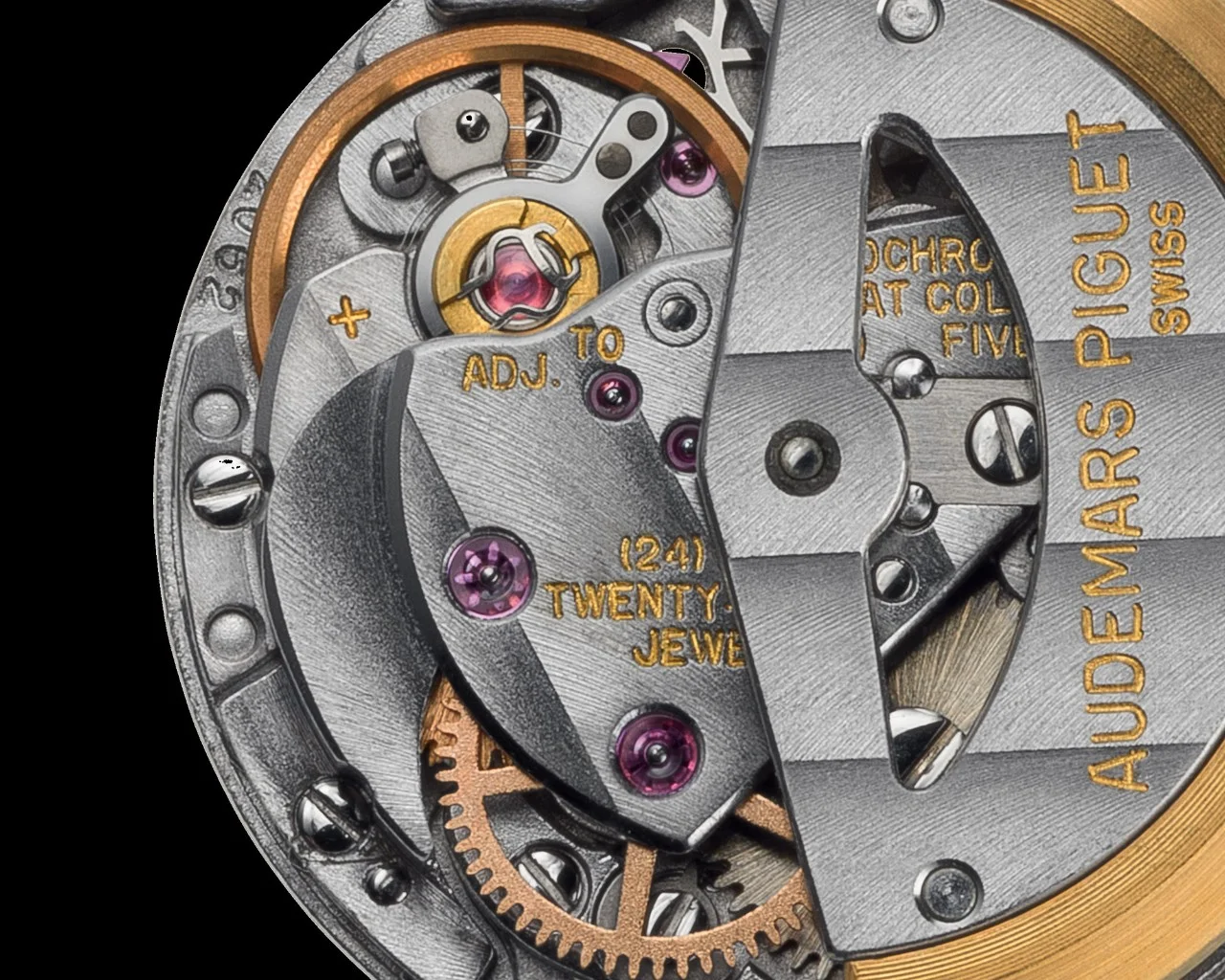
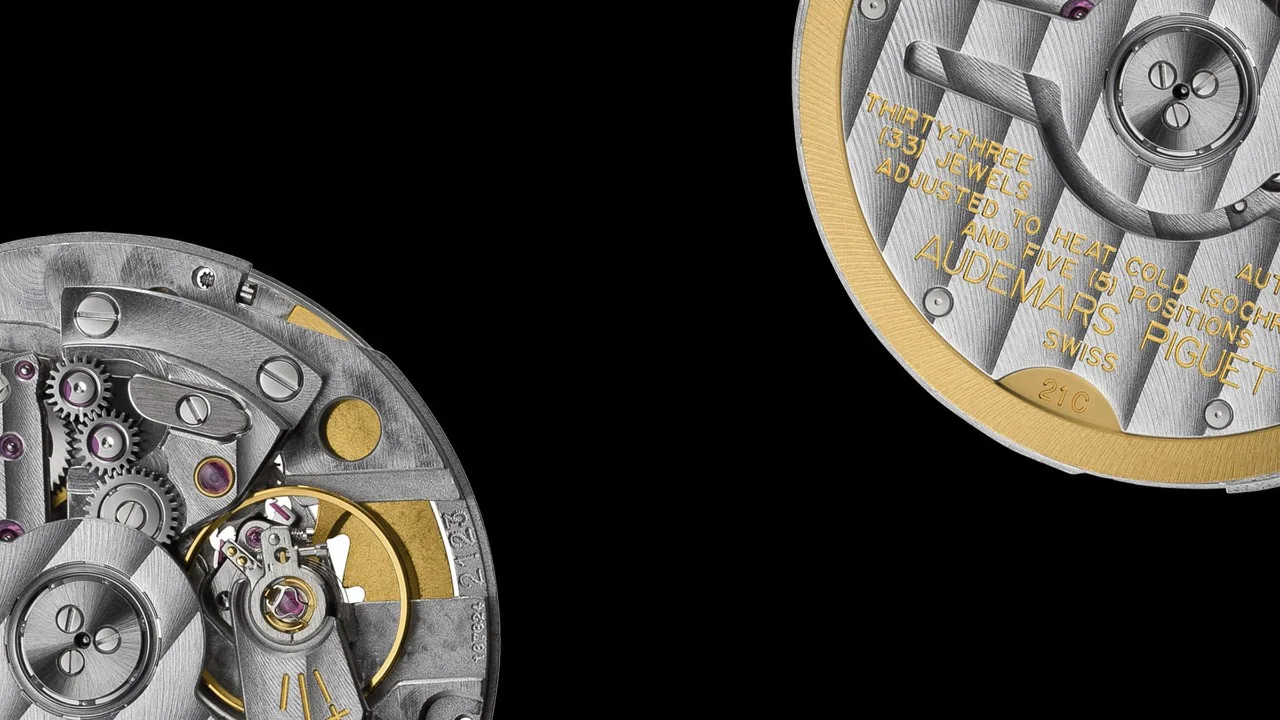
1977. Calibre 2123, caseback side. Diameter of 26 mm (11½ lignes). Hours, minutes, date, selfwinding, 33 jewels. Movement 186323. Audemars Piguet Heritage.

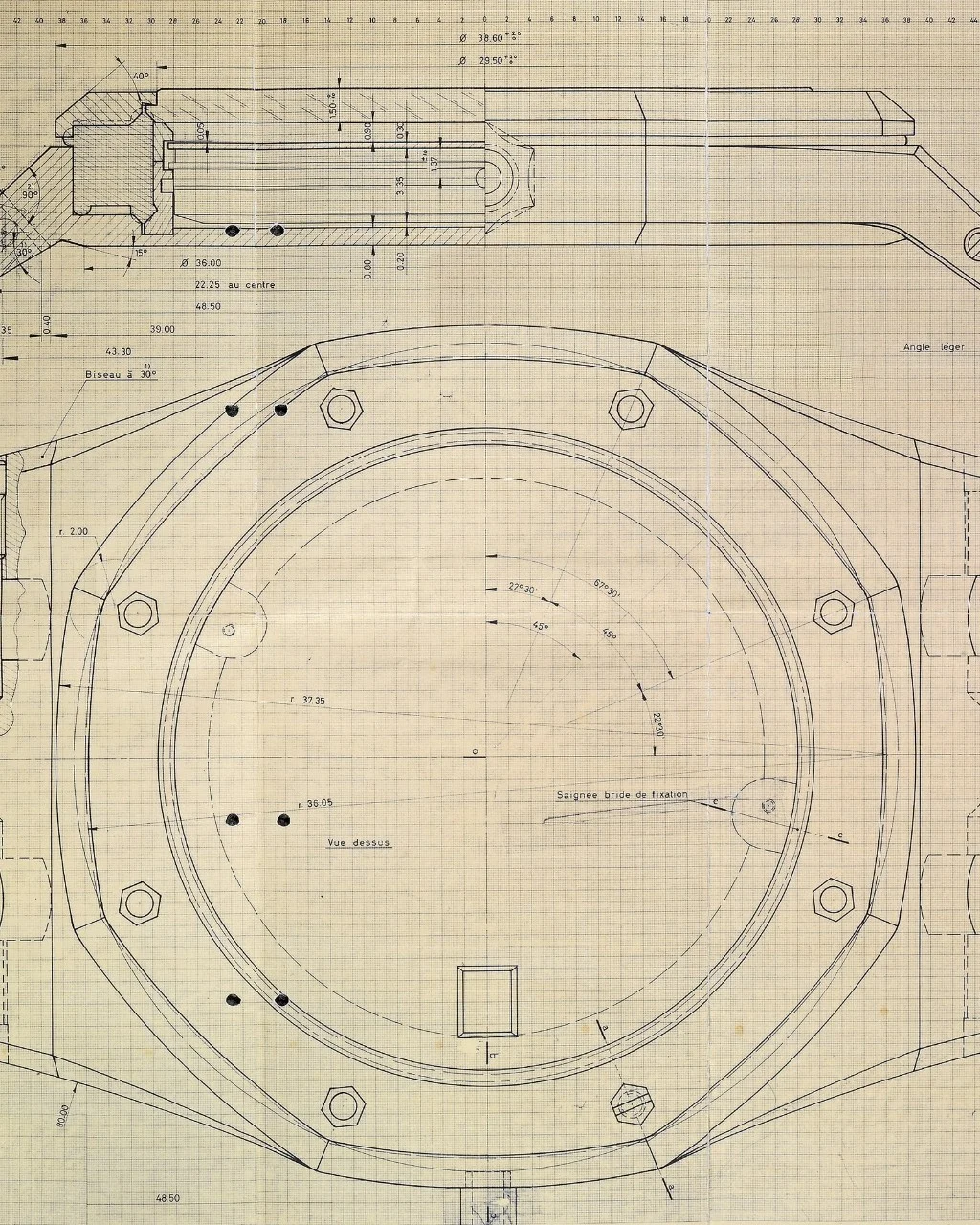
1980. Plan of the Calibre 2123 baseplate. Copy of LeCoultre & Cie Plan no. 31204a. Audemars Piguet Archives.
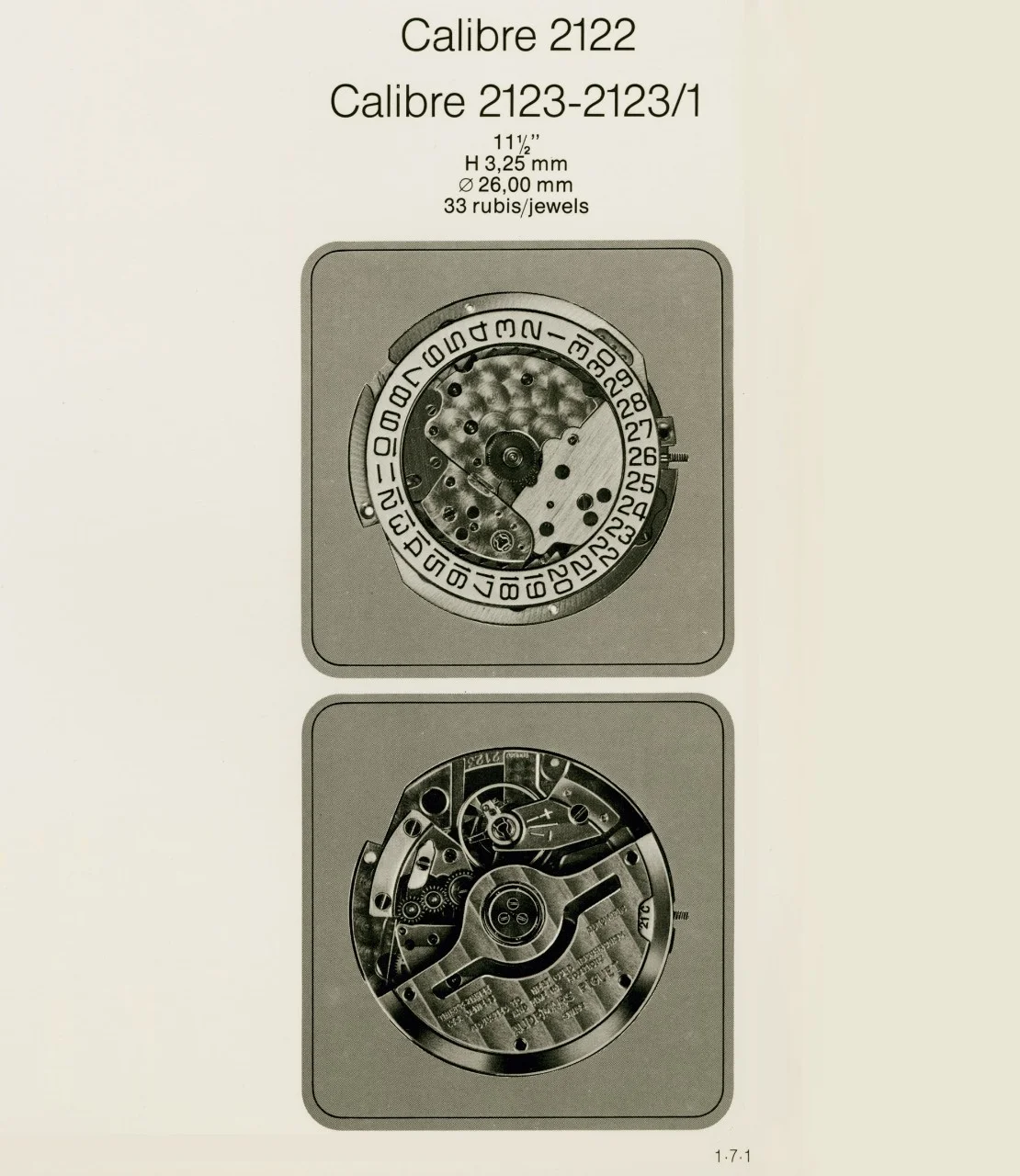
Circa 1985. Illustration of Calibre 2122 and its derived version Calibre 2123. Calibre 2122 has no centre seconds hand. Calibre 2123 has an indirect-drive seconds hand. Technical guide technique for watchmaker repairers. Audemars Piguet Archives.

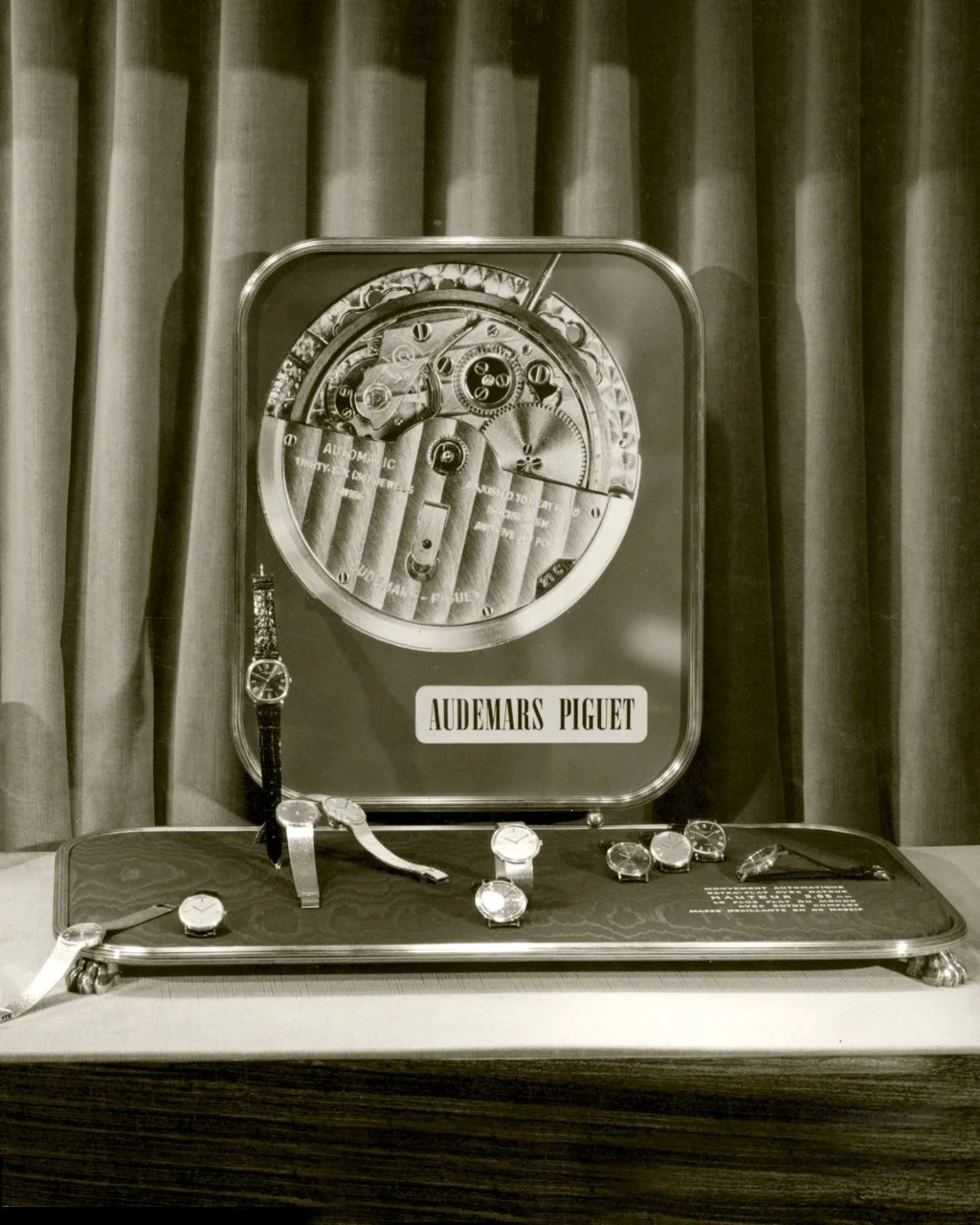
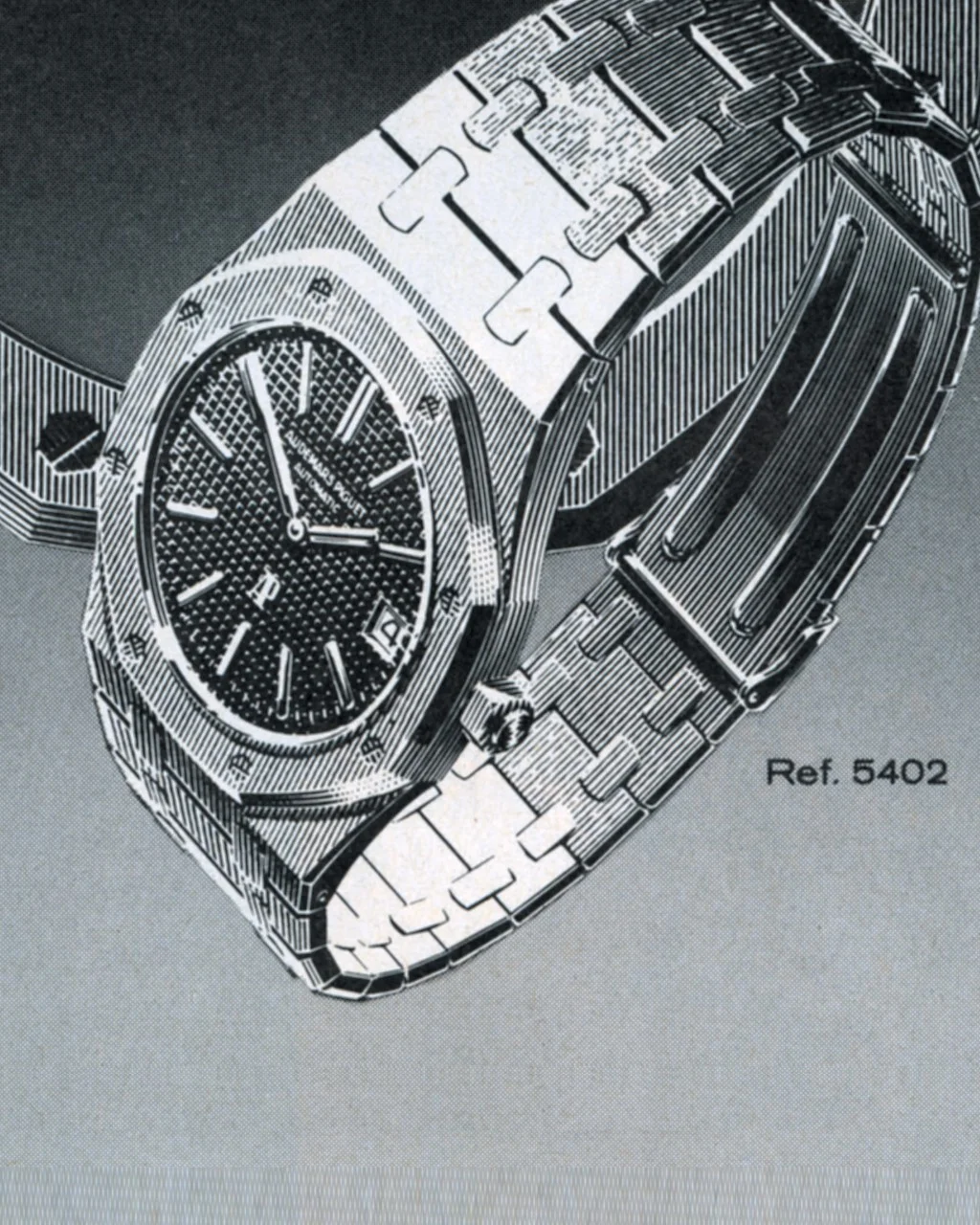
1977. Calibre 2123. Audemars Piguet 1979–1980 catalogue. Audemars Piguet Archives.

1977. Calibre 2123, first generation. Diameter of 26 mm (11½ lignes). Hours, minutes, date, selfwinding, 33 jewels. Movement 186323 produced in 1977. Audemars Piguet Heritage.
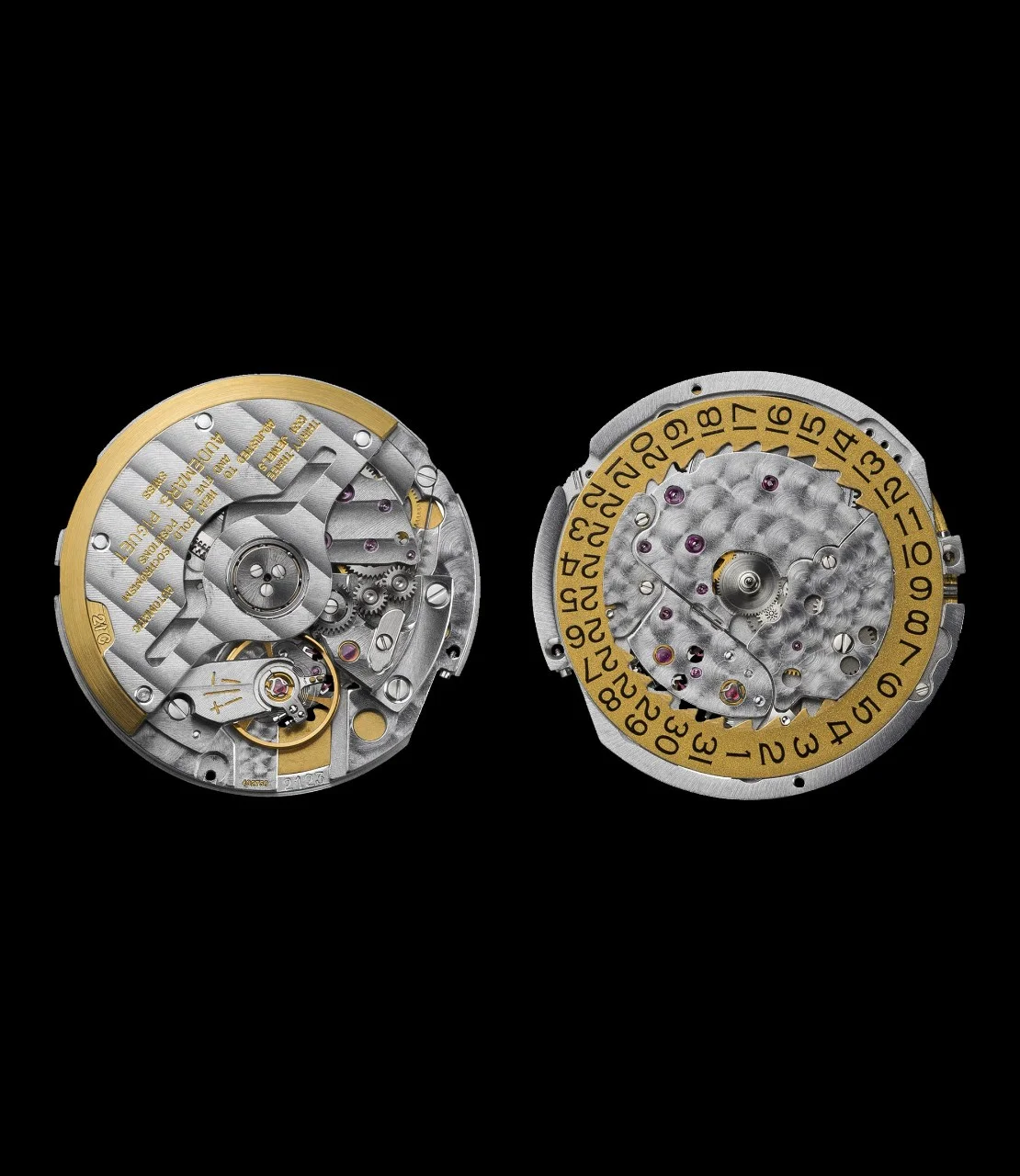
Circa 1980. Calibre 2123, second generation. Diameter of 26 mm (11½ lignes). Hours, minutes, date, selfwinding, 33 jewels. Screw-locked pull-out piece, new rapid corrector wheel. Audemars Piguet Heritage.

Circa 1985. Calibre 2123, third generation. Diameter of 26 mm (11½ lignes). Hours, minutes, date, selfwinding, 33 jewels. Two-arm balance wheel, unlocking lever spring screw, reverser with intermediate wheel mounted on jewel bearing. Movement 187824 produced in 1977, modified in circa 1985. Audemars Piguet Heritage.
Mechanism
Selfwinding
Functions
hours, minutes, date
Diameter
26.0 mm (11½ lignes)
Thickness
3.25 mm
Frequency
28,800 vph (4 Hz)
Jewels
33
Dates
1977 – 1984
Movement Blank
LeCoultre (900)
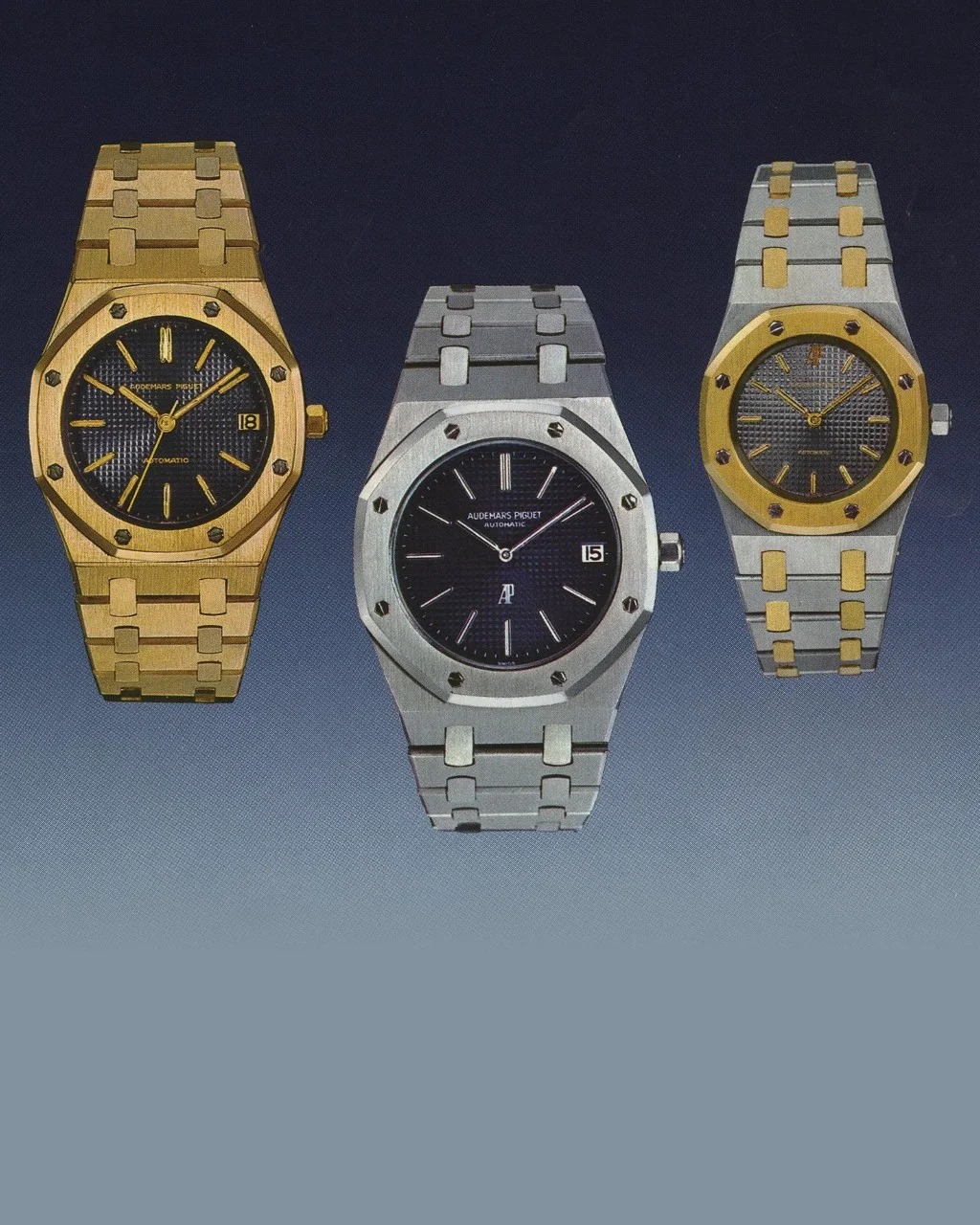
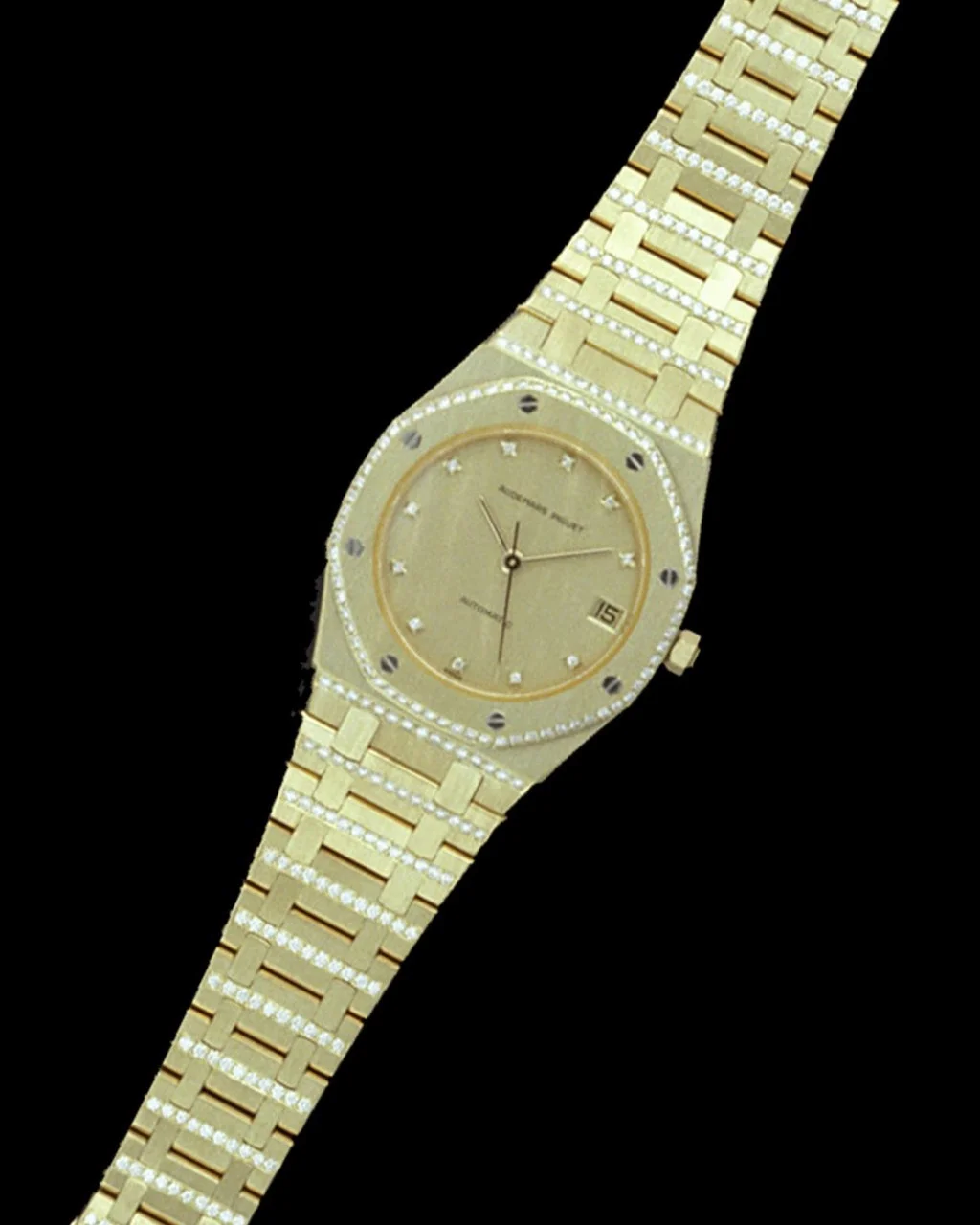
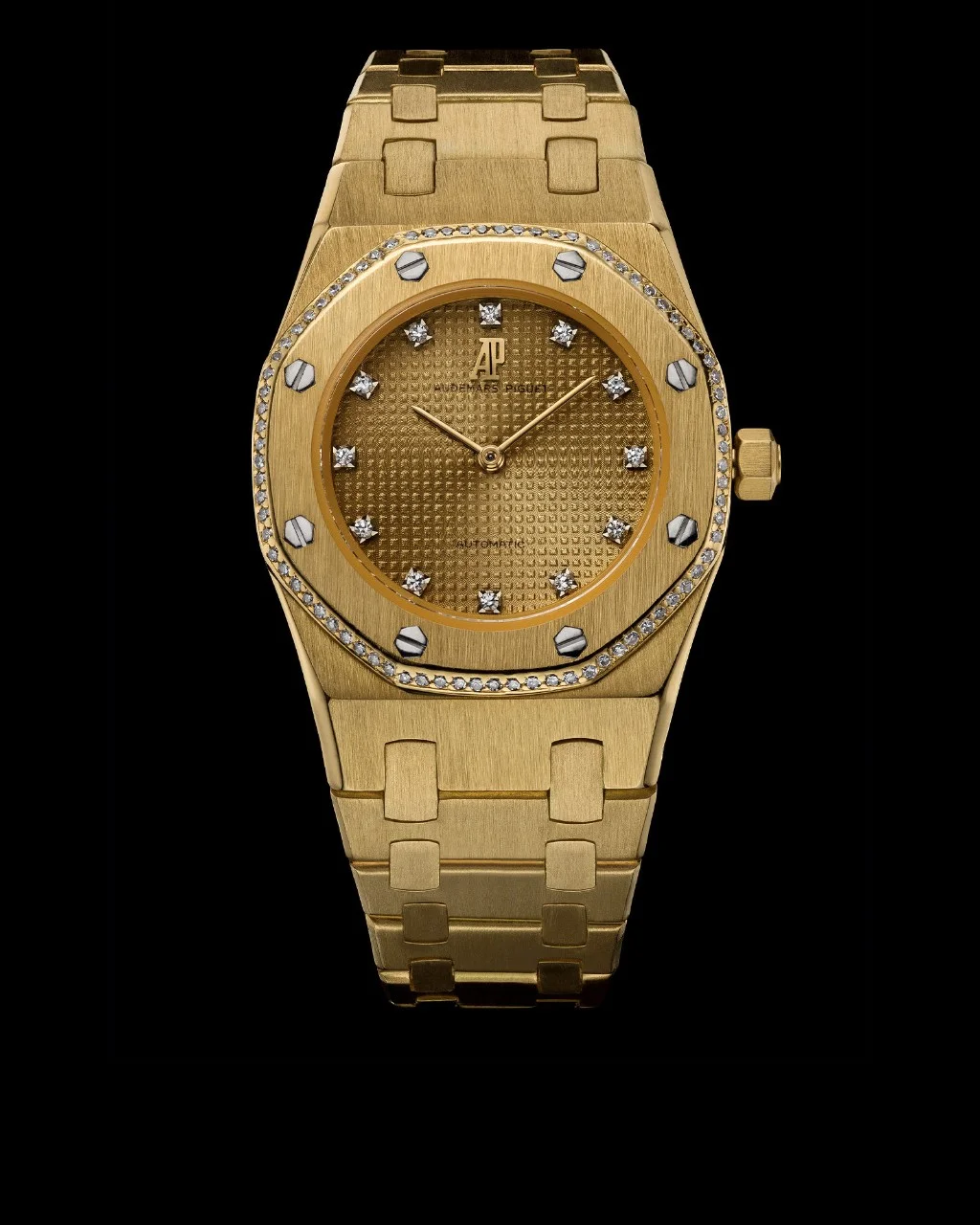
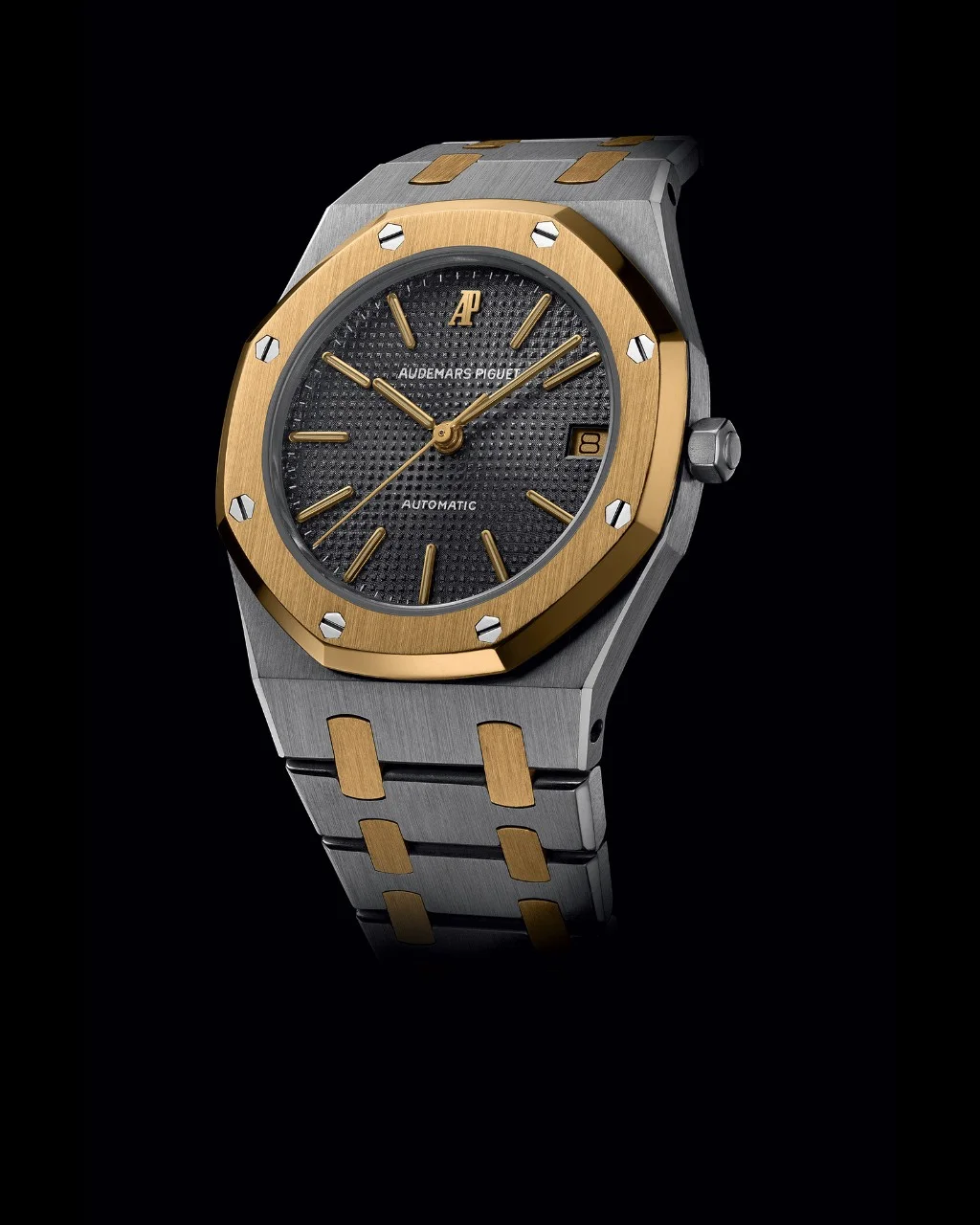
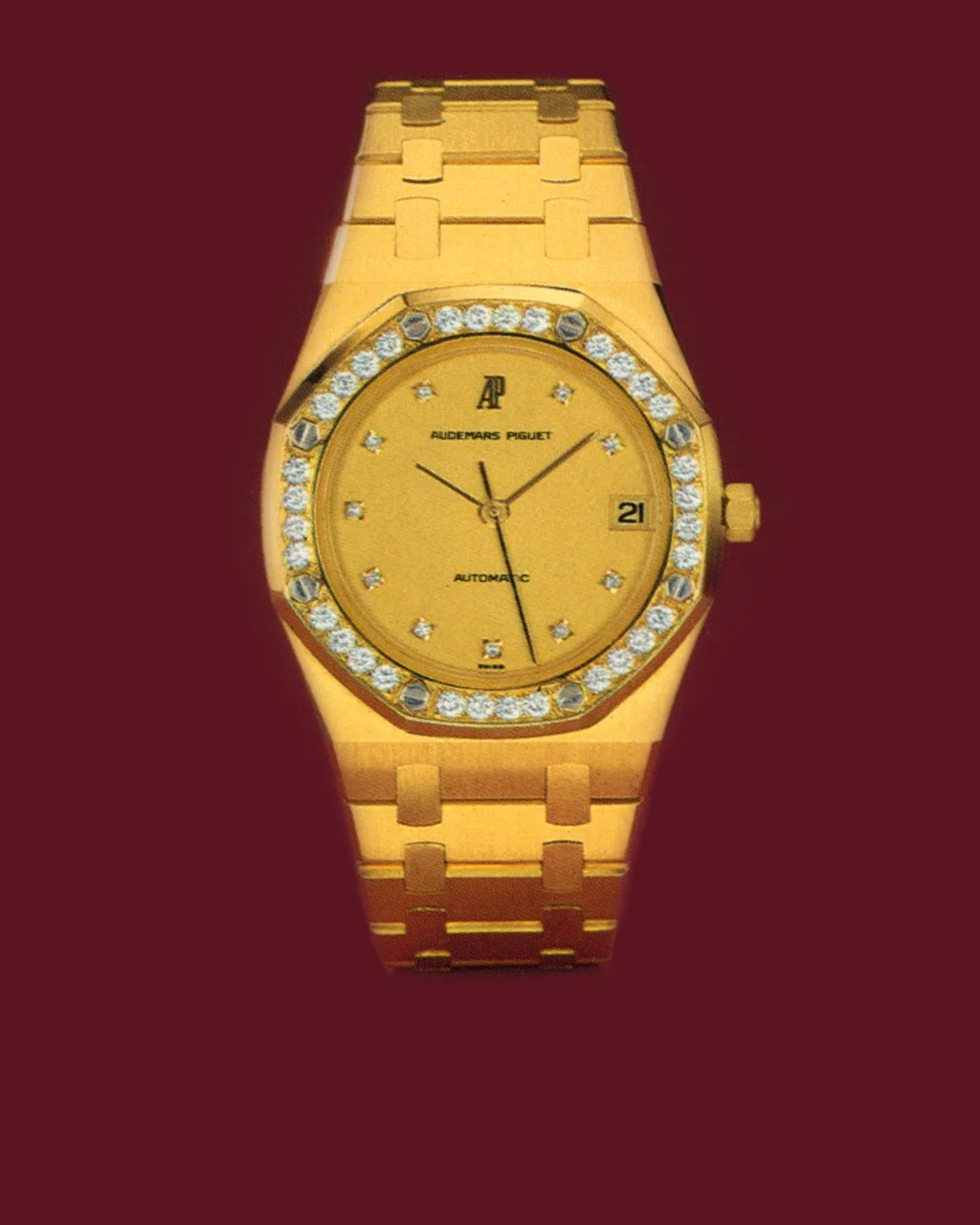
Calibre 2123 was launched in 1977 to equip the Royal Oak III, Reference 4100, whose 35 mm diameter required a smaller calibre than the 2120 (d: 28 mm, h: 3.05 mm). This new mechanism, which oscillated at a high frequency of 28,800 vph, was both 2 mm smaller and 0.2 mm thicker than its predecessor, thus enabling it to add a centre seconds hand, a first for a Royal Oak watch.
Just under 9,000 units were produced between 1977 and 1984, the most productive years being 1987–1981 with an annual average of around 1,800 movements. Major improvements were made in 1979, leading to the creation of the 2123/1 variation (different mainplate, new pull-out piece, barrel bridge, yoke spring, etc.).
Calibre 2123 heralded the long history of Audemars Piguet 11½-ligne (26 mm) selfwinding calibres based on a LeCoultre & Cie "ébauche". In 1983, the second generation kicked off with Calibre 2124, followed by its derivatives 2124/2810, 2124/2815, 2124/2825, 2124/2812, 2125, 2126, 2126/2840 and 2129/2845. The third generation was born in 1996 with Calibre 2224, also accompanied by multiple derivatives 2224/2810, 2224/2815, 2224/2811, 2224/2812, 2224/2814, 2225, 2226, 2226/2840, 2226/2841, 2226/2839, 2127/2827, 2229/2845. It was in turn succeeded by a fourth generation in 2005, starting with Calibre 2325 and its derivatives 2326, 2326/2840, 2326/2841, 2326/2839, 2326/2847, 2326/2848, 2329/2845 and 2329/2846. The filiation between these calibres made it possible in some instances to replace severely damaged movements by one of their direct descendants.
Calibre 2123 was launched in 1977 to equip the Royal Oak III, Reference 4100, whose 35 mm diameter required a smaller calibre than the 2120 (d: 28 mm, h: 3.05 mm). This new mechanism, which oscillated at a high frequency of 28,800 vph, was both 2 mm smaller and 0.2 mm thicker than its predecessor, thus enabling it to add a centre seconds hand, a first for a Royal Oak watch.
Just under 9,000 units were produced between 1977 and 1984, the most productive years being 1987–1981 with an annual average of around 1,800 movements. Major improvements were made in 1979, leading to the creation of the 2123/1 variation (different mainplate, new pull-out piece, barrel bridge, yoke spring, etc.).
Calibre 2123 heralded the long history of Audemars Piguet 11½-ligne (26 mm) selfwinding calibres based on a LeCoultre & Cie "ébauche". In 1983, the second generation kicked off with Calibre 2124, followed by its derivatives 2124/2810, 2124/2815, 2124/2825, 2124/2812, 2125, 2126, 2126/2840 and 2129/2845. The third generation was born in 1996 with Calibre 2224, also accompanied by multiple derivatives 2224/2810, 2224/2815, 2224/2811, 2224/2812, 2224/2814, 2225, 2226, 2226/2840, 2226/2841, 2226/2839, 2127/2827, 2229/2845. It was in turn succeeded by a fourth generation in 2005, starting with Calibre 2325 and its derivatives 2326, 2326/2840, 2326/2841, 2326/2839, 2326/2847, 2326/2848, 2329/2845 and 2329/2846. The filiation between these calibres made it possible in some instances to replace severely damaged movements by one of their direct descendants.