8638, Royal Oak II
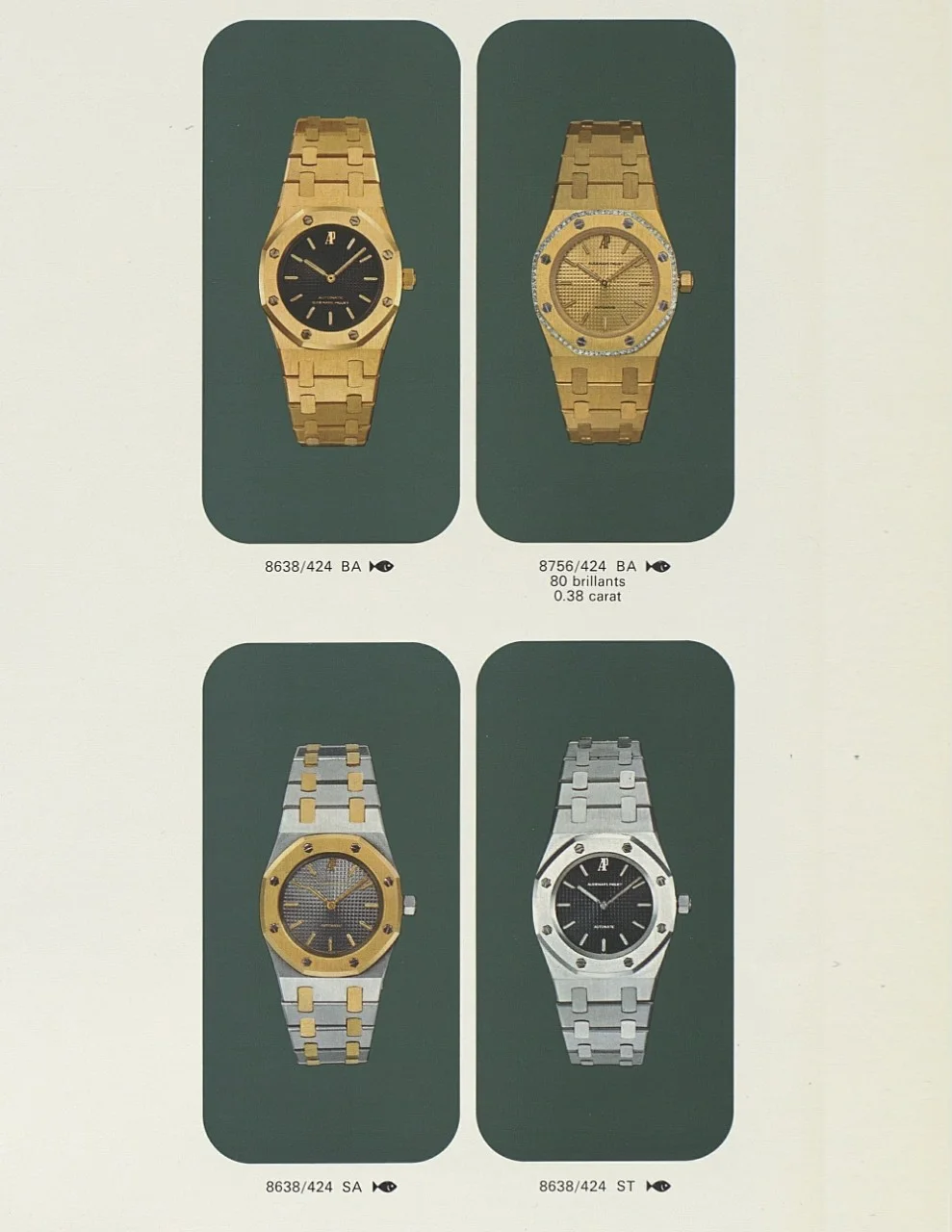
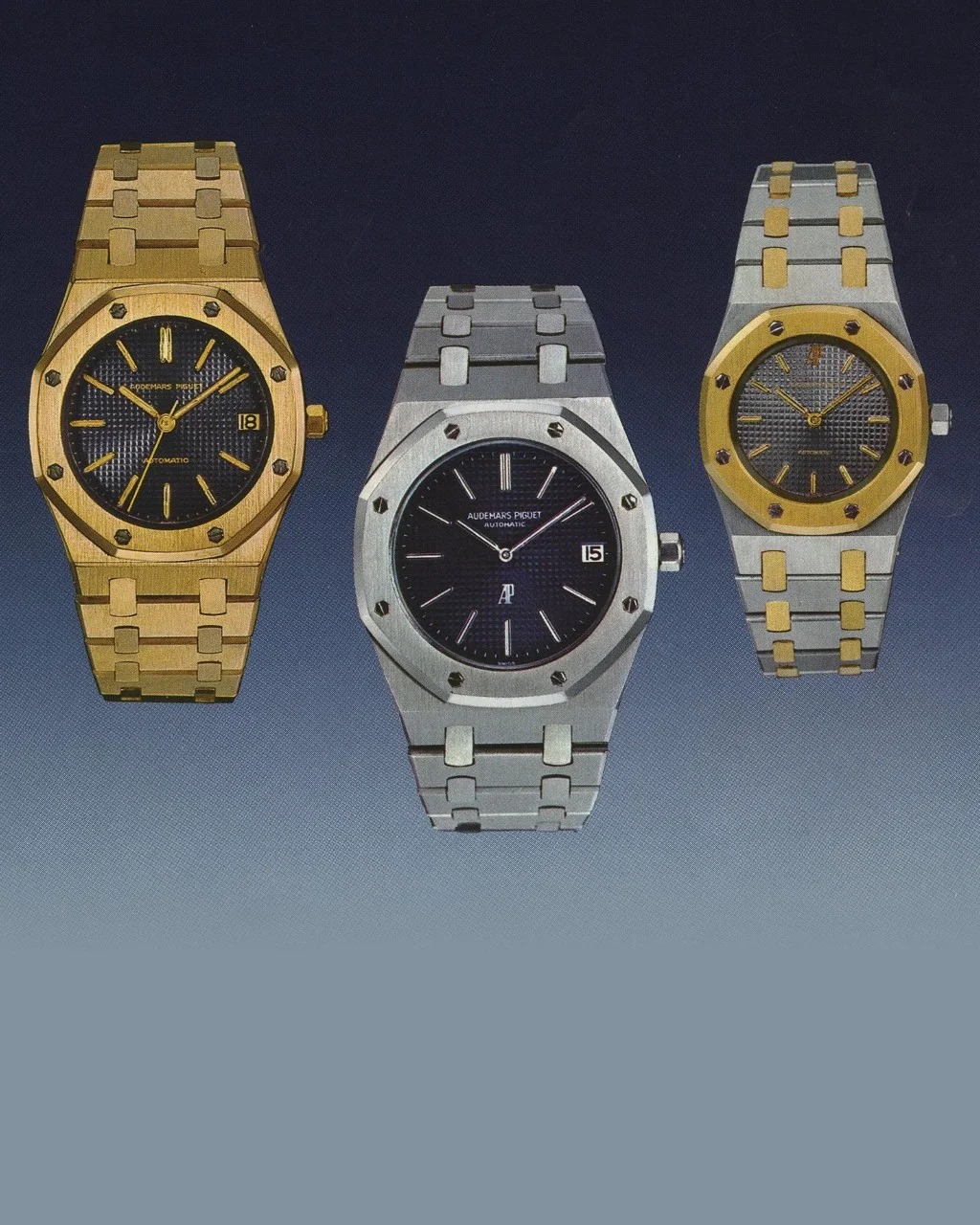
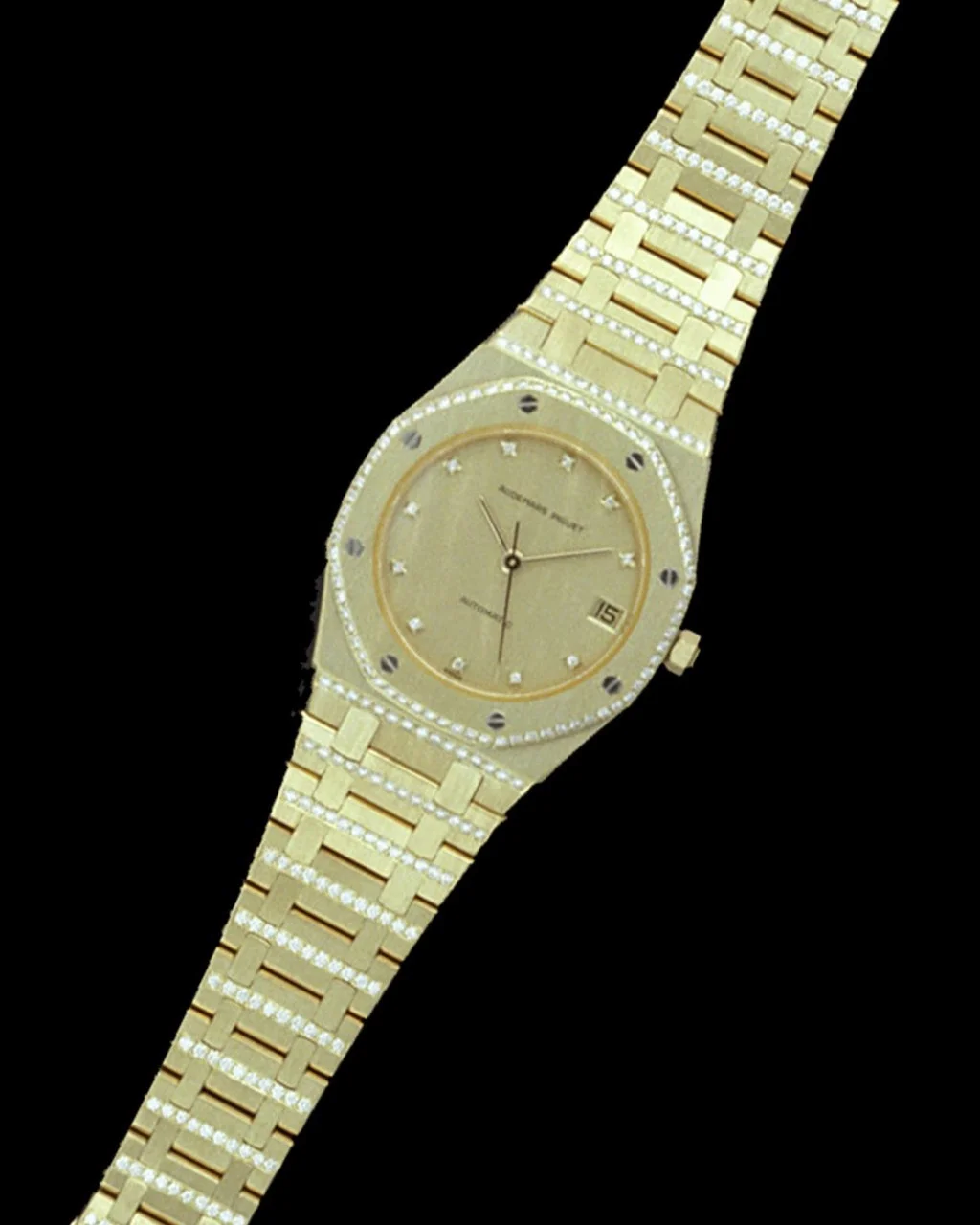
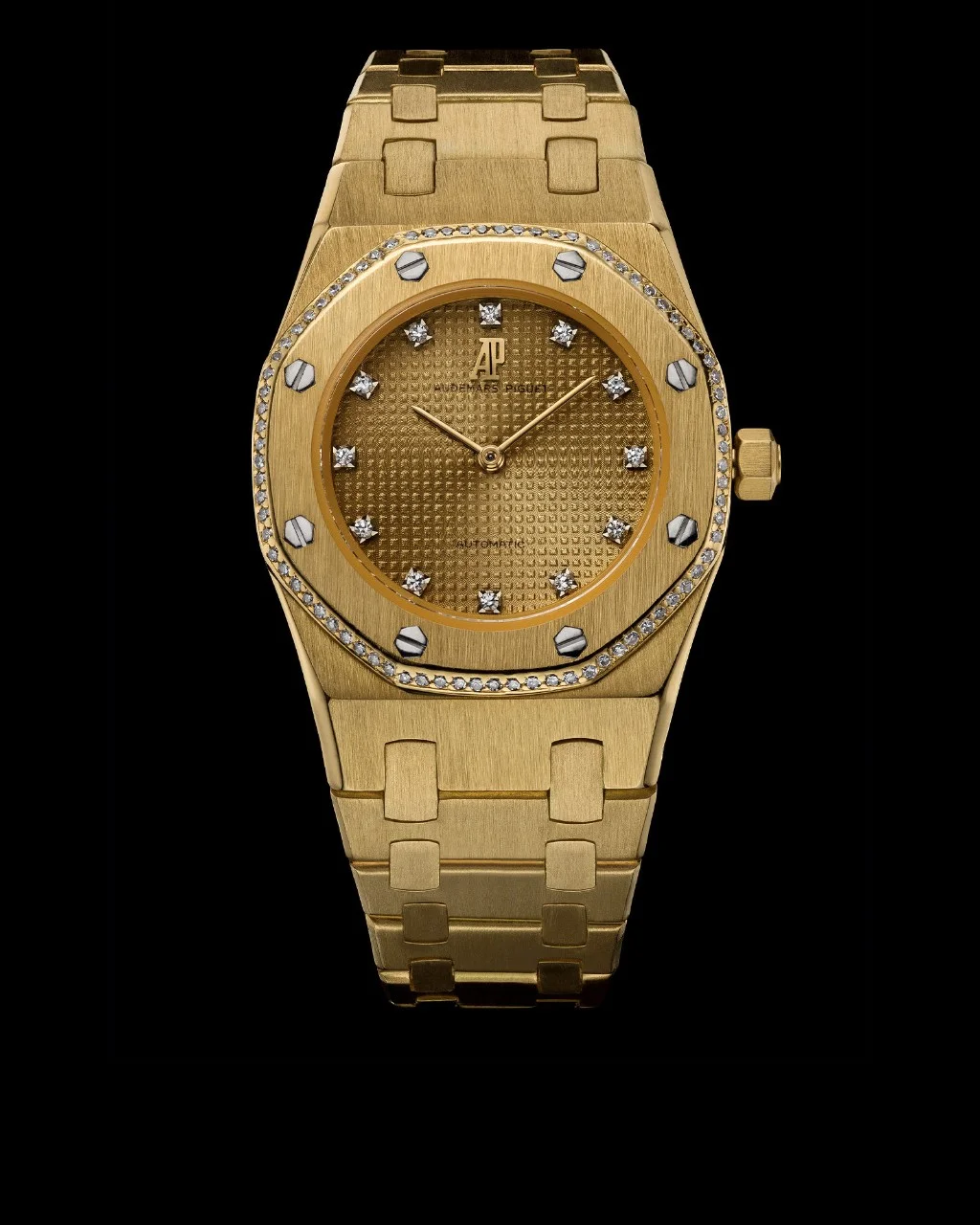
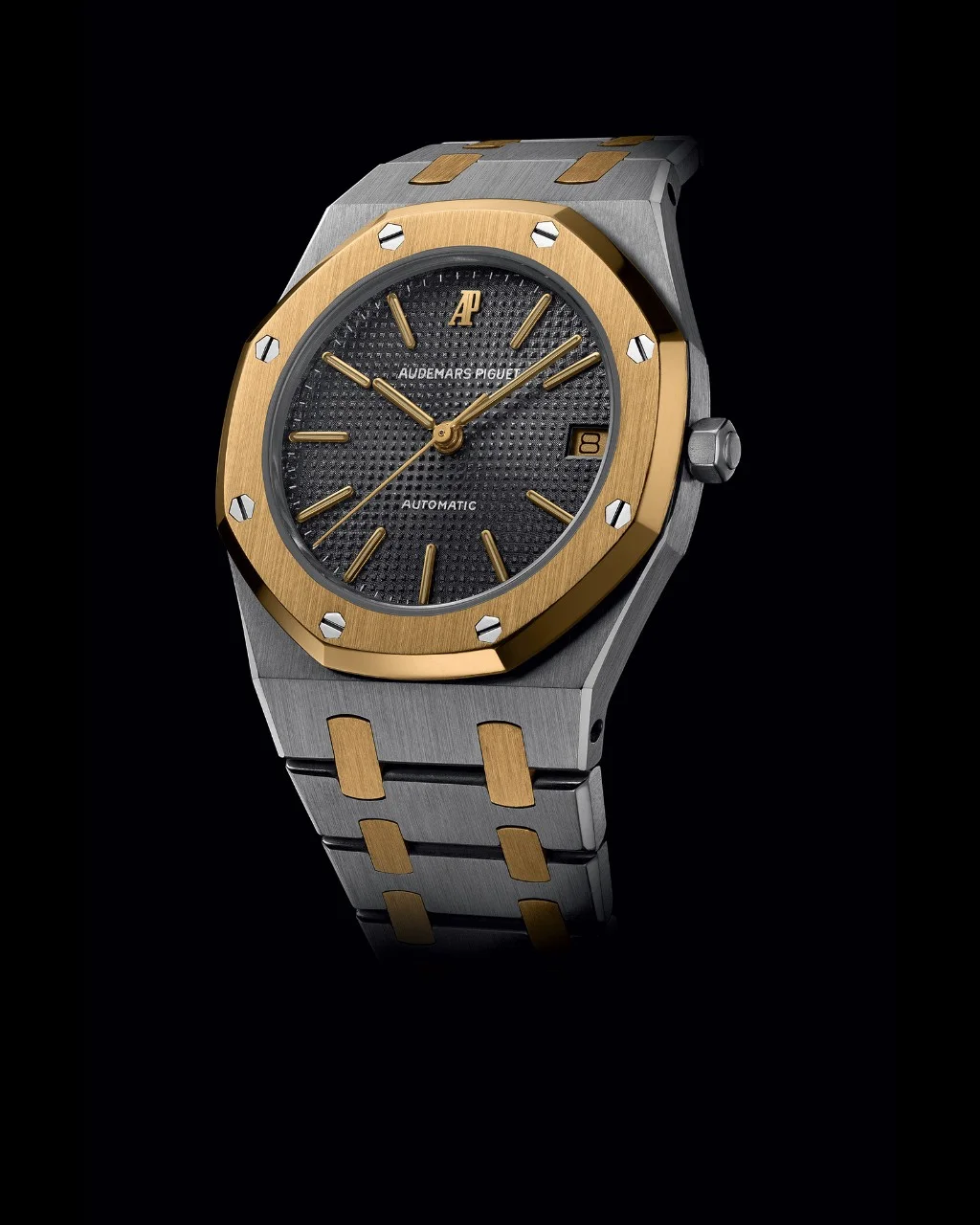
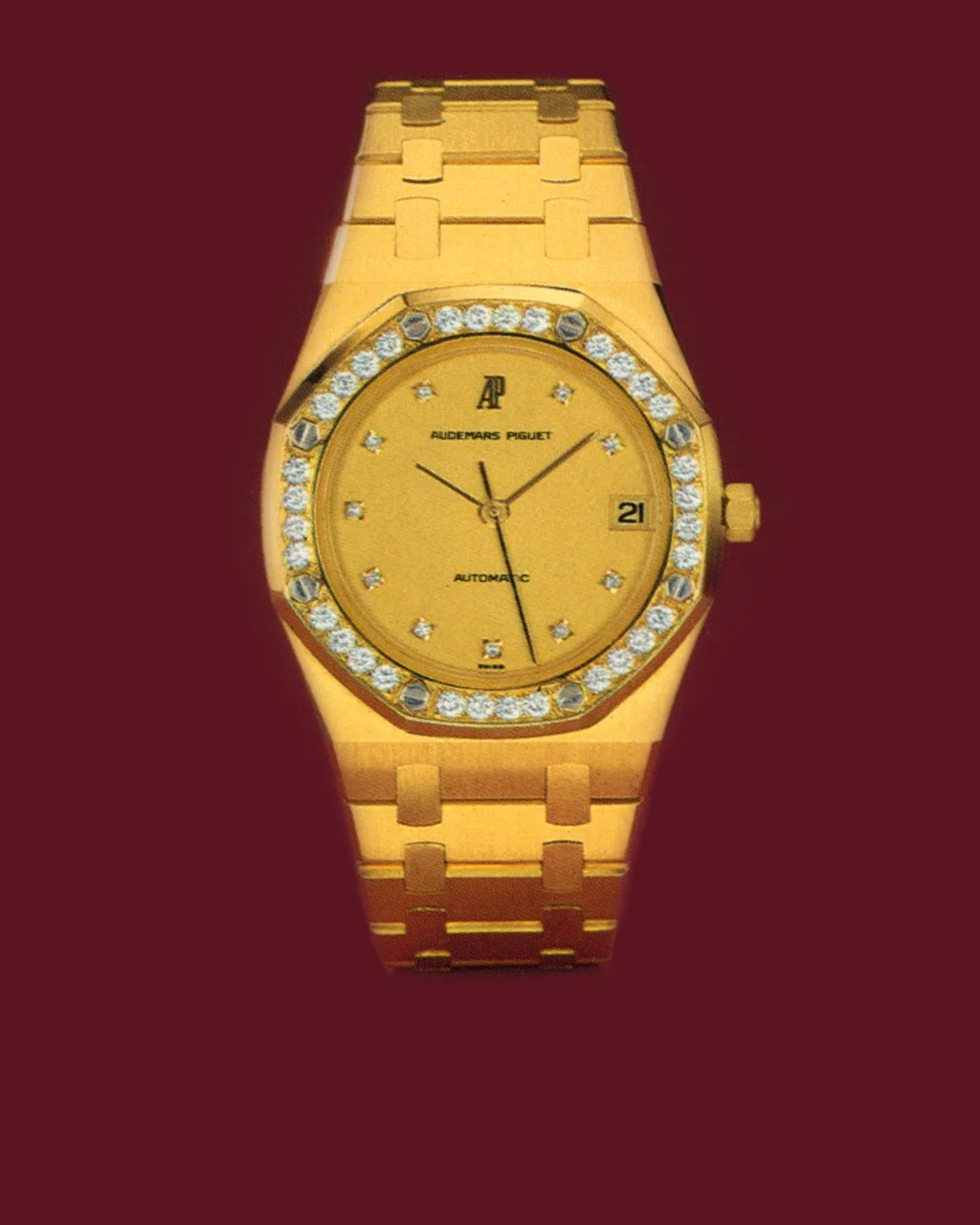
1978–1980. Model 8638 variations. As early as 1978, the yellow gold, steel, gemset (8756) and two-tone (yellow gold and steel) variations were featured on the same catalogue page. Audemars Piguet Archives.

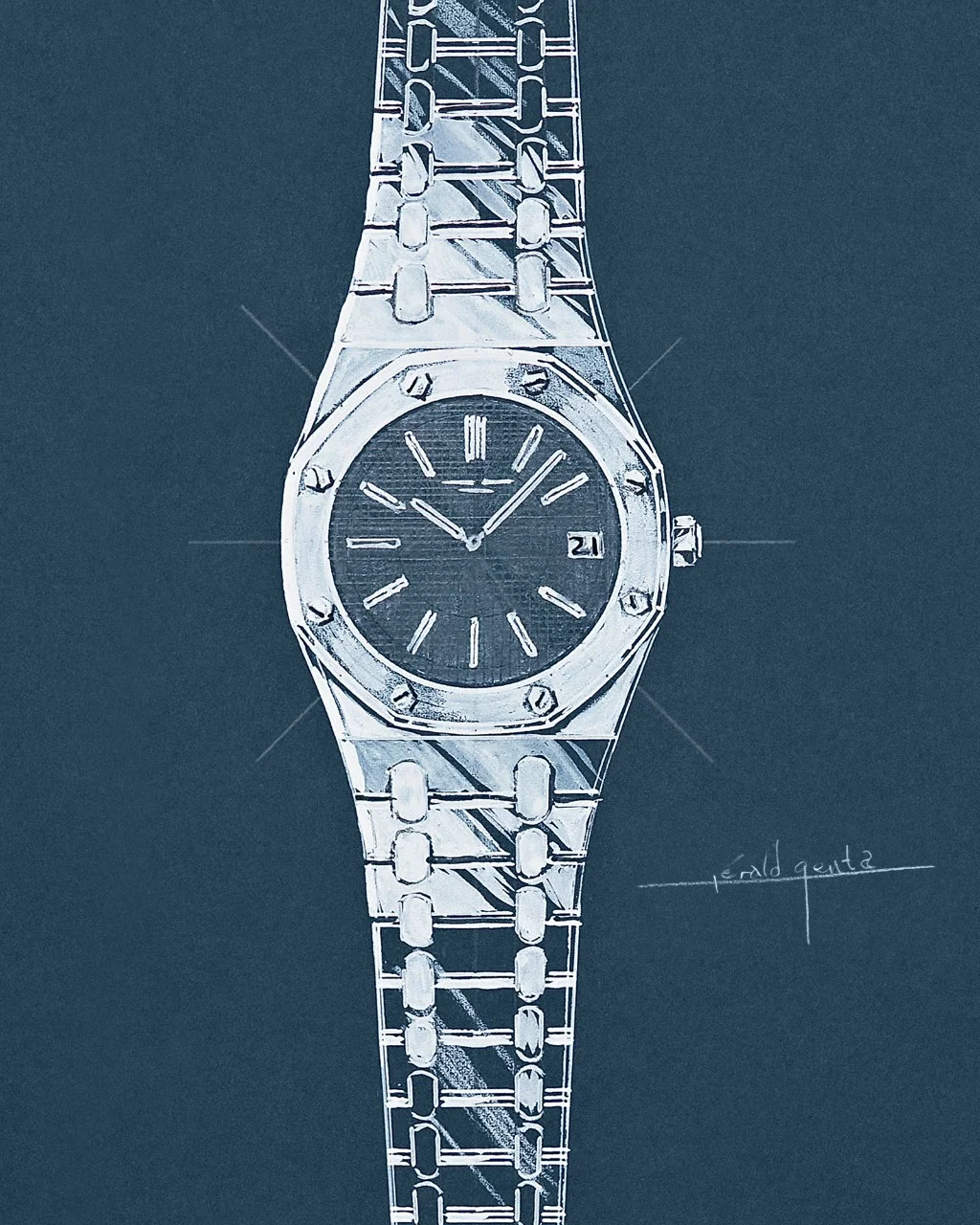
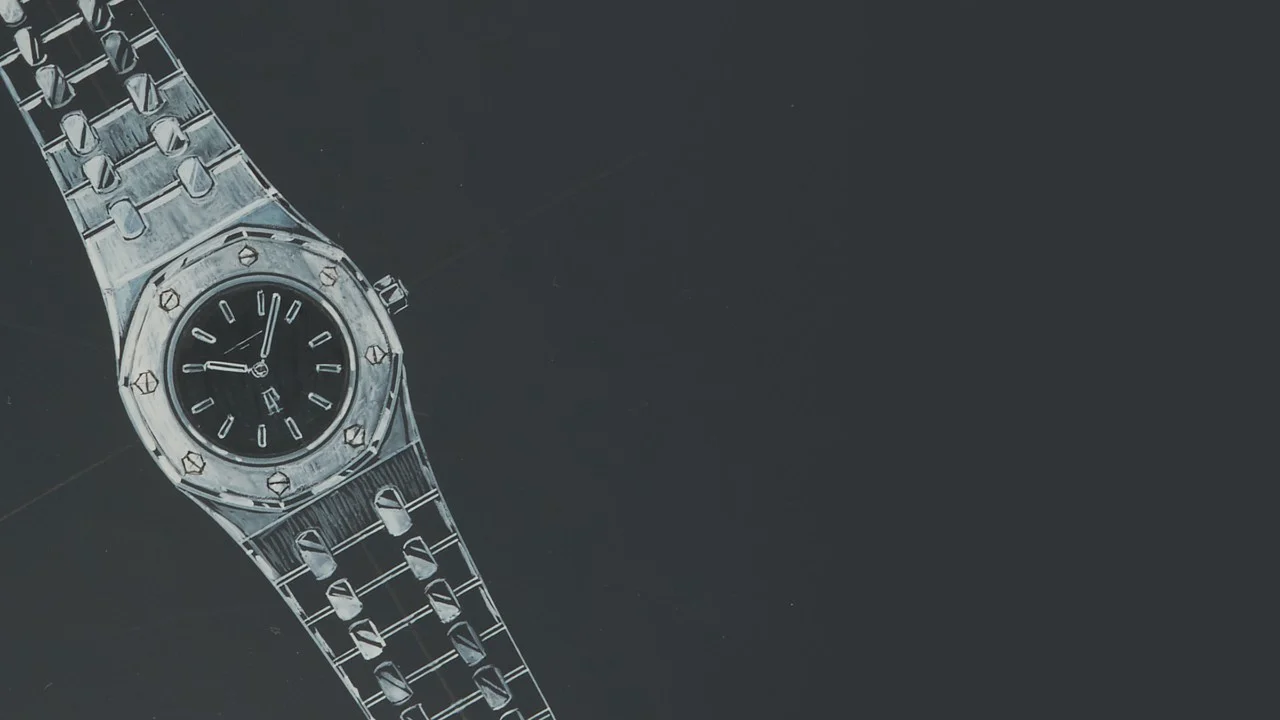
Circa 1973. First sketch of the Royal Oak II. The first sketch of the second generation Royal Oak is perfectly in line with Model 5402. Only the diameter of the case and the proportions of the bezel differ. Audemars Piguet Archives.

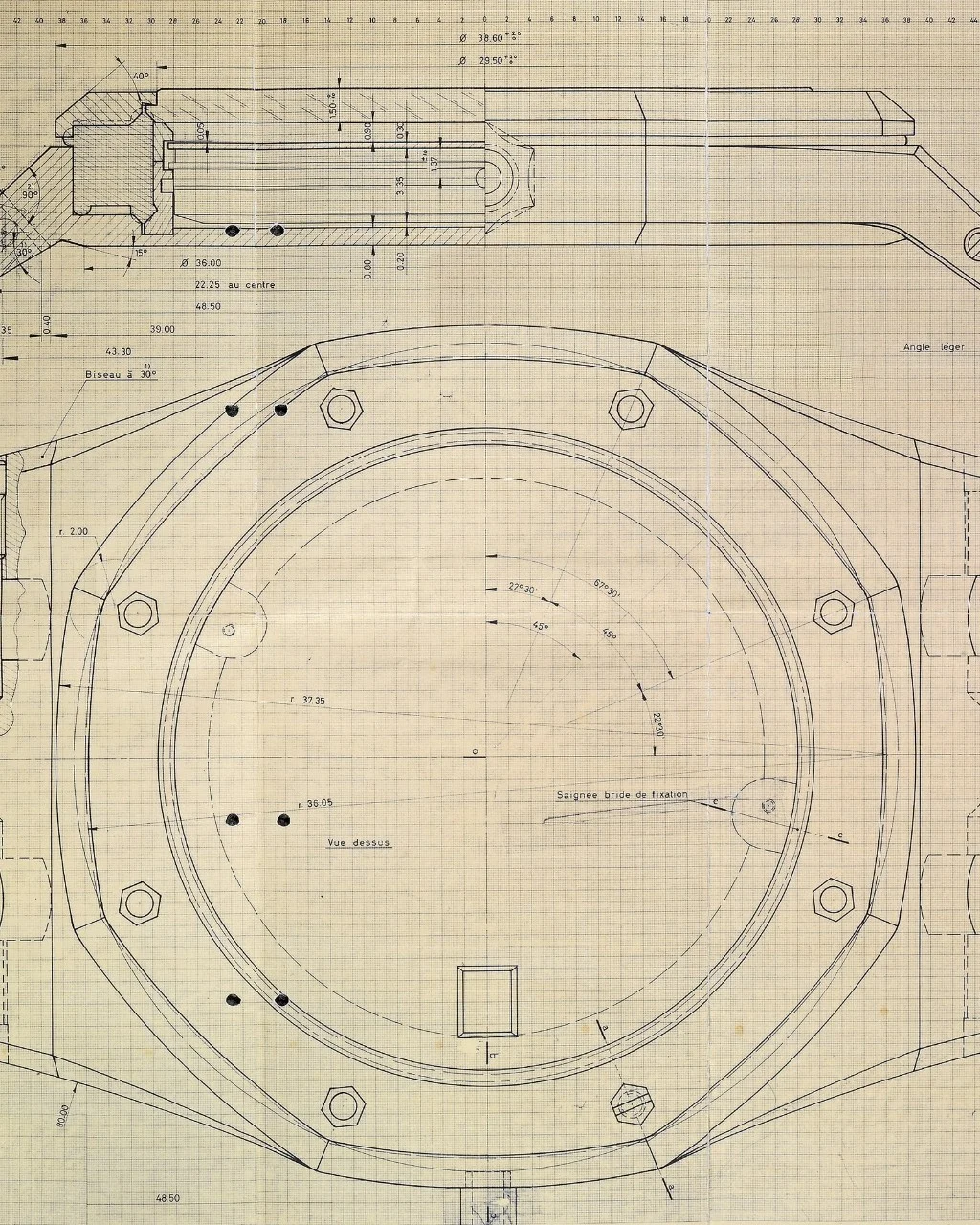
1976. Technical Data Sheet for the case of Royal Oak Model 8638ST. Audemars Piguet Archives.

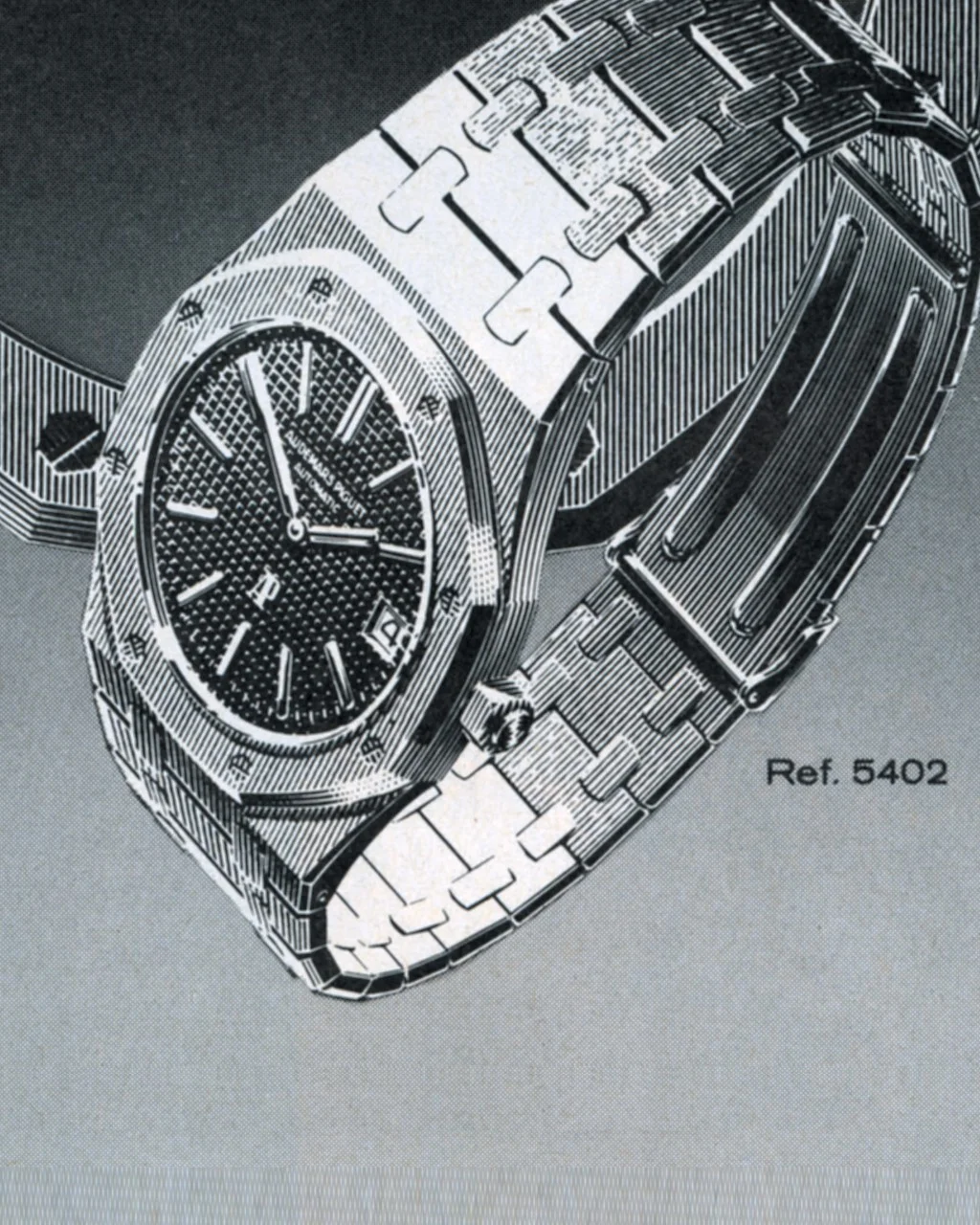
1976. Royal Oak I and II advertisement. Published in the German magazine Der Spiegel in October 1976, this ad presents the two models that constituted the full Royal Oak collection back then: 5402 (as early as 1972) and 8638 (1976) – both available only in steel. Audemars Piguet Archives.

Circa 1977–1978. Dial 8638 variants. In parallel to the first 8638 variants in precious materials, the dials multiply and appear sometimes without the guilloché Tapisserie. Audemars Piguet Archives.

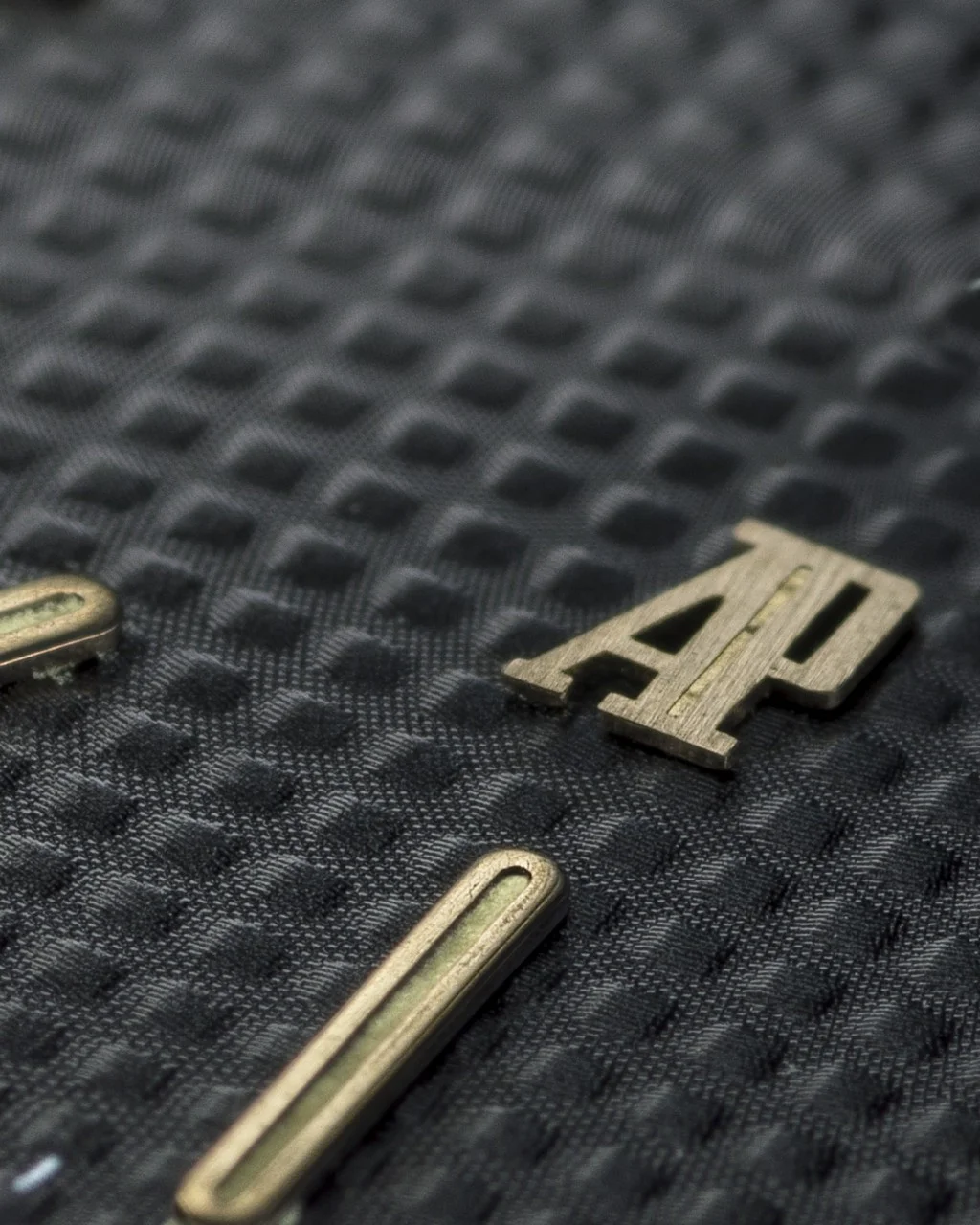
1976–1977. 8638 dials. As its 5402 predecessor, the first women's Royal Oak welcomes a similar Bleu Nuit, Nuage 50 guilloché T21 Tapisserie dial. For the first time, the AP monogram is positioned at 12 o'clock. Stern's technical sheet (on the left: dial for ST models; on the right: slate grey variant for SA models). Audemars Piguet Archives.
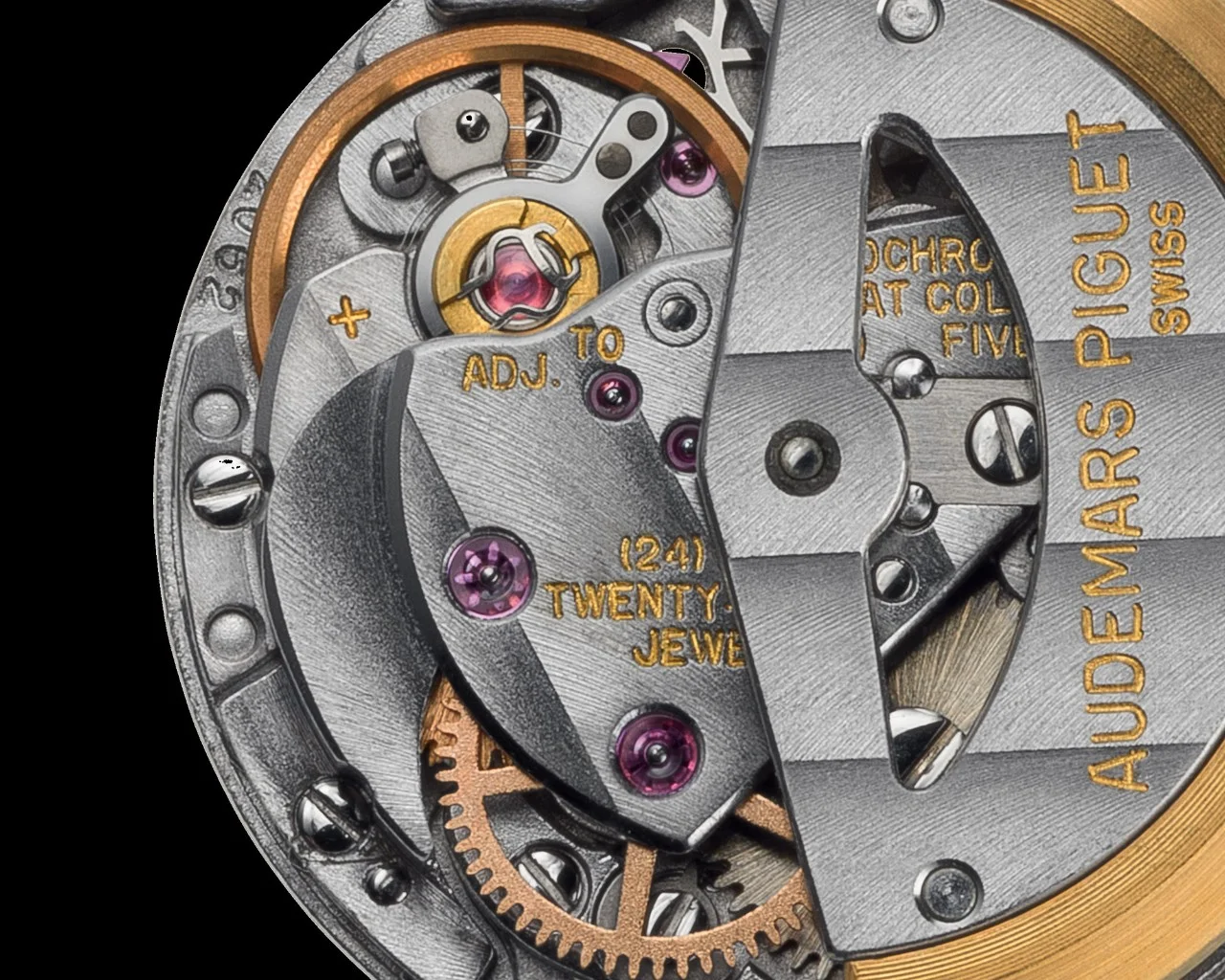
Presented in 1976, when Model 5402 of 1972 was the only Royal Oak on the market, Model 8638, also available only in steel, was intended for a female clientele. Equipped with the small selfwinding Calibre 2062 (Rayville – LeCoultre "ébauche"), it features all the characteristics of the original Royal Oak, with the exception of its smaller 29 mm diameter. From 1977 onwards, Model 8638 was interpreted in two-tone and yellow gold versions. The first white gold version followed in 1978.
Its total production run amounted to approximately 3,889 timepieces, mainly between 1976 and 1980, although sales continued until around 1990.
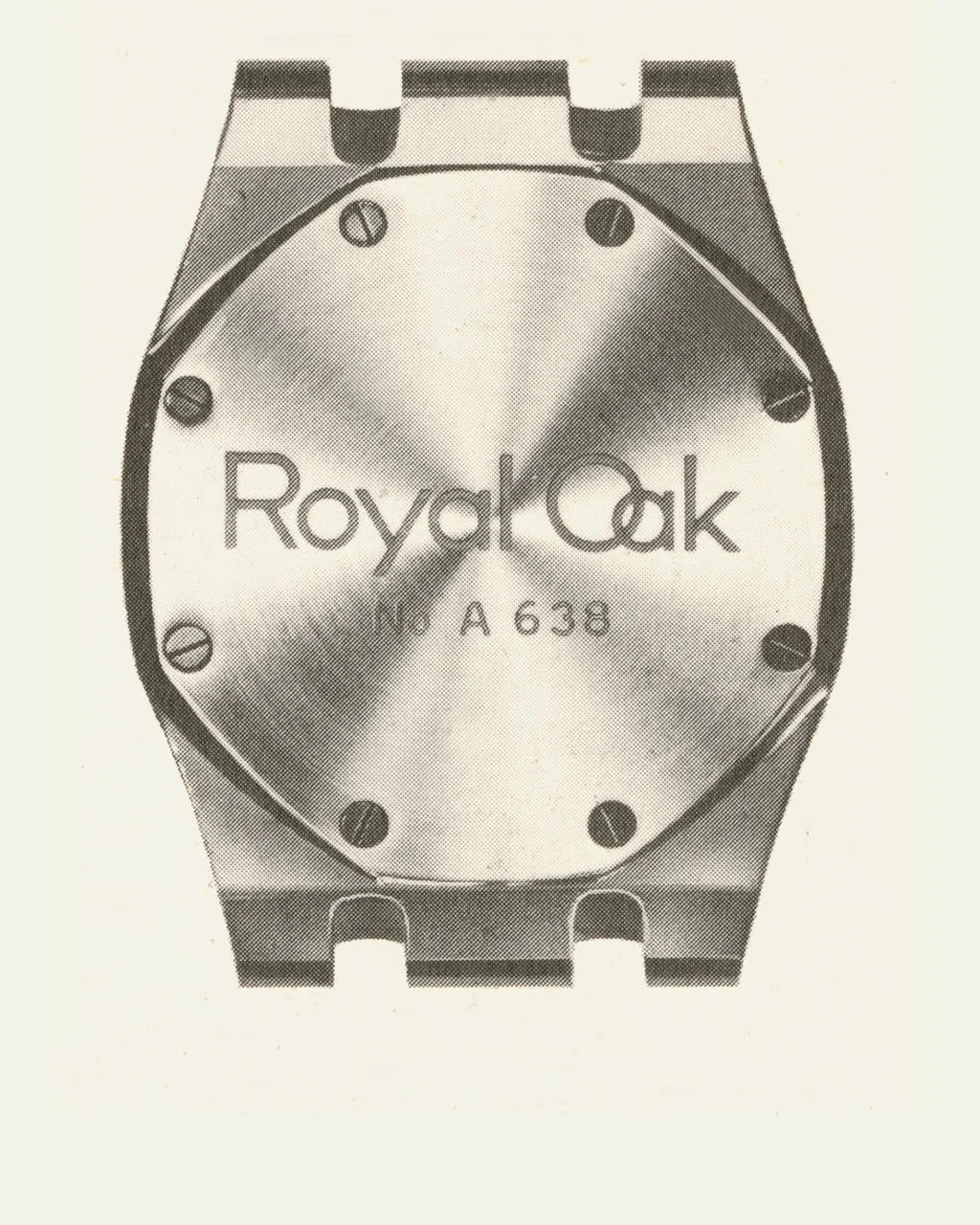
Named "Royal Oak II", some versions even bear the engraving "Royal Oak II" on the back.
Some of the first 130 Royal Oak 8638s do not have a small number.
From the 1980s, the model was gradually replaced by variants equipped with quartz movements.
Presented in 1976, when Model 5402 of 1972 was the only Royal Oak on the market, Model 8638, also available only in steel, was intended for a female clientele. Equipped with the small selfwinding Calibre 2062 (Rayville – LeCoultre "ébauche"), it features all the characteristics of the original Royal Oak, with the exception of its smaller 29 mm diameter. From 1977 onwards, Model 8638 was interpreted in two-tone and yellow gold versions. The first white gold version followed in 1978.
Its total production run amounted to approximately 3,889 timepieces, mainly between 1976 and 1980, although sales continued until around 1990.
Named "Royal Oak II", some versions even bear the engraving "Royal Oak II" on the back.
Some of the first 130 Royal Oak 8638s do not have a small number.
From the 1980s, the model was gradually replaced by variants equipped with quartz movements.

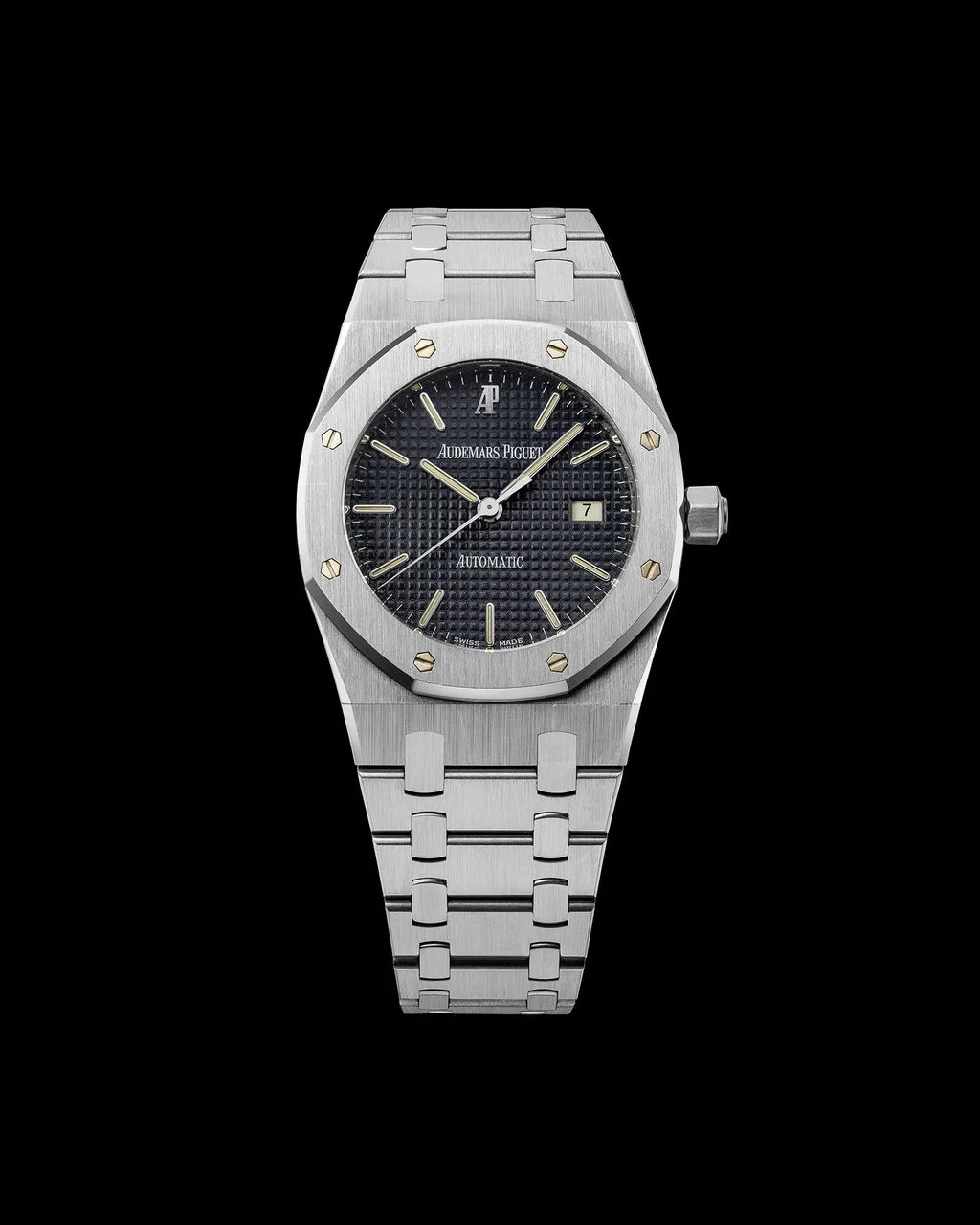
1977. Royal Oak 8638ST (1976), No. 370. Calibre 2062, movement 224714 (originally 176679). Bracelet 424. T21 Tapisserie dial. 29 mm case. Steel. Sold to Italomega in 1977. Audemars Piguet Heritage, inv. 1871.
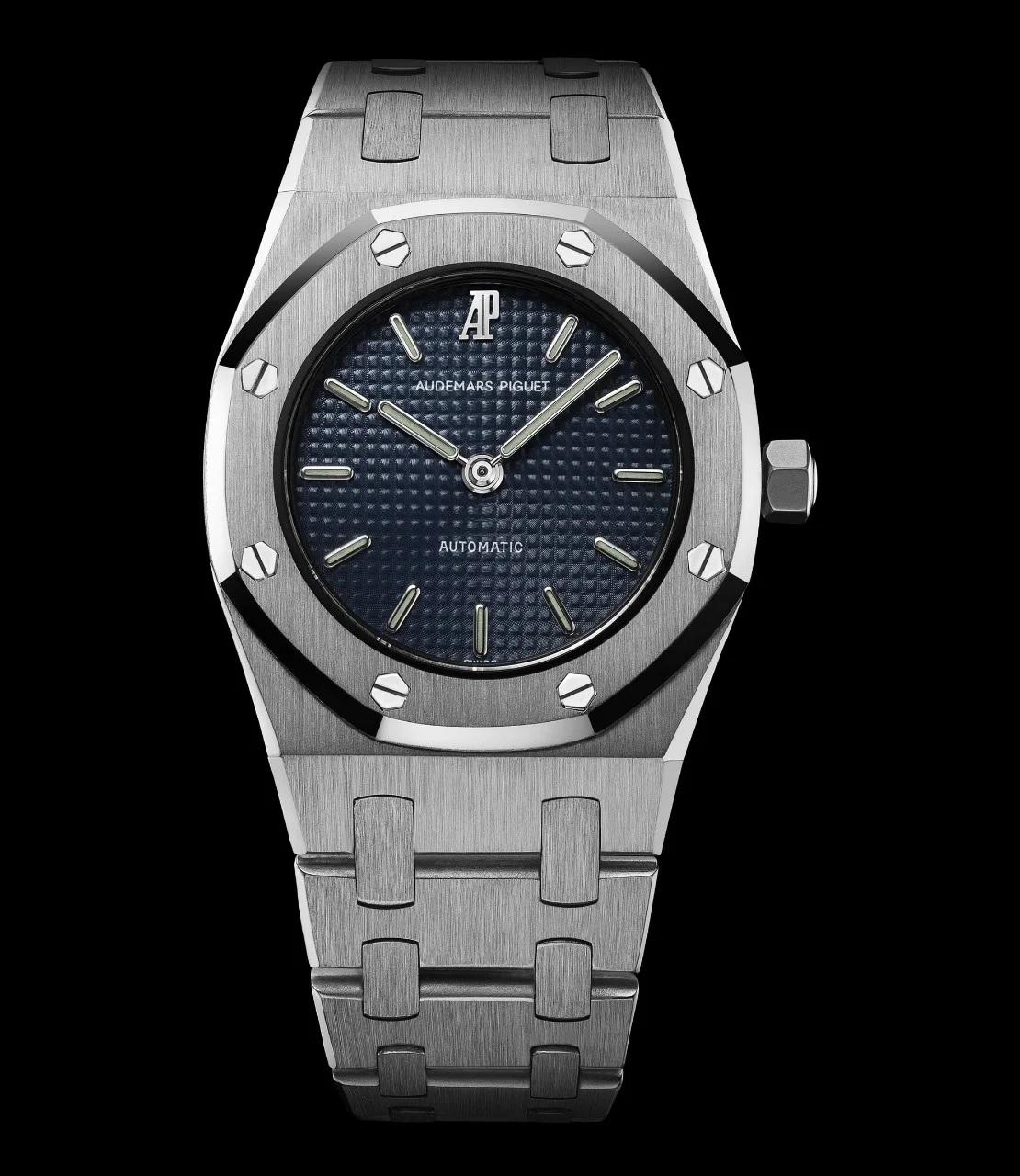
1977. Royal Oak 8638ST (1976), No. 370. Calibre 2062, movement 224714 (originally 176679). Bracelet 424. T21 Tapisserie dial. Case B9752, 29 mm. Steel. Sold to Italomega in 1977. Audemars Piguet Heritage, inv. 1871.
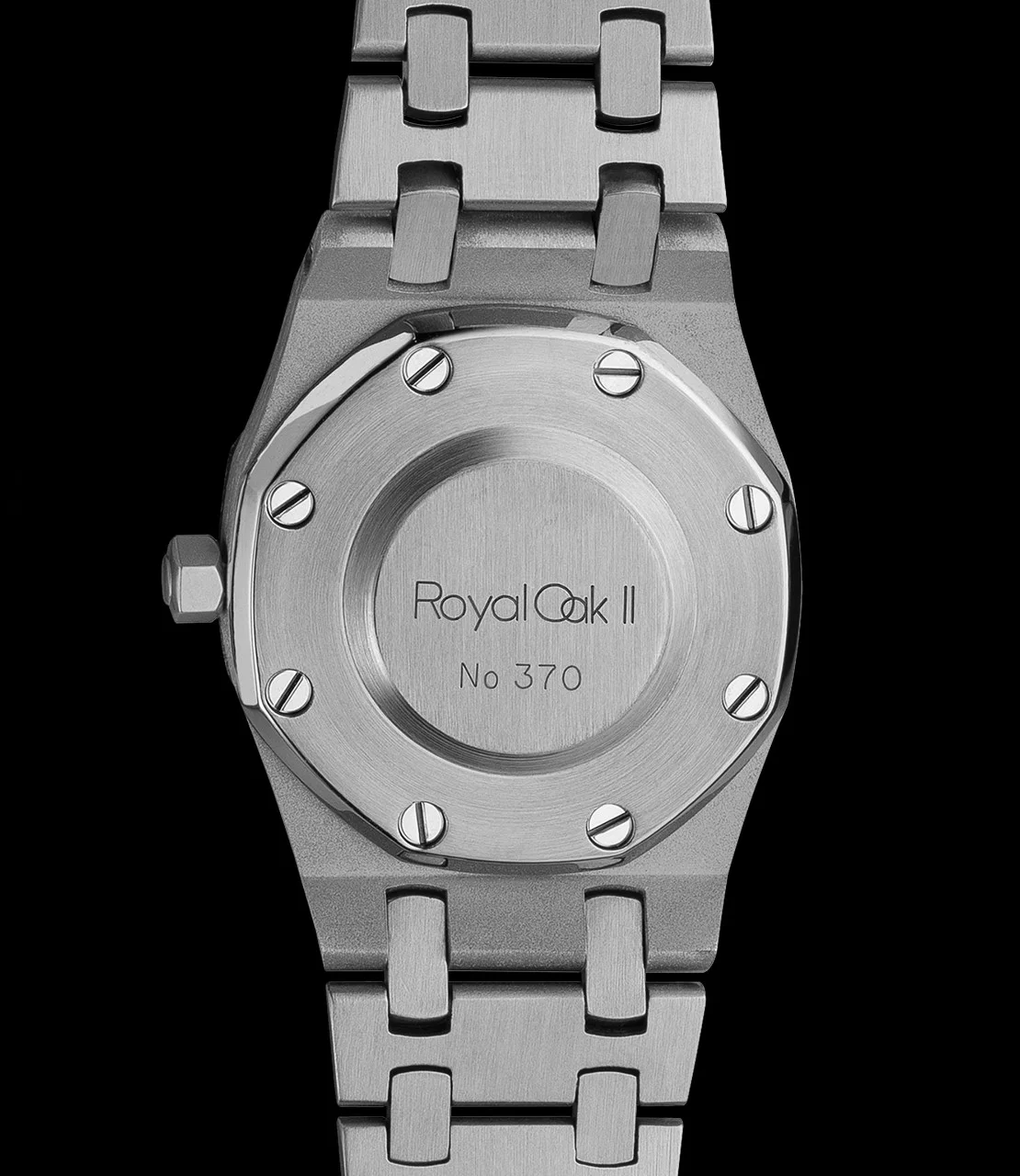
1977. Royal Oak 8638ST (1976), No. 370, caseback view. Calibre 2062, movement 224714 (originally 176679). Bracelet 424. T21 Tapisserie dial. Case B9752, 29 mm. Steel. Sold to Italomega in 1977. Audemars Piguet Heritage, inv. 1871.

1977. Royal Oak 8638ST (1976), No. 370, side view. Calibre 2062, movement 224714 (originally 176679). Bracelet 424. T21 Tapisserie dial. Case B9752, 29 mm. Steel. Sold to Italomega in 1977. Audemars Piguet Heritage, inv. 1871.

Case components of Model 8638. The external architecture of the first women's Royal Oak is very different from that of its 5402 predecessor. Audemars Piguet Heritage, inv. 1871.
The first 10 models bearing this reference were presented at Fred in Paris in April 1976, even before their official launch at the Basel Fair.
Sales: 423 (1976), 370 (1977), 291 (1978), 226 (1979), 129 (1980), 17 (1981–1990)
Total number of units: 1,456
The first 10 models bearing this reference were presented at Fred in Paris in April 1976, even before their official launch at the Basel Fair.
Sales: 423 (1976), 370 (1977), 291 (1978), 226 (1979), 129 (1980), 17 (1981–1990)
Total number of units: 1,456
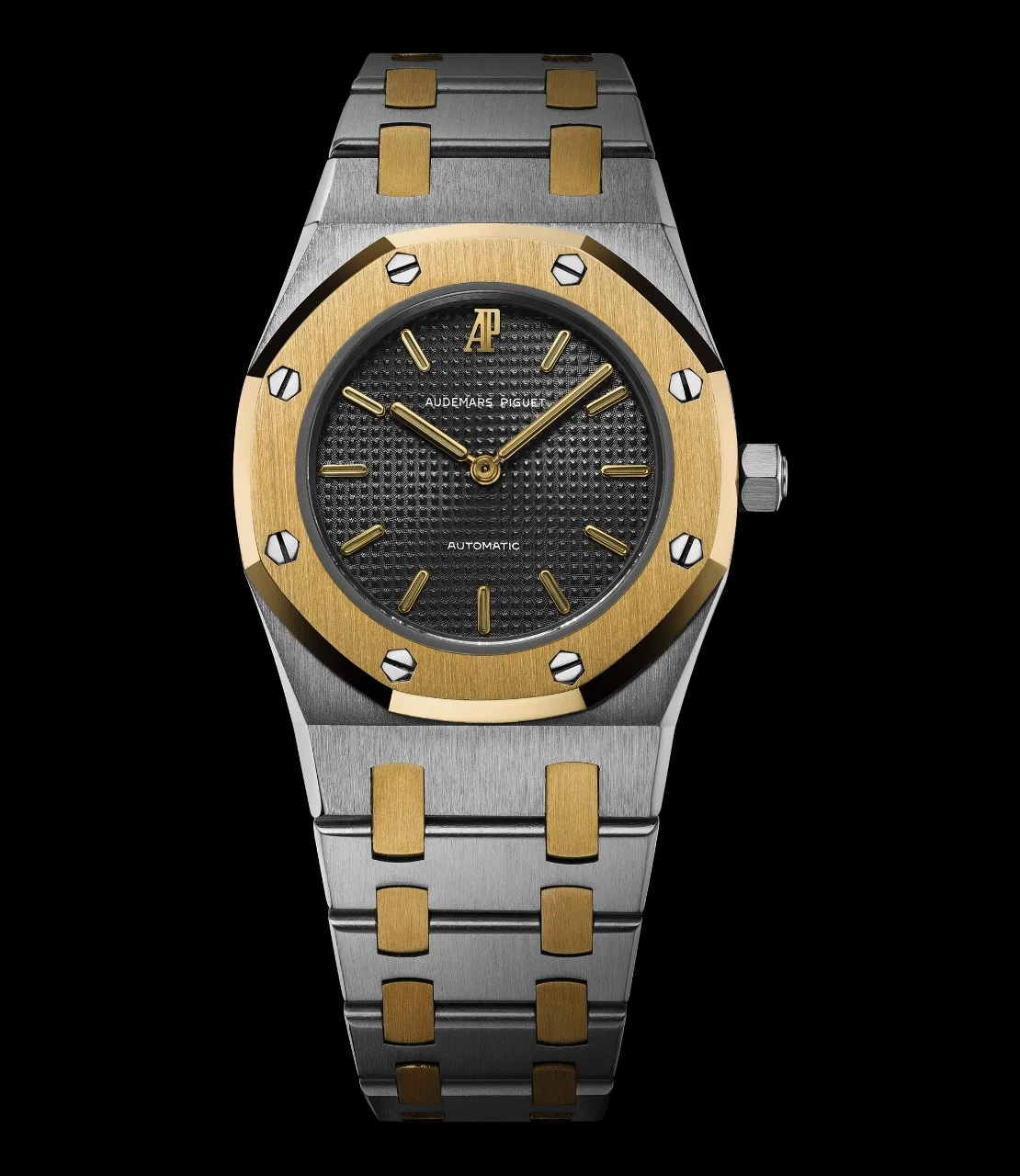
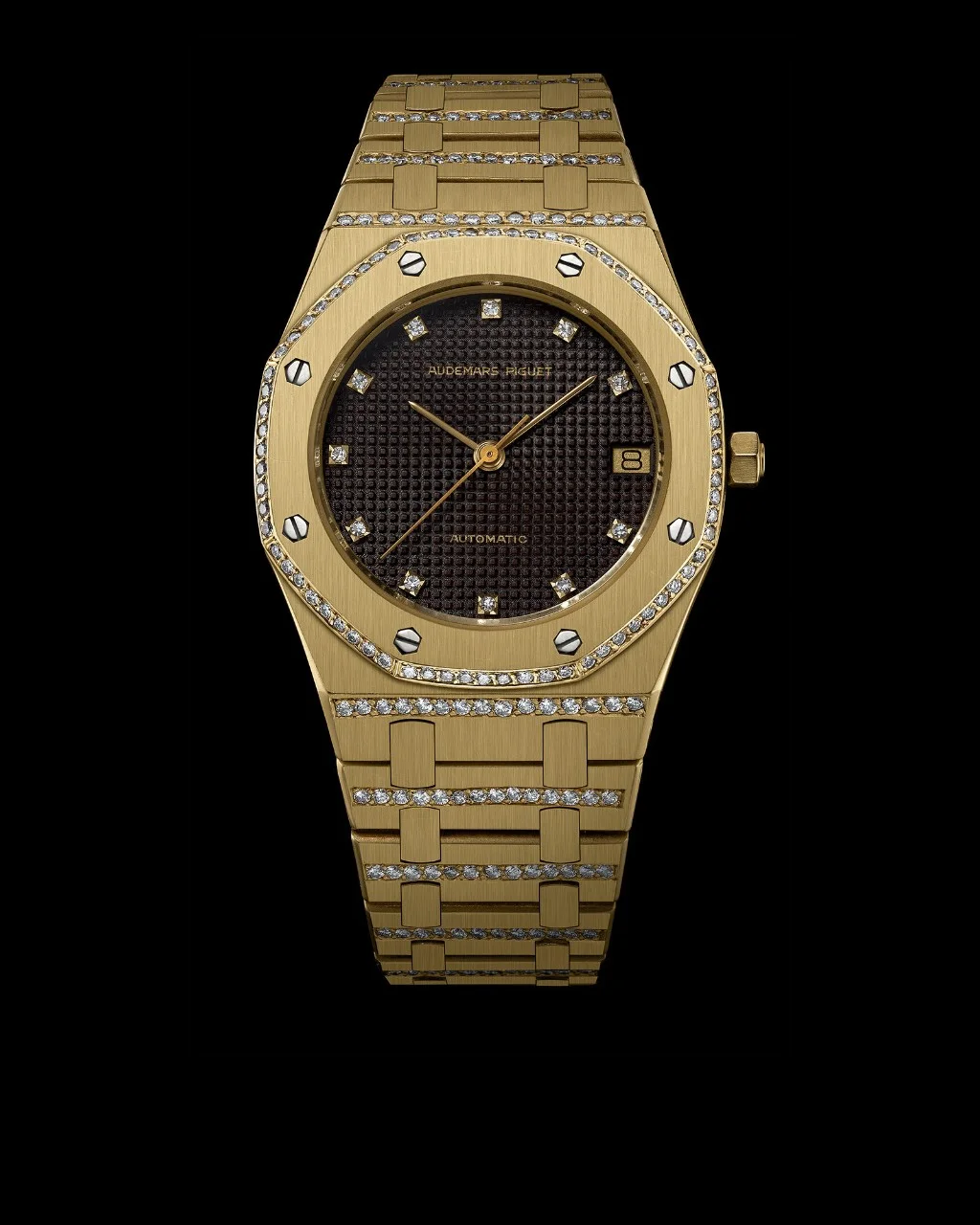
1979. Royal Oak 8638SA (1977), No. 671. Calibre 2062, movement 192912. Bracelet 424. T21 Tapisserie dial. 29 mm case. 18-carat yellow gold. Sold in 1979, then gifted to the AP Museum in December 1983. Audemars Piguet Heritage, inv. 381.
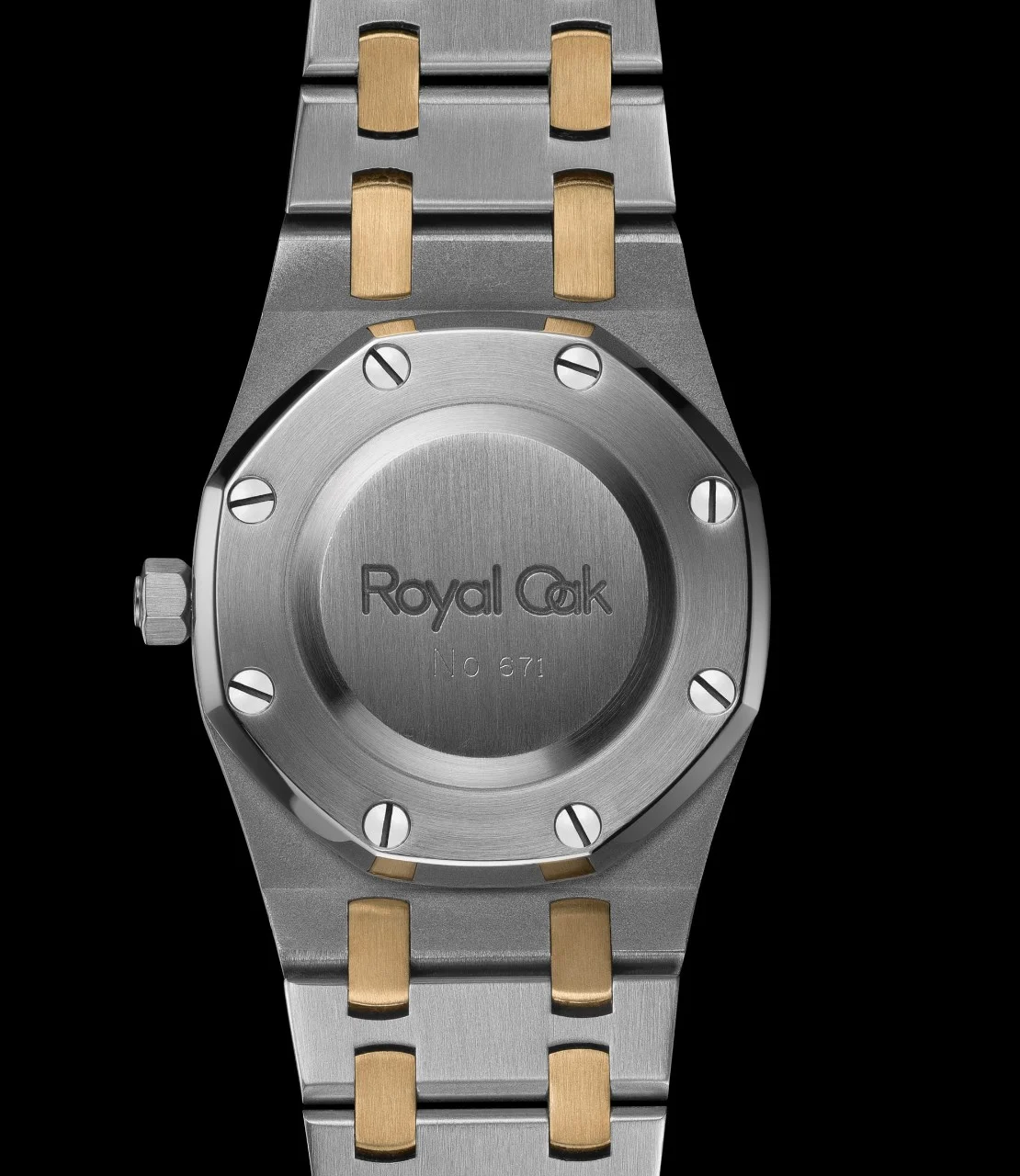
1979. Royal Oak 8638SA (1977), No. 671, caseback view. Calibre 2062, movement 192912. Bracelet 424. T21 Tapisserie dial. 29 mm case. 18-carat yellow gold. Sold in 1979, then gifted to the AP Museum in December 1983. Audemars Piguet Heritage, inv. 381.

1979. Folding clasp, Royal Oak 8638SA (1977), No. 671. Audemars Piguet Heritage, inv. 381.
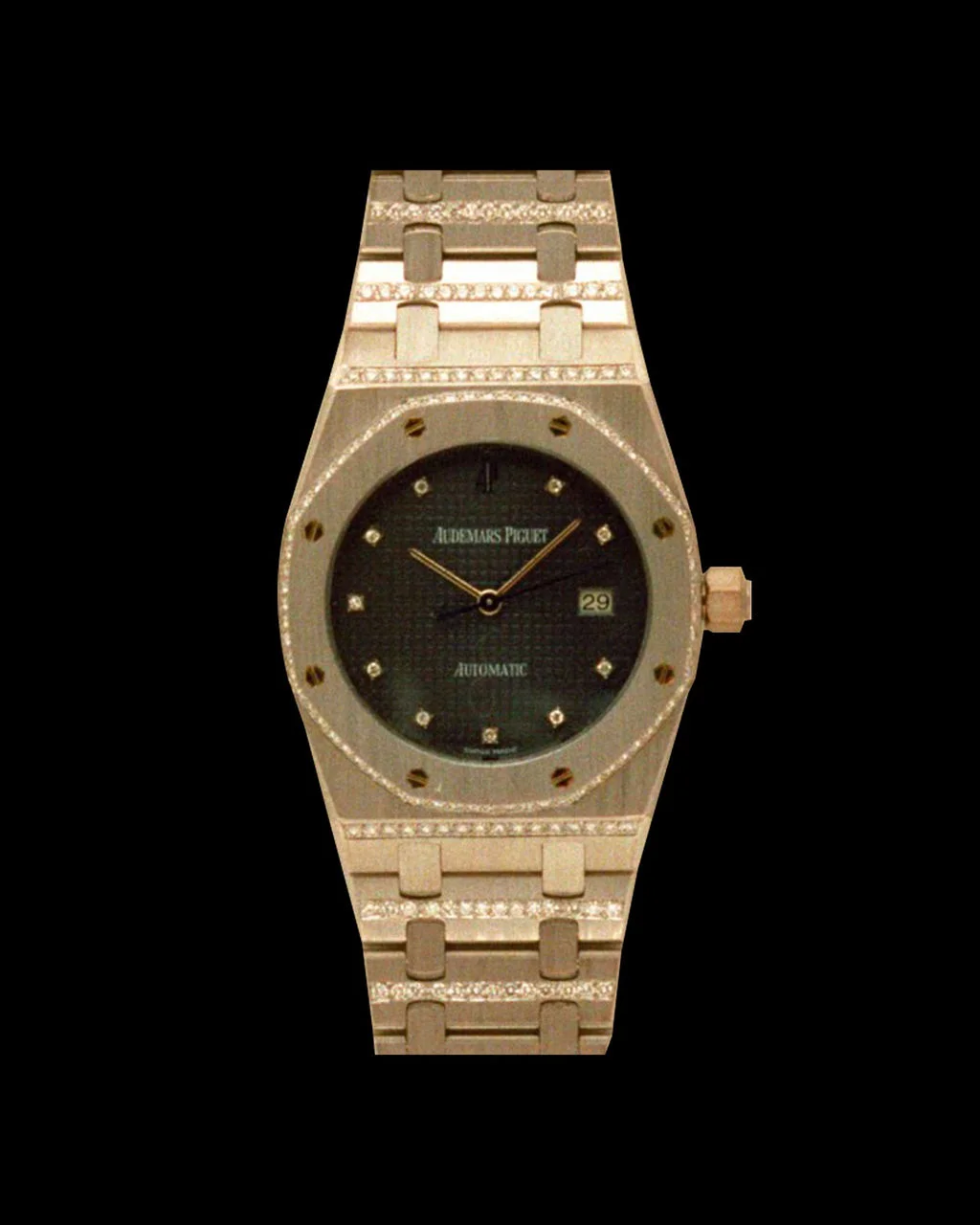
Introduced in March 1977, the two-tone steel and yellow gold variant was produced in large numbers, with records showing a figure of 1,590 – which testifies to the popularity of this combination of materials and the model’s immediate success.
Sales: 283 (1977), 382 (1978), 622 (1979), 274 (1980), 30 (1981–1991)
Number of units: 1,590
Introduced in March 1977, the two-tone steel and yellow gold variant was produced in large numbers, with records showing a figure of 1,590 – which testifies to the popularity of this combination of materials and the model’s immediate success.
Sales: 283 (1977), 382 (1978), 622 (1979), 274 (1980), 30 (1981–1991)
Number of units: 1,590
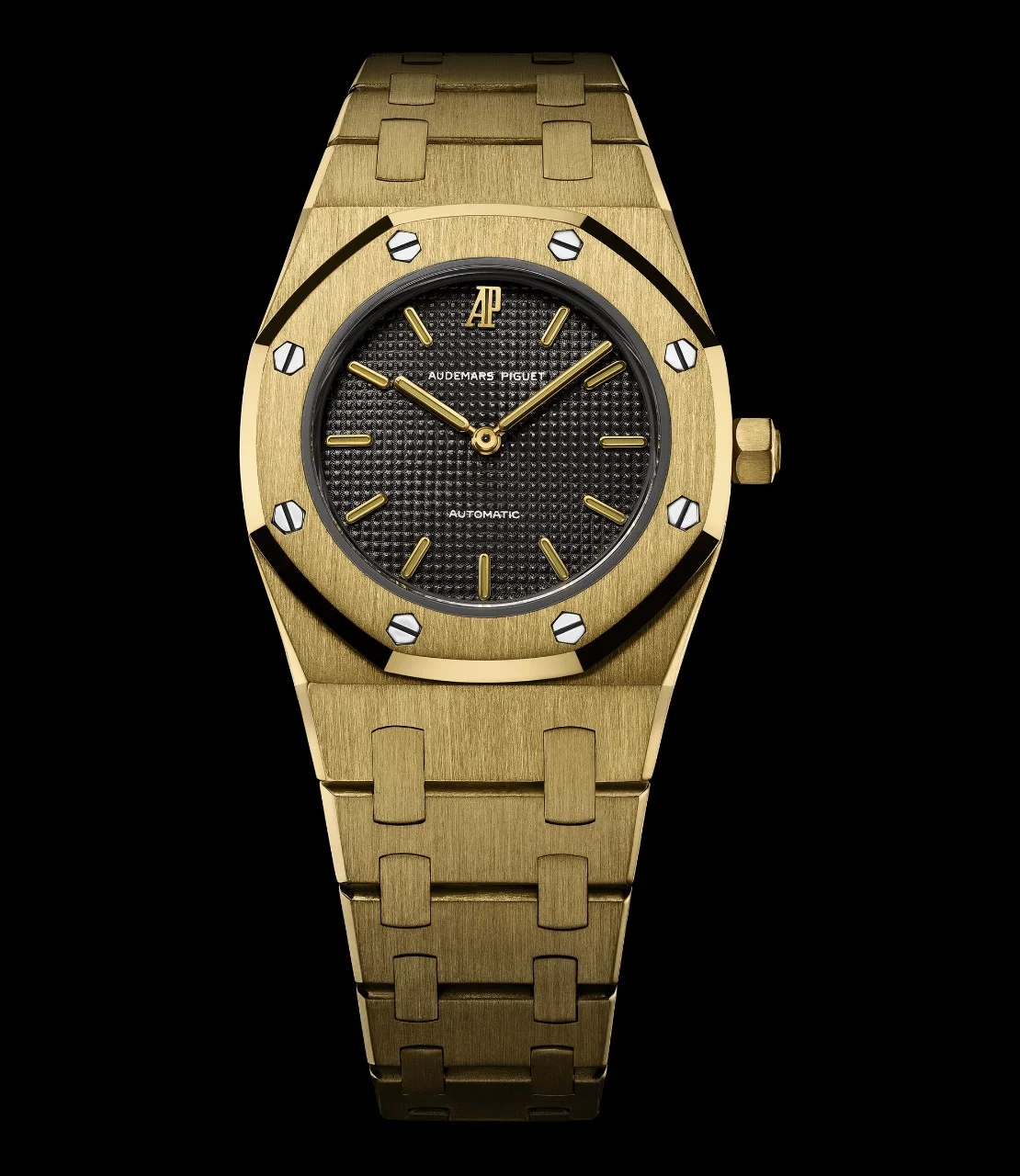
1977. Royal Oak 8638BA, No. 1. Calibre 2062, movement 176166. Bracelet 424. T21 Tapisserie dial. Case B14001, 29 mm. 18-carat yellow gold. Sold to Darcal (Swiss market) on May 4, 1977. Audemars Piguet Heritage, inv. 1873.

1977. Royal Oak 8638BA, No. 1. Calibre 2062, movement 176166. Bracelet 424. Tapisserie T21 dial. Case B14001, 29 mm. 18-carat yellow gold. Sold to Darcal (Swiss market) on May 4, 1977. Audemars Piguet Heritage, inv. 1873.
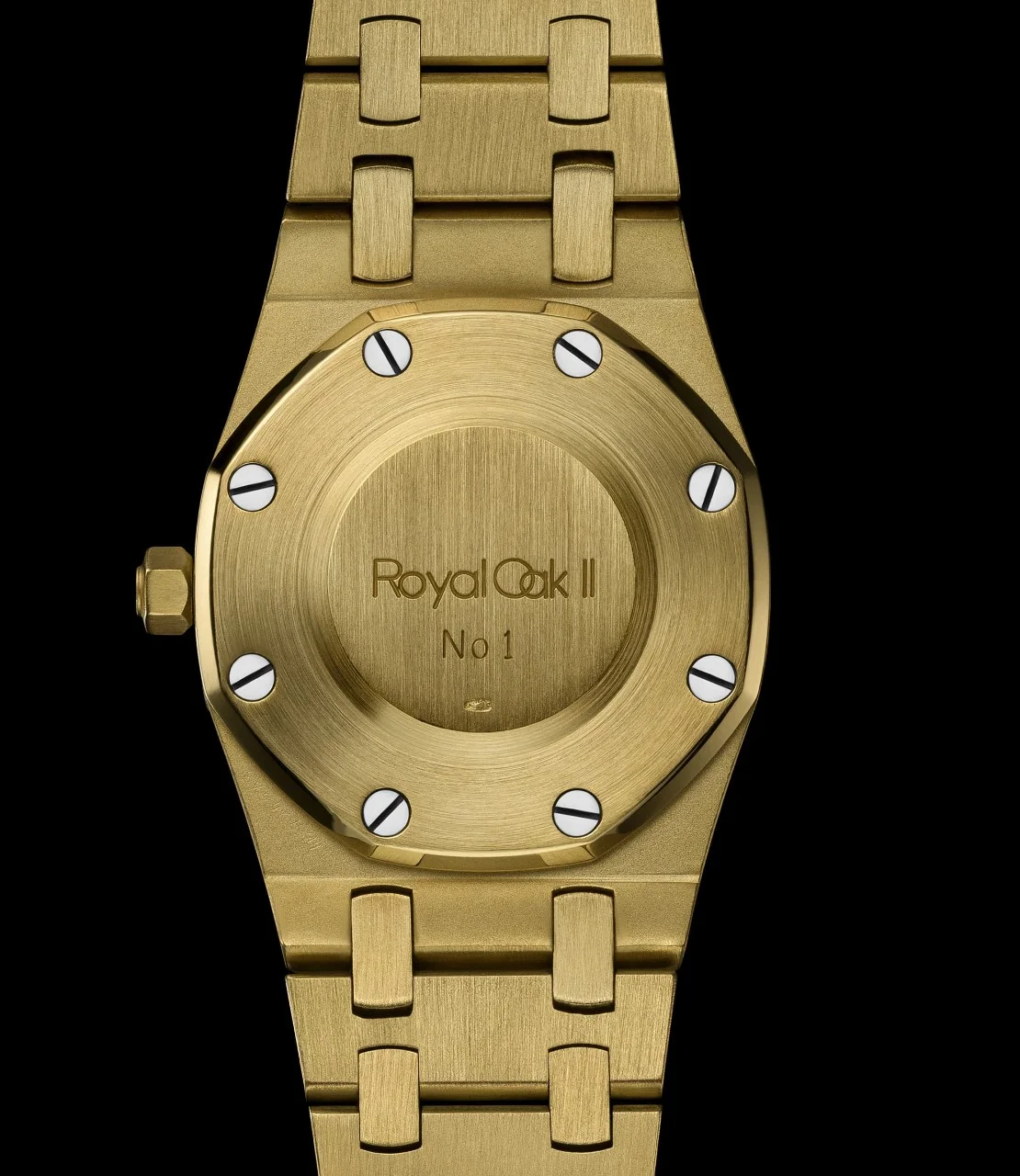
1977. Royal Oak 8638BA, No. 1, caseback view. Calibre 2062, movement 176166. Bracelet 424. T21 Tapisserie dial. Case B14001, 29 mm. 18-carat yellow gold. Sold to Darcal (Swiss market) on May 4, 1977. Audemars Piguet Heritage, inv. 1873.

1977. Royal Oak 8638BA, No. 1, caseback view. Date. Calibre 2062, movement 176166. Bracelet 424. T21 Tapisserie dial. Case B14001, 29 mm. 18-carat yellow gold. Sold to Darcal (Swiss market) on May 4, 1977. Audemars Piguet Heritage, inv. 1873.

1977. Royal Oak 8638BA, No. 1, side view. Calibre 2062, movement 176166. Bracelet 424. T21Tapisserie dial. Case B14001, 29 mm. 18-carat yellow gold. Sold to Darcal (Swiss market) on May 4, 1977. Audemars Piguet Heritage, inv. 1873.
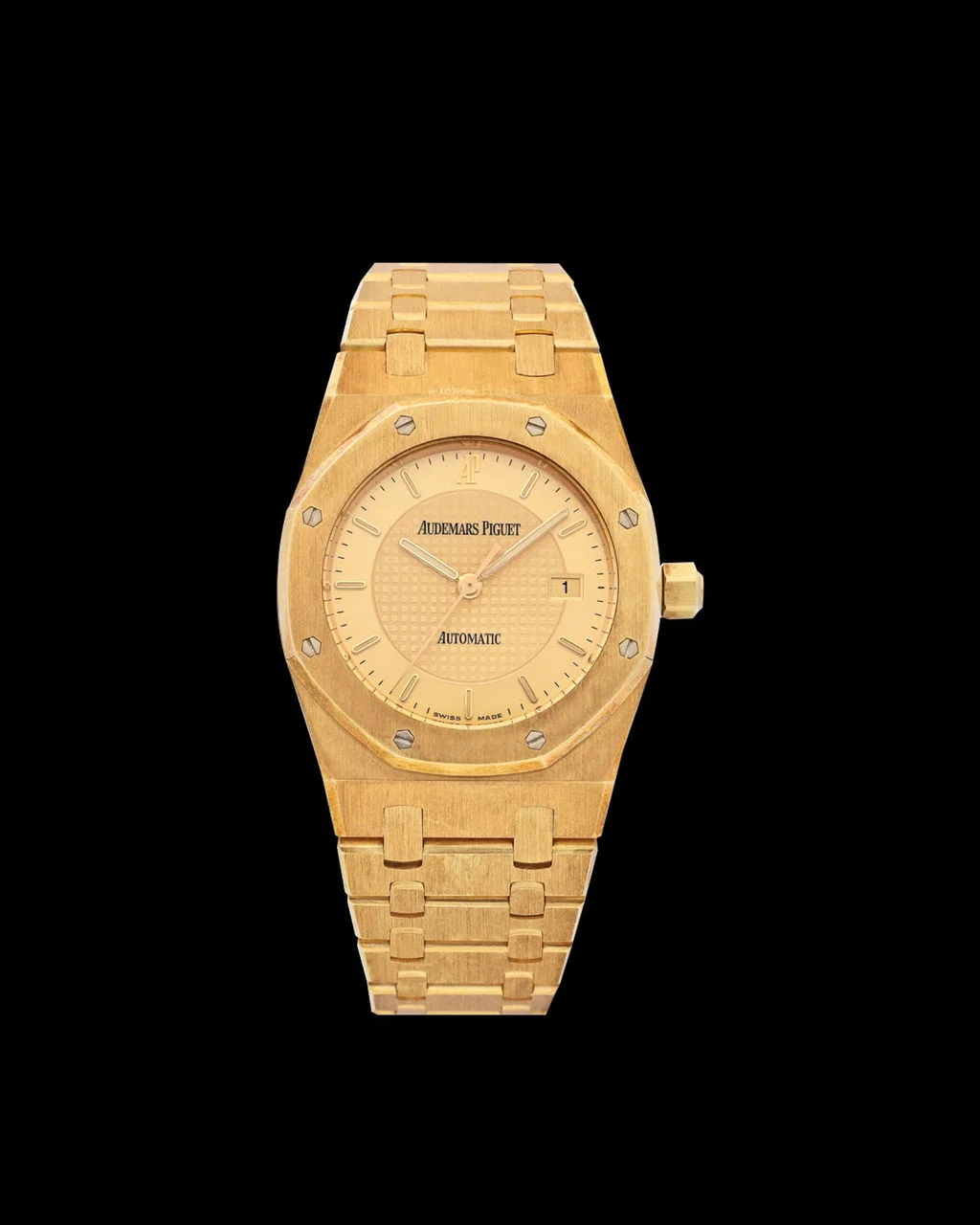
The yellow gold version was launched in 1977, as was Model 5402. The entire Royal Oak collection was thus gradually developed and made available in precious materials.
Sales: 112 (1977), 288 (1978), 308 (1979), 114 (1980), 3 (1981–1993)
Number of units: 824
The yellow gold version was launched in 1977, as was Model 5402. The entire Royal Oak collection was thus gradually developed and made available in precious materials.
Sales: 112 (1977), 288 (1978), 308 (1979), 114 (1980), 3 (1981–1993)
Number of units: 824

1978. Extract from the Production Register. List of five examples of the white gold Model 8638 sold in 1978. Audemars Piguet Archives.
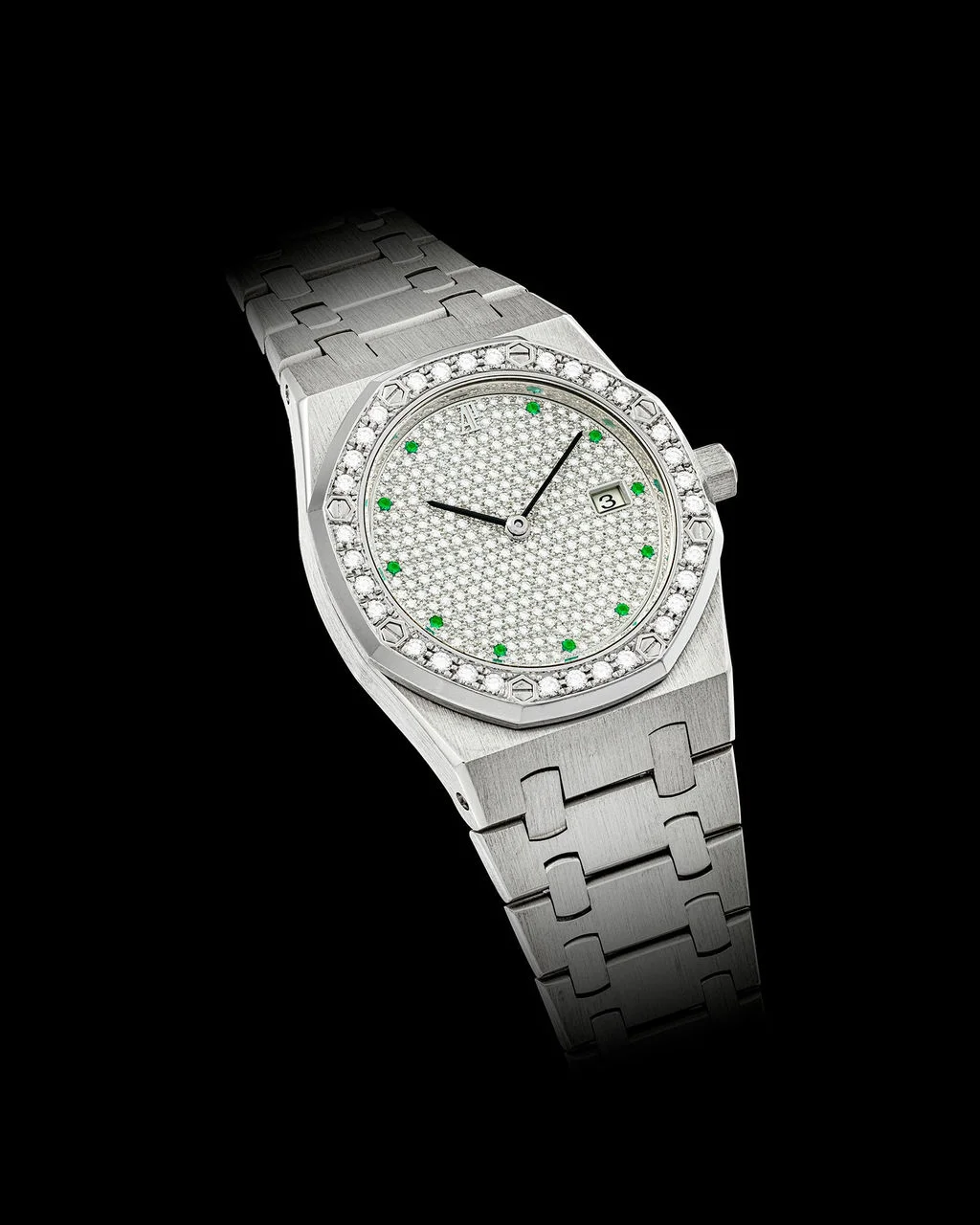
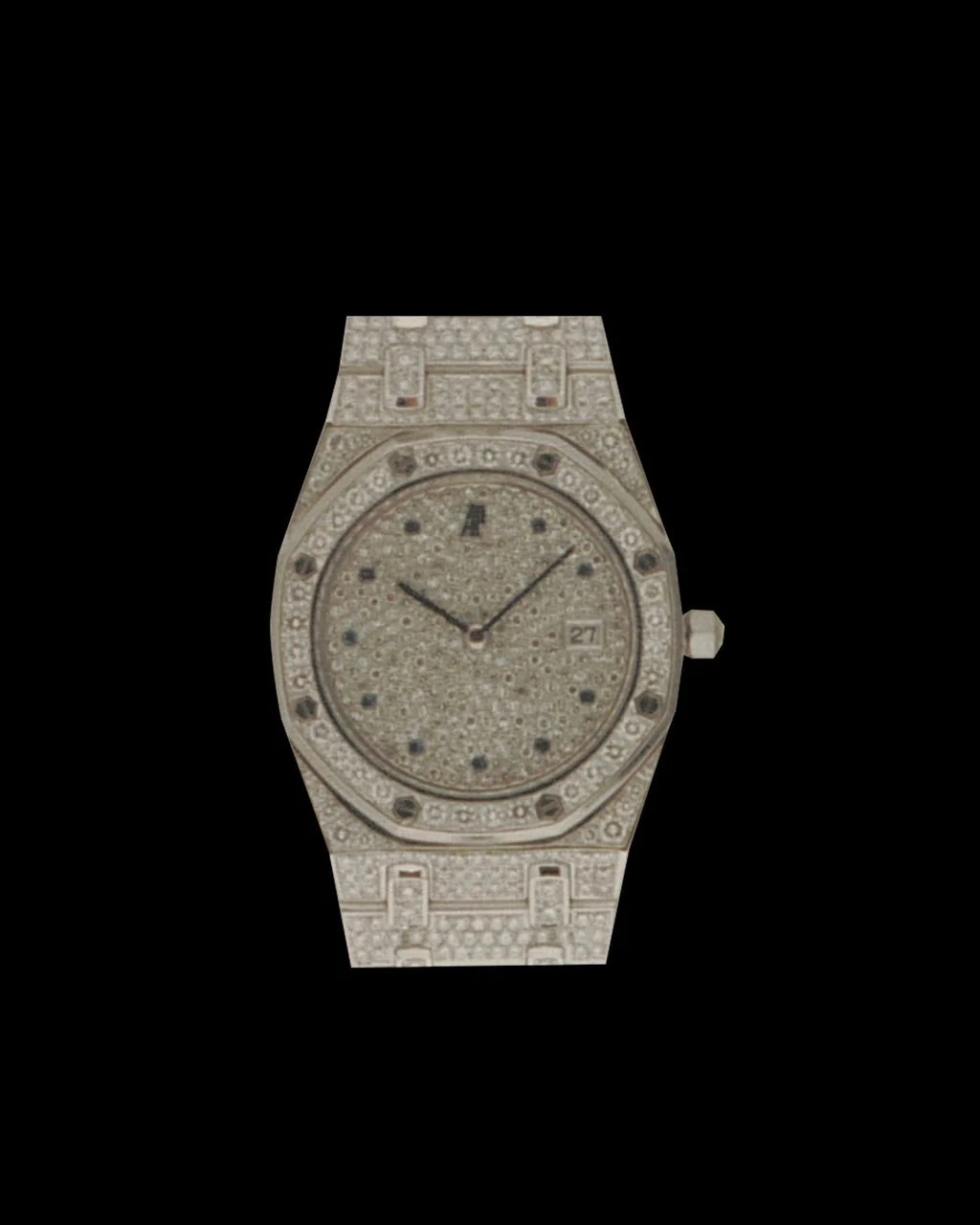
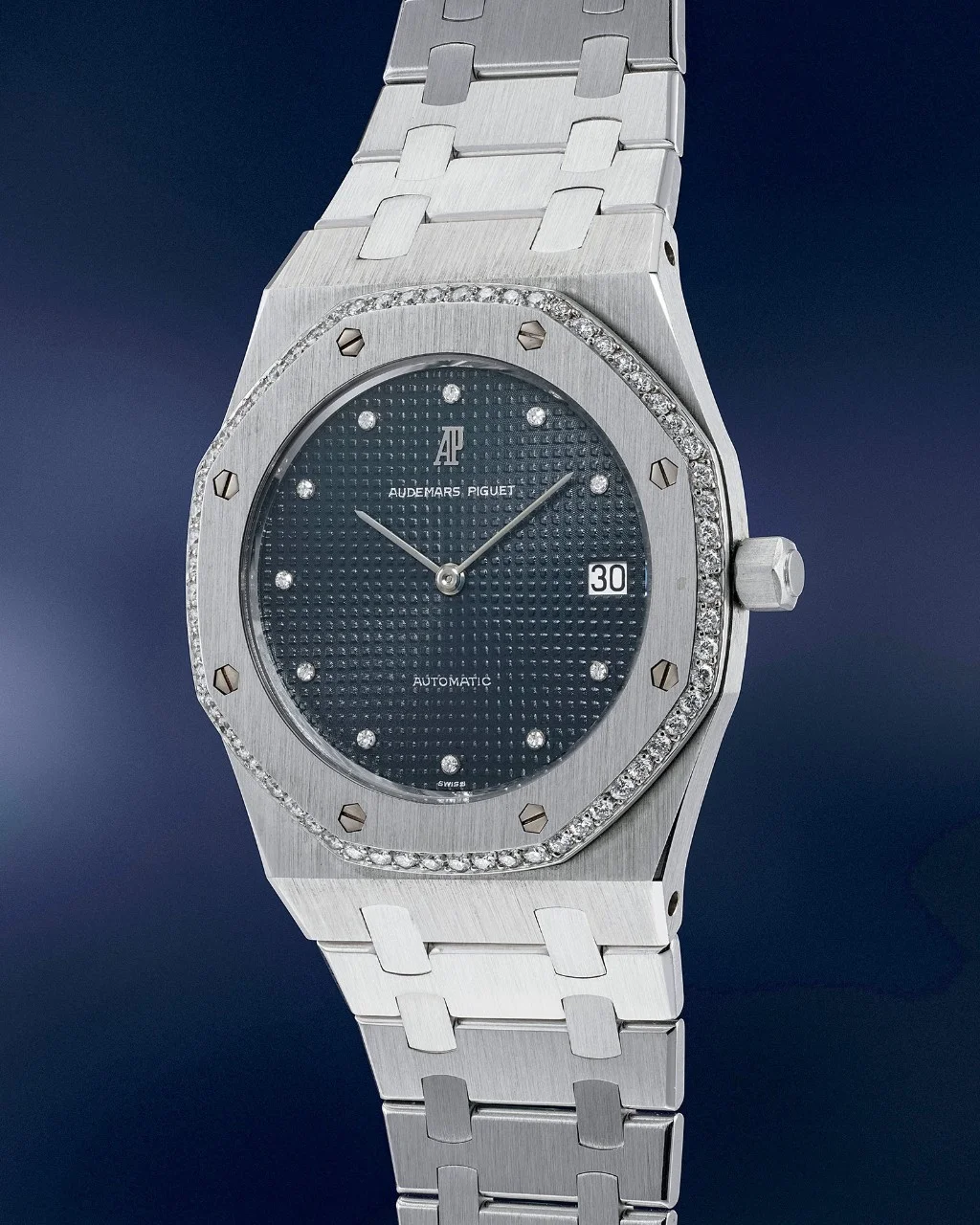
The white gold version left the Audemars Piguet workshops in 1978, but its number was so limited that it became one of the rarest variants with only 18 produced.
Sales: 11 (1978), 7 (1979)
Number of units: 18
The white gold version left the Audemars Piguet workshops in 1978, but its number was so limited that it became one of the rarest variants with only 18 produced.
Sales: 11 (1978), 7 (1979)
Number of units: 18