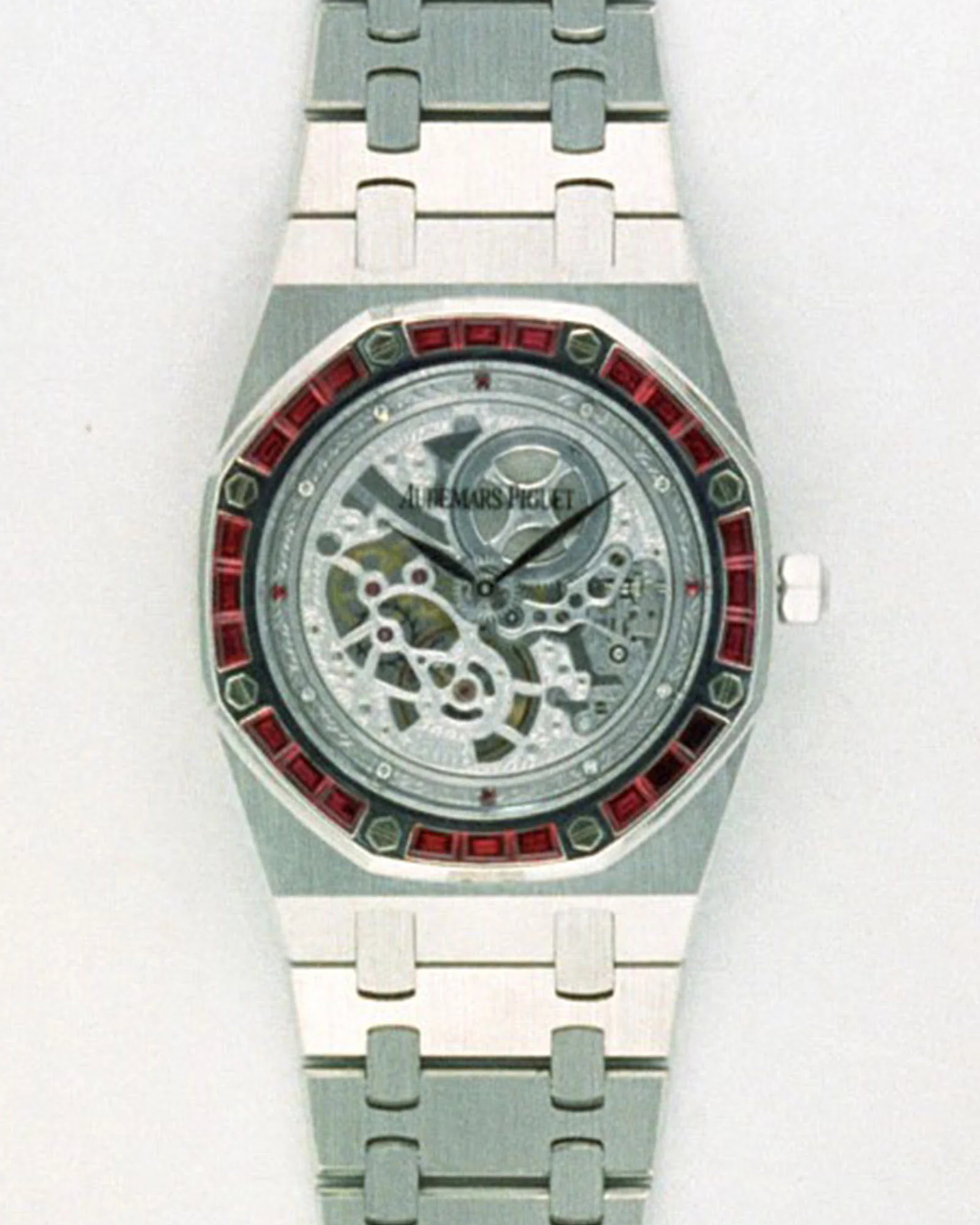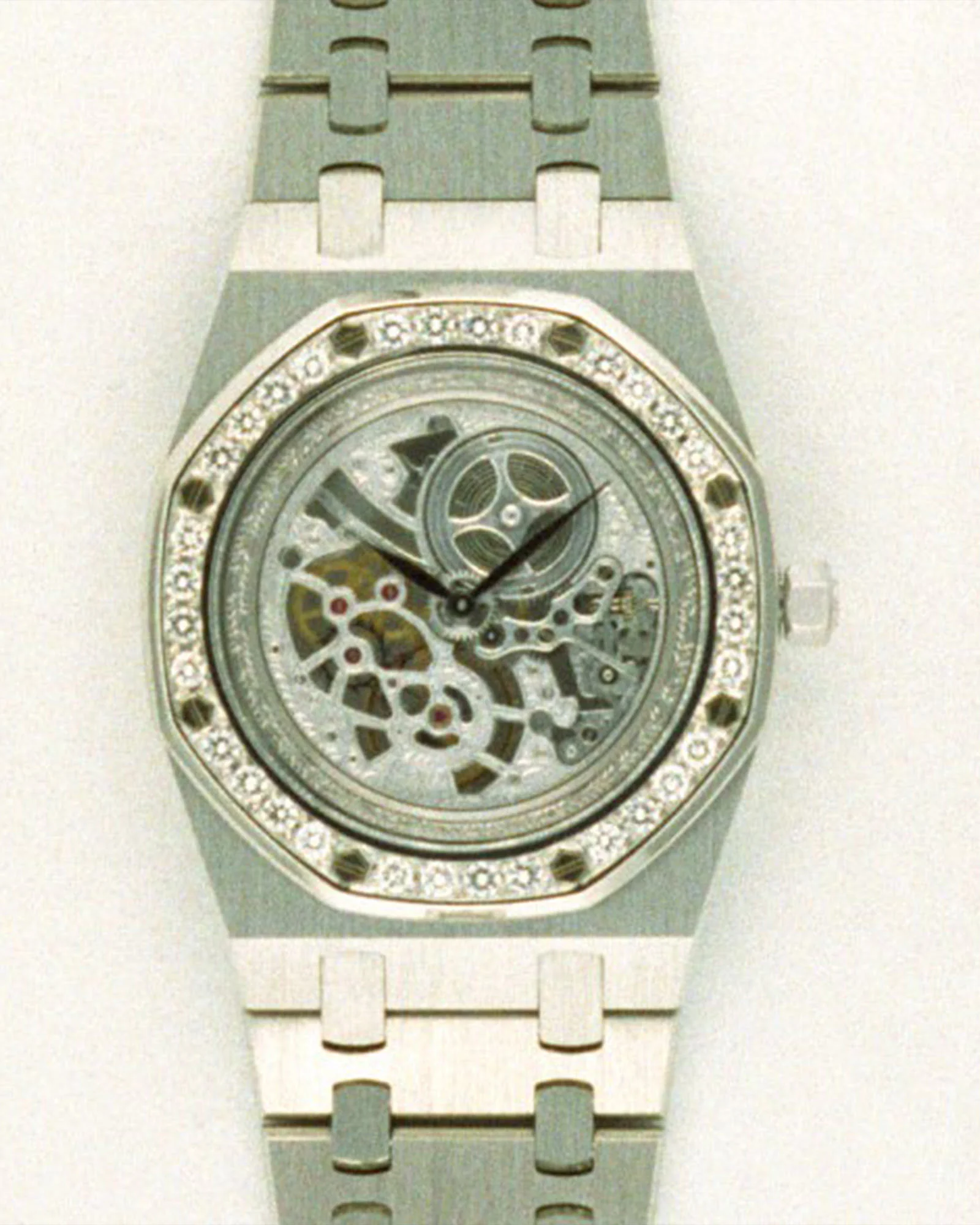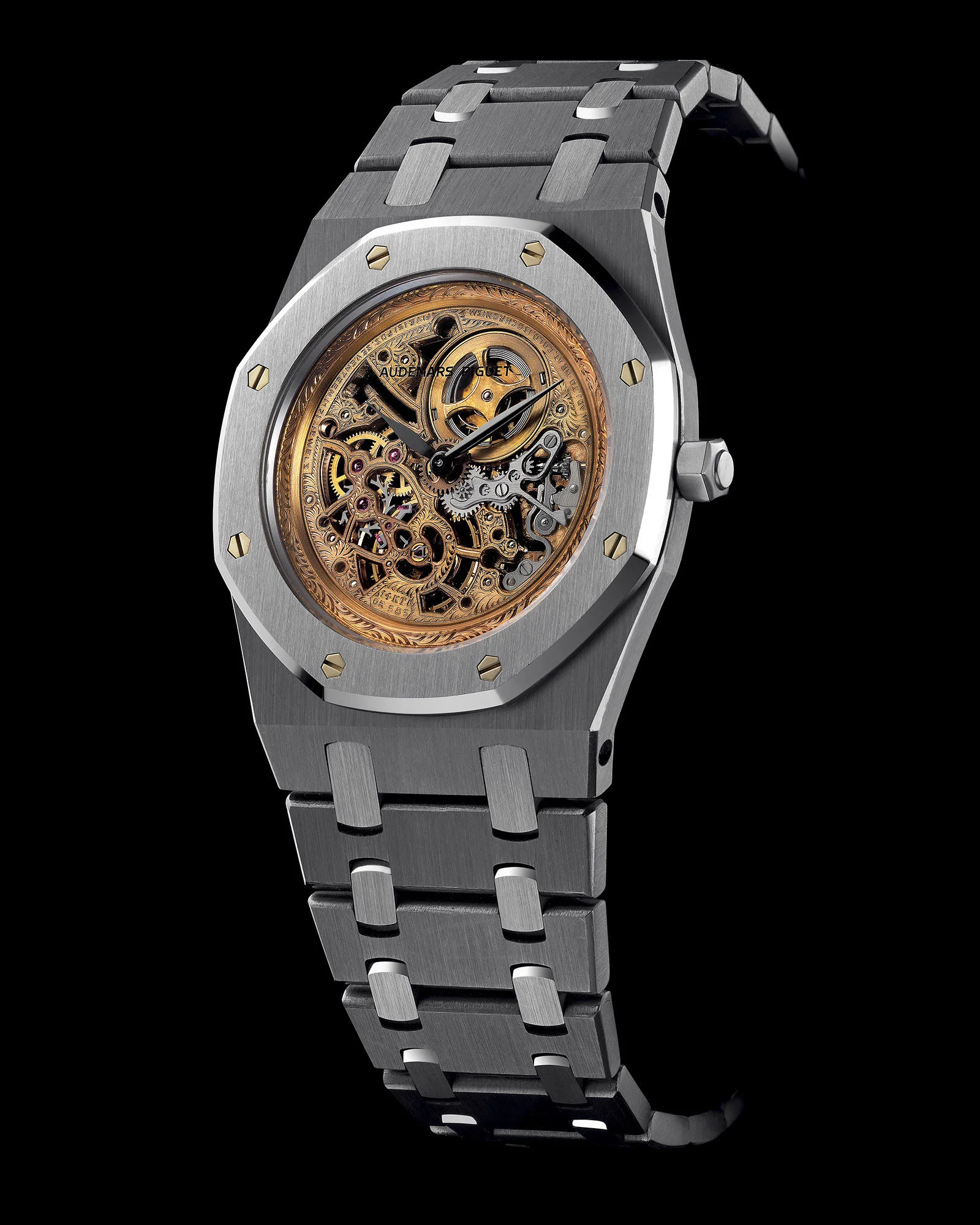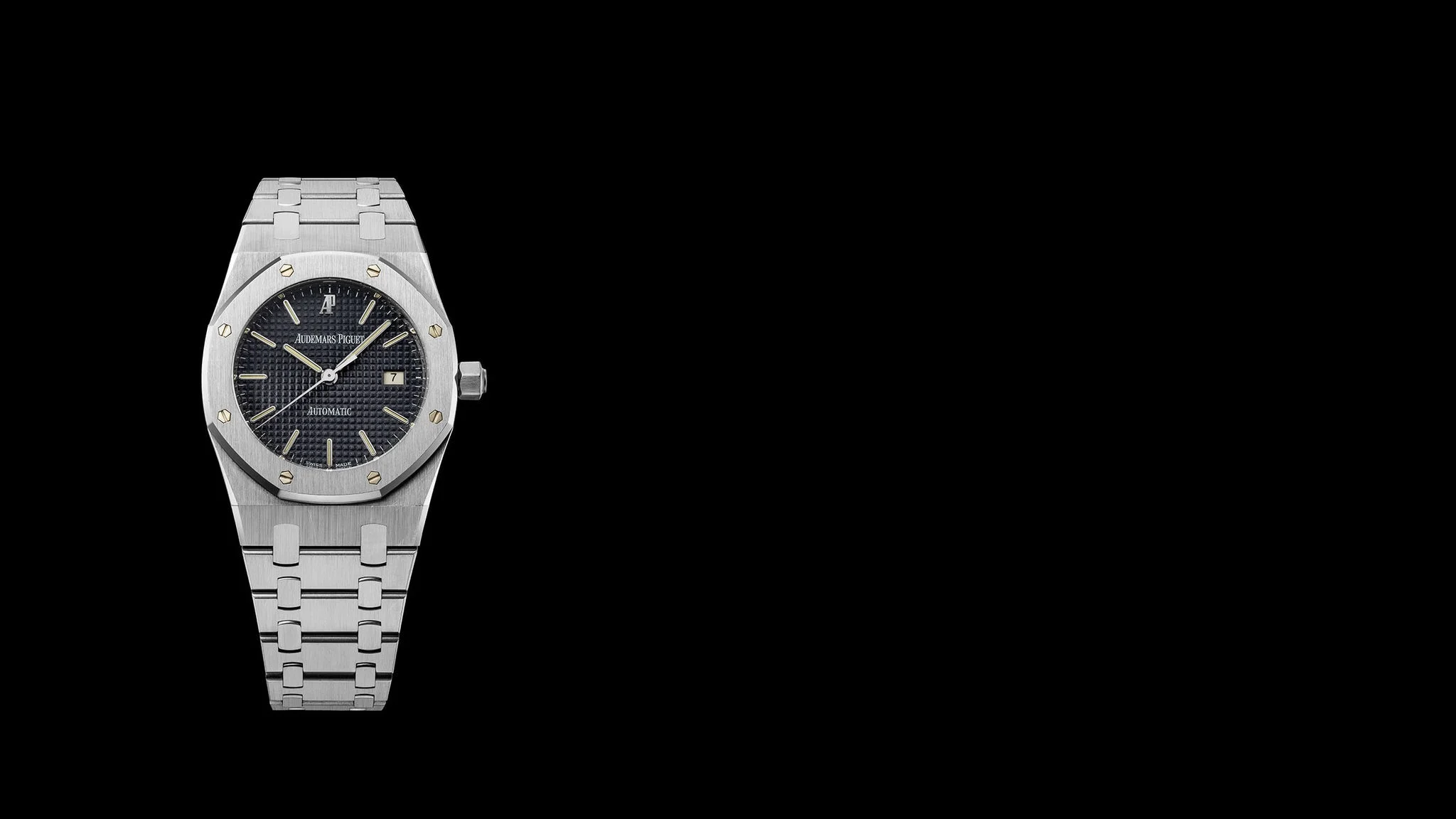
15000, Royal Oak
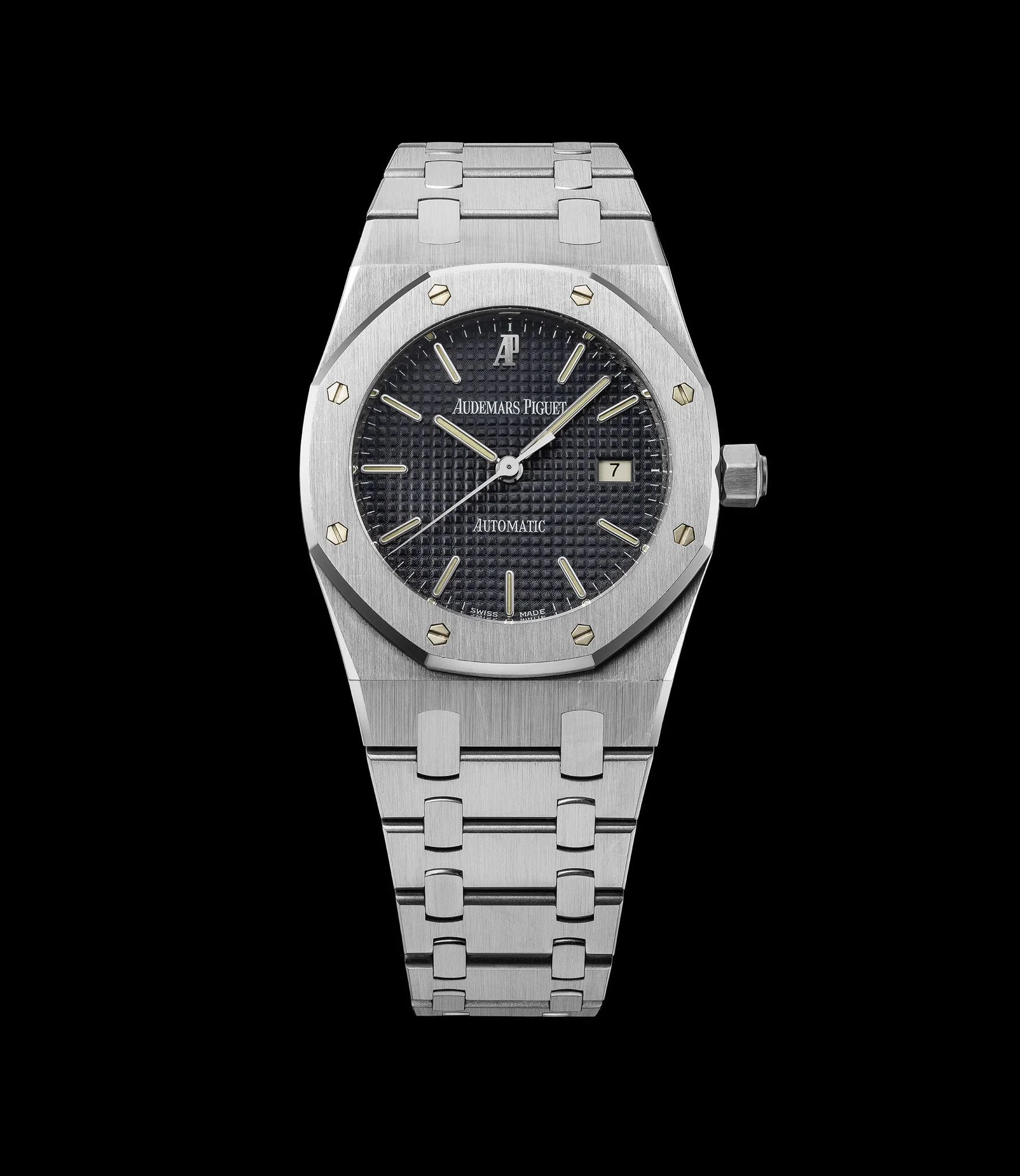
1996. Royal Oak 15000ST No. 317. Selfwinding Calibre 2140, movement 438567. 33 mm Steel case D68702. Tapisserie dial. Sold in Japan in June 1996. Audemars Piguet Archives.
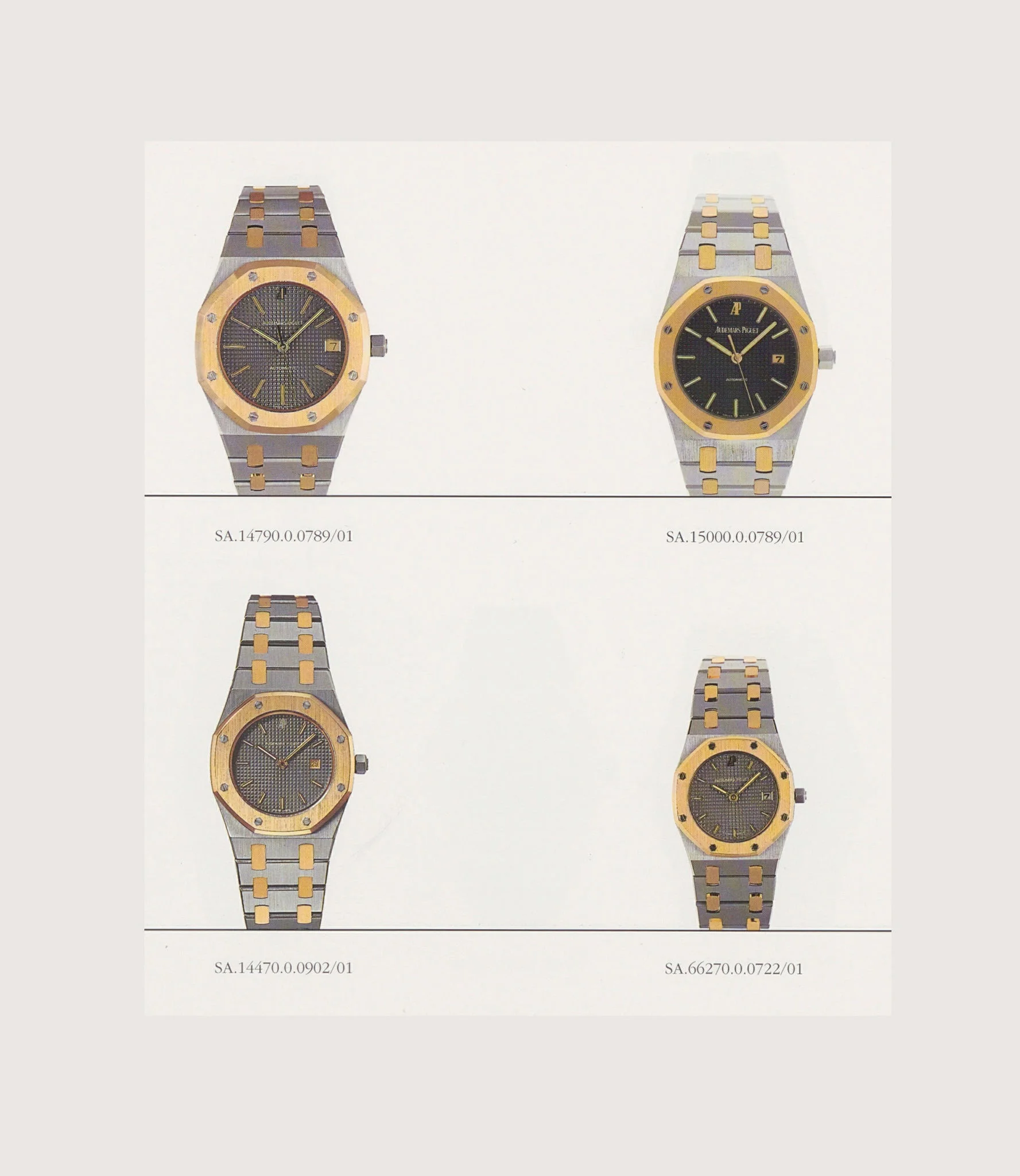
1995. Models 14790SA (36 mm), 15000SA (33 mm), 14470SA (30 mm) and 66270SA (24.5 mm). In the 1990s, Model 15000 was described as an “intermediate size” for both women and men. Promotional brochure. Audemars Piguet Archives.
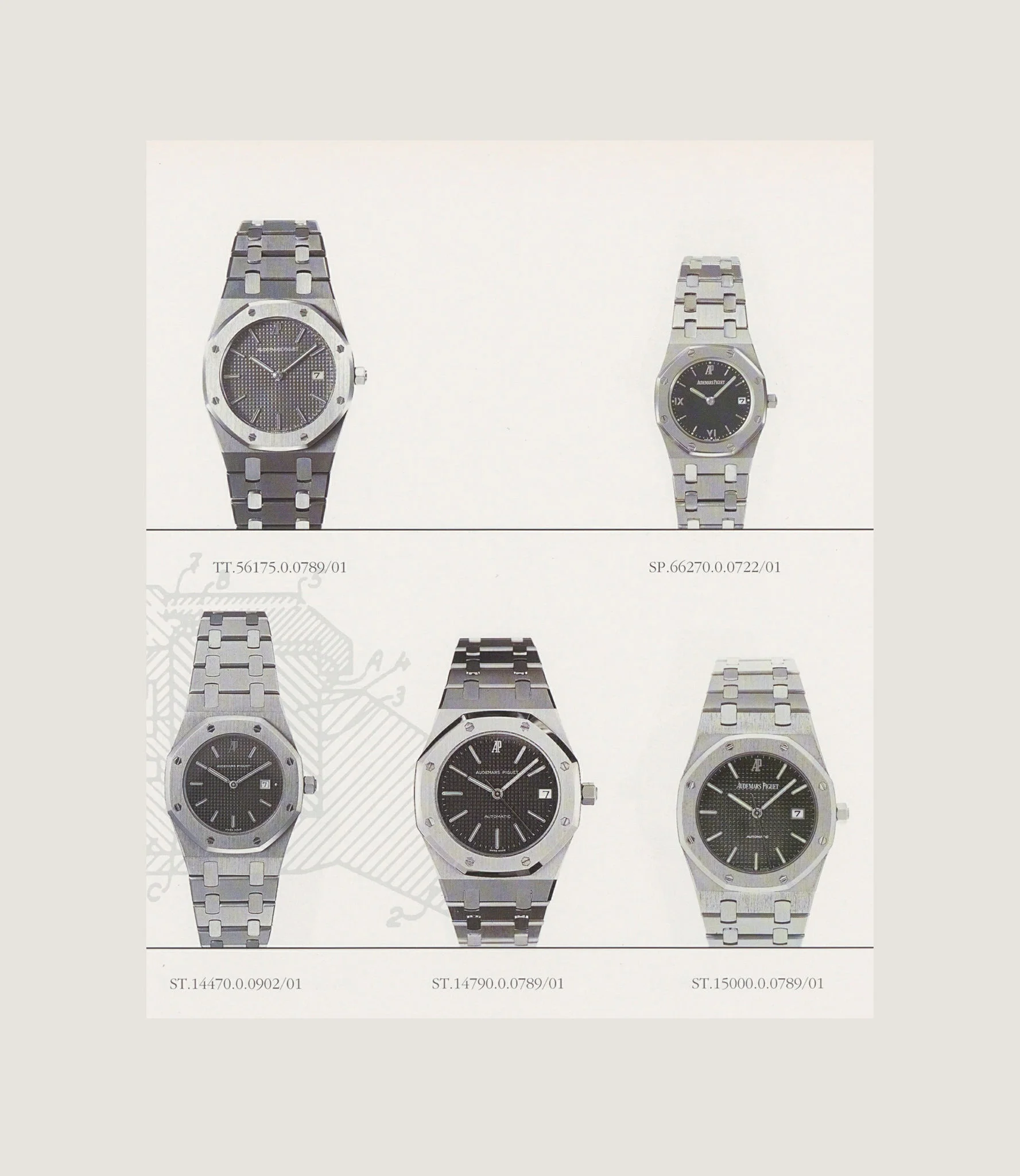
1995. Models 56175, 66270, 15000, 14470, 14790ST presented in a promotional brochure. Audemars Piguet Archives.
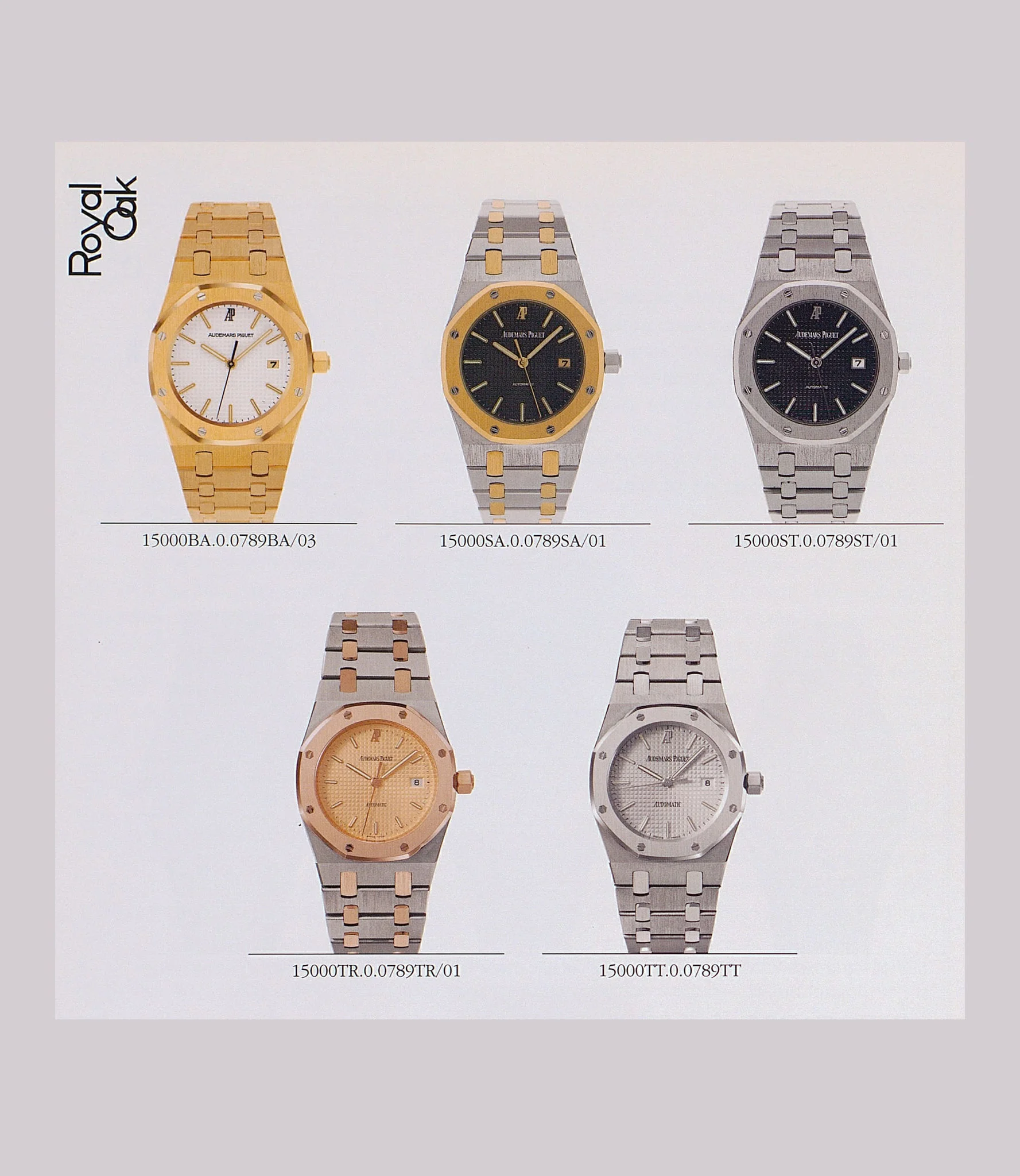
1996. Variations on the Royal Oak 15000 (33 mm). 1996–97 Audemars Piguet catalogue. Audemars Piguet Archives.
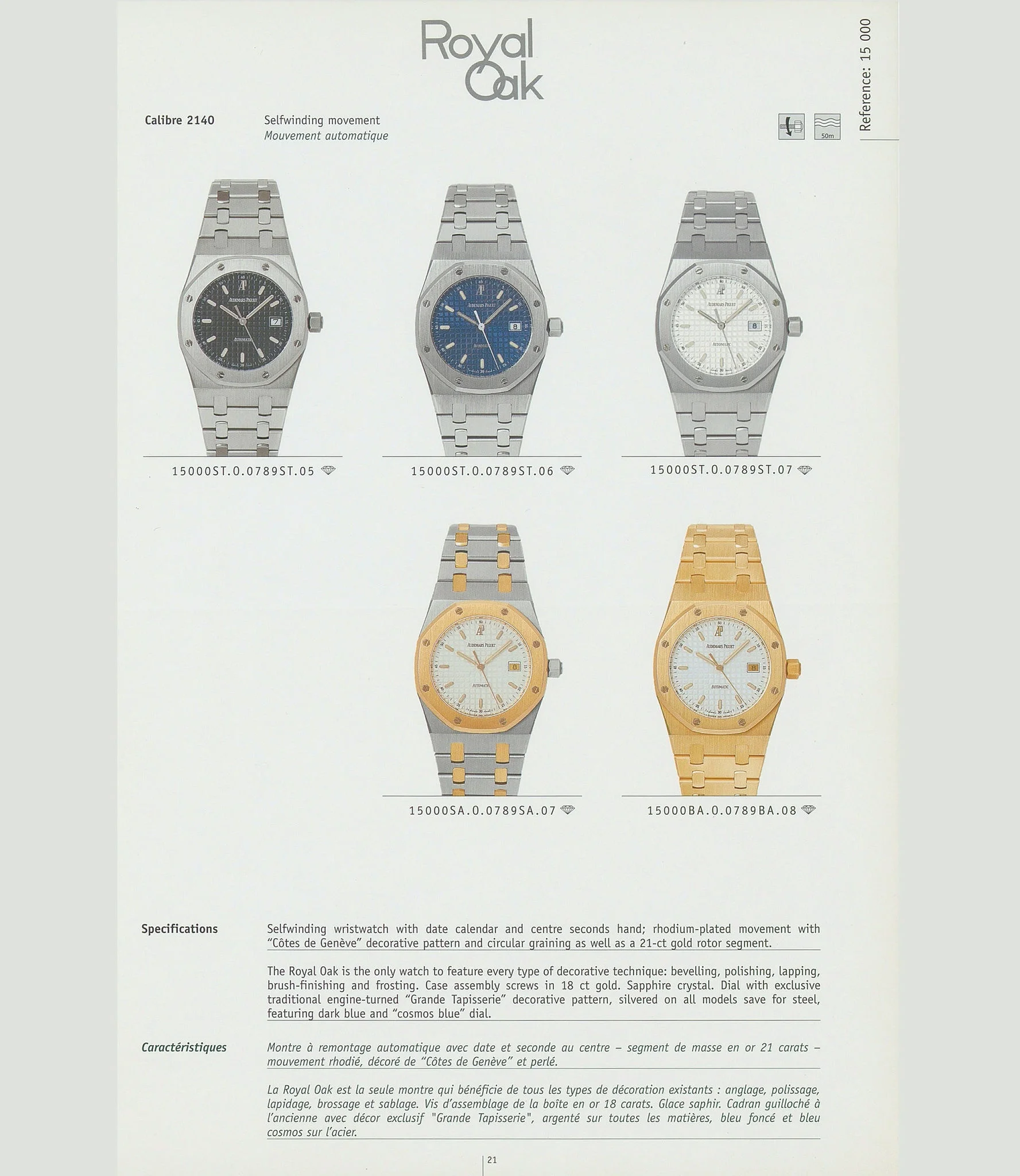
2001. Variations on Model 15000 (33 mm). 2001–02 catalogue. Audemars Piguet Archives.
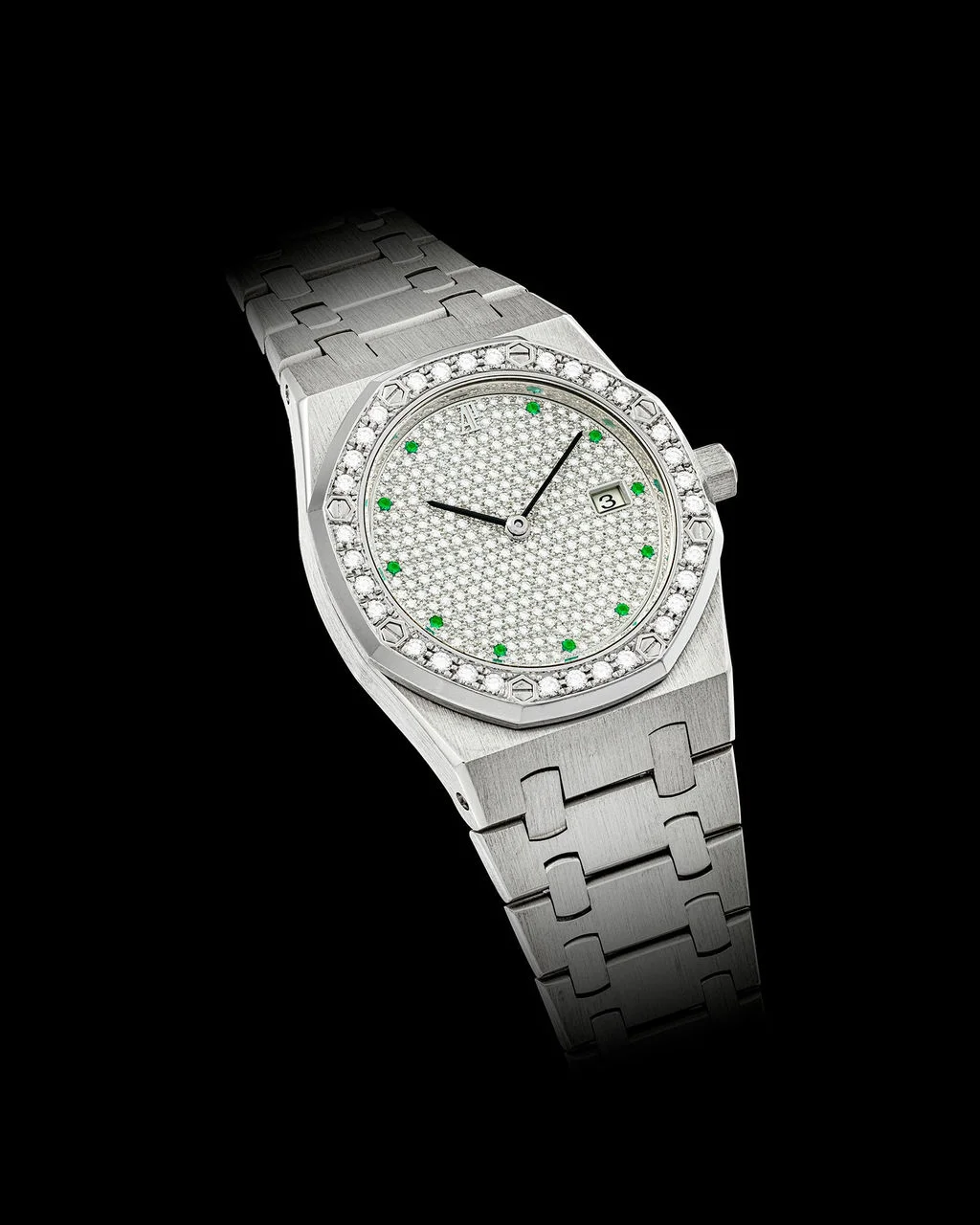
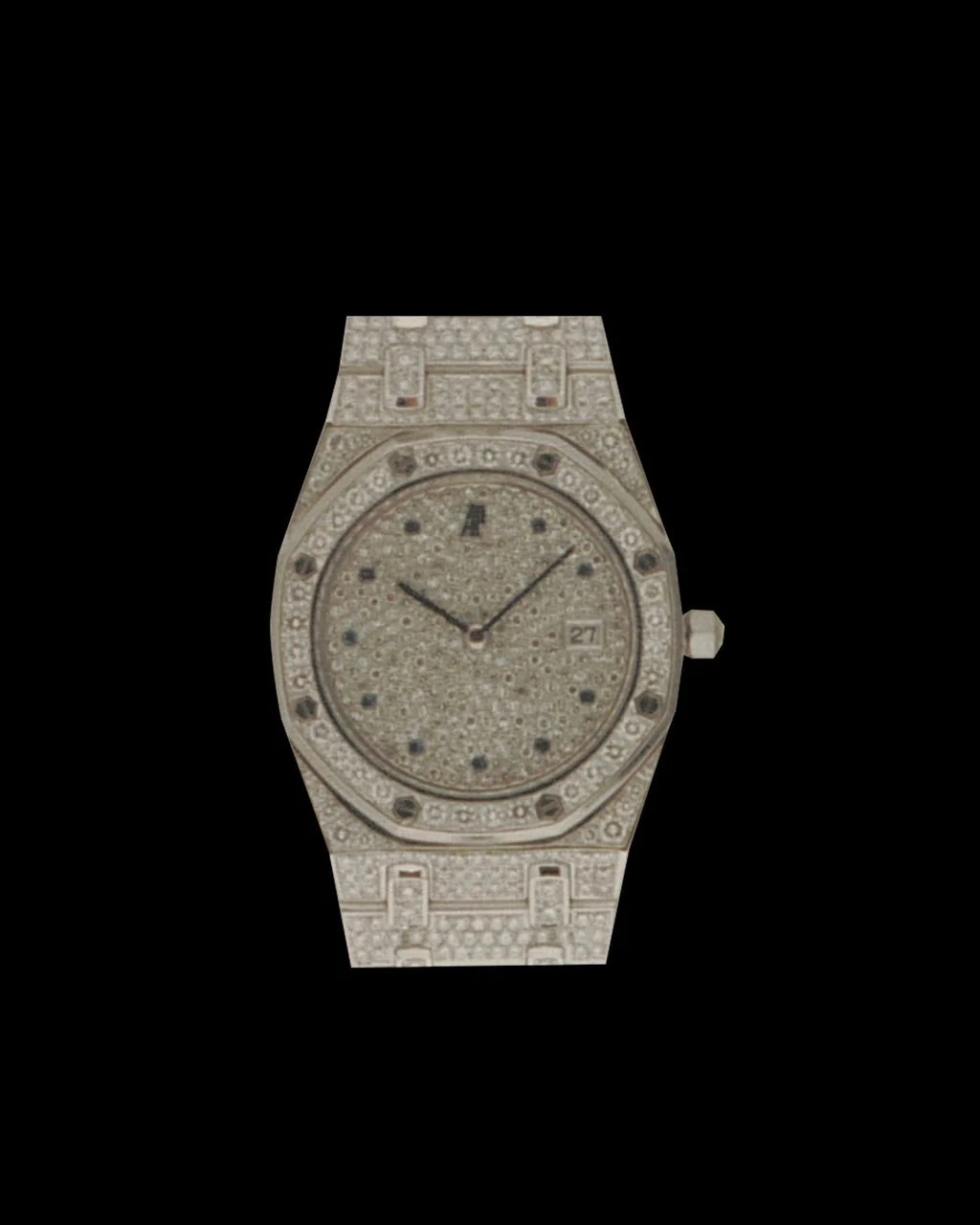
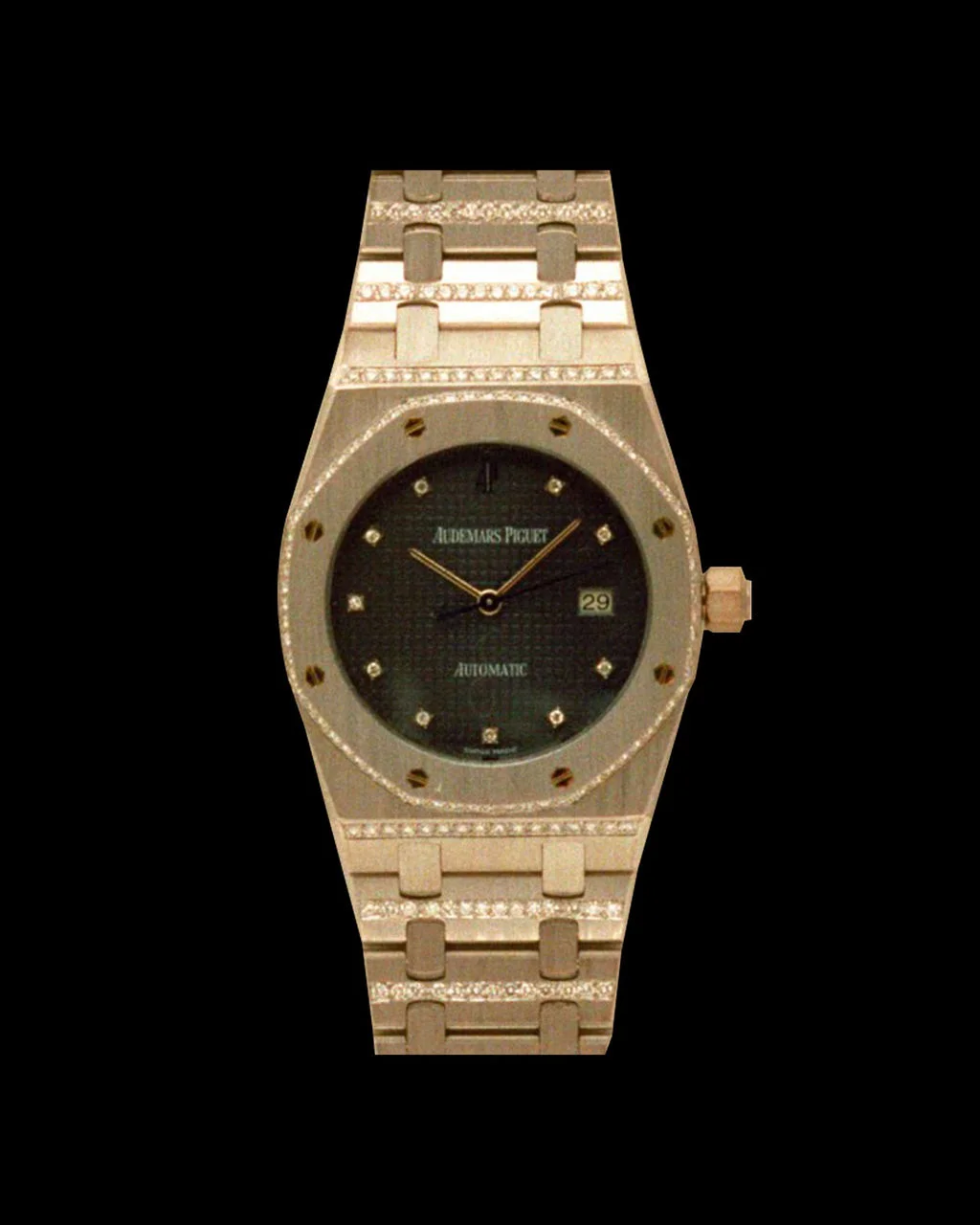
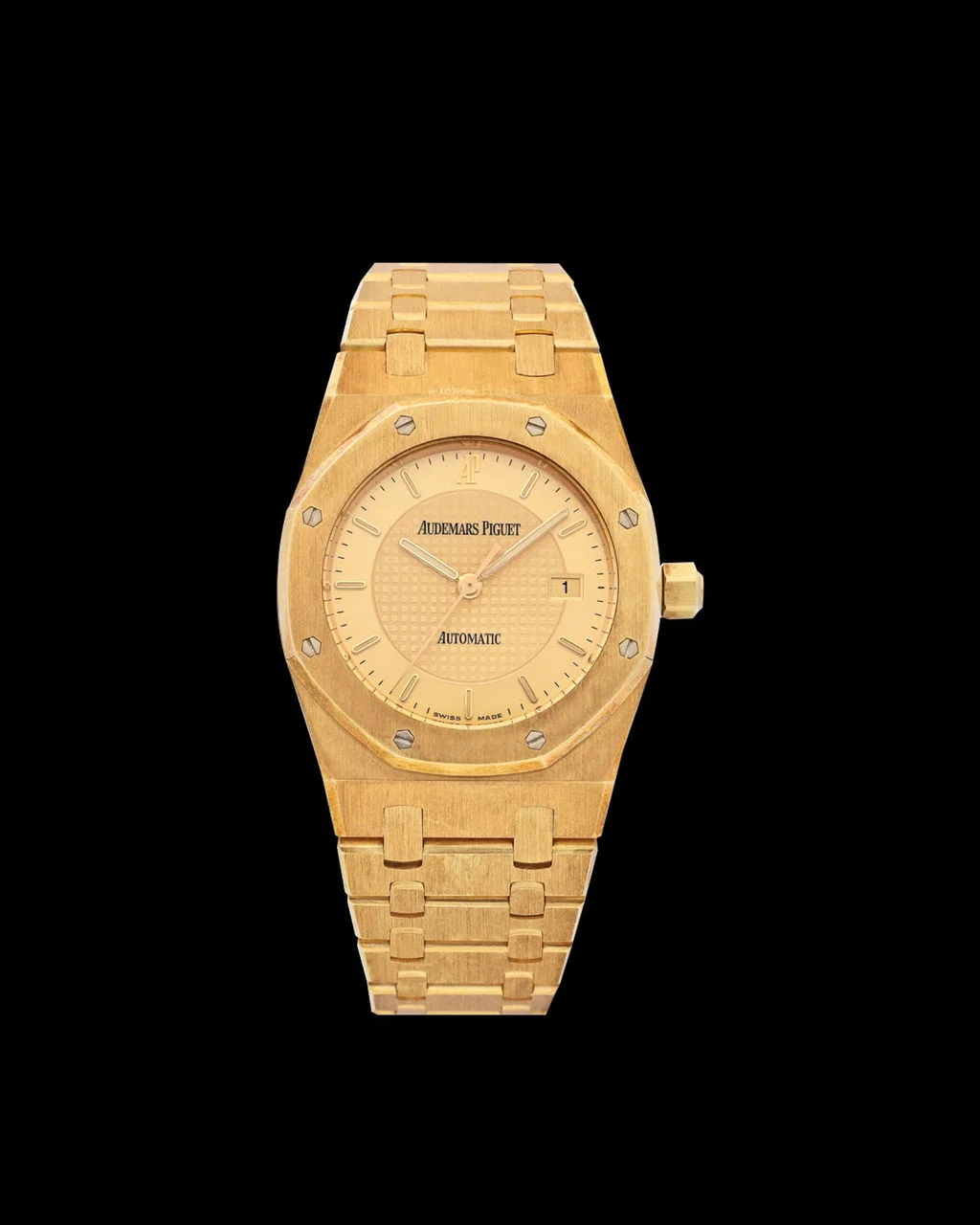
Launched in 1995, the Royal Oak 15000 was the first 33 mm model equipped with a mechanical selfwinding calibre. In the promotional brochures of the time, it was described as an "intermediate size", making it suitable for both women and men.
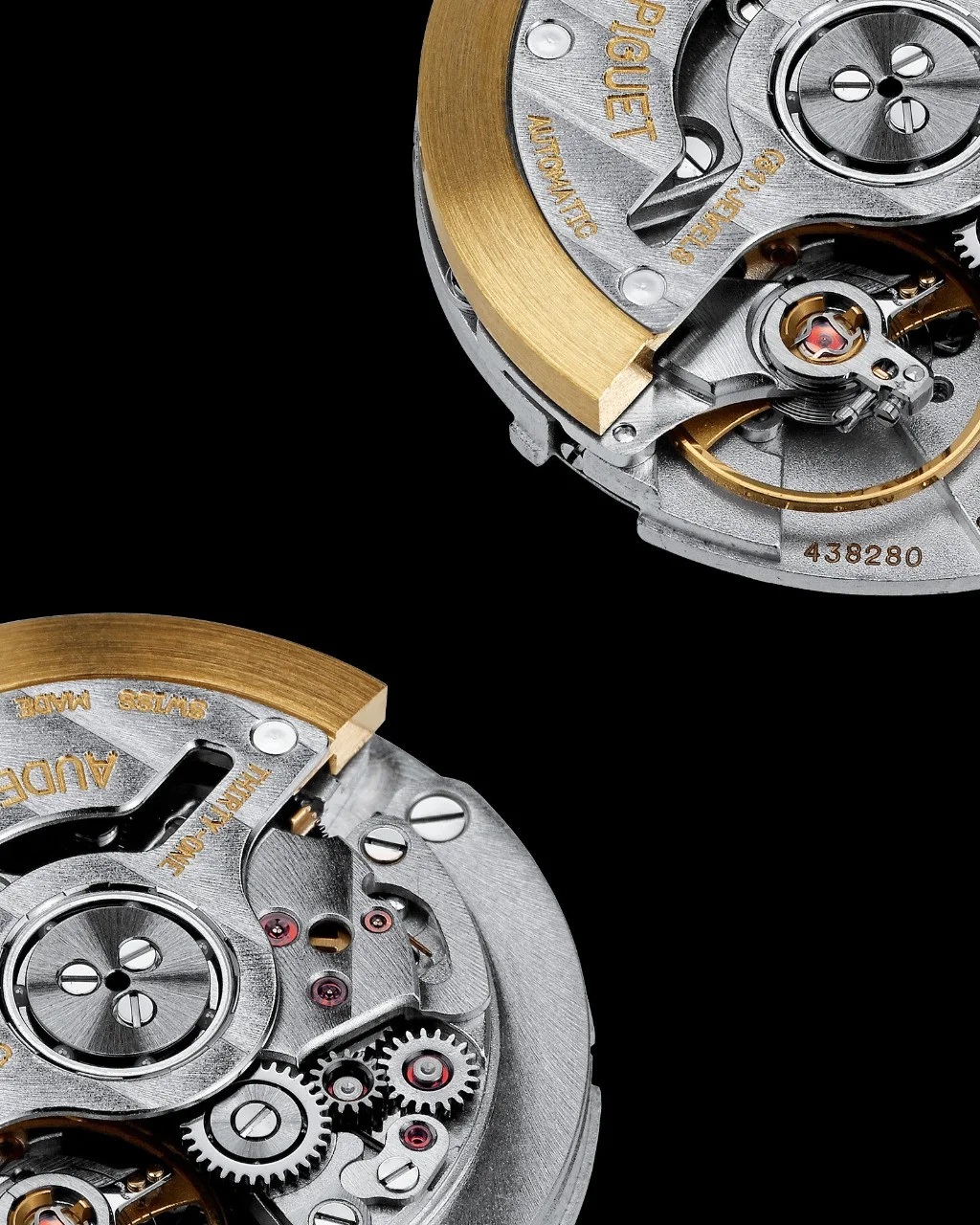
It is equipped with the very small selfwinding Calibre 2140, which would also be used from 1996 in the women’s versions of the Royal Oak Offshore (77151 and 79290).
This model remained in the catalogue for over 10 years, in various variations of materials and dials. It is the largest in the Royal Oak 33 mm selfwinding family.
The 15000 case was made by Favre Perret, as were the very first Royal Oak 5402s. The bracelet was made by GTF and bears Reference 789. It can be found on both 33 mm and 36 mm models (e.g. 25572, 14790).
A total of 4,019 units were sold between 1995 and 2006.
Models belonging to the same family of Royal Oak 33 mm selfwinding models equipped with Calibre 2040: 15050; 15054;
15055; 15050.
Launched in 1995, the Royal Oak 15000 was the first 33 mm model equipped with a mechanical selfwinding calibre. In the promotional brochures of the time, it was described as an "intermediate size", making it suitable for both women and men.
It is equipped with the very small selfwinding Calibre 2140, which would also be used from 1996 in the women’s versions of the Royal Oak Offshore (77151 and 79290).
This model remained in the catalogue for over 10 years, in various variations of materials and dials. It is the largest in the Royal Oak 33 mm selfwinding family.
The 15000 case was made by Favre Perret, as were the very first Royal Oak 5402s. The bracelet was made by GTF and bears Reference 789. It can be found on both 33 mm and 36 mm models (e.g. 25572, 14790).
A total of 4,019 units were sold between 1995 and 2006.
Models belonging to the same family of Royal Oak 33 mm selfwinding models equipped with Calibre 2040: 15050; 15054;
15055; 15050.
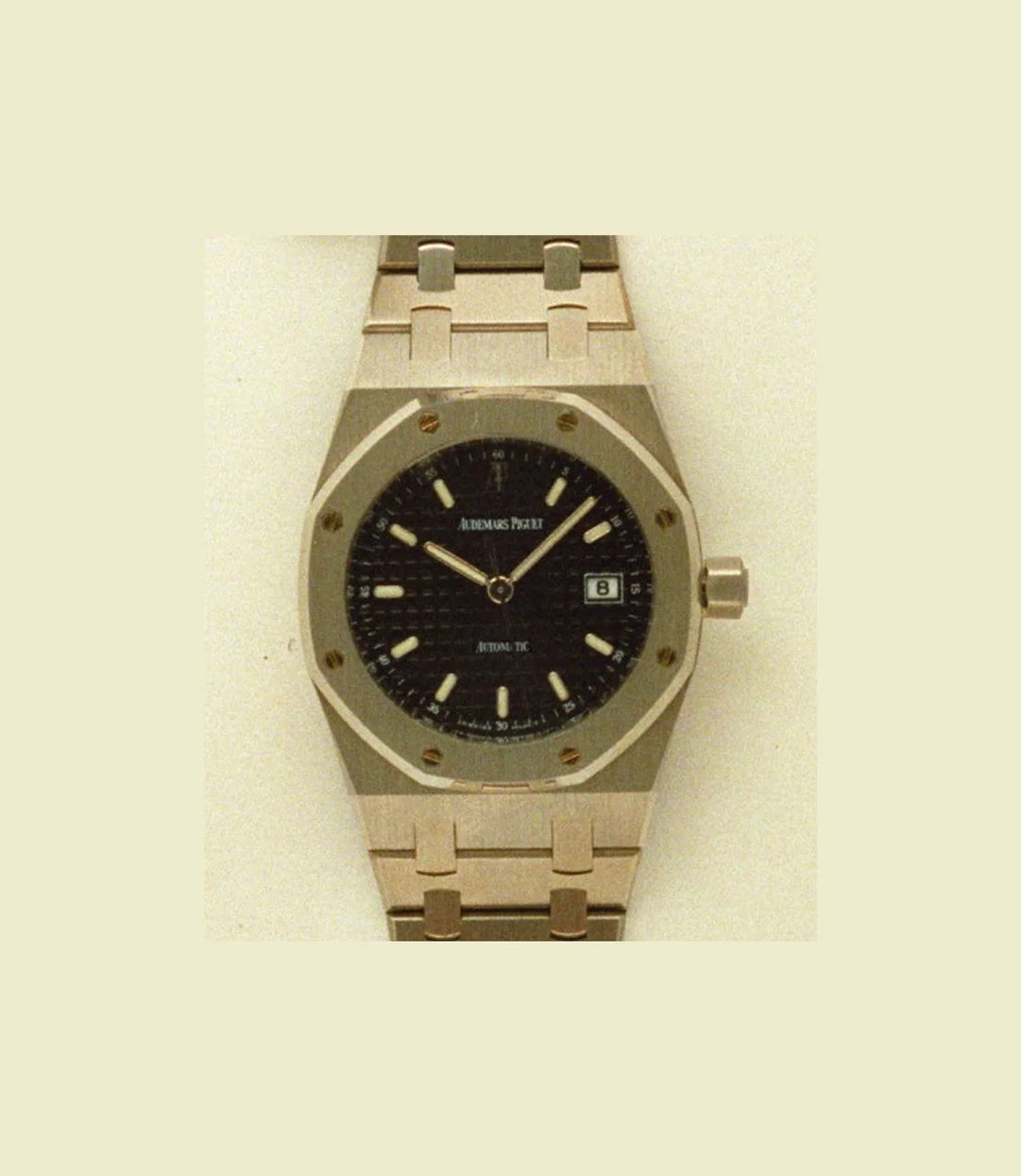
Circa 1995. Identification photograph of Model 15000ST. Audemars Piguet Archives.

1995. Technical data for Model 15000ST. Audemars Piguet Archives.

2003. Identification photograph of Model 15000ST. 1996–97 to 2005–06 Audemars Piguet catalogues. Audemars Piguet Archives.
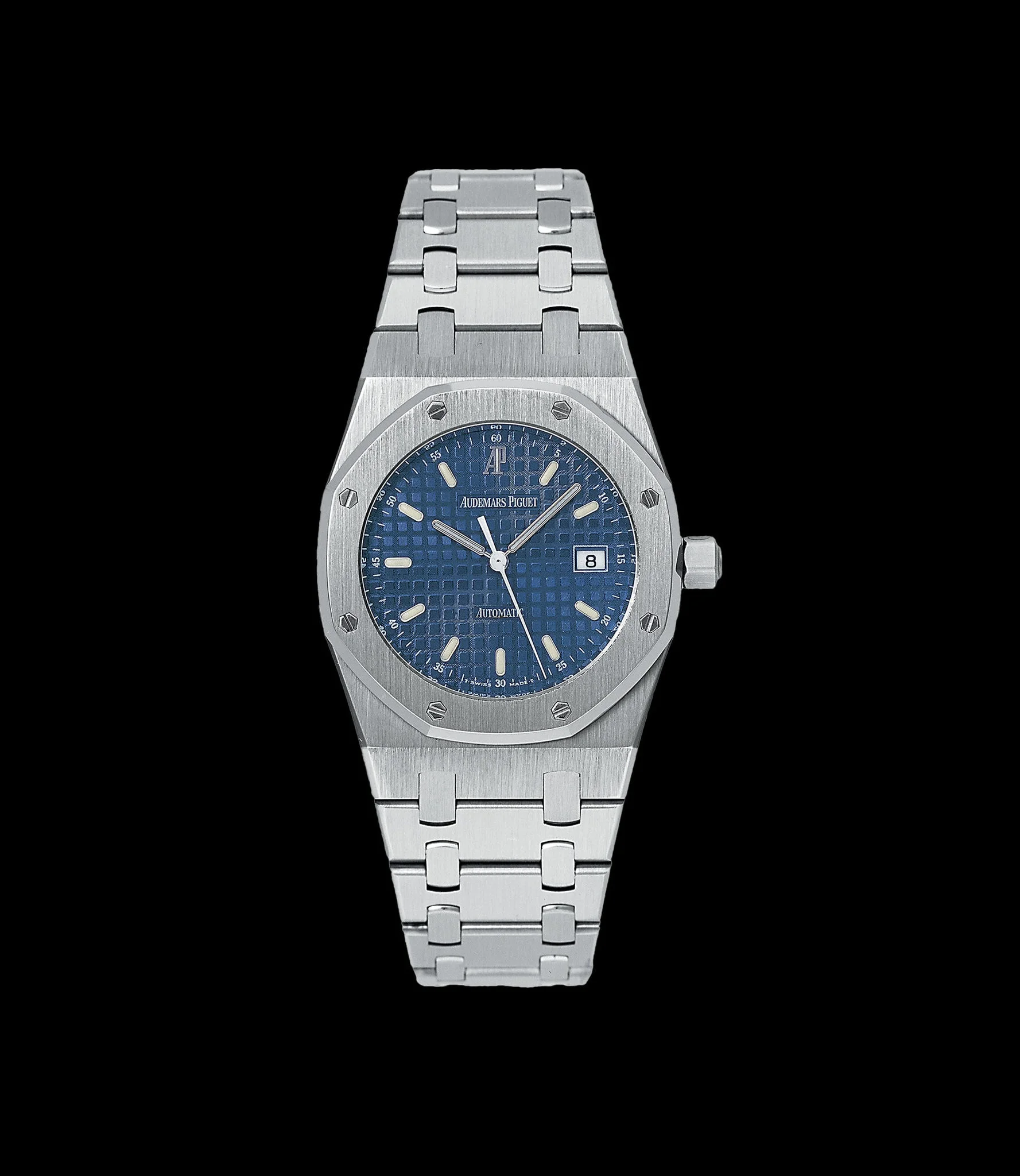
2003. Photograph of Model 15000ST. 2000–01 to 2005–06 Audemars Piguet catalogues. Audemars Piguet Archives.
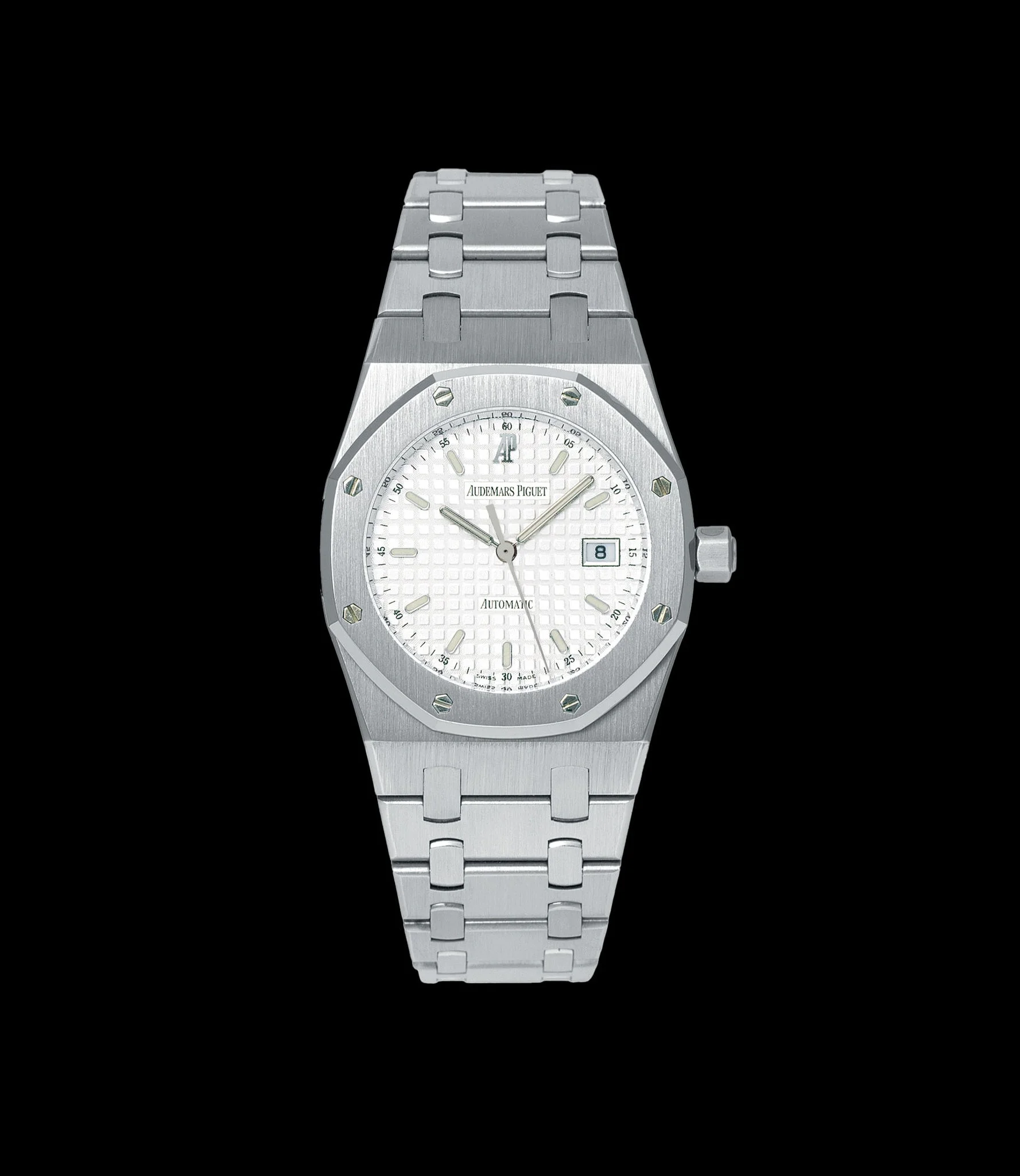
2003. Photograph of Model 15000ST. 2001–02 to 2005–06 Audemars Piguet catalogues. Audemars Piguet Archives.
With its 33 mm in diameter and selfwinding movement, this Royal Oak illustrates the trends of the time in terms of watch size. The transition to the third millennium was accompanied by the arrival of the Grande Tapisserie motifs on the dial.
Sales from 1995 to 2006: a total of 2,496 units, of which 194 (1995), 325 (1996), 196 (1997), 142 (1998), 195 (1999), 297 (2000), 222 (2001), 220 (2002), 273 (2003), 291 (2004), 100 (2005) and 41 (2006).
With its 33 mm in diameter and selfwinding movement, this Royal Oak illustrates the trends of the time in terms of watch size. The transition to the third millennium was accompanied by the arrival of the Grande Tapisserie motifs on the dial.
Sales from 1995 to 2006: a total of 2,496 units, of which 194 (1995), 325 (1996), 196 (1997), 142 (1998), 195 (1999), 297 (2000), 222 (2001), 220 (2002), 273 (2003), 291 (2004), 100 (2005) and 41 (2006).
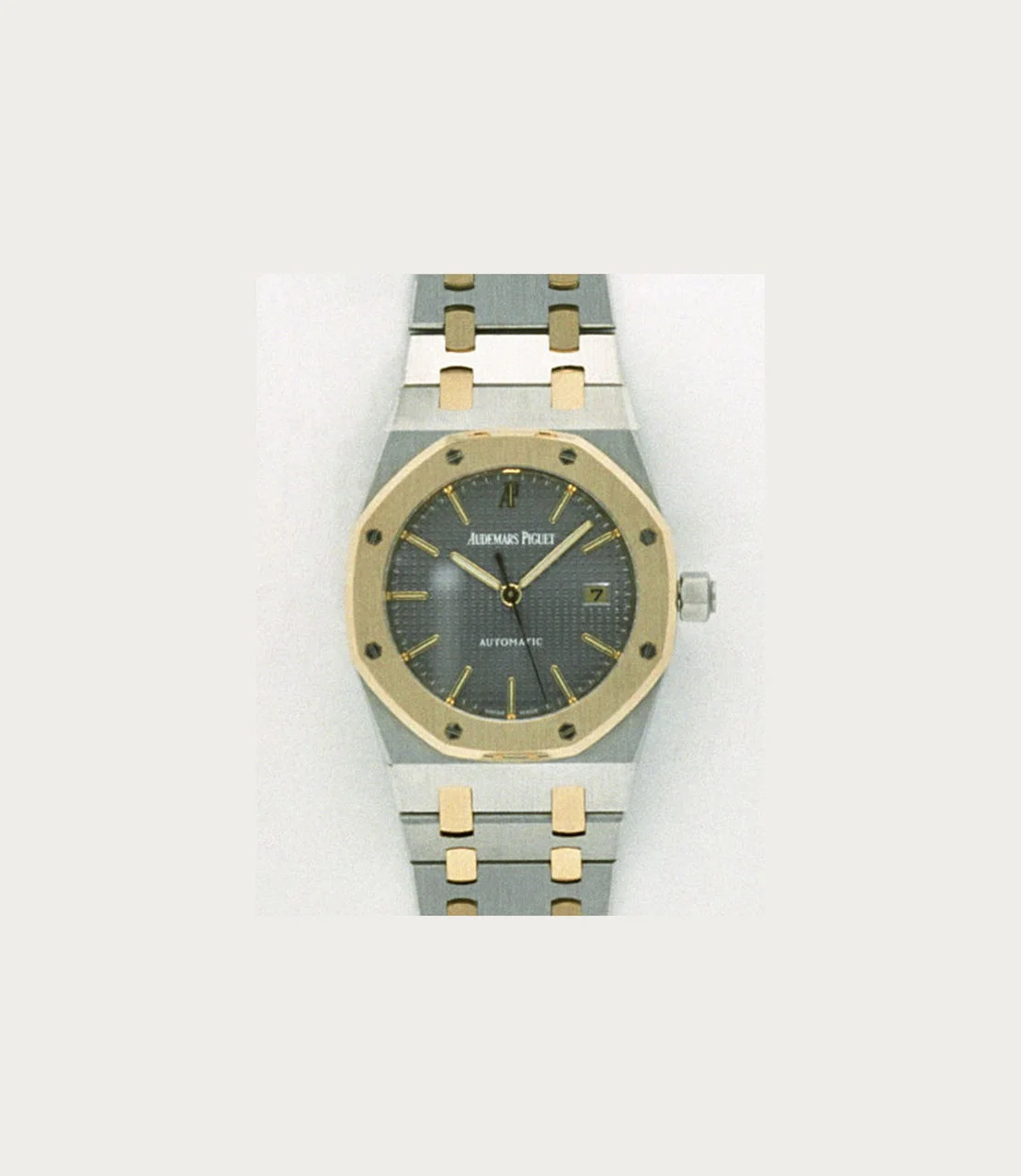
Circa 1995. Identification photograph of Model 15000SA. Audemars Piguet Archives.

1995. Technical data for Model 15000SA. Audemars Piguet Archives.

1995. Photograph of Model 15000SA. 1995 to 2005–06 Audemars Piguet catalogues. Audemars Piguet Archives.
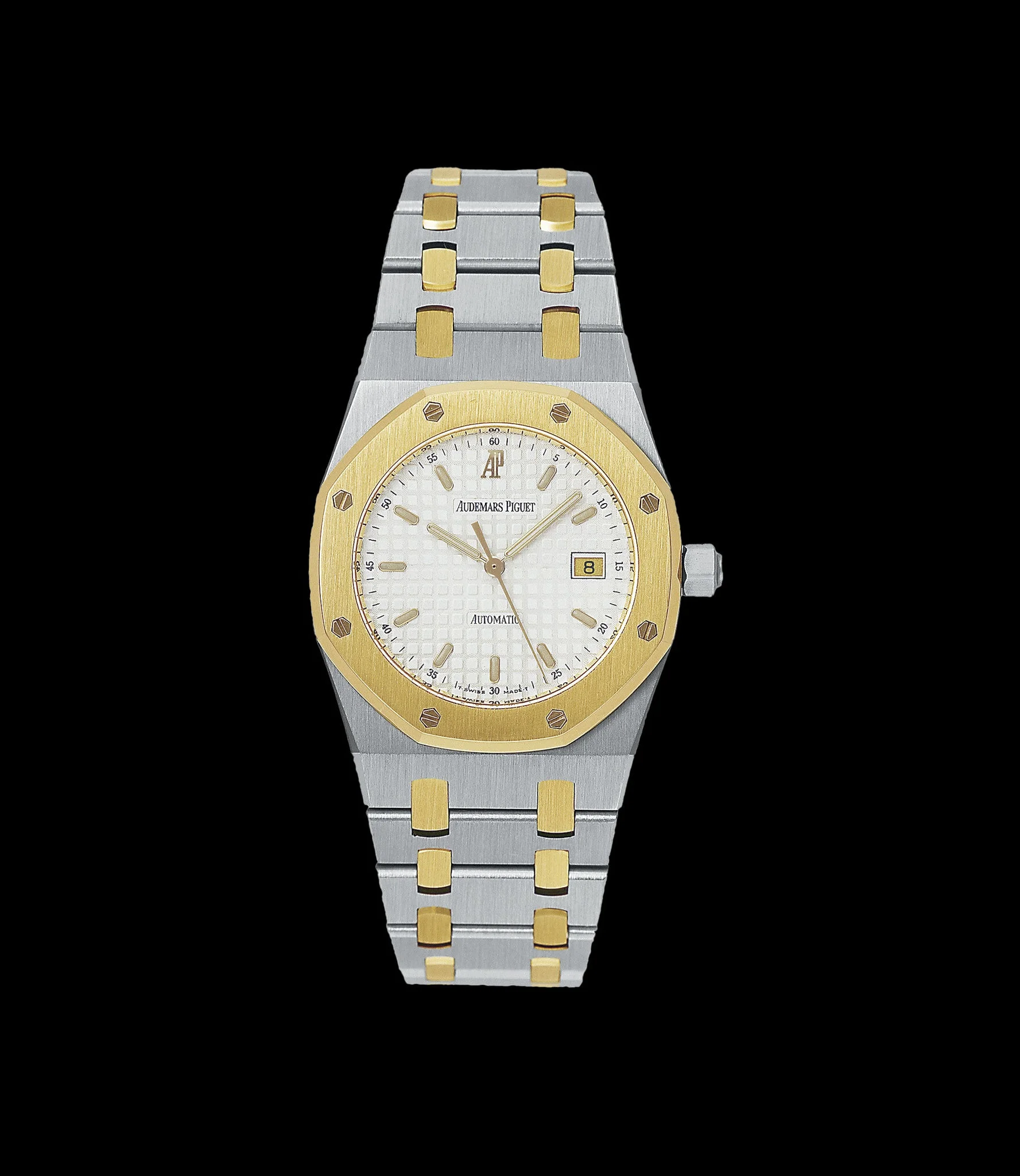
2003. Photograph of Model 15000ST. 2001–02 to 2005–06 Audemars Piguet catalogues. Audemars Piguet Archives.
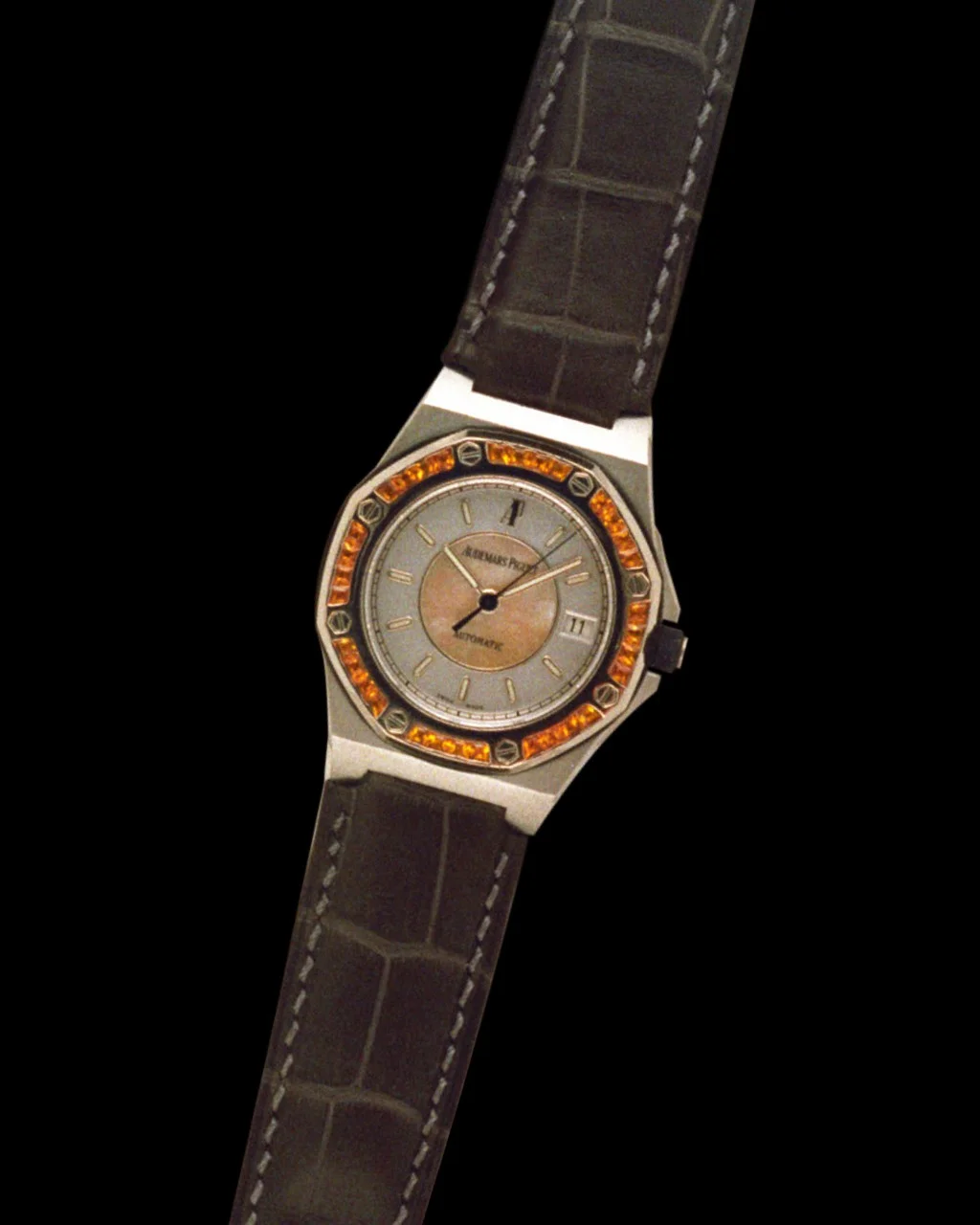
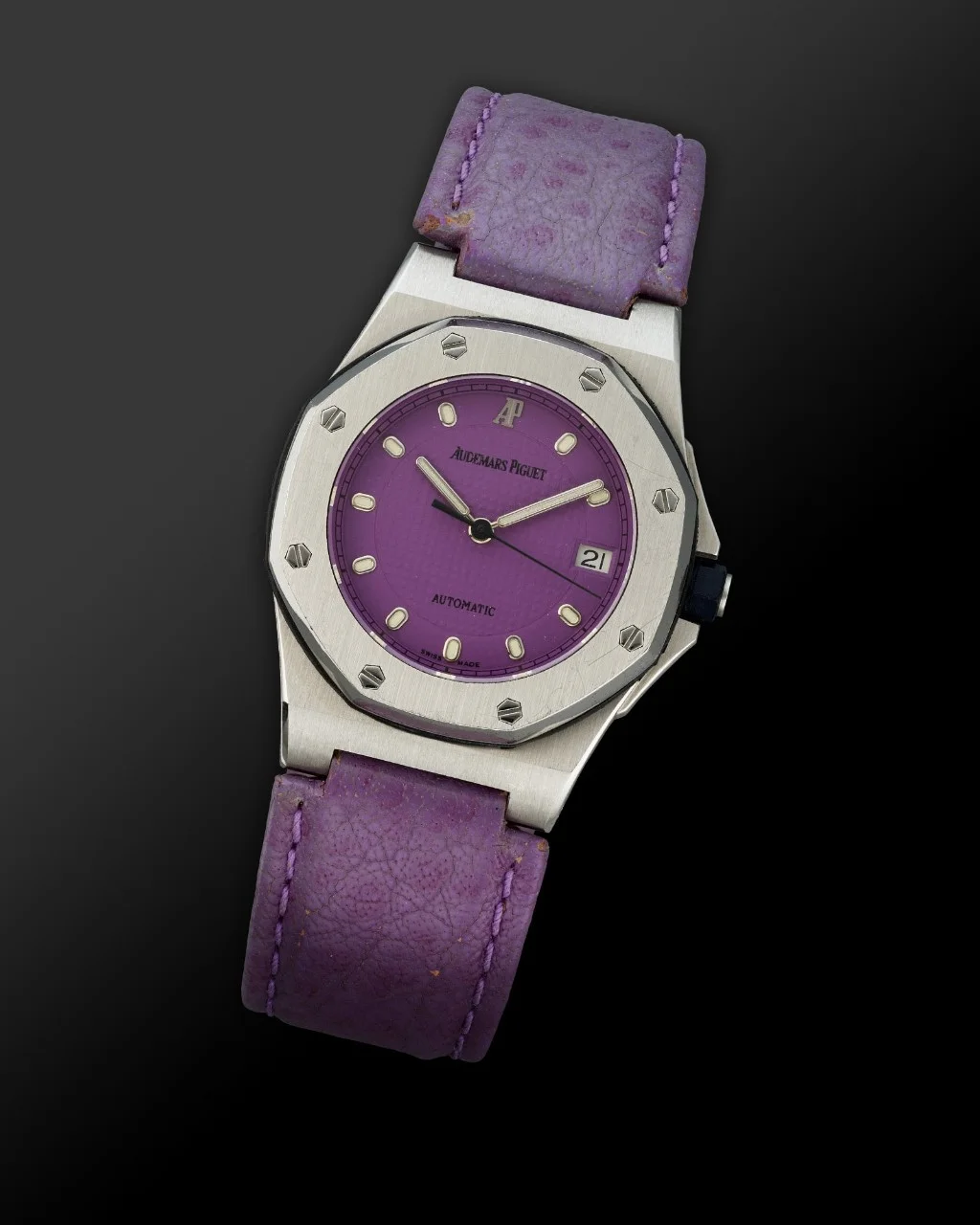
Model 15000, including its two-tone version, was offered in a wide variety of dial variations, ranging from white to slate grey to gold, with Tapisserie patterns or lacquered decoration. However, the archives do not enable us to determine the number of watches produced per dial.
Sales from 1995 to 2006: a total of 940 units, of which 108 (1995), 315
(1996), 81 (1997), 84 (1998), 37 (1999), 121 (2000), 79 (2001), 61 (2002), 21
(2003), 27 (2004), 5 (2005) and 1 (2006).
Model 15000, including its two-tone version, was offered in a wide variety of dial variations, ranging from white to slate grey to gold, with Tapisserie patterns or lacquered decoration. However, the archives do not enable us to determine the number of watches produced per dial.
Sales from 1995 to 2006: a total of 940 units, of which 108 (1995), 315
(1996), 81 (1997), 84 (1998), 37 (1999), 121 (2000), 79 (2001), 61 (2002), 21
(2003), 27 (2004), 5 (2005) and 1 (2006).

Circa 1995. Identification photograph of Model 15000BA. Audemars Piguet Archives.
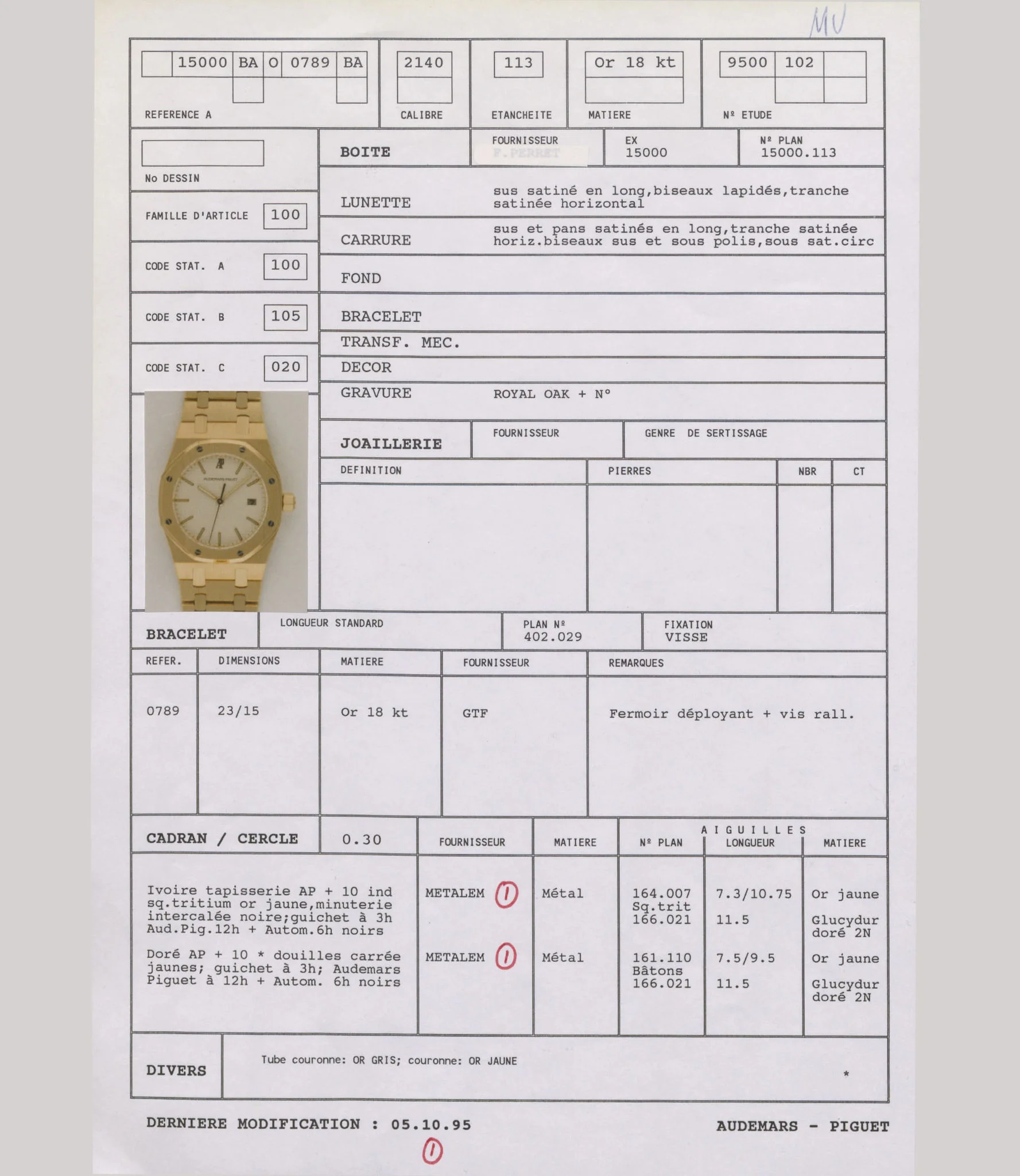
1995. Technical data for Model 15000BA. Audemars Piguet Archives.

Circa 1995. Identification photograph of Model 15000BA. Audemars Piguet Archives.
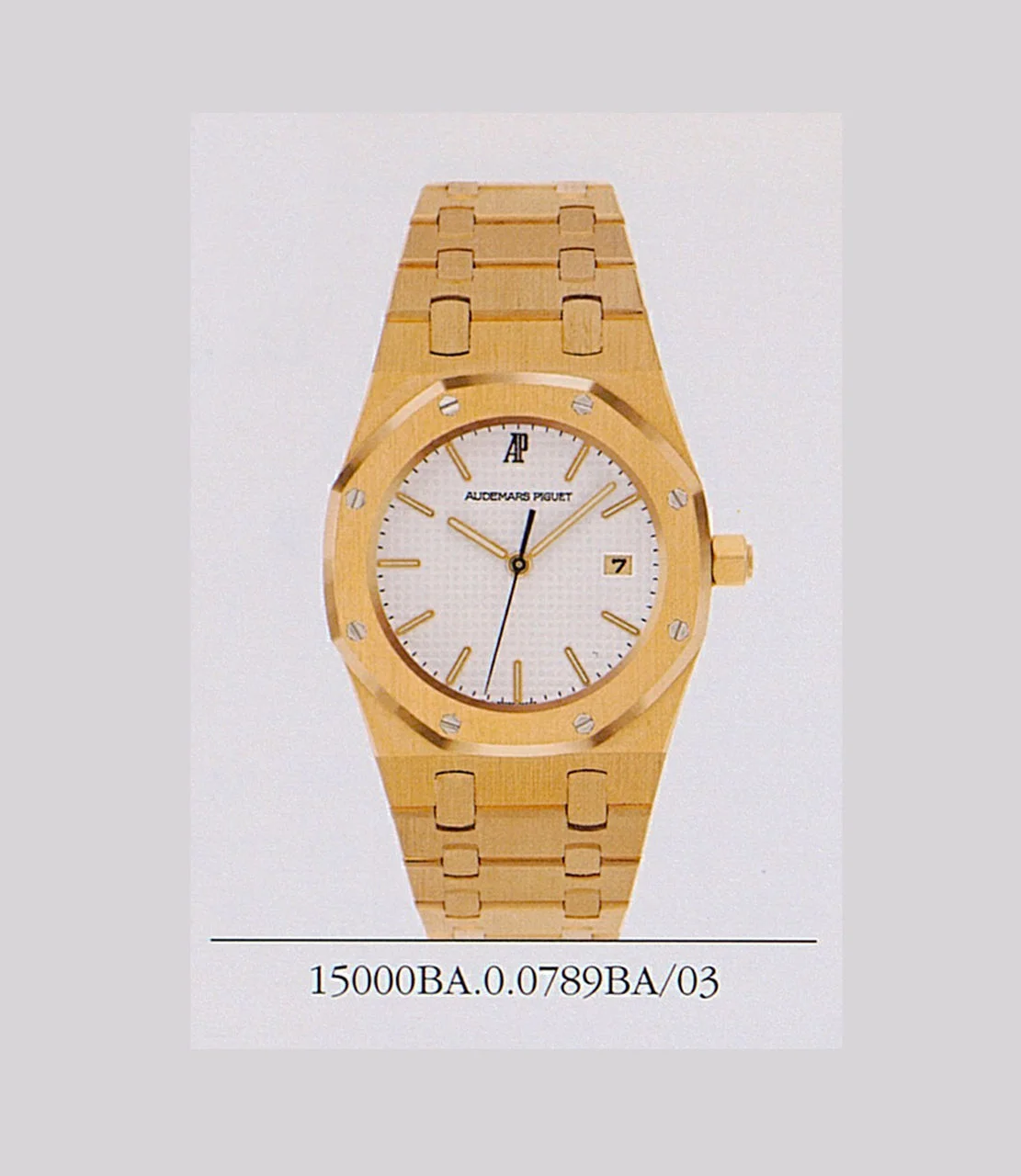
2003. Photograph of Model 15000BA. 1996 to 2006 Audemars Piguet catalogues. Audemars Piguet Archives.
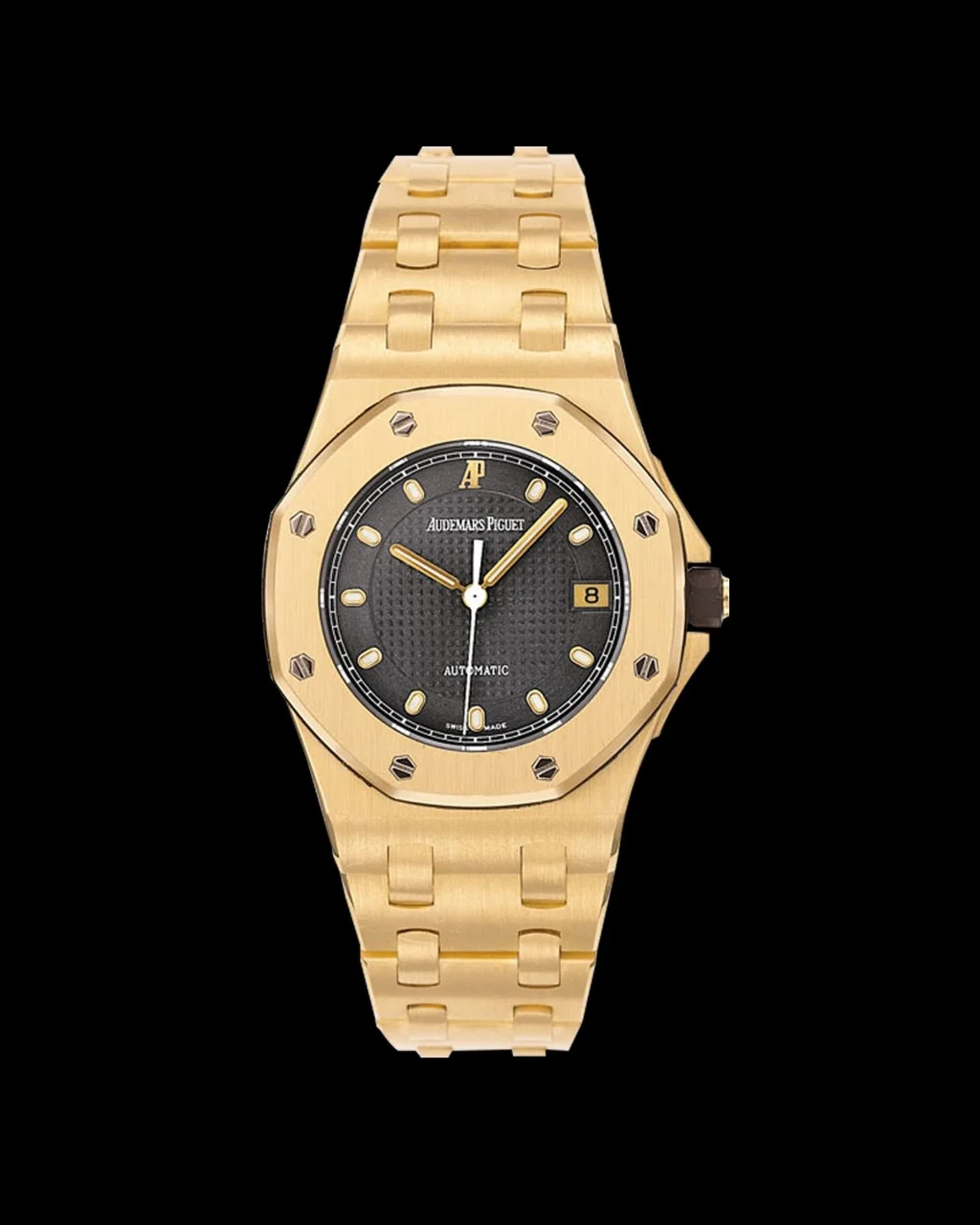
The yellow gold used on Model 15000 is presented with different dial styles, including models with a central guilloché Tapisserie pattern combined with a satin-brushed surround.
Sales from 1995 to 2006: a total of 361 units, of which 23 (1995), 189 (1996), 38 (1997), 38 (1998), 22 (1999), 29 (2000), 8 (2001), 1 (2002), 12 (2003) and 1 (2006).
The yellow gold used on Model 15000 is presented with different dial styles, including models with a central guilloché Tapisserie pattern combined with a satin-brushed surround.
Sales from 1995 to 2006: a total of 361 units, of which 23 (1995), 189 (1996), 38 (1997), 38 (1998), 22 (1999), 29 (2000), 8 (2001), 1 (2002), 12 (2003) and 1 (2006).
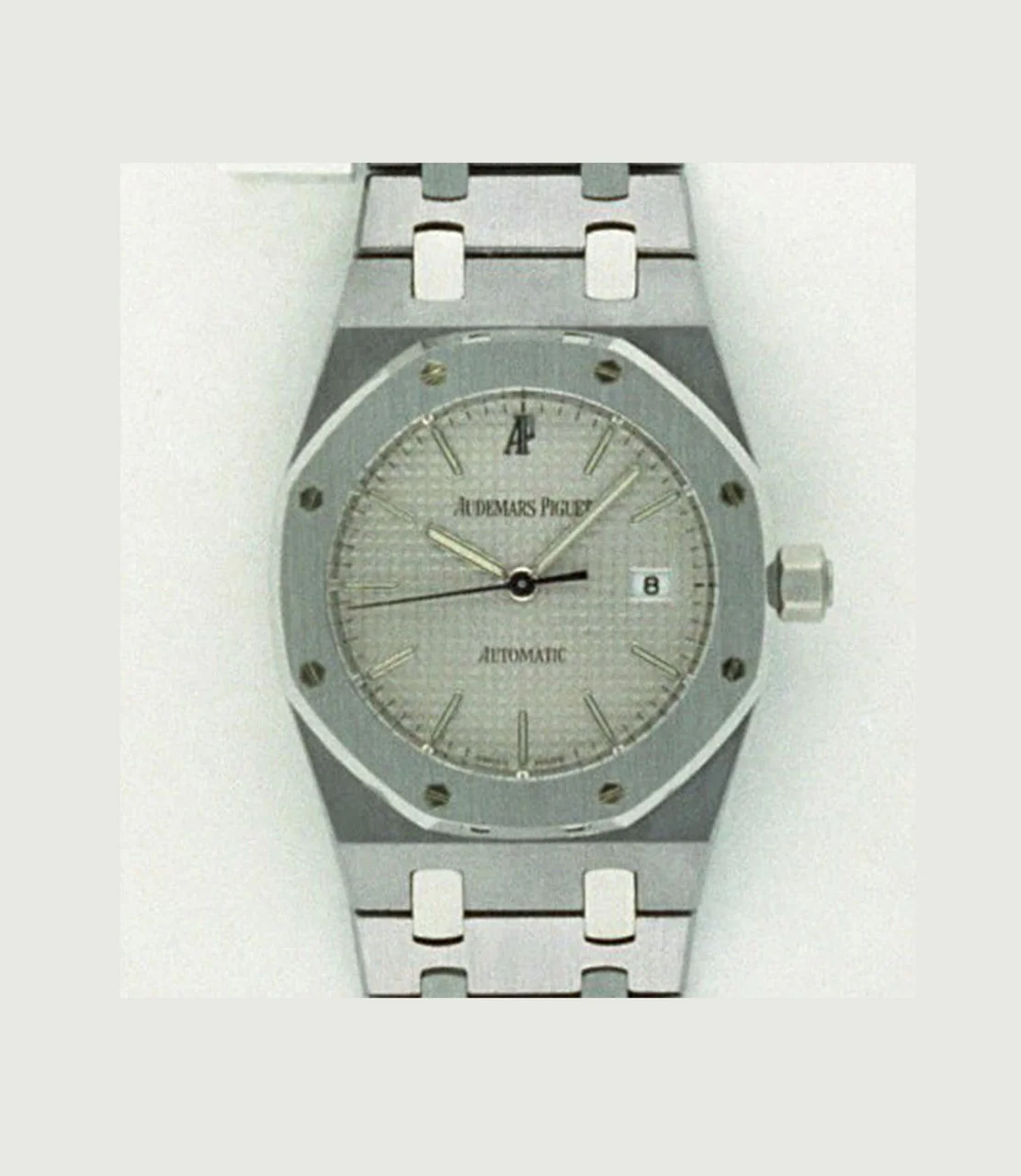
Circa 1996. Identification photograph of Model 15000TT. Audemars Piguet Archives.

1996. Technical data sheet for Model 15000TT. Audemars Piguet Archives.
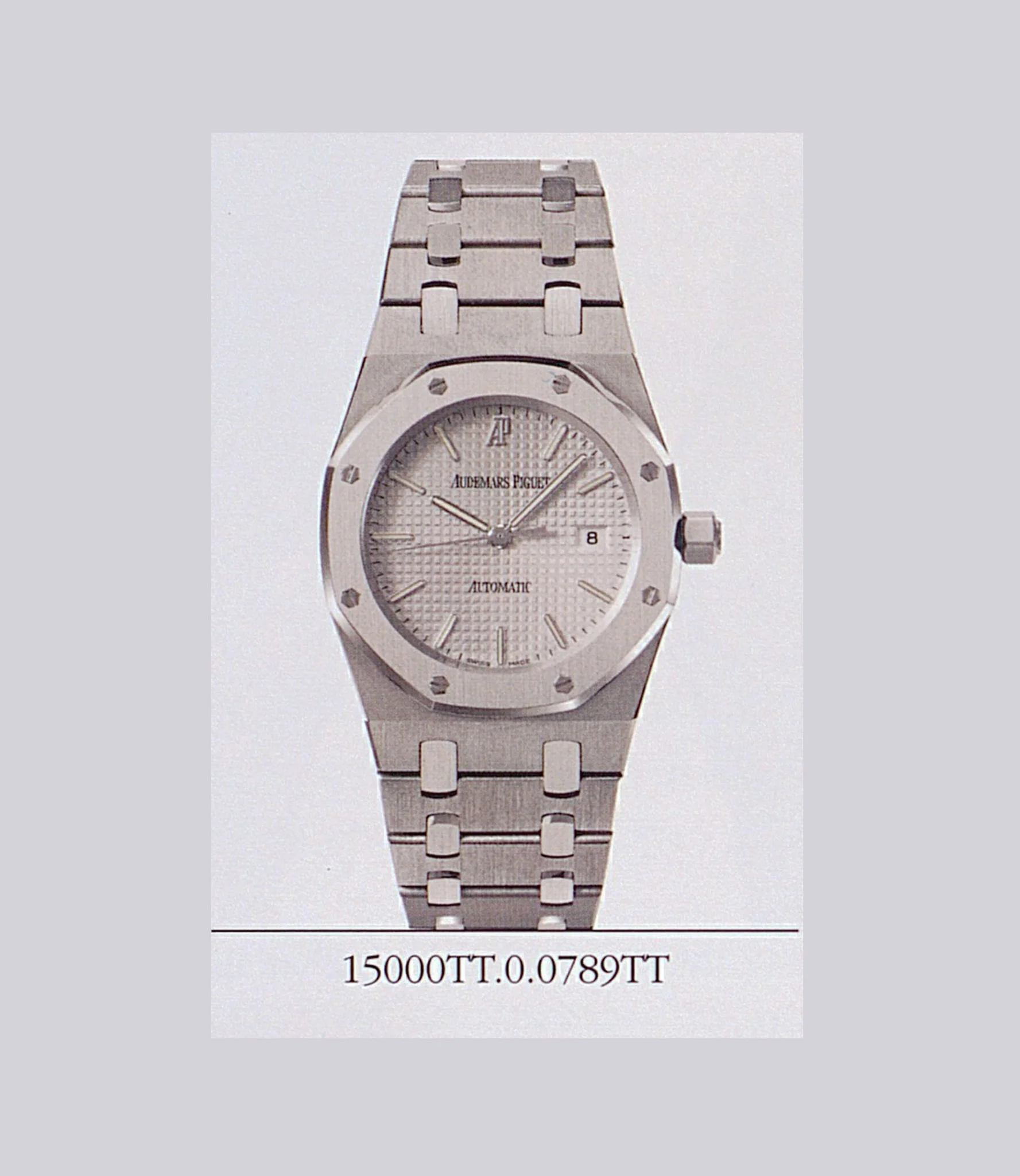
1996. Photograph of Model 15000TT. Audemars Piguet catalogues 1996–97 and 1997– 98. Audemars Piguet Archives.
Tantalum is a material that Audemars Piguet introduced as early as 1986. Deep grey in colour, it offers the advantage of not tarnishing over time while also being hypoallergenic. This two-tone grey-on-grey version combines with steel to produce a subtle and elegant effect.
Sales from 1996 to 2003: a total of 149 units, of which 50 (1996), 78 (1997), 8 (1998), 6 (1999), 6 (2002) and 1 (2003).
Tantalum is a material that Audemars Piguet introduced as early as 1986. Deep grey in colour, it offers the advantage of not tarnishing over time while also being hypoallergenic. This two-tone grey-on-grey version combines with steel to produce a subtle and elegant effect.
Sales from 1996 to 2003: a total of 149 units, of which 50 (1996), 78 (1997), 8 (1998), 6 (1999), 6 (2002) and 1 (2003).
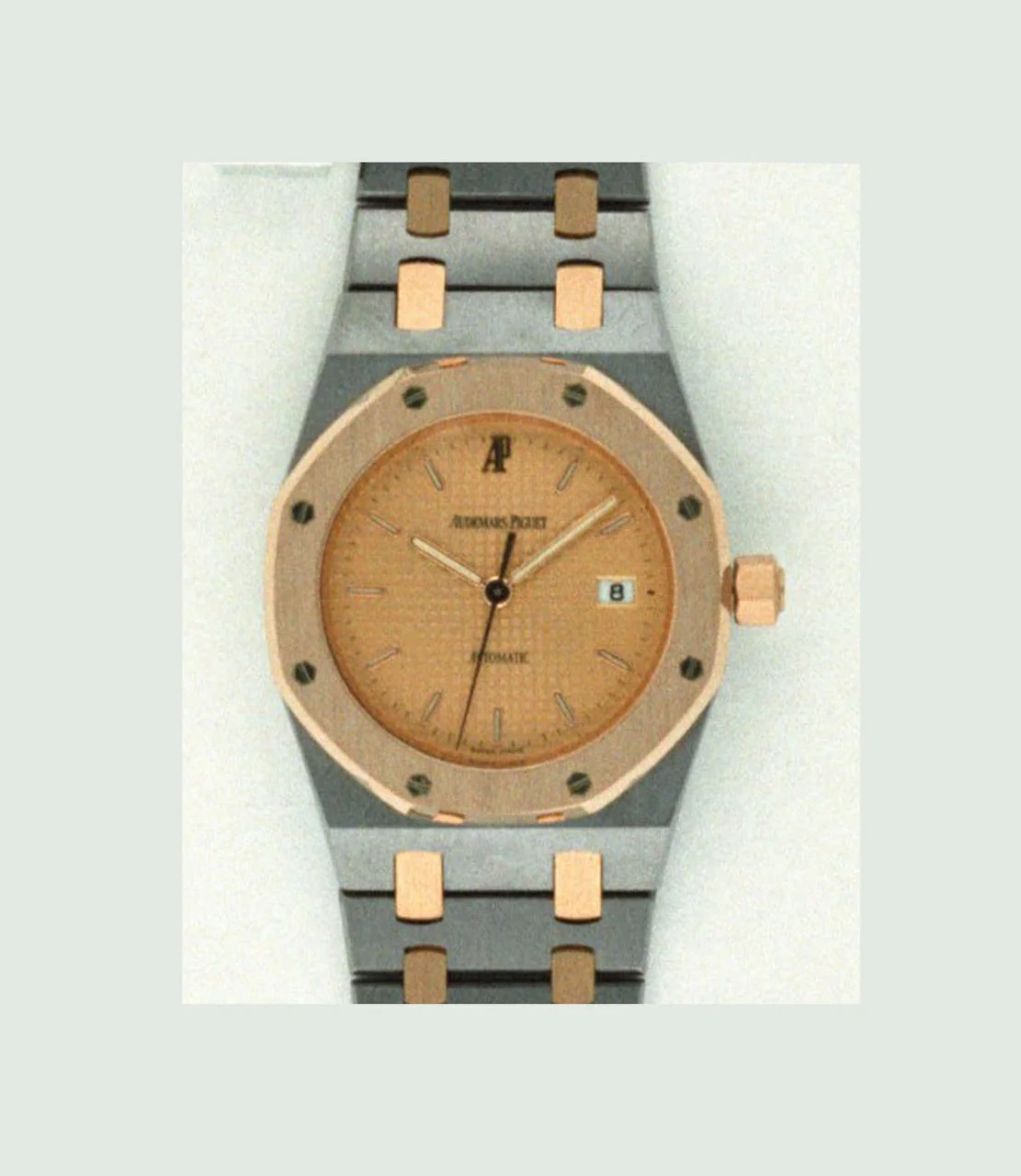
Circa 1997. Identification photograph of Model 15000BA. Audemars Piguet Archives.

1997. Technical data for Model 15000TR. Audemars Piguet Archives.
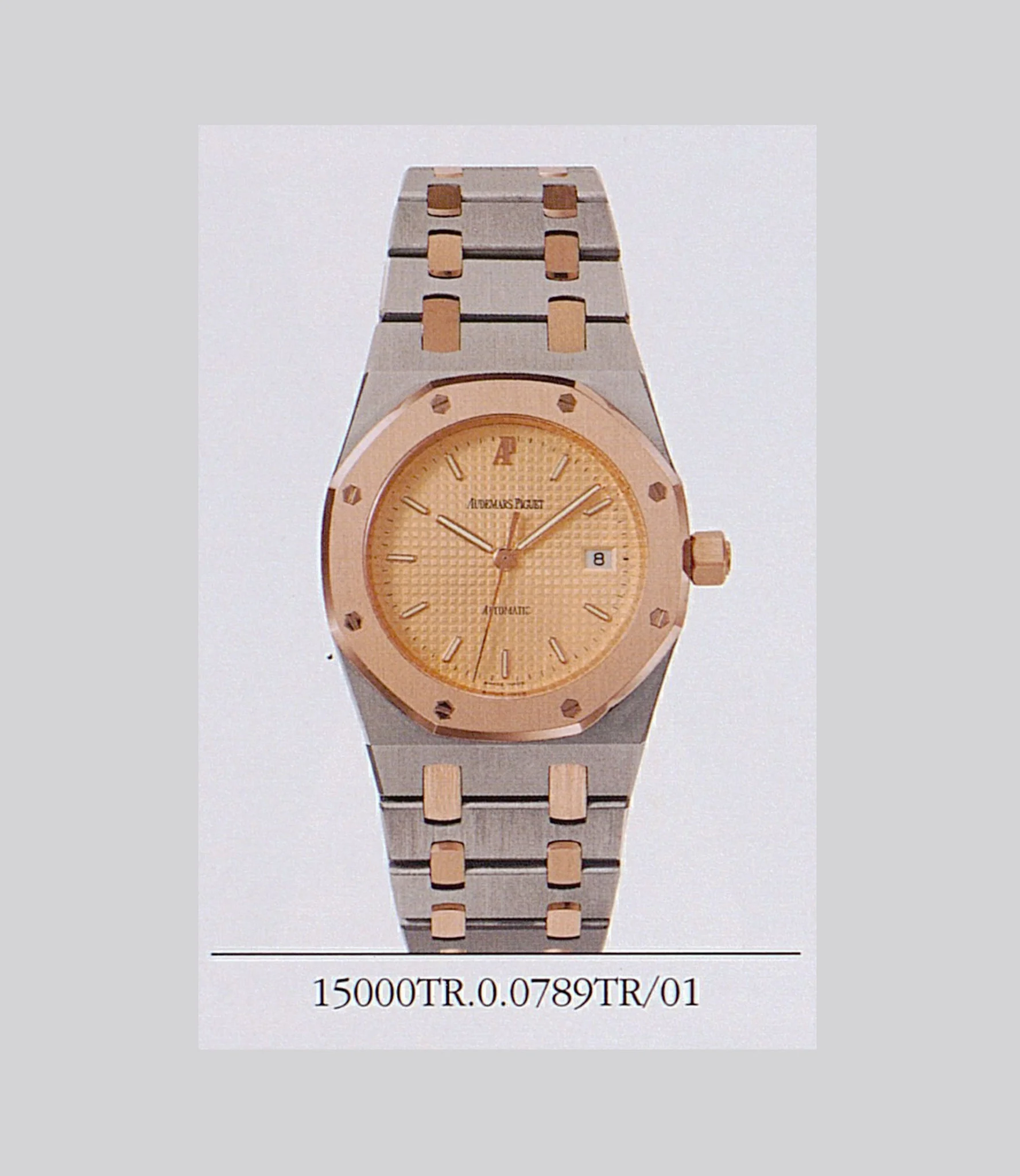
1996. Photograph of Model 15000TR in the 1996–97 and 1997–1998 Audemars Piguet catalogues. Audemars Piguet Archives.
Tantalum is at its best when contrasted with pink gold. Few collectors have seen such examples because this metal is both rare and very difficult to work.
Sales from 1997 to 2003: a total of 73 units, of which 47 (1997), 1 (1998), 5 (1999), 5 (2001), 5 (2002) and 10 (2003).
Tantalum is at its best when contrasted with pink gold. Few collectors have seen such examples because this metal is both rare and very difficult to work.
Sales from 1997 to 2003: a total of 73 units, of which 47 (1997), 1 (1998), 5 (1999), 5 (2001), 5 (2002) and 10 (2003).
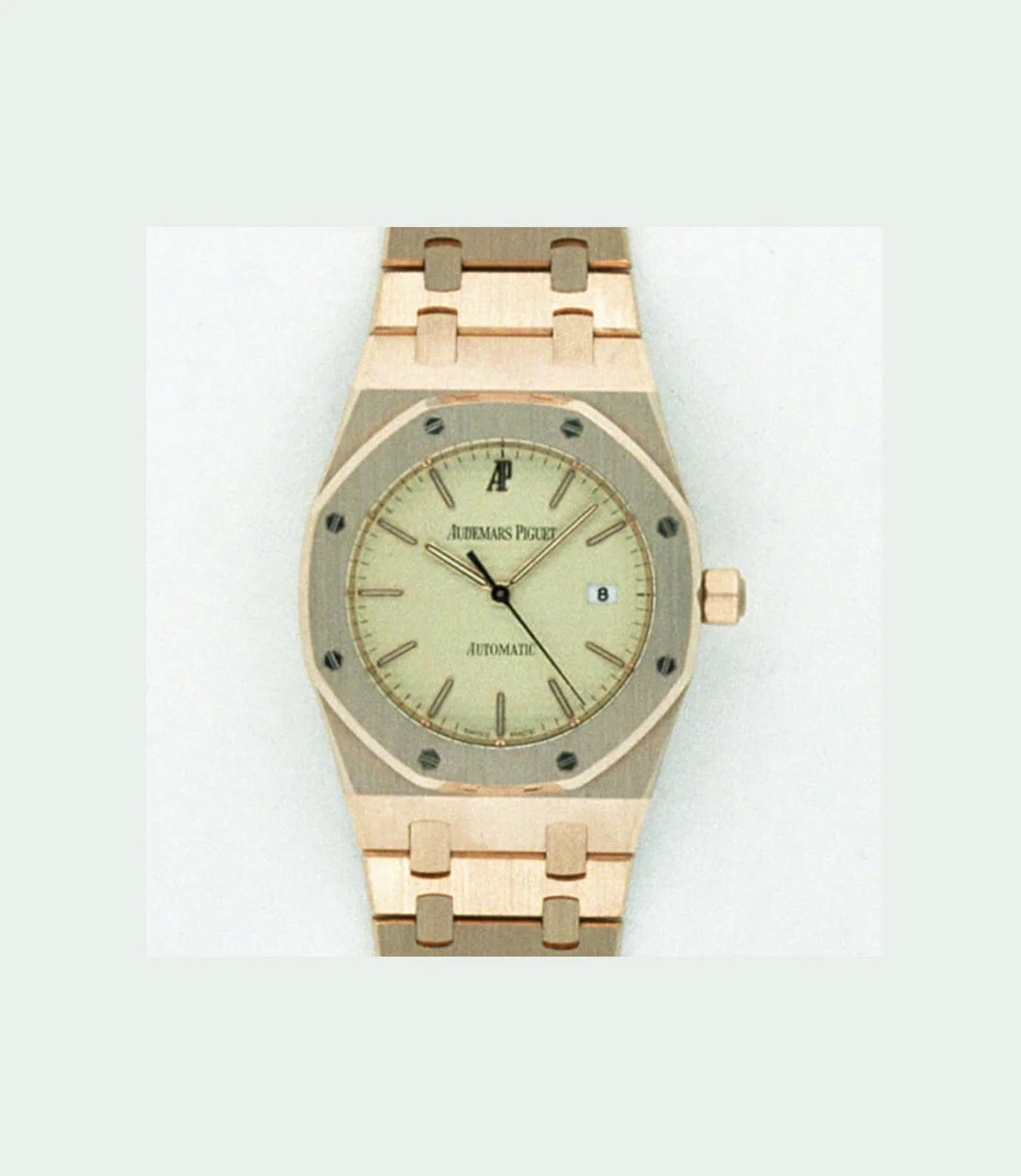
Circa 1995. Identification photograph of Model 15000OR. Audemars Piguet Archives.

1995. Technical data for Model 15000OR. Audemars Piguet Archives.
The archives provide us with technical data and an archive image of a pink gold model. Like the 15000BC white gold version, this version probably remained in prototype form, as there is no mention of it in the sales records.
The archives provide us with technical data and an archive image of a pink gold model. Like the 15000BC white gold version, this version probably remained in prototype form, as there is no mention of it in the sales records.