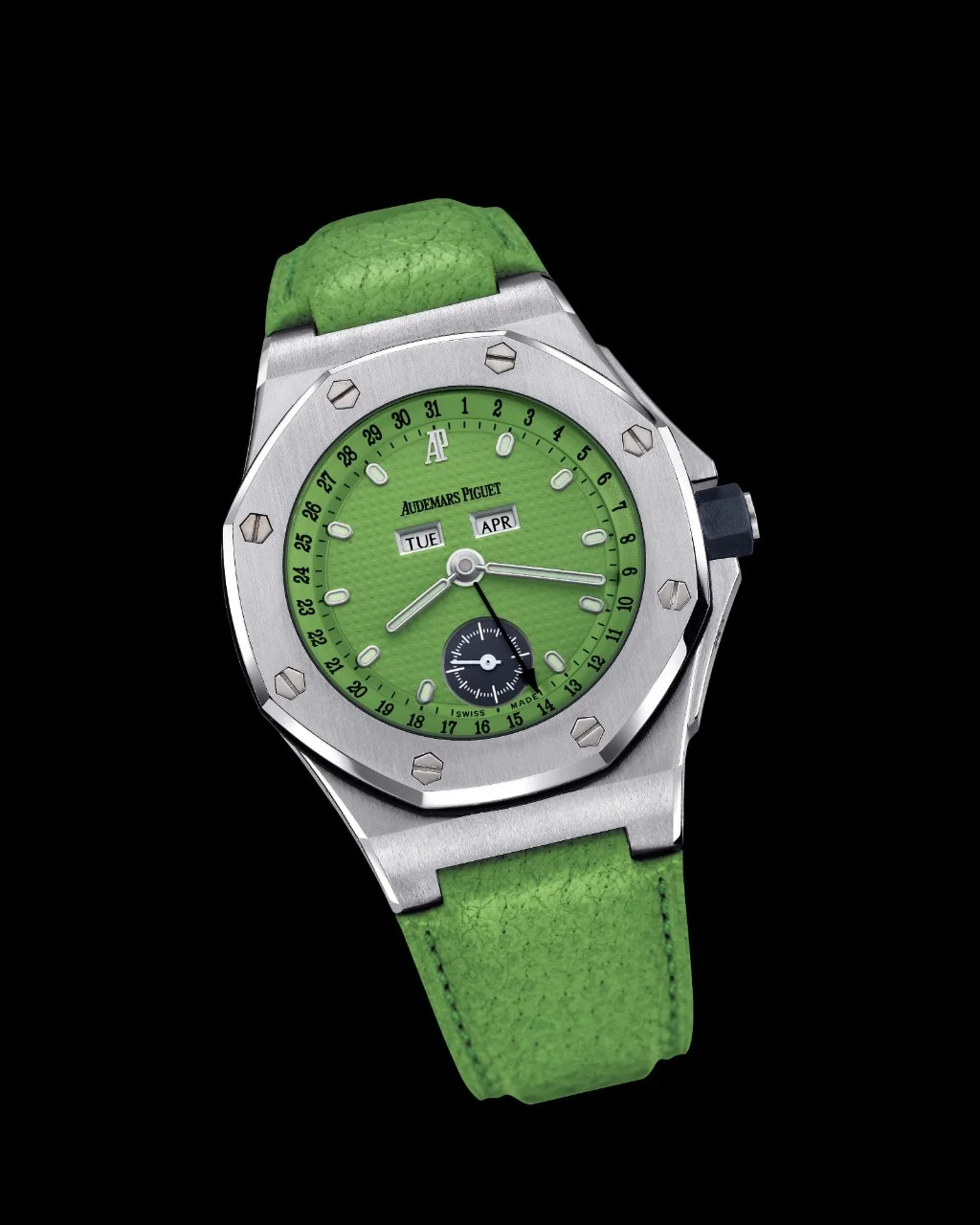
25807, ROYAL OAK OFFSHORE COMPLETE CALENDAR

1997. Audemars Piguet Royal Oak Offshore advertisement for Model 25807. Pictured in the background, Italian ski champion Alberto Tomba was one of the first ambassadors of the Royal Oak Offshore collection. Audemars Piguet Archives.
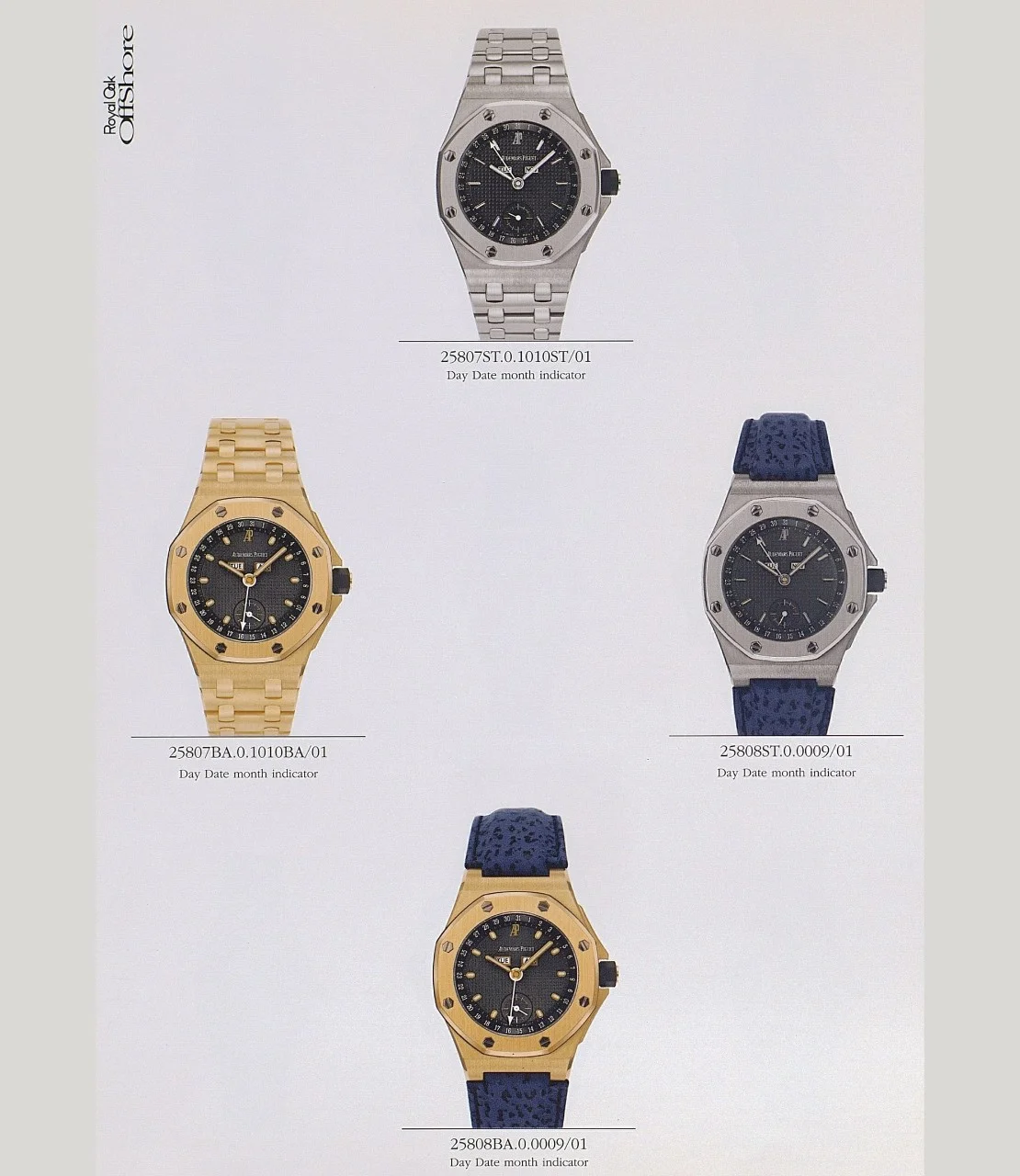
1996. Royal Oak Offshore Complete Calendar 25807 and 25808. The two complete calendar variants with metal bracelets and leather straps appear on the same page of the 1996 Audemars Piguet Catalogue. Audemars Piguet Archives.
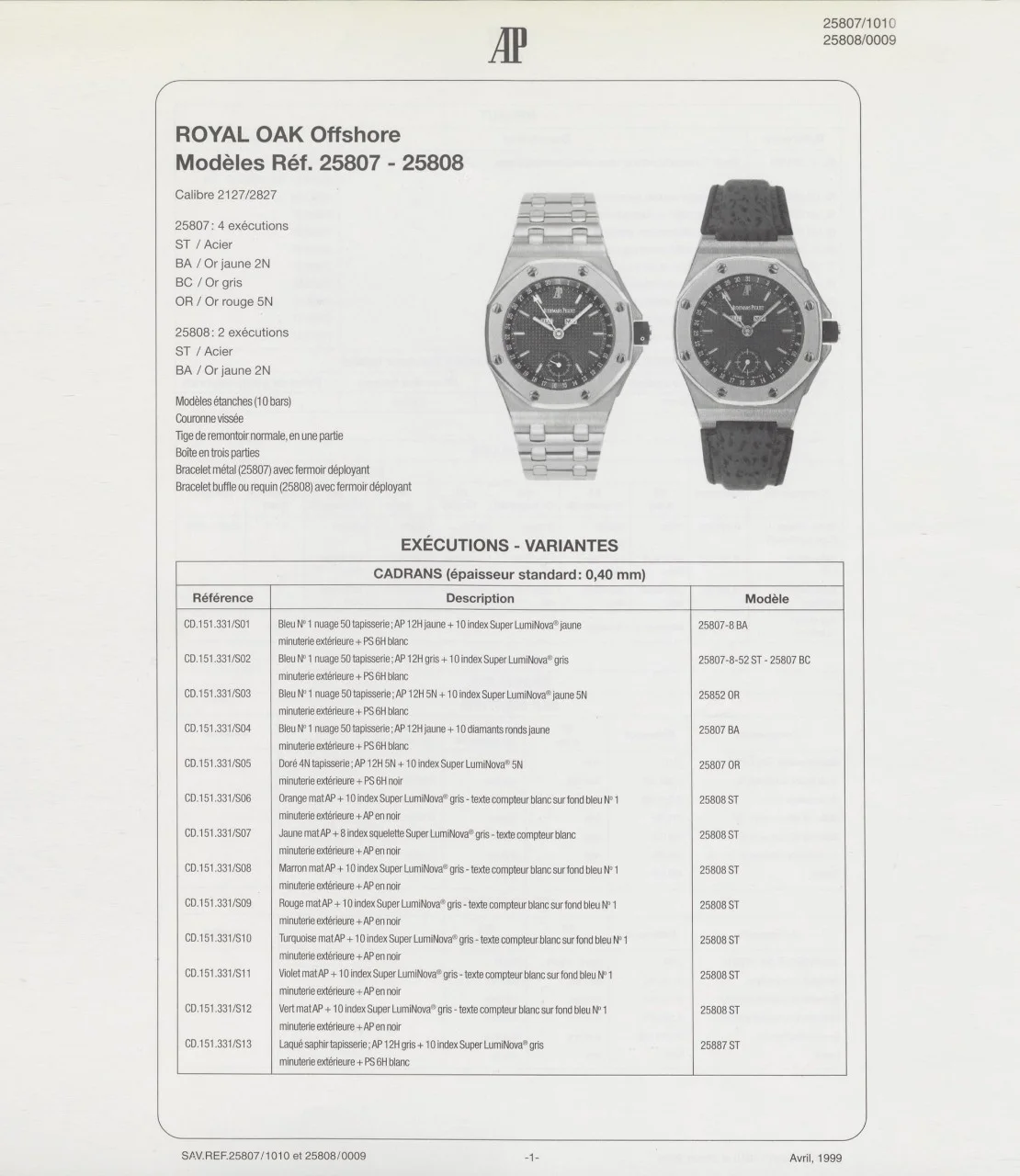
1999. After-sales service data for Models 25807 and 25808. Audemars Piguet Archives.

1996. Photograph of the Royal Oak Offshore 25721BA (42 mm), 77151BA (30 mm) and 25807BA (37 mm). The text highlights the bi-directional selfwinding system, the protection against magnetic fields and the luminescence of the dials and tritium hands. Advertising leaflet. Audemars Piguet Archives.
Until 1996, only Model 25721 (42 mm) bore the name Royal Oak Offshore. The controversies that had earned it the nickname "the beast" and its mixed commercial success (716 watches sold in three years), did not prevent Audemars Piguet from building an Offshore family from 1996.
While more modestly sized than its predecessor, Model 25808 (38 mm) nevertheless picked up all its characteristics: oversized gasket, generous case thickness (12.05 mm), integrated metal bracelet with curved links and studs, Tapisserie dial, etc.
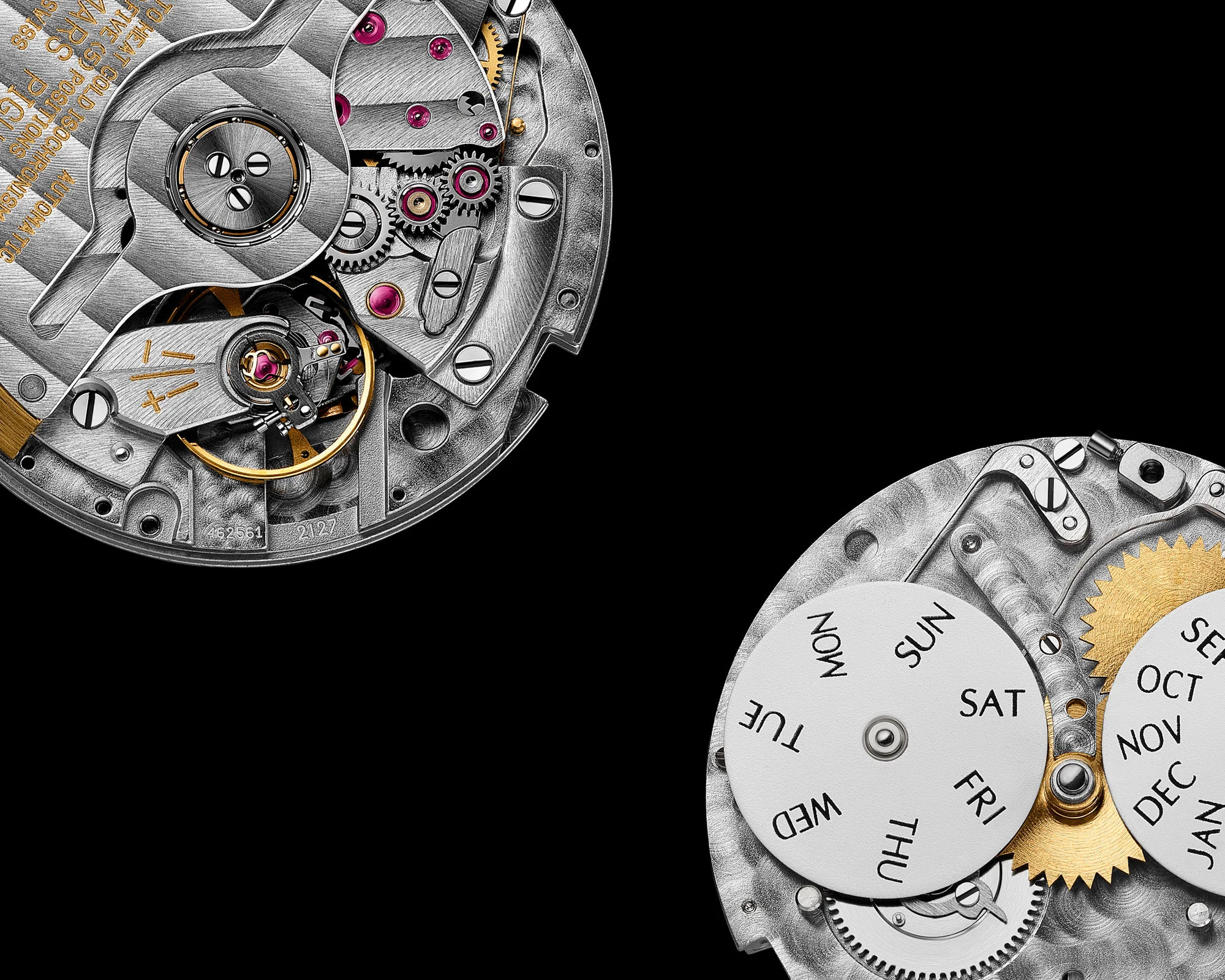
On the other hand, the chronograph gave way to a more classic complication: the calendar. Two apertures symmetrically placed at 2 o'clock and 10 o'clock display the day and the month, while the date is indicated around the dial by means of a dedicated pointer.
The Royal Oak Offshore Complete Calendar 25807, a leather strap variant of Model 25808, was marketed for a decade in a run of more than 1,000 units in steel, yellow gold, white gold, pink gold and even blackened steel.
Sales from 1996 to 2006: a total of 1,116 units, of which 197 (1996), 324 (1997), 294 (1998), 119 (1999), 60 (2000), 53 (2001), 45 (2002), 13 (2003) and 11 (2004).
Until 1996, only Model 25721 (42 mm) bore the name Royal Oak Offshore. The controversies that had earned it the nickname "the beast" and its mixed commercial success (716 watches sold in three years), did not prevent Audemars Piguet from building an Offshore family from 1996.
While more modestly sized than its predecessor, Model 25808 (38 mm) nevertheless picked up all its characteristics: oversized gasket, generous case thickness (12.05 mm), integrated metal bracelet with curved links and studs, Tapisserie dial, etc.
On the other hand, the chronograph gave way to a more classic complication: the calendar. Two apertures symmetrically placed at 2 o'clock and 10 o'clock display the day and the month, while the date is indicated around the dial by means of a dedicated pointer.
The Royal Oak Offshore Complete Calendar 25807, a leather strap variant of Model 25808, was marketed for a decade in a run of more than 1,000 units in steel, yellow gold, white gold, pink gold and even blackened steel.
Sales from 1996 to 2006: a total of 1,116 units, of which 197 (1996), 324 (1997), 294 (1998), 119 (1999), 60 (2000), 53 (2001), 45 (2002), 13 (2003) and 11 (2004).
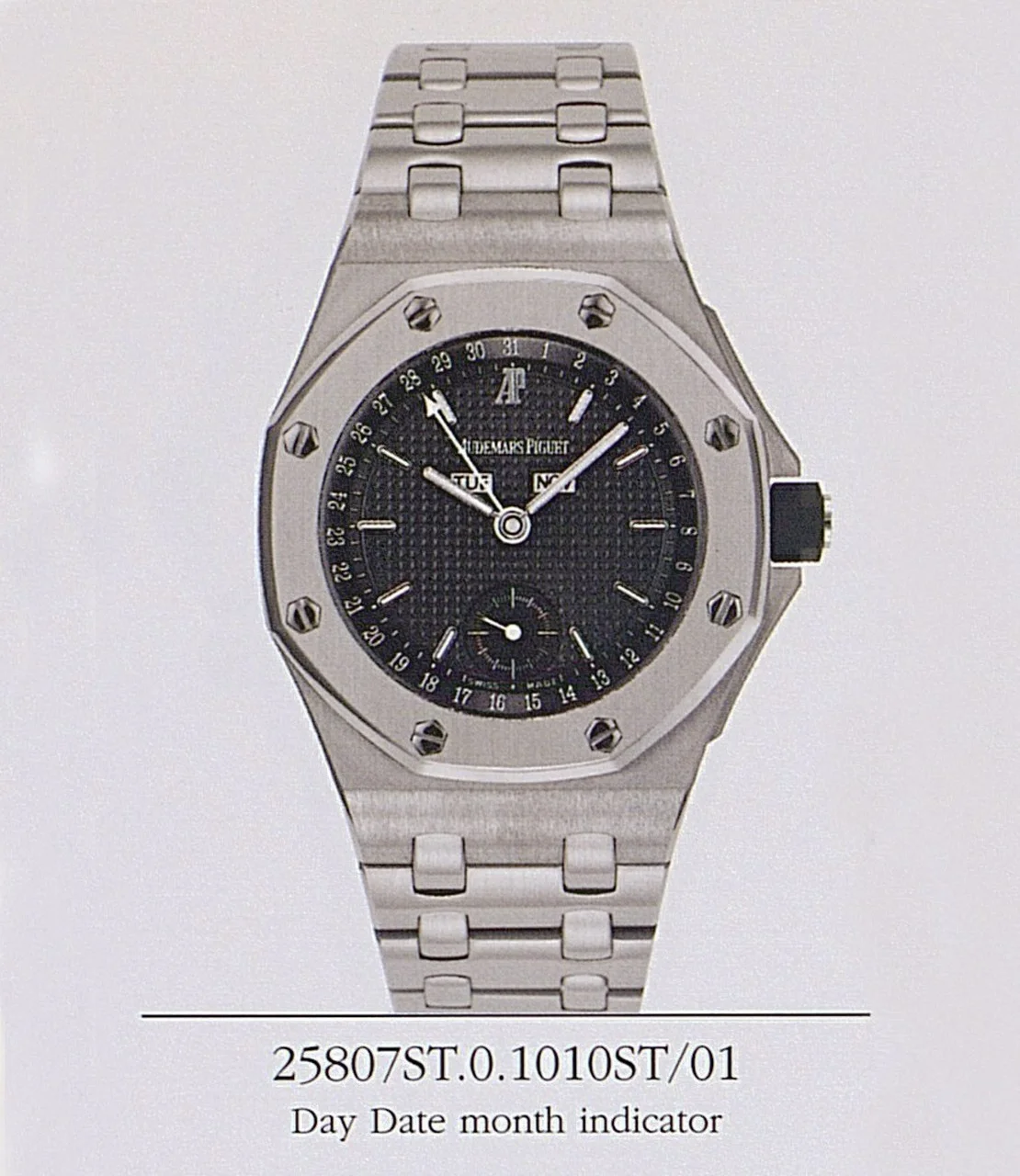
1996. Royal Oak Offshore Complete Calendar 25807ST. The first variant of the model remained in the Audemars Piguet Catalogue from 1996 to 2001. Thin, elongated hour-markers. Audemars Piguet Archives.

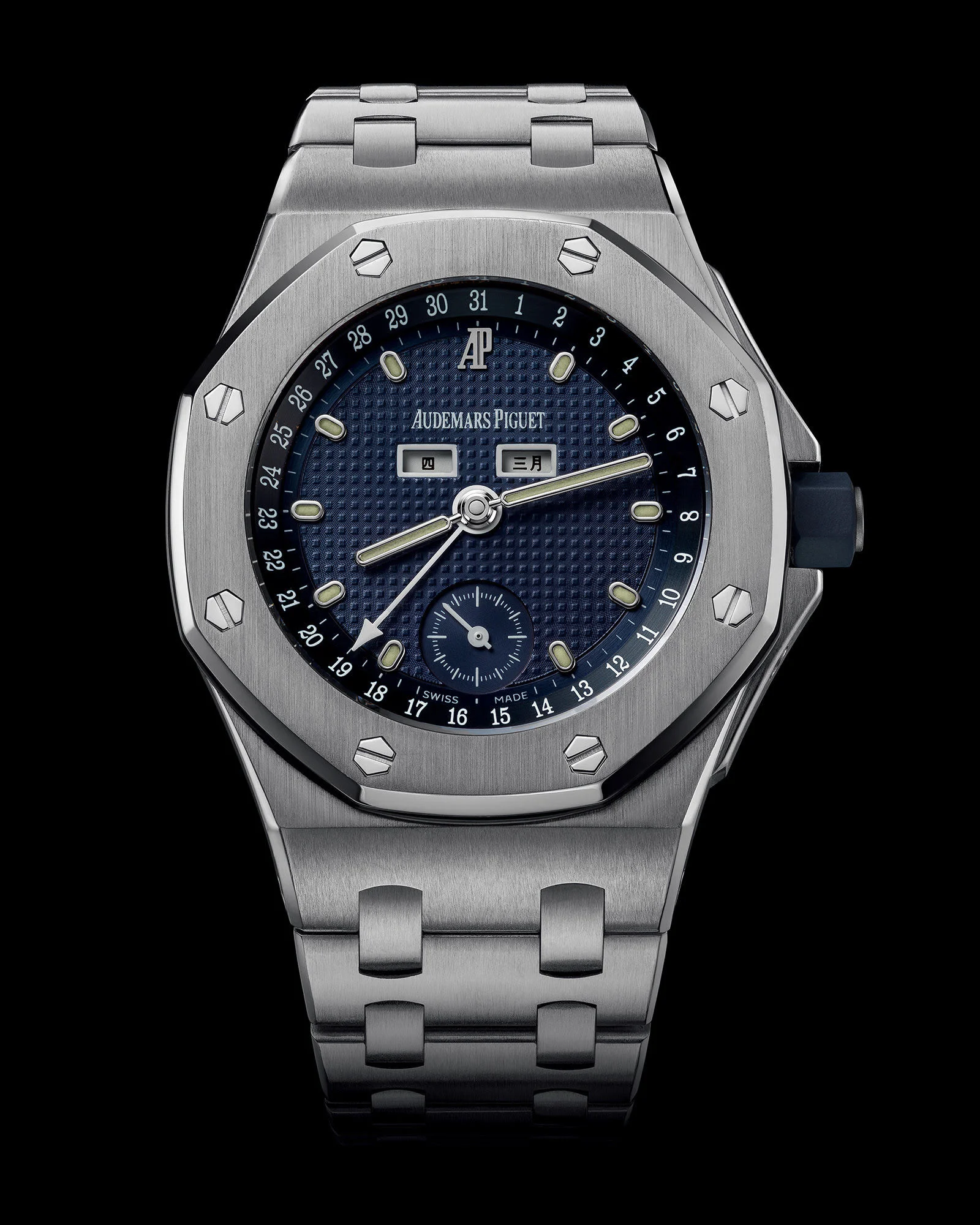
Circa 2000. Royal Oak Offshore Complete Calendar 25807ST. Day and month aperture, date hand. Calibre 2127/2827. 38 mm steel Case 38 mm. Image shot by Audemars Piguet circa 2000. Short and wide hour-markers. Audemars Piguet Archives.

Circa 1996. Technical data for Model 25807ST. Audemars Piguet Archives.
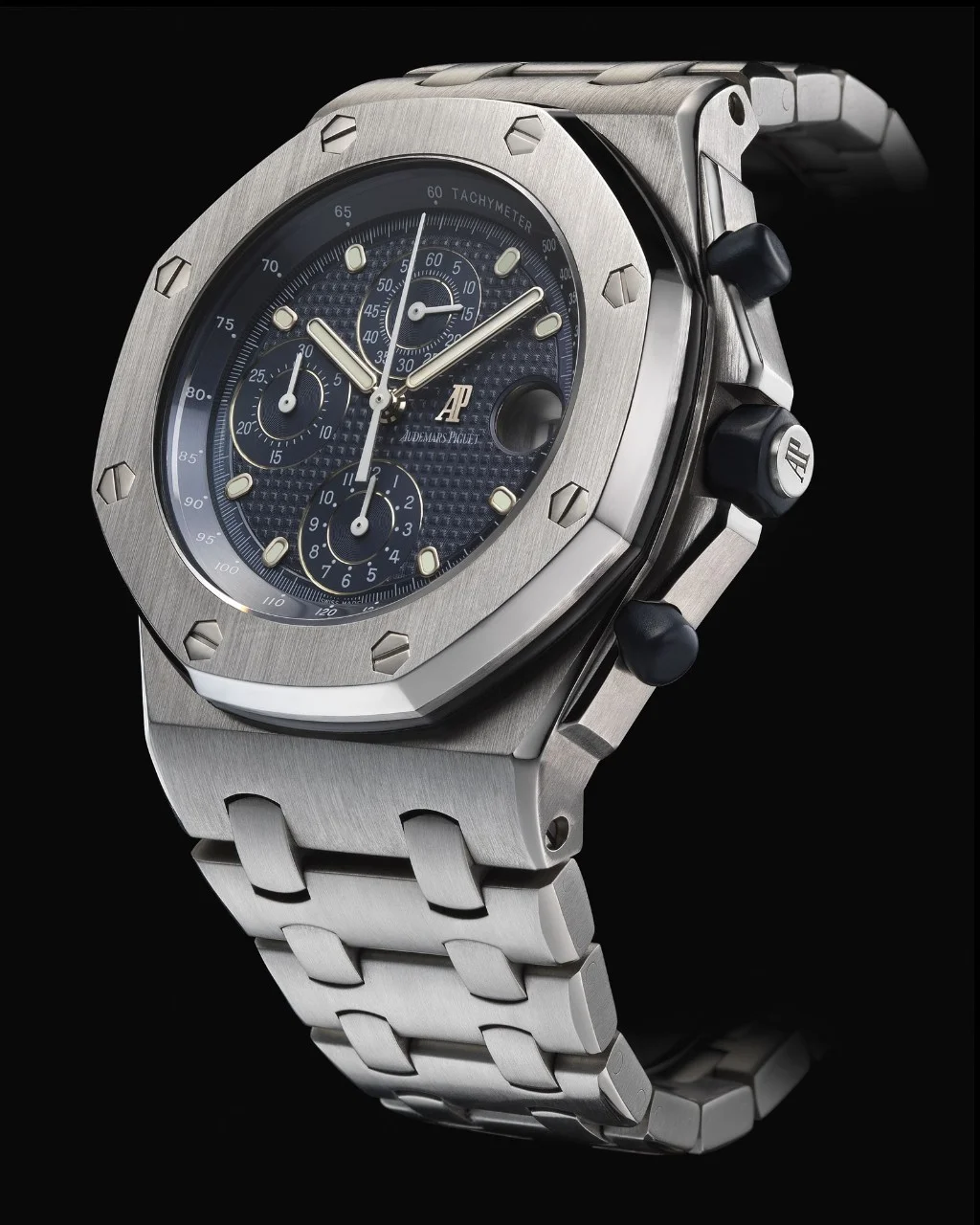
Most examples of Model 25807 are clad in steel.
There are two types of blue dials on record. The first is adorned with very thin and elongated hour-markers, comparable to the dials of the Royal Oak collection. This first variant is the only one published in the Audemars Piguet catalogues. It is however likely that it only existed at the beginning of the model's history, because the vast majority of these watches on the pre-owned market feature dials with the Offshore collection’s characteristic very short and wide hour-markers. This second variant appears in an image that is undated but was probably shot around the year 2000.
Sales from 1996 to 2004: a total of 944 units, of which 149 (1996), 257 (1997), 275 (1998), 113 (1999), 51 (2000), 46 (2001,) 41 (2002), 12 (2003) and 11 (2004).
Most examples of Model 25807 are clad in steel.
There are two types of blue dials on record. The first is adorned with very thin and elongated hour-markers, comparable to the dials of the Royal Oak collection. This first variant is the only one published in the Audemars Piguet catalogues. It is however likely that it only existed at the beginning of the model's history, because the vast majority of these watches on the pre-owned market feature dials with the Offshore collection’s characteristic very short and wide hour-markers. This second variant appears in an image that is undated but was probably shot around the year 2000.
Sales from 1996 to 2004: a total of 944 units, of which 149 (1996), 257 (1997), 275 (1998), 113 (1999), 51 (2000), 46 (2001,) 41 (2002), 12 (2003) and 11 (2004).
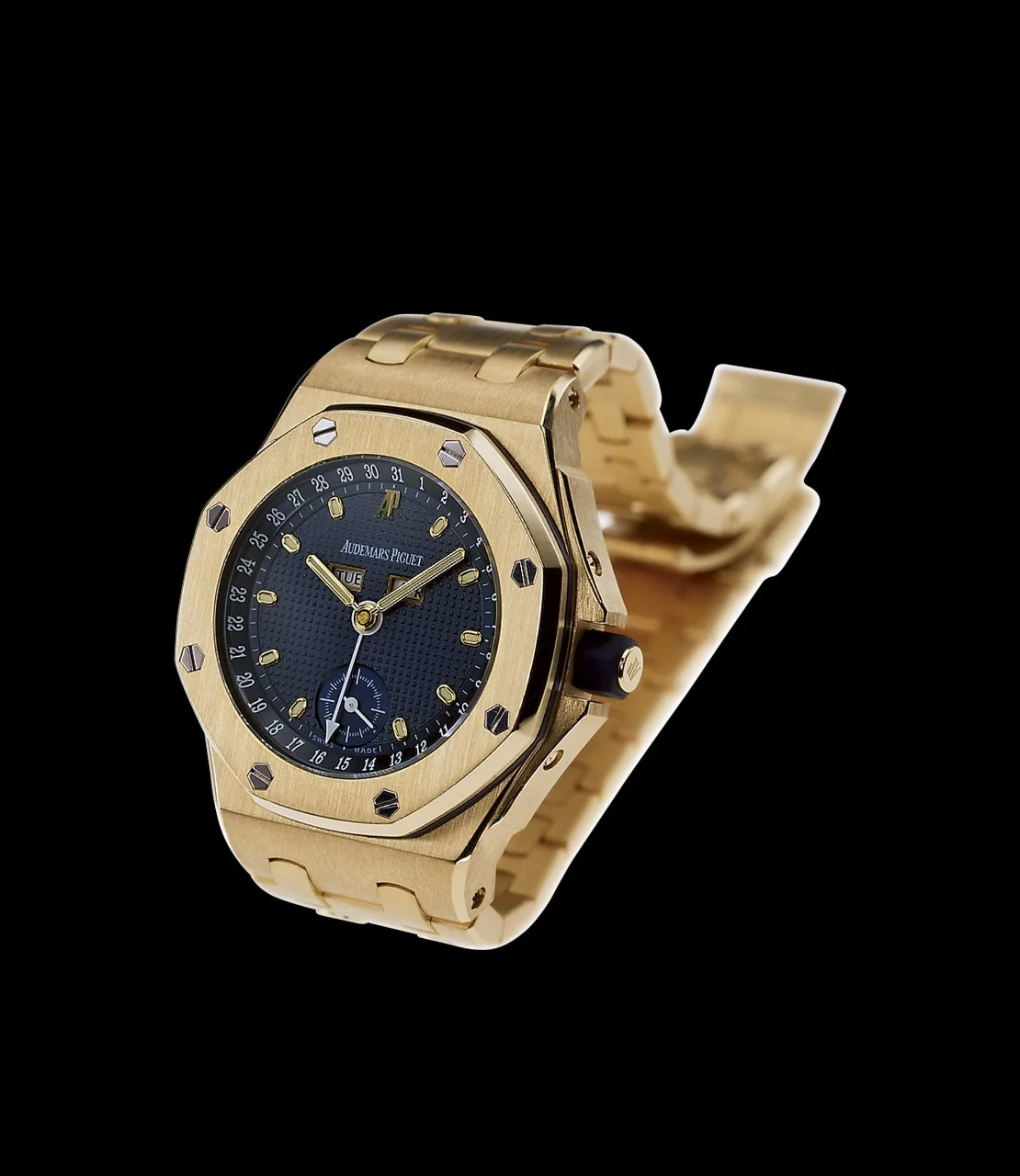
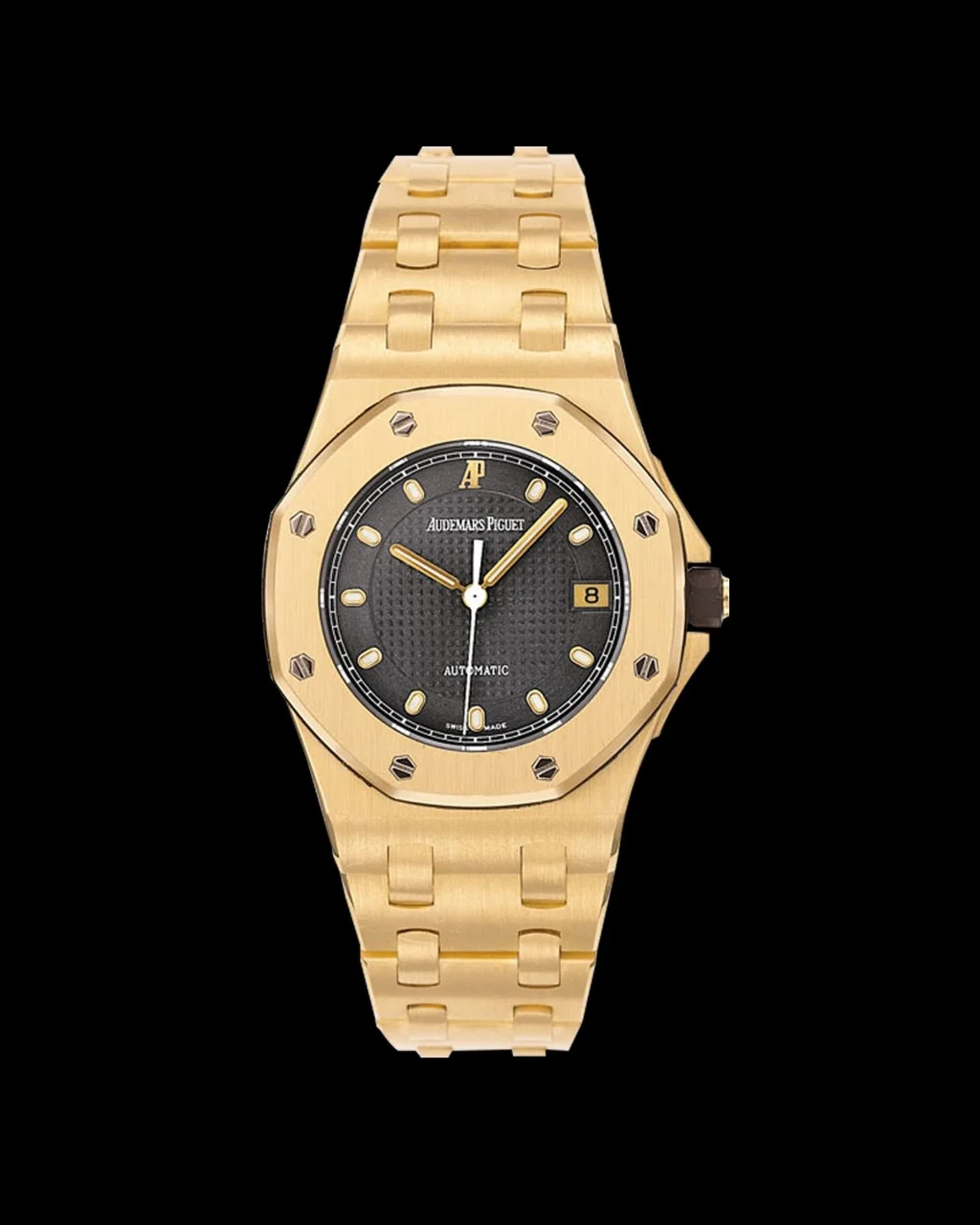
Circa 2000. Royal Oak Offshore Complete Calendar 25807BA. Day and month aperture, date hand. Calibre 2127/2827.38 mm case in 18-carat yellow gold. Image shot by Audemars Piguet circa 2000. Audemars Piguet Archives.
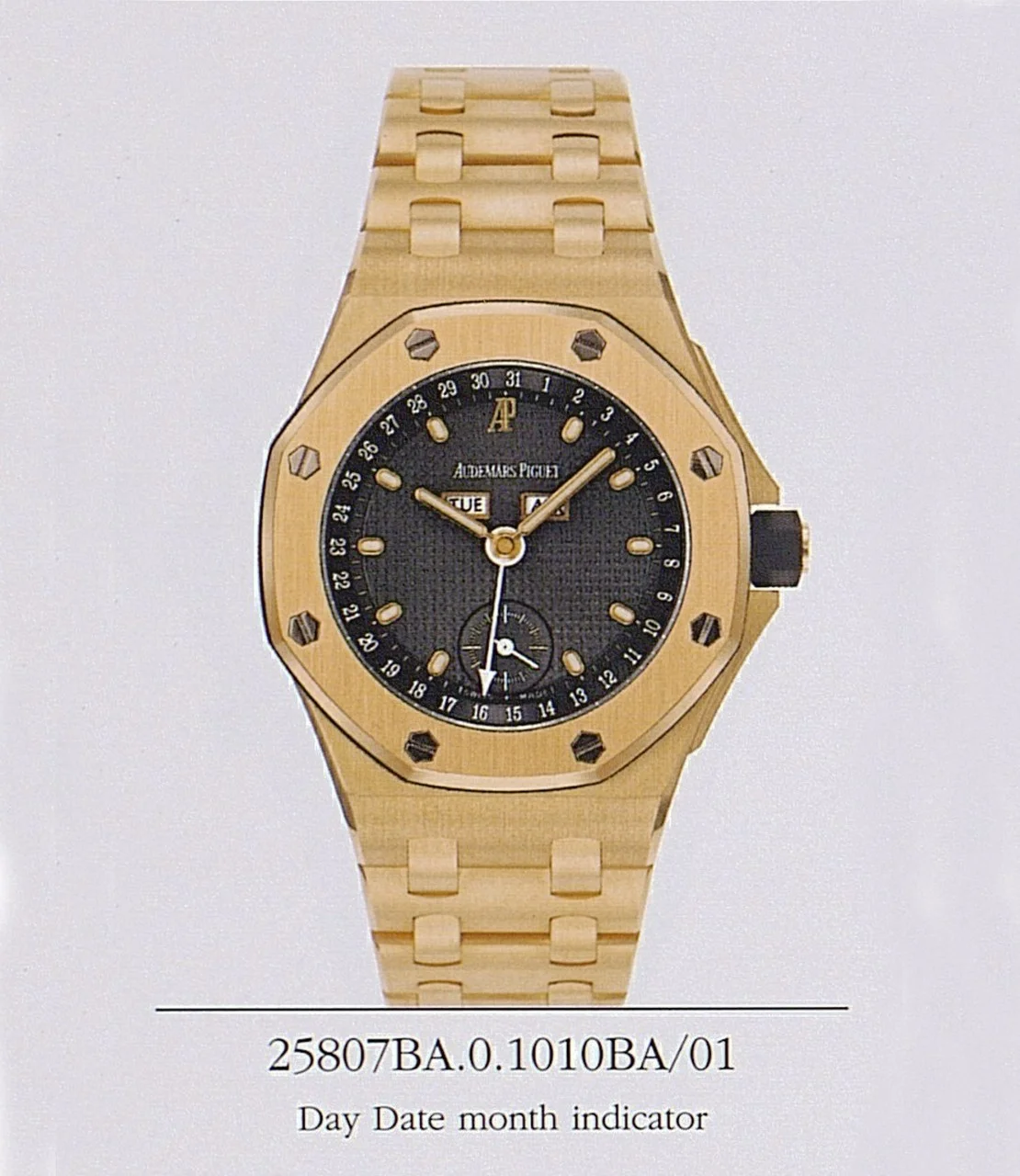
1996. Royal Oak Offshore Complete Calendar 25807BA. The first and only documented variant of the model remained in the Audemars Piguet Catalogue from 1996 to 2001. Audemars Piguet Archives.

Circa 1996. Technical data for Model 25807BA. Audemars Piguet Archives.
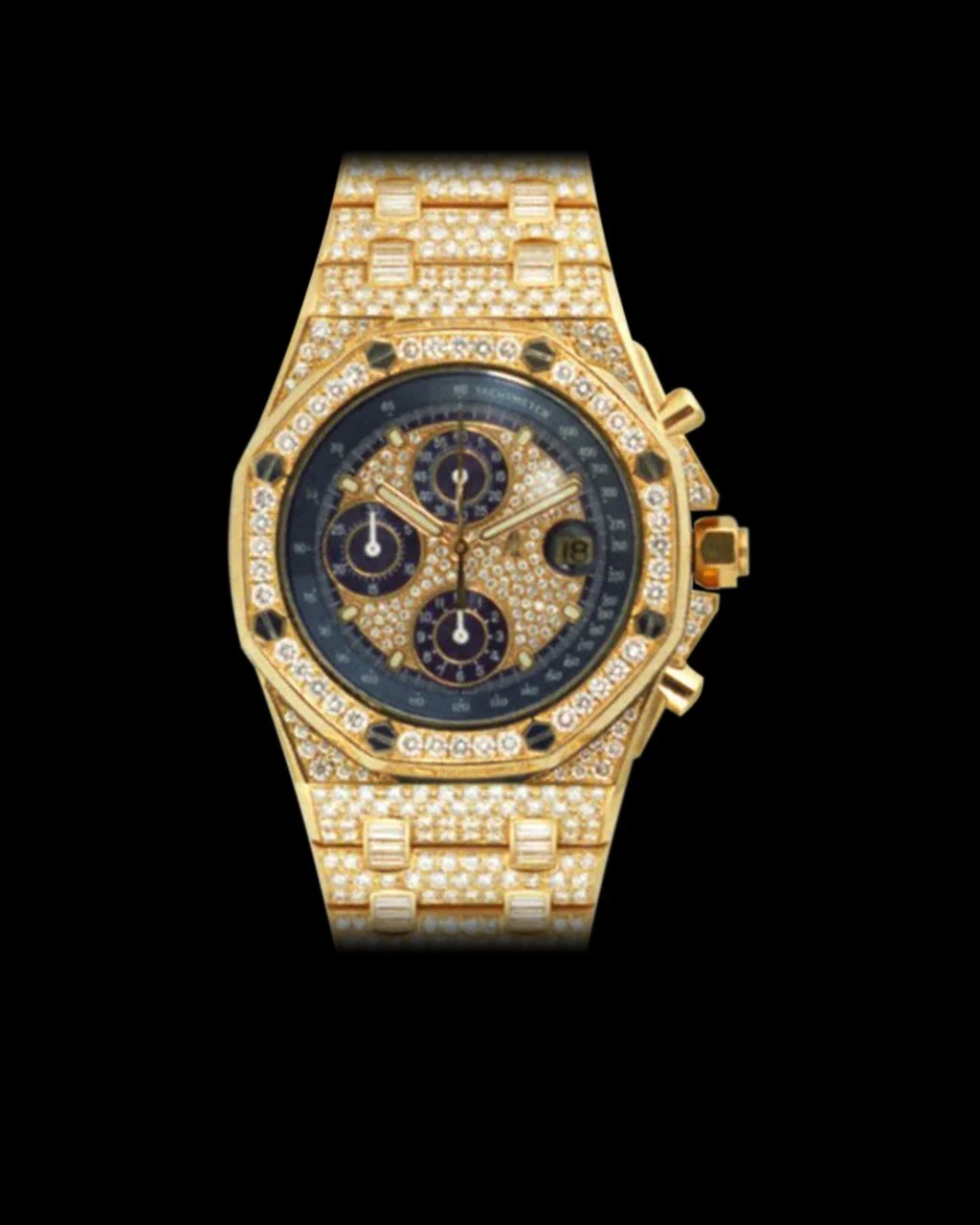
Although distributed in a run of 140 units over a six-year period, the yellow gold variant of Model 25807 is documented in the Audemars Piguet Archives with only one dial, of which the description corresponds almost word for word to the Bleu Nuit, Nuage 50 Tapisserie 21 dials of the very first Royal Oak, Model 5402.
In the 1998 price list, this gold version is listed at CHF 20,930. It was thus at the time three times more expensive than its steel variant. This difference is due to the generous proportions of the case, bezel and bracelet, all in solid 18-carat yellow gold.
Sales from 1996 to 2002: a total of 140 units, of which 59 (1996), 57 (1997), 12 (1998), 6 (1999), 3 (2000), 2 (2001) and 1 (2002).
Although distributed in a run of 140 units over a six-year period, the yellow gold variant of Model 25807 is documented in the Audemars Piguet Archives with only one dial, of which the description corresponds almost word for word to the Bleu Nuit, Nuage 50 Tapisserie 21 dials of the very first Royal Oak, Model 5402.
In the 1998 price list, this gold version is listed at CHF 20,930. It was thus at the time three times more expensive than its steel variant. This difference is due to the generous proportions of the case, bezel and bracelet, all in solid 18-carat yellow gold.
Sales from 1996 to 2002: a total of 140 units, of which 59 (1996), 57 (1997), 12 (1998), 6 (1999), 3 (2000), 2 (2001) and 1 (2002).
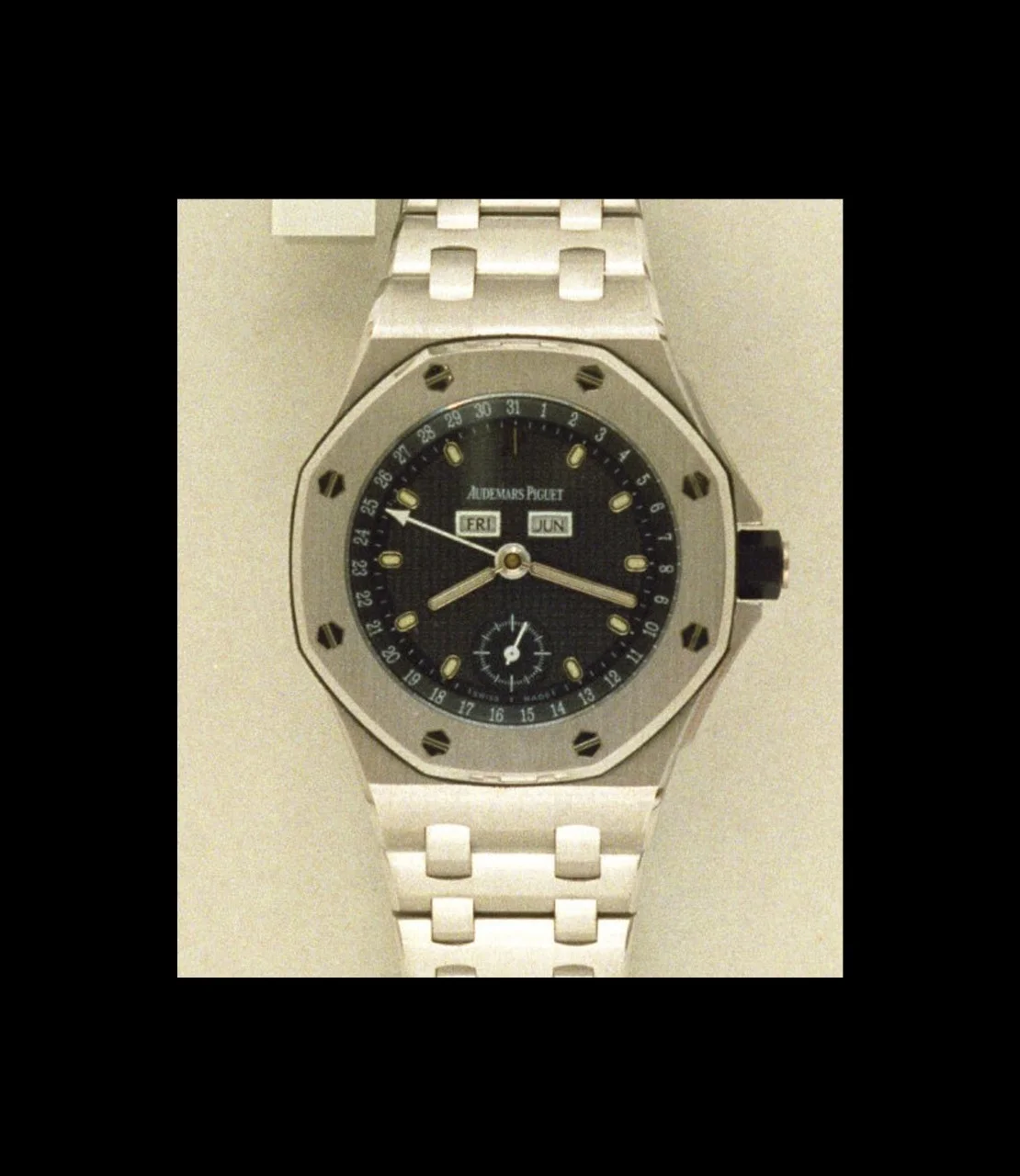
Circa 1996. Identification image of Model 25807BC. Audemars Piguet Archives.

1996. Technical data for Model 25807BC. Audemars Piguet Archives.
With 18 units sold in three years, the white gold variant is distinguished by its extreme rarity. As its dial is similar to the steel version, only a trained eye can distinguish the particular brilliance of the precious metal. But for the wearer of the watch, the difference in weight on the wrist leaves no doubt.
To date, no examples have appeared in the major auction houses.
Sales from 1998 to 2001: a total of 18 units of which 5 (1998), 9 (2000) and 4 (2001).
With 18 units sold in three years, the white gold variant is distinguished by its extreme rarity. As its dial is similar to the steel version, only a trained eye can distinguish the particular brilliance of the precious metal. But for the wearer of the watch, the difference in weight on the wrist leaves no doubt.
To date, no examples have appeared in the major auction houses.
Sales from 1998 to 2001: a total of 18 units of which 5 (1998), 9 (2000) and 4 (2001).

1998. Production of Model 25807OR. Production Register. Audemars Piguet Archives.
This variant is so rare that it has left no trace either in Audemars Piguet’s iconographic archives or in the world of vintage watch collectors’ and dealers' publications. Only the production registers carry a mention of this version.
Sales from 1997 to 2002: a total of 13 units, of which 10 (1997), 1 (1998) and 2 (2002).
This variant is so rare that it has left no trace either in Audemars Piguet’s iconographic archives or in the world of vintage watch collectors’ and dealers' publications. Only the production registers carry a mention of this version.
Sales from 1997 to 2002: a total of 13 units, of which 10 (1997), 1 (1998) and 2 (2002).
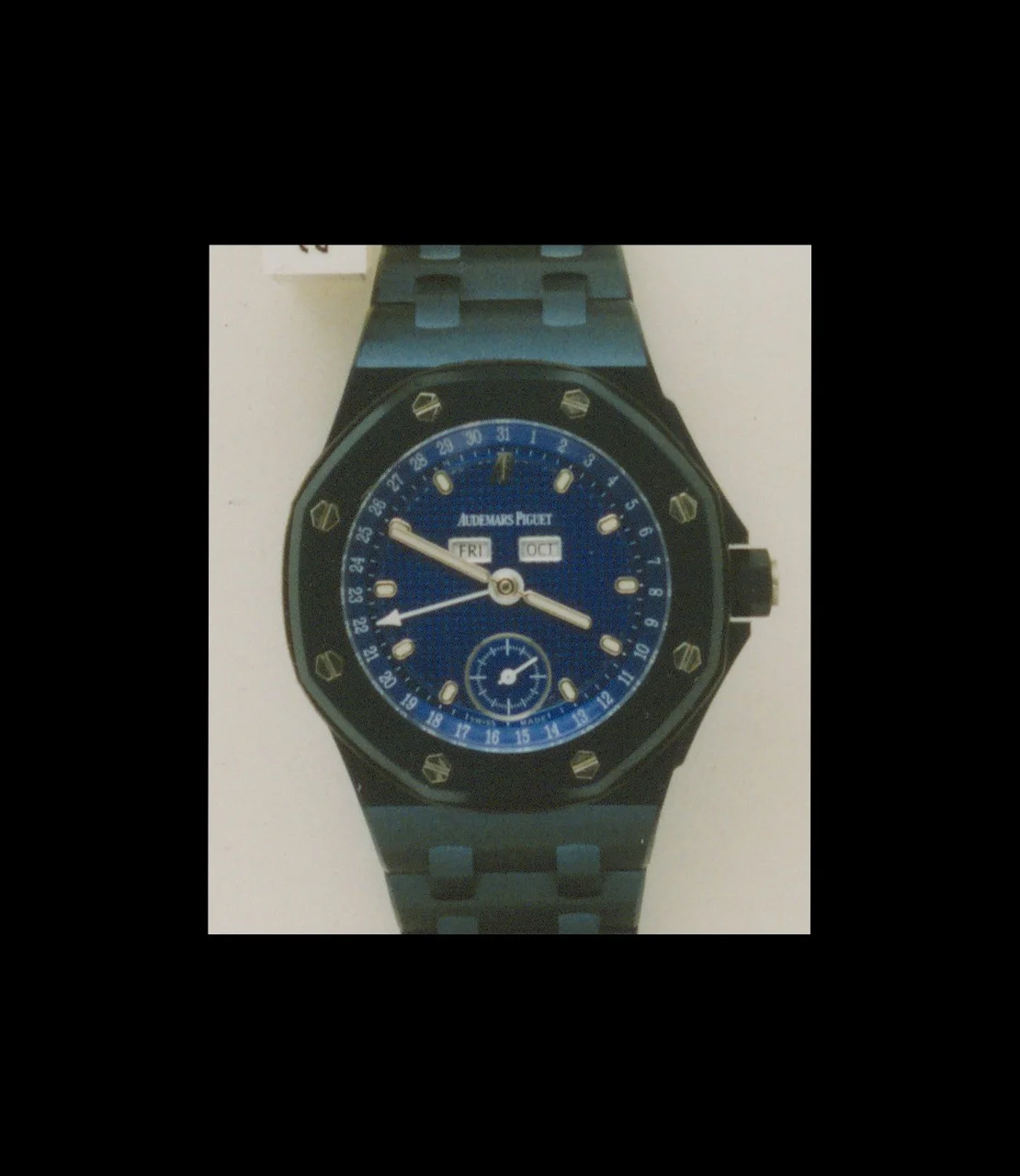
Circa 1998. Identification image of Model 25807SB. Audemars Piguet Archives.
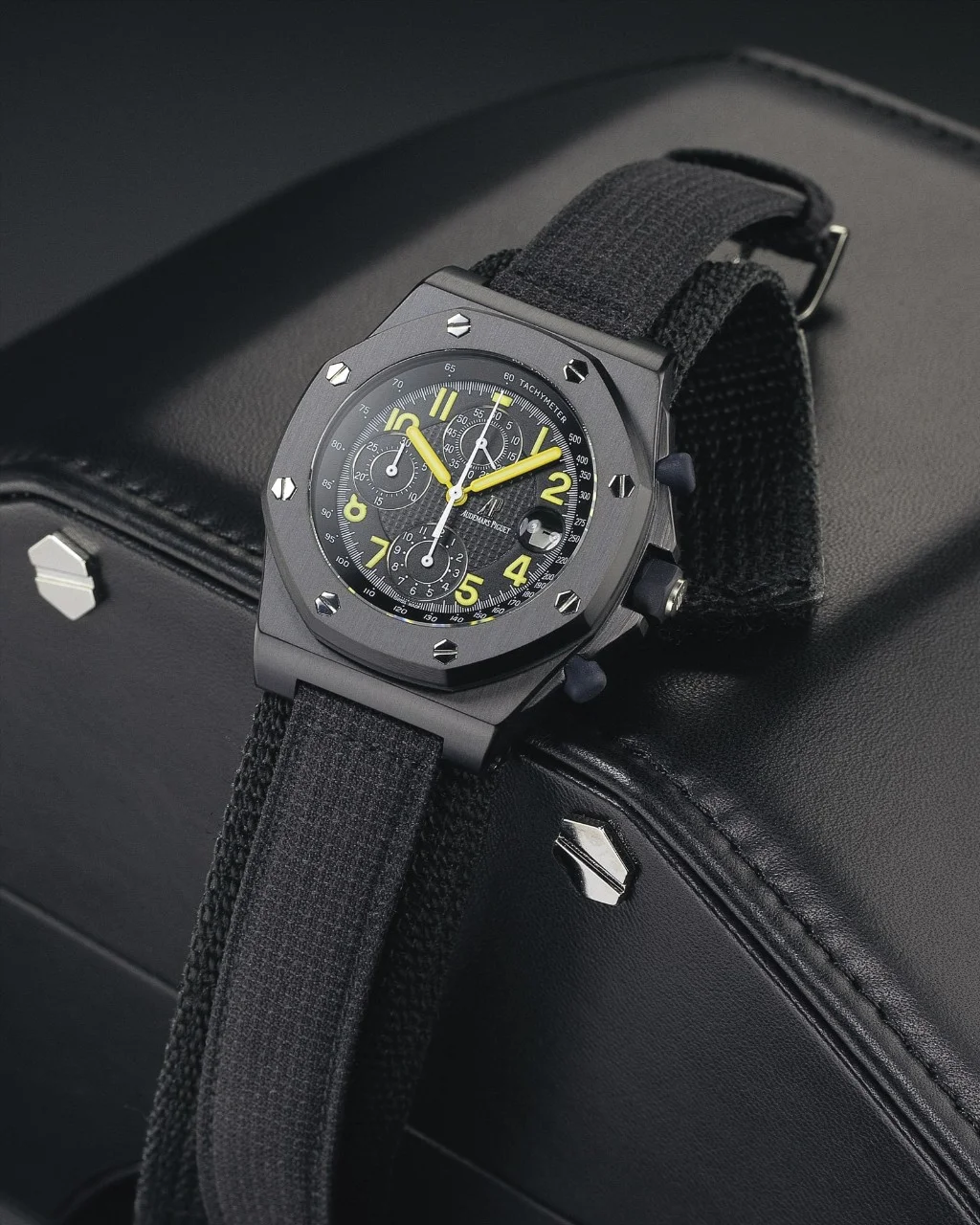
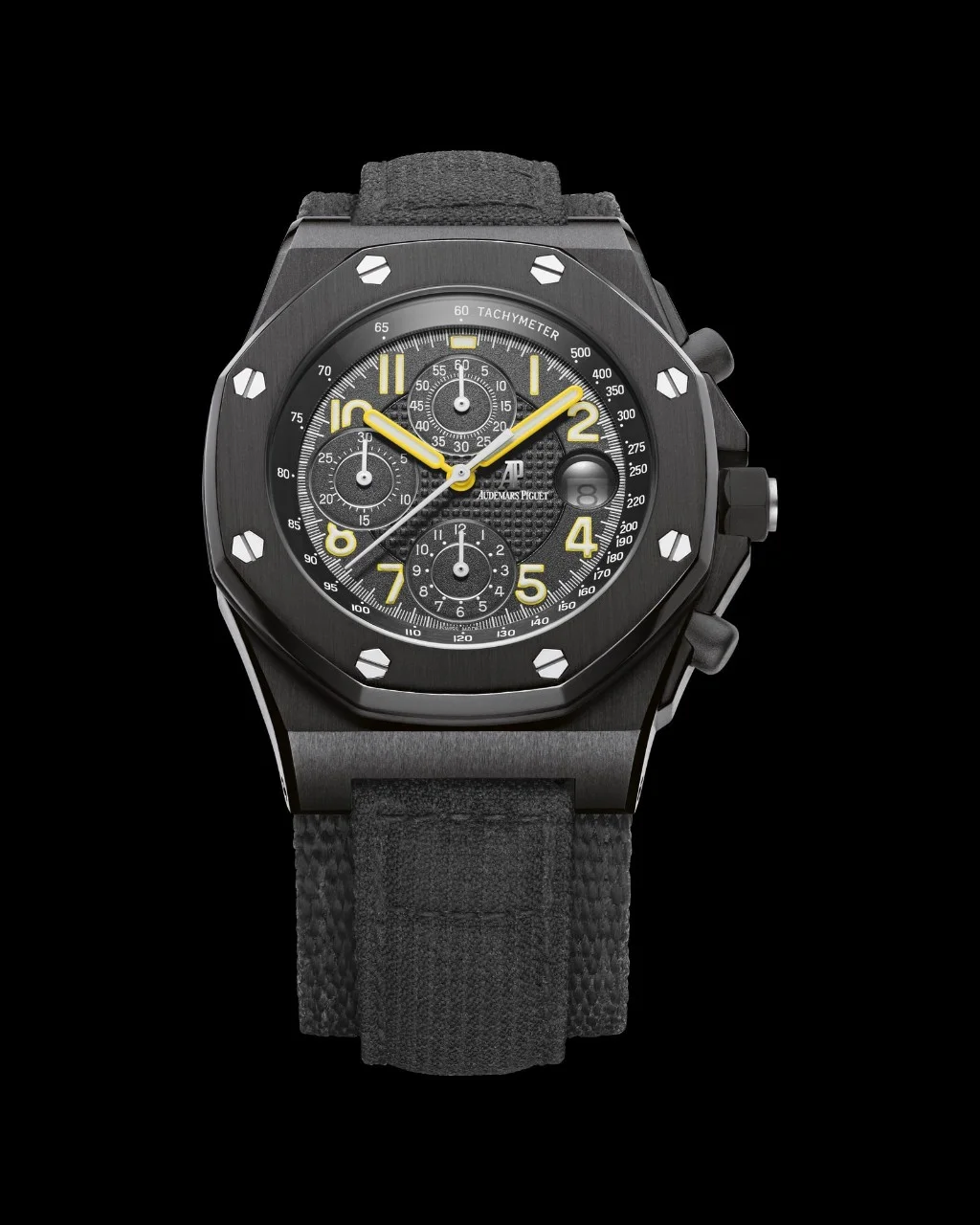
A single blackened steel example of the 25807SB model has been discovered in the Audemars Piguet Production Registers. This unusual variant was made in 1998, shortly before the launch of the Manufacture's most famous blackened steel watch, the Royal Oak Offshore End Of Days, Model 25770SN.
1998 sales: 1 unit.
A single blackened steel example of the 25807SB model has been discovered in the Audemars Piguet Production Registers. This unusual variant was made in 1998, shortly before the launch of the Manufacture's most famous blackened steel watch, the Royal Oak Offshore End Of Days, Model 25770SN.
1998 sales: 1 unit.