Calibre 2127-2827

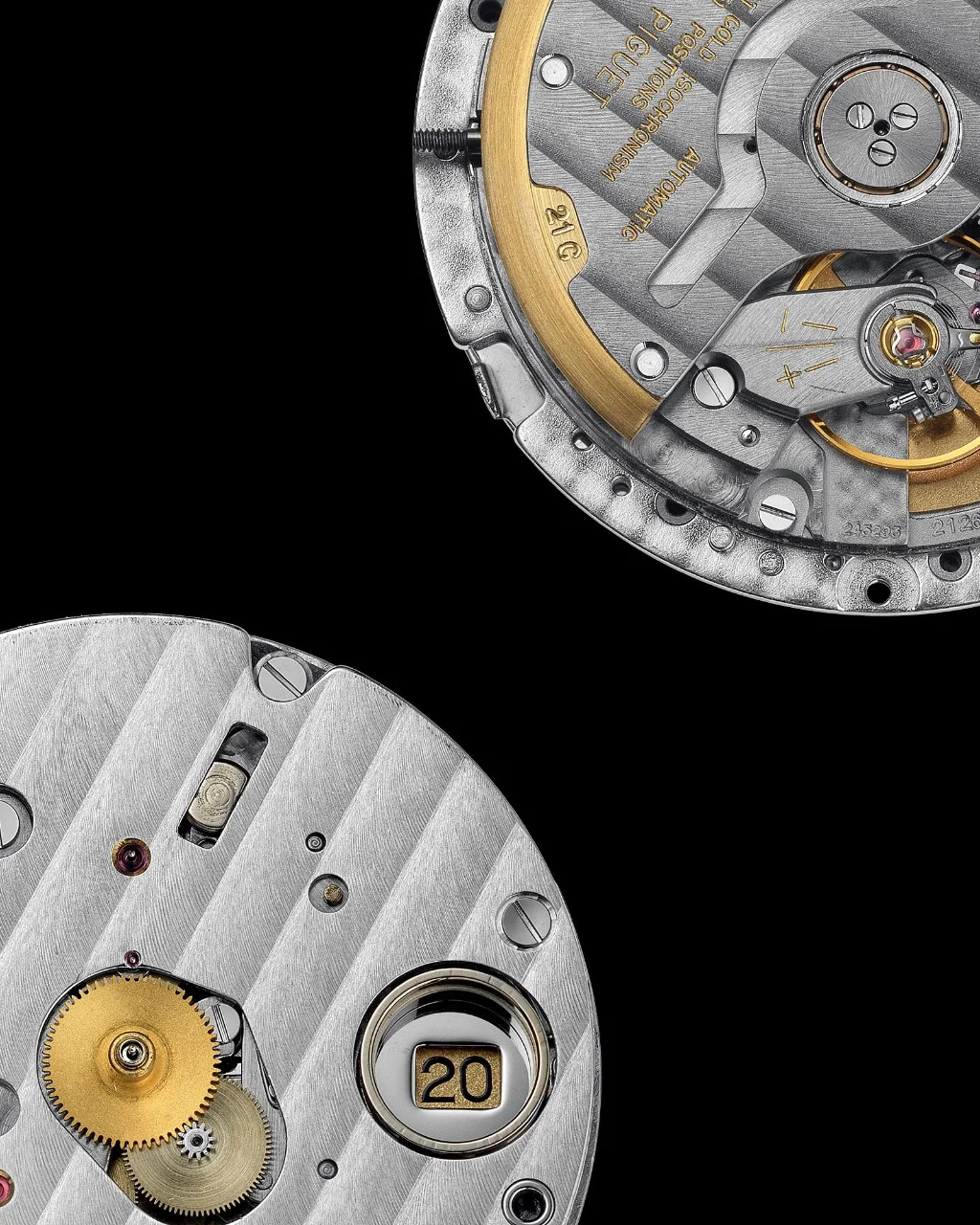
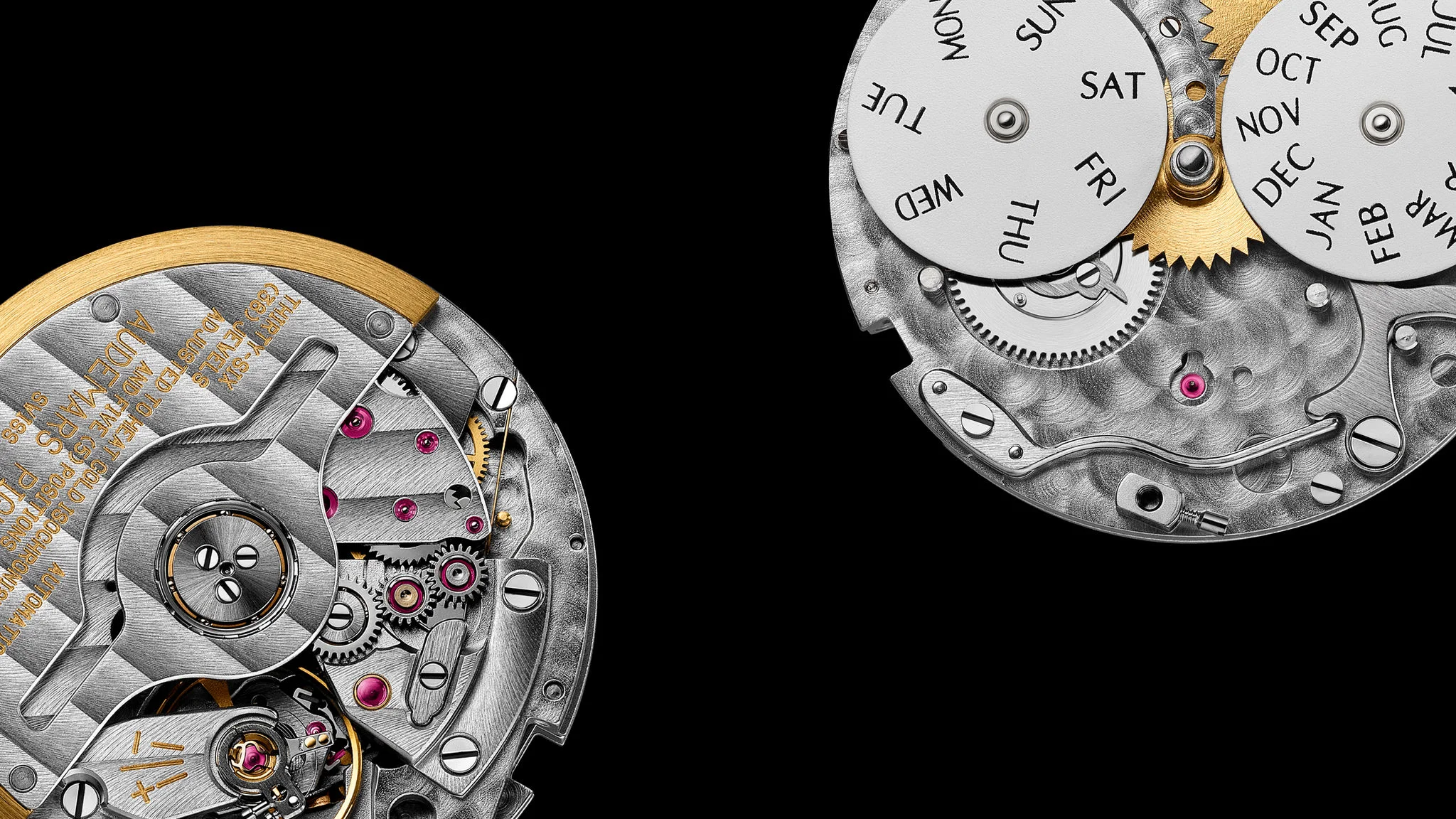
1996. Calibre 2127/2827 viewed from the dial side. Aperture-type day and month displays, date hand, small seconds. Selfwinding. 11½ lignes (26 mm), thickness 5.53 mm. 28,800 vph, Jaeger-LeCoultre movement "ébauche". Movement 462561 produced in 1999. Audemars Piguet Heritage.
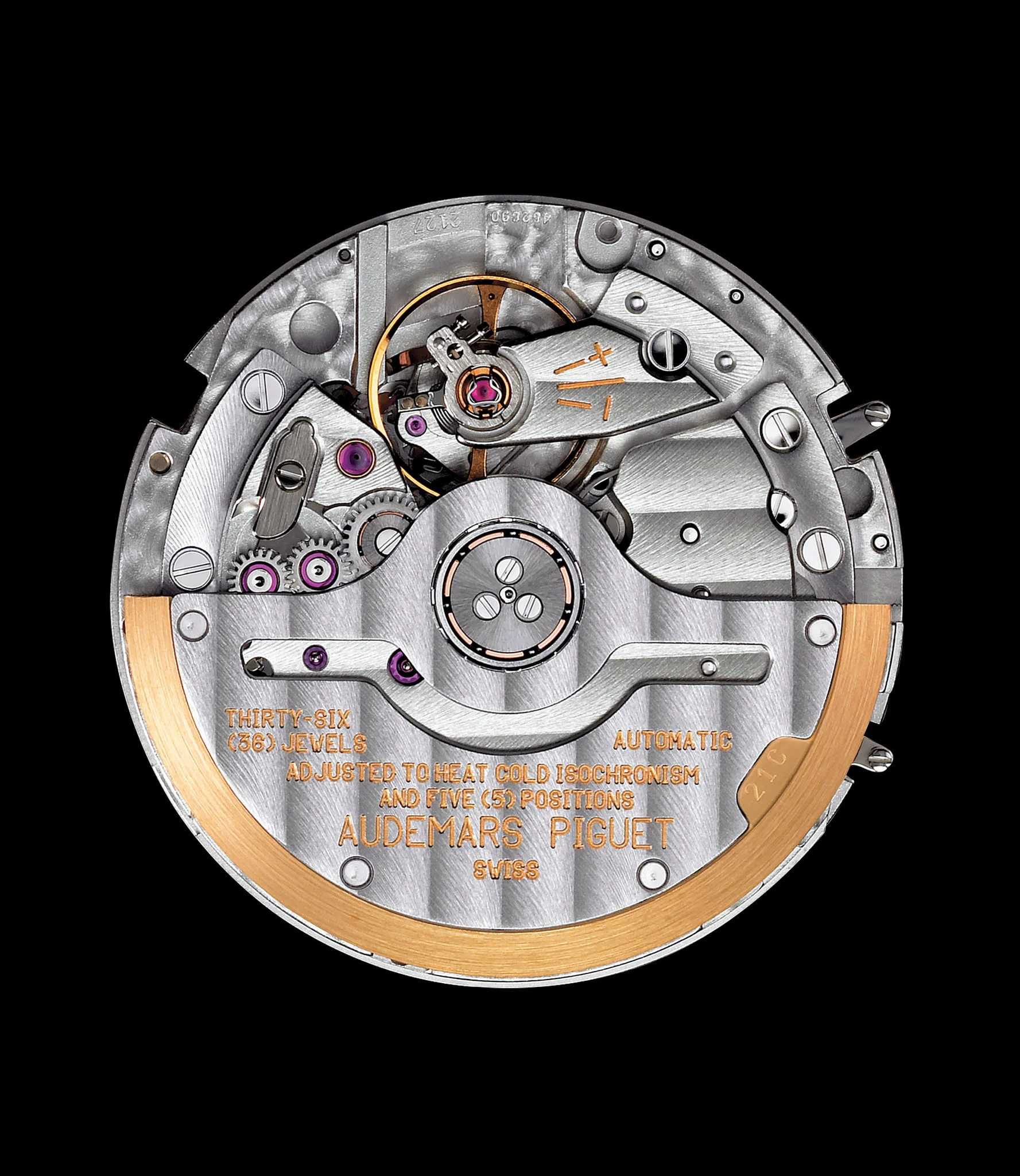
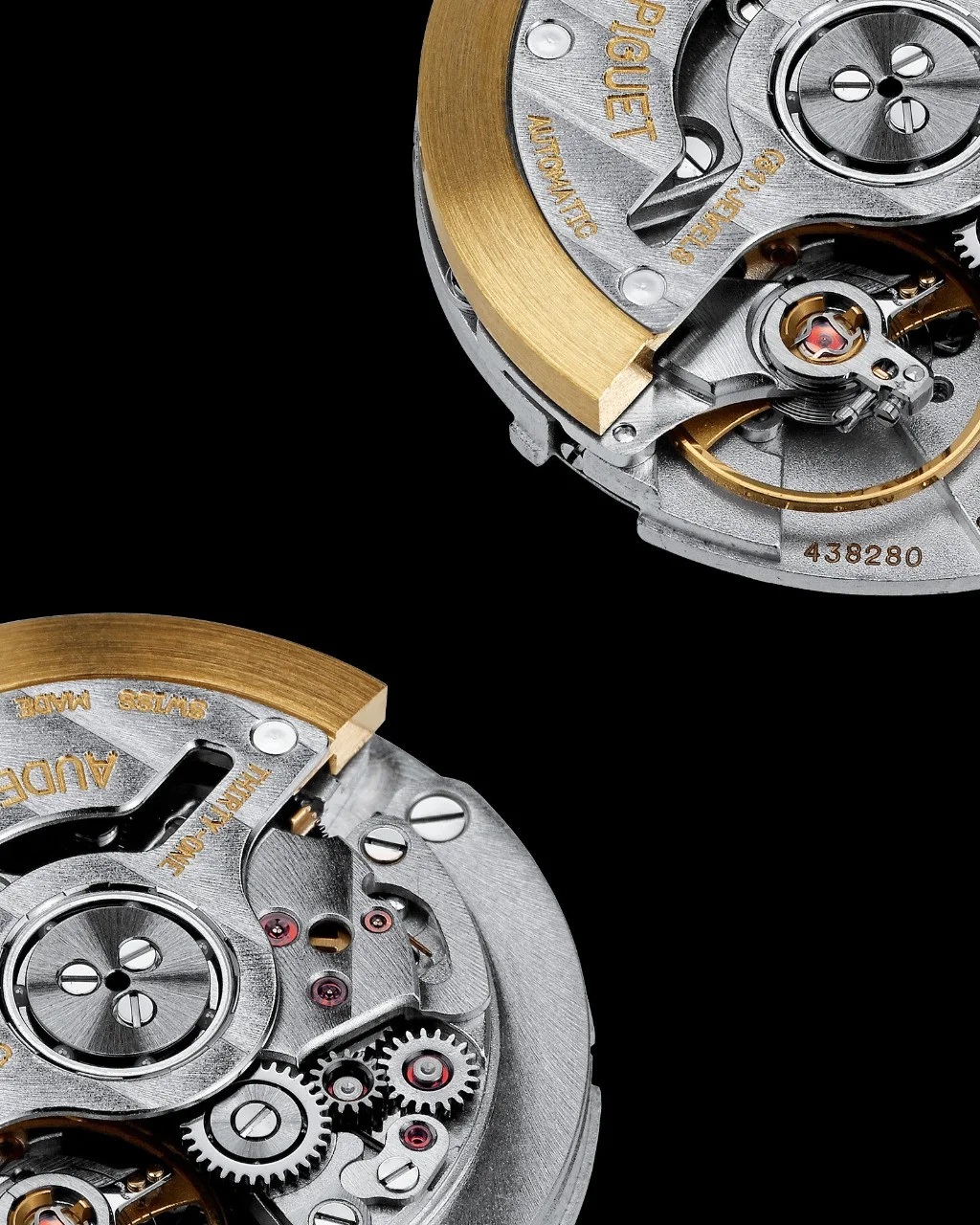
1996. Calibre 2127/2827 viewed from the bridge side. Aperture-type day and month displays, date hand, small seconds. Selfwinding. 11½ lignes (26 mm), thickness 5.53 mm. 28,800 vph, Jaeger-LeCoultre movement "ébauche". Movement 462561 produced in 1999. Audemars Piguet Heritage.

1996. Calibre 2127/2827 viewed from the dial side. Aperture-type day and month displays, date hand, small seconds. Selfwinding. 11½ lignes (26 mm), thickness 5.53 mm. 28,800 vph, Jaeger-LeCoultre movement "ébauche". Movement 462561 produced in 1999. Audemars Piguet Heritage.

Circa 1995. Technical data for Jaeger-LeCoultre Calibres 891-447 et 891-448 (2127/2827). Movement "ébauche" manufacturers often used different references than those of the brands that finished and fitted the movements. Audemars Piguet Archives.
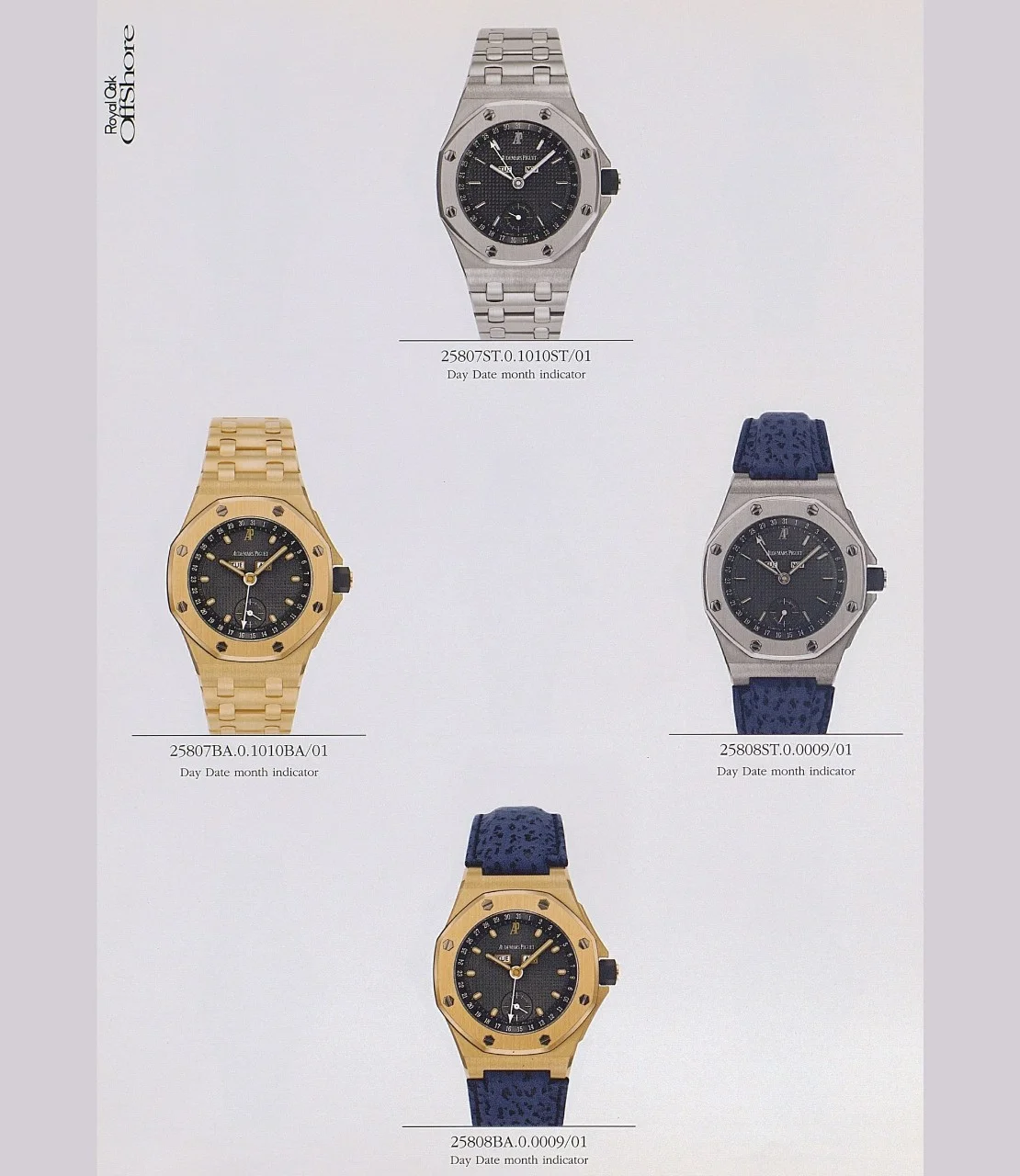
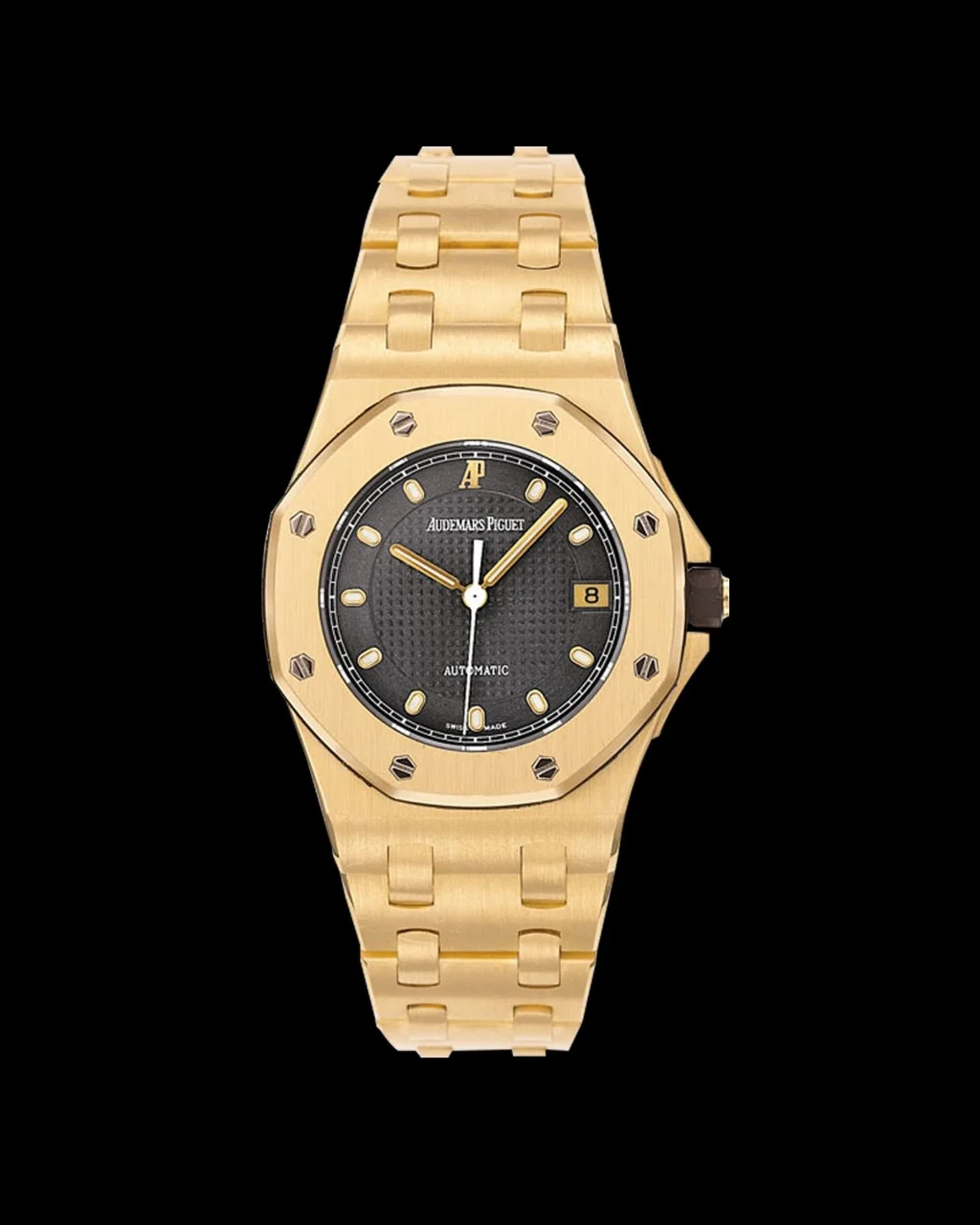
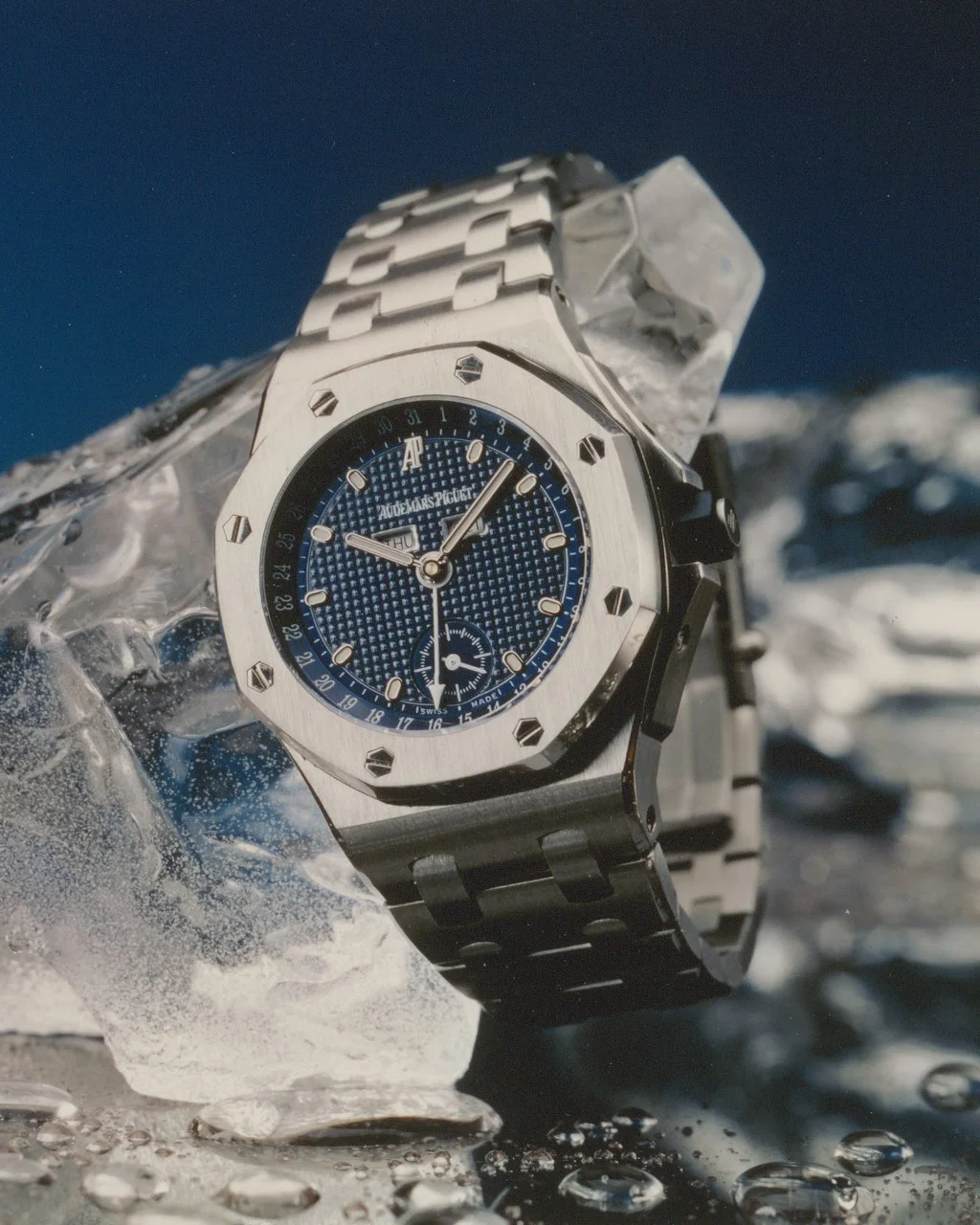
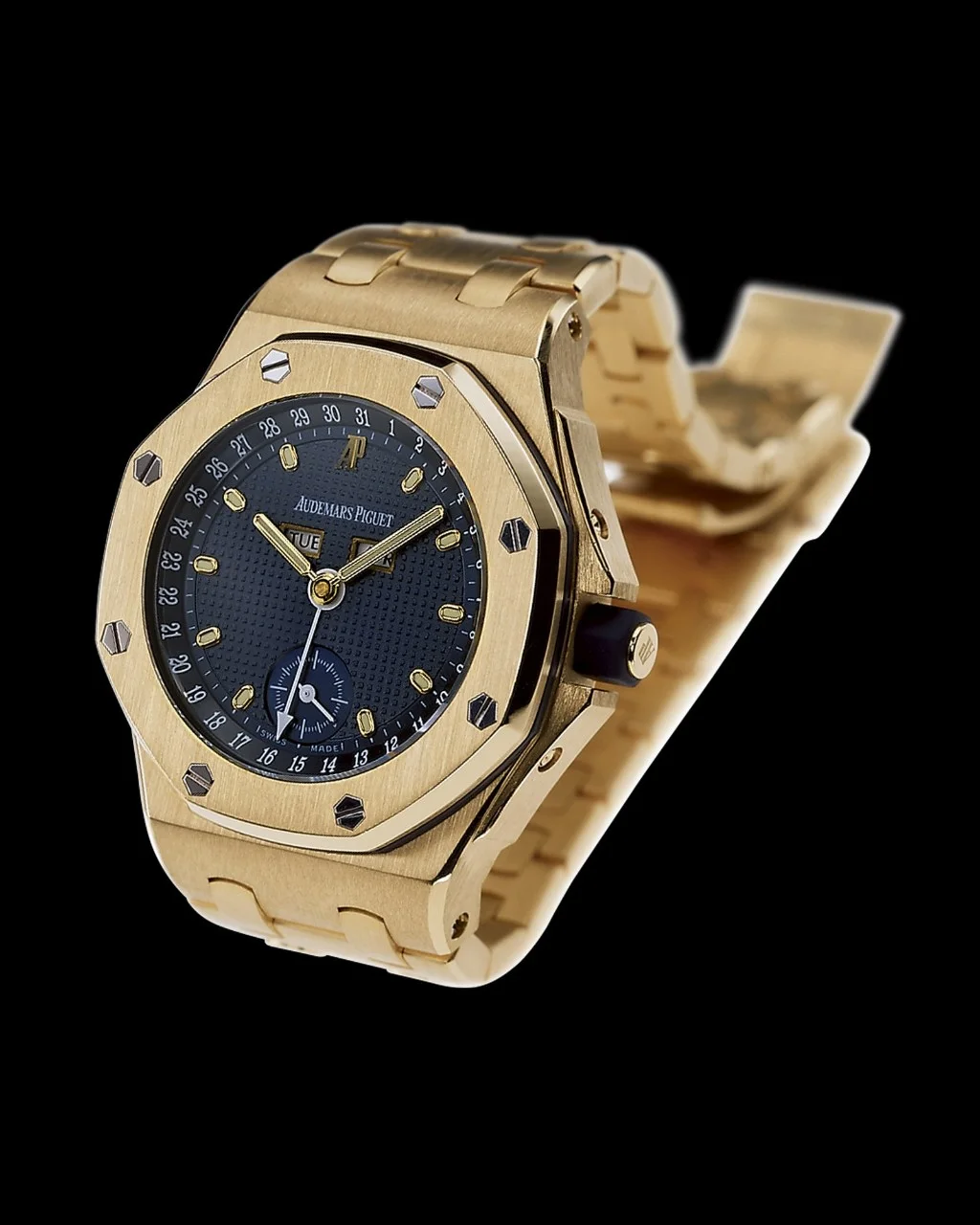
1996. Royal Oak Offshore Complete Calendar 25807 and 25808. The two complete calendar variants with metal bracelets or leather straps are presented on the same page of the 1996 Audemars Piguet Catalogue. Audemars Piguet Archives.
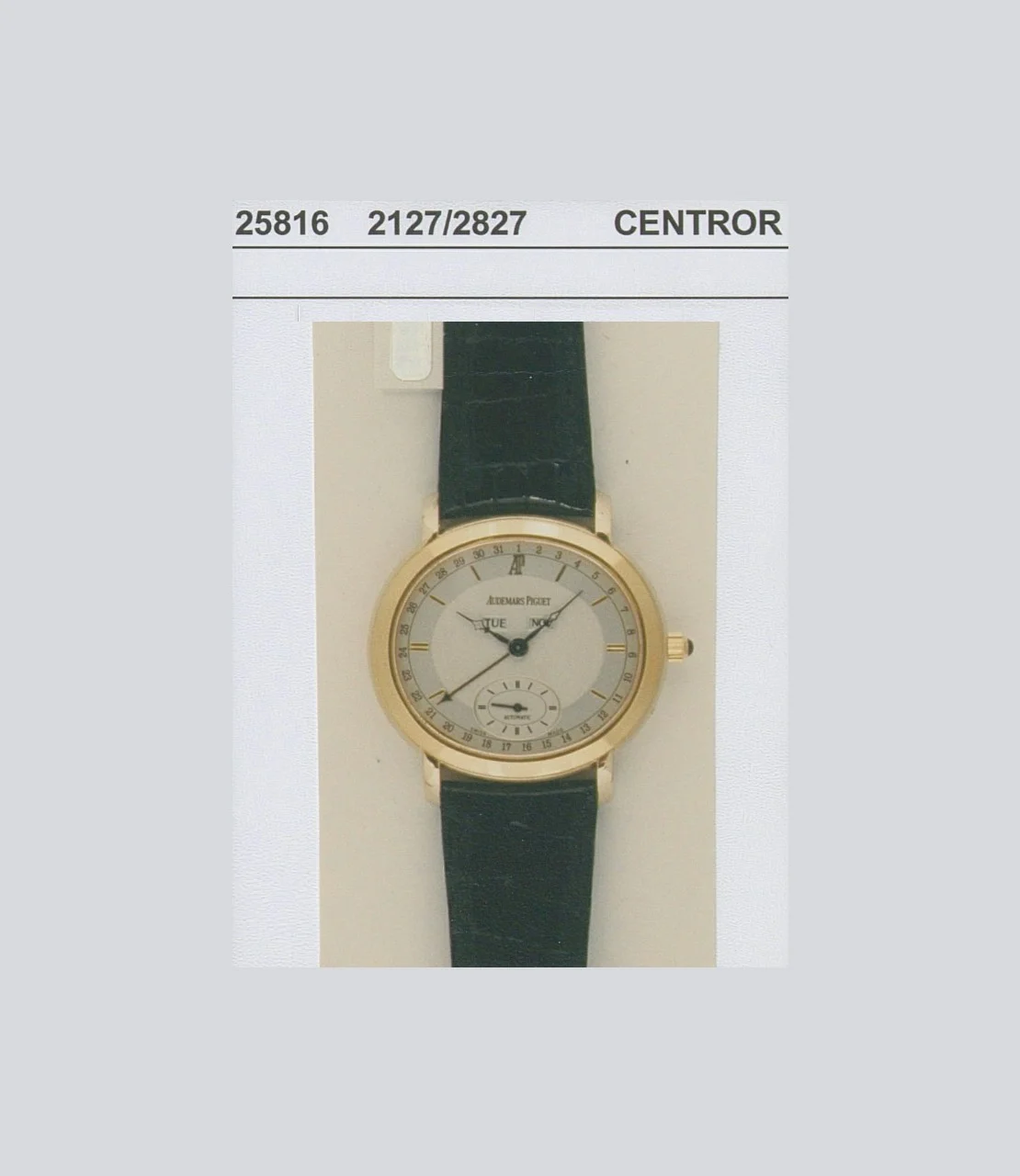
Circa 1996. Millenary 25816BA. Identification image. Audemars Piguet Archives.
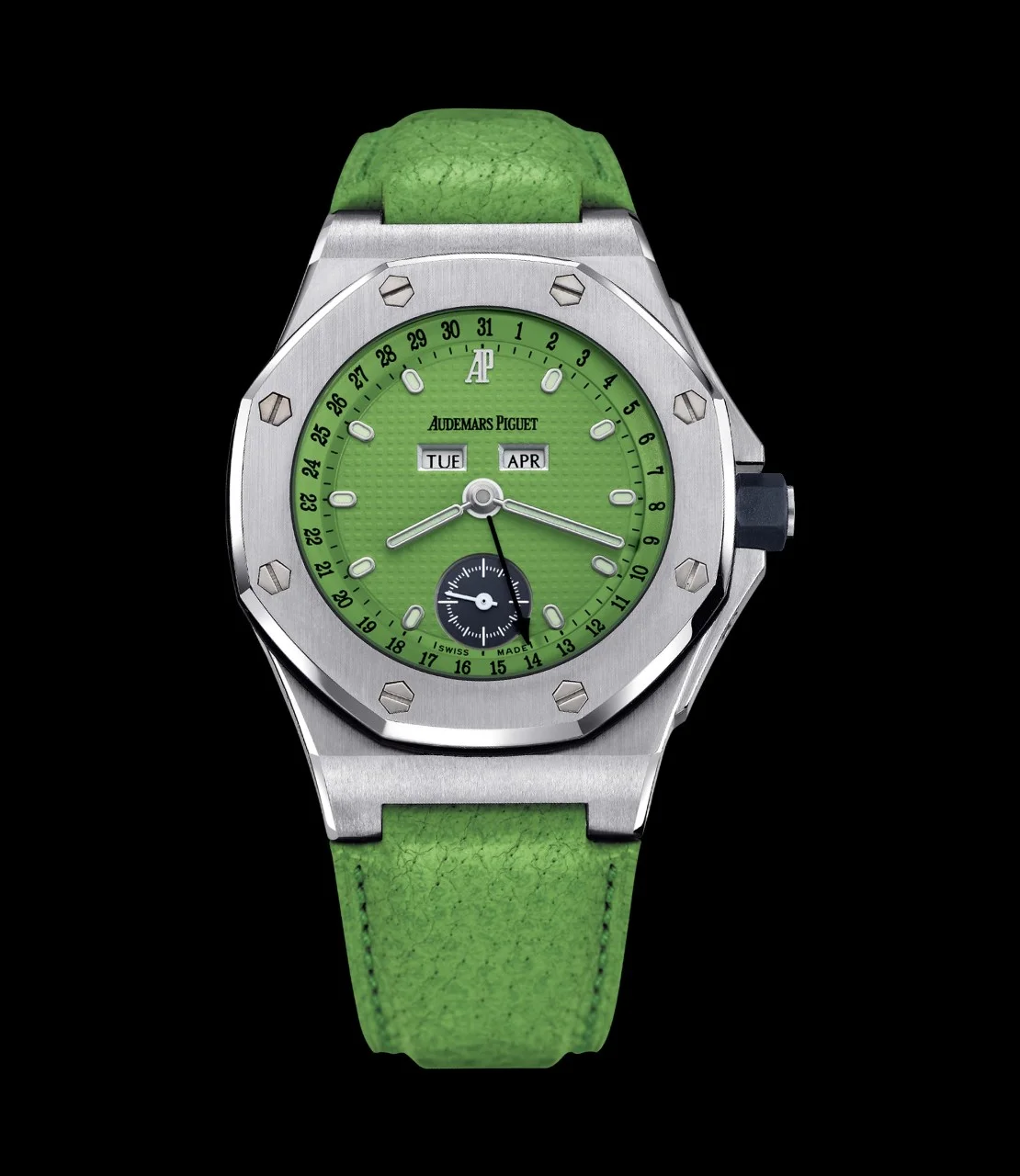
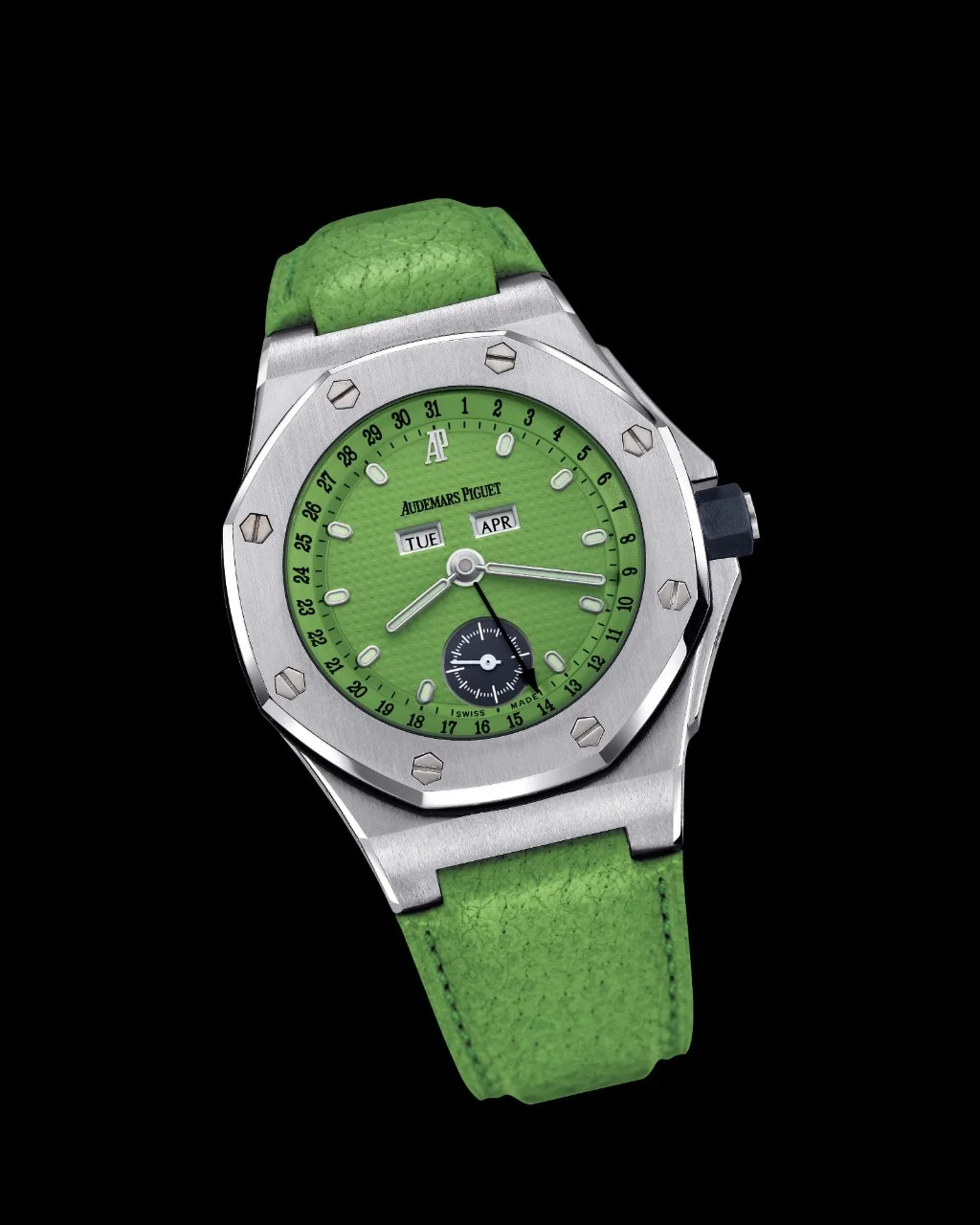
Circa 1997. Royal Oak Offshore Complete Calendar 25808ST, no. 94. Calibre 2127/2827. Complete calendar: aperture-type day and month displays, date hand. 38 m steel Case D75295. Green dial and strap. Prototype probably presented at the SIHH at the launch of the multicoloured collection in 1997. Audemars Piguet Heritage, inv. 613.
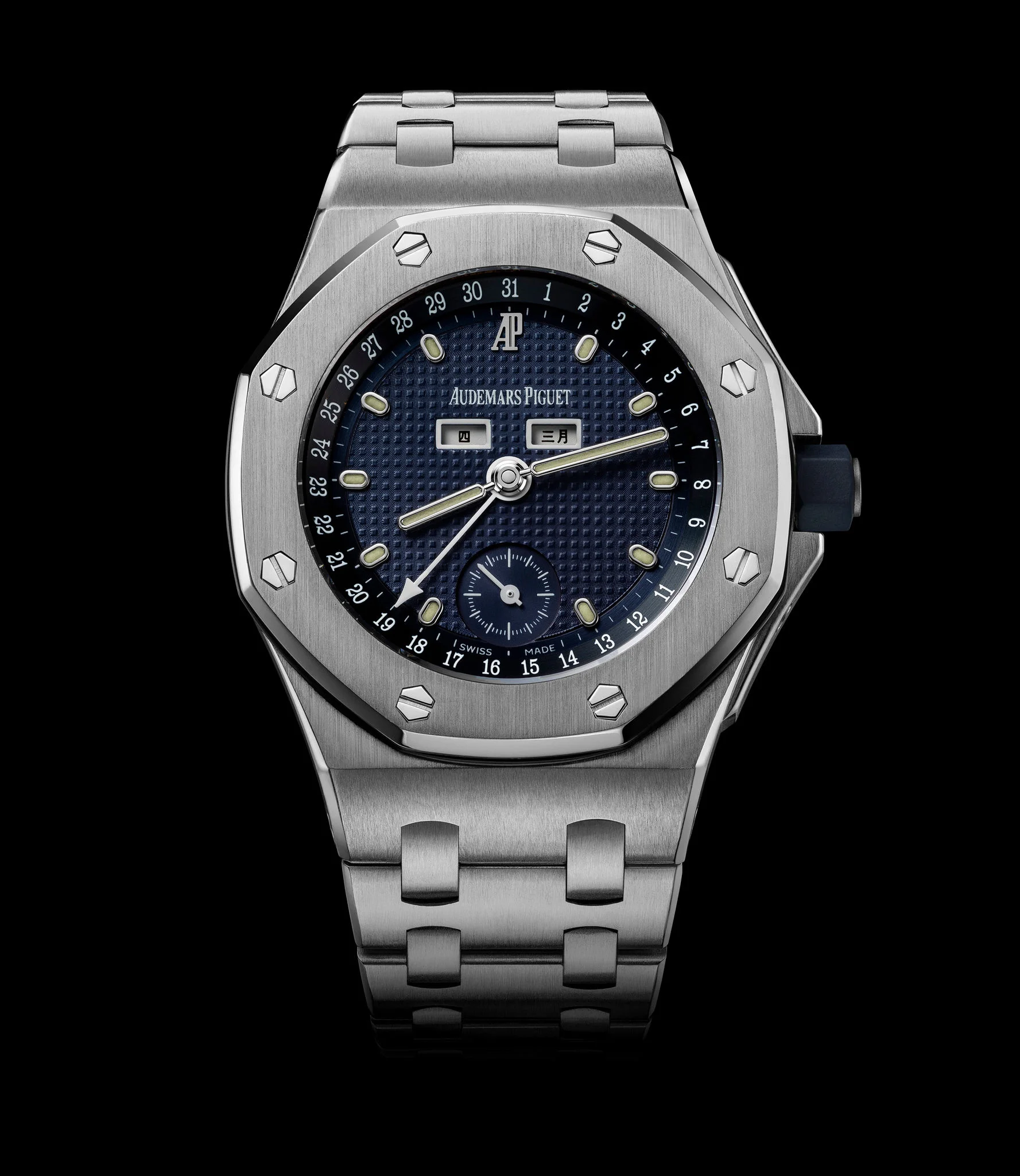
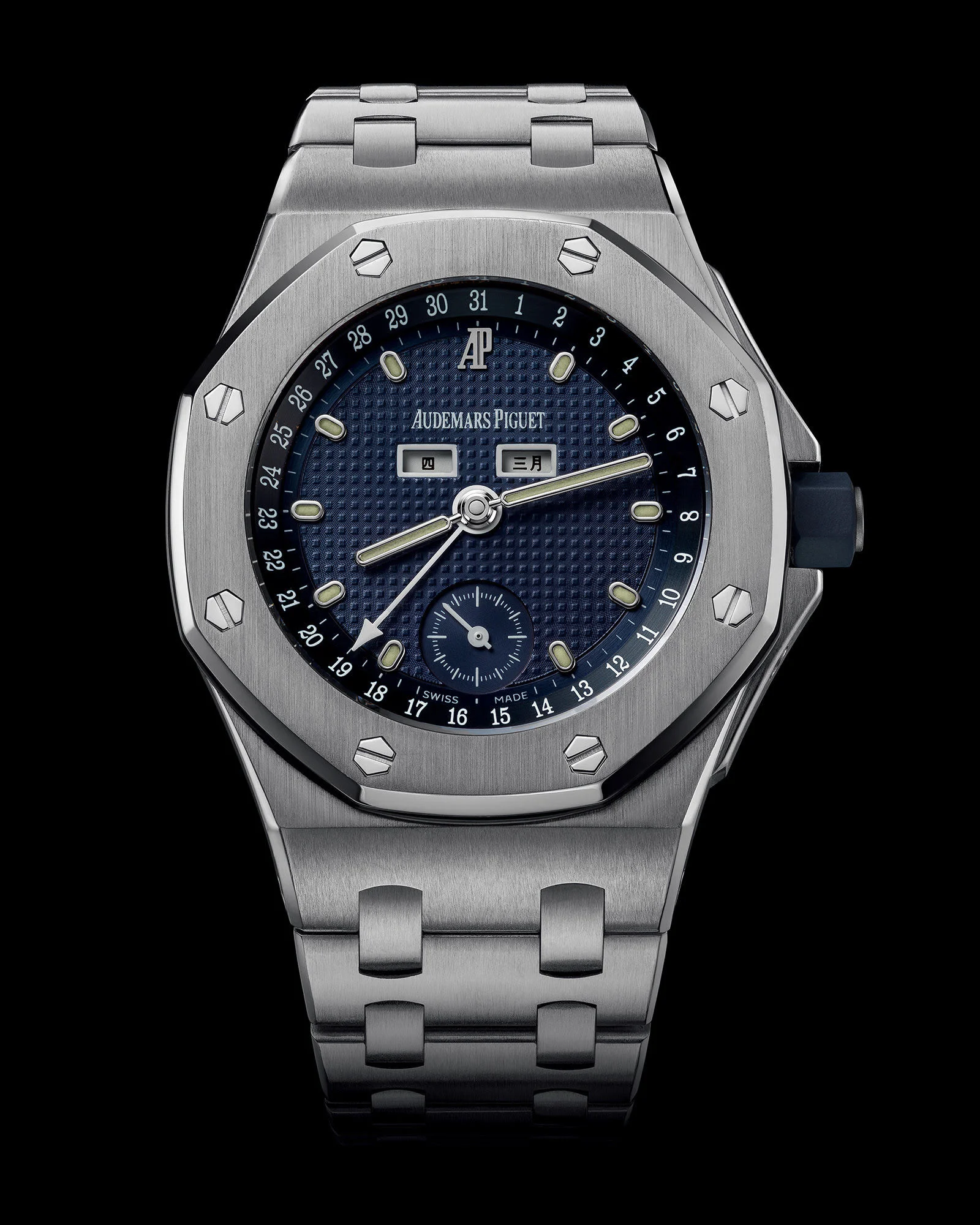
1997. Royal Oak Offshore Complete Calendar 25852ST no. 70/97. Calibre 2127/2827, Movement 440871. 38 mm steel Case D86029. 97-piece limited edition created to mark the handover of Hong Kong to China on July 1, 1997. Audemars Piguet Heritage, inv. 2166
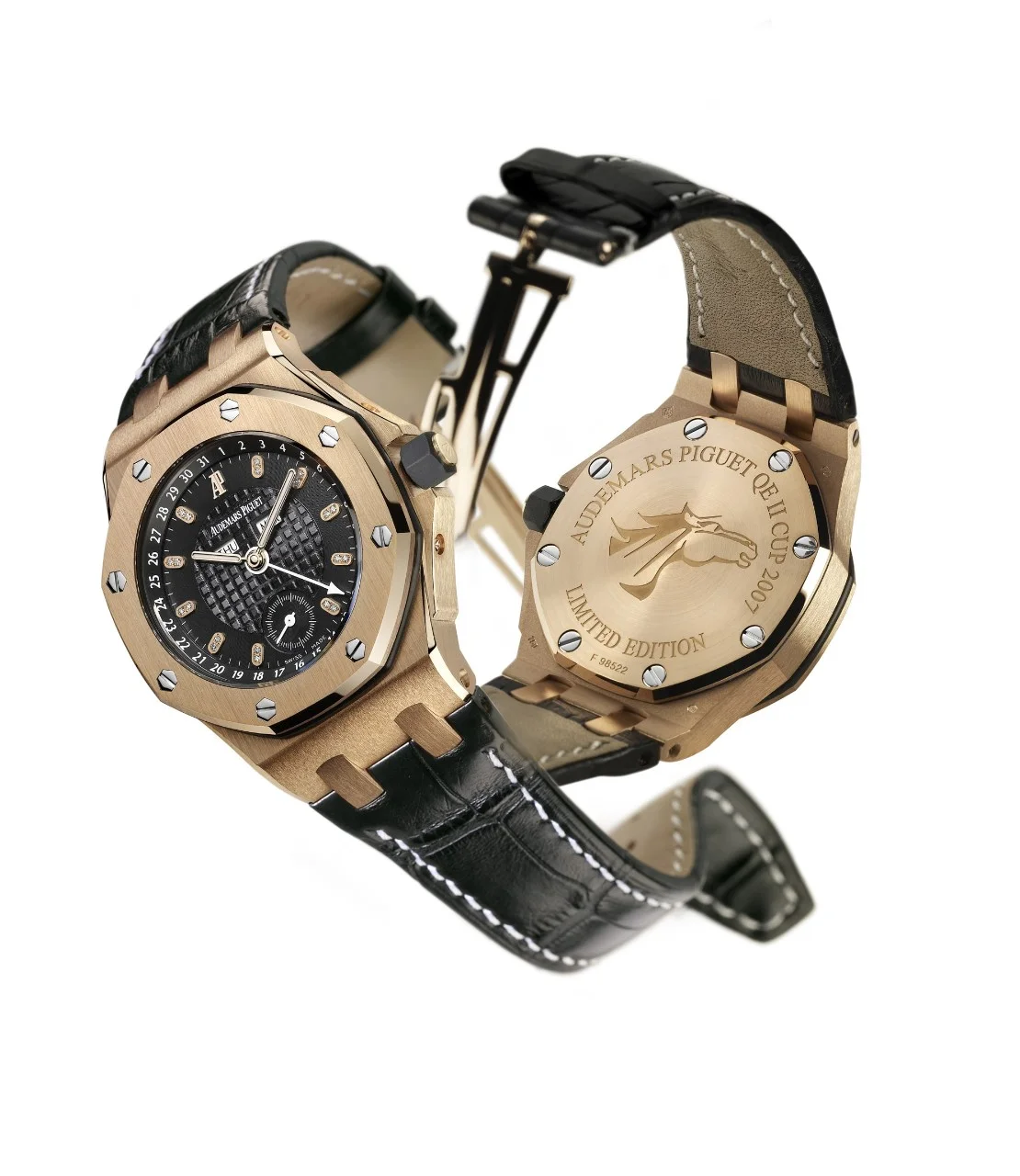
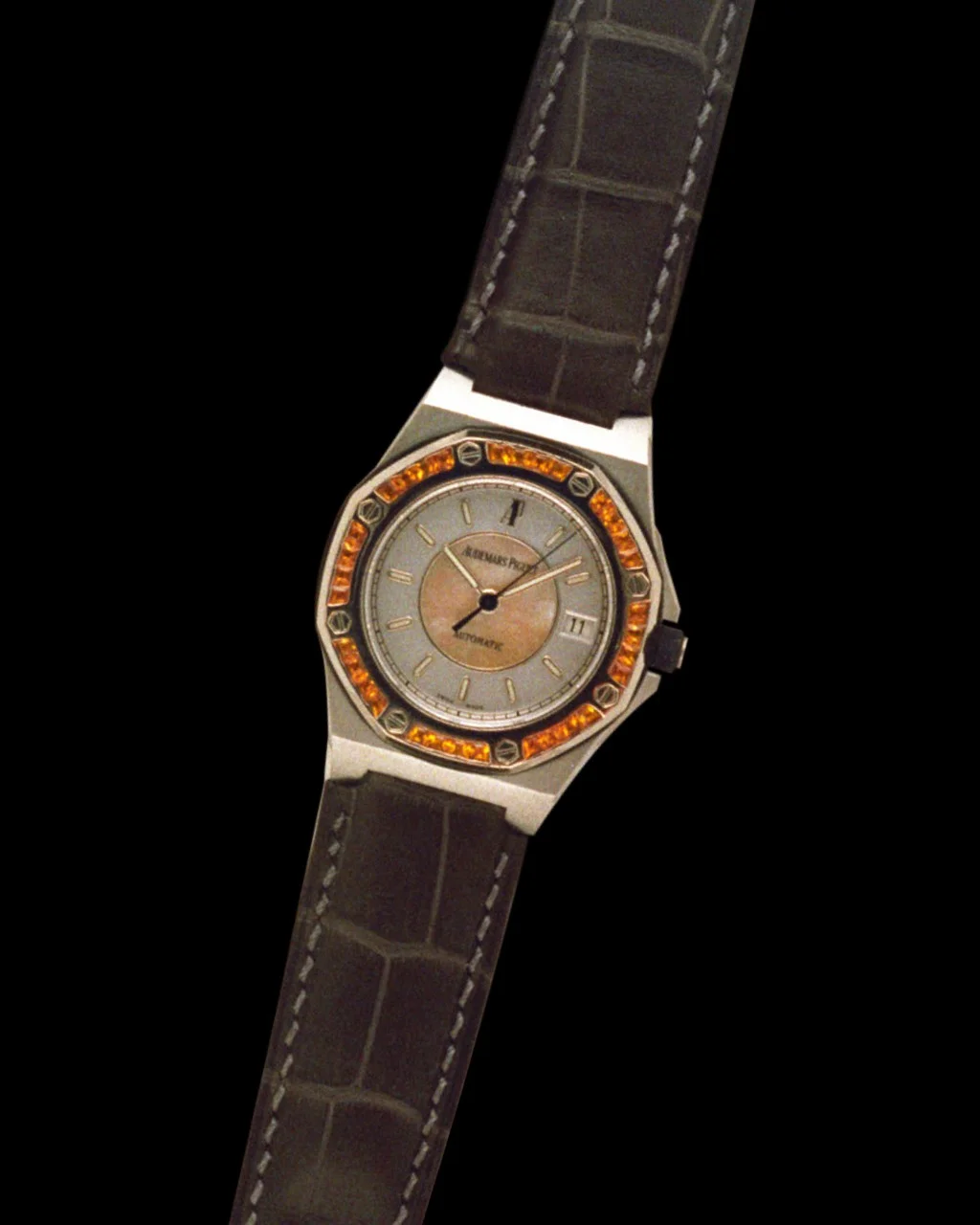
2007. Royal Oak Offshore 26131 QE II Cup. Calibre 2127/2827. 38 mm pink gold case. 50-piece limited edition created for the Queen Elisabeth II Cup horse race in Hong Kong. Audemars Piguet Archives.
Mechanism
Selfwinding
Functions
Hours, minutes, day, month
Diameter
26 mm (11½ lignes)
Thickness
5.53 mm
Frequency
28,800 vph (4 Hz)
Power Reserve
38 h
Jewels
36
Particularity
21-carat gold
Dates
1996-2003
Movement Blank
Jaeger-LeCoultre base movement "ébauche" and under-dial work
As its name suggests, Calibre 2127/2827 is composed of two complementary mechanisms. On the one hand, selfwinding base Calibre 2127 (derived from 2124) stores the watch's energy in a barrel and releases it by means of a gear train regulated by an escapement. On the other hand, the additional mechanism (or under-dial work) 2827 draws its energy and rhythm from the base calibre, while serving to drive the day, date and month indications. This calendar information is referred to as the "triple calendar" or ”complete calendar".
Calibre 2127/2827 belongs to the large family of 11½-ligne (26 mm) calibres, Reference JLC 889, and which were used by Audemars Piguet between 1980 and the 2010s under the names 2123, 2124, 2125 and 2126. Calibre 2127/2827 is one of the shortest-lived in this family. Audemars Piguet purchased 2,600 movement "ébauches" from Jaeger-LeCoultre between 1995 and 1998, of which 2467 were completed and assembled in Le Brassus, equipping watches sold between 1996 and 2007. The other movement "ébauches" were kept for after-sales service.
With the exception of the Millenary Complete Calendar 25816 (approx. 409 were sold between 1996 and 2001), Calibre 2127/2827 was used exclusively on Royal Oak Offshore 38 mm watches. It made its debut in 1996 in Models 25808 (680 units) and 25807 (1,116 units). The other variants were limited editions dedicated to Asia. The first marked the handover of Hong Kong to China in 1997, Model 25852, with the day and month in Chinese, and thus the 19 pink gold watches combined with the 97 steel units form the number 1997. The second edition celebrated the Nagano Olympic Games in Japan in 1998, Model 25887 in a 98-piece edition. Almost a decade later, this calibre was used in two limited editions created for the Queen Elizabeth II Cup horse race in Hong Kong: 26131 (50 units) and 26130 (1 unit).
2,467 units were delivered between 1996 and 2007, of which 375 (1996), 859 (1997), 683 (1998), 238 (1999), 87 (2000), 90 (2001), 50 (2002), 22 (2003), 11 (2004), 1 (2006) and 51 (2007).
As its name suggests, Calibre 2127/2827 is composed of two complementary mechanisms. On the one hand, selfwinding base Calibre 2127 (derived from 2124) stores the watch's energy in a barrel and releases it by means of a gear train regulated by an escapement. On the other hand, the additional mechanism (or under-dial work) 2827 draws its energy and rhythm from the base calibre, while serving to drive the day, date and month indications. This calendar information is referred to as the "triple calendar" or ”complete calendar".
Calibre 2127/2827 belongs to the large family of 11½-ligne (26 mm) calibres, Reference JLC 889, and which were used by Audemars Piguet between 1980 and the 2010s under the names 2123, 2124, 2125 and 2126. Calibre 2127/2827 is one of the shortest-lived in this family. Audemars Piguet purchased 2,600 movement "ébauches" from Jaeger-LeCoultre between 1995 and 1998, of which 2467 were completed and assembled in Le Brassus, equipping watches sold between 1996 and 2007. The other movement "ébauches" were kept for after-sales service.
With the exception of the Millenary Complete Calendar 25816 (approx. 409 were sold between 1996 and 2001), Calibre 2127/2827 was used exclusively on Royal Oak Offshore 38 mm watches. It made its debut in 1996 in Models 25808 (680 units) and 25807 (1,116 units). The other variants were limited editions dedicated to Asia. The first marked the handover of Hong Kong to China in 1997, Model 25852, with the day and month in Chinese, and thus the 19 pink gold watches combined with the 97 steel units form the number 1997. The second edition celebrated the Nagano Olympic Games in Japan in 1998, Model 25887 in a 98-piece edition. Almost a decade later, this calibre was used in two limited editions created for the Queen Elizabeth II Cup horse race in Hong Kong: 26131 (50 units) and 26130 (1 unit).
2,467 units were delivered between 1996 and 2007, of which 375 (1996), 859 (1997), 683 (1998), 238 (1999), 87 (2000), 90 (2001), 50 (2002), 22 (2003), 11 (2004), 1 (2006) and 51 (2007).