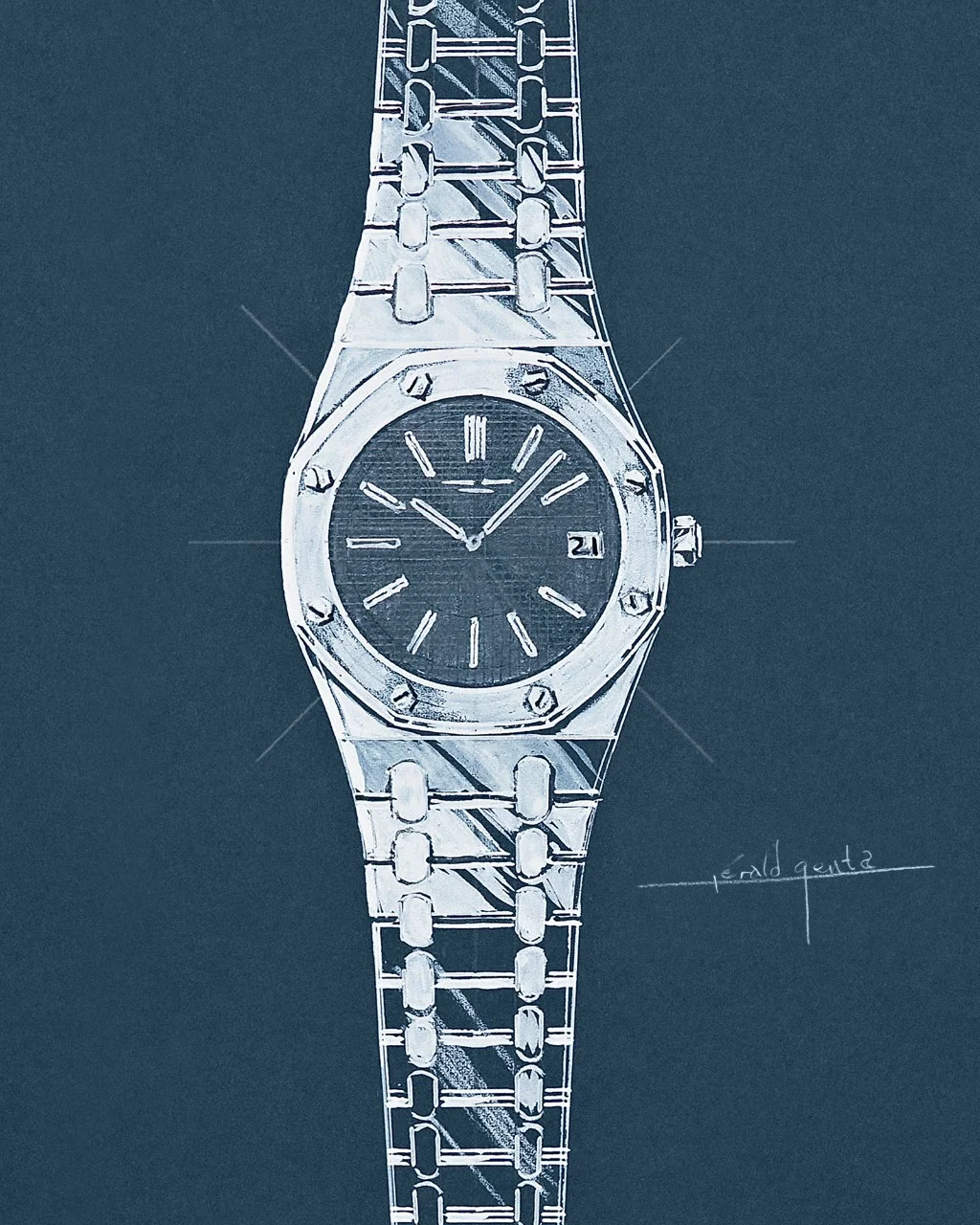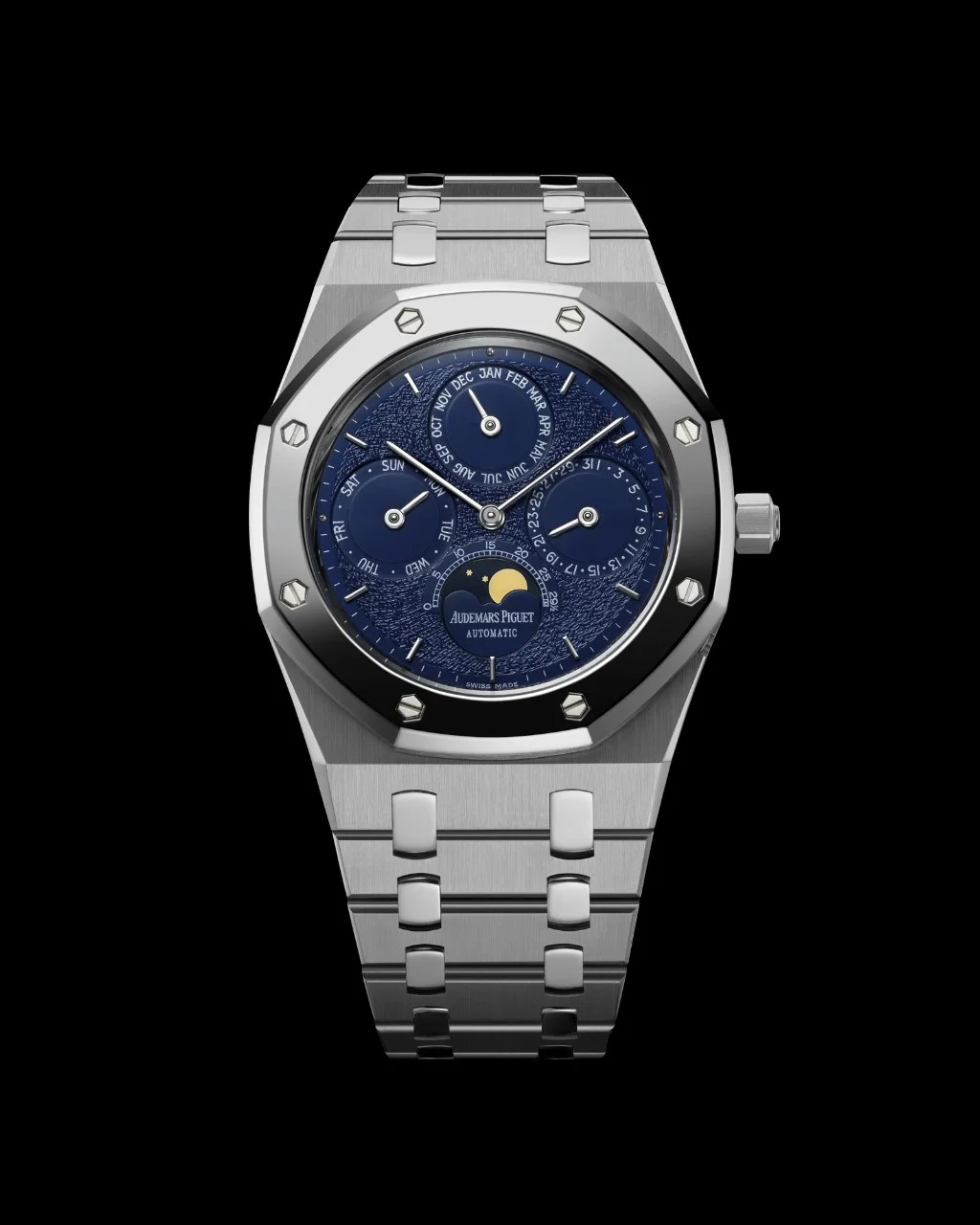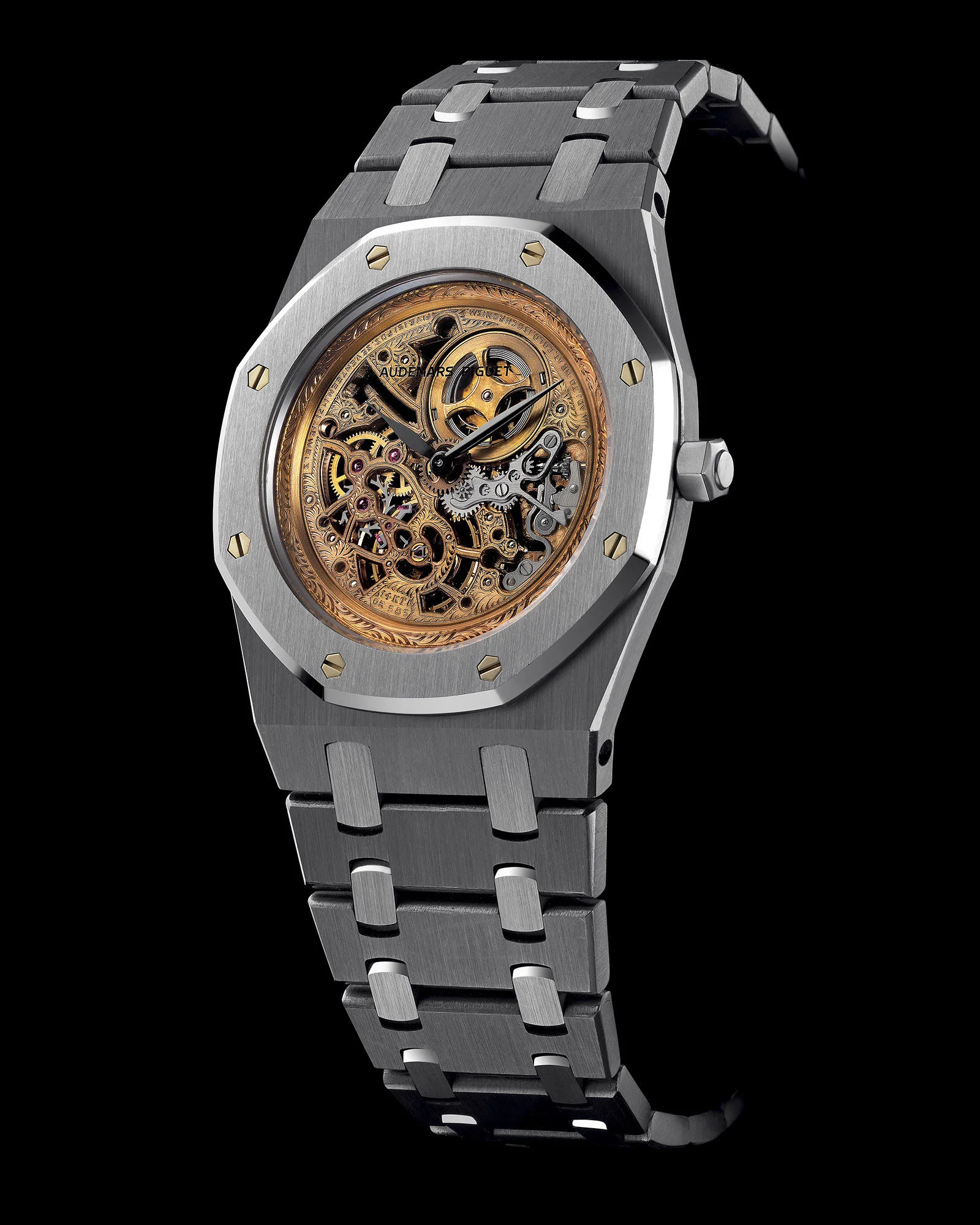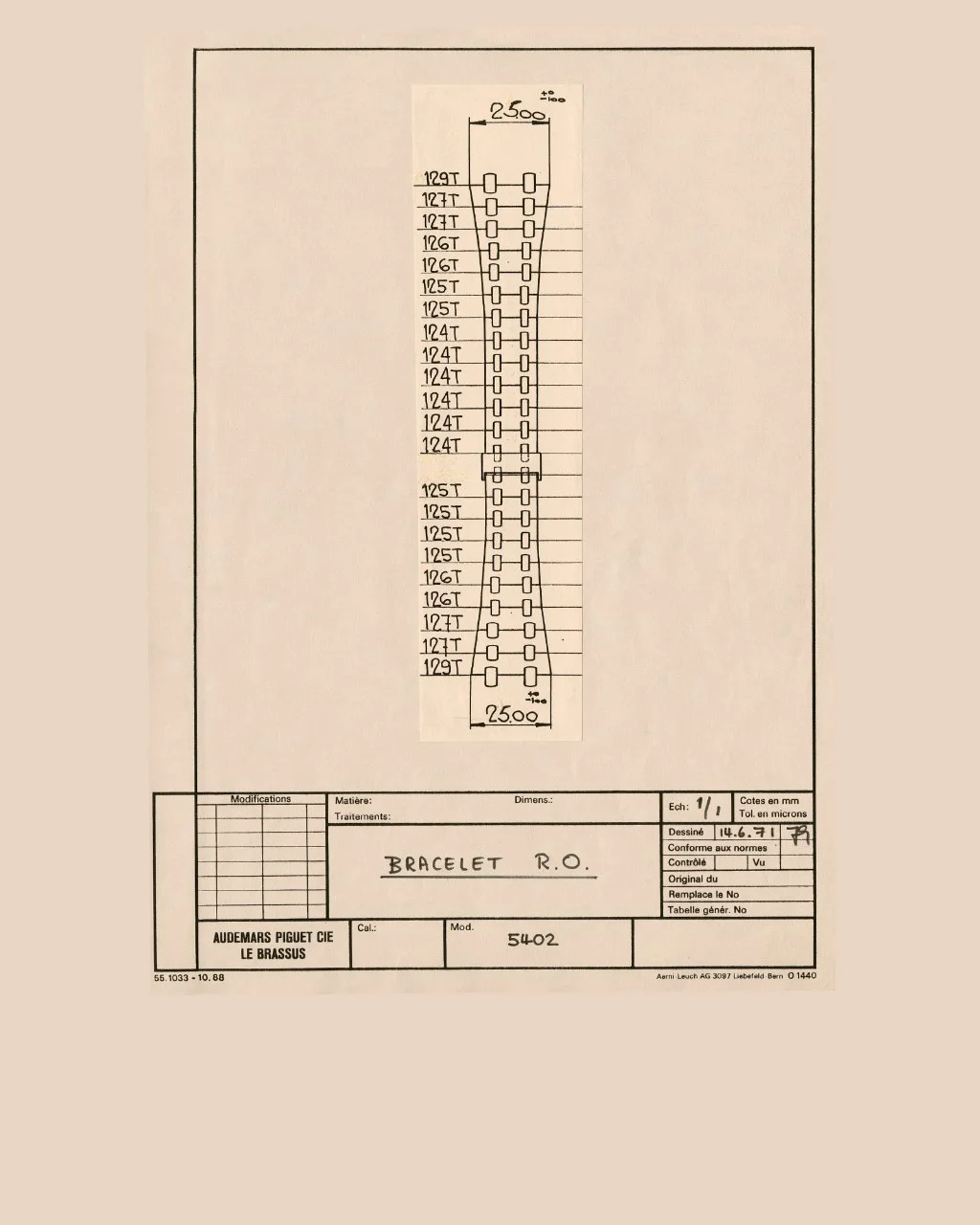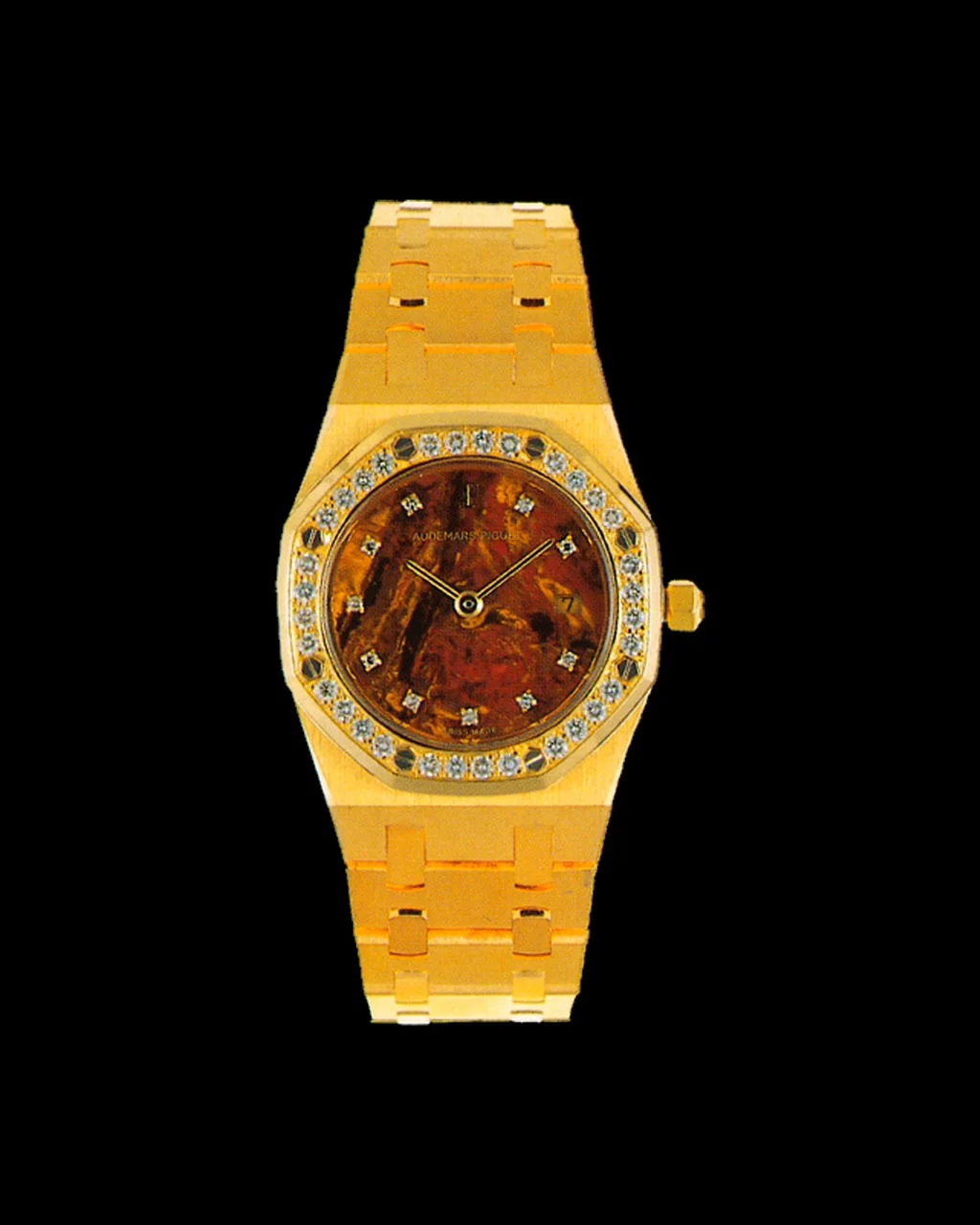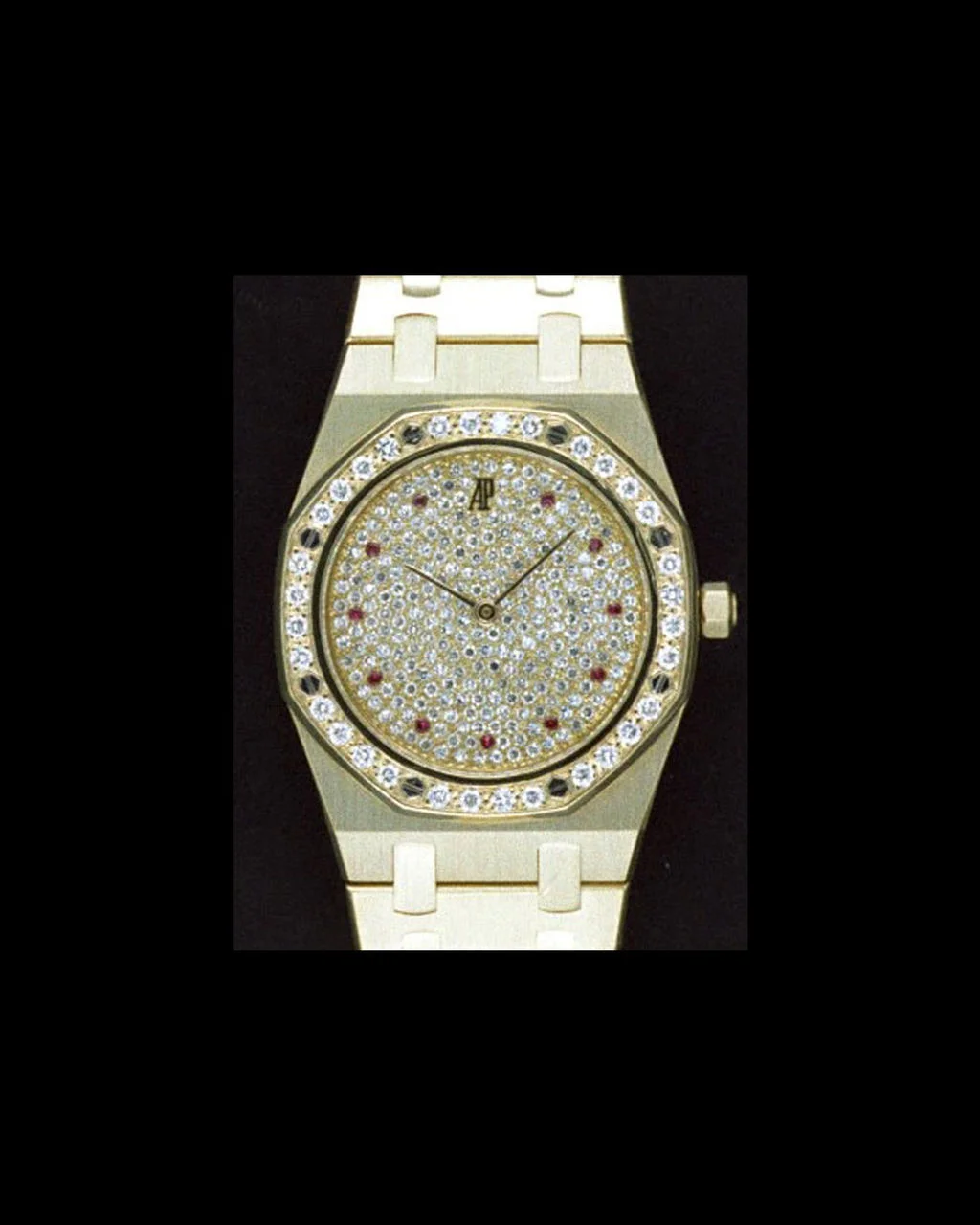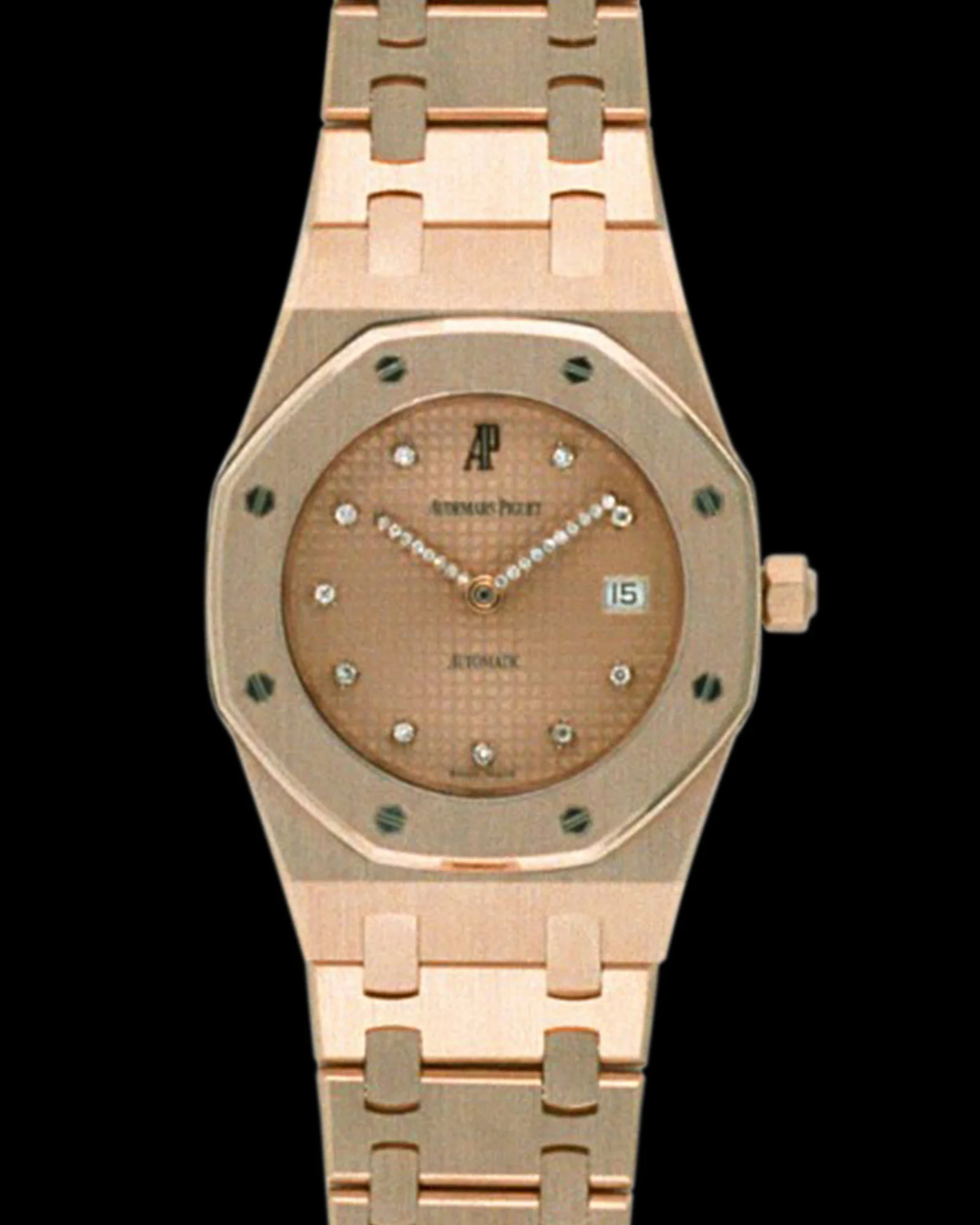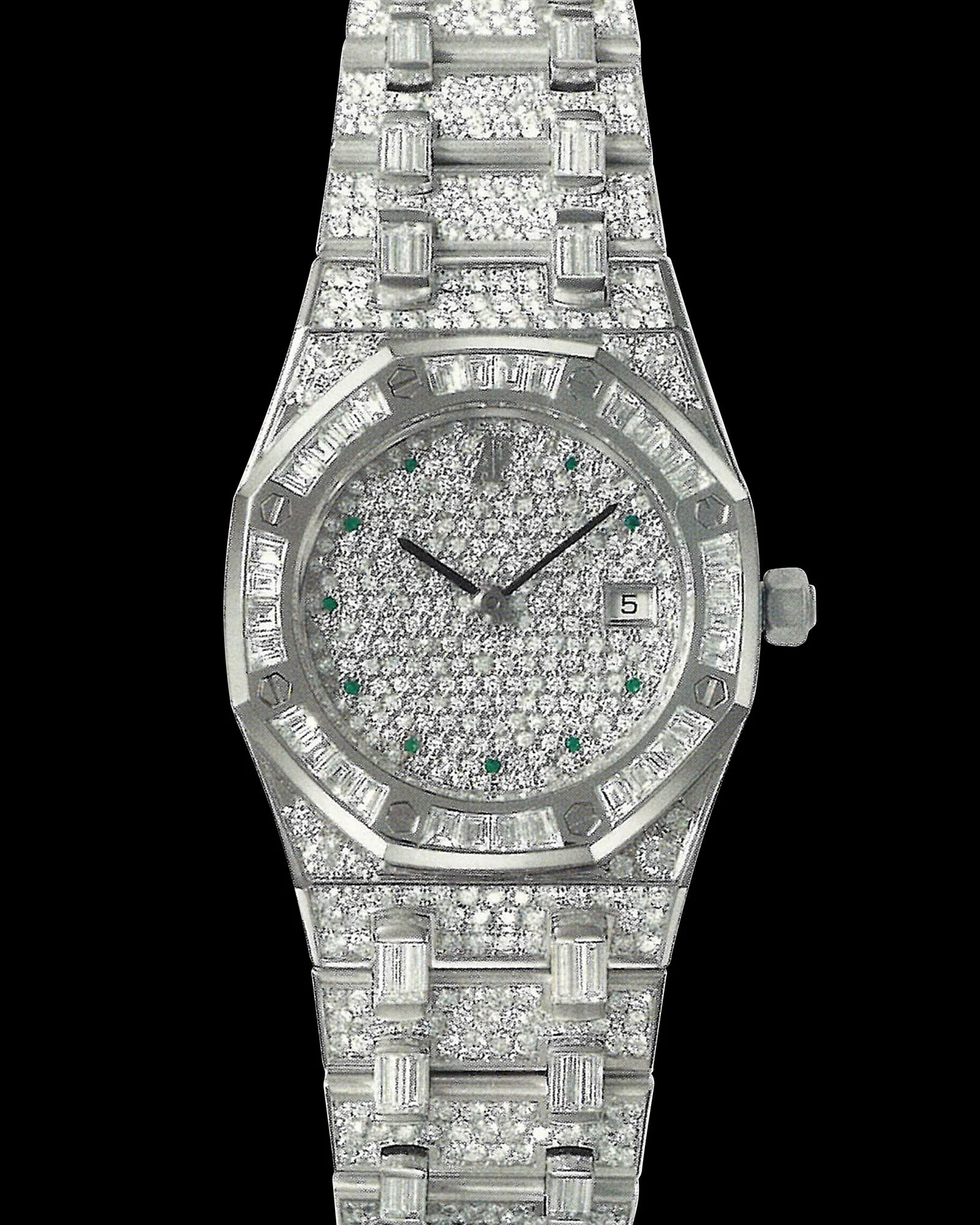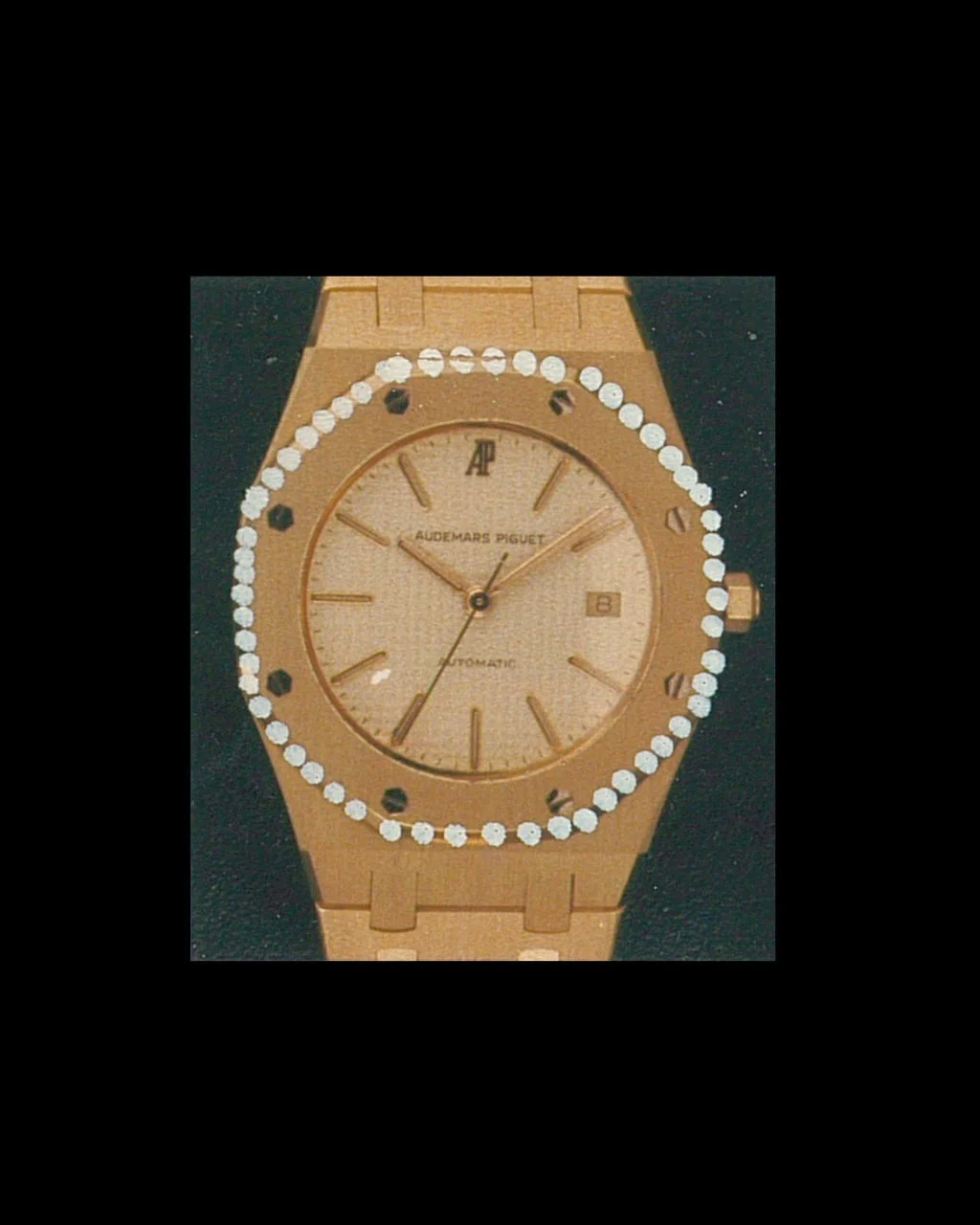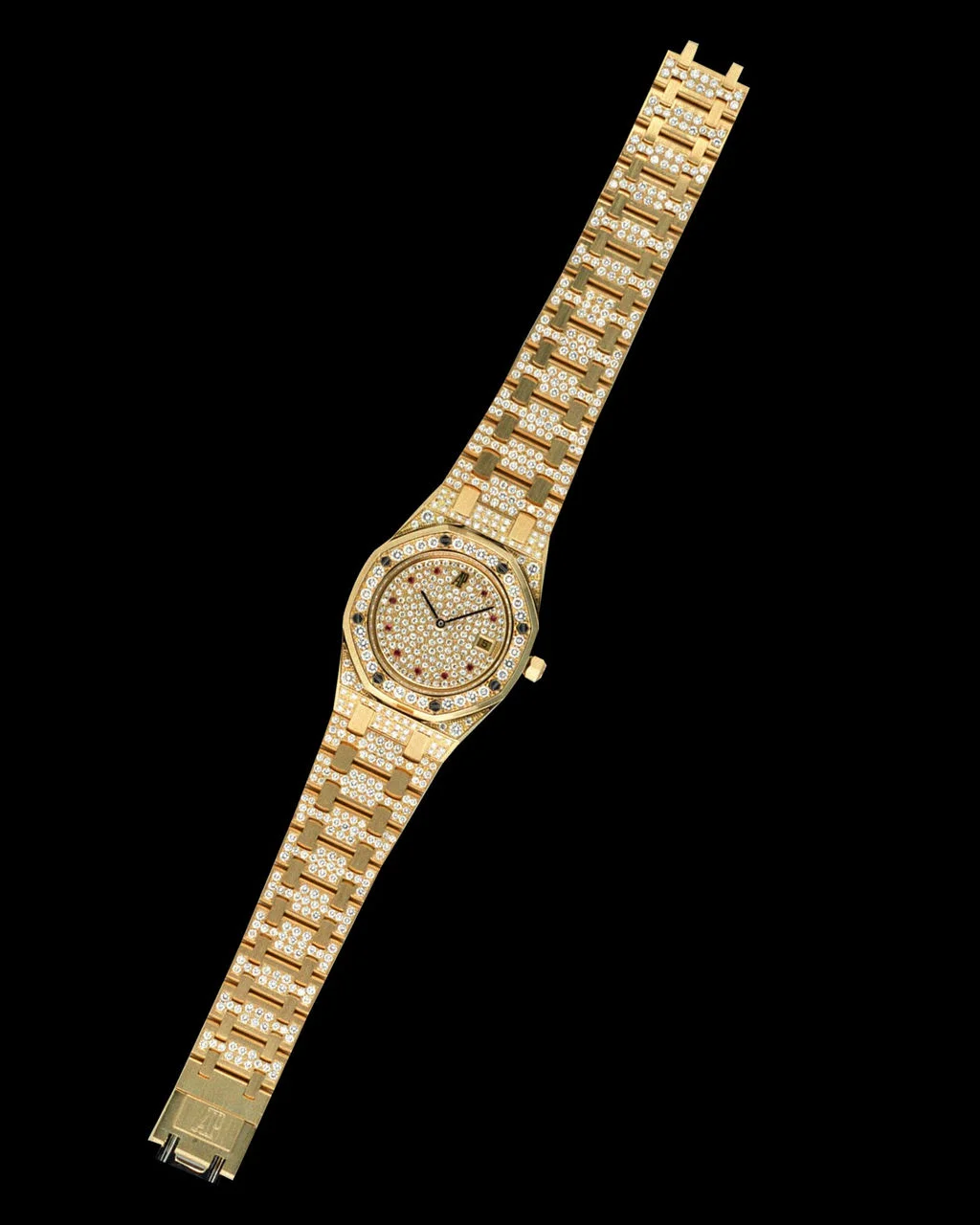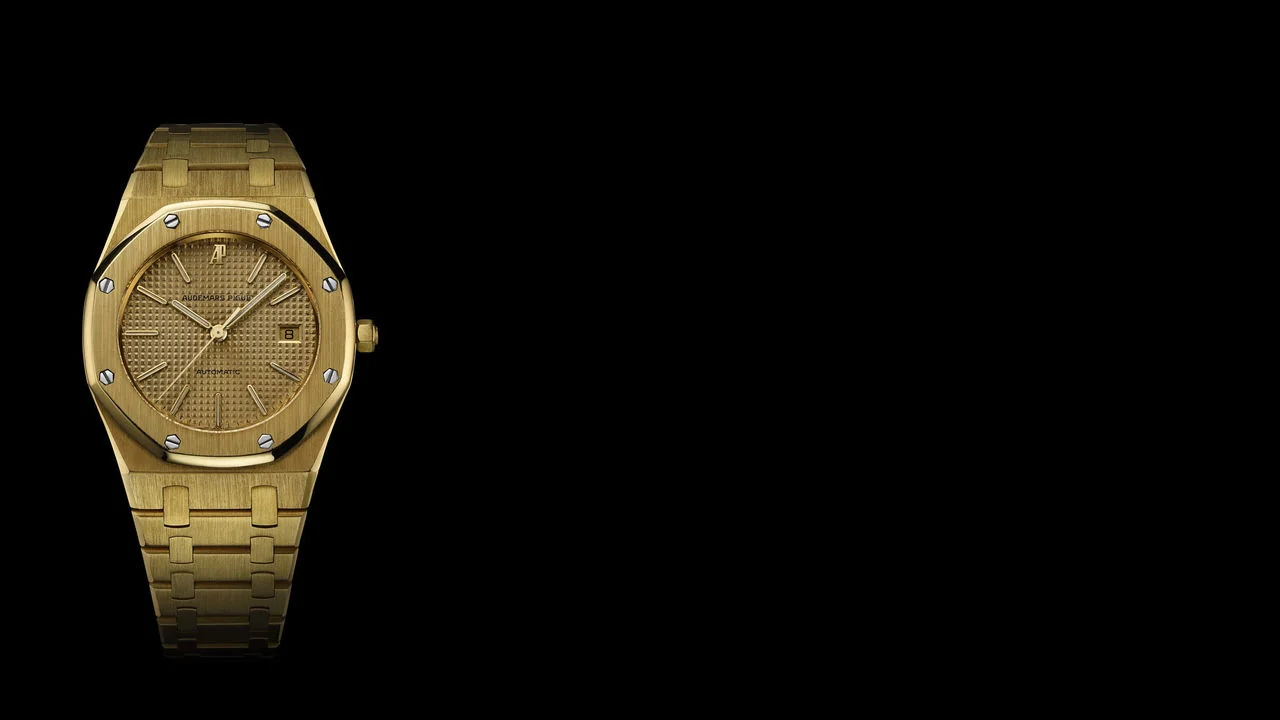
14486, Royal Oak
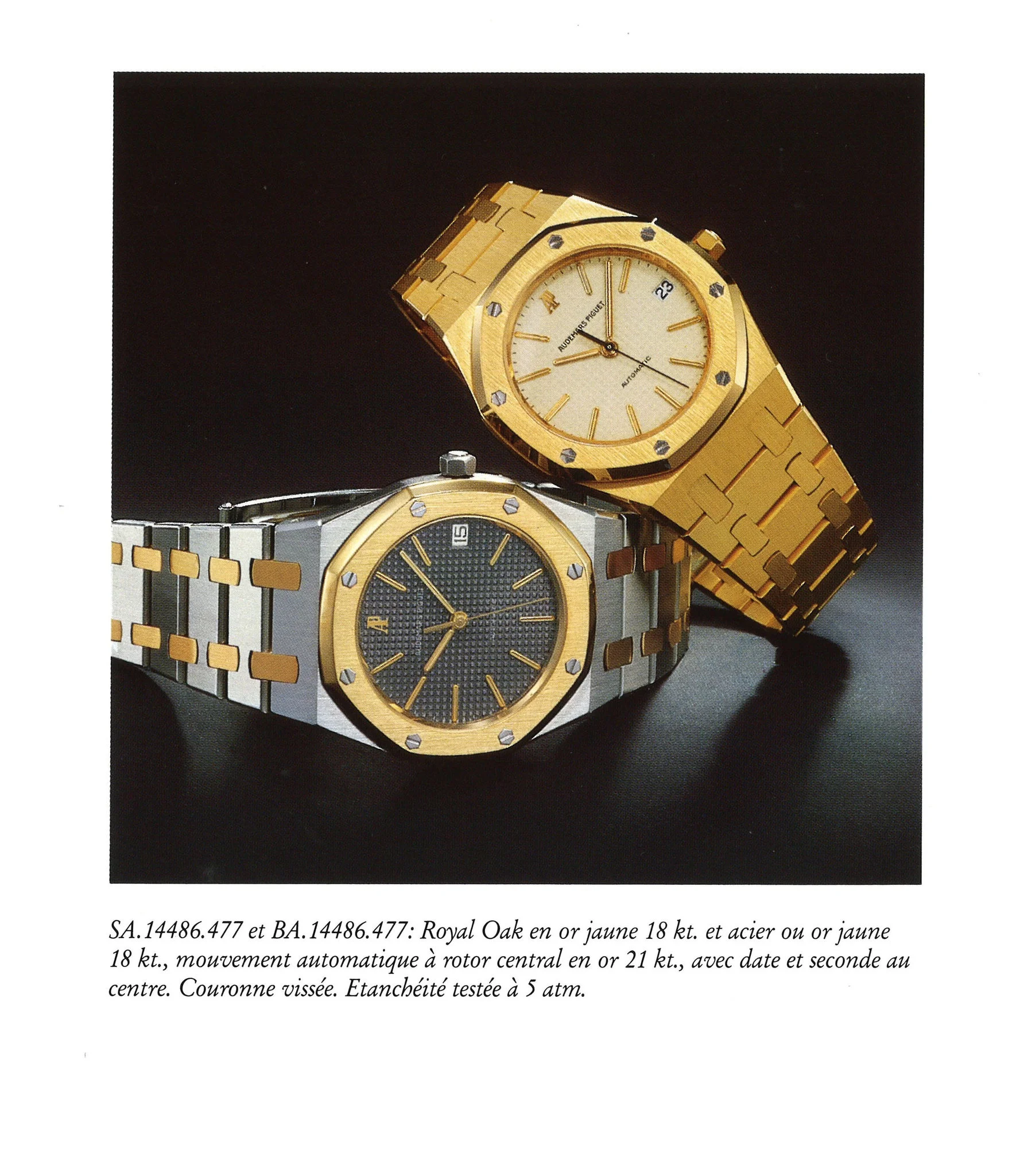
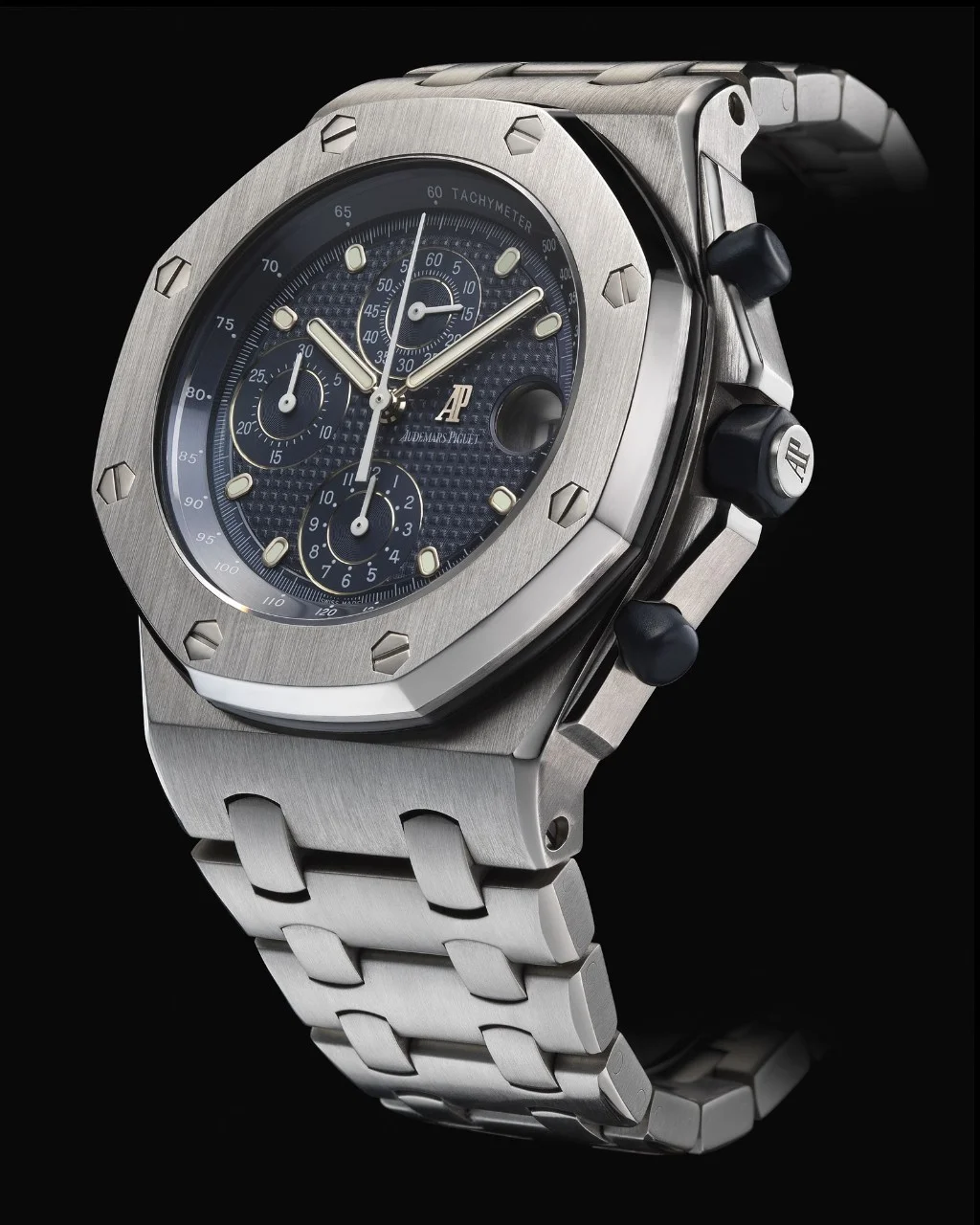
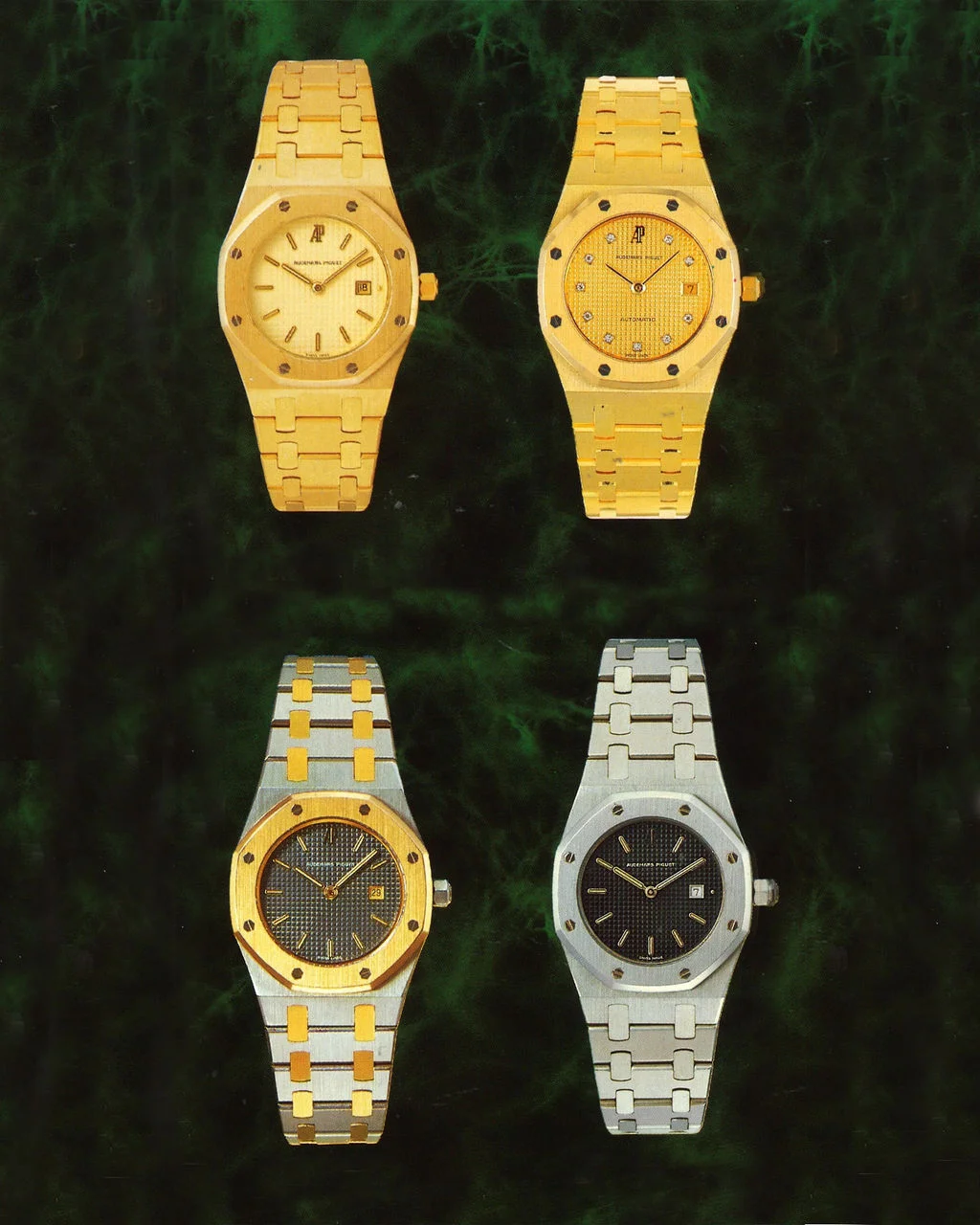
1988. Photograph of Royal Oak Model 14486BA and 14486SA. Brochure presenting the collections. Audemars Piguet Archives.

Circa 1986. Technical data for Royal Oak Model 14486. Audemars Piguet Archives.
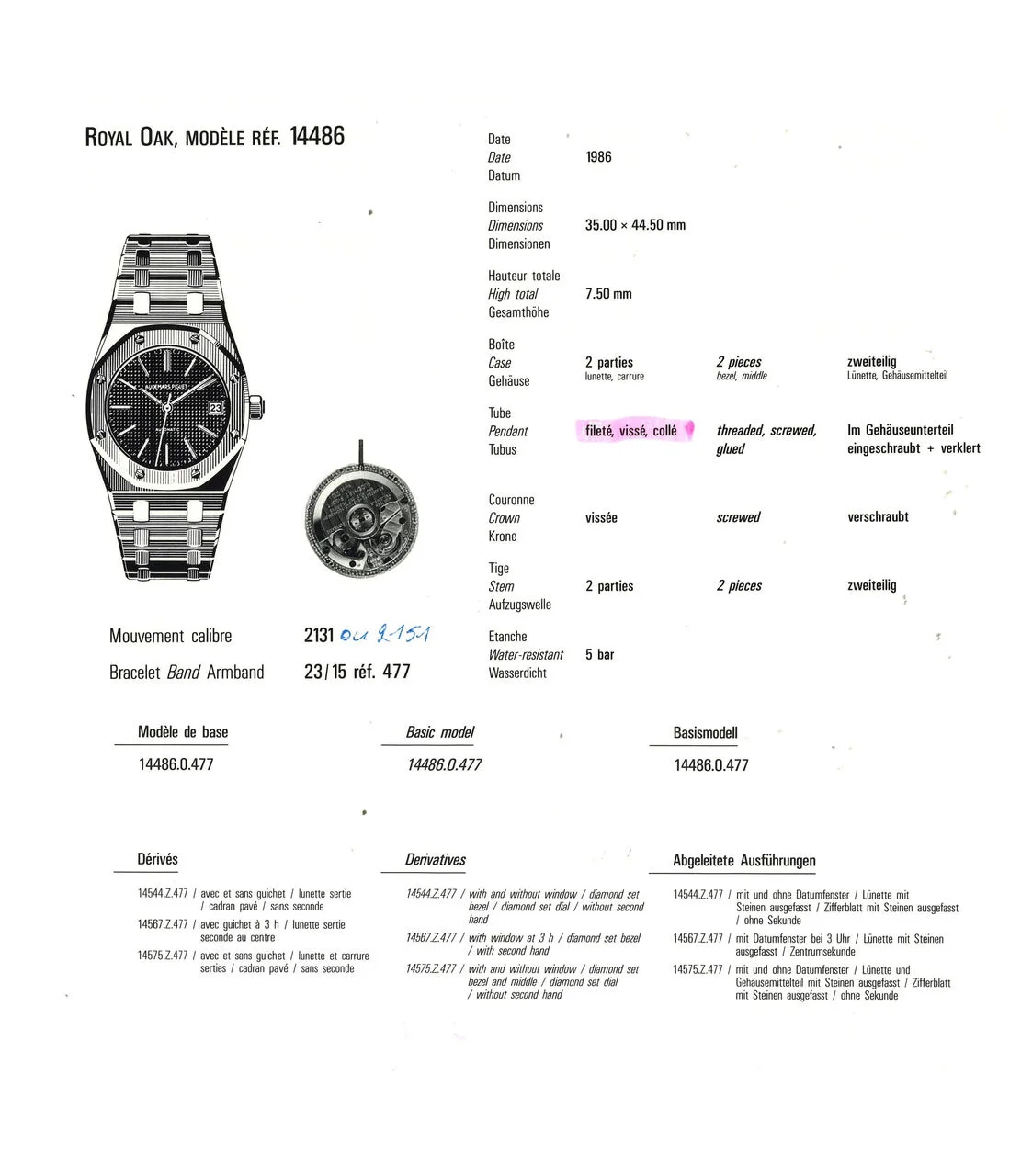
Circa 1986. Technical data for Royal Oak Model 14486 and its derived versions. Audemars Piguet Archives.

1990. Royal Oak dial variations. Intended for retailers, the Audemars Piguet catalogue presents a selection of dials intended to equip Models14470, 14700, 56721, 66270, 14486, 56175, 56323, 66319, 66351, etc. Audemars Piguet Archives.
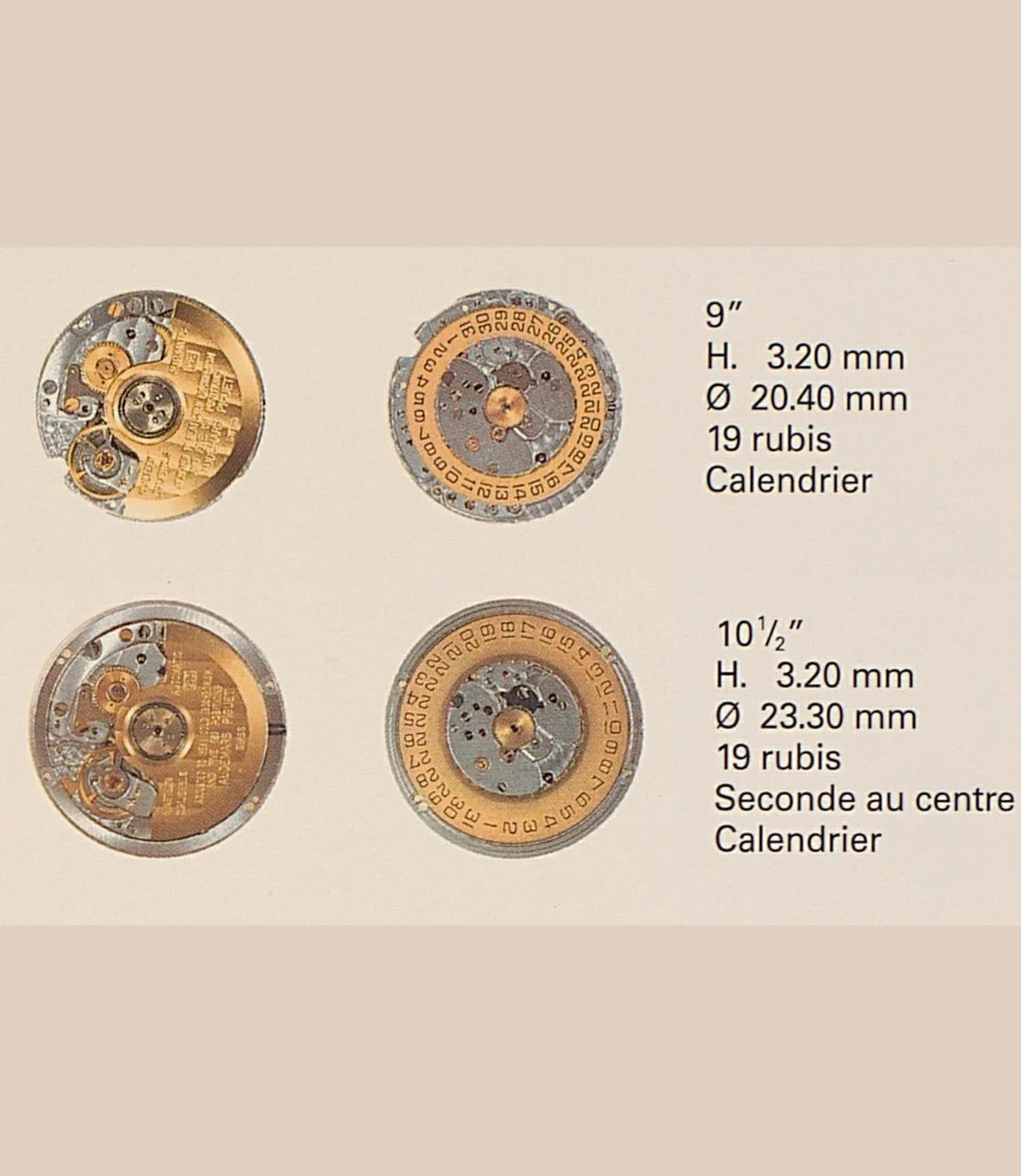
1990. Calibre 2030 and its derived version Calibre 2131 fitted in Model 14486. The Audemars Piguet catalogue presents the 27 calibres in production, including 4 quartz movements. Audemars Piguet Archives.

1985. Technical drawing of a flat dial for Royal Oak Model 14486. Audemars Piguet Archives.

Circa 1985. Technical drawing of the silicon seal for Royal Oak Model 14486. Audemars Piguet Archives.

1991. Technical drawing of the screw-in tube for the crown stem of Royal Oak Model 14486. Audemars Piguet Archives.
Although the first case design dates from 1985, Model 14486 was launched in 1986 with three variants (steel, yellow gold and two-tone steel-yellow gold). Equipped with Calibres 2130 or 2131, Model 14486 did not appear under the Women's or Men's headings in the 1986 catalogue, but under the simple and unique Royal Oak category, thus reinforcing the idea of a unisex model.
As the successor to Model 4100 (or Royal Oak III) launched in 1977, Model 14486 continued the 35 mm size. It sometimes features a central seconds hand and there are versions with or without a seconds hand.
With its 35 mm diameter, Model 14486 is nevertheless an exception in the history of medium-sized Royal Oak watches, because between 1983 and 2003, the core of the Royal Oak collection was systematically interpreted in a 36 mm diameter (suffice it to mention here Model 4332 from 1983 and Model 14790 from 1992).
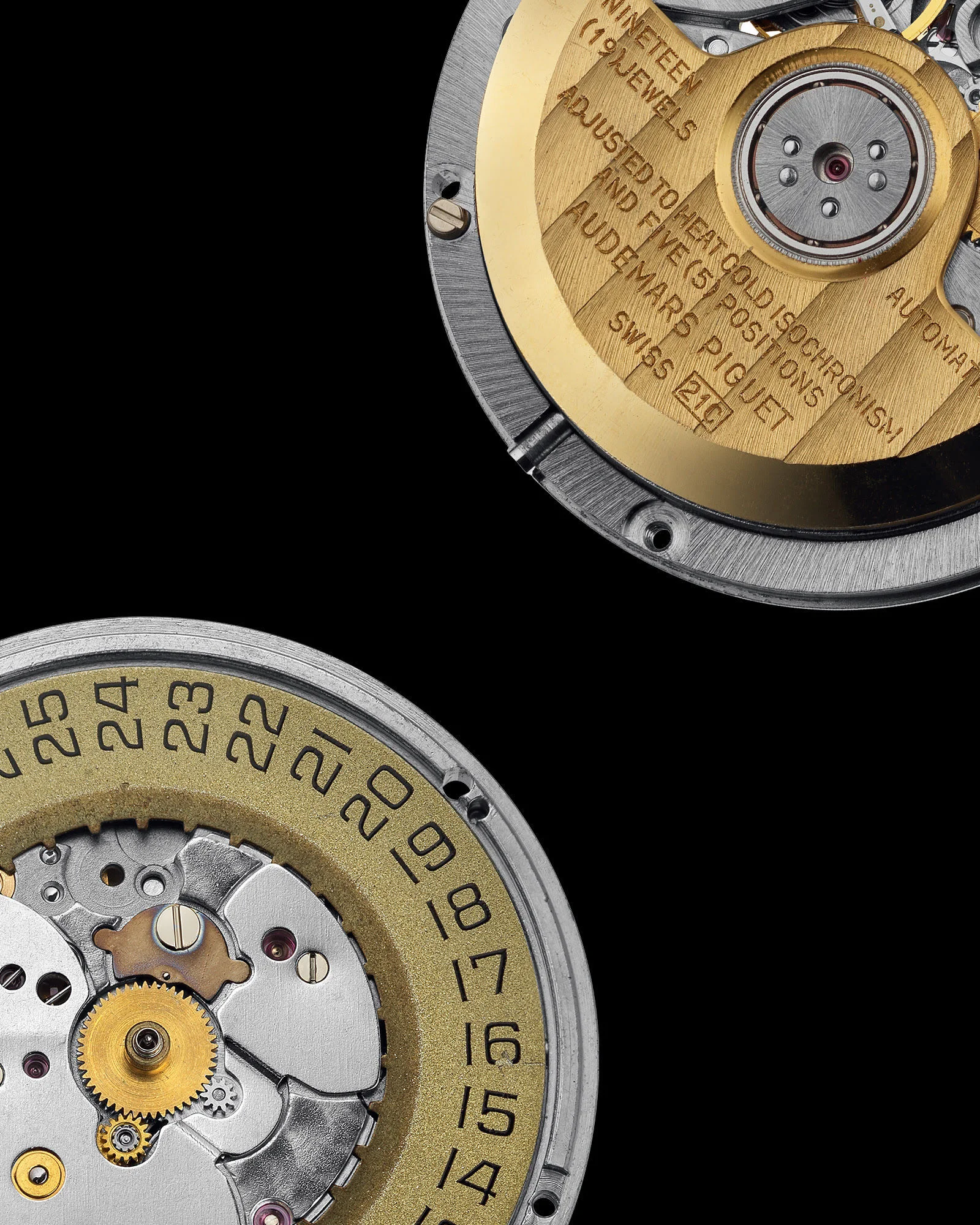
Calibre 2130 powering the first Royal Oak Model 14486 was derived from a Frédéric Piguet cal.950 movement "ébauche". Its variant, Calibre 2131, was produced simultaneously with a different case diameter in order to allow for a greater variety of exteriors. In 1988-1989 the calibre evolved into Calibre 2150 and its variant 2151 following improvements, such as the possibility of adjusting the date without deregulating the hands.
From 1988 onwards, Model 14486 was offered with new dials and new materials. The two-tone tantalum and pink gold version was the first Royal Oak in tantalum with a mechanical movement. The white gold version (1989) is the rarest variation of the Royal Oak 14486, with only 9 units sold between 1989 and 1993.
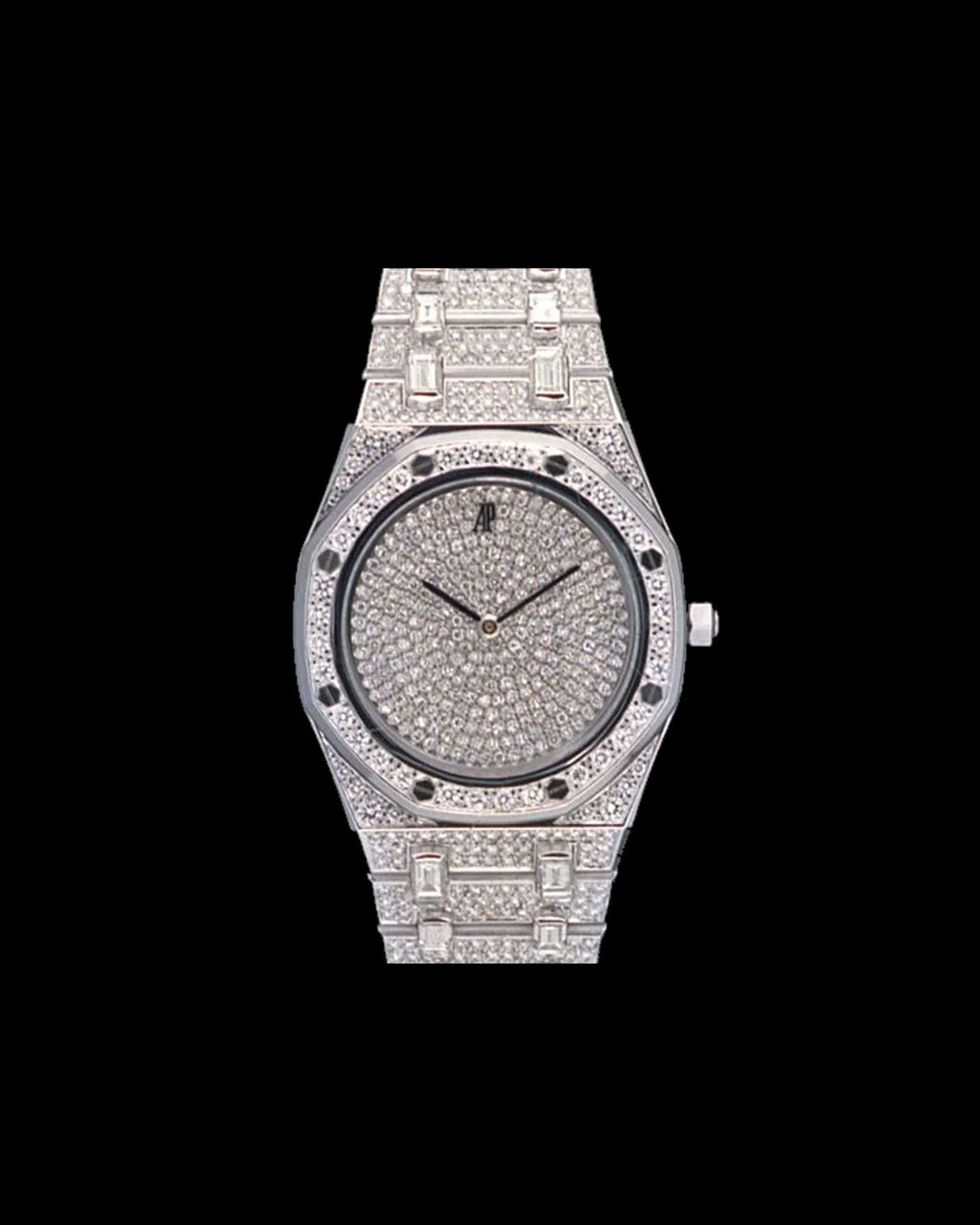
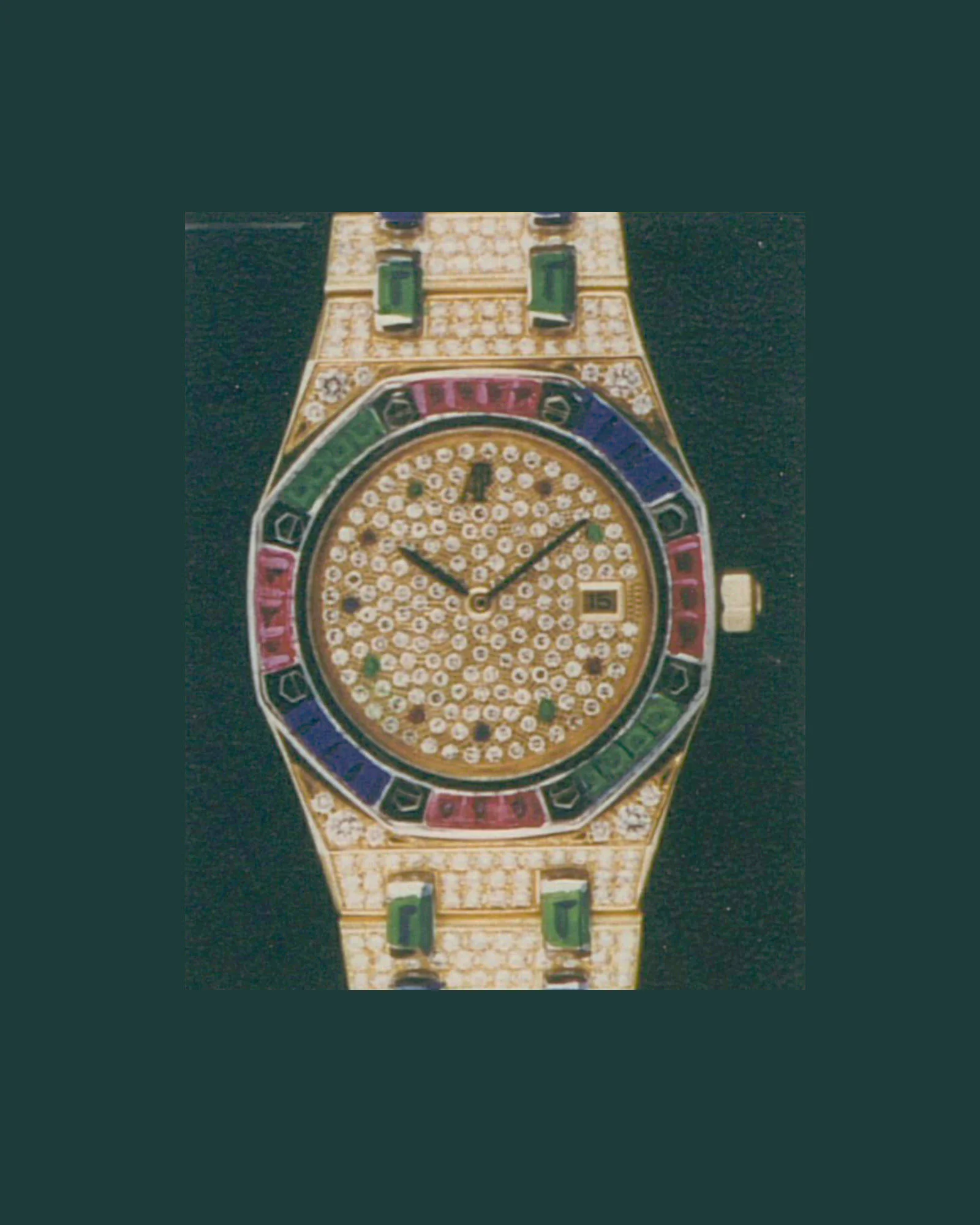
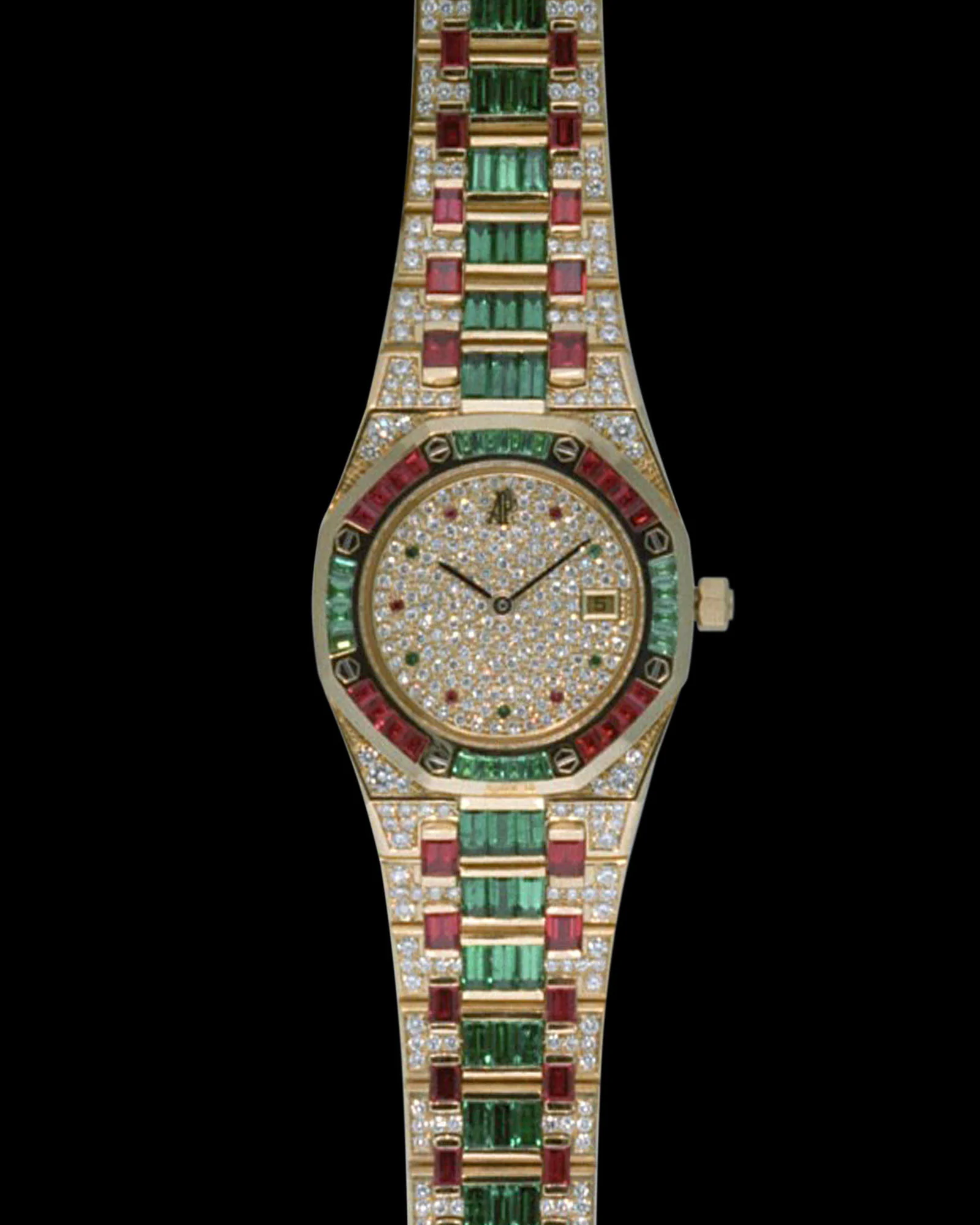
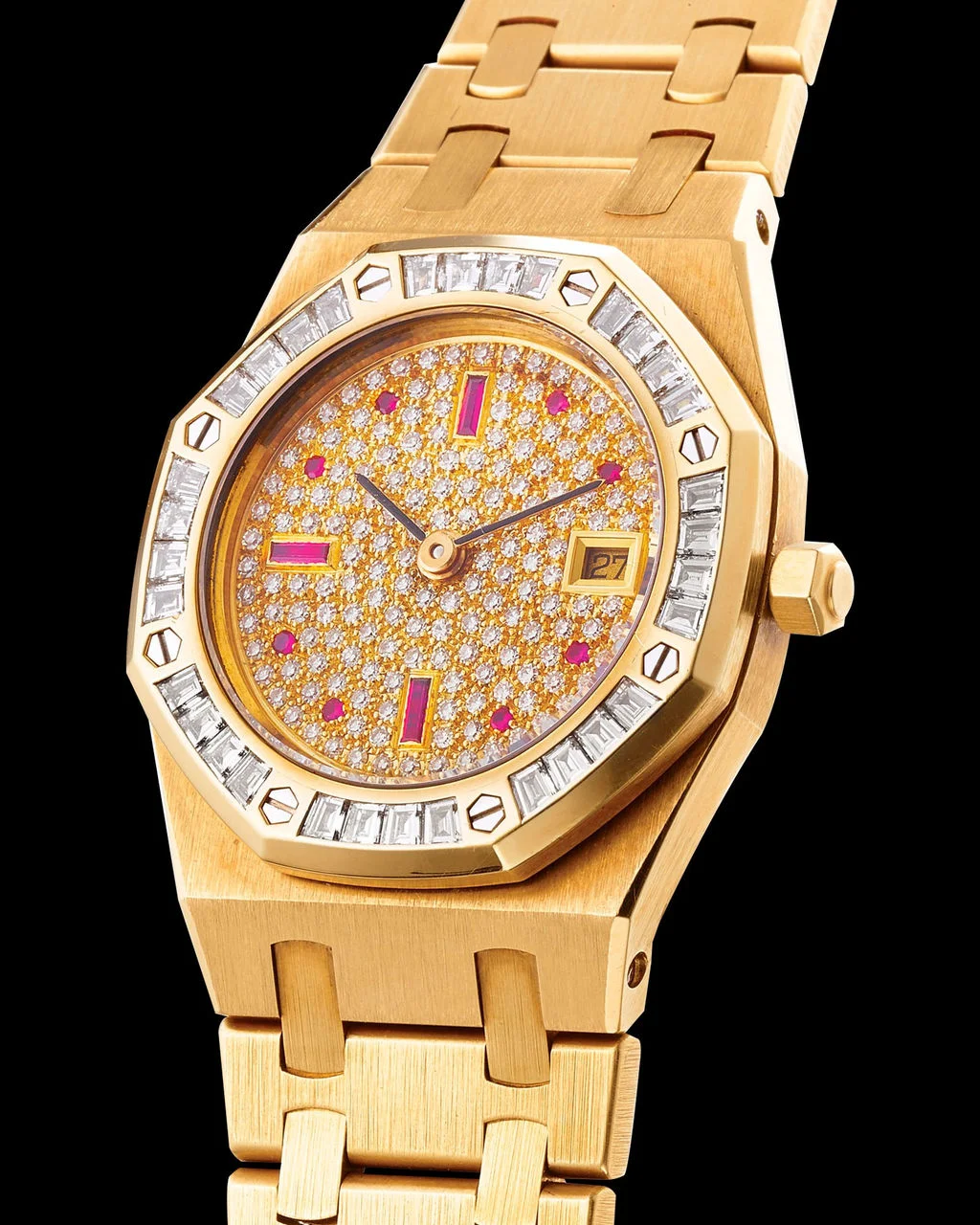
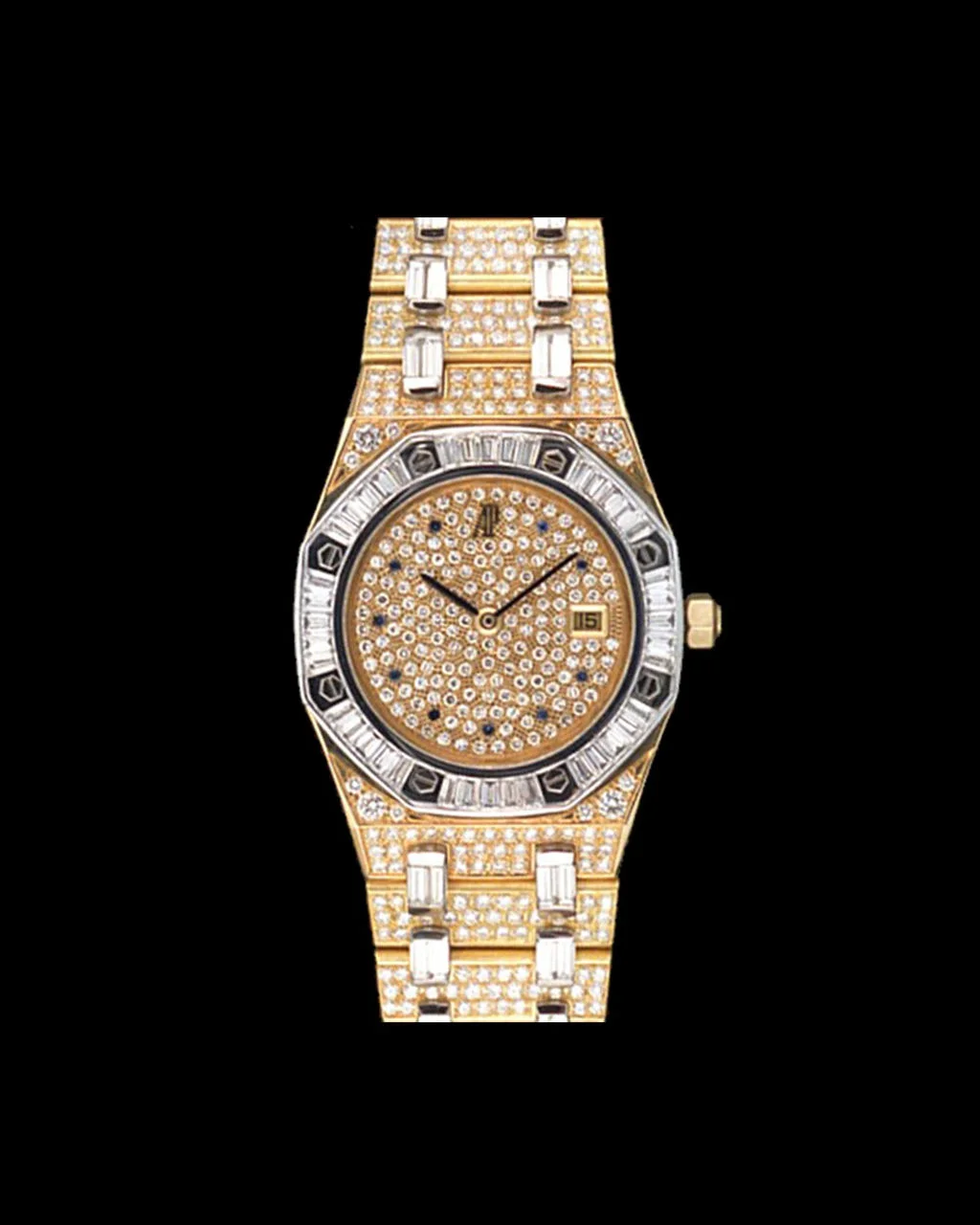
Available only with 4 Tapisserie dials (dark blue, slate, ivory-coloured and gold-toned) during its first two years of existence, Model 14486 diversified from 1988 onward. That year’s catalogue features 7 variations of dials playing on the texture (Tapisserie or smooth), the colour (ivory, gold-toned, slate grey, white or vertical Dacron tantalum) and the type of hour-markers (classic tritium-enhanced or gemset). All these dials were produced by the Stern company in Geneva.
Model 14486 is also distinctive in terms of its silicon seal, whose shape is modified in order to leave room for a longer tube for securing the crown stem in place and thus enable greater robustness while ensuring the water-resistance of the case. This seal profile is also found on various intermediate-sized Royal Oak models from the late 1980s onwards.
Its total production run corresponds to 1,932 units mainly sold between 1986 and 1996, although 11 units were still sold between 1997 and 2005.
Derived models: 14567 (1987), 14575 (1987), 14544 (1988) and 14674 (1989).
Although the first case design dates from 1985, Model 14486 was launched in 1986 with three variants (steel, yellow gold and two-tone steel-yellow gold). Equipped with Calibres 2130 or 2131, Model 14486 did not appear under the Women's or Men's headings in the 1986 catalogue, but under the simple and unique Royal Oak category, thus reinforcing the idea of a unisex model.
As the successor to Model 4100 (or Royal Oak III) launched in 1977, Model 14486 continued the 35 mm size. It sometimes features a central seconds hand and there are versions with or without a seconds hand.
With its 35 mm diameter, Model 14486 is nevertheless an exception in the history of medium-sized Royal Oak watches, because between 1983 and 2003, the core of the Royal Oak collection was systematically interpreted in a 36 mm diameter (suffice it to mention here Model 4332 from 1983 and Model 14790 from 1992).
Calibre 2130 powering the first Royal Oak Model 14486 was derived from a Frédéric Piguet cal.950 movement "ébauche". Its variant, Calibre 2131, was produced simultaneously with a different case diameter in order to allow for a greater variety of exteriors. In 1988-1989 the calibre evolved into Calibre 2150 and its variant 2151 following improvements, such as the possibility of adjusting the date without deregulating the hands.
From 1988 onwards, Model 14486 was offered with new dials and new materials. The two-tone tantalum and pink gold version was the first Royal Oak in tantalum with a mechanical movement. The white gold version (1989) is the rarest variation of the Royal Oak 14486, with only 9 units sold between 1989 and 1993.
Available only with 4 Tapisserie dials (dark blue, slate, ivory-coloured and gold-toned) during its first two years of existence, Model 14486 diversified from 1988 onward. That year’s catalogue features 7 variations of dials playing on the texture (Tapisserie or smooth), the colour (ivory, gold-toned, slate grey, white or vertical Dacron tantalum) and the type of hour-markers (classic tritium-enhanced or gemset). All these dials were produced by the Stern company in Geneva.
Model 14486 is also distinctive in terms of its silicon seal, whose shape is modified in order to leave room for a longer tube for securing the crown stem in place and thus enable greater robustness while ensuring the water-resistance of the case. This seal profile is also found on various intermediate-sized Royal Oak models from the late 1980s onwards.
Its total production run corresponds to 1,932 units mainly sold between 1986 and 1996, although 11 units were still sold between 1997 and 2005.
Derived models: 14567 (1987), 14575 (1987), 14544 (1988) and 14674 (1989).
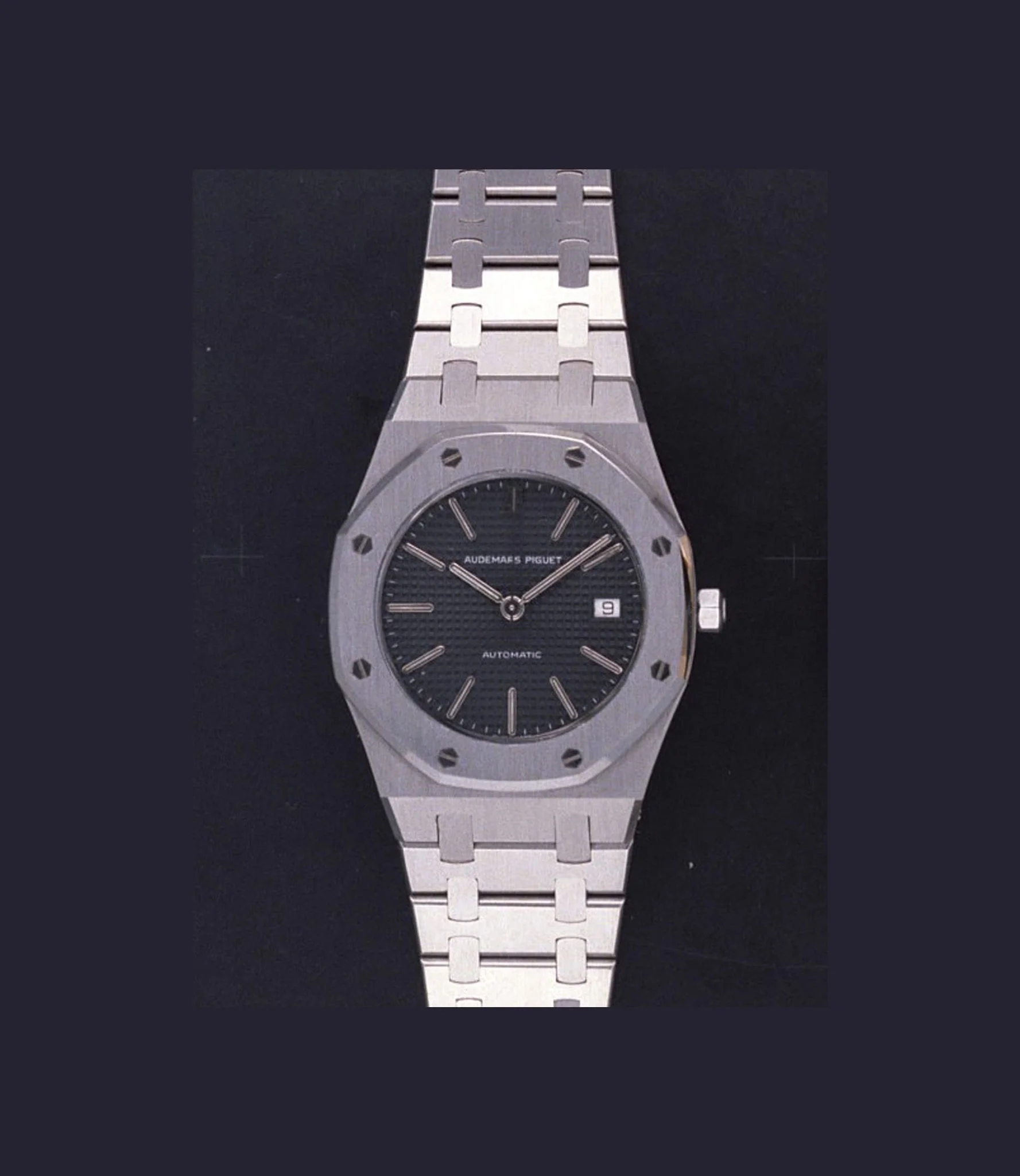
Circa 1986. Identification photograph of Royal Oak Model 14486ST. Audemars Piguet Archives.
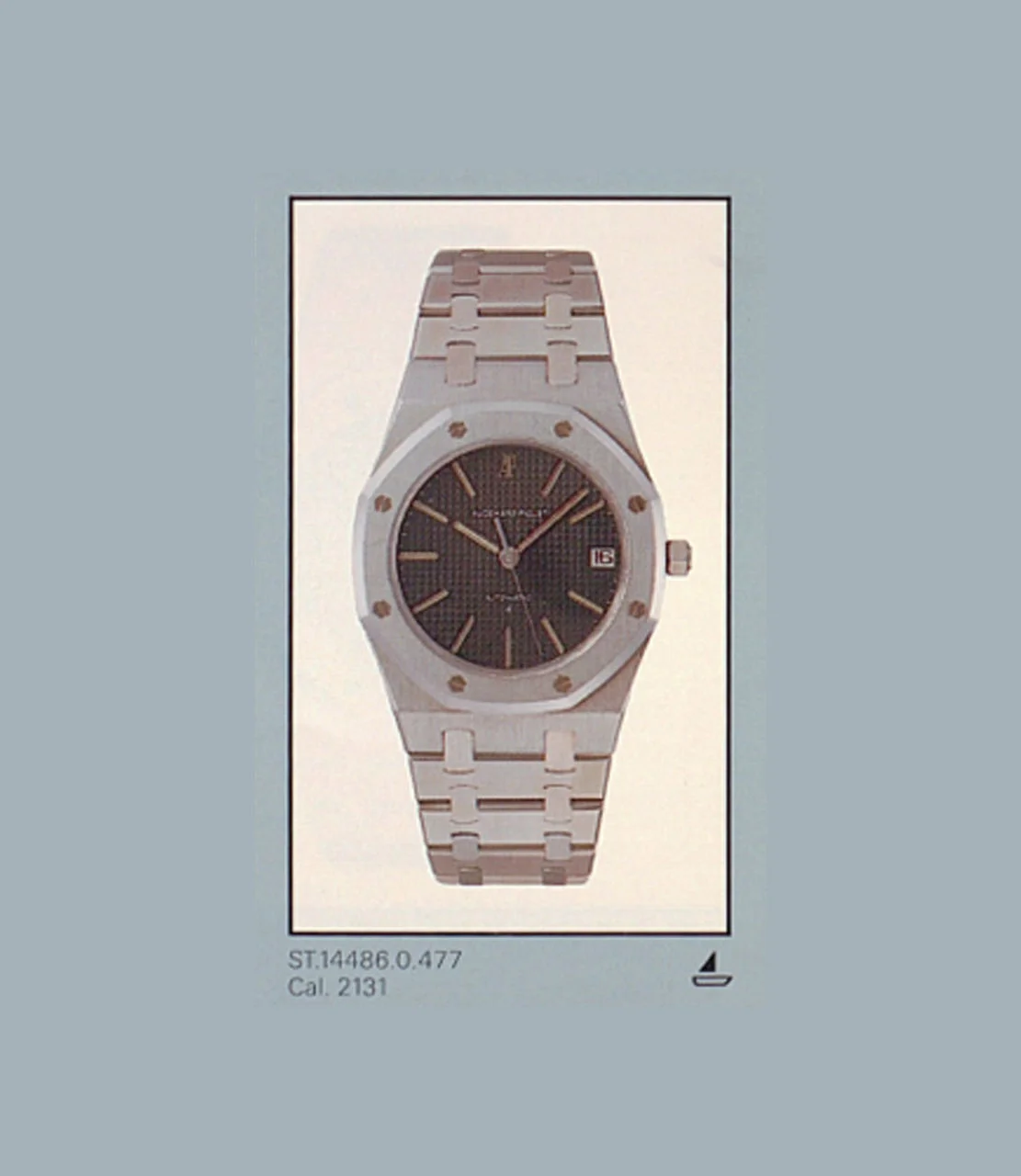
1986. Photograph of Royal Oak Model 14486ST presented in the 1986-1987 Audemars Piguet catalogue. Audemars Piguet Archives.
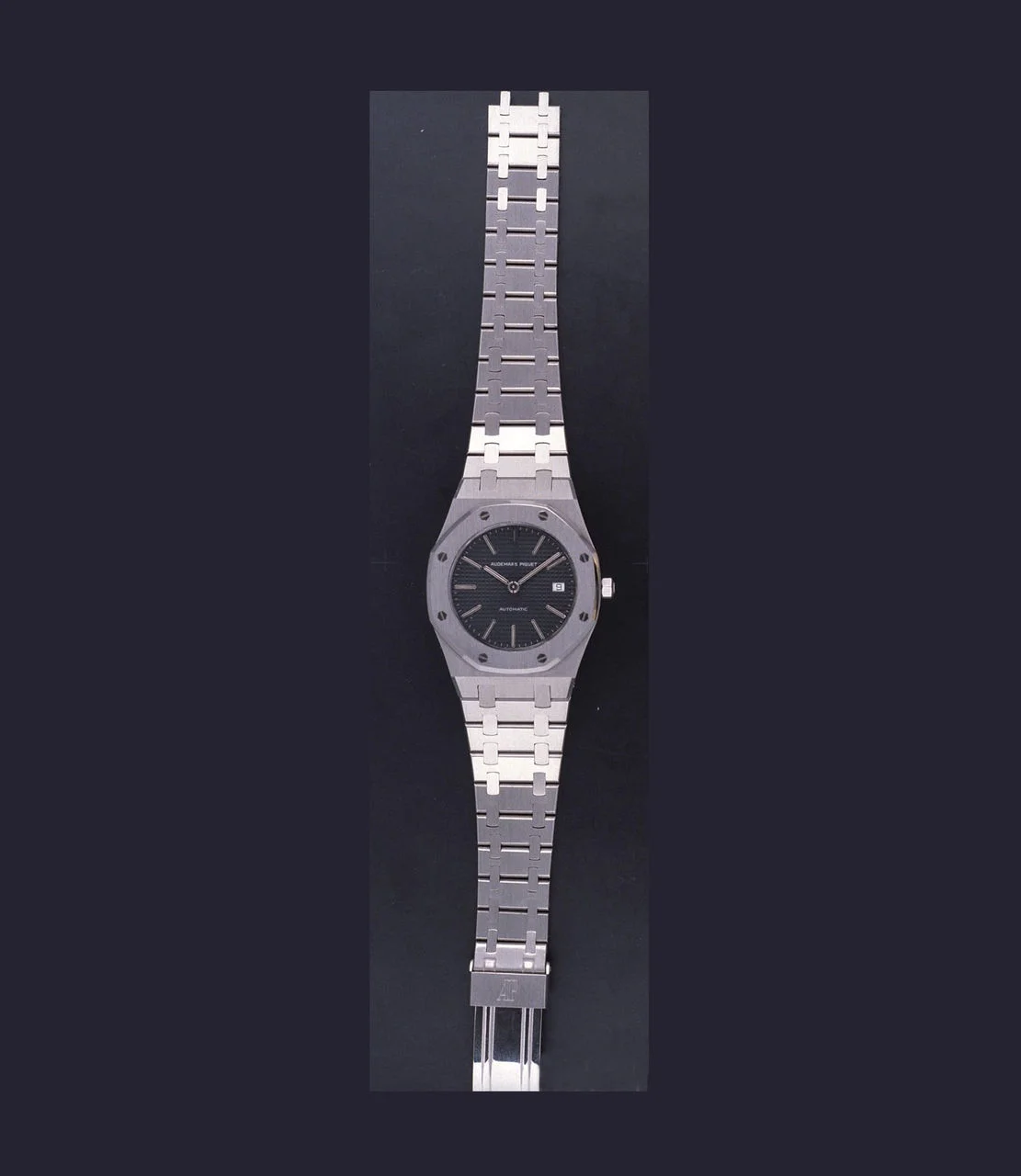
Circa 1986. Photograph of the entire Royal Oak Model 14486ST. Audemars Piguet Archives.

1990. Technical data for Royal Oak Model 14486ST. Audemars Piguet Archives.
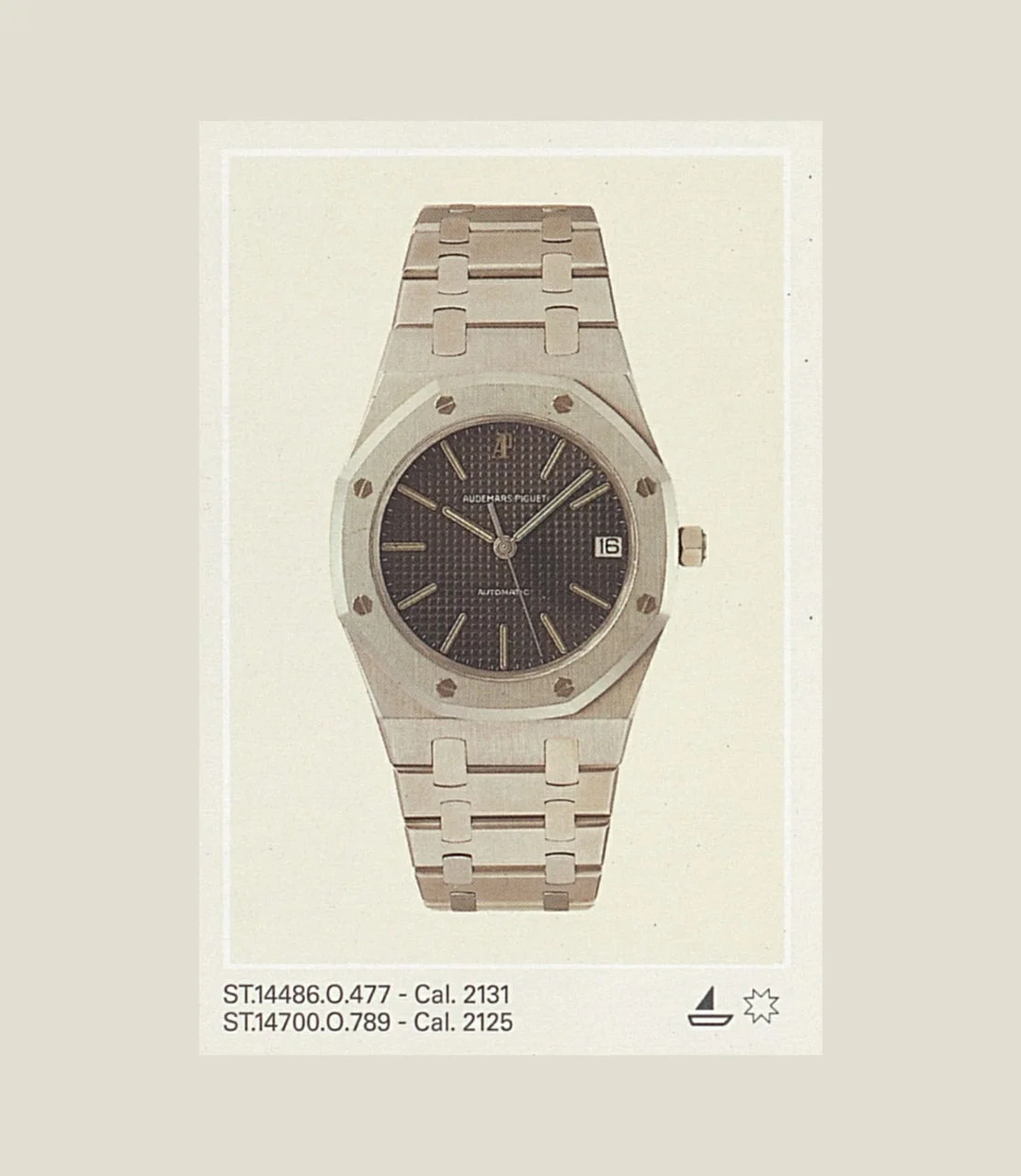
1990. Photograph of Royal Oak Models 14486ST and 14700ST presented in the 1990-1991 Audemars Piguet catalogue. Audemars Piguet Archives.
With its steel exterior and Tapisserie dial, Model 14486ST reinterprets the original codes of Model 5402 by picking up the size of the Royal Oak III (Model 4100), of which it appears to be a successor. Model 14486 is available with or without a seconds hand.
The 1986 launch of Model 14486ST was accompanied by two other yellow gold and two-tone (yellow gold and steel) variations.
Sales from 1986 to 2005: a total of 411 units, of which 19 (1986), 121 (1987), 63 (1988), 87 (1989), 91 (1990), 5 (1991), 7 (1992), 1 (1993), 4 (1994), 11 (1995), 1 (1998) and 1 (2005).
With its steel exterior and Tapisserie dial, Model 14486ST reinterprets the original codes of Model 5402 by picking up the size of the Royal Oak III (Model 4100), of which it appears to be a successor. Model 14486 is available with or without a seconds hand.
The 1986 launch of Model 14486ST was accompanied by two other yellow gold and two-tone (yellow gold and steel) variations.
Sales from 1986 to 2005: a total of 411 units, of which 19 (1986), 121 (1987), 63 (1988), 87 (1989), 91 (1990), 5 (1991), 7 (1992), 1 (1993), 4 (1994), 11 (1995), 1 (1998) and 1 (2005).
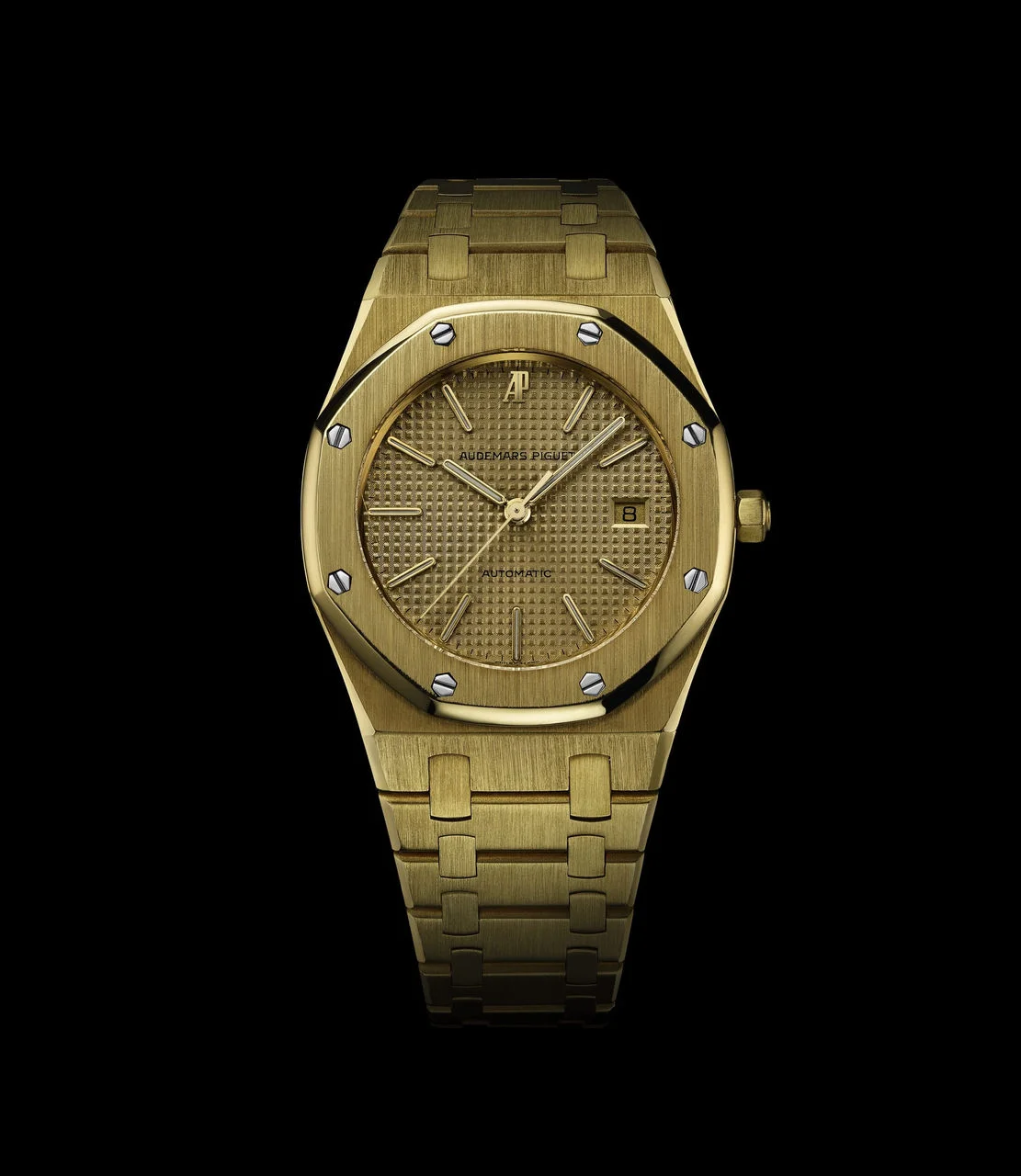
1989. Royal Oak 14486BA no 336. Date. Selfwinding Calibre 2131, Movement 321407. 35 mm Case No. C61896 in 18-carat yellow gold. Sold in Germany in August 1989. Audemars Piguet Heritage, Inv. 1119.
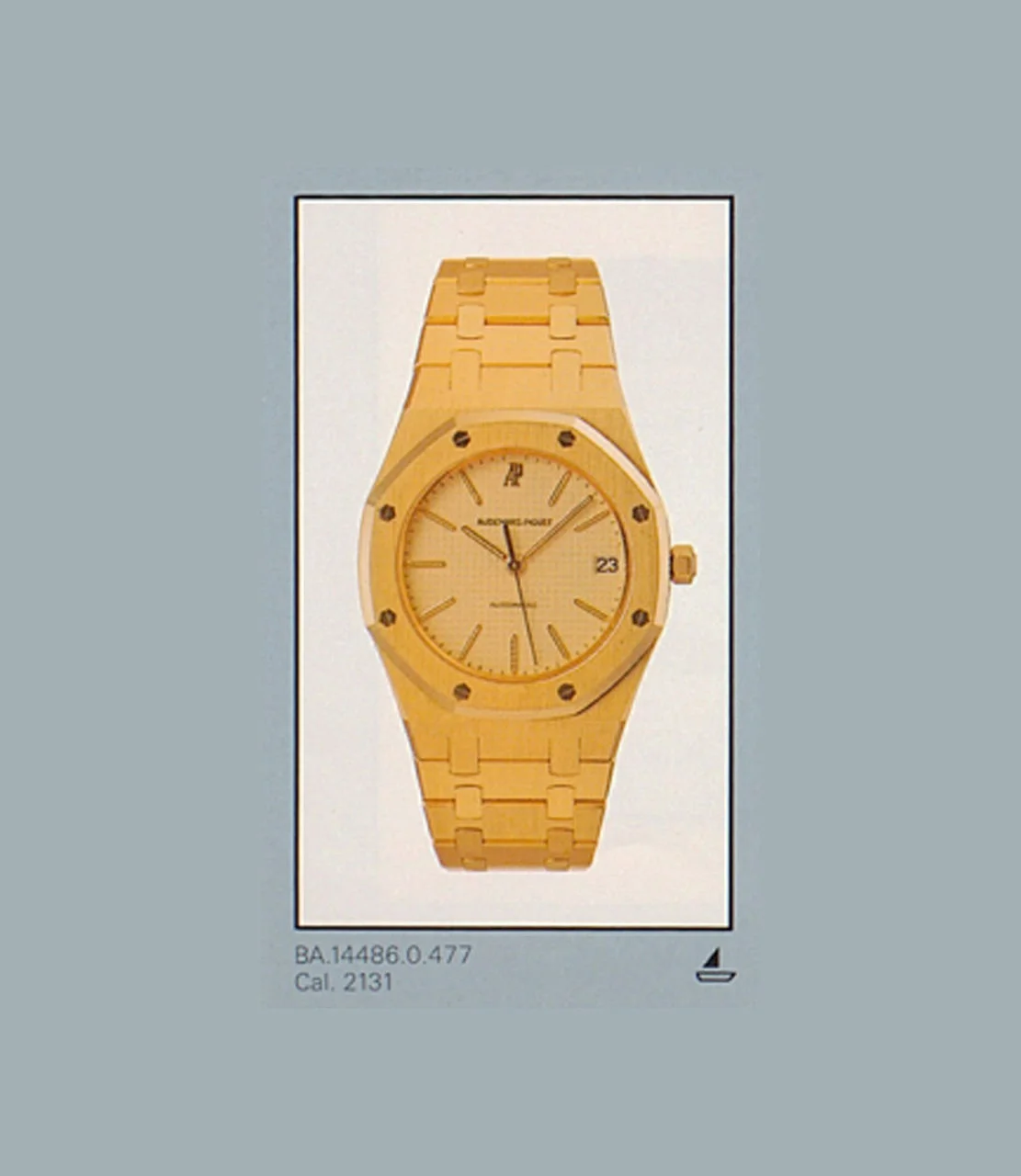
1986. Photograph of Royal Oak Model 14486BA presented in the 1986-1987 Audemars Piguet catalogue. Audemars Piguet Archives.
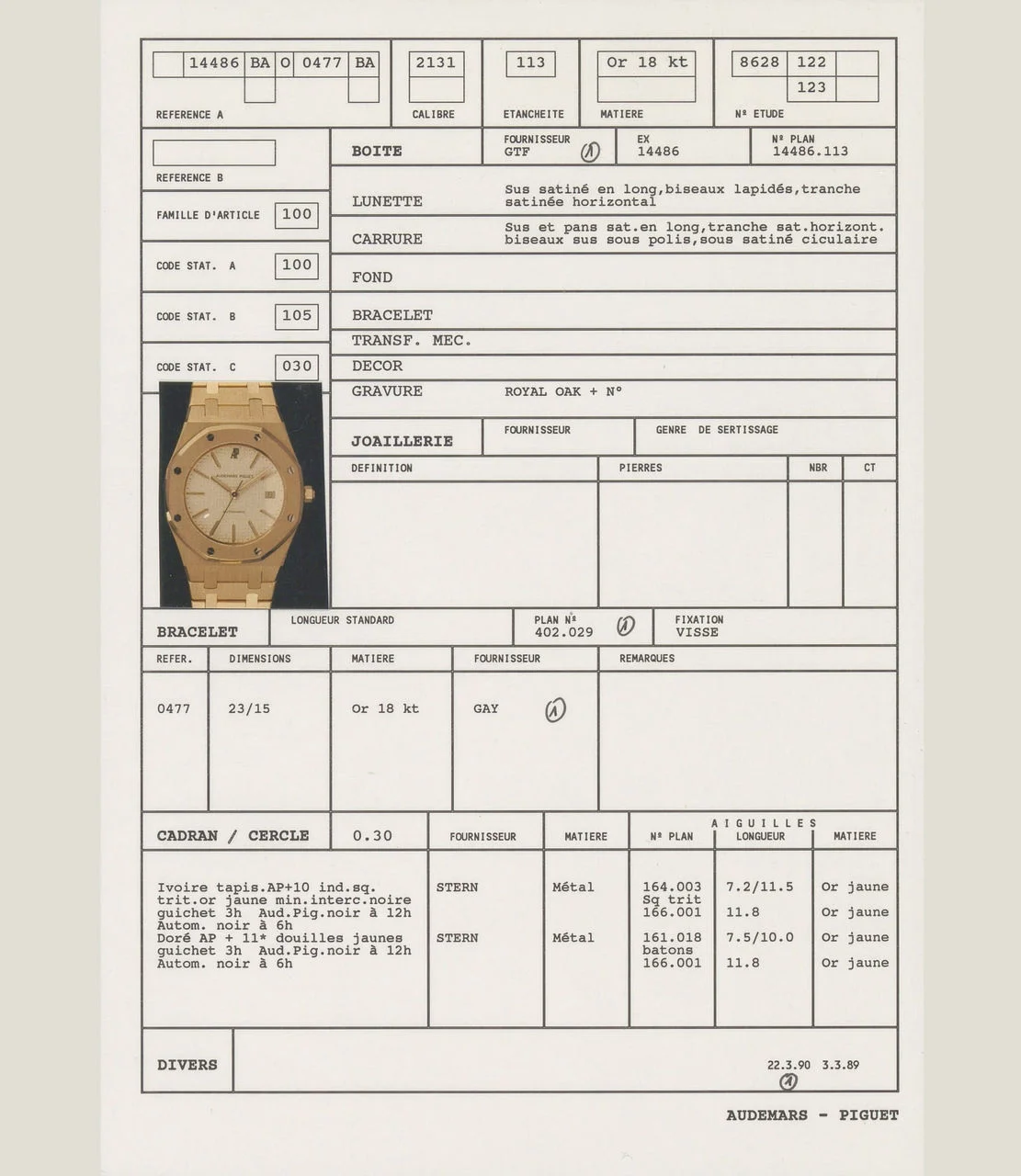
1990. Technical data for Royal Oak Model 14486BA. Audemars Piguet Archives.
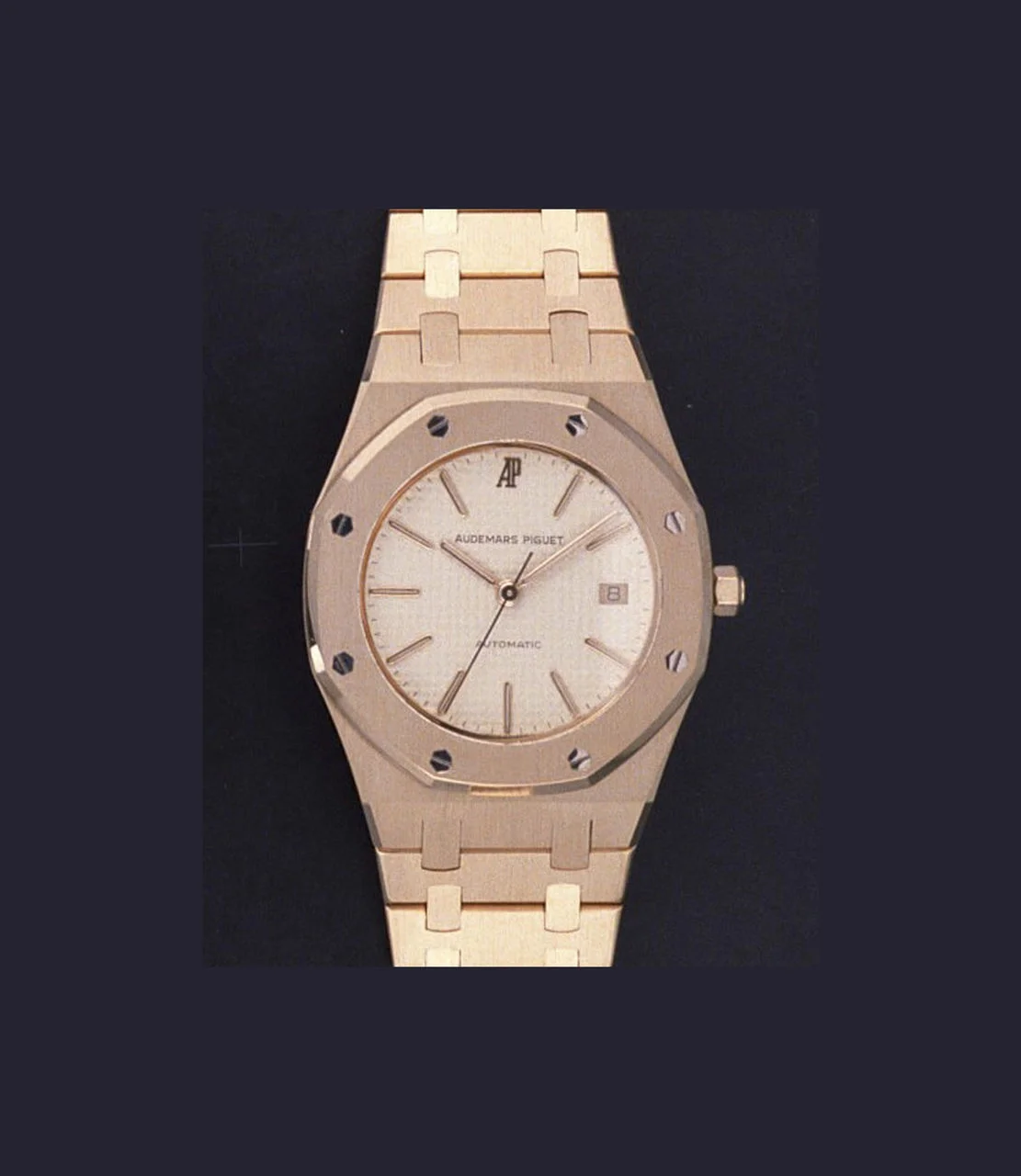
Circa 1986. Identification photograph of Royal Oak Model 14486BA. Audemars Piguet Archives.
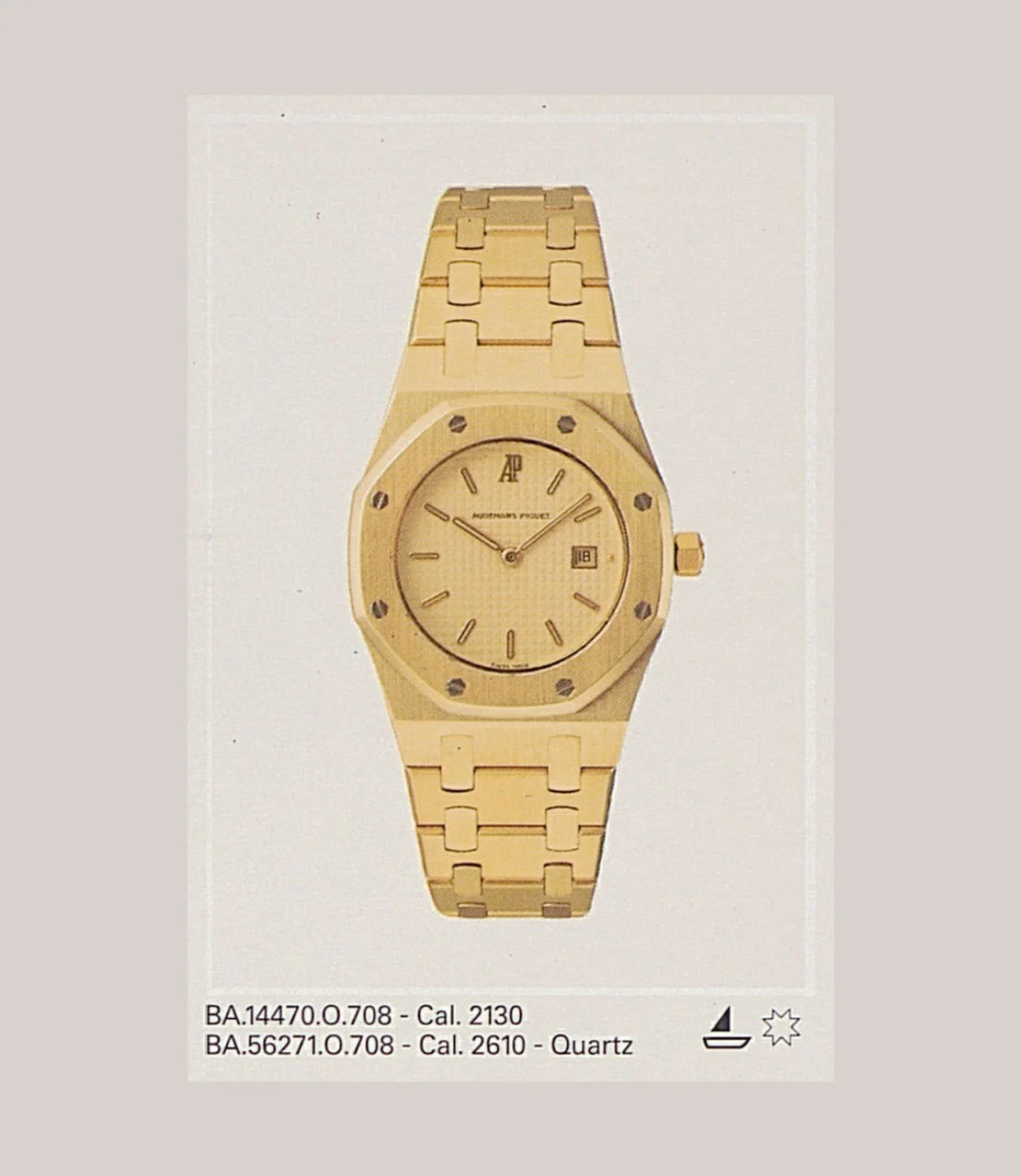
1990. Photograph of Royal Oak Models 14486BA and 56271 presented in the 1990-1991 Audemars Piguet catalogue. Audemars Piguet Archives.
Launched in 1986 at the same time as the steel and two-tone (steel – yellow gold) versions, Royal Oak Model 14486 in yellow gold was available from the outset with two dial colours (ivory and gold-toned Tapisserie). From 1988 onwards, other dial variations are available in the catalogue.
Sales from 1986 to 2004: a total of 525 units, of which 74 (1986), 68 (1987), 91 (1988), 156 (1989), 95 (1990), 18 (1991), 7 (1992), 5 (1993), 2 (1994), 4 (1995). 2 (1999), 1 (2000), 1 (2003) and 1 (2004).
Launched in 1986 at the same time as the steel and two-tone (steel – yellow gold) versions, Royal Oak Model 14486 in yellow gold was available from the outset with two dial colours (ivory and gold-toned Tapisserie). From 1988 onwards, other dial variations are available in the catalogue.
Sales from 1986 to 2004: a total of 525 units, of which 74 (1986), 68 (1987), 91 (1988), 156 (1989), 95 (1990), 18 (1991), 7 (1992), 5 (1993), 2 (1994), 4 (1995). 2 (1999), 1 (2000), 1 (2003) and 1 (2004).
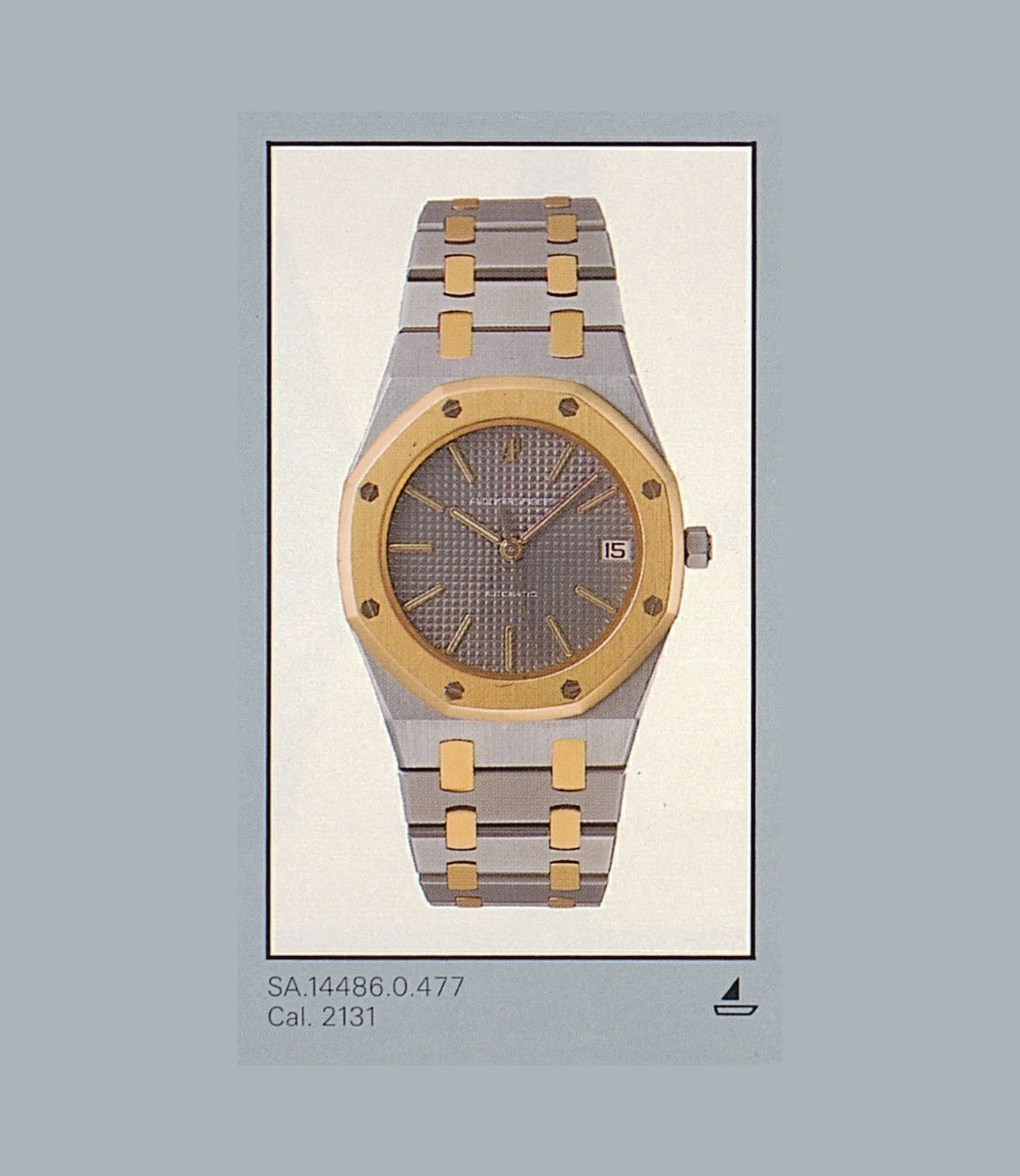
1986. Photograph of Royal Oak Model 14486SA presented in the 1986-1987 Audemars Piguet catalogue. Audemars Piguet Archives.
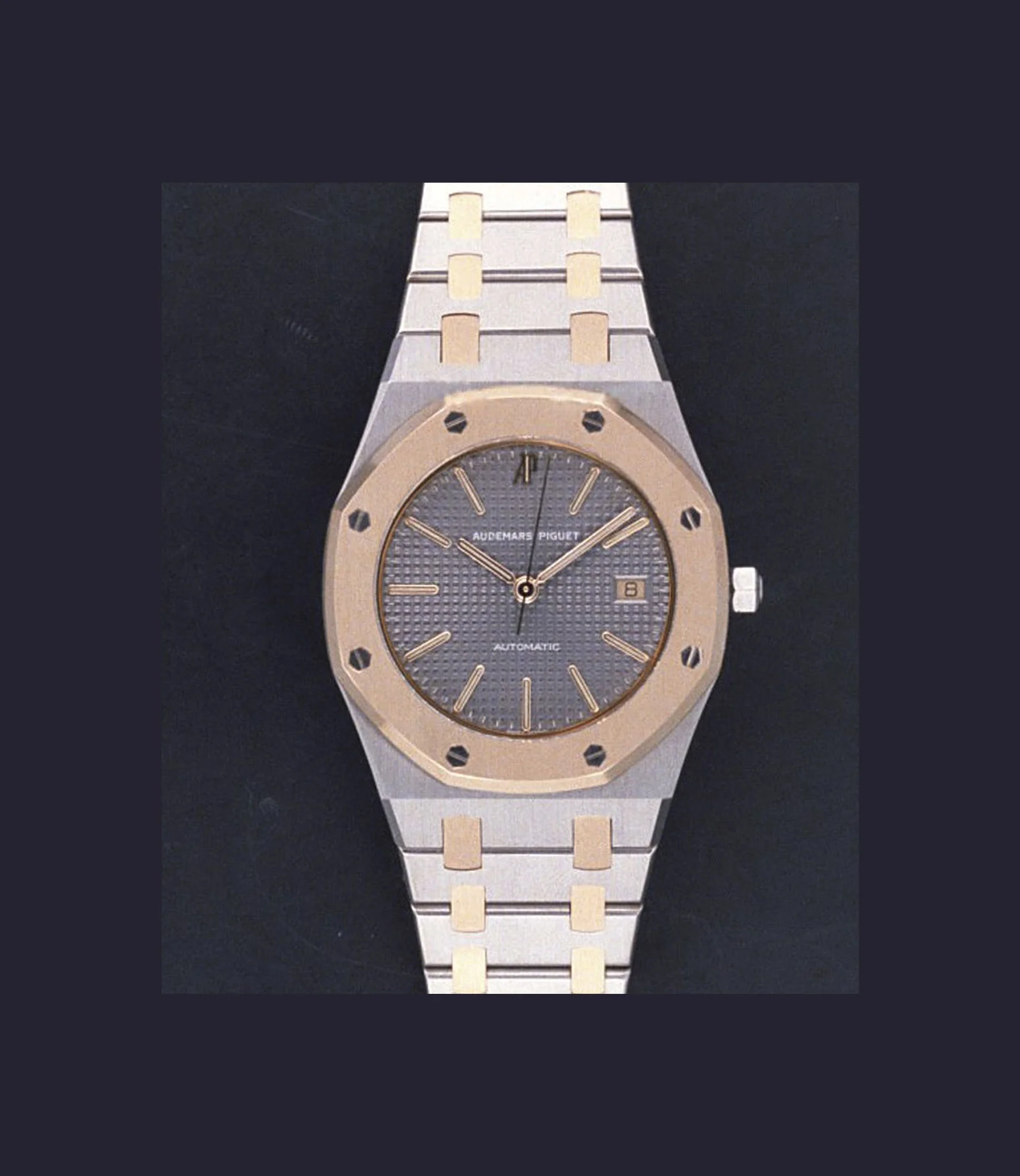
Circa 1986. Identification photograph of Royal Oak. Model 14486SA. Audemars Piguet Archives.
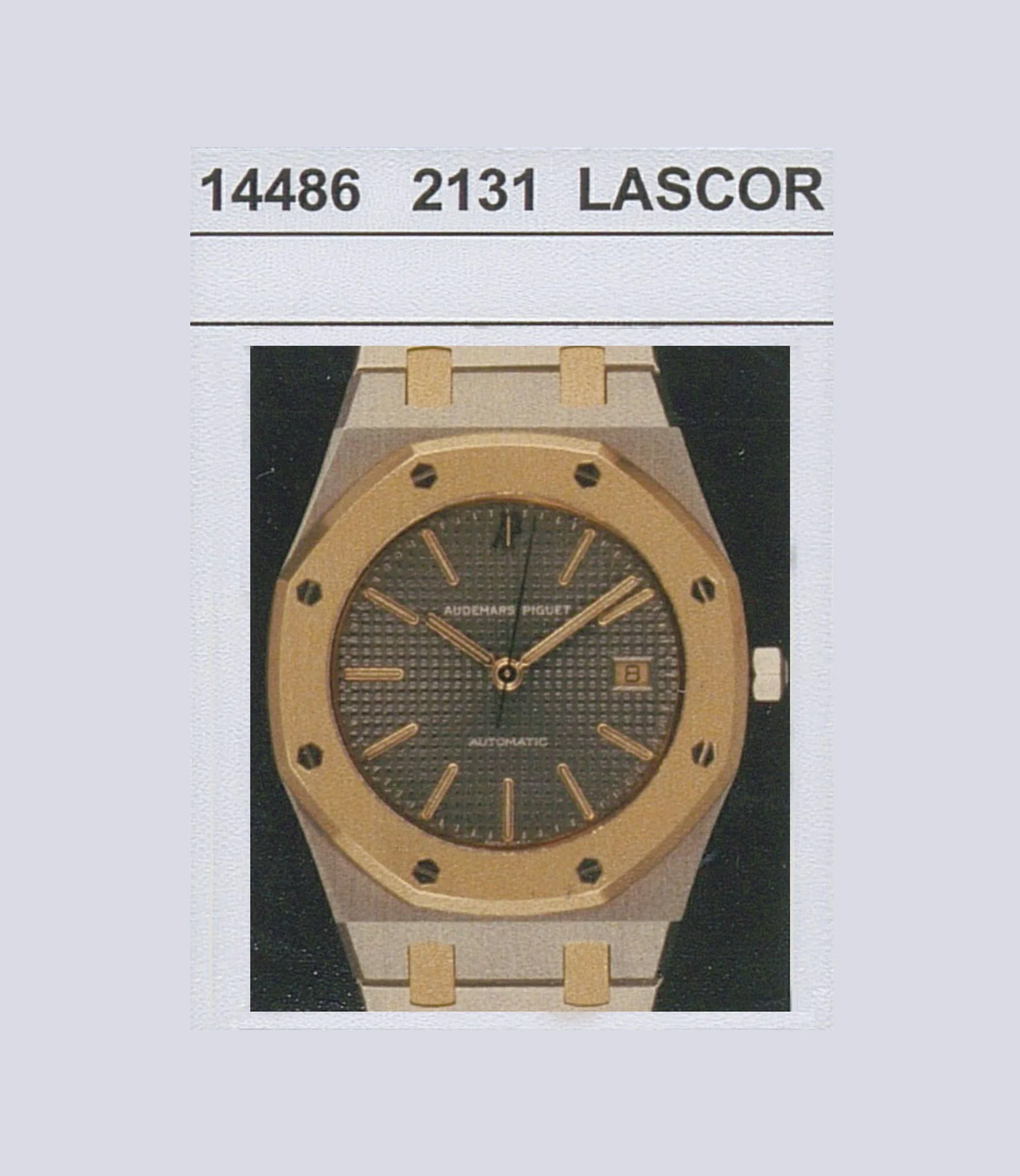
Circa 1986. Identification photograph of Royal Oak Model 14486SA. Audemars Piguet Archives.
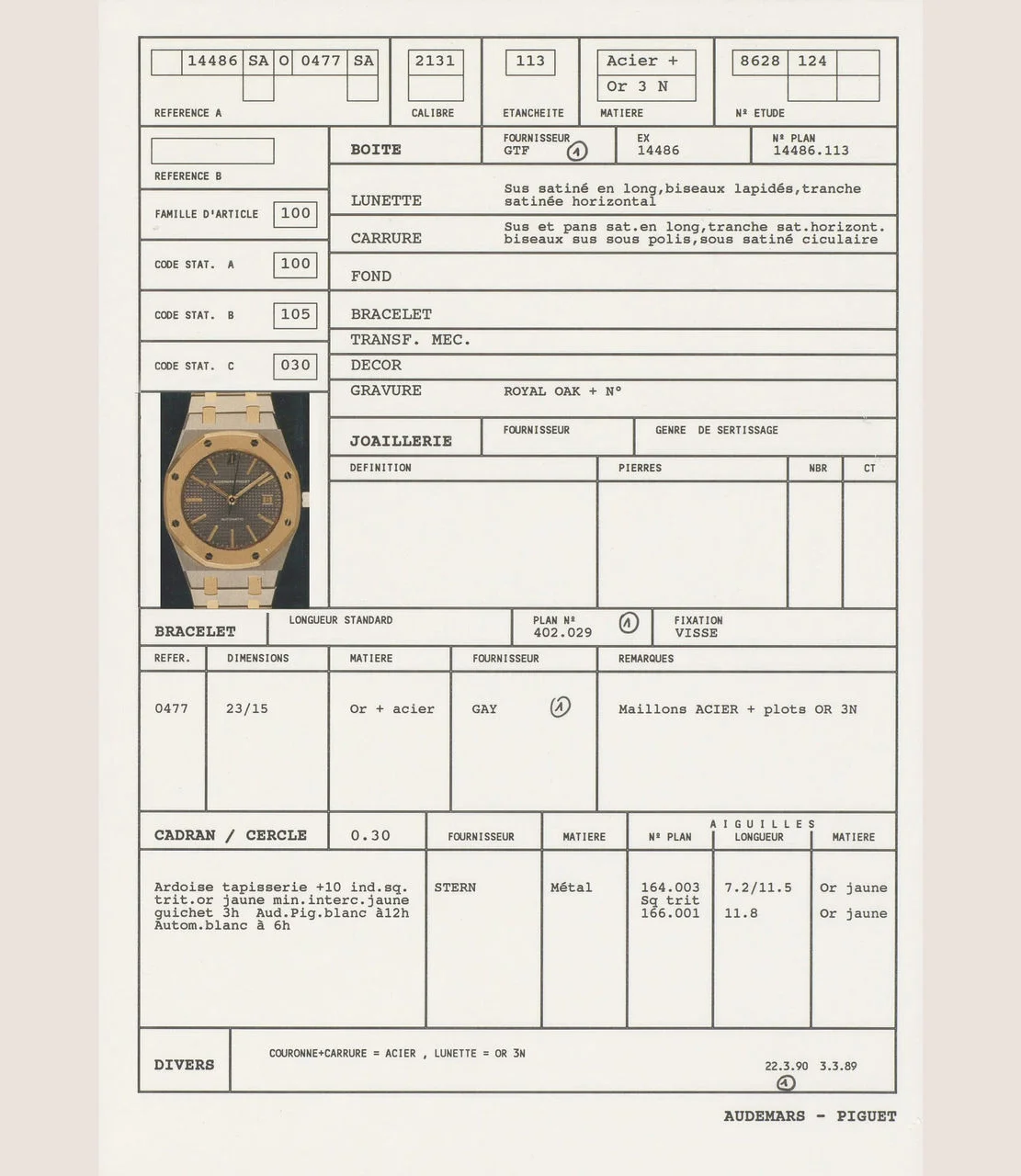
1990. Technical data for Royal Oak Model 14486SA. Audemars Piguet Archives.
Initially available only with its slate grey Tapisserie dial, this two-tone yellow gold and steel Model 14486 was launched in 1986 simultaneously with the steel and yellow gold variations.
The slate grey dial echoes the grey colour of the steel case and links. The bezel, studs, hands and hour-markers are in 3N yellow gold.
The mention "LASCOR" on an identification photo as well as in the technical data of this model indicates that the case was produced in Italy, by a supplier located near Milan. The technical data for this same two-tone version, like the previous versions, also indicates the traditional supplier of the Royal Oak bracelet: Gay Frères in Geneva.
With a production run of 772 units, the two-tone yellow gold and steel version remains the most widely produced version of Model 14486.
Sales from 1986 to 2005: a total of 772 units, of which 81 (1986), 154 (1987), 104 (1988), 187 (1989), 165 (1990), 17 (1991), 24 (1992), 18 (1993), 4 (1994), 7 (1995), 8 (1996), 2 (1997) and 1 (2005).
Initially available only with its slate grey Tapisserie dial, this two-tone yellow gold and steel Model 14486 was launched in 1986 simultaneously with the steel and yellow gold variations.
The slate grey dial echoes the grey colour of the steel case and links. The bezel, studs, hands and hour-markers are in 3N yellow gold.
The mention "LASCOR" on an identification photo as well as in the technical data of this model indicates that the case was produced in Italy, by a supplier located near Milan. The technical data for this same two-tone version, like the previous versions, also indicates the traditional supplier of the Royal Oak bracelet: Gay Frères in Geneva.
With a production run of 772 units, the two-tone yellow gold and steel version remains the most widely produced version of Model 14486.
Sales from 1986 to 2005: a total of 772 units, of which 81 (1986), 154 (1987), 104 (1988), 187 (1989), 165 (1990), 17 (1991), 24 (1992), 18 (1993), 4 (1994), 7 (1995), 8 (1996), 2 (1997) and 1 (2005).
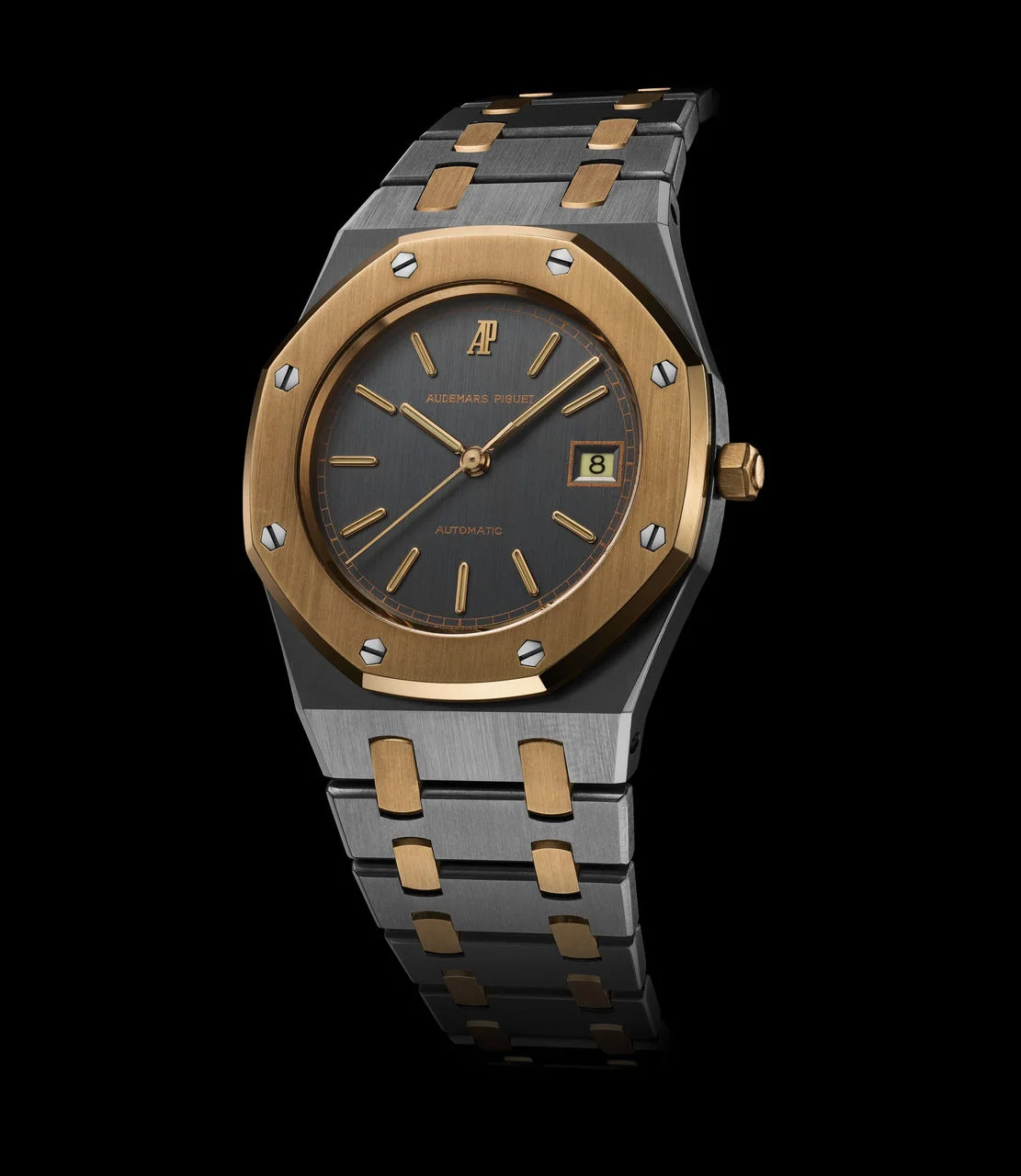
1988. Royal Oak 14486TR. Date. Vertical Dacron tantalum dial. Calibre 2130, Case 35 mm C41993. Tantalum and 18-carat pink gold. Prototype without movement probably presented at the launch of the model in 1988. Audemars Piguet Heritage, inv. 1675.

1988. Royal Oak 14486TR. Date. Vertical Dacron tantalum dial. Calibre 2130, 35 mm Case C41993. Tantalum and 18-carat pink gold. Prototype without movement probably presented at the launch of the model in 1988. Audemars Piguet Heritage, inv. 1675.

1988 Technical drawing of Royal Oak Model 14486TL engraved with the Tantalum hallmark. Audemars Piguet Archives.

1988. Royal Oak 56175TT Nick Faldo Championship. Quartz Calibre 2612, Movement 372789. Anthracite dial. 33 mm Case D5740. Tantalum and steel. Audemars Piguet Heritage, inv. 12
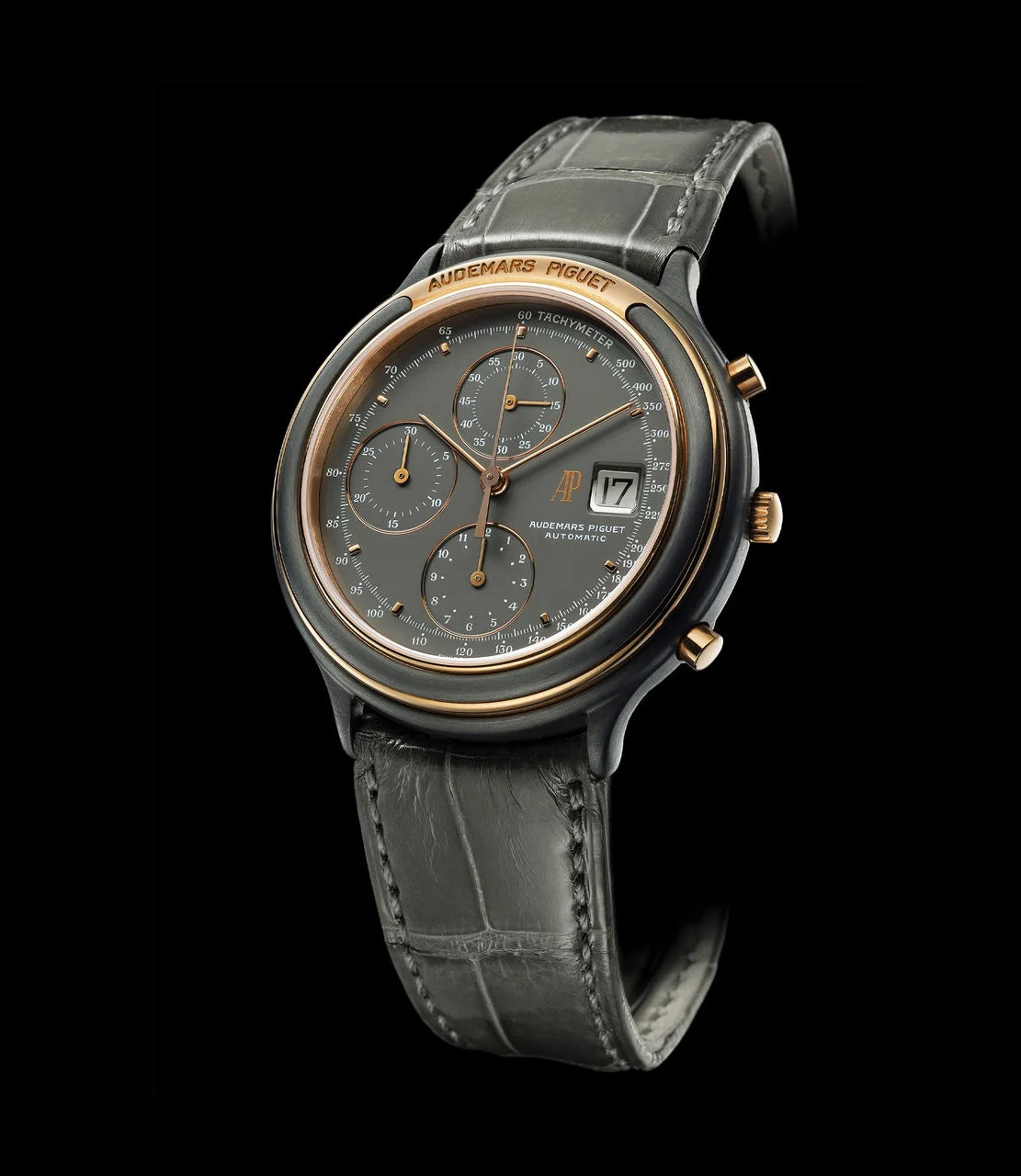
1988. Huitième 25644TR. Chronograph, date. Calibre 2126/2840, Movement 331853. Slate grey dial. 40 mm Case C79047. Tantalum and 18-carat pink gold. Audemars Piguet Heritage, inv. 817.

1988. Extract from the Production Registers. Production list of five Royal Oak Model 14486TL watches sold in 1989. Audemars Piguet Archives.

1988. Variations on Royal Oak dials. The Audemars Piguet catalogue, intended for retailers, presents a selection of dials intended to equip, on request, the various Royal Oak models, including Model 14486 with the vertical Dacron titanium dial shown bottom right. Audemars Piguet Archives.
In 1988, tantalum made a remarkable entry into the Audemars Piguet collections, and thus into the watch industry. This highly corrosion-resistant metal had often been used for its special properties, particularly in the manufacture of surgical instruments. With its grey-blue colour featuring touches of pink and purple iridescence, it offers an alternative to the use of steel.
Several Audemars Piguet models simultaneously feature this innovative material, in particular the "Huitième" 25644TR watch ("TR" means that the casing combines tantalum and pink gold). The first Royal Oak models featuring tantalum (56175TR and 66270TT) were sold at the beginning of 1988, equipped with quartz calibres, followed a few months later by Model 14486TR, making this the first tantalum Royal Oak equipped with a mechanical movement (cal. 2130).
Produced in a run of 215 units, the Royal Oak 14486TR is rarer than the steel and yellow gold version (772 units). The watch is equipped with a dial documented in the archives under the name "vertical Dacron tantalum", which made its appearance in the catalogue in the same year and which reinforces the diversity of the dials of the Royal Oak Model 14486 while offering an elegant alternative to the Tapisserie pattern. The vertical lines on the dial indeed create an impression of continuity with the ”straight-grained" satin-brushed finish on the flat sections.
Sales from 1988 to 2004: a total of 215 units, of which 24 (1988), 65 (1989), 35 (1990), 67 (1991), 7 (1992), 4 (1993), 3 (1994), 6 (1995), 3 (1996), 1 (2004).
In 1988, tantalum made a remarkable entry into the Audemars Piguet collections, and thus into the watch industry. This highly corrosion-resistant metal had often been used for its special properties, particularly in the manufacture of surgical instruments. With its grey-blue colour featuring touches of pink and purple iridescence, it offers an alternative to the use of steel.
Several Audemars Piguet models simultaneously feature this innovative material, in particular the "Huitième" 25644TR watch ("TR" means that the casing combines tantalum and pink gold). The first Royal Oak models featuring tantalum (56175TR and 66270TT) were sold at the beginning of 1988, equipped with quartz calibres, followed a few months later by Model 14486TR, making this the first tantalum Royal Oak equipped with a mechanical movement (cal. 2130).
Produced in a run of 215 units, the Royal Oak 14486TR is rarer than the steel and yellow gold version (772 units). The watch is equipped with a dial documented in the archives under the name "vertical Dacron tantalum", which made its appearance in the catalogue in the same year and which reinforces the diversity of the dials of the Royal Oak Model 14486 while offering an elegant alternative to the Tapisserie pattern. The vertical lines on the dial indeed create an impression of continuity with the ”straight-grained" satin-brushed finish on the flat sections.
Sales from 1988 to 2004: a total of 215 units, of which 24 (1988), 65 (1989), 35 (1990), 67 (1991), 7 (1992), 4 (1993), 3 (1994), 6 (1995), 3 (1996), 1 (2004).

1990. Extract from the Production Registers. Production list of five Royal Oak Model 14486BC watches sold in 1990. Audemars Piguet Archives.
The final version, Model 14486 in white gold, was sold from 1989 onwards. Only 9 were produced, making it the rarest version.
For the record, that same year Calibres 2130 and 2131 were replaced at the beginning of the 1990s by Calibres 2150 and 2151, enabling the date to be adjusted without touching the hands.
Sales from 1989 to 1993: a total of 9 units, of which 1 (1989), 6 (1990) and 2 (1993).
The final version, Model 14486 in white gold, was sold from 1989 onwards. Only 9 were produced, making it the rarest version.
For the record, that same year Calibres 2130 and 2131 were replaced at the beginning of the 1990s by Calibres 2150 and 2151, enabling the date to be adjusted without touching the hands.
Sales from 1989 to 1993: a total of 9 units, of which 1 (1989), 6 (1990) and 2 (1993).