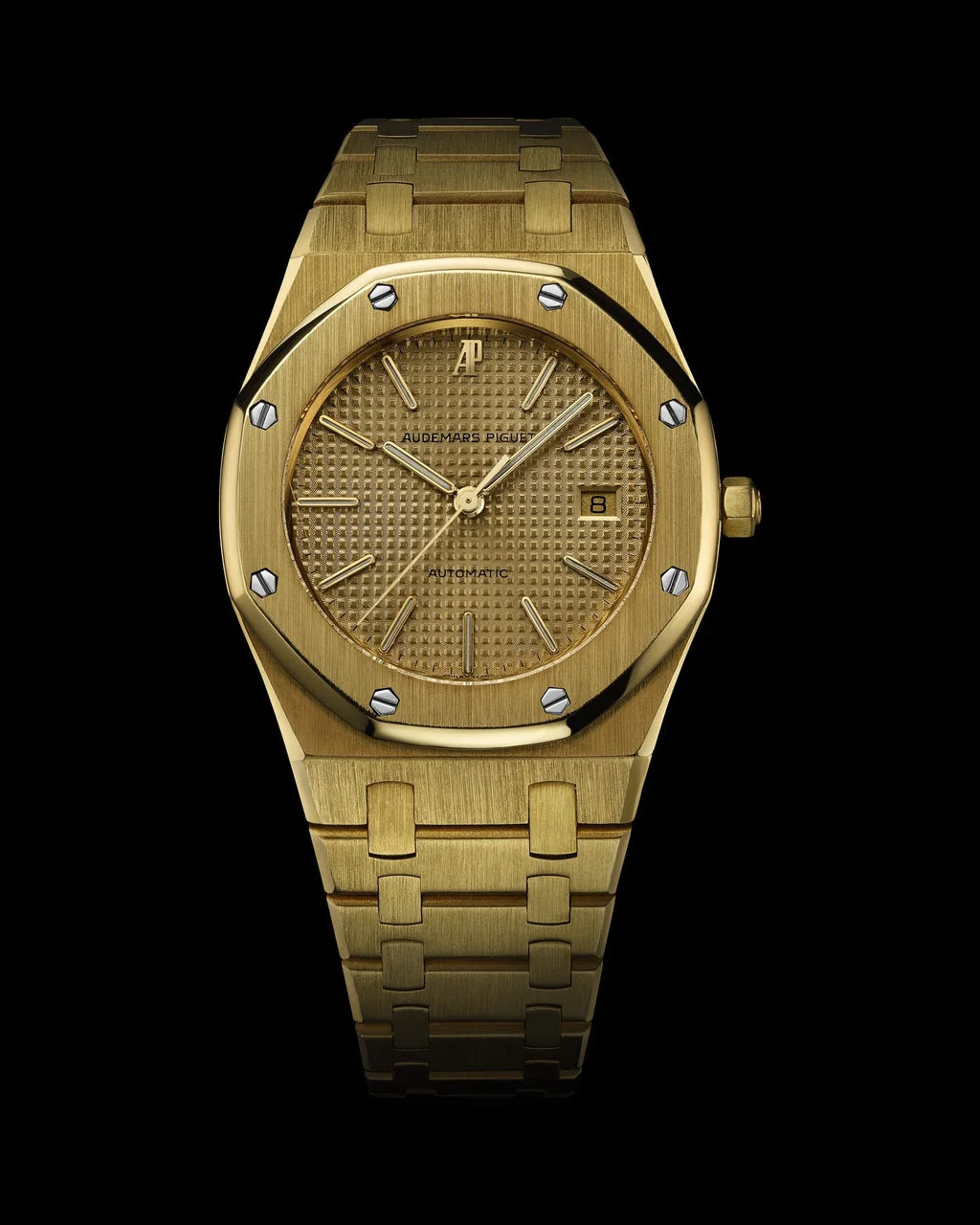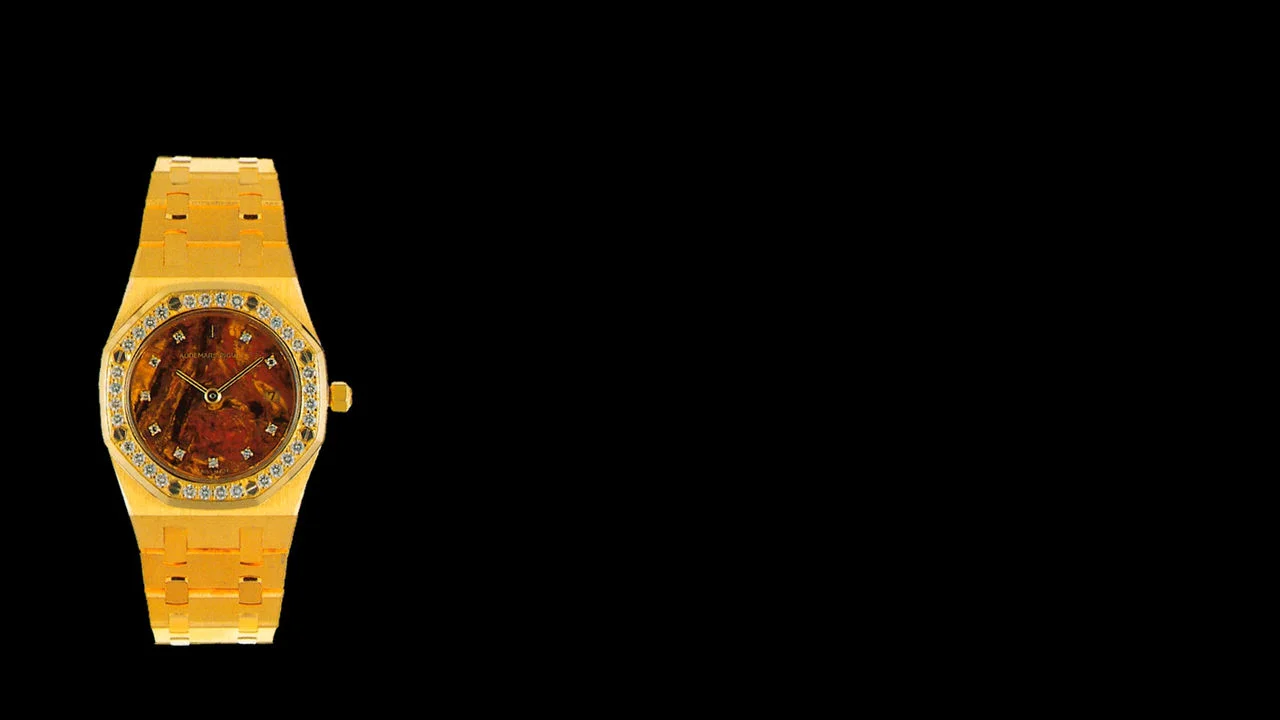
14587, Royal OakHaute Joaillerie
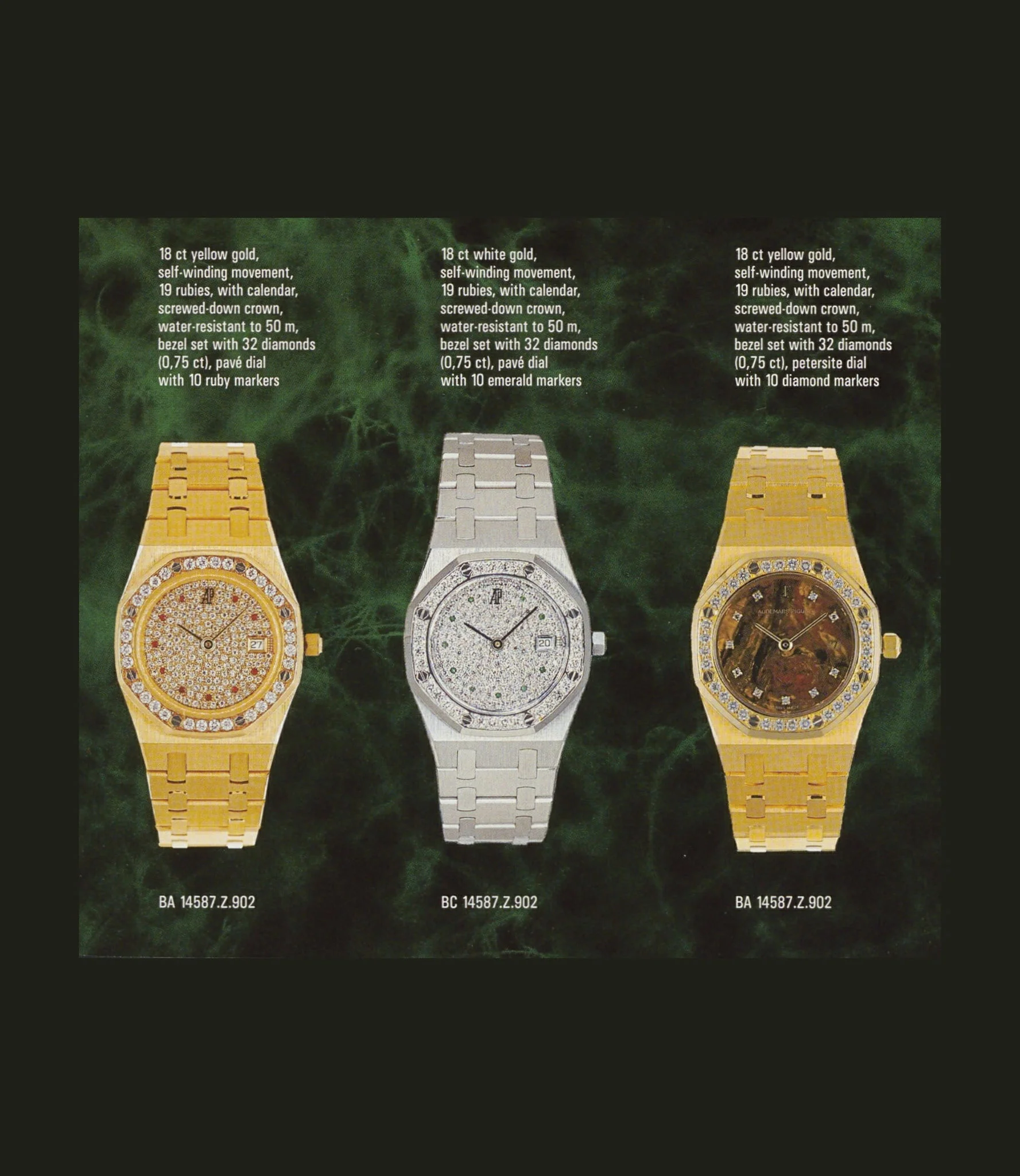
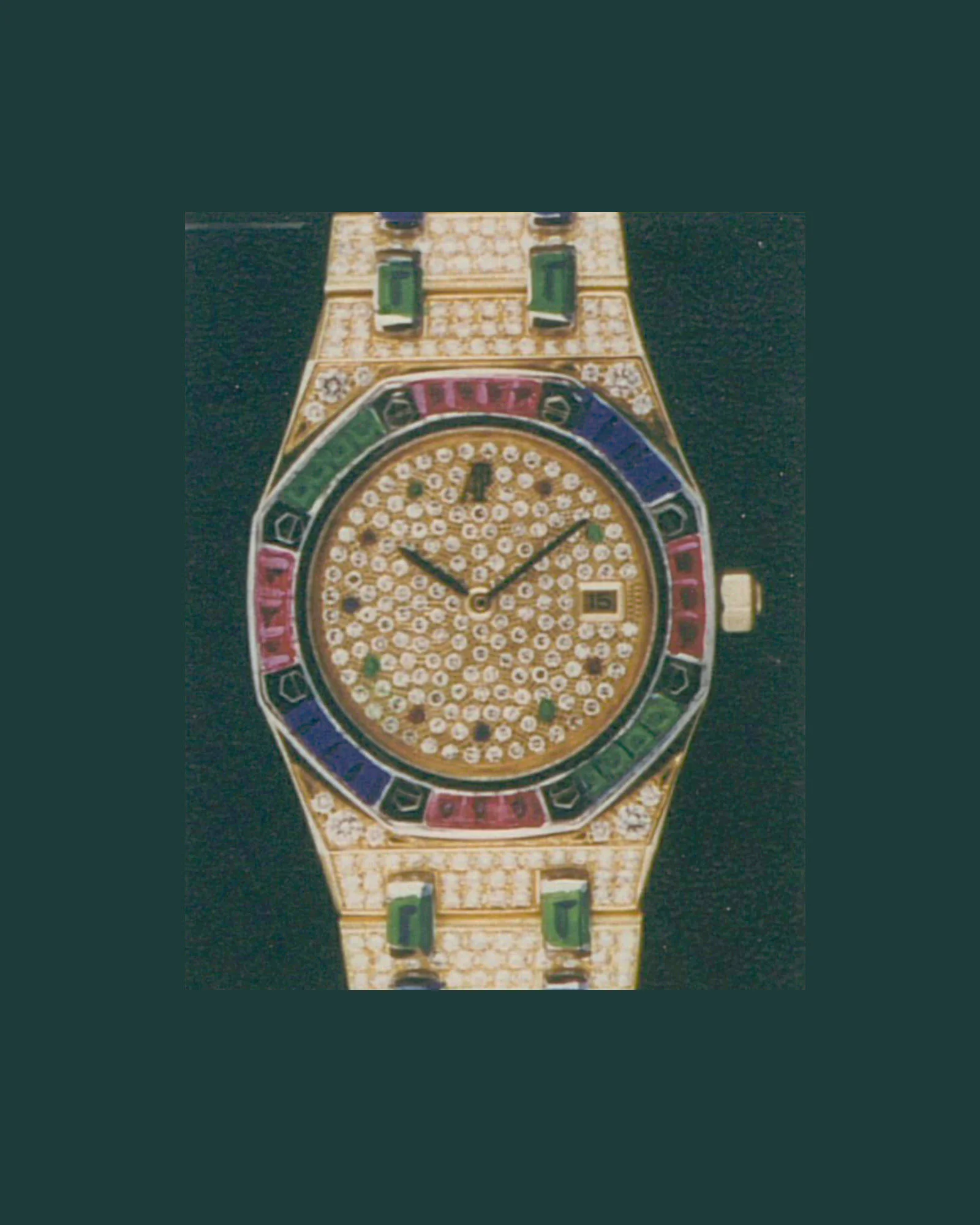
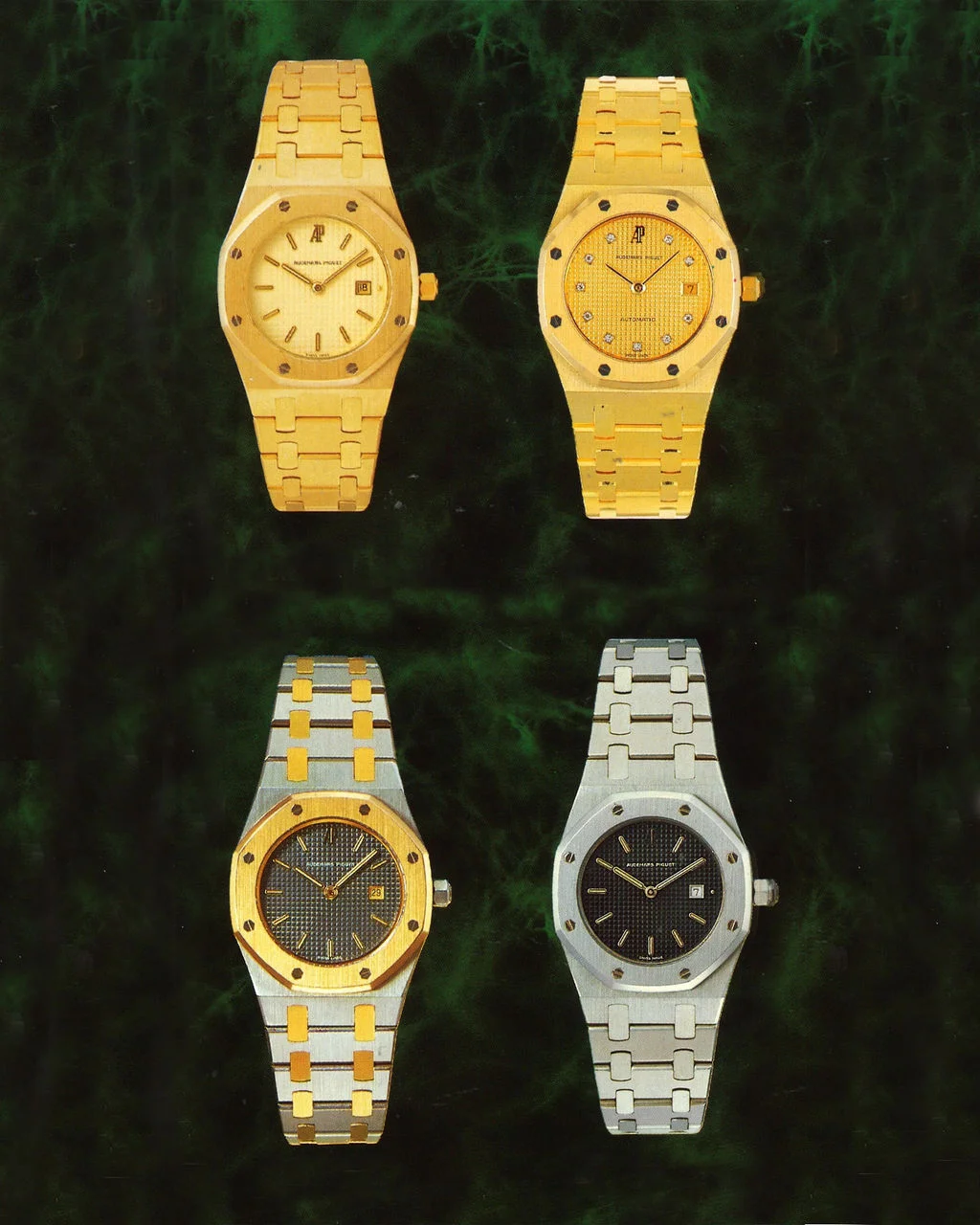
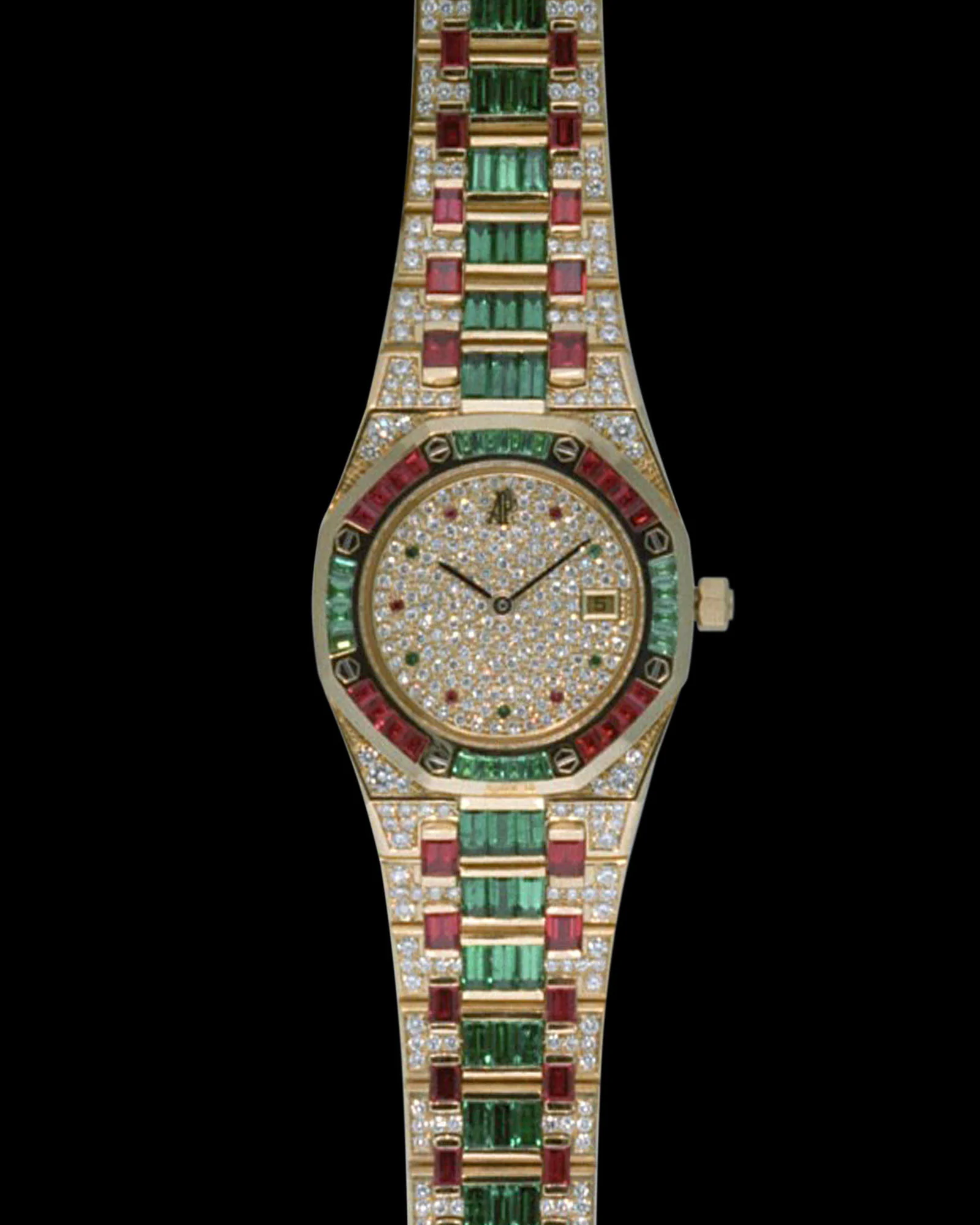
1994. Three variations of Royal Oak Model 14587. Promotional brochure. Audemars Piguet Archives
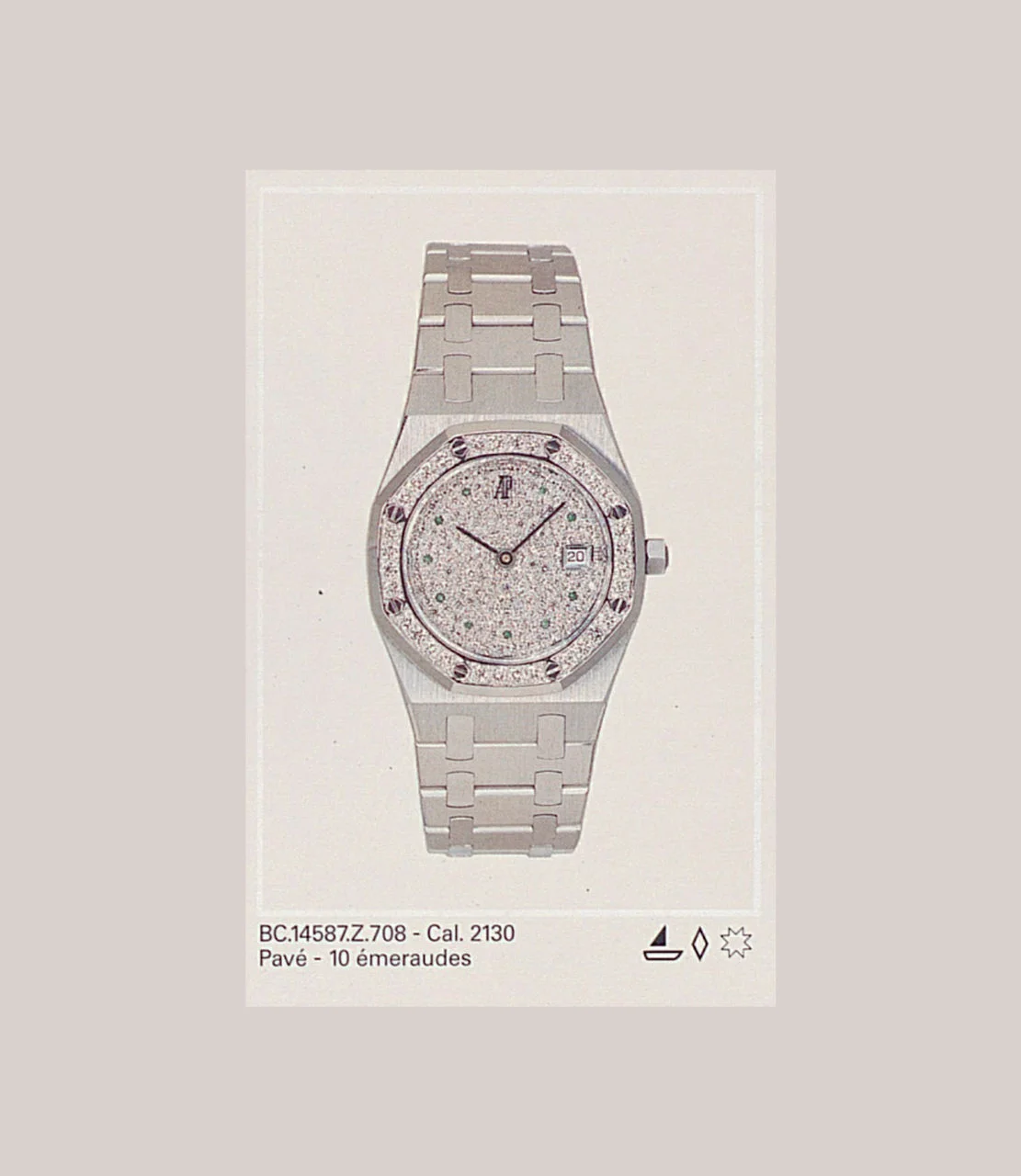
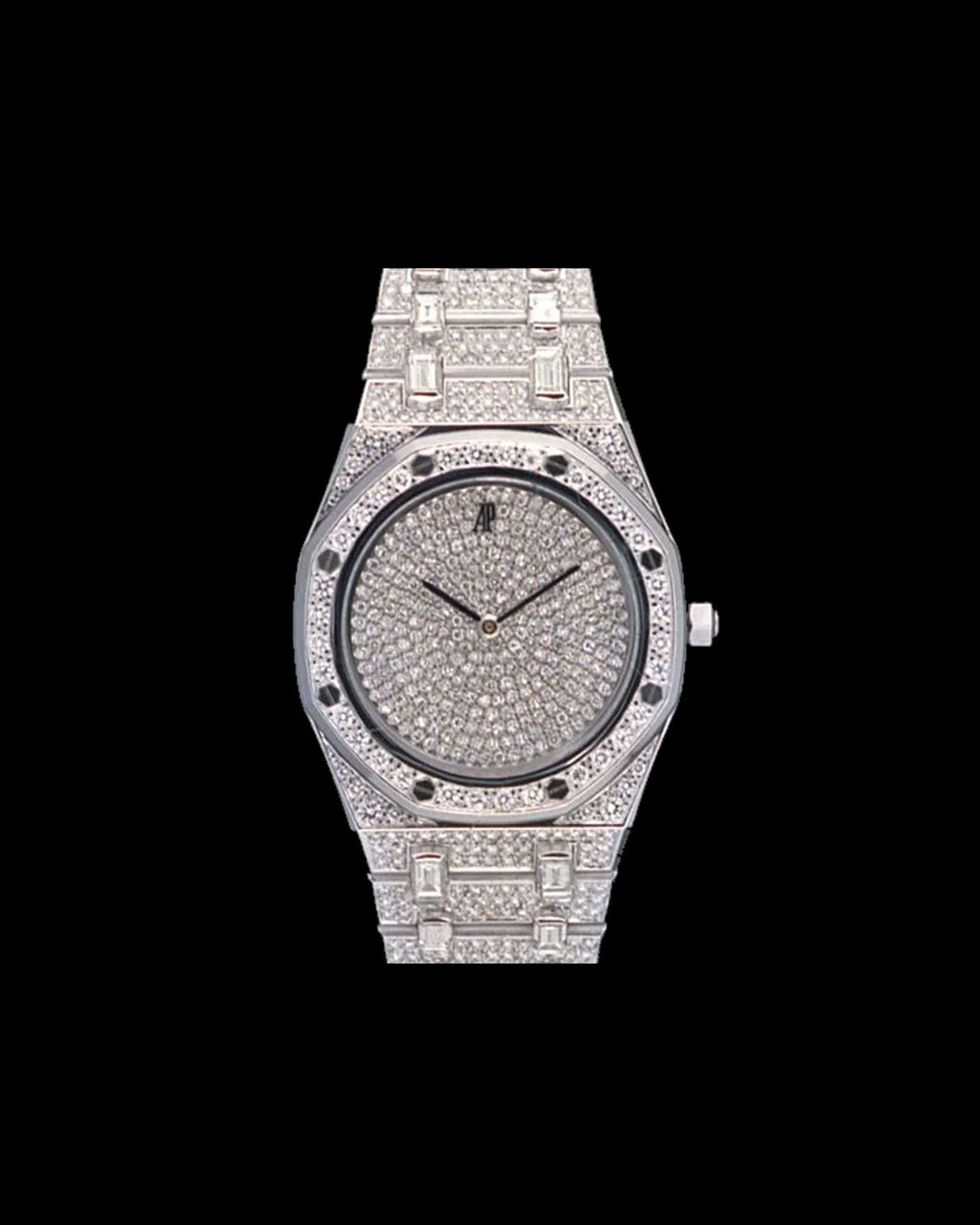
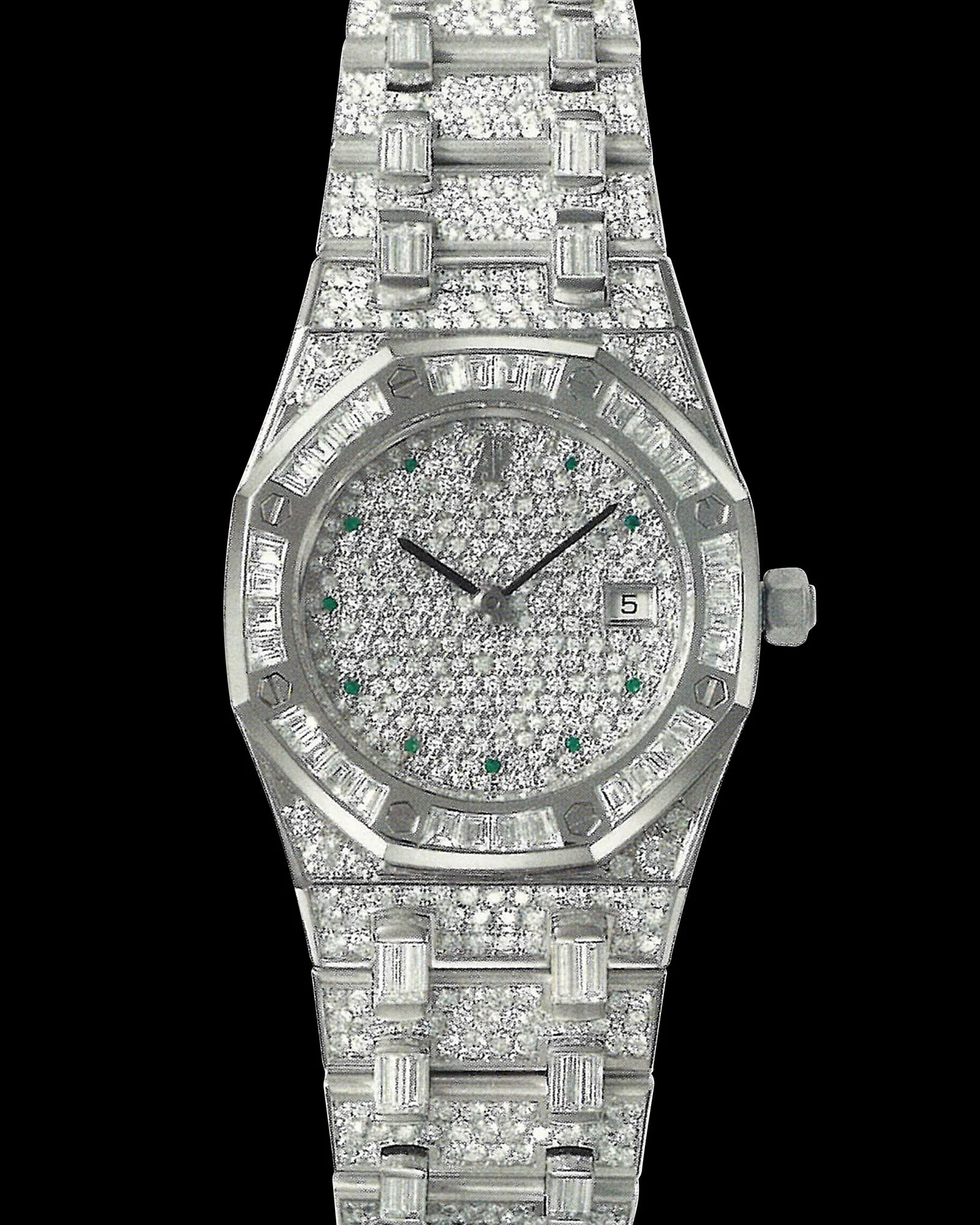
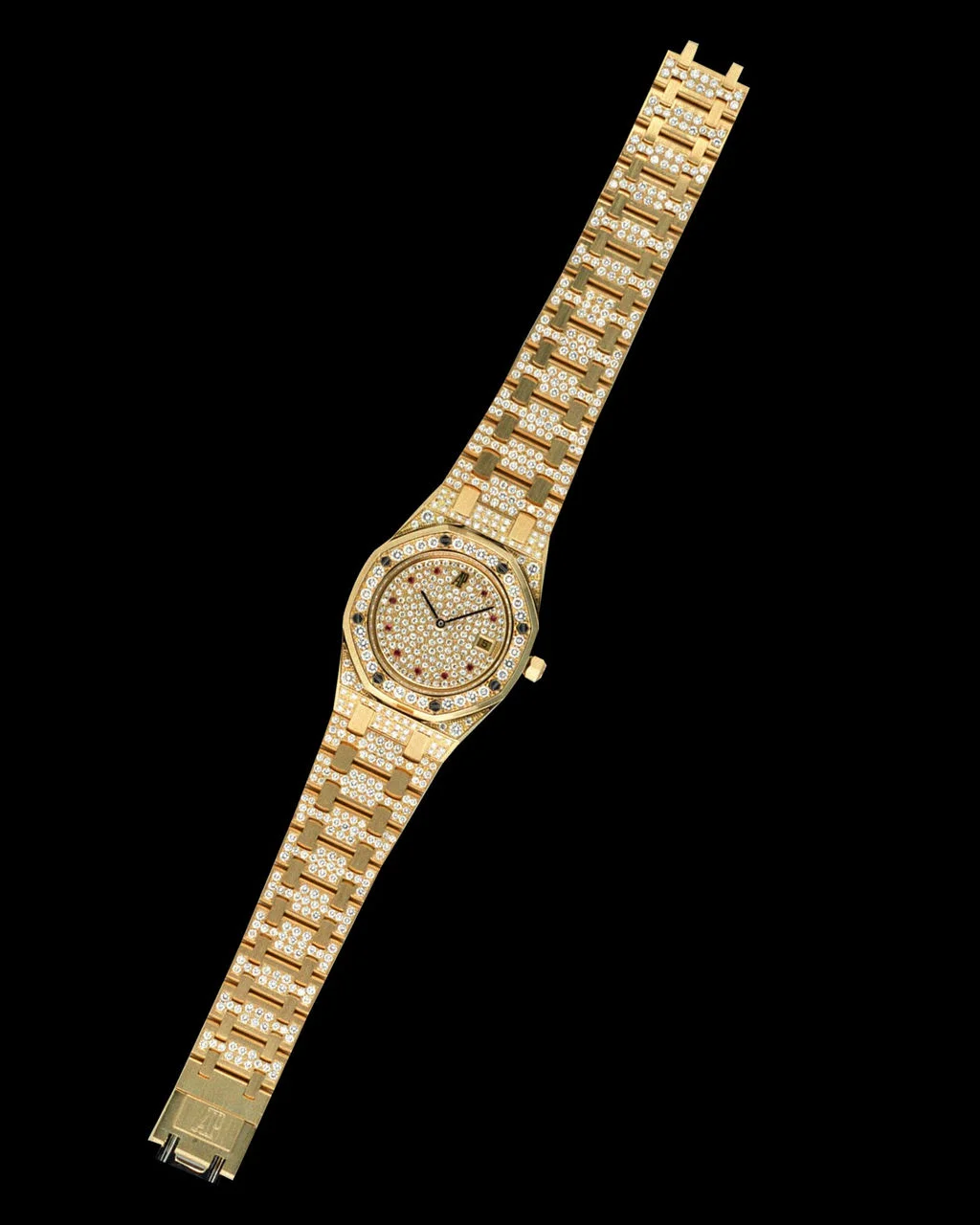
1990. Photograph of Model 14587BC presented in the 1990-1991 Audemars Piguet catalogue. Audemars Piguet Archives.
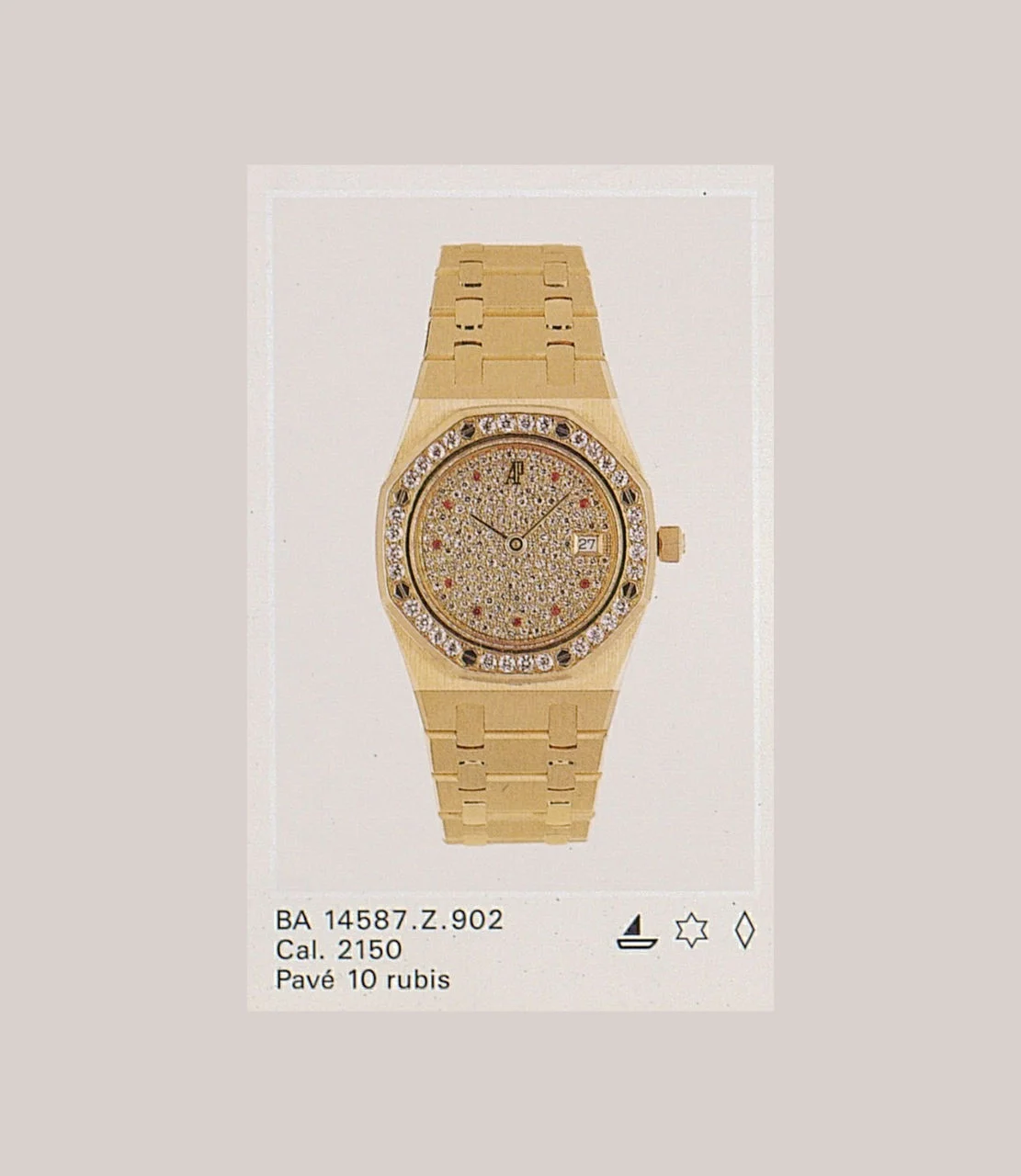
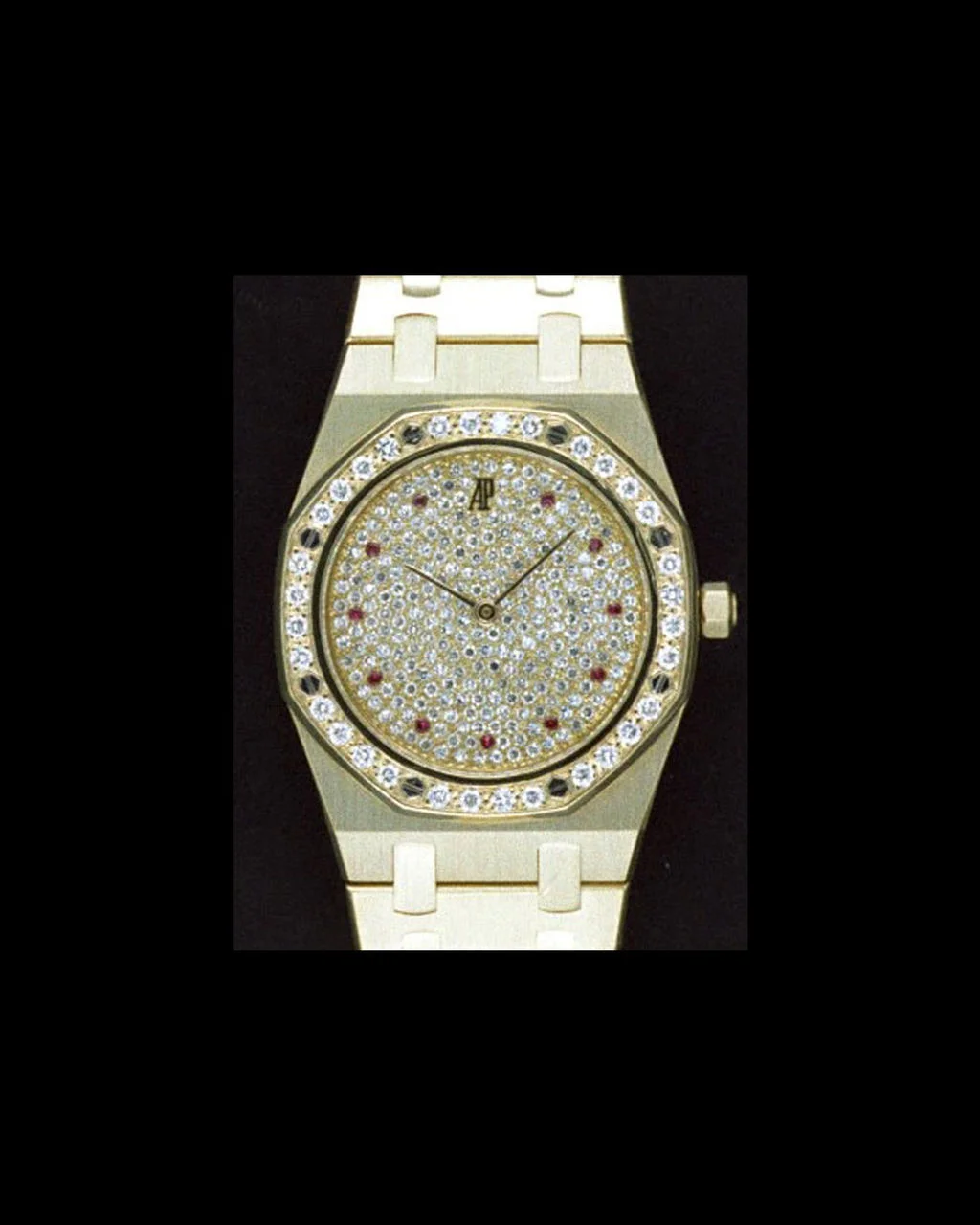
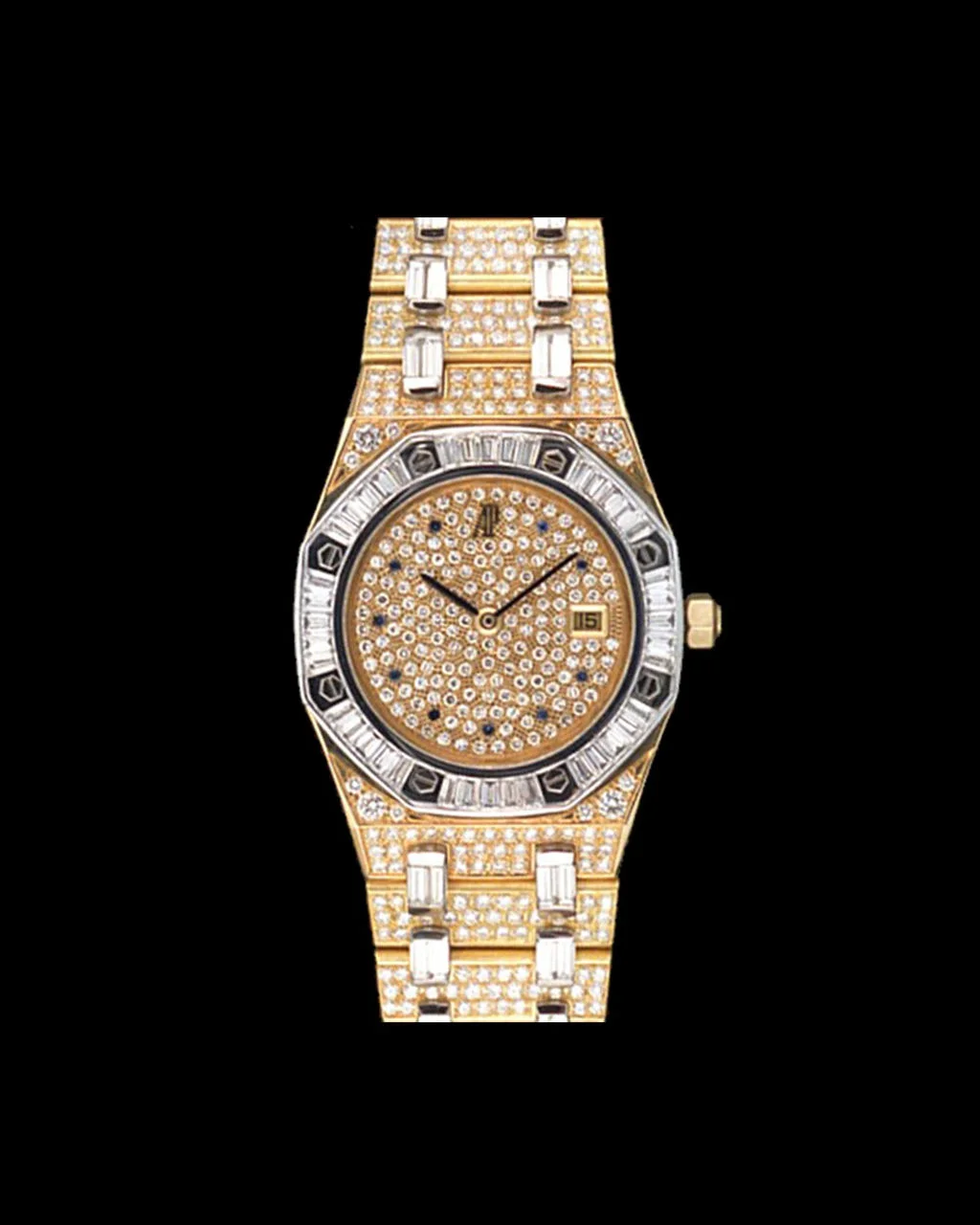
1993. Photograph of the model 14587BA presented in the 1993-1994 Audemars Piguet catalogue. Audemars Piguet Archives

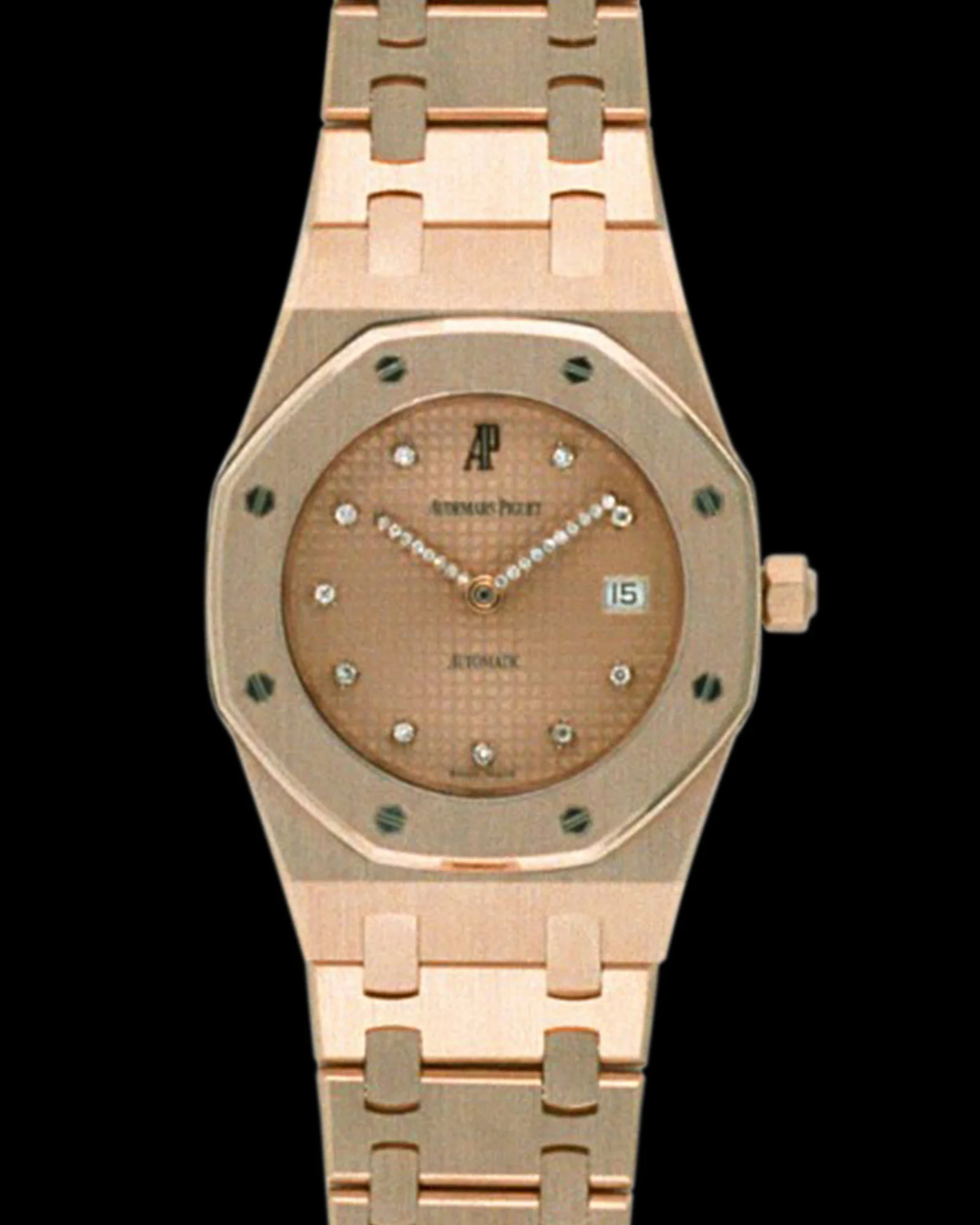
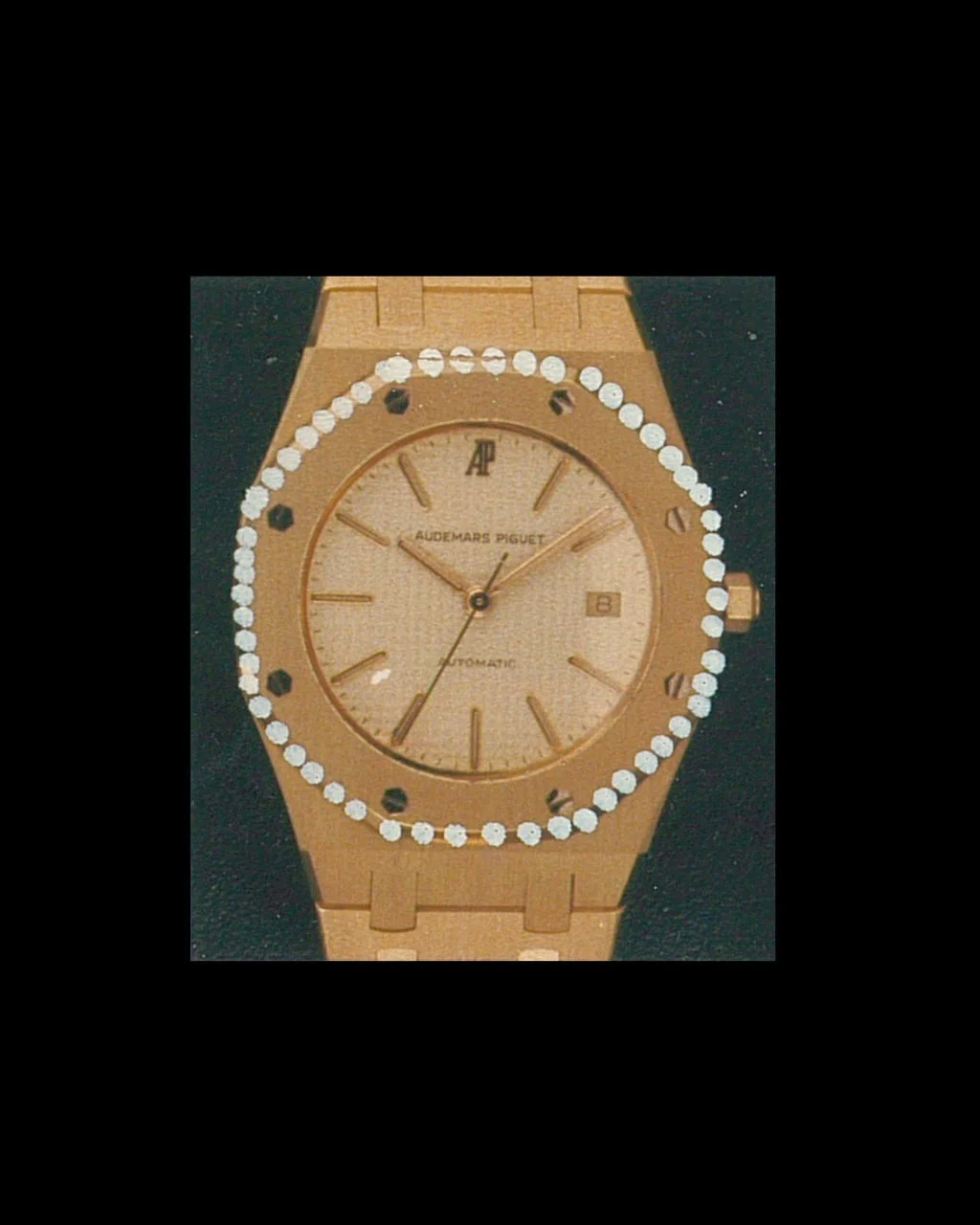
Circa 1988. Identification photograph of Model 14587. Audemars Piguet Archives.

1994. Technical data for Royal Oak Models 14587BA and BC. Audemars Piguet Archives.

1995. Extract from the Production Registers mentioning the two examples of Model 14587 in pink gold and the single variation in tantalum and pink gold. Audemars Piguet Archives.
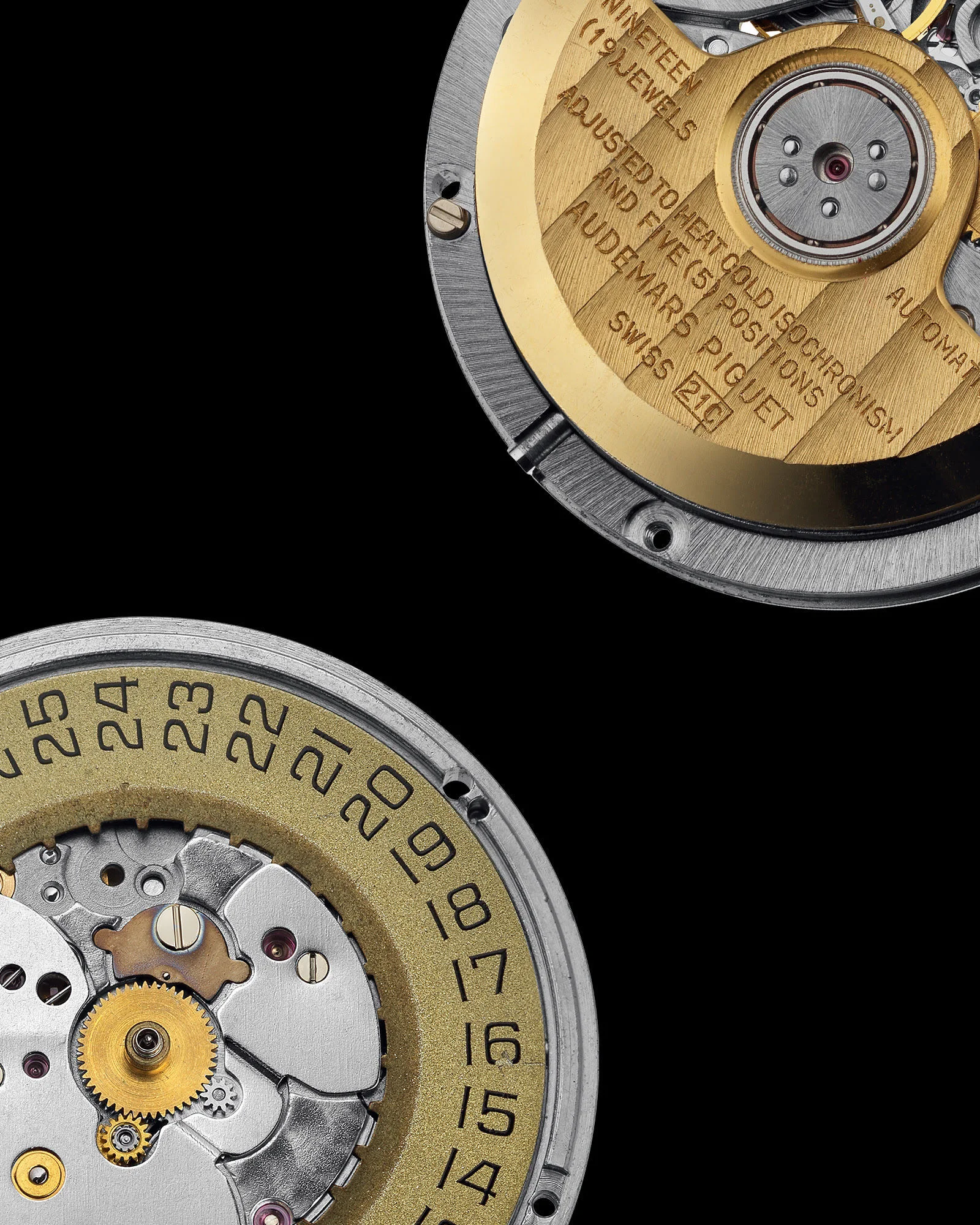
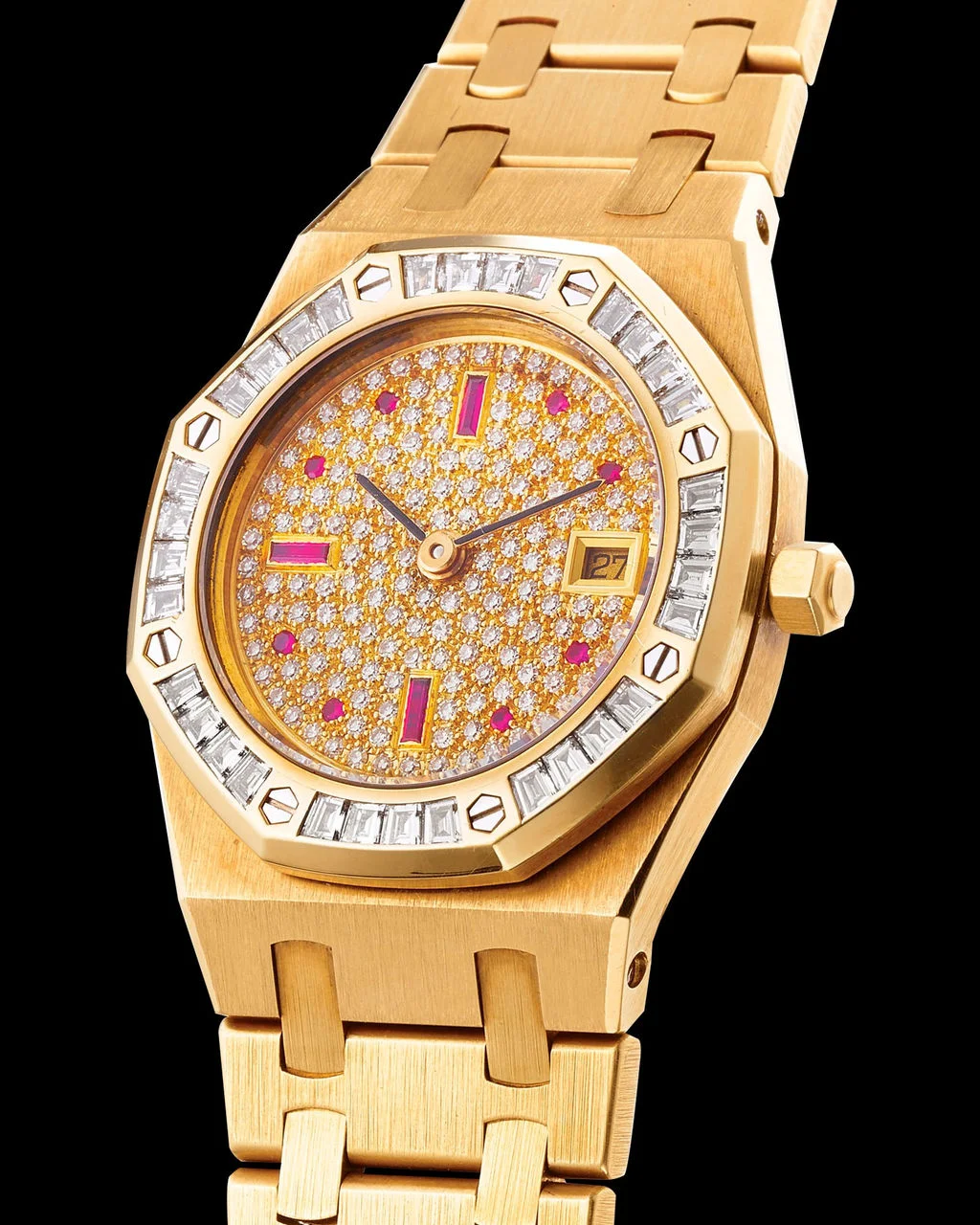
The Royal Oak 14587 combines the small size (30 mm), mechanical excellence (selfwinding calibre) and avant-garde design of the Royal Oak with the brilliance of diamonds. A jewellery variant of Model 14470, it made its first appearance in 1988, two years after the model from which it was derived and of which it bore the small case numbers.
The three variations documented in the Audemars Piguet archives all feature a bezel set with 32 diamonds. Their dials are most often paved with precious stones (diamonds, emeralds, rubies). However, a 1994 brochure pictures a model with a dial made of Pietersite, a mineral discovered in 1962 by Sidney Pieters, featuring a mixture of hawk’s eye and tiger’s eye, which was only marketed from the 1990s onwards.
After yellow gold (BA), Audemars Piguet introduced white gold (BC) variants in 1990. A total of 206 models left the Le Brassus workshops in 10 years. Of these, only two were in pink gold (OR), and only one combined tantalum with pink gold (TR). None of these three watches were photographed before leaving Le Brassus, and none have reappeared at auction.
A total of 206 units were sold between 1988 and 1997: of which 3 (1988), 19 (1989), 39 (1990), 17 (1991), 41 (1992), 17 (1993), 20 (1994), 37 (1995), 8 (1996) and 5 (1997).
14587BA. Sales from 1988 to 1997: a total of 92 units, of which 3 (1988), 19 (1989), 19 (1990), 10 (1991), 10 (1992), 6 (1993), 16 (1994), 2 (1995), 5 (1996) and 2 (1997).
14587BC. Sales from 1990 to 1997: a total of 11 units, of which 20 (1990), 7 (1991), 31 (1992), 11 (1993), 4 (1994), 33 (1995), 2 (1996) and 3 (1997).
14587OR
Sales from 1995 to 1996: a total of 2 units, of which 1 per year.
14587TR
1 sold in 1995.
Version derived from Model 14470.
The Royal Oak 14587 combines the small size (30 mm), mechanical excellence (selfwinding calibre) and avant-garde design of the Royal Oak with the brilliance of diamonds. A jewellery variant of Model 14470, it made its first appearance in 1988, two years after the model from which it was derived and of which it bore the small case numbers.
The three variations documented in the Audemars Piguet archives all feature a bezel set with 32 diamonds. Their dials are most often paved with precious stones (diamonds, emeralds, rubies). However, a 1994 brochure pictures a model with a dial made of Pietersite, a mineral discovered in 1962 by Sidney Pieters, featuring a mixture of hawk’s eye and tiger’s eye, which was only marketed from the 1990s onwards.
After yellow gold (BA), Audemars Piguet introduced white gold (BC) variants in 1990. A total of 206 models left the Le Brassus workshops in 10 years. Of these, only two were in pink gold (OR), and only one combined tantalum with pink gold (TR). None of these three watches were photographed before leaving Le Brassus, and none have reappeared at auction.
A total of 206 units were sold between 1988 and 1997: of which 3 (1988), 19 (1989), 39 (1990), 17 (1991), 41 (1992), 17 (1993), 20 (1994), 37 (1995), 8 (1996) and 5 (1997).
14587BA. Sales from 1988 to 1997: a total of 92 units, of which 3 (1988), 19 (1989), 19 (1990), 10 (1991), 10 (1992), 6 (1993), 16 (1994), 2 (1995), 5 (1996) and 2 (1997).
14587BC. Sales from 1990 to 1997: a total of 11 units, of which 20 (1990), 7 (1991), 31 (1992), 11 (1993), 4 (1994), 33 (1995), 2 (1996) and 3 (1997).
14587OR
Sales from 1995 to 1996: a total of 2 units, of which 1 per year.
14587TR
1 sold in 1995.
Version derived from Model 14470.