Jumping Hour
The First Apertures
Early horologists must have wondered about the best way to display the passing of time. Surprisingly, they began by using sound, so that everyone living in towns and villages could know the time simultaneously. This is no doubt why the French word clocher (belltower) and the English term “clock” both derive from the Late Latin word clocca (bell). However, this system involving a bell struck with a hammer to indicate the time soon reached its limits, as one had to wait for the hour to chime to know the time. Blacksmith-clockmakers therefore invented a dial with hands, inspired by a shadow across a sundial.
Apertures first appeared in clockmaking during the Renaissance. The French term guichet literally means a small window. In everyday language, it refers to a small opening, sometimes fitted with a grid, cut into a door or wall to enable communication while keeping two people physically separate – such as in a castle, a prison or a bank. The opening must be large enough to enable interaction, yet small enough to limit contact to what is strictly necessary.
In horology, guichets were not initially used to indicate the time. One of the oldest and most remarkable examples can still be seen in Prague today, where around two million tourists annually admire the astronomical Orloj, its mechanical heart beating for over 600 years.
Above the dial, two small openings in the tower’s façade reveal an hourly procession of the twelve Biblical apostles. While these are actual windows, they foreshadow watch apertures.
The first apertures were used to display information supplementary to the time itself, generally of an astronomical nature. They can be found on 16th-century table clocks to indicate moon phases, and later, in the 17th century, to show the month or day of the week. Nevertheless, even on watches with astronomical complications, watchmakers long favoured the use of hands and aperture-type displays remained the exception. They only truly became established in wristwatches with the introduction of date windows at 3 o’clock.
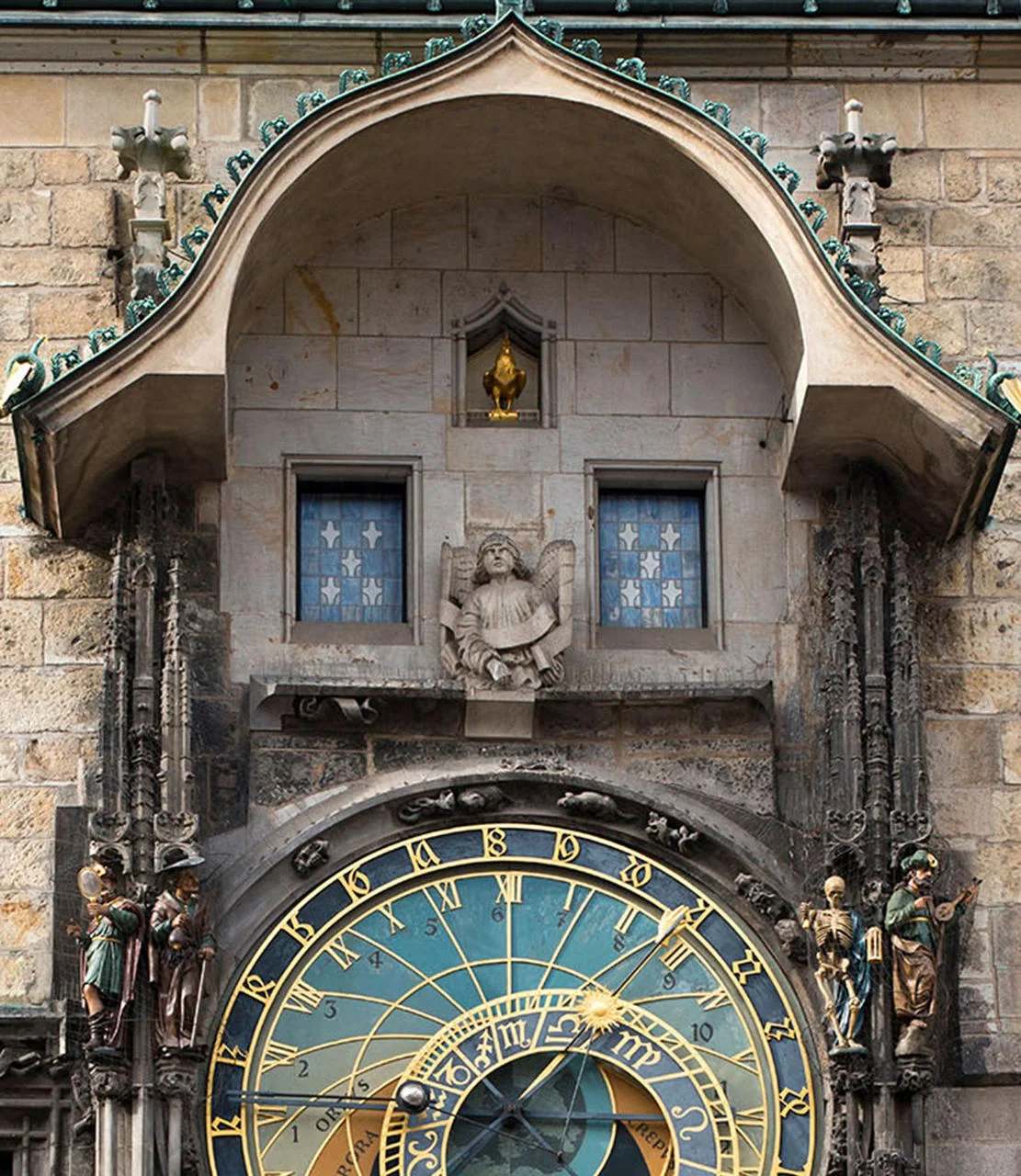
Above the Prague Astronomical Clock, two windows come to life every hour, displaying the Bible’s Twelve Apostles in succession. This is one of the earliest horological uses of display apertures (in this case, actual windows). © Alvesgaspar / Wikimedia Commons, licence CC BY-SA 4.0. Image cropped..
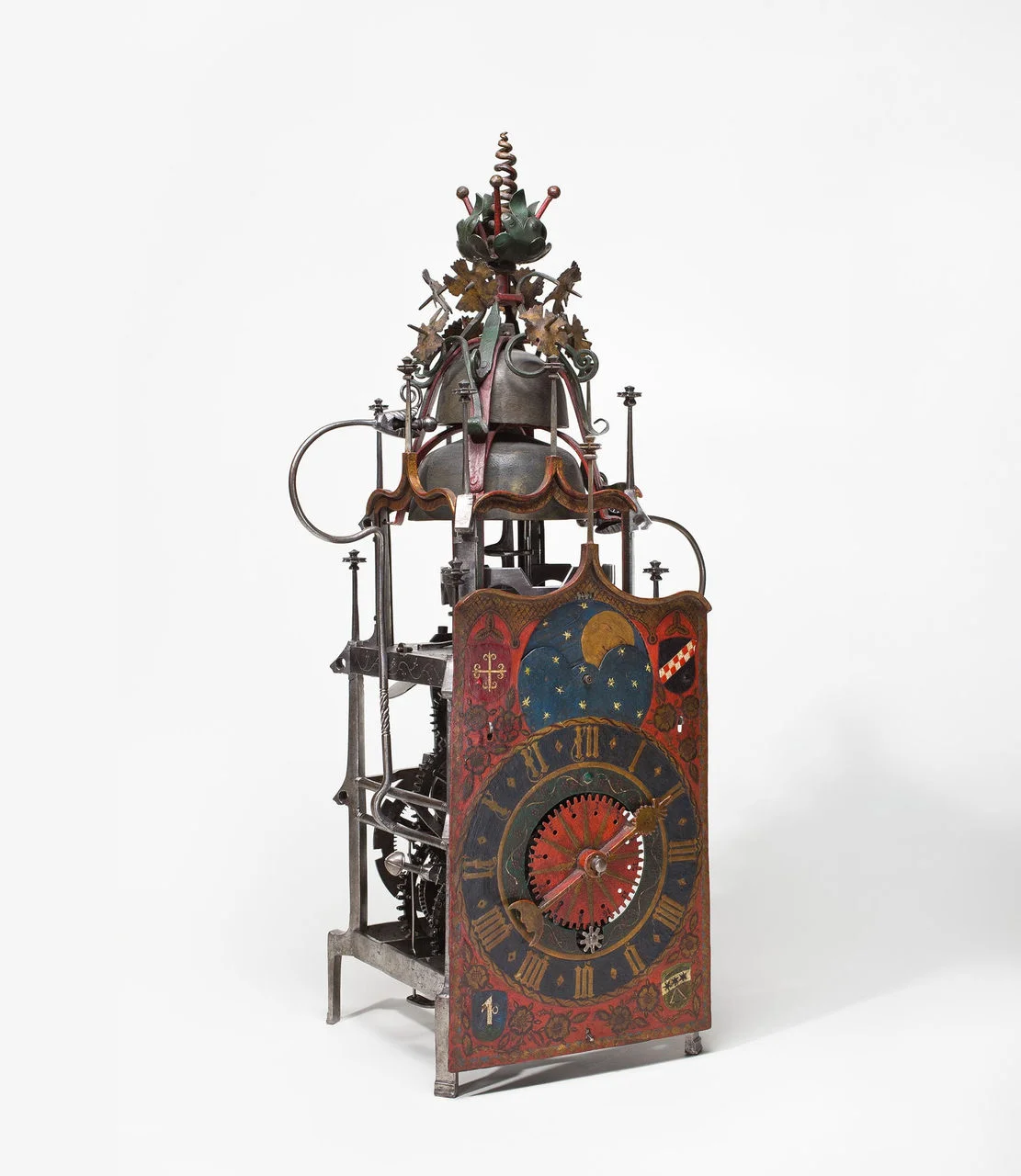
The aperture above the dial displays the moon phases. Clock signed by the Swiss clockmaker Erhard Liechti in 1572. Kellenberger Collection, Winterthur.
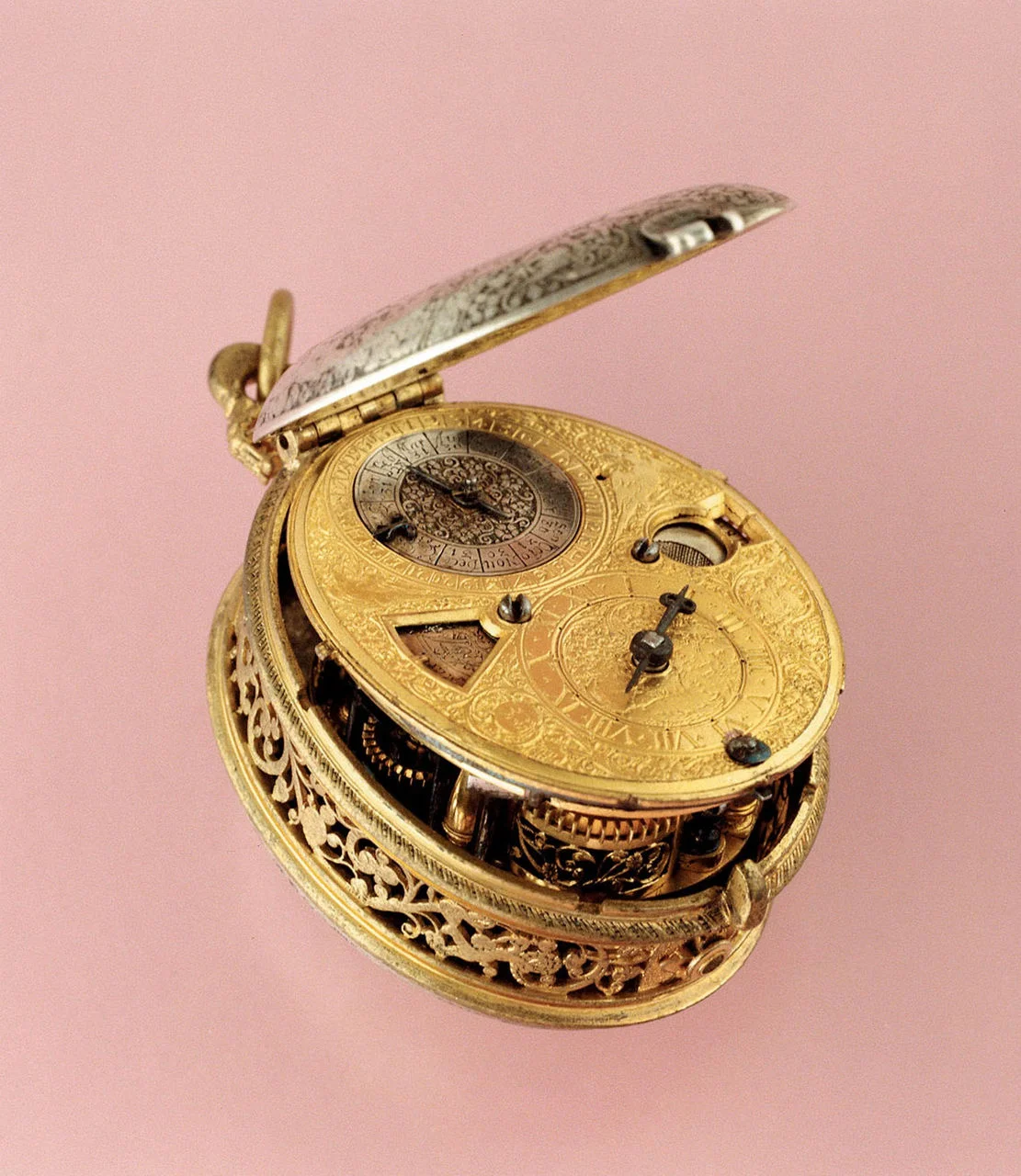
The aperture on the right displays the phases of the moon, alongside the days of the week with their symbolic figures and the date. Watch made around 1600 by Marc Girard in Blois. Musée International d’Horlogerie, La Chaux-de-Fonds, Inv. I-556.
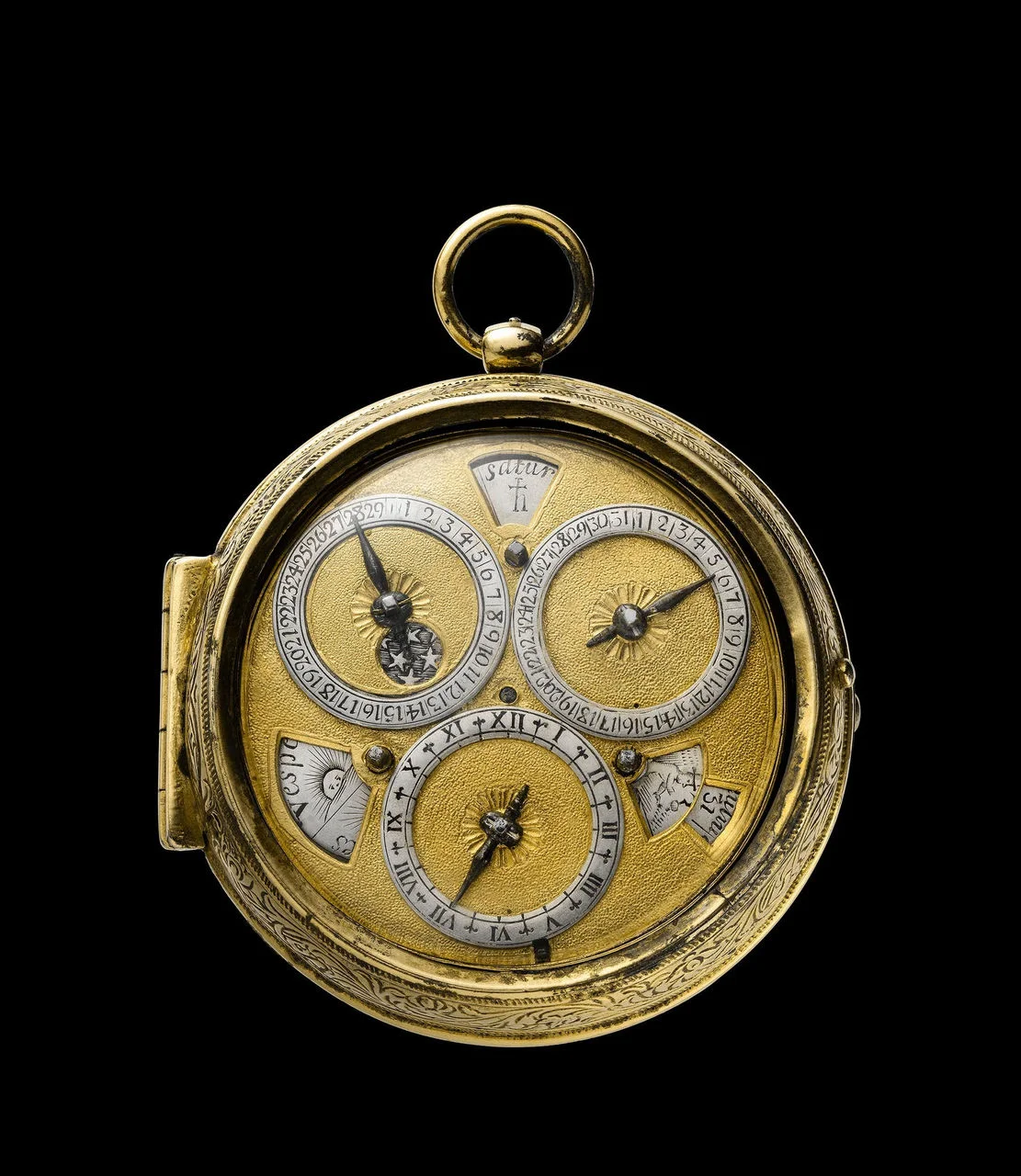
Made circa 1700 by Louis Prevost, this complication features five apertures dedicated to calendar functions: days and their astrological signs, months and their lengths, seasons and times of day. AP Heritage, Inv. 2204.
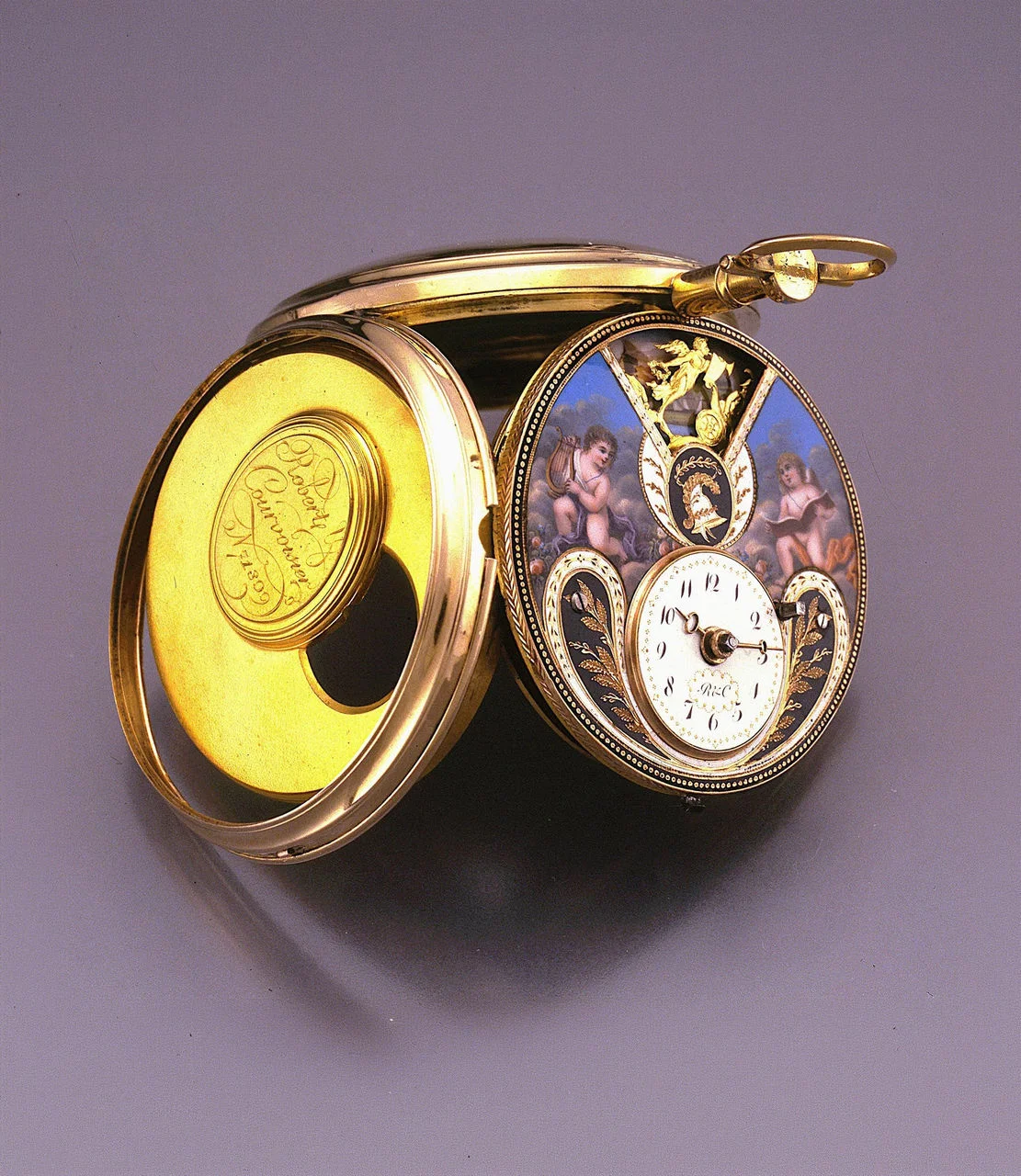
Made circa 1800 by Robert and Courvoisier in La Chaux-de-Fonds, this watch features an aperture through which figures of warriors parade on demand. Musée International d’Horlogerie, La Chaux-de-Fonds, Inv. I-1123.
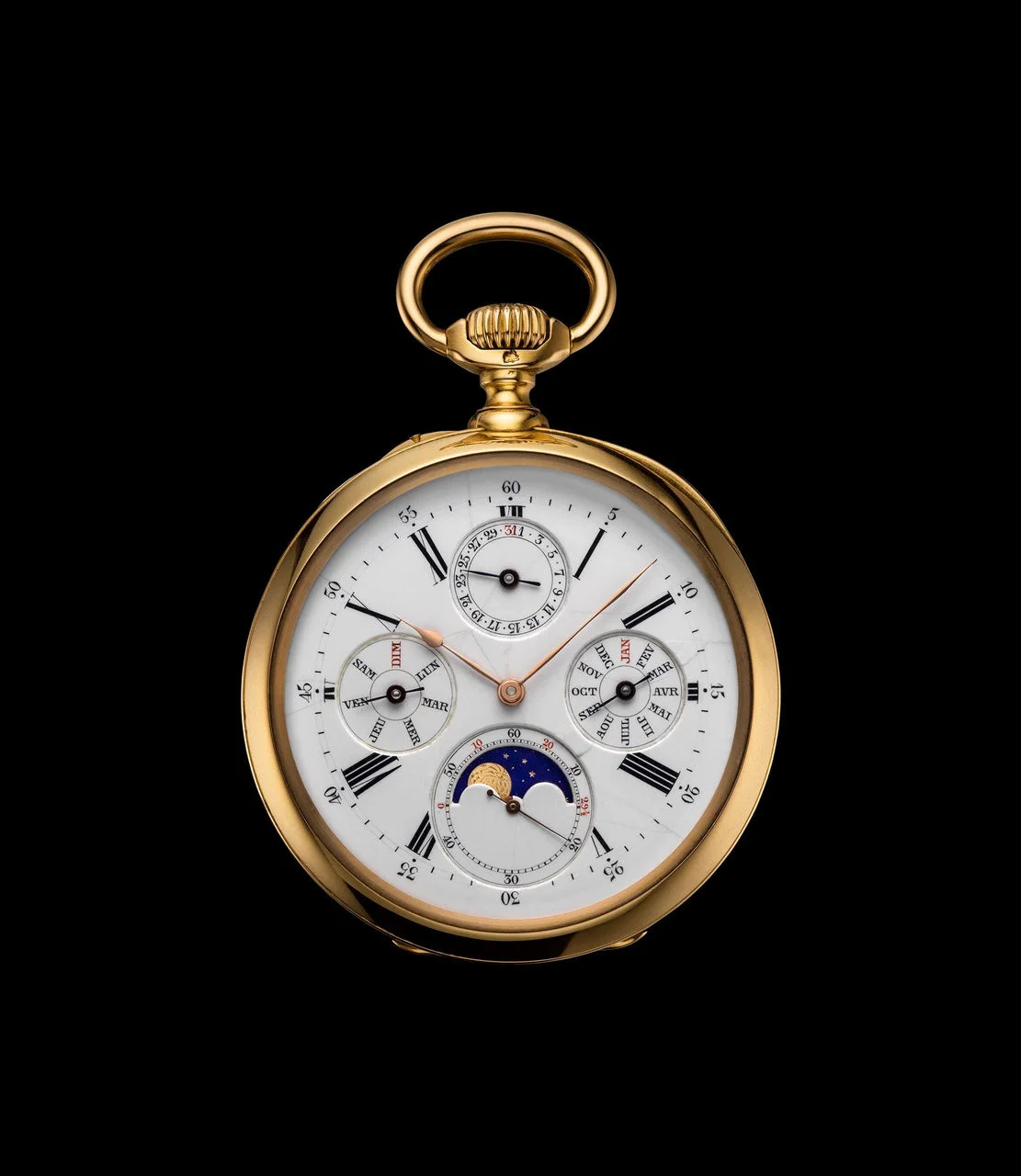
In the 19th century, apertures were most often used to display moon phases. Apprenticeship watch made by Edward Auguste Piguet circa 1875. Private collection.
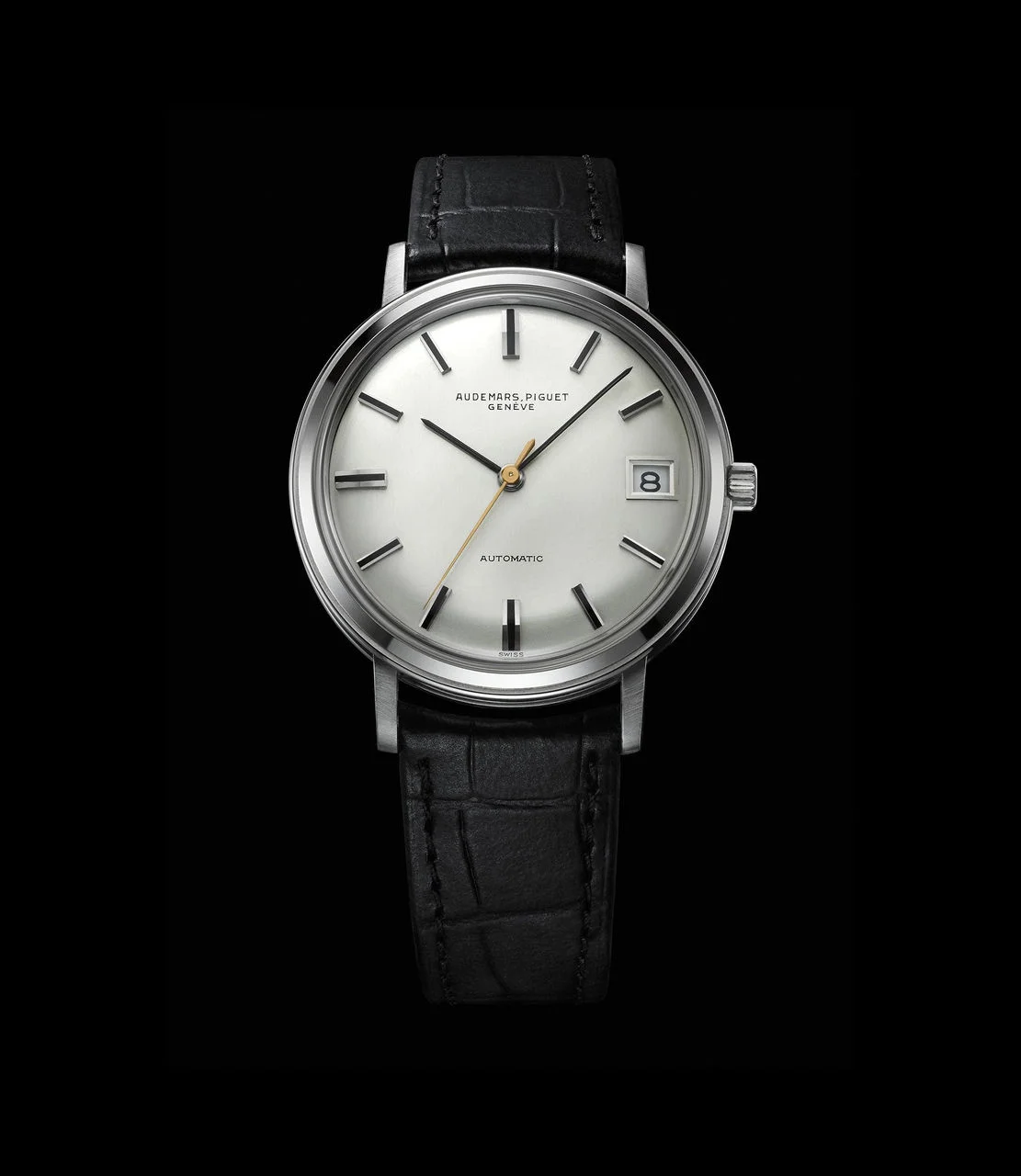
It was not until the rise of wristwatches with date displays that apertures became a regular feature in watchmaking. Model 5281, circa 1962. AP Heritage, Inv. 1864.
A Jumping, Wandering Hand
According to Audemars Piguet research, the very first indication of the hours in an aperture appeared in the mid-17th century in a highly unusual clock featuring a mechanism now known as “wandering hours”. Although these were not yet true jumping-hour models, the subject is well worth a brief detour…
In watchmaking history, it is extremely hard to know exactly for whom an invention was created. The wandering hour is an exception. In 1655, Pope Alexander VII, who suffered from insomnia, asked the Campani brothers – the clockmakers to the Vatican – to design a clock that was both silent and legible in the dark. The craftsmen accordingly devised a digital display on which the hand moved along a scale divided into quarter-hours. The numerals were cut out to allow light from an oil lamp placed inside the clock to shine through. This invention marked the birth of the “night clock”.
By the late 17th century, this display speciality had been adapted for portable watches. It reappeared in the 1800s and 1820s, before fading into near oblivion.
In the late 1980s, Audemars Piguet’s then technical director, Serge Meylan, came across an article published in 1904 by the Journal suisse d’horlogerie. Under the heading “Une montre originale”, it featured a watch from the 1820s with a wandering-hour hand. On 13 September 1989, Meylan completed the technical drawing for what would become the Star Wheel watch, launched in 1991.
This unconventional display did not achieve the expected success and disappeared from the catalogue a decade later. Meanwhile, it inspired the Urwerk brand for which it became a signature feature later adopted by several other manufacturers. In 2022, the new Code 11.59 by Audemars Piguet collection welcomed its first Starwheel variant, notably featuring a jumping-hour mechanism specially reworked for the occasion.
That being said, let us return to the jumping hour!
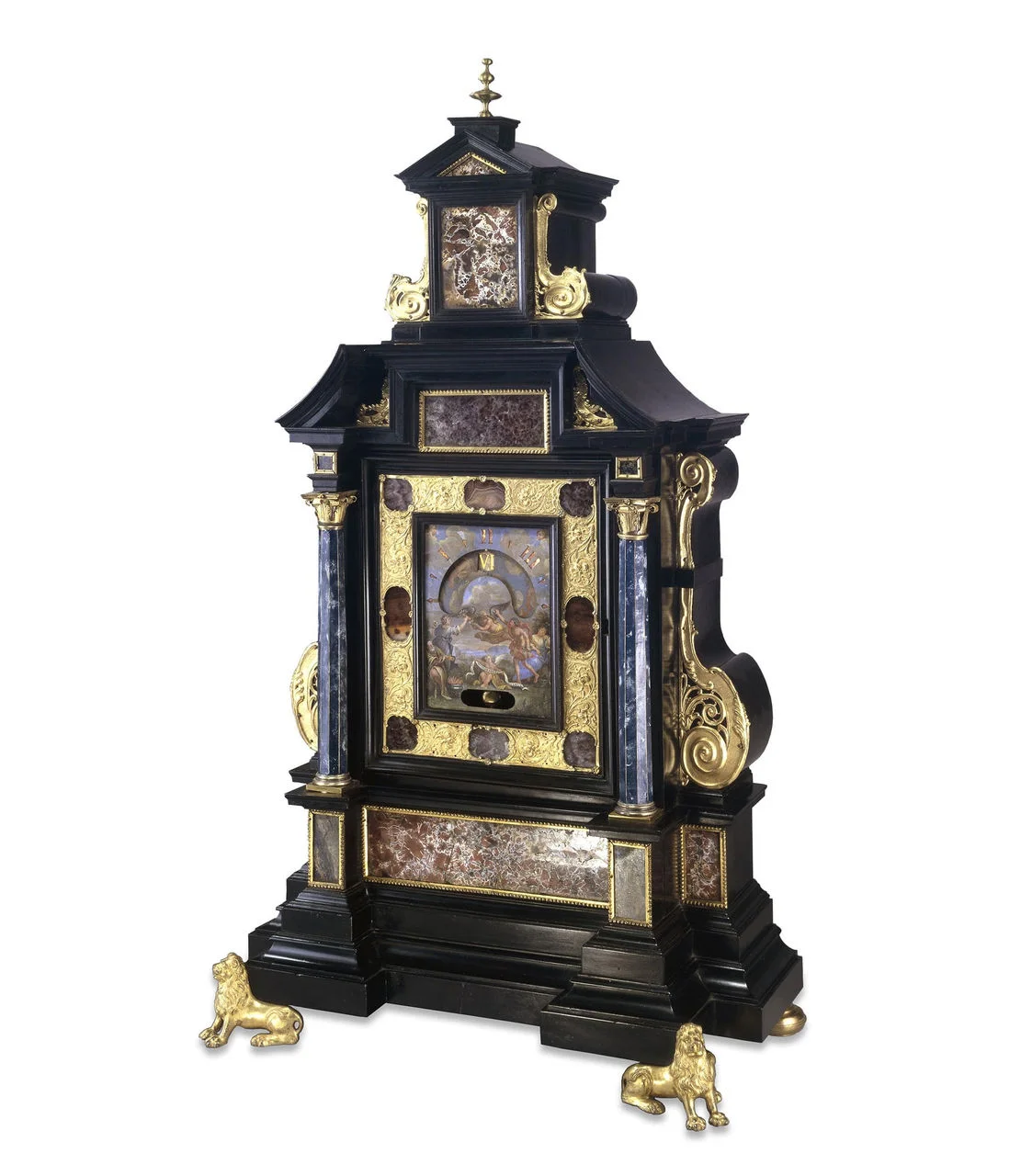
Invented in Rome around 1660, the first night clocks were both silent and readable in the dark. Night clock in ebony, brass and gold. By Pietro Tomaso Campani, 1681. British Museum, London.
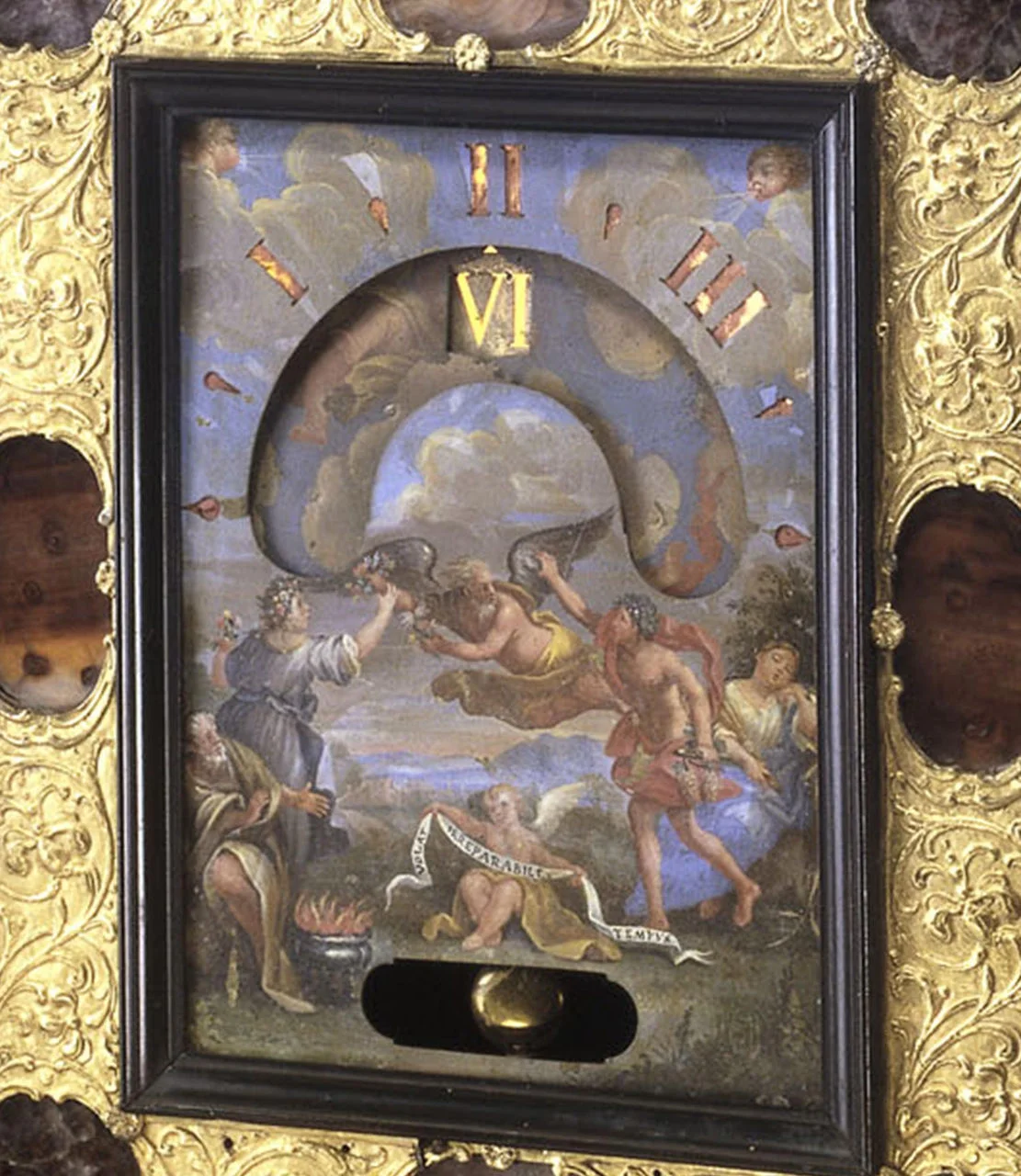
Framed by a large semi-circular aperture, a smaller square aperture displays the hour, slowly advancing to mark the quarter-hours (the time shown in this picture is 4:30). Detail of the night clock in ebony, brass and gold. By Pietro Tomaso Campani, 1681. British Museum, London.
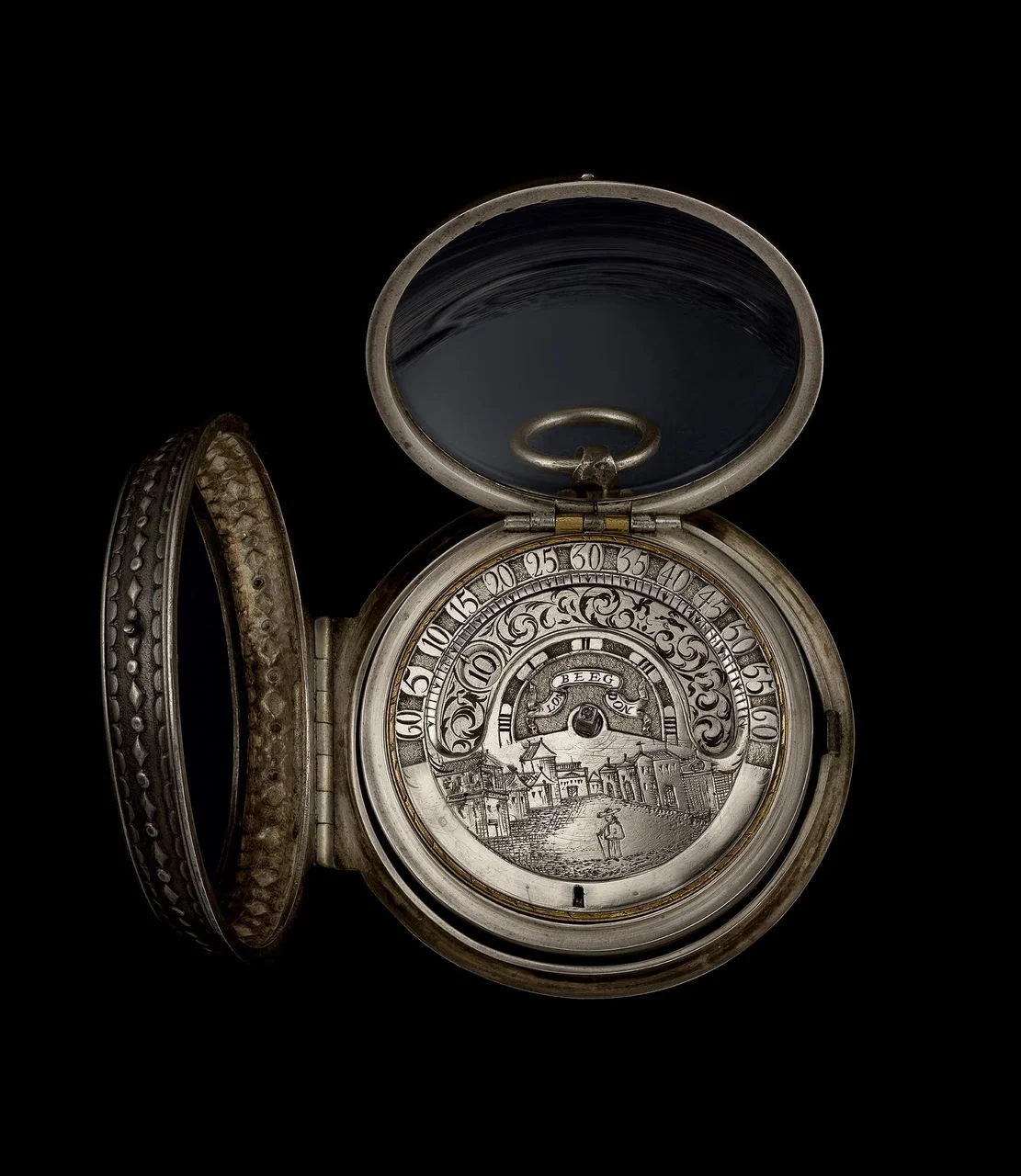
The hours aperture shows 10. As it is positioned opposite the number 10, the time is therefore 10:10. Made by English clockmaker Christian Beeg circa 1700. AP Heritage, Inv. 1.
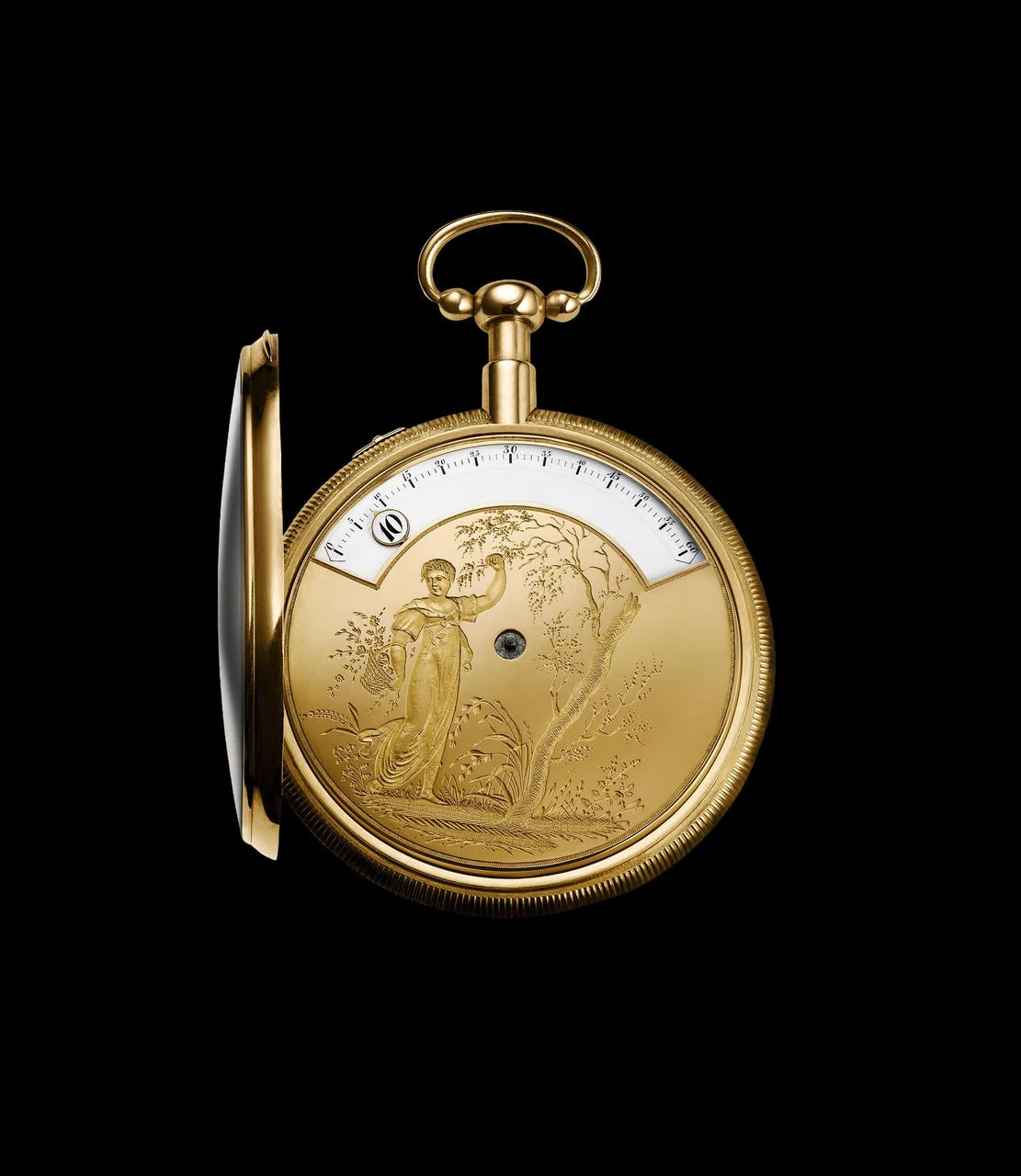
The hours hand moves along the 60-minute scale. Vaucher Frères watch made circa 1820. AP Heritage, Inv. 2005.
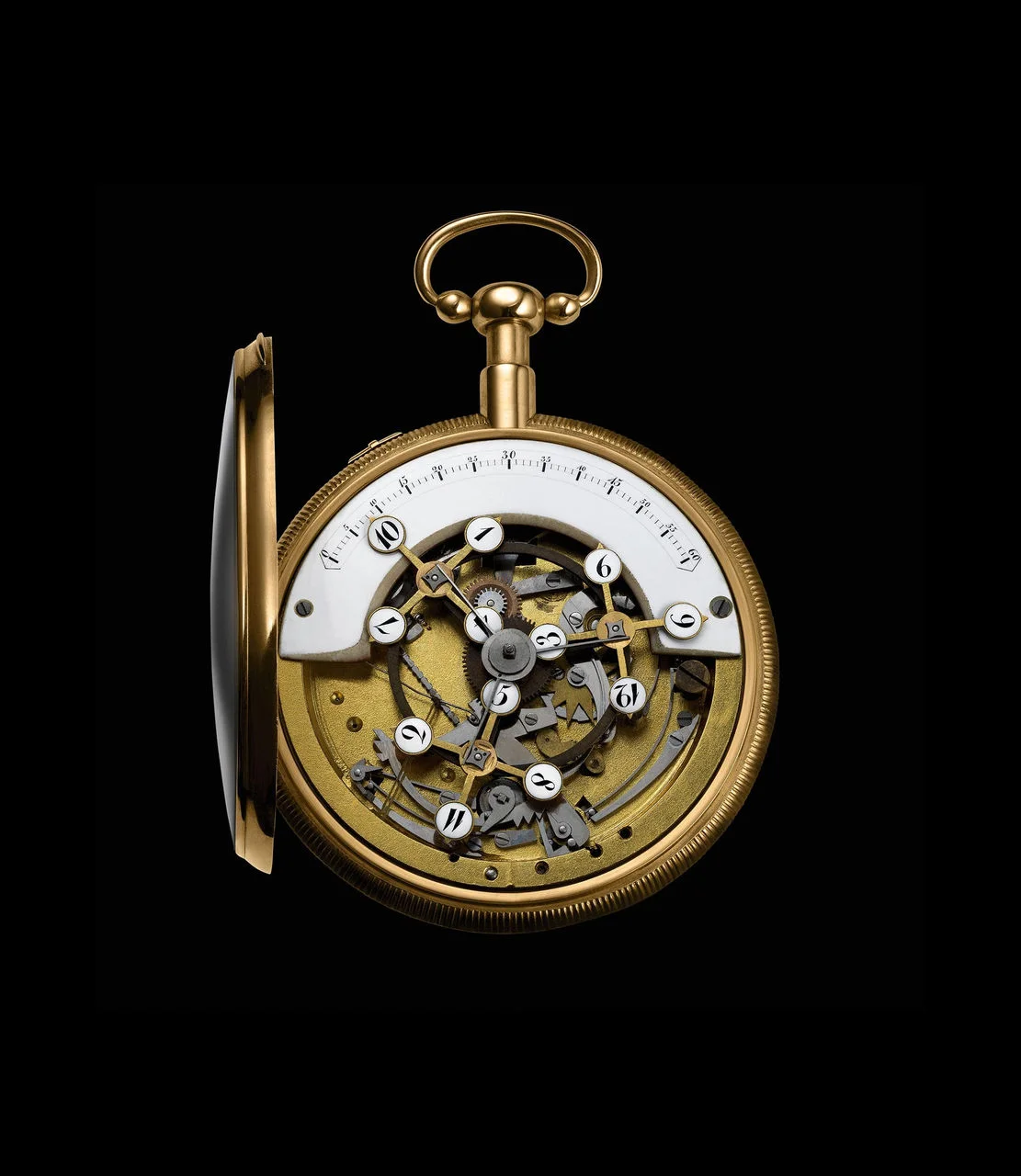
The wandering-hour mechanism visible beneath the cover of the Vaucher Frères watch made circa 1820. AP Heritage, Inv. 2005.
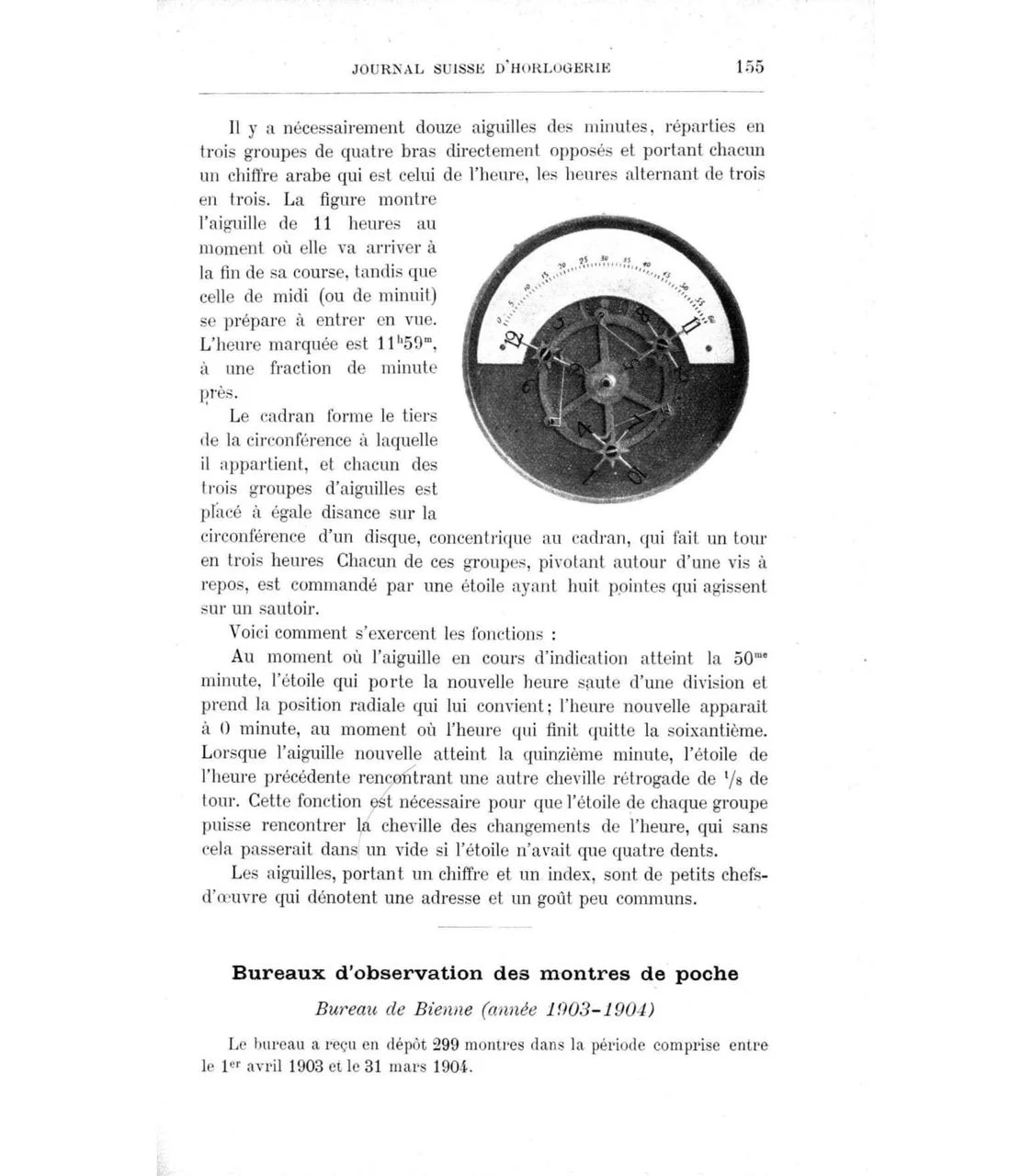
In 1989, Serge Meylan, technical director at Audemars Piguet, came across an article published in 1904 featuring a watch with a wandering-hour hand. This discovery led to the creation of the Star Wheel watch in 1991. Journal Suisse d’Horlogerie, No. 5, p. 155, 1904.
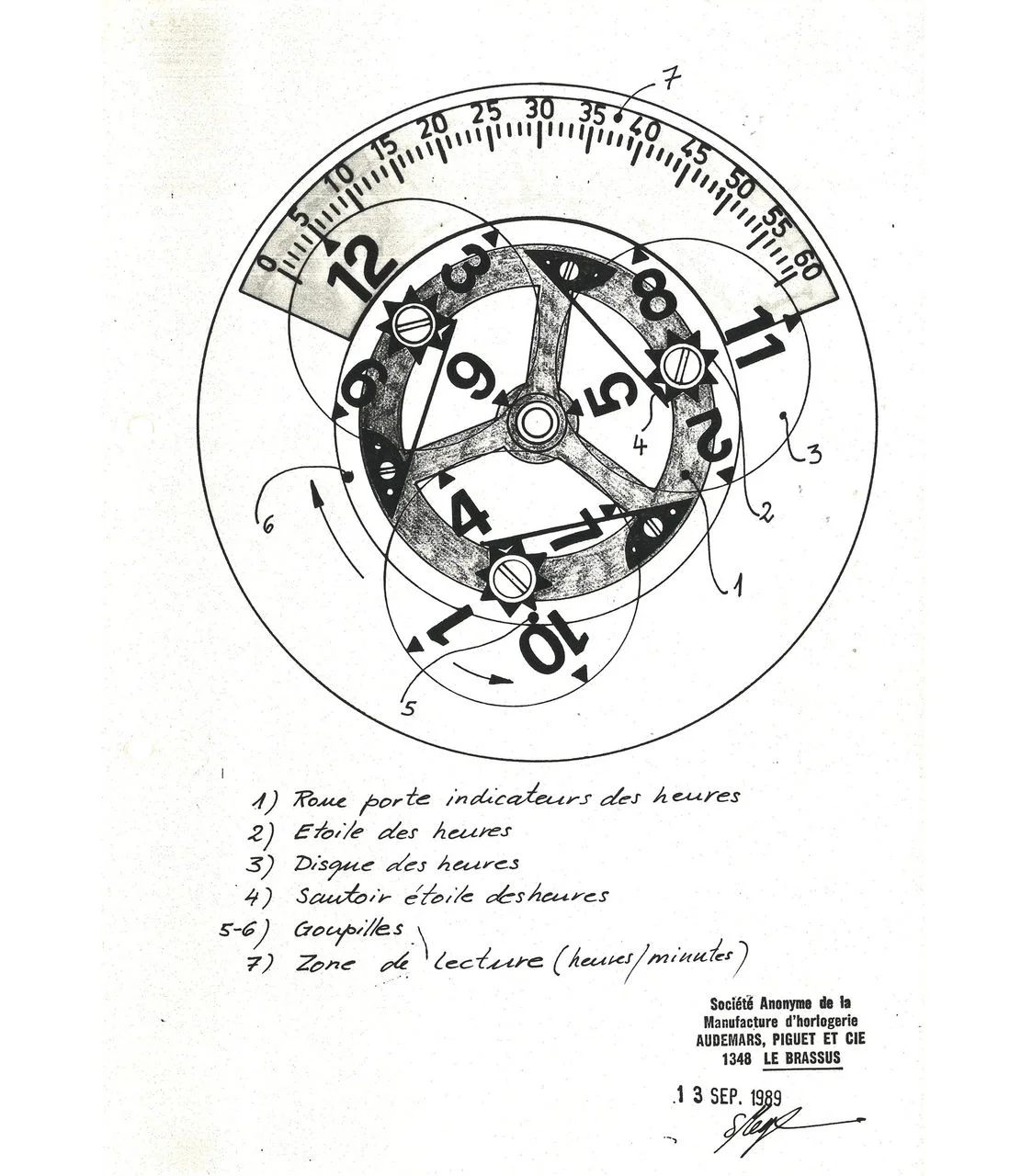
Sketch drawn in 1989 by Serge Meylan. AP Archives.
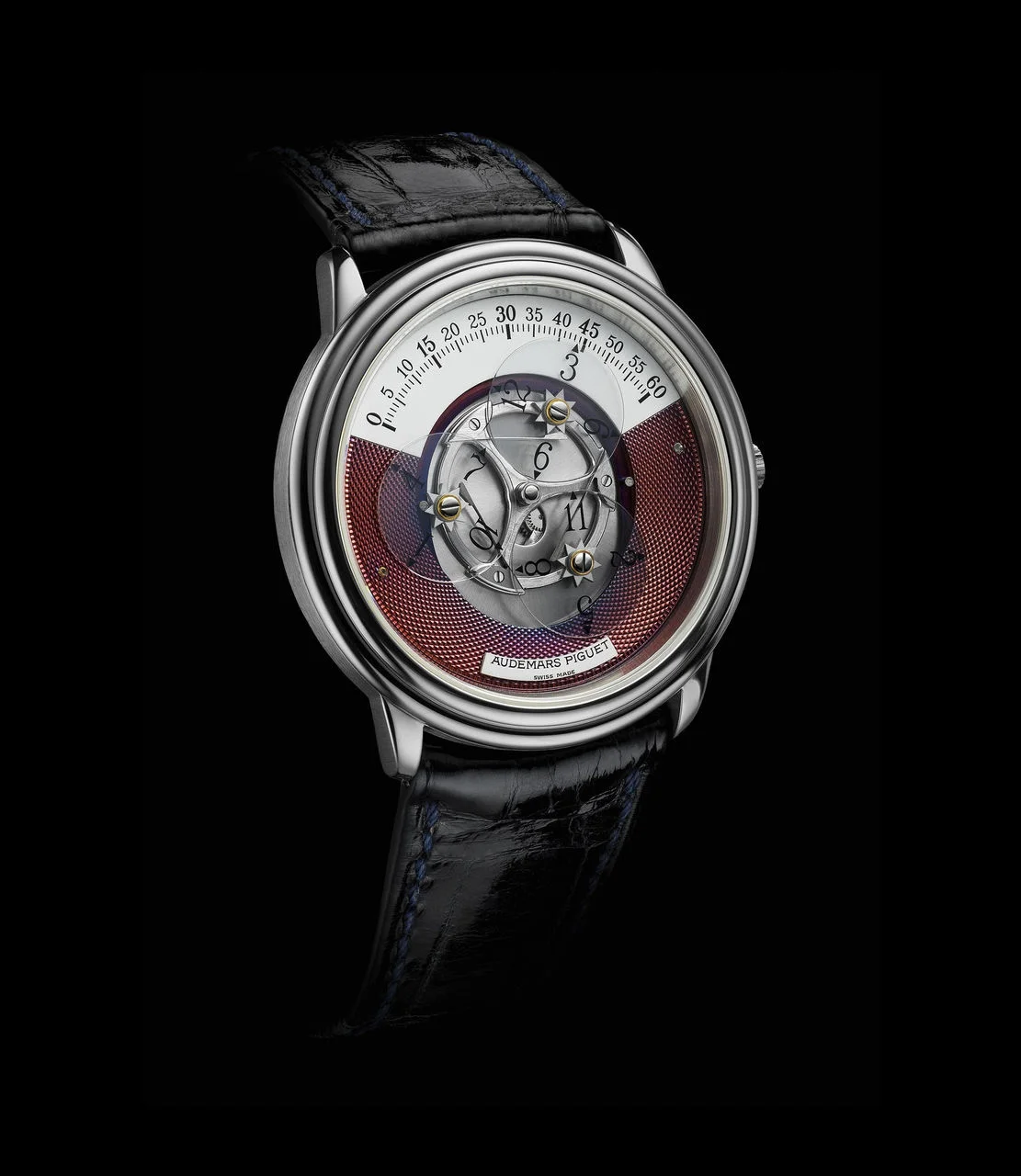
1992. Star Wheel watch (25720). Wandering-hour display. Calibre 2124/2812, movement 376449. Platinum case No. D8309 sold in France in 1992. AP Heritage, Inv. 2120.
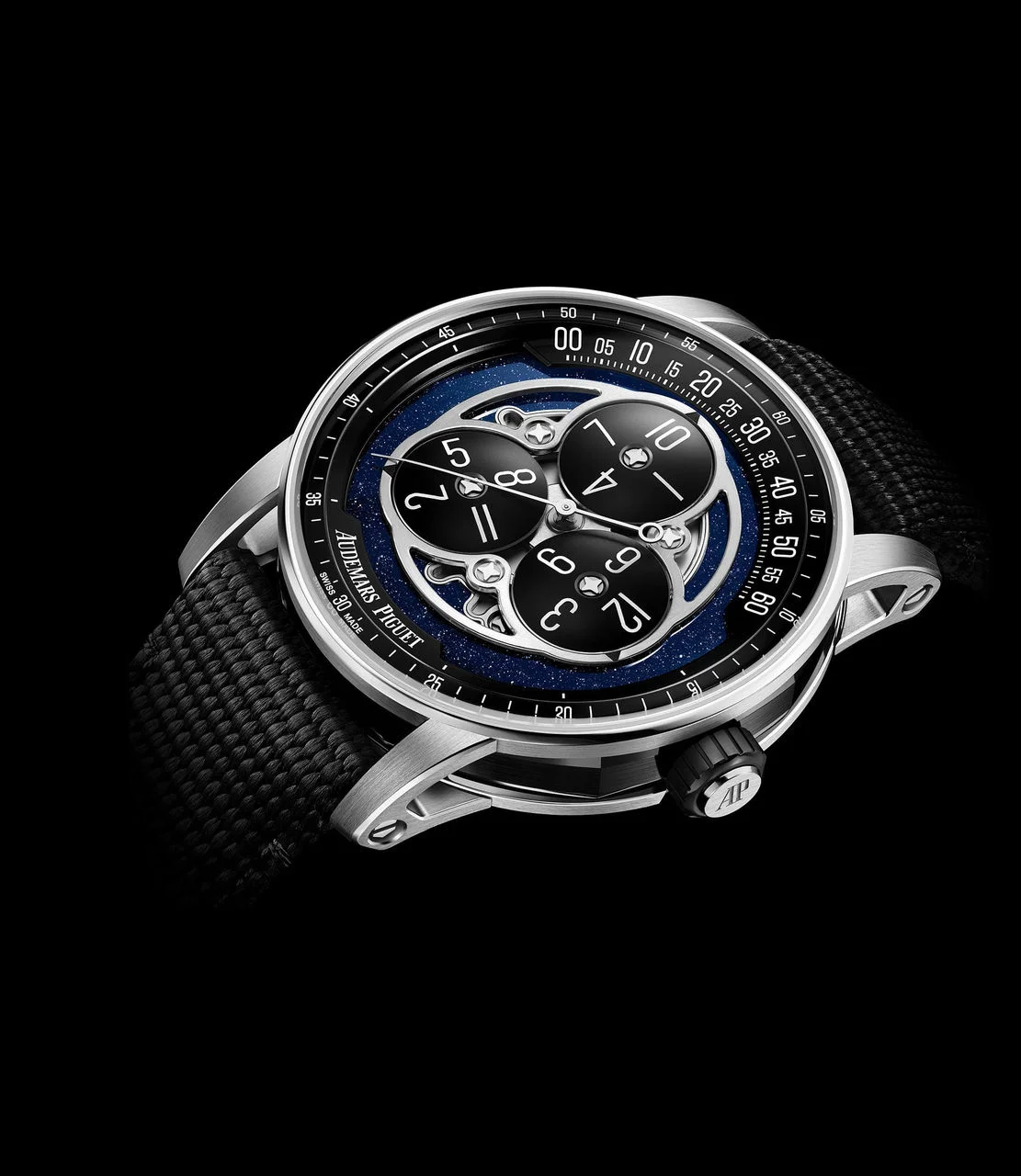
2022. Code 11.59 by Audemars Piguet Starwheel (15212). Calibre 4310. 41mm case in white gold and black ceramic. Image produced for the model’s launch in 2022. AP Archives.
First Examples
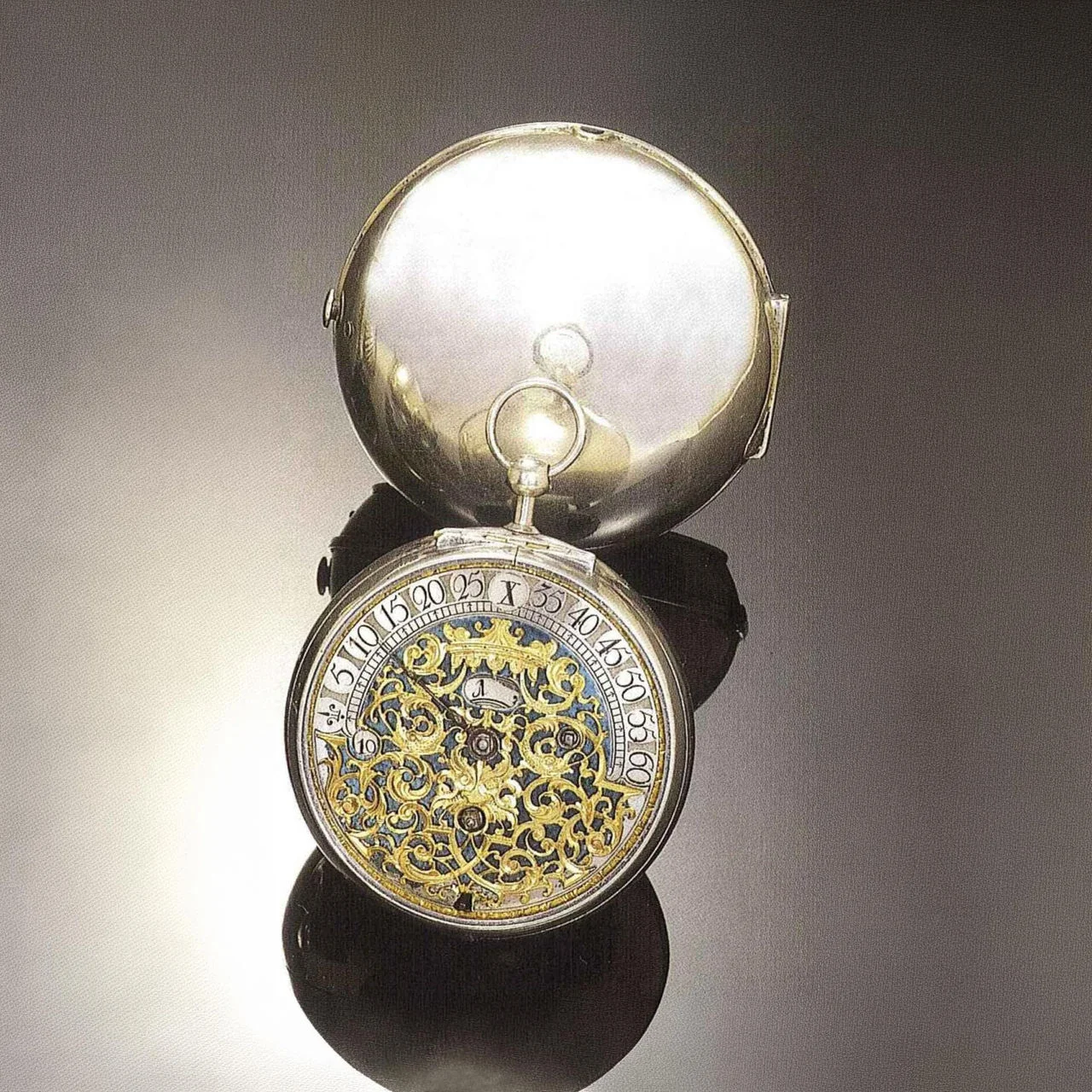
In 1995, Geneva-based auction house Antiquorum offered for sale a model that may well be the oldest known jumping-hour watch to date. Attributed to the German watchmaker Eckardt of Friedberg, it is thought to date from the 1700s. While its design and display are fairly similar to those of wandering-hour watches from the same period, the minutes are indicated by a retrograde hand. The hours aperture appears in a fixed position at 12 o’clock, with its very small size suggesting a jumping-hour display.
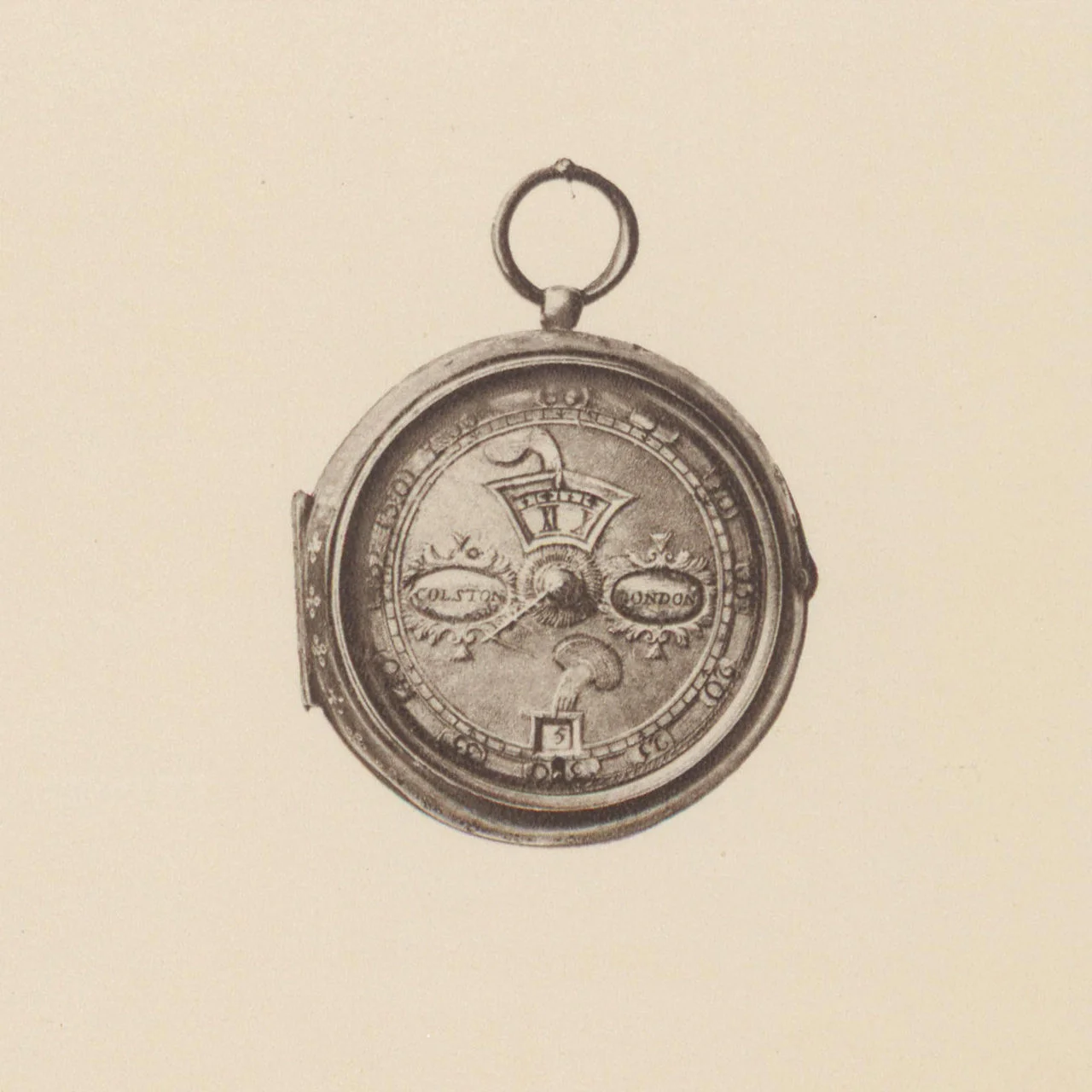
Another interesting example was published in 1912 in the monumental catalogue of the collection owned by the banker John Pierpont Morgan. The watch, signed by Richard Colston in London and made circa 1720, features an hours display through an aperture. The latter is wide enough for the hours disc to progress slowly and continuously while remaining clearly visible until the next hour arrives.
These two examples appear to be isolated cases and do not seem to have inspired other watchmakers at the time of their creation. It was not until the 19th century that the jumping hour became a recognised speciality.
The Early Golden Ages of the Jumping Hour
The 1810s and 1820s marked the first golden age of the jumping hour with aperture-type displays. One of the earliest known examples is preserved in the Patek Philippe Museum in Geneva. Designed circa 1815 and nicknamed the Flèche d’amour ("love arrow"), it bears the signature of Perrin Frères, a retailer from the Neuchâtel Mountains region of Switzerland. Several watchmakers developed similar displays between 1820 and 1840, notably Vacheron Constantin, Lépine, Bautte, Breguet, LeRoy et Fils and Oudin. It is worth noting that during this period, some watchmakers introduced jumping-hour hands, driven by specific chiming mechanisms (such as the Stagden underdial mechanism).
In the field of clockmaking, the German clockmaker Friedrich Gutkaes created a digital clock in 1841 for the Dresden Opera House, featuring apertures (jumping hours and five-minute intervals) and likely drawing inspiration from the stage clock at La Scala in Milan. Later, it would in turn inspire the Outsize Date by Lange & Söhne in the 1990s.
The second golden age of jumping-hour pocket watches began with German patent DE25042, filed in July 1883 by the Austrian engineer Josef Pallweber, which combined jumping-hour and jumping-minute displays. The licence rights were acquired by IWC the following year and subsequently by Cortébert. Despite the major technical challenges posed by these mechanisms, the trend spread rapidly and remained firmly established for a long time. Robert Berthoud’s catalogue, for instance, lists nearly 50 patents filed in the years thereafter.
Created in the midst of the Industrial Revolution, mechanical watches with jumping-hour and jumping-minute displays became powerful symbols of modernity. While this speciality never entirely disappeared from watchmaking, it primarily paved the way for today’s electronic displays. In 1896, Pallweber and Kolbe filed patent GB15856 for an electric clock (see illustration). This was followed in the 20th century by displays using incandescent filaments and liquid crystals – early forerunners of the time indications now appearing on our phones, computers, cars and even household appliances…
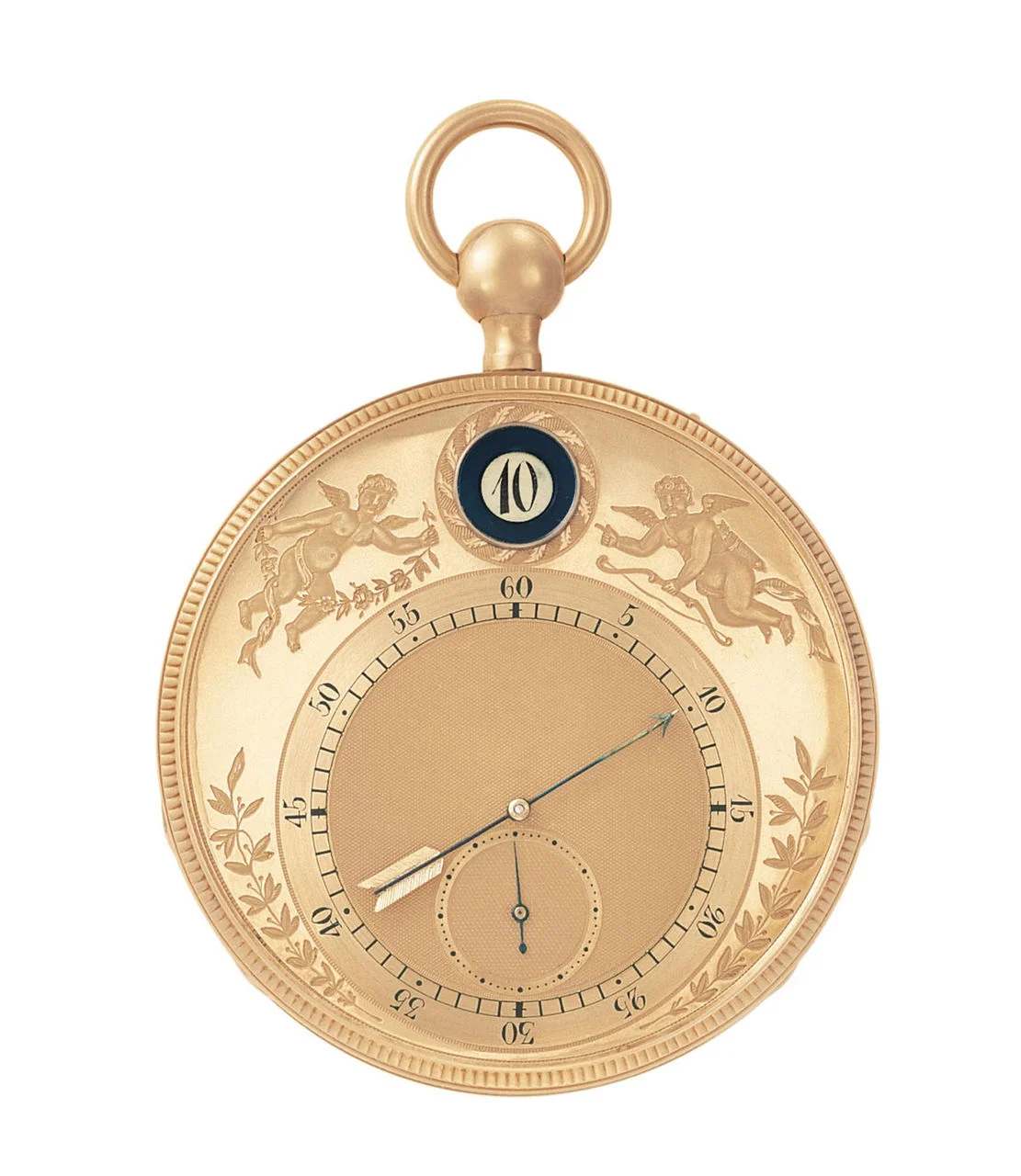
Nicknamed Flèche d’amour (love arrow), this watch created circa 1815 is one of the first to feature a jumping-hour mechanism. Patek Philippe Collection, Inv. S-366. 118 119.
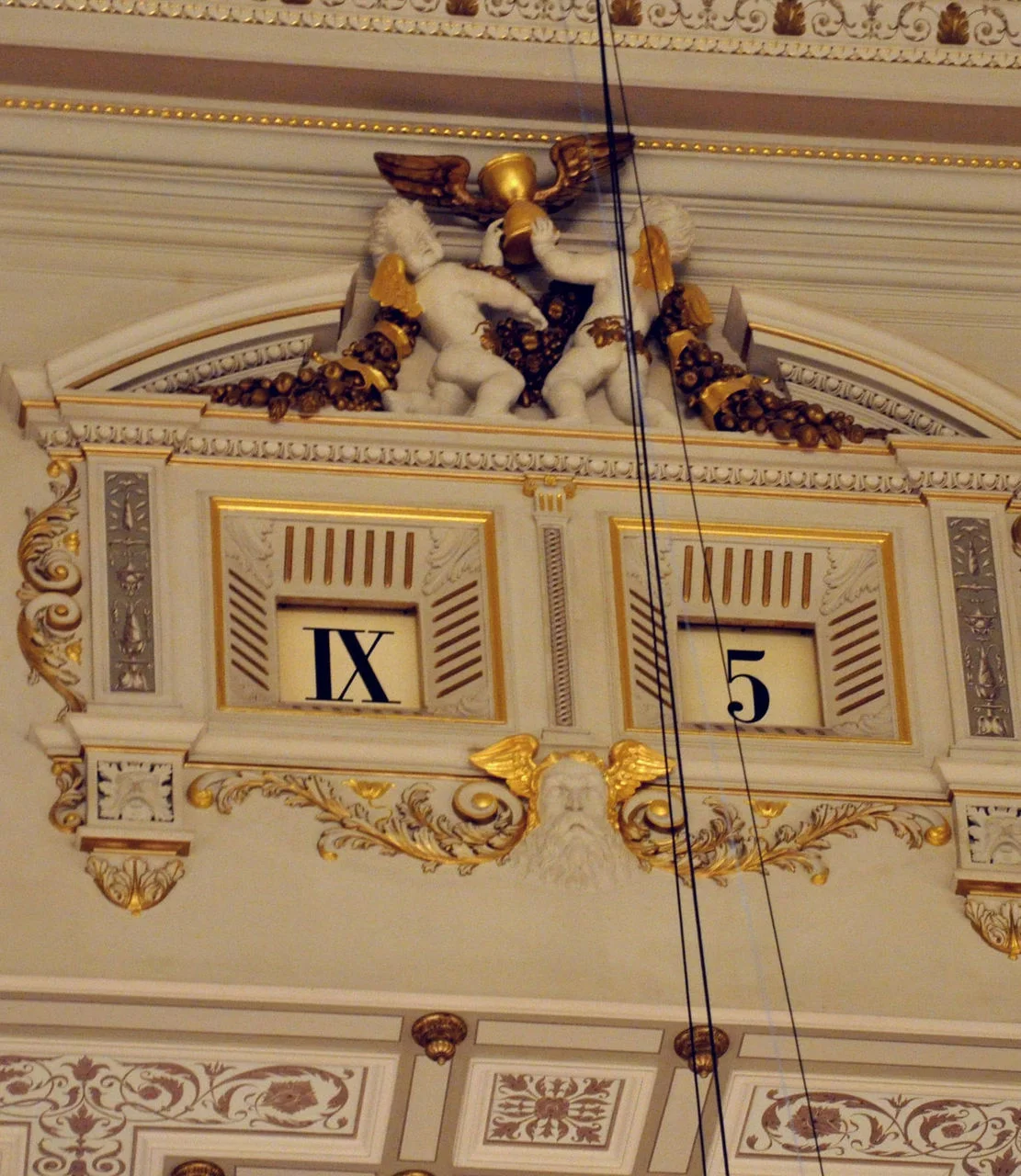
Produced in 1841 by Friedrich Gutkaes, the clock at the Dresden Opera House inspired the Outsize Date display system introduced by Lange & Söhne in 1994. Photo: Andreas Praefcke / Wikimedia Commons, public domain.
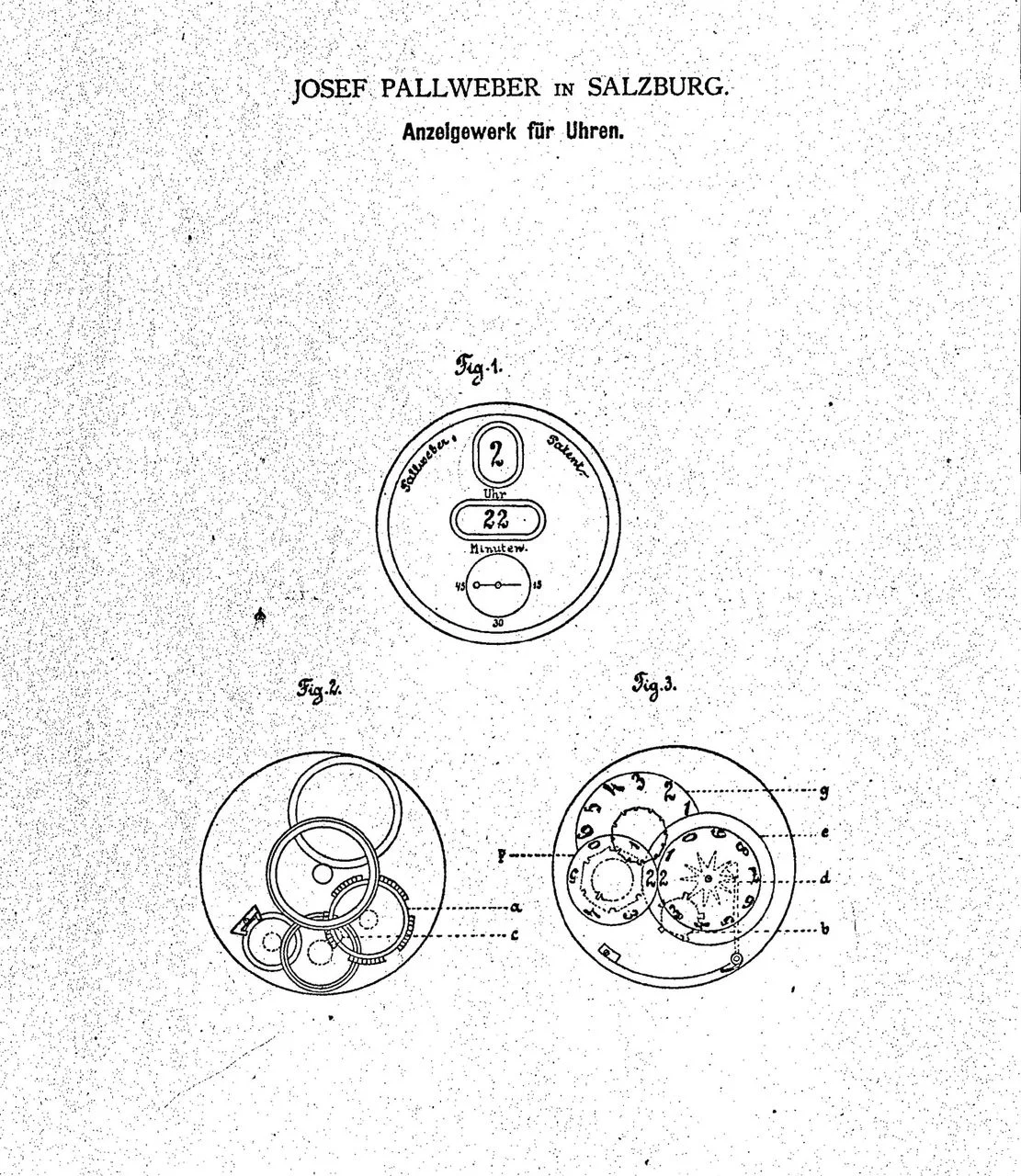
Patent DE25042 filed by Josef Pallweber in 1883. Kindly provided by IWC Heritage.
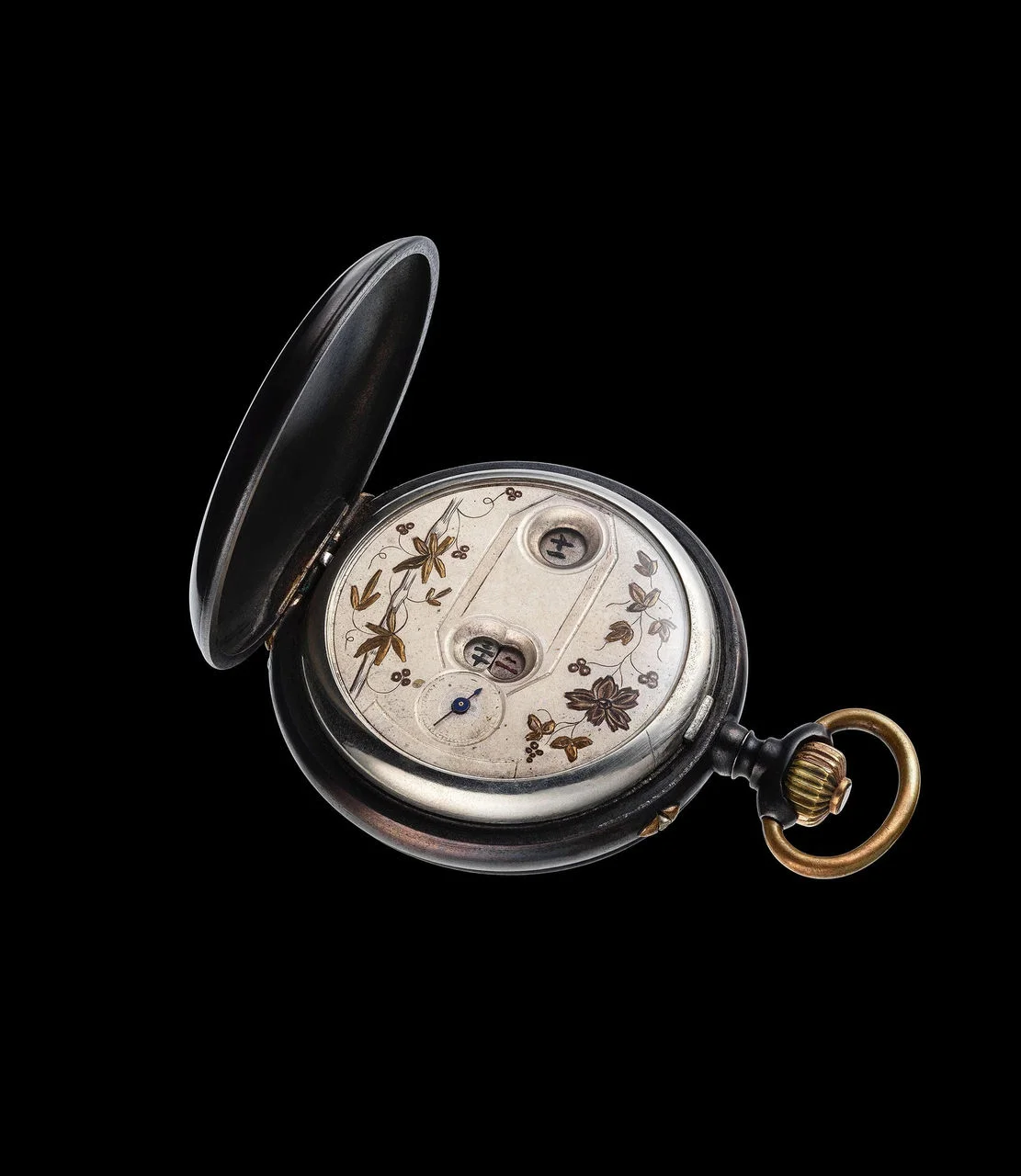
Created circa 1890, this Cortébert watch with jumping-hour and jumping-minute displays features Chinese numerals surrounded by bamboo and chrysanthemums, symbols of humility and nobility. Pallweber patent. Burnished steel case. AP Heritage, Inv. 2270.
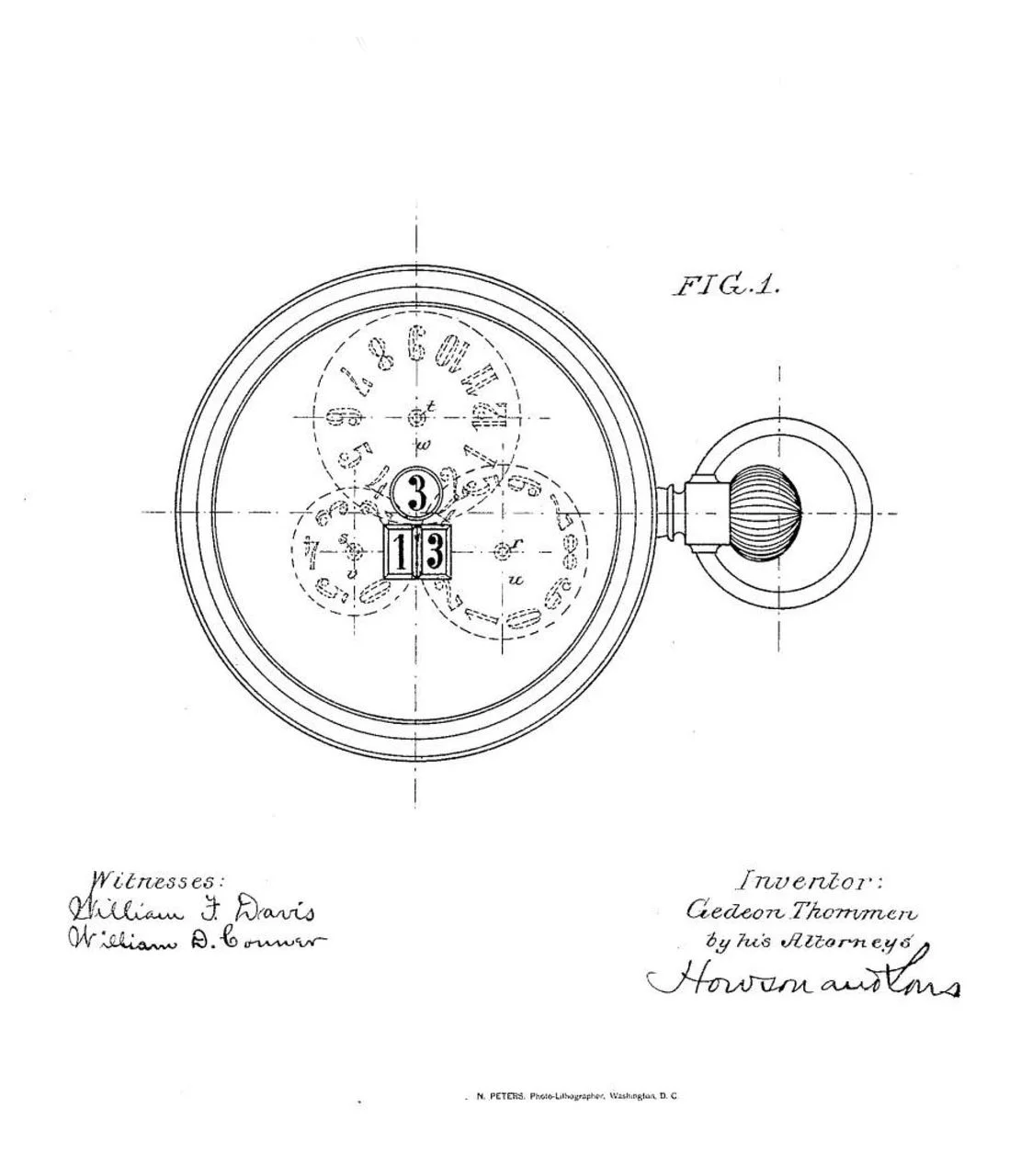
US347139 patent for a jumping-hour pocket watch, filed by Gédéon Thommen in 1886. The hours aperture is positioned above the minutes aperture.
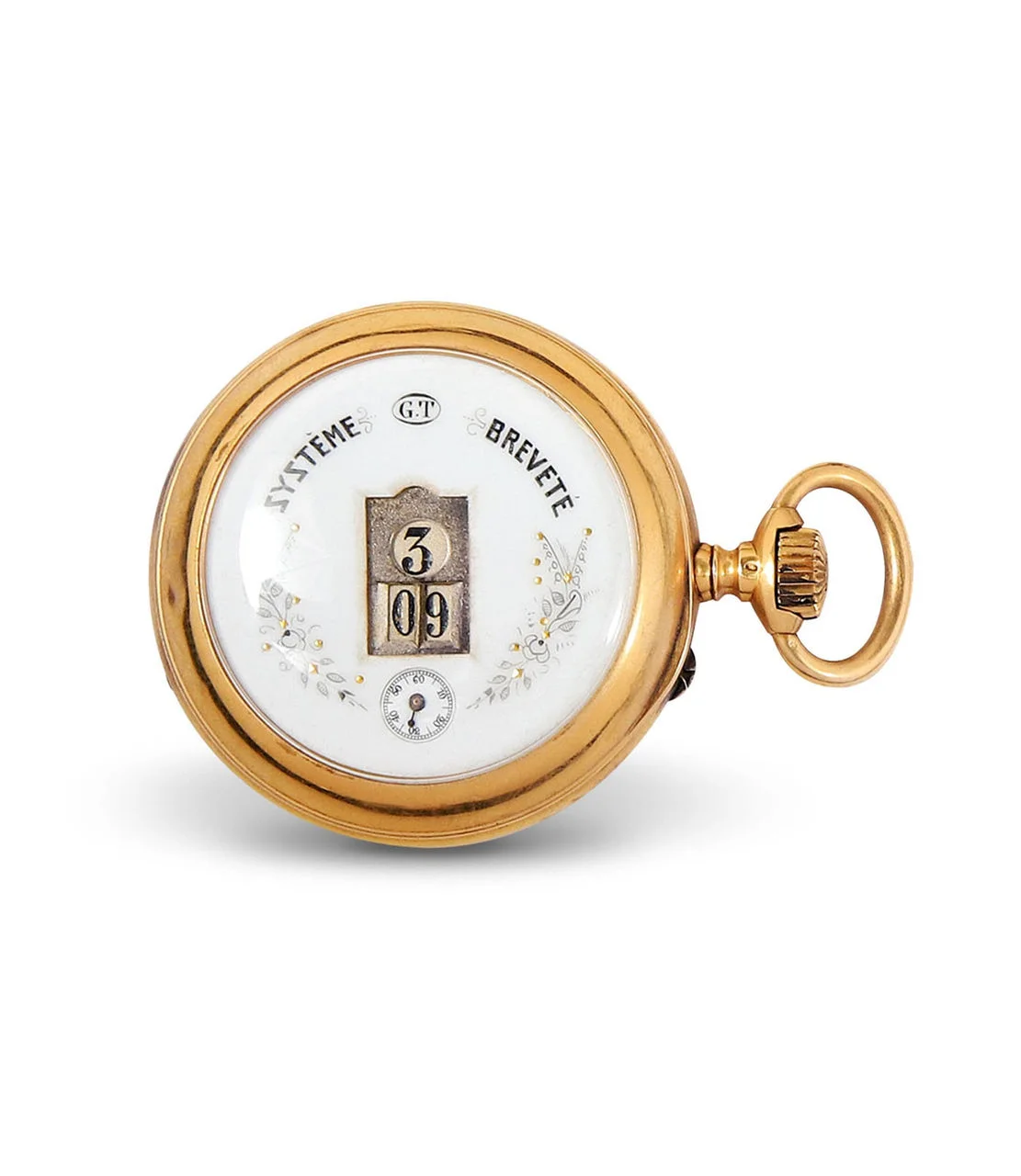
Digital-display watch by the Manufacture Thommen. Chayette & Cheval catalogue, 30 March 2021, lot 114. © Chayette et Cheval.
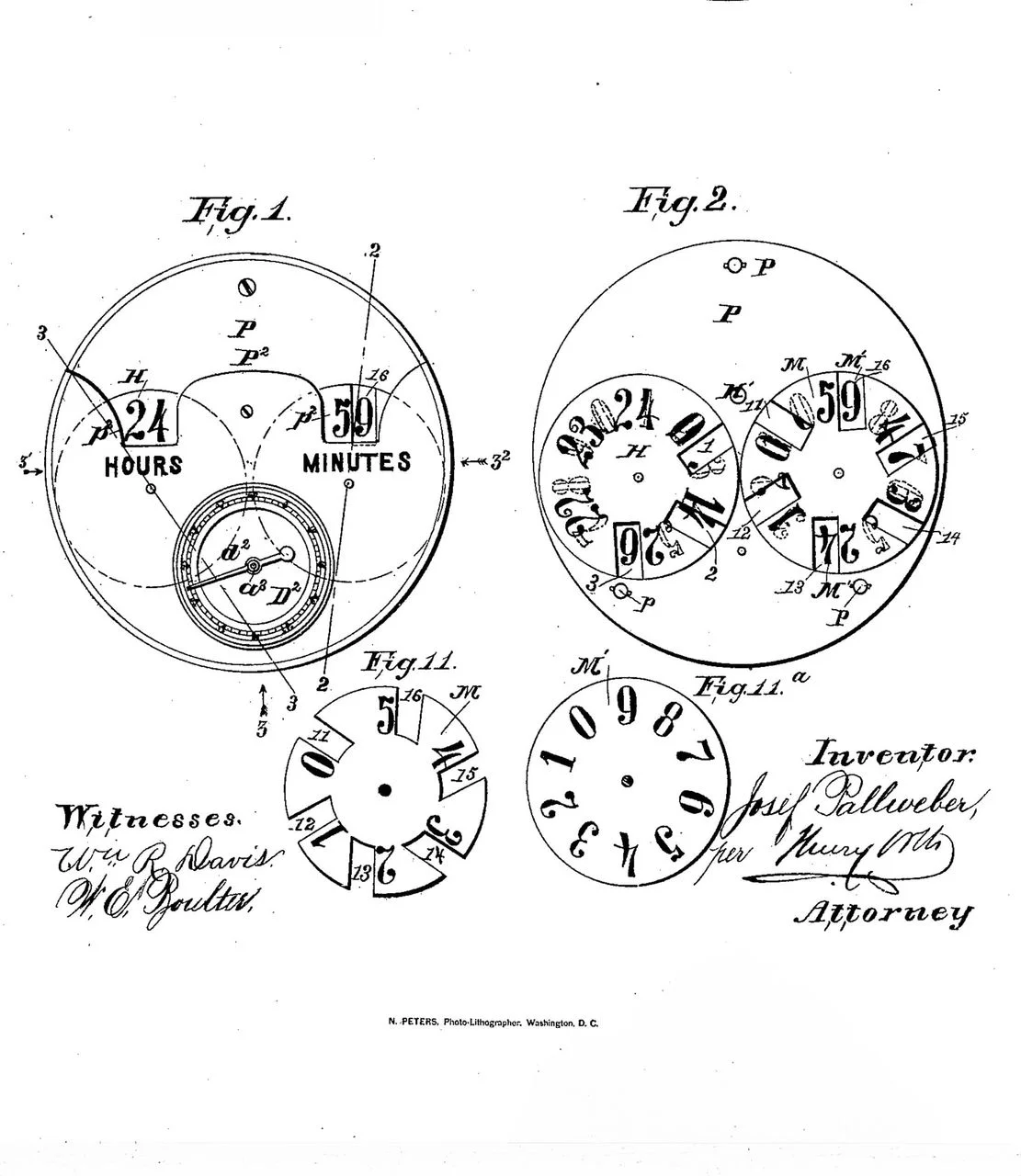
US359227 patent for a jumping-hour pocket watch, filed by Josef Pallweber in 1887. The inventor superimposed two discs to combine the units and tens.
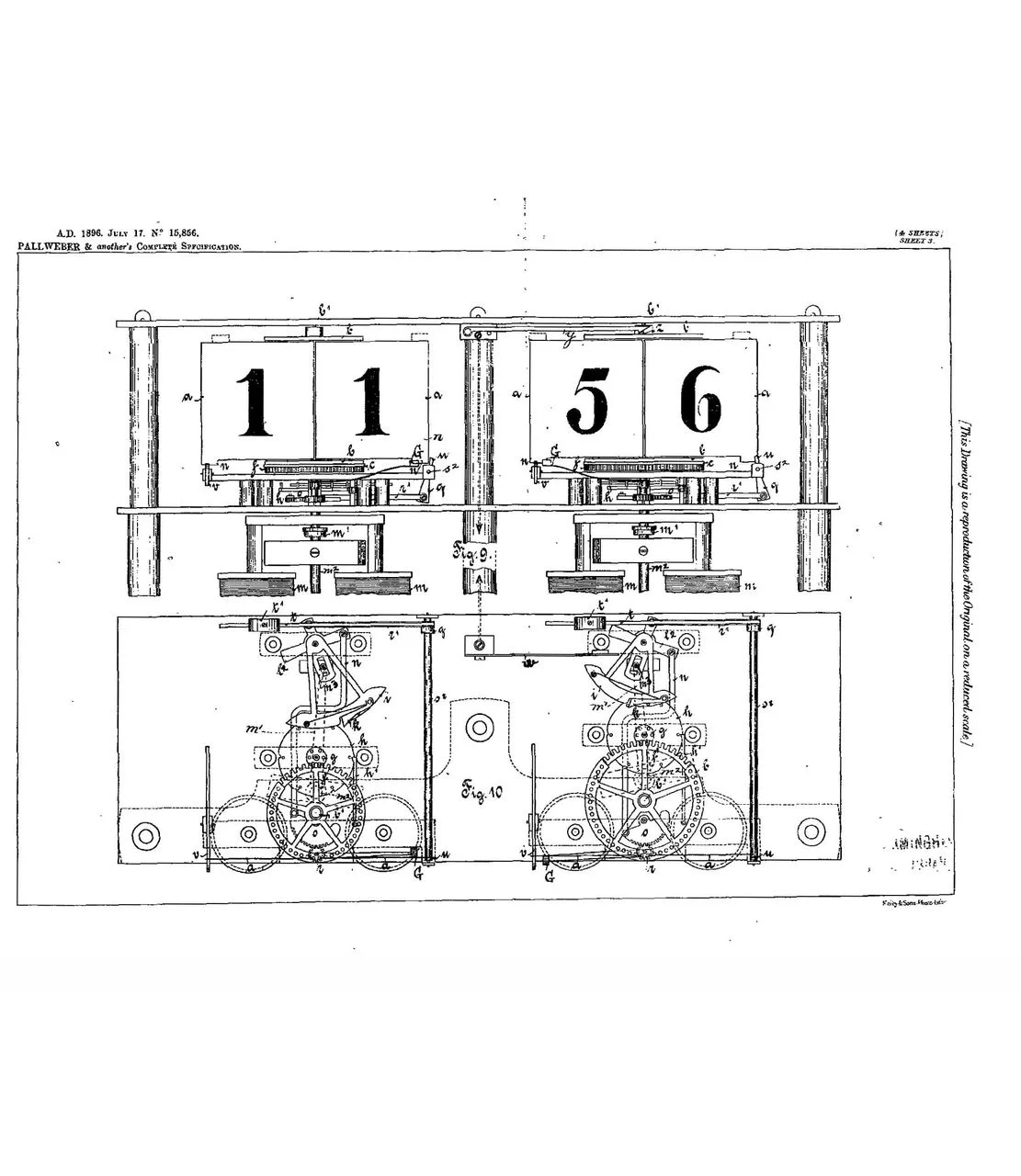
Patent GB15856 filed in 1896 by Pallweber and Kolbe for the digital display on an electric clock. Espacenet.com
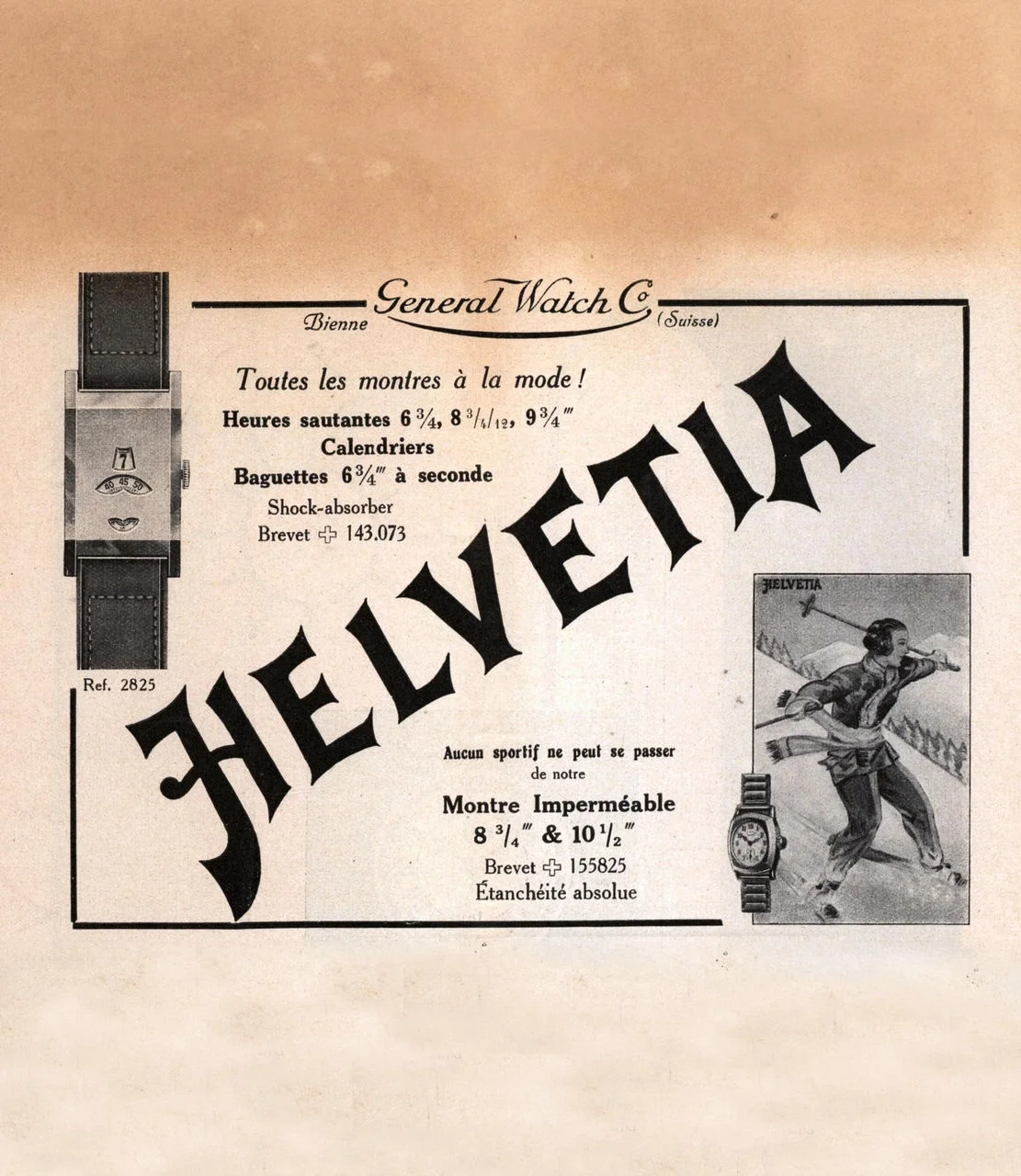
In the early 1930s, jumping-hour watches were all the rage. Advertisement published in the Journal suisse d’horlogerie in 1933.
A Few Technical Details
The display aperture leaves just enough space to read the necessary information, be it the date or time, but nothing more. For these indications to remain legible, they must be held in place for as long as required before jumping to the next hour or date at the appropriate moment.
In watchmaking, displays can advance in three different ways. The first and by far the most common is known as “trailing”: the hands advance with each movement of the escapement, i.e. six to eight times per second. The more complex second system is called “semi-instantaneous”: it remains stationary for a set period and then advances to the next time or date in a matter of seconds or minutes. The third system is the most sophisticated, the most delicate and consequently the rarest. The display remains perfectly still for the necessary period, while the mechanism gradually accumulates energy which it then releases all at once when the time comes, causing the display to “jump” to the next figure. This is the “jumping” or “instantaneous” system. It is found in deadbeat seconds watches, calendars – and quite logically in “jumping-hour” watches.
The energy released to make the hour jump forwards is colossal – on a horological scale of course. This display poses several technical challenges, notably including the risk of the system jumping two units at once, as well as the difficulty of adjusting the time in both directions. Entitled “Jumping Hour Watches”, one of the few technical articles dedicated to this subject was published in 1932–33 in The Horological Journal. The curious reader will discover therein the snail-shaped cams, star-shaped wheels, levers and other springs driving the jumping hour, a few examples of which are reproduced here.
Calibre 7122 powering the Neo Frame watch presented in 2026 (Chapter 11) combines two concentric discs. The smaller trailing disc indicates the minutes, while the larger jumping disc shows the hours. It is driven by a four-star spring that completes one revolution in four hours to wind a lever that releases its energy every 60 minutes, driving the hours disc. A patented system prevents a double jump. To keep the mechanism suitably thin, the time can only be set by turning the hands clockwise.
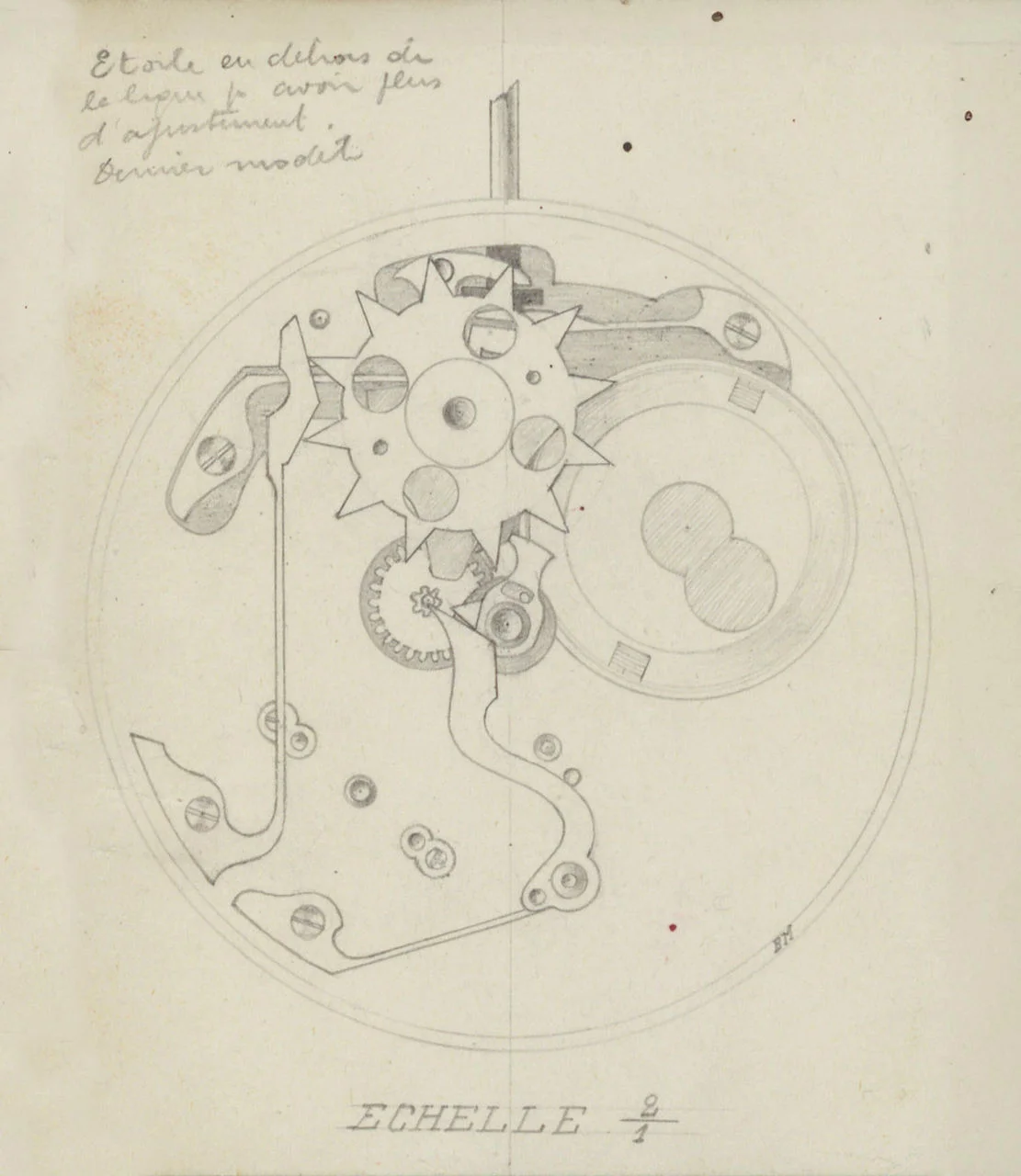
Held in place by a spring (on the left) and pushed forward every 60 minutes by a lever pressing against a cam, the 12-hour star wheel is perforated with four openings to reduce its inertia. Sketch from 1919 for Calibre 17SVF. AP Archives.
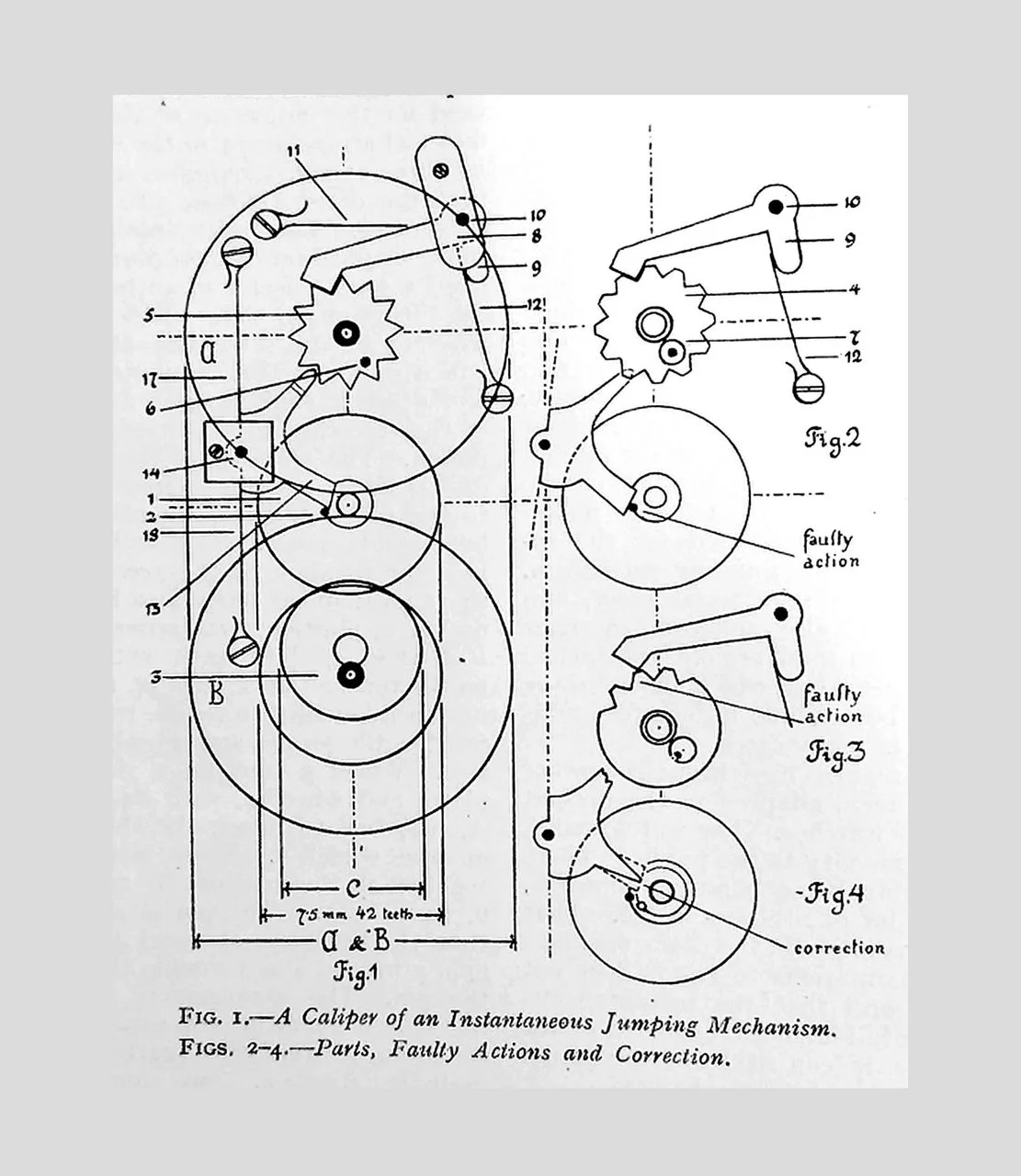
Left: instant-jump mechanism. Right: problematic handling operations. “Jumping Hour Watches” article in Horological Journal, September 1932, p. 207.
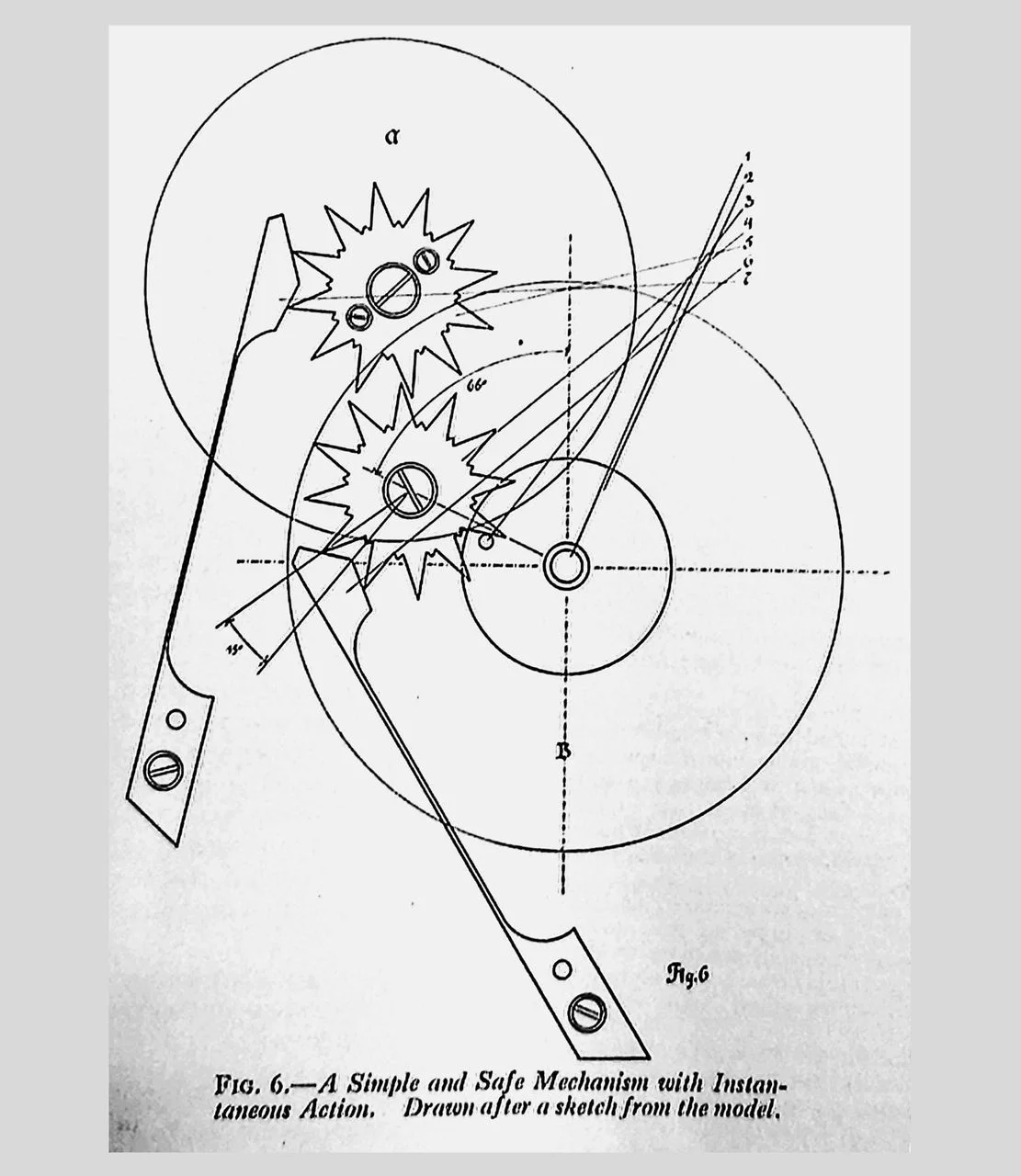
A simple and reliable jumping-hour mechanism combining two star wheels. “Jumping Hour Watches” article in Horological Journal, November 1932, p. 241.
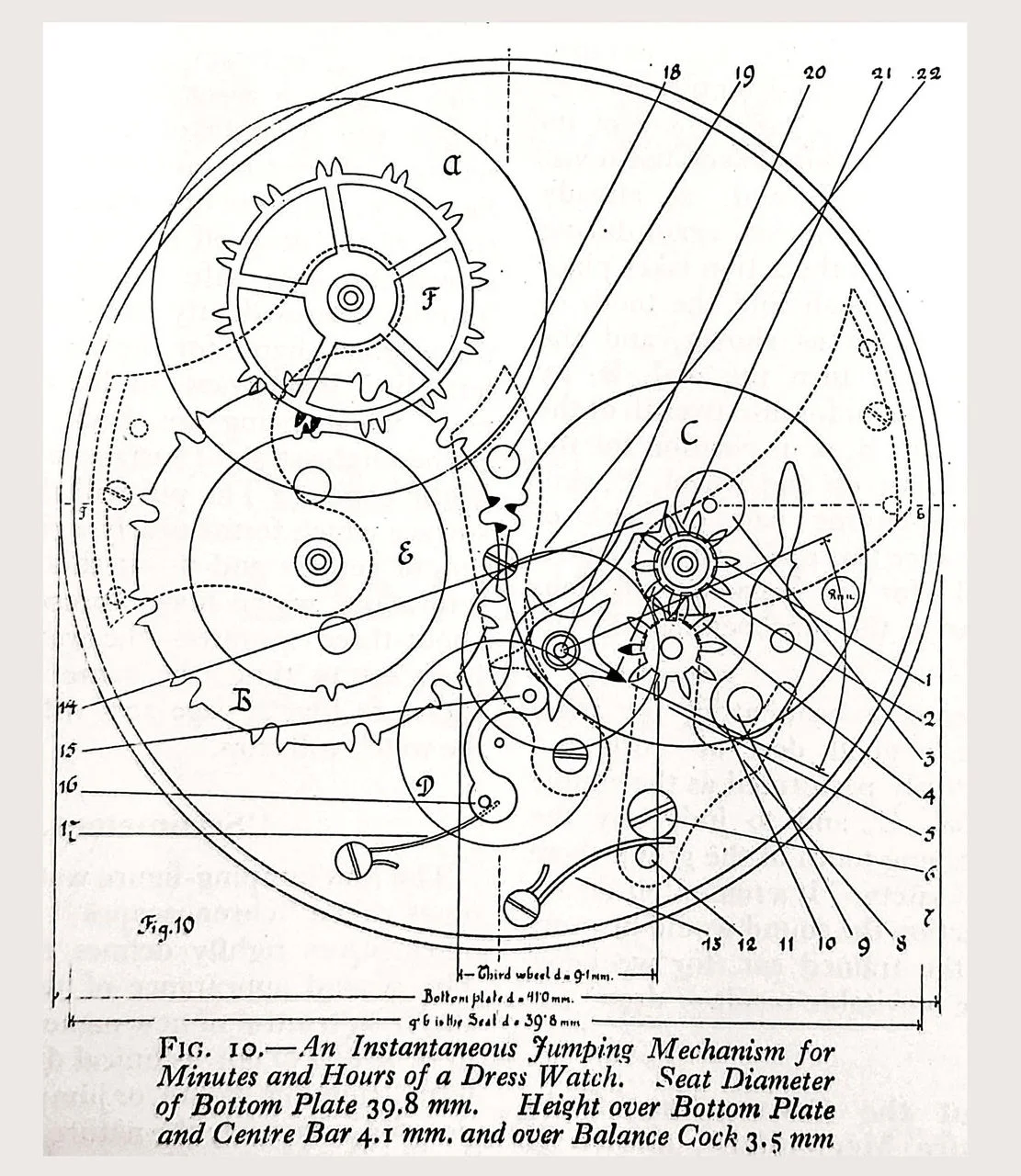
Jumping-hour and jumping-minute mechanism for a pocket watch. “Jumping Hour Watches” article in Horological Journal, April 1933, p. 313.
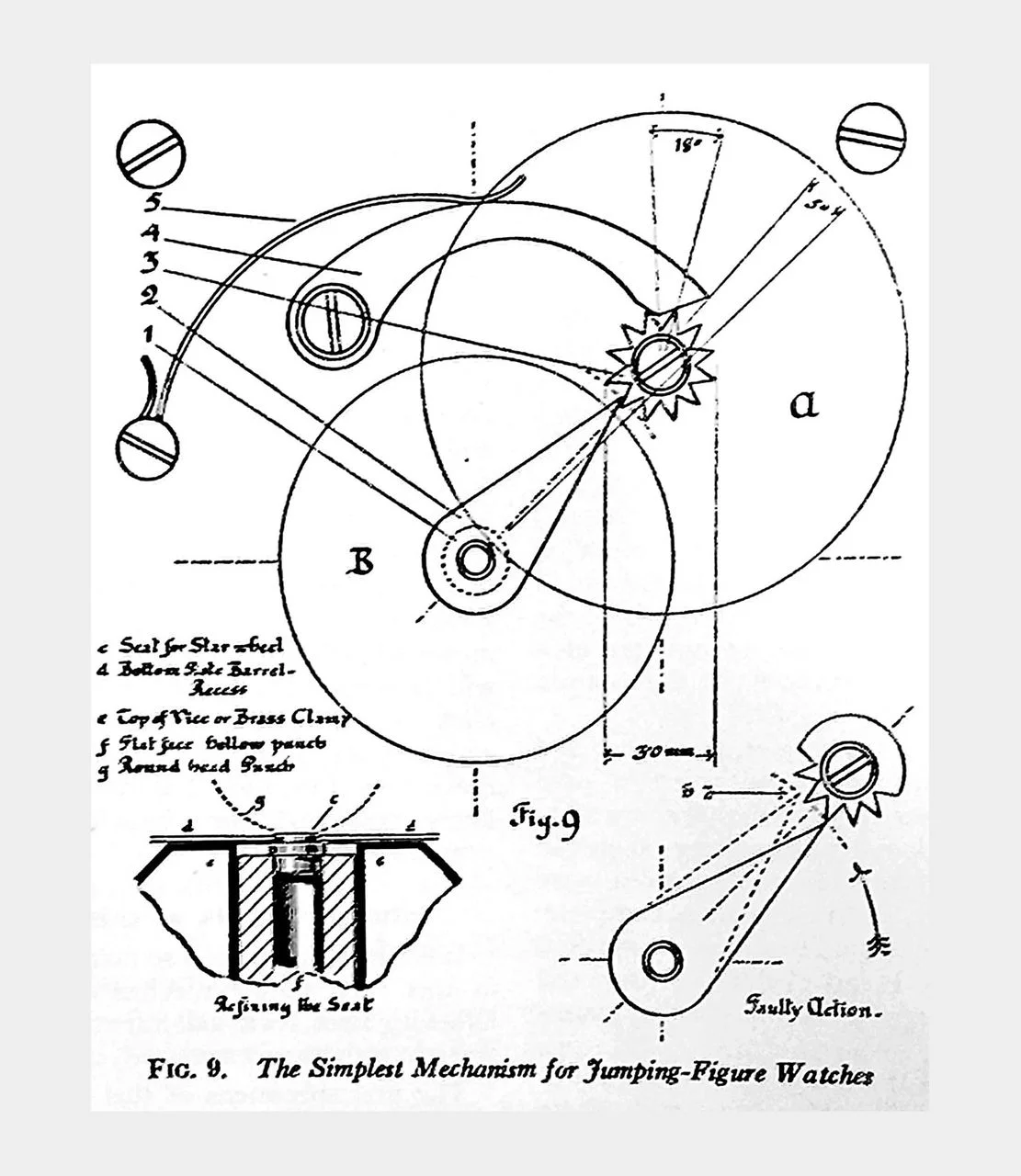
The simplest mechanism for a jumping-hour watch. “Jumping Hour Watches” article in Horological Journal, February 1933, p. 278.
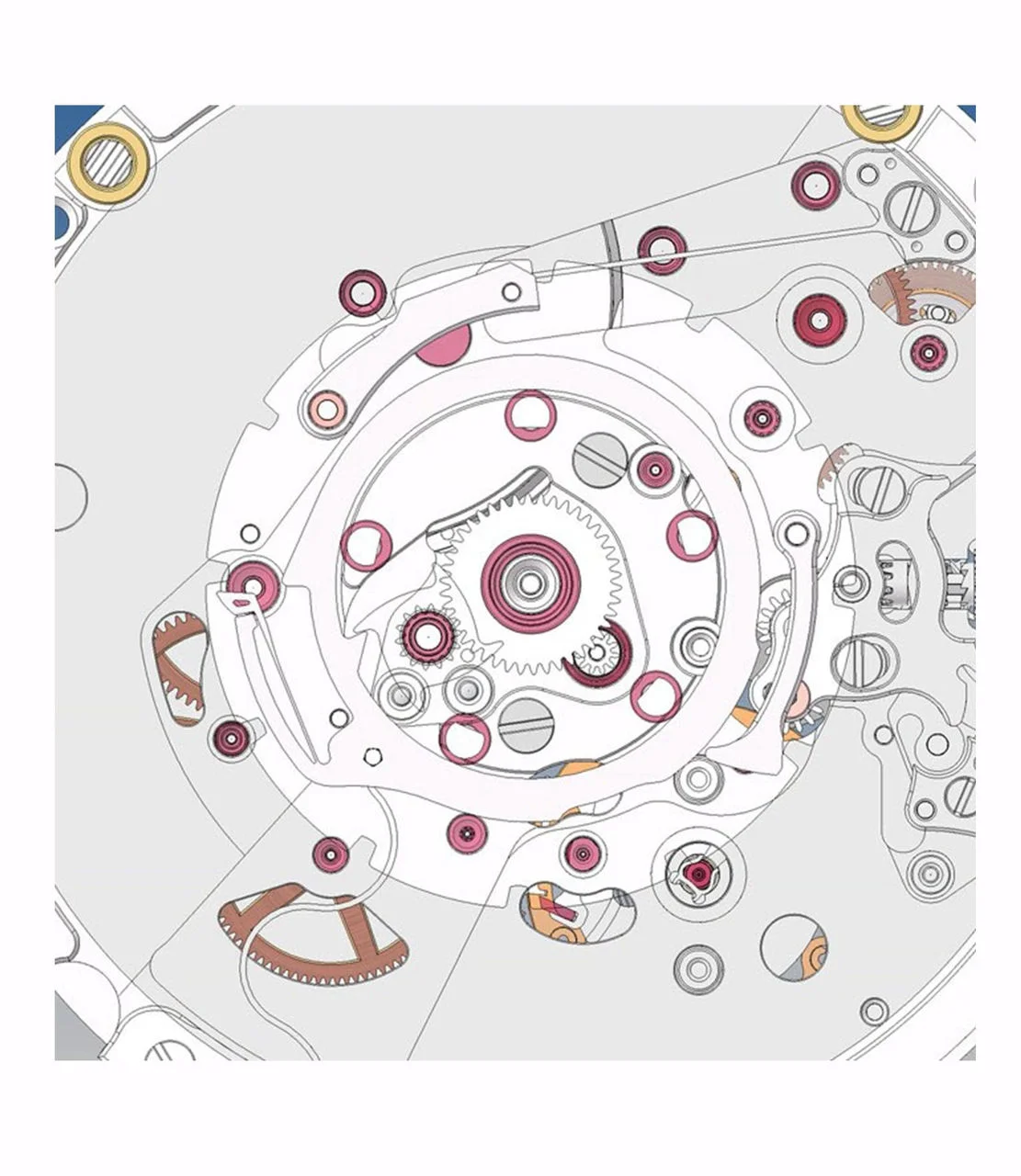
Technical drawing showing the mechanism of the jumping hours and trailing minutes in the Neo Frame watch presented in 2026.
When Audemars Piguet Introduced the Jumping Hour
The Audemars Piguet archives contain a small file dated 1917 entitled “Établissage Heure Sautante dans Guichet SVF #3” relating to the production of an aperture-type jumping-hour display.
For their first jumping-hour watches, the watchmakers at Audemars Piguet chose an established mechanism. Introduced in 1904, with approximately 3,800 examples sold by the late 1940s, Calibre 17/18 SVF#3 was designed for very thin pocket watches. Its diameter ranges from 17 to 18 lignes (i.e. 44 and 45 mm) depending on the variant. The letters in its designation stand for: S (serpent or serpentine) referring to the rounded shape of its bridges; V (verre) indicating the Lépine type (as opposed to hunter-type models), while the letter F (fin) denotes the thinness of the movement. The “#3” is a fairly thin variation (2 mm), the thinnest being #5 (1.55 mm). Numerous variants of the 17/18SVF are documented in the archives, with movements possibly originating from several different workshops, including James Aubert, Charles Piguet and LeCoultre & Cie…
From 1918 onwards, some examples of Calibre 17/18SVF#3 were fitted with an additional mechanism (also known as a cadrature or underdial mechanism) attached to the dial side, notably to support the jumping-hour disc.
A few years later, Audemars Piguet took a further step by replacing the minutes hand with an aperture display, in the purest Streamline style. From then on, certain models were enhanced with additional functions, such as calendars and even a minute repeater.
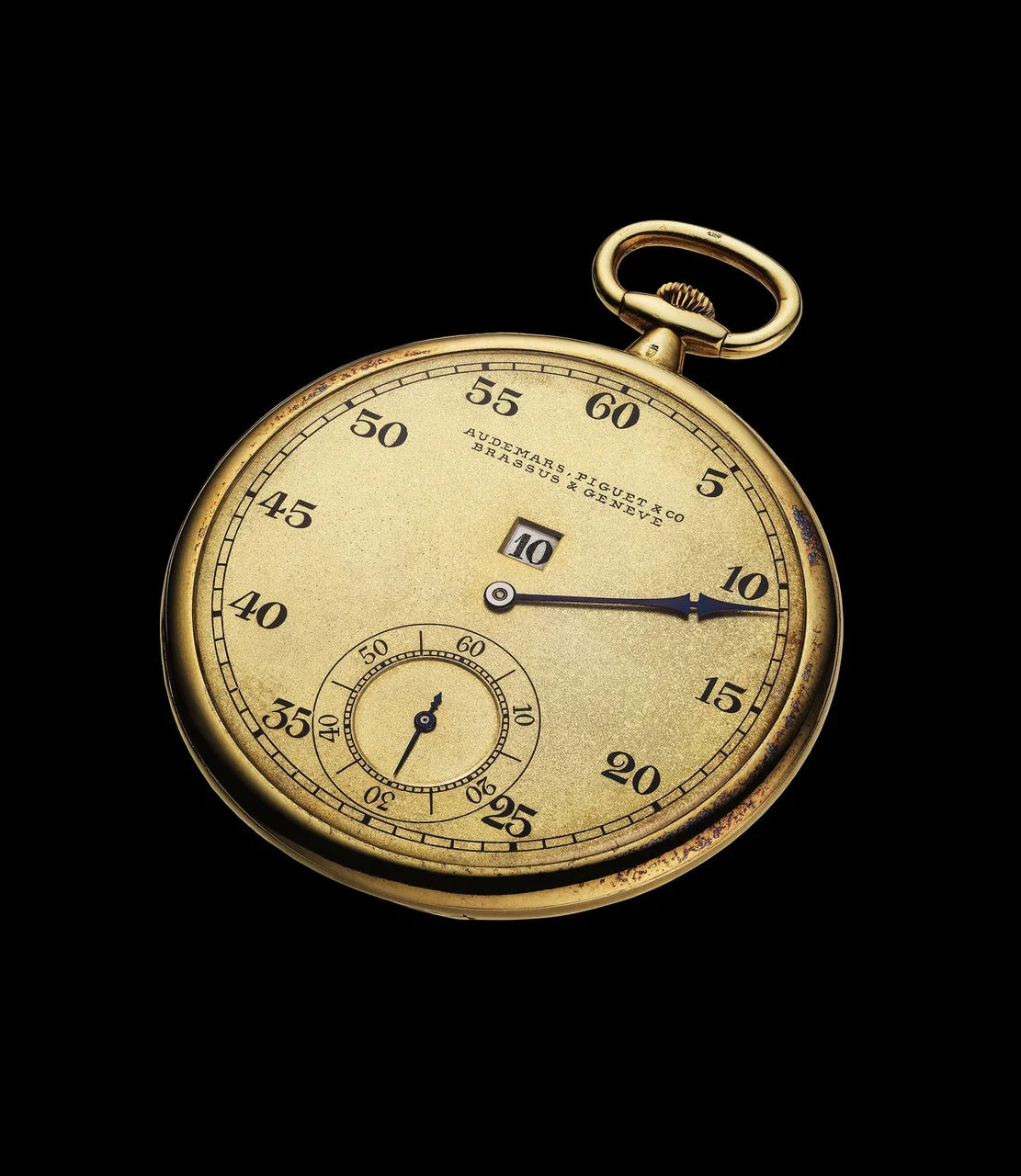
1918. Jumping-hour pocket watch. Calibre 17½ SVF#3, movement 19861. Spindle-shaped hand. Silver-gilt dial. Green gold case, 43.5 mm, no. 19861. Sold in April 1918 in Switzerland. AP Heritage, Inv. 1007.
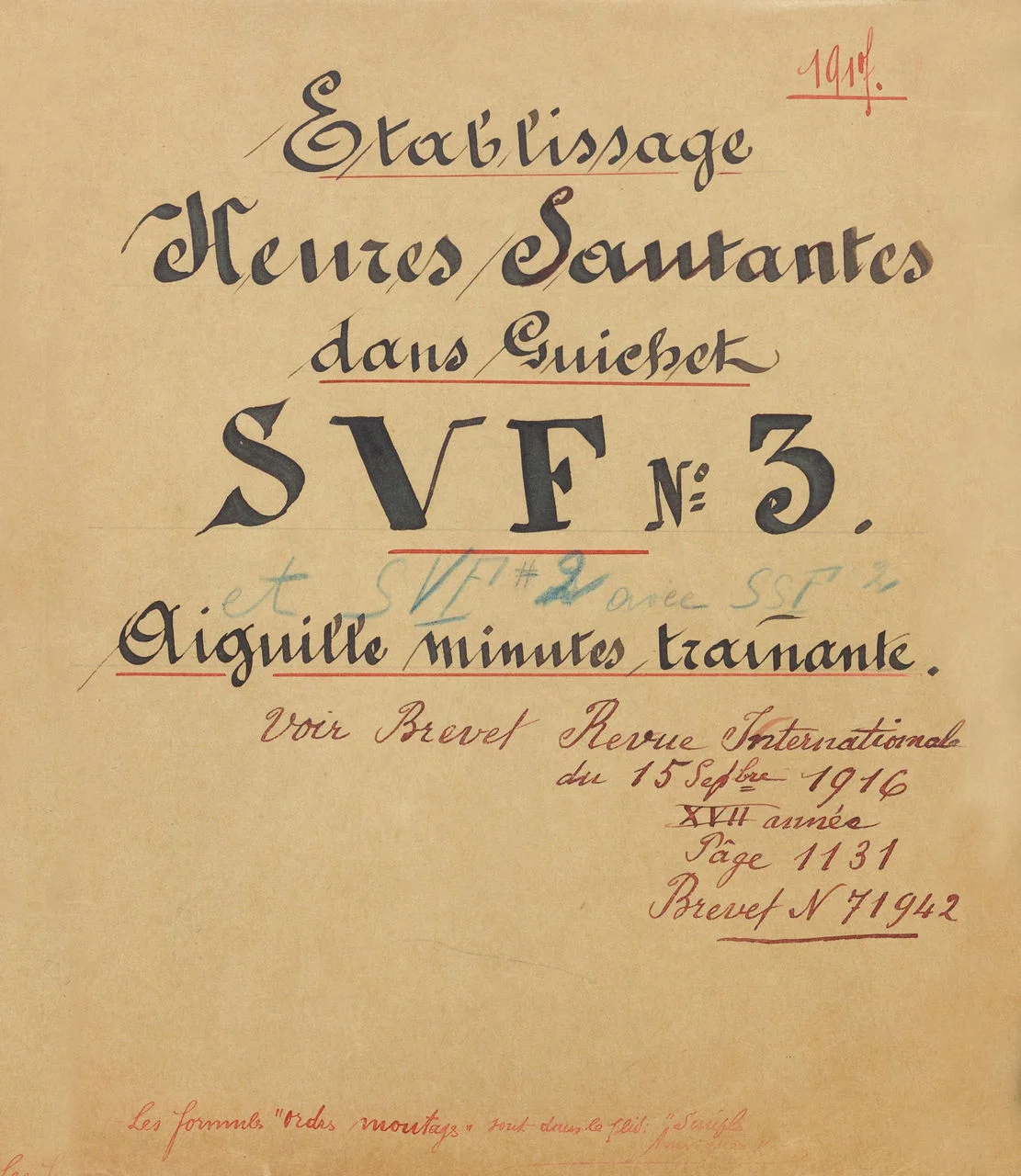
Dated 1917, this document marks the beginning of Audemars Piguet’s research into the jumping hour. It refers to an article in the Revue Internationale d’Horlogerie devoted to the Spori and Dubois patent (see next chapter). AP Archives.
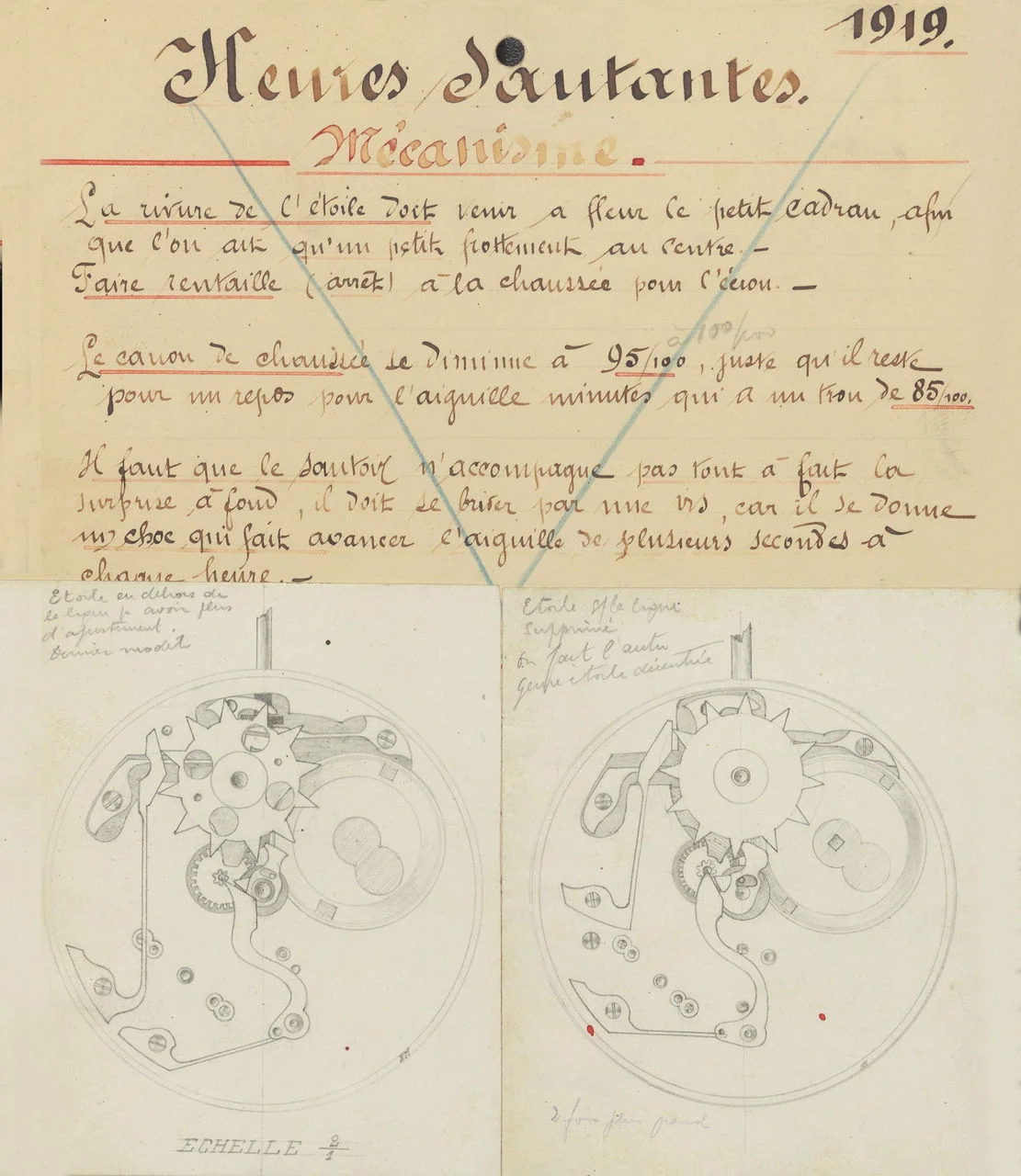
Workshop note relating to jumping-hour calibres, dated 1919. Technical sketches of the jumping-hour mechanism. AP Archives.
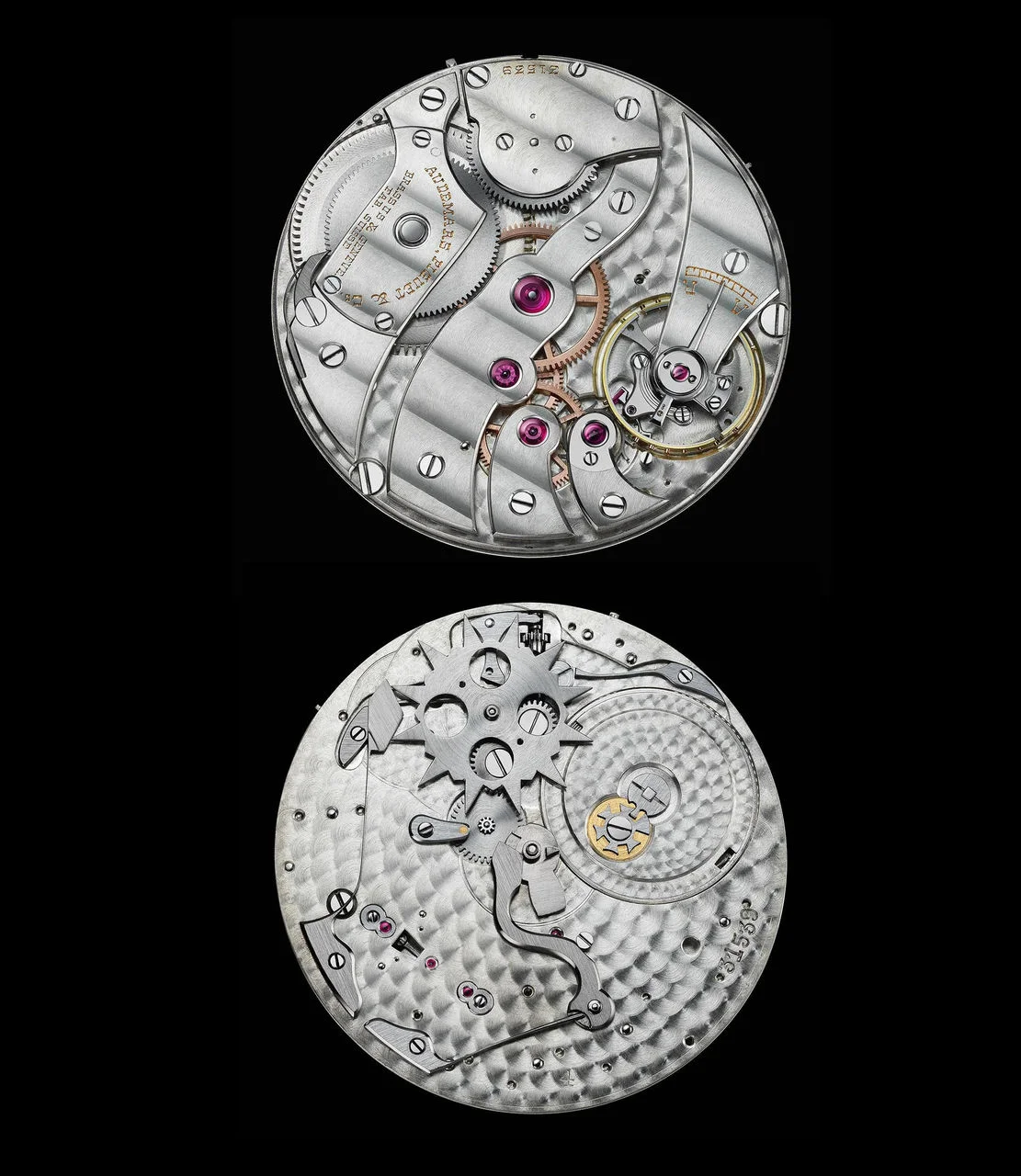
Calibre 17/18SVF#3, in the version featuring a jumping-hour disc and a minutes hand. Movement 31539, assembled and sold in 1925. AP Heritage, Inv. 150.
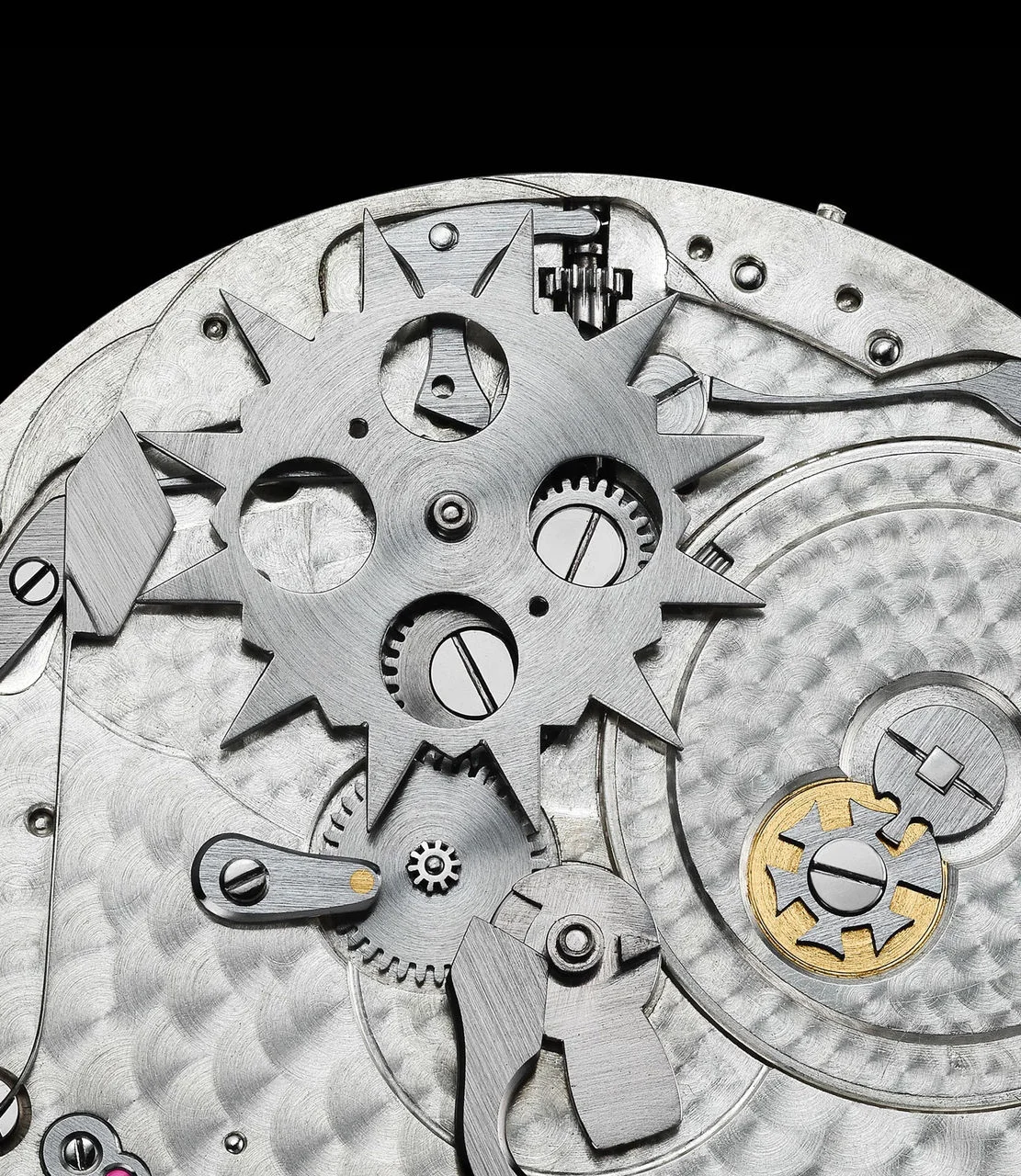
Detail of the jumping-hour mechanism. The star wheel is perforated to reduce its inertia. It is driven by a mechanism located at the centre of the movement. Calibre 17/18SVF#3. Movement 31539, assembled and sold in 1925. AP Heritage, Inv. 150.
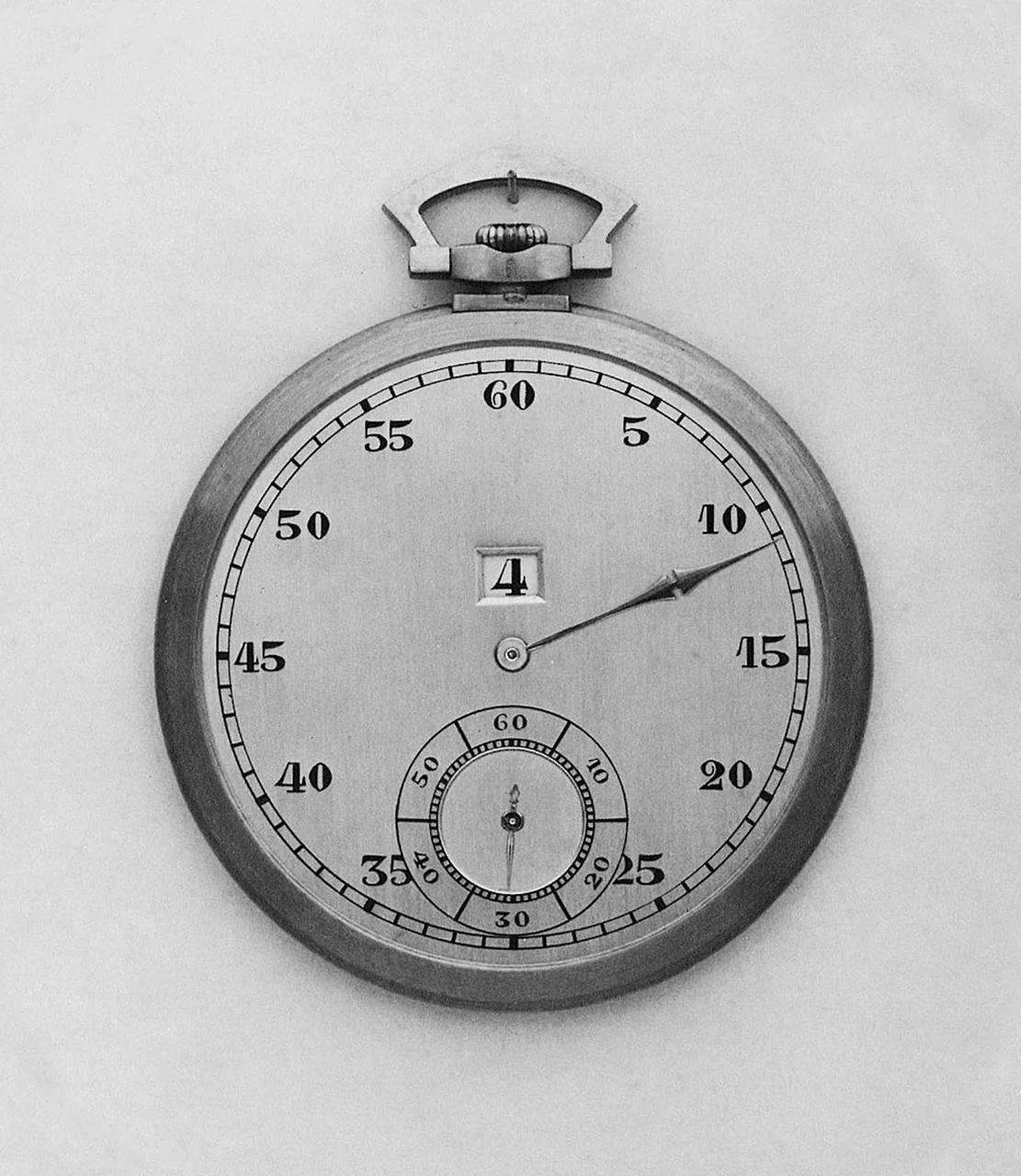
Circa 1918. Pre-Model 218. AP Archives.
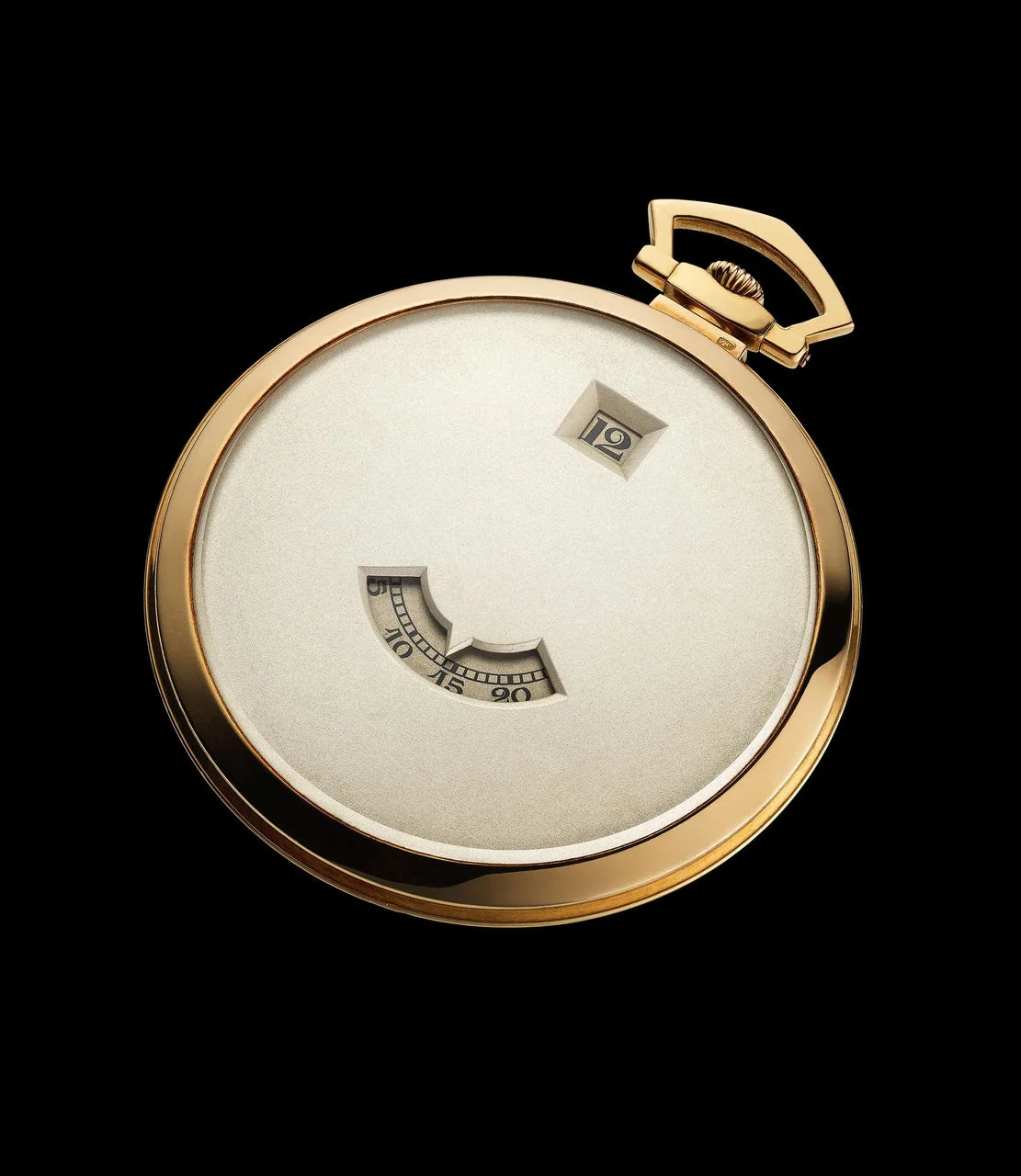
1930. Dual-aperture jumping-hour display, Pre-Model 229. Beveled glass topping the dial. Calibre 17 ½ SVF#3, movement 35814. Yellow gold case, No. 35814. AP Heritage, Inv. 1089.
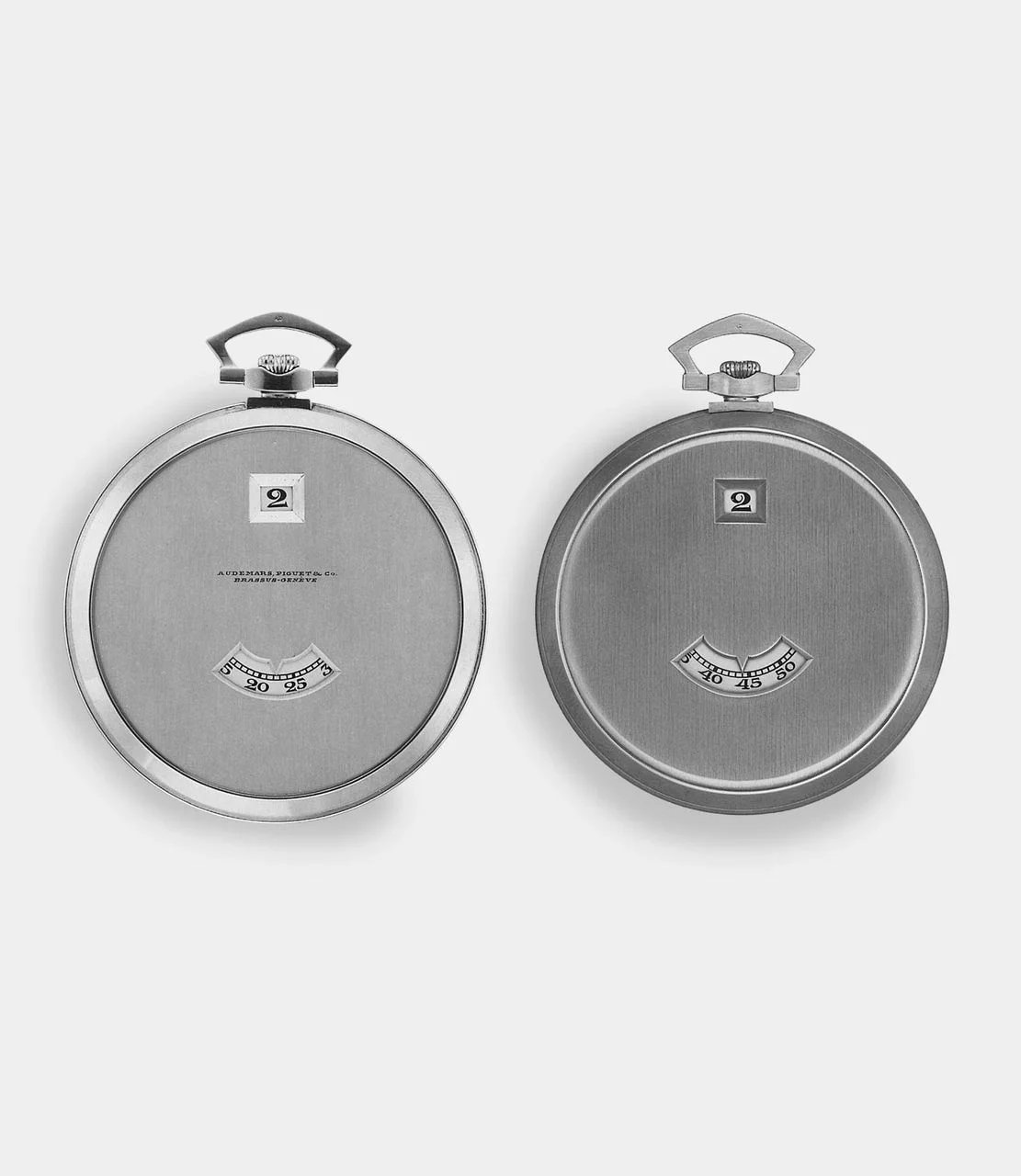
Circa 1925. Jumping-hour and jumping-minute watch. Left: Pre-Model 228 Right: Pre-Model 229. The glass is fixed to the metal. AP Archives.
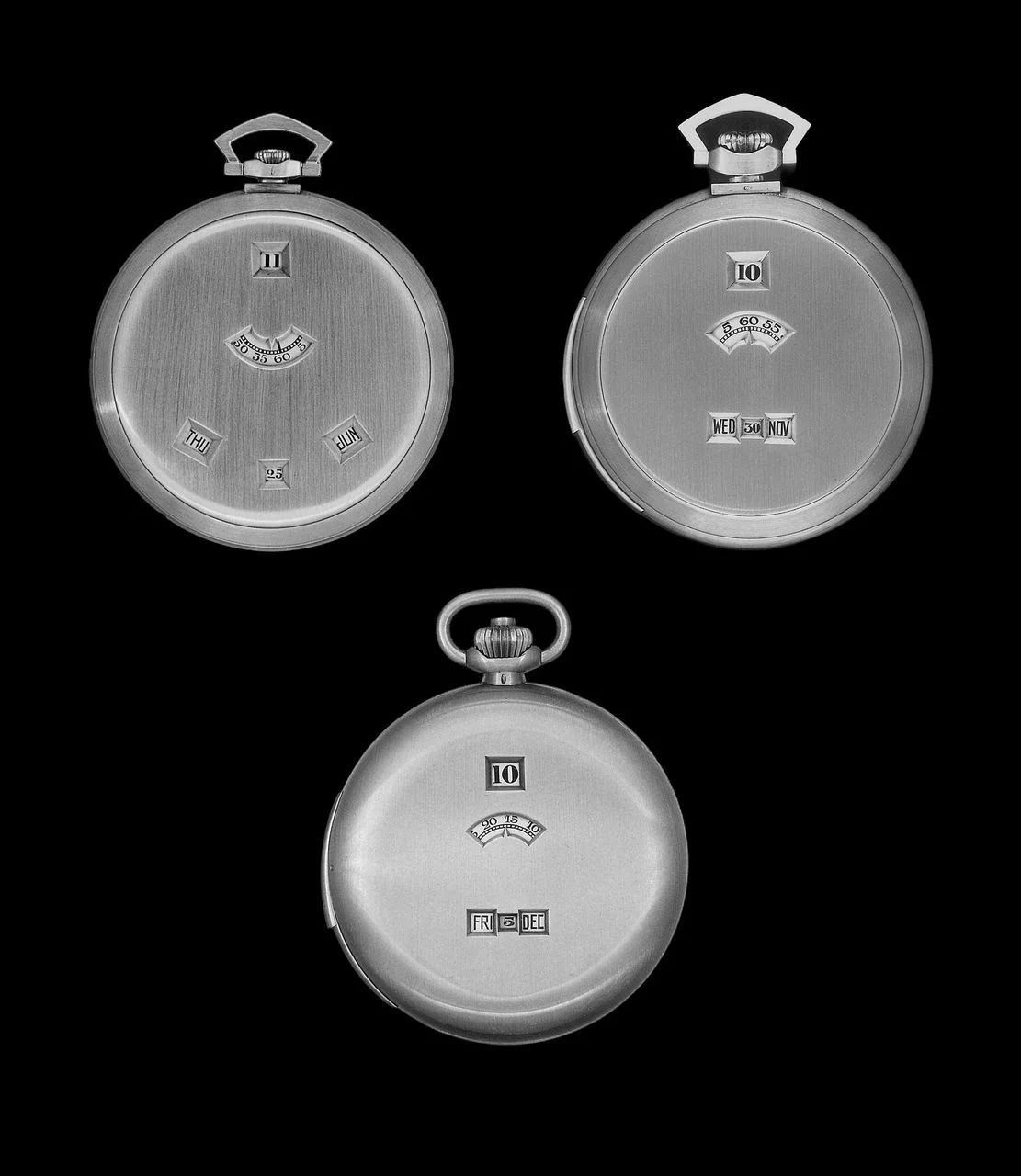
Circa 1925. Jumping-hour and jumping-minute model with complete calendar. Two minute-repeater variations. Pre-Models 244 (left), 250 and 251 (bottom). AP Archives.
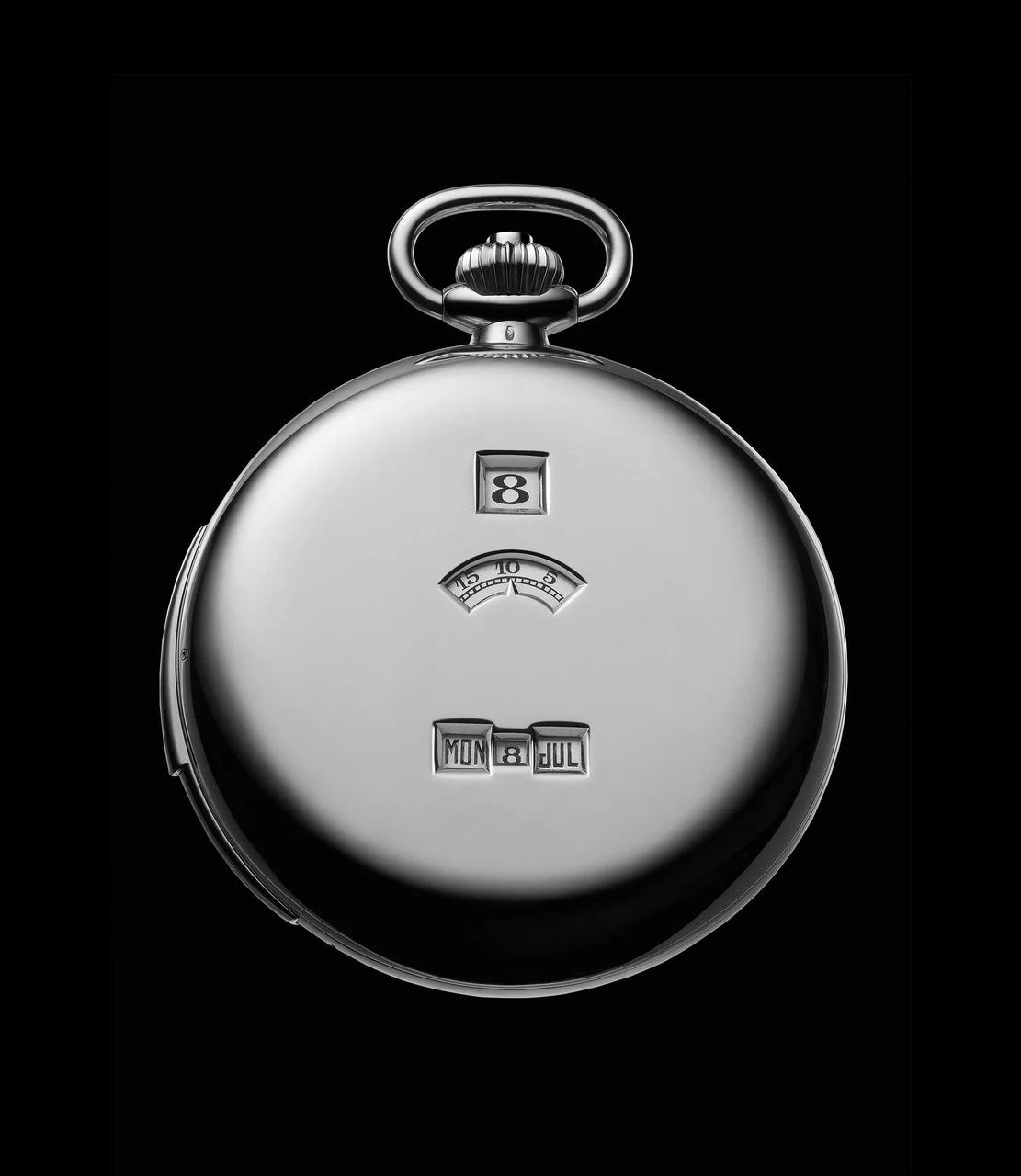
1929. Jumping hour, repeater and complete calendar. Five apertures. Calibre 17SMV#2, 18-carat white gold movement and case, no. 26852. Delivered to Bittman, St Moritz, in November 1929. AP Heritage, inv. 1753.
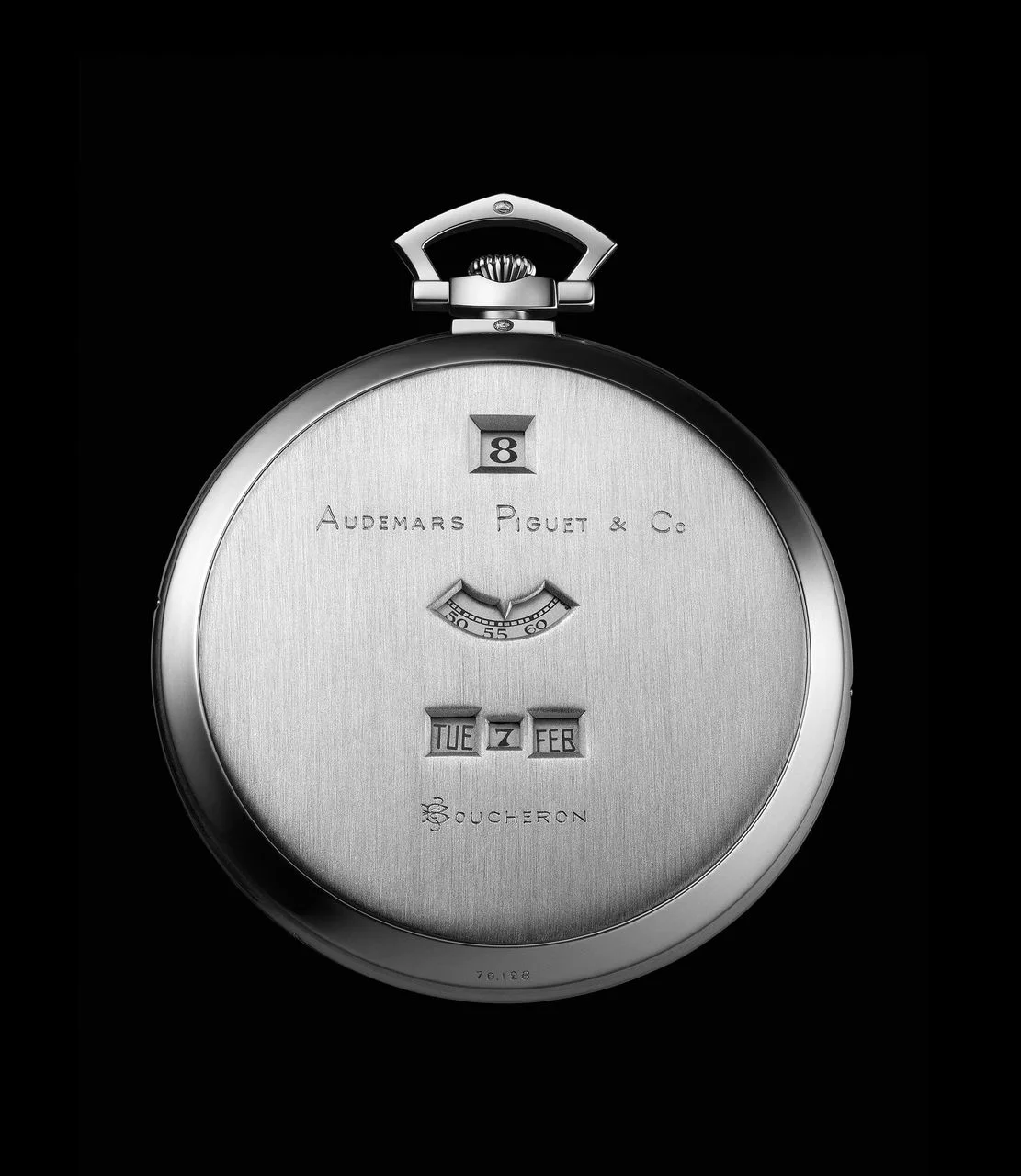
1928. Jumping hour and complete calendar. Five apertures. Calibre 18QG, movement 39581. White gold case no. 39581. Delivered to Paris in November 1929. Watch co-signed by Audemars Piguet and Boucheron. AP Heritage, inv. 655.
The First Wristwatches with Jumping-Hour Display and Minutes Hand
For centuries, jumping-hour displays remained the exclusive preserve of pocket watches. In July 1915, Swiss watchmakers Alfred Spori and Arthur Dubois filed patent CH71942, which was reviewed the following year by the Revue Internationale d’Horlogerie, for what would likely become the very first jumping-hour wristwatch. Dutch collector and researcher Ruud Van Rijd discovered one of the extremely rare examples ever made: proof that the patent did not remain without effect. Nevertheless, the extreme scarcity of these watches suggests that the war put an end to the project.
It was not until 1924 that the story really began. Audemars Piguet then introduced what is, until proven otherwise, the second jumping-hour wristwatch ever produced. Sold to Gübelin in June 1924, the first example corresponds to Pre-Model 176. It was fitted with Calibre 10HPVM, which was replaced by Calibre 10GHSM as of the third watch delivered (December 1924). Specially developed for the occasion, it revealed its properties via its designation: G for Geneva quality, HS for Heure sautante (jumping hour) and M for mince (slim).
Produced from 1924 and sold until 1951, Calibre 10GHSM (LeCoultre movement "ébauche") was fitted in just under 600 watches, of which 347 featured a jumping-hour display. Subsequently, this calibre was used in simple hours-and-minutes watches, as well as in 108 calendar wristwatches (see Audemars Piguet 20th Century Complicated Watches, pp. 85-113).
The archives list 212 watches combining an hours aperture and a minutes hand, sold between 1924 and 1951 (95% of them before 1935). The cases could be square, cushion-shaped or rectangular (often referred to in the archives as “tortoise rectangles”). A few rare examples feature hinged lugs, known at the time as “movable lugs”.
From the mid-1920s to the mid-1930s, the jumping-hour trend spread throughout the Swiss watch industry. Numerous manufacturers competed to demonstrate their creativity, including Haas Neveux & Cie, Cartier, Juvenia, Helvetia, Patek Philippe, Robert Cart and C. H. Meylan.
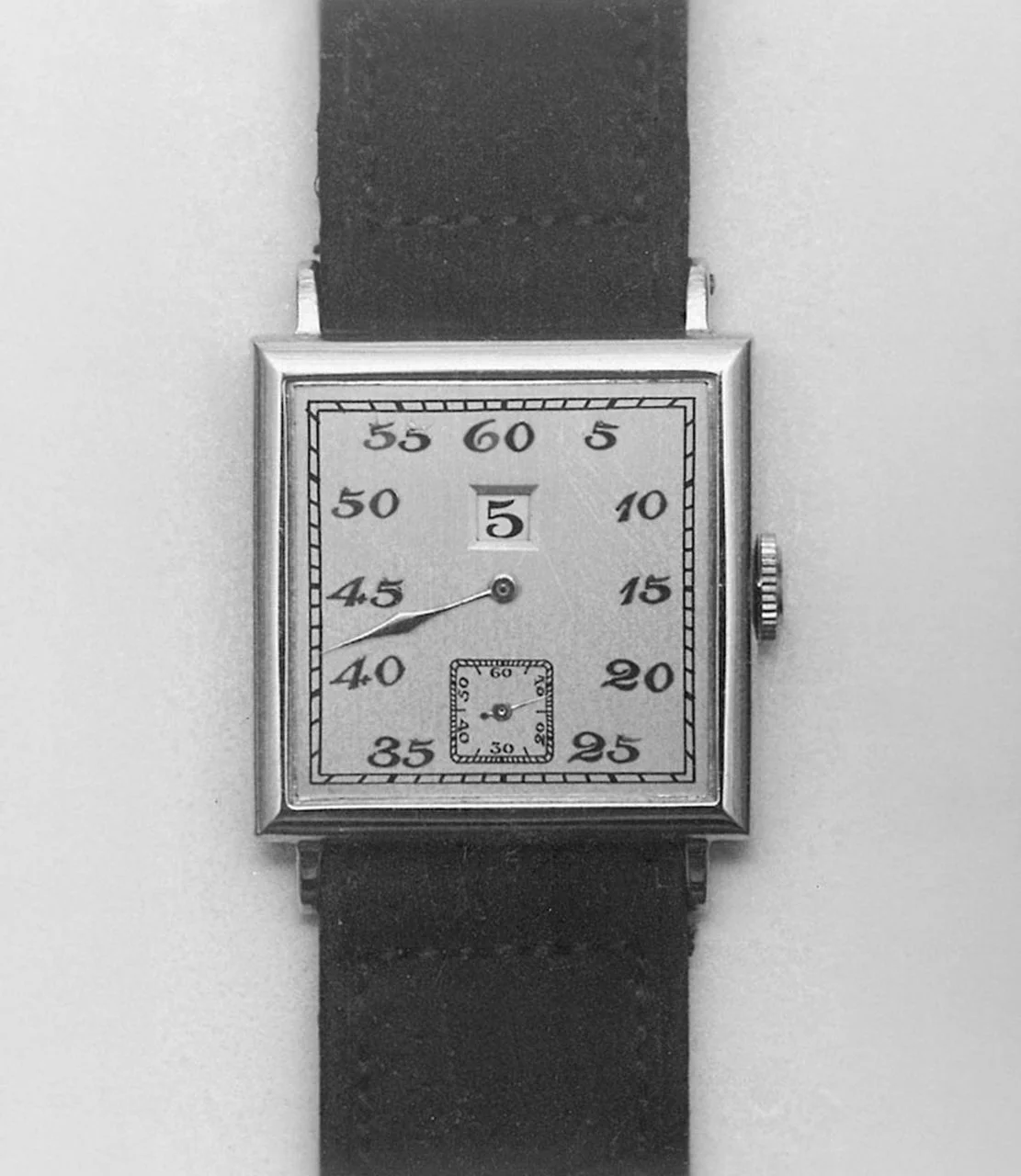
1924. Pre-Model 176. Audemars Piguet’s first wristwatch with a jumping hour and probably the second in the history of watchmaking. AP Archives.
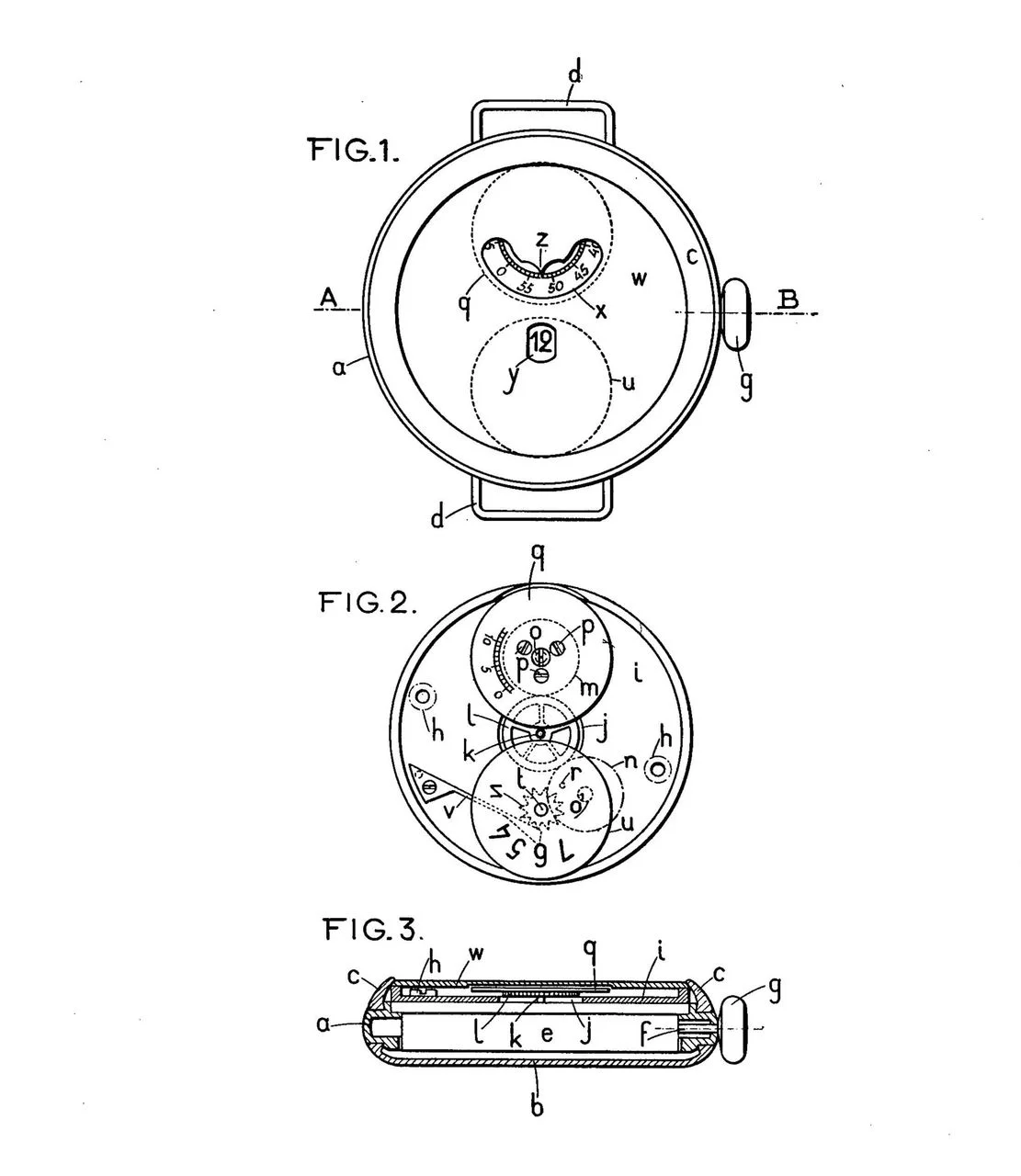
Patent CH71942, filed in 1915 by Dubois and Spori. Probably the very first jumping-hour wristwatch. Espacenet.com.
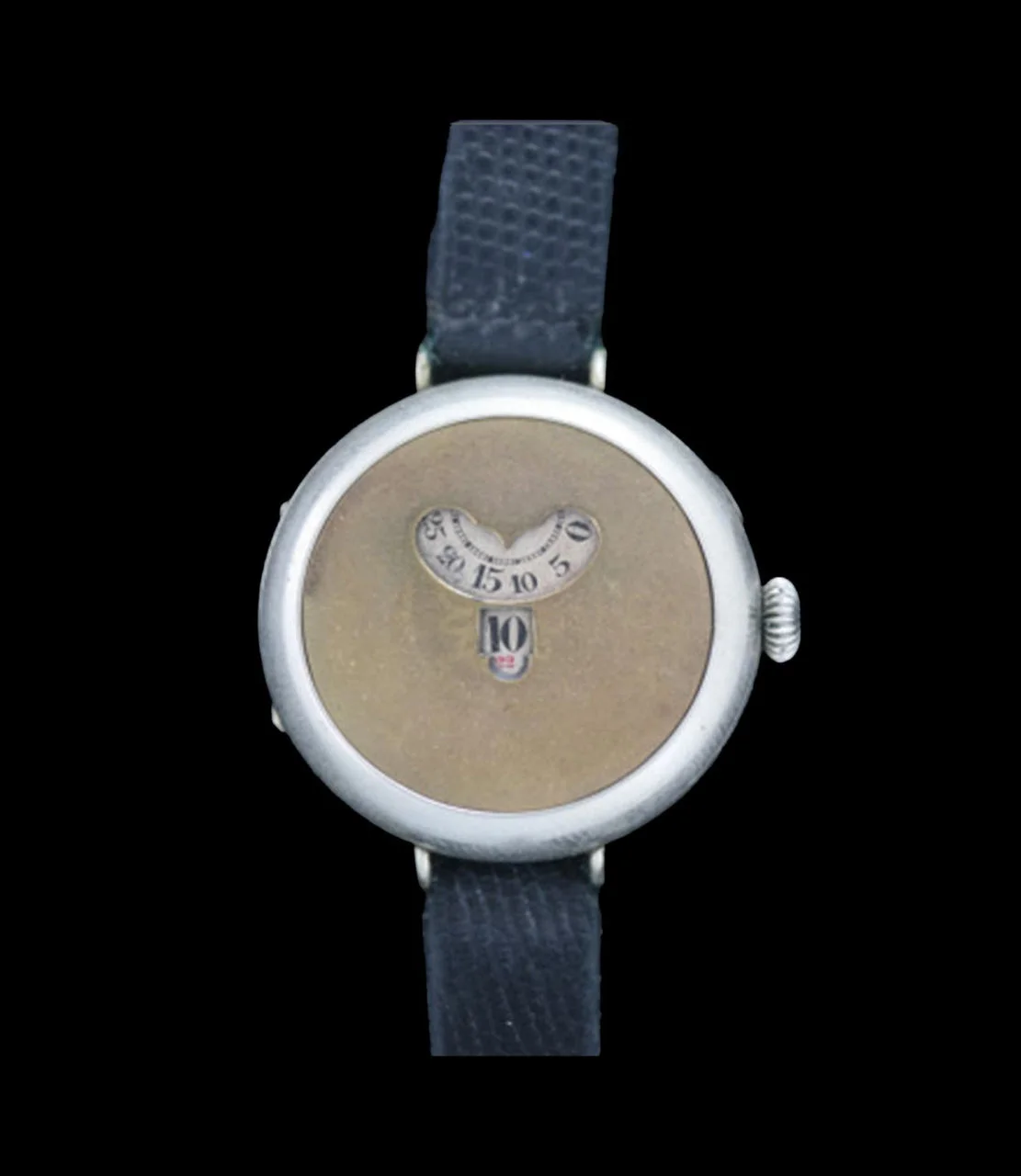
Discovered by Dutch collector Ruud Van Rijd, this example of a Dubois Spori jumping-hour watch proves that patent CH71942 was used to manufacture watches. Image taken from a study provided by Ruud Van Rijd.
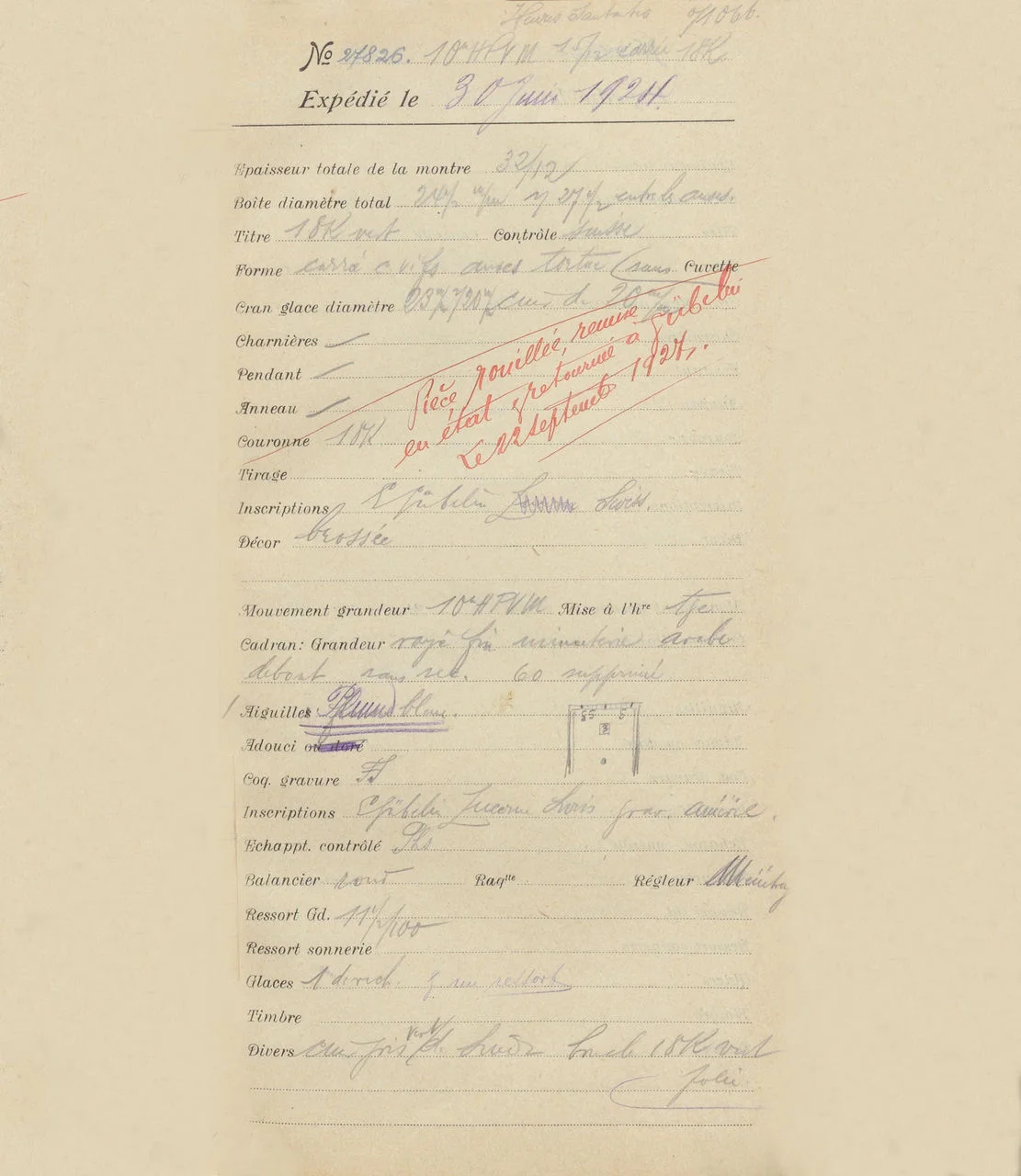
Description of the first Audemars Piguet jumping-hour wristwatch, sold on 30 June 1924.
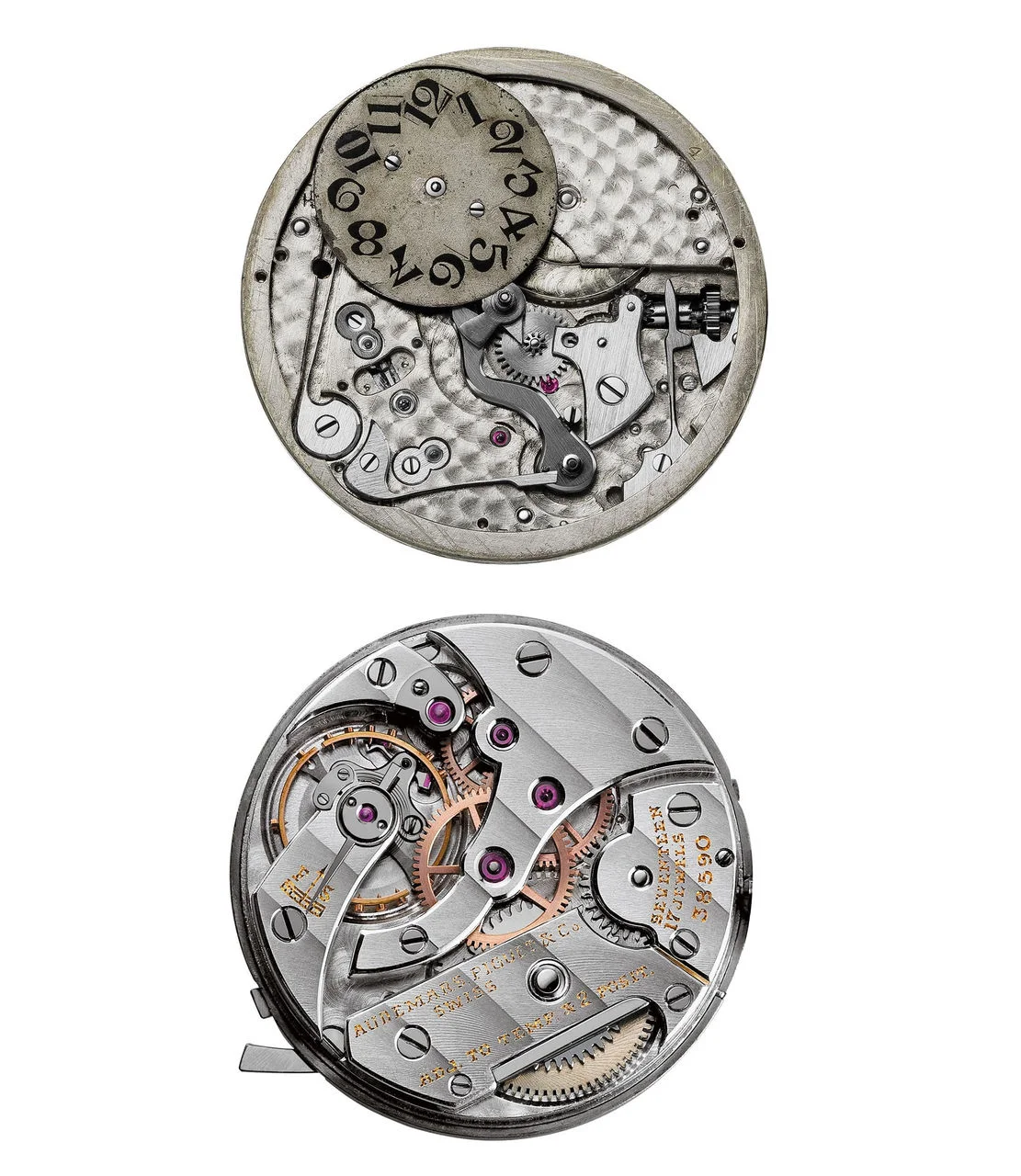
1924. Calibre 10GHSM. Aperture-display jumping hour, minutes hand. G may stand for Geneva quality, HS for heure sautante (jumping hour) and M for mince, meaning slim (the photo showing the bridges features a calendar variant). AP Heritage.
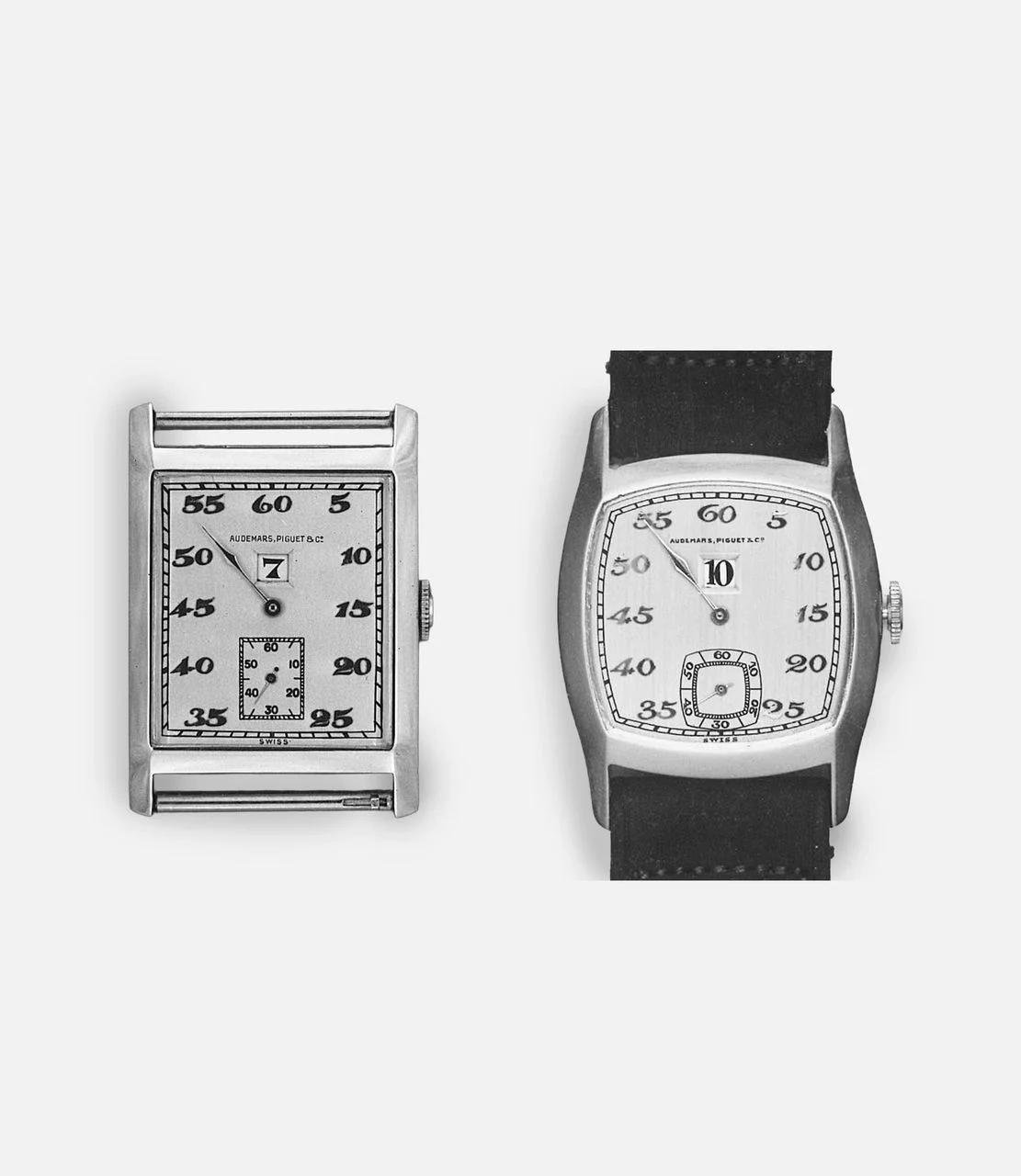
Circa 1925, Pre-Model 174 (left) and Pre-Model 175 (right). AP Archives.
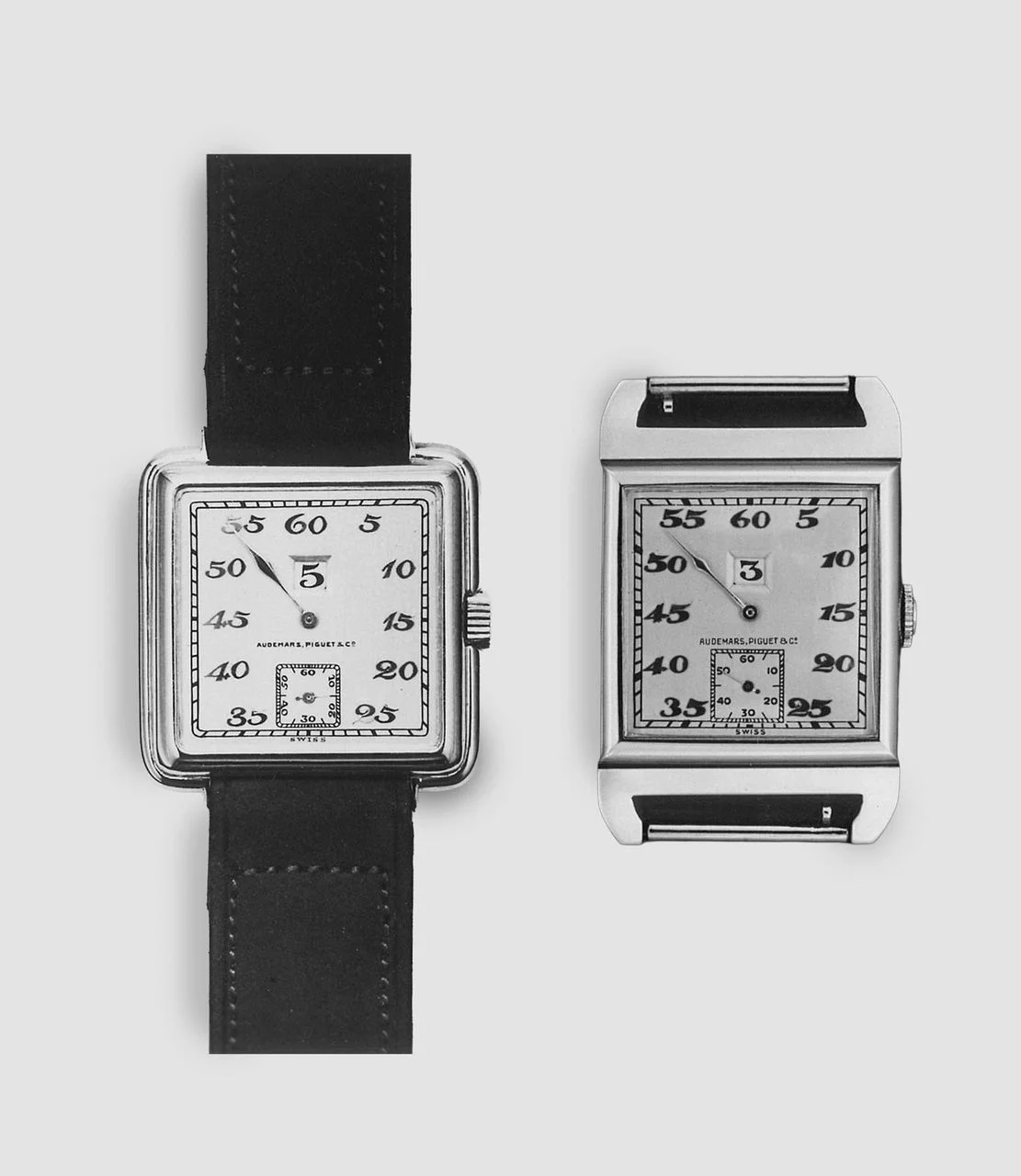
Circa 1924. Left: Pre-Model 188 Right: Pre-Model 200 (movable lugs). Audemars Piguet Archives.
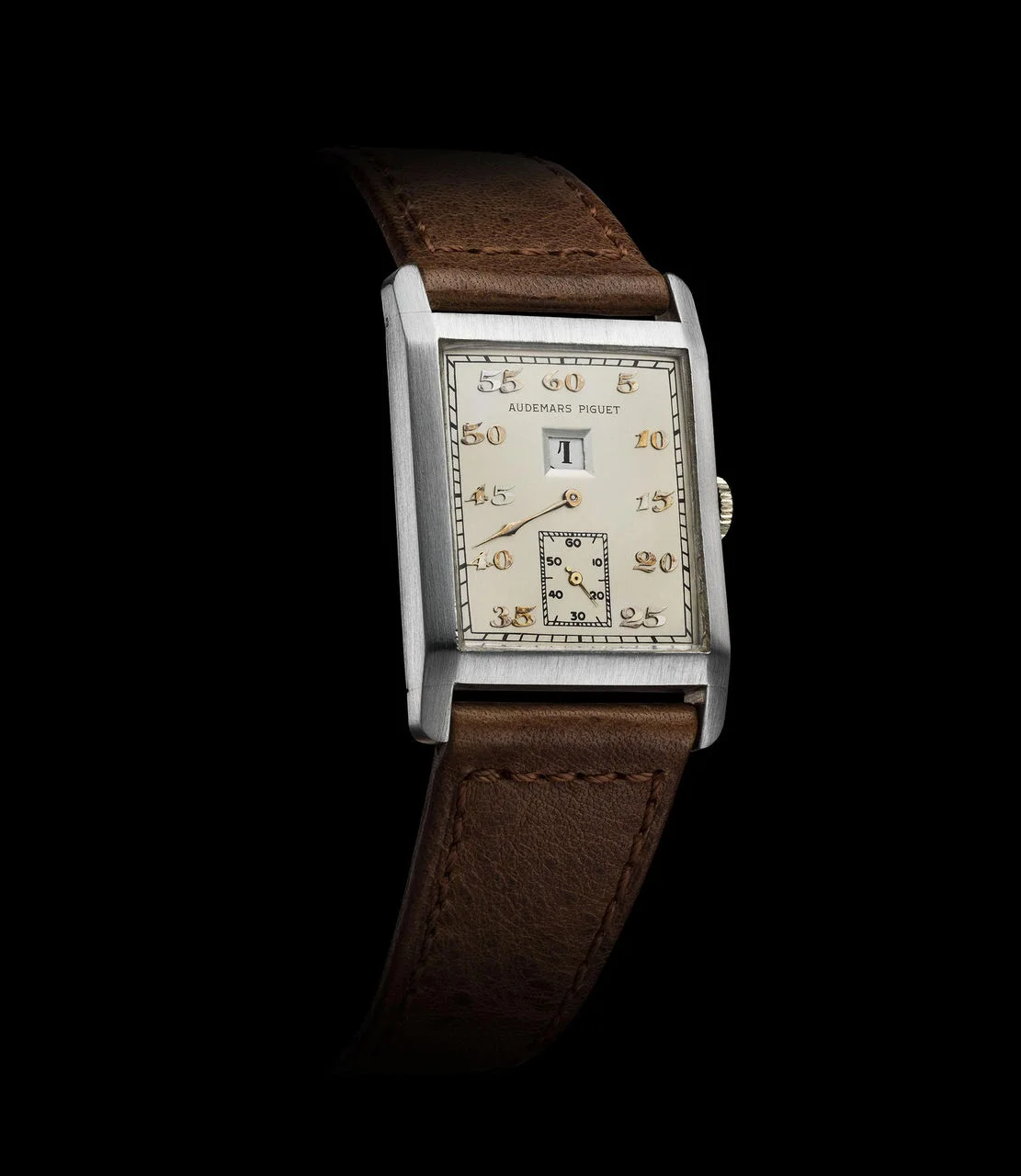
1928. Jumping-hour model. Calibre 10GHSM, movement 39811. “Tortoise rectangle” case 39811 in white gold. Green gold feather-shaped hand. Sold to Metric Watch in September 1929. AP Heritage, inv. 195.
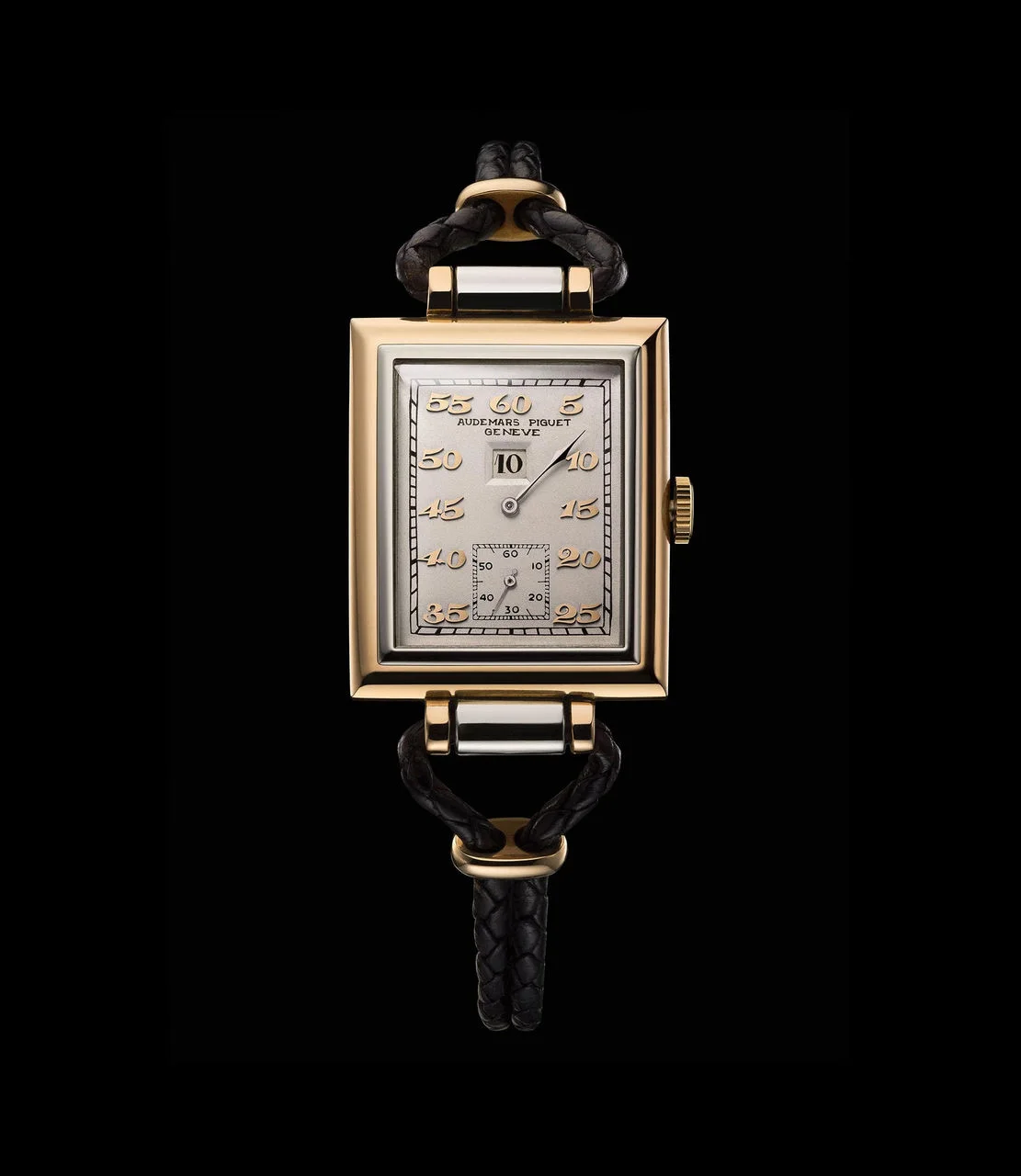
1928. Two-tone jumping-hour model. Calibre 10GHSM, movement 38604. Eggly 38604 case in white and pink gold. Cordlet strap. Sold to Metric Watch in November 1928. AP Heritage, inv. 1776.
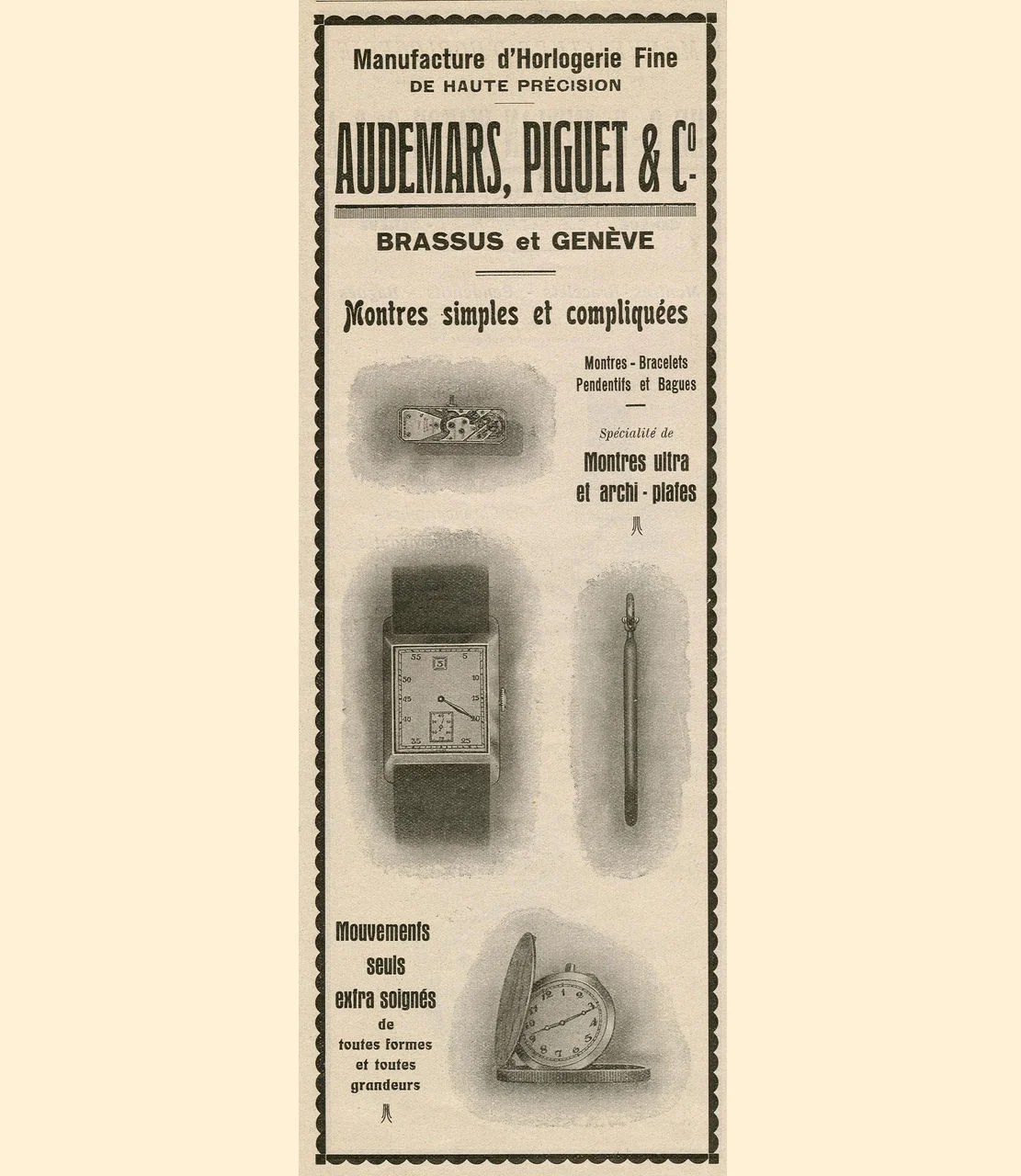
Published between 1930 and 1933 in the Revue Internationale d’Horlogerie, this advertisement showcases Audemars Piguet’s specialities, in particular jumping-hour watches. AP Archives.
Dual-Aperture Wristwatches
In December 1926, Audemars Piguet delivered its first three dual-aperture jumping-hour wristwatches. Positioned at 6 o’clock, a curved, elongated aperture reveals the slow passage of the minutes. Apart from these two openings, the cases reveal nothing but gold.
Over the course of five years, 136 dual-aperture jumping-hour wristwatches emerged from the workshops in Le Brassus: square, cushion-shaped, rectangular – each slightly different from the next. With the exception of five models fitted with Calibre 8SV, all were powered by Calibre 10GHSM (22.56 mm in diameter). The fashion for dual-aperture wristwatches was therefore as brief as it was intense. The Great Depression marked its abrupt end and the last four watches took over a decade to find buyers, between 1934 and 1946.
The attentive observer will focus on the shape, finish and depth of the apertures: polished bevels, sharp inner angles, double-rounded minutes apertures, small dots marking the minutes… The aesthetic and technical vocabulary is both rich and subtle.
Above and beyond their very pared-down design, dual-aperture jumping hour models provided a technical solution to a recurrent problem: the fragility of watch crystals, as only mineral glass was used in the early days of wristwatches. Prone to knocks and friction, they broke so often that Audemars Piguet would frequently supply several replacement crystals with new watches (each new one being cut to measure). The dual-aperture system enables the crystal to be placed inside the case, thereby protecting it from impacts. Moreover, watchmaking historian Alfred Chapuis regarded protecting the watch crystal as the main reason for the popularity of the jumping-hour display.
In 1930, Audemars Piguet decided to create a jumping-hour underdial mechanism to fit the very small Calibre 8SV (18.05 mm in diameter) and to fit it inside elegant cushion-shaped watches with a cordlet strap (Pre-Models 178 and 192). Of the five watches documented in the archives, only three were ever sold, all between 1930 and 1932. One of them is currently on display at the Musée Atelier Audemars Piguet, in the showcase dedicated to design masterpieces.
Furthermore, the archives contain records of two three-aperture models. In addition to the time, one displays the date and the other features a small seconds hand. Neither has reappeared publicly since the 1930s.
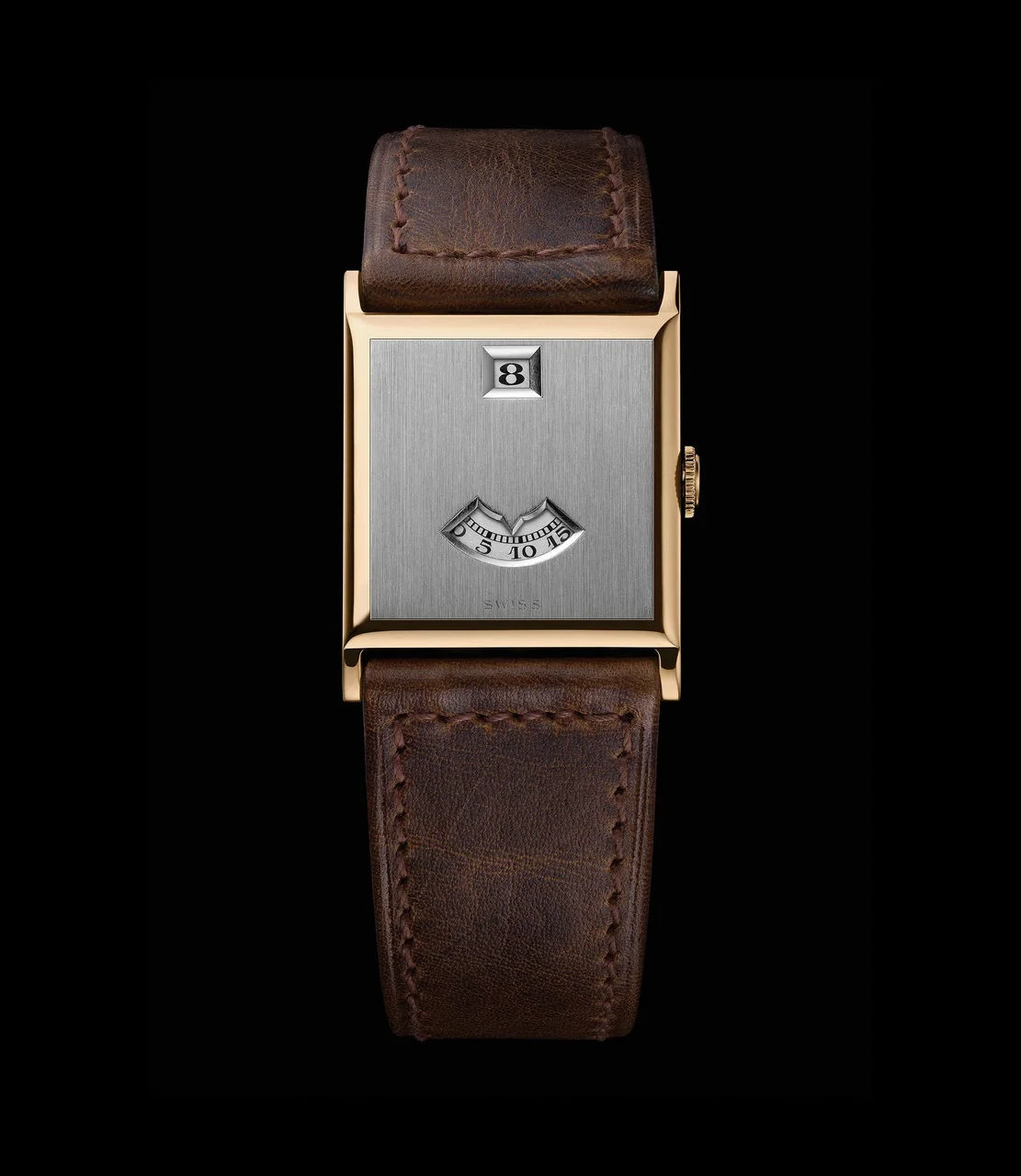
1929. Two-tone jumping hour Pre-Model 190. Calibre 10GHSM, movement 39916. Pink and white gold case 39916. Sold in New York in November 1929. AP Heritage, inv. 1790.
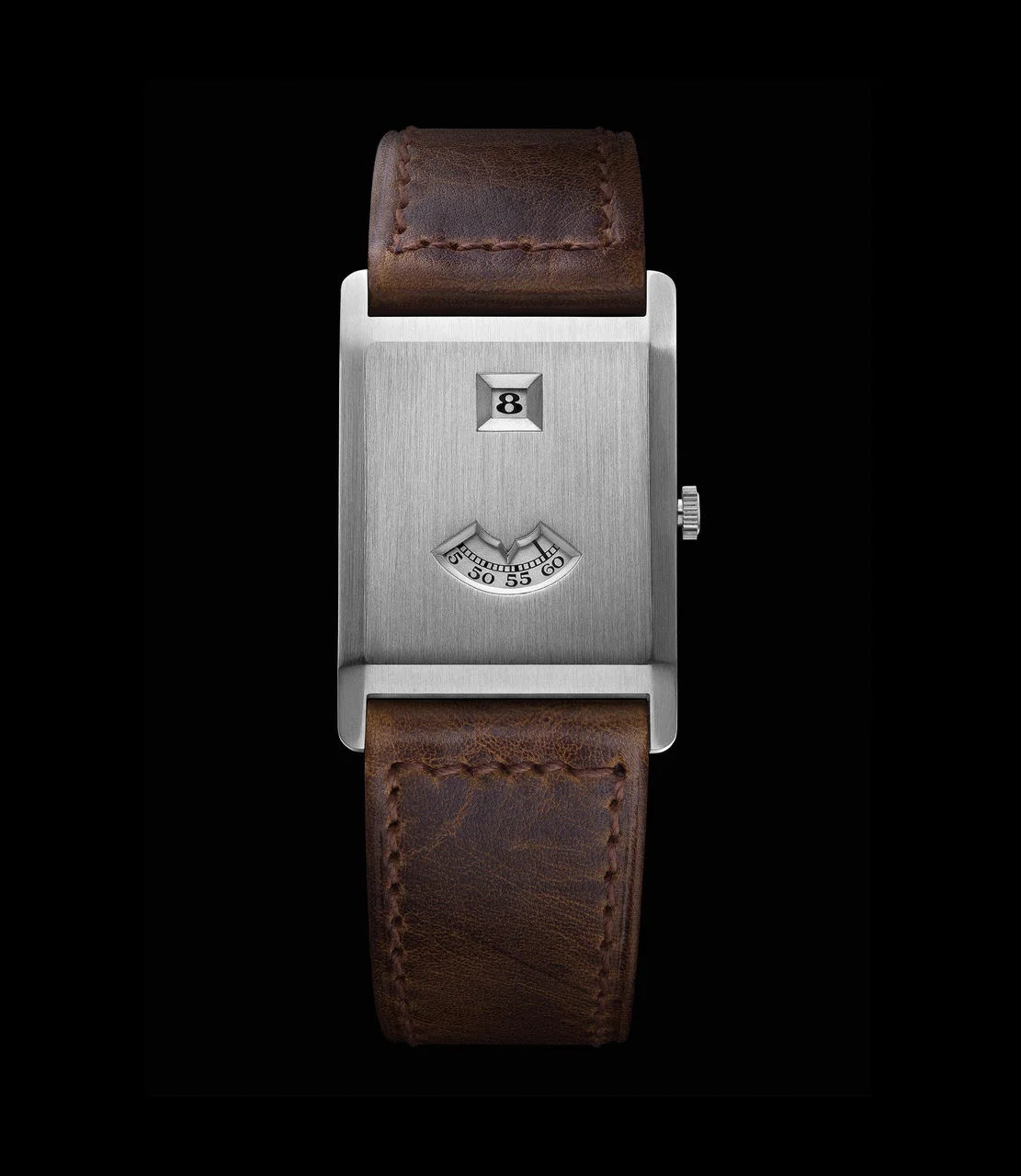
1929. Pre-Model 177 jumping-hour watch. Calibre 10GHSM, movement 40542. White gold case, no. 40542. Sold in December 1929 in Paris. AP Heritage, inv. 203.
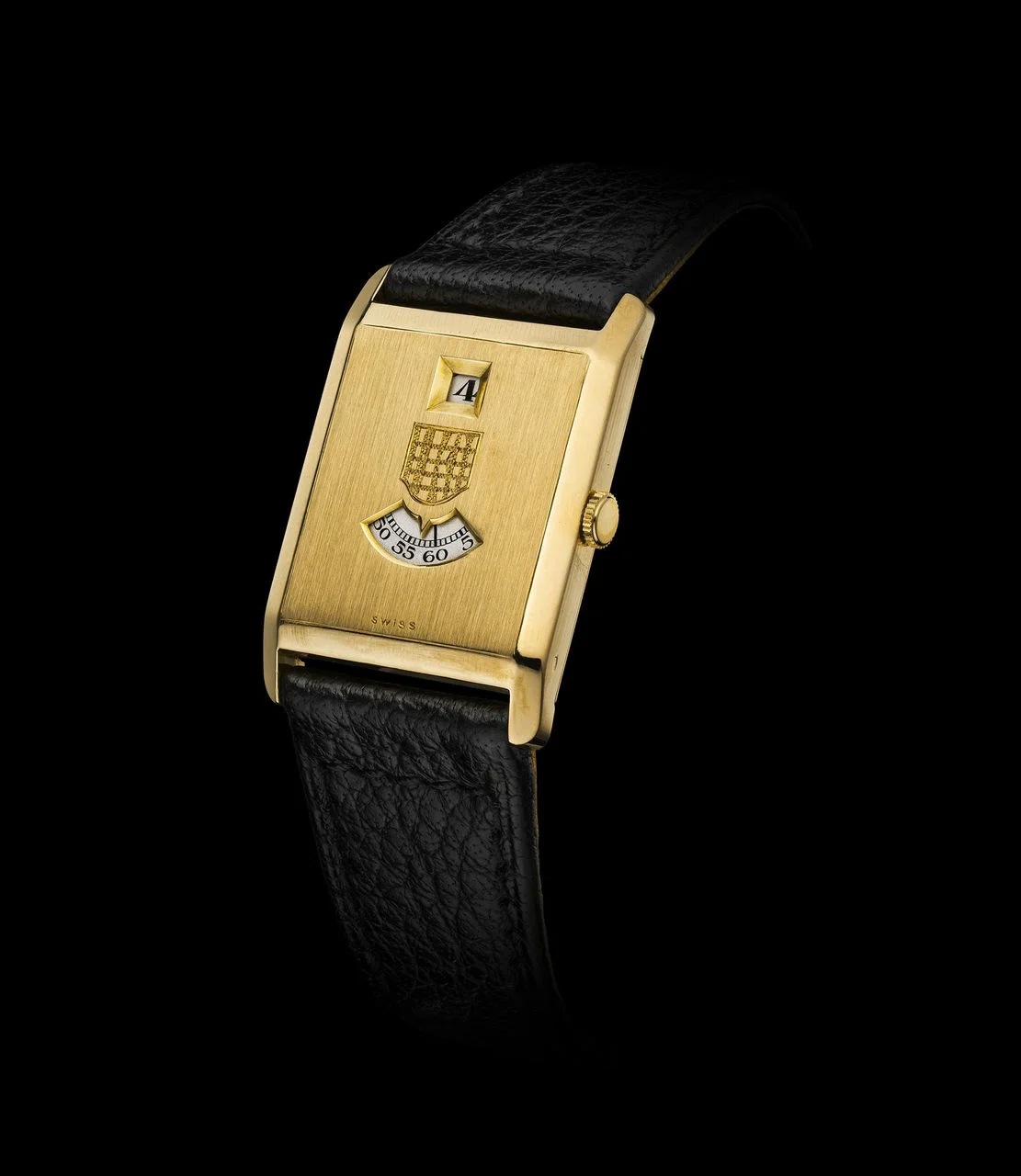
1930. Jumping-hour watch, Pre-Model 177. Calibre 10GHSM, movement 40733. Green gold case No. 40733. Sold at Gübelin Lucerne in June 1930. Undocumented coat-of-arms engraving. AP Heritage, inv. 205.
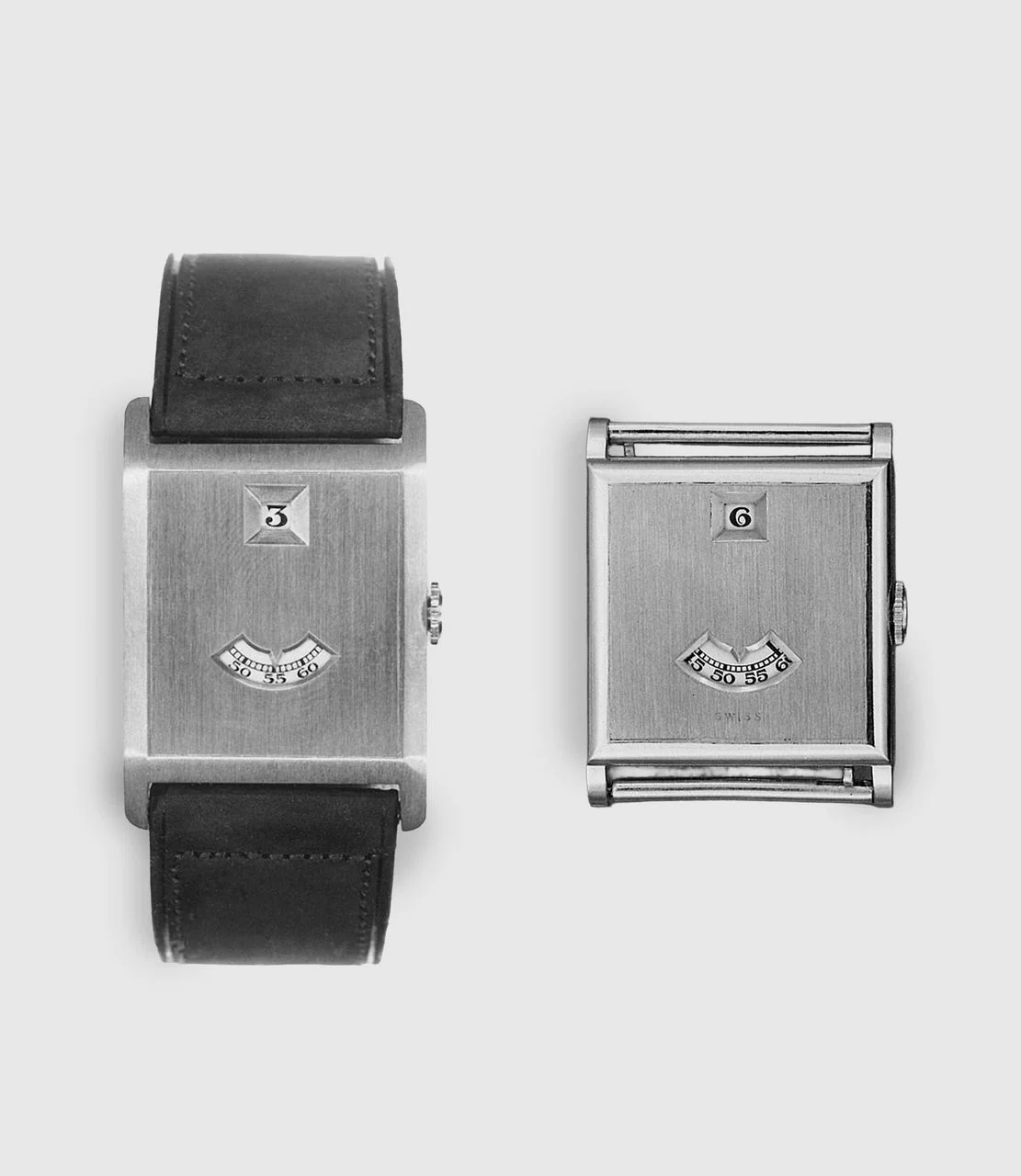
Circa 1926 Left: Pre-Model 177 Right: Pre-Model 190. AP Archives.
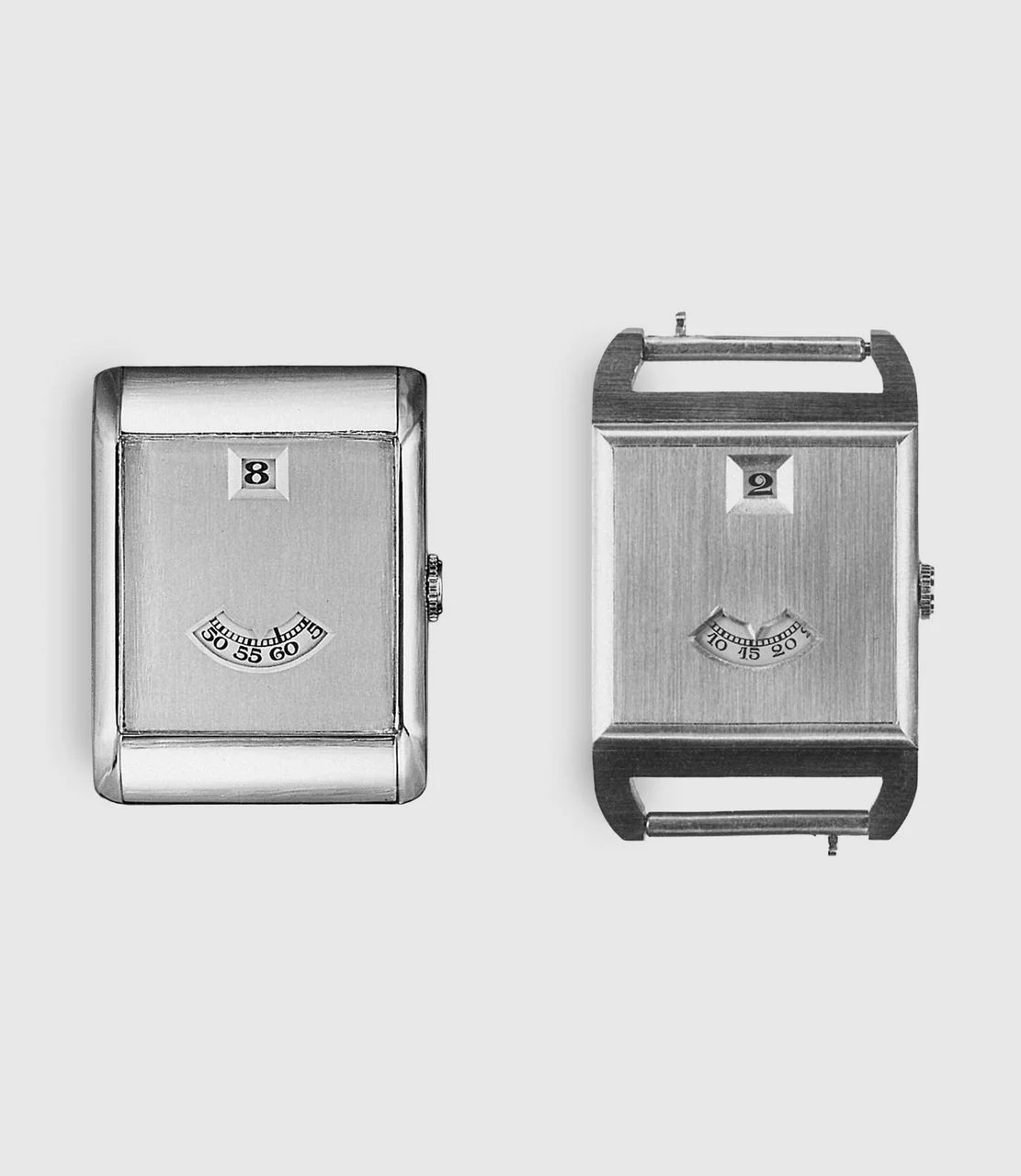
Circa 1926 Left: Pre-Model 191 Right: Pre-Model 178. AP Archives.
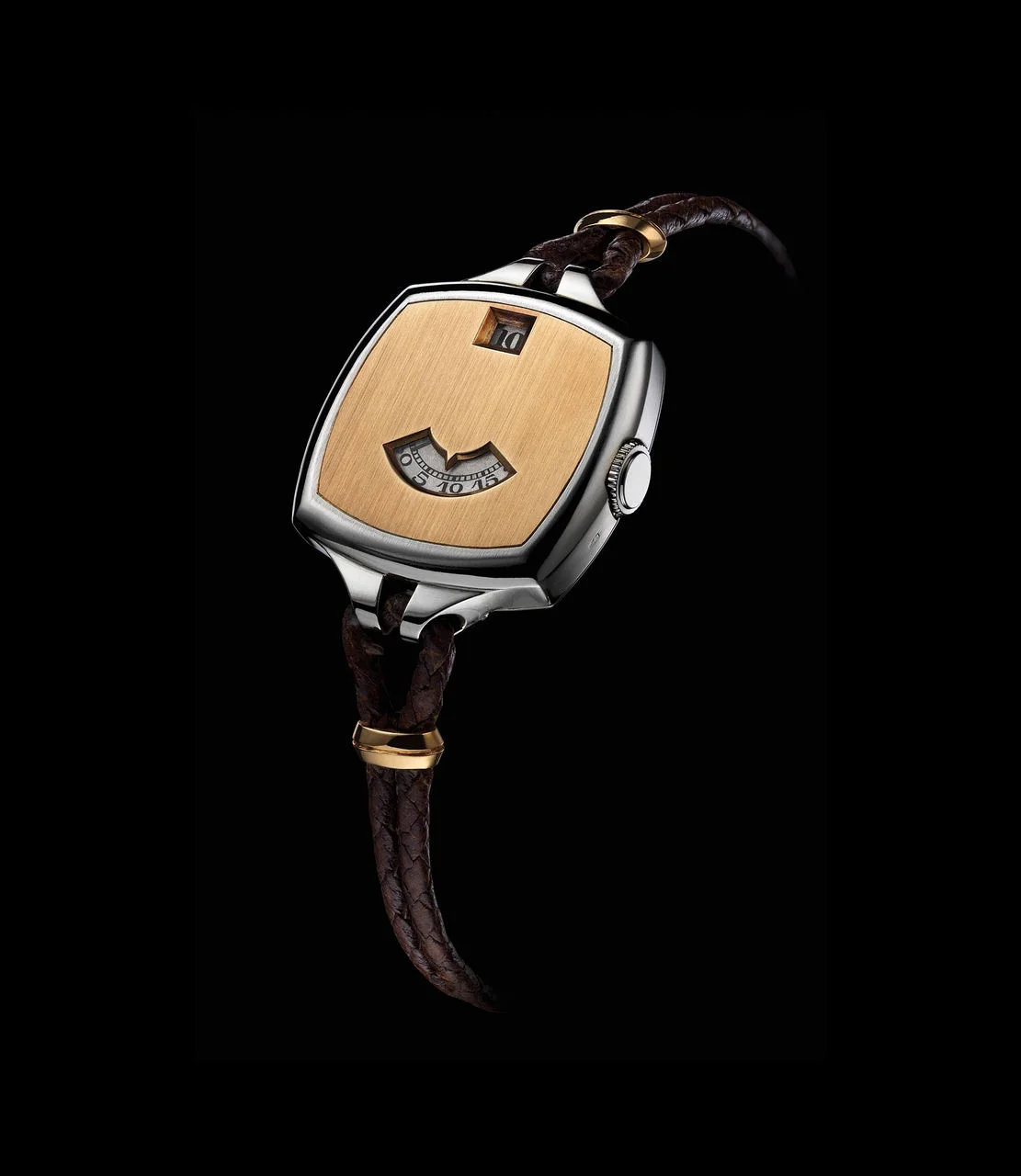
1932. Cushion-shaped jumping-hour watch, Pre-Model 179. Calibre 8SV, movement 28907. Pink gold and white gold case, no. 28907. Sold in Thonon in August 1932. AP Heritage, inv. 651.
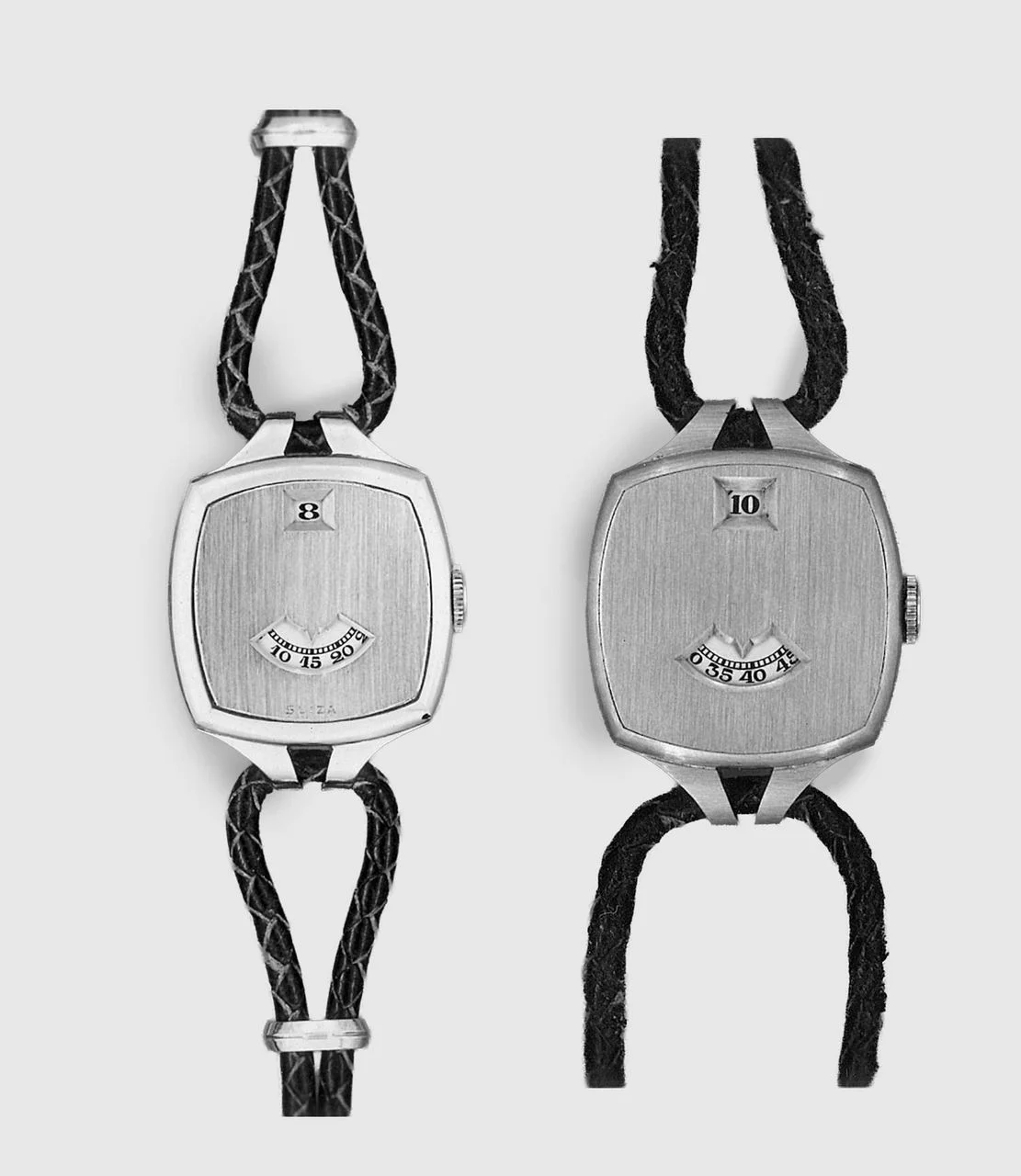
Circa 1930 Left: Pre-Model 179 Right: Pre-Model 192. AP Archives.
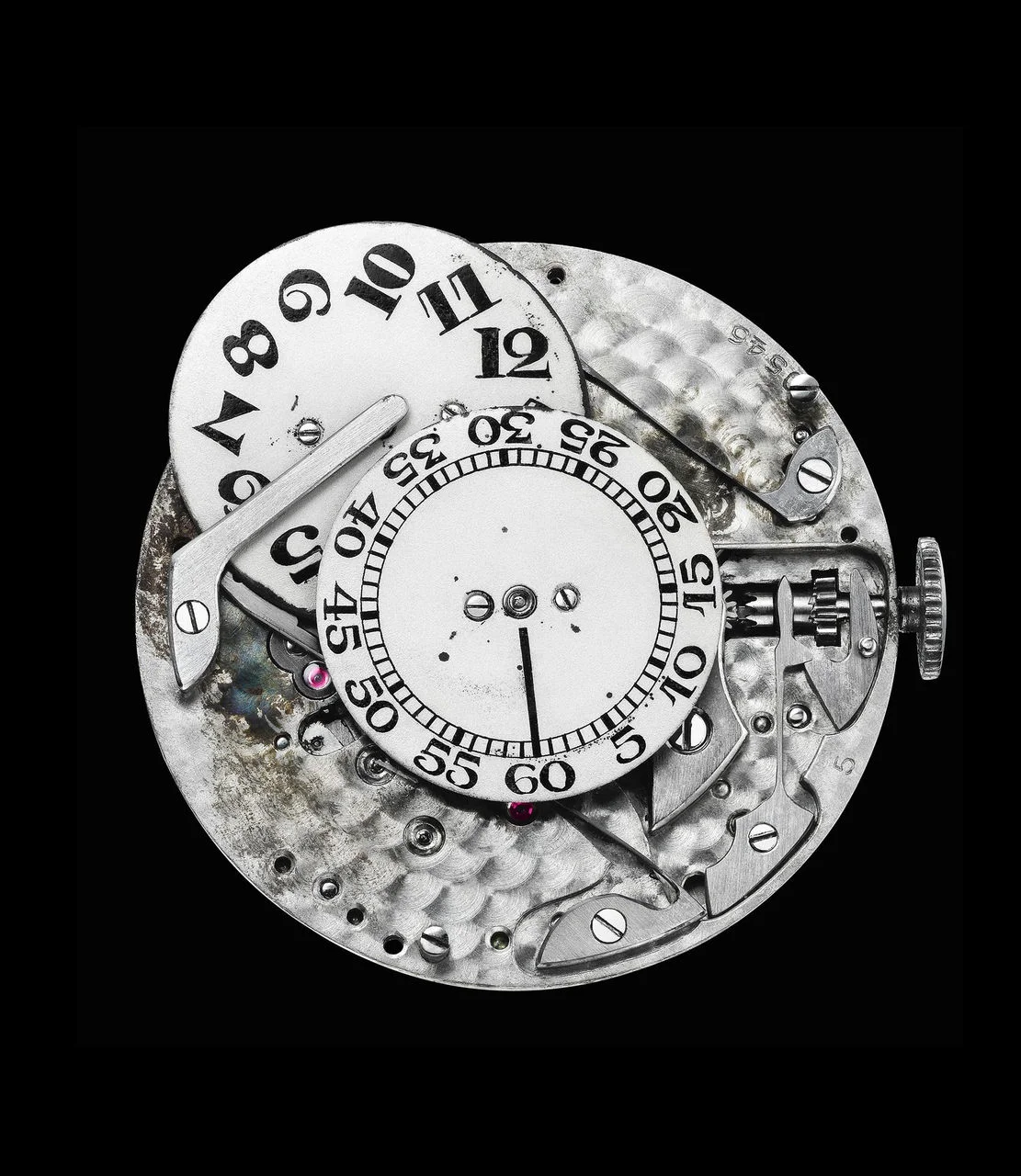
Dual-aperture Calibre 10GHSM.
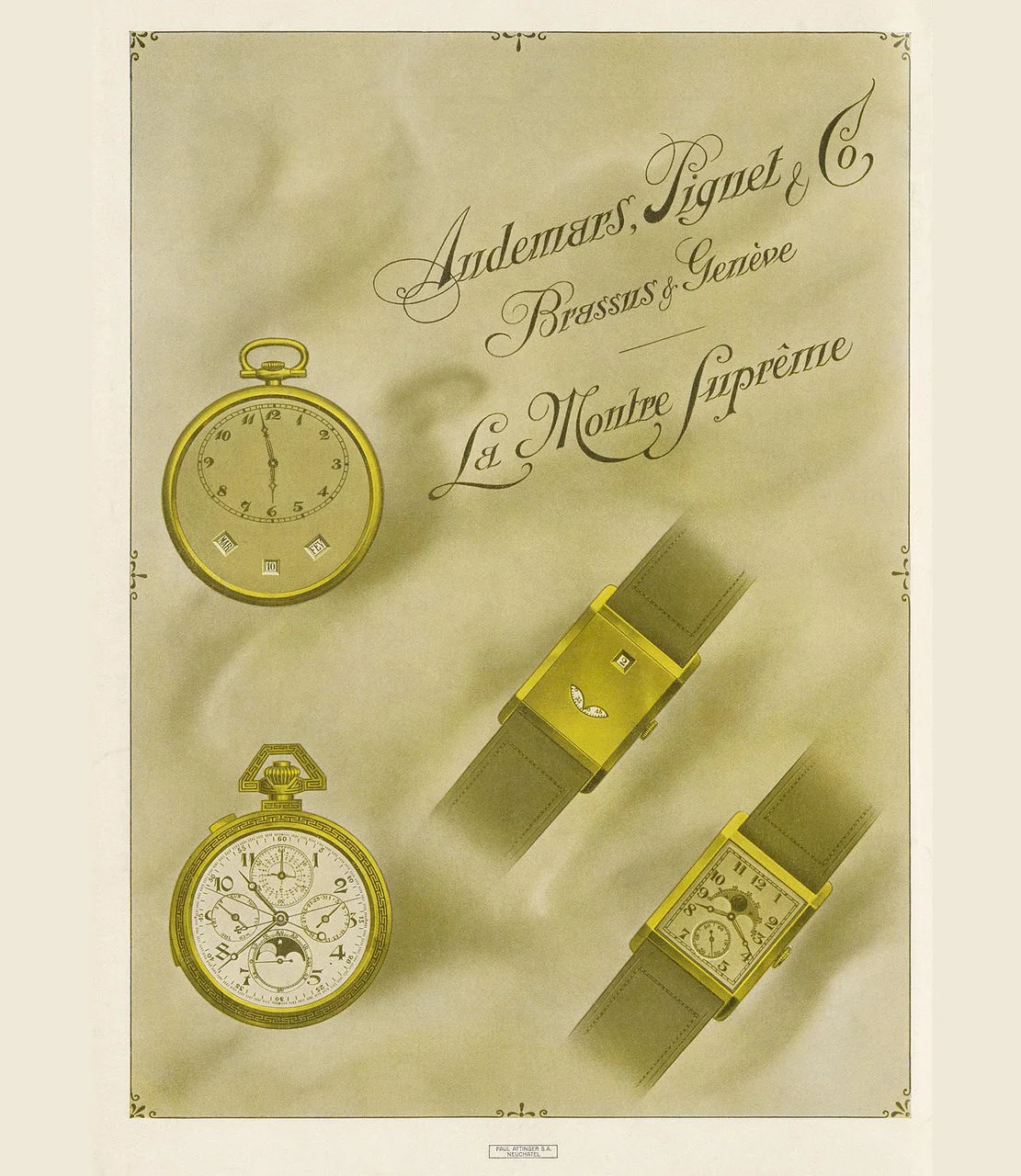
The jumping-hour wristwatch features prominently in this 1929 Audemars Piguet advertisement. AP Archives.
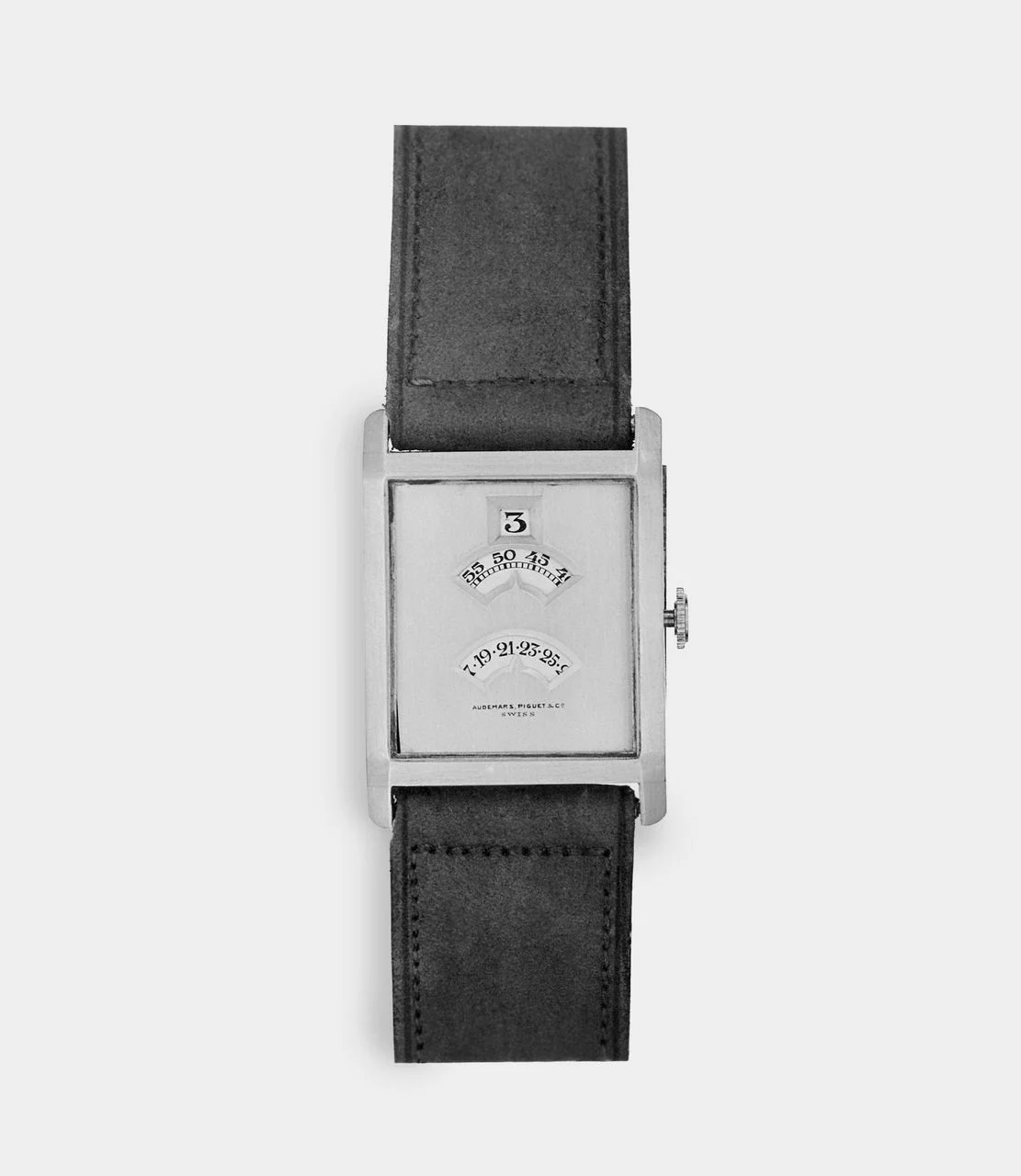
Circa 1930 Pre-Model 196 with date. AP Archives.
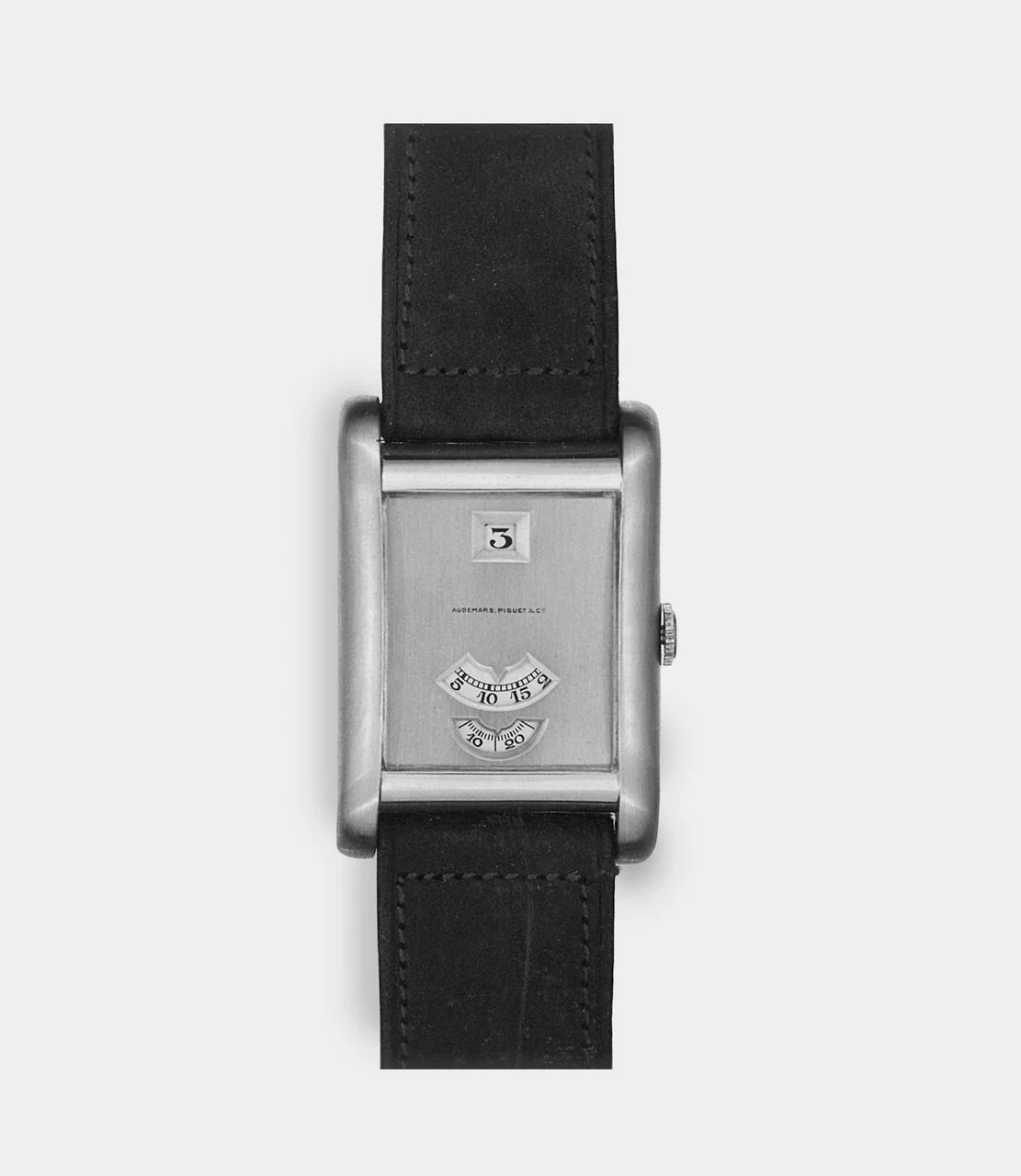
Circa 1930 Pre-Model 189 with small seconds. AP Archives.
From Streamline to the Broadway Shoemaker
The defining feature of the Streamline style is aerodynamics. Closely related to the Art Deco movement, it flourished during the interwar period, particularly in the United States. In its quest for modernity and speed, society was then fascinated by aviation, automobiles and high-speed trains. While the Pennsylvania Railroad Class S1 locomotive – nicknamed “the Big Engine” and designed by design pioneer Raymond Loewy – was built to whizz through the air at high speed, its aerodynamic curves could also be found on other objects such as lamps, irons, toasters and certain watches.
Produced in a run of 14 between 1929 and 1930, Pre-Model 1271 is perhaps the most Streamline watch of its time. Its two-part metal case seems designed for speed. The lateral gadroons glide along the edges of the case, curving and tapering until they meet at the tips of the lugs, like an aircraft wing with a stream of ultra-fast air flowing over it. The apertures are reminiscent of the portholes and cockpit window of a Douglas DC-3. Inside, two small glass plates, each a quarter of a millimetre thick, are held in place by tiny springs. Despite the No. 339 hallmark depicting a headless hammer, the identity of the case maker remains unknown.
Like the Streamline style, watch no. 40546 has a resolutely American history. Its case is engraved with the inscription “Maurice Miller, 1552 Broadway, NYC”. In 1930, Maurice Miller had just taken over the company founded by his father Israel Miller, the king of footwear for music hall performers. The address on the watch corresponds to the I. Miller building, a true temple to footwear built in 1926 just a stone’s throw from Times Square. Until its demise in the 1970s, the I. Miller brand was a major player in the US footwear industry and Andy Warhol himself created advertisements for the brand in 1955.
For now, back to Model 40546. The sole platinum version of the 1271 Pre-Model, it was delivered to the Swiss retailer Beyer on 20 March 1930 for the price of CHF 500. Acquired in 2016 by the Audemars Piguet Heritage Foundation, it is currently on display at the Musée Atelier in Le Brassus. It was this watch that inspired the Neo Frame collection of which the first model was introduced in 2026 (Chapter 11).
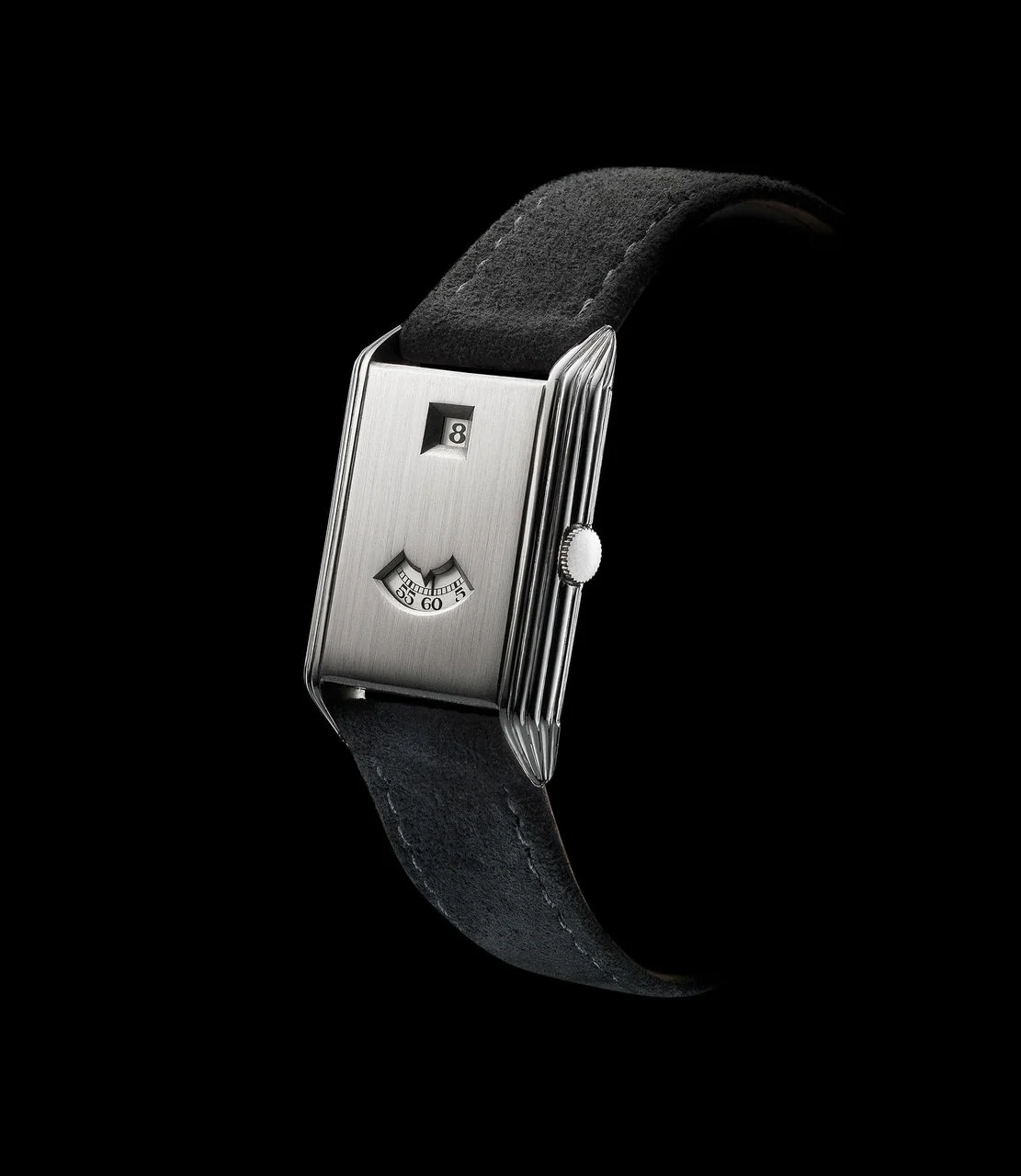
1930. Pre-Model 1271 with jumping hour. Platinum. Calibre 10GHSM, movement and case no. 40546. Engraving on the back of the case: “Maurice Miller 1552 Broadway NYC”. Delivered to Beyer Zurich in 1930. AP Heritage, Inv. 1725.
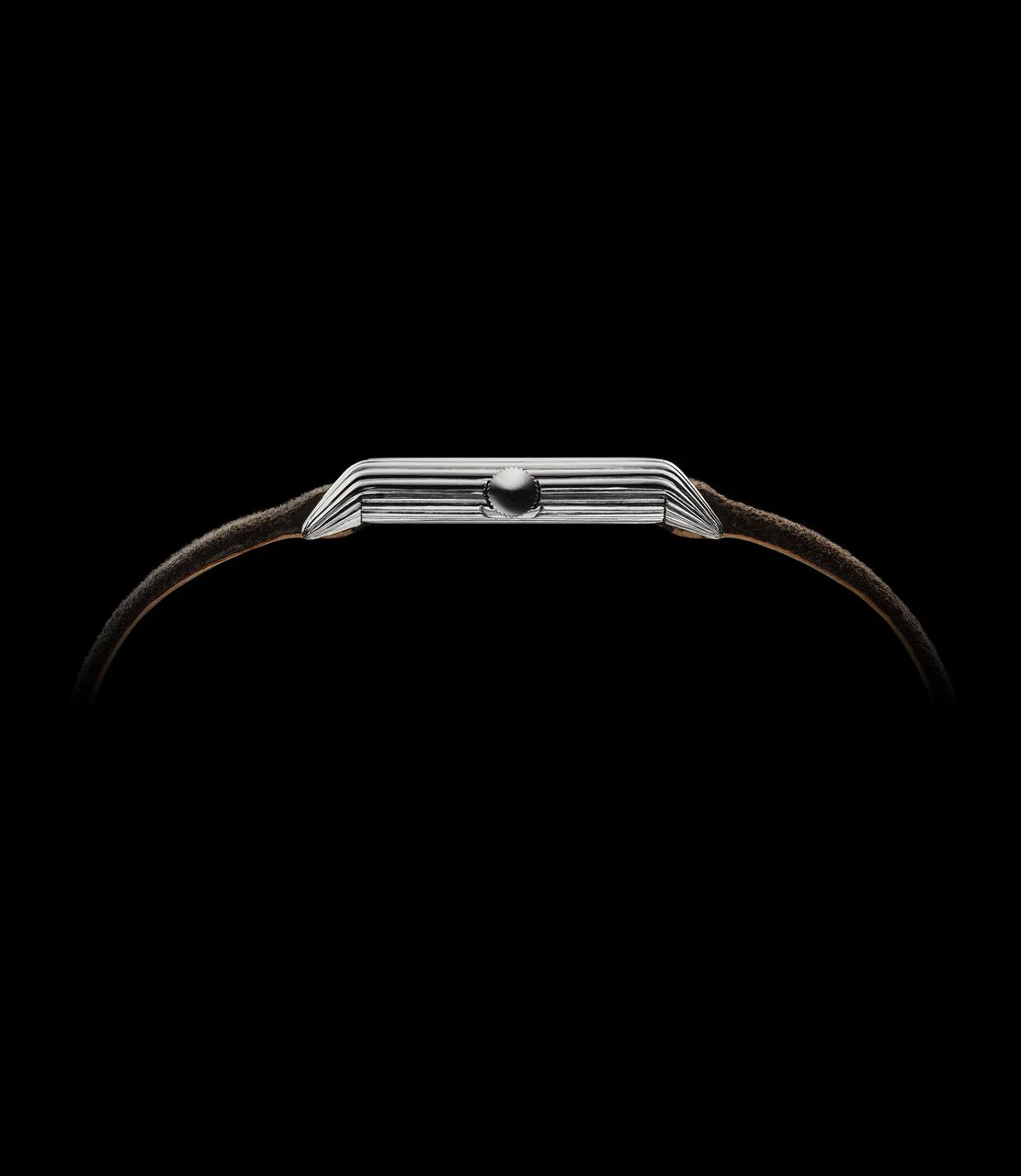
The profile of Pre-Model 1271 is reminiscent of an aircraft wing. The gadroons run along the side of the case and meet at the tips of the two curved lugs. AP Heritage, Inv. 1725.
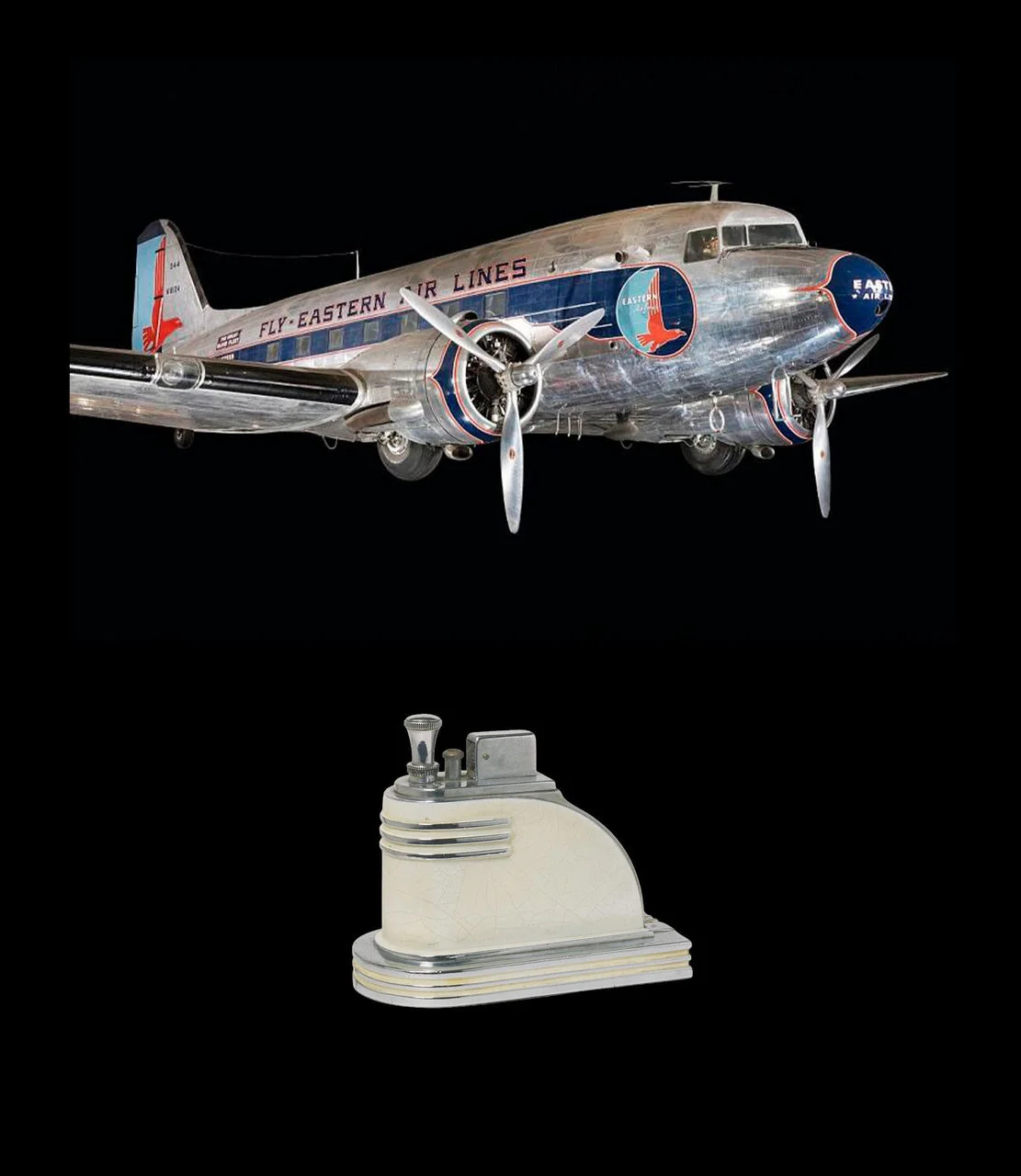
The Streamline style can be found in aviation (like the Douglas DC-3 pictured) as well as in everyday objects such as lighters or even irons (such as the 1956 Noirot model shown here). Douglas DC-3, 1936. Smithsonian National Air and Space Museum, public domain. Lighter, Ronson. Newark, env. 1925. © Victoria and Albert Museum, London.
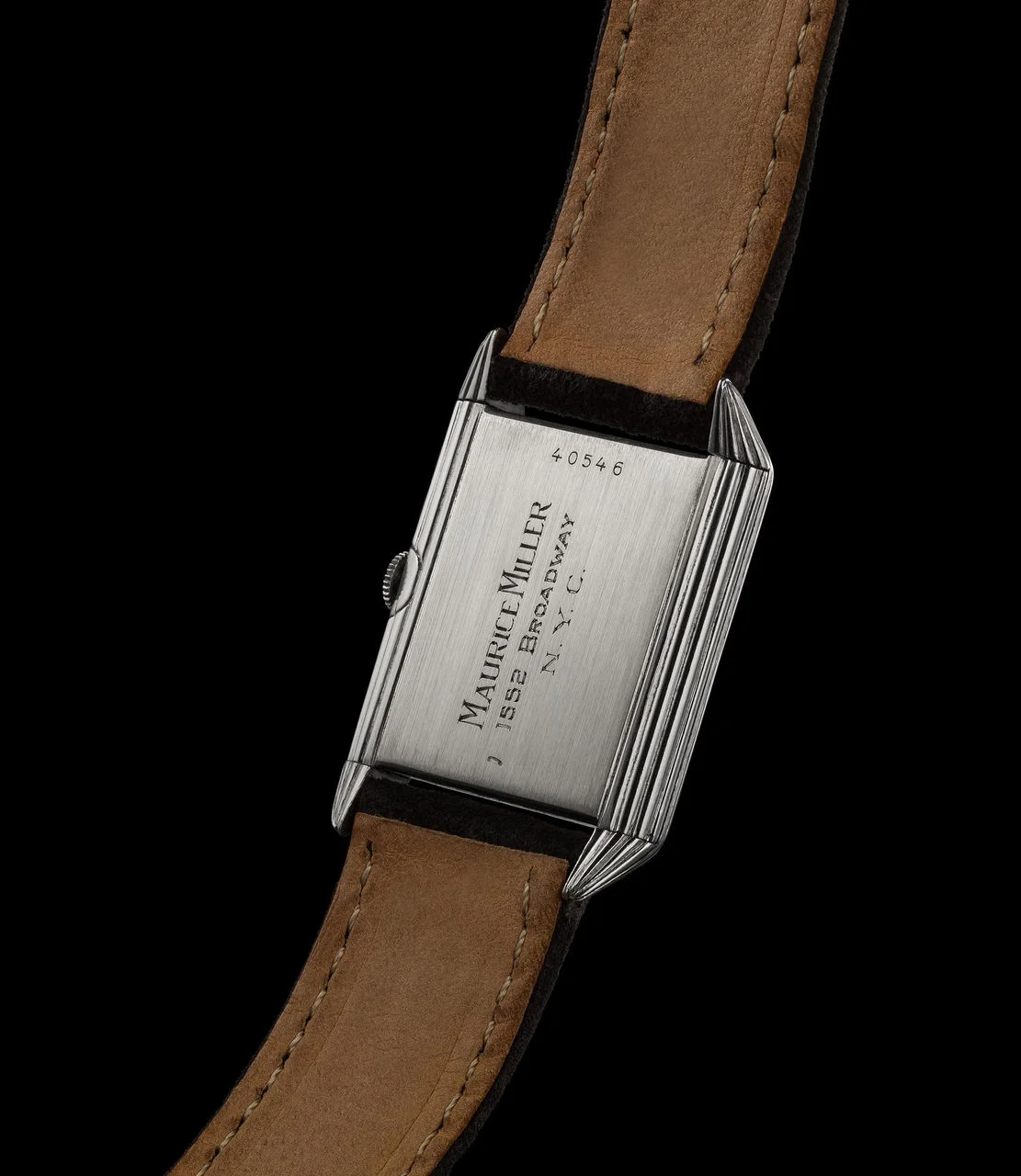
The back of Model 40546 is engraved with the name of Maurice Miller, owner of the music-hall stars’ footwear brand, whose flagship store was located at 1552 Broadway, New York. AP Heritage, Inv. 1725.
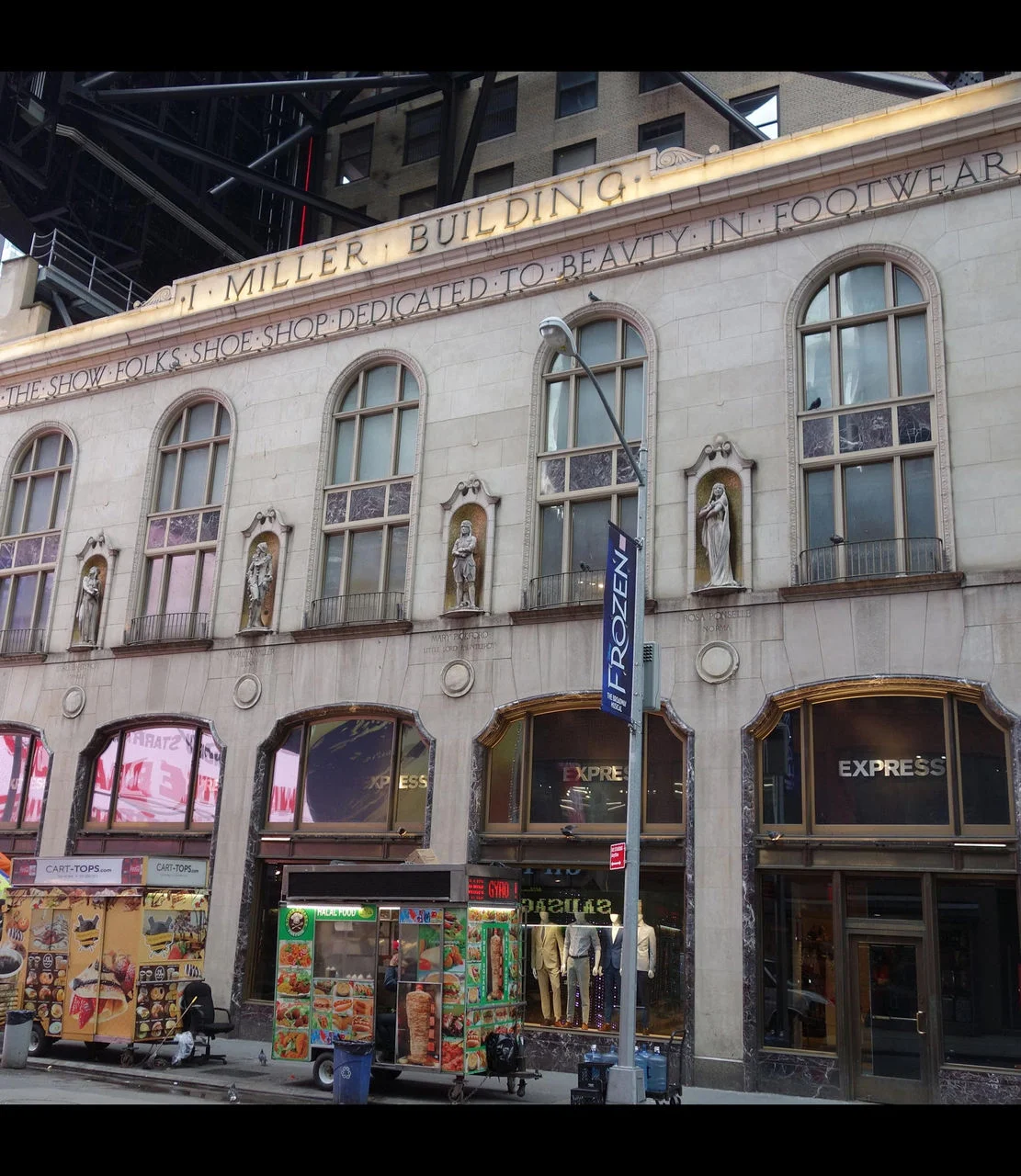
Built in 1926, the I. Miller building at 1552 Broadway in New York was a footwear temple. It bears the inscription “The show folk shoe shop dedicated to beauty in footwear”.
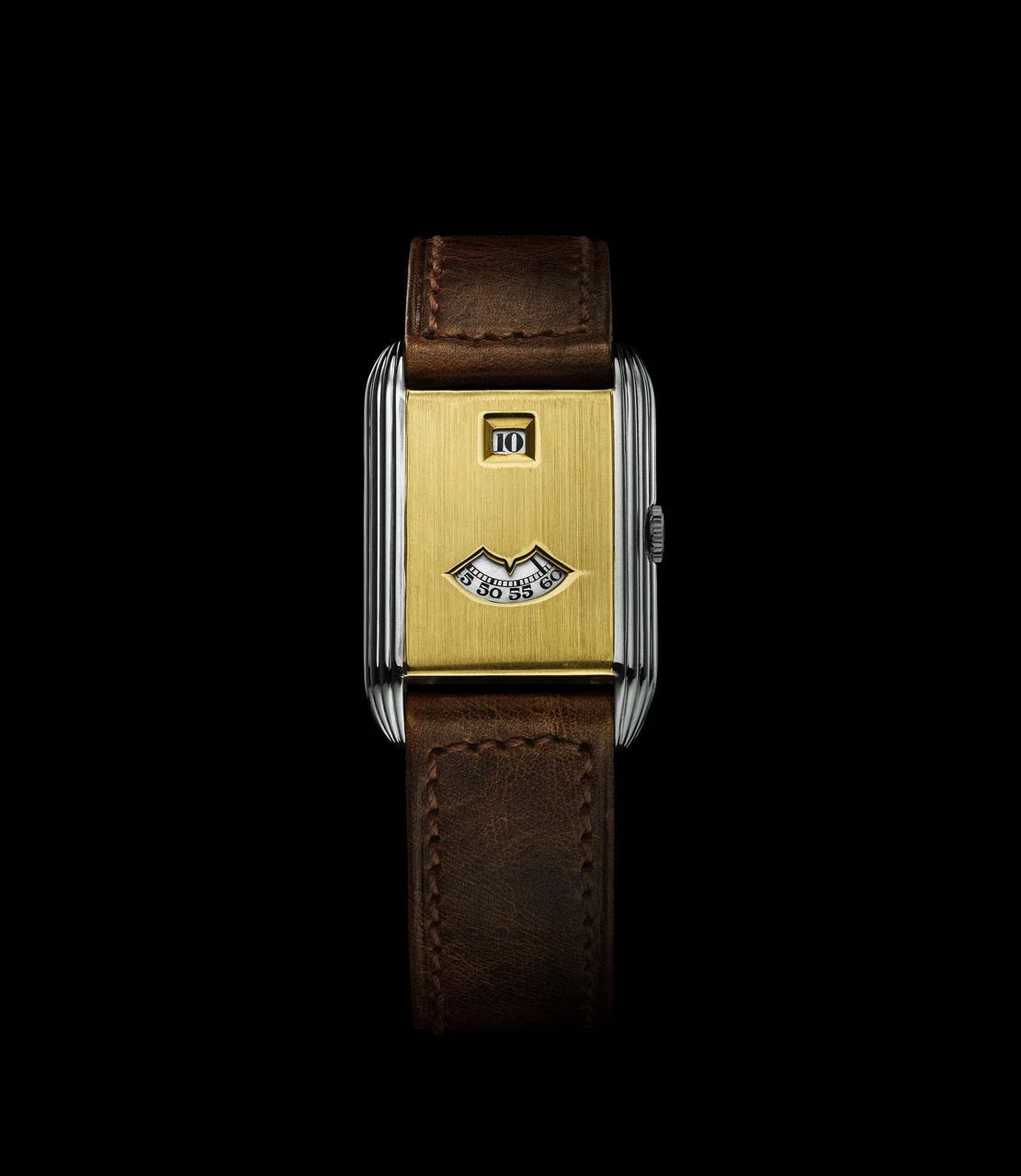
1929. Jumping-hour Pre-Model 1271. Yellow and white gold. Calibre 10GHSM, movement and case No. 39921. Delivered to Gübelin in 1929. AP Heritage, Inv. 568
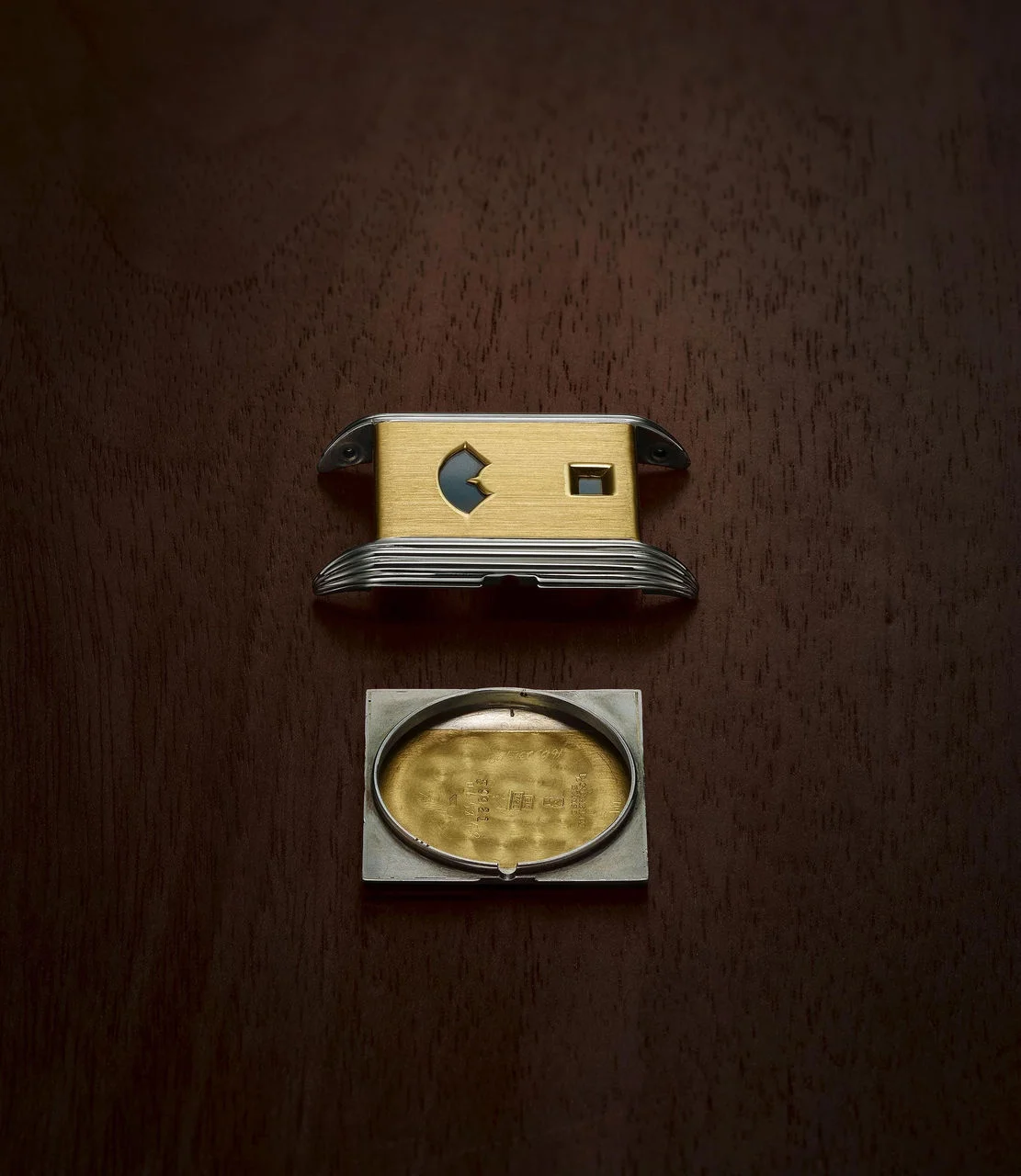
The case of Pre-Model 1271 is composed of two parts. The caseback, bezel and lugs are melded into a single component, while the caseback and the caseband form the second part. AP Heritage, Inv. 568.
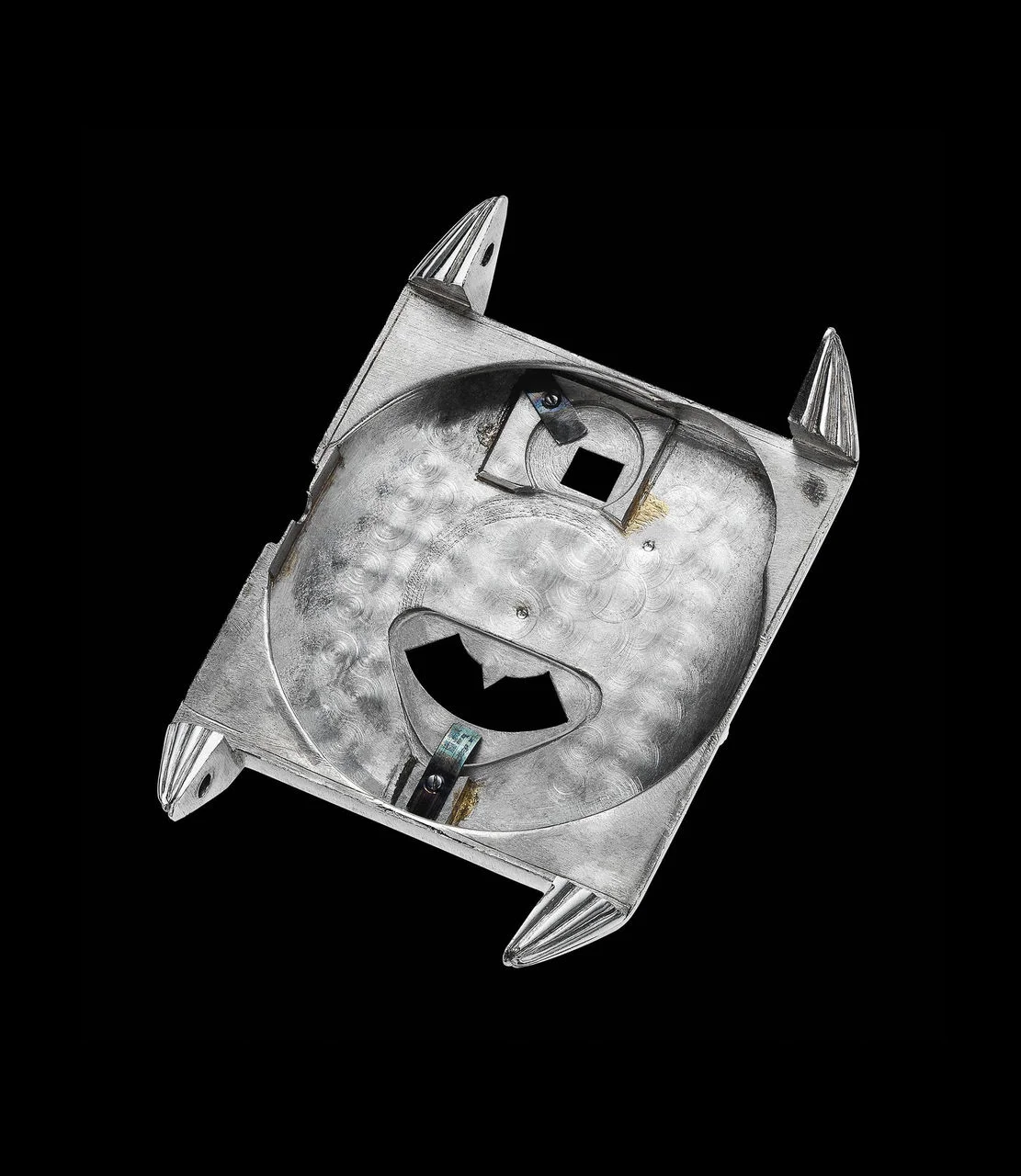
Two small glass plates measuring just 0.24 mm thick are housed in the case cover and held in place by small springs. AP Heritage, Inv. 1725.
| 38 741 | 31.01.1929 | Max Mayer puis Gübelin | or gris 18K |
| 38 740 | 24.05.1929 | Beyer ZH puis Paris | or gris 18K |
| 38 750 | 28.05.1929 | Gübelin | or gris 18K |
| 38 749 | 10.07.1929 |
Gobbi (?) |
or gris 18K |
38 748 |
26.08.1929 |
Metric |
or gris 18K |
40 729 |
10.06.1930 |
Gübelin |
or gris 18 K |
38 745 |
28.05.1929 |
Gübelin |
or gris et rose 18K |
38 747 |
10.07.1929 |
Gobbi (?) |
or gris et rose 18K |
38 746 |
07.10.1929 |
Gallopin |
or gris et rose 18K |
38 744 |
21.04.1929 |
Wegelin fils |
or gris et vert 18 K |
39 919 |
21.09.1929 |
Gübelin |
or gris et vert 18 K |
39 920 |
21.09.1929 |
Gübelin |
or gris et vert 18 K |
39 921 |
21.09.1929 |
Gübelin |
or gris et vert 18 K |
40 546 |
20.03.1930 |
Beyer Zürich |
Platine |
Chiming Mechanism meets Jumping Hour
In the 1960s and 1970s, the Space Age style and the advent of digital displays rekindled interest in mechanical jumping-hour watches. Brands such as Yema, Benrus and Elgin led the way. In 1989, Patek Philippe celebrated its 150th anniversary with a special-edition jumping-hour watch inspired by the Art Deco era.
At the same time, two talented Audemars Piguet watchmakers were nurturing a dream. Serge Meylan, Director of the Technical Department, sought to revive jumping-hour watches; while Giulio Papi, who had begun his career in Audemars Piguet’s complications workshop and had just founded a watch development company, hoped to bring back chiming wristwatches. The two men decided to combine their ideas.
This project made all the more sense given that the 1920s and 1930s had marked the first golden age of both jumping-hour watches and repeater models by Audemars Piguet. Over 60% of the 35 minute-repeater wristwatches produced over the course of a century were sold between 1922 and 1940.
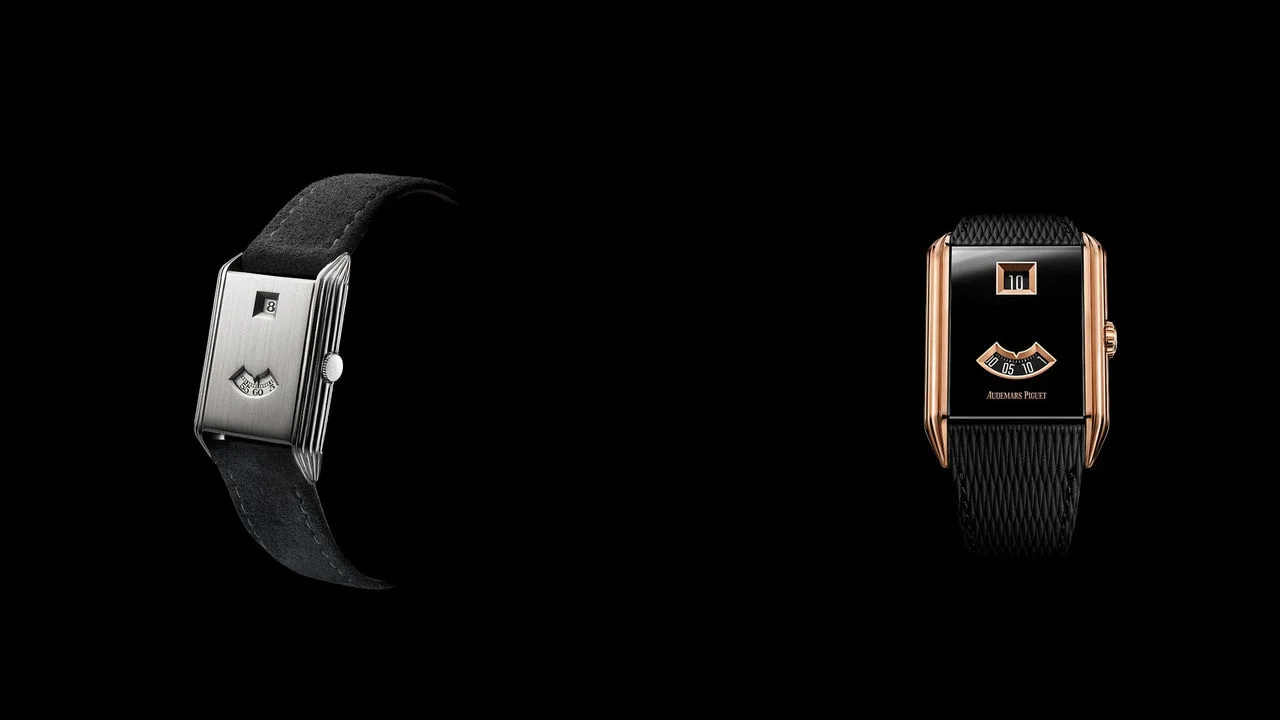
In 1992, after four years of development, Model 25723 gave form to the two watchmakers’ dream. Its rectangular case draws inspiration from Art Deco aesthetics, while Calibre 2865 of 22 mm in diameter is barely smaller than the 10GHSM (22.56 mm). No less than 257 of these watches were produced over ten years, attesting to its remarkable success.
From 1995 onwards, the John Schaeffer collection in turn featured Calibre 2865 with both jumping-hour and chiming functions. In 1996, Audemars Piguet developed the 2823 underdial mechanism to add a jumping-hour display to Model 25771 pocket watches (Calibre 2855/2823). A decade later, a generously proportioned variant (43 mm) from the Jules Audemars collection featured the now-classic combination of chiming and jumping-hour functions (Models 26151 and openworked 26356 – in the catalogue until 2016).
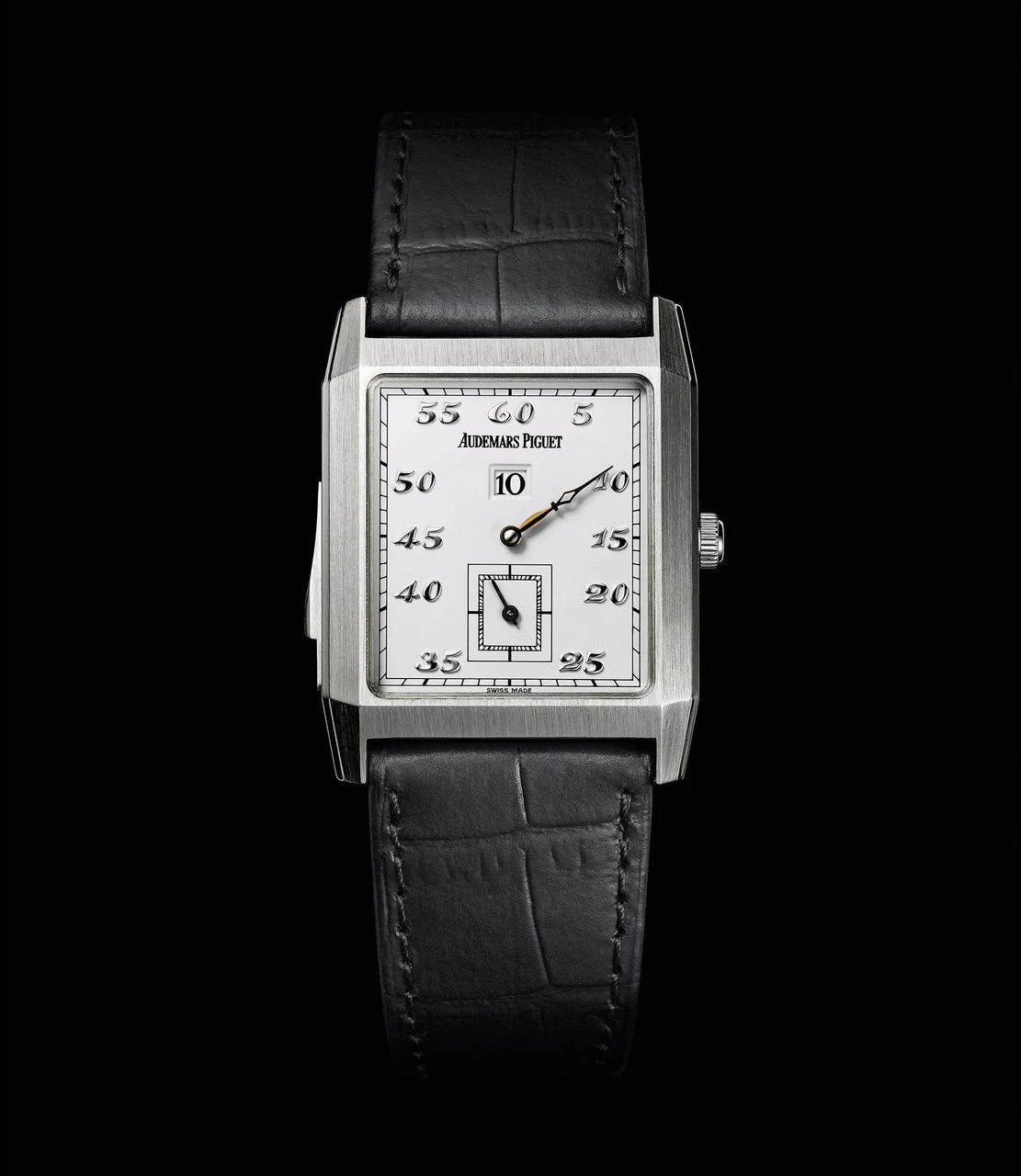
1994. Minute repeater with jumping hour, Model 25723. Small seconds. Calibre 2865, movement 398958. Platinum case D22238. Sold in Hong Kong in 1994. AP Heritage, Inv. 753.
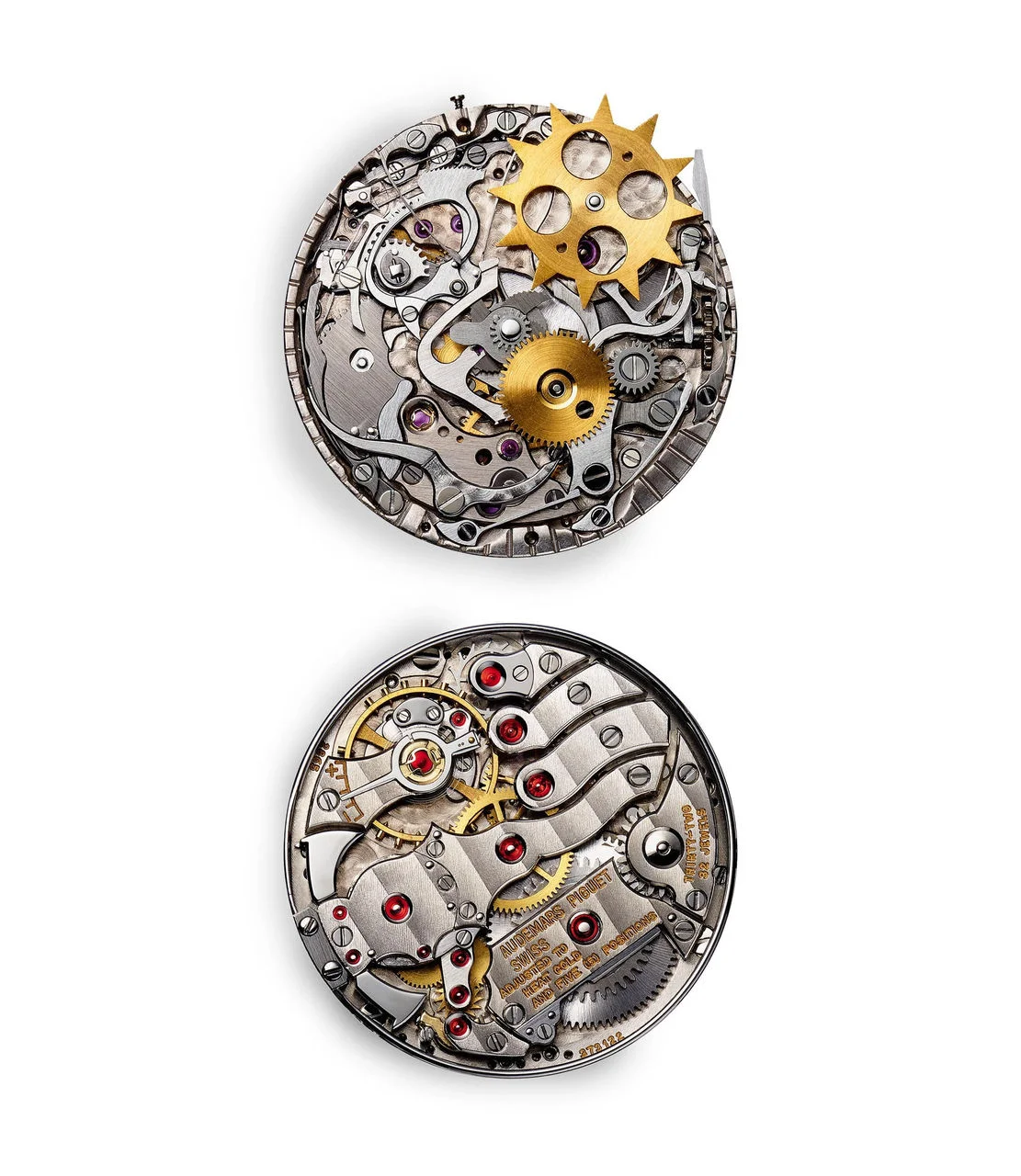
Developed by Renaud et Papi (later AP Le Locle) for Audemars Piguet, Calibre 2865, also known as RMA90, marked the return of the jumping hour and repeaters at Audemars Piguet. Movement 373122 sold in 1992. AP Heritage, Inv. 925.
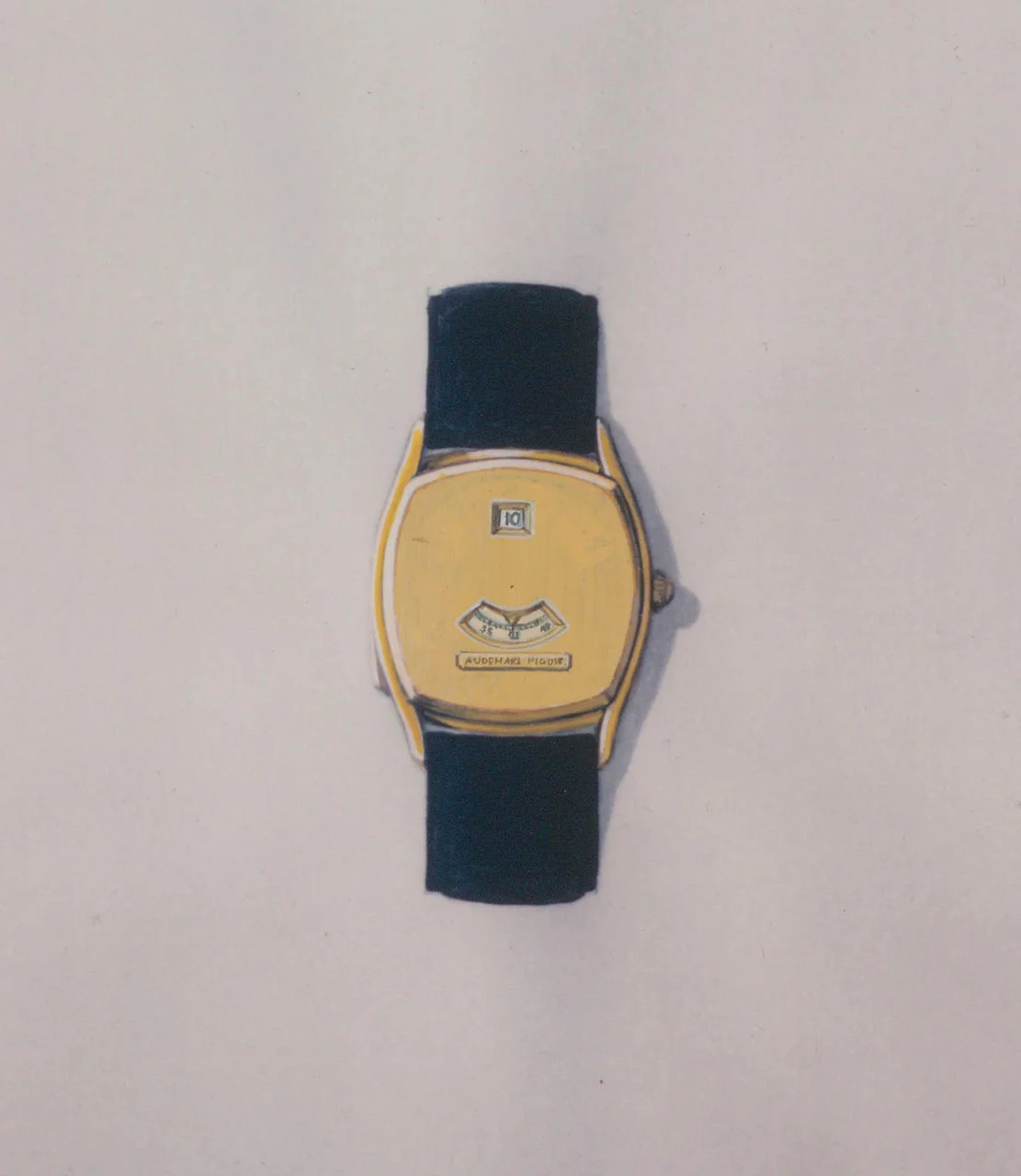
Gouache painting signed by Jacqueline Dimier on 27 June 1994, which led the following year to the creation of Model 25798 John Schaeffer with jumping hour and minute repeater. AP Archives.
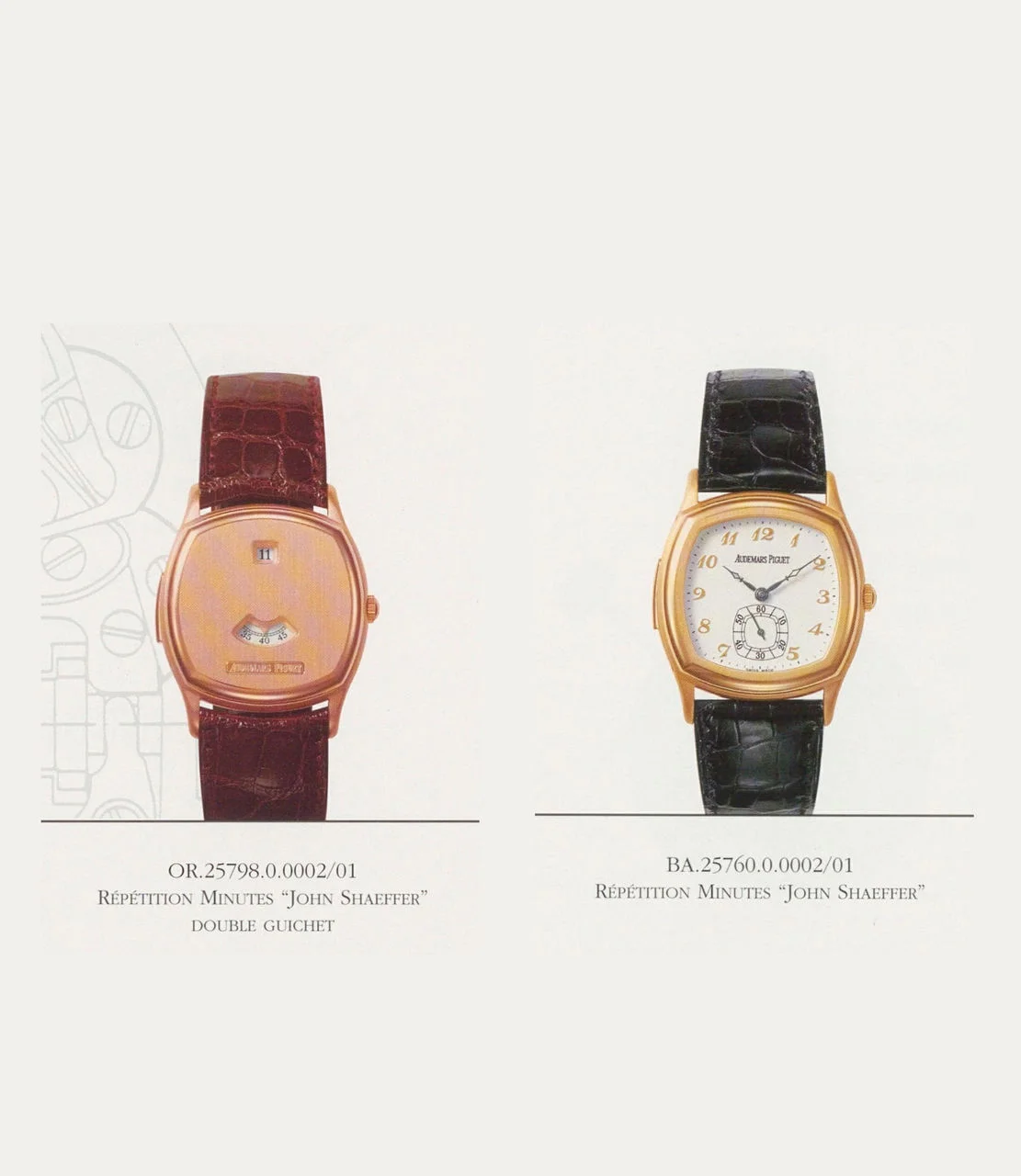
On the left, Model 25798 from 1995, produced in a run of approximately 30 timepieces (platinum, titanium and pink gold). On the right, Model 25839 from 1996, produced in a run of approx. 18 (yellow gold, platinum and pink gold). Calibre 2865. John Schaeffer Collection. Audemars Piguet 1995–96 catalogues. AP Archives.
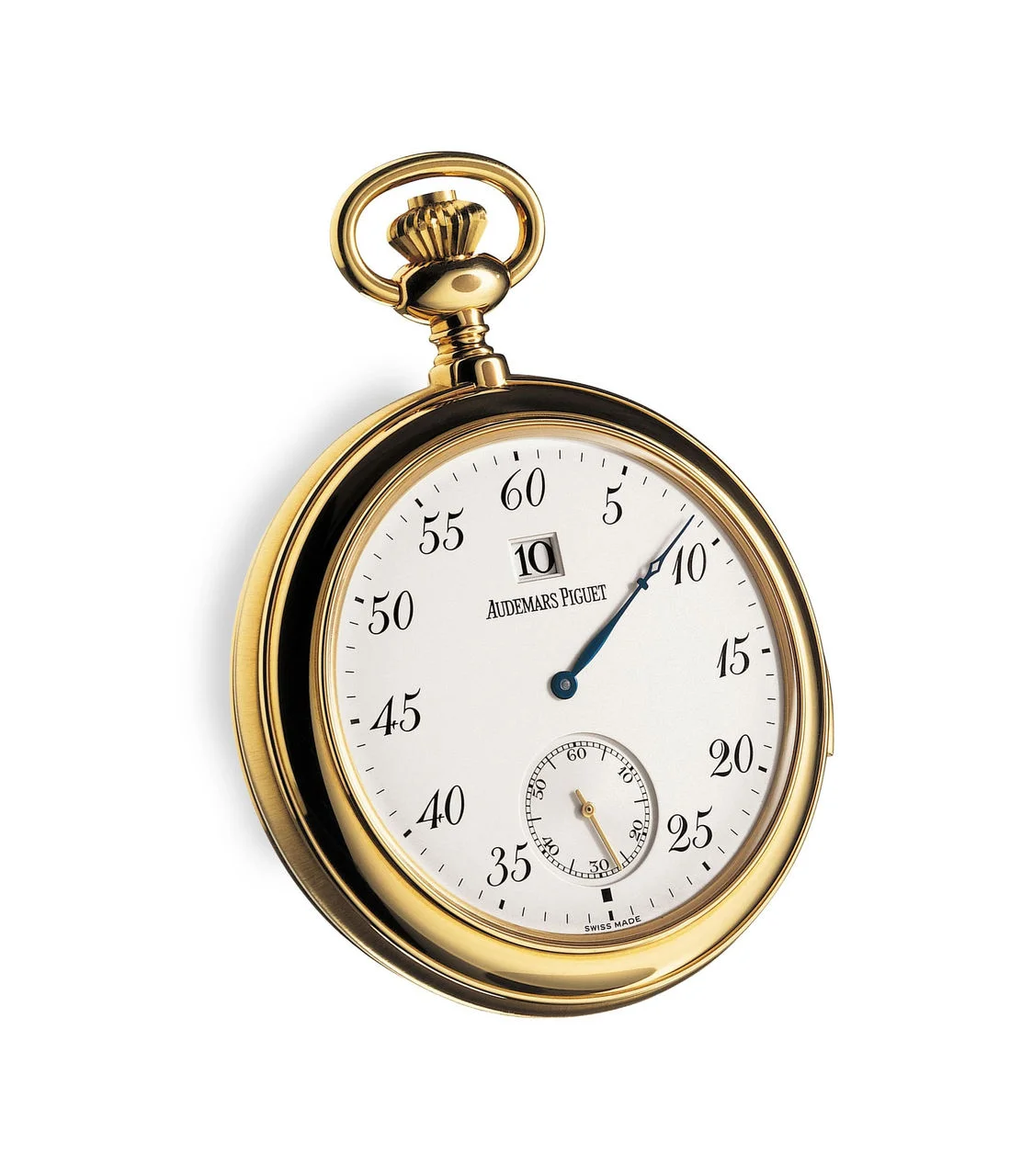
Circa 1996. Jumping Hour and Minute Repeater pocket watch. Calibre 2855/2823. Pink gold case no. E6100. Gold dial. Prototype presented at the SIHH circa 1996. AP Heritage, Inv. 634. This model was featured in the AP catalogue until at least 2011.
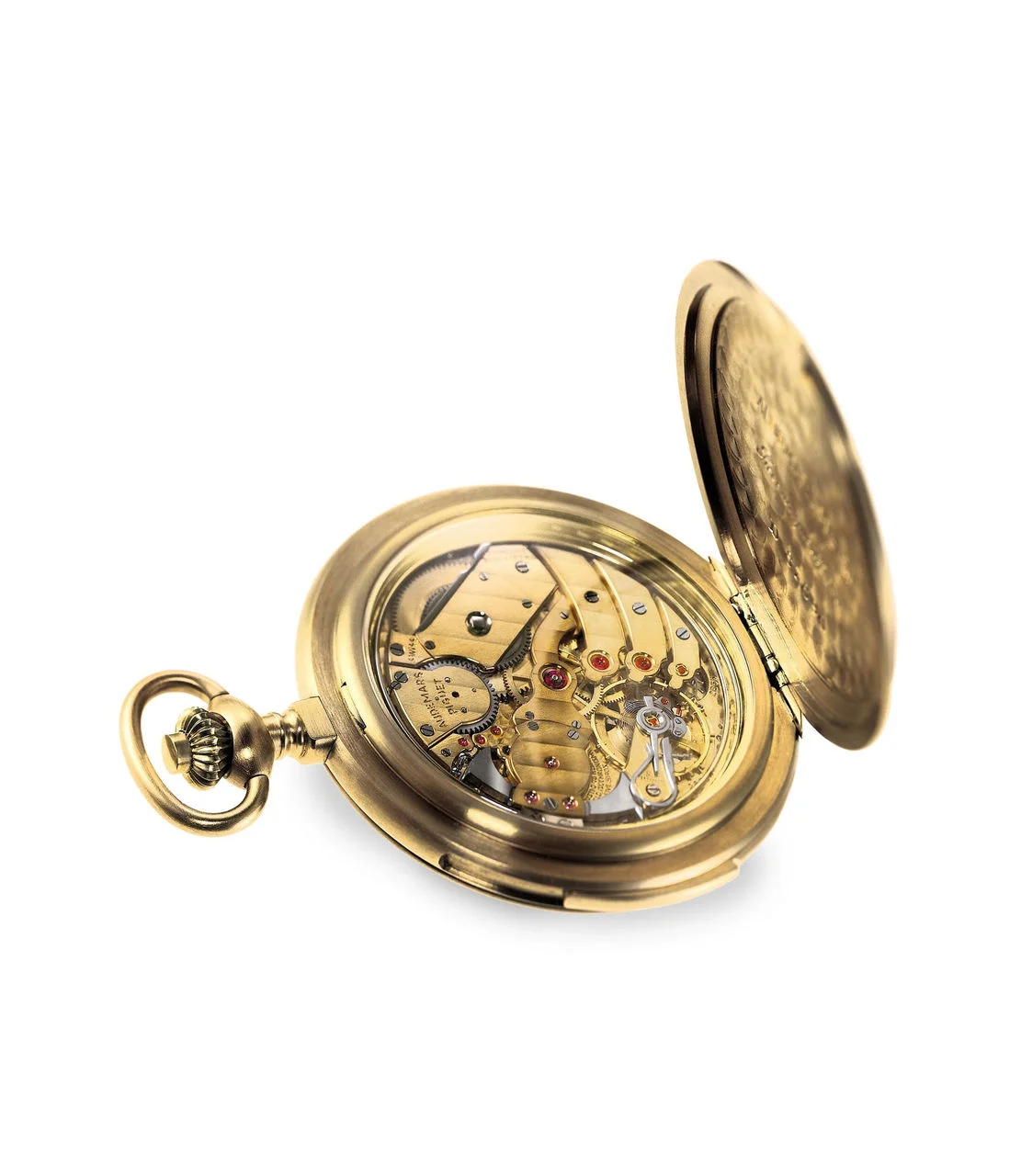
Circa 1996. Jumping Hour and Minute Repeater pocket watch. Gold movement. Calibre 2855/2823. Photograph taken circa 2004. AP Archives.
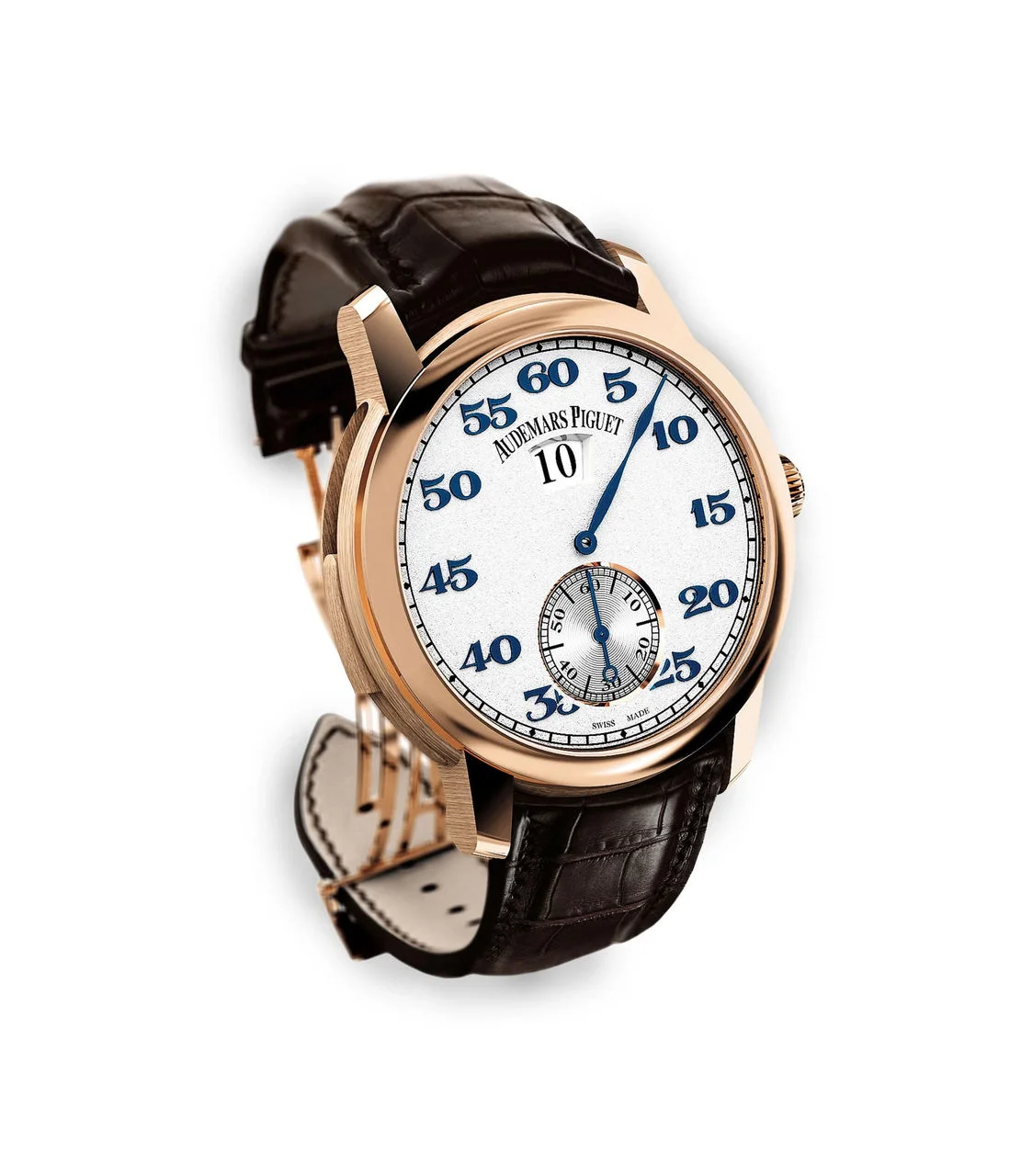
2007. Jules Audemars Jumping Hour and Minute Repeater 26151. Small seconds. Pink gold. Calibre 2907. 43 mm, 12 mm thick. Variations appeared in 2007, 2011 and 2013 Audemars Piguet catalogues. AP Archives.
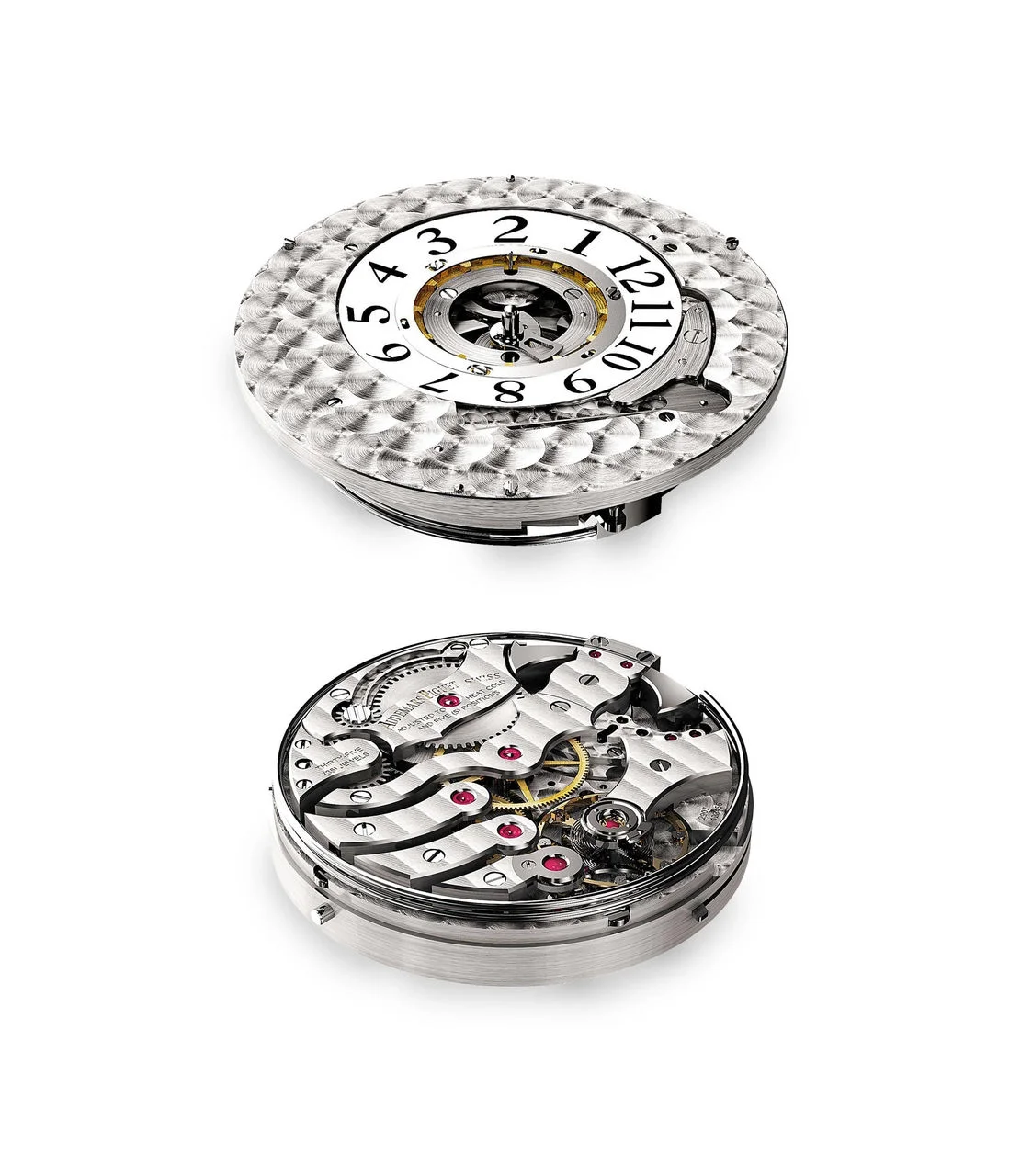
Calibre 2907. 16½ lignes (37 mm), 7.6 mm thick, 21,600 vph, approx. 70-hour power reserve, 412 components, balance spring with Phillips terminal curve. Image: AP Archives.
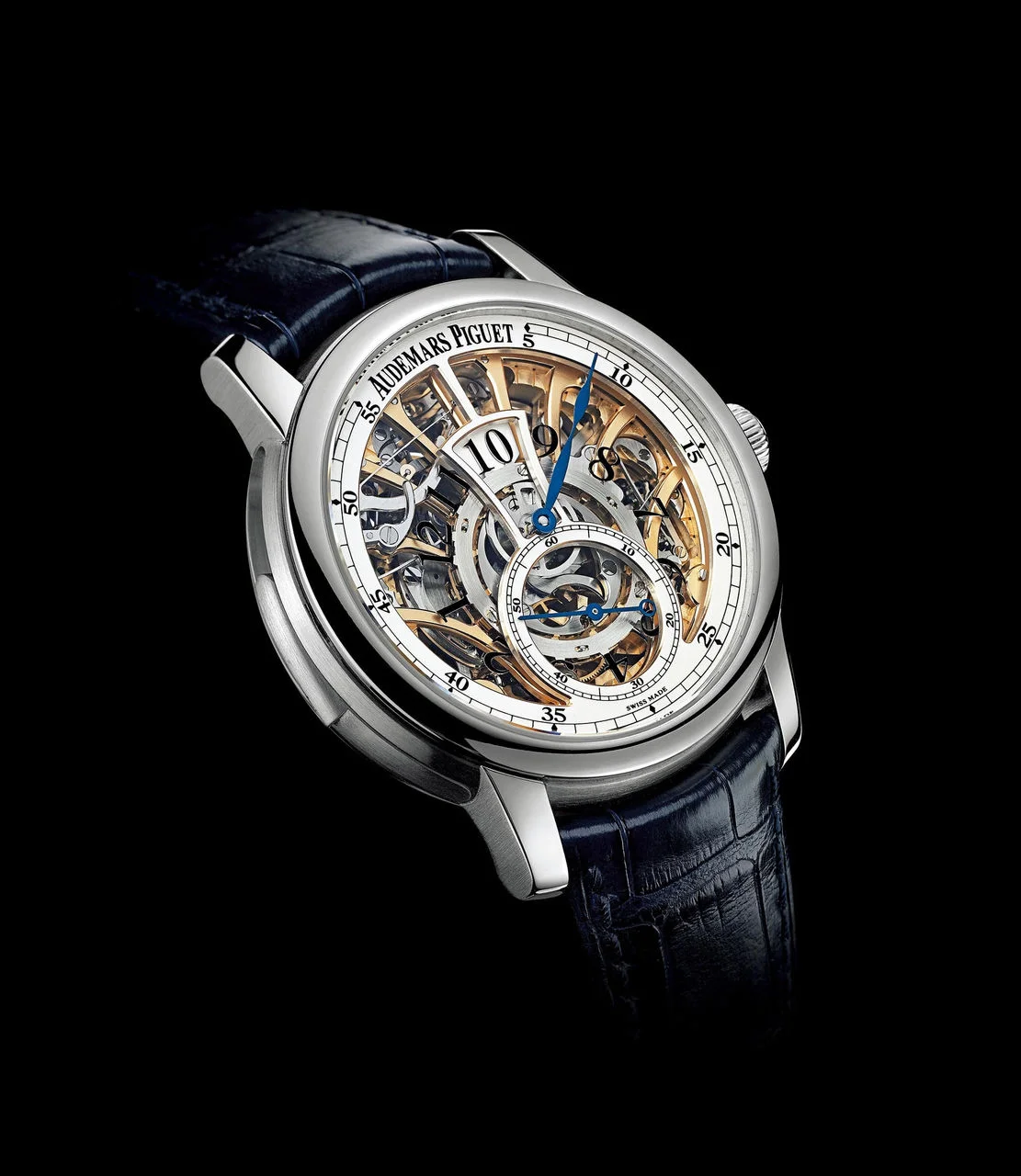
2009. Jules Audemars Jumping Hour Minute Repeater 26356. Small seconds. Gilded openworked Calibre 2907. 43 mm platinum case no. I08179. AP Heritage, Inv. 1894.
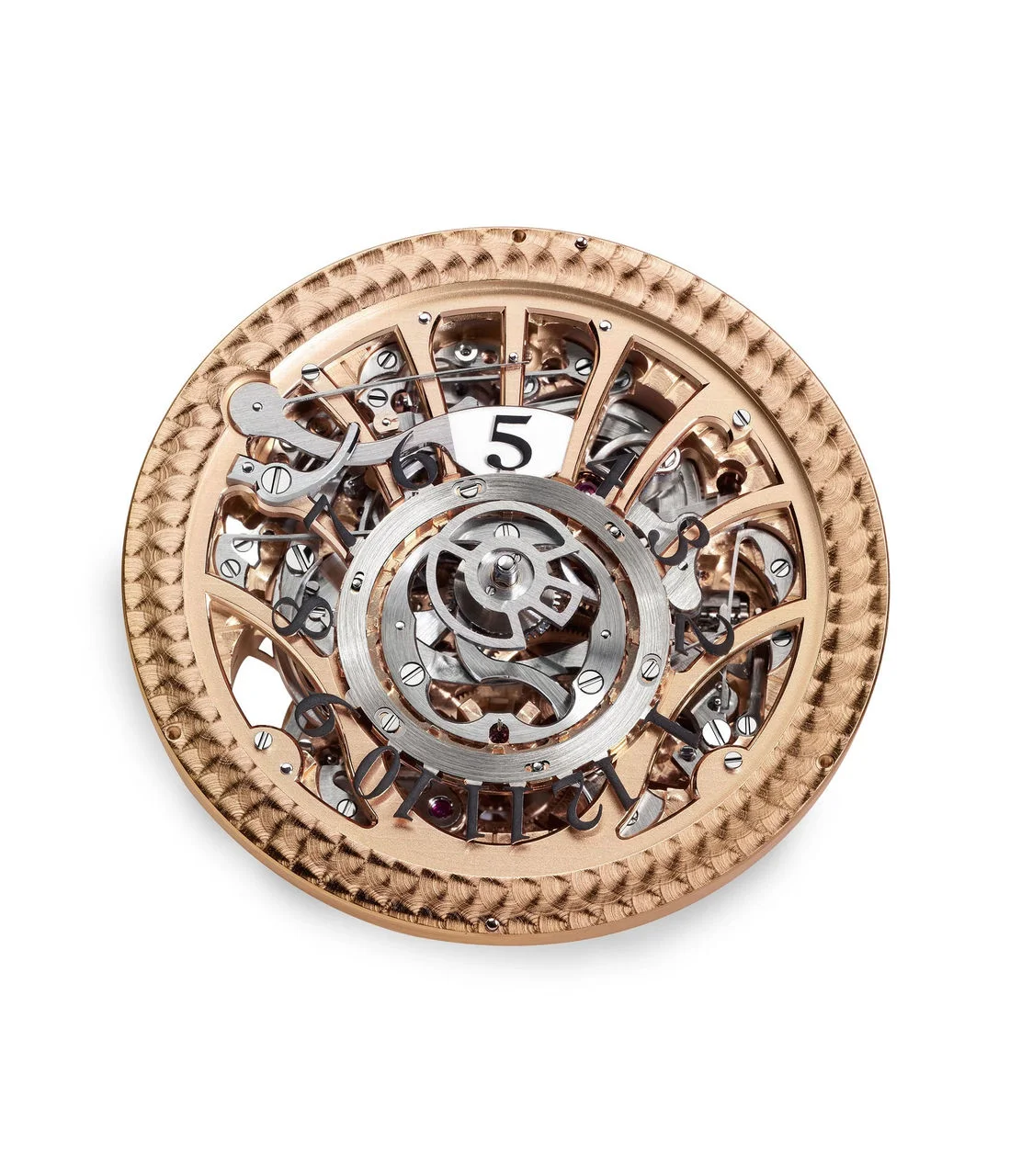
The hours are cut out of the metal. They become legible as they pass in front of the whitened section of the dial. Calibre 2907. AP Archives.
Did you say “Neo Frame”?
In 2016, Audemars Piguet’s CEO François-Henri Bennahmias brought together a small team from the Product and Heritage departments to ask them a question: “Which vintage watches would you dream of seeing revived in the 21st century?”. The project was named “Millésimes”. Around 20 watches were shortlisted and two of them would go on to serve as the basis for the first [RE]Master limited editions, released in 2020 and 2024. The third was the Streamline 1271 Pre-Model, customised for Maurice Miller (Chapter 9).
In October 2025, as this third project was nearing completion, Ilaria Resta, who had taken over as CEO in 2024, decided to give it a broader destiny than the [RE]Master series and make it a collection in its own right. Model 15245 was unveiled in February 2026 to the press and a select group of clients at an event in Andermatt, in the heart of the Swiss Alps. The reception was highly enthusiastic, and the watch was perceived both as a tribute to the 1920s and to the Space Age style.
Powered by Calibre 7122, the Neo Frame Jumping Hour (15245) is the first Audemars Piguet watch to offer a selfwinding jumping-hour mechanism. In the 1920s, the crystal was concealed within the case because it was so fragile. Today, a large sapphire crystal is secured to the case cover. Almost as hard as diamond, it is now the crystal that protects the metal. While water resistance is usually achieved by press-fitting the crystal onto the bezel, the Neo Frame Jumping Hour model features neither a bezel nor metal at 12 and 6 o’clock, leaving the sapphire crystal exposed. To achieve water resistance to 20 metres, the dial plate is bonded to the sapphire crystal and then screwed onto the case middle, a new process specially developed for this model.
A variation was unveiled at Watches and Wonders in Geneva (14-20 April 2026). The case was redesigned so that the upper part of the watch is entirely hand-engraved. A tribute to Art Deco, the decoration evokes the New York skyscrapers of the 1920s.
The Neo Frame marks the dawn of a new era of creativity for the independent watchmaker from Le Brassus – as well as the grand return of jumping-hour watches.
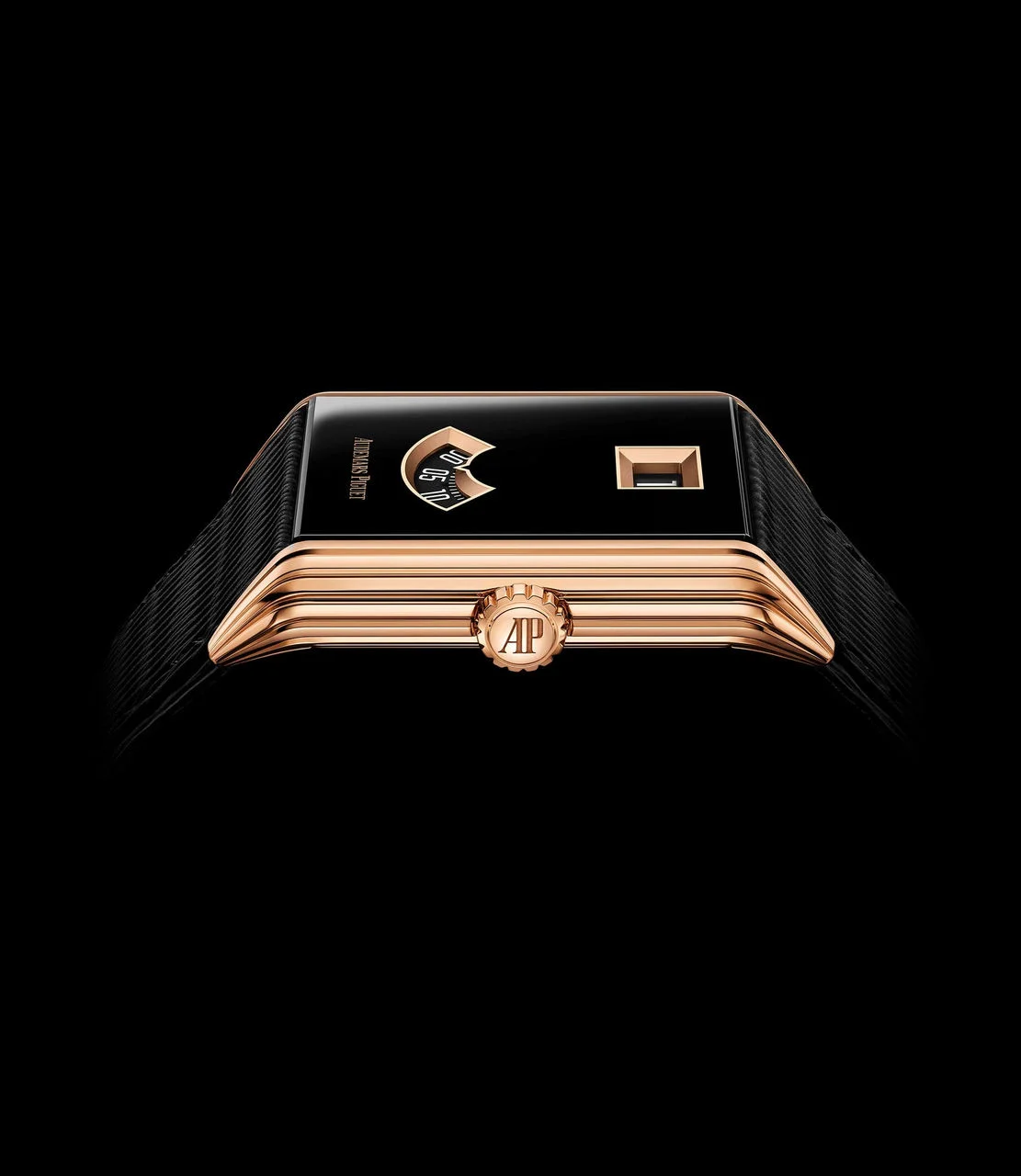
2026. Neo Frame Jumping Hour (15245). Selfwinding Calibre 7122. Rectangular case 34.6 x 34 mm, 8.8 mm thick, water-resistant to 20 metres. Black PVD-treated sapphire dial. Apertures with gold-toned, micro-blasted slopes.
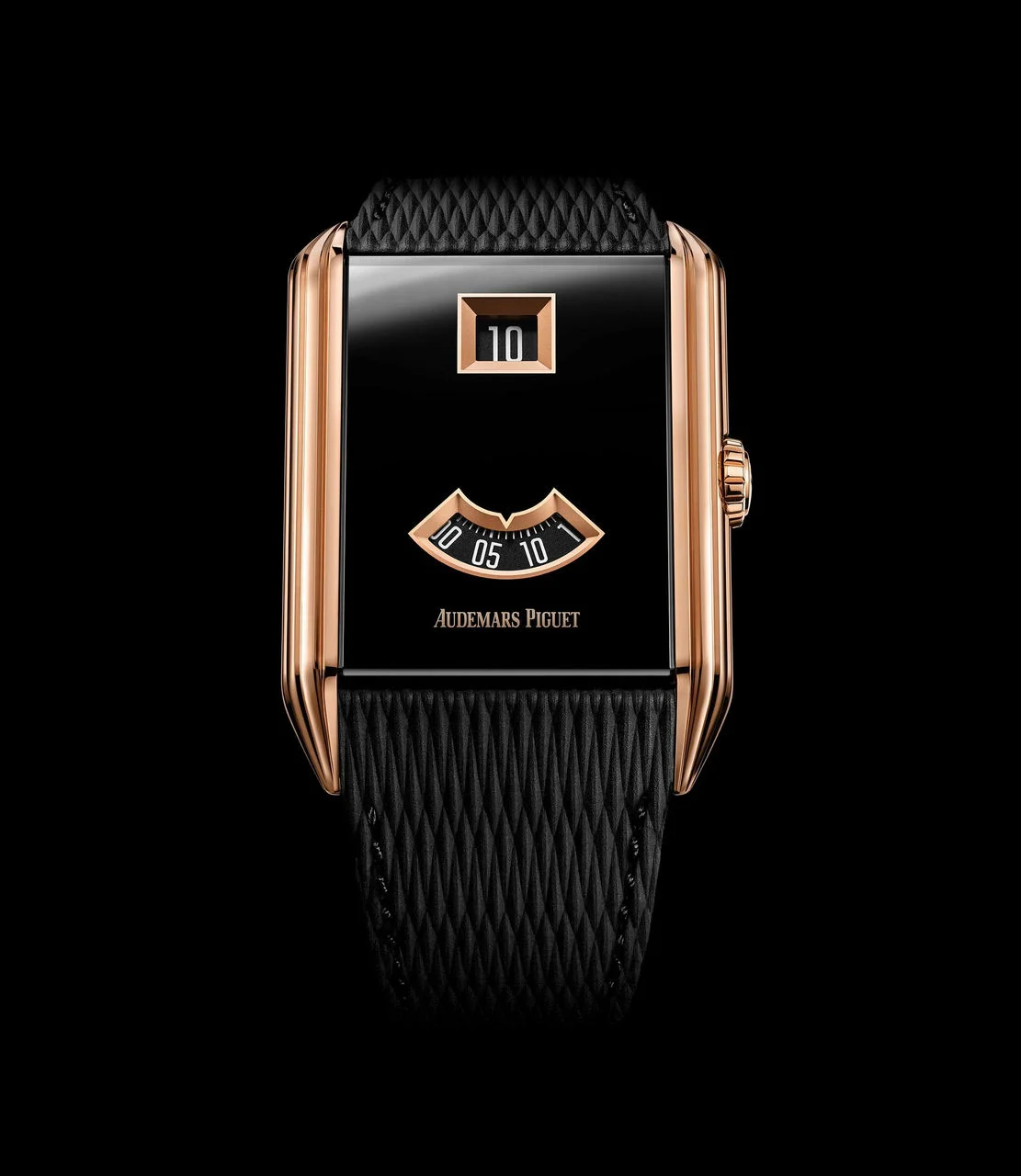
2026. Neo Frame Jumping Hour (15245). A large reverse-painted sapphire crystal is affixed to the case cover. Achieving water resistance required specific development.
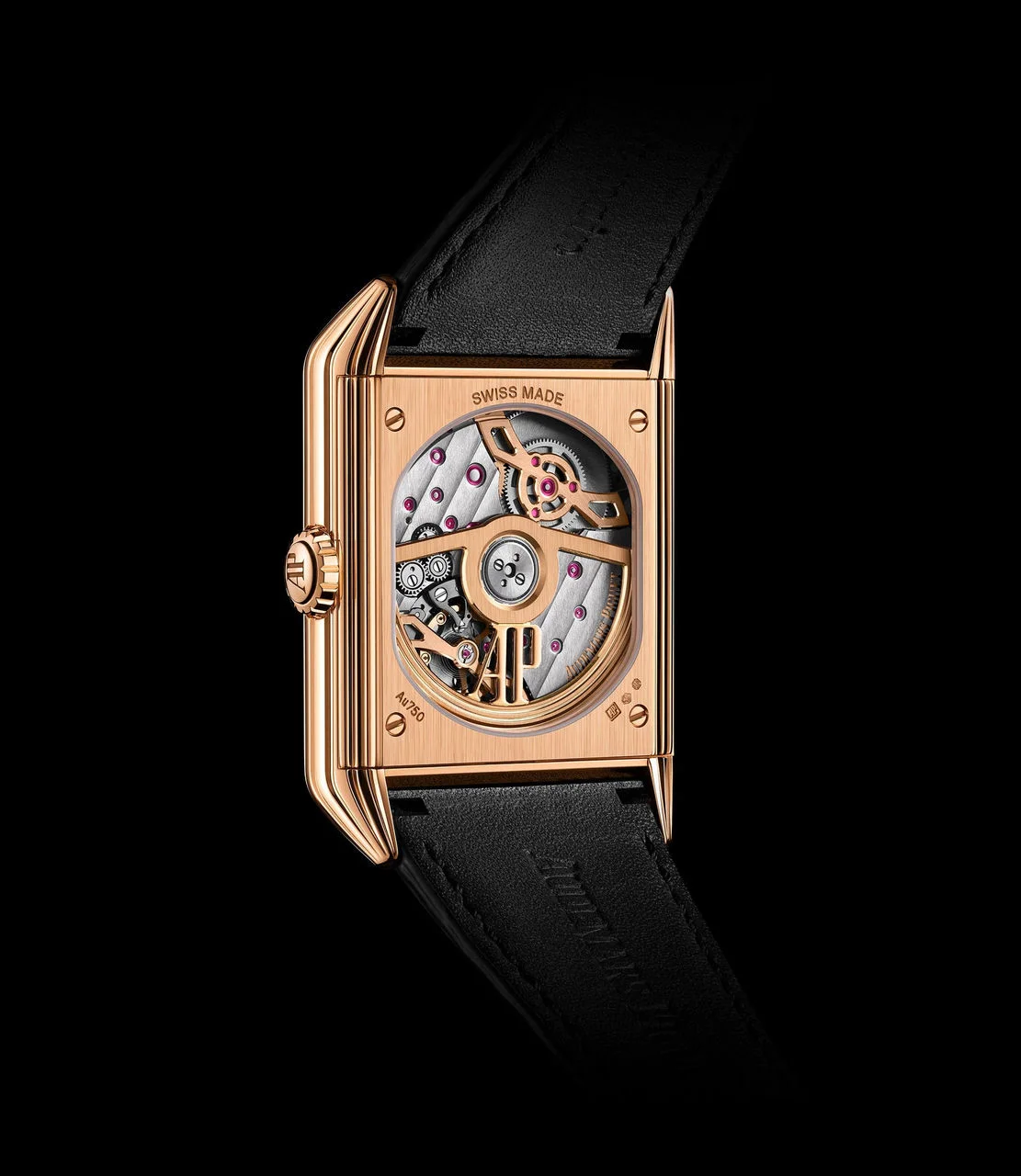
2026. Neo Frame Jumping Hour (15245). The back of the watch showcases selfwinding Calibre 7122, a variation on the classic extra-thin Calibre 7121 created in 2022 for the Royal Oak “Jumbo”.
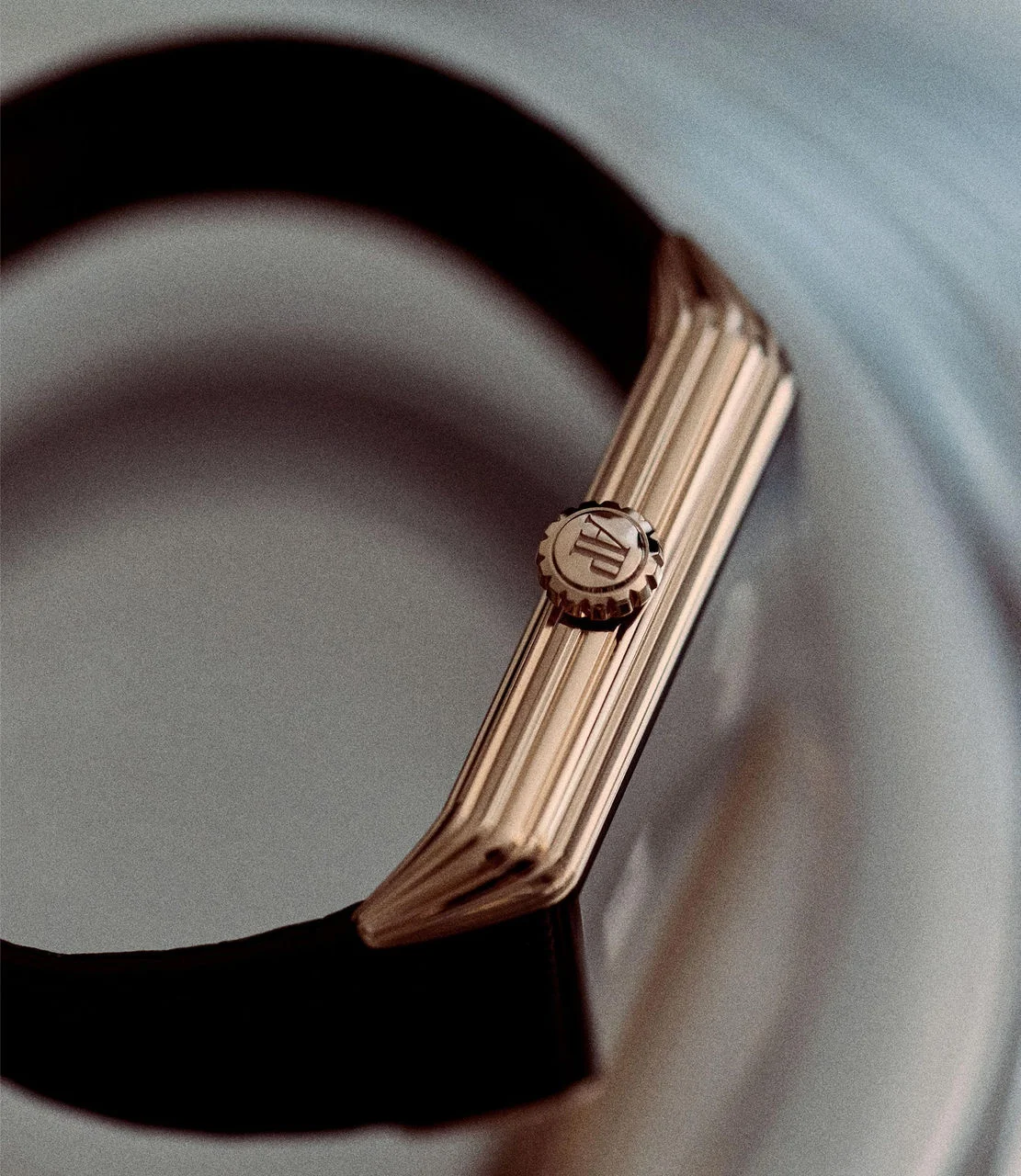
2026. Neo Frame Jumping Hour (15245). The lateral gadroons on the watch echo the aesthetic of Pre-Model 1271.
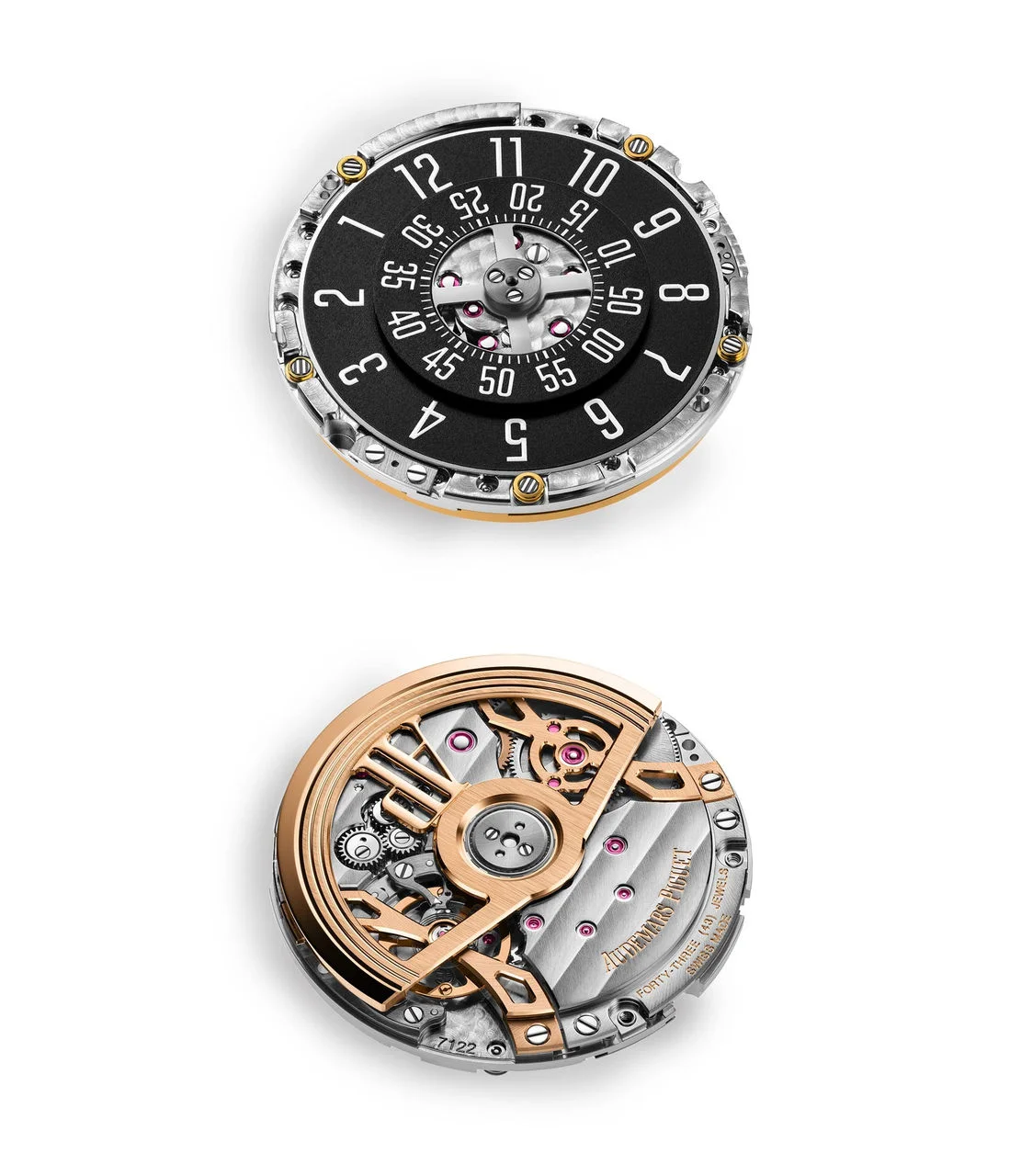
Selfwinding Calibre 7122, 29.6 mm (12¾ lignes), 4 mm thick, 52-hour power reserve. 28,800 vibrations per hour.
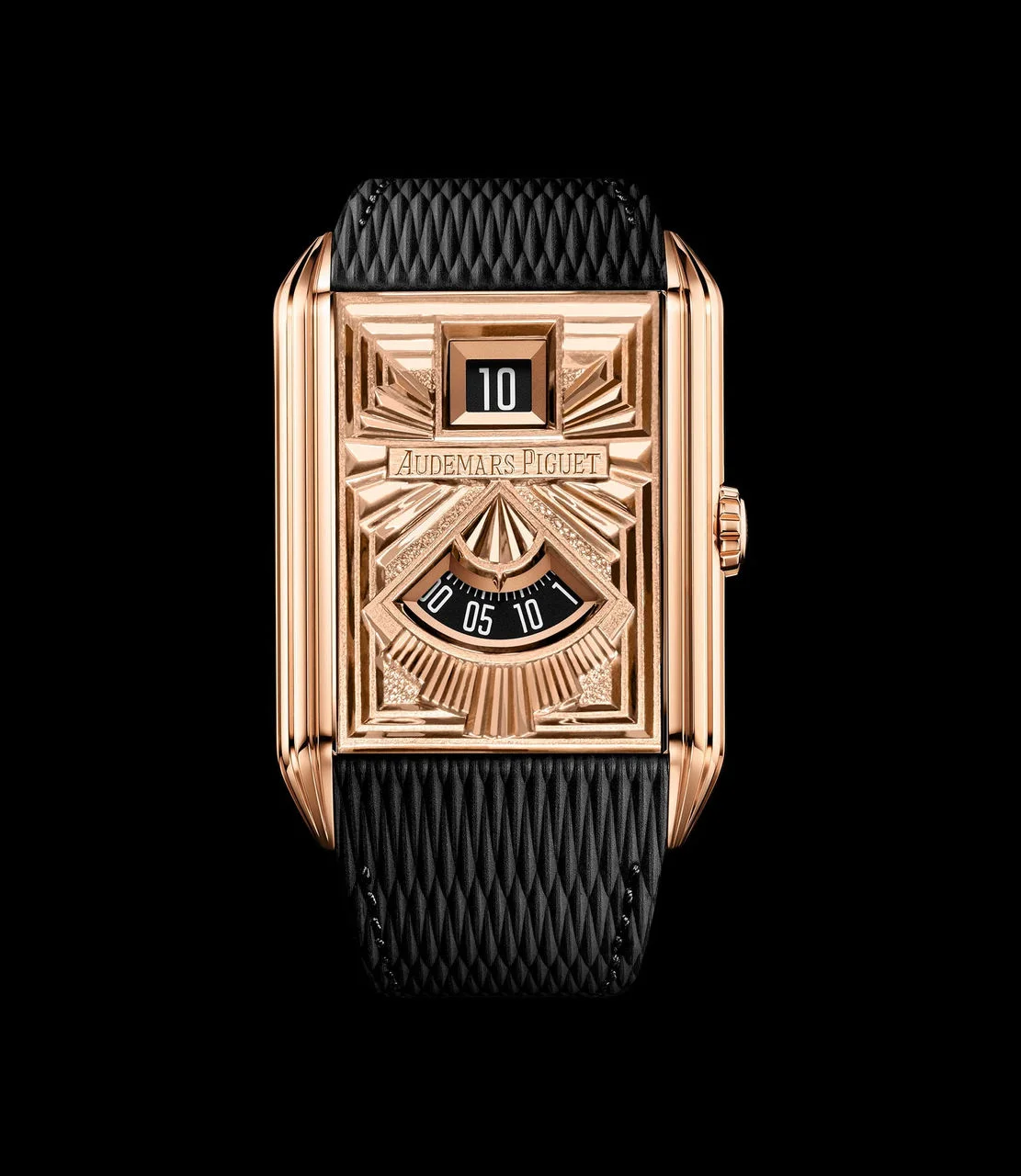
This engraved prototype of the Neo Frame was unveiled at Watches and Wonders Geneva in April 2026.
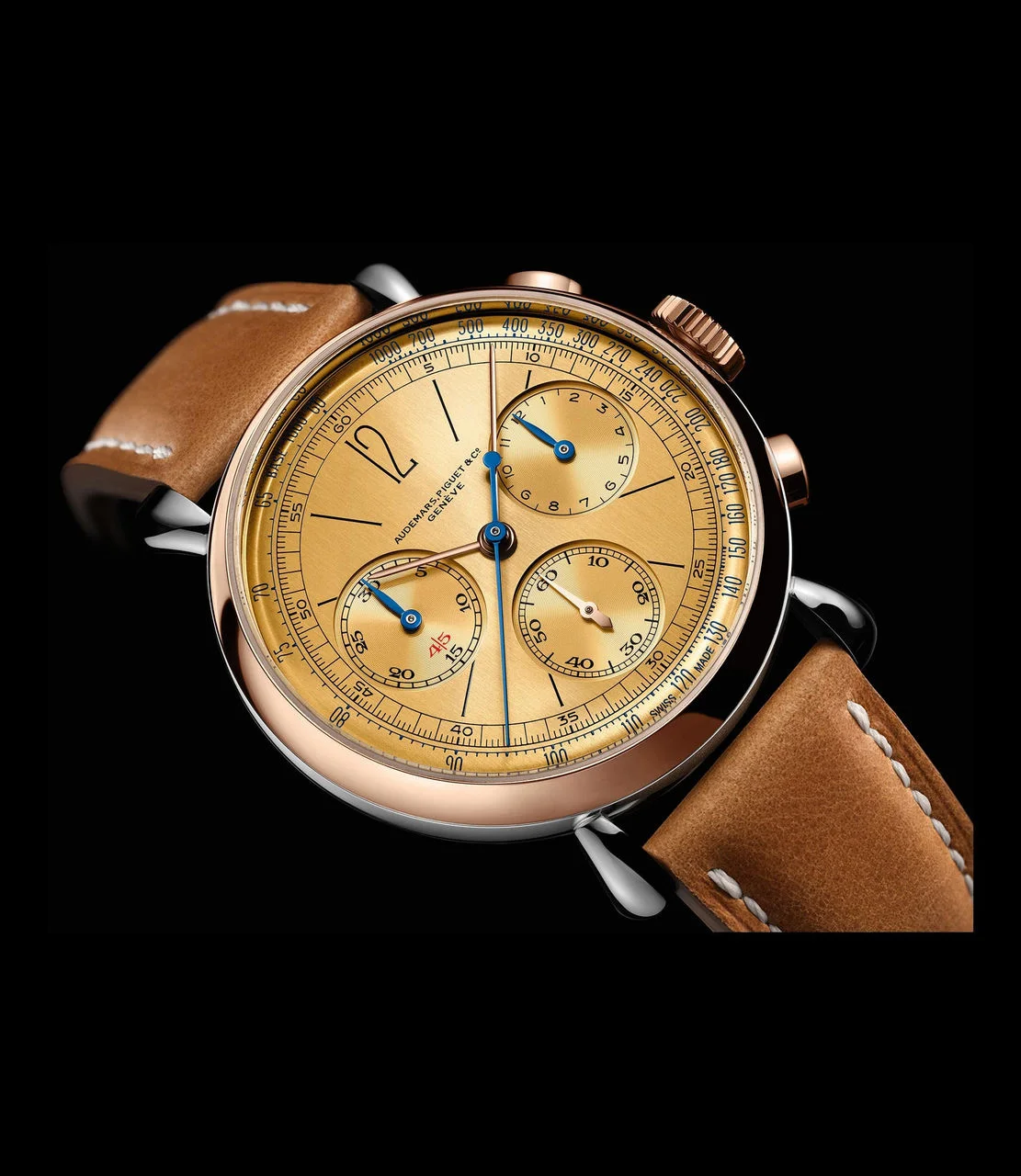
2020. [RE]Master01 Chronograph (26595). Selfwinding Calibre 4409. Steel and pink gold case inspired by the 1943 Pre-Model 1533. Limited edition of 500 pieces.
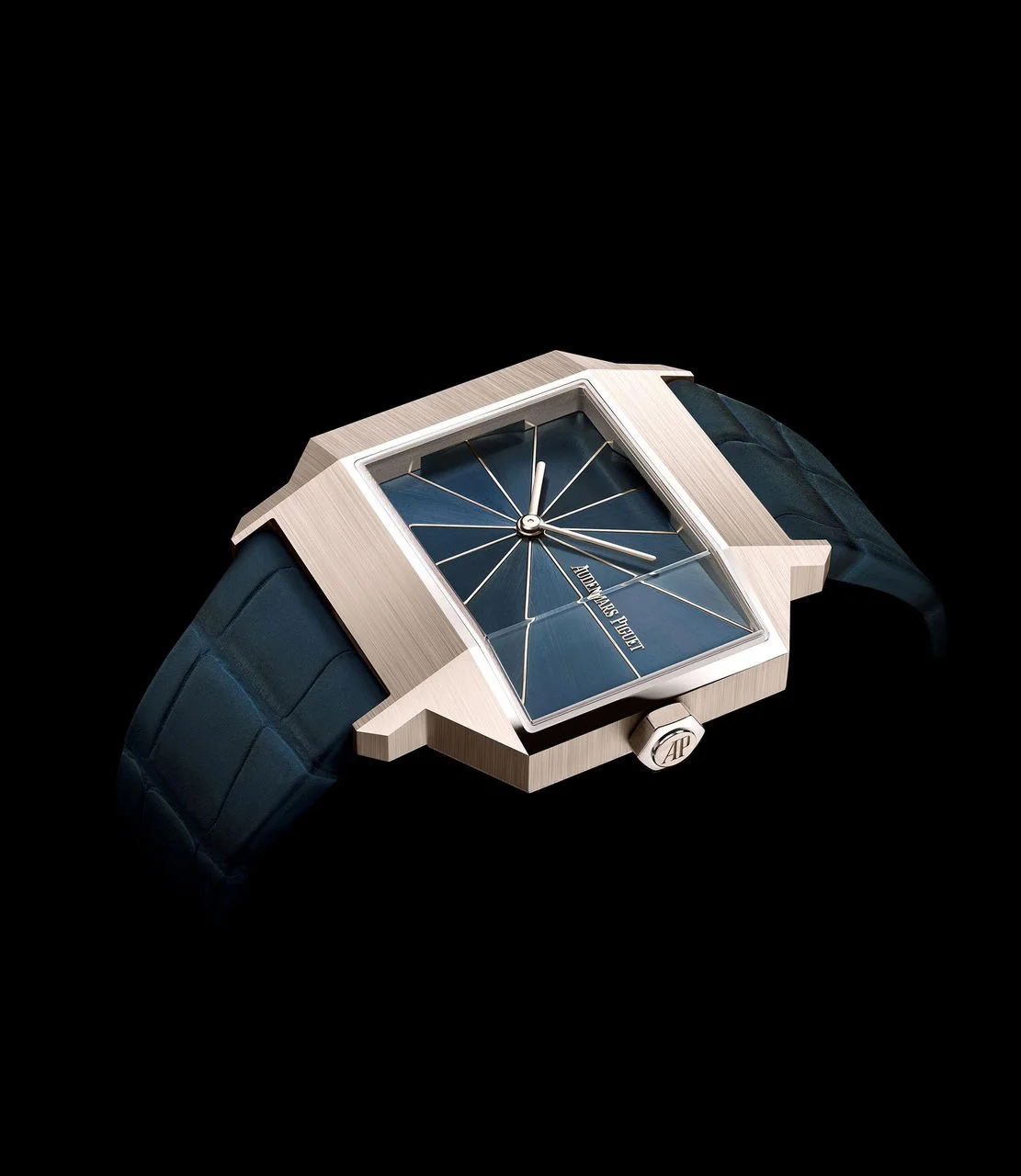
2024. [RE]Master02 (15240). Calibre 7129. Asymmetrical sand gold case inspired by the brutalist Model 5159. Limited edition of 250 pieces.